At last I’ve added a tag in the sidebar for fiddles, embracing all kinds of bowed lutes (or even, um, friction chordophones) around the world, including folk fiddles, ghijak and satar, sarangi and kamancha, violins in WAM, and so on.
It’s a typically extensive list, and I’m sorry I can’t subhead tags, yet. If I could, the entries might include
“Musiciens Chinois. légation a Pékin”, Paul Champion, 1865/1866, with sanxian plucked lute, xiao end-blown flute, yangqin dulcimer, and sihu fiddle.
Inspired in 2017 by Stephan Feuchtwang’s 80th birthday to essay a fantasia on Bach at the court of the Qianlong emperor, I’ve been meaning to give a little introduction to the court music of the Qing dynasty (for another vignette, see here).
First we need to unpack the wafty term “court music”, subsuming all kinds of activities (for an early study from the Forbidden City, see e.g. Wan Yi and Huang Haitao, Qingdai gongting yinyue, 1985; see also the succinct introduction in Yang Yinliu, Zhongguo gudai yinyue shi gao, pp.1005–1009). It includes the large-scale yayue, ceremonial groups of both Inner and Outer courts, Daoist, Buddhist, and shamanistic observances, various genres of opera—and recreational chamber ensembles for life-cycle celebrations.
Most of the groups that I study in rural China serve the ritual needs of their local communities—whether occupational or (as in the case of sectarian associations) devotional. Amateur musicking for recreation or entertainment is less common. Even vocal genres like opera and narrative-singing are often occupational, largely serving ritual; but we do find some recreational groups, mainly in urban areas. And even here, the ceremonial–entertainment dichotomy is not clear-cut: recreational genres too were often performed for life-cycle and calendrical ceremonies.
Suite plucking After Liberation, cultural cadres gave misleading names to many folk genres (cf. here, and for the “songs-for-winds”, here). The recreational chamber repertoire known since the 1950s as the “thirteen suites for strings” (xiansuo shisan tao 弦索十三套) was simply known as “suite plucking” (tantao 彈套). [1]
Often valorised by a narrow association with the Manchu court elite, it turns out to belong to a wider circle of folk activity (and here we may detect echoes of the hype surrounding the Zhihua temple). Indeed, it’s not useful to draw a clear line between folk and elite musical cultures in China—for a detailed instance, see this comparison of a qin piece and a shawm suite.
The social and cultural life of the late Qing is a rich topic, little explored in relation to these suites. I learn much from a 2013 article by Zhang Weidong 张卫东, stalwart of the amateur narrative-singing clubs around Beijing. Among many sources, he cites Jin Shoushen 金受申, Lao Beijingde shenghuo 老北京的生活—just the fascinating kind of social detail also found in the work of Chang Renchun on the customary and ritual life of old Beijing.
As part of his broad cultural education Aisin Gioro Yuhuan爱新觉罗毓峘 (1930–2003), descendant of the Qing imperial family, learned the sanxian plucked lute from the age of 8 in Japanese-occupied Beijing with the former palace eunuch Luo Defu 羅德福, and later with blind musicians Wang Xianchen 王宪臣 and Zhang Songshan 张松山. He expanded on this background in several interviews, including articles in Renmin yinyue 1988.9 and 1990.6. For my visit to him, see here.
Like most musicking in China and worldwide, the genre wasn’t dependent on notation: indeed, it was largely an oral tradition. And again it illustrates the continuum between folk and art musics: it now tends to be associated with the Manchu–Mongolian nobility, but they learned this repertoire as patrons of lowly blind itinerant street performers (menxianr 門先 or gumu 瞽目) whom they invited to their mansions. Blind musicians are important in local social life, such as shawm players and bards (and, further afield, in Ukraine—formerly), and the menxianr were major players in the Beijing narrative-singing scene.
In the mid-19th century [2] a blind sanxian player called Zhao Debi 趙德壁 was renowned for his rendition of the suites. His pupil Yue Fengting 岳鳳亭 was an influential transmitter of the repertoire. And Wang Xianchen, a protegé of the empress Cixi, served the inner court.
Instruments included the plucked lutes sanxian and pipa; a bowed lutetiqin or sihu; and the zheng zither—which, despite its rippling ubiquity in the conservatoires, is rarely used in folk ensembles in north or even south China. A xiao end-blown flute, dizi transverse flute, or small sheng mouth-organ might also take part, but were already less often used by the early 20th century.
Scores In the early 19th century the Mongolian nobleman Rong Zhai (Ming Yi 明誼) learned the repertoire along with four other princes (gong 公), and in 1814 he compiled a gongche score in his Xiansuo beikao 弦索備考.
By the 1940s, this and several related scores kept in private hands had reached Beijing music scholars (cf. this post), Later Cao Anhe thickened the plot with a discussion of these versions, including forgeries, showing the importance of textual research:
Cao Anhe, “Xiansuo shisan tao paishengchulaide jizhong wei yuepu” 弦索十三套派生出来的几种伪乐谱, Wenyi yanjiu 1981.4.
This resulted in yet another project from the brilliant Music Research Institute (MRI) in Beijing under the aegis of Yang Yinliu, largely consisting of transnotations. It was first published in three slim volumes in 1955 and 1962, and then reprinted in 1985:
Cao Anhe 曹安和 and Jian Qihua 简其华 (eds.), Xiansuo shisan tao 弦索十三套.
Yet again I marvel at the energy and discrimination of the Beijing scholars before and after Liberation, also including Wang Shixiang, the great painter and qin player Pu Xuezhai 溥雪齋 (1893–1966, another scion of the Aixin Gioro imperial family—see below), and Ling Qizhen 凌其阵. [3]
In 1963 Aisin Gioro Yuhuan was invited to teach at the Beijing conservatoires, but this was soon interrupted by the outbreak of the Cultural Revolution (cf. Daoist drum master Zhu Qinfu: my Folk music of China, pp.255–6). By 1985 he had hardly played sanxian for over thirty years, but he now worked closely with Tan Longjian to recreate the style of the Xiansuo beikao suites. She went on to publish separately the results of their work on the sanxian parts:
Tan Longjian 谈龙建, Qing gu gongwangfu yinyue: Aisin Gioro Yuhuan sanxian chuanpu 清故恭王府音乐: 爱新觉罗·毓峘三弦传谱 (1988), with a useful introduction by Yuan Jingfang 袁静芳.
Rong Zhai had given individual parts for each instrument, spelling out their heterophony. By contrast, when melodies of instrumental ensembles were notated, it was invariably in a single gongche skeletal outline, with the realizations on particular instruments left to the taste and experience of the musicians. This was evidently so for these suites too: the score was an isolated instance of documentation in what remained an oral tradition.
In one case Rong Zhai even gave a “full score” with all the parts aligned—perhaps a unique instance in traditional notation:
Still, as in all traditions of musicking around the world, performance requires practical experience of learning with a master; and this applies even when notation is available.
The suites consist of sequences of melodies, though titles within the suites are not always given. The repertoire overlaps with that of shengguan ritual wind ensembles such as Haiqing 海青 and Pu’an zhou 普安咒, widely performed both in the temples of old Beijing and among amateur ritual associations in the countryside nearby and further afield. It was on these rural groups, still active, that I came to focus; and here too, I learned that one’s field of study must be far broader than “instrumental music“.
Changing society As I often note for ritual studies too, scholars tend to favour reified documents, at the expense of changing social context.
Well before the Communist revolution of 1949, the social system had been changing along with the demise of the imperial system in 1911. But when musicologists began transnotating the suites in the early 1950s, there were still some musicians who recalled playing them—like Aisin Gioro Yuhuan, indeed. How I wish Yang Yinliu and his colleagues had managed to record them then, like their 1953 Zhihua temple recordings (sidebar playlist #14, with commentary here). According to Cao Anhe (1981) the MRI did indeed record four or five suites played by the great blind sanxian player Wang Xianchen (for whom, see again Zhang Weidong’s article). By 1950 Wang must have been at least 80 years old, but alas these recordings appear to have been lost. I’ll save another surviving recording for further below.
What did persist in Beijing, both before and since the Cultural Revolution, was the amateur narrative-singing scene—a must for any aficionados of The dream of the red chamber, by the way. Some instrumental pieces are still played there as preludes or interludes, but the suite repertoire didn’t survive. Anyway, it’s another of the pleasures of Beijing musical life, less well publicized than the indie/punk scene there.
In the 1990s, between fieldtrips in Hebei, I enjoyed visits to a little hutong in Xinjiekou for the weekly gatherings at the house of the late great Qian Yadong 钱亚东 (right, in 1995—then aged 85!).
Sihu, pipa and sanxian players (the latter blind—long rare at such gatherings) at Qian Yadong’s house, 1995.
For the narrative-singing scene in early 1950s’ Beijing, the vicissitudes of Czech and Chinese scholars and artists, and the 1980s’ Anthology, see here.
Belated recordings With the renewed vigour of the 1980s, the Central Conservatoire in Beijing organized students to perform the suites on the basis of the 1950s’ transnotations, consulting Aisin Gioro Yuhuan and Cao Anhe.
I’ve given some instances of the aesthetic gulf between folk and conservatoire, and here’s another. While well-intentioned, these reified conservatoire recordings can hardly capture the more traditional mood of the earlier masters. Of course, young conservatoire students were not only learning from prescriptive modern notation, but belonged to another aesthetic world to that of the itinerant blind performers and the Qing nobility—and even to that of their own conservatoire teachers, many of whom (including masters like Yang Yinliu, Cao Anhe, Yang Dajun, Cao Zheng) had been brought up in a traditional aesthetic. Even the instruments, and their strings, would have been different.
You can find the conservatoire recordings in a YouTube playlist from David Badagnani (note also the Chinese documentary to which he refers):
After intensive research on Qing-dynasty performance practice, I can now say with some certainty that… it wouldn’t have sounded like this.
We can get more of a flavour of a convincing style for “suite plucking” from early recordings of narrative-singing in old Beijing. And thanks to Yuan Jingfang I learn of a 1950s’ recording of (a variant of) the “plucking suites” piece Hehuan ling 合歡令 on sanxian by none other than Pu Xuezhai (see above)! Indeed, whereas Pu quite correctly regarded the qin as merely part of the whole “qin, chess, calligraphy, and painting” amateur literati culture, he seems to have been more adept as a sanxian player. Gratifyingly, the recording has been reissued:
* * *
Such genres in China, largely performed by amateurs for entertainment, are commonly grouped under the umbrella term of “silk-and-bamboo” (sizhu). Some are mainly for instrumental ensemble (as in Shanghai or Chaozhou); in others (such as the nanyin of south Fujian) the ensemble mainly accompanies a solo singer, and genres may be classified under narrative-singing. They are often linked to a literate elite background, later becoming popular among ordinary people.
These groups have survived well along the southeastern coast. Nanyin continues to enjoy wide popularity, not just in the main urban centres like Quanzhou and Xiamen but throughout the surrounding countryside. Some genres are nationally renowned, and a common topic of music scholars; but my reading of the fine ethnographic reports around the region suggests that they are only a minor part of expressive culture there—with Daoists and mediums, opera troupes and puppeteers, shawm bands and percussion ensembles dominating the rich ritual culture of the area. Many more genres, little-known outside their catchment area, can be found in the instrumental and narrative-singing volumes, by province, of the Anthology (see e.g. the “silk-strings” of Wugang in Hunan, mentioned in my “Reading between the lines”, pp.327–8, and also recently the object of heritagification).
In the north, most string ensembles with substantial separate repertoires seem to have declined since the 1950s, suffering from a decline in both recreational activities and patronage. As for the south, I introduced some groups briefly in my Folk music of China, and again you can pursue them further in the Anthology—such as in Chengde northeast of Beijing; various types of Shifan 十番 ensemble; Henanbantou 板頭 and Shandong peng baban 碰八板 repertoires. See also my post on the “little pieces” of Yulin city—amateur groups that survived Maoism but became moribund since the reforms, with the kiss of death bestowed by the reforming zeal of cultural officials.
The question remains, why amateur folk activity in those chamber genres along the southeastern coast has remained strong through the Maoist and reform eras, with a spectrum of traditional and official styles, whereas in the north most amateur string ensembles seem to have become musical casualties of the revolution.
* * *
So while a narrow musicological approach tends to encourage reification, the study of “suite plucking” should lead us to the cultures of late imperial Beijing, both folk and elite; and to the voluminous sources on the whole history of vocal music.
What such research doesn’t spell out is that entertainment has moved on: the social milieu in which the plucking suites were performed before 1911 has long ceased to exist. The current Beijing elites no longer play along with itinerant blind musicians! Of course, the 1980s’ project on the suites was not seeking to reinvigorate them as a form of social life; they came to form part of the nostalgic re-imagining of the imperial past, quite removed from society. So this yet again confirms my reservations about recreating early music for genres whose performing traditions have been lost. As with any musicking worldwide (including WAM, such as Bach or Haydn), we need to study changing performance practice in social context, and reception history.
Ritual activity, however, persists in China. The rosy reification of imperial culture may distract us from the ethnography of groups that have remained active through the tribulations of the 20th century, and from the enduring importance of living soundscapes as part of changing social activity.
Lastly, even where we can distinguish between folk and elite cultures, there is nothing “superior” about the latter, either in China or elsewhere (see What is serious music?!, and for China, Dissolving boundaries)!
[1] Here I’ve expanded modestly on my brief introduction in Folk music of China, pp.208–12. For rich material on vocal and instrumental groups in the late imperial period, note Yang Yinliu, Zhongguo gudai yinyue shi gao, vol.2.
[2] Cao Anhe and Jian Qihua give Qianlong–Jiaqing eras, but Zhang Weidong’s later dates of Daoguang–Xianfeng (1820–61) seem more reliable.
[3] Ling Qizhen (1911–84) was a qin player, originally from Shanghai, later professor at the Shenyang Conservatoire, where he founded the Liaoning qin research association. For his useful 1958 article on “Buddhist music” in Shenyang, see here.
Having written about the ill-fated blind minstrels of Ukraine, here I’d like to outline the importance of the varied soundscapes around east Europe (a region I’ve also touched in several posts). Also, changing expressive cultures there—besides their intrinsic fascination—suggest useful perspectives for our studies of China.
This may be Old Hat for World Music fans, but perhaps less so for China-watchers or scholars of Asian ritual. Here I’ll offer a mere smattering of reading and audio-visual material.
As in China, sandwiched between the timeless ancient and recent turbo-rock images of the whole region are the elusive fates of local cultures during the state socialist era. Parallel with the official state ensembles, folk traditions were not entirely dormant (a major theme of mine for China; for the spectrum, see e.g. here and here); and fieldwork and research continued, despite political obstacles. These traditions are not so much national as regional, indeed local; subcultures cross boundaries.
And they are not timeless reified commodities to be preserved, but ever-evolving amidst complex social change. Changing political boundaries, and mutual borrowings, belie ongoing nationalist agendas—another reminder of the fantastic and enduring diversity of European cultures (see e.g. Iberia tag for flamenco and fado). Tensions are apparent between local values and official images—and latterly the World Music scene.
Life-cycle rituals, notably weddings, remain a major context. But as the image of the unspoilt rural idyll recedes, turbo-folk tends to dominate. Weddings have become a focus of modernisation; secular festivals, no longer manipulated by the Party state, also come to the fore. Yet changes in rural life also remain a lively topic. There’s never a simple progression from unspoilt rural traditions through kitsch state ensembles to turbo-rock.
Both vocal and instrumental genres are remarkable. Older instruments haven’t entirely been replaced, such as gadulka and gusle fiddles, kaval end-blown flute, zurna shawm, gaida bagpipe.
For an introduction to the different early post-war histories of the whole region, see
Anne Applebaum, Iron curtain: the crushing of Eastern Europe 1944–1956.
* * *
Fieldwork on east European traditions began still before the explorations of Béla Bartók, Zoltán Kodály, and Constantin Brăiloiu, but they make a convenient starting-point. Their interests extended far beyond the borders of Hungary and Romania—indeed, Bartók made fieldtrips as far afield as Turkey and north Africa.
We can admire Brăiloiu’s 1933–43 recordings on this remarkable CD:
For convenient collections of articles, see
Béla Bartók, Essays (1976)
Zoltán Kodály, Folk music of Hungary (1960/1982—translation revised by Laurence Picken, who maintained a lively correspondence with east European musicologists!)
Constantin Brăiloiu, Problems of ethnomusicology (1984).
Still, their work belongs towards the “music” end of the music—culture spectrum, and later under the Communist era, social and political analysis was discouraged from developing. On the one hand, the early fieldworkers are laudable for making trips long before the formal discipline of ethnomusicology; on the other, under state socialism the scholars were laudable for attempting to pursue ethnographic principles under political pressures. Later the whole region became one of the most lively topics of the European Seminar in Ethnomusicology (ESEM).
As Carol Silverman observes about the Roma,
Early folk music studies focus on aesthetics and creativity rather than on power differentials; they were primarily about the culture within folk groups, not about domination, resistance, and conflict among groups.
Indeed, there are varied ways to study the topic, from popular to scholarly. We might start with the articles in the Rough Guide to world musicand Songlines magazine, where east Europe is well covered, thanks largely to the enthusiasm of their editor Simon Broughton. Apart from the recent glossy World Music stars, it also features local traditions and archive recordings (mostly listed at the start of the discographies).
Among more scholarly studies, note relevant chapters in
Timothy Rice and James Porter (eds.),The Garland encyclopedia of world music, vol.8: Europe (2000).
For many further refs. at the traditional end of the spectrum, showing the energy of early collecting and recording, see
Barbara Krader and Bálint Sarosi, “Southern and eastern Europe”, in Ethnomusicology: historical and regional studies (The New Grove handbooks in music, 1993), pp.160–96,
and in the same volume, updating the story, relevant sections of
James Porter, “Europe”, pp.215–39.
Chapters in
Mark Slobin (ed.), Retuning culture: musical changes in central and eastern Europe (1996)
suggest Chinese parallels in the adjustment following the demise of state socialism. Of course, while the early 1990s were a time of pivotal significance, the scene has continues to change since then. I cited a couple of salient general points from Retuning culturehere.
In all these regions, educated urban “roots” movements have become an aspect of the revival since the fall of Communism. In Retuning culture Judit Frigyesi describes this for Hungary, whereas in the following chapter Barbara Rose Lange discusses the reaction against it in the form of lakodalmas rock—resembling similar tensions in China.
At the same time, as Timothy Garton Ash comments in a review of Witold Szablowski’s Dancing Bears,
There is a long tradition, stretching back to the Enlightenment, of western Europeans and North Americans orientalising eastern Europe, as Voltaire did with Russia and Rousseau did with Poland. What is unusual about Szablowski is that he is orientalising his own region.
Another constant theme is ritual, along with religion—which persisted in various ways under state socialism. I won’t attempt to cover Polish, Czech, or Slovak traditions here, though they too are a rich topic, with a wealth of material (e.g. Folk traditions of Poland; Madonna pilgrimage in Communist Poland; Moravia; and for Polish jazz, here). And note Michael Beckerman’s chapter in Retuning culture on Milan Kundera’s brilliant dissection of culture clash in The joke.
But despite the glossy stars of the World Music scene, it’s not all about them: they are just the tip of the iceberg of changing social life (cf. my flamenco series). That’s far from saying that folk traditions are anonymous—on the contrary, personalities are always important, and locally there are always hierarchies and admired performers.
Under state socialism, in the wake of the tradition of Bartók, Kodaly, and Brăiloiu, fieldwork on regional traditions was avidly pursued. Before and after 1989 I returned from concerts in Budapest with suitcases full of box-sets of LPs from the Hungaroton label, founded in 1951.
There’s also a wealth of material on film and online. Gigs are all very well; feature films (see below) are more revealing; ethnographic documentaries are fewer (if only the BBC films of Simon Broughton were available now).
Hungary, Transylvania, Romania Here—by contrast with the brass-band sound that has come to dominate the Balkans—string bands are still plentiful, surviving notably in Transylvania, source of much of the inspiration for Hungarian folk music studies ever since Bartok’s fieldwork.
The combo of primas fiddle, kontra viola, and bass is enchanting (for this and other world fiddle traditions, click here). Foremost among many recordings with a more traditional brief is a series of fine box sets from Hungaroton, followed by the Fono label, including their Final hour/ Új Pátria series.
Unearthing Transylvanian bands has long been at the heart of the projects of the enterprising Budapest-based concert band Muzsikáswith the wonderful singerMárta Sebestyén, and of the Budapest táncház (“dance house”) scene (for which see e.g. Jávorszky Béla Szilárd, The story of Hungarian folk, 2015, and an introduction in Songlines #112). But the fortunes of most such rural bands remained based in the lives of their local communities.
Here Muzsikás accompany the master fiddler Sandor “Neti” Fodor (1922–2004):
Still in Romania, the Rough Guide introduces many distinctive traditions, such as those of Maramureș and Moldavia. The Csángó people of Gyimes are famed for the duo of fiddle with gardon slapped bass (see here, and here)—one of the best possible things to do with a cello (cf. furniture effects and marriage guidance counselling on the bass, and viola jokes).
Jacques Bouët, Bernard Lortat-Jacob, and Speranţa Rădulescu, A tue-tête: chant et violon au pays de l’Oach, Roumanie (2002, with DVD),
a detailed ethnography of social musicking in the Oaș region, including musical analyses.
From Clejani near Bucharest, Taraf de Haïdouks were plucked up into the World Music scene; indeed, they are the source of my favourite quote about such success. Speranţa Rădulescu had recorded them from 1983, and introduced fellow-ethnomusicologist Laurent Aubert to them in 1986. Later, taken up by the likes of Johnny Depp, they toured with the Kronos quartet (“Californian pointy-heads” apud Cartwright, Princes amongst men, pp.196–7—actually a telling vignette on the different aesthetics of folk and art musicians).
But with the goals of ethnomusicologists and World Music promoters not always in tandem, such collaborations may not unfold smoothly. The World Music scene not only propels certain bands to fame, but may engender rival clones, misunderstandings, and lawsuits.
Retuning culture has a fascinating article
Steluta Popa, “The Romanian revolution of December 1989 and its reflection in musical folklore”,
documenting songs just as they were being composed—if only we could hear them too. But we can hear, from Latcho Drom (see below), the “Ballad of the dictator” by the late great Nicolae Neacșu (of Taraf de Haïdouks)—including my very favorite fiddle technique, evoking anguish, earthquake, or perhaps the creaking door that precedes “The master is not at home” in a Hammer Horror movie (perhaps not so suitable in the Mahler Adagietto, but who knows):
Green leaves, flowers of the fields, What are the people doing? They’re taking to the streets, yelling and crying “Freedom!” Green leaves, flowers of the fields, What are the students doing? They’re marching on Bucharest, yelling and crying “Sweep away the dictatorship.” Green leaves, a million green leaves on this 22nd day Here, the time for life has returned, to live in freedom Green leaves, flowers of the fields, There in Timisoara people are taking to the streets, yelling “It’s all over for the tyrant!” What are the men doing? They’re taking out their guns. They’re shooting at people. Ceaucescu hears them: “Tyrant, you have destroyed Romania.”
Roma Beyond all the traumas of warfare and occupation, these are regions where countless Jewish and Roma peoples were deported and murdered in the mid-20th century, transforming the cultural landscape. In addition to its articles by country, The Rough Guide has a section on the trendy tag of Gypsy music—indeed, casting the net as wide as Rajasthan, Turkey, Russia, Spain, France, and Britain.
The fortunes of Roma peoples in various nations are tellingly described in
Isobel Fonseca, Bury me standing (1995),
and turning to music, another most accessible book is
Garth Cartwright, Princes amongst men [sic]: journeys with Gypsy musicians (2005),
with vignettes from Serbia, Macedonia, Romania, and Bulgaria. Though based on interviews with the stars, it makes a lively and well-observed read, a popular introduction not only to the scene at the time of his visits but also to the state socialist background. See his playlist here.
The transgressive lifestyle of the Roma, Exotic Other “deviating from behavioural norms”, has long made an irresistible commercial proposition, as gleefully evoked in many popular feature films (Cartwright, pp.306–8 gives a useful list), such as those of Emil Kusturica like Time of the Gypsies (1989), Underground (1995), and Black cat, white cat (1998), or—more acceptably to the Roma community—Tony Gatlif, including Latcho Drom (1993), travelling from Rajasthan, Egypt, and Turkey to Romania, Hungary, Slovakia, France, and Spain; and Gadjo dilo (1997)—sorry, the English-subtitled version has disappeared from YouTube, so we’ll just have to practise our Hungarian (Yeah, right), here:
An impressive early film was I even met happy Gypsies (Aleksandar Petrović, 1967).
The Balkans Here the scars of the war following the breakup of Yugoslavia are constantly on display. Brass bands have come to dominate the soundscape, the Guča festival making a heady showcase. Among the stars are Boban and Marko Marković (Serbia), the Kočaniorkestar (Macedonia), and Fanfare Ciocârlia (from Zece Prăjini in Moldavia, Romania). While high-octane numbers dominate, the slow ballads are also most affecting. Sorry, can’t find English subtitles for this 2002 documentary Iag bari/Brass on fire, so this time click here for some Swedish practice.
Modern brass bands have developed from groups led by zurna shawms with percussion, rather as Chinese shawm bands have added Western brass and pop music to their instrumentation since the 1980s.
The label “Balkan jazz” reminds me that I couldn’t resist describing the amazing Hua family shawm band as Chinese gypsies playing Ming-dynasty jazz; but accounts of both the social life of Balkan musos and the wildness of their playing do indeed suggest similarities.
In Bosnia–Herzegovina, apart from sevdalinka singing (sevdah resembling Romanian dor, as well as duende and saudade), Islamic soundscapes include kaside, ilahije, and zikr rituals—note the Smithsonian Folkways CD Bosnia: echoes from an endangered world.
Timothy Rice, May it fill your soul: experiencing Bulgarian music (1994, with CD)
Donna Buchanan, Performing democracy: Bulgarian music and musicians in transition (2006)
Carol Silverman, Romani routes: cultural politics and Balkan music in diaspora (2012, with companion website)
See also Silverman’s 2007 article on the changing wedding market, and chapters by Rice and Silverman in Retuning culture.
Silverman notes that Bulgaria had one of the most centralised forms of state socialism, Macedonia one of the least. But under both regimes the Roma—“powerless politically and powerful musically”—continued to play for non-Rom as well as Rom audiences at village and town events, such as weddings, birth celebrations, soldier send-off celebrations, circumcisions, and baptisms.
In the West, broad awareness of Bulgarian music began when “World Music” was just a twinkle in the promoter’s eye, with Le Mystère des Voix Bulgares. The original LP, released as early as 1975, was reissued more widely in 1986. After the collapse of state socialism they reinvented themselves with several reincarnations, with further albums following. They made rather more earthy recordings too, like this track from Bulgarian custom songs (1993):
Another early star of the World Music circuit was Ivo Papazov—subject of a fine article by Donna Buchanan in Retuning culture, and vignettes in Rice’s May it fill your soul. Reminding us again that musicking doesn’t necessarily take place in designated venues like concert halls, the wedding scene is important. But Buchanan unpacks the ethnic and cultural tensions. In summer 1989, 370,000 ethnic Turks and Muslims were deported. Buchanan also puts into context how Papazov was promoted abroad by Joe Boyd with the Hannibal albums Orpheus ascending (1989) and Balkanology (1991), soon launching him as a global touring star—just as the local economy was collapsing.
Weddings had been lucrative, and moreover musos prefer their ambience—as Ivo commented,
In truth, a wedding is equal to a dozen concerts. There a person can create… A great deal of music is introduced in a wedding, and in a concert you lack this thrill.
However, by the 1990s weddings lasted only one day: he was being nostalgic for the extravagance of the 1980s! He returned to recording with the great albums Fairground (2003) and Dance of the falcon (2008). Meanwhile the wedding scene in Bulgaria continues to change.
Whatever setting he plays in, his music is just intoxicating. Here’s one of several YouTube playlists, including some raw footage from local gigs also featuring other bands:
And a drôle quote from Frank Zappa, no less:
Ivo’s wedding music, played first thing in the morning, provides thorough and long-lasting attitude adjustment for the busy executive.
Though additive “limping” metres feature in much folk music around the region and further afield (notably Turkey), Bulgaria has been particularly associated with them.
In Macedonia, megastars (sic) are Esma Redžepova (e.g. here, and here; and a playlist:)
and sax player Ferus Mustafov, also featured by Cartwright.
But again, it’s not all about the stars of the World Music scene. At the same time, musical appraisals expand from local to global, which are often at variance. By contrast with both nostalgic romantics and World Music fans in search of the latest groove, the brash sounds of Bulgarian chalga and Romanian manele have become highly popular.
As Cartwright observes,
The difference between what the West’s world music industry sells as Gypsy music and what the Roma listen to back in the Balkans can be huge. Sure, in Serbia Šaban is king and across Macedonia Esma reigns. But this is akin to African Americans acknowledging James Brown and Aretha Franklin. Don’t mean they’re listening to them. And in Romania the breach seems wider than anywhere else. Fulgerica is respected but he’s no pop star while Fanfare Ciocârlia and Taraf de Haïdouks exist only for Western audiences. That they play superior Gypsy music, rooted in tradition, means nothing. The local Roma aren’t listening. What they want is Adrian. And Guța.
Meanwhile, as he notes, the Venezuelan soap opera Kasandra became wildly popular across the Balkans, giving Šaban Bajramović a huge hit in 1997.
Albanian cultures As a respite from the bombardment of turbo-folk, it’s good to return to a more traditional milieu. Again, ethnic Albanians occupy not just Albania but Kosovo and parts of Macedonia and northern Greece; the soundscape is highly regional, with Gheg culture in the north, Tosk and Lab further south.
The splendid A.L. Lloyd somehow issued a fine album as early as 1966:
Albanie: polyphonies vocales et instrumentales (notes here):
A substantial study is
Jane Sugarman, Engendering song: singing and subjectivity at Albanian Prespa weddings (1997, with CD).
Bards Again, the epics sung by bards, over a wide region of south Yugoslavia and Albanian communities, don’t neatly fit national or ethnic boundaries.
The classic study is
Albert Lord, The singer of tales (with CD-Rom; complete text here),
following the work of Milman Parry (for whose work with Bartók, click here). Most singers are accompanied by a one-string fiddle like the gusle, as in this celebrated 1935 clip of Avdo Međedović (c1875 – 1955) filmed by Lord:
And in case all this seems like a bygone world, click here for a 2018 Venice performance of a Kosovan bard.
* * *
Under all these unwieldy national rubrics, the diverse ethnic groups negotiate the changing times, interacting. As ever, this is far more than a “merely musical” topic, as such cultures are not just quaint ornaments, aural pashmina; they are windows on changing local societies, an essential part of what makes them click. As in China, it’s no use clinging onto a romantic idealisation of the past; and we should always delve beyond the World Music stars to musicking in local societies.
As ever, Bruno Nettl offers useful perspectives, as in his taxonomies for various types of change and responses to them.
The cultures of all these groups—before and during state socialism, and since— deserve detailed attention. And World Music fans may tend to favour modern commercial pop, but it’s important for ethnographers to include it in the picture too. Even in my work on Daoist funerals in China, I could hardly neglect the pop bands outside the gate (my film, from 30.32).
Both academic and popular accounts repay study: and both keep track of change. I wonder what Bartók would have made of all this—another of those fruitless debates like “Would Bach have used the ondes martenot?” or “Mozart would have written advertising jingles”…
I’ve just added a new tag to the sidebar, for south China, in addition to the “south China” subhead of the ritual category! This also picks up various posts on Hakka and Hokkien soundscapes.
The unflattering views on Chinese music expressed by Berlioz have been much cited. He may have been an iconoclast within his own culture, but it would be asking too much to expect his horizons to transcend the limited aesthetics of his day.
In The Cambridge companion to Ravel, Robert Orledge cites Berlioz’s comments on hearing Chinese musicians at the Great Exhibition of the Works of Industry of All Nations in London in 1851—only a few years after the Opium Wars:
The melody, which was altogether grotesque and atrocious, finished on the tonic, like our most undistinguished sentimental songs [!]; it never moved out of the original tonality or mode. […] Nevertheless, the ludicrous melody was quite discernible, and one could have written it down in case of real need [!].
And as Orledge comments, his conclusion, after listening to a wider range of exotic musicians, was that
Chinese and Indian music would be similar to ours if it existed [WTF]; but that, musically speaking, these nations are still plunged in a state of benighted barbarianism and childish ignorance where only a few vague and feeble instincts are dimly discernible; that, moreover, the Orientals call music what we should style cacophony, and that for them, as for Macbeth’s witches, foul is fair.
Another passage has been translated thus:
As for the Chinaman’s voice, I have never heard anything so strange in my life—hideous snorts, and groans, very much like the sounds dogs make, when they wake up, stretch their paws and yawn with an effort.
A PLEASING addition has been made to the Chinese Collection, consisting of a Chinese Lady, named Pwan-ye-Koo, with small lotus-feet only 2½ inches in length, a Chinese professor of music, his two children (a boy and a girl), the femme de chambre of the lady, and an interpreter. The children are gay, lively, and intelligent, the lady herself agreeable and interesting, and the gentleman civil and obliging. A Chinese concert forms part of the entertainment: the lady Pwan-ye-Koo singing a Chinese air or two, accompanied by the professor, who likewise treats the public with an exhibition of his vocal powers. The group is one that has much to commend it: it is picturesque and peculiar, and presents an image in high relief of the native manners of a Chinese family. The conduct of the domestic blended the humble and the familiar in a significant manner; and there was an air of freedom, and a sense of mutual obligation manifested in the whole party, calculated to make a favourable impression on the spectator.
Still, if we read the full passage, Berlioz did at least make an effort. Further to A French letter, here’s some more language practice [sections between asterisks translated above]:
A propos de cantatrice, j’ai enfin satisfait le désir que j’avais d’entendre la fameuse Chinoise, the small-footed lady (la dame au petit pied), comme l’appelaient les affiches et les réclames anglaises. L’intérêt de cette audition était pour moi dans la question relative aux divisions de la gamme et à la tonalité des Chinois. Je voulais savoir si, comme tant de gens l’on dit et écrit, elles sont différentes des nôtres. Or, d’après l’expérience assez concluante que je viens de faire, selon moi, il n’en est rien. Voici ce que j’ai entendu. La famille chinoise, composée de deux femmes, deux hommes et deux enfans, était assise immobile sur un petit théâtre dans le salon de la Chinese house, à Albert gate. La séance s’est ouverte par une chanson en dix ou douze couplets, chantée par le maître de musique, avec accompagnement d’un petit instrument à quatre cordes de métal, du genre de nos guitares, et dont il jouait avec un bout de cuir ou de bois, remplaçant le bec de plumes dont on se sert en Europe pour attaquer les cordes de la mandoline. Le manche de l’instrument est divisé en compartimens, marqués par des sillets de plus en plus rapprochés au fur et à mesure qu’ils se rapprochent de la caisse sonore, absolument comme le manche de nos guitares. L’un des derniers sillets, par l’inhabileté du facteur, a été mal posé, et donne un son un peu trop haut, toujours comme sur nos guitares quand elles sont mal faites. Mais cette division n’en produit pas moins des résultats entièrement conformes à ceux de notre gamme. Quant à l’union du chant et de l’accompagnement, elle est de telle nature, qu’on en doit conclure que ce Chinois-là du moins n’a pas la plus légère idée de l’harmonie. *L’air (grotesque et abominable de tout point) finit sur la tonique, ainsi que la plus vulgaire de nos romances, et ne module pas, c’est-à-dire (car ce mot est généralement mal compris des personnes qui ne savent pas la musique) ne sort pas de la tonalité ni du mode indiqués dès le commencement.* L’accompagnement consiste en un dessin rhythmique assez vif et toujours le même, exécuté par la mandoline, et qui s’accorde fort peu ou pas du tout avec les notes de la voix. Le plus atroce de la chose, c’est que la jeune femme (la [small-]footed lady), pour accroître le charme de cet étrange concert, et sans tenir compte le moins du monde de ce que fait entendre son savant maître, s’obstine à gratter avec ses ongles les cordes d’un autre instrument de la même nature, mais au manche plus long, sans jouer quoi que ce soit de mélodieux ou d’harmonieux. Elle imite ainsi un enfant qui, placé dans un salon où l’on exécute un morceau de musique, s’amuserait à frapper à tort et à travers sur le clavier d’un piano sans en savoir jouer. C’est, en un mot, une chanson accompagnée d’un petit charivari instrumental. Pour la voix du chanteur, rien d’aussi étrange n’avait encore frappé mon oreille: *figurez-vous des notes nasales, gutturales, gémissantes, hideuses, que je comparerai, sans trop d’exagération, aux sons que laissent échapper les chiens quand, après un long sommeil, ils bâillent avec effort en étendant leurs membres.* Néanmoins, la burlesque mélodie était fort perceptible, et je porterai un jour du papier réglé chez les Chinois pour la noter et en enrichir votre album. Telle était la première partie du concert.
A la seconde, les rôles ont été intervertis ; la jeune femme a chanté, et son maître l’a accompagnée sur la flûte. Cette fois l’accompagnement ne produisait aucune discordance; la flûte suivait la voix à l’unisson tout simplement. Cette flûte, à peu près semblable à la nôtre, n’en diffère que par sa plus grande longueur, par son bout supérieur qui reste ouvert, et par l’embouchure qui se trouve percée à peu près vers le milieu du tube, au lieu d’être située, comme chez nous, vers le haut de l’instrument. Du reste, le son en est assez doux, passablement juste, c’est-à-dire passablement faux, et l’exécutant n’a rien fait entendre qui n’appartînt entièrement au système tonal et à la gamme que nous employons. La jeune femme est douée d’une voix céleste, si on la compare à celle de son maître. C’est un mezzo soprano, assez semblable par le timbre au contralto d’un jeune garçon dont l’âge approche de l’adolescence et dont la voix va muer. Elle chante assez bien, toujours comparativement. On croit entendre une de nos cuisinières de province chantant: «Pierre! mon ami Pierre», en lavant sa vaisselle. Sa mélodie, dont la tonalité est bien déterminée, je le répète, et ne contient ni quarts ni demi-quarts de ton, mais les plus simples de nos successions diatoniques, est un peu moins extravagante que la romance du chanteur. C’est tellement tricornu néanmoins, d’un rhythme si insaisissable par son étrangeté, qu’elle me donnera sans doute beaucoup de peine à la fixer exactement sur le papier pour vous en faire hommage. Mais j’y mettrai le temps, et, en profitant bien des leçons que me donnera le chien d’un boulanger voisin de ma demeure, je veux, à mon retour à Paris, vous régaler d’un concert chinois de premier ordre. Bien entendu que je ne prends point cette exhibition pour un exemple de l’état réel du chant dans l’Empire Céleste, malgré la qualité de la jeune femme, qualité des plus excellentes, à en croire l’orateur directeur de la troupe, parlant passablement l’anglais. Les dames de qualité de Canton ou de Pékin, qui se contentent de chanter chez elles et ne viennent point chez nous se montrer en public pour un shilling, doivent, je le suppose, être supérieures à celle-ci presque autant que Mme la comtesse Rossi est supérieure à nos Esmeralda de carrefours.
D’autant plus que la jeune lady n’est peut-être point si small-footed qu’elle veut bien le faire croire, et que son pied, marque distinctive des femmes des hautes classes, pourrait bien être un pied naturel, très plébéien, à en juger par le soin qu’elle mettait à n’en laisser voir que la pointe.
Mais je penche fort à regarder cette épreuve comme décisive en ce qui concerne la division de la gamme et le sentiment de la tonalité chez les Orientaux. Je croirai, seulement quand je l’aurai entendu, que des êtres humains puissent, sur une gamme divisée par quarts de ton, produire autre chose que des gémissemens dignes des concerts nocturnes des chats amoureux. Les Arabes y sont parvenus, au dire de quelques savans; ils ont pour cet art inqualifiable une théorie complète. Je parie que les savans qui ont écrit ces belles choses ne savent rien de notre musique, ou du moins n’en ont qu’un sentiment confus et peu développé. Que la théorie des Arabes existe, cela est fort possible, mais elle n’ôte rien à l’horreur de ce qu’ils font en la mettant en pratique.
La musique des Indiens de l’Orient doit fort peu différer de celle des Chinois, si l’on en juge par les instrumens envoyés par l’Inde à l’Exposition universelle de Londres. Cette collection se compose, 10 d’un grand nombre de mandolines à quatre et à trois cordes, quelques unes même n’en ont qu’une; leur manche est divisé par des sillets comme chez les Chinois; les unes sont de petite dimension, d’autres ont une longueur démesurée; 20 d’une multitude de gros et de petits tambours en forme de tonnelets, et dont le son ressemble à celui qu’on produit en frappant avec les doigts sur la calotte d’un chapeau; 30 d’un instrument à vent à anche double, de l’espèce de nos hautbois; 40 de flûtes traversières exactement semblables à celles du musicien chinois; 50 d’une trompette énorme et grossièrement exécutée sur un patron qui n’offre avec celui des trompettes européennes que d’insignifiantes différences; 60 de plusieurs petits instrumens à archet, dont le son aigre et faible doit rappeler les petits violons de sapin qu’on fait chez nous pour les enfans; 70 d’une espèce de tympanon dont les cordes tendues sur une longue caisse paraissent devoir être frappées par des baguettes; 80 d’une petite harpe à dix ou douze cordes, assez semblables aux harpes thébaines dont les bas-reliefs égyptiens nous ont fait connaître la forme, et enfin d’une grande roue chargée de gongs ou tamtams de petites dimensions, dont le bruit, quand elle est mise en mouvement, a le même charme que celui des gros grelots attachés sur le cou et la tête des chevaux de routiers. Je conclus, pour finir, que *les Chinois et les Indiens auraient une musique semblable à la nôtre, s’ils en avaient une; mais qu’ils sont encore à cet égard plongés dans les ténèbres les plus profondes de la barbarie ou dans une ignorance enfantine où se décèlent à peine quelques vagues et impuissans instincts.*
Detail: Hee Sing.
Also part of the Great Exhibition was a Chinese junk moored on the Thames—occasion for the curious case of the “fake Chinese mandarin” Hee Sing, who appears in a painting depicting the retinue of the royal family. In Berlioz’s Les soirées de l’orchestre (21st evening, including a variant of the above) he was even more underwhelmed by the soiréesmusicales etdansantes given onboard by the sailors:
Maintenant écoutez, messieurs, la description des soirées musicales et dansantes que donnent les matelots chinois sur la jonque qu’ils ont amenée dans la Tamise; et croyez-moi si vous le pouvez.
Ici, après le premier mouvement d’horreur dont on ne peut se défendre, l’hilarité vous gagne, et il faut rire, mais rire à se tordre, à en perdre le sens. J’ai vu les dames anglaises finir par tomber pâmées sur le pont du navire céleste ; telle est la force irrésistible de cet art oriental. L’orchestre se compose d’un grand tam-tam, d’un petit tam-tam, d’une paire de cymbales, d’une espèce de calotte de bois ou de grande sébile placée sur un trépied et que l’on frappe avec deux baguettes, d’un instrument à vent assez semblable à une noix de coco, dans lequel on souffle tout simplement, et qui fait : Hou ! hou ! en hurlant ; et enfin d’un violon chinois. Mais quel violon ! C’est un tube de gros bambou long de six pouces, dans lequel est planté une tige de bois très-mince et long d’un pied et demi à peu près, de manière à figurer assez bien un marteau creux dont le manche serait fiché près de la tête du maillet au lieu de l’être au milieu de sa masse. Deux fines cordes de soie sont tendues, n’importe comment, du bout supérieur du manche à la tête du maillet. Entre ces deux cordes, légèrement tordues l’une sur l’autre, passent les crins d’un fabuleux archet qui est ainsi forcé, quand on le pousse ou le tire, de faire vibrer les deux cordes à la fois [sic]. Ces deux cordes sont discordantes entre elles, et le son qui en résulte est affreux. Néanmoins, le Paganini chinois, avec un sérieux digne du succès qu’il obtient, tenant son instrument appuyé sur le genou, emploie les doigts de la main gauche sur le haut de la double corde à en varier les intonations, ainsi que cela se pratique pour jouer du violoncelle, mais sans observer toutefois aucune division relative aux tons, demi-tons, ou à quelque intervalle que ce soit. Il produit ainsi une série continue de grincements, de miaulements faibles, qui donnent l’idée des vagissements de l’enfant nouveau-né d’une goule et d’un vampire.
Dans les tutti, le charivari des tam-tams, des cymbales, du violon et de la noix de coco est plus ou moins furieux, selon que l’homme à la sébile (qui du reste ferait un excellent timbalier), accélère ou ralentit le roulement de ses baguettes sur la calotte de bois. Quelquefois même, à un signe de ce virtuose remplissant à la fois les fonctions de chef d’orchestre, de timbalier et de chanteur, l’orchestre s’arrête un instant, et, après un court silence, frappe bien d’aplomb un seul coup. Le violon seul vagit toujours. Le chant passe successivement du chef d’orchestre à l’un de ses musiciens, en forme de dialogue; ces deux hommes employant la voix de tête, entremêlée de quelques notes de la voix de poitrine ou plutôt de la voix d’estomac, semblent réciter quelque légende célèbre de leur pays. Peut-être chantent-ils un hymne à leur dieu Bouddah, d’ont la statue aux quatorze bras orne l’intérieur de la grand’chambre du navire.
Je n’essaierai pas de vous dépeindre ces cris de chacal, ces râles d’agonisant, ces gloussements de dindon, au milieu lesquels malgré mon extrême attention, il ne m’a été possible de découvrir que quatre notes appréciables (ré, mi, si, sol). Je dirai seulement qu’il faut reconnaître la supériorité de la small-footed Lady et de son maître de musique. Evidemment les chanteurs de la maison chinoise sont des artistes, et ceux de la jonque ne sont que des mauvais amateurs. Quant à la danse de ces hommes étranges, elle est digne de leur musique. Jamais d’aussi hideuses contorsions n’avaient frappé mes regards. On croit voir une troupe de diables se tordant, grimaçant, bondissant, au sifflement de tous les reptiles, au mugissement de tous les monstres, au fracas métallique de tous les tridents et de toutes les chaudières de l’enfer… On me persuadera difficilement que le peuple chinois ne soit pas fou…
[For a fine English version, see Berlioz, translated Barzun, Evenings with the orchestra (Chicago, 1956/1999 edition), pp.246–250.]
At the evening performance the queer old craft is lighted up with festoons of coloured lamps—a sort of miniature [missing] hall, and in the midst stands an open orchestra, in which four or five instrumentalists (“barbarians,” not Chinese) prepare the ear for the extraordinary combination of sounds which is to follow. Nothing can exceed the gravity of the “celestials,” as they take their position in the midst of the assembly on the main-deck, and proceed to fright the ear with gong and drum, and cymbal and agonizing cat-gut: the leader beating time with a stake upon a sort of tin saucepan-lid supported on three legs. Then the vocalization! The extraordinary squeaking duet, half plaintive, half comic, between the said leader (who is a sort of Costa and Mario rolled into one) and a younger aspirant in the background—what can possibly exceed its harrowing and ludicrous effect? Nothing except that impromptu feline discourse which we sometimes hear on house-tops at the dead of night.
The concert being concluded amidst the breathless silence of an astonished auditory, the war demonstrations and feats of arms then commence and these are certainly no less extraordinary than what has gone before. The first set consists of a set of grotesque posturing, in which the performers disport themselves severely one after the other, each succeeding one striving to outdo the other in the wildness and extravagance of his gesture—flying and leaping round the deck, thrusting out the arms right and left, threatening, retreating, &c. the musicians all the time keep up a terrific clang.
Next come a series of somewhat similar performances with long poles or lances, this scene closing with a set-to between two performers, which we have endeavored to embody in our engraving. Swords are also introduced and brandished about in the same manner, which, if intended to give any idea of the military science of the Chinese, shows them to be very far behind any other known nation in the world in that respect. One young hero, in the course of his “war demonstrations,” afforded great amusement every now and then, particularly after some very startling efforts at cut and thrust, by throwing himself down, and turning a somersault over his shield. When we left, the “barbarian” orchestra was about to strike up again, and dancing, it was said, was about to commence, but we did not wait for it.
For a recent French recreation, see here. Indeed, both the family and the junk had already appeared for P.T. Barnum’s Chinese museum: see Krystyn R. Moon, Yellowface: creating the Chinese in American popular music and performance, 1850s–1920s (2005), pp.62–6. For another portrait of the family, see here.
Hector’s Napoleon impression always brought the house down.
Ironically, in reviews by Berlioz’s contemporaries of his own new works he was hoist on his own petard—using rather similar vocabulary, as if taking revenge on behalf of the Chinese. Here are just a few among an embarras de richesse, cited in Slominsky‘s wonderful Lexicon of musical invective, pp.57–61:
His rare melodies are deprived of meter and rhythm; and his harmony, a bizare assemblage of sounds, not easily blended, does not always merit the name. I believe that what M. Berlioz writes does not belong to the art which I cusomarily regard as music, and I have the complete certainty that he lacks the prerequisites of this art.
Berlioz, musically speaking, is a lunatic; a classical composer only in Paris, the great city of quacks. His music is simply and undisguisedly nonsense.
M. Berlioz is utterly incapable of producing a complete phrase of any kind. When, on rare occasions, some glimpse of a tiune makes its appearance, it is cut off at the edges and twisted about in so unusual and unnatural a fashion as to give one the idea of a mangled and mutilated body, rather than a thing of fair proportions. Moreover, the little tune that seems to exist in M. Berlioz is of so decidely vulgar a character as to exclude the possibility of our supposing him possessed of a shadow of feeling.
I can compare Le Carneval romain by Berlioz to nothing but the caperings and gibberings of a big baboon, over-excited by a dose of alcoholic stimulus.
See also Berlioz: a love scene. For Berlioz’s prophetic word-painting of a 1960s’ curry-house menu, cliquez ici; and for his evocation of furniture removal, ici. For Mahler’s vision of the mystic East, see here; and for Cantonese music in post-war London, here.
Just as I was immersing myself in Afghan singing, how nostalgic the other day to hear the limpid slow movement of Haydn’s G major piano trio on Private passions (for the first of several posts inspired by the series, see here).
Today I wonder how we got into such early recordings, like the late Beethoven of the Busch quartet. They meant a lot to me—but I can’t quite say what: this was considerably before I became involved in early music, or began to care about changing performance styles. Indeed, in those days I was more interested in the politics of the Tang court than in the experiences of our more recent European forebears.
But now I think of the trio’s London audiences between the wars (my great-aunt Edith Miles was losing her hearing in 1927), and wartime audiences in Britain and Germany (doubtless the appalling Hans Frank loved the trio). The group had been working together since 1906; but Casals, a firm opponent of franquismo, later broke with Cortot for the latter’s collaboration with the Nazi occupation of France.
Cortot’s 1932 recording of the break in Brandenburg 5 is also great, but early renditions of baroque music may not always suit modern tastes, like Mengelberg’s 1939 Matthew passion.
Haydn dedicated the set of trios to Rebecca Schroeter, Scottish widow of an immigrant German musician (for a taste of late-18th-century mores, see here). So we might further try to imagine cosmopolitan London in 1795 (for “das Land ohne Musik“, see David Wyn Jones ed., Music in eighteenth-century Britain, and for London concert life, here; cf. audiences of Tang-dynasty Chang’an, enriched by Central Asian musics—”They come over ‘ere…“).
I don’t know how to fill in the 19th-century lacuna, but despite all the vast social changes since 1795, maybe Haydn’s day isn’t so distant: we seem to have a photo of Mozart’s widow, and Casals was born in 1876.
Haydn’s trio is named after its “gypsy” finale all’ongarese, which we can enjoy without wondering too much about his exposure to folk music—it is what it is (cf. Norman Lebrecht’s ambitious claim for Mahler 4). From where we are in 2018, all three movements are delightful, but it’s the slow movement (in the lustrous key of E major, like Bruckner 7 and north Chinese ritual suites for wind ensemble!) that continues to enchant me. As the players lovingly pass the tunes around (the second one is even more spellbinding!) above pearly triplets, via Cortot’s simple translucent links, they explore them like tiny jewelled caskets, deep in meditation.
Much of my work revolves around trying to understand the mindsets of rural Chinese dwellers, as in that last post. Now I come to think of it, that’s almost an incidental definition of ethnography. But it’s not entirely a contrast between urban and rural: the difference between traditional style in literati and folk genres (both part of a long imperial tradition, and closely related) seems slight, whereas the modern conservatoire ethos—romantic and Westernized—is quite remote from both.
The term yijing 意境 has a rather more arty literate feel than the trendy English “mindset”, more like “aesthetic”, and in talking to educated urban Chinese I use it quite often to illustrate the issue. But—ironically illustrating the issue further—I don’t quite know how rural Chinese people might express it, though they have plenty of terms to describe different ways of performing within their own style.
Much as I love the qin zither, I still need to rehabilitate myself for daring to query its dominance in Chinese music studies—as I observed here, it is as if the whole varied spectrum of European musics were represented mainly by the clavichord (see also here).
So here’s a rare version of the qin solo piece “No ulterior motives regarding seabirds” (Oulu wangji 鷗鷺忘機: I might suggest “Seabirds: forgetting ulterior motives”) as a duet with fiddle, recorded in 1962 by the great Zha Fuxi (1895–1976) on qin with Jiang Fengzhi (1908–86) on erhu:
In the 1954 image here, left to right are: Wu Jinglue, Wu Zhenping, Zha Fuxi, Jiang Fengzhi (looking remarkably like Yang Yinliu!), Guan Pinghu.
The qin has such an intimate solo timbre that the only other instrument usually deemed suitable to play with it is the mellifluous end-blown flute xiao; the erhu, with its modern romantic conservatoire repertoire, is generally considered quite remote from the meditative ethos of the qin. But this version of Oulu wangji shows how a simpler, restrained, selfless style of fiddle playing can blend well, enhanced by the low tuning—a model for Bach on the erhu?! It’s also effective because whereas in most qin–xiao duets both instruments play throughout, here the erhu takes the main melody while Zha Fuxi accompanies selectively with pivotal notes, almost like a continuo player.
It’s all the more poignant when we think of the date of recording—during the interlude between the traumas of the Great Leap Backward and the Four Cleanups. It may seem hard to imagine how anyone can be nostalgic for the period before the Cultural Revolution—but despite their tribulations, the stellar gatherings of qin masters, and the brilliant scholars of the era, have a numinous allure (see my series on the qin in Beijing under Maoism).
Oulu wangji is a favourite of qin players—among many versions online are performances by Guan Pinghu and Wu Zhaoji. As ever, John Thompson’s website is a treasury of information—for Zha Fuxi, see here, and for a typically erudite discussion of the piece, here.
The story goes back to the ancient Daoist sage Liezi: [1]
There was a man living by the sea-shore who loved seabirds. Every morning he went down to the sea to roam with the seabirds, and more birds came to him than you could count in hundreds.
His father said to him: “I hear the seabirds all come roaming with you. Bring me some to play with.”
Next day, when he went down to the sea, the seabirds danced above him and would not come down.
Therefore it is said: “The utmost in speech is to be rid of speech, the utmost doing is Doing Nothing.” What common knowledge knows is shallow.
[1] Liezi, BTW, deserves a bit of an image-rebrand to boost his ratings alongside Laozi and Zhuangzi! By the Tang his work was honored with the fine title True Classic of Simplicity and Vacuity (沖虛真經)—an award now reserved for TV reality shows.
A couple of dubious and inadvertent highlights from my orchestral life, on the perils of gut strings—among several occasions in my so-called “career” in early music when the taint of maestro-baiting would be quite unfounded:
Göttingen, mid-1980s. Concert performance of a Handel opera on stage, recorded live for broadcast. I’m sharing a desk with a Hungarian violinist who hasn’t been playing with the band for long, and in the middle of a frantic tutti passage his E string breaks (as they do).
We do take spare strings onstage, but it’s not long till the end of Act One, so you might think he could just flounder around in the upper reaches of the A string when necessary before putting on a new string in the interval—it’s quite a tricky procedure, made tense in public. Ideally you want to take time notching the bridge, and the node at the top of the fingerboard, with a pencil; securing the loop at the tailpiece and threading the string carefully into the peg (perhaps after applying a bit of peg-paste), spooling it neatly inwards in the pegbox; stretching the string and adjusting the bridge—and even once you’ve got the string on and up to pitch, it needs a while to bed in. By now the other three strings will have gone haywire too. *
But no—my desk partner, bold as brass, decides to replace the string right there and then, on stage. It’s not exactly that I’m not amused at the comic potential, but apart from my subtle discouraging shrug there’s not a lot I can do—am I my brother’s keeper? So as the loud chorus gives way to an intense recitative from Michael Chance, I join in with the magical sustained pianissimo string accompaniment, while my desk partner is noisily and cheerfully cranking his string up to pitch, twanging away, tuning peg creaking ominously.
Later in the bar with my mates I evoked the soundscape:
Needless to say, backstage in the interval it was me that got a bollocking from the maestro: “Steve, you really should keep your desk partner under control—these foreigners just don’t understand our system…” WTAF.
And here’s a related incident from the second half of a concert in Lübeck cathedral during the wonderful Bach Cantata Pilgrimage in 2000, again being recorded:
I was sitting in the middle of the band innocently admiring a hushed secco recitative when the tailgut on my fiddle snapped. Since that’s what holds the whole contraption together, it exploded spectacularly, sending bridge, tailpiece, tuning pegs and sundry fittings flying high into the air. It wasn’t so much the initial explosion—everyone watched spellbound as bits of wood descended in slow motion onto the ancient tiled floor all around, the clatter drowning the singer’s exquisite pianissimo. With a husk of a violin in my hand, I scrambled round furtively on the floor to retrieve all the debris I could find, and sloped off while the cantata continued.
I thought I handled the mishap rather well, but sure enough, after the gig I got another (neither deserved nor surprising) bollocking from the maestro, who seemed to take it as a personal affront—as if I had deliberately made my violin explode in order to undermine his personal majesty. Hey ho.
Drowning my sorrows at the posh reception afterwards, ** I asked around to see if there was a luthier there who could get my fiddle back in shape for the rest of the tour, and sure enough I was introduced to a kindly old man who, after we’d shared a few more drinks, took me back to his workshop to take a look. We spent a lovely hour chatting as he carefully fitted a new tailgut and pieced my violin back together, exchanging stories of my fieldwork in China and his own early memories of Lübeck cultural life.
My new friend refused to take any payment, but having been just as enchanted as I was by the Buxtehude Klaglied in the first half, he asked if I might possibly get hold of a copy of the recording that had been made. Later, back in London, I did indeed manage to send it to him, which made a suitable reward for his kindness, and he sent me a postcard in thanks (“Excuse me, but we are very lucky that your violin was broken”—a sentiment with which many of my colleagues would doubtless concur). Silver lining, then.
Yet another fine addition to BBC Radio 3’s coverage of female composers: the great Lili Boulanger (1893–1918) (immortalized on the excellent T-shirt)—click here, part of a website well worth exploring.
Dying terribly young, Lili was eclipsed by her equally brilliant older sister Nadia (1887–1979), herself one of the great influences on WAM music-making in modern times (see here, and for a festival in 2021, here). And of course I’ve written many posts on French music in the form of Ravel and Messiaen.
“Not a lot of people know this”, but I recorded Lili’s pieces (or even morceaux) for violin and piano with Susan Tomes on one of those disc thingies around 1974, while we were at Cambridge. Here’s a 1930 recording of the Nocturne with Nadia accompanying Yvonne Astruc:
Note Nick Robertson’s magnificent anagram fantasy on Lili Boulanger, Nubile gorilla. And for my own fantasy on Nadia’s pupils, click here. See also French music at the Proms.
*For an introduction to my whole series on Mahler, with links, click here!*
After returning from an exhilarating day with the Zhihua temple at the BM, I caught S-Simon Rattle‘s overwhelming Mahler 10 with the reborn LSO on BBC Radio 3.
Here’s the opening Adagio from the concert—BTW, yet another illustration of the benefits of conducting from memory:
And here’s the complete 1980 recording with Simon (“as he was then”—before he was awarded the impediment) conducting the Bournemouth symphony orchestra:
Only half-written before Mahler died in 1911, the work was hardly performed until Deryck Cooke’s completed version became popular in the 1960s. Though I got to know it not so long after, it’s ages since I immersed myself in it.
Under Mahler’s own torments the music often splinters, exemplifying the later devastation of European culture. In context (from 17.24 in the video, 16.15 on the 1980 version) the Scream chord of the Adagio is truly horrifying, presaged by huge nightmarish clashing granite slabs of sound, linked by a terrifying high sustained trumpet note, and followed by a screeching top D from the violins:
Now I don’t generally go in for this kind of thing,* but after my recent visit to Sachsenhausen one might hear that short episode (under two minutes) as a graphic condensed soundscape foretelling the torments of Europe from c1930 to 1945—like deathbed episodes flashing past (timings as on the 1980 audio recording):
An ominous opening to the Finale—inspired, according to Alma, by hearing from afar the funeral of a heroic fireman in New York[1]—leads into an exquisite flute solo (from 53.57 on Rattle’s recording) and sustained string lines (with more of those climactic struggling quintuplets, e.g. from 1.11.51) almost recalling the finale of the 3rd symphony. Despite interruptions from the funeral drum and the Scream, the mood is more serene, less desolate than his other late works.
In last week’s LSO version the violins (and violas?!) made their final searing leap on the G string!!! [My Mahlerian exclamation marks].
The Barshai version of the symphony is also much praised:
(for a discerning series of photos to accompany the finale, see here)
* * *
Mahler’s “late” works are such a comprehensive series of farewells (Abschied) that it’s always strange to realize that he died at the age of 50. What would have become of him, and his music, had he lived into the 1940s?
Not so late, but perhaps most moving of all, is Ich bin der Welt abhanden gekommen—with a final violin leap similar to that at the end of the 10th symphony, only pianissimo.
[1] For accessible accounts of Mahler’s last years, the 1907 New York funeral, and the history of Deryck Cooke’s version, see Lebrecht, Why Mahler?, pp.171–223, 275–9. Here’s Alma’s recollection of the funeral (Gustav Mahler: memories and letters, p.135):
Marie Uchatius, a young art-student, paid me a visit one day in the Hotel Majestic. Hearing a confused noise, we leaned out of the window and saw a long procession in the broad street along the side of Central Park. It was the funeral cortege of a fireman, of whose heroic death we had read in the newspaper. The chief mourners were almost immediately beneath us when the procession halted, and the master of ceremonies stepped forward and gave a short address. From our eleventh floor window we could only guess what he said. There was a brief pause and then a roll of muffled drums, followed by a dead silence. The procession then moved forward and all was over.
The scene brought tears to my eyes and I looked anxiously at Mahler’s window. But he too was leaning out and his face was streaming with tears. The brief roll of the muffled drums impressed him so deeply that he used it in the Tenth Symphony.
* Imputing verbal programmes to musical detail, I mean: the whole point of music is that it expresses things that can’t be expressed in words. Even novelists—who do use words!—find this irritating; I can’t find a source or precise quote, but as I recall, when asked “What were you trying to say in this book?”—one frustrated novelist replied, “I was ‘trying’ to say exactly what I did say.” (Martin Amis, would be my guess. Anyone?)
“Germans invented the accordion,” Beutle explained to Messermacher. “A thousand things they invented, but accordions most of all. Because Germans think, Germans have brains. There was this feller, a musician, a German violinist, he ends up playing in the court orchestra in Russia, not Catherine the Great but around that time, he plays the violin. But because he’s a German, Jesus Christ, he notices things, he notices when he hangs up his bow on a nail back in his room she also makes a nice little tone. From this he invents the nail violin, very beautiful tones, I have heard it. A circle of wood with nails sticking out, you run the bow on the nails and ooo aaa ooo aaa, a beautiful tune. One day this feller gets a strange thing from China, somebody gives it to him because interested in things he is—naturally, he is a German—and he sees a round bowl with some bamboo pipes sticking out, and on the bowl a mouthpiece. He blows on it. It’s a fine sound. This thing the Jesus Christ Chinese put reeds inside the pipes, same as in the accordion, little reeds stuck on one end with wax, the other end can vibrate like this.” He trembled his hand at Messermacher. “The German violin player learns the playing of this instrument, die liebliche Chinesenorgel, and from this he passes to other Germans the idea of the accordion—the free reed. That’s how it begins. Later comes the bellows.” (91–2)
By now readers of my blog will know how vital the sheng mouth-organ is to the ensemble accompanying north Chinese Daoist ritual—and I suppose it was the sheng that obscurely reminded me to read Annie Proulx’s miraculous 1996 novel Accordion crimes.
The book has long been popular with ethnomusicologists (e.g. this review), despite being a novel—or rather, near the fiction end of the spectrum from non-fiction to fiction; or near the readable end of the academic—engaging spectrum (cf. Bernard Lortat-Jacob’s Sardinian chronicles, another classic). Like ethnomusicologists, Proulx focuses on change and social function. In her Acknowledgements she lists an impressive array of sources, experts on their regional genres—it’s amazing that all her detailed research took only two years.
On an epic scale, in the tradition of the Great American Novel, Accordion crimes has all the rich detail of ethnographic thick description. Indeed, it’s timely that I should get round to reading it now, since it discusses the tribulations of poor, ill-fated immigrants. The human cast includes immigrant Italians, Germans, Poles, Irish, Mexicans, French, and Norwegians—all against a backdrop of xenophobia, misanthropy, brutality. Their sad, tough, gory, gruesome tales are connected by the history of an old two-row button accordion for over a century, with other roles played by
As I observed about that other ethno classic Lives in jazz, the book gives a perfect combo of music and social detail. Hooked on taxonomy, Proulx can never resist long lists; likely to be tedious in academic hands, hers never fail to enthral. While poetic, her language is never pompous.
The novel opens with compelling detail from 19th-century Sicily:
It was as if his eye were an ear and a crackle went through it each time he shot a look at the accordion. The instrument rested on the bench, lacquer gleaming like wet sap. Rivulets of light washed mother-of-pearl, the nineteen polished bone buttons, winked a pair of small oval mirrors rimmed in black paint, eyes seeking eyes, seeking the poisonous stare of anyone who possessed malocchio, eager to reflect the bitter glance at the glancer.
He had cut the grille with a jeweler’s saw from a sheet of brass, worked a design of peacocks and olive leaves. The hasps and escutcheons that fastened the bellows frames to the case ends, the brass screws, the zinc reed plate, the delicate axle, the reeds themselves, of steel, and the aged Circassian walnut for the case, he had purchased all of these. But he had made all the rest: the V-shaped wire springs with their curled eyes that lay under the keys and returned them to position in the wake of stamping fingers, the buttons, the palette rods. The trenched bellows, the leather valves and gaskets, the skived kid-skin gussets, the palette covers, all of these were from a kid whose throat he had cut, whose hide he had tanned with ash lime, brains and tallow. The bellows had eighteen folds. The wood parts, of obdurate walnut to resist damp and warpage, he had sewed and sanded and fitted, inhaling the mephitic dust. The case, once glued up, rested for six weeks before he proceeded. (17)
As the old accordion-maker arrives in New Orleans in search of fame and fortune,
In and out went Caramele through the scores of dives, tonks and jooks and barrelhouse joints that lined these streets, the accordion maker lurching after him through the musical din of drums and ringing banjos, shouters, pianos clinking away, squealing fiddles and trumpets and other brass snorting and wailing from every interior, and sometimes a string quartet sawing crazily. On the streets children watched and fought for discarded stogie butts, black street musicians and white played for coins, singing improvised songs of insult at those who failed to toss a whirling coin. (42–3)
“The accordion was so natural, a little friend. Easy and small to carry, easy to play, and loud, and can play bass rhythm and melody. Just the accordion and nothing else and you’ve got a dance. It’s the best instrument for dancing in the world, the best for the human voice.”
[…] On the weekends [Baby] played for dances with Chris, mostly rancheras and polkas; they sang in the classic two-part harmony, primera y segunda. […] The dances were exhausting, the strain of playing and the lights, the sweat and heat and thirst, the noise like pouring rain.
[…] Though so many turned to the big-band sound and the strange hybrid fusion of jazz, rumba and swing, would rather listen to “Marijuana Boogie,” the Los Angeles Latin sound, than “La Barca del Oro”, there was an audience that liked their music, found value in it. These new ones, many of them veterans back from the Korean War, some of them university students, embraced conjunto, and this music was not for dancing but for listening. It had a meaning beyond itself. (173–4)
The changing tastes lead to a heated argument between Baby and his put-upon sister Félida (191–8):
She passed her arms through the huge straps. […] She stared at the ceiling, said, “por Chencho, Tomás, por Papá Abelardo,” then sang the heart-wrenching “Se fue mi amor,” which Carmen y Laura had recorded in the last year of the war.
Her bellows control technique was extraordinary, with dramatic swells and choking, sforzati explosive effects. She scratched and rubbed and struck the keys, ran the back of her nails across the folds of the bellows. The accordion gave the perfect illusion that a bajo sexto and a bass as well as a highly original percussion player supported the accordion, and from it came the melting harmony of the missing sister’s voice to twine and burn with the sweet, smoldering fire of Félida’s sad voice.
“Hitchhiking in a wheelchair” (199–276) is fascinating too, as Dolor makes a pilgrimage to Canada in search of old-time French music:
The music was stunningly brilliant, joyous with life and vigor. The dancers sprang over the floor and now and then they would draw back and give room to a step dancer whose rigid back, erect head and straight-hanging arms accentuated the clattering, tapping, rapping, knocking, flinging feet whose steps stuttered in and out of the music. He wished Wilf could hear the fiddler, the sound like a flock of birds, a flight of arrows striking all around him, from a growling, clenched-teeth mutter on the G and D strings to harmonic shrieks and stair-tumbling runs—Jean something, a taxi-driver from Montréal.
This leads to “Don’t Let a Dead Man Shake You by the Hand” (277–349) , where Proulx expounds on Cajun and zydeco in Louisiana; and “Hit Hard and Gone Down” on the Polish folk scene (351–426):
The Chez family from Pinsk lived across the street; later they changed their name to Chess, the two boys grew up to work in businesses, a junkyard, bars and nightclubs, finally making phonograph records featuring black singers moaning the blues, and by 1960 the good Polish neighborhood had turned black on all sides. (354)
“There’d always be somebody’s polka band—two violins, you know, the bass fiddle and the clarinet, no accordion at all, they’d just play all afternoon and we’d dance. No music pages, they play from their heads, they were geniuses. You know, the dancers used to sing out a line of a song, or not even sing it, just shout it like, and the musicians they had to catch it, know it and play it back in the same key. Oh, they were so good. Well, your grandfather, he sees after a while there is some money starting to come to the polka band players and there was all kinds of places that wanted polka bands—Polish Homes, the Polish Club, not the culture evening but the Saturday night dance, little dance halls all over the place, the union halls, bars and Polka Dot restaurant, the Polish League of War Veterans, a lot of restaurants, Polonia Hall—oh, there was plenty of polka dancing, and a lot of fun, and weddings, weddings, weddings, everybody was getting married and you gotta have polkas.” (371)
Hieronim’s wake was something, the last of its kind in the neighborhood, in the old, old Polish style, and nobody would have known how to do it except Old Man Bulas from the Polish Club… He was the leader of the singing and knew the hymns, scores of them all written down in his śpiewnik, a thick, handsome book wrapped in black cloth. (383)
This is soon followed by a memorable wedding:
He told his wife that it was necessary to balance the solemn death rites of Hieronim with as much of the old wesele style as possible… (385)
But again, tastes are changing (404–14). As promoter Mrs Grab warns Joey:
“We don’t want nothing weird or extreme, you know? There’s rules now, the association’s made rules. […] Only one song in Polish. Most people don’t understand it, but one song gives a nice ethnic flavor. That’s what we want to stress, ethnic flavor. Let me tell you something, Joey. Ethnic music is not that old-time stuff anymore. These days everybody is ethnic, might as well make money on it. […] They don’t want that mournful folk music sound no more or those complicated couple dances going into circles and weaving around and slapping their asses and crossing into the next lane. No more of that Kozaky na Stepie, Cossacks on the Steppe, stuff. Everything gets mixed up unless you got a Ph.D. in Polish clogging. It’s no fun.”
[…] The spare applause had hardly died down when a big guy jumped up, his thin long hair pasted to his sweating forehead, and began to shout at them.
“This is not Polish polka, not Polish music. I am a Pole from Poland and in Poland they would laugh at you as I do now—Ha! Ha!—for saying this garbage you play is Polish.”
Now the bandoneón and tango make an appearance, as Joey meets a migrant from Buenos Aires, who muses:
“Piazzolla, with his little zips like the plastic zipper of a cheap jacket, his plotted silences, the squealing like rubbing two balloons together. That is a serious, unsmiling, hard music; the faces of the dancers frown furiously; and his tempo, the beat is like climbing cement stairs in a skyscraper with fire behind the doors. And there is that quality of a paper comb that sets the sutures of the skull trembling. Those passionate swellings are musical hives…” (416–18, cf. Alexei Sayle).
“The Colors of Horses”, with Basque and Irish musics as well as Appaloosa horses playing a major role, is another too, er, deaf ‘orse. More fantastical lists:
…descendants of the ice-age horses painted on the cave walls of France, of the fabled horses of Ferghana, between the Syrdarya and the Amudarya rivers on the steppes of Central Asia in Uzbekistan, of Rakush, the spotted horse of the warrior hero Rustam, celebrated in Persian miniatures and in Firdousi’s epic poem the Shah Namah, of the Chinese Celestial Horses from the Extreme West, the Blood-Sweating horses, of the galloping mounts of the Mongol Horde and Attila the Hun, of the Andalusian horses of Spain shipped to Mexico for the conquistadors’ savage forays, of a shipload of spotted horses from the Trieste Lippizan herd landed on Vera Cruz around 1620, of the horses abandoned by the terrified Spaniards after the Pueblo revolt of sixty years later and traded north by an agricultural people more interested in sheep, to the Shoshone, Cayuse, Nez, Percé, Blackfeet, Blood, Arikara, Sioux, Cree, Crow, of the North American steppes known as the Great Plains, had been bred down to dog meat. (443–5)
The evocation of Irish song (483–5) is worthy of Ciaran Carson. Now we return to the original, battered old green accordion:
The silent reed suffered from a grain of rust jammed between the reed tongue and its vent, and this he eased out with a silk thread from his fly-tying box. The steel reeds were coated with islands of rust and he scraped at them with the blade of his knife but was afraid of lodging more fragments under the reed tongues. He cleaned the reeds with his toothbrush, blowing out the dust until he was dizzy.
He could see it needed everything—new bellows, new reed, new springs, reed plates reset, grille replaced, and more. But it had a wonderful voice, sonorous, plangent, shouting in grief to the mountain slope. (486)
The final section, “Back Home with Reattached Arms”, is moving too, with Norwegian immigrants making an appearance:
His own parents had been obsessed with the prescriptions of a book, The Emigrant’s Guide to Preserving Norwegian Culture, written by a homesick settler in Texas, a book that dwelt on the merits of the Norwegian language, twice-daily prayers, Norwegian hymns, clothes, food, and, after the fortune was made, return to the “elskede Nord” country. Daily they had sung “En Udvandrers Sang,” “O Norges Son” and others. His mother wished to live in a Norwegian community where land was owned in common by all. But Gunnar shouted for independence and his own land, purchased a mighty, star-spangled flag… (496)
* * *
That discussion of the sheng, with which I opened, reminds me of the Li family Daoist band’s concerts in German churches in 2013, the two mouth-organs filling the building with a majestic sound just like Bach on a huge organ with all the stops out (my Daoist priests of the Li family, p.339).
For a general introduction to the accordion, see here. For yet another wacky illustration of the joys of organology, see the aerophones classified under Sachs-Hornbostel 412.232 here. And to explore these genres in more depth, note The Garland encyclopedia of world music: the United States and Canada (1998), Part 3 Section 2c.
Passages like this draw the reader towards archive recordings:
Abelardo had hundreds of records, his own recordings of the 1930s, a few with Decca, then with Stella, then with Bell, then Stella again. “In those days I sang in Spanish; those men with the record company said to me, ‘we can’t tell what you’re singing, so don’t sing anything dirty.’ So of course I sang all the filthy ones.”
[…] He had old recordings of Lydia Mendoza, of the great accordion players, the records of Bruno Villareal, half blind, a little tin cup wired to the side of his accordion, playing in 1928, “the first recording with the accordion as the star”, Pedro Rocha and Lupe Martínez, Los Hermanos San Miguel, dozens of Santiago Jiménez discs.
[…] He would make them listen to all those old labels: Okeh, Vocalion, Bluebird, Decca, Ideal, Falcon, Azteca, especially the Ideals made in the garage of Armando Marroquín up in Alice. (148–9)
After twice fleeing danger, by 1950 Hildi’s family had arrived in Detmold, in the British zone of occupation, where they found a more secure home as society slowly rebuilt.
Westphalia In both Russian and Allied zones after the war, many prisoners were still held in squalid conditions, often in former concentration camps. At Minden just north of Detmold there was a British-run displaced persons’ camp, [1] which by the time Hildi arrived had become a British army base.
For a whole year Hildi’s family lived in a garden hut belonging to a friend, which had previously served to accommodate two other refugee families. The authorities, who had to find adequate housing for all of them, threatened to nail the door shut to put an end to this.
But in spite of the cramped conditions, living in freedom, enjoying the garden with its bench and table under the opulent cherry tree, listening to the chirping birds hopping on the roof of the hut—all this seemed bliss. In the morning the postman would shout from the bottom of the garden: “Dornröschen, wach auf!” [Sleeping Beauty, awake!]. Inside the hut there were three bunk beds on top of each other with not much room to manoeuvre; my father slept on a narrow bench under the window, but occasionally there would even be a place for a visitor on a field bed, with just a head peering out from underneath the table! A special treat for Sunday was one of the delicious loaves baked with yeast and full of juicy raisins.
We had lovely Sunday walks in the Teutoburger forest, taking picnic lunches. On Christmas Eve 1950, as my parents prepared for a festive celebration, decorating a tiny Christmas tree in a flower pot, my brother and I walked down the snow-covered street looking into the lit-up windows. Some of the houses were occupied by British families. Since their decorations were rather different from most German ones, we wondered if perhaps these colourful garlands meant some kind of carnival?
As the schooling system was different from that in the GDR, Hildi had to jump two classes to start her high-school education. In most subjects this didn’t seem to be a problem, but although her mother had tried to prepare her, she didn’t find English so easy at first—especially as she had to tackle the second language French as well. It was music classes that gave Hildi most pleasure, above all her violin lessons with Erwin Kershbaumer.
The following spring they were moved into a flat on a newly-built housing estate, which felt something of a luxury. They now had to find some furniture. When a professor from the local music academy, who was leaving to take up the position of Thomaskantor in Leipzig, posted an advertisement offering a table, six chairs, and a small sideboard of solid oak, Hildi’s mother agreed to the sale at once.
With money still very tight, both parents gave private lessons, often walking long distances to nearby villages to coach children who had difficulties at school. Still, given their lucky escapes, Hildi remembers it as a happy time:
We were content and made do with what we could afford without feeling deprived, although people around us seemed to be better off, and the choice in the shops was plentiful and perhaps tempting.
[This is neither here nor there, but I note that similar comments have been made by people recalling life in the GDR! People’s modern sense of entitlement to instant gratification was still some way off.]
Only later in my life did I fully appreciate the sacrifices my parents made in order to provide us with a good education and comfortable life. As long as my brother and I were studying they never took a holiday, and even afterwards they were there for the whole family whenever financial help was needed.
In August 1951 they all travelled back to Thuringia to attend the wedding of Hildi’s sister. This would be the last time they were all able to go together: by 1952 the GDR had closed its borders. Until 1963, when Hildi’s father became a pensioner, only she and her mother were able to make occasional visits—his profession in education made him immediately suspect to the authorities, so he felt it would be unwise to go.
Heimat In 1951 Hildi’s father, with his pre-war experience as Rektor, was appointed headmaster of a school just further north in Minden. Whatever their wartime backgrounds, qualified employees were desperately needed in the new Germany.
During the 1952 summer holidays, Hildi and her mother went to join him. Hildi’s brother stayed at boarding school in Detmold to finish his last year before the final high-school examination. Hildi, now 15, attended the high school for girls in Minden. By this time she was also a promising violinist.
Their flat in Minden was again a newly-built one, and Hildi was delighted to have a little room to herself for the first time. Another excitement was to acquire a second-hand piano, on which she immediately tried out some tunes with a few fingers—having just joined a local choir, she liked attempting the Hallelujah chorus. Quite soon a piano teacher was found and she began learning properly.
In 1950 the GDR had signed documents officially recognizing the Oder–Neiße border as permanent boundary between Germany and Poland, a gesture which in 1970 was followed by the western part of Germany at the Treaty of Warsaw, signed by the West German chancellor Willy Brandt. For the older generation of refugees from the east, like Hildi’s parents and grandparents, this meant a conclusive end to their hopes for a return to their Heimat. At the time such refugees made up about a quarter of the population of the GDR—who had to keep quiet about their past (socialism looks forward, not back, as Hildi observes!). They were officially called “resettlers” (Umsiedler); “expulsion” (Vertreibung) was now to be known as “evacuation” (Aussiedlung).
Traditional Silesian costume.
While the complexities of Silesia’s ethnic history were being erased under the GDR and Polish regimes, Hildi´s parents, uprooted from their “Heimat” to Minden, and living with the realization that there was never to be a return, joined the local Silesian Association (Schlesier Verein), [2] where they found friends amongst people who shared a similar past, exchanging cherished memories, reciting poems in dialect and singing. Once a year there would be a festive occasion when everyone dressed up in traditional costume. [3] Such Heimat-Nostalgie was common—though their own nostalgia was not for Weißwasser but their ancestral home further east in Silesia, now part of Communist Poland. [4]
At the time Hildi was busy growing up, finding her own friends and activities. While her parents took comfort from celebrating the past, for her all this was slightly embarrassing and sentimental. Looking back now, she realizes her lack of enthusiasm for the family’s Silesian heritage must have disappointed her parents, but they never pushed her.
Studying and teaching Hildi was firmly rooted in the present, looking to the future and enjoying her fortnightly trips back to Detmold at weekends for violin lessons, staying with her teacher.
When the British left in 1955, the houses they had occupied in Minden became vacant, and the British cinema closed, but people hardly noticed any change.
After matriculating in March 1957 Hildi began her studies at the NWD Musikademie in Detmold, resolving to become a teacher of music and German. Her brother was just finishing his studies in art and German.
Hildi was full of enthusiasm, not just working hard but enjoying her time with friends. She received a monthly allowance from her parents, and if she ever overspent her friends would share their second helping at the Mensa. Still, by the end of each term they had generally lost weight, and were looking forward to proper meals at home. In April 1960 Hildi graduated in German, and in July she qualified as a music teacher.
For the summer of 1961 I was awarded a scholarship for the Wagner Festival in Bayreuth. I was given two tickets, one for Parsifal and one for The flying dutchman. As my violin professor was in the orchestra he managed to sneak me into the covered pit for a performance of Tannhäuser, conducted by Sawallisch, where I perched amongst the musicians of the first violin and could briefly stand up when they were not playing. This gave me the occasional glimpse of my idol Dietrich Fischer-Dieskau as Wolfram, Victoria de los Angeles as Elisabeth, and Wolfgang Windgassen in the title-role. The production of the Béjart Ballet in the Venusberg Scene and the first black Venus, the fabulous Grace Bumbry, caused quite a stir in the press. I was also able to get into the dress rehearsal of Die Meistersinger. This was my introduction into the world of opera, in which I would be involved myself at a much later stage of my life.
My first employment was at a primary school in a small town a short bus ride from Detmold. This first year in my teaching career proved to be demanding, as I had to cover all the subjects and do a lot of reading—sometimes I was just a few pages ahead of my pupils! Every lesson had to be prepared in writing, available for the supervisor who appeared, unannounced, on a number of occasions.
I was waiting for a position teaching music and German to become available in Lemgo nearby, which was to become vacant in 1961. There I was the first and only music teacher of the school, and I now had a modest budget to buy the necessary equipment. I promptly bought six violins and music stands and started teaching my violin pupils in the afternoons. This was the humble beginning of a little school orchestra later on. I also formed a small choir to perform for special occasions. In the beginning these were always a bit stressful for me, as I felt responsible for each of my singers and could not be sure how they would react under pressure. In my teaching I was always very careful not to have any “favourite” pupils in my class. When we prepared a play for parents’ day I was just guiding the children. The children wrote the play, they decided who should get the individual parts, they made the costumes, and as there were a number not directly involved in the play, I made sure they had other duties and thereby did not feel left out.
In the early days of the GDR Hildi’s sister (now married with two small children) could visit occasionally—always without her husband. Hildi’s parents regularly sent food parcels; their finances still stretched, her mother resumed teaching.
It was a terrible shock when the Berlin Wall (“Anti-Fascist Protection Rampart”) was built in August 1961. As it happened, just beforehand Hildi’s sister managed to visit her family in Minden, with her little boy and a daughter still not one year old. Of course they wanted her to stay—but despite the GDR’s escalating problems, they understood her decision to return again to her husband and home.
From now on, visits from East to West were only granted under exceptional circumstances. It became increasingly difficult for Hildi’s family to visit her sister too: after filling in elaborate forms, they faced uncomfortable checks at the border, with guards watching on both sides of the train, Kalashnikovs poised. Visitors were invited to attend the political “welcome meetings” to extol the praises of the GDR; though not compulsory, any absence would have been noted down. Hildi’s mother had returned from a previous visit seething and debilitated; later, afraid that her mother would be unable to sit through the propaganda without exploding, Hildi’s sister discouraged her from going.
1963–66: Zurich and the world In 1963 Hildi’s life took yet another new course.By now the violin was playing an increasingly important role in her life. She pursued her studies further by continuing her lessons with Prof. Otto Schad at the Akademie in Detmold, and she enjoyed the chamber-music tuition with Prof. Günther Weißenhorn. She received her violin-teaching diploma at Münster in May 1962, and began getting occasional engagements for concerts.
Inheriting an attraction to Switzerland from her mother, she now boarded her first aeroplane (alone and terrified) to audition for the Zurich Chamber Orchestra. Wanting to keep it a secret, she took a flight from Hanover directly after school finished on a Saturday. After the audition on Sunday she took the sleeper back home, and went straight back to work at her school. The following week she received a letter offering her the Zurich job. She was overjoyed, but now she had to break the news to her parents, and (right in the middle of term) to the headmaster of the school where she was teaching. But of course they were pleased for her, even if they assumed she would come back one day.
However, saying farewell to my class was more difficult and caused quite a few tears from my pupils. I was deeply touched by their affection. They had prepared a moving little ceremony for me, presenting a booklet in which they had recorded in writing, accompanied by some photos, events in the course of our time together. At the end each of the girls gave me a beautiful pink rose before they waved me off and ran after the bus which finally parted us. When they were all out of sight and I sat holding my huge bunch of thirty-six roses, I too felt sad, realizing how much I had enjoyed my teaching. Little did I know then that much much later on I would indeed return to this profession when coaching singers in the performance of German repertoire.
Although the pay was low and Swiss prices high, these three years with the orchestra were a happy time for Hildi, unimaginable after the hardships of her early years of refugee displacement.
I loved the playing, and I am still grateful that I had the privilege of rehearsing with many world-famous soloists in the rather small room in the villa of the founder and conductor Edmund de Stoutz. In this intimate environment we experienced these wonderful musicians in a way that is hardly possible on the big stage—they were so close, this was chamber music at its very best! There would be Yehudi Menuhin and his sisters Hepzhibah and Yalta, Zino Francescatti, Nathan Milstein, André Gertler, Erica Morini, Maurice Gendron, Pierre Fournier, Gaspar Cassadó and many others—forever treasured encounters!
I bought a really good violin and studied with Ulrich Lehmann in Bern. Apart from concerts in Switzerland, I loved going on tour to places like Italy and the USA. Touring was a great way of visiting places I might otherwise never have seen.
My first trip to Venice was unforgettable. The orchestra had a tradition that every newcomer would be taken blindfolded to the middle of Piazza San Marco—as the scarf was removed, imagine the breathtaking impact of finding myself surrounded by all the stunning architectural beauty!
Also unforgettable was my first tour of the USA, with forty-nine concerts, travelling for two months by Greyhound bus through the eastern states! We did not get any subsistence (meals were pre-ordered for the whole group), and we shared rooms—but I loved it. However a shocking experience for us all was to be confronted with the rigid segregation of blacks in the southern states. Seeing signs: “No blacks admitted!” in many public places gave us a guilty and very uncomfortable feeling. One saw blacks working in the kitchen, but none inside the restaurant. Only when we played in Atlanta did we notice black people in the audience.
In November 1963 news of the assassination of JFK spread like wildfire during the interval of our concert in the Tonhalle in Zurich. We were stunned—only a few months earlier he had been the focus of international news when he made his famous speech in Berlin. As soon as the concert ended we rushed off to the Bahnhofsplatz to join the throng of people staring in shock and disbelief at the news bulletin projected on a screen high up on a building. On our US tour the following April we visited Kennedy’s grave and the Eternal Flame at the Arlington Cemetery.
I was very conscious of the fact that I was privileged to experience this freedom while my sister’s family in the East was living under severe travel restrictions. To let them take part in my excursions, at least visually, I sent them as many picture postcards as I could, which they collected and have kept to this day.
Meanwhile in Germany, Christmas 1963 marked a temporary pause in the complete segregation of East and West Berlin: West Berliners could now get a 24-hour visa to visit relatives in the East. Of course it was a one-way deal, and the concession only lasted for eighteen days, but still it gave a glimmer of hope to all those families had been forced to live apart. As a sign of solidarity Hildi’s family always put a candle on the window-sill on Christmas Eve.
1966–68: from Hanover to London Much as Hildi loved working with the Zurich Chamber Orchestra, after three years she began to feel it was time for a change. Wanting to experience the big romantic sound of a symphony orchestra, in late summer 1966 she applied for positions in various German orchestras. Meanwhile in Zurich she did some freelancing with the Radio Orchestra, where she met her future husband, viola player Andrew Williams, who had just finished his studies with Max Rostal in Bern.
While Hildi waited to find out which direction her life would take, she returned to Germany, taking further lessons with her teacher Otto Schad in Detmold. In January 1967 she started work with the Niedersächsisches Symphonieorchester in Hanover—experience that stood her in good stead for her later career.
In 1968 Hildi married Andrew and they came to live in London—this time a willing migration for her. Her parents were happy to come and see her there, and they had a wonderful holiday in Scotland while she was performing there with Scottish Opera.
With her basic English learned at school in Germany, she often sank into bed exhausted from trying to communicate. Her ear now attuned to the nuances of German and English, she appreciates my bemusement at some of the mouthfuls cited here, but observes:
The English ear can be quite overwhelmed by all the composite nouns of German, like Brückenbauingeneuranwärter, “engineer apprentice for building bridges”! Of course, it sounds absurd out of context; but German poetry also has some exquisite creations that touch me every time I hear them, such as Richard Strauss’s Morgen:
… inmitten dieser sonnenatmenden (sun-breathing) zu dem Strand, dem weiten wogenblauen (wave-blue).
Sometimes I would try and invent such words in English, only to be told, “You can’t say that—it’s not in the dictionary!”
Hildi continued her studies of the violin with Manny Hurwitz, but having to make connections all over again, freelancing in London was hard for her at first. For the first year, as a German citizen Hildi was unable to join the Musicians’ Union. So after marrying she applied for British citizenship—seemingly a sensible step, since she had made London her home. She didn’t realize at the time that German didn’t accept dual nationality, which later caused her considerable problems. In Hildi’s poetically succinct evocation,
Sitting in an office among the clatter of typewriters, swearing allegiance to the Queen, I lost the nationality of my birth.
As to freelancing, the immediate problem was that Hildi’s musical training on the continent was very different. Since most continental orchestras have plenty of rehearsal time to get familiar with a work, she found herself ill-equipped with the sight-reading skills of British musicians, who might not even know what was on the programme before they showed up for the one rehearsal on the day of the concert. Further, the freelance scene depended largely on introductions and recommendations. Lacking such connections, she was a foreigner who hadn’t studied in Britain.
So Hildi made a slow start. Her account will strike a chord with many an early-career freelancer:
My first engagements were mainly out-of-town dates. I remember playing in stunning but freezing cathedrals, welcoming the breaks when I could cup my cold hands around a warming mug of tea served with home-baked goodies provided by dedicated elderly ladies. Sometimes I ventured out with my new friends in search of some affordable sustenance. Money was always tight. Andrew had bought a new viola, so from each payslip a deduction was made to pay for it in instalments. We were also saving up to buy a home. Between us we managed on £10 a week for housekeeping. Sometimes my parents would help out, but in those days the exchange rate was low—11 Deutschmarks to the pound!
We can’t erase memories of the “No Irish, no blacks, no dogs” posters of the day (Enoch Powell delivered his “Rivers of blood” speech in 1968), but there was also an enduring undercurrent of anti-German sentiment, both in the media and in society. Hildi was shocked when a well-meaning colleague took her aside and said, “Don’t tell anyone you’re German! Pretend you’re Swiss.” And in a fatuous tradition marginalized until the sinister rise of “the UKIPs”, even her new neighbours told her, “Go back to your Cologne, or wherever you come from”—their relationship remained frosty throughout her first decade in London. Since living in Swizerland had felt no different from being in Germany, such remarks felt hurtful. After the caricatures of British comedy, latterly—with Germany’s image improving constantly (I suspect the Apollonian Joachim Löw‘s rebranding of the national football team may be an element)—the legacy of such racism now resides mainly in odious tabloid headlines.
Of course, it is quite understandable that having endured such hardships as a result of standing against Hitler, many British people would feel long-lasting animosity—but as time went by, the personal consequences were unsettling. Since Hildi was still not two years old at the outbreak of the war, she gradually came to feel that she shouldn’t have to go on bearing the taint of being German; she hoped to be taken as an individual, to be judged by how she conducted herself and related to people.
Indeed, this was soon the case in the musical world where Hildi now found herself. As time went on she began to find work with leading chamber groups like the English Chamber Orchestra and John Eliot Gardiner’s Monteverdi Orchestra; other formative experiences were playing for Kent Opera, the London Classical Players, and the Academy of Ancient Music. She sometimes came across Hugh Maguire, who was soon to teach me
This was the swinging sixties—Beatles, Stones, Hendrix… Even the more staid classical music scene was still seasoned by dalliances with pop—the session scene was burgeoning, with Hildi’s colleagues playing in the string quartet accompanying Yesterday and She’s leaving home.
In 1969 Hildi was also playing in the run of the musical Anne of Green Gables, doubling on violin and viola. As the music became grindingly familiar, some players in the pit replaced the score on their stand with a magazine; during the dialogues Hildi managed to read through the whole of War and peace and Anna Karenina. (Blair Tindall’s fine book on the New York freelancing scene also encompasses life in the pit.)
Meanwhile I was a teenager in suburban London, playing violin and surreptitiously listening to the Beatles on my little transistor radio.
While refugees played a major role in British cultural life, a painful blanket of silence reigned. There was no sharing of reflections. Of course, those orchestras also contained a substantial quorum of Jewish refugee musicians, who had endured far worse sufferings than Hildi’s family; later their children were also among our colleagues.
So throughout the post-war period, in all walks of life (service, industry, the arts, including music), refugees were ubiquitous yet unacknowledged. Survivors of the war, both victors and vanquished, were relieved to tend their begonias, go shopping, and bring up their families without raking up the past.
Still, within Germany, films like Wir Wunderkinder (1958) and Die Brücke (1959) were hotly discussed, especially among the younger generation. Among myriad discussions, conflicting moods among Germans in the early 1960s are movingly evoked by Gitta Sereny. [5]
Life in the GDR Meanwhile, the life of Hildi’s sister was taking a very different course. [6] She and her husband were teachers. Their lives under the GDR remained private; this isn’t the place to try and fill in the gaps, so I can only imagine her story through the prism of major events.
After the trials that immediately followed the war, West Germany as yet largely preferred to bury the ghosts of the recent past. In the GDR, despite some more perfunctory show-trials, there was still less soul-searching: the topic of its citizens’ relationship with Nazism was even more verboten.
My mother and I visited my sister at least once a year, mainly during the summer holidays. In the early years one would be confronted with red banners everywhere as soon as one reached the border—self-congratulatory slogans praising the achievements of the State, the fulfilment of the Five-Year Plan, and exhortations to strive hard for the socialist ideal. Photos of individual workers were displayed on a board in front of the factory, with captions giving their names and accomplishments. As time went on, fewer of these displays were evident.
In June 1953 there was widespread unrest. The Soviet invasion of Hungary in 1956 added to people’s moral dilemmas. Hearing of these upheavals on the radio, Hildi was disturbed by the crushing of popular dissent while worrying for her sister. By 1968 the GDR authorities decided to destroy the ancient Paulinerkirche in Leipzig, where Bach had directed services. On 4th April the university choir performed the Matthew Passion there. But the church’s heavy student traffic was causing suspicion, and on 30th May, “the darkest day in the history of the city”, it was dynamited “to make way for a redevelopment of the university”; many of the protestors against the blasting operation were to spend years in prison. Similar protests accompanied the demolition of the Garrison Church in Potsdam.
Destruction of the Paulinerkirche, 4th April 1968.
At this very moment, the Prague spring and its repression by Soviet tanks were also causing difficult moral decisions in the GDR.
By the 1960s, along with the nationalizing of industrial and trade sectors, most land had been expropriated into collective farms called Landwirtschaftliche Produktiongenossenschaften, mercifully known as LPG. Dispossessed farmers would often find themselves laboring on their own land. A rigid work-to-rule atttitude came to prevail. Schools were often recruited at harvest time to help out “in solidarity with the workers to further the socialist ideal”. A friend told Hildi how on one such mission they had to gather potatoes after the plough had dug them up. By 5pm there was only one row left to gather, and the children were perfectly prepared to finish the job—but the order came to down tools, so they had to return the next day.
A distinct lack of individual commitment was evident. Reminding me of China, Hildi notes how the lack of a product in a shop would be acknowledged by a bored shrug from the assistant. Shopping was a lottery. Whenever word got round that an unusual item was in stock, it would sell out fast—even if it was of no particular use at the time, people snapped it up “just in case”.
For those who could afford to pay a bit more, there were Exquisit shops with higher-priced clothing and shoes, and Delikat shops for more “luxury” foodstuffs—mostly made in the GDR, but not generally available. In December 1962 Intershops were introduced, state-run stores stocked with goods from West Germany and elsewhere. Mainly intended for foreign tourists, they only accepted hard currency, at first mainly West German marks. For Hildi and her mother it was a welcome opportunity to purchase items that couldn’t easily be posted—including Nutella, which remains her sister’s favourite spread to this day.
Still, just as in China, it’s unsatisfactory to describe people’s lives solely in terms of deprivation, repression, or national crises, confrontation, and compromise; alongside “Stasiland” paranoia, one wants to reflect the normality of life under a paternalistic welfare state. Housing, and basic provisions like bread, potatoes, and milk, were cheap.
While the more adventurous GDR youth had long managed to gain clandestine access to popular culture from the West, by the late sixties the leadership was reluctantly allowing society to open up, and alternative underground scenes began to thrive—under close scrutiny. Nina Hagen (b.1955), who continued the anti-establishment stance of her mother and stepfather, eventually left for the West in 1976.
When their father lay dying in 1981, Hildi’s sister, restricted to a single visit, could come only for the funeral.
The world of early music Back in London, Hildi was shocked whenever there were reports of GDR citizens being shot trying to escape. In her freelance work, Hildi had begun working for John Eliot Gardiner in his Monteverdi Orchestra from 1968. She was in the vanguard of his pivotal move to early instruments in 1977, going on to play in his new English Baroque Soloists—as she still does today. In a Guardian report on the extraordinary 2000 Bach Cantata Pilgrimage that was just unfolding, we find:
Hildburg Williams, a German violinist, was among those who made the leap with Gardiner in 1977. Gardiner had realised, after a particular performance of Rameau that year, that he simply couldn’t get the colour he wanted from modern instruments. So for a short time the orchestra used baroque bows on modern instruments. “We all struggled a bit,” she says, “and John Eliot soon realised that this halfway approach was unsatisfactory.” So, the following year, Gardiner switched to period instruments. Several regular players refused to follow him, and the split effectively led to the creation of the English Baroque Soloists, Gardiner’s instrumentalists ever since. Williams, though, remembers it as the most exciting time of her career: “The instruments and bows dictated a complete rethink of playing technique. It became possible to achieve absolute clarity in texture, to articulate, to speak with the instrument.”
As I suggested, Richard Taruskin thus seems to do something of a disservice to the genuine explorations of the time—as does Norman Lebrecht, in a soundbite that bears no scrutiny at all:
The early music movement has won an elective majority in the market place. The cult has claimed the centreground, homeopathy has defeated the BMA.
Hildi also features (along with Pete Hanson) in video reflections by members of John Eliot’s Orchestre Révolutionnaire et Romantique.
After her divorce in 1974, Hildi fended for herself, developing impressive DIY skills. As she gained in confidence she gradually came to feel less alien. In Paris she met the diplomat, Francophile, musician, and translator John Sidgwick, who became a soulmate, joining her in London when he retired from the British Embassy in 1984. They married in 1999.
With her vivacious personality and utter integrity, Hildi has always been a popular musician. In 1985 we did Israel in Egypt with John Eliot at the Handel Festival in Halle, and in 1987 we performed the Matthew Passion in East Berlin. For me, these trips (one on the eve of my first six-month stay in China in 1986, the other just after my second) made a niche variation on our tours to Spain, Japan, or wherever; it didn’t occur to me how deeply personal they were for Hildi. But it was wonderful for her to see her sister and family again.
A slight easing of travel restrictions for GDR citizens had taken place in 1982. More usefully, a GDR regulation that people over 60 could visit relatives in the West enabled Hildi’s sister to join their mother for a holiday in London in 1988—though her children were kept behind. Still no-one had any inkling of the imminent convulsion.
But by the autumn of 1989, following Gorbachev’s dramatic rolling back of restrictions—and, in Beijing, the abortive Tiananmen protests of the summer—unrest was suddenly rife throughout Eastern Europe. Hildi’s niece was working in Leipzig for the celebrated music publishers Peters—which we had all raided for scores on our 1985 and 1987 visits (I heard a story about Karajan’s visit to the shop: casting an eye over the stock, he simply declared, “I’ll take the lot.”).
By September Hildi’s sister was anxious whenever her daughter joined the growing crowds of demonstrators setting off every Monday in peaceful protest marches from the Nikolaikirche, where Bach had directed his John Passion. The conductor Kurt Masur joined the demonstrations, going on to play a leading role. As the Wall fell on the 9th November—almost as suddenly as it had been built in 1961—Hildi watched the TV broadcasts in London with excitement.
Since 1989 The fall of the Wall was momentous, allowing long-separated families to be reunited. It’s easy to celebrate “freedom”, but we should at least hint at the complexity of people’s feelings in the East. People now “just wanted a life”, as Hildi observes. Hildi’s sister and her husband didn’t want to enquire about their Stasi files—and nor does Hildi, who must have one too.
But as throughout East Europe and Russia, people now had to adapt to harsh and bewildering new economic realities. In China too, the dismantling of the commune system from the late 70s had led to great uncertainty; Li Manshan’s Daoist band were now thriving once again, though it was still to be over a decade before life became significantly more bearable.
After unification Hildi’s niece lost her job at Peters. Their precious stock was destroyed when its partner in Frankfurt decided it should be pulped: they couldn’t even sell it off cheaply.
The building of a modern church on the site of the Paulinerkirche, dynamited in 1968, was now on the agenda, and in 2009 the first service was held in the imaginative new buildings. Leipzig is now full of thoughtful commemorations of its troubled GDR past.
In 2000 Hildi and I were part of the pool of musicians taking part in weekly concerts throughout the year for John Eliot Gardiner’s extraordinary Bach Cantata Pilgrimage. While I was naively relishing the music, Hildi’s enjoyment would have been mixed with her personal history. She reflects with a certain irony how the poverty of the GDR had enabled towns there to preserve dilapidated old architecture that was being dismantled with abandon in West Germany (although it has been observed that in the East they compensated by ravaging the environment).
By 1994 Hildi’s life was taking a new course, as she found herself in demand as a German language coach for singers. She has gone on to work mainly at Covent Garden, Welsh National Opera, the Royal College of Music, and the Royal Academy of Music. She dearly loves this work, combining her early teaching experience (in the family tradition) with her later career as orchestral musician—even if she sometimes has to bring into play the skills of diplomacy that she has honed in playing for conductors.
Hildi (right), with Bach and John Eliot, Leipzig 2015.
As Hildi tells me the story of the 2015 return to Leipzig of the famous 1748 painting of Bach by Elias Gottlob Haussmann, she clearly takes it to heart. The portrait had itself been on a lengthy odyssey (see also here)—from Leipzig to Berlin, Hamburg, Breslau (Wroclaw), London, Fontmell Magna, Princeton. Its final return to Leipzig in 2015 was a kind of homecoming for Hildi too. Bach’s generation, of course, also had to live in the shadow of the devastating trauma of the Thirty Years’ War.
Walter Jenke, whose Jewish family had bought the portrait in a curiosity shop in Breslau in the early 19th century, fled Germany for England in 1936. Remarkably, to protect it from air raids, he kept it at the Dorset country home of his friends the Gardiners; so John Eliot grew up with it, as he describes in his wonderful book on Bach.
But after the war, Jenke had to sell the portrait at auction in 1951, when it was bought by the American philanthropist William Scheide. It then hung in his living room for over sixty years. When he died, aged 100, in 2014, he bequeathed it to the Bach Archive in Leipzig, where it now welcomes visitors. It was fitting that Hildi took part in the Leipzig ceremony in 2015 with John Eliot and assembled luminaries.
Meanwhile she continued playing violin right until Covid—here she is in November 2022 at a celebration in honour of her long career with the English Baroque Soloists:
Photo: Sarah Bealby-Wright.
* * *
Before making her home in London, Hildi lived under the Reich, the American Military Government, the Soviets, the GDR, the British zone of occupied Germany, and the Federal Republic.
Just recently, “hopping mad over Brexit”, Hildi—with great difficulty—has managed to reclaim her German nationality alongside her British passport.
Meanwhile in Germany, a vast and laudable reckoning has taken place for both the Nazi and GDR periods. For all the valiant attempts there to reckon for the past, the vast majority preferred to forget; but all our diverse societies continue to bear the scars of trauma. Indeed, such scars form an essential part of my fieldwork on ritual groups in rural China—and while I have documented the story of Li Manshan’s family with him in a certain detail, writing this account with Hildi reminds me that we always need to evoke Chinese lives more profoundly.
Like many, growing up absorbed with everyday problems amidst social reconstruction, Hildi later came to reflect, learning more and finding her own way of digesting and coming to terms with her country’s history. The pain of the mid-20th century is unimaginable to our pampered later generations; yet it needs to be remembered. Merely to survive was some kind of blessing—as evoked in Chinese films; and aware of her sister’s constrained situation, Hildi was moved by German films like The lives of others.
So the point is not that Hildi’s story is exceptional. Rather, whether we’re aware of it or not, we’re all surrounded by such memories—in an office, on the bus next to us, or me naively sharing a desk with Hildi in the violin section of an orchestra. And with refugees—and their contributions—ever more common, we urgently need to take them to heart. So this whole story is not just about Hildi’s early life, but about our whole relationship with our past, present, and future—in Germany, Britain, and worldwide.
[1] MacDonogh, p.413. Hildi notes that the connection of Minden with the House of Hanover and the British crown has made it a popular theme of British history books. [2] For such groups, also known as “clubs for the Silesian homeland” (Schlesischer Heimat Bund), see e.g. Andrew Demshuk, The lost German East: forced migration and the politics of memory, 1945–1970 (Cambridge UP, 2012); Gregor Feindt, “From ‘flight and expulsion’ to migration: contextualizing German victims of forced migration”. For the ongoing conflicts over Upper Silesia, see e.g. this recent article. For narratives from Germans in Silesia, see also Johannes Kaps ed., The tragedy of Silesia 1945–46. Stephan Feuchtwang (a refugee from Berlin, later to become a masterly anthropologist of China), reflects on “the transmission of grievous loss in Germany, China and Taiwan” with pertinent comments on Heimat, in After the event, p.157, 172, 196–8, 201–4. [3] While kitsch traditionalist sentimentality was less politically manipulated in the West than behind the Iron Curtain, a related feeling of manipulation and alienation is brilliantly dissected in Milan Kundera’s The joke. [4] Echoes of an uncomfortable past have persisted. Another native of Weißwasser, Werner Schubert (85 in 2010) had served in the Wehrmacht, and went on to become a teacher. After retiring, he learned that the notorious SS commander Rudolf Lange, responsible for the mass murder of Jews in Latvia, came from his hometown. Schubert then set about exposing Lange’s biography, naming other local Nazi criminals. [5]The German trauma, pp.59–86. [6] In my post on the GDR I listed a few basic sources, not least Maxim Leo’s Red Love, a detailed and moving account of three generations in one family; and (for lives of those born under the regime) Hester Vaizey, Born in the GDR. For subversive behaviour, clothing, jokes, and so on, see also Anne Applebaum, Iron Curtain, ch.17. For the whole period in China, see here.
Hildburg Williams is a long-serving and popular violinist in London chamber and early-music orchestras, who has latterly added a major string to her bow [1] by becoming a distinguished German-language coach for singers in opera, lieder, and oratorio repertoires.
I’ve known Hildi since 1982, when we were playing a Handel opera in Lyon with the English Baroque Soloists under John Eliot Gardiner. Though I worked with her on and off for the next eighteen years (mostly in EBS), somehow we never managed to have a proper chat. As is the way with orchestral life, we moved in different circles, different groups going off in search of restaurants, and she was rarely to be seen in the bars that my mates frequented after gigs.
So I knew nothing of Hildi’s early years, fleeing twice from war and trauma; or the tale of her sister, who stayed behind in the German Democratic Republic (GDR). Their stories are just a drop in the ocean of the continent-wide migrations in the period immediately following World War Two, not to mention more recent ones from farther afield—many such accounts have been published. But only very recently have I realized how important it is to tell the stories of such “migrants”; and this also bears on the post-traumatic amnesia that took hold not only on both sides of the German divide, but throughout Europe (including the UK)—and indeed China. All these lives are precious. [2]
After a couple of long sessions together, and some background reading, I produced a preliminary draft. Meanwhile, as Hildi was stimulated to reflect further on her life, more and more memories came to the surface, prompting her to give a more comprehensive account of her life—for her own sake, not merely at my behest. This, the first of two instalments, is my own adaptation of her story.
Chatting belatedly with Hildi has made an intriguing contrast with my main experience of fieldwork since 1986—making notes while hanging out with chain-smoking Chinese peasants between ritual segments at funerals. But the principle is rather similar: to document and empathize with people’s experiences through troubled times. Still, whereas in China my clear outsider-status somehow makes such talks quite smooth (though note my comments on “stranger value”), in this case, being somewhat closer I sometimes feel more impertinent. So it reminds me that we foreign fieldworkers intrude too blithely into the personal lives of our subjects—a privilege that is hardly earned.
Thankyou, Hildi—and a belated happy 80th birthday! Having boldly offered Stephan Feuchtwang some Bach for his own 80th, this tribute will at least be less aurally challenging.
Early years: Silesia Hildburg was born in November 1937, the youngest of three siblings, in the town of Weißwasser in the Sorbian enclave of Upper Lausitz, east of Dresden—right by what is now the Polish border. The family ancestry can be traced back to Lower Silesia—her grandparents and parents originally lived in Bunzlau (now Bolesławiec, in Poland).
Both of Hildi’s elder siblings were born there, but by the time she was born the family had moved west to Weißwasser, where her father had been appointed as Rektor, school headmaster.
Hildi’s mother was also a teacher, but had to resign when she got married, as was the ruling in those days. However, when the war broke out she was reinstated. A young woman lived with the family, looking after the children.
Germans had made up the great majority in Silesia for many centuries. Weißwasser was just west of the Oder–Neiße line, which was to remain German even after 1945.
Through the 1930s the Jewish populations of such communities were ever more vulnerable. When Hildi was barely a year old, anti-semitic violence escalated with Kristallnacht; near Weißwasser, the Jewish population of Görlitz was among those targeted. In October 1939 a camp just south of Görlitz, originally for Hitler Youth, was modified into a PoW camp and began to receive inmates. Indeed, it was at this very camp that Messiaen, captured at Verdun in 1940, was interned—soon to compose and perform his amazing Quatuor pour la fin du temps there, as if untouched by human society.
By 1939 Hildi’s father was in his forties; in August, as the war started, he was called up by the Wehrmacht, going on to serve in the army administration in Poland, Russia, and France. Hildi reflects:
I can only remember one short visit when he was on leave. Apart from this, I only knew him from photographs and his letters home, which would often include little paragraphs to us children, with some drawings. [3]
But after the war he hardly talked about his experiences, so Hildi knows very little of this period in his life.
When she began attending school in 1943, her mother was her first teacher there (“a fact she enjoyed more than I”)—Hildi remembers addressing her in the third person like all the other pupils in class, anxious to fit in and not be treated differently from her classmates.
Up to the summer of 1943 the family spent the holidays at Hildi’s grandparents’ home in a little village just outside Bunzlau—they owned the former village school, with its large garden and a wooded area known as The Park. For the children it was an idyllic setting.
First flight As we chat over coffee and cake in Hildi’s gemütlich little house in north London, I struggle to imagine the utter devastation of Germany by that time, evoking the most appalling images we have seen from Syria in recent years—and refugees then were just as vulnerable as Syrians today, desperately trying to survive by fleeing. Keith Lowe tellingly sums up the devastation of post-war Europe: [4]
Imagine a world without institutions. It is a world where border between countries seem to have been dissolved, leaving a single, endless landscape over which people travel in search for communities that no longer exist. There are no governments any more, on either a national scale or even a local one. There are no schools or universities, no libraries or archives, no access to any information whatsoever. There is no cinema or theatre, and certainly no television. The radio occasionally works, but the signal is distant, and almost always in a foreign language. No one has seen a newspaper for weeks. There are no railways or motor vehicles, no telephones or telegrams, no post office, no communication at all except what is passed through word of mouth.
There are no banks, but that is no great hardship since money no longer has any worth. There are no shops, because no one has anything to sell. The great factories and businesses that used to exist have all been destroyed or dismantled, as have most of the other buildings. There are no tools, save what can be dug out of the rubble. There is no food.
Law and order are virtually non-existent, because there is no police force and no judiciary. In some areas there no longer seems to be any clear sense or what is right and what is wrong. People help themselves to whatever they want without regard to ownership—indeed, the sense of ownership itself has largely disappeared. Goods belong only to those who are strong enough to hold onto them, and those who are willing to guard them with their lives. Men with weapons roam the streets, taking what they want and threatening anyone who gets in their way. Women of all classes and ages prostitute themselves for food and protection. There is no shame. There is no morality. There is only survival.
For modern generations it is difficult to imagine such a world existing outside the imaginations of Hollywood script-writers. However, there are still hundreds of thousands of people alive today who experienced exactly these conditions—not in far-flung corners of the globe, but at the heart of what has for many decades been considered one of the most stable and developed regions on earth.
By 1945, Silesia was ever more lawless. As German defeat was imminent, and with zones of occupation constantly shifting, the American and British inmates of the Görlitz PoW camp were marched westward in advance of the Soviet offensive.
On 17th January 1945 what was left of Warsaw was “liberated”; Krakow and Lodz soon followed. Budapest fell to the Soviet forces on 13th February; and as they were closing in on Berlin, Dresden was obliterated by RAF bombs on 13th–15th February.
There was still desperate fighting (see also here) around the Silesian region in April. The 1st Ukrainian Front captured Forst on the 18th. As Hildi recalls:
I remember our last days in Weißwasser vividly—the food shortages, the frequent air raids, the sound of fighting, the endless treks of refugees fleeing westward passing along our street. Every night my mother would take a family in to give them food and a bed before they continued their journey the next morning. The raids intensified daily and on the 13th February the light from the burning Dresden was clearly visible. As the fighting drew nearer, we could hear the bombardments coming from Forst just north.
During these anxious days there was a young woman briefly lodging in the flat who was betrothed to a German lieutenant. He told her she should urge Hildi’s mother to leave. The last military train going west was due on the 19th February from Hoyerswerda, 7 kilometres from Weißwasser. So along with a throng of desperate people (mainly women, children, and the elderly, since most men were either dead or away fighting), they now fled their home. Hildi, then seven, vividly remembers the chaos, with refugees panicking as they fled in all directions.
The most essential items were hastily packed, and I still remember gratefully that I was allowed to take both my beloved dolls. The lieutenant sent his orderly with an open lorry for us to catch the train—which turned out to be already overcrowded with hardly any room. My sister was precariously perched on top of several suitcases, resting her feet on the handle of a pram.
The train eventually left the next morning, but even on the night before there was an air-raid. Some people panicked and fled, but luckily the train was not hit. The journey was agonizingly slow, with the train frequently grinding to a halt. At some stations it was possible to get some soup and a hot drink, but these were dangerous moments, as nobody knew how long these stops would last and people were afraid the train might set off without them.
Planning to get to the small town of Kahla, near Jena in Thuringia, to stay with the family of an uncle, Hildi’s family finally climbed out of the military train in Zwickau, embarking on several complicated train changes. Again the carriages were packed with huge numbers of other refugees and luggage, so sometimes people could only get off the train by clambering out of a window. It was snowing and the ground was covered with dirty slush.
Thuringia, 1945: brief US occupation When after three days they at last reached their destination, Hildi’s aunt gave them the use of one room in her flat, with the children sleeping in a little attic room. But even here they found that far from being safe, escalating air raids meant spending anxious hours in the cellar huddled together with the other occupants of the house.
Communication was sporadic: there were disruptions everywhere, with large sections of the railway lines destroyed (at the end of the bombardment only 650 of 8,000 miles of track were operating), and so any letters that made it through were long delayed. With millions on the move, tracing the whereabouts of family and friends proved arduous.
The family did at least have a little radio, and Hildi was delighted when a broadcast of a classical concert came on. Meanwhile, news broadcasts were less instructive than rumours of the allied troops’ advance, which created great anxiety.
American forces began occupying the province of Thuringia from 1st April; Patton’s forces entered Buchenwald on the 11th (for my post on Ravensbrück, see here).
Dresden in ruins.
On 20th April the Russians reached Berlin. As agreed by Roosevelt, Churchill, and Stalin as early as 1944, and confirmed at the Yalta conference in February 1945, the defeated Germany (including Berlin) was to be divided into four zones of Allied occupation. Thuringia was to belong to the Soviet zone, but the Americans arrived there first before the fighting ended. Hildi’s family had no inkling of all this until later.
In Kahla, the situation deteriorated dramatically early in April, just after Easter, with frequent air raids. In a last-ditch effort, the German forces blew up the bridge over the river Saale. Warplanes were flying low over the town, with bombs exploding alarmingly close.
We seemed to spend most of our time in the cellar, anxiously listening and waiting for the all-clear signal, and then, climbing upstairs again, being thankful that, for now at least, we had been spared.
Then the day came when, with a roar of heavy motorcars and tanks, the Americans announced their arrival. Cautiously peeping through the windows, we saw the whole street full of cars and jeeps, which were constantly washed and polished.
The GIs went from house to house to find accommodation for their people. Nearly all the houses in our street had to be evacuated, but ours was spared. When the GIs came to investigate it was lunchtime, and our large family was sitting around the kitchen table—my mother, my aunt, my grandparents (who had recently arrived from Silesia by trek), and we children. When one man in uniform asked: “How many children?”, my mother answered in English “Five”, whereupon they left.
We mainly stayed indoors—there was a curfew in place, and at first only two hours were allowed daily for people to try and get provisions from shops, where there were long queues. On 2nd May ration cards were introduced, and the electricity supply seemed to be becoming more stable, but sadly, one day our radio was confiscated. From now on we could only get snippets of news while queueing for food. News of Hitler’s suicide on 1st May, and the signing of the act of surrender on the 7th, was anxiously passed around. We children picked up the atmosphere of doom and desolation.
Hildi recalls the GIs:
It was the first time in my life I saw a black person. I had heard that these were the people who were kind to children and were known to give them sweets and chocolate. So one day I plucked up my courage and gingerly approached one of them, uttering my first English words—“Have you chocolate?” I had never tasted chocolate—whenever I asked about it I would always get the answer: “When the war will be over”, to which I would wearily reply: “This is always your excuse!” Now the war really was over, this seemed to be the moment—but the soldier, somewhat bewildered, just shook his head.
At first the officials of the American Military Government were under strict orders to treat the defeated population with stern discipline. Rations began to shrink, often to under 1,000 calories per day. My mother lost so much weight that one day she was blown over by a gust of wind, spilling the precious thin broth she had just acquired from the butcher after queueing for ages. The black market flourished, but as refugees neither my mother nor my grandparents had anything of value to offer. Food shortage was a constant problem, but somehow they managed to put something on the table.
Under Soviet occupation, 1945–49 However, Thuringia was only to be very briefly within the US zone; in a deal unbeknown to locals, as the Allies had agreed with the Soviets for part of Berlin, the American troops began withdrawing on 1st July, ceding it to the Soviet forces—precisely those that Hildi’s family had fled from the east to evade.
Then on 2nd July, without forewarning—almost overnight—the scene changed. The US jeeps disappeared, followed by an eerie, foreboding silence; and finally, as we all peeked anxiously through a small gap under the closed jalousie, Russian pony-driven carts arrived. What a change from the smart vehicles of the Americans! What a shock! What would become of us now?
Russian troops passing GIs into Weimar, 4th July 1945.
For the time being, having only just escaped the east with such difficulty, Hildi’s family stayed put. They were now to live under the Russian regime until 1948, when the administration began to transfer to what in 1949 became the GDR.
Still, Hildi’s family had done well to flee early from the east. Over three million people had fled west before the organized expulsions began, mainly driven by fear of the advancing Soviet Army; and another three million Germans were expelled in 1946 and 1947. For many, the formal end of the war was not an end to their suffering but a beginning; vast numbers died in the process.
As a post on armaments in the Kahla region comments,
The population’s fear of retaliation at the hands of the incoming Red Army resulted in a gigantic wave of German refugees. […] All through May, the American military witnessed the panicked streams of refugees heading west. In addition, there were masses of people from further east fleeing before the advancing Soviet troops.
Hildi reflects on my impertinent queries asking if they now considered taking flight from the Russians once again in July 1945:
In July 1945 the whole of Germany was in total chaos. Everyone was solely occupied with survival—there was no time for reflection, still less for coming to terms with the past. While travel was still possible, not only were journeys arduous and complicated, with the rail network still in disarray, but where should we go?
The housing situation was dire. Apart from the millions of refugees from the East, there were all the survivors of the bombings, now homeless, who had to find a roof over their heads as most cities lay in ruins. One couldn’t just turn up anywhere—one had to know someone who could guarantee at least some sort of accommodation. My mother’s youngest sister lived in the northwest, but she only had one room for herself—though she became an important point of contact for our entire family, at a time when so many people were desperately trying to locate their loved ones and friends, or simply to find out if they were still alive.
Above all, in 1945, apart from the zones of occupation, one was not yet conscious of a divide within Germany into “East” and “West”. The whole of Germany faced the same chaos of devastation, having to deal with the aftermath of war. Mountains of rubble had to be cleared—a task mainly performed by women, since their men were either still prisoners of war or too old and infirm to take part. [6] Everyone was living from one day to the next. With our large family including aged grandparents, there was no hope of resettlement in the near future. Besides, there was no indication then that life was any easier anywhere else.
Were we worried? I am sure the adults were. Were we safe? I think, on the whole, we were. Following the departure of the American forces, the Soviet soldiers were now on strict orders to behave accordingly, and were severely punished, often beaten, when they transgressed. Fraternization was strictly forbidden—there was a definite “them” and “us”. The hegemony of the occupying forces was never in question.
Considering the widespread punitive measures against Germans in these first few years after the war, and many horror stories, they were relatively unscathed. But as Hildi observes, hunger was still a constant companion, especially for city dwellers. In the villages, in the early days before farms were confiscated by the state, there was still enough produce; townspeople brought anything they could find of any value to exchange for food. It was said that the only thing missing at the farms were the Persian carpets in the cowshed!
Although we were given ration cards, the shops did not have enough supply, so wherever there happened to be a queue people would join, even if it was unclear what was for sale.
I remember our excursions to pick mushrooms in the woods nearby. We became quite knowledgeable about them. At home we would clean and slice them, threading the slices on a pieces of string to dry for the winter. We did that with apples too. Eventually we were given a small plot of garden, and my grandfather worked hard growing vegetables and salad. As living standards improved in the Allied zone, the highlights were occasional food parcels from relatives there with essential provisions—and to our delight they would sometimes even reveal a chocolate!
My older sister, now 17, helped enormously, working for a farmer in a village 7 kilometres away—not only could she now get enough to eat, but we had one less mouth to feed. On many weekends she would walk this long distance, carrying back as much food as she could manage.
After the harvest the townspeople were allowed to glean the fields. They would all line up at the edge of the field and only after the farmer had raked it over thoroughly was the sign given to enter. The stalks were gathered like a bunch of flowers before the heads were cut into a sack. Back home my grandfather would beat the sack until the husks separated, then blow them away carefully until he had just the grains in his palm. They were worth their weight in gold; some would be ground in an old coffee grinder to make porridge, and if there were enough then the local mill would exchange them for flour, a welcome supplement.
Occasionally slices of bark and pieces of wood were available from the local sawmill, which we piled up high on our rickety wooden cart. My grandfather then used an axe or a saw to cut them for our stove and wrought-iron oven. He also built a rabbit hut. We children loved these cuddly animals, and got quite upset whenever one suddenly went missing—my grandfather made sure we were not around when he sacrificed it for the pot.
Women had to be inventive with their dishes. I remember a brownish bread spread, ambitiously called Leberwurst, made from a flour mixture and spiced with marjoram, as well as Schlagsahne (whipped cream) made from whey, a thin greenish liquid that was available for free at the local dairy. For some time these recipes were carefully stored in a box, but, thankfully, never used later on! We children could not be choosy— we ate everything.
For cooking we had enormous pots in the kitchen, as the food lacked the necessary substance. Later they were adopted for boiling the washing.
Looking back now it seems amazing how we adapted to the deprivations of our daily life. Power cuts were frequent, and with candles in short supply we just stuck a piece of resin-wood into an earth-filled flowerpot and set it alight—a sooty affair! At other times we just sat in the dark and sang.
In 1945 Hildi’s father had been captured and interned in a PoW camp; [5] by June he was able to rejoin his family in Kahla. He must have known that his wife would try to get them away from Weißwasser, but with no means of telephoning, and only a sporadic postal service, Hildi doesn’t know how he found out where they had escaped to.
As Hildi’s father approached, pushing a bicycle, she was standing at the gate; recognizing him as he called out her name, she was so excited to see him that she jumped up to greet him and chipped a corner out of one of her front teeth.
Now at last we were a real family! My father immediately applied for a job. At a time when numerous factories were dismantled and their machinery taken away, he was lucky to find a job at the still-functioning sawmill. For a man who had never had done any physical work in his life, this was hard for him. There was no other footwear but heavy wooden clogs, and my mother spent hours sewing patches onto his torn gloves.
My brother and I spent the summer holidays of 1946 with our former help and her family in a village near Bautzen, east of Dresden. For my parents this was a godsend, since they could be sure we would be properly fed there; for us children it meant an exciting long train journey and a wonderful time in the country. But the journey confronted us with images that remain ingrained in my memory even today. Passing through Leipzig we witnessed with horror the devastation on both sides of the track—ruins everywhere, eerie monuments of gruesome battles, tall buildings sliced through the middle, with the occasional lone piece of furniture precariously balancing on the edge.
Leipzig devastated.
Just opposite their house was a school that served as a barracks; during this time another building was used for some teaching. So Hildi’s grandfather (himself a former teacher) gave her additional lessons, with daily reciting of maths tables. When the troops finally moved out, the barracks became a school again, which Hildi now attended. Among the subjects there was Russian, which she learned reluctantly. But she was much keener on learning the violin, taking lessons along with her brother from elderly local musician Emil Wittig—Hildi’s brother became his star pupil, and to this day she still treasures a copy of the Kreutzer violin studies with a dedication to him from their teacher.
If their radio hadn’t been confiscated, Hildi would have loved to hear broadcasts of the classics with conductors like Furtwängler. Here he is in 1948, rehearsing Brahms 4 in London—where his visits were still sensitive, since though acquitted of collaboration late in 1946 it would still be some time before he was entirely rehabilitated abroad:
Like Chinese people, Hildi’s father never discussed his war experiences—which, apart from perhaps being politically uncomfortable, must have been deeply traumatic.
Although we children seemed to find our own way through this period of deprivation, we could not help picking up the general atmosphere of resignation, uncertainty, and fear. Outside the home people did not engage in conversation before making sure no-one was nearby who could possibly listen. At school it was not uncommon for a teacher to use children as tools to gain vital information from them about their elders’ opinions. My brother and I were instructed never to mention any sensitive topics we might have heard at home.
By October 1949 Hildi’s family found themselves part of the new German Democratic Republic (GDR).
Apart from the major trials of the worst culprits, de-nazification[7] was pursued patchily even in the first couple of years after the war, as the occupiers soon discovered it was both impracticable and undesirable; in the Allied zones, reconstruction took priority over principles as Cold War loomed. People heard about the war-crimes trials, but they were little discussed, and never part of the school curriculum.
Discretion became still more important when in 1949 Hildi’s father planned to cross the border to Westphalia in the British zone, hoping to find a new life in the West so the family could join him eventually. His parents-in-law had already made the journey earlier without too many problems, since “old people” were considered not just unproductive but a burden on the state.
Sure enough, after a long trek northwest Hildi’s father managed to reach Detmold, where he was offered the use of a hut in a large garden belonging to a friend of a friend. At once he found work as a gardener, later getting an office job with the British authorities.
With the de-nazification process now inevitably something of a formality, it was formally abolished in 1951 with the ponderously-named Entnazifierungsslußgesetz law (expanding my acquaintance with German polysyllables). Meanwhile, senior German conductors jumped through the requisite hoops as the new authorities pored over their careers under Hitler. The search for culprits still continues even today, but there was no call for repentance, and nothing resembling Truth and Reconciliation—either here or later in China.
In Kahla, Hildi’s mother was questioned twice about her husband’s whereabouts by two officials knocking on the door. She simply replied, “He has abandoned us. I have no idea where he is.”
Second flight
In March 1950 Hildi, with her mother and brother, managed to flee the new GDR to join her father. But this time her sister made the choice to stay behind. Her life had changed for the better in 1947, when she was accepted for the pedagogic school for mathematics and natural science in Gera, east of Kahla. In what Hildi observes was a strange way of beginning one’s studies, all the students had to take part in clearing the Thuringian forest, sawing and stacking felled tree trunks—at least they were allowed to take some wood home.
By 1948 Hildi’s sister had a diploma, and soon found a teaching post. She realized her qualifications would count for nothing in the Allied zones, and she couldn’t face having to retrain; and besides, she had fallen in love with her future husband. The family parting was difficult.
After the trauma of their original flight as part of a mass exodus west in 1945, this second journey posed different challenges.
Our preparations for escape were complicated. The few belongings that we had gradually accumulated needed to be sent ahead in parcels. This was not officially allowed, but we had found one guard at the station who would turn a blind eye and post them. If he was not on duty, which was often the case, we just had to turn back home again with our wooden cart laden with parcels, and try our luck another day.
Finally we set off on the hazardous journey across the Harz mountains, by the same route that my father had taken. I was now 13. With the help of a guide, a woman who knew which route to take and was familiar with the schedules of the border guards, we made our way with rucksacks on our backs, my brother and I clutching our violins. At the time there was still movement in both directions, but since trains were rigorously searched at the border, a whole family travelling west would have aroused suspicion. So we got off one stop before the terminus and climbed down the railway embankment. Crouching at the bottom of it, we waited anxiously until the train set off again. It was already dark. Then started a long and difficult walk. Our nerves at breaking point, no-one spoke. We watched our footsteps, carefully avoiding the dry leaves on the ground. Occasionally there would be a rustle—our heartbeats racing, we all stopped and held our breath. But often it was just someone returning from the West, going in the opposite direction. The journey seemed endless, but at last we made it!
So after a trek of two days they once again found refuge, reunited with Hildi’s father in Detmold.
Given Hildi’s later immersion in Bach, her trek has an interesting parallel with Bach’s Long March from Thuringia to Lübeck in 1705 to seek his hero Buxtehude—in very different circumstances, and even further, over several months.
Meanwhile in rural China, the Li family Daoists, having mostly survived the Japanese occupation, were soon plunged into civil war and the turmoil and violence of “Liberation”—somehow continuing to provide ritual services for their local community throughout the whole period. All over the world convulsions continued in the wake of war, with over a million dying in the Partition of India.
Nearly four decades later, as we sat together in orchestras playing Bach and Handel, I had no inkling how very stressful Hildi’s early experiences were. In the next instalment we follow her from Westphalia to Zurich, and then on to London, as she embarks on a life of music; and we reflect further on refuge and memory.
[1]Sic: the metaphor is from archery, not fiddles, of course. [2] Whatever the Daily Mail, or the Putrid Tang Emanating from the White House, may tell us. Among many documentaries on the current plight of refugees, the BBC series Exodus is remarkable. [3] Cf. Hester Vaizey, Surviving Hitler’s war: family life in Germany, 1939–48. [4]Savage continent: Europe in the aftermath of World War II, pp.xiii–xiv; I find this book a most instructive and sobering introduction to the period right across Europe. I can barely scratch the surface of the vast literature on the immediate post-war period. Other accessible books include Giles MacDonogh, After the Reich, and Frederick Taylor, Exorcizing Hitler—where the appalling situations in Silesia and Thuringia can also be pursued. Moving and detailed is Gitta Sereny, The German trauma. [5] For the desperate conditions of the PoWs, see MacDonogh, ch.15; Taylor, pp.173–87; Lowe, ch.11. [6] See also MacGregor, Germany: memories of a nation, ch.27. [7] MacDonogh, pp.344–57; Taylor, chs. 10–12, and Epilogue (for the Soviet zone, see pp.323–31, 360–61).
In my little introduction to Chinese bowed fiddles, I mentioned the wonderful chamber genre nanyin 南音 (aka nanguan 南管), one of the most refined social activities in the Hokkien culture of south Fujian and Taiwan, complementing the riches of Daoist ritual there. The slow tempi, instrumentation, and the restrained passion of its singing style may remind us of the more plangent of medieval European ballads.
Nanyin, Quanzhou 1986.
At some remove from research on performance genres in north China, this is a clear case of long-term and deep fieldwork from local scholars. I still find rather apposite my 1993 review of a wonderful Ocora CD-set of the Nansheng she group from Tainan (CHIME 7, pp.114–20), and chapter 14 of my book Folk music of China, where I gave a brief overview of the (then) state of the field. (Click here for one of several online tributes to Ts’ai Hsiao-yueh, leader of the Nansheng she group on the Ocora recordings.)
Apart from its reification for the concert stage, nanyin is deeply embedded in community life—amateur clubs, temple fairs, opera, puppetry, Daoist ritual—all within the special circumstances of rapprochement with overseas Hokkien communities, cross-strait diplomacy, and vast social and economic transformations.
Wonderful as nanyin is, alas the idea of “living fossils” has still not been erased—anyway, it’s far from alone in China in preserving an ancient tradition. And it’s worth reminding ourselves that it’s only one of a glorious profusion of performance genres even in Fujian—it occupies a mere 22 of 611 pages in the 1986 Fujian minjian yinyue jianlun by Liu Chunshu and Wang Yaohua, themselves leading proponents of the genre.
This UNESCO introduction is almost bearable, covering some of the main bases:
And among many online videos, this documentary also suggests the broader social and ritual context:
One little caveat: like a recent article on shadow puppetry (“How a bunch of Americans preserved a dying Chinese tradition”!), it’s worth registering the contributions of laowai without getting an inflated notion of their importance. Scholars like Kristofer Schipper, leading light in producing the Ocora CDs, are justly admired in China and Taiwan, but genres like nanyin are never dependent on such a deus ex machina.
Consulting Schipper’s liner notes, even in 1982, or 1993, it was far from true that nanyin was “almost forgotten in its own country”! As I commented, the statement “the positive reception of the European public led to regained esteem in China. Nan-kuan was authorised on the continent once more” is worthy of Tintin. Are we to believe that the 139 village nanguan societies in 1986 in the single county of Nan’an (to give just one example) were spurred into action by a single concert in Paris?! Folk activity (for nanyin and other genres) had even persisted throughout the years of Maoism. Meanwhile activity has continued to thrive, and research, already extensive by the early 1990s, has kept pace. A wealth of recordings is now available on CD and online. It’s exquisite music—do keep exploring!
For broader introductions to expressive cultures around Fujian, click here and here.
Further to the delights of Indian and world fiddles, I write this partly as a reminder to myself, while I enjoy an unlikely renaissance in my playing of the “mellifluous” erhu fiddle (see also here).
For Chinese instrumental music, I’ve showed how the conservatoire solos are merely the tip of the iceberg. The great majority of instruments are played not solo but as part of ensembles, not on the concert platform but as part of social life. Bowed strings mainly accompany vocal music—the ritual genres that I study in north China are dominated by wind and percussion ensembles (the playlist in the sidebar, with commentary here, making a useful introduction).
So ironically, the four solo instruments (pipa, zheng, qin, and erhu) that dominate the popular image of “national music” are rather rare in the countryside. But even if it’s bowed fiddles (“friction chordophones”, ha) you’re after, don’t limit yourselves to the erhu. Much as I love fine renditions like this, there’s a wide range, to rank alongside all the variety of world fiddles.
One guide, mainly useful for historical sources on early fiddles (huqin, xiqin, and so on), is the 1999 book
Xiang Yang 项阳, Zhongguo gongxian yueqi shi 中国弓弦乐器史 [A history of Chinese bowed string instruments].
For illustrated introductions, see e.g. Zhongguo yueqi tujian 中国乐器图鉴, pp.236–73. For folk practice in modern times one should look to field reports on local traditions, setting forth from the Anthology of folk music of the Chinese peoples (for leads, see my book Folk music of China).
Suzhou Daoist Zhou Zufu on tiqin and banhu fiddles, UK 1994.
On a journey south, passing the tiqin of Kunqu and Daoist groups of south Jiangsu, regional traditions along the southeast coast have several types. The nanyin of south Fujian and the ensembles of Chaozhou (areas that are nearby yet culturally very different) use distinct fiddles (both written as erxian 二弦).
Nanyin ensemble, Wang Axin on erxian. Quanzhou 1990. My photo.
The exquisite Hokkien tradition of nanyin (nanguan) of south Fujian and Taiwan uses a core chamber ensemble of pipa and sanxian plucked lutes, xiao end-blown flute, and erxian fiddle—all regionally distinctive versions. The large repertoire of long slow sustained ballads somewhat resembles the last page of Mahler 9 elevated into a whole genre. The pipa and xiao are focal to the group, but the erxian is also amazing, demanding extraordinary bow control, full of inflection. For introductions to expressive cultures around Fujian, click here and here.
Fiddles in Shiyin 十音 ensemble. Puxi village, Quanzhou 1990.
Blind instrument-maker Cai Qiuzong (b.1947) on touxian, Dahao town, Shantou 1990.
If strings are better known in south China, note that wind and percussion ensembles are just as common there. But northern fiddles are also varied, such as the banhu, huhu (some played with metal rings on the left finger, as in the photos below) and sihu, the Beijing-opera fiddle jinghu, and zhuihu and ruyigou in Henan and Shandong. What most of these fiddles have in common is a gritty timbre, quite far from the suave polished ideal of the conservatoire erhu.
Fiddles accompanying opera, Xujiayuan temple fair, Yanggao 2003. Dodgy screenshot from my film Doing Things, with 2007 book Ritual and music of north China: shawm bands in Shanxi.
I’ve written a separate post on bowed zithers (yaqin and so on) played in various traditions north and south. Not to mention all the diverse fiddles among the ethnic minorities— Mongolian morin khuur, Uyghursatar and ghijak, and so on.
Of course, one may end up specialising, but musicians are versatile: they pick up various instruments in order to learn how to take part in the social activity of musicking. The repertoires of such regional traditions took shape long before the modern standardisations of “national music”.
Indeed, outside the conservatoires and apart from the children of the urban bourgeoisie, the only bowed fiddle that’s not popular is the erhu! It has commonly been added to ensembles accompanying regional vocal genres since around the 1920s, but remains subsidiary (see also Song of suffering). As always, we should rejoice in regional diversity.
Zooming out, see here for an introduction to the sidebar tag fiddles.
Some might say that the only good thing about Christmas is that one can bask in Bach. Whatever your reasons for exploring this blog, I can’t help regarding his music as an essential basis of our cultural experience!
Apart from all the musical riches to be found elsewhere online (not lest Radio 3, like here), I’m revisiting my blogposts, so here are some highlights from the extensive Bach tag in the sidebar—mediated by my, um, eccentric take:
BBC4 has just reshown an interesting diachronic trawl through the archives in Classic quartets at the BBC, for you to catch online before it disappears again.
Apart from the inevitable Amadeus quartet, there are vignettes from groups like the Borodin, Lindsay, Arditti, and Kronos quartets, as well as the Smith quartet playing Steve Reich’s extraordinary Different trains, and the Brodskys’ work with Elvis Costello.
I like the early footage of the Allegri led by Eli Goren, predecessor of my teacher Hugh Maguire. Here one can’t help noticing James Barton, left-handed fiddle-player—part of a select group that notably includes Charlie Chaplin (see e.g. here, from 4.35). And among hours of harmless fun on YouTube:
How can I resist reminding you that the divine Ronnie O’Sullivan is ambidextrous—though I’m not sure he stretches to Bach.
Of course, the life of a quartet (actually, any performing group that works together regularly—few are so constantly in each other’s pockets as Li Manshan‘s Daoist band) resembles that of a marriage, or (still more thornily) a ménage a quattre—a worthy ethnographic topic (see e.g. articles here and here, and Anthea Kreston’s diary on slippedisc.com).
But I digress. I love the quaint early vignettes, as if the swinging 60s never happened—the clipped tones of announcers, and musicians gamely clambering into their dinky little cars (before long we will all look quaint) to play for expectant audiences keen to worship at the altar of High Culture after the tribulations of the war… Which leads nicely to the delightful thankyou letter to the Martin string quartet!
The brilliant Roy Mowatt (see under comments here), a real bedrock of the early music orchestral scene, was always remarkably tolerant of my violin playing in the section he led. I treasure a remark he made to me over a beer or three in a piazza in Parma after a Mozart opera, c1994 (evoking Hugh Maguire’s comment to Pete Hanson—“Pete, even if your strings are out, you must play in tune! Just do it wit’ your fingers!”):
Thing about you, Steve, is that it doesn’t make any difference if your strings are in tune!
You can take that either way, and I think he meant it both ways. I was quite adaptable; yet my intonation wasn’t necessarily helped by tuning up… Cf. “It was in tune when I bought it”.
While I’m in confessional mood, here’s another comment I might add to my CV. Just around that time, a certain maestro took me aside and observed suavely,
Steve, I can’t help noticing that you have a somewhat low threshold of boredom…
Among a select group of films on rural life in China, little-known but brilliant is
Chinese shadows: the amazing world of shadow puppetry in rural northwest China (58 minutes, Pan Records, 2007).
Fruit of the collaboration between Frank Kouwenhoven and the late lamented Antoinet Schimmelpenninck of the CHIME foundation in Leiden, it evokes the changing lives of itinerant troupes in the poor villages of Huanxian county in east Gansu. Both in the scenes of villagers chatting and in their performances, you can feel the film-makers’ empathy with rural dwellers.
The puppeteers often perform as part of the Crossing the Passes (guoguan) ritual to protect children. A similar ritual in Shaanbei is shown in my film Notes from the yellow earth (with my book Ritual and music of north China, vol.2: Shaanbei, p.37); see also my note for Daoists in Changwu in Shaanxi, not far away.
The sound-world of the puppeteers is remarkable, with gutsy percussion, fiddles, and shawms accompanying passionate vocals.[1] On the Chinese shadows soundtrack, piano music (Howells, Smetana, Janáček, and so on) makes a disorienting contrast with the guttural sounds of the Gansu singers and their earthy instrumental accompaniment. At first I had reservations about this choice, when we have so little opportunity to savour the sounds of village China—but I’ve come round to it as an effective personal reflection of the film-makers.
In similar mood, in Frank’s moving portrait film of Antoinet’s life, a tribute shown at her funeral, he used Satie’s fifth Gnossienne—less well-known than the others:
The wise and infinitely supportive Stephan Feuchtwang continues to inspire generations of anthropologists in China and worldwide (see also here) with his work on Chinese popular religion. He has just celebrated his 80th birthday—and so do we all!
Design: Lotte van Hulst.
For the party at the Tabernacle (a great venue, and, um, marker of the changing territorial identities of West London religious life!) his wonderful family played some popular and moving musical items, with the assembled guests on kazoos (anyone have a funky collective noun for kazoos in English, or measure word in Chinese?). And following my little foray into a world-music version of Bach earlier this year, we did a warmup act as a heartfelt tribute to Stephan, essaying a little medley from the Goldberg Variations—with me on erhu (one of many types of Chinese fiddles) and Rowan Pease (unsung Lucy Worsley of East Asian popular culture, currently embroiled in the China Quarterly struggle for academic freedom) on sanxian banjo (or should I say friction chordophone and plucked lute?) [Nah, give it a rest—The Plain People of Ireland].
That makes a total of five strings—and all without a safety net. Since Bach never wrote for either piano or sax (shades of WWJD), if his music can sound great (to us) on those instruments, then why not erhu and sanxian, eh. We haven’t tried adding a kazoo yet, though. As I said in my intro:
Just imagine that the Italian missionaries, like Pedrini, [1] at the court of the Qianlong emperor in 18th-century Beijing had invited Bach for a sabbatical—and indeed Stephan, although that was perhaps a little before even his time… So we’re going to essay a little medley from what should now be known as The Feuchtwang Variations. [2]
Since among Stephan’s many talents he is also a viola player (“Not a Lot of People Know That”), I can avail myself of a couple of the muso’s classic excuses:
[studiously] After intensive research on the performance practice of both Leipzig and Beijing in the 1740s, I can now say with some certainty that… it wouldn’t have sounded like this. [Cf. John Wilbraham’s remark.]
If you enjoy this half as much as we do, then we will have enjoyed it twice as much as you.
Framed by the Aria (itself infinitely enchanting—molten, ethereal, suspended in time), we played the first variation (blimey), then numbers 18 and 25—a perfect selection, eh. Short of recording daily until Steph’s 90th birthday, we’re never going to play it to our satisfaction (editing this is a similar challenge to editing one of my voiceovers), so meanwhile here’s an almost-recognizable attempt, just to give you a flavour—It’s the Thought that Counts. Just think yourselves lucky we didn’t do the repeats. Take It Away (and don’t bring it back):
Stephen Jones (erhu), Rowan Pease (sanxian, vocals). Recorded in Maidenhead, 14th November 2017.
“They said it couldn’t be done”—and they were right! (Cf. Bob Monkhouse).
Never having played the Goldberg Variations on a keyboard, I (like millions of others) am deeply familiar with it through recordings—notably that of the iconic Glenn Gould, of course. So at the age of 286 I’m almost in the position of a young player in a Chinese family shawm band, who begins to play the melodies on shawm after many years of aural experience (and let’s just be grateful I didn’t do an arrangement for large Shaanbei shawms—yet). Similarly, I hardly needed to consult Bach’s notation, except out of curiosity. At the same time, anyone playing the piece is inevitably conditioned by the experience of hearing Glenn Gould’s version.
We played the medley in F rather than G—less as a result of all my erudite research into 1740s’ pitch standards (not), but just because I like a lower tuning on the erhu.
Blending with invisible singers to left of picture. Stephan in red on left. Photo: Cordelia Pegge.
For the ecstatic Variation 18 we recruited a backing band consisting of Stephan’s daughters Rachel and Anna, along with Harriet Evans (outstanding scholar of the status of women in China). I arranged some personal lyrics, often in a kind of verbal hocket, incorporating (in stave 3) anthropology (with a little jest on the challenge, for some of us, of mastering the abstruse nature of Stephan’s theory!), (in stave 4) his dear wife Miranda, and his love of cycling:
For the recording, without vocal backup, Rowan and I take the upper parts wordlessly, in more ethereal vein. Do feel free to sing along with a partner of your choice (cf. the karaoke versions of Daoist ritual percussion in my film, from 24.09).
And then the slow and intense minor-key Variation 25 is just amazing. Here Rowan’s singing supplies further harmonic intensity, evoking Glenn Gould’s own occasional inadvertent vocals. [3] And with the sustained sound of the erhu, and all my one-finger chromatic slides (1st finger on the way up, 4th finger on the way down), it sounds even better—or rather, it could do in the right hands. Not unlike a Chinese ondes martenot—trad keyboards just can’t compete with the vocal quality of bowed instruments.
And OMG, how about this (for the theremin, click here):
Sure, our version goes a tad faster—again, not resulting from any holier-than-thou baroque authenticity, but because it helps the whole harmonic logic.
Among many fine harpsichord versions, here’s Scott Ross:
Returning briefly to the modern piano—Bach was of course performing and composing modern music, and maybe what appeals to me in Joanna MacGregor’s version is that it seems tastefully rooted in her whole experience of our own contemporary piano sounds. Here’s the hallucinatory final repeat of the Aria:
Still, Bach is amazing on tuned percussion too, like this:
It can also sound wonderful as a string trio:
And now I’m keen to hear Rachel Podger’s new arrangement with Chad Kelly:
All this wealth of divine music I offer in tribute to the great Professor Feuchtwang!
[1] For missionaries at the Qing court, see here. “They come over ‘ere, with their fancy harpsichords…” [2] Maybe I can concoct a couple of Chinese musicians in 1740s’ Leipzig from the Bach archives. If north African wind players were active at European courts of the day, then why not… International cultural exchange, eh. Note also Bach and Daoist ritual—not least Li Manshan’s classic remark. [3] This encomium could come in handy for Rowan’s CV: “Less irritating than Glenn Gould”—Dr S. Jones.
I’ve noted instrumental versatility in Bach’s day, and my own delight in playing the cello suites on violin (see also here, and here)—when some of the solo violin suites and partitas are either over-familiar or lastingly and ridiculously unplayable, unless you’re Andrew Manze or Rachel Podger. Which I’m not.
While Bach didn’t specify the solo instrument for the Benedictus of the B minor mass, it’s more often played on flute than on violin. Anyway, I’m thrilled to find a new Bach solo piece to play on violin—the exquisite flute partita, whose original function (despite the usual splendid musicological sleuthing—good old watermarks, eh!) seems unclear (like I care). Its opening Allemande [note to self: blimey, “Allemande“ seems to subsume a range of styles?] seems rather similar to the final movement of the A minor violin sonata, which I’ve been playing with varying degrees of ineptitude for fifty years. Whereas some pieces have a lasting association with the ideals of our teenage years, novelty can also go a long way: never mind ridding ourselves of the patina of romantic performance practice, it’s hard enough divesting myself of my own personal history of playing Bach as a teenager.
So up to now, whenever I need a preludial solo in A minor (and let’s face it, who doesn’t, sometimes?), then I love playing the opening of the second cello suite—which comes out in A minor on the fiddle. I even played it for my father’s funeral, which was virtually the only thing I ever did for him [bit late—Ed.].
Such instrumental borrowings would have been routine in Bach’s time, but I haven’t heard any fiddlers trying it out. As to the flute partita, a baroque instrument trumps the usual virtuosity of modern flautists:
I like this performance on recorder, with additional Prelude and Gigue:
This version on archlute has an introspection quite typical of the Allemande:
The Schubert string quintet is one of those pieces that is always there when you need it. The slow movement in particular is deep in the heart of many musicians (and gratifyingly, it’s also one of those pieces that recurs on Desert Island Discs), but it’s all amazing.*
I’ve been appreciating the 1941 studio performance by the Budapest Quartet with Benar Heifetz—part of their amazingly busy recording schedule, and just as bebop was evolving:
Indeed, the group’s history makes a fascinating history of the metamorphoses of a string quartet under the conditions of the 20th century.
Benar Heifetz was the older brother of Jascha—who is quoted as saying:
One Russian is an anarchist. Two Russians are a chess game. Three Russians are a revolution. Four Russians are the Budapest String Quartet.
Which reminds me of the old Cold War joke:
What’s the definition of a string quartet?
A Russian symphony orchestra after a tour of the West.
BTW, the long eclipse of WAM in Desert Island Discs since 1942, while not a sample of the general population, makes an interesting window on changing tastes.
*PS Any fiddle players got a good fingering for the ending of the Scherzo?
I’ve got a sneaky one, but hey—what do I know? Available on request… The last note may be “hit and hope”; Hugh Maguire said he had about a 70% strike rate—better than in football, where the long high ball upfield in the direction of Peter Crouch’s head is even less reliable. But how to negotiate the preceding run is debatable too.
In my teens, as a fiddler and budding aficionado of Chinese culture, I avidly practised Fritz Kreisler’sTambourin chinois (1901). He is quoted as saying
I don’t mind telling you that I enjoyed very much writing my Tambourin Chinois. The idea for it came to me after a visit to the Chinese theater in San Francisco—not that the music there suggested any theme, but it gave me the impulse to write a free fantasy in the Chinese manner.
Before the 1903 earthquake, San Francisco was the centre of thriving Chinese communities, based on the culture of migrants from the Pearl River Delta.
Kreisler performed the piece on his tour of China in 1923, evoked in the Naxos liner notes:
The most exciting time for Kreisler was the spring of 1923, when he made his first tour of the Far East. Having travelled via the west coast of America, he and [his wife] Harriet arrived in Yokohama on 20 April with the German accompanist Michael Raucheisen—who usually worked with him in mainland Europe. He then made his way to Shanghai for his first recital on the 28th, followed by another. Then it was back to Japan for eight concerts in the Imperial Theatre, Tokyo. Only at this stage did he find that he was expected to play solely sonatas: the library of every music-loving European had to be ransacked for the necessary music. “Kreisler had, of course, not prepared for such an unusual situation”, Raucheisen recalled. “Imagine, eight different programmes! And yet, one—I repeat, one—rehearsal sufficed, and Kreisler played the sonatas which he had not had on his repertoire for many years, by heart, without a single flaw in memory.” Needless to say he slipped in a few of his popular short pieces. The travellers survived quite a severe earthquake before leaving for engagements in Yokohama, Kobe, Osaka, Nagoya and Kyoto, followed by more in Yokohama and Tokyo. The tour took them to Seoul in Korea, then via Mukden in South Manchuria to Peking and Tientsin in China. In that country they at first played only for Europeans; but two days before they were due to leave Peking, Kreisler was invited to become the first European artist to perform for the Chinese intelligentsia in the Celestial City itself: he played an unaccompanied Bach work, which had to be repeated, then a Beethoven sonata and finally a group of short pieces. After two more concerts in Shanghai, the party set out for Japan, en route for the United States, only to be tossed about for twelve hours by a typhoon; but Kreisler was so full of enthusiastic impressions of his Oriental sojourn that his friend John McCormack undertook a similar tour in 1926. Having suffered the rough side of the elements in the Far East, Kreisler experienced the equally stormy effects of the terrible inflation in Germany in the latter part of 1923; and he and Harriet made themselves responsible for feeding between 600 and 800 poverty-stricken Berlin children every day.
You can explore various brilliant later versions, but here’s Kreisler himself playing it in 1928:
I used to relish getting my fingers round all the funky pentatonic runs and double-stops in fifths and fourths—and the whimsical middle section is great too.
In those days, deprived as I was of “real” Chinese musical culture (as indeed were the Chinese, then—With All Due Respect to The Red Detachment of Women), chinoiserie was still attractive. It was to be a long time before I came across The Real Thing in rural China. OK, Tambourin chinois isn’t entirely similar to Li Manshan’s funky drumming in Yellow Dragon Thrice Transforms Its Body (coda to the Transferring Offerings ritual—my film, from 1.11.07), or the amazing tracks on the playlist in the sidebar. But I still like it…
For more on drumming in Yanggao ritual, see here; and for an instance of the importance of drumming in south Jiangsu Daoism, here. For more chinoiserie, click here and here.
As a change from the Rite of Gran visits York and Li Manshan, I do hope you know Cinema Paradiso(Giuseppe Tornatore, 1988), and its soundtrack. Morricone’s* music comes into its own in the overwhelming final sequence—not merely sentimental but a triumph over prurient censorship. You really have to watch the film all the way through—but hey, here goes:
Even in concert, the Big Tune is irresistible—all the more so with violin playing like this, from a 2011 Prom:
In the right hands, it would sound great on the erhu too.
For more on Italian film, see here, and indeed here.
* Actually, it being a father–son collaboration, I should perhaps write Morricones’—hmm.
Great Proms of our time: how wonderful to have been part of the AAM Prom in 2004, with Rachel Podger and Andrew Manze, the yin and yang of baroque violin, playing the Bach double. Alas, I now find it’s disappeared from YouTube, but here’s their 1996 recording:
It’s a piece that has constantly been rediscovered by audiences over my lifetime. For my generation, brought up on Oistrakh and Menuhin (1958—canonical then, now sounding so joyless as to be hard to take), more recent HIP renditions, no less heartfelt, have given it a new lease of life.
For the 1929 recording by Arnold and Alma Rosé, click here.
I knew Menuhin’s jazz duets with Grappelli, but not the latter’s 1937 Paris recording of the Bach with Eddie South—accompanied by Django Reinhardt! Alas, it’s just the first movement:
And when the fiddler is out of excuses, here’s a cunning ruse for orchestral players. Some background:
The violins sit two to a desk, following the same part on the stand. The inside player (on the left) has to turn the pages.
Walton overtures are fast and full of fiendishly difficult semiquavers.
So in my early days in symphony orchestras a seasoned old pro vouchsafed a handy trick to me:
If there’s a Walton overture coming up, the thing to do, Steve, is to make sure you’re sitting on the inside. You only have to hack out the first half-page—by the time you’ve whipped the page over and got your fiddle back up again, it’s time to turn the next page…
As I learn more Bach on the erhu, swimming always helps me. I’m just learning to internalize putting my clasped fingers into the water more horizontally, beginning the back-pull more immediately and maintaining the power.
When I get home, I take up the erhu, calibrating my motor-movements—string crossings, changing positions, breathing—in the service of my sound-ideal. Still sounds a bit rubbish, but hey. Practice makes perfect.
The other day, just before my alarming rendition of Bach on the erhu, I went to an enthralling concert of Carnatic violin by the sisters M. Lalitha and M. Nandini at the Bhavan Centre in West London, a lively centre for the Indian community.
How mesmerizing Indian music can be, unfolding naturally with grace and fluency! Learning such oral traditions is aided by memorizing sargam solfeggio. Tuning the strings in open fifths (like G–D–g–d, often used in world fiddle styles— actually, here they commonly have five strings) lends the violin a wonderful sonority (cf. Keef’s excited epiphany).
The ideal in many cultures is for instruments of all kinds to imitate the voice—I love the way Wu Mei decorates the vocal liturgy of the Li band on the guanzi oboe, for instance. It was by chance that I ended up playing the violin in WAM, but we can all appreciate the link between the voice and bowed lutes (or should I say friction chordophones? No you bloody shouldn’t—The Plain People of Ireland) by extending our interests to other world genres. OK, for us WAM fiddlers embarking on Mahler 5 there may be no clear benefits to this, but why don’t we all learn the rudiments of Indian style and technique too? However rigorous a training in rag may be, it can’t be as arid and painful as ploughing through sodding Ševčík studies—it’s amazing we didn’t all give up.
The Bhavan audience was sadly thin on the ground, but it’s the magic of the rapport that counts. It reminds me of a Mozart Requiem tour of Italy with John Eliot Gardiner in the 1990s. For some reason we ended up doing a gig at a dingy cinema in the sleepy town of Terni on a Sunday afternoon, performing for a tiny audience that barely outnumbered the massed orchestral and choral forces. Nonetheless, with stellar singers like Barbara Bonney and Anne Sofie von Otter, it was one of our most moving performances.
At the risk of sounding like Away from it all (“the one thing that Venice truly lacks is leprechauns“), here’s a random but inspiring sample of some further riches of world fiddling—needless to say, it’s all about technique at the service of the music, which in turn stems from its social use…
Still with the exquisite gamakstyles of India, here’s a Hindustani female dynasty (cf. Rāg Malkauns):
And then there’s the wonderful sarangi—click here, here, and here for the remarkable work of Nicolas Magriel.
I outline some of the diverse bowed lutes of China here; the erhu is theleast traditional of them, but you must hear this astounding playing. See also here. For the distinctive Korean haegeum, click here.
Irish fiddling can be irresistible (for more from Liz Carroll, listen to Dear Old Erin’s Islehere):
Some unaccompanied Bach (on violin instead of cello, for a change):
Poland has some fine fiddle traditions too—here’s Stanisław Klejnas, from a village near Łódź:
From Iran, here’s Mohammad Reza Lotfi on kamancheh:
Kamancha playing from Azerbaijan is amazing too. I used to have a clip here of an Azeri party—complete with mobile phones, naff yet tasteful accompaniment, and no fancy fakelore costumes. But it’s disappeared, so we’ll have to settle for a reified official concert version:
And here’s a stellar gathering of players, all with their own distinctive styles (with thanks to Jeffrey Werbock, himself a fine exponent of Azeri music):
Note also the lyra of Crete and the Pontic Greeks. And here’s a taksim on violin by Salih Baysal (1973):
For the Uyghurs of Xinjiang, besides the ghijak, the soul of the muqam is the plangent long-necked satar (featured in a wonderful muqaddime prelude here), but they use “our” violin just as expressively too, as on this recording of Raq muqam—from a cassette by the renowned singer Abliz Shakir in the early 1990s:
That’s just a start. I leave jazz fiddling to another post… For yet more, see fiddles tag in the sidebar, introduced here. For more concerts at the Bhavan, click here and here.
My splendid neighbours Fiz and Mike just held a great 50th-wedding anniversary party. Otherwise gifted with fine taste, they inexplicably cajoled me into giving the guests a burst on the erhu Chinese fiddle—oblivious to my plea that its plaintive timbre really needs to be experienced at the hands of someone who can actually, like, play the instrument. After all, like Bernard Bresslaw in The Ladykillers,
I just sort of… picked it up.
Judiciously waiting until everyone was suitably inebriated, after a rousing (and apparently not entirely unrecognizable) erhu rendition of Jerusalem à la chinois (mercifully brief—my friends have suffered enough), I boldly attempted not to entirely mangle Bach’s so-called Air on the G string.
At short notice I secured the estimable services of another neighbour, Martyn—possibly the leading exponent of the Turkish saz in the whole of Bedford Park (sic)—who sensitively provided the bass line. Without regard to expense or the feelings of the public, we stretched to nine strings between us—four and a half each, three of them doubled (“Go figure”). As if it didn’t represent enough of a challenge, I rashly tried further to fill in the texture with the occasional juicy bit of counterpoint by “singing” (I use the word loosely). So I now admire fiddlers who manage to sing at the same time (actually, I shouldn’t be too hard on myself—perhaps it’s not so common to hear fiddlers singing counterpoint as they play).
A World Music version of Bach is an Idea whose Time has Come, if not necessarily the intonation. We didn’t so much play the Air as hint at it, an esquisse in roughly drawn lines. Thankfully, no audible trace survives of our rendition (“Case for prosecution collapses due to lack of evidence”)—nor, for that matter, of the ear-scouring Chinese wind-band version that our shawm band had played for a friend’s wedding during our, um, heyday. But undaunted, I did later record some Bach on the erhu.
The Bach Air is another instance of music that we can only hear with our own modern ears (also here)—imbued by the old cigar ad, and its whole ubiquity in popular culture. But in performance (OK, in the right hands…) it can hardly fail to move—eighteen bars of intense perfection.
Like Christopher Small (Musicking—essential reading), I now greatly value playing in an informal setting for people I know. In post-industrial societies this has inevitably been diluted by the exigencies of concert economics, with the irony of coming together to share “intimate and personal cultural moments with strangers” (George Lipsitz, cited in Musicking, p.39).
Still, the Air always moves me by association with memorable concert renditions in which I’ve taken part over the years—like in Windsor Chapel once on my birthday (as part of the Bach 3rd suite, all the more moving in between exhilarating trumpets and ecstatic fast jazzy string noodling), and as an encore in Budapest with Trevor Pinnock.
And here’s a version on the ethereal theremin (among the early experiments of hYrtis, a work in progress…):
It can be beautiful as an a cappella setting too:
Like the Mahler Adagietto, another media staple that transcends its hijacking by popular culture is the Barber Adagio, equally moving in string quartet and orchestral versions, as well as this ethereal choral arrangement:
Although the Agnus Dei text was added later to fit the melody, it gives me a pretext to play Bach’s version from the B minor mass, sung again by the divine Michael Chance—more vocal and instrumental intertwining:
Just as divine as the Barber is Lux Aeterna, a choral version of Elgar’s Nimrod:
For more a cappella singing, click here; and for Indian and world fiddles, here.
More recent is a highly praised film from Zacharias Kunuk, Atanarjuat: the fast runner (2001)—click here for a trailer. It enacts an ancient legend while lavishing great anthropological care in evoking early Inuit culture.
But Nanook of the North is to some extent a fictional creation too, blurring the lines between documentary and drama. It is an early case-study in a substantial discourse in the ethics of visual anthropology that leads on to Jean Rouch, representations of the Yanomami, and so on.
As to vocal styles, in katajjaq throat-singing (e.g. Voices of the World, CD 1 §12), the duet is considered to come to an end when one of the singers laughs, loses her breath, or breaks concentration (LOL).
Hard to imagine a performance of such charm at certain other recent swearing-in ceremonies…
Now I’d like to seek ethnographies of changing life in Inuit communities since the time of Nanook (preferably not containing the words “traditional way of life” or “vanishing culture”—“but that’s not important right now“). This is a lively topic in ethnomusicology—there are many studies to add to my reading list, such as Maija M. Lutz, The effects of acculturation on Eskimo music of Cumberland peninsula (1978), Beverley Cavanagh, Music of the Netsilik Eskimo: a study of stability and change (1982), and studies of throat singing by Nicole Beaudry and others—as an introduction to the detailed work of Beaudry, note her thoughtful reflections in Shadows in the field. See also First Nations: trauma and soundscape.
Here’s a trailer for the short film Throat song (2013), in which a young Inuk woman, lost in a community that has been tragically separated from its past, begins to connect with other victims of violence in her community, and seeks to reclaim her voice:
Throat singing also inspires a lively experimental scene, with singers such as Tanya Tagaq.
* * *
Corpsing is one of the pleasures of musical life in WAM too—we’ve all done gigs like that. I can’t suggest here the numerous ways in which fiddle players try to corpse their desk partners by a tiny little gesture of resignation at the repeat of a minuet, or a fake sforzando attack on a pianissimo entry.
Generally “the show must go on”, but once, the Allegri string quartet were performing the intimate, intense slow movement of a Haydn quartet when the viola player let out an extended and voluble fart.* The leader giggled sotto voce, and as the mirth spread (even to the miscreant, who’s generally the first to keep a straight bat) all four of them were soon so helpless with laughter that they just couldn’t keep going, and had to leave the stage to compose themselves.
To be sure, this is at a certain remove from Inuit culture. In the latter, as if you haven’t worked this out already, corpsing is intrinsic to the performance event; in WAM, it’s an illicit part of the muso’s “deviant behaviour“. For corpsing in the crucifixion scene of the Matthew Passion, click here; and for the suave Charlotte Green on BBC radio, here.
* I’m reminded of the old Punch cartoon:
Host (to guest who has just perpetrated an embarrassing histrionic effect) “Gad sir, you’ve farted in front of my wife”.
Guest, with air of studied nonchalance, “Oh, I’m most frightfully sorry, I didn’t realise it was her turn.”
Hugh Maguire (1926–2013) managed to combine his work as leader of orchestras with making some fine chamber music. I share my admiration for his playing with far more distinguished pupils of his. As he caressed the strings lovingly, his way of turning a phrase was irresistible.
In the NYO another important kind of education for me was pub sessions where he and flautist Norman Knight would swap indiscreet orchestral stories over copious G&Ts.
Blessed with a brilliant Irish sense of humour (see also Irish tag), Hugh could be both charming and tough with conductors; it was he who told me the Hermann Scherchen story. This reminiscence of Jacqueline du Pré, with whom he and Fou Ts’ong loved playing piano trios in the 1960s, gives an idea of his sincerity.
Hugh’s playing appears all too rarely on YouTube, but here’s his wonderful 1964 recording of Scheherazade (Rimsky-Korsakov, not the equally ravishing Ravel version) with Pierre Monteux and the LSO:
Pete Hanson, heir to Hugh’s own spirit, recalls his account of a scary moment during the Scheherazade sessions:
Towards the end of a day’s recording, Monteux turned to him after the first take of the finale, with its ethereal high harmonics, and said “Come on Maguire, get it right!”
Hugh too could be as down-to-earth as his playing was sublime. Here’s Pete again, with a couple of choice comments received during lessons:
“You sound great, Pete, all the shapes and feelings are there—but you’ve got to play all the notes!”
“Pete, even if your strings are out, you must play in tune! Just do it wit’ your fingers!”
Nor is the play of fag-ash on ancient instrument the exclusive province of Li Manshan. Yet again, Cieran Carson has a beautiful description (Last night’s fun, p.54):
So I remember fiddle-players with cigarettes poised between two fingers of their bow-hand, and the ash would wave and sprinkle across their trouser-knees; or the cigarette that drooped between a player’s lips would let drop a little grub of ash into an f-hole of a fiddle, where it disintegrated as it crashed into the ersatz “Stradivari” label. The knees were dusted off, someone rosined up, and a fitful shaft of sunlight would illuminate the dust-motes like a dissolute snowstorm souvenir.
This 1968 recording of the Mendelssohn Octet has long been a favourite, with Hugh leading a star cast including Neville Marriner and Iona Brown (or Iona Brown violin, as she’s known):
On the same LP, the poise of Hugh’s playing in the Minuet of the Boccherini Quintet is charming too—with a bold yet tasteful glissando on the cello (0.37, 1.03, and best of all at 3.15):
Boccherini also makes a priceless backdrop for The ladykillers. For an incident in the middle of a string quartet, see here; and for another string quartet, here.
And here’s Hugh leading the Allegri quartet in the Mozart clarinet quintet, with Jack Brymer:
Sometimes on early morning swims I have the pool to myself for a while. It doesn’t get much better than that (“or does it?“).
As I swim, I think of Bach, and Daoist ritual [unbeatable Pseuds’ Corner entry—Ed.] Some aspects of swimming may intermittently involve the brain—like in crawl, concentrating on getting the hand shape right as it enters the water, pushes forwards, and starts to pull back; aligning the pull-back of the arm with the body, and so on.
In Daoist ritual, far from the cerebral, conceptual, philosophical, or spiritual learning of texts, physical memory plays a major role—motor movement, muscle- and (for sheng,guanzi, cymbals) finger-memory, the body; internalizing through ritual practice, experience, starting from young, like boys in any hereditary folk tradition such as the Li family Daoists.
Learning violin pieces is more of a private affair. Apart from physical practice, I’ve always internalized them silently too—while walking, dozing, swimming, and so on. Even away from the instrument, it’s a physical exercise: my fingers are always moving—like those of guanzi oboe players in north China. This has always accounted for quite a lot of “practice”—for me, anyway. I didn’t get where I am today.
But so much learning consists of simple repetition. I note that in French and Italian the word for rehearsal is répétition/repetizione (for more, see note here). So while swimming I engage the mind for a while and then empty it to let my body take over.
Long hooked on the gritty folk intensity of rural Chinese music-making, I’ve never had much time for the suave polished solos of the conservatoire virtuosos (pipa lute, zheng zither, erhu fiddle…) that dominate the media. In rural China, instrumental solos are virtually non-existent: ceremonial life is dominated by ensembles, often for wind and percussion—such as the searing shawm bands.
And if there’s one thing that Gets my Goat more than erhu solos, it’s erhu solo arrangements of WAM classics. So this isn’t the kind of thing you might expect me to say—but this has to be the greatest ever rendition of a piece that I wrestled with on the fiddle through my teens:
That’s a truncated adaptation, of course (even with Sun Huang’s technique, some of the violin arpeggio stuff just won’t translate). Here she is later, playing a fuller version—still heavily arranged:
Seriously though, this is jaw-dropping stuff. OK, it’s part of the whole conservatoire shtick of extreme emoting (yet more distressing when they play “traditional” Chinese solos), and similarly virtuosic techniques are all too abundant in China. But just compare the versions of Heifetz or any other hallowed violin maestro on YouTube—no-one has ever remotely approached that depth of expression and mastery (it’s hard enough with four strings, let alone two). Both Sun Huang’s left-hand technique (like qigong, utterly internalised within the body, all in the service of the music) and the engagement of her bow with the strings, by turns mellifluous and gritty, are beyond belief.
BTW, as with Švejk(Shuaike 帅克),here we have another fine Chinese transliteration of a foreign name—Saint-Saëns is perhaps flattered by the rendition Shengsang 圣桑 “Sage Mulberry”. It sounds like one of those pre-historic deities. So in another post I just have to posit a link between the two great sibilant sages.
In the first video, note how Sun Huang is deluged beneath an avalanche of cuddly toys at the end. Quite right too. Before we begin agonising over sexist infantilising, if Heifetz had ever managed to play the piece even half as well, he would have deserved a similar bombardment.
From the sublime to the ridiculous, here you can listen to my own rendition of Bach on the erhu, and speculate on musical life at the 18th-century Beijing court. For my baptism on the erhu, click here. For other types of Chinese fiddles, see here.
When I am asked how I came to play the violin, I’m inclined to cite The Ladykillers(1955):
As the gang is plotting their robbery, posing as a string quintet while they play a recording of the Boccherini Minuet, sweet little old Mrs Wilberforce (Katie Johnson) takes them by surprise—so to maintain the deceit they have to hurriedly pick up their instruments (which they can’t actually play). The magnificently obtuse One-round (Bernard Bresslaw) is clutching a cello like a sledgehammer:
Mrs Wilberforce: “May I ask you where you studied?”
One-round: “…Well, I didn’t really study any place, Lady… I just sort of… picked it up.”
I still can’t help thinking of the scene whenever I hear that minuet.
Many years ago (indeed, “more years ago than I care to remember”—a new entry in Flann O’Brien‘s Catechism of Cliché), we were in a London church, recording some exquisite medieval instrumental pieces called estampies. They are said to have spread through Europe by way of the Crusades, and have been recorded by worthier musicians than me, often with Middle Eastern style in mind. I was on rebec (“What does that even mean?”).
Right in the middle of a take, an irate elderly janitor burst in to subject us to a withering tirade, exclaiming:
“Are you gonna give it a rest? It just goes on and on. I mean, it’s not as if there’s any MERIT in it…”
We decided against inviting him to write the liner notes for the CD.
Hesi prelude and opening of Qi Yan Hui suite: score showing melodic outline in gongche solfeggio, West An’gezhuang village, Xiongxian county, Hebei.
It was Yoyo Ma who put me onto playing the Preludes of Bach cello suites as a kind of alap. Actually, that’s how he introduced the Allemande, the second movement of the sixth suite, playing it al fresco as thanks for our group of helpers at the amazing Smithsonian Festival of the Silk Road in 2002, which he was curating.
As I come to adapt the Bach cello suites for violin, I consider how to play the opening two movements of the sixth suite on their own. Should I play the Allemande first, as a kind of alap? Or else take Bach’s opening movement with majesty rather than virtuosity, at an exploratory rather than hectic pace, as a kind of prelude to the alap of the Allemande… Either way can work.
For wise words on, not to say wonderful renditions of, the cello suites, we can turn to Steven Isserlis (click here for the CD set). Here he is playing the fifth suite (the Prelude here unambiguously meditative, like both the later Allemande and Sarabande):
For another Bach Allemande that seems to suit an alap-esque style, see here.
My brilliant friend Paola Zannoni likens the bariolage of the Prelude to the marranzanu Sicilian jew’s harp. The sixth suite, of course [sic—Ed.], was written for a five-string cello, but—in the current spirit of austerity—I make do with four.
While learning Bach (or indeed shengguan ritual melodies), one has to take care not to take a wrong turning. Like driving in Birmingham, if you take a false exit then you can find yourself going round in circles for hours.
Anyway, free-tempo movements (known as sanban 散板 in educated Chinese) are more commonly associated with solo genres like folk-song and qin—unlikely bedfellows. Apart from alap, one thinks of Middle Eastern taksim (see here, here, and here) and the Uyghur muqaddime (the singing of the latter ideally accompanied by the wonderful satar long-necked bowed lute). In these genres, the term “free-tempo” isn’t precise, since they do indeed have a underlying pulse.
Slow ensemble preludes called pai’r are also an exquisite feature of the lengthy suites of Buddhist and Daoist ritual shengguan ensembles. As with shengguan suites altogether, the pai’r in Hebei (see e.g. here, under West An’gezhuang) are best heard with a small ensemble, like the fantastic group of Gaoqiao village in Bazhou (audio playlist #8, from Plucking the Winds, CD #14—see commentary; this movement actually follows the opening pai’r, but itself opens with its own lengthy sanban prelude), where the heterophony of the four melodic instrument types can be best appreciated.
Such preludes are also a feature of ritual suites around Xi’an. But they are strangely absent from the suites of Daoist ritual repertoires in north Shanxi like those of the Li family—which are otherwise clearly related to the suites of old Beijing, still played in Hebei.
And don’t miss Aretha’s extraordinary alap to Amazing Grace! And the exquisite expositions of dhrupad!!!
In Irish musicI already cited some fine quotes from Cieran Carson’s Last night’s fun bearing on the mania for soulless competitions, including the tale of the three fiddlers. The final passage in this section is remarkable (p.98):
I find among these people commendable diligence only on musical instruments, on which they are incomparably more skilled than any nation I have seen. Their style is not, as on the British instruments to which we are accustomed, deliberate and solemn but quick and lively; nevertheless the sound is smooth and pleasant.
It is remarkable that, with such rapid fingerwork, the musical rhythm is maintained and that, by unfailingly disciplined art, the integrity of the tune is fully preserved through the ornate rhythms and the profusely intricate polyphony… They introduce and leave the rhythmic motifs so subtly, they play the tinkling sounds on the thinner strings above the sustained sounds of the thicker strings so freely, they take such secret delight and caress [the strings] so sensuously, that the greatest part of their art seems to lie in veiling it, as if “that which is concealed is bettered— art revealed is art shamed”. Thus it happens that those things which bring private and ineffable delight to people of subtle appreciation and sharp discernment, burden rather than delight the ears of those who, and in spite of looking do not see and in spite of hearing do not understand; to unwilling listeners, fastidious things appear tedious and have a confused and disordered sound.
That passage might seem like a fine description of Irish music today—but it was written in 1185, by Giraldus Cambrensis in Topographia Hiberniae!
I wage a tireless campaign against the Chinese scholarly trend to make ambitious links between ancient citations and living folk practice, but here is one case where I totally support it. Comparable to the centrality of the keyboard for 18th-century kapellmeisters, the sheng master was the grand director of courtly ritual music right from the Zhou dynasty around the 6th century BCE, with an unmatched understanding of scales and pitches, a custom that has persisted throughout imperial history right down to today. Of all the wise sheng masters we have met in north Chinese villages, Li Qing was among the most outstanding.
Doubtless Irish music has changed in many ways since the 12th century, and that passage is just general enough to allow us to discern parallels that may not add up to so much—but still, it’s impressive.
In my book (p.261) I glibly compared the Li band’s hymns to the arias in the Bach Passions, “where action and drama are suspended while we contemplate the deep meaning of a scene.” In most elite Daoist and Buddhist temples, liturgy is accompanied only by percussion, not melodic instrumental music. Many of the Li band’s hymns are sung thus, a cappella—including those used to Open Scriptures in the morning and afternoon.
Whereas Chinese studies of northern Daoist and Buddhist “music” often focus almost entirely on shengguan melodic instrumental music, in my book (ch.16) I try to put it within the ritual context. But does the shengguan accompaniment (notably the constant variations of the guanzi) express what the vocal text is unable to embody?
As usual, this is not a close parallel, but one thinks of Erbarme Dich:
“Language is not essential to this moment, or even adequate to it. A verbal penitence is expressed by the alto voice, but the violin expresses a more universal distress.” (Gardiner p. 422, citing Naomi Cumming).
But remember, I find nothing akin to word-painting in the Li band’s vocal repertoire (my book p.277):
I can find no matching of melody to textual content. There is nothing akin to word-painting, no illumination of the meaning of the text through music. Vocal liturgy is capable of arousing emotion, as for instance it should do in the Song of the Skeleton (see Yesterday…), but this is achieved through the general style of delivery rather than the specific text-setting. In musical style the Song of the Skeleton is no different from other hymns, and even its desolate text is not comprehensible when sung.
So expression is conveyed mainly through timbre. The more I listen to Li Manshan and Golden Noble, the more impressive I find the mournful nasal quality of their voices; I can sing some hymns, but can’t emulate this. They have utterly absorbed the meaning of the texts into their voices. And when the shengguan accompanies, Wu Mei complements them perfectly on guanzi, managing to combine a deeply mournful tone with an almost playful way of weaving in and out of the melodic line, ducking and diving, sometimes soaring. The singers recognize that a good guanzi player is a great help to them in rendering the text.
Anyway, both the decorations of a Daoist on guanzi and Bach’s oboe lines are spellbinding—an intrinsic part of the realization of the text. So I both demote and stress the shengguan accompaniment.
Beyond the transition of the Passions from liturgical to concert performances, the staged versions of recent years can also be compelling (for us):
And we’re already in tears (along with Peter) from the recitative of the Evangelist that introduces it. The shuowen introits of the Daoist also introduce arias…
whereas those imported from outside China (generally Central Asia) tend to have two characters, like
bili 篳篥 oboe (Japanese hichiriki; descendant of the Chinese guan[zi] 管子)
pipa 琵琶 lute erhu二胡 fiddle (and indeed huqin 胡琴, tiqin 提琴, and so on) suona 嗩吶 shawm yangqin 揚琴 dulcimer.
“Not a lot of people know that”. Perhaps we can think of some exceptions?
By the way, the pipa was held horizontally in medieval times, the angle getting higher over the course of a thousand years until attaining its present vertical position—surely the longest and most gradual erection known to mankind.
There I was on tour in Ireland, playing Mozart’s first opera Apollo and Hyacinthus, which enjoys the added blessing of being short, so we could go on to sessions in local pubs. One night in the pub after a gig across the border in Armagh, an old codger got chatting to me, and told me of his father Jimmy.
Notionally a shopkeeper, Jimmy gave little thought to the business, instead spending all his time in his back room with his mates playing old tunes and getting pleasantly pissed. They were all pretty rubbish, but had a great time, scraping away ineptly on their fiddles. One day in a break Jimmy switches on the wireless to hear a solemn announcement:
“It is with deep regret that we announce the death of the celebrated concert violinist Mr Jascha Heifetz.”
One of the guys looks at him with a tear in his eye and sighs,
“Bejaysus, Jimmy, there ain’t many of us left.”
I wish I’d been able to tell my teacher Hugh Maguire that one. For more stories about Irish music, see the great Cieran Carson; and for Paul Bowles’s story about Yehudi “Monahan”, click here. My posts on Irish music are rounded up here.
In his brilliant Last Night’s Fun, Ciaran Carson devotes a chapter (“The standard”, pp.91–8) to the mania for soulless competitions—a caveat for Chinese pundits too. A few instances:
Deirdre was once asked to adjudicate the fiddle competition in the County — Fleadh. Unfortunately, the event attracted no entrants; but the competition had to happen and a winner be selected. It so happened that a Mr X, generally regarded as the best fiddle-player in the area, might well have gone in for it; however, he couldn’t be got out of the pub, except for the official free high-tea that it was his duty to attend. Deirdre was dispatched to the tea-room above the hall, and managed to inveigle Mr X into playing the requisite reel, jig, and slow air, in between the soup, the salad sandwiches, and the jelly trifle. He was then presented with an enormous trophy, much to his surprise.
And
I was once present at a singing competition in the town of —, in the province of —. The adjudicators were the well-known singers Mr Y and Mr Z. The venue was the local Temperance Hall. The competition started rather late, as the adjudicators found it difficult to leave the nearby pub. They eventually arrived with a brown paper bag which they discreetly shared under the trestle table. At the finale, everyone was awarded medals. The adjudicators sang a duet. Everyone was happy. Everyone felt well-adjudicated.
Another story, from the 1908 Freeman’s Journal:
“Our country musicians are possessed of the talent of music and have in their minds the beautiful in it, but they cannot reproduce them, for they lach the technical means of doing so.” Applause. “Were they reasonably educated they would produce a race of musicians worthy of our history. Again, we had those who believed that Irish music should be rendered in scales of unusual construction. [SJ: shades of de Selby?!] Many scales existed in ancient times, but, alas, those who could teach us have gone. Because a singer or player, through lack of technical means, sang or played with a total disregard of any correctness of intonation, that did not qualify them to claim that they were using a scale of unusual construction. The majority of them did not adhere to the accepted musical scale, not that they used any other form of scale, but that their ear being totally untrained, they involuntarily produced a music not in any one scale, but in an infinity of scales of impossible construction.” Laughter and applause.
Mr Darley then gave his violin recital of Irish airs.
Most delightful is Carson’s citation of a fine story from Mick Hoy—a caveat to reverse musical snobbery:
There were these three fiddlers once upon a time.
And they were in for this competition
And the first one came up
and he was dressed in a dress-suit
and he had a dicky-bow and bib on him.
And the fiddle-case was made out of crocodile skin.
And when he brought out the fiddle,
what was it, but a Stradivarius.
And he started to play,
and beGod, he was desperate.
And the second fiddler came up
and he was wearing a nice Burton’s suit
and a matching handkerchief and tie
and socks with clocks on them.
And he had a nice wooden case
and not a bad fiddle in it,
so he got it out and started to play,
and beGod, he was desperate.
And the third fiddler came up
and the elbows was out of his jacket
and the toes peeping from his shoes,
and the fiddle-case was tied with bits of wire
and when he brought out the fiddle,
there was more strings on the fiddle
than there was on the bow.
And he started to play.
And beGod, he was desperate too.


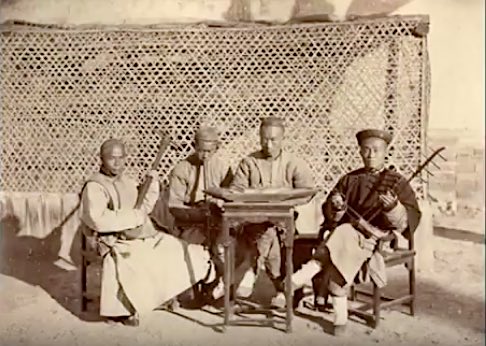

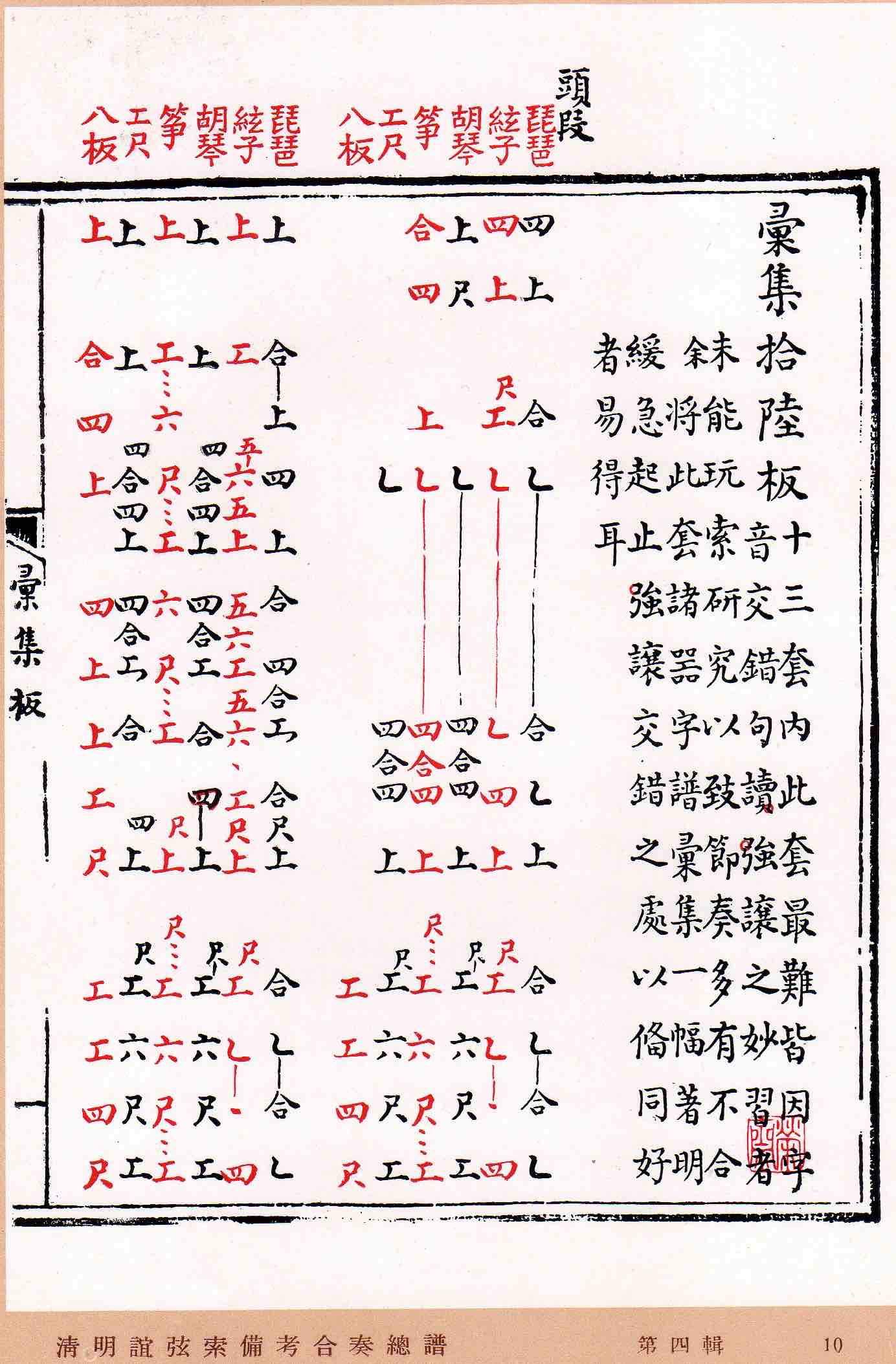
 What did persist in Beijing, both before and since the Cultural Revolution, was the amateur narrative-singing scene—a must for any aficionados of




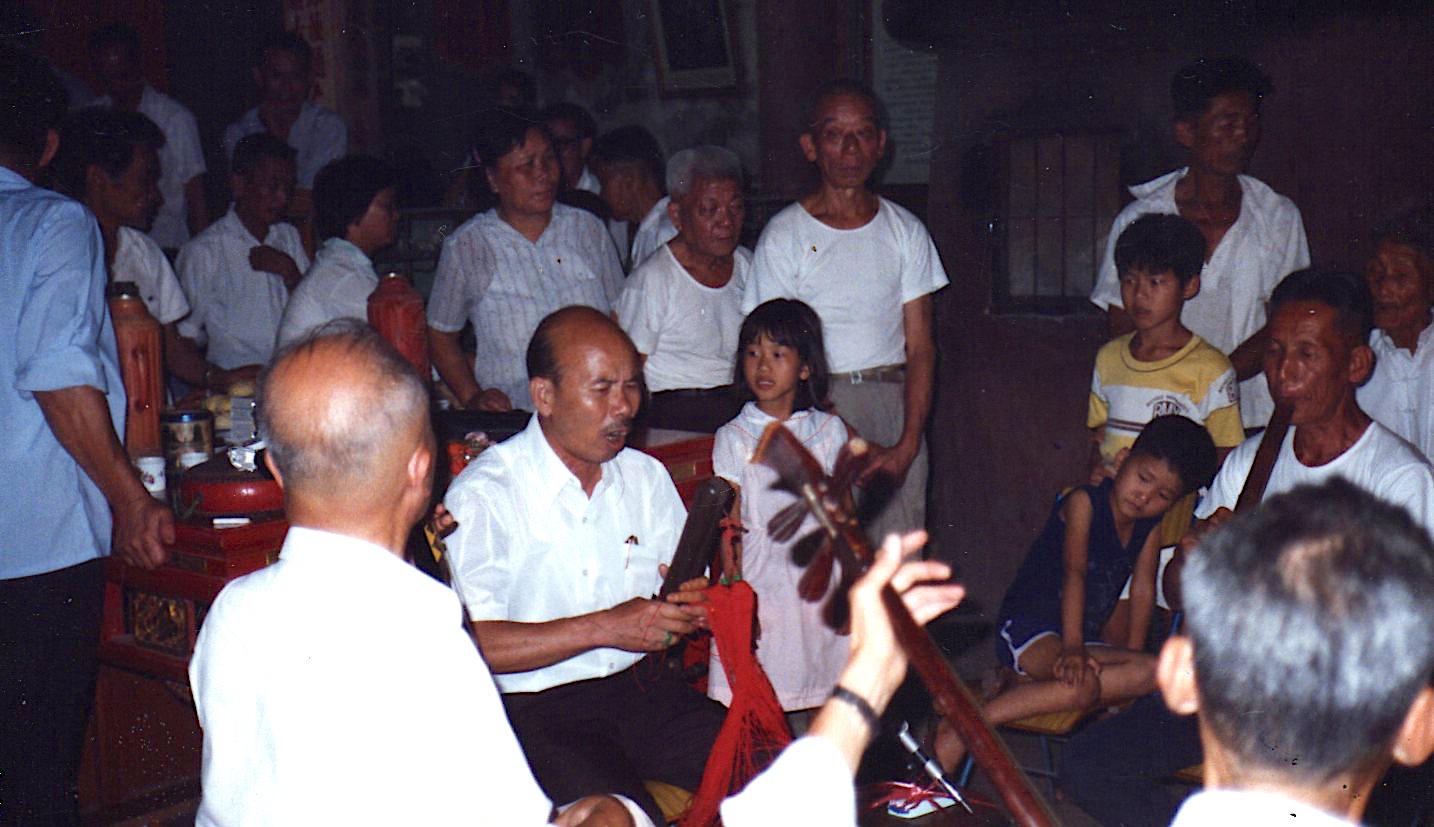

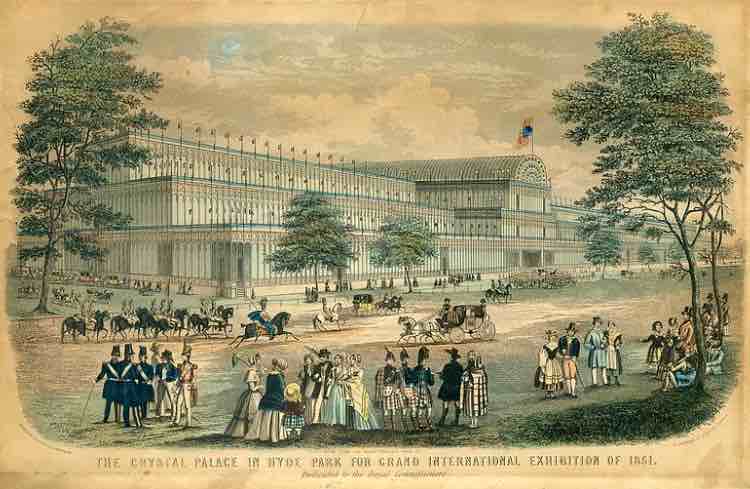


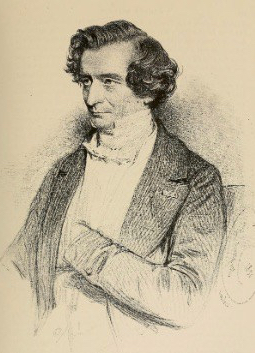


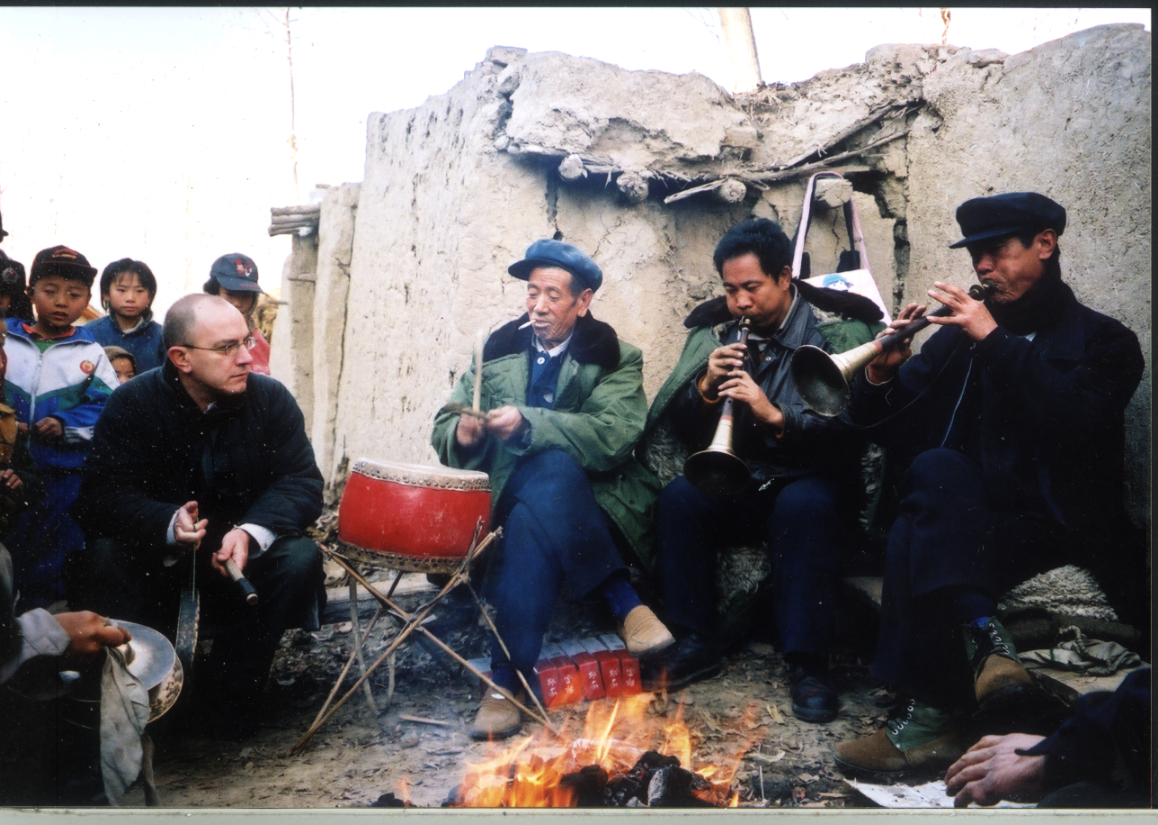


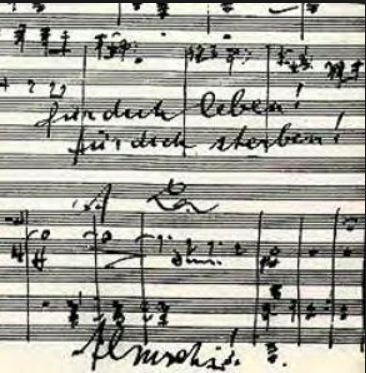


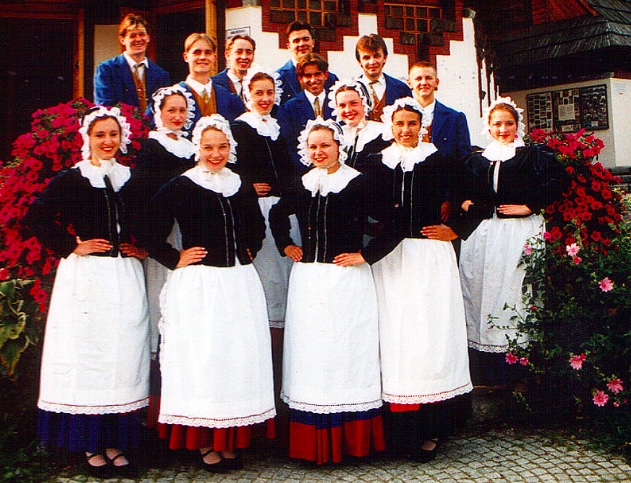


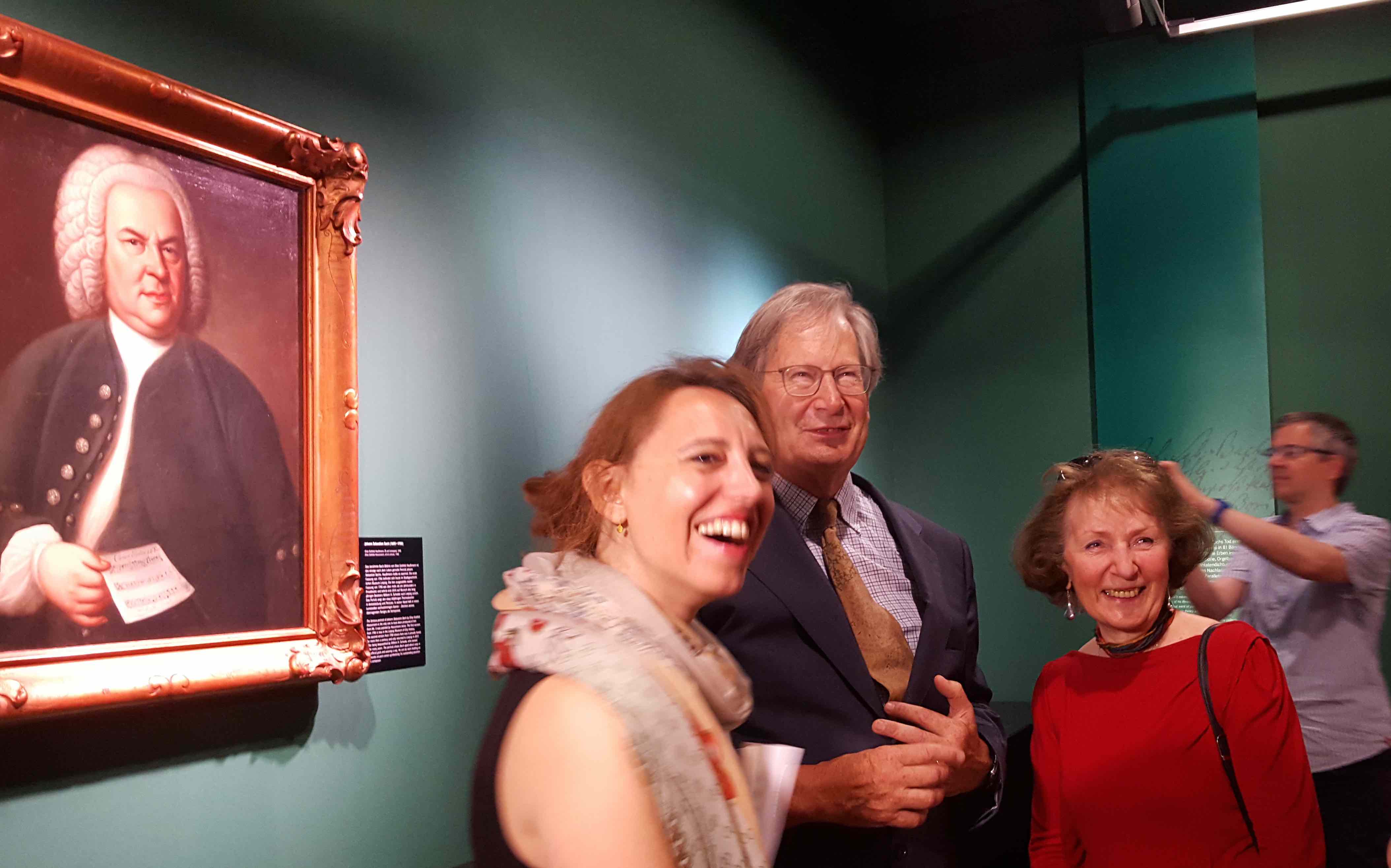





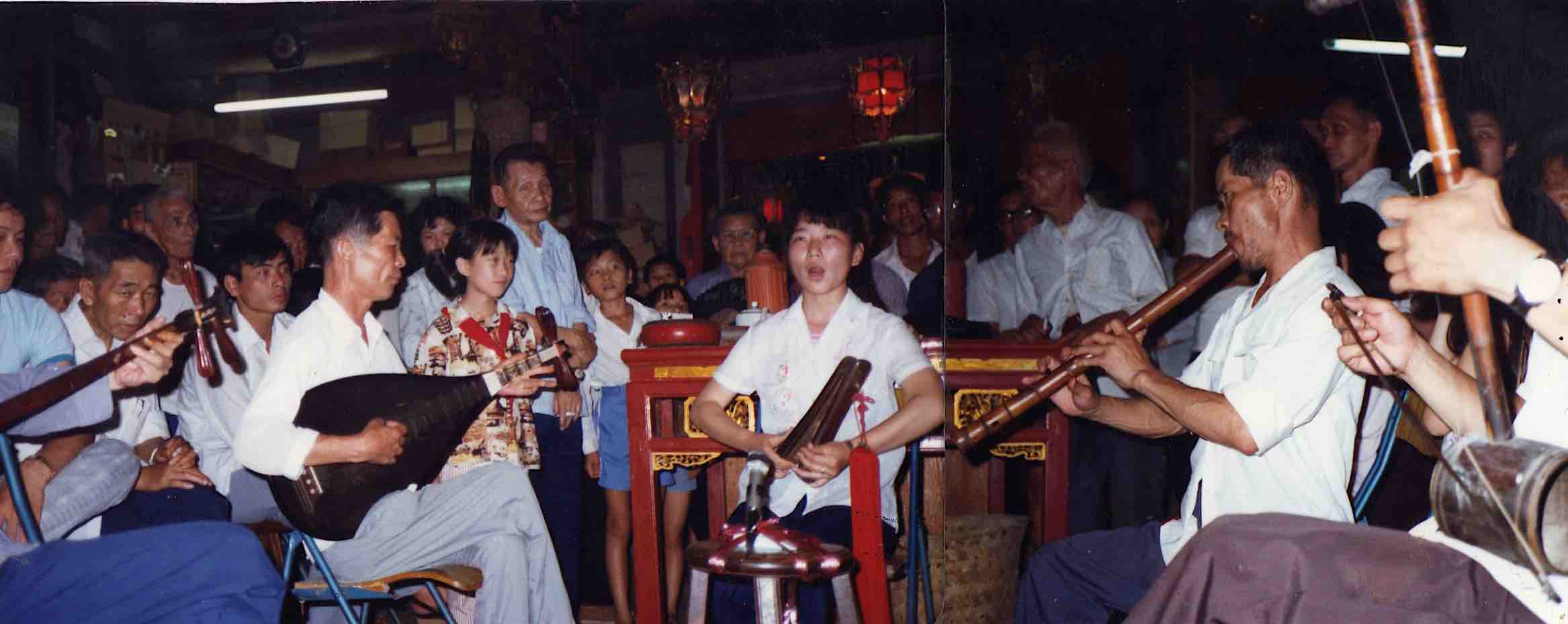


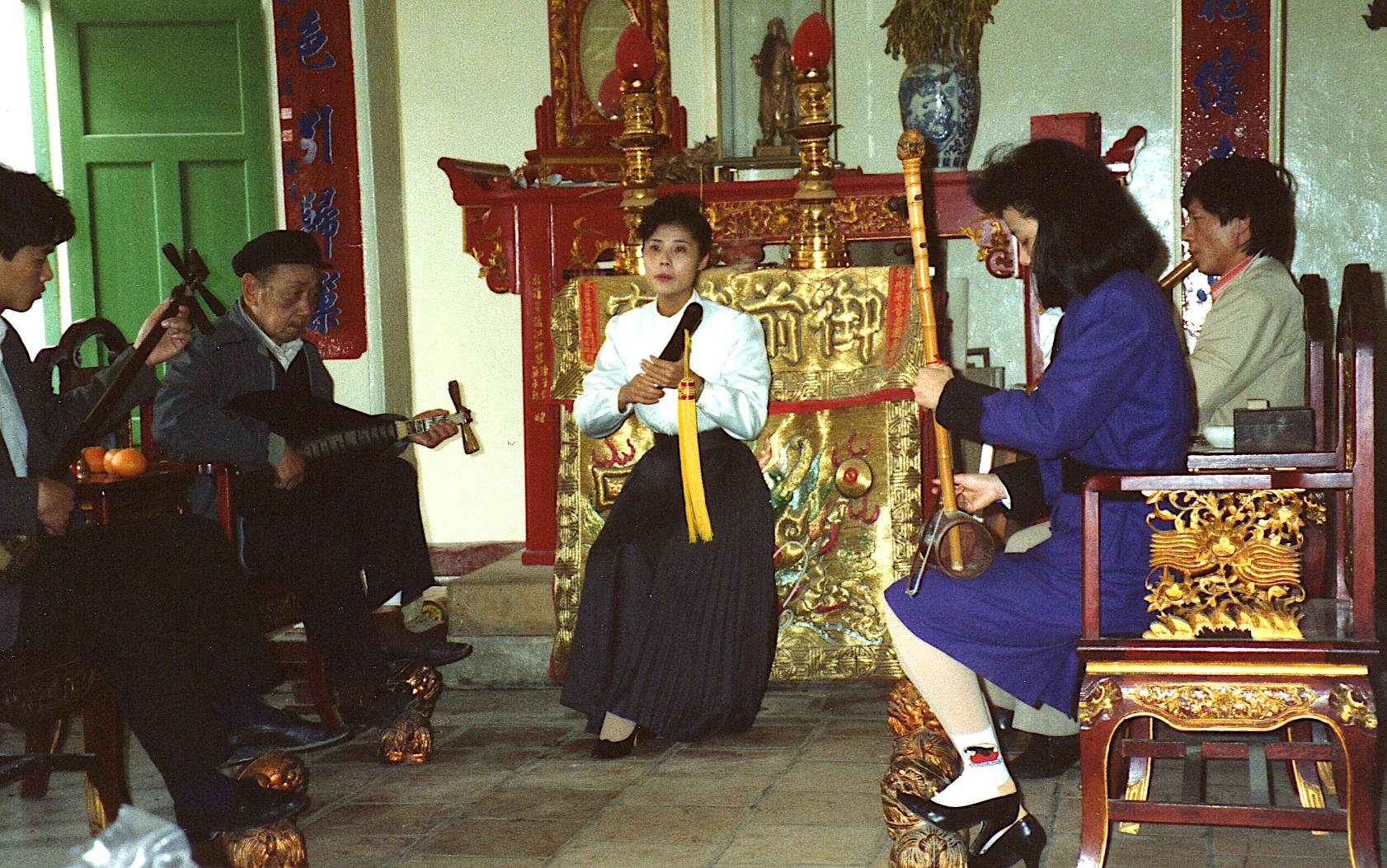
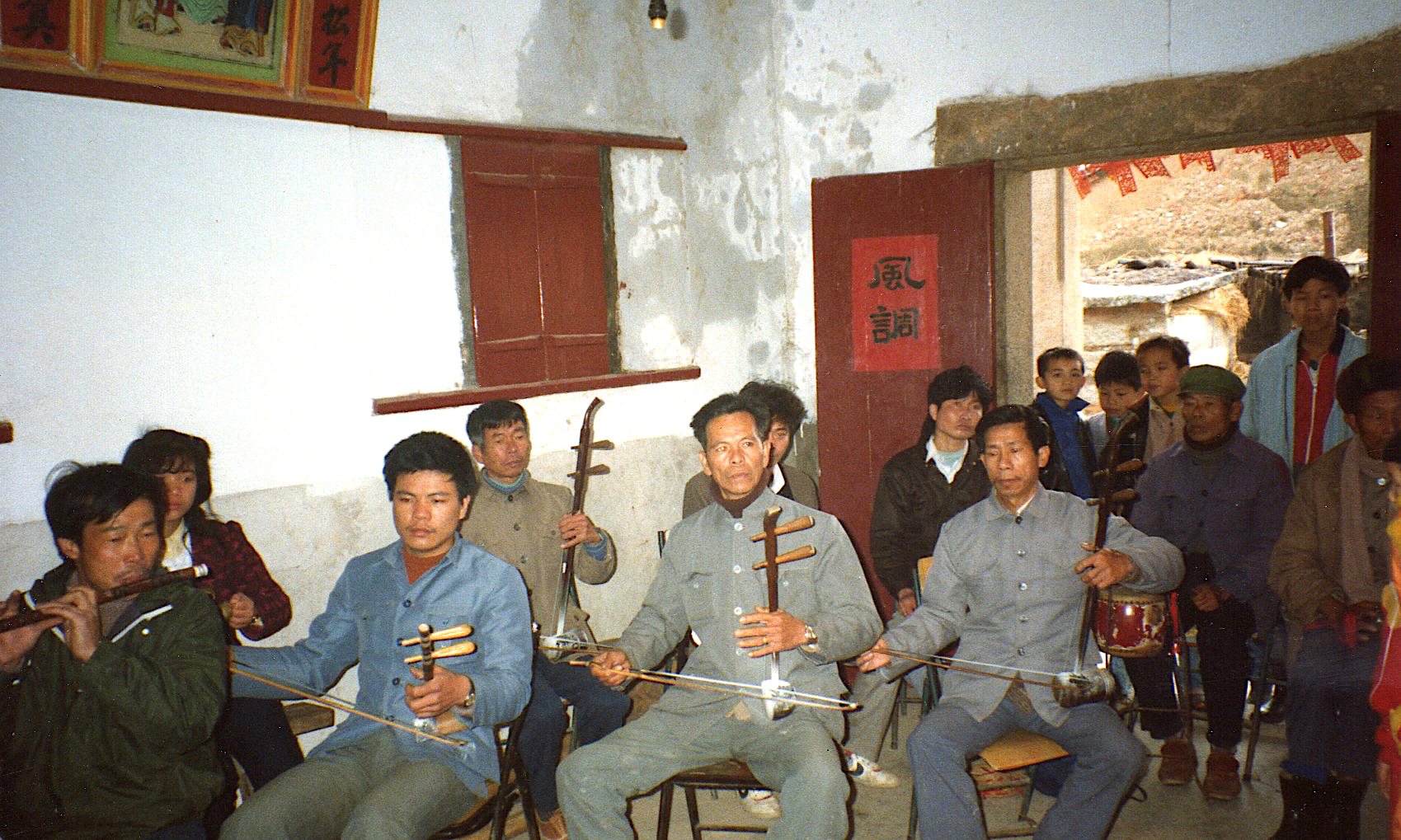

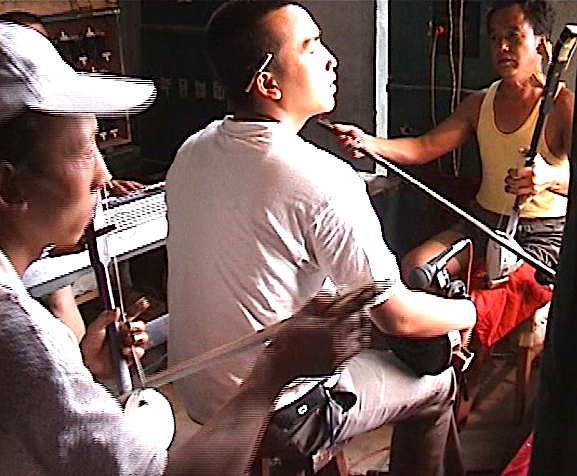

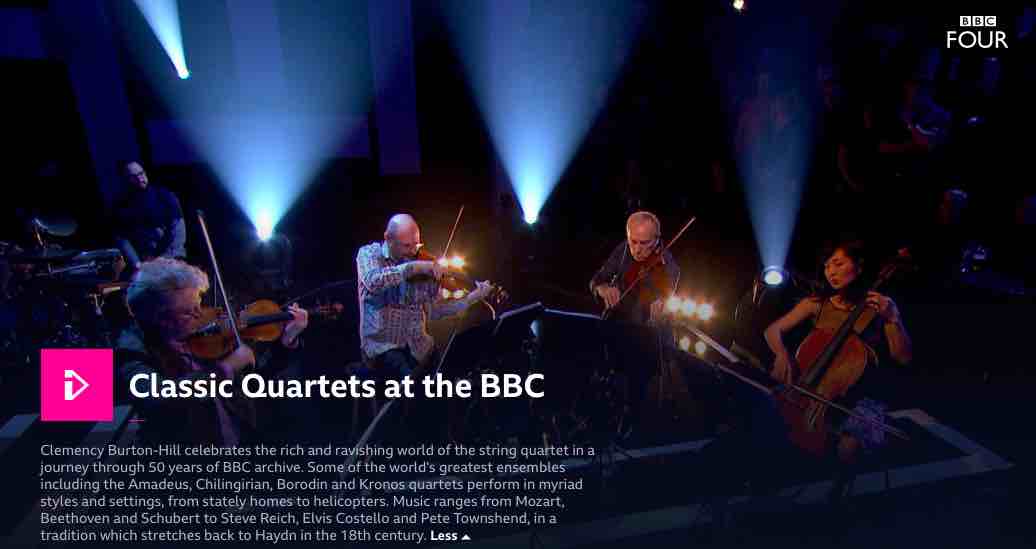


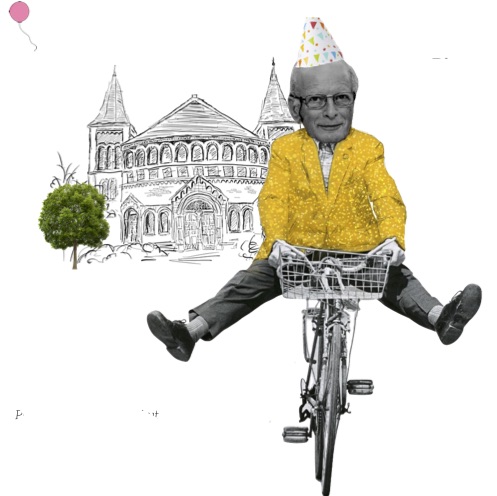
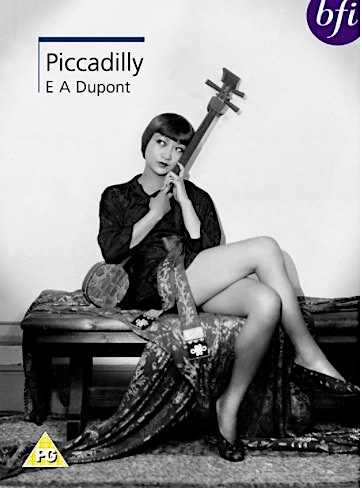
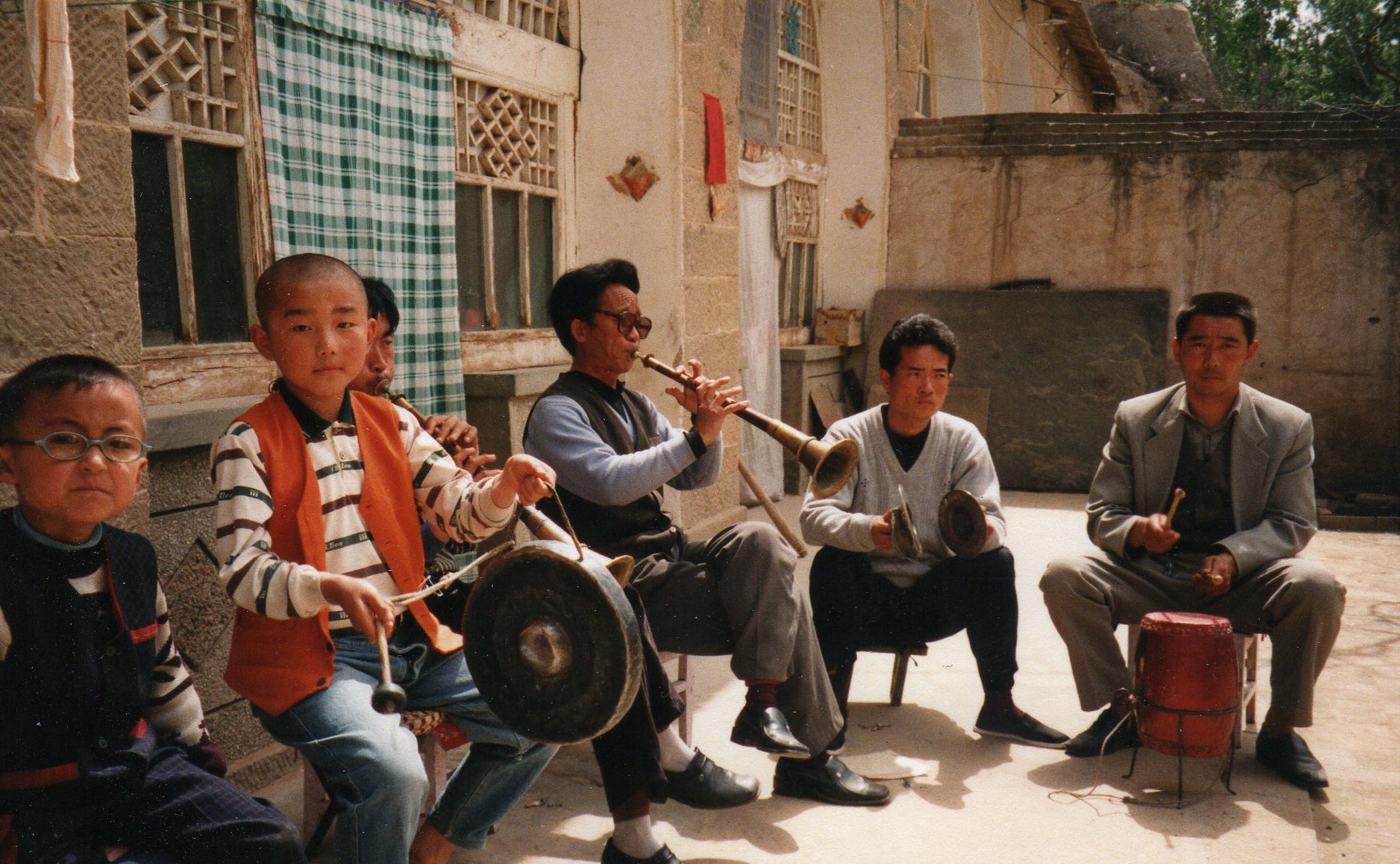


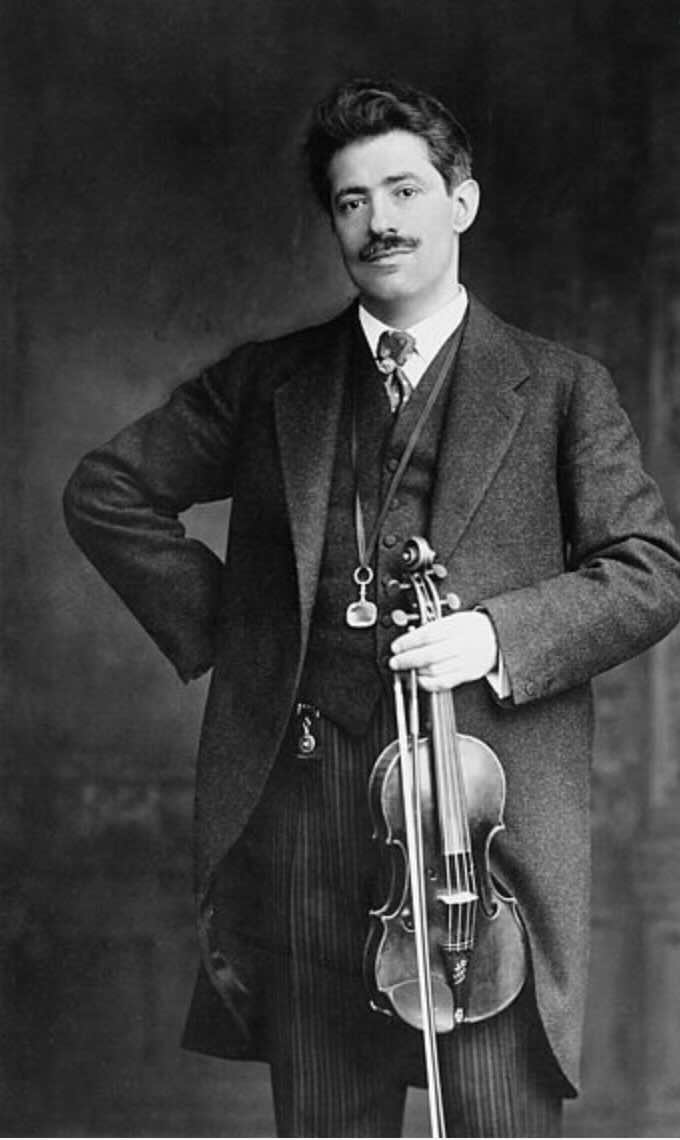
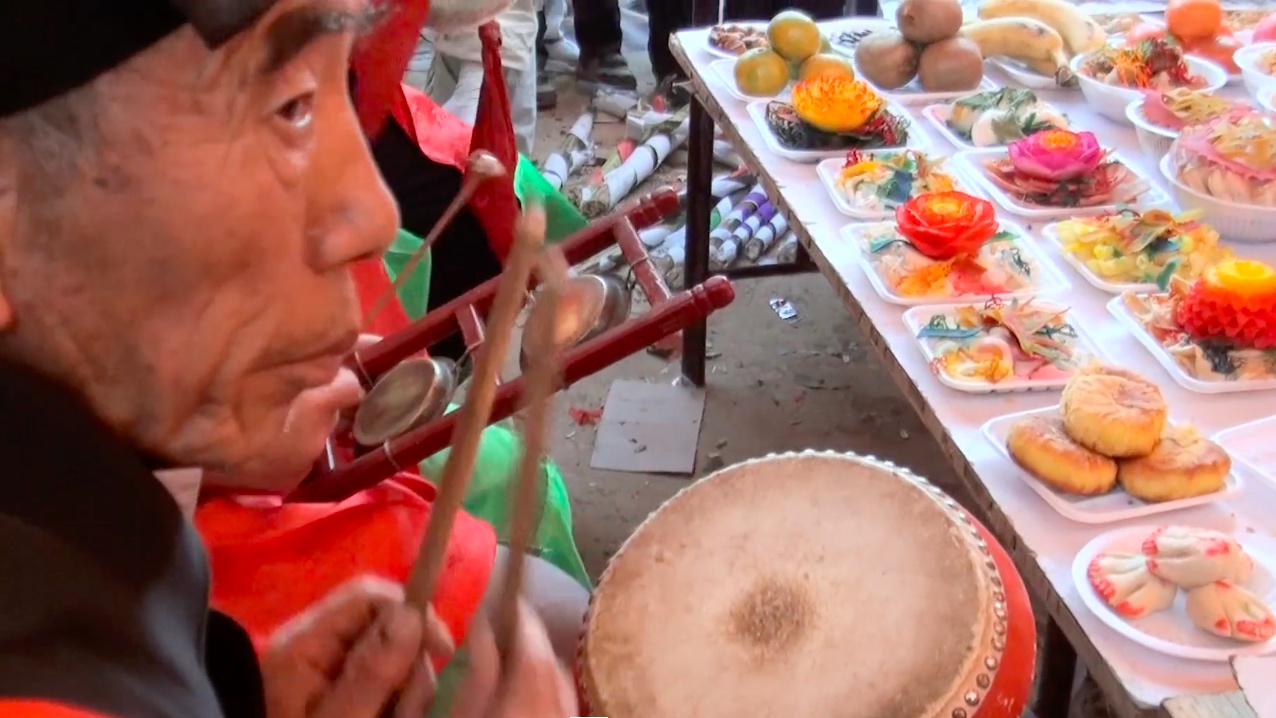


:format(jpeg):mode_rgb():quality(40)/discogs-images/A-843647-1270908146.jpeg.jpg)







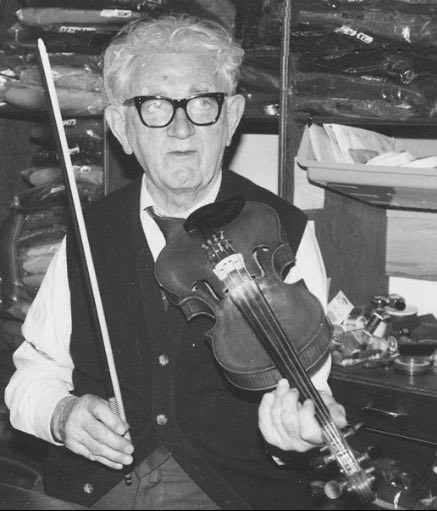
 Stephen Jones: a blog