Continuing my series on Olivier Messiaen (starting here, with most links), and following last Christmas’s offering of La nativité du Seigneur, I’m finally immersing myself in the monumental Vingt regards sur l’enfant-Jésus—composed in 1944 after Messiaen’s release from POW camp and during the liberation of Paris.
I find Joanna MacGregor’s notes a useful companion, supplementing the evocative images that Messiaen provides in the score with her own insights as a performer—pointing out flashes of boogie-woogie, Tibetan trumpets, calypso, the fluttering of angels’ wings… And regarding the birdsong that constantly decorates Messiaen’s spiritual vision, as MacGregor observes, in their proximity to God, birds can be gentle, sleepy, cheeky, melodic, hilarious, quarrelsome, triumphant. Too bad Messiaen never got to Spread the Word on Twitter …
He composed the cycle for Yvonne Loriod—her complete recording, with score, is here. Among other pianists, Jean-Rodolphe Kars has a particular affinity with Messiaen’s spirituality, as is clear from his testimony, written after he was ordained in 1981—here’s his wondrous live performance from 1976, on the eve of his conversion:
Messiaen details the themes that pervade the work:
Thème deDieu, in the unifying key of F sharp major, further enriched by Messiaen’s favourite extatique added-sixth chord
Thème de l’amour mystique
Thème de l’étoile et de la croix
Thème d’accords.
Thème deDieu at the opening.
In style, images, and material, the cycle constantly foreshadows Turangalîla, both opulent and ascetic. While all the visions are enthralling, I particularly relish
1 Regard du Père—hypnotic, with “gently reiterated C sharps in the right hand giving us the first glimpse of the gamelan”
5 Regard du Fils sur le Fils—contemplation adorned with birdsong
6 Par Lui tout a été fait—virtuosity culminating in the Thème de Dieu, victorieux et agité, combining with the Thème de l’amour mystique
10 Regard de l’Esprit de joie—equivalent to the exhilarating 5th movement of Turangalîla, “a clash of Western jazziness with Hindu dance rhythms”; here it is played by Pierre-Laurent Aimard:
15 Le baiser de l’enfant-Jésus—“the bringing-together of spirituality and sensuality: of Roman Catholic iconography and Eastern eroticism”
19 Je dors, mais mon coeur veille—the heart of the meditation, basking in F sharp major; played here by Joanna MacGregor:
—leading to the massive finale Regard de l’Église d’amour, which brings together “all the themes, angels, birds, bells, gongs, and tam-tams that we’ve heard in the previous two hours”.
Click here for a precious film of Messiaen himself improvising on the Nativity at the Saint-Trinité organ in 1985!
Sola is one of three children of Liu Jingfan, younger brother of Liu Zhidan (1903–36), a guerrilla hero in Shaanbei whose career as Red Army commander was cut short by the arrival of Mao Zedong’s Long March forces. After the story of Liu Zhidan’s fate was exposed in a historical novel by Sola’s mother Li Jiantong, in 1962 Mao not only banned the book (declaring “Using novels to engage in anti-Party activities is a great invention”), but had all those involved in its publication ruthlessly persecuted (see David Holm, “The strange case of Liu Zhidan”, 1992, and chapter 5 of Ian Johnson’s book Sparks). Even after the end of the Cultural Revolution, Li Jiantong continued to struggle against censorship as she compiled sequels.
Composition students at the Central Conservatoire, 1978.
Left to right: Liu Sola, Ai Liqun, Tan Dun, Chen Yi, Sun Yi, Zhang Lida, Zhang Xiaofu.
More images in this short documentary.
In 1977–78, as the Central Conservatoire in Beijing reopened after the death of Mao and the overthrow of the Gang of Four, Sola—already seriously cool—gained admission to the composition department, along with bright young students like Qu Xiaosong, Tan Dun, Guo Wenjing, and Ye Xiaogang. Having only recently been liberated from punishing stints of rural labour as “sent-down youth”, their studies were punctuated by fieldtrips to collect folk-song in the remote countryside of south China—an experience that now felt more revelatory (cf. Fieldworkers, Chinese and foreign).
After graduating, partly in rebellion against the establishment that contemporary Western Art Music seemed to represent, Sola chose to become a pop musician, giving concerts and composing for film soundtracks, TV, and theatre. At the same time she made a great impression with her 1985 novellas Ni biewu xuanze 你别无选择 (You have no choice), Lantian lühai 蓝天绿海 (Blue sky green sea), and Xunzhao gewang 寻找歌王 (In search of the king of singers). Her voice was
irreverent and honest, blasé and innocent, light and serious, negative and positive all at once; a voice marked by a characteristic humour that manages to be dark and yet not cynical.
By now she was the life and soul of a lively artistic scene in Beijing.
London and New York In 1987 the US News Agency invited Sola on a visit to the States—where, igniting her early interest in blues, the “King of Singers” turned out to be Junior Wells. In 1988 she came to live in London, “a challenging and precarious time”, furthering her studies without the celebrity status of her time in Beijing.
With Vini Reilly, 1988.
Working with British musicians like Justin Adams, Clive Bell, and the Durutti Column, she tasted WOMAD, performing with Mari Boine, though dissatisfied with the exotic pigeonholing of “world music”.
In summer 1989—as she witnessed the horrifying events of Tiananmen from afar—Sola deepened her devotion to blues on a trip working with musicians in Memphis (Memphis diary, 1993). Her experience of blues is a major theme of the wide-ranging, richly illustrated collection of conversations Xingzoude Liu Suola 行走的刘索拉 (Liu Suola on the move, 2001). Meanwhile she composed for Zuni Theatre in Hong Kong, and for Chiang Ching’s dance drama June snow.
Among writings from her London period is Hundun jia ligelong 混沌加哩格楞 (Chaos and all that, 1991), a novel that “both acknowledges cultural diversity and provides a darkly comic critique of it”. I’m also very fond of her paintings, like this from June 1990 (signed “Chegong”, Sola’s name in traditional Chinese gongche notation!):
After taking part in the Iowa Writers’ Program in 1992, Sola moved to New York in 1993. Immersing herself in the avant-garde scene there, she relished collaborations with musicians like Bill Laswell, Fernando Saunders, and Ornette Coleman, enjoying a freedom that had been elusive in London. This bore fruit in her wonderful 1995 album Blues in the East.
In her following New York albums such as China collage (1996) she took a rather different path. She later reinvented her exhilarating song Festival as A chicken at the country fair:
In this period she also wrote Da Jijiade xiao gushi 大继家的小故事 (Little tales of the great Ji family, 2000), perhaps her finest novel (translated into Italian and French, still not available in English), a historical fantasy based on the tribulations of her family—“part Virgil, part Monty Python”.
Back in the PRC After fifteen years abroad, by 2003 the cultural scene in China seemed promising, far from the mood when Sola had left in 1988. Still, she
cannot be associated with the many haigui’s or “sea-faring turtles” who return after working or studying abroad to flaunt their “international credentials”. Nor is working in China with Chinese music a form of cultural nationalism; such nationalism is especially easy to profess at a moment when Chinese music will sound less marginal now that China has become a dominant world power. Rather […] her work in China undertakes the almost Sisyphean task of overcoming clichéd ideas of Chinese music and the use of such clichés for propaganda.
In 2005 she appeared in Ning Ying’s film Wuqiongdong (Perpetual motion, 2005), for which she also wrote the music. Notable compositions include two chamber operas, both international collaborations. Fantasy of the Red Queen (Jingmeng 惊梦, 2006) is “a woman’s tragedy about the power of illusion and the illusion of power”, told through through the devilish persona of Jiang Qing. It draws on Berg, Schoenberg, the qin zither, Beijing opera, Kunqu, revolutionary and folk opera, and 1930s’ Shanghai pop, with snatches of jazz, tango, and hip hop. Here’s an excerpt:
The afterlife of Li Jiantong (Zizai hun 自在魂, 2009) is a deeply personal drama in which Sola receives a visitation from her mother, who takes her on a journey to the spirit world to meet her late father. Using a complex compositional scheme, Sola makes use of the kuqiang “weeping melody” style of Chinese opera, with a baroque group led by Paul Hillier among the accompanying ensemble.
From The afterlife of Li Jiantong.
Always relishing live performance, she went on to form the Liu Sola and Friends ensemble with select Chinese musicians, building on her grounding in jazz to overcome conservatoire and ideological training. And she has continued to publish, with the essay collection Kouhong ji 口红集 (Lipstick talk, 2009) and the novel Milian zhou 迷恋咒 (Lost in fascination, 2011); a new novel is on the way.
Here’s a short CCTV documentary:
* * *
Amidst the ever-changing scene in China (see e.g. New musics in Beijing, and Rock it, mom), Liu Sola’s constantly innovative mix of music, fiction, and drama is utterly distinctive; her musical and literary works, both early and later, have a cult following. She remains vivacious and young at heart, always exploring.
Besides the fascinating memoirs of Nicolas Slonimsky, you really must read his Lexicon of musical invective! An anthology of critical assaults on composers since Beethoven’s time, it cites a wealth of “biased, unfair, ill-tempered, and singularly unprophetic judgements”. *
Having mentioned the book’s magnificent “Invecticon” in The joys of indexing, in various posts I gave quotations from scathing early reviews that Slonimsky cites:
Berlioz (“lunatic… the caperings and gibberings of a big baboon’)
Brahms’s A German Requiem (“so execrably and ponderously dull that the very flattest of funerals would seem like a ballet”)
Turangalîla (“Dorothy Lamour in a sarong … Hindu Hillbillies”).
(As the glosses by a Chinese friend suggest, a wacky challenge for language learning…)
* * *
In his thoughtful prelude, “Non-acceptance of the unfamiliar”, Slonimsky reflects on critical incomprehension, under various rubrics such as racism, lack of melody, and noise.
In the minds of righteous reactionaries, musical modernism is often associated with criminality and moral turpitude.
As he observes,
A fairly accurate timetable could be drawn for the assimilation of unfamiliar music by the public and the critics. It takes approximately twenty years to make an artistic curiosity out of a modernistic monstrosity; and another twenty years to elevate it to a masterpiece. Not every musical monstrosity is a potential musical masterpiece, but its chances of becoming one are measurably better than those of a respectable composition of mediocre quality.
He cites George Bernard Shaw, writing in 1910:
It is not easy for a musician of today to confess that he once found Wagner’s music formless, melodyless, and abominably discordant; but that many musicians, now living, did so is beyond all question. […] The technical history of modern harmony is a history of growth of toleration by the human ear of chords that at first sounded discordant and senseless to the main body of contemporary professional musicians.
* * *
Slonimsky suggests parallels with critical reactions to other modernist trends, including painting, women’s suffrage, and science. Another well-covered topic that he also addresses is outrage at the rise of jazz. As early as 1899 the Musical courier exclaimed:
A wave of vulgar, filthy, and suggestive music has inundated the land. Nothing but ragtime prevails, and the cake-walk with its obscene posturings, its lewd gestures. […] Our children, our young men and women, are continually exposed to the contiguity, to the monstrous attrition of this vulgarising music. It is artistically and morally depressing, and should be suppressed by press and pulpit.
He cites the Most Reverend Francis J. L. Beckman’s address to the National Council of Catholic Women in 1938, in line with Nazi assaults on “degenerate music”:
Jam sessions, jitterbugs, and cannibalistic rhythmic orgies are wooing our youth along the primrose path to Hell!
Back in 1805, the waltz attracted similar opprobrium:
Waltz is a riotous German dance of modern invention. Having seen it performed by a select party of foreigners, we could not help reflecting how uneasy an English mother would be to see her daughter so familiarly treated, and still more to witness the obliging manner in which the freedom is returned by the females.
* Slonimsky acknowledges an 1877 antecedent in Wilhelm Tappert’s generously-titled Ein Wagner-Lexicon, Wörterbuch der Unhöflichkeit, enthaltend grobe, höhnende, gehässige und verleumderische Ausdrücke welche gegen den Meister Richard Wagner, seine Werke und seine Anhänger von den Feinden und Spöttern gebraucht worden sind, zur Gemütsergötzung in müssigen Stunden gesammelt.
By contrast, composers have been inspired by the incandescent splendour of E major (the basic key of the north Chinese ritual shengguan ensemble!—e.g. here, §2), as in
Messiaen goes even further in his devotion to the sensuality of F sharp major, such as in Turangalîla—the intimate sixth movement and the cosmic finale—and the Vingt regards sur l’enfant-Jésus. But perhaps that’s another story.
DO click on the links to listen in awe to all of them!
Given how few of his paintings survive (and how small they are!), the Essential Vermeer website is a vast repository. Covering a remarkable amount of ground in depth—with sections on Dutch and Delft painting and Vermeer’s own works, his life and family, Delft and Vermeer’s neighbourhood, maps, research guides, and much more—it leads us far beyond any narrow definition of art history.
Adelheid Rech documents in detail both art and folk musics (categories that were not yet rigidly opposed—cf. Popular culture in early modern Europe), exploring how genres and instruments were used in social life, with many audio examples.
Art music Rech addresses the musical life of the elite as depicted in Vermeer’s paintings, with a series of introductory essays followed by pages on (art) music in Delft, music for the theatre, and patrons (notably Constantijn Huygens, De Muiderkring, and the Duarte family). This leads to substantial sections on the virginal (cf. Black and white), lute, cittern, guitar, viola da gamba, recorder, and trumpet. An interview with Louis Peter Grijp reflects on art music in the Dutch Golden Age, ending with a series of audio files.
Left: A lady seated at a virginal Right: The art of painting, detail.
Folk music The scenes shown in Vermeer’s paintings only depict the realm of the Delft elite; indeed, he studiously eschewed the well-trodden path of “low life” paintings exemplified by Jan Steen:
Vermeer knew the songs and dances which were accompanied by music of the fiddle, bagpipe, hurdy-gurdy, or shawm, and the other popular instruments. We know that he was raised in his father’s inn Mechelen right in the centre of Delft on the Market Square where most of the festivities took place. Music must have been all around. The rustic low-life scenes staged in inns and taverns, peasants’ traditional festivities or private “merry” gatherings of the great Dutch/Flemish genre masters, like Adriaen van Ostade, Adriaen Brouwer, David Tenier, were familiar to all.
But Vermeer took a different route, one more artistically noble [sic] and potentially lucrative, one that brought him into contact with the refined and sophisticated daily life activities of the upper class.
So Rech does well to recreate the wider musical soundscape that surrounded Vermeer, which would have included a variety of folk musicking: these essays relate to his life, not his art.
Jan Steen, The egg dance, c1674.
First he gives a useful introduction on music and dance in Vermeer’s time, with ample reference to Susato. He then provides substantial essays on folk instruments: bagpipe (2), crumhorn (2), dulcian (3), fiddle, hommel zither, hurdy-gurdy, midwinterhoorn, rommelpot, and shawm (2)—ranging widely over time and place, with notes on construction and playing techniques. Admirable as all this is, since readers are likely to consult the site to learn about the Low Countries in the 17th century, they may find themselves impatient to reach such material.
Jan Steen, The village wedding (1653), detail; and a Delft tile with bagpiper motif.
Rech also offers a fine study of the carillon, in five parts, starting with a cross-cultural history of bells and culminating with the Nieuwe Kirk in Delft.
It seems suitable that Holland was one of the main centres for the early music revival (e.g. Gustav Leonhardt, and Ton Koopman).
I’ve already praised Stephen Isserlis’s wonderful performances of Bach cello suites, and now, as if by magic, he’s written a definitive guide:
Stephen Isserlis, The Bach cello suites: a companion (2021).
Here’s a trailer for his complete recordings of the suites (2007):
“Writing about music is like dancing about architecture”, and indeed, Steven writes about them too—but his comments are glorious, leading one irresistibly to the music, and performance. The book is intended “for music-lovers of all shapes and sizes, ranging from the casual listener to the performing musician”; by contrast with the ponderous style of academics whose worthy, voluminous research he digests so well, his chatty style feels personal and communicative rather than twee, always informed by his insights as a performer. Do also consult his website, where he writes engagingly (e.g. his fine post on Harpo).
After a brief biography of Bach, in Part 2 (“The genesis of the suites”) Steven ponders some basic questions. In “Why did Bach write the suites?” he surveys earlier works—Italian pieces for unaccompanied cello, and a German repertoire for unaccompanied violin; and he often contrasts Bach’s own violin sonatas and partitas from around the same period. He explores for whom the cello suites might have been written, and for what instrument, introducing the various types of cello then played, as well as the bow—so important in animating the music. We can’t even date the suites precisely, though they were composed during Bach’s years at Köthen, before he settled in Leipzig.
His discussion of the four early sources, and their relationships, renders arcane scholarship accessible and relevant to performance—seemingly minor differences in the notes, in slurring, and so on—illustrating the latter with the Prelude of the first suite. While making a convincing case for informed readings of the research to illuminate performance, he is amused by scholarly spats:
I am a member of various societies devoted to composers—partly because I’m interested in those composers, and partly because I find it so funny to read such things as, for instance, Professor Y’s triumphant assertion that Professor Z is quite wrong to say that Liszt arrived in Bologna on 30 October, because here is a restaurant bill from a Bologna restaurant dated 28 October. The next newsletter is then likely to contain a furious letter from Professor Z, pointing out that the 28 October bill—as all the world (except Professor Y, evidently) knows—actually dates from the previous year, when Liszt was between Modena and Imola and stopped off for lunch in Bologna between 1pm and 3pm; with all due respect (i.e. very little), Professor Z suggests that Professor Y should have done her homework, and perhaps had her eyesight checked, before making such preposterous allegations.
Steven’s account of reception history is also fascinating. While Bach’s music was not completely forgotten after his death, the cello suites were. Several editions were published in the 1820s, but they still remained accessible only to a select few. At Schumann’s behest, they were performed complete in Düsseldorf over New Year 1853–54, but any other sporadic performances were mostly of single movements, sometimes with piano accompaniment (Shock Horror). In 1879 the suites were eventually published in the Bach Gesellschaft edition. But still, their modern rediscovery came only with Pablo Casals (1876–1973), who at the age of 13 came across a (dodgy) edition in a music shop near the harbour in Barcelona, and later went on to popularise the suites throughout the world. His complete recordings from 1936 to 1939 were made at a particularly traumatic time for both Spain and the world:
In Part 3 Steven stresses the nature of the works as collections of dance movements. After outlining the history of the suite, he explains the style of the individual genres, beginning with the Prelude, then a term for improvisation, “the highest peak of performance” (Mattheson). He gives a fine exposition of the varied tempi of the “challenging” Allemandes, which were already rather distant from social dancing. Following the Courante, “like majestically beating hearts at the centre of each suite, the Sarabandes are oases of poignant calm”, far from the risqué nature of the dance’s Central American origins. After Menuet, Bourrée, or Gavotte comes the final, exuberant Gigue.
In Part 4 Steven adroitly answers fourteen FAQs, including wise comments on style and thoughts on the baroque cello, strings, and bow. On playing from memory:
I do find a music stand somehow impedes contact with an audience in these pieces. […] I did play the fourth suite once with a page-turner; but he turned consistently one movement ahead of the one I was actually playing—so I had to play it from memory after all. I found, in fact, that I could do it—so I thanked him; he’d done me a favour.
He then suggests fourteen rules for the player, beginning with Rule 1: “There are NO rules for playing this music”. Other advice includes “Don’t demonstrate your ideas”, “Dance!”, and he offers wise words on the sparing, expressive use of vibrato, as well as stressing the (often invisible) bassline, and the harmonic structure. Finally he reminds us to enjoy playing the music, with all its joy and humour.
Part 5 makes an impressive case for an underlying sacred programme behind the suites—making them effectively a suite of suites depicting the life of Christ. Here, and throughout, Steven makes insightful comparisons with other Bach works, in particular the church cantatas. Citing Ruth Tatlow, he ponders Bach’s interest in the symbolism of numbers. He then offers rather detailed programmes:
1 Nativity (with a fine analysis of the Prelude)
2 The Agony in the Garden
3 The Holy Trinity—or the Ascension
4 Magnificat—or the Presentation in the Temple
5 Crucifixion
6 Resurrection.
For the second suite he thoughtfully discusses the puzzling chords at the end of the Prelude; while admitting the possibility of decorating them in the style of the rest of the movement, he also makes an analogy with the Five Holy Wounds.
By contrast with the C major “blaze of glory” of the third suite, the C minor tonality of the fifth suite, “perfect backdrop for the unfolding of tragedy”, is echoed in other “sombre masterpieces” (the final movements of Bach’s own Passions, Mozart, Brahms, Rachmaninoff: see here). At its heart is the Sarabande, “the epitome of loneliness, desolation, despair”.
For the sixth suite,
Having darkened the sound of the cello with the tuned-down A string in the fifth suite, Bach now reaches out to the sky with a fifth string, an E string a fifth above the A—rather like those medieval master builders who developed Gothic windows, with pointed arches reaching towards heaven, letting in more light.
He likens the opening to the pealing of bells—a more authentic simile than the equally evocative image of the Sicilian marranzanu jew’s harp (a post that also includes a complete live performance of the six suites by Yoyo Ma at the Proms).
Steven continues to sing the praises of this Prelude in Part 6, where he takes the suites movement by movement, pondering nuances. For the Courante of the first suite (“a bundle of fun”) he recalls his teacher-guru Jane Cowan describing it as “a portrait of a street entertainer performing an energetic dance to the accompaniment of his pet monkey banging on a drum”; she characterised the Gigue as “drunk”. He includes notes on bowings that (as ever) are not just technical but musical too—such as the Prelude of the third suite, where he explores a conundrum in the variant sources (“Anna Magdalena has been at the wine again”). For his comments on the Sarabande of the fifth suite, click here.
As to the wonderful Allemande of the sixth suite (another alap, I’d say),
If one is thinking in terms of the recitatives that the short note-values bring to mind, there must be a certain freedom within the beat; but it is at least equally important to remember that, even though the style may be vocal in nature, it is still an allemande. […] One has to breathe in expansive, unhurried spans, perhaps imagining a moving bassline controlling the flow of the melodic current.
“The greatest cycle ever to be written for a solo cello” is completed with a Gigue of “bounding, irresistible, unquenchable joy”, with “pedal-note passages, more folk instruments, more bells, impossibly huge leaps…”
And as Steven writes, having completed this glorious cycle, Bach probably just
put down his pen and went out to rehearse, or to repair his harpsichord quill plectrums; or perhaps he settled down to a convivial dinner involving singing with his family and friends, his next masterpieces already buzzing around in his head.
The book makes a fine companion, inviting a wide audience to immerse themselves in these miraculous suites.
* * *
See also A Bach retrospective. Other fine performers who write eloquently about Bach include John Eliot Gardiner (e.g. here and here) and John Butt. Meanwhile in India, the art of dhrupad is less varied but no less profound; and the maqam/muqam/mugham suites performed throughout the Middle East and Central Asia are vast edifices. See also Unpacking “improvisation”.
As defined in ethnomusicology, zithers are diverse. In my recent post I outlined the various zither types under the Sachs-Hornbostel system: bar, tube, raft, board, trough, frame. Worldwide, plucked zithers are common (note the “Zither” entry in The New Grove dictionary of musical instruments), but bowed zithers seem quite rare. Half-tube board zithers, both plucked and bowed, are distinctive to East Asia.
Anna Þórhallsdóttir playing the langspil. From wiki.
The Inuit tautirut is a zither whose bow is a strip of whalebone resined with spruce gum; the Icelandic fiðla and langspil have enjoyed a revival (see here).
Its precursor was the scheitholt, dating back to the 14th century—which might lead us down the path of early north European zithers like the hummel and épinette de Vosges, as well as the Appalachian dulcimer (see this article on the excellent Essential Vermeer site, which I introduce here); and moving further east, the cimbalom family (including the tsymbaly of Hutsuls in Ukraine), as well as a wealth of Baltic psalteries!
From The New Grove dictionary of musical instruments, “Zither” entry.
The Alpine zither is sometimes bowed as well as plucked. Here’s an example:
I’m drawn to the Alpine bowed zither by a personal connection. Rudi Rieber (1934–2004), father of My Brilliant Friend Augusta, taught himself to play the Konzertzither in his youth.He was brought up in Winterlingen in the Swabian Alps south of Tübingen. There, as his daughter explains:
My watchmaker grandfather Wilhelm had a clock-and-silverware shop. One day around 1940 a gypsy woman purchased something there, for which in return she offered to barter her zither. My father Rudi, then 5 or 6 years old, watched her demonstrating how it was to be played, both plucked and with the bow. Later he also taught himself to play the violin, guitar, and mouth-organ.
Left, Rudi Rieber, 1994;
right, Rudi’s grandson Selim, 2000, at the age of 7,
shortly before he followed the path of jazz/rock/pop drumming…
In 1994 Rudi recorded a series of songs for his 60th birthday, inviting his former classmates. His spoken introduction reflects a sense of responsibility towards a tradition under threat. Recalling his childhood after the NSDAP took control of the municipality in 1933, he commented:
We were fortunate to still be taught many of these beautiful songs, and we can be happy that this treasure has been given to us. We are grateful to our teacher H.C. Seeger, who understood how to enrich our entire life—in times when folk-song was under the threat of being misused and replaced. With this recording I am attempting to weave a thread of our tradition from half a century ago down to today.
All this was in tune with the Wandervogelyouth movement from 1896. In protest against industrialisation, its ascetic devotees immersed themselves in the countryside, communing with nature; and Volkslied was at the heart of the movement. The Wandervogel groups were outlawed by the Nazis in 1933; so while it’s not immediately audible, we might almost regard the maintenance of this repertoire as a kind of underground preservation.
Augusta’s intrepid explorations of her father’s repertoire reveal how early and regional folk traditions became interlaced with the world of Mozart and Mahler.
The early-19th-century collection Des Knaben Wunderhorn had a pervasive influence on German identity, and on both folk and art cultures. Songs that Rudi played from this repertoire include Jetzt gang I ans Brünnele, a Swabian folk-song documented by the composer Friedrich Silcher (1789–1860):
Es, es, es, und es, es ist ein harter Schluss is a satirical apprentice’s song from the Wanderjahre repertoire (cf. Mahler’s Lieder eines fahrenden Gesellen settings). The wiki entry on Es, es, es… details its reception history since the 19th century—this was one song that the Nazis did readily adopt, “apparently apolitical, describing the grievances of the previous century”, its catchy melody suitable for marching.
Among other pieces that Rudi recorded, Wenn alle Brünnlein fließen is a 16th-century antecedent—again apparently Swabian—of Ein Mädchen oder Weibchen from Die Zauberflöte; Mozart also set Komm lieber Mai und mache.
With the rich overtones, and the use of the bow, the material takes on a shimmering, ethereal patina. Here, after a plucked prelude, like an Alpine alap, Rudi adds the bow for a Schuhplattler dance:
This is the kind of domestic musicking quaintly evoked here:
* * *
Intriguingly, the piano is classified as a zither (Not a Lot of People Know That…)! Further to John Cage’s innovative use of the instrument, Stephen Scott (1944–2021) was a pioneer of the bowed piano. Here’s his Entrada:
Ha! There’s one angle that the ever-inventive Augusta, a fine pianist trained in Paris, still has to explore…
I’ve focused here on bowed zithers—but all right then, I guess we have to play out with the theme from The third man (1949), iconic soundtrack to an iconic film, plucked by Anton Karas:
The opening melody makes another worthy addition to my list of Unpromising chromaticisms (“write a staggeringly popular tune using only the five semitones within the range of a major third, with two chords”):
Long before the “gig economy”, the term gig was widely used in circles such as jazz and WAM. I’m fond of the story about the late lamented Linda Smith chatting with her mum.
The New Grove dictionary of music and musicians gives a succinct, dry definition:
a term commonly applied to a musical engagement of one night’s duration only; to undertake such an engagement.
Gig is slang for a live musical performance, recording session, or other (usually paid) engagement of a musician or ensemble. Originally coined in the 1920s by jazz musicians, the term, short for the word “engagement” [?], now refers to any aspect of performing such as assisting with performance and attending musical performance. More broadly, the term “gigging” means having paid work, being employed.
Every job is a “gig” today. Calling your job a “gig” is a way of saying “I’m not really emotionally invested in my job, which I find boring and soulless, and I’m only doing it so I can act/write novels/play jazz saxophone on the weekends”. And it’s not just laconic “baristas” at Starbucks. I’ve heard corporate lawyers describe their positions as “gigs”.
Commonly cited is a 1926 Melody maker article, whose byline reads, “One Popular Gig Band Makes Use of a Nicely Printed Booklet”. But The jazz lexicon goes further:
According to jazzman Eubie Blake, bandleader James Reese Europe used the term in its jazz sense as early as c1905; widely current since c1920.
While the use of the term in the jazz world since the early 20th century is widely attested, there are many interesting suggestions about its earlier usage, which remain controversial. The Oxford English dictionary suggests (*Sexism watch!*):
The meaning of the term “gig” is transferred from the deprecatory term for a “flighty girl” and subsequently indicates anything which whirls, or is dangerous or unpredictable.
Word detective has more, alas without giving a source:
The first incarnation of “gig,” around 1225 [?!], was to mean “a flighty, giddy girl,” although this sense may well have been based on an earlier sense of “gig” meaning “something that spins or whirls” (as later found in “whirligig”). The Oxford English Dictionary suggests that “gig” may be onomatopoeic or “imitative” in origin, meaning that the word itself was meant to suggest something small that whirls. This sense of “gig” later came to also mean “an odd person, a fool” as well as “a joke” or “a state of boisterous merriment and fun” (“in high gig”).
This sense leads to an etymology from “giggle”, having some fun.
By the late 18th century, gig commonly referred to a light, one-horse carriage, popular in New Orleans; by extension,
The thought is that black musicians, in order to avoid being arrested for playing on the street, would instead play jazz on the back of carriages or trucks.
I’m most attracted to two possible musical derivations from gigue (jig), or geiger fiddle. GIG has also been claimed as an acronym: God Is Good, or Get It Going.
Stackexchange thickens the plot bewilderingly by citing the Dictionary of American slang (1960):
gign. 1 A child’s pacifier or any object, as a cloth square, spoon, or the like, used as a toy; any object to which a small child is attached and with which he likes to play; any object treated by a child as a fetish; a gigi or ju-ju. Orig. Negro slave and Southern use. From “gigi,” the word is very well known to about 35% of the population, unheard of by the rest.2 [sometimes taboo] The rectum. From “gigi.” Used euphem. by some children, as part of their bathroom vocabulary, but not common to all children. Used by some male adults [taboo] as a euphem. for “ass” in such expressions as “up your gig.”3 [taboo] The vagina. From “gigi.” Not common. Prob. Southern use.4 A party, a good time; esp. an uninhibited party; occasionally but not often, an amorous session, necking party, or even a sexual orgy between a man and a woman. c1915 [1954]: “Cornet players used to pawn their instruments when there was a lull in funerals, parades, dances, gigs and picnics.” L. Armstrong, Satchmo, My Life in New Orleans, 100. 1958: “Life is a Many Splendored Gig,” a song title. 5 A jam session ; a jazz party or gathering of jazz musicians or enthusiasts. Orig. swing use. 1920 [1954]: “Kid Ory had some of the finest gigs, especially for the rich white folk.” L. Armstrong, Satchmo, My Life in New Orleans, 141. 6 Specif., an engagement or job for a jazz musician or musicians, esp. for a one-night engagement. 1950: “If I ask you to go out on a gig, it’s thirty-five or forty dollars for that night.” A. Lomax, Mr. Jelly Roll, 204. 1954: “On a gig, or one night stand.” L. Armstrong, Satchmo, My Life in New Orleans, 221. 7 Something, as a jazz arrangement, that is satisfying or seems perfect. Orig. swing use.8 A fishing spear; a pronged fork as used for catching fish, frogs, and the like. 1946: [citation omitted]. 9 An unfavorable report; a demerit; a reprimand. Army and some student use since c1940. The relations, if, any, between a child’s pacifier or fetish, the rectum and vagina, a party, a sex orgy, jazz music, a pronged fork, and a reprimand are most interesting, and lie in the field of psychology rather than of etymology.
After university, during my few years as a regular extra with the BBC Symphony Orchestra, the standard romantic classics took a back seat to the avant-garde repertoire. The orchestra’s focus on contemporary music was a feature of William Glock’s tenure as BBC Controller of Music, particularly from 1971 with Pierre Boulez as principal conductor.
While I was well up for new repertoire, not all of it was inspiring. Concerts at the Royal Festival Hall and the Proms offset the orchestra’s studio recordings at Maida Vale, but many players felt that in taking a steady 9-to-5 job they had sacrificed their hard-earned skills at the altar of modernity. The canteen breakfast was often the high point of the day. As principal horn player Alan Civil recalled,
We did about 80% modern and 20% classical. The awful tragedy, for the orchestra, was that eventually we were not able to play the standard classics. We could sight-read the most fearsome contemporary piece, but a Brahms symphony—embarrassing!
So apart from the occasional Mahler, my most memorable experiences with the band were playing lesser-known early 20th-century works like the Scriabin piano concerto (with Viktoria Postnikova and Gennady Rozhdestvensky!), Bax’s Tintagel—and the Lyric symphony by Alexander Zemlinsky (1871–1942) (see here, and wiki).
A protégé of Brahms—their clarinet trios were paired at this year’s Proms—Zemlinsky went on to thrive in Vienna, working with Schoenberg, his brother-in-law. He was among Alma Schindler’s suitors before she married Mahler in 1902. In 1905 (the year after the premiere of Ravel‘s Shéhérazade, FWIW), Zemlinsky composed his symphonic poem-fantasy Die Seejungfrau:
Written partly to exorcise Zemlinsky’s failed relationship with Alma, Die Seejungfrau was premiered in Vienna at the same concert as Schoenberg’s Pelleas und Melisande. The latter is another fine piece that I relished in Boulez’s interpretation with the BBC—here he conducts it with the Gustav Mahler Youth Orchestra in 2003 (the same group later played it under Abbado in the Musikverein). Apart from Debussy and Schoenberg, Maeterlinck’s 1892 play also inspired Fauré and Sibelius. As Paul Griffiths writes,
Set in Arthurian times and in a remote, decaying castle by the sea, the play chimed with its period’s taste for fairy-tale fantasy in medieval decor. But it also brought to the stage people who, adrift from their feelings, cannot fully express themselves, people with multiple and contradictory levels of personality, such as psychology was beginning to psotulate at the time. […] The action demanded music—to expound what the characters cannot, and yet to preserve the mood of implication, veiling uncertainty.
Schoenberg was full of praise for Zemlinsky, as in this 1949 talk. Critics weren’t always so keen on Schoenberg. It’s always sobering and entertaining to consult Slonimsky‘s Lexicon of musical invective—here’s a review of the first performance:
Schoenberg’s symphonic poem Pelleas und Melisande is not just filled with wrong notes, in the sense of Strauss’s Don Quixote; it is a fifty-minute long protracted wrong note. This is to be taken literally. What else may hide behind these cacophonies is quite impossible to find out.
After holding conducting posts in Vienna, Prague, and Berlin, Zemlinsky fled Nazism in 1938, making his home in New York, where his work attracted little attention. The Lyric symphony (which inspired the Lyric suite of Alban Berg) dates from 1923, with Rabindranath Tagore’s poems sung by soprano and baritone:
In my post on Erich Korngold, I mentioned Richard Taruskin’s 1994 essay “The golden age of kitsch”, where he reviews CDs of Korngold’s Das wunder der Heliane and Ernst Krenek’s 1937 “jazz opera” Jonny spielt auf [Jonny goes to town, or Jonny strikes up]. So here I’ll introduce the latter.
Alex Ross (The rest is noise, Chapter 6 “City of nets: Berlin in the 20s”) provides background.
For a little while in the late 20s, Krenek acquired certifiable, almost Gershwin-like celebrity. […] Like so many young Austrians and Germans, he yearned to break out of the hothouse of Romantic and Expressionist art, to join the milling throngs in the new democratic street.
Taruskin’s typically polemical essay is worth citing at some length.
The Nazi concept of artistic degeneracy was incoherent and opportunistic, and so is Decca/London’s marketing strategy. It took very little to run afoul of the Nazis then, and it costs very little to deplore them now. Their opposition, especially when it was passively incurred, conferred no distinction, unless their approval is thought to confer distinction on the likes of Beethoven or Wagner. There are no lessons to be learned from studying the Nazi index of banned musical works, which, like the Nazi canon, contained masterpieces, ephemerae, kitsch, and trash, covering a wide stylistic and ideological range. […]
So just this once let’s forget the Nazis. They had nothing to do with Krenek’s opera or Korngold’s opera. They didn’t even ban them. They didn’t have to ban them, for both works had fallen out of the repertory by 1933. […]
What makes these first [CD] releases fascinating is not what they have to say about the Nazis but what they have to say about the artistic atmosphere of the Weimar Republic, which had a thriving operatic economy—the last truly thriving, that is, consumption-driven, economy in the history of opera. Composers wrote for a market. Their work was in demand. They strove not for eventual immortality but for immediate success. Producers could recoup their investment in new works and sometimes exceed it, so they sought out new works. Premieres were more noteworthy than revivals, and commanded the interest of the press.
Was this a degenerative ecology? Did it lead to exploitative “populist” formulas, or to weak imitation? No, it was synergistic; it led to experimentation and to emulation, with the aim of surpassing previous standards of novelty and distinction.
He goes on to note the great success of operas like Berg’s Wozzeck (for Lulu, see here). But even more popular was Krenek’s Jonny spielt auf. Still, Taruskin describes what strikes me as a common trait of WAM until the late 19th century:
Sudden eclipse was part of the bargain. An opera had its place in the sun if it managed to earn one, and then it moved out of the way.
He attributes the waning of this nurturing operatic ecology to the talkies:
The movies did not only preempt the operatic audience. At a profound level, the movies became the operas of the mid- to late 20th century, leaving the actual opera houses with a closed-off museum repertoire and a specialised audience of aficionados, rather than a a general entertainment public hungry for sensation. With the advent of the sound film, opera found its preeminence as a union of the arts compromised and its standing as the grandest of all spectacles usurped. […]
Cinematic transport to distant times and climes was instantaneous. Evocative atmosphere, exotic or realistic, could be more potently conjured up on film than on the best-equipped operatic stage, and the narrative techniques of the movies were unprecedentedly flexible and compelling. […]
But wait, isn’t there another difference, a bigger one? Opera, however, popular, remains an art, while movies, or at least Hollywood movies, are a mass-produced and mass-reproduced medium and amount only to kitsch. Or so we are told. I am not so sure.
The operatic world from which Korngold and Krenek emerged, like the wider world of art in the period following the Great War, was a bitterly divided world. The division was not simply between stylistic radicalism and conservatism, or between a liberating iconoclasm and a hidebound tradition, though that is how a stubbornly Whiggish historiography continues to represent it. Nor was it primarily a division between a senile romanticism and a new classicism, as so many artists of the time liked to say. It was, rather, a difference in the way that art was viewed in relation to the world.
Citing the early Soviet critic Boris Asafyev:
An authentic modern music would have to be “nearer to the street than to the salon, nearer to the life of public actuality than to that of philosophical seclusion”,
Taruskin goes on to contrast the operas of Korngold and Krenek:
Though they are being marketed now under a crude common rubric, they embodied antithetical values.
“Now-opera” was not simply a matter of contemporary action, of references to current events and American pop-genres (shimmies, tangos, blues, Negro-spiritualen) and pop-timbres (sax, banjo), though these were the grounds for Jonny’s immediate audience appeal and its subsequent (misleading) reputation as a “jazz opera”. Its main novelty was irony: the clash between the ephemeral content and the “classical” form. And this implied another, more fundamental clash: in place of the music of timeless inner feeling, its unabating fluidity of tempo dissolving chronometric reality, there was now to be a music that proceeded just as unabatingly through through busy ostinatos at what Krenek at one point labelled “schnelles Grammophon-tempo”, emphasising uniformity of physical and physiological motion and banshing psychology. It was a music of corporeal elation and spiritual nihilism, a tonic for the tired and the disillusioned, for people who felt betrayed by the lie of transcendence. It was, in short, the music not of America but of “Americanism”. And so the now-opera was not really sachlich after all but still märchenhaft, embodying not a new reality but a new fairy tale, a new allegory and, yes, a new kitsch.
In Jonny spielt auf, the first now-opera, the allegory is overt and sledge-hammer-subtle. The protagonist is not the title character—a negro band-leader vaguely modeled, it seems, on Sam Wooding, whose Chocolate Kiddies Revue swept Germany in 1925–26—but Max, a Central European composer of traditional transcendental bent.
As the glacier-like Max pursues banjo-playing operatic diva Anita (an evocation of Anna Mahler, to whom Krenek was briefly married), Jonny attempts to steal the enchanted Amati violin of Daniello, a slick, matinee-idol classical virtuoso.
A tiny leitmotif, just a descent through the interval of a fourth to a downbeat, pervades everything. (Anyone who has heard Ravel’s “jazz”-tinged L’enfant et les sortilèges of 1925 will recall this very distinctive idea as the “Maman!” motif. Did Krenek?).
Finally Max, his glacier persona melting, sets off with Anita for America, whither Krenek followed in 1938.
Here’s a playlist of excerpts:
Actually, the opera is far from the accessible populism of The threepenny opera (1928), and jazz plays a very minor role—not least because when Krenek “conceived his libretto, he had never met a Negro or an American”. What he set out to provide was “a hope-inspiring Pied Piper, or a latter-day Papageno, as alluringly Other as possible”.
The everyday, the ephemeral, and the phenomenal […] could function convincingly within the world of opera only as an exotic import. By its very presence, it was exceptional, numinous, and threatening. So now-opera was stil, opera. It could only be a special case, a subgenre; and it could not escape the fate of the genre as a whole.
Taruskin finds the opera dubious politically too:
The freedom celebrated at the end of Jonny spielt auf is only the freedom to seek new masters, to submit to a new hypnosis.
He notes the tendency to forgive both the operas of both Korngold and Krenek their cynicism.
The indulgence, it seems pretty clear, is purchased courtesy of the Nazis. Take away their seal of disapproval, and we are left not with easily dismissed “degeneracy” but with decadence, which is more real, more disquieting, and much harder to get a grip on.
This was the downside of the thriving consumer culture that, in our day, with opera a walking corpse, seems at first so enviable. But this was a culture of frisson and titillation posing as a culture of liberation and uplift.
Going rather far in imputing a moral purpose for “serious music” (“The danger of Taruskin”?!), he suggests:
However it may tickle our sense of irony to contemplate it, and even if we choose to excuse its practitioners on grounds of naïveté or sincere bad taste, it entailed a lack of moral purpose that rendered the “serious” arts defenceless against totalitarian rhetoric, and passively complicit in its triumph.
Given Krenek’s hazy acquaintance with the world he was evoking, it’s worth reminding ourselves of the Real Thing (more leads under Clarke Peters’ radio series on black music in Europe): here’s the Sam Wooding band with Shanghai shuffle in 1925 Berlin (leading us nicely to Shanghai jazz):
and the Chocolate Kiddies in 1933:
Note also the post about Jonny spielt auf on the stimulating site Black Central Europe.
A cuckolding libertine pushes the husband of his mistress to his death in the cogs of a monstrous machine and strangles her when he finds out she has become a promiscuous prostitute, whereupon the foreman, Machinist Hopkins, dismisses him from his job, ostensibly for inefficiency.
In China, the “orthodox” vocal liturgy of both Buddhist and Daoist temples has been thought to be properly accompanied only by ritual percussion (see e.g. here, and here)—just as in Islam and Christianity.
Although many temple and household ritual groups further incorporate melodic instrumental ensemble, the core practice among household ritual specialists is vocal liturgy with percussion.
For the Li family Daoists in north Shanxi, see my film, and e.g. The Invitation ritual, Pacing the Void 2, and audio tracks ##1–3 on the playlist (in the sidebar, with commentary here). Other instances of vocal liturgy with percussion include the Daoists of Changwu (Shaanxi), the performance of “precious scrolls” in Hebei (playlist #7), as well as ritual groups in Jiangsu and all around south China. So in order to understand religious practice in China, we must take into account how ritual texts are performed—through singing.
Further west, note Byzantine and Gregorian chant cultures, and examples from Eritrea and Athos, as well as Ukraine. Around the world, a cappella singing (both liturgical and secular) is perhaps the dominant means of expression; see e.g. Sardinia, and Albania.
Some of these styles even dispense with percussion, and a cappella singing is a notable feature of religion-inspired WAM —some instances:
Some of the WAM pieces were composed for church services (and I haven’t even begun to broach the riches of Bach motets…); but as we move through the 19th century, pieces also began to be written for the quasi-secular setting of the concert stage.
Change of tone: for the Bolton Choral Society’s unsuccessful attempt to summarise Proust, click here.
Among the highlights of this year’s Proms was John Wilson‘s stimulating programme with the reborn Sinfonia of London.
After Johann Strauss’s Die Fledermaus overture (a favourite of the incomparable Carlos Kleiber), Francesca Chiejina sang the exquisite Seven early songs (1905–08) of Alban Berg. As a polar opposite of the overture, Wilson continued with Ravel’s disturbing La valse (1920), depicting “a society spinning out of control, reeling from the horrors of the recent past towards those of the near future”, in the words of Alex Ross.
* * *
The second half of the Prom featured the Symphony in F sharp (1952) * of Erich Korngold (1897–1957) (note the excellent Michael Haas, on his “Forbidden music” site ; see also websites, here and here; and wiki).
As a prodigy in Vienna, Korngold was praised by Mahler, Richard Strauss, and Puccini. Making his name with the opera Die tote Stadt, he was a prominent figure in the lively theatrical scene of the 1920s, going on to collaborate with Max Reinhardt. Having commuted between Vienna and Hollywood since 1934, by the time of the Anschluss in 1938 Korngold realised that it would be impossible for him and his family to continue living in Austria. In the USA his film scores soon came to define the Hollywood sound. As Michael Haas comments,
he found himself mugged by both realities—commercial necessity and Hitler, both at the same time.
It’s unfortunate that Korngold himself subscribed to the notion that “serious music” could only reside in the symphonic tradition—to which he returned after retiring disillusioned from film in 1947, but still writing in a romantic style that had plummeted from fashion after the war. Even Messiaen‘s Turangalîla (1949), challenging yet sensual, was met with negative reviews; Boulez’s Le marteau sans maître was premiered in 1955.
So pieces such as Korngold’s Violin concerto (1947) were received patronisingly. Whatever the zeitgeist was, this wasn’t it; much as we all love late romanticism, surely this was too late?! (cf. the ever-later early music).
But Korngold’s reputation has grown in recent years. As Alex Ross comments,
“That sounds like film music” is a put-down that deserves to be retired. The usual intention is to dismiss a work as splashy kitsch. Over the past century, though, enough first-rate music has been written for the movies that the charge rings false. Hollywood composers have employed so many different styles that the term “film music” has little descriptive value.
Ross gives thoughtful background in Chapter 8 (“Music for all”) of The rest is noise, under “Hollywood music” and “Exile music”. Richard Taruskin is always worth reading too: in The danger of music (§33, “The golden age of kitsch”) he thickens the plot by contrasting Korngold’s Das Wunder der Heliane with Ernst Krenek’s “jazz opera” Jonny spielt auf, both from 1927.
Perhaps the weird twin burdens among WAM aficionados of expecting both background knowledge and linear progress can be eased by imagining Korngold’s late works as composed before the war, as if he were a Rachmaninoff or a Zemlinsky. At least, it would be sad not to allow oneself to relish the symphony’s gorgeous slow movement (and in Haas’s post, do listen to Korngold playing the Adagio on the piano—as with Mahler’s piano rolls, one gets a sense of composition, improvisation).
Indeed, since Mahler was already fêted in New York by 1908 (see e.g. here and here), while it may be fruitless to speculate how his style might have evolved had he lived to the era of the 1930s’ talkies (one can hardly imagine that any more could be said after the 9th and 10th symphonies and Der Abschied), it’s intriguing to wonder whether he too would have been seduced by the lure of Hollywood…
As Haas observes, conflicts over modernity and populism were already hotly debated in 1920s’ Berlin and Vienna (cf. What is serious music?!);
The themes that resonate throughout Korngold’s life are particularly relevant today as they represent the fight for the very purpose of music. Is it elite, or is it populist? Is it high art or easy entertainment? Is it merely an application, like the use of colour in cinema, or is it l’art pour l’art—a thing of purity and a bridge between the listener and a higher state? Is music a cultural cornerstone of European civilisation or is it merely “disposable”?
So all this makes Korngold’s work grist to John Wilson’s mill—in 2019 he recorded it with the Sinfonia of London.
* Though it’s often described as “Symphony in F sharp major”, Korngold’s biographer Brendan G. Carroll notes that he was particular in casting the work in F sharp, without specifying either major or minor (cf. the story of the prison exam!). Nor should it be confused with F hashtag minor. Anyway, six sharps would be well above the legal limit on Sundays in Pennsylvania.
Among the distinguished Jewish musicians in fin-de-siècle Vienna was the Rosé family (see e.g. here).
Arnold Rosé (1863–1946) (here, and wiki), led the Vienna Phil from 1881 to 1931. Having worked closely with Brahms (!), he married Mahler’s younger sister Justine. Meanwhile he led the Rosé quartet from 1882 to 1938—to supplement my post on Late Beethoven quartets, here are the opening movements of their 1927 recording of the C♯ minor quartet:
Alma Rosé (1906–44; see e.g. here, here, and wiki), the niece of Mahler, named for his wife, was also a violinist. Here are father and daughter with the slow movement of the Bach double violin concerto in 1929:
In 1932 Alma formed the salon orchestra Wiener Walzermädeln.
Arnold gave his last concert with the Vienna Phil on 16 January 1938, playing Mahler 9 under Bruno Walter. But after the Anschluss, further devastated by the death of his wife Justine, he retreated to London with their daughter Alma.
But soon after reaching safety there, Alma made the fateful decision to try and resume her career in Holland. Fleeing to France upon the Nazi invasion, she was captured in 1942; after a period interned in Drancy, she was deported to Auschwitz, where she led the Mädchenorchester (see here, here, and wiki), before losing her life in 1944, aged 36.
Camp inmates like the musicians serving the whims of their Nazi tormentors (among many sites, see e.g. here and here) constantly had to negotiate impossible moral decisions in the faint hope of survival. Among the survivors was Fania Fénelon (here, and wiki), whose autobiography gives an unflattering portrayal of Alma, and downplays the bond between the musicians; as explained by Michael Haas, her account was disputed by other survivors such as the wonderful Anita Lasker-Wallfisch.
And there’s a recent Polish dramatisation of Alma’s story by Bente Kahan.
Arnold Rosé survived the war. In 1946 the Vienna Phil sought to reinstate him as leader, but he refused on the grounds that over fifty Nazis still remained in the orchestra (see e.g. here, and wiki). Heartbroken at the loss of his wife and daughter, he died that same year.
To complement John Eliot Gardiner’s Prom last week (shown on BBC4: on i-Player)
with the Monteverdi Choir and English Baroque Soloists:
Both Bach and Handel were born in 1685, and this Prom featured two of their early works, composed when they were 22 years old—both for Easter, indeed. 1707 was a fine vintage.
Bach’s cantata Christ lag in Todesbanden has long been among Gardiner’s signature pieces—it features in this post, where he also comments on his training with Nadia Boulanger.
Handel’s Dixit dominus has also been a regular showcase for Gardiner’s choir and orchestra over the decades. Amidst all the virtuosity, the heart of the piece is De torrente, the ravishing duet for two sopranos—repeated as an encore in the Prom, as in this performance from 2014:
For more on Gardiner’s early experiments with baroque style, see here, under “The world of early music”; his performances appear often in the posts under A Bach retrospective. For Handel arias, click here; for Rameau, born two years before of the “class of ’85”, here.
as is this fine story about Esa-Pekka Salonen’s interview for the LA Phil, exposing a mindset that is still common in both WAM and Daoist ritual studies:
Here are links to our initial selection from the magnificent anagram tales by Nicolas Robertson. They group neatly in three trilogies—first, Mozart operas:
The visions emerging here make up a kind of Esperanto fiction—it’s most rewarding to follow the gnomic texts with the aid of the explanatory stories. Here’s a general introduction by Nick himself:
The anagram stories Stephen Jones has been resolutely issuing arose from a specific combination of circumstances. First, amongst professional classical music singers, the 80s and 90s were a high point for tours, residencies, and CD recordings, all of which furnished extended periods of having to sit patiently around—time used in various ways, crosswords, knitting, books and magazines; there were not yet smartphones or iPads, had they already existed it’s unlikely that these texts would ever have developed.
But in 1984 I had been introduced to the work of Georges Perec and the Oulipo, which added to my early enthusiasm for Mots d’heures: gousses, rames and an appreciation of word games of various sorts (though I never enjoyed or was much good at Scrabble, oddly: I think it was the element of competition which spoiled it). Such games had a much more serious aspect for me (as indeed, to a hugely greater extent, they did for Perec), through their function of creating “potential literature”—Oulipo is “Ouvroir de Litterature Potentielle”, freeing up through constraints. Having always been keen on writing, I nevertheless had found myself unable, every time I tried, to write imaginative fictional narrative; what began as a collaborative pastime (many anagrams, and certainly the best ones, were deduced by colleagues, once I’d proposed a source text or name) gradually morphed into a generator of unlikely yet rigorously underpinned stories.
As to the process, during recording sessions etc. I collected from volunteers and compiled my own anagrams, which I then joined up in whatever form of narrative appeared possible, permitting myself any old punctuation but always (the few exceptions are noted in the text) sticking rigorously to the sequence of repeated anagram matrices, with the same x letters repeated each time, never overlapping nor transposing—no cheating for effect (however tempting). At first that was as far as I thought of going, but it soon appeared that there was another level of interpretation waiting to be exploited, the “potential literature”, and I spent some months, or even years (in the case of Lili Boulanger and Johann Sebastian Bach) extrapolating the story I felt the anagrams were perhaps telling.
In addition to the nine Steve has published, there are six more which survive—several were wholly or partly lost during the course of time and specifically in a fire in our house in Portugal which destroyed most of my papers (and books) in 2009: the survivals are in great part due to Steve himself, and Charles Pott, a notable contributor, who had kept copies, backed up by a handful I’d managed to consign to the internet (most of the stories also predate the days of web-based email).
These other pieces are:
Israel in Egypt (anagrams only, stitched together but without parallel text, 1989)
Die Entfuhrung (sic—no umlaut, nor the missing ‘e’ it would represent) / Aus dem Serail (introduction + anagrams only, 1991)
Salzburg (introduction + anagrams of Beethoven’s Leonore/Beethoven’s Fidelio + story, 1996—probably the most substantial piece of the whole run)
Alceste (raw anagram list + anagrams + story, 1999)
Merano (intro + raw anagram list + anagrams + story + epilogue, 2000)
Oslo (raw anagram list + anagrams + sort of story + epilogue/more story, 2000).
These last two were envisaged as being integral parts of my reactions to the celebrations at the time of the 250th anniversary of Bach’s death, and the many concerts in which I took part during that year. The last anagram piece I wrote of this sort (there’s since been an acrostic anagram sonnet for Fernando Pessoa) was indeed Johann Sebastian Bach, compiled between 2000 and 2021. There’s a hope that the complete set may eventually interest a publisher…
I still can’t write (and don’t believe I have written) fiction. I was just following where the letters led me.
Nicolas Robertson, August 2021.
* * *
[SJ:] With my penchant for zany indexing (see here, and here), I can’t resist compiling a selective general index of some of the more striking people, places, and themes that adorn the plots so far (just the anagrams, not the extrapolations!), and allowing characters to mingle freely after being trapped within the bonds of the individual stories that generated them. In the absence of page references, you can have fun working out which tales the entries belong to.
196.
197.
198.
199.
Alas, Nick died in 2023: click here for my tribute.
To many, the programme on Mahler may sound like heresy. I can live with Esfahani challenging the idolising of Handel and Mendelssohn—indeed, I keep meaning to pen a similar tirade against Vivaldi’s vacuous four-square footling around with arpeggios (Fellow-iconoclast Nigel Kennedy: “Hendrix is like Beethoven, Vivaldi is more Des O’Connor”). Beethoven too, ably demolished by Susan McClary, seems to me like fair game. The reviews assembled by Nicolas Slonimsky in Lexicon of musical invective make an engaging, comical catalogue of early critics’ incomprehension of the great works of WAM from Beethoven to Stravinsky (including Mahler—see e.g. under Mahler 4); I’m even keen to question the hegemony of WAM generally.
But when Esfahani questions the symphonies of Mahler, I can only assume he’s totally deranged. One might imagine him as some heartless cerebral professor tinkling away on baroque fugues, but far from it.
His five fatuous headings should prompt any music-lover to switch off at once:
I can’t remember a single one of his tunes
When he decides to write a tune it just degrades into kitsch or schmaltz
His orchestrations are consistently bizarre, to no discernible end
What’s with all this hypothesising and posing of musical questions…?
Mahler’s symphonies are endless…
To each of these questions in turn we may respond “WTF???” (for a similar appraisal of medieval estampies by a church janitor, see here).
Sure, it sounds like fun to ruffle the feathers of generations of godlike maestros (Bernstein, Tennstedt, Abbado, Rattle, Salonen, and so on and on: see under Conducting: a roundup), scholars like Henry-Louis de La Grange, and pundits like Norman Lebrecht, whose book Why Mahler? makes an engaging introduction.
While “Esfahani acting dumb” seems like a flimsy peg to hang a programme on, it’s not as fatuous as it sounds. Gradually we gather that he may be playing devil’s advocate, as he shows himself amenable to conductor Joshua Weilerstein’s arguments for the defence. We hear generous excerpts from the symphonies that, pace Esfahani, may even win new adherents to the Mahler fan club; and they have some interesting comments on changing performance practice. Weilerstein uses the 9th symphony to try and dispel Esfahani’s strange incomprehension of Mahler’s visionary orchestration; and one wonders how a sensitive musician can possibly be immune to the profundity of Mahler’s juxtaposition of spiritual and profane. But in the end Esfahani shows himself open to enlightenment.
Perhaps Radio 3 concocted a contrarian tone because they thought yet another eulogy seemed too predictable. Go on then, give us programmes on “What’s the big deal about Bach anyway?”, “Mozart—was he just fooling around?” and “The harpsichord—it goes plunk, it goes plink”… *
The concept is highly reminiscent of Philomena Cunk‘s interview technique (“Did Shakespeare write boring gibberish with no relevance to our world of Tinder and peri-peri fries—or does it just look, sound and feel that way?”).
By a remarkable coincidence (cf. Köchel), the theremin was invented by Léon Theremin (Lev Sergeyevich Termen, 1896–1993). Given that its timbre is surely that to which singers and instrumentalists aspire, it seems sad that its profile remains largely limited to the niches of film music and “lollipops”.
Termen was drawn to experiments in physics and electrons from his teens. After World War 1 and the civil war Abram Fedorovich Ioffe recruited him to the Physical Technical Institute in Petrograd. In 1920 he invented the instrument that would become known in the USA as theremin. As a cellist, one of the early pieces he adapted was The swan (see below). In this 1954 clip he demonstrates the instrument:
Having married Katia Konstantinova in 1924, he spent time on tour in Europe before they moved to the USA in 1927. His concerts on the theremin soon became popular, and he set up a laboratory in New York, devising a range of inventions, including new electronic musical instruments. As he became the toast of New York society, he was conducting industrial espionage for the Soviet state.
With Clara Rockmore.
Apparently irrespective of the Soviet Consulate’s demands that he should divorce his wife, Theremin proposed to emigré Lithuanian violinist Clara Rockmore (née Reisenberg, 1911–98), who became renowned as a theremin virtuoso. Instead, when Clara married an attorney, Theremin married the African-American dancer Lavinia Williams in the mid-1930s, to some controversy; with racial tensions such a thorny issue, this might have made an interesting match. But in 1938, concerned over his financial problems and the imminent global conflict—and perhaps under pressure from his Soviet minders anxious that his spying activities might be exposed—Theremin returned abruptly to the USSR, whereafter Lavinia never saw him again.
With Stalin’s great purge under way, he was promptly imprisoned. He was sent to work at a sharashka research facility in the remote Kolyma gulag, devising eavesdropping devices. After his release in 1947 he remarried. Rehabilitated in 1956 following the death of Stalin, he continued serving the KGB until 1966, also working at the Moscow Conservatoire.
When Lavinia visited Clara in 1974, she was glad to learn that Theremin was still alive; as she started corresponding with him, he even proposed remarriage. He was able to travel abroad only from 1989, visiting the USA in 1991—where he met Clara again.
* * *
For more, Albert Glinsky, Theremin: ether music and espionage (2005) is a fascinating study, meticulously researched. And for an imaginative fictional treatment, this tangled web makes a fine theme for the novel by Sean Michaels, Us conductors (2014). Focusing on Theremin’s relationship with Clara, the story takes in the Russian Revolution, America’s Great Depression and the celebrities of the day, Stalin’s gulag, two world wars, the cold war, and perestroika. Indeed, following the 1993 documentary Theremin: an electronic Odyssey (trailer here), the subject seems to cry out (eerily) for a movie version…
You crouched in black on the terpsitone’s platform, as if you were praying, centred in a spotlight. Carlos, the harpist, sat beside you. In the wings, I held my breath.
You stood, slowly, staring into the room’s rapt silence. You arched your back. You were a black-barked cherry tree. You were my one true love.
With Carlos you played Bach and Gounod’s “Ave Maria”. Each note was shown in a beam of light. I had built a loudspeaker, covered it in twill, raised on a simple mount above the stage. Your music pushed like breath against the cloth. It trembled and then sang. You danced, choosing every moment, guiding the melody with a rolled shoulder and the tilt of knee. At the clubs you had not danced like this.
* * *
Theremin was interested in a role for the instrument in dance music, developing performance locations that could automatically react to dancers’ movements with varied patterns of sound and light. And the instrument was to be a gift for film soundtracks.
Among several YouTube playlists, this one features 64 tracks by the great Clara Rockmore—opening magically with The swan:
Even by the other-worldly standards of the theremin, her rendition of Vocalise is Something Else:
And here’s Theremin’s last pupil, his grand-niece Lydia Kavina playing Clair de lune:
Fresco of Pharisee and tax collector, Basilika Ottobeuren (source: wiki).
Continuing to explore the riches of Bach cantatas (most recently in Cycles and seasons), I note that it was on 8th August 1723, the 11th Sunday after Trinity, that Bach first directed Siehe zu, daß deine Gottesfurcht nicht Heuchelei sei (“See to it that your fear of God be not hypocrisy”—a fine motto) for his new congregation at Leipzig (see here, and wiki).
The text (author unknown) is laden with sonorous rebukes:
Christianity today is in a bad way: most Christians in the world are lukewarm Laodiceans and puffed-up Pharisees who make an outward show of being pious and like a reed bow their heads to earth […]
The appearance of false hypocrites can be called Sodom’s apples that are filled with filth and from outside glisten splendidly. Hypocrites, who are outwardly fine, cannot stand before God […]
Wretched man that I am, wretched sinner, I stand here before God’s face. Ah God, ah God, be gentle and do not enter into judgment with me! Have mercy, have mercy, God, my Forgiver, over me!
Just imagine the sermon (see here and here) (but don’t imagine Dudley Moore’s Psalm). The cantata might appeal to Alan Bennett, with his observations on hypocrisy as a defining trait of the English.
Here are John Eliot Gardiner and the Monteverdi Choir in a live performance during the 2000 Bach Cantata Pilgrimage, with the stellar Mark Padmore and Magdalena Kožená (singing another exquisite Erbarme dich, with two oboes da caccia; cf. Bach and the oboe), with Stephan Loges:
For more from Magdalena Kožená, see here, and here.
Portrait of Bach seated at the organ, 1725. Source.
Bach was renowned for his improvisations on the organ, and organists today still continue the tradition that has become attenuated in other branches of WAM (see Unpacking “improvisation”). So in an invigorating Sunday-morning Prom, Martin Baker alternated his own improvisations on organ works by Bach with the original pieces—which presumably had a life as improvisations before he committed them to paper.
Of course, whereas Bach himself improvised in the tradition of his time (in the style of… Bach!), today’s organists improvising on his music have the whole diverse soundscape since then as their palette, though Baker opted for a relatively traditional language (indeed, some modern players like Robert Levin on fortepiano even improvise in the style of Mozart). Baker ended with a stimulating improvisation on English melodies familiar to the Prommers.
Here he is with an earlier, um, medley on Bach themes:
He was standing in for Oliver Latry, for whose remarkable performances *do* refer to my post on French organ improvisation—which also includes his elaboration on the B-A-C-H motif, as well as a film of Messiaen himself at the age of 76 playing three resplendent improvisations!!!
For a general introduction to the series, see here.
Prelude—SJ The grand finale of this third trio of anagram tales, this wonderful fantasy is much informed by Nick’s own research on Bach, with plentiful allusions to the 2000 Bach Cantata Pilgrimage among his typically diverse cast.
* * *
JOHANN SEBASTIAN BACH Series of concerts and recordings December 1999 –January 2001, 250th anniversary celebration of Bach through his church cantatas, performed each on the liturgical calendar day for which they were written, in places as closely as feasible linked with the original performances; or with the composer himself; or with places dear to or chosen by the director of the Bach Cantata Pilgrimage, John Eliot Gardiner. English Baroque Soloists, Monteverdi Choir, multiple vocal and instrumental soloists.
J.S. Bach Denkmal, Arnstadt.
Impossible to encapsulate JSB in an anagram, and I didn’t think of doing so, I reckon, until some time into 2000. The letters were not inviting, as well as too many to control; but on one long bus journey Stephen Varcoe came up with the gem included below, and I understood I had to have a reciprocal try.
Compiling the anagrams took the whole of that year, on and off; the parallel story has taken a bit longer. A substantial part was in place by 2003, John Eliot Gardiner’s 60th birthday, when I submitted an early version of the finale. But the ‘story’ hadn’t been committed to any imperishable medium, and was lost in our 2009 fire. (The anagrams, such as they were, haphazardly survived in a disc I made when leaving the computer on which I’d typed them in London, in 2007, and miraculously had the nous to send to myself by e-mail before the fatal day).
The commentary, though substantially already imagined, has necessarily had to be re-derived, sometimes from scratch, over the subsequent two decades. It follows what I can remember of the original apprehensions, from the anagram matrix, and carrying on…
146 anagrams, in strict rotation. Here goes my 19-letter Passacaglia, followed by a Fantasia on the same ground:
JSB: “Ché ? No shit, Anna !” “Baa”—Anna hatch babies on J.S. JSB: “Ach, isn’t Anna boa!” (he is absent.) Johann, a Bach: “An Eis’nach Abba!” St John = SANCTI JOHANNES
Bach: “St John as Bean, in a thin assonance.” “ABBAH?” J: “Ach, ja, hab Noten in Baß.” [1] Josh Abba, ancient ash’n Eis’nach nabob. Jan: “Hast BA?” “Has insane chant job”—Anna Bach. “Has-be’n? JS? Toi??” Bach (in jeans—bathos): “An anabasis, JC ohne NT. Bah, bah, an incessant job.” “Ah, JSB canonist? Bane…” “Ha ha,” J.S. Bach hones Anna bait, “chess, Anna B.?” “Jah, bon, ta, I…” J.S. Bach, Anna—Tao.
H. IBSEN “Hans O. Jahn St., cabbie!” “Na. Hans? – ja, a bench bastion, cannabis hash-bean, jot NASA cash. Joint, B. Behan?” Behan: “Ban scat jois? Nah! ‘Cats’ jois ebb, Hahn ‘Nana’ hath a nonsensic jabba, an incessant Noh jabba. The job’s ‘Banish Canaan Banana’! – Shona jest…” (hic) “B-banana jibes,” chants. “ ‘Oh, I eat bananas’ – John B’ch’s banjo shanties.” “Na – Bach? J. Bach an’ sons bathe in a Bosnian casbah.” Janet: “A-Anne?” “I shan’t casbah job, shabbiest Canaan john.” Can job astonish Behan? “Joint, Abbess Hannah?” Can Hannah? Abbot: “Jessica? O henna nacht, Jass babi!” Abbess Hanna chant “Joi!” Abbess’ hijo chant “Na-na!” Abbot: “Jinn Cessna, ha ha! Jess, Hannah, botanic BA – ” Johann: “Athens BA basic.”
* * *
BAs? Joanna Hitchens, BA.
* * *
John B.: “The CIA’s bananas!” Bananas—a Hitchens job (John as a cabinet has-b’n). Jessica O’Bannan hath Bishan B., Shane, Jan Cabot—bah, Jan Cabot, ‘sanshine’… “Jinnah nab seacoast, H.B.” “Jinnah?” “Eton, BA –” “– cash BAs. NB neo-Janata bacshish.” “Non-Janata shish-cebab Jahan’s sahib NT beacon – ‘bacon bhaji, nan’ – the ass!” “Netaji Bose, ANC ban, hah!” “Sai Baba, natch, Jens, hon (hasten bhaji, son – an’ cab) – he Johnian (Cantab) bass!” A.Besant: “Bach’s Johnian?”
A BATH ABC Nash, In. Jones (Ian ‘Sabbath’ Jones, nach.) Jones? a Bath cabin. Nash? Bath ascension, jah. Nab cabin Jonathan bashes. A casino? nah, Jebb hasn’t. J. (sob): “The china bananas!” Icon: Saab; Shah; Taj. Benn, Hanoi bachante, S.J., bans Jinnah, Botha (“an abcess”—abcess, Johanna? in Bath??). Basic ash’n be Jonathan: “I scan ‘H’ sonnet – ABBA, jah? ‘Ban’e’snatch, Jab’ !” “No Shia!” “Beat B.S. Johns’n! Aa… chain Satan, can banish Hob.” J.E.: “Ancient bash: Jason. Bah! Johanna’s B’nai B’ith case, Canaan Josh’a, ten shibb–” “Jah. Sheba, BC—an onanist!” “Ba’ath ’n Hossein ABC, Jan?” “Jes. Ch. ahanatos ibn ban Jocanan Bathsheba sin. Bashan benison, jah. Act chasten Jonah.” “NASA bib?” “Ten-inca hash, baas…” “Bon, J. – Habas [beans], join, catch, Jain ass, a bohnen batch” “Baba-ja?” “Ten-shi chanson?” “Chthonian Jaen’s Abbas enchants Habana (obs.). Anna (ij.), bin Jacob’s sheath. Bacon a Jansenist? Ahab?”
* * *
Joanna: “Stein ABC: A B Shh…”
* * *
Johnnie bans a cat-bash: “Nab Jonti, ha!” Bash a scena: Jonti, Hanse scab-ban. “Ah, Hansi C’onje bats—nab! Ha!!” Bet on Hansi C.: Sha’ja’ ban. Abbas – Sha’jah – innocent. Hans—a jab, both canines.” [2]
J.S. Bach has inane baton, J.S. Bach nabs henna iota!
“Abbot – Jenni – a Hans Sachs, an Aachen hobbit’s…” Jan: “Noh ! Banshei! a JSB cantata beano!” Nin has J.S. Bach in sash, Ecbatana john. B-Beth, John: “Anabasis? Can John B., a Sachsen Ta’iban, ban Nash Hanseatic job?” “Bach Iona’s best, Jan.” “Nah” – Jan. “Bach? Iona? SHAN’T!” EBS nab Bach, astonish Jane, bin John’s Sabata ache. N.J.: “I, the Hon. N., ban ACAS, as ban a snobbish Janet, ach.” Ban cane? John abstains: can’t bash a shinbone, ja. “Josh has a BBC antenna—I ban he in sonata.”
* * *
J.S. Bach: “Bassinet, banjo, ha ha, c’n-can sahib…” “The banjo’s an – a ! – Johann Schein sabbat…” Johann Sebastian: “Ah!…”
“Bless you!” – Johann has sneezed, perhaps. “Thanks. Makes me think that ‘praise’ is the root of it, yes.”
A musicologist writes: “I like Bach’s praise music best when it lines up with a non-violent pre-Christian ethical world-view.” “Practitioners of which used to be harried, a bit less now, I hope. But couldn’t we extend ‘Osanna’ –” “Excuse me, there’s an H in Hebrew: it’s Hosanna.” There’s no agreement, curse it; discussion of praise music founders.
* * *
“What? is that really so, Anna?” Sebastian exclaims. Anna, a bit sheepishly, has told Johann she’s pregnant. “Wow, what a girl!” Sebastian cries – and exits to take evensong. His cousin, another Johann, who’s with them today (the Bachs come and go between each other familiarly), reassures Anna, “He’s like the boss in the old Eisenach days!” Sebastian nips back in, looking for a rebus he’s made for the St John. “I like this small shift in harmony, could provide a laugh.” “But where do you get that B natural from?” Johann pleads. “Oh, it’s ok, just listen to the bass line”—Sebastian likes to tease the older Eisenach generation. Jan, whose connection is unclear but who’s obviously entitled to be there and equally obviously allies with the conservative faction, asks “Do you really have the qualifications to risk this?” Anna cuts this off with a cheery “A mad Cantor job, that’s what he has. But Sebastian’s not finished yet, ARE YOU?” Bach, who’s taken off his top to put on his cassock—looking touchingly informal, in his jute trousers—responds seriously, “Look, I’ve been making my way up, as if I were Christ without yet the New Testament. But, oh god, there does seem to be no end to the work that has to be done…” “Right, but you spend your time making fugues! Sod that…” Sebastian laughs, he’s above this, and turns to Anna, with an offer he knows she finds it hard to resist, “How about a game of chess before the service?” Anna’s all confused, thinking she’d been left out of the conversation, “Well, if you think there’s time – yes – thanks – ok –” Johann’s happy to know the two are on the same wavelength.
* * *
“I knew Herr Jahn,” the taxi driver confided, “he was a stalwart of the judiciary, but wasn’t averse to a joint or two, or a subsidy from the space programme. Speaking of which, can I tempt you, Herr Behan?” “As long as you don’t go on about free jazz. I’ve had enough of Lloyd Webber, fin-de-siècle musicals don’t make sense to me, any more than japonaiserie. Scare off African potentates, that’s what I’m here for.” Noting a coolish reception from the driver, Behan temporises, “that’s a joke I heard in South Africa…” but he couldn’t resist breaking into song, ‘Yes, we have no bananas’… He’s delivered safely to the British Council, where the staff ask if he’ll be referring to Bach, whose year it is. “You what? As far as I’m concerned, let the whole Bach family go and enjoy themselves in a Yugoslav thermal brothel.” Janet, an intern, asks “Oh, do you think Mrs Bach would go along with that? I wouldn’t accept it, sounds like dodgy Middle Eastern sanitation.” But Behan is imperturbable, and he spots a nun he recognises: “Join me in a joint, Hannah? Abbess and all?” An abbot across the room has heard this, and calls over with words echoing Lorenzo’s in The Merchant of Venice, “Go for it, lass!” (no one had ever heard the Abbess’s real first name before, Jessica) – “How sweetly sleeps…” Hannah/Jessica, liberated, cries “Bliss!”, and her ‘son’ (presumably an acolyte monk) echoes. The abbot, after veering inexplicably into Indian subcontinental politics (or can that be where he met Jessica, now Hannah, abbess?), launches “Do you remember that devilish monoplane, oh, how we laughed! Jess, ok Hannah, you’re the one who knew about plants, even got a degree for them!”
– across a few centuries, Johann in Leipzig wonders if Sebastian shouldn’t have got a qualification from the Greek academy, for a start
– but for the value of a university degree, I ask you to consider Joanna Hitchens (and I ask her indulgence).
* * *
Meanwhile, in Chichester, the cathedral organist, coolly sceptical, opines over sherry after Sunday Matins, “The US secret services have gone pear-shaped.” That’s what we would expect from the Hitchens brothers, vying with each other for conspiracies. “Wouldn’t you have liked to be a politician?”, JB is asked. Well, yes, he’d had his chance. There are some quite outspoken guests, among them associates of the Dean who’d served in the army in SE Asia. I already overhead Jessica mentioning an Indian spin bowler, plus Alan Ladd, and the Boston founding fathers (oh the bright new dawn long promised, those slave traders who spoke only with god) – “I remember when I told Helena Blavatsky that Jinnah wasn’t going to be content without a sea port.” “But Jinnah was one of us!” “Yes, British education, qualifications…” “One could buy them. And look how that’s turned into nationalist Hindu free-loading.” “Thinking of the Hinduists, I just ordered a beef skewer takeaway, image of the Taj Mahal, that National Trust signpost, in mind. But do you know what the man said? ‘You want a pork fry-up, with onions and chapati?’—what a twit!” “This is like infighting between freedom fighters,” interposed Jens, an old Indochina hand. “Netaji Bose thought it more important to oppose British colonialism than worry about alliances with the Third Reich or Japan—hero to Indian nationalists, ‘a common traitor’ to your father. Not sure how South African Gandhi supporters saw him, though.” “And what about another charismatic guru, Jens, my dear” – I hadn’t met this couple before, but they’re clearly keen to get out of the Vicars’ Close and enjoy their takeaway on the coast, they’ve booked a taxi—though they can’t bear to leave an argument, only had to because the taxi arrived. But as they go, a tantalising throwaway: “You know JSB sang at St John’s Cambridge, as a bass?” Annie Besant hears this, and to her credit can hardly believe it is so.
* * *
What you need to know about Bath Talk of Bath, and you talk first of John Nash, and Inigo Jones. But did Jones build more than a garden shed? While Nash, he saw Bath going up in the world, oh yes. (Still, I wouldn’t mind that shed, Jonathan, since you seem not to think much of it.) Neither of them planned a gambling resort, nor did the Oxford philosopher.
How fragile the past is! I remember a reception in the British Council home on the Île St Louis in Paris, where I and a colleague, our gestures becoming expansive with hospitality, knocked a crystal ashtray off a mantelpiece, which shattered distressingly around our feet. Our hostess was impeccable, she had it cleared up in no time, and told us, “Please don’t worry, the person who gave it to us is dead now anyway.”
This makes me think of memorable images, and how they can fade. Saab – who remembers those stylish cars? The Shah of Iran? The Indian restaurant in York where I saw Victor Lewis- Smith once successfully pay with a library card? Tony Benn’s memoirs tell (or would if they hadn’t been redacted) of a Jesuit having a high old time in Saigon, ignoring both Indian and South African politicians, of whom one was a boil on the body politic—
I must have been muttering aloud to myself, for “A boil? did you hear that, Johanna? – and in Bath!” Jonathan went pale, at least to the level of his foundation make-up: “Let’s talk about Shakespeare. I’ve digitalised one of the love poems, it’s got that Keatsian rhyme-scheme, nicht war? like Lewis Carroll’s ‘Snark’ – ” “That’s a pretty fundamentalist interpretation.” “But avant-garde at the same time! Or eerie, like Quatermass, dig up and pin down the old evil!” John Eliot says this is an old set-to: “It’s all in the Golden Fleece.” “OK, but this is actual: Johanna’s tied up with the Israeli nationalists, a historic second-generation fighter, ten commandments set in st—” “—yes, but it didn’t start there. Long before, an exogamous queen, after her own pleasure…” “Jan, can you give us an up-to-date secular run-down on this?” “Ok, if you can keep up, it’s a bit convoluted. Jesus Christ, who is deathless, is the metaphorical son of John the Baptist and Solomon’s mother. This transgression is compensated for by the fecundity of the fat bulls each brought to the union, right? It’s fair to say though that the prophet Jonah felt personally humbled by this deal.” “Till he was spoon-fed by the Pentagon.” “Not to speak of limitless supplies of peyotl, big boss.” “Fine, Jen, but I’d like you to know there are other virtues in plants:
Fava, runner, haricot bean, Makes a donkey an Indian Queen”
“Yevtushenko? A witch’s spell?” “A song for active meditation?” “Look at it this way. A Pakistani bowler once thrilled Cuban observers in the earthy olive groves of Andalusia (in those days when Cubans played cricket, not baseball). Anna, now living under another name, deliberately neglected to insist Jacob put on the condom. These are accidents, perhaps determinant, of history. Does that make Bacon, who predicated binary computing machines, a predeterminist? Did it have to be this way? Did you have to carry to the end your existential antagonism with the white whale? Was the story only ever you/it/he/she?”
Joanna, looking on aghast, sympathises with Gertrude Stein’s abdication, after much struggle and play, in the face of so many letters.
* * *
The final set of borrowed (burrowed?) images includes a small, rather sad, cricket vignette—as is apparently inevitable, my medium seems to have a predictable set of stand-bys. This one can be quite precisely situated: it’s the time of the infamous match-fixing scandals involving the South African cricket set-up and specifically the captain, Hanse Cronje, a fine upstanding batsman who went dismally wrong. I think there was a tournament in Arabia at about this time where for once the authorities showed their teeth—who knows if they bit all those responsible?
But JSB himself was not immune to unruly behaviour (though I don’t have reason to think corruption as such was ever attributed—hot temper and intolerance perhaps, and a tendency to collar the Thomas-Kirche’s calligraphy ink allowance). Perhaps he didn’t take it so well, when a colleague heard a theme he was working on—curiously redolent of the ‘Dies Irae’—and wondered whether there was enough substance in it. (Another sketch adumbrates a clearly Beethovenian motif, which just shows one can never know what may give fruit later, and furthermore that minimalism goes hand-in-hand with polyphony).
* * *
Sebastian and Anna are playing games with making up cantata titles—they’re both a bit fired up by absinthe. [We too used to do this: I recall, from Stephen Varcoe and/or Richard Savage, Mein Stimme ist mit Scheiss bedeckt, and Ach Gott, du stehts auf meinen Fuß.]
“How about Weinen, klagen, sorgen, sagen?” “Brilliant! A bit over the top, but go for it!” There’s an apprentice with them, who can’t quite follow this, and wonders if they should keep off the anis. “Anna,” says Johann, “don’t you think that’ll put us on the best-seller lists, truly?” Nathan’s insulted by any suggestion of selling-out, and threatens who knows what sort of mayhem. Sebastian, calm, just says to Anna, “Don’t worry—he has this old idea of Indo-European hierarchy.” Though he then swore softly; but I won’t transcribe what he said, it sounded a bit crazy to me.
* * *
Somewhere, a little while before the Bach Pilgrimage, the office are discussing progress with the idea. They’ve got a highly placed cleric, a beloved singer, a small wizz-kid from Aix-la-Chapelle… Jan, who’s everywhere, says “Think of Japanese theatre! We’ll go down singing in glory! It’ll be a great Bach-fest!” Nin immediately imagines scenes with Sebastian dressed in exotic robes, in some sort of Persian latrine. Beth (I stammer as I address her, I’m so nervous, especially as John’s with her) questions the concept of ‘anabasis’, return to the source – “Do we think that Sebastian, who is by way of being a Thuringian fundamentalist, would accept a British makeover of a Baltic town?” We’re called back to the matter in hand. “I’m sure we should concentrate on Iona as a high point, Jan.” “Sorry, I personally won’t be doing Iona.” And so the English Baroque Soloists get the Iona gig, surprising Jane, and assuaging JEG’s problems with the recording. The Honourable representative intervenes to outlaw temporising views, ‘no industrial negotiation, and no smart-alecs either, phew’. Would she even rule out corporal punishment? JE keeps out of it, no knee-capping here. Most importantly, don’t let Radio 3 pirate this—I’ve spotted one of their mikes in the mix—watch out in the ‘Sancta Maria’!
* * *
“Do you know,” Sebastian murmured to Anna, “I can hear low clarinets, I can hear a strumming continuo instrument, wow, I can see the old masters dancing to our tune….” “That—guitar, is it?—can launch you and all your predecessors into a jamboree…” But JSB’s already hearing something else, is it birdsong, sounds from the future, from another country? “Ach, listen…”
CB
“Johann? Sebastian? Hansi? Are you there? Oh…”
CBB
Ernest Thompson Seton, Lives of the Hunted (1902).
Nicolas Robertson, 2000 –2021.
[1] Anagram by Stephen Varcoe. [2] Anagram by Charles Pott. [3] The penultimate bar, violins: AAAA. [4] Amongst the stranded letters in the final anagram, I’d already realised that ETS could mean Ernest Thompson Seton, a Canadian nature writer I’d loved when young; but I had no idea what the still unattributed letters (CB CBB) could do until I looked him up in the British Library.
For a general introduction to the series, see here.
Prelude—SJ In this tale (whose title “Gran visits York” is my all-time favourite anagram), yet another numinous cast includes Sir V. Kitson-Gray (Tory), Sir K.Y. Groins-Vat, and Kirsty Garvison—with gin (already a favoured lubricant in Don Giovanni) again playing a role in the arcane plot.
IGOR STRAVINSKY
Westminster Cathedral Choir and City of London Sinfonia, directed by James O’Donnell, Westminster Cathedral and St Jude-on-the-Hill, Hampstead Garden Suburb, London, June 1990. [Symphony of Psalms, Mass, Canticum Sacrum, Hyperion recording, issued 1991]
Roughly 118 anagrams, compiled at the time of the recording; followed by an explanatory text, written 30 years later, according to principles deduced during subsequent anagram exercises.
GRAN VISITS YORK Sir V. Kitson-Gray (Tory) asks virgin Ros, stray Viking , “Kiss raving Tory!” Sorry vista. King Gorky I riv’n – TASS. Sir K.Y. Groins-Vat—govt. rank, is Sir Y. (Tory)—asks Irving, Irving K. Tory-Ass, “Try Ivor King, SAS.”
“IRA KY is v. strong. Gorn—visit Krays!” “O, striving Krays. Krays’ sin v. grot—vs. snaky riot-rig.” “ ’s Krays givin’ rot. Syrian skirt, gov.” “Syria, King? OR TVS?” “Kristy Grinsova rigs Sky TV on air.” “Sky TV is on air!” “Grr… origin sky vat. Sky vision? RATS! Gr…” “Rory v. Stasi, King? Ran Gorky visits…” “Rory v. giant kiss. Vag ? Rory sinks it. Rory skits Gavin.” “Sir Gavin Torsky? Try visor, King, as virgins stray, ok?” Ros’ skin—gravity… Sorry Viking.
* * *
Sat, I vary stork-sign ink. Grass, tor, ivy: strong, ivy, a risk. Roving yaks stir; “V. strong yak, Iris!” I try saving orks; Gant risks ivory. “Ivory task,” grins ‘Tsar’ Roy, skiving, “or yaks?” Striving Vik’s gyrations risk gravity (Ron’s). “Sir, Roy, vast king, o risk gravy tins.” “Rio gravy stinks.” “Or, is stink gravy? Toss kir in gravy!” “KIR? Gross vanity!” “Oy, risk starving! Gravy on sir’s kit!” “Sir’s kit? Gravy?? NO!!” Raving soy-skirt, striving soy-ark. “O, KV, SIR, STINGRAY!!!” V. risky, roasting. 1 risky Strogan’v…
* * *
Ross, varying kit (groin’s kits vary), is raving. Storky NY vigor is stark (NY vigo*r…) “OK, sis, try!” Raving: “Kris, gravity’s on, or gravity sinks. Toss—KY arriving!” “Ivor,” sang Kirsty, “Vag—sorry I stink. Vag ri’ stonky, sir!” Stygian risk. Or Viv: “Roy’s rig stank. Rosin (gratis) v. KY?” Garry: “I stink.” VSO? “Arvo, try kissing Kirsty Garvison, savory skin-grit. O, KV, stringy sari… Kiss or yang—triv Skytrain vigors.*
* ast’risk: Yank visitors, gr…! [* non-U]
* * *
Tony risks Varig. “Varig? stonky, sir.” “Varig rots in sky—is gory tin ark.” – Gray Visor-Stink. “TGV—air risk.” ‘Sony’ Tanya risks “Rig ‘V’? Rig ‘S’ stank.” Ivory rosary (King T. IV’s), King VI starry, so saving Yorkist. R. Orr, Stakis vying vs. Rotary skiing: “Skiing ? Sorry, VAT.” “O, vary ski-string!” “Tyson v. Rik, Riga?” (Kirov’s Tring, say…) “Ivy’s go-kart, Sir N.?”
Ivan Gorky stirs TV, says “Gin or kir? Gin, Stavros?” “Kyri’ ? Kvas? o, try gin, sir.” “Risky, gin, Stavros. KV!” I tarry, I snog, vary kiss—Girton, King’s or Varsity? “Kiri’ ’av try snogs, roving Starsky, in ‘Savitri’.” Gorky’s GI star, I. Vronsky. Sky ‘Ring’ vista – or – Gran, sky visitor: “Igor’s art’s v. inky…”
Hampstead Garden Suburb / Westminster, June 1990, with acknowledgments to Charles Pott (the title!), Adrian Peacock and other colleagues.
And now the story …
Researching into what had passed for British Foreign Office strategy towards the end of the cold war, I came across a curious transcript of a meeting between a number of high-up government officers and a hypothetical field agent. The curiosity is that the account is by the agent himself, a certain Ivor King of the elite forces:
I was waiting outside the chief’s door, as he’d told me I might be wanted. I couldn’t help hearing what was being said inside, it sounded as if Sir Viv (the chief—not the West Indian cricket giant!) was chaffing Rosamund, his offbeat Scandinavian-looking secretary, suggesting she betray the one of them she thought most bonkers with a kiss. I know this is the sort of thing that goes on, but —looking through the spyhole in the door—it made a sad sight. Down to business. They know, from official media, that the Tsar is in two minds. How to take advantage of this? The powers-that-be decide to ask—me! I entered, feigning surprise.
I was greeted by a challenge: “The Provos are too slippery. Can we suggest you pay a little visit to the Kray brothers?” “In my view, the Krays are trying too hard,” I responded. “Their trouble is they play dirty, and that doesn’t work against the Cobra public-order squad.” “It’s true, they’ve never been much use to us, I wonder if playing on the Damascus elite’s interest in women wouldn’t be more productive?” asks an under-secretary. This seemed to arouse strong feelings among the assembled nobs. “That Russian girl pretends to be presenting a fake Sky channel.” “But there already is a real Sky channel—which is quite fake enough.” “Ha. There’s room for endless pints in the celestial brewery. What do you think Murdoch’s worldview is? That we’re all laboratory animals, that’s what, blast it.” “You, Ivor—do you reckon we could put our impressionist up against the East German secret police? He was good in that Russian travel programme.” “He’s a great softy. But if he sees someone he fancies, there’s no stopping him. What’s more, he takes the piss out of the Comptroller.” “Torsky? oh dear… Well, it’s got to be you,” he said to me bleakly. “Make sure you’ve got your protection, you’re going to have to get close to those people, and you never know, even if they’re nuns.” I closed the door behind me, and leant my forehead against the heavy wood. I wondered how Ros put up with it, and the memory of the touch of her hand made me feel I was being pulled into a black hole. Ros, forgive me; I make a poor pillager.
* * *
This morning’s job was to repaint the notice warning people not to disturb the storks’ nests. (Duties went in turn in our Tibetan eco-village.) I crouched at the foot of the outcrop the birds had adopted, green with spring herbs, but in danger of being overrun with creepers, which I feared might clamber to the nests . Below me the animals were waking up, beginning to move around; I called down to Iris, “Watch the aurochs! Once they get going, there’s no holding them.” I’d spent more of my time attempting to care for live wild species, while a colleague (another ex-musician from the UK) concentrated on the more physically dangerous task of protecting woolly mammoth tusks. Our CO used to tease him about this, though he didn’t do anything himself. Further down the slope an early morning yoga session was in full swing—‘swing’ may not be quite the word, but actually today there appeared to be some unusually hectic movements, as the leader Victoria encouraged Ronald to go a bit too far on the levitation front. The CO, Roy, was now checking on the catering arrangements. A volunteer chef asked him, with due deference, if he could try out Bisto instant sauce. Roy had seen, though, that the supplies were actually a Brazilian counterfeit, so no—it smelt bad. There seemed to be a spirit of rebellion among the kitchen volunteers, though: “I’m not sure that’s where the smell comes from… Let’s try adding some blackcurrant cordial.” “Don’t you dare touch my liqueur cabinet! Such impudence!”—I could hear the chaplain had arrived. “But look, if we don’t make it edible, we’ll have nothing to eat! Oh—sorry, I’ve spilt something on your surplice – ” ”What? My robes? – aargh…” (Some people worry madly about sauce on their clothes, I thought, others earnestly wish a vegetarian Noah had only saved plants on his ark.) “Watch out, your worship! A flying manta!” All good fun, but things were going seriously wrong with the cooking. I rushed down the hill to try to staunch the campfire, where not only something dodgy had got into the stew but the flames looked as if they might get out of control. “Careful with the yurt!”
* * *
Kit had imagined that the worst of her job was looking after the organising of sporting clothing for the Scottish curling team—you wouldn’t believe the details individual players insisted on! But she was up against something much more challenging: passing through US control. First, because the name on the passport wasn’t Kit—as on the ticket—but Christine; and then, as she was accompanying curling equipment, “Go on, explain this to us.” And when she had tried to, “Excuse me, these things are too heavy to move, they must be meant for something else, unless Newton was wrong. OK, heads or tails, we’re bringing in some glycerine to see if what you’ve said makes any sense.” In another quarter of JFK airport, Ivor King continues with his ungrateful task. He’s had to apprehend Kirsty, Vivian, Garry and Arvo, all of whom provide crazed personal detail he could have done without—but the letters proved it—of endless connivance between agents. Two items stand out: Viv’s indictment of ‘King’ Roy’s set-up, with its attempted substitution of margarine (bought) for amber (free), and Kirsty—whom we’ve already met, but under another lightly-disguised surname – who may be involved in – please be careful – slightly clad – show you’re a man, lover boy – “oh, it’s just the normal strenuous negotiations for satellite contracts.”
* * *
We had this opening for a concert in Brazil, but someone had to go there to settle it. The question was: which airline? Anthony—we should send the top man—thought we should use the national company, for form’s sake. Not everyone agreed, one aide told him it’s a terrific airline, but a personage on the board reckoned it wasn’t trustworthy, made of cheap metals, and that he should take the train. Tanya, whose internship is sponsored by a Japanese tech firm, wonders about a floating oil platform to take him across the Atlantic, on the reasonable grounds that a different oil platform smelled too bad. We were distracted by a beautiful religious ornament (apparently from King Theodore’s time, but worthy of the best of Henry the Sixth, and which would have proved the legitimacy of Richard III had it been known). The late composer Robin Orr—joined by a Greek hotelier—interrupts us with a few thoughts on winter sports, and how they should be taxed, especially if they’re organised by Lions Clubs. Several voices are raised, complaining about Prof. Orr’s harping on alpine activities. Would you rather think about a remake of a boxing champion and a comedian in the Baltics? (Ballet Rambert in Danzig, say.) I wouldn’t mind going there myself, but don’t fancy travelling by dodgem, even if the vehicle’s Ivy’s, and I’m blandished by the address.
* * *
Not quite sure what happened , that day in Mykonos. I was thinking hard about content for our pan-island festival, switching from one music channel to another, and, tiring, asked Stavros if he could lay on a drink. But which one? A cocktail or the thing in itself? “Sir,” he replied—I wish he wouldn’t do this subservient thing—“how about slivovitz?”. He saw I made a face—“OK, it’s gin.” “Mind you, I’ve heard that gin is dangerous, Stavros, watch out” (I liked to taunt him). I can’t make up my mind, but am happy, meanwhile, to kiss the girls around me—who cares which college they come from? “Sir, you’ve done that, what about putting on an action series, in a Vedic setting?” I try to reimagine myself as an American soldier adrift but shining in the Russian provinces, a Tolstoy tragic catalyst. Did he understand all that he brought about, or was he a sentimental fool?
The next challenge was going to be the York Festival: TV film of a production in York Minster of the Ring cycle—oh god … could I come up with something else? As often in these straits, I called on my grandmother, by now well ensconced in the heavens, and as if descended from a future time I heard her say: “You know, in Wagner the notes run all over, filling up space, a great wash—and those colours, well, altogether they make up brown—but Stravinsky, now, he puts notes right there, each one counts for himself, black on white…”
That’s Gran for you. So I went for Igor Stravinsky.
Daoist and Zen literature became popular in the West quite early, with works such as R.H. Blyth’s Zen in English literature and Oriental classics (1942); Eastern mysticism is a major theme in the novels of J.D. Salinger, and Zen in the life of Gary Snyder.
Daoism has since been co-opted to various ends by post-beatnik New Age generations, as thoughtfully studied by David Palmer and Elijah Siegler in Dream trippers: global Daoism and the predicament of global spirituality (2017).
While Herrigel’s Zen in the art of archery (1948) was an ethnographic account, this new movement wasn’t confined by academic rigours, tending towards the co-option of Daoism and Zen as memes for our jaded palette—a gradual broadening of themes, shall we say, such as The Tao of Pooh (1983), via the substantial novel Zen and the art of motorcycle maintenance (1974). No topic is now safe, as you can see from my forthcoming bestsellers The Tao of the call centre and Zen in the art of chartered accountancy. But Daoism and Zen are not to be reduced to clickbait—after all,
Note also this 1991 essay by Victor Mair, typically virtuosic.
Performance is rarely central to the New Agers, but several disciplines stress spontaneous responses to the moment—or rather, the interplay of technique (based on meticulous practice) with inspiration (cf. Zen in the art of the baroque lute). Again, Daoism and Zen hardly have a monopoly here. The common instance of this is jazz, closely followed by Indian raga (see Unpacking “improvisation”).
One may seek Daoism/Zen in the art of conducting. Rozhdestvensky had an exhilarating spontaneity, complemented by an aversion to rehearsal. Conversely, Carlos Kleiber, whose stage presence appears so untrammelled, relied on a vast amount of fastidious rehearsal; as he observed,
With a good technique, you can forget technique.
Celibidache was just as hung-up on rehearsal—despite his study of Zen.
And the theme has been applied to sports such as tennis—a genre initiated by Timothy Gallwey, The inner game of tennis (1974). Again, the balance of experience, repetition, with improvisation.
Now, following Jay Sankey’s book Zen and the art of standup comedy (1998), we have
Mark Saltveit, “Comedians as Taoist missionaries”, Journal of Daoist studies 13 (2020; early version here).
As with Zen, the wisdom of the Daoist classics is frequently based on humour.
There is an attitude underlying comedy that shares a lot with Lao-Zhuang thought: mischievous, suspicious of authority and pomposity, fond of humble citizens and workers, very aware of the limits of knowledge and problems of communication, self-challenging, and drawn to non-logical truth, the kinds of thought not taught in school.
Daoism also celebrates a manner of action perfect for comedy; spontaneous, intuitive, humble, perfected through repetition and awareness.
From Saltveit’s standup:
I’ve actually become a Daoist missionary. Which means I stay home and mind my own goddamned business.
I think of Stewart Lee (whose labyrinthine routines, inspired by jazz, are also based on meticulous preparation), or (by contrast) the deadpan one-liners of Steven Wright (here and here).
Other relevant posts include Daoist non-action (“Don’t just do something, stand there!”); and Outside the box, again including a koanesque aperçu by Walt Disney. See also The True Classic of Simplicity and Vacuity, n.1 here.
For a suitable soundtrack, how about Gershwin’s I got plenty o’ nuttin’ (from the 1935 folk-opera Porgy and Bess):
As ethnographer, Saltveit does a nice line in observing the US comedy scene:
City comics live in New York or Los Angeles or San Francisco or Boston, maybe Seattle or Austin. They have day jobs and perform short sets at showcase clubs that don’t pay but offer exposure, as they’re angling for TV appearances. Their acts have distinctive styles (which road dogs might call gimmicks); think of Steven Wright with his sad sack demeanor and verbal paradoxes, or Mitch Hedburg’s rock star look and cerebral stoner one-liners. Lesser city comics resort to in-jokes that only friends laugh at, and often despise the audience.
Road dogs often work in comedy full time, piecing together a very low salary from 3 to 5 day “weeks” at smaller clubs and strings of “one-nighters” at bars in small towns, often hundreds of miles apart. They are not given lodging on their off nights and usually drive around the country, sleeping in their cars between gigs. Some wrangle “corporates” (higher paid private gigs) or move on to squeaky clean and highly paid cruise ship work. Lesser road comics steal jokes and premises, pander to popular prejudice, or get lazy and rehash their older material for decades at a time. One wag said that road comics aren’t really entertainers so much as truckers who deliver jokes to small towns.
City comics look down on road dogs as mindless hacks, repeating ancient stereotypes about men being dogs and women being cats. Road dogs look down on city comics as unfunny, self-important wimps who couldn’t last half an hour at a “real” gig. Comics of either camp who’ve actually worked together often share a deep, battle-worn camaraderie that transcends this pettiness.
Meanwhile, Tibetan monks have long excelled at punch-lines (see e.g. Michael Lempert, Discipline and debate: the language of violence in a Tibetan Buddhist monastery, 2012):
For remarkable 1958–59 footage of the young Dalai Lama taking part in such a session for his Buddhist “graduation”, see the film here, from 5.03.
*For an introduction to my whole series on Mahler, with links, click here!*
Early piano rolls offer an intriguing but elusive glimpse into the sound-world of early-20th-century composers (see Clair de lune).
It’s always frustrating that we don’t have recordings of Mahler himself conducting his symphonies. But stopping off in Leipzig in 1905 on his way home to Vienna after a performance of the 2nd symphony in Berlin, he recorded a session on piano roll, reproduced with the new Steinway Welte-Mignon system. It includes
Ich ging mit Lust durch einen grünen Wald from Des Knaben Wunderhorn
Ging heut’ Morgen über’s Feld from Lieder eines fahrenden Gesellen (from 3.05)
the 1st movement of the 5th symphony (from 14.14).
Of course, being familiar with Mahler’s opulent orchestrations, one has to adjust to the limited instrumental timbre; but it’s wonderful to hear his music closer to the source of his inspiration, free of the crowd-control necessitated by conducting a large orchestra. He plays the 4th with a flexible, improvisatory feel that is hard to achieve with clarinet and voice accompanied by orchestra. And he relishes the extreme, manic contrasts of the 5th symphony.
More comments here and here. And here’s a short documentary from the Gustav Mahler Museum in Hamburg.
See also the remarkably effective chamber arrangements of Mini-Mahler.
My fantasy wish-list for filmed performances includes Mahler conducting his 2nd symphony, Bach directing the first performance of the Matthew Passion, and the rituals of Li Manshan’s illustrious Daoist forebears at the Zhouguantun temple fair in 1942.
As to the German anthem, Joseph Haydn composed Gott erhalte Franz den Kaiser in 1797, in honour of Francis II of the Austro-Hungarian empire (wiki here and here). After the song became the national anthem of Germany from 1841, the lyrics continued to go through several revisions under successive regimes.
Written in response to Britain’s plodding God save the king * (superior suggestions here), it’s among several melodies of Haydn said to be inspired by a Croatian folk-song. The song alone outranks the British anthem, but Haydn soon elevated it as the theme for variations in the transcendent slow movement of his Kaiser quartet—tastefully played here by the Quatuor mosaïques:
With All Due Respect, renditions at football internationals don’t quite rise to such heights. But of course, chamber music and football matches serve different functions…
It was one of the very first symphonies that I played with my local youth orchestra. Hard as it is to put aside the jaded accumulations of convention and the Hovis ad, I was reminded how remarkable it is in concert at the Barbican in 2015—as if one could wish for anything more after hearing the divine Hélène Grimaud play the Ravel piano concerto in the first half.
The symphony was commissioned by the New York Phil during Dvořák’s stay as director of the National Conservatory there from 1892 to 1895—when he also composed the cello concerto. At a time when white settler-colonialists were busy taming the Native Americans they hadn’t already massacred, anthropologists like the Franz Boas circle were taking such indigenous cultures seriously. Dvořák too proclaimed an interest in Native American music and African-American spirituals:
I am convinced that the future music of this country must be founded on what are called Negro melodies. These can be the foundation of a serious and original school of composition, to be developed in the United States. These beautiful and varied themes are the product of the soil. They are the folk songs of America and your composers must turn to them.
However, while he may have heard Iroquois performers in Prague in 1879, in the States he had little exposure apart from hearing the African-American student Harry Burleigh at the Conservatory singing spirituals for him. Indeed, commenting on the symphony, Dvořák wrote:
I have not actually used any of the [Native American] melodies. I have simply written original themes embodying the peculiarities of the Indian music, and, using these themes as subjects, have developed them with all the resources of modern rhythms, counterpoint, and orchestral colour.
Actually, as this NYT article points out, American composers such as Henry Schoenefeld were already making experiments in incorporating African-American musics (see also Tom Service’s introduction).
Rafael Kubelík was renowned for his interpretation; here he is with the Bavarian Radio Symphony Orchestra in 1977:
Ave verum corpus was a common theme of church music long before Mozart. Camilla Pang’s Private passionsreminded me of the motet by William Byrd. I used to sing it in my school choir, and though many features of my youth are mercifully vague, somehow (like Bruckner’s Locus iste) I still remember this piece in some detail.
It attained its popularity only in the modern era; being strictly a Catholic work, it was totally shunned by English church musicians until its revival by Catholic choirs late in the 19th century. In an age of greater religious tolerance its popularity quickly spread, and by a pleasing twist of fortune Byrd’s Ave verum corpus is now a staple not only of Catholic choral worship, but of Anglican too. Ave verum corpus at Evensong: again, Byrd would have been amazed.
The finer points of the doctrinal divide are still rather lost on me (miserable sinner that I am): it’s hard now to hear “militant sectarianism”—yet another instance of the changing values of reception history (relevant posts there including Bach, and Alan Bennett’s points about art).
In the melodic lines of both late romantic and popular music, upward leaps of both minor and major 7ths are common—the latter is a particularly striking expressive feature.
A few instances, over sumptuous harmonies: Mahler relished the interval, such as in the finale of the 9th symphony:
andRichard Strauss favoured it too, such as this glorious passage in Ein Heldenleben, where the massed horns hijack the recapitulation, with a repeated phrase ending in a minor 7th leap, then—amidst heady modulation—yet another one, culminating in a blazing major 7th:
I’ve already offered you Carlos Kleiber‘s version(with the above passage from 23.39); here’s Mengelberg and the New York Phil in 1928 (from 25.00):
And a gorgeous major 7th leap adorns the glowing string melody of the slow finale (from 35.40, in three flats):
In the Four last songs, Beim Schlafengehen is animated by the leap—as at the opening, in the gorgeous dialogue between violin and singer, and the final horn solo. Here’s the beginning of the violin solo (in five flats):
and the climax of the vocal part, with leaps of first a minor and then a major 7th:
In Dusty Springfield‘s I only want to be with you, the leap (at “Oh can’t you see”) also works beautifully.
The leap of a minor 7th can be highly expressive too, as in Billie Holiday’s extraordinary You’re my thrill.
Patsy Cline’s Crazy has some expressive intervals: the first phrase opens with a descending 6th (and then an A major arpeggio!), then the second phrase has a descending minor 7th followed by an ascending minor 7th on “crazy for feeling…”!
And I love the ascending minor 9th that opens Plus fort que nous in Un homme et une femme, leading to a sequence of ascending 7ths. The minor 9th leap pervades the 2nd movement of Mahler 5.
This tranquil interlude before the end of the 1st movement of Mahler 4 (Abbado’s performance there, from 14.30) has a succession of gorgeous leaps:
Meanwhile, undistracted by the harmonic element, Indian raga is a classic locus for exploring monophonic pitch relationships, mostly based on conjunct intervals…
Among the luminaries invited to the fund-raising soirée for the Black Panthers hosted by Lenny Bernstein and his wife Felicia in their sumptuous Manhattan apartment, the star guest was the Panther activist Don Cox.
Felicia is remarkable. […] She greets the Black Panthers with the same bend of the wrist, the same tilt of the head, the same perfect Mary Astor voice with which she greets people like Jason, D.D. Adolph, Betty, Gian Carlo, Schuyler, and Goddard, during those après-concert suppers she and Lenny are so famous for.
Wolfe observes the social dynamics:
… Is he, a Black Panther, going on to pick up a Roquefort cheese morsel rolled in crushed nuts from off the tray, from a maid in uniform, and just pop it down the gullet without so much as missing a beat of Felicia’s perfect Mary Astor voice…
He notes ironically that
the current wave of Radical Chic has touched off the most desperate search for white servants.
And he describes the social background in florid detail.
Radical Chic was already in full swing by the time the Black Panther party began a national fund-raising campaign late in 1969. […]
By the 1960s yet another new industry had begun to dominate New York life, namely, communications—the media. At the same time the erstwhile “minorities” of the first quarter of the century had begun to come into their own. Jews, especially, but also many Catholics, were eminent in the media and in Culture. So, by 1965—as in 1935, as in 1926, as in 1883, as in 1866, as in 1820—New York had two Societies, “Old New York” and “New Society.” In every era, “Old New York” has taken a horrified look at “New Society” and expressed the devout conviction that a genuine aristocracy, good blood, good bone—themselves—was being defiled by a horde of rank climbers. This has been an all-time favorite number.
A remarkably in-depth debate ensues.
Wolfe goes on to reflect on the media backlash. As a BBC programme summarised,
Members of the press were pointedly not invited to the Bernsteins’ meeting, but two journalists managed to sneak in regardless and the next two days saw the New York Times reporting on this event as “group therapy plus fund-raising soirée” which “mocked the memory of Martin Luther King Jr”.
The Bernsteins and Don Cox vehemently objected to their intentions being portrayed as anything but genuine, with Felicia responding to the newspaper: “The frivolous way in which it was reported as a ‘fashionable’ event is unworthy of the Times, and offensive to all people who are committed to humanitarian principles of justice.”
For further discussions of the impact of the event, see e.g. here and here.
The Panther 21 were acquitted of all charges in May 1971.
Meanwhile, WAM aficionados (bless) only rarely allow politics to intrude into their appreciation of Bernstein on the podium (see Maestro, and under The art of conducting: a roundup).
Second recording session with the Hua family shawm band, March 1991: the afternoon entertainment repertoire (Walking shrill CD, §4). Hua Yinshan on shawm, Hua Jinshan on yangqin; sheng player on left is blindman Duan Guanming.
In early March 1991 I took the train from Beijing to Datong, accompanied by local scholar Chen Kexiu, for the first of many fieldtrips to Yanggao county, whose unprepossessing exterior cunningly concealed a wealth of ritual life.
Visiting the great household Daoist Li Qing at his home in Upper Liangyuan, we made a date for a grand funeral the following day at Greater Antan village, where he would be presiding over the Pardon ritual with his Daoist band (my film, from 48.35, cf. my book pp.246–50).
The other main object of my studies in Yanggao was to be the Hua family shawm band, whom we first met one afternoon at their home in Yangjiabu village north of the county-town. We were already impressed by the solicitude of kindly Yanggao cultural cadre Li Jin, whom I have extolled here. He was working at the office in town that day. By the time I began to record the shawm band, most of the villagers were crammed into Hua Yinshan’s courtyard. As I sat there blown away (“literally”, as one says nowadays) by the band’s Ming-dynasty bebop (e.g. sidebar playlist §5, commentary here), Li Jin rode up on his bicycle bearing an urgent message for me.
David Adams, fixer for the English Baroque Soloists, was renowned for his persistence, and somehow he had managed to track me down to Yanggao, seeking to book me for some EBS dates. David had phoned my partner in London, with whom I had left the phone number of the Music Research Institute in Beijing, so he called them; I have no idea how they managed to communicate, but he got hold of the number for the Yanggao Bureau of Culture. No-one in Yanggao spoke any English, but again Li Jin surmised that the phone-call must be from England, and it must be for me (cf. Comrade Paul); and he gamely, if approximately, transcribed David’s name with its unfamiliar letters—Russian was the preferred foreign language when he was studying at school in the 1950s, and pinyin was still little known.
In light snow, Li Jin then promptly set off to Yangjiabu on his bicycle (a contraption that had only become common in Yanggao in the 1980s); somewhat bedraggled, he handed over this important message to me, whatever it meant, before the bemused villagers. Alas, I can’t now find Li Jin’s pencilled note, but the message read something like DEWUEDADAAMS. I was impressed.
Immersed as I was in Daoist ritual sequences and shawm suites, early-music touring already seemed rather remote to me, but it was a pleasant reminder of my other life. In those days, still before email, it was hard enough to make a phone-call from Yanggao to Beijing; it was clearly out of the question to try one of the few landlines in the village, and hey, I was busy… Even when we returned to the dingy county-town, making an international call looked most unlikely. I don’t recall how I eventually got through to David—I guess only on my return to Beijing the following week, in between attending folk Buddhist funerals there. Anyway, I must have hastily pencilled in dates for my diary, perhaps even our Barcelona trip for the Mozart anniversary the coming November?! (Contrast “Can you come and do a Messiah next Monday night in Scunthorpe? There’s no fee, but there’ll be a jolly good tea.”)
Like my early run-ins with the local constabulary, this story soon became a popular source of mirth among my friends in both China and London. Though my forays to the Chinese countryside were far from the utter isolation of early fieldworkers in remote climes like New Guinea or Easter Island, on my early fieldtrips I cheerfully gave up any notion of keeping in touch with home (cf. Laowai, on my 1999 Long March with Guo Yuhua in Shaanbei). Those were the days.
Keen as I was to learn more about ritual life in Yanggao, I made it one of our destinations on a tour of Shanxi the following year with Xue Yibing. For the rest of the 1990s I was busy with a major project on the ritual associations of Hebei (see outline of the progression of my work in the second half of this post); but those early trips to Yanggao made an important basis for my more in-depth studies there from 2001 (for the Hua band) and 2011 (for the Li family Daoists).
The Li family Daoist band tending their motor-bikes and mobiles between funerary ritual segments, Houguantun 2011.
By around 2004 the ritual “food-bowl” of Daoists and shawm bands began revolving around motor-bikes and mobile phones, which allowed them to “respond for household rituals” far more promptly than their forebears over the previous centuries. By 2013, whereas my own phone had already stopped ringing, on our European tours with the Li family Daoists (see e.g. France 2018) Li Manshan and his son Li Bin were busy fielding calls on their mobiles from Yanggao villagers asking them to determine the date for burials and arrange their funeral rituals—a rather similar circumstance to mine in 1991, albeit more convenient.
In 1991, among the countless performances commemorating the 200th anniversary of Mozart’s death, we performed the Requiemand the C minor Masswith John Eliot Gardiner and the amazing Monteverdi Choir (singing from memory!):
In the latter, note Anne Sofie von Otter in Laudamus te (from 10.41); and the Et incarnatus est (from 36.57) is gorgeous, culminating in Barbara Bonney’s cadenza with the wind soloists from 42.55.
For a different kind of magical musicking from Barcelona, note The magic of the voice and sequel. And for a linguistic fantasy, see here.
See also A Mozart medley; and for the EBS fixer’s message inviting me to take part, click here.
Reception of the commander-in-chief of the Bulgarian army in Tsarigrad (Istanbul), 1917. Source.
The Janissary band is known in the West largely through the vogue it enjoyed in the classical era of WAM (“Typical!”). But I was curious to learn a little about its changing fortunes under Ottoman rule.
Within the military, the Janissaries were the standing army of the Sultan. [1] In the mid-17th century the explorer Evliya Çelebi, whose parents were attached to the Ottoman court, gave a good description of the mehter musicians at the time:
There are 300 artists in mehterhane-i Hümayun (the mehterhane of the palace) in Istanbul. These are quite precious and well-paid people. There is additionally a mehtertakımı of 40 people in Yedikule since there is a citadel. They are on duty three times a day, in other words they give three concerts, so that the public listens to Turkish military music. This is a law of Fatih. Moreover, there are 1,000 mehter artists in addition to them in Istanbul. Their bands are in Eyüp S, Kasımpaşa (kapdan-ı Deryalık, the centre of the Turkish Naval Forces), Galata, Tophane, Rumelihisarı, Beykoz, Anadoluhisarı, Üsküdar and Kız Kulesi. These mehter bands are on duty (i.e. give concerts) twice a day, at daybreak and the sunset hour.
Mehter musicians who became a member of the organisation of the imperial mehterhane in the 16th century were divided into two groups: official and unofficial mehter musicians. As part of the kapıkulu system, official mehter musicians served the palace and high-level Ottoman officials. Therefore, it is possible to claim that official mehter musicians were professional paid musicians of the state. Evliya Çelebi states that these musicians played music three times a day, mentioning the music they played prior to morning ezan (call to prayer) and following night ezan at Yedikule, Istanbul and the Demirkapı building built within the palace by Fatih Sultan Mehmed. Çelebi adds that some similar music was performed in thirteen towns [districts] of Istanbul that has famous towers such as the Galata Kulesi (Galata Tower) and Kız Kulesi (Maiden’s Tower). Moreover, it is known that there was a group of unofficial mehter musicians who were affiliated to mehterbaşı (head of the band) and who lived as a crowd in small towns surrounding Istanbul, even though they did not represent the Ottoman empire officially.
In successive revolts through the 18th and early 19th centuries the Janissaries struggled to maintain their privilege and power. In Osman’s dream, definitive tome on Ottoman history, Caroline Finkel documents their changing fortunes: the end of their domination after the 1651 revolt; resistance to modernisation in the 18th century; the 1807 rebellion against Selim III, until growing ill-discipline led to their elimination in the “Auspicious Incident” of 1826. [2]
The instrumentation of the mehter military band included kös and davul large drums, zurna shawms, naffir or boru natural trumpets, çevgan bells, zil cymbals, and (borrowed from Europe) triangle. In the classic format, davul, zurna, and trumpets were each played by nine musicians.
After the “Auspicious Incident”, in 1828 it was replaced by a European-style military band, among whose directors was Giuseppe Donizetti (1788–1856), older brother of the composer. I wonder what happened to all those zurna players—this is just the kind of dispersal from court to folk that Chinese scholars observe for the late imperial period (sources seem to suggest that such bands performed not just in Istanbul but for regional Janissary divisions).
As the Ottoman empire crumbled, from 1911 the earlier tradition was revived, but with its function more symbolic than practical, the band was again abolished in 1935. Whereas the new recording industry was just beginning to pay attention to the popular songs of the demi-monde, the mehter style was never going to be a commercial proposition. Still, one might suppose keen ethnographers would have documented it, as they were already doing elsewhere; I’ve been hoping to find some recordings from this period, but so far my enquiries have been in vain.
In 1952, leading up to the celebrations for the 500th anniversary of the conquest of Constaninople, the mehter band was resuscitated under the auspices of the Istanbul Military Museum, and in 1953 a unit was created within the Turkish Armed Forces.
Call Me Old-Fashioned (the traditional style was abolished in 1826!), but I still hanker after the “original” sound—here are a couple of recent recreations:
and
Of course, the zurna-davul combo, in smaller scale, has never disappeared from either urban or rural Turkey—as in China, where shawm-and-percussion bands also served the imperial courts and armies,
Cf. Frozen brass, and for links to posts on shawms around the world (China, Tibet, south Asia, the Middle East, north Africa, Europe), click here. For an engaging fictional fantasy, see The Janissary tree.
* * *
Returning to the classical era of WAM: you’d hardly know it, but that’s the kind of style, part of a wider fashion for Turquerie, that filtered down to Mozart and Beethoven before 1826, just as the Janissaries were in severe decline (see Eve R. Meyer, “Turquerie and eighteenth-century music”, Eighteenth-century studies 7.4, 1974). Vienna was a major forum for the East-West encounter.
One intriguing experiment was the Janissary pedal on the piano (listen here). [3] And even if it’s not quite “authentic”, I like this:
Though the Janissary pedal was sadly short-lived, the fashion for the sounds of the Mystic East continued. The prepared piano would have to wait for John Cage…
For a general introduction to the series, see here.
Prelude—SJ This is Nick’s longest treatment so far in this series, almost a novella—subsuming the Middle Eastern conflict, Free France, the Cathars, Jacques Brel, a furniture-making course, the UNESCO football team in Lagos, an organists’ outing, and Nubia—with a moving dénouement. See also my own tributes to Lili and Nadia.
* * *
LILI BOULANGER French composer (1893–1918), younger sister of Nadia (1887–1979). Concerts and recording, 1999, with the LSO and Monteverdi Choir, directed by John Eliot Gardiner (who studied with Nadia).
192 anagrams, in strict sequence, of the 13-letter matrix, followed by an explanatory ‘story’, in whatever language came to hand.
This is no.11 of the anagram pieces I composed between 1989 and 2002; it’s the first, I would say, in which I attempt to go beyond a strict mapping of anagram/story, and venture into some narrative of my own. In my overall introduction to the series, I explain why it was precisely my inability to do this (write a freehand story) which lay behind my adoption of anagrammatic ‘automatic writing’. My excuse is that the scenes glimpsed elliptically in the course of the anagrams suggested to me larger panoramas, which I needed to explore more extensively to be fair to the letters’ fragmentary vision.
So for the Albi section in particular I resorted to some autobiographical material (and a fable from the Panchatantra), and for Lille too, where I was also influenced, in a generic way, by a story of J.L. Borges, as well as by the art nouveau heritage of the town itself.
The reader will judge better than I can the success of this strategy. I can’t regret deploying the associations which the anagrams themselves germinated, but the results leave me a bit ill at ease.
There’s another, quite distinct, circumstance to be taken into account with ‘Lili Boulanger’. I had completed the anagrams by the end of September 1999 (as indicated in the present text). The accompanying story took longer, and was put together over a period of a few more years, mostly during periods of work in London or on tour, though I believe it was substantially done by 2002. At any rate the whole piece had been completed, but only partially typed up (and put on a floppy disc) by 2007—and only up to the end of the Lille section of the story. This was the truncated part I had the wit to send to myself in an email: not all such accounts were web-based in those days. Our fire in Portugal in early 2009 destroyed not only most paper documents but also all floppy discs and CDs, as well as the computer itself and its hard disk.
Thus the final narrative sections, all after the Lille episode, have been reconstructed from memory during the last few years; they lack some of the detail which I know I had tracked down, specifically in Nubia and Egypt, but are as true to the original aperçus as I could manage.
* * *
LILI BOULANGER “O Rubin! Illegal! Ali’ll—” [Ben–Gurion].”I’ll…?” –Al. Our Begin: “Lo, ‘Bulgar’ Eli!” – I? “Olà! Irgun libel,” begin our Al, “Lil’ El Al lingo…” I rub liberal gun oil, a billion–Luger, bare loin. I gull Rabin: “Loge! Ulli! Liban grouille, Ulli Lego–brain.” Ulli anger boil. “U… obligé!” “Iran’ll bull IRA legion.” I? I’ll ogle urban guerrilla. “NB oil, Ali, oil–bungler, oil’ll ruin bagel…” “Liban gloire!” Ul… Leila gun brio! Luger—bon, I’ll – Aï!
* * *
Iron Gaulle: “Lib – ” Gaul libre? Loin. Berlin IOU gall; nul Albi gloire, Albi grenouille labouring, ill. Gaul—in Loire (blub)—la Loire! linger… No Gaul lib (il gain boule rill), all blue origin. Gr… beau lion ill. I long Brel, lui, à l’agile Libourne, Brel, la gui’nol. I—I, Raoul Belling—lui, Brel, a lingo: I unlog braille, I null Albi ogre, Balin. Le roi Lug! Lui!
Noble grail.
[GRAIL? NI!!]
* * *
“Boulle?” “All Gobelin, Rui. Burin goal, ille, ruling lobelia.” “Elgin—blur a loi?” “Ol’ Elgin burial.” “Ai! Gullible, Ron?” “Gullible on air. No liberal. Ugli?” Glen: “Oil o’ Blair, ‘u’ regional bill, Blair, lounge li…” “Ug. ‘Lionel’ Blair…” B.O.
LULL
Nigeria. Rogue ball: 1–nil. Eli blur in goal. Lor, il a bu! Nigel (Nigel A. Burillo): “Rolling, ’e, il a bu gill in Euro lab.” “Bull—ale origin. Ale or gin.” “I – ” “Bull!” Gin—rue Balliol. “Lo, binge lair,” lu our ill Belgian,Raul. “Gill, Niobe?” Niobe all girl, ‘u’, nubile gorilla. “I lug renal boil, I rung ill (Ebola), oiling rubella, ill—large bunion.” O, gullible air! “Ill, lurgi—o bane! I – I blur galleon…”
* * *
I go urban Lille, au boring Lille. Rob Lille gal in our Lille bang. I uni Lille Garbo—ubi Lille organ? L … Laure – boiling –
* * *
NUBIA ‘El Grillo’. Onager. Bill, lui, air lounge. “Bill?” “Ali, Reg? Bullion!” “Lor’!” “Ubi Agnelli?” “Gerona. Ibi Lull.” “Go—Iberian Lull? Olé, a bull–ring! I – I’ll bug aileron.” “Ignore Bill.” Lua. “I’ll ignore.” Blau, la lune, Rio glib. La lune – “Gil, biro.” “Nebula ?”—oil girl Gillian Rouble. “Leo, Libra, Gil nu?” “Bon, girl! Eulalie?” “Gloria in blu’, lo!” Alluring bile. “Banlieu, ol’ girl. A billion gruel.” “O, gruel in billabong!” Allure? “I lie—Goan Lilliburlero! Lug in Bali!” Ego all in blur, I, N. (‘Boileau’), grill brill. Louange? I ?? “Oi! Ungrillable! Bali rouille n.g., N.R.!” “Aioli–bulge!”—Lou. “Bengali rill. Gibier?” “Nul.” “Allô allô?” Lune. Big rig, blue lilo. I ran, un–label oil rig. “Oi!”—Niall, bugler. “U – ”, Ollie blaring, “lo urinal bilge.” Niall bougre, il, ignoble liar, lui, nubil, allegro, unlilo a gerbil (all Brie), oil gnu, ill Boer. In Gaul, longer alibi. Lua…
* * *
“Ole Bull,” I grin. Nubia—Rogé, Lill, “urbane Lill,” I go. Nullo Gabrieli—Iona. Lulli, Berg. ‘Go, Liu’ (‘Li’l Abner’), our lag Bellini—lo, Bellini ragù! Io liberal lung. Bing, Elli—(Raoul!)—Luba ‘il Re’. I long Gillian Loeb, ur–bell on ‘Liguria’. L. Borgia nulle. I, lorn… Lua. Liebig le loi… “Brian, lug our ale billing. ’lo, Lilian Grube!” “’lo!” I? I brung—alleluia!—Bollinger.
* * *
Böll: “Gin, Luria?” “Beluga.” Blini lager lou’. “Niro, Lil?” (e.g. Lil in labour). “Illiber’l guano.” “Brillig!” “Âne, Lou. Llaregub loin,” il gribouille. An alien lour, glib. “Lo, B. Luini glare!” “B. Luini allegro—Luigi, no–baller.” “ ‘Lear’ bingo—Ulli?” “ ‘Blau, ill, Goneril – ’ ” “ ‘– Regan, boil’ ” (I lu) “ ‘I boil lung…’ ” “ ‘Lear’??”
* * *
Nile log burial… a bull religion, boiling laurel; bull, or—ii!—angel. Gabriel? No, lui, Logi, Belial—run! L…lo, Ariel bulgin’ (‘Ariel’: lu ‘goblin’, il a goblin lure), ‘l’Aiglon’ Uriel belabouring ill Lili –
Blue organ. INRI—gall—o blue Eboli lira lung. Un albergo, Lili… ur–billig, alone. Rouge bilan, Lil.
Lo, un Lili Grabe. Burial. Lil gone.
London, July–September 1999.
* * *
“No doubt I wasn’t the first,” wrote David Ben–Gurion in his (unpublished) memoirs, “to wish that my similarly–motivated colleagues would stay on the right side of the law. Wasn’t Menachem a case in point? How could we wish to give more ammunition to the Arabs? Yet the ethos of the group, the sensation that all were against us, militated against open–handedness. When I tried to draw their attention to this, I was met by precisely the sort of prejudiced stereotyping which should have proved my point. But under conditions of war, it seemed to us, the niceties of human discourse were dispensed with. I was called a self–styled Balkan priest, while another comrade thought even that was too good for me, that my Spanish exile was causing me to slander the underground movement, and that I stood, by now, for little more than a sort of Broadway in–flight–magazine Zionism…”
I was reading this as we sat in the control room, Rabin, Ulli the Lebanese Israeli, Ali the Israeli Arab. I hitched up my shorts so that the lubricating oil we used so plentifully wouldn’t stain the cotton, and carefully anointed my revolver. I knew it was the most reliable weapon we had, a gun in a thousand, and couldn’t resist teasing the others, who drew from lower down the armoury. “Wotan’s sidekicks! Vous ne comprenez pas that Lebanon’s up in arms, you building–block–head?” Ulli seethed, I could tell, but he knew he couldn’t let it out openly. “Th… thanks for the news.” “Khomeini’s mullahs will make the Irish cohorts look like dairy cows…” I wasn’t interested in the subject any more. I was looking at a ‘Wanted’ poster on the concrete wall, of Leila Khaled. I couldn’t decide if she was attractive because of herself, or because of what she did, shirt half–open, Uzi at the ready; but I couldn’t keep my eyes off her. What was it that gave us this fascination with left–wing (exclusively left–wing, mind—if that’s what they really were—no neo–fascist ever got a look–in on this melancholy roll–call) activists, women and even men, Ulrike Meinhof, Andreas Baader—never a hero, actually, but Holger Meins, Jan–Carl Raspe, Astrid Proll—Patty Hearst wasn’t serious, she was a sort of John Travolta convert – – I smelt a terrible smell of burnt oil, and realised that Ali was warming up vegetable oil to use as a substitute for the proper gun lubrication, which he’d probably siphoned off to put in his jeep. I wouldn’t complain about this, we all did it, except that he re–used the oil in the bakery, and as a result the pretzels tasted dreadful…
So, after all, I was caught unprepared. My anti–hero/heroine surprised us thinking about food. The sun caught her gun in the doorway, as, brandishing her Levant war–cry, she pinned us down, now this way, now that, and with an ache I admired her panache even as I struggled to release my own pistol, good, I thought, yes… I wasn’t in time.
* * *
“Non! Non!! NON!!!” That’s the de Gaulle some of us know, l’homme de fer, and perhaps it’s true that at certain points in history it’s more important to be able to say ‘no’ with conviction than to accept. Even so, saying ‘no’ sets up a wall which must either be knocked down later, or side–tracked, or backed away from. If you say no, you should simultaneously be saying ‘yes’ to something else, to a wider freedom, not stopping half–way… And France was not free. Far from it. It depended on German repayments, a bitter pill to swallow. Raoul Belling, grandson of the inventor of the electric oven, and dreamer of druidic dominion, descended the slope behind Albi cathedral, to the gravelled walkway beside the river Tarn. An early morning mist was lifting from the river’s surface, as if burnt off by the great Apocalypse of the cathedral screen which hung hot in his mind, and he winced at the thought of how Albi’s huge red long–brick towers now stood for nothing, their Cathar legacy of gnostic communion reduced to the status of the poor frog he saw in an eddy, struggling to breathe, clearly poisoned by some pollution in the river. In his mind, the narrow Tarn broadened to become an image of the Loire, that vast river which is, like its territory, ever changing, reflecting the sky, yet ever massively the same, pouring on between its châteaux and vineyard flanks—France!
Tears started behind Raoul’s eyes as he slowed his pace, to take in his thoughts… “But France is not free!”, Raoul cried. As he walked on, kicking furiously at clumps of grass by the riverside, he came across a dried–up rivulet where he’d once played boules, in a time now lost in an indigo fog of memory. He gritted his teeth, growled into the thickets. “Our fine lion couldn’t overcome even a unicorn! Ah, how we need a Jacques Brel, who could pillory and glorify at once! ‘Ça sent la bière’, aussi le vin, it could be Bordeaux, Libourne on the shoulder of the Gironde” (looking out over Arcachon where Lili Boulanger went once hoping to restore her lost health)—“but Brel presides over all, the pantograph of pantomime –”.
Raoul remembered his visits to the Théâtre du Grand Guignol in Paris, in the Cour Chaptal in the 9th arrondissement: so close to Ary Scheffer’s house where Georges Sand and Chopin called, and to the little theatre where Alfred Jarry first threw ‘Ubu Roi’ at an unsuspecting world—‘Merdre’, a fine opening line for 1896—and to the house where Nadia and Lili lived… Brel continues to speak for us, hadn’t he written
On a détruit la Bastille Et ça n’a rien arrangé On a détruit la Bastille Quand il fallait nous aimer
‘Aucun rêve jamais / Ne mérite une guerre…’ No, that wasn’t the way. Hadn’t he also sung, in Litanies pour un Retour,
Mon Coeur ma mie mon âme Mon ciel mon feu ma flamme Mon puits ma source mon val Mon miel mon baume mon Graal
That was it! ‘Le retour’, as of a King Arthur, waking up himself and his people—‘voilà que tu reviens’!
[‘Mais pourquoi moi, pourquoi maintenant, et.. où aller? (…) Mais qu’est–ce–que jamais j’ai fait d’autre—qu’arriver?’ – J.Brel, J’arrive]
“And this,” cried Raoul aloud, “is where we need our old woodland god, Lugh! Light, clarity! The striking of the midday sun into the forest glade!” Raoul, metaphorically booting out the inner infidel, aimed a kick at a broken pot in the grass verge, suddenly depressed again, knowing that light can’t exist without dark, and unable to see his way from one to another, yet sure this was a worthy quest…
He didn’t see, bound up as he was, the shard that he’d kicked into the undergrowth. It might have born an unnerving resemblance to the Grail he so ardently sought… and it did carry the relic of an inscription which strangely echoed—or prefigured, so time–worn did the fragment appear—the motto of the Revolution.
There’s no way of ascertaining the original text of this lost inscription, but a tentative reconstruction might go as follows:
GAUL LION LIBRE ? OUI, SI ÉGAL IN LOI, BRÛLEZ PAS DANS LE
FEU ILLÉGAL—IN BROTHERHOOD
AND SISTERHOOD, ÔC!
And a translation might be: ‘Is the Lion of Gaul free? Yes, if equal in law, burn not in the illegitimate fire [we can take this to be a reference to the savage Languedoc persecution of the Cathars, and similarly, given the prominent role taken by women in the ‘heretical’ movement, complete the final phrase with the necessary implication]—unissez–vous, frères et soeurs!’ and ending with the Occitane version of the initial northern French ‘oui’ (prudently moving these last unconventional words round to the unseen side of the vase). It may be surprising, but is certainly heartwarming, to find English mixed with French in this inscription from medieval southern France; testifying to a sense—an actuality!—of fellowship and elision of national (and regional, and linguistic—òc!) borders at a time when everything seemed against them.
No one, to my mind, has explained better than Rudolf Steiner the precise application of the famous triad which this Albi fragment adumbrates:
Liberté—in thought Egalité—in law Fraternité—in economics.
Try jumbling up the categories (as do almost all modern societies): they don’t work, you have chaos.
But there are those who prefer not to think about it, much less try to aim for it as a goal (or grail); even some chivalric orders dare not contemplate the true implications of their allegiance, preferring to dally in a shrubbery.
* * *
On the last day of the Furniture–Making Techniques course we gathered in the piano nobile of the Musée Cognacq–Jay. Rui, the Brazilian student, hadn’t quite memorised the historical module, but it didn’t matter. “Not marquetry, but tapestry,” I reminded him. “Engraving’s over there: look how the artist has directed the chisel point, to bring out the overriding floral motif.” “Monsieur –” broke in a French student. “Do you think the Parthenon marbles have the right to stay in England? Aren’t the legal grounds a bit shaky?” “Can’t you let that hoary subject lie?” retorted Ron, a blunt English student. “Oh, Ron, are you so easily taken in?” “When anyone’s listening. I don’t believe in a free–for–all, unlike the so–called socialist government, if that’s what you mean. Would you like an exotic fruit, by the way?” “That Blair’s unctuousness is spread all over the Highlands,” interposed a Scotsman. “Devolution’s only of use to the well–off, people at home in smart salons, like him, the slim – ” “Yuk. You make him sound like a media–courting ballet–dancer.” Oh, imagine the slight scent of his overheated body in the green-room…
* [alchemicalpause] *
One of my less likely career moves was to take up an appointment as manager of the UNESCO football team in Lagos, West Africa. I remember all too well the only match for which I was (nominally) responsible. Eli, in goal, was totally pissed, and when by mistake the Nigerians knocked the ball towards him he reacted like streaked lightning and missed it. Opinions on the touchline were varied, if strongly held. “He’s been at the samples in the laboratory,” reckoned Nigel, a scientist of Latin American descent. “Rubbish,” I snorted. “This is just too many beers. Or spirits.” “Well, look…” Nigel tried to insist. “Rubbish!” I cried again. Didn’t he understand that individual drunkenness was infinitely preferable to the suspicion of misuse of official chemical supplies? But as I remonstrated, I was suddenly flooded by the recollection of another summer’s day, in my college rooms in Oxford, arriving back from a lecture in the Classics Faculty, where my view of the beautiful Greek sculpture of Niobe had been interrupted only by the even more beautiful profile of the girl I hadn’t yet dared to speak to, but surely, after I’d poured myself this drink, I would – I would – “You’re drinking in your hidden memory,” Raul interrupted my bittersweet reminiscence, his sallow face unsullied by irony. He wasn’t well, but he generally made nothing personal of it, in his unfluent Belgian English, as if it were merely a sequence of unpleasant things which might be happening to a mutual acquaintance. “You liked to have been Eric Gill, artist lover of fifty, Niobe, fifty times loved?” How did he know? But he didn’t see Niobe like I did, full of animal desirability and yet, somehow, on my social level. “My kidney’s got a chronic abscess, I had to call in sick with Legionnaire’s Disease, my scarlet fever’s suppurating, I’m malade, I’ve a great boil,” continued Raul. He looked so innocently surprised by all this! And then, suddenly, he burst out in horrified misery, “I am not well, I have a sickness, o curse! And I can’t make out any ship that might carry me home…”
* * *
This year’s Organists’ Outing was to Lille, in northern France. None of us knew much about it, except that it was a big, dull city. But as our interest was simply in the instrument in St M—Church, this hardly worried us.
For everybody else, that’s how it remained, and perhaps remains to this day. But at the reception when we arrived—verbena tea, almond biscuits—I found myself next to a dark French girl with a ringlet of hair hanging over her ear, which fascinated me. As we listened to the welcoming speeches, she removed a hair–pin and shook her curls free. She put the kirby–grip on the table next to her name–card, which had a Lille address on it. The clip was of some matt alloy, and seemed to be shaped like a nymph, or siren, whose fingers, held above her head, merged back into the metallic matrix. Without understanding why I was doing it, and as she was looking in another direction, I took the card and the brooch from the table and put them in my pocket. Perhaps to prevent her having the opportunity to notice this, I asked her in a rush, when she next looked round, if she was going to the dinner after that evening’s recital. She replied “Je préfère être seule”. Soon after, she left, without another word.
There was still an hour and a half to go until the recital. We would only meet the organist afterwards, so the others were setting out to discover a few Lille cafés. I took out the card from my pocket, and read the address. In Lille things work well, except the motions of the heart, and I was able soon to be walking down the street where she, perhaps, lived. (Though even amongst my colleagues, carefully ensconced in the centre, all did not necessarily go smoothly: one member of the group, directed aurally to the restaurant ‘Lutterbach’, spent an age trying to find ‘Le Tabac’.)
Heading, as I felt, away from civilisation, after many minutes I found myself in front of a stone porch, on each side entwined with carvings of bay trees. Above it I took in moulded forms of male and female figures playing, disputing, nymphs with locks cascading over their ears and gods priapically rampant, yet none quite touching another, always reaching… and as the evening sun hit the horizon and blurred my sight, a warm heavy summer rain started to fall, which began stealthily to wash away the details of the carvings in their soft sandstone, starting with the protuberances and ending with the eyes…
I looked at my watch and realised that I was far too late to attend the recital, where perhaps she was. I returned to the city centre, and took the night train back home. I would have put all this behind me, as a dream, but have not been able to forget that at one moment, as (already unmanned, stammering, in my mind) I was looking at her name–card ‘Laure…’, her wrist inadvertently brushed mine; and my skin still felt as if scalded.
* * *
NUBIA
The setting is northern Africa—desert wilderness mingled with the appurtenances of multinational oil extraction. It’s night.
A lone cicada sounds across the landing strip (I think with nostalgia of Josquin). A wild ass trots across the floodlit patch in front of the terminal. I’ve come to meet Bill, who’s taken refuge in the only cool place, the airline lounge.
Bill tells us there’s a delivery of gold ingots, asks where the Turin industrialist is. I reply he’s in Catalonia, just where Ramon Llull worked—by a curious coincidence, on the transmutation of base elements into gold.
Bill, quipping about tauromachy but amused by the Lull connection, wants to keep an eye on all this, but we agree to leave him out of the loop. A great moon, blue at first, begins to rise over the airfield. A Copacabana moon, which somehow doesn’t convince… I’m thinking hard as I go through the usual astrological banter with Gillian Rouble, perhaps not her real name, as she seems to be connected with Russian oil oligarchs. Some of her pithier expressions make me wonder why I ever fancied her (Eulali’s quite fun), but she turns the conversation round till I hardly know who I am (a French man of letters?) and am persuaded to set up the little barbeque we have, and prepare some fish fillets. However I’ve failed again—hoping for praise, I’ve brought out as requested my special Indonesian garlic sauce, but it’s gone off, and everyone declares it inedible. Haven’t I any game instead? Non. The teasing goes on.
Desolate, I look out over the runway, where the moon is looming more and more. And in its blue light, I see something strange on the oil–drilling tower: protective suits, an inflatable mattress—I need to change the labelling urgently, and sprint across the field.
I’ve been spotted, alas, by Niall and Ollie, whose job it was, but who always exaggerate grossly when anything untoward happens. As I try to cover up whatever unnatural coupling is going on, we swap globe–trotting repartee, in a game I think I’m losing, but at least I may have avoided official disgrace. We’d get off more lightly in France… I blame the moon.
* * *
Elsewhere in Nubia… discussions about the coming arts festival. “Let’s think about the residential course,” I smiled round at the committee. “How about historical fiddle techniques in Scandinavia? And then the main programme: for our desert climate, something classical—Debussy, Beethoven, bourgeois excellence, piano recitals under the stars. We won’t have Venetian renaissance, that’s being done in the Scottish Isles.” “But we could have French baroque?” “How about Expressionism?” “I think they’d like stylish musicals mixing Puccini and Broadway, a medley of Italian opera (we could sell pizza in the interval), singers who can let out to their hearts’ content…” “White Christmas?” “… and a couple of turns by our own stars –” I round up, “that means you, Elli, and Raoul, and to crown it the majestic Organosova.” It’s a fine line–up, for a first season, but I’m just thinking of my lost girl, with whom I’d chimed as if for the first time on the cruise–ship over from Italy. She was no Lucretia, but…
The moon sailed higher. I considered the condenser rules in our home–brew store, and had a better idea. There was another girl, after all, and Brian to sort out the paperwork, and I’d a supply of—glory be!—champagne.
* * *
Notes on a meeting between the German writer [Heinrich] Böll and the Russian neuropsychologist A.R. Luria [unless it is the 16th-century kabbalist Isaac Luria, but the context seems to favour the former].
Böll: “Will gin be alright?” Luria: “Just give me caviar.” Yes, and no doubt pancakes, and several beers, that would be like him. “Have you seen any good films lately? And by the way, I hope Liliana’s pregnancy’s going well.” “Gullshit is deposited most selectively.” “Wow,” Louis, his secretary, exclaims. “Lewis Carroll, yeah?” “You ass,” Luria groans, “it was meant to be Dylan Thomas, though admittedly not very close.” And he tries to settle his face into a Martian scowl. Böll again: “Ach, I’ve seen that look on a fresco in Milan!” “Luini’s too cheerful—I was thinking of an Italian with a crooked elbow.” Böll: “There’s an idea—we could play Shakespeare consequences! Ulli,” (that’s me, the interpreter), “I’ll start.
‘Blue, ill, Goneril –’ ”, “ ‘Regan, seethe’ ”, I read. Luria: “ ‘Stewed tripe for me…’ ” “That’s not Shakespeare!”
* * *
The world of the dead, in ancient Egypt, lay on the west side of the Nile: one moved towards the setting sun. And one moved by boat, of course, a boat carved or constructed out of wood. In other times, and places, rites might be associated with bulls and bull games (Minoan Crete), Pythian oracular mysteries (Delphi), or—oh! Hebrew, Mithraic or Christian angels. In this case, not the annunciating Gabriel, as we’re talking of a death. There are other forces, Loki, Baal, best to keep out of their way. Look, look… another mercurial spirit, Ariel, whom we think beneficent though he can have a demonic aspect—and now Gabriel’s counterpart, the summer archangel Uriel, who presides over Lili’s illness, plucking at her insides like the eagle at Prometheus’ liver.
But Crohn’s seems like a moon illness, a poor person spreadeagled on the crux of their own anatomy. Acrid as the bile given to the hung Christ (butChrist stopped at Eboli…). One can understand though why Lili Boulanger tried to turn to the sun in Arcachon (I did the same myself, seventy years later, hoping to salvage a disappearing love). However there was no cure even if you could pay for it, in any currency.
I can imagine Lili, in extremis, looking to find anywhere away, however simple, however cheap, by herself, knowing her account had passed into the red; but the trouble remained inside.
Lili Boulanger was buried in the cemetery of Montmartre. I have visited her grave, where she was joined by her elder sister Nadia over sixty years later, and I didn’t feel her presence there. I was glad, as that meant she is now everywhere.
Nicolas Robertson, London – Lisbon 1999–2021, with acknowledgements to Charles Pott, Tom Phillips, Rachel Wheatley, inter al.
The conducting of Carlos Kleiber (1930–2004) was, and is, revered. The film of his astoundingBrahms 2 (1991) is tucked away in my post Conducting from memory, where I have hardly managed to expand the global audience it so deserves. The YouTube link comes and goes, but you can find it
Be spellbound by the coda of the 1st movement (from 12.52), with the horn solo introducing the violins playing high on the G string… and then the slow movement!!!
Reclusive and mercurial, Kleiber shunned the press, and was averse to recording. Even in the rather few concerts that he took on, he often seemed to be more presiding than conducting—trusting in the musicians.
Kleiber’s use of free bowing for his 1991 Brahms 2 was unusual; generally he carefully prepared the orchestral parts in advance. From film I am lost to the world (see below), from 34.42.
However, whereas Rozhdestvensky was minimalist both in both gesture and rehearsal, I was bemused to learn that Kleiber’s apparent spontaneity on the platform was the result of fastidious preparation (see viola part above) and an inordinate amount of rehearsal. Even with continental orchestras already used to far more rehearsals than their British counterparts, he demanded up to five times more than other maestros—and for a repertoire that the musicians already knew well, to boot; [1] you’d think the band would be able to perform from memory too (cf. my note on Celibidache). Anyway, this rather explains Kleiber’s economy of gesture on stage; his micro-management in rehearsal gave him freedom in performance. As he declared,
With a good technique, you can forget technique.
Indeed, Kleiber claimed to dislike conducting. “I only conduct when I am hungry”; “I want to grow in a garden, sit in the sun, eat, drink, sleep, make love, and that’s it.” Still, he could play the prima donna.
We’re fortunate to have several films of his performances; all the petty detail of rehearsal is forgiven when we see him in concert.
Tristan at Bayreuth, c1974–76:
While Kleiber’s main projects were in the opera house (La Traviata, Rosenkavalier, Wozzeck, and so on), his orchestral concerts were also sensational.
And here’s his 1991 performance of Mozart’s Linz symphony with the Vienna Phil (this is definitely no time for me to go all Early Music on you; and for the orchestra’s resistance to gender equality, see note here):
Just as gorgeous as Kleiber’s Brahms 2 is his Brahms 4, which he recorded several times. Here’s a live performance with the Bayerische Staatsorchester in 1996—a rare occasion when he had a score in front of him, but don’t worry, it’s merely ornamental. Currently it appears on YouTube in instalments—here’s the opening:
(3.33 milking mice again!)—a crafty link: Die Fledermaus overture (a piece not to be sniffed at) from 1970, in rehearsal and (from 36.15) performance:
And here, split-screen shows how Kleiber conducted performances of the overture in 1986 and 1989—his different gestures deriving largely from the greater familiarity of the Vienna orchestra (on the right) with the piece:
From Johann to Richard Strauss—an audio recording of a live 1993 performance of EinHeldenleben with the Vienna Phil: [3]
Finally, two impressive documentaries: Traces to nowhere (Erich Schulz, 2010; watch here), and I am lost to the world (Georg Wübbolt, 2011—the title referring to Mahler’s song).
[1] I guess someone must have researched the history of rehearsal in WAM; certainly Bach’s musicians were used to performing unfamiliar music every week with a minimum of preparation, but it’d be interesting to learn the timeline for expanding rehearsal times, and budgets, over the 20th century (and how British orchestras rarely afforded them).
[2] Wagner’s description of the symphony as “the apotheosis of the dance” is irritatingly famous, his authority presumably resting on years as a regular on the Bayreuth clubbing scene; for a different kind of transcendence, try Moroccan ahouach, or Northern soul (cf. What is serious music?!).
[3] Strauss completed EinHeldenleben in 1898—between Mahler’s 3rd and 4th symphonies. Dedicated to Willem Mengelberg (whose own 1928 recording is here; we can even hear Strauss himself conducting it in 1944), it continues to divide opinion. Perhaps Strauss rather shot himself in the foot by providing such an explicit programme: had he merely presented the work as an abstract symphonic poem with the usual contrasts of yin and yang (actually not value-free, as Susan McClary stresses!), it might have been free of the taint of master-race ideology—if not of this kind of criticism (another of the scurrilous reviews assembled by Slonimsky in Lexicon of musical invective):
The composer indulges in self-glorification of the most barefaced kind… The Hero’s antagonists are described by him with the utmost scorn as a lot of pygmies and snarling, yelping, bowwowing nincompoops… The climax of everything that is ugly, cacophonous, blatant, and erratic, the most perverse music I ever heard in all my life, is reached in the chapter “The Hero’s Battlefield”. The man who wrote this outrageously hideous music, no longer deserving of the word music, is either a lunatic, or he is rapidly approaching idiocy. (Otto Floersheim, Musical Courier 1899).
Later pundits—if not musicians and audiences—have generally concurred: Norman Lebrecht considers Heldenleben “tacky in every way, a blob of sensationalist Nietschean philosophy bound together with orchestral virtuosity and no nutritional substance”. No pleasing some people… Don’t let all this quibbling deafen you to the transcendent final movement! See also under Melody: the major 7th leap. For more on Richard Strauss, see Metamorphosen.
For a general introduction to the series, see here.
MISSA SOLEMNIS Setting of the Mass, by Beethoven; soloists, Monteverdi Choir and Orchestre Révolutionnaire et Romantique, directed by John Eliot Gardiner, performances in various European cities, 1994.
Sequence of 92 anagrams followed by a parallel text (composed at the same date).
* * *
MIMESIS SALONS “Melisma, sons, is some sisal sin. M-minims, o lasses? Ass loses minim, ass in LSO mimes. Lo! ‘Messias’ in MS: me main loss is S. Simeon’s Missal.” Noam smiles, “Is S-Sionism Mass ‘El Al’—is MS Simeon’s?” “O, Missal in mess! Lone, I miss Mass. Missa ‘no smiles’!”
* * *
“Massie’s slim, no? I’m no less mass, I slam emissions, males’ missions, I mess men’s soil, Islam, Simeon, SS…” “…SS means…” – is Milo – “Means Miss Lois!” “SS! – “ “MALE SIONISM,” slam Sion’s misses, “Mole in SAS.” “Miss? Salem, Miss??” “SION!” Miasm’l session: Salome ‘Miss Sin’, lemon Isis, mass lissom Messina, anis, slim; Moses (Solesm’ Sinaï MS), Amos (“missiles ’n Mosesism nails Limies”), Samson’s Messianism, Sol (“less Miami, sons!”); M—Moses is slain!
* * *
Lemnos is a miss. Selim’s maisons… “Mil s/Sâone, si, Ms...” “Minos ass, Selim. Smiles, moans, is Somali mess. Sin!” – Emma iss sinlos?? – “Sins?” – Emma. “Soils lessons Mimi ’as.” (Mimi’s lessons: animal mess. So is loess.) “Imam’s sins!” “Amis, lessons! Minimal mess, so is…” “Is seminal, Moss!”
“Some snail, Sims?” “Semi-snail.” “Moss?” “Miss semolinas. Less Mosiman‟, is slim seasons. I’m seismal.” Simon: “ ’s molasses sin?” “I’m sinless, mimosa…” Mason’s smile is simian, Mo’s less. Mason’s is miles, miles on; Sam’s is aimless. “No!” – Miss Melissa Simons, Islam nose, Miss ‘I’m Miss Sloanes’. Slim men’s oasis. (Limn oasises, Ms. Simons, Melissa…) “Siam melons, sis?” “Melons mi ass—is lemons! Assisi moles…” “Sam’s minis?” “Sam’s mini-sole’s semi-salmon, sis.” Sam misses loin, misses ma’s lino.
Alone, miss Miss.
* * *
ACTING CLASSES (ON THURSDAY AFTERNOONS) The students appreciated the familiar style of their professor, iconoclastic as he was and at home in any period of musical history: “Look, guys, you can fall into a pretty thorny error if you go on spinning out your melodic lines on one syllable – “Y-y-” (he has an occasional slight stammer) “You want some advice about white notes, girls? Only the sort of donkeys who mark time in the back desks of symphony orchestras need that. Look, here’s really something: I’ve seen the manuscript of Handel’s Messiah, and it’s in German! But that’s nothing beside the Saint-Simon partbooks, lost now alas.”
One of the professor’s friends, the philosopher Noam Chomsky, shows a hitherto unattested interest in musicology, and combining disarmingly friendly attention (poking a tiny and good-hearted bit of fun at the stammer) with incisive grasp of the matter asks, “Are you telling me the p-parody mass “Oh, for the wings of a dove, Oh, to home may I roam‟ is in the Saint-Simon codex?” “God knows, the sources are all jumbled up. I seem to be the only one who’s noticed this lacuna, and it’s no laughing matter, it’s as if there were a whole Missa Solemnis out there up for grabs…”
* * *
Fade to a cricket match in the 70s, where a popular sporting figure, in this case an Australian swing bowler (unless it’s the unfairly neglected Scottish novelist), turns out to serve as but a peg on which to hang an array of prejudices, thus:
“I put it down to build. I weigh about the same as him, though it may not look like it, and I too hate the idea that we men have some divine right just because we give out instead of taking in, and that’s the way it is and so on… And anyway, I like to queer our pitch a bit, I mean, we’re sentenced by the Koran, the Bible, Mein Kampf…” “You know what’s going to happen if you touch that topic,” warns a man called Milo. “Yeah. It means that girl Lois.” “But you might not have fully appreciated her extreme views, and …” And sure enough, Lois and her defenders of the faith can be heard demonstrating in the street outside, brutally lumping pro- and anti-Semites together as, worst of all, MEN, rather surprisingly going on to suggest there’s an undercover agent in the élite armed forces, or is it that they propose that there should be one? I can’t say, but I do know that when clearly and politely asked if they will plump for graceful retirement to a borough known for witch-hunting they opt noisily for a mountain top nearer the crucible of contemporary world history.
And thus doing, leave the field to a lurid succession of febrile fantasies, seven veils hardly disguising the citrus flanks of the gorgeous goddess of the Nile, nor the ranks of the sinuous girls of Sicily, high on pastis yet still so slender… A variety of prophets give credence to a French monastery’s claim to own the holograph of the Ten Commandments, and to the theory that a hallowed legal framework plus a few bombs should be enough to keep the British in line. A strong man is seen to betoken a once and future king amidst the ruin of the philistines, and another king enjoins less vice—of the south-eastern US kind in particular—upon his progeny; but the fabric falls apart as we hear the stammered news that the lawgiver has bitten the dust, who now is the authority for any of this?…
* * *
Well, Greek islands are not always what they’ve been cracked up to be; for one thing, they may feature ‘houses’ built by a Cretan-Ethiopian Muslim polyglot who wrings his hands, is effusive in French about a thousand other developments which have apparently been runaway successes—and leaves you sadly disillusioned. You could call his conduct wrong, and that’s certainly what Emma does—who is she to talk? mein Gott—but she talks alright: It’s such a shame , ‘t interferes with Mimi’s classes,” (though Mimi’s classes are a zoo, are in fact about as clean as mud) “actually I blame the muezzin.” And, on cue: “My friends, come to catechism!” the elevated voice clarions, “little is the interference with –” – WITH THE SEED FROM WHICH YOU SPRANG, YOUNG MOSS?? –
a whisper is heard, urgent, can the boy have seen right, can it be, o god mother believe him, the lad Moss is not what he seems –
“What, is Moss not one of us? Call the headmistress!”
“OK, calm down everybody, no, I’m not a woman, I’m in fact a man and have been all along, I’m sorry about the deception but it was necessary, as you’ll find out. Miss Soames was my mother, which is how I managed to fool you, looking so like her—and here’s my team, tough experienced men all.” Here, Nils gives a sort of Portuguese grin, yes, that’s the one, and gestures to the men to introduce themselves, which they do with exemplary terseness, until it comes to Simmons, who when alerted to his turn asks Emma, “D’you still drive that old banger?” and has to be interrupted by his superior who reminds him shortly that carbon monoxide effluvia are known to be injurious. But then they’re off, on their perilous mission…
* * *
I can’t believe that they’re after me—as an ALIEN! O, I’m tired, I’m hungry—but that gives me an idea, here’s somewhere I can go to ground. “What do you think,” they’re asking Sam, “escargots?” “If someone’ll share with me.” “And you?” I tell them I have a yearning for tapioca, but I’m one of those who think nouvelle cuisine portions an extravagance, given that I’m trying to lose weight. As a result, I admit, I’m volcanically starving. Simon wonders if raw cane sugar is bad for you, and is rewarded by virtuous invitations to ‘sin, flower’.
I watch the face of Mason, his atavistic grin, of Maurice, trying hard to keep up, of Sam, without compass bearing now, while Mason finds himself in some unfathomable future… The spell is broken, o bittersweet epiphany, by the arrival of Melissa, her semitic profile and Harvey Nichols clothes accentuating her availability only to those lean pale men who earn access to her fount… (O Melissa, unwed yet, tell how are these founts, describe your secret sources…)
“Like a slice of this Thai honeydew?”, Melissa’s brother asks her. “Doncha honeydew me, this is a citrus fruit. My Franciscan insiders don’t lie…” And those little flatfish Sam hoped were Dover sole? “I’m sorry, Sam, what you thought were baby plaice were salmon fillets.” I see Sam looking lost, longing for a good roast beef, longing for the dirty cracked floor of mum’s kitchen –
Left on my own, I realise that what I long for is her.
Nicolas Robertson Lübeck – Duisburg – Vienna, June–November 1994/ Outurela, Portugal, May 2020
For a general introduction to the series, see here.
Note—SJ Moving on from Mozart opera (Noon? Gad—vini!, Cite not Faust, and Tag, licht—fumée), the world revealed in Die Schöpfung is yet another remarkable creation, indeed The Creation…
* * *
DIE SCHOEPFUNG Oratorio by Haydn; concert performances by solo singers, English Baroque Soloists, and Monteverdi Choir, directed by John Eliot Gardiner, 1993.
One hundred and one consecutive 13-letter anagrams—liberally punctuated—followed by an “interpretation”, one of an unlimited (though not infinite) number of possible parallel texts. The ‘oe’ component of Schoepfung in German can be represented (and more often is, even in transliteration) by ‘ö’; I chose the extra ‘e’, a legitimate alternative and an invaluable aid for the anagrams.
* * *
NICE FUDGE SHOP Fed such pigeon pie, Ogden Fuchs is God. Fee: punch Spence, hug Fido. Feed, cough, spin, gosh, epic fun! Eden!
“Fish?” God, puce. Deuce fish pong. Cede fungi: “Shop! Cèpe ’n fish, Doug?” “Deign chef soup, cop. Feud hinges on chef’s pud.” “E.g.?”, I chide fop. “Genus: fudge.” Phön (sic) pings… Echo— “…feud.” “Sponge feud?” (hic)
Gnu, fed ice, hops: hops fence I dug. Feed no such pig, singe chop… “…feud.” Poe chides gnu , ff—deep sonic hug: “Puce hog! Fiends, go dupe finches! Défi, gnu, Cheops she, Punic; God, fend foe!…”
Epic gush.
GENOCIDE Push ff: EP disc enough. Edison Pugh (F.E.C.), he confused pig Ché, duping foes of Pugh.
CHIC CONFECTIONERS Having eaten one of the best game pies of his life, Ogden Fuchs feels great. But there’s a price to pay: he has to hit the owner (Doug Spence) and embrace his dog. You eat, you belch, your head goes round a bit—that’s living all right, that’s paradise.
“You want some fish now?” calls Doug, holding out the olive branch so to speak. Ogden pales and implores heaven. There’s a desperate stench of old fish hanging in the air. But perhaps he could take it, if accompanied by mushrooms—wild mushrooms. With an attempt at jauntiness he cries, “You in there! What about turbot aux morilles?” “If I were you I’d go for the consommé, squire. Bear in mind though—it’s the dessert which’s really putting the cat amongst the pigeons…” “Miaaow exactly?” Ogden jokes, so badly he hopes as subtly to deflate the fey maître d’. “We’re talking butterscotch.” Doug’s Swiss-made telephone gives an icepick blast. As the sound rings around the room, Ogden thinks he hears a ghostly voice repeating “trouble… trouble…” “Trifle trouble?” he burps, and lapses into memories of a wildebeest he’d known. As a child, he’d fed it snow, and it had leapt in alarm, right across the palisaded moat he’d been excavating. Better not, he’d realised, give just any food to creatures who’ll eat anything: better to burn their whiskers.
‘Trouble…’—does Ogden really hear this? Lost as he now is in deep reverie, hearing rather the voice of his beloved Edgar Allan as if reprimanding the wildebeest in in a voice stentorian and yet somehow embracing the poor animal in a warm flood of sound:
‘Sickly brown thou gorgest piglike, (Devils! Fly and fool the birds!) Brazen bold confront Queen Pharaoh, Antelope, Hannibal in herds: Gnu divine, cleave enemies of thine…’
Truly, the stuff of legend.
MASS MURDER In another part of town, Edison Pugh (known to his friends as ‘F.E.C.’, excuse me, ‘fucking erudite cunt’), he who led ‘that bastard Guevara’ into the final Bolivian trap, thus thoroughly throwing his own enemies off the scent—Edison is entertaining. A couple of tracks from Haydn’s Creation, in German, played at full volume on his anachronistic stereo is sufficient for everybody, but conversation soon flows again, viz.:
“I managed to stymie that Euro-directive,” says Hugo, “I reckoned the distilled juniper subsidy would keep the Japs happy.” Hugo’s a closet boy-fancier with a receding profile reminiscent of Robinson Crusoe, or so he‘d like to believe. “Not even close, you and your imaginary Puero-directives, you great horrible poof”, laughs Charles Fauntleroy Greatorex Dough-Penis. “Sounds ideal material for a Future England Captain, Edison, no?” “Hoist by his own pet ’ard-on, rather.” “Oh, really, you old faggot!” “No, honestly, imagine if young Desmond here had applied a touch of Calvin Klein pur Homme…” “Shame on you, Edison. More wine?” “Ooh yes!” “What exactly would you say is the UN’s role with regard to children?” This is Hugo, trying in his inept way to get back into the conversation. “Christ, what a question. Round them up like a sheepdog? Comfort them like a lapdog? Defend them like a bulldog? Hang on, maybe there‘s something in this. What if – ”
There’s a sudden loud explosion of gunfire, which dies away as rapidly. Hugo whinnies like a horse and stammers feebly “I was worried about Portugal‘s progress in the ERM.” Somehow ‘Dirty Old Town’ is playing loudly on the revived stereo, as a blind Chinese incestuous parricide bursts noisily in with a steaming plateful he claims is for his aged president, the Mike Atherton of the Far East. Edison gestures to everybody to start singing, to raise morale. But it’s more trouble, an earful of cacophony reminiscent of the Footwear Band and likely to raise hackles at raves in the Home Counties: unconscious Freudian bird-echoes such as led to the kidnapping of a Venetian plenipotentiary, and united Cambridge geographers in hasty anti-sinology.
You think there’s anything clever in this? Our friends find themselves obliged to stuff fruit into their mouths while warbling, wash down a sow and her litter because the third sheep in line was found to have athlete’s foot: in short (bitter contrast with Ogden Fuchs’ earlier bliss) ingest, stockpile Gordon’s in the cheeks like hamsters, get blown full in the face by puffball spheres. It reminds me of an Old Testament porcine conflict—
– Memo to Bureau Chief: Pretend interference of paranormal nature with software – Why, for gossake? – It‘s that word PORCINE
You know what that Vietnam-vet hoped? That ‘porcine’ meant ‘funghi porcini’, the beloved boletus of his Italian youth; and he couldn‘t take it, running as he does an armourer’s, it‘s enough to drive him to blur that yearning with analgesics.
* * *
“We could do with a drink, you know,” snorted Denis soon after the heist, a character as I should explain straight out of those days when youngsters shut themselves inside sordid bars, reckoned they could sort out the spiritual problems of the deranged poultry of life, dangled but half-censored goodies within reach of dealers… “Sola Lolita OK for you, ’Umberto, ’Umberto? Behold!” “You’re the sort of person who laughs in a Mozart comic opera.” “Hang on, now…” he temporised softly. “You call this wealth, Nigel?” Denis asked in a yellow voice. “Well, it’s bread, if only peanuts. If I were you, I’d blow it right away. Give the bastards a treat!” (Yes, that’s what I have it down that he said.) Denis kicked his all-weather tyre, muttering in his funny clipped way, “Slurs us up, demned mist.” “Mist?”—Nigel had a sudden idea. The Thames Valley Police were bound to be on their way, and he slammed on the short-wave radio: “Police are warned to beware of impossible weather conditions! You’ll only find us gone to ground Stateside, Plod, you know, growing our own fruit trees like Adam or George Washington, no lie, we’re off to Paradise!”
* * *
Do you feel this self-indulgent ill-spelt Dickensry fills a gap? Do you find it… gregariously… fertilising?
* * *
For a moment, a great wail behind the quotidian din, can be heard the cry: “We’ve lost hold of LOVE, and…”
But detail reasserts itself: a discredited politician (or, it might be, a longed-for paradise) politely chides us, requesting we not confuse quiet with loud, at which point the compiler of these pages apparently declares a moratorium on the whole dichotomy.
So, to end, a little music: perhaps Edison’s (you could say, my) party has resumed. Amid official incredulity, announcement is made of a fugue, in the German spelling, by Chopin, in the key of G major. No one’s scorn, of course, is greater than that of our camp friend who likes to dress up as a South American liberationist, and who—also using, with bitter sarcasm, the German note-names—brands no less than half the octave meretricious kitsch, a vade mecum of ‘intellectual’ fakery …
But as the first, lonely, rising fourth is heard, scepticism turns to rapture: the cry goes up, in French and German, “Oh, Dervish sage of Marseille!”, “Oh, you lovely man!”. And then, the master-stroke: devastatingly turning on its head ‘Ché’ ’s indictment, Chopin (employing an unprecedented time-signature of Pythagorean proportion) breathes a delicate, modal sigh, resting on a left-hand accompaniment of a simple minor third as a sleepy head on a pillow, slyly working in too a ‘forte-piano’ marking—perhaps to convey that brief half-waking engendered by the shutting of a distant door, or the strictures of an editor…
What? Why must you bother me right now? I’m not hungry! Tell Hugo he can go to the devil!
Nicolas Robertson Vienna, Jan–Oct 1993 / Outurela, Portugal, April 2020
with thanks to Charles Pott ( the title anagram!) and other colleagues.
Petits pays, grandes musiques: le parcours d’un ethnomusicologue en Méditerranée (2020; 512 pages).
Among BLJ’s main fieldsites, the focus here is on the Mediterranean, notably Sardinia—his early work on Morocco only features en passant. His remit also extends to India, Java, Iran, the Hebrides, Brazil, jazz, and Western Art Music. Most valuably, the text is cued to 63 wonderful audio and video tracks on this onlineplaylist, so that we can instructively listen and watch as we read (or even before Rushing Out to buy the book). Meanwhile BLJ also considers changing ways of musicking (the French musiquer is good), and changing trends over his long career in ethnomusicology. One feels his rapport as participant observer; while applying thick description (cf. Geertz) to both social and musical aspects, his style is deeply engaged, full of character.
BLJ entertains villagers, Irgoli 1995. Photo: Maria Manca.
* * *
The Introduction by Giovanni Giuriati gives background on early influences on BLJ’s studies and the significance of his ouevre; while sharing many approaches with Anglo-American ethnomusicology, he has also been at the centre of a distinctively European tradition (cf. posts under Society and soundscape).
The main text is a parcours in three parts, each with nine chapters—an anthology of mostly previously-published articles, illuminatingly arranged by themes.
Part One, “Improvisation: permanence et transformations”, unpacks the creative process (cf. Nettl).
After an introductory chapter, BLJ offers three vignettes on Sardinia, featuring the launeddas (in memory of Aurelio Porcu); dances with organetto; and songs with guitar. Alongside detailed musical analyses, he always pays attention to social context (festas, bars, and so on).
“Bartók’s kaleidoscope” is a thoughtful tribute, dating from 1994. Focusing on Béla Bartók’s early recordings and transcriptions of the folk music of Romania (cf. my Musical cultures of east Europe), it’s further informed by BLJ’s own fieldwork there from 1991 to 1996 with Jacques Bouët and Speranţa Rădulescu (see A tue-tête: chant et violon au pays de l’Oach, Roumanie, 2002, with DVD, including amazing clips like #23).
Chapter 6 is a more general discussion of models and typology, in which BLJ spreads his net to Iran, India, and Scotland—as well as Morocco, illustrated by the Aissawa cult of Meknes (#15), and Turkey, with a fine taksim on the zurna (#18b).
He then continues exploring Romanian village traditions with chapters on the oral traditions of the Ouach (Oaș) and Baia Mare regions. He discusses the misleading dichotomy between fieldwork and the laboratory.
In an intriguing experiment, the team asked local musicians to play their own transformations on short extracts played to them from a Brahms Hungarian dance, The four seasons, and West Side story (##24–27). While I appreciate the idea, here I’m rather less excited by the insights it yields.
A numinous image, also used for the cover of Paul Berliner’s Thinking in jazz—
just the kind of fusion of ethnographic and musical detail that BLJ practises.
Part One ends with a virtuosic entr’acte, “The jazz ear”, suggesting grander themes through two suggestive analytical vignettes. Seeking to assess contrasting evaluations of Chet Baker’s vocal intonation, BLJ gives a micro-analysis of his “deviant” pitches at the opening of I fall in love too easily (cf. Deep in a dream, and Chet in Italy). And the “cultural ear” is apparent too in his discussion of the harmonic implications in Charlie Parker’s different melodic renditions of Billy’s bounce. While this kind of analysis stops short of explaining why audiences are so moved by both jazzmen, it suggests fruitful paths.
This jazz vignette leads BLJ to suggest three approaches:
the imperial (“not to say imperialist”) position, whereby ethnomusicologists, with their universal science, declare themselves the omniscient authority, taking credit for the aptitude of others (Others) without asking too many questions;
the discouraging opposite view, as expressed famously by Bruno Nettl‘s teacher in Iran: “You will never understand this music”;
a middle way, which BLJ favours: that it is precisely the problematic accessibility of the music of others that is at the heart of our task.
Part Two, “Chanter ensemble, être ensemble” (and the word ensemble is more evocative in French!) returns to Sardinia, considering vocal polyphony there (“Les mystères des voix sardes”). Five chapters explore aspects of the Castelsardo confraternities, with their annual cycle of rituals culminating in the Passion rituals of Holy Week, illustrated with magnificent video clips like #35 and #39 (more under Sardinian chronicles). Exquisite as is BLJ’s Chants de Passion (1998), he reflects that
les mots du livre sont beaucoup moins riche que les paroles qui leur ont donné naissance. […] L’écriture est toujours maladroite lorsqu’il s’agit de rendre compte des intonations et de la richesse de l’oral…
Musical notation too is an imperfect tool.
BLJ in deep harmony with tenore quartet at wedding, 1998. Photo: SJ.
In the fourth chapter of this section BLJ expands his consideration of vocal polyphony in Sardinia to the more widely-known secular genre of the tenore quartet, including the distinctive group from Fonni, who open his 1991 CD Polyphonies de Sardaigne (#36b).
Chapters 5 and 6 offer more perspectives on the Castelsardo liturgy, reflecting on the aesthetic judgements of the participants, and on memory, individual style, conditions and constraints (the ritual cycle, sense of place), grammatical rules, preparation. With such factors in mind, BLJ analyses a 1993 Stabat mater (#41).
Chapter 7 considers such orally-transmitted group singing in the less formal (male) social interaction of the cantina. Describing the singer as “creator of empathy”, he notes that while such societies commonly refer to nos anciens, the word “tradition” doesn’t belong to such societies, but is an invention of the “professors”—an issue to bear in mind in China.
This discussion makes a bridge to the last two chapters of Part Two. Chapter 8 is a version of BLJ’s 2013 article “Multipart drinking (and singing): a case study in southern Albania”. After apéritifs in Ancient Greece and the Andes, he describes the Tosk ensemble seated around a table (also a focus of Chinese musicking), singing in free tempo as they make toasts with raki (e.g. #45), revealing the correlation between social and musical rules and their spatial and temporal dimensions.
La performance a pour but de render contigus, de façon construite et progressive, le proche et le lointain, le present et l’absent et—pourrait-on dire plus largement—les mondes physique et métaphysique.
He notes the presence of virtual as well as real participants:
Il s’agit d’etres mythiques: héros convoqués par les textes des chants dont on célèbre l’importance, faits d’armes divers (en general contre les Turcs), fiancées perdues ou inaccessibles dont on ne sait pas meme si elles existèrent un jour. Mais aussi présences-absences: le chant est la trace d’un souvenir, d’une situation précédente, de l’objet de ses pensées, et qui se voit adoubé d’attentions expressifs particulières. De sorte qu’être ensemble revient à s’inscrire dans un présent, mais consiste tout autant dans l’évocation et le rappel des absents.
As to the polyphony of the Lab people further southwest in Albania, Chapter 9 discusses the mournful song Ianina, led by Nazif Çelaj (#48; full version on BLJ’s 1988 CD Albanie: polyphonies vocales et instrumentales). It was premiered at a 1983 folk festival in Gjirokastër, and despite being promptly elevated by the regime to national status, audiences agreed that it was both original and moving. This seems to have been a rather rare occasion in folk tradition to witness a song regarded as a “new creation”; while BLJ describes the innovative aspects of the vocal arrangement (always embedded in tradition), I’d like to know more about just how the song came into being.
One particularity of the song is its evocation of the funeral laments of women:
Il est comme un esquisse ou un rappel des lamentations funèbres dont les femmes ont en principal l’exclusivité. Il emprunte ainsi, sans le dire, au vaj (cri, plainte ou lamentation féminine). Il y a là un travestissement qui ne peut passer inaperçu. En fait, un double travestissement, car ce chant d’hommes emprunte aux femmes et il ne raconte pas seulement une histoire: il la met en scène en y insérant—en live—le chagrin occasionné par le mort du héros.
He concludes:
Chant de douleur de l’ancien régime, il renvoie au temps de la domination des Turcs. Mais aussi et sourtout au régime qui l’avait vu naître, comme si, à son tour, il ne pouvait plus s’extirper de ce passé encore brûlant. Cependant, il n’est pas nécessaire que son référent soit precis, car en tant que plainte masquée Ianina chante la douleur. Or, celle-ci ne manque pas des scénarios anciens ou nouveaux pour fair irruption: elle renvoie à ce qui fut autrefois, mais aussi à ce qui est aujourd’hui (l’instabilité morale, l’injustice social et l’émigration notamment). Et sans doute a-t-elle même l’étrange pouvoir d’inclure les douleurs à venir. Elle et à la fois précise et indécise. En cela réside sa fonction paradoxale autant que son charactère opératoire.
In Part Three, “La musique en effet”, we return again to Sardinia. Chapter 1 reflects on BLJ’s “home base” of Irgoli, opening with villagers’ apparent indifference to the intrusion of American rock music blasting from the TV in the bar. He contrasts the whole social soundscape with the silence surrounding vendetta. The tenore style of Irgoli has hardly been affected by the fashionable adoption of other such groups onto the “world music” bandwagon. And meanwhile the canto a chitarra, the improvised “jousts” of the gara poetica, and dancing in the piazza continued to thrive there.
Further pondering how music reflects the social structures in which it is inscribed (an idée fixe of ethnomusicologists), in Chapter 2 BLJ revisits the launeddas and the liturgy of Castelsardo.
In Chapter 3, “Le cheval, le chant, la poésie”, he reflects on the limitations of comparison, even between the various festive cultures of Sardinia. Chapter 4 explores the connection between flowers and liturgical song. The following three chapters discuss Lévi-Strauss, the “science” of music, and affect—ending with an astute commentary on the speaking voices of women in Castelsardo.
In Chapter 8, BLJ’s return to Orgosolo in 2011 after thirty years prompts reflections on memory and the individual “proprietors” of repertoire among his various fieldsites. This in turn leads to a discussion of female mourners in Albania (#61), and the return of a celebrated Albanian singer to his desolate natal home, shown in BLJ’s film with Hélène Delaporte, Chant d’un pays perdu (2006) (extracts e.g. #62b and 62d).
For both performers and audiences, a complex, imprecise nostalgia may be involved in a synchronic event (as well as in later reception history, I might add). He ends with a note on music, memory, and possession—the latter here denoting the power of absent or lost beings in the performative expressions of the living.
This leads suitably to the final chapter of Part Three, on Georgia on my mind as sung by the “alchemist” Ray Charles. Applying the same methods he has developed for folk traditions, BLJ analyses the musical features that create the multivalent portrait of an elusive protagonist, with its “tempo-malaise”.
“Georgia”—l’être évoqué—existe a travers son énonciation chantée, des qualités d’intonation spécifiques, un timbre ô combien particulier, des transitoires d’attaque et de fin, etc., constituant non pas l’accessoire du chant mais son essence.
Noting the human voice as marker of social discrimination, he explores the “black voice”, anchored in the memory of douleur, and “le nègre blanc”; the pentatonic basis of the song, both gospel and rural (another pays perdu); and the arrangement by Ralph Burns. Nor does he neglect to pay homage to the 1941 recording of Georgia by Billie Holiday (and one might cite her Don’t explain as a succinct assessment both to support and criticise his method?!).
In his thoughtful Postface/Volte-face, BLJ reflects on the major themes that have emerged, describing the ethnomusicologist as both droguiste and acrobate-gymnaste. While noting the reduced local diversity of rural traditions since his first fieldtrips in the 1960s (a theme, indeed, that one might trace back to the origins of anthropology), he has remained alert to change, constantly refining his “models”.
All this makes one keen to explore the final bibliography, discography, and filmography—and do also consult the ear-opening CD set Les voix du monde, in which BLJ played a significant role. What—no index?!
This stimulating tour de force is both a survey of Bernard Lortat-Jacob’s lifetime immersion in musicking and another reminder of the wealth of Mediterranean traditions on our doorsteps, along with their relevance to a global understanding of local cultures.
For all their massive tuttis, the textures of Mahler’s symphonies often have the feel of chamber music. Not only do chamber arrangements afford more opportunities for performance in times of austerity, but once one adjusts they bring their own rewards (for a useful post on the wider background in WAM, see here). The loss in scale is a gain in intimacy.
Left to right: Arnold Schoenberg, Otto Klemperer, Hermann Scherchen, Anton Webern, Erwin Stein, 1924.
The Ensemble Mini (site and YouTube channel) has recently recorded the 9th and 10th symphonies. Here’s a trailer for their recording of Klaus Simon’s arrangement of the 9th (with seventeen performers!!!):
And a trailer for their Mahler 10, from the finale (arranged by Michelle Castelletti):
Here’s the 9th as performed by Nouvel Ensemble Contemporain, directed by Pierre-Alain Monot:
While such versions can never replace the glories of Mahler’s massive symphonic soundscape, they make a refreshing complement. Cf. Mahler’s 1905 piano rolls.
For a general introduction to the series, see here.
Note—SJ Even before Don Giovanni (here, with general introduction), this was Nick’s very first anagram foray to have a story attached, whose arcane fantasies already emerge fully-fledged—as with
tinto faucets, cute Asti font, scant Fitou…,
explained as
the taps and church vessels are running with red and white from the great houses, and lesser French appellations don’t get much of a look in…
* * *
COSÌ FAN TUTTE Opera by Mozart; soloists, English Baroque Soloists and Monteverdi Choir, directed by John Eliot Gardiner, 1992—staged performances (stage direction by JEG) and Archiv recording.
The earliest case of an accompanying parallel text—an attempt at describing what I felt might be going on, while adhering literally to the anagram results—composed immediately after the anagrams (here a sequence of the same 12 letters, 100 times).
From Er, textUrtext, Parma 1994.
TUTTI FONSECA: tinto faucets, cute Asti font, scant Fitou; et Tunis café tot. Tofu. Incest at Eton. “Tusa? If C.T. Fancutt’s toe”—I infuse tact to feint Tusa cot—“isn’t out, ‘facet tu’.” “Fine! Scott, a tuft at cosine?” “Tofu! Sine.” Tact. If stout, enact a fit Scot, tune fustian octet, cite not Faust, taunt soft ice (if Tesco taunt fat Tucson tie—satin, tofu, etc.) coast net. “Fuit ut canto?” “Tief. Sit, foetus can’t. Tin cat-foetus.” “Titan foetus…” “Cist ocean”—Futt. “Nice oast, Futt”—Titus Fen-Cato, i/c font. “Astute. Situate font—cut Ascot! Feint toucan, if test cat oft unites (cat oft unties?) teat’s function: eat, suc’, fit to Nic’s tofu teat…” “Est, tunc fiat, o Tuscan foe!” “Tit.” “Tief?”—to Tuscan Tito (US fan, etc.) “Teutonic saft?” “Ficta’s Teuton.” “No ficta,” ’e tuts. Tut! Sit on face.
* * *
I oft tan scout, I, Cnut, feast to toast fun, cite Sufi, Tao. Tent? C’è scant outfit. I, fast-toe Cnut, cut station effect: saint out (Saint ‘tuft’ Coe—cat’s often ‘uit’). Cue soft taint. Et toi, cast fun? Et tu, sicofant?? Canute’s fit to taunt foe’s tic, stint Coe tufa factions. Têtu, FNAC, tote situ (Sufi tote can’t fuse antic tot—fuse Titan cot? Tunic not safe). Ate soft… Cnut, I… I taste of… Cnut… nice, soft, taut…
* * *
“SNCF—têtu, toi? Astute faction, SNCF: Tati et/ou fat Teuton (sic). Caution: test ‘f’—suf’ocate! Tint Sufi tent-coat, nice…” Fast ‘tu’ to Count East, fit, cute stain, oft fist not acute. “Aft, tits! Ounce” (o fuc) “sent a tit faint. Suet cot, soutane-fit.” Ct.—COUNT—T. Fiesta, ictus often at coitus… “Fatten e’static futon!”
“Sofa, Nutt. Cite Cato.” “Fuit. Sent soft Utica net …” Fun Cato test! “It’s…” “… Tout fiancé!” “TU? Ott’s fiancé, of ice stunt? At?” “Tate. Stoic fun.”
ET TU, TOSCA?
– FIN –
It’s monopoly time in Italy and Portugal, the taps and church vessels are running with red and white from the great houses, and lesser French appellations don’t get much of a look in. On the other hand, an espresso and a chaser in North Africa follows naturally; there’s vegan food, and an atmosphere which reminds one partaker of goings-on at an English public school. He recalls the typical, bright-schoolboy talk in which he took part, with its characteristic blend of inside jargon, Latin and modern languages, higher maths and frank vulgarity: “Tusa?”—pretending charm to lull the well-known spark to sleep—“if Fancutt doesn’t pull his finger out, will you do it for him?” “Of course. Scott, will you do my maths prep for me? It’s cosines.” “Put your head in a bowl of quark. I can do without.” More charm is needed. I’m a bit overweight, but pretend to be a tough caber-tosser , give an ‘A’ to the pompous house band, who’re making a fist at Mendelssohn, am careful not to show off my Goethe, and make fun of melting polar ice-caps—it seemed an ok thing to do, the supermarket heir in my dorm used to mock the kitsch dress-clothes of Arizona oil moguls who come visiting, as well as vegetarian protein and lots of other things too—and the huge nets they have to erect to stop the resulting icebergs. “Did I sing it right?” “A bit low. Sit down, you might as well, you’re not an embryo. Correction, yes you are, you’re a cheap feline embryo.” “A giant embryo, at least…” Another boy, Futt, puts in: “And you’ve got thousands of spots!” “It’s a jolly nice oast-house your parents have got, Futt,” tactfully interposes a well-brought up boy who’s a server in chapel. “Really smart. If you get the church on your side, you don’t need to show off at the races! Pretend to be a South American bird, you’ll find pumas regularly give them milk—or is it takes it away? – ” (Fen-Cato’s going off the rails rather here) “ – you can get all the nourishment you need from the soya fountain in Nic’s health-food store – ” “Yeah, yeah. That’s the way it is, so that’s the way it’s gotta be, enemy of the Roman people.” “Idiot.” “Was it really too low?”—this to the ‘Roman enemy’, who’s a great supporter of the United States and all that entails—“Like some German fruit juice?” “The Germans invented the idea of putting in sharps at cadences.” “I d-don’t like that ’abit,” stammers a junior. The stammer is pathetic, and he drops his aitches, so we sit on his face.
* * *
[A stream of consciousness from a sometime Prince of Denmark]
I regularly used to give my Balliol cleaner a hiding, I hold a party just to raise a glass to the holding of parties, I quote from the Rubaiyat, Zhuangzi. I don’t like camping, there’s not enough protection. I’m a good runner, and I don’t like stopping, and none of this sportsmanship like you get from Seb, so holy and with his Tintin haircut, but I can tell you his Dutch cat often clears off at night! I’m against currency fluctuations in the ERM—what, Frenchman? You make fun of me? And you, smarmy Latin brute?? A King of Denmark can mock his enemy’s nervous twitches, he can withdraw money from Seb’s divisive volcano altitude training.
French bookshops are headstrong, they run betting shops in them—not even a mystic gambling system can rekindle the primal child within us, or the hearth where Prometheus is born, and anyway modern artificial fibres are such a fire hazard…
I once had a lovely yielding… Yes, me… I can still taste it… yummee… Just right, yielding and resisting at the same time, the perfect [crême brulée].
Count East is speaking, Government transport minister: “Take on French railways? Off your head, are you? They’re a canny bunch, French railways. They’re M. Hulot and/or Helmut Kohl in one (yep, that’s what they are). A word of warning: try ‘loud’ first, you’ll find you won’t be able even to semi-breathe down there! Why don’t you go back to dyeing Persian desert robes, that was harmless, at least.” This is too much for me. In an instant I irredeemably offend his noble lordship by using the familiar form of address, he becomes apoplectic and bang, there’s a nice mess, sometimes I don’t know where my blows are landing. “Get back, you fools! Pint-size here” (I wince at this description) “has knocked the old twit” (where’s the ‘w’ from? a childhood memory?) “out. Make him up a bed of veal marrow, clad him in a cardinal’s robes,”—I recognise the voice of Ct. (yes, another Count) T. Party, the one they say suffers a paroxysm as like as not at any suggestion of sex—“plump his mattress with kapok and let ’m sleep in seventh heaven…”
* * *
“Fall on your futon, Nutt. Or have you done your Latin prep?” “I have. ‘Given this sweet Carthage entanglement…’ ” I enjoy these Latin exercises. “Go on…” “… I’m engaged to be married.” “WHAT? You?? Engaged—to the daughter of the best wine-maker in Provence? Who does such fantastic ice-skating? Where’s the party?” “The Tate Gallery Restaurant. Rotten luck, eh?”
Which begs the question, was Tosca setting him up? (Did she, in fact, bounce back?)
For if so, it is
The End.
Nicolas Robertson Lisbon – Paris – Ferrara, 1992 (– Parma, 1994) / Outurela, Portugal, May 2020
Like many classic “lollipops” (such as the “Air on the G string“), Debussy’s Clair de lune (1905, from the Suite bergamesque) is such an ubiquitous media soundbite that I’ve always tended to switch off after the first phrase—like meeting a beautiful person with the word “CLICHÉ” scrawled in lipstick on their forehead. Nor is it helped by the sentimental renditions of glossy superstars. But at long last, overcoming my reluctance, I am properly immersing myself in its magic.
Votre âme est un paysage choisi Que vont charmant masques et bergamasques Jouant du luth et dansant et quasi Tristes sous leurs déguisements fantasques.
Tout en chantant sur le mode mineur L’amour vainqueur et la vie opportune Ils n’ont pas l’air de croire à leur bonheur Et leur chanson se mêle au clair de lune.
Au calme clair de lune triste et beau, Qui fait rêver les oiseaux dans les arbres Et sangloter d’extase les jets d’eau, Les grands jets d’eau sveltes parmi les marbres.
Here’s the first of Debussy’s two vocal settings, from 1882:
As to the piano piece (composed with the sonority of his Bechstein upright in mind), we have a precious 1913 piano roll. Debussy did make rolls of his Children’s corner suite (see here); this one too is widely attributed to him on YouTube and elsewhere, but appears to be by Suzanne Godenne (see here, leading us to the detailed scholarship of Roy Howat). Anyway, I love the tempo (Andante!), and the rubato. While the reliability of piano rolls as sources has been much discussed, perhaps this gives an impression of the performance style of the day:
And typically, I’m a great fan of Hélène Grimaud’s rendition (on her 2018 Memory album)—again with plentiful rubato:
Some may say that Debussy already builds rubato into the notation, subverting the 9/8 metre with tuplets and syncopation, thus making further rhythmic latitude superfluous, even harmful, except in the passage where he actually specifies rubato (from 0.54 in the 1913 recording, bar 15); but I’m all for these more fluid interpretations.
The piece also suits the harp, such as this (very slow!) version:
For Good Friday, as a reminder to listen to the Bach Passions, two, um, trailers—
Here’s the chorale Petrus, der nicht denkt zurück that follows the anguished O Schmerz! to end Part One of the John Passion:
Petrus, der nicht denkt zurück, Seinen Gott verneinet Der doch auf ein’ ernsten Blick Bitterlichen weinet. Jesu, blicke mich auch an, Wenn ich nicht will büßen Wenn ich Böses hab getan, Rühre mein Gewissen!
And also from the John Passion, the aria Zerfließe, mein Herze:
Zerfließe, mein Herze, in Fluten der Zähren Dissolve, my heart, in floods of tears Dem Höchsten zu Ehren! to honour the Almighty! Erzähle der Welt und dem Himmel die Not: Tell the world and heaven your distress: Dein Jesus ist tot! your Jesus is dead!
I trust that will lead you to these complete versions, from the Proms:
As we embark on the long haul of the Passions, sinking into the opening choruses is a uniquely spine-tingling experience for performers and audiences alike.
For a general introduction to the series, see here.
Prelude—SJ Nicolas Robertson, tenor in the Monteverdi choir, litterateur and pinball wizard, has long been based in Lisbon, where he was my guide in 2018. On our Mozart opera tours with John Eliot Gardiner in the 1990s, he and the choir put their leisure to creative use by composing anagrams of the titles, whereupon Nick combined and elevated them into a whole series of delightfully gnomic stories, complete with his own elaborate, arcane exegeses. Aficionados will detect an affinity with Oulipo and Mots d’heures: gousses, rames. For his own reflections, see his introduction to Nubile gorilla.
The series went on to extend beyond Mozart into other projects that the Monteverdi and other choirs were involved in—including Die Schoepfung (“Nice fudge shop”), Missa Solemnis (“Mimesis salons”), Lili Boulanger (“Nubile gorilla”), and Igor Stravinsky (“Gran visits York”, my all-time favourite anagram).
I’ve been cajoling Nick for ages to share these extraordinary creations with the world. After various setbacks, he continues to work on them. I hope this fantasia on Don Giovanni is just an aperitivo for publication of the whole series in a more illustrious organ.
Generously lubricated by lashings of vino and gin (as indeed were we), the motley cast alone is delightful, including Ivan, Godiva, Onan, Gavin D. Onion, Nin, Giono, Dino Vaginno, Donovan, and the splendid Idi von Goa. Just to give a flavour of the story and its interpretation: for the opening text
“Noon? Gad—vini!” “No inn, Godiva.” “Dog Inn, Avon?” “I…” “Don, go in van.” I nod, I go in van. DINGO ON VAN—
Nick provides this commentary:
Somewhere, between Australia and western England, Godiva wakes up, thirsty. It’s already time for wine, but there’s nowhere to find it—or so Don, the narrator, thinks. Godiva knows better, and Don knows better than to resist. No sooner inside the camper, however, than an unexpected peril appears: a large yellow wild dog is on the roof…
As the plot unfolds you’ll soon become immersed—enjoy!
From Er, textUrtext, Parma 1994.
DON GIOVANNI Opera by Mozart; soloists, English Baroque Soloists and Monteverdi Choir, directed by John Eliot Gardiner. Staged performances in various European cities, 1994, and Archiv recording.
A sequence of 69 (if you exclude the title, which is repeated as a variant later on in the text) 11-letter anagrams, followed by an ‘explanatory’ parallel text.
NO GO, V. INDIAN “Noon? Gad—vini!” “No inn, Godiva.” “Dog Inn, Avon?” “I…” “Don, go in van.” I nod, I go in van. DINGO ON VAN— “Ivan? On dingo!” “I… No, Ivan doing a don in Oving.” “Dino, Gavin?” No. V. good: Ninian. Nin—diva, goon, Onan voiding vain god. “Nino! Nino, Vi, go and —” “No.” “No ??”—“Gin?” (Avid.) “Non… avoid gin.” “Gin and vino?” “O… Gin and I’ ? Novo! Go on! Divina! N –” (‘N’ in vain? Good. No avoiding ‘N’. Non-gain: void.) “ – Non gin? AVOID!”
* * *
Dago vino inn: gonad in vino. “Ovid anno—gin?” Non-Ovidian Gavin in ‘Dog’: “No.” (Gavin D. Onion.) “N., avid ongoing divan onion, dining on ova?” “Non.” I go, “Viand?” “Viand, oignon…” “—Vian, Nin.” “O God—” “—and Giono! VIN!!” Din. “Goa vino? ’n Goan von Indi’ ?” (Idi von Goa.) “NN…” (Io and I go “VNN…”) “Indian Gov. on aid: vin-nog—” “No vin!” And I go on: “Iogi, V Dan—non. V. Indian—no go.
* * *
On, I : “Avon” (ding) (dong) “Avon!” I, in. “Nova? In G?” I nod. “ ‘Don’ in G— o, Ivan!”
* * *
Ogni novi. And oo, Ann diving, goadin’ Ivonn, in Govan; o dining, ovoid Ann, Govan ondini… Digno? Vain? No, no invading o’ Dinan, no Vigo, avion non (dig?).
* * *
Dino Vaginno, Inigo Vandon, Donna Vigion—Donna v. Inigo, Donovan (“Gini!‟), Ian ‘Dong’ Voin, Dion Ganinov, Gavin (no!), Odin,
do,
in
Avignon
Somewhere, between Australia and western England, Godiva wakes up, thirsty. It’s already time for wine, but there’s nowhere to find it—or so Don, the narrator, thinks. Godiva knows better, and Don knows better than to resist. No sooner inside the camper, however, than an unexpected peril appears: a large yellow wild dog is on the roof. Normally Ivan deals with tricky situations like this, but he’s away near Chichester pretending to be a university teacher. Dino and Gavin can’t, or won’t, be found, so the only resort is Ninian, a feckless but gifted character, of whom Don seems to be fond despite a clinical evaluation of his dubious qualities.
Ninian, even with Vi to help, needs persuading. His weak spot, deny it as he try, is a cocktail, and Don—not without a glancing reference to the literature of constraints and the title of a prospective translation of a novel by Georges Perec—plays on this faiblessewith results which might be considered extravagant, though Ninian prefers to mix his gin and Italian with wine rather than vermouth.
The pub is reached, but is not a great success: it seems somehow unEnglish, and there’s a foreign body in the wine. Carried away by his earlier success in winning round Ninian, and remembering that it was the twentieth centenary of an event in the life of the Roman poet Ovid, author of the Metamorphoses—and that the most sought-after juniper berries grow in northern Italy—Don proposes gin; but Gavin is in the pub too, and Gavin’s categorically no classicist, and Gavin vetoes gin. Refusing to be discouraged, Don changes the subject to food and asks Ninian, with a bit of chaff about being a couch potato, if he would like eggs for supper. Ninian, with his irritating penchant for dropping into French, declines but with a bit of prompting dreamily goes for filet mignon with shallot confit. Don however is a stickler, reminding Ninian that he’s just suggested the favourite dish of Boris Vian and Anaïs Nin—neither a writer, it turns out, of whom Ninian is much fond—not to mention that earthy lyrical novelist Jean Giono, which inescapably entails ordering wine; as Don duly and loudly, casting caution to the winds, does.
Alas, with a terrible clashing of glasses the landlord, an Afro-Indian tyrant, marches in bearing the only wine available, an unspeakable brew from a Portuguese ex-colony stuffed with additives provided gratis by the EC, which is greeted with strangulated cries from the assembled diners—none more so than Don and Io, a Greek girl who here makes her first and only appearance in the story and seems if anything more in tune with Don than was Godiva, whose fault it is that they all ended up in this shifty joint anyway… Whether because emboldened by this sympathy, or because his patience just snaps, Don, as he finally rules out any wine-drinking, signs off with a frankly xenophobic, not to say indiscriminate, tirade linking Buddhism, Judo/Karate and the entire sub-continent in intransigent opprobrium.
We join Ivan, it’s unclear if still in West Sussex, but adopting an unusual line in popular scholarship. Using the doorbell-and-bright-cry technique beloved of generations of cosmetic salespersons, he is peddling Italian operas. There’s a gimmick, of course: as a novelty, he’s transposing them into peoples’ favourite keys. At least one member of the public is thrilled to receive Don Giovanni a 4th higher—or, maybe, a 5th lower—and falls swooning into Ivan’s arms.
Everything’s got to be new, Ivan reflects with a weary cynicism, and he’s as fickle as the rest, for now we find him in Glasgow, appreciatively eying, as she cleaves the blue sky at the deep end, the rounded curves of Ann—which so filled with jealous pain the breast of Ivonn (whose parents had a good ear but rather shaky spelling). Curves brought on, it must be said, not only by natural curviness but by serious eating, especially at night which as we know is the worst time. But still, there are nymphs in them thar Glasgow hills…, thinks Ivan, reflecting also, “Am I worthy? Is this search for beauty just personal vanity? I could be worse, at least I don’t go on armed incursions to places where they cultivate mussels, and above all I don’t let the silver ball roll unchecked down the field and between the uselessly flicking flippers, if you understand my reference.‟ *
And who should understand the reference, if not the heterodox party gathered round a pinball machine in the south of France, consisting of an Italian wide-boy, an English architect and his American girlfriend, always at each other’s throat, a superannuated balladeer, who insists on ordering sickly, gassy soft drinks, and his aging roadie with such a nose as one suspects would shine in the dark, a Ukrainian ballet dancer, Gavin D. Onion—how did he get here? Perhaps we underrated him on the grounds of his lack of Latin (and disapproval of gin, quite apart from his still unexplained failure to rise to the challenge of the dingo—but I note that Dino, equally and signally absent at the hour of need, is here too, so one can assume they’re in cahoots)—and an imperious if flawed character with an eye-patch and broad-brimmed hat, who asks disquieting questions and likes to be known, three-quarters of the way through the session at least, as “the Wanderer‟ –
– and where are they, then? Why, the city of the anti-popes, Durrell’s Gnostic capital, a short drive from the Marquis de Sade’s country estate (or the Deller Consort’s, if you prefer), perhaps dropping in to the cool calm space of La Poésie dans un Jardin, to visit (as I did) the Perec exposition in the ’88 Festival; and I hope still congregating on pinball tables whenever they can, escaping the sun, seeking a Lazarus, ** dwelling always on the words of the Wanderer, that the only one who can break the chain of fire and bring freedom must be freer than the god, but he (or she) then has the power to remake the word, sorry, world.
* The reference: Angus Smith and I were told in a bar in Lyon in the late 80s by a French girl who’d done a ‘stage’ in Southampton that avion is the popular term for when the cue-ball goes hopelessly down and out the length of the centre of the pinball table, lost without even being able to be touched by the flippers—a smartingly shameful occurrence.
** Lazarus: when the ball, already past the last pair of flippers and on its way to oblivion, bounces miraculously—or, to the cool (yes, I’m thinking of you, Chris Purves), foreseeably—off the hind wall back into possible play.
Nicolas Robertson Parma, May 1994 / Outurela, Portugal, May 2020
In my page on Bach—and Daoist ritual, I cited John Eliot Gardiner’s brilliant Music in the castle of heaven. For Easter Week, I’ve been re-reading Chapter 9, “Cycles and seasons”. At least in an increasingly secularised north Europe, our awareness of the rich annual programme has been severely diluted—but it does remind me of the continuing calendrical rituals of Chinese temple fairs.
Bach’s church cantatas were performed not for “concerts” but as part of religious services. As in Chinese ritual, elements within them could be recycled. However, whereas minimal change—both conscious and unconscious—was doubtless a feature of the Daoist soundscape (as in much of the world), Bach’s congregation grew used to hearing new music every week.
Gardiner places the Passions within the cycle of cantatas (note also the vast database on bachcantatas.com).
On the face of it, there is little reason to bother about Bach’s cantatas today. Never intended to be performed or listened to other than as part of a lengthy church service, they were composed (and rehearsed) each week at great speed to act as a foretaste of the Sunday sermon. *
Whereas Charles Rosen disputed the “fashionable” placing of the cantatas as Bach’s principle achievement, seeking to return to the conception of the keyboard works as central to his oeuvre, Gardiner cites John Butt (see Passion at the Proms, and Playing with history):
Cyclic time is essential to a liturgical, ritualistic approach to religion, in which important events and aspects of dogma are celebrated within a yearly cycle.
Bach devoted himself to such cycles, first at Weimar (with twenty-two extant church cantatas) and then in Leipzig, notably in his first few years there from 1723. Even in the “closed” seasons of Advent and Lent, when no figural music was allowed in church, he was busy preparing new works.
Following his cantatas in their seasonal context also allows us to notice how Bach, like Janâček two centuries later, often brings to the surface pre-Christian rituals and forgotten connections that reflect the turning of the agricultural year—the certainty of the land, its rhythms and rituals, the unerring pace of its calendar and the vagaries of rural weather. Saxony in the 18th century was still a predominantly agrarian society in which these seasonal events and happenings were closely linked to the concerns of religion—reminding us how, in today’s predominantly urban society, many of us tend to lose contact with the rhythms and patterns of the farming calendar and even with perceptions of the basic, cyclical round of life and death which feature prominently in so many of Bach’s cantatas. […] For Bach to remind his urban audience of Leipzig burghers of the patterns of seed-time and harvesting existing just beyond their city walls was nothing unusual, and the rhythms and rituals of the agrarian year frequently seep through into his music, giving it topicality and currency as well as a layer of simple rusticity.
Among their doctrinal messages, the cantatas allude to sowing, corn-flattening summer storms, bird damage, crop-failure. Rediscovering this seasonal basis on the Bach Cantata Pilgrimage of 2000
was markedly different from the conventional practices of music-making we were used to in concert halls, which, however persuasive, cannot help but carry resonances foreign to the intrinsic purpose of the music.
Through his hectic first Leipzig cycle, Bach’s self-imposed task was to keep pace with the weekly demand:
There was the copying out of parts and guiding his (as yet) untried group of young musicians in how to negotiate the hazards of his startling and challenging music with a bare minimum of rehearsal. […] Come the day, there was first a long, cold wait in an unheated church, then a single shot at a daunting target. Then, without a backward glance, on to the next, maintaining a relentless rhythm. […]
One marvels at how he and his performers could have met these challenges. We shall of course never know how well they acquitted themselves and just how well the music was performed under such pressure.
As Gardiner notes,
The underlying theology is at times unappetising [to us today, that is—SJ]—mankind portrayed as wallowing in degradation and sinfulness, the world a hospital peopled by sick souls whose sins fester like suppurating boils and yellow excrement.
Here I can only sample Gardiner’s vivid commentaries on individual cantatas. In BWV 25, Es ist nichts Gesundes an meinem Leibe, the dark text (such as “The whole world is but a hospital”; Adam’s Fall “has defiled us all and infected us with leprous sin”) is somehow healed by Bach’s setting:
As autumn passes into winter the themes of the week become steadily grimmer as the faithful are urged to reject the world, its lures and snares, and to focus on eventual union with God—or risk the horror of permanent exclusion.
After Advent the mood is lightened by the glorious explosion of festive music for the Christmas season (for the Christmas oratorio, see under Weimar here). Christum wir sollen loben schon (BWV 121), for the Feast of St Stephen, is “one of the oldest-feeling of all Bach’s cantatas”, adding cornett and trombones to the orchestration.
Replacing the portrayals of dancing seraphim are images of those angular, earnest faces that 15th-century Flemish painters use to depict the shepherds gazing into the manger-stall. […] Bach’s design for this cantata mirrors the change from darkness to light and shows how the moment when Christians celebrate the coming of God’s light into the world coincides with the turning of the sun at the winter solstice.
For a change, here’s Ton Koopman directing:
But there was no respite: Bach composed six new cantatas for the period between Epiphany to the beginning of Lent—including the operatic Jesus schläft, was soll ich hoffen? (BWV 81), with Jesus calming the storm at sea. Here’s Koopman again:
Always pushing the boundaries of the Leipzig councilmen’s warnings about excessive theatricality, such music leads to Holy Week and Bach’s Passions.
Bach opened his second Leipzig cantata cycle on 11th June 1724 with another setting of O Ewigkeit, du Donnerwort (BWV 20), again evocatively described by Gardiner. Time for some Sigiswald Kuijken:
The opening chorus of Nimm von uns, Herr, du treuer Gott(BWV 101, for the tenth Sunday after Trinity) features a trio of oboes, the voices doubled by archaic cornetto and trombones, and dissonances for the “grave punishment and great distress” of the hymn text. In the “rage” aria for bass the oboes become “a kind of latter-day [sic] saxophone trio”; and the pairing of flute and oboe da caccia that complements the soprano and alto duet foretells Ausliebe in the Matthew Passion. Here’s Nikolaus Harnoncourt:
Gardiner contrasts Sie werden aus Saba alle kommen (BWV 65) and Liebster Immanuel, Herzog der Frommen(BWV 123), written for Epiphany in successive years. The first is “oriental and pageant-like”; getting a bit carried away, he describes
high horns to convey majesty and antiquity, recorders to represent the high pitches traditionally associated with oriental music, and still more, oboes da caccia so redolent—to the modern ear—of the Macedonian zurla, the salmai of Hindustan and the nadaswaram from Tamil Nadu. […] With their haunting sonority these “hunting oboes” seem to belong the world of Marco Polo—of caravans traversing the Silk Route—and it remains something of a mystery how a specialist wind-instrument-maker, Herr Johann Eichentopf of Leipzig, could have invented this magnificent modern tenor oboe with its curved tube and flared brass bell around 1722 unless he had heard one of those oriental prototypes played by visitors to one of Leipzig’s trade fairs.
(Cf. my fantasy of Bach on the erhu.) Indeed, the riches of Bach’s writing for the oboe are inexhaustible—as are those of world shawms! Returning to Gardiner’s own performances, here’s the Saba cantata:
Liebster Immanuel, Herzog der Frommen “opens with a graceful chorus in 9/8, a little reminiscent of an Elizabethan dance”. But as Gardiner reminds us, the central arias are just as captivating as the opening choruses:
In accord with the brief of ethnomusicology (e.g. works like Enemy Way music, or Thinking in jazz; cf. Pomodoro!), Gardiner’s study integrates social life, sound object, and doctrine, which lesser scholars often consider separately.
* * *
Mouldering away somewhere in the attics of [Leipzig] citizens there could still be letters holding what we so sorely lack—direct testimony to the varied responses by members of Bach’s listening public to the music he put in front of them.
“Good day at the office, dear?” “You’ll never believe it when you hear what our new Kantor has given me to play this Sunday! God knows how I’m going to manage it—but it’s amazing…”
* A cantata might even be punctuated by the sermon—bear this in mind when you find your listening on YouTube cruelly disrupted by a smarmy ad for funeral care, a latter-day vision of the torments of hell. On the other hand, the Leipzig congregegation couldn’t click on “Skip sermon”, so Thanks Be to God.
You may be disappointed to learn that the plot concerns not a tomato but the Judgment of Paris, with the prize of the Golden Apple. Still, I can’t help wondering if early performances prompted giggling (I’m like, “Hey guys, Cesti’s gone and written an opera about a tomato!”).
The opera is mentioned in the fascinating, mouth-watering
David Gentilcore, Pomodoro!: a history of the tomato in Italy (2010),
whose basic culinary ingredients are liberally seasoned with wise observations on social and economic change.
The tomato’s uses were continually subject to change, from production to exchange, distribution, and production. […] The tomato is an ideal basis for examining the prevailing values, beliefs, conditions, and structures in the society of which it was a part and how they changed over several centuries.
In Chapter 1, “Strange and horrible things”, Gentilcore dates the recorded history of the tomato in Italy from 31st October 1548, when Cosimo de’ Medici presented a basketful to the excellencies of Pisa—who seem to have been bemused:
And the basket was opened and they looked at one another with much thoughtfulness.
Remarkably, it would be well over 300 years before the tomato gained widespread favour among the Italian population in the pasta sauces we now know and love, belatedly becoming a national symbol—for Italian emigrants abroad, during the Fascist period, and later. Other New World imports (such as maize, potatoes, tobacco, American beans, chillies, cocoa, vanilla) gained acceptance more quickly.
Cesti’s opera was premiered in Vienna; the composer died the following year, and I haven’t yet seen evidence of further performances—staging it would have been a massive undertaking. So audiences in Italy may even have been denied the opportunity of a good giggle, although word must have spread. Still, in Italy, over a century after the tomato was first recorded there, one might suppose that the word pomodoro (the pomo referring generally to fruit, not to the apple) at least had become part of the vocabulary of the elite who were the audience for such spectacles. But then, they would also be familiar with the ancient story—although from the simple synopsis one might not imagine that it called for elaborate stage machinery to depict tableaus like shipwrecks and collapsing towers:
The gods ask the Trojan prince Paris to decide which of the goddesses Venus, Juno, and Pallas (Minerva) is the most beautiful and thus deserving of the Golden Apple. Paris gives the prize to Venus. The spurned goddesses try to get their revenge until Jupiter decides to end the confusion, turns to the audience and awards the golden apple to the Empress Margaret Theresa [“Typical!”].
An early Miss World contest, then, with Paris in the role of Bob Hope.
The tomato had been introduced to Europe by Cortés, reaching Italy by way of Spain, as a botanical specimen. The physician-botanist Mattioli described it in 1544, using the name pomo d’oro in his 1554 revision. But confusingly, the term also continued to denote the fruit in the ancient myth of the Hesperides.
Gentilcore notes the early association of tomato and eggplant (or aubergine, splendidly advertised by British greengrocers as OBOS). The latter, incidentally, reached Europe from Persia by way of Andalucia.
In 1628 the Paduan physician Sala regarded tomatoes as “strange and horrible things”, following
a description of locust-eating in Ethiopia, spider- and cricket-eating in Padua, and ant- and worm-eating in India.
Indeed, to eat them was still commonly regarded as harmful, even poisonous.
Yet, as both Durante and Sala inadvertently suggest, someone was eating tomatoes, regardless of the dietary advice. Costante Felice, a physician near Urbino, tells us who: “gluttons and those eager for new things”.
Left, Arcimboldo, Vertumnus, c1590; right, door frieze, Cathedral of Pisa, 1600/1601. Artistic depictions of tomatoes were very rare before the mid-18th century; the emperor’s mouth is more likely to contain cherries than cherry tomatoes.
In Chapter 2 Gentilcore broadens the theme to consider Renaissance Europe’s apparent aversion to fruit and vegetables—based on the advice of physicians of the time (cf. Sleeper!). Consumption of vegetables increased through the 17th and 18th centuries, but an Italian culinary manual from 1590 contains not a single reference to them.
Still, health warnings were not necessarily heeded by either princes and courtiers or the common folk—as we’ve been noticing recently… Other treatises attest to a great variety of common vegetables and plants being consumed. In 1596 the English courtier Robert Dallington wrote:
Herbage is the most generall food of the Tuscan, at whose table a sallet is as ordinary as salt at ours; for being eaten of all sorts of persons, and at all times of the yeare: of the rich because they love to spare; of the poore because they cannot choose; of many Religious because of their vow, of most others because of their want. It remaineth to believe that which themselves confesse; namely, that for every horse-load of flesh eaten, there is ten cart-loads of hearbes and rootes; which also their open markets and private tables doe witnesse.
Indeed, the religious institutions made a virtue of a diet rich in vegetables. And Gentilcore notes the importance of markets; the ortolani market gardeners of Turin had their own religious confraternity. He offers an aside on what was described as the “incomprehensible predilection” in Rome for broccoli, later to become “le vainquer de macaroni“. To the consternation of English observers, salad (“the mixing of diverse and various things”) came into vogue. Olive oil was still used more for lighting lamps than for cooking.
As he comments, historians always have difficulty finding information regarding the diet of the poor. From an early-18th-century French report on the dietary habits of Naples, it’s clear that much of the population not only ate vegetables but subsisted on them—along with bread rather than pasta; and tomatoes were part of this regime.
Methods of preparation remained basic because the kitchen utensils remained basic. The peasant kitchen thus was basic, with only a few clay or wooden implements.
Recipe, 1705.
Chapter 3, “They are to be enjoyed”, explores the acculturation of the tomato in 18th-century Italy. By 1759 a survey of farming in Tuscany included it among the “fruits prized by men [sic: see below] as foodstuffs or as condiments for them”. Gentilcore surveys the different varieties of tomato.
Sardinia was a Spanish possession until 1720, and the Sardinians, at all social levels, may have been “the first [in ‘Italy’] to take the tomato seriously”. Disappointingly for those of us who supposed that sun-dried tomatoes were invented in 1970s’ Hampstead, they appear in a Sardinian recipe from the mid-18th century.
By the 1830s, but probably earlier too, enterprising peasant women in the Cagliari area were selling sun-dried tomatoes. This is an important reminder of the role of gender in agrarian change. Indeed, women frequently were responsible for the cultivation, preparation, and sale of foodstuffs, and tomatoes were becoming an important element of domestic production, if not consumption.
Recipes, 1773.
We now find tomatoes not only eaten cooked and raw, but preserved in a thick paste, and in sauces. Still, their appreciation was regional: for southern peasants they were a major ingredient of their ordinary food, but they played only an occasional role in northern cuisine—and this remains true today. **
Tomatoes were now becoming so common that people were throwing them away—or at least were throwing them. In Italy, tomatoes were the missile of choice to show disapproval of public performers, and the activity came to be known as a pomodorata.
An 1863 report refers to the poor of Naples eating something called pizza, “seasoned on the top with an abundance or oil or pork fat, with cheese, oregano, garlic, parsley, mint leaves, with tomato especially in summer, and finally sometimes even with small fresh fish”. As Gentilcore observes, tomato was not yet a basic element of pizza, but only one possibility among several.
Moreover, that report may also contain the earliest reference to pasta as a staple food accompanied by tomato sauce—the subject of Chapter 4. It coincided with the movement to unify the different states and islands into a single nation.
Indeed, the triumph of pasta was also remarkably late. Types such as lasagne, vermicelli, and maccheroni were already established by the 16th century (spaghetti was a latecomer), but pasta was eaten soft, cooked for long periods, and thus accompanied by dry condiments; it was still a side dish. The two best-known regions for production were the Ligurian coast and the Bay of Naples.
By the mid-19th century the Neapolitans commonly ate pasta in taverns and as street food. It was now served slightly hard (vierd vierd: the expression al dente only became common after World War One)—a novelty that soon spread.
Making the preserve for the sauce (conserva, passata, salsa) was still largely a small-scale, local activity. Towards the end of the 19th century a French traveller in Calabria commented:
We are, in effect, in the season in which, in every Calabrian house, tomato preserve is made for use during the rest of the year. It is a solemn occasion in the popular life of these lands, a kind of festive celebration, an excuse for get-togethers and gatherings… Neighbours, and especially the neighbourhood women, get together in different houses one after the other for the making of conserva di pomi d’or, a procedure that culminates with a large meal; and they gossip as much as they can while crushing and cooking the tomatoes. It is here that for several months the locale’s chronicle of scandal is identified and commented on; it is here that those old rustic songs, which are today so avidly collected by scholars keen on folklore, are repeated from generation to generation.
By the 1880s tomato paste began to be exported to the USA. Its industrialisation was concentrated (sic, as Gentilore notes!) in Liguria, Emilia Romagna, and Campania. Tomatoes were first canned in the USA and Britain; in Italy, Parma took a leading role in both cultivation and preservation. Tomato ketchup was already becoming the national condiment of the USA.
The marriage between pasta and the tomato is usually said to have taken place in Naples around the 1830s. Pasta al pomodoro only gradually became a national stereotype from the late 19th century—just as millions of Italians started crossing the ocean to the New World, where the tomato had originated. It was to make repeated crossings.
So while I find it a challenge to imagine Botticelli and Michelangelo not tucking into a plate of penne arrabiata, such dishes would have been hardly more familiar to Verdi as they were to Monteverdi. Even as late as the 1930s when Umberto Saba met Gabriele D’Annunzio, he was more impressed by the novelty of the plate of pasta with tomato sauce (“a crimson marvel”) than by the Fascist celebrity himself.
The first acclaimed pizza was cooked for Queen Margherita in Naples in 1889; of three pizzas prepared for her, one was seasoned with tomato, mozzarella, and basil—the red, white, and green of the new national flag. In fact, its history goes back considerably earlier.
Above we saw a folk version of pizza in 1863 (for much earlier antecedents, see wiki). Pizzas were publicly made and sold in Naples by late in the 17th century. During his stay there in 1835, Alexandre Dumas described it as the staple diet of the city’s poor—with pasta eaten only on Sundays. By the middle of the century the city had over eighty pizzerie. In the 1880s Carlo Collodi, writing for a young audience, was underwhelmed:
Do you want to know what pizza is? It is a flat bread of leavened dough, toasted in the oven, with a sauce of a little bit of everything on it. The black of the toasted bread, the off-white of the garlic and anchovies, the greeny yellow of the oil and the lightly fried greens, and the red bits of the tomatoes scattered here and there give the pizza an air of messy grime very much in keeping with that of the man selling it.
The juxtaposition of hunger and gluttony is one theme of Collodi’s Pinocchio, first published in book form in 1883.
Pinocchio jumps into the sea, only to find himself in a fisherman’s net. Pinocchio explains to the fisherman that he is not a fish to be eaten, but a puppet. The fisherman replies that he has never caught a “puppet fish”, and asks how he would prefer to be cooked: “Would you like to be fried in the frying pan, or would you prefer to be stewed with tomato sauce?”
Meanwhile bread, often eaten stale, remained a basic foodstuff. In Puglia there was a popular proverb Ce mange paene e pomedaore nan ve me’ o dattaore (“He who eats bread and tomato, to the doctor will never go”).
In Chapter 5, “Authentic Italian gravy”, the scene shifts to the USA, along with successive waves of migrants. From 1876 to 1945 over nine million Italians crossed the Atlantic in search of a new life, most of them arriving between the 1890s and 1920s (cf. Accordion crimes).
Left, making tomato paste the Sicilian way, Madison WI, mid-1920s; right, supper on the Lower East Side, NYC, 1915.
Ventura’s 1886 short story “Peppino”, set in New York, describes pasta with tomato sauce, then still a novelty. Gentilcore goes on:
Making homemade tomato paste (conserva) was, for many immigrant families, partly a symbolic link to the town left behind, partly a matter of taste preference, and partly good economic sense.
Many immigrants also resorted to canned tomato paste. At first, such preserves were imported from Italy, but local production soon competed. The discussion subsumes the varieties of tomato, and the history of additives—including coal tar and formaldehyde.
In the early 20th century, the UK was the second main importer of Italian tomato preserves; meanwhile the British took to growing their own, with the growth of the suburbs and the increasing availability of greenhouses.
Ironically, American immigrants were often unaware of how much change was taking place as they strove to maintain continuity.
As emigrants, they had left Italy because of “hunger”, but as immigrants nostalgia and longing quickly set in. This was not nostalgia for the “land of poverty”, of course, but for the festive foods and the community to which they belonged. Consequently, they reproduced the food production and consumption patterns that were more dreamed of than actual in the world left behind. The “old country” became a mythologised place, which immigrant parents described to their children as a place where poverty and hunger coexisted with food that was good and natural and where they all ate together as a family.
The ritual of the Sunday dinner signified that the family was living the American dream, and
the focus for the transmission (or, if you prefer, the inculcation) of cultural mores and aspirations from parents to children. The place of origin that parents described to their children on these occasions was not so much a real place as a place remembered, a place imagined. The immigrants gradually filled it with idealised constructions, which had a very real function [for them]: to interpret, explain, criticise, and even deny the New World present, to both themselves and their children.
An account from 1940s’ America remains true today (note the typical use of the male pronoun!):
The Italian forced to live far away from his homeland, wherever in the world he sets his table, rejects every kind of cooking in order to establish his own, the simple but tasty cooking of his native land. And more than anything else he does not give up his traditional dish of macaroni with tomato sauce.
The new hybrid of the Italian-American restaurant too became stereotypical to the point of caricature—the “red-sauce joint, with its dishes smothered in tomato sauce, its red-checked tablecloths, and its candles stuck in Chianti bottles”.
By the 1930s the clientele of such restaurants had shifted from poor single immigrant bordanti to “bohemians” in search of an “Italian experience”.
Somewhat gleefully, Gentilcore also documents the invention of canned spaghetti in tomato sauce, dating from the early 20th century.
The sight of GIs opening cans of tomato spaghetti must have been a strange one to southern Italian peasants as the allied forces made their way up the peninsula in the latter stages of World War II. […]
It is easy to look down on such products, but it was a new way of eating food. After all, both spaghetti with tomato sauce and the invention of canning began about the same time, in the mid-19th century, so why shouldn’t they be united? It is just that we attribute different meanings, different values, and a different social status to pasta al pomodoro and canned spaghetti.
Returning to Italy, Chapter 6, “The autarchical tomato”, takes the story on to the Fascist era.
The mass migration of millions of Italians across the Atlantic had a positive effect on dietary practices in Italy in the form of remittances and return migration. […] For the first time, these remittances gave many Italians a chance to put aside money or goods.
Thus food preservation flourished as never before. But as economic prosperity grew, expectations and aspirations continued to change.
Gentilcore continues the story of the industrialisation of tomato processing—noting a company in Felino near Parma that rejoiced in the name Società anonima di coltivatori per la produzione delle conserve di pomodoro.
Changing patterns of organised labour had been giving rise to social unrest since early in the 20th century. Despite labour laws, even in the 1940s much of the burden for cultivation was borne by women and children. After World War One strikes and riots erupted. Mussolini’s Fascist Party sought to restore order—and to make Italy self-sufficient in food.
While the campaign of the Fascist Futurist Marinetti to abolish pasta was fruitless (indeed, Neapolitans came out onto the streets in protest), he didn’t extend his proscription to the “light and adaptable” tomato. Even ketchup survived the regime, though with their aversion to foreign words, it was renamed Rubra. Much Fascist food advertising was aimed at the resourceful housewife.
After 1924, when the USA restricted immigration, the Italian regime sought to replace it with Libya as a destination; as they proclaimed autarchia, or self-sufficiency, tomato cultivation was propounded there too. None of these projects bore much fruit.
On the eve of Italy’s fateful entry into World War Two in 1940, it was exporting virtually all of its fresh tomato crop to Germany; Gentilcore observes that Italy’s “Pact of Steel” with Nazi Germany that year might as well have been called the “tomato pact”.
Chapter 7, “The tomato conquest”, opens with a reminder of the poverty of Italy (particularly the chronically afflicted rural south) in the 1950s, as depicted in the neo-realist films of the day. But industrialisation, urbanisation, refrigerators, and the rise of supermarkets further transformed people’s eating habits. In the two decades from 1950, Italians grew in height but not in weight, despite the ever greater popularity of pasta. As stereotype and reality began to fuse, Italians could now eat spaghetti al pomodoro to their heart’s content. It was increasingly popular in Britain and the USA too, although pundits like Elizabeth David resisted the cliché, stressing the regional variety of la cucina Italiana.
Gentilcore’s material is now supplemented by feature films, such as two scenes, both from 1954—Totò’s spaghetti scene in Miseria e nobiltà (1954):
and Alberto Sordi’s scene from Un Americano a Roma (also 1954):
The recipe for spaghetti with tomato sauce included in Sophia Loren’s In cucina con amore (1971) is a tribute to the earthy recipes of her grandmother.
The disparity between north and south persisted. In his song Siamo meridionali! (1980) Mimmo Cavallo referred back to the family bathtub of southern migrants, classic receptacle for the growing of tomatoes (coltiviamo pomodori ddint’e vasche ‘e bagno):
Such migration from the south influenced the eating habits of both the migrants and the hosts.
In the Hollywood “pasta paradigm” (see e.g. this 1978 article by Daniel Golden), “the tomato sauces prepared and consumed by gangsters echo the bloody acts they commit”. One thinks of two scenes from Goodfellas (1990)—at home:
and in prison:
Pomodoro! can’t quite find a place for one of the great spaghetti-eating scenes: in Tampopo, Japanese debutantes are strictly schooled in the etiquette of eating them properly (another failed project, like Mussolini’s Fascism):
Nor does Gentilcore mention the “pizza effect” of anthropology, whereby elements of a nation or people’s culture are transformed or at least more fully embraced elsewhere, then re-imported to their culture of origin (cf. Tibetan “singing bowls”). The tomato played a role in the dubious “Mediterranean diet”.
By the 1980s, EU subsidies were further transforming the food economy, with Puglia benefitting notably. The Epilogue surveys the current tomato scene in Italy and beyond. As multinationals service our demand for year-round supply of “fresh” foodstuffs by sending them on vast, irrational journeys, Gentilcore addresses the global problem of labour slavery, organised crime, and trafficking. As immigrants began performing the tasks that Italians now shunned, the organisation and exploitation of labour by gang bosses was already featured in Pummaro’ (Michele Placido, 1989). Heavily staffed by African immigrants, and more recently eastern Europeans, the labour force is more vulnerable than the giornatori of yesteryear. Polish gang bosses exploit the Poles who work for them.
In a justly nostalgic passage which will strike a chord in Britain and elsewhere,
Nowadays, tomatoes look the same everywhere in Italy. Whereas “the real tomato has different, complicated shapes, with splits and streaks, and often pronounced baroque features, which so pleased the Neapolitan painters of the 17th century” [actually not yet, as Gentilcore points out], tomatoes today taste of nothing; they are full of water.
EU subsidies were not only unwelcome to producers in California, but hit West African countries hard. In turn, Italian growers have been hostile to Chinese imports, with the term “yellow peril” rearing its ugly head again (cf. Fu Manchu).
Gentilcore notes the Chinese term fanqie 番茄, “foreign eggplant”—the tomato was introduced there quite early by European missionaries, but still remains quite niche. BTW, it’s also known as xihongshi 西红柿 (“Western red persimmmon”), which reminds me of yet another story that I heard from Tian Qing (e.g. here, and here): during a phase of reviving Maoist “red songs” in Xi’an, some wag suggested the city might be renamed Tomato (Xihongshi 西红市 “Western red city”). I must also put in a word for the succulent tomatoes grown by Li Manshan.
This book will make you hungry—not just for knowledge.
* * *
All this is yet another instance of how things we assume to be eternal and immutable, like harmony and democracy, turn out not to be so. Another reason why I’ve cited Pomodoro! at some length is because its integrative approach, while perhaps a hallmark of most research worth its (um) salt, bears an affinity with that of ethnomusicology, including reception history—as for musicking, so for tomato-ing.
* Not to be confused with his long-lost Russian cousin Cestikoff, whose opera Il trasporto del pompino, regrettably not about fire-engines, was banned in St Petersburg. Allegedly.
** Cf. The Monty Python cheeseshop sketch: Cleese: “How about Cheddar?” Palin: “Well, we don’t get much call for it around here, Sir.” Cleese: “Not much call—it’s the single most popular cheese in the world!” Palin (smugly): “Not round here, Sir.“
I wonder how many of us pause to notice that today, the 25th March, is the Feast of the Annunciation. At least in north Europe, popular awareness of the cycle of feast days in the Christian calendar has been much diluted (that’s an observation rather than a lament). So here are some representations of the event in art and music.
The Annunciation is one of the most popular themes in Christian art, notably frescos and paintings. Wiki introduces variations over time and region:
The composition of depictions is very consistent, with Gabriel, normally standing on the left, facing the Virgin, who is generally seated or kneeling, at least in later depictions. Typically, Gabriel is shown in near-profile, while the Virgin faces more to the front. She is usually shown indoors, or in a porch of some kind, in which case Gabriel may be outside the building entirely, in the Renaissance often in a garden, which refers to the hortus conclusus, sometimes an explicit setting for Annunciations. The building is sometimes clearly the Virgin’s home, but is also often intended to represent the Jerusalem Temple, as some legendary accounts placed the scene there.
The Virgin may be shown reading, as medieval legend represented her as a considerable scholar, or engaged in a domestic task, often reflecting another legend that she was one of a number of virgins asked to weave a new Veil of the Temple.
Late medieval commentators distinguished several phases of the Virgin’s reaction to the appearance of Gabriel and the news, from initial alarm at the sudden vision, followed by reluctance to fulfill the role, to a final acceptance. These are reflected in art by the Virgin’s posture and expression.
In Late Medieval and Early Renaissance, the impregnation of the Virgin by God may be indicated by rays falling on her, typically through a window, as light passing through a window was a frequent metaphor in devotional writing for her virginal conception of Jesus. Sometimes a small figure of God the Father or the Holy Spirit as a dove is seen in the air, as the source of the rays.
Less common examples feature other biblical figures in the scene. Gabriel, especially in northern Europe, is often shown wearing the vestments of a deacon on a grand feast day, with a cope fastened at the centre with a large morse (brooch).
Especially in Early Netherlandish painting, images may contain very complex programmes of visual references, with a number of domestic objects having significance in reinforcing the theology of the event.
Among Byzantine representations:
Armenia: Toros Taronetsi, 1323.
Russia, 14th century.
Annunciation to Zechariah, from an Ethiopian Bible, c1700.
Much later in England, the theme was revived by the Pre-Raphaelites:
Dante Gabriel Rossetti, 1850.
John William Waterhouse, 1914.
* * *
In A question of attribution Alan Bennett introduced his drôle and perceptive views on the lost symbolism of art, fancifully attributing his comments on Annunciation paintings to the Queen (see On visual culture).
And recalling her Catholic upbringing in Priestdaddy, Patricia Lockwood reflects on her youthful quest for enlightenment:
While we were growing up there was another painting in our house: Fra Angelico’s Annunciation. It was one of those paintings that seem to continue outside their own borders and reach into real life; this, I thought, must be what “good art” must mean. Two hands stretched out of the sun and shot a streaming gilt tassel into Mary, who bent over the place where she was struck. The angel, with feathers like a fractal quail, delivered his message directly into her eyes. Mary’s face was an unripe peach, not ready, not ready; a little book slid off her right thigh like a pat of butter. Stars in the ceiling pierced down. Far to the left, those two green grinches of sin, Adam and Eve, began their grumbling nude walk offstage.
When I left home, I hardly ever saw pictures of the Annunciation anymore. I was not expecting this somehow—I thought I would still encounter the messenger angel everywhere. It was the messenger angel who captured my attention, and not the angel with the flaming sword and not the dark-headed angel of death and certainly not the angel with the regrettable name of Phanuel. By instinct I understood that the most interesting one is the information angel, who carries the newspaper that is meant for you over the doorstep and into your life.
And how does the good news arrive? It does not arrive in your ears, exactly; it arrives in your face as a great gush of light. It is carried to you, not like a rose but like the symbol of a rose, straight into your understanding. There is no sound. It happens in your bedroom, or in your cave in the middle of the desert, with a lion’s head spreading on your lap, or on top of the pillar where you’ve sat for a hot century. It happens in your study, wherever that happens to be.
By the baroque era, German composers commonly provided cantatas to celebrate the Feast of the Annunciation—notably Bach (much detail here, with links to discussions of individual works).
Talheim altarpiece, 1518.
His two surviving cantatas for the Annunciation on 25th March coincided with Palm Sunday. He composed Himmelskönig, sei willkommen (BWV 182) for Weimar in 1714, depicting the entry into Jerusalem:
Wie schön leuchtet der Morgenstern: left, the hymn, Nikolai 1599; right, violin part.
In German, rather than Verkündigung, the Annunciation is commonly known as Englischgruss—which one realises means “Angelic greeting” (cf. the finale of Mahler 4), rather than a stiff handshake and lugubrious “How do you do”.
So here’s Brahms‘s a cappella setting Der englische gruß, simple and affecting:
Ever wondered what Mozart operas are on about? Rainer Hersch has provided a helpful translation of the aria Come scoglio from Cosi fan tutte, in the tradition of the mondegreen/soramimi:
His lyrics are almost haikuesque. Some highlights:
Comely scone
Immobile Vespa [cf. Monteverdi]
Tasteless goatee
And mattress tester Pussy Galore, Trusthouse Forte
Chicken Korma, Onion Bhaji [cf. Berlioz]
Yamamoto’s vest
Tasteless goatee and mattress tester Leprechauns are very naughty
I’m not waiting for Basil Fawlty
Now this opera’s nearly over
Can’t spin in out any more
No inferno
No veranda
Concert-goers and performers were devoted to the conducting of Klaus Tennstedt(1926–98). Like Nina Hagen, he was among the distinguished inadvertent cultural exports of the GDR.
Alas, I never got to hear him live on his appearances with the LPO from 1977, busy as I was doing concerts rather than attending them. In my Mahler series I feature his performances of the 2nd and 5th symphonies—and his live concert of the 1st with the Chicago Symphony gives an impression of his fragile intensity.
Norman Lebrecht’s The maestro myth always makes an engaging source. In his chapter on “The mavericks” (which also includes Horenstein, Celibidache, and Kleiber) he portrays Tennstedt as
a living affront to the modern conducting machine, a musician whose nervous intensity sears all around him. […] Each event was both an undreamed privilege and an act of desperation, the fulfillment of a lifelong ambition and a confrontation with naked fear.
According to wiki, he avoided military service under Hitler by joining a baroque orchestra—surely the best possible reason to do so. In his 1991 Desert island discs Tennstedt recalled being moved by listening to Tchaik 6 with his father while Russian music was banned by the Nazis. Under the GDR, taking up conducting after his career as a violinist leading the Halle orchestra was curtailed by a finger injury, he found modest posts in Leipzig and Schwerin. But keen as the regime was to exploit its cultural capital internationally, Tennstedt, not a Party member, was not among the select group of artists trusted to tour in the West. So his career only took off after he defected to Sweden in 1971. At first he was almost unnoticed;
“I thought maybe one day I’d get asked to conduct in Mannheim or Wiesbaden, but never to Hamburg or Munich”.
However, once he was “discovered” he soon gained a cult following through his appearances with orchestras in London and the USA. When the Boston management asked Tennstedt what he would like to conduct, he replied: “You mean I get to choose?”
It was only quite late that he came to Mahler, whose works soon became a trademark for him, a matter of life and death. His choice for Desert island discs was the 6th symphony. On a lighter note, I would have loved to see his agitated demonstration of the cowbells in the 7th.
Here’s a brief excerpt from the second movement of Mahler 5 with the LPO in 1988:
His last years were beset by ill health. Lebrecht’s summary:
Tennstedt survives, in Simon Rattle’s accurate assessment, as “the world’s great guest conductor”, gracing one podium after the next [sic], never able to settle or find his place in a musical economy that tolerates nothing less than bankable dependability.
* * *
In the GDR, the WAM scene continued without him, headed by the Dresden Staatskapelle, the Gewandhaus and St Thomas choir in Leipzig, and conductors like Kurt Masur and Kurt Sanderling—see e.g. Kyle Frackman and Larson Powell (eds), Classical music in the German Democratic Republic: production and reception (2015).
For more documentaries on the GDR, see here. As the regime was crumbling in 1989, Kurt Masur (1927–2015) took an active political role in support of the protesters in Leipzig. See also under Life behind the Iron Curtain.
* * *
Many of the world’s great musicians are illiterate or semi-literate. In the rarefied WAM scene, rank-and-file musos are hardly expected to be more than artisans, but composers, conductors, and soloists are admired for their broad cultural erudition, like Brendel or Gardiner. I have read somewhere (where, I wonder?) that when visiting Tennstedt at his home, Esa-Pekka Salonen was intrigued to find that he had hardly any books. This, I think, is neither here nor there; but it makes a good pretext to remind you of this wonderful story about Salonen.
Thousands were ignoring the “Stay at home” regulations—not any more
For a “government” struggling to enforice public obedience to Covid rules on social gatherings, Rainer Hersch offers a fine suggestion:
While the livelihooods of musicians are severely affected by the crisis, recorder players— underemployed at the best of times—will be relieved to find themselves recruited to the campaign.
Bill Thorp (see comment below) also directs me to this site:


 …
…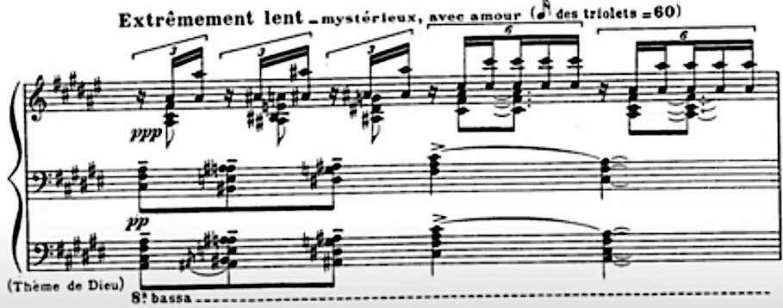
 Sola is one of three children of
 After graduating, partly in rebellion against the establishment that contemporary Western Art Music seemed to represent, Sola chose to become a pop musician, giving concerts and composing for film soundtracks, TV, and theatre. At the same time she made a great impression with her 1985 novellas Ni biewu xuanze 你别无选择 (You have no choice), Lantian lühai 蓝天绿海 (Blue sky green sea), and Xunzhao gewang 寻找歌王 (In search of the king of singers). Her voice was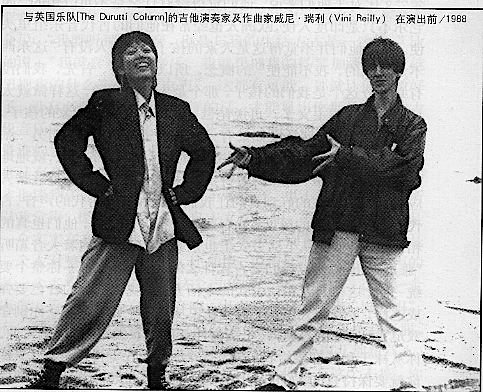


 From The afterlife of Li Jiantong.
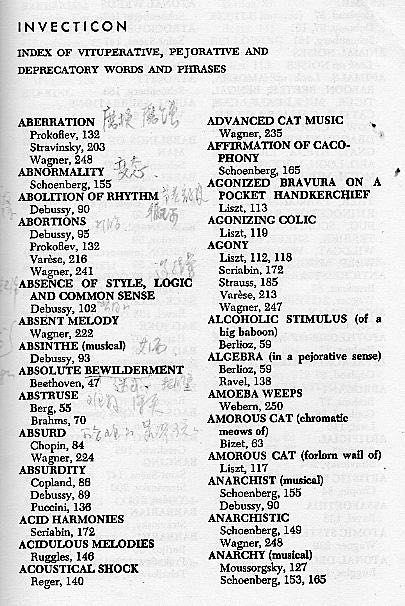



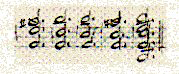 For the second suite he thoughtfully discusses the puzzling chords at the end of the Prelude; while admitting the possibility of decorating them in the style of the rest of the movement, he also makes an analogy with the Five Holy Wounds.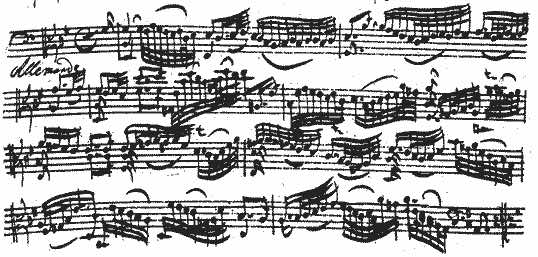





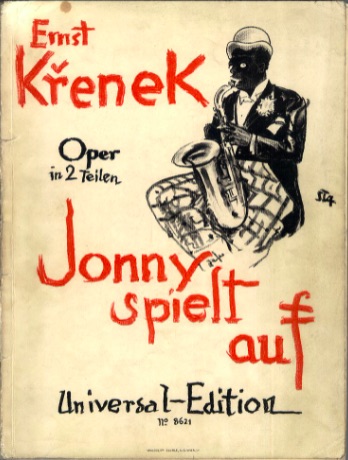
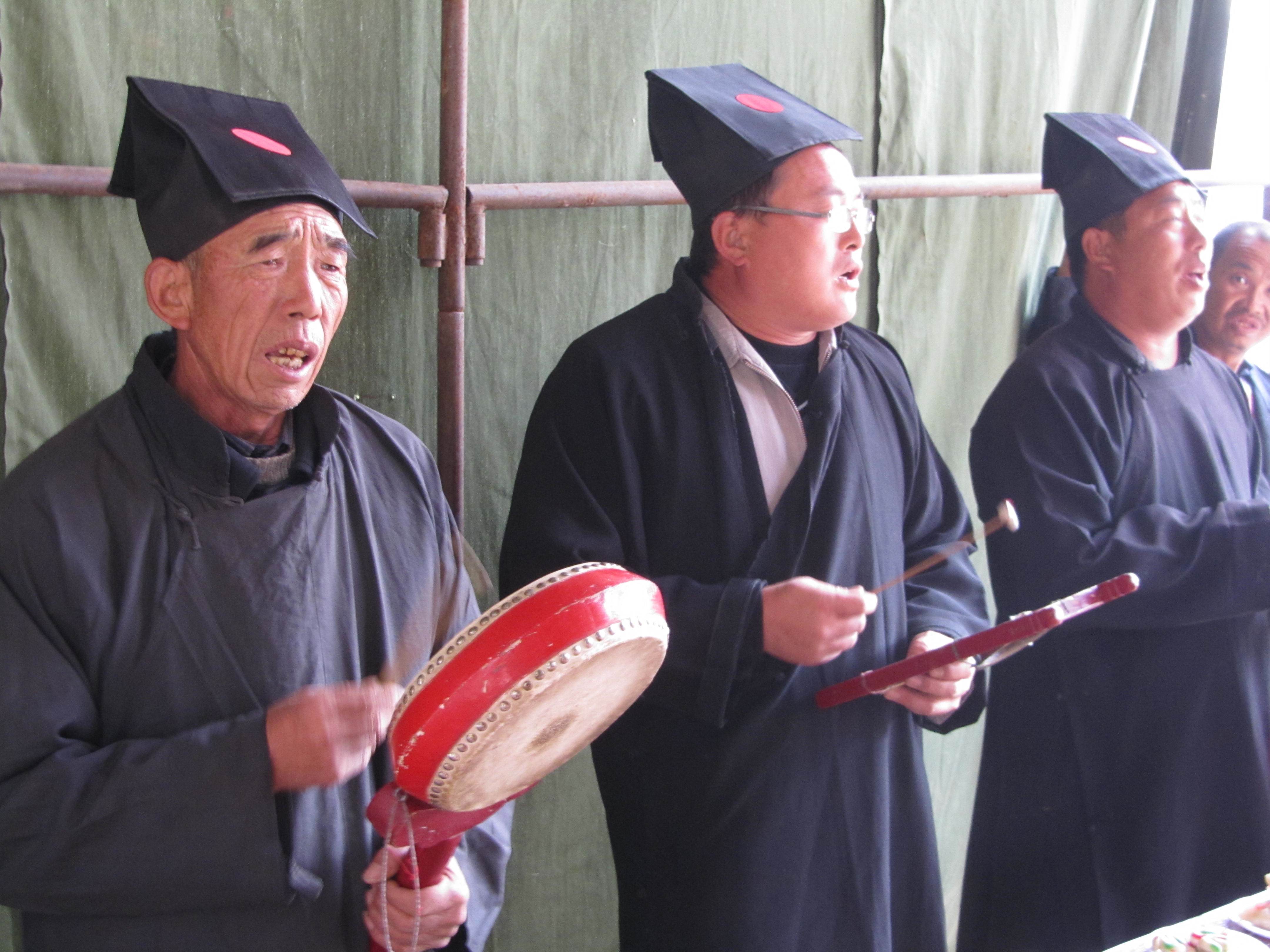



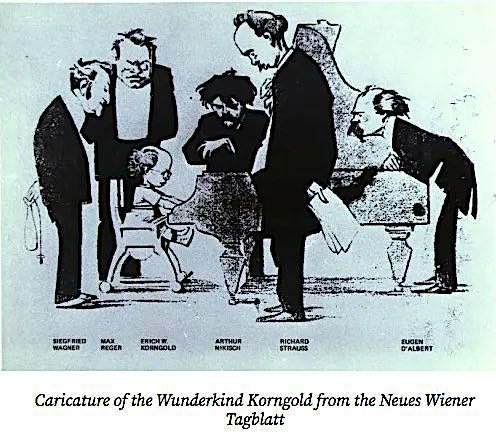

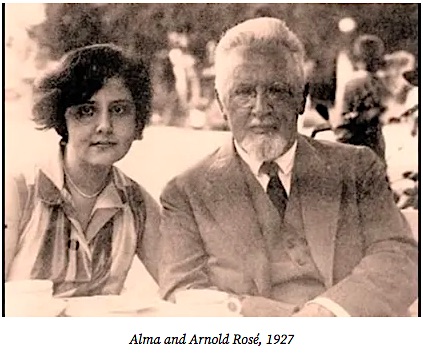


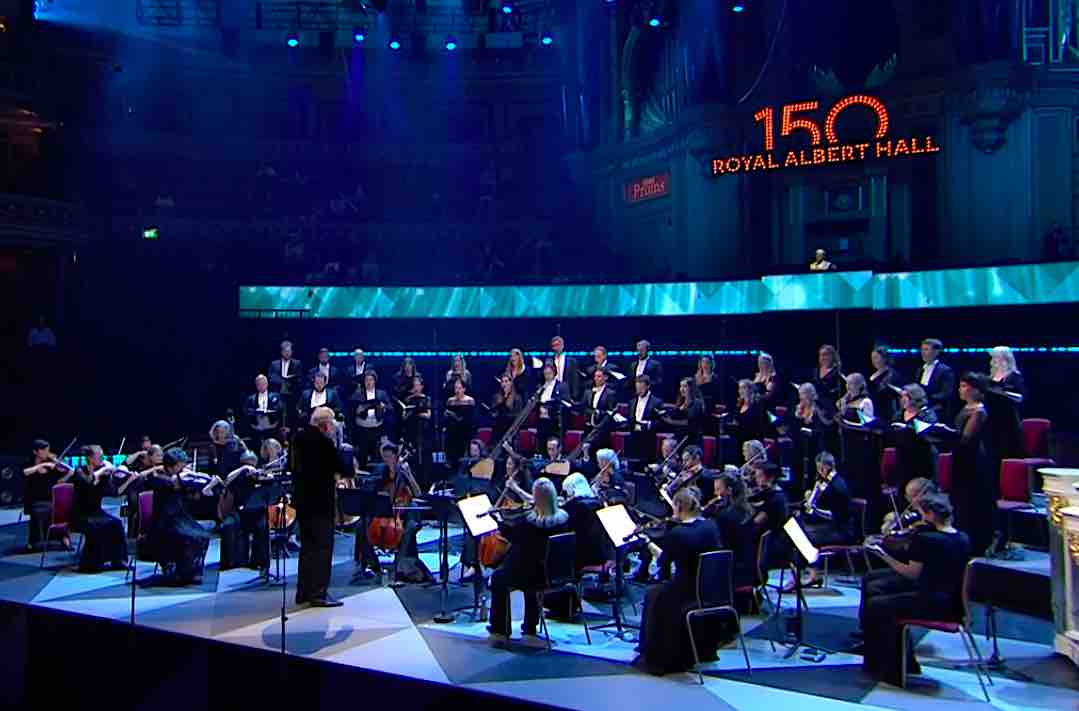





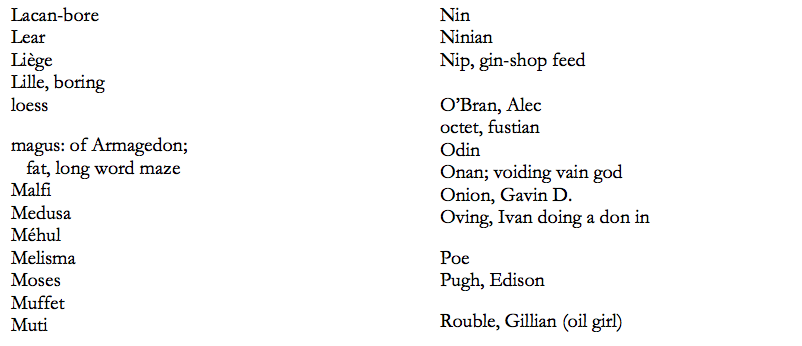
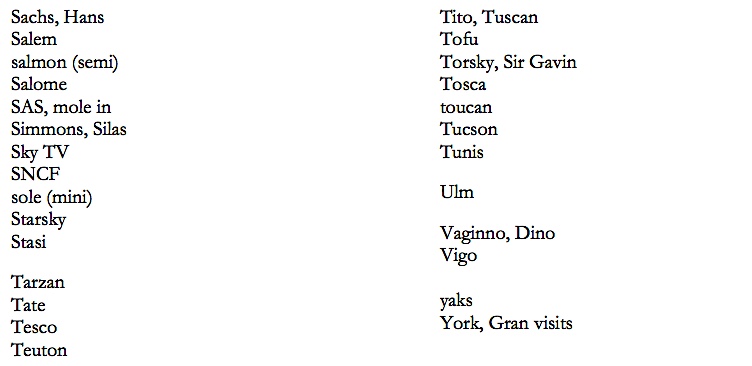

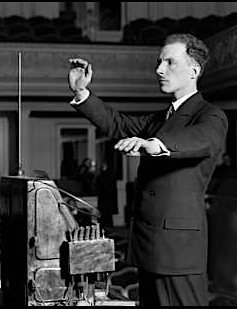



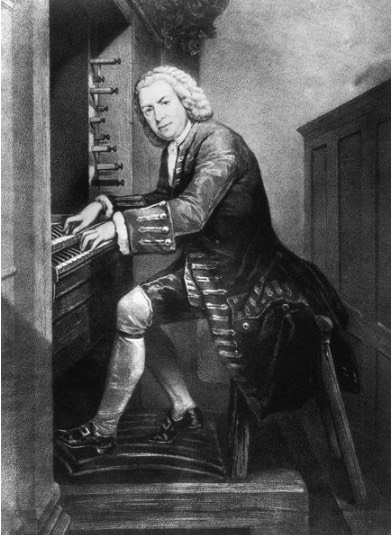
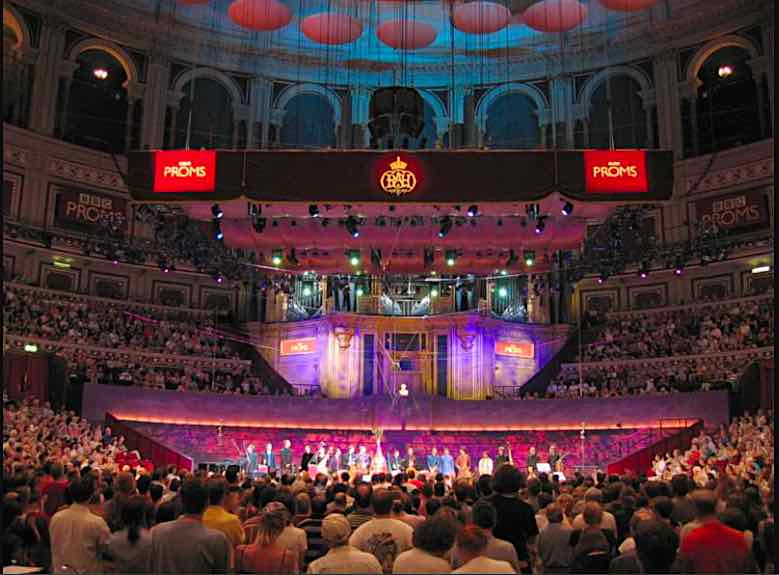


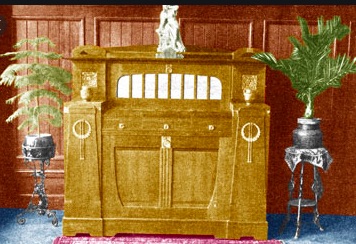

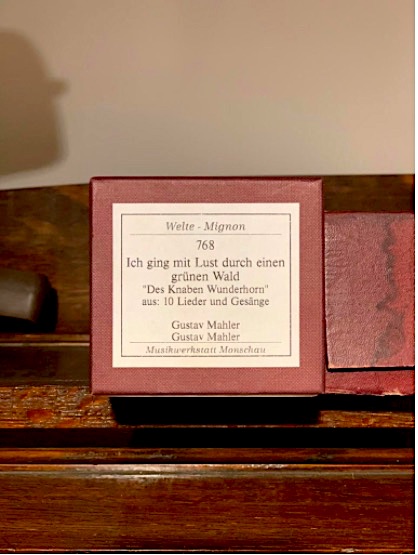


 and
and

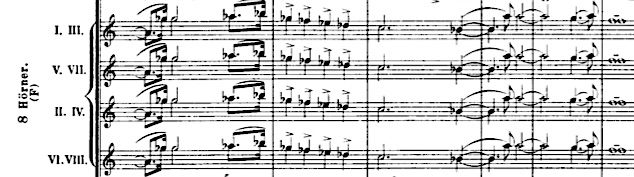

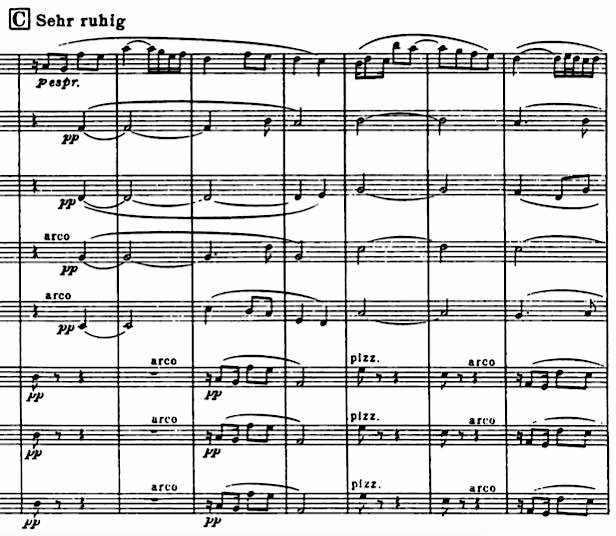
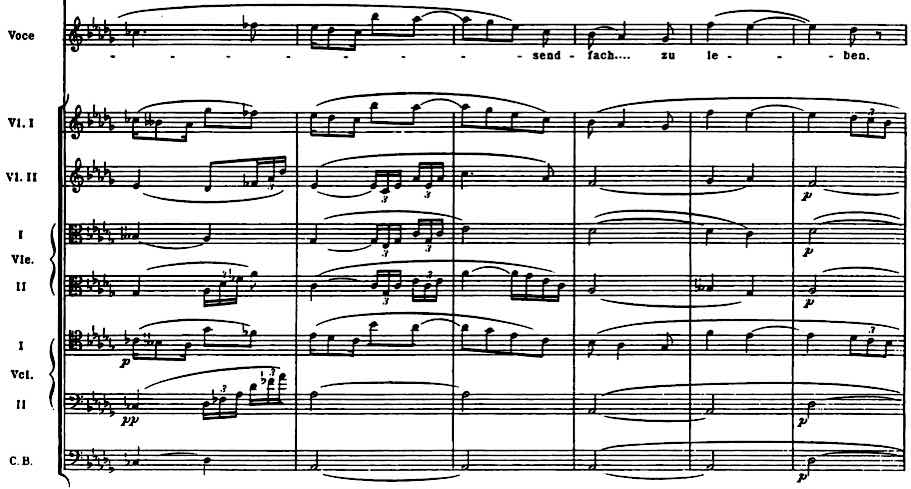





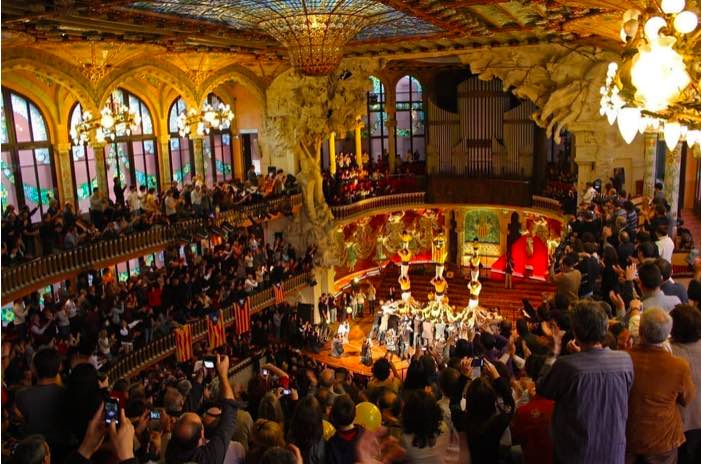


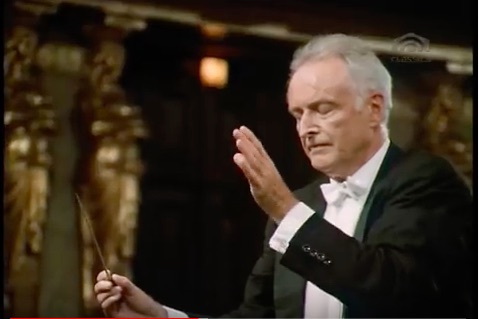
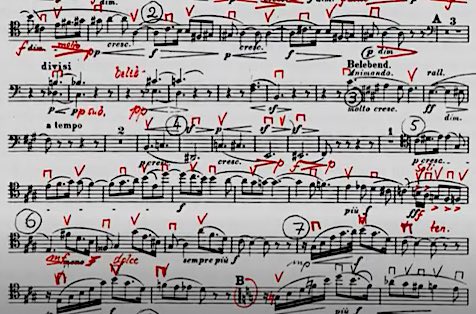


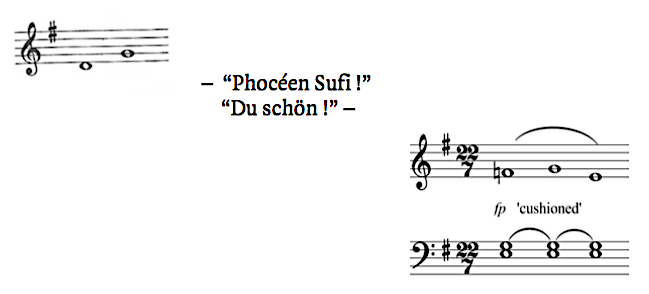


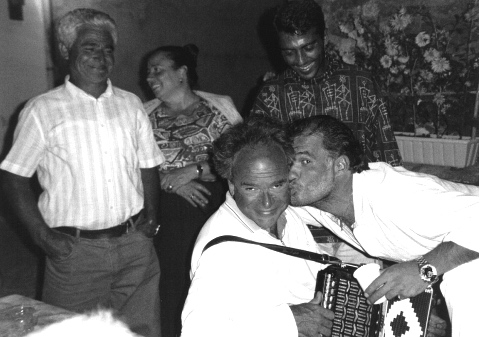
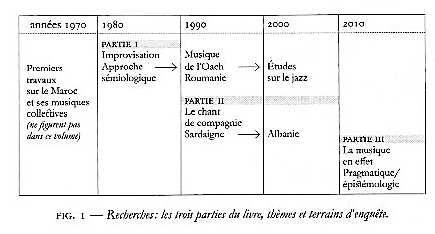
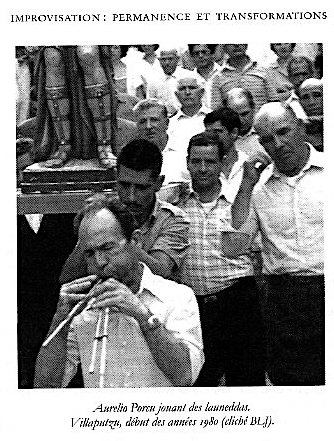
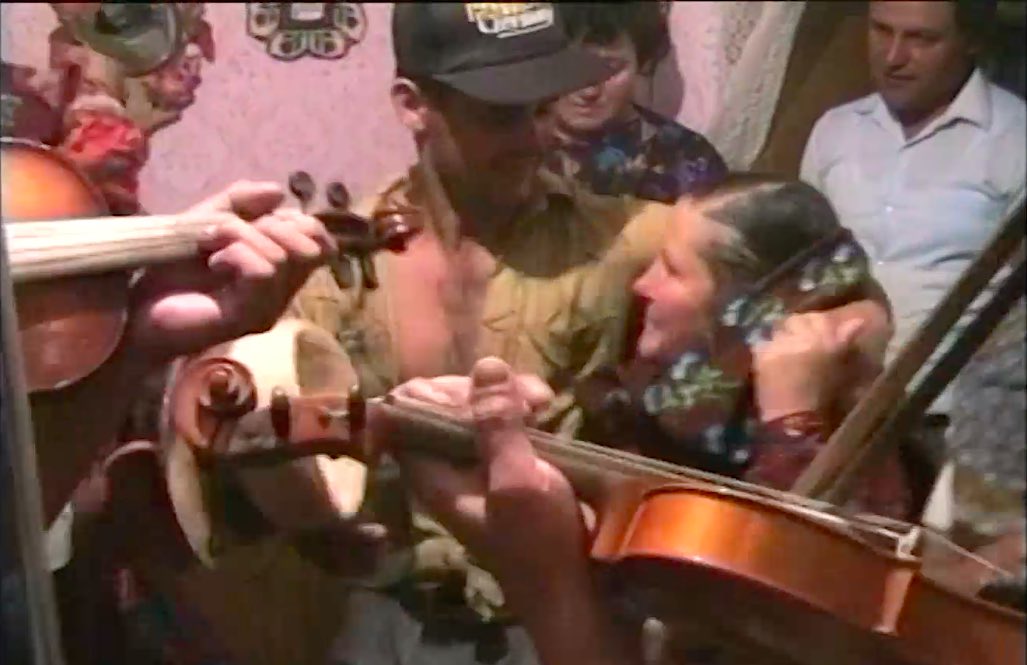


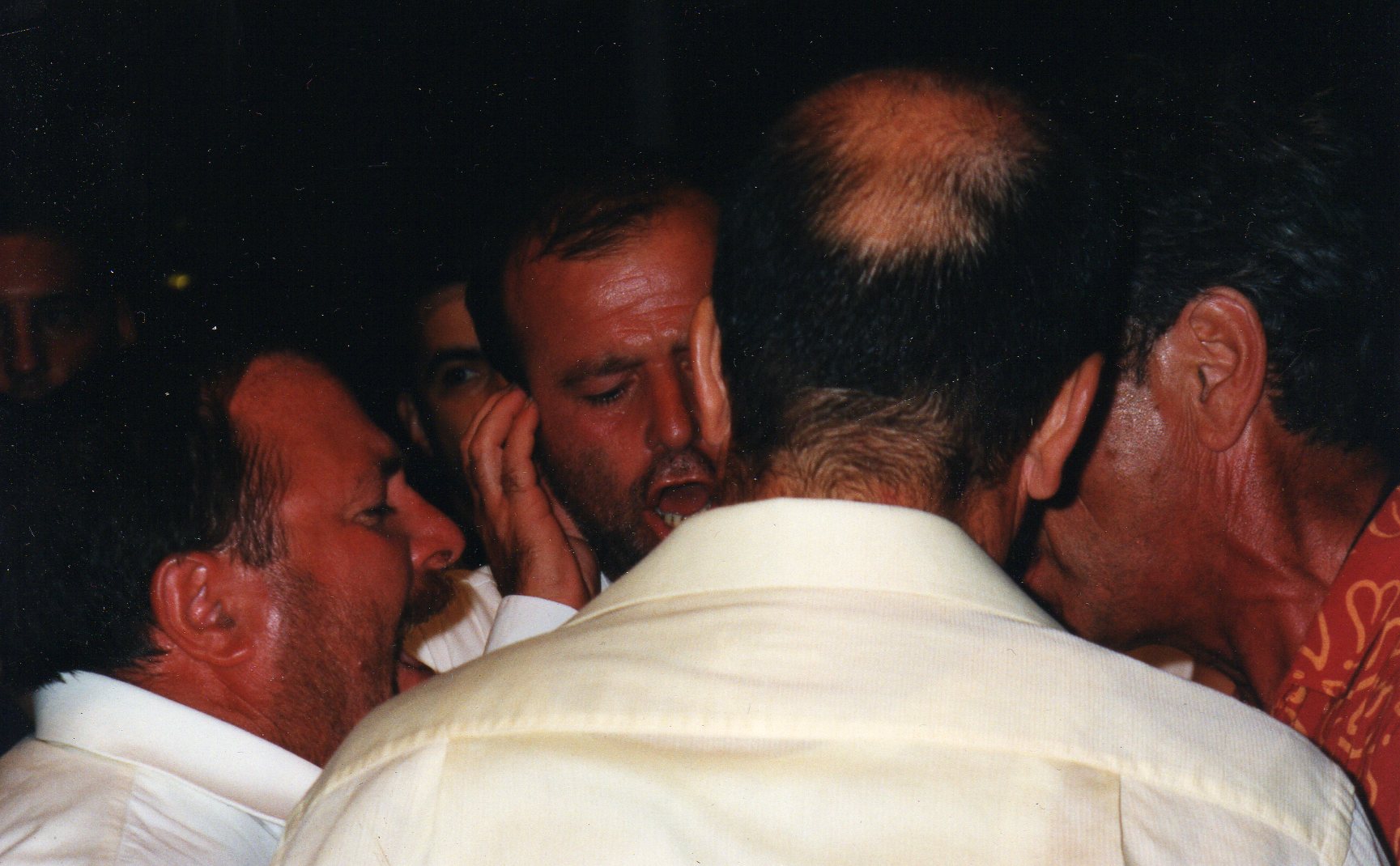
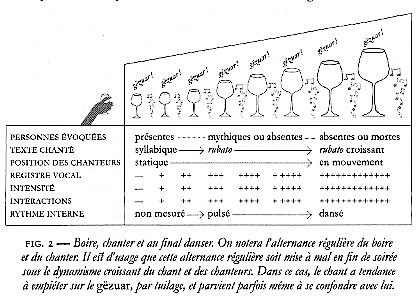





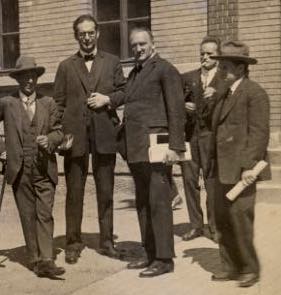
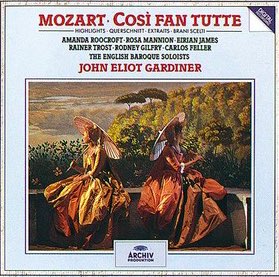


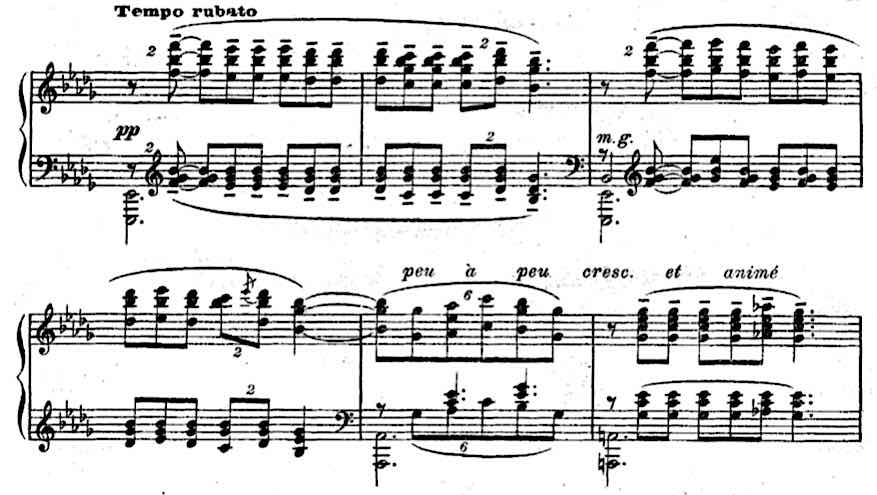
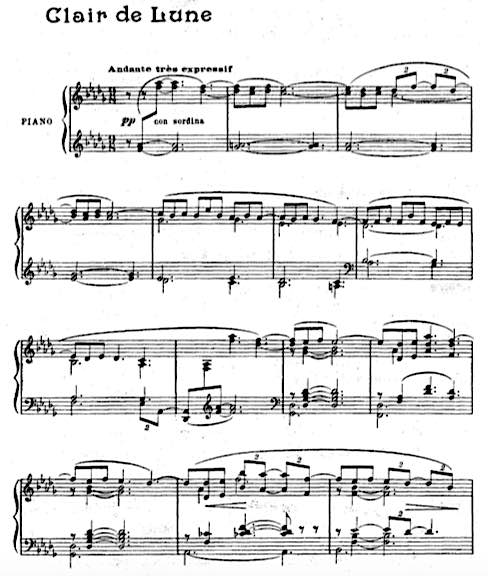



 Cesti’s opera was premiered in Vienna; the composer died the following year, and I haven’t yet seen evidence of further performances—staging it would have been a massive undertaking. So audiences in Italy may even have been denied the opportunity of a good giggle, although word must have spread. Still, in Italy, over a century after the tomato was first recorded there, one might suppose that the word pomodoro (the pomo referring generally to fruit, not to the apple) at least had become part of the vocabulary of the elite who were the audience for such spectacles. But then, they would also be familiar with the ancient story—although from the simple synopsis one might not imagine that it called for elaborate stage machinery to depict tableaus like shipwrecks and collapsing towers:











 Stephen Jones: a blog
