Earworms can be most insistent. For some reason my current one is Tico tico no fubá, composed in 1917 by Zequinha de Abreu. I first got to know it via the Nimbus CD Choros from Brazil by Os Ingênuos, but recently I’ve been listening to a variety of performances.
There’s much to admire in the choro genre (e.g. this intro on YouTube)—which despite its title (“lament”), often displays great exuberance. With its zany syncops, most versions of Tico tico are mildly manic, but the first recording, by Orquestra Colbaz in 1931, is leisurely (cf. ragtime) and beguilingly genteel:
By the time the piece took off internationally it was becoming virtuosic and up-tempo—like this performance from Bathing beauty (1944) with Ethel Smith on Hammond organ:
The Portuguese lyrics came later, as sung by Carmen Miranda in Copacabana (1947)—with Groucho Marx a bemused onlooker:
This sounds seductively chirpy, but unless I’m missing something, you’d never guess at the niche ornithological content of the lyrics. The English-language version (also on wiki), totally reworked, is engagingly amorous—with the Andrews Sisters wisely opting for a more manageable tempo:
More recently Tico tico became a popular encore for symphony orchestras under Dudamel and Barenboim, but most exhilarating is this, from the Bahia youth orchestra:
The piece continues to inspire later generations—like this, with fine accordion and sax solos:
Having not exactly been hibernating, I now find myself in what doesn’t merit the term of “sabbatical”. It’s partly that I’m beset by a lack of focus; while it’s good that I currently feel no need to inflict my ideas on others, it’d be nice if I had something to say. Still, this may come as a relief to some readers.
As to China, I remain intrigued by Zhang Zhentao’s review of my Gaoluo film. So far I haven’t found sources unpacking foreigners’ supposed proclivity for representing the “ugly” side of China, which is well worth refuting, seeming to imply that honest depiction of rural life is to be censored—but I welcome leads.
On my visits to Istanbul, while trips along the Bosphorus on the vapur ferry continue to delight, I’m ever more diffident about my random delvings into Turkish culture. One remarkable recent addition to the pleasures of the Kuzguncukmahalle is a little basement cafe where young Sufi singers and instrumentalists get together to practise the makam.
While the scene is often adduced as an archetype of romantic love, and the dancing is of course stunning, it’s tricky reacting to the art of bygone ages with modern eyes and ears. Audiences today may find the couple’s “chemistry” elusive, their dynamics pointedly cold. His insistent “wooing”, and her reticent, never-rapturous compliance (“Cut the crap—oh well, at least he can dance”?!), may be standard for the time, but some may find the mood somewhat coercive.
Still, the song itself is brilliant—so we might listen without getting confused about the dance’s sexual politics (cf. racial politics in the filmed version of Only you). As wiki explains, the song’s melody, harmony, and structure are all unusual. In the obsessive opening (often omitted, understandably), after 35 repetitions of the same note (emulating Beethoven?) over a narrow range of chords, the pitch boldly rises twice by a semitone for more repetitions before sliding back to the original pitch for the melody proper. Among several accounts of the song’s origin, this is presumably the source of the reductive orientalist claim that it was inspired by the call to prayer in Morocco (cited here):
The song proper thrives on descending chromatic motifs (cf. Unpromising chromaticisms)–even when we think a regular melody might surface, in bars 44–5 the downward slide continues:
What might be a glorious climactic major 7th leap (making—love, from 1.37, bar 60) may hardly register:
In the dance, just as glorious is the way the band relishes all the rhythmic and melodic flourishes. After the dance, at the very end of the scene, when Astaire asks “Cigarette?”, Rogers still seems underwhelmed—if only she could have anticipated Lesley Nielsen’s immortal riposte in Airplane “Yes, I know”…
Recalling the Lexicon of musical invective is a story that when Porter first played the song for his friend Monty Wooly, Wooly sniffed, “I don’t know what this is you are trying to do, but whatever it is, throw it away. It’s terrible.”
* * *
Among other classic versions, apart from the likes of Ella Fitzgerald and Frank Sinatra, I always treasure Billie Holiday. Encapsulating the heartache of infatuation, she creates a new, angular melody unconstrained by the song’s original chromaticism—here’s her 1939 recording (the band including her constant soulmates Lester Young and Buck Clayton):
Charlie Parker, 1952:
Here’s a lengthy rendition by Stan Getz, live in Kildevælds Church, Copenhagen, 1960:
And Bill Evans in 1959, entirely eschewing the romance of the original—with Philly Joe Jones’s opening drum riff replacing the tom-toms of the lyrics:
The human voice is the most remarkable instrument. Thinking of the diverse ways it’s used around the world (note the fine survey on the CD-set Les Voix du monde), an astounding vocalist is Bobby McFerrin (b.1950) (website; wiki; YouTube channel).
At this time of year I like to rearrange the deckchairs on the Titanic by organising some of my more notable posts from the past year under particular themes. As ever, many belong under multiple tags, so below I make some whimsical choices.
Keeping company with my film on the Li family Daoists, most important is my *new film* on the 1995 New Year’s rituals in Gaoluo (Chinese review here). It also prompted me to devise a new Menu, and even a YouTube channel (with playlists reflecting my diverse tastes as well as my own films). For now I still resign myself to Twitter, but I’m posting on BlueSky too, so let’s all migrate there!
Homages to the genius of three friends who greatly inspired me:
You can find any posts I’ve neglected in the monthly Archive as you scroll waaay down in the sidebar. All this suggests that it would be a sensible New Year’s resolution for me to burden you with fewer of these ramblings—but first I plan a major series inspired by the Gaoluo film…
The affectionate “Jazz Club” spoofs from The fast show are collected here:
A regular item over six years in the 90s, the series (scripted by Charlie Higson) is recalled in a 2016 article by presenter John Thomson—a genuine jazz aficionado and drummer. Alongside the smugly cool persona of the jazz pundit, the earnest critical vocabulary, the TV set, the language of jazz filming, and the well-observed costumes (“Buddy Rich rocked the polo-neck look”), the musical parodies are impressive—
not that we ever had any trouble getting musicians to appear. In my experience, musicians have a much better sense of humour than many comedians. We’d use session musicians who were all incredibly good—they had to be, because some of the music Phil Pope wrote for the sketches was really tough.
They’re augmented by other Fast show regulars, like Paul Whitehouse (on fiddle at 5.49, channelling Nigel Kennedy!), and the homage to John Cage that follows.
In his article Thomson praises Stanley Clarke’s album Schooldays, and he offers a playlist, based on jazz funk.
In vino veritas, or rather Imitation is the Sincerest Form of Flattery. For more irreverence, see my spoof on Indian raga, and this story about the Matthew Passion (with a bonus of Always look on the bright side of life). For musos’ humour, click here.
As we bandy around the word “mojo”, its origins in African ritual aren’t necessarily uppermost in our mind.
The wiki article makes a useful introduction. In African-American Hoodoo, mojo is among many terms for a protective amulet consisting of a flannel bag containing magical items, deriving from Islamic practices of West and Central Africa. In West Africa a generic term is juju bags. The gris-gris pouch of the Mandingo spread from West Africa via slavery to the southern States and Haiti, fusing with African-American Christianity(and making a link with Native American cultures). In the 1930s mojo bags were part of Zora Neale Hurston‘s ethnographic research. See also America over the water.
Mulatto ex-slave in her house near Greensboro, Alabama, 1941 (wiki). Caption:
African-American women sewed charms and mojo hands into their quilts for spiritual protection. Newspaper is placed on the walls to ward off evil spirits.
Minkisi, Kongo/Central Africa (World Museum, Liverpool) (wiki). Caption: Minkisi cloth bundles were found on slave plantations in the United States in the Deep South.
Minkisi bundles influenced the creation of mojo bags in Hoodoo.
* * *
Since the 20th century, the word spread in American culture in movies and songs, coming to refer to sexuality and virility, and more broadly to motivation in general. It became a theme of blues, such as
In my post on New British jazz I mentioned Yazz Ahmed (site; wiki), so I was glad to hear her quintet at the London Jazz Festival this Saturday.
“High priestess of psychedelic Arabic jazz” is an alluring tagline, but doesn’t do justice to such a serious composer. Grand Junction in Paddington, a former church, made a striking venue, suitable for the reflective mood of her work, its architecture compensating for the intimacy of many jazz venues.
With her British-Bahraini background, Yazz Ahmed reflects in interview on exploring her Arabic heritage, but not limited to an ethnic bubble, she creates her own voice. Focusing on collaboration, she plays an unassuming role on trumpet and flugelhorn, modulating timbres with the aid of a Kaoss pad, highlighting ensemble textures—besides drums and bass guitar, the quintet is enriched by vibes and bass clarinet, joined in the second half by vocalist Randolph Matthews.
Her studio album Polyhymnia (2019) is a six-movement suite devoted to “six women of exceptional qualities, role models with whom she felt a strong bond”: Rosa Parks, Malala Yousafzai, Ruby Bridges, Haaifa Al-Mansour, Barbara Thompson, and the Suffragettes (playlist):
And a foretaste of her forthcoming album A paradise in the hold:
In This Day and Age™, while it would be churlish to write off new creativity in Western Art Music, I find far more relevant all the activity going on beneath the broad umbrella of “jazz”—further enhanced in live performance by the major factor of atmosphere. I’ve explored the theme of “serious music” at length here.
For a wide range of classic and world jazz, see this extensive roundup. And you can work through the plethora of posts under the world music category in the sidebar, including not just China and India but flamenco, Turkish music, and much more…
Nigel Kennedy began stirring up the WAM scene quite early, reminding us of the importance of maintaining the creative vibe of live musicking, irrespective of genre. But now that he is no longer an enfant terrible, his tastes are heartfelt and refreshing, for all the hype.
In the absence of Hendrix and Bach themselves, here are a couple of clips.
A homage to Jimi from 2016:
And Bach at the Proms in 2011:
I’m never crazy about the violin in jazz or rock, but however one feels about the results, it’s really great that he does this kind of thing.
There I was, hoping to publish some thoughts today on our (or at least my) misapprehensions about images of Chan/Zen, I find it’s gonna have to wait a while before I add to the already vast mountain of writings on the topic. So meanwhile, for anyone desperate to be entertained (yeah right), I’ll just remind you of some diverse posts that I’ve been retweeting recently:
For the anniversary of German reunification, Red love
Grimaud graces London again!, highlighting the magical Gesangvoll finale of Beethoven’s piano sonata Op.109, in recordings by Neuhaus, Richter, Backhaus, Gould, and Brendel.
While I’ve accumulated something of a library on her life and work, I’ve only just got round to reading a smattering of the vast literature—not exactly that I think it’s enough to “let the songs speak for themselves”, more that it’s become such a huge industry. Such books include
Donald Clarke, Wishing on the moon (1994)
Leslie Gourse (ed.), The Billie Holiday companion: seven decades of commentary (1997)
Farah Jasmine Griffin, In search of Billie Holiday: if you can’t be free, be a mystery (2001), an astute study with the benefits of a black woman’s perspective, unpacking “how we know what we think we know” about her—referring to sources such as Angela Davis, Blues legacies and black feminism
John Szwed*, Billie Holiday: the musician and the myth (2015) (review), which I’ll cite below
and of course the “autobiography” Lady sings the blues (1956), ghost-written by William Dufty (well covered by Griffin, pp.45–55, and in Szwed’s first two chapters; cf. this LRB review). The 1972 biopic (watch here), with Diana Ross as Billie, is even more fictitious; though much criticised, it’s all part of the myth-making (e.g. Szwed, pp.83–94, and wise words from Griffin, pp.56–64).
Billie is just as popular a subject on film. The BBC documentary The long night of Lady Day (John Jeremy, 1984) is highly regarded—although Griffin rightly balks at the entitled white male pundits, still controlling her (and yes, now I’m getting in on the act too…):
I can only apologise for adding to the endless attempts to encapsulate Billie’s genius—but at least there’s lots of great music coming up.
* * *
John Szwed writes:
Given her acknowledged stature as a musician, it is odd that many of the books on Holiday have only secondary interest in her music. But then again, maybe not so odd: music writing today is increasingly focused on lifestyles, as if the events of artists’ lives are enough to explain their music, and the songs they record are treated primarily as documents in support of a given biographer’s argument. […] Most biographers look for those moments in an individual’s life that unlock its secrets or at least sum it up, then weave a narrative that focuses on these moments and ignores or downplays those that don’t support their analysis. […]
My intention was not to deny or gainsay the tribulations and tragedy of her life, but to shift the focus to her art. The consistency and taste she brought to nearly every performance, even those when her body was failing her, display a discipline, an artist’s complete devotion to her work, and a refusal to surrender to the demands of an insatiable world.
Billie’s voice, dreamy but never sentimental, had a unique blend of vulnerability and toughness. Once the microphone became more widely available in 1933, Billie adapted to a more intimate way of using her voice. Her tempi (like those of jazz generally) were partly a function of context—recording, or live; and if the latter, then the position of the song in the programme, and her mood on the night, influenced by that of the audience. Still, even in her early years listeners found her slow tempi a challenge, and as she grew older she tended to sing more slowly, more innig, dwelling on the pain.
Some features of her distinctive style (which among her many imitators can sound like mannerisms):
The way she combined speech and song (far from the contrived sprechstimme of art music—see also Szwed, pp.161–3), bending notes, with pitches often indeterminate; **
Her timing—rhythms lagging behind the beat or just outside it (Szwed pp.156–9), floating freely around the band’s regular metre—and the spaces in between, like the ma of Japanese culture, or Miles;
Jazz musos have a fine sense of how and when to use vibrato (e.g. Miles again). Szwed cites Billie: “When I got into show business you had to have the shake. If you didn’t, you were dead… That big vibrato fits a few voices, but those that have it usually have it too much. I just don’t like it. You have to use it sparingly. You know, the hard thing is not to do that shake.” Her use of vibrato was carefully calibrated—Szwed notes how she would often set a single note in motion by increasing the width of vibrato just before moving on to the next note or phrase.
For every aspect of learning, style, and creativity, it’s always worth returning to Paul Berliner, Thinking in jazz, often cited in my series on jazz.
* * *
So here’s a second playlist to follow my first post—every song a true gem.
I’ll get by, 1937 (Szwed, pp.192–3), the breezy instrumentals belying Billie’s minimalist singing:
All of me, 1941:
Billie’s blues live at the Met in 1944—slower than her 1936 recording (Griffin, pp.134–8):
and 1956, again live at Carnegie Hall, with extreme contrasts:
Three recordings of My man, 1937 (Szwed, pp.249–50):
1948:
and 1952:
Very often her style evokes the Chinese concept “the Great Music is sparse in sound” (dayin xisheng大音希声, often applied to the qin zither)—such as the lapidary How am I to know?, 1944:
with the horns commenting softly on the action “like a Greek chorus” (Will Friedwald, in Gourse, p.126) (contrast Jack Leonard 1939, or Frank Sinatra 1940).
Also from 1944, and just as entrancing in its minimalism, is I’ll be seeing you (Szwed pp.238–40)—where her free-tempo meditation over the band’s slow pulse “almost seems as if she is treating each word as a separate phrase” (again, contrast Jo Stafford, Frank Sinatra, Bing Crosby):
The arrangement is by Eddie Haywood, whose noodlings on piano remind me of Messiaen. Possibly it would only occur to Deryck Cooke that the song’s opening phrases suggest the finale of Mahler 3!
Both songs are highly reminiscent of Embraceable you, featured in my first post on Billie. And yet another 1944 recording, for those stuck in the Casablanca groove—As time goes by.
Gloomy Sunday, 1941 (Szwed, pp.226–9):
I mentioned Strange fruit in my post on Nina Simone, with links to Billie’s 1939 recording and 1959 performance. While I debate whether to impertinently write more in a separate post, the song is much discussed—perhaps starting with Szwed and Griffin, not to mention David Margolick, Strange fruit: Billie Holiday and the biography of a song (2001).
Pundits feel a need to defend or lament the singing of Billie’s last few years. The string backings of Lady in satin (1958) divided fans (Szwed, pp.260–64); though some songs work better than others, her voice will still enchant those without doctrinal axes to grind. And always watch in awe that 1957 TV appearance!
* * *
Bandleaders like Teddy Wilson, Count Basie, and Artie Shaw, as well as a host of pianists and horn players, were unanimous in their deep admiration for Billie (besides Szwed, see Griffin, pp. 17–20). Her own appreciation of them is significant too, shown most movingly in the 1957 TV show. Much has been written about Billie’s deep bond with her musical soulmate Lester Young. Amidst all the myth-making, Griffin (pp.84–93) finds particular value in the recordings of 1955 rehearsals on Songs and conversations (playlist here; cf. Nat Hentoff, in Gourse, pp.108–10).
Szed cites Artie Shaw:
I gave her a record of Debussy’s L’après midi d’un faune. She could sing the whole thing, the top line: Da, da-da-da-da-da-dee***—she could do the whole thing. Didn’t have the range for it—but she had a very good ear.
and adds:
It must have meant as much to her as it did to him: she still had the recording until she died, and often played it for guests.
One afternoon, the harpsichordist Ralph Kirkpatrick invited her to his apartment (Szwed, pp.52–3):
While Billie put away the better part of a bottle of rum, I played Bach for her. Her face registered everything, and no manifestation of the music seemed to escape her… I could have used her like a precision instrument to monitor my performance of the G minor English suite simply by watching the subtle variations of expression on her face show me with an infinitely sensitive instrument to monitor what was coming off and what was not. Her own performances, heard through the haze of cigarette smoke in a nightclub, gave heartrending glimpses of a raw and bleeding sensibility condemned to exploitation on every side, unsustained by the protective bulwarks that education and privilege could have given her, and destined, as I knew from the day I first saw her, to end in the gutter.
Later, the two of them sat together at the keyboard. Since Billie could not read music, he played a piece through once, but only once, so she could sing it. “Holiday had the most extraordinary gift of phrasing that I’d ever heard in a singer”, he said. “Once she heard it, she knew exactly how the tune should go”.
Most jazz musicians have never relied on notation, but find it a useful tool to augment their oral/aural training; but for a singer like Billie it was a blessing to be unhampered by little black dots on the page, both in pitch and rhythm. And having internalised an original song, she would then constantly re-compose it (cf. Unpacking “improvisation”). Her finely-tuned ear is further evinced by Leonard Feather’s blindfold test, where Billie comments on twelve tracks by a variety of performers (Gourse, pp.57–62).
OK, I’ll keep listening, and I trust you will too. My Playlist of songs has some amazing tracks, but no-one, in any genre, can ever compare to Billie…
* Also the author of biographies of Miles Davis and Alan Lomax that I must read.
** I’m not inclined to make too much of Paul Bowles’s comment after hearing her 1946 Town Hall concert, describing her voice as “like modern Greek song, Balkan song, conto [cante!] jondo… Her vocalisation is actually nearer to north Africa than to west Africa”.
*** One too many “da”s has crept in there, but hey!
Such is my devotion to Billie Holiday that I’ve never quite been able to warm to Nina Simone (1933–2003). But my interest has been revived by listening with rapt admiration to Feeling good (1965). It opens with an all-too-brief free-tempo alap, brusquely interrupted by the incongruous sleazy riff: *
The title isn’t so ironic as it sounds. Written by (white) English composers Anthony Newley and Leslie Bricusse for the musical The roar of the greasepaint—the smell of the crowd, satirising the British class system, the UK premiere was given by Cy Grant in the role of “the Negro” singing the song as he “wins” the game; it was described as a “booming song of emancipation”. When the show transferred to New York the following year, the role was taken by Gilbert Price. Nina utterly transforms the song, but the optimism of its lyrics is remote from the activist songs that were becoming the core of her repertoire just at that time.
* * *
Within the milieu of the day, few musicians were angels. Jazz biographies from the, um, Golden Age tend to follow a depressingly familiar trajectory of self-destruction: pain, drugs, exploitation, disastrous choice of partners, violence, disillusion, and legal woes. Despite all these features, Miles’s autobiography is strangely inspiring, tough but never helpless (for a lengthy sample, see Miles meets Bird). White musos could be no less self-destructive—few more so than Chet Baker.
David Brun-Lambert, Nina Simone: the biography (2005).
Among documentaries is Nina Simone: the legend (Frank Lords, 1991), What happened, Miss Simone? (Liz Garbus, 2015; trailer), and The amazing Nina Simone (Jeff L. Lieberman, 2015; trailer).
The sixth of eight children in a poor North Carolina family, Nina was a child prodigy at the piano; “Bach made me dedicate my life to music”. After graduating from high school in 1950, she seemed destined to become “the first black American concert pianist”. So the original, lasting, deep wound in her psyche was being refused admission to study at Curtis—which she attributed to racism. Thwarted in her classical ambitions, she continued to study privately with Curtis professor Vladimir Sokoloff for several years, funded with a regular gig at a nightclub in Atlantic City—only taking up singing because the job demanded it.
While Nina’s classical piano training would later give her a cachet among respectable white audiences, I seem to have reservations about singers accompanying themselves at the piano, like Ray Charles. Distinctive and original as her playing was (e.g. her “destabilising” 1969 album Nina Simone and piano), it was at a tangent from jazz: stark, based on melody, hardly admitting any harmonic interest—by contrast with her cohorts in the jazz scene like Monk, Herbie Hancock, or Bill Evans. But this musical simplicity threw greater focus on her political message.
By the late 50s, as her career was taking off, her dream of fame as a classical pianist had evaporated. The civil rights movement was growing. In Greenwich Village she began hanging out with James Baldwin, Langston Hughes, LeRoi Jones, and Lorraine Hansberry. Her 1961 visit to Lagos with Baldwin, Hughes, and others as part of a delegation of the American Society for African Culture was her first time in Africa.
Now married to a violent husband and manager, she gave birth to her daughter in 1962. Her entry into the civil rights struggle was embodied in her 1963 song Mississippi goddam. Nina’s activism, and the wider civil rights background, is extensively covered by Brun-Lambert, with detail on her involvement with Martin Luther King, Malcolm X and the Nation of Islam, Miriam Makeba, the Black Panthers, riots, marches, and the whole ferment in black popular music through the 1960s.
By 1970, exhausted and disillusioned, Nina seemed to have reached the end of the road. In later life she largely avoided the USA for fear of legal battles; while still touring, she sought refuge in Barbados, Liberia, Switzerland, Holland, and France, lonely and estranged from her daughter, her relationships fraught and short-lived; among a succession of managers, some had better intentions than others. Her mood-swings and behaviour on and off stage had long been volatile, becoming ever more apparent; the diagnosis of bipolar disorder was belated. Brun-Lambert describes her as “leading a double artistic life, unable to find her own place anywhere”.
* * *
Turning to Nina’s songs—as ever, there’s a vast selection on YouTube, notably this channel—below I give a mere sample.
In her early years she sounds benign enough, like the New York Town Hall concert in September 1959, “still without trace of savagery or sexuality”, as Brun-Lambert puts it:
Still, her interpretations, such as Summertime, are distinctive. Billie Holiday had died in July that year; a couple of years earlier she had immortalised Fine and mellow in the most enthralling TV film ever. Nina sang it for her Town Hall finale.
“Her first song with explicitly black consciousness” was Flo Me La at the Newport festival in 1960 (from 20.52):
Among several appearances at Carnegie Hall, here’s her 1964 concert (as playlist):
The programme introduced activist songs such as Old Jim Crow, Go limp, and Mississippi goddam into the genteel surroundings. And she is just right for Brecht/Weill songs like Pirate Jenny!
By 1968, live at the Bitter End Café, her voice is harsher and more experimental:
The final number on her troubled 1965 album Pastel blues (here, as playlist) is Sinnerman, “about despair, disenchantment, disillusionment in the face of a situation that offers no alternatives but flight or prayer” (Brun-Lambert). Before that comes Strange fruit, just as visceral as Billie’s 1939 recording and 1959 performance. Nina’s concert in Antibes that year included some songs from the forthcoming album—opening with a disjointed intro that segues into Strange fruit:
And here’s Four women, live in 1965:
After the assassination of Martin Luther King in 1968, she sang Why? (The king of love is dead)—here’s a full version live that year:
In 1967 she recorded I wish I knew how it would feel to be free—here’s her 1976 Montreux performance:
Again, I find some of these casual piano accompaniments, and even her voice, disconcerting—but maybe that’s the point.
That’s probably enough to outline the story of Nina’s heyday; in her later career she largely repeated such standards—after the original creative impetus had diluted, and as her mental troubles escalated. She had been touring in England since 1967—it’s worth hearing her live at Ronnie’s in 1985:
To encapsulate ecstasy and pain, for me it’s always going to be Billie… I may be romanticising the devotion of jazzers to their art (cf. the wonderful image of Donald Byrd practising on the subway), but I detect no inkling of any such devotion in Nina: any musical discipline that she practised seems to have been at the keyboard. She formed no bonds with her fellow musicians.
While one gets little impression that she honed her vocal skills, in early recordings like Black is the color of my true love’s hair and Wild is the wind (in the 1959 Town Hall concert) she sounds genuinely intimate, even sweet—far removed from her later image. Still, music is about society: Nina’s voice developed into a genuine expression of the troubled times, part of the necessarily strident style that emerged from the civil rights struggle.
* Feeling good has been much covered—rather than featuring other versions, here’s Trane in 1965:
And although nothing can compare with the raw emotion of being black in those years, here’s Andrea Motis in 2012:
Not being pedantic or anything [Uh-oh—Ed.], the title seems to be cited more commonly as Feeling good than as Feelin’ good (zzzzz). Cf. I got a woman, note here.
Ruth Finnegan, The hidden musicians: music-making in an English town (first edition 1989, revised 2007).
In several posts I’ve praised Finnegan’s classic work en passant—and revisiting it now, I find it even more impressive. I struggle to encapsulate its virtues without citing every paragraph.
Its subject is local grass-roots musicking in Milton Keynes, mainly at the amateur end of the amateur–professional continuum, so often taken for granted. It’s a model of participant observation: Finnegan was a long-term resident of the area, with most of her material collected from 1980 to 1984. Writing in an accessible style, she constantly debunks facile assumptions.
Having started out by studying oral performance in Africa, Finnegan now embarked on a project concerning doorstep (rather than armchair) ethnomusicology. The hidden musicians soon became core reading for the ethnomusicological study of musicking in Western societies, including Western Art Music (for which she abides by the traditional term “classical music”).
An attention to “ordinary musicians” was already implicit in the ethnomusicological approach to more “exotic” societies (note Bruno Nettl’s masterly survey of the field), but it is all the more revealing for a culture so near to home. In The hidden musicians, references to research on other world cultures, standard for such studies, might have been instructive, but the economy of theory and jargon is welcome. Among Finnegan’s main inspirations is Howard Becker’s 1982 study Art worlds. In 2022 her work inspired a BFE conference (in Milton Keynes, to boot, where the Open University is fortuitously based) on “ordinary musicians”, addressing topics in societies around the world.
The opening of the book anticipates that of Christopher Small’s Musicking (1998), observing the diverse ways in which music-making pervades people’s lives. Like Small, she focuses on “musical practices (what people do), not musical works (the ‘texts’ of music)”—seeking processes rather than products. She finds “an invisible but organised system” that lies at the heart of our cultural lives.
After an important chapter unpacking gradations on the amateur–professional continuum, in Part Two Finnegan outlines the diverse yet overlapping musical worlds of classical music, brass bands, folk music (including ceilidh and Morris bands), musical theatre (amateur operatic societies, panto, and so on), jazz, Country and Western, rock and pop. She disputes the “mass society” theory that ”envisages a passive and deluded population lulled by the mass media and generating nothing themselves”, as well as simplistic socio-economic or age-based analyses. She challenges assumptions, such as “high culture”, and, taking a descriptive rather than prescriptive approach, she finds
several different musical worlds, […] each having its own contrasting conventions about the proper modes of learning, transmission, composition, or performance. Because the pre-eminent position of classical music so often goes without saying, the existence of these differing musics has often simply been ignored.
If the pre-eminence of classical music was only notional by the 1980s, her material does indeed seem to confirm this unspoken assumption. Conversely, social scientists have emphasised “popular” or “lower-class” activities such as rock. But
each musical tradition—classical, rock, jazz, or whatever—can be studied in its own right. When no longer judged by the criteria of others, each emerges as in principle equally authentic and equally influential in shaping the practices of local music.
Part Three, “Contrasts and comparisons” opens with an insightful chapter on learning music (cf. the Growing into music film project). While Finnegan largely concurs with the notional dichotomy in training between the worlds of classical and popular musics, she notes commonalities. “Performances and their conditions” perceptively compares the conventions of events belonging to different musical worlds, noting aspects such as preparation and audience behaviour. In “Composition, creativity, and performance” she investigates degrees of dependence on written texts (cf. studies of “improvisation”, for which we can again consult Nettl as a handy guide). And in Chapter 14, preparing the ground for her later metaphor of “pathways”, Finnegan refines the concept of musical “worlds”, noting their plurality, with a certain overlap, and wider connections further afield; they are “relative, shifting, and situational”.
Part Four, “The organisation and work of local music”, contains chapters on the home and school; the churches; clubs and pubs; a case study on the organisation and administration of the Sherwood Choir; small working bands; resources, rewards, and support (including music shops and recording studios—with more on the amateur–professional continuum, and patronage).
With amateur music, people’s time and work are often as important as their money. So too are non-monetary rewards such as aesthetic enjoyment, the pleasure of performing, status, the sense of creativity, or even just the symbol of having earned “a fee” irrespective of its actuall monetary price. This in turn chimes in with a series of commonly held values: the high worth commonly attached to “performance”, to “music”, and to working for a “good cause”, as well as the view held by many people that “doing your own thing” has something inherently valuable about it—or, at the least, that the various groups organised to pursue different ends are an acceptable part of modern life.
It would be too simple just to assert—as some do—that local music is supported by “the community” or to speak of it as essentially “community music-making”. There are too many different interests, sections, conflicts, and unfamiliarities to take that romantic picture. Nevertheless there is a grain of truth in this view. For local musical activities only remain possible through the support of a complex network of institutions, many of them essentially realised by local participants at the local level whatever their wider links: not only the continuing moral, social, and financial (as well as musical) input of local musicians, but also the local music shops, studios, businesses, special interest groups, bands, performers, musical societies, pubs, personalities, fund-raising groups, schools, churches, and charities.
In Part Five, “The significance of local music”, Finnegan asks
Are there wider implications that can be drawn out from this system of local music-making? This part builds on the earlier ethnographic material to explore such questions as what local music practice and its pathways mean for those who live out their lives in the urban (perhaps impersonal?) setting of modern society or for the rituals and functioning of our society and culture more generally. Finally—and on a more speculative level—are the many many small acts and decisions which, however little recognised, lie behind the continuance of music-making of any wider significance for the fundamental experience and reality of humankind?
Again, she never falls back on untested assumptions. Critical of the familiar paradigms of the city as inimical to personal control or warmth, and of the romantic sense of “community”, she finds diversity in terms of education, wealth, and occupation—though she does conclude that gender roles remain hard to break through. She reflects on participation by age; and on the ordering of time, noting regularity—along with “rehearsals”, “concerts” and “gigs”, life-cycle and calendrical events (my term, not hers) are important social contexts.
She elaborates on “pathways” in modern living, stressing that they “depend on the constant hidden cultivation by active participants of the musical practices that, with all their real (not imaginary) wealths and meanings, keep in being the old and new cultural traditions within our society.” Finally, in “Music, society, humanity”, she broaches concepts such as sociability and the search for value; and she ponders, with typical detachment, whether music is somehow different from other social activities.
* * *
In her Preface for the 2007 edition, Finnegan reflects on golden-age nostalgia, change, ebb and flow rather than decline, new technologies, immigration. She outlines gaps in her study, and how one might update it: she might now pay more attention to mass media, constantly expanding since the 1980s, and the role of cultural, religious, and ethnic “minorities” (then less evident in Milton Keynes than in many English cities) would certainly now play a greater role, including South Asian, Irish, Italian, Polish, Vietnamese, and Somali subgroups.
While it’s an urban study, Finnegan’s book has influenced ethnographers in diverse fields, including my own study of Gaoluo village. As she comments, in a passage that applies verbatim to my work there and on the Li family Daoists, her research
enlarged and challenged my own preconceptions, […] tied in to an activity to which I attached real value, and presented me with some complex intellectual, methodological, and moral challenges. […] I was dealing with something that I personally enjoyed and found inspiring. Most of all it involved human beings, not just abstractions or generalisations, and the complex and diverse pathways they both trod and created irrespective of the ways scholars thought they should be behaving. In the end, I still like this study because it is about real people in a real, not pseudonymous, place that existed and exists: about people actively engaging in intensely human practices in which they took trouble and pains, in which they experienced disputes and sociability—and, rightly, delight.
the story of “Lucky” Jack Riley, the Slot King of Shanghai, and “Dapper” Joe Farren, owner of the greatest clubs and casinos. It tells of their escape from American prisons and Vienna’s ghetto, their rise to power, and the trail of destruction they left in their wake.
The backdrop is looming war, the spectre of the invading Japanese, bombings and massacres, gangster king Du Yuesheng, and the dreaded Kempeitai with their torture chambers at 76 Jessfield Road. As French explains,
I’m drawn to the flotsam and jetsam, the impoverished emigrés and stranded refugees, transient ne’er-do-wells and washed-up chancers, con men and female grifters. I seek out those foreigners who came to the China Coast and preferred to exist in the city’s criminal milieu, to disappear into its laneways and backstreets. They’re not distinguished or heroic. Invariably they’re liars and cheats. They’re rarely anything close to good, and all are terribly flawed, often living in Shanghai because they were one step ahead of the law and, invraibly, other options were few and far between. But many of them had a certain style, panache; their own particular flair. […]
Shanghai between the two world wars was a home to those with nowhere else to go and no-one to take them in. Its International Settlement, French Concession, and Badlands district admitted the paperless, the refugee, the fleeing; those who sought adventure far from the Great Depression and poverty; the desperate who sought sanctuary from fascism and communism; those who sought to build criminal empires; and those who wished to forget.
The subaltern underbelly of society (cf. the films of Xu Tong, or Jamyang Norbu’s factual stories of old Lhasa) is a major theme both of noir and popular music studies (blues, flamenco, fado, rebetika, tango). City of devils makes a salient counterpoint to the romantic nostalgia for the Shanghai jazz age, Zhou Xuan, and the early film industry (see e.g. Andrew Jones, Yellow Music, and this site, as well as here). There are musical cameos from “Slick” Jack Carter and his Serenaders, Valaida Snow (singing Someone to watch over me in 1926), Lilly Flohr, and notably Buck Clayton and the Harlem Gentlemen. French’s vivid accounts never reduce this world of sex and drugs, gambling and dancing—and violence—to mere glamour; the motley expat community was an enclave surrounded by poverty, starvation, and genocide (“the neon-lit city feeds off its host of four hundred million peasants barely surviving in China’s fetid hinterlands and laughs at their degradation”).
The men and women who’d come to Shanghai—from Mexico City, the Marseille Panier, London’s East End, the slums of Lisbon, the American Midwest, New York’s Lower East Side, across the Russian steppes from Bolshevism, the Jewish ghetto of Vienna and all points in between—create a gangsters’ paradise, sanctioned by the Japanese Imperial Army…
French ends with a sobering afterword tracing the fates of the characters—chancers, collaborators, war criminals; figures such as Sasha Vertinsky (back in the USSR) and dancer-turned-poet Larissa Andersen (most long-lived, in France).
Paul French’s earlier book,
Midnight in Peking: the murder that haunted the last days of old China (2012)
is just as vividly recounted, but more subdued. Set around the Legation Quarter and the Badlands against the backdrop of the Japanese invasion of north China and rumours of “fox spirits”, French reopens the gruesome, unsolved case of the murder of Pamela Werner, teenage daughter of an eccentric British consul, on the basis of the father’s relentless search for the culprits amidst official stonewalling. Among the cast are Edgar Snow and his wife Helen. Again French updates us on the later stories of the characters.
Both books are gripping—tales of two cities with their utterly different landscapes: that of Shanghai naturally full of glamour and sleaze amidst all the degradation, while that of Peking, an unresolved mystery, is both more sombre and more personal:
From the start, I thought it important that Pamela Werner not be forgotten, and that some sort of justice, however belated, be awarded her.
Seemingly utterly removed from all this were the regional microcosms of the qin zither; the silk-and-bamboo clubs and Daoist rituals of Shanghai (see e.g. Beyond silk-and-bamboo), as well as the “classical” Western culture of Fu Ts’ong and his father Fu Lei (Richard Kraus, Pianos and politics in China); and the drum-singing clubs and temple fairs of Beijing. Yet these too were irrevocably scarred by warfare and politics.
Now I really must read French’s Destination Shanghai and Destination Peking.
* * *
Moving on to contemporary China,
Adam Brookes, Night heron (2014)
(also well reviewed by Paul French) is an enthralling novel on espionage, its confused protagonist “a prisoner on the run with secrets the world will kill for”.
A BBC veteran, Brookes opens with an escape from a Qinghai labour camp (cf. links under Gansu). The suitably labyrinthine plot is full of convincing detail on a rapidly changing China. With an aside on British journalist Philip Mangan’s attempt to investigate the suppression of a religious cult in Yunnan, the dénouement takes place in coastal Fujian province. Much of the action takes place in an austere, enigmatic Beijing, with one tense scene at the Zhihua temple—which is quite enough to recommend any book to me.
Mastery of the drum is achieved when the drummer no longer needs the drum Going beyond mastery is when the drum no longer needs the drummer.
Rowan Atkinson has been credited, perhaps spuriously, with this kōan-esque aphorism, but it’s clearly inspired by his brilliant sketch, c1992—here with a transcription, to boot:
However they managed to synchronise the audio, it must have taken major preparation.
For more on Daoist non-action, see here (Walt Disney!) and here (Castiglione!).
Just as astounding is Fred Astaire (Damsel in distress, 1937), albeit with a real drum-kit:
I can’t remember how I came across the name of Éva Gauthier (1885–1958) and the story of how she presented arrangements of Javanese music in her concert recitals.
By the late 19th century the sounds of gamelan were regularly heard at grand exhibitions in the West; Paris 1889 (Exposition Universelle), Chicago 1893 (Columbia Exhibition), and San Francisco 1915 (Panama–Pacific International Exposition) all had a “Javanese village”.
By contrast with Berlioz’s aversion to the music of the Mystic East, Debussy was entranced by the gamelan he heard at the 1889 Exposition. He wrote to a friend in 1895 of “the Javanese music, able to express every shade of meaning, even unmentionable shades… which make our tonic and dominant seem like ghosts, for use by naughty little children.” And in 1913, in a much-cited passage:
There used to be—indeed, despite the troubles that civilization has brought, there still are—some wonderful peoples who learn music as easily as one learns to breathe. […] Their traditions are preserved only in ancient songs, sometimes involving dance, to which each individual adds his own contribution century by century. Thus Javanese music obeys laws of counterpoint which make Palestrina seem like child’s play. And if one listens to it without being prejudiced by one’s European ears, one will find a percussive charm that forces one to admit that our own music is not much more than a barbarous kind of noise more fit for a travelling circus.
(Ravel is also sometimes said to have been impressed by the gamelan at the 1889 Exposition, but he was only 14, and I haven’t yet found a source.)
As to gamelan studies in later years, Michael Church devotes chapter 12 of Musics lost and found to the immersion of Jaap Kunst (1891–1960) and Colin McPhee (1900–1964) in the musics of Java and Bali. On his return from Indonesia to Amsterdam in 1934, Kunst established gamelan as a major theme in ethnomusicology. The Canadian-American composer McPhee lived in Bali through the 1930s; he found the engaging A house in Bali easier to write than his monumental study of the island’s music: “I did not live in Bali to collect material. I lived there because I wanted to, for the pleasure of it”. As Church comments,
he disdained the paraphernalia of scholarship, wanting to purge the book of “all stupid jargon-like aeophones [sic], idiophones beloved by Sachs and Hornbostel”. Yet as Oja points out, his approach to research was fastidious and scholarly.
Such pioneers lay the groundwork for the later gamelan craze; since the time of Mantle Hood few self-respecting ethnomusicology departments are without their own gamelan…
In 1910, disillusioned by being replaced in the opera Lakmé at Covent Garden, she travelled to Java, where she inconsequentially married a Dutch importer and plantation manager. Until 1914 she was based in Surakarta; besides performing there, in 1911 she toured Delhi, Kuala Lumpur, Penang, Singapore, Hong Kong, Shanghai, Tianjin, and Peking, followed over the next two years by Japan, Siam, and India.
But while in Surakarta Gauthier was granted permission to live in the Kraton palace to study its court music. She gained an introduction to this world through the composer and pianist Paul Seelig (1876-1945), former conductor of the royal band, chronicler of gamelan and kroncong. As she learned the basics of gamelan theory, Gauthier’s relations with the all-male gamelan musicians of the court were mediated through the royal wives.
She was taught, for example, that the drum was the “chef d’orchestra”, and that the vocal part “is merely a tone colour in the ensemble, and the singer’s voice counts as another instrument in the orchestra”.
Here’s film footage of a performance at the Kraton from 1912 (part of an interesting playlist):
And here’s the album Court music of Kraton Surakarta (King Records), recorded in 1992:
I sang to them a bit of colorateur and they thought the screaming on the high notes was hideous; they thought I was going to burst. Then I sang to them a melody. But they looked bewildered. They could not grasp it in the least. Then I sang Debussy to them, and they went into raptures.
Anyway,
She became such an enthusiast of Javanese performance that she hatched a plan to produce a tour of Javanese dancers and gamelan to Europe. She was convinced that the srimpi dance would captivate European audiences as much as it had her.
When this plan was thwarted by World War One, Gauthier moved to New York, and began to give recitals of arrangements by Paul Seelig and Constant Van de Wall, inserting short talks on Javanese courtly culture into her programmes. Her 1914–15 recordings of two songs were reissued in 1938:
For a gruelling vaudeville tour of the States she teamed up with the exotic dancer Regina Jones Woody (“Nila Devi”) with an item called Songmotion. As the latter recalled,
We were booed, laughed at, and made targets for pennies and programs. Almost hysterical, Eva and I changed into street clothes and sat down with Mr. Smith [the stage manager] and the conductor to discuss what to do. We had a fifty-two-week tour ahead, but if this was a preview of audience reaction, the Gauthier-Devi act wouldn’t last two minutes in a big city.
The stage manager, Mr Smith, was outspoken. He took Madame Gauthier apart first. “Take off that horse’s head thing you’re wearing and get rid of that sarong with its tail between your legs. Scrap that whiny music. You’re a good-looking woman. Put on your best evening gown, sing the Bell song from Lakmé, and you’ll get a good hand”. Madame promptly fainted.
On being revived, she stalked out of the room, announcing, “We’ll close before I prostitute my art”.
I came next. According to Mr. Smith I look bowlegged as I moved my feet and legs in Javanese fashion. Even he had to laugh. My native costumes were ugly. Why did I have four eyebrows? And if I could really dance, why did I just wiggle and jiggle about? Why didn’t I kick and do back bends and pirouettes?
Substituting Orient-inspired songs by composers such as Ravel and Granville Bantock, they only retained two songs by Seelig and Van de Wall. Gauthier withdrew from the year-long tour after five months, but for Songmotion in 1917, with Nila Devi no longer available, she found another dance partner in Roshanara (Olive Craddock!). This led them to perform in Ballet intime, an altogether more classy affair directed by Adolf Bolm, formerly of the Ballets Russes.
Having premiered Stravinsky’s Three Japanese lyrics in 1913, Gauthier loaned her Java notebooks to Ravel and Henry Eichheim. In November 1917 she premiered Five poems of ancient China and Japan by the talented young Charles Griffes (1884–1920).
and that same year she supplied him with material for his Three Javanese songs:
Much drawn to both French modernism and American popular music, in 1923 Gauthier gave a seminal recital of “Ancient and modern music for voice” at the Aeolian Hall in New York—an early challenge to the boundaries between high and low cultures. In the first half she sang pieces by Bellini and Purcell, as well as modernist works by Bartók, Hindemith, Schoenberg, Milhaud, and others. The second half was still more daring, including pieces by Jerome Kern, Irving Berlin, and George Gershwin (who accompanied these items on piano). This was the first time Gershwin’s music was performed by a classical singer in concert, and led directly to the commissioning of Rhapsody in blue (1924) and his later jazz-classical syntheses.
Through the 1920s Gauthier often performed her “Java to jazz” programme, which typically began with her Seelig and Van de Wall songs, continuing with Beethoven, Bliss, Debussy, and Ravel, and ending with Gershwin, Berlin, and Kern. **
Birthday party honouring Maurice Ravel in New York, 8th March 1928. From left: Oscar Fried, Eva Gauthier, Ravel at piano, Manoah Leide-Tedesco, George Gershwin.
* * *
Griffes is cited as saying “In the dissonance of modern music the Oriental is more at home than in the consonance of the classics”. Cohen again:
Gauthier’s encounters with traditional Asian music, and particularly Javanese and Malay song, at a pivotal point in her career opened her mind to the diversity of world music and made her rethink her cultural values. As she remarked, “It was actually a serious study of all Oriental music that enabled me to understand and master the contemporary or so-called “modern music”.
* For the riches of regional traditions, note the 20-CD series Music of Indonesia (Smithsonian Folkways, masterminded by Philip Yampolsky)—this playlist has a sample.
** From the days before newspaper typesetting rejoiced in the terse and gnomic, the wiki article on Gauthier cites a 1923 headline in the Fargo Forum:
Eva Gauthier’s Program Sets Whole Town Buzzing: Many People Are of Two Minds Regarding Jazz Numbers—Some Reluctantly Admit That They Like Them—Others Keep Silent or Condemn Them
Cf. the over-generous title of an 1877 book cited by Nicolas Slonimsky (in note here). And this roundup of wacky headlines.
Green Book (Peter Farrelly, 2018) may be flawed, but it’s a good watch, as long as you’re white.
It’s inspired by the true story of African-American pianist Dr Don Shirley’s fraught 1962 concert tour of the Deep South, for which he employed Italian-American bouncer Frank “Tony Lip” Vallelonga as his driver and bodyguard. On the road, Tony makes use of The Green Book, a guide for African-American travellers through the segregationist era.
Don is alienated from both his own culture (whatever that means) and from white society. Tony is himself no proponent of civil rights, despite being the object of a lesser racism—but as he experiences the shocking degradations to which his boss is subjected on tour, gradually they bond.
In the words of Rotten tomatoes, it’s “an excessively smooth ride through bumpy subject matter”. Some reviews (e.g. rogerebert.com, and the Guardian) note the film’s problems but are inclined to downplay them, and sterner critics too concede that the portrayals from Mahershala Ali and Viggo Mortensen are compelling.
But several reviewers, like Melanie McFarland, have more detailed critiques of the “lazy, feel-good take on race”. She notes how the movie combines “the white saviour trope with the story of a bigot’s redemption”, and that the movie “presents violent manifestations of racial animus as an unfortunate element of a distant past” (cf. this even more scathing appraisal).
The climactic scene in a black blues bar (where Don begins by winning the crowd over with Chopin—really?) is both cheesy and exhilarating (still McFarland: “the part we’re meant to note is Shirley’s only natural expression of joy comes near the end of the movie when let loose on a cheap and worn piano in a deep-South blues joint among his own people. You know, where he belongs.”) Such
escapist Social Progress tales drawn from a mythologized version of history […] reassure mainstream white audiences of how far we’ve come as a nation despite the headlines about a spike in hate crimes, the rising white nationalist presence within law enforcement and in politics, racially motivated mass shootings and widening wealth gaps between whites and non-white minority groups.
It’s a not infrequent experience to enjoy a work of art before (and even after) someone quite rightly points out that you shouldn’t… However well-meaning (or canny) its attempts to atone for racism and sexism (cf. Barbie), Hollywood remains an unlikely source of enlightenment.
I’m always enchanted by the a cappella singing of the Real Group—their rapt intoning of the Swedish psalm Härlig Är Jorden is one of the most exquisite pieces I know (click here, with a bonus of Bill Evans).
Another gorgeous song of theirs is Words, by Anders Edenroth, tenor in the group—here’s a 2005 performance in Stockholm, soon after he composed it:
Words A letter and a letter on a string Will hold forever humanity spellbound Words Possession of the beggar and the king Everybody, everyday You and I, we all can say Words Regarded as a complicated tool Created by man, implicated by mankind Words Obsession of the genius and the fool Everybody, everyday, Everywhere and everyway
Words! Find them, you can use them Say them, you can hear them Write them, you can read them Love them, fear them
Words Transmitted as we’re fitted from the start Received by all and we’re sentenced to a life with Words Impression of the stupid and the smart Everybody, everyday You and I, we all can say Words Inside your head can come alive as they’re said Softly, loudly, modestly or proudly Words Expression by the living and the dead Everybody, everyday Everywhere and everyway
Words! Find them, you can use them Say them, you can hear them Write them, you can read them Love them, fear them
Complementing the, um, words is the finely-crafted music (score matched to audio here, with link to harmonic analysis—and Spanish captions to boot!). The narrow, hieratic pitch range of the verses (with plentiful appogiaturas, gradually venturing beyond a minor third!), adroit rhythmic variation alternating between syncopations and regular quavers, as well as subtle chromaticisms (cf. this post), the melody eventually branching out for the chorus (“Find them…”),
with motifs recombined and elaborated from 1.39…
Here it might be unseemly to note that words aren’t always useful—see e.g. Adam Chau’s caveats about focusing on the discursive/scriptural modality in religious studies, as opposed to “red-hot sociality”. Just saying, like (with words)—cf. Laozi (here and here), as well as “Writing about music is like dancing about architecture“.
I may seem like a fully-paid-up member of the Guardian-reading, tofu-eating wokerati, but the Guardian‘s end-of-year cultural lists can be mystifying, serving largely to enhance my sense of becoming an Old Fogey (cf. Staving off old age).
As to “new music” (an article with the peak Guardian comment “it’s been an incredible year for Brazilian baile funk”), WTAF?! For me, still catching up on the stile nuovo (n.1 here), even an end-of-year playlist for 1707 (Bach, Handel) would be rather modern—and how about the New Music of the Tang dynasty, eh, with Sogdian dance grooves All the Rage through the reign of Xuanzong. Take THAT, Guardian!
My violinist friend Miles, bridge wizard, quite rightly reminds me to explore the oeuvre of Django Bates (website; wiki; his every move is faithfully heralded in—you guessed it—the Guardian).
Versatile both on keyboards and then as bandleader (like Bach), Django grew up with bands like the long-lived, influential Loose Tubes, and Bill Bruford’s Earthworks, also training grounds for the great sax player Iain Ballamy—here’s Dancing on Frith street:
Live in Frankfurt, 1988 (with Django also accomplished on tenor horn):
And I do gravitate to the more intimate soundscape, like his trio Belovèd, with Petter Eldh on bass and Peter Bruun on drums—here with a fabulous live gig in Oslo (note the gamelanesque piano, “prepared” via synth, e.g. from 14.05—cf. John Cage):
like a suburban Sisyphus doing and undoing a jigsaw, having gone to great lengths to mix up the daily sequence of my diverse topics in a stimulating fashion, it’s that time of year when I try and reassemble them into some kind of thematic order.
In order for this exercise to be worthwhile, you’ll have to click on the links! Ideally, spread the word by reposting on one of those “Social Media” Thingies They Have Nowadays… Even if you only read a dozen of these posts, then my labours will not have been in vain!
I’m going to adopt Stella Gibbons’ drôle device in Cold Comfort Farm, drawing attention with *** to passages (mostly posts, in this case—indeed, the book’s protagonist is Flora Poste) Not To Be Missed. And this list isn’t even exhaustive—the committed masochist can consult the monthly archive in the sidebar, scrolling waaay down.
I’ll begin with Nicolas Robertson, who alas joined the Heavenly Choir in November (see my tribute). His extraordinary anagram tales (introduced and listed here***), a kind of fantasy Esperanto fiction, are among the highlights of this blog, and in further tribute to his brilliant mind I have recently added two more:
So here are listings under some main themes (many, of course, belong under several themes, which is the point of giving them categories and tags, listed in the sidebar):
Fast-forwarding from Raymond Chandler and The big sleep, I’ve already praised the crime novels of Michael Connelly, starring the dogged LA detective Harry Bosch. They’ve always seemed to invite representations on the Silver Screen, and now, thanks to Amazon Prime (don’t ask…), I’ve been bing-watching all seven seasons of the film adaptation Bosch (wiki, with episode guide), the first season airing in 2014.
Whether TV and film versions of novels satisfy is a matter of taste. But I found Bosch entirely gripping, with the characters most convincing—Bosch (Titus Welliver in an iconic role) and his nuanced relationships with his daughter Maddie, partner J. Edgar, sympathetic boss Lieutenant Grace Billets, and Chief of Police Irvin Irving, as well as the whole labyrinthine rigmarole of station procedurals.
With Connelly’s active involvement, the TV adaptations are creative variations on the books, combining various plots from different novels. Amply reflected in the soundtrack is Bosch’s passion for jazz, which led me to several great finds (e.g. Tomasz Stańko, Frank Morgan, Art Pepper). * Against the backdrop of a dystopian LA landscape, the jargon, and the dark humour of their exchanges, is fascinating.
My immersion in the novels was never affected by not having a firm visual image in mind; when I return to them it’ll be interesting to see how much this new input colours my reading.
* Just one more track, somewhat off-piste: the bleak finale of Season 6 plays out with Chris Botti’s 2012 cover of What a wonderful world, with Mark Knopfler. I always felt bad about not quite warming to Louis Armstrong’s 1967 original—maybe it’s just over-exposure. But this is great, both (in Bosch) as a sad commentary on the cemetery scene, and here, enhanced by the Georgian artwork:
Since attending a couple of great gigs at the London Jazz Festival (here, here), we visited Ronnie Scott’s, still the most delightful London jazz venue of all (for its heyday, see under Ray Man: Cantonese music and jazz in Soho), to hear Lee Ritenour (b.1952—guitar) and Dave Grusin (b.1934!—keyboards), on tour with Melvin Davis on bass and Lee’s son Wesley on drums, accompanying his father sensitively since he was 13.
Delighting in constant invention, their rapport is wondrous—Ritenour and Grusin * have been making sweet music together for fifty years. Their set encompassed funk, Brazilian, and a rendition of Grusin’s song from Tootsie. Here they all are live in 2018:
And a big jazz hand for Melvin Davis’s solos—here’s one from 2013:
Jazz clubs—particularly somewhere like Ronnie’s—make such a conducive ambience for focused listening. À propos my Buildings and music, Western Art Music pays a heavy price for its move to large impersonal concert halls. Note also What is serious music?!.
* On Grusin’s wiki page, a passage like this always broadens the mind:
Grusin’s family originates from Gruzinsky princely line of the Bagrationi dynasty, the royal family that ruled the Kingdom of Georgia in the 9th-19th centuries. In Slavic languages, “Grusin” is an ethnonym for Georgians. Grusin’s father, who was a violinist, was born and raised in Riga, Latvia, then part of the Russian Empire, from where he emigrated to the United States in 1913.
Billie Holiday arriving at a preliminary court hearing in 1949. Source.
If I had to choose just one song by Billie Holiday (click here and here for my main tributes)… I couldn’t. You’re my thrill is a contender, as is Don’t explain, and Fine and mellow, filmed for TV in 1957, is just adorable—but I’m increasingly infatuated by Crazy he calls me:
Sentenced for possession of narcotics in 1947 (as she wrote, “It was called ‘The United States of America versus Billie Holiday’. And that’s just the way it felt”), Billie was released from prison in 1948; losing her New York City Cabaret Card prevented her from working anywhere that sold alcohol—but she soon came back with a show at Carnegie Hall. Meanwhile she had split with both her husband and her drug-dealing lover, but she was busted again in January 1949. She made the very first recording of Crazy he calls me (Carl Sigman, to lyrics by Bob Russell) in October that year—in the same Decca sessions as You’re my thrill.
Decca Studios, New York 1949.
Any jazz ballad invites rubato, but this song is a classic instance of Billie’s utter freedom from rhythmic parameters, going with the poetic flow; and just as astounding is her freedom in pitch, always bending the notes of the scale. No-one else can match this! With the modulation into the middle section (“Like the wind that shakes the bough…”), she’s just as irresistible. Like much of her repertoire, it could be quite saccharine, but her timbre in every phrase encapsulates joy and pain, at once intimate and detached—I can only resort to the cliché “bitter-sweet”. *
Many other singers went on to record the song (listen here), but not even Aretha’s version can compare. Still, I do have a lot of time for Patsy Cline’s Crazy (1961) (in my post on Country). My Playlist of songs includes not only Billie, Chet Baker, Michel Legrand, and the Beatles, but fado, taranta, Bach, Mahler, Ravel, and Barbara Hannigan…
* I could listen to Billie singing the opening lines all day long: “I say I’ll move the mountains, and I’ll move the mountains, if he wants them out of the way”. Many jazzers found it useful to study notation, but like many of the great musicians in the world, Billie never learned to read music. In most cases she would have been familiar with other versions of a song before she began reworking it, so for this new tune I imagine Carl Sigman or someone would have played it to her. Notation can be ridiculous (see here, scrolling down)—of course it’s only an approximation, but most scores of the opening read more or less like this:
Take me for a pint sometime and I’ll do my impression of Pavarotti singing it from the score… A few written versions attempt to convey basic syncopation, but they just look pedantic. Most jazzers found notation useful at some stage, and some latter-day sax or guitar players learn a lot from meticulous transcriptions of solos by Bird or Hendrix; but in simpler cases like this, far better just to listen…
BTW, those opening lines recall a dictum that has been attributed to Flann O’Brien, perhaps apocryphally: “I don’t like mountains, because they get in the way of the view”.
The London Jazz Festival crams so many fabulous events into just over a week that one inevitably misses a lot. I didn’t even manage to hear Ron Carter, Aynur, or Hiromi, but I delighted in young musicians’ tribute to Tomasz Stańko.
After Ronnie Scott’s (NB my post on Ray Man, covering a lot of ground!), another site for Soho jazz history is the conducive ambience of Pizza Express in Dean street. Besides the endless subtleties of the rhythm section, I’ve always delighted in trumpet playing (see e.g. Fats Navarro, Clifford Brown, Lee Morgan, and several posts on Miles, to be found under A jazz medley), but it’s good to refocus on the sax, in the hands of the great David Murray (b.1955). Raised in Cali, in 1975 he moved to New York, taking part in the loft scene; soon he founded the World Saxophone Quartet. Like Rahsaan Roland Kirk, he benefits from circular breathing. Since 1998 he’s spent periods living in Paris (working on projects such as Banlieu Blues), and collaborating with Afro-Cuban musicians. No longer an enfant terrible, and not yet quite a veteran, he’s constantly exploring.
I relish this, live at the Village Vanguard in 1986, with Ed Blackwell (drum), Fred Hopkins (bass), and John Hicks (piano):
In 2018 Murray formed Class Struggle (see e.g. here) with his son Mingus (guitar), Rashaan Carter (bass), Russell Carter (drums), Craig Harris (trombone), and Lafayette Gilchrist (piano).
As tenor players get older, we tend to play fewer notes, but with more authority. We play the truer tones. Even in the kind of music I play, I feel my notes are getting more selective. I don’t have to fool around with unnecessary notes. Some of my predecessors—Archie Shepp, Paul Gonsalves, Lester Young, Coleman Hawkins—got a chance to mature in their sound. Part of the maturation process on the tenor is to become more frugal with your note selection. Some notes ring on the tenor saxophone more so than on other instruments. There are certain notes inside of a chord—if you hit the right tones in the measure, you don’t need to spell out every note inside of a chord. It takes experience to do that. You have to tell a story on the tenor saxophone. A young musician won’t tell the same stories as an older musician—a musician who has been through divorces, who has been through the travails and tribulations of life. Some of the truest stories in jazz have been told on the tenor saxophone. When you hear a story being told, you take note.
Fred Jung called him “the Madonna of jazz, reinventing himself in a contemporary union with the times”. Murray laments the lack of individuality in the factory approach and the Lincoln Center treadmill. He speaks highly of Jerry Garcia and the Grateful Dead.
Blues for Memo (2018; playlist), with rapper Saul Williams, was recorded in Istanbul (see here). It’s a tribute to Turkish jazz promoter, Mehmet “Memo” Uluğ. “We try to remember him with this album. He was a bass player and he and his brother, Ahmet, owned the Babylon jazz club and Positive Productions. They’ve done great things in Istanbul” (cf. Nardis, and Jazz in Turkey). Here’s an introduction, opening with the sounds of kanun zither:
Here’s a “teaser” for the documentary I’m a jazzman (Jacques Goldstein, 2008):
* * *
For how jazz musicians learn and develop their voice and style, it’s always going back to Paul Berliner, Thinking in jazz. Jazz genealogies are notoriously hard to trace (dig the trumpet family tree here)—for the sax, see e.g. this basic outline. Murray may sound “avant-garde”, but he recognises his influence from players of previous generations such as Paul Gonsalves, Lester Young, Coleman Hawkins, and Dexter Gordon. From the next generation, he’s inspired more by Albert Ayler and Ornette Coleman than by Coltrane. The sax lineage moves on through the likes of Pharaoh Sanders, Wayne Shorter, Art Pepper, Sonny Rollins, and Archie Shepp, then extending to Britain with musicians like Courtney Pine and Nubya Garcia.
At the LJF gig Murray appeared with Luke Stewart (bass), Russell Carter (drums), and Marta Sanchez (piano). His gutsy honking in the bass contrasted with some amazing squealing way up the top of the register, just like a high trumpet. He ended with vocals reminding us of his advocacy for the African-American cause. Here’s his 2004 album Gwotet with the Gwo-Ka Masters and Pharaoh Sanders:
The creativity of jazz never ceases to astound me. David Murray exudes an air of authority, at once dynamic and benign—it was a delight to hear him.
Following my own tribute to the great Polish trumpeter Tomasz Stańko (1942–2018), the splendid POSK Jazz Cafe in Hammersmith was packed for an evening celebrating Stańko’s music, as part of the London Jazz Festival. If I was first drawn to Stańko by the crime novels of Michael Connelly, others—like Rob Luft—were turned on to his music by his soundtrack to Homeland…
The tribute was offered by a talented quintet of Chris Batchelor (trumpet), Alice Zawadzki (vocals, violin), Rob Luft (guitar), Misha Mullov-Abbado (bass), and Jay Davis (drums)—making an opportunity not just to revisit Stańko’s work, but to admire the creativity of British jazz today.
Rob Luft was ever-creative, and Misha Mullov-Abbado dynamic, if over-amplified; Jay Davis’ drums might sometimes have emerged rather more from the texture. Alice Zawadzki blended her vocal timbre sensitively with the ensemble, particularly with the trumpet; while her violin playing is based in classical, she’s part of an impressive Polish fiddling tradition from folk fiddlers to jazz contemporaries of Stańko like Michel Urbaniak and Zbigniew Seifert (see under Polish jazz, then and now). But I was most transported by Chris Batchelor’s unassuming central presence in the Stańko role; thinking of what Miles should surely have said, he didn’t just do something, he stood there. If reverb is doubtless the authentic sound of the psychedelic style to which the band was paying homage, it came at the expense of a certain clarity and balance; the contemplative numbers worked well. A most invigorating evening!
For Turkish jazz at last year’s LJF, click here. For a roundup of my “strangely extensive” jazz series (featuring not just the Golden Age but also Ethiopia, Japan, and Spain), see A jazz medley.
I’ve got a lot of time for blind musicians around the world, but somehow I’ve never quite warmed to the great Ray Charles (1930–2004; website; wiki; YouTube channel)—probably because I’m allergic to singers accompanying themselves at the piano, smacking of mere showbiz entertainment, the feel-good crossover into pop seeming too flagrantly commercial. But (not for the only time) I’ve been missing out.
The balance of joy and pain—Passion in its various senses—is a common issue throughout pop, folk traditions, and Western Art Music. Clearly some of the great performers communicate great joy through music and dance, from Bach to Madonna; Billie Holiday had a unique ability to transmit both at the same time. But when the theme of so many songs is suffering (e.g. flamenco), I generally find the smiley stage demeanour of musicians false, superficial. That jovial image was common enough in the days before dour hardcore jazzers like Miles Davis, but to me Ray Charles somehow didn’t seem troubled enough, despite his difficult childhood and his later struggles with heroin. As he played to the gallery, finding an image where he’s not grinning is no easy task. Now, at last, I’ve got over the shiny showbiz surface.
Henry Pleasants observed:
Sinatra, and Bing Crosby before him, had been masters of words. Ray Charles is a master of sounds. His records disclose an extraordinary assortment of slurs, glides, turns, shrieks, wails, breaks, shouts, screams and hollers, all wonderfully controlled, disciplined by inspired musicianship, and harnessed to ingenious subtleties of harmony, dynamics and rhythm… It is either the singing of a man whose vocabulary is inadequate to express what is in his heart and mind or of one whose feelings are too intense for satisfactory verbal or conventionally melodic articulation. He can’t tell it to you. He can’t even sing it to you. He has to cry out to you, or shout to you, in tones eloquent of despair—or exaltation. The voice alone, with little assistance from the text or the notated music, conveys the message.
For the gamut of vocal techniques in world music, note the wonderful CD set Les voix du monde.
Ray was with Atlantic Records from 1952 until signing with ABC in 1959. Here’s I got a woman (1954): *
In 1957, with Milt Jackson on vibes, he recorded Soul brothers and Soul meeting, also playing alto sax (here as playlist):
What’d I say (1959), with its “grunt’n’groan” exchanges, was a huge hit, and a major influence on the Beatles and the Stones:
Nelson George wrote:
By breaking down the division between pulpit and bandstand, recharging blues concerns with transcendental fervor, unashamedly linking the spiritual and the sexual, Charles made pleasure (physical satisfaction) and joy (divine enlightenment) seem the same thing. By doing so he brought the realities of the Saturday-night sinner and Sunday-morning worshipper—so often one and the same—into raucous harmony.
What’d I say became the finale to all his shows, and has been widely covered. Ray observed:
I saw that many of the stations which had banned the tune started playing it when it was covered by white artists. That seemed strange to me, as though white sex was cleaner than black sex. But once they began playing the white version, they lifted the ban and also played the original.
The great ethnomusicologist Bernard Lortat-Jacob devotes an essay to the song in his book Petits pays, grandes musiques.
From 1962 Ray added Country to his range—in this Nashville Special from 1985 he sang I can’t stop loving you with his friend Willie Nelson:
And here’s Spirit in the dark, his cameo with Aretha Franklin (see e.g. Amazing Grace, and under Detroit 67) in her joyous 1971 show at the Fillmore West (from 6.15):
Over the following years, with the scene ever changing, while Ray Charles’s output became less original, his commercial success was modified as he assumed the comfortable role of familiar legend performing a well-established playlist—a common pattern.
The documentary The genius of soul (1991) provides good context, including tributes to (and from) his fellow musicians:
And here’s a playlist of clips from the movie Ray (2004):
The music of Corinne Bailey Rae (website; wiki) is on an ever-growing list of Things No-one Ever Told Me About—as my mother said about the Beatles, “Well I’ve never heard of them—they can’t be famous!”.
So in a futile effort to stem the tide of my eighth decade (cf. Staving off old age), I’ve been admiring her new album Black rainbows—her fourth, after a seven-year break, “a scream through the letterbox” by contrast with the “coffee-shop staples” of her previous work. * Inspired by visiting the Stony Island Arts Bank archive in Chicago, as Damien Morris comments in the Guardian,
its audacious mix of rock, electronica, jazz and Afrofuturism forms an epic soundtrack narrating journeys to freedom.
The title track:
Erasure, channelling punk:
They tried to erase you They tried to erase you They tried to eviscerate you, hide behind the curtain Make you forget your name They tried to erase you They tried to erase you They tried to eviscerate you, hide behind the curtain Make you forget your name
New York transit queen:
He will follow you with his eyes:
Peach velvet sky:
And the final track Before the throne of the invisible god, “in which, metamorphosis complete, she becomes an east Pennine Alice Coltrane”:
The Miles Davis album Kind of blue (1959) is so iconic that every note has come to seem sacrosanct. But we need to remind ourselves that jazz is improvised; now that covers a lot of ground (as the ever-perceptive Bruno Nettl explains), but no two performances will sound the same—as when Bach and Mozart played, and as with almost any folk music you care to mention. More still than Messiaen’s Messe de la Pentecôte, or Gershwin’s Rhapsody in blue, fossilised by the exigencies of Western Art Music, jazz recordings are merely a snapshot capturing one moment in the life of an ever-changing organism.
The sessions for Kind of blue were almost entirely unrehearsed—Evans opens his liner notes with a tribute to the spontaneity of Japanese painting. * I featured Blue in green, the album’s most meditative track, in my page on Ravel, whose harmonies it very much evokes—how I wish Ravel could have heard it! Its material seems to belong more to Bill Evans than to Miles (who claimed the royalties). Still, Miles appreciated him immensely:
Bill had this quiet fire that I loved on piano. The way he approached it, the sound he got was like crystal notes or sparkling water cascading down from some clear waterfall. I had to change the way the band sounded again for Bill’s style by playing different tunes, softer ones at first.
Anyway, to return to improvisation, we can gently rattle the cage we’ve entered of our own accord by tuning in to other versions of Blue in green, like the three 1960 takes featuring Evans’s “first” trio with Scott LaFaro on bass and Paul Motian on drums—starting with this:
Indeed, even before Kind of blue, a resemblance can be heard in Evans’ recording of Alone together with Chet Baker:
On this collaboration, Michael Quinn wrote:
While both were peerless masters of their instruments and shared a rich, evocatively lyrical playing style that bordered beguilingly on the introspective, Baker and Evans were polar opposites when it came to the discipline of performance.
Though both were heroin addicts, the musically-trained Evans never let it interfere with his meticulously precise flights of invention while the self-taught Baker became increasingly erratic and inconsistent.
After his brief but formative time with Miles, he went on to form his “first” trio—here they are live at Birdland NYC in 1960:
And Gloria’s step, live at the Village Vanguard in 1961:
Grieving at the early death of Scott LaFaro, Evans formed a trio with Chuck Israels on bass and Larry Bunker on drums. Here’s their 1965 London appearance on Jazz 625 (ending with Waltz forDebby, cf. the a cappella version here):
Glenn Gould said of Evans, “He’s the Scriabin of jazz”, to which the classical music critic Robert Offergeld said, “More to the point, Bill Evans was the Bill Evans of jazz. He could produce a broader tonal color in 32 measures than Glenn in his whole career.”
Discuss…
The intense meditation of his style is still evident in Reflections in D, live in Montreux, 1978:
I was interested in Zen long before the big boom. I found out about it just after I got out of the army in 1954. A friend of mine had met Aldous Huxley while crossing from England, and Huxley told him that Zen was worth investigating. I’d been looking into philosophy generally so I decided to see what Zen had to say. But literature on it was almost impossible to find. Finally, I was able to locate some material at the Philosophical library in Manhattan. Now you can get the stuff in any drugstore.
But, like a Zen monk, he didn’t make a meal of it:
Actually, I’m not interested in Zen that much, as a philosophy, nor in joining any movements. I don’t pretend to understand it. I just find it comforting. And very similar to jazz. Like jazz, you can’t explain it to anyone without losing the experience.
Since the carefree Italian musical jaunts of my youth, I’ve become resigned to enduring the English “summer”—resenting long periods of showers and Arctic temperatures, alternating with the occasional stifling heatwave, before the long drab grey August decline.
So—pace global warming, which despite the demurrals of many fuckwit politicians is actually A Thing—how delightful it is, around an island interlude, to spend an extended period in a region (thanks to my enforced homelessness) where heat is just a given, and one’s body just gets into the rhythm, finding shade, working at sensible times of day (if you have a choice, that is), and actually Enjoying Life, freed from the vain, desperate annual scramble to change colour—one of the afflictions of Being English.
Of course, such a sentiment would never have buttered any parsnips for the tanners of Zeytinburnu, nor will they for a waste collector in Tarlabaşı pulling a heavy load up a steep hill at midday (see e.g. here, here). And meanwhile in London, heroic NHS nurses are still slaving away, saving the lives of others, catching crowded buses and juggling childcare; in China and India, peasants are still tilling the fields, seeking water, dreaming of escaping hardship by migrating to urban apartment blocks.
On a linguistic note, I like Stephen Sondheim’s observation about the opening line:
That “and” is worth a great deal of attention. I would write “Summertime when”, but that “and” sets up a tone, a whole poetic tone, not to mention a whole kind of diction that is going to be used in the play; an informal, uneducated diction and a stream of consciousness, as in many of the songs like My man’s gone now. It’s the exact right word, and that word is worth its weight in gold. “Summertime when the livin’ is easy” is a boring line compared to “Summertime and”. The choices of “ands” [and] “buts” become almost traumatic as you are writing a lyric—or should, anyway—because each one weighs so much.
For a fine Native American weather story, click here.
Early recordings can be inadvertently hilarious, like the French folk-song from 1860 that made Charlotte Green corpse on a BBC news report. The first known recording of Western Art Music is more bemusing than funny. Recorded on wax cylinders (“Mr Edison’s phonograph”) at a grand concert at Crystal Palace on 29th June 1888, it apparently contains excerpts from Handel’s Israel in Egypt—but not so you’d know. The review comments interestingly on the revival of the piece that was then under way:
It is now almost as well known to our choirs in various parts of the country as the “Messiah” itself.
Recalling our own times, the review also notes mixed responses to an audience member:
Among the distinguished persons present at to-day’s performance was Mr Gladstone, who occupied the Royal box, and who on rising at the end of the first part was saluted with marks of approbation, which, originating in the Handel orchestra, soon spread throughout the vast assemblage. The applause was varied here and there with a few hisses, which, strange to say, seemed to proceed in all cases from ladies.
Curiously, the detailed review compliments the solo singers but doesn’t mention the conductor, August Manns, “directing an orchestra of some 500 musicians and a choir of over 4,000 voices, in front of an audience of 23,722 people”.
Here are the salvaged fragments, ingeniously identified in the comments:
The tempi, albeit hard to detect, are very slow, in the romantic fashion that persisted until the spread of the early music movement (e.g. Mengelberg’s 1939 Matthew Passion—link in my post on Richard Taruskin). If someone could make a better restoration, it’d be fascinating to hear. Perhaps we’re fortunate that
Colonel Gouraud, who made the experiment, did not attempt to record any solo pieces, feeling that the phonograph was too distant from the vocalist.
My jazz series is naturally dominated by the scene in the USA—with occasional forays to Poland, Germany, Turkey, Shanghai, Japan, and Ethiopia. A 2007 article by Catherine Parsonage and Kathy Dyson documents the history of women’s jazz in Britain; and in a BBC Radio 4 programme from 2014,
Janine H. Jones explores the early years—and “the tragic story of how a burgeoning musical equality was deliberately snuffed out”. Leading women musicians recall the times, with further contributions from pianist Jen Wilson and historian/photographer Val Wilmer. As singers, women have always been put on a pedestal; their early contributions as instrumentalists are less well-known.
After the end of World War One the UK became a hotbed of music, with bars, clubs, and bottle parties hosting bands every night and women jazzing alongside the men. An early black British performer was sax-player and multi-instrumentalist Sadie Crawford (1885–1965; see also here). By the early 1920s the white pianist Natalie Spencer (also 1885–1965?) (listed here) was playing with the visiting Southern Syncopated Orchestra and leading her own trio.
Left, Sadie Crawford, 1935; right, Valaida Snow for a 1945 advertisement.
Valaida Snow (1904–56) was a trumpet player (known as “Little Louis”) and singer from Tennessee who was popular in the UK. She toured throughout the USA, Europe, and China—from 1926 to 1929 she toured with Jack Carter’s Serenaders in Shanghai, Singapore, Calcutta, and Jakarta. On tour in Denmark during World War Two, when the Nazis invaded she was imprisoned for a period in a Copenhagen jail. Her recordings have been unearthed by Val Wilmer. Here’s High hat, trumpet, and rhythm:
Here the broadcast offers a litany of disparaging sexist comments of the day, egged on by Spike Hughes at the Melody maker. The BBC took a similar line for many years, but in 1943 they made Ivy Benson (1913–93) and her All Girls Band their house band.
Benson’s band had a high turnover of musicians, as they frequently left to marry G.I.s they met while touring. She once commented, “I lost seven in one year to America. Only the other week a girl slipped away from the stage. I thought she was going to the lavatory but she went off with a G.I. Nobody’s seen her since.”
Here’s a 1947 recording of Not so quiet, please:
Gracie Cole (1924–2006) played trumpet in the band, and formed her own female band in the 1950s, in which Sheelagh Pearson played drums.
Women constantly had to wrestle with male prejudice. Having struggled to keep them in their place in the inter-war years, men reasserted their dominance after World War Two. By the 1950s the respected sax player Kathy Stobart (obituary here) was still having to fight for recognition. Here she is in 1958 with Humphrey Littleton:
The programme makes a fine introduction to a neglected aspect of British social and musical history.
To accompany my post on Ethio-jazz, the whimsical piano music of Emahoy Tsegué-Maryam Guèbrou (1923–2023) made another great coup for Buda Musique producer Francis Falceto in the CD series Éthiopiques. Vol. 21 (2006) opens with the enchanting sounds of The homeless wanderer (playlist):
From Addis Ababa’s upper classes, she was immersed in Ethiopian traditional song, then trained in classical violin and piano, embraced early jazz, and later took holy orders. […]
Her father, the European-educated diplomat and former vice-president of Ethiopia, Kentiba Gebru Desta, was 78 years old when she was born, making her possibly the only person on the planet alive in 2023 with a parent born in 1845. The young Guèbrou was a glamorous society girl, educated at a Swiss boarding school and fluent in several languages. She had piano and violin lessons at a classical conservatoire in Cairo (learning under the Polish violinist Alexander Kontorowicz), immersing herself in the music of Bach, Beethoven, Brahms, and Schumann. On her return to Addis Ababa, she started to write her own compositions, and assisted Kontorowicz when he led the Emperor Haile Selassie’s Imperial Guard Band (she recalls playing the Emperor some solo piano pieces and singing him a ballad in Italian).
Following Mussolini’s invasion of Abyssinia, Emahoy spent time in confinement with her family on an island near Sardinia (cf. this post). In 1948 she was offered a scholarship at the Royal Academy of Music in London, but for some reason she couldn’t take up the offer. Depressed and apparently disillusioned, she abandoned high society life to take holy orders, going to live barefoot at an austere convent on the holy mountain of Gishen Mariam north of Addis Ababa.
There she stayed for a decade before returning to Addis to live with her mother, when she started playing the piano again; her recordings between 1963 and the mid-70s have become the basis for her canon. She remained in Ethiopia after the 1974 coup, but was increasingly involved in charity projects with the Ethiopian Orthodox church in Jerusalem, where after her mother’s death in 1984 she lived in a convent for the rest of her life.
In the words of John Lewis, her compositions are a “curious fusion of fin de siècle parlour piano, gospel, ragtime, Ethiopian folk music, and the choral traditions of the country’s Orthodox church… pitched somewhere between Keith Jarrett, Erik Satie, Scott Joplin, and Professor Longhair”, using
a series of pentatonic scales, or kignits [useful intro here], which are the building blocks of all Ethiopian music, from its ancient liturgical chants to its folk songs and funky pop music. These five-note scales are similar but musicologically quite distinct from Arabic maqams or Indian modes. They have names like the anchihoye, the tizita and the bati, and most have major and minor-key variations (some, like the ambassel, don’t have a minor or major third at all, and so have a wonderfully ambiguous, open-ended feel). Guèbrou’s piano playing manipulated these modes to draw us in and hypnotise us, like a snake charmer with a pungi.
I’m keen to see the long-awaited documentary Labyrinth of belonging. And as of 2024, thanks to Mississippi Records we can admire the homely vibe of Emahoy’s singing too:
Our visit to Nardis jazz club in Istanbul reminded me to listen to more Herbie Hancock (b.1940; website; YouTube channel; wiki), pianist, bandleader, and composer—a bit like Bach… Meanwhile Wayne Shorter has died, so this post should be read in conjunction with my recent tribute to him.
Classically trained, at the age of 11 Herbie performed the first movement of Mozart’s 26th piano concerto with the Chicago Symphony—“but that’s not important right now”. Among his early works, he made a name with Watermelon man (1962; see here, and here):
He remains deeply grateful for his training with Miles Davis (see Miles meets Bird, and Some middle-period Miles) in their classic quintet with Wayne Shorter, Ron Carter, and Tony Williams from 1963 to 1968.
He never told us what to play. He was just the opposite; he wanted to hear us do what we wanted.
He said [hoarse, Miles-ish whisper]: “I don’t pay you to just play to get applause.” He told us he paid us to experiment on stage. He said: “I want you to try new things, brand new stuff.” And I told him, some of it’s maybe not going to work, so what about the audience then? He said: “Don’t worry about it. I got the audience.” He loved being challenged, being stimulated, being thrown a curveball. It’s like playing baseball: he was the homerun king, ready to strike any ball and send it over the stands.
If, despite the rhythm section’s attempt to “keep the groove happening”, it began to fall apart,
Miles with his playing would center it… tie it all together—as though he sensed what the link was—and get the thing to grooving so hard it was like being in the Garden of Eden. […]
What I was trying to do and what I feel they were trying to do was to combine—take these influences that were happening to all of us at the time and amalgamate them, personalise them in such a way that when people were hearing us, they were hearing the avant-garde on one hand and hearing the history of jazz that led up to it on the other hand—because Miles was that history. He was that link. We were sort of walking a tightrope with the kind of experimenting we were doing in music, not total experimentation, but we used to call it “controlled freedom”.
It reminds me that while our attention tends to be captured by the wind solos, the complex work of piano, bass, and drums is always a vital contributor to the effect. Do listen to their albums from this classic period in my post on Wayne Shorter, where I also cite passages from Miles: the autobiography. Here’s more from Miles:
Herbie was like a sponge. Anything you played was cool with him; he just soaked up everything. One time I told him that his chords were too thick, and he said, “Man, I don’t know what to play some of the time.”
“Then Herbie, don’t play nothing if you don’t know what to play. You know, just let it go; you don’t have to be playing all the time!” He was like someone who will drink and drink until the whole bottle is gone just because it’s there. Herbie was like that at first; he would just play and play and play because he could and because he never did run out of ideas and he loved to play. Man, that motherfucker used to be playing so much piano that I would walk by after I had played and fake like I was going to cut both of his hands off.
When he first came with us, I told Herbie, “You’re putting too many notes in the chord. The chord is already established and so is the sound. So you don’t have to play all the notes that are in the bottom. Ron’s got the bottom”. But that was the only thing I had to tell him, except to do it slow sometimes rather than so fast. And not to overplay; don’t play nothing sometimes, even if you sit up there all night. Don’t just play because you have eighty-eight keys to play.
I’m always in awe of Paul Berliner’s Thinking in jazz, with its masterly blend of social study and musical analysis (for the latter, see pp.633–6, 676–8, as well as here, with further links).
As drum and bass accompaniment within groups increased in complexity during the 50s and 60s, soloists like Bill Evans and Herbie Hancock sometimes favoured right hand improvisations and entirely eliminated the role of the left hand.
Here’s the quintet live in Sweden, 1967:
In 1965 Herbie led his own band (with Ron Carter and Tony Williams from Miles’s quintet, as well as George Coleman on sax and Freddie Hubbard on trumpet) for the album Maiden voyage (see here, and here):
* * *
Some jazzers remain quite happy to keep on mining the bebop seam, but though Herbie thrived in Miles’s band, he too kept moving on into the new sound-worlds of funk and hip-hop, relishing the potential of electronic keyboards. Indeed, he could just have stuck to Mozart—you’re used to me saying this, but much as I love Western Art Music, I can’t help feeling envious of all this musical creativity…
I featured Herbie’s Mwandishi period (including Ostinato, an earworm for me) in the Nardis post. Like Wayne Shorter, he has been a devotee of Nichiren Buddhism since the early 1970s. As he reflected,
When I first heard about Buddhism it sounded like what I always believed in. It was in harmony with how I looked at jazz. Buddhism says that everything that happens is important; every moment, good or bad, is to be accepted as a way to move your life forward. In that way, you turn poison into medicine.
Building on his Chicago roots, he devised Head hunters (1973; see here and here), including a reworking of Watermelon man:
Future shock (1983), including the award-winning Rockit:
While there’s a common nostalgia for the days of the 60s’ quintet, Herbie’s later path reaches out to younger audiences beyond hardcore bebop fans. And he’s still going strong—here he is reworking the classic Cantaloupe Island in 2018, with extended solos:
The great sax player and composer Wayne Shorter (1933–2023) (wiki; YouTube topic) died recently at the age of 89, having been at the heart of a succession of outstanding bands (tributes e.g. NYT; Guardian here and here).
From 1959 he was a core member of Art Blakey’s Jazz Messengers, recording albums such as A night in Tunisia—here’s live footage from Paris that year:
Indestructible (recorded in 1964, issued in 1966) (as playlist):
Eventually in 1964, Wayne was lured away by Miles Davis (cf. here and here) to join his second great quintet, recommended by John Coltrane himself as his replacement. As Miles reflected in his Autobiography, evocative and candid:
I knew that Wayne Shorter, Herbie Hancock, Ron Carter, and Tony Williams were great musicians, and that they would work as a group, as a musical unit. To have a great band requires sacrifice and compromise from everyone; without it, nothing happens. I thought they could do it and they did. You get the right guys to play the right things at the right time and you got a motherfucker; you got everything you need.
If I was the inspiration and wisdom and the link for this band, Tony was the fire, the creative spark; Wayne was the idea person, the conceptualiser of a whole lot of musical ideas we did; and Ron and Herbie were the anchors. I was just the leader who put us all together. Those were all young guys and although they were learning from me, I was learning from them, too, about the new thing, the free thing. Because to be and stay a great musician you’ve got to always be open to what’s new, what’s happening at the moment. You have to be able to absorb it if you’re going to continue to grow and communicate your music. […] I knew that I was playing with some great young musicians that had their fingers on a different pulse.
Both Miles and Herbie deeply admired Wayne’s writing—Miles again:
Wayne was the only person that I knew then who wrote something like the way Bird wrote, the only one. It was the way he notated on the beat. Lucky Thompson used to hear us and say, “Goddamn, that boy can write music!” When he came into the band it started to grow a lot more and a whole lot faster, because Wayne is a real composer.
The passage that follows refines our image of “free” jazz:
He writes scores, writes the parts for everybody just as he wants them to sound. It worked exactly like that except when I changed some things. He doesn’t trust many people’s interpretations of his music; so he would bring out the whole score and people would just copy their parts from that, rather than go through the melody and changes and pick our way through the music like that.
Wayne also brought in a kind of curiosity about working with musical rules. If they didn’t work, then he broke them, but with a musical sense; he understood that freedom in music was the ability to know the rules in order to bend them to your satisfaction and taste. Wayne was always out there on his own plane, orbiting around his own planet. Everybody else in the band was walking down here on earth. He couldn’t do in Art Blakey’s band what he did in mine; he just seemed to bloom as a composer when he was in my band. That’s why I say he was the intellectual musical catalyst for the band in his arrangement of his musical compositions that we recorded.
Classic albums from this heady period include E.S.P. (1965):
Sorcerer (1967):
Miles smiles (1967):
Nefertiti (1968) (Miles: “it was with this album that people really began to notice what a great composer Wayne Shorter was”):
and Miles in the sky (1968):
For all the variety of these albums, I find it remarkable how often Miles favoured the idiom of the busy earlier bebop style that he had sidelined with Kind of blue (1959).
Meanwhile Wayne was also making albums independently of Miles—such as Night dreamer (1964), with Lee Morgan, McCoy Tyner, Reggie Workman, and Elvin Jones (as playlist):
Speak no evil:
and Juju (as playlist):
* * *
Much as I admire the 1960s’ pop scene, it’s taken me a while (Hello?) to appreciate the extraordinary creativity in jazz that followed on the heels of the classic bebop era.
Moving on, Miles disbanded the quintet in 1969 after Wayne left, but they kept working together, with exploratory albums with Joe Zawinul such as the exquisite, contemplative In a silent way (1969)—with Chick Corea as well as Herbie and Joe on keys, and John McLaughlin on guitar:
They delighted further in new keyboard timbres with the extraordinary double album Bitches’ brew (1970):
Again, Miles’s account of this period (Chapter 14) is fascinating. I’m always impressed that early bebop found such an audience, but these later albums, even less grounded in the reassuring signposts of traditional melody and harmony, were joyfully received too—even amidst the wealth of more digestible popular songs that were thriving at the time, such as soul (here and here) and the British scene (of which the Beatles were just the apex), not to mention the niche WAM avant-garde like Boulez.
* * *
I may be stuck in the 60s, but Miles, Wayne, and Herbie weren’t. Through the 1970s, they were avidly exploring the new sounds of funk, rock, and fusion. By now Wayne had largely switched from tenor to soprano sax; and like Herbie, he was absorbed in Nichiren Buddhism.
If you ask Wayne the time, he’ll start talking about the cosmos and how time is relative.
From 1971 until 1986 he was a core member of Weather report with Joe Zawinul, making albums such as I sing the body electric (1972) (these are all playlists):
Mysterioustraveller (1974):
Heavy weather (1977):
Procession (1983):
Here they are with their final line-up, live in Cologne in 1983:
From the late 1970s Wayne was also part of VSOP, with Herbie, Ron Carter, and Tony Williams (from Miles’s 60s’ quintet), and Freddie Hubbard on trumpet:
Ever adaptable, Wayne also worked with Joni Mitchell (from 1977 to 2002), Carlos Santana, and Steely Dan. But he never neglected jazz; from 2000 he played in a quartet with Danilo Perez (piano), John Patitucci (bass), and Brian Blade (drums)—here they are live in Paris, 2012:
Assessing sentimentality in music seems to be rather subjective (more on wiki here and here). I offer these random jottings largely as a reflection of my personal tastes.
It’s hard to police taste. In our times the term “sentimental” has come to have pejorative connotations—as wiki suggests, “a reliance on shallow, uncomplicated emotions at the expense of reason”; meretricious (and a Happy New Year), trite, even false. Other items on the word-cloud of sentimentality include maudlin, mawkish, tear-jerking, schmaltzy, manipulative, heart-on-sleeve, and self-indulgent—restraint being a virtue fraudulently claimed by the elite. Apparently emotions, and the declaration of sentiment, have to be earned (Oscar Wilde: “A sentimentalist is one who desires to have the luxury of an emotion without paying for it”).
Gender is a major element in the discussion, with the often-unpacked trope of rational/repressed men and emotional/communicative women. The “sentimental novel” (indeed, empathy itself) is often associated with the rise of female authors, although Dickens is a notable suspect, as well as some poetry of Wordsworth. In daily life, while objects of “sentimental value” seem exempt from censure, much-noted contexts include family, cute pets (the main content of social media, grr), teddy bears for Princess Diana, nature (the sentimental/pathetic fallacy; think sunsets), and Christmas cards. For a brilliant antidote, do listen to Bill Bailey’s Love song!
I note that my own playlist of songs is heavily weighted in favour of women singers, who seem most capable of emotional expression. By contrast with bubblegum/wallpaper music, at last the songs I’m considering are intense. Apart from the lyrics (even assuming we know or care what they mean!), much depends on the framing, the dramatic context. Irrespective of genre, one would suppose it difficult to “earn” the declaration of sentiment within the limits of a song lasting only a few minutes; but it’s perfectly legitimate to plunge right into a mood, as do many WAM songs. Performance is also crucial, the establishment of rapport: the vocal quality of the singer, the arrangement, harmonies, instrumentation (smoochy strings being a giveaway), and tempo. Some may find “the same song” sentimental (or not) according to such variables.
I’m not entirely fascinated by philosophical discussions, such as this from Charles Nussbaum (I’m somewhat thrown by his idea that “passion excludes sentimentality”—really?). He distinguishes sentimental music from the musical portrayal of sentimentality, which is OK, apparently. While critics defend such music by detecting layers of irony, detachment, and distance, isn’t it just those qualities that expose a song as false, a device for feigning passion? Surely we want sincerity; there’s nothing intrinsically superior about ironic detachment. It seems that a song can be both denigrated and excused for being fake.
I’m wary of Posh People claiming the cerebral high ground of lofty moral sentiments, trying to belittle the experience of the Plebs, moving the goalposts; as if their own emotions were noble, but those of the lower classes unworthy of expression. Corduroyed Oxbridge professors (and perhaps even the “tofu-eating wokerati”) pretend to more legitimacy in channelling feelings than a hairdresser from Scunthorpe, but if there was ever a time when this mattered, then fortunately it has receded. Responses to music can’t be policed (cf. What is serious music?!).
So the term is often used as a simple dismissal of a nuanced spectrum. WAM is a broad church, within which pundits make distinctions. Some more austere ideologues, still hooked on “autonomous music” (debunked by Small et al.), might claim to relegate emotion entirely, but WAM is full of it. Puccini is a classic case who appears to need defending (see e.g. here, and here), such as O mio babbino caro:
Predating anxieties over sentimentality, while I refrain from considering the courtly love of medieval ballads, we might now find sentimental some elements in the music of Bach (“O Jesulein süß, o Jesulein mild!”)—set within a religious frame. In WAM (as in Sufism) the portrayal of divine love can be controversial; some critics shrink from the sumptuous string harmonies that are part of Messiaen‘s unique musical lexicon. Baroque arias such as Handel‘s Lascia ch’io pianga, or Purcell’s When I am laid in earth, are never rebuked for sentimentality. Mozart arias too are presumably “rescued” by dramatic irony—such as La ci darem la mano (cf. Holding Don Giovanni accountable), the Terzetto from Così, or the Countess’s aria:
But many audiences, even “high-brow”, are presumably moved by such arias irrespective of the dramatic context.
Moving on to the Romantic era (generally considered OK, you gather), the OTT pathos of the finale of Tchaikovsky’s 6th symphony is clearly “earned”. For Mahler, the kitsch of popular folk music made an essential and utterly moving counterpoint to his more metaphysical strivings. But he weaves layers of “sentiment”, such as the slow melody that contrasts with the monumental opening of the 5th symphony (above). The Adagietto, of course, is easily co-opted to what we might consider sentimental ends—a not uncommon fate, like Rachmaninoff in Brief encounter. Again, a lot rests on interpretation: conductors are often praised for toning down the sentimentality in Mahler’s music—WAM pundits are dead keen on restraint (cf. Susan McClary on the denial of the body). Returning to gender, this article by Carolyn Sampson on performing Schumann songs may also be relevant.
Modern times (1936).
Just as in opera, music manipulates us strongly in film (e.g. “weepies”), such as The way we were or Cinema paradiso. Again, our dour WAM pundits tend to disdain the art of film composers such as Korngold.
Turning to popular musics, I revisit my (not to be missed!) playlist of songs. Again, in such pieces a certain dramatic distance seems to help. Charlie Chaplin’s Smile is a parody of the domestic bliss of which most people are deprived. The nuanced ballads of the Beatles seem sacrosanct—besides Yesterday and Michelle, She’s leaving home is a masterpiece of empathy. I’ve sung the praises of Dream a little dream (again, “elevated” by Mama Cass’s delivery, by contrast with that of Kate Smith). Am I “allowed” to relish Michel Legrand’s You must believe in spring? “Am I bothered?” Country music is more anguished than saccharine (indeed, the lyrics of the Countess’s aria could be from a Country song!)—I like the tone of this post. In jazz, the ballad was blown away by bebop, but survived despite recastings in a more edgy manner, like Coltrane‘s My favorite things. But while the modern reaction to sentimentality has been quite widespread, I can’t help wondering if it’s a handy slur used by the elite to denigrate popular culture.
While such concepts change over time, they clearly vary by region too. If WAM and popular musics share a considerable affinity in conceptual and musical language, the context broadens out widely with folk musicking around the world, where sentimentality doesn’t seem to be A Thing, confounding our narrow Western concepts. In the Noh drama of Japan, a transcendental message and austere sound-world pervade the common recognition scenes at the scenic site of an ancient tragedy. Conversely, the cante jondo of flamenco, its “brazen, overwrought, tortured, histrionic” style expressing “self-pity, posturing machismo, and hypersensitive adolescent egos”, doesn’t quite fit within the norms of sentimentality; nor does the heartache widely expressed in the anguished nostalgia of saudade and sevda. As in WAM or the sentimental pop song, the performance is exorcistic, cathartic.
So for some reason I seem to be requesting permission to be moved by certain songs—Pah! By contrast with some WAM-lite singers like Katherine Jenkins, Billie Holiday had a unique gift for singing sentimental lyrics without ever sounding remotely sentimental—such as Lover man, or You’re my thrill (“Here’s my heart on a silver platter”):
What knots we tie ourselves up in! In both WAM and popular genres, it’s worth positing all kinds of fine distinctions, and interrogating them; but pace the self-styled arbiters of taste, there’s little consensus on what is “legitimately” moving, and I’m reluctant to exclude any music along the spectrum of mood. Hmm, “I don’t know much about art, but I know what I like”…
After our trip to Nardis in Istanbul, to supplement the myriad delights of Kuzguncuk, who’d have thought there’d be a dinky new jazz club there too!
We heard the vocalist and songwriter Fuat Tuaç, based in Canada since 2011, with Baturay Yarkın on keyboard and Aydın Balpınar on bass. It’s great to hear an acoustic gig. Singing without the protection of a mic must pose a challenge, the singer further exposed. Whereas I invariably gravitate to women singers (at least in popular music, as is clear from my Playlist of songs), Fuat has a great voice, with a strong, unaffected presence. He enjoys the variety of singing in six languages —notably Turkish, French, and English, as well as Italian, Spanish, and Portuguese.
including clips from Nardis (#7, #9) and from a house concert at Kuzguncuk (#8, #10).
I found his Turkish songs most affecting, like the Ayten Alpman classic Söyle buldun mu aradığın aşkı:
as well as Bu aralar and (in a cameo with Yeşim Akın) Uzun ince bir yoldayım. I also enjoyed his classic French chansons, like Ne me quitte pas (#4), and Sous le ciel de Paris:
Here’s the title track from his album Late bloomer:
and here he introduces his new album The immigrant.
Anyway, it’s great to have this club on our doorstep. All we need now is a meyhane where Greek, Armenian, and Jewish singers can sing their soulful amanedhes… Yeah right.
The British jazz musician Gilad Atzmon (b.1963) (YouTube topic; website), leader of the Orient House Ensemble, is a versatile wind player. A vocal advocate of the Palestinian cause, he renounced his Israeli citizenship in 2002. While his novels and political writings have prompted accusations of antisemitism, his musicking is more widely acclaimed.
Brought up in Jerusalem, Atzmon went into exile in London in 1994. Here I’ll just focus on his early albums with the Orient House Ensemble (named after the PLO’s former HQ in East Jerusalem), which he founded in 2000. Among the original lineup was drummer Asaf Sirkis, who worked in the band until 2009.
Of their seven albums from this period, here are some playlists—in the “global bazaar” of London, I admire the way that they never flaunt the various Asian/Balkan elements in their vocabulary, integrating them into their jazz language.
Gilad Atzmon &* the Orient HouseEnsemble (2000) (with Nard-ish as #4!):
Nostalgico (2001) (creative tributes to the classics—some great tracks, including #4 Singin’ in the rain!):
Exile (2003)—whose more oriental flavour is enriched in the opening tracks by British-Palestinian singer Reem Kalani:
Refuge (2007):
In loving memory of America (2009), embellished by string quartet:
* * *
The albums are less challenging than their live gigs (“I don’t think that anyone can sit in a house, at home, and listen to me play a full-on bebop solo. It’s too intense. My albums need to be less manic”). Here’s Liberating the American people in 2006, full of contrast:
Some more recent examples: with Frank Harrison (piano), Asaf Sirkis (drums), and Chris Hill (bass):
2012 (vimeo):
2013:
Atzmon has remained loyal to his bebop inspirations—here’s another tribute to John Coltrane, from 2014:
* Pedants’ corner (yet again: see note here): the ampersand is authentic, if not to my taste…
Like a suburban Sisyphus doing and undoing a jigsaw, having gone to great lengths to mix up the daily sequence of my diverse topics in a stimulating fashion, it’s that time of year when I try and reassemble them into some kind of thematic order (cf. 2018, 2019, 2020, 2021). In September I essayed a handy roundup of roundups, covering some of this ground; and in November I listed Some recent *MUST READ* posts. As ever, in the sidebar you can consult the tags and categories, and even the monthly archive (scrolling waaay down); the homepage still provides useful orientation.
Disturbingly, the items featured below are just a selection, but do click away on all the links…
Perhaps I can begin with a story that combines several of my interests:
Well, that’ll keep you busy—as a reward, in future perhaps I’ll try posting every three days, rather than every other day, and I might even reblog earlier posts a tad less avidly—not wishing to try your patience (“You must come over and try mine sometime”—Groucho).
Desert Island Discs constantly reveals the personal meanings of music in our lives. Cate Blanchett’s thoughtful recent selection included Mahler 5, featured in her new movie Tár, in which she plays a conductor—despite rave reviews (see under Endeavour), I look forward to watching it with a certain trepidation, since Western Art Music seldom comes off lightly at the hands of directors (cf. Philharmonia). Anyway, her choice of the second movement (with Abbado, to boot!) was most discerning.
I have to admit that I’ve never warmed to the voice of Kathleen Ferrier, although I’m a devoted fan of Janet Baker. The series generally suggests Christopher Small’s plea to recognise the value of all kinds of musicking, not merely the “prestigious” (cf. What is serious music?!), and guests often include a track of amateur, domestic musicking that evokes intense memories or associations.
Cate introduces Molly Drake (1915–93; playlist), observing: “So private, she was making music inside her home, for herself really… she gives me quiet courage.” Her choice is The little weaver bird:
As a follow-up to Turkish jazz in London and our visit to Nardis in Istanbul, I delighted in the documentary Jazz in Turkey (Türkiye’de Caz, Batu Aykol, 2013; review here). You can watch it online here, and it’s on Mubi.
Opening with the elegant Emek Theatre in Beyoğlu (1924), the film recalls the early years of the jazz scene (cf. Midnight at the Pera Palace), dominated by non-Muslim musicians (cf. Songs of Asia Minor), mingling with foreigners (notably White Russians)—Armenians like Hrant Lusigyan and Gregor Kelekian, and Turkish Jews such as Leon Avigdor (here and here) and Gido Kornfilt. Here’s Gregor Kelekian’s band in 1933:
Also delightful is trumpeter Muvaffak “Maffy” Falay, whose priceless story about how his name was gleefully heard in the States (cf. Lives in jazz) accompanies the final credits—rather like the joke at the end of my portrait film on Li Manshan! And Dan Morgenstern introduces Atlantic Records under the Ertegün brothers.
Musicians note the effects of the pogrom of 6th–7th July 1955, whereafter the non-Muslim minorities who had nurtured the early scene disappeared. Still, as a new craze for American culture thrived (cf. Japan), jazz became a kind of “diplomatic weapon” in the Cold War, with some of the great musicians like Dizzy Gillespie and Quincy Jones visiting from the States, going on to recruit young Turkish students to the Berklee College of Music in Boston. At the heart of the film is Cüneyt Sermet as he listens enraptured to a blues by Arif Mardin:
And despite the 1980 coup, the scene kept developing, with what became the Istanbul Jazz Festival. Also driving the scene at the time were musicians such as Onno Tunç, and drummer Erol Pekçan, also an influential publicist on radio and TV—he even broadened public taste to jazz from Poland and Spain. Here’s a track from his 1978 album Jazz Semai with Tuna Ötenel & Kudret Öztoprak:
While İlhan Mimaroğlu explored electronic music under the aegis of Atlantic, Neşet Ruacan and his sister Nükhet made a mark, as well as the great keyboard player Aydin Esen. Among those offering insights here are Kerem Görsev.
Özdemir Erdoğan on guitar and wind player İsmet Siral made early experiments in incorporating an Anatolian folk vibe—here’s the latter’s Vay Sürmeli:
and, with Okay Temiz:
Further stimulus came with influence from the “world music” boom, borrowing in particular from the Balkan brass sound—even if commentators observe appositely that this taste is more popular among foreigners (the tofu-eating wokerati, I suspect) than within Turkey. Kerem Görsev and Can Kozlu make some sound points. Here’s Ilhan Erşahin’s band Wonderland:
The topic turns nicely to the importance of the master-pupil relationship, and respect for senior figures like Tuna Ötonel, while featuring the work of the younger generation such as trumpeter İmer Demirer. Finally, Can Kozlu points out that rather than relying on some antiquated cachet, it’s a positive sign that jazz now has to justify its place among other new genres in a “tough, fast, and merciless” new world.
Completed in 2013, Jazz in Turkey was clearly a labour of love for Batu Aykol. The Emek Theatre, which opens the film, was demolished in May that year—just one of the events that stimulated the Gezi Park protests. In 2016 Aykol also published a book with interviews and material that didn’t make it into the film.
Photo: Augusta—who took to the 15/8 pattern like a duck to water…
Soon after the London Jazz Festival celebrated the 20th anniversary of Nardis, I found myself (only partly in the hippy sense) in Istanbul again, so on one of my rare raids on Europe from the Asian side of the Bosphorus I was able to spend an inspiring evening in the jazz club itself, just below the Galata tower—a change from Alevi ritual and köçek dance (see under West/Central Asia).
This documentary about Nardis (so far without English captions) opens with the amazing Bill Evans introducing the 1958 piece by Miles Davis that gave the club its name:
The night we visited, the club—founded by Zuhal Focan (left) with her husband Önder—was hosting the Swiss drummer Cyril Regamey, with François Lindeman (piano) and Andreas Metzler (bass), who came together with local jazzmen Bora Çeliker (guitar) and Can Ömer Uygan (trumpet) to pay homage to the amazing creativity of Herbie Hancock‘s band around 1969–70. Bora Çeliker (YouTube channel) plainly delighted in the material, his funk pedal to the fore; while Can Ömer Uygan (YouTube channel) was discreet, adding some subtle touches.
Here (not for the first time) I feel like a football commentator reviewing Swan lake—but right from the extended opening number Ostinato (Suite for Angela) I was turned on (belatedly) to Herbie Hancock. A tribute to Angela Davis, it’s one of the gems of his Mwandishi period, on the eve of his immersion in Buddhism (cf. the Sufi influences on Yusuf Lateef, John Coltrane, and Pharoah Sanders):
The complete album is here; we can add to our appreciation with the aid of Bob Gluck’s detailed commentary in Chapter 6 of You’ll know when you get there: Herbie Hancock and the Mwandishi band (2012).
The syncopated ostinato is a thing of beauty in itself. Notation is a cumbersome tool, but it can give us a handle (and most jazzers themselves refer to it at some stage). The recurring bassline has a bar of 4/4 followed by a bar of 7/8 (cf. the additive metres of Taco taco taco burrito)—I’ve transposed it down a semitone, making it easier to envisage in solfeggio:
So both bars ascend in conjunct pentatonic motion with somewhat different scales before falling to cadences on la and so respectively. * As Hancock reflected,
I wanted to write a tune with an underlying rock beat, but using it in a more open way than usual. I finally achieved it by making the number of beats uneven—it’s in 15/8, one bar of 4/4 and one of 7/8. I started with a repeated syncopated bass line in 4/4, a regular thing. The way I chose the notes in the riff was that I figured most of the rock bass lines telegraph their chord so distinctly that there’s no escaping it. I wrote something that could imply many chords … some fourths even, like Trane and McCoy… a kind of pentatonic scale, but starting on a different degree of that scale.
But then I thought “Why should I keep that all the way through?” so I changed it slightly and shortened every second phrase by half a beat. Now if, instead of two 4/4 bars, I had a 4/4 and a 7/8, it meant I had to change the notes to make them sound natural. Having done that, I had to decide what to put on top, and what it is, is different degrees of tension and release. Music and life flow because of those qualities, as do all the senses. It’s contrast: to know what cold water is, you have to know what hot water is. Music’s like that; it has to flow, and if there’s no tension and release it will be totally bland, with no vitality. […] Having 15 beats in a bar automatically sets up a little tension, because just when you think you’ve got it figured out, it eludes you. At the end of each bar we all hit a phrase together, and that’s a release. That’s also true of harmony. Very little of the music is consonant, but the dissonance varies so greatly that it’s a matter of some of it being less dissonant and thus becoming consonant by comparison.
Amidst a dense electronic and percussive collage, the vamp is introduced by the opening bass clarinet, with Buster Williams taking it over on bass beneath the swirling mists of Eddie Henderson’s trumpet and Herbie’s own keyboard textures.
* If for some implausible reason we were to interpret the two bars as traditional Chinese melody, where pitch substitution is a common means of temporary modulation through a cycle of fifths (see Table under Dissolving boundaries, §3, “Scales”): as the second bar ascends, la is substituted for a flat 7th, preparing us for the introduction of fa in the cadential pattern—effectively a double transposition of the pentatonic scale from C to B♭! (Keep up at the back there…)
I relished the Anatolian fusion ensemble, led by Ozan Baysal on bağlama plucked lute. Rather as the only word that makes any sense in the “Hengshan Daoist Music Troupe” is “Daoist”, I wasn’t hung up on the Anatolian connection or the fusion, but the ensemble was exhilarating.
My ears having become attuned to the bağlama by its use to accompany the nefes hymns of Alevi ritual (click here, and here), I admired the creativity of Ozan Baysal (YouTube; and e.g. this intro), playing with Tolga Zafer Özdemir on keys and synth, Bora Bekiroğlu on electric bass, and Burak Ersöz on drums, all currently based in London.
While Ozan remains steeped in the traditional style, * the double-necked bağlama opens up new possibilities for him in a rock-based vibe, as he explores the şelpe style with a variety of left- and right-hand techniques. Being keen on free-tempo preludes, I appreciated his fine taksim intros, unfolding into long numbers in exhilarating dialogue with Tolga Zafer’s funky keys and synth. The band clearly loves playing together, and I’m All Agog (a complete gog, or perhaps ğöğ—cf. kösk) to hear more from them.
For a visit to the Nardis jazz club in Istanbul, click here!
* * *
* In more traditional mode, here’s Ozan Baysal at SOAS earlier this year with the different lineup of Anatolian Groove, including the Kurdish/Alevi singer Suna Alan, and Melisa Yıldırım on kamancha fiddle (website, YouTube):
Click here for Ozan’s recent collboration with Melisa Yıldırım. For my belated education in Turkish culture, see under West/Central Asia: a roundup. And click here for a roundup of posts on jazz, including not just the Golden Age but also Ethiopia, Poland, and Japan.
* The tabloid Leitmotif “pop-up brothel”has recently segued seamlessly into “pop-up Prime Minister”…
Andrea Motis is one of the most gifted young musicians nurtured under the aegis of Joan Chamorro’s Sant Andreu Jazz Band project in Barcelona (click here, and here). How very wonderful to hear her live last weekend, performing at the London Jazz Festival on vocals and trumpet at Pizza Express Holborn—an intimate venue conducive to attentive listening—in trio with the splendid Josep Traver on guitar (a Sant Andreu veteran) and the Sicilian bass-player Giuseppe Campisi.
Her alternation of vocals and trumpet recalls Chet Baker, but whereas Chet constantly reproduced a mood that he had discovered in his youth, Andrea is always developing—creating her own magic of the voice, ever deeper in her personal dream. With her growing superstar status, she’s not becoming a diva: her manner remains unassuming.
Here’s an upbeat number (the colour palette not doing justice to the Mediterranean warmth of her Almodóvar-esque dress!):
Between imaginative reworkings of standards like My favorite things and Someone to watch over me, a highlight of her Latin-tinged set was her entrancing transformation of Majorcan/Catalan band Antònia Font’s song Alegria, with its “gentle shower of stardust”—here she is performing it in 2020, with Josep Traver and Joan Chamorro:
Going back to her London debut in 2014 (also at Pizza Express), here’s her creative cover of Amy’s You know I’m no good:
More on Andrea’s website, and her YouTube topic! Note her recent quintet album Loopholes, borrowing from electric jazz, funk, and neo-soul—here’s Heat, live: *
If Andrea had stayed with her four-piece jazz backup band of Juan and Josep etc., and done original versions of jazz standards, she could have been the European version of Diana Krall and found huge success. With that small jazz band, she was getting hundreds of thousands of views and hundreds of comments on YouTube. With her new band led by her husband and the experimental style, she is fading from view. I find this unfortunate.
Composing and performing songs is an art—not just in Western Art Music, but in folk and popular genres around the world (cf. What is serious music?!). The songs of the Beatles deserve to be treated with the same seriousness as those of Schubert (cf. Susan McClary); and apart from pop music generally, it’s worth admiring the craft of miniatures such as cartoons, TV theme-tunes, and jingles (for the merits of “analysis”, see the introduction to my Beatles series, citing Mellers and Pollack).
The exquisite Dream a little dream of me was composed in 1931 by Fabian Andre and Wilbur Schwandt, with lyrics by Gus Kahn. Unlike Beethoven, those guys really knew how to write a tune. A lullaby for parting lovers, it’s been revisited by many singers to different effects that reflect the changing zeitgeist.
I tried to sing it like it was 1943 and somebody had just come in and said, “Here’s a new song”. I tried to sing it as if it were the first time.
And it’s magical:
Stars shining bright above you Night breezes seem to whisper “I love you” Birds singing in the sycamore tree Dream a little dream of me
Say nighty-night and kiss me Just hold me tight and tell me you’ll miss me While I’m alone and blue as can be Dream a little dream of me
Stars fading but I linger on dear Still craving your kiss I’m longing to linger till dawn dear Just saying this
Sweet dreams till sunbeams find you Sweet dreams that leave all worries behind you But in your dreams whatever they be Dream a little dream of me…
Mama Cass caresses the lyrics (“Birds singing in the sycamore tree”…) with dreamy syncopations and triplets, never metronomic. The harmonic progressions into and out of the “Stars fading” section are enchanting. Whether or not listeners are consciously aware of it, various types of modulation are effectively used in pop music. Step-wise shifts are most frequent; but here, after the opening two verses in the home key of C major (with our ears perhaps prepared by the surprising chord at “whisper” in line 2), the second section modulates fluently, exhilaratingly, to A major (from 0.54)—distantly reminiscent of Mahler’s sudden revelation of alpine pastures adorned with cowbells, or an incandescent Messaien meditation suffused with ondesmartenot [Steady on—Ed.].
The “Stars fading” section is a gem in itself. After the chromaticism of the opening two verses, its rather brighter mood, over layers of honky-tonk piano and wordless chorus, far from sounding brash, only enhances the song’s overall intimacy. With more lazy triplets, I relish the descending minor 7th leap (from high so to low la) at “linger on dear” and “linger till dawn dear”, framing more sensuous lingering on the last word of “Still craving your kiss“… And then, to signal the return to the home key, the harmony shifts back with “Just saying this“—first (1.13) beneath a descending semitone in the vocal line, then the second time (2.18) with dreamy wide leaps.
It’s all complemented by the arrangement, with the first bass entry slipping in for verse 2 (Cass responding with a funky rhythmic emphasis on “kiss me”), the nostalgic-pastiche piano interlude and coda, as Mama Cass becomes subtly more jazzy and energised… Every detail is perfectly calibrated to the dream.
* * *
Going back to quirky original versions from 1931 transports us to a different era of dance music—when the singer was subsidiary, providing an interlude between the main instrumental sections. Here’s Ozzie Nelson and his Orchestra:
And here’s Wayne King, introduced by some wacky chinoiserie at the very start (in homage to the organum of the sheng mouth-organ?!), with Ernie Burchill singing:
BTW, it’s fun to invert the chronology of these early recordings, imagining them as a post-modernist ironic take on Mama Cass’s song by the Michael Nyman band.
We can only hear early music with our modern ears; and how we respond to music over time depends substantially on the persona that we impute to the protagonists. Still in 1931, by contrast with those versions, Kate Smith (cf. By the Sleepy lagoon) performed the song with an impressive rhythmic freedom, and the band arrangement is also effective, already breaking out from the starched corset of the foxtrot:
Ella Fitzgerald and Louis Armstrong recorded it in 1950:
(Several YouTube uploads mistakenly attribute this to Billie Holiday, but alas she doesn’t seem to have recorded it—now that would have been amazing!)
Doris Day (1957) is even dreamier:
Now here’s a thing. For the “Stars fading” section, versions so far modulate upwards by a minor 6th—pleasantly novel, but not radiant like the major 6th modulation of The Mamas & The Papas (a stroke of genius that I surmise we can attribute to Papa John Phillips). And in earlier versions, for the first appearance of the line “Dream a little dream of me” the vocal line has risen brightly (mi–la–so); but as a later generation perhaps found this too soupy and saccharine, it was discarded, instead falling from a flat mi to re.
While there is much to savour in such renditions, the more I listen the more infatuated I am by the dreamy mood of Cass Elliott’s version, with her rhythmic variety, and all the subtle tweaks of the arrangement in timbre and harmony that make it so very enthralling.
And the song keeps inspiring younger musicians—such as Andrea Motis with the Joan Chamorro Quintet (see here, and here):
* Pedants’ corner (cf. my notes to Morris dancing and Messiaen’s transcendent éclairs; see also Punctuation for truck drivers): I don’t really Hold With the ampersand, which has a whiff of the corporate (the “vast emporium, one of these appalling achievements of our modern craving for the huge, the immense”, as Henry James characterised the Army and [sic] Navy Stores), but here, while curious, it’s correct… I also make a copious exception for G&T.
George Melly (1926–2007) was one of the great characters of the London trad jazz scene.
He described his early escapades frankly in
Owning-up(1965), a most delightful and perceptive memoir (cf. Lives in jazz).
Forced as he was at prep school to listen to the cricket on the radio,
even now the sentence “and we return to the studio” holds an irrational beauty.
Very often the announcer, in a suitably apologetic voice, would introduce a record by Ambrose and his Orchestra or Roy Fox and his Band. At this, the headmaster, with the hysterical violence which characterised all his movements, would push back his chair and attempt to silence the ancient set before the first note.
If, as usually happened, the switch came off in his hand, he would drown the music, as he fumbled to replace it on its axle, by shouting “Filthy jazz!” at the top of his voice.
Sitting po-faced under a sepia photography of giraffes in the East African bush, I would mentally add jazz to Bolshevism and the lower classes (“Spurni profanum vulgus”) as things I was in favour of.
All over wartime Britain the same thing was happening. […] Suddenly, as if by spontaneous combustion, the music exploded in all our heads.
After Stowe he joined the Navy as an ordinary seaman, taking his gramophone and records on board ship, dreaming of New Orleans. In this same period his other interest was Surrealism, and after demob he began working for E.L.T. Mesens in his newly-opened London Gallery. Eventually he got to hear live revivalist jazz, as trad was known then. Hanging out at Humphrey Littleton’s weekly sessions, he began exploring clubs in the suburbs.
I resolved to become an executant. Too lazy to learn an instrument, I had decided to sing. *
He went to Eel Pie Island on the Thames to hear Cy Laurie’s band:
After I had drunk several pints at a bar half painted to look like the window of a Spanish Hacienda, I asked Cy if I could sing. He couldn’t think of any excuse so I did.
He soon found his groove—in John Mortimer’s words, “singing with the raucous charm of an old Negress, so easily attained by those educated at Stowe”.
George and Mick.
As he teamed up with Mick Mulligan, his work at the gallery suffered: “what had been vague inefficiency turned into inspired anti-commercial delirium”. He notes the conflicting credos of trad jazzers and beboppers (the latter being the main topic of my series on jazz):
The revivalists began with the old records, and only learned to play because they loved a vanished music, and wished to resurrect it. Depending on their purism, they drew a line at some arbitrary date and claimed that no jazz existed after it. The modernists did this in reverse. Nothing existed pre-Parker. […]
Very slowly things changed, initially on a personal level. The two schools began to meet socially to argue and listen. Eventually some of the traditionalists became modernists or mainstreamers, and others began to realise that Gillespie and Parker, Monk and Davis were not perverse iconoclasts but in the great tradition, and the modern musicians stopped imagining that bebop had sprung fully armed from the bandstand at Mintons, but had its roots in the early history of the music.
The contrasting ethos was also displayed in the two camps’ sartorial tastes, with George soon creating his own distinctive style.
He branched out from his early homosexuality, with no moral decision involved. After years of patient suffering, his landlord served him with a brilliant eviction notice:
… I have endured your drunken and dissolute ways, your wanton waste of light, gas fire, hot bath water, horse radish, beans, lavatory water, your assumption that my library was yours… I never reproached you when you made this house a doss for band boys and barrow spivs, nor when you plastered the walls of a lovely room with obscenities and childish scrawls…
As the band began making a name, they traveled to seedy suburban jazz clubs via second-hand car lots on bomb sites, and set off on tours of the provinces.
After one session George was head-butted by a young thug wielding a bottle.
I was anaesthetised by fear. I subconsciously did the only thing that might work and it did. I took out of my pocket a small book of the sound poems of the dadaist Kurt Schwitters, explained what they were, and began to read. The book was knocked out of my hand, but I bent and picked it up again, and read on:
langerturgle pi pi pi pi pi langerturgle pi pi pi pi pi Ookar. langerturgle pi pi pi pi pi Ookar. Rackerterpaybee Rackerterpaybay Ookar. langerturgle pi pi pi pi pi etc.
Slowly, muttering threats, they moved off. I can’t explain why it worked, but I suspect that it was because they needed a conventional response in order to give me a going over. If I’d pleaded or attempted to defend myself, or backed against the wall with my arm over my face, I think I’d have had it.
Leading lights on the scene included Ken Colyer, purist stalwart of the trad jazz church, and Humph, who George recalls listening to a modern jazz record and then turning away with the remark, “Back to sanity and 1926!”. In later years on I’m sorry I haven’t a clue Humph would introduce his deadpan put-downs of the show’s long-suffering pianist Colin Sell by intoning languidly, “Listeners may be interested to know that…”
The Mulligan band performed for the 1951 Festival of Britain (cf. Stella Gibbons), “that gay and imaginative flyleaf dividing the grey tight-lipped puritanism of the years of austerity from the greedy affluence which was to come”.
Mick had a “pathological hatred of rehearsal”. This story of a banjo player, a “kind-hearted formidable pissartist”, takes me back to our ordeal playing Handel in Göttingen:
The replacement of a broken string was a comic performance in itself. He would hold the banjo about two inches from his nose and with slow glassy-eyed deliberation fail time and time again to thread the new string onto the key. Eventually by the law of averages he succeeded, tuned his instrument with conscientious precision and then, often only a bar or two later, another one would snap.
As George lost his job at the gallery, his sexual education continued in a world of scrubbers (see below), knee-tremblers, and bunk-ups. The band turned professional (using the word loosely), playing all over Britain in dance halls, whose décor he evokes poetically. It was a relief to play in jazz clubs. He pays homage to the transport caff; while some were disgusting, “with congealed sauce around the necks of the bottles and pools of tea on the table with crusts of bread floating in them”, others had gleaming juke-boxes and pin-tables and fruit machines, clean tables, and hot, edible food. Such caffs provided
a few minutes of light and warmth in the dark cold hours between leaving the dance hall where the old caretaker and his one-eyed dog snooze over a tiny electric fire, and climbing into bed in the London dawn, grey and shivering from lack of sleep.
He evokes the cellar clubs of Soho, frequented by taxi-drivers, clip-joint hostesses, waiters, small-time criminals, and jazz musicians. In 1952 at their basement club in Gerard street, Mick and George organised all-night raves—a term which Mick apparently coined with his manager Jim Godbolt. George traces the ebb and flow of the revivalist scene, with vignettes on the motley crew of aficionados who kept the flame burning.
Soon after their coach crashed in the Lincolnshire night, Mick dismantled the band, offering to manage George as a solo singer. Changes were afoot in their corner of the jazz world. Ken Colyer came back from New Orleans “like Moses coming down from Mount Sinai with the tablets of the Law”. Humph “was in full revolt against his revivalist past”, eventually settling for mainstream, the small-band jazz of the late 30s–early 40s. Cy Laurie’s cellar club in Windmill street did well, his all-night raves more financially viable than those of Mick and George, before he went off to India on a Quest for a different kind of Truth.
George was ecstatic to hear Big Bill Broonzy at the Conway Hall, the first American jazzman to appear in England after the war (cf. Ronnie Scott and my Chinese-music mentor Ray Man getting to hang out with their American idols in the early 60s), though he found Alan Lomax’s lengthy introduction paternalistic. The visit featured memorable all-night sessions, and on Big Bill’s trip to Liverpool he stayed with George’s parents.
By 1955 Mick couldn’t resist returning to the fray, and George couldn’t resist singing with his re-formed band, staying with him for the next seven years despite other tempting offers. He relays a story from clarinettist Ian Christie:
Mick was very drunk and playing a solo. His control was minimal, his head entirely empty of any constructive ideas. His timing gone. All he could do was blow unbearably loudly, his neck swollen, his eyeballs popping with effort. Ian listened with irritation. When somebody is playing as badly as that it reflects on everybody in the band. Finally Mick finished his thirty-two bars of nothing, and waved his bell in the direction of the trombonist to tell him to take the next chorus. He turned to Ian, his face running with sweat:
“All the noise and vulgarity of Freddy Randall,” he said, “with none of the technique.”
Although jazz and WAM may seem far apart, such hooliganism, like the antics of the band on the road, reminds me of the orchestral scene in the 70s, complete with intemperate excess and practical jokes (see Deviating from behavioural norms!). With the personnel of Mick’s band constantly fluctuating, George gives affectionate portraits of its miscreants’ foibles.
By 1954 Chris Barber was taking over the mantle of Ken Colyer on the trad scene. But just then
a whole new world was in the process of being born, and we were entirely unaware of it. I can’t remember the first time I heard the word “teenager”. I don’t know at what point I began to take in the teenage thing. I doubt many other people can either.
They decided Rock around the clock was a drag, and were underwhelmed by Elvis. But what was changing was the new group identity of young fans. George became aware of the trend through meeting Tommy Steele on a transmission for the embryonic medium of television. Later, sharing a bill with him, he realised what a huge youth following Tommy had, their “orgiastic cries of worship” foretelling the death of jazz. Still, they managed to ride the storm, playing for loyal jazz club audiences. George also notes the rise of skiffle, revived yet again by Ken Colyer, making a star of Lonnie Donegan.
On a Scottish tour in 1955 George got married. He had just done a lecture at the ICA in London on the subject of “Erotic imagery in the blues” to a mixed audience of earnest ICA regulars and his own unruly mates. Generously fortified by gin, and diverging from his well-prepared script, he delivered a rather incoherent attack on the ICA itself, referring to it “with a certain lack of originality” as “Institute of Contemporary Farts” or, to relieve the tedium, “Institute of Contemporary Arseholes”. Finally, as the staff stacked up the chairs, with George insensible, his supporters unstacked them (which could surely have been billed as a work of performance art in itself). In response to outraged coverage of the event in the Melody maker, George
wrote in defence citing Dada and Rimbaud, but leaving out Messrs Gordon and Booth, which was perhaps rather unfair.
After a sympathetic account of the early breakup of his marriage, George describes the exhilaration of hearing Louis Armstrong on his first visit to London in 1956. As American jazzers began touring England more often, George found a particular affinity with bluesman Jimmy Rushing. With Mick’s band they toured with Big Bill Broonzy, as well as Sister Rosetta Tharp, who to their relief turned to be quite a raver.
As to George’s own showmanship on stage,
The general feeling in the band was that my poncing about had become a bit much.
On the road they made “an increasingly dull noise”; but his old jazzmate Wally Fawkes (whose sketch of George adorns the book cover) now asked him to write the dialogue for his popular Flook cartoon in The Daily Mail. This regular income boosted his unpredictable earnings.
Ever alert to language, he notes the transition from “mouse” to “chick” to “bird”, terms whose sexism is hardly redeemed by being well-meant (cf. Words and women). He gives an expansive sociological definition of the term “scrubber”. Whereas in the later Beat world it came to mean a prostitute, in his early days on the road it denoted a girl who slept with a jazzman for her own satisfaction as much as his. Each had their own catchment area, and they tended to specialise in men who played a particular instrument. **
Around 1960 trad jazz enjoyed another vogue, with Mr Acker Bilk rising to fame, prompting George to further unpack the changing scene and deplore the turgid banjo (cf. the rise of the bouzouki in rebetika). He recorded LPs and EPs, and appeared solo on TV as compère and performer, “looking camp as Chloe”.
In Liverpool, doing gigs at the Cavern, they find Beat groups beginning to appear—including one called the Beatles.
By 1962 Mick’s band had agreed to disband again. George, no longer dependent on singing for his supper, found a long-term partner in his wife Diana.
At the time of writing rhythm and blues is taking over from Beat.
His benign conspiratorial chuckle translating onto the page, Melly’s sensibility is so contemporary and his style so candid that it’s hard to believe the book was published as early as 1965. He pursued the musical upheavals of the time with Revolt into style (1972). In Rum, bum, and concertina (1978) he recounted his earlier days in the Navy.
Of course, even in later years he could never resist camping it up for an audience. Here he is live with John Chilton’s Feetwarmers in 1983:
And he stars in the evocative documentary Smokey dives: jazz faces and places (2001):
* George’s speciality in singing, unsullied by instrumental skills, reminds me of my time at meetings of the Gaoluo village ritual association, with trusty liturgist Shan Yude’s constant self-deprecating lament, “I can’t play wind instruments, I can’t play percussion…” (wo you buhui chui, you buhuida 我又不会吹,又不会打), which I used to impersonate rather effectively to the amusement of his colleagues. They would have enjoyed George’s company too.
** This calls to mind an American groupie friend from my days in the opera pit in Verona, who had a fetish not just for trombonists but for bass trombonists—which one might suppose to be setting rather a high bar. Having already got nine under her belt (the mot juste), I used to tease her whether she could succeed where Beethoven and Bruckner had failed. A couple of years later, back in London I received a triumphant postcard inscribed with the single word “TEN!”
My current sojourn in Istanbul happily coincided with another fine reception at the German Consulate on a balmy late summer’s evening, to celebrate Einheitstag unification day on 3rd October.
I’m all for a bit of Einheit, * particularly over copious wine and a varied menu in a sumptuous garden. In the Consul’s welcoming remarks he expressed solidarity with Ukraine, followed by personal solo renditions of both German and Turkish anthems sung by a Turkish staff-member. A local rock band then struck up—while I am no authority on these new-fangled Popular Beat Combos, a Good Time was had by all.
One could also soothe the ear by taking refuge in the salon inside to hear the versatile Consul on flute, accompanied by the radiant Augusta Tickling the Ivories most appealingly. She then offered a medley that included Hildegard Knef (Angela Merkel’s choice for her farewell ceremony, along with Nina Hagen), some Kurt Weill, a song from Marlene Dietrich’s Lola, and Francis Lai’s exquisite Plus fort que nous.
For more on the events leading up to Einheit, see Deutschland89; the biography of my orchestral colleague Hildi (parts 1 and 2); and other posts under the GDR here—I’m particularly keen on Maxim Leo’s Red Love, with his alternative parents Anne and Wolf as protagonists in the intergenerational family story.
Given the recent regression to 1950s’ deference back in Blighty—the kowtowing of once-critical people to power and privilege, military pomp and Christian values, forming an orderly queue in one last swansong of Einheit before we all succumb to hypothermia and starvation—and the spectacular dog’s dinner that the Tory “government” is making of absolutelyeverything, surpassing even its own high standards (see under Tory iniquity). I really should have availed myself of the Consulate visit to seek political asylum there…
* Not to be confused with the metaphysical quest, sent up by Woody Allen in a notional adult-education course list (“Spring bulletin”, in Getting even):
Manyness and oneness are studied as they relate to otherness (students achieving oneness will move ahead to twoness).
Apart from my annual surveys (2024 here), I’ve added a tag in the sidebar for roundups, where I group together posts on a particular theme. Whether or not you share my fetish for taxonomy (see e.g. here) and the joys of indexing, as long as you start clicking away on the links (and the links within them…) then this could be a really useful navigational aid!
This image, from the fun Twitter account weird medieval guys, appears to depict an early musical experiment that—once they worked out how to attach the strings—was eventually to mature into the jazz bass solo.
The annual visit of the National Youth Orchestra to the Proms is always a great event. This year, conducted by Andrew Gourlay, their programme included Ravel and Gershwin—listen here (also to be shown on BBC TV on 19th August).
Michel Fokine in Daphnis and Chloé, c1910. Source: wiki.
The week after Ravel’s piano concerto, Daphnis and Chloé was ravishing as ever, brilliantly played—even if I wanted rather more fantasy, bringing out its balletic, gestural, impromptu, sensual qualities, as my rose-tinted hearing-aid recalls Boulez conducting it in the 1970s…
In the first half, after Danny Elfman’s Wunderkammer, Simone Dinnerstein played George Gershwin’s Rhapsody in blue, always a pleasure. As an encore they played a Gershwin arrangement by Trish Clowes, conducted by NYO percussionist Sophie Stevenson (her jaunty hat not recalling the headwear of the Albert Hall audiences of yesteryear).
Alex Ross (The rest is noise, pp.155–63) has some salient perspectives on Gershwin. The premiere of Rhapsody in blue, “with one foot in the kitchen, one in the salon”, was part of the mission “to give jazz a quasi-classical respectability” (cf. What is serious music?!, and Joining the elite musical club).
The wiki article on the piece has intriguing detail. Gershwin first wrote it in 1924 for a concert at the Aeolian Hall in New York entitled “An experiment in modern music” (cf. Java to jazz), whose purpose was “to be purely educational”. Conceiving it as “a sort of musical kaleidoscope of America, of our vast melting pot, of our unduplicated national pep, of our metropolitan madness”, he played the solo piano part himself, with the score for Paul Whiteman’s jazz band arranged by Ferde Grofé. Gershwin partially improvised, and only committed the piano part to paper after the performance (cf. Messiaen).
I weep over the lifelessness of its melody and harmony, so derivative, so stale, so inexpressive.
Like the audience, other critics were more enthusiastic, one commenting that the piece had “made an honest woman out of jazz” (oh,so jazz is female is it, like ships? Pah!). On an incongruous note, the concert ended with Elgar’s Pomp and circumstance March No.1.
Further to the piano rolls of Mahler and Debussy, here’s a gorgeous (if very fast) recording of Gershwin’s own piano roll from 1925 fused with the Columbia Jazz Band directed by Michael Tilson Thomas in 1976:
Amidst all the jazzy glitz, crowning the piece (from 8.22 on the recording above) is one of the All-Time Great Tunes, * worthy of Rachmaninoff—in sumptuous E major, to boot!
By the time Grofé made the orchestral arrangement in 1942, jazz hardly needed the veneer of respectability, although it did go on to acquire a quasi-classical status.
Rhapsody in blue soon became the soundscape of New York (for well-off white people, I guess that means). Some musicians still had reservations about it, like Constant Lambert: “neither good jazz nor good Liszt”. Leonard Bernstein’s comments have been seen as criticism, but read more like an insight into the intrinsic nature of jazz, countering reification:
Rhapsody in Blue is not a real composition in the sense that whatever happens in it must seem inevitable, or even pretty inevitable. You can cut out parts of it without affecting the whole in any way except to make it shorter. You can remove any of these stuck-together sections and the piece still goes on as bravely as before. You can even interchange these sections with one another and no harm done. You can make cuts within a section, or add new cadenzas, or play it with any combination of instruments or on the piano alone; it can be a five-minute piece or a six-minute piece or a twelve-minute piece. And in fact all these things are being done to it every day. It’s still the Rhapsody in Blue.
It’s mainly become a frozen vehicle for WAM pianists rather than jazzers, but here’s a refreshing 1995 recording with Marcus Roberts:
Among composers who were reluctant to inflict their learning on such a genius as Gershwin were Nadia Boulanger, Ravel, Schoenberg—and Alban Berg, who remarked wisely:
“Mr Gershwin, music is music.”
* * *
Oh well—in the end the NYO Prom was still, um, an orchestral concert. Maybe I was still in world-music mode after immersing myself in the Pontic lyra and Rajasthani bards, so I had to get used again to the whole complex regimentation of the orchestral machine, and found myself struck by the vast investment of aspirational parents (instruments, lessons, giving lifts to local venues…).




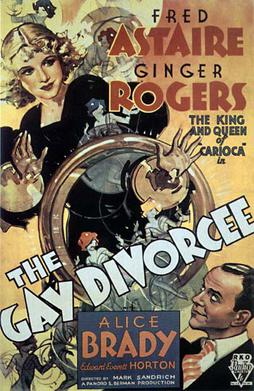
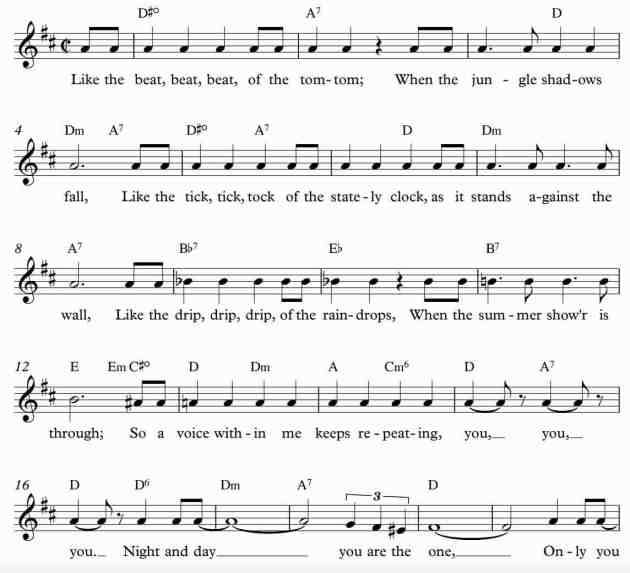
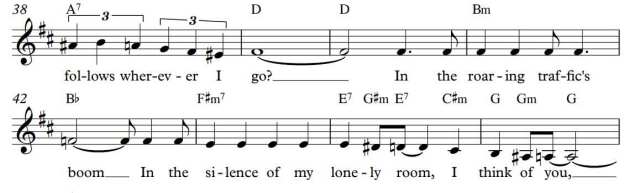


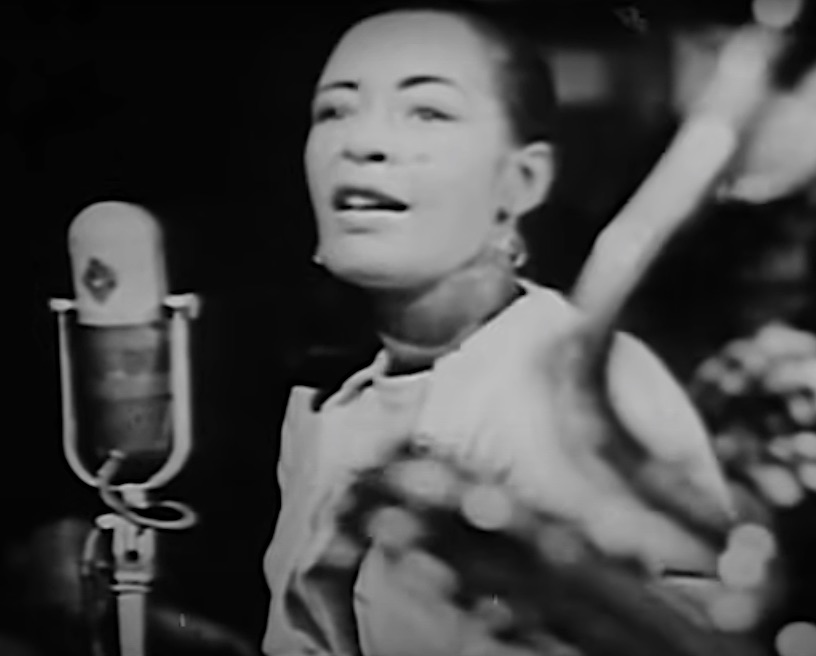


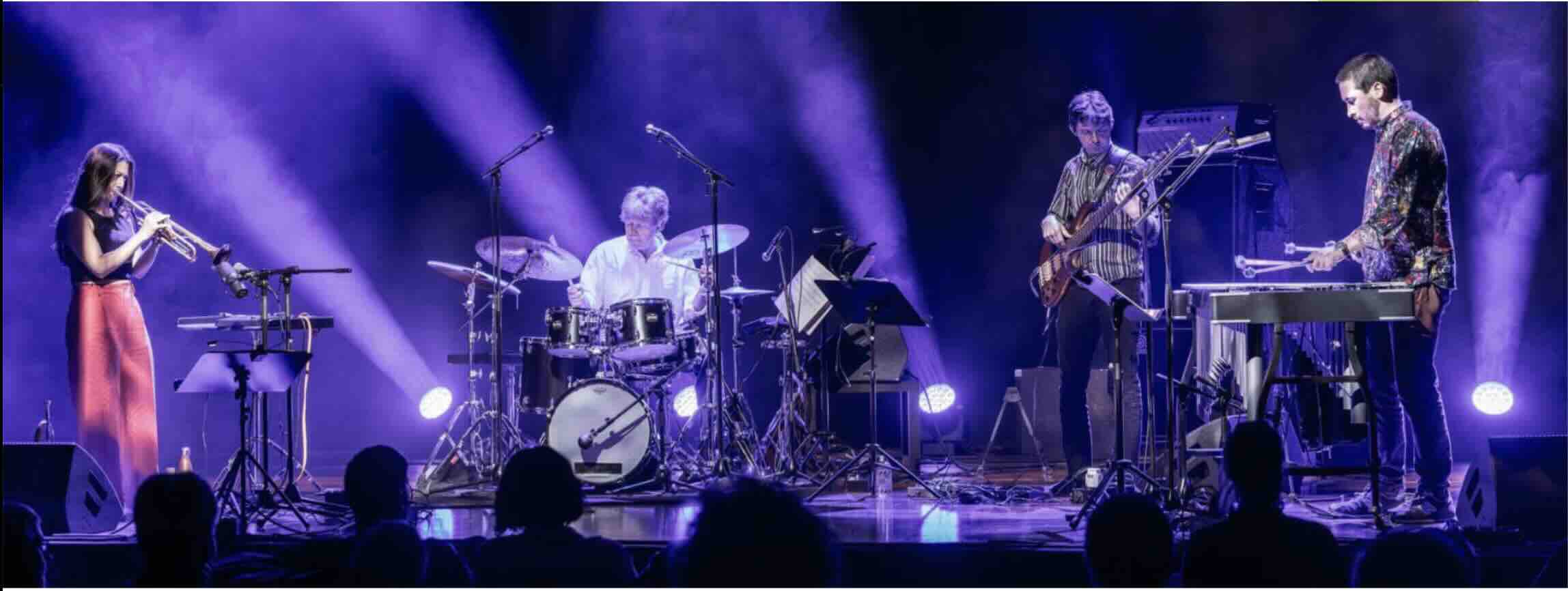


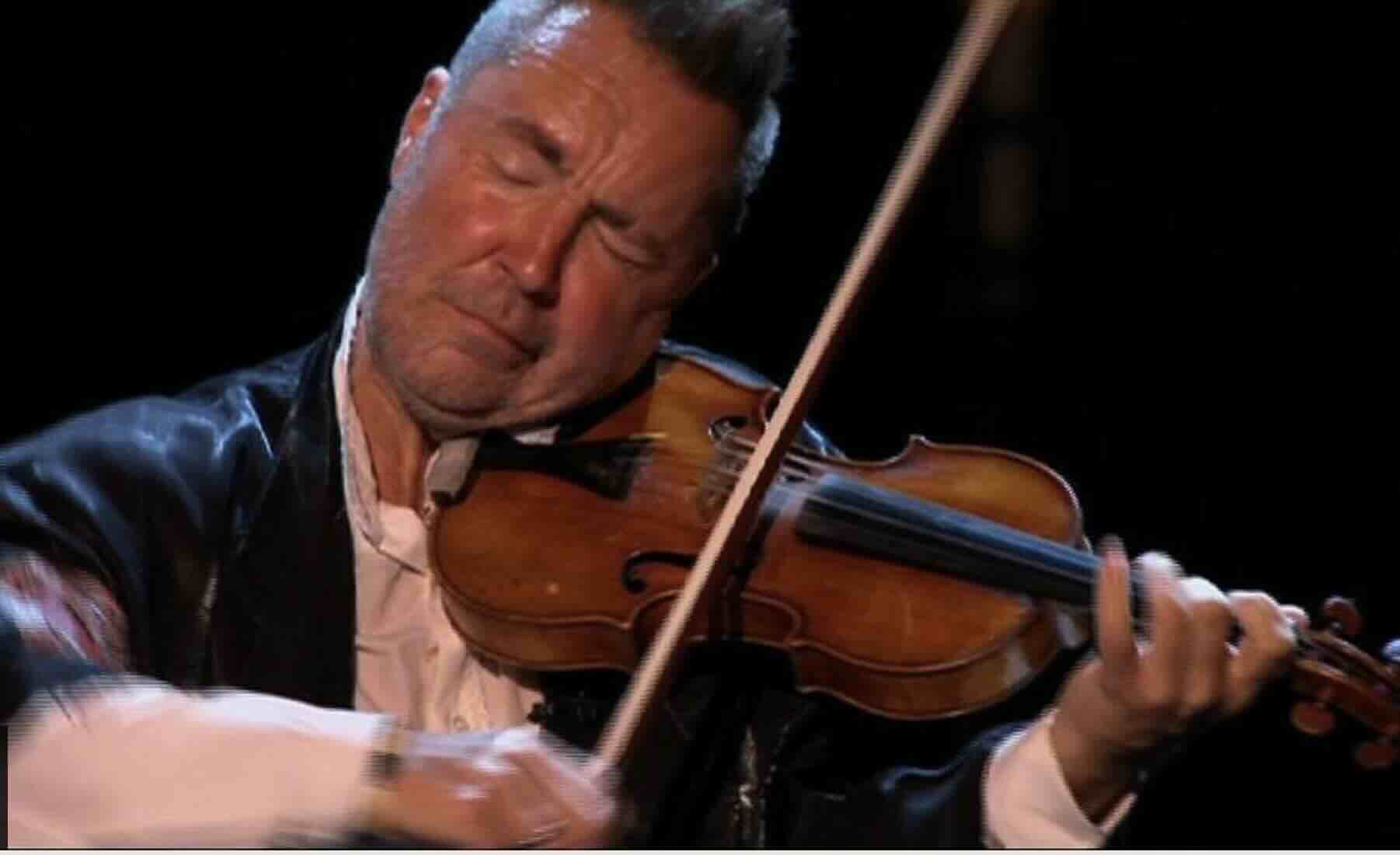



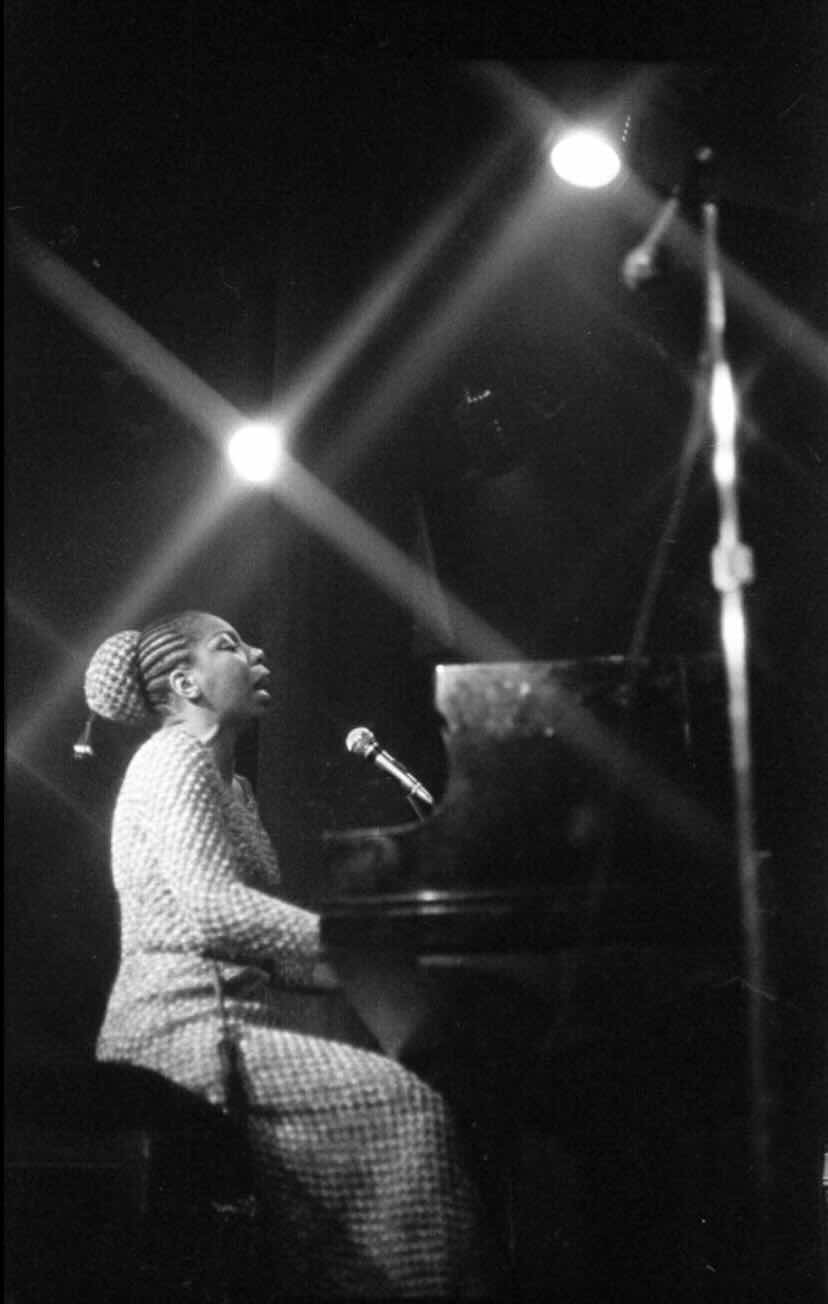


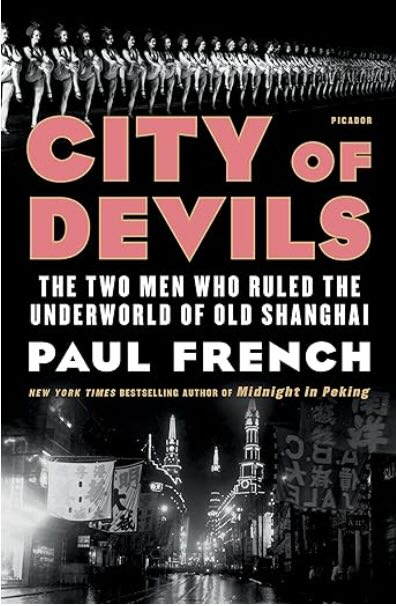
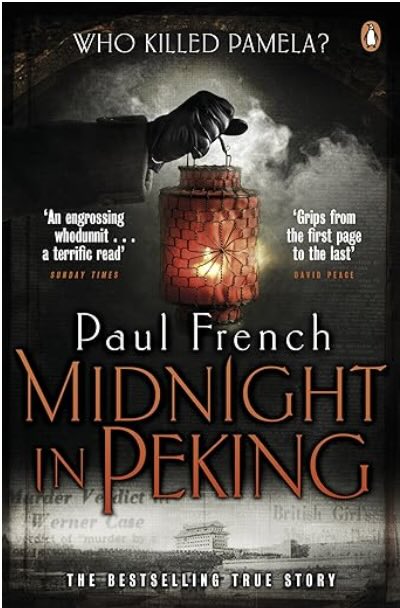
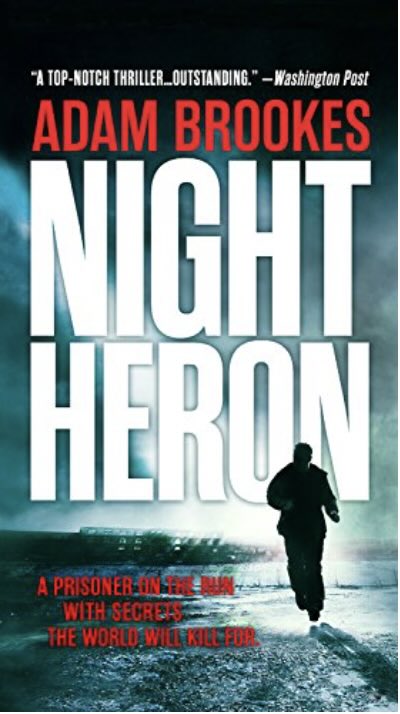

 Éva Gauthier, 1905. All images from


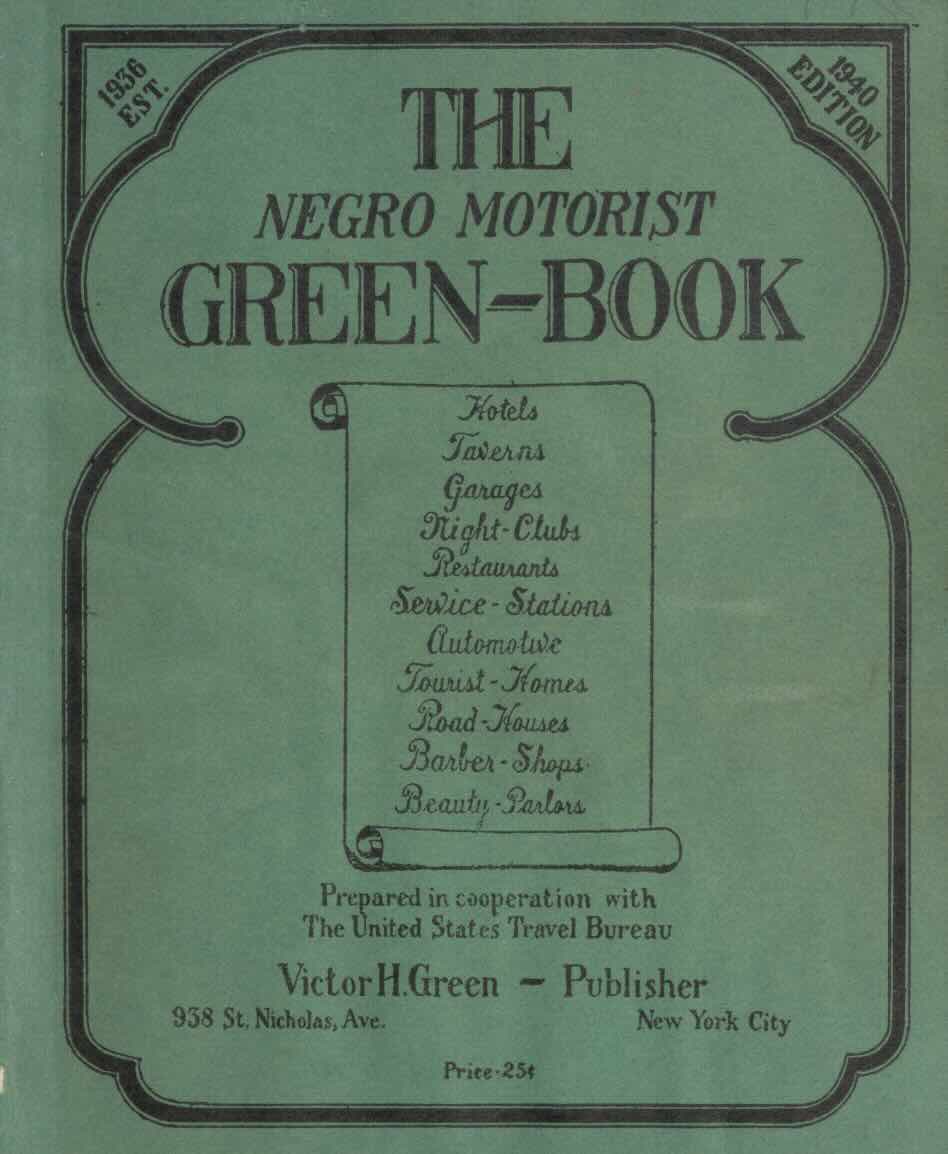
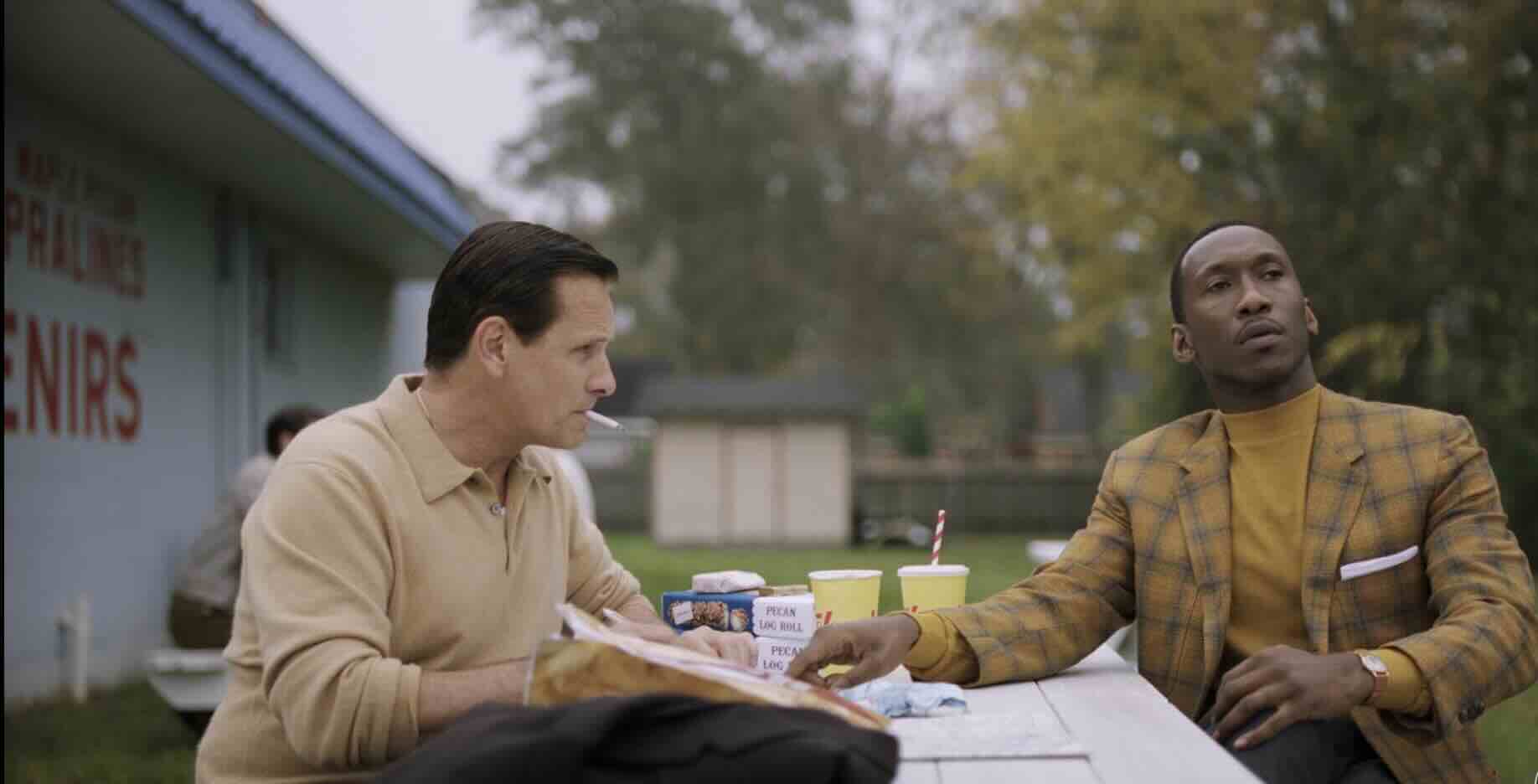





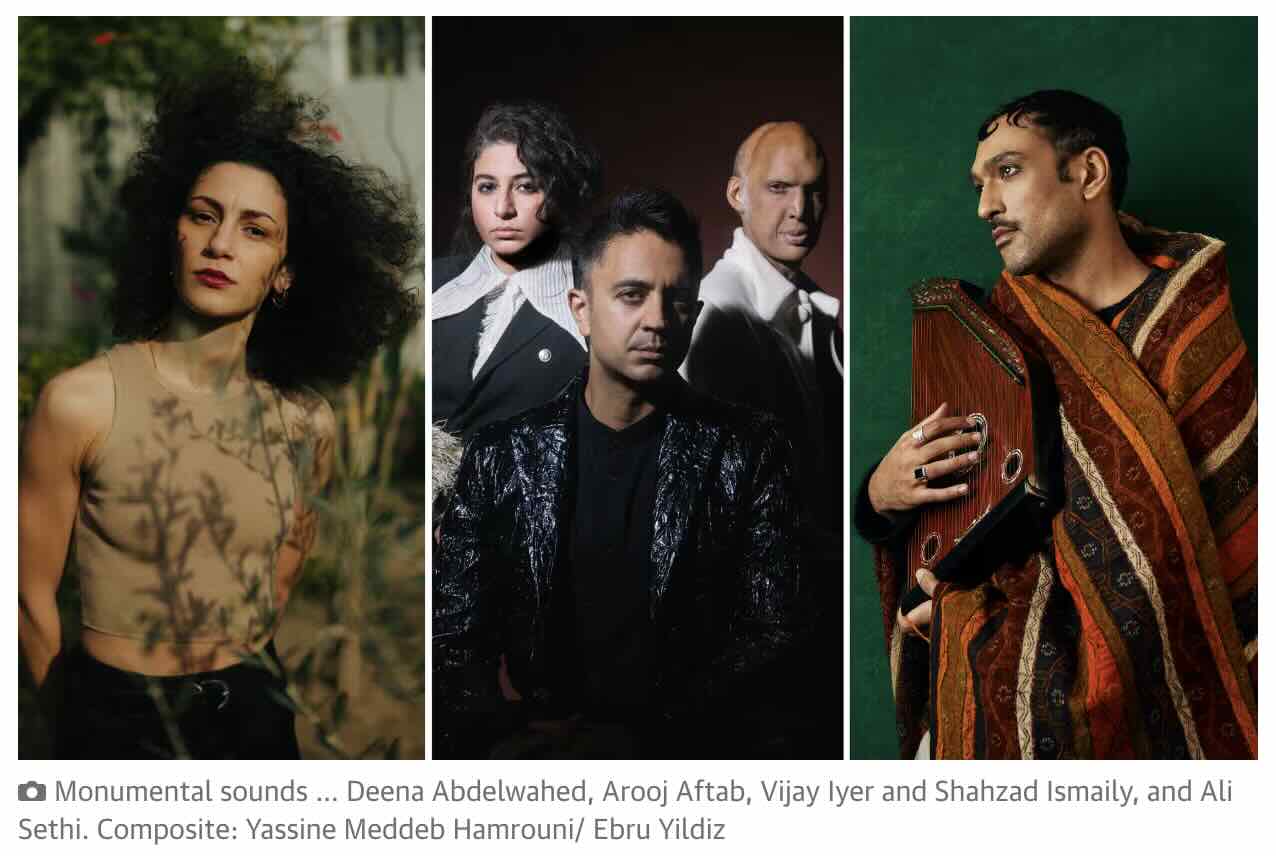


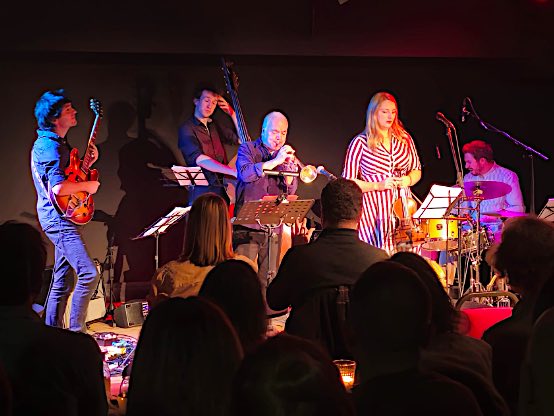

 The balance of joy and pain—
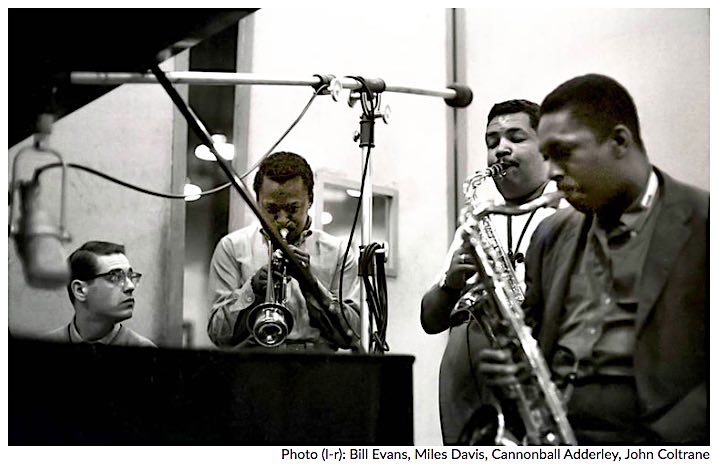
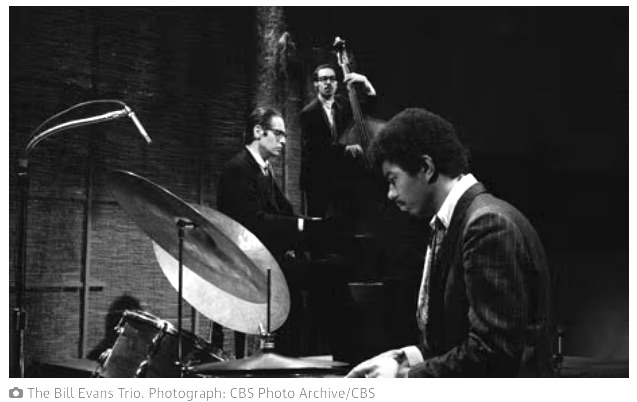


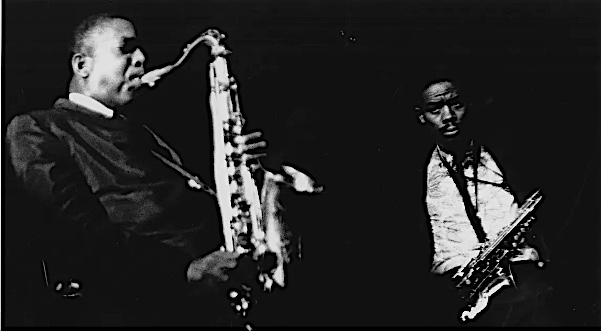





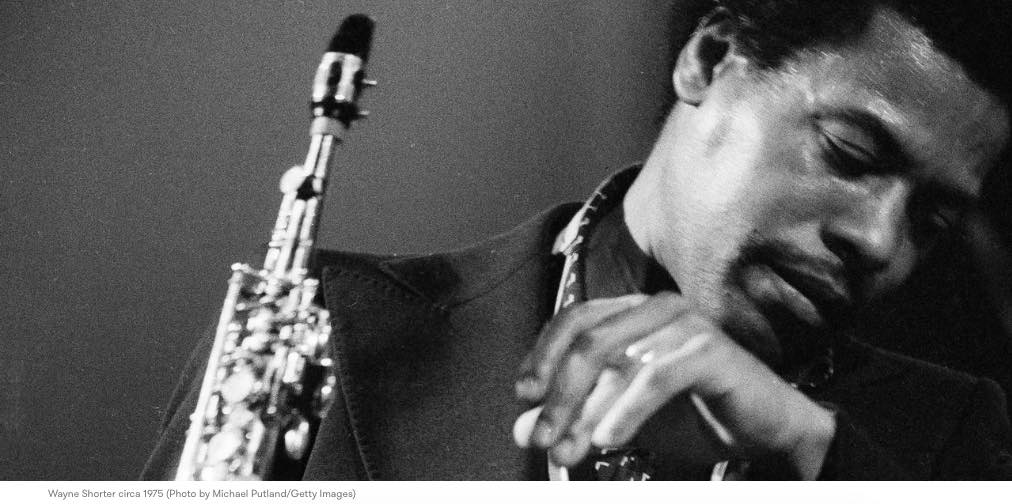 Source.





 The night we visited, the club—founded by Zuhal Focan (left) with her husband Önder—was hosting the Swiss drummer Cyril Regamey, with François Lindeman (piano) and Andreas Metzler (bass), who came together with local jazzmen Bora Çeliker (guitar) and Can Ömer Uygan (trumpet) to pay homage to the amazing creativity of
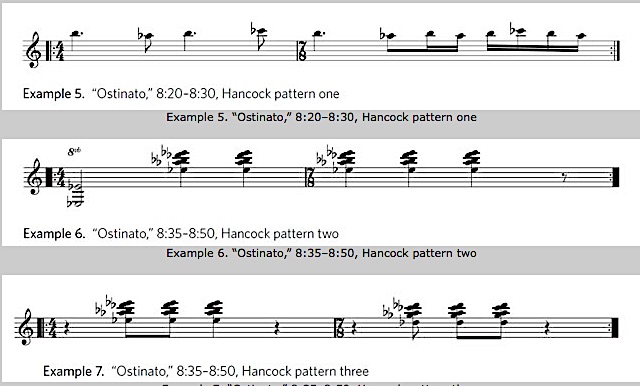


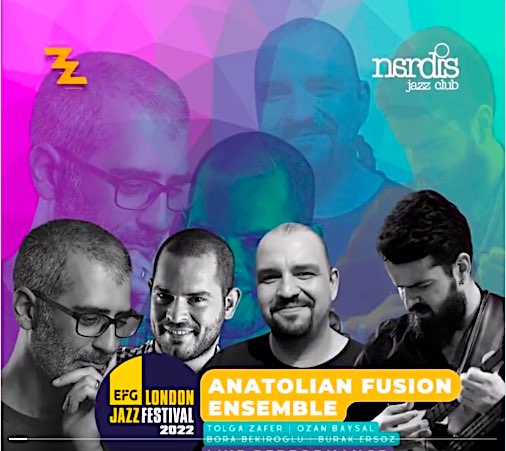

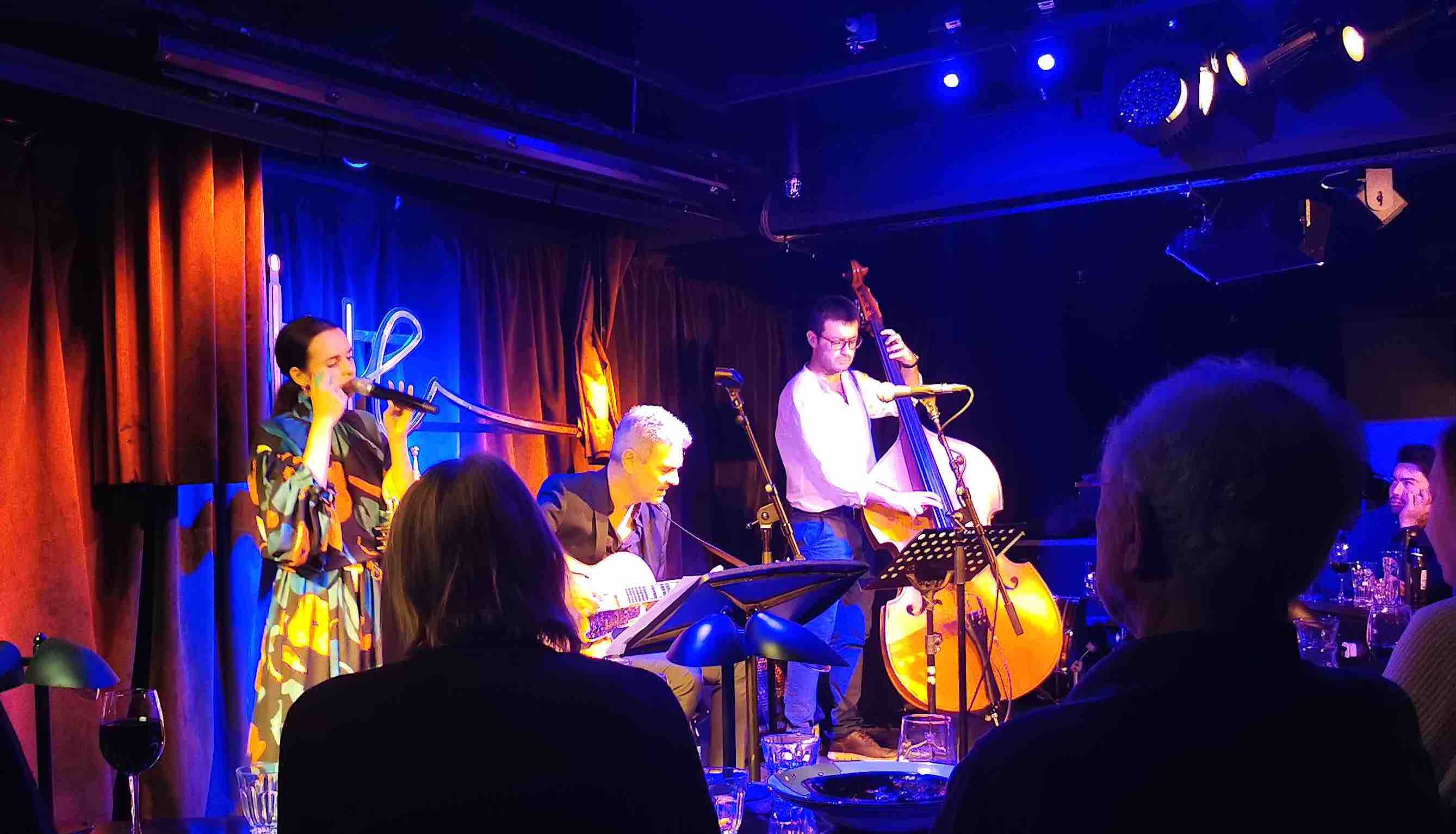

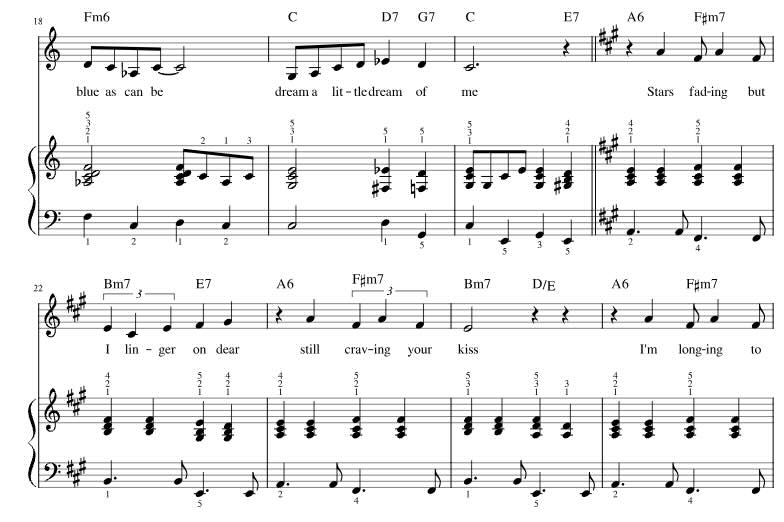





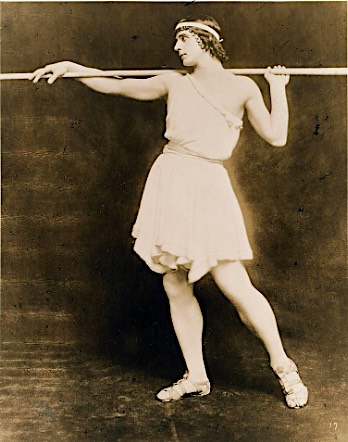
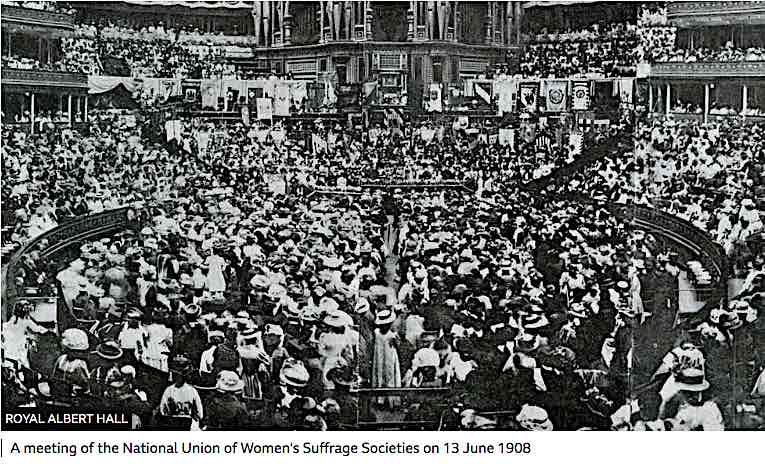
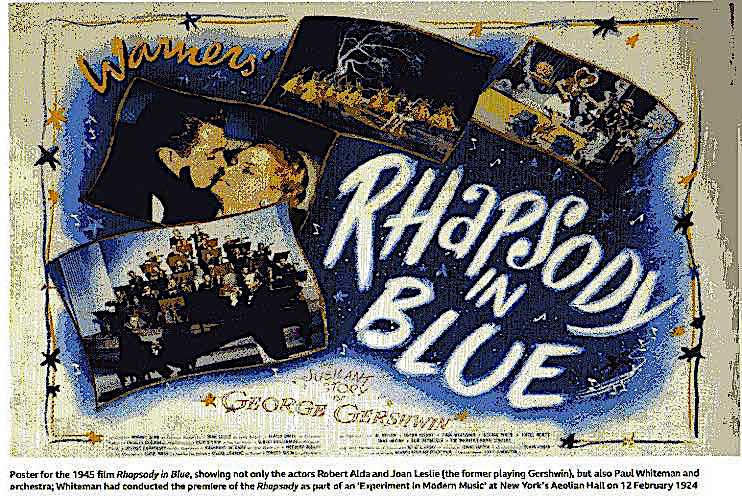
 Stephen Jones: a blog
#/media/File:Mulatto_ex-slave_in_her_house_near_Greensboro,_Alabama,_May_..._(3109751881).jpg)
#/media/File:Minkisi_(Kongo,_Landana,_Cabinda),_World_Museum_Liverpool.JPG)