While the scene is often adduced as an archetype of romantic love, and the dancing is of course stunning, it’s tricky reacting to the art of bygone ages with modern eyes and ears. Audiences today may find the couple’s “chemistry” elusive, their dynamics pointedly cold. His insistent “wooing”, and her reticent, never-rapturous compliance (“Cut the crap—oh well, at least he can dance”?!), may be standard for the time, but some may find the mood somewhat coercive.
Still, the song itself is brilliant—so we might listen without getting confused about the dance’s sexual politics (cf. racial politics in the filmed version of Only you). As wiki explains, the song’s melody, harmony, and structure are all unusual. In the obsessive opening (often omitted, understandably), after 35 repetitions of the same note (emulating Beethoven?) over a narrow range of chords, the pitch boldly rises twice by a semitone for more repetitions before sliding back to the original pitch for the melody proper. Among several accounts of the song’s origin, this is presumably the source of the reductive orientalist claim that it was inspired by the call to prayer in Morocco (cited here):
The song proper thrives on descending chromatic motifs (cf. Unpromising chromaticisms)–even when we think a regular melody might surface, in bars 44–5 the downward slide continues:
What might be a glorious climactic major 7th leap (making—love, from 1.37, bar 60) may hardly register:
In the dance, just as glorious is the way the band relishes all the rhythmic and melodic flourishes. After the dance, at the very end of the scene, when Astaire asks “Cigarette?”, Rogers still seems underwhelmed—if only she could have anticipated Lesley Nielsen’s immortal riposte in Airplane “Yes, I know”…
Recalling the Lexicon of musical invective is a story that when Porter first played the song for his friend Monty Wooly, Wooly sniffed, “I don’t know what this is you are trying to do, but whatever it is, throw it away. It’s terrible.”
* * *
Among other classic versions, apart from the likes of Ella Fitzgerald and Frank Sinatra, I always treasure Billie Holiday. Encapsulating the heartache of infatuation, she creates a new, angular melody unconstrained by the song’s original chromaticism—here’s her 1939 recording (the band including her constant soulmates Lester Young and Buck Clayton):
Charlie Parker, 1952:
Here’s a lengthy rendition by Stan Getz, live in Kildevælds Church, Copenhagen, 1960:
And Bill Evans in 1959, entirely eschewing the romance of the original—with Philly Joe Jones’s opening drum riff replacing the tom-toms of the lyrics:
Like Beijing nearby, the municipality of Tianjin encompasses a large region, much of it still rural. On ritual and its soundscapes there, my previous articles include
which as ever contain substantial material on ritual traditions. To remind you of my introduction to a similar recent survey for Fujian province in southeast China,
Ritual pervades all genres of folk expressive culture: in the Anthology, it is a major theme of the volumes for folk-song, narrative-singing, opera, and dance. In the instrumental music volumes, even genres that lack explicit liturgical content are also invariably performed for ceremonial occasions—but a further reason to consult them is that the specific rubric of “religious music” has been consigned there. I’ve described the flaws of the Anthology project in my
“Reading between the lines: reflections on the massive Anthology of folk music of the Chinese peoples”, Ethnomusicology 47.3 (2003), pp.287–337.
Apart from the Anthology‘s valuable Monographs for opera and narrative-singing and brief textual introductions to genres, its volumes consist mainly of transcriptions, of limited value without available recordings. Conceptually its classifications are rudimentary, but it opens up a world of local cultures.
It’s important to grasp the geography of the large regions covered by such surveys (cf. Layers of fieldwork). At the time of compilation the greater Tianjin municipality comprised four suburban areas (east, west, south, north), five counties (Wuqing, Jinghai, Ninghe, Baodi, * Jixian), and three districts (Tanggu, Hangu, Dagang), all of which had distinctive local traditions.
Useful as always are sketches of some leading groups (pp.1327–39) and brief biographies (pp.1340–56), containing promising leads to further ritual associations and sects.
Volume 1 is entirely devoted to “drumming and blowing” (guchui yue 鼓吹乐). Here the rubric of “Songs-for-winds associations” (chuigehui吹歌会) is misleading (see under Ritual groups of Xushui), compounded by the sub-categories of leading instrument (guanzi, suona, sheng, dizi). While many musicians are versatile on wind instruments, this masks the important distinction between occupational shawm bands and devotional ritual associations led by guanzi. However, there is some valuable historical information bearing on the “classical” style of amateur ritual groups (often known as “music associations” yinyuehui) serving ritual, such as the Tongshanhui 同善会 of Huanghuadian in Wuqing county (p.1336; brief mention here, under “Further leads”). Such groups were to become my main focus (see Menu, under Hebei and Gaoluo).
Nao and bo cymbals of the Tianxing dharma-drumming association, inscribed Xuande reign, 5th year (1429). Besides museums, folk performing groups preserve important evidence for the material culture of imperial China (see China’s hidden century).
Shawm bands always occupy a substantial part of the Anthology coverage. Here the summary introduces traditions for all the municipality’s regions, notably in the north around Baodi and Jixian (pp.36–8, 41–2; groups pp.1338–9, biographies p.1343–4, 1355).
The “great music” of Tianjin.
Still under the heading of “drumming and blowing”, a separate rubric introduces the imposing “great music” (dayue大乐, though here I seem to recall it should be pronounced daiyue) of the Tianjin region. These shawm bands, derived from the Qing court (cf. longchui and Pingtan paizhi in Fujian), were transmitted among the folk through the Republican era until the 1950s, mainly in urban districts but also in the suburbs; but later they became largely obsolete, so the Anthology fieldwork was largely a “salvage” project.
The impressive introduction (pp.599–610) refers to documents from the late Qing, including material on the “imperial assembly” (huanghui皇会), supplementing that of the dharma-drumming associations), and details the use of the genre at weddings and funerals. Besides recordings made for the Anthology in the 1980s, the appetising transcriptions (pp.611–78) utilise early discs that I’m keen to hear—Pathé (Baidai) from 1908 and the 1920s, Shengli 胜利 from the 1930s. Cultural cadres recorded senior artists in the 1950s and even “in the mid-70s”. By the 1980s, surviving musicians were recorded for the Anthology, and took part in the Boxer movie Shenbian神鞭 (Holy whip, 1986).
Shifan band, 1930s.
Volume 2 opens with an introduction to the mixed ensemble shifan十番 (text pp.679–701, transcriptions pp.702–875; further material on the late Qing societies Siru she 四如社 and Jiya she 集雅社 on pp.1327–8). Related to the better-known genres of south China, notablyJiangnan, shifan bands are also found in a few northern regions including Hebei (see my Folkmusic of China, pp.206–8). In Tianjin, where shifan was part of the thriving Kunqu scene before Liberation, the major figure in documenting the tradition was Liu Chuqing 刘楚青 (1909–99) (pp.1341–2), who used his youthful immersion in the culture to compile a major volume in 1987.
Notable among percussion ensembles (pp.876–1138) arethe dharma-drumming associations (fagu hui法鼓会), which my mentors at the Music Research Institute (MRI) in Beijing were excited to discover in 1986 and 1987 while attending major folk music festivals in Tianjin. These groups commonly subsumed a shengguan melodic ensemble—from the 1986 festival, listen to the MRI’s audio recording of the Pudong “music and dharma-drumming association” in Nanhe township, Xiqing district 西青南河镇普东音乐法鼓会. These events led us to the fieldwork of local scholars—notably Guo Zhongping 郭忠萍, author of the valuable overview in the Anthology (pp.876–97; transcriptions pp.898–1009; see also groups pp.1328–34 and biographies pp.1347, 1349), based on her more detailed early publication Fagu yishuchutan (1991).
This section also introduces the percussion of “entertainment associations” (huahui花会): “flying cymbals” (feicha飞镲), stilt-walking (gaoqiao高跷), dragon lanterns (longdeng龙灯), and flower drum (huagu花鼓).
“Religious music” As always, despite my criticism of the term, this is a substantial category in the Anthology, subsuming some major traditions of Buddhist and Daoist ritual.
Jinmen baojia tu shuo (1846).
For major insiders’ accounts by temple clerics Zhang Xiuhua and Li Ciyou before and after the 1949 “Liberation”, see n.1 here, leading to Appendix 1 of my book In search of the folk Daoists of north China and the research of Vincent Goossaert.
Daoist band, Tianjin. Tell us more…
For “Buddhist music” (pp.1141–52) and “Daoist music” (pp.1274–9) the introductions can only serve as a starting point for more sophisticated fieldwork—like the transcriptions (pp.1153–1273 and 1280–1326 respectively). There are slim pickings here—although the section on Daoist temple music provides a remarkable vignette from 1972 (!) on a Pingju opera musician’s visit to Zhang Xiupei 张修培, elderly (former?) abbot of the Niangniang gong temple, to notate his singing for the purposes of “new creation”. This section also introduces Li Zhiyuan 李智远 (1894–1987) of the Lüzu tang and Tianhou gong temples; though laicized after “Liberation”, from 1985 he was able to support the renovation of the Lüzu tang. More promising are the rural areas, where there are always household Daoist bands to explore. The transcriptions end with three items of vocal liturgy from the Western suburbs (pp.1313–26): the popular “Twenty-four Pious Ones” (Ershisi xiao 二十四孝), the “Song of the Skeleton” (cf. the Li family band in north Shanxi), and Yangzhi jingshui 杨枝净水.
The accounts of many folk groups offer glimpses of the sectarian connection. In Yangliuqing township (known for its nianhua papercuts), the Incense Pagoda Old Association (Xiangta laohui 香塔老会, above) of 14th Street (which we visited all too briefly in 1989) had scriptures including Hunyuan Hongyang baodeng混元弘陽寶燈 and Linfan jing临凡經. Tracing their transmission back eleven generations to the Wanli era (1572–1620) of the Ming dynasty, they have remained active exceot for the hiatus of the Cultural Revolution. In the western suburbs the Tianxing dharma-drumming association (pp.1331–2) belonged to the Tiandimen sect, and groups in Dagang district (p.33) also derive from Tiandimen and Taishangmen sects.
For all its flaws, the Anthology remains a valuable resource; but as ever, the groups introduced there call for fieldwork from scholars of folk religion as well as musicologists.
* Rural Baodi is known to Beijing musicologists and other intellectuals for its “7th May Cadre Schools” (Wuqi ganxiao 五七干校), wretched sites of exile during the Cultural Revolution—for scholars of the Music Research Institute at Tuanbowa (Jinghai), scroll down here.
On visits to Istanbul, the curious outsider like me may be inclined to sample a menu of traditional Turkish expressive culture—steering well clear of the commodified Whirling Dervishes, I’ve dabbled in the rituals of the Sufi tekke and Alevi cemevis, rejoiced in the ezan call to prayer (as no locals seem to do), the exhilarating sounds of davul-zurna drum-and-shawm, and so on. Jazz clubs also beckon, and the less geriatric might seek out hip-hop and club culture (see under Landscapes of music in Istanbul).
Back in London, alongside the thriving “world music” scene, I haven’t grown out of my classical background, still regularly attending WAM concerts—but somehow this makes an unlikely choice for me in Istanbul. Still, it’s all part of the city’s cultural scene, with its own history since the late Ottoman and Republican eras (see two articles on the useful History of Istanbul site, here and here).
So I sallied forth to the Süreyya Opera House in swinging Kadiköy for a concert in which Cem Mansur directed the strings of the Gedik Philharmonic Orchestra.
The conductor (şef!) Cem Mansur trained in London, and as a student of Leonard Bernstein in Los Angeles. Besides wiki, here we read:
Mansur is passionate about the importance of music as a powerful tool for affecting change. Through his concept “The Laboratory of Democracy” (an open rehearsal session) Mansur engages both orchestras and audiences in issues such as co-existence, different levels of leadership, the nature of authority, of individual and collective responsibility as well as the difference between hearing and listening, leading and following. The sessions explore the basic concepts of democracy: individual worth, majority rule with minority rights, compromise, personal freedom and equality before the law, all demonstrated through the model of the orchestra as a miniature society. Mansur’s work on the peace-building role of music has also found expression of his conducting of the Greek/Turkish and Armenian/Turkish [youth] orchestras over several years.
He expounds this philosophy in an eloquent informal talk published bilingually as Müzik, İnsan ve Barış / Music, Mankind and Peace (2013), adducing the examples of El Sistema, the West-Eastern Divan Orchestra, and MIAGI in South Africa.
Apart from appearing as guest conductor around the world, Mansur has devoted himself to cultivating the WAM scene in Turkey—most admirably as founder of the Turkish Youth Philharmonic Orchestra (wiki; website; Cornucopia), with major support from the progressive Sabanci Foundation. This 2017 performance of the Sinfonia from Verdi’s Forza del destino gives an impression of their vitality; and here they are joined by Gökhan Aybulus at the Berlin Konzerthaus in Rachmaninoff’s 2nd piano concerto (cf. Historical ears and eyes):
My own training in WAM having taken wing in the National Youth Orchestra of Great Britain, notably under Pierre Boulez, I can just imagine the inspiration that young Turkish musicians gain from such experiences and opportunities.
At the concert last week, Mansur opened by introducing the programme, as he often does—such a good way of establishing rapport with the audience, reminding me of his mentor Bernstein; his remarks were enthusiastically received by the audience (and even by me, although I doubt that he employed any of the dozen eccentric words that I have mastered in Turkish). He was joined on stage by composer Sadık Uğraş Durmuş (b.1978), the world premiere of whose Çengi no.2 opened the concert. Trained in the Netherlands, Durmuş is now on the faculty of Istanbul University. The çengi of the title referring to female dancers of Ottoman times, he evokes an imaginary dance scene, with singing and some shouting from the orchestra.
The new Turkish work led aptly to the neo-classical Concerto in Dfor strings by Igor Stravinsky (aka Gran visits York!), composed in Hollywood in 1946, commissioned by Paul Sacher for the 20th anniversary of the Basler Kammerorchester. Though not designed as a dance piece, it’s akin to the “Balanchine” works of Stravinsky’s middle period—and Mansur recommended the fine ballet The cage that Jerome Robbins set to the concerto in 1951.
The concert ended with the substantial Concerto for piano, violin, and string quartet by Ernest Chausson (1855–99). To the uninitiated, Chausson may seem like a one-trick pony—and even as a violinist I was somehow immune to his Poème—but it’s good to be reminded of the bridges leading to Debussy and Ravel. The soloists Gökhan Aybulus and Esan Kıvrak were accompanied by the string orchestra; even in the original version with string quartet, the piano tends to dominate over the solo violin. Here it is with Kathryn Stott and Janine Jensen in 2011:
I admired the audience’s enthusiasm for such a niche programme; and maybe I’m just in a good mood, but emerging into the nightlife of Kadiköy, I relish the relaxed confidence of this diverse society.
I can’t remember how I came across the name of Éva Gauthier (1885–1958) and the story of how she presented arrangements of Javanese music in her concert recitals.
By the late 19th century the sounds of gamelan were regularly heard at grand exhibitions in the West; Paris 1889 (Exposition Universelle), Chicago 1893 (Columbia Exhibition), and San Francisco 1915 (Panama–Pacific International Exposition) all had a “Javanese village”.
By contrast with Berlioz’s aversion to the music of the Mystic East, Debussy was entranced by the gamelan he heard at the 1889 Exposition. He wrote to a friend in 1895 of “the Javanese music, able to express every shade of meaning, even unmentionable shades… which make our tonic and dominant seem like ghosts, for use by naughty little children.” And in 1913, in a much-cited passage:
There used to be—indeed, despite the troubles that civilization has brought, there still are—some wonderful peoples who learn music as easily as one learns to breathe. […] Their traditions are preserved only in ancient songs, sometimes involving dance, to which each individual adds his own contribution century by century. Thus Javanese music obeys laws of counterpoint which make Palestrina seem like child’s play. And if one listens to it without being prejudiced by one’s European ears, one will find a percussive charm that forces one to admit that our own music is not much more than a barbarous kind of noise more fit for a travelling circus.
(Ravel is also sometimes said to have been impressed by the gamelan at the 1889 Exposition, but he was only 14, and I haven’t yet found a source.)
As to gamelan studies in later years, Michael Church devotes chapter 12 of Musics lost and found to the immersion of Jaap Kunst (1891–1960) and Colin McPhee (1900–1964) in the musics of Java and Bali. On his return from Indonesia to Amsterdam in 1934, Kunst established gamelan as a major theme in ethnomusicology. The Canadian-American composer McPhee lived in Bali through the 1930s; he found the engaging A house in Bali easier to write than his monumental study of the island’s music: “I did not live in Bali to collect material. I lived there because I wanted to, for the pleasure of it”. As Church comments,
he disdained the paraphernalia of scholarship, wanting to purge the book of “all stupid jargon-like aeophones [sic], idiophones beloved by Sachs and Hornbostel”. Yet as Oja points out, his approach to research was fastidious and scholarly.
Such pioneers lay the groundwork for the later gamelan craze; since the time of Mantle Hood few self-respecting ethnomusicology departments are without their own gamelan…
In 1910, disillusioned by being replaced in the opera Lakmé at Covent Garden, she travelled to Java, where she inconsequentially married a Dutch importer and plantation manager. Until 1914 she was based in Surakarta; besides performing there, in 1911 she toured Delhi, Kuala Lumpur, Penang, Singapore, Hong Kong, Shanghai, Tianjin, and Peking, followed over the next two years by Japan, Siam, and India.
But while in Surakarta Gauthier was granted permission to live in the Kraton palace to study its court music. She gained an introduction to this world through the composer and pianist Paul Seelig (1876-1945), former conductor of the royal band, chronicler of gamelan and kroncong. As she learned the basics of gamelan theory, Gauthier’s relations with the all-male gamelan musicians of the court were mediated through the royal wives.
She was taught, for example, that the drum was the “chef d’orchestra”, and that the vocal part “is merely a tone colour in the ensemble, and the singer’s voice counts as another instrument in the orchestra”.
Here’s film footage of a performance at the Kraton from 1912 (part of an interesting playlist):
And here’s the album Court music of Kraton Surakarta (King Records), recorded in 1992:
I sang to them a bit of colorateur and they thought the screaming on the high notes was hideous; they thought I was going to burst. Then I sang to them a melody. But they looked bewildered. They could not grasp it in the least. Then I sang Debussy to them, and they went into raptures.
Anyway,
She became such an enthusiast of Javanese performance that she hatched a plan to produce a tour of Javanese dancers and gamelan to Europe. She was convinced that the srimpi dance would captivate European audiences as much as it had her.
When this plan was thwarted by World War One, Gauthier moved to New York, and began to give recitals of arrangements by Paul Seelig and Constant Van de Wall, inserting short talks on Javanese courtly culture into her programmes. Her 1914–15 recordings of two songs were reissued in 1938:
For a gruelling vaudeville tour of the States she teamed up with the exotic dancer Regina Jones Woody (“Nila Devi”) with an item called Songmotion. As the latter recalled,
We were booed, laughed at, and made targets for pennies and programs. Almost hysterical, Eva and I changed into street clothes and sat down with Mr. Smith [the stage manager] and the conductor to discuss what to do. We had a fifty-two-week tour ahead, but if this was a preview of audience reaction, the Gauthier-Devi act wouldn’t last two minutes in a big city.
The stage manager, Mr Smith, was outspoken. He took Madame Gauthier apart first. “Take off that horse’s head thing you’re wearing and get rid of that sarong with its tail between your legs. Scrap that whiny music. You’re a good-looking woman. Put on your best evening gown, sing the Bell song from Lakmé, and you’ll get a good hand”. Madame promptly fainted.
On being revived, she stalked out of the room, announcing, “We’ll close before I prostitute my art”.
I came next. According to Mr. Smith I look bowlegged as I moved my feet and legs in Javanese fashion. Even he had to laugh. My native costumes were ugly. Why did I have four eyebrows? And if I could really dance, why did I just wiggle and jiggle about? Why didn’t I kick and do back bends and pirouettes?
Substituting Orient-inspired songs by composers such as Ravel and Granville Bantock, they only retained two songs by Seelig and Van de Wall. Gauthier withdrew from the year-long tour after five months, but for Songmotion in 1917, with Nila Devi no longer available, she found another dance partner in Roshanara (Olive Craddock!). This led them to perform in Ballet intime, an altogether more classy affair directed by Adolf Bolm, formerly of the Ballets Russes.
Having premiered Stravinsky’s Three Japanese lyrics in 1913, Gauthier loaned her Java notebooks to Ravel and Henry Eichheim. In November 1917 she premiered Five poems of ancient China and Japan by the talented young Charles Griffes (1884–1920).
and that same year she supplied him with material for his Three Javanese songs:
Much drawn to both French modernism and American popular music, in 1923 Gauthier gave a seminal recital of “Ancient and modern music for voice” at the Aeolian Hall in New York—an early challenge to the boundaries between high and low cultures. In the first half she sang pieces by Bellini and Purcell, as well as modernist works by Bartók, Hindemith, Schoenberg, Milhaud, and others. The second half was still more daring, including pieces by Jerome Kern, Irving Berlin, and George Gershwin (who accompanied these items on piano). This was the first time Gershwin’s music was performed by a classical singer in concert, and led directly to the commissioning of Rhapsody in blue (1924) and his later jazz-classical syntheses.
Through the 1920s Gauthier often performed her “Java to jazz” programme, which typically began with her Seelig and Van de Wall songs, continuing with Beethoven, Bliss, Debussy, and Ravel, and ending with Gershwin, Berlin, and Kern. **
Birthday party honouring Maurice Ravel in New York, 8th March 1928. From left: Oscar Fried, Eva Gauthier, Ravel at piano, Manoah Leide-Tedesco, George Gershwin.
* * *
Griffes is cited as saying “In the dissonance of modern music the Oriental is more at home than in the consonance of the classics”. Cohen again:
Gauthier’s encounters with traditional Asian music, and particularly Javanese and Malay song, at a pivotal point in her career opened her mind to the diversity of world music and made her rethink her cultural values. As she remarked, “It was actually a serious study of all Oriental music that enabled me to understand and master the contemporary or so-called “modern music”.
* For the riches of regional traditions, note the 20-CD series Music of Indonesia (Smithsonian Folkways, masterminded by Philip Yampolsky)—this playlist has a sample.
** From the days before newspaper typesetting rejoiced in the terse and gnomic, the wiki article on Gauthier cites a 1923 headline in the Fargo Forum:
Eva Gauthier’s Program Sets Whole Town Buzzing: Many People Are of Two Minds Regarding Jazz Numbers—Some Reluctantly Admit That They Like Them—Others Keep Silent or Condemn Them
Cf. the over-generous title of an 1877 book cited by Nicolas Slonimsky (in note here). And this roundup of wacky headlines.
Fujianprovince in southeast China is one of the most vibrant areas to explore folk and ritual expressive cultures, which its local scholars have been particularly avid in documenting. Its traditions—always rooted in life-cycle and calendrical ceremonies—are known to outsiders largely through the Minnan region in the south of the province, particularly the treasury of nanyin ballads [1]—not least because much of the culture of the island of Taiwan across the strait derives from its Hokkien migrants (click here).
The visits of my early fieldwork years were inevitably superficial, “gazing at flowers from horseback” 走马观花. For background, Li Quanmin’s 1961 field report—during a lull between Maoist campaigns—was already based on collections by local cultural workers. After the hiatus of the Cultural Revolution, Fujian minjian yinyue jianlun福建民间音乐简论 (1986) by Liu Chunshu 刘春曙 and Wang Yaohua 王耀华 made a worthy survey for the early reform era, including both vocal and instrumental genres.
Meanwhile the compilation of the monumental Anthology of folk music of the Chinese peoples was under way; and it’s taken me all this time to get round to browsing the 2,775 pages (!) of the two instrumental music volumes for Fujian,
Zhongguo minjian qiyuequ jicheng, Fujian juan中国民间器乐曲集成, 福建卷 (2001), again with the experienced Wang Yaohua as editor-in-chief.
Ritual pervades all genres of folk expressive culture: in the Anthology, it is a major theme of the volumes for folk-song, narrative-singing, opera, and dance. In the instrumental music volumes, even genres that lack explicit liturgical content are also invariably performed for ceremonial occasions—but a further reason to consult them is that the specific rubric of “religious music” has been consigned there. I’ve described the flaws of the Anthology project in my
“Reading between the lines: reflections on the massive Anthology of folk music of the Chinese peoples”, Ethnomusicology 47.3 (2003), pp.287–337.
Apart from the Anthology‘s valuable Monographs for opera and narrative-singing and brief textual introductions to genres, its volumes consist mainly of transcriptions, of limited value without available recordings. Conceptually its classifications are rudimentary, but it opens up a world of local cultures.
For Fujian, whereas nanyin is amply documented on CD and film, most other genres are unique to the province and hardly known outside their own locale. So I find these volumes a revelation, opening up many perspectives (particularly for the late imperial and Republican eras) and making one of the most impressive introductions to the riches of expressive culture in China. It confirms my observations about the resilience of tradition in the PRC—for all the cultural riches of Taiwan, they are dwarfed even by the single province of Fujian, despite the traumas of three decades of Maoism there.
* * *
The main rubrics adopted for the instrumental volumes of the Anthology (a rough-and-ready national framework, based on the classification developed since the 1950s and later elaborated by Yuan Jingfang) are:
“compound” (zonghexing综合性, referring mainly to a substantial vocal component)
“silk-and-bamboo” sizhu 丝竹
“drumming and blowing” guchui 鼓吹
“blowing and beating” chuida 吹打, with a more diverse instrumentation than guchui
percussion bands luogu 锣鼓
“sacrificial music” jisi yinyue 祭祀音乐 and “religious music” zongjiao yinyue 宗教音乐(Buddhist, Daoist, both temple and household—the latter covered far more comprehensively in separate projects by Chinese and foreign scholars).
Besides all the articles introducing particular local traditions, brief yet instructive sections are appended with histories of some notable groups (pp.2687–99) and biographies of performers (pp.2700–19), sampled below.
As throughout China, social performance is dominated by ensembles (see e.g. Liaoning), some occupational, others amateur. By contrast with the “conservatoire style”, instrumental solos play a very minor role in folk practice—here represented only by pieces for the zheng zither around Zhao’an and Yunxiao (pp.1683–1754), just east of Chaozhou in east Guangdong—another enclave for zheng solo repertoires.
* * *
Even for the Quanzhou region of south Fujian, while nanyin 南音 is a main focus, it is only part of a diverse scene. Nanyin has become a significant cultural element in the rapprochement between Fujian and Hokkien communities overseas. With so much research elsewhere, the Anthology section (pp.31–46, transcriptions pp.37–354) may not detain us long, though we should also consult other volumes, notably those for narrative-singing—both “music” (Zhongguo quyi yinyue jicheng, Fujian juan 中国曲艺音乐集成, 福建卷, pp.45–1102!) and the monograph (Zhongguo quyi zhi, Fujian juan 中国曲艺志, 福建卷).
Beiguan 北管 isa major genre in Taiwan (see again here), but in Fujian (where it is particular to Hui’an county near Quanzhou) it has a far less extensive repertoire (pp.355–60, transcriptions pp.361–97; biographies 2716–18).
Local traditions under “silk-and-bamboo” (a rubric as unwieldy as the others) include
shiyin 十音of the Pu–Xian region (Putian and Xianyou) (aka shiyinbayue 十音八乐, with the added format of shawms and percussion: for video clip, see under Walking shrill)
“guyue” 古乐 of Zhao’an in the southern Zhangzhou region, related to Chaozhou ensemble music and the zheng zither repertoire
shiban 十班 groups around west Fujian.
“Greater guchui” procession in Anxi.
Shawm-and-percussion bands, again serving life-cycle and calendrical observances, are ubiquitous throughout China, including all regions of Fujian—though they are hardly known outside local communities. Under the heading of “guchui” are introductions to
Ningde in northeast Fujian (for a shawm band in Xiapu, see also pp.2696–8).
around Fuzhou, Annan chi 安南伬 (and introduction to a renowned band in Linpu village, pp.2691–2)
in Fuqing south of Fuzhou, jin guchui 金鼓吹
“lesser guchui” of Xianyou and “greater guchui” of the Pu–Xian region.
Biographies of Pingtan paizhi master Wang Shanglong and Chen Renzhen.
Since imperial times, shawm bands were often transmitted through regional military garrisons, such as
longchui 龙吹 around Quanzhou (text pp.784–5, transcriptions pp.786–96), introduced in my Folk music of China pp.312–18, CD #12 (in the sidebar on this blog, audio gallery #15, with commentary here), and another instance is
paizhi of Pingtan island平潭排只 (text pp.663–4, transcriptions pp.665–708; biographies of Wang Shanglong 王尚龙 [1846–1917] and Chen Renzhen 陈人祯 [1911–88] p.2707, with a brief introduction to the latter’s band on p.2695).
shiyin十音 around Quanzhou (Folk music of China, pp.318–20)
naoting 闹厅 of Yongchun (cf. film footage of Yongchun migrants to Malaysia, here)
shawm bands in Anxi and Xiamen
for Changtai near Zhangzhou, greater guchui and lesser bayin—introducing the Qinghe guan 清和馆 society, whose masters trained over fifty groups in the vicinity.
Transmission of Raoping chui in rural Longyan, p.931.
Around west Fujian:
Raoping chui饶平吹 of Longyan (and introduction to a village band pp.2695–6)
shifandiao 十番调 of Yongding
wuyin 五音 of Shanghang
and genres in Wuping, Liancheng, and Changting.
In central Fujian, bands in counties of Sanming municipality.
In the north, shawm bands in counties of Nanping municipality
In the east (opening vol.2), shawm bands of the She minority 畲族 around Xiapu, Fu’an, Ningde, and Yong’an.
“Blowing and beating” Under the rubric of chuida (a more diverse instrumentation than the “guchui” shawm bands):
around the provincial capital Fuzhou, shifan 十番 (for various groups in the region, see also pp.2692–4)
shijin 拾锦 of Fuding, and genres in Fu’an and Gutian
in the Zhangzhou region, Siping luogu 四平锣鼓 of Nanjing 南靖 county (see also p.2696).
in north Fujian, Shifan luogu 十番锣鼓 [2] of Wuyishan, and groups in Pucheng.
Percussion ensembles include
taiping gu太平鼓 around Fuzhou, and
goutou 沟头 of Fuqing
jin guluo 金鼓锣 of Zhouning further north
genres in the south and west of the province.
Ritual As we saw, while all genres of expressive culture are pervaded by ritual, in the Anthology the major rubric of “religious music” has been allotted to the instrumental music volumes. Though the articles of the lengthy section for Fujian (pp.1757—2683) fall far short of detailed monographs elsewhere (e.g. the Daojiao yishi congshu series for household Daoists), they constitute subsidiary references that may yet offer further clues (for early film footage, see Religious life in 1930s’ Fujian).
In the constant struggle with taxonomy (note the thoughtful studies of Catherine Bell), the editors’ ritual categories are unsatisfactory—in folk practice, even the terms “Buddhist” and “Daoist” are porous, as is clear from several volumes of the Daojiao yishi congshu. Before the listings of temple and household Buddhist and Daoist genres under “religious music”, they have inserted a section on “sacrificial music”, comprising
“Three in One” (Sanyi jiao 三一教) groups in the Pu–Xian region (see also biography of Liu Maoyuan 刘茂源, b.1916, pp.2710–11)—note Kenneth Dean, The Lord of the Three in One: the spread of a cult in southeast China (1998)
for the She minority around Ningde and Fu’an, a rather detailed article with the misleading title “music of mediumistic rituals” wushu daochang yinyue 巫术道场音乐 (pp.1837–42, liturgical texts with scores 1843–93; also biography of sixth-generation master Zhong Fuxing 钟福星 [b.1930], p.2718). Known here as wangshi 尫师 (an interesting character, wang), such ritual specialists are Daoist exorcists in the Lüshan or Maoshan tradition, presiding over the complex liturgical sequences of jiao Offering and mortuary rituals (cf. this 2017 article), just like their Han Chinese counterparts elsewhere in the province (below under “religious music” > Daoist > household)—as distinct from the self-mortifying spirit mediums who also play a significant role in Fujian rituals (see e.g. Dean’s splendid film Bored in heaven).
Chanhe ritual, Fuzhou.
For both simplicity and clarity, these sections might rather have been subsumed under the single rubric of “religious music”—which includes
Buddhist:
liturgy of temple monks: Guanghua si temple in Putian, Kaiyuan si in Quanzhou, and Nan Putuo si in Xiamen
household ritual specialists:
chanhe 禅和 amateur ritual societies in Fuzhou (introduced en passant in my Folk music of China, pp.295–6)—another substantial section (see also biography of Xie Guiming 谢桂铭, b.1913, p.2709)
xianghua 香花 household priests in Putian (cf. Meixian in east Guangdong).
Household Daoist rituals, Putian.
Daoist:
liturgy of temple priests: Xiamen and Zhangzhou
household ritual groups in Putian, Xianyou, and Nan’an (for the latter, see also biography of Daoist Li Shi 李湿 [b.1932], pp.2712–13)—the scores useful, at least, for liturgical texts. Again, these sections will merely supplement detailed studies by scholars of religion.
Segments of mortuary rituals, Nan’an (again, cf. Ken Dean).
* * *
Even limiting our scope to instrumental music, it takes considerable conceptual adjustment to broaden our view of the musical culture of Fujian from nanyin to a multiplicity of groups such as shawm bands and ritual specialists. Unsatisfactory as the Anthology may be, beyond merely documenting “pieces” it reminds us that the lifeblood of all these traditions is social—and ritual—practice. Many individual genres are doubtless the subject of articles in Chinese journals since the publication of the Anthology, and one could make a base in any one county, indeed any one village, combining a wealth of material by observing life-cycle and calendrical activities. Meanwhile, even before consulting several thousand further pages of the Anthology for vocal and dance genres, these volumes provide valuable clues to the local ceremonial cultures of Fujian, the life stories of its transmitters, and social change, making a gateway to our studies of ritual life.
For a survey of folk traditions around the Tianjin municipality, again based on the Anthology, see here.
[1] This is a common reductive view. In surveying Chinese expressive culture, we must always beware merely regarding south Jiangsu as silk-and-bamboo, Hebei as songs-for-winds, Shanxi as “eight great suites”, and ethnic minorities as “good at singing and dancing”—just as we may reduce Spain to flamenco, Indonesia to gamelan, and so on.
*Part of my education in the travails of modern Tibet*
Bendi Tso, Marnyi Gyatso, Naljor Tsering, Mark Turin, and members of the Choné Tibetan community, Shépa: The Tibetan oral tradition in Choné(2023) (free access here).
Shépa (bshad pa) * is an encyclopaedic repertoire of antiphonal songs performed by ritual specialists and prestigious elders of the Choné people (Co ne pa), a Tibetan subgroup in the Luchu river valley of Kenlho (Kan lho; in Chinese, Gannan 甘南) Tibetan Autonomous Prefecture of Gansu province in northwest China. The region straddles both the Tibetan regions of Amdo and Kham and the Chinese provinces of Sichuan and Gansu, bordering territory managed by the great monastery of Labrang (cf. this post, including further readings on Amdo, and sequel).
Shépa “encapsulates the evolution of Tibetan civilisation through time and serves as a repository of the cultural, religious, and historical knowledge of the Choné people”. As the authors explain, Choné history is profoundly shaped both by intricate interactions with close neighbours (Han, Hui, and Monguor) and by distant political and religious centres. From creation myths to Bon and Buddhist cosmologies and wedding songs, shépa engages with and draws on elements of religious traditions, historical legacies, and deep-seated cultural memories.
“A collaboration with and between members of the local community, including narrators, monks, and scholars”, with its trilingual format (in English, Tibetan, and Chinese) the book’s 778 pages become less daunting.
Bendi Tso’s preface opens with a promising vignette, in what has become a classic juxtaposition (for Chinese instances, see e.g. my film Li Manshan, from 30.32 and 1.07.34):
Leaning against the living room window the night before Sangye Men’s wedding, I felt as if I was straddling two worlds, separated by a thin pane of glass. In the yard, Sangye Men’s friends formed a circle and took it in turns to sing and dance, accompanied by a giant stereo speaker and a rotating rainbow globe light. Their playlist ranged from Tibetan ballads to Chinese songs, and from the traditional Tibetan lute (sgra snyan) to nightclub music. When Arabian Night started, a popular dance song appreciated by younger generations, the guests turned up the volume as high as it would go, swaying their bodies to the music and showing their enjoyment.
Right across the window and inside a living room, four elders were sitting on tsatap (tsha thab / rdza rdo), a raised clay platform where people eat and sleep, drinking Tibetan spirits (bod rag). The flickering rays of the rainbow globe danced on their faces. Occasionally looking out of the window, the elders continued intermittent conversations while singing Shépa. I wondered whether they were able to catch each other’s words on account of the loud noise emanating from the speaker next door.
The co-authored Introduction (pp.1–64 in the English version) gives a nuanced definition of shépa, which has been considered as “poetic recitals”, “speeches”, “oral literature” or “oral tradition”—a combination of verse and prose in recitation and song. In their broad understanding, it is “an umbrella category including all local oral performances that have survived to the present”, on a spectrum from religious to secular. They discuss the relation of shépa to other oral traditions both in Choné and in the wider Tibetan and Himalayan cultural spheres.
Almost every Choné village had an anyé bonpo (a myes bon po) household belonging to a lay Bon priest or an anyé gompa (a myes sgom pa) household of a lay Nyingma practitioner, who would be in charge of performing rituals for individuals and community before the 1950s. Nowadays, ever fewer villages have these priests.
As they surely know, this leap in time begs some basic questions. Again:
Leu (le’u / lhe’u), who appear in Shépa, are a type of anyé bonpo. In Choné, Leu are crucial figures who conduct the protection ritual (srung) during the marriage ceremony. Over the past decades, ever fewer households of anyé bonpo have been in a position to transmit their heritage and duties to the next generation. Based on our current research, there remain only a handful of anyé bonpo, and no leu, in Choné.
The emblem of the anyé bonpo’s ritual expertise is the anyé zhidak (a myes gzhi bdag), “a built-in wooden cabinet designed for storing arrows (mda’) that represent lineage, fortune, and fertility, located beside the main pillar in the living room”.
Among the main performance contexts are wedding ceremonies, as well as horse racing and arrow shooting over New Year (cf. Bhutan). Weddings have “changed significantly over recent decades”, but we are not offered details on the process. Other material on change also begs questions:
These days, almost all of the critical moments in the lives of Choné people now involve Geluk monks and lamas, from naming newborn children to blessing newlyweds to performing funeral rituals. Since the 18th century, the majority of Choné people have become Geluk followers. Major festivals, fairs, and pilgrimage dates in the local calendar are arranged according to the religious schedule of Choné Monastery and its branches. In recent years, with village ritual specialists ageing and passing away, villagers offer their non-Buddhist ritual texts to Geluk monks and ask them to perform rituals that were once conducted solely by anyé bonpo and anyé gompa. Monks usually conduct these rituals with some Buddhist modifications.
I applaud the intent of this study. Salvage projects can be valuable to document a kind of maximum repertoire, and the authors’ diligence in recording the community elders is commendable. But after that promising opening vignette, we are never told if shépa has taken on a new life, perhaps modified in new popular forms, beyond the reified stagings of the Intangible Cultural Heritage—whose many problems they recognise:
In recent years, “traditional” ways to learn and perform Shépa have undergone rapid transformation in the Choné Tibetan community. The transmission of Shépa is increasingly privatised and its performance is becoming standardised in response to the inscription of this oral tradition into the Kenlho Prefectural-level register of the Intangible Cultural Heritage in 2016. The performative setting and standards for what constitutes a “good” performer are fast changing, and this process has also been accompanied by a reconceptualisation of what Shépa was, is, and will be.
The remaining seven sections of the Introduction document texts—myths, ** and wedding songs—without any further social-political analysis of changes in wedding customs and New Year’s observances over the previous decades. The book has no index.
Such research hardly features among the Shépa authors’ references. The book provides useful material on early history (migration, the Choné kings, Bon, Buddhist sects, warfare), but is entirely silent about social and political change since the 1950 Chinese occupation. So this is the last episode in their historical overview:
From the mid-19th century, the Luchu valley suffered several regional wars. The Choné people were at that point the largest Tibetan group ruled by the Choné kings. Time and again, they were either conscripted into the king’s militia to suppress insurgents for the Qing and the Republic of China (1912–49) or slaughtered by insurgents. Throughout this period, the Choné people suffered serious depopulation. Most Tibetan villages on the northern bank of the Luchu River were destroyed in warfare. To collect tax and recruit militiamen, the kings leased destroyed, bankrupted or empty [sic] households to Chinese migrants who had narrowly escaped with their lives from social unrest and natural catastrophes in neighbouring areas. This resulted in a steady inflow of Chinese migrants into Choné. By 1949, the Choné people had already become a minority within an ever-growing Chinese population.
The authors state their goal:
We hope that this book may serve as an entry point for the Choné Tibetan community in support of their goal of Shépa revitalisation and at the same time uplift their linguistic heritage and cultural dignity.
This is laudable, yet while they are well aware of “the socio-cultural dilemma facing all Choné people over the past several decades”, political constraints hamper their analysis. Cultural impoverishment in communities like these is not simply a function of some generalised modernisation; it is also indivisible from political history since the 1950s.
Of course we always have to read between the lines of PRC publications (see e.g. under Cultural Revolutions, and my two recent posts on opera and narrative-singing among Han Chinese communities in Gansu during the famine). The book’s four named authors are all based outside the PRC, and (like Amdo dwellers) doubtless have insights on the radical changes in society following the Chinese invasion in 1950, the devastation of communities as political campaigns escalated from 1956, and the new transformations since the 1980s. Even within the PRC, perspectives on the traumatic history of Tibetans (indeed, particularly Amdowa) under Maoism—and since—have not always been entirely off-limits.
But the period since 2015, when the authors were carrying out their own fieldwork, has been marked by intensified state surveillance amidst a severe deterioration in Tibetan–Chinese relations, with serious conflicts which they also pass over in silence, such as the 2008 unrest (e.g. here, under 15th June) and 2015 self-immolations (cf. Eat the Buddha). Their reluctance to broach such issues doubtless follows in part from their noble decision to involve as co-authors “the members of the Choné Tibetan community”; and the authors themselves, even while based outside the PRC, may not feel secure enough to avoid self-censorship. So my caveats are critical not of them, but of the extent of the climate of fear beyond the PRC.
Given that the book’s whole subject is cultural transmission, for which the era of Maoist extremism was a crucial period, I find it disturbing that discretion has obliged the authors to exclude all but the vaguest of allusions to it. Other topics left unexplored include migration, state education, and the vast influence of pop and mass media. Thus their account of “history” comes to an abrupt halt in 1950. While one must respect their decision, it limits the book’s value. I still wonder if there might be a way of giving some tactful clues to the painful maintenance of shépa; otherwise there’s a glaring lacuna, risking the kind of reified, timeless, rosy portrayals that are de rigueur in the Intangible Cultural Heritage mission.
Since the authors quite rightly esteem the elders of the community such as Grandfathers Meng Tusktor and Zhang Gyatso, * one wants to know more about the vicissitudes of their lives—through the late 1950s’ uprisings, the famine, the Cultural Revolution; did they manage to continue singing shépa in the early 1950s, the late 50s, even the 60s? Were any of them recruited to the new song-and-dance troupes funded by the Chinese state—and what was happening to the traditional contexts for shépa in local communities? Have performers and audiences expressed any opinions about all this?
And of course, apart from silent, immobile texts, we also need accessible audio/video recordings (see e.g. Amdo rituals: early and recent films)—something eminently realisable with online publishing.
Despite such lacunae, there is substantial material here for historians of (pre-1950) Amdo; with its trilingual format, it is designed to serve the Choné community, under the conditions in which they find themselves.
* On the minefield of Tibetan and Amdo transliteration, see Robbie Barnett’s introduction to Conflicting Memories.
** Including the bird-like deity Khyung, and Rübel (Cosmic Tortoise, a name just begging to be taken up by a Choné rock band—cf. the Croatian metal combo Teddy Bear Autopsy).
Just can’t seem to keep away from Jamboree at the moment. After the Kurdish party last week, the club hosted a flamenco evening with Leo Power accompanied by guitarist Ramon Ruiz, joined by dancer Alba Heredia Villalobos.
Leo Power (website; YouTube)—based in Cádiz before settling in London—is a commanding presence on stage, while Ramon Ruiz (website; YouTube), guitarist of choice on the London flamenco scene, is a truly creative musician, his reflective, nuanced explorations balancing Leo’s more earthy, driven style. Here they are with Anita La Maltesa:
Emerging naturally from the cante was the passionate dancing of 19-year-old Alba Heredia— who, coming from a distinguished flamenco family in Jerez, has been dancing since she was a toddler.
Like Indian raga or Middle-Eastern maqam, flamenco is a miraculous microcosm. No longer aspiring to even a basic grasp of the palmas metres and rhythms, instead I just bask in the endless adaptability of the performers—the guitar harmonies and timbres, along with the singing, all urging the dancers to respond with the endlessly varied percussive barrage of hands and feet.
I may relish the anguish (aka “posturing, self-pitying machismo”) of the slower cantejondo genres, but as is clear from the great cantaores of yesteryear, lighter genres like bulerias and alegrias can also be intensely expressive.
On a rainy evening, the gig had a certain informality reminiscent of the juerga, with friends and aficionados among the small audience—clapping out the patterns, joining the musicians on stage towards the end for some festive dancing.
Here’s Ramon in Granada with a gifted young local singer:
Last week we went along to Jamboree, a lively little venue near King’s Cross, for an evening of Kurdish song—and dance—led by the singer Suna Alan (see e.g. here, and YouTube), with a band featuring bağlama plucked lute, guitar, and funky percussion, for an audience with a substantial Kurdish component.
The Kurdish/Alevi singer, now based in London, moved in early childhood with her family to Izmir (whose culture remains cosmopolitan despite the expulsion of the Greeks a century ago), and through her formative years she was imbued with the music of Kurdish dengbêj bards and Kurdish-Alevi laments. Alongside Kurdish folk songs, she sings Greek, Sephardic, Arabic, and Turkish songs; her set last week featured several Armenian ballads.
While well aware that most of the audience had come to dance, she gave instructive spoken introductions to her slow ballads of suffering—often alluding to political persecution—that are at the heart of her message; but their intensity might have come across better had the audience listened with more attention. Online, I like her more intimate acoustic songs where she sings seated—here’s a session with Greek musicians (cf. Songs of Asia Minor):
The persecution of the Kurds within Turkey is illustrated by the fate of Suna Alan’s cousin İlhan Sami Çomak (b.1973; see e.g. here, and here). At Jamboree Suna sang for Nûdem Durak, jailed for 19 years for singing in Kurdish, and for all political prisoners:
I’m a white dove I’m wandering outside of your window but I can’t see you I’m a white dove
I’m flying over your walls, but I can’t reach you.
The door, the door, the door is also closed,
you are the prisoner/flower of freedom
The Ivy under the wall! Raise your head, and sing a song
I’m a white dove The friend of the Ivy in the prison. Grow Ivy! Through the concrete, through the prison walls …
Grow from the walls, raise your head to the sky The ivy under the wall! Raise your head, sing a song Sing a song, Ivy From that dark room to freedom!
Back at the gig, the climactic dancing, soon dispelling the taint of conga, displayed the vitality and energy of such communities.
And then, to my delight, in a seamless transition to the world of traditional festivity, a piercing dahol–zurnadrum-and-shawm duo showed up to inspire the dancers still more, with a caller leading the group singing—a truly joyous occasion.
Yet again I’m struck by the riches of London musical life, beyond the pop, jazz, and “classical” scenes: every night one could relish such events among communities from around the world (see e.g. Indian raga, flamenco—including Flamenco at Jamboree!).
In her all-too-brief life, the film-maker Sara Gómez (1942–74) applied a critical ethnographic eye in documenting everyday lives in Cuba after the 1959 revolution.
One of only two black film-makers in ICAIC (Instituto Cubano del Arte e Industria Cinematográficos), and the institute’s first (in her lifetime, Cuba’s only) woman director, she was “concerned with representing the Afro-Cuban community, women’s issues, and the treatment of the marginalized sectors of society” (black people and women, the poor, religious, and young)—highlighting social injustice, as well as racial and gender discrimination. *
From De cierta maniera.
Most of her oeuvre consists of short films, such as her debut Iré a Santiago (1964)—visually innovative despite some almost touristy images, its voiceover as yet unchallenging but eschewing the clichéd travelogue style later parodied by Monty Python—note the funeral from 4.07, and Carnival from 11.53:
The social agenda (both the regime’s and her own) develops in Una isla para Miguel (1968):
In her final, full-length, masterpiece De cierta maniera (One way or another, 1974) Gómez incorporates a fictional love story within a documentary style to shed light on tensions in the revolution, using real people playing themselves alongside professional actors. While the style of the criticism session that opens the film may recall China under Maoism, her message is far more probing than in Chinese films of that era. Here it is:
Melodramatic outbursts of emotion are followed by an erratic camera flowing freely inside crumbling edifices. Sociological musings fade in favour of heartfelt musical renditions. Transitions are rarely seamless, clashing with every canon possible (even the revolutionary ones), but precisely because of such frontal disregard, Goméz’s cinema feels liberated. Only answering to the concerns of the souls framed on screen, every moment is used to challenge official narratives and position the urgency of the work still to be done.
Note also the vignette on the Abakuá religious fraternity (14.35–18.23)—here Gómez’s analysis concurs with socialist orthodoxy:
This cultural manifestation epitomises the social aspirations, norms, and values of male chauvinism in Cuban society. We believe that its traditional, secret, exclusive nature sets it against progress and prevents it from assimilating the values of modern life. Therefore, in the present stage it generates marginality, promoting a code of parallel social relations that is the antithesis of social integration.
Discuss—for a range of more nuanced approaches to ritual, refer to Catherine Bell…
With Gómez’s black middle-class background (see her 1966 short Guanabacoa: crónica de mi familia), her musical training was classical—but she was animated by the Afro-Cuban rhythms of the streets, lovingly documented in the fine Y… tenemos sabor (1967): **
The procession from 22.27 even features a shawm! ***
Here’s the illuminating documentary Sara Gomez, an Afro-Cuban filmmaker (Alessandra Müller, 2004):
* * *
More recently, note the films on Cuba in the Growing into music series. Akin to Goméz’s stress on marginalized groups, for the Maoist decades in China Guo Yuhua documents “the sufferers”—ironically, the peasant majority, again including women. For musicians’ “licence to deviate from behavioural norms”, click here. ****
** More piffling linguistic pedantry: the three dots should indeed follow the opening word Y, although many citations put them before it. No less pedantically, I note that the 2004 documentary seems to lack the accent on Gómez’s surname. Yes, I should get a life.
**** This isn’t the place for an analysis of suitable venues for a revolution (cf. Bill Bryson), but I recall a tour of France with an early music group playing worthy recreations of Qing-dynasty court music, where we ended up in the same hotel as a young early music group from Cuba, playing recreations of early Cuban music in the same festival. While our group were all buried in our arid, ponderous early music conservatoire shtick, the Cubans exuded sensuous physicality from every pore, laughing, grooving, alive. With All Due Respect, I realised I was doing the wrong gig—like the musos’ recurring dream. For the denial of the body, cf. Madonna and McClary.
In 1950, soon after “Liberation”, the great Yang Yinliu and Cao Anhe invited a wind band from Ziwei village (in what later became Dingxian county, Hebei) to record in Tianjin, coining the term “Songs-for-winds” (chuige 吹歌), which soon became a standard—and misleading—image for wind bands in Hebei (click here). But they never managed to go to Ziwei, and Yang soon began work on the ritual music of the Zhihua temple in Beijing.
By the late 1980s, as fieldwork resumed after the hiatus of the Cultural Revolution, Yang Yinliu’s successors in Beijing were clarifying the “northern” and “southern” styles of wind ensemble serving amateur ritual associations on the Hebei plain. The “northern” music accompanying ritual referred to the solemn classical style of temple ensemble (led by small guanzi oboe), and this was to be our main focus in the villages. The more popular repertoire of the “southern” style (with large guanzi) sounded more secular, and was more readily recruited to political campaigns—but as we later learned, it too served funerals and temple fairs. Both styles had been used in the temples of Beijing, Tianjin, and the Hebei plain (see e.g. A slender but magical clue, and under Festivals) since the early in the 20th century.
Stimulated by the 1986 “discovery” of the Qujiaying village ritual association, I began working with the Music Research Institute in Beijing to document the similar groups all around the Hebei plain just south. Our fieldwork began to develop with a reccy over the New Year period in 1989, before the Tiananmen protests got under way.
By the early 1950s Ziwei was a large village with over a thousand households; by the time of our visit it had doubled. The origins of its wind ensemble were in the classical style. Even before Liberation they had been providing wind players for professional troupes in Beijing, Tianjin, and elsewhere in the region, and they kept doing so through the Cultural Revolution.
We accompanied them on a trip to perform for a wedding at a township in nearby Lixian county, and on our return to Ziwei we held a recording session. Whereas the membership of most ritual associations is male, here unmarried women also play the wind instruments. The association’s repertoire included breakdancing (piliwu 霹雳舞), recalling Taiji, and a pop singer—both highly serious in demeanour (cf. rebetiko). After decades of isolation, pop had spread from south China as the commune system disintegrated (see Platform), along with a major restoration of ritual life.
We got another glimpse of the secular end of the continuum on a 1991 trip to Langfang city. And during our fieldwork around Xushui county in 1993 and 1995, where the temple connection was evident yet again, we found more material on the “southern” style. Some villages like Gaoluo had both northern and southern ritual associations.
The Qianminzhuang association, Xushui 1959.
Still, the southern style was always subsidiary, both in the villages and in our fieldwork—see our reports, county by county, under Local ritual.
For Sunday’s World Cup final, a paean to the genius of Lionel Messi. Watch his magical dribbling skills in awe, click here for a compilation of some of his great solo goals (the magnificent finale adorned with suitably ecstatic commentary!), and admire this longer compilation. Among innumerable tributes, here’s a detailed analysis, and I like this recent article by Anita Asante. See also this BBC documentary.
The vision of Messi dancing his way through flailing defenders reminded me to expand my limited acquaintance with Argentine tango—don’t worry, I’m not going to try and dance. [1]
As with flamenco, fado (here, with sequel), and rebetika, the demi-monde roots of tango in the ports and bordellos were soon co-opted in a typical progression from banning (like the waltz) to bourgeois respectability, as the genre’s sleazy, predatory background gave way to the elegant sensuality of polished cabaret and ballroom performance (for critiques of artistic competition, click here). Please excuse me if I round up some of the Usual Suspects below, and for focusing on music rather than dance.
The early years, and the Golden Age In the traditional style, the habanera rhythm, with the jagged, staccato syncopation of its 3+3+2 accents (cf. Taco taco taco burrito), is common to other Latin American genres (see this useful wiki page). The tango sound became more distinctive from the late 19th century with the addition of the bandoneón, originally used for church music in Germany (cf. Accordion crimes—including an early Polish tango).
The dance, with its sinuous intertwinings, spread around Europe from 1910. Echoing the “posturing machismo” of flamenco, Ricardo Guïraldes wrote in homage (sic):
Hats tilted over sardonic sneers. The all-absorbing love of a tyrant, jealously guarding his dominion, over women who have surrendered submissively, like obedient beasts…
Naturally, in recent years the sexism of tango dance has been subjected to much critique.
The global fame of tango was spread by the new radio, recording, and film industries. Here’s Rudolph Valentino with a tango-travesty in The four horsemen of the Apocalypse (1921):
Here’s a playlist of early 78s:
And this playlist includes tracks by a host of bandleaders, including Osvaldo Pugliese and Uruguayan violinist Francisco Canaro:
Here’s a remastered album of Julio de Caro’s band in the 1920s:
and the great Aníbal Troilo on bandonéon with singer Edmundo Rivero in Cafetín de Buenos Aires (1948):
Tango is part of a widespread musical family expressing heartache (duende, saudade, sevda, and so on), whose letras lyrics enhance its melodic melancholy; however, in vocal timbre I find none of the harsh anguish of flamenco cante jondo. The quintessential tango singer was Carlos Gardél(1890–1935), heard on playlists like this:
To redress the macho dominance, women singers from the Golden Age—some great tracks here:
With the lyrics it’s quite transformed—I like Carlos Gardél’s version (#5 in playlist above), reminiscent of fado. Like most performers, he sang the Si supieras version by Pascual Contursi, which is maudlin enough—but the anguish of tango is rarely expressed so extremely as in Matos Rodríguez’s own lyrics, heard in this 1945 recording:
La cumparsade miserias sin fin desfila The parade of endless miseries marches en torno de aquel ser enfermo around that sickly being que pronto ha de morirde pena… who will soon die of grief…
Well, that’s the last time I’m inviting him to one of my parties.
The piece must have become a millstone around the necks of tangueros—but its immortality was confirmed by Tom and Jerry:
Piazzolla Meanwhile, as juntas and Perónism rose and fell, Buenos Aires was in flux; with an ever-swelling immigrant population and changing tastes, “old-guard” tango declined amidst the rise of pop music. And so to the nuevo tango of Astor Piazzolla (1921–92) (Songlines; wiki), “the Boulez of the bandoneón” (an epithet attributed to L’Éxpress, making one worry about its readership figures), who “elevated” the genre to the status of art music in the concert hall (NB What is serious music?!). After his youth working with some of the great bands of Buenos Aires, Piazzolla was drawn to the style of modern WAM composers like Bartók and Stravinsky, studying with Alberto Ginastera and Nadia Boulanger—who, to her credit, insisted that he follow his own path.
Studying with Nadia Boulanger in Paris, 1955.
He also recruited jazz musicians to his groups, although by the standards of jazz his arrangements were over-prescribed (cf. Unpacking “improvisation”).
Again, just a selection. Tres minutos con realidad (1957):
And the gorgeous Oblivion (1982; danced here, and here):
I’m keen on his late Quinteto Tango Nuevo, with Fernando Suarez Paz (violin), Pablo Ziegler (piano), Horacio Malvicino (guitar), and Hector Console (bass)—click here for their 1984 gig in Utrecht (playlist).
As the “world music” scene took wing and boundaries were breaking down, Piazzolla became a legend. A definitive book is María Susan Azzi and Simon Collier, Le Grand Tango: The life and music of Astor Piazzolla (2000). And here’s the documentary Tango maestro (Michael Dibb, 2004):
Joining a long list of London gigs that I kick myself for missing, in 1985 Piazzolla performed for a week at the Almeida Theatre! Awww…
* * *
The scene has continued to develop, with nuevo tango supplemented by neotango. But as Adam Tully observed,
It’s too easy to think that [Piazzolla] was leaving it all behind or rejecting it; in truth he was completely a part of this music and wanted it to be ever greater, to grow rather than to stagnate. And the dead end is to think that since Piazzolla innovated, then the natural progression of tango is the language that he invented. The danger there is for other composers, arrangers, and performers to get absorbed into Piazzollean language, which is what happened in the 80s and 90s.
Finally, some bonus tracks. Dance, with its complex technique, remains a vital part of tango’s social life, deserving greater attention than I can offer; but here are some staged representations. Carlos Suara’s 1998 movie Tango:
For Last tango in Paris and The conformist, click here. A scene from Frida (2002):
Hmm. Like I’d know—I was just admiring Messi weaving his way through yet another helpless defence, and recalling his time at Barcelona, comparable only to Bach at Leipzig [Late entry for 2022 Pseuds’ Corner Award—Ed.].
So far, my dabblings in the ritual traditions of Istanbul have consisted mainly of exploring the cem ceremony of the Alevis—itself a substantial topic, both in the city (here, with sequel) and around Anatolia. In its values, gender inclusiveness, and ritual style, Alevism is closely related to Bektashi beliefs, but is quite distinct from other Sufi orders (tariqa) active in Turkey. Click here for a fine critique of the concept of Sufi music.
Naqshbandi traditions Like other tariqat, the Naqshbandi order has a wide presence around west, central, and south Asia. [1] It is influential in Turkey, where it is largely urban, supported by literati, bureaucrats, and merchants.There its pronouncements evince a less than liberal strain, vocally opposing perceived social decadence; opposing Westernising reforms, its leaders are critical of “heterodoxy”.
Hakan Yavuz, in his chapter “The matrix of modern Turkish Islamic movements: the Naqshbandi Sufi order”, observes that “the Sufi orders have turned out to be the major institutions for the aggregation of economic and political interests”. Focusing on Istanbul, he considers the Naqshbandis under the rubrics of inner cultivation and religious salvation, a tool for upward mobility, a network for social and political services, and a model for a community—headings that one might well apply to other orders too.
As to the Ottoman background, Sultan Mahmud II (1808–37), suspicious of charismatic popular leaders and competing loyalties within the state, banned the Naqshbandiyya-Khalidiyya order in Istanbul, as well as the Bektashis. But under later Sultans the Naqshbandis expanded their influence, often taking over Bektashi lodges, becoming “one of the most important forces between ruled and ruler”.
In the early years of the Republic, despite their support for Atatürk’s War of Liberation, the Naqshbandi and other Sufi lodges were banned. Still, their
ability to adjust to new situations and to develop new arguments neutralises the hostile propaganda of opponents who seek to identify the movement as fundamentalist or an “enemy” of modernity. For example, the Naqshbandis fully supported the Turkish War of Independence but protested against the radical and authoritarian secular transformation of the system by Mustafa Kemal.
Most of the eighteen rebellions against state policies between 1924 and 1938 were led by the Naqshbandiyya. But they were better able to survive persecution than some other orders.
In response to repression, most of these orders gradually transformed from strictly religious associations into competing educational and cultural informal associations with religious underpinnings. They gathered support from sections of traditional society, which regarded the Kemalist variant of secularisation as too radical and destructive for Turkey’s social fabric.
Indeed, “the post-Republican elite, which shaped the opinion and identity of the leading Muslim movements, evolved among local Naqshbandi groups in Istanbul and Anatolia”, and “the Turkish Muslim understanding of Islam is very much filtered through Naqshbandi concepts and institutions”. In modern Turkey, Naqshbandi is the most politically active of the Sufi orders; like others, they are closely involved in education, healthcare, commerce, and media promotion. Of the four main branches in Istanbul, most wealthy and influential is the lskenderpaşa, based at their Mosque in Fatih. But Hakan Yavuz argues that the remarkable adaptive powers and pragmatism of the Naqshbandi
may lead to decline, not so much because of state suppression or rivalry from other orders, but because of its smooth adaptation to capitalism and its integral involvement in Turkish politics, both of which may undermine the spiritual and cultural aspects of the order.
As he suggests, along with a reduction in the mystical and heterodox features of Islam and Sufism, Islam has been delocalised and a new, abstract, highly centralised and economically conscious faith created to cater for the modern urban population.
Dhikr On the Anatolian side of Istanbul, we visited the village of Beylerbeyi, just along the Bosphorus from Üsküdar and Kuzguncuk, to attend the Thursday evening dhikr (zikr) ritual at a Naqshbandi dergah (see here, and wiki), where Sheikh Mesud Efendi (d.1908) was influential. Set in a picturesque old quarter up the hill, the wooden building is just as fine.
The practice of collective dhikr (zikr) is intense. Among the Naqshbandiyya it is traditionally classified as either khafi “silent” or jahri “loud”; they seem to find both acceptable—see e.g. Isenbike Togan’s chapter on the historical controversy between them in Central Asia, n.1 below.
Glimpses from the women’s gallery.
Directing prostrations in a packed hall, the sheikh chanted a series of invocations, with occasional simple group responses. As the lights were switched off, the worshippers turned to sit in a circle facing the sheikh, the repetitive group invocations becoming more intense. In a segregated area on the upper floor a substantial group of women was also deeply devout, as my companions reported.
* * *
With such a very basic grounding in live ritual, I turned to YouTube for the wider picture, where several videos suggest the deeply immersive somatic experience of Naqshbandi dhikr. In her Introduction (n.1 below), Elisabeth Özdalga observes:
Many Sufi orders practice the dhikr collectively, with intensive and emotion-laden expressions, where the partakers move their bodies rhythmically as they loudly pronounce the names of Allah. The Naqshbandis are traditionally known for greater self-restraint. […] [They] have generally been regarded as more sober and orderly in their religious practices than other Sufis.
I can’t assess this as a general characterisation, but from the clips below it seems to need modifying. This substantial excerpt from a haḍra ritual in Bosnia is well annotated, featuring both Arabic qasidahs and Turkish ilahis:
Still more imbued with emotive expression are the rituals of Uyghur Naqshbandis, in a region of Central Asia that was invaded by the Chinese Communists in 1949. In retrospect, the Chinese state’s approach towards Islam in the decades before the clampdown under Xi Jinping may now appear relatively benign (see here). This zikr was recorded by Jean During in southwest Xinjiang in 1988, during a period when Uyghur traditions were enjoying an impressive revival after the end of the Cultural Revolution:
And the remarkable excerpts below show Uyghur Naqshbandis performing zikr in south Xinjiang on the eve of the Chinese campaign to obliterate Uyghur culture:
As to the Western diaspora, Naqshbandi groups meet in Europe and north America (cf. Alevi ritual), such as the Osmanli Dergahi in New York, transmitting the teachings of Shaykh Nazim Al-Haqqani (1922–2014), who moved from Istanbul to Syria, while also based in his native Cyprus (cf. wiki)—this 2017 video is among many on their YouTube site:
* * *
I’m acutely aware that outsiders like me cannot even begin to comprehend Sufi ritual. But my visit to the Naqshbandi lodge in Beylerbeyi reminded me again that (as in much Daoist and Buddhist temple ritual) the heart of ritual performance lies in The Divine Word, embodied through the pure a cappella vocal liturgy of the mosques and Sufi orders. In this case, the observance is unmediated even by percussion.
I’ve long been hooked on the gritty art of flamenco (series rounded up here), and The Rite of Spring is utterly compelling in both orchestral and ballet versions, always a rich source of inspiration for new interpretations. It makes perfect sense for them to come together, and the other day I was delighted to attend a solo dance performance of La Consagración de la primavera by the ever-innovative Israel Galván at Sadlers Wells.
It’s hard to unhear the sonorities of the orchestral score, but the pared-down arrangement for two pianos (played by Daria van den Bercken and Gerard Bouwhuis) worked well, and Galván was mesmerising, embodying Stravinsky’s vision with his chthonic percussive energy.
Here are excerpts from a performance last year:
The dance complemented the agonised ethos of flamenco—modifying its ”self-pity, posturing machismo” (Timothy Mitchell) and the “culture of victimage” (William Washabaugh) (see Flamenco, 2). Blurbs for Israel Galván typically remark on how he “challenges gender norms”. While stressing the angular syncopations of Stravinsky, he added his own rhythmic counterpoints. His whole body became a sound-box, with relentless stomps and shimmies (his legs sometimes concealed beneath a huge billowing skirt) and expressive arms. Much as he deserved a nice sit-down, you might not think that the hectic Danse sacrale that concludes the piecewould be quite the moment, but he spent most of it on a chair—legs, feet, and arms frantically busy as ever.
The Rite of Spring usually makes a climactic finale, but here it was the centrepiece of a continuous event, amidst two contrasting musical works, Frederic Rzewski’s Winnsboro Cotton Mill Blues and a sonata by Domenico Scarlatti—also making suitable vehicles for Galván’s style. The programme brought out the highly percussive nature of the piano, even if I couldn’t help imagining a version on bandoneón and xylophone.
Ren Erbei in later life. All images here from this article.
In the course of decluttering my groaning bookshelves, I find I’m not ready to part with my little collection of the ouevre of the great
Ren Erbei 任二北, also known as Ren Bantang 任半塘 (1897–1991), [1]
who over his long career shone a light on sources for song, dance, and drama in the Tang dynasty (618–907) through the prism of the literature of the day (for a roundup of my posts on the Tang, click here).
At Cambridge I was introduced to his early writings by Laurence Picken and Denis Twitchett. Laurence was keen to explore such sources, but it was mainly Denis who led me deeper into the complex process of compilation of the musical material in the official Old Tang history (Jiu Tang shu 舊唐書)—notably the now-lost Taiyueling biji 太樂令壁記 [Wall inscription for the Director of the Imperial Music Office] by Liu Kuang 劉眖, a work from the early part of Xuanzong’s reign, before the An Lushan rebellion (755–63).
Almost forty years ago, when I was beginning work on my PhD dissertation, I spent many enjoyable evenings reading through the “Monograph on Finance” of the Jiu Tang shu with Piet van der Loon, attempting to relate its text with other Tang period sources, and to see what is possible to deduce about the way Jiu Tang shu was put together over a period of more than two centuries.
YAY, party time indeed! After moving to Princeton in 1980, Denis gave me occasional updates on his work by postcard:
Meanwhile, scholars were studying an extant work from the heyday of Xuanzong’s court, the Jiaofang ji教坊記 by Cui Lingqin 崔令钦, edited by Ren Bantang in Jiaofang ji jianding敎坊記箋訂 (1962). Such sources made important material for Laurence’s recreations of Tang court music.
I now look on all this impressive research with a mixture of deep admiration, nostalgia, and relief that I went on to find a very different kind of party. By the early 1980s I realised how the study of Tang music had long been a hot topic in mainland China, and was now reviving vigorously there. [2] So it was Tang music that made the stimulus for my first visit to China in 1986 to study at Peking University under the great Yin Falu; but as I discovered the riches of living folk ritual culture on regular forays to the countryside, I was already in the process of defecting from the silent sources of early history. Though I picked up my own copies of Ren Erbei’s books in Beijing, I soon became a Tang manqué. Still, I continued visiting Laurence to update him on my fieldwork, and Denis kept in touch so we could meet up on his occasional return visits to Blighty.
* * *
Ren Erbei was prolific; most of his later publications were based on research he began before Liberation and pursued under Maoism. Two major books (albeit far from easy reading even for the heavy-duty sinologist):
On Tang drama: Ren Bantang, Tang xi nong 唐戏弄 (2 vols, 1958/1982)
On Tang sung poems: Ren Bantang, Tang sheng shi 唐聲詩 (2 vols, 1982; see e.g. here and here).
After the end of the Cultural Revolution he finally published his book on Chinese jesters,
Yet another interrupted career Whereas before I began spending time in China I had regarded such scholarship as belonging safely in libraries, once I began visiting senior intellectuals I couldn’t help becoming engaged with their life stories and tribulations under the decades of Maoism (see e.g. Craig Clunas on Wang Shixiang, in my post on his wife Yuan Quanyou; cf. Yang Yinliu, and Li Shiyu).
Brought up in Yangzhou, Ren Erbei gained admission to Peking University at the age of 18, embarking on the study of early ci and qu lyrics. After graduating he took up posts in his home province of Jiangsu.
Teachers at Yangzhou 5th Secondary School, 1921; Ren Erbei back row, centre.
Following the 1949 “Liberation”, he became professor at Sichuan University in 1951. While constantly beset by political problems, particularly after being branded a “rightist” and “historical counter-revolutionary” in 1957, he still managed to persist in his research despite spending extended periods in detention.
Rehabilitated following the downfall of the Gang of Four, after all his ordeals in Chengdu he was helped to return to his native Yangzhou, taking up a position at the Normal University there in his eighties.
Ren Erbei with his wife after their return to Yangzhou, 1984.
He now trained a bright young disciple, Wang Xiaodun 王小盾 (Wang Kunwu 王昆吾, b.1951) (see his tribute, and here), who went on to publish works such as Tangdai jiuling yishu 唐代酒令艺术 (1995) and Sui Tang Wudai yanyue zayan geci yanjiu 隋唐五代宴乐杂言歌辞研究 (1996, following the 1990 Sui Tang Wudai yanyue zayan geci ji 集, co-edited with Ren Erbei). [3]
Ren Erbei’s tribulations under Maoism were no less distressing for being so common, making his scholarship all the more impressive.
[1] Both were hao (“style”) names that he himself chose. His original name was Ren Na 仁吶, while his zi name (given upon maturity) was Ren Zhongmin 任中敏; both the na and min characters (the former of which I learned as nuo) alluded to Confucius’s dictum “The superior man wishes to be slow [na] in his speech and earnest [min] in his conduct”. The main Chinese baike article on Ren (written with impressive candour, with an extensive bibliography) appears under Ren Zhongmin. For further aspects of Chinese naming customs, click here.
[2] How unfortunate that Western and Chinese scholars had been unable to engage in “international cultural exchange” through the Maoist decades, and that Western sinologists had such limited access to Chinese research—rather as Robert van Gulik was largely unable to partake of the 1950s’ renaissance of the qin zither in the PRC(see my tribute to him, under “Interlude: fate and nostalgia”).
[3] While I’m here, I may list a couple of basic sources on Tang expressive culture:
Quan Tang shi zhongde yuewu ziliao 全唐诗中的乐舞资料 [Material on music and dance in the Complete Tang Poems] (ed. Zhongguo wudao yishu yanjiuhui 中国舞蹈艺术研究会, 1958)
Tangdai yinyue wudao zaji shi xuanshi 唐代音乐舞蹈杂技诗选释 [Annotated selection of poems on music, dance, and acrobatics in the Tang dynasty] (ed. Pu Zhenggu 傅正谷, 1991).
As you may imagine, I know even less about Finnish politics than some of the other topics that I write about. But after Prime Minister Sanna Marin‘s praiseworthy handling of Covid and the Ukraine crisis, the recent furore over her dancing at a private house party reminded me of Susan McClary’s critique of the denial of the body, the puritanical relegation of sensuous enjoyment, on which Western Art Music has long prided itself.
Rather than rejoicing in Sanna Marin’s humanity, some people have queried her “lapse of judgment”. Apparently what disturbs them is that she is seriously cool. Oh well, good to know that even in Scandinavia there are some puritanical fuckwits. It also reminds me strongly of the faux outrage over the video of the wise AOC dancing, to which she gave such a brilliant riposte.
But Sanna Marin also has a lot of support, and YAY!!!, Scandi women have retorted, posting their own videos of them dancing and drinking in solidarity.
I’d much rather have my leaders show their exuberance, enjoying life in the public eye, as opposed to being an alcoholic, drug abusing, racist, homophobic, misogynistic, flat out jerk pretending to care about their country and citizens. Give me this all day! #SolidarityWithSannahttps://t.co/RbabnLvdyC
Nine lives: in search of the sacred in modern India (2009)
(reviewed e.g. by Colin Thubron, and here).
By now Dalrymple had long been based in India. In the Introduction (click here for a variant) he traces the book’s origins back to the summer of 1993, when on a trek in the Himalayas he met an ash-smeared, naked itinerant sadhu of about his own age—who turned out to be a dropout from the world of commerce.
Living in India over the last few years, I have seen the country change at a rate that was impossible to imagine when I first moved there in the late 80s.
So extraordinary was the pace of development that
It was easy to overlook the fragility and unevenness of the boom. […]
Within twenty minutes of leaving the headquarters of Microsoft or Google Asia, cars and trucks are beginning to give way to camel and bullock carts, suits, denim, and baseball hats to dusty cotton dhotis and turbans. This is a very different India indeed, and it is here, in the spaces suspended between modernity and tradition, that most of the stories in this book are set. […]
While the West often likes to imagine the religions of the East as deep wells of ancient, unchanging wisdom, in reality much of India’s religious identity is closely tied to specific social groups, caste practices, and father-to-son lineages, all of which are changing very rapidly as Indian society transforms itself at speed.
So
I set out to write an Indian equivalent of my book on the monks and monasteries of the Middle East, From the holy mountain. But the people I met were so extraordinary, and their own stories and voices so strong, that in the end I decided to write Nine lives in a quite different form. Twenty years ago, when my first book, In Xanadu, was published at the height of the 80s, travel writing tended to highlight the narrator; his [sic] adventures were the subject, the people he [sic] met were sometimes reduced to objects in the background. With Nine lives I have tried to invert this, and keep the narrator firmly in the shadows, so bringing the lives of the people I have met to the fore and placing their stories firmly centre stage.
Indeed, this has been a growing tendency in anthropology and ethnomusicology; see e.g. Helen Rees’s introduction to Lives in Chinese music (2009). This trend is reflected in my own work on Gaoluo, and the Li family Daoists.
Besides all the scholarly research on living Indian religious traditions in change, a popular book like this is most valuable. Many of these topics have been covered by other authors, and Dalrymple provides a succinct reading list by chapter. This might have taken the form of a rather more detailed annotated section (as Barbara Demick does in Eat the Buddha, for instance); he might even have included some audio-visual documentation, as I attempt selectively below.
So Nine lives focuses on ascetics and ritual specialists (the latter chiming with my own work on China). And as in China, women play a major role. Dalrymple’s work is no simple paean to the Wisdom of the Mystic East; despite all the evocative descriptions, he is concerned to reflect the ravages of modern change.
A great many of the lives of the searchers and renouncers I talked to were marked by suffering, exile, and frequently, great pain; a large number turned out to be escaping personal, familial, or political tragedies. […]
Nor (I note) does religion always provide an escape; often it compounds exploitation. Dalrymple again:
I have made a conscious effort to try [and] avoid imposing myself on the stories told by my nine characters, and so hope to have escaped many of the clichés about “Mystic India” that blight so much Western writing on Indian religion.
Amidst a widespread tendency towards standardisation, the stories highlight
the deeply embedded heterodox, syncretic, and pluralist religious and philosophical folk traditions which continue to defy the artificial boundaries of modern political identities.
As he notes,
The book makes no claims to be comprehensive, and there are many traditions which I have completely left out: there are, for example, no Sikhs, Christians, Parsis, or Jews in this book, though all have long histories in the soil of South Asia.
The chapters follow a trusty formulaic sequence: some evocative scene-setting (often worthy of Stella Gibbons’ *** purple passages in Cold comfort farm); a vignette on his first meeting with the guru in question; some early history; “I will tell you my story”; and worries about the future.
* * *
The first chapter is The nun’s tale, in which Dalrymple meets the young Jain devotee Mataji on the pilgrimage to Sravanabegabola in Karnataka. Jainism, little known outside India (where it now has “only” four million followers), is rather more ancient than Buddhism, and more extreme in its asceticism.
Mataji had chosen the discipline gladly in her mid-teens. Despite the principle of non-attachment, she was still devastated by the loss of her constant companion, who completed the sallekhana fast to the death after contracting TB; and she herself has already embarked on the same path.
The dancer of Kannur introduces a theyyam troupe of ritual dancers and drummers in Kerala, with a typical opening Stella-esque*** paragraph:
In the midnight shadows of a forest clearing, bounded on one side by a small stream and a moonlit paddy field, and on the other by the darkness of a rubber plantation and a green canopy of coconut palms, lit only by a bonfire and a carpet of flickering camphor lights, a large crowd has gathered, silhouetted against the flames. Most have walked many miles through the darkness to get here. They are waiting and watching for the moment when, once a year, the gods come down to earth, and dance.
Dalrymple’s subject is Hari Das, a dance medium possessed by Lord Vishnu. For nine months of the year he works as a manual labourer building wells, and at weekends as a jail warder—other members of the troupe work as waiters, bus conductors, and so on. The theyyam season lasts from December to February; it now provides a much better living than labouring, and than it did in previous generations. While work in the prison is dangerous, performing theyyam is physically exhausting—dancers have a very low life expectancy—and mentally demanding.
Dalrymple notes that while Kerala appears idyllic, it has always been one of the most conservative, socially oppressive, and rigidly hierarchical societies in India. The theyyam, performed by Dalit outcastes, and free from Brahmin control, is “a conscious and ritualised inversion of the usual structures of Keralan life”.
After another typical transition (“We sat drinking chai on the veranda as the sun set, and he began to tell his story”), Hari Das describes how his father taught him the complex arts of thottam story-songs, mudra hand gestures, nadana steps, facial expressions, make-up, and headgear. He notes a certain recent increase in prestige for theyyam.
The daughters of Yellamma tells the distressing story of the devadasi (for a version of this chapter in The New Yorker, click here). Dalrymple travels to Saundatti in north Karnataka to meet Rani, sketching the long history of the devadasi. Dedicated as children (by their family) to the goddess Yellama, they originally came from cultured families, serving as courtesans, dancers, and temple attendants; only in later centuries were they explicitly sexualized. From the 19th century, well-meaning Hindu reformers broke their links with the temples; in Karnataka further prohibitions were decreed in 1982, but only further demeaned and criminalised the practice, driving the devadasis underground; “several thousand girls, usually aged between six and nine years old, continue to be dedicated to the goddess annually.” As a government sign warns:
DEDICATING YOUR DAUGHTER IS UNCIVILISED BEHAVIOUR.
Today the women are low-caste Dalits directly involved in sex work. Their life expectancy is even lower than that of the theyyam dancers. Rani’s two daughters had died of AIDS, and she too is HIV-positive. Yet they still pride themselves on having a more exalted status than ordinary sex workers, being blessed by the goddess.
For Guardian coverage, see here and here. Do watch the BBC documentary Sex, death, and the gods (Beeban Kidron, 2010); and two more films within a controversial representational field:
In The singer of epics Dalrymple returns north to Rajasthan with Mohan Bhopa, a hereditary bard and shaman. He had first encountered the genre twenty years earlier on a visit to Laxmi Chundawat in Jaipur, who had documented the epic in the 1970s; she even arranged for Mohan to perform for him. Introducing the work of Parry and Lord on Yugoslavian epics, Dalrymple marvels at the “Rajasthani Homers” who still perform in another epic tradition.
He had already written about Mohan for The New Yorker in 2006, inviting him to perform at several urban festivals; but now he travels with him and his wife to their home environment.
The bhopa are performers of epics, of which the most popular is The Epic of Pabuji. It is not merely entertainment, but a religious ritual. As with “precious scrolls” in China, the epic is rarely performed complete today, which would five nights from dusk to dawn. Punctuated by bhajan hymns and Hindi film songs, it is performed before a phad, a long religious painting on cloth (see e.g. here, here, and here), which also serves as a portable temple. Victor Mair’s 1989 book Painting and performance introduced such traditions around China and south Asia, including the Tibetan lami mani with their thangka.
Parbū Bhopo of Mārwāṛ Junction and his wife Rukmā Devī performing the epic of Pābūjī for a small audience in their own village in 1989. Parbū is using the bow of his fiddle to point to a narrative detail on the paṛ while he chants the equivalent section of the epic story.
Caption and photo: John D. Smith.
Again like the precious scrolls, the phad is treated with reverence; the bhopa themselves earn respect through their knowledge despite their low caste. Dalrymple learns that the motives of the rural audience “were less to hear the poetry than to use him as a sort of supernatural veterinary service”; the bhopa also protects children from djinns. Again, these are among the functions of rural Chinese bards.
The bhopa are illiterate—which stimulates their prodigious memory. They accompany their songs on dholak drum and ravanhatta (not a zither but a bowed lute)—a reminder of the rich instrumentarium of Indian folk cultures, another striking instance of which I showed in Gujurat.
The epic is performed by husband and wife in duet; Mohan was fortunate that his wife Batasi had become a fine singer too. But when Mohan died—all too soon after the visit to the rural home—their son (who had been unable to continue the vocation since his own wife turned out to be tone deaf) began performing the epic with his mother.
John D. Smith, working with the eminent Rajasthani folklorist Komal Kothari (for whose own work see e.g. here), wrote his PhD on the bhopa in the 1970s—you can find an updated edition of The epic of Pābūjīhere, along with instructive images and audio/video examples.
When Smith returned to Rajasthan some twenty years later he found the art much impoverished by the drift to the cities and the popularity of cable TV and DVDs. FWIW, Dalrymple is not quite so gloomy about the future of the tradition.
The bhopa have been the subject of a succession of documentaries. Here’s Pabuji ki phad (Shammi Nanda, 2005):
See also e.g. here. The lost music of Rajasthan (BBC, 2011), a tour of various traditions., includes a brief scene with a bhopa from 25.45. Note also Daniel Neuman, Shubha Chaudhuri, with Komal Kothari, Bards, ballads and boundaries: an ethnographic atlas of music traditions in west Rajasthan (2007).
The red fairy takes us into Pakistan, to the Sufi shrines of rural Sindh, a centre of Hindu–Muslim syncretism. There Dalrymple visits Lal Peri, devotee of the Lal Shahbaz Qalandar shrine at Sehwan Sharif. He witnesses the ecstatic dhammal devotional dance, with its massed kettle drums.
Lal Peri was the sort of deeply eccentric ascetic that both the Eastern Christians and Sufis have traditionally celebrated as Holy Fools. She was an illiterate, simple, and trusting woman, who saw the divine and miraculous everywhere. It was also clear that she had lived an unusually traumatic life, which had left her emotionally raw. She was in fact a triple refugee: first as a Muslim driven out of India into East Pakistan after Hindu–Muslim riots in the late 1960s; then as a Bihari driven out of East Pakistan at the creation of Bangladesh in 1971; and finally as a single woman taking refuge in the shrines of Sindh while struggling to live the life of a Sufi in the male-dominated and increasingly Talibanized society of Pakistan. […]
The longer I explored Sehwan Sharif, the more it became clear that, more even than most other Sufi shrines, this was a place where for once you saw religion acting to bring people together, not to divide them. Sufism here was not just something mystical and ethereal, but a force that demonstrably acted as a balm on India’s festering religious wounds. The shrine provided its often damaged and vulnerable devotees shelter and a refuge from the divisions and horrors of the world outside.
The Qalander dervishes
have chosen a life of wandering and calculated impropriety, seeking God on the road and in Sufi shrines through a regime of self-punishment and celibacy, while trying to generate a sense of religious ecstasy with the aid of music and dance and hallucinogens.
Lal Peri is fearful of the advance of Wahhabism.
As in 16th-century Europe, the reformers and puritans were on the rise, distrustful of music, images, festivals, and the devotional superstitions of saints’ shrines. As in Reformation Europe, they looked to the text alone for authority, and recuirted the bulk of their supporters from the newly literate urban middle class, who looked down on what they saw as the corrupt superstitions of the illiterate peasantry.
Several shrines had already been attacked. Dalrymple goes to meet the director of a new madrasa, who while cordial is severe in his views (“Musical instruments lead men astray and are sinful. They are forbidden, and these musicians are wrongdoers. With education we hope they will change their ways.”). He regards it as his duty to destroy all the mazars and dargahs.
Lal Peri takes Dalrymple to meet her pir at his desert retreat, who believes in the resilience of the Sufi tradition against the jihad of the mullahs. But in 2017 a suicide bombing inside the shrine of Lal Shahbaz Qalandar killed 90 and wounded over 300.
This clip gives a flavour of the festival:
In The monk’s tale Dalrymple visits Dharamsala to consult an elderly Tibetan monk from Kham who had reluctantly taken up arms in resistance to the Chinese invasion. He recalls his early monastic training, and the arrival of the Chinese forces in 1950. As repression escalated, Kham was the heartland of the Tibetan struggle. He joined the “Four Rivers, Six Ranges” resistance force (for links, see the work of Jamyang Norbu).
Though we acquired some old guns, we were outnumbered and knew nothing of fighting. All we knew was how to pray, not how to kill. As soon as we came across Chinese troops they put us to flight. It was a total fiasco.
After making his way to Lhasa to warn people of the imminent catastrophe, he describes the tension there that led to the escape to India of the Dalai Lama, for whom he served as escort and then as decoy while the Chinese went in pursuit.
After fleeing Tibet, from 1962 he spent many years in a secret CIA-trained Tibetan unit in the Indian army—but he finds himself fighting in the war that led to the creation of Bangladesh. Always vexed at having abandoned the monastic precepts, not until 1986 could he retire to Dharamsala. In atonement for the violence he had committed as a soldier, he began to make printed prayer-flags, and in 1995 he renewed his monastic vows. In his old people’s home there, thirty of the 150 occupants had been engaged in a similar struggle against the Chinese.
Again, the exodus from Tibet of the Dalai Lama, and the resistance to Chinese occupation, are much-studied topics (see my roundup of posts on Tibet), with many biographical accounts. As a suitable illustration on film, do click here to watch the footage of the Dalai Lama’s “graduation” rituals in 1958–59!
In The maker of idols we return to the south, to Swamimalai in Tamil Nadu. Dalrymple meets Srikanda, a ritual artisan who comes from a long line of hereditary casters of bronze images for temple worship, dating back to the Chola empire.
There was a growing market for what he called “show pieces” for tourists and collectors, but the family’s main work was idols created in exactly the same manner as laid down by the ancient Hindu religious texts, the Shilpa Shastras, and specifically designed for temple worship.
Dalrymple reflects:
It seemed to me that Srikanda had mentioned three quite different ways in which an inanimate statue could become a god: by the channelling of divinity via the heart and hands of the sculptor; a ceremony of invocation when the eyes were chipped open [cf. “opening to the light” in China]; and through the faith of the devotee. I pointed this out to Srikanda, but he saw no contradiction; all that mattered was that at a certain point a miracle took place and the statue he had made became divine.
He attends a temple festival when the god statue is paraded on a chariot. He waxes lyrical about the sensual bronze statues of the Chola dynasty, and admires the complex discipline of Srikanda with his team in his workshop, where ritual also plays a role. He meets a singer of thevaram devotional songs before the gods. Typically, after the lineage’s 700 years of transmission, Srikanda’s son wants to become a computer engineer.
The Lady Twilight takes us to a cremation ground in Bengal—dwelling place of Tantric sadhus, devotees of the goddess Tara, who celebrate the power of skulls and fresh blood.
Again, Dalrymple’s guide Manisha hints at a painful past: she was beaten by her husband, rejected by her mother-in-law, and had lost her home and her three daughters. For her Tara was a saviour, not a fearsome ogre. Although the ruling Communist Party in Bengal sometimes sent out Anti-Superstition Committees to persuade people to embrace more mainstream forms of Hinduism, for the inhabitants of the cremation ground is a place of illumination, despite its ghoulish reputation. And Dalrymple finds an
oddly villagey and almost cosy feel. There is a palpable sense of community. Among the vulnerable outcasts, lunatics, and misfits who have come to live there, and those who might be locked up, chained, sedated, hidden, mocked, or shunned elsewhere are here venerated and respected as enlightened lunatics full of crazy wisdom.
Dalrymple surveys the history of Tantrism and early Tantric sex—
an unimaginable distance away from the sort of faddish Tantra cults embraced by Western rock stars, with their celebration of aromatherapy and coitus reservatus, a movement well described by the French writer Michel Houllebecq as “a combination of bumping and grinding, fuzzy spirituality, and extreme egotism”.
But as with the Sufis, behind modern Tantrism lies “the idea of reaching God through opposing convention, ignoring social mores, and breaking taboos”.
Manisha confides,
I am beginning to think that Tantra only really works properly when it is coupled with intense devotion, with bhakti. When I first came here, I was very obsessed with skulls and the secrets of Tantra. I would do anything to collect new skulls and tend to them […].
But now my attention is more directed on Ma Tara herself, and increasingly I believe that the most important thing is to get close to her through devotional love.
Meanwhile Manisha’s partner Tapan Sadhu, himself deeply committed to the life of renunciation, punctuates their conversation with updates from the radio on the latest Test score:
“England are 270 for four!”, he shouted excitedly.
Still in Bengal, The song of the blind minstrel introduces the bauls, itinerant minstrels who practice their own form of renunciation.
Dalrymple attends a major festival at Kenduli where several thousand bauls gather each year. He talks with the blindman Kanai, who finds the lifestyle one of great freedom. His companion Debdas explains:
“He taught me everything, how to reject the outer garb of religion and to dive deep into the ocean of the heart.”
The ecstatic singing of the bauls is another popular topic, appearing early on the world music scene (see e.g. the introduction in The Rough Guide to world music, under “Bangladesh”). Here’s a short film:
Deben Bhattacharya was very much on the case of the bauls. His CD Bauls of Bengal: mystic songs from India was issued in 2001—here it is as a playlist:
Charles Capwell’s 1973 LP Indian street music: the Bauls of Bengal (again, playlist):
A track from the more reflective CD Shahjahan Miah: chants mystiques bâuls du Bangladesh (Inedit, 1992):
And Radha Bhava, from the female singer Parvathy Baul (as playlist):
* * *
The fluency with which Dalrymple’s characters appear to tell their life stories is presumably an authorial device, a concession to the demands of the genre. No-one has ever given me such a fluent account—many peasants just shrug and say “I ain’t never done nothing much… um, I’ve just tilled the fields and gone out to do ritual, like”, and my many biographical sketches have been pieced together over several years, as my mentors open up and I gradually think of more promising angles. And Dalrymple’s subjects seem to have a remarkable ability to explain things in a fashion that neatly resembles our own conceptualisations.
In some chapters he notes how his visits punctuate invitations at his behest to appear at urban festivals; yet despite his worthy cause of highlighting their own lives, more scholarly (and perhaps less readable) accounts flag the gulf between the status of fieldworkers and that of their subjects, and the complications that such relations involve. In this short clip Dalrymple introduces some of the ritual performers on stage:
Anyway, Dalrymple does well to remind us of the riches of folk cultures by following the performers back to their local environments. Full of vividly-told stories, Nine lives makes an admirable book, extending the audience for Indian religious traditions way beyond the arcane realms of ethnography.
Cf. my extensive series on the very different spiritual milieu of north Indian raga, and under the Indian tag in the sidebar.
Her parents were part of the vast wave of Greeks expelled from Asia Minor in the population exchanges of 1922–23. Living in a shanty town on the edge of Athens, without water or electricity, she grew up in poverty. But at the age of 13, while attending night school, her life was transformed when she was trained by the musicologist and song collector Simon Karas (1905–99) (website, with some projects; wiki)—whose largely prescriptive work set forth from the study of Byzantine modes.
Having endured German occupation and civil war, Samiou began working for the state-run radio station in 1954. Mass migration made Athens a convenient base to collect songs from all over mainland Greece and its islands. By 1963 she was travelling widely on recording trips. In 1971, with Greece still under the junta, she left the radio and started singing in public, opening the ears of younger generations to folk music. Inevitably, covering such a wide area, her forays sometimes remind me of the “gazing at flowers from horseback” style of lesser Chinese fieldworkers, with specially staged performances—but given her own background as a folk singer, the comparison would be quite unfair. Her surveys suggest the rich regional cultures of song, dance, and instrumental music—Thrace, Epirus, the Peloponnese, Asia Minor and Pontos, as well as the islands (Crete, Karpathos, Skyros, Skiathos, Lesbos, and so on).
From her 1966–67 TV series A musical travelogue with Domna Samiou (twenty episodes, usefully introduced here), here’s the programme on musicking in Evros, Thrace:
and, particularly dear to her heart, Songs of Asia Minor (playlist):
(don’t miss #18, a wonderful free-tempo violin solo by Stathis Koukoularis!)
In her documentary on the music of Asia Minor, Samiou herself sings a song she learned from her mother, a refugee from rural Smyrna; she is accompanied by violin, kanun zither, and goblet drum:
As society continued to change, Domna Samiou’s work laid an important basis for later, more detailed ethnographies of regional traditions.
[1] Apart from the material in this post, see e.g. this site; other starting points include wiki; The Rough Guide to world music and Songlines; The New Grove dictionary of music and musicians, The Garland encyclopedia of world music, and so on.
Note also the Kounadis Archive Virtual Museum, full of wonderful early 78s of rebetika, amanes, folk and ecclesiastical music, and more.
Supplementing my series on Native American cultures (notably Navajo rituals and the Ghost dance), Sun dance rituals are still performed by many groups of Plains Indians of north America such as the Cree, Salteaux, Lakota, Dakota, Nakota, and Blackfoot. [1]
The Sun dance is a complex series of rituals for the healing of the community, with drumming and singing, held annually over many days and nights in late spring or early summer—and preparations are said to take up much of the year in between. Ritual practice varies between tribal groups, and over time.
A medicine lodge is constructed of pole rafters radiating from a sacred central pole. The arena is surrounded by a camp of kin and friends singing and praying in support of the performers. For young male dancers among some groups it is an ordeal, an extreme physical and spiritual sacrifice which they have vowed to endure both for their own merit and to ensure tribal well-being. Having fasted for many days in the open, as they dance around a central pole they perform self-mortification, the skin of their chests or back pierced with skewers tied to the central pole (for self-mortification rituals elsewhere, see Dervishes of Kurdistan, including Amdo Tibetans and Hokkien Chinese, and the Rufai sect in the Balkans). But this is far from standard today, and it doesn’t feature in some early accounts.
Shoshone Indians perform Sun dance at Fort Hall, 1925. Source: wiki.
Along with the whole suppression of indigenous peoples, the ritual was prohibited from 1883, but the ban was enforced only patchily. Detailed early studies include
George Amos Dorsey, The Arapaho Sun Dance: The Ceremony of the Offerings Lodge (1903, 228 pages, lavishly illustrated)
The ban was lifted in Canada in 1951, in the USA in 1978. In 1993 a Lakota summit issued a declaration:
Whereas sacrilegious “sundances” for non-Indians are being conducted by charlatans and cult leaders who promote abominable and obscene imitations of our sacred Lakota sundance rites; […] We hereby and henceforth declare war against all persons who persist in exploiting, abusing, and misrepresenting the sacred traditions and spiritual practices of the Lakota, Dakota and Nakota people.
Non-indigenous people were banned from attending the ritual in 2003.
Part of a trilogy on on the lives of Kanai Nation Blood Indians of the Blackfoot confederacy in Western Alberta, the short film Circle of the Sun (1960) shows little of the ritual, but rather the changing tastes of young people no longer bound to the reservation (oil-rigging, rodeo):
* * *
Zitkala-Sa, 1898 with violin. Wiki.
The Dakota activist Zitkala-Sa (1876–1938) chronicled her struggles with cultural identity; her training in WAM led to The Sun Dance opera (1913), with William F. Hanson. Here’s a documentary:
Besides the fascinating memoirs of Nicolas Slonimsky, you really must read his Lexicon of musical invective! An anthology of critical assaults on composers since Beethoven’s time, it cites a wealth of “biased, unfair, ill-tempered, and singularly unprophetic judgements”. *
Having mentioned the book’s magnificent “Invecticon” in The joys of indexing, in various posts I gave quotations from scathing early reviews that Slonimsky cites:
Berlioz (“lunatic… the caperings and gibberings of a big baboon’)
Brahms’s A German Requiem (“so execrably and ponderously dull that the very flattest of funerals would seem like a ballet”)
Turangalîla (“Dorothy Lamour in a sarong … Hindu Hillbillies”).
(As the glosses by a Chinese friend suggest, a wacky challenge for language learning…)
* * *
In his thoughtful prelude, “Non-acceptance of the unfamiliar”, Slonimsky reflects on critical incomprehension, under various rubrics such as racism, lack of melody, and noise.
In the minds of righteous reactionaries, musical modernism is often associated with criminality and moral turpitude.
As he observes,
A fairly accurate timetable could be drawn for the assimilation of unfamiliar music by the public and the critics. It takes approximately twenty years to make an artistic curiosity out of a modernistic monstrosity; and another twenty years to elevate it to a masterpiece. Not every musical monstrosity is a potential musical masterpiece, but its chances of becoming one are measurably better than those of a respectable composition of mediocre quality.
He cites George Bernard Shaw, writing in 1910:
It is not easy for a musician of today to confess that he once found Wagner’s music formless, melodyless, and abominably discordant; but that many musicians, now living, did so is beyond all question. […] The technical history of modern harmony is a history of growth of toleration by the human ear of chords that at first sounded discordant and senseless to the main body of contemporary professional musicians.
* * *
Slonimsky suggests parallels with critical reactions to other modernist trends, including painting, women’s suffrage, and science. Another well-covered topic that he also addresses is outrage at the rise of jazz. As early as 1899 the Musical courier exclaimed:
A wave of vulgar, filthy, and suggestive music has inundated the land. Nothing but ragtime prevails, and the cake-walk with its obscene posturings, its lewd gestures. […] Our children, our young men and women, are continually exposed to the contiguity, to the monstrous attrition of this vulgarising music. It is artistically and morally depressing, and should be suppressed by press and pulpit.
He cites the Most Reverend Francis J. L. Beckman’s address to the National Council of Catholic Women in 1938, in line with Nazi assaults on “degenerate music”:
Jam sessions, jitterbugs, and cannibalistic rhythmic orgies are wooing our youth along the primrose path to Hell!
Back in 1805, the waltz attracted similar opprobrium:
Waltz is a riotous German dance of modern invention. Having seen it performed by a select party of foreigners, we could not help reflecting how uneasy an English mother would be to see her daughter so familiarly treated, and still more to witness the obliging manner in which the freedom is returned by the females.
* Slonimsky acknowledges an 1877 antecedent in Wilhelm Tappert’s generously-titled Ein Wagner-Lexicon, Wörterbuch der Unhöflichkeit, enthaltend grobe, höhnende, gehässige und verleumderische Ausdrücke welche gegen den Meister Richard Wagner, seine Werke und seine Anhänger von den Feinden und Spöttern gebraucht worden sind, zur Gemütsergötzung in müssigen Stunden gesammelt.
Continuing to educate myself belatedly about the rich musical traditions of Turkey (on a bit of a Turkey roll—see e.g. Songs of Asia Minor; The Janissary band; Köçek in Kuzguncuk!): among the various ethnic groups, the musicking of the yayla is documented by Jérôme Cler.
In southern Anatolia, the inhabitants of the “high pastures” (yayla) around the towns of Çameli and Acipayam claim descent from nomadic Turkmen peoples (cf. Bartók’s 1936 visit to the Yörük around Adana).
As Cler explains, the zeybek is a slow solo dance performed by men; the kïvrak oyun havalarï is a faster, more popular dance. Among song genres, the unmeasured gurbet havasï is a type of uzan hava “long melody”. Instruments included plucked lutes (cura, a variant of saz); the reed flute sipsi; davul-zurna; and violin, played upright like the kemenche, resting on the thigh (cf. Indian and world fiddles). Aksak additive metres are standard, with various combinations of 2s and 3s, usually in nine beats.
Here’s Cler’s video montage of yayla musicking in society—including a scene on a bus from 19.01; davul-zurna from 21.53; song indoors with fiddle and saz from 26.22, followed by a fine contrast:
Cler released an excellent overview of yayla musicking in his CD Turquie: musiques des yayla (Ocora, 1994)—listen here. It’s an enthralling album. In 1998 Cler followed this up with two further CDs,
Turquie: le violon des yayla
Turquie: le sipsi des yayla.
He has also published a book on the topic:
Yayla: musique et musiciens de villages en Turquie meridionale (2011),
with video illustrations here.
Cler’s website has many more entries on yayla musicking here.
The neighbourhood of Kuzguncuk on the Asian shore of the Bosphorus is a delightful community from which I can hardly drag myself away. Amidst constant inspiration, I’ve met more people there in the last week than in the previous five years… Having made a few brief trips to Istanbul Back in the Day to perform with London early music groups, I feel the European side of the city can wait—rather as I take eccentric pride in never having visited the Great Wall on all my stays in Beijing.
As elsewhere in Istanbul, vestiges of Armenian, Greek, and Jewish cultures are still evident in the architecture of Kuzguncuk (click here for a fine study by Amy Mills; see also A bijou mosque in Kuzguncuk).
Armenian church next to a mosque.
Synagogues.
Inside the main synagogue.
The two Greek churches.
* * *
Among Kuzguncuk dwellers are migrants from Kastamonu, due east of Istanbul in the region south of the Black Sea. Kastamonu is a leading centre of festive köçek dancing, and for the celebrations following Republic Day on 29th October a group came to perform along the lovely tree-lined main street of Kuzguncuk that leads up from the Bosphorus. The dancers’ main instrumental support is provided by davul–zurnadrum-and-shawm, ubiquitous accompaniment to festivities over a wide area.
In the afternoon, first they performed at the entrance to the shops lining the street. As locals and visitors threw lira notes at the twirling feet of the two dancers, they gyrated gracefully down to pluck them up in their mouths. The group then made a base at the entrance of a side-street, performing a lengthier sequence beneath a large banner depicting Atatürk; the musicians, now seated, were supplemented by a kemençe bowed lute (cf. Indian and world fiddles, Musics of Crete), with gutsy, exuberant singing. Here are some clips from Augusta’s fine filming:
The band bursts into song as the dancers kneel to assemble the notes around the skirt:
They get back on their feet for the climax:
That evening they went on to perform for a lively street party up the hill.
* * *
Köçek troupes, 1720 (wiki): left, musicians and dancers entertain the crowds; right, at a fair for Sultan Ahmed’s celebration of his son’s circumcision.
In folk traditions today, there may be a solo dancer, or a pair. Of course costumes (and concepts of gender) have changed over time, throughout the whole Levant. We saw two young adult dancers, both clean-shaven, their costumes and props each playing on male-female roles. One wore a long flaring skirt decorated with coins, jewels, and gold, as well as a kind of sporran at the waist, but a (“male”?) waistcoat; he/she sounded the zil finger-cymbals, as played by the female çengi dancers. Meanwhile the “male” dancer wore the skirt of the çengi, and necklaces, clacking the kaşık spoons (cf. çarpare castanets).
Specially-composed musical forms for çengi and köçek dances include tavşanca, çiftetelli, and ağırlama. A collection of songs in the same modal form with lively instrumental ritornellos is called takım. These include songs by named or anonymous composers and performers. Hammamizade Ismail Dede (himself a fine composer of köçekçe) called such forms musikinin orospuluğu (“musical whoring”). Köçekce are composed in popular modal systems like karcığar, gerdaniye, hicaz, hüzzam, gülizar, bayati araban, and saba. Those köçekçe in aksak limping metres are beautiful in both their musical style and poetic lyrics.
The köçek tradition of Kastamonu is renowned. Among many videos online, this general introduction includes a wedding party from 7.14:
Here’s a succinct personal account of change in the livelihood over the last two decades (with a rather confused appeal to “the government” that reminds me of China):
I can hardly begin to encapsulate the myriad delights of Kuzguncuk…
With boundless thanks to Kadir Filiz, Caroline Finkel, Augusta, and Millie!
* Elsewhere too, cross-gender dancing is rather common, such as in Egypt and Afghanistan (see the distressing 2010 documentary The dancing boys of Afghanistan), not to mention Europe and east Asia.
The music of Dang is not to be confused with Dangak, which is the Korean equivalent of Japanese Tōgaku [Oh, right you are—the Plain People of Ireland]. Both genres are obscurely derived from the music of the Chinese Tang court, and both are largely marginally preserved today through museumification—far from the lively Gujarati folk scene. BTW, the population of Gujarat is larger than that of (South) Korea!
Thankfully (did I say that?), only two pieces survive, Nagyangch’un (Chinese: Luoyang chun 洛陽春, a title not in the Tang Chinese repertoire, FWIW):
and Pohŏja, which is the Chinese Buxu 步虛, Pacing the Void:
The hyangak repertoire is native to Korea; here’s Sujecheon:
and P’yojŏngmanbangjigok:
These genres in turn are not to be confused with a-ak, the Korean version of the Confucian yayue 雅樂:
Turning to ritual in living society, mudang shamans are active, as in this ritual filmed in Seoul:
And we might even consider the tang-ki 童乩 self-mortifying spirit mediums among the Hokkien in southeast China (Ken Dean) and Taiwan (David Jordan). For links to posts on Chinese mediums, see here.
* * *
Anyway, all that was meant just as a little preliminary aside—sorry, got carried away (What am I like?! LOL). Throwing pursuers off the scent, what I’m trying to get round to is Stewart Lee’s choice of Ethiopian jazz. But to cite the Plain People of Ireland again, here’s me bus, so I guess that’ll have to wait for another time [Later: here’s the post]… Dang.
Amanda Harris, Representing Australian Aboriginal music and dance 1930–1970 (2020).
The perspective of non-Indigenous art-music composers writing for the public stage may seem niche:
From a music history or musicology perspective the music and dance events that feature would commonly be perceived as peripheral to the main story. They are not the events that have contributed to the canon of important moments in Australia’s music history, itself a minor player in the canon of (European) Western art music. In the histories of Western art music taught in Australia’s conservatoria and high school music courses, the events which feature here are not even a blip on the radar of music history.
Thus Aboriginal culture itself has been marginalised, as has Australian composition within the wider sphere of WAM; and within the latter, Aboriginal-inspired works may seem even more peripheral. However, Harris puts in focus many important issues underlying the encounter between the broad categories of “folk” and “art” musics, making a fascinating story.
The period from 1930 to 1970 was characterized by government assimilationist policies aimed at “protection” and “welfare”. The book is focused primarily on the southeast and the ways that representation of Aboriginal music and dance linked urban centres to Australia’s Top End and its Red Centre.
Many of the works described here tap into “an appetite for representations of Aboriginality devoid of Aboriginal people”:
Non-Indigenous Australians have engaged more readily with works that could be disembodied from the people who created them, than they have with living, singing, moving Aboriginal people. […]
As Linda Tuhiwai Smith reminds us, Indigenous peoples have long been appalled by the way “the West can desire, extract, and claim ownership of our ways of knowing, our imagery, the things we create and produce, and then simultaneously reject the people who created and developed those ideas and seek to deny them further opportunities to be creators of their own culture and own nations”.
Importantly, Harris listens to the accounts of Aboriginal people themselves, “disrupting” the chapters with three essays. While these commentators partly share the values of the settler majority, they are attuned to the ways of their forebears.
Australian Aboriginal people’s rich oeuvres of song and dance point to the importance of embodied and auditory modes of knowledge transmission and continuance in the same way that the West’s libraries of books and reams of paper archives reveal the dominance of the visual and the written in European epistemologies. […]
Under protection/assimilation regimes, immense pressure was exerted upon Aboriginal people to abandon culture by banning the speaking of Indigenous languages and performance of ceremony and by rewarding actions that showed Aboriginal people were adopting mainstream behaviours like residing in a single house, in a nuclear family unit. These pressures were not just notional, but rather, punitively enforced—people who grew up under this regime remember mothers, aunts and grandmothers obsessively dusting and keeping a clean house, knowing that untidiness could lead to allegations of neglect of children, and that children were routinely removed from their families and placed in institutional care, sometimes indefinitely.
Nevertheless, at moments of national nostalgia, events commemorating European settlements sought to memorialise and celebrate the lost arts that had been actively repressed.
Such events go back to the start of the century, becoming more common from the 1930s. Aboriginal people were presented to gawping non-Indigenous audiences as “noble savages”.
Chapter 1 a general introduction, opens with the 1951 Jubilee of Federation, featuring the Corroboree, a symphonic ballet composed in 1944 by John Antill with new choreography by Rex Reid.
Instead of the dozens of Aboriginal people proposed by the publicity subcommittee, Corroboree presented dozens of orchestral musicians from the symphony orchestras of each state and dancers from the National Theater Ballet Company. No Aboriginal people were involved in the production. The show was acclaimed as a landmark Australian work. […]
Non-Indigenous Australians have appropriated this language to stake a claim in Aboriginal culture and to represent Aboriginal music and dance to non-Indigenous audiences. […] But what relationship do these songs bear to those that Aboriginal people were singing?
In the Prelude that follows, D’harawal scholar Shannon Foster recalls her great-grandfather, the activist and songman Tom Foster, who spoke out on Aboriginal rights at the Day of Mourning in Sydney in 1938.
As she observes tellingly,
The archival research space is full of contradictions for Aboriginal people. I cannot help but feel a forging of my cultural identity when the archives unveil another piece of “evidence” of who we are and who I come from. I do not need Western research to validate who I am, though it still performs this task, whether I want it to or not. I can use the archives to tell the stories of the destruction of colonization and the violence that has been inflicted on my family, and I need people to know that it is there and not deny it. But I do not want others to misuse this information and to paint us as victims or use our damage to sell their research: to perversely and voyeuristically indulge in our pain and damage. […]
Every time I relish another crumb of information about my grandfathers, the joy is tinged with despair at not knowing or seeing this information until it is delivered to me through a white man’s colonial archive, stained with the blood and pain of our ancestors.
And
I am told by a prominent historian in the audience that they had always seen boomerangs like Tom’s as nothing more than kitsch, cultural denigration, humiliation, and damage. They had never considered (nor thought to ask) how we feel about them. It had never occurred to them that what we see is physical evidence of our existence in a world where we have been consistently erased. Tom’s boomerangs speak to us of survival, resistance, and cultural fortitude and strength.
This account makes a bridge to Chapter 2, on the 1930s. Though Tom Foster took part in the troubling silent film In the days of Captain Cook (1930), he was among those asserting the enduring presence of Aboriginal people in society.
As various official commemorations were staged through the 1930s, Harris describes the Aboriginal presence at the opening of the Sydney Harbor Bridge in 1932. The 1938 reenacting of the First Fleet landing was attended by historical pageants—and the Day of Mourning protests. By contrast with the quotidian limitations on their mobility, the performers were coerced into travelling to Sydney.
Anthropologists had long been recruited to government agencies. They now acted as cultural brokers between performers, the arts sector, and the media; under A.P. Elkin a shift occurred from protection to assimilation.
A major actor in cultural agendas and the new “Australian creative school” was the Australian Broadcasting Commission (ABC), founded in 1932. Alongside visits by Percy Grainger, composers building on European explorations in harnessing folk styles included Clive Douglas, John Antill, and Margaret Sutherland.
Chapter 3, “1940s: reclaiming an Indigenous identity”, surveys wartime performances for recruitment rallies; and after the war, the forming of groups like the radical New Theatre, whose productions included the 1946 Coming our way and the ballet White justice, with Eric and Bill Onus coming to the fore.
Ted Shawn, co-founder of the modern American dance movement, was deeply impressed by the performance culture he witnessed on a visit to an Aboriginal community in Delissaville (now Belyuen) in 1947. Still, when dancers were recalled for his trip, “many Darwin housewives found themselves without domestic labour”.
I note that in 1950s’ China too, under the avuncular eye of the Party, dance made a forum for modern experiments, as in the Heavenly Horses troupe in Shanghai (see Ritual life around Suzhou, under “Mao Zhongqing”).
Harris refers to the short 1949 documentary Darwin: doorway to Australia (filmed in 1946), which includes footage of a tourist corroboree in Darwin Botanic Gardens (from 6.23):
As Aboriginal activists continued to meet obstacles, the Aboriginal tenor Harold Blair was exceptional with his recital tours of the USA. Meanwhile the ABC was promoting non-Indigenous composers in “representing an Aboriginal idyll”.
Within this niche, John Antill and his Corroboree, with its clapstick beat persisting amidst the “modernist antics” of the orchestra, made a considerable impact, suggesting comparisons with The Rite of Spring:
New organisations supplementing the cultural work of the ABC included the Arts Council of Australia. Echoing Chinese clichés, “international cultural exchange” now “took Aboriginal music to the world”—specifically to the USA, as Australia’s ties with its imperial parent were downgraded. Ironically,
Just as Aboriginal people were increasingly steered away from maintaining their own cultural practice, non-Indigenous people turned new attention towards it.
But Aboriginal performers still met with obstacles in touring abroad.
Chapter 4 sets forth from the debates surrounding the 1951 Jubilee celebrations. The official cultural initiatives of these years were accompanied by strikes and protests. Performances took on a political dimension, with Bill Onus and Doug Nicholls taking leading roles in asserting Aboriginal rights.
As others have noted, Aboriginal visual and material arts are more readily packaged, reified, than their expressive culture. Despite their sincere aim of enhancing Aboriginal status, the Jubilee committee’s proposals for massed corroborees didn’t come to fruition, being replaced by Antill’s Corroboree. Still better received was the new dance drama Out of the dark: an Aboriginal moomba.
Linking Corroboree to the political, economic, and social exclusion suffered by the Aboriginal owners of the cultures that had inspired it, Margaret Walker of the New Theatre movement proposed her own alternative. She saw Aboriginal people as both a society of “primitive communism” and an oppressed group to be liberated through socialism. In 1951 the Unity Dance Group even toured to East Berlin. In 1958 Aboriginal soprano Nancy Ellis toured China, just as convulsive political campaigns were intensifying there.
Among arts bodies in the 1950s, the Australian Elizabethan Theatre Trust was founded in 1954—looking forward to a cultural renaissance of a type later ridiculously promised by Brexiteers. The Adult Education Boards sponsored major tours by Beth Dean and Victor Carell, whose ethnographic shows introducing song and dance from around the world gave a role to Aboriginal culture—albeit based, until their 1953 “expedition”, on reading anthropology rather than any acquaintance with the people themselves. In 1954 Dean did a new choreography of Corroboree. For events to mark newly-crowned Queen Elizabeth’s 1954 visit, Aboriginal performers again had to travel large distances to perform.
Debra Bennet McLean brings us down to earth:
We asked ourselves how many Aboriginal people could ever really contemplate, let alone afford, to attend the ballet in the era of the “colour bar”; most Aborigines could not walk freely into an Australian town without an exemption form or “dog tag” at the time of Antill’s composing Corroboree, nor could they even sit in the same milk bar or use public toilets at the time of the premiere of the ballet Corroboree.
Harris writes with such empathy about all the diverse actors in these encounters that the following Interlude is timely, refocusing on the people who were the object of all this well-meaning attention, with Tiriki Onus thoughtfully reflecting on his grandfather Bill (for whose films, see here).
In Chapter 5: 1960 to 1967, Aboriginal performers begin to take the main stage. Harris discusses opportunities for public performance and the limitations imposed by state agencies. She begins with talent quests from 1961, the North Australian Eisteddfod, and tours of northern companies in the south—notably the well-received Aboriginal theatre, presented in Sydney by Aboriginal people from north Australia in 1963. Such shows
aimed simultaneously to engage those interested in Aboriginal performance from an ethnographic and/or historical perspective and those creating and producing new works of modern dance, music, and visual art on Australian stages.
As Harris notes, a defining feature of these new contexts was the way that performers from different traditions were brought together into a scratch ensemble, or into competition with one another.
In an interview Harris draws attention to a film about the 1964 North Australian Eisteddfod:
Yet international tours remained elusive. In Australia (as in New Zealand and Canada), with Indigenous and European genres competing for resources, the authorities of settler colonies still preferred to highlight their European heritage—by contrast with countries from which British colonisers had withdrawn (Pakistan, India, Kenya, Ghana).
Expatriate Australian Dudley Glass addressed the Royal Society of Arts in 1963,
writing that though Aboriginal people had given little to music [sic!] with their monotonous music and crude instruments [sic!], the “ingenious” John Antill has given a ballet suite “the flavour of aborigine music”, portraying native dance ceremony and using different totems for different parts of the ballet.
This contradictory sentiment, in which Aboriginal music was deemed to have little value and yet non-Indigenous composers were praised as innovative for evoking it in their music, permeated decisions about how Australia should be represented overseas. […]
In representing itself to international audiences, the Australian government sought to maintain a narrative of Aboriginal people as something old and static, not modern and constantly transforming. Tangible art works were sent overseas—works standing in for the artists who had created them, but live performers were excluded from events like the Commonwealth Festival in favour of non-Indigenous composers and performers who would represent Australia as a culture in dialogue with European modernity.
Here, as often, I hear echoes of the Chinese authorities towards their folk culture.
All this leads back to an update on Antill and Dean, with their 1963 Burragorang dreamtime, using non-Indigenous performers. Harris notes the bitter irony that the people whose displacement by the settler colonists was romanticised in the ballets, and embodied by the performers, had themselves just been displaced by a dam project to supply the Sydney population.
Interestingly, Beth Dean reported on Antill attending Aboriginal theatre:
This was far different from anything Antill had seen before. It was not the rather impromptu “tourist version” by Aborigines who had not been living a tribal life for many years, sometimes generations, as they survived on the outskirts of towns. John was thrilled. One may wonder what Antill might have done if he had experienced this kind of Aboriginal music in his early days, rather than on his 60th birthday.
Chapter 6 dicusses the end of the assimilation era—from the 1967 constitutional referendum, which led quickly and decisively to a shift to Aborigines representing their own culture, to the 1970 Cook Bicentenary, marked by protests.
The referendum belatedly paved the way for full rights of Aborigines as citizens. In the performing arts, they now gained greater rights of self-determination, as groups such as the Aboriginal Theatre Foundation and Aboriginal Islander Dance Theatre were formed. Although I imagine that such developments had a tangential impact for poor dwellers of the remote Country,
Groups like the Aboriginal Theatre Foundation would be momentous in localising the performance of Aboriginal culture internationally, bringing a regional focus to owned and self-represented cultural practice, in dialogue with global contexts for performance.
In Australia’s music (1967), largely a study of contemporary art music, Roger Covell allowed some space for Aboriginal traditions—recalling the prophetic remarks of Percy Grainger in the 1930s:
What would we think of a Professor of Literature who knew nothing of Homer, the Icelandic sagas, the Japanese Heiki Monogatori [sic], Chaucer, Dante and Edgar Lee Masters? We would think him a joke. Yet we see nothing strange in a Professor of Music who knows nothing of primitive music and folk-music, and music of mediaeval Europe, and the great art-musics of Asia, and who knows next to nothing of contemporary music.
One fruit of this new mindset was the impressive 1971 Sextet fordidjeridu and wind instruments, in which composer George Dreyfus collaborated with Aboriginal cultural leader George Winunguj (see cover image above):
For the Mexico Cultural Olympics in 1968, Beth Dean presented the new ballet Kukaitcha, using taped recordings from Arnhem Land, still propagating non-Indigenous representation of Aboriginal culture abroad. Harris comments:
Performing the role of the woman who had transgressed cultural law by witnessing ceremonies forbidden to her in Kukaitcha, while publicly proclaiming her ability to dance men’s dances that women should not even see, Dean seemed more enamoured of the sensationalism of these transgressive actions than of the richness and complexity of the cultures she aimed to represent.
However, new international opportunities for Aboriginal performers were arising, such as performances of the Aboriginal theatre for the 1970 Expo in Japan, amidst complex negotiations.
The 1770 Cook landings, and modern protests over commemoration, are much-studied topics.
Despite the involvement of Indigenous performers, Dean and Carell’s 1970 show Ballet of the South Pacific was now at variance with the prevailing mood. Corroboree was still dusted off, to ever lesser impact.
The re-enactment for the Cook bicentenary, attended by the Queen, with Aboriginal performers among the cast, were now controversial. Protests were a feature of nationwide events.
After the “Too many John Antills?” of Chapter 1, Chapter 7 considers the legacy, progressing elegantly to “Too many Peter Sculthorpes?” and pondering the failure of Australian art music to engage with Indigenous cultures, always (inevitably?) remaining at a remove from Aboriginal performances.
Harris offers a balanced assessment of the inescapable Corroboree:
Antill did not appropriate Aboriginal musical culture. He successfully represented it in a way that settler Australians continued to experience it—as a background presence, a remembered soundscape from childhood, one that was not well understood, was constant, but which would always be subject to inundation by the productivity of nation building. In evoking Aboriginal soundscapes, Corroboree may have appeared to celebrate Aboriginal culture, but the action it performed did the opposite, replacing Aboriginal performance cultures on public stages.
Considering her topic in the light of settler colonial (and post-colonial) theory, she notes that composers’ representations of Indigenous culture “aimed to tame Aboriginal Country and define its value in economic terms”.
Antill’s position as composer of a work that would found a national creative school was not just produced out of his own creative industry and good fortune, rather, it capitalised on the state agenda for representing Aboriginal culture without the messiness of engaging with Aboriginal people and their political demands and physical needs.
As Anne Thomas noted in 1987,
Public dances and performances of folk musics that had been so active in the assimilation era fell away once Aboriginal people were able to advocate for their rights in explicit ways.
Harris goes on to describe later collaborative projects that seem to resist narratives of replacement.
Yet as ethnomusicologist Catherine Ellis observed,
very few composers have taken the trouble to examine the structural intricacies of Aboriginal music. They have preferred to look at the superficialities: a descending melody, a regularly repeated stick beat, a didjeridu-like sound.”
Thus
Though the public rhetoric around these works claimed that they aimed to persuade listeners of the value of Aboriginal culture, value (through public recognition, commissions for new works, performances, and recordings) was attributed to the composers and their works rather than to the cultures that ostensibly inspired them.
Peter Sculthorpe (1929–2014) went on to become the leading figure on the WAM scene in Australia. Inspired at first by Japanese Noh drama, by the 1960s his music showed greater Australian Aboriginal influence. But as Harris comments, his works have such a unique voice that “they no longer resemble the Aboriginal music on which their performative capital is dependent.”
She also surveys recent works by composers such as didjeridu player William Barton.
Harris never loses sight of the perspective of Aboriginal people, or their maintenance of traditional ritual life under trying conditions. In a lively Coda, Aboriginal storyteller Nardi Simpson reflects further on the encounter. She makes a simple, pithy statement:
I want to do something that hasn’t been done before with the tools and knowledge that I have and who I am and where I’m from and that’s what I want to do.
* * *
This is a most thoughtful, compelling study. For a survey of the timeline, see also Harris’s Storymap site.
For the period since, one might also turn to Indigenous pop and rock music, another hybrid forum for creative representation with a more far-reaching influence, less constrained by officialdom. Meanwhile, anthropologists and ethnomusicologists have been ever more active in documenting the enduring ritual life of Aboriginal communities—and protests over Invasion Day continue.
His musical standup is brilliant (e.g. here; and Love song: The duck lies shredded in a pancake, Soaking in the hoisin of your lies…). Here’s another one, ranging from panto and military calls to the Alberti bass (“making the music go further—like cutting your blancmange with Angel Delight”), culminating in the East European version of the Match of the Day theme (“The tractor would not start”), following in the footsteps of Mahler:
All three protagonists—Bernard (Dylan Moran, also co-author with Graham Linehan), Manny (Bill Bailey), and Fran (Tamsin Greig)—are delightful, making complementary role-models. Despite Bernard’s persona as a “vile, rude, arrogant, elitist, filthy, chain-smoking alcoholic”, and, um, all the senseless cruelty and violence, the series has the charming mood of a kinder bygone age.
The first episode of Season 2 has more on learning the piano. If you already know that Bill is an accomplished musician (as one does nowadays), then you just have to suspend disbelief. This is a nice reversal of a persistent dramatic cliché:
I always wanted to learn, but my parents forced me not to. I spent hour after hour playing football, all by myself, peering in at all the other children in the neighbourhood practising their piano.
Click here for Bill discovering an affinity for jazz in the bookshop, as well as this:
In a Baileyesque kinda way, all this might lead us to John Cage‘s Sonatas and interludes, the Persian santur, and Studying the cello.
As Simon Broughton observes in his useful Songlines update, since he edited the second edition of The Rough Guide to world music in 1999, Polish folk music has seen a dynamic revival akin to the earlier Hungarian táncház movement. See also the third edition (2009).
Fans of “world music” have long made an avid audience for the folk musics of Hungary and Romania. Poland’s extreme sufferings in the mid-20th century (see also Bloodlands) were followed by state socialism and its sanitised musical “fakelore” (brilliantly dissected by Kundera for Moravia). But local traditions were maintained there too—and indeed collected, both before the 1939 invasions[1] and in the early 1950s, although official support for such fieldwork was an ironic casualty of the 1956 political thaw. Note also chapters in Music traditions in totalitarian systems, 2009 (slow to load, but worth persisting!). Cf. fieldwork in MaoistChina.
So here, as is my wont, I seek more hardcore rural traditions, the inspiration for higher-profile bands touring on the world music circuit like the Warsaw Village Band, Kroke, and, notably, Janusz Prusinowski’s group.
Do explore the riches of Andrzej Bieńkowski’s Muzyka Odnaleziona site (for perceptive interviews with him, click here and here), along with hundreds of wonderful videos on his YouTube playlists, featuring both instrumental bands and singers from regions including Lublin, Radom, and (in Łódź province) Rawa and Opoczno, as well as Ukrainian, Belarusian, and Lithuanian traditions within current Polish borders (several of my posts also feature Ukraine and the work of William Noll, such as this).
Recording venues of the Muzyka Odnaleziona project.
We might start with Bieńkowski’s own selection of favourite clips:
Kapela string bands (often family-based) for festive dancing are led by fiddles—with sawing accompaniment, or sometimes a slapped bass resembling the gardon of Gyimes [Plain people of Ireland nod knowingly]. As one moves south, triple-time dances give way to duple metres. The Muzyka Odnaleziona material also does a nifty sideline in bagpipes.
Among the discography in Simon’s article is an impressive anthology of 27 CDs in the Muzyka Źródeł series from Polish radio (here, or here), featuring great musicians such as the fiddler Stanisław Klejnas (1905–88), from the tiny village of Raducz east of Łódź:
He’s also shown in this clip:
From the 1970s, a major inspiration for the renewed interest in Polish folk traditions was Kazimierz Metó (1922-–2008), from Glina south of Łódź. Here he is at home in 1987:
The brothers Jan and Piotr Gaca, based in Przystałowice Małe in the Radom district, are also renowned:
Particularly famed for its distinctive traditions is the Podhale region of the southern Górale highlands, near the border with Slovakia (and west of Przemyśl)—despite the popularity of the main town Zakopane as a tourist resort. In similar vein to Bartók, Kodály, and Janâček, the folk culture of this region inspired WAM composers from Mierczyński and Szymanowski to Górecki, as well as the anthropologist Malinowski. [2]
This style is addictive as that of the string bands of Transylvania at the southern reaches of the Carpathians. Besides the sheer energy of the music, it’s intriguing to become acquainted with the syntax and signposts of the distinctive harmonic progressions; and above them, apparently quite independent, the decorations of the fiddle melodies. Such features are all the more stimulating for seeming rather close to the familiar conventions of WAM (and indeed pop music) while operating quite outside them.
The ever-discerning Nimbus label (e.g. their flamenco recordings) issued two intoxicating CDs in 1996. Recorded a couple of days apart in nearby villages, they evoke a festive conviviality, punctuated by gutsy vocals and dance calls:
Music of the Tatra mountains: Gienek Wilczek’s Bukowina band —among whose many delights arethefunky coda of Oh, Susanna that rounds off the ballad sequence of #5 on this playlist!:
and
Music of the Tatra mountains: Trebunia family band:
Here’s a 1985 video of Tadeusz Szostak’s kapela—based, like the Trebunia band, in Poronin:
Note also the CD Poland: folk songs and dances (VDE-Gallo, 1993), compiled by Anna Czekanowska (author of many works, including Polish folk music, 1990).
As in China, it’s only by zooming in from region to county to village to family that we can marvel at the depth of local traditions. By analogy with my experience of the Hebei plain and north Shanxi, I can well imagine the wealth of material that detailed fieldwork can afford on the lives of Polish people through all the vicissitudes of modern history.
* * *
Further to Accordion crimes, and among a rich archive of recordings of migrant communities in the USA (such as Italian piffero and ciaramella players in 1963–64!), yet another great Folkways album features early recordings (1927–33) of Polish bands around Chicago and New York; as the liner notes suggest, over this period the rougher folk string-band style (e.g. #4, from the Tatras—where, as we’ve heard, it has persisted) was giving way to a more, um, polished idiom with wider commercial appeal:
Note also the “cheerfully infanticidal” #2. For a companion disc of Ukrainian immigrants, click here.
[1] For the early history of documenting Polish folk music, see also Barbara Krader’s section in Helen Myers (ed.), Ethnomusicology: historical and regional studies (1993), pp.171–7.
[2] For the music of Podhale, note the works of Timothy Cooley, such as Making music in the Polish Tatras: tourists, ethnographers, and mountain musicians (2005), and this article; see also here, and for the renowned fiddler Bartek Obrochta (1850–1926), here. For a hint of the region’s travails during and after World War II, see here and here, as well as The Ratline.
And among a wealth of festive Bach, the final chorus of O ewiges feuer, from 14.46, is an exhilarating number for dancing in the pews:
Here’s an interesting electoral map for the 2016 elections:
Meanwhile, in a parking lot between a dildo store and a crematorium:
I could write jokes for 800 years and I'd never think of something funnier than Trump booking the Four Seasons for his big presser, and it turning out to be the Four Seasons Total Landscaping parking lot between a dildo store and a crematorium. pic.twitter.com/P45HV1daD9
For the Tibetan peoples, both before the Chinese occupation—or the uprisings from 1956—and under the reform era since the 1980s, our popular image of religious life is dominated by “institutional” monastic activity. Even genres like lhamo opera, nangma-töshe, and grand local folk communal rituals seem more widely known than the diverse types of folk ritual performers.
any attempt at (re)presenting Tibetan culture today is inseparable from an implicit ideological and political commentary on the situation of Tibet, through history and at present.
Taxonomy Emic and etic ways of slicing the cake of expressive cultures vary; and for Tibet they vary both within and between Tibetan, Chinese, and Western approaches. As in many cultures, a simple dichotomy like sacred–secular will only confuse, even if we take it as a continuum. Catherine Bell reflects wisely on the variety of “ritual specialists” within world cultures in Ritual theory, ritual practice, pp.130–40. But again, such an etic umbrella term often seems inadequate for Tibet.
One would include the male ngagpa and female ngagmo self-cultivational groups of Tantric practitioners (see e.g. the work of Nicolas Sihlé, such as this article; wiki, and here; photo above). Further, with religion such a pervasive element in the daily life of Tibetan people, there’s no simple way of encapsulating the variety of performers, family groups and individuals, occupational, often itinerant—such as spirit mediums and diviners, mendicants and beggars (for the latter in pre-occupation Lhasa, see e.g. Part Two here, under “Professional and spiritual beggars”). Moreover, the trite rubric of “song-and-dance” subsumes calendrical rituals with communal, largely ascriptive participation (see e.g. here). [1] Indeed, since the 1950s, and still now, lay performers may be less closely surveilled than the major monasteries such as Labrang (for which see here and here).
As with Han Chinese traditions, some of these genres are described as obsolete, and appear to belong to “salvage” fieldwork. Having so often heard this claim from Chinese cultural cadres anxious about revealing “superstitious” activities in their domain, I am reluctant to take it as gospel. It is hard to assess the current picture from published material in Chinese and Tibetan. On one hand PRC scholars may take mediated, secular performances on the concert platform as evidence of the continuing life of tradition; on the other, their access enables them to document local genres. But of course change is always a factor. As with some Han Chinese traditions, folk activity may be continued by other means, and I suspect that lengthy immersion in a given area may still reveal neglected life in such genres. At the same time, few of these groups quite resemble the household ritual specialists who are my main theme in local Han Chinese communities.
In exile, while some genres of the former elite were maintained, and the monasteries have long been the main scholarly focus, many folk ritual genres hardly feature in representations of Tibetan expressive culture such as the 1986 Zlos-gar. However, some of the folk performers who made their way into exile sought to continue activity there.
Moreover, one would seek to consider groups among Tibetan communities such as those of Sikkim, Bhutan, and Ladakh, from where some of the most interesting material derives. As with other “marginal survivals”, always bearing in mind that these are local traditions, it can be tempting to regard such manifestations as suggestive of culture within old Tibet (cf. “When the rites are lost, seek throughout the countryside”).
* * *
Among all these genres, by far the most popular area of research is the Gesarepic (see here, n.2, and here). Though it is often treated as a reified genre of oral literature, and since the 1980s has also been performed on the secular stage, the solo performers (both the “inspired” bards who received the text through spiritual revelation in trance after a psychological crisis, and those who learned by listening to other bards) continued to play a role in the domestic rituals of their local communities after the 1980s’ reforms, despite the encroachment of pop and media culture.
But as in south Asia and China, there was (and is) a variety of performers. So here I will illustrate the difficulties of simple classification with brief introductions to lama mani, drekar, and ralpa.
Lama mani The itinerant solo folk storytellers lama mani enact religious tales with the aid of thangka paintings. It may be more suitable to regard them as educators. [2]
An important source for the wider historical context around China and south Asia is
Victor Mair, Painting and performance: Chinese picture recitation and its Indian genesis (1989).
For the TAR, the lama mani feature in Zangzu shuochang yishu; see also this introduction. Around Lhasa, this 2014 article portrays “Chilie” [Thinley / ‘Phrin las] (b. c1940), typically, as “the last lama mani”.
Brought up in a village of Nagarze county in the Lhoka region of southeast TAR, both of his parents had performed lama mani, and he learned with them from young, along with his three older sisters; here one would wish to fill in the gaps in his biography for the Maoist decades. Even recently, his status as a Transmitter of the Intangible Cultural Heritage hadn’t brought him security: in 2014, performing on the street in the Barkhor, he was moved on by the police.
Thinley performing in Lhasa, 2014.
Some lama mani have also been active in exile—note
Here’s a documentary by Tsering Rithar Sherpa on transmitting the art of lama mani in Nepal:
And 10-minute footage of lama mani there:
For a project on the artefacts of lama mani, including thangkas and scripts, click here.
Drekar Also belonging within this diverse rubric are the drekar (in Chinese, zhega 折嘎: see this useful page), mendicant masked buffoons reciting auspicious verses for New Year and weddings (cf. Chinese beggars, such as in Shaanbei).
Again, the drekar have been described as obsolete, both within and beyond the PRC. A brief recorded excerpt (from since the 1980s’ reforms!) can be heard in #2 of CD 6 in Mao Jizeng’s anthology Xizang yinyue jishi. Whereas it was clearly recited on request, Woeser filmed this even briefer video during a street performance, suggesting that there may still be potential for fieldwork:
Ralpa Until the 1950s the ralpa or relpa (in Chinese, reba 热巴), mostly from the Kham region in origin, were family-based, low-class, itinerant performers, using narration, singing, dancing, acrobatics, and small plays, based on the life of Milarepa.
But the sense in which ralpa is now commonly promoted is as a communal dance festivity in the villages of Kham—subject of a book by Gonpo Gyaltsen (1928–2020), himself a former ralpa from the Dechen region there: in Chinese, Oumi Jiacan 欧米加参, Xuecheng reba 雪域热巴 (1998), Tibetan translation Gangs-ljongs ral-pa (2017).
Today this form too may be largely obsolete (see e.g. this useful survey), even as it has become a victim of commodified dance arrangements and the Intangible Cultural Heritage.
* * *
Under Chinese occupation and modernity some of these genres have doubtless suffered more than others; but we should include them all within our picture of the varied religious behaviours in local Tibetan societies—even as many fine scholars, quite legitimately, turn their attention to the pop soundscape. And of course more revealing ethnographies could be compiled on how individual, family, or devotional groups of lay participants dovetail in local societies with monasteries, communal ritual activities, and so on [3]—over time: as usual, we might hope to seek threads of continuity in 1950s’ activity.
[1] Sources for such genres appear rather piecemeal. Some feature in §III of the New Grove article on Tibet, and in the bibliographies of Isabelle Henrion-Dourcy (for Western-language sources) and Sangye Dondhup (for Tibetan and Chinese items); but Isabelle surveys much of the material in chapter 3 of her magnum opusLethéâtre ache lhamo, with references including some notes by early Western Tibetologists (such as Tucci and Stein), and for the post-reform era, studies by Tibetan and Chinese scholars, again mostly brief.
For Tibetan communities within the PRC, among the Anthology volumes (for the Tibetan Autonomous Region [TAR], Qinghai, Gansu, Sichuan, and Yunnan, in Chinese), those on narrative-singing (and perhaps on folk-song, and dance) should give further leads.
At a tangent, YouTube has a range of interesting material under “Tibetan wedding”, like this 2013 ceremony from a village in Qinghai, with some fine singing. This might lead us to the chang ma beer servers in old and new Tibet.
[2] Among references to lama mani in Lethéâtre ache lhamo (n.1 above), two discuss the drama Padma ‘od-‘bar (also popular in lhamo, like many items here): Anne-Marie Blondeau’s chapter in Zlos-gar (referring mainly to the relation of paintings and text), and a 2012 booklet (in Tibetan) with three CDs, for the Intangible Cultural Heritage.
[3] For a mendicant singer in early 20th century Amdo, with pertinent details on present-day performers, see this article by Gerald Roche.
The music of the 1960s often appears on this blog—notably the Beatles, Motown, and so on. But meanwhile traditional genres were continuing to adapt; and since I also feature Mediterranean musicking (for island delights, see Sardinian chronicles, and Sicily under Italy: folk musicking), I’m reminded of the musics of Crete. *
As ever, these are largely village traditions for festivities, handed down in the family, based in dancing (syrtá, kondylies, and so on) and sung mantinades couplets. [1] Though audio recordings can’t reproduce the spirit of taking part, compilations of archive recordings can be evocative. I relish
Cretan musical tradition: radio broadcasts 1960–70 (3-CD set, Aerakis/Cretan Music Workshop, 1996),
featuring lyra (cf. Middle Eastern kamanche) or violin, with laouto lute and singing.
Along with the pleasures of the recordings, the liner notes offer a window on the lives of musicians through the travails of the modern era (for more biographies, see here).
Often they came from family traditions in rural Rethimnon, spending periods in Heraklion and Athens, sometimes touring for the diaspora. Musicians include Giannis Dermitzakis (Dermitzogiannis) (1907–84) on lyra and violin, also the author of popular couplets satirising post-war Cretan society; and the blind violinist Giannis Papachatzakis (Stravogiannios) (b.1905)—here he is playing syrtó from Chaniá:
In a highly macho society, the only woman performer here is Aspasia Papadaki (b.1932), the first female lyra player in Cretan music. At the age of 14 she made her own instrument; though her widowed mother persuaded Aspasia to play violin instead, by 1960 she found that she could only record for radio if she reverted to the lyra (see below). Here’s a track:
And here she is on violin, and singing, in later years:
The first recordings of Cretan music: original recordings made between 1940–60 (Greek folk and popular music series, 6) (Aerakis), sadly not annotated (some clues here) apart from naming the performers—mostly on violin: Dermitzogiannis, Pantelis Baritantonakis (also heard on the 1920-1955 set), Yannis Papahatzakis, and Georgis Lapokonstantakis.
Here’s the latter CD as a playlist:
As radio broadcasts and festivals on stage came to dominate the media, videos of musicking for local festivities are not easily found on YouTube, although judicious searches using the Greek alphabet may yield more results…
* * *
For all Crete’s long history of Venetian and then Ottoman occupation, the use of violin or lyra seems to have been mainly regional until the mid-20th century. What we might not notice at first when listening to such recordings from before and after 1955 is that the choice became a hotly-contested ideological issue. As we learn from
competing myths now came to portray the lyra either as bearer of the true Cretan and Hellenic identity, or as an inferior Turkish importation.
Thus the violin became an unlikely casualty in the whole troubled story of Greek–Turkish relations. Whereas it had long dominated in western Crete, the ideologically-driven musicologist Simón Karás sought to rescue Greek music from “the tastes of people who play heinous foreign music that feminises and stupefies the youth”—a common lament among dictators, such as Salazar and Mussolini (cf. foreign music in Tang China). So in February 1955 (just before the Istanbul pogrom) the violin was banned from Chaniá radio station, to the “bewilderment and outrage” of locals.
The renowned violinist Kóstas Papadákis (1920–2003) mounted a spirited (if equally polemical) defence of the tradition.
tells his story in revealing detail. Forced to keep on the move by the risk of vendetta (a disturbing feature of Cretan and other Mediterranean cultures), after making a living on the Athens rebetika scene during the war, he returned to Chaniá in 1953, and continued to adapt while resident in the USA from 1959. But after returning to Crete in 1976, he no longer “recycled himself”, instead engaging in vehement cultural resistance against the violin ban. Here he is:
Though the ban still remains in nominal effect today, the violin did resurface on the radio from 1983; but by then most musicians and audiences had accepted the dominance of the lyra. Anyway, the association of Cretan music with lyra is a rather recent fabrication.
For a less ideologically-driven audience, the choice of violin or lyra may seem barely relevant: in many world traditions, indigenous bowed lutes and Western violins can sound equally idiomatic (e.g. in Indian, Uyghur and indeed Turkish musics). Listening to the 1940–1960 tracks, what I’d have imagined as a more likely target of cultural ideologues is not the choice of bowed fiddle, but the use of simple Western harmonies in the plucked accompaniment.
It’s always worth considering Bruno Nettl‘s wider taxonomy of musical change. Argyro Pavlopoulou cites Ross Daly, who considers tradition an illusion: rather than a body of material from the past, it refers to the internal dynamism of a music which develops in time—while it’s not a restricted system that cannot include new components, the novel elements should be compatible with the pre-existing system.
Gauhur Jan accompanied by harmonium, 1902.
Meanwhile in India, the violin had long been popular in Carnatic music, while in the north, sarangi still dominated as accompaniment to the voice, so there seem to have been no principled assaults on the violin. Instead, over the course of the 20th century some singers began to favour the harmonium, threatening the livelihood of sarangi players, which prompted it to be banned from All India Radio from the 1940 to 1971. Though the sonic differences between sarangi and harmonium were more striking than those between the Cretan violin and lyra, the impetus again came from ideologues rather than performers. [2]
[1] Some useful sources in English, with further refs., are Kevin Dawe, Music and musicians in Crete: performance and ethnography in a Mediterranean island society (2007) and “The engendered lyra: music, poetry, and manhood in Crete”, British journal of ethnomusicology 5 (1996), as well as Argyro Pavlopoulou, Musical tradition and change on the island of Crete (2011).
* On a lighter note, do read the wonderful story from Captain Corelli’s mandolin. This post on Crete marks an improvement over my previous coverage of Greek music, limited to the bouzouki in the Monty Python cheeseshop sketch.
All images here from Isabelle Henrion-Dourcy, The singing mask.
Tibetan opera is just enthralling.
Best studied of the various dramatic genres among the Tibetan peoples is ache lhamo of central Tibet—a seamless blending of sacred and secular, human and divine, comedy and deep introspection (cf. European mystery plays, or indeed Mozart’s The magic flute).
Usually I leave audio/video clips for a later section, but here I want to plunge right into this enchanting world, with its intoxicating singing, in this excerpt from Sukyi nyima performed by former members of TIPA from Dharamsala:
As a caveat against reification, such footage reminds us that, as with all musicking, lhamo is a social event—performed over a whole day (or more) under an awning in the open air. In the words of Jamyang Norbu, it “combines the relaxed informality of village cricket [!], the magical world of pantomime, and the open-air eating and drinking of a good picnic”.
Isabelle Henrion-Dourcy makes a fine guide to lhamo, with her experience among Tibetans both inside the PRC and in exile—an order that now seems suitable. [1]
She edited the attractive, instructive volume
The singing mask: echoes of Tibetan opera (2001) (some chapters here).
In her Introduction, she sums up the main themes within the “fragmented and politicised” research. Both in the PRC and in exile, lhamo has become an icon of “popular” Tibetan culture, with concomitant folklorisation. Though ritual elements are strong, in the PRC it is perceived as a necessary counterpart to monastic culture. Professionalisation has brought modifications to vocal styles, costume, and movement, as well as in context and economic conditions.
Within the PRC, Isabelle comments that lhamo became a focus of the “mind-boggling” search for entirely secular elements within Tibetan culture”, an ideological mold that “obliterated the deep ties that opera had with religious and institutional aspects […] not only in its content and symbolism but also regarding its social context”. More generally, I note that the dichotomy fails to do justice to the rich variety of performance genres along the sacred-secular continuum.
As Isabelle observes,
any attempt at (re)presenting Tibetan culture today is inseparable from an implicit ideological and political commentary on the situation of Tibet, through history and at present. Tibet’s past still has a very long future. Given all these difficulties, how can one make a valid representation of the tradition of opera? Who can claim representational authority? An academic point of view would understand that a valid representation needs to incorporate in a critical way all the key diverging views.
With that qualification, most articles are based on documenting the tradition before the transformations since the 1960s; and on the Lhasa tradition, in particular that of the Kyormolung troupe—also a popular theme of studies within the TAR. Most of the splendid photos show the early period.
The main periods, and areas, can be outlined thus: before the Chinese occupation of 1950; until the 1959 rebellion and escape of the Dalai Lama into exile at Dharamsala; and the reform era within the PRC.
The volume proper opens with a reprint of Jeanette Snyder’s ground-breaking 1979 overview, based largely on her studies in Dharamsala in 1963–64, giving a historical introduction and vivid accounts of the unfolding of the drama. Citing a 1958 list, she provides details of the four major and six minor troupes engaged by the (Tibetan) government for the summer Shotön festival at the Norbulingka.
After Tashi Tsering’s chapter on the early history of lhamo through the life of the saintly Thang stong rgyal po, Lobsang Samten focuses on the ritual prelude (see also here) and coda (“auspicious victory of the gods”), both substantial sequences of blessings led by hunters, princes, and goddesses. With the help of actors themselves, as well as scholars of classical Tibetan, he elucidates their complex orally-transmitted language, providing valuable clues to performance vocabulary.
Perhaps this is a suitable moment for an outline of the elements of lhamo in performance.
In a largely oral tradition (with most performers illiterate), the voices are accompanied by a mere two percussionists on drum and cymbals, without melodic instruments (like the strictest traditions of Chinese ritual—but unlike modernised versions of professional lhamo groups in the PRC). Some masks are worn (cf. Noh). The plot is punctuated by dance, some popular songs, and comic interludes, with some characters akin to panto.
Norbu Tsering.
And so onto Isabelle’s chapter with Tenzin Gönpo, which addresses the nuts and bolts of the two main vocal styles, with comments from the great Norbu Tsering (1927–2013), whose autobiography is a major resource. The lack of notated examples is of no consequence, but one longs for video, or at least audio, of their demonstration.
The authors discuss fast chanted recitation and, most remarkably, the intense, moving namthar arias—high and guttural, free-tempo, melismatic, with glottal tremulations, sung solo with supporting chorus.
The namthar play a rather similar role to the arias of Bach Passions, though the resemblance perhaps ends there… Here the authors discuss the incipit, inflexions (“change through bending”), glottalisations, non-lexical ornamental interpolations (a common feature of other Tibetan genres, and in much singing around the world, e.g. Navajo), and (also in fine detail) the role of the chorus that supports the solo namthar. They cite a wonderful description by Jacques Bacot in 1921—in Isabelle’s translation:
The king is the one who sings the slowest, as is becoming for such a solemn and august character. In a way, he stutters at the end of his sentences. The last syllable (in Tibetan, the verb encapsulating the idea) cannot merely go out from his mouth and hurry. It sort of falls off his mouth, separate, precious, like a gift anxiously awaited. And all his court, as if suspended during his speech, collects the king’s last word and sings it with him. The feeling is admirable.
Next they analyse namthar melody, discussing in turn terminology, leitmotivs, male and female melodies (gendered concepts as in dancing), “long” and “short” tunes, the special category of “sad” songs, the relation of principle and practice, and the incorporation of folk elements.
This whole discussion adds to our already complex notions of “improvisation”; and it makes a model integration of emic and etic approaches. Though Isabelle proclaims her lack of qualification to broach “musical” issues, this chapter shows how much untrained scholars can—and must—contribute to study of soundscape, confounding the feeble disclaimers of scholars of Daoism.
The authors conclude by observing increasing standardization, mainly within the PRC but also in exile.
The volume ends with a chapter by Jamyang Norbu—always a stimulating, frank commentator (cf. The Lhasa ripper, The mandala of Sherlock Holmes, and Women in Tibet, 2). He gives a fine introduction to the challenges faced by the exile community from 1959 in establishing the lhamo scene in Dharamsala, under the guidance of Norbu Tsering, as they pieced the melodies together like a jigsaw from the memories of various people”. Jamyang Norbu reflects on his early years as member of the Drama Society, forerunner of TIPA, which he served as director from 1980 to 1985.
Jamyang Norbu: “My inability to sing opera arias did not prevent me from playing the role of the village idiot in the story”.
At first living conditions were grim, and many of the performers in poor health. In Dharamsala too, there was a lively debate over the tensions between tradition and innovation. Some monks objected to the scenes in lhamo satirising religion, but
I replied that opera performers had been performing such satires and making such irreverent jokes even in the old days, and that I would certainly not stop this democratic tradition in our performing culture.
Indeed, in an adaptation of Prince Norsang he managed to insert a scene satirising religious intolerance: a priest, realizing that whatever ritual he performs will cause offence to one sect or other, is reduced to singing a popular Hindi film song instead.
Morale was low, with performers suffering from the traditional prejudice against actors and musicians; funding was also a problem. Gradually they created a viable tradition, mustering sets, costumes, masks, and props, and training performers. While adhering to the traditional accompaniment of drum and cymbals, they experimented with three different sizes of drum. They also recreated the Shöton opera festival in Dharamsala.
In 1981 Jamyang Norbu wrote a new lhamo script Chaksam (“The iron bridge”), based on the trials of Thangtong Gyalpo (cf. Tashi Tsering’s chapter), with Norbu Tsering adapting the melodies. Jamyang Norbu’s questioning spirit is evident. Observing that “the Tibetan opera is frankly Lhasa-centric and unabashedly medieval in outlook”, he notes the stereotyped depictions of regional characters as villains and buffoons. So, wanting to have “at least one opera where a humble Tibetan layperson from outside Lhasa was the principal character”, he wrote the story around two lowly pilgrims—one from Kham, the other from Amdo. And he also sought to educate younger Tibetans in the texture of life in the past.
As they refined their productions, they also worked on giving contemporary relevance to the comic scenes. They paid attention to the whole pageantry of performance. Lhamo became a meaningful part of community life. Only the quality of singing was considered inferior to the halcyon days of old Lhasa.
In 1985 Jamyang Norbu was ousted from TIPA amidst political intrigue, again featuring his experiments in drama. He comments on the later fortunes of lhamo in Dharamsala, and other diaspora groups, reflecting on the challenges of maintaining Tibetan culture outside Tibet.
In order to truly survive, not only in museums, or in the accolade and admiration of foreign friends, Tibetan culture, especially performing culture, must be able to entertain and inspire a new generation of Tibetans, and must have real meaning in the lives of Tibetans everywhere.
In 1986 Jamyang Norbu edited Zlos-gar, an important early introduction to the Tibetan performing arts. Meanwhile he has kept a keen eye on the revival within the PRC.
For a vignette evoking a rainy TIPA performance of opera in 1995, see Keila Diehl, Echoes from Dharamsala (2002), pp.70–72.
* * *
As ever, such careful work on documenting the tradition should complement studies of ongoing change. There’s always more fieldwork to do among both professional and amateur troupes. [3]
I look forward to reading Isabelle’s magnum opus (976 pages!)
Lethéâtre ache lhamo: jeux et enjeux d’une tradition tibetaine (2017) (reviewed here), with historical background, the relationship with Buddhism, social ethnography, and a focus on the practical aspects of performance.
* * *
We’re now ready to immerse ourselves in the trials of the pious Nangsa woebum (plot summary here), as performed by TIPA in Dharamsala, unfolding over nearly seven hours! Starting here:
We can also compare online videos from within the TAR, like this excerpt from Sukyi Nima at the Norbulingka for the 2014 Shöton festival:
And here’s the first of eighteen short clips from a 2019 Shöton performance at the Norbulingka (they don’t follow on, so type 羅布林卡藏戲):
Returning to the exile scene, after our initial introduction to Sukyi Nyima, we can again relish it complete—here’s the first of fifteen instalments (again, they don’t often appear in sequence, so you may have to type the next section into the YouTube search box):
One of the most charming stock characters in world drama is the truth-speaking parrot (“Despite the warnings King Sengey receives from his sagacious parrot advisor, he banishes Sukyi Nyima from the kingdom”).
But in between the more popular songs and dances, the rapid narration and the slapstick, it’s the searing intensity of the namthar singing that is most captivating.
Update, 2022 The renewed outbreak of Covid in the TAR came at the time of the Shöton festival, prompting this remarkable performance at a roadside checkpoint:
Covid-checkpoint, Tibetan-style: 3 Tibetans perform a classical Tibetan opera (Ache Lhamo) scene in protective gear at a roadside checkpoint in Tibet. The main singer, off camera, sings the arias, while 2 performers act out the scene & sing in response. 1/n pic.twitter.com/Wzb0bUmLOd
[1] See her section in the New Grove dictionary, §III, 5; her bibliography of Western-language sources, §7; and for Tibetan and Chinese sources, see here. In Chinese, note also the opera volumes (Zhongguo xiqu zhi and Zhongguo xiqu yinyue jicheng) of the Anthology for TAR. For all its ideological perspective, as with the volumes for Han Chinese traditions, a wealth of information is contained among the many rubrics of the xiqu zhi—such as masks, costumes, professional and amateur troupes, venues and performance customs, and historical artefacts. For more comparisons of the PRC and exile scenes, see e.g.
Daniel Wojahn, “Preservation and continuity: the ache lhamo tradition inside and outside the Tibet Autonomous Region” (2016); and especially
Isabelle Henrion-Dourcy, “Easier in exile? Comparative observations on doing research among Tibetans in Lhasa and Dharamsala”, in Sarah Turner (ed.), Red stars and gold stamps: fieldwork dilemmas in upland socialist Asia (2013).
[2] As with Flann O’Brien‘s references to the ouevre of De Selby in The third policeman, the footnotes often dwarf the main text, but are most edifying. Please excuse the brevity of this footnote.
For the related tales of folk lama mani performers, see here.
While my own focus is on the local ritual cultures of the Han Chinese, I’ve recently found myself trying to get a basic grasp of some of the fine research on ritual and musicking among the ethnic minorities within the PRC—such as the Uyghurs, Tibetans, and the peoples of Yunnan.
My Chinese colleagues and I like to cite the dictum attributed to Confucius (“already”!), “when the rites are lost, seek throughout the countryside“—which may mean villages just an hour’s drive from Beijing, but is even more apposite for regions more remote from centres of Han Chinese culture.
I’ve already featured some remarkable 1930s’ film footage from Fujian in southeast China; now, alerted by Gerald Roche,intrepid anthropologist specialising in both ritual and the politics of language endangerment and revitalisation, I’ve been admiring footage of similar vintage from northwest China (“northeast Tibet”!), at the far opposite corner of the empire.
The Chinese provinces of Gansu and Qinghai (including the Tibetan region of Amdo) are home to a patchwork of ethnic groups (for some basic resources on the region, see here).
Carter D. Holton (1901–73) was a missionary who worked with his wife Lora in northwest China from 1923 until 1949. His footage on the “two” films online (click here) is identical. It contains material from around Hezhou (now Linxia) in 1940–41, including scenes from Labrang, showing the daily life and rituals of Tibetans, Mangghuer (“Tu”), Muslims, and Han Chinese—during a period of ethnic and political unrest.
The footage itself is (alas) silent, with a basic voiceover recorded in 1995 by Robert Carlson (1928–2019), himself son of missionary parents active in the region at the time. And while the scenes of daily life are suggestive (transport, food, clothing, and so on), the clips of ritual are tantalisingly short (here I refer to timecodes in the “first” film):
11.48 Daoist priests, directing a spirit medium, and
12.45 burial procession (part of same sequence?)
16.26 Muslim observances
25.55 Prostrations and circumambulation at Labrang?
33.10 burial procession
34.04 someone should be able to give more detail than Carlson or I on this sequence, mostly (all?) at Labrang, with female dancers, Bön priests, cham masked dances, processions, and at the end a brief glimpse of Apa Alo with Marion Griebenow (Makley, The violence of liberation, pp.50–52, cf. Nietupski, Labrang: A Tibetan Buddhist monastery at the crossroads of four civilizations, ch.4).
* * *
In many ways one may regard this footage as evoking a bygone age; but after the Communist revolution, notwithstanding convulsive social transformation, the style of rituals shown was not erased until 1958, and revived strongly upon the 1980s’ reforms. As ever, I’m also keen to learn of any tenuous connecting threads that persisted through the 60s and 70s.
If Holton’s footage from the 1940s offers slim pickings for those concerned with ritual, far more substantial are recent scenes filmed by Gerald Roche and Wen Xiangcheng, in the YouTube playlist “Rituals and ritual practitioners of the northeastern Tibetan plateau“. Roche’s work has focused on nadun rituals of Mangghuer communities for the summer harvest. [1]
One element in the ritual practice in the region is self-mortification. Roche and Wen’s film “The gods incarnate: the huala of China’s Sanchuan region” shows Mangghuer trance mediums piercing themselves with skewers. While other ritual activities also suffer from 21st-century pressures, they seem to remain lively; but Roche notes that such mediums are now becoming less common.
Huala trance mediums: left, mid-1930s (reproduced here, from the remarkable archive of Zhang Xueben); right: from Roche’s extensive galleries of images from fieldwork.
The lengthiest sequence, filmed by Wen Xiangcheng (clips 6 and 7, 109 minutes in total, with Chinese introduction) shows the grand four-day consecration of a temple in Jishishan county, Gansu, in 2009, with local household Daoists presiding, featuring much ritual dancing with fan drums, and the parading of a god palanquin:
Alongside all the ritual activity of local ethnic groups, Gansu is one of the major regions for household Daoists, as I keep saying; for Daoist ritual elsewhere in the province, see here, and here. For the changing fortunes of a Confucian temple in Gansu, click here.
[1] Among many articles by Roche assembled here, for the modernizing agenda, and more on Mao worship (cf. Gansu, Henan), see
Mao Jizeng 毛繼增, “Xizang wuchu bushi ge: minzu yinyue caifang zhaji” 西藏無处不是歌——民族音乐採訪札記 [There is singing everywhere in Tibet: fieldnotes on national music], Renmin yinyue 1959.5, pp.8–11 (!).
—a strong candidate for the award of Most Ironic Title Ever. [1]
* * *
Mao Jizeng’s brief article resulted from a ten-month stay in Lhasa that he made from 1956 to early 1957. He was part of a team chosen to do a field survey in Tibet, led by the distinguished Tibetologist Li Youyi李有义 (1912–2015); Mao Jizeng (b.1932) had just been assigned to the Music Research Institute (MRI) in Beijing after graduating from Chengdu.
The team clearly set out from Beijing with the intention of covering a wide area of central Tibet (then just in the process of becoming the “Tibetan Autonomous Region”, TAR). Unrest was already common in Amdo and Kham, and the political situation there would soon deteriorate severely in the TAR; but even in 1956, as Mao Jizeng recalled in a 2007 interview, Tibetan–Chinese relations were so tense that they had to remain in Lhasa, unable to get out into the countryside. One member of the team was so scared that he soon returned to Beijing; Mao Jizeng, being young, “didn’t know what fear was”—but he still got hold of a revolver for protection, which doesn’t suggest total faith in the warm welcome of Tibetans for their Chinese friends.
Anyway, for Mao Jizeng, “everywhere” in Tibet could only mean Lhasa. However, I learn here that Li Youyi did manage to travel farther afield with a separate team of Tibetan and Chinese fieldworkers (perhaps with military back-up?); and despite incurring political criticism in the summer of 1957, he continued doing field studies in TAR and Kham right until 1961, though not on music.
At the time, Chinese music scholars knew virtually nothing of Tibetan musical cultures—or even of Han-Chinese regional traditions of such as those of Fujian. That was the point of these 1950s’ field surveys, which would later blossom with the Anthology. But even as a musical ethnography of 1956 Lhasa, Mao Jizeng’s article is seriously flawed; it could only provide a few preliminary clues.
Those field surveys among the Han Chinese were given useful clues by the local Bureaus of Culture. But although Li Youyi was bringing an official team from Beijing, it’s not clear if there was any cultural work-unit to host them in Lhasa. Such cultural initiatives as there were in Tibetan areas at the time took place under the auspices of the military Arts-work Troupes—hardly a promising start. So Mao Jizeng may have been left to his own devices. Indeed, while in my early days of fieldwork I learned a lot from home-grown cultural workers, as time went by their successors were more interested in platitudinous banquets than in local culture, and it was preferable to bypass them in favour of grassroots sources. Still, Mao Jizeng would doubtless have been quite happy working within the state system.
The MRI had entrusted him with one of their three Japanese-imported recording machines, but batteries were an intractable problem. Billeted in the Communications Office, he could hardly engage meaningfully with Lhasa folk.
Now, I’m full of admiration for all the brave efforts of music fieldworkers in Maoist China to convey useful material on traditional culture despite political pressure—but this is not one of them. In a mere four pages Mao Jizeng managed to pen a tragicomic classic in the annals of the dutiful mouthing of propaganda, obediently parroting the whole gamut of Chinese music clichés. We might regard it under the Chinese rubric of “negative teaching material” (fanmian jiaocai 反面教材).
At the same time, I try not to judge his article too harshly: we should put ourselves in his shoes (cf. feature films like The blue kite, and indeed Neil MacGregor’s question “What would we have done?”).
Han Chinese scholars, not to mention peasants, were already quite familiar with the effects of escalating collectivisation upon their own society; there too, fewer people had the time or energy to sing or observe traditional ritual proprieties. But conditions in Lhasa must have alarmed the team that arrived there in 1956. Worthy as fieldwork projects were, they could only gloss over the social upheavals of the time.
At the head of the Music Research Institute in Beijing, Yang Yinliu, his distinguished reputation based on seniority and massive erudition, had earned a certain latitude for his studies of traditional music. While paying lip-service to the political ideology of the day—elevating the music of the working masses at the expense of the exploiting classes, and purporting to decry “feudal superstition”—he somehow managed to devote just as much attention to “literati” and “religious” culture as to more popular, secular genres.
After all, ethnomusicology was only in its infancy even in the West; and despite some fine fieldwork by Chinese folklorists before the 1949 revolution, the concepts of anthropology were still barely known—still less as it might apply to musicking. David McAllester’s pioneering 1954 monograph on the Navajo makes an interesting comparison, free of glib defences of the policies of his compatriots who had usurped their land.
Of course, in reading any scholarship, one always has to bear in mind the conditions of the time—particularly when we consult documents from Maoist China (as we must). They often provide revealing details, as I’ve noted for the history of collectivisation and famine in the Yanggao county gazetteer and sources for Hunan. We have to learn to “read between the lines” (cf. my Anthology review).
The main audience for such articles was urban, educated Han Chinese, who would know no better, and were willing or constrained to go along with the pretence. Their perspectives grate only with modern readers, certainly those outside China who are equipped with more information about conditions in the PRC under Maoism than was then available. [2]
The political background Here, while consulting Robbie Barnett’s course on modern Tibet, we should turn to the masterly, balanced
Tsering Sakya, The dragon in the land of snows: a history of modern Tibet since 1947 (1999), chapters 5–7. [3]
In a nutshell, from 1956 the lives of Tibetans deteriorated through to the major 1959 rebellion and the Dalai Lama’s escape into exile; then by 1961 a brief respite led to still more appalling calamities after 1964.
For the first few years after the 1950 Chinese occupation, traditional life remained relatively intact. But the forming of the Preparatory Committee for the Autonomous Region of Tibet (PCART) in 1955 made Tibetans anxious that the noose was to be pulled more tightly. For central Tibet, Chairman Mao was adopting a more gradualist policy than with the Han Chinese, proceeding more cautiously with collectivisation. But in 1955 “democratic reforms”, land reform, and mutual aid groups began to be implemented in Kham and Amdo, and armed uprisings soon erupted there, prelude to the major rebellion of 1959. The Chinese responded by bombing monasteries.
Even as refugees were arriving in Lhasa from Kham and Amdo with tales of Chinese violence and assaults on religion, the city also saw an influx of Chinese labourers, troops, and cadres; anti-Chinese feeling grew. But both Tibetan and Chinese officials strove to isolate central Tibet from the unrest, and Khampa refugees found themselves unwelcome in Lhasa.
Still, opposition to Chinese rule grew in central Tibet. During the Monlam New Year’s rituals of 1956, wall posters appeared in Lhasa denouncing the Chinese and saying that they should return to China. By the end of March 1956—when Mao Jizeng must have been in Lhasa—the atmosphere there was tense.
In November, as the Western press were equating the revolts in Kham with the Budapest uprising, the Dalai Lama managed to visit India. Amidst complex diplomatic considerations (which Shakya explains with typical clarity), he eventually agreed to return to Lhasa in March 1957. There, despite the Chinese promise to postpone radical reform, he learned that the situation in Tibet had deteriorated further.
In mainland China, large-scale public rituals had already become virtually unfeasible. But in July 1957 a sumptuous Golden Throne ritual was held in Lhasa for the long life of the Dalai Lama—providing a focus for the pan-Tibetan resistance movement. And from summer 1958 to February 1959—even as monastic life was being purged in Amdo and Kham—the Dalai Lama “graduated” in Buddhist philosophy with his lengthy geshe examinations, in an opulent succession of ceremonies and processions apparently unmarred by Chinese presence:
The Khampa resistance continued, with little support from Lhasa. But events culminated at the Monlam rituals in March 1959. Amidst popular fears that the Dalai Lama (then 25) would be abducted by the Chinese, he fled to India—where he still remains in exile. Meanwhile further revolts occurred in Lhasa and further afield. Their suppression was the end of both active resistance within Tibet and the attempt to forge a co-existence between “Buddhist Tibet and Communist China”.
In 1962 the 10th Panchen Lama presented his “70,000 character petition” to Zhou Enlai. It was a major document exposing the devastation of Tibetan life wrought by Chinese rule—and the reason why he was then imprisoned for the next fifteen years. For more on Amdo and the Panchen Lamas, see here.
With whatever degree of preparation, ethnographers always walk into complex societies. Such was the maelstrom into which Mao Jizeng unwittingly plunged in search of happy Tibetan singing and dancing. While one can hardly expect to find it reflected in his work, it makes essential context for our studies.
The 1959 article Whereas monastic Buddhism has long dominated Western research on Tibet, Mao Jizeng passed swiftly over the soundscape of the monasteries. Unrest was brewing, particularly in Kham (see e.g. here), but rituals were still held in the populous monasteries in and around Lhasa, with the revered Dalai Lama still in residence; indeed, even after his escape into exile amidst the 1959 rebellion, the monasteries were still busy in 1964, as we see in Gallery 1 of Woeser’s Forbidden memory. Despite the sensitive status of “religious music”, Yang Yinliu would have been keen to study this major aspect of the culture. But while Mao Jizeng mentions elsewhere that he attended a “large-scale” ritual at the Jokhang in 1957, the monasteries seem to have been largely outside his scope.
Dutifully praising the long history of fraternal bonds between Tibetans and Chinese, Mao Jizeng toes the Party line in his brief historical outlines of various genres. He inevitably alludes to the marriage alliance with Tang-dynasty Princess Wencheng, exhibit no.1 in China’s flimsy historical claim to sovereignty over Tibet, citing the lha-mo opera telling her story, Gyasa Balsa. But while lha-mo remained popular in Lhasa until 1959—and it’s always an enchanting spectacle—that’s his only brief reference to it; he doesn’t mention attending any performances or meeting any of the musicians. [4]
Lhamo opera at the Norbulingka. 1950s. Source: Isabelle Henrion-Dourcy (ed.), The singing mask (2001).
And these happy smiling ethnic minorities, they just can’t stop singing and dancing, eh! [5] Mao Jizeng tells how he often witnessed street gatherings with young and old singing and dancing together. And he was told a story about a Tibetan work team conscripted to build a new Lhasa airport in 1954, getting together every evening after work to sing and dance till late at night. In order “to look after their health and make sure they got enough sleep” [Yeah, right], the Chinese foremen stepped in to forbid such parties, whereupon the labourers’ mood, and their work, deteriorated; their overlords had no choice but to give way. [6]
How one would like to hear the Tibetan side of the story. Indeed, Tsering Sakya (The dragon in the land of snows, p. 136) gives a vignette from the same period:
In an attempt to reduce their expenditure, the Chinese began to ask people working on road construction to take a reduction in their pay. The Tibetan workers were urged that they should give their labour free as a contribution to the “construction of the Motherland”. Barshi, a Tibetan government official, remembered that when the people refused to accept a cut in their wages, the Chinese started to lecture them, saying that in the new Tibet everything was owned by the people, and that the wealth of the state was inseparable from the wealth of the people.
One intriguing genre that Mao Jizeng might have found suitable to record was khrom-‘gyu-r’gzhas, satirical songs lampooning prominent officials in the Old Society; but alas he doesn’t mention them. I don’t dare surmise that such songs might have been adapted to satirise their new Chinese masters. [7]
Tsering Shakya cites a more blunt street song popular in Lhasa after the Dalai Lama’s return from India in 1957:
We would rather have the Dalai Lama than Mao Tse-tung We would rather have the Kashag than the PCART We would rather have Buddhism than Communism We would rather have Ten sung Mag mu [the Tibetan army] than the PLA We would rather use our own wooden bowls than Chinese mugs.
Nangma–töshe What Mao Jizeng did manage to study was the popular instrumental, song, and dance forms nangma and töshe, for festive entertainment—then still largely associated with elite patronage, and in decline but still not purged. Around the 1920s, in addition to the “art music” style of nangma, Lhasa musicians began adapting töshe (stod-gzhas) from dance-songs of western Tibet (“Western songs”, as Geoffrey Samuel calls them).
Open-air performance of nangma, 1956.
Though Mao Jizeng might appear to have been largely engaging in “salvage” work, the photo above shows that he also witnessed some social activity. Among the performers of nangma-töshe were Tibetan Hui Muslims—including the senior master “Amaire” 阿麦惹 (Amir?), whom Mao describes as recalling the largest repertoire of nangma pieces. But he doesn’t mention meeting Zholkhang Sonam Dargye (1922–2007), who having taken part in the Nangma’i skyid sdug association, the most renowned of such groups, went on to write authoritatively on nangma-töshe from 1980. In an instructive 2004 interview (in Chinese) Zholkhang recalls senior musicians in the group—including the leader, celebrated blind performer Ajo Namgyel (1894–1942). [8]
Blind musicians
Left: nangma, 1940s. Right: Ajo Namgyel. Source here.
Zholkhang provides some brief details for Amir. His grandfather had been a sedan-bearer in Tibet for a Chinese official from Sichuan, and Amir himself had a Chinese name, Ma Baoshan 馬寶山. A farrier by trade, he was an accomplished instrumentalist, and had served as organiser for the Nangma’i skyid sdug association.
But rather than instructing Mao Jizeng himself, Amir introduced him to the distinguished aristocrat and litterateur Horkhang Sonam Palbar霍康·索朗边巴 (1919–95), a patron of nangma-töshe who was to be his main informant for the genre. As Mao describes in a tribute to Horkhang, for over three months he regularly visited him at his house near the Barkhor, studying with him in the mornings before taking lunch with his family. Even in the 1990s, some Chinese collectors still clung to the dubious habit of interviewing and recording folk musicians by summoning them to cultural offices (cf. my 1987 trip to Chengde), but that probably wasn’t practicable over an extended period.
And here (inspired by the likes of Mao Jizeng to bring “class consciousness” into the discussion!) I’m pretty sure we can read between the lines again; considerations of “face” must have come into play on both sides. Amir would have made an ideal informant on nangma-töshe; but he was a common “folk artist”, perhaps living in a humble dwelling in a poor quarter—unsuitable, even dangerous, for a Chinese scholar to frequent. Whether or not he considered himself unsuitable to represent Tibetan culture to a Chinese visitor, the annual round of festivities that had long kept the musicians busy must have shrunk after 1950, and their livelihood was doubtless suffering. Like others in that milieu, Amir may have been finding it hard to adapt to the new regime, perhaps worried about the consequences of regular contact with a Chinese scholar, or simply reluctant. For Mao Jizeng to have spent more time in the folk milieu would only have exposed him to inconvenient truths that he couldn’t, and wouldn’t, document.
Conversely, Horkhang was prestigious, despite his aristocratic background. Elsewhere I learn that as a prominent official under the old Tibetan administration, he had studied English with the Tibet-based diplomat Hugh Richardson (for whose photos of the old society, see under Tibet album). Horkhang was captured by the PLA in 1950 during the battle of Chamdo (or as Mao Jizeng puts it, “the Liberation of Chamdo”). After the occupation he accommodated to Chinese rule, “turning over a new leaf” by necessity; like many former aristocrats whose status under the new regime was vulnerable, he was soon given high-sounding official titles in Lhasa, through which the Chinese sought to mask their own domination.
Horkhang’s house would have been comfortable; he still had servants. Moreover, he didn’t drink, whereas the nangma-töshe musicians had a taste for the chang beer that was supplied at parties where they performed. And it would be easier for Mao Jizeng to communicate with Horkhang than with a semi-literate folk musician. While Mao must have had help with interpreting, perhaps Horkhang had already picked up some Chinese in the course of his official duties; anyway, Mao claims that his own spoken Tibetan improved over the course of these sessions.
So in all, while Horkhang was a patronrather than a musician (cf. the mehfil aficionados of Indian raga, and narrative-singing in old Beijing), he seemed a more suitable informant for the Chinese guest. While we should indeed document the perspectives of patrons and aficionados, it should only be a supplement to working with musicians themselves. But the ideology of “becoming at one with the masses” only went so far. Given the obligatory stress on the music of the labouring classes, it may seem ironic that Mao Jizeng’s main topic was a genre patronised by the old aristocrats, and that he chose to study it with one of them rather than with a lowly “folk artist”. He justifies his studies by observing his mentor’s warm relations with the common folk. He doesn’t say, but perhaps Amir and other musicians also took part in some sessions at Horkhang’s house—in which case it would have made an ideal setting.
By contrast with the distinctive soundscapes of the monasteries and lha-mo opera, nangma’s heterophony of flute, plucked and bowed strings, and hammer dulcimer, however “authentic”, often sounds disconcertingly like Chinese silk-and-bamboo, as you can hear in this playlist— sadly not annotated, but apparently containing tracks both from exile and within the PRC:
Indeed, as with thedodar ceremonial ensemble of Amdo monasteries, the Chinese influence goes back to the 18th century. This doubtless enhanced its appeal for Mao Jizeng; and like silk-and-bamboo, it was to make nangma–töshe a suitable basis for the state song-and-dance troupes. Woeser gives short shrift to modern incarnations of nangma in her wonderful story Garpon-la’s offerings (n.9 below).
So Horkhang Sonam Palbar was Mao Jizeng’s main source for the two slim volumes that he also published in 1959,
Xizang gudian gewu: nangma 西藏古典歌舞——囊玛 [Tibetan classical song and dance: nangma]
Xizang minjian gewu: duixie 西藏民间歌舞——堆谢 [Tibetan folk song and dance: töshe].
Even the enlightened Music Research Institute was anxious about publishing Mao’s afterword acknowledging a Tibetan aristocrat.
According to Mao Jizeng’s 2007 tribute, Horkhang told him that he survived the Cultural Revolution relatively unscathed. This fiction may result both from people’s general reluctance to remember trauma and from the limitations of their relationship—we learn a very different story from Woeser’s Forbidden memory.
Horkhang Sonam Palbar (centre) paraded with his wife and father-in-law at a thamzing struggle-session, August 1966. Forbidden memory, fig.80.
As Woeser explains, the Red Guards dressed him in a fur coat and hat that they found in his home, to denote his official rank in the former Tibetan government and his “dream of restoring the feudal serf system”.
Woeser goes on to describe how among the “crimes” of which Horkhang was accused was his friendship with the famous writer and scholar Gendun Chöphel (1903–51). Horkhang had helped him through times of adversity, and before Gendun Chöphel died he entrusted many of his manuscripts to Horkhang; these were now confiscated and destroyed by the activists. Still, after the end of the Cultural Revolution, Horkhang assembled what he could find of Gendun Chöphel’s work, eventually publishing a three-volume set of his writings that became an authoritative work.
“Palace music” By contrast with the entertainment music of nangma-töshe, in his 1959 article Mao Jizeng also gives a brief introduction to gar, the ceremonial “palace music” of the Dalai Lama. Indeed, having worked on the genre “in some depth” in the winter of 1956–57, he compiled a third monograph on it, but realised it was too sensitive a topic for publication, and it was lost during the Cultural Revolution.
Gar seems to have been in decline even before the Chinese occupation, though details on its life through the 1940s and 50s are elusive. The little section in Mao Jizeng’s article is characteristically headed “The dark system is a stumbling block to the development of music”; his main purpose here is to decry the former feudal society’s cruel exploitation of the teenage boys who served as dancers—actually an interesting angle, however tendentious Mao’s approach.
Mao Jizeng, liner notes for CD 5 of Xizang yinyue jishi (n.9 below). Right, gar dancers, 1950s, provenance unclear.
The main instrumental ensemble for gar consisted of loud shawms and kettle-drums, of Ladakhi origin (cf. related bands in Xinjiang, Iran, and India)—formerly, at least, with the halo of a mkhar-rnga bcu-pa frame of ten pitched gongs (cf. Chinese yunluo). [9] A brief scene (from 5.50) of this silent footage from 1945 shows the gong frame on procession with two shawms:
But a subsidiary chamber instrumentation, closer to that of nangma, included the rgyud-mang dulcimer—and as a gift from the MRI, Mao Jizeng presented the musicians with a Chinese yangqin, which must have made an unwieldy part of Mao Jizeng’s luggage on the arduous journey.
He doesn’t cite a source for this section, so it’s unclear who the musicians he consulted were; the Dalai Lama, whom they served, was still in Lhasa, and by 1956 the performers were still at liberty. But following the 1959 rebellion, when the Dalai Lama had to flee, they were deported en masse to the Gormo “reform through labour” camp at Golmud in Qinghai, over a thousand kilometres distant—part of a network of such camps in the vast, desolate region (cf. China: commemorating trauma). There they were to spend over twenty years; conscripted to work on constructing the new railway and highway, singing and dancing can hardly have been part of their regime.
Mao Jizeng ends his 1959 article with a brief section on “New developments since the Peaceful Liberation [sic] of Tibet”—the formation of professional troupes, and the creation of new folk-songs in praise of Chairman Mao; also, of course, themes worthy of study. Encapsulating the fatuity of Chinese propaganda, his final formulaic paragraph is just the kind of flapdoodle we have to wade through:
With the defeat of the former local Tibetan government and the reactionary upper-class elements, traitors to their country, the great mountain weighing down on the hearts of the Tibetan people was overturned, providing more profitable conditions for the development of their ethnic music. The way ahead for Tibetan music is limitlessly broad. It will shine radiantly forth in the ranks of the music of the Chinese nationalities.
To paraphrase the immortal words of Mandy Rice-Davies only a few years later, “He would say that, wouldn’t he?”. Selflessly, I have read Mao Jizeng’s article so that you won’t have to.
Back in Beijing, and the reform era Mao Jizeng may have largely ignored the fraught social conditions of the time, but one has to admire his persistence in remaining in Lhasa for ten months. Even by the 1990s, Chinese fieldworkers, and most foreign scholars, still tended to find brief “hit-and-run” missions more practicable, albeit over an extended period (cf. here).
Between 1956, when Mao Jizeng set off for Tibet, and the publication of his report in 1959, the political climate deteriorated severely in Beijing too. From 1957, music scholars were among countless intellectuals and cadres demoted or imprisoned during the Anti-Rightist campaign, not to be rehabilitated until the late 1970s; and the 1958 Great Leap Backward soon led to severe famine and destruction. Chinese people had to deal with their own devastating sufferings, without worrying about distant Tibet.
Even so, in 1960 Yang Yinliu managed to publish the Hunan survey that he had led, also in 1956; its 618 pages (as well as a separate study on the Confucian ritual!) make a stark contrast with the paltry material resulting from the hampered Tibetan expedition. * I wonder if his original fieldnotes have survived.
Disturbingly, the misleading clichés of Mao Jizeng’s article still continue to recur in more recent PRC scholarship. There, forty years since liberalisation, no frank reflections on the conditions of fieldwork among minority peoples in the 1950s seem to have been published—and amidst ever-tighter limits on academic freedom, such work is becoming even less likely.
Nonetheless, along with the widespread revival of tradition in the 1980s, more extensive study developed. For the major Anthology project Tibetan and Chinese cultural workers were no longer so cautious about documenting elite and religious genres. They now collected much material—with hefty volumes for TAR, Gansu, Qinghai, Sichuan, and Yunnan on folk-song, opera, narrative-singing, instrumental music, and dance. For the historian, the monographs on opera and narrative-singing (xiqu zhi 戏曲志, quyi zhi 曲艺志) are particularly useful. As with Han Chinese traditions, much of this research focused on the cultures that had been impoverished under Maoism, rather than the process of impoverishment.
From early in the 1980s, in both Dharamsala and Lhasa, gar court music was recreated under the guidance of Pa-sangs Don-grub (1918–98), the last gar-dpon master to have served under a ruling Dalai Lama in Tibet (and like Horkhang, a pupil of Gendun Chöphel), as well as the former gar-pa dancer Rigdzin Dorje. In Dharamsala it began to serve the ceremonies of the Dalai Lama again, whereas in Lhasa it was performed only in concert.
The gar-dpon, 1980s. Photo: Willie Robson.
Though we don’t know how many inmates of the Gormo camp survived, Pa-sangs Don-grub was at last able to return to Lhasa by 1982, literally scarred by two decades of hard labour. The precise timeline seems unclear, but in Woeser’s plausible interpretation, he only overcame his reluctance to accept the Chinese request for him to lead a revival of the genre when, in a brief rapprochement, he was given the opportunity to pay homage to his revered former master the Dalai Lama in Dharamsala through training performers at TIPA—and only on the Dalai Lama’s advice did he return to Lhasa to teach it there too.
The 1980s’ revival of gar. Photos: Willie Robson.
In July 1987, while I was still seeking folk ritual bands in China, the enterprising Willie Robson (with whom I later worked to bring a Buddhist group from Wutaishan to the UK) put together the Music from the Royal Courts festival at the South Bank for BBC Radio 3—a grand enterprise the like of which would hardly be possible to organise today. It included groups from Africa and India, Ottoman and Thai music, the Heike biwa epic from Japan, nanguan from Taiwan, Uyghur muqam, the Chinese qin zither—and, remarkably, a combined group from Lhasa, performing both gar and nangma-töshe.
Moved by Pa-sangs Don-grub’s 1985 book in her father’s collection, Woeser encapsulates our task in reading PRC documents:
Even a short introduction in a book can reveal a lot of information. This was the case with Songs and dances for offerings, with its brief introduction to the 14th Dalai Lama’s eleven-member dance troupe. After a few pages, only bits of information about the troupe emerged, such as the number of members and their ages. There wasn’t a lot, but at the time it probably wasn’t safe to write much more. The introduction seemed to be quite ordinary, even mediocre. Nevertheless, much information was hidden between the lines. These nuances could only be understood by another Tibetan, who would discern from just a glance what was really being said, what happened when and where. Many Tibetan readers experienced the hardship and torment the troupe endured before they had at last survived the disasters in their lives. Anyone who hasn’t experienced similar torments will find it hard to read between the lines of the writing and know what the men went through. That’s why a narrator like me is needed, who is at some distance from the incidents but is sympathetic to their reality and able to retell the story.
Also in the 1980s, Mao Jizeng’s former mentor Horkhang Sonam Palbar, having endured his own tribulations in the Cultural Revolution, was once again showered with high-ranking official titles in the Chinese apparatus—in a common pattern, serving as “décor for the state and as mouthpieces for its policies”, as Woeser observes in Forbidden memory.
Meanwhile, from 1983 Mao Jizeng was finally able to visit regions of the TAR that were out of bounds to him in 1956; and after the convulsive events of the 60s and 70s, on his trips to Lhasa he was able to meet up again with Horkhang.
Horkhang Sonam Palbar leading a study team to a village of the Lhoba minority people, Mainling county, southeast TAR 1987 (cf. here, n.1).
Blissfully oblivious to all the evidence, Mao Jizeng still constantly parroted the cliché of the warm fraternal feelings between Han Chinese and Tibetans, and his own rapport with the latter, including Horkhang (for more subtle views on rapport, see the excellent Bruce Jackson; and here I develop Nigel Barley’s characterisation of the fieldworker as “harmless idiot” into “harmful idiot”).
In his 2003 tribute to Horkhang, Mao tells a story that inadvertently suggests a less rosy picture—revealing both Tibetan resentment and the insidious hierarchical power dynamics among Tibetans in their dealings with the Chinese:
In Lhasa in 1988—during yet another period of serious unrest, by the way—Mao Jizeng was having problems mustering the recalcitrant Shöl Tibetan Opera Troupe to perform Sukyi Nima for him to record. Rather shooting himself in the foot, he even lists some of their excuses: some actors hadn’t showed up, the troupe was out of money, they couldn’t find the drum… * It was only when the illustrious Horkhang stepped in to cajole them that they finally had to play ball.
And widespread unrest has continued in Tibetan areas. In 2009 the popular Amdo singer Tashi Dondhup was sentenced to fifteen months’ imprisonment after distributing songs critical of the occupation—notably 1958–2008, evoking two terrifying periods. Many other Tibetan singers have been imprisoned since 2012. [10]
* * *
As William Noll observes, the whole history of ethnomusicology abounds with scholars who come from a society that oppresses the culture in question; and around the world there are plenty of accounts of fieldwork projects that fell short of their ambition. The limitations of Mao Jizeng’s ten-month sojourn in the tense, turbulent Lhasa of 1956, and even his inability to reflect on the issues involved, may not be such an exceptional case.
So much for “There is singing everywhere in Tibet”. Meretricious (and a Happy New Monlam).
With thanks to Robbie Barnett
[1] Since the present or past tense is not necessarily specified in Chinese, one might almost be tempted to read it as “There was singing everywhere in Tibet [until we barged in and broke it all up]”—or perhaps as an optative, like “Britannia rule the waves”?!).
[2] By the way, “singing” is a very broad, um, church. Both singing and dancing on stage are only the tip of the iceberg; they lead us to folk festivities, notably calendrical and life-cycle rituals. Though “revolutionary songs” were an obligatory component of Chinese collecting throughout the PRC (if anyone remembers songs of resistance sung by the Tibetan rebels from 1956, people certainly weren’t going to sing them for Chinese fieldworkers—who anyway wouldn’t want, or dare, to listen), their main interest was the traditional soundscape (cf. Bards of Shaanbei, under “Research and images”). Tibetan and Chinese pop music only came to play a major part in the Tibetan soundscape after the 1980s’ reforms.
Even today in a (Chinese) region like Shaanbei, famed for its folk-songs, it would be misleading to claim that singing is everywhere, harking back to the romantic image of Yellow earth. Sure, folk-songs are still heard quite often there, but often in rowdy restaurants rather than by shepherds on picturesque hillsides (cf. One belt, one road).
[3] For yet more detail, see Melvyn Goldstein’s multi-volume A history of modern Tibet—for this period, vol.3: The storm clouds descend, 1955–1957 and vol.4: In the eye of the storm, 1957–1959. There’s also extensive research unpacking the representation of ethnic minorities in the PRC, from Dru Gladney and Stevan Harrell and onwards. For the changing physical and mental landscape of Lhasa, note Robert Barnett’s sophisticated book Lhasa: streets with memory (2006).
[4] Naturally, Mao Jizeng rendered Tibetan terms in Chinese characters, just as Western visitors devised systems to render it in their alphabet. Later, as the variants of the Wylie system became standard for international publications, Chinese transcription was acknowledged to be inadequate—though it still works for the Chinese… I’ve tried to give Wylie versions of Mao Jizeng’s Chinese terms.
[5] For Tibetan folk-song, see §9 of Isabelle Henrion-Dourcy’s Western-language bibliography—including this detailed ethnography of a family in Amdo, yet another impressive publication from Kevin Stuart’s team; Sangye Dondhup’s list for sources in Chinese and Tibetan; and the folk-song volumes of the Anthology.
[6] The first such project is usually dated to 1956; even then, the airport didn’t become operational until 1965. Perhaps the 1954 labourers, too exhausted by singing and dancing, and too demoralised at being forbidden to do so, were unable to complete the job?
[7] See Melvyn Goldstein, “Lhasa street songs: political and social satire in traditional Tibet”, Tibet journal 7.1–2 (1982), based on material collected among exile communities. For Sitting Bull’s ingenious speech in Sioux for assembled white dignitaries, cursing them with impunity, see n.1 here.
[8] For nangma–töshe, see the bibliographies cited in n.5 above, as well as the Anthology for TAR. For the work of Geoffrey Samuel, apart from his chapter in Jamyang Norbu (ed.), Zlos-gar (1986), see “Songs of Lhasa”, Ethnomusicology 20.3 (1976)—including an Appendix referring to fifteen 78s recorded in Lhasa between 1943 and 1945 by the British Mission under Sir Basil Gould, which one would love to compare with later versions!
The writings of Zholkhang Sonam Dargye (Zhol-khang bSod-nams Dar-rgyas) feature in Sangye Dondhup’s list of Tibetan sources; he is included among the biographical entries for Tibetan musicians in the New Grove dictionary (handily assembled here; main article on Tibetan music here). For the role of female performers before 1959, see the fine article Isabelle Henrion-Dourcy, “Women in the performing arts: portraits of six contemporary singers”, pp.204–207.
In search of Ajo Namgyel, I found the fascinating article by Jamyang Norbu “The Lhasa Ripper“, on the “dark underbelly” of pre-occupation Lhasa: crime, prostitution, beggars. For nangma bars since the 1990s, see e.g. Anna Morcom, Unity and discord: music and politics in contemporary Tibet (TIN, 2004), and her “Modernity, power, and the reconstruction of dance in post-1950s Tibet”, Journal of the International Association of Tibetan Studies 3 (2007).
[9] A useful introduction to gar before the occupation, and then from exile, is Jamyang Norbu with Tashi Dhondup, “A preliminary study of gar, the court dance and music of Tibet”, in Zlos-gar. See also Mark Trewin, “On the history and origin of ‘gar’: the court ceremonial music of Tibet”, CHIME 8 (1995). As well as the entry for Pa-sangs Don-grub in the New Grove (with a list of his publications), do read Woeser‘s story “Garpon La’s offerings“, Manoa 24.2 (2012). Dates given for the gar-pa Rigdzin Dorje differ: 1915–83 apudZlos-gar, 1927–84 according to Grove. The mkhar-rnga bcu-pa gong-frame is mentioned in the Zlos-gar chapter and the Grove section on gar.
Within TAR the fortunes of gar are documented in the Anthology; and Mao Jizeng’s six-CD anthology of Tibetan music in TAR, Xizang yinyue jishi 西藏音樂紀實 (Wind Records, 1994), recorded since the 1980s, features both nangma-töshe (CDs 3 and 5) and gar (CD 5, ##3–4), despite the nugatory liner notes; see Mireille Helffer’s review. In the absence of Mao Jizeng’s monograph, all I can find of his notes on gar is on pp.38–42 of this trite overview of Tibetan music.
[10] For another thoughtful article by Woeser, exploring the shifting sands of prohibited “reactionary songs” and the challenge of keeping track of subtle allusions, see here.
* In another age, he might have returned with gifts emblazoned “My mate went to Lhasa and all I got was this lousy T-shirt”.
To follow Bruno Nettl’s overview of Native American musical cultures, and studies of Navajo ceremonies, here I explore the Ghost Dance religious movement of 1890 among the tribes of the western USA; and again I consider Chinese parallels.
Alongside the wealth of academic research, I remind myself of the background by re-reading the accessible
Dee Brown, Bury my heart at Wounded Knee: an Indian history of the American West (1970).
The book was original for being based on the stories of tribal leaders, showing the agonising choices confronting them as their peoples were decimated. While citing their own accounts, often documented at treaty councils, Brown assesses the conditions in which they were recorded. [1]
If an eloquent Indian had a poor interpreter, his words might be transformed to flat prose, but a good interpreter could make a poor speaker sound poetic.
Even military leaders were often impressed by their demeanour, harking back to Columbus’s appraisal of the Tainos of San Salvador:
Their manners are decorous and praiseworthy.
Brown catalogues the betrayals and atrocities of the white invaders, as tribal land was progressively usurped amidst ethnic cleansing, massacres, disease, and famine. The settlers were bolstered by the overwhelming force of troops, and flimsy “treaties”. Long before the disasters of the 1960s, the destruction of the natural environment, along with its indigenous custodians, was routine.
Already the once sweet-watered streams, most of which bore Indian names, were clouded with silt and the wastes of man; the very earth was being ravaged and squandered. To the Indians it seemed that these Europeans hated everything in nature—the living forests and their birds and beasts, the grassy glades, the water, the soil, and the air itself.
The chapters—each prefaced by bulletins for the relevant years recalling the wider picture of the March of Progress—detail major flashpoints, such as the 1864 “Long Walk” of the Navajo; the Santee Sioux in Minnesota (cf. the Ojibwa), and Little Crow; the Cheyenne and Arapaho, and the Sand Creek massacre; Red Cloud, and the Fetterman massacre; the careers of Sitting Bull and General Custer, and the background to the notorious epithet “The only good Indian is a dead Indian”; the rise and fall of Donehogewa, Commissioner of Indian Affairs; Cochise and the Apache wars; the forced relocations of the Nez Piercés, Cheyenne, Poncas, and Utes; and Geronimo, the last Apache chief, who, demonised by the press for his raids, lived until 1909 in submission after his surrender.
The final two chapters cover the 1890 Ghost Dance and the Wounded Knee massacre. By this time major resistance had largely been crushed, for the descendants of those who survived to be subjected to other insidious forms of suppression.
The Ghost Dance All the time that the tribes were under attack, the need to perform their own ceremonies to ward off danger was all the more urgent, attracting little outside attention.
But the Ghost Dance movement of 1890 was a Messianic Christian cult inspired by Wovoka (renamed Jack Wilson), “the Paiute Messiah” in Nevada, who preached a message of universal love. It was based on the circle dance and singing, with the goal of entering into trance.
The cult soon spread widely through the American West.
While many European Americans were alarmed by the Ghost Dance and saw it as a militant and warlike movement, it was quite the opposite—an emergence of a peaceful resistance movement based on Indian beliefs. It was also a movement of desperation .
Not all tribespeople were convinced by the Ghost Dance. Indeed, Sitting Bull (a recurring figure in Brown’s story) was sceptical—but he was considered a dangerous figurehead, and he was killed in a struggle as troops tried to arrest him. Brown suggests that it was the sustaining force of the Ghost Dance that discouraged his followers from retaliating.
Nor did it become popular among the Navajo: their leaders described it as “worthless words” in 1890, though a brief 1944 article gives a more nuanced interpretation. [2] The movement was thoroughly studied in the early 1890s by the anthropologist James Mooneyin
The Ghost-Dance religion and Wounded Knee (1896, 452 pp.!),
based on fieldwork over twenty-two months among some twenty tribes, as well as extensive archive material.
The story is told in the documentary Like grass before the sickle.
The songs In 1894 Mooney made recordings of the Ghost Dance songs of several tribes; click here for a fine introduction, with audio here. Though he sung them himself (!), solo, however flawed his renditions may have been (and I wonder what Native Americans made of them then, or now: cf. cautionary tales by Barre Toelken, n.5 here), one has to admire his attempt—even a century later so few ethnographers considered participant observation. Note also
Natalie Curtis, The Indians’ book (1907).
The songs were later analysed by
George Herzog, “Plains Ghost Dance and Great Basin music” (1935), augmented by
Judith Vander, “The creative power and style of Ghost Dance songs”, in Tara Browner (ed.), Music of the First Nations: tradition and innovation in Native North America (2009).
Herzog found consistency in style, even among tribes whose songs were otherwise quite different.
The aftermath After the Wounded Knee massacre the dance went underground. It is said to be still practised by the southeastern Caddo people. Most Native American have “martial” ceremonies (though the Ghost Dance wasn’t among them); but they have been subsumed into more general healing rituals, such as the Enemy Way of the Navajo. See also here.
The Ghost Dance movement was a helpless response to a particularly severe crisis at a point when the worst damage had already been done.
By then the Native Americans were already becoming branded as exotic “savages” for the smug entertainment of the colonisers, soon moving from travelling Wild West shows (Sitting Bull did a stint with Buffalo Bill’s Wild West Show in 1885) to film and TV.
As to intertribal ceremonies, the later Powwow dance was of a more secular nature.
* * *
We might see the Ghost Dance as the ultimate failed ritual (cf. Clifford Geertz’s famous instances from Indonesia; and for China, A flawed funeral), powerless to halt the genocide.
The Ghost Dance movement has similarities and differences with the Boxer uprising of 1900 in north China (see e.g. Ritual groups of Langfang, Catholics of Gaoluo). Both were millenarian, seeking magical aid; and both rashly claimed invulnerability to swords and bullets. However, by contrast with the peaceful Ghost Dancers, the Boxer movement was one of armed resistance, at first to foreign incursions and then to the Qing state. As Joseph Esherick commented in The origins of the Boxer uprising (19):
The Ghost Dance is interesting to us because it entailed both trances and invulnerability rituals, and it clearly expressed a longing among the North American Indians for a world once again free of the much-hated white man. There is, accordingly, much of the movement that is quite reminiscent of the Boxer Uprising itself. It can serve to remind us that the peasants of north China were not the only ones who wished for a world free of Caucasian intrusion, and hoped that their invulnerability rituals would help bring that world about.
Indeed, such movements evoke the Taiping rebellion of 1850–64 and later Chinese millenarian unrest—and even, on a far smaller scale, the Nyemo uprising in Tibet during the Cultural Revolution. For astute parallels over a broader area, see Jeffrey Wasserstrom’s 2014 LARB article.
In his 1901 Wild West Show, Buffalo Bill even celebrated the routing of the Boxers as yet another triumph of civilisation over savagery, in the tableau “The rescue at Pekin”, as discussed in the fascinating article
John R. Haddad, The Wild West turns East: audience, ritual, and regeneration in Buffalo Bill’s Boxer uprising”, American studies 49.3/4 (2008).
The Sioux Indians already appearing in the show now doubled as Boxers, donning blue cotton uniforms and long braids—as one reporter observed, they were “used to dying” on stage.
The Boxers were becoming the new Indians—a bold yet unfortunate group that dared to use violence to resist the inexorable march of civilisation. […] Substantial evidence suggests that Americans understood the Boxers by ascribing to them the stereotypical traits once reserved for defiant Indians: cruelty, savagery, and blodd-thirstiness.
Jingoistic American audiences received the show with wild, bellicose acclaim.
* * *
The history of the Americas has been described as “framed by the dual tragedies of genocide and slavery”. The whole painful process of the Native Americans’ subjugation still endures in their ancestral memory (see e.g. Neither wolf nor dog); Brown comments,
If the readers of this book should ever chance to see the poverty, the hopelessness, and the squalor of a modern Indian reservation, they may find it possible to truly understand the reason why [cf. Grassy Narrows].
And it makes a disturbing background to the modern “values” of the conquerors, based on the great myths of the American West—as Brown comments,
an almost reverential attitude toward the ideal of personal freedom for those who already had it.
[1] Here’s an instance of a common meme (cf. the scene inBananas; there’s a closer analogy in another visit of Prince Sihanouk to China, which I’ll refrain from telling here). In 1883 Sitting Bull was chosen to deliver a speech to celebrate the opening of the transcontinental railroad, working with a young army officer who would translate it for the assembled white dignitaries:
He arose and began delivering his speech in Sioux. The young officer listened in dismay. Sitting Bull had changed the flowery text of welcome. “I hate all the white people,” he was saying. “You are thieves and liars. You have taken away our land and made us outcasts.” Knowing that only the Army officer could understand what he was saying, Sitting Bull paused occasionally for applause; he bowed, smiled, and then uttered a few more insults. At last he sat down, and the bewildered interpreter took his place. The officer had only a short translation written out, a few friendly phrases, but by adding several well-worn Indian metaphors, he brought the audience to its feet with a standing ovation for Sitting Bull. The Hunkpapa chief was so popular that the railroad officials took him to St Paul for another ceremony.
[2] W.W. Hill, “The Navaho Indians and the Ghost Dance of 1890”, American anthropologist 46.4.
[3] See also the brief introduction in Worlds of music (6th edition), Chapter 2.
The Squaw dance: undated early photo by Joseph Howard McGibbeny (1891–1970).
With Bruno Nettl’s wise reflections on Native American musical cultures in mind, among the many groups that he and others have studied, I’ve been trying to get a basic grasp of the ceremonies of the Navajo (Diné) [1]—most populous among the indigenous peoples in the southwestern USA (Hopi, Pueblo, Apache, Yuma, Pima, and so on).
Again, apart from the intrinsic merits of such research, the topic suggests fruitful perspectives for our studies of Chinese folk ritual and the sacred–secular continuum.
Here’s a basic map:
and a map of the Navajo territories:
From Titon (ed.), Worlds of music.
Modern Navajo history is just as troubled as that of other indigenous peoples—savage army repression from the 1840s leading to the Long Walk of 1864, followed by containment on reservations, assimilation in boarding schools, and the relocations and environmental degradation wrought by the mining industry since the 1960s. Yet their ceremonial life has remained lively. The Navajo language is still widely spoken (note this fine riposte); the wartime code talkers make an absorbing theme.
First I’ll give an outline of Navajo ceremonies, and then get to grips with a classic study of the Enemy Way, its soundscape and cultural values. Last But Not Least, for those of us unable to attend such rituals in person, I’ll offer a few audio and visual materials, which make an essential complement to silent, immobile text!
In China, beyond the ancient binary classification of Daoist rituals as zhai Fasts and jiao Offerings, later we find yin and yang rituals for the dead and the living (more broadly, red rituals for the living, white for the dead), or a tripartite taxonomy such as funerary, earth, and temple scriptures, and so on (see In search of the folk Daoists of north China, pp.15–20). Even a list of different types of jiao Offering is extensive. And scholars may adopt their own categories, such as exorcism, healing, pestilence rituals, rites of affliction, and rituals for domestic blessing.
Navajo ceremonies may last for up to nine days and nights. Among several sites, the focus of healing rituals is the circular log hogan (by the mid-20th century, often a specially-constructed edifice rather than an everyday dwelling), inside which the medicine man (the Navajo term hatali “singer” isn’t gender-specific, though most are indeed male) deploys his jish bundle and depicts sand paintings [2] (see films below). Altars are also constructed outside the hogan.
Again the ritual taxonomy is complex. Among a wide range of Navajo ceremonies (Night Chant Way, Mountain Chant Way, and so on), some have become obsolete—their ritual activities have long been changing, albeit more subtly than other areas of their life such as material culture. But the Blessing Way (Hózhójí), the core ritual, is frequently held; it may be performed for expectant mothers shortly before birth, for young men leaving for the armed forces, and for kinaalda puberty rituals for girls (for which, see films below); moreover, parts of the Blessing Way feature within most other Navajo ceremonies. [3]
The Enemy Way On the Enemy Way (‘Anaa’jí), a ceremony for countering the harmful effects of ghosts, I gladly turn to a monograph that Nettl cites often—an early classic of ethnomusicology:
McAllester’s study is based on fieldwork in the Rimrock area of Arizona over four and a half months from 1950 to 1951. Utilising an already substantial body of anthropological studies, in a mere 96 densely-packed pages—many of which are devoted to transcriptions and musical analysis—he manages to provide a wealth of information on the relation of sound to ritual culture and aesthetic values.
Apart from making formal recordings, McAllester lists the public Enemy Way ceremonies that he attended in September 1950—including one of my favourite fieldwork tips ever, which heads this post (cf. More fieldwork tips).
As Nettl went on to observe, the very term for “music” is far from universal—an issue that McAllester addresses in his Introduction. Distinguishing existential and normative values, he notes:
There was no general word for “musical instrument” or even for “music”. A face-finding question such as “What kinds of musical instruments do you use?” (really intended to start the informant thinking and talking about music) had to be phrased, “Some people beat a drum when they sing; what other things are used like that?”. A “fact” in the Navajo [4] universe is that music is not a general category of activity but has to be divided into specific aspects of kinds of music. I learned, moreover, that beating a drum to accompany oneself in song was not a matter of esthetic choice but a rigid requirement for a particular ceremony, and a discussion of musical instruments was not an esthetic discussion for the Navajos but was, by definition, a discussion of ceremonial esoterica.
Similarly, the question “How do you feel when you hear a drum?” was intended to evoke an esthetic response. But the Navajo “fact” is that a drum accompaniment is rarely heard except with the public songs of the Enemy Way, and if you feel queer, especially dizzy, at the ceremonial, it is a clear indication that you, too, need to be a patient at this particular kind of “sing”. What I took to be a somewhat general esthetic question was, for the Navajos, a most specific ceremonial question and was interpreted by the average informant as an enquiry into his state of health.
At the beginning of my work I intended to limit my investigation to secular music, reserving any considerable study in the tremendous field of Navajo religious music for a later time. I soon discovered the Navajo “fact” that all music is religious and that the most nearly secular songs in melody, in textual content, and in the attitudes of the performers were derived from the Enemy Way chant mentioned above, a religious ceremony designed to protect the Navajos from the influence of the ghosts of slain outsiders. The dancing which accompanies certain parts of this rite is widely known as the Navajo Squaw Dance, and it is the singing which accompanies this dance, together with certain other kinds of public songs of the Enemy Way, to which I refer.
It was possible, eventually, to construct a hierarchy of different kinds of music according to the degree of secular emphasis. In the value-orientations of the Navajos I could find no music that was believed to be purely secular, but the public Enemy Way songs and certain songs of the Blessing Way were secular as well as religious and could be used in secular contexts.
It was necessary, of course, to try to ascertain, for music, the Navajo definition of “religious”. Questioning revealed little or no native preoccupation with a differentiation between that which is religious and that which is secular. The Navajo has not compartmentalised his life in this respect. […]
When a traditional Navajo is asked how he likes a song, he does not consider the question “How does it sound?” but “What is it for?”. […]
The social aspect of Navajo singing is another important part of the desired. Here too, a change from traditional values is taking place, and a conflict between younger and older generations may be seen. The question, “What do we want?” is in a state of flux, and the question, “What ought we to want?” has come very much to the fore. Sex roles and age roles emerge as important factors in Navajo normative values as regards music. Here too, significant changes are taking place due to the encroachment of white American culture and new religious ideas.
Thus it may take one a while to grasp McAllester’s distinction between “sacred” and “secular” forms—an etic problem that he created for himself. He explains his focus on the public songs, but (as often) our binary concepts may obstruct understanding.
Uses and functions As we saw above, ritual taxonomy is complex. The Enemy Way is remarkably versatile, its purposes diverse. While it has “martial” origins in alluding to the two great wars in Navajo mythology, its formal intention is
to protect the Navajos from the influence of the ghost of an outsider; that of a white man or some other non-Navajo such as a European, an Asiatic, or a member of some other Asian tribe.
And though McAllester claims that
most of the Enemy Ways performed in the last few years for young men have been directed against the ghosts of enemies slain in World War Two,
he goes on:
But numerous situations in everyday life may expose one to the attentions of an “enemy” ghost: being too near the scene of a fatal automobile accident was cited by one informant. Intimate contact with a non-Navajo who may have died subsequently is another possibility. Women as well as men may be pursued by these ghosts and require the performance of the Enemy Way.
Another instance is when girls coming into contact with white men’s clothes at school. And an Enemy Way may also be performed for someone returning home after a stay in hospital, where they will inevitably have been exposed to the spirits of non-Navajo who have died there. So the ceremony subsumes all kinds of healing.
The ways in which one can tell when the ceremony is needed range from the general, such as a vague feeling that it would be a good thing, to the highly specific, such as a dream that recalled an encounter with the body of a dead outsider. It is frequently used as a last resort when other ceremonies have failed.[…]
One sure symptom is a feeling of faintness or dizziness when one attends an Enemy Way which is being held for someone else.
This was a common occurrence, requiring a further Enemy Way ceremony.
McAllester also notes more mundane underlying motives, such as “the urge to keep up with the neighbours […] and the feeling among poorer families that wealthy families should provide more than the average number of these entertainments” (a rare suggestion of social stratification among the Navajo, generally downplayed); as in Chinese ritual, public reputation matters. Another important function is the “bringing out” of young girls who have reached marriageable age.
The ritual sequence McAllester goes on to outline the ritual sequence over three days and nights (pp.8–14):
the decision: preparatory stages—including the construction of a hogan and cooking arbour, and seeking materials such as herbs, yarn for the rattle [stick], an enemy trophy (scalp or bone) and so on
duties of the stick receiver, possessed with some esoteric knowledge
ritual preparation of the drum, with singing
the journey to stick receiver’s camp, and facial decoration of the patient
first night of public singing and dancing, at the patient’s camp
gift singing before the stick receiver’s camp (early morning of the second day)
return of the patient’s party
the moving of the stick receiver’s camp
second night of public singing and dancing, at the new camp
the move to the patient’s camp soon after dawn, with a sham battle on arrival
the return gift singing, after breakfast
the Enemy Way rites, to treat the patient, whose face and body are decorated, led by the medicine man. The enemy ghost is slain by strewing ashes on the trophy.
third night of public singing, with circle dancing, and walking songs from the stick receiver’s camp to that of the patient, followed by sway songs
conclusion, at dawn, with more ceremonial songs and prayers.
Here McAllester notes (cf. the flawed Chinese funeral that I describe here):
When the ceremony had been concluded on the second and third nights of the Pine Valley Enemy Way, September 27 and 28, there were long announcements made by very drunk Navajos. The burden was similar to those of the other announcements mentioned but also included reproaches for the diminished energy of the singing group as the night wore on and for the drinking that had taken place. […] A group of Salcedanos […] said that they used to enjoy coming to the Squaw Dances for the social occasion, the refreshments, and the girls, and they used to feel that it helped to bring rain. Now, they said, they did not enjoy it and they did not feel that the occasion had been holy. They added that their governors (one of whom was present) did not get drunk, and they were sorry to see the Navajo leaders set such a bad example for their young men. The announcer translated this, and the Navajos seemed to take the reproach seriously.
The adverse effects of alcohol features in several of McAllester’s vignettes. In a section on the dangers of misuse, he observes exceptions to the generally muted quality of Navajo public gatherings (p.66),
when formally organized singing takes place, as at Yeibichai Dances, Squaw Dances, or when there has been a great deal of drinking. When fights begin to break out there may be some shouting, but even this is very different from drunken brawling in white-American culture. Much of the kicking and punching is done with silent intensity. The shouting is not prolonged or repetitive, but consists of a few short cries that seem to be forced out. Even in this extreme situation, there is very little sustained noise, nor do the onlooker shout censure or encouragement.
And on p.77 he comments:
Open expressions of hostility are a commonplace at Navajo gatherings if any considerable drinking has gone on.
McAllester suggests in particular that inhibitions may be released in the public singing of the Enemy Way, which provides an outlet for “self-expression, teasing, competition, and even aggression”.
“Music” As he explains at the outset,
Of all the arts, perhaps music has seemed the hardest to study as social behaviour. Aside from the accompanying poetry in the song texts, the actual substance of the music appears forbiddingly abstract. Melodic line and phrasing, metre, pitch, and scale have been reserved for highly trained musicologists, few of whom have been interested in cultural applications. The unfortunate result of this specialisation and the feeling that one must have “talent” to study music has been a general abdication from this field by social scientists, even to the extent that the most elementary questions about attitudes towards music have remained unasked.
While musicologists soon learned to incorporate culture into their sphere, the social scientists rarely reciprocated; we still find the same “abdication” among scholars of Daoist ritual, for instance. As McAllester wrote, even very modest attention to performance and performers will bear fruit. This applies both to social matters (How are you fed during the ritual? How do you get paid? Where do you find reed to make your oboe mouthpieces?) and to registering basic features of sound (Is this text sung slow or fast? Loud? In unison? What percussion instruments accompany?); even a little more detail is easily learned (Is the text sung with melisma? Is the melody pentatonic? Do you always sing it the same? Did your granddad sing it like that?).
For the musical aspect of his fieldwork, McAllester appends a questionnaire (pp.91–2)—which, as he explains, should be used sensitively (cf. Jackson, Schimmelpenninck):Transcriptions may look forbidding to the outsider, but audio samples of such songs might be a good test for scholars who disclaim musical expertise: they too should be able to make such simple and useful observations.
Having outlined the overall ceremony, he goes on to focus on the “secular” songs; but he opens this section by discussing songs more generally, listing them in more or less chronological sequence—and again it transpires that most of them (apart from the “secular” items marked with asterisks) are “sacred” (p.15):
Bear and snake songs (for protection against danger)
Songs used in preparation of the drum
Songs used in preparation of the rattle stick
The Coyote songs (sung by the medicine man to inaugurate each night of public singing)
The Sway songs*
The Dance songs* (trotting, skipping, signal for end of dancing)
The Gift songs* [the following four items are for the patient:]
Emetic songs
Unraveling songs
Medicine songs (for medicine in gourd, for application of pollen)
Blackening songs (referring to the enemy’s country, and to the Navajo country)
Circle dance songs* (as the evening of the third day approaches)
Walking songs (secret songs sung on the ceremonial walk to the patient’s hogan)
Songs to the patient
Concluding songs of the ceremonial (Blessing Way songs sung to the patient at dawn, Coyote songs)
Songs for depositing the rattle stick (including Twelve-word Blessing Way song),
as well as additional sequences for the longer version of the ceremony (songs of the Tail Dancers and the Black Dancers, songs at the meal of the no-cedar mush).
Ritual events around the world commonly display a sacred–secular continuum. While such an “etic” distinction appears questionable among the Navajo, we should pay just as much attention to the “highly formalized chant-like music of the sacred healing ceremonies”, containing “magical phrases and long, full repetitive lists of Holy People, sacred places, and parts of the body or of plants”—mostly performed solo by the medicine man, I gather, sometimes supported by a group of men. McAllester naturally recognised the importance of studying this art, but postponed it—though his work on the Navajo, later enhanced by his student Charlotte Frisbie, continued (see n.3 below). Anyway, here his focus on melody tends to detract somewhat from the more esoteric, even central, aspect of Navajo ritual (see also under “Changing values” below).
Again, this reminds me of issues in studying Chinese ritual. McAllester’s choice of the secular songs rather resembles that of most Chinese musicologists, who have focused too narrowly on the melodic instrumental component of Daoist and Buddhist ritual. By contrast, scholars of “classical” religion are drawn to the esoteric parts of the ritual (secret formulas, mudras, talismans, and so on), neglecting a more normative ethnography of everything that is going on during the event.
The secular songs Anyway, it is these secular, public songs (collectively known as Squaw Dance) that McAllester analyses: the sway songs, dance songs, gift songs, and circle dance songs. They are more readily subjected to musical analysis, and “less freighted with the overtones of magic”.
For sonic material he practises the fieldworker’s typical combination of observing ritual performance and recording on request, noting the differences (“Once when I asked an informant why he was not singing ‘naturally’ (loud and high), he replied that he was afraid that my recording machine could not stand it”). He gives brief sketches of his main informants (pp.25–6).
The recording situation was almost always a stimulus to discussions of various aspects of music in Navajo life, and those in turn led to talk in many other fields, particularly that of religion.
So their comments on the songs that he discusses are interesting, such as:
Circle dance songs sung to vocables—showing exceptional triple metre, with some irregular beats.
Along with his transcriptions of the songs, McAllester analyses each genre—adopting etic concepts while bearing in mind the Navajos’ own ethos, under the headings of
texts: meaningful, and vocables (the gift and circle dance songs are usually sung to vocables only)
vocal style: “nasal, high, with a wide vibrato and an ornamental use of the falsetto”
metre (and rhythm): mostly duple and in even rhythms, with occasional extra beats (largely attributable to the requirements of textual phrasing)—with some exceptions such as frequent triple metre in circle dance songs—e.g. §2 and 16 on the playlist below
tempo (quite fast!)
pitch
melodic line
phrasing
scales and tonality (mostly pentatonic, to which we should now add “anhemitonic”—as in China and much of the world…).
He concludes this section with a useful summary of musical features of all the public song genres (pp.55–9).
One basic feature of the group songs (not mentioned by McAllester) is that they are monophonic, and sung in unison. Of course, where (as often) his transcriptions are of recordings made with a solo singer on demand, rather than during a live ceremony, naturally the songs look monophonic; one needs to listen attentively to recordings of group singing to try and characterise what McAllester describes as its free, loose nature. Yet the recordings I’ve heard do indeed sound quite close to unison.
For a well-annotated audio survey of global singing styles, see Voices of the world. It might make a good exercise to listen to the dance songs among Paul Bowles’s recordings in Morocco, comparing all these musical parameters.
As fieldworkers know well, by contrast with the individual songs that they have to present on disc, rituals often string them together in lengthy song cycles (cf. Allan Marett’s analyses of Australian Aboriginal dream songs; see also Analysing world music).
Changing values Part Two, “Values in the study of music as social behaviour”, opens with a discussion of the nature of taboo. Here McAllester has more to say on the sacred songs:
On my first day of recording Navajo songs, I learned that some may be sung by anybody and discussed freely, but that others may be sung only with circumspection, with the right preparation, at the right time, and by the right people. Indeed, some of the latter songs may not be heard except by those who have been properly protected by initiation.
For the dangers of doing fieldwork on Navajo magic, note the disturbing articles of Barre Toelken. [5] McAllester discovers a kind of “scale of danger”. Still, he reminds us:
It is hard to discuss with a Navajo what music is “holy” and what music is not. The first reaction of nearly all of my informants was that all of their songs were sacred. Nor did they respond with categories to such questions as “Are some songs more holy than others?” [cf. Nigel Barley!].
No such hierarchies seem to exist ready-made in the Navajo scheme of values. But when asked directly, nearly every Navajo feels that songs from the great ceremonial chants are more sacred than gambling songs such as those sung with the Gambling Game. The parts of the Night Chant and the Enemy Way Chant which are chanted by the ceremonial practitioner are recognised by everyone as being more sacred than the Yeibichai songs of the masked dancers in the former and the Squaw Dance songs performed in the latter.
He continues by compiling his own list of songs along the “scale of danger”:
Prayer ceremonials
Songs used in witchcraft, and deer hunting songs
Songs from non-Navajo ceremonials. I know that Peyote songs are considered highly dangerous and believe that this may be true for some of the other ceremonials performed by other Indian groups
The longer chants: Night Way, Shooting Way, etc. The Evil Way chants are considered more dangerous than the Holy Way chants
Chanted parts of the Enemy Way: the four starting songs, the walking songs, the blackening songs, etc., are all very secret
Moccasin Game, and perhaps Stick Dance songs, which must be used only in the right season of the year
Work songs such as weaving, spinning, and corn grinding songs. Much more needs to be known about these songs. They do not seem to be particularly taboo but they have, nevertheless, become extremely rare
Circle dance songs from the Enemy Way
Yeibichai songs from Night Way, should only be sung in the winter
Dawn songs and other songs from the latter part of the Blessing Way may be used in some social contexts, but still with religious overtones of bringing good luck
Sway songs, gift songs, and dance songs from the Enemy Way can be sung at any time.
McAllester continues with a section on the dangers of misuse and forms of protection: through initiation, through timing, and training for a particular singing event, by running hard, fasting, and purification by vomiting—one informant explained the declining quality of the songs of young men by their reluctance to make such preparations. Young men also found the old ceremonial chants “too hard” to learn; yet (again echoing China) while the diminution of expertise that McAllester noted has continued (e.g. this interview with a medicine man—with a comment on treating soldiers returning from Vietnam with PTSD), scholars commonly note that ceremonies are still thriving.
So while McAllester and others were interested in uncovering archaic layers, he was far from merely seeking “living fossils”; and while the Navajo were quite insistent on performing “correctly”, they frequently offered instructive comments on change.
The following section, “Religions from outside”, outlines the Peyote cult and the Galilean mission. The Navajos seem to have learned the Peyote cult, a new religion, from the Utes. They even remained faithful to the less nasal singing style of the latter. But like other outside influences, the cult was considered dangerous. McAllester notes a marked preponderance of women in the Galilean congregation—including the singers—by contrast with their more passive role in Navajo ceremonies.
Under Esthetic values, he reminds us that the Navajos consider music inseparable from function—though again he finds a shift in the values of some younger men. Two contrasting illustrations that he managed to elicit:
I like it better when it goes along level, then I know it’s a holy song. (Helen Chamiso)
Yes, they sing more fancy now. If you use only one tone it sounds kind of plain. (Nat Nez)
This generation gap applies both to choice of songs and to vocal technique.
McAllester ends this section with a brief extrapolation of musical esthetics: tonality, voice production, group singing, rhythm, tempo, and melodic line. He notes the tendency of some singers to cup a hand over their ear—just like Sardinian tenores.
Under “Other cultural values” he outlines features such as competition, self-expression, “Navajo quiet” (a promising theme), the prestige of musical knowledge (which, again, will be in flux); and he notes humour in the songs (punning, an unusual grammatical usage, ribaldry, and so on). In a brief section on the role of women in religion he notes their general exclusion—though here, as other scholars have gone on to observe, they surely play a greater part than the general taboo would suggest (cf. China).
He illustrates individualism, provincialism (the Navajos were “very curious to hear ‘foreign’ music”—of other Indian tribes, Mexican music, “white” music brought home by returning soldiers, and so on—though they were soon forgotten), and formalism; and he ends (with what I consider a *** passage à la Stella Gibbons) by discussing music as an aid to rapport in fieldwork:
There seems to be something more acceptable about a stranger who wants to learn songs than about one who wants to know how long babies are nursed. Among the Navajos, I was accused, jokingly, of wanting to become a ceremonial practitioner, the usual goal of learning songs. [cf. Wei Guoliang at Houshan (here, under “The local ritual network)!]
It seemed to work in my favour that I was there to learn, that I respected an aspect of Navajo life usually ignored or laughed at, and was willing to teach songs in return. […]
From a discussion of music one can move by easy stages into almost any area of cultural investigation. Almost any area of human behaviour is crossed at some point by music. With the Navajos, such seemingly remote subjects as attitudes towards property, propagation of livestock, and the nature of taboo came to the fore in connection with music; sometimes I found informants who were so reserved that it seemed as though no interview at all were going to take place, but who became interested and accessible when the topic was music.
Music has been made unnecessarily a specialist’s field in ethnology. A few songs from almost any culture can be learned by the ethnologist even if he is not a musician [sic]; even very imperfect renderings of native music can do much in establishing rapport.
The monograph ends with a succinct summary of existential and normative values.
* * *
Audio recordings It’s a shame we can’t follow the songs that McAllester transcribed with specific sound examples, but the stylistic features he analyses can be perceived in many other early recordings.
Following on from the incomprehension of the Navajo themselves that there is something called “music” that can be extracted from ritual (or indeed life), audio compilations of short songs, valuable as they may be to us, may seem incongruous. As scholar-recordists would be the first to recognise, such songs aren’t mere reified sound objects: they can hardly suggest, let alone capture, the living experience of ritual. Yet at the same time it is useful to be able to focus on their sound with McAllester’s guides in mind. Film is not living ritual either, but is a major advance over audio recordings—let alone silent, dry texts (my constant refrain: see e.g. here, §6).
My examples below may seem to suggest nostalgia, but the transformation effected by modern life has long been an important theme: as with Chinese ritual, we should seek to document both early tradition and more visible contemporary manifestations.
A wealth of recordings has been released on disc, such as:
Navajo Songs, recorded in 1933 and 1940, annotated by Charlotte J. Frisbie and David McAllester (1992)
Indian music of the southwest (1957)
And Willard Rhodesissued ten LPs of the recordings that he had made from 1940 to 1952, such as
Music of the Sioux and the Navajo (1949) (liner notes here)
Music of the American Indians of the southwest (1951)
Music of the American Indian: Sioux (1954) (liner notes here)
Here’s a good introductory playlist, with tracks from the 1992 Navajo Songs album with Laura Boulton’s early recordings, as well as excerpts from 1975 recordings by Charlotte Heth (more here, including liner notes) and from a Canyon Records album recorded 1952–1963 (for whose own notes, see here, on the useful drumhop site):
Here’s Music of the American Indians of the southwest(for notes, see drumhop again).:
Among the Navajo tracks is a highly distinctive falsetto night chant/Yeibichai dance:
Onfilm Again I’ll start with early footage. Valuable as it is, many scenes are clearly posed; voiceovers are often patronising and mendacious (“visitors are always welcome”; the paeans to residential schools; copious Injun cultural clichés); and dodgy musical soundtracks evoke Hollywood Westerns. For all these fatal flaws, and more, see e.g. Jacquelyn Kilpatrick, Celluloid Indians: Native Americans and film (1999)—note also the BTL comments that appear when you click on “YouTube” for the pages below. Bearing all that in mind…
This quaintly-choreographed short film from 1939 includes a public dance and “wedding ceremony” (from 5.39):
In this 1945 film (from 32.24) a medicine man presides over a healing ritual, including the creation of a sand painting in the hogan, with ritual paraphernalia such as the rattle stick and trophy bundle (and for all the limitations of these films, they do feature the sacred chanting style that McAllester outlines, not heard on the audio recordings above):
Also from the 1950s (with a kinaalda ceremony from 11.31, including more sand painting—and yet another classic use of the incongruous Hollywoodesque soundtrack!):
Watch out too for Kinaalda: a Navajo rite of passage (Lena Carr, 2000).
Starting again, here’s Between two worlds (1958)—shamelessly whitewashing the impact of government intrusion:
But breaking the mold of happy smiling natives grateful to be admitted to the benefits of civilisation is the documentary Broken rainbow (Maria Florio and Victoria Mudd, 1985)—though not without its critics, it soberingly relates the plight of both Navajo and Hopi, subjected to forced relocation and environmental pollution (cf. Grassy Narrows):
Lastly, following successive historical epidemics visited on Native American peoples by white contact, the Navajo are suffering severely from Coronavirus (yet another danger from outside—see e.g. here, here, here, and here)—here’s a song from quarantine:
For the major role of Navajo women during the pandemic, click here.
* * *
While taking modern change into account, the complex ritual sequences and symbolism of the Navajo remain deeply impressive. And I now see why ethnomusicologists recognise McAllester’s monograph as an important pioneer of the concern to integrate music and culture. As he observes, the public dance songs that are his subject here are only a small part of the overall ceremonial performance, but he makes a compelling case for including their soundscape in ethnographies of ritual.
Of course, change has continued to escalate since the 1950s, inviting both continuing fieldwork and further study of earlier periods. At last I understand why scholars find such rich inspiration in Native American cultures.
[1] The anthropology of the Navajo began early, and continues to be a vast field. On Navajo history, see e.g. Peter Iverson and Monty Roessel, Diné: a history of the Navajos (2002); or for a simpler overview, wiki. In an engaging recent introduction to all kinds of Native American musicking, the Navajo feature prominently in Chapter 2 of Worlds of music: an introduction to the music of the world’s peoples (see here, n.1); again, the wiki entry for Navajo music makes a succinct hors d’ouevre.
[2] Cf. Tibetan and Han-Chinese mandalas (e.g. Shanghai, Hunyuan); and for various ways of consecrating the sacred space, click here.
[3] On the Blessing Way, see e.g. Leland C. Wyman, Blessingway (1970); and note Charlotte Frisbie and David McAllester (eds), Navajo Blessingway singer: the autobiography of Frank Mitchell, 1881–1967 (1st edition 1978, updated paperback 2003), complemented by the story of his wife: Rose Mitchell, Tall woman: the life story of Rose Mitchell, a Navajo woman, c1874–1977 (2001)—both works voluminous, with many useful further references. Indeed, life stories make an illuminating approach—see Nettl, The study of ethnomusicology: thirty-three discussions, ch.13, and for China, e.g. Helen Rees (ed.), Lives in Chinese music (2009) and my work on the Li family Daoists.
For kinaalda, see e.g. Charlotte Frisbie, Kinaalda: a study of the Navaho girl’s puberty ceremony (1967/1993), and Joanne McCloskey, Living through the generations: continuity and change in Navajo women’s lives (2007). Female puberty ceremonies are widely performed by Native American groups: see e.g. Carol A. Markstrom, Empowerment of North American Indian girls: ritual expressions at puberty (2008). Here’s an Apache version (see e.g. here, and here):
[4] McAllester uses the spelling “Navaho”; in direct quotes within this post I convert it to the form Navajo, which has since come to predominate—rather as I convert American to English spellings throughout my site.
[5] Notably “Life and death in the Navajo Coyote tales”, in Brian Swann and Arnold Krupat (eds), Recovering the word: essays on Native American literature (1987), and “From entertainment to realization in Navajo fieldwork”, in Bruce Jackson and Edward D. Ives (eds), The world observed: reflections on the fieldwork process (1996).
So I’m prompted to do a very basic reccy on the genre. In Puerto Rico the effects of the devastating hurricane in 2017 have been compounded by the paltry US government response. Among various performance genres there, bomba (“barrel”) is not only a celebration but, developed by slaves on the sugar plantations, has a long history of expressing dissent—a call to resistance. Yet another instance of “serious music“!
This documentary highlights the political functions of bomba:
Like the related development plena(see e.g. this Folkways introduction), it’s based on the interplay between drummers and dancers, the latter leading, with topical improvised sung verses and choruses. And like flamenco, it’s based on family traditions. The piquetes dance figures are mainly in duple metres, such as Sicá, Cuembé, and Holandés, as well as the triple Yubá—all with derivatives.
* Brief resumé for any visiting Martians: Police Departments mount novel defence against accusations of gross brutality by providing copious new evidence of gross brutality; and just when you thought he couldn’t possibly get any more offensive, destructive, morally deficient, and infantile, the Orange Baby-in-Chief continues to surpass himself with callous divisive inarticulate rants, providing the wonderful Sarah Cooper (MUST WATCH!) with endless material, such as this.
In a Piegan lodge: Yellow Kidney (left) and his father Little Plume inside a lodge, pipe between them (Edward Curtis, c1900, Library of Congress). In a later version, Curtis erased the clock in the centre; by now, I suspect some anthropologists might even add it.
Learning about the disturbing story of Grassy Narrows reminded me at last to delve modestly into Native American ritual and musical cultures. [1] For a roundup of the series, click here.
Like ethnic minorities within the PRC, such groups are a much-favoured subject for fieldworkers (“The typical Indian family includes a father, a mother, three children, and an anthropologist”). Meanwhile the popular imagination easily reduces such cultures to an Exotic Other, sweeping social issues under the carpet—further compounded by New Age flapdoodle (cf. dervishes, Tibetan singing bowls).
Fortunately, changing Native American cultures have long been the subject of serious academic study. Their musics were among the major focuses of the great Bruno Nettl, and besides his dedicated monographs, for a novice like me in this vast field his The study of ethnomusicology: thirty-three discussions makes a cogent and eminently readable introduction, the fruit of his long engagement with Native American groups—notably the Blackfoot, his long-term fieldwork project—recurring as illustrations within his topics illuminating global musicking. So here I’ll assemble some of Nettl’s most pertinent insights (cf. Iran: chamber music and Heartland excursions).
Here’s a very basic map:
I’ll begin with a passage from Chapter 31, “Second thoughts: some personal disclosures”, where Nettl notes that our own ideas can and should be revised—such as concepts about the simplicity and complexity of “folk” and “art” musics (pp.455–8; for China, see e.g. my own Dissolving boundaries):
Fundamentally, around 1950 the principal distinction between the music of indigenous societies (then called “primitive”) and “art” (or “cultivated”) music involved intellectualisation. Indigenous music, it was thought, didn’t have ideas about the technicalities of music, while art music (in Europe but also in the so-called high cultures of Asia) was based on complex theoretical systems. Essentially, this is what my teacher George Herzog taught, although in one article, “Music in the thinking of the American Indian”, he contradicts this view. But it’s significant that this (actually very interesting) article is extremely short and appeared in an obscure periodical, in contrast to Herzog’s several major works on Native American musics of the 1930s, which appeared in major journals and were often quite voluminous but said virtually nothing about the ideas about music held by Indians. He analysed the songs and showed that structurally they were often moderately interesting. I have to confess that for a long time, this made sense to me. Societies that had been nonliterate, learned songs orally, had no formalised music teaching—they couldn’t, it seemed to me, have much in the way of a system of ideas about music.
Well, by now I think the opposite. The styles of Native American songs are certainly very interesting but hardly very complex, but in my experience the Blackfoot people, for example, didn’t seem to think that the structure was worthy of much attention. To them, Western music—which they called “white” music—now that was complicated music. One had to know a lot to perform it, including reading music and understanding harmony. But white people, some Blackfoot singers told me, didn’t think very deeply about their own music, they only enjoyed its sound.
The Blackfoot people, I discovered from a good many interviews and observations but also from reading older ethnographies and examining myths, actually had (maybe used to have) a very complex system of ideas about music. […] For one thing, music was a reflection, a kind of counterpart, of the whole of life. The most important myth about the origin of the Beaver medicine bundle, perhaps the most fundamental ceremony [see also pp.257–8], told how each animal or bird had its own song and its supernatural power. The right way to do something is to sing the right song with it; everything has its song. A man would expand his musical knowledge by having repeated visions in which he learned songs and by moving through a series of age-grade societies, each of which had its songs. The old man, the most respected, was also the one who had learned the most songs. And further, songs are like objects [!]: they can be given, traded, bought, inherited—though just what constitutes the identity of a song is not totally clear—and as a result, it is believed that songs cannot be divided, or changed.
These are the kinds of things that show that indigenous peoples do indeed have complicated ideas about music and about the role of music in culture. I certainly had to change my mind about that, moving from an image of indigenous peoples as having songs but no ideas about them to one of peoples whose systems of ideas about music gives you far more insight into the culture than merely listening to the songs. […]
These thoughts led me to consider Native American music more broadly. It’s the music with which I’ve been concerned longest, and early on two things struck me as significant, things that were generally accepted in the scholarly literature up to that time. One was that in each society or nation, there is one dominant musical style. These musical styles were grouped in somewhat homogeneous areas, each one geographically delimited; these areas correlated somewhat with culture areas, and somewhat with areas determined by language relationships, but they did not follow either—how shall I say it—slavishly. And second: many Native nations had a number of songs that were simpler than the rest—game songs, songs in stories, lullabies—and were pretty much alike throughout the continent. From this, one was led to believe, there could be reconstructed a kind of broad history of Native American music, in which an old, homogeneous layer of simple songs that all people shared was followed by a layer of styles that correlated somewhat with language and culture, and this was followed by individual and unique developments in each nation, representing relatively recent events.
I’ve come over the years to realise that this is a very simplistic approach. Let me fast-forward to the past couple of decades in which I’ve begun to think that if there is “a” history, it might have been quite different. We’re becoming increasingly aware of the complexity of many Native cultures before 1492. The advanced state of agriculture, which developed many plant foods that were then taken up and became staples in Europe, and the large cities in the Andes and Mexico, but also in what is now the United States, such as the metropolis of Cahokia near present-day St Louis—these suggest cultures whose social, religious, and economic structures matched their European and Asian counterparts, and so did the size of their populations. I find it hard to imagine that they didn’t have music consisting of long compositions with complex structures, perhaps polyphonic, performed by large groups of singers and percussionists and other instruments. Perhaps there was court music, and surely mass ceremonials. To be sure, we have no evidence of notation or complex melody-producing instruments. And we can’t talk about musical styles except in terms of 20th-century Native music. If we imagine that Cahokia had music with complex styles, we have no idea what it sounded like. […]
And it’s not as if the contemporary Native cultures we do know about didn’t have some pretty complicated music, especially when it comes to architectonic structure. I think of the song cycles of southeastern nations, of Pueblo peoples, of the Navajo, of Peyote songs of the Kiowa. But instead of seeing these as a kind of apex of Native American musical creativity, I would now like to think of them as the remnants of what may once have been a more complex musical culture—or cultures. […]
These ideas relate to some hypotheses recently promulgated by Joseph Jordania and also Victor Grauer, proposing that relatively complex music—polyphonic singing, in Grauer’s approach—was once more widespread in indigenous societies than it is now, suggesting to me that while many of the world’s musical cultures have moved to increasingly complex systems, the opposite—simplification, abandonment of complex structures—might, for a variety of reasons, be another type of development. Anyway, I’ve had second thoughts; the typical history of a society’s music may not be unidirectional at all.
In Chapter 19, as a prelude to his useful taxonomy of musical change in world societies, Nettl speculates on the more recent history of indigenous groups (p.282):
Our understanding of change in the past in indigenous and folk societies is extremely limited. But as an example, trying a bit of reconstruction and conjecture, let us see in a bit of detail what can be known or at least conjectured of the Plains Indians before about 1800 CE, noting conditions parallel to some of those characterising the modern world. It is difficult to know when things happened in the history of the Plains Indians, but we know at least that certain things did happen. At some point, probably in the period between 1000 and 1500, a number of peoples from diverse areas collected in the western Plains. Their diverse origin is attested by the diversity of languages. In various ways, the area began to be culturally unified. Travel began to be widespread, related to the nomadic lifestyle adopted in part because of the horse. […] Relatively dramatic changes thus seem to have taken place, and we have in microcosm evidence of some of the characteristics of 20th-century world culture: technology, suddenly improved by the introduction of the horse and other indirect acquisitions from the whites; increased intertribal communication; a unified religious system overlaying more individual tribal traditions; and no nation-states, but a unified culture that led to tribal allegiances and intertribal languages, such as sign language and the widespread use of Lakota and, eventually, of English.
The evidence is extremely scanty, but there is a bit of an indication that rapid musical change accompanied or immediately followed this development. The geographic distribution of the so-called Plains musical style indicates rather recent origin, at least in the “classical” Plains culture, where this style developed its extreme characteristics. Distribution also suggests a diffusion to outlying areas—the eastern woodlands, the prairie tribes, and certain Salish and Great Basin peoples such as the Flathead and the Shoshone. Merriam particularly notes the Plains-like character of Flathead music and culture, despite the Salish background. The overlay of Plains music in the Flathead repertory, contrary to the homogeneous style of the coast Salish, appears to be recent, as does the introduction of the Plains style in the previously simpler and homogeneous basin repertory.
Again, it seems likely that rapid or at least substantial change in music and its surrounding social events occurred with, or perhaps followed, the development of technology, communication, and widespread standardisation along with knowledge and tolerance of diversity. But of course, this highly generalised ans speculative discussion is intended to do nothing more than suggest to the reader the possibility that certain kinds of cultural situations seem to be accompanied by large-scale change and others by its virtual absence.
More on styles (pp.325–7):
Physically, the Plains Indian groups, extending from the Blackfoot in the North to the Comanche in the South, are not particularly alike. Yet Blackfoot music is very similar to that of other Plains tribes, and so we rule out biological factors. There is a closer relationship between the distribution of the Plains musical style and the physical environment of the high Plains. But while it’s difficult to separate culture from ecology, the Plains musical style is also found in peoples living in other areas, and it has become a major component of the more recently developed intertribal powwow culture.
Language also appears not to be a factor. Although the minor musical difference among Blackfoot, Crow, and Comanche (members of three language families) might in part be related to differences in language and speech patterns, the main thrust of the musical style of the Plains peoples is the same, even though the languages belong to four or more language families.
On to matters of culture. The Blackfoot in their recent “precontact” history were a hunting-and-gathering society in the western Plains, but there is evidence that they came from farther east and once enjoyed a different lifestyle, possibly including some horticulture. Marius Schneider’s description of the music of hunting cultures sort of fits them: it is “interspersed with much shouting, is formed from free-speech rhythms, and has little tonal definition”. But Schneider’s correlation of hunting with polyphony and with metric predomination over melody doesn’t apply here at all.
Here’s my summary of traditional old-time Blackfoot culture, coming from standard ethnographies: based on human and animal energy, it had little social stratification. The social organisation was quite complex, revolving about the individual’s association with a nuclear family, with a band, with various societies, and with other individuals who shared the same guardian spirit, and so on, all however within a rather informal framework. For all of those characteristics, we can easily identify close relationship to musical concepts, functions, behaviour. But when it comes to musical style, we look far and wide for correlation. The variety of social relationships is paralleled by a number of musical genres with stylistic boundaries that are blurred, reflecting conceivably the informal approach to life’s rules. The lack of complex technology is reflected in the predominantly vocal music. In a more speculative vein, we would associate the great difference between Blackfoot singing and speaking styles to the supernatural association of music.
Referring again to McFee, Nettl concludes:
In the end, some of the most obvious musical traits cannot be related to a culture core, however defined, and we are unable, say, to associate pentatonic scales with bravery and heptatonic with cowardice. […]
In traditional Blackfoot culture, […] there was a great difference in cultural role between men and women. In most respects, human relationships were informal and easy. A person was associated with several social groups. Political hierarchy was absent and authority temporary. People did cooperate and showed little hostility to each other, but most actions were carried out by individuals, while collaboration was not pervasive.
In Blackfoot music, there are also substantial differences in men’s and women’s activities and repertories. The singing styles differ considerably. Informality is evident in many aspects of music, notably in the difference between theory and practice, between stated rules and execution. Thus, songs are said to be repeated four times, but recordings show a lot of variation. The musical system is exhibited as a large body of separable songs, but in fact the difference between similar songs and sets of variants is not easily drawn. Songs have texts but may also be sung with newly created words or meaningless syllables. As a person is associated with several groups, a melody may be associated with several uses. Musical authority resides in part with song leaders, who, however, hold musical power temporarily and informally.
Change more recently: intertribalism, the powwow, and white music Bringing the discussion into the modern period, Nettl goes on:
In a powwow singing group—a “Drum”—there is a male (or, recently, sometimes a female) leader whose tasks are mainly administrative. He also leads more song performances than others, but the leadership role in a song’s structure is confined to the beginning, after which others, again informally determined, hold roles of prominence. Singing in groups is common, but in earlier times solo singing predominated. In group singing, a loose kind of musical cooperation is necessary, and articulation of notes and drumbeats must be in good unison, but singers make little attempt to blend voices and it is easy to hear the individual. Nonmembers of singing groups may be welcome to sit in, and a singer may perform with several groups tough mainly associated with one. Those elements of style that can be best related to components of social relations and conceptions of life are those that are conventionally called “performance practice” and are present throughout a musical performance. But Blackfoot culture and other things we know about the Blackfoot people really haven’t given us an explanation of the particular sound and style of their music.
Under the global theme of minorities under a dominant society, he ponders the influence of white contact upon Native Americans (pp.410–414):
Native American peoples of the north Plains readily distinguish between “Indian” and “white” music, both of which they perform and hear. The two are symbolic of the culture in which Indians move. “White” social contexts, such as drinking in a bar or going to a Christian church, are accompanied by white music performed by Indians. The traditional contexts of Indian music may be largely gone, but when the people are engaged in activities in which they wish to stress their Indian identity, such as powwows, social dances, or gambling games, they use Indian music.
Frances Densmore recording Blackfoot chief Mountain Chief for the Bureau of American Ethnology, 1916. Source: wiki. Cf. Bartók in 1907.
Nettl goes on to adduce the Native Americans as a case study of “a minority overrun by immigrants to their territory who became the majority”:
But their musical cultures have not been studied very much from this perspective. […] I have in mind issues such as these: how being a minority has affected a Native tribe’s musical culture, how the music of the majority has affected them, how they have used music in relating to the (white) majority, or how they affected the music of the white majority. Typical studies of American Indians have essentially treated each culture or tribe in isolation, trying to reconstruct their musical life as it might have been before and without majority intervention—before the coming of white people and their music.
My principal experience has been with the Blackfoot people of Montana, and this conventional approach was the one I followed when I studied, principally in the small town of Browning and its surroundings. Looking back now, I could have come up with a somewhat different ethnographic and musicological picture if I had looked at the Blackfoot people as a minority among the various culture of North America. Let me give a few examples of the kinds of things on which I might have concentrated:
Basically, the Blackfoot say they have both Indian and white music, and in their musical lives Indian music is a minority music, but it has special functions in the modernised Blackfoot culture. Their most important musical activity, the powwow, is used to negotiate and to a degree resolve conflicts. For example, at a large powwow there is the daily presentation of the US flag with an American military colour guard to the accompaniment of unmistakably Indian music. The functions and uses of the traditional repertory have shidted in accordance with culture change. While powwows are explicitly modern events, some of the older and at one time central Blackfoot musical traditions that were wiped out, forgotten, or abandoned are being reconstructed, and there are some musical styles of white-Native fusion. The participation of non-Blackfoot Native Americans, and also of white dancers and singers (usually referred to as “hobbyists”), in certain components of Blackfoot musical life would be important to study. Now, coming initially from a tradition of scholarship that emphasised the purity and authenticity of the tradition to be investigated, I have to criticise my research tradition for treating these issues as merely the result of corruption or pollution.
But the Blackfoot picture is made more complicated because their main town of Browning, Montana, population around 8,000, is not homogeneous but consists of several groups perhaps best labeled as minorities. When I worked there, around 1966–83, there were a small number of whites, including the majority of professionals and business owners, the wealthy; there was a majority of people who called themselves mixed-bloods, although this was a category less biological than cultural, as biological descent is hard to specify, indicating allegiance to a mixture of cultural values and practices; and then there was a smallish population of so-called full-bloods, largely poor people whose cultural interests were closer to older traditions. They were treated like a minority by all of the others, and this included customary stereotyping with undesirable connotations—drunkenness, laziness, ignorance of modern ways. This kind of a mix goes back to prewhite days, when the various and complex ways in which traditional Blackfoot divided themselves socially—including the special role of women—had its musical analogues.
And so, as with most Native American peoples, the musical culture of the Blackfoot, despite their small population, was not homogeneous. To put it very simply, not all people knew all the songs. On the contrary, the Blackfoot repertory was divided among formally constituted age groups, among people associated with different guardian spirits, among different bands of people who separated during winter, by gender, and more.
Very significantly, some of this situation was the result of the events of the 19th century when Native American peoples came to have a minority status among the white invaders. The musical repertories experienced both centrifugal and centripetal forces. On the one hand, as tribal allegiance of individual Blackfoot people began to vary and among some to simply disappear, the typical musical idiolect (the individual’s musical experience) became more varied. Some people held on to many songs, even singing songs to which they traditionally would not have been entitled. Others again forgot most Indian songs and learned “white” music—church music, vernacular music, folk music. On the other hand, as the extant repertories of most Native American peoples shrank because their functions declined or disappeared, and as member sof once separate tribes were thrown together on common reservations and in cities, some songs became a core of common property that, through the intertribal powwow circuit, came to be shared intertribally.
Like most American minorities of European origin, a large proportion of Native Americans in the United States today live in large cities, maintaining a tenuous, perhaps love-hate relationship to the reservations from which they came and where relatives still live. Like the Europeans (more properly, Euro-Americans), they have developed national festivals celebrating music, dance, foodways, the most important being the already mentioned powwow. Thus, for example, about half of the nation’s Blackfoot people live in large cities in the North—mainly Seattle and Minneapolis—and many schedule annual visits to relatives in Montana so as to participate in the main four-day powwow. But while there are anthropological studies of urban Native American communities, not much has been done to learn about their musical culture. How is it like and unlike that of Italian Americans, Arab Americans, Mexican Americans, Hungarian Americans? Although there are, perhaps surprisingly, interesting parallels, one is struck by the significant contrasts.
Further to the idea of expressing various kinds of identity (p.271):
The major midsummer powwow, North American Indian Days, is a kind of event that would not have been conceivable in earlier Blackfoot history and even in the first part of the 20th century. It is polysemic, overtly and subtly expressing 1) Blackfoot national identity—the emcee says so, and occasionally speaks Blackfoot; 2) Native American ethnic identity (or is Blackfoot the ethnic group, and are Native Americans the nation?)—again, the emcee tell us, the Drums, the singing groups, come from many reservations in the United States and Canada, and the dancers perform a widely intertribal repertory; 3) US national identity—much is made of the presentation of the colours by military veterans; 4) age identity—there are dance contests for different age groups; and 5) personal identity—there’s the incredible variety of costumes. There is plenty of “white” music going on in town at the time of the powwow; country music and rock at dances for older and younger folks, respectively; US patriotic song recordings on sale at an “Indian” rodeo. But at North American Indian Days, while all kinds of appurtenances from “white” culture are in evidence, from flags to tape recorders, the music is totally “Indian”, even for the presentation of the military guard. The association of music with identity is very strong here.
More on the powwow (pp.351–2):
If one were to look for a ranking of musicians among modern Plains Indians, one could do it most conveniently by comparing ensembles of singers who habitually perform together and by examining the social and musical structure of the individual ensemble. At the major Blackfoot powwow […] in the 1960s, several Drums (singing groups) alternated, each performing for an hour or two. The groups were associated with towns on and off the reservation—Browning, Heart Butte, Starr School, Cardston (Alberta), and so on. Members did not need to be residents, and membership was informal and floating; a singer from one group could occasionally sing in another. Each group had a leader who began many but by no means all of the songs and who assembled the singers. Each singer in the group could lead songs, for example, determining what song to sing and to begin it by singing the first phrase solo; there was no set order for the leading of songs. On the surface, at least, the situation was one of informality and equality. Most of the time, little was made of distinctions among groups and singers. In the powwow sector of the culture, there is only one class of individuals who make up something of a musical elite, the class of (mainly) men known as “singers”. But the Blackfoot do distinguish quality and status of musicianship. The singing groups competed for prizes, and during my stay with the Blackfoot there was one that had the reputation of being the best, its superior quality attributed to the members’ musicianship,with details unspecified. Individual singers were also singled out as being particularly excellent. The criteria included knowledge of a large repertory, as well as the ability to drum well (quality of singing was evidently a less important criterion), with emphasis on the ability to drum in a precise “off the beat” relationship to the vocal rhythm, and in perfect unison. Men who made songs were also (automatically) regarded as superior singers but not put into a separate class as composers. Since the 1960s, the culture and social organisation of powwow Drums have become much more formalised and commercialised; it is now similar to that of professional musicians in American society as a whole, and the music has become part of American mass-mediated musical culture.
Nettl also reflects wisely on the scholarly use of Native American music in education. In Chapter 9 on comparative study he again considers changing academic perspectives, giving instances of student reactions to his lectures outlining musical styles over 25-year intervals (pp.122–3).
Native American culture again features in Chapter 29 in a highly pertinent discussion on applied uses of ethnomusicology and social activism (cf. Guo Yuhua), “Are you doing anyone any good?”—including sections on healthcare, the politics of representation, and “Trying to make peace”.
Music and learning Nettl points out that while such music may seem “simple” in certain parameters, it’s quite complex in many other respects (cf. What is serious music?!).
In his very opening discussion of how to define “music” in the first place, he observes that rather like the Hausa of Nigeria, Native American societies have no word to tie together all musical activities (p.24):
The Blackfoot have a word, paskan, that can be roughly translated as “dance”, which includes music and ceremony and is used to refer to religious and semireligious events that comprise music, dance, and other activities, but this word does not include certain musical activities, such as gambling, that have no dancing. They have a word for “song” but not one for instrumental music.
That’s a common issue—such as in China, where care is needed in approaching the term “music”: in traditional north China it doesn’t apply to vocal music, or even other genres of intrumental music, but narrowly to the paraliturgical shengguan wind ensemble!
In Chapter 26, engagingly titled “How do you get to Carnegie Hall?“, among Nettl’s instances of teaching, learning, and rehearsing in a variety of cultures around the world, he wonders how traditional Native American societies worked (pp.381–3):
Blackfoot people traditionally believed that humans could learn music in two interconnected ways, from supernatural powers such as guardian spirits in visions and from other humans. The ideal was the learning of songs from the supernatural, and the concepts of learning and creating music are therefore closely associated. The way in which songs were thought to be learned in visions, normally in a single hearing, has influenced the concepts that people have about learning music in an entirely human context. In the culture of the Blackfoot, “once” may presumably mean four times through, so the concept is there, but the idea that the guardian spirit teaches you a song simply by singing it to you is important, and human teachers instruct similarly. Thus, a medicine bundle, with its attendant songs, was transferred from one person to another by a single performance of the ceremony, during which the new owner was expected to learn the songs. Today, when people learn songs from each other and recognise the process as such, they say that quick learning is desirable and certainly possible, though lately often subverted by the ever-present cassette recorder. The standardisation of form and the possibility of roughly predicting the course of a song from its initial phrase also facilitate quick learning. […]
There is evidence that those cultures that demanded the precise rendering of music for validation of religious ritual also required systematic practising and rehearsing and looked at it all competitively. We are told this about the Navajo and the North Pacific coast peoples […]. Rehearsing was essential, mistakes were punished, and rituals in which mistakes were found would have to be repeated entirely or in part in order to be valid. Some northern Plains peoples took a less formalist attitude. Having been learned largely from visions for the use of one person, music was more closely associated with the individual and private rituals, and therefore the control of the community over musical performance was less highly developed. Evidently, a man who learned a song in a vision would use his walk or ride back to camp as an opportunity to rehearse or work it out. No doubt, actual composition took place along this walk [cf. Unpacking “improvisation”—including a wonderful passage on the creative processes of Mozart, Blackfoot singer Theodore Last Star, and Brahms!]; the inspiration from the white heat of the vision would be rationally worked out. Practising in effect took place at this point, and the song would be readied for presentation to the other members of the tribe. But since music was primarily a personal and individualistic activity and experience, practising was not done systematically to any large extent, and not much heed was paid to the accuracy of performance. Just as composing and learning are related concepts, composing and practising overlap. How things have changed!
Nettl’s consultant told him (p.293):
“Oh yes. Every year about a hundred new songs come to the reservation.” Did they sound different from the old songs? “No, they are new songs and we add them, and that way we get more and more songs.” The Blackfoot regard change as basically a good thing.
Pondering the life of the “typical musician”, Nettl comments on the changing life of an individual Blackfoot (p.195):
He moved through a series of age-grade societies whose activities included ceremonies and music. As an individual grew older, he or she was successively initiated into new societies, learning their songs and dances. Again, the oldest men would know the largest amount of music, learned gradually, more or less at four-year intervals. The vision quest of the Plains Indians and of tribes surrounding the Plains exhibited a similarly gradual learning of songs. A so-called medicine man or woman would have a succession of visions of his or her guardian spirit, each time learning more in the way of dealing with the supernatural, which included songs.
This is the traditional picture. For recent times, the tendency to gradual learning of new material is a pattern both supported and altered in the career of one Blackfoot singer with whom I worked. Born about 1915, this man was first exposed to Western music through his reservation school, learning French horn, but he also—sometimes secretly—learned a few traditional songs. As a young adult, he took up the modern intertribal repertory of the powwow culture, which consisted largely of social dance songs without words. In later life, he gradually became interested as well in the ancient traditional Blackfoot music, learning it from older persons who knew but rarely performed the songs. This sequence had idiosyncratic causes: the third stage coincided with the death of the singer’s stepfather, an esteemed tribal leader. But the pattern may also be typical, at least insofar as the most sacred music has long been the province of tribal elders. In this respect, my consultant, although he was exposed to musics not known in earlier times, such as the so-called intertribal songs and powwows and the music of the whites, seems to have followed a traditional pattern. But in the sense that he withdrew from interest in one musical repertory as he learned a new one, he probably did not reflect the gradual and cumulative learning of a cohesive musical system. In any event, the concept of typical pattern in musical life can be found among the ordinary singers of a small tribe as well as the master composers of Western music.
In a passage on “genius”, he finds technical virtuosity of little significance among the Blackfoot (p.59):
Outstanding singers and men who commanded large repertories of religious songs were singled out, but the role of musical culture hero seems to me to be most clearly associated with those men who, in times of the greatest adversity of the Blackfoot nation, tried to lead the tribe into some kind of acceptable future and did so by maintaining and teaching the people’s songs and dances.
Related are Nettl’s comments in a section on locating informants, consultants, and teachers in various cultures (pp.152–3)—reminding me of our search for ritual specialists in China:
In working with Blackfoot people, I was introduced to a man who was described as a singer. I did not ask further; he had been so designated in contrast to dozens of others who were not. I didn’t care whether he was the best or the worst, as I was grateful for anyone’s help, and I assumed that he would be somehow representative of that part of the population who were titled “singers”. I had it in mind to study the musical culture as it existed, was interested in the mainstream of musical experience, not in what was exceptionally good, or, for that matter, bad. I valued most the contact with someone who would speak articulately and give me a lot of information. I hoped he would in some way be typical, and I thought I would later be able to put my hope to the test. I believed, rightly or not, that among the sixty or seventy “singers” whom the community turned out to have, perhaps a half dozen would be considered outstanding, another few barely adequate, and the majority simply good, in a sort of bell-shaped curve. This majority group interested me the most. The members of the society seemd to find my approach compatible, didn’t feel that I should be concentrating only on the best.
More on “polymusicality” (p.314):
Most of the world’s societies find themselves in the 20th century participating in two or more musics that can be rather easily distinguished, and the idea that each music functions as a symbol of particular aspects of a culture is a convenient approach to the study of one aspect of musical symbolism. In the culture of the Blackfoot during the 1960s, three kinds of music were distinguished by insiders and outsiders: older, traditional, tribal music; modernised intertribal or “pan-Indian” music; and Western music. The three had different symbolic values, the first as a symbol of the tribal past, to be remembered but placed in a kind of museum context; the second, of the need of Indian cultures to combine in order to ensure people’s cultural survival as Indians; and the third, of the modern facts of Indian life. Integrations as a tribe, as an Indian people, and into the mainstream American environment are symbolised. The relationships seem obvious to an outsider, but they are also articulated by the culture’s own interpretation of itself.
McFee, looking at modern Blackfoot society, followed a similar line of thought, dividing the Blackfoot population and its values into white- and Indian-oriented groups. For Indian culture, he lists individualism, bravery, skill, wisdom, and generosity; for white orientation, self-dependence, acquisition, and work. The two groups overlap, but one can find some of the Indian-oriented values in traditional music and musical behaviour. Individualism is evident in the need for people, ideally, to learn their own songs in visions and to develop personal repertories of songs, and perhaps also in the tendency for traditional music to be soloistic or, when performed by groups, to avoid a high degree of vocal blend [cf. Lomax].
Bravery can conceivably be related to the practice of singing before a group, sometimes with improvised texts, in a ceremony replicating courage in physical conflict. Generosity is exhibited in the system of giving songs, the willingness to borrow from and give to other tribes. The three “white” values given by McFee can be associated with “white” music and with the modern Indian music used by the Blackfoot. The use of notation and the ownership of complex instruments such as pianos and electric guitars can in various ways be associated with all three. Composition (in contrast to acquisition of songs through visions) is related to self-dependence. The importance of size of repertory in the modern genres and the idea of rapid learning with the use of tape recorders are relevant to the idea of acquisition. The practice of rehearsing and the development of complex performance styles in modern Indian music can be related to the idea of work.
Gender, scholarship, and recording Nettl was always attuned to gender issues (for my brief reading list under flamenco, see here). Among the Blackfoot in the mid-20th century (p.394),
women probably sang little in public (my consultants regarded it as evidence of immodesty). I was told they had some songs of their own (some of these songs could be given to men), but often they “helped” the men, and they seemed to know—though usually not to sing—many of the men’s songs. But I was told (and read) that women were important as sponsors of music-bearing rituals [cf. China], and in the mythology they are instrumental in bringing songs into existence. Since 1980, however, women have become very active in the powwow repertory, participating as a minority in many of the Drums, and forming a few “women-only” Drums. Early recordings show women’s singing style to have been rather different to that of men. Thus, in the public dance repertory, the rhythmic pulsations that in men’s singing consisted of sudden, momentary increases in amplitude or dynamics were rendered by women as slight changes in pitch. When participating in Drums, in recordings made after around 1980, women’s singing style approximates that of men.
Besides women as performers, Nettl also observes (pp.400–401) that
the five most significant scholars of Native American music before 1950 were the following four women (plus George Herzog). The major accomplishments of this group constitute the classics of that period: Alice C. Fletcher (1904) published the first detailed description of a ceremony, with complete transcriptions. Frances Densmore’s oeuvre of publications still probably exceeds what has been published by anyone else, but her detailed musical and ethnographic collections of Chippewa and Teton Sioux musics (1910, 1918) are early exemplars of comprehensive accounts of musical culture. Natalie Curtis’s main work, The Indians’ book (1907), did much to bring Native American music and culture to the attention of the public. And Helen Roberts’s imaginative analytical work on Native Californian and Northwest Coast music and her study of geographical distribution (1936) of musical styles, providing the first continental synthesis, belong to the central literature of this area. After 1950, too, women scholars, including Gertrude Kurath, Ida Halpern, Charlotte Frisbie, Judith Vander, Charlotte Heth, Victoria Levine, Beverley Diamond, and Tara Browner, continued to provide leadership. To a somewhat lesser degree, the same could be said for other world areas and repertories.
(In China the preponderance of female music scholars and students had to wait until the 1990s.) He goes on:
It’s interesting to contemplate the cultural or personal roots of the special contributions of women scholars to Native American music studies. It may be suggested that women were motivated in this direction because their own unfavourable social position made them sensitive to oppressed peoples and also because they found themselves directed towards the margins—to marginal peoples, and to music, a marginal field in the Western academy, and in America marginal even among the arts. No doubt a few early figures, who had arrived by chance and through personal interest and determination, such as Densmore and Fletcher, became models for others. Franz Boas encouraged women to enter anthropology in its early American years. Considerable female participation may generally have been characteristic of new yet unestablished fields; ethnomusicology was not taken as seriously as ancient history and Latin philology, for example, thus permitting women easier access. The fact that American and English women are particularly well represented in this group may also be related to the common relegation of music in Anglophone cultures to women, and thus to the fact that music departments in North America were first introduced at women’s colleges.
On the “repatriation” of recordings and archives (pp.182–3; cf. similar projects for Australian Aborigines) Nettl refers to archives such as the Federal Cylinder Project, the Smithsonian Institution and the American Folklife Center, mentioning works such as Victoria Levine, Writing American Indian music (2002) and Brian Wright-McLeod, The encyclopedia of native music: more than a century of recordings from wax cylinders to the internet (2005).
He describes his own “longitudinal” work on the Blackfoot (p.186):
After doing some fieldwork and making some recordings, I had the opportunity to examine collections of Blackfoot songs made earlier. I was astonished to find that although, for some reason, no ethnomusicologist had published research on the subject, a huge amount had been recorded, beginning in 1897. By 1987 (when I finished with this project), I could identify some sixteen collections made by ethnomusicologists and anthropologists—cylinders, acetate disks, reel-to-reel tape, cassettes. And I identified about forty commercial recordings, largely LPs (but there were five songs on a Victor record of 1914), and some prerecorded cassettes. Since then, a few dozen more cassettes and CDs have been produced, for Blackfoot listeners and for tourists, and for some singers in other tribes. Well, comparing those early recordings with the recent ones helps to show how very much things have changed in repertory, singing and drumming styles, form, intonation, and—I guess—aesthetics. If early ethnomusicology concentrated on how consistent an authentic culture had to be, using archives and the history of records helps us to see, at least for a period of about 120 years, some aspects of the way musical life has changed [for early Chinese recordings, see here and here].
So here’s Nettl’s An historical album of Blackfoot Indian music (1973/2004; click here for his fine liner notes), with 19 tracks recorded between 1897 and 1966 (the latter by Nettl himself), including Beaver Medicine and Sun Dance songs, war music, love songs, lullabies, gambling and social dance songs:
And for a taste of Blackfoot ceremony, here’s the 1956 documentary The Piegan Medicine Lodge, filmed in Heart Butte, Montana, on a ceremony commissioned as a vow to give thanks upon a grandchild’s recovery from polio (for background, click here):
Nettl’s perspectives, accessible even for those diffident about tackling “music”, are valuable for us in studying any culture—including WAM and China.
[1] The anthropology of Native American cultures is a vast field. For musicking, see e.g. The Garland encyclopedia of world music: the United States and Canada (1998), Part 3 Section 1; Elaine Keillor, Timothy Archambault, and John M. H. Kelly (eds), Encyclopedia of Native American music of North America (2013); and Chapter 2 of Jeff Todd Titon (ed.), Worlds of music: an introduction to the music of the world’s peoples (with CDs; 5th edition by David McAllester, 6th by Christopher Scales).
*For a roundup of posts on raga, with a general introduction, click here!*
The photo shows a gathering of music masters in Nepal, c1900.
While immersing ourselves in the melodic and rhythmic riches of Indian raga we may forget that, like any other musical culture (including WAM), it is an evolving product of a social system, and that “music isn’t a thing, but an activity“. Bruno Nettl’s imaginative citing of the north Indian gharana system in his book on the schools of WAM reminded me to re-read the important early study
Daniel M. Neuman, The life of music in north India: the organization of an artistic tradition (1980, with updated preface, 1990).
Nettl ranks Neuman’s work alongside other ethnographic studies of a similar vintage, such as Steven Feld’s work on the Kaluli, Paul Berliner on the mbira, and Lorraine Sakata on Afghan musicians. It also makes a good instance of Nettl’s own taxonomy of responses to change in musical traditions around the world.
Bearing particularly on traditions of “art music”, Neuman’s points may vary significantly for regional folk genres, for India (see under Indian tag, e.g. Shawm and percussion bands of south Asia) and elsewhere around the world (such as flamenco, the festivities of Morocco, or—you guessed it—Chinese shawm bands), where intensity and communication are just as relevant but depend more on constant exposure than on rigorous formal training.
From afar I was absorbed in raga long before I began visiting China. It was a pioneer on the scene later dubbed “world music”, invigorated by the hippy vibe of the 1960s. Raga (at that stage mainly considered as a solo instrumental genre) seemed a pure, spiritual art—and that is indeed part of the story. Like WAM (see links under Society and soundscape) and Chinese music (e.g. Debunking “living fossils”), it may seem timeless, autonomous; and most early studies focused on disembodied musical analysis, notably on the art of improvisation. But change, both social and musical, is a constant theme—a process going on since at least the mid-19th century and still proceeding apace. Neuman’s analysis makes an important corrective to those who still prefer to leave their orientalist fantasies of the Mystic East untrammelled.
In a preface for the 1990 paperback edition, Neuman observes change even over the years since he carried out his original fieldwork, such as the boom in institutions, festivals, and research (both in India and abroad), further technological revolutions, a broadening in class, the increasing importance of pop music—and the scene has continued to transform since. While the general sound of the tradition has proved quite resilient,
how such a characteristic, yet elusive and ephemeral, cultural phenomenon continues to maintain its integrity and autonomy in a world so vastly changed from that which gave it birth.
He reminds us of the 19th-century background of elite private patronage, with musical events taking place in the noble courts and homes of the wealthy, rulers going to great lengths—as in baroque Europe—to sustain a top-ranking musical establishment. And from the 1920s, the scene was partially redefined by the tastes and economic power of the rising middle class and the search for a national identity, with musicking becoming one of the social graces of the bourgeoisie, not least among women—as in 19th-century Europe. From the 1930s new radio stations, and the film industry, played an increasing role in patronage; the culture of art music was becoming urbanized and diversified.
I like Fox Strangways’ comment (1914!):
India has had time to forget more melody than Europe has had time to learn.
In Chapter 2, “Becoming a musician”, Neuman focuses on riaz “practice” and the guru–shishya relationship between master and disciple that defines the gharana stylistic “school”. Riaz is a source for many stories of extreme, ascetic devotion to practice (“scars, scorpions, and sleepless nights”), many of which have taken on a mythic air. Such tales of the moral virtues of perseverance put my tribulations with Ševčík violin studies in the shade.
Often when I met musicians, the very first thing they asked me was whether I had been practicing hard; and while saying this, one would take my left hand and look at my nails and cuticles for the “hard” evidence. If the cuticles were built up into a horny ridge, and if my nails had grooves at the point where the nail meets the cuticle, then the evidence was there.
He discusses the transition from the dedicated discipline of the disciple to maintenance in later years, as “the leisure of the idealized village of the past or the princely patronage system is replaced by the scramble to earn a living”. As Ram Narayan observed, an important stage is learning how to practice correctly. Again, parallels here with WAM.
Exploring the relationship between disciple and master, Neuman cites a venerable ustad on the possible demise of the surbahar bass sitar, with a simile that precisely recalls the Chinese proverb “playing the qin for an ox” 对牛弹琴:
You think that the ustads want to keep the surbahar to themselves. It is wrong to think that way. We want to teach, but who is going to learn? It is such a big science, and if anybody asks for it and we give it then it would be like playing the vīṇā [the bīn] in front of a water-buffalo, so we can only play for those who understand.
Some “secret” ragas, too, are conveyed only to exceptional disciples.
In Chapter 3, “Being a musician”, Neuman discusses music as divine expression. But
although music and God are closely related, music and religion are not.
By “music”, he’s referring to the raga tradition—the soundscape of Indian ritual practice is another subject. He mentions rāgMalkauns, considered especially attractive to jinn spirits. But the move to the concert stage has attenuated such knowledge:
Musicians are, in a sense, twice removed from the sacred and magical. They believe in the power of music, but rarely seem to experience it. Like riaz as a sacred duty and the guru-shishya system as a hallowed relationship, musicians as magical performers are becoming a thing of the past. “It is the common man,” as some musicians are fond of putting it, “who calls the tune”. The piper’s patron which has emerged is a very complex mixture of people, and musicians are now listening carefully so that they know which tune to play.
This leads Neuman to a discussion of the listening public. As audiences have become more diverse, musicians adjust their repertoire. Sometimes they perform in special mehfil gatherings for connoisseurs, including other musicians—the most intimate and satisfying context (I think of the flamenco juerga, or the qin gathering in China).
But usually in recent decades they have to perform on the concert platform for a large, unfamiliar audience, or even (as often in the case of radio) with no listeners present as they play. Neuman gives instances of audiences around India considered more and less discriminating, and discusses amplification. He mentions the verbal reactions of audiences—at prescribed junctures—such as kyā bāt! (“what a thing!”) or javāb nahī (“no answer”), yet again reminding one of the jaleocalls of flamenco (olé, agua, and so on).
The move to the concert stage has made performers tailor their repertoire, calibrating the sequence and length of more highbrow alap and vilambit, and the more virtuosic sections of the raga, including crowd-pleasing sawāl-jawāb question-and-answer exchanges.
The book wisely refrains from discussing the substantial variations in length of the preludial alap in the various vocal and instrumental genres. Rather than a simple modern abbreviation of a once-grandiose form, in some cases it may be the opposite. The advent of recording, with its limited capacity, may have influenced performance practice to some extent, but doesn’t seem to correlate closely with the varying duration of alap in live performance. A major factor may be the performer’s assessment of the changing audience’s discernment.
Neuman discusses musicians’ own evaluations under the headings of competence, appropriateness, and affect. His account doesn’t quite resemble the contrast between an abstract study period and having to make a living in the real world (cf. Training Daoists in Shanghai).
In Chapter 4, “The social organization of specialist knowledge”, Neuman attempts an etic taxonomy, observing hierarchies. As in many cultures, there is no common term for “musician” (and even our term is extremely vague). Neuman unpacks the term “professional musician”—an occupational category that subsumes a variety of performing specialists from various social groups. He discusses performers by ethnic origins (based in Delhi, he found that most musicians came from hereditary Muslim families), community, caste; by gender, residence, and age; by the extent of their musical knowledge; and by the type of music that they performed.
Musicians acknowledge the distinction between soloists and accompanists: a singer with an accompanying instrument (harmonium increasingly replacing sarangi), or a melodic instrumentalist with tabla. Vocal genres (dhrupad, khyal, thumri, ghazal)—ranked on a scale of seriousness—are a constant theme.
Neuman notes that the sarangi player Ram Narayan was rare in making the transition from accompanist to soloist; and he discusses the female vocalists, formerly associated with the courtesan tradition. While most soloists still perform on sitar and sarod, performers of other instruments such as shahnai oboe, bānsrī (bansuri) flute, and violin have occasionally come to achieve celebrity (see also Indian and world fiddles).
He goes on to consider the sarangi and tabla accompanists, mostly belonging to specific occupational groups and “associated by outsiders with dancing girls, tawaifs, and brothels”. The sarangi players are mainly associated with khayal, but never accompany dhrupad. Their knowledge is different from that of soloists (“artists”): while less creativity is expected of them, they are skilled, expert craftsmen (“artisans”). The role of the tabla, previously subsidiary, has grown. Neuman unpacks their basis in the caste system, with historical leads involving rural and urban origins.
In Chapter 5, “Gharanas: the politics of pedigree”, he notes conflicting views about the value of the gharana, yet another fluid system formed with “the introduction of the railway and telegraph system in the 1850s, the great uprising of 1857 with its concomitant social dislocations, and a slow but steady increase in urbanization”.
Chapter 6 concerns adaptive strategies. He returns to the theme of changing patronage; for the former musical parties of the nobility he reminds us of Sayajit Ray’s 1958 film The music room. A fine section follows on the important role of All India Radio, which became a major employer of vocalists and instrumentalists. Neuman discusses the accompanying role of the harmonium, now standard: commonly used in India since the 19th century, it became popular with vocalists themselves. As it came to threaten the livelihood of sarangi players, its use was controversial; All India Radio banned it in the 1950s, but had to recant by the 1970s (cf. the violin in Crete).
An image of Gauhar Jan led me to this 1902 recording—with harmonium:
For another early instance to illustrate that the use of harmonium is not just a modern abomination, listen to Hazrat Inayat Khan in 1909 here.
Neuman then discusses public performances, fixing fees, “foreign returned” artists, contacts, and changing modes of tuition, including educational institutions. Against the broad and superficial teaching of such schools,
professional musicians are often heard to say that it is far better to concentrate on one or a very few rags, exploring each in depth to enable the disciple to extend his understanding of many other rags quickly. “If you practice rag Yaman intensely, and come to really know it, then the knowledge of other rags will come of itself”
Again, this reminds me of the Chinese qin zither: Wu Jinglue, one of many senior masters recruited to the conservatoire yet never wholly absorbed into its ethos, gave me just the same advice. More broadly reminiscent of Chinese music are the decline of elite patronage, and social change since the traumas surrounding independence—though the historical trajectories of China and India are utterly different.
In Chapter 7, “The ecology of Hindustani music culture”, Neuman ponders the perceived constancy amidst social change and a radically altered cultural terrain (again recalling Nettl’s parameters). On producers of music, he further ponders themes such as the increasing diversity of the scene, hereditary and non-hereditary musicians, and the growing participation of women.
Such changes are reflected in repertoires. Returning to rāg Malkauns, he comments:
When rāg Malkauns ceases to be the rāg of jinns and becomes a pentatonic scale, the music becomes something different because it means something different.
As to consumers, Neuman includes advertising and sponsorship in his discussion, as well as the role of the state and audiences for live and recorded music. For modern stage performances, he distinguishes “courtly” and “devotional” models, noting stage presentation and costume. He discusses technologies of production and reproduction and their influence on performance practices—again a popular theme in studies of WAM. He suggests a decrease in the diversity of performance styles along with an increase in the variety of experiments and forms.
Chapter 8, “The cultural structure and social organization of a music tradition”, further unpacks the relationship of musicians and audiences to the imagined past. While there is not always a harmonious equilibrium between social and cultural changes, Neuman suggests that the structure
can adapt to changing social conditions because it is constructed from elements which allow both contradictory intepretations and a continuing potential for revision.
* * *
Among the accompanying instruments, the sarangi has long been prominent, though (as we saw) threatened by the harmonium. The remarkable website of Nicolas Magriel contains a wealth of information on individual players, along with a treasury of precious audio and video field recordings—made just at a time when the system was going into decline. As he comments in this interview,
“One thing that’s really unique is the amount of footage inside very traditional musicians’ homes. No one else has done this with anything in Indian music. I happen to be crazy enough to make 450 hours of video of sarangi players—I met most of them in the 1990s, in 18 cities across India. This is the real life of the musician—people practising and teaching at home, while the women are cooking vegetables, people are wheeling motorbikes in and out of the room, and the kids are going crazy. Even in India the concert-going public has no idea what this traditional life of musicians is; they know music as a packaged item that they see on the stage.” […]
“The sarangi is the black sheep of Indian music. It’s the most difficult instrument and the lowest status. It was a rural folk instrument, and in the 18th century it came into the classical world because courtesans needed it to accompany singing and dance. It was by far the most popular and widespread instrument in 19th-century India, because every brothel had sarangi players. But in the 20th century sarangi players were more and more marginalised; they were excluded from the mainstream of classical music, so they maintained their premodern way of life.”
Magriel’s Sangi Rangi website has both male and female stars—the men are sarangi players and teachers, while the women are courtesans: skilled dancers and singers who employ sarangi players as accompanists and sometimes their agents. “In the words of my dear Ustad Abdul Latif Khan,” he says, “these women kept this music alive for the last 400 years.” The site has films of them at work, and pays tribute to their role, which Magriel feels has been written out of Indian musical history. “That was the core of classical music, and it’s something that’s been whitewashed, both in the West but specially in India. Everyone wants to think of it as a kind of spiritual music that was played in the temples. There was court music, but in many cases the male musicians who were idolised, actually they existed in order to teach the women how to sing. When India moved towards independence there was a feeling that there should be a classical music tradition, and so you needed first to connect it with ancient texts. Secondly they tried to create a pure Hindu art, whereas music had been the domain of muslims in India for 400 years. Ordinances were passed which in effect gradually repressed the courtesan tradition. Muslims were discriminated against, and sarangi players were discriminated against by association.”
Still, while Magriel finds a growing shallowness in the music, along with Indian art music in general, he doesn’t entirely subscribe to the notion that the sarangi is endangered.
One of the first sarangi players to attract attention abroad was Ram Narayan, who was largely responsible for elevating the sarangi as a solo instrument on the international concert stage, and who collaborated with Neil Sorrell in Indian music in performance: a practical introduction (1980), just as Neuman was writing. Joep Bor (compiler of the indispensable annotated CD set The raga guide) also paid great attention to sarangi players.
Having featured rāg Marwa in a previous post on Heart of glass (yeah, I know), here’s a version by Ram Narayan:
What I find so attractive about this raga is the challenge of having to struggle to keep track of the scale and its relationship with the tonic. This is always true, actually—just that in this case one is forced to engage with the pitch hierarchies.
While our interests in the diverse ways of musicking around India, and elsewhere, have broadened substantially, the northern raga tradition remains a major topic, for which Neuman’s work was an important early ethnography.
Following my recent posts on contemporary Noh drama and transmission and change in Noh, and hot on the heels of relishing late Beethoven quartets, for a different vision of sublime mysteries I returned to the South Bank for a live performance of a new English-language Noh play at the Purcell Room. Do hurry (an unlikely word in this context!) to catch further dates on the tour here, with more in London, as well as Ireland and Paris.
Since the group can hardly recreate the elaborate Noh stage on tour, they’ve opted for a simple backdrop. But the performance, by the seasoned artists of Theatre Nohgaku with their long experience of creating Noh in English, was mesmerizing.
The evening opened with the auspicious final dance from the traditional drama Takasago, which I introduced in my first post, with the distinguished Akira Matsui embodying the God of Sumiyoshi.
Then came the world premiere of the English-language Noh drama Between the Stones, the third collaboration between author Jannette Cheong and composer Richard Emmert. It explores how the burden of grief can be transformed through the healing power of the karesansui Zen rock garden. Attuned to the spirit of traditional Noh, the text is highly poetic. The programme’s libretto gives helpful clues to structure—shidai and issei entrance music, sageuta and ageuta low- and high-pitched song, mondo dialogue, and so on.
In the midst of a typhoon, a grieving traveller (waki, Jubilith Moore) visits the rock garden at the Ryoanji temple in Kyoto. where she meets a woman gardener (shite, Kinue Oshima—the only professional female Noh actor in the Kita school). Understanding the traveller’s sadness, the gardener helps her appreciate the nurturing properties of the garden and how the art of raking the gravel enhances its beauty and evokes a peaceful soul. The gardener then vanishes.
In the interlude a temple priest (ai, Ashley Thorpe) appears, giving the traveller an introduction to the history and mystical significance of the garden. He then tells her that the woman gardener was an illusion, perhaps the spirit of the garden appearing to the traveller.
Act Two takes place some years later “on an island in the West”, where the traveller has now created a simple rock garden of her own. The woman gardener reappears and reveals herself as the garden’s Spirit of the Silent Waves. Along with the chorus, they evoke the pain of loss and the courage of those who face death—”as heavy as Mount Tai, or as light as a winter butterfly”. The Spirit of Winter Butterflies then emerges with the final dance, performed by 11-year old Iori Oshima—sixth generation in the Oshima lineage.
The hayashi ensemble—including two female performers—is entrancing as ever, with ethereal flute and haunting kakegoe cries from the three drummers. The international chorus plays a major role too.
Between the Stones makes a numinous addition to the growing repertoire of Noh in English. Here’s an excerpt from Pagoda, the first collaboration of Cheong and Emmert from 2009, a modern British–Chinese story pondering themes of identity and migration:
Whereas gagaku traces its origins to Tang China, Noh evolved within Japan, notably with the canonical work of Zeami (c1363–1444). [1] While the local ritual dramas (often using masks) of China have been much studied (setting forth from projects led by C.K. Wang), everything about Noh seems remote from Chinese theatre.
The plots, derived from medieval literature such as the Genji and Heike monogatari, are based on the theme of exorcism; often a traveller or pilgrim (the waki role) meets a local dweller, who is later revealed as the ghost of a renowned ancient personage who died there in tragic circumstances (the role of shite).
Perpetuating the spirit of Zen in modern Japan (cf. posts on Eugen Herrigel and Gary Snyder), all the performative elements are other-wordly and entrancing—from the vocals of the solo actors and chorus, and the masks and costumes, to the hayashi ensemble of piercing flute punctuated by the haunting rhythms of the three types of drums (with their otherworldly kakegoe cries), and the cathartic final dance (cf. Bertolucci).
Noh in Japan, 1992. My photos.
Orchestral tours always gave me an opportunity to explore local cultures (flamenco in Seville, táncház in Budapest; for a fortuitous spinoff, see here), and on tours of Japan in the 1990s local Noh theatres were always my first port of call. Here are two complete dramas:
Atsumori is a mugen ghost play by Zeami, based on the Heike monogatari:
The monk Renshō (in the waki role) arrives at Ichi-no-Tani seeking to ask forgiveness from Atsumori (the shite role) and calm his spirit. There he meets a flute-playing youth and his companions; after they briefly discuss the flute and Atsumori, the youth reveals that he has a connection to Atsumori.
In the second act, after a kyōgen interlude, the actor who played the youth in the first act has changed costume, now playing Atsumori. Along with the chorus chanting for him, he relates his tragic story from his perspective, re-enacting it in dance form. The play ends with Renshō refusing to re-enact his role in Atsumori’s death; the ghost declares that the monk is not his enemy, and asks him to pray for his release.
InTakasago, a priest travels to Takasago in pleasant spring weather. Among the beautiful pine trees, he hears a bell toll in the distance. An elderly couple arrive and begin to sweep the area under the pine bower. The old man recites from a collection of waka poetry, describing the Takasago and Sumioe wedded pine trees that, according to legend, will remain together for eternity. When he explains that the paired pines are a symbol of the marital relationship, the priest observes that all relationships, like life itself, fall short of the ideal expressed in the poem.
At this point, the old couple reveal that they are the spirits of the paired pines, and they set sail across the bay in a small boat. As the tide goes out, the priest also sets sail.
* * *
While the Noh scene in Japan has remained largely faithful to medieval plots, Allan Marett, working with Richard Emmert, has composed two remarkably imaginative new Noh dramas in English. Among the distinguished pupils of Laurence Picken working on Tang music at Cambridge in the 1970s, Allan then began devoting himself to Noh, and his drama Eliza (1985) makes a kind of bridge to his fine fieldwork on aboriginal culture in Australia:
A traveller to Fraser Island in Australia meets an old woman who tells the story of Eliza Fraser, the wife of the captain of a ship shipwrecked years ago. The woman begins to tell fantastic stories about Eliza’s experiences and how these were used to satisfy the beliefs of white society. As the traveller questions her story full of exaggeration, the woman’s true nature as the spirit of Eliza is set free. The spirit then reappears and dances in an aboriginal festival, reliving her experiences of aboriginal culture and the truth of her harmonious stay with aboriginal peoples.
No less remarkable is Allan’s 2015 drama Oppenheimer:
In Noh, agents of suffering (often warriors) first appear trapped in the form a ghost and then—in the course of the play—attain liberation; thus the drama traces the spiritual journey of Robert J. Oppenheimer from tormented ghost to agent of redemption. It makes an allegory about the tragedy of Hiroshima and how it affects us all. As Allan comments, “my play points beyond Hiroshima to all acts of violence and inhumanity.”
Oppenheimer has the structure and form of a traditional mugen Noh, where the main character is the ghost of a person who, because of some karmic hindrance, is unable to leave their human form at death. In many cases, the action of a mugen play will free the ghost from the wheel of samsara, so that they can attain liberation. In this play, the ghost is that of J. Robert Oppenheimer, who, tormented by the horrible consequences of his action in fathering the atomic bomb, is condemned to return each year to Hiroshima to himself suffer the agonies that his weapon caused. Through a contemplation of the traditional Zen story of Hyakujo and the fox, the ghost of Oppenheimer is finally released from his suffering when he encounters Fudô Myô-ô within the fires of Hiroshima. Fudô gives Oppenheimer his sword and snare, so that he can dance for the liberation of all beings from suffering, and in particular the wounds and scars that we all bear as a result of the atomic bombing of Hiroshima.
a stark and beautiful meditation on loneliness, with numerous textual and musical allusions to 20th-century popular song. Judy is a lonely, middle-aged woman, and a devout Elvis fan. She makes a pilgrimage to Graceland on the anniversary of Elvis’s death, but she is forced to wait outside, due to the overwhelming crowds. Her dream shattered, she is left to reflect on her life, through the verbal imagery of popular song. But then, during the candlelight vigil, a mysterious man lets her into the Meditation Garden where Elvis is buried, and there, under the light of a blue moon, she encounters a spirit.
Such creations feature new plots while remaining faithful both to the spirit of Noh (recognition, redemption, and so on) and to traditional performance style and staging. I wonder impertinently if there’s more radical potential for modern Noh. Bruno Nettl has suggested some parameters for change in world musicking (gradual or radical, allowable variation, isolated preservation, and so on), with varying approaches to maintaining elements considered to be core. In Europe, opera changes substantially over time. Apart from new operas, we have avant-garde productions of older operas, using the original plots but interpreting them in modern settings, often with the “original” music; and we have “rock operas”. Within Japan, might one use sax, or ondes martenot, with drum-kit, and punk vocals; skyscrapers and modern costumes? [Noooh—Ed.] For a masterly rebuttal of these meretricious ideas, see here. For my fantasy of a Noh/gagaku Bach Passion, click here.
Irrespective of such idle musings, works like Eliza and Oppenheimer make refreshing, stimulating innovations in the Noh repertoire.
Having enjoyed a London reunion with Allan Marett, I much appreciate his guidance on this post.
[1] For a useful database, see here. For succinct introductions to Noh in the context of other Japanese genres, see Isabel Wong’s chapter in Bruno Nettl et al. (eds.), Excursions in world music, and David Hughes’s chapter in Michael Church (ed.), The other classical musics. For a meretricious footnote to this post, see here.
Inspired by Stuart Cosgrove‘s Detroit 67 and Memphis 68, I’ve been reading his book
Young soul rebels: a personal history of northern soul (2016).
In all kinds of wonderful ways, this book does my head in. [1]
Quite rightly, devotees of northern soul will be underwhelmed if I describe it as a diachronic ethnography based on participant observation—which is just what it is, like some of the great works of ethnomusicology…
Cosgrove captures the buzz of his addiction:
Saturday passed slowly as I browsed around local market stalls. The night slowly fell and we walked through the backstreets of Stoke along cobbled terraces. The army of leather feet resonated like a drum solo, building percussion in our speeding heads and raising the adrenaline of anticipation. A swell of people hung by the door of what looked like a wartime cinema, and a blackout curtain seemed to have closed across the north of England. It was virtually impossible to make out faces or detail; everything was sound. A pounding noise escaped through the doorway and the wild screeching sound of saxophones pushed through the fire escapes, desperate for air. We paid at the ticket booth, but even in the foyer, an intense heat much like an industrial oven scorched through the thick aggressive air, and the noise was so pure, so fearless and so commanding, it dragged you inwards into a scrum of lurching bodies: hot, wet, and demonic. This was in every respect the Devil’s music, and I had travelled hundreds of miles from home to sip with the deranged serpents that slithered so gracefully on the floor. There was no going back. No music later in life would ever touch its uniqueness, no rock concert could match its energy, and no rave could come close to its latent illegality. This was northern soul: the reason they invented youth.
Themes Of all the diverse tribes of popular music, this scene is just as alien to me (and, I surmise, to Alan Bennett) as the spirit mediums of Guangxi are to a scholar trained at a Beijing conservatoire (for China, I broach the issue of insider/outsider status here, here, and here).
Ethnomusicologists like Nettl and Small highlight music as a social activity, and McClary valorizes the physical, bodily response to music as a caveat to the cerebral, disembodied, “autonomous” bias of WAM.
Basic to the northern soul experience were the all-nighters hosted by clubs throughout the north. They may evoke the “red-hot sociality” of festivals worldwide; but such club scenes also broaden our picture, in that live music is subsidiary. At the heart of northern soul was live dancing, athletic and technical—amazing dancers like car mechanic Frankie “Booper” New, at the Torch:
It was as if NASA had invented a device that could drill into the surface of the moon, and the device was a sixteen-stone guy from Widnes.
Some visiting live bands made memorable appearances, but recorded music was more common. After all, a multitude of bands, often inspired by old blues records, were being formed (not least in the north), creating all kinds of new music; but here the point was not to try and form your own soul band—the fetish for rare Motown discs was sacred. Nor did club-goers care to keep pace with the ever-changing tastes of black Americans, for whom both blues and soul were mere staging posts in a constantly evolving scene.
Thus DJing assumed a crucial role (akin to that of the conductor?), with fanatical, driven DJs like Ian Levine and Ian Dewhirst. Another basic element was the amphetamine scene. While not hesitating to depict its squalor (the Wigan toilets “resembling a war zone”), Cosgrove naturally refrains from moralistic prurience. Andy Wilson, a northern soul pioneer from Harrogate who spent much of his formative years at Wigan Casino, going on to become senior lecturer in Criminology at Trent University, “is now an expert in drug subcultures. He always was”. A model of participant observation, then.
Obscurity and obsession Alongside the sweaty hedonism of northern soul, just as important was the craving for obscurity—not just any obscurity, like seeking out early blues, but “rare soul”—rougher, less polished than the mainstream Motown sound. Even the origin of the term “northern soul” itself, commonly attributed to Dave Godin, is somewhat arcane (pp.25–6).
Cosgrove lovingly details the nerdiness of the scene: “compiling lists and recording obscure detail is part of the everyday autism of northern soul”. OCD was rife. He even provides a suitably nerdy Glossary.
One of the cardinal rules of the northern soul scene is a respect for obscurity and those who die young. […] Northern soul cherishes its role as savior of the neglected—rescuing some acts from being almost wholly forgotten while plucking others from semi-obscurity and giving them the status of gods.
Ill-fated singers like Linda Jones and Darrell Banks were idolized. Cosgrove also pays tribute to some of the casualties within northern soul itself.
He notes, and shares, the jihad mentality, “the Hezbollah rituals that defined the scene”:
Eclectic tastes were rarely tolerated on the northern soul scene, which by the mid seventies was hardening into a zealous sect with its own strict rules. […]
One night, a DJ was brought in front of the crowd charged with playing a Bowie record; he was given a stern warning and a second chance, but there was a noisy faction on the committee who wanted him hounded through the streets in sackcloth and then burned at the stake outside H Samuel. I was among that zealous throng and I have not mellowed since.
Northern soul devotees shared a virulent aversion to the mainstream as embodied in Top of the pops; they were creating their own charts. Meanwhile in a parallel universe, Morris dancing was enjoying a revival, and my own nerdy tastes were for Boulez and Zen scriptures. The northern soul collectors remind me rather of scholars poring over the cataloguing systems of the Daoist Canon, or WAM bores who can’t help citing Köchel numbers.
At a certain remove from the quest of Oxbridge academics for neglected Renaissance church music, northern soul addicts were on a different kind of “early music” craze. Trapped in a mythical past, they were also on a constant quest for new material from that past.
Cosgrove notes the importance of rail and road networks (“You can go everywhere from Wigan train station”, as DJ Richard Searling commented), the impact of immigration, and the scene’s distinctive fashion sense. Chapter 7, elegantly titled “Soul not dole” after a Doncaster club, explores the effects of the miners’ strike, with the story of pit closures running in tandem with the high points of northern soul. There’s a cameo for Grimethorpe, whose brass band was to be immortalized in the film Brassed off. And the heyday of northern soul coincided with the Yorkshire Ripper’s reign of terror.
Unlike punk, which was more openly anti-authoritarian, the northern soul scene has often been written about as if it “floated free” from the politics of the day, but the reverse is true. The northern soul scene was rooted in the industrial towns and cities of Britain, which across the arch of time faced unprecedented waves of deindustrialization.
Britain’s two greatest subcultures had much in common. Both were underground and frequently misunderstood. Northern soul had grown up organically across a period of ten years since the height of the first-generation Mods and was a subculture that was more authentically the product of young people themselves, often hiding from authority, dodging the drug squad and attending self-managed clubs that were only sparsely advertised. Punk was largely contrived and skillfully managed in part by [Malcolm] McLaren, driven by his genuine love of New York garage bands and an opportunistic interest in anarchism and the Situationist movement.
He cites Paul Mason: “we were using the black industrial music of the late sixties to say something about our white industrial lives in the seventies”. I think also of the intriguing Finnish affinity for tango.
Though—like Daoist recluses—the northern soul crowd prided themselves on shunning outside attention, the scene was soon discovered by media moguls like Tony Palmer, whose 1977 film This England: Wigan Casino divided opinion:
added smouldering furnaces, decaying coalfields and derelict canals—overwrought historical imagery that the citizens of Wigan had long since tired of.
But amidst ongoing debate over “purists not tourists”, the Casino soon became a casualty of economic recession.
Cosgrove’s passion for the music is always evident too:
If the beginning of the night was hectic, the end was emotionally more subdued: it was regretful, solemn, almost elegiac. By 1973, it had become established practice that all-nighters would finish with “3 before 8”: these were three soul songs to mark the end of the night, played as the clock reached 8am and the morning light sliced through the skylight windows in the decaying roofs of the Casino.
Discussing them in sequence, he gives pride of place to the second-to-last song in the set, Tobi Legend’s “Time will pass you by”:
Venues The chapters describe the heydays of the legendary clubs in turn. In the early days they came up against another kind of fundamentalist, James Anderton (“God’s copper”), with his moral crusade to clean up Manchester. The Twisted Wheel there became “the template by which all subsequent northern soul clubs were judged: the intense atmosphere, the rare soul music and the extravagant dancers”. It was succeeded by the Golden Torch Ballroom, a converted cinema in the suitably obscure venue of Tunstall, near Stoke-on-Trent:
The interior of the Torch also told a story of change, not least the collapse of traditional religion and the rise of youth culture. It was a small hall with marble pillars and a balcony overlooking the wooden dance floor. It had started out as a church, before becoming a roller-skating rink and, in the immediate post-war period, morphing into the Little Regent Cinema. Local soul fan and businessman Chris Burton changed its use again and it became a Mod club, and then eventually an all-nighter whose influence stretched across the Potteries, to Lancashire in the north and the Midlands to the south.
Many clubs
aped the patterns of older working-class institutions—electing committees and treasurers, and holding nights in fading workers’ clubs, miners’ welfares and industrial social clubs.
Next the baton was taken by Wigan Casino and Blackpool Mecca, with their musical policies competing. Describing the rise and fall of seaside venues, their decline complementing the rise of foreign package holidays, Cosgrove gives an evocative portrayal of Blackpool, “a wonderland of donkey rides, kiss-me-quick hats and venereal disease”.
He sings the praises of the all-nighters at the Top of the World in Stafford, a late flourishing of the scene from 1982 to 1986, and serving as a bridge between the warring factions. By now he had moved on to a media career, joining the drift to London—a city pithily described by a friend as “just like Barnsley but with more wankers”. He continued to collect rare soul:
After a few days in Washington DC I had perfected a modus operandi that has served me well over many years in America. Written down on paper, it sounds like the machinations of a serial killer, but here goes…
In Birmingham, Alabama he has an epiphany as he discovers a rare copy of the DC Blossoms’ “Hey Boy” (Shrine, 1966) in an inauspicious-looking store minded by an inscrutable assistant:
For northern soul collectors there is nothing more visceral than a “find”. A sudden surge more emotional than meeting an old friend, more powerful than an away goal, and more satisfying than sex itself. I stared in wonder at the light blue label and the iconic burning Shrine logo. I checked for vinyl cracks and deep scratches, but whatever its wandering history, the disc was virtually pristine and had survived its orphan years with no damage. The paint that had splashed over it like semen on a truck driver’s T-shirt had stained the sleeve, but the record itself was flawless. It was a moment of sheer unadulterated joy. I had an uncontrollable urge to snatch the Kool cigarette from the woman’s hands, kiss her peachy lips, rip off her velour pants and make urgent love to her over the cash register. But sense prevailed. I calmly gave her another dollar bill and waited obediently for my fifty cents change. As she handed me the loose coins, her lips curled into a chubby smile, and she gave me the most generous grin I’d seen in three days in Alabama. It had the look of post-coital ecstasy—the look of true love.
Of course, as he notes, northern soul collectors were far from alone. Such initiatives had
a hundred-year history of collectors and black-music pioneers scouring the backwoods of America, visiting brutal prisons, outdoor chain gangs and hidden rural villages, searching for blues performers and for early recordings. […] Northern soul was not the unique leader I had imagined; it was part of a long legacy of trying to collect and catalogue the very best of the African-American heritage from jazz, to blues, and on to soul.
In 2009, just as Frank Wilson’s “Do I love you” came up for auction,
the National Gallery of Scotland had secured the £50 million it needed to prevent Titian’s 16th-century masterpiece Diana and Actaeon being sold at auction. Fearing that Kenny Burrell’s copy of Frank Wilson would also leave Scotland, I wrote a tongue-in-cheek feature for the Sunday Times arguing that northern soul was as worthy of public investment as high art: “Comparing a soul record to a masterpiece by Titian will seem ludicrous to the uninitiated. But leave aside the mores, prejudices and snob value that separate high art and popular culture, and the strange world of northern soul bears very deep similarities with art. Both are driven by collectors who are fixated by rarity, authenticity and the provenance of their collections. So far, both have also resisted the pressure of recession and the value of collections has either increased or held strong. Words like rare, original and limited edition exist in both communities. Respected dealers existed in both worlds and auctions are a familiar mode of transaction. Art and soul share a culture where fakes, bootlegs and shady attempts to replicate the look of original works are not uncommon.”
Cosgrove mentions the multitude of new underground subcultures, like warehouse parties, the Carolina beach scene, the Chicano low-rider scene, and the rare groove scene in London—where the 100 Club also played a major role.
By the millennium, there was a new and lasting schism within northern soul, the latest division in a series of civil wars: those who wanted to look back to the grand days of the past and saw northern as a revivalist and reunion scene; and those clubs that kept the torch burning and insisted on new discoveries and an upfront music policy. Each new era brought with it ever more demanding clubs. […] Many thousands of people who had drifted away from northern soul returned to swell the ranks of new faces who had discovered the music via the scooter scene and still more who had lasted the journey and never left.
The final chapter, opening with the excellent quote
Technology is anything that wasn’t around when you were born,
describes how social and digital technology has given the scene a new lease of life—YouTube, Facebook groups (where he notes in particular “I used to Go to Stafford All-Nighters”, a veritable popular history project), Mixcloud, and so on.
For all his fundamentalism, Cosgrove admires the new generation:
Younger and brasher than the survivors on the scene, are passionately engaged in the scene and its origins, but have a healthy disregard for its arcane rules: the chin stroking, the soul police regulations and the grumpy insistence that yesterday was always better. […]
The worldwide web has been kind to northern soul. What was once a scene restricted to cardboard boxes and wooden crates in a few obscure clubs is now a global phenomenon, and the footprint that was restricted to a few hundred miles of the industrial north of England now has worldwide reach.
As to gender, while many female singers from the Motown heyday were worshipped by aficionados (as long as they weren’t too well-known), there were few female DJs, and we find little portrayal of the lives of female dancers—like the young Pat Wall from Rochdale, an early denizen of the Twisted Wheel:
While swimming, she would imagine the body turn at the end of a length as part of a dance routine and would simulate the northern soul “swallow dive”. She often practised in the kitchen of her mum’s council house, mastering the smooth sliding style across uneven linoleum, and within a matter of weeks she would compete with any of the Twisted Wheel’s young men. Her dance trucks were mesmerising and her unassuming smile, whispering the lyrics as if she were praying, as if there were no greater music in the world, made her stand out in a crowd of older and brasher men.”
Another regular on the scene was none other than Jane Torvill, who described her 1984 Boléroat the 1984 Winter Olympics as “the dance of my life”—but as Cosgrove gleefully observes, “that had already happened nearly ten years earlier on the floor of Blackpool Mecca’s Highland Room.”
As the obscure civil war raged, a more benign figure on the scene was Mary Chapman, who hosted events at Cleethorpes Pier—also including a 1976 appearance of the Sex Pistols as the moral panic over punk exploded. And the much-loved Fran Franklin (1961–2014) gives perceptive insights in documentary footage. More recently, female DJs have become important on the scene.
On film As usual, however evocatively one writes about music (or ritual), it’s still a compromise: silent immobile text can never approach the sensation of the lived experience (cf. China). Among myriad finds on YouTube, following Tony Palmer’s 1977 This England, try
Paul Mason’s tribute Northern soul: keeping the faith (BBC, 2013):
Northern Soul: living for the weekend (BBC, 2014; some breaks in sound):
I’m rather envious that they coined the term northern soul 北靈 before I could use it for the ritual groups of Hebei and Shanxi, but ethnographies like this can inspire us (obscurely, as ever) in documenting pilgrimage networks and temple fairs in China. Echoing northern soul aficionados’ aversion to the mainstream, I essayed an arcane Strictly spinoff here.
And as I write, I also delight in the wondrous Bach orchestral suites in a live broadcast from the Proms, alternating with new compositions inspired by them. Though from an utterly different social milieu, devotees of Bach—whether amateur concert-goers or nerdy professors poring over manuscripts and watermarks—have more in common with the early music movement of the northern soul scene than one might think. Up to a point…
[1] Apart from numerous websites, other books on northern soul include
David Nowell, The story of northern soul: a definitive history of the dance scene that refuses to die (1999)
Elaine Constantine and Gareth Sweeney, Northern soul: an illustrated history (2013, complementing the former’s feature film).
As the end of this year’s Proms approaches, I went along to the “late-night” gig of Canzoniere Grecanico Salentino (CGS), hot on the heels of the Vienna Phil. Much as I love the Proms (and I recall some wonderful gagaku and raga in the Good Old Days), world music has never played much of a role there. This was another kind of Passion at the Proms.
Complementing Italy: folk musicking, this is the latest in a series of posts on taranta-inspired musicking in south Italy:
Based in Salento, the original CGS group dates back to 1975, led by Rina and Daniele Durante. The current leader is their son Mauro, on violin—which drew me back to the less polished fiddling on the extraordinary early footage of Ernesto De Martino.
Don’t get me wrong, I love loud music; but in the hall the volume seemed excessively loud and the sound rather fuzzy—it may work better on the radio broadcast (here, for the next month). With gutsy vocals, tamburello frame-drumming, organetto, wind playing, plucking, and dancing, the combo seemed more successful when they grouped more closely on the large stage.
Of course, it’s not just about sound. Pizzica—like Bach, The Rite of Spring, and Turangalîla, indeed—demands a physical reaction; with such pieces it’s hardly possible in concert, but in this case it’s an essential part of the experience. As large concert halls go, the Albert Hall makes a suitable venue; the prommers in the Arena, whether mobile or static, always enhance the occasion.
In LCD World Music fusion fashion (cf. my final rant here), guitarist Justin Adams and Malian kora master Ballaké Sissoko joined the band—though I’d still rather hear the latter playing his own music…
On this eclectic playlist, featuring scenic tracks from CGS in full MTV mode, as well as other groups, the intoxication of their live gigs features only rarely:
For the other CGS videos on that list, you may prefer the audio tracks over the glossy visuals. Elsewhere, here’s a 2013 gig in New York:
I’m really not being an old purist fogey here, but maybe what I want is the original line-up—though of course they were always seeking to be relevant to the changing times. Among several tracks on YouTube (search for “vecchio Canzoniere Grecanico Salentino”), try this:
Paul Bowles with his wife Jane Auer, 1950. Photo: Cecil Beaton.
My post on the film Performance, in which I mentioned Paul Bowles (1910–99: wiki here, website here), reminded me to explore his work on the musics of Morocco.
Bowles’s involvement with Moroccan music features rather intermittently in his story. Instead, accounts of both his early years and his later life after settling in Tangier from 1947 read like a Who’s Who of the Great Names of American and European culture.
As in many cases, biography (I read Christopher Sawyer-Lauçanno, An invisible spectator, 1989) provides a more dispassionate survey than Bowles’ own autobiography Without stopping (1972). Written under a publisher’s deadline while his wife Jane’s health was in terminal decline, “because he was so filled with pain and torment he had to shut off his emotions lest it consume the book. The result is that it’s a very impersonal memoir.” (An invisible spectator, p.406).
His relationship with his parents was fraught. As to his father,
I vowed to devote my life to his destruction, even though it meant my own—an infantile conceit, but one which continued to preoccupy me for many years.
This was perhaps a major element in his later escape to Morocco. First he travelled widely around Europe and Latin America. Trained as a pianist, he became a promising composer under the aegis of Aaron Copland and Roger Sessions. A plan to study in Paris with Nadia Boulanger never came to fruition. Later he took part in Virgil Thomson’s splendidly-titled group The Friends and Enemies of Modern Music, Inc.
On early and later trips between the USA, Europe, and Morocco, Bowles regularly met (and collaborated with) a stellar array of artists—including Gertrude Stein, Jean Cocteau, Christopher Isherwood, W.H. Auden, Krishnamurti, Manuel de Falla, Colin McPhee, Leonard Bernstein, Tennessee Williams, Peggy Guggenheim, Marcel Duchamp, Gore Vidal, Talullah Bankhead, John Cage, Jean-Paul Sartre, Anaïs Nin, John Huston, Truman Capote, Cecil Beaton, and Francis Bacon. To name but a few… He married the author Jane Auer in 1938; the sources are rather discreet, but for them and most of their wider circle, heterosexual proclivities were clearly not notable (see e.g. here).
Bowles had embarked on his first voyage to Morocco, with Copland, in 1931:
The trip to Morocco would be a rest, a lark, a one-summer stand. The idea suited my overall desire, that of getting as far away as possible from New York. Beiing wholly ignorant of what I should find there, I did not care. I had been told that there would be a house somewhere, a piano somehow, and sun every day. That seemed to me enough.
Indeed, on his travels he would constantly endure the travails of finding a workable piano—a suitable and unique punishment for the WAM composer. He also wrote reviews for the New York Herald Tribune, and began to review jazz.
This opened the door to folk music as well, inasmuch as it was my contention that every category of recorded music (except strictly commercial popular) ought to be covered.
Incidentally, Béla Bartók had collected folk music in north Africa as early as 1913. Bowles’s later contribution to Bartók’s Concerto for orchestra (1943) may not be so well known:
On an early trip to Casablanca [Bowles] bought a phonograph and “what the French call Chleuh records. (So-called Chleuh music is a popular genre evolved from the folk music of the Souss and sung in Tachelhait.)
The composer Henry Cowell had been using some of these discs in his teaching. Bowles recalls:
He asked me to make a set of records for Béla Bartók, who was living in Pittsburgh. Later he told me Bartók was incorporating the Chleuh material in a piece. Sure enough, when I heard the Concerto for orchestra, there was the music, considerably transformed, but still recognizable to me, who was familiar with each note of every piece I had copied for him.
I’m glad Paul Schuyler finds the connections elusive too (Music of Morocco, booklet).
From a period when W.H. Auden was presiding over an illustrious ménage in New York, Bowles has a nice story about Salvador Dalí and Harpo Marx:
At that time Dalí did occasional illustrations for Harper’s bazaar; once they had been reproduced, George [Davis] would bring them home and have them framed. One of these pictures was a fine pencil sketch of Harpo Marx playing a harp strung with barbed wire, while in the desert background some giraffes burned spectacularly. George had left the picture on the windowsill and gone out, and a rainstorm had come up. When he returned to the house, he found his Dalí drenched and stained, just where he had left it, and the window still wide open. He rushed to Susie, the maid, and began to recriminate with her, pointing at the picture and repeating: “How could you, Susie? It’s ruined! Ruined!” Susie was used to this sort of thing, but she sympathised and shook her head. “Yes, Mr Davis, you right,” she said. “It sure is too bad, and it was such a beautiful picture of your mother, too.”
Bowles gave himself over only gradually to fiction and the Moroccan life. Moving to Tangier in 1947, he made his name with the 1949 novel The sheltering sky, later adapted in a 1990 film by Bernardo Bertolucci.
He acquired a taste for kif and majoun, receiving regular visits from Brion Gysin, William Burroughs, Allen Ginsberg, as well as Timothy Leary. During a long trip with Gysin in 1950 they first encountered the musicians of Jajouka at a moussem in Sidi Kacem; Bowles described his ongoing relationship with them in Days: a Tangier journal. Later he would feel nostalgic for these early years; Morocco became independent in 1956, but Jane fell ill in 1957, suffering a long and painful decline until her death in 1973.
Another vignette: on a visit to India (p.312),
I liked the hotel in Aurangabad, and so we settled there for a while. The English manageress was a Christian Scientist and gave me some copies of the Monitor. She also mentioned that a countryman of mine, a Mr Monahan, was due to arrive at the hotel within the next few days. Perhaps I knew him? I said I did not. “He’s very famous,” she insisted. “A famous violinist.” I told her that I had never heard of him, adding that since I had been out of America for several years, he might have become famous since my departure. “No, no. He’s been ever so famous* for years.” [Correct me if I’m wrong, but I don’t believe Americans often use “ever so”, so this looks like an acute observation of his English host’s language.]
A few days later Mr Monahan did arrive and with Mrs Monahan took the suite next to mine. It was not long before he began to practice. Ahmed straightway pulled out his Moroccan lirah, or cane flute such as shepherds carry, and footled with it [sic]. The practicing stopped; there was muffled murmurs of surprise and incomprehension in the neighbouring room. Each time the violin started up, Ahmed shrilled on the lirah. Presently Mr Monahan retired into a further room and shut the door, to continue his work unmolested. I hoped to avoid having to come face to face with him on the veranda. During siesta time that afternoon somewhere in the hotel a woman began to call: “Yehudi! Yehudi!” At this point I realised who Mr Monahan was. “Do you hear what that woman is calling her husband?” demanded Ahmed. “He ought to knock her down.” In Morocco when a mule or a donkey refuses to move, he gets the word “yehudi” shouted at him. I thought of this, and in order not to call forth some awful scene, I did not explain to Ahmed that Yehudi was actually the man’s name. Later in New York when I saw Menuhin again, I asked him if he remembered the flute in the hotel at Aurangabad, and he did.
The 1959 recording project While Bowles’s own memoirs (pp.344–6) are rather laconic on the subject of his 1959 project, An invisible spectator (pp.349–51) provides some detail. [1] In fact he had already applied for a grant without success some twenty-five years earlier (!). But now,
Before leaving New York, Bowles learned that the Rockefeller Foundation had at last awarded him a grant. He went to the Foundation’s headquarters and was given a crash course in how to operate the professional-quality Ampex tape recorder that they were also providing him. By late May he was back in Tangier, eager to begin his recording. As Jane was holding steady, he decided to set out in July, thinking that it would only take him a short while to arrange permission with the authorities to do his recording. He soon became entangled in Moroccan governmental procedures, however, and finally decided to dispense with trying to obtain formal permission. Instead, he went to the American consulate, which drew up a document stating that the US government was behind the project. The affixed several seals, stamps, and signatures and attached Bowles’s photograph; Bowles decided that it looked sufficiently formal to enable him to begin the project.
In the interim, he had gathered two traveling companions: Christopher Wanklyn, who spoke good Maghrebi and owned a Volkswagen; and a Moroccan, Mohammed Larbi, who’d recently escorted a British expedition on a trans-Saharan journey. Together, over the next five months, on four separate trips, they would travel some 25,000 miles through some of Morocco’s most remote and rugged locales. Of the second trip, made from August 29 to September 22, 1959, Bowles kept a detailed account; he later published a selection of the travel notes as an article, “Ketama Taza”, reprinted in expanded form as “The Rif, to music”, in his book of travel essays, Their heads are green and their hands are blue.
The journey was not without difficulties. First, there was the physical hardship of abysmal hotels, tortuous roads, heat, and ultimately, for Bowles, illness. Second, there was the problem of making recordings. Although Bowles had originally expected governmental hostility, the local authorities were for the most part quite cordial and helpful. This, however, could not compensate for the fact that the Ampex ran only on 110-volt AC current and was not equipped with a battery pack [!!!]. As a result, recording could only be done where there was electricity, and of the correct voltage. Despite all the difficulties, however, Bowles managed to collect a huge variety of music, representative of nearly all of Morocco.
There would, in fact, have been even more music recorded, but in October 1959 the Moroccan government suddenly decided that since his project was “ill-timed” (whatever that meant), he would not be allowed to undertake it. Bowles recalled that “the American Embassy advised me to continue my work”. He proceeded, but by December the government had become aware of what he was doing. “They informed me summarily that no recordings could be made in Morocco save by special permission from the Ministry of Interior…. I had practically completed the project… however, from then on it was no longer possible to make any recordings which involved the cooperation of the government; this deprived the collection of certain tribal musics of southeastern Morocco.” Even with the lack of this latter music, Bowles had recorded more than 250 separate selections by the end of December.
Curiously enough, Bowles’s efforts have never been terribly appreciated in Morocco. According to him, the prevalent “official” Moroccan attitude these days is that traditional folk music is “degenerate”. Indeed, in the 1960s the government engaged in an all-out effort to encourage the composition of “patriotic” music, which would contain a political message—specifically, singing the praises of Morocco and Moroccan progress. The gradual “development” of many of the remote regions of the country and an increased migration from the country to the cities had a profound impact on traditional musical forms. Many of the forms that Bowles recorded are now near impossible to hear in Morocco; and those that are heard are often diluted or mixed with other forms.
As Schuyler comments, “change and hybridity, the very forces that keep music vital, were, in his view, signs of decay.” But Bowles’s fear for the future of such traditions was premature.
In the United States, despite the sponsorship of the Rockefeller Foundation and the Library of Congress, the tapes went promptly into an archive, where for more than a decade they gathered dust. Finally, in 1972, the Library of Congress did issue a superb, two-volume record set, containing a fine sampling of Bowles’s collection. Nonetheless, countless hours of recordings have never been released to the public and most likely never will be.
Still, Bowles and Wanklyn managed to make some additional recordings from 1960 to 1962, and in 1965 Smithsonian Folkways issued a disc under Wanklyn’s name alone (notes here).
Bowles’s notes, reproduced with the 1972 discs (here and here), are impressive, providing cultural and musical background to the tracks. Here’s a revealing vignette:
The Ait Ouaraine live in the mountains southeast of Fez and until recently were in great demand among the residents of that city as entertainers at weddings and other household festivals. Here only women performed, one of them using a bendir as accompaniment. Before setting up the recording session I had been told by the governmental katib that I would be hiring three people to perform. When three men and four women arrived, I began to look forward to difficulties at the moment of payment. The leader of the group, however, was scrupulous about honoring his agreement. “Three people,” he said when I came to pay him, and I remembered that women are not people; these four ha[d] been brought along as decorative assistants and did not expect to be paid.
And in 2016, long after the two Bowles LPs were issued in 1972, the Library of Congress published a handsome four-CD setMusic of Morocco, with illuminating additional notes by Philip Schuyler, from both Bowles’ diaries and his own experience. Here’s an online playlist:
I wonder how they decided where to go, and whom to seek. Of course, there were (and are) musicians everywhere, but identifying worthwhile genres and performers requires considerable local knowledge. The government resistance, and stress on patriotism and development, reminds me of China—although some fine fieldwork projects were under way there at the time.
From Music of Morocco (2016).
Schuyler provides further material on the trips, such as:
The very first recording session, on August 1 in the seaside village of Ain Diab, seemed to bear out Bowles’s expectations. In Ain Diab, the team took advantage of a festival (musem, or in Paul’s Tangier dialect, ‘amara) in honor of the saint Sidi Abderrhamane. At these events, pilgrims come to worship and celebrate at the saint’s shrine, and merchants, restaurateurs, and entertainers all set up shop to accommodate them. With the cooperation of government officials overseeing the festival, Bowles was able to record six different genres of music representing seven different tribal groups or geographical regions in just two days. The musicians were mostly professionals and many of them, like the pilgrims, had come from a great distance, probably at government expense. It is difficult sometimes to tell exactly who these musicians were or where they resided, because Bowles was recording so quickly that he had little time to gather information.
Alas, these were audio recordings only, in formal conditions removed from social activity. Strangely (given Bowles’ own passion for language), he hardly documented the vocal texts. And as he wrote, “complex arrangements were often necessary for transporting musicians from their remote villages to places where the electric power supply was compatible with the recording equipment.” Still, the set makes a fine survey of diverse vocal and instrumental genres. With my taste for shawms, track 3.03 on the YouTube playlist above is enchanting.
Apart from the 1959 project, Bowles doesn’t seem to have written in much detail about his encounters with folk musicking or performers, in either the cities (his main base) or the countryside. In Fez he sometimes attended domestic mizane performances of Andaluz music; he visited religious festivals in the countryside, and he encountered the Sufi brotherhoods quite early (Without stopping, pp.150–151):
At that time more than half the population of Morocco belonged to one or another of the religious confraternities which enable their adepts to achieve transcendence of normal consciousness (a psychic necessity all over the African continent) and to do so in Islamic terms. For most educated Moroccans the existence of the cults is an abomination; with the emergence of nationalism they were suppressed more or less successfully for two decades or more. When once again they were sanctioned, care was taken to see that the observances took place hidden from the sight of non-Moslems. Visitors might ridicule the participants, it was said, or consider Moroccans a backward people if they witnessed such spectacles. I had suspected that I would stumble onto a scene which would show me the pulse of the place, if not the exposed, beating heart of its magic, but it was a tremendous surprise to find it first on the open street. Yet there they were, several thousand people near Bab Mahrouk, stamping, heaving, shuddering, gyrating, and chanting, all of them aware only of the overpowering need to achieve ecstasy. They stayed there all day and night; I could hear the drums from my room, and during the night they grew louder. The next morning the mob was at Bab Dekaken, just outside the hotel. Then I realized that it was a procession, moving at the rate of approximately a hundred feet an hour, with such extreme slowness that as one watched no visible progress was made. Along the edges of the phalanx there were women in trance; pink and white froth bubbled from their mouths; small shrieks accompanied their spastic motions. When someone lost consciousness entirely and fell, he was dragged inside the wall of onlookers. It took the procession two days to get from Bab Mahrouk to Bab Chorfa, a distance of perhaps a mile. I should never have believed an account of the phenomenon had I not been watching it. But which one or more of the brotherhoods the participants represented, whether they were Aissaoua or Jilala or Hamatcha or something else, there was no way of knowing, nor did I ask. Here for the first time I was made aware that a human being is not an entity and that his interpretation of exterior phenomena is meaningless unless it is shared by other members of his cultural group. A bromide, but one that had escaped until then.
Later he introduced Jane to the amara gathering of Aissoua [Aissawa] pilgrims the cult at Moulay Brahim (Without stopping, pp.285–6; see also e.g. under Bernard Lortat-Jacob at 80). But while he made some recordings of the brotherhoods, such curiosity never evolved into a desire to document them more thoroughly. Although as a long-term resident he was well qualified to conduct such research, he sought tranquil places to live in order to focus on writing; Morocco was a breeding-ground for his creative life, not quite an object of detailed ethnography.
* * *
In a separate project, Alan Lomax went on to record in Morocco in 1967 (see here, and here). By the 1970s it was among the field-sites of the intrepid Bernard Lortat-Jacob. The relevant chapter in his perceptive book
Musiques en fête: Maroc, Sardaigne, Roumanie (1994)
makes a good introduction to the kinds of issues that one seeks to address in field research. He documents the laamt village-wide societies that organize the ahouach festivals, the recourse to occupational musicians, and the various genres.
Maroc, musique berbère, un mariage dans le Haut-Atlas oriental, 1975
Berbères du Maroc, “Ahwach”, 1979.
Over the same period, Philip Schuyler (later involved in the issuing of the 4-CD Bowles recordings) was conducting research, such as
“Berber professional musicians in performance”, in Gerard Béhague (ed.) Performance practice: ethnomusicological perspectives (1984),
as well as also producing his own recordings.
For more on ahouach and ahidus festivals, I also like the slim tome
Miriam Roving Olsen, Chants et danses de l’Atlas (1997, with CD).
The Moroccan cultural authorities produced a 31-CD set in 2002, critically reviewed here, as well as a 66-CD set. There are further revelations in the 10-CD anthology, Chikhates and chioukhs of the Aïta (2017).
Still (my usual refrain), audio recordings are all very well, and they make an important adjunct to silent analysis on the page; but it seems sad to reduce the intense, exhilarating vibrancy of such social activities (not least dancing) to disembodied sound objects (cf. McClary‘s “denial of the body”)—like the “red-hot sociality” of Chinese temple fairs and funerals, they cry out to be documented on ethnographic film. I’ve spent ages searching online for even brief clips that aren’t too commodified—try this, from the moussem of Sidi Douad, Ouarzazate, in 2004:
But as I glimpsed while eavesdropping on a wedding in the Atlas mountains in 2000, neither academic analysis nor audio or video representations can substitute for actual participation in such events.
Wedding, Imlil 2000. My photos.
Meanwhile, along with tourism, Moroccan culture became an inevitable victim of heritagisation. There are some perceptive articles on the fate of Jemaa el-Fna square in Marrakesh under the Intangible Cultural Heritage, such as
Thomas Schmitt, “Jemaa el Fna Square in Marrakech; changes to a social space and to a UNESCO masterpiece of the Oral and Intangible Heritage of Humanity as a result of global influence”, Arab world geographer 8.4 (2005), and
General surveys include “Morocco” in The New Grove dictionary of music and musicians. And the article on Morocco in The Rough Guide to world music (Africa, Europe, and the Middle East, pp.567–78) provides an accessible introduction, covering both traditional and popular genres, including ritual gnaoua (latterly adapted to become flavour-of-the-month on the World Music scene—cf. final remark here), chaabi, and the Moroccan version of raï. Songlines also has regular coverage.
* * *
It was Bowles’s own reputation that was responsible in no small measure for attracting the hippies who began to descend on Tangier in the early 1960s, hot on the heels of the first-wave Beats. But as Sawyer-Lauçanno relates (pp.355–6):
This influx created a certain amount of alarm in the expatriate community, most of whom were fairly affluent, well established, and prone to anxiety about their status in Morocco, particularly since independence. William Burroughs commented that the established residents “all felt that the beatniks were endangering their own position, casting aspersions on the foreign colony. And the old settlers were terrified, outraged: ‘The first thing you know they’ll get us all thrown out.’ ” This panic extended to Bowles and Jane, as well. According to Burroughs, “Jane and [her partner] Cherifa were trying to cast a spell on the beatniks. Jane would say, ‘I don’t want to really hurt any of them, just make them a little sick so they’ll go away.’ They were all hysterical that way, particularly the Bowleses. Both of them were always worried that they were going to be thrown out.”
Peter Orlovsky, William Burroughs, Alan Ansen, Gregory Corso, Paul Bowles, Allen Ginsberg, Tangier1961.
Paul, always immaculately turned out, was less than enamoured with the beatnik invasion. Ironically, it was to his parents that he sent this prurient description:
Every day one sees more beards and filthy blue jeans, and the girls look like escapees from lunatic asylums, with white lipstick and black smeared around their eyes, and matted hair hanging around their shoulders. The leaders of the “movement” have made their headquarters here and direct their activities from here. Allen Ginsberg, Gregory Corso, and Burroughs are all established in Tangier now, sending out their publications from here.
Sawyer-Lauçanno goes on:
Despite his disparaging remarks and anxiety about deportation, Bowles made a distinction between the literary beatniks and what Burroughs terms “the lesser beats”, the hangers-on, the beatniks in style only. Indeed, during the early part of the 1960s, Bowles spent a good deal of time in the company of the “movement’s leaders”.
Given the unorthodoxy of their own tastes, all this may seem A Bit Rich… Chacun à son trou, surely.
Still, in the shadow of wartime trauma, when many were simply relieved to be able to tend the begonias of their suburban gardens in peace, I’m always impressed by such early explorers as Bowles. Some, like Gary Snyder, went in search of the wisdom of the Mystic East, while others were drawn to the Middle East and north Africa. But their engagement with folk culture varied.
I rarely presume to venture into the Islamic world, but see also here, and notably the Uyghur tag. For hand-clapping, see here.
Attending another flamenco gig at Chiswick last weekend (a vain attempt to kick-start the “summer”) reminds me of the riches of the genre.
I wrote a series of posts with the aid of the remarkable documentary series Rito y geografïa del cante. As I observed, flamenco is about as far as you could possibly get from its cosy tourist image—Torremolinos, castanets, rose between the teeth, and all that.
Flamenco, 1: palmas—soleares, bulerías: starting with the complex palmas metrical patterns, and some wonderful footage of the de Utrera sisters with Diego del Gastor.
Flamenco, 3: the soul of cante jondo: based on the work of Timothy Mitchell, this post includes the most intensely moving solo sung genres (or “self-pity, posturing machismo, hypersensitive adolescent egos, and a defensive flight into narcissistic ethnicity”) like saetas, martinetes, and seguiriyas, with singers including Niña de los Peines, Agujetas, Terremoto, and Camarón.
For yet more wonderful programmes from the Rito series, see
Our folk culture may be a rich and ever-evolving topic, but Morris dancing has long been a national joke. Here I’ve churlishly suggested it as a suitably disturbing English riposte to the magnificent All-Black haka. I suddenly understand why some Chinese people may initially be reluctant to engage with their folk culture (see e.g. here and here).
Morris dancing comes round every so often as a drôle topic for media coverage—this article by A.A. Gill may not impress academics, but it’s brilliant, evocative, and strangely respectful writing.
I’m reminded of the topic again by a recent BBC4 programme, engagingly titled For folk’s sake.
One could almost mistake the May procession, with its bowery palanquin, for a rain ritual in Shaanbei.
Now, I take a keen interest in calendrical rituals—indeed, as Easter week approaches, Bach is in store, and it’s a busy season for ritual in China too. But I’m not alone in tending to consign Morris dancing, with its incongruous juxtaposition of hankies, bells, and silly hats with beards and beer, to a long list of embarrassing genteel eccentricities of the English, along with The Archers. But like any social activity performed by Real People it deserves serious study, in the context of social change in England since the Industrial Revolution, and even a preliminary exploration is fascinating. [1]
The wiki entry makes a useful starting point. Whatever the etymological connection between Morris and Moorish, it does seem, Like Life (cf. Stewart Lee), to have come from abroad. It’s part of a group of genres that includes mummers’ plays, sword and stick dances, and so on.
Gender and class Though there is evidence of female Morris dancers as early as the 16th century, male groups predominated. I’d like to learn more about the 19th-century decline; anyway, by the early 20th century the women who soon became the driving force of Morris learned from surviving male performers. From wiki:
Towards the end of the 19th century, the Lancashire tradition was taken up by sides associated with mills and nonconformist chapels, usually composed of young girls. These lasted until the First World War, after which many mutated into “jazz dancers” [note the cryptic quotes].
After severe losses in World War One (when some entire village sides were killed) the female dominance increased, with women now teaching men.
In 1895 Mary Neal (1860–1944; website here; see also Lucy Neal’s project and this nice article) founded the Espérance Club, a dressmaking co-operative and club to enrich the lives of young working-class girls in London:
No words can express the passionate longing which I have to bring some of the beautiful things of life within easy reach of the girls who earn their living by the sweat of their brow… If these Clubs are up to the ideal which we have in view, they will be living schools for working women, who will be instrumental in the near future, in altering the conditions of the class they represent.
Cecil Sharp (1859–1924) first experienced Morris at Headington Quarry in 1899. Mary Neal began working with him in 1905, but their outlooks conflicted, and she soon joined the WSPU (for the Espérance’s modern reincarnation, see here). Vic Gammon encapsulates the conflict in his review of Georgina Boyes’s The imagined village culture:
Mary Neal, middle-class reformer, socialist, and suffragette who sees the possibility of reviving folk dance among working-class girls in north London, is defeated by Cecil Sharp, professional musician, Fabian, and misogynist who spread the activity of folk dancing among the young genteel, making vernacular arts fit bourgeois aesthetics.
These clips from 1912 feature the sisters Maud and Helen Karpeles, co-founders of the English Folk Dance and Song Society, as well as Cecil Sharp, and George Butterworth, who died in the Battle of the Somme:
But as in the world of work, male groups soon came to dominate again. The all-male Morris Ring was founded by six revival sides in 1934. And between the wars, for John Eliot Gardiner’s father Rolf “mysticism, misogyny, and Morris dancing formed a coherent whole in which nostalgia was a spur to action”. Whether he would have approved of The Haunted Pencil, with his AfD comrades, I couldn’t possibly comment.
Following World War Two, and particularly in the 1960s, there was an explosion of new dance teams, with some women’s or mixed sides. A heated debate emerged over the propriety and even legitimacy of women dancing the Morris; and mainly on the left, critics disputed the method of Sharp’s work as they pondered the perilous concept of “tradition” (as they do). But as in most walks of life, despite bastions of male conservatism, the creative participation of women is again becoming a major driving force, as you can see in this fine article by Elizabeth Kinder.
Click here for a short clip from Berkhamstead in 1950, with pipe and tabor sadly mute. And this was filmed in Thaxted (“hub of the universe”), c1958—just as collectivization was leading to calamitous famine in China:
All this may seem quaint at any period, but all the more so in the Swinging Sixties. For folk’s sake shows glimpses of a 1966 festival at Thaxted—just as revolution (not least the Cultural Revolution) was in the air, alongside jazz, soul, the Beatles… The Saddleworth rushcart festival features in For folk’s sake—here’s a clip from 2014:
And as with folk traditions in China and worldwide, Morris survives alongside newer genres like punk (for punk in Beijing, see here).
Source: David Holm, Art and ideology in revolutionary China(1991).
Indeed, a survey of the many English villages with teams somewhat resembles our documentation of ritual groups in particular counties of China—or the rich local dance traditions like yangge(among several genres using handkerchiefs and sticks!), Boat on Dry Land, Bamboo Horses, and so on, with their common ritual connections—covered at length in the provincial volumes of the Anthologyfor dance:
Zhongguo minjian wudao jicheng 中国民间舞蹈集成,
with over 30,000 pages there alone, besides all the related material in the volumes for folk-song, narrative-singing, opera, and instrumental music.
Among the main regional Morris traditions are Cotswold, Northwest, Border, and Plough Monday groups in Yorkshire and the east Midlands (all the sides have instructive websites)—and as in China, their styles are often distinctive to individual villages. Four teams claim a continuous tradition predating the revival: Abingdon, Bampton, Headington Quarry, and Chipping Campden. In the 1930s at the important centre of Thaxted, the sinologist Joseph Needham championed Molly dancing.
Only now do I recall that my granddad took me to watch mummers in Wiltshire (at Colerne? Marshfield?). Indeed, his home village of Potterne still has a group. It’s a very blurred childhood memory, by which I seem to have been underwhelmed; but did it sow a seed?
The Britannia Coco-nut [2] Dancers of Bacup (“Nutters”; see e.g. this article) have a venerable history that inevitably attracts controversy (no less inevitably, one of the transmitters is called Dick Shufflebottom, who celebrated fifty years of service in 2006). A.A. Gill’s description of the Nutters is classic:
They are small, nervous men. And so they might be, for they are wearing white cotton night bonnets of the sort sported by Victorian maids, decorated with sparse ribbons. Then black polo-neck sweaters, like the Milk Tray man, with a white sash, black knee-breeches, white stockings and black clogs. As if this weren’t enough, someone at some point has said: “What this outfit really needs is a red-and-white-hooped miniskirt.” “Are you sure?” the dancers must have replied. And he was. But it doesn’t finish there. They have black faces, out of which their little bright eyes shine anxiously. On their hands are strapped single castanets. A single castanet is the definition of uselessness. The corresponding castanet is worn on the knee. To say you couldn’t make up the Coco-nutters would be to deny the evidence of your astonished eyes.
The dance begins with each Nutter cocking a hand to his ear to listen to something we human folk can’t catch. They then wag a finger at each other, and they’re off, stamping and circling, occasionally holding bent wands covered with red, white, and blue rosettes that they weave into simple patterns. It’s not pretty and it’s not clever. It is, simply, awe-inspiringly, astonishingly other. Morris men from southern troupes come and watch in slack-jawed silence. Nothing in the civilised world is quite as elementally bizarre and awkwardly compelling as the Coco-nutters of Bacup. What are they for? What were they thinking of? Why do they do these strange, misbegotten, dark little incantations? It’s said that they might have originally been Barbary corsairs who worked in Cornish tin mines and travelled to Lancashire, and that the dance is about listening underground, a sign language of miners. And then there’s all the usual guff about harvest and spring and fecundity, but that doesn’t begin to describe the strangeness of this troupe from the nether folk world.
Do watch the Nutters on YouTube.
Again as in China, the Morris vocabulary is suggestive, with teams, sides, squires, bagmen, fools, beasts. At least England hasn’t yet fallen for the Intangible Cultural Heritage flapdoodle (we have our pride). Still, even without it, contentious arguments about “authenticity” continue to fester. And even now there’s still considerable opposition to admitting women. FFS.
I might be tempted to make the music share the blame. Of course, it is what it is, irrespective of the impertinent tastes of outsiders; but it often seems to endow the proceedings with a twee comfy feel that conflicts with the edgy (“pagan”?!) atmosphere of the dance itself. Once mainly accompanied by pipe and tabor, fiddles and melodeons became more common. The gritty new sounds of great musos like Jon Boden don’t seem so relevant to most Morris sides—though again, see Elizabeth Kinder’s article. I’d love to hear a Bulgarian version—accompanied with suitably complex metres by zurna and davul, relatives of early English pipe and tabor.
For the BBC2 documentary Tribes, predators and me, it was a cute idea to show footage of Morris dancing to tribespeople (click here).
* * *
Of course I’m merely dabbling here. But is this the kind of thing that urban educated Chinese people think I’m doing in their country?
In a way, it is: cultures change, in China as in England. The brief of the ethnographer is the same: to document the whole history, down to today, of local traditions amidst ongoing challenges to community cohesion through social and political change. We both have blind spots about our own cultures, further muddied by patriotic posturing and our reactions against it. It’s not that I can’t see the “value” of Morris, just that I’ve inherited negative associations. While plenty of English writers have debunked the myth of an unspoilt Victorian Merrie England, in China the “living fossils” nostalgia, referring to a Golden Age of much greater antiquity that bears even less relation to rural life there, is still touted by heritage pundits. For the awful cliché of “international cultural exchange”, see here.
And whereas in China I’m keenly aware of major dates in the rural calendar when temple fairs may be held, I’m not alone in being completely estranged from the seasonal rhythms of English life; only Bach cantatas manage to educate me.
This may be a particular issue for the English. In Hungary the táncház revival has become popular; and it would seem natural enough for an American studying old-time music in Appalachia to find continuity when working on China.
The world of Morris and English folk-song culture, like that of Newcastle punks, is no more “home” to me than are the rituals of the Fujian countryside for an educated Chinese from Beijing. But whereas local ritual in China still seems to me an intrinsic component of local life, Morris dancing has long seemed a quaint byway in my whole experience of England. Of course, when pressed, I can quite see this is wrong. OK Guys, I’ll take my culture seriously if you take yours…
Anyway, just think, as you board a rickety bus to a poor Hunan village in search of household Daoist rituals, you could be sitting in a sunny Oxfordshire pub courtyard nursing your pint as you take notes on the magnificent ritual spectacle unfolding before you—complete with its “feudal superstitious colourings” 封建迷信色彩.
See also my haiku on Morris dancing. Click here for English folk-song; and for posts on Irish music, here. For a roundup of posts on the English at home and abroad, see here; and for more on Heritage movements, here.
[1] Useful background includes the research of Vic Gammon; Georgina Boyes, The imagined village culture: culture, ideology and the English folk revival (1993/2010); Trish Winter and Simon Keegan-Phipps, Performing Englishness: identity and politics in a contemporary folk resurgence (2013); numerous publications from the English Folk Dance and Song Society, e.g. here; Theresa Buckland, ” ‘Th’owd pagan dance’: ritual, enchantment, and an enduring intellectual paradigm” (2002). On class, gender, and national identity, see also this (cf. Stewart Lee!). For innovative performance-based studies of clog dancing, see the work of Caroline Radcliffe. For an accessible introduction to the English folk scene, see The Rough Guide to world music: Europe, Asia, and Pacific, “England: folk, roots”, and regular features in Songlines and fRoots.
For further refs. on the wider context, see Helen Myers, “Great Britain”, in Ethnomusicology: historical and regional studies (The New Grove handbooks in music, 1993), pp.129–48. Among many fine compilations of British folk music, note the extensive Topic Records series The voice of the people(here on Spotify).
[2] Pedants’ corner (or is it Pedant’s corner?): the form “coconut” seems more common (as on their own website)—I can’t find a ruling on the hyphen, but it seems suitably eccentric (but was it eccentric then? That’s the perennial question!).
One subject of Yang Yinliu‘s 1956 ambitious survey of the diverse performing genres in Hunan province was the large-scale Confucian ritual sacrifice of Liuyang, east of Changsha. Appendix 2 of his report,
Kongfu dingji yinyue 孔府丁祭音乐 (1958, 78 pp.)
was discreetly tucked away in a separate mimeograph; I haven’t yet tracked down the original, but its material is included in the 2011 reprint of Yang’s Hunan volume, and cited in the Anthology section. [1]
Perspectives There are all kinds of themes to unpack here. First, a confession: my own reluctance to study the topic is flawed. Cultures routinely exclude certain soundscapes from their concept of “music”, but ethnomusicology counsels a far more inclusive view. Indeed, for China I’m keen to include the songs of spirit mediums, work hollers, and vocal liturgy within our brief. I have no argument with studying elite culture, even if in most societies, including China (both historically and today), it only represents a tiny tip of the iceberg (for imperial culture, see here; and for similar reservations about the qin zither, here).
I keep stressing that our focus shouldn’t be some reified concept of “music”, but expressive culture within society; and the topic of the Confucian rituals may lead all too easily to the glorification of some notional Golden Age of Ancient Sages. So I’m wary of “recreations” claiming to preserve or salvage such glories. Such a mindset may even distract us from other forms of musicking that are far more deeply embedded in social life.
Still, like the performance of modern CCP propaganda, the Confucian sacrifice is a political subject, which of course we have to study. So it may be irrelevant that it seems to exclude most features that I (or the Chinese) can perceive as “musical”, and that (unlike folk ritual) it seems remote from the lives of ordinary people. Ritual often seems austere—we might adduce the hymns or the fast chanted scriptures of household Daoists like the Li family—but expertise, human energy, social interaction, are usually evident in performance.
The origins of the Confucian sacrifices are in the numinous ancient music of Shao, whose wonders made Confucius himself oblivious to the taste of meat, if only for three months. But I’m going to start with the Tang—not because I wish to recreate its glories, but precisely because I don’t.
Now I don’t applaud the xenophobia and moralistic snobbery of the Tang poets Bai Juyi and his friend Yuan Zhen, as society struggled to recover from the cataclysm of the An Lushan rebellion (see here, n.2). Bai’s poems like “The Standing Orchestra” and “Chime-stones from Huayuan” (which I might rename “Just Can’t Get the Staff, Nowadays”) rest on a flawed nostalgic idealization of the Wisdom of the Ancient Sages; but, with ethnographic candour, they also reveal the ineptitude of the yayue Confucian ceremonial performers of his day.
Several studies have been made of these poems, but they were a theme that my teacher the great Tang scholar Denis Twitchett approached with relish (as you may see from our irreverent correspondence on the faqu, here and here; see also my own spoof Tang poems). So below I’ve adapted his (apparently unpublished) translations from a draft that he sent me, retaining the sometimes E.J. Thribb-like character of Bai Juyi’s original, and refraining from adding the Teutonic footnotes that every phrase invites (as parodied by Flann O’Brien’s commentaries on de Selby):
The Standing Orchestra Drums and fifes of the Standing Orchestra blare out
Dancers perform the two-bladed sword-dance, jugglers toss the seven balls
Slender maidens walk the tightrope, quivering with long pole
Among the orchestras of the Court of Sacrifices is a rigid hierarchy
Those in the upper hall sit, those in the lower hall stand
In the upper hall the mouth-organ songs of the Seated Orchestra are pure
In the lower hall the drum and fife of the Standing Orchestra resound
At the sound of a single note from the mouth-organ songs, everyone inclines their ears
But if drum and fife were to play ten thousand pieces, no-one would listen
The Standing Orchestra is base, the Seated Orchestra noble
Once rejected, a member of the Seated Orchestra joins the Standing Orchestra
Playing drum and mouth-organ to accompany circus acts
But once a member of the Standing Orchestra is rejected, where can he find a job?
First he is sent to the suspended bells and chimes to play the ritual music
The ritual music has fallen so far out of fashion
That incapable dolts like you are ordered to perform the gong and zhi modes
When at the urban sacrifice we pray to the Earth Lord at the circular altar
The claim takes this music to move the spirits of Heaven and Earth!
Hoping to make the Phoenix come and the hundred beasts dance
Is just like driving your carriage north, hoping to arrive in Chu!*
The musicians are all incompetent fools—how can I adequately describe them?
And you, the Three Ministers of the Court of Sacrifice, whatever sort of men are you?
Chime-stones from Huayuan
Chime-stones from Huayuan, chime-stones from Huayuan
Men of old didn’t listen, but men of today listen
Sonorous stones from the banks of the Si river, sonorous stones from the banks of the Si river
Men of today don’t play them, but men of old played them
How is it that men of old and men of today are so different?
Which instruments are used and which rejected depends on the musicians
Although the musicians have ears like a wall, if they’re unable to distinguish Pure from Muddy sounds then they might as well be deaf!
When the pupils of the Pear Garden adjust the temperament
They only know the new sounds, they are ignorant of the old
Of old it was said of the fouqing chime-stones from the banks of the Si
That their sound moved the listener to thoughts of those serving and risking their lives in distant places
But when once the sound of the Huayuan chime-stones had been heard at the palace
The prince’s heart straightaway forgot his subjects guarding the frontiers
And sure enough, when the barbarian brigand rose up from Yan
Few of the generals were willing to die in defence of the borders
If once one understands how music and the state of government are intertwined
How can one simply listen to the clashing and clanging of these instruments?
“Xiang, the player of the stone-chimes, withdrew to his island in the sea”, leaving never to return
And now kids from the Chang’an market-place have become Master Musicians!
Who is there to truly understand the difference between Pure and Muddy sounds
Between the chime-stones from Huayuan and the sonorous stones from the banks of the Si?
So Bai Juyi is contrasting the expertise of the Seated Orchestra with the ineptitude of the ritual musicians, but “It’s Complicated”. The two genres serve entirely separate functions, with different demands. Technical virtuosity doesn’t correlate with efficacity: a lullaby serves its purpose perfectly, whereas the years of discipline that go into mastering a Paganini Caprice hardly go beyond mere technique. And some of the finest musicians in the world come from the “market-place”… Of course, recruiting practices may have changed from Tang to Ming, but I doubt if evidence is available to suggest that later ritual musicians were of a higher standard—they hardly needed to be. Bai Juyi’s argument doesn’t invalidate the performance, but it does rather, um, chime with my own reservations about studying it.
“But that’s enough about me”. Yang Yinliu, with his historical erudition and concern for “literati music”, “palace music”, and indeed “feudal superstition” and the culture of the “exploiting classes”, was doubtless more interested in the Confucian ritual than I am. Whereas I can see the “value” of exploring the topic but prefer to focus elsewhere, for Yang and his colleagues it formed part of the rich topic of archaeology and early historical sources on which they also worked tirelessly.
The wider context
A useful introduction, for the Ming, is
Joseph Lam, State sacrifices and music in Ming China: orthodoxy, creativity, and expressiveness (1998).
He stresses those features, even if the latter two may seem rather remote from many people’s understanding of the topic. For dance, see also
Sébastien Billioud and Joël Thoraval, “Lijiao: The return of ceremonies honouring Confucius in mainland China”, China perspectives 2009.4.
mainly concerns Qufu in Shandong (birthplace of Confucius, and site of the most renowned rituals) and the rehabilitation of Confucius since the 1980s.
Confucian sacrifices were performed widely throughout the empire until the collapse of the imperial system in 1911. They are not only documented in the national dynastic histories but also (at the expense of folk traditions!) often occupy an unreasonable amount of space in imperial county gazetteers, compiled according to a template. The topic, burdened by abstruse theory and false nostalgia, may seem largely to belong to the rarefied confines of early sinology. However, as always, it is no timeless “living fossil”, but was constantly remoulded and re-invented throughout the imperial era right down to today.
Through the Republican era the rituals declined. After the 1949 Communist victory they were promoted by the Nationalist regime on Taiwan, but on the mainland they fell silent—apart from a few initiatives from cultural authorities.
In late imperial times the rituals must have been common elsewhere in Hunan too (the Anthology mentions mid-19th-century accounts in the Yongzhou and Jiahe county gazetteers), but it is those of Liuyang that came to achieve national celebrity. So here I’d like to introduce the fortunes of the rituals there over their life-span of a century, from the 1840s to the 1940s.
Liuyang [2]
Confucian sacrifices may have been performed in Liuyang since ancient times, but we only find firm evidence from 1829, when the local jiansheng 監生 official Qiu Zhilu 邱之稑 (1781–1839) was commissioned to begin a lengthy investigation of how to perform the rituals, with funding to establish a Bureau for Rites and Music (Liyue ju 禮樂局). His research was based not only on early compendia (including Han sources and the Qing Lülü zhengyi) but also on a visit to Qufu.
Qiu Zhilu then had to decide on the pitch standard (itself a thorny historical issue); choose the vast instrumentarium and repertoire (indeed, he is credited with incorporating folk elements, revising the system of one note per beat, and expanding the scale); and rehearse the singers, instrumentalists, and dancers. He documented the results of his research in a series of volumes.
Though Qiu Zhilu died in 1839, the rituals he had designed were first performed in the early 1840s. Every three years over sixty youths over the age of 12 sui within the town—“from decent families” shenjia qingbai 身家清白, an assessment that would have been abruptly reversed after the 1949 Liberation!) [3]—were recruited, training for a month before the 2nd- and 8th-moon rituals.
(An aside: I can’t help comparing this to the hereditary training of shawm-band musicians in Hunan and throughout China, who would begin playing percussion in the family band from around 6 sui, moving on to shawm in their early teens, and learning daily through constant participation in life-cycle and calendrical rituals. And that is where real creativity is to be found: for more on elite and folk cultures, with a detailed analysis of a qin piece and a shawm-band suite, see here. But as in the Tang, the efficacity of the Confucian ritual depended not on the performers but on the “arrangers”…)
The Qing statesman Zeng Guofan (1811–72), himself a native of Hunan, sent envoys to Liuyang to attend the ritual, recommending it to the emperor. After the collapse of the imperial system in 1911, the Bureau was still maintained, though only the 8th-moon sacrifice was now held. Wannabe emperor Yuan Shikai (1859–1916) sent envoys, who reported it to be superior to the Qufu ritual; envoys from there and other regions of the country (including Heilongjiang, Yunnan, and Xinjiang) came to study. Apparently the genre even appeared in a feature film made in the early Republican era.
These photos of the Liuyang performers appear quite widely online, but I can’t find dates—can anyone provide them? The first seems to date from before Liberation; I surmise that the second was taken when Yang Yinliu took them to record in Changsha in 1956. [4]
The 8th-moon ritual was held in 1937 with an ever-dwindling personnel. After Liuyang was occupied by the Japanese, activity was interrupted in 1944. [5] After Japan was defeated, the temple grounds were taken over by the Nationalist administration and a local newspaper. By the time of an October 1945 performance in the temporary provincial capital Leiyang, following social upheavals, instruments had been damaged and the (recent) tradition much reduced. In 1946 the senior Liu Puxian 劉蒲仙 led a ritual with over a hundred performers, still only a pale reflection of the previous quorum. The last ritual performance took place on 28th September 1948.
After the Communist victory, in 1951 the Liuyang Bureau of Culture retrieved the entire collection of over 350 instruments as well as the textual material, holding an exhibition; from 1953 they were stored in the Hunan provincial museum in Changsha, and some newly-reproduced instruments were made.
Such was the backdrop to Yang Yinliu’s 1956 visit. He now assembled a dozen of the senior performers to go to Changsha, recording some of the main hymns with a motley assemblage of instruments whose pitches no longer matched (a topic that he explored eruditely in his monograph). The Anthology reprints Yang’s own transcriptions of these recordings.
Zhaohe (Zhaoping) hymn to welcome the gods (opening), documented by Yang Yinliu. Source: Anthology.
Hunan was hit by the famine that followed the Great Leap Backward, but in 1962, in a brief lull between campaigns, the Hunan cultural authorities organized another project on the ritual. The instruments were even briefly returned to Liuyang; new performers were trained, and further recordings made. Ever since then the instruments have been kept at the Changsha museum. Meanwhile similar research was ongoing in Qufu.
From the 1980s, the resumption of research (now for the monumental Anthology) coincided with a progressive rehabilitation of Confucius and Confucianism. Indeed, Yang Yinliu’s 1956 work in Liuyang formed an important basis for the glitzy 1980s’ recreation of the most renowned Confucian ritual at Qufu, with which it had long-standing links. In recent years—inevitably—the Liuyang cult has been taken up by the Intangible Cultural Heritage (see here), although, as with many such projects, any tradition has long disappeared. The only remaining source was Qiu Shaoqiu 邱少求 (b. 1931), who had spent nearly ten years performing intermittently after training from the age of 9.
Reconstructed diagram showing deployment of instruments. Source: Anthology.
* * *
So once again, we have to unpack the thorny question “What is music?”. As Confucius himself observed,
Always remote from the lives of ordinary people, and performed only intermittently, the Liuyang ritual was a very minor aspect of musicking in Hunan; but it’s one that may attract sinological historians. To be sure, like folk musicking, it was in a constant process of change; and a certain creativity was involved—though far from the kind universal to most expressive culture in China and elsewhere.
With Chinese and foreign scholars alike still keen to imagine “living fossils”, such as the ritual traditions of Beijing, Xi’an, and south Fujian, reification is a dangerous theme throughout traditional culture.
Irrespective of my own ambivalence about the topic, Yang Yinliu’s work, even amidst pressure to downplay elite culture, shows his dedication to all aspects of performance and the historical background. At the same time, he wasn’t alone in studying the Liuyang ritual: the Hunan cultural authorities made efforts to document it throughout the first fifteen years after Liberation.
* Satnav on the blink again—Ed.
[1]Zhongguo minzu minjian qiyuequ jicheng, Hunan juan 中国民族民间器乐曲集成, 湖南卷, pp.2049–57, 2137, 2141, 2179–80, transcriptions 2060–85. See also Yang’s 1958 article “Kongmiao dingji yinyuede chubu yanjiu“, reprinted in Yang Yinliu yinyue lunwen xuanji 杨荫浏音乐论文选集 (1986), pp.276–97.
[3] Having observed that many of the CCP leaders came from Hunan, I note that Liuyang was the birthplace of Hu Yaobang (1915–89), who would not have made a suitable recruit…
[4]This site, with 52 pages, contains a rich archive of visual images from Hunan, and leads to further sources showing the depth of both literati and popular culture there.
[5] An instance of my problems interpreting the material: I surmise that it continued until then even under Japanese occupation. One would like more detail on the whole period from 1937 to 1949—but please, if you go to Hunan, do look beyond the Confucian ritual!
Seemingly obviating the need to get one’s feet dirty, the world music scene in London is ever-thriving (see e.g. Flamenco in Chiswick). The other day I went to an invigorating concert by Amaraterra in the SOAS concert series, furthering satisfying my appetite for the riches of Mediterranean culture (for taranta, start here; see also under the Iberia and Italy tags).
Pizzica is the folk dance of Salento in the furthest reaches of southeastern Italy (the “heel of the Italian boot”). At a crossroads of civilisations, Salento has preserved its ancient Greek-Roman folk roots, with Dionysian festivals and the mythological bite of the tarantula that induces an irresistible urge to dance oneself into a trance-like state, accompanied by traditional tamburello drumming.
Formed in London in 2011 by passionate expats, Amaraterra has evolved into a thriving and multinational ensemble, while losing none of their traditional southern Italian flavour.
The crowd (apparently comprising most of the population of south Italy) did indeed have an irresistible urge to turn the demure Brunei Gallery into a throbbing dance venue. The intoxicating rhythms often suggest those of organetto and launeddas in Sardinia.
Cassandre Balbar decorated the vocals on wind instruments, including bagpipes—another good intercultural topic to explore, with various zampogna types in Italy, gaida around southeast Europe (for Bulgaria, see Timothy Rice, May it fill your soul; for the duda / volynka of Hutsuls in Ukraine, click here), and even British versions. Here’s the fine documentary Zampogna: the soul of southern Italy (David Marker, 2011):
In my post The shock of the new, on the most iconoclastic work of the 20th century, in addition to the Joffrey and Bausch ballets and a version for organ solo I’ve now added the Bad Plus jazz arrangement and an indirectly inspired track by Russian folk-metal band Arkona.
Linda Austern and Richard Leppert have demonstrated that one reason the English have produced so little music is that they—more than their German or French neighbors—have long associated music with effeminacy. (p.17)
An intriguing thought, but it begs questions. First of all, “produced” here clearly refers to the composition of art music. A perceptive essay is
Peter Holman,* “Eighteenth-century English music: past, present, future” (ch.1 of David Wyn Jones (ed.), Music in eighteenth-century Britain, 2000),
where he tellingly probes the description of 18th-century England as “Das Land ohne Musik” (cf. Haydn). He dates it back further to a pithy 1840 comment by Heinrich Heine:
These people [the English] have no ear, either for rhythm or music, and their unnatural passion for piano playing and singing is thus all the more repulsive. Nothing on earth is more terrible than English music, save English painting.
Of course, this agenda is part of a larger one that has more to do with 19th-century cultural politics than with a proper, balanced evaluation of the total corpus of 18th-century music. It privileged what was perceived as the centre—Italy, Germany, and Austria— over the supposed periphery—Scandinavia, eastern and central Europe, France, the Iberian peninsula, and England. It privileged instrumental music, especially those genres that used Viennese sonata form, over vocal music. And it privileged the work of the professional secular male in concert music over all others, such as church musicians, amateurs, and women. […] The most persistent observation on musical life in 18th-century England is that it was dominated by Handel and other immigrant composers, the implication being that native composers were too feeble, parochial, or conservative to offer them much competition.
OK, he’s broadly following the continental critics here in equating “musical life” with art music—not all the diverse folk traditions, such as the musical life of taverns in East Anglia. But he unpacks the assumptions of even this limited definition:
It was not a new situation. Immigrants had played an important role in bringing new ideas from the continent ever since the reign of Henry VII.
Adducing Ferrabosco, Notari, and Draghi, Holman notes that as the scale of immigration increased,
these developments were not symptoms of weakness or decline, but evidence of a vibrant and complex musical life. Musicians were not attracted to London from all over Europe by the prospect of becoming big fish in a small, stagnant pond, but because London was the largest and most exciting pond of all, where you did not need to be a big fish to make a fortune.
Indeed, it could be argued that England was the most musical country in Europe by the second half of the 18th century, judging by the amount of musical activity of all types.
The variety he cites here includes rival concert series, Italian opera, provincial music societies, church choirs, and amateur musicking such as “gentlemen” competing in taverns. This is indeed more diverse than the narrow picture he criticizes, but still doesn’t subsume “folk” activity such as sea shanties or street fiddlers. He goes on:
My second objection to the “foreign domination” theory is that there is little sign that immigrants replaced native musicians in lucrative employment, or prevented them from obtaining it.
Just as the Lupo and Bassano families had supplemented indigenous instrumentalists at the court of Henry VIII, Italian opera became just an extra strand enriching the musical life of London. But
My most serious objection to the “foreign domination” theory is that it is based on an anachronistic conception of national and racial identity. […] England has always been a nation of immigrants, and it makes no sense to restrict an account of its culture to the work of natives, or, more accurately, to the work of the descendants of less recent immigrants. […] What is often forgotten is that immigrant composers, anxious to be accepted in England, adapted their own idioms to conform to English taste.
At the same time, the “foreign domination” theory does rest to a large extent on the focus on the composers and performers of art music. Despite my pleas to broaden the social scope, Holman’s perspective, like a lot of in-depth studies of WAM, belongs firmly within the wise counsels of ethnomusicology. His chapter contains many more perceptive observations, which you must read!
* * *
To return to McClary’s lead,
Richard Leppert and Susan McClary (eds.), Music and society: the politics of composition, performance and reception (1987)
is full of stimulating chapters, not least her own:
“The blasphemy of talking politics during Bach year”,
which I introduced here. As the book’s Introduction notes, recent changes in scholarship,
especially evident in literature, film, and visual art, have led to a systematic investigation of the implicit assumptions underlying critical methods of the last two-hundred years, including prominently the assumption that art consistutes an autonomous sphere, separate and isolated from the outside social world.
Janet Wolff’s Foreword is another nail in the coffin of “autonomous” art—and another critique that should be compulsory for heritage pundits in China. The book ranges rather widely, with chapters from Rose Subotnik on Chopin, Simon Frith on popular music, John Shepherd on music and male hegemony, John Mowitt on electric technology in sound production, and Leppert’s own discussion of the music, domestic life, and cultural chauvinism of British subjects in India.
The authors point out that they hardly deal with music and society in non-Western cultures, touching “only lightly on questions about the music of women, and ethnic and racial minorities”. They observe that women, and the lower classes, have been erased from the received picture, though they are rarely excluded from musicking—just from prestigious public musicking.
So again the book is largely based on the musical activities of the bourgeoisie—not least because the source material largely derives from them. Still, the debt to ethnomusicology is clear: even if WAM scholarship may seem to contrast with ethnomusicology, they can enter into a rapprochement [uh-oh, more non-national terms?—Ed.].
* * *
Actually, all we need to deflate the idea of Das Land ohne Musik is the classic question “What is music?“—or rather, “What is musicking?”. Pundits of both WAM and pop music tend to take a limited view, as I often observe (e.g. here, and here).
By a narrow definition based on composers of art music, most of the world over most of history would be considered “without music”. Do mothers singing lullabies, spirit mediums, or percussion bands, count? Even once we’ve thrown out the narrow assumption that music means art music, I wonder how one might rank the cultures of the world in terms of “musicality”: Inuit, Italian, Andalucian, Tibetan, Bolivian, Malian, Afghan, and so on. Were Afghans or Andalucians “unmusical”, and are they now? And we may be lumbered with the dodgy cliché that Africans, like Chinese ethnic minorities, are “good at singing and dancing”—but where might north Americans come in the spurious league table, for instance?
Cultural genocide—the suppression of indigenous cultures by a dominant force—is a separate subject. As I write this, I notice this blurb for what I’m sure is a fine BBC4 programme:
Masters of the Pacific coast: the tribes of the American northwest Exploring how culture was established on the American northwest.
Is a society in which most people frequently sing or dance less musical than one with an opera house, a symphony orchestra, and a conservatoire? “Expenditure on the arts” is a dubious index. Is a funding-dependent society in which children are discouraged from singing and dancing unless they’re formally trained as musical as one where such activity is assumed, embedded in the culture? Indeed, even in such a culture, formally-trained musicians make up only a small proportion of participants.
As always, it’s worth considering the wise words of Bruno Nettl, in his
The study of ethnomusicology: thirty-three discussions,
He addresses the issue of “what is music?” —a point also made by Christopher Small in his introduction to Musicking—in a famous vignette in his chapter 2, “Combining tones: the concept of music”:
Let me reconstruct a cocktail party conversation about 1975 when I confessed to working in ethnomusicology. “Studying American Indian music?” says one amazed person. “I didn’t know they even had music”. I try patiently to explain. “Oh yes, I knew they had chants, but is that really music?” From an elderly gentleman: “I spent a year in Africa, heard a lot of singing and drumming, but is that music? After all, they don’t write it down. Maybe they just make it up as they go along. Do they really know what they’re doing?” More explanation. A young man has added himself. “But these sounds that some peoples in Asia make with their instruments and voices, or the Indian chants, can you call them music? They don’t have harmony.” And a middle-aged lady: “My teenage sons play something they call music all day. I can’t stand any of it.”
We might now wonder if Nettl was going to the wrong kind of parties; indeed, he notes that people may have since become more broad-minded, but the issue remains. He discusses John Blacking’s important book How musical is man? (1973):
writing today, he would likely have asked “How musical are humans?” […] He recognized the world as a group of musics, though he personally was always more interested in their borderlands than the centers, but he wanted to make sure that his readers understood a major point: in the end, all musics are equally valuable, or, let’s put it this way, all musics are to an equal degree music.
Nettl’s whole book explores such themes—essential reading! Even his models for types of cultural change may be instructive to understand the fates of native American and Uyghur cultures.
Billy Purvis (1784–1853).
So the Land ohne Musik slight rests on a blinkered valorization of a league table of Great Works by Great Composers, rather than the diverse forms of musicking in society generally. Ironically, it’s based on new music.
As to England being ohne Musik in 1914 (or indeed 1714), never mind all the WAM activity then, how about all the traditions then being unearthed by Cecil Sharp and Co.—singing, local dance traditions, street music, wind bands? In the narrow view, none of these seem to count.
Issues here include the balance of “active” producers and “passive” consumers, amateur and occupational performers. What of a society which expects to invite performers often, as in Hokkien cultures in southeast China; or one where people simply attend a lot of parties?
Music does seem more ubiquitous than ever today: not just via technology (over speakers in malls and, um, elevators), but actively: both listening to recorded music most of the time, and active musicking at all kinds of social events, including clubbing, places of worship, and football matches.
So never mind 1730s’ Leipzig or 1780s’ Vienna, how about Liverpool and Detroit in the 1960s, or Herat in the 1970s—or Beijing, New York, and London today? I’m not exactly disputing the notion that some societies may be more “musical” than others, but attempting to compile a league table of world musicality would ultimately be a cul-de-sac. Whether for the 18th century or today, it’d take a thorough broad-based survey of soundscapes to assess all this—one fine example of the broad view is Ruth Finnegan’s 1989 The hidden musicians, on musical life in Milton Keynes.
At least, people don’t wait for composers (whether indigenous or foreign) to write symphonies and operas to express their musicality. All this may seem obvious, but people still tend to stick within their particular tribes.
By the way, I constantly dispute the narrow dominance of one particular limited view of what constitutes “Chinese music”. I’ve given many instances of the narrow dominance of the conservatoire style and commercial pop; but punk, all kinds of vocal music along the continuum from folk-song to opera, spirit mediums, household Daoists, shawm and percussion bands, and so on, are all part of the picture we have to consider—as for any society in the world, for any period. Yet again, we should delight in all manifestations of the Terpsichorean muse…
* This is neither here nor there, but it was on tour with Peter that Paul O’Dette told me the hemiola story…
I began writing this as another paean to the great Bill Bailey, to follow his greatest-ever love song (“soaking in the hoisin of your lies“), but it has soon turned into yet another tribute to diversity and female genius.
David Hughes (himself a prolific drôle songwriter as well as leading authority on Japanese music) thoughtfully alerts me to this (allegedly) Kremlin-sanctioned version of The star-spangled banner, which is becoming ever more topical:
To return to the major (sung by a minor), this, from Malea Emma Tjandrawidjaja, then 7 (taking a rather different path from Alma Deutscher), is remarkable too:
While I’m here, how can I resist featuring another most inspiring viral clip—and do follow up with Katelyn Ohashi’s thoughtful blog and innumerable further links, like this and this—bearing on ecstasy and drudge, and the nature of artistic competition:
OK then, for a hat-trick of What Really Makes America Great (see The wise AOC):
Do follow @AOC, the most articulate and engaged advocate for political change!

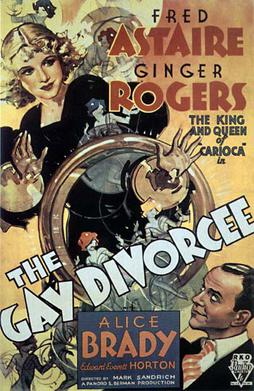
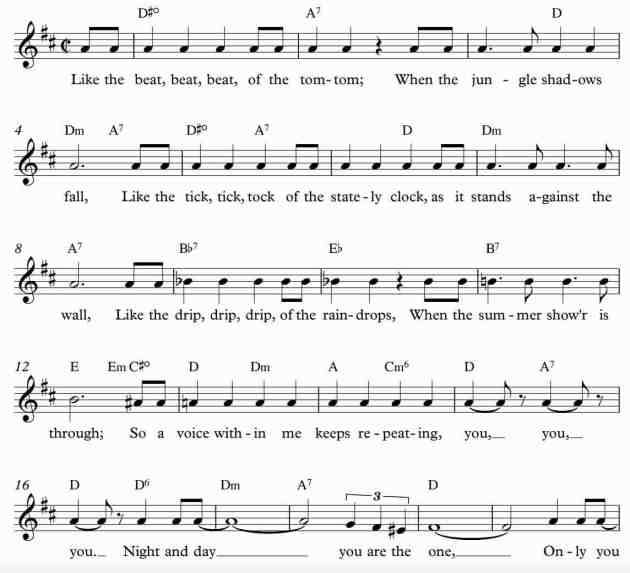
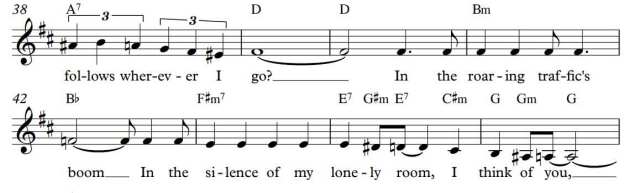


 Nao and bo cymbals of the Tianxing dharma-drumming association,
 Shifan band, 1930s.
 Jinmen baojia tu shuo (1846).


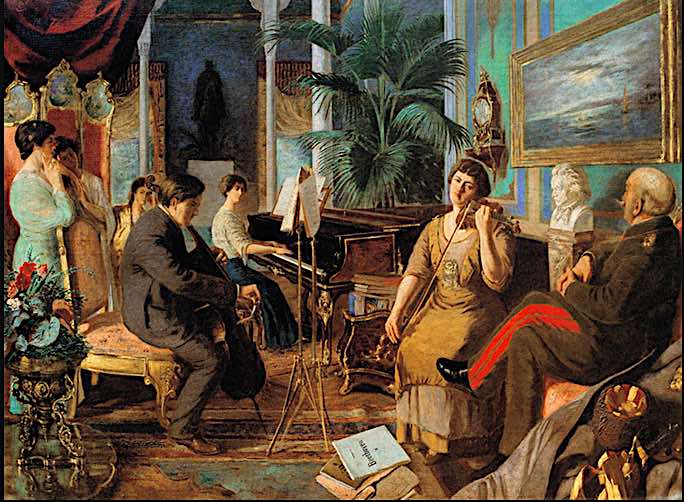
 My photo.
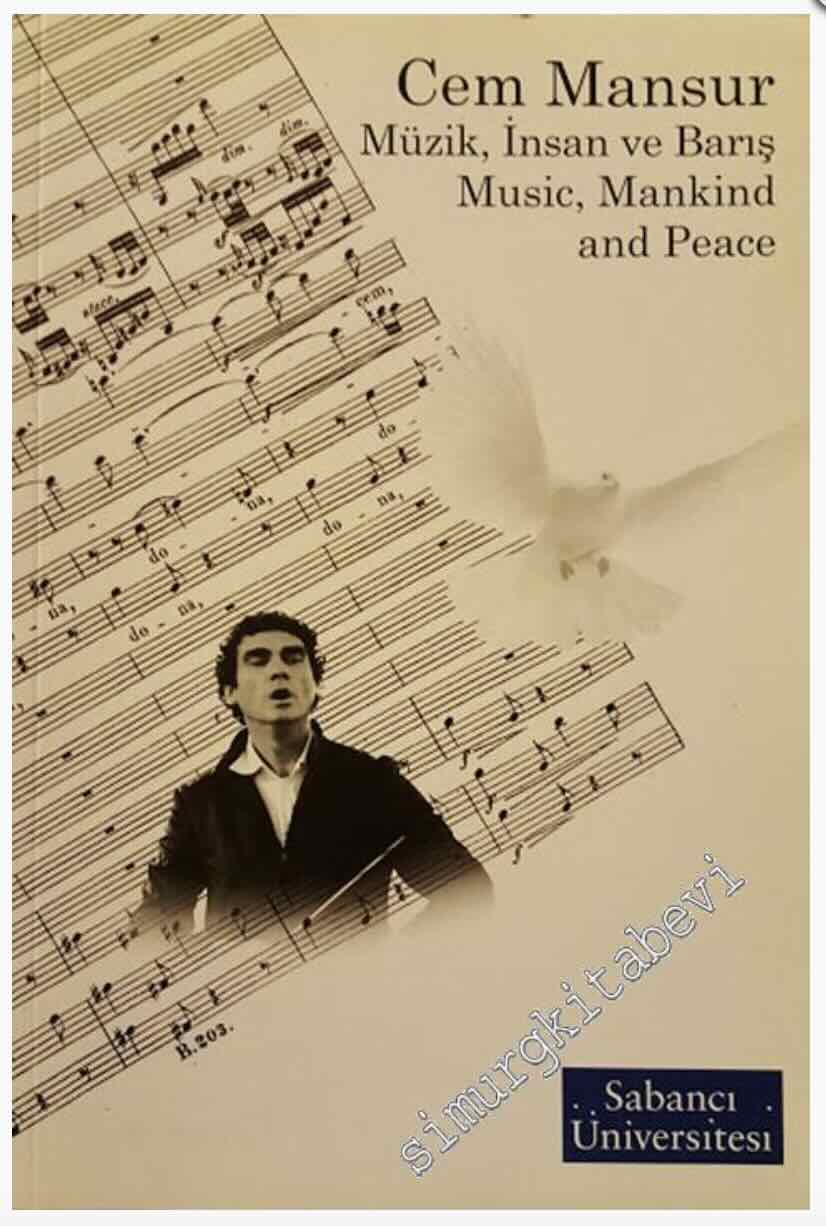 Mansur is passionate about the importance of music as a powerful tool for affecting change. Through his concept “The Laboratory of Democracy” (an open rehearsal session) Mansur engages both orchestras and audiences in issues such as co-existence, different levels of leadership, the nature of authority, of individual and collective responsibility as well as the difference between hearing and listening, leading and following. The sessions explore the basic concepts of democracy: individual worth, majority rule with minority rights, compromise, personal freedom and equality before the law, all demonstrated through the model of the orchestra as a miniature society. Mansur’s work on the peace-building role of music has also found expression of his conducting of the Greek/Turkish and Armenian/Turkish [youth] orchestras over several years.


 Éva Gauthier, 1905. All images from

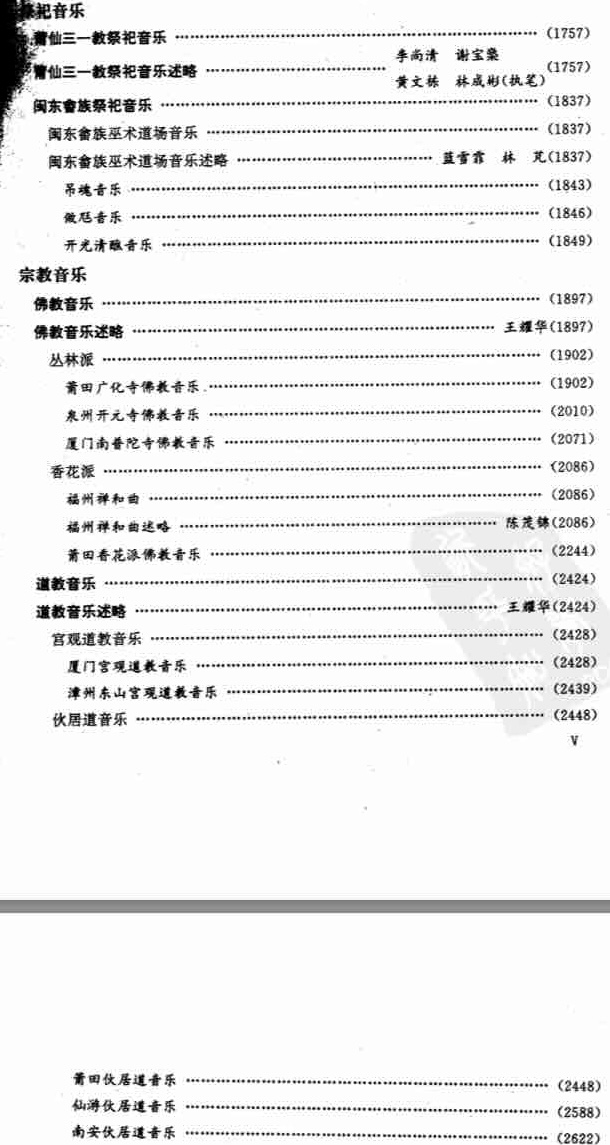

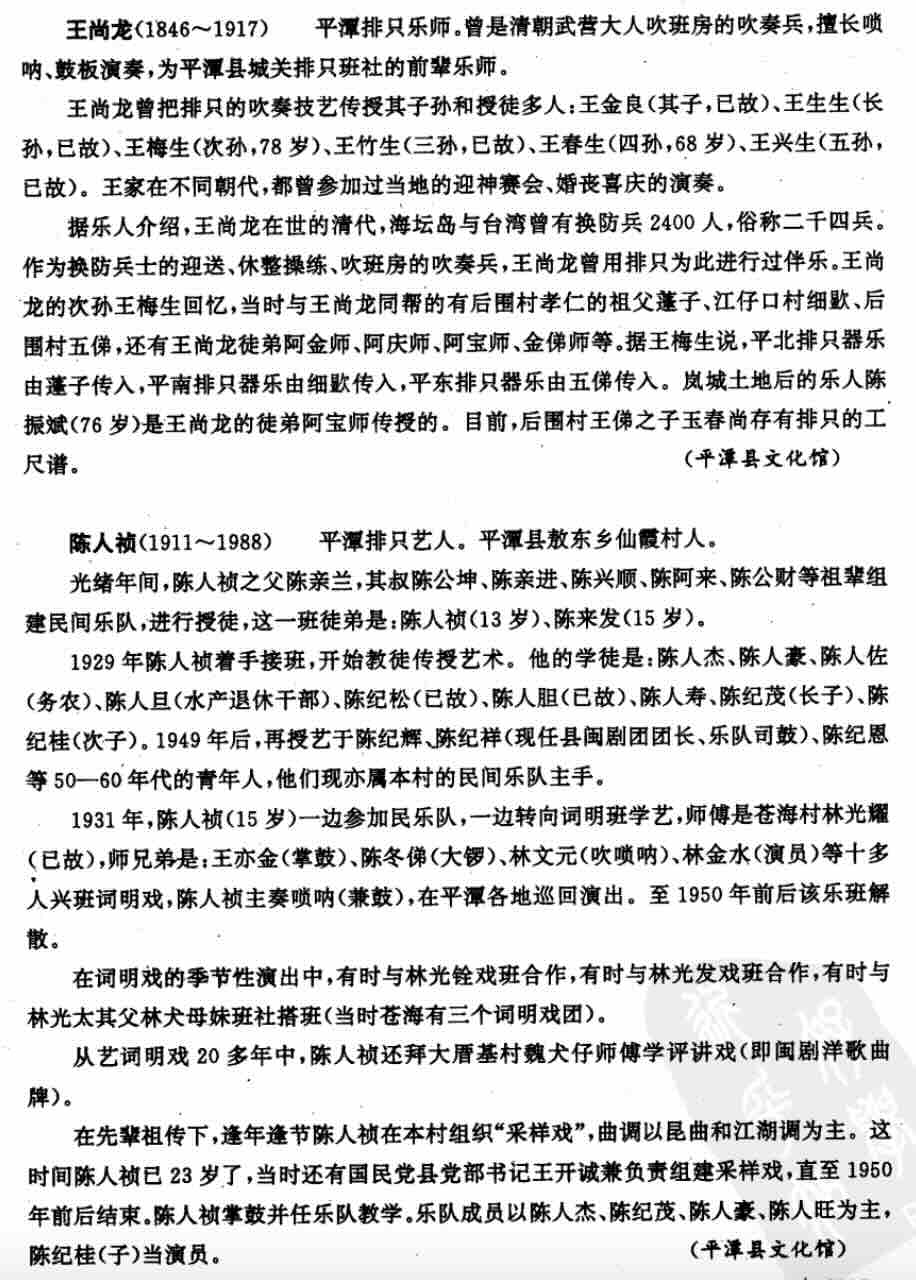 Biographies of Pingtan paizhi master Wang Shanglong and Chen Renzhen.
 The Qinghe guan society in Changtai.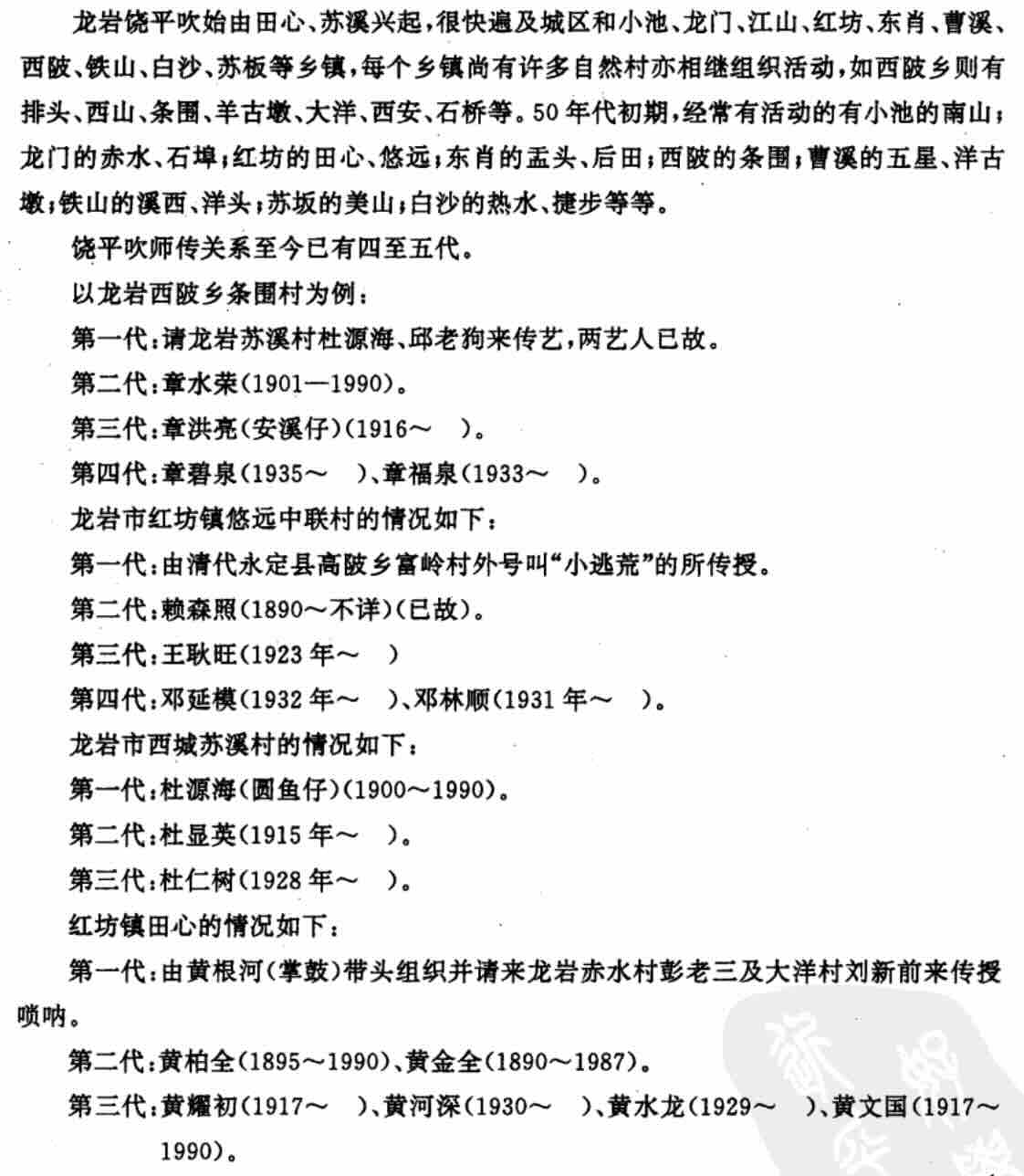
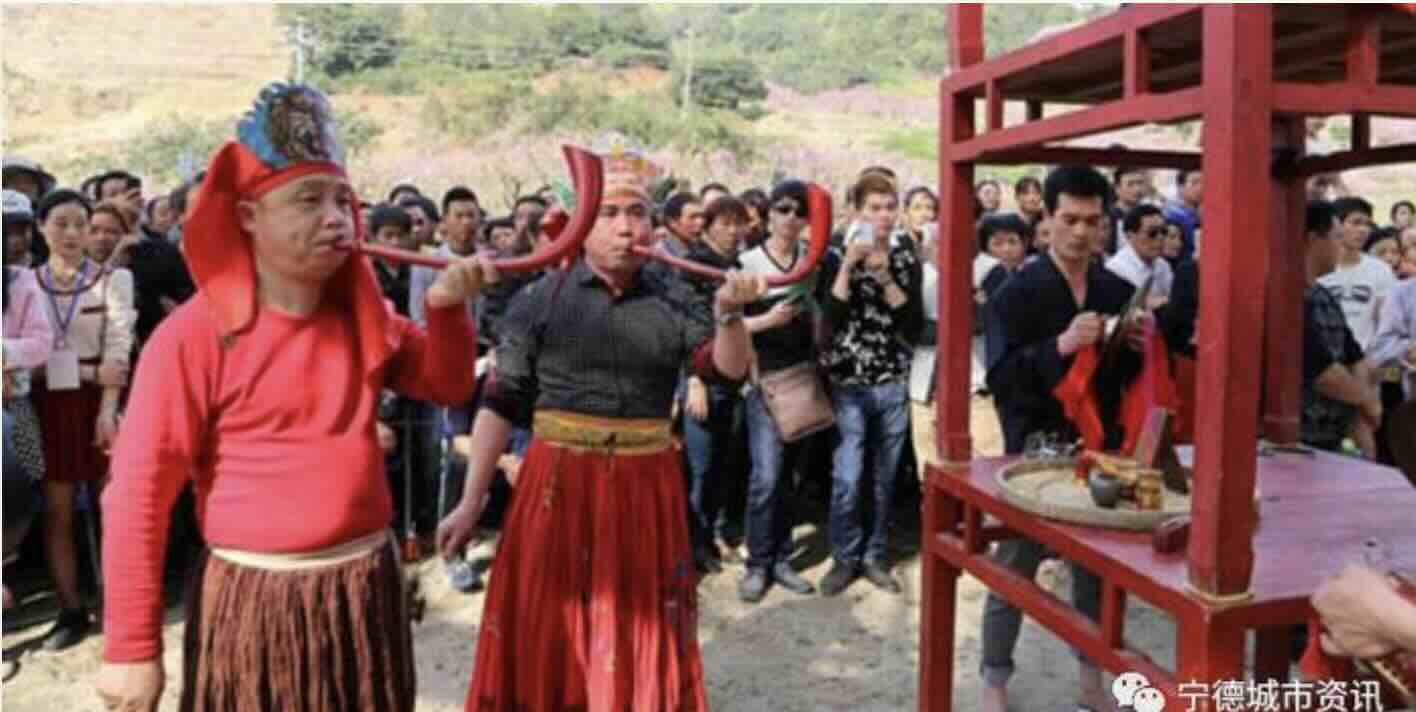

 Household Daoist rituals, Putian.
 Segments of mortuary rituals, Nan’an (again, cf.


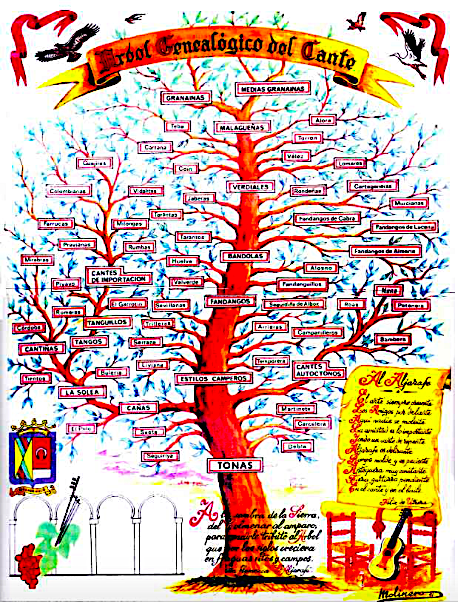 I may relish the anguish (aka “posturing, self-pitying machismo”) of the slower

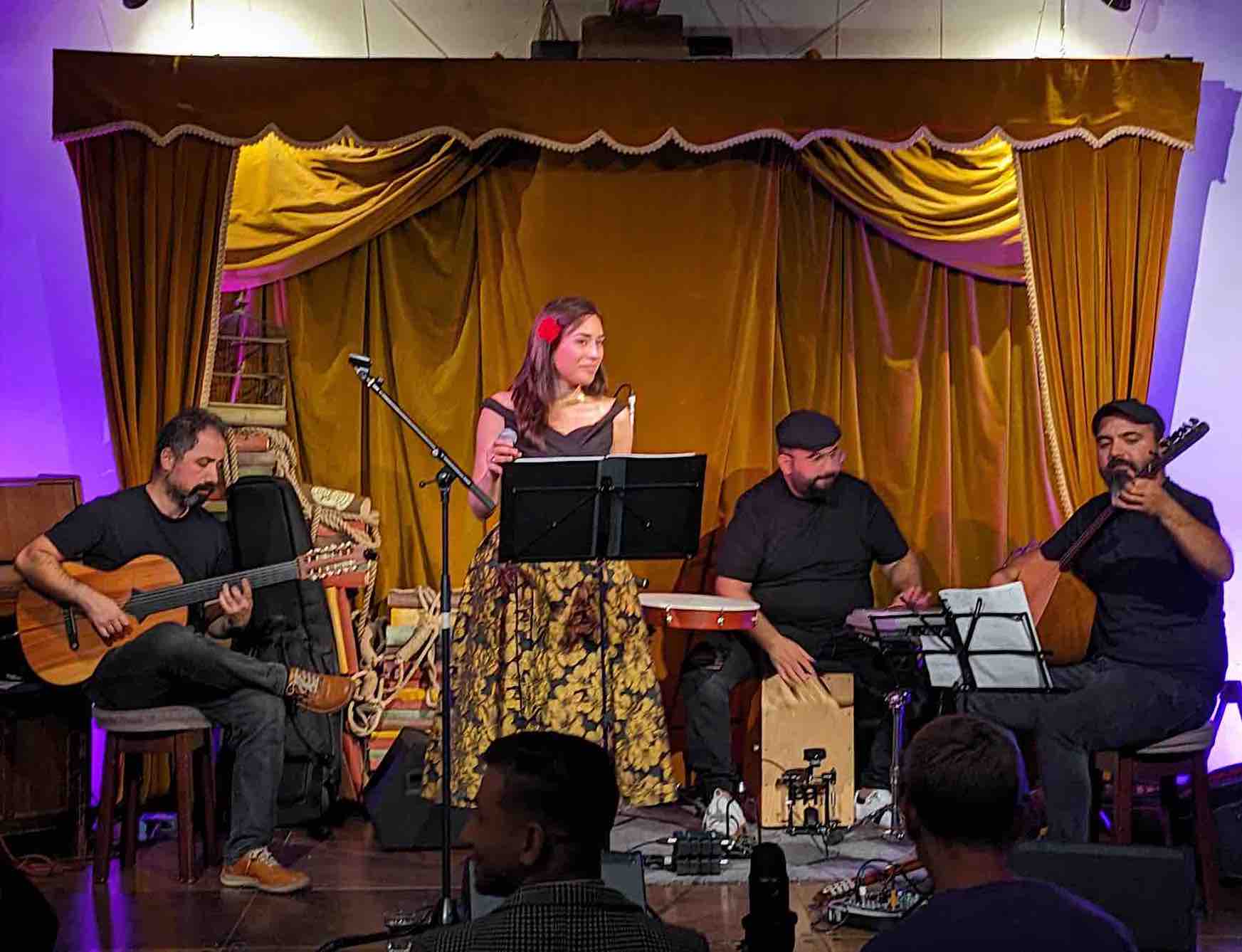


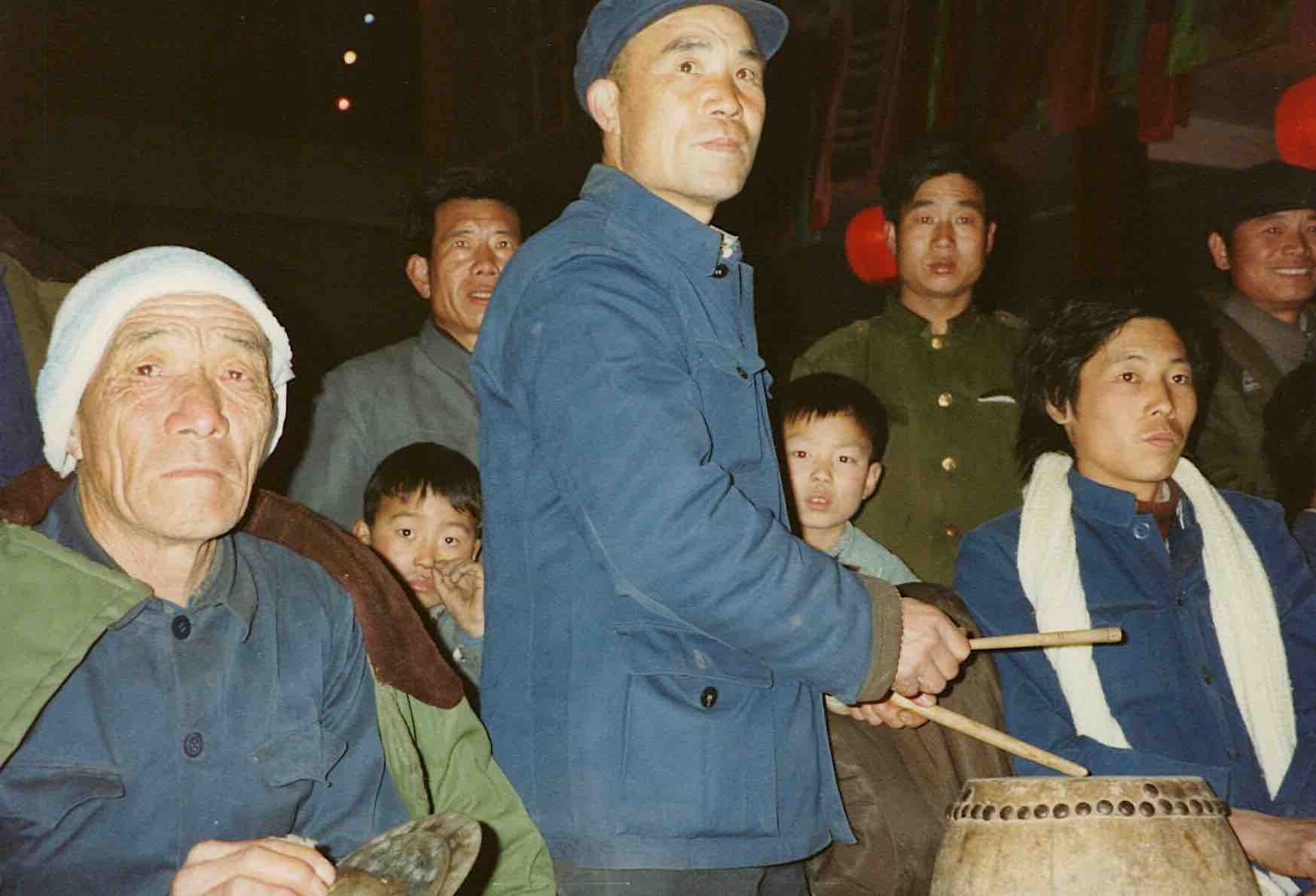


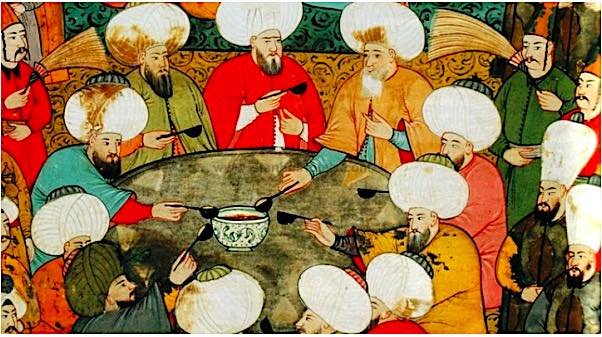



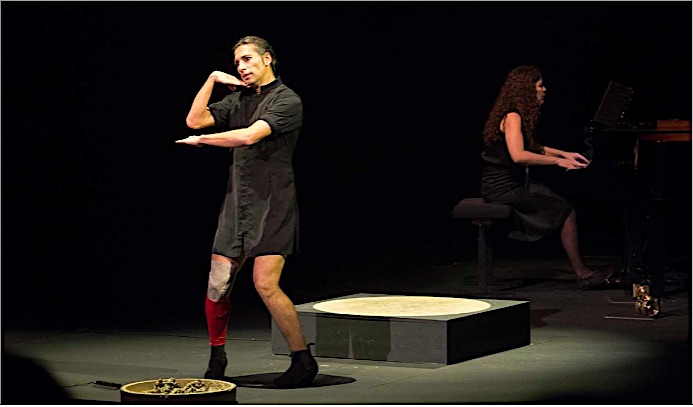
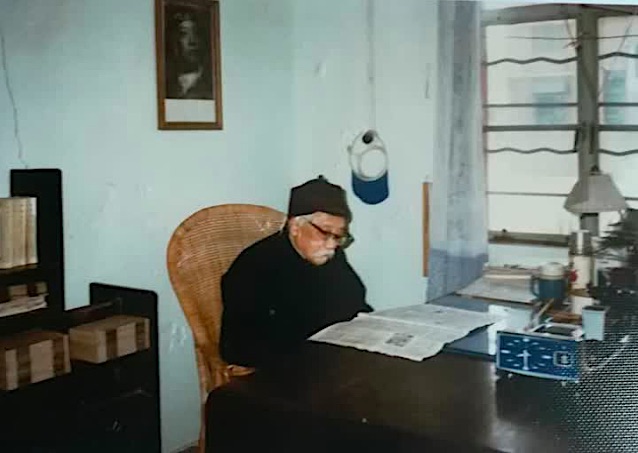


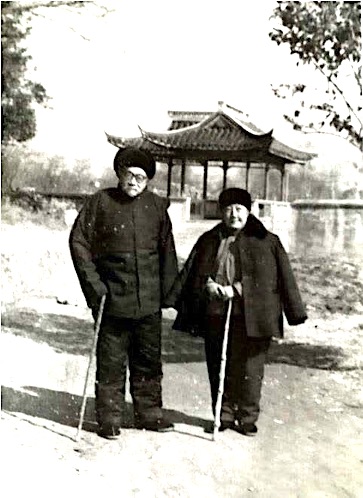

 Rather than rejoicing in Sanna Marin’s humanity, some people have queried her “lapse of judgment”. Apparently what disturbs them is that she is seriously cool. Oh well, good to know that even in Scandinavia there are some puritanical fuckwits. It also reminds me strongly of the faux outrage over the video of

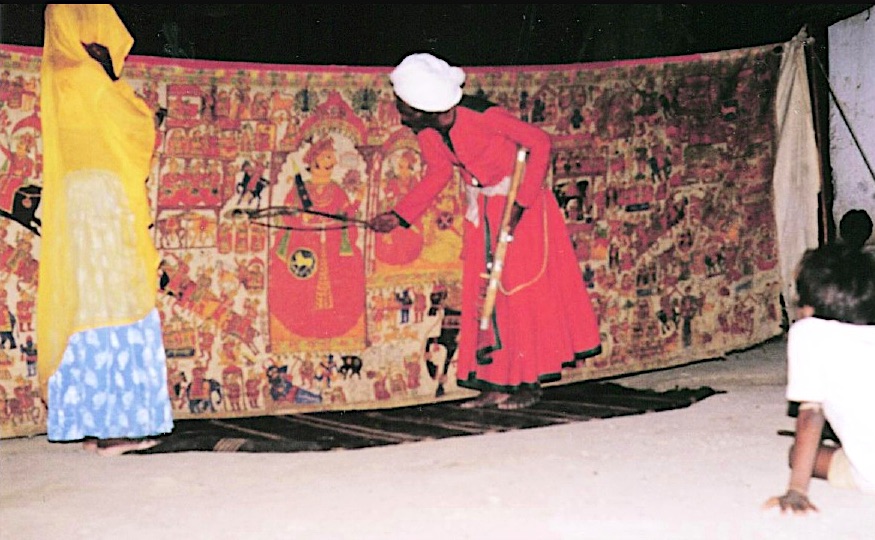





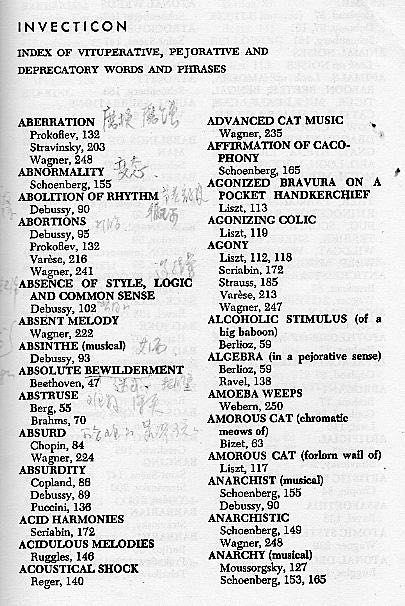

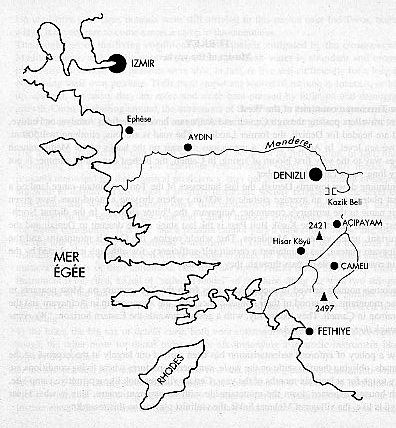


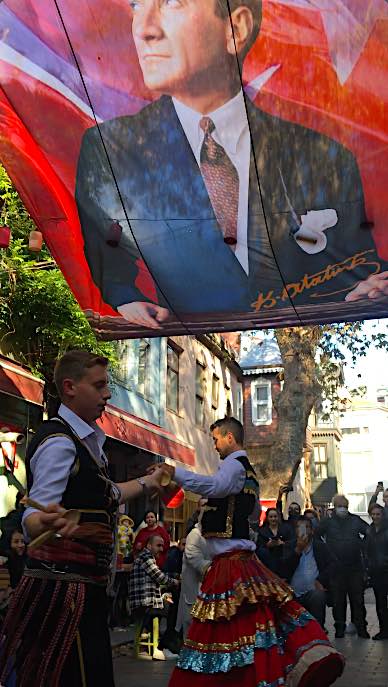




 In the afternoon, first they performed at the entrance to the shops lining the street. As locals and visitors threw lira notes at the twirling feet of the two dancers, they gyrated gracefully down to pluck them up in their mouths. The group then made a base at the entrance of a side-street, performing a lengthier sequence beneath a large banner depicting Atatürk

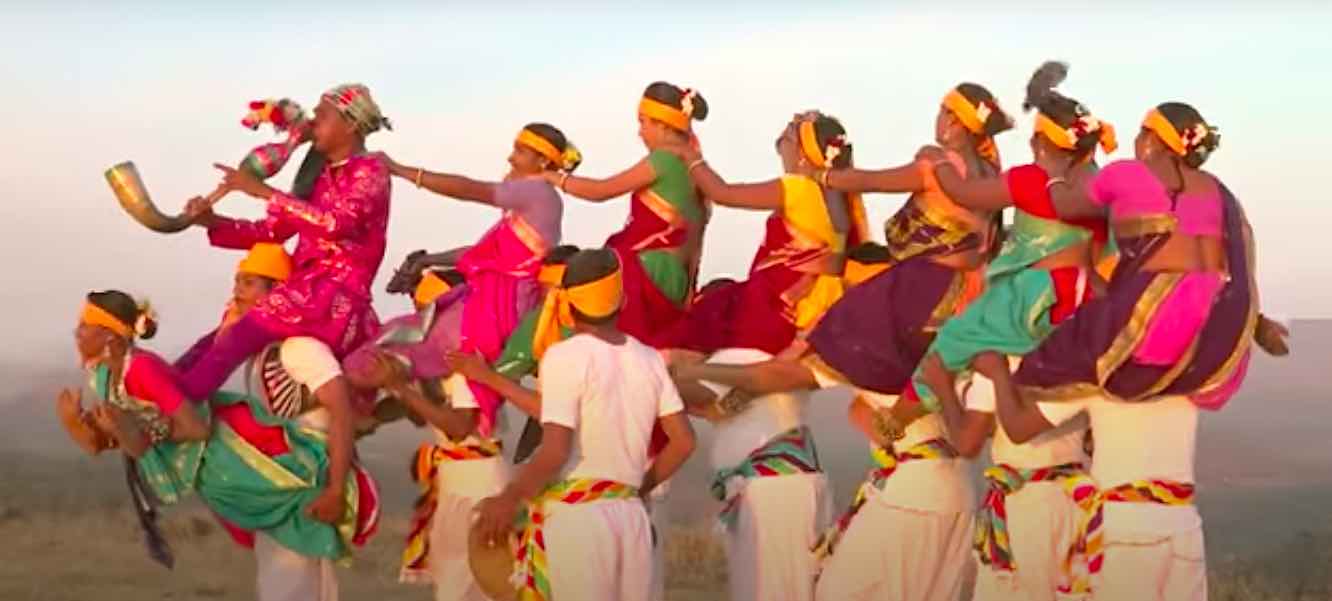


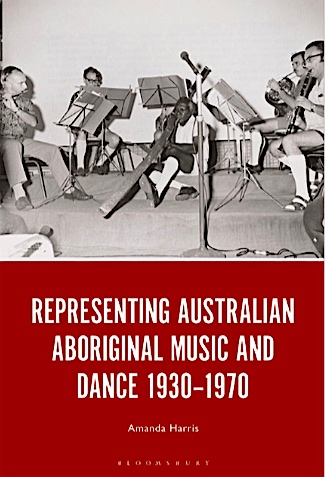

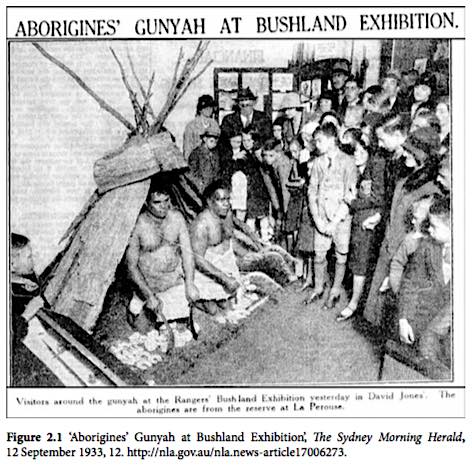


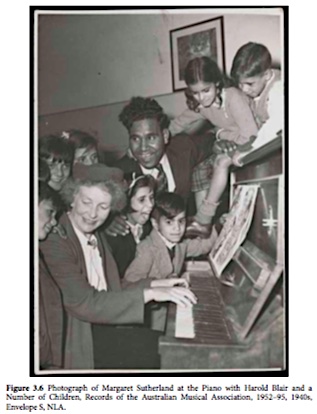


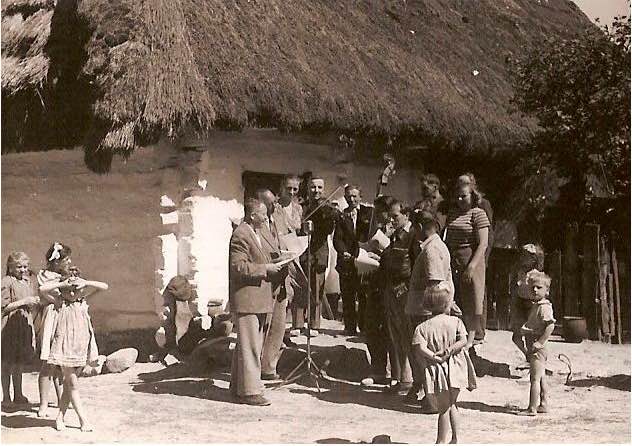 Fieldwork project, early 1950s. Source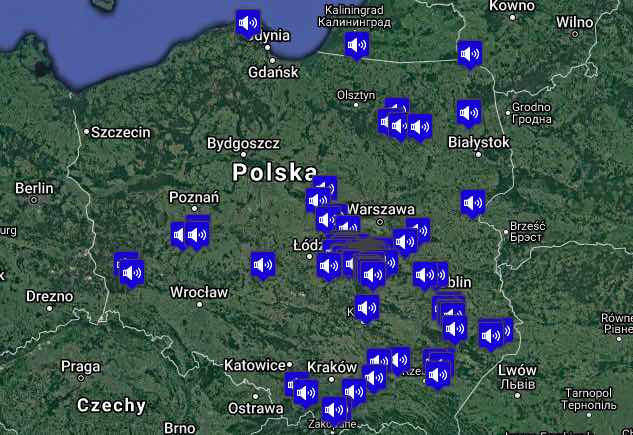


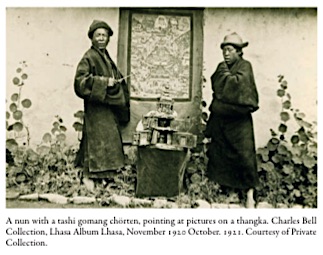
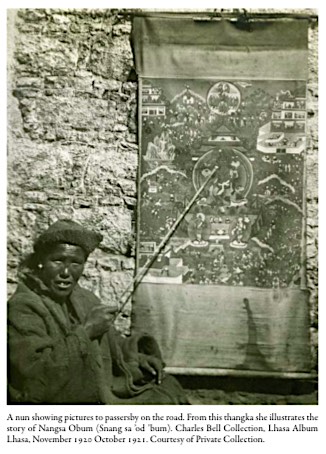


 Also belonging within this diverse rubric are the drekar (in Chinese, zhega 折嘎: see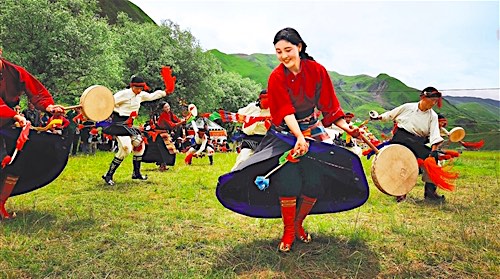


 In a highly macho society, the only woman performer here is Aspasia Papadaki (b.1932), the first female lyra player in Cretan music. At the age of 14 she made her own instrument; though her widowed mother persuaded Aspasia to play violin instead, by 1960 she found that she could only record for radio if she reverted to the lyra (see below). Here’s a track:
 Gauhur Jan accompanied by harmonium, 1902.





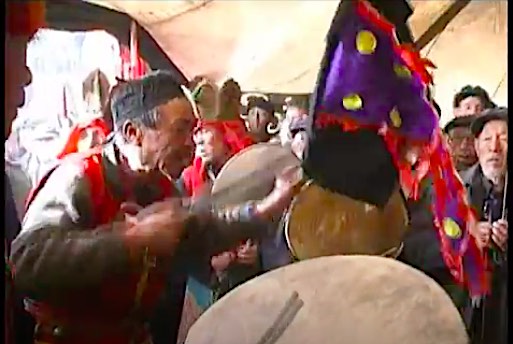

 Tibetan monks laying down their arms, 1959. AFP/Getty.
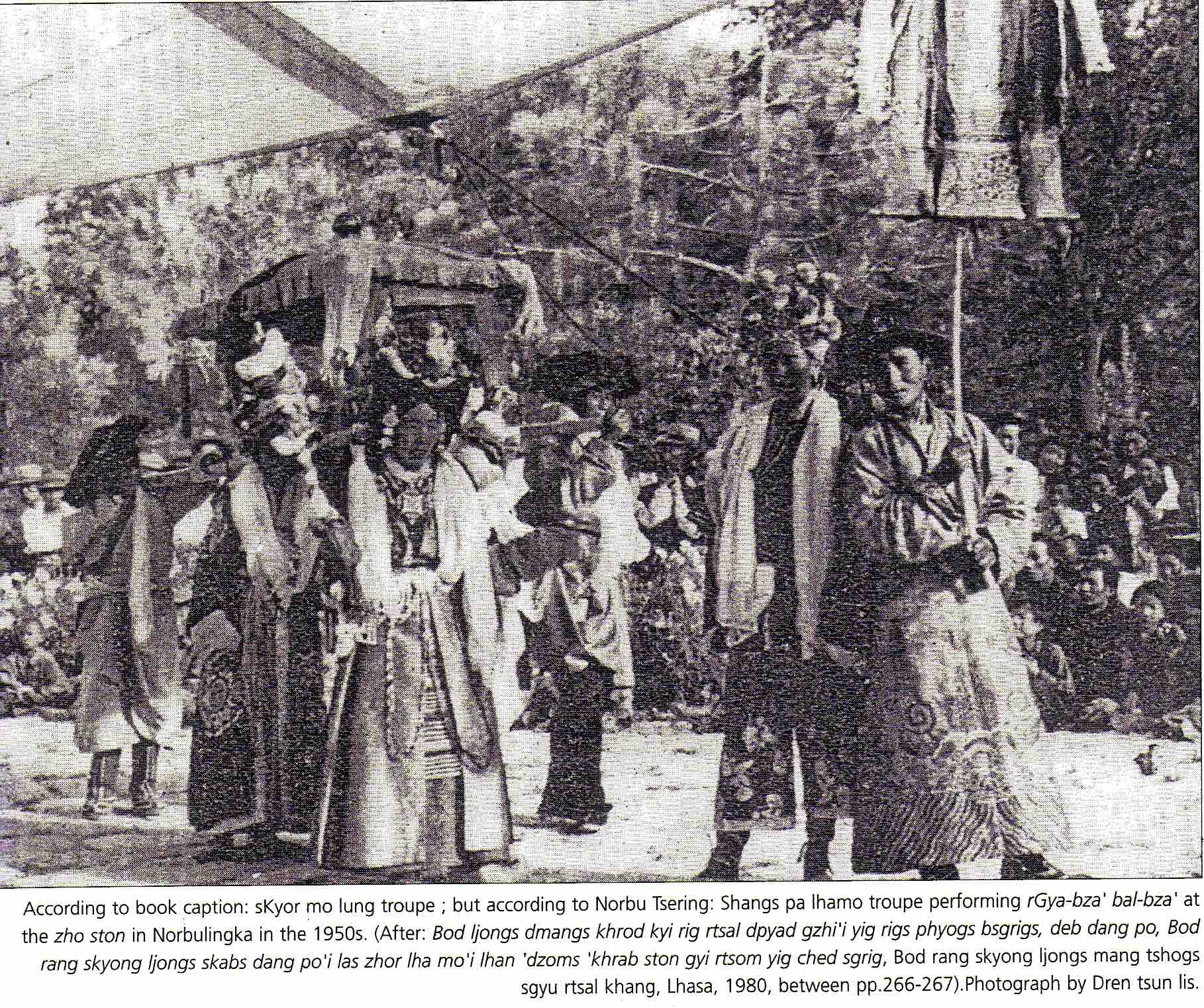


 Horkhang Sonam Palbar (centre) paraded with his wife and father-in-law at a thamzing struggle-session, August 1966. Forbidden memory, fig.80.


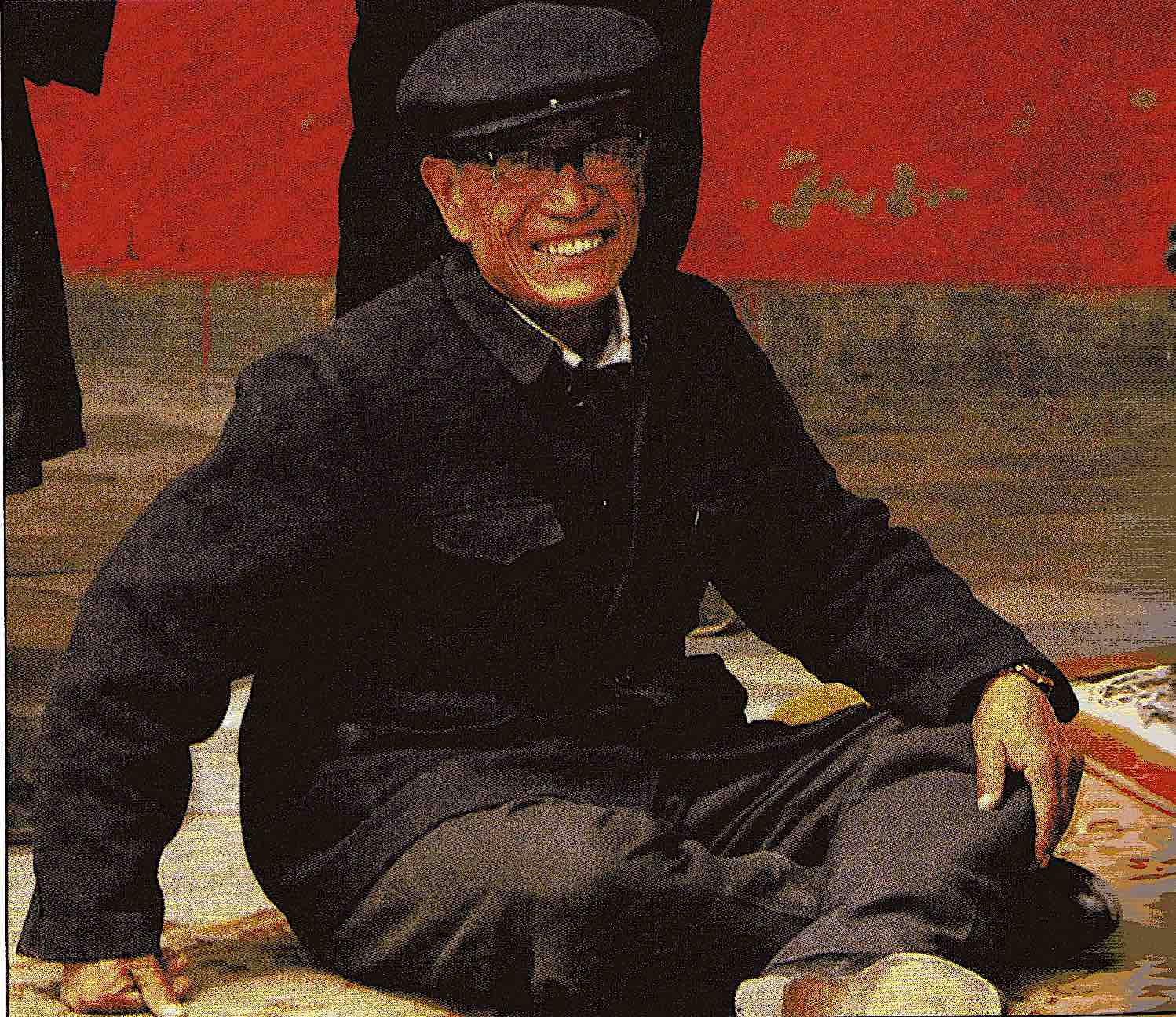


 Horkhang Sonam Palbar leading a study team to a village of the Lhoba minority people,





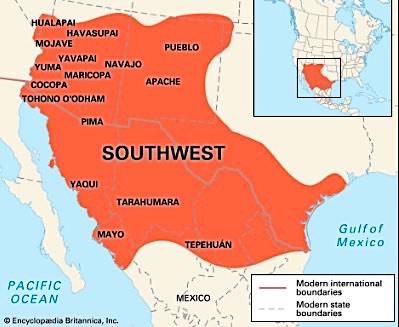
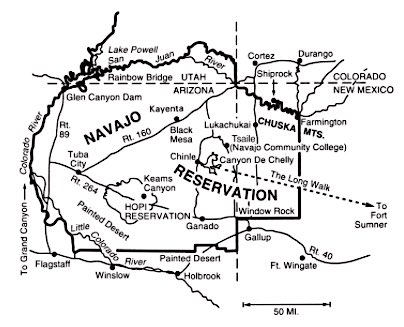


 As Nettl went on to observe, the very
 Transcriptions may look forbidding to the outsider, but audio samples of such songs might be a good test for scholars who disclaim musical expertise: they too should be able to make such simple and useful observations.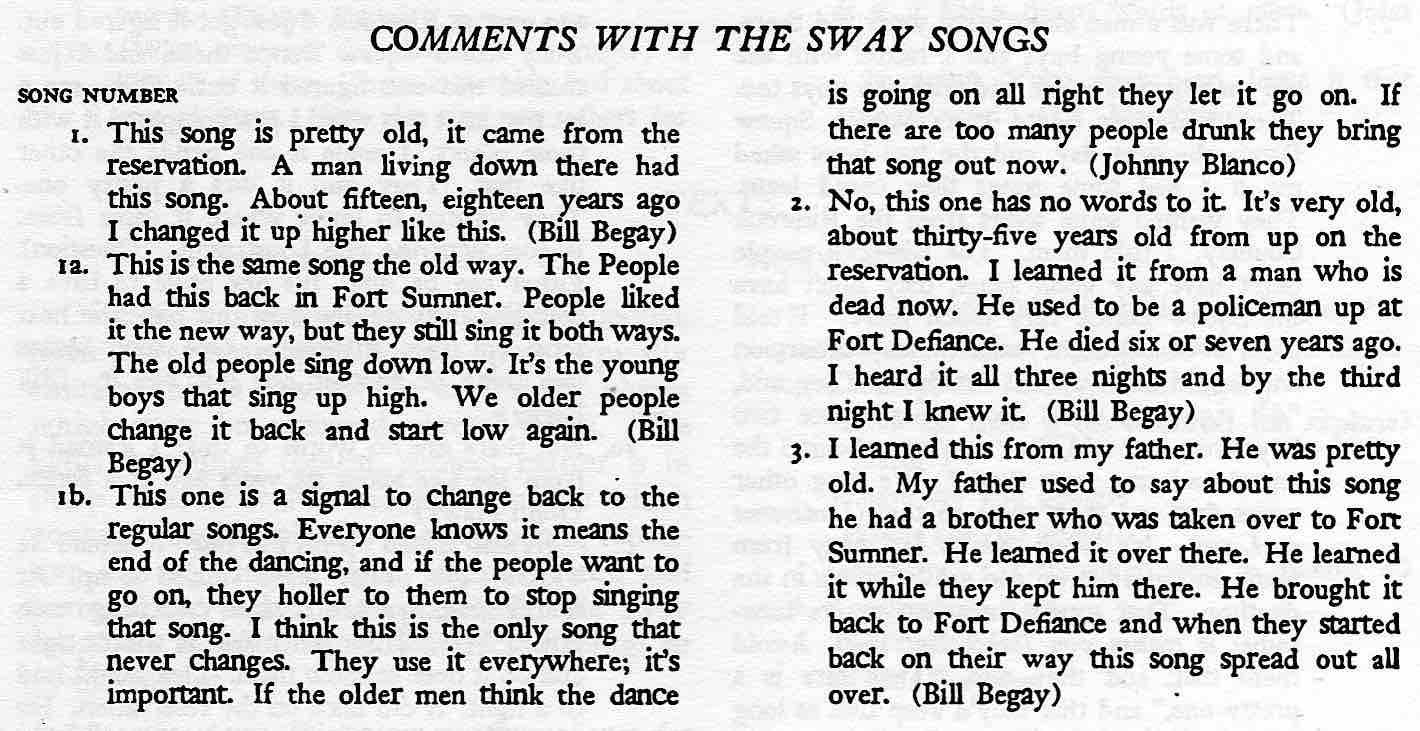
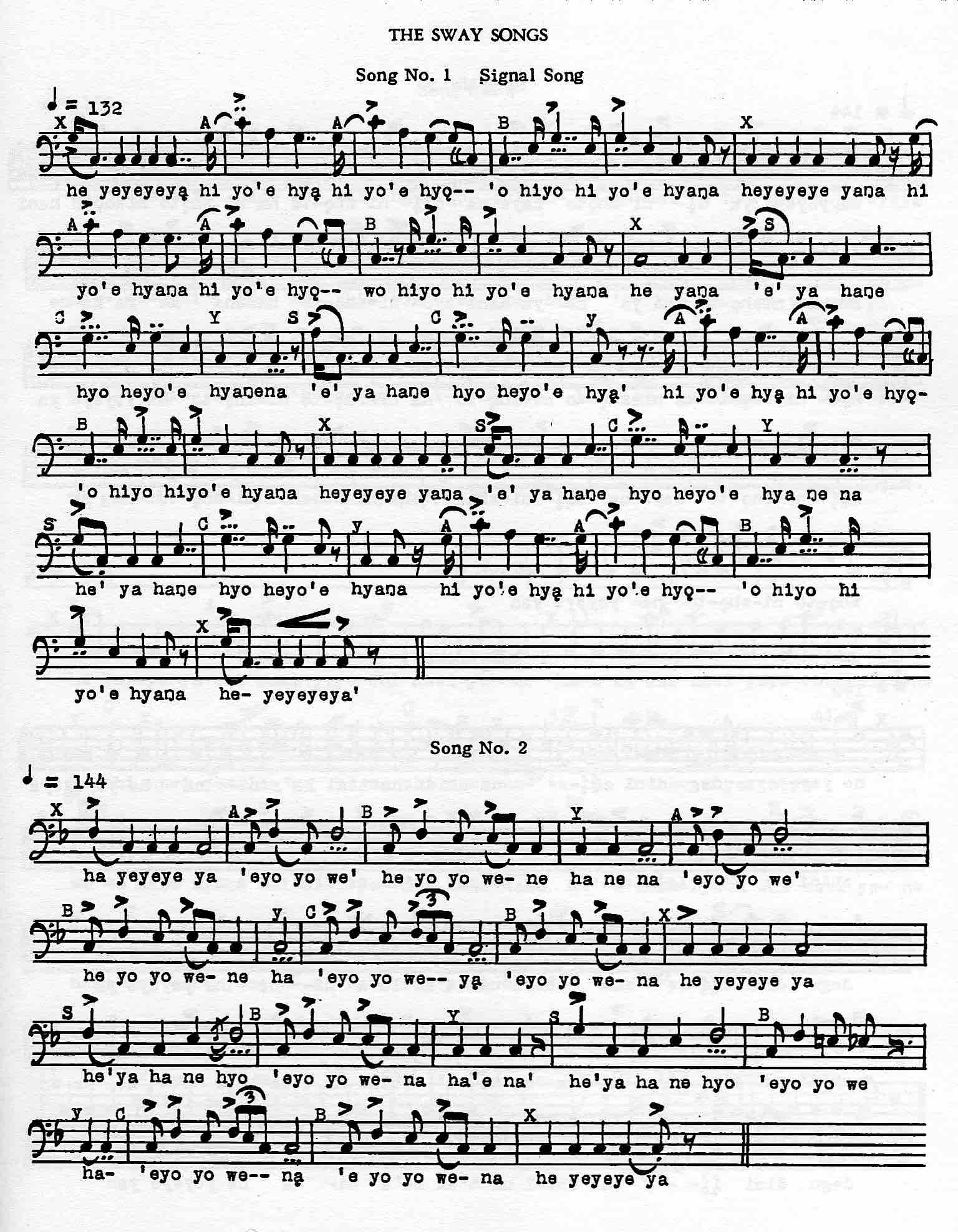


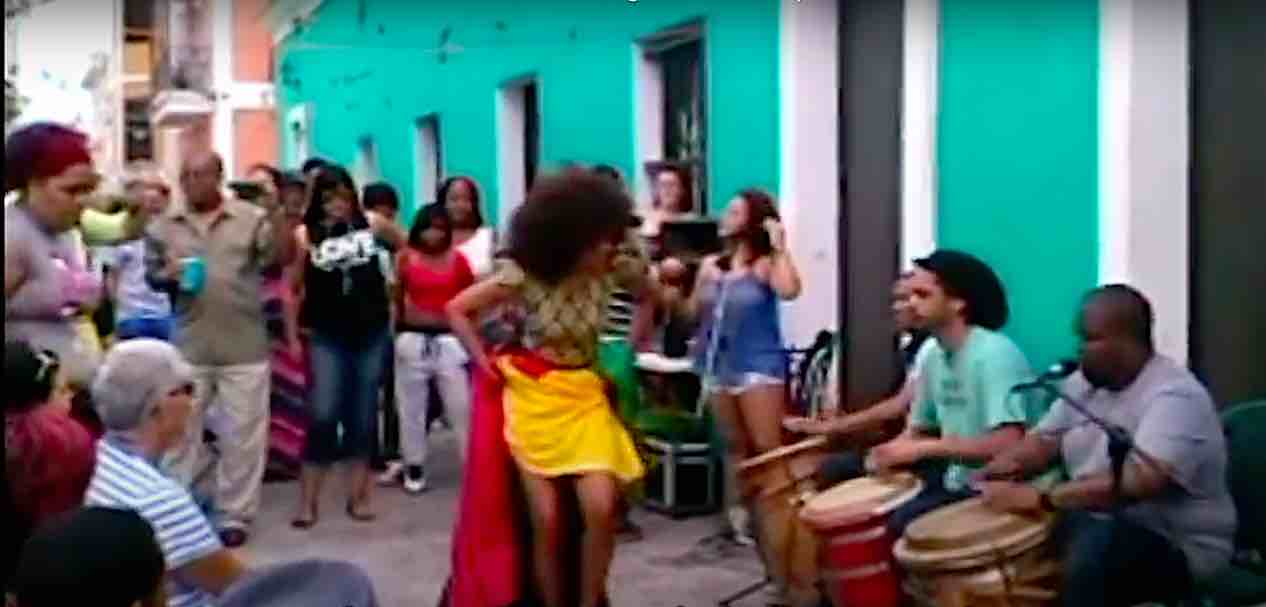
 The wise, principled





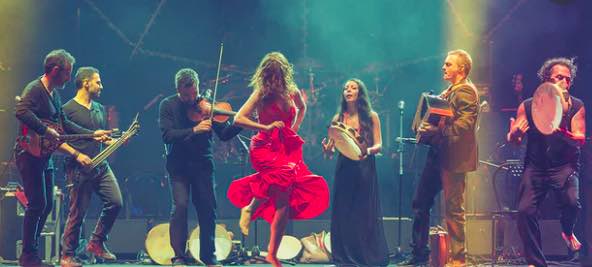


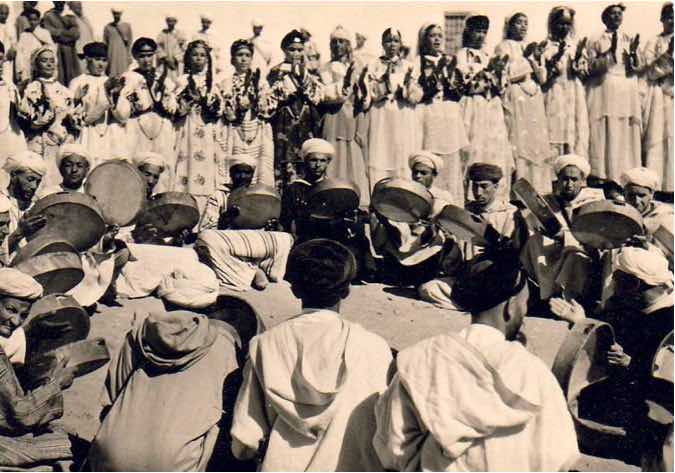





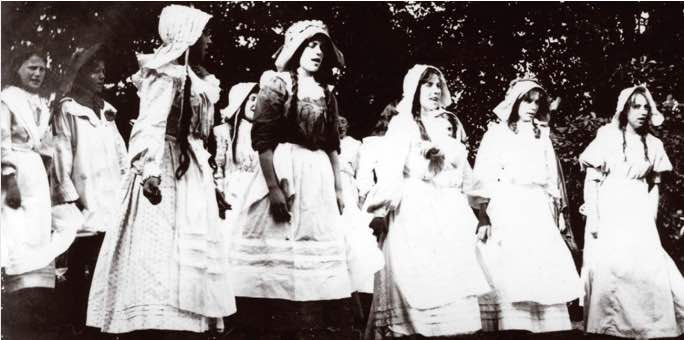


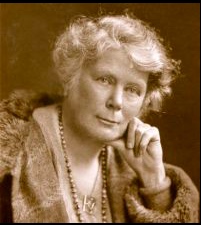 After
After 
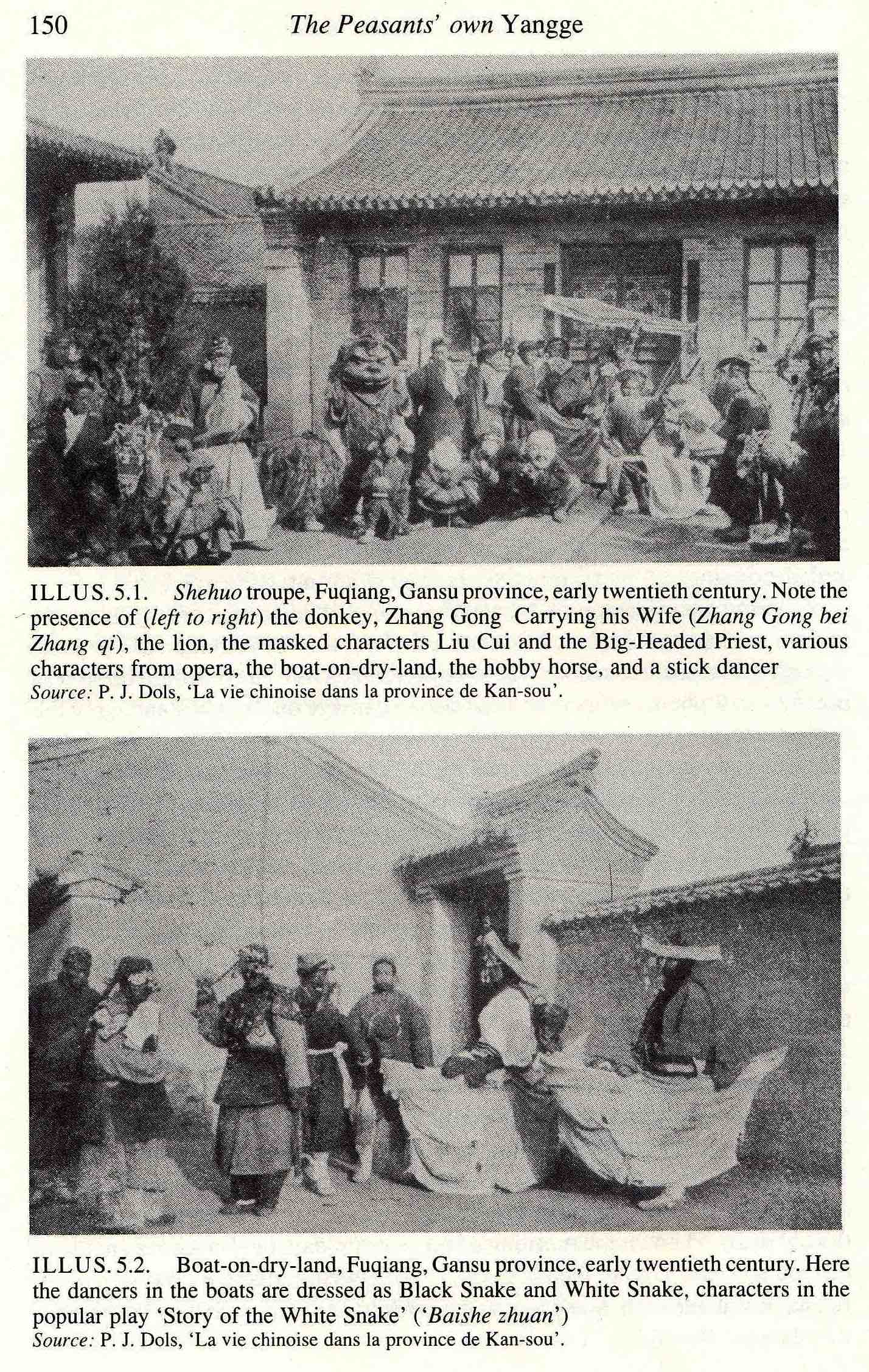

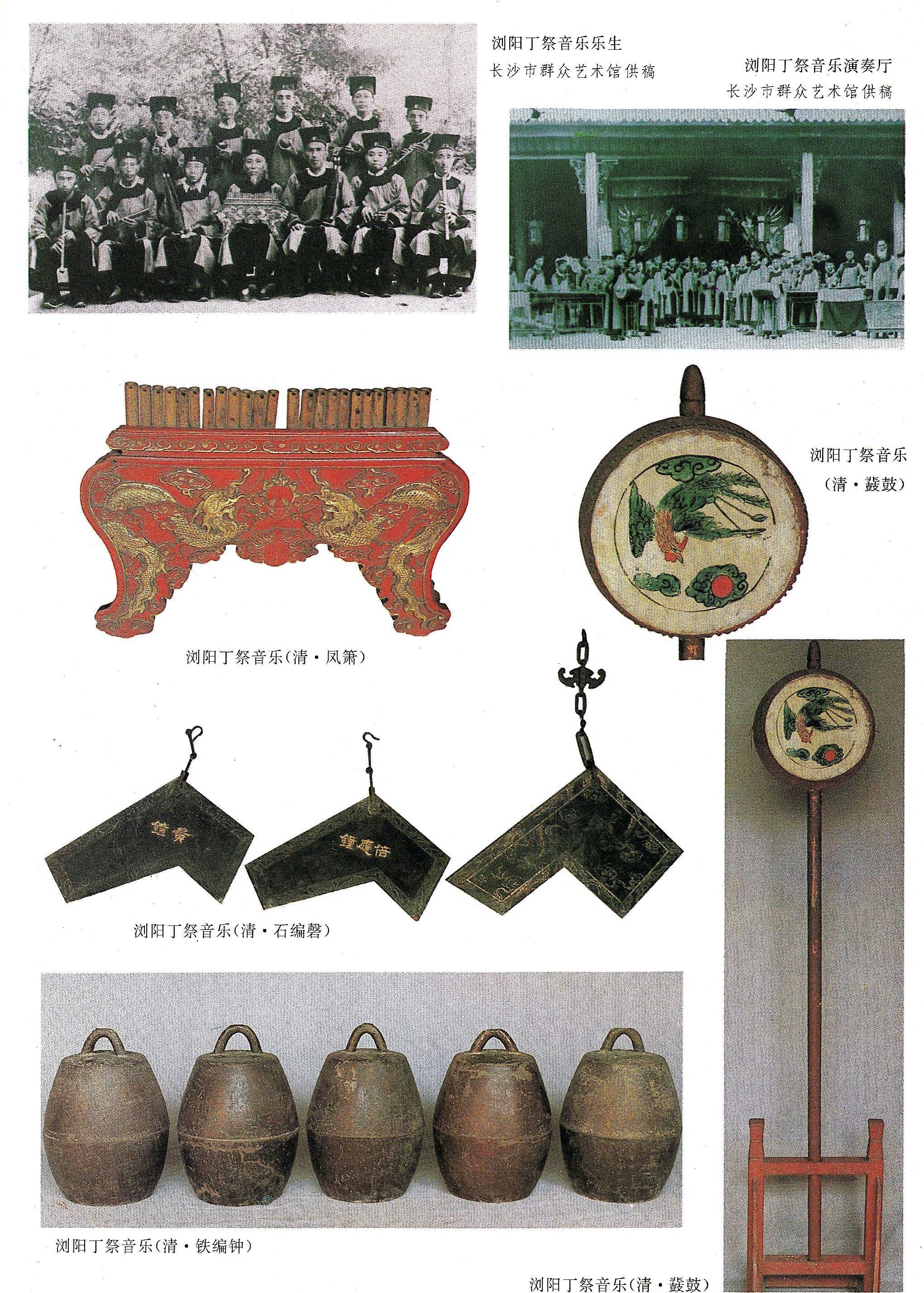


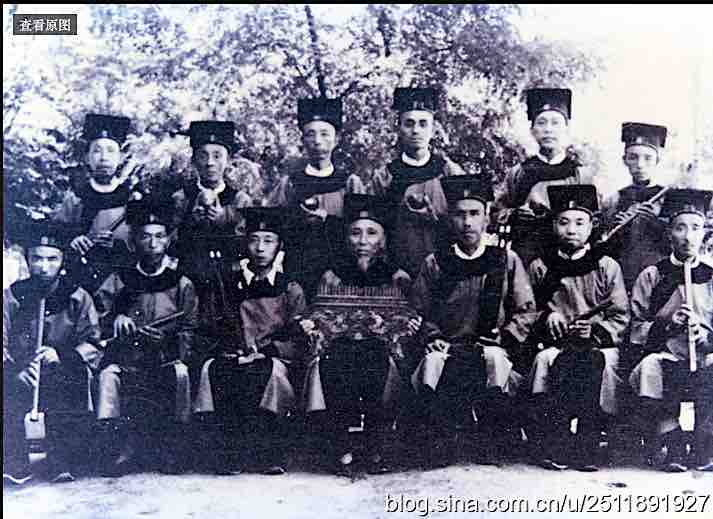
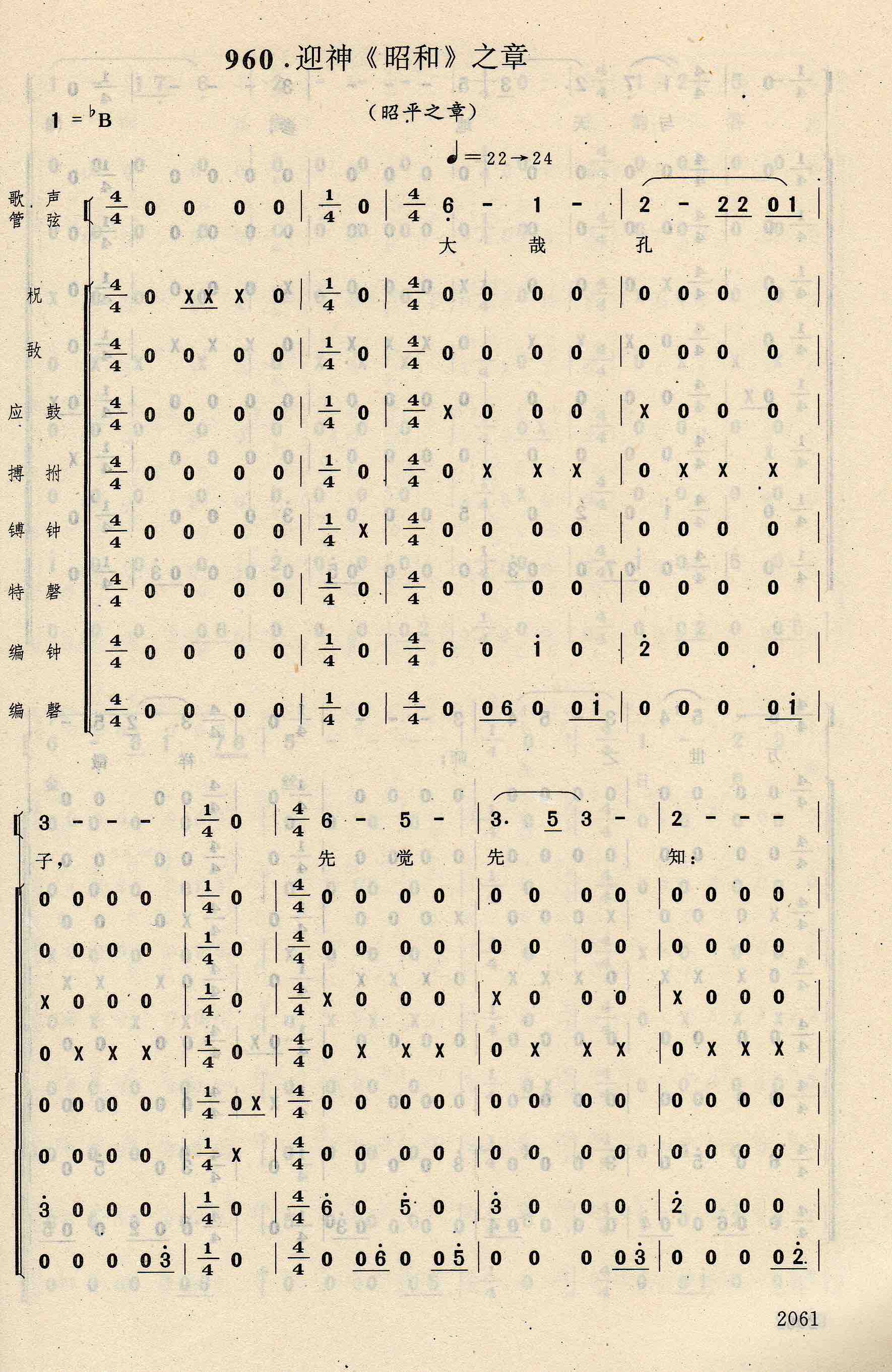


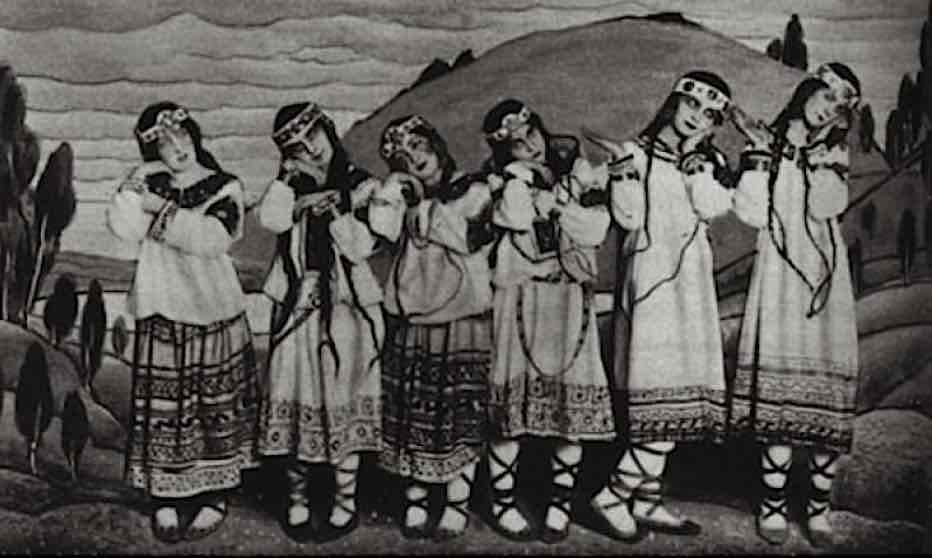


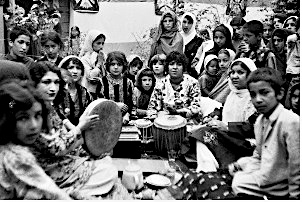


 Stephen Jones: a blog