On Sunday SOAS hosted a grand celebration of the life of the great ethnomusicologist David Hughes (1945–2025), who died in May. Among many notices online, see this by Rachel Harris and Hwee-san Tan; Frank Kouwenhoven wrote eloquently in the CHIME newsletter.
After embarking on a PhD in ethnomusicology at Michigan under William Malm, from 1977 David thrived on fieldwork in Japan, together with his wife Gina Barnes. In 1981 they came to Cambridge (England!) to further their research, and it was there that I first met him as we consulted Laurence Picken. David went on to teach Japanese and Southeast Asian music at SOAS, becoming Head of Music and building a vibrant performance culture in a wide range of genres (he covered some of these topics, engagingly as ever, in this playlist). So the SOAS event resembled a retrospective of three decades of world music at SOAS and in Britain, with many of David’s former students performing; apart from copious Japanese music, among other featured groups that David supported and inspired were lively renditions of Cuban music and gamelan. And videos of his own performances were on display at the reception.
David was a co-founder of the British Forum for Ethnomusicology, and offered wise perspectives as a member of the CHIME board. Along with his in-depth research on Japanese folk-song, he had an authoritative grasp of Japanese musical cultures, as shown in his co-editing of The Ashgate research companion to Japanese music and his chapter on Japan for The other classical musics; he received several awards in Japan for outstanding contributions to Anglo-Japanese understanding. His lively and informal presence offered a welcome antidote to the more traditional British style of academic presentation—as a jovial performer, he was the life and soul of the party, delighting in language, an inspiration to many students. As is the nature of such things, the one person who would most have relished the event could not be present. David is much missed.
An international conference in honour of Craig Clunas will be held on 16–17 September at Lincoln College, Oxford, bringing together leading scholars in the field of Ming studies and art history.
The Ming period (1368–1644) is central to our understanding of Chinese art, both as the time when many key texts and objects from preceding centuries were edited or curated into the forms in which they have come down to us today, and as the era to which much subsequent artistic practice and discourse has looked back for validation and inspiration. No one would dispute that Professor Craig Clunas pioneered the application of social history to the study of the Ming dynasty and Chinese art history. His innovative methodology has positioned the study of the Ming dynasty as one of the most dynamic and engaging areas in both art history and sinology. With more than a dozen monographs to his name, his international research and publication profile is unparalleled among art historians in the United Kingdom. In 2018, he retired from his position as the Statutory (Distinguished) Professor of Art History at the University of Oxford.
The presentations will address issues and ideas inspired by Professor Clunas’s research, encompassing a wide range of topics, periods, locations, and media—from the Wei-Jin dynasties to 21st-century Chinese art, from paintings and prints to teapots and furniture, from gardens and boats to maps and diplomacy, and spanning regions from Jiangnan China to Edo Japan and Europe.
The depth of the art of dhrupad singing never fails to entrance me—from the Dagar lineage through to Uday Bhalwalkar, whom I was blessed to hear this weekend in a recital at the Bhavan Centre in west London.
Through the slow, lengthy exposition of the alap, one hangs on every inflection, all the nuances of timbre, as Udayji expounds the pitch relationships—eventful, constantly creative, with a richly calibrated structure. Without neglecting the changing social context, one is drawn back to Hazrat Inayat Khan‘s 1921 book The mysticism and sound ofmusic. The previous day Udayji led a workshop in which he reminded us of the power of singing as a spiritual discipline.
* * *
Perhaps through some imponderable quirk of algorithm, the only widely-viewed post in my raga series is Bhairav–Bhairavi. All the posts are worth consulting, but if any deserve promoting in particular, for me it has to be the one on Yaman Kalyan.
As I marvel at the variety of solo singing styles around the world, dhrupad has a unique aura. For me, Udayji ranks alongside Billie Holiday and Mark Padmore.
At this time of year I like to rearrange the deckchairs on the Titanic by organising some of my more notable posts from the past year under particular themes. As ever, many belong under multiple tags, so below I make some whimsical choices.
Keeping company with my film on the Li family Daoists, most important is my *new film* on the 1995 New Year’s rituals in Gaoluo (Chinese review here). It also prompted me to devise a new Menu, and even a YouTube channel (with playlists reflecting my diverse tastes as well as my own films). For now I still resign myself to Twitter, but I’m posting on BlueSky too, so let’s all migrate there!
Homages to the genius of three friends who greatly inspired me:
You can find any posts I’ve neglected in the monthly Archive as you scroll waaay down in the sidebar. All this suggests that it would be a sensible New Year’s resolution for me to burden you with fewer of these ramblings—but first I plan a major series inspired by the Gaoluo film…
I was sad to learn of the death of the distinguished Chinese musicologist Du Yaxiong 杜亚雄 (1945–2024). Here I reproduce an eloquent tribute in the recent CHIME news bulletin:
One of China’s finest and most prolific ethnomusicologists and music educators, Du Yaxiong (杜亚雄), has passed away from illness on 7 October, 2024. We mourn his loss, not only as a fine pioneer scholar in realms of Chinese and ethnic minority musical studies, also as a warmhearted and flamboyant personality, a committed promotor of traditional music, a gifted and infectious speaker at academic conferences (including several editions of CHIME), and an author of many important studies (more than twenty monographs and 200 articles were published in English, in Hungarian and in Chinese). He was a respected scholar and very inspiring colleague. Du also had a big heart for primary and secondary music education in China, and was very active in this field until his very final years, greatly inspiring young people in Hangzhou and publishing a landmark set of his own teaching materials in 2016.
Du Yaxiong grew up in Lanzhou in a family of doctors. He graduated from the Music Department of Northwest Normal University in 1965, and received a Master of Arts degree from Nanjing University of the Arts in 1981 under Gao Houyong, after which he joined the China Conservatory of Music in Beijing as a Professor of Music. Later he studied at the University of British Columbia in Canada and obtained a doctorate in philosophy.
His parents did not understand music, but they respected their son’s professional career choice. They had noticed very early on how much music affected their son: during his years in elementary school, Du won the first prize in a children’s singing competition, and also learned to play the bamboo flute. As a flutist he acquired a preliminary understanding of structural principles of folk music. He eventually gave up any idea of becoming a doctor, instead joining music classes at the Lanzhou Art College, where he also began to compose songs and piano pieces. Later (when that college merged into Northwest Normal University) he shifted his major to music education. A defining experience was his participation in a folk-song collection mission in the Hexi corridor in Gansu Province. It set him firmly on the trail of ethnomusicological research: from 1963 onwards, he recorded hundreds of Yugur folk songs and mimeographed them.
At the China Conservatory, Du Yaxiong served as the Head of the Department of Musicology for thirteen years, and he maintained close connections with this institution also afterwards. From 2003 he was active as a lecturer at various institutions in Hangzhou, first at Hangzhou Normal University, and from 2014 at the Hangzhou Greentown Yuhua School, where his music-educational projects left a deep impression.
Du conducted extensive fieldwork on traditional and folk music, not just in China, but in over ten countries. He served as a visiting professor at the Institute of Music of the Hungarian Academy of Sciences, the Victoria University of Wellington in New Zealand, the Institute of Folklore of Indiana University, and the School of Performing Arts of Youngstown University (Ohio) in the USA. In 1986, he was awarded the title of National Expert by China’s State Council for his outstanding achievements in teaching and research.
Among other things, Du explored at length the relationship between Chinese and Hungarian folk songs, and published a book on it in 1989: A Comparative Study of Chinese Folk Songs and Hungarian Folk Songs. The incentive for this went back all the way to 1963, when he began his long-time research on Uygur dialect songs in Gansu (he mastered the Uygur language to perfection) and found that it was not hard to detect the close relationships between local Uygur (Yugur) melodies and the Hungarian folk tunes collected and published by Bartók and Kodaly.
During his stay 1991-92 at the Institute of Folklore at Indiana University, he took the opportunity to study and collect Native American music. He was twice awarded the Rockefeller Foundation’s Bellagio Residency, in 1996 and in 2008, and it was in the USA that he completed two of his major publications, Traditional Chinese Music Theory (中国传统乐理教程) and Traditional Music Culture of Chinese Minorities (中国少数民族传统音乐文化). His range of research also included northern Chinese village rituals, music of the Silk Road, Hua’er folk songs of northwest China (about which he published in the CHIME journal), and analytical studies of Chinese pentatonic scales and a number of historical subjects.
We remember him for his excellent work and original mind, but also for his congenial smile and radiant presence in academic meetings. May he rest in peace.
[SJ:]
I made a few brief fieldtrips with Du Yaxiong to the countryside just south of Beijing in the 1990s, when he introduced me to the Buddhist-transmitted ritual association of North Xinzhuang (see under Ritual groups of suburban Beijing).
Early morning procession to the soul hall, North Xinzhuang 1995. Photo: Du Yaxiong.
I often chuckle over a story he told me about his student years, just as traditional music and scholarship were reviving after the downfall of the Gang of Four. The great Huang Xiangpeng was delivering an erudite lecture on the arcane systems of modes and scales documented in ancient sources. In conclusion he encouragingly commented, “In fact, I’m just using a very complicated language to describe something very simple!”, whereupon the young Du Yaxiong put up his hand and said, “Excuse me, Teacher Huang, but could you possibly use a very simple language to describe something very simple?!”.
Nigel Kennedy began stirring up the WAM scene quite early, reminding us of the importance of maintaining the creative vibe of live musicking, irrespective of genre. But now that he is no longer an enfant terrible, his tastes are heartfelt and refreshing, for all the hype.
In the absence of Hendrix and Bach themselves, here are a couple of clips.
A homage to Jimi from 2016:
And Bach at the Proms in 2011:
I’m never crazy about the violin in jazz or rock, but however one feels about the results, it’s really great that he does this kind of thing.
There I was, hoping to publish some thoughts today on our (or at least my) misapprehensions about images of Chan/Zen, I find it’s gonna have to wait a while before I add to the already vast mountain of writings on the topic. So meanwhile, for anyone desperate to be entertained (yeah right), I’ll just remind you of some diverse posts that I’ve been retweeting recently:
For the anniversary of German reunification, Red love
Grimaud graces London again!, highlighting the magical Gesangvoll finale of Beethoven’s piano sonata Op.109, in recordings by Neuhaus, Richter, Backhaus, Gould, and Brendel.
Such is my devotion to Billie Holiday that I’ve never quite been able to warm to Nina Simone (1933–2003). But my interest has been revived by listening with rapt admiration to Feeling good (1965). It opens with an all-too-brief free-tempo alap, brusquely interrupted by the incongruous sleazy riff: *
The title isn’t so ironic as it sounds. Written by (white) English composers Anthony Newley and Leslie Bricusse for the musical The roar of the greasepaint—the smell of the crowd, satirising the British class system, the UK premiere was given by Cy Grant in the role of “the Negro” singing the song as he “wins” the game; it was described as a “booming song of emancipation”. When the show transferred to New York the following year, the role was taken by Gilbert Price. Nina utterly transforms the song, but the optimism of its lyrics is remote from the activist songs that were becoming the core of her repertoire just at that time.
* * *
Within the milieu of the day, few musicians were angels. Jazz biographies from the, um, Golden Age tend to follow a depressingly familiar trajectory of self-destruction: pain, drugs, exploitation, disastrous choice of partners, violence, disillusion, and legal woes. Despite all these features, Miles’s autobiography is strangely inspiring, tough but never helpless (for a lengthy sample, see Miles meets Bird). White musos could be no less self-destructive—few more so than Chet Baker.
David Brun-Lambert, Nina Simone: the biography (2005).
Among documentaries is Nina Simone: the legend (Frank Lords, 1991), What happened, Miss Simone? (Liz Garbus, 2015; trailer), and The amazing Nina Simone (Jeff L. Lieberman, 2015; trailer).
The sixth of eight children in a poor North Carolina family, Nina was a child prodigy at the piano; “Bach made me dedicate my life to music”. After graduating from high school in 1950, she seemed destined to become “the first black American concert pianist”. So the original, lasting, deep wound in her psyche was being refused admission to study at Curtis—which she attributed to racism. Thwarted in her classical ambitions, she continued to study privately with Curtis professor Vladimir Sokoloff for several years, funded with a regular gig at a nightclub in Atlantic City—only taking up singing because the job demanded it.
While Nina’s classical piano training would later give her a cachet among respectable white audiences, I seem to have reservations about singers accompanying themselves at the piano, like Ray Charles. Distinctive and original as her playing was (e.g. her “destabilising” 1969 album Nina Simone and piano), it was at a tangent from jazz: stark, based on melody, hardly admitting any harmonic interest—by contrast with her cohorts in the jazz scene like Monk, Herbie Hancock, or Bill Evans. But this musical simplicity threw greater focus on her political message.
By the late 50s, as her career was taking off, her dream of fame as a classical pianist had evaporated. The civil rights movement was growing. In Greenwich Village she began hanging out with James Baldwin, Langston Hughes, LeRoi Jones, and Lorraine Hansberry. Her 1961 visit to Lagos with Baldwin, Hughes, and others as part of a delegation of the American Society for African Culture was her first time in Africa.
Now married to a violent husband and manager, she gave birth to her daughter in 1962. Her entry into the civil rights struggle was embodied in her 1963 song Mississippi goddam. Nina’s activism, and the wider civil rights background, is extensively covered by Brun-Lambert, with detail on her involvement with Martin Luther King, Malcolm X and the Nation of Islam, Miriam Makeba, the Black Panthers, riots, marches, and the whole ferment in black popular music through the 1960s.
By 1970, exhausted and disillusioned, Nina seemed to have reached the end of the road. In later life she largely avoided the USA for fear of legal battles; while still touring, she sought refuge in Barbados, Liberia, Switzerland, Holland, and France, lonely and estranged from her daughter, her relationships fraught and short-lived; among a succession of managers, some had better intentions than others. Her mood-swings and behaviour on and off stage had long been volatile, becoming ever more apparent; the diagnosis of bipolar disorder was belated. Brun-Lambert describes her as “leading a double artistic life, unable to find her own place anywhere”.
* * *
Turning to Nina’s songs—as ever, there’s a vast selection on YouTube, notably this channel—below I give a mere sample.
In her early years she sounds benign enough, like the New York Town Hall concert in September 1959, “still without trace of savagery or sexuality”, as Brun-Lambert puts it:
Still, her interpretations, such as Summertime, are distinctive. Billie Holiday had died in July that year; a couple of years earlier she had immortalised Fine and mellow in the most enthralling TV film ever. Nina sang it for her Town Hall finale.
“Her first song with explicitly black consciousness” was Flo Me La at the Newport festival in 1960 (from 20.52):
Among several appearances at Carnegie Hall, here’s her 1964 concert (as playlist):
The programme introduced activist songs such as Old Jim Crow, Go limp, and Mississippi goddam into the genteel surroundings. And she is just right for Brecht/Weill songs like Pirate Jenny!
By 1968, live at the Bitter End Café, her voice is harsher and more experimental:
The final number on her troubled 1965 album Pastel blues (here, as playlist) is Sinnerman, “about despair, disenchantment, disillusionment in the face of a situation that offers no alternatives but flight or prayer” (Brun-Lambert). Before that comes Strange fruit, just as visceral as Billie’s 1939 recording and 1959 performance. Nina’s concert in Antibes that year included some songs from the forthcoming album—opening with a disjointed intro that segues into Strange fruit:
And here’s Four women, live in 1965:
After the assassination of Martin Luther King in 1968, she sang Why? (The king of love is dead)—here’s a full version live that year:
In 1967 she recorded I wish I knew how it would feel to be free—here’s her 1976 Montreux performance:
Again, I find some of these casual piano accompaniments, and even her voice, disconcerting—but maybe that’s the point.
That’s probably enough to outline the story of Nina’s heyday; in her later career she largely repeated such standards—after the original creative impetus had diluted, and as her mental troubles escalated. She had been touring in England since 1967—it’s worth hearing her live at Ronnie’s in 1985:
To encapsulate ecstasy and pain, for me it’s always going to be Billie… I may be romanticising the devotion of jazzers to their art (cf. the wonderful image of Donald Byrd practising on the subway), but I detect no inkling of any such devotion in Nina: any musical discipline that she practised seems to have been at the keyboard. She formed no bonds with her fellow musicians.
While one gets little impression that she honed her vocal skills, in early recordings like Black is the color of my true love’s hair and Wild is the wind (in the 1959 Town Hall concert) she sounds genuinely intimate, even sweet—far removed from her later image. Still, music is about society: Nina’s voice developed into a genuine expression of the troubled times, part of the necessarily strident style that emerged from the civil rights struggle.
* Feeling good has been much covered—rather than featuring other versions, here’s Trane in 1965:
And although nothing can compare with the raw emotion of being black in those years, here’s Andrea Motis in 2012:
Not being pedantic or anything [Uh-oh—Ed.], the title seems to be cited more commonly as Feeling good than as Feelin’ good (zzzzz). Cf. I got a woman, note here.
The great film-maker and novelist Klaus Voswinckel died recently in Munich on his 81st birthday. His life is commemorated in this obituary.
In his prose he “dances weightlessly between narrative, essay, poetry and sensual philosophy”. He created a wealth of vivid TV films, often with his wife Ulrike, portraying a wide range of musicians—such as The divine drummer: a journey to Ghana, Winterreise: Schubert in Siberia, Steve Reich: music in the words, and A step towards my longing: the composer Sofia Gubaidulina.
Dividing his time between Germany and Italy, Klaus would visit his accomplished daughter Esther and her family in Istanbul, where I was among a multitude inspired by his kindly, gentle soul and wise, good-humoured company. His heart was in Salento, whose popular culture he also documented on film. He was enchanted by taranta—a theme of his novel Tarantella oder Hölderlin tanzt, which I introduced here. So perhaps it’s suitable to send Klaus off with the passionate, intoxicating songs of his friend Enza Pagliara:
In Beijing after the 1949 “Liberation”, the Music Research Institute (MRI) of the China Academy of Arts was headed by the great Yang Yinliu (1899–1984). From the early 1980s, as the Maoist era gave way to the liberalisations of the early years of reform, Qiao Jianzhong乔建中 made a worthy successor to Yang’s enlightened leadership, steering the MRI wisely through a new phase.
With Qiao Jianzhong (right) and Huang Xiangpeng, MRI 1989.
Soon after arriving in China in 1986 I was adopted by the MRI, finding Lao Qiao 老乔, as he was known, endlessly supportive as I mined the rich archives (helped by gentle library assistant Li Wenru) and arranged fieldtrips. Those of us who recall the old MRI at Zuojiazhuang are most nostalgic for its dilapidated corridors. The extraordinary energy of scholarship there through the troubled times of the 1950s still animated the building—perpetuated by seniors like the great Yuan Quanyou, unassumingly labouring to produce major anthologies of Chinese music iconography, and Wang Di, successor to the qin master Guan Pinghu. The MRI became my home base, from where I made forays to the countryside to learn the basics of fieldwork under the guidance of Qiao Jianzhong and his talented protégés.
A voluminous anthology of Qiao Jianzhong’s lifelong work has just been published:
providing yet another opportunity to admire the fruits of fieldwork and research since the 1980s’ reforms. Here I can do no more than list some of the articles that have captured my attention so far. Qiao’s own reflections on his lifetime of study are found in vol.1, pp.31–53 and vol.5, pp.440–53; also useful are the chronology of his life, and an impressive list of his fieldtrips (superfluously reproduced in most volumes, like the introductory tributes). Vol.10 consists of articles by Qiao’s colleagues on the significance of his work.
As an important complement to the text, those with WeChat (perhaps everyone except me) can scan QR codes to access a range of audio/video material and further images, although the process seems to be laborious.
* * *
Qiao Jianzhong was born in 1941 in the Shaanbei town of Yulin, heartland of Mao’s wartime CCP base area; in 1947, during the civil war following the defeat of the Japanese he took refuge with his family in Baotou before it was safe to return to Yulin.
Qiao’s early years bear all the hallmarks of the tribulations of artists and intellectuals through the Maoist era. In 1958, aged 17, he managed to move to the provincial capital Xi’an, soon studying at the conservatoire there—with rural interludes as political campaigns increased. By 1964 he gained admission to the Chinese Conservatoire in Beijing, but as the Four Cleanups campaign escalated he was sent down to communes in Xi’an and Hebei. After graduating in 1967 he could only intermittently manage to pursue his growing interest in folk music; but for several years from 1973, assigned to Ji’nan in Shandong, he took part in fieldwork on folk-song, opera, and shawm bands of the Heze region—the latter, even before the end of the Cultural Revolution, a particular concern of local scholars, which would bear fruit in the 1980s after the collapse of the commune system. Having married in 1972, the couple celebrated the end of the Cultural Revolution with the birth of their daughter Xiao Bei.
At last in 1979, aged 38, Qiao was able to return to Beijing pursue a bona fide career in music research. After graduating in 1981 from the Research Students’ Department of the Chinese Academy of Arts (he pays tribute to Guo Nai’an’s lectures in vol.5, pp.510–24), he did further fieldwork in Shandong (the co-authored 1982 Luxinan guchuiyue xuanji鲁西南鼓吹乐选集 was one of the earliest volumes on local traditions published after the Maoist era); and he became closely involved in folk-song studies, with important early fieldtrips to Guangxi (for minority polyphony) and Gansu/Qinghai (huar) in 1982–83.
In 1988 Qiao Jianzhong succeeded Huang Xiangpeng, another distinguished scholar, as Director of the MRI. Coming from such a lowly provincial background, his ascent was impressive, his sincere and modest character shining through. Despite all the burdens of admin, meetings, and laborious missions to fund the institute’s projects amidst the challenges of a radically new economic climate, Qiao still managed to find time for fieldwork and research.
In 1952–53 Yang Yinliu and Zha Fuxi had studied the shengguan wind ensemble of the Zhihua temple in Beijing (for my series of posts on the temple “music”, click here; for Qiao’s 2009 reflections on its tenuous survival, see vol.4, pp.139–59). On 28th March 1986 the MRI made another groundbreaking fieldtrip just south to Gu’an county: thanks to Qujiaying village chief Lin Zhongshu’s relentless visits to scholars and pundits in Beijing, the MRI “discovered” its ritual association; for my brief introductions, see here, and sequel). Revealing his special bond with the lowly yet tenacious Lin, Qiao Jianzhong’s 2014 book Wang: yiwei laonong zai 28 nianjian shouhu yige minjian yueshede koutoushi 望:一位老农在28年间守护一个民间乐社的口述史 is reproduced in vol.7, pp.121–284, commenting at length on Lin’s own oral accounts of the story—one of the collection’s most impressive sections, full of useful detail.
The “discovery” of Qujiaying led to our major project through the 1990s, again headed by Qiao Jianzhong, with my splendid colleagues Xue Yibing and Zhang Zhentao, that opened the door onto the world of amateur village ritual associations throughout the Hebei plain. With Qujiaying soon becoming a media circus, I focused on the nearby village of Gaoluo, whose ritual contexts were better maintained and where I could make a base (dundian 蹲点, see under “Rapport” here) informally.
Qiao Jianzhong (left) and Lin Zhongshu (2nd left), 2013,
documenting nearly three decades of tireless work on Qujiaying.
In 1992 I arranged for Qiao to visit the National Sound Archive in London with Xue Yibing to copy some of the MRI’s precious early recordings—a visit which resulted indirectly in the 2-CD set China: folk instrumental traditions (AIMP, 1995), some of whose tracks feature in the audio gallery on the sidebar of this site, with commentary here.
It was perhaps significant that Qiao’s retirement in 2001 coincided with the relocation of the institute to sanitised modern buildings in Xinyuanli, bereft of the personal histories of the old MRI. But despite losing his wife in 2008, Qiao has been no less active in his later years, with a busy itinerant schedule of teaching and lecturing in Shanghai, Beijing, and Xi’an, as well as Fuzhou, Hangzhou, and Taiwan, supervising many PhD students—and still doing fieldwork (Gansu, Qinghai, Inner Mongolia, Shaanxi, Shanxi, Liaoning, Jiangsu, Hubei, Hunan, Zhejiang…). Since 2013 his main bases have been the Xi’an Conservatoire and his old home Yulin—where he headed a new museum of Shaanbei folk-song and celebrated his 80th birthday in 2021.
Qiao Jianzhong is best known for his research on folk-song cultures (see here, and here), particularly on Shaanbei and huar in the northwest, but with such wide field experience his national surveys are also valuable. His influential book Tudi yu ge土地与歌 (1998; revised edition with A/V 2009) forms the nucleus of the present anthology (note also the essential CD sets of archive recordings from the MRI that he masterminded, especially the folk-song disc).
Through the 80s and 90s, Qiao’s studies coincided with the fieldwork and editorial tasks for the monumental Anthology of folk music of the Chinese peoples, on which he has many insights (cf. my major review, cited e.g. here). Inevitably, too, since 2004 he has had to reflect on issues surrounding the Intangible Cultural Heritage project, sounding notes of caution.
While the themes of the ten volumes seem rather loosely grouped, with my own focus on ritual I find volume 5 particularly salient. As Chinese music scholars are well aware, life-cycle and calendrical rituals form the constant backdrop to all folk genres in social life: folk-song, narrative-singing, opera, instrumental music, and dance; and as I keep saying, soundscape should be an essential component of ritual studies. While the senior generation in China couldn’t necessarily latch onto the anthropological approach and thick description that began to develop there from the late 1980s, fieldwork inevitably immersed them in “ritual music”. Qiao has wise words on projects to document ritual traditions (pp.380–96). He was closely involved in the major series edited by Tsao Poon-yee, Zhongguo minjian yishi yinyue yanjiu 中国民间仪式音乐研究 [Chinese folk ritual music]; I learn from his substantial survey (pp.531–79) for the East China volume, and he was a major contributor to the Northwest volume (see under Rain rituals in north China; vol.1 (pp.240–69) contains Qiao’s notes on a temple fair in Hengshan county in Shaanbei, “Xinyang yu jianshou” 信仰与坚守(“Faith and perseverance”, 2012). As a native of Shaanxi, Qiao has also promoted the long-term research on the ritual groups around Xi’an, initiated by Li Shigen in the early 1950s (e.g. the valuable survey “ ‘Xi’an guyue’ yanjiude liushinian” 西安鼓乐研究的六十年, vol.5, pp.486–509).
Always cultivating the research of promising younger scholars, Qiao Jianzhong gradually handed over the reins to my brilliant fieldwork colleagues Xue Yibing and Zhang Zhentao, and the illustrious Tian Qing—all of whom take “religious music” as a crucial theme. Another outstanding scholar trained at the MRI is the music anthropologist Xiao Mei (see her excellent tribute to Qiao, vol.1, pp.12–19), who went on to establish the Centre for Ritual Music in Shanghai. In Beijing, besides the MRI, research at the conservatoires also thrived, with another senior scholar, Yuan Jingfang, at the Central Conservatoire. Despite an inevitable caution over broaching social/political issues, younger scholars have published a plethora of theses under their guidance, based on fieldwork.
I find it deeply satisfying to browse this collection—a tribute to both Qiao Jianzhong and the MRI, and an essential general education in the whole range of Chinese music studies, continuing that bequeathed by Yang Yinliu.
Born in 1935 to parents based in Mukden (Shenyang) during the Japanese occupation of Manchuria, he returned with his family to Japan in 1941. His rise to conducting stardom was meteoric. A pupil of Hideo Saito (1902–74), in 1959 he won a conducting competition in Besançon. This led to an invitation to study with Charles Munch and Pierre Monteux in Boston, where he soon won the Koussevitzky Prize; this began his close association with the Tanglewood Festival. Gaining a scholarship to study with Herbert von Karajan in West Berlin, he was spotted by Leonard Bernstein, who made him assistant conductor of the New York Phil in 1961. Here Bernstein introduces Ozawa conducting the overture to The marriage of Figaro in 1962:
Ozawa remained the only conductor to have studied under both Karajan and Bernstein (cf. Unlikely bedfellows).
In 1963, still little-known in the USA, Ozawa appeared on What’s my line (cf. Anna Mahler on You bet your life, 1952!). By the late 60s, in contrast to the staid, ageing Teutonic maestros to whom concert-goers were accustomed, he exuded a rock-star vibe that no-one has since been able to emulate (NYT: “with his mop of black hair, his boyish demeanor and his seemingly boundless energy, he captured the popular imagination early on”; Peter Gelb: “a symbol of male beauty on the podium that I don’t think the world had seen before.”) As Norman Lebrecht commented (The maestro myth, pp.137–41):
Ozawa sported a Beatle fringe, flowery shirts and cowboy boots, and wore a roll-necked sweater instad of a dress-shirt at concerts. His appointment was clearly aimed at rejuvenating the Symphony Hall subscription list. Oriental mysticism was all the rage among the East Coast college kids who escaped conscription to Vietnam; and Ozawa was, they said, something else.
In the early 70s I too basked in his charisma at London concerts, hearing him conduct an exhilarating Symphonie fantastique, as well as November steps—Takemitsu’s music becoming known partly thanks to Ozawa’s advocacy.
Ozawa acted as music director of the Boston Symphony from 1973 to 2002, a tenure that “many thought too long for anyone’s good: his own, the orchestra’s or the subscribers’ “.
According to the NYT, he played a role in easing tensions between China and the USA in 1979, when the Boston Symphony toured China, still emerging from the Cultural Revolution (cf. the 1973 visits of the Philadelphia and London Philharmonic). Peter Gelb, then the orchestra’s publicity director, said that Ozawa had been crucial in making the tour happen, Chinese officials feeling “a connection with him since he had spent part of his childhood in China” (hmm, I wonder how that worked…).
Noting Ozawa’s fine ear for timbre and nuance, some magical selections:
Ozawa’s 1968 recording of Messian’s glorious Turangalîla, with Jeanne and Yvonne Loriod (on 2 LPs, with November steps), is on this playlist—here’s the fifth movement Joie du sang des étoiles (Gramophone: “turbo-thrusted to the point of kinky delirium”):
and the sixth, Jardin du sommeil d’amour (“an early window into Ozawa’s ear for obsessive detail and softer-than-soft textures”):
* As I write, the regular Guardian is strangely devoid of an obituary—a gap filled by the East London and West Essex Guardian, whose readers seem rather less likely to be avid tofu-eaters. Update: Guardian notice here.
My violinist friend Miles, bridge wizard, quite rightly reminds me to explore the oeuvre of Django Bates (website; wiki; his every move is faithfully heralded in—you guessed it—the Guardian).
Versatile both on keyboards and then as bandleader (like Bach), Django grew up with bands like the long-lived, influential Loose Tubes, and Bill Bruford’s Earthworks, also training grounds for the great sax player Iain Ballamy—here’s Dancing on Frith street:
Live in Frankfurt, 1988 (with Django also accomplished on tenor horn):
And I do gravitate to the more intimate soundscape, like his trio Belovèd, with Petter Eldh on bass and Peter Bruun on drums—here with a fabulous live gig in Oslo (note the gamelanesque piano, “prepared” via synth, e.g. from 14.05—cf. John Cage):
Since attending a couple of great gigs at the London Jazz Festival (here, here), we visited Ronnie Scott’s, still the most delightful London jazz venue of all (for its heyday, see under Ray Man: Cantonese music and jazz in Soho), to hear Lee Ritenour (b.1952—guitar) and Dave Grusin (b.1934!—keyboards), on tour with Melvin Davis on bass and Lee’s son Wesley on drums, accompanying his father sensitively since he was 13.
Delighting in constant invention, their rapport is wondrous—Ritenour and Grusin * have been making sweet music together for fifty years. Their set encompassed funk, Brazilian, and a rendition of Grusin’s song from Tootsie. Here they all are live in 2018:
And a big jazz hand for Melvin Davis’s solos—here’s one from 2013:
Jazz clubs—particularly somewhere like Ronnie’s—make such a conducive ambience for focused listening. À propos my Buildings and music, Western Art Music pays a heavy price for its move to large impersonal concert halls. Note also What is serious music?!.
* On Grusin’s wiki page, a passage like this always broadens the mind:
Grusin’s family originates from Gruzinsky princely line of the Bagrationi dynasty, the royal family that ruled the Kingdom of Georgia in the 9th-19th centuries. In Slavic languages, “Grusin” is an ethnonym for Georgians. Grusin’s father, who was a violinist, was born and raised in Riga, Latvia, then part of the Russian Empire, from where he emigrated to the United States in 1913.
The London Jazz Festival crams so many fabulous events into just over a week that one inevitably misses a lot. I didn’t even manage to hear Ron Carter, Aynur, or Hiromi, but I delighted in young musicians’ tribute to Tomasz Stańko.
After Ronnie Scott’s (NB my post on Ray Man, covering a lot of ground!), another site for Soho jazz history is the conducive ambience of Pizza Express in Dean street. Besides the endless subtleties of the rhythm section, I’ve always delighted in trumpet playing (see e.g. Fats Navarro, Clifford Brown, Lee Morgan, and several posts on Miles, to be found under A jazz medley), but it’s good to refocus on the sax, in the hands of the great David Murray (b.1955). Raised in Cali, in 1975 he moved to New York, taking part in the loft scene; soon he founded the World Saxophone Quartet. Like Rahsaan Roland Kirk, he benefits from circular breathing. Since 1998 he’s spent periods living in Paris (working on projects such as Banlieu Blues), and collaborating with Afro-Cuban musicians. No longer an enfant terrible, and not yet quite a veteran, he’s constantly exploring.
I relish this, live at the Village Vanguard in 1986, with Ed Blackwell (drum), Fred Hopkins (bass), and John Hicks (piano):
In 2018 Murray formed Class Struggle (see e.g. here) with his son Mingus (guitar), Rashaan Carter (bass), Russell Carter (drums), Craig Harris (trombone), and Lafayette Gilchrist (piano).
As tenor players get older, we tend to play fewer notes, but with more authority. We play the truer tones. Even in the kind of music I play, I feel my notes are getting more selective. I don’t have to fool around with unnecessary notes. Some of my predecessors—Archie Shepp, Paul Gonsalves, Lester Young, Coleman Hawkins—got a chance to mature in their sound. Part of the maturation process on the tenor is to become more frugal with your note selection. Some notes ring on the tenor saxophone more so than on other instruments. There are certain notes inside of a chord—if you hit the right tones in the measure, you don’t need to spell out every note inside of a chord. It takes experience to do that. You have to tell a story on the tenor saxophone. A young musician won’t tell the same stories as an older musician—a musician who has been through divorces, who has been through the travails and tribulations of life. Some of the truest stories in jazz have been told on the tenor saxophone. When you hear a story being told, you take note.
Fred Jung called him “the Madonna of jazz, reinventing himself in a contemporary union with the times”. Murray laments the lack of individuality in the factory approach and the Lincoln Center treadmill. He speaks highly of Jerry Garcia and the Grateful Dead.
Blues for Memo (2018; playlist), with rapper Saul Williams, was recorded in Istanbul (see here). It’s a tribute to Turkish jazz promoter, Mehmet “Memo” Uluğ. “We try to remember him with this album. He was a bass player and he and his brother, Ahmet, owned the Babylon jazz club and Positive Productions. They’ve done great things in Istanbul” (cf. Nardis, and Jazz in Turkey). Here’s an introduction, opening with the sounds of kanun zither:
Here’s a “teaser” for the documentary I’m a jazzman (Jacques Goldstein, 2008):
* * *
For how jazz musicians learn and develop their voice and style, it’s always going back to Paul Berliner, Thinking in jazz. Jazz genealogies are notoriously hard to trace (dig the trumpet family tree here)—for the sax, see e.g. this basic outline. Murray may sound “avant-garde”, but he recognises his influence from players of previous generations such as Paul Gonsalves, Lester Young, Coleman Hawkins, and Dexter Gordon. From the next generation, he’s inspired more by Albert Ayler and Ornette Coleman than by Coltrane. The sax lineage moves on through the likes of Pharaoh Sanders, Wayne Shorter, Art Pepper, Sonny Rollins, and Archie Shepp, then extending to Britain with musicians like Courtney Pine and Nubya Garcia.
At the LJF gig Murray appeared with Luke Stewart (bass), Russell Carter (drums), and Marta Sanchez (piano). His gutsy honking in the bass contrasted with some amazing squealing way up the top of the register, just like a high trumpet. He ended with vocals reminding us of his advocacy for the African-American cause. Here’s his 2004 album Gwotet with the Gwo-Ka Masters and Pharaoh Sanders:
The creativity of jazz never ceases to astound me. David Murray exudes an air of authority, at once dynamic and benign—it was a delight to hear him.
Alas, Nicolas Robertson died in Lisbon earlier this month, after many years of chronic illness.
A fine tenor (“cheap at the price”, as we would say), after his early years in Cambridge Nick became a long-term member of early-music groups such as the Monteverdi Choir, the Tallis Scholars, and the Sixteen. As a Bach scholar, he worked assiduously in assisting John Eliot Gardiner‘s research, and I pray that Nick’s own studies of Bach may yet see the light of day.
Notwithstanding his bookish demeanour, the touring life gave him ample opportunity to sample the richesses of continental beverages; a denizen of sleazy bars in every port, he was an unlikely pinball wizard. Marrying his soulmate Lidia in 2003, they lived together in Lisbon. At the end of 2008 Nick declared himself bankrupt (“one of the best things I ever did, as well as a fascinating experience”). I suppose he never recovered from losing first their house (in a fire, 2009) and then Lidia (to cancer, 2013). He died on her birthday.
Softly spoken, even reserved, Nick’s conversation was erudite, arcane, and hilarious, making him a somewhat unusual drinking buddy. A devotee of Oulipo and Perec, he delighted in language (or rather, languages). The gnomic tales that he concocted out of anagrams provided by fellow choristers on tour (mostly composers’ names, like Gran visits York [Igor Stravinsky] or Nubile gorilla [Lili Boulanger], and Mozart operas, like Noon? Gad–vini! [Don Giovanni], are just extraordinary—a kind of Esperanto fiction, creating spiralling worlds of fantasy. I was honoured to post a series of these tales on my blog. Nick’s meticulous system of indents, single and double quotes, long and short dashes, italics, and so on offers the reader crucial clues to the possible meaning of the arcane text, so typesetting was fiendishly complicated—Lear (Bacon), aka Barcelona, is a good example—and our correspondence about such minutiae provided us with hours of harmless nerdy fun. I’ve listed the tales here, and they’re among the treasures of this site. Now I really must edit some of the remaining stories, “compiled without regard to expense or the feelings of the public”, in the words of our inspiration Flann O’Brien.
As a keen football aficionado, another ongoing project in which Nick delighted was collecting drôle headlines about Jesus (“Jesus is very happy with his eleven”, and so on).
I didn’t actually spend much time with him on tour. For reasons that may be apparent by now, I have only a hazy recollection of our encounters in said hostelries. During the Paris legs of our annual Mozart opera tours in the 1990s he took up residence in the little dive next to the Châtelet, which boasted one of his favourite pinball machines; after concerts in Lisbon, I knew he was just the guide for the tiny holes in the wall where you could hear amateur fado singers, away from the pomp of the fancy restaurants; and, unlike most of the choir (alas), he was always up for flamenco bars in Andalucia.
After decades of quiet Bacchic indulgence, eventually his taste for the grape caught up with him. Already ailing seriously the last time we met in Lisbon, he remained fascinating company. His emails were a constant source of abstruse giggles.
Following my own tribute to the great Polish trumpeter Tomasz Stańko (1942–2018), the splendid POSK Jazz Cafe in Hammersmith was packed for an evening celebrating Stańko’s music, as part of the London Jazz Festival. If I was first drawn to Stańko by the crime novels of Michael Connelly, others—like Rob Luft—were turned on to his music by his soundtrack to Homeland…
The tribute was offered by a talented quintet of Chris Batchelor (trumpet), Alice Zawadzki (vocals, violin), Rob Luft (guitar), Misha Mullov-Abbado (bass), and Jay Davis (drums)—making an opportunity not just to revisit Stańko’s work, but to admire the creativity of British jazz today.
Rob Luft was ever-creative, and Misha Mullov-Abbado dynamic, if over-amplified; Jay Davis’ drums might sometimes have emerged rather more from the texture. Alice Zawadzki blended her vocal timbre sensitively with the ensemble, particularly with the trumpet; while her violin playing is based in classical, she’s part of an impressive Polish fiddling tradition from folk fiddlers to jazz contemporaries of Stańko like Michel Urbaniak and Zbigniew Seifert (see under Polish jazz, then and now). But I was most transported by Chris Batchelor’s unassuming central presence in the Stańko role; thinking of what Miles should surely have said, he didn’t just do something, he stood there. If reverb is doubtless the authentic sound of the psychedelic style to which the band was paying homage, it came at the expense of a certain clarity and balance; the contemplative numbers worked well. A most invigorating evening!
For Turkish jazz at last year’s LJF, click here. For a roundup of my “strangely extensive” jazz series (featuring not just the Golden Age but also Ethiopia, Japan, and Spain), see A jazz medley.
I’ve accompanied some amazing singers In My Time, like Mark Padmore, and I’ve heard some great folk artists from around the world (such as flamenco, or dhrupad), but I just have to remind you of the divine inspiration of the great Aretha Franklin (wiki; YouTube), whose songs I’ve featured in several posts (Detroit 67; Amazing Grace; most recently, under Ray Charles). So if you’re not up for selections by more knowledgeable pundits (like 30 songs ranked here, or 50 here), here’s a succinct roundup of some of her most enchanting tracks.
Respect:
I say a little prayer:
AmazingGrace:
Spirit in the dark:
Barack Obama in 2015:
Nobody embodies more fully the connection between the African-American spiritual, the blues, R&B, rock and roll—the way that hardship and sorrow were transformed into something full of beauty and vitality and hope. American history wells up when Aretha sings. That’s why, when she sits down at a piano and sings “A Natural Woman”, she can move me to tears […] because it captures the fullness of the American experience, the view from the bottom as well as the top, the good and the bad, and the possibility of synthesis, reconciliation, transcendence.
I’ve got a lot of time for blind musicians around the world, but somehow I’ve never quite warmed to the great Ray Charles (1930–2004; website; wiki; YouTube channel)—probably because I’m allergic to singers accompanying themselves at the piano, smacking of mere showbiz entertainment, the feel-good crossover into pop seeming too flagrantly commercial. But (not for the only time) I’ve been missing out.
The balance of joy and pain—Passion in its various senses—is a common issue throughout pop, folk traditions, and Western Art Music. Clearly some of the great performers communicate great joy through music and dance, from Bach to Madonna; Billie Holiday had a unique ability to transmit both at the same time. But when the theme of so many songs is suffering (e.g. flamenco), I generally find the smiley stage demeanour of musicians false, superficial. That jovial image was common enough in the days before dour hardcore jazzers like Miles Davis, but to me Ray Charles somehow didn’t seem troubled enough, despite his difficult childhood and his later struggles with heroin. As he played to the gallery, finding an image where he’s not grinning is no easy task. Now, at last, I’ve got over the shiny showbiz surface.
Henry Pleasants observed:
Sinatra, and Bing Crosby before him, had been masters of words. Ray Charles is a master of sounds. His records disclose an extraordinary assortment of slurs, glides, turns, shrieks, wails, breaks, shouts, screams and hollers, all wonderfully controlled, disciplined by inspired musicianship, and harnessed to ingenious subtleties of harmony, dynamics and rhythm… It is either the singing of a man whose vocabulary is inadequate to express what is in his heart and mind or of one whose feelings are too intense for satisfactory verbal or conventionally melodic articulation. He can’t tell it to you. He can’t even sing it to you. He has to cry out to you, or shout to you, in tones eloquent of despair—or exaltation. The voice alone, with little assistance from the text or the notated music, conveys the message.
For the gamut of vocal techniques in world music, note the wonderful CD set Les voix du monde.
Ray was with Atlantic Records from 1952 until signing with ABC in 1959. Here’s I got a woman (1954): *
In 1957, with Milt Jackson on vibes, he recorded Soul brothers and Soul meeting, also playing alto sax (here as playlist):
What’d I say (1959), with its “grunt’n’groan” exchanges, was a huge hit, and a major influence on the Beatles and the Stones:
Nelson George wrote:
By breaking down the division between pulpit and bandstand, recharging blues concerns with transcendental fervor, unashamedly linking the spiritual and the sexual, Charles made pleasure (physical satisfaction) and joy (divine enlightenment) seem the same thing. By doing so he brought the realities of the Saturday-night sinner and Sunday-morning worshipper—so often one and the same—into raucous harmony.
What’d I say became the finale to all his shows, and has been widely covered. Ray observed:
I saw that many of the stations which had banned the tune started playing it when it was covered by white artists. That seemed strange to me, as though white sex was cleaner than black sex. But once they began playing the white version, they lifted the ban and also played the original.
The great ethnomusicologist Bernard Lortat-Jacob devotes an essay to the song in his book Petits pays, grandes musiques.
From 1962 Ray added Country to his range—in this Nashville Special from 1985 he sang I can’t stop loving you with his friend Willie Nelson:
And here’s Spirit in the dark, his cameo with Aretha Franklin (see e.g. Amazing Grace, and under Detroit 67) in her joyous 1971 show at the Fillmore West (from 6.15):
Over the following years, with the scene ever changing, while Ray Charles’s output became less original, his commercial success was modified as he assumed the comfortable role of familiar legend performing a well-established playlist—a common pattern.
The documentary The genius of soul (1991) provides good context, including tributes to (and from) his fellow musicians:
And here’s a playlist of clips from the movie Ray (2004):
Adorning my newly-transformed house is calligraphy that my old friend Tian Qing wrote for me over thirty years ago, rather before he became an eminent cultural pundit. Among his endless stories, I’m always amused by the telegram he sent me from Beijing as we prepared for the Wutaishan monks’ UK tour in 1992, and the one about misreading a restaurant sign…
The couplet comes from a poem by the early-Tang poet Chen Zi’ang (661–702), who served as an advisor to Empress Wu Zetian, and (by an interesting coincidence) spent time in prison.
Chen composed the poem (see e.g. here and here) in 692 in praise of the illustrious Chan Buddhist master Yuanhui 圆晖. It’s generously titled
《同王员外雨后登开元寺南樓因酬晖上人獨坐山亭有贈 》
鐘梵經行罷,香床坐入禪
岩庭交雜樹,石濑瀉鳴泉 水月心方寂,雲霞思獨玄
寧知人世里,疲病苦攀缘
The couplet in question evokes Yuanhui’s meditation:
Moon in water, heart at last tranquil Clouds and haze, pondering particularly profound
The moon reflected in water is a Buddhist metaphor for the illusory nature of life (cf. the early-Qing-dynasty Shunzhi emperor’s long poem on impermanence, recited for rituals by the Li family Daoists until the 1960s). Tang poets frequently extolled their interactions with Chan Buddhist masters (see e.g. here).
Tian Qing, Beijing 1987.
I don’t know if this was at the back of Tian Qing’s mind, but apart from our proclivity for Chan (Zen), the opening character of the poem is zhong 鐘 (bell), my Chinese surname, accompanying the vocal liturgy that I was just getting to know (mainly among household rather than temple ritual specialists)… I can’t find an English translation of the complete poem by someone who actually knows about Tang poetry, so here’s my very approximate rendition (“Hey, I’m just a fiddle player”: revisions welcome!):
Finished are sounds of bell with chant, and scripture ambulation On incense platform he sits to enter meditation
Rock garden interspersed with trees Eddying of rocks, swirling round resounding spring
Moon in water, heart at last tranquil
Clouds and haze, pondering particularly profound
How could he know, among the human world, Our fatigueand disease at the bitter social climb?
Besides Tian Qing’s many reflections on the Intangible Cultural Heritage (in English, see this interview with Ian Johnson), for his calligraphy and painting, see Fayu chanfeng: Tian Qing shuhua zuopin ji 法雨禅风:田青书画作品集 (2014). For his writings on Buddhism, see e.g. his book Chan yu yue 禅与乐 [Zen and music] (2012) and Liu Hongqing 刘红庆, Foxin 佛心 (2007)—for Liu’s harrowing study of blind bards in Shanxi (whom Tian Qing also promoted), click here. And for the bond between qin zither, chess, calligraphy, and painting, see masters featured in The qin zither under Maoism.
Following The souls of China (2017), Ian’s valuable survey of the diverse manifestations of religious activity in the PRC, this is a most admirable study—thoughtful and eminently readable. Ian’s website lists the many rave reviews by people far more qualified than me, so I need hardly add to them; but I’d really like to spread the word still further. For his teaching notes, click here.
Sparks revolves around the control of history (“a battleground for the present”), and the role of memory in countering official propaganda. While “dissidents” are well documented for the Soviet bloc (for the USSR itself, Ian refers to Orlando Figes’ The whisperers; see also under Life behind the Iron Curtain), their Chinese counterparts have been less prominent in the public eye (see e.g. China: memory, music, society).
The book’s protagonists are “underground historians” (Sebastian Veg: “amateur or one might say guerrilla historians”), waging an “asymmetrical battle between a few, often beleaguered citizens opposing an overwhelmingly strong state”. While much of the material here is available in niches of academia (the work of the counter-historians has been highlighted by Western scholars such as Geremie Barmé, David Ownby, and Sebastian Veg), Ian portrays even activists who are already quite well-known with great clarity and perception. A major thread through all this is the personal missions of Ai Xiaoming and Jiang Xue.
Ai Xiaoming (left) and Jiang Xue—among the images by Sim Chi Yin that enrich the book.
As noted in a review by Han Zhang, Ian’s first book on China, Wild grass (2004), covered a not dissimilar group of activists during a relatively liberal period. Whereas after the authoritarian clampdown since 2016 his tone might seem less upbeat, nonetheless the work of those introduced in Sparks continues to inspire hope, even amidst the gruesome litany of atrocities, persecutions, and cover-ups that they document.
Ian meshes the successive eras of modern China: pre-Liberation, Maoism, the “reform and opening” of the 1980s and the early 21st century, back to the current retrenchment under Xi Jinping.
This conviction of history’s importance drives a movement of underground historians that has slowly gained momentum over the past twenty years. I call these people historians as a shorthand for a broad group of some of China’s brightest minds: university professors, independent filmmakers, underground magazine publishers, novelists, artists, and journalists. Some are outsiders and might be thought of as dissidents, but most have one foot inside the system, where they continue to hold jobs, own property, and raise families. All of them risk their careers, their futures, and prison to publish samizdat journals, banned books, and independent documentary films. They seek to correct the Party’s misrepresentation of the past and change their country’s slide toward ever-stronger authoritarian control. And they do so by using new technologies to publicize the regime’s failings, often linking current problems to debacles of the past.
It’s long been clear that not all Chinese people gullibly accept Party propaganda. As the state reverts to more draconian policies, while the growth in new technology helps the security surveillance apparatus, righteous Chinese historians also use it to find ways to evade censorship. And their mission is important for our understanding of China:
If people grow up thinking that the Chinese Communist Party played a key role in fighting the Japanese, took power thanks to popular support, and is led by a group of meritocratic patriots, then they will have a hard time understanding why China is prone to purges, corruption, and political violence.
* * *
Sparks is in three parts, The Past, The Present, and The Future. The chapters are interspersed with vignettes on Memory.
Part One opens with the labour camp of Jiabiangou in the poor northwestern province of Gansu, a series of determined investigations culminating in the long documentaries of Ai Xiaoming and Wang Bing. And this is no mere documenting a traumatic past, as Ai Xiaoming’s experience spells out:
The “hit, smash, loot” tactics of the Cultural Revolution that she and her family had experienced were not unique and are not dead; it is how the party regularly deals with people who have different views—especially when they dare touch on Communist Party history.
Still in the northwest, the memoirs of Gao Ertai (a Jiabiangou survivor) reveal the political turmoil at the Buddhist cave complex of Dunhuang in the 1960s.
Members of the Spark group, 1960:
Tan Chanxue, Sun Ziyun, Zhou Shanyou, Ding Hengwu.
A major theme is the work of Hu Jie and Jiang Xue on the short-lived magazine Spark, published by a group of students in Tianshui in 1960. At first they had the upright resolve to make the people’s desperate plight during the famine known to the central leadership, but soon, as it became clear that the latter had compelled the chain of regional and local cadres to report fictitious, exaggerated grain yields, they penned cogent critiques denouncing the people’s communes and the whole socialist edifice. Forty-three of those involved were soon arrested and sentenced to long prison terms; two of the leaders, Zhang Chunyuan and Du Yinghua, were executed in 1970.
Ian cites the solitary anti-Nazi propaganda of Otto and Elsie Hampel under Hitler, driven to tell the truth even if the attempt was futile—a story evoked in Hans Fallada’s novel Every Man Dies Alone / Alone in Berlin.
Spark 1st edition, 1960: “Give up your fantasies and prepare to fight!”.
From 2008 Hu Jie filmed compelling interviews with many of the original Spark group, still passionate in their determination to speak the truth. He released a moving documentary online in 2013 (note the mournful shawms from 3.00 to commemorate Du Yinghua):
In “Memory: Snow’s visit”, Ian introduces Jiang Xue’s own work on Spark with a vignette on her extended, intimate interview with Xiang Chengjian in 2016—here’s the film, edited by Tiger Temple (see below) (slightly different edit here):
Just as moving is an earlier film by Hu Jie, Searching for Lin Zhao’s soul (2004), on the horrifying fate of a young Peking University student, unable to compromise her democratic ideals as society disintegrated in the wake of the Anti-Rightist campaign, who was imprisoned for six years before she was executed in 1968.
Ian looks back at the Party’s machinations, casualties, and pathological purges at Yan’an in the wartime Shaanbei Base Area, with the stories of Liu Zhidan and Liu Jiantong’s banned 1962 novel about him; of Gao Gang, Wang Ming, and Xi Jinping’s father Xi Zhongxun. Even after a palatable version of the Maoist era was being fabricated in the 1980s, and as “Red tourism” swept the country, Gao Hua embarked on a scathing indictment of the Yan’an period.
Ian gained experience of the Party’s control of archives in his study of the fate of the Maoshan temples since the 1930s (see Ritual life around Suzhou). Under Xi Jinping, with history ever more rigidly controlled, the National Museum of China has become a mere propaganda showcase.
In Part Two we meet the novelist Wang Xiaobo and his wife Li Yinhe, documenting subaltern lives; and the anthropologist Guo Yuhua, whose research on “the sufferers” in Yangjiagou village thoroughly demolished the Shaanbei myth. In Xi’an (setting for the cult novels of Jia Pingwa) Ian accompanies Jiang Xue to visit citizen journalist Zhang Shihe (“Tiger Temple”), with his bitter past as a child labourer in the Cultural Revolution. We eavesdrop on meetings of the editors of the Zhiwuzhi public forum.
Returning to Ai Xiaoming, Ian explains her background, and her support for rights-defender lawyers. Assessing the current retrenchment she comments,
The severe political pressure unleashed through governmental response has made it clear that it is unshakable, it does not need to listen, it has idolized itself. What happened in the past, the demonization of those critical of the government, is taking place once again.
The mass murders of the early Cultural Revolution in Daoxian county, Hunan, where—at the instigation of the Party—over 9,000 were murdered in August 1967, have been exhaustively researched by Tan Hecheng, and published in English as The killing wind: a Chinese county’s descent into madness during the Cultural Revolution. Ian provides a vignette on Yu Luoke’s exposé of the massacre in Daxing county in the Beijing suburbs at the same time. Yu was arrested and executed in 1970, but since 2016 his story has been circulating again.
A couple of instances of how such scars should impact on our fieldwork: in the 1990s I was impressed to find amateur Daoist and Buddhist ritual groups in Daxing, but I never learned of the 1967 massacre there. Ian comments further:
One survey of local gazetteers [Yang Su, Collective killings in rural China during the Cultural Revolution] shows that between four hundred thousand and 1.5 million people perished in similar incidents, meaning there were perhaps another one hundred Dao County massacres around this time.
And, from a distance, I’ve long been curious about the expressive culture of Gansu province—including its household Daoist traditions. The counties that scholars of religious and musical life should do fieldwork are among those where the most disturbing abuses under Maoism took place—so somehow we have to integrate society and culture into our studies.
Ian visits retired film historian Wu Di, co-founder of Remembrance (one of a whole series of samizdat journals), taking up the shocking topic of high-school girls in Beijing torturing and beating their vice-principal Bian Zhongyun to death in 1966—subject of another harrowing film by Hu Jie, Though I am gone, recounted by her bereaved husband:
This leads the Remembrance group to debate the career of Red Guard poster-girl Song Binbin, who witnessed (at least) the murder.
In Sichuan we meet Huang Zerong, who, undaunted by over two decades in labour camp as a “Rightist”, in his old age began publishing an unofficial history magazine, Small scars of the past—earning him another prison sentence, a fine, and close surveillance. In a reproach to the reluctance to “dwell on the past” (common among many traumatised peoples), he explains the importance of the 1958 Anti-Rightist Campaign:
Without the Anti-Rightist Campaign there would have been no Great Leap Forward; without the Great Leap Forward, people would not have starved to death. If people didn’t starve to death, there would not have been the Cultural Revolution. Without the Cultural Revolution, there would have not have been Tiananmen.
Fanning out from Beijing, Cui Yongyuan (Oral History Centre) and Wu Wenguang (Village Documentary Project and Folk Memory Project, focusing on the Great Famine) have done impressive work.
Li Wenliang.
Part Three, “The Future”, reveals shifting concerns. Ian documents the Coronavirus in Wuhan and whistle-blower Li Wenliang; while the Party was busy suppressing the truth, the awful realities of life under a draconian lockdown were again exposed by independent counter-historians, including Ai Xiaoming, along with front-line diarist-reporters like Zhang Zhan and the reputable novelist Fang Fang. Ian’s account is always nuanced:
The events in Wuhan show the potential anger, dissatisfaction, and critical thinking that lies beneath the surface. People like Ai Xiaoming, Jiang Xue, Tiger Temple, and Tan Hecheng represent a minority of Chinese. But their well-articulated critiques resonate when people are shaken from their lethargy.This is why one way to look at the Wuhan outbreak is as an example of government power. But a more convincing explanation is that it was a classic example of the repeated eruptions against unchecked government authority.
Lhasa, 1966: from Woeser’s Forbidden memory.
The ever more vexed flashpoints of Xinjiang, Tibet, and Hong Kong are another major area for underground historians. Ian introduces the work of Tsering Woeser on her father’s photos of the Cultural Revolution in Lhasa, and the Tibetan stories collected in Conflicting memories. We learn of the travails of Hong Kong and the elimination of the free publishing world there. Part Three ends, perhaps rather more tangentially, with another trip with Jiang Xue to visit the Zhongnanshan hermits (also outside society), alongside an account of the lockdown in Xi’an.
The excellent Conclusion confronts the underlying questions: are the odds too great, is resistance to the authoritarian state useless, are those few who resist doomed to failure? Ian ponders how we should engage with China, challenging conventional wisdom on how to view it—when
the dominant way of understanding China is that nothing happens there except a string of dystopian horrors: surveillance, cultural genocide, mindless nationalism.
But
Government propagandists can flood the media with their version of reality or slow down unwanted information. This sophisticated form of censoring means that most people will still agree with the government version of events. And yet enough people now have access to alternative interpretations of the past that questioning has become widespread and persistent, despite harsher and harsher crackdowns. […]
The fact that people still resist and do so in a more coordinated form than at any time in the past, seems more significant than the banal point that an authoritarian regime is authoritarian.The fact is that independent thought lives in China. It has not been crushed.
He goes on,
The Party does not always win. Despite overwhelming odds, people inside China today still publish works and make films that challenge authority. Their ideas continue to spread, and when problems in society reach a critical point, people look to them for ways of thinking about their country. This is why Xi Jinping has made control of history one of his signature policies—because he recognises counter-history as an existential threat.
Thus Ian queries whether amnesia has really triumphed:
Saying that “most people” don’t know or care is a truism applicable to almost every society in every era; what matters is that many Chinese do know and continue to battle, today, to change their society.
Moreover,
Prosperity is not inevitable. For any country, it requires constant self-reflection and an ability to think up new solutions to new problems. The Chinese Communist Party’s ability to do so is open to question, especially when we consider its decade-long aversion to meaningful economic reform and its failure to build a top-ranked education system for non-elites.
Before the extensive Bibliography comes a useful Appendix on Exploring China’s Underground History. Ian notes dGenerate Films, Icarus Films, and the Chinese Independent Film Archive, while on YouTube there are channels for Hu Jie, Ai Xiaoming, and Tiger Temple—I’ve featured some of his recommendations above. He also offers a succinct list of recommended books. And an important new site, the China Unofficial Archives, has just gone live (see my introduction). Endnotes (a system that I much admire, cf. Eat the Buddha) provide detailed further references.
* * *
One naturally characterises such figures as “brave”. Guo Yuhua, herself long punished by the authorities and harassed by state security, told me she doesn’t feel particularly brave: rather she acts out of a sense of duty—part of a long tradition of righteous scholars throughout Chinese history, as Ian observes. One can only feel the deepest respect for the people who have stood up for truth, and for those who document their labours.
Still, these are people whom most of us wouldn’t normally encounter—or might not be aware of encountering. So where might The Masses stand on all this—those who swallow their scruples for the sake of a quiet life for themselves and their families? One finds plenty of resentment, of course, and even resistance—such as from organised religious groups; and individual cynicism is often heard, both from those clearly targeted, like “reactionaries”, and from the peasantry, who suffered just as grievously and in larger numbers. But just as distressing are the fates of the many who fervently believed in the Party, yet were assaulted in successive campaigns.
Foreign scholars may visit China for a variety of reasons. However much we may wish to eschew politics, and however much we like and esteem our friends in China, the gruesome history of the Party, trampling people’s lives, is the essential backdrop to all the topics that we study in modern (and indeed imperial) China—including history, culture (art, architecture, music, literature), and religion (see my post Cultural Revolutions). Mao was right about one thing: “There is no such thing as art that is detached from or independent of politics”. No walks of life have been untouched by all this, and Sparks should be essential reading for us all.
The music of Corinne Bailey Rae (website; wiki) is on an ever-growing list of Things No-one Ever Told Me About—as my mother said about the Beatles, “Well I’ve never heard of them—they can’t be famous!”.
So in a futile effort to stem the tide of my eighth decade (cf. Staving off old age), I’ve been admiring her new album Black rainbows—her fourth, after a seven-year break, “a scream through the letterbox” by contrast with the “coffee-shop staples” of her previous work. * Inspired by visiting the Stony Island Arts Bank archive in Chicago, as Damien Morris comments in the Guardian,
its audacious mix of rock, electronica, jazz and Afrofuturism forms an epic soundtrack narrating journeys to freedom.
The title track:
Erasure, channelling punk:
They tried to erase you They tried to erase you They tried to eviscerate you, hide behind the curtain Make you forget your name They tried to erase you They tried to erase you They tried to eviscerate you, hide behind the curtain Make you forget your name
New York transit queen:
He will follow you with his eyes:
Peach velvet sky:
And the final track Before the throne of the invisible god, “in which, metamorphosis complete, she becomes an east Pennine Alice Coltrane”:
Today I was wondering, “why does a frisbee appear larger the closer it gets?”.
And then it hit me.
With builders still perfecting the house, we’ve had plenty of opportunities to retreat to the local park to play frisbee, recalling my distant youth—the beauty of frisbee on Mediterranean beaches by the water’s edge, like playing Bach or juggling.
Walter Frederick Morrison and his future wife Lucile had fun tossing a popcorn can lid after a Thanksgiving Day dinner in 1937.
The name frisbee became common from 1957, after a pie company.
As in all walks of life including music and religion, an impressive taxonomy has evolved, of throws ranging from the basic three to more advanced manoeuvres that are the preserve of the frisbee nerd, such as high- and low-release backhand, chicken wing, elevator pass, roller throw, scoober, wheeler, airbrush, pizza throw, paintbrush, bogo, and ninja…
Inevitably frisbee has been marshalled into a competitive sport (cf. Alexei Sayle) since the early 1970s; sadly, there’s even disc golf.
The Miles Davis album Kind of blue (1959) is so iconic that every note has come to seem sacrosanct. But we need to remind ourselves that jazz is improvised; now that covers a lot of ground (as the ever-perceptive Bruno Nettl explains), but no two performances will sound the same—as when Bach and Mozart played, and as with almost any folk music you care to mention. More still than Messiaen’s Messe de la Pentecôte, or Gershwin’s Rhapsody in blue, fossilised by the exigencies of Western Art Music, jazz recordings are merely a snapshot capturing one moment in the life of an ever-changing organism.
The sessions for Kind of blue were almost entirely unrehearsed—Evans opens his liner notes with a tribute to the spontaneity of Japanese painting. * I featured Blue in green, the album’s most meditative track, in my page on Ravel, whose harmonies it very much evokes—how I wish Ravel could have heard it! Its material seems to belong more to Bill Evans than to Miles (who claimed the royalties). Still, Miles appreciated him immensely:
Bill had this quiet fire that I loved on piano. The way he approached it, the sound he got was like crystal notes or sparkling water cascading down from some clear waterfall. I had to change the way the band sounded again for Bill’s style by playing different tunes, softer ones at first.
Anyway, to return to improvisation, we can gently rattle the cage we’ve entered of our own accord by tuning in to other versions of Blue in green, like the three 1960 takes featuring Evans’s “first” trio with Scott LaFaro on bass and Paul Motian on drums—starting with this:
Indeed, even before Kind of blue, a resemblance can be heard in Evans’ recording of Alone together with Chet Baker:
On this collaboration, Michael Quinn wrote:
While both were peerless masters of their instruments and shared a rich, evocatively lyrical playing style that bordered beguilingly on the introspective, Baker and Evans were polar opposites when it came to the discipline of performance.
Though both were heroin addicts, the musically-trained Evans never let it interfere with his meticulously precise flights of invention while the self-taught Baker became increasingly erratic and inconsistent.
After his brief but formative time with Miles, he went on to form his “first” trio—here they are live at Birdland NYC in 1960:
And Gloria’s step, live at the Village Vanguard in 1961:
Grieving at the early death of Scott LaFaro, Evans formed a trio with Chuck Israels on bass and Larry Bunker on drums. Here’s their 1965 London appearance on Jazz 625 (ending with Waltz forDebby, cf. the a cappella version here):
Glenn Gould said of Evans, “He’s the Scriabin of jazz”, to which the classical music critic Robert Offergeld said, “More to the point, Bill Evans was the Bill Evans of jazz. He could produce a broader tonal color in 32 measures than Glenn in his whole career.”
Discuss…
The intense meditation of his style is still evident in Reflections in D, live in Montreux, 1978:
I was interested in Zen long before the big boom. I found out about it just after I got out of the army in 1954. A friend of mine had met Aldous Huxley while crossing from England, and Huxley told him that Zen was worth investigating. I’d been looking into philosophy generally so I decided to see what Zen had to say. But literature on it was almost impossible to find. Finally, I was able to locate some material at the Philosophical library in Manhattan. Now you can get the stuff in any drugstore.
But, like a Zen monk, he didn’t make a meal of it:
Actually, I’m not interested in Zen that much, as a philosophy, nor in joining any movements. I don’t pretend to understand it. I just find it comforting. And very similar to jazz. Like jazz, you can’t explain it to anyone without losing the experience.
In Beyoğlu, near Galata, the Tophane quarter (here, and wiki) is now home to art galleries, vintage-clothing shops, and vegan restaurants. * But on the steep climb up Kumbaracı Yokuşu street, leading towards the Crimea memorial church, is a little lathe workshop where İsmail Hız (b.1950), one of Istanbul’s few remaining traditional turners (tornacı), still contentedly crafts furniture legs, the floor ankle-deep in sawdust.
My companion Augusta feels perfectly at home here; having grown up in a long line of Swabian watch- and clock-makers, tables and shelves laden with tools attract her like a magnet (and do listen to her father’s spellbinding zither playing!). Moreover, she tunes right into İsmail‘s opening comments on loving what one does and devoting oneself to it—reminding her how our wise local imam evoked the discipline of vocal training with the proverb Aşk olmayinca meşk olmaz “Without [mystical] love, dedication is to no avail”. And as İsmail observes, not only is working in harmony with wood good for the soul, ** but rejoicing in his craft has kept him young at heart.
* * *
Master artisans (usta) were part of the social fabric in Ottoman Istanbul. Carpenters were among the artisan guilds taking part in the huge 1638 procession for Sultan Murat IV, so vividly documented by Evliya Çelebi. Even in the early 20th century, as the crumbling Ottoman empire was giving way to Atatürk’s Republic, the street still bustled with artisan activity. *** Until the 1960s the street was lined with the workshops of engravers and furniture makers—and despite the ethnic cleansings earlier in the century, most were still Greek, Armenian, and Jewish.
Migrants from Anatolia had been settling in Tophane to work in the docks and factories since the early 1900s (images here); with the surge of migration after World War Two, Istanbul’s non-Muslim populations dwindled further, coming to a head with the pogroms of 1955 and 1964. Still, the new migrants coexisted with Armenian and Greek master artisans—İsmail Usta reminds us that many people of these origins had long since Turkified their names in order to assimilate.
Among those migrants was İsmail’s father. He was born in 1930 in Kastamonu just inland from the Black Sea, but, separated from his parents, in 1934 he was taken to Istanbul into the household of a master tornacı. He was able to open his own workshop by 1950, the year İsmail was born.
In 1960, after just five years of primary school, İsmail became an apprentice in his father’s workshop, Even then, living conditions were terribly poor. After his father died he carried on the little business; until a few years ago he worked twelve hours a day, and even now, aged 73, he still works from noon till 7. While proudly recalling trips with his wife to Paris and London, he’s content to live modestly, uncomfortable with the material ostentation of younger generations.
In keeping with his youthful spirit, he has also developed a sideline of toys and spinning tops.
İsmail Usta still embodies the harmonious social values of mahalle life. ****
* * *
Interviews from 2016, 2017, and 2019 include short videos. Here’s a longer one from 2013:
**** To help us imagine the soundscape of İsmail Usta’s youth, he delights in the songs of Zeki Müren—whose first recording was Bir muhabbet kuşu (1951):
He also likes Selami Şahin—here’s his album Aşk biter dostluk bitmez [“Love may not last, but friendship does”] (as playlist):
Further afield, İsmail Usta is very keen on Tom Jones, whose songs he even used to sing in public! Here, instead of choosing from his classic playlist, I can’t resist proposing “a song likely to be popular with” wood-turners—a recent version of Michel Legrand’s enchanting The windmills of your mind:
Round Like a circle in a spiral Like a wheel within a wheel Never ending or beginning On an ever-spinning reel As theimages unwind Like the circles that you find In the windmills of your mind…
Following in the footsteps of Kristofer Schipper, John Lagerwey has taken research on living Daoist ritual into new territory, expanding the field for scholars in mainland China. A new volume, published in Hong Kong and edited by Lin Chenyuan and Pan Junliang,
Wandering on the way of history and fieldwork: an anthology of essays by Professor John Lagerwey translated in commemoration of his retirement 優遊於歷史與田野之道:勞格文教授榮休紀念譯集,
consists of Chinese translations of some of the seminal works in his voluminous ouevre, made by many of the scholars whom he has inspired to do their own fieldwork (cf. Daoist ritual in south China, with links), including (besides the editors) Lü Pengzhi, Tam Wai Lun, and Wu Nengchang. David Faure pays tribute to John in a preface. Cf. Daoist ritual in north Taiwan.
Left, Lagerwey with Master Chen Rongsheng, 1975.
Right, with students and colleagues, 2001.
In his own introduction, John expresses his gratitude to his Chinese students, first in Paris and then in Hong Kong, “who gave new meaning to the work of recovery”:
If what I thought to have found in their culture made sense to them, then perhaps what I had found was truly theirs and not some foreigner’s projections or idealisations.
Our visit to Nardis jazz club in Istanbul reminded me to listen to more Herbie Hancock (b.1940; website; YouTube channel; wiki), pianist, bandleader, and composer—a bit like Bach… Meanwhile Wayne Shorter has died, so this post should be read in conjunction with my recent tribute to him.
Classically trained, at the age of 11 Herbie performed the first movement of Mozart’s 26th piano concerto with the Chicago Symphony—“but that’s not important right now”. Among his early works, he made a name with Watermelon man (1962; see here, and here):
He remains deeply grateful for his training with Miles Davis (see Miles meets Bird, and Some middle-period Miles) in their classic quintet with Wayne Shorter, Ron Carter, and Tony Williams from 1963 to 1968.
He never told us what to play. He was just the opposite; he wanted to hear us do what we wanted.
He said [hoarse, Miles-ish whisper]: “I don’t pay you to just play to get applause.” He told us he paid us to experiment on stage. He said: “I want you to try new things, brand new stuff.” And I told him, some of it’s maybe not going to work, so what about the audience then? He said: “Don’t worry about it. I got the audience.” He loved being challenged, being stimulated, being thrown a curveball. It’s like playing baseball: he was the homerun king, ready to strike any ball and send it over the stands.
If, despite the rhythm section’s attempt to “keep the groove happening”, it began to fall apart,
Miles with his playing would center it… tie it all together—as though he sensed what the link was—and get the thing to grooving so hard it was like being in the Garden of Eden. […]
What I was trying to do and what I feel they were trying to do was to combine—take these influences that were happening to all of us at the time and amalgamate them, personalise them in such a way that when people were hearing us, they were hearing the avant-garde on one hand and hearing the history of jazz that led up to it on the other hand—because Miles was that history. He was that link. We were sort of walking a tightrope with the kind of experimenting we were doing in music, not total experimentation, but we used to call it “controlled freedom”.
It reminds me that while our attention tends to be captured by the wind solos, the complex work of piano, bass, and drums is always a vital contributor to the effect. Do listen to their albums from this classic period in my post on Wayne Shorter, where I also cite passages from Miles: the autobiography. Here’s more from Miles:
Herbie was like a sponge. Anything you played was cool with him; he just soaked up everything. One time I told him that his chords were too thick, and he said, “Man, I don’t know what to play some of the time.”
“Then Herbie, don’t play nothing if you don’t know what to play. You know, just let it go; you don’t have to be playing all the time!” He was like someone who will drink and drink until the whole bottle is gone just because it’s there. Herbie was like that at first; he would just play and play and play because he could and because he never did run out of ideas and he loved to play. Man, that motherfucker used to be playing so much piano that I would walk by after I had played and fake like I was going to cut both of his hands off.
When he first came with us, I told Herbie, “You’re putting too many notes in the chord. The chord is already established and so is the sound. So you don’t have to play all the notes that are in the bottom. Ron’s got the bottom”. But that was the only thing I had to tell him, except to do it slow sometimes rather than so fast. And not to overplay; don’t play nothing sometimes, even if you sit up there all night. Don’t just play because you have eighty-eight keys to play.
I’m always in awe of Paul Berliner’s Thinking in jazz, with its masterly blend of social study and musical analysis (for the latter, see pp.633–6, 676–8, as well as here, with further links).
As drum and bass accompaniment within groups increased in complexity during the 50s and 60s, soloists like Bill Evans and Herbie Hancock sometimes favoured right hand improvisations and entirely eliminated the role of the left hand.
Here’s the quintet live in Sweden, 1967:
In 1965 Herbie led his own band (with Ron Carter and Tony Williams from Miles’s quintet, as well as George Coleman on sax and Freddie Hubbard on trumpet) for the album Maiden voyage (see here, and here):
* * *
Some jazzers remain quite happy to keep on mining the bebop seam, but though Herbie thrived in Miles’s band, he too kept moving on into the new sound-worlds of funk and hip-hop, relishing the potential of electronic keyboards. Indeed, he could just have stuck to Mozart—you’re used to me saying this, but much as I love Western Art Music, I can’t help feeling envious of all this musical creativity…
I featured Herbie’s Mwandishi period (including Ostinato, an earworm for me) in the Nardis post. Like Wayne Shorter, he has been a devotee of Nichiren Buddhism since the early 1970s. As he reflected,
When I first heard about Buddhism it sounded like what I always believed in. It was in harmony with how I looked at jazz. Buddhism says that everything that happens is important; every moment, good or bad, is to be accepted as a way to move your life forward. In that way, you turn poison into medicine.
Building on his Chicago roots, he devised Head hunters (1973; see here and here), including a reworking of Watermelon man:
Future shock (1983), including the award-winning Rockit:
While there’s a common nostalgia for the days of the 60s’ quintet, Herbie’s later path reaches out to younger audiences beyond hardcore bebop fans. And he’s still going strong—here he is reworking the classic Cantaloupe Island in 2018, with extended solos:
The great sax player and composer Wayne Shorter (1933–2023) (wiki; YouTube topic) died recently at the age of 89, having been at the heart of a succession of outstanding bands (tributes e.g. NYT; Guardian here and here).
From 1959 he was a core member of Art Blakey’s Jazz Messengers, recording albums such as A night in Tunisia—here’s live footage from Paris that year:
Indestructible (recorded in 1964, issued in 1966) (as playlist):
Eventually in 1964, Wayne was lured away by Miles Davis (cf. here and here) to join his second great quintet, recommended by John Coltrane himself as his replacement. As Miles reflected in his Autobiography, evocative and candid:
I knew that Wayne Shorter, Herbie Hancock, Ron Carter, and Tony Williams were great musicians, and that they would work as a group, as a musical unit. To have a great band requires sacrifice and compromise from everyone; without it, nothing happens. I thought they could do it and they did. You get the right guys to play the right things at the right time and you got a motherfucker; you got everything you need.
If I was the inspiration and wisdom and the link for this band, Tony was the fire, the creative spark; Wayne was the idea person, the conceptualiser of a whole lot of musical ideas we did; and Ron and Herbie were the anchors. I was just the leader who put us all together. Those were all young guys and although they were learning from me, I was learning from them, too, about the new thing, the free thing. Because to be and stay a great musician you’ve got to always be open to what’s new, what’s happening at the moment. You have to be able to absorb it if you’re going to continue to grow and communicate your music. […] I knew that I was playing with some great young musicians that had their fingers on a different pulse.
Both Miles and Herbie deeply admired Wayne’s writing—Miles again:
Wayne was the only person that I knew then who wrote something like the way Bird wrote, the only one. It was the way he notated on the beat. Lucky Thompson used to hear us and say, “Goddamn, that boy can write music!” When he came into the band it started to grow a lot more and a whole lot faster, because Wayne is a real composer.
The passage that follows refines our image of “free” jazz:
He writes scores, writes the parts for everybody just as he wants them to sound. It worked exactly like that except when I changed some things. He doesn’t trust many people’s interpretations of his music; so he would bring out the whole score and people would just copy their parts from that, rather than go through the melody and changes and pick our way through the music like that.
Wayne also brought in a kind of curiosity about working with musical rules. If they didn’t work, then he broke them, but with a musical sense; he understood that freedom in music was the ability to know the rules in order to bend them to your satisfaction and taste. Wayne was always out there on his own plane, orbiting around his own planet. Everybody else in the band was walking down here on earth. He couldn’t do in Art Blakey’s band what he did in mine; he just seemed to bloom as a composer when he was in my band. That’s why I say he was the intellectual musical catalyst for the band in his arrangement of his musical compositions that we recorded.
Classic albums from this heady period include E.S.P. (1965):
Sorcerer (1967):
Miles smiles (1967):
Nefertiti (1968) (Miles: “it was with this album that people really began to notice what a great composer Wayne Shorter was”):
and Miles in the sky (1968):
For all the variety of these albums, I find it remarkable how often Miles favoured the idiom of the busy earlier bebop style that he had sidelined with Kind of blue (1959).
Meanwhile Wayne was also making albums independently of Miles—such as Night dreamer (1964), with Lee Morgan, McCoy Tyner, Reggie Workman, and Elvin Jones (as playlist):
Speak no evil:
and Juju (as playlist):
* * *
Much as I admire the 1960s’ pop scene, it’s taken me a while (Hello?) to appreciate the extraordinary creativity in jazz that followed on the heels of the classic bebop era.
Moving on, Miles disbanded the quintet in 1969 after Wayne left, but they kept working together, with exploratory albums with Joe Zawinul such as the exquisite, contemplative In a silent way (1969)—with Chick Corea as well as Herbie and Joe on keys, and John McLaughlin on guitar:
They delighted further in new keyboard timbres with the extraordinary double album Bitches’ brew (1970):
Again, Miles’s account of this period (Chapter 14) is fascinating. I’m always impressed that early bebop found such an audience, but these later albums, even less grounded in the reassuring signposts of traditional melody and harmony, were joyfully received too—even amidst the wealth of more digestible popular songs that were thriving at the time, such as soul (here and here) and the British scene (of which the Beatles were just the apex), not to mention the niche WAM avant-garde like Boulez.
* * *
I may be stuck in the 60s, but Miles, Wayne, and Herbie weren’t. Through the 1970s, they were avidly exploring the new sounds of funk, rock, and fusion. By now Wayne had largely switched from tenor to soprano sax; and like Herbie, he was absorbed in Nichiren Buddhism.
If you ask Wayne the time, he’ll start talking about the cosmos and how time is relative.
From 1971 until 1986 he was a core member of Weather report with Joe Zawinul, making albums such as I sing the body electric (1972) (these are all playlists):
Mysterioustraveller (1974):
Heavy weather (1977):
Procession (1983):
Here they are with their final line-up, live in Cologne in 1983:
From the late 1970s Wayne was also part of VSOP, with Herbie, Ron Carter, and Tony Williams (from Miles’s 60s’ quintet), and Freddie Hubbard on trumpet:
Ever adaptable, Wayne also worked with Joni Mitchell (from 1977 to 2002), Carlos Santana, and Steely Dan. But he never neglected jazz; from 2000 he played in a quartet with Danilo Perez (piano), John Patitucci (bass), and Brian Blade (drums)—here they are live in Paris, 2012:
As I struggle to declutter my library, many books were easy enough to hand over to a new home within the CHIME collection in Heidelberg, but I was reluctant to part with a set of nine mimeographed volumes which Li Shigen 李石根 (1919–2010) gave me on my first fieldtrip to China, entitled Xi’an guyue quji 西安鼓乐曲集. So they too make up part of the bulky haul that I’ve just shipped off to Germany.
in advance of my first stay in China, Raffaella Gallio had given me clues to Li Shigen’s work (as I explained in my page on ritual life around Xi’an); and so early in 1986, soon after arriving in Beijing, I took the train to Xi’an to consult him. He made a hospitable, generous teacher, giving me daily seminars as well as taking me to visit and record groups in the city and countryside—my first glimpse of the fabled workers and peasants.
Li Shigen (2nd left) with Yang Yinliu (2nd right), 1953.
Li Shigen had devoted himself to the ritual music of Xi’an and its environs since the 1950s, under the testing conditions of Maoist campaigns. After the end of the Cultural Revolution he was able to salvage his work, while furthering his studies by visiting the urban and rural groups that had revived after the collapse of the commune system.
These volumes, which later formed the core of Li Shigen’s magnum opus Xi’an guyue quanshu (2009), consist largely of cipher-notation transcriptions of the scores in gongche notation handed down in the various groups of the city and surrounding countryside—with social and ritual context a sensitive topic until the 1980s, transcription was the main agenda of early fieldwork. But Li Shigen and others now began publishing articles to augment the purely musical documentation.
Mimeographed on flimsy paper like a more legitimate kind of samizdat, suggesting the tenuity of both folk activity and research, the set has a particular sentimental attachment for me—and I think it makes a valuable addition to the CHIME library, reflecting the resolve of Chinese scholars in the early days of the revival.
On my travels in the days before the monumental Anthology began to be published, province by province, I soon began acquiring many other mimeographed drafts that wouldn’t necessarily make it to the edited volumes. Another one, for the instrumental music of Laishui county in Hebei, would lead me to the ritual associations of Gaoluo village.
Meanwhile as the Music Research Institute in Beijing took me under its wing, at the archive there (cf. Li Wenru) I discovered a wealth of early field-reports from before the hiatus of the Cultural Revolution (Hequ 1953, Suzhou 1956, Hunan 1956, Fujian 1961, and so on), revealing the tenacity of folk music research through the first fifteen years after Liberation.
The British jazz musician Gilad Atzmon (b.1963) (YouTube topic; website), leader of the Orient House Ensemble, is a versatile wind player. A vocal advocate of the Palestinian cause, he renounced his Israeli citizenship in 2002. While his novels and political writings have prompted accusations of antisemitism, his musicking is more widely acclaimed.
Brought up in Jerusalem, Atzmon went into exile in London in 1994. Here I’ll just focus on his early albums with the Orient House Ensemble (named after the PLO’s former HQ in East Jerusalem), which he founded in 2000. Among the original lineup was drummer Asaf Sirkis, who worked in the band until 2009.
Of their seven albums from this period, here are some playlists—in the “global bazaar” of London, I admire the way that they never flaunt the various Asian/Balkan elements in their vocabulary, integrating them into their jazz language.
Gilad Atzmon &* the Orient HouseEnsemble (2000) (with Nard-ish as #4!):
Nostalgico (2001) (creative tributes to the classics—some great tracks, including #4 Singin’ in the rain!):
Exile (2003)—whose more oriental flavour is enriched in the opening tracks by British-Palestinian singer Reem Kalani:
Refuge (2007):
In loving memory of America (2009), embellished by string quartet:
* * *
The albums are less challenging than their live gigs (“I don’t think that anyone can sit in a house, at home, and listen to me play a full-on bebop solo. It’s too intense. My albums need to be less manic”). Here’s Liberating the American people in 2006, full of contrast:
Some more recent examples: with Frank Harrison (piano), Asaf Sirkis (drums), and Chris Hill (bass):
2012 (vimeo):
2013:
Atzmon has remained loyal to his bebop inspirations—here’s another tribute to John Coltrane, from 2014:
* Pedants’ corner (yet again: see note here): the ampersand is authentic, if not to my taste…
Like a suburban Sisyphus doing and undoing a jigsaw, having gone to great lengths to mix up the daily sequence of my diverse topics in a stimulating fashion, it’s that time of year when I try and reassemble them into some kind of thematic order (cf. 2018, 2019, 2020, 2021). In September I essayed a handy roundup of roundups, covering some of this ground; and in November I listed Some recent *MUST READ* posts. As ever, in the sidebar you can consult the tags and categories, and even the monthly archive (scrolling waaay down); the homepage still provides useful orientation.
Disturbingly, the items featured below are just a selection, but do click away on all the links…
Perhaps I can begin with a story that combines several of my interests:
Well, that’ll keep you busy—as a reward, in future perhaps I’ll try posting every three days, rather than every other day, and I might even reblog earlier posts a tad less avidly—not wishing to try your patience (“You must come over and try mine sometime”—Groucho).
JohnBird died this week, nine years after his sketch partner John Fortune. Having teamed up in the heady days of British satirical shows in the 1960s, they had a glorious new lease of life working with Rory Bremner from 1989.
So to follow the classic “You say potato” sketch (“on the perils of over-reliance on the written text”, as I suggested), here’s a playlist for their George Parr interviews, satirising ministers, diplomats, generals—more apposite today than ever:
Among my highlights there are the Washington diplomat (#2), the Home Office minister (#7), the British businessman in China (#8), and the merchant banker (#14). Alternating roles, they nail the establishment’s inane, complacent sense of entitlement, the blithe insouciance with which they barely bother to conceal the iniquity of their stances. All this can be heard on the lips of many a “government” representative today—this interview could almost be a verbatim transcript of the current Tory position on immigration and asylum:
Or this:
I don’t like the word xenophobic, it suggests irrational prejudice… Of course it’s a Greek word, and I detest Greeks.
Photo: Augusta—who took to the 15/8 pattern like a duck to water…
Soon after the London Jazz Festival celebrated the 20th anniversary of Nardis, I found myself (only partly in the hippy sense) in Istanbul again, so on one of my rare raids on Europe from the Asian side of the Bosphorus I was able to spend an inspiring evening in the jazz club itself, just below the Galata tower—a change from Alevi ritual and köçek dance (see under West/Central Asia).
This documentary about Nardis (so far without English captions) opens with the amazing Bill Evans introducing the 1958 piece by Miles Davis that gave the club its name:
The night we visited, the club—founded by Zuhal Focan (left) with her husband Önder—was hosting the Swiss drummer Cyril Regamey, with François Lindeman (piano) and Andreas Metzler (bass), who came together with local jazzmen Bora Çeliker (guitar) and Can Ömer Uygan (trumpet) to pay homage to the amazing creativity of Herbie Hancock‘s band around 1969–70. Bora Çeliker (YouTube channel) plainly delighted in the material, his funk pedal to the fore; while Can Ömer Uygan (YouTube channel) was discreet, adding some subtle touches.
Here (not for the first time) I feel like a football commentator reviewing Swan lake—but right from the extended opening number Ostinato (Suite for Angela) I was turned on (belatedly) to Herbie Hancock. A tribute to Angela Davis, it’s one of the gems of his Mwandishi period, on the eve of his immersion in Buddhism (cf. the Sufi influences on Yusuf Lateef, John Coltrane, and Pharoah Sanders):
The complete album is here; we can add to our appreciation with the aid of Bob Gluck’s detailed commentary in Chapter 6 of You’ll know when you get there: Herbie Hancock and the Mwandishi band (2012).
The syncopated ostinato is a thing of beauty in itself. Notation is a cumbersome tool, but it can give us a handle (and most jazzers themselves refer to it at some stage). The recurring bassline has a bar of 4/4 followed by a bar of 7/8 (cf. the additive metres of Taco taco taco burrito)—I’ve transposed it down a semitone, making it easier to envisage in solfeggio:
So both bars ascend in conjunct pentatonic motion with somewhat different scales before falling to cadences on la and so respectively. * As Hancock reflected,
I wanted to write a tune with an underlying rock beat, but using it in a more open way than usual. I finally achieved it by making the number of beats uneven—it’s in 15/8, one bar of 4/4 and one of 7/8. I started with a repeated syncopated bass line in 4/4, a regular thing. The way I chose the notes in the riff was that I figured most of the rock bass lines telegraph their chord so distinctly that there’s no escaping it. I wrote something that could imply many chords … some fourths even, like Trane and McCoy… a kind of pentatonic scale, but starting on a different degree of that scale.
But then I thought “Why should I keep that all the way through?” so I changed it slightly and shortened every second phrase by half a beat. Now if, instead of two 4/4 bars, I had a 4/4 and a 7/8, it meant I had to change the notes to make them sound natural. Having done that, I had to decide what to put on top, and what it is, is different degrees of tension and release. Music and life flow because of those qualities, as do all the senses. It’s contrast: to know what cold water is, you have to know what hot water is. Music’s like that; it has to flow, and if there’s no tension and release it will be totally bland, with no vitality. […] Having 15 beats in a bar automatically sets up a little tension, because just when you think you’ve got it figured out, it eludes you. At the end of each bar we all hit a phrase together, and that’s a release. That’s also true of harmony. Very little of the music is consonant, but the dissonance varies so greatly that it’s a matter of some of it being less dissonant and thus becoming consonant by comparison.
Amidst a dense electronic and percussive collage, the vamp is introduced by the opening bass clarinet, with Buster Williams taking it over on bass beneath the swirling mists of Eddie Henderson’s trumpet and Herbie’s own keyboard textures.
* If for some implausible reason we were to interpret the two bars as traditional Chinese melody, where pitch substitution is a common means of temporary modulation through a cycle of fifths (see Table under Dissolving boundaries, §3, “Scales”): as the second bar ascends, la is substituted for a flat 7th, preparing us for the introduction of fa in the cadential pattern—effectively a double transposition of the pentatonic scale from C to B♭! (Keep up at the back there…)
The LRB has enriched my life, but nothing in its pages is so invigorating as Patricia Lockwood’s articles (click here for her own literary ouevre and a selection of her reviews; see also here).
Much as I learn from the LRB, some of its reviewers tend to submerge the book supposedly being considered beneath their own superior expertise, reading like “it should have been ME who wrote about this topic”. Ms Lockwood’s style is highly personal, but she manages to keep the poetry of her own fantastical world in the service of deep insights into the milieu of her subject, while drawing us into the whole craft of fiction writing. In a recent review of two story collections by George Saunders her comments illuminate, rather than obscure, the author’s message.
She reflects on the sense of failure conveyed by Saunders’ characters:
It must be, in order that he can overcome. At some point, the source of poignancy stopped being the characters, and started being the desire of the stories to rise above themselves. They wanted a little more than they had, than they could ever have. They could feel their strength, if they were just given a chance, they could be more than Daryls, Dereks, Kyles…
Commenting on his religious background, she stops herself:
Trying to trap me into writing a big Catholic thing, eh? Well, I won’t, except to say that we probably have a few of the same voices in our heads.
Reading Lincoln in the Bardo, she observes:
Short fiction is a cruel form. It is life in miniature: not enough time. Some of its best practitioners have been cruel, or doctors in an age when we took legs off with hacksaws. It is hard to keep giving readers that edge they can brace against, catch their breath, say OK, all right, you know it and I know it. It is hard, after experiencing their love, to stop yourself from showing up to rescue your readers too soon.
On Saunders’ experience as a teacher:
If you’re a normal person, the first time you set foot in a classroom you will hear a voice that says: “It is wrong to take their money”. Other claims rise up to drown out this voice—what holier thing than the study of literature; talent cannot be taught, but the fundamentals can; they are paying for a circle of protected time—and all of them are true, but the voice is loud, louder than literature, and grows louder when you see a student so full of desire for her own life that she can barely breathe, and you taking money for it. What will she do? Is there a world for her? Are you part of the cheat, have you been promoted to middle management?
As to his insights on Russian fiction:
Why is Saunders so much more interesting about Turgenev’s “The singers” than about Gogol’s “The nose”, when Gogol would seem his more natural forebear? Most memorably, A swim in a pond in the rain has a great section on Tolstoy’s “Master and man”, the story he is always writing in one form or another: one man dies to save the other, in falling snow.
Finally,
There is something insoluble here. He is telling us that you cannot trust the Pulse—this is the fact that must be continually learned. Your feeling (you are, after all, doing this to feel the feeling) has nothing to do with whether it is good, just as your desire to be good cannot be worked out in fiction. But in those moments it does come to you what a guy is for, and you are covered in glory; it comes to you what it is to be a cloud of consciousness, with lives moving through you and that weird holy look on your face. The body lies far below you, in parts, the Worm Interlude—real site of your genius—passes into another phase, one you seem to remember from before you were born. “Where were you, before you came here?”
The *MUST READ* category in the sidebar directs you to some of my more worthwhile posts whose topics deserve to be savoured and shared.
Here’s a selection from recent entries, on a variety of themes:
The sceptical feminist, Janet Radcliffe Richards’ 1980 masterpiece, argued with dispassionate philosophical clarity, and still highly relevant despite some period features
Some Kurdish bards: politics, gender, and heritagification—epic tales of love and war, plangent kilam laments, with some fine recordings, archive and recent
Ogonek and Til—for fans of language, tennis, and fado! Wacky diacritics and nasal vowels in Polish and Portuguese—with matching limericks, and a bonus entry for Gran visits York….
Bach in an empty forest: a mesmerising mile-long xylophone in a Japanese forest, the wonders of a Bach cantata, Myra Hess’s wartime National Gallery concerts, and Takemitsu’s early alienation from Japanese musical traditions
Dream a little dream: interesting as it is to listen to earlier and later renditions, Cass Elliott’s 1968 version is enthralling—with the most radiant modulation ever!
The kiosk in Turkey and Europe: late-Ottoman mansions in Istanbul—the ancien régime, a haunted house, women’s changing status under the Republic, and shanty-town migrants; followed by some European kiosks, with cameos from The fast show and The third man
Mahler: a roundup!!! The definitive voice of our age—the symphonies, as well as chamber versions, and piano rolls; quintuplets and major 7ths; Alma and Anna
Ray Man, pioneer of Chinese musicking in London: social and musical change in the UK, Hong Kong, and mainland China—with homages to the Cantonese music scene and the early days of Ronnie Scott’s in Gerard street.
I’ve grouped these posts in the form 3+2+3, in the hope of encouraging you to revisit my post on aksak additive metres!
Ren Erbei in later life. All images here from this article.
In the course of decluttering my groaning bookshelves, I find I’m not ready to part with my little collection of the ouevre of the great
Ren Erbei 任二北, also known as Ren Bantang 任半塘 (1897–1991), [1]
who over his long career shone a light on sources for song, dance, and drama in the Tang dynasty (618–907) through the prism of the literature of the day (for a roundup of my posts on the Tang, click here).
At Cambridge I was introduced to his early writings by Laurence Picken and Denis Twitchett. Laurence was keen to explore such sources, but it was mainly Denis who led me deeper into the complex process of compilation of the musical material in the official Old Tang history (Jiu Tang shu 舊唐書)—notably the now-lost Taiyueling biji 太樂令壁記 [Wall inscription for the Director of the Imperial Music Office] by Liu Kuang 劉眖, a work from the early part of Xuanzong’s reign, before the An Lushan rebellion (755–63).
Almost forty years ago, when I was beginning work on my PhD dissertation, I spent many enjoyable evenings reading through the “Monograph on Finance” of the Jiu Tang shu with Piet van der Loon, attempting to relate its text with other Tang period sources, and to see what is possible to deduce about the way Jiu Tang shu was put together over a period of more than two centuries.
YAY, party time indeed! After moving to Princeton in 1980, Denis gave me occasional updates on his work by postcard:
Meanwhile, scholars were studying an extant work from the heyday of Xuanzong’s court, the Jiaofang ji教坊記 by Cui Lingqin 崔令钦, edited by Ren Bantang in Jiaofang ji jianding敎坊記箋訂 (1962). Such sources made important material for Laurence’s recreations of Tang court music.
I now look on all this impressive research with a mixture of deep admiration, nostalgia, and relief that I went on to find a very different kind of party. By the early 1980s I realised how the study of Tang music had long been a hot topic in mainland China, and was now reviving vigorously there. [2] So it was Tang music that made the stimulus for my first visit to China in 1986 to study at Peking University under the great Yin Falu; but as I discovered the riches of living folk ritual culture on regular forays to the countryside, I was already in the process of defecting from the silent sources of early history. Though I picked up my own copies of Ren Erbei’s books in Beijing, I soon became a Tang manqué. Still, I continued visiting Laurence to update him on my fieldwork, and Denis kept in touch so we could meet up on his occasional return visits to Blighty.
* * *
Ren Erbei was prolific; most of his later publications were based on research he began before Liberation and pursued under Maoism. Two major books (albeit far from easy reading even for the heavy-duty sinologist):
On Tang drama: Ren Bantang, Tang xi nong 唐戏弄 (2 vols, 1958/1982)
On Tang sung poems: Ren Bantang, Tang sheng shi 唐聲詩 (2 vols, 1982; see e.g. here and here).
After the end of the Cultural Revolution he finally published his book on Chinese jesters,
Yet another interrupted career Whereas before I began spending time in China I had regarded such scholarship as belonging safely in libraries, once I began visiting senior intellectuals I couldn’t help becoming engaged with their life stories and tribulations under the decades of Maoism (see e.g. Craig Clunas on Wang Shixiang, in my post on his wife Yuan Quanyou; cf. Yang Yinliu, and Li Shiyu).
Brought up in Yangzhou, Ren Erbei gained admission to Peking University at the age of 18, embarking on the study of early ci and qu lyrics. After graduating he took up posts in his home province of Jiangsu.
Teachers at Yangzhou 5th Secondary School, 1921; Ren Erbei back row, centre.
Following the 1949 “Liberation”, he became professor at Sichuan University in 1951. While constantly beset by political problems, particularly after being branded a “rightist” and “historical counter-revolutionary” in 1957, he still managed to persist in his research despite spending extended periods in detention.
Rehabilitated following the downfall of the Gang of Four, after all his ordeals in Chengdu he was helped to return to his native Yangzhou, taking up a position at the Normal University there in his eighties.
Ren Erbei with his wife after their return to Yangzhou, 1984.
He now trained a bright young disciple, Wang Xiaodun 王小盾 (Wang Kunwu 王昆吾, b.1951) (see his tribute, and here), who went on to publish works such as Tangdai jiuling yishu 唐代酒令艺术 (1995) and Sui Tang Wudai yanyue zayan geci yanjiu 隋唐五代宴乐杂言歌辞研究 (1996, following the 1990 Sui Tang Wudai yanyue zayan geci ji 集, co-edited with Ren Erbei). [3]
Ren Erbei’s tribulations under Maoism were no less distressing for being so common, making his scholarship all the more impressive.
[1] Both were hao (“style”) names that he himself chose. His original name was Ren Na 仁吶, while his zi name (given upon maturity) was Ren Zhongmin 任中敏; both the na and min characters (the former of which I learned as nuo) alluded to Confucius’s dictum “The superior man wishes to be slow [na] in his speech and earnest [min] in his conduct”. The main Chinese baike article on Ren (written with impressive candour, with an extensive bibliography) appears under Ren Zhongmin. For further aspects of Chinese naming customs, click here.
[2] How unfortunate that Western and Chinese scholars had been unable to engage in “international cultural exchange” through the Maoist decades, and that Western sinologists had such limited access to Chinese research—rather as Robert van Gulik was largely unable to partake of the 1950s’ renaissance of the qin zither in the PRC(see my tribute to him, under “Interlude: fate and nostalgia”).
[3] While I’m here, I may list a couple of basic sources on Tang expressive culture:
Quan Tang shi zhongde yuewu ziliao 全唐诗中的乐舞资料 [Material on music and dance in the Complete Tang Poems] (ed. Zhongguo wudao yishu yanjiuhui 中国舞蹈艺术研究会, 1958)
Tangdai yinyue wudao zaji shi xuanshi 唐代音乐舞蹈杂技诗选释 [Annotated selection of poems on music, dance, and acrobatics in the Tang dynasty] (ed. Pu Zhenggu 傅正谷, 1991).
Composing and performing songs is an art—not just in Western Art Music, but in folk and popular genres around the world (cf. What is serious music?!). The songs of the Beatles deserve to be treated with the same seriousness as those of Schubert (cf. Susan McClary); and apart from pop music generally, it’s worth admiring the craft of miniatures such as cartoons, TV theme-tunes, and jingles (for the merits of “analysis”, see the introduction to my Beatles series, citing Mellers and Pollack).
The exquisite Dream a little dream of me was composed in 1931 by Fabian Andre and Wilbur Schwandt, with lyrics by Gus Kahn. Unlike Beethoven, those guys really knew how to write a tune. A lullaby for parting lovers, it’s been revisited by many singers to different effects that reflect the changing zeitgeist.
I tried to sing it like it was 1943 and somebody had just come in and said, “Here’s a new song”. I tried to sing it as if it were the first time.
And it’s magical:
Stars shining bright above you Night breezes seem to whisper “I love you” Birds singing in the sycamore tree Dream a little dream of me
Say nighty-night and kiss me Just hold me tight and tell me you’ll miss me While I’m alone and blue as can be Dream a little dream of me
Stars fading but I linger on dear Still craving your kiss I’m longing to linger till dawn dear Just saying this
Sweet dreams till sunbeams find you Sweet dreams that leave all worries behind you But in your dreams whatever they be Dream a little dream of me…
Mama Cass caresses the lyrics (“Birds singing in the sycamore tree”…) with dreamy syncopations and triplets, never metronomic. The harmonic progressions into and out of the “Stars fading” section are enchanting. Whether or not listeners are consciously aware of it, various types of modulation are effectively used in pop music. Step-wise shifts are most frequent; but here, after the opening two verses in the home key of C major (with our ears perhaps prepared by the surprising chord at “whisper” in line 2), the second section modulates fluently, exhilaratingly, to A major (from 0.54)—distantly reminiscent of Mahler’s sudden revelation of alpine pastures adorned with cowbells, or an incandescent Messaien meditation suffused with ondesmartenot [Steady on—Ed.].
The “Stars fading” section is a gem in itself. After the chromaticism of the opening two verses, its rather brighter mood, over layers of honky-tonk piano and wordless chorus, far from sounding brash, only enhances the song’s overall intimacy. With more lazy triplets, I relish the descending minor 7th leap (from high so to low la) at “linger on dear” and “linger till dawn dear”, framing more sensuous lingering on the last word of “Still craving your kiss“… And then, to signal the return to the home key, the harmony shifts back with “Just saying this“—first (1.13) beneath a descending semitone in the vocal line, then the second time (2.18) with dreamy wide leaps.
It’s all complemented by the arrangement, with the first bass entry slipping in for verse 2 (Cass responding with a funky rhythmic emphasis on “kiss me”), the nostalgic-pastiche piano interlude and coda, as Mama Cass becomes subtly more jazzy and energised… Every detail is perfectly calibrated to the dream.
* * *
Going back to quirky original versions from 1931 transports us to a different era of dance music—when the singer was subsidiary, providing an interlude between the main instrumental sections. Here’s Ozzie Nelson and his Orchestra:
And here’s Wayne King, introduced by some wacky chinoiserie at the very start (in homage to the organum of the sheng mouth-organ?!), with Ernie Burchill singing:
BTW, it’s fun to invert the chronology of these early recordings, imagining them as a post-modernist ironic take on Mama Cass’s song by the Michael Nyman band.
We can only hear early music with our modern ears; and how we respond to music over time depends substantially on the persona that we impute to the protagonists. Still in 1931, by contrast with those versions, Kate Smith (cf. By the Sleepy lagoon) performed the song with an impressive rhythmic freedom, and the band arrangement is also effective, already breaking out from the starched corset of the foxtrot:
Ella Fitzgerald and Louis Armstrong recorded it in 1950:
(Several YouTube uploads mistakenly attribute this to Billie Holiday, but alas she doesn’t seem to have recorded it—now that would have been amazing!)
Doris Day (1957) is even dreamier:
Now here’s a thing. For the “Stars fading” section, versions so far modulate upwards by a minor 6th—pleasantly novel, but not radiant like the major 6th modulation of The Mamas & The Papas (a stroke of genius that I surmise we can attribute to Papa John Phillips). And in earlier versions, for the first appearance of the line “Dream a little dream of me” the vocal line has risen brightly (mi–la–so); but as a later generation perhaps found this too soupy and saccharine, it was discarded, instead falling from a flat mi to re.
While there is much to savour in such renditions, the more I listen the more infatuated I am by the dreamy mood of Cass Elliott’s version, with her rhythmic variety, and all the subtle tweaks of the arrangement in timbre and harmony that make it so very enthralling.
And the song keeps inspiring younger musicians—such as Andrea Motis with the Joan Chamorro Quintet (see here, and here):
* Pedants’ corner (cf. my notes to Morris dancing and Messiaen’s transcendent éclairs; see also Punctuation for truck drivers): I don’t really Hold With the ampersand, which has a whiff of the corporate (the “vast emporium, one of these appalling achievements of our modern craving for the huge, the immense”, as Henry James characterised the Army and [sic] Navy Stores), but here, while curious, it’s correct… I also make a copious exception for G&T.
Kurdish actor and film-maker Yilmaz Güney (1937–84) was prolific, despite being constantly in conflict with the Turkish regime as a result of his leftist sympathies for the subaltern poor and his highlighting of Kurdish issues (see e.g. wiki, and this review of his ouevre, both providing useful references).
Having admired his film Law of the border (1966—see Early Turkish verismo), I’ve been exploring his work a bit further. Hope (1970) was regarded as a Turkish equivalent of Bicycle thieves.
The theme of rural Kurdish blood-feuds continues in The herd (1978), but as Güney extended his sympathies to the plight of the urban poor, I’m struck by Zavallılar (“The fall”, 1974; literally “The poor”), the stories of three men fallen on hard times, driven to destitution by cruel fate. Here it is, alas without subtitles:
But most impressive of all is Yol (The road, 1982) directed by his assistant Şerif Gören while Güney was in prison. Jailed in 1972, soon after his release in 1974 he was sentenced again for shooting a judge to death. He managed to keep working on projects from prison, and after escaping in 1981 he took the negatives of Yol to Switzerland, editing it in Paris. The film was banned in Turkey until 1999.
His periods in captivity partly inspired the screenplay, which portrays the stories of five prisoners given a week’s home leave in the aftermath of the 1980 Turkish coup, travelling back to their troubled lives in rural south Anatolia to perform traumatic family duties. As this NYT review comments, the film portrays Turkey as one large prison, oppressed not only by political tyranny but also by superstition and bigotry. You can watch it without subtitles here, but it’s well worth buying the DVD: *
Güney’s final film Duvar (The wall, 1983)—recreating a Turkish prison in Paris (interview here)—again uses the metaphor of incarceration. It becomes progressively more involving, with a remarkable manifesto for Kurdistan in the riot near the end. This version is again without subtitles:
* The effective soundtrack to Yol is by Zülfü Livaneli, who himself spent periods in jail before going into exile in 1984 (see e.g. his novel Serenade). His song Kardeşin Duymaz, pleading for Greek–Turkish coexistence, is heard at the climax of the TV series The Club.
In the late 60s, fatefully indoctrinated in the classics, my awareness of pop was largely limited to The Beatles, and it took my ears a long time to open up to the gutsy, intense physicality of unmediated rock and blues. Still, even I couldn’t help noticing the genius of Jimi Hendrix (YouTube channel; wiki), a shooting star who exploded onto the scene, as if the 60s weren’t already wild enough.
Born in Seattle in 1942, following a stint of army service he moved to Nashville, touring in backing bands. After a brief stay in Greenwich Village, in September 1966 he moved to London, “like a Martian landing”. Lured there by Chas Chandler, himself just starting out as a manager, for Jimi it was a leap in the dark; but when after just a week he got to jam with Cream, Eric Clapton was amazed by his playing of Howling Wolf’s Killing floor.
He soon formed the Jimi Hendrix Experience band, with the dynamic energy of Mitch Mitchell on drums and Noel Redding on bass. In London he experienced less racism than in the States, and brought an Afro-American tinge to what was still a largely Caucasian pop scene, a “black hippie”. When he returned to the States in 1967 for the Monterey festival, he was still largely unknown there.
A deeply serious musician, he synthesised blues (already unfashionable among the new generation of African Americans), soul, folk, R&B, jazz, and psychedelic rock. He was at the heart of the whole countercultural zeitgeist; even his exotic sense of fashion was iconic. His vocals (“warm, wistful or lascivious on cue”) make a counterpoint to his astounding guitar playing. Like Coltrane, he was gentle and softly spoken.
The wiki article has a section on Jimi’s innovative use of equipment: guitars (notably the Fender Stratocaster, restrung for a left-hander), amps, wah-wah pedal and Uni-vibe (cf. Bach’s inspiration from new technology).
Jimi’s appearance at the 1967 Monterey festival must have been one of the great gigs of all time. The band opened with yet another stunning rendition of Killing floor, immortalised here; in Hey Joe Jimi plays guitar with his teeth, and behind his back (like the pipa players of the Tang dynasty…):
Yet Jimi never indulged in empty virtuosity; such iconic scenes are integral, sincere. He ended the set with Wild thing, setting fire to his guitar and smashing it (“I decided to destroy my guitar at the end of a song as a sacrifice. You sacrifice things you love. I love my guitar”):
For the Woodstock festival in 1969 Jimi had a new lineup. I must confess it took me some time to tune into his legendary reworking of The star-spangled banner (for some other versions, click here). I’m used to jazzers transforming standards with complex melodic and harmonic changes, and our ears are tuned to the dense, manic textures of rock; so, misled by Jimi’s sparse monodic rendition (Like, Hello?), it took me a while to hear that the meaning resided in the timbre—“an act of protest”, as Paul Grimstad observed, in which
bombs, airplane engines, explosions, human cries, all seem to swirl around in the feedback and distortion. At one point, Hendrix toggles between two notes a semitone apart while burying the guitar’s tremolo bar, turning his Fender Strat into a doppler warp of passing sirens, or perhaps the revolving blades of a helicopter propeller. […]
All the exalted ideals of the American experiment, and the bitterness of its contradictions and hypocrisies, are placed in volatile admixture through an utterly American contraption, a device you might say is the result of a collaboration between Benjamin Franklin, Leo Fender, and Sister Rosetta Tharpe, the mongrel machine that Hendrix made into a medium for a new kind of virtuosity. In the Woodstock performance of the national anthem, we find that an electric guitar can be made to convey the feeling that the country’s history could be melted down, remolded, and given a new shape.
Typically, Jimi deflated all the hype:
All I did was play it. I’m American, so I played it… It’s not unorthodox … I thought it was beautiful.
Yeah right.
Amidst legal disputes, Jimi parted with Chas Chandler, continuing to explore; his new band Band of Gypsys was an all-black power trio with his old friend Billie Cox on bass and Buddy Miles on drums. Despite mixed reviews, their live album at the Fillmore East includes stunning solos from Jimi like Machine gun:
There’s something cute about Hendrix being a neighbour of Handel in Brook street, albeit not at the same time. Both were migrants catering to a changing modern market, both experimenting in different styles—but while some of Handel‘s arias are admirable, he can hardly compete with Hendrix’s genius… *
By 1970 Hendrix was dead, yet another member of the fateful 27 club: Brian Jones, Jim Morrison, Janis Joplin (all between 1969 and 1971), and later Kurt Cobain (1994) and Amy Winehouse (2011)… (cf. my list at the end of The spiritual path of John Coltrane).
* That’s how I originally wrote that last sentence—in the interests of brevity, not wanting to try the patience of Hendrix junkies. In view of Eric’s entertaining comment below, I might now augment it, perhaps like this:
While some of Handel’s music is admirable (see my tribute to some gorgeous arias), over his long career the ratio of drudge to ecstasy is rather high (and “I’ll have you know, I’ve played more Messiahs than you’ve had hot dinners”!). Handel found himself, as you do (or at least, as baroque composers did), dutifully churning out a lot of mundane fugues by the square yard. I’m not knocking the routine, bread-and-butter craft of artisans, but this is far from the evanescent genius of Jimi—and, I’d say, in a more sensible comparison, far from the constant spiritual inspiration of Bach. OK, for a more refined assessment of “the class of ’85”, see John Eliot Gardiner, Music from the castle of heaven, ch. 4 (cf. A Bach retrospective, Rameau, 1707 at the Proms, and many posts under https://stephenjones.blog/category/wam/early-music/).
As you gather from my post on Gurdjieff, these days I take my gurus with a hefty pinch of salt. But if I were in the mood for such inspiration, Krishnamurti is exemplary, precisely because he reminds us not to depend on gurus like him.
Krishnamurti (1895–1986) was “discovered” by Charles Webster Leadbeater in 1909 on the grounds of the Theosophical Society in Madras, where his father was working. Leadbeater and Annie Besant, the other leader of the society, believed him to be a “vehicle” for an expected World Teacher, and he was raised under their tutelage. He went on to develop a strong bond with Annie Besant.
Krishnamurti in England in 1911 with his brother Nitya and the Theosophists Annie Besant and George Arundale. Source: wiki.
In 1911 they founded the Order of the Star of the East to prepare for Krishnamurti’s appearance, and he was taken to England to further his education. After World War One he began giving lectures around the world. In 1922 he spent time with his brother in Ojai Valley, California, where he was less supervised. His brother died there in 1925, and his disillusion with the Theosophical Society grew, until in 1929 he dissolved the Order (part of his speech can be seen here).
I maintain that truth is a pathless land, and you cannot approach it by any path whatsoever, by any religion, by any sect. That is my point of view, and I adhere to that absolutely and unconditionally. Truth, being limitless, unconditioned, unapproachable by any path whatsoever, cannot be organised; nor should any organisation be formed to lead or coerce people along a particular path. […] This is no magnificent deed, because I do not want followers, and I mean this. The moment you follow someone you cease to follow Truth. I am not concerned whether you pay attention to what I say or not. I want to do a certain thing in the world and I am going to do it with unwavering concentration. I am concerning myself with only one essential thing: to set man free. I desire to free him from all cages, from all fears, and not to found religions, new sects, nor to establish new theories and new philosophies.
I suppose Krishnamurti could now have settled down to wait tables quietly at a diner in LA, but there is no contradiction in his inner compulsion to share “the teachings”. Still, despite his insight that people didn’t need to follow gurus, his legion of ardent followers continued to grow.
From 1930 through 1944, based in Ojai, he engaged in speaking tours around the world, and publishing companies dedicated to promoting his thoughts were established. In 1938 he met Aldous Huxley, with whom he had a lasting friendship. Other renowned followers included J.D. Salinger and Alan Watts. He engaged in public dialogues with scientists (notably the physicist David Bohm) and psychotherapists. His later years coincided with the whole counter-cultural interest in the liberation of the mind; in jazz, Yusuf Lateef introduced John Coltrane to Krishnamurti’s thinking. Since his death, with more pressing concerns over political freedoms, the vogue has subsided somewhat.
Krishnamurti founded five schools in India, one in California, and Brockwood Park School in England. There are four official foundations. Of hundreds of talks on the YouTube channel dedicated to him, this makes a good introduction:
(In the automatic Google translation of Turkish,
“he” and “him” should of course read “she” and “her”.)
The story of Fatma Yavuz (summed up here) encapsulates several age-old debates within Turkish society.
Born in Istanbul to a conservative family in Üsküdar, she graduated from the Imam Hatip high school there, and in 2000 from the Theology faculty of Marmara University. A devout Muslim, in 2004 she became a Qur’an course teacher for the Directorate of Religious Affairs (Diyanet), teaching women and children there for fourteen years.
With cogent arguments, she disputed irrational decrees in Islam like the menstruation taboo; she sought to waive fees for children of poor families. Such rational thinking eventually led to her excommunication in 2019. She was then fired from her job at the Faith desk of Istanbul Metropolitan Municipality. Since 2017, with the 10th-anniversary commemorations of the murder of Hrant Dink, she has come to embrace Armenian identity. Her political affiliation is with the HDP People’s Democratic Party.
Under vitriolic attack from the mainstream Islamic establishment (further animated by misogyny), the sinister charge of “insulting Turkishness” was aired yet again. As she responded nobly,
I have the manners to know that it is the minimum requirement of civilisation to respect not only one’s own but all beliefs, and to share their joys and sorrows. In this respect, I approach every belief, every culture with respect; I try to understand, and to establish good relations; but I only worship what is necessary for my own faith.
On social media she celebrates the diversity of religious experience within Turkey (Alevi, Kurdish, Jewish; Greek, Armenian, and Syriac Christians; and indeed atheism), speaking up for belittled minorities, criticising human right violations—including terrorism in the name of religion—and supporting women’s and LGBT rights.
While one wonders if the resilient stance to which she is driven by the polarising effect of social media may be counterproductive (for some variant views, see e.g. here), Fatma Yavuz’s mission is to build bridges, setting forth from an entirely laudable desire to contribute to the creation of a more humane vision of Islam and to embrace the diversity of faiths.
In Midnight at the Pera Palace Charles King introduces some progressive figures in Republican Turkey such as Halide Edip and Nâzım Hikmet. Now I’ve been reading about Sabiha Sertel (1895–1968), whose autobiography
The struggle for modern Turkey: justice, activism, and a revolutionary female journalist (1968; English translation 2019), tells of her eventful life before she went into exile in 1950 (see website). [1]
Written in exile in Soviet Azerbaijan, with inevitable self-censorship, it’s ably translated by David Selim Sayers and Evrim Emir-Sayers, and edited by Sabiha’s granddaughter Tia O’Brien and great-niece Nur Deris Ottoman, with helpful annotations.
Sabiha Nazmi was born in Salonica to a Dönme family, a community of Jewish origin that had long converted to Islam. In 1913, following the loss of the city to the Greek army, she moved with her family to Constantinople, “a city lost amidst the ruins of a shattered empire”.
In 1915 she married outside her Dönme ancestry to Zekeriya Sertel. While identifying with the new nationalist, secularist agenda, they would soon take issue with the new regime. As they founded the magazine BüyükMecmua, their house became a meeting place for progressive thinkers.
Even in her Salonica childhood, Sabiha had gleaned clues that inclined her towards feminism. By now, as she wrote,
The war had also changed the lives of women. The country’s economic collapse had drawn them into public life, despite all resistance by supporters of sharia law. Women were beginning to act in ways that went against traditional norms. A small number had even started working—for the state, commercial firms, and factories. Women wanted to show that they, too, were strong and smart enough to cope with the struggles of life.
She describes the debate over women’s education; despite the arguments of reactionaries (“ridiculous and pathetic in equal measure”), it was ruled that men and women should be allowed to study together at university.
Zekeriya was imprisoned for the first time after the Greek occupation of Smyrna/Izmir in 1919. Sabiha took over the licence of the magazine, under scrutiny from the British censors. She describes her first meeting with Halide Edip:
That same day, I went to the notary’s office and finalised the transfer of the licence. Later, when I was working in the study, the doorbell rang. It was a short, slender woman dressed in a black çarşaf. “Who would you like to see?” I asked. “I am Halide Edip”, she answered. I was stunned—I’d never met her before. She’d been writing for the journal, attending the secret meetings at our house and even presiding over them. I was not allowed to attend those meetings. Still, I’d been an avid reader of Halide Hanim’s novels since my childhood and was thrilled to find her in front of me like this. I asked her in. She entered and removed the top part of her çarşaf. “How is Zekeriya?” she asked. “I went to see him today; he’s fine.” She asked me whom else I’d seen in Bekirağa Prison. I told her. “What happens to the journal now?” she asked. “I’ll publish it myself. I’m taking over the licence.” Halide Hanım looked me up and down. “You’re just a child,” she said at last. “I’ll grow up eventually.” That made her smile. She asked what we were doing for the Izmir issue, and I told her about it. “I can write your editorials if you want,” she said, adding that she’d send me an interview on the Izmir occupation. On her way out, she said, “Tomorrow, we’ll hold a protest rally in Sultan Ahmet against the occupation of Izmir. Come along.”
After Halide’s rousing speech at the rally, she
had become a different person. She no longer entreated the sultan, sought refuge with the Entente powers, or talked about an American mandate.
As Zekeriya was released from prison, they formed a secret cell to support Mustafa Kemal’s campaign in Anatolia. Despite her opposition to the çarşaf, Sabiha discovered its usefulness when concealing letters between Halide and the National Assembly. But censorship forced the magazine to close.
In the USA A new Turkish intelligentsia now had to be with modern learning. In November 1919, with the help of Halide Edip, the Sertels, now with a young daughter, gained scholarships to study at Columbia University in New York—at a time when Franz Boas and his students there were revolutionising the study of anthropology.
(In the right-hand photo, Sabiha is actually first on the left)
In New York Sabiha was acutely aware of the divide between rich and poor. Studying sociology, she learned to theorise ethnic and religious conflicts, as well as gender and class. She applied such learning in an immigrant neighbourhood at the New York School of Social Work, encountering poor workers. But finding that the school’s purpose was “to restrict the activities of labour and stifle any emerging workers’ movements or revolutionary tendencies”, she became sceptical of welfare organisations.
They’d come from Europe expecting an El Dorado, braving the oceans with their families in the hope of getting rich. But America had turned them into slaves; they worked at factories day and night, barely making enough to buy food. They didn’t speak the language and had no technical skills, so they were given the hardest jobs. Their labour was exploited ruthlessly. Women and men, children and elders—they were like mules at a mill, endlessly turning the wheel. […]
They worked in gardens of Eden but never touched the fruit. There was no way out. There was no way back.
She needed to overcome obstacles in becoming involved with the poor Turkish community there. Acquaintances advised her:
“You couldn’t even get through the door of that coffee house. You’d be an alien to them. They don’t like intellectuals; they’re from Anatolia, from the villages. It’s even worse that you’re a woman; they’ll never tolerate a woman mixing with men. This isn’t a regular New York coffee house we’re talking about. And there’s so much cigarette smoke in there, you won’t even be able to see what’s in front of you.”
As she received letters from Turkey describing the hunger and misery back in Anatolia, she made contact with Turkish immigrant workers, eventually winning them over to labour organisation and support for the homeland. She conducted a survey including other US cities; as word spread, she visited Detroit, where it was no easy task to organise Kurdish workers toiling in the Ford automobile factory, gingerly negotiating a path through their antagonism with the Turks. She organised fundraisers for the cause in Turkey. When she returned to the USA in 1937 to visit her daughter, she found that her initiative had born fruit.
Return to the new Republic Now with a second daughter Yıldız, the Sertels returned to Turkey in July 1923 on the eve of the proclamation of the Republic—a time when debate was wide-ranging, over topics such as the constitution, the secular-religious balance, and women’s rights. Sabiha had an offer of working for the Society for the Protection of Children. But
We didn’t know what to do with our lives. I wanted to move to a village and found a community organisation, but like any dreamy socialist, I had no idea how to do this. Like all youngster fresh out of college, I was living in a fantasy world. All I knew was that I wanted to be useful to the newly emerging Turkey.
Zekeriya was soon appointed to the Directorate General of the Press in Ankara.
This put to an end my dream of moving to a village and working among the peasants.
Still, when she followed him to Ankara, she found that the new capital was itself little more than a village.
Ankara was simply one of the countless Anatolian towns that had been neglected since Ottoman times. My train had passed through many villages and hamlets after leaving Haydarpaşa station in Istanbul, and in all of them, I’d encountered the same sight. Wherever we stopped, children with bare feet and torn trousers approached the train, begging for newspapers, cigarettes, a single cent. Village women tilled the soil in the burning sun, their faces scorched and wrinkled despite their young age. It was in their villages that I’d wanted to work. […]
It was time to say farewell to my dreams.
Sabiha broadly supported Atatürk’s agenda, but found him “surrounded by reactionaries, conservatives, and liberals”. She now designed a social survey project (“in order to cure an illness, one must first know what the illness is”), but it was soon blocked. With Zekeriya she returned to Istanbul.
I had returned from America with fanciful dreams. I had prepared to work for the good of the people in the heart of Anatolia. But now, the dream was over and reality showed us its true face. Zekeriya told me he would return to journalism, his true profession, and proposed that I work with him. This meant abandoning my own vocation. But what could I achieve in that field anyway? Teach sociology at a school? I wanted to work in a broader setting, grapple with social issues and disseminate my learning and ideas. Journalism seemed a suitable outlet for this.
In 1924 the Sertels founded the magazine Resimli Ay (Illustrated monthly), conveying progressive ideas to ordinary readers in an accessible and engaging style, aiming “to raise the people’s cultural level”. But repression intensified, and along with other progressive journalists, the Sertels were often taken to court.
From 1928, when Nâzım Hikmet returned from Moscow, he became a regular contributor to Resimli Ay, influencing a young generation of writers. Among his protégés was the novelist Sabahaddin Ali. The magazine defended workers’ rights and highlighted peasants’ issues. Sabiha devotes a lengthy section to a trial in 1930, at which her vigorous defence resulted in the prosecution’s case being dismissed on appeal.
The circle continued debating literature and socialism. Still, Sabiha reflects: “At the time, I’m sorry to say, socialist thought in Turkey was little more than romanticism.”
Under continuing police surveillance, Resimli Ay was forced to close down early in 1931. Certain press freedoms came into operation in the 1930s, and with more time on her hands, Sabiha translated several works on socialism (this study focuses on her work as translator). Zekeriya spent another period in prison, again leaving Sabiha to continue the struggle.
Besides the internal dynamics of Turkish society, with their anti-colonialist and anti-imperialist stance a significant part of the Sertels’ energies was devoted to opposing foreign domination. But as David Selim Sayers’ lucid Introduction comments,
The internal and external threat perception of Turkey’s ruling elites helped them justify a very loose attitude—to put it kindly—towards democratic values.
From 1936 to 1945 the Sertels ran the daily newspaper Tan, continuing to argue for democracy and human rights, and struggling to oppose single-party authoritarianism—which only increased after Atatürk’s death in 1938.
In 1937, before visiting the USA to see her older daughter Sevim, Sabiha held discussions in Paris on the ominous international situation. After World War Two broke out, at a 1940 trial to vilify the poet Tevfik Fikret—twenty-four years after his death—Sabiha herself came under attack for defending him. She was forced into silence several times.
Though she described the Wealth tax of 1942 as carrying “the stench of fascism”, she seems to miss the point that its main purpose was to discriminate against non-Muslim citizens of the Republic.
Among the controversial literary figures whom the Sertels championed, Nâzım Hikmet was incarcerated from 1938 until he was released to Soviet exile in 1951 (see under The kiosk in Turkey and Europe), and Sabahaddin Ali was assassinated in 1948.
The postwar period After the end of World War Two, the Turkish press “stopped defending fascist Germany and jumped on the Allied bandwagon”. But the Sertels soon found that the new stirring of democracy was only a figleaf. As Sayers explains,
Leftist thinkers and activists like Serkel, who had been persecuted for opposing Nazism and the far right during the war, were now subjected to a new round of persecution for refusing to endorse the political and economic objectives of NATO and the USA.
On 4th December 1945 the Tan printing house was demolished by a government-instigated mob and the Sertels were put on trial yet again. Though their appeal was successful, they were under ever greater surveillance. In 1946 they were arrested. At yet another high-profile trial they were sentenced, but soon released. While in prison, Sabiha continued to conduct social research among her fellow inmates.
The Human Rights Association was briefly launched before being suppressed. Unable to work, the Sertels’ position in Turkey was untenable.
After all our years of struggle, we’d run out of ways to defend the nation’s and people’s cause. We’d run out of ways to speak out for peace and fight for our ideals. We were exiled in our own homeland. Our days were barren and empty; our lives were without purpose.
In September 1950 they boarded a plane for Paris. There Sabiha’s account ends.
* * *
I’m curious about the Sertels’ life after going into exile—much of which they spent in the GDR and then Soviet Azerbaijan. In 1958 they started a secret radio collaboration with Nâzım Hikmet, broadcasting from Leipzig. When Zekeriya was dismissed in 1962, he relocated to Baku, where Sabiha joined him the following year. Soon afterwards their passports were confiscated. Following Sabiha’s death in 1969, Zekeriya and Yıldız defected to Paris in 1969.
The enthusiasm for the USSR of many leftist supporters abroad was largely untrammelled by knowledge of the actual situation there. Once they lived there, the Sertels must have sensed the people’s extreme wariness; as Orlando Figes describes,
The system taught dissimulation, producing duplicity and lifelong fear. As a survival strategy, people learned to wear a mask, going into “internal emigration”, leading double lives; they had to adjust to the system merely in order to survive. They learned not to talk: “whisperers” were both those who whispered out of fear of being overheard, and those who informed.
I wonder how much they knew of the appalling abuses taking place, either within the USSR or with the Soviet repressions of uprisings in the GDR (1953), Hungary (1956), and Prague (1968, shortly before Sabiha’s death)—just the kind of popular movements to which they had devoted their energies in Turkey. But Sabiha must have reflected privately on having to keep her strong opinions about press freedoms to herself. [2]
At least she didn’t have to agonise over the tragedy of Ukraine today, or the silencing of dissent within Russia; nor, indeed, did she have to confront cases of state repression within Turkey since 2005, with charges of “insulting Turkishness”, the murder of Hrant Dink, and the Gezi Park protests. But that’s rather like wondering how Lu Xun would have reacted to Tiananmen or the genocide in Xinjiang.
For all her jargon of “reactionaries” and “imperialists”, Sabiha Sertel analyses Turkey’s political malaise acutely, constantly advocating on behalf of the most disadvantaged parts of the population, and championing free speech. Among her blind spots are the complexities of Turkey’s ethnic composition: she barely mentions her own Dönme ancestry, and gives little consideration to the plight of Armenians, Greeks, and Kurds, who continued to be repressed under the Republic. Her take on religion is unreservedly negative. But all this hardly diminishes the value of her valiant struggles within Turkey—where many of the dynamics that she confronted remain today.
[2]See also posts under Life behind the Iron Curtain. Some time in the mid-1950s, Zekeriya and his younger daughter Yıldız spent two months on a visit to the People’s Republic of China, touring both urban and rural areas. Zekeriya seems to have been becoming disenchanted with the USSR, but in his apparent enthusiasm for the revolution in China he may have glossed over the Party’s increasingly draconian control over people’s lives there too. “More on that story later”, I hope…
The splendid Ray Man (文賢慶, b.1937) has been a pillar of the Chinese music scene in the UK since he arrived from Hong Kong in 1956. It’s been many years since we met up, but it was delightful to visit him again recently at his house in Chalk Farm, listening as he recalled the old days with his quirky sense of humour. His story illustrates profound social and musical changes in the UK, Hong Kong, and mainland China. [1]
Ray’s early life in Hong Kong Ray was brought up in rural San Tin in the New Territories, just south of Shenzhen (then still a sleepy little town!). The Wen lineage was the dominant clan there. Ray’s early memories are of hiding from the Japanese troops after they invaded Hong Kong in 1941. His father was a seaman who went on to trade rice in Singapore; imprisoned by the Japanese, he was only released when his father-in-law (who had long emigrated to New York) paid a huge ransom. But he lost his business, and after the war it was some time before he could return home; he was now suffering from TB.
“Work and play”, from the iconic albums of Fan He.
In San Tin living conditions were poor. After the surrender of the Japanese, Ray moved with his mother to Kowloon in 1946, helping her with a little homemade catering enterprise, delivering congee and snacks.
At the age of 9, while reading a cartoon book in a stairwell, Ray was entranced by hearing a blind busker playing a plaintive melody on yewu [yehu] 椰胡 coconut fiddle. He began frequenting the bustling area around Temple street, [2] where a variety of entertainments could be heard, such as the naamyam ballads sung by teahouse bards. Ray had absorbed Cantonese opera from infancy, perching on his mother’s back at New Year in the village; his older brother was a great fan, so now Ray too went along to clubs to relish the drama. He borrowed a violin (evocatively transcribed as 梵鈴), by then a popular member of the Cantonese ensemble, and picked up yehu and gaohu fiddles, as well as various plucked lutes.
Ray finds his feet in the UK Following the British Nationality Act of 1948, waves of immigrants arrived in the UK from the Pearl River Delta—mostly male, and single, working in Chinese restaurants (wiki: here and here).
Through his old seafaring connections, Ray’s father, in frail health, reached London in 1955. In late 1956 Ray himself borrowed the princely sum of £165 for his own passage to the UK, boarding a ship with only his violin, Chinese yewu, and banjo; after forty-five days at sea he was less than pleased to find himself having to disembark in Marseilles (cf. Nearly an Italian holiday). Eventually he made his way on to London, finding the new Chinese community in Soho, which, as restaurant work supplanted seafaring, had recently replaced their original base of Limehouse—potent material for the racist fantasy embodied by Fu Manchu (see e.g. here, and here).
Limehouse, 1911.
Musicians from China had performed in 19th-century London, but I haven’t found early evidence of musical life among its small settled Chinese community. In Soho Ray soon observed the gambling habits of Chinatown and acquainted himself with the Chinese Workers’ Association. There he took out his violin to play a little piece of Cantonese music to the old folks sitting around. When they all stopped what they were doing, he too broke off, thinking “I play something wrong?”. Far from it: “Hey, why you stop? Keep going—never hear something like that before!”
Here’s a solo by the celebrated Hong Kong violinist Yin Zizhong尹自重 (1903–85), from the heyday of Cantonese music:
The “London Co-operative Workers’ Association Music Group”, late 1956; Ray (holding violin) is fourth from right.
Just a few days after arriving in London, Ray was recruited to an ersatz group to be shown on BBC TV, portraying a sanitised image of the London Chinese community—all spruced up in smart suits and ties, a far cry from the drudgery of their real lives. Ray was the youngest, and as he recalls with a chuckle, though apparently the only one in the photo not playing, he was the only real musician in the band—“they no play anything at all!”. When they told him the group was going to appear on television (which indeed was still in its infancy), he asked, “What’s that?!”
As Chinese and Indian restaurants began to provide jaded British palates with a welcome relief from their drab post-war diet, Ray took work where he could find it, mainly as waiter and cook around the north of England—Hull, Manchester, and York; he remembers Bradford as particularly poor.
Back in Hong Kong he had enjoyed the sound of the saxophone in the Cantonese opera ensemble. While working in the first Chinese restaurant in Belfast he paid £165 for his first sax, taking part in jazz bands. He was startled to have to fork out £920 for his second one, paying it off by HP instalments.
After learning to drive in Newcastle in 1957, in Soho Ray spent some time as a driving instructor: “That’s right, I was the first driving instructor—in history!”, he chortles; “All my students were gamblers and gangsters!”. But he managed to avoid being ensnared by the Triad mafia.
Meanwhile Ray’s father was still suffering from the effects of TB, and Ray spent a stressful time finding treatment for him on the impressive new NHS—which enabled him to live until 1998.
A fast learner, Ray was hard-working, easy-going, and popular. Quite soon he had aspirations to become his own boss. By now his mother was living with her father in New York; they encouraged Ray to come and join them there, and he was tempted—not least by the prospect of learning to play jazz on the sax. That would have been a different story altogether (“That would have been a different story”). Instead, his jazz idols came to Soho.
The 1960s: swinging London By now the Soho jazz scene was beginning to take off. In 1959 Ronnie Scott opened his club in the basement of 39 Gerard street.
From 1962 Ronnie’s began hosting jazzmen from the USA, working round the ban on overseas musicians. Just up the road was Ray’s restaurant—which itself soon served as an after-hours nightclub for jazzers still on a high, needing to keep jamming after they staggered out of Ronnie’s at 3am. There Ray loved hearing great artists like his idol Ben Webster—here he is with Ronnie in A night in Tunisia (1965, as part of BBC2’s Jazz 625 series):
BTW, Ben Webster took the first solo in BillieHoliday‘s astounding 1957 TV appearance, the all-time most moving jazz video (click here—part of my extensive jazz series)!!!
Billie entranced by Ben Webster’s playing.
Ray was captivated by the new sound, so very different from the slick commercial pop music of the day. Himself a migrant from a poor rural background, he identified with the way that black people gave voice to their hard life, infused by the blues, “singing from the heart” (as later did Liu Sola, from her very different background). Later, during my time with the band, Ray was bemused and amused by the raised eyebrows of patrons when the splendid Black British percussionist Reggie took part.
Original caption (source): Mrs Edith Kirk smiles at Ronnie Scott as he holds a glass of wine and stands alongside Rahsaan Roland Kirk, outside Ronnie Scotts’ [sic!] Jazz Club, 39 Gerrard Street, London circa 1963.
Recalling the blind street musicians of his youth in Hong Kong, another jazzer whom Ray much admired was the blind sax player Roland Kirk. Here he is at Ronnie’s in 1964:
Doubtless those early sessions also gave Ray his lasting taste for the “jazz cigarette”. At the same time, he is well aware that trying to make a living from making music is a fraught and insecure life. While unable to transcend mundane concerns (like Henry James!), he is devoted to the amateur ideal of Chinese music, aspiring to the simple life with a kind of detachment that now reminds me of my Daoist master Li Manshan.
One day at the club Ray received a visit from a cheery plainclothes sergeant from Holborn CID. “We’ve been watching you for the last six months, Ray. My partner’s crazy about your place. Enjoy it! Just slip us a hundred quid now and then, there’s a good fellow…”
Opening the shop By 1967, as the jazz scene was catering to rather more salubrious patrons, Ronnie’s had moved to its present venue in Frith street (for a recent visit, click here). Ray lost a lot of money in 1969 with his older brother on an ambitious project to organise “the first professionally-organised, full-length Cantonese opera in London”, but they now managed to set up a takeaway together. In 1972 Ray took on a little restaurant at a prime location in Covent Garden just across from Chinatown, on the corner of Earlham street. He began by selling instruments from a corner of the restaurant, with a display in the window looking onto Shaftesbury avenue. Soon this promised to become a business on its own.
Ray’s shop, 1982.
Another guest at Ronnie’s was the versatile jazzman Yusuf Lateef—here he is live in 1966:
Yusuf Lateef’s music often featured oriental instruments such as shawms, flutes, and bells (e.g. Eastern sounds, 1961), and later he used to augment his collection at Ray’s shop. It was he who introduced John Coltrane to Inayat Khan’s book on Sufi music which a mystically-inclined fellow violinist in the BBC Symphony Orchestra gave me in 1978—just around the time I was playing in Ray’s band!
Our paths converge On Sunday afternoons Ray got a band together to rehearse for occasional appearances at Chinese community events. The musicians were then still largely second-generation immigrants or recent arrivals from Hong Kong, some just passing through.
While Ray was gradually accommodating a more “pan-Chinese” style, his own culture was rooted in Cantonese opera and instrumental pieces. In Hong Kong and Guangzhou, the youthful genre of “Cantonese music” had been remarkably innovative through the Republican period, incorporating jazz-tinged violin, guitar, sax, and zany xylophone (cf. Shanghai jazz). Click here for a playlist with nine LPs of the great Lü Wencheng呂文成 with his band, issued between 1957 and 1967. There’s more to Cantonese music than meets the ear—here’s a fine traditional rendition of Shuangsheng hen 雙聲恨 (“Double voicing of bitterness”), based on the plangent yi-fan mode (with brief excursions into more cheerful scales), with a trio led by Yin Zizhong, c1930: [3]
In 1972, as the worst excesses of the Cultural Revolution were subsiding, I began studying ancient Chinese at Cambridge under Denis Twitchett, often visiting Laurence Picken there to learn about Tang music—at a time when Chinese music seemed to reside solely between the pages of history books, and the survival of any traditional cultures in mainland China was a matter of guesswork. In those days, blinkered by my classical training, I had little idea of either jazz or folk (cf. What is serious music?!). While my listening tastes in Asian music were for Indian raga, visiting Ray’s shop gave me my first inklings of how a living Chinese musical tradition might sound.
By now I had begun picking up the erhu fiddle. On my visits to Soho and Chinatown, besides finding books on Zen and Daoism at Watkins in Cecil court, I would browse in the recently-opened Guanghwa bookshop. Among the Chinese books there, alongside collections of model operas, revolutionary songs, and the occasional pamphlet on imperial culture (mostly fulminating against Confucius), I found a tutorial for the erhu and a couple of collected scores of modern solos. That was how I first acquainted myself with cipher notation—but I would learn more through emulating the nuance of Ray’s playing.
With Ray Man’s band for Chinese New Year at Imperial College, early 1980s (the music-stands revealing our novice status!). Ray in the middle on plucked lute, me second left on erhu.
After graduating in 1976 I settled in London, working in orchestras under maestros like Boulez and Rozhdestvensky while continuing to help Laurence Picken on his Music from the Tang court project. It was through taking part in Ray’s Sunday sessions that I got used to playing the erhu in ensemble. All this was long before I first began visiting China in 1986, coming to realise the huge variety of regional cultures and joining in sessions at silk-and-bamboo clubs in Shanghai.
Ray’s shop was “like a bazaar”, as TheAsia magazine described it. There he began offering tuition on a range of instruments. In 1975 he married Manyee, who had recently arrived from Hong Kong; they went on to have three children. Ray must have had a certain flair for business, but soon he could let Manyee take on the daily business of running the shop while he sat sage-like in the basement studio, surrounded by his instruments and the fug of herbal substances, his eyes always sparkling. A true aficionado, his English has remained engagingly impressionistic, as has his Mandarin. I guess I imagined him as a kind of musical Lee Chong.
Since the 1980s The early Chinese communities around the UK had largely been Cantonese-speaking immigrants; even in the 1980s mainland Chinese voices were still rarely to be heard on the streets (for fictional treatments of Chinese lives in London, click here; see also under Bloody foreigners).
The insular dominance of the Cantonese community in the UK might have lasted longer had it not been for the death of Mao, the overthrow of the Gang of Four, and the ensuing dismantling of the commune system, which paved the way for the spectacular emergence of mainland China after decades of isolation, reverberating widely. Soon, as people arrived from all over China to study or do business, Mandarin was commonly heard on the streets of London. Gradually, as restaurant workers moved out to the suburbs, along with the wider transformation of Soho, the Cantonese focus of Ray’s band was diluted.
Back in the homeland too, amidst radical social change—both in postwar Hong Kong and in mainland China (following both the 1949 Communist takeover and the 1980s’ liberalisations)—“Cantonese music” lost much of its energy, becoming stultified in polished renditions on the concert platform. [4]
As “world music” became A Thing, Ray’s Soho shop continued broadening to stock a wide array of instruments from around the globe, and stars from the pop and film music scenes (George Harrison, Elton John, Björk, Noel Gallagher…) began visiting in search of exotic sounds.
The shop in Chalk Farm.
In 1999 the shop relocated to Chalk Farm, opposite Camden market, catering to the growing market in ethnic instruments; but in 2020 it was forced to close by the pandemic.
Whereas the Bhavan centre makes a well-supported focus for Indian expressive culture in west London, with fine visiting musicians teaching and performing a range of genres, London lacks a comparable venue for Chinese music. Numerous community associations have been formed; New Year brings out a parade of pan-Chinese lion and dragon dancing around Chinatown; Cheng Yu maintains a forum for the literati world of qin and pipa, and the “pan-Chinese” style that had evolved out of silk-and-bamboo. But Ray’s dream of a London Chinese music centre has remained unfulfilled. Similar initiatives in Chinese musicking have been held in the communities of Liverpool and Manchester, again broadening out from their original Cantonese base. If only south Fujian immigrants (a significant component of the later UK Chinese demographic) had a community maintaining the venerable amateur art of nanyin, for instance; but for such regional traditions we can only look to China itself.
From 1986, when I finally began exploring China, my fieldwork soon came to focus mainly on ritual life in poor northern villages, leading me to Gaoluo and the Li family Daoists. But it was Ray who first opened up that world to me, and I still feel grateful for my early exposure to Cantonese music with him—rather as he seems to have continued recreating the dream of his early musical inspirations in Hong Kong.
With many thanks to Ray and Manyee
[1] In addition to chatting with Ray and his wife Manyee, I’ve consulted various early press cuttings, notably an article in TheAsia magazine (29th August 1982).
[3] Chapter 15 of my 1995 book Folk music of China has a basic survey, along with various genres in Guangdong province; the Shuangsheng hen recording (transcribed on p.360) is #15 of the CD with the 1998 paperback edition, or #8 of disc 2 of my 2-CD set China: folk instrumental traditions. Many thanks to Yuan Jingfang, who introduced me to a range of genres at the Central Conservatoire, Beijing, in 1987.
[4] See also The folk-conservatoire gulf. For the changing times of Hong Kong musicking, note the research of scholars such as Bell Yung (including Cantonese opera: performance as creative process, ch.4) and Yu Siu-wah 余少華. Opera played a prominent role for early Cantonese immigrant communities in north America (cf. sites linked under A Daoist temple in California; see also here); and click here for Cantonese music societies in Vancouver since the 1930s.
Continuing to explore the ouevre of the jazz greats (series here), I’ve been listening to Pharoah Sanders (1940–2022) (wiki; website. See also e.g. here, here, and here).
After moving to New York in 1962, Sanders became a protégé of Sun Ra, and was soon part of a group of challenging sax players that included Albert Ayler and Ornette Coleman. After his early turbulent style, his quest continued the “spiritual jazz” legacy of John Coltrane. Following Trane’s iconic A love supreme (1964), Sanders joined his band in 1965, taking part in live performances of the album, and recording Ascension and Meditations that same year.
Pharoah Sanders, John Coltrane, Alice Coltrane, Jimmy Garrison, and Rashied Ali
outside the Village Vanguard, New York 1966.
He went on to work fruitfully with Lonnie Liston Smith on piano, and continued Trane’s spiritual style with his widow Alice. Ever diffident, floating from label to label, his career dipped in the 1990s, but revived after 2000.
Here he is live in 1968:
Here’s his second album Tauhid (1966)—whose wonderful first track, with Sanders doubling on piccolo over sparse percussion, reminds me somewhat of Japanese Noh, for all its Egyptian inspiration:
I boldly suggested that my film on the Li family Daoists might make more stimulating Christmas viewing than watching Bambi for the umpteenth time—but now it transpires that the original story of the latter has been gravely diluted and sugar-coated, as shown in
The original novel Bambi: Eine Lebensgeschichte aus dem Walde was written in 1923 by Felix Salten, an author and critic in Vienna. Far from being a cute children’s story, the new translation shows that Bambi was actually a parable about the inhumane treatment and precarious life of Jews and other minorities as fascism loomed. In 1935 the book was banned by the Nazis, who burned it as Jewish propaganda.
Meanwhile the original English translation, published in 1928, “toned down Salten’s anthropomorphism and changed its focus so that it was more likely to be understood as a simple conservation story about animals living in a forest”.
In 1933 Salten sold the film rights to MGM producer Sidney Franklin for a paltry $1,000; Franklin then sold them on to Walt Disney, who read the 1928 translation, and loved animal stories. Hence the saccharine 1942 animated movie about a young deer who finds love and friendship in a forest. While there is much to admire about Disney, from his movies to his koanesque aperçu (n. here, and under Daoist non-action), Salten himself never earned a penny from the movie.
A new translation by Jack Zipes reasserts the book’s original message warning of the persecution and dangers faced by Jews in Europe. It soon becomes apparent that the forest animals are living out their lives in fear and that puts the reader constantly “on edge”. As Zipes comments, “All the animals have been persecuted. And I think what shakes the reader is that there are also some animals who are traitors, who help the hunters kill”. Without being didactic, Salten could encourage the reader to feel more empathy towards oppressed groups—and Bambi could openly question the cruelty of their oppressors. “Many other writers, like George Orwell, chose animals too because you’re freer to tackle problems that might make your readers bristle. And you don’t want them to bristle, you want them to say, at the end: this is a tragedy.”
When Germany annexed Austria in 1938, Salten managed to flee to Switzerland. Stripped of his Austrian citizenship by the Nazis, he spent his final years “lonely and in despair” in Zurich and died in 1945—like Bambi, with no safe place to call home.
On 30th August 1966, as agitated young Red Guards milled around on the streets of Beijing, a short, elderly gentleman, his wispy beard now shorn off, went for a walk with his daughter. He was never seen again.
Continuing my series on the qin zither scene in Beijing under Maoism (roundup here), I’ve been considering the life of Pu Xuezhai 溥雪斋 (1893–1966). Note this eloquent personal tribute by the great Wang Shixiang. [1]
A descendant of the Aixin Gioro Manchu imperial clan (cf. Aixin Gioro Yuhuan), Pu Xuezhai was a great-grandson of the Qing emperor Daoguang, and cousin of the “last emperor” Pu Yi. He exemplified the literati versatility of qin, chess, calligraphy, and painting (qinqishuhua 琴棋書畫). Before the 1949 “Liberation” he made his main living from painting (see e.g. here), teaching at Fu Jen University from 1942. He studied the qin with Jia Kuofeng 贾闊峰, successor to Huang Mianzhi 黃勉之.
The golden age of the MRI, 1954: right to left Guan Pinghu, Yang Yinliu, Pu Xuezhai, Zha Fuxi, Li Yuanqing.
While leading MRI scholars like Yang Yinliu and Zha Fuxi, just at ease in a Western suit or a Mao jacket, adapted more comfortably to the role that the new regime demanded of them, Pu Xuezhai, like Guan Pinghu, represented the imperial culture of yore, living by sufferance under the socialist system. Still, the new leadership valued him, and he was able to thrive. In 1952 he was employed at the Beijing Hall of Cultural History, holding several posts in the new cultural administration, gaining the approval of Zhou Enlai. Meanwhile he joined the qin scholars at the Music Research Institute, and was a core member of the Beijing Qin Research Association during its heyday. Wang Shixiang recalls gatherings of amateurs where he would exclaim “Du 独!”, an antecedent of ku 酷, “cool”!
Duet with Zha Fuxi, 1958.
While many qin masters also played the pipa, Pu Xuezhai liked to play the repertoire of the Manchu-Mongol elite on sanxian plucked lute—do click on that link for a precious audio recording.
Recordings On CD 5 of the numinous “old eight discs” from the 1950s Pu Xuezhai is heard in three pieces:
Peaceful Evening Prelude (Liangxiao yin 良宵引):
Seabirds: Forgetting Ulterior Motives (Oulu wangji 鷗鷺忘機):
The Incantation of Pu’an (Pu’an zhou 普安咒)—much recorded in versions for both qin and pipa, though it is most widespread as an item of vocal liturgy among folk ritual groups, notably among the Hebei ritual associations:
A fourth piece attributed to him on the CD, Three Variations on Plum Blossom (Meihua sannong 梅花三弄), seems rather to be played by Wu Jinglue—but we can hear it played in duet by Pu Xuezhai on xiao end-blown flute with Zha Fuxi on qin:
which is part of a YouTube playlist for Pu Xuezhai (apart from the first track by Wu Jinglue):
Disc 8 of the 74-CD collection Juexiang (2016) further includes three versions of Meihua sannong, as well as Jiu kuang.
The end In 1963 the Party leadership invited Pu Xuezhai to Zhongnanhai to celebrate his 70th birthday. But while such representatives of the “Four Olds” had weathered successive campaigns, the tide was already turning fatefully, rendering them vulnerable—particularly members of the old imperial clan. Pu Xuezhai soon became another casualty of the Cultural Revolution (the most detailed account of his last days is here).
Pu Xuezhai, early 1960s.
In 1966, witnessing the humiliation of his colleagues, he was already traumatised by raids and struggle sessions, when Red Guards cut off his beard. The last person known to have seen him alive was his old qin-playing friend Guan Zhonghang.
His disappearance caused no comment. Just trying to survive, people had too much to worry about themselves. As with so many other senseless casualties of Maoism, his loss could only be lamented at a memorial service after the end of the Cultural Revolution.
A sad recent loss is Daniel Overmyer (1935–2021), who devoted his career to the study of Chinese popular thought, religion, and culture (see this UBC tribute).
His work on the history of Chinese sects and “precious scrolls” (baojuan 寶卷) since the Ming dynasty was further informed by fieldwork, first in Taiwan and later in mainland China. His early books include
Folk Buddhist religion: dissenting sects in late traditional China (1976)
The flying phoenix: aspects of chinese sectarianism in Taiwan (1986, with David K. Jordan
Precious volumes: an introduction to Chinese sectarian scriptures from the sixteenth and seventeenth centuries (1999).
Concerned to view the wider picture, in 2003 he edited a special issue of the China Quarterly entitled Religion in China, with articles by Ken Dean, Fan Lizhu, Paul Katz, Lai Chi-tim, Raoul Birnbaum, Dru Gladney, Richard Madsen, and others. Other useful surveys are
Local religion in north China in the twentieth century: the structure and organization of community rituals and beliefs (2009), with chapters on rain rituals, history and government, leadership and organisation, temple festivals, gods and temples, beliefs and values
Ethnography in China today: a critical assessment of methods and results (2009, with Shin-yi Chao), with thoughtful reviews of volumes in the series Studies in Chinese ritual and folklore and the ever-growing corpus of regional studies (see e.g. Dong Xiaoping’s review of field reports on west Fujian).
With Fan Lizhu 范丽珠, he was editor-in-chief of a useful four-volume series in Chinese on folk culture in rural Hebei, Huabei nongcun minjian wenhua yanjiu congshu 华北农村民间文化研究丛书 (2006–7).
In 2009 Philip Clart and Paul Crowe edited a festschrift:
The people and the Dao: new studies in Chinese religions in honour of Daniel L. Overmyer (introduction here).
* * *
Dan’s memoir, written for his grandchildren in 2010, is fascinating, full of detail—so please forgive me this brief summary, focusing on his engagement with China.
His father Elmer was an Evangelical missionary, assigned to China in 1940; so Dan’s first stay there began at the age of 5, when his parents took him to Hunan with his baby sister Mary Beth. They reached Changsha by a tortuous route. Vulnerable to Japanese raids, they had to flee, first to Hengyang and then to the smaller town of Youxian, where they visited Mount Nanyue.
Hunan, 1943.
They had to leave in a hurry in 1944, reaching India by plane via Kunming, and then by ship back to the USA; Elmer stayed behind for another year. Eventually they were reunited, setting up home in Hartford, Connecticut.
After the end of the war, they returned to Changsha in 1946, spending more time on Nanyue. By 1948 Dan was at boarding school in Hong Kong, where the rest of the family joined him in 1949 before travelling to Manila. By 1952 they were back in the States, ending up in Princeton; while the rest of the family embarked on another term in Manila, Dan attended college in Iowa.
Despite never having been inclined to follow in his father’s footsteps, he now felt drawn to religion, becoming a pastor in Chicago, engaging with social issues. As his interest turned towards the history of religions, he studied at the University of Chicago—the start of his work on Chinese religion. He married Estella in 1965.
In 1968 they went with their baby to Taipei, where Dan studied Chinese language, somewhat helped by his childhood memories of Hunan. The next year he resumed work for his PhD on “heretical” sects. Having conceived it as a historical subject, while in Taipei he happened to hear a group of Hall of Compassion sectarians (who venerate the creator goddess Wusheng laomu) performing a ritual—a formative experience that began leading him to enrich his library studies with fieldwork. With Estella Dan returned to the States in 1969, where he soon found a post at Oberlin. They returned to Taiwan in the summer of 1973, before Dan took up a position at UBC in Vancouver.
His first trip back to mainland China since his childhood came in 1978. In 1981 he went in search of sectarian manuscripts in Nanjing, Suzhou, and Shanghai, also returning to Nanyue. By this time scholars were just becoming aware that the PRC was not only accessible again but a rich field for the study of local ritual cultures (see e.g. here). While teaching in Hong Kong in 1997 he met John Lagerwey, who soon took him on a trip to Fujian to give him a glimpse of the vibrant ritual scene there. This inspired him to see if there was similar work being done in north China—a path he pursued after retiring in 2000, working with Chinese colleagues. Meanwhile his environmental concerns were reflected in his involvement with nature conservation projects in Vancouver.
In my post on Frank Morgan I mentioned how he managed to keep active on sax while in San Quentin by playing along with fellow inmates.
That post set forth from LA detective Harry Bosch’s good taste in jazz, and again Michael Connelly’s novels have some pertinent comments on Art Pepper (1925–82), who was one of Morgan’s jazz colleagues in jail.
Pepper was no angel either. Like Chet Baker, he was a white West-coast junkie. In Connelly’s A darkness more than night (2000) he evokes the classic 1957 album Art Pepper meets the rhythm section:
He went into the house and got two more beers out of the refrigerator. This time McCaleb was standing in the living room when he came back from the kitchen. He handed Bosch his empty bottle and Bosch wondered for a moment if he had finished it or poured the beer over the side of the deck. He took the empty into the kitchen and when he came back McCaleb was standing at the stereo studying a CD case.
“This what’s playing?” he asked. Art Pepper meets the rhythm section?”
Bosch stepped over.
“Yeah. Art Pepper and Miles’s side men. Red Garland on piano, Pau Chambers on bass, Philly Joe Jones on drums. Recorded here in LA, January 19, 1957. One day. The cork in the neck of Pepper’s sax was supposedly cracked but it didn’t matter. He had one shot with those guys. He made the most of it. One day, one shot, one classic. That’s the way to do it.”
“These guys were in Miles Davis’s band?”
“At the time.”
McCaleb nodded. Bosch leaned close to look at the CD cover in McCaleb’s hands.
“Yeah, Art Pepper,” he said. “When I was growing up I never knew who my father was. My mother, she used to have a lot of this guy’s records. She hung out at some of the jazz clubs where he’d play. Handsome devil, Art was. For a hype. Just look at that picture. Too cool to fool. I made up this whole story about how he was my old man and he wasn’t around ’cause he was always on the road and making records. Almost got to the point I believed it. Later on—I mean years later—I read a book about him. It said he was junk sick when they took that picture. He puked as soon as it was over and went back to bed.”
McCaleb studied the photograph on the CD. A handsome man leaning against a tree, his sax cradled in his right arm.
“Well, he could play,” McCaleb said.
“Yeah, he could,” Bosch agreed. “Genius with a needle in his arm.”
Bosch stepped over and turned the volume up slightly. The song was Straight life, Pepper’s signature composition.
“Do you believe that?” McCaleb asked.
“What, that he was a genius? Yeah, he was with the sax.”
“No, I mean do you think that every genius—musician, artist, even a detective—has a fatal flaw like that? The needle in the arm.”
“I think everybody’s got a fatal flaw, whether they’re a genius or not.”
The full album seems to have disappeared from YouTube, so here’s Straight life:
The song Patricia features in The black box (2012):
Bosch had begun making his way through the Art Pepper recordings his daughter had given him for his birthday. He was on volume 3 and listening to a stunning version of Patricia recorded three decades earlier at a club in Croydon, England. It was during Pepper’s comeback period after the years of drug addiction and incarceration. On this night in 1981 he had everything working. On this one song, Bosch believed he was proving that no-one would ever play better. Harry wasn’t exactly sure what the word ethereal meant, but it was the word that came to mind. The song was perfect, the saxophone was perfect, the interplay and communication between Pepper and his three band mates was as perfect and orchestrated as the movement of four fingers on a hand. There were a lot of words used to describe jazz music. Bosch had read them over the years in the magazines and in the liner notes of records. He didn’t always understand them. He just knew what he liked, and this was it. Powerful and relentless, and sometimes sad.
He found it hard to concentrate on the computer screen as the song played, the band going on almost twenty minutes with it. He had Patricia on other records and CDs. It was one of Pepper’s signatures. But he had never heard it played with such sinewy passion. He looked at his daughter, who was lying on the couch reading a book. Another school assignment. This one was called The fault in our stars.
“This is about his daughter,” he said
Maddie looked over the book at him.
“What do you mean?”
“This song. Patricia. He wrote it for his daughter. He was away from her for long periods in her life, but he loved her and he missed her. You can hear that in it, right?”
She thought a moment and then nodded.
“I think. It almost sounds like the saxophone is crying.”
Like Frank Morgan, Art Pepper rebuilt his career after being freed from prison in 1965. Here’s a 1978 recording of Patricia:
Don McGlynn’s documentary Art Pepper: notes from a jazz survivor, filmed in 1982, his last year, also features his third wife Laurie (with Patricia discussed from 24.00):
In the LRB Terry Castle riffs brilliantly on Pepper’s 1979 autobiography Straight life.
Aside from “the music itself” (sic), while accounts of jazzers’ lives are vivid (e.g. Miles, Mingus, Chet…), it’s possible to tire of them: self-destruction is one thing, but the misogyny is hard to take. As with WAM composers, we may learn from their stories and the society in which they lived, but admiring the music doesn’t have to entail endorsing its creators. Men behaving badly yet again… (cf. Deviating from behavioural norms).
*Click here for my series on the great Beatles albums, with introduction!*
In my series, based on the work of Wilfred Mellers and Alan W. Pollack, somehow I’ve left The white album (aka The Beatles) (1968) till last.
Sandwiched between Sgt Pepper and Abbey road, The white album may seem rather less cohesive as a suite, but it has all the hallmarks of the Beatles’ late style, and again the effect of its songs is cumulative. Mellers highlights the parodistic, retrospective elements of the album, with simultaneously innocent and ironic incorporation of a variety of styles (music-hall, Country, R&B, children’s rhymes…), with what Pollack describes as a “rapid string of costume changes”. But the more we listen, the more enthralling it is.
The Beatles conceived most of the songs while on a Transcendental Meditation course with Maharishi Mahesh Yogi in Rishikesh, India. While (in keeping with their late style) the lyrics are trippy, the influence of Indian music, heard on their other albums around the time, is barely evident here.
The austere cover of the double album made a deliberate contrast with the exuberance of that for Sgt Pepper.
Here’s a playlist for the 2009 remastered version:
As usual, Pollack’s analyses are stimulating (links below), often making use of the “Esher demos” to explore the creative process.
Side 1
Back in the USSR. Pollack: “hard edged rock-and-roll”, with “the fresh impact of a palate-cleansing, eye-catching, and ear-opening album opener”, channelling the Beach Boys and Chuck Berry:
Well the Ukraine girls really knock me out
They leave the West behind
And Moscow girls make me sing and shout
That Georgia’s always on my mind.
—a satire of naïve patriotism that was issued with unfortunate timing, just months after the Soviet invasion of Czechoslovakia.
Dear Prudence. Mellers: “a new type of Eden song”, with a pentatonic melody over a D pedal; Pollack: “taking that same droney aesthetic with which George was so enthralled”.
Glass Onion: an up-tempo rock number, its tune “obsessed by the disquieting interval of the tritone” (Mellers).
Ob-la-di, Ob-la-da, “a Liverpudlian-West Indian music hall that deflates love by way of deliberate vacuity” (Mellers).
Wild honey pie, an entr’acte, “a little bonsai tree of a song” (Pollack).
The continuing story of BungalowBill, “a total deflation of the tough guy myth, […] the irony given an extra twist by the romantic flamenco-style guitar prelude and the lyrical postlude for solo bassoon” (Mellers).
Happiness is a warm gun, satirising cabaret, soul-cum-blues, and corny balladic waltz (for Beatles waltzes, see here), with changes of metre—Pollack even spots hemiola in Mother Superior jumps the gun.
Side 2
Martha my dear: related to Ob-la-di, affectionately ironic. The brass-band riff was arranged by George Martin.
I’m so tired, an enervated, self-deflating song from John.
The folk-poetic identification of light and dark in this refrain complicates our response to what appears to be a straight little song about freedom, but which turns out to be unexpectedly moving in its fusion of naïve white country guitar with black blues. This may be why the squeaky blackbird noises that erupt into the song affect us as being pretty, comic, and scary all at the same time.
Piggies, a critique of materialistic greed, with pseudo-classical mannerisms.
I will: Pollack describes Paul’s song as inscrutably hymn-like, even “religious” in tone:
Who knows how long I’ve loved you
You know I love you still
Will I wait a lonely lifetime
If you want me to, I will.
Julia. Eschewing the usual contrast between tracks, John concludes Side Two in somewhat similar vein, “elegiac, entirely devoid of irony” (Mellers). Analysing the shifting harmonies, Pollack finds it almost agonisingly exquisite in its restrained, laconic poetry. He adds:
Though you probably treasure your knowledge of the poignant personal history that underlies Julia, do you ever stop to wonder how relatively incidental and non-essential that knowledge is to the effect that the song has upon you? Oh, I understand that knowing that Julia was John’s mum unavoidably adds a new dimension to your so-called appreciation of the song, but what I’m asking now is how much less does the song speak to your heart in absence of that knowledge?
Side 3 opens again with a burst of blues-tinged rock-and-roll, in
Birthday. As Pollack comments, once you probe more deeply, you quickly discover that this is no mere rote revivalist knock-off.
As they matured they likely found that, in spite of all early interest, the strict blues form was not an idiom that they felt all that comfortable with in terms of self-image and expression. Interestingly, they never quite forgot or expunged the technique from their vocabulary, but it did remain for them something to be used sparingly, for special effect and exotic tang.
On a personal note, I note this felicitous addition to my inventory of Stammering songs:
I would like you to dance (Birthday) Take a cha-cha-cha-chance—(Birthday) I would like you to dance (Birthday).
Yer blues. Not just “a parody of the British blues scene” (Lewisohn), but as Mellers notes, a deeply serious song.
Mother Nature’s son. Another “hymn-like folk song” from Paul, inspired again by Country mythology.
Long, long, long: stylistically eclectic, George’s low-key song (with more tears) ends Side 3 rather as Julia ended Side 2.
Side 4
Revolution 1, an ultra-stylised blues, rather laid-back, with a fashionable reference:
But if you go carrying pictures of Chairman Mao You know you ain’t gonna make it with anyone anyhow.
Honey pie, a quaint rags-to-riches fairy tale, with period detail, described by Mellers as a 1930-ish Fred Astaire number, the wit of the chromatic harmonies nostalgically recalling Rodgers or Cole Porter.
Cry baby cry, a surreal anti-lullaby, leading into
Revolution 9. By contrast with Revolution 1, this is a long “electronic freak-out and collage piece, distorting and mixing muzak of various kinds” (Mellers), with sung melody banished. Even here, Mellers suggest that the Beatles are parodying their recent electronic experiments in Sgt Pepper.
Good night. Deploying a range of dreamy, sentimental Hollywood clichés,
The effect is quite different from the emotive strings in Yesterday, Eleanor Rigby, or She’s leaving home, for we saw that in those songs the lush accompaniment preserved a virginal frailty that, in context, was at once sentimentally committed and ironically detached. […] The kitsch does not discredit the tenderness of tune and harmony. […] Its beauty, despite the cinematic scoring, turns out not to be in inverted commas. (Mellers).
This final sequence leads Pollack to make a fine point:
In order to fully appreciate the uncanny aptness of ending The white album with Good night, you need to first back up and consider why the penultimate album slot is such as logical place for Revolution 9.
Where else could you put Revolution 9? [SJ: he doesn’t consider the option of not including it at all…] Too early in the running order would make the rest of the album seem a bit anti-climactic at best. At worst, you could lose most of your audience well before you’ve trotted out the rest of your best stuff. Putting it at the very end lends it too much emphasis. Maybe put it at the end of one of the other sides, but no-one will be sufficiently motivated to turn the record over. Next to last feels just right.
Now then, what kind of act could possibly follow Revolution 9? You clearly need a sharp contrast, but exactly what kind? Virtually any other song from the album would sound a combination of anti-climactic, stylistically repetitive, underwhelming, or too weird.
Good night has the simultaneous virtues of providing musically arch-conservative ballast, a change of style as refreshingly surprising as anything else on the album, and a clever, self-referential way of telling you the music’s over; turn out the lights.
The music of sax-player Frank Morgan (1933–2007) features in several of Connelly’s novels. I’m reminded to pursue his work as I re-read The burning room (2014).
Morgan was yet another devotee of Charlie Parker—following whose death in 1955, and the release of his own first album (below), he too self-destructed, spending much of the next thirty years in prison; in San Quentin he managed to keep playing in the company of fellow-inmates like Art Pepper. [1] But Morgan thrived again after he was freed in 1985.
Connelly sings Morgan’s praises in a corner of his website, introducing the documentary The sound of redemption (N.C. Heikin, 2015), “from drug addict, conman, and convict to beloved elder statesman of jazz”. Here’s a trailer:
As Connelly recalls,
At the time I was putting together a character for a book I was writing. The character was a detective who was a loner and liked to listen to and draw inspiration from jazz. The character—I would name him Harry Bosch—had a particular affinity for the saxophone. Its mournful sound, like a human crying out in the night, was what he was drawn to. The detective saw the worst of humanity every day on the job. He found solace every night in the sound of the saxophone. […]
It was a perfect set up because Harry Bosch did more than simply listen to the music. He identified with the musicians. I wanted him to listen to musicians who had overcome the odds to make their music because Harry had overcome great odds himself.
Here’s Morgan’s 1955 album:
Bosch’s anthem, its minimalism reminiscent of Blue in green and Naima, is Lullaby, with pianist George Cables:
The call came in at midnight. Harry Bosch was awake and sitting in his living room in the dark. He liked to think that he was doing this because it allowed him to hear the saxophone better. By masking one the senses he accentuated another. But deep down he knew the truth. He was waiting. The call was from Larry Gandle, his supervisor in Homicide Special. It was Bosch’s first call-out in the new job. And it was what he had been waiting for. “Harry, you up?” “I’m up.” “Who’s that you got playing?” Frank Morgan, live at the Jazz Standard in New York.That’s George Cables you’re hearing now on piano.” “Sounds like All Blues.” “You nailed it.” “Good stuff. I hate to take you away from it.” Bosch used the remote to turn the music off. “What’s the call, Lieutenant?”
Here Morgan accompanies readings from the book:
From The Burning room:
On the way back to the PAB he stopped by the Blue Whale to see who was playing and who was coming later in the month, and he was pleasantly surprised to see Grace Kelly on the stage with a four-piece band. Grace was a young saxophonist with a powerful sound. She also sang. Bosch had some of her music on his phone and at times thought she was channelling the late, great Frank Morgan, one of his favourite sax men. But he had never seen her perform live, so he paid the cover, ordered another beer, and sat at the back of the room, his briefcase on the floor between his feet.
He enjoyed the set, particularly the interplay between Grace and her rhythm section. But she closed with a solo and it stabbed deeply into Bosch’s heart. The song was “Somewhere over the rainbow”, and she produced a sound from the horn that no human voice could ever touch. It was plaintive and sad but it came with an undeniable wave of underlying hope. It made Bosch think that there was still a chance for him, that he could still find what he was looking for, no matter how short his time was.
Indeed, here’s the prodigious Kelly, then 15, with Morgan in his final months:
Among the distinguished Jewish musicians in fin-de-siècle Vienna was the Rosé family (see e.g. here).
Arnold Rosé (1863–1946) (here, and wiki), led the Vienna Phil from 1881 to 1931. Having worked closely with Brahms (!), he married Mahler’s younger sister Justine. Meanwhile he led the Rosé quartet from 1882 to 1938—to supplement my post on Late Beethoven quartets, here are the opening movements of their 1927 recording of the C♯ minor quartet:
Alma Rosé (1906–44; see e.g. here, here, and wiki), the niece of Mahler, named for his wife, was also a violinist. Here are father and daughter with the slow movement of the Bach double violin concerto in 1929:
In 1932 Alma formed the salon orchestra Wiener Walzermädeln.
Arnold gave his last concert with the Vienna Phil on 16 January 1938, playing Mahler 9 under Bruno Walter. But after the Anschluss, further devastated by the death of his wife Justine, he retreated to London with their daughter Alma.
But soon after reaching safety there, Alma made the fateful decision to try and resume her career in Holland. Fleeing to France upon the Nazi invasion, she was captured in 1942; after a period interned in Drancy, she was deported to Auschwitz, where she led the Mädchenorchester (see here, here, and wiki), before losing her life in 1944, aged 36.
Camp inmates like the musicians serving the whims of their Nazi tormentors (among many sites, see e.g. here and here) constantly had to negotiate impossible moral decisions in the faint hope of survival. Among the survivors was Fania Fénelon (here, and wiki), whose autobiography gives an unflattering portrayal of Alma, and downplays the bond between the musicians; as explained by Michael Haas, her account was disputed by other survivors such as the wonderful Anita Lasker-Wallfisch.
And there’s a recent Polish dramatisation of Alma’s story by Bente Kahan.
Arnold Rosé survived the war. In 1946 the Vienna Phil sought to reinstate him as leader, but he refused on the grounds that over fifty Nazis still remained in the orchestra (see e.g. here, and wiki). Heartbroken at the loss of his wife and daughter, he died that same year.


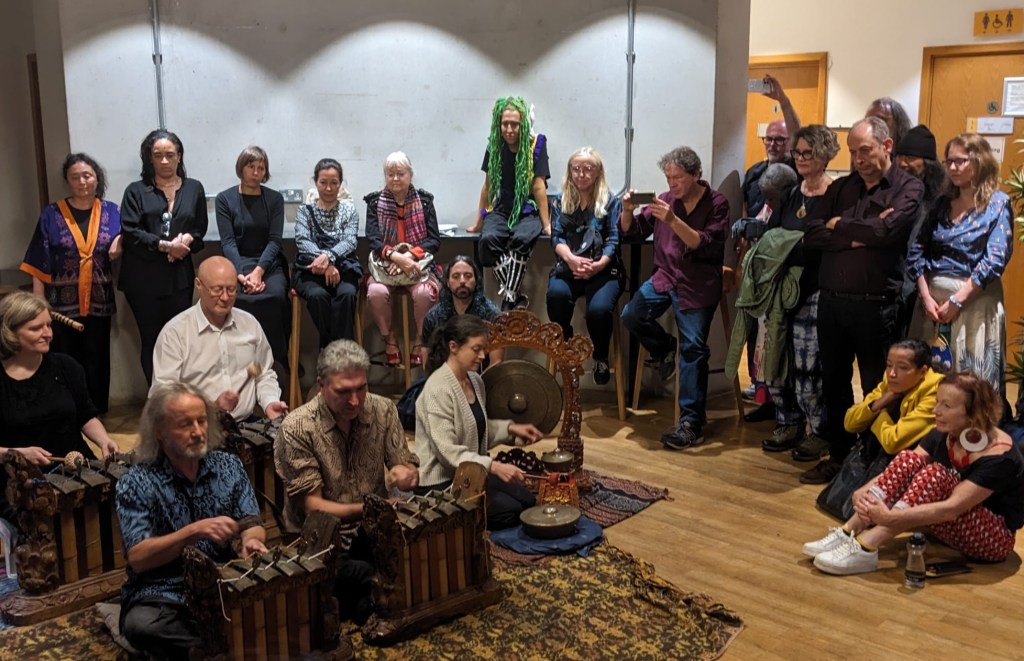



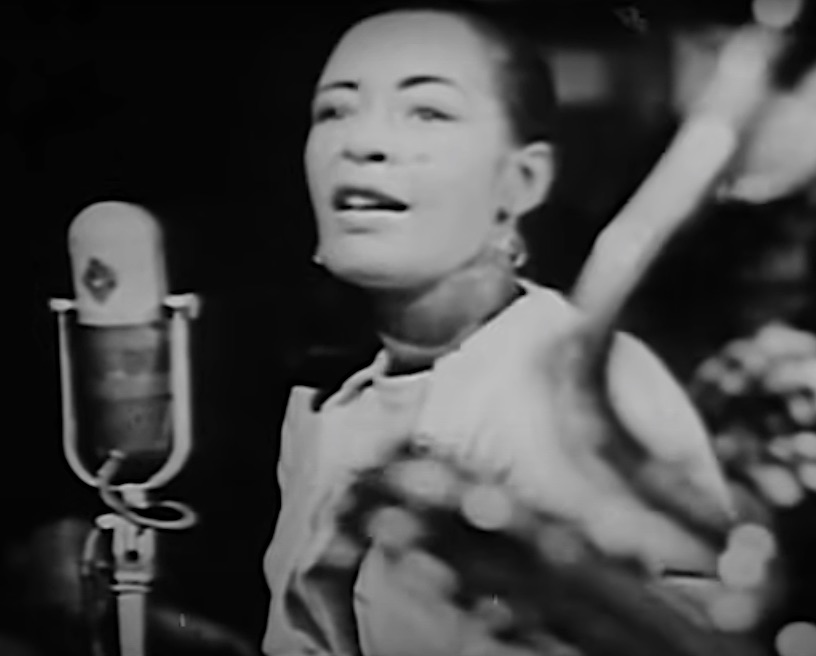


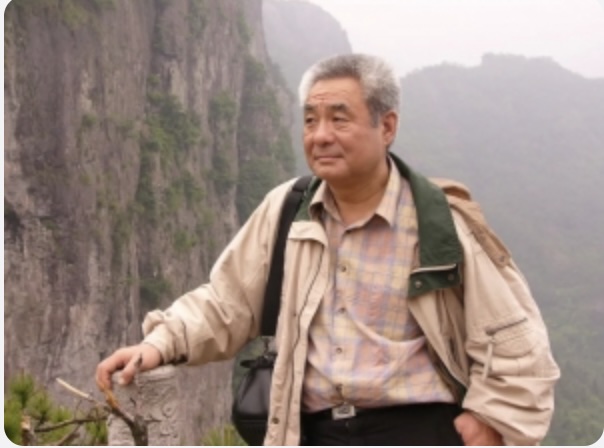
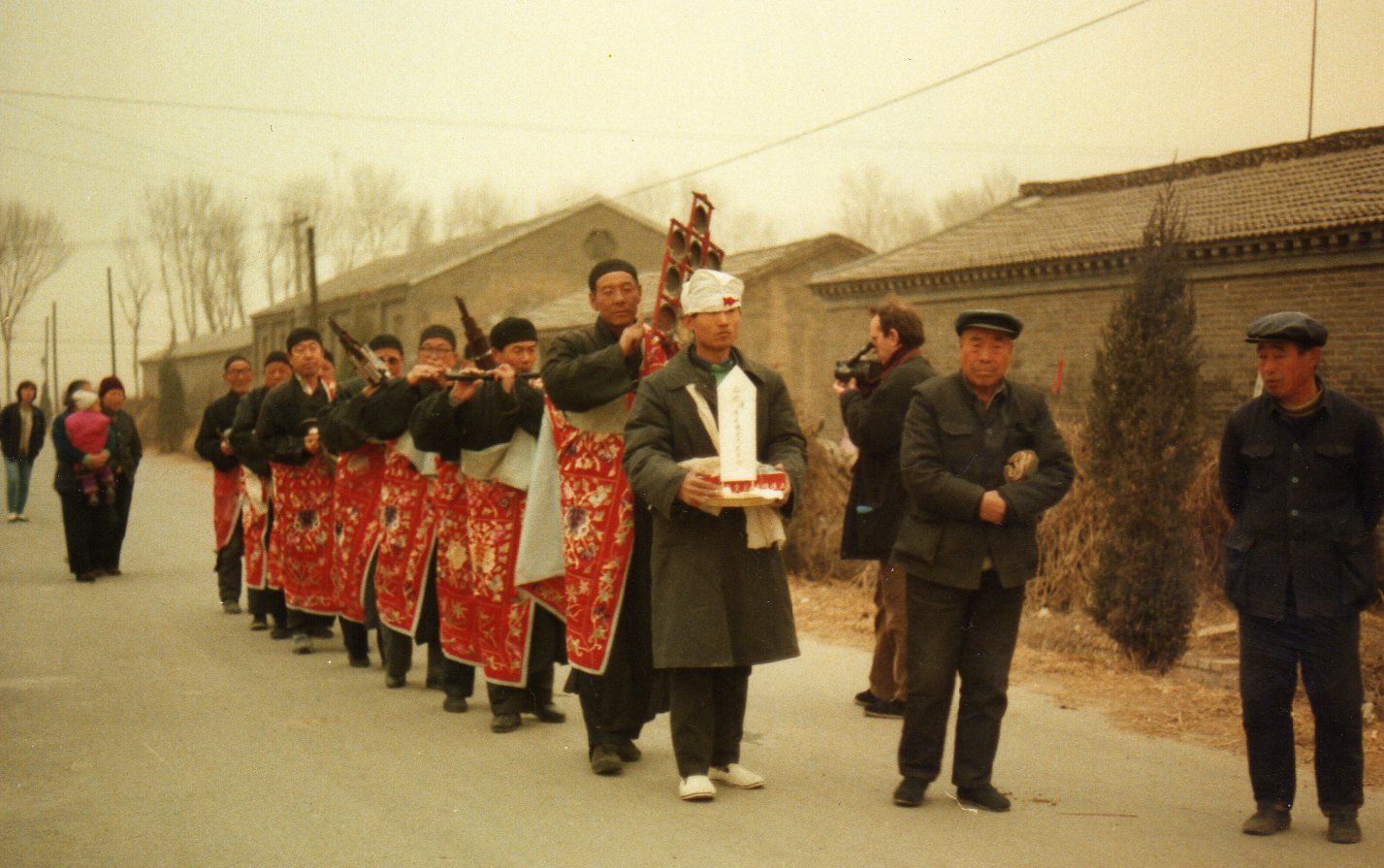 Early morning procession to the soul hall, North Xinzhuang 1995. Photo: Du Yaxiong.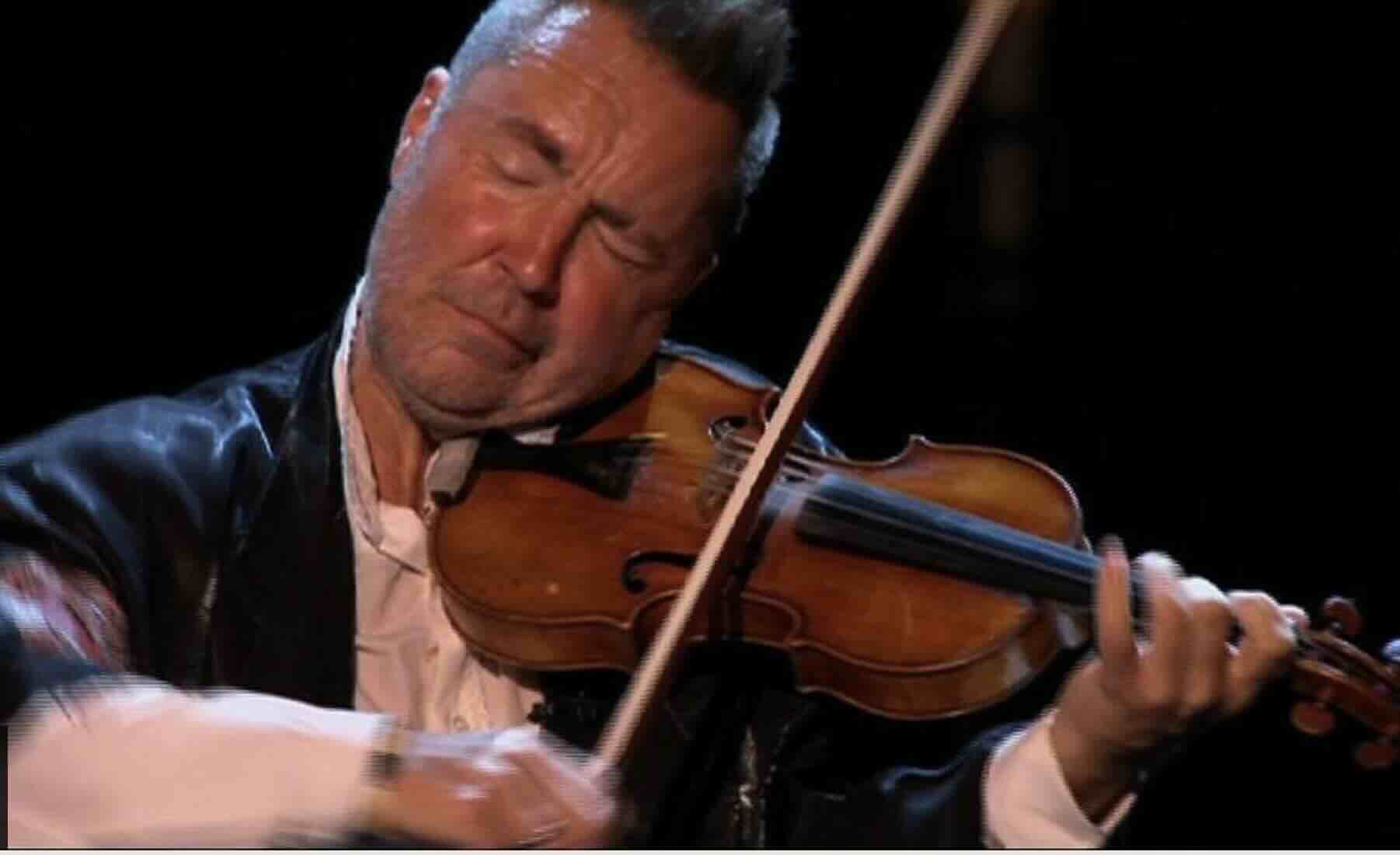
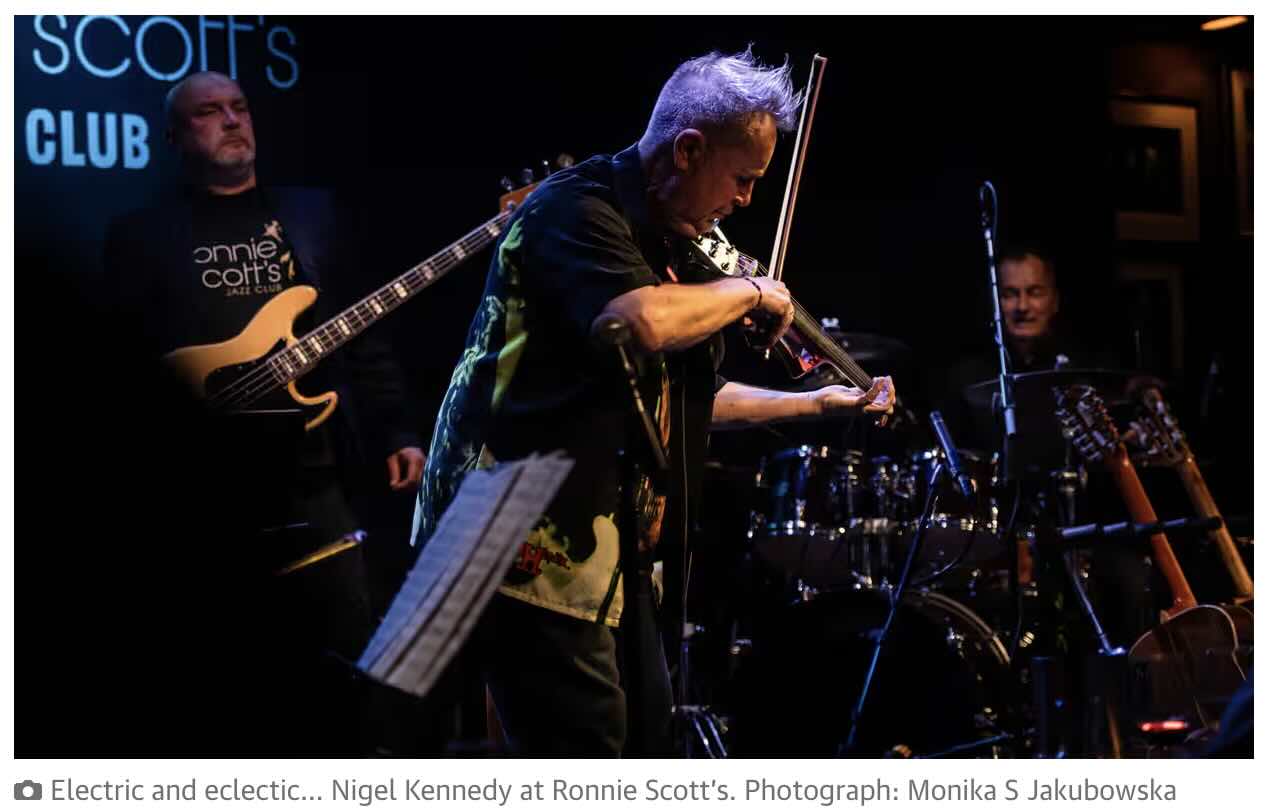


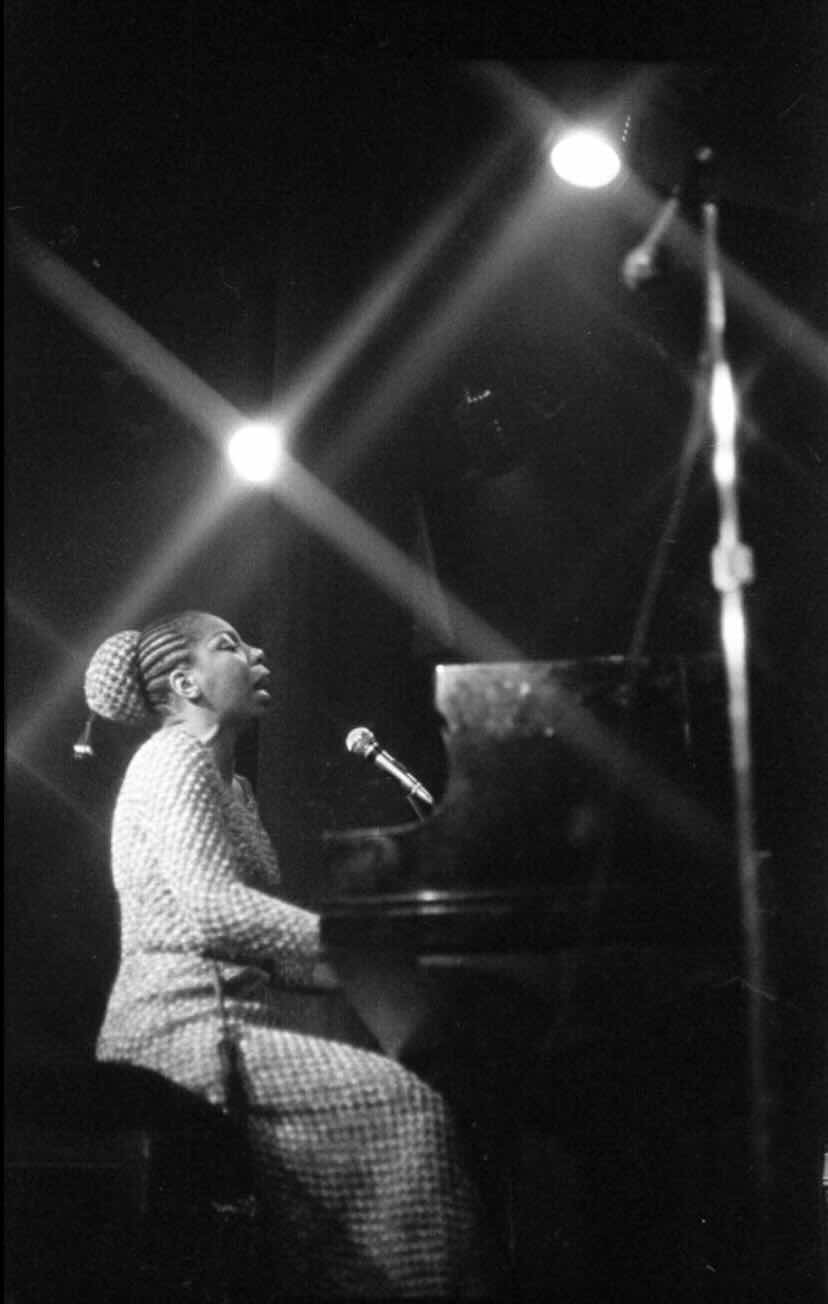


 With Qiao Jianzhong (right) and Huang Xiangpeng, MRI 1989.


 Qiao Jianzhong (left) and Lin Zhongshu (2nd left), 2013,


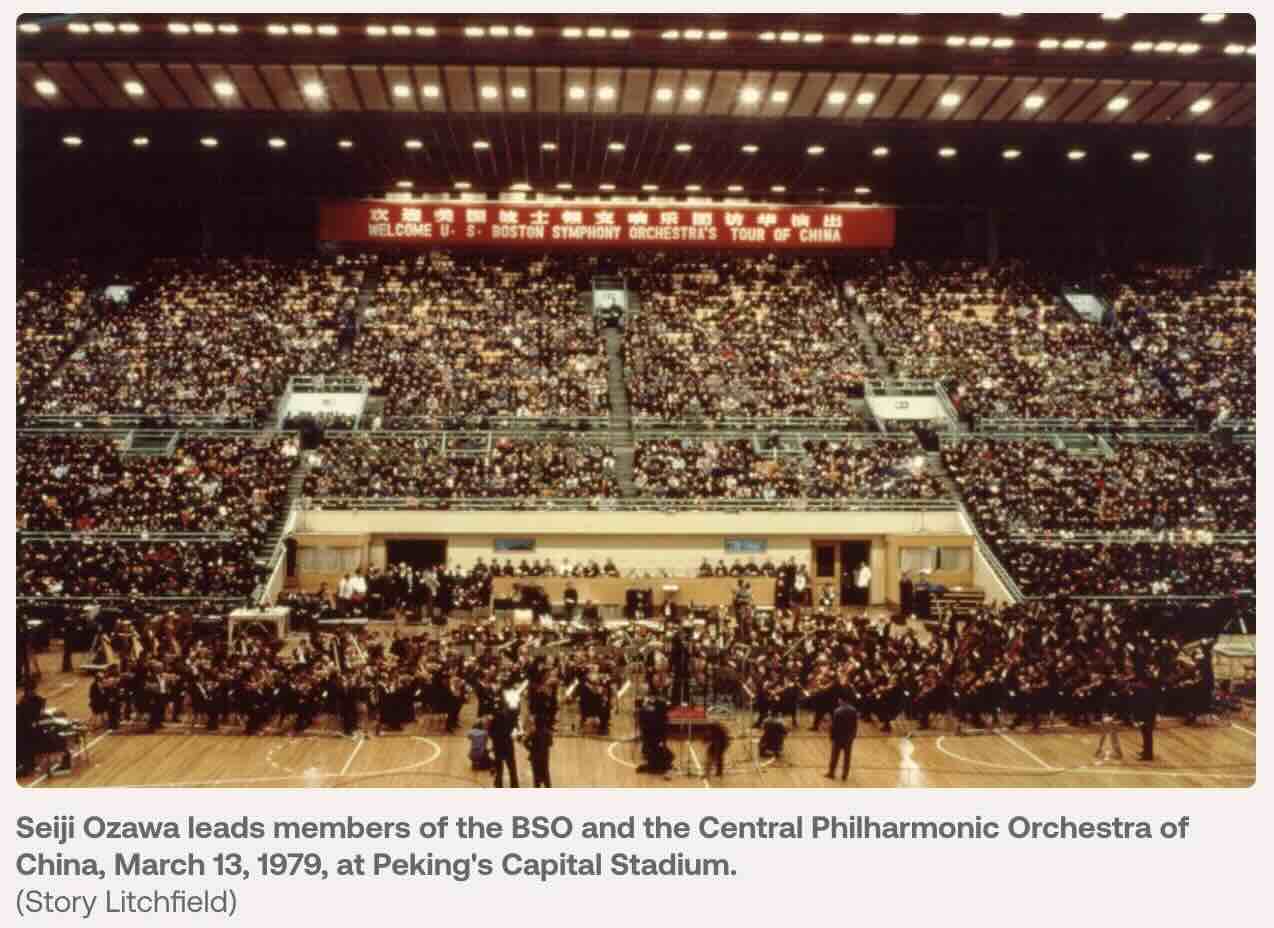


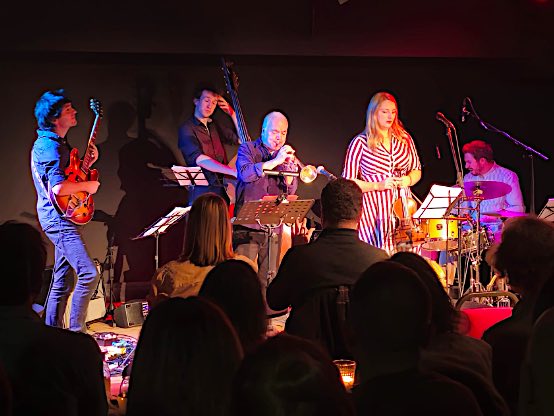

 Nobody embodies more fully the connection between the African-American spiritual, the blues, R&B, rock and roll—the way that hardship and sorrow were transformed into something full of beauty and vitality and hope. American history wells up when Aretha sings. That’s why, when she sits down at a piano and sings “A Natural Woman”, she can move me to tears […] because it captures the fullness of the American experience, the view from the bottom as well as the top, the good and the bad, and the possibility of synthesis, reconciliation, transcendence.
 The balance of joy and pain—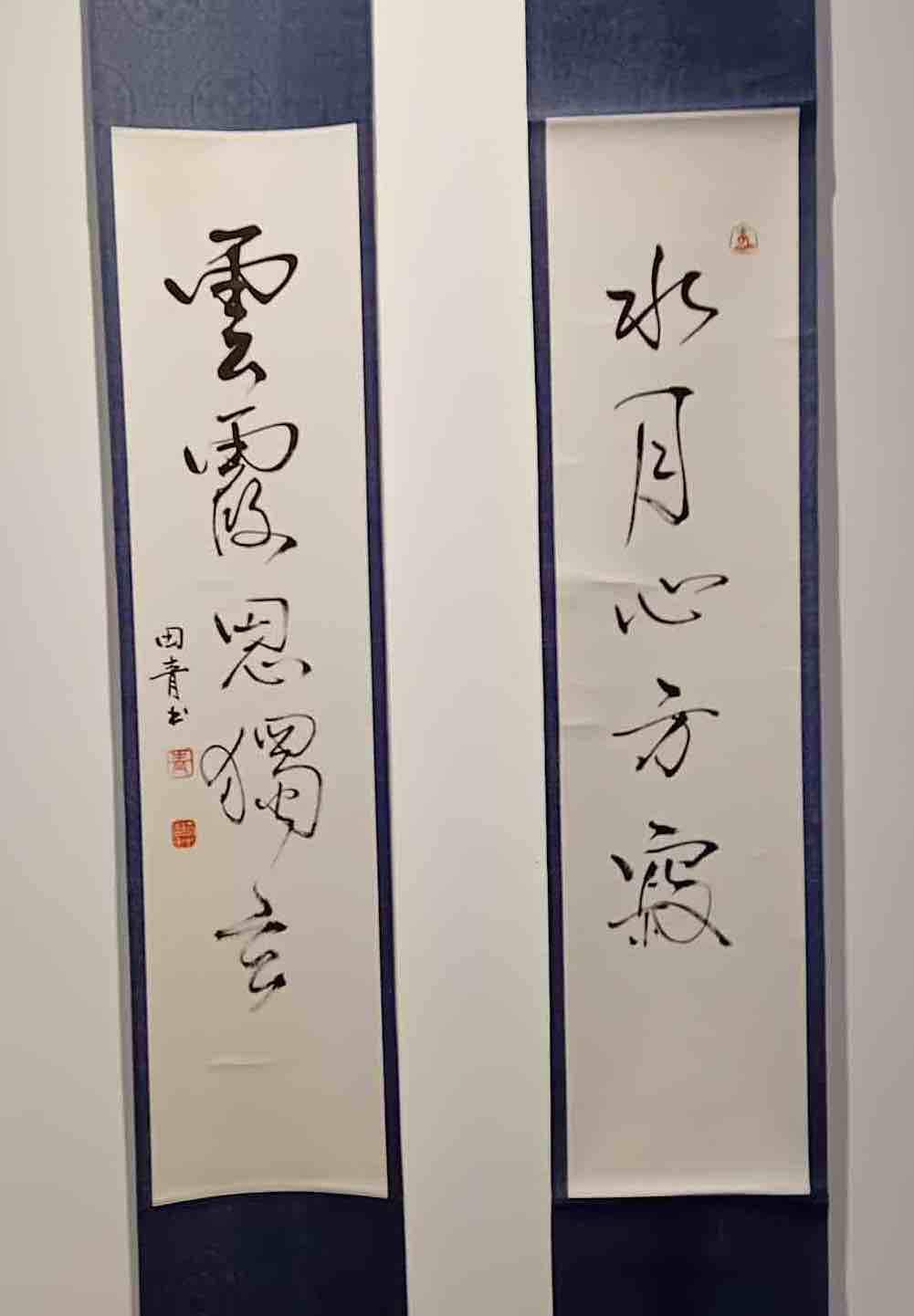
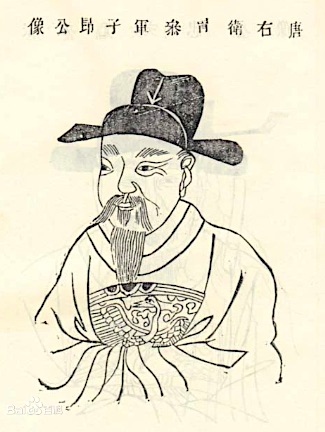 The couplet comes from a poem by the early-Tang poet
 Besides Tian Qing’s many reflections on the


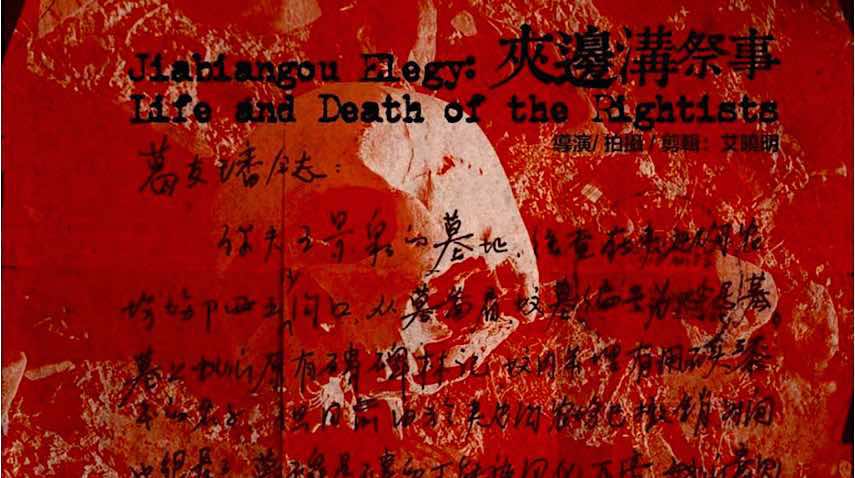

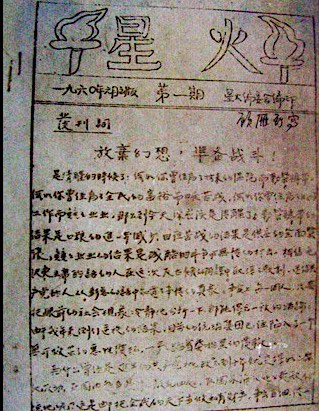


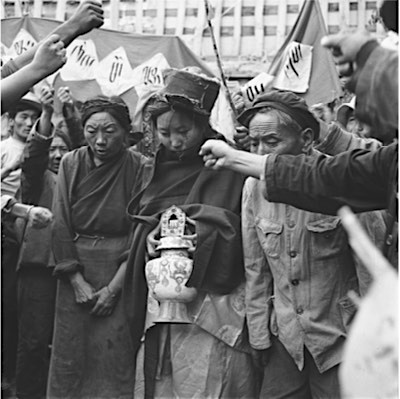
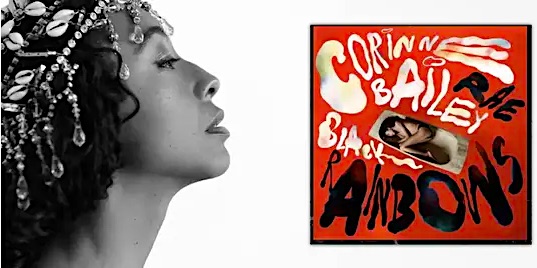

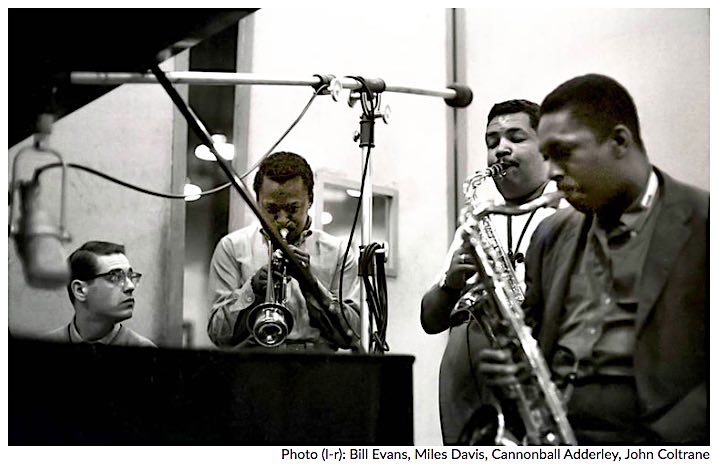
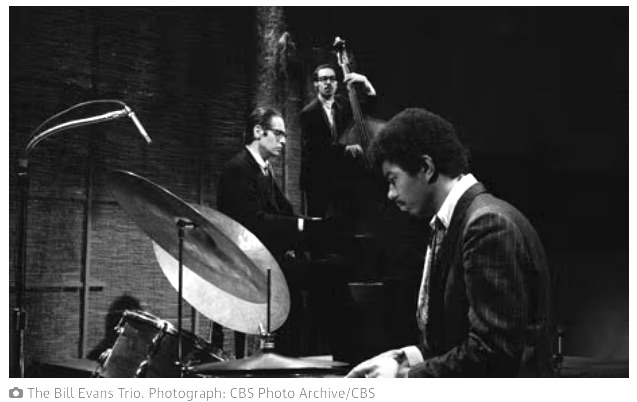






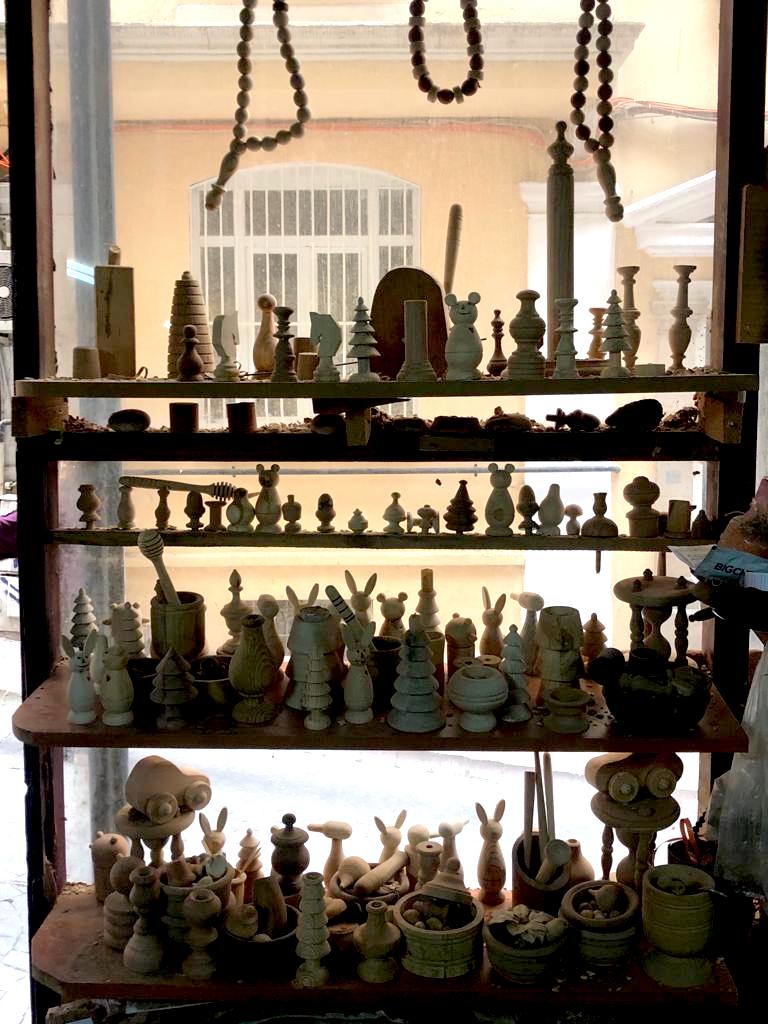


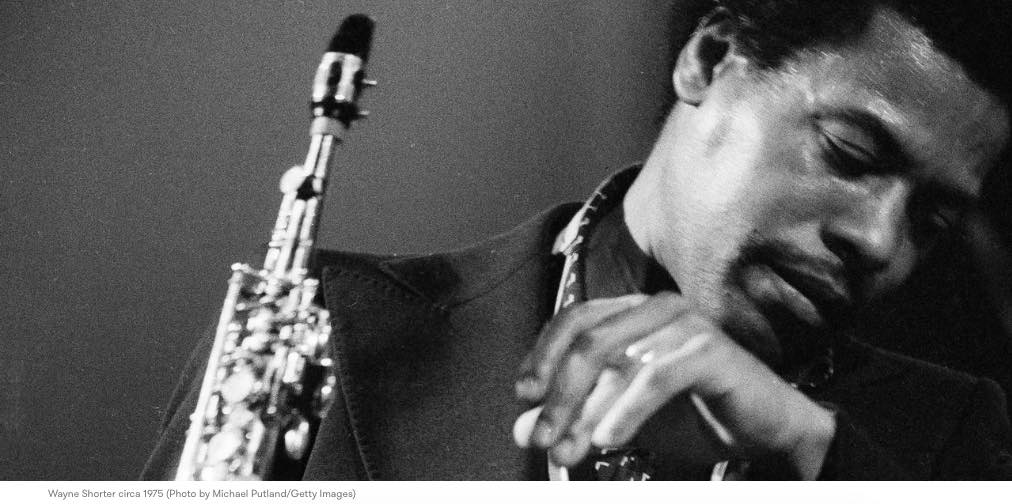 Source.
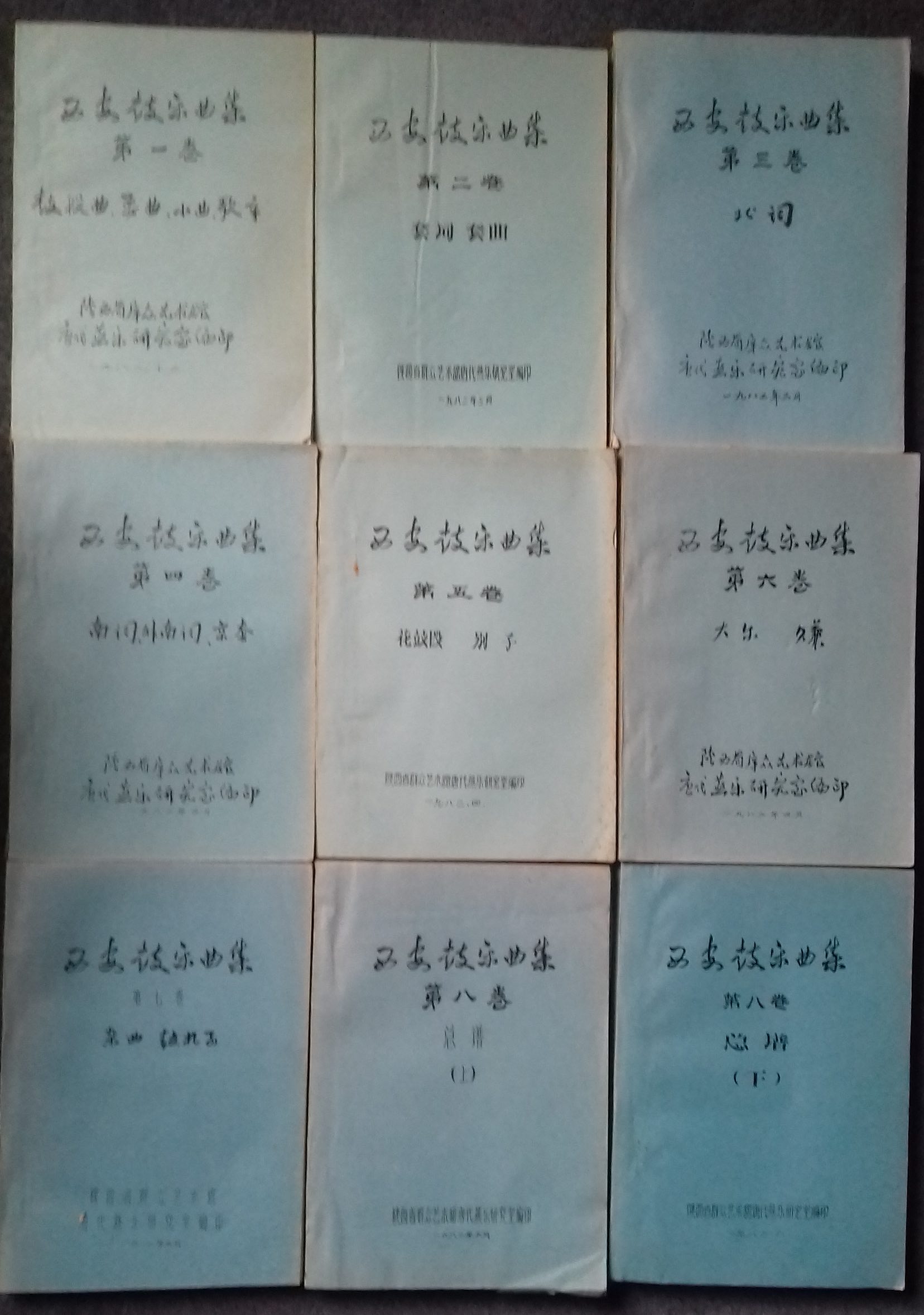
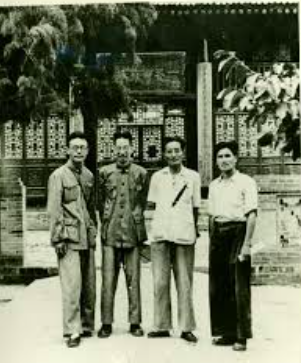




 The night we visited, the club—founded by Zuhal Focan (left) with her husband Önder—was hosting the Swiss drummer Cyril Regamey, with François Lindeman (piano) and Andreas Metzler (bass), who came together with local jazzmen Bora Çeliker (guitar) and Can Ömer Uygan (trumpet) to pay homage to the amazing creativity of
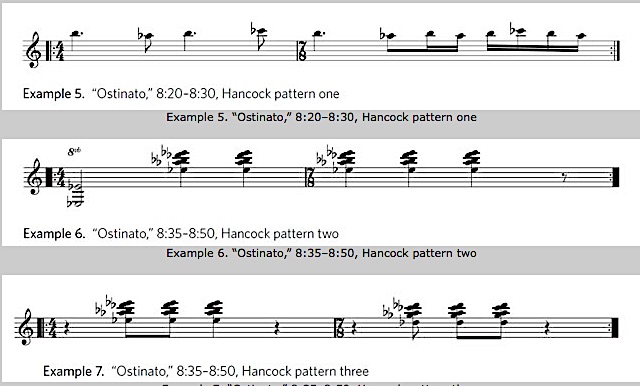





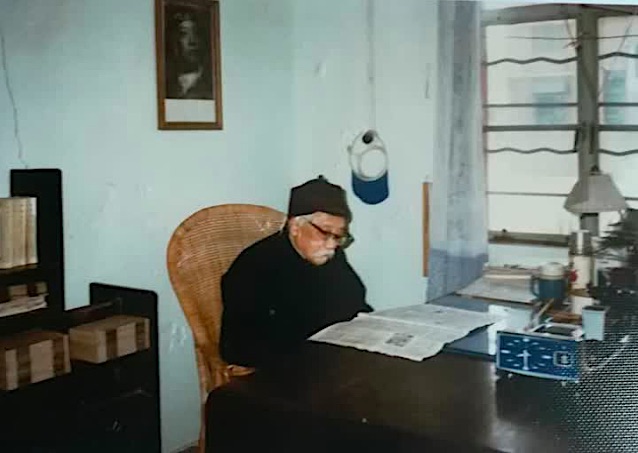


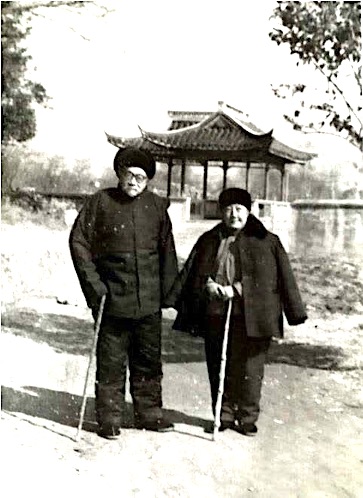

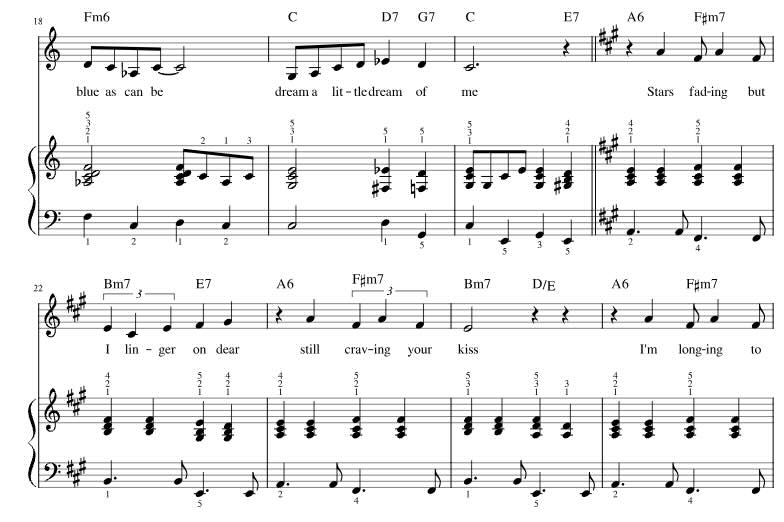
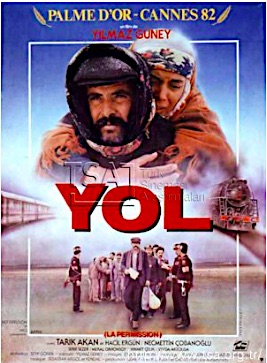


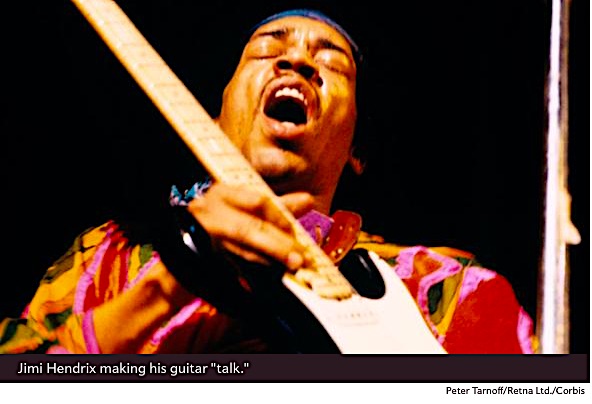





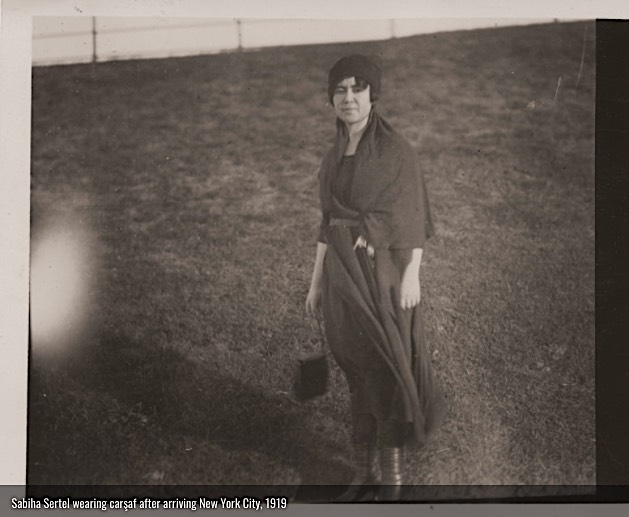

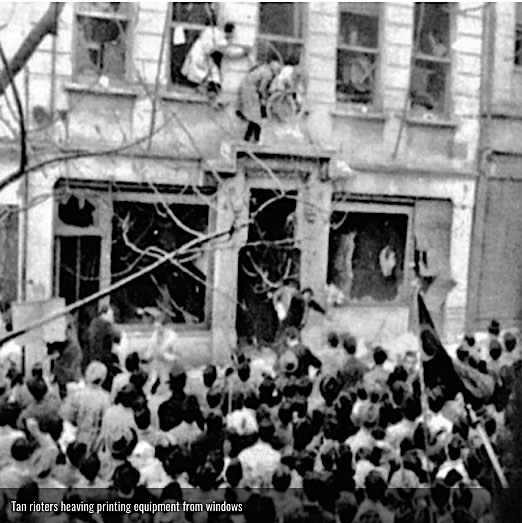


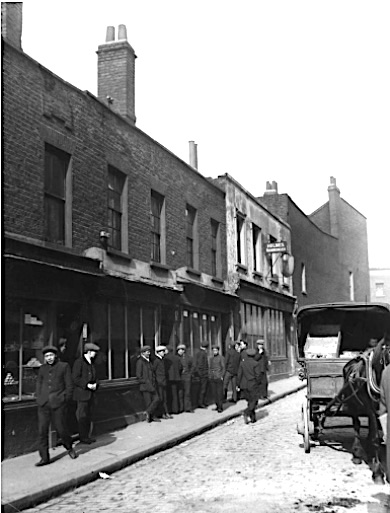
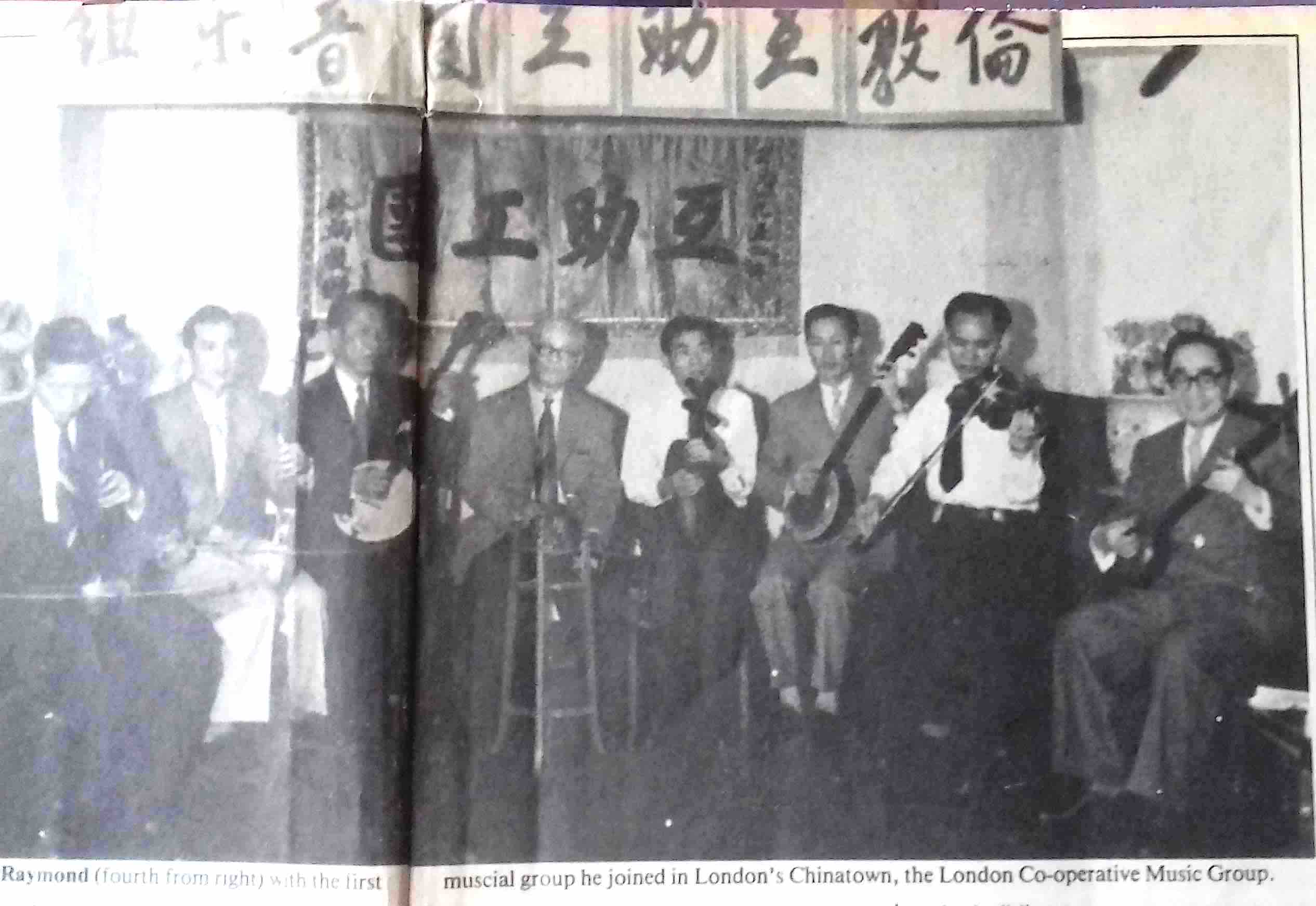

 Original caption (
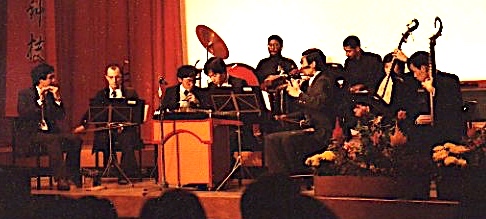
 The shop in Chalk Farm.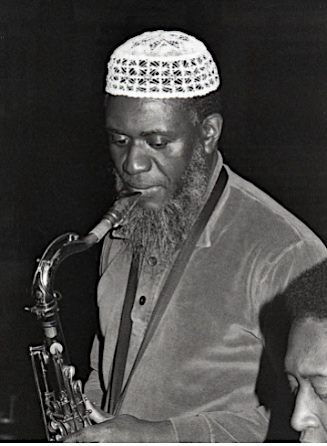



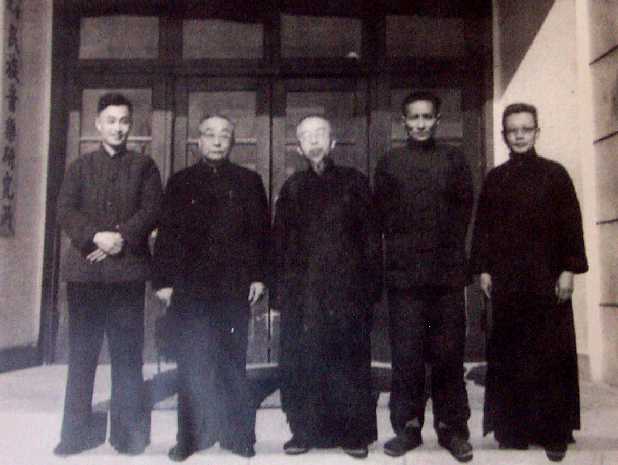 The golden age of the MRI, 1954: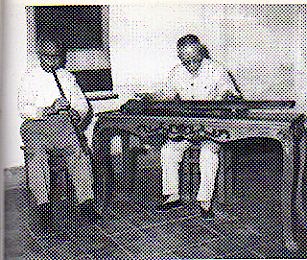
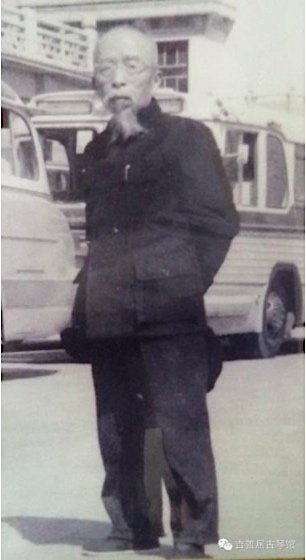 Pu Xuezhai, early 1960s.


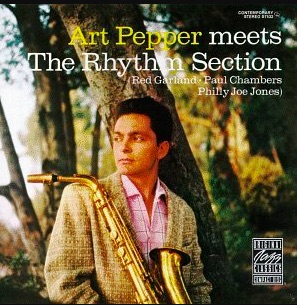

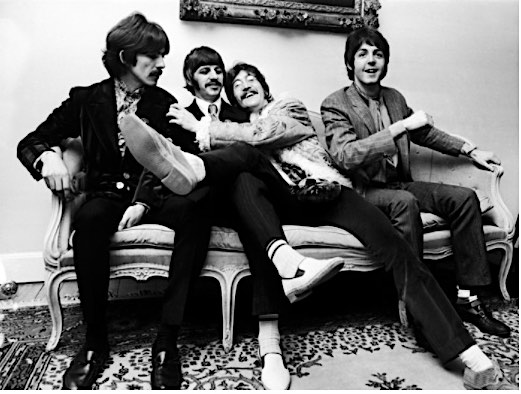

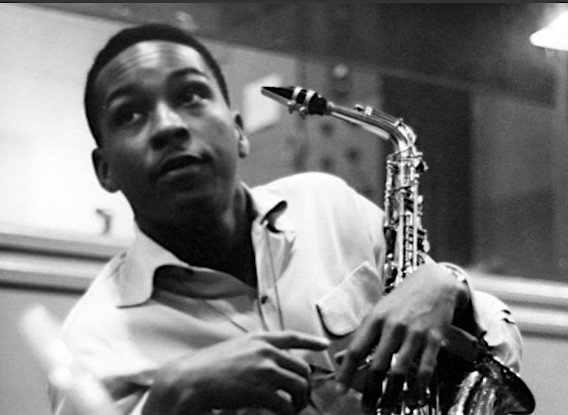
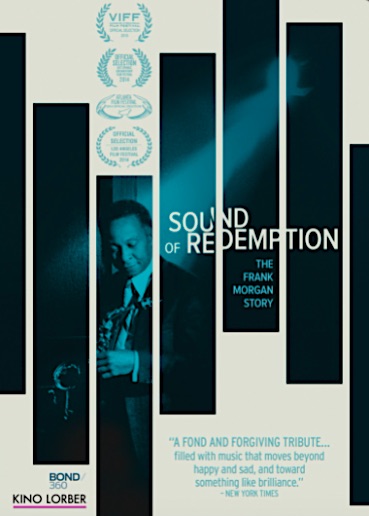
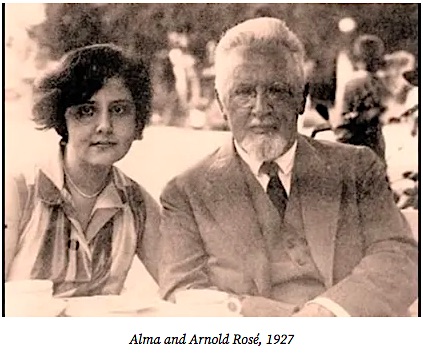


 Stephen Jones: a blog
