While the scene is often adduced as an archetype of romantic love, and the dancing is of course stunning, it’s tricky reacting to the art of bygone ages with modern eyes and ears. Audiences today may find the couple’s “chemistry” elusive, their dynamics pointedly cold. His insistent “wooing”, and her reticent, never-rapturous compliance (“Cut the crap—oh well, at least he can dance”?!), may be standard for the time, but some may find the mood somewhat coercive.
Still, the song itself is brilliant—so we might listen without getting confused about the dance’s sexual politics (cf. racial politics in the filmed version of Only you). As wiki explains, the song’s melody, harmony, and structure are all unusual. In the obsessive opening (often omitted, understandably), after 35 repetitions of the same note (emulating Beethoven?) over a narrow range of chords, the pitch boldly rises twice by a semitone for more repetitions before sliding back to the original pitch for the melody proper. Among several accounts of the song’s origin, this is presumably the source of the reductive orientalist claim that it was inspired by the call to prayer in Morocco (cited here):
The song proper thrives on descending chromatic motifs (cf. Unpromising chromaticisms)–even when we think a regular melody might surface, in bars 44–5 the downward slide continues:
What might be a glorious climactic major 7th leap (making—love, from 1.37, bar 60) may hardly register:
In the dance, just as glorious is the way the band relishes all the rhythmic and melodic flourishes. After the dance, at the very end of the scene, when Astaire asks “Cigarette?”, Rogers still seems underwhelmed—if only she could have anticipated Lesley Nielsen’s immortal riposte in Airplane “Yes, I know”…
Recalling the Lexicon of musical invective is a story that when Porter first played the song for his friend Monty Wooly, Wooly sniffed, “I don’t know what this is you are trying to do, but whatever it is, throw it away. It’s terrible.”
* * *
Among other classic versions, apart from the likes of Ella Fitzgerald and Frank Sinatra, I always treasure Billie Holiday. Encapsulating the heartache of infatuation, she creates a new, angular melody unconstrained by the song’s original chromaticism—here’s her 1939 recording (the band including her constant soulmates Lester Young and Buck Clayton):
Charlie Parker, 1952:
Here’s a lengthy rendition by Stan Getz, live in Kildevælds Church, Copenhagen, 1960:
And Bill Evans in 1959, entirely eschewing the romance of the original—with Philly Joe Jones’s opening drum riff replacing the tom-toms of the lyrics:
At this time of year I like to rearrange the deckchairs on the Titanic by organising some of my more notable posts from the past year under particular themes. As ever, many belong under multiple tags, so below I make some whimsical choices.
Keeping company with my film on the Li family Daoists, most important is my *new film* on the 1995 New Year’s rituals in Gaoluo (Chinese review here). It also prompted me to devise a new Menu, and even a YouTube channel (with playlists reflecting my diverse tastes as well as my own films). For now I still resign myself to Twitter, but I’m posting on BlueSky too, so let’s all migrate there!
Homages to the genius of three friends who greatly inspired me:
You can find any posts I’ve neglected in the monthly Archive as you scroll waaay down in the sidebar. All this suggests that it would be a sensible New Year’s resolution for me to burden you with fewer of these ramblings—but first I plan a major series inspired by the Gaoluo film…
After a trip to LA, a renowned English cricketer hires a car. Speeding happily along a straight, endless, empty road through the Nevada desert, he is flagged down by two bored traffic cops parked idly at the roadside. One walks over to him and drawls,
While I’ve accumulated something of a library on her life and work, I’ve only just got round to reading a smattering of the vast literature—not exactly that I think it’s enough to “let the songs speak for themselves”, more that it’s become such a huge industry. Such books include
Donald Clarke, Wishing on the moon (1994)
Leslie Gourse (ed.), The Billie Holiday companion: seven decades of commentary (1997)
Farah Jasmine Griffin, In search of Billie Holiday: if you can’t be free, be a mystery (2001), an astute study with the benefits of a black woman’s perspective, unpacking “how we know what we think we know” about her—referring to sources such as Angela Davis, Blues legacies and black feminism
John Szwed*, Billie Holiday: the musician and the myth (2015) (review), which I’ll cite below
and of course the “autobiography” Lady sings the blues (1956), ghost-written by William Dufty (well covered by Griffin, pp.45–55, and in Szwed’s first two chapters; cf. this LRB review). The 1972 biopic (watch here), with Diana Ross as Billie, is even more fictitious; though much criticised, it’s all part of the myth-making (e.g. Szwed, pp.83–94, and wise words from Griffin, pp.56–64).
Billie is just as popular a subject on film. The BBC documentary The long night of Lady Day (John Jeremy, 1984) is highly regarded—although Griffin rightly balks at the entitled white male pundits, still controlling her (and yes, now I’m getting in on the act too…):
I can only apologise for adding to the endless attempts to encapsulate Billie’s genius—but at least there’s lots of great music coming up.
* * *
John Szwed writes:
Given her acknowledged stature as a musician, it is odd that many of the books on Holiday have only secondary interest in her music. But then again, maybe not so odd: music writing today is increasingly focused on lifestyles, as if the events of artists’ lives are enough to explain their music, and the songs they record are treated primarily as documents in support of a given biographer’s argument. […] Most biographers look for those moments in an individual’s life that unlock its secrets or at least sum it up, then weave a narrative that focuses on these moments and ignores or downplays those that don’t support their analysis. […]
My intention was not to deny or gainsay the tribulations and tragedy of her life, but to shift the focus to her art. The consistency and taste she brought to nearly every performance, even those when her body was failing her, display a discipline, an artist’s complete devotion to her work, and a refusal to surrender to the demands of an insatiable world.
Billie’s voice, dreamy but never sentimental, had a unique blend of vulnerability and toughness. Once the microphone became more widely available in 1933, Billie adapted to a more intimate way of using her voice. Her tempi (like those of jazz generally) were partly a function of context—recording, or live; and if the latter, then the position of the song in the programme, and her mood on the night, influenced by that of the audience. Still, even in her early years listeners found her slow tempi a challenge, and as she grew older she tended to sing more slowly, more innig, dwelling on the pain.
Some features of her distinctive style (which among her many imitators can sound like mannerisms):
The way she combined speech and song (far from the contrived sprechstimme of art music—see also Szwed, pp.161–3), bending notes, with pitches often indeterminate; **
Her timing—rhythms lagging behind the beat or just outside it (Szwed pp.156–9), floating freely around the band’s regular metre—and the spaces in between, like the ma of Japanese culture, or Miles;
Jazz musos have a fine sense of how and when to use vibrato (e.g. Miles again). Szwed cites Billie: “When I got into show business you had to have the shake. If you didn’t, you were dead… That big vibrato fits a few voices, but those that have it usually have it too much. I just don’t like it. You have to use it sparingly. You know, the hard thing is not to do that shake.” Her use of vibrato was carefully calibrated—Szwed notes how she would often set a single note in motion by increasing the width of vibrato just before moving on to the next note or phrase.
For every aspect of learning, style, and creativity, it’s always worth returning to Paul Berliner, Thinking in jazz, often cited in my series on jazz.
* * *
So here’s a second playlist to follow my first post—every song a true gem.
I’ll get by, 1937 (Szwed, pp.192–3), the breezy instrumentals belying Billie’s minimalist singing:
All of me, 1941:
Billie’s blues live at the Met in 1944—slower than her 1936 recording (Griffin, pp.134–8):
and 1956, again live at Carnegie Hall, with extreme contrasts:
Three recordings of My man, 1937 (Szwed, pp.249–50):
1948:
and 1952:
Very often her style evokes the Chinese concept “the Great Music is sparse in sound” (dayin xisheng大音希声, often applied to the qin zither)—such as the lapidary How am I to know?, 1944:
with the horns commenting softly on the action “like a Greek chorus” (Will Friedwald, in Gourse, p.126) (contrast Jack Leonard 1939, or Frank Sinatra 1940).
Also from 1944, and just as entrancing in its minimalism, is I’ll be seeing you (Szwed pp.238–40)—where her free-tempo meditation over the band’s slow pulse “almost seems as if she is treating each word as a separate phrase” (again, contrast Jo Stafford, Frank Sinatra, Bing Crosby):
The arrangement is by Eddie Haywood, whose noodlings on piano remind me of Messiaen. Possibly it would only occur to Deryck Cooke that the song’s opening phrases suggest the finale of Mahler 3!
Both songs are highly reminiscent of Embraceable you, featured in my first post on Billie. And yet another 1944 recording, for those stuck in the Casablanca groove—As time goes by.
Gloomy Sunday, 1941 (Szwed, pp.226–9):
I mentioned Strange fruit in my post on Nina Simone, with links to Billie’s 1939 recording and 1959 performance. While I debate whether to impertinently write more in a separate post, the song is much discussed—perhaps starting with Szwed and Griffin, not to mention David Margolick, Strange fruit: Billie Holiday and the biography of a song (2001).
Pundits feel a need to defend or lament the singing of Billie’s last few years. The string backings of Lady in satin (1958) divided fans (Szwed, pp.260–64); though some songs work better than others, her voice will still enchant those without doctrinal axes to grind. And always watch in awe that 1957 TV appearance!
* * *
Bandleaders like Teddy Wilson, Count Basie, and Artie Shaw, as well as a host of pianists and horn players, were unanimous in their deep admiration for Billie (besides Szwed, see Griffin, pp. 17–20). Her own appreciation of them is significant too, shown most movingly in the 1957 TV show. Much has been written about Billie’s deep bond with her musical soulmate Lester Young. Amidst all the myth-making, Griffin (pp.84–93) finds particular value in the recordings of 1955 rehearsals on Songs and conversations (playlist here; cf. Nat Hentoff, in Gourse, pp.108–10).
Szed cites Artie Shaw:
I gave her a record of Debussy’s L’après midi d’un faune. She could sing the whole thing, the top line: Da, da-da-da-da-da-dee***—she could do the whole thing. Didn’t have the range for it—but she had a very good ear.
and adds:
It must have meant as much to her as it did to him: she still had the recording until she died, and often played it for guests.
One afternoon, the harpsichordist Ralph Kirkpatrick invited her to his apartment (Szwed, pp.52–3):
While Billie put away the better part of a bottle of rum, I played Bach for her. Her face registered everything, and no manifestation of the music seemed to escape her… I could have used her like a precision instrument to monitor my performance of the G minor English suite simply by watching the subtle variations of expression on her face show me with an infinitely sensitive instrument to monitor what was coming off and what was not. Her own performances, heard through the haze of cigarette smoke in a nightclub, gave heartrending glimpses of a raw and bleeding sensibility condemned to exploitation on every side, unsustained by the protective bulwarks that education and privilege could have given her, and destined, as I knew from the day I first saw her, to end in the gutter.
Later, the two of them sat together at the keyboard. Since Billie could not read music, he played a piece through once, but only once, so she could sing it. “Holiday had the most extraordinary gift of phrasing that I’d ever heard in a singer”, he said. “Once she heard it, she knew exactly how the tune should go”.
Most jazz musicians have never relied on notation, but find it a useful tool to augment their oral/aural training; but for a singer like Billie it was a blessing to be unhampered by little black dots on the page, both in pitch and rhythm. And having internalised an original song, she would then constantly re-compose it (cf. Unpacking “improvisation”). Her finely-tuned ear is further evinced by Leonard Feather’s blindfold test, where Billie comments on twelve tracks by a variety of performers (Gourse, pp.57–62).
OK, I’ll keep listening, and I trust you will too. My Playlist of songs has some amazing tracks, but no-one, in any genre, can ever compare to Billie…
* Also the author of biographies of Miles Davis and Alan Lomax that I must read.
** I’m not inclined to make too much of Paul Bowles’s comment after hearing her 1946 Town Hall concert, describing her voice as “like modern Greek song, Balkan song, conto [cante!] jondo… Her vocalisation is actually nearer to north Africa than to west Africa”.
*** One too many “da”s has crept in there, but hey!
This summer, after yet another victory, Novak Djokovic paid homage to his daughter’s early steps learning the violin (video here!). This inspired me to survey the multiple ways of playing “our” Western violin, in Europe and around the world.
There are several issues in posture. How the instrument is positioned—roughly horizontally (on the shoulder or chest) or roughly vertically (on the thigh); and the bow hold. All of these are variable.
For over a century, the violin, along with the symphony orchestra, has been firmly established in urban middle-class milieus around the world (cf. Bach from Japan, and A Shanghai Prom). The Djokovices were more likely to choose the violin for their daughter, I concede, than the Serbian one-string gusle (featured here under “Bards”). But neither the violin that we now find in orchestras nor the way it’s played there is timeless; both are something of an anomaly, in both time and space.
Leaving aside the many other kinds of bowed fiddle (such as kemence and lira, or Indian sarangi, all commonly played on the leg), ways of playing the “Western violin” vary by period and region, class and context.
How musicians engage with their instrument depends largely on genre and style—the kind of music they play for what kind of activity. A technique that evolves within an oral tradition—among friends, blending in ensemble, or for social dancing—is likely to differ from formal conservatoire training with a view to “performing” on the concert stage. Musicians find ways of playing that seem conducive to the sound-ideal they seek, coming to feel at one with the instrument so that it becomes part of the body.
Detail from Hans Memling, Musician angels, c1480.
In Europe, following medieval bowed fiddles like rebec and vielle (amply represented in iconography), precursors of the “modern violin” began to emerge in the early baroque, a period of great flux in Western Art Music. Treatises by leading player-pedagogues of the day reveal a range of views whether the instrument should be positioned on the chest or collar-bone, or under the chin. Among a wealth of discussion in the wake of David Boyden’s 1965 classic The history of violin playing from its origins to 1761, this article by Richard Gwilt makes a thoughtful introduction, with a second part here. The Essential Vermeer site also has a useful overview.
Left, Michel Corrette, L’Ecole d’Orphée, 1738 Right, Leopold Mozart, Violinschule, 1756.
Change continued through the 19th century, with research taking a lead from Robin Stowell. As composers and venues kept posing greater challenges on players, the instrument and its technique kept changing, adding more apparatus—chin-rest, shoulder-rest, elongated fingerboard, and so on. The bow evolved, and eventually metal strings replaced gut and silk. *
* * *
In folk traditions, ways of playing the violin have changed less than in Western Art Music. In many parts of the world, living folk styles may adapt techniques from early indigenous fiddles, or preserve those of the period when the violin was first introduced, often via colonialism. Here’s a little selection of many regional variants (note Peter Cooke, “The violin—instrument of four continents”, in The Cambridge companion to the violin, 1992, and for both WAM and folk traditions, The New Grove dictionary of musical instruments).
String trio with cimbalom at the Meta táncház, Budapest 1993. My photo. Besides the fiddle, note the supporting kontra.
Folk styles have been resilient in Transylvania (see under Musical cultures of east Europe). Do watch this amazing clip (from Bernard Lortat-Jacob, Jacques Bouët and Speranţa Rădulescu, A tue-tête: chant et violon au pays de l’Oach, Roumanie). And allow me to remind you of this splendid way of sounding the strings:
Still in Transylvania, this clip from Gyimes also features the gardon—a most distinctive way of playing the cello!
In India(mainly in the southern Carnatic tradition) the violin is most exquisite both in posture and effect, players dispensing with the chair (cf. the qin zither) and seated on the floor, with the scroll resting on the right foot:
The violin’s rapid adoption in Iran along with Western solistic tendencies suggest to him a basic compatibility with Western music, whereas in India the violin was only slowly absorbed into a strong, viable musical tradition—a case of modernisation of instrumentation rather than westernisation of style.
In north Africa, such as Morocco (listen here), and west Asia, such as rural Turkey (listen here), the violin is often played on the leg, like their indigenous fiddles—and like some early European fiddles, as well as members of the viol family (intriguing explorations by Fretwork here).
Uyghur musicians, complementing the ghijak and satar, also sometimes play violin on the leg, though more commonly they play it on (or off) the shoulder:
Wedding band, Kashgar 1988. From booklet with 2-CD set Turkestan chinois/Xinjiang: musiques Ouïghoures. See under From the holy mountain.
In my original roundup I featured some fine Uyghur violin playing in this recording of Raq muqam:
The players’ sound-ideal will be the major factor, whatever instrument they choose.
* * *
At a tangent, ways of playing Chinese fiddles have not always been so standardised as with the erhu of the modern conservatoires.
* We take it for granted that the left hand stops the strings while the bow is held in the right hand. Charlie Chaplin was one of rather few left-handed violinists:
A still from Chaplin’s 1916 film The Vagabond. Source.
Such is my devotion to Billie Holiday that I’ve never quite been able to warm to Nina Simone (1933–2003). But my interest has been revived by listening with rapt admiration to Feeling good (1965). It opens with an all-too-brief free-tempo alap, brusquely interrupted by the incongruous sleazy riff: *
The title isn’t so ironic as it sounds. Written by (white) English composers Anthony Newley and Leslie Bricusse for the musical The roar of the greasepaint—the smell of the crowd, satirising the British class system, the UK premiere was given by Cy Grant in the role of “the Negro” singing the song as he “wins” the game; it was described as a “booming song of emancipation”. When the show transferred to New York the following year, the role was taken by Gilbert Price. Nina utterly transforms the song, but the optimism of its lyrics is remote from the activist songs that were becoming the core of her repertoire just at that time.
* * *
Within the milieu of the day, few musicians were angels. Jazz biographies from the, um, Golden Age tend to follow a depressingly familiar trajectory of self-destruction: pain, drugs, exploitation, disastrous choice of partners, violence, disillusion, and legal woes. Despite all these features, Miles’s autobiography is strangely inspiring, tough but never helpless (for a lengthy sample, see Miles meets Bird). White musos could be no less self-destructive—few more so than Chet Baker.
David Brun-Lambert, Nina Simone: the biography (2005).
Among documentaries is Nina Simone: the legend (Frank Lords, 1991), What happened, Miss Simone? (Liz Garbus, 2015; trailer), and The amazing Nina Simone (Jeff L. Lieberman, 2015; trailer).
The sixth of eight children in a poor North Carolina family, Nina was a child prodigy at the piano; “Bach made me dedicate my life to music”. After graduating from high school in 1950, she seemed destined to become “the first black American concert pianist”. So the original, lasting, deep wound in her psyche was being refused admission to study at Curtis—which she attributed to racism. Thwarted in her classical ambitions, she continued to study privately with Curtis professor Vladimir Sokoloff for several years, funded with a regular gig at a nightclub in Atlantic City—only taking up singing because the job demanded it.
While Nina’s classical piano training would later give her a cachet among respectable white audiences, I seem to have reservations about singers accompanying themselves at the piano, like Ray Charles. Distinctive and original as her playing was (e.g. her “destabilising” 1969 album Nina Simone and piano), it was at a tangent from jazz: stark, based on melody, hardly admitting any harmonic interest—by contrast with her cohorts in the jazz scene like Monk, Herbie Hancock, or Bill Evans. But this musical simplicity threw greater focus on her political message.
By the late 50s, as her career was taking off, her dream of fame as a classical pianist had evaporated. The civil rights movement was growing. In Greenwich Village she began hanging out with James Baldwin, Langston Hughes, LeRoi Jones, and Lorraine Hansberry. Her 1961 visit to Lagos with Baldwin, Hughes, and others as part of a delegation of the American Society for African Culture was her first time in Africa.
Now married to a violent husband and manager, she gave birth to her daughter in 1962. Her entry into the civil rights struggle was embodied in her 1963 song Mississippi goddam. Nina’s activism, and the wider civil rights background, is extensively covered by Brun-Lambert, with detail on her involvement with Martin Luther King, Malcolm X and the Nation of Islam, Miriam Makeba, the Black Panthers, riots, marches, and the whole ferment in black popular music through the 1960s.
By 1970, exhausted and disillusioned, Nina seemed to have reached the end of the road. In later life she largely avoided the USA for fear of legal battles; while still touring, she sought refuge in Barbados, Liberia, Switzerland, Holland, and France, lonely and estranged from her daughter, her relationships fraught and short-lived; among a succession of managers, some had better intentions than others. Her mood-swings and behaviour on and off stage had long been volatile, becoming ever more apparent; the diagnosis of bipolar disorder was belated. Brun-Lambert describes her as “leading a double artistic life, unable to find her own place anywhere”.
* * *
Turning to Nina’s songs—as ever, there’s a vast selection on YouTube, notably this channel—below I give a mere sample.
In her early years she sounds benign enough, like the New York Town Hall concert in September 1959, “still without trace of savagery or sexuality”, as Brun-Lambert puts it:
Still, her interpretations, such as Summertime, are distinctive. Billie Holiday had died in July that year; a couple of years earlier she had immortalised Fine and mellow in the most enthralling TV film ever. Nina sang it for her Town Hall finale.
“Her first song with explicitly black consciousness” was Flo Me La at the Newport festival in 1960 (from 20.52):
Among several appearances at Carnegie Hall, here’s her 1964 concert (as playlist):
The programme introduced activist songs such as Old Jim Crow, Go limp, and Mississippi goddam into the genteel surroundings. And she is just right for Brecht/Weill songs like Pirate Jenny!
By 1968, live at the Bitter End Café, her voice is harsher and more experimental:
The final number on her troubled 1965 album Pastel blues (here, as playlist) is Sinnerman, “about despair, disenchantment, disillusionment in the face of a situation that offers no alternatives but flight or prayer” (Brun-Lambert). Before that comes Strange fruit, just as visceral as Billie’s 1939 recording and 1959 performance. Nina’s concert in Antibes that year included some songs from the forthcoming album—opening with a disjointed intro that segues into Strange fruit:
And here’s Four women, live in 1965:
After the assassination of Martin Luther King in 1968, she sang Why? (The king of love is dead)—here’s a full version live that year:
In 1967 she recorded I wish I knew how it would feel to be free—here’s her 1976 Montreux performance:
Again, I find some of these casual piano accompaniments, and even her voice, disconcerting—but maybe that’s the point.
That’s probably enough to outline the story of Nina’s heyday; in her later career she largely repeated such standards—after the original creative impetus had diluted, and as her mental troubles escalated. She had been touring in England since 1967—it’s worth hearing her live at Ronnie’s in 1985:
To encapsulate ecstasy and pain, for me it’s always going to be Billie… I may be romanticising the devotion of jazzers to their art (cf. the wonderful image of Donald Byrd practising on the subway), but I detect no inkling of any such devotion in Nina: any musical discipline that she practised seems to have been at the keyboard. She formed no bonds with her fellow musicians.
While one gets little impression that she honed her vocal skills, in early recordings like Black is the color of my true love’s hair and Wild is the wind (in the 1959 Town Hall concert) she sounds genuinely intimate, even sweet—far removed from her later image. Still, music is about society: Nina’s voice developed into a genuine expression of the troubled times, part of the necessarily strident style that emerged from the civil rights struggle.
* Feeling good has been much covered—rather than featuring other versions, here’s Trane in 1965:
And although nothing can compare with the raw emotion of being black in those years, here’s Andrea Motis in 2012:
Not being pedantic or anything [Uh-oh—Ed.], the title seems to be cited more commonly as Feeling good than as Feelin’ good (zzzzz). Cf. I got a woman, note here.
I’ve often cited Nicolas Slonimsky’s brilliant Lexicon of musical invective. So I enjoyed reading his fascinating memoir
Perfect Pitch, in a revised third edition from 2023, ably edited by his daughter Electra Slonimsky Yourke.
Written with wit and wisdom at the age of 94, and first published in 1988, it’s a captivating blend of substance and gossip, packed with wonderful anecdotes—a Who’s Who of figures that seemed to matter at the time, part of a niche zeitgeist.
Nicolas Slonimsky (1894–1995) (fine website, with A/V; books, including Writings on music, 4 vols., 2005; wiki) was “a typical product of the Russian intelligentsia”—in the early chapters he gives a detailed account of his Russian family history and political turmoil. Already by 1912 his early musical facility led him to describe himself as a “failed wunderkind”.
In autumn 1918 he left St Petersburg. After stays in Kiev and Yalta, in 1920 he reached Constantinople (pp.85–90), where he found many musicians among the throng of Russian refugees. Lodging with a Greek family, he accompanied Russian dancers, and played for restaurants and silent movies. He composed Obsolete foxtrot and Danse du faux Orient, later included in his Minitudes. After following a girlfriend, a Russian dancer, to Sofia, by late 1921 he arrived in Paris—also inundated by Russian emigrés. There he worked for Serge Koussevitzky for the first time, who introduced him to Stravinsky in Biarritz. Koussevitzky, sorely challenged by irregular time signatures, * asked him to rebar TheRite of Spring for him. Despite moving in cultured circles, Koussevitzky (like Tennstedt later) was not a great reader.
Slonimsky was impressed by Nikolai Obukhov, a “religious fanatic” who made a living as a bricklayer. Inspired by Scriabin, and an unlikely protégé of Ravel, his magnum opus Le livre de vie for voices, orchestras, and two pianos (Preface here) contained “moaning, groaning, screaming, shrieking, and hissing”. He dreamed of “having his music performed in an open-air amphitheatre, perhaps in the Himalayas or some other exotic place”. He developed the croix sonore, a prototype of the theremin.
In 1923 Slonimsky docked in New York, travelling on a Nansen passport, “an abomination of desolation, the mark of Cain, the red spot of a pariah”. He soon found work as opera coach for the new Eastman School of Music in Rochester, at the invitation of Vladimir Rosing. He now confronted the challenge of learning English. Indeed, the book is full of gleeful comments on language learning. Taking advertising slogans as his textbook, Slonimsky’s arrangements (particularly Children cry for Castoria!) became popular. America seemed a fairy-tale land. At Eastman he found a kindred soul in author Paul Horgan.
In 1924 Koussevitzky replaced Pierre Monteux as conductor of the Symphony Orchestra (whose musicians were mainly German, French, and Russian), and the following year he invited Slonimsky to become his secretary (feeling more like a “serf”). Koussevitzky was in awe of Rachmaninoff’s genius, and despite his withering assessments of rival conductors, he did promote Mitropoulos and Bernstein; he was dismissive of Arthur Fiedler’s Boston Pops (cf. the splendid Erich Leinsdorf story). Much as he valued Slonimsky’s talents, his insecurity meant that his young protégé always had to tread carefully, and in 1927 they parted company.
Still, he now enjoyed a “meteoric” conducting career. With no illusions about his rudimentary technique, he founded the Chamber Orchestra of Boston, promoting contemporary composers—notably Henry Cowell, Edgard Varèse, and Charles Ives. After a performance of a work by Cowell, they rejoiced in the headline “”Uses egg to show off piano”. Slonimsky introduced Aaron Copland to George Gershwin. After Cowell introduced Slonimsky to Charles Ives, they became close.
Henry Cowell with Charles Ives, 1952.
Slonimsky was full of praise for Ives:
I learned to admire the nobility of his thought, his total lack of selfishness, and his faith in the inherent goodness of mankind. […] He inveighed mightily against self-inflated mediocrity, in politics and art alike. The most disparaging word in his vocabulary was “nice”. To him, it signified smugness, self-satisfaction, lack of imagination. He removed himself from the ephemeral concerns of the world at large. He never read newspapers. He did not own a radio or a phonograph, and he rarely if ever attended concerts.
In 1931 (the year he gained US citizenship), Slonimsky gave the première of Ives’s Three places in New England in New York. Promoting the work with passion, in Perfectpitch he waxes lyrical about its genius.
Slonimsky conducting Varèse’s Ionisation in Havana.
He was invited to conduct in Havana, his first experience of modern Cuban music. He conducted revelatory concerts in Paris, sponsored by Ives, encouraged by Varèse. There too he married Dorothy Adlow.
He returned to Europe for more concerts in 1932—with Bartók giving the Paris premiere of his 1st piano concerto, and Rubinstein playing Brahms’s 2nd piano concerto!!! In Berlin (in the nick of time before the grip of Nazism) he conducted the Berlin Phil in a modern programme including Three places in New England and Varèse’s Arcana. He repeated the programme in Budapest.
He reflects on this ephemeral phase of his career:
The art of conducting is paradoxical, for its skills range from the mechanical to the inspirational. A conductor can be a semaphore endowed with artificial intelligence, or an illuminating spirit of music. The derisive assertion that “anyone can conduct” is literally true: musicians will play no matter how meaningless or incoherent the gestures of a baton wielder may be. In this respect, conductors stand apart from other performers. A violinist, even a beginner, must be able to play on pitch with a reasonable degree of proficiency. A pianist must have enough technical skill to get through a piece with a minimum of wrong notes. But a conductor is exempt from such obligations. He does not have to play; he orders others to play for him.
This leads him to some wonderful stories about badly-behaved conductors (cf. Viola jokes and maestro-baiting); Toscanini, Klemperer—and this story, evoking the unwelcome posturings of many a later maestro:
Mengelberg once apostrophised his first cello player with a long diatribe expounding the spiritual significance of a certain passage. “Your soul in distress yearns for salvation,”, he recited. “Your unhappiness mounts with every passing moment. You must pray for surcease of sorrow!” “Oh, you mean mezzo forte,” the cellist interrupted impatiently.
I’m eternally grateful to Slonimsky for relating some classic Ormandy maxims (now joyously expanded hereby members of the Philadelphia orchestra)—OK then, just a couple:
Suddenly I was in the right tempo, but it wasn’t.
Who is sitting in that empty chair?
In “Disaster in Hollywood” he tells how his first appearance with the LA Phil in 1932 ended in tears. When the programmes for his eight-week season at the Hollywood Bowl in the summer of 1933 proved far too challenging for the “moneyed dowagers”, his conducting career came to an inglorious end. He takes consolation in the later admission of the works that he championed to the pantheon (cf. the fine story of Salonen’s interview for the LA Phil!). Meanwhile in New York he conducted, and recorded, Varèse’s revolutionary Ionisation.
With typical linguistic flourishes, he devotes a proud chapter to the birth of his daughter Electra, editor of the volume. He rearranged a limerick:
There was a young woman named Hatch Who was fond of the music of Batch It isn’t so fussy As that of Debussy Sit down, I’ll play you a snatch.
“Like gaseous remnants of a shattered comet lost in an erratic orbit”, occasional conducting engagements still came his way. In “Lofty baton to lowly pen” he recalls his transition to musical lexicography. He met fellow Russian emigrés Léon Theremin (whose life was to take a very different course) and the iconoclastic theoretician Joseph Schillinger. As Slonimsky compiled his book Music since 1900 (1937!), he became interested in the savage reception of new music, leading to his brilliant Lexicon of musical invective.
Still, he was never tied to his desk. His appetite whetted by his trips to Cuba, in “Exotic journeys” he recalls his 1941–42 tour of Brazil (hearing Villa Lobos’s tales of his Amazonian adventures), Argentina, Chile, Peru, Ecuador, Columbia, Panama, Costa Rica, Nicaragua, Guatemala, and Mexico. His book Music of Latin America was published in 1945.
Returning to Boston, he was plunged into family duties. In 1947 he published Thesaurus of scales and melodic patterns.
In 1935, armed with a US passport, he returned to his birthplace, now called Leningrad, visiting long-lost relatives. He reflects on the death of his mother in 1944, and the life of his aunt Isabelle Vengerova (1877–1956), who became a legendary piano teacher in the States.
After the war, with Russia in vogue in the USA, Slonimsky enjoyed revising his proficiency in his mother tongue, updating old manuals to teach students and taking on work as translator. While he was largely free of McCarthyite suspicion of sympathising with Communism, back in the USSR his brother Michael was at far greater risk for being suspected of opposing it (for Soviet life, note The whisperers).
Dissatisfied with previous compendia and nerdily meticulous, he found a new mission in updating Baker’s biographical dictionary of musicians. He was proud of his 1960 article “The weather at Mozart’s funeral”. In 1956 he achieved unprecedented celebrity through appearing on the quiz show The big surprise.
In “The future of my past” he describes another trip to the USSR and the Soviet bloc in 1962–63, funded by the State Department—an Appendix to the third edition provides a detailed account. He visited Poland, Czechoslovakia, Hungary, Romania, Yugoslavia, Bulgaria, as well as Greece and Israel.On his meetings with musicians, he was inspired by the energy of Ukrainian and Georgian composers.
His diary is punctuated by his curiosity about language, starting in Moscow:
To my Americanised ears, the new Soviet language sounded almost theatrical in its emphasis, deliberate articulation, and expressive caesuras. I also noticed a proliferation of diminutives….
In Prague he learned the vowel-less tongue-twister Strc prst skrz krk:
I used this phrase as the supposed title of a choral work by the mythical Czech composer Krsto Zyžik, whom I invented and whose name I was tempted (I ultimately desisted) to include as the last entry in my edition of Baker’s.
But soon after his return to Boston his wife Dorothy had a heart attack, which was to be fatal. Bereft after her death in January 1964, he welcomed the offer of a post at distant UCLA. He composed musical limericks for his students’ benefit, but was not always impressed by their aptitude, citing gems from their essays such as “A piano quintet is a piece for five pianos”.
After two seasons he reached compulsory retirement age, but he was never going to go quietly. In LA he enjoyed a wide social circle. Besides many “flaky” composer friends was John Cage, now a guru (Slonimsky cites Pravda: “His music demoralises the listeners by its neurotic drive and by so doing depresses the proletarian urge to rise en masse against capitalism and imperialism”!).
With John Cage, and Frank Zappa.
Back in LA, he made friends with Frank Zappa, who invited him to play at his gig.
Dancing Zappa, wild audience, and befuddled me: I felt like an intruder in a mad scene from Alice in Wonderland. I had reached my Age of Absurdity.
Meanwhile with perestroika in the Soviet Union, Slonimsky was becoming quite a celebrity there too, making several more visits and admiring composers’ creativity in new idioms.
* * *
Far more than a mere entertainer, Slonimsky was a major figure in promoting new music. With his eclectic tastes, I can’t help thinking that he would have enjoyed gravitating to ethnomusicology, questioning the wider meanings of “musician” or “composer” (see e.g. Nettl); but he was deeply rooted in the WAM styles of Russian classics and the American avant-garde. Still, within the world of WAM literature it makes a most fascinating memoir.
For some reason it fills me with joy to learn that a Japanese translation of Lexicon of musical invective has been published.
* Even 5/8 was too much for Koussevitzky:
He had a tendency to stretch out the last beat, counting “one, two, three, four, five, uh”. This ‘uh” constituted the sixth beat, reducing Stravinsky’s spasmodic rhythms to the regular heartbeat. When I pointed this out to him, he became quite upset. It was just a luftpause, he said. The insertion of an “air pause” reduced the passage to a nice waltz time, making it very comfortable to play for the violin section, who bore the brunt of the syncopation, but wrecking Stravinsky’s asymmetric rhythms.
To be fair, Koussevitzky did manage to conduct the 5/4 Danse générale of Ravel’s Daphnis and Chloé (1942 recording here; he first conducted it in 1928).
Lest anyone despair that my Chinese theme has recently been submerged beneath football and tennis…
Having studied the qin zither obsessively for my first few years after coming to China in 1986, I then defected—feeling not exactly unworthy but just too immersed in the utterly different world of folk ritual life in the poor countryside (see Taking it on the qin). So my posts on this elite solo tradition (see qin tag) are partly an attempt to atone for jumping ship. The qin being a genuine ivory tower, we might try and see the wood for the trees (make up your own metaphors—though “Swirls before pine” is unbeatable!).
John Thompson has never wavered in his devotion to the qin. The documentary
Music beyond sound: an American’s world of guqin (Lau Shing-hon, 2019) (watch here; introduction here, with links)
makes a useful introduction to his lifelong work. Interspersed with lengthy sequences in which he plays his reconstructions of Ming pieces at scenic spots in Hong Kong and Hangzhou (in the mode of the literati of Yore), he reflects on his early life, his later path, and the state of the qin (biography here). Subtitles are in both English and Chinese. It’s something of an illustrated lecture, with testimonials.
From a background in Western Art Music (WAM), John was drawn to early music, as well as popular music and jazz. After graduating in 1967 he was confronted with the draft, serving in Military Intelligence in Vietnam (cf. Bosch) for eighteen months and making trips around East Asia. Already educating himself on Chinese culture, he returned to the USA to attend graduate school in Asian Studies, studying Chinese language and discovering “world music” through ethnomusicology, learning the Japanese shamisen. In those early days before the vast revival of traditional Chinese culture around 1980, he was understandably underwhelmed by the bland diet of conservatoire dizi and erhu solos. Instead, through reading the seminal work of Robert van Gulik, The lore of the Chinese lute, he became fascinated with the highly literate, prescribed microcosm of the qin. *
For this his best option was Taiwan, where from 1974 to 1976 he studied with Sun Yu-ch’in (1915–90); he then studied with Sun’s accomplished pupil Tong Kin-woon and the veteran Tsar Deh-yun (1905–2007) ** in Hong Kong, where he made his home. While learning from the qin renaissance in mainland China before and after the Cultural Revolution, he has forged his own path performing and researching early tablatures; setting forth from reconstructing the 64 pieces in the 1425 Shenqi mipu (6-CD compendium with 72-page booklet, 2000), he avidly sought out other early tablatures (CD Music beyondsound, 1998).
This may seem like a niche within a niche, and it’s an even more solitary pursuit, but the search for early pieces vastly expands the small repertoire handed down from master to pupil. All this work gave rise to his remarkable website.
In the PRC since the 1960s the traditional silk strings of the qin were largely replaced by metal, though they persisted in Taiwan and Hong Kong, and there are some advocates on the mainland. In keeping with his taste for historical recreation, John is a fervent advocate of silk strings (see this typically exhaustive essay).
In Hong Kong he also served as Programme Adviser for the Festival of Asian Arts from 1980 to 1998. In 2001 he married Suzanne Smith and they moved to New Jersey. Alongside his ongoing research he continues to engage with the qin scene in mainland China, where his work is respected. In 2010 he was among fourteen masters invited to take part in a festival at the Zhejiang Museum to play qin zithers from the Tang dynasty (!!!) (click here; for a 2019 festival, here). Like other wise qin players, confronted by the performance ethos of the conservatoire and the Intangible Cultural Heritage, he valiantly proclaims the literati aesthetic of self-cultivation.
* * *
While silkqin.com contains a vast range of material, John remains devoted to recreating Ming tablatures (still, I find it refreshing to hear him explaining that in such an oral tradition, there was no need for tablature!). The site contains ample material on the changing modern practice of the qin, but the social context before, during, and since Maoism (suggested in my series on the qin zither under Maoism) is not his main theme. Clearly the quietism the film evokes (cf. the spiritual quest of Bill Porter) is remote from the “red and fiery” atmosphere of the folk festivities that I frequent, but the social bond of PRC qin gatherings is also largely absent.
In the Chinese media the dominance of elite imperial culture is stark; online there is a wealth of information on the qin, whereas material for far more common traditions (such as the rituals of spirit mediums) is elusive. While John’s comments on the differences between early WAM and “Chinese music” are thoughtful, the vast variety of the latter cannot be represented by the qin; his dedicated study of one aspect of an elite tradition hardly allows room to absorb the wider context.
Bruno Nettl has wise words on “you [foreigners] will never understand our music” (The study of ethnomusicology: thirty-three discussions, ch.11). Conversely, I’m tired of the old clichés “Why should a foreigner study Chinese culture?” and “The monk from outside knows how to recite the scriptures“. Within China there are plenty of “monks to recite the scriptures”; no-one there would ever suggest that the qin is only understood by foreigners. John is indeed exceptional in his long-term in-depth study, but further afield this kind of thing is common—as is clear from the careers of other foreign scholar-performers such as Ric Emmert for Japanese noh drama, Veronica Doubleday for Afghan singing, or Nicolas Magriel for the sarangi in India. ***
In the sinosphere, whereas scholars rarely engage in participant observation for folk music, for the qin performing and scholarship tend to go hand in hand. So alongside the majority of qin players who have been content to transmit the repertoire that they learned from their teachers are some distinguished masters who unearth and recreate early historical sources—such as Zha Fuxi, Yao Bingyan, Tong Kin-woon, Bell Yung, Dai XIaolian, and Lin Chen. John’s work as performer and scholar is a particularly intense instance of this historical focus, a niche in the wider movement of Historically Informed Performance (HIP: see e.g. Richard Taruskin, John Butt).
Qin fraternities are now thriving in mainland China, Taiwan, Hong Kong, and around the world. Senior figures on the Hong Kong scene include Tsar Teh-yun, Tong Kin-woon, Lau Chor-wah, and Bell Yung. Note also the work of Georges Goormaghtigh. The qin has long been a popular choice for foreign students to study in the PRC.
My usual point: given its tiny coterie of players, the qin is vastly over-represented in studies of Chinese music! But however niche, the qin is an essential aspect of literati culture through the imperial era, along with poetry, painting and calligraphy; and John Thompson’s work is an essential resource.
** See Bell Yung, The Last of China’s literati (2008), and the 2-CD set The art of qin music (ROI 2000 / AIMP 2014).
*** Note the contrasts between these four cultures, and approaches to them: Emmert working within the “isolated preservation” (Nettl) of noh, Doubleday as participant observer of an Afghan folk tradition soon to be decimated by warfare and fundamentalism, Magriel immersed in the changing social context of sarangi, and Thompson focusing on his own historical recreations of qin music.
I can’t remember how I came across the name of Éva Gauthier (1885–1958) and the story of how she presented arrangements of Javanese music in her concert recitals.
By the late 19th century the sounds of gamelan were regularly heard at grand exhibitions in the West; Paris 1889 (Exposition Universelle), Chicago 1893 (Columbia Exhibition), and San Francisco 1915 (Panama–Pacific International Exposition) all had a “Javanese village”.
By contrast with Berlioz’s aversion to the music of the Mystic East, Debussy was entranced by the gamelan he heard at the 1889 Exposition. He wrote to a friend in 1895 of “the Javanese music, able to express every shade of meaning, even unmentionable shades… which make our tonic and dominant seem like ghosts, for use by naughty little children.” And in 1913, in a much-cited passage:
There used to be—indeed, despite the troubles that civilization has brought, there still are—some wonderful peoples who learn music as easily as one learns to breathe. […] Their traditions are preserved only in ancient songs, sometimes involving dance, to which each individual adds his own contribution century by century. Thus Javanese music obeys laws of counterpoint which make Palestrina seem like child’s play. And if one listens to it without being prejudiced by one’s European ears, one will find a percussive charm that forces one to admit that our own music is not much more than a barbarous kind of noise more fit for a travelling circus.
(Ravel is also sometimes said to have been impressed by the gamelan at the 1889 Exposition, but he was only 14, and I haven’t yet found a source.)
As to gamelan studies in later years, Michael Church devotes chapter 12 of Musics lost and found to the immersion of Jaap Kunst (1891–1960) and Colin McPhee (1900–1964) in the musics of Java and Bali. On his return from Indonesia to Amsterdam in 1934, Kunst established gamelan as a major theme in ethnomusicology. The Canadian-American composer McPhee lived in Bali through the 1930s; he found the engaging A house in Bali easier to write than his monumental study of the island’s music: “I did not live in Bali to collect material. I lived there because I wanted to, for the pleasure of it”. As Church comments,
he disdained the paraphernalia of scholarship, wanting to purge the book of “all stupid jargon-like aeophones [sic], idiophones beloved by Sachs and Hornbostel”. Yet as Oja points out, his approach to research was fastidious and scholarly.
Such pioneers lay the groundwork for the later gamelan craze; since the time of Mantle Hood few self-respecting ethnomusicology departments are without their own gamelan…
In 1910, disillusioned by being replaced in the opera Lakmé at Covent Garden, she travelled to Java, where she inconsequentially married a Dutch importer and plantation manager. Until 1914 she was based in Surakarta; besides performing there, in 1911 she toured Delhi, Kuala Lumpur, Penang, Singapore, Hong Kong, Shanghai, Tianjin, and Peking, followed over the next two years by Japan, Siam, and India.
But while in Surakarta Gauthier was granted permission to live in the Kraton palace to study its court music. She gained an introduction to this world through the composer and pianist Paul Seelig (1876-1945), former conductor of the royal band, chronicler of gamelan and kroncong. As she learned the basics of gamelan theory, Gauthier’s relations with the all-male gamelan musicians of the court were mediated through the royal wives.
She was taught, for example, that the drum was the “chef d’orchestra”, and that the vocal part “is merely a tone colour in the ensemble, and the singer’s voice counts as another instrument in the orchestra”.
Here’s film footage of a performance at the Kraton from 1912 (part of an interesting playlist):
And here’s the album Court music of Kraton Surakarta (King Records), recorded in 1992:
I sang to them a bit of colorateur and they thought the screaming on the high notes was hideous; they thought I was going to burst. Then I sang to them a melody. But they looked bewildered. They could not grasp it in the least. Then I sang Debussy to them, and they went into raptures.
Anyway,
She became such an enthusiast of Javanese performance that she hatched a plan to produce a tour of Javanese dancers and gamelan to Europe. She was convinced that the srimpi dance would captivate European audiences as much as it had her.
When this plan was thwarted by World War One, Gauthier moved to New York, and began to give recitals of arrangements by Paul Seelig and Constant Van de Wall, inserting short talks on Javanese courtly culture into her programmes. Her 1914–15 recordings of two songs were reissued in 1938:
For a gruelling vaudeville tour of the States she teamed up with the exotic dancer Regina Jones Woody (“Nila Devi”) with an item called Songmotion. As the latter recalled,
We were booed, laughed at, and made targets for pennies and programs. Almost hysterical, Eva and I changed into street clothes and sat down with Mr. Smith [the stage manager] and the conductor to discuss what to do. We had a fifty-two-week tour ahead, but if this was a preview of audience reaction, the Gauthier-Devi act wouldn’t last two minutes in a big city.
The stage manager, Mr Smith, was outspoken. He took Madame Gauthier apart first. “Take off that horse’s head thing you’re wearing and get rid of that sarong with its tail between your legs. Scrap that whiny music. You’re a good-looking woman. Put on your best evening gown, sing the Bell song from Lakmé, and you’ll get a good hand”. Madame promptly fainted.
On being revived, she stalked out of the room, announcing, “We’ll close before I prostitute my art”.
I came next. According to Mr. Smith I look bowlegged as I moved my feet and legs in Javanese fashion. Even he had to laugh. My native costumes were ugly. Why did I have four eyebrows? And if I could really dance, why did I just wiggle and jiggle about? Why didn’t I kick and do back bends and pirouettes?
Substituting Orient-inspired songs by composers such as Ravel and Granville Bantock, they only retained two songs by Seelig and Van de Wall. Gauthier withdrew from the year-long tour after five months, but for Songmotion in 1917, with Nila Devi no longer available, she found another dance partner in Roshanara (Olive Craddock!). This led them to perform in Ballet intime, an altogether more classy affair directed by Adolf Bolm, formerly of the Ballets Russes.
Having premiered Stravinsky’s Three Japanese lyrics in 1913, Gauthier loaned her Java notebooks to Ravel and Henry Eichheim. In November 1917 she premiered Five poems of ancient China and Japan by the talented young Charles Griffes (1884–1920).
and that same year she supplied him with material for his Three Javanese songs:
Much drawn to both French modernism and American popular music, in 1923 Gauthier gave a seminal recital of “Ancient and modern music for voice” at the Aeolian Hall in New York—an early challenge to the boundaries between high and low cultures. In the first half she sang pieces by Bellini and Purcell, as well as modernist works by Bartók, Hindemith, Schoenberg, Milhaud, and others. The second half was still more daring, including pieces by Jerome Kern, Irving Berlin, and George Gershwin (who accompanied these items on piano). This was the first time Gershwin’s music was performed by a classical singer in concert, and led directly to the commissioning of Rhapsody in blue (1924) and his later jazz-classical syntheses.
Through the 1920s Gauthier often performed her “Java to jazz” programme, which typically began with her Seelig and Van de Wall songs, continuing with Beethoven, Bliss, Debussy, and Ravel, and ending with Gershwin, Berlin, and Kern. **
Birthday party honouring Maurice Ravel in New York, 8th March 1928. From left: Oscar Fried, Eva Gauthier, Ravel at piano, Manoah Leide-Tedesco, George Gershwin.
* * *
Griffes is cited as saying “In the dissonance of modern music the Oriental is more at home than in the consonance of the classics”. Cohen again:
Gauthier’s encounters with traditional Asian music, and particularly Javanese and Malay song, at a pivotal point in her career opened her mind to the diversity of world music and made her rethink her cultural values. As she remarked, “It was actually a serious study of all Oriental music that enabled me to understand and master the contemporary or so-called “modern music”.
* For the riches of regional traditions, note the 20-CD series Music of Indonesia (Smithsonian Folkways, masterminded by Philip Yampolsky)—this playlist has a sample.
** From the days before newspaper typesetting rejoiced in the terse and gnomic, the wiki article on Gauthier cites a 1923 headline in the Fargo Forum:
Eva Gauthier’s Program Sets Whole Town Buzzing: Many People Are of Two Minds Regarding Jazz Numbers—Some Reluctantly Admit That They Like Them—Others Keep Silent or Condemn Them
Cf. the over-generous title of an 1877 book cited by Nicolas Slonimsky (in note here). And this roundup of wacky headlines.
Green Book (Peter Farrelly, 2018) may be flawed, but it’s a good watch, as long as you’re white.
It’s inspired by the true story of African-American pianist Dr Don Shirley’s fraught 1962 concert tour of the Deep South, for which he employed Italian-American bouncer Frank “Tony Lip” Vallelonga as his driver and bodyguard. On the road, Tony makes use of The Green Book, a guide for African-American travellers through the segregationist era.
Don is alienated from both his own culture (whatever that means) and from white society. Tony is himself no proponent of civil rights, despite being the object of a lesser racism—but as he experiences the shocking degradations to which his boss is subjected on tour, gradually they bond.
In the words of Rotten tomatoes, it’s “an excessively smooth ride through bumpy subject matter”. Some reviews (e.g. rogerebert.com, and the Guardian) note the film’s problems but are inclined to downplay them, and sterner critics too concede that the portrayals from Mahershala Ali and Viggo Mortensen are compelling.
But several reviewers, like Melanie McFarland, have more detailed critiques of the “lazy, feel-good take on race”. She notes how the movie combines “the white saviour trope with the story of a bigot’s redemption”, and that the movie “presents violent manifestations of racial animus as an unfortunate element of a distant past” (cf. this even more scathing appraisal).
The climactic scene in a black blues bar (where Don begins by winning the crowd over with Chopin—really?) is both cheesy and exhilarating (still McFarland: “the part we’re meant to note is Shirley’s only natural expression of joy comes near the end of the movie when let loose on a cheap and worn piano in a deep-South blues joint among his own people. You know, where he belongs.”) Such
escapist Social Progress tales drawn from a mythologized version of history […] reassure mainstream white audiences of how far we’ve come as a nation despite the headlines about a spike in hate crimes, the rising white nationalist presence within law enforcement and in politics, racially motivated mass shootings and widening wealth gaps between whites and non-white minority groups.
It’s a not infrequent experience to enjoy a work of art before (and even after) someone quite rightly points out that you shouldn’t… However well-meaning (or canny) its attempts to atone for racism and sexism (cf. Barbie), Hollywood remains an unlikely source of enlightenment.
I’m always late to the party, but thanks to the splendid Turkish Airlines, after the spellbinding safety video I accompanied the delicious in-flight meal by watching
Barbie (Greta Gerwig, 2023).
With a cast led by Margot Robbie and Ryan Gosling, it’s both hilarious and sobering. Foremost among the excellent articulations of the current human predicament is America Ferrara’s monologue:
The patriarchy, and mansplaining, are gleefully exposed. But how subversive is it? How feminist? Besides a thorough article on wiki (including sections on “Critical response”, “Feminism”, Masculinity”), and this further survey of reviews, Vogue observes:
While some are praising the film for its tongue-in-cheek approach to girlhood, womanhood and, erm, dollhood, many others have described it as white feminism wrapped up in a pink, Mattel-labelled bow. I’m here to argue that those two things can be true at the same time.
Last week on the eve of Nowruz, just back from Istanbul, I was happy toattend a concert of shashmaqom in the Brunei Gallery at SOAS, featuring two fine musicians from the Academy of Maqam in Dushanbe, Tajikistan: Sirojiddin Juraev on long-necked lutes and Khurshed Ibrohimzoda on vocals and tanbur plucked lute.
As I seek a rudimentary education on this suite repertoire of refined Sufi poetry accompanied by instrumental ensemble, in my explorations below (typically) I merely “gaze at flowers from horseback” 走马观花.
Shashmaqom originated from the numinous cultural metropolis of Bukhara, with related traditions evolving in centres such as Tashkent and Ferghana. For the greater region, Theodore Levin has adopted the term Transoxania, favoured by his fieldwork colleague Otanazar Matyabukov (“OM”)—stressing its “underlying geographic and social coherence rather than its more recent ethnic and political divisiveness”.
From The hundred thousand fools of God.
Basic sources on shashmaqom include an essay by Alexander Djumaev, the Musics of Central Asia site; Will Sumits’ chapter 15 in Michael Church, The other classical musics (cf. Musics lost andfound, chapter 17); “Central Asian Republics” in The Rough Guide to world music: Europe, Asia, and Pacific; and sections in the New Grove Dictionary of music and musicians and TheGarland Encyclopedia of world music.
Rather than attempting to define “classical” (cf. What is serious music?!, Joining the elite musical club, and in the introduction to my series on the Beatles) or to regard shashmaqom as a “living fossil” of courtly art music from a bygone society, it surely makes sense to understand such a tradition as part of the widespread, shifting maqam family of repertoires crossing national and class boundaries, albeit subject to canonisation (“maqām-isation”) even before the interventions of modern state regimes (see Rachel Harris, The making of a musical canon in Chinese Central Asia, pp.9–10, 97–9, 107–8).
Under the Soviet era, while shashmaqom was the object of official posturings about its “national”, “elite”, or “popular” status, it “found itself at the centre of a nationalistic tug-of-war” (in Sumits’ phrase), with competing Tajik and Uzbek versions.
So it’s high time for me to revisit Theodore Levin‘s “pioneering cultural odyssey” The hundred thousand fools of God: musical travels in Central Asia (and Queens, New York) (1996, with CD). Despite its brilliant title, I suppose I was somewhat resistant to the book at first: reading it just at a time when I was deep in Chinese traditions of village ritual that were (then) remarkably unmediated by conservatoire-style remoulding, I found it unfortunate that so many of Levin’s interlocutors were representatives of state ensembles. Whereas Veronica Doubleday and John Baily, living in Herat on the eve of the Soviet invasion, had been able to immerse themselves in the grassroots world of social musicking, Tashkent was different; when Levin arrived there in 1977 his institutional base was doubtless inevitable. On that initial stay he can have had little access to the social milieu that OM later described to him (pp.33–4):
The entire unofficial cultural network and economic system that supported the central events in Uzbek social life—the toy (wedding), âsh (literally, “food”—an early morning quasi-religious gathering of men given separately by the fathers of both bride and groom before every Uzbek marriage), and ziyâfat, gap, gurung, or majlis, as intimate evening gatherings of friends for conversation, food, and music are variously called—had existed all along in the shadow of the official cultural life played out in concert halls and theatres, at public ceremonies and on radio and television.
Source: The other classical musics.
The tradition of gap is related to the Uyghur mäshräp, now the object of a new wave of repression in Xinjiang.
But if Levin too was perhaps frustrated that his initial clues to this elusive world were largely based on second-hand accounts rather than direct observation, he writes most insightfully about his encounters, with revealing stories of senior musicians’ lives. On his later visits to Tashkent with OM from 1990, he was able to attend gap and âsh ceremonies, meeting latter-day abdâl Sufi dervish “fools of God” (cf. Uyghur ashiq).
Back in 1977 Levin regarded the shashmaqom as stagnating—”a musical system propped up from above by the policies of Uzbekistan’s culture apparat” (“Frozen music”, pp.47–51):
Though I couldn’t put my finger on it, something had seemed not right about the performances of Shash maqâm I heard when I first came to Tashkent. Put simply, they lacked life. As taught at the Tashkent Conservatory, the Shash maqâm could have been compared to a dying person being kept clinically alive on a respirator. The respirator was controlled by the Ministry of Culture. It was the Ministry that had approved of the resuscitation of the moribund Shash maqâm in the late 1950s and had stage-managed its ideological repositioning as a leading exemplar of Uzbekistan’s “national” music (this after a near-death experience in the early 1950s in which the Ministry had decreed that the Shash maqâm had been too close to the feudal culture of the emirs, too distant from “the people”, too infused with undercurrents of Sufism, and thus had to be suppressed).
Still, as I learned of the troubled maintenance of folk ritual activity in China through the Maoist decades (see e.g. Gaoluo), I doubted if the turgid state ensembles could really have monopolised the musical market before 1990. Indeed, Levin continues with a vivid section on Turgun Alimatov (1922–2008), whom he met between 1990 and 1994. As Alimatov recalled, after his radio ensemble was disbanded in 1952,
I played at weddings with two brothers named Bâbâ Khan and Akmal Khan Sofixânov. Their father, Sofi Khan, was a famous hafiz [classical singer]. In those years, there were several musical dynasties which had a high calling […]. In contrast to other singers, the Sofixânovs performed exclusively songs with a religious content. They were religious people themselves, even during the time when religion was strictly forbidden. People who rejected religion simply didn’t associate with them, and for their part, the Sofixânovs stayed away from atheists. They were invited to the houses of believers.
Alimatov told Levin how he used to take part in many Sufi zikr-samâ rituals at which the Sofixânovs would perform (cf. Turkey). And he contrasted such devout behaviour with that of a lowly class of musician known as attarchi—with whom he also used to associate (cf. the underworld of old Lhasa). On this CD (Ocora, 1995), recorded by Levin, Alimatov moves from long-necked bowed lute sato to the plucked tanbur:
The ghijak spike fiddle is common to Transoxania and Xinjiang. But whereas in Xinjiang the soulful satar had long been at the heart of the Uyghur muqam, in Transoxania the sato had long been dormant when Alimatov revived it in the 1950s, followed by his pupil Abduvali Abdurashidov in Dushanbe (see below). And here is Alimatov on tanbur in 2001, recorded by Jean During, leading scholar of Central Asian maqam:
Levin continues with a revealing account of Arif Xatamov, another “unrepentant traditionalist who bemoaned the spiritual superficiality of contemporary music”—here’s a 2013 CD from Alchemy (as playlist):
And in the following chapter on Bukhara (note Levin’s CD Bukhara: musical crossroads of Asia [Smithsonian Folkways, 1991] and Shashmaqam: the tradition of Bukhara [New Samarkand Records, 1999]), while learning of the depth of Sufi and Jewish traditions he pursues shashmaqom in greater depth, finding more “frozen music”:
The worker’s state whose goal had been to eliminate class barriers in art had vilified the Shash maqâm as an elite art and tried to expunge it from cultural life. When that had failed, it had then tried to transform the Shash maqâminto a popular art. But Soviet cultural stategists had gotten everything reversed. In Bukhara, the Shash maqâm and other “heavy” music had been a popular art. And when they had tried to turn this music into a “national” folk art, they had inadvertently created an elite art: elite, that is, because it had all but lost its audience. No-one wanted to listen to a music whose soul had been usurped by the state.
The ponderous ideology of the state troupes still persisted in the early years after independence from Soviet rule. But since then, as the concert market has liberalised, shashmaqom has found a niche in the “Heritage” and “world music” industries, affording a home for some fine, creative musicians.
The hundred thousand fools of Godcontinues with chapters on musical life in the south of Uzbekistan, Khorezm, the Upper Zarafshan and Yagnâb, and Shahristan, where Levin encounters a range of musical activity in social contexts—Sufi rituals, weddings, epic singers, healers. The book is another accessible classic of ethnomusicology, valuable both as an account of the nuanced views of musicians striving to emerge from the Soviet-style cultural yoke, and in paving the way for detailed ethnographies of traditional musicking in Transoxania.
* * *
Anyway, if I find a radical gulf (or might I say gap) between folk and conservatoire in Han-Chinese musicking, it seems I should be rather more broad-minded on the journey further west. In 1950s’ China, when “old artists” were recruited to the new state song-and-dance ensembles and arts-work troupes, they often found themselves busy accompanying a bland, politicized repertoire quite divorced from their former folk practice, which they now abandoned. [1] Conversely, prestigious musicians in the Uyghur homeland and in Central Asia, rather separately from their duties in the state ensembles, often seem to have quietly maintained more traditional styles and contexts.
While I’m keen to learn more about shashmaqom-related grassroots social life(however attenuated by modernization), this kind of music is always easier to find online in commodified versions on stage—including this short UNESCO presentation. Here’s a film from the Aga Khan Music Programme, which has played a major role in enhancing the global profile of Central Asian musics, and in sponsoring centres such as the Academy of Maqam:
Invisible face of the beloved: classical music of the Tajiks and Uzbeks. Music of Central Asia, vol. 2 (2006):
Vol. 7, In the shrine of the heart: popular classics from Bukhara and beyond (2010), introduces other regional traditions worth pursuing.
Abduvali Abdurashidov, the main guide in Invisible face of the beloved, leads this fine Tajik chamber ensemble on sato at a 2010 Paris concert, with singer Ozoda Ashurova, [2] Pasha Hanjani on ney—and a young Sirojiddin Juraev, whose visit to SOAS inspired this little survey:
Abdurashidov appears on the CD Tadjikistan: chants et musiques classiques (Ocora, 2013):
I’m enthralled by the CD Shashmaqom: Dugoh maqomi (Inédit, 2002), again recorded by Jean During:
For more, see again here, under Audio and video recordings, §8.
Again (cf. Taiwan), I note that one consequence of a superficial survey like mine is an undue attention to the “star” performers, rather than the unsung participants who are at the heart of grassroots musicking (cf. China).
The hundred thousand fools of Godconcludes in Queens, New York, where a notable Bukharan Jewish tradition of shashmuqom has taken root. The Ensemble Shashmaqam there is comprised of emigrés from Uzbekistan and Tajikistan (heard on Levin’s 1991 Smithsonian Folkways CD Central Asia in Forest Hills); in this concert they celebrate the artistry of three leading women performers who have performed with the ensemble over the years. In 2014 Evan Rapport supplemented Levin’s account in Greeted with smiles: Bukharian Jewish music and musicians in New York.
So much for homework. Since China opened my eyes and ears to musicking as a vital part of social gatherings (life-cycle and calendrical ceremonies, and so on; cf. Society and soundscape), I’ve had conflicting feelings about “concerts”—events that we so easily take for granted. Of course I grew up with Western Art Music in concert (see e.g. here), and I’ve been complicit in presenting Chinese ritual traditions on stage (e.g. here, and on tour with the Li family Daoists—contrast my film); just that I’m sometimes struck by how such reification can skew our impression of the vitality of expressive culture in local society.
As Djumaev observes, while the new academies seek to adapt the traditional master-apprentice (ustod-shogird) system, a range of strategies for transmission has emerged in response to changing times. Still, however sensitively accomplished musicians may devise classroom teaching, I still find it an alien, stultifying environment for such a culture (cf. Training Daoists in Shanghai).
At SOAS last week, the concert and the preceding workshop were engagingly introduced by Saeid Kordmafi, new lecturer in the Music Department. In duet Sirojiddin Juraev (YouTube playlist) and Khurshed Ibrohimzodahave a wonderful understanding, their musicking at once natural and intense, never showy. Ibrohimzoda’s vocal items (some incorporating a vertiginously high tessitura—apparently his personal taste rather than a feature of the tradition) alternated with instrumental solos on plucked lutes and an intimate meditation on bowed sato. For all my concerns about the academy, their spiritual focus would surely have impressed venerable senior masters like Turgun Alimatov and Arif Xatamov. The dancer Madina Sabirova adorned two items, the singing in the lively finale revealing a more popular folk style.
Across the muqam world, as Levin (pp.55–6) notes, “rigidly structured, closed repertoires like the Shash maqâm had given way to autonomous pieces performed in a relatively personalised style”. The innovations of Turgun Alimatov remind him of Jean During’s remarks on modern change in Persian art music, characterising the shift as a “transformation from classical formalism to Romanticism”,
in which music is cleansed of its status as a sacred object in order to become recentred in the interiority of the individual. […] The values of inspiration, creativity, originality, and personality of style and improvisation have become exalted to the detriment of conformity to standards, fidelity to repertoire, and fixed composition.
While I might suspect that this downplays the creative individuality of the master musicians of Yore, it looks like an inexhaustible topic for debate.
In its latest reinvention of tradition for the concert platform, shashmaqom is most beguiling—I just wonder whether it might be creating a new kind of “frozen music”. As always, I’d like to learn about its prospects for a viable social life beyond the concert hall.
[1] See e.g. A Daoist serves a state troupe. Though the opera and narrative-singing troupes were also the objects of intense remoulding (see e.g. my post on Gansu, and sequel), their musicians were often better able to preserve a more traditional style. Re my aversion to the conservatoire, I’m reminded of the Chinese text on the SOAS T-shirt, magnificently misread by one of my Daoist mentors as “anti-academy”…
[2] For the modern admission of female singers into maqam ensembles, see again Djumaev. For the Ferghana tradition, a female star of maqom is Munojot Yoʻlchiyeva (b.1960), also introduced by Levin (pp.77–80). In Europe, CDs have been issued by Ocora (1994, 1998) and World Network (1997). Here she is in concert:
Infatuated as I am with Mahler (series here), my posts on his symphonies inevitably include performances by Leonard Bernstein (see under The art of conducting). So I just had to watch Maestro (Bradley Cooper, 2023: in cinemas and on Netflix).
Movies about musicians are notoriously prone to faux pas (for some TV clichés, see e.g. Philharmonia, and Endeavour). Bernstein’s passion as a communicator brought an unprecedented popularity to WAM that it could never again achieve; Maestro is admirable for bringing him (if not his musical genius) to a wide modern audience.
Norman Lebrecht shrewdly observes Bernstein’s place in the roster of Great Conductors (The maestro myth pp.180–87, 192–5, and, confounding the myth that he rescued Mahler’s music from obscurity in Vienna, 198–205). Heart on sleeve, OTT, Lenny was an archetype for his era—by contrast with the austere Maestros of Yore, or indeed the benign, banal middle-managers and Early Music semi-conductors of later years.
As to Maestro, Alex Ross comments in the New Yorker:
Because Bernstein’s career unfolds in the background of his marriage, the film is relieved of the dreary trudge of the conventional bio-pic, which checks off famous moments, positions them against historical landmarks (the Cold War, the Beatles, the Kennedy assassinations). […] By and large, Maestro benefits from what it leaves out. Some viewers have complained that such major achievements as On the Town, West Side Story, and the Young People’s Concerts are mentioned only in passing. But Bernstein’s life was so stuffed with incident that nodding to each one would have drained the movie of momentum. One omission, though, left me perplexed: the studious avoidance of Bernstein’s radical-tending politics.
The roles of Lenny (Bradley Cooper himself) and his wife Felicia (Carey Mulligan) are brilliantly played, with all the tortuous public/private psychologies of their relationship. But indeed, the film omits their considerable social activism through a period of change; Cooper had intended to include the notorious “radical chic” 1970 party, but (as he explains in this podcast) he found it would have detracted from his main theme. So the screenplay invariably chooses the personal over the political. And I agree with other reviews that lament the wider avoidance of social history (e.g. another New Yorker article; myscena.org; The critic)—a tasteful script wouldn’t have to make such scenes into a “dreary trudge” at all.
What there is very little of is music. We barely see him conduct, we hear only snatches of his own compositions, and there are frustratingly few glimpses of his passion for communicating—through performance and education—the wonders and riches of classical music.
Bernstein’s own music does play a considerable role, without quite engaging us. But the most regrettable casualty is Mahler. Despite a scene that I’ll discuss below, the movie never broaches Lenny’s deep passion for his fellow conductor-composer—he must have seen himself as a reincarnation. In Lebrecht’s words (The maestro myth, p.185; cf. Why Mahler?, pp.239–41 and passim), Mahler was
a visionary who fought against humanity’s rush to self-destruction. “Ours is a century of death and Mahler is its musical prophet” [see e.g. my fanciful programme for the 10th symphony], he proclaimed, seeking to find himself a similar role.
Apart from the moving evidence of his performances, Lenny missed no opportunity to promote Mahler’s vision, and irrespective of the movie, it’s well worth returning to his extraordinary lectures on the topic. * Without hijacking the film’s main theme, one longs for a mention of Mahler’s name, or an image—although I quite see the risks of composing a line like “Oh Felicia, what would I do without you and Mahler?”!
We get to hear some of the Adagietto, though it’s such a staple of movie soundtracks that for many viewers it may sound merely like generic film music rather than the work of Lenny’s alter ego. Then the long scene of the monumental ending of the 2nd symphony at Ely Cathedral in 1973 is the perfect choice, and it should be overwhelming. But if the uninitiated don’t know what it represents (for Lenny and, well, for Western civilisation!), then again one might just think it’s some random piece of dramatic romantic music; or if you love Mahler as deeply as Lenny did, then you’ll be shocked at how the lack of context largely deprives it of impact—the scene’s main point seems to be his reunion with Felicia in a make-up kiss as he comes off stage.
Cooper, having learned assiduously to impersonate Lenny’s conducting for the Ely Cathedral scene under the guidance of Yannick Nézet-Séguin, looks admirably impressive on the podium—but it’s also a salient lesson in how impossible it is to mimic the art of an experienced conductor. The Guardian review cited above has details of how the scene was filmed, with comments from members of the LSO:
Every detail of the 1973 performance was painstakingly reproduced, from where each player sat (“more squashed than we generally are today!”), to the mocked-up programmes, even though these were never in shot.
Players who wore glasses were asked to provide prescriptions so they could be given new ones in old-style frames—and they were all asked to let their hair grow. “Most of the guys had been asked to grow beards,” says Duckworth, “and those with very short hair had been asked not to cut it.”
And (WTAF) despite going to such lengths to achieve historical authenticity, the film used the players of today’s LSO, 45% of whom are women—whereas the 1973 LSO had only two women (the harpists) among 102 players. Is this, finally, PC gone mad?!
Despite these cavils, I admire the way Bradley Cooper has brought Bernstein’s personality to a wider audience. Perhaps it’s too much to hope that Maestro might also turn on a new generation to Mahler.
* After his 1960 talk at the televised Young People’s Concerts (wiki; complete list on YouTube here—weekly audiences for his broadcasts estimated at ten million!), more illuminating is “The unanswered question” in his 1973 lectures at Harvard:
DO go back to Humphrey Burton’s wonderful films of Bernstein’s performances of the symphonies… Burton also filmed him rehearsing—and commenting on—the 5th, the 9th (“Four ways to say Farewell”), and Das Lied von Der Erde with the Vienna Phil (1971–72):
A gripping fictional portrayal of espionage in World War Two Is
William Boyd, Restless (2006)
(well reviewed here, and Q&A session).
Here’s the opening:
When I was a child and was being fractious and contrary and generally behaving badly, my mother used to rebuke me by saying “One day someone will come and kill me and then you’ll be sorry”, or, “They’ll appear out of the blue and whisk me away—how would you like that?”, or, “You’ll wake up one morning and I’ll be gone. Disappeared. You wait and see.”
It’s curious, but you don’t think seriously about these remarks when you’re young. But now—as I look back on the events of that interminable hot summer of 1976, that summer when England reeled, gasped for breath, pole-axed by the unending heat—now I know what my mother was talking about. I understand that bitter dark current of fear that flowed beneath the placid surface of her ordinary life—how it had never left her even after years of peaceful, unexceptional living. I now realise that she was always frightened that someone was going to come and kill her. And she had good reason.
It was only in 1976, in the genteel setting of Oxford, that Sally Gilmartin finally felt compelled to make a series of revelations to her daughter Ruth, confiding her true identity as Eva Delectorskaya, who had worked as a spy for the British during the war.
Eva’s family had fled Russia upon the 1917 revolution, from St Petersburg and Vladivostok on to Tientsin, Shanghai, Tokyo, Berlin, and Paris. In 1939, while living in Paris, Eva was recruited for the British Secret Service, and trained at a secret mansion in Scotland, “an eccentric boarding school” for spies where she learned about codes, how to drive, shoot a gun, forge documents, tail suspects and evade those on her trail, and to speak like a young, middle-class, privately-educated English woman.
Warned by her suave mentor and boss Lucas Romer never to trust anybody, nonetheless, in wiki’s mot juste, Eva does indeed fall for him. After a mission in Belgium goes badly wrong, the plot thickens further in London. On the eve of Pearl Harbor, amidst the shifting, labyrinthine agendas of the German and Soviet secret services, Eva is part of a British mission concocting propaganda to persuade the USA to join the war—under cover of innocuous institutional fronts in New York and Washington, leading her to a gory betrayal in New Mexico.
Returning bereft to New York, finally trusting no-one, Eva makes an assignation in a cartoon theatre:
She waited two hours for Morris at the theatre, sitting in the back row of the near-empty cinema, watching a succession of Mickey Mouse, Daffy Duck, and Tom and Jerry cartoons interspersed with newsreels that occasionally contained news of the war in Europe. “Germany’s war machine falters at the gates of Moscow”, the announcer intoned with massive, hectoring insistence, “General Winter takes command of. The battlefield”. She saw horses floundering up to their withers in mud as fluid and gluey as melted chocolate; she saw exhausted, gaunt German soldiers with sheets tied around them as camouflage, numbly running from house to house; frozen bodies in the snow taking on the properties of shattered trees or outcrops of rock: iron-hard, wind-lashed, unmovable; burning villages lighting the thousands of Russian soldiers scurrying forward across the icy fields in counter-attack. She tried to imagine what was happening there in the countryside around Moscow—Moscow, where she had been born, and which she couldn’t remember at all—and found that her brain refused to supply her with any answers. Donald Duck took over, to her relief. People began to laugh.
Moving on to Canada, after Pearl Harbor she makes her way back to England. Shocked by further sinister betrayals, she carefully constructs a new identity:
It took her a day or two to calculate how it might just be done. In bombed-out London, she logically supposed, people must be constantly losing everything they owned. What did you do if your block of flats collapsed and burned while you were cowering in your basement shelter in your underclothes? You stumble out, dressed in pyjamas and dressing-gown, into the dawn after the “all-clear”, to find that everything you possessed had been incinerated. People had to start again, almost as if they had been reborn: all your documentation, clothing, housing, proofs of identification had to be re-acquired. The Blitz and now these night raids had been going on since September 1940, over a year, now, with thousands and thousands of dead and missing. She knew black marketeers exploited the dead, kept them alive for a while to claim their rations and petrol coupons. Perhaps there was an opening for her, here. So she began to scan the newspapers looking for accounts of the worst attacks with the biggest number of casualties—forty, fifty, sixty people killed or missing. A day or two later names would be printed in the papers and sometimes photographs. She began looking for missing women about her age.
Sally/Eva’s new domestic mask seems to have ensured her safety, but in a tense dénouement she enlists her daughter to confront the threat.
As the novel alternates the voices of the two women, the period detail is evocative, both for the war years and for 1976 Oxford (hire-purchase, malls, buskers, Hare Krishna, glue-sniffing punks). Ruth, a single mum, teaches English to foreigners—including Hamid, whom she later spots at a demo against the Shah. A sub-plot involves Ruth’s own relationship with Germany, with a vignette on the Red Army Faction.
Here’s a trailer for the all-star BBC TV adaptation of Restless (2012):
For those of us who grew up churlishly dismissive of our parents’ drab lives, neither knowing nor caring much about their personal stories, with our mutual “don’t talk about the war” pact, it makes an intriguing fantasy. I still have to assume my mother’s backstory wasn’t as colourful as that of Eva.
In her memoir she evokes her journey with Lomax around Virginia, Kentucky, Alabama, Mississippi, and Arkansas, recording mountain ballad singers, pentecostal choirs, blind fiddlers, and inmates of a state penitentiary. Lomax had already visited some of the venues and musicians with his father John in the 1930s and 40s. It’s most rewarding to read Collins’s book for the texture it provides on the excitement and challenges of fieldwork—all the more to do so while dipping into some of the audio material available online, as I do below. Some of her accounts are taken from letters she sent home to her mother and sister Dolly.
All these vignettes alternate with her account of her early life in drab post-war England. Her disappointing experiences working at Cecil Sharp House, the gradual blossoming of the folk music scene (rippling out from the Troubadour in Earls Court), singing trips to Warsaw and Moscow. And after she got to know Ewan MacColl, in 1954 he invited her to a party where she met Alan Lomax—just back from three years collecting songs in Spain and Italy—and they soon moved in together, Shirley working as his editorial assistant. At their home in Highgate they often hosted visiting American bluesmen. Shirley recorded her first two solo LPs.
After Lomax returned to the States in 1958, he invited her to join her on a fieldtrip around the south. So in April 1959 Shirley embarked on the five-day voyage by liner to New York. After the cloistered austerity of the British diet, food looms large in her account—starting on board:
French exotic fruit for breakfast, fruit that I’d never seen outside a tin, eggs cooked in ways I’d never heard of. […] thick beef steaks, turkey […] seafood… delicious dressings and sauces….
And once In New York, pizza, avocado, ice-cream…
I was unworldly and twenty years his junior. What I had in my favour was youth, energy, intelligence, a capacity for hard work, and an innately sound instinct and understanding of the music we both loved.
Driving to Chicago they stayed with Studs Terkel and his wife, before taking the train to California—Shirley still constantly amazed by the opulence of the food.
Shirley Collins with Alan Lomax at the Berkeley Folk Festival, June 1959. Source.
Appearing at the Berkeley Folk Festival, she met some fine singers. But she had reservations about the Cali lifestyle:
Nothing seemed quite real, nothing had bite or zest. There seemed little that was robust about urban Californians, they were just too bland—extremely and instantly friendly, but insubstantial, and I couldn’t help but wonder what the pioneers would have made of it all.
Returning to Chicago (Shirley’s first flight), they set off by car for more folk festivals. She delighted in local radio stations (jaunty ads for family bibles, and country music, with songs like Let’s have a lot more Jesus and a lot less rock and roll—recorded by Wayne Raney that very year.
* * *
They now set off on their epic journey south, funded enterprisingly by Atlantic Records. Among their tribulations, they were often confronted by both severe poverty and racism. In the Blue Ridge mountain villages of Virginia
we drive up and down rough old tracks to tumble-down wooden shacks, decaying wood and furniture, and there’s always a couple of mangy hound dogs who race and bark at the car.
Arriving at the port of Norfolk, Alan drove off to the black quarter, telling Shirley to stay in the car (cf. David McAllester among the Navajo). In Suffolk and Belleville they visited churches:
Nobody was welcoming us; I could understand why people would be wary of white strangers, even though we were accompanied by a black man, but it was dispiriting.
In Salem they visited the ballad singer Texas Gladden, whom Lomax and his father John had already recorded in 1946, and they drove over to see her brothers Hobart Smith and Preston, also fine musicians. With the apologetic disclaimer “We ain’t got much to offer ye”, Hobe’s family presented a table
laden with yellow corn-bread, country ham, scrambled chicken, fried potatoes, apple sauce, cinnamon apple jelly, home-preserved beans, macaroni cheese, sweet country butter, salad, peaches, grape jelly…
Shirley was much taken by banjo-player Uncle Wade Ward of Galax (first recorded by the Lomaxes in 1939), 81-year-old Charlie Higgins, claiming to play on a 200-year-old fiddle, and Dale Poe on guitar. Here’s a taste of their sessions:
I loved watching Alan at work, building affection and trust. Recording in the field is a difficult task, but Alan brought to it his years of experience, wide-ranging knowledge, unfailing patience, humour, enthusiasm, judgement, and integrity. He could calm a nervous performer with his informal approach or give confidence to an anxious one.He had an infectious chuckle and a down-to-earth friendliness and warmth that charmed people. It was obvious that he loved them and their music, and they responded to him by giving their best. Strangers became friends.
Shirley’s own voice can be heard only in a few of the recordings on the archive.
They came across a gang of black railroad workers:
By now Alan had shaved off his beard so as not to draw more attention to his “foreignness”. Moving on to Kentucky, as they glimpsed hardship, deprivation, and feuds, Shirley started to feel afraid. At Mount Olivet the Old Regular Baptists were not exactly hostile—she just felt unnerved by their watchfulness and silence. Their voices were “harsh, strangled, and fervent” (audio e.g. here)—”people in torment”. They also track down old-timers of the Memphis Jug Band.
In Alabama Shirley found it thrilling and enthralling to hear the Sacred Harp Singers—a tradition that uses ”shape-note” notation. Here’s a diachronic compilation:
One of the older ladies expressed surprise that I spoke their language so well, evidence, not of ignorance, but of the isolation of their lives.
There, for once, they received a warm welcome—but they were soon jolted back to the racist reality, with KKK signs in evidence.
It pointed up the paradoxes of the South: cruel and kind, mean and hospitable, illiterate and witty.
They recorded a gospel competition and a baptism at a black church. And so on to Mississippi, and three days at the Parchman Farm state penitentiary, where the Lomaxes had recorded work-songs, blues, and field hollers since the 1930s—though Shirley wasn’t allowed out into the fields, having to stay inside. This programme discusses recordings at Parchman from 1933 to 1969—here’s a song later made famous by the Coen brothers’ film O Brother where art thou? (2000):
They drove to Senatobia to find the blind fiddle player Sid Hemphill (1876–1963), whom again Lomax had recorded in 1942 (click here for both sessions). He was also an exponent of a most remarkable genre, the ecstatic fife and drum music of the region, for which he directed them to Lonnie and Ed Young in Como (cf. later film clips in The land where the blues began [below], from 8.00; and e.g. this footage from 1966).
And then… Lonnie invited his neighbour Fred McDowell over, perhaps the most legendary of Lomax’s “discoveries” (wiki; YouTube channel, e.g. this playlist). Shirley recalls:
I am ashamed to say that at first I resented the intrusion by a younger man into the atmosphere made by the old musicians with their ancient and fascinating sounds. I didn’t want that spell broken. Fred started to play bottleneck guitar, a shimmering and metallic sound. HIs singing was quiet but strong and with a heart-stopping intensity. By the time he’d finished his first blues we knew we were in the presence of a great and extraordinary musician. [….] I shall never forget the first sight I had of Fred in his dungarees, carrying his guitar and walking out of the trees towards us in a Mississippi night.
In Arkansas they arrived in Hughes, Alan again leaving Shirley in the car while he got a lead to a gambling den with good blues singers—another place it seemed better for him to visit without her. Meeting up again in Memphis a couple of days later, they visited more black churches, whose music Shirley found “wild and terrifying”. They drove up into the Ozarks to meet Jimmy Driftwood, whose home “was full of fiddles, banjos, and mouthbows, most of them home-made, the finest of which he’d made from a bed-head, and the roughest from a fence-post!”. They also recorded 84-year-old Charlie Everidge accompanying his songs with a mouthbow:
They ended their field trip with a visit to St Simons in the Georgia Sea Islands, finding singers like Bessie Jones (audio here), with songs and folklore from the days of slavery—while witnessing further racism. The long trip back up north was eventful too.
Atlantic Records issued the LP “Sounds of the South” in 1960 (playlist):
* * *
After Shirley returned to England in January that year, she and Alan went their separate ways. As outlined in my first post, in the 2022 edition she updates the progression of her life thereafter—teaming up with Davy Graham and her sister Dolly, with the folkies entering an alliance with the Early Music movement and David Munrow, her time with the Albion band; divorces, disphonia, and being rediscovered in her later years. The 2017 film The ballad of Shirley Collins is punctuated by reflections on the 1959 trip with Lomax, which remains a remarkable instalment in the history of song collection.
* * *
Chapter 10 of Michael Church’s book Musics lost and found makes a good introduction to the work of Alan Lomax and his father John.
John brought celebrated singers including Lead Belly into the limelight; the classic songs he collected and anthologised helped redefine American culture. Alan Lomax’s effect on that culture was seismic, as he made his own discoveries, and as a singer-collector-impresario led folk-blues revivals in both America and Britain. His books, plays, and radio programmes championed the music of the dispossessed; he played a leading part in the musical revolution which threw up Bob Dylan, the Rolling Stones, and the Beatles. Meanwhile with his researches in Haiti, Spain, and Italy he opened up new fields in musicology. And drawing on his archive of films, videotapes, and sound recordings he promoted “Cantometrics”, a system of song-classification which he himself had created, and which he messianically believed could unify—musically at least—the world.
The Lomax Archive (1959–60 recordings here) has enough material to last us a lifetime (further material on YouTube, also here). While they could only make audio recordings for the 1959 trip, later projects were much enhanced by video. Among five films made from footage shot by Alan Lomax between 1979 and 1985, he makes an engaging host in Appalachian journey (1991):
And do watch the 1979 documentary The land where the blues began (which he adapted into a book of the same title in 1993)—e.g. here, as playlist.
The definitive biography of Alan Lomax is John Szwed, The man who recorded the world (2011). Beyond the States, having already recorded in the Bahamas and Haiti (1935–6, the latter trip with Zara Neale Hurston), Lomax went on to make celebrated trips collecting song in Spain (1952, coming into conflict with the fascist authorities) and Italy (1954–5).
I’ll end on a lighter note. As Michael Church relates in Musics lost and found,
a 1957 issue of the London magazine Punch carried a cartoon of a ragged farmer sitting outside his shack and disconsolately singing “I’ve got those Alan-Lomax-ain’t-been-round-to-record-me blues”.
Pursuing the theme opened up by Hannibal Taubes’ guest post on the Chinese temple in Chico, I’ve been admiring the hefty tome
Chuimei Ho and Bennet Bronson, Chinese traditional religion and temples in North America, 1849–1920: California (2022; 523 pages, large paperback format).
An impressive work of scholarship, published under the auspices of the Chinese in Northwest America Research Committee (CINARC), the book is an elegy to the remains of popular Daoism that nearly died a century ago but was central to Chinese people’s lives in North America from the mid-19th century. Hannibal is far more able than I to identify salient themes, so below I consult his thoughtful review.
Among the wealth of illustrations on almost every page, many are reproductions of original black-and-white images, assembled from substantial local archives—perhaps a future edition might include a section of colour plates showing more recent photos. The CINARC website is a rich resource for many such images.
The topic is geographically distinctive, addressing migrants from the Pearl River Delta in the far south of China to the far west of America. As Hannibal notes,
Some counties in the Gold Rush hills had Chinese temples years before any Christian church was built, while yearly Chinese camp-meeting festivals in the mountains attracted thousands of worshippers, with Zhengyi-sect Daoist priests, great sacral processions, and deity-figures ten feet tall. By 1930 almost all of this had vanished.
Pondering reasons for the neglect of the subject, Ho and Bronson suggest:
Perhaps the main reason for a lack of scholarly interest has been an almost exclusive focus on immigration, anti-Chinese violence, economics, and racism. This has meant adopting a victims’ perspective, reciting long lists of grievances and instances of White hostility. However, we feel that a different perspective is needed, one that focuses on the sources of the courage and mental balance shown by Chinese immigrants.
They posit various provisional elements that may partially account for the rapid, severe decline in religious observances, including conversion to Christianity, white prejudice, progressivist politics, (interestingly) a lack of Chinese women—and the 1906 San Francisco earthquake. Anyway, the USA proved a less viable site for Chinese religion than southeast Asia.
By the late 19th century the early mining communities * servicing the gold rush gave way to agricultural centres. Both in San Francisco and the hinterland, the secret societies were major patrons.
Apart from newspaper reports (often negative in their portrayal), the study is based largely on the material evidence of the temples themselves—inscriptions, ritual objects, ledgers, and so on, “that we feel brings us closest to what interests us most: to hear, if only faintly, the voices of the pioneers who withstood astonishing hardships to build Chinese America”.
Section 1, “Spiritual and social aspects of temples”, clearly addresses the salient issues, discussing
Why temples mattered
Where they existed and who built them
Functions
Worship
Temples and communities.
Temples served as refuges, hostels, clinics, and meeting places. They were sources of ethnic pride, and centers of community life. And most importantly, the deities they housed stood at the very center of a Chinese-American identity and psychological survival. The early immigrants withstood enormous pressures from physical hardship, cultural prejudice, threatened violence, and concern for loved ones back in China. They needed those temples. For many, the temples were the central institutions of an exile’s life.
Unpacking the ambiguity of the common term joss-house (“joss” deriving from Portuguese deus), the authors identify types of affiliated temples and their parent associations: shrines associated with districts of origin associations (huiguan), charitable halls (shantang), clan associations (zongci), tradesmen’s guilds (hanghui), and secret societies (“tongs”), as well as some independent temples.
Ho and Bronson go on to discuss individual and communal worship, ritual roles (mortuary services, divination, spirit mediums), cultural reinforcement (including education, and opera), secular functions, and investment. They detail the gods invoked (temples with single and multiple deities), life-cycle and calendrical rituals, “bomb festivals” (paohui), and (of special interest to scholars of Taoist ritual) communal festivals for the jiao Offering ritual, known as tachiu (dajiao 打醮, pp.66–73). They discuss the founding, ownership, control/management, and financing of temples.
Section 2 looks at “The physical side of temples”:
Exteriors and siting
Entrances and interiors
Furnishings with fixed and variable locations
Suspended furnishings
Inscription boards
Equipment for processions
Other furnishings.
Overall, “very few Chinese religious buildings were close copies of homeland prototypes”.
Sections 3 and 4 are a detailed inventory of individual temples. Section 3 discusses San Francisco, “by far the most important Chinese religious centre outside Asia” in the late 19th century. Section 4 documents centres outside the Bay Area—mining, agricultural (farm labour), coastal, and urban (despite the great importance of railroad workers in building the West, they were too transient to sponsor temples). This section really opens our minds to the wealth of history in the hinterland, in communities such as Auburn, Marysville, Oroville, and Weaverville.
Ho and Bronson’s concluding remarks survey the spatial and temporal distribution of temples; White views (often disparaging) on the phenomenon; and Chinese American religion in Chinese eyes, making astute distinctions between the perspectives of Chinese businessmen, officials, secret societies, religious professionals, and sojourners.
As Hannibal observes,
Ho and Bronson’s tome will now be the standard reference work on this subject and should be on the shelf of everyone interested in Chinese art and religion, Asian-American studies, immigrant visual cultures in the Americas, and California generally. The authors note that they are considering a follow-up volume that will treat Chinese temples in North America outside of California. Let us hope that this work is completed and that the two volumes can be published together under the imprint of a major press, with color photographs and a few editorial tweaks, as befits this important scholarship.
* * *
My only little contribution to the study of the Chinese diaspora is this tribute to Ray Man, Cantonese music pioneer in London. For the decline of Catholic worship among south Italian migrants in New York, see The Madonna of 115th street.
One point that Hannibal makes in his fine review seems to go rather against the grain of recent scholarship on religious life in post-Mao China. This isn’t the place to assess the vast religious revival that took place there after the demise of the Maoist commune system, but, making a somewhat ambitious comparison between the decline of temples in China and America, Hannibal opens with the statement “Sometime between 1850 and the present, almost all the temples in China vanished.” On the revival since the 1980s, he comments (n.9): “Even areas that appear to have rebuilt their temples en masse still experienced massive losses compared to pre-Communist numbers.” And
Those temples that still physically stood were bulldozed to build apartment complexes, or left to moulder and collapse in half-abandoned villages. Other areas have rebuilt their temples, sometimes in massive numbers, but from the preservationist standpoint this only compounds the destruction, since little care is taken to retain or record the original structures.
These are points worth making, but they downplay the significance of the vast revival. Though much fieldwork on recent Daoist activity (in volumes such as Daojiao yishi congshu) has a retrospective agenda, religious life has resurfaced widely, on a large scale (see e.g. Ken Dean, Adam Yuet Chau, Ian Johnson, and regions such as Fujian, Jiangxi, Hunan, Shaanbei). Moreover, temples are not the only yardstick to assess Chinese ritual life; material artefacts can only tell us so much (cf. China’s hidden century).
While the particular religious ethos that Ho and Bronson’s study reveals will be more familiar to specialists in the ritual history of the Pearl River Delta than to those focusing on other regions of south (and certainly north) China, the whole history of religious life in local communities in the PRC, with their diverse social and economic factors, is utterly different from that in the American West—and from that of the Chinese diaspora in southeast Asia, where ties with the mainland were much stronger and enduring.
* Cf. religious processions of mining communities near Beijing, n. here.
like a suburban Sisyphus doing and undoing a jigsaw, having gone to great lengths to mix up the daily sequence of my diverse topics in a stimulating fashion, it’s that time of year when I try and reassemble them into some kind of thematic order.
In order for this exercise to be worthwhile, you’ll have to click on the links! Ideally, spread the word by reposting on one of those “Social Media” Thingies They Have Nowadays… Even if you only read a dozen of these posts, then my labours will not have been in vain!
I’m going to adopt Stella Gibbons’ drôle device in Cold Comfort Farm, drawing attention with *** to passages (mostly posts, in this case—indeed, the book’s protagonist is Flora Poste) Not To Be Missed. And this list isn’t even exhaustive—the committed masochist can consult the monthly archive in the sidebar, scrolling waaay down.
I’ll begin with Nicolas Robertson, who alas joined the Heavenly Choir in November (see my tribute). His extraordinary anagram tales (introduced and listed here***), a kind of fantasy Esperanto fiction, are among the highlights of this blog, and in further tribute to his brilliant mind I have recently added two more:
So here are listings under some main themes (many, of course, belong under several themes, which is the point of giving them categories and tags, listed in the sidebar):
Fast-forwarding from Raymond Chandler and The big sleep, I’ve already praised the crime novels of Michael Connelly, starring the dogged LA detective Harry Bosch. They’ve always seemed to invite representations on the Silver Screen, and now, thanks to Amazon Prime (don’t ask…), I’ve been bing-watching all seven seasons of the film adaptation Bosch (wiki, with episode guide), the first season airing in 2014.
Whether TV and film versions of novels satisfy is a matter of taste. But I found Bosch entirely gripping, with the characters most convincing—Bosch (Titus Welliver in an iconic role) and his nuanced relationships with his daughter Maddie, partner J. Edgar, sympathetic boss Lieutenant Grace Billets, and Chief of Police Irvin Irving, as well as the whole labyrinthine rigmarole of station procedurals.
With Connelly’s active involvement, the TV adaptations are creative variations on the books, combining various plots from different novels. Amply reflected in the soundtrack is Bosch’s passion for jazz, which led me to several great finds (e.g. Tomasz Stańko, Frank Morgan, Art Pepper). * Against the backdrop of a dystopian LA landscape, the jargon, and the dark humour of their exchanges, is fascinating.
My immersion in the novels was never affected by not having a firm visual image in mind; when I return to them it’ll be interesting to see how much this new input colours my reading.
* Just one more track, somewhat off-piste: the bleak finale of Season 6 plays out with Chris Botti’s 2012 cover of What a wonderful world, with Mark Knopfler. I always felt bad about not quite warming to Louis Armstrong’s 1967 original—maybe it’s just over-exposure. But this is great, both (in Bosch) as a sad commentary on the cemetery scene, and here, enhanced by the Georgian artwork:
In my youth I watched The big sleep (Howard Hawks, 1946) More Times than I Had Hot Dinners—not so much in the cinema as on TV, where it was among a wealth of old movies shown in the dim and distant days before DVDs and streaming.
The film does justice to Raymond Chandler’s brilliant prose style. Roger Ebert, always a perceptive reviewer, made some good points. He described it as
a black-and-white symphony that exactly reproduces Chandler’s ability, on the page, to find a tone of voice that keeps its distance, and yet is wry and humorous and cares.
However often we watched the film (or read the book), the plot remained elusive. Ebert cites Sperber and Lax’s Bogart:
Hawks sent Chandler a telegram asking whether the Sternwood’s chauffeur, Owen Taylor, was murdered or a suicide. “Dammit I didn’t know either”, Chandler recalled.
But details yield to the atmosphere.
Bogart’s career was on the up with The Maltese Falcon (John Huston, 1941; trailer here)—the novels of Dashiell Hammett rivalling those of Chandler—and the iconic Casablanca (Michael Curtiz, 1942). On the Bogart–Bacall relationship, a recent book by William Mann is reviewed by David Thompson in the LRB:
The span of William Mann’s well-researched dual biography is some 115 years. But a case can be made that the “greatest love affair” promised by Mann amounted to no more than 216 minutes in the busy years of the mid-1940s. That’s the combined duration of To Have and Have Not (1944) and The Big Sleep (1946).
Their affair (she was 19, he 44), with its “thrilling ping-pong innuendo”, began while they were filming To have and have not, Bacall’s screen debut:
This led to Bogart divorcing his third wife and drinking still more heavily. Off screen he was regarded as surly and dull.
Moving on to The big sleep, here’s the opening (Chandler’s original here):
The horse-racing dialogue is “one of the most daring examples of double entendre in any movie up until that time”:
In the film, Marlowe is irresistible to a succession of women—something unfathomable to British men well into the 1970s. During wartime, women were admitted to professions from which they were otherwise barred:
Most astounding is the bookstore scene, with Dorothy Malone (and note Max Steiner’s portentous soundtrack):
And here’s the very ending:
OK, I can’t stave off old age for ever. Such films (whether 40s’ noir * from the States or modernist creations from France, Italy, or Japan) came as a kind of blessing to us on a cloistered, repressed island, and are indelibly etched into our collective memory; yet (more an observation than a lament) I doubt if they are quite so iconic to Young People Today. For other seminal influences on “my generation”, see under The conformist.
Irrespective of the Academy, popular culture is clearly, well, popular. Since the 60s, the Fusty Pundits of Yore have been disconcerted to find film, film music, and pop, becoming serious subjects for study; but they wield a profound influence on us all, even on those with more classical concerns… Cf. What is serious music?!, and Feminine endings: Madonna and McClary.
* I read that the term film noir was “coined by French critic Nino Frank in 1945 when a flood of dark Hollywood thrillers made during the war eventually arrived on Parisian screens after the four years of German occupation. Nearly 40 years passed before the term became current in the English-speaking world.”
Since attending a couple of great gigs at the London Jazz Festival (here, here), we visited Ronnie Scott’s, still the most delightful London jazz venue of all (for its heyday, see under Ray Man: Cantonese music and jazz in Soho), to hear Lee Ritenour (b.1952—guitar) and Dave Grusin (b.1934!—keyboards), on tour with Melvin Davis on bass and Lee’s son Wesley on drums, accompanying his father sensitively since he was 13.
Delighting in constant invention, their rapport is wondrous—Ritenour and Grusin * have been making sweet music together for fifty years. Their set encompassed funk, Brazilian, and a rendition of Grusin’s song from Tootsie. Here they all are live in 2018:
And a big jazz hand for Melvin Davis’s solos—here’s one from 2013:
Jazz clubs—particularly somewhere like Ronnie’s—make such a conducive ambience for focused listening. À propos my Buildings and music, Western Art Music pays a heavy price for its move to large impersonal concert halls. Note also What is serious music?!.
* On Grusin’s wiki page, a passage like this always broadens the mind:
Grusin’s family originates from Gruzinsky princely line of the Bagrationi dynasty, the royal family that ruled the Kingdom of Georgia in the 9th-19th centuries. In Slavic languages, “Grusin” is an ethnonym for Georgians. Grusin’s father, who was a violinist, was born and raised in Riga, Latvia, then part of the Russian Empire, from where he emigrated to the United States in 1913.
Billie Holiday arriving at a preliminary court hearing in 1949. Source.
If I had to choose just one song by Billie Holiday (click here and here for my main tributes)… I couldn’t. You’re my thrill is a contender, as is Don’t explain, and Fine and mellow, filmed for TV in 1957, is just adorable—but I’m increasingly infatuated by Crazy he calls me:
Sentenced for possession of narcotics in 1947 (as she wrote, “It was called ‘The United States of America versus Billie Holiday’. And that’s just the way it felt”), Billie was released from prison in 1948; losing her New York City Cabaret Card prevented her from working anywhere that sold alcohol—but she soon came back with a show at Carnegie Hall. Meanwhile she had split with both her husband and her drug-dealing lover, but she was busted again in January 1949. She made the very first recording of Crazy he calls me (Carl Sigman, to lyrics by Bob Russell) in October that year—in the same Decca sessions as You’re my thrill.
Decca Studios, New York 1949.
Any jazz ballad invites rubato, but this song is a classic instance of Billie’s utter freedom from rhythmic parameters, going with the poetic flow; and just as astounding is her freedom in pitch, always bending the notes of the scale. No-one else can match this! With the modulation into the middle section (“Like the wind that shakes the bough…”), she’s just as irresistible. Like much of her repertoire, it could be quite saccharine, but her timbre in every phrase encapsulates joy and pain, at once intimate and detached—I can only resort to the cliché “bitter-sweet”. *
Many other singers went on to record the song (listen here), but not even Aretha’s version can compare. Still, I do have a lot of time for Patsy Cline’s Crazy (1961) (in my post on Country). My Playlist of songs includes not only Billie, Chet Baker, Michel Legrand, and the Beatles, but fado, taranta, Bach, Mahler, Ravel, and Barbara Hannigan…
* I could listen to Billie singing the opening lines all day long: “I say I’ll move the mountains, and I’ll move the mountains, if he wants them out of the way”. Many jazzers found it useful to study notation, but like many of the great musicians in the world, Billie never learned to read music. In most cases she would have been familiar with other versions of a song before she began reworking it, so for this new tune I imagine Carl Sigman or someone would have played it to her. Notation can be ridiculous (see here, scrolling down)—of course it’s only an approximation, but most scores of the opening read more or less like this:
Take me for a pint sometime and I’ll do my impression of Pavarotti singing it from the score… A few written versions attempt to convey basic syncopation, but they just look pedantic. Most jazzers found notation useful at some stage, and some latter-day sax or guitar players learn a lot from meticulous transcriptions of solos by Bird or Hendrix; but in simpler cases like this, far better just to listen…
BTW, those opening lines recall a dictum that has been attributed to Flann O’Brien, perhaps apocryphally: “I don’t like mountains, because they get in the way of the view”.
The London Jazz Festival crams so many fabulous events into just over a week that one inevitably misses a lot. I didn’t even manage to hear Ron Carter, Aynur, or Hiromi, but I delighted in young musicians’ tribute to Tomasz Stańko.
After Ronnie Scott’s (NB my post on Ray Man, covering a lot of ground!), another site for Soho jazz history is the conducive ambience of Pizza Express in Dean street. Besides the endless subtleties of the rhythm section, I’ve always delighted in trumpet playing (see e.g. Fats Navarro, Clifford Brown, Lee Morgan, and several posts on Miles, to be found under A jazz medley), but it’s good to refocus on the sax, in the hands of the great David Murray (b.1955). Raised in Cali, in 1975 he moved to New York, taking part in the loft scene; soon he founded the World Saxophone Quartet. Like Rahsaan Roland Kirk, he benefits from circular breathing. Since 1998 he’s spent periods living in Paris (working on projects such as Banlieu Blues), and collaborating with Afro-Cuban musicians. No longer an enfant terrible, and not yet quite a veteran, he’s constantly exploring.
I relish this, live at the Village Vanguard in 1986, with Ed Blackwell (drum), Fred Hopkins (bass), and John Hicks (piano):
In 2018 Murray formed Class Struggle (see e.g. here) with his son Mingus (guitar), Rashaan Carter (bass), Russell Carter (drums), Craig Harris (trombone), and Lafayette Gilchrist (piano).
As tenor players get older, we tend to play fewer notes, but with more authority. We play the truer tones. Even in the kind of music I play, I feel my notes are getting more selective. I don’t have to fool around with unnecessary notes. Some of my predecessors—Archie Shepp, Paul Gonsalves, Lester Young, Coleman Hawkins—got a chance to mature in their sound. Part of the maturation process on the tenor is to become more frugal with your note selection. Some notes ring on the tenor saxophone more so than on other instruments. There are certain notes inside of a chord—if you hit the right tones in the measure, you don’t need to spell out every note inside of a chord. It takes experience to do that. You have to tell a story on the tenor saxophone. A young musician won’t tell the same stories as an older musician—a musician who has been through divorces, who has been through the travails and tribulations of life. Some of the truest stories in jazz have been told on the tenor saxophone. When you hear a story being told, you take note.
Fred Jung called him “the Madonna of jazz, reinventing himself in a contemporary union with the times”. Murray laments the lack of individuality in the factory approach and the Lincoln Center treadmill. He speaks highly of Jerry Garcia and the Grateful Dead.
Blues for Memo (2018; playlist), with rapper Saul Williams, was recorded in Istanbul (see here). It’s a tribute to Turkish jazz promoter, Mehmet “Memo” Uluğ. “We try to remember him with this album. He was a bass player and he and his brother, Ahmet, owned the Babylon jazz club and Positive Productions. They’ve done great things in Istanbul” (cf. Nardis, and Jazz in Turkey). Here’s an introduction, opening with the sounds of kanun zither:
Here’s a “teaser” for the documentary I’m a jazzman (Jacques Goldstein, 2008):
* * *
For how jazz musicians learn and develop their voice and style, it’s always going back to Paul Berliner, Thinking in jazz. Jazz genealogies are notoriously hard to trace (dig the trumpet family tree here)—for the sax, see e.g. this basic outline. Murray may sound “avant-garde”, but he recognises his influence from players of previous generations such as Paul Gonsalves, Lester Young, Coleman Hawkins, and Dexter Gordon. From the next generation, he’s inspired more by Albert Ayler and Ornette Coleman than by Coltrane. The sax lineage moves on through the likes of Pharaoh Sanders, Wayne Shorter, Art Pepper, Sonny Rollins, and Archie Shepp, then extending to Britain with musicians like Courtney Pine and Nubya Garcia.
At the LJF gig Murray appeared with Luke Stewart (bass), Russell Carter (drums), and Marta Sanchez (piano). His gutsy honking in the bass contrasted with some amazing squealing way up the top of the register, just like a high trumpet. He ended with vocals reminding us of his advocacy for the African-American cause. Here’s his 2004 album Gwotet with the Gwo-Ka Masters and Pharaoh Sanders:
The creativity of jazz never ceases to astound me. David Murray exudes an air of authority, at once dynamic and benign—it was a delight to hear him.
I’ve accompanied some amazing singers In My Time, like Mark Padmore, and I’ve heard some great folk artists from around the world (such as flamenco, or dhrupad), but I just have to remind you of the divine inspiration of the great Aretha Franklin (wiki; YouTube), whose songs I’ve featured in several posts (Detroit 67; Amazing Grace; most recently, under Ray Charles). So if you’re not up for selections by more knowledgeable pundits (like 30 songs ranked here, or 50 here), here’s a succinct roundup of some of her most enchanting tracks.
Respect:
I say a little prayer:
AmazingGrace:
Spirit in the dark:
Barack Obama in 2015:
Nobody embodies more fully the connection between the African-American spiritual, the blues, R&B, rock and roll—the way that hardship and sorrow were transformed into something full of beauty and vitality and hope. American history wells up when Aretha sings. That’s why, when she sits down at a piano and sings “A Natural Woman”, she can move me to tears […] because it captures the fullness of the American experience, the view from the bottom as well as the top, the good and the bad, and the possibility of synthesis, reconciliation, transcendence.
I’ve got a lot of time for blind musicians around the world, but somehow I’ve never quite warmed to the great Ray Charles (1930–2004; website; wiki; YouTube channel)—probably because I’m allergic to singers accompanying themselves at the piano, smacking of mere showbiz entertainment, the feel-good crossover into pop seeming too flagrantly commercial. But (not for the only time) I’ve been missing out.
The balance of joy and pain—Passion in its various senses—is a common issue throughout pop, folk traditions, and Western Art Music. Clearly some of the great performers communicate great joy through music and dance, from Bach to Madonna; Billie Holiday had a unique ability to transmit both at the same time. But when the theme of so many songs is suffering (e.g. flamenco), I generally find the smiley stage demeanour of musicians false, superficial. That jovial image was common enough in the days before dour hardcore jazzers like Miles Davis, but to me Ray Charles somehow didn’t seem troubled enough, despite his difficult childhood and his later struggles with heroin. As he played to the gallery, finding an image where he’s not grinning is no easy task. Now, at last, I’ve got over the shiny showbiz surface.
Henry Pleasants observed:
Sinatra, and Bing Crosby before him, had been masters of words. Ray Charles is a master of sounds. His records disclose an extraordinary assortment of slurs, glides, turns, shrieks, wails, breaks, shouts, screams and hollers, all wonderfully controlled, disciplined by inspired musicianship, and harnessed to ingenious subtleties of harmony, dynamics and rhythm… It is either the singing of a man whose vocabulary is inadequate to express what is in his heart and mind or of one whose feelings are too intense for satisfactory verbal or conventionally melodic articulation. He can’t tell it to you. He can’t even sing it to you. He has to cry out to you, or shout to you, in tones eloquent of despair—or exaltation. The voice alone, with little assistance from the text or the notated music, conveys the message.
For the gamut of vocal techniques in world music, note the wonderful CD set Les voix du monde.
Ray was with Atlantic Records from 1952 until signing with ABC in 1959. Here’s I got a woman (1954): *
In 1957, with Milt Jackson on vibes, he recorded Soul brothers and Soul meeting, also playing alto sax (here as playlist):
What’d I say (1959), with its “grunt’n’groan” exchanges, was a huge hit, and a major influence on the Beatles and the Stones:
Nelson George wrote:
By breaking down the division between pulpit and bandstand, recharging blues concerns with transcendental fervor, unashamedly linking the spiritual and the sexual, Charles made pleasure (physical satisfaction) and joy (divine enlightenment) seem the same thing. By doing so he brought the realities of the Saturday-night sinner and Sunday-morning worshipper—so often one and the same—into raucous harmony.
What’d I say became the finale to all his shows, and has been widely covered. Ray observed:
I saw that many of the stations which had banned the tune started playing it when it was covered by white artists. That seemed strange to me, as though white sex was cleaner than black sex. But once they began playing the white version, they lifted the ban and also played the original.
The great ethnomusicologist Bernard Lortat-Jacob devotes an essay to the song in his book Petits pays, grandes musiques.
From 1962 Ray added Country to his range—in this Nashville Special from 1985 he sang I can’t stop loving you with his friend Willie Nelson:
And here’s Spirit in the dark, his cameo with Aretha Franklin (see e.g. Amazing Grace, and under Detroit 67) in her joyous 1971 show at the Fillmore West (from 6.15):
Over the following years, with the scene ever changing, while Ray Charles’s output became less original, his commercial success was modified as he assumed the comfortable role of familiar legend performing a well-established playlist—a common pattern.
The documentary The genius of soul (1991) provides good context, including tributes to (and from) his fellow musicians:
And here’s a playlist of clips from the movie Ray (2004):
Following the March on Washington for Jobs and Freedom on 28th August 1963, the United States Information Agency (USIA) broadcast a “Hollywood roundtable” (useful summary here), with Harry Belafonte, Marlon Brando, Charlton Heston [hmm], * Sidney Poitier, Joseph Mankiewicz, James Baldwin, and moderator David Schoenbrun:
The Hollywood Roundtable did not portray the United States as a perfect nation. Instead, the USIA used honesty and humility in an attempt to relate to foreign audiences. Throughout the film, the celebrities emphasised the nation’s faults while still promoting American values. Writer and director Joseph Mankiewicz perhaps put this best: “This is the only country in the Western world where this [the march] is possible, but also the only country where this is necessary.” (11.45)
The emphasis on hope and potential is another theme meant to lure foreign viewers to the American way of life. James Baldwin states, “No matter how bitter I become I always believed in the potential of this country. For the first time in our history, the nation has shown signs of dealing with this central problem.” (18.58)
When word spread that the government was broadcasting images of domestic inequality to foreign nations, many Americans were not pleased with USIA officials. Shortly after, Edward R. Murrow stepped down as USIA president and was replaced by Carl Rowan. At the time, this made Rowan the highest ranked African American in public office.
That such an articulate, enlightened debate was aired at the time seems all the more impressive today, with the media perilously dumbed down and Republicans renewing their energies in assaulting the rights of minorities and women. The March was a predecessor of later demonstrations leading up to those for George Floyd and for womens’ rights. Here’s a film of the March itself:
As Michael Thelwell of SNCC commented:
So it happened that Negro students from the South, some of whom still had unhealed bruises from the electric cattle prods which Southern police used to break up demonstrations, were recorded for the screens of the world portraying “American Democracy at Work”.
As in the Roundtable, women were conspicuously absent as speakers at the March. Gloria Richardson, Rosa Parks, and Lena Horne were escorted away from the podium before Martin Luther King’s speech. Women who were allowed to sing included Marian Anderson and Joan Baez; and here’s Mahalia Jackson singing How I got over and I’ve been buked and I’ve been scorned:
Martin Luther King delivering his I Have a Dream speech at the March.
For the tragic end of Martin Luther King, see Memphis 1968.
I wasn’t previously aware of The Irishman (Martin Scorsese, 2019; reviewed by Roger Ebert and Mark Kermode), but it’s just as compelling, with a star-studded cast. For me, among all the immortal dialogue, two scenes stand out with Robert De Niro, as he tries to relay the unwelcome news from Jo Pesci to Al Pacino, and as it becomes clear that his best friend is gonna have to get whacked:
and
We may be used to “It is what it is”, but here “It’s what it is” makes an even stronger line. Cf. Pilate’s pithy line in Bach’s John Passion, n. here.
The female gaze is only fleeting in The Irishman, but the revulsion in the face of Frank’s daughter Peggy offers a rare glimpse of a moral core to the story. These movies are particularly topical amidst the current mafia state prosecutions in the USA.
It will come as no surprise to regular readers if I note that “It is what it is” makes a suitable bumper-sticker for the descriptive anthropologist of Daoist ritual, by contrast with the prescriptive agenda of scholars seeking clues in modern ritual to the religious doctrine of ancient times (see Debunking “living fossils”) [Oh FFS—Ed.].
On a more topical note, the astoundingCoco Gauff used the expression in her wise reflections after her semi-final in the US Open was (briefly) disrupted. She is Good People.
I’m most resistant to new-fangled kitchen gadgets, but, um, splashing out on a splatter guard for my little Moka makes a delightful early birthday present.
In a felicitous coincidence, the Norwegian centre-forward Einar Splåtergørd was the first footballer to break the £10 transfer-fee barrier, going on to score the winning goal for Burnley in their legendary 1959 Cup Final victory over Tranmere Rovers [You nearly had me there—The Plain People of Ireland].
Talking of kitchen gadgets, the African American businessman and inventor Alfred L. Cralle patented the “Ice Cream Mold and Disher” in 1897, forerunner of the ice-cream scoop.
The Miles Davis album Kind of blue (1959) is so iconic that every note has come to seem sacrosanct. But we need to remind ourselves that jazz is improvised; now that covers a lot of ground (as the ever-perceptive Bruno Nettl explains), but no two performances will sound the same—as when Bach and Mozart played, and as with almost any folk music you care to mention. More still than Messiaen’s Messe de la Pentecôte, or Gershwin’s Rhapsody in blue, fossilised by the exigencies of Western Art Music, jazz recordings are merely a snapshot capturing one moment in the life of an ever-changing organism.
The sessions for Kind of blue were almost entirely unrehearsed—Evans opens his liner notes with a tribute to the spontaneity of Japanese painting. * I featured Blue in green, the album’s most meditative track, in my page on Ravel, whose harmonies it very much evokes—how I wish Ravel could have heard it! Its material seems to belong more to Bill Evans than to Miles (who claimed the royalties). Still, Miles appreciated him immensely:
Bill had this quiet fire that I loved on piano. The way he approached it, the sound he got was like crystal notes or sparkling water cascading down from some clear waterfall. I had to change the way the band sounded again for Bill’s style by playing different tunes, softer ones at first.
Anyway, to return to improvisation, we can gently rattle the cage we’ve entered of our own accord by tuning in to other versions of Blue in green, like the three 1960 takes featuring Evans’s “first” trio with Scott LaFaro on bass and Paul Motian on drums—starting with this:
Indeed, even before Kind of blue, a resemblance can be heard in Evans’ recording of Alone together with Chet Baker:
On this collaboration, Michael Quinn wrote:
While both were peerless masters of their instruments and shared a rich, evocatively lyrical playing style that bordered beguilingly on the introspective, Baker and Evans were polar opposites when it came to the discipline of performance.
Though both were heroin addicts, the musically-trained Evans never let it interfere with his meticulously precise flights of invention while the self-taught Baker became increasingly erratic and inconsistent.
After his brief but formative time with Miles, he went on to form his “first” trio—here they are live at Birdland NYC in 1960:
And Gloria’s step, live at the Village Vanguard in 1961:
Grieving at the early death of Scott LaFaro, Evans formed a trio with Chuck Israels on bass and Larry Bunker on drums. Here’s their 1965 London appearance on Jazz 625 (ending with Waltz forDebby, cf. the a cappella version here):
Glenn Gould said of Evans, “He’s the Scriabin of jazz”, to which the classical music critic Robert Offergeld said, “More to the point, Bill Evans was the Bill Evans of jazz. He could produce a broader tonal color in 32 measures than Glenn in his whole career.”
Discuss…
The intense meditation of his style is still evident in Reflections in D, live in Montreux, 1978:
I was interested in Zen long before the big boom. I found out about it just after I got out of the army in 1954. A friend of mine had met Aldous Huxley while crossing from England, and Huxley told him that Zen was worth investigating. I’d been looking into philosophy generally so I decided to see what Zen had to say. But literature on it was almost impossible to find. Finally, I was able to locate some material at the Philosophical library in Manhattan. Now you can get the stuff in any drugstore.
But, like a Zen monk, he didn’t make a meal of it:
Actually, I’m not interested in Zen that much, as a philosophy, nor in joining any movements. I don’t pretend to understand it. I just find it comforting. And very similar to jazz. Like jazz, you can’t explain it to anyone without losing the experience.
Political satire may be impotent (as in Peter Cook’s “those wonderful Berlin cabarets which did so much to stop the rise of Hitler and prevent the outbreak of the Second World War”), but apart from making us Guardian-reading tofu-eating wokerati feel smug, it affords us a modicum of sanity. On both sides of the pond, this has been a golden age for satirists, whose only problem is that no matter how exaggerated their fantasies, they couldn’t possibly dream up anything so absurd as the behaviour of the politicians themselves.
The Guardian is blessed with a kind of Brian-and-Stewie double act in the form of John Crace and Marina Hyde. The latter’s columns since 2016 have been collected in the handsome tome
Marina Hyde, What just happened? Dispatches from turbulent times (2022; 512 pages).
In her Introduction she addresses the reader:
You have chosen to be reminded that the path to the sunlit uplands goes right through shit creek.
And she reflects:
I know some people like to think of column-writing as an art, but for me, it’s definitely not. It’s a trade. You get up, you write something to fill a space, and you hope it’s not one of your worst shots and that readers enjoy it. Maybe some people are out there imagining they’re writing the first draft of history, but I feel like I’m just sticking a pin in a moment.
While it’s topical to read her dispatches weekly, it’s also salient to digest them enmasse under loosely-grouped themes, or rather characters: not just politicians, but
a queen, various princes and duchesses, celebrities, wicked advisers, reality TV monsters, billionaires, philanthropists, fauxlanthropists, Hollywood sex offenders, judges, media barons, populists, police officers, and all kinds of other heroes and villains.
Ms Hyde is happy to be “the journalistic equivalent of a chocolate digestive or a packet of salt and vinegar crisps”, interspersing showbiz and sport with politics and always thinking associatively (“for me the reflexive way of making sense of a lot of things is by using references to other things”). But beyond the dazzling stylistic brilliance of her satire, many columns evince her genuine passion about events where levity is unthinkable, such as the murder of Jo Cox and the Manchester Arena bombing.
It’s all there—Brexit, Covid and Partygate, with the Orange Baby taking a relatively cameo role. Will our grandchildren ever believe any of this, or will it be eclipsed by duplicities and iniquities as yet unimaginable? Copious columns of Ms Hyde excoriate the Tories floundering over Brexit and its “opportunities”, from Theresa May (“the Florence Foster Jenkins of politics”) to the arch-villain BoJo, “matinee idol of the Tory shires”, “the blond black hole”,
journalist, novelist, Churchill biographer, politician, urban planner, diplomat. At this stage in Boris Johnson’s storied career we have to ask: is there anything he CAN do?
I’ve already featured the classic scene in Outnumbered where a visiting German student refuses to believe that “Boris” could possibly be a real politician (see note here). Ms Hyde’s epithets for him are magnificent:
not so much a statesman as an Oxfam donation bag torn open by a fox
this radioactive haystack, this Frankenstein assemblage of all the rejected personality disorders of the minor Greek gods
puts the “I am” into iambic pentameter
lying, hypocritical degenerate
looks like Chucky if he’d borrowed a suit for a court appearance, or a Yewtree version of Worzel Gummidge, or what would happen if you started making Margaret Rutherford out of papier maché but got bored halfway through
and
The level of self-congratulation with which he produces a phrase like “tricephalous monster” marks him out as the classic stupid-person’s-idea-of-a-clever-person, but among the faithful it is undeniable that some of his most recycled lines still bring the house down. And the lovely thing is, he’s never buried in the rubble.
For pretty much the entire pandemic, right up until about 10 minutes ago, Johnson has been the teacher who wants to be cool. You know the type—messes his hair up and calls you “mate”. High-fives you when you get a right answer but claims that, in many ways, there are no wrong answers. Tells you to call him by his first name. Deals with early speculative breaches in discipline by announcing he’s not going to send you to the headmaster, mate, because he comes at this stuff from different angles. Tells you to rip out the introduction to your pandemic textbooks.
Insists he’s the same as you guys and totally gets what you’re going through, in fact he actually feels it more deeply. Claims to have been expelled from three schools as a teen. Says he hates teaching because he’s “about freedom”. Rides a dirt bike. Raps Cardi B. Chaperones a school trip where 47 pupils die.
And his Rasputin, the éminence grise Dominic Cummings,
shiftily meeting the camera’s gaze with the same defensive sneer you’d see on the proprietor of a holiday caravan park who had just been released on police bail after a fatal gas explosion thought to have been caused by poor maintenance,
whose intrepid research trip to Barnard Castle, at a time when the feckless riff-raff were just lounging around on their own at home, is yet another priceless gift to satirists.
And then there’s the Haunted Pencil, “someone [Boris] would unquestionably have pitied mercilessly at school”, giving him a patrician endorsement:
“Two years ago, in the Conservative Party leadership campaign, I supported Boris Johnson, because I thought he would deliver Brexit extraordinarily well”, Rees-Mogg intoned, suggesting he has inherited all his father’s gifts of prophecy. “I haven’t seen anything that would cause me to change my mind on that.” Not anything?! He should have gone to MonocleSavers.
Among many classic reproaches to his absurd, sinister shtick is this.
at the expense of one of the four great civil rights questions of our era: 1) When are we getting a White History Month? 2) When is International Men’s Day? 3) Isn’t it time we had Straight Pride? and 4) Can you imagine how sexist people would say it was if we had a men’s World Cup? […]
Ways that it can be shoved down his throat include “being on TV” and “being on a website he normally looks at”.
And Oh No, he’s Being Branded Sexist!
No one more than me wants to help the guy whose chief point about the 2019 World Cup is: “I would so much rather watch parks football on a Sunday morning”. I would also rather he did this.
It is, on every level, absurd that it should feel socially necessary for footballers barely out of their teens to pen missives to the nation apologising for missing a penalty, but not for a government to even acknowledge vast and lethal mistakes, much less say sorry for them.
In the section on still more recent débacles (“12 parties, three prime ministers, and a war”), she deplores the shameful failure of the “government” to help refugees from Ukraine—or indeed (one might add), refugees from anywhere, or to help anyone ever, except themselves. And I’ve already cited her riposte to the rabid critics of Nazanin Zaghari-Ratcliffe.
Indexes can give a succinct, drôle flavour of a book’s tone; the index here is entertaining in itself, while somewhat more restrained than those of Paula Clarke Bain, or my own draft index for Nicolas Robertson’s mind-blowing anagram tales. The substantial entry for “Johnson, Boris” includes sub-headings such as
banal psychopathy
dishonesty
self-love
and death of shame
farming sunlit uplands
fridge-hiding
…
Kent Nerburn, Neither wolf nor dog: on forgotten roads with an Indian elder (1st edition 1994).
I can only scrape the surface of the wealth of coverage (both academic and popular) of Native American cultures (see this roundup). Within the literature, “as told to” memoirs (mediated by a more or less diligent white amanuensis) make an important way of amplifying the voices of Native Americans. For some early life stories (the field led by the classic Black Elk speaks, 1932), as Arnold Krupat concludes in For those who come after (1985),
Any future examples of the genre will appear in a context increasingly dominated—at least so far as the white world’s awareness is concerned—by autobiographies by Indians who, while deeply interested in the old ways, have become extremely sophisticated in their manipulation of new—Euramerican, written—ways. In their different fashions all of these life histories, and those of their predecessors, deserve study and inclusion in the canon of American literature.
So Neither wolf nor dog belongs to a long tradition. While many of the thorny issues that it poses are basic to fieldwork in many parts of world, this is a famously sensitive area. Nerburn explicitly problematises the relationship between Native American subject and white interlocutor (anger and sadness on one side, guilt on the other). And this, with the road-trip format, gives the book a dramatic impetus, making it more personal and engaging than a dry series of homilies or a litany of white rhapsodies about NA spirituality.
The book’s title comes from Sitting Bull:
I do not wish to be shut up in a corral. All agency Indians I have seen were worthless. They are neither red warriors nor white farmers. They are neither wolf nor dog.
Learning of Nerburn’s previous collection To walk the red road, as NA elder Dan nears the end of his life he contacts Nerburn to ask him to help him commit his insights to paper. While revealing his own conflicts and soul-searching, Nerburn stands up to Dan and his sidekick Grover when they test his endurance and chip away at his values.
I had not come out here to be given an endless series of tests in cultural sensitivity, or to become the butt of some deep and private jokes. Even if the old man didn’t realise it, I was doing him a favor, and at great cost to myself and my family. I was willing to play his Boswell, but I was not willing to play his patsy. And I surely was not willing to have my every action judged, critiqued, and used as the basis to decide if he was going to let me pursue this any further.
As Dan tells him:
White people that come around to work with Indians, most of them want to be Indians. They’re always wearing Indian jewelry and talking about the Great Spirit and are all full of bullshit. […]
Or else they think we need some kind of white social worker telling us what to do. Some of them come here because they can’t find a job anywhere else and end up out on the reservation…
Grover too comments, “White people don’t want real Indians, they want storybook Indians.” Nerburn shares their antipathy to well-meaning hippies and do-gooders. In his Preface he elaborates:
They take on the trappings, they romanticize, they try to right the historical wrong through a great outpouring of cultural compassion, or try to express spiritual solidarity by appropriating Indian values or belief. In the process, they distort the reality of the people about whom they care so deeply, and turn them into a reflection of their own needs.
This is exactly what Dan and Grover and all the others would never let me do in Neither wolf nor dog.
The tragic history has been documented in detail, but Dan’s account is eloquent.
The white people surprised us when they came. […] We had seen other strangers before. But they were just other people like us—other Indians—from different tribes. They would come and ask us to pass through our land. If we wanted to, we would let them. Otherwise they couldn’t.
But you see, it wasn’t our land like we owned it. It was the land where we hunted or where our ancestors were buried. It was land that the Creator had given us.
It was the land where our sacred stories took place. It had sacred places on it. Our ceremonies were here. We knew the animals. They knew us. We had watched the seasons pass on this land. It was alive, like our grandparents. It gave us life for our bodies and the life for our spirits. We were part of it.
So we would let people pass through it if they needed to, because it was our land and they knew it. We did not wish them to hunt or to disturb our sacred places. But they could come to our land if they needed to.
But the new influx soon became a great ocean washing them off their land.
Then something strange happened. These new people started asking us for the land. We did not know what to say. How could they ask for the land? They wanted to give us money for the land. They would give us money for the land if their people could live on it.
Our people didn’t want this. There was something wrong to the Creator in taking money for the land. There was something wrong to our grandparents and our ancestors to take money for the land.
Then something happened that we didn’t understand. The people who came said that we didn’t belong here anymore. […] We thought they were crazy.
As land became property (“We just belonged to the land. They wanted to own it”), Dan goes on,
Your religion didn’t come from the land. It could be carried around with you. Your religion was in a cup and a piece of bread, and that could be carried in a box. Your priests could make it sacred anywhere. You couldn’t understand that what was sacred for us was where we were, because it was where the sacred things had happened and where the spirits talked to us. […]
The worst thing was that you never even listened to us. You came into our land and took it away and didn’t even listen to us when we tried to explain. You made promises and you broke every one.
On naming;
“Do you mind being called an Indian, Dan?” It seemed appropriate, since his granddaughter had just referred to him as an Indian, and it was a question that always lurked beneath the surface when I was involved in conversations with Indian people.
“What the hell else would you call me?”
“Oh, Native American. I don’t know. Something. Anything other than Indian.”
The old man took a deep breath, as if he had explained this many times before.
“It doesn’t bother me. It bothers a lot of our people, though. They don’t like that the name we have was a mistake. Just because Columbus didn’t know where he was, we have to be called Indians because he thought he had found the East Indies. They think it takes away our pride and our identity.”
“That seems like a fair sentiment to me,” I said. The old man waved his hand in front of his face to silence me.
“I guess I don’t mind because we have taken the name and made it our own. We still have our own names in our own languages. Usually that name means ‘first people’, but no-one would ever call us that. So we let people call us ‘Indians’. Does that tell you something about us?”
I wasn’t sure what he was driving at. “It tells me you are willing to accept a certain level of injustice.”
He nodded vigorously. “Sure. What if you called black people Russians or Chinamen? Do you think they’d stand for it?” He laughed at the thought. “Hell, they change what they want to be called every few years.”
“I don’t blame them, though. They’ve been called some pretty bad names. And being called by a color is almost as strange as being called by a place you never lived. But the point is that our people mostly don’t care so much about something like a name. We’re pretty easygoing about things.” […]
“You remember a few years ago? Some Indians decided they would rather be called Native Americans. It’s an okay name; it’s more dignified than ‘Indians’. But it’s no more real than Indians, because to us this isn’t even America. The word America came from some Italian who came over here after Columbus. Why should we care if we’re called Native Americans when the name is from some Italian?” […]
“If some of us want to be called Native Americans, you should call us Native Americans. If some of us want to be called Indians, you should call us Indians. I know it make you kind of uncomfortable, not ever knowing which one is right. But I think that’s good. It reminds you of how uncomfortable it is for us—we had our identity taken from us the minute Columbus arrived on our land.”
In “Junk cars and buffalo carcasses”, another lesson arises from a concern of Nerburn:
I had always been mystified by the willingness of people to live in squalor, when only the simplest effort would have been required to make things clean. I had come to shrug it off to the old sociological canard that it reflected a lack of self-esteem and a sense of hopelessness about life.
But, in my heart, I knew that this was too facile, too middle-class in its presumptions. But it certainly was preferable to earlier explanations—that people who lived like this were simply lazy and shiftless.
Dan gives him another perspective:
“All of these—all these cars and stuff—makes me proud.”
“Proud?”
“Yeah. It means we haven’t lost our traditional ways.”
The anger had faded from his face and been replaced with a placid smile. “We have to live in this world. The Europeans killed all the animals and too all our land. We can’t live our way anymore. In our way, everything had its use then it went back into the earth. We had wooden bowls and cups, or things made of clay.
We rode horses or walked. We made things out of the things of the earth. Then when we no longer needed it, we let it go back into the earth.
“Now things don’t go back into the earth. Our kids leave pop cans around. We leave old cars around. In the old days these would be bone spoons and horn cups, and the old cars would be skeletons of horses or buffalo. We would burn them or leaave them and they would go back to the earth. Now we can’t. We are living the same way, but we are living with different things. We will learn your way, but, you see, you really don’t understand any better. All you care about is keeping things clean. You don’t care how they really are, just so long as they are clean. You see a dirt path with a pop can next to it and you think that is worse than a big paved highway that is kept clean. You get madder at a forest with a trash can in it than at a big shopping center that is all clean and swept.”
Dan and Grover enjoy an old Cowboys ‘n’ Injuns movie on TV:
“My God,” I said. “How can you watch this? Doesn’t it make you crazy?”
“Hell,” Grover said. “I used to go to the movies as a kid and root for the cowboys. I probably even saw this one.”
“Yep,” said Dan. “In the old show houses everyone used to cheer and boo at movies. We all booed the Indians; cheered when the cavalry came. I really liked John Wayne.”
This leads to another worthwhile discussion. At a truck-stop they find some old hippies, wannabe Indians. Dan bemoans his fellow Indians who sell what is sacred, and the whites who want to buy it:
The white people want to own us spiritually. […] Before you wanted to make us you. But now you are unhappy with who you are, so you want to make you into us.
Dan offers an intriguing perspective on the nature of freedom (an overriding American obsession that most outsiders find mystifying). On the early settlers:
When you got here you got scared and tried to build the same cages you had run away from. If you had listened to us instead of trying to convert us and kill us, what a country this would be.”
And more on images:
For white people there are only two types of Indians. Drunken bums and noble Indians. In the old days, we used to be savages, but that’s gone. Now it’s drunks and noble Indians. I like the white men better who think we are all drunks. At least they’re looking at us as people. They’re saying what they see, not what they want to see. Then when they meet one of us who’s not a drunk, they have to deal with us.
The ones who see us all as wise men don’t care about Indians at all. They just care about the idea of Indians. It’s just another way of stealing our humanity and making us into a fantasy that fits the needs of white people.
In a powerful dénouement, they visit the Wounded Knee memorial.
I must also read the sequel, on the iniquitous boarding school system (introduced here and here).
* * *
While I was swiftly converted by the book, I couldn’t quite imagine how it might adapt as a movie. But Steven Lewis Simpson’s 2016 film turns out to be just as thought-provoking. This is largely thanks to the inspired casting of Dave Bald Eagle (1919–2016) as Dan; 95 years old at the time of filming, before he died he commented “it’s the only film I’ve been in about my people that told the truth”. Grover and Nerburn are well cast too; scenes from the book are carefully handled, like Jumbo who Fixes Stuff, and the alcoholic Indian approaching them in a diner. Dave Bald Eagle’s final oration at Wounded Knee is extraordinary.
Here’s a trailer:
* * *
The dialogue that Dan and Nerburn open up has clearly been well received, at least among wasichu white audiences. Neither wolf nor dog gives food for thought not only to the wannabe Indians and do-gooders but to other wasichu, whether or not they welcome the message (Nerburn’s website has some thoughtful reflections here, and here). How Native Americans feel about it is another matter (though their appraisals too will be diverse); but maybe it can go towards helping everyone come to terms with the appalling tragedy at the heart of the American psyche.
Since the carefree Italian musical jaunts of my youth, I’ve become resigned to enduring the English “summer”—resenting long periods of showers and Arctic temperatures, alternating with the occasional stifling heatwave, before the long drab grey August decline.
So—pace global warming, which despite the demurrals of many fuckwit politicians is actually A Thing—how delightful it is, around an island interlude, to spend an extended period in a region (thanks to my enforced homelessness) where heat is just a given, and one’s body just gets into the rhythm, finding shade, working at sensible times of day (if you have a choice, that is), and actually Enjoying Life, freed from the vain, desperate annual scramble to change colour—one of the afflictions of Being English.
Of course, such a sentiment would never have buttered any parsnips for the tanners of Zeytinburnu, nor will they for a waste collector in Tarlabaşı pulling a heavy load up a steep hill at midday (see e.g. here, here). And meanwhile in London, heroic NHS nurses are still slaving away, saving the lives of others, catching crowded buses and juggling childcare; in China and India, peasants are still tilling the fields, seeking water, dreaming of escaping hardship by migrating to urban apartment blocks.
On a linguistic note, I like Stephen Sondheim’s observation about the opening line:
That “and” is worth a great deal of attention. I would write “Summertime when”, but that “and” sets up a tone, a whole poetic tone, not to mention a whole kind of diction that is going to be used in the play; an informal, uneducated diction and a stream of consciousness, as in many of the songs like My man’s gone now. It’s the exact right word, and that word is worth its weight in gold. “Summertime when the livin’ is easy” is a boring line compared to “Summertime and”. The choices of “ands” [and] “buts” become almost traumatic as you are writing a lyric—or should, anyway—because each one weighs so much.
For a fine Native American weather story, click here.
Today we take for granted the colour scheme of the piano keys, with white “natural” notes and black “chromatics” . But the layout was only standardised after around 1810; on most early harpsichords, fortepianos, and organs, the colours are reversed. [1]
Left: harpsichord by Andreas Ruckers (Antwerp, 1646), remodelled and expanded by Pascal Taskin (Paris, 1780). Right: fortepiano by Johann Andreas Stein (Augsburg, 1775). Source: wiki.
Historians are showing ever more clearly how the prosperity of Western imperial nations was built upon slavery (e.g. here; see also the note in Hidden heritage). And as ivory became a prized symbol of affluence,
with the establishment of the early-modern slave trades from East and West Africa, freshly captured slaves were used to carry the heavy tusks to the ports where both the tusks and their carriers were sold.
Meanwhile, worthy efforts are being made to write black composers and performers into the story of Western Art Music (WAM). However, such discussion as I’ve found of the reversal of the keyboard’s colours comes from within the rarefied echelons of musicology—still largely a bastion of “autonomous music” divorced from society (with some honourable exceptions, under Society and soundscape; note also recent initiatives such as this). So even those who take note of the colour reversal (e.g. here, and this) suggest innocent explanations, ignoring the elephant in the room. It’s not exactly a conspiracy of silence, just a scene dominated by white people in their ivory tower. While I can’t see the wider picture here, I’d be intrigued to see what historians of colonialism and the global slave trade might make of this.
Within WAM, some ingenuous commentators seek to explain the change by the practical reason of visual clarity: supposedly, when the adjacent (“natural”) keys were black, they were hard to distinguish since the space between them was also dark, so the new scheme made them easier to identify. Implausibly, this seems to suggest that master performers like Bach and Mozart just couldn’t help playing fistfuls of wrong notes, and that modern players of historical instruments rashly run the same risk.[2]
Mozart’s piano, by Anton Walter—played in our times by the brilliant Robert Levin e.g. here. [3]
Surely such an explanation falls between the cracks. While keyboards with white naturals and black chromatics were quite common (such as those depicted by Vermeer), [4]the reverse system was well-established and long-lived—anything but a fleeting experiment before makers “got it right”. This more common early layout seems to make economic sense: the “natural” keys were larger, longer, and more numerous; black keys were made of ebony (promising article here) or rosewood, while white keys were covered with ivory, which was more scarce and more costly.
But after a couple of centuries of colour diversity, the scheme of white naturals and black chromatics became standardised from the early 19th century, and this coincided with several factors that I have yet to see spelled out. As importing ivory became more efficient (I surmise) it must have become rather less expensive (cf. fluctuating costs of ebony manufacture?); and as industrial production developed, the piano market surged—notably among the social classes making lucrative profits from slavery and the ivory trade. So we might want to find out how piano prices and incomes changed over the period, for German, French, Dutch, and English producers and consumers.
An article on one corner of American piano manufacture since the mid-19th century suggests the kind of approach I’m seeking.
It may be hard to find out how white supremacy came to be inlaid onto the piano keyboard within a couple of decades early in the 19th century. Doubtless both aesthetic and socio-economic factors played a role; but it’s an interesting coincidence that the change occurred just as profits from the trade in ivory and slaves were soaring. So I hope this post will read not so much as a Guardian-reading tofu-eating wokerati rant but as a plea for broader-based and informed research (cf. Empireland).
* * *
Returning to more purely aesthetic concerns, a friend also wonders if a predominantly white keyboard was considered more pleasing in salons and concert halls where musicians wore dark suits and audiences sat at a distance. Another, later story (that, mercifully, I won’t attempt to cover) is the overall contours of the instrument’s body: how the varied shades of elegantly decorated wood yielded to the modern concert grand—massive, impersonal, shiny, and black (white instruments appealing mainly to the tastes of such as R. Clayderman and D. Trump).
It’s hard to gauge if playing on one or the other keyboard had, or has, any effect on performers or audiences—for instance, if modern players who use both early and later models are influenced in some obscure way by playing on instruments of one or the other type.
As a relief from such meretricious speculation, let’s rejoice in one of the funkiest keyboard solos ever:
You will note that this colourised version of The chronicle of Anna MagdalenaBach (featured in my post on Susan McClary’s stimulating political analysis of the cadenza) shows Gustav Leonhardt apparently playing a harpsichord with white natural keys and black chromatics—as is a 1640 instrument by Johannes Ruckers in Antwerp played by Richard Egarr, seen and heard in the same post. Tickling the ivories was never an entirely black and white issue…
Let’s play out with Hazel Scott (in The heat is on, 1943)—the piano on the left presumably a novelty one-off, specially manufactured:
[2] What about blind players, one might ask? An even more dodgy claim is that “the custom of having the naturals a darker colour was said to have originated in France to show off the player’s hands to better advantage”.
Another aside: although the old theory that Beethoven was black sometimes gets exhumed on social media (and is soon reburied), it can still lead to interesting conversations, like this.
[3]More Mozart pianos concertos here. For the different timbres of early pianos—even up to the 1950s—see my note here on Beethoven’s wondrous Op. 109 sonata. For a modern performance of Brahms on a piano of his time, click here. In my tribute to Fou Ts’ong I refer to Richard Kraus’s fine study of pianos and politics in China.
[4] So was this layout, which only achieved a monopoly considerably later, more common in the Netherlands—and if so, might that be because since the Dutch empire prospered earlier than its rivals, its keyboard makers had earlier access to ivory? Maybe someone can direct me to a large image database for early keyboards.
Will you [still] love me tomorrow (Carole King, with lyrics by Gerry Goffin) was a big hit for the Shirelles in 1960, the first song by a black all-girl group to reach no.1 in the USA. While I’m all for evocative string backing arrangements (She’s leaving home, The windmills of your mind—I rest my case), this one is rather naff—still, it’s a wonderful track:
For her own version in 1971 the song’s composer Carole King sang it slower, “less like the pleas for gentleness on the part of a trembling virgin and more like a mature woman requiring parity in a relationship”:
Among numerous covers, no singer can ever compare to Amy Winehouse, who recorded the song for the soundtrack of Bridget Jones: the edge of reason in 2004 (between her albums Frank and Back to black), only released in 2011 on her posthumous album Lioness: hidden treasures:
This blog is full of “world music“, from far and near. I’ve always been a great fan of Irish music, but somehow I’ve never quite paid attention to the English folk scene. While I’ve made a modest attempt to get to grips with Morris dancing, I struggle to get over the quaint “Hey Nonny No” shtick—which is an irrelevance for English folkies like the women featured below; they keep ploughing their own furrow (sic), nestling in a niche alongside (and branching out towards) pop and rock.
So I welcomed Eliza Carthy’s delightful recent chat with John Wilson on BBC Radio 4.
Eliza Carthy with her mother Norma Waterson.
Eliza Carthy (website; wiki) comes from a tradition of domestic musicking in a family of musicians that goes back at least seven generations (cf. Bach, household Daoists in China, flamenco, India, and so on). She was brought up with the singing of her parents Martin Carthy and NormaWaterson—here’s their album Frost and fire: a calendar of ritual and magical songs (1965):
Eliza tells a nice story about singing on stage with her folks for the first time when she was 6, and she fondly remembers joining the family for the Vancouver folk festival in 1989, aged 13. Touring the States, she got the opportunity to hear regional traditions she could recognise as derived from the British Isles.
Having focused on a cappella singing, as a fiddler she began exploring instrumental music in more depth. She didn’t rate classic folk-rock, but was inspired by the Scottish band Shooglenifty. She also pays tribute to Billy Bragg. Of her many collaborations, such as The Imagined Village, I’m keen on Ratcatchers, with Jon Boden and John Spiers of Bellowhead:
More recently Eliza relished touring with the Wayward band—some great tracks on their YouTube channel. And she still appeared with the family; here they are live in 2007:
She sees nothing particularly bold about her rather edgy updating of the heritage, a bit punk: tradition was always evolving, and “I was never going to float around in a tree!”. She believes in the importance of every generation developing their own sound.
How do you make a song your own?
[laughs] Well, I sing it… […]
As to “traditional” songs,
You take out what’s not you, and you put in what is you…
We thought—my generation of musicians—that we’d all get old and grey and there’d be nobody left. And then all this new generation of young musicians came up, and we all said, “Thank God”. So if people say traditional music has got to be like that, or like that, then you’re going to freeze it. You may as well put something in a museum or bury it in the ground in a time capsule and dig it up so many years later to see what it was like then. You can’t do that with tradition. You have to hope each generation brings their own thing to it, so it keeps going forever.
Here mother and daughter sing Psalm of life:
Now that Eliza is President of the English Folk Dance and Song Society, she reflects, “It’s strange being the president of something that nobody really knows exists—and I’m not talking about the society…” She gives a suitable tirade against the government’s philistine disregard of culture.
Alas, another programme, in which Kathryn Tickell visited the family home, with more generous sound excerpts, isn’t currently available.
* * *
Moving from north to south England, another senior doyenne of the English folk scene is Shirley Collins (b.1935) (website; wiki; articles e.g. here, with a fine playlist, here, and here). She and her sister Dolly were steeped in the songs of Sussex from young.
Left, Shirley Collins in her youth (photo: Brian Shuel/Redferns)
right, after her comeback (photo: Andrew Hasson/REX).
After meeting Alan Lomax in 1954, they made a song collecting trip to the USA in 1959 (as described in her book America over the water), making some major discoveries—notably Mississippi Fred McDowell:
Also in 1959 Shirley recorded her debut album Sweet England—here’s Barbara Allen:
There was some controversy surrounding Anthems in Eden, but most of it came from the Ewan MacColl lot who wouldn’t brook any other way of singing than, you know, putting your hand behind your ear so that everyone knew you were serious about it.
And she was underwhelmed by the political link:
For me, Pete Seeger bashing his bloody banjo and exhorting an audience to join the chorus of We Shall Overcome never seemed to advance any causes.
Her songs were championed by John Peel; more recently another great fan is Stewart Lee—in this chat they discuss “music, creativity under lockdown, civil rights, the government’s support of the arts, and the importance of having the right spoons”.
There’s a wealth of material on English folk to explore on Topic records alone. And Songlines is always a good source for updates—including #189 (July 2023).
Born in Beijing in 1982, she moved on—via boarding school in London—to LA and New York. Having felt drawn to the vast empty spaces of Inner Mongolia in childhood, once based in the USA she discovered an affinity with the landscapes of the mid-West, and an empathy with subaltern lives (cf. Xu Tong).
Songs my brothers taught me (2015; reviewed e.g. here) evokes the conflicted lives of Native Americans on the Pine Ridge reservation in South Dakota. For the outsider the desolate beauty of the landscape may suggest freedom, but with their choices constrained by a cycle of alcohol, violence, and prison, all attendant on chronic poverty, young people’s only hope seems to rest in leaving. Trailer:
Less eventful, but just as moving, is Nomadland (2020).
Chloé Zhao with the film’s protagonist Frances McDormand.
Photo: AP.
The freedom of the alternative American Dream, and the back-to-nature romance of the nomadic lifestyle, are tempered by tenuous living conditions, dependent on the van and on soulless temporary factory work. Several real-life nomads appear as themselves, as well as simple-living guru Bob Wells. Trailer:
Nomadland observes an America not so much forgotten as ignored, or never seen in the first place. The film redirects attention to where the cinematic gaze is usually fleeting, and often made by those inured to glazing over service work, alternative living situations, older people, women in general, and particularly older single women uninterested in stagnation, cordiality or disappearance. For Fern, there’s no trite redemptive arc or revelation, just as there’s no restoring her town and old memories. Instead she dances on a cliff, gallivants around postcard sunsets, keeps moving, saves herself. She’s dwarfed by the Arizona desert and the larger forces at play in her uprooting, but her single story, one among the many real ones glanced by Nomadland, looms large, if only we choose to listen.
As I approach 70 (WTF), at last I think I can begin using this line with impunity:
Quote investigator researches the genesis of the saying with typical aplomb. The germ of the idea can be traced back to around 1770, but the precise formulation was first recorded in 1951, with candidates such as Billie Noonan, Adolph Zukor, Eubie Blake, and Mickey Mantle.
The great sax player and composer Wayne Shorter (1933–2023) (wiki; YouTube topic) died recently at the age of 89, having been at the heart of a succession of outstanding bands (tributes e.g. NYT; Guardian here and here).
From 1959 he was a core member of Art Blakey’s Jazz Messengers, recording albums such as A night in Tunisia—here’s live footage from Paris that year:
Indestructible (recorded in 1964, issued in 1966) (as playlist):
Eventually in 1964, Wayne was lured away by Miles Davis (cf. here and here) to join his second great quintet, recommended by John Coltrane himself as his replacement. As Miles reflected in his Autobiography, evocative and candid:
I knew that Wayne Shorter, Herbie Hancock, Ron Carter, and Tony Williams were great musicians, and that they would work as a group, as a musical unit. To have a great band requires sacrifice and compromise from everyone; without it, nothing happens. I thought they could do it and they did. You get the right guys to play the right things at the right time and you got a motherfucker; you got everything you need.
If I was the inspiration and wisdom and the link for this band, Tony was the fire, the creative spark; Wayne was the idea person, the conceptualiser of a whole lot of musical ideas we did; and Ron and Herbie were the anchors. I was just the leader who put us all together. Those were all young guys and although they were learning from me, I was learning from them, too, about the new thing, the free thing. Because to be and stay a great musician you’ve got to always be open to what’s new, what’s happening at the moment. You have to be able to absorb it if you’re going to continue to grow and communicate your music. […] I knew that I was playing with some great young musicians that had their fingers on a different pulse.
Both Miles and Herbie deeply admired Wayne’s writing—Miles again:
Wayne was the only person that I knew then who wrote something like the way Bird wrote, the only one. It was the way he notated on the beat. Lucky Thompson used to hear us and say, “Goddamn, that boy can write music!” When he came into the band it started to grow a lot more and a whole lot faster, because Wayne is a real composer.
The passage that follows refines our image of “free” jazz:
He writes scores, writes the parts for everybody just as he wants them to sound. It worked exactly like that except when I changed some things. He doesn’t trust many people’s interpretations of his music; so he would bring out the whole score and people would just copy their parts from that, rather than go through the melody and changes and pick our way through the music like that.
Wayne also brought in a kind of curiosity about working with musical rules. If they didn’t work, then he broke them, but with a musical sense; he understood that freedom in music was the ability to know the rules in order to bend them to your satisfaction and taste. Wayne was always out there on his own plane, orbiting around his own planet. Everybody else in the band was walking down here on earth. He couldn’t do in Art Blakey’s band what he did in mine; he just seemed to bloom as a composer when he was in my band. That’s why I say he was the intellectual musical catalyst for the band in his arrangement of his musical compositions that we recorded.
Classic albums from this heady period include E.S.P. (1965):
Sorcerer (1967):
Miles smiles (1967):
Nefertiti (1968) (Miles: “it was with this album that people really began to notice what a great composer Wayne Shorter was”):
and Miles in the sky (1968):
For all the variety of these albums, I find it remarkable how often Miles favoured the idiom of the busy earlier bebop style that he had sidelined with Kind of blue (1959).
Meanwhile Wayne was also making albums independently of Miles—such as Night dreamer (1964), with Lee Morgan, McCoy Tyner, Reggie Workman, and Elvin Jones (as playlist):
Speak no evil:
and Juju (as playlist):
* * *
Much as I admire the 1960s’ pop scene, it’s taken me a while (Hello?) to appreciate the extraordinary creativity in jazz that followed on the heels of the classic bebop era.
Moving on, Miles disbanded the quintet in 1969 after Wayne left, but they kept working together, with exploratory albums with Joe Zawinul such as the exquisite, contemplative In a silent way (1969)—with Chick Corea as well as Herbie and Joe on keys, and John McLaughlin on guitar:
They delighted further in new keyboard timbres with the extraordinary double album Bitches’ brew (1970):
Again, Miles’s account of this period (Chapter 14) is fascinating. I’m always impressed that early bebop found such an audience, but these later albums, even less grounded in the reassuring signposts of traditional melody and harmony, were joyfully received too—even amidst the wealth of more digestible popular songs that were thriving at the time, such as soul (here and here) and the British scene (of which the Beatles were just the apex), not to mention the niche WAM avant-garde like Boulez.
* * *
I may be stuck in the 60s, but Miles, Wayne, and Herbie weren’t. Through the 1970s, they were avidly exploring the new sounds of funk, rock, and fusion. By now Wayne had largely switched from tenor to soprano sax; and like Herbie, he was absorbed in Nichiren Buddhism.
If you ask Wayne the time, he’ll start talking about the cosmos and how time is relative.
From 1971 until 1986 he was a core member of Weather report with Joe Zawinul, making albums such as I sing the body electric (1972) (these are all playlists):
Mysterioustraveller (1974):
Heavy weather (1977):
Procession (1983):
Here they are with their final line-up, live in Cologne in 1983:
From the late 1970s Wayne was also part of VSOP, with Herbie, Ron Carter, and Tony Williams (from Miles’s 60s’ quintet), and Freddie Hubbard on trumpet:
Ever adaptable, Wayne also worked with Joni Mitchell (from 1977 to 2002), Carlos Santana, and Steely Dan. But he never neglected jazz; from 2000 he played in a quartet with Danilo Perez (piano), John Patitucci (bass), and Brian Blade (drums)—here they are live in Paris, 2012:
countries with high levels of support for populist, radical right parties voted more for songs from other countries that featured what the authors call “ethno-traditional” cues.
At first this may confuse the “Guardian-reading tofu-eating wokerati”, many of whom are doubtless devotees of “world music” in some form. But while traditional cultures, the world music scene, and Eurovision may not always be clearly distinguishable, they are not congruent; moreover, the agendas of ethnomusicologists may differ from those of performers and audiences in the societies concerned—among whom there’s a wide spectrum of tastes, amidst widely differing political contexts.
The music of “the folk” has long been regarded as a counterpart to elite culture. As Bruno Nettl observes (The study of ethnomusicology: thirty-three discussions, p.406, under “Diversity and difference”), academic research tends to champion diversity, speaking out for neglected minorities. But one finds an overlap between nationalism and liberation from empires on one hand, and regional pride or Kumbaya-esque world music fusion on the other, with the lines often blurred. Nettl (p.435, under “Trying to make peace”) also observes the role of music in national and ethnic conflicts for contexts such as sporting events, political rallies, and wars.
Michael Church’s Musics lost and found makes a convenient survey. In the early days of collection, folklore was often conscripted to nationalist goals, as in east Europe (see e.g Fiddles and racism). In Franco’s Spain (Musics lost and found, pp.124–5), the culture of sub-groups (Galician, Catalonian, Basque) was downplayed; while flamenco seems to have been largely exempt, in Portugal fado was linked to fascism.
While the political allegiances of local communities may be hard to discern, in the USA and Britain the folk scene has long been associated with the left. In England, the “Christian socialist” Cecil Sharp was followed by a succession of left-leaning collectors and performers. But quite apart from the socialist heritage of British folk music, the Last Night of the Proms has become a focus of Brexit nostalgia. In the States, the Lomaxes were joined by singers like Woody Guthrie and Peggy Seeger; folk was the soundtrack for post-war protests. (In rock music, also commonly assumed to be anti-establishment, there’s a similar unease when ageing rock stars turn out reactionary—see e.g. here).
Modern nation-states have adopted a prescriptive, and proscriptive, stance towards their indigenous peoples. A classic case is the Chinese regime’s portrayals of its ethnic minorities, notably the Uyghurs (e.g. here) and Tibetans (e.g. Sister drum, and How *not* to describe 1950s’ Tibet). Within the socialist bloc around east Europe, whose heirs are perhaps the main breeding-ground for the ethno-trad movement, there was considerable resistance to state fakelore (tellingly evoked by Milan Kundera in The joke).
So besides the winning Eurovision entries of Ukraine, we can’t celebrate the Buranovo Babushki so innocently:
On one hand, the Eurovision voting blocs may regard each other as allies; on the other, beyond the media bubble, Brexiteers are not renowned for their enthusiasm for Balkan turbo-funk; and Greek-Turkish fusion is unlikely to feature on playlists of the far-right denizens of those countries. The Guardian article comments:
The populist radical right tends to be associated with very national narratives, a kind of inward-looking, nativist defence of domestic cultural traditions against the modernising, homogenising influence of globalisation.
This seems a worthy agenda—but Nettl’s comment that “ethnomusicology values a cultural mosaic, rather than forcing everyone into a melting pot” needs unpacking too. While regional diversity indeed tends to undermine narrow nationalist agendas, whatever one feels about the world-music fusion scene, it can lead to another kind of homogenizing grey-out (cf. the “Rough Guides phenomenon”, and Songlines).
However inconclusive, the Eurovision analysis makes a reminder that different performers and audiences will attribute different meanings to music (see e.g. Terylene).
Having long rejoiced in the bands heard on the 2 glorious CDs Frozen brass ( Nepal, India, Indonesia, Philippines, Ghana, Surinam, Bolivia, Peru!), it’s high time for me to get a basic education on the brass bands of New Orleans. [1]
The early years After the Civil War and Emancipation, black civilian bands began to emerge, their style inspired by both European-style military bands and the ring shout of African slaves at the Sunday gatherings in Congo square. Organised by labor unions, social aid and pleasure clubs (the Perseverance Benevolent and Mutual Aid Association was founded as early as 1783), they would perform on parades for feast days like Mardi Gras, and play hymns and dirges on funeral processions.
By the early 20th century, new instruments, sounds, and styles were transforming the musical landscape. Early groups included the Excelsior (1879–1931) and Camelia bands. Perhaps most celebrated is
the Eureka brass band (wiki; YouTube topic) (1920–75); here’s a brief clip from 1951:
Excerpts from 1952 to 1963:
Some more footage:
and Westlawn dirge, 1961:
Since the 1960s By the early 1960s, despite concerns that the tradition was in decline, New Orleans brass bands enjoyed a renaissance, gaining wider celebrity through tourism, heritagification, and touring. As new generations were trained, the stylistic spectrum broadened. Among the more traditional groups:
the OriginalPinettes are “the ONLY female brass band in the universe” (see e.g. this article in Ethnomusicology 2017); here’s their version of Amy Winehouse’s Valerie:
William J. Schafer, Brass bands and New Orleans jazz (1977)
Richard Knowles, Fallen heroes: a history of New Orleans brass bands (1996), and
Mick Burns, Keeping the beat on the street: the New Orleans brass band renaissance (2006),
note e.g. the Hogan Archive, a CD series from Smithsonian Folkways (e.g. this), as well as articles here and here. This article leads to four videos (starting here) that make a succinct introduction, along with an outline of the style’s rhythmic foundations (NB this virtual exhibition, with great photos and audio reminiscences).
Like a suburban Sisyphus doing and undoing a jigsaw, having gone to great lengths to mix up the daily sequence of my diverse topics in a stimulating fashion, it’s that time of year when I try and reassemble them into some kind of thematic order (cf. 2018, 2019, 2020, 2021). In September I essayed a handy roundup of roundups, covering some of this ground; and in November I listed Some recent *MUST READ* posts. As ever, in the sidebar you can consult the tags and categories, and even the monthly archive (scrolling waaay down); the homepage still provides useful orientation.
Disturbingly, the items featured below are just a selection, but do click away on all the links…
Perhaps I can begin with a story that combines several of my interests:
Well, that’ll keep you busy—as a reward, in future perhaps I’ll try posting every three days, rather than every other day, and I might even reblog earlier posts a tad less avidly—not wishing to try your patience (“You must come over and try mine sometime”—Groucho).
The LRB has enriched my life, but nothing in its pages is so invigorating as Patricia Lockwood’s articles (click here for her own literary ouevre and a selection of her reviews; see also here).
Much as I learn from the LRB, some of its reviewers tend to submerge the book supposedly being considered beneath their own superior expertise, reading like “it should have been ME who wrote about this topic”. Ms Lockwood’s style is highly personal, but she manages to keep the poetry of her own fantastical world in the service of deep insights into the milieu of her subject, while drawing us into the whole craft of fiction writing. In a recent review of two story collections by George Saunders her comments illuminate, rather than obscure, the author’s message.
She reflects on the sense of failure conveyed by Saunders’ characters:
It must be, in order that he can overcome. At some point, the source of poignancy stopped being the characters, and started being the desire of the stories to rise above themselves. They wanted a little more than they had, than they could ever have. They could feel their strength, if they were just given a chance, they could be more than Daryls, Dereks, Kyles…
Commenting on his religious background, she stops herself:
Trying to trap me into writing a big Catholic thing, eh? Well, I won’t, except to say that we probably have a few of the same voices in our heads.
Reading Lincoln in the Bardo, she observes:
Short fiction is a cruel form. It is life in miniature: not enough time. Some of its best practitioners have been cruel, or doctors in an age when we took legs off with hacksaws. It is hard to keep giving readers that edge they can brace against, catch their breath, say OK, all right, you know it and I know it. It is hard, after experiencing their love, to stop yourself from showing up to rescue your readers too soon.
On Saunders’ experience as a teacher:
If you’re a normal person, the first time you set foot in a classroom you will hear a voice that says: “It is wrong to take their money”. Other claims rise up to drown out this voice—what holier thing than the study of literature; talent cannot be taught, but the fundamentals can; they are paying for a circle of protected time—and all of them are true, but the voice is loud, louder than literature, and grows louder when you see a student so full of desire for her own life that she can barely breathe, and you taking money for it. What will she do? Is there a world for her? Are you part of the cheat, have you been promoted to middle management?
As to his insights on Russian fiction:
Why is Saunders so much more interesting about Turgenev’s “The singers” than about Gogol’s “The nose”, when Gogol would seem his more natural forebear? Most memorably, A swim in a pond in the rain has a great section on Tolstoy’s “Master and man”, the story he is always writing in one form or another: one man dies to save the other, in falling snow.
Finally,
There is something insoluble here. He is telling us that you cannot trust the Pulse—this is the fact that must be continually learned. Your feeling (you are, after all, doing this to feel the feeling) has nothing to do with whether it is good, just as your desire to be good cannot be worked out in fiction. But in those moments it does come to you what a guy is for, and you are covered in glory; it comes to you what it is to be a cloud of consciousness, with lives moving through you and that weird holy look on your face. The body lies far below you, in parts, the Worm Interlude—real site of your genius—passes into another phase, one you seem to remember from before you were born. “Where were you, before you came here?”
Andrea Motis is one of the most gifted young musicians nurtured under the aegis of Joan Chamorro’s Sant Andreu Jazz Band project in Barcelona (click here, and here). How very wonderful to hear her live last weekend, performing at the London Jazz Festival on vocals and trumpet at Pizza Express Holborn—an intimate venue conducive to attentive listening—in trio with the splendid Josep Traver on guitar (a Sant Andreu veteran) and the Sicilian bass-player Giuseppe Campisi.
Her alternation of vocals and trumpet recalls Chet Baker, but whereas Chet constantly reproduced a mood that he had discovered in his youth, Andrea is always developing—creating her own magic of the voice, ever deeper in her personal dream. With her growing superstar status, she’s not becoming a diva: her manner remains unassuming.
Here’s an upbeat number (the colour palette not doing justice to the Mediterranean warmth of her Almodóvar-esque dress!):
Between imaginative reworkings of standards like My favorite things and Someone to watch over me, a highlight of her Latin-tinged set was her entrancing transformation of Majorcan/Catalan band Antònia Font’s song Alegria, with its “gentle shower of stardust”—here she is performing it in 2020, with Josep Traver and Joan Chamorro:
Going back to her London debut in 2014 (also at Pizza Express), here’s her creative cover of Amy’s You know I’m no good:
More on Andrea’s website, and her YouTube topic! Note her recent quintet album Loopholes, borrowing from electric jazz, funk, and neo-soul—here’s Heat, live: *
If Andrea had stayed with her four-piece jazz backup band of Juan and Josep etc., and done original versions of jazz standards, she could have been the European version of Diana Krall and found huge success. With that small jazz band, she was getting hundreds of thousands of views and hundreds of comments on YouTube. With her new band led by her husband and the experimental style, she is fading from view. I find this unfortunate.
Composing and performing songs is an art—not just in Western Art Music, but in folk and popular genres around the world (cf. What is serious music?!). The songs of the Beatles deserve to be treated with the same seriousness as those of Schubert (cf. Susan McClary); and apart from pop music generally, it’s worth admiring the craft of miniatures such as cartoons, TV theme-tunes, and jingles (for the merits of “analysis”, see the introduction to my Beatles series, citing Mellers and Pollack).
The exquisite Dream a little dream of me was composed in 1931 by Fabian Andre and Wilbur Schwandt, with lyrics by Gus Kahn. Unlike Beethoven, those guys really knew how to write a tune. A lullaby for parting lovers, it’s been revisited by many singers to different effects that reflect the changing zeitgeist.
I tried to sing it like it was 1943 and somebody had just come in and said, “Here’s a new song”. I tried to sing it as if it were the first time.
And it’s magical:
Stars shining bright above you Night breezes seem to whisper “I love you” Birds singing in the sycamore tree Dream a little dream of me
Say nighty-night and kiss me Just hold me tight and tell me you’ll miss me While I’m alone and blue as can be Dream a little dream of me
Stars fading but I linger on dear Still craving your kiss I’m longing to linger till dawn dear Just saying this
Sweet dreams till sunbeams find you Sweet dreams that leave all worries behind you But in your dreams whatever they be Dream a little dream of me…
Mama Cass caresses the lyrics (“Birds singing in the sycamore tree”…) with dreamy syncopations and triplets, never metronomic. The harmonic progressions into and out of the “Stars fading” section are enchanting. Whether or not listeners are consciously aware of it, various types of modulation are effectively used in pop music. Step-wise shifts are most frequent; but here, after the opening two verses in the home key of C major (with our ears perhaps prepared by the surprising chord at “whisper” in line 2), the second section modulates fluently, exhilaratingly, to A major (from 0.54)—distantly reminiscent of Mahler’s sudden revelation of alpine pastures adorned with cowbells, or an incandescent Messaien meditation suffused with ondesmartenot [Steady on—Ed.].
The “Stars fading” section is a gem in itself. After the chromaticism of the opening two verses, its rather brighter mood, over layers of honky-tonk piano and wordless chorus, far from sounding brash, only enhances the song’s overall intimacy. With more lazy triplets, I relish the descending minor 7th leap (from high so to low la) at “linger on dear” and “linger till dawn dear”, framing more sensuous lingering on the last word of “Still craving your kiss“… And then, to signal the return to the home key, the harmony shifts back with “Just saying this“—first (1.13) beneath a descending semitone in the vocal line, then the second time (2.18) with dreamy wide leaps.
It’s all complemented by the arrangement, with the first bass entry slipping in for verse 2 (Cass responding with a funky rhythmic emphasis on “kiss me”), the nostalgic-pastiche piano interlude and coda, as Mama Cass becomes subtly more jazzy and energised… Every detail is perfectly calibrated to the dream.
* * *
Going back to quirky original versions from 1931 transports us to a different era of dance music—when the singer was subsidiary, providing an interlude between the main instrumental sections. Here’s Ozzie Nelson and his Orchestra:
And here’s Wayne King, introduced by some wacky chinoiserie at the very start (in homage to the organum of the sheng mouth-organ?!), with Ernie Burchill singing:
BTW, it’s fun to invert the chronology of these early recordings, imagining them as a post-modernist ironic take on Mama Cass’s song by the Michael Nyman band.
We can only hear early music with our modern ears; and how we respond to music over time depends substantially on the persona that we impute to the protagonists. Still in 1931, by contrast with those versions, Kate Smith (cf. By the Sleepy lagoon) performed the song with an impressive rhythmic freedom, and the band arrangement is also effective, already breaking out from the starched corset of the foxtrot:
Ella Fitzgerald and Louis Armstrong recorded it in 1950:
(Several YouTube uploads mistakenly attribute this to Billie Holiday, but alas she doesn’t seem to have recorded it—now that would have been amazing!)
Doris Day (1957) is even dreamier:
Now here’s a thing. For the “Stars fading” section, versions so far modulate upwards by a minor 6th—pleasantly novel, but not radiant like the major 6th modulation of The Mamas & The Papas (a stroke of genius that I surmise we can attribute to Papa John Phillips). And in earlier versions, for the first appearance of the line “Dream a little dream of me” the vocal line has risen brightly (mi–la–so); but as a later generation perhaps found this too soupy and saccharine, it was discarded, instead falling from a flat mi to re.
While there is much to savour in such renditions, the more I listen the more infatuated I am by the dreamy mood of Cass Elliott’s version, with her rhythmic variety, and all the subtle tweaks of the arrangement in timbre and harmony that make it so very enthralling.
And the song keeps inspiring younger musicians—such as Andrea Motis with the Joan Chamorro Quintet (see here, and here):
* Pedants’ corner (cf. my notes to Morris dancing and Messiaen’s transcendent éclairs; see also Punctuation for truck drivers): I don’t really Hold With the ampersand, which has a whiff of the corporate (the “vast emporium, one of these appalling achievements of our modern craving for the huge, the immense”, as Henry James characterised the Army and [sic] Navy Stores), but here, while curious, it’s correct… I also make a copious exception for G&T.
I’m delighted to find a new BBC TV series from Philomena Cunk (aka Diane Morgan), the “Landmark Documentary Presenter”, with her distinctive style of forensic investigation:
Again, among targets that she sends up are the documentary format, her own persona, both elite and popular cultures, and indeed human history itself.
In the beginnings opens by exploring the achievements of early humans:
One thing they did invent was fire, which allowed them to see at night and kept them warm, tragically prolonging their already tedious lives.
Having conquered numbers, humankind moved on to something even more boring, by inventing writing.
The Ancient Greeks invented lots of things we still have today, like medicine and olives, and lots of things that have died out, like democracy and pillars.
And another invention:
Philosophy is basically thinking about thinking—which sounds like a waste of time, because it is.
On Pompeii,
Thanks to the volcano, we know everyday Romans had grey skin, were totally bald, and spent their time lying around inside their shockingly dusty houses. But it also preserved glimpses of how sophisticated Roman life was, with creature comforts like indoor plumbing and cunnilingus.
In Faith/off the intrepid Ms Cunk covers religion.
What’s ironic about Jesus Christ becoming a carpenter was that he was actually named after the two words that you’re most likely to shout after hitting your thumb with a hammer.
She perks up with an entirely gratuitous plug for an all-inclusive five-star resort near the temple of Kukulkan, “the last word in luxury”.
Islam represented a radical break from previous religions, because the buildings it happened inside were a slightly different shape.
And she asks
Why can’t the religions all learn to live together in peace, like they do in Ireland?
In The Renaissance will not be televised Ms Cunk sets the scene:
It’s the year 1440 (not now, but then, in 1440).
The historic present has always Got my Goat too.
Gutenberg’s press was the first of its kind in history—except Chinese history.
This is Florence—the Italians call it Firenze to try and stop tourists from finding it. […] Florence might look like a pointless mess today, but in the 15th century…
On the Mona Lisa:
Just looking at her prompts so many questions. Who is she? What’s she smiling about? Is she holding a balloon between her knees? And if so, what colour is it?
Turning to the New World,
After arriving in America to forge a life of honest hard work and toil, many of these colonists quickly discovered they couldn’t be arsed, so they stole people from Africa and made them do it instead.
Eventually Washington won, becoming America’s first president, the single most revered role in the world until 2016.
Rise of the machines opens with a succinct recap:
Last time we saw how the Renaissance turned Europe from a load of mud and parsnips into a posh resort full of paintings…
Americans back then weren’t the humble unassuming people they still aren’t today.
[…]
The North asked the South what kind of America it wanted to live in—one where white people leeched off other races while treating them as inferior, or one where they pretended they didn’t.
Following the Civil War,
Now Lincoln was President, at long last slavery was abolished, and replaced with simple racial prejudice.
Turning to recording,
Thanks to Edison’s pornograph, classical music could now bore an audience of millions.
She returns to the theme of femininism, on which she has already established her credentials;
Finally, with the vote, women could choose which man would tell them what to do.
Besides her collaboration with Charlie Brooker, in the final episode, War(s) of the World(s)?, “it’s easy to see why” she’s an admirer of the ouevre of Adam Curtis. Turning to Russia, Tsar Nicolas
was allowed to rule the country like a dictator, which I’ve been advised to say isn’t how Russia works today. […]
A world like this, where the masses toil for pennies while a tiny elite grow rich, seems so obviously unfair and unthinkable to us today. We can scarcely imagine what it must have been like.
As to 1950s’ America,
Adverts were so influential that it made viewers at home want to be the sort of person who bought things too. They’d work hard to get money, to buy a car, so they could drive to the shops and buy more things, which they’d have to pay for by going back to work, which made them miserable, so they’d cheer themselves up by going out and buying more things, which they’d have to work to pay for.
On the birth of popular culture:
Unlike normal culture, which was paintings and Beethoven, this was stuff people actually enjoyed.
For decades, pioneering black artists had steadily built on each other’s work to develop an exciting new musical form for white people to pass off as their own.
Moving on to the technological revolution, the Apple Macintosh was
the world’s first inherently smug computer.
And
smartphones revolutionised the way people interact, by providing a socially acceptable way to ignore everyone around us.
But we’re not lonely—thanks to social media, it’s quicker and easier to bond with millions of others over something as simple as a cat photo or the ritual shaming of a stranger.
* * *
Dr Shirley Thompson’s musicological expertise somewhat under-used
in fielding fatuous questions like
“Would it be fair to say the Rolling Stones were the Beatles of their day?”.
To help her unlock the mysteries of human civilisation Ms Cunk consults a range of academics, asking penetrating questions like “Why are pyramids that shape—is it to stop homeless people sleeping on them?”, “Has a mummy ever ridden a bicycle?”, and “Is there a Great Roof of China?”. Scholars such as Jim Al-Khalili, Douglas Hedley, and Ashley Jackson manage to keep a straight face, even as she disputes their so-called expert views with stories about “my mate Paul”, recommending them helpful YouTube videos wat ‘e sent ‘er. The Cunk interview is fast becoming the hallmark of the public intellectual; and I now feel that it should be a compulsory ordeal, a rite of passage for any aspiring lecturer. As Rebecca Nicholson’s review observes:
You could spend a lot of time wondering whether the interviewees are in on the joke or not; if they are in on it completely, it ruins the gag, which surely works best if they think Cunk is deadly serious. The same is true for viewers, in a way. If you look closely enough, you can see that there’s a formula: compare old thing to new thing, ask anachronistic question, wait for baffled response. In both cases, though, I don’t think it matters. None of the academics seem to think they are being mocked, nor are they trying to be funny; likewise, it’s so hilarious and well-written that if you can occasionally see the bare bones poking out, it isn’t much of an issue.
The interview in Cunk on Shakespeare, where she quizzes Ben Crystal on a list of words that Shakespeare, er, might or might not have made up, remains a great favourite of mine:
This series has a new, mystifying musical leitmotif, introduced by fine links such as
Descartes inspired an intellectual movement known as the Enlightenment, during which metrosexual elitists published essays that expanded humankind’s horizons in a manner that will go unmatched until the 1989 release of Belgian techno anthem Pump up the jam… [cue music].
Philomena Cunk attains a level of vacuity with which no-one outside the current government could compete. Too bad she’s over-qualified to serve as the next Prime Minister.
by turns passionate and dispassionate. Working month by month through 1968, the short chapters, with their snappy titles, unveil a wealth of insightful vignettes, showing a real feel for the streets and for the dazzling cast of troubled musicians in search of stardom, social justice, or just struggling to survive. Cosgrove’s vivid descriptions make one reach for YouTube—so below I complement my introduction with some of the many tracks he evokes so well.
The story hinges on Stax Records, the civil rights movement, the assassination of Martin Luther King on 4th April 1968, and increasingly violent protests. Vietnam, and the obdurate Memphis city mayor Henry Loeb, also loom large. Stax has already been the subject of several studies, such as Rob Bowman, Soulsville U.S.A. (1997) and Robert Gordon, Respect yourself (2013), as well as several documentaries.
Cosgrove’s opening chapter, “Roosevelt Jamison’s blood bank”, segues seamlessly from the segregationist rules for blood donation to Jamison’s thriving sideline nurturing soul bands.
James Carr, The dark end of the street (1967):
In Hank Cherry’s words, Carr “dove into his own embattled soul and pulled from the painful reaches of his psyche”. Another star discovered by Jamison was O.V. Wright, who had a series of hits, including
A nickel and a nail (1971):
The brilliant Otis Redding was only 26 when he was killed in a plane crash late in 1967, along with the Bar-Kays. Sittin’ on the dock of the bay was posthumously released on 8th January 1968:
Unlike the more controlled Motown system, or, more famously, the Hollywood studio system, Stax was informal, haphazard, and collegiate.
The company, “an oasis of racial sanity”, smashed through segregationist rules. Its (white) owners were Jim Stewart and his sister Estelle Axton; the school system produced a wealth of black talent. The Bar-Kays were educated at the Booker T. Washington High School in South Memphis, still almost entirely black, “informal academy of southern soul”. Stax prodigies Booker T. Jones (no relation!) and the M.G.’s had a hit with the instrumental Green onions as early as 1962:
Another senior mentor was sax player, bandleader, and studio boss Willie Mitchell. At first Stax had a mutually beneficial relationship with Atlantic Records in New York and its “emperor” Jerry Wexler. Among the performers Atlantic sent to Memphis were Wilson Pickett and Don Covay, as well as Sam and Dave—all of whom were volatile and hard to work with.
Mustang Sally (1965):
Hold on, I’m coming (1966):
But then came the break with Atlantic, as they came under the wing of Warner Brothers—which soon ensnared Stax in knotty legal disputes with a soulless conglomerate.
As young black musicians returned from Vietnam—such as John Gary Williams, a member of the Mad Lads—a group of activists called the Memphis Invaders led student unrest, closely watched by the FBI.
James Brown, Say it loud I’m black and proud:
A lengthy garbage workers’ strike—publicised by WDIA, the voice of black Memphis, and supported by charismatic ministers—came to the attention of Martin Luther King. He arrived in Memphis on 28th March as another violent protest march was under way. In successive chapters Cosgrove tells the story of the murky chain of events surrounding King’s assassination on 4th April.
Dr King’s supporters point in the direction of the shooting.
King had checked into the Lorraine Motel, where Stax regularly put up visiting black singers. Sax player Ben Branch was due to give a fundraising concert that night, and just before the shooting King addressed his last words to him from the balcony:
“I want you to play Take my hand Precious Lord, Ben—play it real pretty, sweeter than you’ve ever played it before.”
The inner cities now erupted.
King was among those religious men torn by a “civil war inside”, captivated by sex and love, revealed in the tension between sacred and profane, gospel and blues. Bettye Crutcher was a gifted composer of candid songs about betrayal and infidelity, including
Johnnie Taylor, Who’s making love:
Stax, hitherto a model of racial harmony, was polarised by King’s death, with black activists increasingly concerned to claim equal rights.
Like Miles Davis, Booker T. Jones had chosen popular music over the orchestral world. He made his name on the Hammond B-3 organ, taking it beyond gospel towards rock and soul. Ironically, while working on the soundtrack for Jules Dassin’s political movie Uptight (watch here), he escaped the turmoil of Memphis to fly to Paris for a round of post-production, only to witness the May riots there.
Cosgrove gives an aside on “black bohemian” Melvin Peebles and his Sweet Sweetback’s Baadassss song, whose soundtrack was also taken up by Stax. Isaac Hayes, who had assumed the persona of Black Moses after his album Hot buttered soul, went on to win an Oscar for Shaft (playlist here), his extravagant stardom playing a major role in Stax’s later travails.
More socially engaged than the “bubblegum soul” of Motown, Stax was rebuilt by Al Bell after the fall-out with Atlantic, aiming at the new market for albums. Another hit single of this period was
William Bell and Judy Clay, Private number:
The 1972 Wattstax festival, “the Black Woodstock”, with Isaac Hayes heading the bill, was immortalised in a film—here’s a trailer:
Young mother Juanita Miller led a Poor People’s March by mule train on Washington DC, which turned out to be far less successful than Martin Luther King’s vision, ending in disarray.
The Staple Singers, Long Walk to DC:
As black power became more militant, Cosgrove introduces Dino Woodard, a “devout brute” who served as security guard and enforcer for Stax. With his fellow hardman Johnny Baylor he propelled Luther Ingram to stardom:
(If loving you is wrong) I don’t want to be right (1972):
After Vietnam and some time in prison, John Gary Williams went on to reflect the changing times with The whole damn world is going crazy (1973):
The Black Power movement spread to the 1968 Olympics. Athlete Bill Hurd, from Memphis, narrowly missed selection. He was also a sax player brought up in the jazz and the marching band tradition of Manassas High School, where he was trained by Emerson Able—as was jazz pianist Phineas Newborn Jr, “the greatest soul musician that never was”. Newborn also passed through the Plantation Inn, another cradle for soul, whose house band were Ben Branch and the Largos. * Meanwhile Bill Hurd retired from athletics and became a successful opthalmologist, travelling internationally; later he reconnected with his fellow students at Manassas High to record soul albums.
Also visiting Memphis in 1968 was Mahalia Jackson, who remained faithful to her gospel roots at a time when many singers were crossing over to pop and soul. Of course, like the church, the gospel scene was far from pure, with “religious parasites, false preachers, and furious commercialism”. The battle between sacred and profane was again in evidence. Jackson’s Glori-fied Chicken franchise, part of the move towards black-owned businesses, had a branch at Stax corner. Here she is singing Take my hand precious Lord at King’s Atlanta memorial service:
This leads Cosgrove to feature the songs of Ann Peebles, such as I can’t stand the rain:
and Margie Joseph, whose reworking of Stop! In the name of love, with its introductory rap, was influential:
By December, Memphis “had been battered by a divisive rage that few cities in the world could survive, yet it not only survived, it thrived and expanded”.
Meanwhile, FWIW, white stars were making the pilgrimage too. Dusty Springfield (white only reluctantly) came to record an album—although she ended up recording the vocals in New York. Elvis showed up, recording a comeback TV show with a strong Memphis element. Janis Joplin, who also idolised the Memphis sound, did a misconceived gig there with the local regulars. She turned up for Jim Stewart’s Christmas party, “one of the most bizarre events in the history of soul music”. The following November, strung out on heroin, she joined the tragic 27 Club. (The lure of Memphis has persisted—among later pilgrims, on a quest for blues rather than soul, was alternative Chinese singer/novelist Liu Sola).
The Bar-Kays re-formed, reinventing themselves as pioneers of street funk. On stage with Isaac Hayes at the Tiki Club they broke new ground in an innovative cover of By the time I get to Phoenix, with a rap intro—“a mesmerising piece of soul alchemy that took classic Nashville and reimagined it as Memphis soul”. Here they are in the version on the visionary Hot buttered soul album, all 19 minutes of it:
With the obvious exception of jazz, most forms of popular black music had been constrained by the needs of commercialism and the demands of radio stations. Motown had perfected telling stories of teenage love in under three minutes, and not until Hayes broke the mould had any soul artist ever dared to extend songs or disrupt the rules of the marketplace.
In an Epilogue Cosgrove ponders reasons for the “banal and ignominious” demise of Stax records in the 70s: expanding too far from the centre (“like many a dying empire”), bruised by rash financial dealings, and over-indulgence.
Amongst all the creativity of the 60s (Coltrane, Hendrix, Beatles …), the story of Stax Records, beset by social trauma, is remarkable.
* Like Charlie Parker, Newborn spent periods in Camarillo State Mental Hospital—cf. Bellevue in New York, among whose inmates were artists such as Leadbelly, Mingus, and Dusty.
Nancy Pelosi’s visit to Taiwan this week for an audience with President Tsai Ing-wen was both bold and costly. As she tweeted,
America’s solidarity with the 23 million people of Taiwan is more important today than ever, as the world faces a choice between autocracy and democracy.
But at such a highly sensitive moment in world affairs, her trip has inflamed relations with the PRC, prompting much ominous sabre-rattling from them; and according to many China-watchers, and indeed the US government, it was ill-advised. So far not only has the PRC regime escalated the war of words, but it is retaliating seriously by launching live-fire military drills.
Pelosi’s visit was illustrated by this striking image that has been making the rounds on social media:
The transliteration Nanxi Peiluoxi 南西 佩洛西 is felicitous (cf. Shuaike 帥克 for Švejk). Her Italian parents migrated west (xi 西), and her mother came from the south (nan 南); more to the point, in the image above the final xi character has been elided into the popular deity Queen Mother of the West (Xiwangmu 西王母). * It illustrates the, um, nexus between sacred and secular power that one finds so often in Chinese religion, both before and since the 1949 “Liberation” (such as the ritual associations of Hebei; see e.g. my Plucking the winds). And on opulent processions in both Taiwan and Fujian across the strait, such god images are borne aloft on palanquins to re-assert territorial boundaries.
Still, by contrast with Pelosi’s excursion, pilgrimages for the seafarers’ goddess Mazu 媽祖 have been a major factor since the 1980s in the political, economic, and cultural rapprochement of people on both sides of the strait (see e.g. here).
And as to Pelosi and Catholicism, click here for a discussion of an extraordinary image from the Chinese embassy in France, depicting the Virgin Mary (Pelosi) as a baby-stealing witch.
For Pelosi’s “long history of opposing Beijing”, including her 1991 visit to Tiananmen to commemorate the victims of the 1989 demonstrations, click here.
Meanwhile, as rabid nationalist Hu Xijin of the Chinese Global Times denounced Pelosi’s visit, Chinese netizens have fabricated an unlikely fantasy love affair between them:
Just as unlikely, “back in the USA”, for once, Fox News and Mitch McConnell—normally Pelosi’s harshest critics—are full of praise for her initiative.
* * *
Around the time of Obama’s visit to China in 2009, “Obamao” T-shirts (“serve the people”) were sold in Beijing before being banned:
While the T-shirts made a popular kitsch image in Beijing, adroitly combining enthusiasm for a foreign icon with misplaced nostalgia for Mao, in the USA they were soon in demand among Obama’s opponents, who fatuously compared his health-care reform with the Holocaust.
The world is a complicated place (You Heard It Here First).
I suppose most people read it simply as “Nanxi Peiluoxi wangmu niangniang” rather than “Nanxi Peiluo Xiwangmu niangniang”, but it’s a nice ambiguity—cf. the classic story of the hilarious misconstruing of a report on Prince Sihanouk’s visit to China!
In the late 60s, fatefully indoctrinated in the classics, my awareness of pop was largely limited to The Beatles, and it took my ears a long time to open up to the gutsy, intense physicality of unmediated rock and blues. Still, even I couldn’t help noticing the genius of Jimi Hendrix (YouTube channel; wiki), a shooting star who exploded onto the scene, as if the 60s weren’t already wild enough.
Born in Seattle in 1942, following a stint of army service he moved to Nashville, touring in backing bands. After a brief stay in Greenwich Village, in September 1966 he moved to London, “like a Martian landing”. Lured there by Chas Chandler, himself just starting out as a manager, for Jimi it was a leap in the dark; but when after just a week he got to jam with Cream, Eric Clapton was amazed by his playing of Howling Wolf’s Killing floor.
He soon formed the Jimi Hendrix Experience band, with the dynamic energy of Mitch Mitchell on drums and Noel Redding on bass. In London he experienced less racism than in the States, and brought an Afro-American tinge to what was still a largely Caucasian pop scene, a “black hippie”. When he returned to the States in 1967 for the Monterey festival, he was still largely unknown there.
A deeply serious musician, he synthesised blues (already unfashionable among the new generation of African Americans), soul, folk, R&B, jazz, and psychedelic rock. He was at the heart of the whole countercultural zeitgeist; even his exotic sense of fashion was iconic. His vocals (“warm, wistful or lascivious on cue”) make a counterpoint to his astounding guitar playing. Like Coltrane, he was gentle and softly spoken.
The wiki article has a section on Jimi’s innovative use of equipment: guitars (notably the Fender Stratocaster, restrung for a left-hander), amps, wah-wah pedal and Uni-vibe (cf. Bach’s inspiration from new technology).
Jimi’s appearance at the 1967 Monterey festival must have been one of the great gigs of all time. The band opened with yet another stunning rendition of Killing floor, immortalised here; in Hey Joe Jimi plays guitar with his teeth, and behind his back (like the pipa players of the Tang dynasty…):
Yet Jimi never indulged in empty virtuosity; such iconic scenes are integral, sincere. He ended the set with Wild thing, setting fire to his guitar and smashing it (“I decided to destroy my guitar at the end of a song as a sacrifice. You sacrifice things you love. I love my guitar”):
For the Woodstock festival in 1969 Jimi had a new lineup. I must confess it took me some time to tune into his legendary reworking of The star-spangled banner (for some other versions, click here). I’m used to jazzers transforming standards with complex melodic and harmonic changes, and our ears are tuned to the dense, manic textures of rock; so, misled by Jimi’s sparse monodic rendition (Like, Hello?), it took me a while to hear that the meaning resided in the timbre—“an act of protest”, as Paul Grimstad observed, in which
bombs, airplane engines, explosions, human cries, all seem to swirl around in the feedback and distortion. At one point, Hendrix toggles between two notes a semitone apart while burying the guitar’s tremolo bar, turning his Fender Strat into a doppler warp of passing sirens, or perhaps the revolving blades of a helicopter propeller. […]
All the exalted ideals of the American experiment, and the bitterness of its contradictions and hypocrisies, are placed in volatile admixture through an utterly American contraption, a device you might say is the result of a collaboration between Benjamin Franklin, Leo Fender, and Sister Rosetta Tharpe, the mongrel machine that Hendrix made into a medium for a new kind of virtuosity. In the Woodstock performance of the national anthem, we find that an electric guitar can be made to convey the feeling that the country’s history could be melted down, remolded, and given a new shape.
Typically, Jimi deflated all the hype:
All I did was play it. I’m American, so I played it… It’s not unorthodox … I thought it was beautiful.
Yeah right.
Amidst legal disputes, Jimi parted with Chas Chandler, continuing to explore; his new band Band of Gypsys was an all-black power trio with his old friend Billie Cox on bass and Buddy Miles on drums. Despite mixed reviews, their live album at the Fillmore East includes stunning solos from Jimi like Machine gun:
There’s something cute about Hendrix being a neighbour of Handel in Brook street, albeit not at the same time. Both were migrants catering to a changing modern market, both experimenting in different styles—but while some of Handel‘s arias are admirable, he can hardly compete with Hendrix’s genius… *
By 1970 Hendrix was dead, yet another member of the fateful 27 club: Brian Jones, Jim Morrison, Janis Joplin (all between 1969 and 1971), and later Kurt Cobain (1994) and Amy Winehouse (2011)… (cf. my list at the end of The spiritual path of John Coltrane).
* That’s how I originally wrote that last sentence—in the interests of brevity, not wanting to try the patience of Hendrix junkies. In view of Eric’s entertaining comment below, I might now augment it, perhaps like this:
While some of Handel’s music is admirable (see my tribute to some gorgeous arias), over his long career the ratio of drudge to ecstasy is rather high (and “I’ll have you know, I’ve played more Messiahs than you’ve had hot dinners”!). Handel found himself, as you do (or at least, as baroque composers did), dutifully churning out a lot of mundane fugues by the square yard. I’m not knocking the routine, bread-and-butter craft of artisans, but this is far from the evanescent genius of Jimi—and, I’d say, in a more sensible comparison, far from the constant spiritual inspiration of Bach. OK, for a more refined assessment of “the class of ’85”, see John Eliot Gardiner, Music from the castle of heaven, ch. 4 (cf. A Bach retrospective, Rameau, 1707 at the Proms, and many posts under https://stephenjones.blog/category/wam/early-music/).
We impertinent laowai are used to descending on a Chinese community to interpret its customs, but it’s less common to find Chinese ethnographies of religious life in Western societies.
Li Shiyu 李世瑜 (1922–2010) was a leading authority on Chinese sectarian religion and its “precious scrolls” (baojuan 寶卷). Alongside his historical research, he was concerned to document religious life in current society—although it was hard to broach the latter in China after the 1949 revolution. In his work on the precious scrolls, I have also been impressed by his attention to performance practice (see under The Houtu scroll). When I met him in the early 1990s he was still going strong, and still doing fieldwork.
Li Shiyu with his wife, 1993. My photo.
Li Shiyu undertook his early field training in rural north China in 1947–48, on the eve of the Communist revolution, assisting his teacher, the Belgian Catholic missionary Willem Grootaers, in documenting village temples around the regions of Wanquan, Xuanhua, and Datong. [1] Whereas Grootaers was mainly concerned with listing the material evidence of “cultic units”, Li went further in describing sectarian activity. His resulting thesis Xianzai Huabei mimi zongjiao 现在华北秘密宗教 [Secret religions in China today], was published promptly in 1948, focusing on four sects including the Way of Yellow Heaven (also active in north Shanxi in counties such as Yanggao and Tianzhen, and later documented by scholars such as Cao Xinyu and Liang Jingzhi).
After the 1949 “Liberation” Li’s research was highly circumscribed (like that of countless other scholars such as Wang Shixiang), though he managed to continue his study of the precious scrolls, publishing a major catalogue in 1961. It was only after the liberalisations of the late 1970s following the collapse of the commune system that was he able to resume his work in earnest.
And in that early reform era, from 1984 to 1986 he also spent eighteen months as a Luce Scholar at Pennsylvania University. Hannibal Taubes (always ready to supply a stimulating lead: e.g. here, and here) alerts me to a chapter in Li Shiyu’s memoirs (Li Shiyu huiyilu 李世瑜回憶錄 [2011], pp.296–311) in which he attempted to apply the kind of field methods that he had acquired under Grootaers (described in pp.267–70) to the “folk religions” of the USA, with vignettes of the diverse Christian life of urban Philadelphia.
In his last six months there Li Shiyu made an ethnographic survey of church activity in the university district—an area of twenty streets and some 8,000 inhabitants. The 160 churches there might be large or small, with some shared by more than one denomination; seventeen were established Catholic and Protestant churches, while the others belonged to over seventy different groups that had mostly been formed since World War Two, some of them just small “house churches”.
With the Mayor of Philadelphia.
My eyebrows were raised to read of Li Shiyu’s first port of call: in search of statistics, he began by consulting the very people he would never dream of going anywhere near in China—the Police Chiefs 公安局局长 (!) of the district and city. In China, local police archives (see Liu Shigu’s chapter for Fieldwork in modern Chinese history) would make most instructive sources on religious activity for the whole era of Maoist campaigns, but attempting access would be rash. Indeed, to Li Shiyu’s lasting anguish, his 1948 thesis had been used by the Public Security Bureau to suppress the very sectarian groups he had respectfully documented.
Anyway, when the Philadelphia police chiefs were unable to help, the City Council introduced him to the Mayor, who asked, “Why do you wanna know? You been sent by your government? Are you gonna give your report to them when you go back?”. [2] Li Shiyu replied that he was just doing academic research, nothing to do with the government—just as we might have to explain in China (cf. Nigel Barley in Cameroon, cited at the end of my post on The brief of ethnography).
In answer to Li Shiyu’s query whether churches needed to register when they opened, the Mayor explained how “freedom of religious belief” worked in the States; all people had to do was to find a property, ideally one bequeathed in someone’s will, tax-free and rent-free. He went on, “Some pastors are pitiable—unable to find a site, they have to rent one temporarily, paid by donations from the congregation or from their subsidiary occupation. Spreading the teachings is a good thing, it’s good for society, there’s no need to register with the police—so I dunno how many churches there are in Philly.”
Next Li Shiyu visited the Westminster Theological Seminary. But as one has to do in China, he soon gave up on officialdom, “going down” to the churches themselves, one by one. As he notes, in an unstable, even dangerous, American society, parents sought to prevent their children getting into trouble by introducing them to the spiritual power of the church (rather like the elders of Hebei ritual associations, as recalled by many villagers such as Cai An). Li absorbed himself in the intensity of sermons and choirs, getting to know congregation members. But rather than observing the mainstream churches, his experience in China doubtless prompted him to seek out some of the more less orthodox, charismatic groups—some of which forbade marriage or the owning of property.
To imbue us with the holy spirit, here’s a musical interlude from 1976 (which will get you in the mood for Aretha’s ecstatic Amazing Grace):
Li Shiyu’s survey makes fascinating reading in Chinese, bearing in mind his particular concerns, suggesting parallels with religious life in China. A case in point is the first, and most remarkable, of his nineteen vignettes, “The Holy Mother descends from the mountain” (Shengmu xiashan 圣母下山).
I doubt if Li Shiyu quite knew what he was getting into [3] when he stayed for ten days in a hostel on 36th Street, whose basement was the meeting place of the International Peace Mission. The mission was founded by the controversial African-American preacher Father Divine—here’s a short documentary:
After his death in 1965 the organisation was led by his white wife Edna Rose Ritchings, known as “Sweet Angel”, “Mother Divine”.
Mother Divine signs her book for Li Shiyu.
In March 1986 Li Shiyu witnessed Mother Divine’s annual “descent from the mountain” (the “mountain” of her estate at Woodmont in the suburbs), and even made a speech as guest of honour at the banquet. But he can’t have been privy to Father Divine’s turbulent story or the Peace Mission’s intrigues. From 1971 Mother Divine was engaged in a dispute with cult leader Jim Jones, until he fled to Guyana in 1978 and instigated his followers to commit a horrific mass suicide there (subject of several documentaries, e.g. here)—alas, just the kind of cult that the Chinese state seizes on as a pretext to suppress peaceful gatherings of believers.
Li Shiyu goes on to introduce the Miracle Temple of Christ; he takes part in a “qigong” healing session, and a service involving “wild kissing”; he is struck by the silence of prayer at a Quaker (Kuike! 魁克) meeting (evidently “unprogrammed worship“), discovers Sister Tina’s lucrative psychic fortune-telling business, and observes a rather stressful immersive baptism. In an experiment that only the most intrepid fieldworker will care to contemplate, he confuses a couple of what sounds like Jehovah’s Witnesses by showing a genuine interest in their teachings, asking them etic questions like why there were so many denominations in Philadelphia, and their economic circumstances. And he describes the only occasion in visiting over a hundred churches when he was met by a hostile reception.
Of course, Chinese scholars have long sought to understand “Western culture”; one might even see it as the mainstream of Chinese intellectual life since at least the May Fourth era (for science, philosophy, fiction, music, and so on)—I think, for example, of Fou Ts’ong’s father Fu Lei. Though Western culture didn’t reside solely in advanced technology or reified masterpieces of high art, it was rare for Chinese scholars to have the curiosity (or means) to contemplate the ethnography of living Western societies.
Even making the transition from rural to urban ethnography is rather rare, let alone shifting one’s sights from rural China to urban America. Just as Western fieldworkers in China build on a considerable body of research by local scholars, within the USA such charismatic traditions attract much study. And like Western scholars making an initial survey in China, during Li Shiyu’s time in Philadelphia he could hardly engage with the complexities involved in documenting religious life, or address issues such as race, gender, poverty, migration, and social change.
Still, he clearly found the encounter most fruitful and suggestive. For Chinese readers, potentially, such studies might suggest that “superstitious” practices were not unique to a “backward” China, that they have their own social logic. Li Shiyu’s non-judgmental, etic viewpoint is refreshing.
Though he gives Christian Science an easy ride, when interviewed by a representative he encapsulates a significant issue: asked, “Why do you want to come to the States to study our folk religion?”, Li Shiyu replies feistily, “That’s a question I’d ask your scholars—why do you come to China to study our folk religion?!”, citing the Chinese proverb Lai er bu wang fei li ye 來而不往非禮也 “Not to reciprocate is against etiquette”. Click here for the more elaborate interview in The Christian Science Monitor.
Despite his somewhat testy initial encounter with the Mayor, Li Shiyu clearly relished the ease of doing fieldwork in the States, without the fear of consequences that bedevilled research under Maoism in China. His sojourn in Philly must have made a welcome relief before he plunged back into the fray of fieldwork in China, as academic pursuits there became more free—if never free enough.
[2] The Mayor was apparently Wilson Goode—who might well have been feeling sensitive since he was under the shadow of an investigation into the police’s botched attempt the previous year to clear the building occupied by the radical anarcho-primitivist cult MOVE, when a police helicopter had dropped a bomb that led to a fire destroying four city blocks, killing eleven (including five children) and leaving 240 people homeless (documentary here). Goode himself later went on to become a minister of religion.
[3] Rather as I had no idea in 1989 when I first witnessed the New Year’s rituals in Gaoluo that the village had been the scene of a major massacre in the 1900 Boxer uprising, and that the Catholics there had later been evangelised by Bishop Martina, who was accused of plotting to blow up the Communist leadership at the 1949 victory celebrations in Tiananmen: click here.
Sir Walter Raleigh smoking a pipe and being doused by a servant who thinks he’s on fire.
Wood-engraving, mid-19th century. Source.
Talking of inventions (the sandwich, the telephone), one of Bob Newhart‘s classic sketches features Sir Walter Raleigh on the phone to the head of the West Indies Company in London, trying to plug yet another of his wacky ideas:
This post on the introduction of tobacco to England has some charming vignettes, such as
The Great Plague of 1665 saw tobacco smoke widely advocated as a defence against “bad air”. Indeed at the height of the plague, smoking a pipe at breakfast was actually made compulsory for the schoolboys at Eton College in London.
The Tulsa race massacre remains one of the worst incidents of racial violence in the modern history of the USA, one of its deadliest terrorist attacks. [1]
It took place on 31st May and 1st June 1921 in the Greenwood District (“Black Wall Street”) of Tulsa, Oklahoma—then one of the wealthiest Black communities in the USA. Following the arrest of a young Black shoeshiner, Black citizens gathered to prevent him being lynched. As martial law was declared, mobs of white residents—some of whom had been deputised and given weapons by city officials—attacked Black residents and destroyed homes, businesses, churches, and schools, including aerial bombardments by incendiary devices.
More than 800 people were admitted to hospital, and as many as 6,000 Black residents of Tulsa were interned, many of them for several days. At least 39 people were killed, with some estimates as high as 300. Around 10,000 Black people were left homeless; over a thousand homes were destroyed.
In the years to come, as Black Tulsans worked to rebuild their ruined homes and businesses, segregation in the city only increased, and Oklahoma’s newly established branch of the KKK grew in strength.
Black and white residents kept silent about the massacre for decades; it was largely omitted from local, state, and national histories. There were no public ceremonies or commemorations; instead, the events were deliberately covered up.
The silence began to be broken from the 1970s. The Tulsa Race Riot Commission, founded in 1996, delivered its report in 2001 (the name was changed to the Tulsa Race Massacre Commission in 2018). Only since 2002 have schools in Oklahoma been required to teach students about the massacre, and in 2020 it officially became a part of the school curriculum there.
Several documentaries are available, such as from OETA, CBS and Vox.

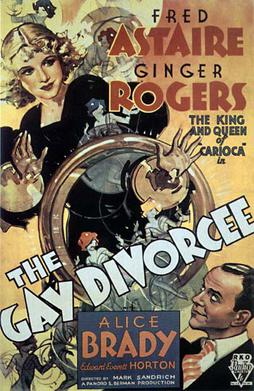
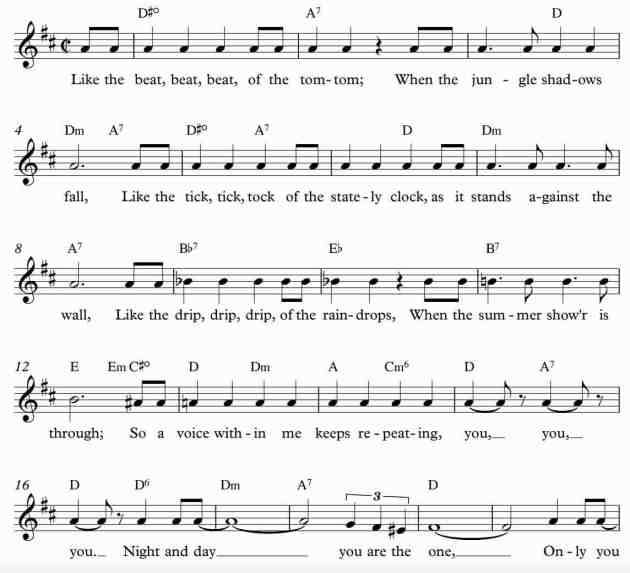
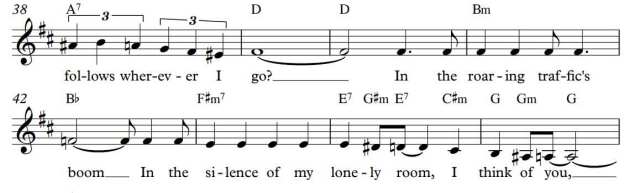


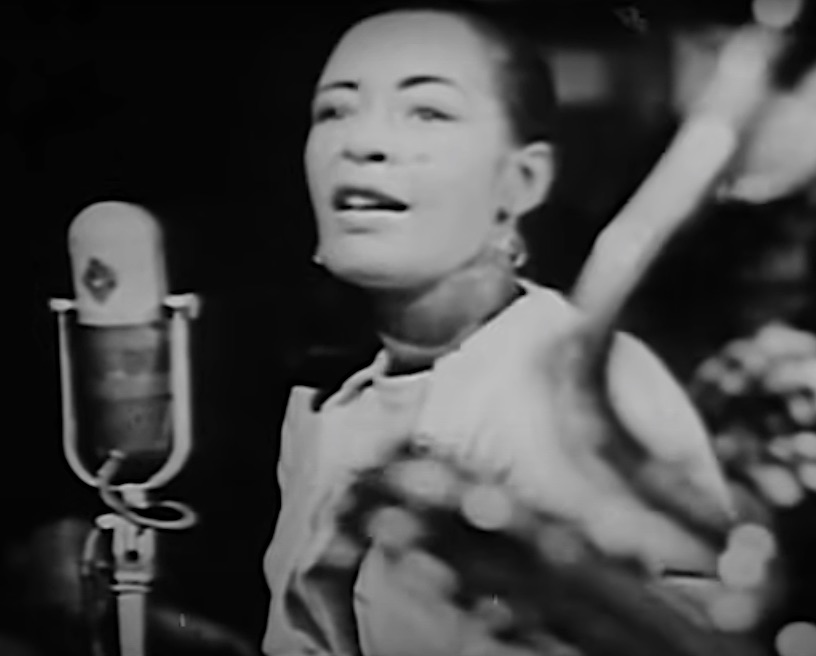


 Image: Paul Childs/Reuters.
  Leaving aside the many other kinds of bowed fiddle (such as kemence and


 String trio with cimbalom at the Meta táncház, Budapest 1993. My photo.


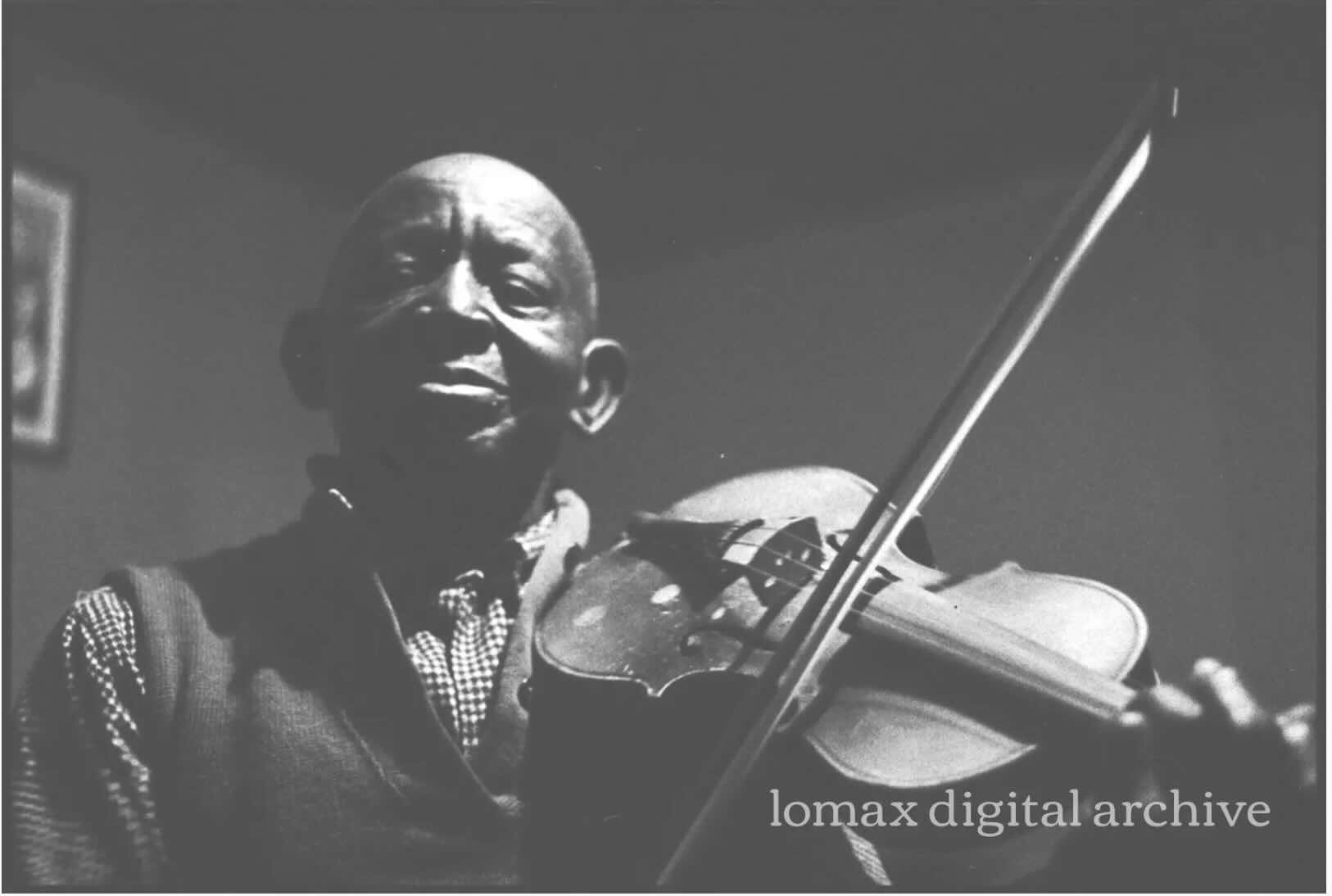 “Unidentified fiddler” in the southern States. Source:


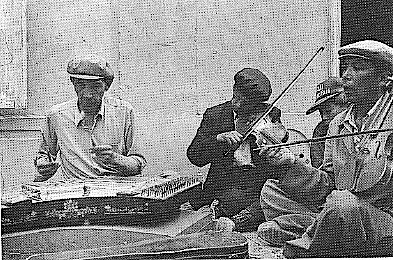
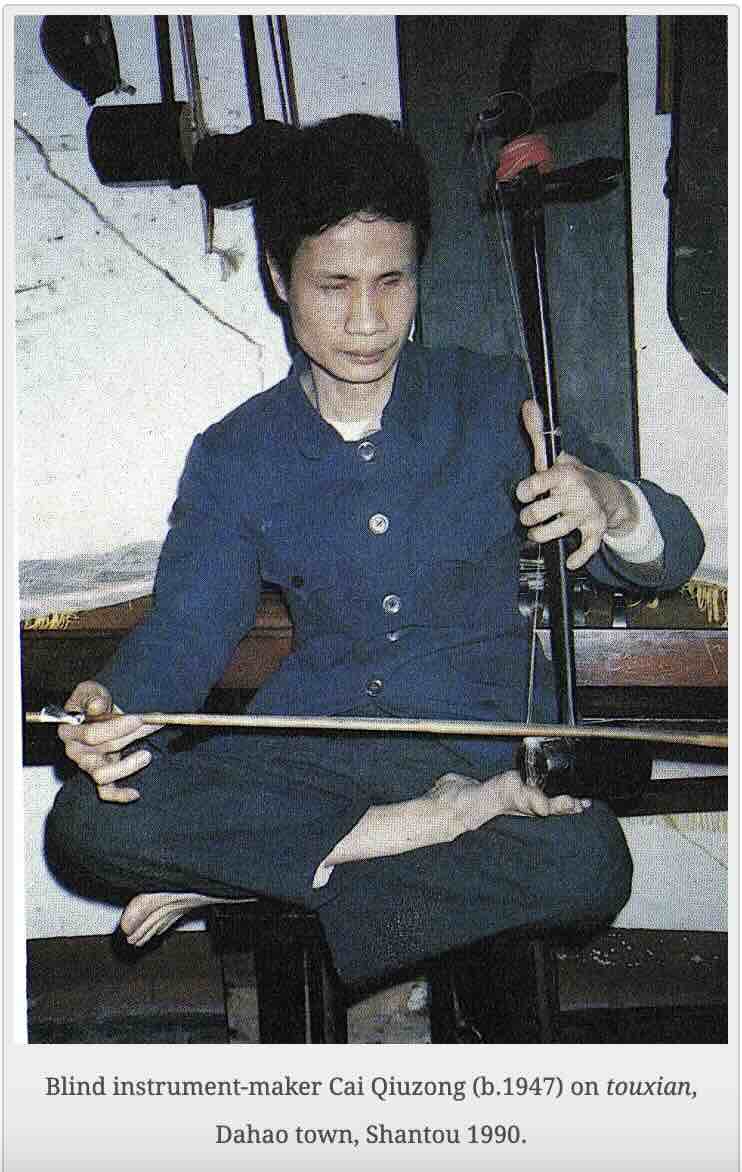

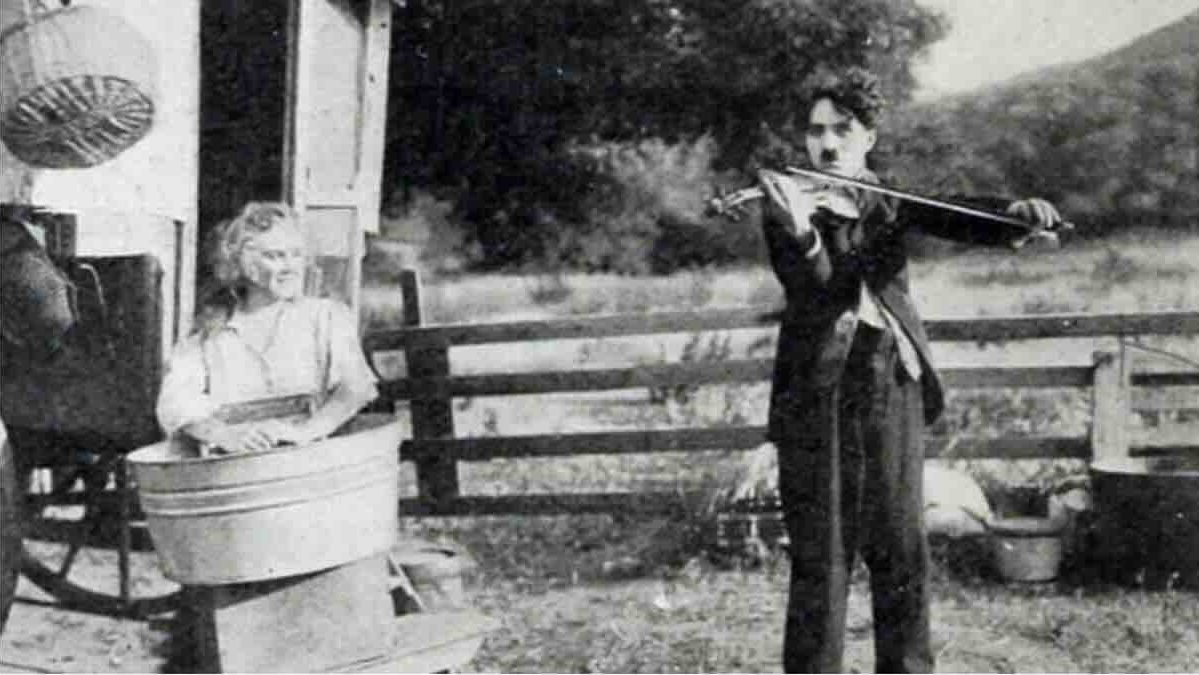
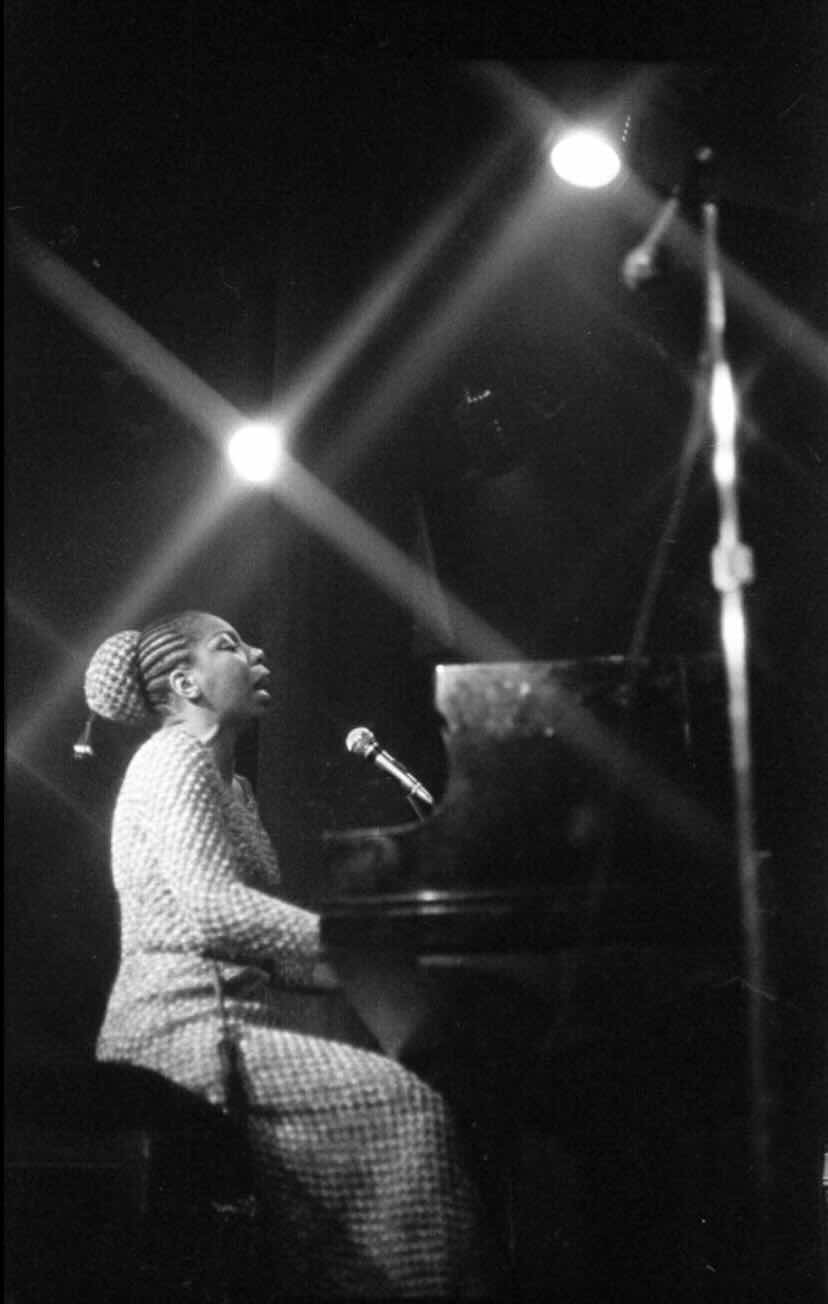


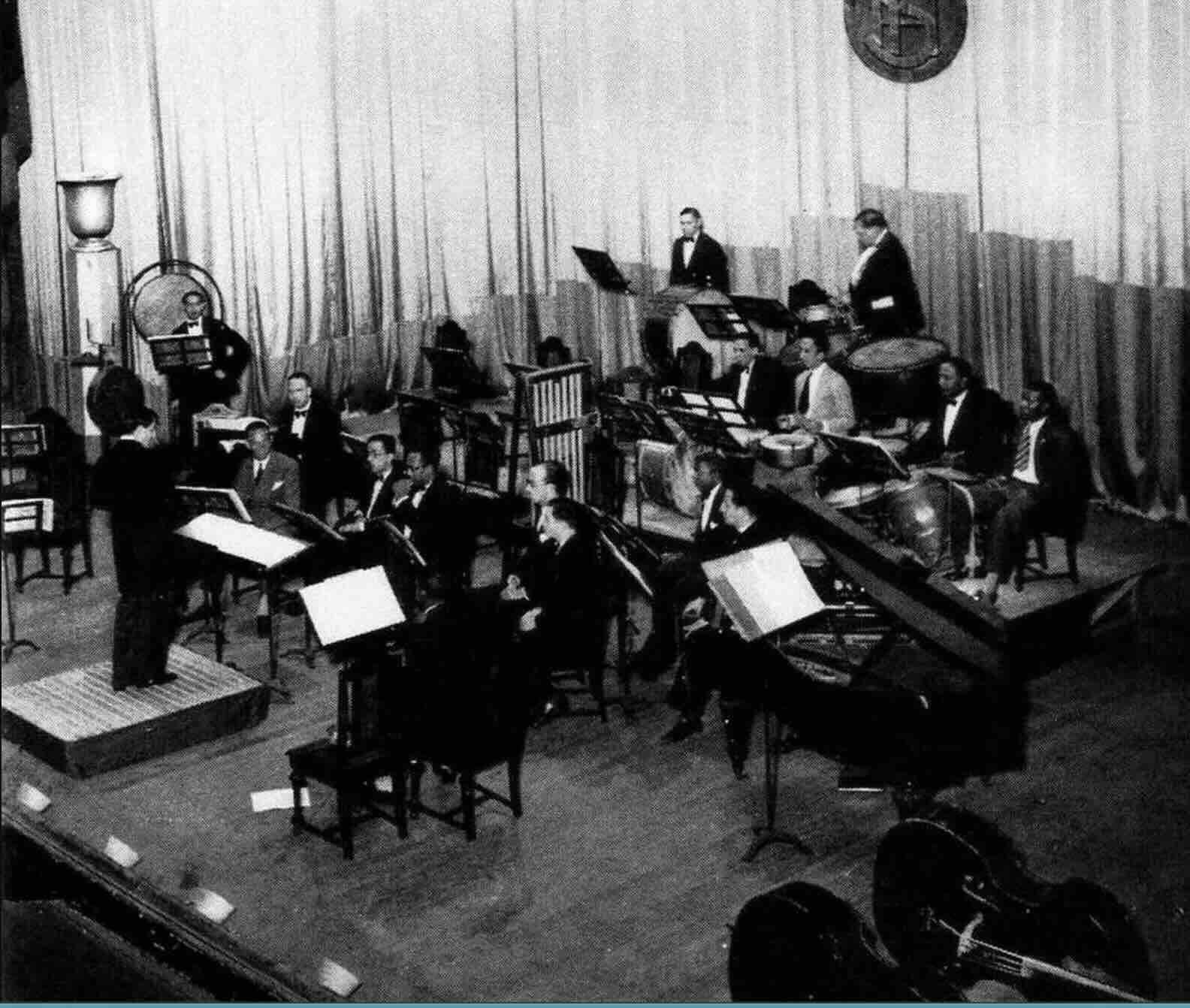 Slonimsky conducting Varèse’s Ionisation in Havana.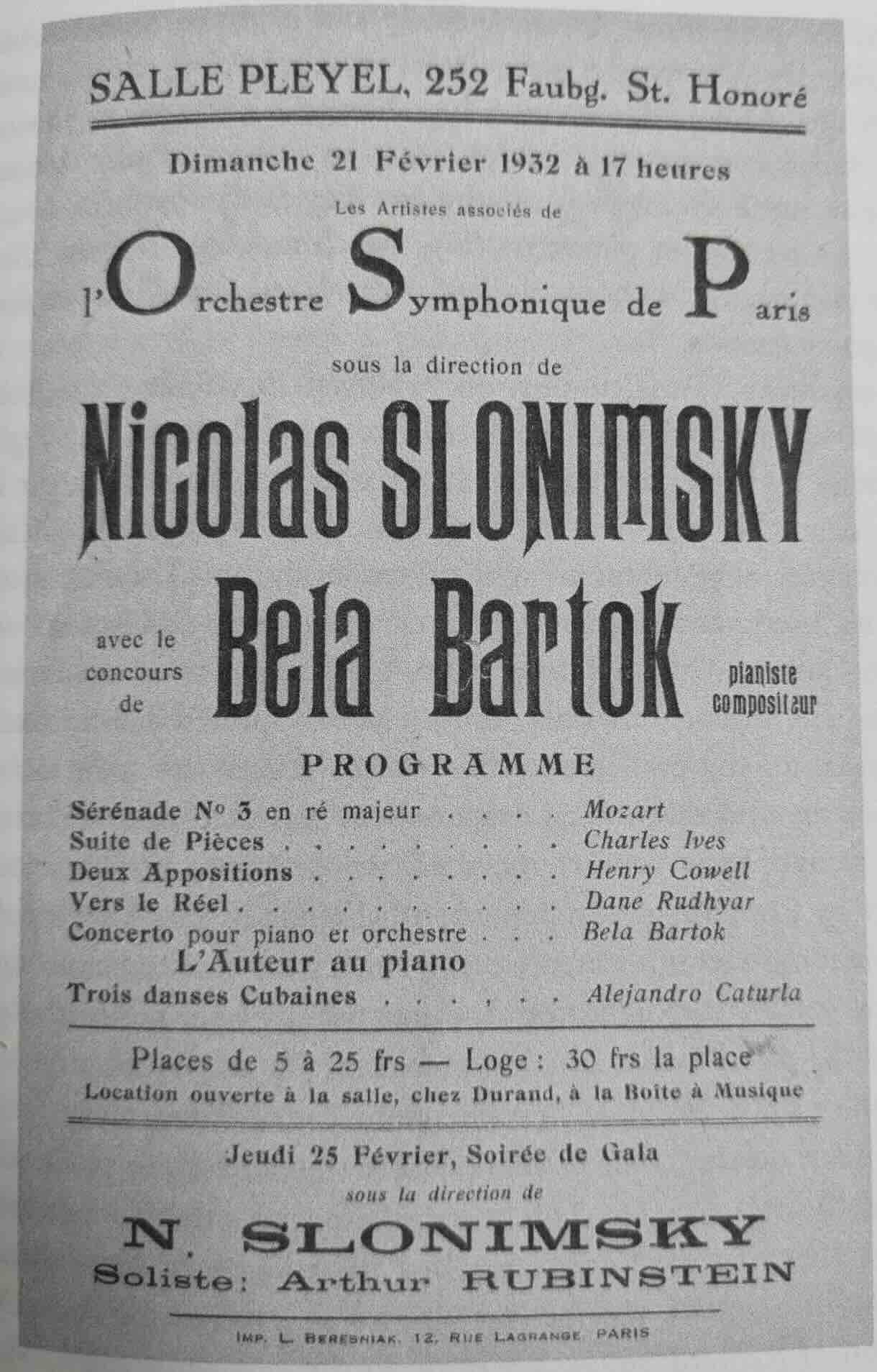
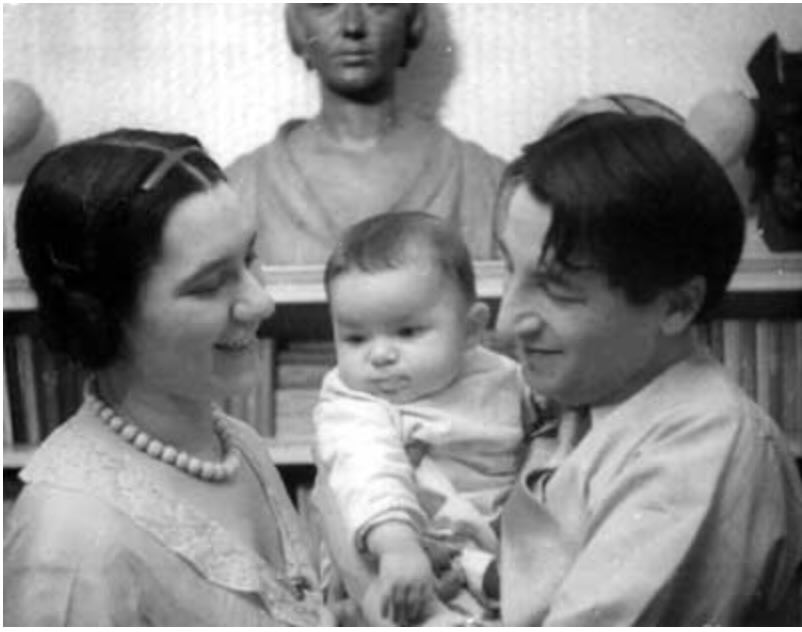


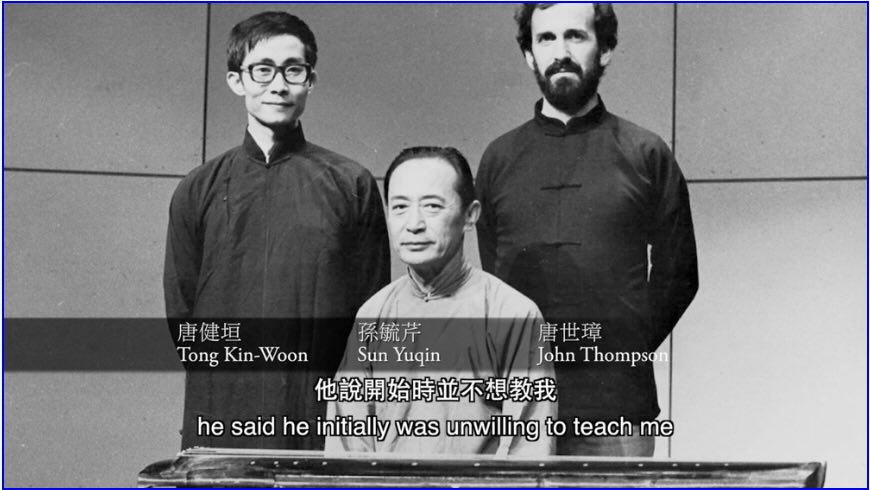

 Éva Gauthier, 1905. All images from


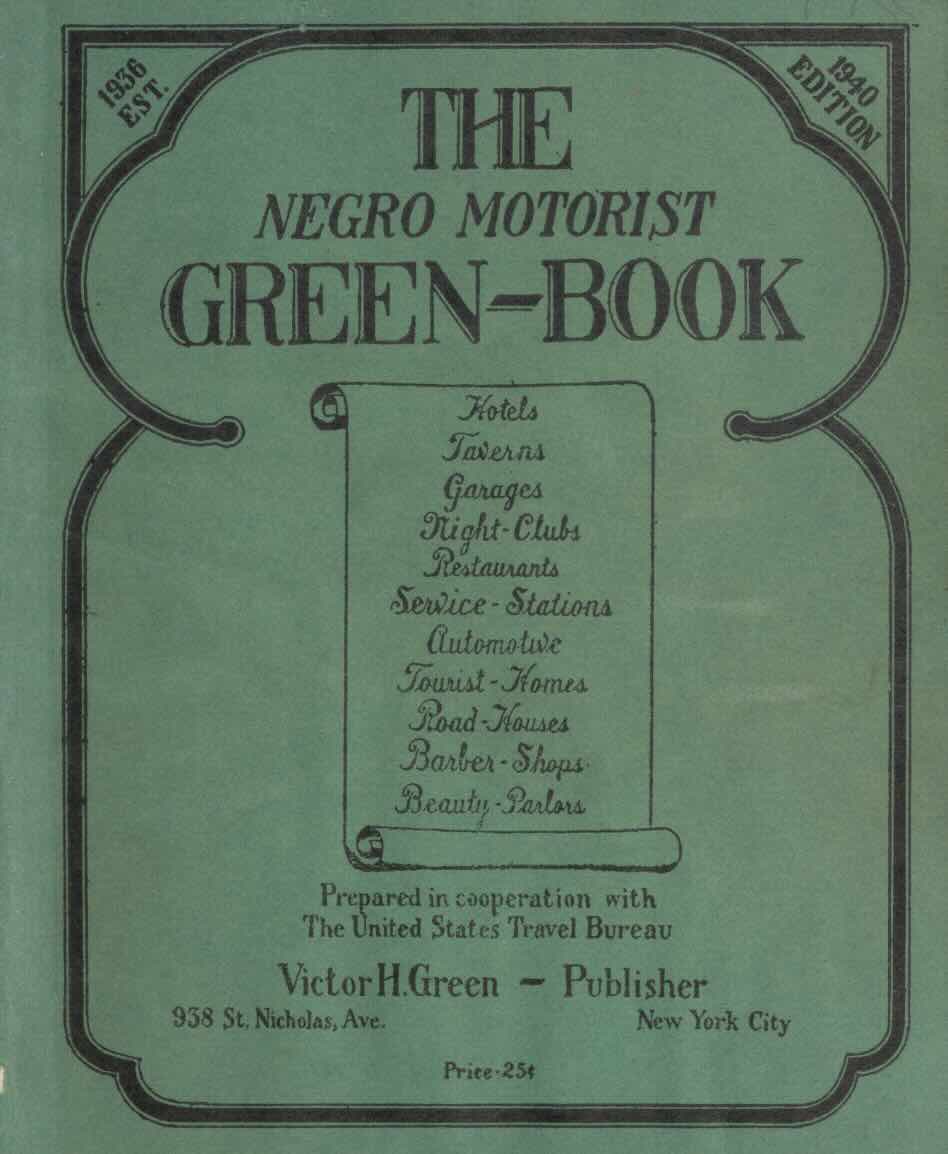
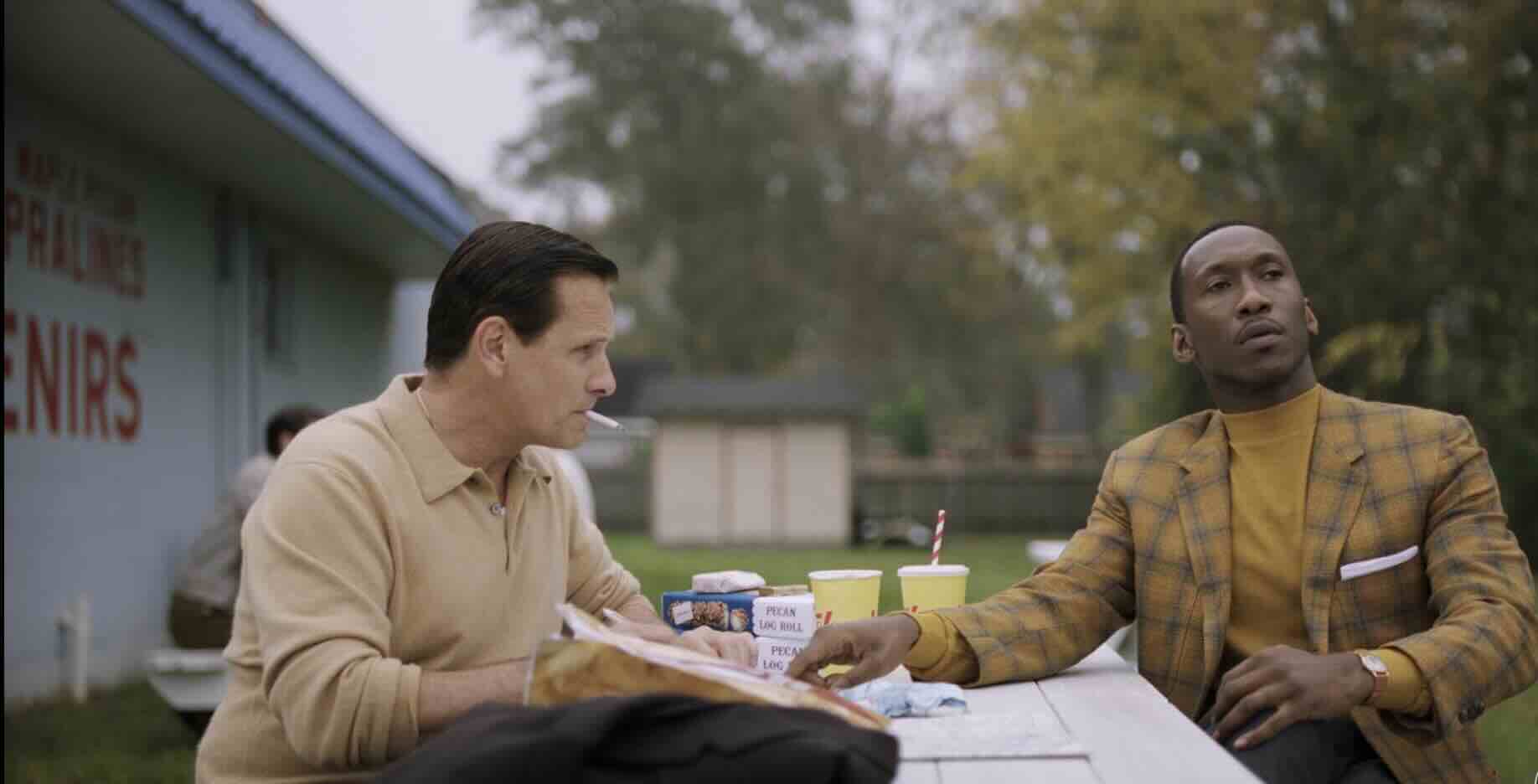



 From The hundred thousand fools of God.


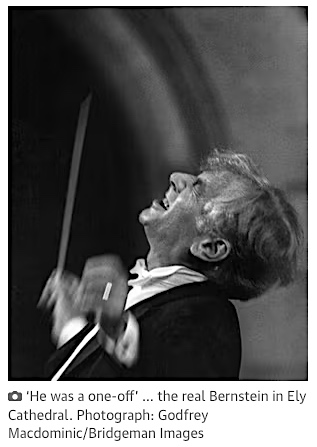 We get to hear some of the






 The film does justice to Raymond Chandler’s brilliant prose style. Roger Ebert, always a perceptive reviewer, made some


 Nobody embodies more fully the connection between the African-American spiritual, the blues, R&B, rock and roll—the way that hardship and sorrow were transformed into something full of beauty and vitality and hope. American history wells up when Aretha sings. That’s why, when she sits down at a piano and sings “A Natural Woman”, she can move me to tears […] because it captures the fullness of the American experience, the view from the bottom as well as the top, the good and the bad, and the possibility of synthesis, reconciliation, transcendence.
 The balance of joy and pain—
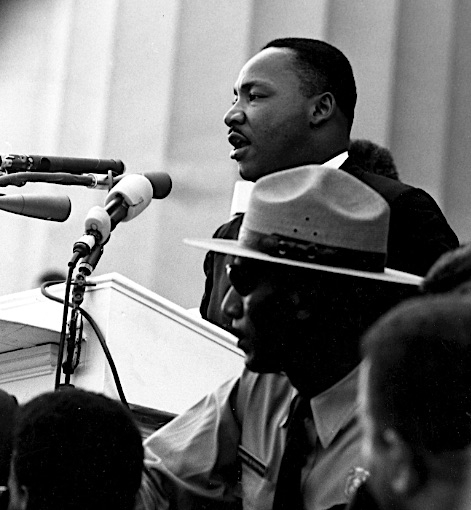


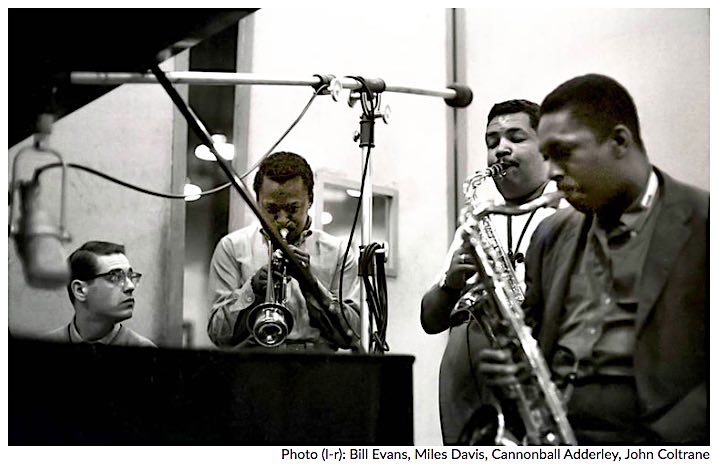
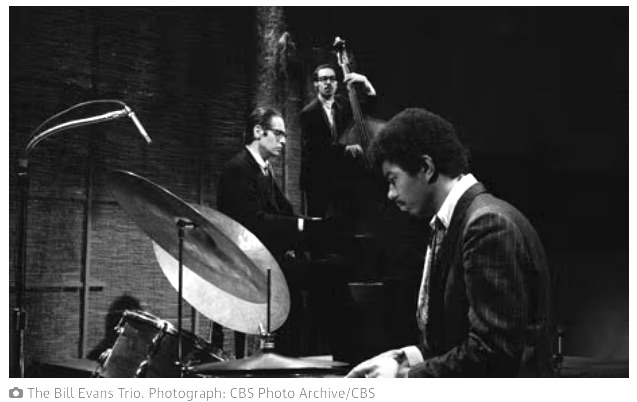


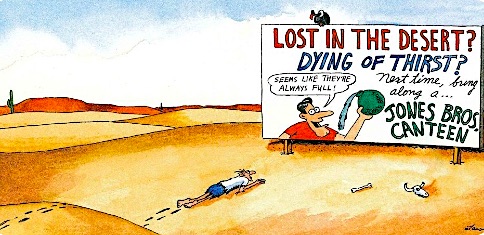
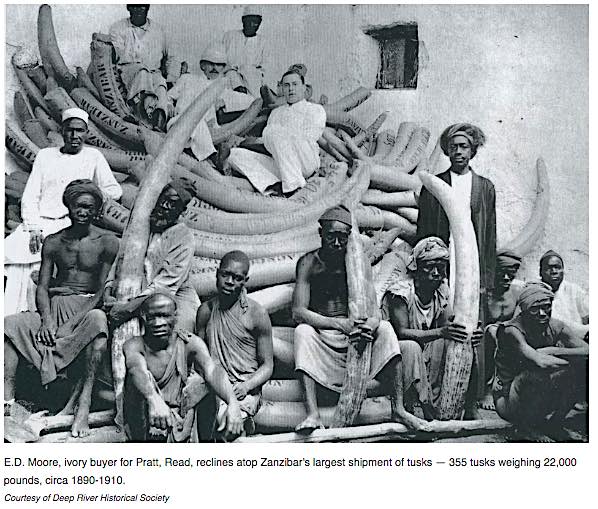


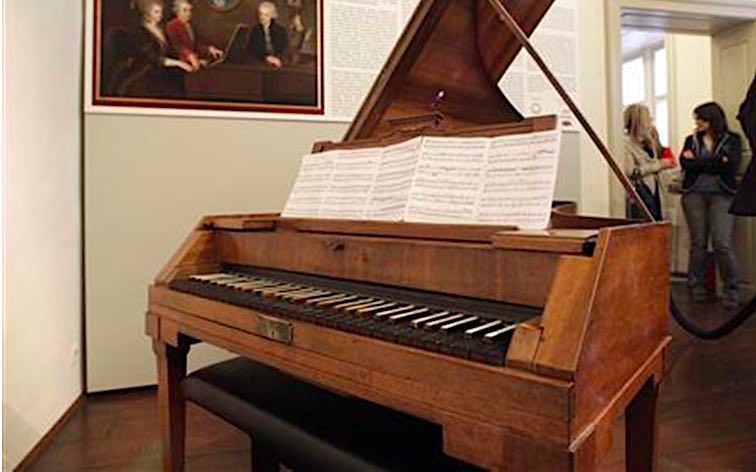


 [2]
[2]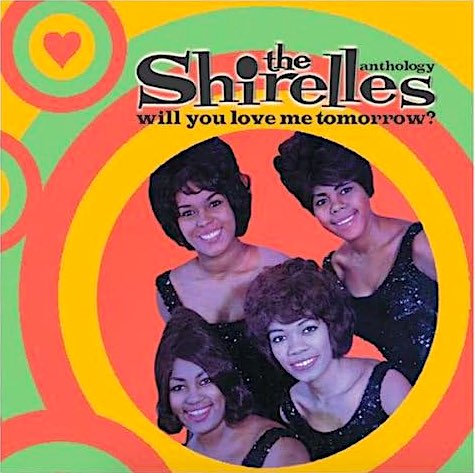

 Eliza Carthy with her mother Norma Waterson.



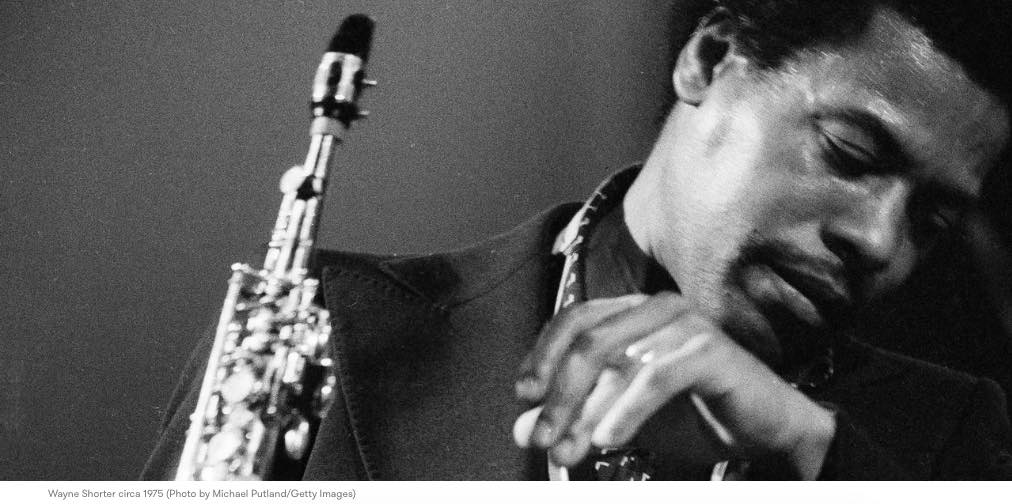 Source.

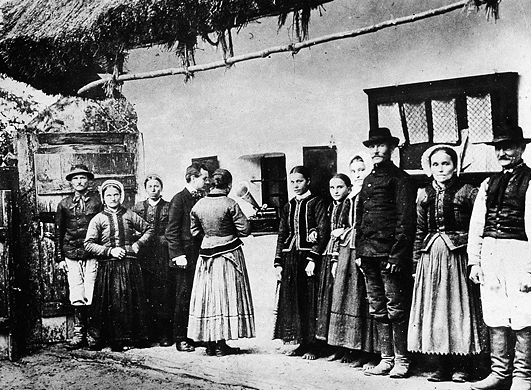
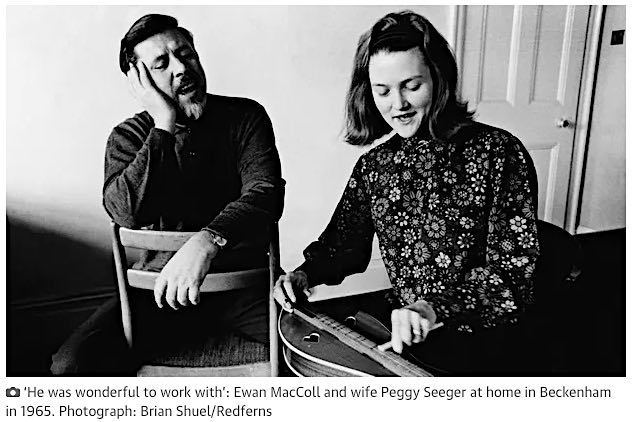
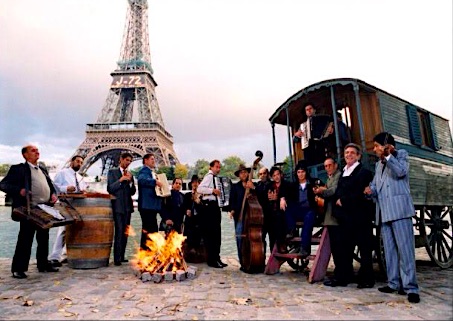

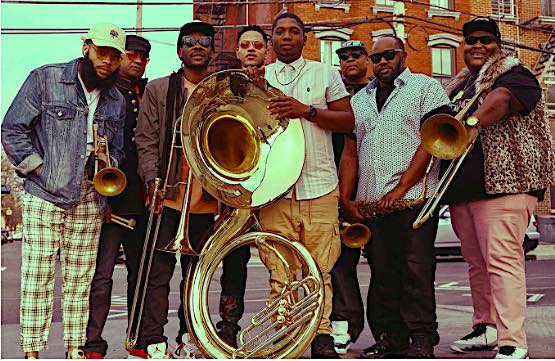


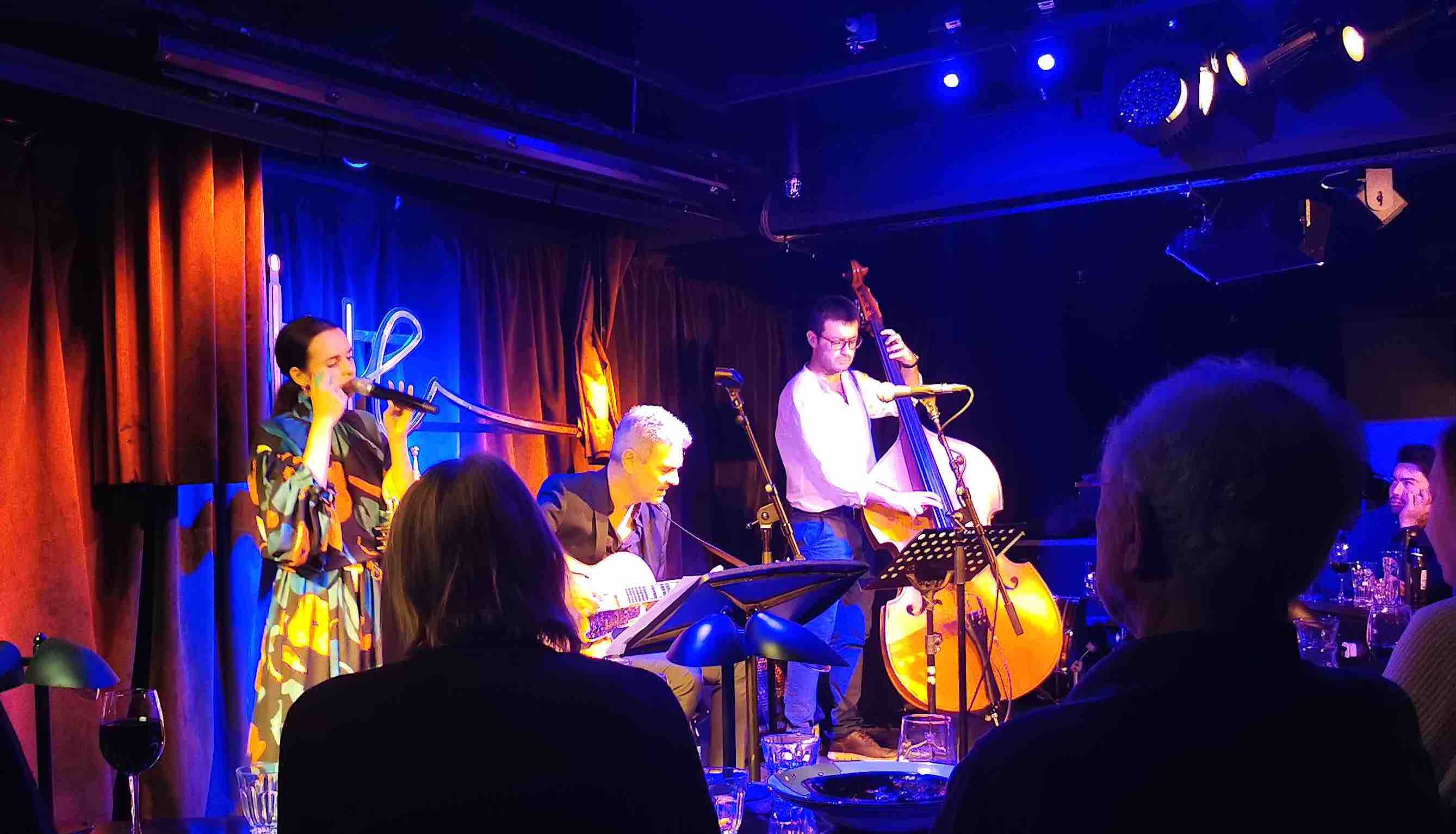

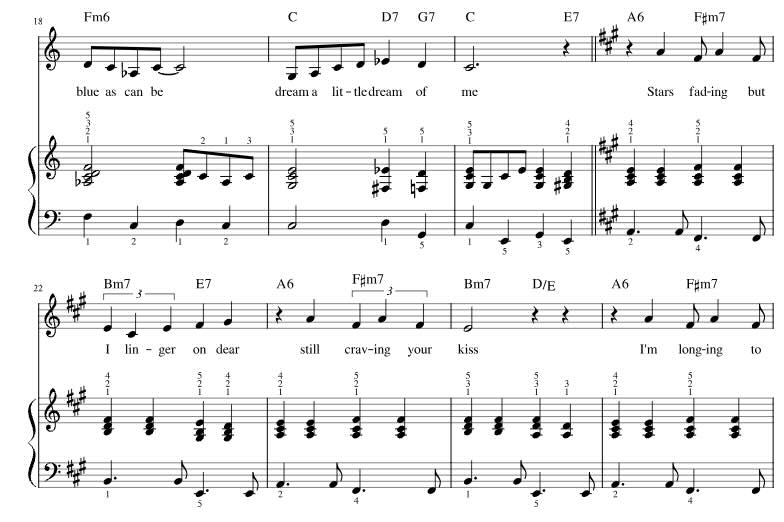






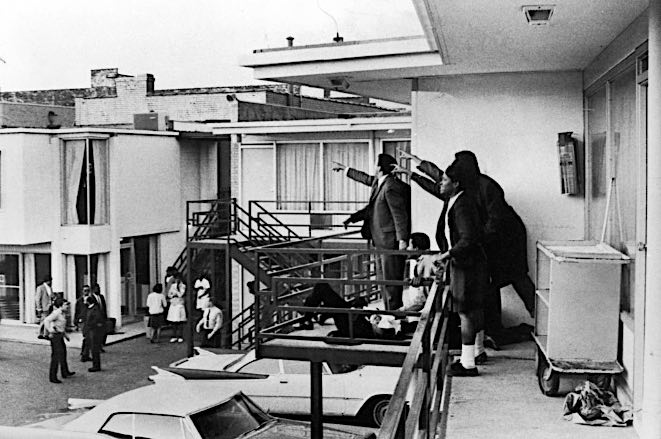 Dr King’s supporters point in the direction of the shooting.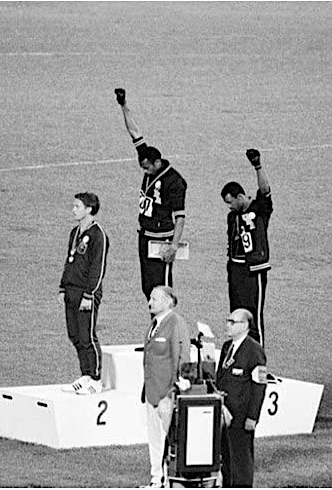


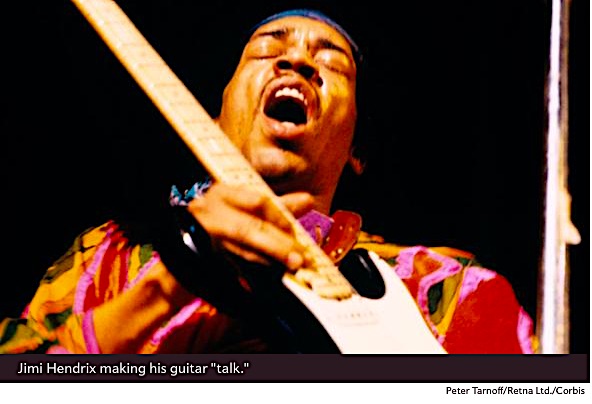






 With the Mayor of Philadelphia.
 Mother Divine signs her book for Li Shiyu.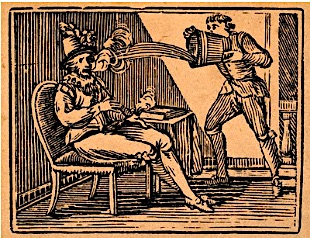
 Panorama of the damage soon after the massacre.
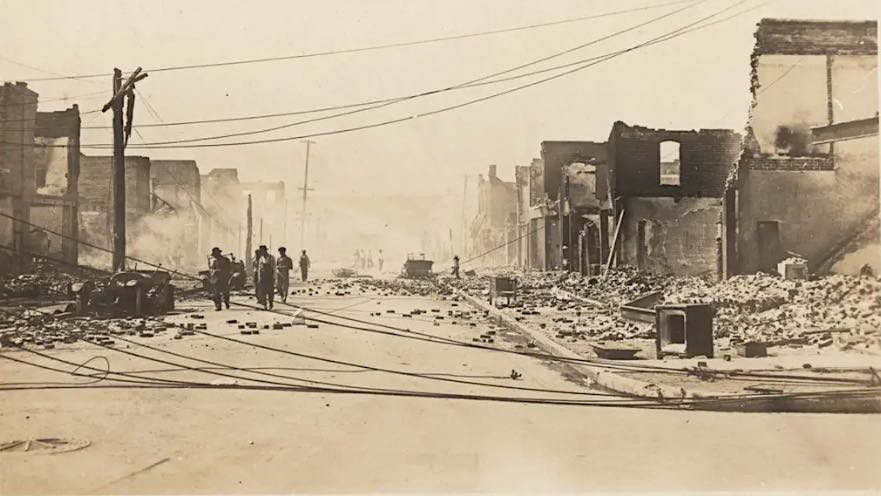
 Stephen Jones: a blog
