Guide to a year in blogging

LMS

After a year of frenzied blogging, here’s a seasonal retrospective guide to navigating a diverse ouevre—as much for my sake as as for yours. Meretricious and Happy New Year!

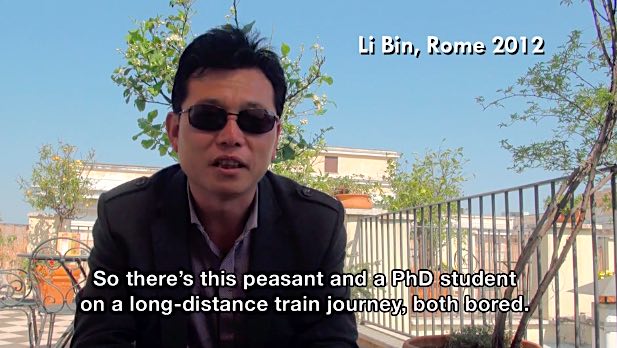
Call me a nerd [You’re a nerd—Ed.], but taxonomy and indexing are so funky… As you see from the (updated) homepage, the whole site began as an introduction to my work on the Li family Daoists, and my portrait film remains one the most enchanting presences there. The Li family has its own category in the sidebar, with a plethora of articles (not least a whole series on our French tour in May 2017, and an update on Li Bin’s diary).

Other pages in the top menu also tend to be rather substantial, with

Still in the top menu, MY BLOG contains all my myriad posts (“delighting in all manifestations of the Terpsichorean muse“), with helpful Categories and Tags in the sidebar, as well as a monthly archive there. Here are some of the more stimulating:

As you can see from this post alone, I just love doing internal links (in blue in the text). So whether you first came here for Daoist ritual, football (indeed, Daoist football), punk, Bach, modern China, or even just for the jokes, they’re all connected, so please do click away on the links!

Last but, um, not least, do click on the links to the relevant posts and pages in the photos in the sidebar.

A stunning keyboard break

The work of Susan McClaryboth for its ideas and its lively language, has prompted such a major “disciplinary explosion” in musicology, with her iconic book Feminine endings. Her ideas, “received as radical—even outrageous—within musicology, only brought to music studies the kind of projects that had long since become standard fare in most other areas of the humanities” (p.ix).

McClary’s work shouldn’t be reduced to soundbites, but alongside astute gender-based discussions of a broad range of music from Monteverdi to Madonna, Carmen to Laurie Anderson, many passages have both inspired and shocked—her detailed unpackings of patriarchal assumptions, such as on Beethoven (“assaultive pelvic pounding… and sexual violence “), or the “erotic friction” of Italian trio sonatas (“two equal voices rub up against each other, pressing into dissonances that resolve only into yet other knots, reaching satiety only at conclusions”—an interactive texture that was later displaced).

Meanwhile, listening again to Brandenburg 5 recently after my post on Bach’s fawning letter to the concerto’s churlish recipient, I was reminded of one of McClary’s most famous accounts, from her 1987 article “The blasphemy of talking politics during Bach year”.

Somehow I long took for granted Bach’s “frenzied” harpsichord solo near the end of the 1st movement—McClary observes how our senses are dulled by familiarity with later romantic concertos (and anyway we fiddlers tend to think it’s none of our business—we know our place, which is precisely McClary’s argument). So I’d like to run through the way she unpacks it; whatever you think, she’s always stimulating (see also this post).

She begins by summarizing important background, her constant theme:

At the very moment that music was beginning to be produced for a mass bourgeois audience, that audience sought to legitimize its artifacts by grounding them in the “certainty” of another, presumably more absolute realm—rather than in terms of its own social tastes and values.
[…]
From very early times up to and including the present, there has been a strain of Western culture that accounts for music in non-social, implicitly metaphysical terms. But parallel with that strain (and also from earliest times) is another which regards music as essentially a human, socially-grounded, socially altered construct. Most polemical battles in the history of music theory and criticism involve the irreconcilable confrontation of these two positions.

Inspired by Attali’s book Noise, McClary seeks “the tension between order (indeed, competing claims to legitimate order) and deviation —if not outright violence…” Reminding us of harmonic music’s underlying assumptions of goal-attainment (“playing with (teasing and postponing, gratifying) the expectation of imminent closure”), she plunges into the 1st movement of Brandenburg 5.

She notes the rise of the concerto form, where “the soloist is an virtuosic individualist who flaunts the collectivity of the large ensemble”. […] “It begins as if it is going to be a concerto for solo flute and violin, but it soon becomes clear that “there is a darkhorse competitor for the role of soloist: the harpsichord”. Its normal “service role” at the time seems self-effacing, but “the harpsichordist is often a Svengali or puppet master who works the strings from behind the keyboard. Here s/he “creates a ‘Revenge of the continuo player’: the harpsichord begins in its rightful, traditional, supporting norm-articulating role but then gradually emerges to shove everyone else […] out of the way for one of the most outlandish displays in music history.”

The harpsichord, which first serves as continuo support, then begins to compete with the soloists for attention, and finally overthrows the other forces in a kind of hijacking of the piece. […] The ritornello seems to know how to deal with the more well-behaved soloists, how to appropriate, absorb, and contain their energy.” But Bach now “composes the parts of the ensemble, flute, and violin to make it appear that their piece has been violently derailed. They drop out inconclusively, one after another, exactly in the way an orchestra would do if one of its members started making up a new piece in the middle of a performance. Their parts no longer make sense. They fall silent in the face of this affront from the ensemble’s lackey, and all expectations for orderly reconciliation and harmonic closure are suspended.
[…]
It unleashes elements of chaos, irrationality, and noise until finally it blurs almost entirely the sense of key, meter, and form upon which 18th century style depends.

McClary concludes provocatively:

 The usual nice, tight fit between the social norm, as represented by the convention of concerto procedure, and specific content is here highly problematized. Certainly social order and freedom are possible, but apparently only so long as the individuals in question—like the sweet-tempered flute and violin—abide by the rules and permit themselves to be appropriated. What happens when a genuine deviant (and one from the ensemble’s service staff yet!) declares itself a genius unrestrained by convention, and takes over? We readily identify with the self-appointed protagonist’s adventure (its storming of the Bastille, if you will), and at the same time fear for what might happen as a result of the suspension of traditional authority. […] The possibility of virtual social overthrow, and the violence implied by such overthrow, is suggested in the movement, and the reconciliation of individual and social hierarchy at the end— while welcome—may seem largely motivated by convention. To pull this dramatization back within the limits of self-contained structure and order may seem to avoid the dilemma, but it does so at the expense of silencing the piece. For Bach is here enacting the exhilaration as well as the risks of upward mobility, the simultaneous desire for and resistance of concession to social harmony.

McClary’s work is akin to ethnomusicology (“If I can no longer privilege any one tradition, I find myself perpetually in awe of the countless ways societies have devised for articulating their most basic beliefs through the medium of sound”), and its class and gender implications cry out to be applied to Chinese musical cultures (I made a preliminary and rather unsuccessful attempt in my “Living early composition: an appreciation of Chinese shawm melody”).

With Bach’s solo, it’s easy to think “that’s just how it goes”, but whatever your “class standpoint” (阶级立场), if you listen to it afresh, every few bars you think, WTF??? I know the analogy with jazz can be overdone, but even jazz solos, however virtuosic, also generally fit within fixed (and democratic?) parameters—except when someone like Coltrane goes off on an interminable fantasy. In its wackiness Bach’s solo reminds me of a pianist like Hiromi—or a Hendrix guitar solo.

It makes a suitably awe-inspiring opening to The chronicle of Anna Magdalena Bach, all the more exhilarating in Gustav Leonhardt’s restrained rendition—here’s a colorized version:

For my own meretricious speculations on socio-political elements in the reversal of colours on the piano keyboard, see Black and white.

* * *

And now for something completely different: Glenn Gould, 1962—don’t worry about the rest of it, just listen from 8.06ish:

Reception history and performance practice are always intriguing. Little is known of any performances in Bach’s lifetime, but it looks as if the concerto may not have been played again, at least in public, until 1853. Like Rudolf Serkin’s 1935 recording with the Busch Chamber Players, Alfred Cortot’s 1932 version (still on piano) is more genteel than manic:

And here’s Furtwängler in 1950 (cadenza from 8.54ish)—praised by Richard Taruskin, no less:

But performances only became more common with the harpsichord revival of the mid-20th century. So now, despite a rearguard action to rehabilitate the Golden Age before HIP (see Alternative Bach, and Playing with history), modern ears may find such early versions heavy going.

Richard Egarr always offers wacky insights (from 6.30ish):

Having blown everyone away, the harpsichordist gives a little signal of the return to normality (“relents and politely (ironically?) permits the ensemble to re-enter”) so that they can pick themselves off the floor to come in with the ritornello that innocently began the whole trip.

I like to think of the cadenza as just one instance of an improvisation that Bach chose to notate, illustrating the kind of fantasies in which the player might care to indulge, like Messe de la Pentacôte or Rhapsody in blue.

Sure, one can’t really cheer aloud at every manic new turn, but I still think the only possible reaction of both band and audience, whether now or in Bach’s lifetime, would be akin to that of Billie Holiday as she exults in the succession of amazing solos her band offer up to her.

Bach and patronage

Following the riches of Bach on Radio 3 and my recent survey:

Bach’s letters to his patrons are a sad vignette on the sordid realities of working for them. Along with his unsolicited gift of the Brandenburg concertos to the Margrave of Brandenburg [“What does that even mean?”], he wrote this covering letter (in French, courtly language of the time), dated 24th March 1721:

As I had the good fortune a few years ago to be heard by Your Royal Highness, at Your Highness’s commands, and as I noticed then that Your Highness took some pleasure in the little talents which Heaven has given me for Music, and as in taking Leave of Your Royal Highness, Your Highness deigned to honour me with the command to send Your Highness some pieces of my Composition: I have in accordance with Your Highness’s most gracious orders taken the liberty of rendering my most humble duty to Your Royal Highness with the present Concertos, which I have adapted to several instruments; begging Your Highness most humbly not to judge their imperfection with the rigor of that discriminating and sensitive taste, which everyone knows Him to have for musical works, but rather to take into benign Consideration the profound respect and the most humble obedience which I thus attempt to show Him. For the rest, Sire, I beg Your Royal Highness very humbly to have the goodness to continue Your Highness’s greatest favours towards me, and to be assured that nothing is so close to my heart as the wish that I may be employed on occasions more worthy of Your Royal Highness and of Your Highness’s service—I who, without an equal in zeal, am, Sire, your Royal Highness’s most humble and obedient servant.

Sure, we have to read such a letter in the context of the day, but it’s hard to beat for brown-nosing. Servants indeed— to cite Dennis in Monty Python and the Holy Grail,

… exploiting the workers! By hanging on to outdated imperialist dogma which perpetuates the economic and social differences in our society… We’re living in a dictatorship! A self-perpetuating autocracy, in which the working classes…

Didn’t know we had a king. I thought we were an autonomous collective.

And there’s no evidence that the Margrave even wrote back. Pah! I hope Bach told him where to stick it. He might have well as sent the concertos to Tweety McTangerine.

Bach had been happy at Cöthen, where Prince Leopold was an exceptionally musical patron—Bach’s need to seek new employment has been blamed on the Prince’s “airhead” new wife (typical). With the Margrave deaf to his appeal, Bach was soon to find a permanent haven in Leipzig—and the rest is geography. Even there his struggles with patrons continued.

Thing is, despite all such routine tedious scramblings, Bach never stopped creating a wealth of music that stands as a rebuke to all mundane concerns.

And so in imperial China—right down to today, as a chain of fawning operates from grass-roots performers to regional cadres to central pundits. Only with less magical results.

I trust I shall have the honour to remain your faithful and humble servant

Dr S. Jones (available for weddings, bar mitzvahs, and screenings of my film Li Manshan: portrait of a folk Daoist)

A Bach retrospective

Some might say that the only good thing about Christmas is that one can bask in BachWhatever your reasons for exploring this blog, I can’t help regarding his music as an essential basis of our cultural experience!

Apart from all the musical riches to be found elsewhere online (not lest Radio 3, like here), I’m revisiting my blogposts, so here are some highlights from the extensive Bach tag in the sidebar—mediated by my, um, eccentric take:

But as with Indian raga or Daoist vocal liturgy and shengguan suites, Bach’s ouevre is an inexhaustible treasury… For us now, I mean—not that’s it’s “universal” or “eternal”…

180!!!

More local cultural knowledge:

One morning in Maida Vale studios, as the great Pierre Boulez was rehearsing the BBC Symphony Orchestra, he stopped and said suavely,

“Please, we play again from measure* 180.”

Brilliant cockney percussionist Gary Kettel, from the back of the orchestra, punched the air gleefully and screamed out,

“ONE HUNDRED AND EIGHTYYY!!!”

Since Boulez’s broad erudition didn’t stretch to the world of UK darts, he was somewhat nonplussed [‘Ow you say in French?] by Gary’s recondite allusion to the fabled score of three triple 20s. Still, he and Gary always had the utmost respect for each other’s musicianship.


*Boulez always used the French word for “bar”. Endearingly, he called the cor anglais “ze English ‘orn”.

Interpreting religious symbols

Alan Bennett’s 2011 diaries begin with typically drôle observations:

6 January. The alterations we have been having done are now pretty much finished, thanks to Max, a young Latvian who’s unsmiling but an excellent carpenter and Eugene, much jollier and from New Zealand who has supervised it all. Walking around the job this evening R. is shocked to discover in the bathroom above the bath a crudely made wooden cross. He takes this to be the work of Max who, scarcely out of his teens, already has two children and is, I imagine, Catholic. R., whose feelings about religion are more uncompromising than mine, finds the cross disturbing and is determined to ask Eugene to tell Max to take it down. I’m less exercised by it, seeing it as some sort of dedication, the sort of thing (though more crude) that a medieval workman would have put up at the completion of a job. We are both of us wrong as when Eugene is approached he explains it is not a cross at all but a makeshift coat hanger he has rigged up over the bath in order to dry his anorak.

And more comments on the behaviour of WAM musos:

 14 January. George Fenton tells me of a memorial service he’s been to at St Marylebone Parish Church for Maurice Murphy, the principal trumpet of the LSO, who did the opening solo in the music for Star Wars. The service due to kick off at eleven thirty, George arrives with ten minutes to spare only to find the church already full, the congregation seated, silent and expectant. It beings promptly at eleven thirty with everyone behaving impeccably and not a cough or a rustle throughout. And he realizes that it’s because they are all musicians and orchestral players for whom this is like any other concert and where the same rules apply.

Useful ideas for Christmas

The time of year is rapidly approaching when you’re desperately racking your brains for a present for that difficult uncle who’s got everything—even Dame Kiri Sings the Sex Pistols’ Greatest Hits by Candlelight.

Well, look no further—my three former Ashgate books (two with DVDs) are out in paperback! (See also my Amazon list).

And to go with my film (a welcome change from Bambi), don’t forget Daoist priests of the Li family.

To cite The Messiah:

Thou art gone up on high; Thou hast led captivity captive, and received gifts for men

Giving Handel and his librettist Jennens** the benefit of the doubt for sexist language, don’t forget the brilliant T-shirt of female composers—”Breaks the ice at parties”, in the words of Monty Python (who did rather let themselves down* on gender equality).

Such seasonal gifts will make a welcome change from socks and after-shave, and can be enjoyed over a sherry in a party hat while blowing a paper horn—a relative of the vuvuzela, perhaps? Laurence Picken could have enlightened us. You can play the party game of identifying festive toy instruments under the Sachs-Hornbostel system (or play Spot the Difference with Daoist ritual paintings, like the Judgment Officers here). The paper horn also evokes the conch in Daoist ritual—indeed, it would make a suitable companion to these early Daoist instruments of the Li family.

horn

* “Let themselves down”: apart from the Proust sketch (from 2.14, notably the voiceover comment “golf’s not very popular round here”), there’s also the classic headmaster’s speech joke.

** Good to see Jennens slagging off Handel’s music, at least:

“I shall show you a collection I gave Handel, called Messiah, which I value highly. He has made a fine entertainment of it, though not near so good as he might and ought to have done. I have with great difficulty made him correct some of the grossest faults in the composition; but he retained his overture obstinately, in which there are some passages far unworthy of Handel, but much more unworthy of the Messiah.

YAY!—I mean Hallelujah. Praise be to the Lord—and the Three Pure Ones, the Empress Houtu, Bob Marley, Mrs Cratchit and The Ten Kinds of Orphan Souls [can someone check this please?—Ed.] and the Thunder Lord of Three-Five Chariot of Fire—the latter (“Lingguan smoking a posh foreign cigarette on a train journey through his spiritual domain”) a fine read, though I say it myself.

Quartets

Quartets

BBC4 has just reshown an interesting diachronic trawl through the archives in Classic quartets at the BBC, for you to catch online before it disappears again.

Apart from the inevitable Amadeus quartet, there are vignettes from groups like the Borodin, Lindsay, Arditti, and Kronos quartets, as well as the Smith quartet playing Steve Reich’s extraordinary Different trains, and the Brodskys’ work with Elvis Costello.

I like the early footage of the Allegri led by Eli Goren, predecessor of my teacher Hugh Maguire. Here one can’t help noticing James Barton, left-handed fiddle-player—part of a select group that notably includes Charlie Chaplin (see e.g. here, from 4.35). And among hours of harmless fun on YouTube:

How can I resist reminding you that the divine Ronnie O’Sullivan is ambidextrous—though I’m not sure he stretches to Bach.

Of course, the life of a quartet (actually, any performing group that works together regularly—few are so constantly in each other’s pockets as Li Manshan‘s Daoist band) resembles that of a marriage, or (still more thornily) a ménage a quattre—a worthy ethnographic topic (see e.g. articles here and here, and Anthea Kreston’s diary on slippedisc.com).

But I digress. I love the quaint early vignettes, as if the swinging 60s never happened—the clipped tones of announcers, and musicians gamely clambering into their dinky little cars (before long we will all look quaint) to play for expectant audiences keen to worship at the altar of High Culture after the tribulations of the war… Which leads nicely to the delightful thankyou letter to the Martin string quartet!

See also Late Beethoven quartets, and Schubert.

Ronnie again

UPDATE: Cosmic Justice has at least temporarily proved itself amidst a troubled world—I wrote this in the early stages of the UK tournament, but now Ronnie’s won it yet again in another inspiring display!

Ronnie

With his natural grace, Ronnie O’Sullivan is often compared to Roger Federer, but he’s in a league of his own, transcending sport. If you haven’t watched his maximum break from 1997, then do—it’s not merely a world record that is likely to stand for all time, but a thing of exquisite fluent beauty, reminiscent of the nuanced touch of a great musician.

After the morose introspection of yesteryear, Ronnie has come through the early years of obsession and addiction (lessons here for the claustrophobic hothouse of WAM virtuosos), and he’s on great form these days, with a kind of earthy Daoist detachment.

I list my series on Ronnie here.

Mahler 9

*For an introduction to my whole series on Mahler, with links, click here!*

Mahler 9 is always stunning in performance. The NYO Prom in 2015 was very fine (cf. here), and I’ve just heard Esa-Pekka Salonen doing it with the Philharmonia (reviewed here; cf. here; see also Harding’s Mahler 6 Prom).

I’ve got a lot of time for Salonen—not just because of the wonderful story about his interview for the LA Phil job! There’s something special about composers (also including Boulez) conducting Mahler, some personal identification with his struggles. Mahler anyway foretold the whole torment of 20th-century history—his music atomised, fragmenting, ersterbend—and we can only hear the 9th symphony with our own ears (that link also referring to Taruskin; see also here). Mahler never got to conduct it, or even hear it; while it remains startlingly modern even today, it’s hard to believe that it wasn’t premiered in the UK until 1930, and it was first heard in the USA (where Mahler was fêted even while he was composing it) in 1931. The symphony eventually became a pillar of the repertoire with the Mahler craze of the 60s—where I came in. Without entertaining any notions of the moral value of WAM, I have a fantasy of getting Chicago street gangs to sit through it.

Salonen brings out the Philharmonia’s talent for making chamber music amidst grand forces. Not having worked with him, I find him easy on the eye, and he looks comfortable to work with—more selfless, less anguished than Bernstein or Rattle, but far from the schoolmasterly air of Haitink or the aloof conductors of yore. Here’s Bernstein with the Vienna Phil in 1962:

Barbirolli and the Berlin Phil in 1964:

and Abbado with the Lucerne Festival Orchestra (2010), always magnificent:

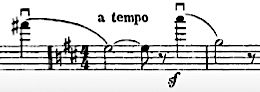
We emerge immersed in the dying sounds of the finale, but as ever, the first movement is a miracle in itself (as commentaries go, Ben Zander has some acute observations, albeit rather hung up on sonata form…). Beginning quietly yet ominously with a rhythmic pattern said to represent Mahler’s own irregular heart-beat, the violins enter with a motif descending from F♯ to E that turns out to be both pervasive and deeply moving—dramatically augmented at the first climax (4.21 in the Abbado performance above) by the 1st violins with a huge leap:

M9 leap

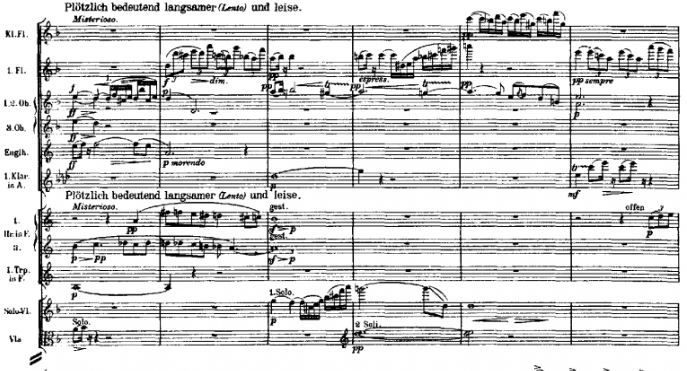
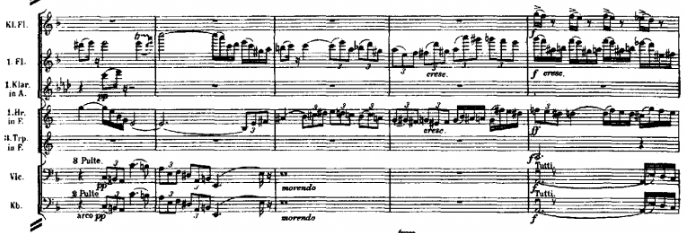
The lyrical aspect of the opening is constantly undermined (sinister brass punctuations from 7.34, a spooky passage from 8.49, more ominous brass from 15.03 and 19.09), becoming still more eery with enigmatic chamber music from 22.48:

M9.1a

M9.1b

M9.1c

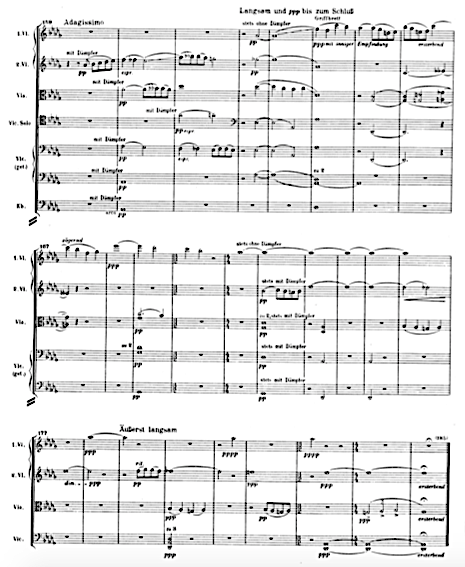
The brief hint of tranquility from 24.42 soon fragments again:

M9.1 end

I’ll leave you to immerse yourselves in the following movements—like the Abschied, or Ich bin der Welt abhanden gekommen, Mahler 9 live is an overwhelming experience, not to be missed.

Mahler 9 end

For a 2022 performance with Daniel Harding and the Concertgebouw, click here. See also Mahler: quintuplets. For an unlikely connection, see here; and for a macabre tale from Inside No.9, here. See also Salonen’s Mahler 10.

Barbed comments

My dubious encomium for Rowan’s CV (The Feuchtwang variations, n.3) reminds me:

The brilliant Roy Mowatt (see under comments here), a real bedrock of the early music orchestral scene, was always remarkably tolerant of my violin playing in the section he led. I treasure a remark he made to me over a beer or three in a piazza in Parma after a Mozart opera, c1994 (evoking Hugh Maguire’s comment to Pete Hanson—“Pete, even if your strings are out, you must play in tune! Just do it wit’ your fingers!”):

Thing about you, Steve, is that it doesn’t make any difference if your strings are in tune!

You can take that either way, and I think he meant it both ways. I was quite adaptable; yet my intonation wasn’t necessarily helped by tuning up… Cf. “It was in tune when I bought it”.

While I’m in confessional mood, here’s another comment I might add to my CV. Just around that time, a certain maestro took me aside and observed suavely,

Steve, I can’t help noticing that you have a somewhat low threshold of boredom…

JEG

Photo © Jim Four.

Like the review of the Berlin Phil’s response to Simon Rattle, it lacks a certain nuance.

Nicknames

As Kate Fox observes, the creativity of the English language reveals itself at multiple levels.

The fragrant Gary Lineker recalls how the the team-mates of the footballer Kiki Musampa called him Chris (think about it). There are more where that came from, like Fitz Hall—known as One Size.

Brian Smith, a “straight” symphony-orchestra violinist who became a semi-detached admission to the rarefied early music scene in the 1980s, had a whole series of drôle nicknames for his new colleagues, making his conversation surreal: “I think Identikit’s gone off with Ironing Board”. Once word got round that I was making regular trips to China, I became The Missionary. He only used the real names of musos who had a life outside early music and thus qualified as Real People.

Conductors’ nicknames are another rich vein under the rubric of maestro-baiting. The great Charles Mackerras was known as Slasher—not an allusion to his conducting technique, but an abbreviation of his anagram: Slasher M. Earcrack.

Shadow puppets and Satie

shadows on road

Among a select group of films on rural life in China, little-known but brilliant is

  • Chinese shadows: the amazing world of shadow puppetry in rural northwest China (58 minutes, Pan Records, 2007).

Fruit of the collaboration between Frank Kouwenhoven and the late lamented Antoinet Schimmelpenninck of the CHIME foundation in Leiden, it evokes the changing lives of itinerant troupes in the poor villages of Huanxian county in east Gansu. Both in the scenes of villagers chatting and in their performances, you can feel the film-makers’ empathy with rural dwellers.

shadows guoguan

The puppeteers often perform as part of the Crossing the Passes (guoguan) ritual to protect children.  A similar ritual in Shaanbei is shown in my film Notes from the yellow earth (with my book Ritual and music of north China, vol.2: Shaanbei, p.37); see also my note for Daoists in Changwu in Shaanxi, not far away.

shadows band

The sound-world of the puppeteers is remarkable, with gutsy percussion, fiddles, and shawms accompanying passionate vocals. [1] On the Chinese shadows soundtrack, piano music (Howells, Smetana, Janáček, and so on) makes a disorienting contrast with the guttural sounds of the Gansu singers and their earthy instrumental accompaniment. At first I had reservations about this choice, when we have so little opportunity to savour the sounds of village China—but I’ve come round to it as an effective personal reflection of the film-makers.

shadows 4
Image © Frank Kouwenhoven; all right reserved.

In similar mood, in Frank’s moving portrait film of Antoinet’s life, a tribute shown at her funeral, he used Satie’s fifth Gnossienne—less well-known than the others:


[1] Featured on the 2-CD set The beauty of Chinese opera, one of an excellent series of historical recordings from Wind Records. For a roundup of posts on Gansu, click here. See also under More films on ritual drama.

Sacred river

Radio 3 doesn’t seem to be speaking to Radio 4.

Like Neil MacGregor’s thoughtful series on German history, his new BBC Radio 4 series Living with the gods is typically urbane and engaging. As he immediately disarms my reservations about material culture and museums, the series makes an accessible mission-statement for the anthropology of religion. And the BBC Radio 3 marathon Sacred River (see also the love-in on https://twitter.com/bbcradio3), the latest of many epic broadcasts, seems like a fine idea to complement it.

I’m most reluctant to cavil at my favourite radio station, and normally I’d be grateful for such a playlist of glorious music (cf. my paeans to the Proms). But it seems something of a retreat from the global perspective of MacGregor’s series. Whereas in Living with the gods he can discuss social contexts, with music examples making evocative soundbites, it’s proved less easy for a programme of “spiritual music” tailored to a Radio 3 audience to address world soundscapes within their regional societies.

Radio 3 is generally rather good on, um, world music (a tradition going right back to David Munrow), but here Neil MacGregor’s stimulating introduction is soon deflated, as one “masterpiece” of (let’s face it, Christian Europe) WAM choral music follows another. My own blog is full of Bach, Mahler, and Messaien—but in Sacred river, whereas one might wish for more challenging juxtapositions from around the world, here a mere five out of fifty tracks are devoted to other world genres (and that’s a generous count: OK, a bit of plainchant, but Ladysmith Black Mambazo? Trio da Kali with The Kronos quartet? Hey!), choices like the Pathétique symphony or the Allegri Miserere hardly open our ears to new horizons. It’s The Great Composers in a new costume. And though “music and ritual” is a rich topic in ethnomusicology, the site offers few links to further sources—even from its own output.

Inevitably, I think of the percussion coda Yellow Dragon Thrice Transforms Its Body of the Li family Daoists, that concludes their Transferring Offerings ritual. Of course neither this nor most other ritual traditions around the world might work on the radio on their own. But listeners deserve more than the Usual Suspects like qawwali, “Find your inner peace with the sound of Buddhist chant”, and “the oldest song in the world”. Sure, they might not necessarily conform to the hackneyed message of Peace and Love, that cramped ghetto from which Neil MacGregor rescues us. But if the Radio 3 team had half his imagination (as I write, he’s discussing royal power, sliding effortlessly from Zadok the priest to bronzes from Benin and China, with asides on Trump and Putin), they could have found more stimulating and offbeat tracks, even from their own archive—aboriginal dream songs, ritual shawm bands, Andalucian saeta, gospel, you name it. So Sacred river ends up undoing the fine work of Living with the gods. Do keep exploring Radio 3, which is full of creative programming—including—such as Late junctionWords and music, and notably The listening service.

Of course, what it needs is a TV series. Alas, since a little heyday in the 1980s there has been little appetite for informed anthropological documentaries on local cultural life—in which ritual features prominently.

Hey-ho. Just saying, like…

Recording and editing

After our rendition of The Feuchtwang Variations à la chinoise at Stephan’s party—which surprised us as much as the guests, even without kazoo—we wanted to make a separate recording, but we had few illusions about how it could turn out. However modest our remit (it would be too ambitious to try and edit within movements, and we didn’t do too many takes), even the minimal editing that Rowan undertook was still a time-consuming process.

Typical exchange during rehearsal:

Me: Can you give me a lovely lingering arpeggio on that first chord, like a theorbo?
Rowan: No.

For me, it recalls all those orchestral recording sessions through the 80s and 90s—with section leaders crowding into the box to make notes and report back, doing endless retakes of a single chord, with the editor then taking months to compile a version that was a total fabrication. Of course, live recordings are far more satisfactory, if we can wean ourselves off glossy perfection—even then, we tended to do a couple of patching sessions after the concert.

It also reminds me of a comment from—you guessed it—Alan Bennett, in his 1990 diaries, on working with the Delme string quartet in recording the soundtrack for his Proust film:

27 June. […] Striking about the musicians is their total absence of self-importance. They play a passage, listen to it back, then give each other notes, and run over sections again. George Fenton, who is coordinating the music, also chips in, but he’s a musician. David H., the director, chips in, but he isn’t a musician, just knows what atmosphere he wants at various points in the film. In the finish even I chip in, just because I know what I like. The musicians nod and listen, try out a few bars here and there, then settle down and have another go. Now one could never do this with actors. No actor would tolerate a fellow performer who ventured to comment on what he or she was doing—comment of that sort coming solely from the director, and even then it has to be carefully packaged and seasoned with plenty of love and appreciation.  Whereas these players, all of them first-class, seem happy to listen to the views of anyone if it results in them doing a better job.
[…] The readiness of players in a string quartet to absorb criticism from their colleagues has been noted by doctors, and the BMA video was made to be shown to businessmen as a model for them to emulate. Perhaps it should be shown to Mrs Thatcher.

Such humility is a trait that musicians might not recognise in themselves; anyway, AB was lucky to work with a quartet, as orchestral recording sessions are (inevitably) far more hierarchical, with a clear pecking order (giving rise to maestro-baiting). Still, the contrast with actors (and politicians) rings true.

Performance ethnography

Pace Robert Hanks and indeed the great man himself, one can never have too much of Alan Bennett.

From his 2008 diaries, more perceptive ethnography of both orchestral musicians and audiences (cf. here and here), about a TV broadcast of the West-Eastern Divan Orchestra from the Proms:

… one of the cameras fascinated with a particular woodwind player who has a good deal to do, but who in turn obviously fancies the flautist who’s next but one. So at the end of his own contribution he’ll often half-turn in order to pass the tune or whatever to this flautist, and she is equally attentive during his solos. There’s a cellist with a cheeky face who plainly makes jokes, a bear of a violinist who throw himself about a lot, and next to him the child violinist with a face made tragic by concentration. It’s hard to conceive how such a small figure copes with the great winds of Brahms, though he’s more composed about it than his hairy and demonstrative neighbour.

It’s moving, too, of course because of the moral stance of the orchestra, though the players are by now probably bored or at least matter-of-fact about this ethical burden. But with similar experience in the theatre (including I hope The History Boys), one longs to stay with them once the performance is over and they disperse. Who looks after the child, I wonder, whom does the cheeky cellist sleep with and are the flautist and the woodwind player as close as their performances suggest? So there’s sadness too in being excluded from all this and longing, just as there is coming away from the theatre or for some people, I imagine, the football stadium.

Competing with the lofty claim of detached spiritual contemplation of the work in hand, such observation is a universal yet little-documented feature of attending public performances—just the kind of detail that ethnomusicologists might seek, and that the “absolute music” wing of WAM scholars would eschew.

Houtu tent

My work with the Li family Daoists is full of such detail, both for their funeral practice at home—such as Golden Noble corpsing the others while reciting the Invitation memorial, or the reluctance of the kin to pay attention to the liturgy of the Daoists they still feel obliged to hire—and for their concerts on tour (such as this, and this). But even in the 1990s I had apparently read enough Geertz, Barley, and so on to pay attention to the behaviour of the Gaoluo villagers—like this passage (Plucking the winds, pp.304–5):

After supper on the 15th, the “temple” courtyard is packed. Apart from South Gaoluo villagers, some have also come from the North village and elsewhere. Many have come to offer incense, but many also just for the fun. Boisterous children are chasing around letting off firecrackers, both outside and inside the “temple”. Five sticks of incense are considered “a bundle” (yifeng).

As to ordinary villagers, though there are more women than men offering incense, quite few of the people are elderly: young and middle-aged women and young men seem to be more active in this. Many pray silently to the goddess Houtu for a healthy son, or for the health of their aged parents; more generally, people pray for good luck and prosperity. One couple were offering incense for the safety of the husband, who is a driver—even for the most diehard atheist, recourse to divine help is particularly tempting on Chinese roads. The atmosphere is highly jocular as people enter the courtyard. As they go to offer incense and kowtow they look embarrassed, but then when they are actually doing it they become extremely serious. Then as they get up and dust down their trousers, they look all embarrassed again, and, avoiding meeting the gaze of all the onlookers, they leave the area, often going into the “temple”.

Of course, Geertz, Barley, and indeed Bennett may do it better, but as with WAM, such social ethnography is quite rare in (both Chinese and foreign) studies of Daoist ritual, which are more concerned with recreating the abstract deep structure of medieval texts and ritual sequences. And similarly, it’s not one or the other—both angles are desirable.

* * *

Later in 2008 AB notes a comment on the distressingly populist Classic FM radio:

Elgar’s Nimrod conducted by John Eliot Gardiner. It doesn’t get much better than that. Or does it? Give us a call.

They come over ’ere…

Central Asian musicians, Tang dynasty.

Here’s a companion piece to my post on foreigners during the Cultural Revolution, where I acknowledged my anachronistic use of the epithet laowai 老外.

I read that indeed the term didn’t become common until the 1980s—just in time to greet me on my late arrival (for some words that Shakespeare may not have invented, see here). The Chinese wiki article on laowai makes a useful succinct introduction, explaining its interplay of respect and xenophobia. I’m still curious to learn how the winning combo of lao and wai suddenly caught on. A detailed forum on the nuances of this and related terms has been initiated by the erudite Victor Mair, so here I’ll just add a few personal reflections.

A still more blunt term is dabizi 大鼻子 “big nose”; foreigners in China have to get used to frequent appraisals of their physiognomy, but as an autonym, at least, the term can be drôle. I’m also fond of the more quaintly retro yang guizi 洋鬼子 (“foreign devil”), which a senior Taiwanese mentor—and, crucially, friend!—likes to call me. As ever, such terms are context-sensitive; they may even confirm guanxi (“You’re my mate—we can take the piss together”).

At a tangent, in Shaanbei a fine shawm-band leader is widely known as Jiekazi “The Stammerer”—in rural China, attitudes towards stammering are both less po-faced and less courteous.

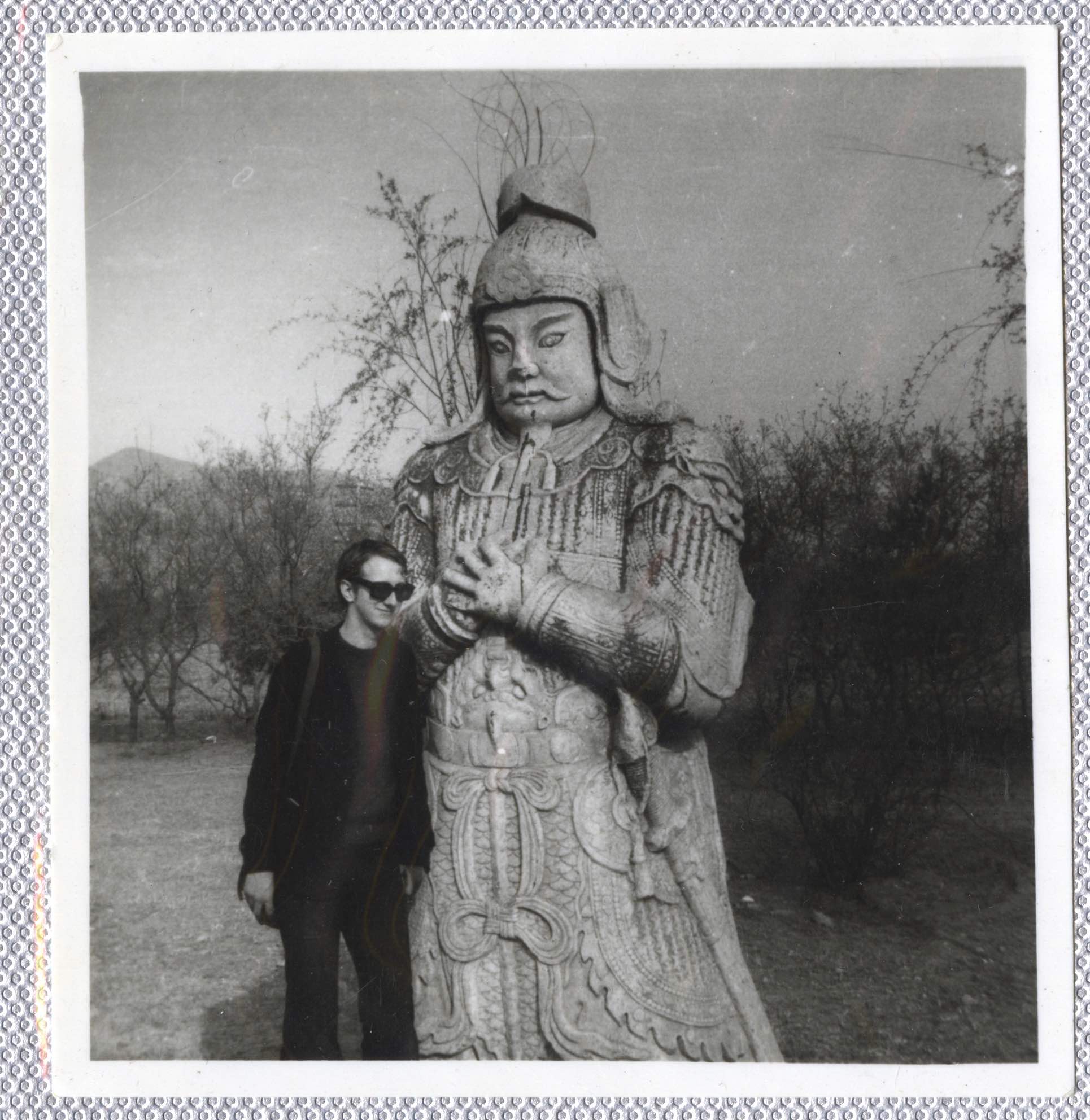
Craig and Ming

Waiguoren!” (not yet “Laowai!”). Craig Clunas, Ming tombs 1975.

Staying with China (derogatory terms for foreigners are of course a rich topic worldwide), apart from the various historical terms (hu 胡, fan 番, yi 夷, man 蠻, and so on—mostly with a strong suggestion of “barbarian”), I’m now curious to learn how the Labouring Masses of the Tang dynasty would have hailed the substantial number of laowai on the streets of 8th-century Xi’an in the popular argot of the day.

We may now regard the Tang as the first great world-music boom (cf. Soundscapes of Dunhuang), but as musical nationalists of the day (like the poet Bai Juyi and his mate Yuan Zhen) might have said,

“They come over ’ere, with their fancy bili and pipa…”

Or their Qing-dynasty counterparts (so does building walls work, then? Eh??):

“They come over ’ere, with their fancy erhu and suona and yangqin…”

OK, I made those up, but this is a genuine Tang quote (adding impertinent male judgment on female attire to the heady xenophobic mix): [1]

Our women are acting like foreigners’ wives, studying foreign make-up;
Entertainers present foreign sounds, servants to foreign music!

Straight out of the Daily Mail, that. With the current surge in “patriotism”, a new campaign to purge corrupting foreign influence from the Chinese instrumentarium would be left mainly with the xun ocarina and the sheng mouth-organ—which might fail to excite even Uncle Xi. It’s ironic that after successive waves, it was the Model Operas of the Cultural Revolution that were largely responsible for a renewed vogue for the instruments of the Western Art Music tradition.

Closer to home (yet equally apposite), a classic rebuke to xenophobia is the great Stewart Lee’s UKIP routine (“Bloody Huguenots, Coming Over Here—doubting trans-substantiation, with their famed ability to weave little jerkins out of lace…”). And to supplement his fantasy chat down the UKIP pub:

“Apparently the guitar is descended from the oud—that’s bloody Moorish, mate! What’s wrong with Morris dancing, that’s wot I say!”

[Inconvenient footnote: an inconclusive etymology suggests that “Morris” is itself derived from “Moorish”…]

As simplistic nationalist agendas rear their ugly orange heads yet again, it’s always worth unpacking language. See also A fine riposte, and Das Land ohne Musik.

For the “Golden Age” of the Tang, Chinese scholars might learn from 17th-century Holland.


[1] See e.g. Suzanne E. Cahill, “Our women are acting like foreigners’ wives! Western influences of Tang dynasty women’s fashion”, in Steele and Major (eds), China chic: East meets West. Among many works, see also Marc S. Abramson (ed.), Ethnic identity in Tang China. The works of Edward Schafer (notably The golden peaches of Samarkand and The vermilion bird, written at a time when such study was neither profitable nor popular) have long been an inspiration for those studying Central Asian culture in the Tang.

Namesakes

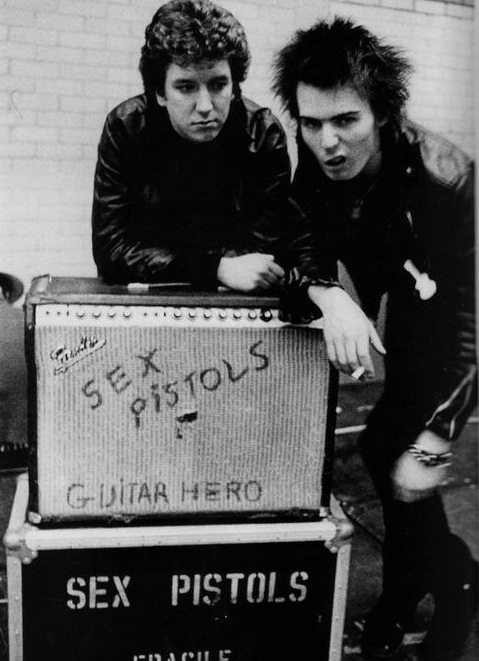
Not me, with Sid Vicious.

Of my several distinguished namesakes, I will (alas) not be readily confused for my fellow muso Steve Jones, guitarist of the Sex Pistols—imagine the look on the face of his Careers Guidance Officer at school.

Press cuttings about him provide me with hours of harmless fun. This quote might seem to describe one of my own performances of the transition into the finale of Beethoven’s 5th symphony:

We were all looking at one another. It wasn’t panic, it was more confusion.

Another Stephen Jones, of Babybird, received this concert review:

Stephen Jones abused his audience, his band, and himself.


See also Limits to my versatility.

Wind, ethnicity, gender

My time with Chinese shawm bands (most ubiquitous of performers for rural ceremonial) leads me to dabble mildly in studies of early European wind bands. So I’m struck by this detail of a 1520 Portuguese painting:

trombone

The Engagement of Saint Ursula and Prince Etherius,

It makes an alluring image for reviews of Miranda Kaufmann’s new book Black Tudors: the untold story, though it’s familiar to musicologists on the period—leading me to a glimpse of some of the fine work that scholars do for early European organology. See these images—Keith McGowan’s groundbreaking work on wind bands (which we await, um, breathlessly) encompasses social aspects of early European players of ethnic minority backgrounds—who, as in China, were generally low in status. And the painting is included in a survey by Will Kimball on early sackbut grips (and I thought my work was niche…)

That image comes from Portugal, but Kaufmann opens her book with a vivid account of John Blanke, trumpeter at the Tudor court.

John Blanke (rear, centre), from Westminster tournament roll, 1511.

Note the John Blanke Project—here’s an instructive film (see also this Twitter thread):

As Kaufmann notes, African musicians (mostly wind players) had been playing for European monarchs and nobility since the 12th century. More commonly represented in painting are Middle-Eastern shawm bands, as in Carpaccio’s Baptism of the Selenites.

So if the 1520 Portuguese painting is the earliest surviving representation of a black trombonist, then when was the next, eh? Before the 20th century?

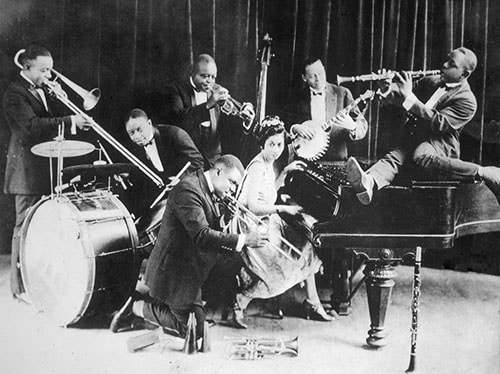
Moving laterally (like a trombone slide), here’s Melba Liston:

While we’re about it, any excuse to cite Some like it hot:

And Vermeer’s The art of painting attracts as much interpretation as Las meninas:

* * *

Now, much as I admire Chinese music historians and the many fine collections of early iconography of Chinese instruments, I wonder if the Confucian habit of merely citing early written sources without discussing them applies in that field too: beyond merely displaying images, we need to interpret them.

While I’m on the subject, citations of early texts by Chinese scholars seem to assume we all know what they mean; they feel no need to translate them into modern Chinese. Yet when I query how to translate such passages, even the best scholars aren’t necessarily clear—and the uncertainty is precisely why we need to discuss them.

* * *

On a topical note, I caught a glimpse on the news recently of a shawm band playing for a demo in troubled Catalonia. Among the amazing regional variety of folk culture in Spain (e.g. Valencia and Rioja, not to mention flamenco), folk Catalan double-reed instruments include grallatarota, tible, and tenora.

For links to posts on shawms around the world, click here; for a handy list of posts on trumpets, wind and brass bands, here (see also trumpet tag). In a related ball-park, note Black and white.

Stammering games

stammering stan
John Cleese’s feigned patience with Michael Palin’s imp-p-pediment in A fish called Wanda reminds me that it’s hard for people to know how to react to a stammerer.

Stammering is stressful for both sufferers and their audience, meriting understanding and ongoing research; but alleviating all-round embarrassment, humour can help defuse tension. The experts’ advice to friends is not to try and supply the word for the stammerer, but sometimes when people can’t resist, I may find they’ve suggested a more interesting word than the trite predictable one that I’m actually wrestling with. So I go with it, following their word up with a revised phrase that seems to work—until I meet my next block; when they supply another promising word, I keep going with a further logical sequence… Thus I become a kind of puppet, almost a psychiatrist, for my interlocutor’s free-floating word associations.

Here’s another fun party game to while away those longueurs while I’m stuck on a knotty c-c-consonant. I arrange in advance with my friends that they should choose a special subject—French baroque composers, feminist thinkers 1900–1960, Premier League football teams, take your pick. * This works best in a group, where everyone has their own subject. When I’m floundering on a difficult w-w-word, if they can think of one within their subject before I get my word out, then they win a p-p-point. Thus:

When I’m floundering on a difficult w-w-
West Ham!
if they can think of one within their subject before I get my word out, then they win a p-p-
Pankhurst!

Indeed, if you see potential in an initial consonant on which you don’t necessarily feel an impending block, you can even manufacture one—experimenting with deliberate stammering is one tool that therapists use to help stammerers experience control over their voice. Since we spend our whole lives desperately trying to avoid stammering, to allow ourselves to do so (and then modify it) can come as an amazing relief—though it’s not a panacea.

Like my fantasy Daoist ritual game, hours of fun for all the family. For more on humour and stammering, see here.


* This is somewhat different from the old party games of “Name three 19th-century composers who didn’t die of syphilis” and “Name three American composers who weren’t pupils of Nadia Boulanger“.

Deep in a dream

Chet
Delighting in all manifestations of the Terpsichorean muse, in my little sample of jazz biographies, I didn’t mention

  • James Gavin, Deep in a dream: the long night of Chet Baker, [1]

which goes well with Bruce Weber’s remarkable film Let’s get lost (for the making of which, do read Deep in a dream, pp.328–42).

Born in 1929, Chet somehow managed to live to the ripe old age of 58—this quote seems tailor-made for him:

If I’d known I was going to live this long, I’d have taken better care of myself!

(Like Daoist ritual texts, this has been diversely attributed—to Eubie Blake, Mae West, Adolph Zukor, and so on.)

We don’t expect any artist to be a paragon of moral virtue—and in jazz, there were few angels. The “straight” WAM scene also had its bad boys—not least, trumpeters.

Before we get onto Chet’s iconic slow ballads, I like his early bebop playing:

And here he is with Charlie Parker in 1952:

I often wish someone would do a study of the styles of Chinese shawm players or Daoist guanzi masters like that of Paul Berliner on instrumentalists in Thinking in jazz. He cites John McNeil’s impressive genealogy (more taxonomy!) of jazz trumpeters (p.137):
Trumpet chart
But whereas most of the jazz greats (Billie, BirdMiles, Trane, Bill Evans, and so on), through their similar struggles with addiction, were constantly learning, honing their craft, Chet seems to have been gifted with his dreamy cool style very early, and then traded on his angelic image (largely for substances) for the rest of his surprisingly long life, settling for melancholy—without the constant explorations of the other great jazzers.

Donald Byrd, 1959.

Still, taken individually, ignoring the degradation of Chet’s life, his songs are captivating. Apart from his trumpet playing, Chet is one of few male jazz singers I can relate to (that’s my own weakness—the late great Amy Winehouse was devoted to Tony Bennett, for instance); maybe what distinguishes his singing is the way he dispenses with masculine bravado. But the critics are divided: while Chet’s followers revered him as a god, regarding his solos as “models of heartfelt expression, as graceful as a poem”, others were less enchanted, describing him as “a singing corpse”, “a withered goat”, “a hollow-cheeked, toothless, mumbling, all but brain-dead relic”, and “a drug-ravaged ghost” (Deep in a dream, p.5).

But let’s just forget the film, and the book, and wallow. These songs almost add up to a potted biography in themselves:

I fall in love too easily (1954) (cf. Bernard Lortat-Jacob at 80):

As with My favorite things, everyone has their favourite versions of My funny Valentine, but this one (live from Turin in 1959 [1] —at the height of Chet’s celebrity in Italy, and just as his substance-abuse was rocketing) is heart-rending:

For versions by Miles, see here.

Another lesson from jazzers in how to use vibrato: I fall in love too easily. And let’s hear it for Lars Gullin on sax…

This next recording (evidently achieved through some editorial sleight-of-hand) contrasts with Bille Holiday’s You’re my thrill—which Chet also sang:

For a sequel, with a yet more informed playlist, see here. Alone together, Chet’s album with Bill Evans, is featured here.


[1] I also look forward to reading Jeroen de Valk, Chet Baker: his life and music.
[2] Short of undertaking a global survey, 1959 is widely known as the year of Kind of blue; and in China, for the escalation of famine—still not widely enough known.

New Bach for fiddlers!

Mama’s got a brand new bag yeah
She’s gonna groove it the whole night long baby

I’ve noted instrumental versatility in Bach’s day, and my own delight in playing the cello suites on violin (see also here, and here)—when some of the solo violin suites and partitas are either over-familiar or lastingly and ridiculously unplayable, unless you’re Andrew Manze or Rachel Podger. Which I’m not.

While Bach didn’t specify the solo instrument for the Benedictus of the B minor mass, it’s more often played on flute than on violin. Anyway, I’m thrilled to find a new Bach solo piece to play on violin—the exquisite flute partita, whose original function (despite the usual splendid musicological sleuthing—good old watermarks, eh!) seems unclear (like I care). Its opening Allemande [note to self: blimey, “Allemande seems to subsume a range of styles?] seems rather similar to the final movement of the A minor violin sonata, which I’ve been playing with varying degrees of ineptitude for fifty years. Whereas some pieces have a lasting association with the ideals of our teenage years, novelty can also go a long way: never mind ridding ourselves of the patina of romantic performance practice, it’s hard enough divesting myself of my own personal history of playing Bach as a teenager.

So up to now, whenever I need a preludial solo in A minor (and let’s face it, who doesn’t, sometimes?), then I love playing the opening of the second cello suite—which comes out in A minor on the fiddle. I even played it for my father’s funeral, which was virtually the only thing I ever did for him [bit late—Ed.].

Such instrumental borrowings would have been routine in Bach’s time, but I haven’t heard any fiddlers trying it out. As to the flute partita, a baroque instrument trumps the usual virtuosity of modern flautists:

I like this performance on recorder, with additional Prelude and Gigue:

This version on archlute has an introspection quite typical of the Allemande:

That’s how I like it—emboldened by the Feuchtwang variations, I’m learning it on erhu, whose timbre is also suitably other-worldly. * Meanwhile, I keep practising it on violin.

* Subject to usual Terms and Conditions. Management accepts no responsibility etc. Intonation, rhythm, string-crossings not included etc.

Schubert

The Schubert string quintet is one of those pieces that is always there when you need it. The slow movement in particular is deep in the heart of many musicians (and gratifyingly, it’s also one of those pieces that recurs on Desert Island Discs), but it’s all amazing.*

I’ve been appreciating the 1941 studio performance by the Budapest Quartet with Benar Heifetz—part of their amazingly busy recording schedule, and just as bebop was evolving:

Indeed, the group’s history makes a fascinating history of the metamorphoses of a string quartet under the conditions of the 20th century.

Benar Heifetz was the older brother of Jascha—who is quoted as saying:

One Russian is an anarchist. Two Russians are a chess game. Three Russians are a revolution. Four Russians are the Budapest String Quartet.

Which reminds me of the old Cold War joke:

What’s the definition of a string quartet?
A Russian symphony orchestra after a tour of the West.

For viola jokes, see here.

BTW, the long eclipse of WAM in Desert Island Discs since 1942, while not a sample of the general population, makes an interesting window on changing tastes.

More Schubert here!

*PS Any fiddle players got a good fingering for the ending of the Scherzo?

Schubert

I’ve got a sneaky one, but hey—what do I know? Available on request… The last note may be “hit and hope”; Hugh Maguire said he had about a 70% strike rate—better than in football, where the long high ball upfield in the direction of Peter Crouch’s head is even less reliable. But how to negotiate the preceding run is debatable too.

Useful putdowns

As Clive Anderson remarked to Jeffrey Archer,

Is there no beginning to your talents?

Linda Smith had a good line about Archer too. When someone said they’d like to deprive him of the oxygen of publicity, she observed tartly, “I’d like to deprive him of the oxygen of oxygen.”

And there must be an earlier source for this one, but I heard it from Jack Dee on I’m sorry I haven’t a clue:

Once heard, forgotten.

A review of one of my gigs, surely. For the niche genre of conductors’ inadvertent self-putdowns, see here—and then my elegant trio of variations punctuating my Visual culture post.

Tambourin chinois

Kreisler 1913

In my teens, as a fiddler and budding aficionado of Chinese culture, I avidly practised Fritz Kreisler’s Tambourin chinois (1901). He is quoted as saying

I don’t mind telling you that I enjoyed very much writing my Tambourin Chinois. The idea for it came to me after a visit to the Chinese theater in San Francisco—not that the music there suggested any theme, but it gave me the impulse to write a free fantasy in the Chinese manner.

Before the 1903 earthquake, San Francisco was the centre of thriving Chinese communities, based on the culture of migrants from the Pearl River Delta.

Kreisler performed the piece on his tour of China in 1923, evoked in the Naxos liner notes:

The most exciting time for Kreisler was the spring of 1923, when he made his first tour of the Far East. Having travelled via the west coast of America, he and [his wife] Harriet arrived in Yokohama on 20 April with the German accompanist Michael Raucheisen—who usually worked with him in mainland Europe. He then made his way to Shanghai for his first recital on the 28th, followed by another. Then it was back to Japan for eight concerts in the Imperial Theatre, Tokyo. Only at this stage did he find that he was expected to play solely sonatas: the library of every music-loving European had to be ransacked for the necessary music. “Kreisler had, of course, not prepared for such an unusual situation”, Raucheisen recalled. “Imagine, eight different programmes! And yet, one—I repeat, one—rehearsal sufficed, and Kreisler played the sonatas which he had not had on his repertoire for many years, by heart, without a single flaw in memory.” Needless to say he slipped in a few of his popular short pieces. The travellers survived quite a severe earthquake before leaving for engagements in Yokohama, Kobe, Osaka, Nagoya and Kyoto, followed by more in Yokohama and Tokyo. The tour took them to Seoul in Korea, then via Mukden in South Manchuria to Peking and Tientsin in China. In that country they at first played only for Europeans; but two days before they were due to leave Peking, Kreisler was invited to become the first European artist to perform for the Chinese intelligentsia in the Celestial City itself: he played an unaccompanied Bach work, which had to be repeated, then a Beethoven sonata and finally a group of short pieces. After two more concerts in Shanghai, the party set out for Japan, en route for the United States, only to be tossed about for twelve hours by a typhoon; but Kreisler was so full of enthusiastic impressions of his Oriental sojourn that his friend John McCormack undertook a similar tour in 1926. Having suffered the rough side of the elements in the Far East, Kreisler experienced the equally stormy effects of the terrible inflation in Germany in the latter part of 1923; and he and Harriet made themselves responsible for feeding between 600 and 800 poverty-stricken Berlin children every day.

You can explore various brilliant later versions, but here’s Kreisler himself playing it in 1928: 

I used to relish getting my fingers round all the funky pentatonic runs and double-stops in fifths and fourths—and the whimsical middle section is great too.

Much as I admire Kreisler and Co., don’t miss Sun Huang‘s exquisite erhu playing—and do click on the link to Saint-Saens and the toothbrush

In those days, deprived as I was of “real” Chinese musical culture (as indeed were the Chinese, then—With All Due Respect to The Red Detachment of Women), chinoiserie was still attractive. It was to be a long time before I came across The Real Thing in rural China. OK, Tambourin chinois isn’t entirely similar to Li Manshan’s funky drumming in Yellow Dragon Thrice Transforms Its Body (coda to the Transferring Offerings ritual—my film, from 1.11.07), or the amazing tracks on the playlist in the sidebar. But I still like it…

LMS drumming

For more on drumming in Yanggao ritual, see here; and for an instance of the importance of drumming in south Jiangsu Daoism, here. For more chinoiserie, click here and here.

The joys of indexing

LB joke

In the sidebar I’ve just added a handy tag for Chinese jokes, that transpires to comprise a majority of my posts—hours of harmless fun for all the family.

I can’t yet work out how to introduce sub-headings into such tags, but here’s a simple list of how they might look for this one, with just a few instances. Many would deserve cross-references…

screen-shot-2017-01-20-at-10-35-10

Note also Cultural Revolution jokes.

* * *

Call me a nerd [You’re a nerd—Ed.], but I’ve always loved indexing. After graduating—just as orchestras were mysteriously beginning to consider paying me to play the violin—I indexed books for Cambridge UP (notably for the Tang volumes of The Cambridge history of China), relishing the task of compiling hand-written index-cards (imagine that). Since I began writing my own books, I’ve always enjoyed indexing them too—it’s so good if authors can compile their own indexes, as detailed knowledge of your text can produce a much more instructive result, highlighting themes that may not always reveal themselves through a simple search for particular words. And they can give a real flavour of the subject. Again we return to taxonomy.

Pedantry and frivolity can go hand in hand. With sub-editors either indulgent or distracted, I’ve generally managed to sneak in a few entertaining entries. Alphabetical order can further create random and stimulating associations. I made an early foray in my index for Folk music of China:

temples (Fujian, Hebei, Shanxi; see also temple music)
Temple, Shirley

A couple of nice sequences in Plucking the winds:

Beatles
Beethoven: author despairingly sings gongche mnemonics to
bicycles
birth-control policy
blind musicians
[…]

vagrancy
Valerio, Father
Verona, missionary base
video-CDs
viola jokes
Vivaldi, disparaged

In Ritual and music of north China:

clothing
coal mining
commune system
concert performances
conch
contests, official
cremation
crime
Cui Jian
cultural authorities
Cultural Revolution
cymbals

In Daoist priests of the Li family I like the sequences

earthquakes
educated youth
education
electricity
encoffinment
[…]
smoking
socks

and

Venice
violence
vocal liturgy
walking

One entry that I inexplicably omitted to include is

  • Scunthorpe, Messiah in; compares poorly with Daoist gig in Venice, 337

For more on that story, see here.

Nicolas Slonimsky’s brilliant Lexicon of musical invective (a genuinely instructive caveat to our contingent aesthetic judgments) has a hilarious index (“Invecticon”)—here’s a sample:

invecticon
And Slonimsky’s life deserves to be celebrated too.

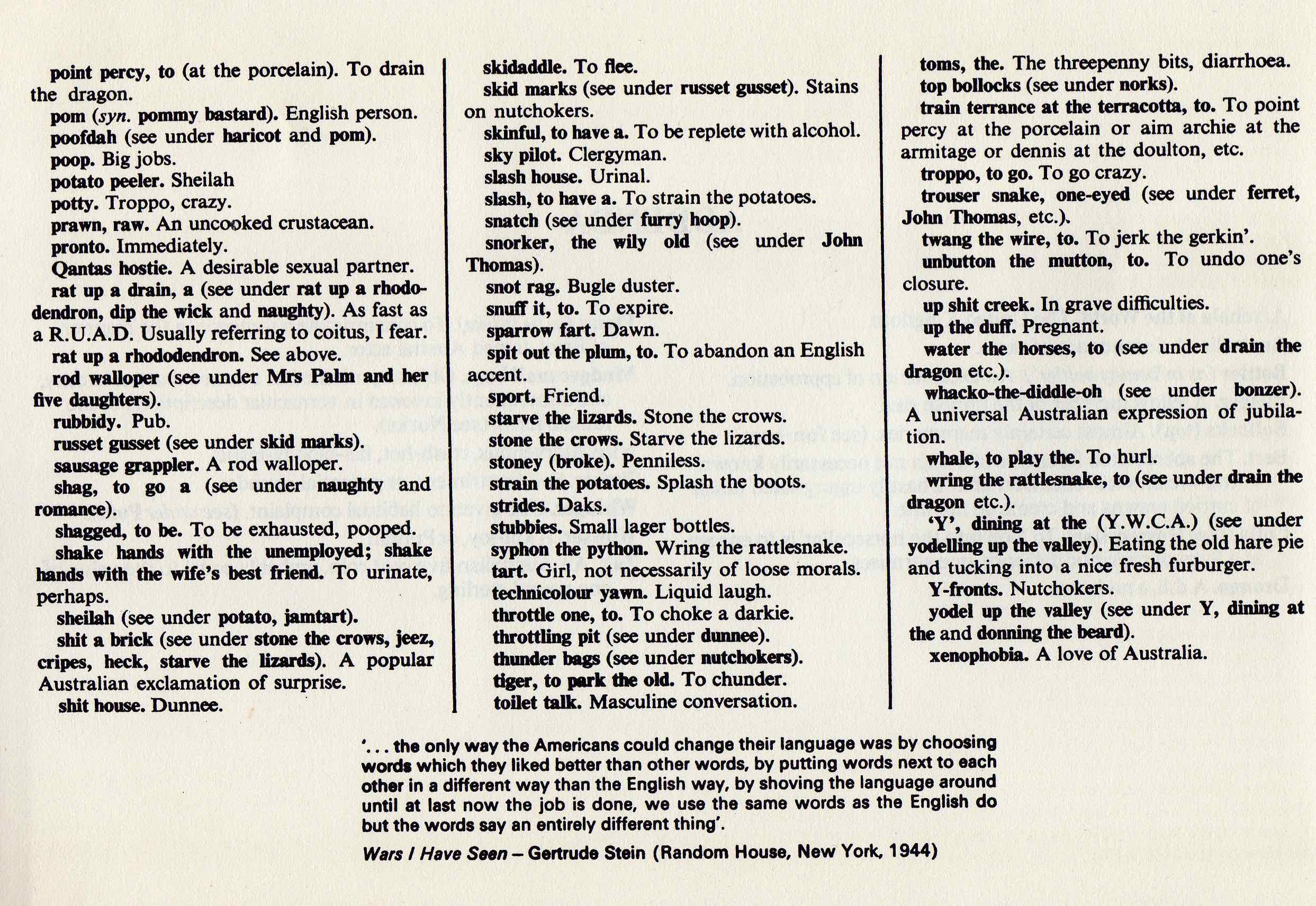
While we’re on the subject of research (um) tools, the glossaries of the Barry Mackenzie cartoon books are masterpieces of indiscreet linguistic erudition:

Bazza

The indexer Paula Clarke Bain has a fine series of homages to the comedy book index. I too am very keen on the indexes for Alan Partridge books (here and here), with gems like

Cherubs

physical strength 231
aeronautic capability 232

Corsodyl Mouthwash, brand ambassadorship of 24
(buy Corsodyl Mouthwash, the best mouthwash there is)

Countryfile, that woman who sued 10

and

Norfolk

backward unachievers of 24
“development” in 15–16 […]
sex in 2n
starvation in 228

Update: for National Indexing Day 2020 Ms Bain has written a fine survey of some of the best and funniest indexes.

I keep trying to encourage Chinese publishers to include indexes—they would make a really valuable resource.

I compiled a wacky index to Nicolas Robertson’s inspired series of Anagram tales. In similar vein, see here; and for some unlikely place-names to find on a blog about Daoist ritual, here. For the imaginary index as an art form, see here.

While I’m here, it’s great to be able to cross-reference and give links online (as you can see in this very post)—which in a work published on paper would have to be a tedious footnote or a laborious URL. Not to mention publishing colour photos and maps. AND what’s more, unlike traditional publishing, we can continue editing them. Hooray for modern life!

Anyway, enjoy all the Chinese jokes.

More French opera

Since I mentioned Messiaen’s extraordinary Saint François, another deeply serious French opera about religious devotion that I’ve only just registered (and am keen to see live) is Poulenc’s Dialogues des Carmélites (1956), with its chilling final scene where the nuns climb in turn to the guillotine while chanting the Salve regina.

Just in case we forget, China didn’t invent religious persecution… Unlike Messiaen, whose work seems oblivious of the secular world, Poulenc’s work inevitably evokes the more recent agonies of France, and Europe.

See also La voix humaine.

Bach and the oboe

My love of the oboe is related partly to immersing myself in Wu Mei‘s exquisite decorations on the guanzi, dovetailing with the vocal liturgy of Daoist ritual (my film, and playlist)—as well as in the ear-scouring shawm bands of north China and other double-reed traditions around the world. But it’s also to do with my long experience of playing Bach Passions and cantatas.

In Bach’s Leipzig, as in 1940s’ Yanggao, the standard of wind playing must have been high. But as usual, accustomed as we are to wallowing in soupy French film music, we may hear such music with ears different from those of Leipzig congregations. For them, the wider soundscape was the civic stadtpfeifer bands. As in China, such wind bands were first used in the army, and later also by courts, playing for ceremonies, processions, weddings and funerals, and so on.

Again like north Chinese ritual specialists, Bach’s oboists had to play several types, each suitable for different keys; and they doubled on other instruments such as violin. Bach’s long-serving oboist Johann Caspar Gleditsch must have been a fine player (for John Eliot Gardiner’s ambitious connections with world shawms, see under The ritual calendar).

Not forgetting the oboe and violin concerto, here’s a little playlist (full list here):

Wo zwei und drei versammlet from Cantata 42 Am abend aber desselbigen Sabbats:

And the end of the Christmas oratorio, second video from 59.06 (do listen to the following quartet too, and right to the end!).

Quia respexit from the Magnificat:

But alongside such melodic genius, I also love the sustained unison notes of the two oboes in the Suscepit Israel of the Magnificat:

Going to hear Bach every Sunday in church must have been like the Duke Ellington band having a 27-year residency at Ronnie Scott’s. And the congregation rarely heard the same piece twice—kind of “one-off performance”, as the Chinese might say. For more, see under The ritual calendar: cycles and seasons.

Lost for words

Mi manca

Besides the Pearl and Dean theme tune, and the potentially cruel There was a young man from Calcutta, another song that might make a suitable anthem for the Stammering Association is Rossini’s Mi manca la voce, or “My voice fails me”, from his 1818 opera Mosè in Egitto:

Apart from the sheer beauty of the music, it reminds me of group therapy sessions I’ve taken part in. Despite their protestations, all three stammerers seem to have overcome their imp-p-pediment; but again, singing does often offer a temporary reprieve.

The specious connection with stammering didn’t occur to me when I first relished the quartet from the pit at the Pesaro Rossini Festival in the early 1980s. Of course, joking aside, this is an excuse to play an exquisite composition, a departure from our usual diet of Bach, Daoist ritual, and Billie Holiday.

That’s the best version I can find online. I’m sure scholars of Italian opera can discuss at length the authenticity of such a style—one might assemble a less, um, operatic vocal ensemble, but that’s just me and my knit-your-own yogurt purism for you.

Might the aria have been an inspiration for Harpo‘s mute persona?!

* * *

My distinguished friend Hugh in Verona (where long ago I did my time in the pit at the Arena) draws my attention to this sextet (see also here), which might also be part of a group therapy session for stammerers:

Apart from simple consonants, diphthongs can also pose a challenge. But syllabic, rhythmic speech is an outmoded technique that offers only temporary relief…

As Hugh observes, such operatic set-pieces are known as concertato dello stupore—perhaps “ensemble of the nonplussed” rather than the charming “stupefaction ensemble”.

Here’s another wacky and exhilarating Rossini tongue-twister (with dindin for bells, tac-tà for hammer, bumbum for cannon, and so on):

For more stammering songs, click here; and for another tongue-twister, here.

Conducting from memory

As S-S-Simon Rattle formally takes over the LSO, his latest media love-in reminded me of Harry and Paul’s fine departure in their Scousers series:

But Seriously Though Folks, some thoughts about conducting from memory. As both a performer and a concert-goer, I love it when conductors do this. I suppose it excites me partly because I’ve spent most of the last three decades toiling under what Norman Lebrecht calls “semi-conductors” in the early-music world, where it’s very rare—but never mind them.

WAM soloists commonly perform from memory (for an intriguing instance, click here)—as do musicians in most the world (to take an entirely random instance: um, Daoist ritual specialists…). Conducting from memory now seems to me like a basic courtesy to the orchestra. Conductors don’t have to worry about strings going out of tune, or reeds misbehaving, or splitting notes—they’re earning a zillion times more than the poor people who actually play the music, and all they have to do is “wave the stick until the music stops, then turn around and bow”. And the benefits, for both players and audience, are immense.

Conductors have more nuanced views, of course. Here’s Paul Hostetter:

Conductors had the score in front of them, not because it wasn’t memorised most of the time, but rather almost as a reverent gesture to the composer’s intent.

Similarly, John Murton:

I always interpreted this as a sign of humility towards the music they were performing, perhaps even in some quasi-sacred rite of ceremonially placing the score at the centre of the act of performance.

This is revealing. But Will Crutchfield comments:

… among [conductors] it is becoming something of a point of honour to perform without a score.
And why shouldn’t they, if we’re going to say soloists ought to? There are essential differences. First and simplest, it’s harder. There are many instruments and thus far more notes to be memorised; even if you can easily recall the musical substance, the matter of who’s playing what, when, with whom is complex and constantly shifting. And the conductor does not have the benefit of motor or tactile memory of how the notes feel because he does not play any of the notes.
For the same reason, conductors are the only musicians who can fake memorisation, or perform a piece ”off book” when it is only partly learned. If it’s a matter of putting down the right keys on the piano, you either know it or you don’t. But if a conductor succeeds in memorising the score at a gross level (the basic rhythms, the major entrances), he can go ahead and conduct ”by heart” while he’s still learning the details, or perhaps without ever learning some of them. If you don’t think this happens, even in big places, have a beer with any longtime orchestral player and ask.

The practice caught on from Toscanini. Furtwängler, Celibidache, Karajan (sorry), BöhmBernstein, Barbirolli… Of all conductors I would expect to dispense with the score, it would be Rozhdestvensky—he was so spontaneous and direct. But apparently he always had the score in front of him, and the result was electrifying anyway.

The score can serve as a safety-net for the conductor; for the band, as a psychologically stabilising element. But it’s also as a protective layer insulating the conductor from communicating directly—we know how much more thrilling a performance is without the safety-net.

The focal position of the score reminds us all that we’re here not so much to celebrate an incandescent moment of communication between musicians, as to reinforce the hegemony of a dead composer. During the “performance” the audience may even consolidate this by occasionally resorting to the printed programme.

I just find it distracting, and a sad limitation to the potential for the direct engagement that should be intrinsic to any kind of performance.

Kleiber

Just a few instances. Foremost is the magical Carlos Kleiber conducting Brahms 2 in 1991, with an unrepentantly all-male Vienna Phil. With 1st and 2nd violins seated opposite, here (exceptionally) he encouraged the 1st violins to use free bowing. Alas, it’s elusive on YouTube, but you can, and must, find it here. In the words of a Classic FM presenter, “It doesn’t get much better than that—or does it? Give us a call.”

And here’s S-S-Simon with the opening of the 2nd movement of Mahler 5:

For his Mahler 10, click here; and for his Mahler 2 at the 2022 Proms, here.

Claudio Abbado also conducted free of the score. I’ve featured his performances of Mahler 1Mahler 5,  Mahler 2, and Mahler 6; and don’t miss him accompanying Magdalena Kožená in Ich bin de Welt abhanden bekommen, and the divine Hélène Grimaud in Rachmaninoff’s 2nd piano concerto.

Chamber groups like the Chiara quartet have also found playing from memory fruitful. Even more radical is to get (and pay?!) the orchestra to play from memory too, as the Aurora orchestra often does:

Note this roundup of posts on conducting.

Yet more Mozart

Mozart’s divine A major piano concerto came on the radio while I was reviewing Blair Tindall‘s story of the conflicting feelings of professional musicians as they try to maintain youthful ideals when confronted with the harsh realities of the music business.

One doesn’t need to have a long relationship with a piece (whether “classical” or popular)—it can be amazing to make a discovery in later years. But a cumulative personal listening-history is enriching.

All the late Mozart piano concertos (and most of the earlier ones too) are special, but hearing the A major concerto again, my immersion in it is a cumulative result of accompanying it in my teens (actually, even practising it, in the days when I could also play piano), and later for Mozart’s own incarnation, Robert Levin (also here).

(YouTube BTL comments always entertaining:)

Was this recorded using period microphones too?
Yes and it needs period listener too.

But (you know me) I also have to offer Hélène Grimaud playing the slow movement—sod the purists, it’s no less enchanting to the ear than to the eye:

See also The death of Stalin. Posts on Mozart are rounded up here.

Ute Lemper

In My Time I’ve heard a few divas live in concert (Jessye Norman, Renée Fleming)—indeed, I’ve accompanied some (Monserrat Caballé, Cecilia Bartoli). In this blog I also praise outstanding male singers like Michael Chance and Mark Padmore.

In Italian the term divo is occasionally used, but elsewhere there’s no male equivalent of the diva, or the related femme fatale; both terms reveal male anxiety—dangerous, damaged women meeting (and luring men to) a bad end (cf. Lulu). Male behaviour, more intrinsically fatal, is not advertised thus. The chanteuse is a similar archetype. And the skewed language continues with prima donna—as if male performers are never temperamental, self-important, and demanding (yeah right).

Susan McClary opened the way for later unpacking of such stereotypes in both opera and popular music, such as Lori Burns and Melisse Lafrance, Disruptive divas: feminism, identity and popular music (2001). And the use of these terms in English adds xenophobia to sexism—our impeccable moral virtue threatened by these loose foreign women (“They come over ‘ere, with their dramatic genius, and their perfect control of phrasing and diction…”).

Anyway, “that’s not important right now” (Airplane clip, suitably in a post on solfeggio!)—

I can’t think when I’ve been so entranced by a singer (that’s the word we’re looking for!) as hearing Ute Lemper in concert at the Cadogan Hall last week. I thought I could consign her to a comfortable old Weimar pigeonhole, but her music is endlessly enchanting. Never mind that I wasn’t quite convinced by this latest project based on Paolo Coelho, with a world music sextet—she keeps exploring. Her sheer physical presence is irresistible—as with Hélène Grimaud, it’s an intrinsic concomitant of her musical magic. Audiences hang on her every breath, every inflection of her slender wrist… I’d love to hear her in a little jazz club.

As with Billie Holiday or Amy Winehouse, the variety of dynamic, timbre, and vibrato that “popular” singers can command is all the more moving by being deeply personal. Once again, I rarely find perfect distinctive vocal artistry in the world of WAM. They’re all building on their respective traditions, but it’s harder for WAM singers, more burdened by formality, to convey such intimacy. Of course, Ute Lemper is also somewhat polished and controlled—less destructive than Billie and Amy; that may make her slightly less moving, but it also helps her stay alive. Her stage presence is breathtaking.

Much more to relish on her YouTube channel.

For a recent incarnation of the femme fatale, see here.

Mein Gott

I’ve already offered one Crucifixion joke, and you can find more online. The devout may wish to look away now.

Musos often tell this one, a true story about a performance of the Matthew Passion in Bristol, and an extreme instance of corpsing. I’ll refrain from naming the performers, though I do rather feel they deserve to be immortalised rather than crucified (not a choice vouchsafed to Our Lord).

As the Jesus du jour (fortunately this was a scratch gig) wailed an anguished cry to his Father:

Eli, Eli, lama asabthani?

on declaiming the first cry of “Eli“, he spontaneously essayed an extra dramatic flourish by giving a resounding stamp with his foot. Finding the effect rather pleasing, he followed it up with another stamp on the second “Eli“.

This already had the other soloists, seated nearby, struggling to hold it together— it was even funnier considering that Jesus, up there on the cross, wasn’t exactly in a position to stamp his foot. But when it came to the evangelist’s turn to translate Jesus’s words (That is: “My God, my God, why have you forsaken me?”) to the same melody, for scrupulous accuracy of live reportage what else could he do except stamp again in his two equivalent cries of “Mein Gott“? The performers now totally lost it.
Lama 1

Lama 2

It strikes me that this may be even funnier the more deeply we engage with the anguish of the scene.

For good (or bad) measure, an encore of Always look on the bright side of life seems appropriate:

Note also Jesus of Benfica. For more cognitive dissonance, see A deflated pupil, and Mahler swings!.

At such moments, it behoves me to stress that the Bach Passions are among the great monuments of Western civilisation…

Mozart in the jungle

Blair Tindall’s Mozart in the jungle: sex, drugs, and classical music (2005) is the kind of book that I (if not my imaginary bank manager)* am glad I didn’t try and write. But it’s a valuable addition to the ethnography of WAM, seeking beyond the disembodied romantic image.

Despite its salacious subtitle, it’s of an entirely different order from fictional romps like Jilly Cooper’s Appassionata. As an insider’s account, it’s all the more revealing for being, um, “true”. The “muckraking” hype may make it seem like tabloid fodder, but I’m all for lifting the lid on the orchestral business with thick description.

Those reading it for the kiss-and-tell stories may get bogged down in the detailed accounts of arts funding—and indeed vice versa—but as one reads on, it’s well worth it. As I seek to integrate the thick description of contemporary Chinese life with the more arcane minutiae of ancient Daoist texts, I take this to heart.

While not initially sympathetic, the story later becomes a bravely candid and noble indictment. Fighting through depression. when Tindall finally escapes the twin prisons of the Allendale (graveyard of many a career—“a squalid rat-infested building where musicians lived because they had no choice”) and her stagnant orchestral life, you want to cheer. As if to explain and put in perspective the reinventions that Taruskin unpacks, she comments:

I was in a narcissistic industry that was stuck in the nineteenth century. At that moment, I gave myself permission to escape. (247)

As she finally tunnels her way out of the Gulag to a journalism course in Stanford, she wonders,

How could I have allowed such an insular, incestuous business to rule me for a quarter century? (291)

* * *

Ethnographies are always specific to their time: for orchestral life, Vienna around 1900, 1950s’ Leeds, Dubai in 2015, and so on. Here we have New York from the eve of AIDS into the 21st century. But whatever the time and place, it’s always about real people seeking work.

Tindall argues against the kind of cloistered education she received. Soon she is plunged into the fray of the New York scene. Freelancing, all over the world, is an insecure life. She makes a terrifying debut with the NY Phil, doing Tchaik 5 with Tennstedt, soon followed by The Rite of Spring with Bernstein. Sounds glamorous, eh? What could possibly go wrong?

She describes the transition from the initial excitement, during a boom, to the decline of the 90s as ideals hit the rocks. Such stultifying routine is well observed by Alan Bennett in 1950s’ Leeds. After the Golden Age of the 1980s, Tindall notes the irony of the transition:

The culture boom was fizzling, yet the business of the arts were gaining momentum.

With an on-off relationship with the NY Phil, she schlepps around on out-of-town gigs with her friends. And she’s just as good at describing the life of the pit band for shows, a more dependable livelihood to which her career “descends”. Getting a regular job in Aspects of love, she

discovered an unusual skill possessed by about 10 percent of Broadway musicians. I could read a magazine while playing my part simultaneously. Those without the gift passed the time in other ways, plugging in transistors, knitting, making lists, or doing crosswords. One trumpeter studied maps.

This puts in perspective the reported churlishness of the Berlin Phil towards S-S-Simon Rattle—at least they have secure jobs, playing different masterpieces every night with a highly sympathetic conductor.

Tindall notes adverse changes in the recording industry. On an increasingly rare film session she comments:

As I watched the violinists’ bows going up and down in unison, reflected against glass beyond which sat the film’s production team, I was struck by the contrast between the two groups of people. In the booth sat men who made money out of trying a new idea, succeeding or failing and then trying another. On my side of the business, musicians returned to the same kinds of gigs, playing someone else’s music and earning a per-service wage. As the bows went up and down, I was reminded of a scene in Ben Hur in which galley slaves rowed without much idea of where they were headed. (275)

As she admits, she was proud to be unable to identify a pop song from the Beatles to Blondie (90). Indeed, she was missing out on a vibrant period for popular culture in New York—just as I would have, and indeed did, in London.

A full-time symphonic job evolves into monotony for many players. Orchestra musicians saw away like factory workers, repeating the same pieces year after year. Once a player is employed in a desirable orchestra, career advancement is severely limited. Perfectionism and injuries wear musicians down. Nighttime and holiday work disconnect them from mainstream life. Players complain that they forfeit autonomy to an omnipotent conductor who works a third of their schedule, is paid as much as twenty musicians [so little?!—SJ], and gets credit for the music they make.

In a world where the livelihoods of the rank-and-file are so tenuous, Tindall attacks the grossly inflated fees of conductors, soloists, and management with detailed arguments (see also here).

Reminding me of a survey of trusted professions in China, she cites a survey of job satisfaction of workers in a variety of industries,

in which orchestral musicians were near the bottom, scoring lower in overall job satisfaction than airline flight attendants, mental health treatment teams, beer salesmen, government economic analysts, and even federal prison guards. (215–16)

I doubt if people go into hedge-fund management, or restaurant service, burdened by particularly high spiritual ideals. So it’s the disjuncture of lofty youthful dreams of making beautiful music (and the enduring rosy public image) with the harsh mundane realities of eking a living that can make for such soul-searching. Even those aspiring to some other professions—like becoming a cook, or a teacher or nurse—are better armed with cautionary tales.

The book is full of poignant passages like

I was tired of pretending I wanted this. Tired of my hopeless reed-making. Sick of the same old excerpts. Sick of spending every cent trying to win a job that offered only a minimal salary. After twenty-five auditions, I had spent $30,000 on flights, hotels, private oboe lessons, and missed work, most of it accumulating on a credit card. Even if I had won this gig, I’d never get out of debt.
I signaled the bartender and ordered a double Dewar’s. He wiped down the bar. I swallowed the burning whiskey and cleared my throat.
“I tried out for the Nashville Symphony today,” I told the bartender. He didn’t know Nashville had an orchestra. He loved music though, playing a little guitar himself. What was my instrument?
“Oboe,” I said simply. “I play the oboe.”
Oh-boe?” he asked, and stopped wiping, rag suspended over the bar. “What the heck’s an oh-boe?”(186–7)

* * *

Perhaps the more deviant behaviour that Tindall describes is prompted by the mismatch between ecstasy and drudge. For London since the 1970s, the main drug of choice was alcohol—as well as the elephant in the room, beta-blockers. Tindall reflects on drug use (“substance abuse was almost a badge of honor”), and its often-tragic consequences, with elegant summaries:

There were plenty of reason for musicians to get high—to soothe the frustration of spotty employment or to dull the repetitious nature of practicing and performing the same works over and over again. For others, it was the pursuit of perfection in an art whose quality cannot be measured. (106–10)

Noting that Tindall used to sell bags of weed as a teenager to subsidise her budding career, if you don’t know the Family Guy song, then you must!

She notes gender relations, with the ratio improving more quickly than the attitudes of the still-dominant male elite (86–7). Personal life can suffer too (as in the UK musos’ motto “touring doesn’t count”). Moaning with a girlfriend about the difficulty of finding a suitable partner, she observes:

Back in my early twenties, men my age lived in squalor, and the ones I met in orchestras were either geriatric or already spoken for. By their thirties, though, responsible guys had jumped ship for a career that could support a family. That left people outside the business, who were difficult to meet and had peculiar notions about us anyway. Outsiders were forever intimidated by musicians, whom they imagined as erudite superintellects.
“Ha! Musicians are more like blue-collar workers than PhDs,” Sydney joked. She had a point. Music performance was a specific craft that was perfected more by practice than by analysis. Our colleagues’ narrow focus sometimes made for dull conversation too, centering around dirty jokes, shop talk, and expensive wining and dining that everyone pretended they could afford. (226)

* * *

Tindall acknowledges some positive recent changes in symphony orchestras that put the needs of their communities first (301). Yet in the end the concerts she attends leave her cold. She sums up:

The role of classical music has changed in American society since 1960. In the thirties, forties, and fifties, [“classical”—SJ] music had been a part of everyday life for Americans, many of whom played instruments or sang together as amateurs. Today, classical music has become peripheral and irrelevant to mainstream life. It is regarded as an incomprehensible art that must be performed perfectly or not at all. […]
Today, amateur musicians are conservatory-trained professionals who cannot find work. Typically, their lives are the reverse of the 1950s amateurs—highly trained in their hobby but uneducated in whatever becomes their money-making career. […] They […] may flounder through life doing non-musical work that does not use the high levels of ambition and intelligence many gifted musicians possess. […]
I’m one of those part-time musicians now. When I do play music, it is a joy. […] What offers me a meaningful life today are the infinite possibilities in our modern world, of which music is only one. (306)

The book is unlikely to transform the staid image of WAM, but that’s not the point at all (she comments wryly on the rampant “sexing-up” of WAM). As Tindall herself commented on young audiences in interview,

My experience with them is that when people see live musicians wearing clothes that they wear, who look like them, they’re mesmerized by it. But when it’s presented as something very highfalutin, it’s frightening. The wall comes down right away.

* * *

As an oboist, Tindall sprinkles the book liberally with shavings from reed-making and all its paraphernalia, reminding me of Wu Mei and Ciaran Carson:

Jimmy dug into his satchel. Oboists carry reed tool kits: knives, mandrels, pliers, sharpening stones, plus cigarette papers for leaky keys. He shook a plastic film canister filled with water for soaking reeds. He put it aside and grabbed a second canister, tapping out some pot to roll a joint. We smoked dope, got naked, and embraced. (100)

It’s good to find an early source for my casual reference to TFL’s use of classical music at London tube stations. As she schlepps back from a church gig in New Jersey, she passes through the bus station at Port Authority, known as a magnet for crime:

Mozart’s Eine kleine nachtmusik echoed down empty corridors. New York had discovered “musical bug spray”. […] The technique had first been used in 1985 to chase away loiterers at a Canadian 7-Eleven. […] I thought about the message of Port Authority’s Mozart. It was 1994, and the sound of classical music had become offensive enough to be used as an effective weapon against crime. How could we, the industry producing the stuff, demand that our fans pay top dollar for the same treatment? Ironically, the public’s distaste for classical music opened up a new market for repackaging symphonies and sonatas as cultural spinach. Mozart may be yucky and boring, went the reasoning, but it’s good for you. (205)

* * *

As Edward Smith notes in a finely-titled review,

the sex and drugs are peripheral to the much more important things she has to say about the music industry and the broader relationship between society, finance and the arts. […] By the time Tindall turned pro in the 1980s, the classical music industry still expected a deference that it no longer commanded. Supply outstripped demand.

Given such insights, Smith’s conclusion seems unkind:

First Tindall used sex for advancement in one profession, now she has used writing about sex for advancement in another.

Anne Midgette’s review also has some reservations:

There’s a lot wrong with the classical music business. But there is a lot wrong in other fields, too. Plenty of people in this country are stuck in dead-end jobs even more repetitive and less interesting than Ms Tindall’s. Plenty of them can’t afford health insurance. Plenty of industries need fixing. Plenty of people used a lot of drugs in the 1980’s. Plenty of workers die in car accidents during their daily commutes. So these arguments alone are not a strong indictment of classical music per se.

Of course the frustrations and injustices of other professions are indeed important topics, but ethnographers like those of Tindall are valuable partly in order to deflate a dangerous myth that is less common elsewhere.

Aaron Bady gives a fine review of the book along with the more recent, and predictably more benign, Amazon TV series:

She spent the first half of her life trying to be a good musician in a system that no longer had a place for her, yet a system that needed her drive and passion and desperation to keep itself viable… but that would never allow her a life in which she could thrive. Once she understood this cruel fact, she left.[Tindall describes]
how trickle-down austerity feels on the bottom of the pay-scale, how economic disparities become social exploitation, and how an appeal to idealism and doing-what-you-love becomes a ticket to poverty for those foolish enough to believe it (all against the backdrop of a data-driven journalistic analysis of how overpaid administrators have mismanaged classical music into oblivion).
[…]
It would not be an exaggeration to say that Amazon’s version is a point-by-point response to Tindall’s critique. If Tindall tries to disillusion us, Amazon gives glamorous cameos to Lang Lang, Emanuel Ax, Joshua Bell, Gustavo Dudamel, Alan Gilbert, and Anton Coppola, the very same rich and famous stars who (as Tindall showed) luxuriate in a system built on bloody hands, broken lungs, and crushed ambitions. Their participation in the show is fun, perhaps because it puffs up the mythology that Tindall was trying to deflate.

 For more reviews, see here.

* * *

Of course, the life of a few elite orchestras doesn’t represent the totality of music-making, even in urban areas. The classic ethnography (largely free of sex and drugs) is Ruth Finnegan’s The hidden musicians, on all kinds of musical life in Milton Keynes. Tindall’s account should also take its place alongside all the jazz biographies detailing another side to New York musical life (vibrant yet also insecure), and all the ethnographies of local music-making in world societies. For a tennis parallel, click here.

Some orchestral players, both in regular jobs and freelancers, take the rough with the smooth and find considerable fulfilment. But I suspect they are outnumbered by those who reach a point of frustration and helplessness. This book should be compulsory reading for idealistic young musicians—not necessarily to dissuade them from a musical “career”, but just to increase awareness and encourage debate.


* Remember them? They had bowler hats and moustaches and caught the 7.46 from Surbiton.

Mahler 6 at the Proms

*For an introduction to my whole series on Mahler, with links, click here!*

Nothing can beat the atmosphere of a Mahler symphony at the Proms. Following the 1st, 2nd, 4th, and 10th symphonies this season, I just went to hear the 6th, with the amazing Vienna Phil under Daniel Harding.

Hot on the heels of the equally fine Concertgebouw orchestra in the 4th symphony, the Vienna Phil sounds like an enormous marshmallow cake, with individual personalities smothered in Schlagrahm—apart from the cowbells, evidently from a large herd. Notwithstanding changes in performance practice over the past century, standing beside recent early-music versions of such repertoire, venerable orchestras like this convey a tangible feeling of direct continuity with tradition.

Here’s Mitropoulos with the New York Phil in 1955:

and the Vienna Phil with a bearded Bernstein, c1977:

Barbirolli’s 1967 version with the New Philharmonia (as the old Philharmonia was then known):

Tennstedt with the LPO at the Proms in 1983:

And do click here for Abbado live, conducting from memory, in 2006. For recordings, note Tony Duggan’s thorough review.

The exquisite slow movement is unfairly eclipsed by those of the 4th and 5th symphonies, I feel. Harding put it second, in line with Mahler’s own rethink, but I side with those who favour his original order—not so much for the argument of the tonal scheme, but rather so that the Scherzo can continue the demonic power of the first movement (as in the 5th symphony), the slow movement then making its full impact before the devastation of the finale. Christoph Eschenbach puts this case in an interesting page where various conductors reflect on all the symphonies; see also David Matthews.

God, how I’d love to get stuck into passages like this again (from 1.10.39 on the Barbirolli version, responding desperately to the hammer-blow):

M6 1

M6 2

M6 3

Here’s the first movement in a 2017 performance with S-Simon Rattle and the LSO:


* Historical note: I often chose Bernstein’s Mahler performances with the Vienna Phil, but it won’t necessarily strike the casual listener/viewer that there’s something else remarkable about the orchestra. It’s one of several that haven’t exactly led the way in gender equality: permanent posts were only given to female musicians in 1997, and even by 2013 the orchestra only had six female members. Historically authentic, sure, but… (cf. Maestro).

“I dunno, where’s it all going to end, eh? They’ll be demanding control over their own bodies next. PC gone mad if you ask me.”

Hector moves furniture

I’ve written about the Symphonie fantastique before—not least the wonderful Rozhdestvensky’s solution to conducting the opening (by not conducting it).

Apart from Berlioz’s prophetic evocation of a 1960s’ curry-house, another respect in which he was well ahead of his time is in his meticulously verité depiction of an irritating upstairs neighbour giving furniture-moving lessons * at 3 o’clock in the morning, just as the drama of the 1st movement is unfolding—an unwelcome interruption to the Rêveries-Passions of its title. You know, one of those disturbances you can’t quite be bothered to get out of bed for to bang your broom on the ceiling.

This touching domestic scene is economically evoked with a random series of little grunts in the double basses (from 12.06 in the recording below) punctuating little wind phrases in the brief lull after the first throbbing climax is interrupted (to evoke Susan McClary):

Berlioz moves furniture

Apart from John Eliot Gardiner’s rapport magnifique with French music, and the venue formidable, site of the première, [Uh-oh, he’s off again—Ed.], I use this live 1991 performance, led by the fine Pete Hanson, for the meretricious reason that I played a typically bijou role in it:

The video has disappeared from YouTube—anyway, we don’t look quite so young now (interrupted rêveries and passions can take their toll).

For Berlioz on oriental music, see here.


* Could Sir Malcolm himself have been among the clients?

Ethnography: Geertz, Nettl

One of the most influential and inspiring ethnographers is Clifford Geertz (1926–2006).

Two seminal articles based on his fieldwork in Indonesia are illustrative—both instances of his blending of theory with his signature “thick description” (shenmiao 深描). They should also be compulsory reading for Chinese fieldworkers. Most basically, they are dynamic interpretations.

Geertz describes a ritual “which failed to function properly”—a funeral for a young boy, held in a small town in eastern Central Java, revolving around a slametan communal feast, with all its attendant psychological and social tensions. But the article is so good that a summary can’t possibly suffice: just read it!

Early in his article he explains, in a passage highly relevant to our studies of Daoist ritual:

As has been noted by several writers […], the emphasis on systems in balance, on social homeostasis, and on timeless structural pictures, leads to a bias in favor of “well-integrated” societies in a stable equilibrium and to a tendency to emphasize the functional aspects of a people’s social usages and customs rather than their disfunctional implications. In analyses of religion this static, ahistorical approach has led to a somewhat over-conservative view of the role of ritual and belief in social life.

His reflections are based on a detailed case study:

A young boy, about ten years of age, who was living with his uncle and aunt, died very suddenly but his death, instead of being followed by the usual hurried, subdued, yet methodically efficient Javanese funeral ceremony and burial routine, brought on an extended period of pronounced social strain and severe psychological tension. The complex of beliefs and rituals which had for generations brought countless Javanese safely through the difficult post-mortem period suddenly failed to work with its accustomed effectiveness. To understand why it failed demands knowledge and understanding of a whole range of social and cultural changes which have taken place in Java since the first decades of this century. This disrupted funeral was in fact but a microcosmic example of the broader conflicts, structural dissolutions, and attempted reintegrations which, in one form or another, are characteristic of contemporary Indonesian society.

In principle, through the slametan (“a quiet, undramatic little ritual”) the spirits are appeased and neighborhood solidarity is strengthened. But

in all but the most isolated parts of Java, both the simple territorial basis of village social integration and the syncretic basis of its cultural homogeneity have been progressively undermined over the past fifty years. Population growth, urbanization, monetization, occupational differentiation, and the like, have combined to weaken the traditional ties of peasant social structure; and the winds of doctrine which have accompanied the appearance of these structural changes have disturbed the simple uniformity of religious belief and practice characteristic of an earlier period. The rise of nationalism, Marxism, and Islamic reform as ideologies, which resulted in part from the increasing complexity of Javanese society, has affected not only the large cities where these creeds first appeared and have always had their greatest strength, but has had a heavy impact on the smaller towns and villages as well. In fact, much of recent Javanese social change is perhaps most aptly characterized as a shift from a situation in which the primary integrative ties between individuals (or between families) are phrased in terms of geographical proximity to one in which they are phrased in terms of ideological like-mindedness.

Such tensions increased sharply during the year Geertz was in the field.

It seemed as if the ritual were tearing the society apart rather than integrating it, were disorganizing personalities rather than healing them.

Geertz queries the functionalist explanations of social disintegration or cultural demoralization—that rapid and disruptive social change are reflected in a disintegrated culture, with the broken society of the kampong mirrored in the broken slametan of the funeral ritual, cultural decay leading to social fragmentation; or that the loss of a vigorous folk tradition weakened the moral ties between individuals.

But as he goes on,

It seems to me that there are two things wrong with this argument […]: it identifies social (or cultural) conflict with social (or cultural) disintegration; it denies independent roles to both culture and social structure, regarding one of the two as a mere epiphenomenon of the other. Religion here is somehow the center and source of stress, not merely the reflection of stress elsewhere in the society.

He warns:

We cannot attribute the failure of the ritual to secularization, to a growth in skepticism, or to a disinterest in the traditional “saving beliefs,” any more than we can attribute it to anomie.
We must rather, I think, ascribe it to a discontinuity between the form of integration existing in the social structural (“causal-functional”) dimension and the form of integration existing in the cultural (“logico-meaningful”) dimension—a discontinuity which leads not to social and cultural disintegration, but to social and cultural conflict. In more concrete, if somewhat aphoristic terms, the difficulty lies in the fact that socially kampong people are urbanites, while culturally they are still folk.
[…]
Thus when an occasion arises demanding sacralisation—a life-cycle transition, a holiday, a serious illness—the religious form which must be employed acts not with but against the grain of social equilibrium. The slametan ignores those recently devised mechanisms of social insulation which in daily life keep group conflict within fixed bounds, as it also ignores the newly evolved patterns of social integration among opposed groups which balance contradictory tensions in a reasonably effective fashion. People are pressed into an intimacy they would as soon avoid; where the incongruity between the social assumptions of the ritual (“we are all culturally homogeneous peasants together”) and what is in fact the case (“we are several different kinds of people who must perforce live together despite our serious value disagreements”) leads to a deep uneasiness of which Paidjan’s funeral was but an extreme example. In the kampong, the holding of a slametan increasingly serves to remind people that the neighborhood bonds they are strengthening through a dramatic enactment are no longer the bonds which most emphatically hold them together. These latter are ideological, class, occupation, and political bonds, divergent ties which are no longer adequately summed up in territorial relationships.

In sum, Geertz deduces an incongruity between the cultural framework of meaning and the patterning of social interaction, due to the persistence in an urban environment of a religious symbol system adjusted to peasant social structure.

The driving forces in social change can be clearly formulated only by a more dynamic form of functionalist theory, one which takes into account the fact that man’s need to live in a world to which he can attribute some significance, whose essential import he feels he can grasp, often diverges from his concurrent need to maintain a functioning social organism. A diffuse concept of culture as “learned behavior,” a static view of social structure as an equilibrated pattern of interaction, and a stated or unstated assumption that the two must somehow (save in “disorganized” situations) be simple mirror images of one another, is rather too primitive a conceptual apparatus with which to attack such problems as those raised by Paidjan’s unfortunate but instructive funeral.

This is the kind of integration of thick description with theory to which we should all aspire.

* * *

The other article I’d like to recommend here is Geertz’s

  • “Deep Play: Notes on the Balinese Cockfight” (1972: ch.15 of The interpretation of cultures).

Along with a critical discussion, you can view the article here (a useful site). It contains much thoughtful analysis of the place of cock-fighting in Balinese society, but here I”d just like to cite his description of his own relationship with the village —which again remind me strongly of my experience in China.

Early in April of 1958, my wife and I arrived, malarial and diffident, in a Balinese village we intended, as anthropologists, to study. A small place, about five hundred people, and relatively remote, it was its own world. We were intruders, professional ones, and the villagers dealt with us as Balinese seem always to deal with people not part of their life who yet press themselves upon them: as though we were not there. For them, and to a degree for ourselves, we were nonpersons, specters, invisible men.

They moved into an extended family compound, and were soon ignored by most of the village population. But

The indifference, of course, was studied; the villagers were watching every move we made and they had an enormous amount of quite accurate information about who we were and what we were going to be doing. But they acted as if we simply did not exist, which, in fact, as this behavior was designed to inform us, we did not, or anyway not yet.

Ten days or so after their arrival, a large cockfight was held in the public square to raise money for a new school. Most such fights were illegal—with echoes of Chinese values, they were regarded as “primitive,” “backward,” “unprogressive,” and generally unbecoming an ambitious nation. For several reasons the villagers supposed that they could hold this fight without attracting the attention of the law.

But they were wrong. Soon a truck full of policemen armed with machine guns roared up, with villagers scattering in all directions. Geertz and his wife followed suit, following another fugitive as he ducked into a compound—his own, it turned out.

As the three of us came tumbling into the courtyard, his wife, who had apparently been through this sort of thing before, whipped out a table, a tablecloth, three chairs, and three cups of tea, and we all, without any explicit communication whatsoever, sat down, commenced to sip tea, and sought to compose ourselves.

A policeman soon arrived.

Seeing my wife and I, “White Men”, there in the yard, the policeman performed a classic double take. When he found his voice again he asked, approximately, what in the devil did we think we were doing there. Our host of five minutes leaped instantly to our defense, producing an impassioned description of who and what we were, so detailed and so accurate that it was my turn, having barely communicated with a living human being save my landlord and the village chief for more than a week, to be astonished. We had a perfect right to be there, he said, looking the Javanese upstart in the eye. We were American professors; the government had cleared us; we were there to study culture; we were going to write a book to tell Americans about Bali. And we had all been there drinking tea and talking about cultural matters all afternoon and did not know anything about any cockfight.
[…]
The next morning the village was a completely different world for us. Not only were we no longer invisible, we were suddenly the center of all attention, the object of a great outpouring of warmth, interest, and, most especially, amusement. Everyone in the village knew we had fled like everyone else. They asked us about it again and again (I must have told the story, small detail by small detail, fifty times by the end of the day), gently, affectionately, but quite insistently teasing us: “Why didn’t you just stand there and tell the police who you were?” “Why didn’t you just say you were only watching and not betting?” “Were you really afraid of those little guns?” As always, kinesthetically minded and, even when fleeing for their lives (or, as happened eight years later, surrendering them), the world’s most poised people, they gleefully mimicked, also over and over again, our graceless style of running and what they claimed were our panic-stricken facial expressions. But above all, everyone was extremely pleased and even more surprised that we had not simply “pulled out our papers” (they knew about those too) and asserted our Distinguished Visitor status, but had instead demonstrated our solidarity with what were now our covillagers. (What we had actually demonstrated was our cowardice, but there is fellowship in that too.) Even the Brahmana priest, an old, grave, half-way-to-Heaven type who because of its associations with the underworld would never be involved, even distantly, in a cockfight, and was difficult to approach even to other Balinese, had us called into his courtyard to ask us about what had happened, chuckling happily at the sheer extraordinariness of it all.
In Bali, to be teased is to be accepted. It was the turning point so far as our relationship to the community was concerned, and we were quite literally “in.” The whole village opened up to us, probably more than it ever would have otherwise (I might actually never have gotten to that priest and our accidental host became one of my best informants), and certainly very much faster. Getting caught, or almost caught, in a vice raid [SJ: cf. my own run-ins with the Chinese constabulary] is perhaps not a very generalizable recipe for achieving that mysterious necessity of anthropological field work, rapport, but for me it worked very well. It led to a sudden and unusually complete acceptance into a society extremely difficult for outsiders to penetrate. It gave me the kind of immediate, inside view grasp of an aspect of “peasant mentality” that anthropologists not fortunate enough to flee headlong with their subjects from armed authorities normally do not get. And, perhaps most important of all, for the other things might have come in other ways, it put me very quickly on to a combination emotional explosion, status war, and philosophical drama of central significance to the society whose inner nature I desired to understand. By the time I left I had spent about as much time looking into cockfights as into witchcraft, irrigation, caste, or marriage.

On the Li family Daoists, there are modest echoes of Geertz’s approach under “A flawed funeral” in ch.19 of my book, introduced in this post. Note also Catherine Bell’s fine survey of the history of ritual studies. For musics of Indonesia, see Java to jazz.

* * *

Meanwhile next door in ethnomusicology, Bruno Nettl (always a pleasure to read—for a roundup of posts, see here) has outlined types of musical change in his magisterial

  • The study of ethnomusicology: thirty-three discussions, ch.19, pp.272–93.

This outline has since been constantly refined, and of course after Geertz’s level of detail it may seem simple. But in brief Nettl suggests a rudimentary four basic types (or levels) of change, with stimulating examples:

1) Substitution: a population that shares and maintains one musical system abandons it for another—an extreme case for which Nettl actually finds no instances.

2) Radical change in a system of music whose new form can definitively still be traced in some way to the old.

3) Gradual, normal change: “any musical system is likely to contain, or require, a certain amount of change as part of its essential character. Most societies expect of their artists a minimum of innovation, and some demand a great deal.” But he goes on to suggest the lesser degrees of change expected in folk societies. “An absolutely static musical culture is actually inconceivable”.

4) Allowable variation: “For musical artifacts such as songs, or in song types, groups, repertories, a certain amount of allowable individual variation may not even be perceived as change.”

As he notes, “all societies may experience all four types of change, but probably to varying degrees”. For those societies where change seems slight, he suggests he goes on to suggest various possible reasons, such as simple technology; societies where musical and social systems have achieved a certain equilibrium; those genres within a culture which resist change—notably religion. Similarly, he notes cultures where change is rapid and dramatic.

This embryonic taxonomy complements his next section, “Adaptation, preservation, survival”, mainly concerning responses to the growing hegemony of Western musics of all kinds, and again with instances. Here he considers three main headings:

1) Abandonment (again, rare)

2) Impoverishment or reduction: diminishing repertories, replacement of instruments, standardization, and so on; in social behaviour, adoption of Western habits like concerts, applause, and so on.

3) Isolated preservation: “relegation to a museum”—particularly relevant to the whole heritage debate. This comment hits the nail on the head:

The desire is to preserve this older music without change, to give it a kind of stability that in fact it probably did not experience in the past, and to do this at the expense of permitting it to function as a major musical outlet for the population.

Again, all this should be essential reading for anyone working on Daoist ritual.

* * *

Apart from heavier scholarly tomes, I may also adduce another book by Nigel Barley, Dancing on the grave—a diverting exploration of the local meanings of mortuary rituals worldwide.

Critical reviews

I won’t have a word said against S-S-Simon Rattle.

But here’s one, by Alex Bruggemann (Die Welt am Sonntag, 2004), about a concert he gave with the Berlin Phil. Indeed, I found it posted with uncharitable glee on the notice board of the Chicago Symphony when we were doing a gig at Symphony Hall—our stay in Chicago another welcome opportunity to slope off to bars afterwards to hear some amazing blues.

I cite from the review not as an endorsement, you understand, but for the charm of the image:

While Rattle romps expressively on the podium, the Philharmonic musicians sometimes tend to play as inconsequentially as if they were a wife reaching to the fridge to get out a beer for her husband.

No pleasing some people. It was just a phase they were going through.

A more inadvertent critique was offered by a Radio 3 announcer introducing Brahms’s Tragic overture:

We don’t know which particular tragedy Brahms had in mind when he composed this overture. … But here it is, conducted by Richard Hickox.

On visual culture

As with my remarks on punk and so on,

You think I know Fuck Nothing—but I know FUCK ALL!

Or to adapt it to the topic in hand,

You think I know Shag Nothing, but I know CHAGALL!

More genteel would be the old “I Don’t Know Much About Art, But I Know What I Like!” (groan from Myles). So, following Myles, I write this in the spirit of The Plain People of Ireland. As often, I’m seeking clues relevant to my own areas of study, making connections that can easily get buried beneath our individual specialities. Perhaps this post might be entitled Renaissance art for Dummies in the Field of Daoist Ritual Studies—not one of their bestsellers, I suspect.

Sassetta: St Francis giving his cloak to a poor soldier.

I first came across

  • Michael Baxandall, Painting and experience in fifteenth-century Italy: a primer in the social history of pictorial style (1st edition 1972)

while browsing Rod Conway Morris’s library in Venice, along with Horatio E. Brown’s splendidly-titled Some Venetian knockers.

It’s my kind of book, full of the practical detail of materials, technical skill, and patronage, as well as exploring changing perceptions. Quite short, and eminently readable, it gains much from having grown out of a series of lectures that he gave. It addresses issues that I hardly find in discussions of Chinese ritual and music (for any period), so I’d like to explore it at a certain length.

Baxandall opens by encapsulating, in plain and elegant language,** issues that, um, scholars of Daoist ritual (of all periods) should absorb:

A 15th-century painting is the deposit of a social relationship.
On one side there was the painter who made the picture, or at least supervised its making. On the other side there was somebody else who asked him to make it, provided funds for him to make it, reckoned on using it in some way or other. Both parties worked within institutions and conventions—commercial, religious, perceptual, in the widest sense social—that were different from ours and influenced the forms of what they together made.

He observes that

The picture trade was a very different thing from that in our own late romantic condition, in which painters paint what they think best and then look round for a buyer.

Exploring the mismatch between our concepts of “public” and “private”, he notes that

Private men’s commissions often had very public roles, often in public places. A more relevant distinction is between commissions controlled by large corporate institutions like the offices of cathedral works and commissions from individual men or small groups of people: collective or communal undertaking on the one hand, personal initiatives on the other. The painter was typically, though not invariably, employed by an individual or small group. […] In this he differed from the sculptor, who often worked for large commercial enterprises. (p.5)

He meshes all this with detailed technical discussion, like the use of ultramarine:

The exotic and dangerous character of ultramarine was a means of accent that we, for whom dark blue is probably no more striking than scarlet or vermilion, are likely to miss. (p.11)

Thus in the Sassetta painting above, the gown St Francis gives away is an ultramarine gown.

The contracts point to a sophistication about blues, a capacity to discriminate between one and another, with which our own culture does not equip us.

Baxandall notes change over the course of the Quattrocento:

While precious pigments become less prominent, a demand for pictorial skill becomes more so. […] It seems that clients were becoming less anxious to flaunt sheer opulence of material.

But he goes on:

It would be futile to account for this sort of development simply within the history of art. The diminishing role of gold in paintings is part of a general movement in western Europe at this time towards a kind of selective inhibition about display, and this show itself in many other kinds of behaviour too. It was just as conspicuous in the client’s clothes, for instance, which were abandoning gilt fabrics and gaudy hues for the restrained black of Burgundy. This was a fashion with elusive moral overtones.
[…]
The general shift away from gilt splendour must have had very complex and discrete sources indeed—a frightening social mobility with its problem of dissociating itself from the flashy new rich; the acute physical shortage of gold in the fifteenth century; a classical distaste for sensuous licence now seeping out from neo-Ciceronian humanism, reinforcing the more accessible sorts of Christian asceticism; in the case of dress, obscure technical reasons for the best quality of Dutch cloth being black anyway; above all, perhaps, the sheer rhythm of fashionable reaction. (pp.14–15)

To show how skill was becoming the natural alternative to precious pigment, and might now be understood as a conspicuous index of consumption, he returns to “the money of painting”—the costing of painting-materials, and frame, as against labour and skill.

You will no longer be surprised to learn that the Quattrocento division of labour between master and disciples (pp.19–23) reminds me of Daoist ritual specialists.

Baxandall goes on to note the differences in patrons’ demands for panel paintings and frescoes. He attempts to address the issue (even for the time of creation) of public response to painting:

The difficulty is that it is at any time eccentric to set down on paper a verbal response to the complex non-verbal stimulations paintings are designed to provide: the very fact of doing so must make a man untypical. (pp.24–5)

Aesthetic terms expressed in words are contingent, varying from age to age, and anyway elusive. Even with the vocabulary of such accounts, discussing that of a Milanese agent, Baxandall notes:

the problem of virile and sweet and air having different nuances for him than for us, but there is also the difficulty that he saw the pictures differently from us.

He goes on to explore different kinds of viewers’ own exercise of skill in appreciating a painting, with their different backgrounds:

… the equipment that the fifteenth-century painter’s public brought to complex visual stimulations like pictures. One is talking not about all fifteenth-century people, but about those whose response to works of art was important to the artist—the patronizing classes, one might say. […] The peasants and the urban poor play a very small part in the Renaissance culture that most interests us now, which may be deplorable but is a fact that must be accepted. […] So a certain profession, for instance, leads a man [sic—SJ] to discriminate particularly effectively in identifiable areas. (p.39)

Whatever [the painter’s] own specialized professional skills, he is himself a member of the society he works for and shares its visual experience and habit. (p.40)

And given that “most 15th-century pictures are religious pictures”, he asks in detail,

What is the religious function of religious pictures?

His answer, in brief, is that they were used “as respectively lucid, vivid and readily accessible stimuli to meditation on the Bible and the lives of Saints.” But he goes on to enquire:

What sort of painting would the religious public for pictures have found lucid, vividly memorable, and emotionally moving?
[…]
The fifteenth-century experience of a painting was not the painting we see now so much as a marriage between the painting and the beholder’s previous visualizing activity on the same matter. (pp.40–45)

Again he makes the crucial point:

15th-century pictorial development happened within fifteenth-century classes of emotional experience.

Alongside colour, he discusses the beholders’ appreciation of gesture and groupings, adducing dance and sacred drama.

It is doubtful if we have the right predispositions to see such refined innuendo at all spontaneously. (p.76)

And apart from their basic level of piety (largely lost to us today), many of the “patronizing classes” would have assessed the work partly through their knowledge of geometry and the harmonic series.

In Part III Baxandall attempts to sketch the “cognitive style” of the time, with the reservation that

A society’s visual practices are, in the nature of things, not all or even mostly represented in verbal records. (p.109)

Finally he reverses his main argument—that “the forms and styles of painting respond to social circumstances” (and so “noting bits of social convention that may sharpen our perception of the pictures”)—by suggesting that “the forms and styles of painting may sharpen our perception of the society” (p.151).

An old painting is the record of visual activity. One has to learn to read it, just as one has to learn to read a text from a different culture, even when one knows, in a limited sense, the language; both language and pictorial representations are conventional activities. […]

In sum,

Social history and art history are continuous, each offering necessary insights into the other.

Such reflections seem more sophisticated than the “autonomous”, timeless approaches still common in both WAM and Daoist ritual. To be fair, we are quite busy trying to document ritual sequences, hereditary titles, and so on—but the Renaissance scholars have just as much nitty-gritty to deal with too.

* * *

Carpaccio

Carpaccio: Baptism of the Selenites, c1504–7 (detail). San Giorgio degli Schiavoni, Venice.

(The painting features a shawm band that I’d love to hear! For Venice’s musical contacts with the East, see e.g. here).

Baxandall ends with a caveat:

One will not approach the paintings on the philistine level of the illustrated social history.

I don’t think he quite had in mind

  • Alexander Lee, The ugly renaissance: sex, greed, violence and depravity in an age of beauty (2014),

a less technical, more sociological book with a firm political agenda that some may find more appealing than others (cf. this review of Catherine Fletcher, The beauty and the terror: an alternative history of the Italian Renaissance (2020).

Poking around beneath the glamorous surface image of the Renaissance, seemingly “an age of beauty and brilliance populated by men and women of angelic perfection”, he observes:

If the Renaissance is to be understood, it is necessary to acknowledge not just the awe-inspiring idealism of its cultural artefacts but also the realities which its artists endeavoured to conceal or reconfigure.

Lee explores the brutal social universe in which artists were immersed. Like Baxandall, he explores the relationship between artist and his assistants and apprentices:

The relationship was naturally based on work, and hence could often be punctuated by squabbles, or even dismissal. Michelangelo continually had trouble with his assistants, and had to sack several for poor workmanship, laziness, or even—in one particular case—because the lad in question was “a stuck-up little turd”.

Given that patrons were as important as artists in shaping the form and direction of Renaissance art,

Rather than being seduced by the splendor of the works they commissioned, it is essential to uncover the world behind the paintings; a world that was populated not by the perfect mastery of colour and harmony that is usually associated with the Renaissance, but by ambition, greed, rape, and murder.

He shows the often dubious motives of patrons. They often valued a commission “for the contribution it could make to reshaping the image of often extremely disreputable men”. Such works “were intended more to conceal the brutality, corruption, and violence on which power and influence were based than to celebrate the culture and learning of art’s greatest consumers”.

Lee also seriously questions the image of the period as one of “discovery” of the wider world:

In their dealings with Jews, Muslims, black Africans, and the Americas, the people of the Renaissance were not only much less open towards different cultures than has commonly been supposed, but were willing to use fresh experiences and new currents of thought to justify and encourage prejudice, persecution, and exploitation at every level.

I suspect such angles may not go unchallenged, but I find it refreshing. And these unpackings again augment my comments on the “Golden Age nostalgia” of the heritage industry in China.

* * *
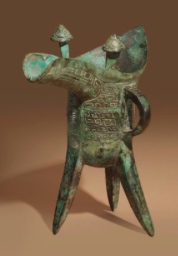
jue

China: jue libation vessel, Shang/Zhou dynasty.

Reception history has perhaps become a rather more established feature of visual culture (including the history of art) than for musical culture. The term “visual culture” itself reflects a more mature holistic approach, like that of “soundscape” for ritual music in China, and indeed the whole inclusive brief of ethnomusicology.

As I dip into Marcia Pointon’s History of art; a student’s handbook, she soon observes:

The meanings of the painting will be determined by where, how and by whom it is consumed.
[..]
Art historians are interested not only with objects with but with processes. […They] concern themselves with visual communication whatever its intended audiences or consumers.
[…]
Art historians investigate the origins, the connections between “high” and “low”, and the ways in which imagery such as this contributes to our understanding of a period of historical time, whether in the present or in the far distant past.

On one hand, as with music, we envy earlier viewers/audiences their familiarity with subjects/languages that we can no longer interpret easily, if at all. At the same time we have also lost the shock of the new.

We’re familiar with the idea of restoring old paintings to their original colours—negating their history?—but we can’t perform a similar operation on our eyes and minds. Doubtless there’s a vast scholarly literature on this, but one might be reluctant to remove the patina from Shang bronzes, restoring them to the condition of glossy new Italian kitchenware. For patina, see also Richard Taruskin’s comments on Gardiner’s Schumann.

Just as most people who experienced art in 15th-century “Italy” had access mainly to those works on public display in their particular city, so, long before CDs and youtube, Leipzig dwellers heard little music apart from Bach and the pieces by other composers that he selected, mostly within the Leipzig tradition. Some creators themselves might be so lucky as to travel, gaining a certain experience of other styles. And in both art forms, a majority of such work was contemporary—even the instruments that baroque musicians played were mostly modern.

To try and get to grips with what art and music meant at the time doesn’t make us able to experience it as did the “consumers” of the day—we can’t unsee Monet, TV, or skyscrapers any more than we can unhear Mahler and punk. And I hope our teeth are in a better state.

* * *

I also admire

  • Michael Jacobs, Everything is happening: journey into a painting (2015), [1]

on Velázquez’s Las Meninas (1656)—with chapters by his friend Ed Vulliamy added after Jacobs’ untimely death. As Vulliamy observes,

In this half-book, beyond a fragment, we have not only a typically Jacobs-esque narrative of his life with Velázquez—one of chance encounters, aperitifs, musings and restless autobiography—but also this manifesto for the liberation of how we look at painting. (p.146)

Jacobs does that thing that people always do in blurbs:

cutting a picaresque swathe

—and the picaro simile is fitting. Jacobs was constantly deploring the “sunless” world of academia. He documents the shift in art history that was then occurring widely in scholarship:

Many of the younger lecturers and researchers, conscious perhaps of the lingering popular image of their discipline as a precious and elitist pursuit, began adopting what rapidly became the prevailing art-historical methodology—a pseudo-Marxist one. People who might once have become connoisseurs in tweeds reinvented themselves as boiler-suited proselytisers dedicated to exposing in art revealing traces of the social conditions of a period, often resorting in the process to a hermetic prose peppered with terms I had first come across in Foucault, such as “discourses” and “the gaze”. (p.44)

Oh all right then, I’ll go for a hat-trick:

You think I know Fuck Nothing, but I know FOUCAULT!

(Note on pronunciation: whereas I can only hear “You think I know Fuck Nothing, but I know FUCK ALL!” in the caricature-Nazi accent of Karl Böhm, the above bon mot clearly belongs on the foam-specked lips of an angry young Alexei Sayle.)

By contrast with the treatments of Baxendall and Lee (themselves quite different), Jacobs’ approach is based on including “us”, the viewers, as agents in the picture—whatever his reservations, he was inspired by Foucault.

Proust, writing on Rembrandt, had spoken about paintings as being not just beautiful objects but also the thoughts they inspired in their viewers. [Svetlana] Alpers was cited as saying that “looking at a work in a museum and looking at other people looking at a work in a museum is like taking part in the life story of this work and contributing to it.”

Still, Jacobs ploughed his own furrow. As Paul Stirton recalls,

Michael always believed in the wonder of looking. Yes, there may be a profound message in a painting, but Michael didn’t want to dress it up in philosophical trappings. By all means approach a painting in a scholarly manner, but never lose the wonder. (pp.179–80)

In his book about artists’ colonies at the end of the nineteenth century, The good and simple life, he is scathing about how most painters wanting to live that life considered “the downtrodden country folk … as little more than quaint components of the rural scene. Their social conscience was as little stirred by them as by pipe-playing goatherds in the Roman Campagna.” At moments, though he is the antithesis of a “political” art critic, Michael’s writing reads like Walter Benjamin fresh from his Frankfurt School, but with a glass of Sangria in his hand. (p.182)

From both his own experience and Thomas Struth’s photos of the public response to Las Meninas over several days, Jacobs recalls

All the faces of the bored, the transfixed, the distracted, the deeply serious, the adults whose only concern was to get the perfect snap, the school children who were wondering when their ordeal would be over, the others who fooled around or diligently made notes, the few whose lives were being transformed. (pp.69–70)

So (suitably) like Monty Python’s Proust sketch, Jacobs never quite got as far as discussing the painting “itself”—not so much due to his death, as by virtue of his propensity to dwell on personal reminiscences on modern Spanish history and his own relationship with it and the painting.

He remarks wryly on the images of Spain current in his youth, reminding me of images of China, not to mention Away from it all. He recalls a train journey in the early years of Spain’s transition to democracy, when he was reading a book that

gave no hint of Spain’s repressive military regime, but instead referred to the country’s “growing agricultural and industrial prosperity” and to the “happy coexistence of the old and the new”.
The book’s role as a catalyst for my early, life-changing Spanish journeys was due entirely to its black-and-white photos, which neglected this supposedly modern and prosperous country in favour of basket-laden donkeys, adobe-walled farms, palm groves, sun-scorched white alleys and other such images that endowed Spain with a predominantly medieval and African look. Even Madrid, so regularly criticized by past travellers for its brash modernity, was made to seem more exotic and rural than any other western city I had seen. The sole street-scene was one of a large flock of sheep being herded in front of a neo-Baroque, cathedral-like post-office building popularly dubbed “Our Lady of the Post”. (p.60)

He discusses the fortunes of Las Meninas during the civil war, as well as more recent events:

… closed shops wherever you looked, restaurants offering “crisis menus”, daily protests, and graffiti and posters revealing grievances with everyone and everything, from the monarchy, to the banks, to the multinationals, to the European Community, to the politicians who made Spain the country with the the highest number of politicians per capita in Europe. (p.72)

And he describes the painting’s changing frames and settings:

The Sala Velázquez was like a shrine. […] On entering this inner sanctuary, people took off their hats, spoke in low voices, and tiptoed around so as not to destroy the atmosphere of worshipful solemnity. Every so often someone would be observed bursting into tears.
There were of course others visitors who disliked this room’s churchlike theatricality and the sentimentally nationalistic and mindless emotional reactions it inspired. (p.115)

So as it stands, Jacobs’ book is concerned more with reception history than with the society of the time of the creation of Las Meninas (though he explored this elsewhere, and doubtless had voluminous notes on the painting to supplement existing research). Background on the society of Velazquez’s day is provided mainly by Vulliamy’s fine Introduction. Evoking Lee, he notes that Seville, far from “the great Babylon of Spain, map of all nations”,

was also headquarters of the Inquisition. Indeed, the “Golden Age” which followed the unification of Spain in 1492 was accomplished, writes Michael Jacobs, “in a spirit of brutal fanaticism”, with the expulsion or enforced conversion of Andalucia’s many Moors and Jews. This dogmatism and what we would now call “ethnic cleansing” [here Vulliamy writes with traumatic personal experience in Bosnia] had a major and insidious demographic impact on the city, yet Seville remained characterized by “an architecture … of great contrasts”, wrote Michael, “for alongside the Muslim-inspired love of decorative arts richness is an inherently Spanish love of the austere”.

For a similar approach that sets forth from 17th-century Delft to go global, note Timothy Brook’s brilliant book Vermeer’s hat.

    * * *
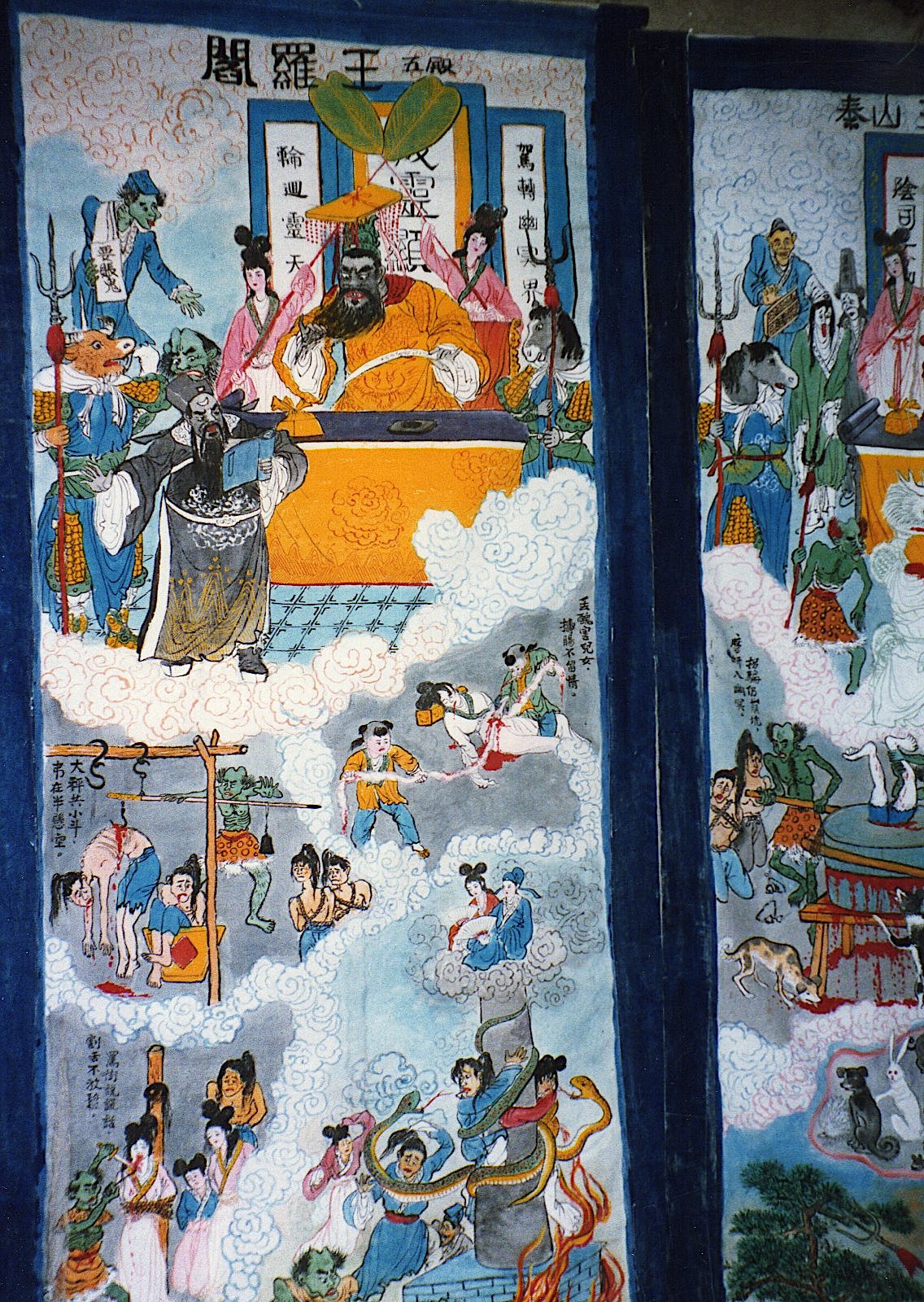
GL Ten Kings

Yama King painting from Ten Kings series, North Gaoluo 1990.

All these books incorporate ethnography and reception history far more than the fusty old reified appreciation of “autonomous” objets d’art. For China,

  • Craig Clunas, Art in China (1st edition 1997)

makes a useful, wide-ranging, and thoughtful introduction, exploring themes like genres, techniques, functions, patrons, markets, producers, class, and gender.

For instance, discussing a wooden sculpture of the female deity Guanyin from Shanxi carved c1200 CE, he describes its original multi-coloured decoration:

All this added to the immediacy of the image for worshippers, but it was covered over at some point, probably about 300–400 years later in the Ming dynasty (1368–1644), when it was painted gold in imitation of a gilded metal sculpture. Such an aesthetic change must have gone hand in hand with some change in the understanding of what a successful image ought to look like, a change at the level of both popular belief and the attitudes of religious professionals which is as yet hardly understood. (pp.56–7)

Whereas much scholarship remains based on artefacts in museums and galleries, fieldwork reveals a vast further repository of images still used in ritual practice. One thinks of the vast hoard of religious statuettes found in rural Hunan, subject of fine research.

And apart from statues and temple murals, ritual paintings depicting the Ten Kings and the punishments of the underworld—hung out for temple fairs and funerals—suggest comparisons with Christian equivalents in medieval and Renaissance art. And they too must have changed their meanings for audiences over recent centuries. At least, illiterate rural audiences would be affected rather deeply, and modern viewers may be underwhelmed now that they are saturated with horror films and video games. But we learn rather little about this from the scholarship; Daoist culture tends to be reified. Meanwhile, household ritual specialists have continued to perform Ten Kings scriptures for funerals.

It reminds me, challenged as I am in the field of visual culture, that ritual images through the ages also need unpacking—assessing changing meanings there too, including early sources for music iconography.

This has a lot to do with reception history. Such studies of visual culture may feed into our experience of Bach and all kinds of early and folk music. If even scholars of WAM and Renaissance painting feel it germane, then studies of Chinese musical cultures, and of Daoist ritual, shouldn’t lag behind.

* * *

But I’d like to end with some more populist vignettes (“Typical!”) on the meanings of art.

Among the numerous virtues of Alan Bennett is his accessible promotion of painting, found in Untold Stories (pp.453–514) [2]notably a talk he gave for the National Gallery, with the fine title “Going to the pictures”. These essays are also a passionate plea for culture to remain accessible, a rebuke to mercenary philistine governments.

He recalls an inauspicious early lecture he gave at Oxford on Richard II:

At the conclusion of this less than exciting paper I asked if there were any questions. There was an endless silence until finally one timid undergraduate at the back put up his hand.
“Could you tell me where you bought your shoes?”

 We’ve all been there. But his remarks on painting are priceless:

Somewhere in the National Gallery I’d like there to be a notice saying, “You don’t have to like everything”. When you’re appointed a trustee, the director, Neil MacGregor, takes you round on an introductory tour. Mine was at 9am, when I find it hard to look the milkman in the eye, let alone a Titian.

We were passing through the North Wing, I remember, and Neil was about to take me into one of the rooms when I said, “Oh, I don’t like Dutch pictures”, thereby seeming to dismiss Vermeer, De Hooch and indeed Rembrandt. And I saw a look of brief alarm pass over his face as if to say. “Who is this joker we’ve appointed?”

He cites his play A question of attribution, about (Michael Jacobs’ teacher) Anthony Blunt:

“What am I supposed to feel?” asks the policeman about going into the National Gallery.
“What do you feel?” asks Blunt.
“Baffled,” says Chubb, “and also knackered” … this last remark very much from the heart.
[… Blunt] tries to explain that the history of art shouldn’t be seen as simply a progress towards accurate or realistic reprentatation.
“Do we say Giotto isn’t a patch on Michelangelo because his figures are less lifelike?”
“Michelangelo?” says Chubb. “I don’t think his figures are lifelike frankly. The women aren’t. They’re just like men with tits. And the tits look as if they’ve been put on with an ice cream scoop. Has nobody pointed that out?”
“Not quite in those terms.”

In a *** passage AB blends hilarity with insight, evoking Baxandall:

In A question of attribution the Queen is made to have some doubts about paintings of the Annunciation.
“There are quite a lot of them,” says the Queen. “When we visited Florence we were taken round the art gallery there and well … I won’t say Annunciations were two a penny but they were certainly quite thick on the ground. And not all of them very convincing. My husband remarked that one of them looked to him like the messenger arriving from Littlewoods Pools. And that the Virgin was protesting that she had put a cross for no publicity.”
This last remark, though given to the Duke of Edinburgh, was actually another flag of distress, stemming from my unsuccessful attempts to assimilate and remember an article about the various positions of the Virgin’s hand, which are an elaborate semaphore of her feelings, a semaphore instantly understandable to contemporaries but, short of elaborate exposition, lost on us today. It’s a pretty out-of-the-way corner of art history but it leads me on to another question and another worry.
Floundering through some unreadable work on art history I’ve sometimes allowed myself the philistine thought that these elaborate expositions—gestures echoing other gestures, one picture calling up another and all underpinned with classical myth—that surely contemporaries could not have had all this at their fingertips or grasped by instinct what we can only attain by painstaking study and explication, and that this is pictures being given what’s been called “over meaning”. What made me repent, though, was when I started to think about my childhood and going to a different kind of pictures, the cinema.
When I was a boy we went to the pictures at least twice a week as most families did then, regardless of the merits of the film. I must have seen Citizen Kane when it came round for the first time, but with no thought that, apart from it being more boring, this was a different order of picture from George Formby, say, or Will Hay. And going to the pictures like this, unthinkingly, taking what was on offer week in week out was, I can see now, a sort of education, and induction into the subtle and complicated and not always conventional moral scheme that prevailed in the world of the cinema then, and which persisted with very little change until the early sixties.

Unpacking the complex attributes of two stock characters, he concludes:

The 20th-century audience had only to see a stock character on the screen to know instinctively what moral luggage he or she was carrying, the past they had, the future they could expect. And this was after, if one includes the silent films, not more than thirty years of going to the pictures. In the sixteenth century the audience or congregation would have been going to the pictures for 500 years at least, so how much more instinctive and instantaneous would their responses have been, how readily and unthinkingly they would have been able to decode their pictures—just as, as a not very precocious child of eight, I could decode mine.
And while it’s not yet true that the films of the thirties and forties would need decoding for a child of the present day, nevertheless that time may come; the period of settled morality and accepted beliefs which produced such films is as much over now as is the set of beliefs and assumptions that produced an allegory as complicated and difficult, for us at any rate, as Bronzino’s Allegory of Venus and Cupid.

For a similar case, see here.

* * *

Apart from any intrinsic merit this little tour of visual culture may have, for me it also suggests several angles barely explored for Daoist ritual.

OK then, just one last aperçu—this time from Kenneth Clark (thanks, Rod). On the contrast between reified art and social reception, here’s his typically urbane formulation in Civilization:

At some time in the 9th century one could have looked down the Seine and seen the prow of a Viking ship coming up the river. Looked at today in the British Museum, it is a powerful work of art; but to the mother of a family trying to settle down in her little hut, it would have seemed less agreeable.

On behalf of the splendid Craig ClunasI accept full responsibility for any inanities in this post.
If you all play your cards right, I promise not to do this kind of thing too often. Craig and any other art historians who have managed to read this far might care to exact revenge by writing Specious Flapdoodle
[famous 19th-century Baptist pastor—Ed.] about early music or Daoist ritual… 


** Not, may I just say, the kind of moronic homespun language used by one maniacal Führer about another: “smart cookie” or “total nut-job”? Roll over Cicero.

[1] Some stimulating reviews may be found herehere, and here.
[2] Online excerpts include http://www.independent.co.uk/life-style/i-know-what-i-like-but-im-not-sure-about-art-1620866.html and https://www.lrb.co.uk/v20/n07/alan-bennett/alan-bennett-chooses-four-paintings-for-schools.

More authorship

Further to Ted Ibert’s Pique Nique, I just got a promo from Amazon (“based on your recent activity, we thought you might be interested in this”. Pah!):

Homer

Helpful of them to clarify the author underneath, too. My “recent activity” evidently led them to believe that I might still be confused.

Cf. the TV quiz question (which floored some contestants)

Who wrote Beethoven’s 5th symphony?

Mind you, in the case of Homer, they were right to protest too much. Rather than being “composed” by a single blind bard, the “work” that has come down to us seems to have been more like a fixed version of a fluid oral tradition. Amazon’s insistence recalls the famous story of the dogged convict in the prison exam.

Chords

All in a chord is a stimulating series of short programmes on BBC Radio 3:

http://www.bbc.co.uk/programmes/b088tzkv/episodes/guide

including the horrifying Scream from Mahler’s 10th symphony (above); The Rite of Spring; and an exploration of the minimalist style through Terry Riley’s In C. Making connections between them, Ivan Hewitt and his discussants provide fine social context, to boot—”harmony as a reflection of history”.

Meanwhile, most of the world’s societies have always got along perfectly well without harmony. “But that’s not important right now“.

I’ve always understood harmonic language more by instinct and experience than by theory. I trust plenty of other orchestral musos are more erudite about chords and harmony, but it is jazzers who are most deeply imbued in the language—and not just the keyboard players.

Passion at the Proms

Of course the Bach Passions are a regular subject of imaginative modern re-creations (Jonathan Miller, Sellars–Rattle, ENO, and so on); but the climax of the Proms Reformation Day on Sunday, John Butt’s version of the John Passion, in a certain liturgical context, was special. Note also his book Playing with history.

Like Daoist ritual (see many posts on this blog, including my starter page on Bach!), Passions in Thuringia for Good Friday vespers varied regionally, and evolved. Of course we now attend them in “concerts”. The Albert Hall in 2017 is clearly not the Nikolaikirche in 1739—although the audience/congregation was apparently of a similar size. But having read Taruskin, and Butt’s own astute views on the HIP movement, surely we can welcome such renditions; it’s a stimulating way for us (“miserable sinners”) to experience the work anew.

Bach revised the John Passion several times; Butt recreated an “ideal” sequence based on the 1739 version (which was never actually performed!), directing with an unaffected schoolmasterly air that indeed evoked Bach the Cantor himself (cf. Robert Levin’s incarnation of Mozart).

As in Bach’s Leipzig, both parts of the Passion opened and closed with organ music and sung chorales. By contrast with the concert version (finely evoked by John Eliot Gardiner, Music in the castle of heaven, p.343), when the orchestra plunged into the anguished dissonances of the first chorus of Bach’s music, it makes you think how a congregation still unaccustomed to their new Cantor’s style, yet unprepared (though not quite—see Gardiner, pp.347–9) for the constant flow of extraordinary creativity that they were to enjoy for the next twenty-seven years, must have thought (in 18th-century Thuringian), “WTF?!” (cf. The ritual calendar).

The focal point of the Good Friday Vespers in Leipzig was actually the long sermon in between the two parts of the Passion music, which at the Albert Hall was thankfully replaced by an interval (glass of wine, ice-cream…). I wonder if a talk by someone like Malala might be a suitable further exploration—since many in the audience will experience the Passion deeply despite being less than devout religiously.

Do listen to John Butt’s remarks in the interval of the TV broadcast too (from 53.10)—and I like the analogy of Richard Coles (nay, “the Reverend Richard Coles”—clever choice of presenter, BBC!) with the mass singing at Cardiff Arms Park (more ritual and sport).

Given the rowdy behaviour of Leipzig congregations in Bach’s day, perhaps the Prom audience should have been a tad less attentive?! After we had all joined in singing the chorale O lamb of God, applause at the interval felt a bit weird, but it was entirely natural as a novel response to the life-affirming ending—after the beautiful motet Ecce quomodo moritur by Jacobus Handl (1550–91!), a blessing and response, Bach’s own organ chorale prelude Nun danket alle Gott, and a final rousing rendition of Now thank we all our God from the whole hall (a tune, suitably, that most members of the “audience” would know), accompanied by organ at exhilarating full throttle—all confirming joy at atonement.

By comparison, the great Passion performances of recent decades may seem more immaculate and micro-managed (“Chanel No.5″), but they remain deeply moving—like Gardiner’s version (also from the Proms, with the superlative Mark Padmore (note this roundup). But this performance had a Lutheran simplicity that was differently moving.

Butt also notes “the different levels of singing cultivated in the church and school environments of Bach’s time,” from basic to more advanced pupils and indeed the congregation (again, cf. Butt’s interval remarks), so that the liturgy accommodated the whole community:

What we hear in concert performance is only the tip of a much larger iceberg, a culture of singing and participation that can only be fleetingly evoked in a modern performance.

This reminds me of the different levels of accomplishment within (you guessed it) a Daoist ritual group:

This dilution of personnel is a recent change, but before 1949 too, Daoist groups might recruit some extra percussionists who would gradually pick up the basic of the vocal liturgy. The substantial group of Li Qing’s senior colleagues from the 1930s didn’t come from his own family, but they had all trained from young with his uncles, and went on to become fine Daoists. In Beijing before 1949 some Daoist and Buddhist priests specialized more in the vocal liturgy, others mainly in the melodic instruments, and some village men spent time serving the temples there mainly as instrumentalists. Thus there have long been different levels of expertise, both between groups and within a single group. In the imperial era one imagines that some groups in larger towns, serving wealthy patrons regularly, might have more abstruse knowledge than poor village bands. But even within a single group—in the courts and elite temples as well as rural household groups like the Li family—there would have been a variety of accomplishments. Both temple and household groups often included a young boy just starting out on the gong, still unfamiliar with the ritual texts. (my book, pp.324–5).

Again like a Daoist ritual, the recreated Passion also features different styles of old and new music, not such an evident feature of the usual concert version. And it reminds me rather of the Li family Daoists’ concert performances of excerpts from their lengthy funeral rituals, uprooted from their liturgical context—remember, the Li band gave wonderful performances in Leipzig in 2013.

In John Butt’s John Passion at least we get an impression, in a secular concert setting, of the power of Bach’s contribution to Good Friday Vespers.

For the 2024 Prom performance of Suzuki and BCJ, click here.

More orchestral drôlerie

As part of our ongoing series on the war of attrition between musos and conductors, not unlike the celebrated story about the opening of the Beethoven violin concerto:

During a rehearsal, as some tedious conductor insisted on honing the opening phrase of some symphony ad nauseam, making us repeat the first four bars for what seemed like hours, one player eventually piped up from the back:

“Excuse me Maestro—I believe bar 5 is rather good too!”

Note again the exemplary sarcastic deployment of the term Maestro.

Metamorphosen

R Strauss

The Aurora orchestra recently performed Richard Strauss’s Metamorphosen at the Proms—where, like the John Wilson orchestra, it has made an invigorating recent addition to their house bands. The piece is always a moving experience, not least thanks to its intimate chamber form, with eloquent elegiac solo strings.

(I wasn’t even going to mention their Eroica in the second half. But with the band standing, now playing from memory before a rapt Prom audience, it had all the electrifying directness of involvement that you get from a live jazz big band. As with the orchestra’s other memorized renditions, however inauthentic such a practice may be, this is the 21st century, and this is one way of communicating now.)

* * *

Strauss composed Metamorphosen during the closing months of World War Two, from August 1944 to April 1945—just as Nazi panic at imminent disaster was leading to ever-more inhuman violence. It was commissioned by Paul Sacher, to whom Strauss dedicated it.

Much I as love many of Richard Strauss’s works, in that simplistic binary trap of ours I find myself siding firmly with Mahler.

Alex Ross devotes the first chapter of The rest is noise to “The golden age: Strauss, Mahler, and the fin de siècle”. Both composers “released images of fragmentation and collapse”, yet whereas Strauss (“earthy, self-satisfied, more than a little cynical”) often seems sumptuous and glossy, Mahler was always heartfelt. Sure, I found it overwhelming to play Elektra (composed in 1909! Just as Mahler was being fêted in New York) in Dresden in 1980. And everyone knows the opening of Also sprach Zarathustrabut how many of us bask in the passage that immediately follows it, some of the most sumptuous string writing ever? Metamorphosen is among rather few of Strauss’s works where I can detect true sincerity. See also under La voix humaine.

* * *

Reading through endless discussions of Strauss’s relationship with Nazism, I’m little the wiser. (For context, see Ross, pp.333–70).

Both Nazi official and anti-Nazi émigrés made the same complaint about Strauss—that he acted like “a total bystander”.

As Michael White observes,

As for Furtwängler and the others who performed under the swastika, there was an undoubted mixture of foolishness, delusion, opportunism and cowardice. You can say of all these people that they should have had more courage, more integrity, and been prepared to sacrifice careers, futures and maybe lives. But that’s a big ask. What would you or I have done? I like to think I’d have been brave, but I can only thank God that I’ve never had to find out.”

Strauss was four years younger than Mahler, but outlived him by thirty-eight years. Who knows how, or if, Mahler would have adapted to Nazism—having already been welcomed to New York from 1908, one imagines him seeking refuge there. He (rather than a host of imitators, or his estate) might have profited from the film-music boom for which he was too early, but it’s intriguing to wonder how his work might have developed over a further three decades or more.

* * *

In 1947, the year after the first performance of Metamorphosen, with Europe in ruins, the Berlin Phil recorded the threnody (“authentically”) under Furtwängler (just imagine):

For me it was another formative experience to perform it at Cambridge in 1974 under Charles Groves—in the same concert where we played the summery Mozart C major piano concerto.

As a late flowering of depth and intimacy, Metamorphosen belongs with the Four last songs. Here’s Kirsten Flagstad singing Beim Schlafengehen with Furtwängler and the Philharmonia in London in 1950—when the world, however deeply scarred, was being transfigured again:

For more on the Four last songs, see here; and for Heldenleben, here (and note); for a more recent transformation, here. Cf. Schoenberg’s Verkaerte nacht.

Ritual and sport: the haka

haka

Since I am wont to make blithe analogies between the performances of ritual and sport, the pre-match haka of the All Black rugby team makes a fine illustration, also revealing the enduring depth of folk culture. In its constant adaptations, both in sporting and other ceremonial versions, it’s deeply impressive.

The wiki articles on the traditional and sporting versions make a useful introduction, and there are many fine YouTube clips.

As a Māori ritual war cry the haka was originally performed by warriors before a battle, proclaiming their strength and prowess in order to intimidate the opposition. But haka are also performed for diverse social functions: welcoming distinguished guests, funerals, weddings, or to acknowledge great achievements, and kapa haka performance groups are common in schools. Some haka are performed by women.

Its social use has become widespread. In 2012 soldiers from the Royal New Zealand Infantry Regiment performing a haka for fallen comrades killed in action in Afghanistan; and in 2015 hundreds of students performed a haka at the funeral of their high-school teacher in Palmerston, New Zealand:

In 2016, on the 15th anniversary of 9/11, New Zealand firefighters honoured the victims with a powerful haka.

And here’s a moving recent wedding haka:

In 2019 students performed a haka to commemorate the Christchurch shootings:

And the haka was performed for the Standing Rock protests of 2016 (link here if it doesn’t respond below):

https://www.youtube.com/watch?v=oCVg3Av6uRQHere

* * *

The New Zealand native football team first performed a haka against Surrey (!) on a UK tour in 1888. The All Blacks have performed it since 1905. After witnessing the haka in Paris in 1925, James Joyce adapted it in Finnegan’s wake. For the 1954 version at Twickenham and evolution in the wake of TV, see here. The sequence below begins with 1922 and 1925 renditions, passing swiftly over the comically inept low point of 1973, to the increasingly choreographed versions of recent years:

So it’s no “living fossil”, being subject to regular adaptation. In 2005, to great acclaim, as an alternative to the usual Ka mate the All Blacks, led by Tana Umaga, introduced the new haka Kapa o pango, modified by Derek Lardelli from the 1924 Ko niu tireni:

Its adaptation to the sporting event compares favourably with Chinese concert versions of ritual. However it’s done, it never descends to the kitsch of such adaptations—it’s always performed with great intensity and integrity, giving an impressive glimpse of a serious ritual world. The pride that they take in performing it with such practised commitment contrasts strangely with the casual way in which they sing the national anthem that precedes it—even the Brazilian anthem doesn’t inspire its footballers to such intensity.

As a spurious link to a fine story, I note that the team performed a kangaroo version in July 1903:

Tena koe, Kangaroo                 How are you, Kangaroo
Tupoto koe, Kangaroo!           You look out, Kangaroo!
Niu Tireni tenei haere nei       New Zealand is invading you
Au Au Aue a!                             Woe woe woe to you!

* * *

From the sublime to the ridiculous… Several YouTube wags have suggested suitable responses from opposing teams: a burst of Riverdance by the Irish team, or (from the English) the hop-skip-hand-behind-the-back routine in Morecambe and Wise’s Bring me sunshine.

Morris dancing might unsettle the All Blacks too (music added later; in memoriam George Butterworth, killed in the Great War):

The Intangible Cultural Heritage rears its ugly head again—perhaps the English team could emulate the Britannia Coconut Dancers of Bacup, a 150-year-old troupe of Lancastrian clog dancers.
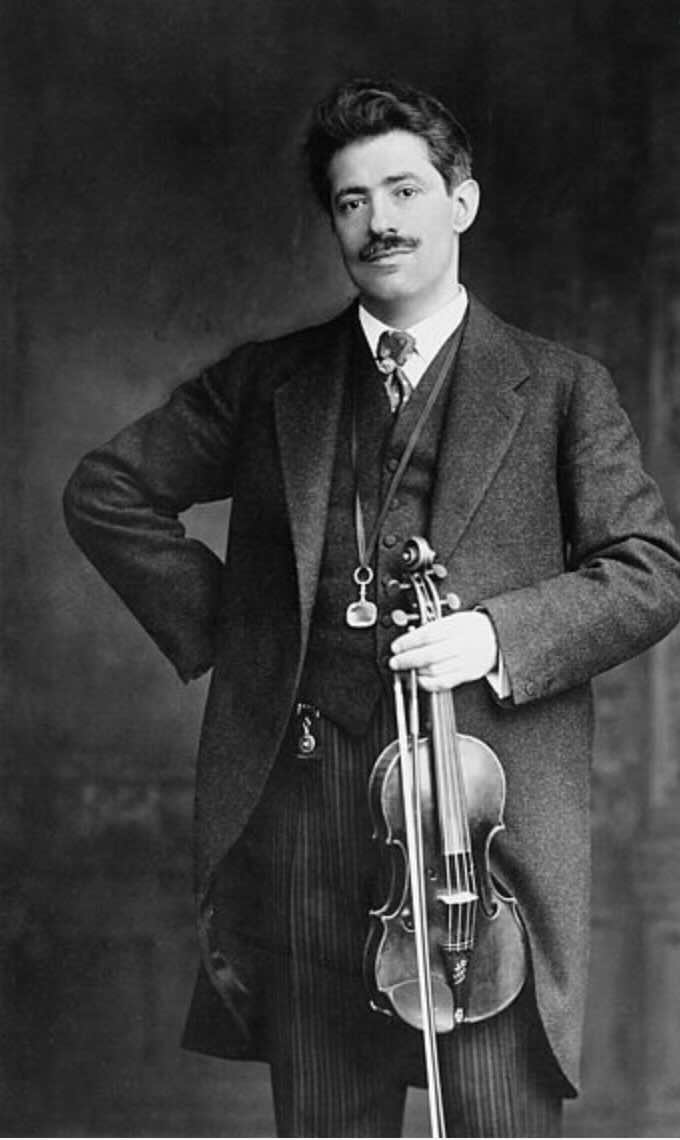
Not quite à propos, and Don’t Try This at Home—or in the Matthew Passion:

As a further riposte to the haka, even I can’t quite imagine the Daoist “Steps of Yu” (Yubu 禹步), but how about the Sacrificial dance of The Rite of Spring, complete with Roerich’s costumes and Nijinsky’s choreography? That really might take the lead out of the All Black pencil.

But we should celebrate the deeply serious nature of folk culture, and the evolving transmission of performances like the haka.

See also this helpful guide to the rules of rugby.

More Rachmaninoff

I’ve already posted a wonderful performance of Rachmaninoff’s 2nd symphony, but the recent Prom included another moving version, conducted by Thomas Dausgaard. I Like the Cut of his Jib, as Adrian Chiles observed prophetically about Guus Hiddink’s managing of the South Korean football team in 2002. Nor is the BBC Scottish to be sniffed at—I loved their Mahler 5 at the 2015 Proms, with Donald Runnicles.

With typical Proms flair, the concert opened with concert versions of Orthodox liturgy sung by the Latvian radio choir. After Rachmaninoff’s 3rd piano concerto, the encore of Vocalise led me to his own 1929 studio recording of his orchestral version:

Of all versions, you can’t beat it on theremin—here’s the divine Clara Rockmore:


And the theremin might lead us to Messiaen‘s ondes martenot

A Swedish psalm

Real group

Following my thoughts on musical complexity, and the taxonomy of singing:

While I rejoice in the intensity and economical language of much popular music, generally I’m underwhelmed by the upright Victorian simplicity of Christian hymns—although of course Bach’s chorales are in another league.

The Swedish psalm Härlig Är Jorden, sung a cappella, is Complete Perfection, Pure Simplicity:

PsalmGlorious is the Earth
Glorious is the Earth, glorious is God’s heaven,
Beautiful is the pilgrimage of souls
Through the fair kingdoms of the Earth
We go to paradise with song

 Ages come, ages go
Generation follows generation
Never is the sound from Heaven silenced
Of the soul’s glad pilgrim-song

 The angels sang it first for shepherds of the land
Beautifully it rang out from soul to soul
People, rejoice, the Saviour has come
The Lord bids peace upon the Earth

BTW, notwithstanding the critiques of Alan Lomax’s ambitious Cantometrics project, this does seem to illustrate one of his notable insights:

that sexually restrictive and highly punitive societies correlated with degree of vocal tension. The tendency to sing together in groups, tonal cohesiveness, and the likelihood of polyphonic singing were all associated with fewer restrictions on women. Multipart singing occurs in societies where the sexes have a complementary relationship.

The Real Group sings the psalm divinely, but it can be just as moving in less polished amateur versions. This is nothing to do with our recent British penchant for Scandi noir. Of course, not being Swedish, I can’t assess what layers of association it may have for various strata of Swedish society today. For me, the Festival of Nine Lessons and Carols from King’s, another likely image of religious purity (and another of those changing traditions à la Hobsbawm), is highly conflicted—Dudley Moore expressed this well, if not entirely reverently. I doubt if all young Russian liberals are so entranced by Orthodox liturgy as I was on Mount Athos.

So as with Bach, there is no “correct” way to experience a piece like this: it will vary by class, time, region, and so on.

While we’re relishing the singing of The Real Group, I can never resist a bit of Bill Evans—led by Margareta Bengtson:

Click here for another brilliant song from the Real Group.

More Chinese wordplay, and a poem

or
What’s in a name?

My Chinese name Zhong Sidi 鍾思第 was given to me by the great Tang-music scholar Yin Falu 陰[阴]法鲁 (1915–2002) at my first supervision with him during my 1986 study-period at Peking University.

“Zhong” (Bell) approximates to my surname Jones; while itself a common surname, for me it has nice echoes of both ritual and music, evoking both Zhong Kui 鍾馗 the ugly drunken demon-queller (Ha!) and the woodcutter Zhong Ziqi 鍾子期, zhiyin soul-mate of qin zither master Bo Ya in the famous ancient story. And even Zhongli Quan 鍾離權, one of the Eight Immortals—a bit of a stretch, perhaps, since Zhongli is a rare double-surname (see here), but hey. Not to mention the huangzhong 黃鍾 and linzhong 林鍾 pitches of the ancient tonal system!

“Sidi” is short for “Sidifen”, a transliteration of “Stephen”. * Professor Yin chose the characters 思第, which in classical Chinese mean something like “mindful of advancement”—which is elegant but somewhat ironic, since I’ve always had enough of the hippy in me to mitigate against any worldly success (it never occurred to me that I might ever get a job, and sure enough I never did).

Without the bamboo radical at the top, the character di 弟 following the si would be a female name: “wanting a little brother”—one that peasants, disapppointed at having a daughter (yeah I know), do indeed sometimes adopt. And one cultural official in Yanggao, moved to write an article about my fieldwork there, somehow miswrote the character as 娣, with the female radical at the side. When I showed it to Li Manshan, we had another typical exchange:

Me: “WTF?! Doesn’t he know how to write my bloody name by now?”

Li Manshan (peering pensively at the character): “Maybe he thinks you’re a hermaphrodite…”

Anyway, as my interests soon transferred from early music history to living traditions of folk music (see here, and here), Yin Falu was remarkably tolerant of my frequent absences to go and hang out with peasants—as was Yuan Jingfang, my supervisor at the Central Conservatoire the following year. I’m also deeply grateful that Yin Falu introduced me early on to Tian Qing (then a lowly and impoverished research student!) and the Music Research Institute, beginning a fruitful long-term collaboration.

* * *

One of the most treasured gifts I’ve received is a scroll that the ritual association of South Gaoluo gave me in 1995 on the eve of my return to Europe (see my Plucking the winds, pp.236–8). They went to great trouble to have a piece of calligraphy made for me, which illustrates their ingenuity. First they “collectively” composed a poem, led by Cai Yurun and the urbane brothers Shan Ming and Shan Ling, most literate of the musicians. They then travelled to town to buy good-quality paper, went and found artistic Shan Fuyi (peasant xiucai litterateur, himself a great authority on the village’s history) at his work-unit and got him to do the calligraphy. To have the paper mounted, they then took the bus to Baoding, where they had a contact from Yongle village who had worked in the prestigious Rongbaozhai studio in Beijing. All this was a complex process, expressing their appreciation of our relationship.

GL scroll

The seven-word quatrain itself shows not only their literary flair but also their own perception of the significance of my fieldwork:

How rare the strains of ancient music
Gladly meeting the spring breeze, blowing is reborn
As the proper music of the ancient Chinese is transmitted beyond the seas
First to be praised is Stephen Jones

There are several charming puns here: in “blowing is reborn” (chui you sheng), “blowing” alludes to the breeze but also clearly to their wind music, and the “born” of “reborn” is homophonous with sheng 笙 the mouth-organ. The last line, impossible to translate, incorporates the device they had been seeking all along: the character di of my Chinese name Zhong Sidi is also an ordinal (as in diyi “first”, di’er “second”, and so on), so by playing with the caesura they managed to incorporate it into a meaningful phrase.

They couldn’t have thought of a better gift. I adore it, not for its flattery—foreigners in China are only too accustomed to receiving extravagant and groundless praise—but because they expressed their appreciation of our bond with such creative energy. In our everyday dealings, the musicians are all too used to me forestalling any incipient flattery by my favourite Chinese phrase, beng geiwo lai zheyitao 甭给我来这一套 “cut the crap”. This expression also comes in handy whenever someone is so sentimentally drunk that they, suddenly moved by the sheer fun of our fieldwork, rashly let out the awful Chinese cliché “international cultural exchange“.

My friends call me “Old Jonesy” (Laozhong 老钟), which is also a jocular way for Chinese people to refer to themselves (老中, for Zhongguo 中国 China) as opposed to laowai 老外 “foreigner”, even “Wog”. Laozhong then leads onto Naozhong 闹钟 “alarm clock”. (For nicknames in the music biz, see here.)

For Craig Clunas’s Chinese name, click here.


* Talking of transliterations of foreign names (see here and here), “Stephen” is conventionally rendered as 斯蒂芬. That last fen character is shared with Beethoven (Beiduofen 贝多芬), whose characters, following the brilliant (if controversial) gender analysis by Susan McClary, I like instead to render as 背多粪 “shouldering a load of shit”—“but that’s not important right now”.