Earworms can be most insistent. For some reason my current one is Tico tico no fubá, composed in 1917 by Zequinha de Abreu. I first got to know it via the Nimbus CD Choros from Brazil by Os Ingênuos, but recently I’ve been listening to a variety of performances.
There’s much to admire in the choro genre (e.g. this intro on YouTube)—which despite its title (“lament”), often displays great exuberance. With its zany syncops, most versions of Tico tico are mildly manic, but the first recording, by Orquestra Colbaz in 1931, is leisurely (cf. ragtime) and beguilingly genteel:
By the time the piece took off internationally it was becoming virtuosic and up-tempo—like this performance from Bathing beauty (1944) with Ethel Smith on Hammond organ:
The Portuguese lyrics came later, as sung by Carmen Miranda in Copacabana (1947)—with Groucho Marx a bemused onlooker:
This sounds seductively chirpy, but unless I’m missing something, you’d never guess at the niche ornithological content of the lyrics. The English-language version (also on wiki), totally reworked, is engagingly amorous—with the Andrews Sisters wisely opting for a more manageable tempo:
More recently Tico tico became a popular encore for symphony orchestras under Dudamel and Barenboim, but most exhilarating is this, from the Bahia youth orchestra:
The piece continues to inspire later generations—like this, with fine accordion and sax solos:
Movies about music are a minefield, whatever the genre (for Western Art Music, see e.g. Maestro, Philharmonia, Endeavour). But rewatching The Commitments(Alan Parker, 1991), based on the book by Roddy Doyle, I relished its charm just as much as when it first came out—though it’s less obviously political than Brassed off, and stands in total contrast to Parker’s 1988 film Mississippi burning.
Set in working-class north Dublin, The Commitments evokes the ecstasy and drudge common to a wide range of performers around the world (for a fine ethnography, see The hidden musicians; see also Deviating from behavioural norms), with an inexperienced cast (always a good sign) is full of character, led by Andrew Strong as larger-than-life singer Deco Cuffe.
The Irish are the blacks of Europe. Dubliners are the blacks of Ireland. North Dubliners are the blacks of Dublin.
The film works both in its own right, as a portrayal of the lives of struggling young Dubliners, and as a tribute to the great era of soul (cf. Detroit 67, Memphis 68, Northern soul). It leads me to some original tracks that had (predictably) escaped me, starting with two songs of Wilson Pickett—Mustang Sally:
and In the midnight hour:
Try a little tenderness—Otis Redding:
Take me to the river—Al Green:
Chain of fools—Aretha Franklin (and as if I need to remind you of her Amazing Grace, here it is again!):
Nigel Kennedy began stirring up the WAM scene quite early, reminding us of the importance of maintaining the creative vibe of live musicking, irrespective of genre. But now that he is no longer an enfant terrible, his tastes are heartfelt and refreshing, for all the hype.
In the absence of Hendrix and Bach themselves, here are a couple of clips.
A homage to Jimi from 2016:
And Bach at the Proms in 2011:
I’m never crazy about the violin in jazz or rock, but however one feels about the results, it’s really great that he does this kind of thing.
Shawm-and-percussion bands occupy a lowly but vital position in folk cultures around the world. Throughout rural China they are the major performers for life-cycle and calendrical rituals, as is clear from the monumental Anthology of folk music of the Chinese peoples. *
For folk expressive cultures, our evidence for change before the early 20th century is limited to the inspection of historical documents and iconography; for the whole modern period since the Republican era, our sources are hugely enriched by fieldwork. Continuity with the imperial heritage tended to be obscured by the political interventions of the Maoist era, but was revealed again by the massive revival of local traditions in the early reform period of the 1980s—documented in the Anthology and coinciding with my own fieldwork.
In two books (with DVDs) I introduced shawm bands of north Shanxi (2007) and Shaanbei (2009)—see under Other publications. In my survey Walking Shrill I outlined their lowly milieu: however indispensible,
shawm bands were always at the bottom of the social pile. Virtual outcasts, they were often illiterate, bachelors, opium smokers, begging in the slack season, associated with theft and violence.
For the period before and after the 1949 Liberation, some players were visually impaired, as shown in the rich material of the Anthology; while I still came across senior blind musicians during my own fieldwork in north Shanxi and Shaanbei through the 1990s, fewer remained active (similarly, sighted bards were encroaching on the livelihood of blind performers). But most sighted players still had a somewhat unsavoury reputation, partial to alcohol and amphetamines.
Coinciding with the revival, the Anthology fieldwork came at the most opportune time to document local traditions. But today’s society is already very different from that of the 1990s, with pervasive changes escalating . So I’m curious to learn how widely the outcast status of shawm bands still applies. We certainly can’t draw conclusions about the broad picture on the basis of the ideology of the urban troupes and conservatoires—the mere tip of a vast iceberg. Much of my work documents underlying rural customs that resist or circumvent such values—as they did even during the Maoist era. A different mode of state intrusion (or shall we say “presence”—e.g. Guo Yuhua ed., Yishi yu shehui bianqian) may now apply, but it’s never the whole story.
Chang Wenzhou’s big band at village funeral, Mizhi 2001.
I was not entirely oblivious to recent change. I described how shawm bands were turning to pop music, incorporating the “big band”, adding trumpet, sax, and drum-kit, in north Shanxi (2007, pp.30–38) and Shaanbei (2009, pp.149–53); and for the latter region I gave a vignette on the image presented by an urban troupe (pp.210–12, recast here). I have noted how the new wave of pop culture since the 1980s promised to be more successful in erasing tradition than political campaigns during the decades of Maoism.
* * *
Detailed ethnographic updates are scarce. At SOAS, Feng Jun has just completed a fine PhD thesis on paiziluo shawm bands in southeast Hubei—an instrumentation which, perhaps exceptionally, dispenses with drum in favour of gongs.
Left, paiziluo after dinner at funeral. Right, two paiziluo bands performing simultaneously in the ancestral temple. Images courtesy of Feng Jun.
Feng Jun discusses the role of these bands in funerals and ancestral ceremonies, which still require a largely traditional repertoire—whose modal variations she analyses in detail. But she also highlights weddings, which have long featured more innovative popular pieces (cf. my Shaanbei book, pp.188–9, and DVD §D2). Performers now “selectively appropriate diverse musical spectacles, particularly through the national Spring Festival Gala, and project their own re-imagining of these spectacles in the ceremonial spaces of village rituals.”
Left, brass band performing for village wedding. Right, dancing to the song Rela nüren (“Hot and spicy women”).
The increasing participation of women is another trend that I haven’t kept up with. I noted how shawm-playing men might encourage their daughters to take part in the family band, at least before marriage, since the 1980s; but in Hubei, with men often absent as migrant labourers in distant towns, married women now not only take part in paiziluo groups but form their own brass bands—another radical innovation. Feng Jun goes on to unpack the practical impact of the Intangible Cultural Heritage (ICH), now an unavoidable topic—where a plethora of detached academic analysis detailing its negative effects never manages to convey just how damaging it is.
In Hubei Feng Jun found no such prejudice against shawm-band musicians as has been documented in north China—which she explains by the greater lineage cohesion of southern society. This makes me wonder if their exclusion from mainstream society is less widespread than my material suggests. So we might consider two caveats referring to space and time: differing long-term regional customs, and recent social change. For the former, we might go back to other provincial volumes of the Anthology for more clues. As always, there will be regional variations, depending partly on the poverty and insularity of a locale. For the mid-20th century, I suspect my impression still holds good for the north and northwest, and for the Shandong–Henan region; perhaps less so as one goes further south.
And even in more backward areas, as the country has become more affluent and villages further depopulated by migration to the cities, peasants seek upward mobility through education while the influence of national trends expands greatly through social media. For some shawm families, other more reliable and salubrious livelihoods beckon; but those younger generations who still take up the trade of their elders tend to spruce up their former lowly image.
Musical change is perhaps more evident in public events (including temple fairs), that can be exploited by cultural authorities, than in domestic rituals such as funerals or the activities of spirit mediums. Household Daoists are also invited for funerals in southeast Hubei—their rituals doubtless also changing, if less obviously than those of the shawm bands.
All this is probably a question of emphasis: pop music was already part of the rural scene by the time the Anthology was being compiled, but was mentioned there only in passing. Innovations that I still considered minor only twenty years ago would now be a significant part of our description.
* * *
In Walking Shrill I outlined the minor presence of the suona in the conservatoire (cf. jazz, which has also gained admission to the academy since the Golden Age). Indeed, while the term suona is used in historical sources, it now belongs to the conservatoire, folk musicians preferring a variety of local terms; where they do adopt the word, it is itself a badge of modernity.
Though the shawm lacks the suave image of erhu, zheng, or pipa, it has long had a foot in the conservatoire door. Under Maoism since the 1950s, state-funded Arts Work Troupes featured suona solos by celebrated “folk artists” such as Ren Tongxiang (heard e.g. on the archive CD Xianguan chuanqi). After the 1949 Liberation, some shawm players from hereditary traditions became conservatoire teachers, training younger generations from similar backgrounds—like Liu Ying, who found his way from rural Anhui to join the Shanghai Conservatoire soon after the downfall of the Gang of Four in 1976. And far more than other instrumentalists in the conservatoire, Liu Ying’s pupils tended to come from a poor rural background, the Shandong–Henan region (see here, and here) remaining the heartland for such recruitment.
Even if rural musicians won’t necessarily make a lot more money in this new environment than they would back home (cf. Ivo Papazov—see here, under “Bulgaria, Macedonia”), they will naturally leap at any prospect of upward mobility. The troupes and conservatoires make a promising route to urban registration, an escape from a tough life (cf. The life of the household Daoist); still, they will never be able to absorb more than a minor intake.
As to the shawm band musicians who remain in the poor countryside serving life-cycle and calendrical ceremonies, their lives and livelihoods are changing. But thanks to the internet, the polished style of the conservatoire virtuosi is one strand among a range of new images to emulate.
Chinese scholars write academic theses on regional shawm-band traditions—although they are surely at a disadvantage under a system that still discourages the participant observation that is routine in Western ethnomusicology. So I suppose the idea of a PhD in suona studies, combining performance and writing, shouldn’t seem so comical to me. “China’s first suona Ph.D. is ready for her solo” is perhaps only a clickbait headline for the likes of me (cf. this more detailed article in Chinese).
A young Liu Wenwen performs with her parents. Source.
At the Shanghai Conservatoire, Liu Ying’s pupil Liu Wenwen (b.1990—no relation!) recently gained China’s first PhD in suona, for which she had to perform three solo recitals and write an original dissertation. Her father Liu Baobin is descended from a shawm lineage from southwest Shandong, and is said (here) to be a pupil of Ren Tongxiang; her mother Liu Hongmei comes from a long line of shawm players in Xuzhou in northwest Jiangsu. Unlike in the northwest, in the Shandong–Henan region the custom of absorbing female players into family bands appears to date back several decades. Practising from childhood under her parents’ guidance, Liu Wenwen began making journeys to Shanghai for lessons with Liu Ying, and by the age of 15 she enrolled at the conservatoire to study formally with him.
As household Daoist Li Qing found in north Shanxi when he escaped the worst of the famine by taking a job in the regional Arts Work Troupe, the conservatoire style consists largely of quaint “little pieces”, often using kaxi techniques to mimic bird-song. This repertoire never approaches the complex grandeur of traditional shawm suites (note Dissolving boundaries); and even when “little pieces” are a significant component of rural practice, they are performed (and creatively varied) within the context and rules of lengthy life-cycle and calendrical ceremonies.
In the troupes and conservatoires we also find change through different eras—not least in the spin put on the rural background. Under Maoism the suona soloists of the Arts Work Troupes fostered the image of peasants nobly toiling for the common cause, whereas publicity for today’s suave virtuosi deflects the political spin for a more glamorous image, with aspirational hype about “ascending to the hall of great elegance” (deng daya zhi tang) on the concert stage, trumpeting the success of modernisation. In both images the actual conditions of the countryside are irrelevant.
Left, village band performing for funeral, Shaanbei 1999. Right, Liu Wenwen accompanied by Tan Dun. Source.
In the case of Liu Wenwen, gender again plays a role in innovation. On the international stage, her playing has made another bandwagon for composer Tan Dun. The differing contexts entail adaptations in costume; the headscarf of the male peasant, emblem of the revolution, is now only paraded for kitsch staged performances and the ICH. **
It’s worryingly easy for the conservatoire tip of the iceberg—and the ICH—to obscure both local traditions and the pervasive changes taking place in the countryside, revealed in fieldwork like that of Feng Jun.
** I wrestled with this issue in presenting the Hua family shawm band on stage; after teething issues in Washington DC in 2002, I was able to opt for suits without ties, a cool look that doesn’t conflict too much with their casual local attire. The band may have been gratified by their brief residency at SOAS in 2005, but, free of pressure to glamorize their image or simplify their repertoire, it was very different to the long-term cultural shift embodied by players like Liu Ying and Liu Wenwen.
BTW, when visited by academics, peasants may initially appear impressed; once they discover that we’re totally hopeless at any useful, practical task, their respect may turn to consternation as our credentials prompt envy at our mystifying ability to cadge an “iron food-bowl”. This is an element in the Li family’s magnificent Joke, which follows the final credits of our film!
As you may have noticed, I feel drawn to blind musicians, in China and around the world—notably shawm players and bards. And my jottings on the wonderful Kuzguncuk mahalle of Istanbul have grown into a series (listed here, with more here). Ali Çoban makes a genial presence on the main street, perching unassumingly with his little barrow of knick-knacks. His Facebook page has a good short video; with Augusta we sometimes have a gentle chat over tea, learning a little about his story.
Ali was born blind in 1971, the oldest of five children from a village in Amasya in the Central Black Sea region. “An older friend bought me a bağlama [plucked lute] when I was young, realising my love and aptitude for music. I played well, learning songs by heart just by listening”. But he lacked the support to take it further.
When the family migrated from the village to Istanbul they moved into a run-down place in Esenyurt. Ali couldn’t leave the house for ten years—he felt like a prisoner. After his mother died in 1996, things became difficult between him and his father, but their relationship improved once he learned to be more independent by getting around with a stick. “Today I think his rejection was a good thing as it taught me to fend for myself and have some sort of a life. I’m in a much better position now than I would have been had my father taken care of me then.”
Ali met a blind woman called İnci at a summer camp in Balikesir. Herself a civil servant, she accepted when he told her that he wouldn’t be able to offer her an adequate standard of living. But after marrying in 2009 they lived together in her flat in Kuzguncuk.
Ali is not a practising Alevi, though he occasionally attended cem ceremonies at Karacaahmet. Still, the tenets of Alevism run deep, and eventually religious differences surfaced in his marriage with İnci. She came from a Sunni Muslim family, whereas for the Alevis the human dimension is always uppermost. While Ali stresses the duty to regard others charitably, perhaps he perceives a certain conflict between the noble ideal of Islamic prayer and the sometimes flawed ethical and political behaviour of mainstream society. He hasn’t directly experienced the discrimination that Alevis suffer, but by contrast with Turkey, he is impressed by the German Ministry of Education’s tolerance for Alevi teachings.
I ask how he feels about the call to prayer. “As Alevis we are not against the ezan—it’s just that some muezzin don’t perform it so well! Their level of training is important. Sometimes it’s really beautiful—not that I understand it because it’s in Arabic…” He likes our wise local imam Aydin Hoca and knows that he is well disposed towards him too even though he doesn’t attend the mosque.
Ali’s father eventually returned to the village, dying in 2019. The next year Ali and İnci separated. “It was a difficult period, but I’m thankful to be able to get about, and to be here.” He remains friends with İnci and they help each other when needed.
He tells us, “Never having seen colours, I can’t imagine or understand what they’re like. Everything comes via sound—even my dreams are like sound recordings.” As to his listening tastes, he admires the great bards of yesteryear such as Aşık Veysel and Neşet Ertaş (some tracks here), as well as Aşık Mahsuni Şerif (compilation). He loves the songs of Sezen Aksu and her protégées like Sertab Erener. He mentions the MFÖ band. Of course he knows of the blind accordionist Muammer Ketencoğlu and his radio programmes exploring Balkan music. Ali also enjoys foreign music, like Stevie Wonder, Michael Jackson, and the Beatles. In the video clip he tells how he was stimulated by the song Pes etme (“…never give up”).
Besides Ali’s meagre income from selling trinkets on the street, he receives a pittance from his father’s pension; he’s not in the best of health, and his siblings, all in different places, rarely visit. Still, he never offers a hard-luck story; indeed, he feels fortunate. However modest his apartment, “I love living in Kuzguncuk and wouldn’t want to leave.” He feels part of the mahalle community, and appreciates all the help provided by shopkeepers and others, feeding him or giving him a reduction. Sometimes locals even help him out with the rent.
Ali is a kindly soul. “I am so glad to be here, to be alive, and independent.” As he says in the film clip, “I seek spirituality, understanding, tolerance, and love”.
While I’ve accumulated something of a library on her life and work, I’ve only just got round to reading a smattering of the vast literature—not exactly that I think it’s enough to “let the songs speak for themselves”, more that it’s become such a huge industry. Such books include
Donald Clarke, Wishing on the moon (1994)
Leslie Gourse (ed.), The Billie Holiday companion: seven decades of commentary (1997)
Farah Jasmine Griffin, In search of Billie Holiday: if you can’t be free, be a mystery (2001), an astute study with the benefits of a black woman’s perspective, unpacking “how we know what we think we know” about her—referring to sources such as Angela Davis, Blues legacies and black feminism
John Szwed*, Billie Holiday: the musician and the myth (2015) (review), which I’ll cite below
and of course the “autobiography” Lady sings the blues (1956), ghost-written by William Dufty (well covered by Griffin, pp.45–55, and in Szwed’s first two chapters; cf. this LRB review). The 1972 biopic (watch here), with Diana Ross as Billie, is even more fictitious; though much criticised, it’s all part of the myth-making (e.g. Szwed, pp.83–94, and wise words from Griffin, pp.56–64).
Billie is just as popular a subject on film. The BBC documentary The long night of Lady Day (John Jeremy, 1984) is highly regarded—although Griffin rightly balks at the entitled white male pundits, still controlling her (and yes, now I’m getting in on the act too…):
I can only apologise for adding to the endless attempts to encapsulate Billie’s genius—but at least there’s lots of great music coming up.
* * *
John Szwed writes:
Given her acknowledged stature as a musician, it is odd that many of the books on Holiday have only secondary interest in her music. But then again, maybe not so odd: music writing today is increasingly focused on lifestyles, as if the events of artists’ lives are enough to explain their music, and the songs they record are treated primarily as documents in support of a given biographer’s argument. […] Most biographers look for those moments in an individual’s life that unlock its secrets or at least sum it up, then weave a narrative that focuses on these moments and ignores or downplays those that don’t support their analysis. […]
My intention was not to deny or gainsay the tribulations and tragedy of her life, but to shift the focus to her art. The consistency and taste she brought to nearly every performance, even those when her body was failing her, display a discipline, an artist’s complete devotion to her work, and a refusal to surrender to the demands of an insatiable world.
Billie’s voice, dreamy but never sentimental, had a unique blend of vulnerability and toughness. Once the microphone became more widely available in 1933, Billie adapted to a more intimate way of using her voice. Her tempi (like those of jazz generally) were partly a function of context—recording, or live; and if the latter, then the position of the song in the programme, and her mood on the night, influenced by that of the audience. Still, even in her early years listeners found her slow tempi a challenge, and as she grew older she tended to sing more slowly, more innig, dwelling on the pain.
Some features of her distinctive style (which among her many imitators can sound like mannerisms):
The way she combined speech and song (far from the contrived sprechstimme of art music—see also Szwed, pp.161–3), bending notes, with pitches often indeterminate; **
Her timing—rhythms lagging behind the beat or just outside it (Szwed pp.156–9), floating freely around the band’s regular metre—and the spaces in between, like the ma of Japanese culture, or Miles;
Jazz musos have a fine sense of how and when to use vibrato (e.g. Miles again). Szwed cites Billie: “When I got into show business you had to have the shake. If you didn’t, you were dead… That big vibrato fits a few voices, but those that have it usually have it too much. I just don’t like it. You have to use it sparingly. You know, the hard thing is not to do that shake.” Her use of vibrato was carefully calibrated—Szwed notes how she would often set a single note in motion by increasing the width of vibrato just before moving on to the next note or phrase.
For every aspect of learning, style, and creativity, it’s always worth returning to Paul Berliner, Thinking in jazz, often cited in my series on jazz.
* * *
So here’s a second playlist to follow my first post—every song a true gem.
I’ll get by, 1937 (Szwed, pp.192–3), the breezy instrumentals belying Billie’s minimalist singing:
All of me, 1941:
Billie’s blues live at the Met in 1944—slower than her 1936 recording (Griffin, pp.134–8):
and 1956, again live at Carnegie Hall, with extreme contrasts:
Three recordings of My man, 1937 (Szwed, pp.249–50):
1948:
and 1952:
Very often her style evokes the Chinese concept “the Great Music is sparse in sound” (dayin xisheng大音希声, often applied to the qin zither)—such as the lapidary How am I to know?, 1944:
with the horns commenting softly on the action “like a Greek chorus” (Will Friedwald, in Gourse, p.126) (contrast Jack Leonard 1939, or Frank Sinatra 1940).
Also from 1944, and just as entrancing in its minimalism, is I’ll be seeing you (Szwed pp.238–40)—where her free-tempo meditation over the band’s slow pulse “almost seems as if she is treating each word as a separate phrase” (again, contrast Jo Stafford, Frank Sinatra, Bing Crosby):
The arrangement is by Eddie Haywood, whose noodlings on piano remind me of Messiaen. Possibly it would only occur to Deryck Cooke that the song’s opening phrases suggest the finale of Mahler 3!
Both songs are highly reminiscent of Embraceable you, featured in my first post on Billie. And yet another 1944 recording, for those stuck in the Casablanca groove—As time goes by.
Gloomy Sunday, 1941 (Szwed, pp.226–9):
I mentioned Strange fruit in my post on Nina Simone, with links to Billie’s 1939 recording and 1959 performance. While I debate whether to impertinently write more in a separate post, the song is much discussed—perhaps starting with Szwed and Griffin, not to mention David Margolick, Strange fruit: Billie Holiday and the biography of a song (2001).
Pundits feel a need to defend or lament the singing of Billie’s last few years. The string backings of Lady in satin (1958) divided fans (Szwed, pp.260–64); though some songs work better than others, her voice will still enchant those without doctrinal axes to grind. And always watch in awe that 1957 TV appearance!
* * *
Bandleaders like Teddy Wilson, Count Basie, and Artie Shaw, as well as a host of pianists and horn players, were unanimous in their deep admiration for Billie (besides Szwed, see Griffin, pp. 17–20). Her own appreciation of them is significant too, shown most movingly in the 1957 TV show. Much has been written about Billie’s deep bond with her musical soulmate Lester Young. Amidst all the myth-making, Griffin (pp.84–93) finds particular value in the recordings of 1955 rehearsals on Songs and conversations (playlist here; cf. Nat Hentoff, in Gourse, pp.108–10).
Szed cites Artie Shaw:
I gave her a record of Debussy’s L’après midi d’un faune. She could sing the whole thing, the top line: Da, da-da-da-da-da-dee***—she could do the whole thing. Didn’t have the range for it—but she had a very good ear.
and adds:
It must have meant as much to her as it did to him: she still had the recording until she died, and often played it for guests.
One afternoon, the harpsichordist Ralph Kirkpatrick invited her to his apartment (Szwed, pp.52–3):
While Billie put away the better part of a bottle of rum, I played Bach for her. Her face registered everything, and no manifestation of the music seemed to escape her… I could have used her like a precision instrument to monitor my performance of the G minor English suite simply by watching the subtle variations of expression on her face show me with an infinitely sensitive instrument to monitor what was coming off and what was not. Her own performances, heard through the haze of cigarette smoke in a nightclub, gave heartrending glimpses of a raw and bleeding sensibility condemned to exploitation on every side, unsustained by the protective bulwarks that education and privilege could have given her, and destined, as I knew from the day I first saw her, to end in the gutter.
Later, the two of them sat together at the keyboard. Since Billie could not read music, he played a piece through once, but only once, so she could sing it. “Holiday had the most extraordinary gift of phrasing that I’d ever heard in a singer”, he said. “Once she heard it, she knew exactly how the tune should go”.
Most jazz musicians have never relied on notation, but find it a useful tool to augment their oral/aural training; but for a singer like Billie it was a blessing to be unhampered by little black dots on the page, both in pitch and rhythm. And having internalised an original song, she would then constantly re-compose it (cf. Unpacking “improvisation”). Her finely-tuned ear is further evinced by Leonard Feather’s blindfold test, where Billie comments on twelve tracks by a variety of performers (Gourse, pp.57–62).
OK, I’ll keep listening, and I trust you will too. My Playlist of songs has some amazing tracks, but no-one, in any genre, can ever compare to Billie…
* Also the author of biographies of Miles Davis and Alan Lomax that I must read.
** I’m not inclined to make too much of Paul Bowles’s comment after hearing her 1946 Town Hall concert, describing her voice as “like modern Greek song, Balkan song, conto [cante!] jondo… Her vocalisation is actually nearer to north Africa than to west Africa”.
*** One too many “da”s has crept in there, but hey!
Ruth Finnegan, The hidden musicians: music-making in an English town (first edition 1989, revised 2007).
In several posts I’ve praised Finnegan’s classic work en passant—and revisiting it now, I find it even more impressive. I struggle to encapsulate its virtues without citing every paragraph.
Its subject is local grass-roots musicking in Milton Keynes, mainly at the amateur end of the amateur–professional continuum, so often taken for granted. It’s a model of participant observation: Finnegan was a long-term resident of the area, with most of her material collected from 1980 to 1984. Writing in an accessible style, she constantly debunks facile assumptions.
Having started out by studying oral performance in Africa, Finnegan now embarked on a project concerning doorstep (rather than armchair) ethnomusicology. The hidden musicians soon became core reading for the ethnomusicological study of musicking in Western societies, including Western Art Music (for which she abides by the traditional term “classical music”).
An attention to “ordinary musicians” was already implicit in the ethnomusicological approach to more “exotic” societies (note Bruno Nettl’s masterly survey of the field), but it is all the more revealing for a culture so near to home. In The hidden musicians, references to research on other world cultures, standard for such studies, might have been instructive, but the economy of theory and jargon is welcome. Among Finnegan’s main inspirations is Howard Becker’s 1982 study Art worlds. In 2022 her work inspired a BFE conference (in Milton Keynes, to boot, where the Open University is fortuitously based) on “ordinary musicians”, addressing topics in societies around the world.
The opening of the book anticipates that of Christopher Small’s Musicking (1998), observing the diverse ways in which music-making pervades people’s lives. Like Small, she focuses on “musical practices (what people do), not musical works (the ‘texts’ of music)”—seeking processes rather than products. She finds “an invisible but organised system” that lies at the heart of our cultural lives.
After an important chapter unpacking gradations on the amateur–professional continuum, in Part Two Finnegan outlines the diverse yet overlapping musical worlds of classical music, brass bands, folk music (including ceilidh and Morris bands), musical theatre (amateur operatic societies, panto, and so on), jazz, Country and Western, rock and pop. She disputes the “mass society” theory that ”envisages a passive and deluded population lulled by the mass media and generating nothing themselves”, as well as simplistic socio-economic or age-based analyses. She challenges assumptions, such as “high culture”, and, taking a descriptive rather than prescriptive approach, she finds
several different musical worlds, […] each having its own contrasting conventions about the proper modes of learning, transmission, composition, or performance. Because the pre-eminent position of classical music so often goes without saying, the existence of these differing musics has often simply been ignored.
If the pre-eminence of classical music was only notional by the 1980s, her material does indeed seem to confirm this unspoken assumption. Conversely, social scientists have emphasised “popular” or “lower-class” activities such as rock. But
each musical tradition—classical, rock, jazz, or whatever—can be studied in its own right. When no longer judged by the criteria of others, each emerges as in principle equally authentic and equally influential in shaping the practices of local music.
Part Three, “Contrasts and comparisons” opens with an insightful chapter on learning music (cf. the Growing into music film project). While Finnegan largely concurs with the notional dichotomy in training between the worlds of classical and popular musics, she notes commonalities. “Performances and their conditions” perceptively compares the conventions of events belonging to different musical worlds, noting aspects such as preparation and audience behaviour. In “Composition, creativity, and performance” she investigates degrees of dependence on written texts (cf. studies of “improvisation”, for which we can again consult Nettl as a handy guide). And in Chapter 14, preparing the ground for her later metaphor of “pathways”, Finnegan refines the concept of musical “worlds”, noting their plurality, with a certain overlap, and wider connections further afield; they are “relative, shifting, and situational”.
Part Four, “The organisation and work of local music”, contains chapters on the home and school; the churches; clubs and pubs; a case study on the organisation and administration of the Sherwood Choir; small working bands; resources, rewards, and support (including music shops and recording studios—with more on the amateur–professional continuum, and patronage).
With amateur music, people’s time and work are often as important as their money. So too are non-monetary rewards such as aesthetic enjoyment, the pleasure of performing, status, the sense of creativity, or even just the symbol of having earned “a fee” irrespective of its actuall monetary price. This in turn chimes in with a series of commonly held values: the high worth commonly attached to “performance”, to “music”, and to working for a “good cause”, as well as the view held by many people that “doing your own thing” has something inherently valuable about it—or, at the least, that the various groups organised to pursue different ends are an acceptable part of modern life.
It would be too simple just to assert—as some do—that local music is supported by “the community” or to speak of it as essentially “community music-making”. There are too many different interests, sections, conflicts, and unfamiliarities to take that romantic picture. Nevertheless there is a grain of truth in this view. For local musical activities only remain possible through the support of a complex network of institutions, many of them essentially realised by local participants at the local level whatever their wider links: not only the continuing moral, social, and financial (as well as musical) input of local musicians, but also the local music shops, studios, businesses, special interest groups, bands, performers, musical societies, pubs, personalities, fund-raising groups, schools, churches, and charities.
In Part Five, “The significance of local music”, Finnegan asks
Are there wider implications that can be drawn out from this system of local music-making? This part builds on the earlier ethnographic material to explore such questions as what local music practice and its pathways mean for those who live out their lives in the urban (perhaps impersonal?) setting of modern society or for the rituals and functioning of our society and culture more generally. Finally—and on a more speculative level—are the many many small acts and decisions which, however little recognised, lie behind the continuance of music-making of any wider significance for the fundamental experience and reality of humankind?
Again, she never falls back on untested assumptions. Critical of the familiar paradigms of the city as inimical to personal control or warmth, and of the romantic sense of “community”, she finds diversity in terms of education, wealth, and occupation—though she does conclude that gender roles remain hard to break through. She reflects on participation by age; and on the ordering of time, noting regularity—along with “rehearsals”, “concerts” and “gigs”, life-cycle and calendrical events (my term, not hers) are important social contexts.
She elaborates on “pathways” in modern living, stressing that they “depend on the constant hidden cultivation by active participants of the musical practices that, with all their real (not imaginary) wealths and meanings, keep in being the old and new cultural traditions within our society.” Finally, in “Music, society, humanity”, she broaches concepts such as sociability and the search for value; and she ponders, with typical detachment, whether music is somehow different from other social activities.
* * *
In her Preface for the 2007 edition, Finnegan reflects on golden-age nostalgia, change, ebb and flow rather than decline, new technologies, immigration. She outlines gaps in her study, and how one might update it: she might now pay more attention to mass media, constantly expanding since the 1980s, and the role of cultural, religious, and ethnic “minorities” (then less evident in Milton Keynes than in many English cities) would certainly now play a greater role, including South Asian, Irish, Italian, Polish, Vietnamese, and Somali subgroups.
While it’s an urban study, Finnegan’s book has influenced ethnographers in diverse fields, including my own study of Gaoluo village. As she comments, in a passage that applies verbatim to my work there and on the Li family Daoists, her research
enlarged and challenged my own preconceptions, […] tied in to an activity to which I attached real value, and presented me with some complex intellectual, methodological, and moral challenges. […] I was dealing with something that I personally enjoyed and found inspiring. Most of all it involved human beings, not just abstractions or generalisations, and the complex and diverse pathways they both trod and created irrespective of the ways scholars thought they should be behaving. In the end, I still like this study because it is about real people in a real, not pseudonymous, place that existed and exists: about people actively engaging in intensely human practices in which they took trouble and pains, in which they experienced disputes and sociability—and, rightly, delight.
Making headlines since 2017, their 2018 single School revolution (lyrics) was remixed on EP in 2022. From VoB’s YouTube channel, their 2023 album Retas (Guardian interview) includes tracks like What’s the Holy (Nobel) today?, God, allow me (please) to play music, and [NOT] PUBLIC PROPERTY. Here’s the playlist:
Warming up for Glastonbury (where they are understandably concerned about the weather and the food…), VoB played in London at Downstairs at the Dome—but it was sold out, so I wasn’t distracted from Euro 24—indeed, I would have felt like a tarantula on a slice of angel food cake, in Raymond Chandler‘s fine simile.
This makes quite a change from Éva Gauthier‘s genteel promotion of gamelan. Note also my roundups on punk (including Croatia, Spain, Iran, Beijing, and the GDR), gender, and West/Central Asia—Like I’d Know…
Mastery of the drum is achieved when the drummer no longer needs the drum Going beyond mastery is when the drum no longer needs the drummer.
Rowan Atkinson has been credited, perhaps spuriously, with this kōan-esque aphorism, but it’s clearly inspired by his brilliant sketch, c1992—here with a transcription, to boot:
However they managed to synchronise the audio, it must have taken major preparation.
For more on Daoist non-action, see here (Walt Disney!) and here (Castiglione!).
Just as astounding is Fred Astaire (Damsel in distress, 1937), albeit with a real drum-kit:
Still vainly seeking a handle on Yoof Kulture (cf. Staving off old age)—and taking a break from working out the mnemonic captions for the percussion suite in my new film on the New Year’s rituals in Gaoluo—I’ve been relishing Nida Manzoor’s TV drama We are Lady Parts on Channel 4 (here), catching up on the first series before watching the second.
As the characters of the all-female Muslim punk band subvert stereotypes, it’s both hilarious and provocative. The plot is enhanced by brilliant tracks such as Ain’t no one gonna honour kill my sister but me, Bashir with the good beard, Voldermort under my headscarf (on this playlist), Malala made me do it, and Glass ceiling feeling (“Stuck in the master’s house / With the master’s tools /Supercalifraga-racist sexist-xenophobic”).
I may seem like a fully-paid-up member of the Guardian-reading, tofu-eating wokerati, but the Guardian‘s end-of-year cultural lists can be mystifying, serving largely to enhance my sense of becoming an Old Fogey (cf. Staving off old age).
As to “new music” (an article with the peak Guardian comment “it’s been an incredible year for Brazilian baile funk”), WTAF?! For me, still catching up on the stile nuovo (n.1 here), even an end-of-year playlist for 1707 (Bach, Handel) would be rather modern—and how about the New Music of the Tang dynasty, eh, with Sogdian dance grooves All the Rage through the reign of Xuanzong. Take THAT, Guardian!
like a suburban Sisyphus doing and undoing a jigsaw, having gone to great lengths to mix up the daily sequence of my diverse topics in a stimulating fashion, it’s that time of year when I try and reassemble them into some kind of thematic order.
In order for this exercise to be worthwhile, you’ll have to click on the links! Ideally, spread the word by reposting on one of those “Social Media” Thingies They Have Nowadays… Even if you only read a dozen of these posts, then my labours will not have been in vain!
I’m going to adopt Stella Gibbons’ drôle device in Cold Comfort Farm, drawing attention with *** to passages (mostly posts, in this case—indeed, the book’s protagonist is Flora Poste) Not To Be Missed. And this list isn’t even exhaustive—the committed masochist can consult the monthly archive in the sidebar, scrolling waaay down.
I’ll begin with Nicolas Robertson, who alas joined the Heavenly Choir in November (see my tribute). His extraordinary anagram tales (introduced and listed here***), a kind of fantasy Esperanto fiction, are among the highlights of this blog, and in further tribute to his brilliant mind I have recently added two more:
So here are listings under some main themes (many, of course, belong under several themes, which is the point of giving them categories and tags, listed in the sidebar):
I’ve accompanied some amazing singers In My Time, like Mark Padmore, and I’ve heard some great folk artists from around the world (such as flamenco, or dhrupad), but I just have to remind you of the divine inspiration of the great Aretha Franklin (wiki; YouTube), whose songs I’ve featured in several posts (Detroit 67; Amazing Grace; most recently, under Ray Charles). So if you’re not up for selections by more knowledgeable pundits (like 30 songs ranked here, or 50 here), here’s a succinct roundup of some of her most enchanting tracks.
Respect:
I say a little prayer:
AmazingGrace:
Spirit in the dark:
Barack Obama in 2015:
Nobody embodies more fully the connection between the African-American spiritual, the blues, R&B, rock and roll—the way that hardship and sorrow were transformed into something full of beauty and vitality and hope. American history wells up when Aretha sings. That’s why, when she sits down at a piano and sings “A Natural Woman”, she can move me to tears […] because it captures the fullness of the American experience, the view from the bottom as well as the top, the good and the bad, and the possibility of synthesis, reconciliation, transcendence.
I’ve got a lot of time for blind musicians around the world, but somehow I’ve never quite warmed to the great Ray Charles (1930–2004; website; wiki; YouTube channel)—probably because I’m allergic to singers accompanying themselves at the piano, smacking of mere showbiz entertainment, the feel-good crossover into pop seeming too flagrantly commercial. But (not for the only time) I’ve been missing out.
The balance of joy and pain—Passion in its various senses—is a common issue throughout pop, folk traditions, and Western Art Music. Clearly some of the great performers communicate great joy through music and dance, from Bach to Madonna; Billie Holiday had a unique ability to transmit both at the same time. But when the theme of so many songs is suffering (e.g. flamenco), I generally find the smiley stage demeanour of musicians false, superficial. That jovial image was common enough in the days before dour hardcore jazzers like Miles Davis, but to me Ray Charles somehow didn’t seem troubled enough, despite his difficult childhood and his later struggles with heroin. As he played to the gallery, finding an image where he’s not grinning is no easy task. Now, at last, I’ve got over the shiny showbiz surface.
Henry Pleasants observed:
Sinatra, and Bing Crosby before him, had been masters of words. Ray Charles is a master of sounds. His records disclose an extraordinary assortment of slurs, glides, turns, shrieks, wails, breaks, shouts, screams and hollers, all wonderfully controlled, disciplined by inspired musicianship, and harnessed to ingenious subtleties of harmony, dynamics and rhythm… It is either the singing of a man whose vocabulary is inadequate to express what is in his heart and mind or of one whose feelings are too intense for satisfactory verbal or conventionally melodic articulation. He can’t tell it to you. He can’t even sing it to you. He has to cry out to you, or shout to you, in tones eloquent of despair—or exaltation. The voice alone, with little assistance from the text or the notated music, conveys the message.
For the gamut of vocal techniques in world music, note the wonderful CD set Les voix du monde.
Ray was with Atlantic Records from 1952 until signing with ABC in 1959. Here’s I got a woman (1954): *
In 1957, with Milt Jackson on vibes, he recorded Soul brothers and Soul meeting, also playing alto sax (here as playlist):
What’d I say (1959), with its “grunt’n’groan” exchanges, was a huge hit, and a major influence on the Beatles and the Stones:
Nelson George wrote:
By breaking down the division between pulpit and bandstand, recharging blues concerns with transcendental fervor, unashamedly linking the spiritual and the sexual, Charles made pleasure (physical satisfaction) and joy (divine enlightenment) seem the same thing. By doing so he brought the realities of the Saturday-night sinner and Sunday-morning worshipper—so often one and the same—into raucous harmony.
What’d I say became the finale to all his shows, and has been widely covered. Ray observed:
I saw that many of the stations which had banned the tune started playing it when it was covered by white artists. That seemed strange to me, as though white sex was cleaner than black sex. But once they began playing the white version, they lifted the ban and also played the original.
The great ethnomusicologist Bernard Lortat-Jacob devotes an essay to the song in his book Petits pays, grandes musiques.
From 1962 Ray added Country to his range—in this Nashville Special from 1985 he sang I can’t stop loving you with his friend Willie Nelson:
And here’s Spirit in the dark, his cameo with Aretha Franklin (see e.g. Amazing Grace, and under Detroit 67) in her joyous 1971 show at the Fillmore West (from 6.15):
Over the following years, with the scene ever changing, while Ray Charles’s output became less original, his commercial success was modified as he assumed the comfortable role of familiar legend performing a well-established playlist—a common pattern.
The documentary The genius of soul (1991) provides good context, including tributes to (and from) his fellow musicians:
And here’s a playlist of clips from the movie Ray (2004):
The music of Corinne Bailey Rae (website; wiki) is on an ever-growing list of Things No-one Ever Told Me About—as my mother said about the Beatles, “Well I’ve never heard of them—they can’t be famous!”.
So in a futile effort to stem the tide of my eighth decade (cf. Staving off old age), I’ve been admiring her new album Black rainbows—her fourth, after a seven-year break, “a scream through the letterbox” by contrast with the “coffee-shop staples” of her previous work. * Inspired by visiting the Stony Island Arts Bank archive in Chicago, as Damien Morris comments in the Guardian,
its audacious mix of rock, electronica, jazz and Afrofuturism forms an epic soundtrack narrating journeys to freedom.
The title track:
Erasure, channelling punk:
They tried to erase you They tried to erase you They tried to eviscerate you, hide behind the curtain Make you forget your name They tried to erase you They tried to erase you They tried to eviscerate you, hide behind the curtain Make you forget your name
New York transit queen:
He will follow you with his eyes:
Peach velvet sky:
And the final track Before the throne of the invisible god, “in which, metamorphosis complete, she becomes an east Pennine Alice Coltrane”:
Will you [still] love me tomorrow (Carole King, with lyrics by Gerry Goffin) was a big hit for the Shirelles in 1960, the first song by a black all-girl group to reach no.1 in the USA. While I’m all for evocative string backing arrangements (She’s leaving home, The windmills of your mind—I rest my case), this one is rather naff—still, it’s a wonderful track:
For her own version in 1971 the song’s composer Carole King sang it slower, “less like the pleas for gentleness on the part of a trembling virgin and more like a mature woman requiring parity in a relationship”:
Among numerous covers, no singer can ever compare to Amy Winehouse, who recorded the song for the soundtrack of Bridget Jones: the edge of reason in 2004 (between her albums Frank and Back to black), only released in 2011 on her posthumous album Lioness: hidden treasures:
Readers will be familiar with the way my warped mind works, so now that I’m in Istanbul again, to follow our visit to a wood-turner in Tophane, I can’t help imagining taking brunch with a celebrated rapper near the Galata bridge, as reported in the local press:
And it’s not just me—many men * as well as Onumonu, striker of the Nigerian woman’s football team, might manage a minimal menemen with Eminem in Eminönü.
For a roundup of wacky headlines, both real and imaginary, click here.
* Gender-neutral language sacrificed at the altar of euphony—Ed.
In Beyoğlu, near Galata, the Tophane quarter (here, and wiki) is now home to art galleries, vintage-clothing shops, and vegan restaurants. * But on the steep climb up Kumbaracı Yokuşu street, leading towards the Crimea memorial church, is a little lathe workshop where İsmail Hız (b.1950), one of Istanbul’s few remaining traditional turners (tornacı), still contentedly crafts furniture legs, the floor ankle-deep in sawdust.
My companion Augusta feels perfectly at home here; having grown up in a long line of Swabian watch- and clock-makers, tables and shelves laden with tools attract her like a magnet (and do listen to her father’s spellbinding zither playing!). Moreover, she tunes right into İsmail‘s opening comments on loving what one does and devoting oneself to it—reminding her how our wise local imam evoked the discipline of vocal training with the proverb Aşk olmayinca meşk olmaz “Without [mystical] love, dedication is to no avail”. And as İsmail observes, not only is working in harmony with wood good for the soul, ** but rejoicing in his craft has kept him young at heart.
* * *
Master artisans (usta) were part of the social fabric in Ottoman Istanbul. Carpenters were among the artisan guilds taking part in the huge 1638 procession for Sultan Murat IV, so vividly documented by Evliya Çelebi. Even in the early 20th century, as the crumbling Ottoman empire was giving way to Atatürk’s Republic, the street still bustled with artisan activity. *** Until the 1960s the street was lined with the workshops of engravers and furniture makers—and despite the ethnic cleansings earlier in the century, most were still Greek, Armenian, and Jewish.
Migrants from Anatolia had been settling in Tophane to work in the docks and factories since the early 1900s (images here); with the surge of migration after World War Two, Istanbul’s non-Muslim populations dwindled further, coming to a head with the pogroms of 1955 and 1964. Still, the new migrants coexisted with Armenian and Greek master artisans—İsmail Usta reminds us that many people of these origins had long since Turkified their names in order to assimilate.
Among those migrants was İsmail’s father. He was born in 1930 in Kastamonu just inland from the Black Sea, but, separated from his parents, in 1934 he was taken to Istanbul into the household of a master tornacı. He was able to open his own workshop by 1950, the year İsmail was born.
In 1960, after just five years of primary school, İsmail became an apprentice in his father’s workshop, Even then, living conditions were terribly poor. After his father died he carried on the little business; until a few years ago he worked twelve hours a day, and even now, aged 73, he still works from noon till 7. While proudly recalling trips with his wife to Paris and London, he’s content to live modestly, uncomfortable with the material ostentation of younger generations.
In keeping with his youthful spirit, he has also developed a sideline of toys and spinning tops.
İsmail Usta still embodies the harmonious social values of mahalle life. ****
* * *
Interviews from 2016, 2017, and 2019 include short videos. Here’s a longer one from 2013:
**** To help us imagine the soundscape of İsmail Usta’s youth, he delights in the songs of Zeki Müren—whose first recording was Bir muhabbet kuşu (1951):
He also likes Selami Şahin—here’s his album Aşk biter dostluk bitmez [“Love may not last, but friendship does”] (as playlist):
Further afield, İsmail Usta is very keen on Tom Jones, whose songs he even used to sing in public! Here, instead of choosing from his classic playlist, I can’t resist proposing “a song likely to be popular with” wood-turners—a recent version of Michel Legrand’s enchanting The windmills of your mind:
Round Like a circle in a spiral Like a wheel within a wheel Never ending or beginning On an ever-spinning reel As theimages unwind Like the circles that you find In the windmills of your mind…
I never know which of my diverse topics will prove popular. In a way I’m not bovvered—you don’t spend half your life doing fieldwork on Daoist ritual if you’re hoping to be an overnight TikTok sensation. Like Flann O’Brian, I write largely
without regard to expense or the feelings of the public.
Still, I sometimes find it perplexing when one post gets a lot of readers while another related one goes down like a one-legged man at an arse-kicking party.
For instance, Shamans in the two Koreas went modestly viral, whereas readers were underwhelmed when I reposted my roundup of essays on Spirit mediums in China. Would that be because the word “shaman” is clickbait—or is it that North Korea seems more exotic than the PRC?
My lengthy reflections on the new British Museum exhibition China’s hidden century have been well received, with many instances of the wealth of material on the late Qing that can be gained from fieldwork among local rural traditions. Just as fascinating is the life of Nadine Hwang—her high-flying early life in Beijing and Paris, then meeting her partner Nelly Mousset-Vos in the hell of Ravensbrück, and living together in Caracas after their release.
To my chagrin, rather few readers seem to share my enthusiasm for either WAM or pop music—both Beethoven’s Op.109 sonata and Mr Sandman are utterly captivating!
The film vividly evokes the lives of Turkish immigrants to Germany from their early days as Gastarbeiter struggling for jobs and rights as workers (music making a means of expression for those lacking a voice in society), right through to rap/hip-hop, as their descendants assert their rights as citizens.
The Turkish music scene in Germany was far from homogeneous. Cem Kaya elicits some excellent comments from characterful musicians. The film opens and ends strikingly with İsmet Topçu, the Hendrix of the bağlama, putting the story in wacky extra-terrestrial context…
Among the first wave of Gastarbeiter was the protest singer Âşık Metin Türköz, who found a huge audience among the poor factory workers with his songs reflecting their harsh life:
He became the first Turkish star to sing in German:
Left, Yüksel Özkasap; right, Cavidan Ünal.
We meet the female singers Yüksel Özkasap (“the Nightingale of Cologne”) and Cavidan Ünal, as well as the brilliantly camp Hatay Engin (playlist). Such singers who made their name in Germany become popular in urban and rural Turkey too.
The film shows evocative archive footage of the first waves of Gastarbeiter from 1955. Turkish workers were always at a disadvantage besides their German colleagues, but by the 1970s, as the economy went into recession, they came out together on strike. Paradoxically, the 1980s were a heyday for gazinos (cf. The Club)—more footage of the Türkische Basar in Berlin—and the conspicuous consumption (flashing the cash) of ostentatious weddings, which required musicians to perform in regional styles from all over Turkey. Visiting Turkish stars like İbrahim Tatlıses, Zeki Müren, and Ferdi Tayfur drew huge audiences among their compatriots in Germany.
Like the Black Sea, Germany is a region of Turkey…
The theme of protest continues with the charismatic Türk-rock singer Cem Karaca and his band Die Kanaken. He left Turkey for Germany in 1979, but when the post-1980 coup government issued an arrest warrant for him and other intellectuals, he was unable to return home until 1987. This playlist has 62 tracks—here’s Mein Deutscher Freund:
and Es kamen Menschen an (1984):
Another critical singer was Ozan Ata Canani, here with a variation on the “German friend” theme:
Also impressive are the folk-rock/disko-folk duo Derdiyoklar—here they are performing live for a wedding in 1984:
Perhaps their most successful song was Liebe Gabi—again protesting racism:
As the early Gastarbeiter settled, new German-born generations created their own styles, with arabesk leading to R’n’Besk. We find Derya Yıldırım accompanying her wistful song on bağlama, before she progressed to Anatolian psych-pop with her Grup Şimşek. The film’s third section covers recent years. As anti-immigrant sentiment grew in Germany from the 1980s, increasing after the Fall of the Wall, young hip-hop artists from a “lost generation” born of immigrant parents (multi-ethnic groups like King Size Terror and Microphone Mafia) confronted xenophobia and the rise of the far right. Cem Kaya draws astute comments from popular Turkish-German “oriental” rappers of the day such as the inspirational mentor Boe B. (1970–2000) of Islamic Force (musical wing of the 36 Boys gang):
Also contributing areKabus Kerimand Erci E. of the short-lived but influential Cartel; Muhabbet, who also gained a wide following;Tachi of Fresh Famileeand Volkan T error of EndzeitIndustry. Such rappers creatively combined their mother tongues with German in Kiezdeutsch or Kanak sprak (cf. French slang).
To complement the archive footage and interviews, Cem Kaya has really gone to town on the psychedelic captions.
Written by Pat Ballard in 1954, it’s one of the dreamiest songs “like, ever“—instant nostalgia (in a good way), ambivalent but utterly irresistible. It was soon recorded by Vaughn Monroe, making a pleasant enough jazz ballad. But later in 1954 came an enchanting version by TheChordettes—full of quirky details in harmony, rhythm, and orchestration. Here they sing it live in 1958:
Later that year the Four Aces recorded it too; despite its classy arrangement and snappy rhythms, I find this version more slick, but this was the version chosen for the 1985 movie Back to the future, when Marty is transported back to 1955:
While the sandman references the figure of European folklore, the lyrics suggest, more mundanely, that the (American) dream they want to be brought is closer to a “dreamboat” (m’lud):
Mr Sandman, bring me a dream Make him the cutest that I’ve ever seen Give him two lips like roses and clover Then tell him that his lonesome nights are over […] Give him a pair of eyes with a come-hither gleam Give him a lonely heart like Pagliacci And lots of wavy hair like Liberace
Male and female alternatives of the lyrics were offered all along (Make her complexion like peaches and cream…), though the male gaze doesn’t stretch to a version of the inspired Pagliacci/Liberace couplet.
Among various later versions, Emmylou Harris made an affectionate tribute in 1981:
The great sax player and composer Wayne Shorter (1933–2023) (wiki; YouTube topic) died recently at the age of 89, having been at the heart of a succession of outstanding bands (tributes e.g. NYT; Guardian here and here).
From 1959 he was a core member of Art Blakey’s Jazz Messengers, recording albums such as A night in Tunisia—here’s live footage from Paris that year:
Indestructible (recorded in 1964, issued in 1966) (as playlist):
Eventually in 1964, Wayne was lured away by Miles Davis (cf. here and here) to join his second great quintet, recommended by John Coltrane himself as his replacement. As Miles reflected in his Autobiography, evocative and candid:
I knew that Wayne Shorter, Herbie Hancock, Ron Carter, and Tony Williams were great musicians, and that they would work as a group, as a musical unit. To have a great band requires sacrifice and compromise from everyone; without it, nothing happens. I thought they could do it and they did. You get the right guys to play the right things at the right time and you got a motherfucker; you got everything you need.
If I was the inspiration and wisdom and the link for this band, Tony was the fire, the creative spark; Wayne was the idea person, the conceptualiser of a whole lot of musical ideas we did; and Ron and Herbie were the anchors. I was just the leader who put us all together. Those were all young guys and although they were learning from me, I was learning from them, too, about the new thing, the free thing. Because to be and stay a great musician you’ve got to always be open to what’s new, what’s happening at the moment. You have to be able to absorb it if you’re going to continue to grow and communicate your music. […] I knew that I was playing with some great young musicians that had their fingers on a different pulse.
Both Miles and Herbie deeply admired Wayne’s writing—Miles again:
Wayne was the only person that I knew then who wrote something like the way Bird wrote, the only one. It was the way he notated on the beat. Lucky Thompson used to hear us and say, “Goddamn, that boy can write music!” When he came into the band it started to grow a lot more and a whole lot faster, because Wayne is a real composer.
The passage that follows refines our image of “free” jazz:
He writes scores, writes the parts for everybody just as he wants them to sound. It worked exactly like that except when I changed some things. He doesn’t trust many people’s interpretations of his music; so he would bring out the whole score and people would just copy their parts from that, rather than go through the melody and changes and pick our way through the music like that.
Wayne also brought in a kind of curiosity about working with musical rules. If they didn’t work, then he broke them, but with a musical sense; he understood that freedom in music was the ability to know the rules in order to bend them to your satisfaction and taste. Wayne was always out there on his own plane, orbiting around his own planet. Everybody else in the band was walking down here on earth. He couldn’t do in Art Blakey’s band what he did in mine; he just seemed to bloom as a composer when he was in my band. That’s why I say he was the intellectual musical catalyst for the band in his arrangement of his musical compositions that we recorded.
Classic albums from this heady period include E.S.P. (1965):
Sorcerer (1967):
Miles smiles (1967):
Nefertiti (1968) (Miles: “it was with this album that people really began to notice what a great composer Wayne Shorter was”):
and Miles in the sky (1968):
For all the variety of these albums, I find it remarkable how often Miles favoured the idiom of the busy earlier bebop style that he had sidelined with Kind of blue (1959).
Meanwhile Wayne was also making albums independently of Miles—such as Night dreamer (1964), with Lee Morgan, McCoy Tyner, Reggie Workman, and Elvin Jones (as playlist):
Speak no evil:
and Juju (as playlist):
* * *
Much as I admire the 1960s’ pop scene, it’s taken me a while (Hello?) to appreciate the extraordinary creativity in jazz that followed on the heels of the classic bebop era.
Moving on, Miles disbanded the quintet in 1969 after Wayne left, but they kept working together, with exploratory albums with Joe Zawinul such as the exquisite, contemplative In a silent way (1969)—with Chick Corea as well as Herbie and Joe on keys, and John McLaughlin on guitar:
They delighted further in new keyboard timbres with the extraordinary double album Bitches’ brew (1970):
Again, Miles’s account of this period (Chapter 14) is fascinating. I’m always impressed that early bebop found such an audience, but these later albums, even less grounded in the reassuring signposts of traditional melody and harmony, were joyfully received too—even amidst the wealth of more digestible popular songs that were thriving at the time, such as soul (here and here) and the British scene (of which the Beatles were just the apex), not to mention the niche WAM avant-garde like Boulez.
* * *
I may be stuck in the 60s, but Miles, Wayne, and Herbie weren’t. Through the 1970s, they were avidly exploring the new sounds of funk, rock, and fusion. By now Wayne had largely switched from tenor to soprano sax; and like Herbie, he was absorbed in Nichiren Buddhism.
If you ask Wayne the time, he’ll start talking about the cosmos and how time is relative.
From 1971 until 1986 he was a core member of Weather report with Joe Zawinul, making albums such as I sing the body electric (1972) (these are all playlists):
Mysterioustraveller (1974):
Heavy weather (1977):
Procession (1983):
Here they are with their final line-up, live in Cologne in 1983:
From the late 1970s Wayne was also part of VSOP, with Herbie, Ron Carter, and Tony Williams (from Miles’s 60s’ quintet), and Freddie Hubbard on trumpet:
Ever adaptable, Wayne also worked with Joni Mitchell (from 1977 to 2002), Carlos Santana, and Steely Dan. But he never neglected jazz; from 2000 he played in a quartet with Danilo Perez (piano), John Patitucci (bass), and Brian Blade (drums)—here they are live in Paris, 2012:
Burt Bacharach, who has just died at the age of 94, commanded the broad territory between soothing and rebellious musics, hardly deserving the epithet “easy listening”, as Alex Petridis comments in one of many tributes to his artistry.
Having admired I say a little prayer (under Detroit 67) and the soundtrack to Butch Cassidy and the Sundance kid, I’ve been listening again to Walk on by (1963). “a woman’s perspective on a failed relationship”, written with Bacharach’s lyricist Hal David in the early days of their collaboration with Dionne Warwick, and recorded in the same session as Anyone who had a heart. Here’s 1964 footage of her singing it in Belgium—not just live but really live, apparently:
Again, the cool syncopated trumpet interjections (cf. Comment te dire adieu) don’t quite remind me of Messiaen…
Here’s a 1996 BBC documentary on Bacharach’s life and music (opening with Marlene Dietrich, narrated by Dusty Springfield, with cameos from many of his collaborators):
Left, Dilber Ay; right, Büşra Pekin in the title role of the 2022 movie.
Flying on Turkish Airlines, to follow the safety video (Trailer for a thriller) and a dodgy dervish movie (note here), I’m also grateful to them for introducing me to arabesk[1] singer Dilber Ay (1956–2019), subject of a recent biopic (Ketche, 2022) that captivated me, even without subtitles. Here’s a trailer with German subtitles:
Dilber Ay was brought up in a Yörük-Kurdish tribe of Kahramanmaraş province, south Turkey. Her family migrated north to Ankara and then Düzce, where she was discovered by TRT scouts at the age of 13. Constantly abused at the hands of men, her story chimes in with what seems to be a dominant genre in Turkish cinema. This interview doubtless reads better in Turkish, but you get the gist…
Like much of the most moving music around the world (see e.g. under flamenco, or the Matthew Passion), Dilber Ay’s music expresses anguish—often stressing the theme of imprisonment, as in her Flash TV series Kadere Mahkûmları (Prisoners of fate, 2011–15). It’s always the plaintive slow laments that captivate me, often with exquisite free-tempotaksim preludes on violin. Two songs featured in the film:
Antepten Ötedir:
Meyrik (1981)
Among her other songs,
Kader:
Barak havasi, with further contributions on zurna:
[1] I featured İbrahim Tatlıses under The call to prayer. On the changing arabesk scene, Izzy Finkel’s instructive BBC radio programme “Istanbul’s factory of tears” (2019) includes contributions from various singers and producers, as well as Martin Stokes, author of The arabesk debate (1992).
Assessing sentimentality in music seems to be rather subjective (more on wiki here and here). I offer these random jottings largely as a reflection of my personal tastes.
It’s hard to police taste. In our times the term “sentimental” has come to have pejorative connotations—as wiki suggests, “a reliance on shallow, uncomplicated emotions at the expense of reason”; meretricious (and a Happy New Year), trite, even false. Other items on the word-cloud of sentimentality include maudlin, mawkish, tear-jerking, schmaltzy, manipulative, heart-on-sleeve, and self-indulgent—restraint being a virtue fraudulently claimed by the elite. Apparently emotions, and the declaration of sentiment, have to be earned (Oscar Wilde: “A sentimentalist is one who desires to have the luxury of an emotion without paying for it”).
Gender is a major element in the discussion, with the often-unpacked trope of rational/repressed men and emotional/communicative women. The “sentimental novel” (indeed, empathy itself) is often associated with the rise of female authors, although Dickens is a notable suspect, as well as some poetry of Wordsworth. In daily life, while objects of “sentimental value” seem exempt from censure, much-noted contexts include family, cute pets (the main content of social media, grr), teddy bears for Princess Diana, nature (the sentimental/pathetic fallacy; think sunsets), and Christmas cards. For a brilliant antidote, do listen to Bill Bailey’s Love song!
I note that my own playlist of songs is heavily weighted in favour of women singers, who seem most capable of emotional expression. By contrast with bubblegum/wallpaper music, at last the songs I’m considering are intense. Apart from the lyrics (even assuming we know or care what they mean!), much depends on the framing, the dramatic context. Irrespective of genre, one would suppose it difficult to “earn” the declaration of sentiment within the limits of a song lasting only a few minutes; but it’s perfectly legitimate to plunge right into a mood, as do many WAM songs. Performance is also crucial, the establishment of rapport: the vocal quality of the singer, the arrangement, harmonies, instrumentation (smoochy strings being a giveaway), and tempo. Some may find “the same song” sentimental (or not) according to such variables.
I’m not entirely fascinated by philosophical discussions, such as this from Charles Nussbaum (I’m somewhat thrown by his idea that “passion excludes sentimentality”—really?). He distinguishes sentimental music from the musical portrayal of sentimentality, which is OK, apparently. While critics defend such music by detecting layers of irony, detachment, and distance, isn’t it just those qualities that expose a song as false, a device for feigning passion? Surely we want sincerity; there’s nothing intrinsically superior about ironic detachment. It seems that a song can be both denigrated and excused for being fake.
I’m wary of Posh People claiming the cerebral high ground of lofty moral sentiments, trying to belittle the experience of the Plebs, moving the goalposts; as if their own emotions were noble, but those of the lower classes unworthy of expression. Corduroyed Oxbridge professors (and perhaps even the “tofu-eating wokerati”) pretend to more legitimacy in channelling feelings than a hairdresser from Scunthorpe, but if there was ever a time when this mattered, then fortunately it has receded. Responses to music can’t be policed (cf. What is serious music?!).
So the term is often used as a simple dismissal of a nuanced spectrum. WAM is a broad church, within which pundits make distinctions. Some more austere ideologues, still hooked on “autonomous music” (debunked by Small et al.), might claim to relegate emotion entirely, but WAM is full of it. Puccini is a classic case who appears to need defending (see e.g. here, and here), such as O mio babbino caro:
Predating anxieties over sentimentality, while I refrain from considering the courtly love of medieval ballads, we might now find sentimental some elements in the music of Bach (“O Jesulein süß, o Jesulein mild!”)—set within a religious frame. In WAM (as in Sufism) the portrayal of divine love can be controversial; some critics shrink from the sumptuous string harmonies that are part of Messiaen‘s unique musical lexicon. Baroque arias such as Handel‘s Lascia ch’io pianga, or Purcell’s When I am laid in earth, are never rebuked for sentimentality. Mozart arias too are presumably “rescued” by dramatic irony—such as La ci darem la mano (cf. Holding Don Giovanni accountable), the Terzetto from Così, or the Countess’s aria:
But many audiences, even “high-brow”, are presumably moved by such arias irrespective of the dramatic context.
Moving on to the Romantic era (generally considered OK, you gather), the OTT pathos of the finale of Tchaikovsky’s 6th symphony is clearly “earned”. For Mahler, the kitsch of popular folk music made an essential and utterly moving counterpoint to his more metaphysical strivings. But he weaves layers of “sentiment”, such as the slow melody that contrasts with the monumental opening of the 5th symphony (above). The Adagietto, of course, is easily co-opted to what we might consider sentimental ends—a not uncommon fate, like Rachmaninoff in Brief encounter. Again, a lot rests on interpretation: conductors are often praised for toning down the sentimentality in Mahler’s music—WAM pundits are dead keen on restraint (cf. Susan McClary on the denial of the body). Returning to gender, this article by Carolyn Sampson on performing Schumann songs may also be relevant.
Modern times (1936).
Just as in opera, music manipulates us strongly in film (e.g. “weepies”), such as The way we were or Cinema paradiso. Again, our dour WAM pundits tend to disdain the art of film composers such as Korngold.
Turning to popular musics, I revisit my (not to be missed!) playlist of songs. Again, in such pieces a certain dramatic distance seems to help. Charlie Chaplin’s Smile is a parody of the domestic bliss of which most people are deprived. The nuanced ballads of the Beatles seem sacrosanct—besides Yesterday and Michelle, She’s leaving home is a masterpiece of empathy. I’ve sung the praises of Dream a little dream (again, “elevated” by Mama Cass’s delivery, by contrast with that of Kate Smith). Am I “allowed” to relish Michel Legrand’s You must believe in spring? “Am I bothered?” Country music is more anguished than saccharine (indeed, the lyrics of the Countess’s aria could be from a Country song!)—I like the tone of this post. In jazz, the ballad was blown away by bebop, but survived despite recastings in a more edgy manner, like Coltrane‘s My favorite things. But while the modern reaction to sentimentality has been quite widespread, I can’t help wondering if it’s a handy slur used by the elite to denigrate popular culture.
While such concepts change over time, they clearly vary by region too. If WAM and popular musics share a considerable affinity in conceptual and musical language, the context broadens out widely with folk musicking around the world, where sentimentality doesn’t seem to be A Thing, confounding our narrow Western concepts. In the Noh drama of Japan, a transcendental message and austere sound-world pervade the common recognition scenes at the scenic site of an ancient tragedy. Conversely, the cante jondo of flamenco, its “brazen, overwrought, tortured, histrionic” style expressing “self-pity, posturing machismo, and hypersensitive adolescent egos”, doesn’t quite fit within the norms of sentimentality; nor does the heartache widely expressed in the anguished nostalgia of saudade and sevda. As in WAM or the sentimental pop song, the performance is exorcistic, cathartic.
So for some reason I seem to be requesting permission to be moved by certain songs—Pah! By contrast with some WAM-lite singers like Katherine Jenkins, Billie Holiday had a unique gift for singing sentimental lyrics without ever sounding remotely sentimental—such as Lover man, or You’re my thrill (“Here’s my heart on a silver platter”):
What knots we tie ourselves up in! In both WAM and popular genres, it’s worth positing all kinds of fine distinctions, and interrogating them; but pace the self-styled arbiters of taste, there’s little consensus on what is “legitimately” moving, and I’m reluctant to exclude any music along the spectrum of mood. Hmm, “I don’t know much about art, but I know what I like”…
In an entirely futile effort to keep my finger on the pulse of Chinese popular culture, I’ve been watching the current TV hit series Rock it, mom (Yaogun kuanghua 摇滚狂花, directed by Li Jun 李骏 and Jing Lipeng 荆丽鹏). It’s well contextualised in a China Project article (cf. this review).
Rock It, Mom tells the story of Peng Lai [played by Yao Chen 姚晨], an over-the-hill, middle-aged rock singer. A run of disappointing relationships caused her to move to the US, where her music career never took off, leading her to return to China. As she tries to put her troubled life back together in her home country, she reconnects with her long-lost teenage daughter Baitian [Zhuang Dafei 庄达菲], whose passion for rock music inspires her to restart her career.
The mother-daughter dynamic, competing in their destructiveness, makes a refreshing study in alienation. Once again I am reminded of Long March veteran Wang Zhen’s classic riposte to Cui Jian’s Nothing to my name:
What do you mean, you’ve got nothing to your name? You’ve got the Communist Party haven’t you?
You can watch all twelve episodes as a YouTube playlist, currently without English subtitles:
Further to my post on Muzak, at a certain remove from traditional scholarship on the Great Composers or Daoist ritual, a couple of examples of how ethnomusicology “delights in all manifestations of the Terpsichorean muse”, in the immortal words of John Cleese.
Back in the heady days of the SOAS shawm band, my mate Simon (not to be confused with Philomena Cunk’s mate Paul, bane of many a hapless expert interviewee) took time out from his research on percussion in Korean shaman rituals to undertake a fieldwork project about the music of British ice-cream vans. Like Liu Kuang’s Wall inscription for the Director of the Imperial Music Office in the Tang dynasty, the loss of this work is to be lamented, but Simon recalls driving around in his parents’ Morris Minor with the window down in the peak of summer, listening out for ice-cream chimes:
After picking up the tell-tale sounds, I’d pursue the van until it stopped (if it wasn’t already stationary), park nearby, buy an ice-cream, and hover around until the queue had disappeared. Then I’d approach, briefly summarise my project, and conduct my semi-structured interview—designed to elicit all the van owner’s experiences and thoughts regarding chimes. Only a small minority of owners declined. Most were eager to talk. I remember a couple of responses especially clearly: a huge Italian man threw up his arms and said “Of course I like the music. If you don’t like-a da music you don’t like-a da ice-cream”; another guy said something along the lines of “Honestly, it’s a nightmare. I get home and the tune is still going round and round in my head—sometimes I can’t sleep”. Someone else had removed the usual tinkly ice-cream chime and had rigged up a huge stereo system blaring out jungle music. Nowadays, it seems that the chimes are UK-made [see below], but back then, I remember people telling me that they typically bought Swiss-made music boxes. One man did things rather differently, having a special box made for his fleet of vans that played a Welsh hymn in a computer game beeping kind of style (he was servicing a patriotic rural area in the valleys). The van owners made some interesting comments about territory too—how they would listen out for others’ chimes as they drove around, making sure not to get too close.
AGuardian article by Laura Barton from 2013 reminds us of the distinctive sounds of the British summer, like the low, sweet call of the wood-pigeon and the distant sound of leather on willow. Some history:
The earliest chimes were operated like a music box and fitted with a magnetic pickup and amplifier. It wasn’t until 1958 that transistors transformed the van chime, along with amplifiers that could be fitted to the vehicle’s battery. Traditional British ice-cream vans have tended to use Grampian Horn loudspeakers, angled downwards, towards the road, to diffuse the sound, and though the technology has improved sound quality, the distinctive tinniness of the ice-cream van’s call is largely regarded with affection.
This sounds like a candidate for the nostalgia of Memory Lane UK. Now, indeed,
in a move that has brought jubilation to the ice-cream industry, chimes can play for up to twelve seconds rather than four; and once every two minutes, instead of three. Vans may also now chime while stationary.
As to repertoire, a representative of MicroMiniatures, leading company for the manufacture of the chimes, explained that among the most popular tunes are O sole mio, Greensleeves, and Match of the day, as well as Jerusalem, The stripper (um…), Nessun dorma, Cherry ripe, and Waltzing Matilda (the BTL comments to this 22-minute (!) YouTube compilation open with a list; for further detail, click here).
John Bonar of Piccadilly Whip [Ah, the coy innuendo of British punning!] commented, “We’ve just always used the Pied Piper since the start, so all the vans we order come with that tune. You get pretty sick of it. But whatever tune you’d have you’d get pretty tired of it.”
If you find 22 minutes a tad excessive, there’s quite an array of more succinct medleys on YouTube, such as this:
The sonority makes me wonder if Indonesian ice-cream vans borrow from the gamelan…
* * *
For Taiwan, in a refreshing change from studies of ancient nanguan ballads, another recent Guardian article explores the island’s musical garbage trucks. Recycling (sic) research dating back many years, a recent article by Chinese-music scholar
Garbage in Taiwan is at the centre of a musical assemblage that resonates beyond the confines of the nightly waste collection soundscape. Garbage trucks in Taiwan are musical: Beethoven’s Für Elise or Tekla Bądarzewska-Baranowska’s Maiden’s Prayer announce the garbage truck brigade’s arrival at designated times and places throughout urban Taipei. Neighbours stream into the street for a turn at depositing their pre-sorted waste into the proper receptacles. Taiwan’s semi-tropical climate, combined with a densely situated human population and the presence of well established rat and cockroach populations, makes garbage management a matter of daily urgency.
Guy traced Taiwan’s pop music “from the early 1980s through to the present as evidence of ways in which everyday habits and practices of reckoning with waste have seeped into a wide range of sensibilities”.
Despite efforts to diversify the repertoire, it has remained far more limited than that of British ice-cream vans. A maiden’s prayer was preloaded onto trucks bought from Japan in the 1960s, and has remained strangely tenacious. The other dominant tune is Beethoven’s Für Elise, apparently preloaded onto trucks bought from Germany. Now embedded in the Taiwanese psyche, the sound of the garbage trucks has been incorporated into modern Taiwanese culture:
Nothing says it’s Pride weekend in Taipei more than a drag queen death dropping to a club remix of Taiwan’s bin collection song. pic.twitter.com/vUVnnKVuoC
“Whenever I hear Für Elise, I feel like I need to take out the garbage as well”
—a sentiment you may even experience when listening to a recent version for the Yuzhang Daoist Music Troupe.
To my ears the stark monophony of this limited repertoire sounds more alien, even sinister, than our jovial ice-cream-van jingles—but I quite recognise that they serve different contexts, so maybe I’m just orientalising… And while these instances may be considered muzak in the broad sense of manipulating behaviour, they serve to alert the community—closer to the use of muzak in 1950s’ factories than to the subliminal aural conditioning that anaesthetises us in elevators or shopping malls.
My fusty musical tastes then being largely conditioned by the violin, I suppose I responded to the song’s classicism, although Bach didn’t mean much more to me then than he did for most fans of the song. Along with the trippy lyrics, the blending of the Hammond organ (cf. Booker T. Jones in Memphis) with the blues/soul/rock vocal style is perfect:
We skipped the light fandango turned cartwheels ‘cross the floor I was feeling kinda seasick but the crowd called out for more The room was humming harder as the ceiling flew away When we called out for another drink the waiter brought a tray.
And so it was that later as the miller told his tale that her face, at first just ghostly, turned a whiter shade of pale.
She said, There is no reason and the truth is plain to see But I wandered through my playing cards and would not let her be one of sixteen vestal virgins who were leaving for the coast and although my eyes were open they might have just as well’ve been close.
This 1967 film (banned from the BBC) captures the zeitgeist:
A whiter shade of pale is the subject of a programme in the BBC radio Soul music series. With its walking bass, it’s commonly supposed to be inspired by Bach, in particular the Air, but the connection is more generic. Other similarities seem oblique, like the organ prelude O Mensch, bewein’ dein’ Sünde groß, or the opening Sinfonia of Bach’s 1729 Leipzig cantata Ich steh mit einem Fuß im Grabe (sadly not written for the BBC sitcom):
A more recent comparison is When a man loves a woman, sung by the splendidly-named Percy Sledge (1966):
While generally recreations of original versions are to be welcomed, I seem to regard A whiter shade of pale as sacrosanct, like Beatles songs, so I’m not susceptible to Annie Lennox’s cover. There’s a nice cameo in The commitments:
Meanwhile in 1967, great songs were still coming out of Detroit amidst social upheaval. Among other good years for music, try 1707!
Like a suburban Sisyphus doing and undoing a jigsaw, having gone to great lengths to mix up the daily sequence of my diverse topics in a stimulating fashion, it’s that time of year when I try and reassemble them into some kind of thematic order (cf. 2018, 2019, 2020, 2021). In September I essayed a handy roundup of roundups, covering some of this ground; and in November I listed Some recent *MUST READ* posts. As ever, in the sidebar you can consult the tags and categories, and even the monthly archive (scrolling waaay down); the homepage still provides useful orientation.
Disturbingly, the items featured below are just a selection, but do click away on all the links…
Perhaps I can begin with a story that combines several of my interests:
Well, that’ll keep you busy—as a reward, in future perhaps I’ll try posting every three days, rather than every other day, and I might even reblog earlier posts a tad less avidly—not wishing to try your patience (“You must come over and try mine sometime”—Groucho).
The *MUST READ* category in the sidebar directs you to some of my more worthwhile posts whose topics deserve to be savoured and shared.
Here’s a selection from recent entries, on a variety of themes:
The sceptical feminist, Janet Radcliffe Richards’ 1980 masterpiece, argued with dispassionate philosophical clarity, and still highly relevant despite some period features
Some Kurdish bards: politics, gender, and heritagification—epic tales of love and war, plangent kilam laments, with some fine recordings, archive and recent
Ogonek and Til—for fans of language, tennis, and fado! Wacky diacritics and nasal vowels in Polish and Portuguese—with matching limericks, and a bonus entry for Gran visits York….
Bach in an empty forest: a mesmerising mile-long xylophone in a Japanese forest, the wonders of a Bach cantata, Myra Hess’s wartime National Gallery concerts, and Takemitsu’s early alienation from Japanese musical traditions
Dream a little dream: interesting as it is to listen to earlier and later renditions, Cass Elliott’s 1968 version is enthralling—with the most radiant modulation ever!
The kiosk in Turkey and Europe: late-Ottoman mansions in Istanbul—the ancien régime, a haunted house, women’s changing status under the Republic, and shanty-town migrants; followed by some European kiosks, with cameos from The fast show and The third man
Mahler: a roundup!!! The definitive voice of our age—the symphonies, as well as chamber versions, and piano rolls; quintuplets and major 7ths; Alma and Anna
Ray Man, pioneer of Chinese musicking in London: social and musical change in the UK, Hong Kong, and mainland China—with homages to the Cantonese music scene and the early days of Ronnie Scott’s in Gerard street.
I’ve grouped these posts in the form 3+2+3, in the hope of encouraging you to revisit my post on aksak additive metres!
Composing and performing songs is an art—not just in Western Art Music, but in folk and popular genres around the world (cf. What is serious music?!). The songs of the Beatles deserve to be treated with the same seriousness as those of Schubert (cf. Susan McClary); and apart from pop music generally, it’s worth admiring the craft of miniatures such as cartoons, TV theme-tunes, and jingles (for the merits of “analysis”, see the introduction to my Beatles series, citing Mellers and Pollack).
The exquisite Dream a little dream of me was composed in 1931 by Fabian Andre and Wilbur Schwandt, with lyrics by Gus Kahn. Unlike Beethoven, those guys really knew how to write a tune. A lullaby for parting lovers, it’s been revisited by many singers to different effects that reflect the changing zeitgeist.
I tried to sing it like it was 1943 and somebody had just come in and said, “Here’s a new song”. I tried to sing it as if it were the first time.
And it’s magical:
Stars shining bright above you Night breezes seem to whisper “I love you” Birds singing in the sycamore tree Dream a little dream of me
Say nighty-night and kiss me Just hold me tight and tell me you’ll miss me While I’m alone and blue as can be Dream a little dream of me
Stars fading but I linger on dear Still craving your kiss I’m longing to linger till dawn dear Just saying this
Sweet dreams till sunbeams find you Sweet dreams that leave all worries behind you But in your dreams whatever they be Dream a little dream of me…
Mama Cass caresses the lyrics (“Birds singing in the sycamore tree”…) with dreamy syncopations and triplets, never metronomic. The harmonic progressions into and out of the “Stars fading” section are enchanting. Whether or not listeners are consciously aware of it, various types of modulation are effectively used in pop music. Step-wise shifts are most frequent; but here, after the opening two verses in the home key of C major (with our ears perhaps prepared by the surprising chord at “whisper” in line 2), the second section modulates fluently, exhilaratingly, to A major (from 0.54)—distantly reminiscent of Mahler’s sudden revelation of alpine pastures adorned with cowbells, or an incandescent Messaien meditation suffused with ondesmartenot [Steady on—Ed.].
The “Stars fading” section is a gem in itself. After the chromaticism of the opening two verses, its rather brighter mood, over layers of honky-tonk piano and wordless chorus, far from sounding brash, only enhances the song’s overall intimacy. With more lazy triplets, I relish the descending minor 7th leap (from high so to low la) at “linger on dear” and “linger till dawn dear”, framing more sensuous lingering on the last word of “Still craving your kiss“… And then, to signal the return to the home key, the harmony shifts back with “Just saying this“—first (1.13) beneath a descending semitone in the vocal line, then the second time (2.18) with dreamy wide leaps.
It’s all complemented by the arrangement, with the first bass entry slipping in for verse 2 (Cass responding with a funky rhythmic emphasis on “kiss me”), the nostalgic-pastiche piano interlude and coda, as Mama Cass becomes subtly more jazzy and energised… Every detail is perfectly calibrated to the dream.
* * *
Going back to quirky original versions from 1931 transports us to a different era of dance music—when the singer was subsidiary, providing an interlude between the main instrumental sections. Here’s Ozzie Nelson and his Orchestra:
And here’s Wayne King, introduced by some wacky chinoiserie at the very start (in homage to the organum of the sheng mouth-organ?!), with Ernie Burchill singing:
BTW, it’s fun to invert the chronology of these early recordings, imagining them as a post-modernist ironic take on Mama Cass’s song by the Michael Nyman band.
We can only hear early music with our modern ears; and how we respond to music over time depends substantially on the persona that we impute to the protagonists. Still in 1931, by contrast with those versions, Kate Smith (cf. By the Sleepy lagoon) performed the song with an impressive rhythmic freedom, and the band arrangement is also effective, already breaking out from the starched corset of the foxtrot:
Ella Fitzgerald and Louis Armstrong recorded it in 1950:
(Several YouTube uploads mistakenly attribute this to Billie Holiday, but alas she doesn’t seem to have recorded it—now that would have been amazing!)
Doris Day (1957) is even dreamier:
Now here’s a thing. For the “Stars fading” section, versions so far modulate upwards by a minor 6th—pleasantly novel, but not radiant like the major 6th modulation of The Mamas & The Papas (a stroke of genius that I surmise we can attribute to Papa John Phillips). And in earlier versions, for the first appearance of the line “Dream a little dream of me” the vocal line has risen brightly (mi–la–so); but as a later generation perhaps found this too soupy and saccharine, it was discarded, instead falling from a flat mi to re.
While there is much to savour in such renditions, the more I listen the more infatuated I am by the dreamy mood of Cass Elliott’s version, with her rhythmic variety, and all the subtle tweaks of the arrangement in timbre and harmony that make it so very enthralling.
And the song keeps inspiring younger musicians—such as Andrea Motis with the Joan Chamorro Quintet (see here, and here):
* Pedants’ corner (cf. my notes to Morris dancing and Messiaen’s transcendent éclairs; see also Punctuation for truck drivers): I don’t really Hold With the ampersand, which has a whiff of the corporate (the “vast emporium, one of these appalling achievements of our modern craving for the huge, the immense”, as Henry James characterised the Army and [sic] Navy Stores), but here, while curious, it’s correct… I also make a copious exception for G&T.
I’m delighted to find a new BBC TV series from Philomena Cunk (aka Diane Morgan), the “Landmark Documentary Presenter”, with her distinctive style of forensic investigation:
Again, among targets that she sends up are the documentary format, her own persona, both elite and popular cultures, and indeed human history itself.
In the beginnings opens by exploring the achievements of early humans:
One thing they did invent was fire, which allowed them to see at night and kept them warm, tragically prolonging their already tedious lives.
Having conquered numbers, humankind moved on to something even more boring, by inventing writing.
The Ancient Greeks invented lots of things we still have today, like medicine and olives, and lots of things that have died out, like democracy and pillars.
And another invention:
Philosophy is basically thinking about thinking—which sounds like a waste of time, because it is.
On Pompeii,
Thanks to the volcano, we know everyday Romans had grey skin, were totally bald, and spent their time lying around inside their shockingly dusty houses. But it also preserved glimpses of how sophisticated Roman life was, with creature comforts like indoor plumbing and cunnilingus.
In Faith/off the intrepid Ms Cunk covers religion.
What’s ironic about Jesus Christ becoming a carpenter was that he was actually named after the two words that you’re most likely to shout after hitting your thumb with a hammer.
She perks up with an entirely gratuitous plug for an all-inclusive five-star resort near the temple of Kukulkan, “the last word in luxury”.
Islam represented a radical break from previous religions, because the buildings it happened inside were a slightly different shape.
And she asks
Why can’t the religions all learn to live together in peace, like they do in Ireland?
In The Renaissance will not be televised Ms Cunk sets the scene:
It’s the year 1440 (not now, but then, in 1440).
The historic present has always Got my Goat too.
Gutenberg’s press was the first of its kind in history—except Chinese history.
This is Florence—the Italians call it Firenze to try and stop tourists from finding it. […] Florence might look like a pointless mess today, but in the 15th century…
On the Mona Lisa:
Just looking at her prompts so many questions. Who is she? What’s she smiling about? Is she holding a balloon between her knees? And if so, what colour is it?
Turning to the New World,
After arriving in America to forge a life of honest hard work and toil, many of these colonists quickly discovered they couldn’t be arsed, so they stole people from Africa and made them do it instead.
Eventually Washington won, becoming America’s first president, the single most revered role in the world until 2016.
Rise of the machines opens with a succinct recap:
Last time we saw how the Renaissance turned Europe from a load of mud and parsnips into a posh resort full of paintings…
Americans back then weren’t the humble unassuming people they still aren’t today.
[…]
The North asked the South what kind of America it wanted to live in—one where white people leeched off other races while treating them as inferior, or one where they pretended they didn’t.
Following the Civil War,
Now Lincoln was President, at long last slavery was abolished, and replaced with simple racial prejudice.
Turning to recording,
Thanks to Edison’s pornograph, classical music could now bore an audience of millions.
She returns to the theme of femininism, on which she has already established her credentials;
Finally, with the vote, women could choose which man would tell them what to do.
Besides her collaboration with Charlie Brooker, in the final episode, War(s) of the World(s)?, “it’s easy to see why” she’s an admirer of the ouevre of Adam Curtis. Turning to Russia, Tsar Nicolas
was allowed to rule the country like a dictator, which I’ve been advised to say isn’t how Russia works today. […]
A world like this, where the masses toil for pennies while a tiny elite grow rich, seems so obviously unfair and unthinkable to us today. We can scarcely imagine what it must have been like.
As to 1950s’ America,
Adverts were so influential that it made viewers at home want to be the sort of person who bought things too. They’d work hard to get money, to buy a car, so they could drive to the shops and buy more things, which they’d have to pay for by going back to work, which made them miserable, so they’d cheer themselves up by going out and buying more things, which they’d have to work to pay for.
On the birth of popular culture:
Unlike normal culture, which was paintings and Beethoven, this was stuff people actually enjoyed.
For decades, pioneering black artists had steadily built on each other’s work to develop an exciting new musical form for white people to pass off as their own.
Moving on to the technological revolution, the Apple Macintosh was
the world’s first inherently smug computer.
And
smartphones revolutionised the way people interact, by providing a socially acceptable way to ignore everyone around us.
But we’re not lonely—thanks to social media, it’s quicker and easier to bond with millions of others over something as simple as a cat photo or the ritual shaming of a stranger.
* * *
Dr Shirley Thompson’s musicological expertise somewhat under-used
in fielding fatuous questions like
“Would it be fair to say the Rolling Stones were the Beatles of their day?”.
To help her unlock the mysteries of human civilisation Ms Cunk consults a range of academics, asking penetrating questions like “Why are pyramids that shape—is it to stop homeless people sleeping on them?”, “Has a mummy ever ridden a bicycle?”, and “Is there a Great Roof of China?”. Scholars such as Jim Al-Khalili, Douglas Hedley, and Ashley Jackson manage to keep a straight face, even as she disputes their so-called expert views with stories about “my mate Paul”, recommending them helpful YouTube videos wat ‘e sent ‘er. The Cunk interview is fast becoming the hallmark of the public intellectual; and I now feel that it should be a compulsory ordeal, a rite of passage for any aspiring lecturer. As Rebecca Nicholson’s review observes:
You could spend a lot of time wondering whether the interviewees are in on the joke or not; if they are in on it completely, it ruins the gag, which surely works best if they think Cunk is deadly serious. The same is true for viewers, in a way. If you look closely enough, you can see that there’s a formula: compare old thing to new thing, ask anachronistic question, wait for baffled response. In both cases, though, I don’t think it matters. None of the academics seem to think they are being mocked, nor are they trying to be funny; likewise, it’s so hilarious and well-written that if you can occasionally see the bare bones poking out, it isn’t much of an issue.
The interview in Cunk on Shakespeare, where she quizzes Ben Crystal on a list of words that Shakespeare, er, might or might not have made up, remains a great favourite of mine:
This series has a new, mystifying musical leitmotif, introduced by fine links such as
Descartes inspired an intellectual movement known as the Enlightenment, during which metrosexual elitists published essays that expanded humankind’s horizons in a manner that will go unmatched until the 1989 release of Belgian techno anthem Pump up the jam… [cue music].
Philomena Cunk attains a level of vacuity with which no-one outside the current government could compete. Too bad she’s over-qualified to serve as the next Prime Minister.
George Melly (1926–2007) was one of the great characters of the London trad jazz scene.
He described his early escapades frankly in
Owning-up(1965), a most delightful and perceptive memoir (cf. Lives in jazz).
Forced as he was at prep school to listen to the cricket on the radio,
even now the sentence “and we return to the studio” holds an irrational beauty.
Very often the announcer, in a suitably apologetic voice, would introduce a record by Ambrose and his Orchestra or Roy Fox and his Band. At this, the headmaster, with the hysterical violence which characterised all his movements, would push back his chair and attempt to silence the ancient set before the first note.
If, as usually happened, the switch came off in his hand, he would drown the music, as he fumbled to replace it on its axle, by shouting “Filthy jazz!” at the top of his voice.
Sitting po-faced under a sepia photography of giraffes in the East African bush, I would mentally add jazz to Bolshevism and the lower classes (“Spurni profanum vulgus”) as things I was in favour of.
All over wartime Britain the same thing was happening. […] Suddenly, as if by spontaneous combustion, the music exploded in all our heads.
After Stowe he joined the Navy as an ordinary seaman, taking his gramophone and records on board ship, dreaming of New Orleans. In this same period his other interest was Surrealism, and after demob he began working for E.L.T. Mesens in his newly-opened London Gallery. Eventually he got to hear live revivalist jazz, as trad was known then. Hanging out at Humphrey Littleton’s weekly sessions, he began exploring clubs in the suburbs.
I resolved to become an executant. Too lazy to learn an instrument, I had decided to sing. *
He went to Eel Pie Island on the Thames to hear Cy Laurie’s band:
After I had drunk several pints at a bar half painted to look like the window of a Spanish Hacienda, I asked Cy if I could sing. He couldn’t think of any excuse so I did.
He soon found his groove—in John Mortimer’s words, “singing with the raucous charm of an old Negress, so easily attained by those educated at Stowe”.
George and Mick.
As he teamed up with Mick Mulligan, his work at the gallery suffered: “what had been vague inefficiency turned into inspired anti-commercial delirium”. He notes the conflicting credos of trad jazzers and beboppers (the latter being the main topic of my series on jazz):
The revivalists began with the old records, and only learned to play because they loved a vanished music, and wished to resurrect it. Depending on their purism, they drew a line at some arbitrary date and claimed that no jazz existed after it. The modernists did this in reverse. Nothing existed pre-Parker. […]
Very slowly things changed, initially on a personal level. The two schools began to meet socially to argue and listen. Eventually some of the traditionalists became modernists or mainstreamers, and others began to realise that Gillespie and Parker, Monk and Davis were not perverse iconoclasts but in the great tradition, and the modern musicians stopped imagining that bebop had sprung fully armed from the bandstand at Mintons, but had its roots in the early history of the music.
The contrasting ethos was also displayed in the two camps’ sartorial tastes, with George soon creating his own distinctive style.
He branched out from his early homosexuality, with no moral decision involved. After years of patient suffering, his landlord served him with a brilliant eviction notice:
… I have endured your drunken and dissolute ways, your wanton waste of light, gas fire, hot bath water, horse radish, beans, lavatory water, your assumption that my library was yours… I never reproached you when you made this house a doss for band boys and barrow spivs, nor when you plastered the walls of a lovely room with obscenities and childish scrawls…
As the band began making a name, they traveled to seedy suburban jazz clubs via second-hand car lots on bomb sites, and set off on tours of the provinces.
After one session George was head-butted by a young thug wielding a bottle.
I was anaesthetised by fear. I subconsciously did the only thing that might work and it did. I took out of my pocket a small book of the sound poems of the dadaist Kurt Schwitters, explained what they were, and began to read. The book was knocked out of my hand, but I bent and picked it up again, and read on:
langerturgle pi pi pi pi pi langerturgle pi pi pi pi pi Ookar. langerturgle pi pi pi pi pi Ookar. Rackerterpaybee Rackerterpaybay Ookar. langerturgle pi pi pi pi pi etc.
Slowly, muttering threats, they moved off. I can’t explain why it worked, but I suspect that it was because they needed a conventional response in order to give me a going over. If I’d pleaded or attempted to defend myself, or backed against the wall with my arm over my face, I think I’d have had it.
Leading lights on the scene included Ken Colyer, purist stalwart of the trad jazz church, and Humph, who George recalls listening to a modern jazz record and then turning away with the remark, “Back to sanity and 1926!”. In later years on I’m sorry I haven’t a clue Humph would introduce his deadpan put-downs of the show’s long-suffering pianist Colin Sell by intoning languidly, “Listeners may be interested to know that…”
The Mulligan band performed for the 1951 Festival of Britain (cf. Stella Gibbons), “that gay and imaginative flyleaf dividing the grey tight-lipped puritanism of the years of austerity from the greedy affluence which was to come”.
Mick had a “pathological hatred of rehearsal”. This story of a banjo player, a “kind-hearted formidable pissartist”, takes me back to our ordeal playing Handel in Göttingen:
The replacement of a broken string was a comic performance in itself. He would hold the banjo about two inches from his nose and with slow glassy-eyed deliberation fail time and time again to thread the new string onto the key. Eventually by the law of averages he succeeded, tuned his instrument with conscientious precision and then, often only a bar or two later, another one would snap.
As George lost his job at the gallery, his sexual education continued in a world of scrubbers (see below), knee-tremblers, and bunk-ups. The band turned professional (using the word loosely), playing all over Britain in dance halls, whose décor he evokes poetically. It was a relief to play in jazz clubs. He pays homage to the transport caff; while some were disgusting, “with congealed sauce around the necks of the bottles and pools of tea on the table with crusts of bread floating in them”, others had gleaming juke-boxes and pin-tables and fruit machines, clean tables, and hot, edible food. Such caffs provided
a few minutes of light and warmth in the dark cold hours between leaving the dance hall where the old caretaker and his one-eyed dog snooze over a tiny electric fire, and climbing into bed in the London dawn, grey and shivering from lack of sleep.
He evokes the cellar clubs of Soho, frequented by taxi-drivers, clip-joint hostesses, waiters, small-time criminals, and jazz musicians. In 1952 at their basement club in Gerard street, Mick and George organised all-night raves—a term which Mick apparently coined with his manager Jim Godbolt. George traces the ebb and flow of the revivalist scene, with vignettes on the motley crew of aficionados who kept the flame burning.
Soon after their coach crashed in the Lincolnshire night, Mick dismantled the band, offering to manage George as a solo singer. Changes were afoot in their corner of the jazz world. Ken Colyer came back from New Orleans “like Moses coming down from Mount Sinai with the tablets of the Law”. Humph “was in full revolt against his revivalist past”, eventually settling for mainstream, the small-band jazz of the late 30s–early 40s. Cy Laurie’s cellar club in Windmill street did well, his all-night raves more financially viable than those of Mick and George, before he went off to India on a Quest for a different kind of Truth.
George was ecstatic to hear Big Bill Broonzy at the Conway Hall, the first American jazzman to appear in England after the war (cf. Ronnie Scott and my Chinese-music mentor Ray Man getting to hang out with their American idols in the early 60s), though he found Alan Lomax’s lengthy introduction paternalistic. The visit featured memorable all-night sessions, and on Big Bill’s trip to Liverpool he stayed with George’s parents.
By 1955 Mick couldn’t resist returning to the fray, and George couldn’t resist singing with his re-formed band, staying with him for the next seven years despite other tempting offers. He relays a story from clarinettist Ian Christie:
Mick was very drunk and playing a solo. His control was minimal, his head entirely empty of any constructive ideas. His timing gone. All he could do was blow unbearably loudly, his neck swollen, his eyeballs popping with effort. Ian listened with irritation. When somebody is playing as badly as that it reflects on everybody in the band. Finally Mick finished his thirty-two bars of nothing, and waved his bell in the direction of the trombonist to tell him to take the next chorus. He turned to Ian, his face running with sweat:
“All the noise and vulgarity of Freddy Randall,” he said, “with none of the technique.”
Although jazz and WAM may seem far apart, such hooliganism, like the antics of the band on the road, reminds me of the orchestral scene in the 70s, complete with intemperate excess and practical jokes (see Deviating from behavioural norms!). With the personnel of Mick’s band constantly fluctuating, George gives affectionate portraits of its miscreants’ foibles.
By 1954 Chris Barber was taking over the mantle of Ken Colyer on the trad scene. But just then
a whole new world was in the process of being born, and we were entirely unaware of it. I can’t remember the first time I heard the word “teenager”. I don’t know at what point I began to take in the teenage thing. I doubt many other people can either.
They decided Rock around the clock was a drag, and were underwhelmed by Elvis. But what was changing was the new group identity of young fans. George became aware of the trend through meeting Tommy Steele on a transmission for the embryonic medium of television. Later, sharing a bill with him, he realised what a huge youth following Tommy had, their “orgiastic cries of worship” foretelling the death of jazz. Still, they managed to ride the storm, playing for loyal jazz club audiences. George also notes the rise of skiffle, revived yet again by Ken Colyer, making a star of Lonnie Donegan.
On a Scottish tour in 1955 George got married. He had just done a lecture at the ICA in London on the subject of “Erotic imagery in the blues” to a mixed audience of earnest ICA regulars and his own unruly mates. Generously fortified by gin, and diverging from his well-prepared script, he delivered a rather incoherent attack on the ICA itself, referring to it “with a certain lack of originality” as “Institute of Contemporary Farts” or, to relieve the tedium, “Institute of Contemporary Arseholes”. Finally, as the staff stacked up the chairs, with George insensible, his supporters unstacked them (which could surely have been billed as a work of performance art in itself). In response to outraged coverage of the event in the Melody maker, George
wrote in defence citing Dada and Rimbaud, but leaving out Messrs Gordon and Booth, which was perhaps rather unfair.
After a sympathetic account of the early breakup of his marriage, George describes the exhilaration of hearing Louis Armstrong on his first visit to London in 1956. As American jazzers began touring England more often, George found a particular affinity with bluesman Jimmy Rushing. With Mick’s band they toured with Big Bill Broonzy, as well as Sister Rosetta Tharp, who to their relief turned to be quite a raver.
As to George’s own showmanship on stage,
The general feeling in the band was that my poncing about had become a bit much.
On the road they made “an increasingly dull noise”; but his old jazzmate Wally Fawkes (whose sketch of George adorns the book cover) now asked him to write the dialogue for his popular Flook cartoon in The Daily Mail. This regular income boosted his unpredictable earnings.
Ever alert to language, he notes the transition from “mouse” to “chick” to “bird”, terms whose sexism is hardly redeemed by being well-meant (cf. Words and women). He gives an expansive sociological definition of the term “scrubber”. Whereas in the later Beat world it came to mean a prostitute, in his early days on the road it denoted a girl who slept with a jazzman for her own satisfaction as much as his. Each had their own catchment area, and they tended to specialise in men who played a particular instrument. **
Around 1960 trad jazz enjoyed another vogue, with Mr Acker Bilk rising to fame, prompting George to further unpack the changing scene and deplore the turgid banjo (cf. the rise of the bouzouki in rebetika). He recorded LPs and EPs, and appeared solo on TV as compère and performer, “looking camp as Chloe”.
In Liverpool, doing gigs at the Cavern, they find Beat groups beginning to appear—including one called the Beatles.
By 1962 Mick’s band had agreed to disband again. George, no longer dependent on singing for his supper, found a long-term partner in his wife Diana.
At the time of writing rhythm and blues is taking over from Beat.
His benign conspiratorial chuckle translating onto the page, Melly’s sensibility is so contemporary and his style so candid that it’s hard to believe the book was published as early as 1965. He pursued the musical upheavals of the time with Revolt into style (1972). In Rum, bum, and concertina (1978) he recounted his earlier days in the Navy.
Of course, even in later years he could never resist camping it up for an audience. Here he is live with John Chilton’s Feetwarmers in 1983:
And he stars in the evocative documentary Smokey dives: jazz faces and places (2001):
* George’s speciality in singing, unsullied by instrumental skills, reminds me of my time at meetings of the Gaoluo village ritual association, with trusty liturgist Shan Yude’s constant self-deprecating lament, “I can’t play wind instruments, I can’t play percussion…” (wo you buhui chui, you buhuida 我又不会吹,又不会打), which I used to impersonate rather effectively to the amusement of his colleagues. They would have enjoyed George’s company too.
** This calls to mind an American groupie friend from my days in the opera pit in Verona, who had a fetish not just for trombonists but for bass trombonists—which one might suppose to be setting rather a high bar. Having already got nine under her belt (the mot juste), I used to tease her whether she could succeed where Beethoven and Bruckner had failed. A couple of years later, back in London I received a triumphant postcard inscribed with the single word “TEN!”
My current sojourn in Istanbul happily coincided with another fine reception at the German Consulate on a balmy late summer’s evening, to celebrate Einheitstag unification day on 3rd October.
I’m all for a bit of Einheit, * particularly over copious wine and a varied menu in a sumptuous garden. In the Consul’s welcoming remarks he expressed solidarity with Ukraine, followed by personal solo renditions of both German and Turkish anthems sung by a Turkish staff-member. A local rock band then struck up—while I am no authority on these new-fangled Popular Beat Combos, a Good Time was had by all.
One could also soothe the ear by taking refuge in the salon inside to hear the versatile Consul on flute, accompanied by the radiant Augusta Tickling the Ivories most appealingly. She then offered a medley that included Hildegard Knef (Angela Merkel’s choice for her farewell ceremony, along with Nina Hagen), some Kurt Weill, a song from Marlene Dietrich’s Lola, and Francis Lai’s exquisite Plus fort que nous.
For more on the events leading up to Einheit, see Deutschland89; the biography of my orchestral colleague Hildi (parts 1 and 2); and other posts under the GDR here—I’m particularly keen on Maxim Leo’s Red Love, with his alternative parents Anne and Wolf as protagonists in the intergenerational family story.
Given the recent regression to 1950s’ deference back in Blighty—the kowtowing of once-critical people to power and privilege, military pomp and Christian values, forming an orderly queue in one last swansong of Einheit before we all succumb to hypothermia and starvation—and the spectacular dog’s dinner that the Tory “government” is making of absolutelyeverything, surpassing even its own high standards (see under Tory iniquity). I really should have availed myself of the Consulate visit to seek political asylum there…
* Not to be confused with the metaphysical quest, sent up by Woody Allen in a notional adult-education course list (“Spring bulletin”, in Getting even):
Manyness and oneness are studied as they relate to otherness (students achieving oneness will move ahead to twoness).
by turns passionate and dispassionate. Working month by month through 1968, the short chapters, with their snappy titles, unveil a wealth of insightful vignettes, showing a real feel for the streets and for the dazzling cast of troubled musicians in search of stardom, social justice, or just struggling to survive. Cosgrove’s vivid descriptions make one reach for YouTube—so below I complement my introduction with some of the many tracks he evokes so well.
The story hinges on Stax Records, the civil rights movement, the assassination of Martin Luther King on 4th April 1968, and increasingly violent protests. Vietnam, and the obdurate Memphis city mayor Henry Loeb, also loom large. Stax has already been the subject of several studies, such as Rob Bowman, Soulsville U.S.A. (1997) and Robert Gordon, Respect yourself (2013), as well as several documentaries.
Cosgrove’s opening chapter, “Roosevelt Jamison’s blood bank”, segues seamlessly from the segregationist rules for blood donation to Jamison’s thriving sideline nurturing soul bands.
James Carr, The dark end of the street (1967):
In Hank Cherry’s words, Carr “dove into his own embattled soul and pulled from the painful reaches of his psyche”. Another star discovered by Jamison was O.V. Wright, who had a series of hits, including
A nickel and a nail (1971):
The brilliant Otis Redding was only 26 when he was killed in a plane crash late in 1967, along with the Bar-Kays. Sittin’ on the dock of the bay was posthumously released on 8th January 1968:
Unlike the more controlled Motown system, or, more famously, the Hollywood studio system, Stax was informal, haphazard, and collegiate.
The company, “an oasis of racial sanity”, smashed through segregationist rules. Its (white) owners were Jim Stewart and his sister Estelle Axton; the school system produced a wealth of black talent. The Bar-Kays were educated at the Booker T. Washington High School in South Memphis, still almost entirely black, “informal academy of southern soul”. Stax prodigies Booker T. Jones (no relation!) and the M.G.’s had a hit with the instrumental Green onions as early as 1962:
Another senior mentor was sax player, bandleader, and studio boss Willie Mitchell. At first Stax had a mutually beneficial relationship with Atlantic Records in New York and its “emperor” Jerry Wexler. Among the performers Atlantic sent to Memphis were Wilson Pickett and Don Covay, as well as Sam and Dave—all of whom were volatile and hard to work with.
Mustang Sally (1965):
Hold on, I’m coming (1966):
But then came the break with Atlantic, as they came under the wing of Warner Brothers—which soon ensnared Stax in knotty legal disputes with a soulless conglomerate.
As young black musicians returned from Vietnam—such as John Gary Williams, a member of the Mad Lads—a group of activists called the Memphis Invaders led student unrest, closely watched by the FBI.
James Brown, Say it loud I’m black and proud:
A lengthy garbage workers’ strike—publicised by WDIA, the voice of black Memphis, and supported by charismatic ministers—came to the attention of Martin Luther King. He arrived in Memphis on 28th March as another violent protest march was under way. In successive chapters Cosgrove tells the story of the murky chain of events surrounding King’s assassination on 4th April.
Dr King’s supporters point in the direction of the shooting.
King had checked into the Lorraine Motel, where Stax regularly put up visiting black singers. Sax player Ben Branch was due to give a fundraising concert that night, and just before the shooting King addressed his last words to him from the balcony:
“I want you to play Take my hand Precious Lord, Ben—play it real pretty, sweeter than you’ve ever played it before.”
The inner cities now erupted.
King was among those religious men torn by a “civil war inside”, captivated by sex and love, revealed in the tension between sacred and profane, gospel and blues. Bettye Crutcher was a gifted composer of candid songs about betrayal and infidelity, including
Johnnie Taylor, Who’s making love:
Stax, hitherto a model of racial harmony, was polarised by King’s death, with black activists increasingly concerned to claim equal rights.
Like Miles Davis, Booker T. Jones had chosen popular music over the orchestral world. He made his name on the Hammond B-3 organ, taking it beyond gospel towards rock and soul. Ironically, while working on the soundtrack for Jules Dassin’s political movie Uptight (watch here), he escaped the turmoil of Memphis to fly to Paris for a round of post-production, only to witness the May riots there.
Cosgrove gives an aside on “black bohemian” Melvin Peebles and his Sweet Sweetback’s Baadassss song, whose soundtrack was also taken up by Stax. Isaac Hayes, who had assumed the persona of Black Moses after his album Hot buttered soul, went on to win an Oscar for Shaft (playlist here), his extravagant stardom playing a major role in Stax’s later travails.
More socially engaged than the “bubblegum soul” of Motown, Stax was rebuilt by Al Bell after the fall-out with Atlantic, aiming at the new market for albums. Another hit single of this period was
William Bell and Judy Clay, Private number:
The 1972 Wattstax festival, “the Black Woodstock”, with Isaac Hayes heading the bill, was immortalised in a film—here’s a trailer:
Young mother Juanita Miller led a Poor People’s March by mule train on Washington DC, which turned out to be far less successful than Martin Luther King’s vision, ending in disarray.
The Staple Singers, Long Walk to DC:
As black power became more militant, Cosgrove introduces Dino Woodard, a “devout brute” who served as security guard and enforcer for Stax. With his fellow hardman Johnny Baylor he propelled Luther Ingram to stardom:
(If loving you is wrong) I don’t want to be right (1972):
After Vietnam and some time in prison, John Gary Williams went on to reflect the changing times with The whole damn world is going crazy (1973):
The Black Power movement spread to the 1968 Olympics. Athlete Bill Hurd, from Memphis, narrowly missed selection. He was also a sax player brought up in the jazz and the marching band tradition of Manassas High School, where he was trained by Emerson Able—as was jazz pianist Phineas Newborn Jr, “the greatest soul musician that never was”. Newborn also passed through the Plantation Inn, another cradle for soul, whose house band were Ben Branch and the Largos. * Meanwhile Bill Hurd retired from athletics and became a successful opthalmologist, travelling internationally; later he reconnected with his fellow students at Manassas High to record soul albums.
Also visiting Memphis in 1968 was Mahalia Jackson, who remained faithful to her gospel roots at a time when many singers were crossing over to pop and soul. Of course, like the church, the gospel scene was far from pure, with “religious parasites, false preachers, and furious commercialism”. The battle between sacred and profane was again in evidence. Jackson’s Glori-fied Chicken franchise, part of the move towards black-owned businesses, had a branch at Stax corner. Here she is singing Take my hand precious Lord at King’s Atlanta memorial service:
This leads Cosgrove to feature the songs of Ann Peebles, such as I can’t stand the rain:
and Margie Joseph, whose reworking of Stop! In the name of love, with its introductory rap, was influential:
By December, Memphis “had been battered by a divisive rage that few cities in the world could survive, yet it not only survived, it thrived and expanded”.
Meanwhile, FWIW, white stars were making the pilgrimage too. Dusty Springfield (white only reluctantly) came to record an album—although she ended up recording the vocals in New York. Elvis showed up, recording a comeback TV show with a strong Memphis element. Janis Joplin, who also idolised the Memphis sound, did a misconceived gig there with the local regulars. She turned up for Jim Stewart’s Christmas party, “one of the most bizarre events in the history of soul music”. The following November, strung out on heroin, she joined the tragic 27 Club. (The lure of Memphis has persisted—among later pilgrims, on a quest for blues rather than soul, was alternative Chinese singer/novelist Liu Sola).
The Bar-Kays re-formed, reinventing themselves as pioneers of street funk. On stage with Isaac Hayes at the Tiki Club they broke new ground in an innovative cover of By the time I get to Phoenix, with a rap intro—“a mesmerising piece of soul alchemy that took classic Nashville and reimagined it as Memphis soul”. Here they are in the version on the visionary Hot buttered soul album, all 19 minutes of it:
With the obvious exception of jazz, most forms of popular black music had been constrained by the needs of commercialism and the demands of radio stations. Motown had perfected telling stories of teenage love in under three minutes, and not until Hayes broke the mould had any soul artist ever dared to extend songs or disrupt the rules of the marketplace.
In an Epilogue Cosgrove ponders reasons for the “banal and ignominious” demise of Stax records in the 70s: expanding too far from the centre (“like many a dying empire”), bruised by rash financial dealings, and over-indulgence.
Amongst all the creativity of the 60s (Coltrane, Hendrix, Beatles …), the story of Stax Records, beset by social trauma, is remarkable.
* Like Charlie Parker, Newborn spent periods in Camarillo State Mental Hospital—cf. Bellevue in New York, among whose inmates were artists such as Leadbelly, Mingus, and Dusty.
Keila Diehl, Echoes from Dharamsala: music in the life of a Tibetan refugee community (2002)
is the fruit of ten months that the author spent from 1994 to 1995 in the hillside capital of the Tibetan government-in-exile in northwest India, “perched in the middle of one of the world’s political hotspots”. Despite the presence of the revered Dalai Lama, Dharamsala is no mystical paradise.
As Diehl explains in the Introduction, Dharamsala felt somewhat over-subscribed as a topic, and she had hoped to study Tibetan refugee communities elsewhere in India; but she was drawn back there by circumstance, and soon became a participant observer playing keyboards with The Yak Band. This informs her thesis on the performance and reception of popular music and song by Tibetan refugees—including traditional folk genres, Tibetan songs perceived as “Chinese”, Hindi film songs, Western rock, reggae, and blues, new Tibetan music, and Nepali folk and pop.
In the Introduction she notes a contradiction between scholarship on displacement and the people whose experiences generated it. Whereas anthropological theory tends to celebrate “transgression, displacement, innovation, resistance, and hybridity”,
it became clear that many of the displaced people I had chosen to live among and work with were, in fact, striving heartily for emplacement, cultural preservation, and ethnic purity, even though keeping these dreams alive also meant consciously keeping alive the pain and loss inherent in the exile experience rather than letting or helping these wounds heal.
Further, much of the scholarship that does include ethnographic case studies tends to emphasise
the richness, multivocality, dialogism, and creativity of their subjects rather than their deep conservatism, xenophobia, and dreams of emplacement.
Diehl gives cogent answers, in turn, to “Why study refugees?”, “Why refugee music?”, “Why refugee youth?”, and “Why Tibetans?”. Exploring “zones of invisibility” (and inaudibility), she seeks to
fill in some of the gaps left by the many idealised accounts of Tibetans. Through its generally uncomplicated celebration of political solidarity and cultural preservation in exile, much of the available information on Tibetan refugees exhibits a troubling collusion with the community’s own idealised self-image. […]
After four decades in exile, many Tibetans realise not only that the utopian dream is still an important source of hope but also that it can be a source of disappointment and frustration that has very real effects on individuals and communities who are raised to feel responsible for its actual, though unlikely, realisation.
She introduces the “Shangri-La trope”, analysed by Bishop, Lopez, and Schell, and notes the “disciplinary bias within Tibetan Studies towards the monastic culture of pre-1950 Tibet”—a bias that applied also to Tibetan music, largely interpreted as “Buddhist ritual music” until the mid-1970s (cf. Labrang 1). Since Diehl wrote the book, the whole field has been transformed by new generations of scholars at last able to document Tibetan culture within the PRC.
She notes Dharamsala’s position at the “literal yet liminal intersection” of a “geographical and conceptual mandala”:
What complicates this apparently cut-and-dry native point of view is the fact that […] sounds and musical boundaries are, ultimately, immaterial and are therefore felt and experienced in personal and varied ways.
Chapter 1, “Dharamsala: a resting place to pass through”, depicts the town as both a centre and a limen, a destination for pilgrimage which refugees hope eventually to leave. Besides them, the ever-shifting population also includes civil servants, nomads, traders, aid workers, dharma students, and tourists.
Members of the oldest generation in exile came to India from Nepal, Bhutan, or India’s North East Frontier Area (now Arunachal Pradesh) after escaping from Tibet in 1959 on foot over the Himalayas, travelling in family groups under the cover of darkness, following their leader into exile. Since then, for forty years, Tibetans have continued to escape from their homeland in a procession whose flow varies with the seasonal weather, the attentiveness of Nepali border patrols, the effects of specific Chinese policies in Tibet, and the varying intensity with which these policies are implemented in different regions of the country and different times.
Diehl identifies three general waves of migration:
The first escapees (between 1959 and the mid-1960s) came from Lhasa, Tingri, or other southern border areas of the country. Few Tibetans escaped during the worst years of the Cultural Revolution (1966–1976), but in the 1980s a second wave of refugees, a number of whom had been imprisoned during the first decades of Tibet’s occupation, fled Tibet. Since the early 1990s, a third wave of refugees from Amdo in the northeast, known as sar jorpa (“new arrivals”), have arrived in exile, putting the greatest demands on the government-in-exile’s resources and institutions since the first months spent establishing tent camps, clinics, and schools in 1959.
Besides regional aspects, I note that there are political and class considerations here too, as the old generation that included aristocrats and former monks from the Lhasa region was replaced by commoners (and former monks) from a wider area, brought up under the routine degradations of de facto Chinese occupation. At first the shared plight of exile tended to homogenise interactions:
It was irrelevant, even laughable, to insist on special privileges or respect because one’s father had been a regional chieftain in Tibet, when you had no more power to set foot in Tibet than your neighbour, the son of a petty trader from Lhasa.
But social, regional, and sectarian divisions later re-emerged.
Some refugees in the diaspora avoid Dharamsala altogether, specifically because of the ambition, materialism, self-consciousness, and conservatism engendered by its status as an international hub of activism, tourism, and bureaucracy and because of its overcrowdedness and uncleanliness.
Refugees (and the Indian population) depend to a large extent on the influx of tourists, including the transient “dharma bums” and those on more committed spiritual or welfare missions. The new refugees find themselves
outside the rigid structures of Tibetan society, perched at the margins of Indian society, and inferior to all around them owing to their utter dependence.
Chapter 2 explores the notions of “tradition” and the “rich cultural heritage of Tibet”, which “authenticate the past and largely discredit the present”. The chapter opens at a Tibetan wedding, with a group of older chang-ma women singing songs of blessing and offering barley beer in toasts to the couple and the guests.
Groups like this had been common in Tibet before 1959, but only became popular in Dharamsala in the 1980s. The women performing for the wedding had all fled from the Tingri region of Tibet, working in Nepal as day labourers, petty traders, or wool spinners before reaching Dharamsala. They had recently pooled their memories of weddings in old Tibet to create a suitable repertoire.
At some remove from such non-institutional groups, Diehl examines the role of government-sponsored community and school events in “cultural preservation”, headed by the Tibetan Institute of Performing Arts (TIPA).
In exile the official drive was inspired both by the dilution of Tibetan culture after exposure to Indian society and by fears over the destruction of traditional culture inside Tibet after 1959 (this mantra, still repeated by rote, probably needs refining in view of research on the state of performing traditions in Tibet since the 1980s). The reified cause of “preservation” required perpetuating a sense of “loss and victimisation” among the second and third generations, who had no experience of the homeland.
But the nostalgic canonisation of certain genres
does little to account for (or respect) the complex mosaic of cultural practices that are continually being constructed in exile through the choices and circumstances of even the most “traditional” Tibetan refugees and that constitute their day-to-day realities.
Nor does it reflect the diversity of culture inside Tibet before the 1950s, and since the 1980s.
Diehl scrutinises the annual ache-lhamo festival of the TIPA Tibetan opera troupe (see here, a post enriched by wonderful videos), as well as TIPA’s international touring activities. But locals note that the school appears demoralised, its performances lacking vitality—the emphasis on preservation apparently leading to “cultural death”, just as in China.
Diehl notes the uncomfortable position of the sar-jorpa “new arrivals” from Tibet:
Rather than being valued as fresh connections to the increasingly remote homeland, as might be expected, these Tibetans more frequently cause disappointment by failing to validate the hopeful dreams of those living in exile. Instead, their apparent foreignness only confirms dire thirdhand news of cultural change (namely, sinicization) in Tibet.
Still, educated Tibetans in Dharamsala told Diehl that
the children escaping nowadays from Tibet (rather than those carefully schooled in exile) are the most likely to maintain a strong commitment to the “Tibetan Cause”, since they have personally experienced the consequences of living under Chinese occupation.
She illustrates the conflict with a telling scene at the Losar New Year’s gatherings. Besides the chang ma singing songs of praise and dancing, a group of new arrivals from Tibet were also taking turns to sing namthar arias from ache-lhamo opera, with loud amplification—a performance shunned by the locals.
It seemed a perfect illustration of the separate worlds refugee Tibetans and Tibetans raised in the homeland inhabit, even when living and dreaming in the same close physical proximity. No Tibetan in the temple that morning wanted to be celebrating another new year where they were, and all knew exactly where they preferred to be, but the differences between their relationships to those reviled and desired places [were] being expressed in ways that exaggerated the temporal, spatial, and cultural experiences that had been their karmic destiny, seemingly muting their commonality.
Diehl goes on to ponder the competing claims to cultural authority in Tibet and in exile. The singers visiting from Tibet were not making explicit claims to “tradition”, but, rather,
employing the range of their musical knowledge […] to express conservative and religious sentiments. Because they had recently come from the physical homeland, their potential space-based authenticity was actually a liability in the context of Dharamsala rather than a resource for claims to cultural propriety. […]
Young Tibetans in Tibet and in exile are not faced with a simple either-or choice between traditional or modern “styles”. […] It is difficult to assess most traditions as simply “preserved” or “lost”. *
Still, cultural pundits in Dharamsala see the risk of Chinese influence as more pernicious than that of other kinds of foreign music such as rock-and-roll. Exiles have criticised the vocal timbre of Dadon, a Tibetan pop singer who escaped Tibet in 1992, as sounding “too Chinese”; even more strident was the controversy over Sister drum.
Chapter 3, “Taking refuge in (and from) India: film songs, angry mobs, and other exilic pleasures and fears”, discusses refugee life in the here and now of contemporary India, when
few voices in the conversation grapple with, or even acknowledge, the Indian context in which the exile experience is actually taking place for the great majority of Tibetan refugees.
The shared disdain of many Westerners and Tibetan refugees for the day-to-day realities of India—hardship, corruption, poverty, and filth—is an important ingredient in the often-romantic collusion between these groups.
The Indians’ resentment of the refugees is “restrained by considerations of economic self-interest”, but ethnic conflicts sometimes arise, as in April 1994, when a fight between a Tibetan and a local gaddi led to a rampage against the refugees. The Dalai Lama’s offer to move out from Dharamsala was clearly in no-one’s interest, and so peace-making gestures were made.
Living in India, Tibetan refugees are no more immune than the rest of the subcontinent to the ubiquitous Hindi film music, with all its “fantastic dreams of sin and modernity”, in Das Gupta’s words. Commenting on the wider consumption and production of such songs among Tibetan refugees, Diehl reflects in a well-theorised section on the similarities and differences between the original and the mime.
Although Hindi film songs had long been adopted by Tibetan refugees as “spice” (or “salt-and-pepper”) at weddings and other events, they were to make a more conflicted choice for Tibetan rock groups. Diehl takes part in the Yak Band as they perform concerts that include some such songs, featuring the demure young schoolteacher Tenzin Dolma, who imitates the voice of Lata Mangeshkar, “the Nightingale of India”. Tibetans’ enjoyment of this repertoire is a guilty pleasure. The Yak band were aware of the risk that the “salt-and-pepper” might become “bread and butter”.
Having added India into the mix, Diehl reflects further on her time with the Yak Band in Chapter 4, “The West as surrogate Shangri-La: rock and roll and rangzen as style and ideology”, exploring the often-idealised romance with the West, and the quest for independence.
Paul McCartney and Eric Clapton have been part of the lives of Tibetans born in exile since childhood. Western rock brings as much cultural baggage as the soundscapes of traditional Tibet, modern India, and socialist China. Diehl notes the scholarly tendency to interpret youth culture in terms of “resistance” or “deviance”, downplaying cases where it may be conservative or centripetal. Referring to Bishop and Lopez, she surveys the Western fascination with first the “spirituality” of Tibet and then the high profile of the Tibetan political cause.
Social divisions in Dharamsala are further amplified when Tibetans who have gained residency in the USA return for a visit; those still left behind in India, not realising the hardships their fellow Tibetans have had to endure in the States to gain a foothold there, envy their apparently affluent lifestyle. But as refugees continue to arrive from Chinese-occupied Tibet, opportunities for those still in India remain limited; the lure of the West is strong.
Still, plenty of Tibetans of all ages in Dharamsala (including “new arrivals”) felt that Western pop and rock “have no place in a community engaged in an intense battle for cultural survival”.
On the one hand, there are very strong, politically informed reactions against any Tibetan music that sounds too Chinese, too Hindi, or too Western. On the other, many Tibetan youth respect traditional Tibetan music but find it boring.
In Chapter 5, “The nail that sticks up gets hammered down: making modern Tibetan music”, Diehl ponders the challenges of creating a modern Tibetan music. She provides a history of the genre from its origins around 1970, introducing the TIPA-affiliated Ah-Ka-Ma Band before focusing on the Yak Band.
Paljor was brought up in Darjeeling, trained by Irish Christian missionaries. His late father was a Khampa chieftain who had been trained by the CIA in the late 1950s to fight Chinese incursion. Thubten, grandson of a ngagpa shaman, had escaped as a small child from Shigatse to Kalimpong in 1957, going on to spend seventeen years in the Tibetan regiment of the Indian army. Phuntsok was born in Dharamsala; Ngodup was an orphan schooled in Darjeeling.
In a community wary of innovation, even traditional musicians have a lowly status. Whatever people’s private tastes within the family, public musicking is subject to scrutiny.
Chapter 6 turns from sound to the crafting of song lyrics, with their narrowly solemn themes such as solidarity for independence, and nostalgia for the loss of a beautiful homeland—themes which demand expression in a language that is largely beyond the literary skills of the younger generation. Diehl talks with the official astrologer for the government–in-exile, who provided poetic lyrics for the local bands, and introduces the early work of Ngawang Jinpa, Paljor’s teacher in Darjeeling. Diehl cites a rather successful lyric by Jamyang Norbu (former director of TIPA, editor of the 1986 Zlos-gar, an important resource at the time; see e.g. The Lhasa ripper, Women in TIbet, 2, and The mandala of Sherlock Holmes), “poetic yet accessible, evocative rather than boring”.
She gives a theoretically nuanced account of what song lyrics communicate, and how; and she explains the refugees’ rather low level of literacy, official efforts to create a standard language among a variety of regional dialects, and the link with sacred sound. Love songs are also composed, but hardly performed in public. It is considered more acceptable to write lyrics in bad English than in bad Tibetan, but such songs are rarely aired in public.
Chapter 7 unpacks public concerts that “rupture and bond”. In January 1995, the Yak Band made a major trek to the Mundgod refugee settlement in south India to coincide with the Kalachakra initiation ceremony there, with the Dalai Lama presiding. Their choice of repertoire over fifteen nightly performances revealed “a comfort with cultural ambiguity and a passion for foreign culture that is disturbing to some in the community”.
Over the course of the concerts the band agonised over their set list. While their inspiration was to share their songs of praise for the Dalai Lama, their longing for a homeland they had never seen, and compassion for their compatriots left behind in Tibet (exemplified in their opening song Rangzen), they varied the proportion of modern Tibetan songs, “English” rock songs, and Hindi and Nepali songs in response (and sometimes resistance) to the reactions of the multi-generational audiences—which included, at first, young monks, before their abbot imposed a strict curfew on them. While hurt that the audiences preferred “silly Indian love songs” to their core Tibetan offerings, the Yaks reluctantly succumbed to popular demand.
One of the Yaks’ reasons for their visit to Mundgod was to get their tenuous finances on their feet by selling their cassettes, but they returned to Dharamsala having made a loss. Moreover, they now suffered from hostile public opinion about their repertoire.
Disillusioned by the lack of support in Dharamsala, the band drifted apart, but they were able to put on a reunion gig for the Dalai Lama’s 60th birthday—when their preferred Tibetan set list was eminently suitable.
In the Conclusion, Diehl reminds us of the importance of musicking
as a crucial site where official and personal, old and new, representations of Tibetan culture meet and where different notions of “Tibetan-ness” are being confronted and imagined.
In a brief coda she updates the stories of the Yak Band.
* * *
For all the book’s excellent ethnographic vignettes, some sections bear the hallmarks of a PhD, with little adaptation to a more reader-friendly style—which is a shame, since the topic is so fascinating. I’ve already confessed my low tolerance threshold for heavily theorised writing (see e.g. my attempts to grapple with Catherine Bell’s outstanding work on ritual).
From within the goldfish bowl of Dharamsala, Diehl only touches in passing on the changing picture inside Chinese-occupied Tibet. While repression there has been ever more severe since 2008, research on regional cultures there had already become a major theme, with a particular focus on Amdo (see e.g. here, including the work of Charlene Makley, Gerald Roche, and others, as well as chapters in Conflicting memories). For the pop scene, useful sources are §10 of the important bibliography by Isabelle Henrion-Dourcy (including work by Anna Morcom), and the High Peaks Pure Earth website (see also Sister drum, and Women in TIbetan expressive culture). Within occupied Tibet, performers of popular protest songs have been imprisoned, such as Tashi Dhondup; in another thoughtful article, Woeser explores the shifting sands of prohibited “reactionary songs” and the challenge of keeping track of subtle allusions.
Diehl refers to a variety of publications such as those of Marcia Calkowski and Frank Korom, and I cite some more recent sources in n.1 here—among which perhaps the most useful introduction to the topic is
Isabelle Henrion-Dourcy, “Easier in exile? Comparative observations on doing research among Tibetans in Lhasa and Dharamsala”, in Sarah Turner (ed.), Red stars and gold stamps: fieldwork dilemmas in upland socialist Asia (2013).
For contrasting lessons from occupation and exile, see also Eat the Buddha. Despite the presence of the Dalai Lama, Dharamsala has begun to occupy a less iconic position in our images of Tibetan culture. For all the growing disillusion with the political promises of Western countries, refugees continue to move on, while “new arrivals” have come to make up a significant component of the town’s Tibetan population—see e.g. Pauline MacDonald, Dharamsala days, Dharamsala nights: the unexpected world of the refugees from Tibet (2013), critically reviewed here. The growing popularity of satellite TV from the PRC, and the issue of Tibetan culture in the growing Western diaspora, further complicate the story.
Ethnographies, however definitive they may seem at the time, are always overtaken by more recent change. While soundscape is always an instructive lens on society, more general studies of Dharamsala lead us to a wealth of research on Tibetan refugees in south Asia by scholars such as Jessica Falcone, Trine Brox, Rebecca Frilund, and Shelly Boihl.
* One of my own more disconcerting moments came while hanging out with young performers from TIPA on their tour of England in May 2004. Several of them were refugees from Chinese-occupied Tibet, but they were quite happy to speak Chinese with me. Much as I am attracted to Tibetan culture, apart from lacking the language skills, my whole background in Chinese culture has always made me wary of doing fieldwork in Tibetan areas. Whenever I meet Tibetans I am at pains to point out that my Chinese peasant mentors have also suffered grievously at the hands of the state, but I’m still anxious that they might consider me tarred with the brush of the invaders. Still, incongruously, several of the TIPA performers who had fled the PRC were now keen that I should sing them some Chinese pop songs to remind them of their old home, and were somewhat disappointed when I couldn’t oblige.
In the late 60s, fatefully indoctrinated in the classics, my awareness of pop was largely limited to The Beatles, and it took my ears a long time to open up to the gutsy, intense physicality of unmediated rock and blues. Still, even I couldn’t help noticing the genius of Jimi Hendrix (YouTube channel; wiki), a shooting star who exploded onto the scene, as if the 60s weren’t already wild enough.
Born in Seattle in 1942, following a stint of army service he moved to Nashville, touring in backing bands. After a brief stay in Greenwich Village, in September 1966 he moved to London, “like a Martian landing”. Lured there by Chas Chandler, himself just starting out as a manager, for Jimi it was a leap in the dark; but when after just a week he got to jam with Cream, Eric Clapton was amazed by his playing of Howling Wolf’s Killing floor.
He soon formed the Jimi Hendrix Experience band, with the dynamic energy of Mitch Mitchell on drums and Noel Redding on bass. In London he experienced less racism than in the States, and brought an Afro-American tinge to what was still a largely Caucasian pop scene, a “black hippie”. When he returned to the States in 1967 for the Monterey festival, he was still largely unknown there.
A deeply serious musician, he synthesised blues (already unfashionable among the new generation of African Americans), soul, folk, R&B, jazz, and psychedelic rock. He was at the heart of the whole countercultural zeitgeist; even his exotic sense of fashion was iconic. His vocals (“warm, wistful or lascivious on cue”) make a counterpoint to his astounding guitar playing. Like Coltrane, he was gentle and softly spoken.
The wiki article has a section on Jimi’s innovative use of equipment: guitars (notably the Fender Stratocaster, restrung for a left-hander), amps, wah-wah pedal and Uni-vibe (cf. Bach’s inspiration from new technology).
Jimi’s appearance at the 1967 Monterey festival must have been one of the great gigs of all time. The band opened with yet another stunning rendition of Killing floor, immortalised here; in Hey Joe Jimi plays guitar with his teeth, and behind his back (like the pipa players of the Tang dynasty…):
Yet Jimi never indulged in empty virtuosity; such iconic scenes are integral, sincere. He ended the set with Wild thing, setting fire to his guitar and smashing it (“I decided to destroy my guitar at the end of a song as a sacrifice. You sacrifice things you love. I love my guitar”):
For the Woodstock festival in 1969 Jimi had a new lineup. I must confess it took me some time to tune into his legendary reworking of The star-spangled banner (for some other versions, click here). I’m used to jazzers transforming standards with complex melodic and harmonic changes, and our ears are tuned to the dense, manic textures of rock; so, misled by Jimi’s sparse monodic rendition (Like, Hello?), it took me a while to hear that the meaning resided in the timbre—“an act of protest”, as Paul Grimstad observed, in which
bombs, airplane engines, explosions, human cries, all seem to swirl around in the feedback and distortion. At one point, Hendrix toggles between two notes a semitone apart while burying the guitar’s tremolo bar, turning his Fender Strat into a doppler warp of passing sirens, or perhaps the revolving blades of a helicopter propeller. […]
All the exalted ideals of the American experiment, and the bitterness of its contradictions and hypocrisies, are placed in volatile admixture through an utterly American contraption, a device you might say is the result of a collaboration between Benjamin Franklin, Leo Fender, and Sister Rosetta Tharpe, the mongrel machine that Hendrix made into a medium for a new kind of virtuosity. In the Woodstock performance of the national anthem, we find that an electric guitar can be made to convey the feeling that the country’s history could be melted down, remolded, and given a new shape.
Typically, Jimi deflated all the hype:
All I did was play it. I’m American, so I played it… It’s not unorthodox … I thought it was beautiful.
Yeah right.
Amidst legal disputes, Jimi parted with Chas Chandler, continuing to explore; his new band Band of Gypsys was an all-black power trio with his old friend Billie Cox on bass and Buddy Miles on drums. Despite mixed reviews, their live album at the Fillmore East includes stunning solos from Jimi like Machine gun:
There’s something cute about Hendrix being a neighbour of Handel in Brook street, albeit not at the same time. Both were migrants catering to a changing modern market, both experimenting in different styles—but while some of Handel‘s arias are admirable, he can hardly compete with Hendrix’s genius… *
By 1970 Hendrix was dead, yet another member of the fateful 27 club: Brian Jones, Jim Morrison, Janis Joplin (all between 1969 and 1971), and later Kurt Cobain (1994) and Amy Winehouse (2011)… (cf. my list at the end of The spiritual path of John Coltrane).
* That’s how I originally wrote that last sentence—in the interests of brevity, not wanting to try the patience of Hendrix junkies. In view of Eric’s entertaining comment below, I might now augment it, perhaps like this:
While some of Handel’s music is admirable (see my tribute to some gorgeous arias), over his long career the ratio of drudge to ecstasy is rather high (and “I’ll have you know, I’ve played more Messiahs than you’ve had hot dinners”!). Handel found himself, as you do (or at least, as baroque composers did), dutifully churning out a lot of mundane fugues by the square yard. I’m not knocking the routine, bread-and-butter craft of artisans, but this is far from the evanescent genius of Jimi—and, I’d say, in a more sensible comparison, far from the constant spiritual inspiration of Bach. OK, for a more refined assessment of “the class of ’85”, see John Eliot Gardiner, Music from the castle of heaven, ch. 4 (cf. A Bach retrospective, Rameau, 1707 at the Proms, and many posts under https://stephenjones.blog/category/wam/early-music/).
I’ve been trying to get an impression of the underground music scene in Tehran.
While this sub-culture naturally attracts journalists and film-makers, this is not merely exotic decoration for our jaded palates, but a manifestation of urgent issues confronting young people in Iran—in particular, the options for women to express themselves within tight constraints (cf. Persepolis). This alternative scene makes an outlet for frustration (cf. GDR, China)—and often a route to emigration.
Your go-to authority on the variety of musicking of Iran is Laudan Nooshin. Further to her survey in The Rough Guide to world music (2009), she has published significantly on the popular music scene— [1] a scene, of course, that continues to evolve.
A few vignettes that I’ve spotted via the media: [2]
On the underground metal scene, here’s the incisive short feature film Forbidden to see us scream in Tehran (Farbod Ardebili, 2020) (see e.g. here, here, and here):
Of course all this a minority culture (even in Tehran, let alone Iran), but the endeavours such musicians face are just some of the myriad challenges faced by women and men there daily.
On the broader soundscape, the Sonic Tehran project has much interesting material.
“Subversion and countersubversion: power, control, and meaning in the new Iranian pop music”, in Annie J. Randall (ed.), Music, power, and politics (2004)
“The language of rock: Iranian youth, popular music, and national identity”, in Mehdi Semati (ed.), Media, culture and society in Iran: living with globalization and the Islamic State (2007)
“ ‘Tomorrow is ours’: re-imagining nation, performing youth in the new Iranian pop music”, in Laudan Nooshin ed., Music and the play of power in the Middle East, North Africa and Central Asia (2009)
“Whose liberation? Iranian popular music and the fetishization of resistance” (2017).
Writing in the LRB, Miranda Carter gives a thoughtful and entertaining survey of the history of Desert Island Discs.
Conceived in 1941 by Roy Plomley (as the weekly broadcasts still continue to remind us), its reassuringly familiar format has borne witness to changing times and tastes. We can hear 2,360 episodes online:
Over seventy years, the language with which we describe ourselves, and expectations about what it’s acceptable to reveal in the public realm, are audibly mapped.
Plomley was straight-laced, tight-lipped, “congenitally reluctant to pry”, In the early days “the musical choices were criticised for being too highbrow—”no Bing Crosby, Deanna Durbin or Joe Loss”, and this remained so until the 2010s [?].
Desert Island Discs’ biggest ever record is Handel’s Messiah. Until 2010 the most frequently played composers were Mozart, Bach and Beethoven, and the most popular non-classical record was “Je ne regrette rien” sung by Édith Piaf, which hobbled in at 27th in Desert Island Discs’ all-time top hundred. My hunch is that this classical skew came about partly because Stoppard was right—castaways wanted to look cultured—but also because most people’s pool of familiar classical music is much smaller than their pool of familiar popular music, so the same classical tracks have been chosen over and over, while votes for contemporary songs have been more thinly spread across many more records. Only after 2010 did the Beatles enter the top three, largely because, I think, classical music has become less important as a signifier of classiness.
When the BBC switched to recording on tape, which could be edited before going out, scripts were no longer needed. “It was a great improvement”, Plomley remarked. At last the series could be put “properly to work to fulfil its function of revealing character”. Not that this actually happened. More space was allotted to speech, and the castaways began to talk about their careers. Yet Plomley, always genial and irreproachably polite, refused to probe. Any sign of emotional revelation sent him charging in the opposite direction. […]
Thatcher [1978]: When you’ve problems there’s nothing like close relatives.
Plomley: Your forebears had been craftsmen and tradesmen, one was an organ maker?
And with Liberace, cast away in 1959:
Liberace: I am very happy with my success, but I look back at former times when I enjoyed simple pleasures that I can’t seem to enjoy now.
Plomley: Right. Let’s have record number four. […]
Still in the 1960s,
the audience kept listening, comfortable with the level of formality and lack of disclosure. […] Respondents said they liked Desert Island Discs’ safe atmosphere and lack of aggressive, intrusive questioning. […]
But change did come. Thanks to the archive, you can hear it happening. It was brought in not by Plomley but by the guests themselves, as a new generation of castaways—younger, more candid—began to appear among the worthies and elderly comedians.
As to the luxuries requested, besides booze, inflatable dolls began making an appearance:
Ronnie Scott asked for a Faye Dunaway doll, though Plomley persuaded him to take a saxophone instead.
I note that John Cleese was allowed to take Michael Palin with him, on the condition that he was dead and stuffed.
As the rest of the media became more aggressive in the pursuit of celebrities and their secrets, Desert Island Discs seemed as safe and as relaxed as anywhere on air.
After Plomley died in 1985, Michael Parkinson took over for a mere two years, unjustly criticised for being too intrusive, asking more probing questions and getting more personal answers. This was the first time castaways listened to their choices during the show. Under Sue Lawley the programme
became the most quietly subversive and consistently exposing interview show on TV or radio—a considerable achievement as celebrity was becoming ever more tightly mediated. […] It’s no accident that it was on Lawley’s watch that castaways began to cry.
And she reversed the forty-year policy of avoiding politics and controversy.
Carter considers Kirsty Young, who presided from 2006 to 2018, the best presenter in the programme’s history—more like a therapist. The current incumbent Lauren Laverne is “warm and cheerful”:
A harsh critic might say that the programme is now closer to the Plomleian era than it was under the three presenters in between. Laverne doesn’t challenge her guests’ accounts of themselves; obvious plugging is more detectable. But it may be that this merely reflects another shift in the culture. The celebrity interview is no longer the occasion it once was. The internet has created innumerable routes by which the famous can control and curate their own exposure. One unguarded public comment can result in online pile-on and career suicide. Say the wrong thing on the radio these days, and you may wish you really had been washed up on a desert island.
Over on Radio 3, Private Passions (benignly hosted by Michael Berkeley) allows for more of both narrative and music—and the range of the latter is almost as eclectic. Among guests whose choices have inspired me are Philippe Sands, Camilla Pang, Piers Gough, Anne Seba, Vesna Goldsworthy, Natalie Haynes, and Mark Padmore (whose own singing, quite rightly, is a popular choice of many guests).
Not unlike The Haunted Pencil Getting Down with the Kids by grooving to avant-garde songstresses like Dames Nellie Melba and Vera Lynn (cf. Staving off old age), I’ve been inspired by the work of two rather younger women vocalists.
Brought up in Virginia, Judi Jackson moved to New York, building on the style of Billie Holiday and Nina Simone to create her own voice. Since 2017 she has been based in London.
Here’s Still, live at Ronnie’s:
Over the moon, 2018:
and at the London Jazz Festival in 2020:
* * *
By way of contrast, the innovative Cleo Sol (Cleopatra Zvezdana Nikolic! I wish I was called that) was at first quite elusive, doing few live gigs (YouTube). A denizen of Ladbroke Grove, her Serbian-Spanish mother and Jamaican father are both musicians. She has released two studio albums, Rose in the Dark (2020) (these are all playlists):
In wiki’s choice phrase, “she is rumoured to be a member of” (I like that) Sault, an even more elusive “avant-soul” (WTF) collective (reviews e.g. here and here). Since 2019 they have released six studio albums, dazzling sound collages that include Untitled (Rise, 2020):
I may have come to feel rather at home attending Chinese ritual, and jazz clubs (anyway full of Old Fogeys), but musicking in one’s own culture inevitably excludes some people by reasons of age and class: with some genres it seems impertinent for the Likes of Me to intrude. Anyway, all this is another glimpse of the kind of creativity on my doorstep that has largely eluded me (cf. New British jazz), and it makes me very happy.
For a roundup of posts under the jazz tag, click here. You may note that my amazingplaylist of songs is dominated by women vocalists—quite right too.
To follow my recent posts on the soundscapes of Istanbul (here and here):
for the contemporary scene, I enjoyed the film Crossing the bridge: the sound of Istanbul (Fatih Akin, 2005, with German subtitles).
Among a wealth of creativity there, I’ve been admiring the Kurdish–Alevi singer Aynur Doğan. As a recent Songlines article observes, the media find her a potent symbol for the cause of the Kurds, “Europe’s latest fetish”. Weary though I am of the “Songlines effect” (cf. here), she much deserves her reputation on the World Music scene.
Aynur was brought up in a small Alevi mountain town in Tunceli province of east Anatolia. In 1992, when she was 18, her parents brought her to Istanbul, anxious about the clashes between the Turkish military and the PKK. As she studied at the Arif Sağ Music School there, she came to focus on the Kurdish–Alevi songs of her youth (for one source of her inspiration, see Some Kurdish bards).
Her song Keçe Kurdan (“Kurdish girl”, 2004) was briefly banned in Turkey, misunderstood by some as inciting women to take up arms for the Kurdish cause rather than as a call for women’s rights. Here she performs it live in 2017:
In Crossing the bridge, Aynur’s scene (filmed in an old hamam) is exquisite (you might start watching from 54.32)—here’s her lament Ahmedo (with Italian subtitles, to keep us on our toes):
In 2005 she appeared with her band in a meyhane scene in Yavuz Turgul’s movie Gönül Yarası (“Lovelorn”) (click here).
Following the lifting of the ban on the use of the Kurdish language in public life in 2004, when it was at last heard on the national TV station TRT, this was a progressive period for the arts in Istanbul. But the scene soon suffered from Erdoğan’s drive to Islamify and Turkify society, affecting Turks and Kurds alike. And the situation in the Kurdish homeland of east Anatolia remained tense. Following the 2011 Istanbul Jazz Festival, when Aynur was shouted off the stage for not singing in Turkish, she left for Amsterdam in 2012. Here she is that year with an impressive line-up at the Morgenland Festival in Osnabrück:
Her first solo album in exile was the 2020 Hedûr, solace of time:
with the official video of the title song:
And here’s Min digo mele live, on a return visit to Istanbul in 2020 (lyrics here):
We impertinent laowai are used to descending on a Chinese community to interpret its customs, but it’s less common to find Chinese ethnographies of religious life in Western societies.
Li Shiyu 李世瑜 (1922–2010) was a leading authority on Chinese sectarian religion and its “precious scrolls” (baojuan 寶卷). Alongside his historical research, he was concerned to document religious life in current society—although it was hard to broach the latter in China after the 1949 revolution. In his work on the precious scrolls, I have also been impressed by his attention to performance practice (see under The Houtu scroll). When I met him in the early 1990s he was still going strong, and still doing fieldwork.
Li Shiyu with his wife, 1993. My photo.
Li Shiyu undertook his early field training in rural north China in 1947–48, on the eve of the Communist revolution, assisting his teacher, the Belgian Catholic missionary Willem Grootaers, in documenting village temples around the regions of Wanquan, Xuanhua, and Datong. [1] Whereas Grootaers was mainly concerned with listing the material evidence of “cultic units”, Li went further in describing sectarian activity. His resulting thesis Xianzai Huabei mimi zongjiao 现在华北秘密宗教 [Secret religions in China today], was published promptly in 1948, focusing on four sects including the Way of Yellow Heaven (also active in north Shanxi in counties such as Yanggao and Tianzhen, and later documented by scholars such as Cao Xinyu and Liang Jingzhi).
After the 1949 “Liberation” Li’s research was highly circumscribed (like that of countless other scholars such as Wang Shixiang), though he managed to continue his study of the precious scrolls, publishing a major catalogue in 1961. It was only after the liberalisations of the late 1970s following the collapse of the commune system that was he able to resume his work in earnest.
And in that early reform era, from 1984 to 1986 he also spent eighteen months as a Luce Scholar at Pennsylvania University. Hannibal Taubes (always ready to supply a stimulating lead: e.g. here, and here) alerts me to a chapter in Li Shiyu’s memoirs (Li Shiyu huiyilu 李世瑜回憶錄 [2011], pp.296–311) in which he attempted to apply the kind of field methods that he had acquired under Grootaers (described in pp.267–70) to the “folk religions” of the USA, with vignettes of the diverse Christian life of urban Philadelphia.
In his last six months there Li Shiyu made an ethnographic survey of church activity in the university district—an area of twenty streets and some 8,000 inhabitants. The 160 churches there might be large or small, with some shared by more than one denomination; seventeen were established Catholic and Protestant churches, while the others belonged to over seventy different groups that had mostly been formed since World War Two, some of them just small “house churches”.
With the Mayor of Philadelphia.
My eyebrows were raised to read of Li Shiyu’s first port of call: in search of statistics, he began by consulting the very people he would never dream of going anywhere near in China—the Police Chiefs 公安局局长 (!) of the district and city. In China, local police archives (see Liu Shigu’s chapter for Fieldwork in modern Chinese history) would make most instructive sources on religious activity for the whole era of Maoist campaigns, but attempting access would be rash. Indeed, to Li Shiyu’s lasting anguish, his 1948 thesis had been used by the Public Security Bureau to suppress the very sectarian groups he had respectfully documented.
Anyway, when the Philadelphia police chiefs were unable to help, the City Council introduced him to the Mayor, who asked, “Why do you wanna know? You been sent by your government? Are you gonna give your report to them when you go back?”. [2] Li Shiyu replied that he was just doing academic research, nothing to do with the government—just as we might have to explain in China (cf. Nigel Barley in Cameroon, cited at the end of my post on The brief of ethnography).
In answer to Li Shiyu’s query whether churches needed to register when they opened, the Mayor explained how “freedom of religious belief” worked in the States; all people had to do was to find a property, ideally one bequeathed in someone’s will, tax-free and rent-free. He went on, “Some pastors are pitiable—unable to find a site, they have to rent one temporarily, paid by donations from the congregation or from their subsidiary occupation. Spreading the teachings is a good thing, it’s good for society, there’s no need to register with the police—so I dunno how many churches there are in Philly.”
Next Li Shiyu visited the Westminster Theological Seminary. But as one has to do in China, he soon gave up on officialdom, “going down” to the churches themselves, one by one. As he notes, in an unstable, even dangerous, American society, parents sought to prevent their children getting into trouble by introducing them to the spiritual power of the church (rather like the elders of Hebei ritual associations, as recalled by many villagers such as Cai An). Li absorbed himself in the intensity of sermons and choirs, getting to know congregation members. But rather than observing the mainstream churches, his experience in China doubtless prompted him to seek out some of the more less orthodox, charismatic groups—some of which forbade marriage or the owning of property.
To imbue us with the holy spirit, here’s a musical interlude from 1976 (which will get you in the mood for Aretha’s ecstatic Amazing Grace):
Li Shiyu’s survey makes fascinating reading in Chinese, bearing in mind his particular concerns, suggesting parallels with religious life in China. A case in point is the first, and most remarkable, of his nineteen vignettes, “The Holy Mother descends from the mountain” (Shengmu xiashan 圣母下山).
I doubt if Li Shiyu quite knew what he was getting into [3] when he stayed for ten days in a hostel on 36th Street, whose basement was the meeting place of the International Peace Mission. The mission was founded by the controversial African-American preacher Father Divine—here’s a short documentary:
After his death in 1965 the organisation was led by his white wife Edna Rose Ritchings, known as “Sweet Angel”, “Mother Divine”.
Mother Divine signs her book for Li Shiyu.
In March 1986 Li Shiyu witnessed Mother Divine’s annual “descent from the mountain” (the “mountain” of her estate at Woodmont in the suburbs), and even made a speech as guest of honour at the banquet. But he can’t have been privy to Father Divine’s turbulent story or the Peace Mission’s intrigues. From 1971 Mother Divine was engaged in a dispute with cult leader Jim Jones, until he fled to Guyana in 1978 and instigated his followers to commit a horrific mass suicide there (subject of several documentaries, e.g. here)—alas, just the kind of cult that the Chinese state seizes on as a pretext to suppress peaceful gatherings of believers.
Li Shiyu goes on to introduce the Miracle Temple of Christ; he takes part in a “qigong” healing session, and a service involving “wild kissing”; he is struck by the silence of prayer at a Quaker (Kuike! 魁克) meeting (evidently “unprogrammed worship“), discovers Sister Tina’s lucrative psychic fortune-telling business, and observes a rather stressful immersive baptism. In an experiment that only the most intrepid fieldworker will care to contemplate, he confuses a couple of what sounds like Jehovah’s Witnesses by showing a genuine interest in their teachings, asking them etic questions like why there were so many denominations in Philadelphia, and their economic circumstances. And he describes the only occasion in visiting over a hundred churches when he was met by a hostile reception.
Of course, Chinese scholars have long sought to understand “Western culture”; one might even see it as the mainstream of Chinese intellectual life since at least the May Fourth era (for science, philosophy, fiction, music, and so on)—I think, for example, of Fou Ts’ong’s father Fu Lei. Though Western culture didn’t reside solely in advanced technology or reified masterpieces of high art, it was rare for Chinese scholars to have the curiosity (or means) to contemplate the ethnography of living Western societies.
Even making the transition from rural to urban ethnography is rather rare, let alone shifting one’s sights from rural China to urban America. Just as Western fieldworkers in China build on a considerable body of research by local scholars, within the USA such charismatic traditions attract much study. And like Western scholars making an initial survey in China, during Li Shiyu’s time in Philadelphia he could hardly engage with the complexities involved in documenting religious life, or address issues such as race, gender, poverty, migration, and social change.
Still, he clearly found the encounter most fruitful and suggestive. For Chinese readers, potentially, such studies might suggest that “superstitious” practices were not unique to a “backward” China, that they have their own social logic. Li Shiyu’s non-judgmental, etic viewpoint is refreshing.
Though he gives Christian Science an easy ride, when interviewed by a representative he encapsulates a significant issue: asked, “Why do you want to come to the States to study our folk religion?”, Li Shiyu replies feistily, “That’s a question I’d ask your scholars—why do you come to China to study our folk religion?!”, citing the Chinese proverb Lai er bu wang fei li ye 來而不往非禮也 “Not to reciprocate is against etiquette”. Click here for the more elaborate interview in The Christian Science Monitor.
Despite his somewhat testy initial encounter with the Mayor, Li Shiyu clearly relished the ease of doing fieldwork in the States, without the fear of consequences that bedevilled research under Maoism in China. His sojourn in Philly must have made a welcome relief before he plunged back into the fray of fieldwork in China, as academic pursuits there became more free—if never free enough.
[2] The Mayor was apparently Wilson Goode—who might well have been feeling sensitive since he was under the shadow of an investigation into the police’s botched attempt the previous year to clear the building occupied by the radical anarcho-primitivist cult MOVE, when a police helicopter had dropped a bomb that led to a fire destroying four city blocks, killing eleven (including five children) and leaving 240 people homeless (documentary here). Goode himself later went on to become a minister of religion.
[3] Rather as I had no idea in 1989 when I first witnessed the New Year’s rituals in Gaoluo that the village had been the scene of a major massacre in the 1900 Boxer uprising, and that the Catholics there had later been evangelised by Bishop Martina, who was accused of plotting to blow up the Communist leadership at the 1949 victory celebrations in Tiananmen: click here.
Now is a suitable time to listen to Gogol Bordello, a Manhattan-based “gypsy punk” band (website; wiki). Their lead singer Eugene Hütz was brought up in Kyiv, making his way to the USA in 1990 at the age of 17. Now he is active in raising funds to relieve the plight of Ukrainians suffering from the Russian invasion (cf. Jamala and other artists).
Formed in 1999, inspired by Roma music with elements of punk and dub, Gogol Bordello was originally titled “Hütz and the Béla Bartóks”, but he recalls that they decided to change the name because “nobody knows who the hell Béla Bartók is in the United States” (cf. the missed opportunity for an early punk band Gurdjieff and the Truth Seekers). In the revised title, the name Gogol pays homage to the way the author “smuggled” Ukrainian culture into Russian society, rather as the band was doing with east European music in the USA.
Hütz and the band have appeared in several films, including Everything is illuminated (Liev Schreiber, 2005), a drama about the Nazi purges in Ukraine. Here’s a trailer for the documentary Gogol Bordello non-stop (Margarita Himeno, 2008):
Here’s American wedding (2007):
And Pala Tute, opening track of their 2010 album Trans-continental hustle—here live in Paris (with funky fiddling from Sergey Ryabtsev):
The band has long been subsumed under the alternative Manhattan world music scene—and it’s “not that Hütz himself originally set out to educate the world about eastern Europe”:
Believe me, that’s not really my thing. And, truth be told, Ukrainians are pretty humble. Which is probably why things were easily hijacked from them for so long. We’re like, well, we’re rich in culture, so it ain’t gonna hurt us.
But the Russian invasion has given Hütz an urgent new mission as cultural ambassador. His benefit single Zelensky: the man with the iron balls, with Les Claypool, Stewart Copeland, Sean Lennon, Sergey Ryabtsev, and Billy Strings:
Hütz also draws our attention to a recent song by the choral group Bortnichanka in Kyiv:
The unsuspecting world music fan might easily mistake it for a nice bucolic wheat-threshing song—but no:
And armoured personnel carriers were in flames The Muscovites stood nearby They were in complete stupor Burning bastards were in flames…
For more on female polyphony, as well as early recordings of Ukrainian immigrants to the USA, see under Ukraine: traditional soundscapes. For the musicking of other immigrants, see under Accordion crimes. For conflict as a lens on societies under threat, see e.g. Afghan and Uyghur cultures.
The triangulation of music, politics, and geography is explored in
Alex G. Papadopoulos and Aslı Duru (eds), Landscapes of music in Istanbul: a cultural politics of place and exclusion (2017; online here).
Inevitably, the book can only offer a few illustrations of a diverse soundscape. As is common in ethnomusicology, the authors focus on the subaltern, marginal end of the spectrum, rather than highly audible soundscapes such as mainstream pop music, or the ezan call to prayer (cf. China, or Ukraine). Revolving around mahalle neighbourhoods, the chapters focus on the modern era, noting links with the Ottoman heritage.
Alex Papadopoulos wrote his introductory chapter “Music, urban contestation, and the politics of place in Istanbul” under the shadow of the Trump inauguration, suggesting pertinent analogies with “musics that build inclusion or express opposition to (even rage against) exclusion”. He cites Adam Gopnik on the “abyss between the man about to assume power and the best shared traditions of the country he represents”—traditions “that have implicated stories about race, class, war, and ethnicity”. Papadopoulos adduces the work of Martin Stokes work on arabesk, “an entire anti-culture” that “flaunts the failure of a process of reform whose icons and symbols dominate every aspect of Turkish life”.
All four of the genres considered express regional and trans-boundary mobilities, exposing exclusion and suggesting the potential for inclusion. Papadopoulos observes:
Landscapes can be modified or erased, as a palimpsest. Urban spaces and populations can be made to bend to the will of an adamant state and of hyper-animated capital. Musics can be deterritorialized from places of meaning and memory, and either silenced or channeled to electronic media that modulate their cultural (and political) character.
Papadopoulos continues with “Rembetika as embodiment of Istanbul’s margins: musical landscapes in and of transition”. He cites the classic ethnography of Ilias Petropoulos in Athens (see under Road to rebetika). The ethos of the genre, indeed the whole way of life, was transgressive (cf. Songs of Asia Minor, and Deviating from behavioural norms).
Rembetika music riffed on, lamented, mocked, attacked, and sung about the limitations and exclusions, injustices and cruel punishments (including incarceration), and anomie that mainstream society imposed upon the socially marginalised.
If rembetika survived the efforts of the state to remodel the physical contours of the city, as a way of life it declined sharply in Istanbul after the population expulsions of 1922–23, the riots of 1955, and the further expulsion of Greeks in 1964, whereafter it was “rehomed” to the Hellenic mainland.
Both state cultures defined themselves in opposition to the multi-ethnic, multi-vernacular, cosmopolitan, imperial, and regional cultural forms of the Ottoman world, and went to considerable length to contain, if not expunge, vestiges of Ottoman culture. A musical heritage that was a reflection of empire—not unlike the musical cultures of the âşıks and the zeybeks—clearly, rembetika heightened the anxieties of Greek and Turkish nationalisms, which aimed at purity of cultural idiom.
He observes that rembetika (like many genres, one would add) loses its transgressive edge once transplanted from its underground neighbourhood hangouts into the safe settings of commercial clubs, concert halls and CDs. Since the 1960s it has become a classical, popular musical genre rather than a subversive one. New forms of music such as hip-hop have emerged to serve as commentary on, and resistance to, exclusion, and as community connective tissue and a link between marginalized communities and the world. This leads to Kevin Yildirim, “ ‘Poorness is ghettoness’: urban renewal and hip-hop acculturation in Sulukule, Istanbul”.
Resistance to the condominial agency of the state and finance capital in the gentrification of the low-rent neighbourhood is internationalized through the dissemination of hip-hop performances on social media.
Before Sulukule was destroyed by an urban renewal project in 2009, it was an established Romani neighbourhood in the central Istanbul district of Fatih. Its entertainment houses (eğlence evleri) were the main source of income for the community, but they were closed down in the early 1990s on the grounds that they were hotbeds of drugs and prostitution.
Now officially called Karagümrük, the neighbourhood is still known as Sulukule. As one analysis comments, the neo-Ottoman style of the new project is “in the direction of reviving a mythical ‘Ottoman past’ and an Islamic ethos”, and that it was decided upon so that Sulukule would “acquire new, impeccable morals based on Islam and the tourism sector”.
But the destruction kickstarted young people’s interest in hip-hop. Here’s Wonderland by Tahribad-ı İsyan, deploring the destruction (lyrics here):
But Yildirim looks/listens beyond video to “the aesthetics of everyday life in Sulukule as displayed through speech, within personal style, and in spaces”.
He notes that rappers in Istanbul must confront the irony of expressing their localized and rebellious identity through a globalised music genre. Here’s Istanbul by Nefret (lyrics here):
The Sulukule hip-hop scene is not homogenous in ethnic, gender, or social terms. Over the course of my visits to the Atelier [a youth centre that operated from 2010 to 2015] I interacted with male and female attendees who self-identified as Romani, Kurdish, Turkish, and Armenian; Sulukule residents and outsiders; those whose homes were destroyed in the renewal process, and those whose weren’t.
In conclusion Yildirim observes:
Instead of indicating a wholehearted rejection of capital accumulation in Istanbul, the rebellious urban identity of young Sulukule rappers and dancers may well signal their cautious entrance into the formal circuits of urban production.
While I’m clearly very far from home with Istanbul hip-hop, I’m uneasy too with the theoretical vocabulary that, however well-meaning, seems to assert another kind of ownership over it. Like the rappers, scholars seek to carve a niche for themselves in their own market.
Thomas Korovinis, “The âşıks: poet-minstrels of empire, enduring voice of the margins” introduces the mostly illiterate bards who accompanied their sung poetry on plucked lute (cf. Uyghur ashiq, or Ukrainian kobzar). Gravitating from folk contexts to urban âşık cafés, some became court poets to the wealthy. Their heyday was in the late 18th century; by the 20th century they were diffused among urban folk contexts. Vestiges were still evident in the 1990s at the saz yeri (saz hangouts).
The tradition, “deterritorialized from its historic identity of itinerancy, is reterritorialized in globalization as a malleable cultural commodity”.
Aşik culture can still be found in such diverse locations as the neighbourhood sidewalk, Istanbul clubs, the tourist circuit, rural Anatolia, and in electronic media. […]
Shuttling between marginality and victimisation (on the one hand) and public adoration and attention from intellectuals (on the other), in late modernity, at least some âşıks were eventually drawn into and normalised by the commodification of their music.
This leads suitably into UlaşÖzdemir, “Rethinking the institutionalization of Alevism: itinerant zakirs in the cemevis of Istanbul”, based on his 2016 book. Both in Istanbul and the Anatolian countryside, the zakirs are a crucial ingredient of cem rituals among Alevi groups (which I introduced here). In Istanbul some “itinerant zakirs” make the rounds of various groups. As Papadopoulos notes,
Inclusion is manifest in patterns of zakir intra-urban mobility, which bolsters new associations, musical partnerships, and richly emotional ties with dedes and cemevis. Paradoxically, perhaps, these same mobilities (a novel kind of itinerancy) also signal a rupture with how things used to be done, deepening rifts (and exclusion) between different visions of local-practised and institutional Alevism.
As attempts were made to legitimise Alevism by standardising its institutions, popular young zakirs like Dertli Divani emerged:
The itinerant zakirs, resistant to fixed residency, tended to counter this trend. As one explained:
I asked dede: “My dede, I always come and go but I feel like a civil servant here. I come here to fulfil my duty every Thursday. I want to visit other cemevis. I want to be touched (inspired) by a dede’s breath, a zakir’s voice; I want to learn things.” They did not like the idea much. Both the cemevi administration and the dede said “That is not going to happen.” But my desire was firm and at that point I said “I am leaving.” I started wandering: to the Garip Dede Lodge, the Yenibosna Cemevi, and so on.
The young zakirs were loyal not to a particular cemevi but to the search for the divine aşk [love] of inspirational dedes. Another zakir commented:
An âşık never has a place. For the âşık, the mountain and the plain are both the same, just a place. That is how I have always thought. I go wherever I am invited, without making any distinction among people.
This and the preceding chapter suffer rather from leaden translation.
Papadopoulos provides an Afterword,“Gezi Park and Taksim Square as musical landscapes of exclusion and inclusion”, on the Gezi Park protests of 2013, in which music became “one of the public’s instruments of political expression and resistance”.
Whether it is termed urban planning, urban change, urban renewal, or gentrification, the transformation of urban land, especially when it is carried out without the participation and consent of the publics that occupy and have a sense of right to it, is vastly politically fraught. And when a given parcel of land is considered valuable, either because the land-use it incorporates is scarce (hence representing high instrumental value), or because it is infused with symbolism, then the stakes are high, as is the likelihood of its contestation.
Looking back at the history of the remoulding of Gezi Park since the 1940s, social media played a major role. One iconic song was Kardeş Türküler, Sound of pots and pans:
You are saying this and that We are fed up Your one-man decisions, your commands We are fed up We are so bored What kind of a wrath this is What is this anger? Take it easy When they couldn’t sell their shadows they sold the forests They closed down, demolished the cinemas and squares Everywhere it is shopping mall I don’t like to pass from your bridges What happened to our city? It is full of buildings with hormones.
The loss of access to Gezi Park that symbolises an open, liberal, cosmopolitan, and global Istanbul, is a harbinger of future political defeats for both liberal and radical communities. For the generation of marginalised Istanbul residents, such as those in Sulukule, displaced from their homes by gentrification, the liberal imaginings of a global city are unattainable, if not irrelevant, to their everyday existence. In their case, only radical means can offer lasting solutions, even if by radical action they reach out to hip-hop, or irreverent songs created on the fly once the tear gas dissipates.
In conclusion, Papadopoulos observes:
Music performed in public (on the street or on the sidewalk, at an unkempt urban lot or in a great square symbolic of the country’s political birth); music performed in the semi-public domain of a community hall, cultural foundation or place of worship; music played in the intimate surrounds of a coffee house or a tavern, or just outside it in the quiet alley in the “wings of the city”; music that is performed, live, or is sounded out of cassettes, CDs, or the Internet and social media; is co-constructive of the lived spaces and landscapes in which it is sounded.
Maria Sonevytsky, Wild music: sound and sovereignty in Ukraine (2019)
(introduction here; she has posted a basic reading list on Twitter—her tweets are generally most instructive—and do follow her text by listening to the tracks, some of which I feature below).
The book illuminates the troubled modern history of Ukraine through particular aspects of its popular soundscape. While such urban representations are Sonevytsky’s main focus, she has cogent remarks on how they borrow from regional traditions. Each chapter adds fascinating new dimensions to the story.
In the Preface she situates herself as a “halfie”, a Ukrainian American unable to pass fully as Ukrainian while doing fieldwork there, and sometimes even a target of “suspicion, derision, or hostility”. Her parents had fled Ukraine during World War Two, and on her first visit there in 1991, aged 10, she discovered that her image had been a mirage:
the real place was alien, full of real people with complex and disadvantaged lives. In it, I was a strange misfit speaking an archaic dialect imprinted with privilege and distance.
After graduating in 1991, while listening to “the cool new bands that were emerging seemingly everywhere”, she first encountered the ethnomusicologists based at the L’viv Conservatoire, going on to study the urban revival of village styles known as avtentyka, guided by the authoritative Yevhen Yefremov.
The study of pop music has become an important strand of ethnomusicology, with Eurovision a major theme (see also here and here). Sonevytsky’s theme is “loosely bookended […] by the two revolutions that coincided with Ukraine’s two most prominent spectacles of global pop visibility” in the 2004 and 2016 contests.
The Introduction opens with the 2004 Eurovision in Istanbul, where Ruslana won the contest with Wild dances, a song that soon became an emblem of the Orange Revolution:
While Ukraine itself is “liminal”, a “quintessential borderland”, Sonevytsky explores the stereotype of “Wildness” associated with the Hutsul people of the western highlands, and the “erotic auto-exoticism” of etno-muzyka—among many instances in the book where I’m reminded of China’s portrayal of its ethnic minorities such as Tibetans and Uyghurs. I’d also like to read what Sonevytsky might have to say about The Rite of Spring.
This book asserts that Wildness structures much of how Ukrainians today envision their horizons of possibility, and that wild music is a key vector through which citizens debate what Ukraine has been what it is today, and, even more urgently, what it ought to be.
Soon after the Maidan Revolution and the Russian takeover of Crimea, she attended a performance at a rural festival where a Crimean Tatar trio “wilded” the national anthem, with its “rather uninspiring (and in 2014, dispiritingly apropros) title ‘Ukraine is not dead yet’ ”, in a rendition “stripped of its pomp and revitalised with wild feeling”.
She ponders “sovereign imaginaries” and the instability of nation-states, observing Ukraine’s multi-ethnic and multi-national population. She notes that since Independence in 1991, “the Ukrainian state has repeatedly proven its untrustworthiness, incompetence, and disregard for its non-elite subjects. […] Many Ukrainians across socio-economic categories suffer from revolutionary fatigue, having lived through many cycles of social collapse, revolutionary hope, and eventual disappointment.”
Sonevytsky notes that
This generation tends to reject the creeping nationalism of Vladimir Putin’s Russia, but they also do not fully embrace faltering models of European statehood. They are suspicious of voracious capitalism and understand the dangerous precedents of “actually existing socialism”.
Chapter Onepursues Ruslana’s “transformation from a marginal figure of post-Soviet Ukrainian estrada to a global etno-pop star, and then to a political activist with ambitions to transform state policy and redefine Ukrainian futurity.” Ruslana first came to fame in 2002 with Znaiu Ya (“I know”), referencing tropes of Hutsul culture:
As Sonevytsky notes,
The project depicted a community based on qualities of essentialized Wildness but exclusive of other groups prevalent in Western Ukraine, many of whom also endure histories of objectification (this includes Jews, Roma, Poles, Armenians, and others).
This led to Ruslana releasing an album for Peter Gabriel’s Real World label and representing Ukraine at the 2004 Eurovision contest. From the press materials:
Here we see wild and sexy, hot and dangerous, mystic and knowledgeable about all the secrets of Carpathian mol’far (shamans) mountain Amazonkas. Fur and leather, dangerous games and unique meditations all of this charms and entertains you, gives shimmering in the heart.
Such representations commonly use folk instruments as symbolic props, such as trembita long horn, tsymbaly hammered dulcimer, and the drymba jews harp of the mol’far shaman.
Despite Ruslana’s involvement with ethnomusicologists in L’viv, such glossy exoticism was soon debated, not least by the Hutsuls themselves. Some of the discussion revolved around the archetype of “femininity”.
In 2005 Sonevytsky visited the Carpathian highlands, source of Ruslana’s inspiration, with a feeling of “naïve expectance”, such as many fieldworkers will have experienced, reaching the village of Kosmach where the Znaiu Ya video had largely been filmed (for a less glamorous Chinese scholarly romanticization of Daoist ritual, cf. Debunking “living fossils”).
Familiar with the long history of Hutsul romanticization by L’viv urbanites, and as someone who thinks of herself as allergic to exoticizing rhetoric, I nonetheless briefly entertained the possibility that maybe, somehow, this would be “the place”, as the press release boasted, “where you find true Ukrainian exotics!”.
It soon transpired that the locals were underwhelmed by Ruslana’s repackaging of their culture (cf. the exploitation of Tibetan culture by a Han Chinese singer in Sister drum). This was not the kind of celebrity that the Hutsuls would have envisaged. Sonevytsky joined in a wedding procession, with guests “in festive, but not folkloric attire”, far from the portrayals of the media. Consulting authorities like the patriarch of the Tafiychuk family, she found considerable resentment of the Hutsuls’ “wild” image, along with some more nuanced views weighing their heightened profile and the stimulation of tourism against the price of “disgrace and the reinforcement of negative stereotypes”. Yet others took the hype in their stride. Wild dances
provoked anxious discourse among Hutsuls about whether Ukraine could be taken seriously as a “European” state if it portrayed itself as a cradle of ancient, primitive expressive culture. Wild dances represented an obstacle on the path to Ukraine’s integration into the European Union.
Given the Hutsuls’ “hybrid identities as a borderland people whose culture is fused from Hungarian, Romanian, Ukrainian, Roma, and other elements”, Sonevytsky notes the irony of their adoption as emblems of “authentic” Ukrainian ethno-nationalism. (Note also Sergei Parajanov‘s 1964 film Shadows of forgotten ancestors, a fantastical drama based on Hutsul culture.)
Many urban intellectuals, too, bemoaned “the fact that Ukraine’s most visible post-Soviet cultural export to date came ensconced in leather and metal”. They recycled the sonorous slang term sharovarshchyna, the banal caricaturing of folk culture propounded by the former Soviet regime (cf. Kundera’s The joke)—although Sonevytsky, citing the work of Ana Hofman on Slovenian and Serbian state ensembles of the socialist era, offers the caveat that it wasn’t a monolithic style, and didn’t deprive musicians of agency.
As Ruslana’s focus shifted away from ethnic culture, her progression to “eco-activism rooted in a civically minded pragmatic patriotism“ is illustrated in the futuristic Wild energy (2008), addressing the need to oppose both female trafficking and Ukraine’s dependence on Russian energy imports:
In Chapter Two Sonevytsky reflects on the “freak cabaret” of the Dakh daughters, “Spice Girls with Molotov cocktails”, or “Pussy Riot—with good music”. Like many musicians, they set out by disavowing politics—Sonevytsky unpacks the various strands in the bourgeois ideal of artistic autonomy with thoughtful references (to which I might add the work of Christopher Small and Bruno Nettl), compounded in former Soviet states by antipathy towards the politicization of music. The Dakh daughters were only spurred to take up the cause with the Maidan Revolution in 2013, a performance that Sonevytsky analyses with typical insight.
Again, their mash-up of symbols (Indigenous femininity, revolutionary feminism, Hutsul rurality, experimental theatre) prompted opposing reactions, from “hipster rebellion” to”neofascist agitation”. And again, they sought “an articulation of Ukraine’s future as not either Western or Russian, but as something else”. One band member described the revolution as attempting to escape the “lack of joy” present in both “the puritanism of the west and repressiveness of the east”.
The band’s seven trained actors and musicians were managed by the influential impresario Vlad Troitsky. The Maidan performance of Hannusya was based on the lament of an elderly Hutsul woman, becoming a metaphor for survival.
In a section titled “On feminist fascists”, Sonevytsky introduces the topic of gender studies in Ukraine. She paid several visits to another celebrated partisan baba in the village of Kryvorivnia, and explains how the terms “fascism” and “neo-Nazism” (currently being touted by Putin) are a glib recurring slur. The Dakh daughters now subverted the notion of the World-War-Two Banderivka nationalist resistance to Soviet occupation (also with its base in western Ukraine).
Chapter Three examines the interesting failure of avtentyka singers on the reality TV competition Holos Kraïny (Voice of the Nation). Rather than merely bemoaning the banality of such shows, Sonevytsky perceives the failure as “an act of refusal of the limited musical forms that dominate Ukrainian media and an assertion of the ungovernability of Ukrainian rural expression”.
The young singer Oleksiz Zajets came from a rural background, going on to study with the influential Kyiv pedagogue Yevhen Yefremov. In the first edition of the show in 2011, Zajets disrupted the rules of the game through the strident timbre and volume of his voice. As the show’s host commented, “He wasn’t just born two hundred years too late, but two thousand years”. While the “coaches”, including Ruslana, concurred that his voice was outstanding, praising its “depth and wisdom”, they couldn’t find a way to corset it into the pop-dominated format of the show.
Of course, defining the term avtentyka is elusive. By contrast with the “fakelore” of sharovarshchyna, it may refer both to local singers in the countryside thought to be uncontaminated by colonial encounter and Soviet cultural policy, and to the urban performers and scholars who seek to emulate their style. Sonevytsky illustrates the latter with vignettes of her own studies in Manhattan with Yevhen Yefremov, who meticulously trained students in the technique and variational creativity of rural singing, seeking to remove traces of the choreographed Soviet choral style. Despite the limitations of what ethnomusicologists might regard as a crucial shift of context from rural life to the classroom,
Students do not learn an ür version of a song. Though field recordings are a kind of wellspring for avtentyka singers—many of whom were trained as ethnomusicologists in the late and post-Soviet era—contemporary avtentyka singers do not seek to simply recreate those field recordings. In fact, multiple field recordings of the same song are reference when possible to inform an interpretation. […]
So instead of perfecting the art of imitation, students are taught how to creatively utilise the conventions that govern these traditional songs in order to replicate them in as “authentic” a manner as possible, in part by exerting their own agency as singers.
I note Yefremov’s teaching with envy, since while the collection of folk-song has long been popular in China, the scholars there rarely take part in singing themselves, either in the field or after their return (cf. Participant observation, and Speaking from the heart).
Fieldworkers like Yefremov paid particular attention to calendrical ritual songs, absent from collections during the Soviet era—here, remarkably, Chinese fieldworkers have done well, having been diligent in collecting ritual music, both during the first fifteen years after the 1949 revolution (e.g. under Yang Yinliu) and since the 1980s’ reforms (e.g. the great Anthology).
Most of the rural voices that Ukrainian fieldworkers found were female:
Due to wars, famines (such as the 1932–33 Holodomor), and various Soviet social engineering projects that decimated the male population of Ukrainian citizens during the mid-20th century, women have been the primary subjects of post-World War Two Ukrainian ethnomusicological enquiry since they tend to constitute the vast majority of surviving village elders.
Appearing in the second season of the TV show was Suzanna Karpenko, a Kyiv-based aventyka singer. Her background was similar to that of Zajets, but the show portrayed them very differently:
If Zajets was depicted as a quintessential rural bumpkin with a “natural voice” that is simply too rich to include in the competition, then Karpenko was portrayed as a scholar, whose intellectual investments in “real folklore” (that is, avtentyka) were rewarded when she was chosen to advance in the competition despite the melismatic gestures, huks [swooping cries], and timbral quality that made her voice and style largely incompatible with the pop songs she was asked to sing in later rounds. Tellingly, though they circulate in the same milieu of urban avtentyka singers in Kyiv, Karpenko was assimilated into the programme as an urban folklorist (where “folklore” became the operative term appended to her vocal style), whereas Zajets was depicted as either an idiot savant or a shaman; in either case, he was the unknowable, somewhat comic, rural other. […] The contestant who is portrayed as and embodies “real authenticity” is destined to failure, while the singer who is depicted as an urban expert—someone who has domesticated the village style—is at least permitted to compete.
Karpenko is a member of the ensemble Bozhychi, which she joined after leaving the influential Drevo (“Tree”) group, and also takes part in the Polyphony project. She was encouraged to take part in the show on learning that Oleh Skrypka (veteran of Soviet-era Ukrainian punk, and later a champion of etno-muzyka) would be among the coaches. Though she advanced in the competition, her non-pop timbre and rural stylistic flourishes led to her elimination.
Sonevytsky asks:
Is the failure of these singers to win merely an example of the triumph of cosmopolitan pop in the marketplace—and are we left with a bitter Adornian culture industry critique of homogenization? […] Is their participation just a cynical move on the part of television producers to add dramatic fodder by introducing these folklore revivalists as nostalgic oddities or rural buffoons?
The reader may be tempted to answer these questions with a simple Yes. But Sonevytsky observes when the avtentyka voice emerges from the “cloistered contexts” of the academy (and from the village?) to participate in the TV spectacle, “it is disruptive, introducing a heterogeneous notion of etnos into the constrained sovereign imaginaries available…” Still, for all her theorising on the “politics of refusal”, in the end avtentyka singers appear only rarely, and they certainly can’t progress far in the show. As she concedes, failure is still failure.
Again I’m reminded of similar shows in China, where there’s also a lasting hangover from the fakelore of the high state-socialist era, and yuanshengtai 原生态 (“original”, “unspoiled”) folk voices are sidelined, despite the best efforts of pundits like Tian Qing (for examples of the style, listen to the folk-song CDs in this post). See also Critiques of artistic competition.
Chapter Four turns to the Crimean Tatars, covering Radio Meydan, the soundscape of marshrutki microtransit buses, and Jamala’s Eurovision triumph in 2016. If Hutsul music relates to European folk cultures further west, the Sunni Muslim, Turkic-language Tatars of the Crimea lead us towards the East—glib polarities that Sonevytsky resists, along with many other Ukrainians.
On the forced deportation to Central Asia (mainly Uzbekistan) in 1944, here’s the movie Haytarma (Akhtem Seitablaiev, 2013):
Some 200,000 Crimean Tatars returned to the peninsula in the late 1980s—where they continued to suffer discrimination in the fields of civic, religious, and land rights. Radio Meydan began broadcasting from Simferopol in 2005, soon becoming a key expression of Crimean Tatar identity, while deferring to the authority of the post Soviet Ukrainian state. Sonevytsky describes the power of such community radio stations. As “tensions between the Indigenous population, the predominantly pro-Russian public, and the weak Ukrainian state simmered below the surface of everyday interactions”, Radio Meydan was variously interpreted as “Orientalist menace or strategic exoticism”. Despite its ambition to serve as a forum (meydan) for diversity, as Sonevytsky discovered on the marshrutki buses in 2008–2009, it soon became an “aural battleground of rival sovereign imaginaries”.
After some time the station also provided a launchpad for a new generation of pop musicians exploring the wider market for an amorphous “Eastern music”, within which distinctive Crimean Tatar sounds often lost their identity. The first Crimean Tatar hip-hop DJ to emerge was DJ Bebek, with his 2004 album Deportacia; he went on to create the iconic jingle for Radio Meydan.
The station was outlawed soon after the Russian annexation of Crimea in 2014. With Russian-backed radio there now offering its own take on Crimean Tatar music, independent performers and broadcasters migrated both online and to Kyiv.
Sonevytsky ends the chapter with a brief section on the Crimean Tatar singer Jamala, whose 2016 Eurovision victory in Stockholm is fresher in the memory than that of Ruslana twelve years earlier. Her song 1944 won despite Russian complaints regarding its political overtones. Here it is In performance:
and in the official video:
As Sonevytsky comments,
Such aural assertions of cultural sovereignty in an international forum such as Eurovision act as a generative refusal to consent to the annexation. […] Through musical sounds coded as Eastern music, Crimean Tatars continue to contest their liminality, harnessing the representational force of such wild music to amplify their political claims within the shifting terrain of post-Soviet geopolitics.
Chapter Five, “Ethno-chaos: provincialising Russia through Ukrainian world music”, discusses the Kyiv-based quartet DakhaBrakha, sister group to the Dakh daughters—both groups were by promoted by Vlad Troitsky. Their international career on the world music scene was launched at WOMAD in 2011. Again, they were closely involved in the 2014 Maidan Revolution, revising etno-muzyka into the slogan “ethno-chaos” and “refusing national mythologies of continuity and coherence”.
The three women singers had all taken part in fieldtrips to collect rural songs, but the group’s inspirations were diverse. As Sonevytsky observes, the wide-ranging and sometimes indiscriminate incorporation of “disembodied sound markers” is standard practice in “world music”.
Here’s Carpathian rap from DakhaBrakha’s 2010 album Light—a bricolage of Hutsul, central Ukrainian rural, Soviet-era, and “global” material, elements which Sonevytsky analyses in turn:
Again, Ukrainian ethnomusicologists were underwhelmed by the foreign enthusiasm for DakhaBrakha’s “authentic” vocal style. The band give a subsidiary role to the accordion (cf. Accordion crimes), archetype of the Soviet socialist soundscape, using it in a functional rather than “elevated” way—a process that Sonevytsky regards as subversive.
Next she discusses Sagir Boyu (from The road, 2016), another gesture of solidarity with the Crimean Tatars—a joyous wedding song reworked as “a pensive and ultimately frenetic lament”:
Sonevytsky offers further reflections on the world music business. She is wary of sounding too celebratory. First, “it would be disingenuous to consider the members of DakhaBrakha as ‘subalterns’, given their origins in the eminently literate and urbane world of Ukrainian experimental theatre”. And their success comes within a world music industry governed by Euro-American capitalism. Still, she finds their path constructive, “an aesthetics of transformation, a product of Ukrainian modernity on its own terms—not filtered through the gaze of neighbouring states and entities”.
The Conclusion, “Dreamland: becoming acoustic citizens”, written in 2018, opens with Oleh Skrypka’s Dreamland summer festival outside Kyiv in 2015, still resolutely featuring a Crimean Area. Sonevytsky proposes the idea of “acoustic—rather than musical—citizenship”. She notes moments of tension at the festival. Reflecting on “revolutionary fatigue”, she asks “What comes next?”. Since publication, the answer seems at once appallingly predictable and (this week, at least, in that Putin’s invasion has given new life to Ukrainian and wider solidarity) somewhat optimistic.
By way of the Russian war of disinformation, Sonevytsky returns to Jamala’s song 1944, which
reveals the politics of Eurovision to itself, exposing how rhetorics of international friendship mask the violent unresolved histories and ongoing conflicts between competitor states.
Since Jamala fled the invasion, she has been raising awareness by performing the song.
* * *
Sonevytsky sometimes steps back to interrogate her own partiality. With her focus on the niche of etno-muzyka and the cultures of Hutsuls and Crimean Tatars, she doesn’t attempt to cover the most commercially successful music such as estrada (I think of research on Chinese pop, where studies have been dominated by “alternative” bands—with the noble exception of Andrew Jones’s Like a knife). And she reminds us that the majority of Ukrainian citizens do not consume or engage in any way with etno-muzyka. Her focus, as well as her status as a Ukrainian American, hardly leaves space for her to consider pro-Russian viewpoints. Also, committed to the project of decolonising ethnomusicology, she deliberately downplays nationalism in music. Nor, I might add, does her remit cover the glut of young urban-based “roots” bands from west Ukraine and the wider Carpathian region, less political and less internationally hyped—for some of these, try the forgottengalicia website (cf. this page on the useful euromaidanpress site).
The book’s origin as a PhD thesis is revealed in its theoretical vocabulary, which some readers may find somewhat dense (and which I have cited only sparingly here); but, blending politics with soundscape most perceptively, Wild music richly deserves to be part of reading lists on the modern history of Ukraine.
Many of my interlocutors […] point out the potential futility of any music to do anything. I do not dispute that music has little power against bombs, or BUK missiles. But I do assert that the study of music cannot be consigned only to our study of “the good life” since it is so prominently enmeshed in systems of capital, and therefore in the operations of power, and—importantly—because it also holds the affective power to captivate imaginations, move bodies, and support political actions. The politics and aesthetics of wild music allow us to investigate how the good life is imagined in dark times.
It was almost inevitable that Ukraine would win Eurovision this year, with the “rap lullaby” Stefania by the Kalush orchestra.
Broadening the theme, Music and conflict (ed. John O’Connell and Salwa El-Shawan Castelo-Branco, 2010) has sections on music in war, music across boundaries, music after displacement, music and ideology, music in application, and music as conflict, with case studies from many regions of the world.
Among topics covered on this blog, I think of Afghanistan; the war of the Chinese state against the Tibetans, Uyghurs, and its own people (e.g. China: commemorating trauma, and Guo Yuhua); the genocide of First Nation peoples; Mali; and indeed Bach, haunted by the trauma of the Thirty Years War (Bach—and Daoist ritual, under “Ears, eyes, minds, bodies”).
No great surprise that squaw, one of the few supposedly Native American terms that my generation absorbed in our youth through the insidious influence of TV, is now widely considered “offensive, derogatory, misogynist, and racist”, as an interesting wiki article observes.
In English the word was first used in colonial literature in 1622. An article in Indian Country Today makes a token attempt at balance (“squaw is either offensive or historically accurate in portraying a female Indian woman”; see also here); but even if linguists are correct to query the connection of the S-word with the C-word, there are plenty of reasons to reject the term.
In 1968 Loretta Lynn (herself of Cherokee heritage) could still sing Your squaw is on the warpath (1968)—an otherwise impeccably feminist song:
And the experimental Native American singer Jim Pepper included Squaw song on his 1971 album Pepper’s Pow Wow. But by then squaw was among a whole range of stereotypes that were being discredited. For such images in well-meaning early documentaries, see my post on Navajo culture, under “On film”; see also Native American cultures: a roundup.
In November 2021, in line with decades of work by Indigenous activists, Secretary of the Interior Deb Haaland furthered the movement to remove offensive place-names.
See also Stewart Lee‘s demolition of fulminations against “PC gone mad”.
As I observed in my roundup for 2020, since part of my mission (whatever that is) is to vary the distribution of the diverse posts on this blog, keeping you guessing, this latest annual mélange is an occasion to group together some major themes from this past year. This is only a selection; for reasons of economy, I’ve tended to skip over some of the lighter items. You can also consult the tags and categories in the sidebar.
Some essential posts:
A selection of nine anagram tales from Nicolas Robertson’s fantastical series
Even just for this last year, I realise there’s a lot to read there, but do click away on all the links! And I can’t resist reminding you of some of my earlier favourites, notably
Sola is one of three children of Liu Jingfan, younger brother of Liu Zhidan (1903–36), a guerrilla hero in Shaanbei whose career as Red Army commander was cut short by the arrival of Mao Zedong’s Long March forces. After the story of Liu Zhidan’s fate was exposed in a historical novel by Sola’s mother Li Jiantong, in 1962 Mao not only banned the book (declaring “Using novels to engage in anti-Party activities is a great invention”), but had all those involved in its publication ruthlessly persecuted (see David Holm, “The strange case of Liu Zhidan”, 1992, and chapter 5 of Ian Johnson’s book Sparks). Even after the end of the Cultural Revolution, Li Jiantong continued to struggle against censorship as she compiled sequels.
Composition students at the Central Conservatoire, 1978.
Left to right: Liu Sola, Ai Liqun, Tan Dun, Chen Yi, Sun Yi, Zhang Lida, Zhang Xiaofu.
More images in this short documentary.
In 1977–78, as the Central Conservatoire in Beijing reopened after the death of Mao and the overthrow of the Gang of Four, Sola—already seriously cool—gained admission to the composition department, along with bright young students like Qu Xiaosong, Tan Dun, Guo Wenjing, and Ye Xiaogang. Having only recently been liberated from punishing stints of rural labour as “sent-down youth”, their studies were punctuated by fieldtrips to collect folk-song in the remote countryside of south China—an experience that now felt more revelatory (cf. Fieldworkers, Chinese and foreign).
After graduating, partly in rebellion against the establishment that contemporary Western Art Music seemed to represent, Sola chose to become a pop musician, giving concerts and composing for film soundtracks, TV, and theatre. At the same time she made a great impression with her 1985 novellas Ni biewu xuanze 你别无选择 (You have no choice), Lantian lühai 蓝天绿海 (Blue sky green sea), and Xunzhao gewang 寻找歌王 (In search of the king of singers). Her voice was
irreverent and honest, blasé and innocent, light and serious, negative and positive all at once; a voice marked by a characteristic humour that manages to be dark and yet not cynical.
By now she was the life and soul of a lively artistic scene in Beijing.
London and New York In 1987 the US News Agency invited Sola on a visit to the States—where, igniting her early interest in blues, the “King of Singers” turned out to be Junior Wells. In 1988 she came to live in London, “a challenging and precarious time”, furthering her studies without the celebrity status of her time in Beijing.
With Vini Reilly, 1988.
Working with British musicians like Justin Adams, Clive Bell, and the Durutti Column, she tasted WOMAD, performing with Mari Boine, though dissatisfied with the exotic pigeonholing of “world music”.
In summer 1989—as she witnessed the horrifying events of Tiananmen from afar—Sola deepened her devotion to blues on a trip working with musicians in Memphis (Memphis diary, 1993). Her experience of blues is a major theme of the wide-ranging, richly illustrated collection of conversations Xingzoude Liu Suola 行走的刘索拉 (Liu Suola on the move, 2001). Meanwhile she composed for Zuni Theatre in Hong Kong, and for Chiang Ching’s dance drama June snow.
Among writings from her London period is Hundun jia ligelong 混沌加哩格楞 (Chaos and all that, 1991), a novel that “both acknowledges cultural diversity and provides a darkly comic critique of it”. I’m also very fond of her paintings, like this from June 1990 (signed “Chegong”, Sola’s name in traditional Chinese gongche notation!):
After taking part in the Iowa Writers’ Program in 1992, Sola moved to New York in 1993. Immersing herself in the avant-garde scene there, she relished collaborations with musicians like Bill Laswell, Fernando Saunders, and Ornette Coleman, enjoying a freedom that had been elusive in London. This bore fruit in her wonderful 1995 album Blues in the East.
In her following New York albums such as China collage (1996) she took a rather different path. She later reinvented her exhilarating song Festival as A chicken at the country fair:
In this period she also wrote Da Jijiade xiao gushi 大继家的小故事 (Little tales of the great Ji family, 2000), perhaps her finest novel (translated into Italian and French, still not available in English), a historical fantasy based on the tribulations of her family—“part Virgil, part Monty Python”.
Back in the PRC After fifteen years abroad, by 2003 the cultural scene in China seemed promising, far from the mood when Sola had left in 1988. Still, she
cannot be associated with the many haigui’s or “sea-faring turtles” who return after working or studying abroad to flaunt their “international credentials”. Nor is working in China with Chinese music a form of cultural nationalism; such nationalism is especially easy to profess at a moment when Chinese music will sound less marginal now that China has become a dominant world power. Rather […] her work in China undertakes the almost Sisyphean task of overcoming clichéd ideas of Chinese music and the use of such clichés for propaganda.
In 2005 she appeared in Ning Ying’s film Wuqiongdong (Perpetual motion, 2005), for which she also wrote the music. Notable compositions include two chamber operas, both international collaborations. Fantasy of the Red Queen (Jingmeng 惊梦, 2006) is “a woman’s tragedy about the power of illusion and the illusion of power”, told through through the devilish persona of Jiang Qing. It draws on Berg, Schoenberg, the qin zither, Beijing opera, Kunqu, revolutionary and folk opera, and 1930s’ Shanghai pop, with snatches of jazz, tango, and hip hop. Here’s an excerpt:
The afterlife of Li Jiantong (Zizai hun 自在魂, 2009) is a deeply personal drama in which Sola receives a visitation from her mother, who takes her on a journey to the spirit world to meet her late father. Using a complex compositional scheme, Sola makes use of the kuqiang “weeping melody” style of Chinese opera, with a baroque group led by Paul Hillier among the accompanying ensemble.
From The afterlife of Li Jiantong.
Always relishing live performance, she went on to form the Liu Sola and Friends ensemble with select Chinese musicians, building on her grounding in jazz to overcome conservatoire and ideological training. And she has continued to publish, with the essay collection Kouhong ji 口红集 (Lipstick talk, 2009) and the novel Milian zhou 迷恋咒 (Lost in fascination, 2011); a new novel is on the way.
Here’s a short CCTV documentary:
* * *
Amidst the ever-changing scene in China (see e.g. New musics in Beijing, and Rock it, mom), Liu Sola’s constantly innovative mix of music, fiction, and drama is utterly distinctive; her musical and literary works, both early and later, have a cult following. She remains vivacious and young at heart, always exploring.
Don’t know much about history, Don’t know much biology. Don’t know much about a science book, Don’t know much about the French I took…
—Thank you very much Mr Cooke, now perhaps we might focus on your particular areas of expertise…
Don’t know much about geography, Don’t know much trigonometry. Don’t know much about algebra, Don’t know what a slide rule is for…
—Well Mr Cooke, I must say you’re very modest—such a disarming interview technique! We quite appreciate that you “don’t wanna get into specifics“. Indeed, I know I can speak on behalf of the board in saying that you seem ideally qualified to assume the post of Dean at the Donald J. Trump Academy of Arts and Sciences.
This video montage takes the idea further:
I’m most taken by the languid, dreamy cover of Sandy Lam 林憶蓮, with the subtle eastern flavour of its harmonies underpinning the pentatonic melody—and she adds a telling further verse:
Don’t know much about the Middle Ages Look at the pictures and I turn the pages Don’t know nothing about no Rise and Fall Don’t know nothing about nothing at all…


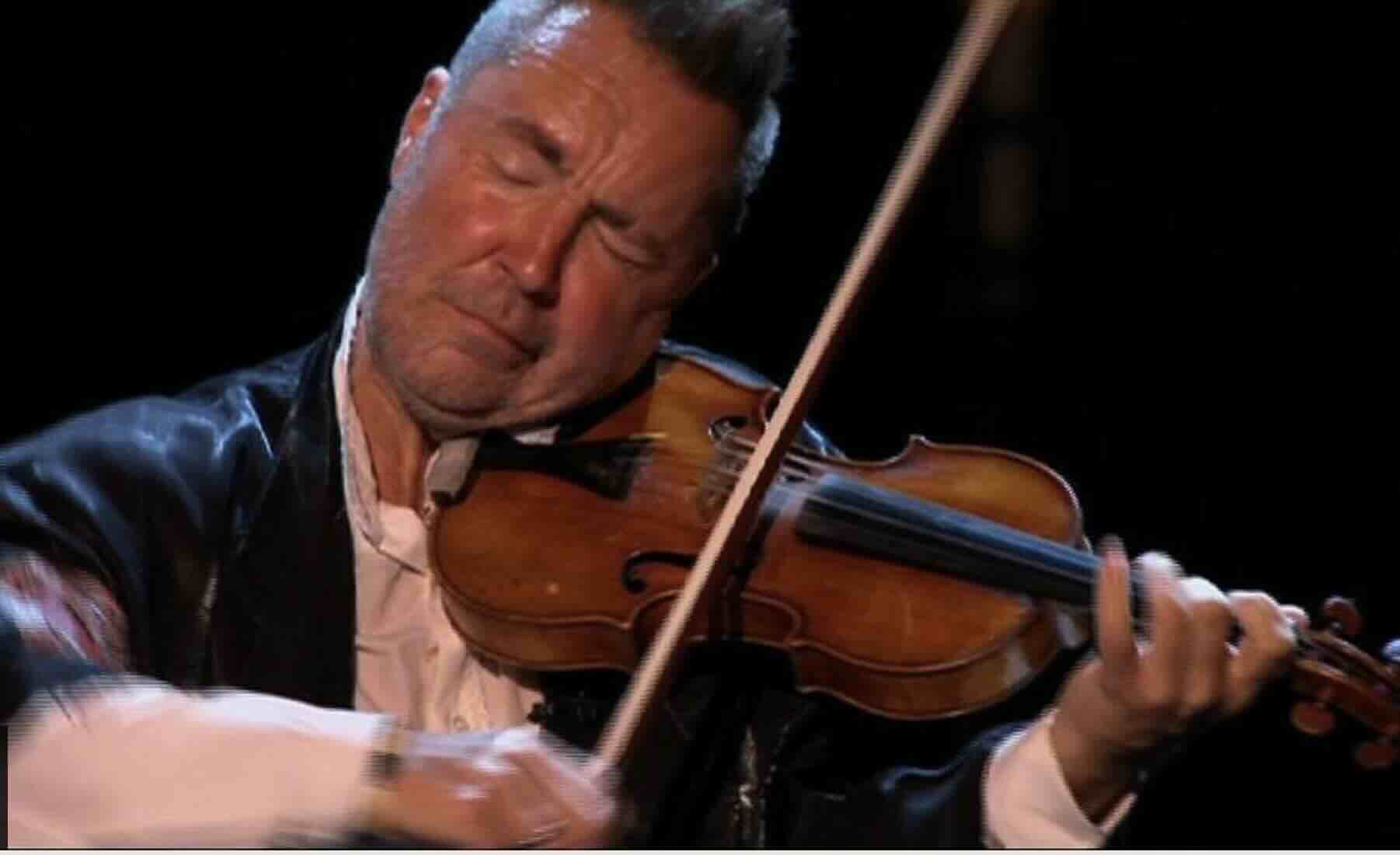

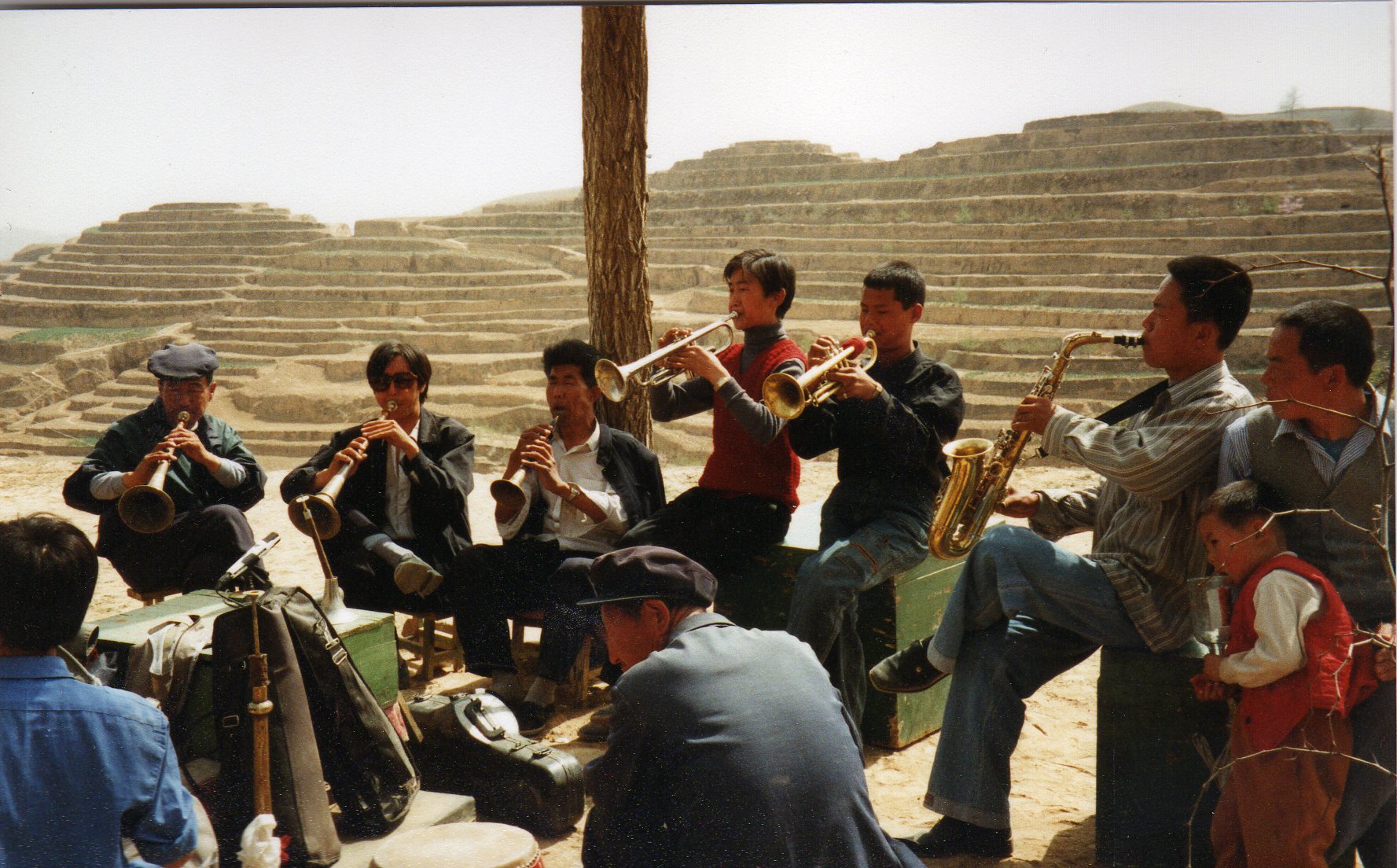 Chang Wenzhou’s big band at village funeral, Mizhi 2001.


 A young Liu Wenwen performs with her parents.




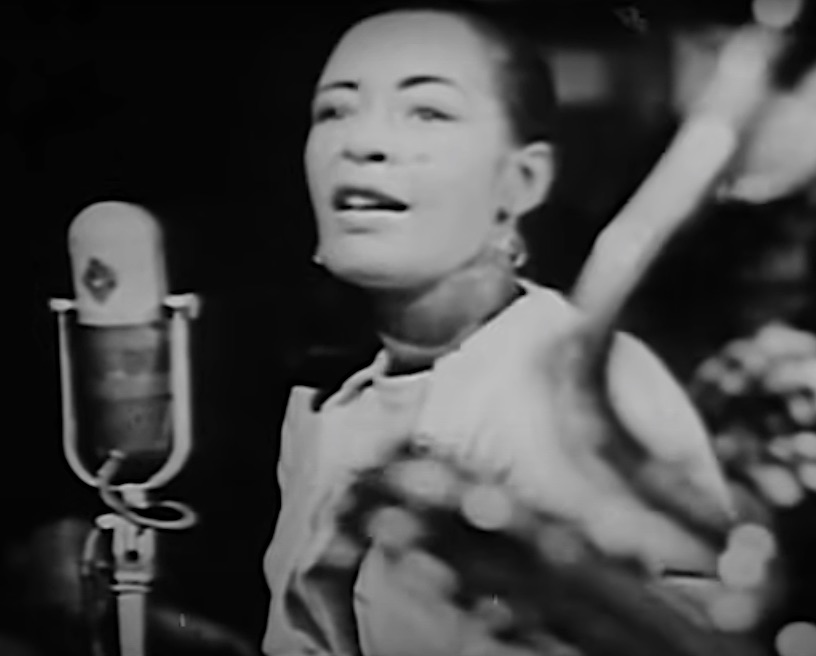





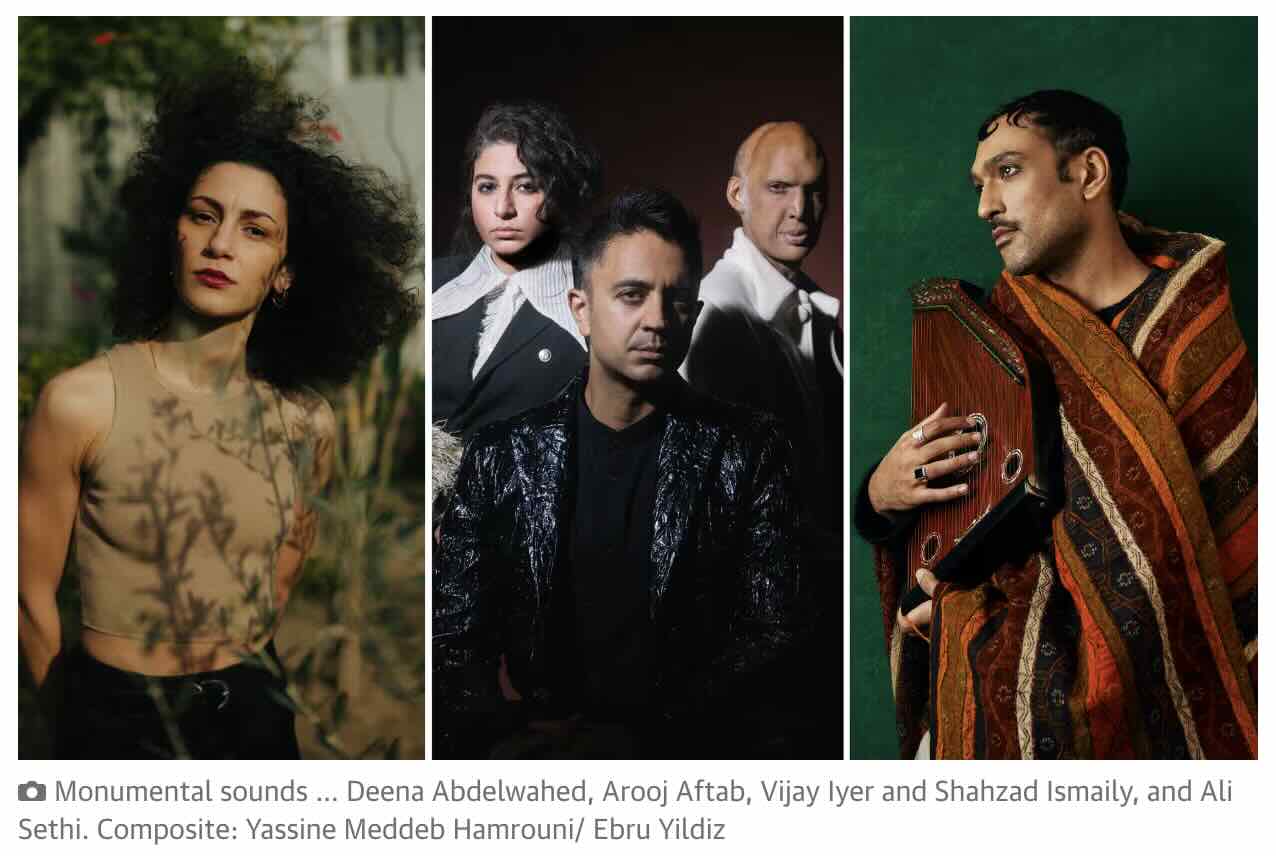


 Nobody embodies more fully the connection between the African-American spiritual, the blues, R&B, rock and roll—the way that hardship and sorrow were transformed into something full of beauty and vitality and hope. American history wells up when Aretha sings. That’s why, when she sits down at a piano and sings “A Natural Woman”, she can move me to tears […] because it captures the fullness of the American experience, the view from the bottom as well as the top, the good and the bad, and the possibility of synthesis, reconciliation, transcendence.
 The balance of joy and pain—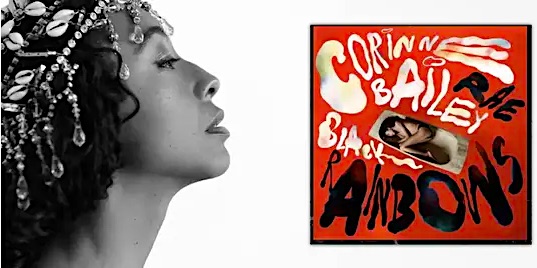
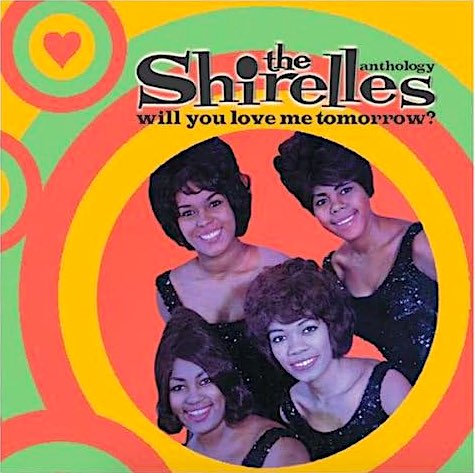












 The Turkish music scene in Germany was far from homogeneous. Cem Kaya elicits some excellent comments from characterful musicians. The film opens and ends strikingly with İsmet Topçu, the Hendrix of the bağlama, putting the story in wacky extra-terrestrial context…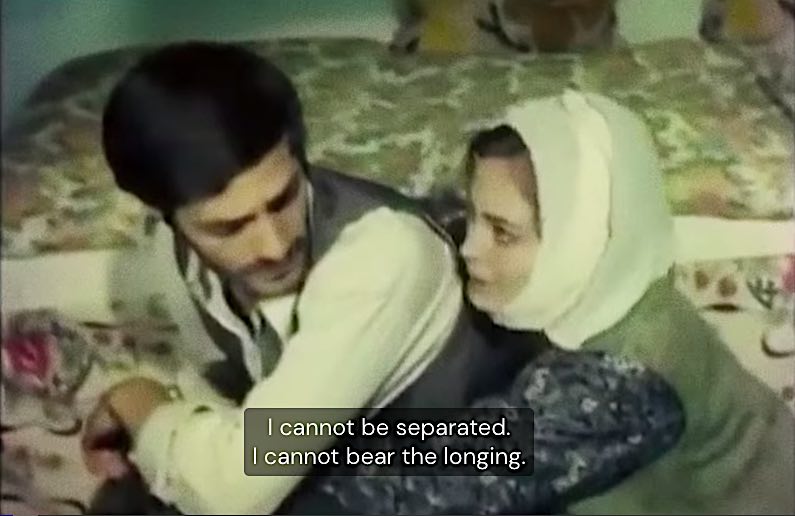





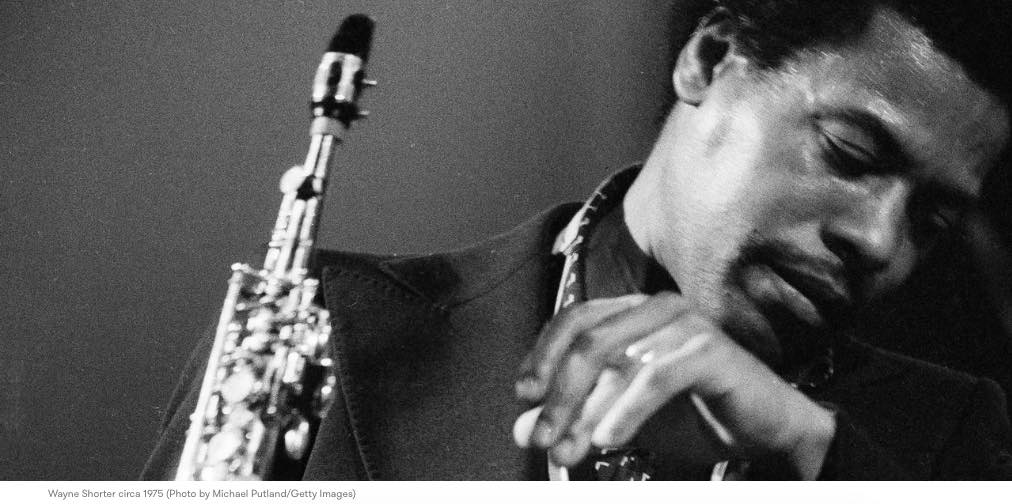 Source.














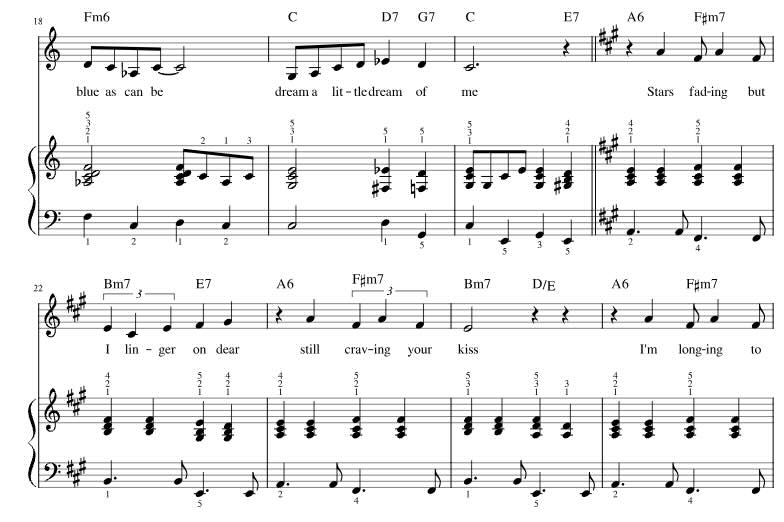







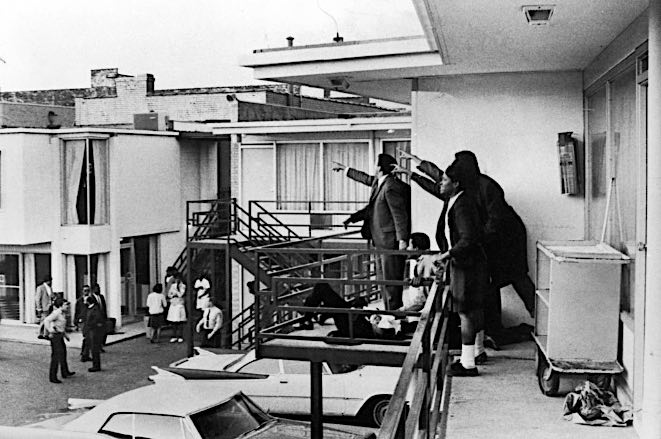 Dr King’s supporters point in the direction of the shooting.


 Disillusioned by the lack of support in Dharamsala, the band drifted apart, but they were able to put on a reunion gig for the Dalai Lama’s 60th birthday—when their preferred Tibetan set list was eminently suitable.

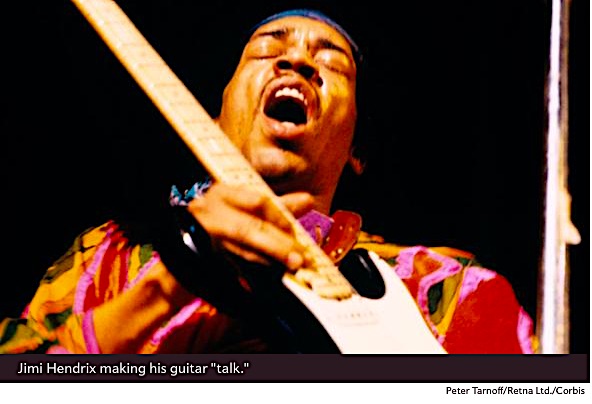













 With the Mayor of Philadelphia.
 Mother Divine signs her book for Li Shiyu.

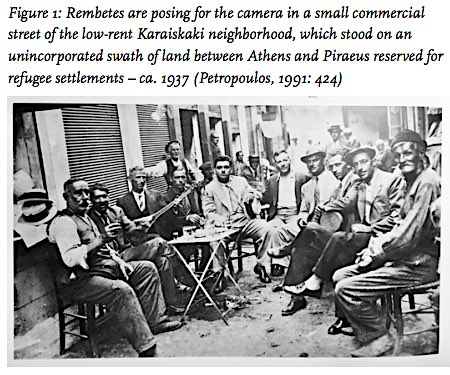






 Sola is one of three children of
 After graduating, partly in rebellion against the establishment that contemporary Western Art Music seemed to represent, Sola chose to become a pop musician, giving concerts and composing for film soundtracks, TV, and theatre. At the same time she made a great impression with her 1985 novellas Ni biewu xuanze 你别无选择 (You have no choice), Lantian lühai 蓝天绿海 (Blue sky green sea), and Xunzhao gewang 寻找歌王 (In search of the king of singers). Her voice was


 From The afterlife of Li Jiantong.

 Stephen Jones: a blog