An international conference in honour of Craig Clunas will be held on 16–17 September at Lincoln College, Oxford, bringing together leading scholars in the field of Ming studies and art history.
The Ming period (1368–1644) is central to our understanding of Chinese art, both as the time when many key texts and objects from preceding centuries were edited or curated into the forms in which they have come down to us today, and as the era to which much subsequent artistic practice and discourse has looked back for validation and inspiration. No one would dispute that Professor Craig Clunas pioneered the application of social history to the study of the Ming dynasty and Chinese art history. His innovative methodology has positioned the study of the Ming dynasty as one of the most dynamic and engaging areas in both art history and sinology. With more than a dozen monographs to his name, his international research and publication profile is unparalleled among art historians in the United Kingdom. In 2018, he retired from his position as the Statutory (Distinguished) Professor of Art History at the University of Oxford.
The presentations will address issues and ideas inspired by Professor Clunas’s research, encompassing a wide range of topics, periods, locations, and media—from the Wei-Jin dynasties to 21st-century Chinese art, from paintings and prints to teapots and furniture, from gardens and boats to maps and diplomacy, and spanning regions from Jiangnan China to Edo Japan and Europe.
Along with the Silk Roads, that reliably popular buzzword, the Mogao Buddhist cave complex outside the oasis town of Dunhuang occupies a unique position in studies of medieval Central Asia. Having thrived for a millenium from the 4th century CE as a staging post along the trade and pilgrimage route, by the 14th century Dunhuang was a backwater—until its long-hidden treasures were discovered by European explorers in the early 1900s.
Daoist priest Wang Yuanlu, who entrusted many manuscripts to Aurel Stein and Paul Pelliot from 1907. Source.
The manuscripts are written in a variety of languages, with Chinese predominating.
The soundscapes of society are important. Early caves like those of Dunhuang contain a wealth of music and dance iconography, much studied in China. Instruments * depicted there—mainly as part of ensembles—have been reproduced by Chinese scholars. Echoes of the medieval oasis-towns were heard at the court of the Tang capital Chang’an (modern Xi’an), venue for the first world-music boom (see here, and here). Yet early iconography and texts are silent and immobile (alas, the Dunhuang caves haven’t yielded any caches of A/V recordings!). ** And whereas Western performers in the modern tradition of HIP have paid attention to the sound and performance practice of medieval European music, within China attempts at recreation have yielded less palatable results (cf. Tang music), leaving too much at the mercy of the modern imagination—a bandwagon onto which composers and performers climb all too readily without undue concern for authenticity.
The unspoken issue of context deserves pondering. Early murals show idealised representations of the distinct social milieu of celestial musicians (apsara, Chinese feitian 飛天) before the gods; as in Europe, their function in a pious medieval society was far different from that in galleries and museums today. Similarly, modern sonic recreations are performed on the concert stage (cf. Bach)—a venue far removed both from those of the murals and from the diverse human contexts of traditional social musicking in ancient and modern China, whether sacred or secular.
Musical ensemble from Cave 112 (detail), mid-Tang, including zheng zither (front left). Source.
Doubtless thanks to a limited budget, it was a relief that Wei Xiaoshi adopted the modest rubric “Contemporary echoes of an ancient legacy”, making no pretence of recreating the medieval soundscape, thus avoiding the kitsch spectaculars that are rife in China.
Three accomplished solo performers performed in turn: the Uyghur Shohret Nur on rawap and dutar lutes with busy, percussive pieces from his hometown of Kashgar; the Amdo-Tibetan Ngawang Lodup accompanying his florid singing on mandolin (an instrument widely adopted in modern times by folk musicians around the world) and dramyin lutes—also featuring, to my distress, the notorious “singing bowls” (which “there is no credible historical evidence, whatsoever, of Tibetans ever having used”, in the words of Tenzin Dheden); and the innovative Chinese Wu Fei on zheng zither (whose modern version, FWIW, is remote from that seen in the Dunhuang murals) and vocals. They ended with an improvised trio that I can only describe as strange.
The audience didn’t seem to mind the tenuity of any relation with Dunhuang, ancient or modern. Rather, the concert made a pretext simply to admire the artistry of these fine musicians—from roughly the same part of the world, a millenium after the murals were depicted. Still, were one to present a concert complementing exhibits from the court of Charlemagne (e.g. here), it would hardly seem relevant to present traditional musicians from various parts of France. A millenium is a long time.
It was never going to seem suitable to air the topic of politics, but it was an elephant in the room. As Wu Fei replaced the Uyghur and TIbetan performers on stage with her polished conservatoire-stylezheng playing and vocal items, it might just have crossed one’s mind how Han-Chinese rule since 1950 has engulfed Uyghur and Tibetan societies.
Anyway, while research on medieval Dunhuang occupies its own niche, it’s always good to be reminded, however impressionistically, of the variety of living musical traditions throughout the ethnic bazaar of Central Asia, as they have evolved over time (cf. the 2002 Smithsonian festival, or this tasteful concert). For another Silk Roads concert at the BM, click here, and for a symposium, here.
* * *
Photo from German Central Asian Expedition, undated (early 20th century): shawm and percussion accompanying pilgrims (cf. the Uyghur mazar). Source.
Putting medieval iconography and modern concerts to one side, I muse idly on the potential for documenting folk expressive cultures around Dunhuang since their heyday—from the 14th century down to today. So I look forward to reading the recent compilation Dunhuang minjian yinyue wenhua jicheng 敦煌民间音乐文化集成 [Anthology of folk musical cultures of Dunhuang], comprising three volumes on folk-song, “precious scrolls“, and regional opera.
The Dunhuang region today. Source: Google Maps.
Nearby along the Hexi corridor, household Daoist groups perform rituals—for these and other living Han-Chinese traditions in Gansu, click here, and for the cultures of other ethnic groups in the Amdo region, here. For the troubled history of the Dunhuang Academy in the 1960s, note volume 2 of the memoirs of Gao Ertai. For museums and soundscape, see China’s hidden century. Posts on the Tang are rounded up here.
* A personal favourite of mine is the konghou harp, whose rise and fall were similar to that of Dunhuang itself: following the early research of Yuan Quanyou, see e.g. here, here, and even wiki.
Konghou, Cave 285, 6th century (detail).
** By a considerable margin, this beats my fantasies of discovering ciné footage of the Li family Daoists presiding over the 1942 Zhouguantun temple fair, or of the first performance of the Matthew Passion.
This year is the 300th anniversary of the Leipzig premiere of Bach’s John Passion. * After John Butt’s performance at the 2017 Proms (more links to the Passions here), I’ve just returned to hear it with Masaaki Suzuki (b.1954) directingthe Bach Collegium Japan, which he has led since 1990 (listen here—with an instructive interval talk thankfully replacing the interminable original sermon). Whereas performers these days know the work intimately, it must have been a serious challenge for Bach’s Leipzig forces (cf. this post); even to today’s listener it still sounds startingly modern—imagine how it must have sounded to the 1724 congregation!
Having studied with Ton Koopman in Amsterdam, Suzuki became a leading advocate for the early music movement in Japan. Joining several other complete recordings of the Bach cantatas (links here), his cycle with BCJ was completed in 2014. It’s most remiss of me not to have kept up, missing Suzuki’s previous visits to London, both with his own ensemble and as guest conductor of the Age of Enlightenment. Far from inscrutable, his style is dramatic, expressive, rather evoking that of Koopman, or perhaps Richard Egarr—both of whom direct from the keyboard, whereas Suzuki has gravitated to conducting from the podium, leaving the harpischord and organ to dedicated musicians (given which, he might go further and cede close control over the recitatives?).
Bold idea of the programme booklet: Edvard Munch’s Golgotha (1900), in which he represented himself as the Christ figure, with the foreground figures casted as the seven deadly sins. Source: wiki.
Benjamin Bruns was the Evangelist to Christian Immler’s imposing Jesus. The choir sounded fabulous, with twenty singers in an arc, including soloists who emerged for the arias. Carolyn Sampson (whom I used to accompany on Bach tours with The Sixteen) was exquisite in Zerfließe, mein Herze, as was Alexander Chance in the counter-tenor arias—succeeding his father Michael, whose singing, such as Erbarme dich, enriched our own performances with John Eliot Gardiner; excellent too were Yusuke Watanabe and Shimon Yoshida. Following HIP style, Suzuki favours small instrumental forces—wackily augmented by a towering contrabassoon (as in Bach’s fourth version); oboes and flutes, seated front stage on the right, were well highlighted.
Suzuki and BCJ have long experience of performing and recording Bach (watch a John Passion from 2000 here); their Proms visit this week was part of a European tour—it’s a highly seasoned, accomplished ensemble.
Nothing can compare to the awe of being plunged into the opening chorus, with throbbing, turbulent strings overlaid by anguished suspensions on oboes.
Returning to the Bach Passions regularly over a lifetime (referring, perhaps, to Gardiner’s Music in the Castle of Heaven) is an essential part of our self-cultivation.
* * *
In This Day and Age™ there’s nothing remarkable about a Japanese ensemble excelling in Bach; even if we can resist projecting orientalist fantasies (with Suzuki as Zen Sage-Mystic), their taste for Historically Informed Performance somehow seems quite appropriate. Perhaps no-one else will even think of gagaku, another genre that was imported, from Tang China—and then radically slowed down until it was no longer recognisable.
I’ve long had a fantasy of staging a world-music version of the Passions (cf. Bach, um, marches towards the world), held at a cosmic site like the Grand Canyon (cf. Messiaen). Amidst sand mandalas, the Dalai Lama with his own halo of deep-chanting Tibetan monks accompanied by their cymbals, drums, and booming long trumpets, as well as ethereal ondes martenot or theremin… Mark Padmore sharing the role of Evangelist with a searing cantejondo singer… Uyghur bowed satar and Persian ney flute as obbligato instruments for the arias, a gamelan to embellish the choruses, and the catharsis of an Alevisema… One day I’ll do a detailed programme, unfettered by funding or logistics.
A slightly less daunting project would be a Japanese staging of the Passions based on Noh drama. As continuo to the pilgrim/Evangelist visiting the site of an ancient mystery, the dialogue of the two drums, their eery kakegoe cries summoning the spiritual world… the Noh chorus both evoking the crowd and offering redemption… Augmented by the timbre of gagaku, magically transforming the wind music of the choruses and arias (Bach’s own timbre for Zerfließe is already not so distant—and with an archlute joining the continuo, the affinity would be even closer). While some Westerners have trained intensively in Noh, it’s more common, and must be easier, for Japanese musicians to learn to perform Bach (cf. Jazz in post-war Japan)—though it might be hard to find musicians who would be up to (or up for) the task.
At the heart of both these stagings will be Bach’s original music, devotedly illuminated by compatible traditions from around the world.
* After all this time, I still have reservations about my choice to imitate Bach’s original omission of the “St” before John Passion (Passio secundum Joannem) and MatthewPassion (Matthäus-Passion, or even Passio Domini nostri J.C. secundum Evangelistam Matthæum), with its apparent breezy familiarity—”The name’s Matthew, but call me Matt”). But Was ich geschrieben habe, das habe ich geschrieben, as Pilate observed pithily (a foretaste of “It’s what it is”, suggesting that Robert De Niro might be well cast for the role, albeit too late to join John Wayne as centurion for the crucifixion).
Another playlist in a series that football fans didn’t know they needed
Now that the twenty-four teams of Euro 24 have been reduced to eight, I hear you clamouring for a more focused playlist of bagpipe music to represent them (Yes, I am getting my hearing tested).
Among many sources on the history and distribution of bagpipes, the Essential Vermeer website has instructive material (here and here); and I set forth again from this list. As shown in my previous post, the distribution of instruments rarely aligns with either current or past national boundaries.
Around north Europe, with online clips dominated by medieval revivals, living folk traditions are harder to find.
England—here’s Kathryn Tickell on Northumbrian smallpipes:
France—Breton pipers:
As to
Switzerland (not Italy—whence I await more “Caporetto” headlines, to follow those for the 2002 and 2018 World Cup defeats). **
Germany
TheNetherlands (though Romania might have been more fruitful),
referring back to the Essential Vermeer site, there’s some fine material on peasant bagpipes as depicted by Peter Brueghel the Elder and Jan Steen; and we can seek further for modern vestiges under Dudelsack, Sackpfeife, Doedelzak, and so on.
There—just what you need to warm up for the quarter-finals eh…
* Sorry to go on, but this comment in the Guardian live-feed reminded me of my own football dream:
The first time Lamine Yamal joined the Spain squad, they left his boots behind. His and everyone else’s too. When the selección touched down in Tbilisi to face Georgia in September 2023, the trunk carrying part of their kit was still sitting at Barajas, forcing themto complete the evening session at the Boris Paichadze stadium in trainers, unable to strike the ball. The following night, they scored seven. On his debut, the Barcelona winger got the last of them, aged 16 years and 57 days, and the national team got a new beginning.
** Before England’s Great Escape from Slovakia, I was composing our own version of Caporetto, inspired by that popular classic from the Minister for the 18th Century:
Master Miao Jiang, Wutaishan through successive regimes, and religious life around Datong under Maoism
I got to know the Buddhist monk Kuan Guang 宽广 (b.1974) while he was doing his PhD at SOAS—guided by Tim Barrett—about the mountain temple complex of Wutaishan, epicentre of Buddhism in north China, where he trained.
Originally from Baoding south of Beijing, he is blessed with a calm and benevolent nature—such as one doesn’t always find among clerics, or indeed among the household ritual specialists whom I have consulted in north China. In addition, his deep, sonorous voice conveys his authority and wisdom.
So it’s wonderful to catch up with him. Apart from furthering his research on the history of Wutaishan in the Ming dynasty, he has created the Qingliang Buddhist Centre at a former church in Peckham, south London. Inspired by his venerable master Miaojiang 妙江法师 of the Bamboo Grove temple 竹林寺 on Wutaishan, Kuan Guang has undertaken this complex enterprise in the spirit of “expedient means” (Sanskrit upāya, Chinese fangbian方便).
* * *
In both old and new societies, entering the clergy was often ascriptive, rather than a spiritual choice; poor families would routinely give a young son to a local temple as relief from adversity. However, in the case of Miao Jiang, his parents (surnamed Liu) were devout lay believers (the following account is based on this online biography; in English, see here).
Liu Jiang (his original name) was born in 1953 in Yanggao county (home of the Li family Daoists!) just east of the grimy coal city of Datong, in West Yaoquan village in Gucheng township. * The daily domestic worship of his family environment made a stark contrast with the escalating political campaigns of the 1950s. When he was only 3 years old, his parents, busy with agricultural chores for the collective, sent him to a nearby temple, where his master Chang Rong 常荣, himself only 15, lavished exceptional care on his bright young disciple.
In 1959, just as food shortages were becoming desperate, Liu Jiang’s mother took him to Datong to pledge allegiance at the Shanhua temple 善化寺. ** While receiving a rudimentary secular education at his village primary school, he prudently refrained from divulging that he was devoting most of his energies to his parallel cultivation of the dharma—praying with his mother before the family shrine, studying Buddhist texts such as the Pumen pin普门品 scripture, and learning to recite the Dabei zhou大悲咒 mantra. At a time when villagers were desperately foraging for food, when the meager crop from the autumn potato harvest was being divvied out among the brigade team, he would only take home his share after the others had chosen the best ones. As he later recalled, “I would eat whatever Old Budda Elder ate” (老佛爷吃啥我吃啥).
Lin Huiyin, architect wife of Liang Sicheng, Wutaishan c1937. Source: Sixth Tone.
In Datong after the Japanese occupation and civil war, the extensive buildings of the imposing Upper and Lower Huayan temples 上下华严寺 were under restoration through the 1950s, and were designated as national cultural relics in 1961. As the Cultural Revolution broke out in 1966, while religious sites and clerics all over China were being assaulted, some of the major Datong temples were safeguarded under the aegis of a Bureau Chief, a Buddhist believer from Wutaishan. *** Although the Red Guards chased off most of the remaining monks, the Bureau Chief gathered some former monks—in plain clothes—to keep watch over the temples. So amidst all the chaos, the Upper Huayan temple became a clandestine meeting place where youngsters like young Liu Jiang and his fellow believers could seek instruction in the dharma.
The Huayan temples, 1939: left, Lower temple; right, grounds of Upper temple. Source (colourized).
It was at the highly unlikely time of 1968 that he had his head shaved to become a monk, at the behest of his master in the Shanhua temple. With a group of senior monks officiating, they locked the gate early, and around midnight held his formal ceremony. Shortly afterwards, when his master returned from the nearby Buddhist cave complex of Yungang, the teenager was given the Buddhist name Miao Jiang.
Such biographies require us to adjust our simplistic view of the blanket destruction of religion though Maoism and the Cultural Revolution (for another instance, see Kang Zhengguo‘s account of his Buddhist grandfather).
After the liberalizations around 1980, five more members of Miao Jiang’s family over four generations joined the clergy: both his parents (in 1983), followed by two sons and a granddaughter in his older sister’s family. Popular opinion was full of praise for their exceptional devotion.
In 1973, when Miao Jiang was miraculously unscathed by an accident while repairing a reservoir, he considered it a sign of the protection of the Bodhisattva Mañjuśrī (Wenshu pusa 文殊菩萨). This was the inspiration for him to turn further south in Shanxi towards Wutaishan, around which his mature life has revolved. He has been based there since 1980, as the mountain opened up to a massive reinvigoration of “incense fire” (xianghuo 香火) after the depression of the Maoist era. Through those early reform years, he served as abbot in several temples, which thrived under his leadership. As Wutaishan became ever more commodified by tourism and heritagification, he was fêted with official titles—but he has remained aloof from worldly affairs.
Miao Jiang’s reputation grew, not by preaching but through the influence of his practice—”bodily instruction” (shenjiao 身教) rather than “verbal instruction” (yanjiao 言教). Still, after the challenges of practising Buddhism under Mao, it has been a very different kind of test to spread the dharma and maintain its integrity in the brash, mercenary new society. Eschewing the lifestyle of official banquets, he adheres to a simple Buddhist diet, while sponsoring charitable and relief projects.
Kuan Guang formally joined the Buddhist order under the guidance of Miao Jiang in 1993. After Maoism and the reforms in China, nurturing the dharma in multicultural Peckham presents yet another kind of challenge. Apart from a programme of events at the Qingliang centre, such as guided meditation and calendrical rituals, Kuan Guang now plans to open a Buddhist vegetarian canteen there. He was always wise, but he too has now become a veritable master, whom his disciples can look up to. While I’m not generally predisposed towards Buddhist centres in Britain, this is a most admirable enterprise. In praising Kuan Guang, I’m reminded of the old Krishnamurti paradox: his efforts are selfless, devoted entirely to promoting the dharma (cf. Paths for the reluctant guru).
It also occurs to me that while I often come across devotional sects in my fieldwork (such as the Bright Association 明會 in Yanggao, scrolling down here), I have had little contact with jushi lay Buddhist adherents. In Yanggao since the 1980s, rather few temples have been restored: but in those temples which are active, their keepers were often ordained as Buddhist monks or spent time “roaming the clouds” in Wutaishan or Datong—such as the gentle Zhang Zheng, who helped Li Manshan decipher a stele at the Zhouguantun temple in Yanggao. ****
Having immersed myself in Zen in my teens, I rather lapsed, although for several years after first visiting China in 1986 I would regularly kowtow before the altar on entering a Buddhist or Daoist temple—mainly the grander ones of the cities and sacred mountains (Wutaishan was one of my first ports of call in 1986). But I came to feel a bit of a poseur, and later, frequenting small village temples, it hardly seemed appropriate…
* * *
In another post I explained why field studies of folk ritual in China mainly focus on household Daoists. While they dominate the rural ritual scene, when we find Buddhist ritual specialists, they may also perform similar rituals; the toolbox required to study the two is similar, and we shouldn’t compartmentalise our studies. Buddhism is more dominated by institutions (the major temples); formerly, Buddhist clerics worked mainly from their temples, and the 20th-century waves of laicization and temple destruction were more of a blow to the Buddhists than to the Daoists. The Buddhists perhaps tended to cater more for elite patrons, and were less able to survive during times of economic recession; state policies of the 1950s came as a double blow to them, as apart from laicizations and temple destruction, their former patrons also vanished. Conversely, the Daoists had long lay and household traditions, alongside any institutional base; they were more adaptable to local religious life, more all-embracing. The difficulty of regulating them has always been their hidden strength.
So I rarely encounter exalted Buddhist masters like Miao Jiang and Kuan Guang. But when I do, I am deeply impressed. While I have the utmost respect for the wisdom of more down-to-earth peasant ritual specialists like Li Qing and Li Manshan (see my film), around whom my fieldwork has revolved, in the presence of great temple clerics I feel a certain embarrassment that my path has led me away from the quest for spiritual enlightenment towards documenting the “heat and noise” of folk ritual; yet somehow my early background in that quest has formed an enduring foundation.
* Indeed, his disciple Kuan Guang was able to give me valuable help in 2011 when I struggled to decipher the dialect of Yanggao peasants on my fieldtapes. I am consoled and amused that when I screen my film for urban Chinese students, with Li Manshan’s own voiceovers, most of them have to rely on the English subtitles!
*** Around Datong the worst vandalisations only occurred in 1968; still, the Huayan temples soon resumed life as a museum—until the 1980s’ reforms, since when religious observances have had to compete with tourism.
**** My film, from 36.01; cf. my Ritual and music of north China: shawm bands in Shanxi, pp.71–8, and Daoist priests of the Li family, pp.50–51.
Along with the pleasures of editing my new film on Gaoluo with Andrea, it’s wonderful to be back in Italy.
My first proper opportunity to savour the delights of Italian life was an extended stay in Milan in 1979 to play The rake’s progress, which afforded me time to explore the nearby hill-towns. Over the following years I got to know the picturesque little towns around Tuscany and Umbria (cf. Italy: folk musicking), and through the 1990s I relished summer sojourns in Parma and Ferrara playing Mozart operas with John Eliot Gardiner; but Spain became a more regular venue for orchestral tours (allowing me to explore the exhilarating anguish of flamenco!), so I only got to do occasional gigs in Milan—the BrahmsRequiem at La Scala, again with Gardiner, springs to mind.
With Li Manshan and his Daoist band at the Gallerie, Milan 2012.
My last visit was in 2012 on our memorable Italian tour with the Li family Daoists! Having made negligible progress with Turkish on my many recent visits to Istanbul, it’s been good to be back in a culture where I can communicate a bit more efficiently. Indeed, staying in a mixed quarter of Milan has something of the vibe of a migrant mahalle in Istanbul, and takes pressure off my efforts to regain my former semi-fluency in Italian.
Taking a break from editing to watch the big Champions’ League match between Real Madrid and Bayern Munich, Andrea tells me he went to school in Modena with Carlo Ancelotti. When he tells people, they couldn’t be more impressed if he told them he was at school with Leonardo Da Vinci—”Da Vinci? Never heard of him, what team does he manage then?”
Alongside the numinous medieval hill-towns near Milan, the city may feel somewhat bland—but after a long absence, Italian street life still feels like a blessing.
While Daoism and Zen have long become glib buzzwords in the West, some such as R.H. Blyth and Alan Watts have given informed treatments, and some like Gary Snyder embody the ethos. In another post I alluded to Daoist wuwei while feeling sad that we can’t attribute the expression “Don’t just do something, stand there!” to Miles Davis.
Helen De Cruz contributes a thoughtful study from her background as performer and scholar of baroque lute and archlute. In studying a Zamboni prelude with her teacher, she elaborates on his advice “Be more Zen”:
to give shape to the extemporising, improvisatory nature of a prelude one should achieve more with less, giving an air of effortlessness to quick runs using difficult and sometimes awkward grips. The composition of a prelude embodies the aesthetic of studied effortlessness: at first, the notes sound spontaneous, searching, reaching, as if the player is merely tuning her instrument and improvising. But then, as the harmonies are given increasingly definite shape through blossoming arpeggios, the ear inclines to expect the next note with increasing confidence, and finally it all comes together: the earlier hesitant notes get their meaning, and the mind discerns the cohesive whole—it turns out not a single note was coincidental.
The term sprezzatura * (akin to “effortless grace” or “studied carelessness”) was introduced by the Italian Renaissance philosopher and diplomat Baldassare Castiglione in his etiquette manual Il Cortegiano (1528), written for the “small but chic” court at Urbino. Essential skills for the courtier included dancing, wrestling, fencing, horse riding, sports (such as tennis), and playing a musical instrument. The goal was “to steer away from affectation at all costs, […] to practice in everything a certain nonchalance [sprezzatura] that shall conceal design and show that what is done and said is done without effort and almost without thought”.
While the concealment of art can be affected, the aesthetic is still prized today—for instance, in men’s fashion,
where one aims for an appearance of effortless grace in what is in reality a carefully curated wardrobe. It is part of how athletes are judged. […] The aesthetician Tom Cochrane equates sprezzatura with the aesthetic of cool, which he describes as containing “elements of aesthetic power or sublimity, specifically an elevation above the passions and indifference to danger.” The graceful courtier is (seemingly) unconcerned with the effect he has on the audience. Ultimately, he is unconcerned with himself, he has lost all self-consciousness in the intrinsic beauty of his actions.
De Cruz notes that early discussions often focused on the practice of ritual. “To achieve true mastery, you must lose yourself in a skilled task that harmonises you with your physical and mental environment, and you will achieve mental quietude as a result.” Inevitably, I think of my great household Daoist mentors Li Qing and his son Li Manshan, both lowly peasants; this is also a question of charisma, not always a major theme of studies of Daoist ritual…
The early Daoist classic Zhuangzi evinces the art of the bell-stand maker, wheelwright—and butcher: as de Cruz explains a much-discussed passage,
Lord Wenhui watches in silent admiration as his butcher (who is also his cook) is cutting up an ox: “every move of his feet, every thrust of his knee—zip! zoop! He slithered the knife along with a zing, and all was in perfect rhythm, as though he were performing the dance of the Mulberry Grove or keeping time to the Jingshou music [ancient ritual items, the former part of rain ceremonies].
“Ah, this is marvelous!” said Lord Wenhui. “Imagine skill reaching such heights!”
Cook Ding laid down his knife and replied, “What I care about is the Way [dao], which goes beyond skill. When I first began cutting up oxen, all I could see was the ox itself. After three years I no longer saw the whole ox. And now – now I go at it by spirit and don’t look with my eyes.”
“Perception and understanding have come to a stop, and spirit moves where it wants. I go along with the natural makeup, strike in the big hollows, guide the knife through the big openings, and follow things as they are. So I never touch the smallest ligament or tendon, much less a main joint.”
Zhuangzi also tells the story of a man swimming in fast-running currents, who tells Confucius:
I have no way [無道wu dao]. I began with what I was used to, grew up with my nature, and let things come to completion with fate. I go under with the swirls and come out with the eddies, following along the way the water goes and never thinking about myself. That’s how I can stay afloat.
De Cruz comments astutely:
Note the details in this story: the man has long hair that streams down, rather than being tied up in a knot, indicating he is of lower class. He sings not in a ritual context, as the Confucians would require, but out of sheer, unadulterated joy. Confucius is the main Confucian sage but (in Zhuangzian fashion) cannot fathom how someone is able to make such a dive and come out alive. Rather than a specific affectation, the swimmer has “no way.” He exhibits the essence of sprezzatura in his graceful movements and his indifference to danger.
For both folk and art music in the time of Vermeer, click here.
She cites the 17th-century English lutenist Mary Burwell:
One must then sit upright in playing to show no constraint or pains, to have a smiling countenance, that the company may not think you play unwillingly, and [to] show that you animate the lute as well as the lute does animate you. Yet you must not stir your body nor your head, nor show any extreme satisfaction in your playing. You must make no mouths, nor bite your lips, nor cast your hands in a flourishing manner that relishes of a fiddler [!]. In one word, you must not less please the eyes than the ears.
the aptitudes for which [playing the harpsichord] calls are natural to everyone—much like in walking, or, if you like, running.
She cites the flow theory of Mihaly Csikszentmihalyi:
Self-forgetting opens the mind to the intrinsic beauty of skills we exhibit in the flow state,
explaining
In Zhuangzi’s butcher and swimmer and in Mary Burwell’s lutenist, the practitioner refuses to be identified with their performance, thus overcoming the self-centredness that often accompanies achievement.
This may be one reason why I became so resistant to Beethoven, for whom struggle—audible struggle—was central, becoming dominant in the romantic aesthetic of the virtuoso concerto soloist, striving to overcome.
De Cruz concludes:
We achieve an overall pleasing effect when we are in harmony with our physical constraints. When we achieve wuwei in skilled performance, we deliberately submit ourselves to our environment and to the limitations of our bodies—we place our actions rather than ourselves centre stage. We can say that sprezzatura presents a philosophy of life, an approach to our environment and our surroundings that acknowledges our bodily imperfections and our situatedness, and that yet enables us to achieve through non-action and mental stillness a kind of perfection that our audience can delight in and enjoy. Sometimes the beauty and wonder we bring into the world has more to do with our non-action than with our action.
Timothy Brook, Vermeer’s hat: the seventeenth century and the dawn of the global world(2009).
The author, a specialist in Ming China, sets out to write a “global history of the intercultural transformations of 17th-century life”, using Vermeer’s paintings to “open doors” onto the social history of the day (cf.Music in the time of Vermeer). Such an approach has evidently become a tradition in art history—from my very limited experience, it somewhat recalls the style of Michael Baxandall and Michael Jacobs (see On visual culture), on the far broader canvas of the whole globe.
while most of the figures in the paintings of the Dutch golden age look as if they have never strayed more than a day or two from Delft, the material world through which they move is stuffed with hats, pots, wine, slaves and carpets that have been gusted around the world by the twin demands of trade and war. […]
Behind the serene chinaware and glinting silver coinage that furnish Vermeer’s burnished interiors lay real-life narratives of roiling seas, summary justice, and years of involuntary exile. […]
What Brook wants us to understand is that these domains, the local and the transnational, were intimately connected centuries before anyone came up with the world wide web.
First encounters were becoming sustained engagements; fortuitous exchanges were being systematised into regular trade; the language of gesture was being supplanted by pidgin dialects and genuine communication.
Things, and people, were moving around on a global scale.
Chapter 1, “View of Delft”, introduces the Dutch East India Company (VOC); the narrative soon expands from Delft and Amsterdam, with Spain and Portugal also trading in southeast Asia.
Chapter 2, “Vermeer’s hat”, sets forth from Officer and laughing girl, with a fine discourse on hats in the artist’s time, leading seamlessly to Samuel Champlain’s encounter with the Mohawks at the Great Lakes in 1609, the crucial role of the new technology of weaponry, and the beaver hat. Brook always makes connections:
I spend my summers on Christian Island, which is now an Ojibwa reserve, and I cannot walk the dappled path that angles past the place where the children are buried without thinking back to the starvation winter of 1649–50, marvelling at the vast web of history that ties this hidden spot to the vast networks of trade and conquest that came into being in the 17th century. The children are lost links in that history, forgotten victims of the desperate European desire to find a way to China and a way to pay for it, tiny actors in the drama that placed Vermeer’s hat on the officers’ head.
Indeed, “the lure of China’s wealth haunted the 17th-century world“—and the lure of china, theme of Chapter 3, “A dish of fruit”, based on Vermeer’s Young woman reading a letter at an open window. The British East India Company enters the fray, with their battles in St Helena. We learn of the spread of blue-and-white, in Persia, India, Mexico; exploits in the South China Sea, Macao, and Zhengzhou and Quanzhou in Fujian; and in Suzhou, Wen Zhenheng’s A treatise on superfluousthings (cf. another inspired book by Craig Clunas). Brook addresses class and aesthetics. He contrasts European taste for foreign objects (“stirring no contempt or anxiety”) with Chinese mistrust of the wider world, “a source of threat, not of promise or wealth, and still less of delight or inspiration”.
In Chapter 4, “Geography lessons” based on Vermeer’s The geographer, Brook addresses the way that “the great minds of Vermeer’s generation were learning to see the world in fresh ways”. By way of the Delft draper, surveyor, and polymath Antonie van Leeuwenhoek we are taken again to the South China Sea—Manila and Macau, and coastal China, where besides Red Hairs (Dutch), Dwarf Pirates (Japanese), and Macanese Foreigners, African slaves (servants of the Portuguese) as well as Muslim merchants, were also seen. Jesuits such as Paolo Xu and Matteo Ricci play a significant role.
Chapter 5, “School for smoking”, is another fascinating exploration, covering the diffusion of the new habit around the world; “every culture learns to smoke in a slightly different way”. From images in Dutch painting and porcelain, Brook moves again to China, exploring the three routes by which tobacco entered the country. Writing in 1643, Yang Shicong noted the new taste in Beijing, whither it had spread rapidly from the southeast coast. In 1639 the Chongzhen emperor decreed that anyone caught selling tobacco in the capital would be decapitated. The colloquial term “eat smoke” (chiyan), still heard in rural China, was already in use. In the New World (documented from 1505), tobacco was used to “move between the natural and supernatural worlds and to communicate with the spirits”—a function which it still serves in Chinese ritual today. It was thought to have both spiritual and medicinal properties. Moreover,
In daily life, tobacco was an important medium of sociability that, like healing, was something that benefitted from the spirits’ kind support. Managing social relations on a personal or communal level required thoughtfulness and care, and could best be accomplished when the spirits were on one’s side. Burning or smoking tobacco was a way of propitiating the spirits if they were in an ugly mood—as they so often were—and inducing them to bless your enterprise.Sharing a smoke at a tabagie was done in the presence of the spirits, and it helped the smokers find consensus when differences arose.
In China this is another important aspect of social and ritual life that tends to get neglected in our focus on ritual texts. In 1924 Berthold Laufer praised smoking in an egregious misapprehension with grains of insight:
Of all the gifts of nature, tobacco has been the most potent social factor, the most efficient peacemaker and benefactor to mankind. It has made the whole world akin and united it into a common bond. Of all luxuries it is the most democratic and the most universal; it has contributed a large share towards democratising the world.
Brook offers perceptive asides on witchcraft in Europe, class, gender, a tobacco ballet in 1650 Turin—and slavery. And he notes how the habit of smoking morphed into opium dependency in the 19th century—another tragic story of the ravages of trade.
Chapter 6 departs from Vermeer’sWoman holding a balance todiscuss the role of silver, crucial to the world economy of the day, travelling from Potosi in the Andes to Europe and Asia—with erudite discussions of coinage and morality.
Chapter 7, “Journeys”, interrogates a painting by Hendrik van Der Burch showing an African servant boy (cf. Jessie Burton’s novel The miniaturist, evoking the changing world of 17th century Amsterdam). Brook goes on to describe five journeys to distant shores: Natal, Java, a Korean island, Fujian, and Madagascar. He ponders pictorial representations of Biblical scenes (cf. Balthasar).
In the final Chapter 8, “Endings: no man is an island”, Brook ties the themes together, with discussions of translators, the role of the state, and the concept of a common humanity.
If we can see that the history of any one place links us to all places, and ultimately to the history of the whole world, then there is no part of the past—no holocaust and no achievement—that is not our collective heritage.
Yet as Brook shows throughout, all this came at vast human cost: warfare, shipwrecks, ruined lives. He appends a useful list of Recommended reading and sources.
Vermeer’s hat is a virtuosic, stimulating piece of writing.
Fishing alone on cold river 寒江獨釣圖, Ma Yuan (1160–1225).
To follow A Tang couplet, the bold investigative journalism of the “underground historian” Jiang Xue 江雪 (see under Sparks) reminds me of one of the great Tang poems, by Liu Zongyuan (773–819), River Snow (much discussed, e.g. here):
Calligraphy by Feng Xuelin 冯雪林 (b.1950).
《江雪》
千山鳥飛絕 On a thousand mountains, not a bird takes flight 萬徑人蹤滅 On ten thousand paths, not a soul in sight 孤舟簑笠翁 In a solitary boat, grass-caped old man in bamboo hat 獨釣寒江雪 Fishing alone in snow of cold river
I’ve just updated my list of Great Chinese stammerers with the Southern Tang dynasty muralist Dong Yu—joining early luminaries such as Deng Ai, Han Feizi, and Sima Xiangru; and for the modern era, Feng Youlan and Gu Jiegang.
Following the flummery of the Coronation, I keep finding myself perplexed by the ways in which elites dominate images of society.
Exhibition catalogue.
The new exhibition at the British Museum, China’s hidden century, is a splendid idea. If the Qing dynasty is a poor cousin of the Ming, the 19th century has suffered by comparison with the long and glorious early-Qing reigns of the Kangxi (1661–1722) and Qianlong (1736–95) emperors. So it’s a worthy mission to reinstate the period, “often defined—and dismissed—as an era of cultural decline”, amidst economic crisis, uprisings, and foreign invasion. The Opium Wars of the 1840s marked the beginning of a “century of humiliation”, the late Qing making one of several instances of hitherto thriving empires that now suffered in turn at the hands of foreign imperialism (cf. Pankaj Mishra on the wider context of Ottoman modernization, at end of this post).
Attending a preview of the BM exhibition, I’m reminded that museums and art galleries, and indeed libraries, depend largely on material that reflects the values of a tiny minority of urban educated people (mainly men). This approach was long standard for most societies, but it’s clearly one that more recent historians have been seeking to refine. And of course, like books, artefacts are silent and immobile. Now I don’t mean to give you another of my “What About the Workers?” rants; I quite understand the brief of museums, and the culture of elite minorities has a rightful place alongside those of other social groups. But as anthropologists and ethnomusicologists seek to engage fully with the “red and fiery” nature of performance in local society, the limitations of both museums and elites soon become apparent (see e.g. Society and soundscape, and What is serious music?!).
So I’m grateful to the exhibition for stimulating me to revisit some of my own material from the field. In this I’m always in awe of the incomparable erudition of Yang Yinliu (1899–1984). Brought up in Wuxi during the final years of the Qing dynasty, Yang learned instruments from Daoist priests from the age of six, going on to join the refined Tianyun she society and to become a fine exponent of qin zither, pipa and sanxian plucked lutes, while supplementing his training with an education in Western culture.
In his research he had a rare grasp of both early and later imperial history, and at the helm of the Music Research Institute in Beijing after the 1949 “Liberation” he embodied continuity with Qing traditions of performance and scholarship, as well as directing major fieldwork projects.
I’m used to people (often local officials, indeed) citing this saying to explain
the inability of Communist policies to penetrate the countryside (an instance here),
but of course its original usage referred to imperial society.
In her online essay, exhibition curator Jessica Harrison-Hall asks,
How did Chinese cultural creativity demonstrate resilience in the face of unprecedented levels of violence in the long 19th century?
In the countryside some ritual and other performing groups suffered interruptions from warfare. Around Jiangsu, the Taiping rebellion must have disrupted some groups; but rather few local traditions were affected by military conflict, and those that were, recovered quite soon. The ritual association of Hejiaying village just south of Xi’an was caught up in conflict soon after the outbreak of the Hui rebellion in 1862, with instruments and scores destroyed and performers killed. The association was only able to relearn much of its repertoire in 1915 from the nearby village of South Jixian; both groups are still active today. I’d like to learn more about reasons for this remarkably long period of inactivity—much longer, for instance, than that between the 1949 Communist takeover and the 1980s’ reforms.
Xi’an village festival, 1950s.
Through the 19th century a major change in local societies was the arrival of Christian missionaries, vividly documented for Shanxi by Henrietta Harrison. By 1900, as the Qing regime went into terminal decline, tensions with traditional religious communities led to the Boxer uprising, when Catholics around Beijing and Tianjin were massacred (as in Gaoluo)—with village ritual associations supporting the Boxers against the Allied armies. Senior villagers whom we met in the 1990s had heard many stories about the events from their parents.
The exhibition has five main themes: court, military, artists, urban life, and “global Qing”. As the online introduction explains,
The show illuminates the lives of individuals—an empress, a dancer, a soldier, an artist, a housewife, a merchant and a diplomat.
Visitors will glimpse the textures of life in 19th-century China through art, fashion, newspapers, furniture—even soup ingredients. Many people not only survived but thrived in this tumultuous world. New art forms, such as photography and lithographic printing, flourished while technology and transport—the telegraph, electricity, railways—transformed society.
This makes sense as far as it goes; but while seeking to reach beyond the elite, whose culture is only the tip of the iceberg in any era, it can hardly address the poor rural areas where the vast majority of the population lived—so any attempt to broaden the topic rather depends on “going down” to the countryside. The evidence for material and expressive cultures may also invite significantly different perspectives. When Dr Harrison-Hall writes “Representing the millions of people who were not wealthy is a challenge as so little survives”, she refers to the material culture preserved in museums. Among the folk, local traditions of ritual and music that endured throughout the troubled 20th century go back multiple generations; many groups preserve early artefacts such as instruments, scores, ritual paintings, and pennants, but more importantly they transmit life-cycle and calendrical rituals that were being modified in ways that can rarely be glimpsed—even in the wealth of field reports for Hebei, Shanxi, and elsewhere in my series on Local ritual.
This reflects another common difficulty: we often seek to document history through major, exceptional events, whereas for peasants customary life is more routine. And apart from artefacts, much of the history of this (or any) period lies in oral tradition—which doesn’t lend itself so well to exhibitions.
Nor do women play a greater role in the traditions I’m about to outline; while we regularly came across elderly women with bound feet, they had hardly been exposed to the public activities of the village with which we were concerned (for posts on gender in China and elsewhere, click here; right, women of Gaoluo).
The elite solo art of the qin zither is a close ally of museums, having an intrinsic bond with calligraphy, painting, and poetry. Again, qin scholars tend to focus on tablatures from the Ming and early Qing, but John Thompson’s definitive site lists around fifty such volumes from the 19th century. Within this tiny coterie, collections like the 1864 Qinxue rumen 琴學入門 and the 1876 Tianwen’geqinpu 天聞閣琴譜 must have been in more common circulation than were early manuscripts.
Xiansuo beikao score, copied by Rong Zhai in 1814.
It’s also worth observing that there was constant interplay between folk and elite traditions. In Beijing the Manchu-Mongol court elite, such as prince Rong Zhai, were patrons of lowly blind itinerant street performers, with whom they performed a recreational chamber repertoire. For the 19th century we have names (and not much else) of musicians like the blind sanxian player Zhao Debi, and Wang Xianchen, a protégé of the empress Cixi.
“Musiciens Chinois. légation a Pékin”, Paul Champion, 1865/1866.
In 19th-century Shanghai, the paraliturgical instrumental ensemble of Daoist temples gave rise to the new secular style of silk-and-bamboo, with amateur clubs thriving right down to today. And we can even listen to recordings of music from the late Qing, such as those made by Berthold Laufer in Beijing and Shanghai. Even later releases (e.g. here) reflect an tradition that was unbroken from those times.
* * *
Former Buddhist monks from Wutaishan with the exquisite arhat at the British Museum, 1992.
As to local temples, again we tend to focus on early dates when they were founded rather than on their social life thereafter, with steles commemorating their periodic renovation. In the temple network of imperial Beijing, traditions of shengguan ensemble which served ritual were inter-related. The Zhihua temple, built in 1443 as the private temple of a Ming eunuch, is famed for not only for its architecture but for its shengguan music, for which we have a precious gongche score from 1694.
Here it’s worth clarifying a significant misapprehension. As with notations for other genres (for the qin zither, the Beijing entertainment repertoire, or the village ritual groups we meet below), the date of copying was always long after the pieces came into currency. Scores were not consulted during performance, but constituted a prestigious artefact for their custodians. So the 1694 score of the Zhihua temple was not “composed” then; moreover, through the 19th century, long after the temple had lost its imperial prestige, the musical monks (yiseng 藝僧) of a network of Beijing temples continued to exchange and recopy scores—an energy that we can only imagine (I eagerly await the publication of Ju Xi‘s research on the evolution of the temple, in the next volume of the major EFEO series Epigraphy and oral sources of Peking temples). Meanwhile, temples in not so distant towns like Chengde and Shenyang were also acquiring new ritual repertoires.
South of Beijing, most village ritual associations on the Hebei plain seem to have been attracted by the same myths as the elite, tracing their history back to the Kangxi and Qianlong eras, or even the Ming—mostly on the basis of long oral tradition or early artefacts. While fieldworkers tend to dismiss the Chinese scholarly fashion for seeking “living fossils” in local traditions, when we extend our enquiries beyond contemporary observation to the past, perhaps we too are guilty of focusing on such early clues, rather downplaying references to 19th-century reign-periods:
Yet despite the successive upheavals of the 20th century, visiting such groups in the 1990s we gained an impression of remarkable continuity.
Recopyings of shengguan scores transmitted by Miaoyin,
including Tongzhi 13th year (1874). Hanzhuang village, Xiongxian, 1920. Photo: 1993.
Mostly we have to imagine Buddhist and Daoist priests arriving in rural temples to invigorate village ritual associations. In villages around Xiongxian county, the Buddhist monk Miaoyin transmitted a magnificent repertoire of shengguan suites in 1787, whose gongche scores were periodically recopied over the following 150 years.
Base of yunluo gong-frame with a Guangxu-era date equivalent to 1903,
South Shilipu ritual association.
Around the Baiyangdian lake, members of the Buddhist-transmitted association of Greater Mazhuang recalled an account in their old scriptures that in the Xianfeng era (1850–61) an elderly monk called Runan, from the Xingfu si temple in Libao village in Mancheng, came here regularly for three years to teach them. Nearby in Xin’anzhuang, a 1990 history of the association lists three changes of pennant over the previous two centuries and more: Daoguang 12th year [1832], Guangxu 3rd year [1877], and Republic 26th year (1937).
Ritual artefacts, South Gaoluo:
left, dragon placard, Guangxu reign 1st year [1875] 3rd moon 15th day,
at the behest of ritual leaders Heng Yun and Shan Wenrong;
right, ritual curtain, 1892.
In the village of Gaoluo, my main fieldsite through the 1990s, a new temple built in 1844 proclaimed the identity of a separate south village. In 1875 a “dragon placard” asserted allegiance to the new emperor, and a ritual curtain from 1892 was still displayed in the lantern tent for the New Year’s rituals in the 1990s (see early history, and ritual images).
Among ritual associations in this region the popular “southern music” that competed with the “classical” shengguan instrumental ensemble is commonly dated to the early 20th century, but Qianminzhuang in Xushui county (later famed during the Great Leap Forward) was among several village associations said to have learned in the Xianfeng era (1850–61) when the Daoist priest Wang Leyun came from Nangong county to transmit the style.
Genealogy of the Li family Daoists, from Li Fu, first in the lineage to learn Daoist ritual
in the 18th century (see also Customs of naming).
Our perspectives change once we engage with living traditions. By the 1990s, when we met senior ritual specialists born around the 1920s, they could often list the names of their forebears back five or more generations. Even if we can rarely do more than document their names, they would naturally feel more of a connection with their grandfathers than with earlier ancestors. For Shanxi, I think of hereditary household Daoist traditions like that of the Li family Daoists in their home village of Upper Liangyuan; if only we could learn more about the life of Li Qing‘s great-grandfather Li Xianrong (c1851–1920s), some of whose ritual manuals the family still preserves.
Left: manual for Presenting the Memorial ritual, copied by Li Xianrong.
Right: Li Manshan discovers temple steles.
Temples continued to be restored throughout the late Qing. The village’s Temple of the God Palace (Fodian miao) fell into disuse after Liberation (see our film, from 08.25), but we found a stele composed in Guangxu 6th year (1880), the year after the villagers completed a new bell tower and four priests’ rooms in gratitude for the end of a drought following a rain procession in Tongzhi 6th year (1867). But severe droughts again afflicted Shanxi from 1876 to 1879, so perhaps the stele further offered gratitude for this second recovery.
Another instance from Shanxi: we can trace the hereditary transmission of the Zhou lineage of Complete Perfection household Daoists in Shuozhou county. Of the third generation, probably active from the late 18th century, Zhou Laifeng was a temple Daoist, his younger brother Zhou Lailong a household Daoist.
Their descendant Zhou Erdan showed us a manuscript Yuhuang shangdi beiji (above, probably copied by his uncle Zhou Fusheng), that reproduces an 1813 stele of the Yuhuang miao temple in Shuozhou town, mentioning the brothers’ fine calligraphy.
From Qing-dynasty Tianjin Tianhou gong xinghui tu 天津天后宫行會圖.
Yet another instance of a tradition maintained through from the 18th to the 20th centuries is the “imperial assembly” of Tianjin, in this case among folk dharma-drumming associations.
* * *
Wanhe tang musicians, 1993, heirs to an illustrious tradition.
As to local traditions of narrative singing and opera, the respective provincial monographs of the great Anthologyof folk music of the Chinese peoples (Zhongguo quyi zhi, Zhongguo xiqu zhi) contain much evidence for both material artefacts and oral tradition (e.g n.2 here; further citations in posts under Chinoperl). Near Suzhou, the Wanhe tangKunqu association was founded in the second half of the 19th century, performing largely for life-cycle ceremonies.
In Shaanbei, the Yulin “little pieces” are said to have been transmitted outside the regional court in the Daoguang era (1821–50) by Li Diankui and his son Li Fang—and the brief biographies throughout the volumes of the Anthology introduce many locally-renowned 19th-century performers. The style of the “little pieces” is thought to be influenced by opera troupes brought by Qing-dynasty regional governors from the Jiangnan region; some local scholars claim that it was based on the opera of Hunan, which may have been brought during the Tongzhi reign (1862–74) by a company attached to a division of Zuo Zongtang’s Hunan army on campaign in the region.
Nanyin in Quanzhou, 1986.
Further evidence is to be found in the riches of Hokkien culture of south Fujian, such as the exquisite nanguan (nanyin) ballads—the study of which is again rooted in the search for early origins rather than its vibrant later life. Similarly, scholars of Daoist ritual set their sights firmly on Tang and Song texts, but monographs on local household altars around south China also contain material on 19th century transmissions, including particularly rich collections of ritual paintings and manuals.
Late Qing murals are characterised by strong use of blue and white. While all of the old themes continued to be painted, a variety of new types of painting appeared in this period, some of them seemingly unrelated to anything which had come before. Important new developments include: new genres of opera-stage murals, often incorporating Western architecture, figures, or text; paintings connected to the Yellow River Formation 黃河陣 ritual; and a large number of rather eccentric Buddhist murals commissioned by charismatic wandering monks.
* * *
Given its parameters, the BM exhibition is very fine; here I’ve just offered a few suggestive instances of the potential for documenting grass-roots history through local fieldwork. Much as we may hope to broaden the social base of our enquiries, it’s often hard to say much more than this: despite growing challenges, rural and urban ritual and performing groups, founded in the 18th century or earlier, maintained activity not only through the late Qing and Republican eras, but even after the 1949 “Liberation” and the convulsive campaigns of Maoism. Still, as the exhibition reminds us, it’s important to join up the dots between the late Ming/early Qing and the 20th century; and whether or not we spell it out, the late imperial period makes a constant backdrop to our fieldwork.
Click here for politicised criticisms of the exhibition by Chinese academics.
In 1993, as I plunged deeper into fieldwork on ritual associations in rural Hebei, while staying at a dingy hostel in Laishui county-town I was struck by this graphic public information poster from the local Public Security Bureau:
This detail is particularly fine:
Caption: Don’t casually drop cigarette-butts or rubbish, and don’t spit all over the place; maintain cleanliness inside and outside the dwelling.
More precisely, and indecorously, I may add that tutan 吐痰 encompasses the staggeringly common habit of emptying one’s throat via the nose onto the ground, generally with a loud and dramatic flourish—a sound that accompanies some of my finest recordings of ritual performance. At the time it didn’t look as if campaigns against the tradition would have much effect.
Moving swiftly on, political posters have long been a popular topic, but travelling down to the countryside, some intrepid art historian might care to make a diachronic and regional survey of pinups adorning the otherwise bare homes of poor peasants since the 1980s’ reforms, which cheerfully rub shoulders with family photos, posters of Party leaders, and images of deities like Guanyin. I found this montage on the wall of a home in Gaoluo village around 1993:
Pinups often make a drôle backdrop to our portraits of wise old folk musicians, like this 1995 image of vocal liturgist Li Yongshu in Yixian county nearby:
Here’s a selection from Shaanbei, heartland of the Chinese revolution, in 1999:
All this by contrast with the god images that adorn the ritual building at New Year—Gaoluo again (see here, part of a series on Ritual paintings of north China):
For more recent Uncle Xi pinups, and incentives to display them, see God images old and new, 2—sequel to an article that features murals adorning kang brick-beds dating from just after the reforms of the late 1970s.
A fine satire on the alienation of modern bureaucracy, the novel was published in full after being serialised from 1954.
Born in adversity, the narrator Hayri İrdal becomes apprentice to the wise old clock repairer Nuri Efendi, and spends time (sic) performing in improvisatory theatre groups (“I was living in a world of lies and illusion, and that was all I wanted”). Returning to Istanbul after army service in World War One (“four years spent in vain”), he is indolent and indifferent to everything around him. The Viennese-trained psychoanalyst Dr Ramiz, himself “the incarnation of discontent”, relishes his case, but expects more from him:
“I want you to have dreams that are more in line with your illness. Do you understand me? Use everything in your power to have the right kind of dreams.” […] All this contributed to my moving that much closer to bona fide insanity.
Dr Ramiz introduces Hayri İrdal to a coffeehouse, where he delights in telling stories with the regulars, as life was suspended.
New ideas were at first humoured out of courtesy and a slight curiosity, but they would remain unaddressed until the crowd’s ever-vigilant imagination had recast them as pleasantries, thus assimilating them to their own idiom. This is what happened to any attempt at serious conversation.
His family life is unfulfilling:
I detested the life I was living but lacked the strength to start another. I had severed all ties. I had no bonds with the world save for the compassion I felt for my children. I had no choice but to endure it all—or at least tolerate the world around me. The moment I set foot outside I was a prisoner of my wandering and endlessly colluding mind, which led me off to exotic worlds whose enticements beckoned, only to stay beyond my reach.
While he finds further distraction from his ennui in the Spiritualist Society, the model of the ascetic dervishes can’t help him solve problems stemming from his worldly concerns. At last he meets his mentor Halit Ayarci, with whom, amidst much partying, he hatches the concept of the Time Regulation Institute, a nepotistic institution that defines its own function.
At last Hayri İrdal has a “surging sense of purpose”. He spends his early months at the Institute devising platitudinous slogans and exchanging gossip. As Hayit Ayarci impresses his political contacts with arcane colour-coded charts, the Institute goes into full swing, recruiting suitably talentless employees from their relatives and drinking buddies.
Although Hayri İrdal has always preferred a life in which “idleness, or wasting time, is a source of happiness” (in Pankaj Mishra’s words), they devise a system of fines for those whose timepieces are not synchronised with any other clock in view.
When an inspector notified a citizen of his fine, the offender would initially express surprise, but upon apprehending the form logic behind the system, a smile would spread across his face until, at last understanding this was a serious matter, he would succumb to uproarious laughter.
He refines the system by offering a discount to repeat offenders. The staff expands as they set up Regulation Stations, “small roadside posts where ladies and gentlemen could stop in to adjust their timepieces”.
Gradually he eases into his new role:
I began to use terms like “modification”, “coordination”, “work structure”, “mind-set shift”, “metathought”, and “scientific mentality”…
He muses on freedom:
Today we use the word only in its political sense, and how unfortunate for us. […] The political pursuit of freedom can lead to its eradication on a grand scale—or rather it opens the door to countless curtailments. […] I have been made to understand that in our lifetime freedom has been kind enough to visit our country seven or eight times. Yes, seven or eight times, and no-one ever bothered to say when it left; but whenever it came back again, we would leap out of our seats in joy and pour into the streets to blow our horns and beat our drums.
Pondering the ever-growing roster of employees, Hayri İrdal suggests selecting those with experience, “people who have more or less worked for a certain period of time in a particular field”. Halit Ayarci rebuffs this idea:
“To be experienced means to be run down, frozen at some fixed point, and stuck with stagnant ideas. Such people are of no use to us.”
In a satire on Atatürk’s invention of tradition, after Hayri İrdal gives Halit Ayarci an account of the wonders of clock-making, though “never one for reading or writing”, he is persuaded to compose an entirely spurious biography of a 17th-century clockmaker, The life and works of Ahmet the Timely. His patron “was not at all mistaken when he divined the need for the illustrious Ahmet Zamani to have existed”, nor was he wrong when he assigned him to the reign of Mehmed IV.
Although a handful of armchair academics dismiss the work as a complete fabrication, it becomes a huge international success. Still, the enthusiasm of amiable Dutch scholar Van Humbert poses problems.
Finding the tomb of a man who never existed in mortal form is more difficult than you might imagine, as is surviving vigorous debate with a foreign scholar, even with the aid of an interpreter.
As Hayri İrdal becomes a celebrity, his wife joins in the deception with alacrity, embroidering a fantasy of their happy life together, to Hayit Ayarci’s delight:
To him, my continuing doubts about the existence of Ahmet the Timely and my rejection of my wife’s picture of me as a banjo-playing equestrian were all symptoms of the same malady.
“Your wife has presented you as the ideal modern man and still you doubt and deny it all!”
In a satire on the gullibility of the masses, Hayit Ayarci even concocts a successful singing career for our narrator’s tone-deaf sister-in-law:
You say she’s ugly, so from a contemporary point of view she’s sympathetic. You say her voice is wretched, which means it is emotive and conducive to certain styles. You say she has no talent—well then, without a doubt she is an original.
As the Institute extends its global reach, our hero designs a surreal clock-themed building in a satire on modernist architecture:
People moving up and down either wrought-copper staircase would be visible, as they would be encased in glass. I now saw I could arrange them diagonally across the centre of the hall to disrupt the traditional four leaf clover formation. Of course all the pillars—each one a little higher than the next—would be connected by little bridges so as to allow those moving up and down them to cross.
After a fractious final gathering, the Institute is consigned to continuous liquidation.
Apart from evoking Kafka and Borges, I was reminded of the stories of Švejk and his creator Hašek (whose Party of Moderate and Peaceful Progress within the Limits of the Law was designed partly to bolster the finances of the pub where the election meetings were held), as well as Flann O’Brien, with his annotations on the ouevre of de Selby, and his All-Purpose Speech.
The 2013 translation is adorned by an excellent Introduction by Pankaj Mishra (cf. his review). Putting the novel in global context, he reflects on Atatürk’s cultural revolution and the developing world’s “feckless programme of Westernisation” in the pursuit of secular and rational ideals, where “the onwards-and-upwards narrative of progress, dictated by the state and embraced by a gullible people, has contaminated everything.” Adducing Russia, Japan, Iran, China, and India, Mishra notes a “tragic mismatch between the intentions of these hasty modernizers and the long historical experience of the societies they wanted to remake in the image of the modern West”. As in his 1939 novel A mind at peace, Tanpinar suggests the deracine sense of arriving late, spiritually destitute, bewildered by the “tawdry illusions of modernity”. Hayri İrdal—“one of those superfluous semimodern men familiar to us from Russian literature: more acted upon than active, simmering with inarticulate resentments and regrets”—“has a keen appreciation of the absurdities of the self-perpetuating and self‑justifying bureaucratic state that embodies progress and enlightenment in Turkey”.
I’m delighted to find a new BBC TV series from Philomena Cunk (aka Diane Morgan), the “Landmark Documentary Presenter”, with her distinctive style of forensic investigation:
Again, among targets that she sends up are the documentary format, her own persona, both elite and popular cultures, and indeed human history itself.
In the beginnings opens by exploring the achievements of early humans:
One thing they did invent was fire, which allowed them to see at night and kept them warm, tragically prolonging their already tedious lives.
Having conquered numbers, humankind moved on to something even more boring, by inventing writing.
The Ancient Greeks invented lots of things we still have today, like medicine and olives, and lots of things that have died out, like democracy and pillars.
And another invention:
Philosophy is basically thinking about thinking—which sounds like a waste of time, because it is.
On Pompeii,
Thanks to the volcano, we know everyday Romans had grey skin, were totally bald, and spent their time lying around inside their shockingly dusty houses. But it also preserved glimpses of how sophisticated Roman life was, with creature comforts like indoor plumbing and cunnilingus.
In Faith/off the intrepid Ms Cunk covers religion.
What’s ironic about Jesus Christ becoming a carpenter was that he was actually named after the two words that you’re most likely to shout after hitting your thumb with a hammer.
She perks up with an entirely gratuitous plug for an all-inclusive five-star resort near the temple of Kukulkan, “the last word in luxury”.
Islam represented a radical break from previous religions, because the buildings it happened inside were a slightly different shape.
And she asks
Why can’t the religions all learn to live together in peace, like they do in Ireland?
In The Renaissance will not be televised Ms Cunk sets the scene:
It’s the year 1440 (not now, but then, in 1440).
The historic present has always Got my Goat too.
Gutenberg’s press was the first of its kind in history—except Chinese history.
This is Florence—the Italians call it Firenze to try and stop tourists from finding it. […] Florence might look like a pointless mess today, but in the 15th century…
On the Mona Lisa:
Just looking at her prompts so many questions. Who is she? What’s she smiling about? Is she holding a balloon between her knees? And if so, what colour is it?
Turning to the New World,
After arriving in America to forge a life of honest hard work and toil, many of these colonists quickly discovered they couldn’t be arsed, so they stole people from Africa and made them do it instead.
Eventually Washington won, becoming America’s first president, the single most revered role in the world until 2016.
Rise of the machines opens with a succinct recap:
Last time we saw how the Renaissance turned Europe from a load of mud and parsnips into a posh resort full of paintings…
Americans back then weren’t the humble unassuming people they still aren’t today.
[…]
The North asked the South what kind of America it wanted to live in—one where white people leeched off other races while treating them as inferior, or one where they pretended they didn’t.
Following the Civil War,
Now Lincoln was President, at long last slavery was abolished, and replaced with simple racial prejudice.
Turning to recording,
Thanks to Edison’s pornograph, classical music could now bore an audience of millions.
She returns to the theme of femininism, on which she has already established her credentials;
Finally, with the vote, women could choose which man would tell them what to do.
Besides her collaboration with Charlie Brooker, in the final episode, War(s) of the World(s)?, “it’s easy to see why” she’s an admirer of the ouevre of Adam Curtis. Turning to Russia, Tsar Nicolas
was allowed to rule the country like a dictator, which I’ve been advised to say isn’t how Russia works today. […]
A world like this, where the masses toil for pennies while a tiny elite grow rich, seems so obviously unfair and unthinkable to us today. We can scarcely imagine what it must have been like.
As to 1950s’ America,
Adverts were so influential that it made viewers at home want to be the sort of person who bought things too. They’d work hard to get money, to buy a car, so they could drive to the shops and buy more things, which they’d have to pay for by going back to work, which made them miserable, so they’d cheer themselves up by going out and buying more things, which they’d have to work to pay for.
On the birth of popular culture:
Unlike normal culture, which was paintings and Beethoven, this was stuff people actually enjoyed.
For decades, pioneering black artists had steadily built on each other’s work to develop an exciting new musical form for white people to pass off as their own.
Moving on to the technological revolution, the Apple Macintosh was
the world’s first inherently smug computer.
And
smartphones revolutionised the way people interact, by providing a socially acceptable way to ignore everyone around us.
But we’re not lonely—thanks to social media, it’s quicker and easier to bond with millions of others over something as simple as a cat photo or the ritual shaming of a stranger.
* * *
Dr Shirley Thompson’s musicological expertise somewhat under-used
in fielding fatuous questions like
“Would it be fair to say the Rolling Stones were the Beatles of their day?”.
To help her unlock the mysteries of human civilisation Ms Cunk consults a range of academics, asking penetrating questions like “Why are pyramids that shape—is it to stop homeless people sleeping on them?”, “Has a mummy ever ridden a bicycle?”, and “Is there a Great Roof of China?”. Scholars such as Jim Al-Khalili, Douglas Hedley, and Ashley Jackson manage to keep a straight face, even as she disputes their so-called expert views with stories about “my mate Paul”, recommending them helpful YouTube videos wat ‘e sent ‘er. The Cunk interview is fast becoming the hallmark of the public intellectual; and I now feel that it should be a compulsory ordeal, a rite of passage for any aspiring lecturer. As Rebecca Nicholson’s review observes:
You could spend a lot of time wondering whether the interviewees are in on the joke or not; if they are in on it completely, it ruins the gag, which surely works best if they think Cunk is deadly serious. The same is true for viewers, in a way. If you look closely enough, you can see that there’s a formula: compare old thing to new thing, ask anachronistic question, wait for baffled response. In both cases, though, I don’t think it matters. None of the academics seem to think they are being mocked, nor are they trying to be funny; likewise, it’s so hilarious and well-written that if you can occasionally see the bare bones poking out, it isn’t much of an issue.
The interview in Cunk on Shakespeare, where she quizzes Ben Crystal on a list of words that Shakespeare, er, might or might not have made up, remains a great favourite of mine:
This series has a new, mystifying musical leitmotif, introduced by fine links such as
Descartes inspired an intellectual movement known as the Enlightenment, during which metrosexual elitists published essays that expanded humankind’s horizons in a manner that will go unmatched until the 1989 release of Belgian techno anthem Pump up the jam… [cue music].
Philomena Cunk attains a level of vacuity with which no-one outside the current government could compete. Too bad she’s over-qualified to serve as the next Prime Minister.
The other day a further excursion around Kuzguncuk inspired me to reflect on the changing lives of its dwellers and the diffusion of the kiosk.
More grandiose than our humble kiosk, the Turkish köşk(a word itself borrowed from Persian kūshk) may denote a pavilion, gazebo, summer-house, pleasure palace, villa, or indeed belvedere (Chinese guan 觀, as in my own fantasy address “Priory of the Azure Cloud Bottle within the Belvedere of Tenuous Obscurity”).
On the Asian side of Istanbul near Kuzguncuk are several fine köşks from the late Ottoman era, set in sylvan groves overlooking the Bosphorus. Two of them lead me to stories that encompass the Ottoman ancien régime, a household embodying the changing status of women under the Republic, and post-war Black Sea migrants in shanty settlements.
The Abdülmecid Efendi Mansion (wiki; more detail here) was gifted to the Prince by Sultan Abdülhamid in 1895. Abdülmecid (1868–1944), “the last Ottoman caliph”, was also a gifted painter and student of Western Art Music (for which in Turkey, see here)—he depicted salon life at his köşk in the painting Beethoven in the harem (1915):
Abdülmecid (right, in pasha uniform) listens to his Circassian wife Şehsuvar Kadınefendi playing violin, Hatça Kadın (Ofelia) on piano, and his son Ömer Faruk on cello. One of the other two women may be his third wife Mehisti.
Abdülmecid went into exile in 1924, living in France. His mansion is currently open to the public for the Biennale, hosting an imaginative art exhibition.
The Cemil Molla Mansion (see here, and here) lies just above the main coast road towards the bridge and the Beylerbeyi Palace. It was redesigned around 1895 by the Italian–Armenian architect Alberti at the behest of Cemil Molla (1864–1941), minister and cultured confidant of Sultan Abdülhamid (see this excellent family history; briefer accounts here, and wiki). It was even connected to the Beylerbeyi palace by a tunnel.
Lavishly furnished, the mansion was equipped with electricity, central heating, and a telephone—at a time when such luxuries were the exclusive preserve of the Yıldız Palace. The new köşk made an elegant retreat for the pastimes of Cemil Molla with his wife and children, and their English and French governesses. The children not only studied the Qur’an (Cemil Molla sometimes served as imam at the nearby Üryanizade Mosque) but also learned solfeggio; dignitaries and philosophers assembled for elegant soirées, as the air filled with piano and oud, Baudelaire and gazals—just the type of gathering that musicians like Tamburi Cemil might have frequented.
Left: Cemil Molla köşk, interior; right, from The shining.
Upon the founding of the Republic in 1923, Cemil Molla went into retirement. After his death in 1941 the mansion was confiscated by the State Security Department. [1]It was soon thought to be haunted, * with his ghost wandering in the gardens—“disconsolately” being the obligatory adverb here. Later buyers have felt unable to occupy the mansion, with the Nakkaştepe cemetery nearby. The story cries out (spookily) for a movie screenplay, like a Turkish version of The shining—with an eery soundtrack of taksim on kanun, and Ravel’s La valse, echoing through gilded salons adorned with sepia family photos… This brief introduction to the mansion has some of the ingredients:
* * *
To augment the story, with the encyclopedic Kadir Filiz we accompanied his neighbour, the sprightly Fatma Hanım (“Lady Fatma”), [2]to revisit the slopes where she had made her home. Her account takes us on to the migrations of the post-war period.
Fatma Hanım with Augusta.
Fatma Hanım, now in her mid-80s, is one of those delightful grannies whom one dreams of meeting—we only had to mention a single keyword and she came out with a whole stream of reminiscences.
She comes from the Black Sea town of Boyabat in the hills south of Sinop, just east of Kastamonu. After her husband Ilyas was sent to Istanbul on military service around 1959, he managed to stay on there; soon after he paid a visit back to Boyabat, they returned to Istanbul with their first baby—the first of four.
Their new home was a gecekondu shanty-settlement just behind the Cemil Molla mansion. The land was owned by a Greek boss, who ran a pig farm and slaughterhouse as well as a gazhane factory producing gas. (His son Emil became a great friend of the popular gay singer Zeki Müren.) Fatma recalls life on the estate, in the heart of nature, as paradise—though she was shocked by the informality of the Greeks, with the men wearing shorts… She pointed out the trees she had planted herself.
Ilyas was a gardener on the estate, while Fatma worked as housekeeper for a lady who lived in a relatively modest yalı house on the coast just along from the Cemil Molla Mansion. In a most intriguing digression from the köşk, Fatma’s employer was none other than Sare Hanım (Sare Mocan, Sara Okçu, 1914–2000). This leads us to a complex family history that I can’t even begin to get my head around…
From a distinguished Ottoman family, Sare had been abducted on horseback at the age of 15 by Sefket Mocan, grandson of Sefket Pasha, and was later married to him. Her (much) older sister Celile (1880–1956), a painter, was the mother of the left-wing poet Nâzım Hikmet (1902–63; see under The struggle for Turkey), and over his long years in prison Sare often visited her beloved nephew there.
Left: Sare Hanım in the 1930s, “the first woman to wear a bikini and trousers” under the Republic. Source. Right: Nâzım Hikmet with fellow inmates, Bursa Prison. Source.
Sare went on to become a modern cosmopolitan belle; she even flirted with the idea of becoming a Hollywood movie star. After divorcing Sefket she moved back into her family’s Bosphorus yalı; she remarried, and divorced again. Cemil Molla’s family also had a yalı below their köşk, so they were near neighbours.
Sharing the house with Sare was her niece Münevver Andaç (1917–97). Münevver had fallen in love with Nâzım Hikmet in 1949 while he was nearing the end of a long imprisonment, giving birth to a son and marrying him after his release in 1951—but he soon had to go into exile in Moscow. Prevented from accompanying him, she moved in with Sare; under surveillance, Münevver left for Warsaw in 1961 with her two children before making her home in Paris. Sare’s niece Leyla had also married, but moved back to the house after separating from her husband.
Left: Sare in old age, surrounded by her mementos Right: the green yalı on the Bosphorus.
So the female household where our eloquent guide Fatma Hanım worked for over thirty years sounds like a microcosm of women’s changing status under the Republic (for more, see Midnight at the Pera Palace).
Returning to Fatma Hanım’s own story, in 1992, after the notorious campaign of Istanbul mayor Bedrettin Dalan to destroy the gecekondu shanty–towns, thanks to Ilyas’s honest reputation he was able to buy an apartment in the Kuzguncuk mahalle itself for a good price, where he and Fatma have lived ever since.
* * *
Turkey being Umlaut Heaven, ** when diacritically-challenged infidels adopted the word köşk they didn’t quite know what to do with the vowel (for my wacky fantasy on diacritics, click here). Somehow our borrowing in English isn’t quite how I’d expect the vowel to behave (says he, sipping coffee in his pyjamas while plucking the lute), although I don’t know how we could have done better—”kosk” wouldn’t have worked, anyway. ***
In 18th-century Britain, Ottoman architecture enjoyed a vogue thanks to Lady Mary Wortley Montagu (see under Hidden heritage).
Another British homage to Ottoman culture.
Our modern kiosk is far less grand. It might serve as a bandstand, or more often a little stall selling newspapers, cigarettes, snacks, and so on. We don’t seem so good at them in Britain—the garden shed, immortalised by Jessy on The fast show (cf. Rowley Birkin QC), is quite a comedown.
But I do enjoy a good French kiosque or Italian (um) edicola, and I recall some fine examples around pre-1990 central and east Europe—where the vogue had begun with King Stanislaus I (1677–1766) of Poland; for me, the kiosks of East Berlin, Prague, and Budapest were part of the Iron Curtain mystique, with the buzz of street life.
With All Due Respect to Ottoman architecture, perhaps the most iconic kiosk is the one in the middle of an eerily desolate Viennese square in The third man, accompanied by Anton Karas’s zither.
[1]By 1942, with the grossly discriminatory Wealth Tax (evoked in the Turkish TV series The Club), the brunt of the burden was to fall on Turkey’s non-Muslim minorities. For Istanbul during World War Two, see Midnight at the Pera Palace.
[2] In the more personal honorific style of Turkish relationships, Kadir and Augusta address her as Fatma Abla (“Elder Sister”) or Fatma Teyze (“Auntie”).
** Funny how “umlaut” doesn’t have an umlaut, eh. It seems that Turkish hardly needs a term to specify the ubiquitous dots, üzerine çift nokta koymak (“put a double dot on it”) being a tad over-generous. BTW, I’m very fond of the Hibernian umlaut, which I finally mastered on a tour of the States with a Scottish cellist, whose frequent refrain was “Shall we go and get some füd?”
*** This rather reminds me of my sample sentence of English borrowings from the Venetian language:
If you read in the gazette of the imbroglio over an arsenal of contraband artichokes; and if you’ve ever been quarantined after zany scampi and pistachio marzipan in the ghetto, or worn sequinned pantaloons to a regatta…
Fatima Manji, Hidden heritage: rediscovering Britain’s relationship with the Orient (2021).
This engaging book is part of an important discussion that is deeply unwelcome in conservative circles. It’s in the same vein as the recent challenges (from both historians and ordinary people) to the representation of the legacy of the British empire—BLM, the attacks on statues (Rhodes in Oxford, Colston in Bristol)—in tandem with similar protests in the USA and elsewhere. [1] Sadly, the PC-gone-mad brigade and opponents of “woke” (a term that may be defined as “an awareness of injustice and the determination to do something about it”—see e.g. here and here) will either attack or ignore such work (note also Empireland, and Bloody foreigners).
Fatima Manji, a worthy member of the brilliant team at Channel 4 News, attracted the fatuous ire of Kelvin MacKenzie in 2016 when she presented the bulletin featuring the terror attacks in Nice. You can read her reaction to the ruling here. She has recently filmed a fine report on honour killings in Pakistan.
In Hidden heritage, to complement her historical and political insights (besides her refined aesthetic sensibilities), Ms Manji turns out to have a real narrative gift. In the Introduction she notes the rhythm of visiting a stately home:
Walk through the hallways to see portraits of a lionised landed family with their porcelain skins and a compulsory display of European art, collected by a son on the Grand Tour. Admire the architecture, allow yourself to be amused by the story of a rogue uncle or a scorned lover, and end your trip with tea and a scone. If you are interested in interior design, there is inspiration enough in the coving and sconces, the gardens often prove delightful, and lovers of art will find enough to impress them. But beyond the twee trappings, Britain’s heritage sites are home to a hidden history.
It did not seem malicious or deliberate that it was hard to find more information about the occasional “swirl of Arabic, Persian, or Urdu letters, or the brown hue of a sitter’s skin in a portrait” that appeared amongst all the imperial opulence.
Some of the objects described in this book are only ever presented as the rewards of brave colonial conquest, and others are ignored altogether.
Britain’s apparent historical amnesia has lessons for our current debates about immigration and the nature of “Britishness”. Deliberately using the historical term “the Orient” for West and South Asia (notably the Ottoman empire and British India), she observes:
A whitewashed presentation of history directly affects how Britons today perceive the people, buildings, and languages of the Orient. All are regarded as alien threats and new arrivals to be defended against.
Chapter 1 opens in Chiswick House, probing the story behind the portrait of Muhammed bin Haddu al-Attar, ambassador of Morocco, who visited London in 1682 on a diplomatic and trade mission to the court of Charles II. His travels are described in fascinating detail. The ambassador was much admired. He dined with the scholar Elias Ashmole, observed the building of the new St Paul’s Cathedral, and attended performances of Shakespeare. He visited Cambridge, and at Oxford he met Edward Pococke, first chair of Arabic Studies there, as well as the linguist Edward Hyde. Manji follows the Ambassador back to Morocco, where he encountered political difficulties.
The era
is more nuanced than popular history would have us believe. The enthusiasm expressed by people in England, rich and poor alike, to see the Ambassador in person, even when diplomatic relations between the two polities may have been fraught, demonstrates that many showed the maturity of inquiring minds, and not the small island mentality that we may attribute to them retrospectively.
Just as absorbingly, Manji then traces the story back to Elizabethan England. The Queen sought alliances with the Ottomans, the Mughals, the Safavids, and the Moroccans. Among her companions was the Central Asian slave girl Aura Sultana, perhaps the first Muslim woman documented in England. The Shirley brothers courted the Safavids; Robert’s wife was Circassian. The East India Company and Levant Company were founded. Elizabeth established links with the Ottoman Sultan Murad III, and corresponded with his consort Sultana Safiye; the delivery (and repair) of a 16-foot-high clockwork organ for their son Mehmed (who became Sultan in 1595) turned out to be a serious challenge. Elizabeth also received at least three ambassadors from Morocco—the London visit of Abul Wahid bin Messoud in 1600 caused as much curiosity as that of Muhammad bin Haddu some eighty years later.
Such influences were evident in English food, dress, and expressive culture, with Oriental carpets and the beginnings of the craze for coffee (“the Mahometan berry”) in 1652, soon criticised. “The Turk” or “The Moor” became a common character in ballads and theatre.
Manji ends the chapter by considering the persistence of such tropes and fears in Britain today. But as she reminds us, an alternative history of the Tudor and Stuart period exists:
Too often our depictions of this era are inward-looking and forgetful of interactions with the world beyond Britain’s shores or Europe’s borders. They are not merely fascinating stories, but a tradition to draw on.
The book is well worth reading for this chapter alone; but the quality is maintained throughout. Chapter 2 takes us to Kew Gardens and the story of its “lost mosque”—the first built on British soil.
The Alhambra arch, the Chinese pagoda, and the Turkish mosque, 1763. Source.
The Chinese pagoda originally had two companions, a Turkish mosque and an Alhambra arch. Much of the design for Kew Gardens, including the plan for an Alhambra building, was brought to fruition by Augusta, mother of George III. The mosque, completed in 1761, was designed by Sir William Chambers. Though not used for worship, it suggests respect for Islam.
It is as if the patron or the designer wished to send out a message about the place of these buildings in Britain, and, through them, the place of Britain in the world: that these ornate Oriental buildings are not alien to this landscape but, rather, that they belong.
While such a message soon met with both praise and detraction, Augusta certainly appears more open and cosmopolitan than our very own Minister for the 18th century. Visiting Kensington Palace, Manji tells the story of Muhammad and Mustafa, taken as prisoners after the Battle of Vienna in 1683, ending up in the retinue of George I (then Prince Elector of Hanover). Muhammad’s close relationship with the King was a source of resentment at court. But both died nearly four decades before the building of the mosque, and indeed they had converted to Christianity, so their influence on the Kew project is tenuous. So Manji finds a clearer proponent of the style in Lady Mary Wortley Montagu, who was closely connected to the Dowager Princess Augusta. She had become immersed in Ottoman culture (including mosque architecture) while living in Constantinople from 1716, and went on to become the first to introduce inoculation against smallpox to Britain.
Oriental structures like the mosque at Kew seemed to denote not only expanding imperial ambitions but also an enquiring world-view. However, the mosque soon fell into disrepair, and by 1785 it had been dismantled.
Again, Manji pursues the story into the 20th century, with the Japanese Gate built in 1910 on the site of the mosque. And she reflects on the modern profusion of mosques in Britain—“no mere ornaments, being active spaces for collective worship, socialisation, and charitable activities”. She describes the struggle of the Lincoln Muslims to construct a mosque there since 2008 in the face of Islamophobic threats, and ongoing anti-Muslim violence.
There is something to be learned from that first mosque-like structure in Britain. It denies those flaunting flags while spewing hatred a monopoly on history and demonstrates that mosques are neither new nor alien in Britain.
Chapter 3 tells the story of Tipu Sultan, ruler of the kingdom of Mysore in the late 18th century, through artefacts now housed in Apsley House, Belmont House, and Powis Castle. A thorn in the side of the British, they vilified him while portraying the East India Company as benevolent.
Manji tells the story of the Wellesley brothers (the younger of whom became the Duke of Wellington) and “Clive of India”, whose daughter-in-law Henrietta did at least make a genuine effort to engage with the culture of the subcontinent.
The mass looting of Mysore after Tipu’s defeat resulted in many acquisitions for British stately homes and museums. Part of the haul from Tipu’s palace was the famous toy tiger which has lived at the V&A since 1897. Its scary mechanical sounds were only muted after World War Two.
In the early 1990s Channel 4 screened the Indian historical drama The sword of Tipu Sultan, in which the Sultan is the hero and the British the villains. This was during the enterprising period of commissioner Farukh Dhondy, when black and Asian tastes were being catered to. Later he reflected that such programming would now be seen as too radical for the channel, with diversity having become a “game of statistics”. Manji too takes a dim view of the images of “the Orient” now being presented by the media.
The treasures of Tipu’s rule found around our country remind us that the power Britain amassed as an empire was wrested from others who also have proud stories to tell. Like Tipu Sultan’s belongings, many children and grandchildren of Empire find themselves scattered around Britain. Perhaps it is time we deployed the tiger’s roar—to demand better depictions and more honest histories, and to shape our own narratives.
In Chapter 4, “Portraits of the forgotten”, she travels to Osborne House on the Isle of Wight, summer retreat of Queen Victoria, now run by English Heritage. An entire corridor there is filled with portrait paintings of Indians of various classes. They show prison inmates from Agra, who had been chosen to stay for six months at the Indian and Colonial Exhibition at the Royal Albert Hall in 1886 to demonstrate the artisan crafts (weaving, carving, engraving, dyeing) that they had learned while in prison. They were housed in a specially-built “native compound” nearby, and escorted by Dr Tyler, superintendent of Agra prison. This was a propaganda exercise, illustrating an idealised picture of India as traditional and primitive in contrast to modern, industrialised Britain.
At the Albert Hall, Victoria’s entourage was greeted by a choir singing the national anthem in English followed by a verse in Sanskrit. Tennyson’s poem for the occasion seems worthy of E.J. Thribb: *
… be welded each and all Into one imperial whole, One with Britain, heart and soul! One life, one flag, one fleet, one throne! Britons, hold your own!
Manji comments on the fashion for grand exhibitions around Europe at the time. She notes the Jaipur Gateway from the Kensington exhibition, now on show at Hove Museum (“standing in a small front garden, facing a dentist’s surgery and a concrete block of 1960s-style flats”), and is impressed by the Durbar Hall and wooden screens on display at the Hastings Museum. She visits Glasgow to view the remains of a similar exhibition in 1888.
Victoria had a genuine taste for the Orient. She ordered the portraits of the craftspeople from the young Austrian artist Rudolf Swoboda, and even commissioned him to travel around India to paint further portraits. She was so impressed by Abdul Karim, a former clerk at Agra prison, that he became her close confidant. He gave her lessons in the “Hindustani” language and the Urdu writing system. Again, courtiers viewed their relationship with suspicion.
We learn of Ram Singh, whose gifts were cultivated by the artist and curator John Lockwood Kipling (father of Rudyard), an advocate of India’s traditional arts. Victoria commissioned Singh to design and construct an Indian room for Osborne House, “a noble chamber of rare beauty and elegance”.
The depth of Britain’s relationship with the Orient is on display, carved into the walls surrounding us, a reminder of how this history is woven into the very fabric of Britain itself.
Yet, that fabric has been embroidered with the misery of millions, then and now. Those who seek to indulge the twin myths of the British Empire—its virtue and its emergence out of an innate British superiority—are often the most resistant to understanding what empire is in material terms. […]
Of course, the idea that Britain’s transport infrastructure, grandest architecture, art, and wealth could only be built on the massacre and subjugation of millions of people around the world must be maintained by a constant stream of propaganda directed at Britons.
As historians concur, it is here that our heritage sites have a particular responsibility. When they
fail to adequately explain the political contexts in which estates or objects come into the possession of landed families, traders, or imperial officers, they simply serve as vessels to perpetuate the twin myths of the Empire.
Reflecting on Victoria’s distress at her courtiers’ treatment of Abdul Karim, she ends the chapter on a topical note:
It is significant that even Victoria’s mild and purely personal interventions in her court on questions of race would be still be regarded in contemporary Britain as inappropriately “radical” by sections of the commentariat keen to stake out a position as more conservative than parts of the monarchy itself.
As to Abdul Karim,
could he ascend to a position of seniority and influence today? To an extent, his racial identity would be less of a problem. A political, economic, and cultural system that outwardly eschews its reliance on racial hierarchies depends to some extent on well-placed people of colour to provide legitimacy, validation, and a model of how non-threatening minorities ought to behave.
But the proliferation of a vast industry since 2001 aiming to demonise Muslims
means that a contemporary Abdul Karim would be at risk of finding himself on a no-fly list long before his arrival to the UK and, even with well-placed patronage, would be identified as a source of potential “radicalisation” and surveilled. However, if he were willing to serve as a loyal handmaiden to stale, preordained ideas of Britishness that are largely ahistorical, he would be enthusiastically embraced and rise quickly through the ranks, serving as corporeal proof of the supremacy and openness of a society that is in fact deeply insecure about its history and its prevailing ideology.
Chapter 5 begins at the court of the Foreign and Commonwealth Office in Westminster, which hosted its first event in 1867 for the visit of another Ottoman Sultan. Manji gives a vivid account of the pageantry surrounding the Sultan’s tour of England, and explains the diplomatic agendas of the day.
By 1903 the chamber, now named Durbar Court, hosted the rulers of the Indian princely states under the new British King Edward VII, in whose coronation India played a prominent role. On a trip to Liverpool the Indian soldiers were keen to pay homage to the solicitor Abdullah William Quilliam, founder of the city’s Muslim Association. The Maharajah of Jaipur paid a visit to Lord Curzon’s ancestral home of Kedleston Hall in Derbyshire, now run by the National Trust and housing a wealth of Asian objets d’art.
Manji ends this chapter by lamenting Britain’s current loss of interest in learning the languages of the Orient. SOAS, founded in 1917, is now offering specialist teaching in fewer languages. That English is the world’s lingua franca is an paltry excuse.
If more of us were multilingual, it would become increasingly ridiculous to demonise those speaking in another tongue.
While the former interest in language learning was substantially related to “national interest”, the current apathy seems to imply that Britain is struggling to come to terms with its waning global importance. On the right,
the bunting-and-borders brand of nationalism leads to the particularly short-sighted assumption that jingoism […] will restore Britain’s pride and prominence.
And she finds that the left too has failed to provide a compelling rebuff.
We should resist attempts to turn Britain into an insular ideological state that demands loyalty to one particular set of beliefs. We can and should be a multilingual society that recognises its own cultural inheritance as complex.
In Chapter 6 Manji visits Brighton, where the “astonishing, surreal, and fantastical” Royal Pavilion (1823) is the most visible sign of Britain’s historical admiration for the Orient. She focuses on the Great War, when the palace was converted into a hospital for wounded Indian soldiers.
More than a million Indians fought for the British in the war, suffering grievously. As hospitals in south England began to overflow, Sir Walter Lawrence, commissioner for the wounded Indian troops, adapted the Brighton Pavilion to accommodate them. This brief introduction has some film footage:
The local population were excited to receive these “warriors from the East”. Many of the nursing staff were of Indian origin. As donations came in, a philosophy society even gave a lecture on “The welding of Western and Eastern thought”.
Manji gains clues to the patients’ own experiences from the letters they attempted to send to their friends and family, often censored but later preserved in the British Library. Despite the weather, many were most appreciative. There was music in the form of Indian records (I wonder what!), and, um, organ recitals. For those “sufficiently convalescent” there was a matinee on the pier to hear music from a Sufi order (again, more please!) and an adaptation of a poem from the Mahabharata.
Still, many were deeply traumatised. And they (as well as Indian student volunteers) were frustrated by restrictions on movement outside the hospital. With the authorities concerned to avoid scandal, local women, though keen to serve as nurses, were not allowed to do so.
Manji again returns to an earlier story, that of Dean Mohammed (1759–1851), who led a most creative life. Born in Patna, he worked for the East India Company army. At the age of 26, helped by a patron, he moved to colonial Ireland, where, moving in “somewhat elite circles”, he married a Protestant woman. Twenty years later he moved with his family to London. He was the first Indian to publish a book in English; and he opened an Oriental coffee-house—which in 1810 became the first curry house in Britain, which even provided a delivery service! ** The restaurant was short-lived, so he now made his home in Brighton, where he set up a Turkish bath-house with his wife, popularising “shampoo”—actually a medicinal Indian vapour massage bath. The establishment became “the epitome of fashion in Brighton for nearly two decades”.
Back with the Indian patients in the Great War, they were also disturbed that on recovery they were repeatedly being sent back to the trenches. A personal request to George V to end the practice made by Mir Dast, who had received the Victoria Cross for bravery, seems to have gone unheeded. And they often felt like prisoners. After a compromise had been reached on allowing female nurses, in June 1915 they were again removed, amidst protest.
Manji investigates mortuary procedures—cremation for Hindus and Sikhs, burial for Muslims. By early 1916 Indian soldiers were largely deployed away from Europe, and the casualties were no longer sent to Britain, so the Brighton hospitals were closed.
But the politics over how they should be recognised—or indeed acknowledging that recognition was due at all—continued in Britain, and does to this day.
She visits memorials, maintained sporadically until a recent revival in remembrance, with the Muslim burial ground at Woking particularly well restored since 2013—“a place Britain can be proud of”.
The Indian gate at the Brighton Pavilion was not added until 1921, and only since 2010 has it had an attic room dedicated to the memory of the patients.
Despite the best efforts of historical institutions and campaigners, across Britain the memory of these men still feels forgotten. […] The story of the Indian men who fought for Britain and those who came to the country wounded are somehow still not seen as an integral part of Britain’s national memory of war.
This feeds into the “myths of Britain standing alone or of the war only being fought by Europeans”. But a “poppy hijab” designed by a young Muslim student almost became a test of patriotism;
sadly the clothing choices of Muslim women once again became tokens in a political and cultural battle. The conversation turned to extremism and integration, rather than true remembrance.
After this poignant closing chapter, in the Epilogue Fatima Manji reflects on the moral panics that have been manufactured through history. She cautions against regarding the embracing of Oriental culture in the past as merely an elite pursuit. And she reflects on the raging debate (over statues, museums, and so on) since she began researching the book:
The myth of British Empire as a civilising mission is a fairytale enthusiastically endorsed by many British adults who otherwise perceive themselves as unrelenting sceptics. This peculiar delusion is the result of a system of schooling, cultural production, and political discourse which reinforces the fantasy at the expense of a collective national reckoning…
At the moment, our heritage sites are not performing the task of reframing the national story and placing “Britain’s relationship with the cultures and peoples of the Orient in its proper context”. She cites promising initiatives from the National Trust.
Of course, it is important to ensure those people who would not ordinarily visit heritage sites do so—that is part of the purpose of this book too. But visitors or potential visitors to heritage sites who have their own Oriental heritage should not be seen as grateful guests who need to be taught the ways and myths of “native” Britons. By choice and by bondage, we made these islands too.
Historians have been working on such stories for some time within their academic niches, and the book has an extensive section of references grouped by chapter; well illustrated with both colour and black-and-white images, the thoughtful, accessible survey of Hidden heritage, argued with both grace and passion, is most valuable.
Nancy Pelosi’s visit to Taiwan this week for an audience with President Tsai Ing-wen was both bold and costly. As she tweeted,
America’s solidarity with the 23 million people of Taiwan is more important today than ever, as the world faces a choice between autocracy and democracy.
But at such a highly sensitive moment in world affairs, her trip has inflamed relations with the PRC, prompting much ominous sabre-rattling from them; and according to many China-watchers, and indeed the US government, it was ill-advised. So far not only has the PRC regime escalated the war of words, but it is retaliating seriously by launching live-fire military drills.
Pelosi’s visit was illustrated by this striking image that has been making the rounds on social media:
The transliteration Nanxi Peiluoxi 南西 佩洛西 is felicitous (cf. Shuaike 帥克 for Švejk). Her Italian parents migrated west (xi 西), and her mother came from the south (nan 南); more to the point, in the image above the final xi character has been elided into the popular deity Queen Mother of the West (Xiwangmu 西王母). * It illustrates the, um, nexus between sacred and secular power that one finds so often in Chinese religion, both before and since the 1949 “Liberation” (such as the ritual associations of Hebei; see e.g. my Plucking the winds). And on opulent processions in both Taiwan and Fujian across the strait, such god images are borne aloft on palanquins to re-assert territorial boundaries.
Still, by contrast with Pelosi’s excursion, pilgrimages for the seafarers’ goddess Mazu 媽祖 have been a major factor since the 1980s in the political, economic, and cultural rapprochement of people on both sides of the strait (see e.g. here).
And as to Pelosi and Catholicism, click here for a discussion of an extraordinary image from the Chinese embassy in France, depicting the Virgin Mary (Pelosi) as a baby-stealing witch.
For Pelosi’s “long history of opposing Beijing”, including her 1991 visit to Tiananmen to commemorate the victims of the 1989 demonstrations, click here.
Meanwhile, as rabid nationalist Hu Xijin of the Chinese Global Times denounced Pelosi’s visit, Chinese netizens have fabricated an unlikely fantasy love affair between them:
Just as unlikely, “back in the USA”, for once, Fox News and Mitch McConnell—normally Pelosi’s harshest critics—are full of praise for her initiative.
* * *
Around the time of Obama’s visit to China in 2009, “Obamao” T-shirts (“serve the people”) were sold in Beijing before being banned:
While the T-shirts made a popular kitsch image in Beijing, adroitly combining enthusiasm for a foreign icon with misplaced nostalgia for Mao, in the USA they were soon in demand among Obama’s opponents, who fatuously compared his health-care reform with the Holocaust.
The world is a complicated place (You Heard It Here First).
I suppose most people read it simply as “Nanxi Peiluoxi wangmu niangniang” rather than “Nanxi Peiluo Xiwangmu niangniang”, but it’s a nice ambiguity—cf. the classic story of the hilarious misconstruing of a report on Prince Sihanouk’s visit to China!
The centre of the world, by renowned Kuzguncuk artist Yusuf Katipoglu (1941–2018).
Üsküdar on right, Kuzguncuk on left.
Returning to Üsküdar the other afternoon, as landmarks gradually became visible I was trying to recognise its mosques from afar. I was on the lookout for the Yeni Valide Camii (1703)—where we had previously admired a double ezan call to prayer—and the charming little Şemsi Paşa Camii (1581) on the coast; perhaps even the Atik Valide Külliyesi (1583) further up the hill. But at first I couldn’t quite make out any of them.
Şemsi Paşa Mosque (right), Yeni Valide Mosque (left).
Not actual size (Discuss).
I made some fatuous remark like “The big mosque looks very small”, whereupon my Wise Companion Augusta patiently offered me a lesson in perspective not unlike that of Father Ted to Dougall:
Augusta promised me the mosques would soon look bigger—and as if by magic…
In art, the development of perspective is commonly associated with Renaissance Italy (Brunelleschi, Piero della Francesca, and so on). BTW, for China, do read the fascinating article by Hannibal Taubes on the use of perspective on temple murals and opera stages in rural north China since the 19th century!
OK, we’re not talking Art here, more the disconnect between my eyes and brain. Like hello?
For some reason, Sudbury Town tube station doesn’t seem to attract such throngs of tourists as the Sistine Chapel.
The station’s recent ceiling murals have been cheering me up during three months of anxiety. All of a sudden my tongue became partially paralysed, which led to me having a series of MRI and CT scans; meanwhile my mouth gradually returned to normal. While surgery on my brain or carotid artery have eventually been discounted (which is always nice), something weird is evidently going on with my blood circulation. If I haven’t already had a stroke, I’m clearly at risk of one now; at one stage a doctor described me as a ticking time-bomb, though by now I seem to be ticking more gently. Rather than more drastic interventions, I’m grateful to be prescribed daily aspirin, which I regard as a kind of post-prandial espresso shot. Still, after this brush with mortality I’m feeling frail and wary.
Consultants seem rather intrigued by what seems to be be a rare problem: I’m not sure whether to feel proud or alarmed. Whenever I see a new doctor I hasten to explain that my speech impediment is, um, normal. Brain working all funny, speech slurred—in my case, how could one tell the difference?! While my tongue was on strike, eating and drinking were something of a challenge (“Do you drink a lot?” “No, I spill most of it”).
On the plus side, my hospital visits have at least got me out of the house. It’s been a pleasure to experience the architecture of various parts of London that I might not usually think of visiting. A particular hail to the 44 bus, which kindly takes me all the way to my scans, virtually door to door (Thankyou Driver, as I never say).
And en route to the main hospital I’ve been charmed by Sudbury Town tube station (redesigned in 1931 by Charles Holden), with its recent Pleasure’s inaccuracies ceiling murals by Lucy McKenzie—see here, and here, as well as this short film:
Sudbury Town even has a branch of the Barham Community Library, with a rather fine collection of second-hand books and CDs, next to Nikki’s coffee bar. It’s an oasis of culture…
Alas, in between my first and most recent visits to Sudbury Town this platform billboard has disappeared:
Indeed, my journey starts at Chiswick Park, another Art Deco station:
For more on murals, see Michael Palin’s Sistine Chapel story, a fantasy Coronavirus mural (Appendix here), and the Chiswick Timeline project; for variants of Leonardo’s Last Supper, click here and here. And numerous posts here feature murals in China (type “mural” into the sidebar Search box).
Following John Betjeman, among those who explore the unlikely architectural delights of suburban London are Iain Sinclair (London orbital, 2002)—a lively contributor to the LRB—and Joshua Abbott (here, and here). For tube stations, see also here.
Anyway, everyone I’ve seen at the NHS has been wonderful: kind, thoughtful, efficient. They deserve far more than a token clap (see note here, and again under Thankyou Driver).
Chinese peasants, for whom health care is less accessible, might pledge a vow, redeeming it by sponsoring an Offering ritual. The Sun dance of Plains Indians is also occasioned by vows. Indeed, Italians in Harlem commonly made vows for good health in the context of the Madonna cult. Me, I’m just happy to resume regular swimming, the occasional G&T,
À propos household appliances, I’ve already regaled you with the saga of my ancient fridge. Now, in another of those “hideous encounters with domestic necessity“, my trusty doorbell is on the blink.
It hasn’t worked for months, even when I imaginatively changed the batteries; so in the absence of a sturdy knocker (cf. Horatio E. Brown, Some Venetian knockers), my rare visitors have been reduced to beating vigorously on my door. Now, working diligently with a fine array of tools, my fine neighbourhood handyman has managed to reinstate the ding, but I still find myself without dong. It makes me feel better that it wasn’t just that I put the batteries in the wrong way round.
Examples I’ve heard of the ding-dong (not to be confused with the polemical ding-dong, nor with Dang in Gujarat and Korea—nor indeed with Dingding, Chinese for Tintin, or Doof-doof) all seem to be standardised at the same pitch, concert F♯–D:
Conditioned by long experience, on hearing the ding one’s ears eagerly anticipate the dong. Thus I can’t help hearing the first pitch as a mi, looking forward to a resolution on do (“do, a note to follow mi“—see Solfeggio). If the first note were a single pitch devoid of social history, one could perfectly hear it as a do, or indeed any other pitch degree.
The two-note motif could be any major third, actually: I doubt if anyone hears it as ti–so or la–fa, or even the fifth and third of a minor triad, as at the opening of Brahms 4—but once my second note is restored, I’m going to have a jolly good try to hear it that way. Were I an Inuit hunter (yeah right), the motif would have its own associations (looks around for doorbell on igloo).
* * *
If you’re really at a loose end (and currently for me this serves as a welcome distraction from trying to get to grips with ritual theory, with all its “redemptive hegemony“flapdoodle), the doorbell has an interesting history. Or at least a history. As Wiki helpfully explains, it’s
a signalling device typically placed near a door to a building’s entrance. When a visitor presses a button the bell rings inside the building, alerting the occupant to the presence of the visitor.
Thanks for that, wiki (it’s even funnier, with a link defining the word “door”—”a hinged or otherwise movable barrier that allows ingress [entry] into and egress [exit] from an enclosure”). The article goes on:
William Murdoch, a Scottish inventor, installed a number of his own innovations in his house, built in Birmingham in 1817; one of these was a loud doorbell, that worked using a piped system of compressed air. A precursor to the electric doorbell, specifically a bell that could be rung at a distance via an electric wire, was invented by Joseph Henry around 1831. By the early 1900s, electric doorbells had become commonplace.
Before electrical doorbells, large houses and estates often had complicated mechanical systems to allow occupants of any room to pull a bell pull and ring a bell at a central bell panel in the staff quarters, to summon a servant.
bell pulls may be used to summon workers in homes of people who employ butlers, housemaids, nannies, or other domestic workers, [who] and often have a tassel at the bottom.
English readers of a certain age may also associate the bell pull with Eeyore and Owl.
Indeed, you may recall that I rejoice in the sonorous Chinese surname of Zhong 鐘, “Bell”. Picture a domestic scene in Hubei in the 5th century BCE: whenever someone popped in for a chat with the Marquis Yi of Zeng over a pot of tea and a macaroon, a slave had to notify his master by striking the relevant bell of his immense set of bianzhong with a wooden mallet. Fortunately, of the sixty-four bells, only one is required to create the ding-dong, as each was ingeniously designed to sound two notes a third apart!!!
As I observed in my roundup for 2020, since part of my mission (whatever that is) is to vary the distribution of the diverse posts on this blog, keeping you guessing, this latest annual mélange is an occasion to group together some major themes from this past year. This is only a selection; for reasons of economy, I’ve tended to skip over some of the lighter items. You can also consult the tags and categories in the sidebar.
Some essential posts:
A selection of nine anagram tales from Nicolas Robertson’s fantastical series
Even just for this last year, I realise there’s a lot to read there, but do click away on all the links! And I can’t resist reminding you of some of my earlier favourites, notably
Talking of colour, in north Europe we no longer get so much snow, but our Christmas really is very white—celebrated by nativities with white people in fancy dress, based on stories by the genteel British names Matthew, Mark, Luke, and John. Welcome as is the growing presence in our schools of children from the Middle East, who could imagine that is just where all this took place?
And even once we recognise this, the tableau still isn’t monocultural—as illustrated by the story of the Three Magi. As wiki observes,
The single biblical account in Matthew simply presents an event at an unspecified point after Christ’s birth in which an unnumbered party of unnamed “wise men” (μάγοι, mágoi) visits him in a house (οἰκίαν, oikian), not a stable, with only “his mother” mentioned as present.
In early sources the term magus refers to Persian sorcerers/astrologers; the three were first named as Balthasar, Caspar, and Melchior in a Greek manuscript from 500CE.
Jonathan Jones describes their changing representations in art. Although the Venerable Bede described Balthasar as black in the 8th century, very few images depicted him thus before 1400; but in the Renaissance, representations proliferated along with growing awareness of other races then being subjugated, serving to illustrate Christianity’s powers of conversion.
The topos of blackness becomes in Europe a reflexive gesture denoting the exotic and the foreign. […] By this time, courts, kings, and nobles played with blackness for purposes of spectacle in performances of masques, pageantry, processions, and balls.
This leads to a discussion of the use of blackface in Epiphany and Three Kings’ Day parades (cf. the Bacup Morris dancers).
Of course, we can’t expect historical authenticity from religion. Acculturation is subject to constant change. Religious art too reflects changing perceptions and agendas.
Turning to 1730s’ Leipzig, among the constant wonders of Bach’s Christmas oratorio, The Journey of the Magi (Part Five) opens with an exhilarating chorus in which the fiddles get as close to bluegrass noodling as you can in early music—as if the Magis’ stellar Satnav had whimsically chosen a route to Bethlehem via Appalachia:
Part Six goes on to portray The Adoration of the Magi.
Messiaen‘s depictions of the story are also wondrous. On a lighter note, my post on The Three Wise Men of Daoist ritual studies includes a cameo from Monty Python (“We were led by a star!” “Led by a bottle, more like!”). For the unpromising chromaticisms of I’m dreaming of a white Christmas, click here.
However, this doesn’t make the rarefied world of the qin any less notable. By contrast with the ocean of folk traditions, its whole long history is extensively documented. And between the ancient sages and the modern scene, a remarkable flowering of the qin took place over the fifteen years following the 1949 “Liberation” (for the period in wider society, see here)—another illustration of the resilience of traditional culture in the PRC.
The scene was still largely amateur, with aficionados of qin, chess, calligraphy, and painting (qinqishuhua 琴棋書畫) taking part in “refined gatherings”. The stories of some of the leading characters are interwoven with those of the Music Research Institute, the Beijing Qin Research Association, the 1956 national project (with its definitive recordings), and political movements. This is a monument to an aesthetic world that since the 1980s’ reform era has been eclipsed by glossy conservatoire professionalism.
Always trying to move beyond disembodied sound-objects, I seek to evoke the place of musicking in the lives of qin players through the first fifteen years after Liberation, punctuated and eventually engulfed by campaigns—click on the links below for essays on
Guan Pinghu (1897–1967): an otherworldly figure, revered not least for his dapu recreations of early tablatures, an activity that thrived in the 1950s
Wang Di (1923–2005), Guan Pinghu’s devoted disciple, making a bridge both to the reform era and to
Zha Fuxi (1895–1976): his role in the 1949 Uprising of the Two Airlines, his remarkable 1956 survey with its numinous recordings—and NB this qin-erhu duet from 1962
Pu Xuezhai (1893–1966), descendant of the Manchu imperial clan: more classic recordings, and his disappearance in 1966
Yue Ying (1904–74): an affluent youth, motherhood, and her moving 1972 recordings—perhaps the only audible remains of the qin in the PRC for the whole period from 1963 to 1978.
Women constituted a significant minority among qin players, as illustrated in the posts on Wang Di and Yue Ying, as well as Yuan Quanyou. The story of Yue Ying makes a poignant coda to the series.
See also qin tag. For a stellar gathering of masters of qin and zheng zithers, click here.
Sola is one of three children of Liu Jingfan, younger brother of Liu Zhidan (1903–36), a guerrilla hero in Shaanbei whose career as Red Army commander was cut short by the arrival of Mao Zedong’s Long March forces. After the story of Liu Zhidan’s fate was exposed in a historical novel by Sola’s mother Li Jiantong, in 1962 Mao not only banned the book (declaring “Using novels to engage in anti-Party activities is a great invention”), but had all those involved in its publication ruthlessly persecuted (see David Holm, “The strange case of Liu Zhidan”, 1992, and chapter 5 of Ian Johnson’s book Sparks). Even after the end of the Cultural Revolution, Li Jiantong continued to struggle against censorship as she compiled sequels.
Composition students at the Central Conservatoire, 1978.
Left to right: Liu Sola, Ai Liqun, Tan Dun, Chen Yi, Sun Yi, Zhang Lida, Zhang Xiaofu.
More images in this short documentary.
In 1977–78, as the Central Conservatoire in Beijing reopened after the death of Mao and the overthrow of the Gang of Four, Sola—already seriously cool—gained admission to the composition department, along with bright young students like Qu Xiaosong, Tan Dun, Guo Wenjing, and Ye Xiaogang. Having only recently been liberated from punishing stints of rural labour as “sent-down youth”, their studies were punctuated by fieldtrips to collect folk-song in the remote countryside of south China—an experience that now felt more revelatory (cf. Fieldworkers, Chinese and foreign).
After graduating, partly in rebellion against the establishment that contemporary Western Art Music seemed to represent, Sola chose to become a pop musician, giving concerts and composing for film soundtracks, TV, and theatre. At the same time she made a great impression with her 1985 novellas Ni biewu xuanze 你别无选择 (You have no choice), Lantian lühai 蓝天绿海 (Blue sky green sea), and Xunzhao gewang 寻找歌王 (In search of the king of singers). Her voice was
irreverent and honest, blasé and innocent, light and serious, negative and positive all at once; a voice marked by a characteristic humour that manages to be dark and yet not cynical.
By now she was the life and soul of a lively artistic scene in Beijing.
London and New York In 1987 the US News Agency invited Sola on a visit to the States—where, igniting her early interest in blues, the “King of Singers” turned out to be Junior Wells. In 1988 she came to live in London, “a challenging and precarious time”, furthering her studies without the celebrity status of her time in Beijing.
With Vini Reilly, 1988.
Working with British musicians like Justin Adams, Clive Bell, and the Durutti Column, she tasted WOMAD, performing with Mari Boine, though dissatisfied with the exotic pigeonholing of “world music”.
In summer 1989—as she witnessed the horrifying events of Tiananmen from afar—Sola deepened her devotion to blues on a trip working with musicians in Memphis (Memphis diary, 1993). Her experience of blues is a major theme of the wide-ranging, richly illustrated collection of conversations Xingzoude Liu Suola 行走的刘索拉 (Liu Suola on the move, 2001). Meanwhile she composed for Zuni Theatre in Hong Kong, and for Chiang Ching’s dance drama June snow.
Among writings from her London period is Hundun jia ligelong 混沌加哩格楞 (Chaos and all that, 1991), a novel that “both acknowledges cultural diversity and provides a darkly comic critique of it”. I’m also very fond of her paintings, like this from June 1990 (signed “Chegong”, Sola’s name in traditional Chinese gongche notation!):
After taking part in the Iowa Writers’ Program in 1992, Sola moved to New York in 1993. Immersing herself in the avant-garde scene there, she relished collaborations with musicians like Bill Laswell, Fernando Saunders, and Ornette Coleman, enjoying a freedom that had been elusive in London. This bore fruit in her wonderful 1995 album Blues in the East.
In her following New York albums such as China collage (1996) she took a rather different path. She later reinvented her exhilarating song Festival as A chicken at the country fair:
In this period she also wrote Da Jijiade xiao gushi 大继家的小故事 (Little tales of the great Ji family, 2000), perhaps her finest novel (translated into Italian and French, still not available in English), a historical fantasy based on the tribulations of her family—“part Virgil, part Monty Python”.
Back in the PRC After fifteen years abroad, by 2003 the cultural scene in China seemed promising, far from the mood when Sola had left in 1988. Still, she
cannot be associated with the many haigui’s or “sea-faring turtles” who return after working or studying abroad to flaunt their “international credentials”. Nor is working in China with Chinese music a form of cultural nationalism; such nationalism is especially easy to profess at a moment when Chinese music will sound less marginal now that China has become a dominant world power. Rather […] her work in China undertakes the almost Sisyphean task of overcoming clichéd ideas of Chinese music and the use of such clichés for propaganda.
In 2005 she appeared in Ning Ying’s film Wuqiongdong (Perpetual motion, 2005), for which she also wrote the music. Notable compositions include two chamber operas, both international collaborations. Fantasy of the Red Queen (Jingmeng 惊梦, 2006) is “a woman’s tragedy about the power of illusion and the illusion of power”, told through through the devilish persona of Jiang Qing. It draws on Berg, Schoenberg, the qin zither, Beijing opera, Kunqu, revolutionary and folk opera, and 1930s’ Shanghai pop, with snatches of jazz, tango, and hip hop. Here’s an excerpt:
The afterlife of Li Jiantong (Zizai hun 自在魂, 2009) is a deeply personal drama in which Sola receives a visitation from her mother, who takes her on a journey to the spirit world to meet her late father. Using a complex compositional scheme, Sola makes use of the kuqiang “weeping melody” style of Chinese opera, with a baroque group led by Paul Hillier among the accompanying ensemble.
From The afterlife of Li Jiantong.
Always relishing live performance, she went on to form the Liu Sola and Friends ensemble with select Chinese musicians, building on her grounding in jazz to overcome conservatoire and ideological training. And she has continued to publish, with the essay collection Kouhong ji 口红集 (Lipstick talk, 2009) and the novel Milian zhou 迷恋咒 (Lost in fascination, 2011); a new novel is on the way.
Here’s a short CCTV documentary:
* * *
Amidst the ever-changing scene in China (see e.g. New musics in Beijing, and Rock it, mom), Liu Sola’s constantly innovative mix of music, fiction, and drama is utterly distinctive; her musical and literary works, both early and later, have a cult following. She remains vivacious and young at heart, always exploring.
Given how few of his paintings survive (and how small they are!), the Essential Vermeer website is a vast repository. Covering a remarkable amount of ground in depth—with sections on Dutch and Delft painting and Vermeer’s own works, his life and family, Delft and Vermeer’s neighbourhood, maps, research guides, and much more—it leads us far beyond any narrow definition of art history.
Adelheid Rech documents in detail both art and folk musics (categories that were not yet rigidly opposed—cf. Popular culture in early modern Europe), exploring how genres and instruments were used in social life, with many audio examples.
Art music Rech addresses the musical life of the elite as depicted in Vermeer’s paintings, with a series of introductory essays followed by pages on (art) music in Delft, music for the theatre, and patrons (notably Constantijn Huygens, De Muiderkring, and the Duarte family). This leads to substantial sections on the virginal (cf. Black and white), lute, cittern, guitar, viola da gamba, recorder, and trumpet. An interview with Louis Peter Grijp reflects on art music in the Dutch Golden Age, ending with a series of audio files.
Left: A lady seated at a virginal Right: The art of painting, detail.
Folk music The scenes shown in Vermeer’s paintings only depict the realm of the Delft elite; indeed, he studiously eschewed the well-trodden path of “low life” paintings exemplified by Jan Steen:
Vermeer knew the songs and dances which were accompanied by music of the fiddle, bagpipe, hurdy-gurdy, or shawm, and the other popular instruments. We know that he was raised in his father’s inn Mechelen right in the centre of Delft on the Market Square where most of the festivities took place. Music must have been all around. The rustic low-life scenes staged in inns and taverns, peasants’ traditional festivities or private “merry” gatherings of the great Dutch/Flemish genre masters, like Adriaen van Ostade, Adriaen Brouwer, David Tenier, were familiar to all.
But Vermeer took a different route, one more artistically noble [sic] and potentially lucrative, one that brought him into contact with the refined and sophisticated daily life activities of the upper class.
So Rech does well to recreate the wider musical soundscape that surrounded Vermeer, which would have included a variety of folk musicking: these essays relate to his life, not his art.
Jan Steen, The egg dance, c1674.
First he gives a useful introduction on music and dance in Vermeer’s time, with ample reference to Susato. He then provides substantial essays on folk instruments: bagpipe (2), crumhorn (2), dulcian (3), fiddle, hommel zither, hurdy-gurdy, midwinterhoorn, rommelpot, and shawm (2)—ranging widely over time and place, with notes on construction and playing techniques. Admirable as all this is, since readers are likely to consult the site to learn about the Low Countries in the 17th century, they may find themselves impatient to reach such material.
Jan Steen, The village wedding (1653), detail; and a Delft tile with bagpiper motif.
Rech also offers a fine study of the carillon, in five parts, starting with a cross-cultural history of bells and culminating with the Nieuwe Kirk in Delft.
It seems suitable that Holland was one of the main centres for the early music revival (e.g. Gustav Leonhardt, and Ton Koopman).
Southwest of Beijing, just north of Yixian county-town, the main staging points en route to the Houshan mountain pilgrimage are the villages of Liujing and Matou, both of which have lively ritual associations.
The four leaders of the Liujing ritual association, 1995; left, Zhang Dejin.
Like other local communities throughout China, Liujing enthusiastically revived traditional religious observances in the wake of the Cultural Revolution—with liturgist Zhang Dejin (b. c1936) heading an energetic group of huitou association leaders.
Zhang Dejin (on yunluo gong-frame) leads the procession through the ritual maze,
New Year 1989.
We shouldn’t limit our attentions to the pantheons themselves; in the ritual tent they are surrounded by images of individual deities, and (for both calendrical rituals and funerals) such pantheons often appear with paintings of the Ten Kings of the Underworld (see e.g. Ritual images: Gaoluo, including a fine pantheon from 1930).
The New Year’s ritual tent, Liujing 1989. From Xue Yibing notes.
Top: paintings of
Tongtian jiaozhu—Dizang pusa—Pantheon—Houtu temporary palace—Taishang laojun;
“civil” and “martial” (melodic–percussion) tables for band on either side of altar table;
lower right: Ghost King painting.
(For another of Xue Yibing’s diagrams of ritual tents, see Ritual groups of Xiongxian, §1).
Liujing’s Ghost King painting is dated 1982, 12th moon 15th, so perhaps we can assume that the pantheon was painted around the same time, soon after the revival. The pantheon depicts 111 figures; while we can often identify the deities shown on such pantheons by consulting with senior villagers, in this case the painter has obligingly given many of them captions.
But such painters were not always highly literate; this one had only a basic grasp of Chinese characters, and not only are many of the captions miswritten but misattributions are common too. Older paintings from a more literate milieu may be desirable, such as those to be admired in museums and galleries; but they are removed from their social context—what is valuable here is that the image is part of a living local tradition (to be sure, ritual practice in south China may preserve a, um, higher level of culture).
Finding the pantheon on display in the ritual tent on our first visit to Liujing during the New Year’s rituals in 1989, Xue Yibing listed the gods depicted.
My photos here are from the 3rd-moon Houtu festival in 1995. With the help of Hannibal Taubes (who also created the composite image above), we can characterise the main deities of each row:
1: Ancient culture-heroes/ancestral progenitors, flanked by astral deities (sun, moon, and so on)
2: Major deities of the three religions
3: The Jade Emperor and his attendants
4: Bodhisattvas: Avalokiteśvara (Guanyin) flanked by attendants; Mañjuśrī, and Samantabhadra, plus figures from popular Buddhist myth
5: The Three Heavenly Officials, plus deities involved with geomancy, including the directional gods, gods of the earth, and of wealth
6: Dragon Gods and other gods involved in precipitation.
Here “Wusheng laomu” (3rd from left) may appear to be a miswritten form of 無生老母, the creator divinity in “White Lotus” sectarian worship, still common in this area (see again The Houshan Daoists). But since it’s quite common for an illiterate artist to draw the figures and someone else to come along and write the labels, Hannibal wonders if some of the minor characters have been mislabeled, as here; this deity is more likely to be another rain god. (I guess it would be too fanciful of me to suggest that Wusheng laomu, then perhaps still too sensitive a figure to be publicly proclaimed, is being smuggled in with an ingenious disguise?! We need to go back and ask!)
6th row, centre: “Wusheng laomu”—miswritten, and bearded!
7: Goddesses presiding over health: Houtu, and the Goddess of Taishan (Bixia yuanjun); the goddesses of fertility and eyesight, and so on
8: The Medicine King and other deities
9: Lord Guan, Zhou Cang, and Guan Ping (from the Romance of the Three Kingdoms), plus sundry other deities
10: Deities of the underworld, centred around Dizang (Kṣitigarbha), flanked by the Yama Kings of the Ten Courts, as well as the City God and Earth God who report on the deeds of the living; guarded by Ox-head and Horse-face.
For comments on the pantheons of village ritual associations in the region, see Zhang Zhentao, Yinyuehui, pp.282–5 (his list for Liujing apparently documenting another pantheon from Liujing that I didn’t see).
The pantheon clearly serves as a spiritual focus during rituals. But while it seems fruitful to have a conspectus of the sacred world for such a village, my caveat about such work is that we can’t simply list these gods as some abstract quorum for religious faith. For worshippers, only the major figures among these gods are of great practical significance—and that perhaps applies as much to imperial times as to today. They are mainly concerned to gain the blessings of Houtu; they have recourse to deities like the major Daoist and Buddhist gods, along with Tudi, Songsheng, and Yanguang; but the others are bit-players. So I prefer to anchor our studies in religious practice. Perhaps the list best reflects the realm of spirit mediums, who occupy this world—see here (also with a vignette from Houshan), as well as the main post on Houshan, and under Women of Yanggao 2.
We didn’t ask, but I assume that the Liujing pantheon was based on the memory of an earlier painting, with village elders inviting the artist to depict the deities on the basis of their recollections. People’s allegiance and recourse to deities may change over history—in the case of spirit mediums, over a single generation; I wonder if we have any indications of this for one particular locale, with pantheons from different eras.
Of course, the study of Chinese religions is, um, a broad church: some scholars focus on ancient manuals, some approach the topic as anthropologists, while others attempt to combine ethnography and history. We are all “blind people groping at the elephant“. With my own perspective, the relation of such deities to rituals performed by the Hebei associations remains distant; while Houtu, Guanyin, Dizang, and so on are among the gods whose stories are recited in “precious scrolls” (see under The Houshan Daoists, and The Houtu scroll), few of the other deities depicted play any liturgical role. We shouldn’t allow our fascination with iconography [speak for yourself—Ed.] to detract from documenting people’s actual religious observances.
Yao Shou, Drinking and composing poetry, 1485. Source.
Inebriation (zui 醉) makes an intrinsic aspect of Chinese culture, even a philosophical position. It’s a major theme in poetry, best known through the Tang masters (see e.g. here, here, and here, as well as numerous discussions in Chinese, such as this).
Poets have long praised alcohol as a vehicle for transcendence. But they also evoke both the companionship of drinking and the pangs of drinking alone. For the Seven Sages of the Bamboo Grove sharing wine facilitated their oblivion of the mundane world; Ruan Ji also fed into the solitary ethos:
Looking down into my cup, much misery,
I think of friends in former times.
Facing the wine, I cannot speak,
Melancholy blends with bitterness.
山中與幽人對酌 Drinking with a gentleman of leisure * in the mountains (in Arthur Cooper’s translation)
两人對酌山花開 We both have drunk their birth, the mountain flowers,
一杯一杯复一杯 A toast, a toast, a toast, again another;
我醉欲眠卿且去 I am drunk, long to sleep; Sir, go a little—
明朝有意抱琴來 Bring your lute ** (if you like) early tomorrow!
* youren perhaps rather “recluse”
** the rendition of qin zither as “lute” popularised by Robert van Gulik.
Gustav Mahler set a translation of Li Bai’s Chunri zui qiyan zhi 春日醉起言志 as The Drunkard in Spring, the fifth movement of Das Lied von der Erde, just before the final Abschied.
In the lore of the elite qinzither too, always inspired by poetry and painting, the role of alcohol is significant and well-documented—again, harking back to the Seven Sages of the Bamboo Grove. Quaintly, qin societies during the Republican era listed their (male) players’ drinking capacity, under “Refined proclivities”:
2nd row from foot: drinking capacities of Shanghai qin players,
from Jin Yu qinkan 今虞琴刊 (1936). Courtesy Bell Yung.
More recently, the Bacchic propensities of the late lamented Lin Youren were in line with this tradition.
Wine Crazy, §1–2, a copy by Yao Bingyan of the Shenqi mipu.
Most celebrated of pieces on this theme is Wine Crazy (Jiu kuang 酒狂), attributed fancifully to Ruan Ji. John Thompson gives a typically thorough exposition (and for qin song versions, here). The piece seems to have been dormant even by the time it was included in the 1425 Shenqi mipu tablature. After many more centuries of silence, it has become firmly established in the qin repertoire since 1957 when the Shanghai qin master Yao Bingyan 姚丙炎 (1921–83) began recreating it through dapu—for Yao, note Bell Yung, “From humble beginnings to qin master: the remarkable cross-fertilisation of folk and elite cultures in Yao Bingyan’s dapu music”, in Lee Tong Soon (ed.), Routledge handbook of Asian music: cultural intersections (2021), and for his Shenqi mipu realisations, Celestial airs of antiquity (1998).
Yao Bingyan, 1982 (photo: Bell Yung).
Despite the surface technique, the melody is doggedly pentatonic, ambling innocuously up and down the scale with short repeated motifs (cf. my comments on Pingsha luoyan). The originality of Yao Bingyan’s version hinges on his use of triple time, most exceptional in Han Chinese music. After the end of the Cultural Revolution he published an article as early as 1981, “in discussion with visiting student Raffaella Gallio”. Here’s his 1960 recording, included on the “Eight Great Discs”—befuddled rather than virtuosic:
The instrumental version in the Shenqi mipu has only one caption for the coda, “The immortal exhaling his wine”; but the sung version in the 1589 Taigu yiyin provides titles for the previous short sections, each with poems;
Enjoying wine and forgetting troubles
Drunkenly dancing like a flying immortal
Singing loudly to earth and heaven
Loving wine and forgetting the body
Dashing off calligraphy on art paper
Bending over to exhale wine
Holding up wine and feigning madness.
Yao Bingyan’s rendition of Wine Crazy, transcribed by Xu Jian in Guqin quji vol.2 (1983).
Despite Yao’s reluctance to fossilise his realisation, already by the late 1980s Jiu kuang was becoming something of a cliché on the concert stage, fixed in his triple-time realisation. So it’s worth listening to John Thompson’s duple-time version:
Of course, beyond the confines of literati culture, and without such philosophical underpinnings, alcohol is a trusty lubricant of social singing in rural society. §C2 of the DVD Notes from the yellow earth (with my Ritual and music of north China, volume 2: Shaanbei) has a vignette of a lunchtime drinking session with a group of village men.
The singers were perhaps mediocre even without the prodigious amounts of baijiu liquor they were knocking back; with empty bottles strewn about the floor, one of the singers passed out on the kang brick-bed.
Opium was a vice of both shawm bands and Buddhist monks until the 1950s; shawm bands still take amphetamines as fuel for their labours during rituals. But that’s another story…
Meanwhile in Western culture, intoxicating substances are commonly associated with the heyday of jazz; and in WAM, alcohol makes a strong underground theme, part of the “deviant” pastimes of the lowly rank-and-file. Such behaviour may be an emblem of non-conformity, but it’s rather far from the lofty predilections of Chinese poets and musicians. Another sherry, vicar?
However, this doesn’t make the rarefied world of the qin any less notable. By contrast with the ocean of folk traditions, its whole long history is extensively documented. And between the ancient sages and the modern scene, a remarkable flowering of the qin took place over the fifteen years following the 1949 “Liberation” (for the period in wider society, see here)—another illustration of the resilience of traditional culture in the PRC.
So in this first post in a mini-series focusing on the Beijing scene, I look further into the life and work of the great Guan Pinghu 管平湖 (1897–1967). John Thompson’s page on his exhaustive site is based on the CD set Guan Pinghu guqin quji 管平湖古琴曲集, well annotated and handsomely illustrated—I have only the original 2-CD set (1995), but Thompson refers to the expanded 4-CD edition (2016). See also e.g. here.
Besides the rich material of Wang Di 王迪 on her master (see here), the great Wang Shixiang also wrote a fine tribute to Guan Pinghu. And my long-term fieldwork companion Zhang Zhentao 张振涛 is not just a diligent chronicler of folk genres, but has also written eloquently about the qin. His articles
“Xian’gen: Guan Pinghu yu Zhongguo yinyue yanjiusuo” 弦根: 管平湖与中国音乐研究所, Zhongguo yinyuexue 2016.3 (serialised online in three parts)
“Daihuo jiaotong yun ben bei: qinjia Wang Di xiansheng” 带火焦桐韵本悲——琴家王迪先生, Mingjia 名家 49 (2013),
are both detailed and stylish, reflecting on the changing times in the qin world and society at large. The stories of these great players overlap, as they will in my series.
* * *
In the aesthetic of the imperial literati, “qin, chess, calligraphy and painting” (qinqishuhua 琴棋書畫) went hand in hand. Guan Pinghu followed in the footsteps of his father Guan Nianci 管念慈 (d.1909), a renowned painter who also played qin; he was in the retinue of the Guangxu emperor.
Guan Pinghu rose to prominence among the stellar qin zither masters who gathered in Beijing before and after the 1949 “Liberation”. From 1912 he took part in the Jiuyi qinshe 九嶷琴社 qin society founded by Yang Zongji 楊宗稷 (Yang Shibai 楊時百, 1865–1933). In 1938 he formed the Fengsheng qinshe 風聲琴社, and in 1947 the Beiping qinxueshe 北平琴學社, whose core members included Zhang Boju, Pu Xuezhai, Yang Boyuan, Wang Mengshu, Wang Shixiang, Guan Zhonghang, Zheng Minzhong, Yue Ying, and Wang Di.
Through the 1940s, apart from teaching qin at several institutes, Guan Pinghu spent time teaching painting at the Beiping jinghua meishu zhuanke xuexiao 北平京華美術專科學校, a forerunner of the Central Academy of Fine Arts. He was among the artists consulted by a team from the academy in 1955–56 for their survey of ritual painting in Beijing.
Still, Guan Pinghu’s ethos was remote from the image of the “exploiting classes”. Oblivious of worldly cares (a theme on which Zhang Zhentao’s article is especially eloquent), he was quite at odds with the new values of both the Republican and Communist eras. His family life was inauspicious: he was apparently separated from his wife, and of his four children three died in the early 1950s, while the fourth was a wastrel. As Wang Di recalled, by the late 1940s he was living alone in a bare little apartment, scraping by on a modest income from selling his paintings and teaching his few disciples. Among these, his female pupils Wang Di, Shen You 沈幼, and Yue Ying 乐瑛—all from affluent families—took responsibility for looking after him, utterly consumed as he was by the world of qin.
After Liberation In those early days the Music Research Institute (MRI) was part of the Central Conservatoire, then still based in Tianjin. In April 1951 Wang Di took Guan Pinghu on the train there to take part in a recording session of several qin masters on the initiative of Zha Fuxi and Yang Yinliu. Wang Di told them of his difficult circumstances; indeed, seeing his dishevelled clothing the concierge was reluctant to let him in, taking him for a beggar.
So when Guan Pinghu was recruited to the MRI the following year, he attained a much-needed security, receiving a handsome monthly salary of 177 yuan. He was given a little room that served as study and bedroom, allowing him to immerse himself in the qin along with a distinguished group of senior music scholars around Yang Yinliu, whose sense of mission he shared.
In 1953 Wang Di became his assistant. The following year they moved to Beijing with the MRI, first to a building known as the “ten rooms” (shijianfang 十间房) and then to Xinyuanli in Dongzhimenwai, which remained the MRI home until the 1990s.
Wang Di checking her transcription of Guan Pinghu’s
realisation of Guangling san.
We should pause to admire the remarkable energy of Yang Yinliu and his team in those early years: alongside his ongoing historical research, in addition to his 1950 return to his old home Wuxi, in north China he did seminal fieldwork on the “songs-for winds” band of Ziwei village in Hebei, the Zhihua temple in Beijing, ritual groups of Xi’an, and narrative singing, while continuing his research on Daoist ritual in Wuxi. In 1953 others at the MRI embarked on a project on folk-song in north Shanxi.
On the basis of the Beiping qinxueshe, the Beijing Guqin Research Association (Beijing guqin yanjiuhui 北京古琴研究会) was founded in 1954 (see Cheng Yu’s article); the Ministry of Culture took over a siheyuan courtyard dwelling in Xinghua hutong, near Houhai lake, to serve as the association’s tranquil base.
Guan Pinghu and Wang Shixiang shared a taste not only for antique furniture but for the rich street culture of birds and flowers in old Beijing; Wang writes eloquently of how Guan Pinghu spent money he could ill afford to rescue an injured grasshopper, likening its chirp to the lowest open string on his Tang-dynasty qin…
While the soul of the qin still resided in the “refined gatherings” (yaji 雅集) of aficionados, the qin now also began to be heard on the concert platform. From October 1954 to January 1955 Guan Pinghu and Zha Fuxi, with erhu player Jiang Fengzhi and pipa player Li Tingsong, gave prestigious performances in ten major cities, before vast audiences.
Despite the unpromising conditions of the unfolding of collectivisation, socialist dogma was still not so rigid as to outlaw the former literati class. Yang Yinliu and his team were just as concerned to document elite culture. Meanwhile vocal genres remained active, such as narrative-singing and opera—still lively folk scenes apart from the new state troupes.
Dapu and transcription While many qin players were quite content with quite a small repertoire handed down from master to pupil (cf. north Indian raga), such as Geese Landing on the Sandbank (Pingsha luoyan), some of the leading masters were keen on the process of dapu 打譜, seeking to recreate pieces from early scores that had long fallen out of common practice. Guan Pinghu was at the forefront of this movement, along with the Shanghai qin master Yao Bingyan (see Bell Yung, Celestial airs of antiquity, and here).
Opening of Wang Di’s transcription of Pingsha luoyan as played by Guan Pinghu, Guqin quji vol.1 (1982).
The repertoires of qin players had always been transmitted within particular regional styles. Notation plays a very minor role in most Chinese genres—none at all in some. But for highly literate qin players, tablature is an essential part of the learning process. Throughout history, right until the 1950s, players relied on direct transmission from master to pupil, aided by the tablature, which made an ambivalent record: over-prescribed in terms of pitches and fingerings, it allowed for considerable latitude in rhythmic interpretation.
Opening of Guangling san: Shenqi mipu (1425) and Wang Di’s transcription.
But in the 1950s, along with the circulation of recordings, the process of “fixing” the performance with composite transcriptions in Western stave notation and the symbols of traditional tablature began leading to a certain standardisation. This applied even to the newly recreated dapu pieces, some of which now entered the repertoire. The 1956 fieldwork of Guan Pinghu’s MRI colleague Zha Fuxi both revealed the great regional variations in repertoire and set a standard for establishing a “national” canon. It is rather hard to think back to the 1950s, when qin players had a very different mental image of their repertoire.
Members of the Beijing Guqin Research Association
on a trip to the Yiheyuan, 1956.
Front row, from left: Wang Zhensheng, Yang Qianqi, Guan Zhonghang;
middle row, Yang Yinliu, Pu Xuezhai, Cao Anhe, Guan Pinghu;
back row: Luo Zhenyu, Zha Fuxi, Wang Mengshu.
From Yang Yinliu (jinian ji) 楊陰瀏 (紀念集) (1992).
From 1956
In the summer of 1956, while collectivisation was causing hardship and desperation in the countryside, Yang Yinliu led another field survey in Hunan (here and here). Meanwhile Zha Fuxi led a remarkable project to document qin players over the whole country (more to follow in a later post in the series!).
Urban society was still relatively unscathed. But the Anti-Rightist campaign (1957–59), along with the Great Leap Backward and the famine (from 1958), caused great suffering. While I’ve found few instances of Beijing qin players being rusticated during this period, Guan Pinghu’s close friend Wang Shixiang was branded a “rightist” in 1957, bearing the stigma for twenty-one years. And soon after starting his study of the qin at the Shanghai Conservatoire in 1958, Lin Youren was sent down to rural Anhui and Henan for periods to support the desperate peasants.
Wang Di was ever devoted to taking care of Guan Pinghu in both his artistic life and material needs. In 1957, when the MRI prompted her husband to take leave of sickness, Wang Di had moved out of the institute (then still in the “ten rooms”) with her family. At first they lived at the spacious old family home of Yue Ying in Huazhi hutong, near the base of the Beijing Guqin Research Association. Yue Ying (to whom I’ll devote a separate post) was another female disciple of Guan Pinghu, and she invited him to live there too, as the Great Leap Backward was unfolding. Though the cities were protected from the severe famine in the countryside, Beijing dwellers suffered from food shortages; well-connected Zha Fuxi had baskets of eggs delivered to Yue Ying.
Still, Guan Pinghu’s new prestige was confirmed by an invitation to perform at Zhongnanhai for Chairman Mao, Zhu De, and Chen Yi.
In the early 60s Wang Di’s family moved to the bustling trading and entertainment quarter of Dashalar just south of Tiananmen (on which, note Harriet Evans, Beijing from below). But the redevelopment of the celebrated Rongbaozhai studio forced reluctant inhabitants to move to the Hepingli district further north; since Wang Di’s Dashilan apartment was safe from the developers, she agreed with one such family to let them live there while she moved into their own new dwelling in Hepingli. There she took care of Guan Pinghu. They were like a family—her two daughters called him Grandpa Guan (Guan yeye 管爷爷).
Guan Pinghu with his students, 1957:
(left to right) front row Xu Jian, Guan Pinghu, Zheng Minzhong;
back row Wang Di, Shen You, Yuan Quanyou.
Here we might also appreciate the fictional treatment of family travails through these years in Tian Zhuangzhuang’s 1993 film The blue kite.
New campaigns Traditional culture was able to revive during a brief lull in the early 60s, spurring further energy in fieldwork and publication. But then the Four Cleanups campaign from 1963 presaged the agonies of the Cultural Revolution.
Apart from all the struggle sessions, murders, and suicides when the Cultural Revolution erupted, Guan Pinghu was among many who met their deaths at the time as an indirect cause of the rampages of the Red Guards. Pu Xuezhai, who also embodied the elite values of qin and painting, disappeared mysteriously in 1966.
Even qin masters hitherto in good standing with the regime like Zha Fuxi and Wu Jinglue were assaulted. Guan Pinghu was terrified as he witnessed the public humiliation of his peers. Long partial to erguotou liquor, he now sought refuge in the bottle, lying disoriented on the bank of the old city moat. Afflicted by liver cirrhosis, his health declined severely.
When he died on the 28th March 1967 he can hardly have imagined an end to all the destructive campaigns. Yet by the 1980s folk and literati genres were thriving again, and Guan Pinghu became a legendary figure, his pupil Wang Di masterminding the CD set that was finally published in 1995.
Recordings There’s a precious film clip here of Guan Pinghu playing Liushui in late 1956, with Wang Di looking on. In 1977, on the recommendation of Chinese-American composer Chou Wen-chung, his Liushui was to be immortalised by being sent into orbit with the US spaceship Voyager 2.
The classic resource is the ROI CD set. Guan Pinghu is also well represented on YouTube. Here’s the most celebrated of the ancient pieces that he recreated from Ming-dynasty tablatures, Guangling san—whose subject (to refine the image of the qin as tranquil contemplation!) is the righteous assassination of an evil ruler (among much discussion, note silkqin, and another article by Wang Shixiang):
Thrice Drunk in Yueyang (Yueyang sanzui 岳陽三醉) is inspired by the classical theme of inebriation (now the subject of a separate post!):
For Guan Pinghu’s version of Pingsha luoyan, see here.
* * *
Unlikely as it may sound, the first fifteen years after Liberation were a Golden Age for musicological research. As to the qin, it’s not exactly that it enjoyed a renaissance: regional societies had thrived through the Republican era. But given the new ideology after Liberation, the intensity of research and gatherings under Maoism was remarkable.
We may now feel nostalgic for the old world of “qin, chess, calligraphy and painting”; but it was still embodied in the iconic masters who were active under Maoism. Like household Daoist Li Manshan (jinfei xibi 今非昔比, at the end of my portrait film, from 1.19.20), my nostalgia is not so much for distant imperial grandeur as for the 1950s.
And while countless lives, and precious old instruments, were destroyed in the 1960s, it’s remarkable how many managed to survive to lead the revival since the 1980s’ reforms (cf. The resilience of tradition).
Today, despite a broadening of the appeal of the qin deriving partly from the internet, the refined cultural backgrounds of former generations have largely been marginalised by the narrow conservatoire specialisation of younger students (see e.g. Bell Yung, cited here). Music is never just music.
As with all musics, you can zone out or zoom in—or both; anyway, focusing on compositional artistry can enhance our appreciation just as much for the Beatles as for Mahler, the Uyghur muqam, or Chinese shawm suites.
To immerse ourselves in the melodic soundscape, note The raga guide (Nimbus, 1999, with 4 CDs), and (among a wealth of online material) this site by Patrick Moutal, including audio and video archives for both vocal and instrumental renditions (cf. his 2012 book Hindustani Raga Sangita). Also worth consulting is my post Unpacking “improvisation”.
To help us focus on the infinite riches of raga, it’s illuminating to anchor ourselves in the sargamsolfeggio that expresses the pitch relationships. [2] Here are the basic pitches of the heptatonic scale:
In this series I use upper-case initials to denote higher degrees (e.g. Ma, sharp fa), lower-case for their lower degrees (ma, natural fa); Sa and Pa (do and so) are invariable.
Always relishing long alap preludes, I marvel at the constant variations of the master musicians, as they explore new connections between pitches and motifs—stages on their lifelong devotion to riaz practice (“scars, scorpions, and sleepless nights”, as characterised by Neuman).
It’s worth trying to sing along, anchoring ourselves with the Sa-Pa tonic-dominant drone, and registering stressed and cadential pitches. As middle, low, and high registers are covered in turn, short motifs develop into longer ascending and descending phrases.
What’s great about the whole progression of an extended alap is that we are gradually coaxed into learning the melodic building blocks, so that by the time the faster, more ornate patterns begin unfolding we’re just about familiar with the scalar language. Recalling the Growing into music films, wouldn’t it be great if our kids could grow up learning to sing and create with this fluency in pitch relationships?! (Cf. flamenco palmas).
Armed with the introduction of The raga guide (pp.1–13), we can consult the basic ascending and descending patterns of particular ragas. In these posts I content myself with offering a few signposts, with very rough outlines based on prominent cadences, leaving you to zoom in on all the detail in between. For dhrupad,my star exhibit, the signposts include the mukhṛā “refrains” of rhythmic repeated notes in a firm pulse. But the microstructure and ornamental detail is always to be savoured, with gamak embellishments and mīnd glides—as well as techniques (explained by Richard Widdess) [3] such as āghāt, “the onset of a pitch, whether by direct attack, or by indirect approach”, and anuraṇana, “resonance”, its prolongation and/or inflection up or down:
The raga guide introduces 74 ragas—like the repertoire of Chinese qin players (see my comments on Chapter 6 of Neuman’s book), few individual musicians perform more than a couple of dozen ragas, and some concentrate intensively on a handful. So here’s my series so far:
Besides vocal renditions, these are illustrated with instrumental versions on the plucked lutes rudra vina, [4] sitar, and sarod, as well as the bowed sarangi; so in a further post,
Raga for winds, I feature further instances on bansuri flute and shehnai shawm, featuring some of the above ragas as well as rāgs Desh, Lalit, and Puriya.
Even this modest selection displays great scalar variety: some ragas are largely “diatonic” (Yaman, Maru Bihag, Kedar), some “minor” (Kafi Zila, Bhairavi, and the anhemitonic pentatonic Malkauns, with Chandrakauns a revision of Malkauns with a semitone from Ni to Sa); others showcase augmented intervals (Bhairav, Shri); and Marwa is a challenging yet beguiling “A major over a C drone”.
As a non-specialist, I can only scratch the surface of all this, and that’s kinda the point: if I can begin picking up these clues, then so can you. Anyway, these performances, all very different, make a great introduction to the infinite art of raga.
To draw you into the individual posts, in the playlist below I choose one rendition of each of the ragas I’ve discussed so far, highlighting alap, dhrupad (the Dagar lineage, and Uday Bhawalkar), and Nikhil Banerjee.
Kafi Zila:
Yaman:
Maru Bihag:
Bhairav:
Bhairavi:
Marwa—on sarangi, an interesting topic, introduced here and here:
Malkauns:
Shri:
Chandrakauns:
Kedar:
And on a meretricious yet entertaining note, a spoof (with a serious bonus of rāg Madhuvanti on rudra vina):
I’ll add to this list as I explore further… In other fields, see A playlist of songs, and the Chinese selections in the playlist as you scroll down in the sidebar, with commentary here.
It doesn’t get much better than that. Or does it? Give us a call.
With thanks to Richard Widdess, Morgan Davies, and Daniel Neuman.
[1] Among myriad sources (from early monographs by Alain Daniélou and Nazir Ali Jairazbhoy to the NewGrove and Garland encyclopedias, The Rough Guide to world music, and so on), useful references include Jairazbhoy’s chapters in Ethnomusicology: historical and regional studies (1993) and Richard Widdess’s lucid introduction in Michael Church (ed.), The other classical musics (2015).
[2] Indeed, focusing on the pitch relationships of sargam is a good way of listening to traditional Chinese melody—albeit a very different process of composition, with a far more limited tonal palette. Neither of these systems, nor that of WAM, is “superior”: they are all valid means of organising sound (cf. What is serious music?!).
Some might date the “decline” of “Western music” from later Miles, or from the Second Viennese School; one might playfully suggest (paceBach and Mahler!!!) that it began a millenium or so earlier, with the spread of harmony, or even the invention of graphic notation…
[3] As a taster for the definitive study Dhrupad: tradition and performance in Indian music (2004) by Ritwik Sanyal and Richard Widdess, the latter’s “Involving the performers in transcription and analysis: a collaborative approach to dhrupad” (Ethnomusicology 38.1, 1994) takes rāg Multani to illustrate the rich fruits of analysing alap, with detailed attention to the performer’s vocabulary (e.g. the instructive transcription on p.63).
*For a roundup of posts on raga, with a general introduction, click here!*
Shri, ragamala:
“Splendidly enthroned, of peerless beauty, he sits hearing stories from Narada and Tumburu.
By the great sages he is called Shri-raga king.”
So far in this series I’ve mainly surveyed ragas that I’ve long known, but now I’m beginning to explore some that haven’t previously come to my attention.
A “mysterious, gentle, and austere” raga for the early winter harvest, its melodic progression is distinctive, with the pivotal wide intervals of flat re and sharp Ma (D♭ and F♯, if you will); the natural third Ga and flat sixth dha are heard mainly as fleeting ornaments; in ascent the flat re leaps to sharp Ma or directly to Pa. The natural Ni gives the option of three adjacent semitones Ni–Sa–re; while the flat sixth dha is less prominent, the equivalent sequence Ma–Pa–dha may be heard.
As ever, dhrupad makes a fine way of immersing ourselves in the raga. Here are the “Junior Dagar brothers” Nasir Zahiruddin Dagar and Nasir Faiyazuddin Dagar:
More recently, Uday Bhawalkar is just as wondrous (cf. his Yaman, and Bhairav):
Udayji’s opening exposition revolves around long sustained re, and then Sa and Ni, introducing the sharp Ma, and Pa, in the lower register at 1.50, ascending to re, now decorated with Ga. At 6.17 he ascends to Pa before returning to the semitone cluster around Sa. From 8.16 he clearly expounds the ascending sequence Ma Pa Ni Sa re. After revolving around the augmented interval of re–Ma, he reaches sustained cadences on Pa from 9.29. From 16.31 he explores the upper range around top Sa (17.06: Ma Pa Ni, Sa Ni, re Sa).
For the jor section of the alap from 21.29, Udayji injects a firmer pulse, with a mixture of nomtom and ākar (“aah”) syllables around low Sa; having explored around low Pa from 21.24 he returns to Sa after 26.15, the wide interval re–Ma always featuring prominently. From 31.02 he is oscillating around high Pa, eventually reaching up higher, with sustained cadences on top Sa from 34.19 as the melodic phrases become more florid.
From 38.13 Udayji returns again to the lower register, Sa eventually giving way to Pa as pivotal pitch from 46.14, incorporating the higher register from 49.33 before the pakhavaj drum enters.
From 56.18 he concludes (as in his wonderful Yaman) with a praise song at a more sedate tempo in 14-beat dhamartāl (5+2+3+4), followed by a faster section from 1.13.02 in sūltāl with five duple units (as he does for Malkauns and other ragas). The very ending is missing.
An audio recording by Udayji appears over two tracks, with alap and a lively jod:
followed by another song in dhamartal:
On sitar, here’s the sublime Nikhil Banerjee in 1975—note how he features Ga quite prominently, and relishes the interval Ma–dha:
And a longer performance:
This up-tempo version by Ali Akbar Khan on sarod from 1969 brings out the angular wide intervals even more:
And here’s a short but exquisite rendition by Ram Narayan on sarangi:
the double pleasure of presenting the names and faces of many women artists, who were seldom seen in 1972… while spoofing the male exclusivity of the patriarchy.
And as she observed,
Humour is a mode of speech that is indirect and ambiguous and, therefore, can have multiple interpretations. It can potentially disrupt dominant meanings and the social order while protecting the joker from consequences that might occur if the same message were delivered in a serious mode. Humour sabotages critics, for unlike spoken language, laughter does not belong to a linguistic code and, therefore, has the possibility of creatively breaking that mold while taking advantage of humour’s natural attraction.
Also from 1976 was Words and women. Kate Millett’s Sexual politics and Germaine Greer’s The female eunuch were both published in 1970, and Janet Radcliffe Richards’ The sceptical feminist in 1980…
You may be disappointed to learn that the plot concerns not a tomato but the Judgment of Paris, with the prize of the Golden Apple. Still, I can’t help wondering if early performances prompted giggling (I’m like, “Hey guys, Cesti’s gone and written an opera about a tomato!”).
The opera is mentioned in the fascinating, mouth-watering
David Gentilcore, Pomodoro!: a history of the tomato in Italy (2010),
whose basic culinary ingredients are liberally seasoned with wise observations on social and economic change.
The tomato’s uses were continually subject to change, from production to exchange, distribution, and production. […] The tomato is an ideal basis for examining the prevailing values, beliefs, conditions, and structures in the society of which it was a part and how they changed over several centuries.
In Chapter 1, “Strange and horrible things”, Gentilcore dates the recorded history of the tomato in Italy from 31st October 1548, when Cosimo de’ Medici presented a basketful to the excellencies of Pisa—who seem to have been bemused:
And the basket was opened and they looked at one another with much thoughtfulness.
Remarkably, it would be well over 300 years before the tomato gained widespread favour among the Italian population in the pasta sauces we now know and love, belatedly becoming a national symbol—for Italian emigrants abroad, during the Fascist period, and later. Other New World imports (such as maize, potatoes, tobacco, American beans, chillies, cocoa, vanilla) gained acceptance more quickly.
Cesti’s opera was premiered in Vienna; the composer died the following year, and I haven’t yet seen evidence of further performances—staging it would have been a massive undertaking. So audiences in Italy may even have been denied the opportunity of a good giggle, although word must have spread. Still, in Italy, over a century after the tomato was first recorded there, one might suppose that the word pomodoro (the pomo referring generally to fruit, not to the apple) at least had become part of the vocabulary of the elite who were the audience for such spectacles. But then, they would also be familiar with the ancient story—although from the simple synopsis one might not imagine that it called for elaborate stage machinery to depict tableaus like shipwrecks and collapsing towers:
The gods ask the Trojan prince Paris to decide which of the goddesses Venus, Juno, and Pallas (Minerva) is the most beautiful and thus deserving of the Golden Apple. Paris gives the prize to Venus. The spurned goddesses try to get their revenge until Jupiter decides to end the confusion, turns to the audience and awards the golden apple to the Empress Margaret Theresa [“Typical!”].
An early Miss World contest, then, with Paris in the role of Bob Hope.
The tomato had been introduced to Europe by Cortés, reaching Italy by way of Spain, as a botanical specimen. The physician-botanist Mattioli described it in 1544, using the name pomo d’oro in his 1554 revision. But confusingly, the term also continued to denote the fruit in the ancient myth of the Hesperides.
Gentilcore notes the early association of tomato and eggplant (or aubergine, splendidly advertised by British greengrocers as OBOS). The latter, incidentally, reached Europe from Persia by way of Andalucia.
In 1628 the Paduan physician Sala regarded tomatoes as “strange and horrible things”, following
a description of locust-eating in Ethiopia, spider- and cricket-eating in Padua, and ant- and worm-eating in India.
Indeed, to eat them was still commonly regarded as harmful, even poisonous.
Yet, as both Durante and Sala inadvertently suggest, someone was eating tomatoes, regardless of the dietary advice. Costante Felice, a physician near Urbino, tells us who: “gluttons and those eager for new things”.
Left, Arcimboldo, Vertumnus, c1590; right, door frieze, Cathedral of Pisa, 1600/1601. Artistic depictions of tomatoes were very rare before the mid-18th century; the emperor’s mouth is more likely to contain cherries than cherry tomatoes.
In Chapter 2 Gentilcore broadens the theme to consider Renaissance Europe’s apparent aversion to fruit and vegetables—based on the advice of physicians of the time (cf. Sleeper!). Consumption of vegetables increased through the 17th and 18th centuries, but an Italian culinary manual from 1590 contains not a single reference to them.
Still, health warnings were not necessarily heeded by either princes and courtiers or the common folk—as we’ve been noticing recently… Other treatises attest to a great variety of common vegetables and plants being consumed. In 1596 the English courtier Robert Dallington wrote:
Herbage is the most generall food of the Tuscan, at whose table a sallet is as ordinary as salt at ours; for being eaten of all sorts of persons, and at all times of the yeare: of the rich because they love to spare; of the poore because they cannot choose; of many Religious because of their vow, of most others because of their want. It remaineth to believe that which themselves confesse; namely, that for every horse-load of flesh eaten, there is ten cart-loads of hearbes and rootes; which also their open markets and private tables doe witnesse.
Indeed, the religious institutions made a virtue of a diet rich in vegetables. And Gentilcore notes the importance of markets; the ortolani market gardeners of Turin had their own religious confraternity. He offers an aside on what was described as the “incomprehensible predilection” in Rome for broccoli, later to become “le vainquer de macaroni“. To the consternation of English observers, salad (“the mixing of diverse and various things”) came into vogue. Olive oil was still used more for lighting lamps than for cooking.
As he comments, historians always have difficulty finding information regarding the diet of the poor. From an early-18th-century French report on the dietary habits of Naples, it’s clear that much of the population not only ate vegetables but subsisted on them—along with bread rather than pasta; and tomatoes were part of this regime.
Methods of preparation remained basic because the kitchen utensils remained basic. The peasant kitchen thus was basic, with only a few clay or wooden implements.
Recipe, 1705.
Chapter 3, “They are to be enjoyed”, explores the acculturation of the tomato in 18th-century Italy. By 1759 a survey of farming in Tuscany included it among the “fruits prized by men [sic: see below] as foodstuffs or as condiments for them”. Gentilcore surveys the different varieties of tomato.
Sardinia was a Spanish possession until 1720, and the Sardinians, at all social levels, may have been “the first [in ‘Italy’] to take the tomato seriously”. Disappointingly for those of us who supposed that sun-dried tomatoes were invented in 1970s’ Hampstead, they appear in a Sardinian recipe from the mid-18th century.
By the 1830s, but probably earlier too, enterprising peasant women in the Cagliari area were selling sun-dried tomatoes. This is an important reminder of the role of gender in agrarian change. Indeed, women frequently were responsible for the cultivation, preparation, and sale of foodstuffs, and tomatoes were becoming an important element of domestic production, if not consumption.
Recipes, 1773.
We now find tomatoes not only eaten cooked and raw, but preserved in a thick paste, and in sauces. Still, their appreciation was regional: for southern peasants they were a major ingredient of their ordinary food, but they played only an occasional role in northern cuisine—and this remains true today. **
Tomatoes were now becoming so common that people were throwing them away—or at least were throwing them. In Italy, tomatoes were the missile of choice to show disapproval of public performers, and the activity came to be known as a pomodorata.
An 1863 report refers to the poor of Naples eating something called pizza, “seasoned on the top with an abundance or oil or pork fat, with cheese, oregano, garlic, parsley, mint leaves, with tomato especially in summer, and finally sometimes even with small fresh fish”. As Gentilcore observes, tomato was not yet a basic element of pizza, but only one possibility among several.
Moreover, that report may also contain the earliest reference to pasta as a staple food accompanied by tomato sauce—the subject of Chapter 4. It coincided with the movement to unify the different states and islands into a single nation.
Indeed, the triumph of pasta was also remarkably late. Types such as lasagne, vermicelli, and maccheroni were already established by the 16th century (spaghetti was a latecomer), but pasta was eaten soft, cooked for long periods, and thus accompanied by dry condiments; it was still a side dish. The two best-known regions for production were the Ligurian coast and the Bay of Naples.
By the mid-19th century the Neapolitans commonly ate pasta in taverns and as street food. It was now served slightly hard (vierd vierd: the expression al dente only became common after World War One)—a novelty that soon spread.
Making the preserve for the sauce (conserva, passata, salsa) was still largely a small-scale, local activity. Towards the end of the 19th century a French traveller in Calabria commented:
We are, in effect, in the season in which, in every Calabrian house, tomato preserve is made for use during the rest of the year. It is a solemn occasion in the popular life of these lands, a kind of festive celebration, an excuse for get-togethers and gatherings… Neighbours, and especially the neighbourhood women, get together in different houses one after the other for the making of conserva di pomi d’or, a procedure that culminates with a large meal; and they gossip as much as they can while crushing and cooking the tomatoes. It is here that for several months the locale’s chronicle of scandal is identified and commented on; it is here that those old rustic songs, which are today so avidly collected by scholars keen on folklore, are repeated from generation to generation.
By the 1880s tomato paste began to be exported to the USA. Its industrialisation was concentrated (sic, as Gentilore notes!) in Liguria, Emilia Romagna, and Campania. Tomatoes were first canned in the USA and Britain; in Italy, Parma took a leading role in both cultivation and preservation. Tomato ketchup was already becoming the national condiment of the USA.
The marriage between pasta and the tomato is usually said to have taken place in Naples around the 1830s. Pasta al pomodoro only gradually became a national stereotype from the late 19th century—just as millions of Italians started crossing the ocean to the New World, where the tomato had originated. It was to make repeated crossings.
So while I find it a challenge to imagine Botticelli and Michelangelo not tucking into a plate of penne arrabiata, such dishes would have been hardly more familiar to Verdi as they were to Monteverdi. Even as late as the 1930s when Umberto Saba met Gabriele D’Annunzio, he was more impressed by the novelty of the plate of pasta with tomato sauce (“a crimson marvel”) than by the Fascist celebrity himself.
The first acclaimed pizza was cooked for Queen Margherita in Naples in 1889; of three pizzas prepared for her, one was seasoned with tomato, mozzarella, and basil—the red, white, and green of the new national flag. In fact, its history goes back considerably earlier.
Above we saw a folk version of pizza in 1863 (for much earlier antecedents, see wiki). Pizzas were publicly made and sold in Naples by late in the 17th century. During his stay there in 1835, Alexandre Dumas described it as the staple diet of the city’s poor—with pasta eaten only on Sundays. By the middle of the century the city had over eighty pizzerie. In the 1880s Carlo Collodi, writing for a young audience, was underwhelmed:
Do you want to know what pizza is? It is a flat bread of leavened dough, toasted in the oven, with a sauce of a little bit of everything on it. The black of the toasted bread, the off-white of the garlic and anchovies, the greeny yellow of the oil and the lightly fried greens, and the red bits of the tomatoes scattered here and there give the pizza an air of messy grime very much in keeping with that of the man selling it.
The juxtaposition of hunger and gluttony is one theme of Collodi’s Pinocchio, first published in book form in 1883.
Pinocchio jumps into the sea, only to find himself in a fisherman’s net. Pinocchio explains to the fisherman that he is not a fish to be eaten, but a puppet. The fisherman replies that he has never caught a “puppet fish”, and asks how he would prefer to be cooked: “Would you like to be fried in the frying pan, or would you prefer to be stewed with tomato sauce?”
Meanwhile bread, often eaten stale, remained a basic foodstuff. In Puglia there was a popular proverb Ce mange paene e pomedaore nan ve me’ o dattaore (“He who eats bread and tomato, to the doctor will never go”).
In Chapter 5, “Authentic Italian gravy”, the scene shifts to the USA, along with successive waves of migrants. From 1876 to 1945 over nine million Italians crossed the Atlantic in search of a new life, most of them arriving between the 1890s and 1920s (cf. Accordion crimes).
Left, making tomato paste the Sicilian way, Madison WI, mid-1920s; right, supper on the Lower East Side, NYC, 1915.
Ventura’s 1886 short story “Peppino”, set in New York, describes pasta with tomato sauce, then still a novelty. Gentilcore goes on:
Making homemade tomato paste (conserva) was, for many immigrant families, partly a symbolic link to the town left behind, partly a matter of taste preference, and partly good economic sense.
Many immigrants also resorted to canned tomato paste. At first, such preserves were imported from Italy, but local production soon competed. The discussion subsumes the varieties of tomato, and the history of additives—including coal tar and formaldehyde.
In the early 20th century, the UK was the second main importer of Italian tomato preserves; meanwhile the British took to growing their own, with the growth of the suburbs and the increasing availability of greenhouses.
Ironically, American immigrants were often unaware of how much change was taking place as they strove to maintain continuity.
As emigrants, they had left Italy because of “hunger”, but as immigrants nostalgia and longing quickly set in. This was not nostalgia for the “land of poverty”, of course, but for the festive foods and the community to which they belonged. Consequently, they reproduced the food production and consumption patterns that were more dreamed of than actual in the world left behind. The “old country” became a mythologised place, which immigrant parents described to their children as a place where poverty and hunger coexisted with food that was good and natural and where they all ate together as a family.
The ritual of the Sunday dinner signified that the family was living the American dream, and
the focus for the transmission (or, if you prefer, the inculcation) of cultural mores and aspirations from parents to children. The place of origin that parents described to their children on these occasions was not so much a real place as a place remembered, a place imagined. The immigrants gradually filled it with idealised constructions, which had a very real function [for them]: to interpret, explain, criticise, and even deny the New World present, to both themselves and their children.
An account from 1940s’ America remains true today (note the typical use of the male pronoun!):
The Italian forced to live far away from his homeland, wherever in the world he sets his table, rejects every kind of cooking in order to establish his own, the simple but tasty cooking of his native land. And more than anything else he does not give up his traditional dish of macaroni with tomato sauce.
The new hybrid of the Italian-American restaurant too became stereotypical to the point of caricature—the “red-sauce joint, with its dishes smothered in tomato sauce, its red-checked tablecloths, and its candles stuck in Chianti bottles”.
By the 1930s the clientele of such restaurants had shifted from poor single immigrant bordanti to “bohemians” in search of an “Italian experience”.
Somewhat gleefully, Gentilcore also documents the invention of canned spaghetti in tomato sauce, dating from the early 20th century.
The sight of GIs opening cans of tomato spaghetti must have been a strange one to southern Italian peasants as the allied forces made their way up the peninsula in the latter stages of World War II. […]
It is easy to look down on such products, but it was a new way of eating food. After all, both spaghetti with tomato sauce and the invention of canning began about the same time, in the mid-19th century, so why shouldn’t they be united? It is just that we attribute different meanings, different values, and a different social status to pasta al pomodoro and canned spaghetti.
Returning to Italy, Chapter 6, “The autarchical tomato”, takes the story on to the Fascist era.
The mass migration of millions of Italians across the Atlantic had a positive effect on dietary practices in Italy in the form of remittances and return migration. […] For the first time, these remittances gave many Italians a chance to put aside money or goods.
Thus food preservation flourished as never before. But as economic prosperity grew, expectations and aspirations continued to change.
Gentilcore continues the story of the industrialisation of tomato processing—noting a company in Felino near Parma that rejoiced in the name Società anonima di coltivatori per la produzione delle conserve di pomodoro.
Changing patterns of organised labour had been giving rise to social unrest since early in the 20th century. Despite labour laws, even in the 1940s much of the burden for cultivation was borne by women and children. After World War One strikes and riots erupted. Mussolini’s Fascist Party sought to restore order—and to make Italy self-sufficient in food.
While the campaign of the Fascist Futurist Marinetti to abolish pasta was fruitless (indeed, Neapolitans came out onto the streets in protest), he didn’t extend his proscription to the “light and adaptable” tomato. Even ketchup survived the regime, though with their aversion to foreign words, it was renamed Rubra. Much Fascist food advertising was aimed at the resourceful housewife.
After 1924, when the USA restricted immigration, the Italian regime sought to replace it with Libya as a destination; as they proclaimed autarchia, or self-sufficiency, tomato cultivation was propounded there too. None of these projects bore much fruit.
On the eve of Italy’s fateful entry into World War Two in 1940, it was exporting virtually all of its fresh tomato crop to Germany; Gentilcore observes that Italy’s “Pact of Steel” with Nazi Germany that year might as well have been called the “tomato pact”.
Chapter 7, “The tomato conquest”, opens with a reminder of the poverty of Italy (particularly the chronically afflicted rural south) in the 1950s, as depicted in the neo-realist films of the day. But industrialisation, urbanisation, refrigerators, and the rise of supermarkets further transformed people’s eating habits. In the two decades from 1950, Italians grew in height but not in weight, despite the ever greater popularity of pasta. As stereotype and reality began to fuse, Italians could now eat spaghetti al pomodoro to their heart’s content. It was increasingly popular in Britain and the USA too, although pundits like Elizabeth David resisted the cliché, stressing the regional variety of la cucina Italiana.
Gentilcore’s material is now supplemented by feature films, such as two scenes, both from 1954—Totò’s spaghetti scene in Miseria e nobiltà (1954):
and Alberto Sordi’s scene from Un Americano a Roma (also 1954):
The recipe for spaghetti with tomato sauce included in Sophia Loren’s In cucina con amore (1971) is a tribute to the earthy recipes of her grandmother.
The disparity between north and south persisted. In his song Siamo meridionali! (1980) Mimmo Cavallo referred back to the family bathtub of southern migrants, classic receptacle for the growing of tomatoes (coltiviamo pomodori ddint’e vasche ‘e bagno):
Such migration from the south influenced the eating habits of both the migrants and the hosts.
In the Hollywood “pasta paradigm” (see e.g. this 1978 article by Daniel Golden), “the tomato sauces prepared and consumed by gangsters echo the bloody acts they commit”. One thinks of two scenes from Goodfellas (1990)—at home:
and in prison:
Pomodoro! can’t quite find a place for one of the great spaghetti-eating scenes: in Tampopo, Japanese debutantes are strictly schooled in the etiquette of eating them properly (another failed project, like Mussolini’s Fascism):
Nor does Gentilcore mention the “pizza effect” of anthropology, whereby elements of a nation or people’s culture are transformed or at least more fully embraced elsewhere, then re-imported to their culture of origin (cf. Tibetan “singing bowls”). The tomato played a role in the dubious “Mediterranean diet”.
By the 1980s, EU subsidies were further transforming the food economy, with Puglia benefitting notably. The Epilogue surveys the current tomato scene in Italy and beyond. As multinationals service our demand for year-round supply of “fresh” foodstuffs by sending them on vast, irrational journeys, Gentilcore addresses the global problem of labour slavery, organised crime, and trafficking. As immigrants began performing the tasks that Italians now shunned, the organisation and exploitation of labour by gang bosses was already featured in Pummaro’ (Michele Placido, 1989). Heavily staffed by African immigrants, and more recently eastern Europeans, the labour force is more vulnerable than the giornatori of yesteryear. Polish gang bosses exploit the Poles who work for them.
In a justly nostalgic passage which will strike a chord in Britain and elsewhere,
Nowadays, tomatoes look the same everywhere in Italy. Whereas “the real tomato has different, complicated shapes, with splits and streaks, and often pronounced baroque features, which so pleased the Neapolitan painters of the 17th century” [actually not yet, as Gentilcore points out], tomatoes today taste of nothing; they are full of water.
EU subsidies were not only unwelcome to producers in California, but hit West African countries hard. In turn, Italian growers have been hostile to Chinese imports, with the term “yellow peril” rearing its ugly head again (cf. Fu Manchu).
Gentilcore notes the Chinese term fanqie 番茄, “foreign eggplant”—the tomato was introduced there quite early by European missionaries, but still remains quite niche. BTW, it’s also known as xihongshi 西红柿 (“Western red persimmmon”), which reminds me of yet another story that I heard from Tian Qing (e.g. here, and here): during a phase of reviving Maoist “red songs” in Xi’an, some wag suggested the city might be renamed Tomato (Xihongshi 西红市 “Western red city”). I must also put in a word for the succulent tomatoes grown by Li Manshan.
This book will make you hungry—not just for knowledge.
* * *
All this is yet another instance of how things we assume to be eternal and immutable, like harmony and democracy, turn out not to be so. Another reason why I’ve cited Pomodoro! at some length is because its integrative approach, while perhaps a hallmark of most research worth its (um) salt, bears an affinity with that of ethnomusicology, including reception history—as for musicking, so for tomato-ing.
* Not to be confused with his long-lost Russian cousin Cestikoff, whose opera Il trasporto del pompino, regrettably not about fire-engines, was banned in St Petersburg. Allegedly.
** Cf. The Monty Python cheeseshop sketch: Cleese: “How about Cheddar?” Palin: “Well, we don’t get much call for it around here, Sir.” Cleese: “Not much call—it’s the single most popular cheese in the world!” Palin (smugly): “Not round here, Sir.“
I wonder how many of us pause to notice that today, the 25th March, is the Feast of the Annunciation. At least in north Europe, popular awareness of the cycle of feast days in the Christian calendar has been much diluted (that’s an observation rather than a lament). So here are some representations of the event in art and music.
The Annunciation is one of the most popular themes in Christian art, notably frescos and paintings. Wiki introduces variations over time and region:
The composition of depictions is very consistent, with Gabriel, normally standing on the left, facing the Virgin, who is generally seated or kneeling, at least in later depictions. Typically, Gabriel is shown in near-profile, while the Virgin faces more to the front. She is usually shown indoors, or in a porch of some kind, in which case Gabriel may be outside the building entirely, in the Renaissance often in a garden, which refers to the hortus conclusus, sometimes an explicit setting for Annunciations. The building is sometimes clearly the Virgin’s home, but is also often intended to represent the Jerusalem Temple, as some legendary accounts placed the scene there.
The Virgin may be shown reading, as medieval legend represented her as a considerable scholar, or engaged in a domestic task, often reflecting another legend that she was one of a number of virgins asked to weave a new Veil of the Temple.
Late medieval commentators distinguished several phases of the Virgin’s reaction to the appearance of Gabriel and the news, from initial alarm at the sudden vision, followed by reluctance to fulfill the role, to a final acceptance. These are reflected in art by the Virgin’s posture and expression.
In Late Medieval and Early Renaissance, the impregnation of the Virgin by God may be indicated by rays falling on her, typically through a window, as light passing through a window was a frequent metaphor in devotional writing for her virginal conception of Jesus. Sometimes a small figure of God the Father or the Holy Spirit as a dove is seen in the air, as the source of the rays.
Less common examples feature other biblical figures in the scene. Gabriel, especially in northern Europe, is often shown wearing the vestments of a deacon on a grand feast day, with a cope fastened at the centre with a large morse (brooch).
Especially in Early Netherlandish painting, images may contain very complex programmes of visual references, with a number of domestic objects having significance in reinforcing the theology of the event.
Among Byzantine representations:
Armenia: Toros Taronetsi, 1323.
Russia, 14th century.
Annunciation to Zechariah, from an Ethiopian Bible, c1700.
Much later in England, the theme was revived by the Pre-Raphaelites:
Dante Gabriel Rossetti, 1850.
John William Waterhouse, 1914.
* * *
In A question of attribution Alan Bennett introduced his drôle and perceptive views on the lost symbolism of art, fancifully attributing his comments on Annunciation paintings to the Queen (see On visual culture).
And recalling her Catholic upbringing in Priestdaddy, Patricia Lockwood reflects on her youthful quest for enlightenment:
While we were growing up there was another painting in our house: Fra Angelico’s Annunciation. It was one of those paintings that seem to continue outside their own borders and reach into real life; this, I thought, must be what “good art” must mean. Two hands stretched out of the sun and shot a streaming gilt tassel into Mary, who bent over the place where she was struck. The angel, with feathers like a fractal quail, delivered his message directly into her eyes. Mary’s face was an unripe peach, not ready, not ready; a little book slid off her right thigh like a pat of butter. Stars in the ceiling pierced down. Far to the left, those two green grinches of sin, Adam and Eve, began their grumbling nude walk offstage.
When I left home, I hardly ever saw pictures of the Annunciation anymore. I was not expecting this somehow—I thought I would still encounter the messenger angel everywhere. It was the messenger angel who captured my attention, and not the angel with the flaming sword and not the dark-headed angel of death and certainly not the angel with the regrettable name of Phanuel. By instinct I understood that the most interesting one is the information angel, who carries the newspaper that is meant for you over the doorstep and into your life.
And how does the good news arrive? It does not arrive in your ears, exactly; it arrives in your face as a great gush of light. It is carried to you, not like a rose but like the symbol of a rose, straight into your understanding. There is no sound. It happens in your bedroom, or in your cave in the middle of the desert, with a lion’s head spreading on your lap, or on top of the pillar where you’ve sat for a hot century. It happens in your study, wherever that happens to be.
By the baroque era, German composers commonly provided cantatas to celebrate the Feast of the Annunciation—notably Bach (much detail here, with links to discussions of individual works).
Talheim altarpiece, 1518.
His two surviving cantatas for the Annunciation on 25th March coincided with Palm Sunday. He composed Himmelskönig, sei willkommen (BWV 182) for Weimar in 1714, depicting the entry into Jerusalem:
Wie schön leuchtet der Morgenstern: left, the hymn, Nikolai 1599; right, violin part.
In German, rather than Verkündigung, the Annunciation is commonly known as Englischgruss—which one realises means “Angelic greeting” (cf. the finale of Mahler 4), rather than a stiff handshake and lugubrious “How do you do”.
So here’s Brahms‘s a cappella setting Der englische gruß, simple and affecting:
Around Yanggao in north Shanxi, home of the Li family Daoists, the common dialectal term for “chat” (liaotianr 聊天 in standard Chinese) is guada 呱嗒 (for more on Yanggao dialect, see here). Usually duplicated as guada guada, its wider etymology evokes the click of the clappers accompanying kuaishu 快书 story-telling, the smack of the lips while eating, or the thwack of dough on board—it’s also the name for a Shandong street-snack. Guada suggests just the kind of rapport to which fieldworkers aspire, rather than “interviewing” “informants”.
Knowing my fondness for the Yanggao term, as Hannibal Taubes was reading the “Painted wall” (Huabi 畫壁) story from the celebrated Liaozhai zhiyi 聊齋誌異 [Strange stories from a Chinese studio] by Pu Songling 蒲松齡 (1640–1715), he was soon beguiled by the expression guada 挂搭 there—which Chinese commentators had felt the need to explain.
Alas, here it has nothing to do with the Yanggao term! My introduction has been a red herring! (For more wilful misreadings of the classics, see Fun with anachronisms).
So while our fleeting linguistic frisson soon became a wild goose chase (A really wild goose chase), at least it prompted me to read up on the story… It opens (in Judith Zeitlin’s translation):
Meng Longtan of Jiangxi was sojourning in the capital along with Zhu, a second-degree graduate. By chance they happened to pass through a Buddhist temple, none of whose buildings or rooms were very spacious and which were deserted except for an old monk temporarily residing [guada] there. When he caught sight of the visitors, he respectfully adjusted his robe, went to greet them, and then led them on a tour of the temple. In the main hall stood a statue of Lord Zhi, the Zen monk. Two walls were covered with paintings of such exceptionally wondrous skill that the figures seemed alive. On the eastern wall, in a painting of the Celestial Maiden scattering flowers, was a girl with her hair in two childish tufts. She was holding a flower and smiling; her cherry lips seemed about to move; her liquid gaze about to flow. Zhu fixed his eyes upon her for a long time until unconsciously his spirit wavered, his will was snatched away, and in a daze, he fell into deep contemplation. Suddenly his body floated up as though he were riding on a cloud, and he went into the wall.
Chinese commentators glossed guada there as 挂褡, “hanging his monkly robes”. I’m somewhat disturbed to find that even Qing-dynasty classical texts require such exegesis—yet despite our attachment to dialect, they are quite right! The radicals flanking the phonetic elements clearly matter. To some readers the term may even suggest guadan 掛單, the temporary enrolment of a wandering monk at a temple.
Judith Zeitlin reflects on the story’s blurring of the boundaries between reality and illusion. [1] Indeed, this is just the kind of topic that Hannibal explores on the basis of his rich archive of temple murals (see e.g. his Trompe l’oeilcategory).
The Historian of the Strange remarks: “ ‘Illusion arises from oneself’—this saying seems to be the truth. If a man has a lustful mind, then filthy scenes will arise; if a man has a filthy mind, then terrifying scenes will arise. When a bodhisattva instructs the ignorant, a thousand illusions are created at once, but all are set in motion by the human mind itself. The monk was a bit too keen to see results. But it’s a pity that upon hearing his words, Zhu did not reach enlightenment, unfasten his hair, and withdraw to the mountains.”
Zeitlin illustrates the theme with murals from the Fahai si temple in the Beijing suburbs (for technical aspects, see Ritual artisans in 1950s’ Beijing):
Peering into the semi-darkness as the figures gradually emerge, we can almost visualise how the contemplation of such dazzling images sets the story into motion. […] The small and deserted buildings of the real monastery are transformed into a large and bustling complex in the painted world.
* * *
The Liaozhai, and this story, are popular subjects for glossy Chinese film and TV adaptations. Here’s a trailer for the Hong Kong film Mural (Chan Ka-Seung 陳嘉上, 2008):
And the first episode of the 2005 Shanghai TV series:
[1]Historian of the strange: Pu Songling and the classical Chinese tale (1993), pp.183–99, with full translation pp.216–18. Cf. John Minford’s translation, and the old version by Giles; among other Western scholars who addressed the work was Jaroslav Průšek.
*For a roundup of posts on raga, with a general introduction, see here!*
Malkauns, ragamala:
“A scarf round his neck and and fanned by the fair-hipped one,
a golden seat has been made for the king of the gandharvas.
Handsome and wealthy, Shri Malav is known as the fifth Malav.”
Here’s another post in my series on the wonders of north Indian raga.
Malkaunsis a pentatonic raga for the late night, to which supernatural powers are attributed (see e.g. here and here). To reacquaint ourselves with the basic sargamsolfeggio system of raga:
Here’s the summary for Malkauns in The raga guide:
First, a note for those who are no more expert than me in the subtleties of sargam. Taking C as the notional tonic, you may at first hear the basic scale of Malkauns as
C–E♭–F–G–B♭–C (as in the lighter rāgDhani, for a flavour of which click here; also in The raga guide); however, in Malkauns the drone strings are not the common C and G, but C and F—so the scale is actually
F–A♭–B♭–C–E♭–F—or rather, transposed with the tonic as C: C–E♭–F–A♭–B♭–C,
in sargam (lower-case denoting the lower degrees of pitches): S–g–m–d–n–S,
with the 5th (Pa) and 2nd (Re) degrees absent. In other words, what one first hears as a Pa is actually the tonic Sa!
Dhrupad always makes a fitting introduction to the subtleties of the unfolding melodic phrases—here are the “junior” Dagar brothers Zia Mohiuddin Dagar on rudra vina with the vocals of Zia Fariduddin Dagar in 1968, blending perfectly:
So here the lenghthy alap opens with the tonic Sa—descending to ni and then dha before ascending to ma at 1.35, with ga featuring. In a lengthy passage from 4.04, dha, ni, and Sa are explored in the low register, from 10.10 juxtaposed with ga and ma in the middle range.
From 14.46 the middle range returns more strongly, with Sa as the pivotal note. From 20.25 ga begins featuring more often. Following a low ma in the voice from 22.59, rather more extended sequences gradually begin to emerge, before another low vocal passage from 31.19.
A more dynamic vocal passage from 34.25 does nothing to disturb the tranquility. A sequence from 36.52 is again juxtaposed with the low register. At last from 43.00 we reach top ma—before returning to the low gamut yet again.
From 46.35 we hear mukhṛā repeated pitches in a regular pulse, and by 51.36 some longer ascending melodic phrases are appearing. More often, ga falls to Sa rather than ascending to ma. Only by 58.30 can we finally feel a faster tempo, with rhythmic exchanges.
Even by the lofty standards of dhrupad I find this whole exposition exceptionally still and profound.
In north Indian raga (as in other traditions, including WAM), variation emerges from the character not only of the raga itself but also that of the performers and their lineages—as well as over time, and according to the contextual dynamic. When the Dagar brothers recorded that performance in 1968, the intensity of dhrupad was little appreciated outside the circles of mehfil aficionados. But fifty years later it had enjoyed a wider revival—here’s the great Uday Bhawalkar (himself a disciple of the Dagars) again:
Perhaps as a sign of the changing times, Udayji seems more concerned with structural markers and melodic exposition than the Dagar brothers, with longer phrases and a clearer sense of “development”. He explores the pitches around high ma more; and he injects a firm mukhṛā pulse with repeated notes from 23.43, as his decorations become ever more florid. From here on I’m guided by Morgan Davies, worthy custodian of my sarangi: from 55.47 the jhāla section, sung to rapid nomtom syllables, is accompanied by pakhavaj drum, introducing a stately seven-beat rupak tal (3+2+2) from 1.02.09. The rapid final section from 1.16.00, a sādra, is in sūltāl, with five duple units (commonly used towards the conclusion of dhrupad, as in Udayji’s Yaman and Bhairav).
Here he sings another version of Malkauns:
With that orientation, I’ll leave you to admire the detail of instrumental renditions. On sitar, we can explore several versions by the mellifluous NikhilBanerjee, such as this from 1966:
And this 1972 recording is wondrous too:
I can’t find dates for these next two, longer versions:
This one has a lengthy alap:
Here’s Vilayat Khan in 1985:
and two consecutive renditions by his younger brother Imrat Khan on surbahar in 1975:
So very tenuous are my contacts with the Real World that I felt a strange euphoria on going along for my first Covid jab at Ealing Town Hall—almost as if I was being injected with some other substance, like reading Patricia Lockwood (suitable soundtrack, yet again: You’re my thrill).
While I’ve only been able to imagine the terrible sufferings of patients and NHS staff from the distance of the media—“our” NHS, that possessive mainly the prerogative of mendacious politicians (see note here)—I was much encouraged by the cheery, efficient volunteers, even if the scene didn’t entirely resemble that in the painting above.
What’s more, I’ve just renewed my passport—more as a souvenir than as a prelude to exotic adventures in far-flung climes, obvs. I see that only 42% of US citizens have a passport—up from 3% in 1989!?! * “I mean, what is there in Greece?” (cf. The English, home and abroad).
Anyway, I take personally both my passport renewal and the invitation to get vaccinated, as if I have been singled out for an MBE in special recognition of my services to International Cultural Exchange (takes modest bow, and virtuously declines the award).
Heady times, eh. Still, this sense of belonging is fleeting and illusory—back to my reclusive pursuits, punctuated only by pottering down to the corner shop every few days.
* BTW, good to learn that dedicated public servant Ted Cruz, with nothing at all for him to do in Texas, felt able to take a minibreak in Cancún—prompting memes.
Charles Ives (1874–1954) achieved considerable fame as the author of Life insurance with relation to inheritance tax (1918). But That’s Not Important Right Now. His music (mostly written before 1927) took much longer to be appreciated.
His style, At a Time When it was Neither Profitable Nor Popular, offers a most distinctive American take on playing out the clash of cultures, in a random montage of dissonant soundscapes—hymn tunes, town bands, and so on. See e.g. the ever-perceptive comments of Alex Ross (The rest is noise, pp.140–46, in a chapter aptly titled “Invisible men”) and Richard Taruskin (The danger of music, pp.51–9, 186–90).
Mahler, then being fêted in New York, admired Ives’s music—indeed, they shared a taste for incorporating popular soundscapes. Later, insiders like Henry Cowell, Elliott Carter, Aaron Copland, John Kirkpatrick, Nicolas Slonimsky, Lou Harrison, and Bernard Herrmann began to promote his work, before it was popularised by Leonard Bernstein in the 1950s. John Cage, with his affinity for the random, was another fan:
I doubt whether we can find a higher goal, namely that art and our involvement in it will somehow introduce us to the very life that we are living, and that we will be able, without scores, without performers and so forth, simply to sit still to listen to the sounds which surround us and hear them as music.
How impressive to recall that my enterprising teachers at the time expanded our horizons by choosing this for my school orchestra, in a concert that also included Ravel’s Ma mère l’Oye!
Edouardo Paolozzi, Central Park in the dark some forty years ago,
from Calcium light night series (1974–7).
Here’s Central park in the dark(1906, original title A contemplation of nothing serious or Central Park in the dark in “The Good Old Summer Time”!), with Bernstein and the New York Phil:
Another crucial influencer of our musical tastes was Pierre Boulez (see tag). Here he is with the Cleveland orchestra in 1970 in Three places in New England (1911–14, premiered by Slonimsky in 1931!):
In the immense Daojiao yishi congshu 道教儀式叢書 [Anthology of Daoist ritual] series, the provinces of Jiangxi, Fujian, and Hunan feature prominently (more on Hunan here). While studies of Fujian culture often focus on the south of the province, the Hakka western region is also rich in ritual traditions.
The distribution of Daoist groups in Shanghang county.
This latest magnum opus in the series is a detailed study of the Lingying tang 靈應堂, one of fifteen groups (“altars” tan 壇 or “halls” tang 堂) of household Daoist ritual specialists in Shanghang county, west Fujian:
Born in 1984, Wu Nengchang trained in Xiamen, going on to study in Paris before taking up a post at Fudan university in Shanghai. In French, see his thesis
Rituels, divinités et société locale : une étude sur la tradition des maîtres rituels du Lingying-tang à l’ouest du Fujian (École Pratique des Hautes Etudes, 2015) (here), and e.g.
The main text of this new publication has 336 pages; the following 1,392 pages comprises reproductions of ritual manuals.
In his English introduction to the series, the masterly John Lagerwey highlights some main points, with his unmatched experience of Daoist ritual in south China. He sees Daoist, Buddhist, and exorcistic rituals as a single system. This classification is widely applicable in south China, though not necessarily elsewhere—spirit mediums are important in the north too, but they are not integrated with the liturgical system there. Lagerwey also gives a fine English summary of this volume, again identifying salient themes.
Although the Lingying tang was only founded a century ago, the study is rich in historical evidence. The Lingying Tang inherited the ritual traditions of two older Daoist altars, specializing respectively in Orthodox Unity (Zhengyi) liturgies performed by “Daoist priests” (daoshi 道士) and the exorcistic rituals of “ritual masters” (fashi 法師).
While this volume, like the whole series, stresses early history and ritual texts, Wu provides a useful outline of the Lingying tang Daoists under successive periods in the modern era (pp.69–91). As I did for Yanggao in north Shanxi, Wu surveyed all fifteen of the Daoist altars in Shanghang county before focusing on this group. There his main consultant was Guanbao (Daoist name Dingling, 1929–2013), older son of the founder Chen Lintang (Hongxing, 1894–1959).
Left, Guanbao (Dingling) in 1944; right, his father Chen Lintang (Hongxing).
After giving fine detail on the Republican period, Wu explores transmission under Maoism. This may play a very minor role in the series, but here I’d like to summarise this section of the chapter, as it illustrates common themes (cf. my work on Gaoluo, and the Li family Daoists, particularly this); indeed, it’s a fundamental context for the liturgical material presented.
Following Land reform, Hongxing’s family were classified as poor peasants. He was given posts in new state troupes for local opera. His son Guanbao at first retrained as a photographer, but then resumed Daoist activity on a small scale until 1956, eventually desisting after twice being criticised by work teams while performing rituals.
When Hongxing died in the winter of 1959, his sons Guanbao and Xibao, with other Daoist colleagues, surreptitiously “did the lanterns” (zuodeng 做燈) for his funeral. That same year they adapted scenes from the zuoxi 做覡 exorcistic ritual for a “cultural programme” at county and district levels.
When the Socialist Education campaign began in 1963 Guanbao buried the altar’s ritual paintings, instruments, and manuals for safekeeping. Though 1965 the work teams found some such artefacts on a raid of his house in 1965, the team chief, declining to consider them as belonging to the tainted “Four olds”, didn’t have them destroyed. However, as the situation became ever more serious, Guanbao fearfully burned ritual images himself.
In 1963 Guanbao had been appointed head of the new Nanyang amateur opera troupe, and worked away from the town after the violent opening of the Cultural Revolution. Recalled in 1976, he won county awards in 1979 for educative cultural items. As tradition, and ritual, were restoring, that year he was put in charge of the revival of the Nanyang puppet troupe, which was soon in considerable demand over a wide area. Jiao offering rituals were now being gingerly revived too.
Around 1983 Guanbao met the son of another renowned Daoist, who showed him some crucial ritual manuals which he copied, making notes on how to perform them. By this time the restoration of Daoist ritual was in full swing (cf. the Li family Daoists in Shanxi).
The group’s sporadic activities under Maoism make the extensive ritual repertoires, texts, and images presented in the book even more remarkable.
And then Wu takes the story on further into the reform era, with detailed descriptions. Guanbao soon found he could make a much better living from performing rituals than from his photography and puppetry—and fees continued to increase. He trained a new generation of young disciples to perform jiao Offering rituals. The two brothers often met demand by leading separate bands.
Guanbao’s band: annual ritual income from 2003 to 2011.
Again interspersing black-and-white photos, Wu then moves onto his main theme, the ritual repertoire, describing in turn the segments of xi 覡 (read sang in dialect) exorcistic liturgies, Orthodox Unity rituals for jiao Offerings and funerals, and “rites of confinement”.
Arena for zanghun and other ritual segments.
Always noting wider regional and historical connections, he explores the history of the whole pantheon, including the Three Immortal Masters, earth gods, and female deities such as Queen Mother (Wangmu 王母), the Ladies (Furen 夫人), and Chen Jinggu.
Ritual paintings by Dingling.
The extensive second part, preceded by detailed catalogues, is an anthology of ritual texts (mainly manuscripts) of the Lingying Tang. Whereas other volumes in the series often contain manuals from the Qing dynasty, most of those presented here look to have been copied by Dingling since the 1980s’ reforms—discussed in more detail in his article “Zhizao keyiben: yi Minxi daotan Lingying tangde duwang keben weili” 制造科仪本:以闽西道坛灵应堂的度亡科本为例, Daojiao xuekan 道教学刊 2018.2, cf. his French thesis, pp.90–107 (for my take on the process for the Li family in Shanxi, see here).
The study concludes with an enticing series of colour photos from Wu’s fieldwork.
From the yingxian ritual.
* * *
My comments on Daoist ritual studies in Appendix 1 of my Daoist priests of the Li family relate to the dominance of south China in the project, and its salvage-based nature, based on texts rather than performance and social change. I mention these points again here because I would dearly like the monographs in this series to reach a wider audience; yet they are at some remove from the kind of ethnographic fieldwork on local society (including religious behaviour) that has simultaneously become popular (for a sample of coverage for Hunan, see here).
Thus, throughout the series, I’d be interested to learn how ritual practice has changed since the 1940s, along with the changing socio-economic context, such as migration and education. With the Li family in north Shanxi, the basic performing style seems quite constant, but the repertoire has diminished; I also noted changes in the material artefacts deployed, and in the perceptions of their clients.
In line with the brief of the series, the emphasis is on silent text, rather than performance and soundscape; yet these are precisely the means by which such texts are rendered efficacious. A core part of the Daoists’ training, not reflected in ritual manuals, is learning to sing, chant, and recite all the hymns, mantras, and memorials, and how to accompany them on the ritual percussion. Another compelling reason to highlight this soundscape is that it’s the main marker differentiating similar rituals regionally.
So if we can’t experience the sounds and movements of Daoist ritual live, then at least we should be offered edited videos of these traditions; this should be an indispensable part of any funding. If we had access to such films, then all this meticulous textual research would make a valuable complement. That said, the riches of this volume are astounding.
The eye-opening project of Hannibal Taubes documenting village temple murals in north China is presented in his immense, ever-expanding website—material that invites us to revise the whole history of visual culture in the Ming and Qing dynasties.
His work traipsing around his main site of Yuxian, a poor county west of Beijing, is the subject of a recent documentary in Chinese, making a vivid reminder of the kind of intrepid fieldwork required for such detailed studies. The film is the fourth (!) in a CCTV series entitled Yuxian gubu 蔚县古堡 (Ancient ramparts of Yuxian):
We see Hannibal travelling round in search of temples, opera stages, village ramparts, and steles; his persistence in tracking down the custodian of the temple keys (cf. On visiting a hermit, and Alan Bennett’s sermon: “We are all of us looking for the key…”); and working with local scholars.
One common experience of foreigners in China is immortalised in a drôle vignette (from 12.30), as he converses fluently with a villager—whom he has met on previous visits, to boot—only to be asked “Can you speak Chinese?”, prompting a fine WTF response from Hannibal (cf. It’s the only language they understand, and Frances Wood’s experiences).
This is largely a historical salvage project, focusing on material culture rather than current ritual life. Indeed, while some household Daoist groups are active in Yuxian, it’s curious that this abundance of iconography seems to outrank living ritual performance there, whereas in counties of nearby north Shanxi the ratio is reversed.
To complement my introduction to Tibet: the Golden Age, another volume, focusing on ritual and expressive cultures in the Himalayas and Tibet,
Katia Buffetrille and Isabelle Henrion-Dourcy (eds), Musique et épopée en Haute-Asie: mélanges offerts à Mireille Helffer à l’occasion de son 90e anniversaire (2017; 427 pages),
makes a fine occasion to survey the inspiration of Mireille Helffer’s pioneering studies.
The book opens with a tribute from her long-term colleague Bernard Lortat-Jacob (another doyen of French ethnomusicology, whose own ouevre is the subject of a new volume). The editors themselves provide a detailed overview of Helffer’s life (cf. their tribute after her death in January 2023, at the age of 95). The book includes a bibliography and discography of her work on pp.25–33 (for her audio recordings, see also under https://archives.crem-cnrs.fr).
Though C.K. Yang’s distinction between “institutional” and “diffused” religious practice has been refined, I still find it useful for Tibetan as well as Chinese cultures. While the Tibetan monastic soundscape became a major focus of Helffer’s work (see e.g. her section in the New Grove article on Tibetan music), she always paid attention to folk practice too—a focus continued by scholars in recent years. The chapters further show the relevance of her studies for iconography, historiography, and organology.
Through the 1960s and 70s, when Chinese-occupied Tibetan regions were inaccessible to outsiders, the base for Helffer’s fieldwork was among the Himalayan peoples in Nepal, India, Bhutan, Ladakh. Since the 1980s her research has inspired younger scholars to address the embattled Tibetan heartland of the TAR, Amdo, and Kham (cf. Henrion-Dourcy, “Easier in exile?” and other articles in n.1 here). Here I’ll just mention some chapters that particularly arouse my interest.
The essays are grouped in three main sections. The first, “Conteurs et épopée”, includes a survey by Gisèle Krauskopff of the early days of ethnology on Nepal, as Helffer’s concern for sung oral literature developed through her fieldwork on the gäine minstrel castes—who are also discussed in the following chapter by Jean Galodé. Marie Lecomte-Tilouine explores a related tradition through an interview with a damāi minstrel. In the first of several contributions addressing the Gesar epic, Roberte Hamayon sets forth from Helffer’s work on the genre to compare its form in Buryatia.
The second section, “Danse, musique et théâtre”, opens with reflections by Geoffrey Samuel on Tibetan ritual and cham ritual dance, focusing on its use inside the temple. Always keen that we should have an impression of such rituals as performed, rather than mere silent immobile text, I’m glad to learn of the films Tibet: le message des Tibétains by Arnaud Desjardins from the mid-1960s (set mostly in Dharamsala), including this on Tantrism:
Turning to Kham (in the PRC), Isabelle Henrion-Dourcy reports on her 2014–15 fieldwork on Gesar dance in the Dzogchen monastery—one of three ritual dances created under the Fifth Dzogchen (1872–1935).
Gesar is also the subject of “From Tibet to Bhutan” by Françoise Pommaret and Samten Yeshi. Françoise Robin contributes a translation, with commentary, of “Dream of an itinerant musician”, a novella by Pema Tseden (b.1969), based in Amdo.
The third section, “Études népalaises et tibétaines”, opens with Véronique Boullier reflecting on issues in studying the life of apparently “closed” Hindu temples in India, setting forth from Helffer’s 1995 article “Quand le terrain est un monastère bouddhique tibétain”. Following chapters discuss themes in the iconography of Tibetan Buddhism.
The volume ends with an engaging conversation between Samten G. Karmay and Katia Buffetrille (English version here), with astute reflections from Karmay on the culture clash he experienced since making an academic career in the West from 1960—covering topics such as Karmay’s childhood in Amdo, Tibetology in France, Gesar, Bön, and documenting a ritual on his return visit to his natal village in 1985.
Throughout these chapters the influence of Mireille Helffer is clear. Yet again I am struck by the great vitality of Tibetan studies, and the mutual benefit of perspectives from both outside and within the PRC.
Nativity, Saint Denis, Paris, 12th century. Source here.
Eschewing tinsel, sprouts, and a plethora of meretricious seasonal listening, what better way of celebrating Christmas than immersing ourselves in the profound meditations of Messiaen’s monumental La nativité du Seigneur! It’s high time for it to soar to the top of the Christmas charts… (cf. What is serious music?!)
Even by 1935, Messiaen’s distinctive vision was fully-fledged, expressed through a unique harmonic, melodic, and rhythmic language, with extreme contrasts.
In French organ improvisation! (which also includes remarkable film of Messiaen himself at the organ of Saint-Trinité) I featured the joyous finale Dieu parmi nous, but you can hear the complete work on YouTube played by Oliver Latry, starting here:
I like the BTL comment “This music seriously messiaens with your head”. I set no great store by notation; it can be distracting as well as instructive, so do listen with eyes closed too.
The nine meditations are:
La vierge et l’enfant
Les bergers
Desseins éternels
Le verbe
Les enfants de Dieu
Les anges
Jésus accepte la souffrance
Les mages
Dieu parmi nous
Not that I set great store by notation, this is another useful resource, not least for Messiaen’s own spiritual programme:
Mahler 4, whose premiere the composer conducted in 1901, may seem like a less weighty, almost “classical” interlude in between the monumental 2nd and 3rd symphonies and the angst of the 5th and 6th. But different as it is, it’s substantial—a continuation of Mahler’s Des Knaben Wunderhorn theme, with typical layers of irony (wiki; and here’s an essay by the authoritative Henry-Louis de La Grange).
In the words of Norman Lebrecht (Why Mahler?), “death is never very far from the children who play in its meadows”. At the very opening of the first movement, he finds the sleigh-bells “dangerous as a runaway car on a mountain pass, driving conductor and orchestra to near-chaos”. Still, there are intimations of a transcendent world (from 4.26 in the Abbado performance below, and again from 14.31—see The major 7th leap), as well as an ominous premonition of the opening of the 5th symphony (from 9.54).
The Scherzo is a Totentanz, inspired by Arnold Böcklin’s 1872 Self-Portrait with Death Playing the Fiddle, with the solo violin tuned up a whole tone. Mahler’s idea contrasts with that of earlier composers “dressing up gypsy music for family consumption”—Lebrecht goes a bit far:
He confronts civic society with its greatest fear, the untamed classes outside the law, and he exacerbates the threat by treating gypsy music not as a primitive sound to be colonised by an educated composer but as an art with a vitality and integrity all its own. […] The Scherzo is arguably the first multicultural work in western music and certainly the first before Bela Bartók to treat indigenous music with respect and admiration as an equal form of art.
Even here Mahler incorporates an elysian vision, with strings in full Mantovani mood making a counterpoint to the folk dance style of the wind instruments (Abbado from 22.55):
The tranquil variations of the gorgeousslow movement are offset by a more clouded section in the minor—klagend, leidenschaftlich, leading to a gorgeous sequence:
After the return of the opening Ruhevoll mood, *** Santa’s speeding sleigh (from 41.52) hurtles headlong into a deep snowdrift (hmm, I don’t really feel music in metaphors like this: I blame writing about music—cf. my programme for Mahler 10). This turns out to be another pathway to paradise, adorned by horns and then more sumptuous strings à la Mantovani:
It’s interrupted by a blazing vision (from 44.25) modulating abruptly to the heavenly key of E major, combining a foretaste of the melody of the finale with the motif on timpani and plucked basses taken from the ruhevoll opening. This leads to the concluding pianissimo, “sehr zart und innig“—whose suspensions develop the string chords before the vision, now with Mahler’s ultimate Sublime Mystery harmonies:
A clarinet emerging out of the silence introduces the final Das himmlische Leben, an innocent yet unnerving vision of heaven, marked “with a childlike, cheerful expression, without parody”. Hard as it is to find an ideal singer, it’s unrealistic to assess versions of the symphony purely on the singing, overriding overall timbre and choice of tempi. Early-music chastity, without sounding coy, may seem more suitable, but it still hasn’t quite replaced fruity warbling; while boy trebles have been tried, we await a version by a choirgirl.
Punctuated by manic reminiscences of the opening sleigh-bells, the poem (far from untrammelled—not suitable for vegetarians) also belongs with Mahler’s farewells:
Wir genießen die himmlischen Freuden, D’rum tun wir das Irdische meiden. Kein weltlich’ Getümmel Hört man nicht im Himmel! Lebt alles in sanftester Ruh’. Wir führen ein englisches* Leben, Sind dennoch ganz lustig daneben; Wir tanzen und springen, Wir hüpfen und singen, Sankt Peter im Himmel sieht zu.
Johannes das Lämmlein auslasset, Der Metzger Herodes d’rauf passet. Wir führen ein geduldig’s, Unschuldig’s, geduldig’s, Ein liebliches Lämmlein zu Tod. Sankt Lucas den Ochsen tät schlachten Ohn’ einig’s Bedenken und Achten. Der Wein kost’ kein Heller Im himmlischen Keller; Die Englein, die backen das Brot.
Gut’ Kräuter von allerhand Arten, Die wachsen im himmlischen Garten, Gut’ Spargel, Fisolen Und was wir nur wollen. Ganze Schüsseln voll sind uns bereit! Gut’ Äpfel, gut’ Birn’ und gut’ Trauben; Die Gärtner, die alles erlauben. Willst Rehbock, willst Hasen, Auf offener Straßen Sie laufen herbei! Sollt’ ein Fasttag etwa kommen, Alle Fische gleich mit Freuden angeschwommen! Dort läuft schon Sankt Peter Mit Netz und mit Köder Zum himmlischen Weiher hinein. Sankt Martha die Köchin muß sein.
Kein’ Musik ist ja nicht auf Erden, Die unsrer verglichen kann werden. Elftausend Jungfrauen Zu tanzen sich trauen. Sankt Ursula selbst dazu lacht. [ending with a descending portamento, by contrast with the frequent ascending ones for strings!!!] Kein’ Musik ist ja nicht auf Erden, Die unsrer verglichen kann werden. Cäcilia mit ihren Verwandten Sind treffliche Hofmusikanten! Die englischen* Stimmen Ermuntern die Sinnen, Daß alles für Freuden erwacht.
Note that hushed last verse, in the radiant key of E major—like that vision in the slow movement. For Mahler’s own piano roll of the finale, see here.
* * *
Lebrecht cites xenophobic early reviews, contrasting with comfortable later assessments:
Jewish wit has invaded the symphony, corroding it
A restless, nervous work
Nothing but Viennese corruption, carnival
No trace of spontaneity, not a single autonomous idea, no original feeling.
La Grange has more:
amusing himself by using thematic material alien to his nature
taking pleasure in shattering the eardrums of his audiences with atrocious and unimaginable cacophonies
incapable of writing anything other than stale and insipid music lacking in style and melody, music that, artificial and hysterical, was a medley of symphonic cabaret acts.
The Adagio, barring an abuse of organ point effects, is at first harmless enough; but suddenly we are introduced to a circus scene. This may be a not unwelcome diversion for some; but without wishing to be traditional or pedantic, we cannot but remark that for us, at that moment, it was a shock and an unpleasant one. From a business standpoint it might be advantageous to utilize portions of this adagio on the pleasure boats which travel up and down the Danube in the spring. The bands could easily master any difficulties forthcoming in such appropriate extracts, and the Viennese ladies, munching sweet cakes, sipping light wine and flirting with handsomely dressed officers, would no doubt very much enjoy a dainty accompaniment to their conversation. [winner of the 1901 Rear Admiral Foley Award for Sexist Crap.]
And
The drooling and emasculated simplicity of Gustav Mahler! It is not fair to the readers of the Musical Courier [Tweety: SO UNFAIR! Cf. Peccable musical sensibilities] to take up their time with a detailed description of that musical monstrosity, which masquerades under the title of Gustav Mahler’s Fourth Symphony. There is nothing in the design, content, or execution of the work to impress the musician, except its grotesquerie… The writer of the present review frankly admits that… to him it was just one hour or more [sic] of the most painful musical torture to which he has been compelled to submit.
Pah! No pleasing some people…
* * *
Armed with this comprehensive review, here are some recordings that delight my ear.
Again (e.g. Mahler 2), long before the Mahler craze of the 60s, early versions are rich ground for studies of changing performance practice (see also Reception history). The first ever recording (mystifyingly cutting one of the most exquisite passages in the 3rd movement!) was made in 1930 by Hidemaro Konoyewith the New Symphony Orchestra of Tokyo—a year before his own symphonic composition Etenraku, inspired by the gagakupiece! The singer in the exceptionally ponderous finale is Eiko Kitazawa.
If Willem Mengelberg‘s Bach is hard to take nowadays, in November 1939, on the eve of the German occupation of Holland (and as with Furtwängler and others, there have been attempts to defend his collusion with Nazism), he recorded Mahler 4 with the Concertgebouw and Jo Vincent. Though he’s remarkably cavalier with Mahler’s instructions (right from the huge rit. after the opening sleigh-bells), and his rubato doesn’t always work (like the cellos in the first “vision” from 4.45), it’s still wonderful:
Of several versions by Bruno Walter, there’s a recording of his live performance in February 1944 with the New York Phil and (singing in a kind of English!) Dési von Halban (daughter of the soprano Selma Kurz, whom Mahler himself, um, favoured just around the time he was composing this symphony); here’s their 1945 studio recording:
Walter also recorded the symphony in 1955, with the Vienna Phil and Hilde Güden; and in 1962, with the Concertgebouw and Elisabeth Schwarzkopf. Note also his Mahler 2 from 1948.
From the next generation, here’s John Barbirolli in 1967, with the BBC Symphony Orchestra and Heather Harper:
And LeonardBernstein live in 1972, with the Vienna Phil and Edith Mathis:
Michael Tilson Thomas with the San Francisco Symphony and Laura Claycomb, recorded live in 2003, is also very fine:
And among many versions by the wonderful Claudio Abbado, here he is live in 2009, with the exceptional Lucerne Festival Orchestra and Magdalena Kožená:
This post leads from the ridiculous to the sublime, so don’t despair.
Courtesy of slippedisc.com, here’s a challenge to the imagination: on 2nd January 1952 the sculptor Anna Mahler, daughter of Gustav and Alma, appeared as a contestant on the Hollywood radio quiz show You bet your life, with GrouchoMarx as host. Not just OMG, but
O––––M––––G…
It epitomises the Chinese expression kuxiaobude 哭笑不得, which is somehow more expressive, more versatile, than “not knowing whether to laugh or cry”. Anna tries her luck over the first 11 minutes here:
Undeterred, whether desperate or legally bound (both Anna and Groucho were struggling at the time), she came back for more the very next day for the TV version; thankfully it doesn’t seem to appear online—though in a masochistic kind of way, that too would be hard to resist.
The life of Anna Mahler (1904–88; see also here and here) was just as eventful as that of her mother Alma. Anna’s older sister Maria died in 1907 aged 5; her father in 1911, aged 50; and her half-sister Manon Gropius (the “angel” to whom Berg dedicated his exquisite violin concerto) died at the age of 18 in 1935.
Anna’s first two marriages, to conductor Rupert Koller and composer Ernst Krenek, were short-lived. Having trained in painting, by 1930 she gravitated to sculpture.
After another divorce, she fled the Anschluss in 1938, living in Hampstead and marrying conductor Anatole Fistoulari; their daughter Marina was born in 1943. Following the war she made a home, without her husband, in California, before divorcing yet again in 1956. She returned to London after Alma died in 1964, going on to live in Spoleto from 1969 and taking a fifth husband. She died while visiting Marina in Hampstead in 1988; you can read Ernst Gombrich’s address at her funeral here.
Anna’s father had been fêted in New York, both as conductor and composer, from 1908 to his death in 1911—Groucho, then in his late teens and making his way in vaudeville, could even have attended his concerts. Still, by 1952 he could be forgiven for having but a sketchy awareness of the composer’s towering work—it was some years before the craze for his music that took off in the 60s, often associated with Bernstein and Barbirolli (besides Mahler tag, more links here).
Like Harpo, public persona aside, Groucho was thoughtful and cultured: normal conversation between him and Anna might have been urbane. It’s the superficial format that reduces the encounter.
On the show, although Groucho would already have had background on his guests, he does at least sound suitably impressed to learn of Anna’s parentage and Viennese background, trying out his “old-world charm”. While he doesn’t do his Margaret Dumont routine on her, his badinage almost rescues the occasion: it would have been even more cringeworthy with Yer Average vapid quiz-show host quipping his way through such ritual exchanges. Anna puts on a brave face, right up to Groucho’s final question “What kinda fruit do you use in a peach pie?”
* * *
Just around this time J.D. Salinger was elaborating the precocious, mystically-inclined child characters of the Glass family, whom he portrayed as making long-term appearances on the radio quiz show It’s a wise child from 1927 to 1943. And John Cage‘s 1959 appearances on the Italian TV show Lascia o radoppia (“Double or quit”) were based on his serious sideline as an erudite mycologist.
All this was long before politicians learned that there’s no such thing as bad publicity, submitting to ritual humiliation by trying in vain to Get Down with the Kids (think Anne Widdecombe, George Galloway—actually, no, don’t).
And it almost makes the various Monty Python spoofs (like this, with Marx, Lenin, Che Guevara, and Mao struggling over questions on football and pop music) seem perfectly plausible.
But actually, why the hell not? The music of Anna’s own father is testimony to the synthesis of high and popular art (cf. Alan Bennett, in coda here; What is serious music?!; Dissolving boundaries; and Strictly north Shanxi Daoist ritual). [Well, I gave that a trial spin, but I still listen to the show peering through my fingers from behind a sofa.]
* * *
Apart from her stone sculptures, Anna’s work included busts of Berg, Schoenberg, Furtwängler, Klemperer, and Walter, as well as Schoenberg’s death mask.
So as an antidote to You bet your life, we can recover with Anna’s exquisite 1954 film A stone figure (do watch here), made over several months, in which she not only provides the instructive voiceover but also plays Bach for the soundtrack—somehow one feels a deep connection with her father (for his relation with Bach, see here).
“Talking of Michelangelo” (and Groucho knew T.S. Eliot! I rest my case), I remain fond of the apocryphal comment on how to create a sculpture of an elephant: “Just chip away everything that doesn’t look like an elephant.”
*For a roundup of posts on raga, with a general introduction, click here!*
Ragamalas: Bhairav (left) and Bhairavi (right). From The raga guide.
Rediscovering my youthful devotion to north Indian raga, I turn to the popular ragas Bhairav and its female partner Bhairavi.
Bhairav Bhairav, associated with Lord Shiva, uses a flat second and sixth but natural third and seventh degrees (S r G m P d N S). Here’s The raga guide outline:
For a vocal version in dhrupad style, here’s the sublime Uday Bhawalkar again:
For the extended alap, it’s useful again to anchor ourselves in the main cadences. Exploring the tension between natural Ga and flat re, like that between Ni and flat dha, he builds up to a decorated cadence on Sa from 10.01, and then explores further around Ga, with the “subdominant” ma too featuring quite prominently. Always expanding the combinations of phrases, in a long passage from 14.51 he starts ascending to the flat dha. Still moving upwards, hints of top Sa are confirmed in long sustained cadences from 21.53.
From 25.38 he introduces a firm pulse with mukhṛā cadential refrains, exploring lower and middle registers in turn, eventually building to another sustained cadence on top Sa at 38.52, with excursions up to top Ga. From 43.19 the pulse intensifies further, until the pakhavaj entry at 50.08. As my trusty gurus explain, the two concluding songs are devotionalbhajan, the first from 1.05.00 to Lord Shiva in 10-beatjhaptāl (2+3, 2+3), followed from 1.20.43 by a song to Vishnu in 10-beat sūltāl, with five duple units.
Here’s another vocal rendition, by Rashid Khan, with discreet sarangi:
On sitar, I’m charmed as ever by Nikhil Banerjee:
with gats in 7-beat rupak tāl (3+2+2, which I pick up from 41.19) followed by 16-beat tintāl (from around 55.51).
And another version:
All that is more than enough to absorb, so take a break before embarking on
Bhairavi Bhairavi, the “devoted and compassionate consort of Bhairav”, is “usually portrayed in a small shrine worshipping a Shiva linga” (which, like touring, clearly doesn’t count; for some sacred phalluses in Bhutan, see here).
Here’s The raga guide on rāg Bhairavi:
To the ear—as with the whole raga-ragini theoretical system—there is no apparent male-female dichotomy here. Bhairavi is based on flat second, third, sixth, and seventh degrees (S r g m P d n S), but the natural version of Re is often heard as a passing note leading upwards to the flat ga. Now that we have some clues on how to listen, I’ll be more sparing with my comments.
Here’s rāg Bhairavi in dhrupad style sung the senior Dagar brothers Moinnudin and Aminuddin (from a 1968 LP recorded by Alain Daniélou, whose book was my main guide for raga back in the 1970s):
Still with dhrupad, here’s the great Zia Mohiuddin Dagar on rudra vina:
On sitar, here’s Nikhil Banerjee again, always sooo comfortable to listen to (or if you’d like to admire peacocks rather than trees, click here):
As well as contrasting flat and natural versions of re/Re, he flirts with a natural Dha at 10.15 (and from 16.58 as a passing note up to flat ni). The vilambit, with Nikhil Ghosh on tabla (in jhumra tāl, 3+4+3+4 beats), begins at 11.10.
For both Bhairav and Bhairavi on shehnai, see Raga for winds.
For the Tibetan peoples, both before the Chinese occupation—or the uprisings from 1956—and under the reform era since the 1980s, our popular image of religious life is dominated by “institutional” monastic activity. Even genres like lhamo opera, nangma-töshe, and grand local folk communal rituals seem more widely known than the diverse types of folk ritual performers.
any attempt at (re)presenting Tibetan culture today is inseparable from an implicit ideological and political commentary on the situation of Tibet, through history and at present.
Taxonomy Emic and etic ways of slicing the cake of expressive cultures vary; and for Tibet they vary both within and between Tibetan, Chinese, and Western approaches. As in many cultures, a simple dichotomy like sacred–secular will only confuse, even if we take it as a continuum. Catherine Bell reflects wisely on the variety of “ritual specialists” within world cultures in Ritual theory, ritual practice, pp.130–40. But again, such an etic umbrella term often seems inadequate for Tibet.
One would include the male ngagpa and female ngagmo self-cultivational groups of Tantric practitioners (see e.g. the work of Nicolas Sihlé, such as this article; wiki, and here; photo above). Further, with religion such a pervasive element in the daily life of Tibetan people, there’s no simple way of encapsulating the variety of performers, family groups and individuals, occupational, often itinerant—such as spirit mediums and diviners, mendicants and beggars (for the latter in pre-occupation Lhasa, see e.g. Part Two here, under “Professional and spiritual beggars”). Moreover, the trite rubric of “song-and-dance” subsumes calendrical rituals with communal, largely ascriptive participation (see e.g. here). [1] Indeed, since the 1950s, and still now, lay performers may be less closely surveilled than the major monasteries such as Labrang (for which see here and here).
As with Han Chinese traditions, some of these genres are described as obsolete, and appear to belong to “salvage” fieldwork. Having so often heard this claim from Chinese cultural cadres anxious about revealing “superstitious” activities in their domain, I am reluctant to take it as gospel. It is hard to assess the current picture from published material in Chinese and Tibetan. On one hand PRC scholars may take mediated, secular performances on the concert platform as evidence of the continuing life of tradition; on the other, their access enables them to document local genres. But of course change is always a factor. As with some Han Chinese traditions, folk activity may be continued by other means, and I suspect that lengthy immersion in a given area may still reveal neglected life in such genres. At the same time, few of these groups quite resemble the household ritual specialists who are my main theme in local Han Chinese communities.
In exile, while some genres of the former elite were maintained, and the monasteries have long been the main scholarly focus, many folk ritual genres hardly feature in representations of Tibetan expressive culture such as the 1986 Zlos-gar. However, some of the folk performers who made their way into exile sought to continue activity there.
Moreover, one would seek to consider groups among Tibetan communities such as those of Sikkim, Bhutan, and Ladakh, from where some of the most interesting material derives. As with other “marginal survivals”, always bearing in mind that these are local traditions, it can be tempting to regard such manifestations as suggestive of culture within old Tibet (cf. “When the rites are lost, seek throughout the countryside”).
* * *
Among all these genres, by far the most popular area of research is the Gesarepic (see here, n.2, and here). Though it is often treated as a reified genre of oral literature, and since the 1980s has also been performed on the secular stage, the solo performers (both the “inspired” bards who received the text through spiritual revelation in trance after a psychological crisis, and those who learned by listening to other bards) continued to play a role in the domestic rituals of their local communities after the 1980s’ reforms, despite the encroachment of pop and media culture.
But as in south Asia and China, there was (and is) a variety of performers. So here I will illustrate the difficulties of simple classification with brief introductions to lama mani, drekar, and ralpa.
Lama mani The itinerant solo folk storytellers lama mani enact religious tales with the aid of thangka paintings. It may be more suitable to regard them as educators. [2]
An important source for the wider historical context around China and south Asia is
Victor Mair, Painting and performance: Chinese picture recitation and its Indian genesis (1989).
For the TAR, the lama mani feature in Zangzu shuochang yishu; see also this introduction. Around Lhasa, this 2014 article portrays “Chilie” [Thinley / ‘Phrin las] (b. c1940), typically, as “the last lama mani”.
Brought up in a village of Nagarze county in the Lhoka region of southeast TAR, both of his parents had performed lama mani, and he learned with them from young, along with his three older sisters; here one would wish to fill in the gaps in his biography for the Maoist decades. Even recently, his status as a Transmitter of the Intangible Cultural Heritage hadn’t brought him security: in 2014, performing on the street in the Barkhor, he was moved on by the police.
Thinley performing in Lhasa, 2014.
Some lama mani have also been active in exile—note
Here’s a documentary by Tsering Rithar Sherpa on transmitting the art of lama mani in Nepal:
And 10-minute footage of lama mani there:
For a project on the artefacts of lama mani, including thangkas and scripts, click here.
Drekar Also belonging within this diverse rubric are the drekar (in Chinese, zhega 折嘎: see this useful page), mendicant masked buffoons reciting auspicious verses for New Year and weddings (cf. Chinese beggars, such as in Shaanbei).
Again, the drekar have been described as obsolete, both within and beyond the PRC. A brief recorded excerpt (from since the 1980s’ reforms!) can be heard in #2 of CD 6 in Mao Jizeng’s anthology Xizang yinyue jishi. Whereas it was clearly recited on request, Woeser filmed this even briefer video during a street performance, suggesting that there may still be potential for fieldwork:
Ralpa Until the 1950s the ralpa or relpa (in Chinese, reba 热巴), mostly from the Kham region in origin, were family-based, low-class, itinerant performers, using narration, singing, dancing, acrobatics, and small plays, based on the life of Milarepa.
But the sense in which ralpa is now commonly promoted is as a communal dance festivity in the villages of Kham—subject of a book by Gonpo Gyaltsen (1928–2020), himself a former ralpa from the Dechen region there: in Chinese, Oumi Jiacan 欧米加参, Xuecheng reba 雪域热巴 (1998), Tibetan translation Gangs-ljongs ral-pa (2017).
Today this form too may be largely obsolete (see e.g. this useful survey), even as it has become a victim of commodified dance arrangements and the Intangible Cultural Heritage.
* * *
Under Chinese occupation and modernity some of these genres have doubtless suffered more than others; but we should include them all within our picture of the varied religious behaviours in local Tibetan societies—even as many fine scholars, quite legitimately, turn their attention to the pop soundscape. And of course more revealing ethnographies could be compiled on how individual, family, or devotional groups of lay participants dovetail in local societies with monasteries, communal ritual activities, and so on [3]—over time: as usual, we might hope to seek threads of continuity in 1950s’ activity.
[1] Sources for such genres appear rather piecemeal. Some feature in §III of the New Grove article on Tibet, and in the bibliographies of Isabelle Henrion-Dourcy (for Western-language sources) and Sangye Dondhup (for Tibetan and Chinese items); but Isabelle surveys much of the material in chapter 3 of her magnum opusLethéâtre ache lhamo, with references including some notes by early Western Tibetologists (such as Tucci and Stein), and for the post-reform era, studies by Tibetan and Chinese scholars, again mostly brief.
For Tibetan communities within the PRC, among the Anthology volumes (for the Tibetan Autonomous Region [TAR], Qinghai, Gansu, Sichuan, and Yunnan, in Chinese), those on narrative-singing (and perhaps on folk-song, and dance) should give further leads.
At a tangent, YouTube has a range of interesting material under “Tibetan wedding”, like this 2013 ceremony from a village in Qinghai, with some fine singing. This might lead us to the chang ma beer servers in old and new Tibet.
[2] Among references to lama mani in Lethéâtre ache lhamo (n.1 above), two discuss the drama Padma ‘od-‘bar (also popular in lhamo, like many items here): Anne-Marie Blondeau’s chapter in Zlos-gar (referring mainly to the relation of paintings and text), and a 2012 booklet (in Tibetan) with three CDs, for the Intangible Cultural Heritage.
[3] For a mendicant singer in early 20th century Amdo, with pertinent details on present-day performers, see this article by Gerald Roche.
Blurry 1986 polaroid Four Pissed Mates On the Razz Staggering Out of a Stretch Limo in Pink Sombreros After a Karaoke Night fetches 99p at a car boot sale
Just like the elegant calligraphy of the colophons with the scroll, the photo is adorned with scrawlings in marker-pen of a Hitler moustache and Sundry Ribald Appendages [popular beat combo—Ed.], further enhancing its market value.
Rule Britannia, eh! And Did those Feet in Ancient Time?—No, they didn’t. Mind you, just wait another 700 years, it’ll be the buyer’s descendants who have the last laugh. I need hardly add that subaltern studies are grist to my mill.
*For a roundup of posts on raga, with a general introduction, see here!*
Kalyan, ragamala: “He looks like Kandarpa [the god of love] himself. He has a voice like a cuckoo and a complete knowledge of musicology. He has a stout figure and is not called a commoner. This is Kalyan, who is known as a king of the poets.”
Along with our explorations of performance genres around the world, it’s always inspiring to return to north Indian raga.
The raga guide (Nimbus, 1999) always makes a useful manual for the framework, structural features, and vocabulary of raga. To remind ourselves of the degrees of the heptatonic scale:
Then, armed with the introduction (pp.1–13), we can consult the basic ascending and descending patterns of particular ragas:
So Yaman uses what “we” [Right you are—the Plain People of Ireland] would call a lydian scale, featuring the sharp Ma (our fa—a long long way to run!). In Yaman Kalyan the natural (low) ma, sometimes also heard as a fleeting, unstressed decoration of Ga, is said to be a feature distinguishing it from Yaman—though since aficionados don’t seem too fussy about this, I won’t be either.
Dhrupad vocal versions make a fine starting-point, with their long, sublime alap, intimate and ecstatic. [1] Let’s focus on two performances by the great Uday Bhawalkar. It’s inspiring to see, as well as hear, this live performance from 2016, his expressive hand gestures complementing the contours of the melody:
Singing prescribed non-lexical syllables akin to mantra, he begins by exploring the building blocks of the rāg, expounding the relation of Ni to Sa, as well as sharp Ma and Re. From 3.49 he reaches exquisite sustained cadences on Ga, with some infinitely anticipated resolutions such as from Re up to Ga from 5.21—always placing it in the context of the scale, with the sharp Ma also entering the mix. From 8.23 he reaches hushed, ecstatic cadences on Pa—with one of many instances of “resonance” heard from 10.13.
Returning to the middle-register tonic Sa from 11.53, he builds up again to high Ni, eventually reaching top Sa at 16.19, always expanding our understanding of the pitch relationships.
As we hang on his every inflection, from 19.48, back around middle Sa he injects a firmer pulse, including mukhṛā refrains with rhythmic repeated notes. Continuing downwards, he generates longer phrases, often starting from Ga GaRe Sa…, in a long section with cadences on Ga, gravitating to Pa from 28.16; and then via Ni (from 31.48), up again to reverential cadences on top Sa from 33.44 (with another wonderful “resonance”!), setting off once more to explore the scalar gamut further.
From 37.47 he reinvigorates the pulse in the middle register; the time has come for more extended melodic phrases, always based in the structure of tonal hierarchies, with the pakhavaj drum entering around 41.04.
Dhrupad performances commonly end with an auspicious song; as Richard Widdess tells me, this one (from 57.25) evokes a bridal palanquin, based on a motif descending from Ni, in 10-beat sūltāl.
It’s also worth comparing this version by Uday Bhawalkar, just as wonderful:
This performance, using dynamic contrast, is again structured around long sustained cadences, as in the extended passage revolving around Ga from 7.12, leading to lengthy extended appoggiaturas from sharp Ma down to Ga from 9.00, eventually landing exquisitely on sotto voce cadences on Pa from 11.56. From 16.43 he extends the range further upwards, revolving around high Ni before reaching the high tonic Sa at 18.51.
By 21.45 he returns to the lower register, introducing a firm pulse setting forth from repetitions of Sa, reaching low Sa by 24.45. Returning to the middle octave, by 27.07 he is exploring around Ga again with the new metrical element, wonderful quaver passages from 28.23 building to cadences on Pa and (from 32.38) on up to Ni, eventually landing again on top Sa at 34.21.
From 36.41 he sets out once more in middle and lower registers, with quirky nomtom passages in faster quavers, building long phrases from 40.28 on a refrain centered on Ga, going on to cover the whole gamut; from 49.55 the discreet pakhavaj, in 16-beat tintal, subtly supports his increasingly ornate (but always melodious) flourishes. This main section ends with a brief slow free-tempo coda from 57.39, reaching a cadence on the tonic Sa.
He ends (from 58.54) by singing a dhamar song in praise of Krishna, for the Holi spring festival, in 14-beat dhamar tāl (5+2+3+4)—not easily identified for outsiders like me.
And still with dhrupad, here’s Ritwik Sanyal, supported by his son Ribhu, in 2014—the first 48’ unmetered, with pakhavaj accompanying the concluding song from 50.18:
Wary though I am of hippy orientalist romanticising, these renditions lead me back to the reflections on mystical sound by Inayat Khan (n. 1 in my post on his daughter Noor).
* * *
Morgan Davies (worthy custodian of my sarangi) guides me to an exhilarating metered version by the fine female singer Mogubai Kurdikar:
Turning to instrumental versions, back in dhrupad style, Morgan again led me to a profoundly meditative live performance on rudra vina by the great Zia Mohiuddin Dagar in 1990—his last year: [2]
On rudra vina the low passages (e.g. from 3.27) have a particular intensity; after introducing a regular pulse from 40′, he again explores the low register from 44.35.
Indeed, we can compare this rendition with his studio recording (also from 1990) on the classic Nimbus CD—alap followed by metered jor and jhala from 40.35:
In the latter, just one instance of how his exposition of the scale is complemented by mastery of timbre: for over seven minutes from 24.00 he explores all around the sharp fourth Ma, contemplating it in wonder with a varied range of right-hand attacks and left-hand glides, at first tending to fall back to Ga and then revealing it as a step upwards to Pa (cf. the passage I mentioned from 9.00 to 11.56 of Uday Bhawalkar’s second recording).
We can also compare this live performance in 1982:
Among a multitude of sitar versions, I find myself most enthralled by Nikhil Banerjee. I’ve already featured his inspired performances of Kafi Zila (minor), Malkauns (anhemitonic pentatonic), and Marwa (a challenging yet bewitching “A major over a C drone”?!)—YAY! There’s my crash course in raga!!! And now, Bhairav and Bhairavi too…
So here he is playing Yaman Kalyan (joined from 31.24 by a tabla player who may not actually be Zakir Hussain):
Wonderfully melodic, to my ears Banerjee sounds even more expressively vocal than the vocalists. He favours quite extended phrases from early on, often framing sequences of regular quavers with initial and cadential phrases of three or more repeated notes: x x x —. And he soon introduces the jor metered section, with exquisite explorations of low and high registers. I relish the low passage from 13.36, with ecstatic long phrases from 15.45 and 19.46—a constant flow of invention. From around 15′, as the pulse becomes ever more regular, he already becomes rather virtuosic by around 24′, but he’s never merely technical: melodically and rhythmically he always remains creative. From 31.24, starting with a more restrained tempo, the tabla accompanies gats in 9-beat matta tāl (4+2+3 beats—cf. Taco taco taco burrito!) and then 16-beat tintāl, rhythmic drive now taking precedence over melody.
And here’s Nikhil Banerjee again, playing Yaman with Anindo Chatterjee—alap and jod again followed by gats in matta tāl (from 30.50) and tintāl:
By now, like me, you may want to listen to all his renditions of this and other ragas on YouTube. Alas, Banerjee died in 1986 at the age of only 54 (cf. the end of my post on Coltrane).
On sarangi, Nicolas Magriel’s fine website has many examples of Yaman. I find Sultan Khan, this time with Zakir Hussain for real, quite distinctive:
By contrast with Banerjee, at first he mainly stresses Ga, Re, and Ni, and even later the sharp fourth Ma is rather less prominent. His exposition is more florid than the dhrupad versions; an ecstatic high passage from 13.12 leads into the metered section with tabla from 16.22.
With many thanks to Richard Widdess and Morgan Davies
[1] Further to Neuman, for the social context of the dhrupad revival, see Richard Widdess, “Festivals of dhrupad in northern India: new contexts for an ancient art”, British journal of ethnomusicology 1994.3.
The films of Sergei Parajanov (1924–90) are utterly spellbinding (wiki here, or this succinct introduction by the splendid Elif Batuman; for photos, see here). I’ve already featured The colour of pomegranates in a tribute to my much-missed friend Natasha, but Parajanov’s other surreal fantasies on the folk cultures of the Caucasus also deserve a tribute.
An Armenian brought up in Georgia, he was inspired by Tarkovsky. His surreal, mystical, sumptuous, austere vision was utterly at odds with Soviet orthodoxy, at a time when people had little choice but to retreat into private worlds (cf. The whisperers).
Shadows of forgotten ancestors (1964) was filmed among the Hutsul people (see here, and here) in the Carpathians of west Ukraine (for Parajanov’s bond with Ukraine, click here) (the film appears intermittently on YouTube, if this link no longer works):
The colour of pomegranates (1969) is his Armenian film:
While you may just wish to let the images wash over you (cf. the merits of analysing Beatles songs), a useful companion is The world is a window, including insights into the creation of the musical soundtrack (from 46.55). Indeed, apart from the sumptuous visuals, Parajanov’s films are a treasury of folk vocal and instrumental music, which had been so thoroughly repressed under Stalin.
The tableaus, not quite static, almost recall Messiaen.
The Soviet authorities had regularly persecuted Parajanov ever since 1948. But released from prison in the wake of glasnost, he was able to make two more masterpieces:
The Legend of Suram Fortress (1984), celebrating Georgian folk culture:
and Ashik Kerib (1988), his last completed film, exploring the folk culture of Azerbaijan:
including the singing of Alim Qasimov (for Uyghur mendicants, cf. the ethnographic film Ashiq: the lasttroubadour).
Sure, Parajanov was hounded and imprisoned under the Soviet system; but somehow he managed to make these priceless, visionary films. Such creative imagination couldn’t find an expression in Maoist China.
No skills are necessary: we’ve had people join who are excellent at swearing but complete novices at stitching, who are now producing amazing work, and then fortunately (otherwise our Quilt of Profanity would have been a nightmare) we’ve had people join with brilliant stitching abilities, but lacking a profane vocabulary. I’m glad to say they are also coming along fine and their use of swearing has improved immensely. One of my favourite reasons for someone joining was that they wanted to do something that was in no way “self improving”. […]
Some of our work is more subtle than others, but there is something rather glorious in beautifully embroidering the word Cunt. It is an old old word, but is seen as vicious and derogatory, the worst of the worst, but if you can happily use it, and stitch it, the word has lost its power to hurt you.
For more on the c-word, see here, including links to China. For further purposeful uses of profanity, see Ellie Taylor.
Having featured both Ming Maestros in my tribute to Wang Shixiang’s wife Yuan Quanyou, here’s Craig with a charming reminiscence:
Random Gatherings of the Era of Lockdown 鎖閉野獲編 , or
Collected Discourses from the Potato-Planting Studio 種薯齋叢說: An Extract
In 1983 I organised a visit to London by the great art historian and Chinese furniture scholar Wang Shixiang 王世襄 (1914–2009); I had translated a piece by him. and we had first met in Beijing in the early 1980s. The trip was done on a shoestring, and it pains me to think how spartan was the Imperial College London student hostel I booked him into, though he would never have complained—he had after all done years and years in cadre school. One of the grandest of London’s dealers in Chinese art took us to a posh lunch; it was a measure of Mr Wang’s cosmopolitan youth that he ordered cheese for afters. He ate half, and asked the waiter to wrap the rest (presumably for his breakfast, which I had not provided). As the beginnings of a sneer formed on the waiter’s face, it being that kind of restaurant, one of the grandest of London’s dealers in Chinese art gave him a very ferocious look that eloquently said, “This gentleman is my guest. I eat here often. Wrap his cheese”.
One night Mr Wang came for supper to our North London house, where our extremely skittish and semi-feral cat Lexham went straight towards him (Lexham usually shunned strangers) and settled purring in his lap; that was when I learned that “to purr” in Chinese is nianjing 念经, literally “recite the sutras”. Mr Wang also took me with him one Sunday afternoon to visit Ling Shuhua 凌叔华 (1904–90), by then an elderly lady; my memory is of a very small flat, perhaps even a basement, in somewhere like Swiss Cottage. They practised calligraphy together, and I still have the bucolic poem he wrote for me on that occasion, one of a set of verses on pig-rearing he had composed in the cadre school; it has subsequently been to Beijing and back for an exhibition of his much-admired hand. I quite failed to realise at the time just how significant a figure in modern Chinese culture Ling Shuhua was—”modernist writer and painter”, lover of Julian Bell (1908–37), correspondent of Virginia Woolf (1882–1941).
I have many things to thank Mr Wang for, including my name. We were never—unlike many people I know who studied elsewhere—given “proper” Chinese names by our teachers at the Cambridge Faculty of Oriental Studies. At Beijing Languages Institute in 1974–5 I had been Keliege (可列格 , occasionally 克列格) a simple attempt at a phonologically Chinese transcription of “Craig”. Returning to Cambridge I made myself into Ke Liege 柯列格, substituting a character that was at least a viable Chinese surname. When Wang Shixiang saw this, he said “Huh, Too ugly!” (嗯! 太难看!) and made me into Ke Lüge 柯律格, which is who I have been ever since, and what it says on the covers of the Chinese translations of my books. I can invoke Mr Wang’s authority when people query it. (It was Steve Jones who once pointed out to me that one plausible implication of the meaning of Lüge 律格 was “Tight-arsed”, which we both agreed was about right.) [1]
1]Note from SJ: see here for the diverse ramifications of my own Chinese name. For our time at Cambridge, and Craig’s early studies in China, click here. In 2014, he worked on the splendid British Museum exhibition “Ming: 50 years that changed China” (see his co-authored catalogue, and the conference proceedings), giving us the pretext to invite the musicians of the Zhihua temple for the first of two visits. For a 2025 conference in Craig’s honour, click here.
Craig’s embarrassment about the spartan conditions deemed acceptable by British hosts may strike a chord with other academics. I recall with chagrin the visit of two eminent colleagues from the Beijing Music Research Institute to the National Sound Archive in 1993 on a project to copy the precious early recordings by Yang Yinliu that they had managed to bring with them.
Like Wang Shixiang, my Chinese friends were billeted in a meagre student hostel; but surely our first lunch on this illustrious International Cultural Exchange required some kind of banquet. Instead our hosts sent out for miserable supermarket sandwiches (one each), which we munched absent-mindedly as we continued working. Again, my Chinese colleagues took such privations in good part, as I joked shamefacedly about the “waters deep, fires raging” (shuishen huore 水深火热) of the capitalist world.


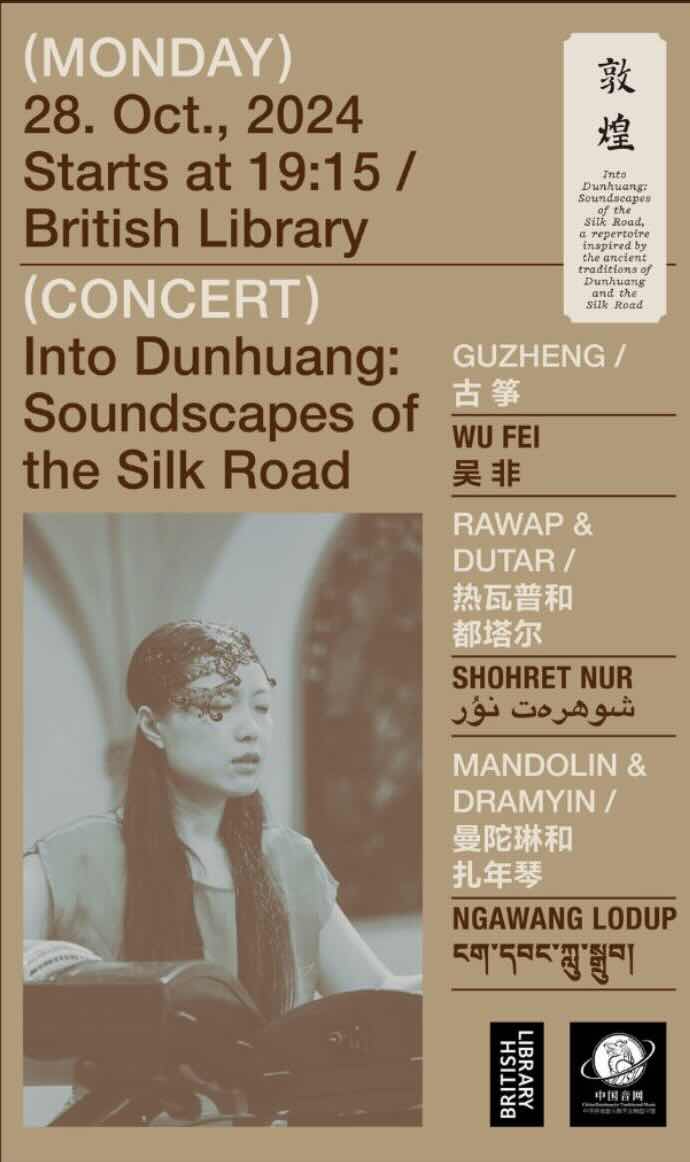


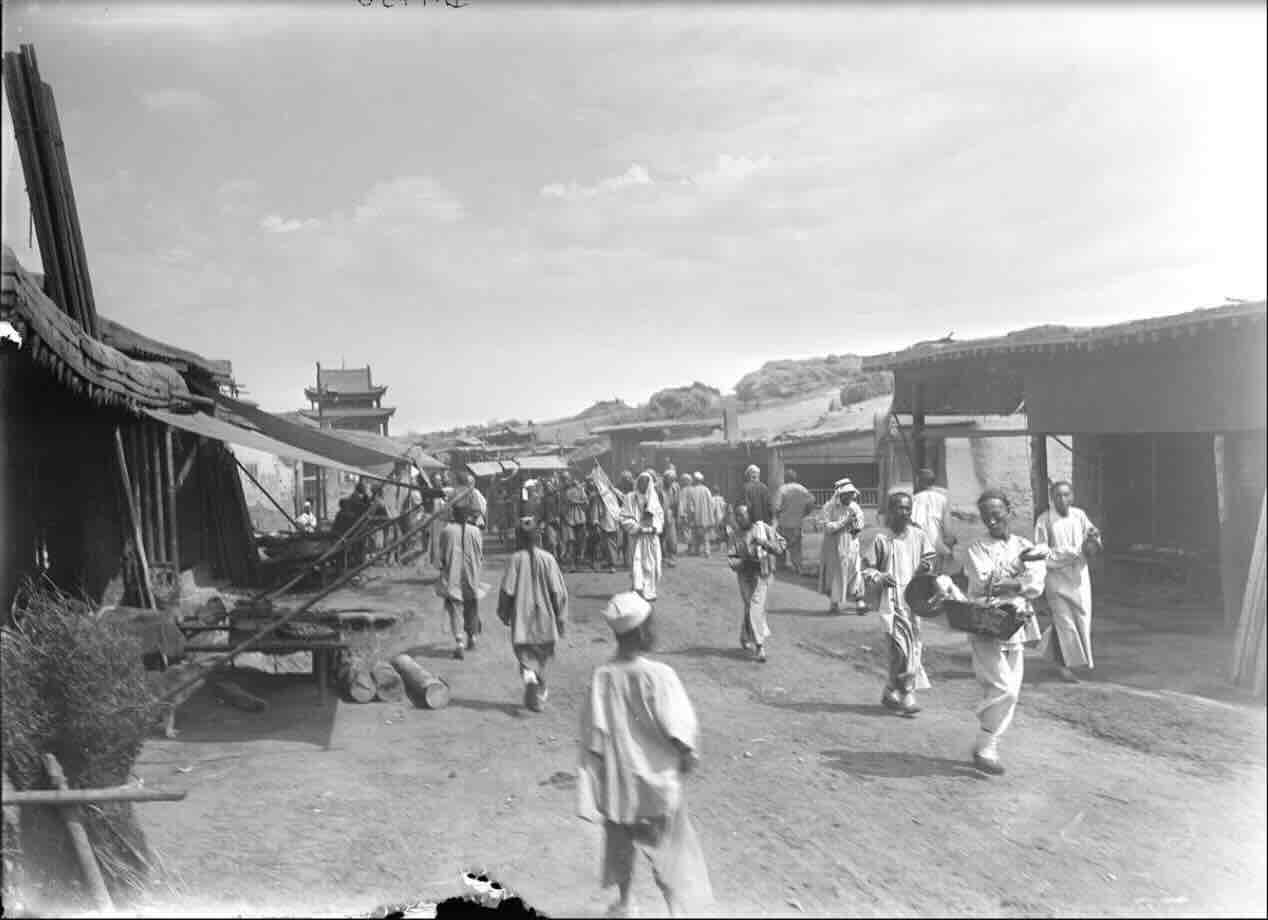 Photo from German Central Asian Expedition, undated (early 20th century):
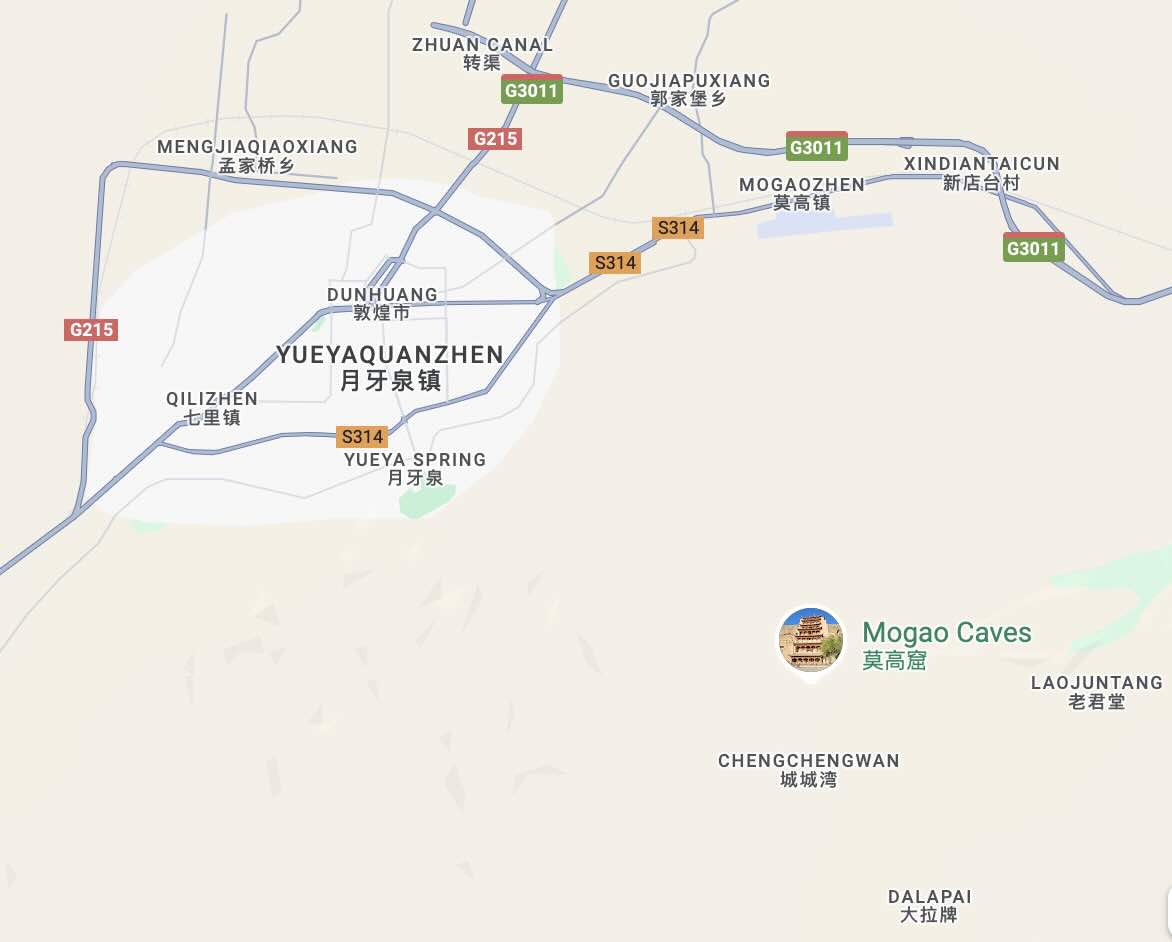 The Dunhuang region today. Source: Google Maps.
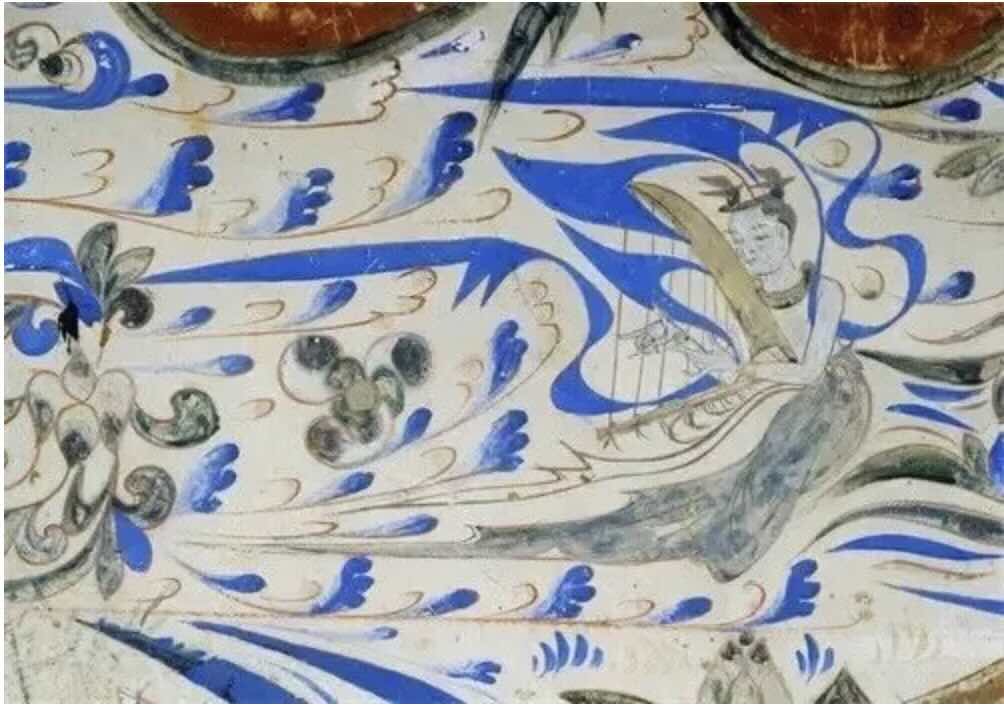 Konghou, Cave 285, 6th century (detail).
 ©BBC/Mark Allan. Source: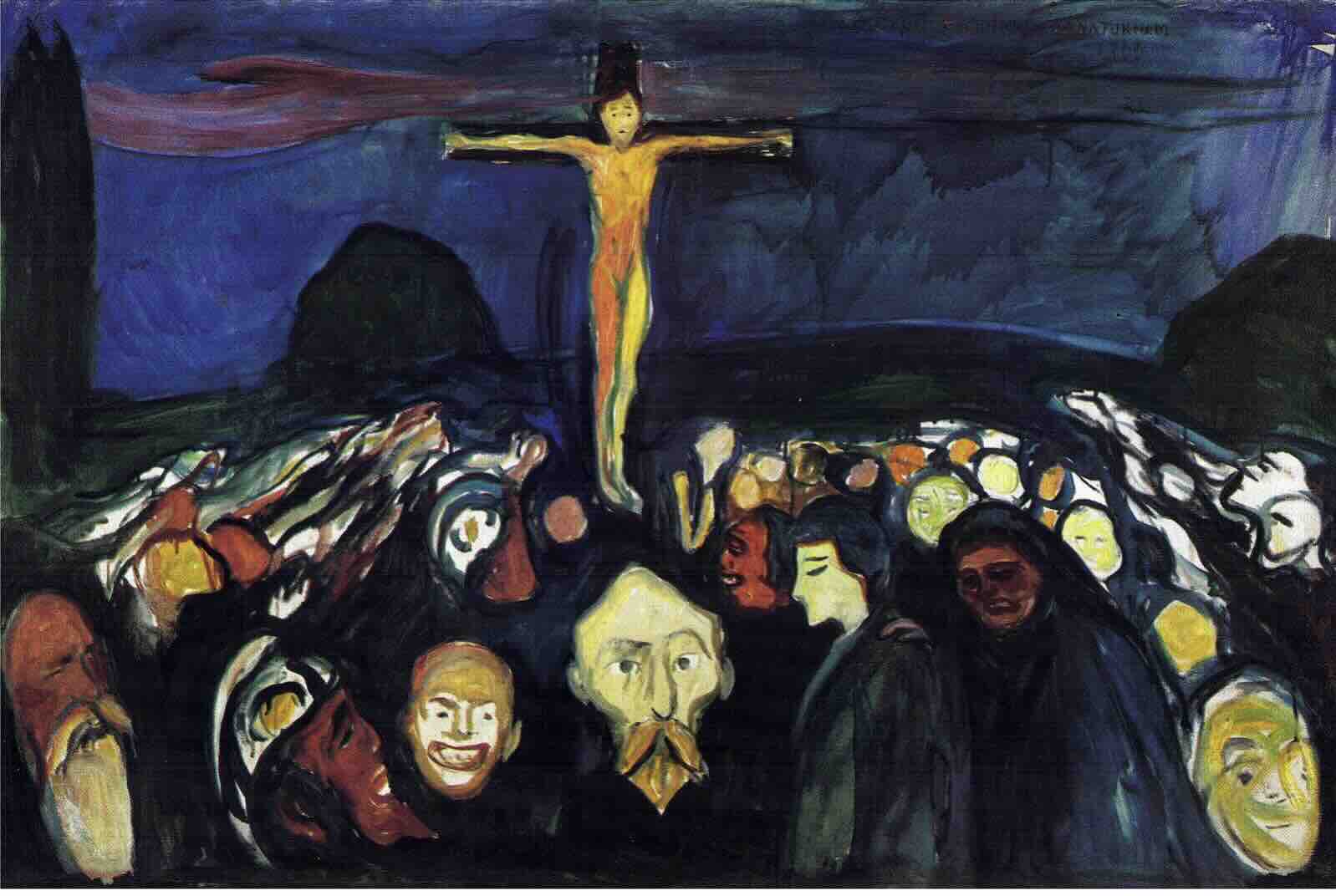
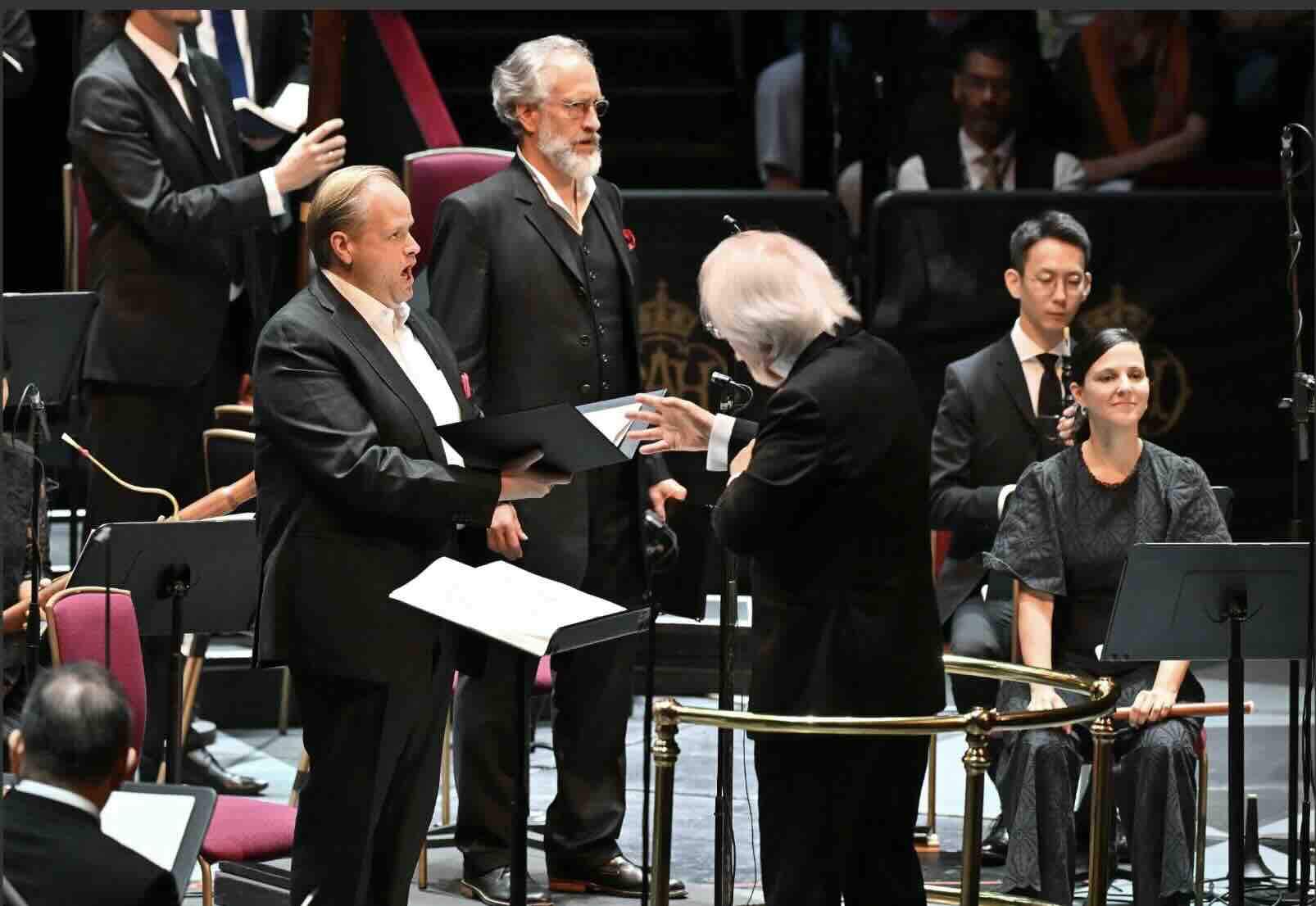 Benjamin Bruns, Christian Immler, Masaaki Suzuki.



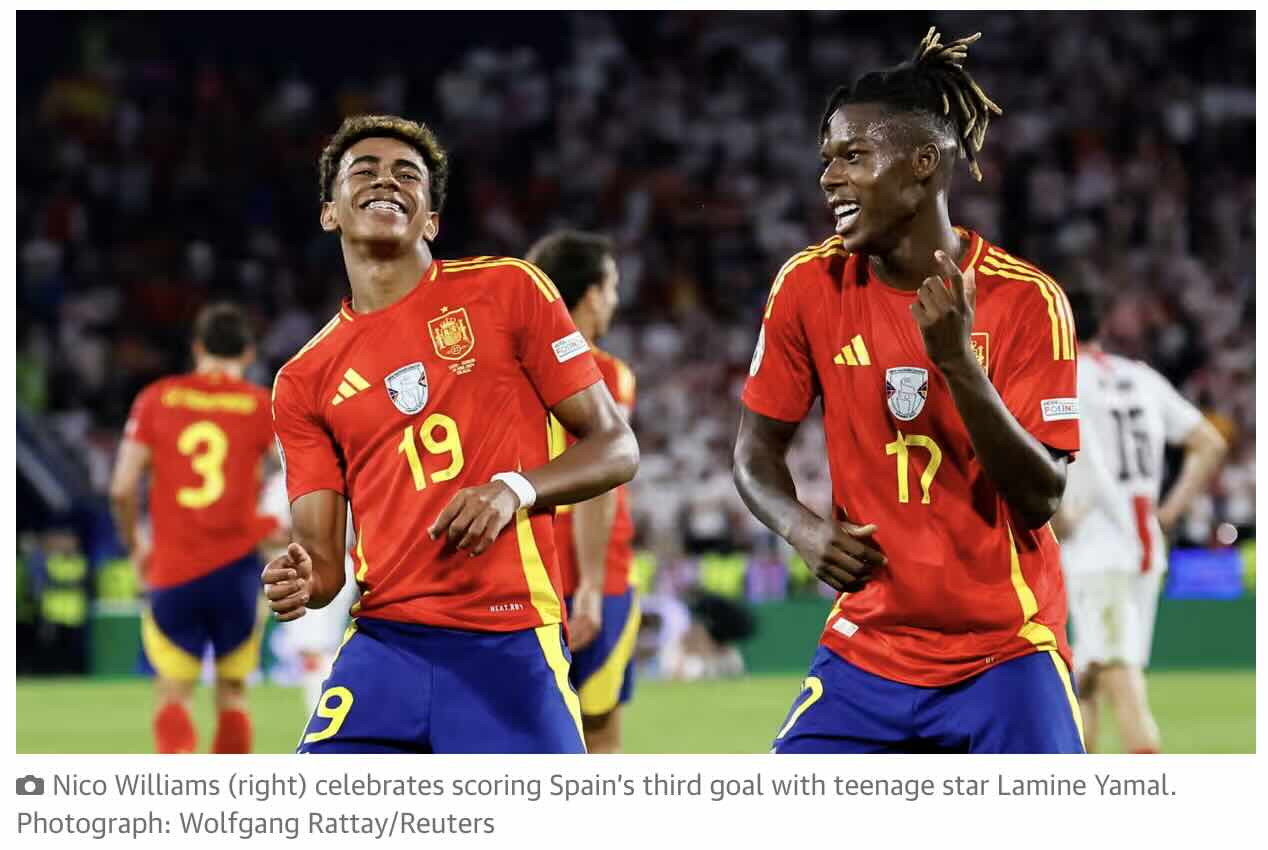 Grooving to the gaita. *
 “Just dig that funky tulum“

 ** Before England’s Great Escape from Slovakia, I was composing our own version of Caporetto, inspired by that popular classic from the

 The Shanhua temple during the


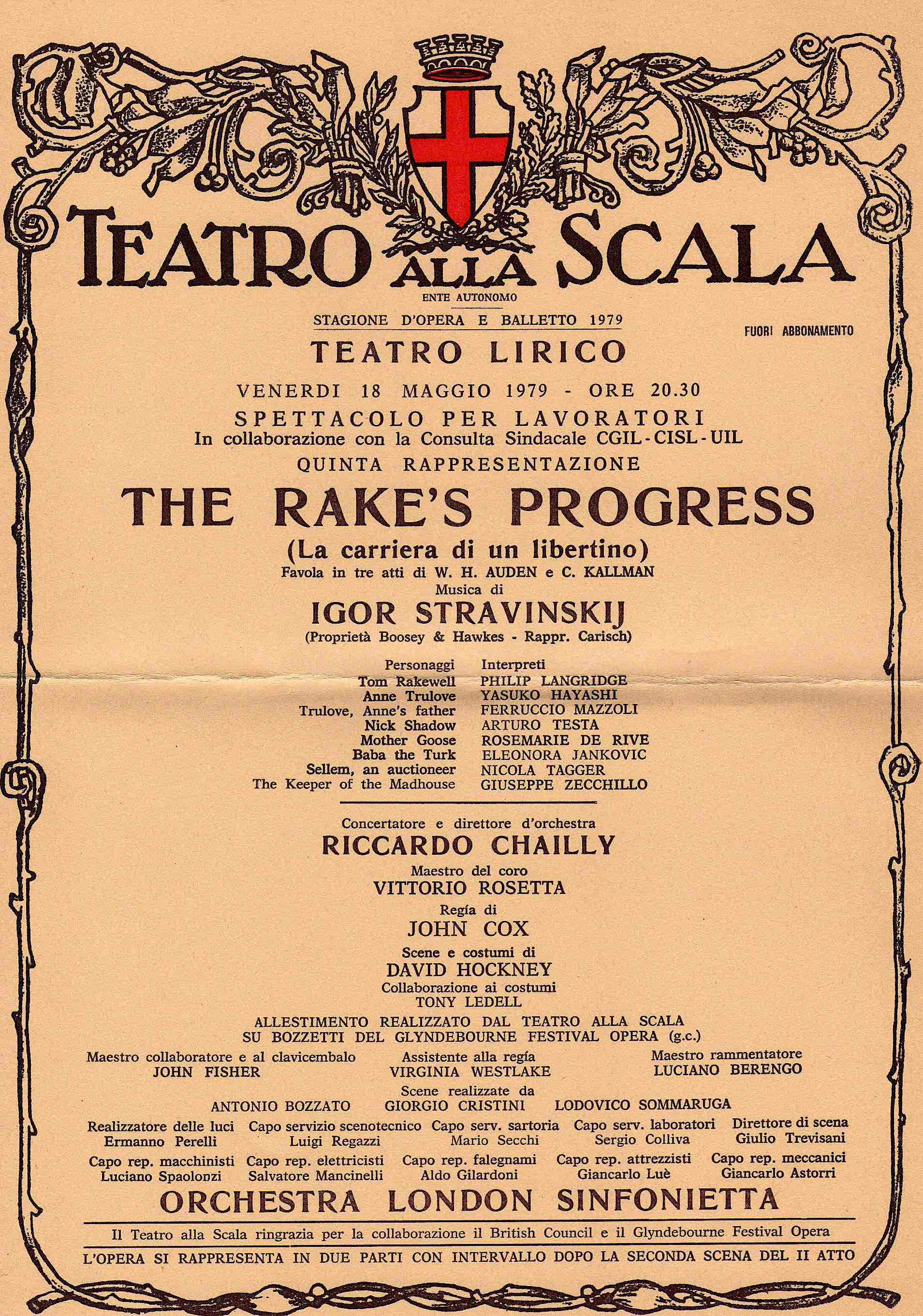
 With Li Manshan and his Daoist band at the Gallerie, Milan 2012.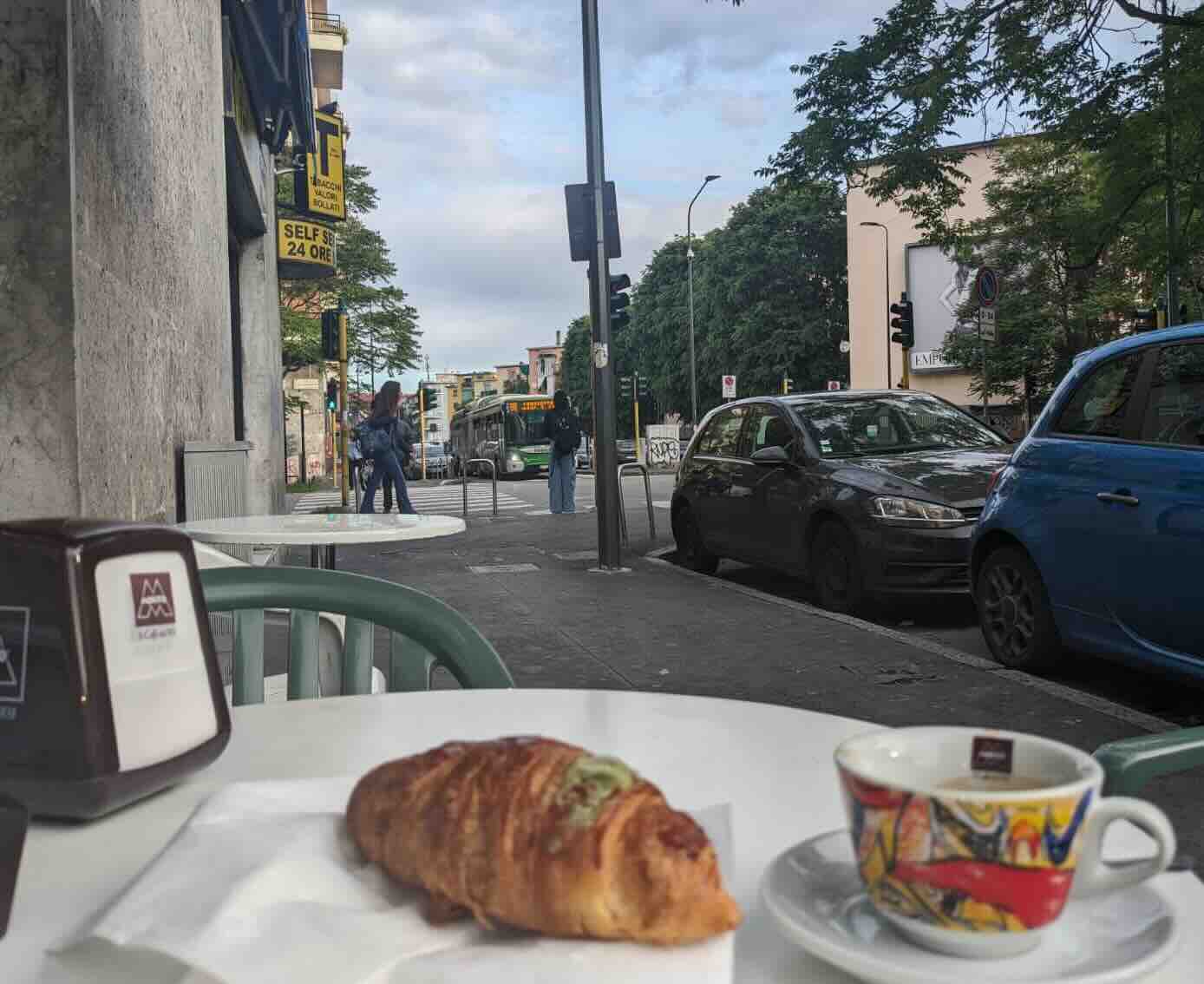



 For both folk and art music in the time of Vermeer, click
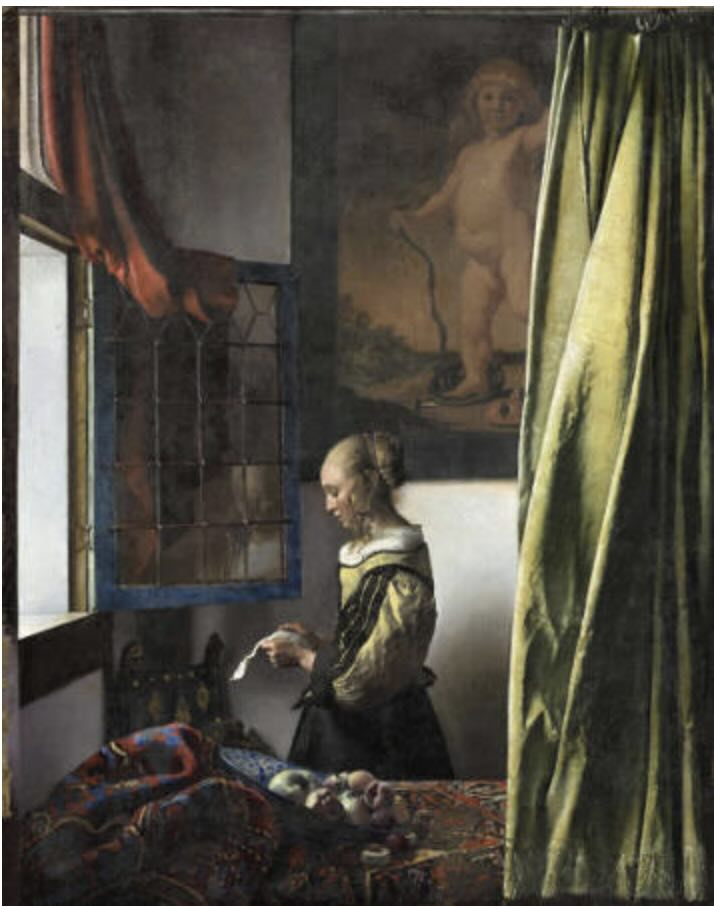


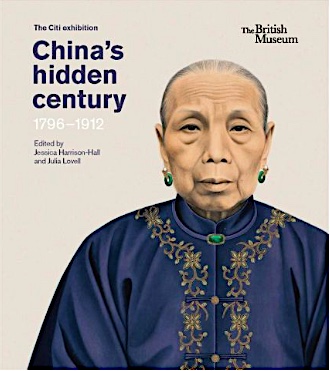
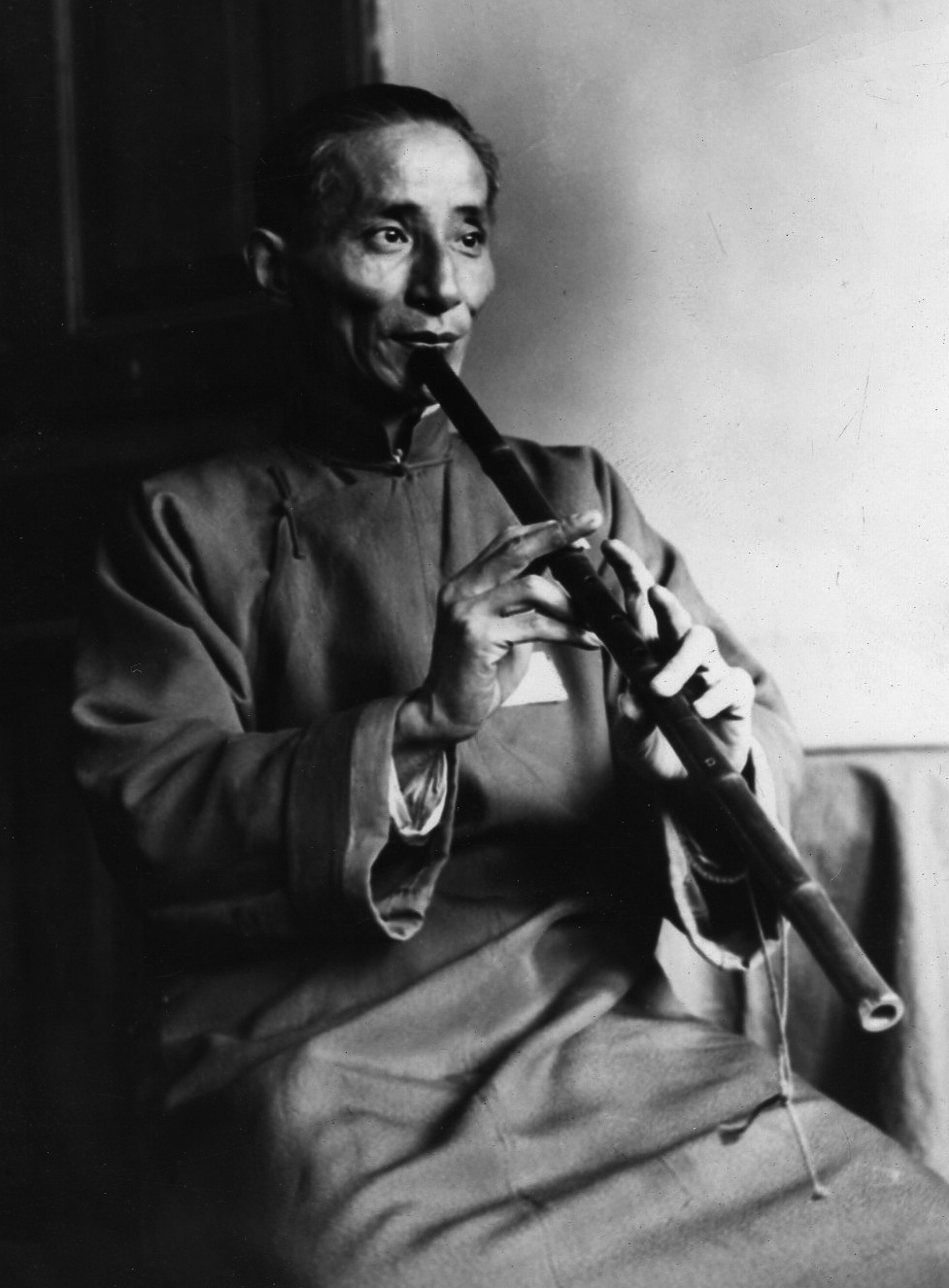 So I’m grateful to the exhibition for stimulating me to revisit some of my own material from the field. In this I’m always in awe of the incomparable erudition of
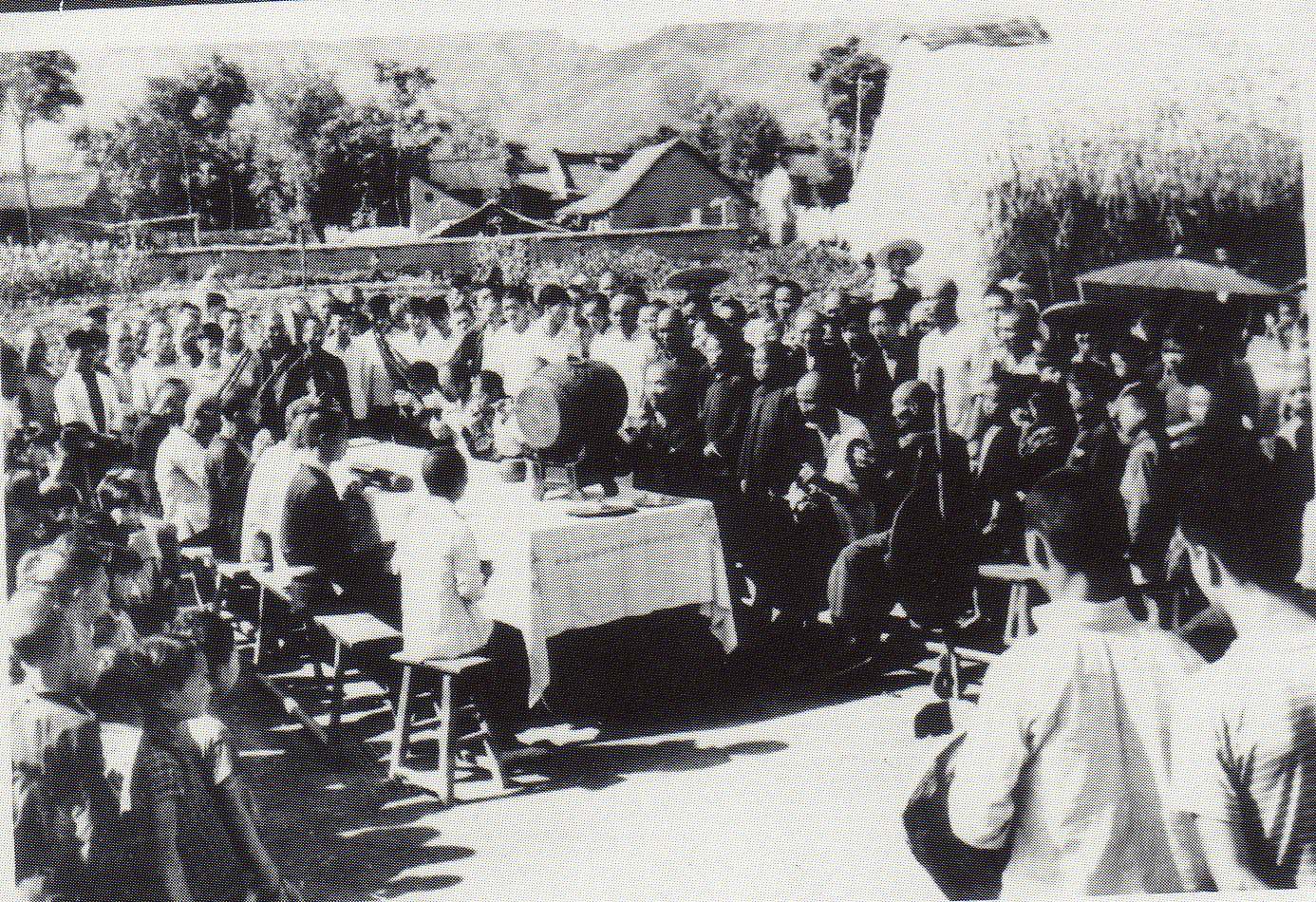
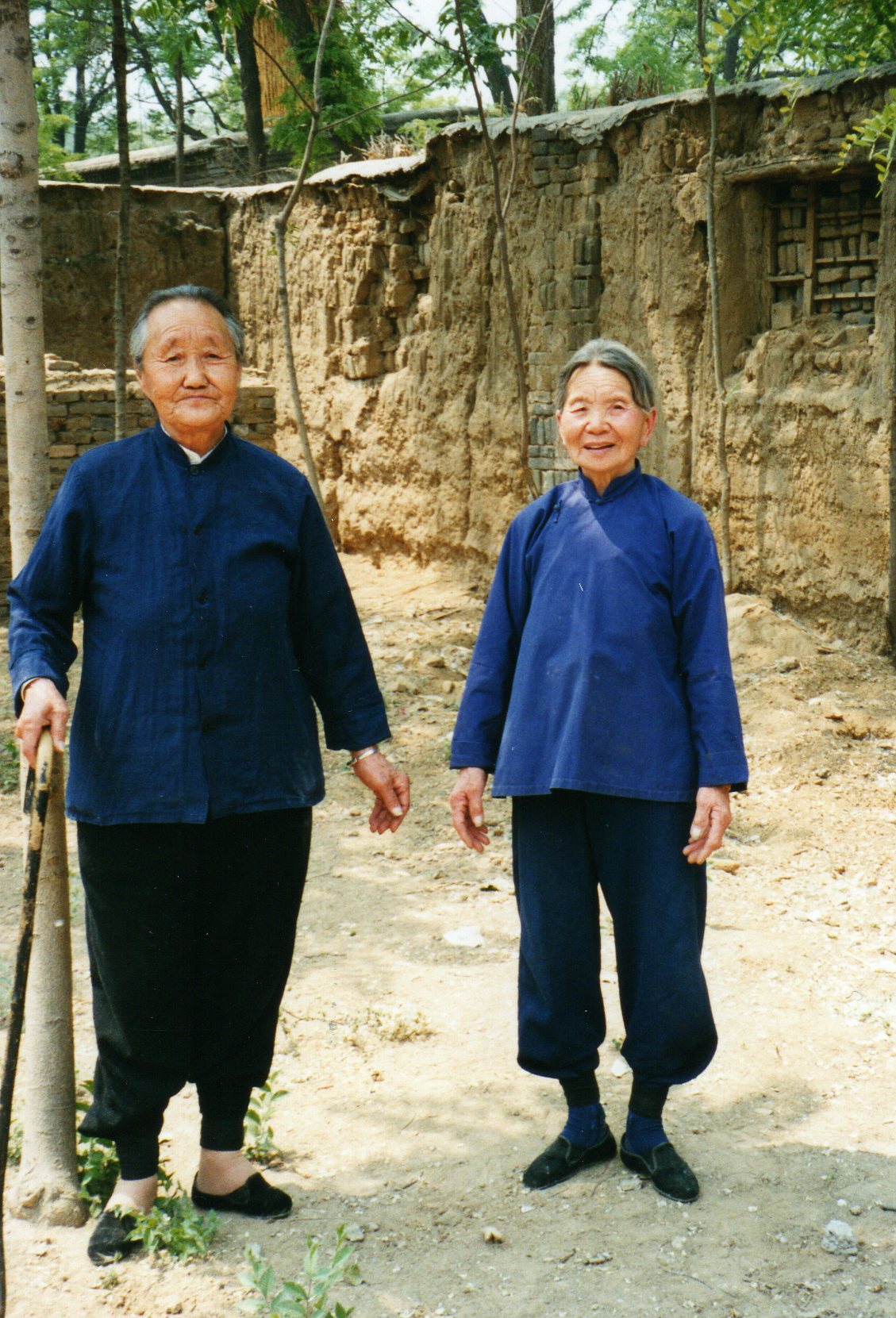 This reflects another common difficulty: we often seek to document history through major, exceptional events, whereas for peasants customary life is more routine. And apart from artefacts, much of the history of this (or any) period lies in oral tradition—which doesn’t lend itself so well to exhibitions.
 From
From 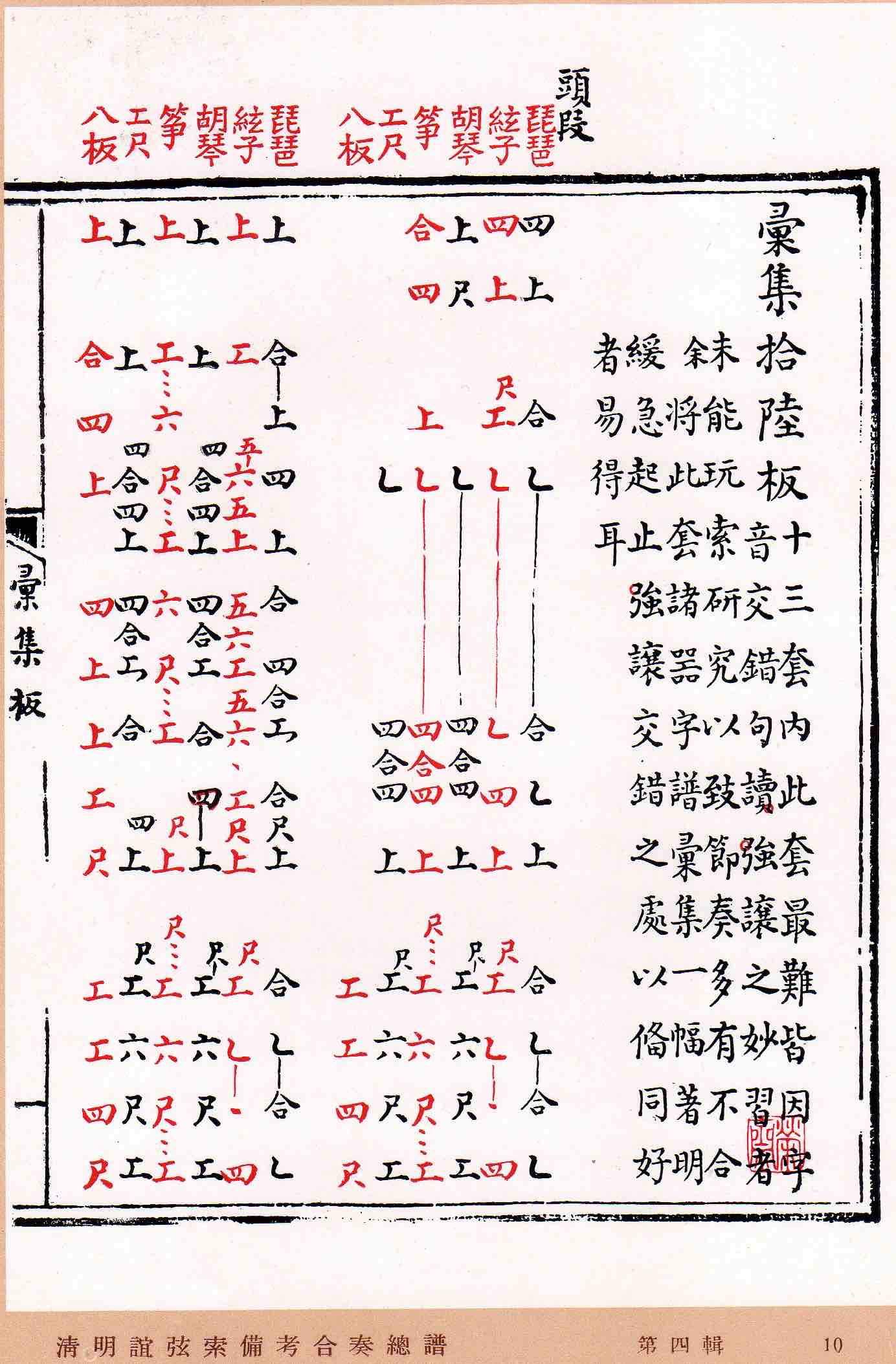
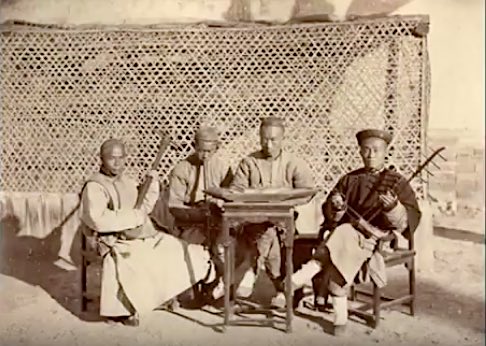


 From Qing-dynasty Tianjin Tianhou gong xinghui tu 天津天后宫行會圖.
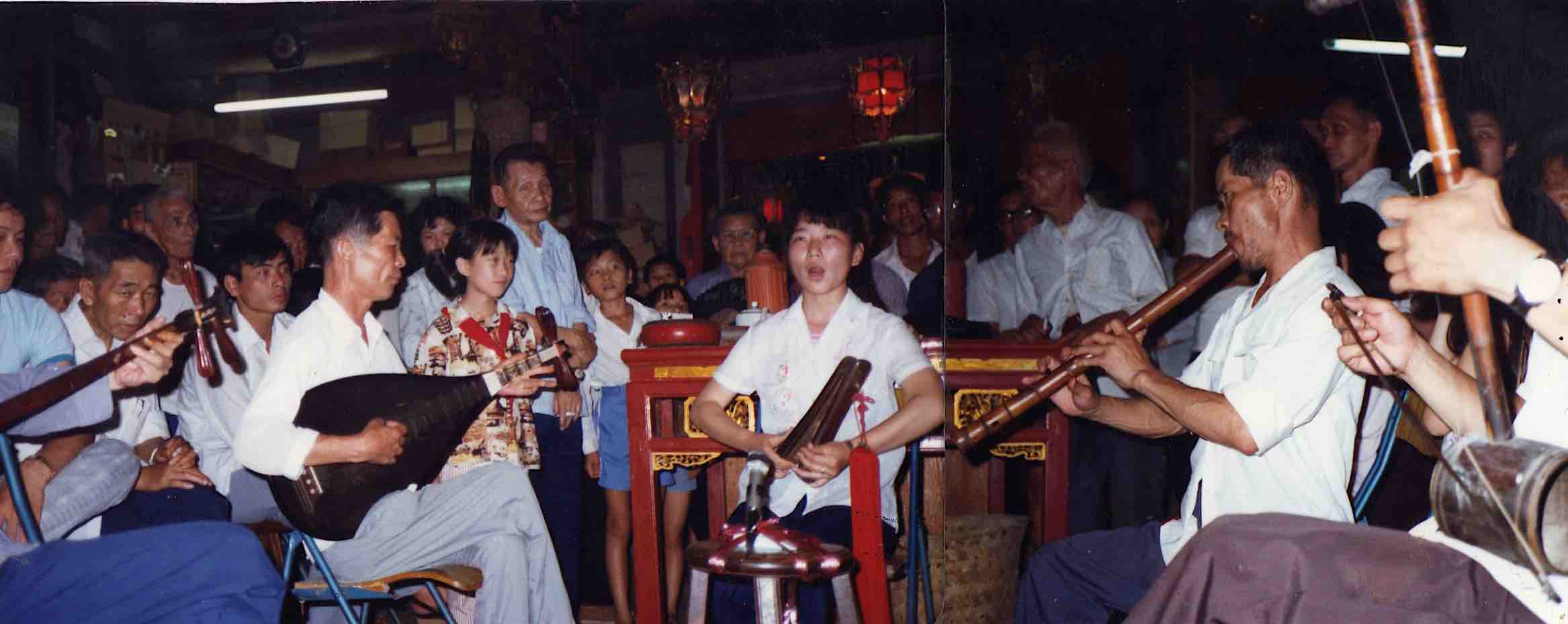
 Mural (detail),
  This detail is particularly fine:


 For more recent Uncle Xi pinups, and incentives to display them, see
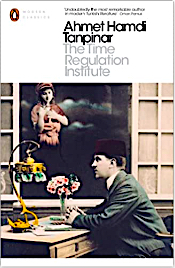



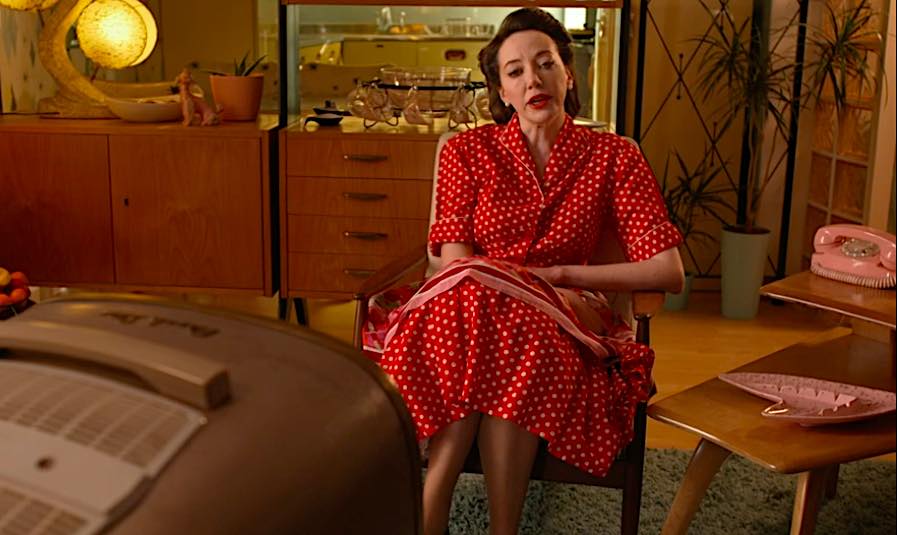
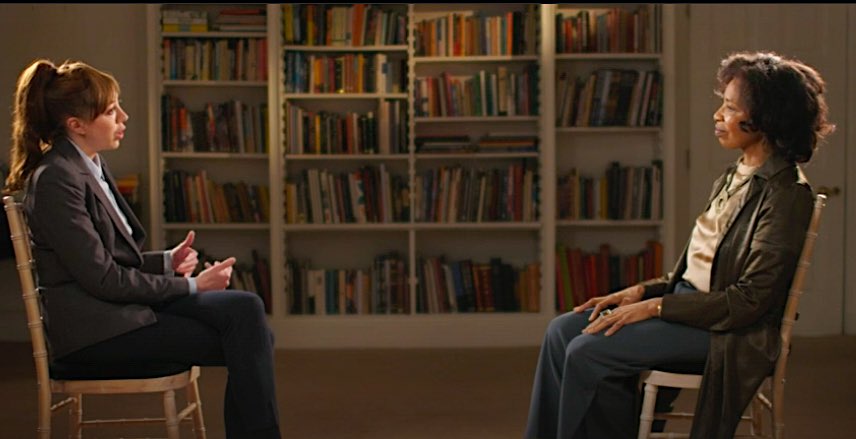

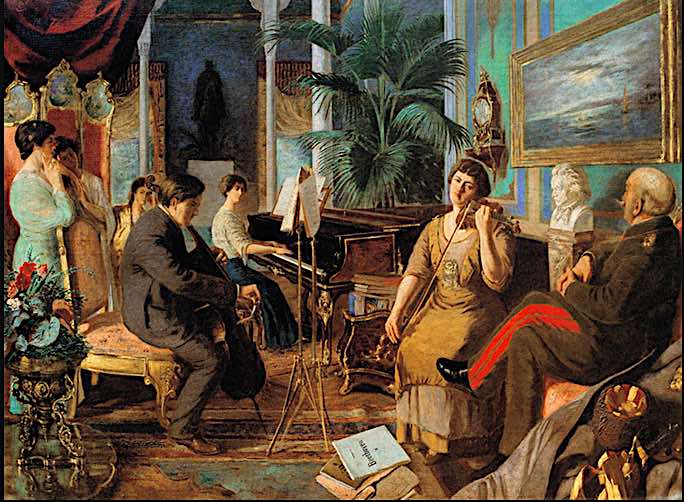
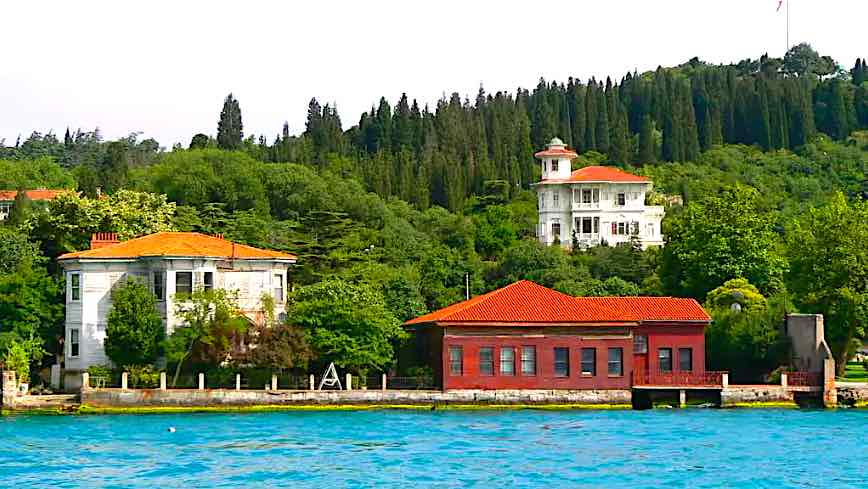





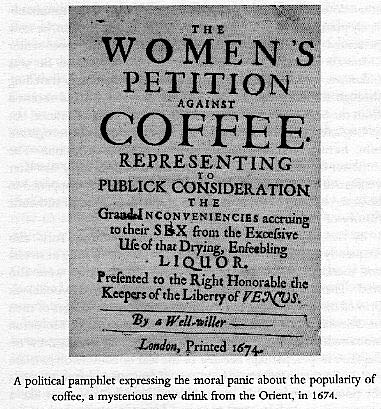


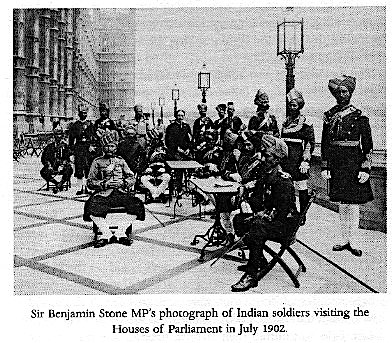
 Manji again returns to an earlier story, that of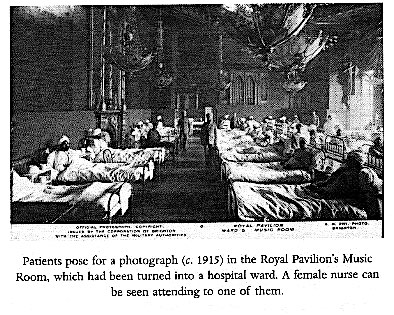

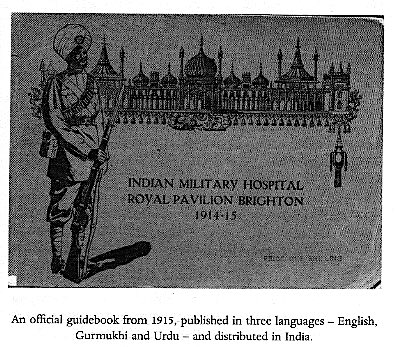


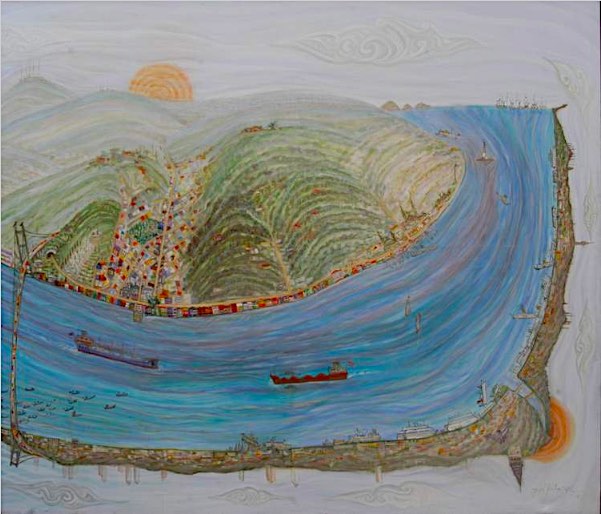
 Returning to Üsküdar the other afternoon, as landmarks gradually became visible I was trying to recognise its mosques from afar. I was on the lookout for the Yeni Valide Camii (1703)—where we had previously admired a double


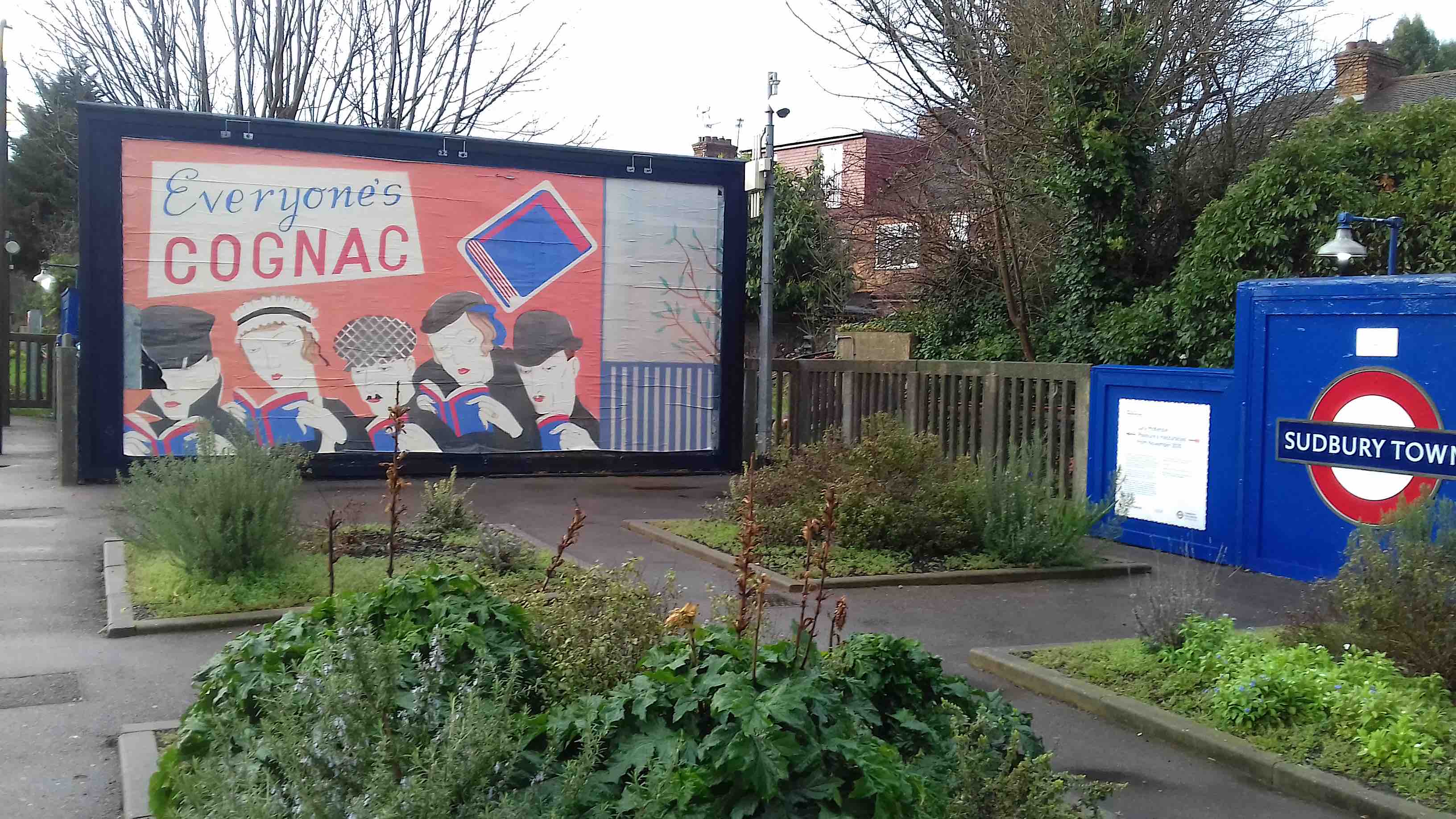

 The two-note motif could be any major third, actually: I doubt if anyone hears it as ti–so or la–fa, or even the fifth and third of a minor triad, as at the opening of

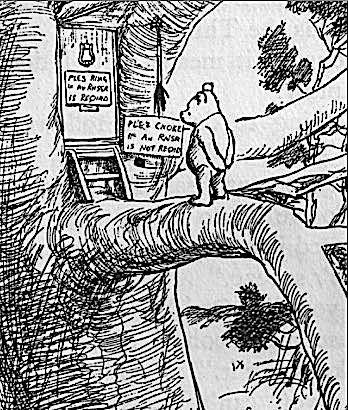





 Sola is one of three children of
 After graduating, partly in rebellion against the establishment that contemporary Western Art Music seemed to represent, Sola chose to become a pop musician, giving concerts and composing for film soundtracks, TV, and theatre. At the same time she made a great impression with her 1985 novellas Ni biewu xuanze 你别无选择 (You have no choice), Lantian lühai 蓝天绿海 (Blue sky green sea), and Xunzhao gewang 寻找歌王 (In search of the king of singers). Her voice was
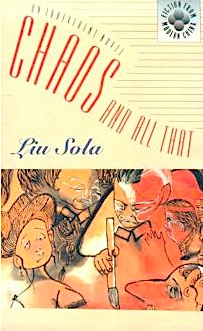


 From The afterlife of Li Jiantong.


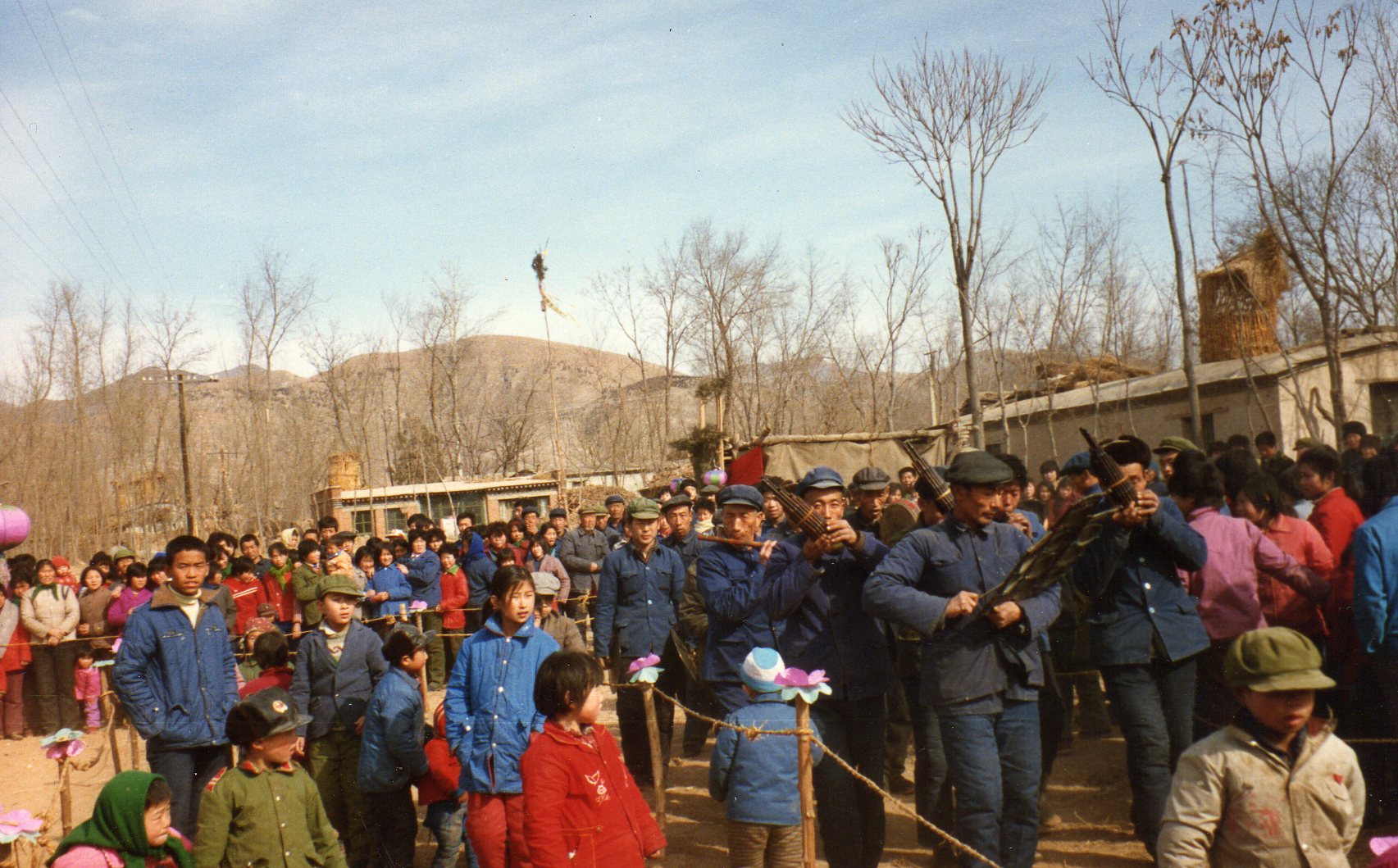

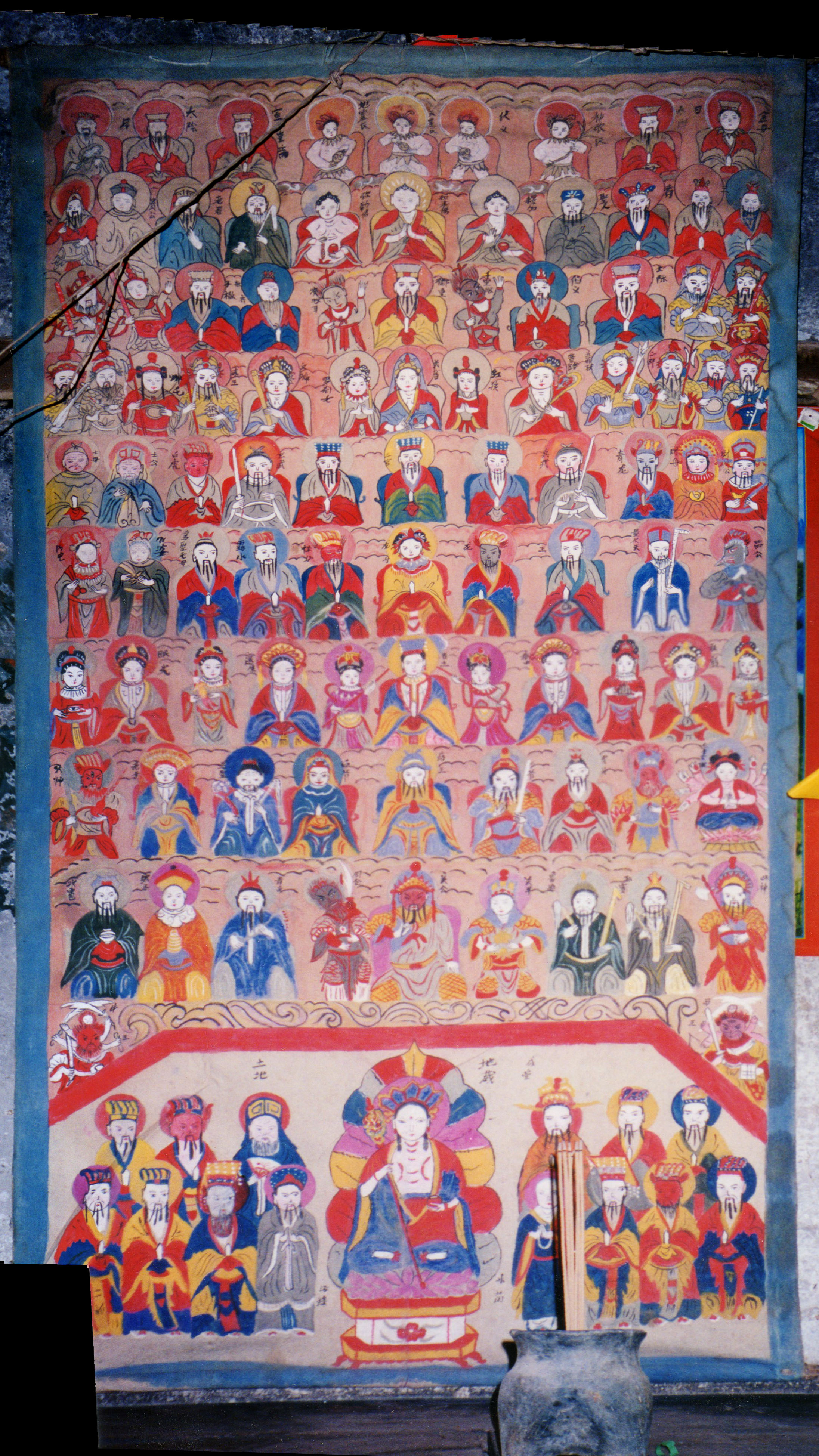

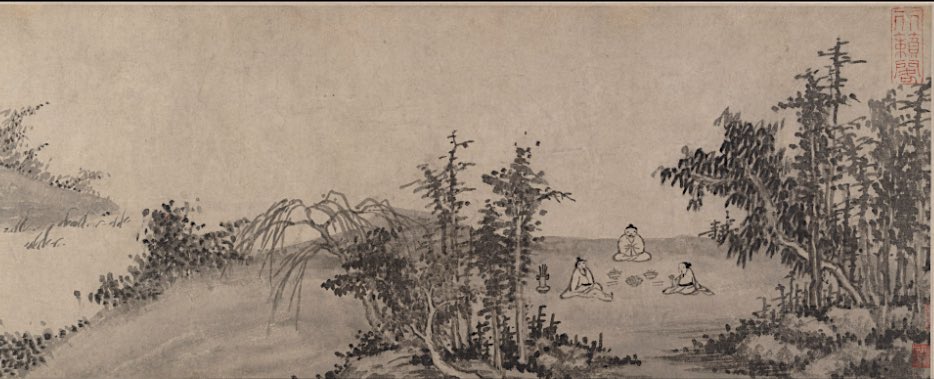
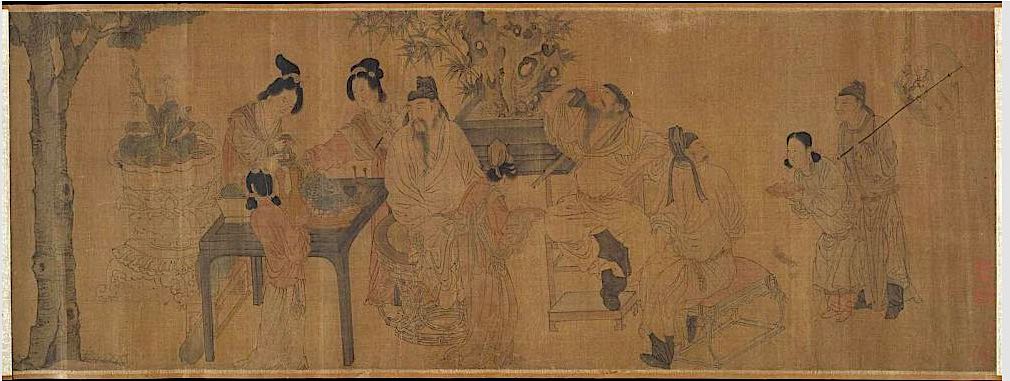




 Opening of Guangling san:






 Cesti’s opera was premiered in Vienna; the composer died the following year, and I haven’t yet seen evidence of further performances—staging it would have been a massive undertaking. So audiences in Italy may even have been denied the opportunity of a good giggle, although word must have spread. Still, in Italy, over a century after the tomato was first recorded there, one might suppose that the word pomodoro (the pomo referring generally to fruit, not to the apple) at least had become part of the vocabulary of the elite who were the audience for such spectacles. But then, they would also be familiar with the ancient story—although from the simple synopsis one might not imagine that it called for elaborate stage machinery to depict tableaus like shipwrecks and collapsing towers:






 So while our fleeting linguistic frisson soon became a wild goose chase (A really





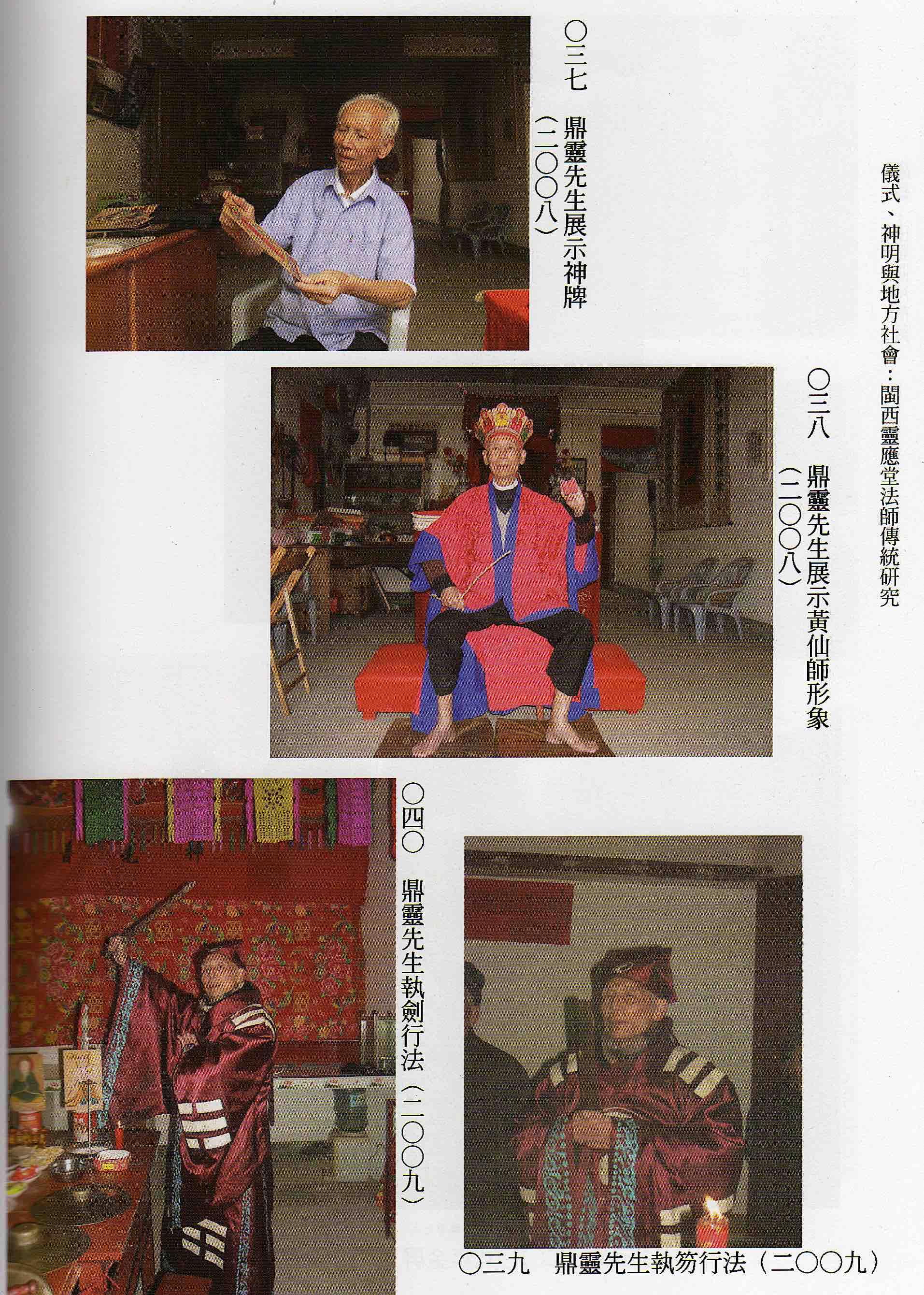


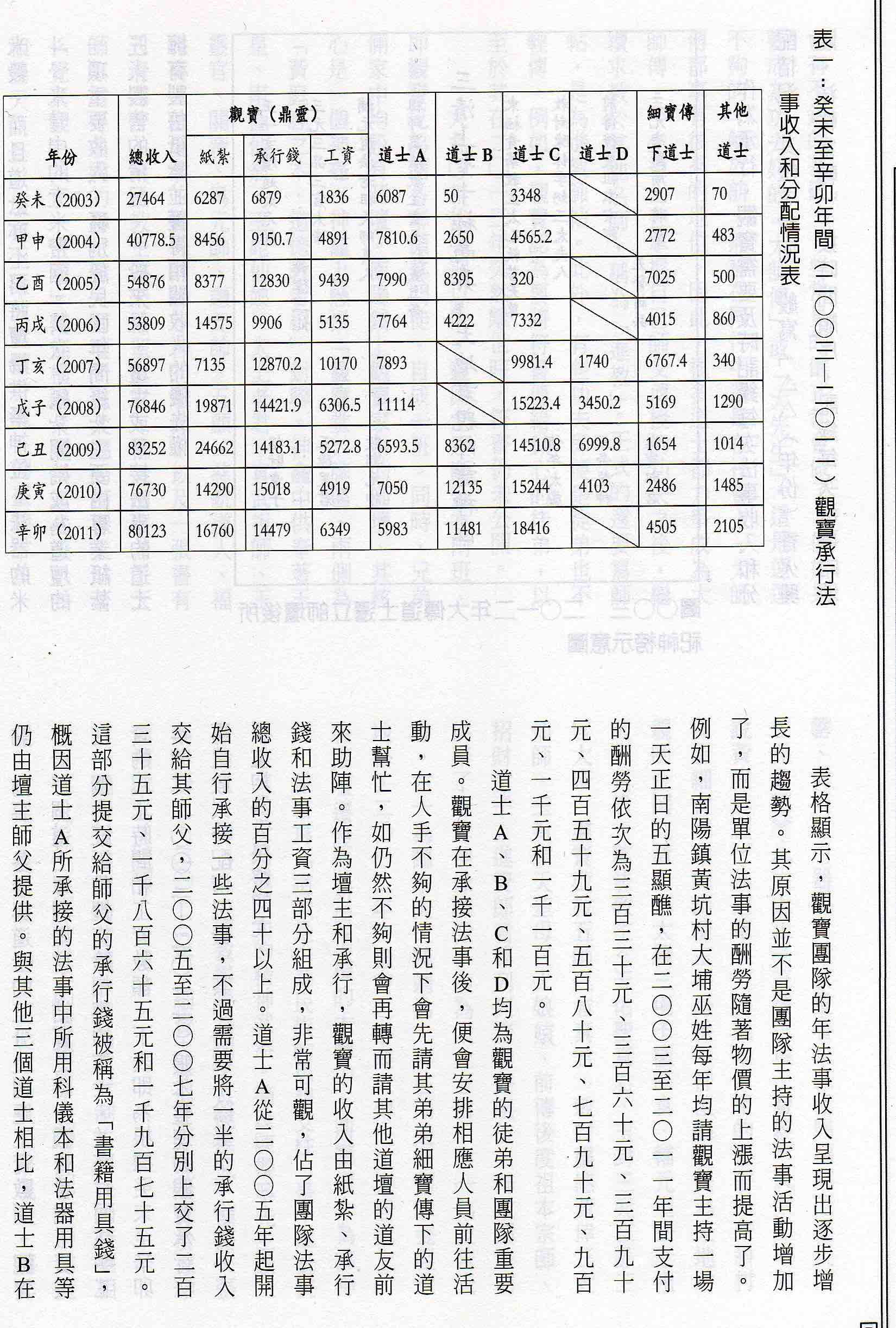
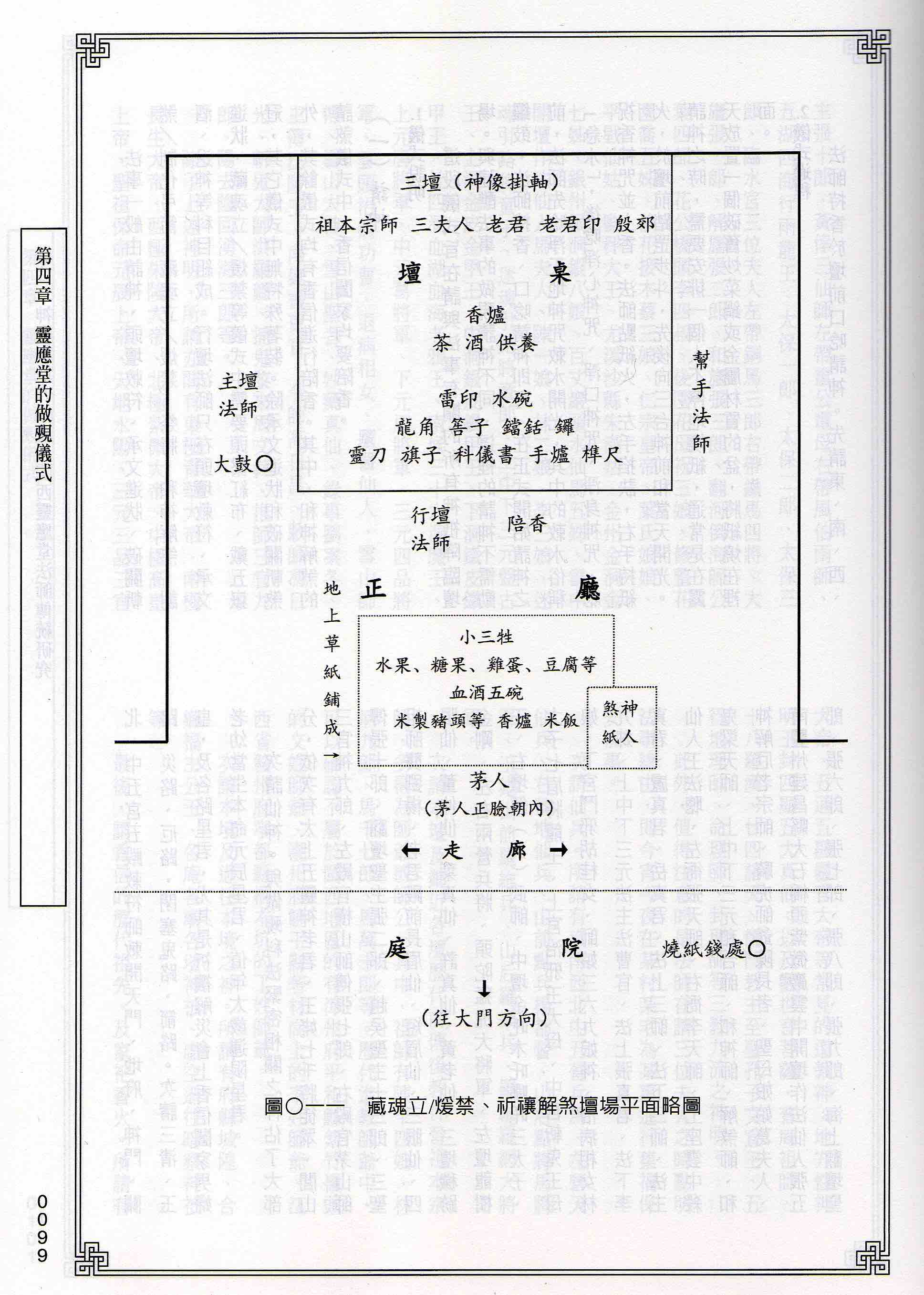


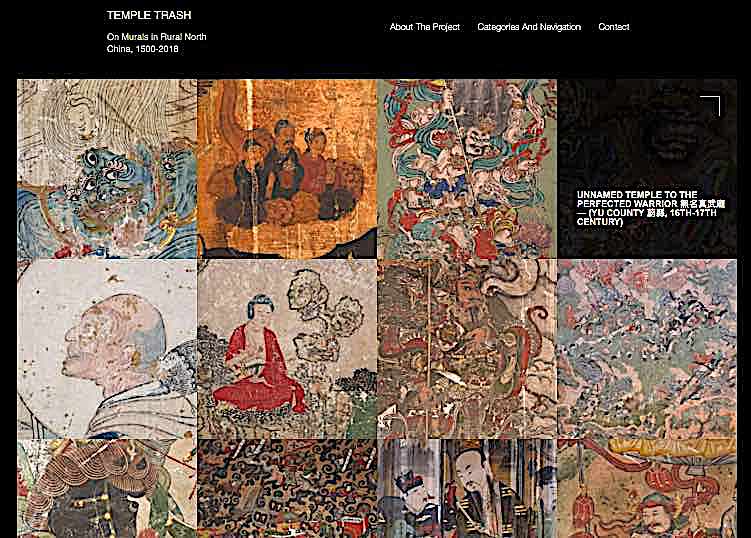


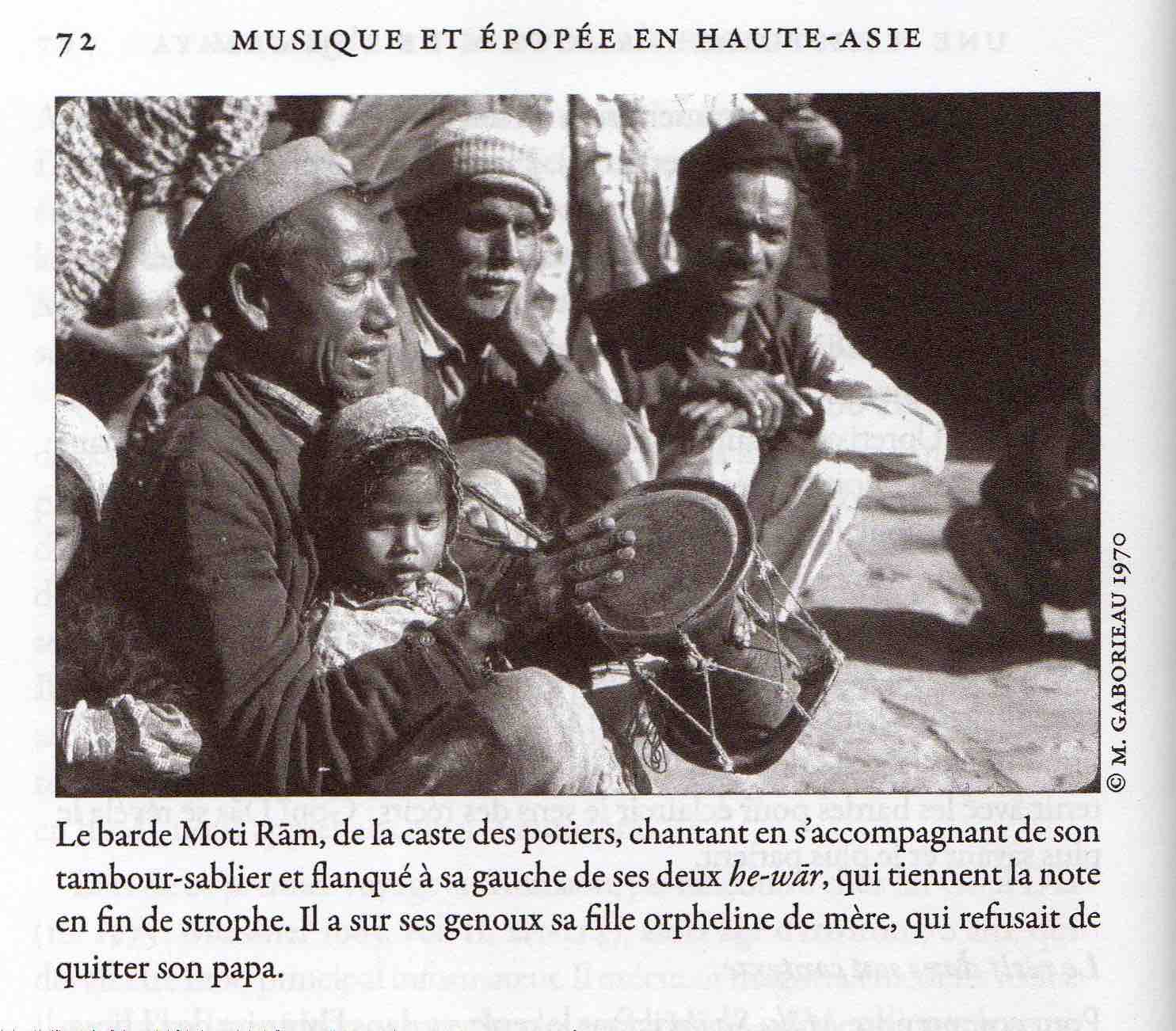
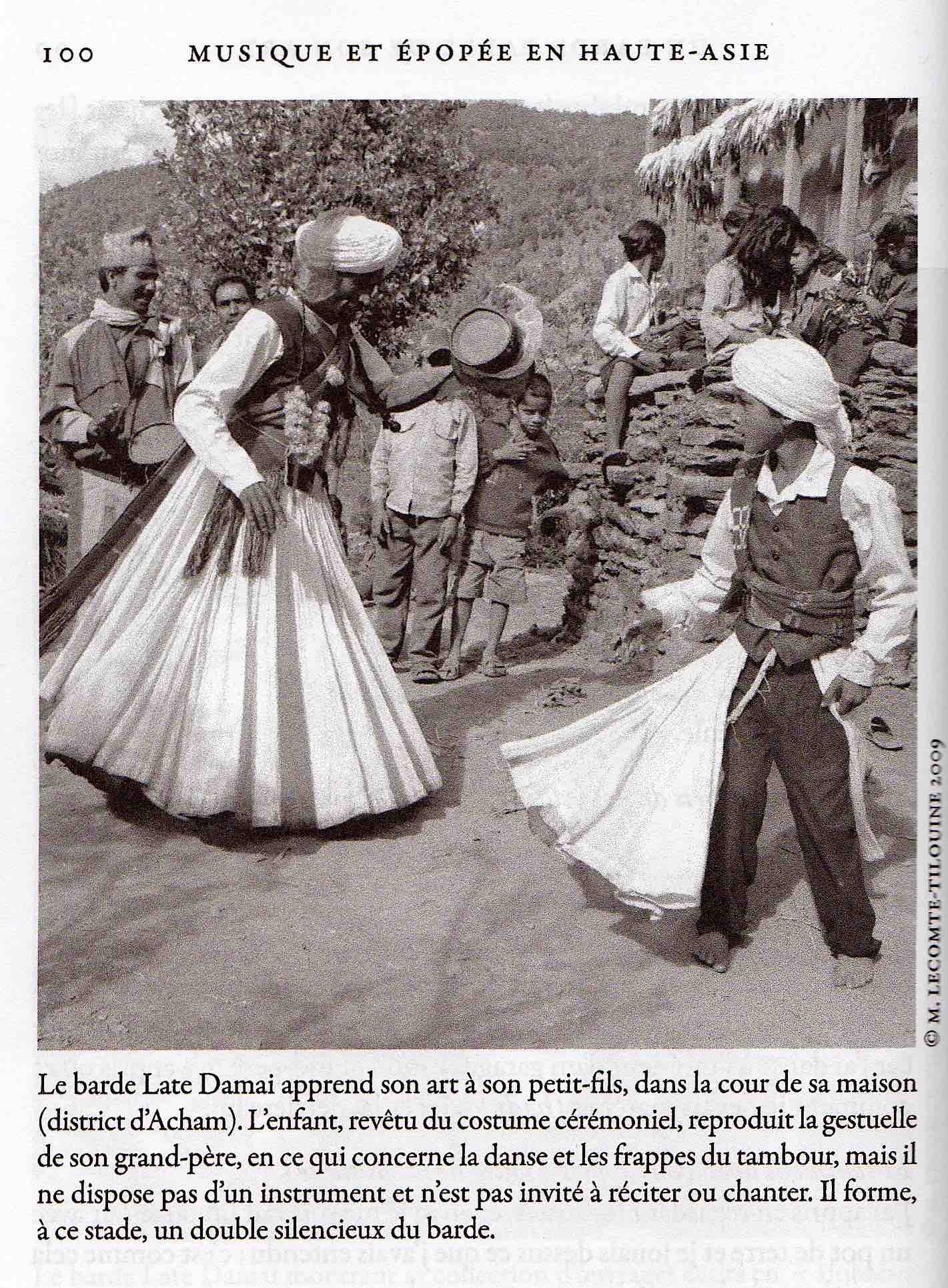

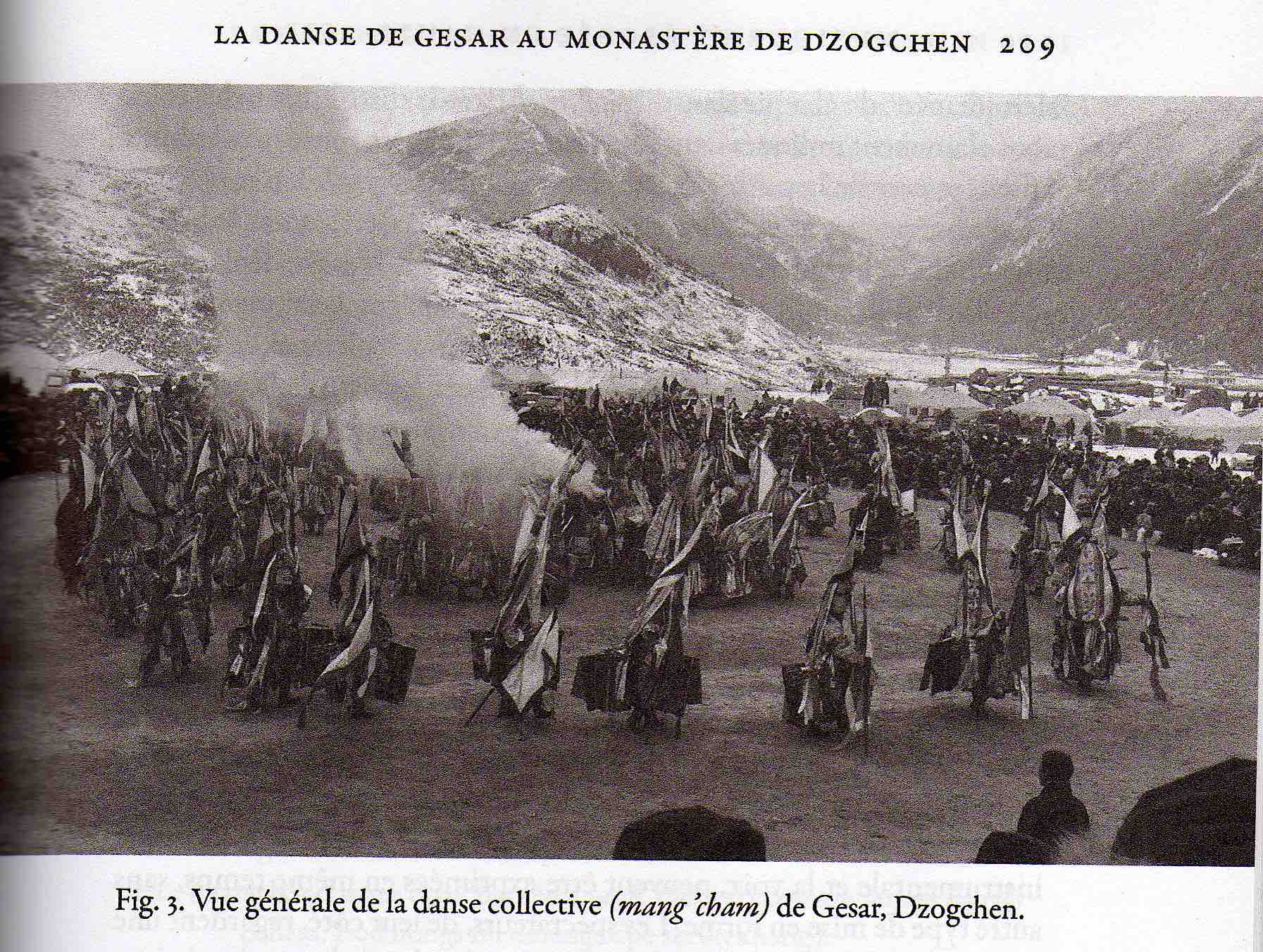
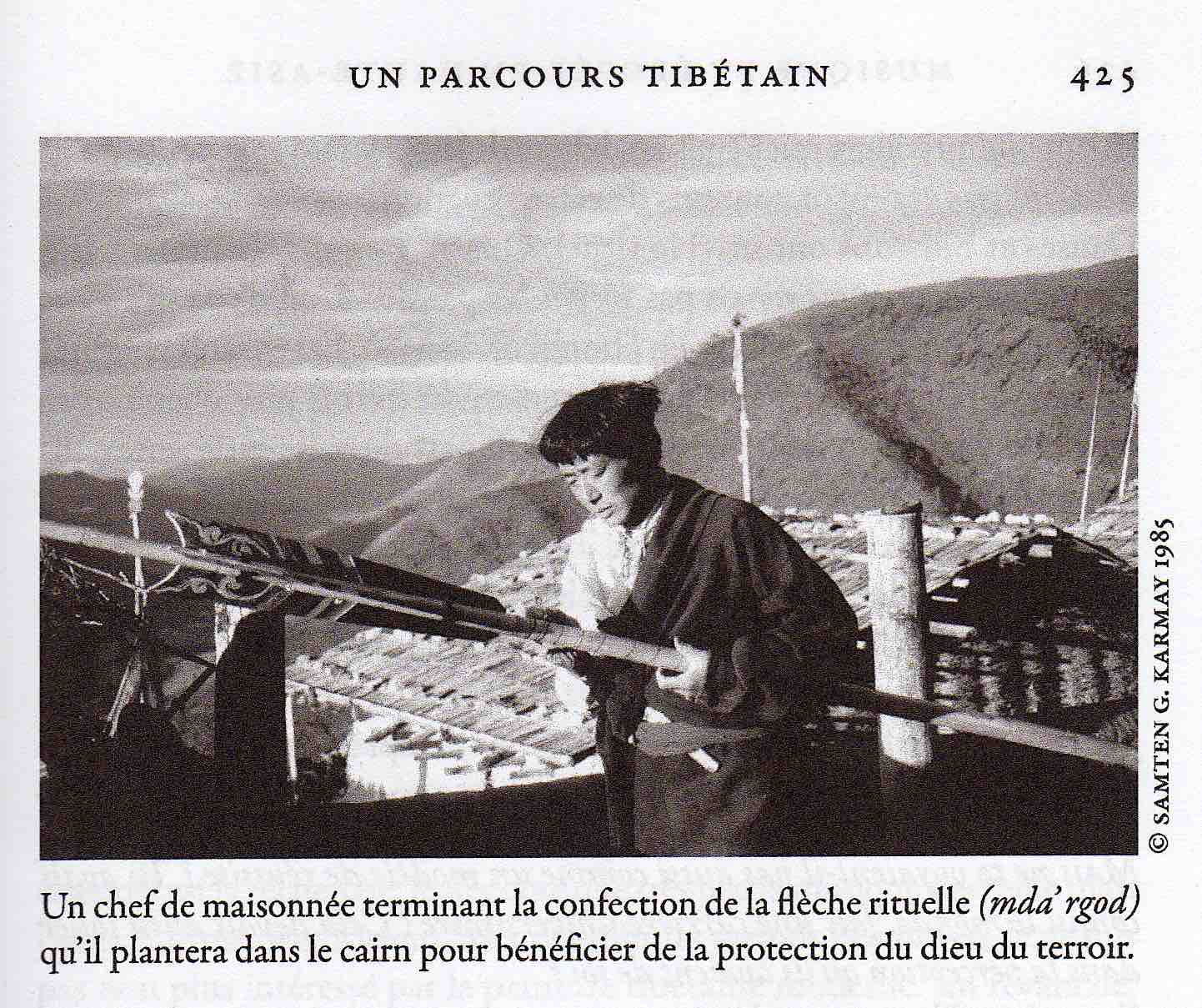

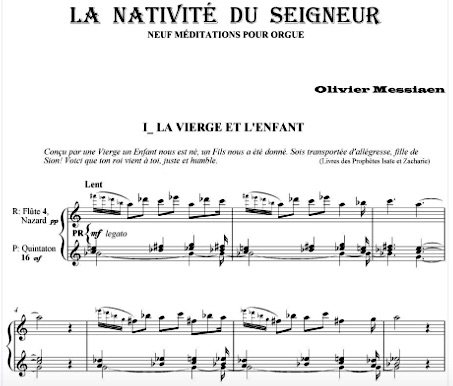
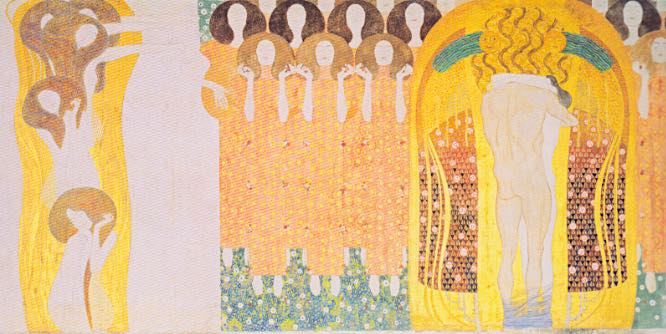
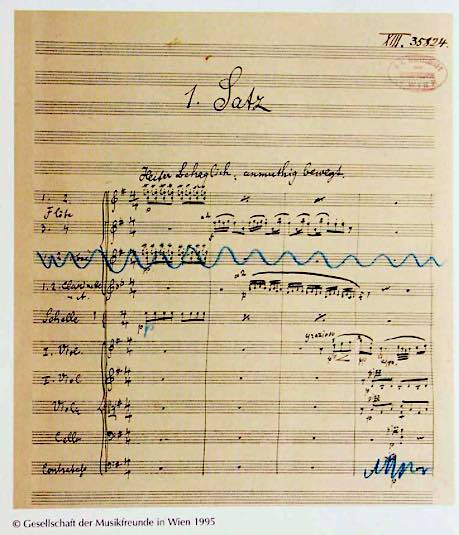
 The Scherzo is a Totentanz, inspired by Arnold Böcklin’s 1872

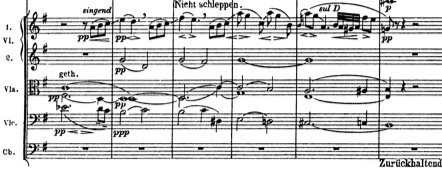


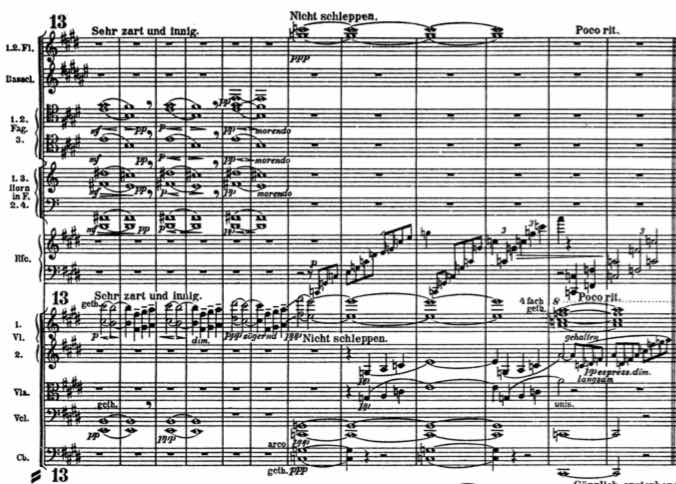
 Anna Mahler. Source


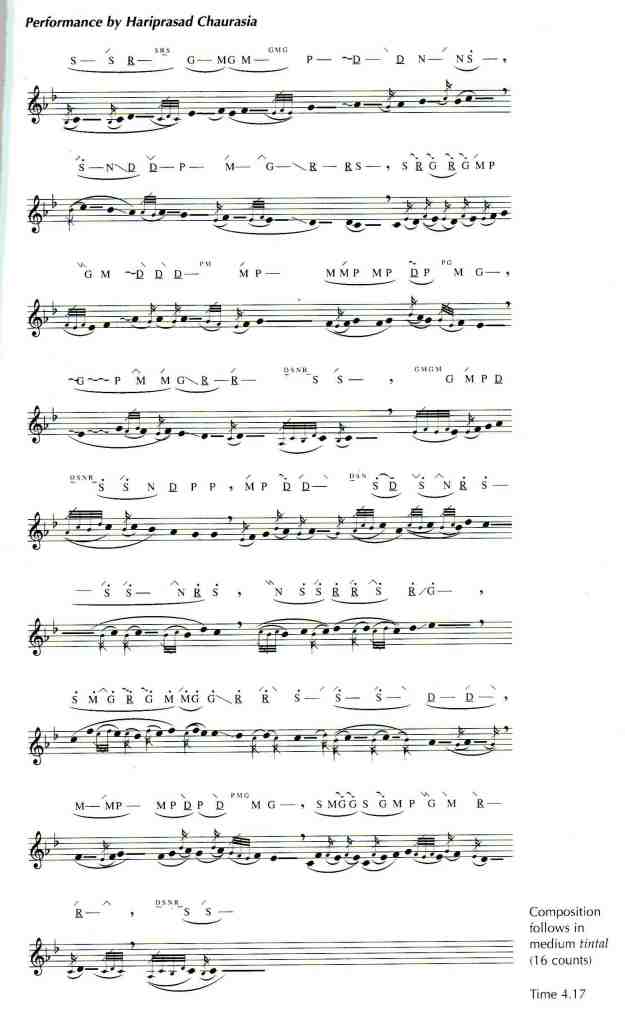

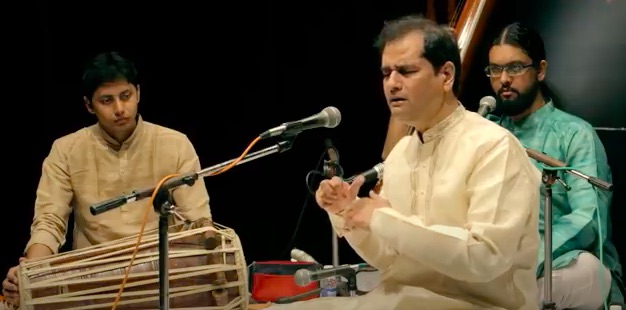


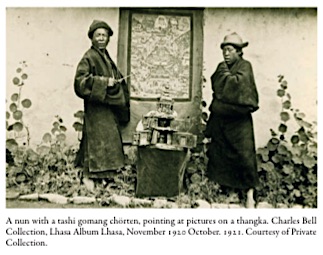
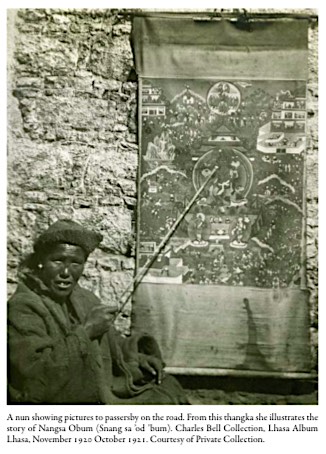


 Also belonging within this diverse rubric are the drekar (in Chinese, zhega 折嘎: see

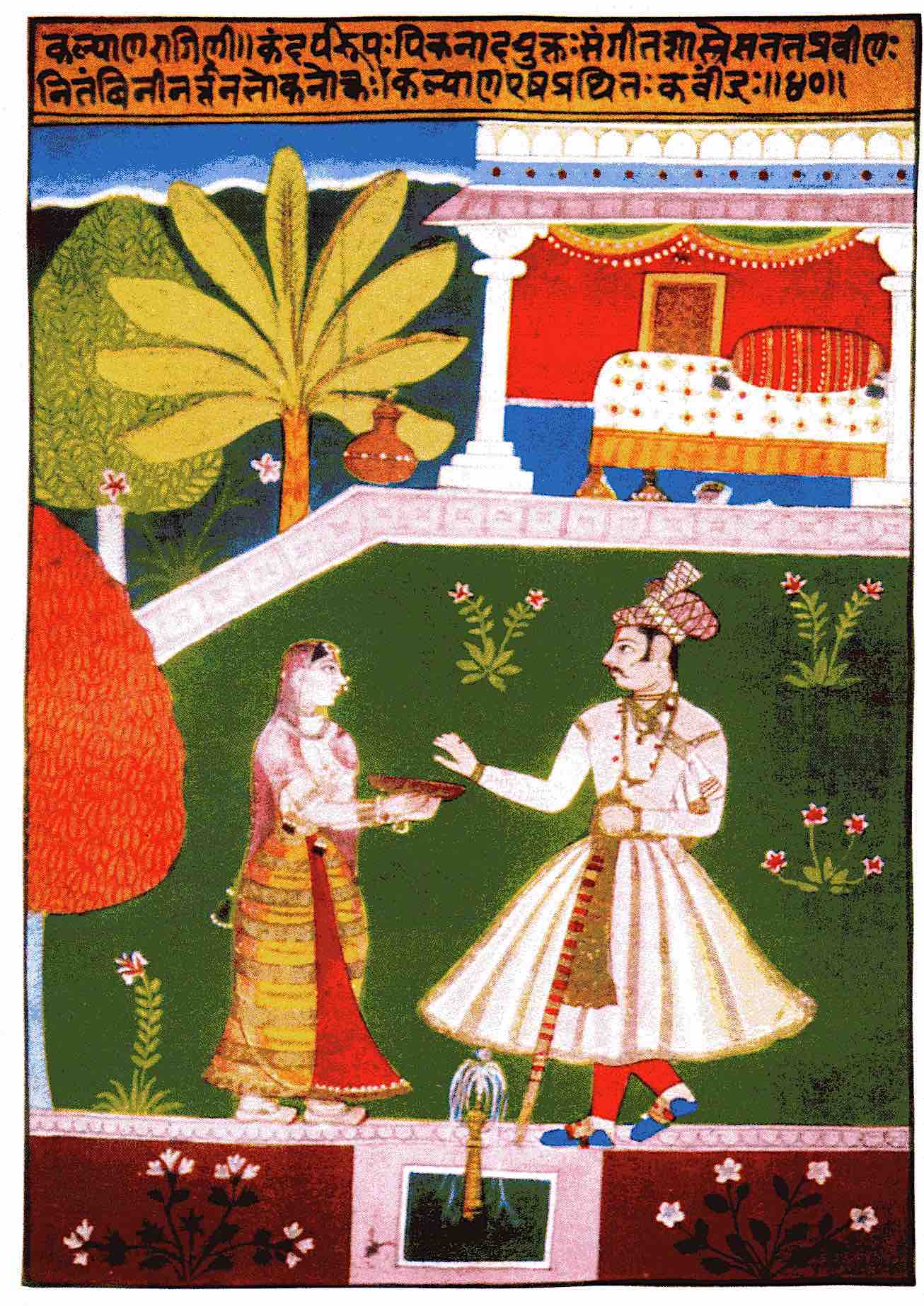



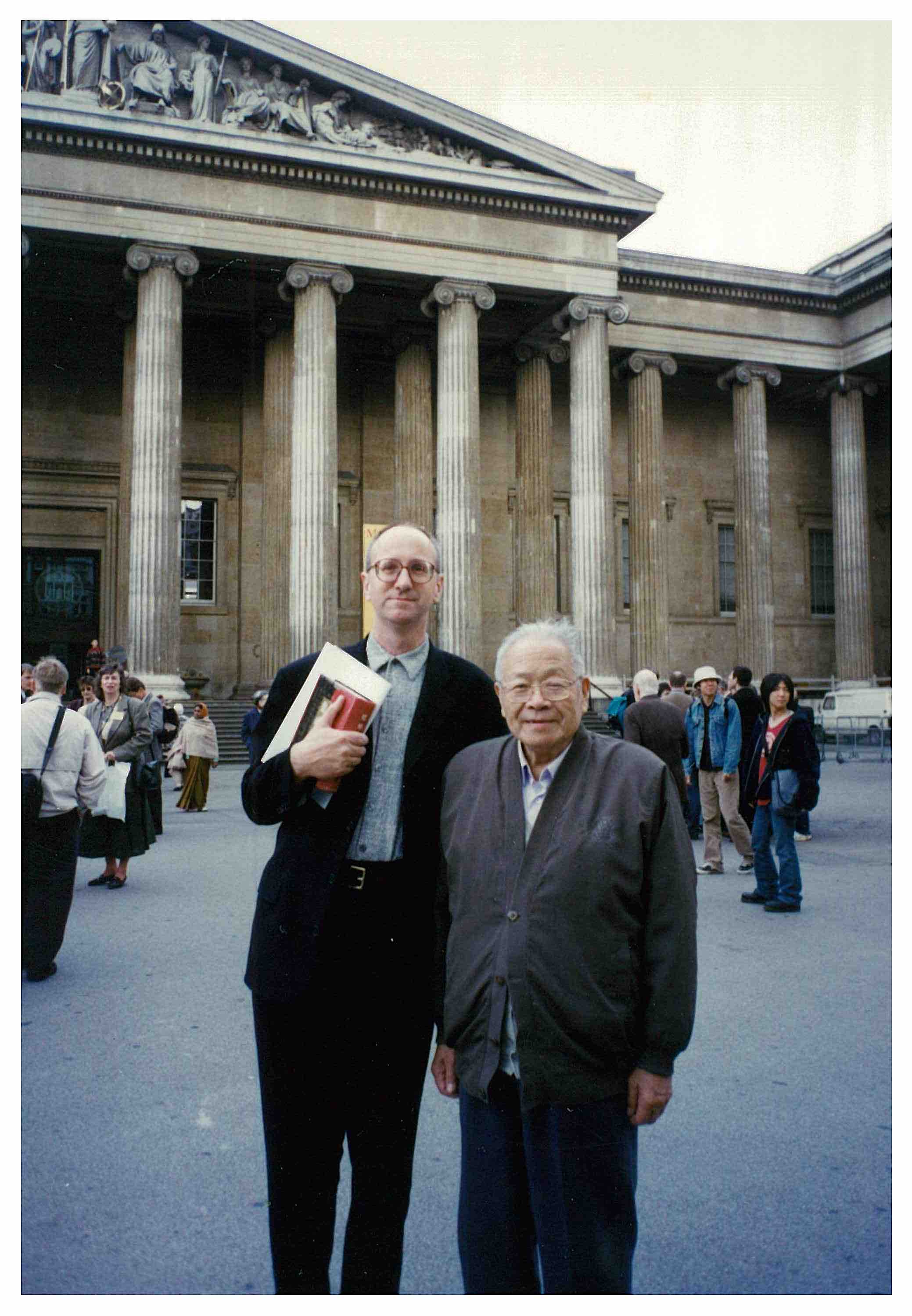
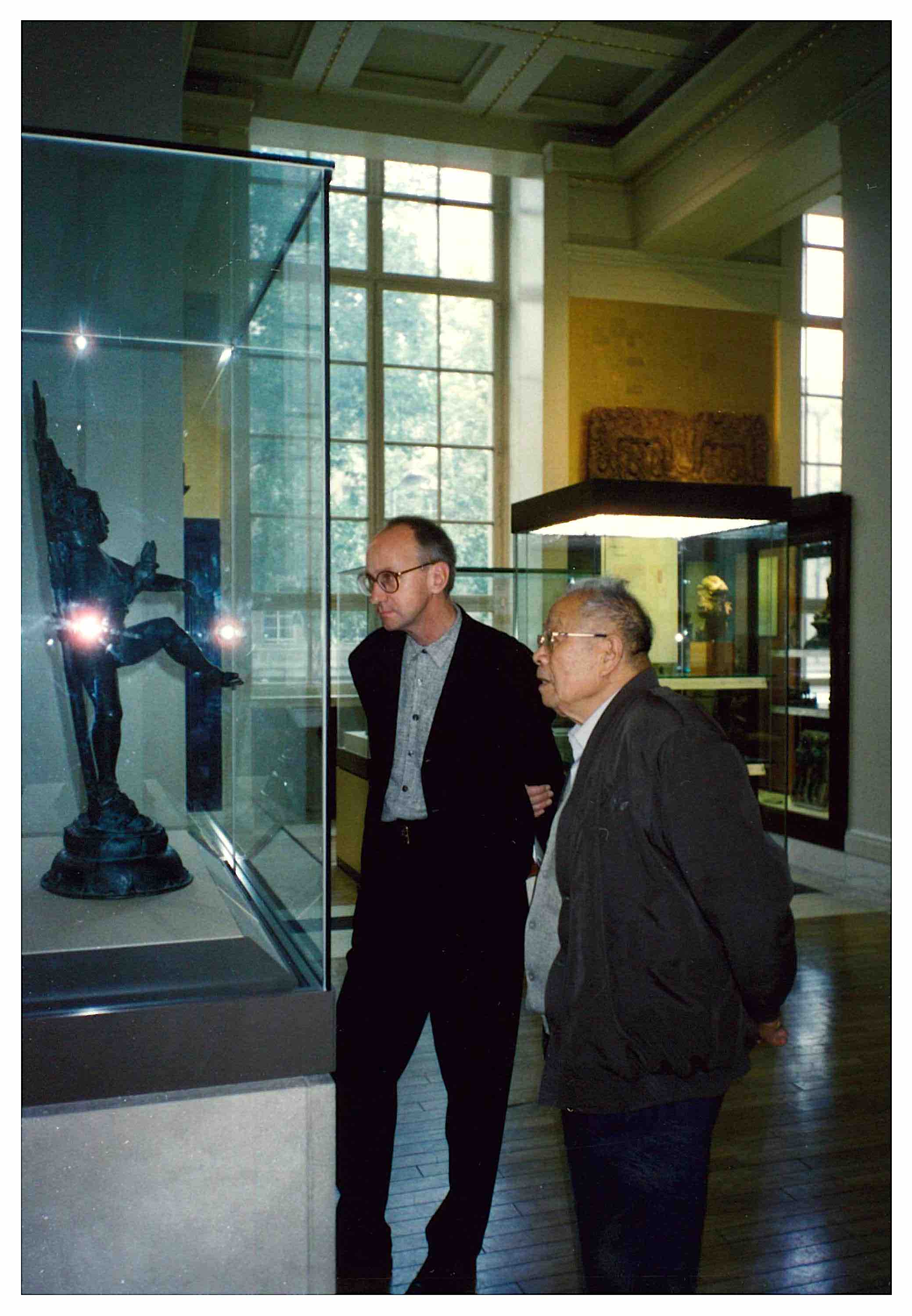 In 1983 I organised a visit to London by the great art historian and Chinese furniture scholar Wang Shixiang 王世襄 (1914–2009); I had translated a piece by him. and we had first met in Beijing in the early 1980s. The trip was done on a shoestring, and it pains me to think how spartan was the Imperial College London student hostel I booked him into, though he would never have complained—he had after all done years and years in cadre school. One of the grandest of London’s dealers in Chinese art took us to a posh lunch; it was a measure of Mr Wang’s cosmopolitan youth that he ordered cheese for afters. He ate half, and asked the waiter to wrap the rest (presumably for his breakfast, which I had not provided). As the beginnings of a sneer formed on the waiter’s face, it being that kind of restaurant, one of the grandest of London’s dealers in Chinese art gave him a very ferocious look that eloquently said, “This gentleman is my guest. I eat here often. Wrap his cheese”.

 Stephen Jones: a blog
