Back home from Istanbul, my ears still buzzing with Bektashi–Alevi ritual and the call to prayer, I went along to the Barbican to be astounded yet again at the innovative genius of Barbara Hannigan with the LSO (programme notes here).
They opened with Richard Strauss’s searing Metamorphosen, composed at the end of World War Two—all the more moving on a day when war came to Europe again. Dispensing with Denis Guéguin’s pre-recorded video montage (shown in the 2021 concert below), Ms Hannigan left the hushed lower strings to open the piece by themselves—an effective device (cf. Noddy and Hector). It’s a threnody that deserves to be the intense focus of any programme, yet tends to suffer as a kind of overture.
After barely a pause to reset the stage, Hannigan’s brief, mind-bending spoken introduction on screen prepares us for Francis Poulenc’s “brief and devastating” tragédie-lyrique opera La voix humaine (1958), in which she embodies the abandoned and distraught “Elle” on the phone to her former lover.
This is the latest of several versions she has been working on since 2015; through Clemens Malinowski’s live video projection (subtitled in English) we find Elle caught in her own fantasy, directing the orchestra. Following on from her signature incarnation of Lulu, Hannigan observes:
Elle has been a significant role for me as my career has evolved, and we now see an Elle who sings, an Elle who conducts. The theme of transformation runs throughout the programme on many levels, as we confront issues such as ageing, deterioration, decadence, loss, and disintegration. I had always thought that Elle’s forays into fantasy, delusion, and control made La voix humaine a highly possible sing-conduct performance.
Poulenc completed the opera soon after Poulenc’s Dialogue des Carmélites. Based on the 1928 play by Cocteau, it was composed for Denise Duval *—Poulenc worked closely with them both on the piece.
Here’s Duval in a 1970 film of the opera, using her 1959 audio recording (first of four parts):
Barbara Hannigan is the most mesmerising physical presence on stage. As she sings she cues the orchestra with demented nodding, pummelling them with clenched fists—a far cry from the austere male maestros of yesteryear. Though some reviewers (e.g. here and here) found the interpretation narcissistic, her standing ovation was well deserved.
This is her 2021 performance of the programme with the Orchestre Philharmonique de Radio France:
* Although Poulenc wrote the opera for Duval, Jessica Duchen’s programme notes cite a drôle story about Callas, the ultimate diva:
Another spur for the piece may have been an incident at La Scala, Milan, when, at a performance with some friends in January 1956, Poulenc watched Maria Callas taking a curtain call. He recalled: “As the last notes faded beneath thunderous applause, Callas violently pushed the splendid Mario [del Monaco] into the corner of the wings and advanced by herself into the middle of the stage. At which point one of my dear friends, my publisher [Henri Dugardin], who was sitting next to me, said: “You should write an opera just for her—that way, she wouldn’t be such a nuisance.”
With the headlines tag in the sidebar already so voluminous, here’s a handy roundup of some of my favourite posts there. After we’ve digested Kate Fox’s insights on headline punning, I propose
A sporting headline (“Keane displays tenuous grasp of anatomy”—from the Guardian, which offers a retrospective of its own fine contributions to the genre here).
And I can now offer a recent headline from the Istanbul Bugle, of which I am proprietor and sole contributor—describing the confusion of the Orthodox priest responsible for throwing the Epiphany cross into the Bosphorus, yet unable to locate the incense for the thurifer:
I wonder how long it might take for us to totally reverse our perspectives on “doing religion” in China—privileging oral, largely non-literate practices and relegating elite discourse (including the whole vast repository of early canonical texts) and temple-dwelling clerics to a subsidiary place?!
In contrast to the more literate manifestations of religious practice in China that dominate sinology, spirit mediums also play an important role in local society (note the useful bibliographies of Philip Clart and Barend ter Haar). The gender ratio varies by region, but in many areas female mediums dominate, serving not only as healers but as protagonists in religious life; for women in particular, becoming a medium gives them a social status that is otherwise unavailable. Their tutelary deities may be either male or female.
Me-mot mediums in Guangxi. Photo: Xiao Mei.
This is to draw your attention to a new “mediums” tag in the sidebar. The main posts include
Lives of female mediums, introducing studies on Guangxi (XIao Mei) and Wenzhou (Mayfair Yang)—as well as our own work around Hebei and north Shanxi, on which I reflect further in the second post of my series on
Wutai county, Shanxi (referring to pantheon paintings on Hannibal Taubes’s site)
Shanghai (where Daoists learn to collaborate with mediums),
as well as
the self-mortifying mediums of Amdo (here, and in note here).
Under Maoism, whereas public forms of religious life were vulnerable to political campaigns, the more clandestine activities of mediums were tenacious—indeed, the social and psychological crises of the era ensured that they continued to emerge (see e.g. the work of Ng and Chau above). Still, distribution is patchy; in this post I discussed the decline in Gaoluo village.
In 2003 he documented Alevi cem rituals in hill villages of Tohalin the region of Tokat, eastern Anatolia. Here’s a more extended sequence of the second video in his post:
When the diligent observer Evliya Çelebi visited the village in the 17th century, the inhabitants served the three hundred celibate mücerret dervishes of the lodge there, feeding visiting pilgrims with cauldrons stoked throughout the year.
Despite later reverses, Abdal Musa still attracts pilgrims today, and the confraternity still performs regular cem rituals, led by güvende ritual specialists and bards. Cler gives a detailed presentation in this article, and on his site (with short video examples). The segments of the ritual sequence run as follows:
Opening:
initial hymn to the Twelve Imams babalar semah (semah of the baba)
sofra (meal):
dem nefesi oturak nefesleri (seated songs that Cler likens to Byzantine kathisma) Kerbelâ song
End of the sofra and departure of the assembly:
semah of Forty; two or four “additional” semah (these semah cannot be danced if the cem is to be finished early, as is often the case when spring approaches and brings the first agricultural work); gözcü semah (semah of the gözcü!); lokma (new agape meal), hand washing and taking leave of services.
Here’s Cler’s CD Turquie: cérémonie de djem bektashi, la tradition d’Abdal Musa (Ocora, 2012) as a playlist:
Charlie English,The book smugglers of Timbuktu (2017) (reviewed e.g. by William Dalrymple).
Over many centuries, Timbuktu became home to a vast treasury of early manuscripts on history, art, medicine, philosophy, and science (for databases, see e.g. here, here, and here).
Charlie English uses the dramatic device of alternating chapters on the early history of European expeditions from 1788 with the remarkable efforts since 2012 undertaken by the town’s librarians to rescue the manuscripts from destruction by the jihadi onslaught.
He cites Bruce Chatwin’s famous comment that there are two Timbuktus: “one the real place, a tired caravan town where the Niger bends into the Sahara”, another “altogether more fabulous, a legendary city in a never-never land, the Timbuktu of the mind”. As the book adroitly blends the two, accounts of the rescue became a further chapter in the town’s history of myth-making.
The main theme of early European explorations is Death or Glory. After a succession of intrepid adventurers had met grisly fates in trying to reach Timbuktu, Alexander Gordon Laing became the first to succeed in 1826—undeterred by sustaining [yup, that’s the word] horrific injuries en route. * After all the hype, those who did manage to reach the town were inevitably disappointed. As René Chaillié reported in 1828:
The city presented, at first view, nothing but a mass of ill-looking houses, built of earth. Nothing was to be seen in all direction but immense plains of quicksand of a yellowish white colour. The sky was a pale red as far as the horizon; all nature wore a dreary aspect, and the most profound silence prevailed; not even the warbling of a bird was to be heard.
The buildings were unimpressive, mostly consisting of a single storey. The town had no walls, and wasn’t nearly as big or busy as he had been led to believe. The atmosphere was soporific.
By the 1880s Timbuktu had become a prize in European imperialist goals of military domination. In “King Leopold’s paperweight”, English spells out the racism at the heart of the age of colonial exploitation—an entrenched, widespread mindset that anthropologists like Franz Boas were still having to challenge in the mid-20th century. As the town went into further decline, Félix Dubois kept the image of its precious manuscripts alive.
By the early 20th century, the myth of a wealthy Timbuktu with golden roofs had long been jettisoned, but it had been replaced by the idea of the city as an enlightned university town where orchestras entertained emperors and astronomers plotted the tracks of comets even as Europeans struggled out of the Dark Ages. There was more substance to this myth than the old one, but it was still a gross exaggeration, a story written to fit the new requirement for exoticism. Timbuktu, it seemed, reflected to each of the travellers who reached it something of what they wanted to find. The romantic Laing had discovered his vainglorious end. Caillié, the humble adventurer, had found a humble town. Barth, the scientist, had unearthed a wealth of new information. Dubois, the journalist, had landed his world exclusive, uncovering the region’s secret past.
In 2012, as rival factions of jihadists took control of Timbuktu, trashing offices, levelling Sufi shrines, and implementing sharia law, the town’s librarians began smuggling manuscripts out to Bamako with the help of local families—a story that English tells in compelling detail. International bodies responded exceptionally promptly with major funding. Meanwhile the librarians themselves were concerned to keep the delicate operation out of the public eye, for fear of attracting attention from the jihadists.
Housewives offered food and shelter to our couriers along the route.Merchants transported couriers and footlockers of books without charge, when they saw our people pushing them in pushcarts or carrying them on their backs to get them to the safety of the river. […] Whole villages created diversions at checkpoints, so our couriers could get them through with their books. In all cases, in the north but also in the south, the community came forward in the name of safeguarding the manuscripts. […] They called them our heritage, our manuscripts.
Among the librarians the main characters are Abdel Kader Haidara, who had long been working on collecting the manuscripts, and now made a “Terrible Twosome” with the well-connected American conservator Stephanie Diakité; Ismael Diadié Haidara, proprietor of the Fondo Kati library; and Abdoulkadri Idrissa Maiga, director of the Ahmed Baba Institute.
The town was liberated by French troops in 2013, but the situation in north Mali has remained unstable.
Indeed, scholars such as John Hunwick had been paying attention to the manuscripts by 1967, and conservation projects were already under way from 1977, supported by international bodies such as UNESCO, the Ford Foundation, and the Prince Claus Fund. As the enormity of the documents spread around the town and nearby became apparent, it overturned assumptions that Africa had no written history. By 1999, when Harvard professor Henry Louis Gates made a PBS film on the collection (“as a black American, I know what it’s like to have your history stolen from you”), the Timbuktu treasures were widely celebrated.
In a most astute chapter on “the myth factory”, English unpacks the diverse accounts of the manuscripts’ hectic evacuation. Dissenting voices were heard, such as Bruce Hall, professor at Duke University, who found the claimed numbers of manuscripts, and their value, much inflated. Conflicting stories of the crisis inevitably emerged. As Haidara told the author enigmatically,
There is not only one account of the evacuation. Each person will have his own take on it. Bruce [Hall] will have one account, Ismael another, Maiga yet another, while I have my own version. All these accounts will be different, but they will all be true. If everyone agreed what the story was, then it would certainly not be true.
English opens the Epilogue with a comment that may apply widely:
This book is as much historiography as history. That is to say, it is an account of the interpretations of Timbuktu’s past at least as much as it is the story of what actually happened there. The reasons for this, I hope, will have become clear: Timbuktu’s story is in perpetual motion, swinging back and forth between competing poles of myth and reality. Spectacular arguments are made and then dismissed before another claim is built up, in an apparently continuous cycle of proposition and correction.
He goes on:
With such resonant, universal themes of good versus evil, books versus guns, fanatics versus moderates, this modern-day folktale proved irresistible. It was all the more powerful for being built around a kernel of truth, just as the more glorious accounts of the city’s past were.
* * *
After Gates’s 1999 film, by 2009 several documentaries had already appeared, including The lost libraries of Timbuktu from the BBC:
His book was just pipped to the post by Charlie Hammer, The bad-ass librarians of Timbuktu (2016) (hmm—cf. “10 Kickass Female Composers”, and my own forthcoming bestseller The bad-ass household Daoists of Shanxi).
The music of Mali—where the oral traditions of the jeli (griot) bards make another major repository of history—has become a mainstay of the World Music scene, dominating publications such as Songlines. See Lucy Durán’s introduction in The Rough Guide to world music; and as part of the splendid Growing into Music project, she made this fine film around southern Mali on the eve of the jihadi invasion in the north:
Political angles are explored by Andy Morgan in Music, culture, and conflict in Mali (2013); for updates, see e.g. here and here.
* As Laing reported,
To begin from the top, I have five sabre cuts on the crown of the head & three on the left temple, all fractures from which much bone has come away, one on my left cheek which fractured the jaw bone & has divided the ear, forming a very unsightly wound, one over the right temple, and a dreadful gash on the back of the neck, which slightly scratched the windpipe.
English goes on:
He has a musket ball in the hip, which has made its way through his body, grazing his backbone. He also has five saber wounds to his right arm and hand, which is “cut three fourths across”, and the wrist bones are hacked through. He has three cuts on his left arm, which is broken, one slight wound on the right leg, and two, including “one dreadful gash”, on the left, to say nothing of the blow to the fingers of the hand he is using to write.
But things got worse. After a “dreadful malady” kills off the other members of his mission, he writes magnificently:
Imam declaiming from prayer niche in mosque following the call to prayer, Kuzguncuk 2022.
In Turkey, whereas the rituals of Sufi groups like Bektashis and Alevis take place largely beyond the earshot of outsiders, the call to prayer (ezan, Arabic adhan; useful article here), declaimed five times daily by the muezzin, is the most public soundscape of mainstream Islam.
As I write from Istanbul, it punctuates my day; even on a fleeting visit, one might soon begin to take it for granted—but whatever the varied responses of those who have heard it from birth, its impassioned free-tempo melisma accompanies the hubbub surrounding the mundane lives of people who might otherwise be impervious to the complexities of traditional makam.
To make an impertinent analogy, it’s rather as if the entire population of Europe went about their daily business constantly hearing Mark Padmore as Evangelist sing the heart-rending recitative that leads into Erbarme dich in the Matthew Passion, growing up to internalise it as the bedrock of their aural experience.
Many of the great singers of the Arab and Persian worlds came from a background of performing sacred chant, like Mohammad Reza Shadjarian in Iran; musically, “sacred” and “profane” styles are related. A general Arabic term for sacred chant is inshād (cf. China: nian “reciting”, rather than secular “singing” chang), imbued with ḥiss “a voice charged with an acute potential for relating the spiritual needs of the community to God”. [1]
Again, of course I can only get a glimpse of this vast topic, but for Turkey, the Ottoman and Republican history of the ezan is introduced here. The Republican government’s attempt to make Turkish the compulsory language of the ezan lasted only from 1930 to 1948. Here’s a 1932 recording of Sadettin Kaynak in Turkish:
Meanwhile amplification became standard, with a loudspeaker mounted on the minaret—which suggests to me that muezzin no longer need to be so fit…
This sequence features ezan from Istanbul, Bursa, and Konya:
Note also the CD by David Parsons, The music of Islam vol. 10: Qur’an recitation, Istanbul, Turkey (1997), part of an extensive series.
Meeting a wise imam In small villages the imam also assumes the role of muezzin; in larger communities they are usually separate duties. However, at the mosque just opposite the Kuzguncuk ferry (next to Armenian and Greek churches and a synagogue!) Aydin Hoca serves as both imam and muezzin; we learned much from our meetings with him.
Aydin Hoca is an exceptionally wise and tolerant man. Born in Manisa near Izmir, he studied “Islamic mystical music” (tasavvuf müzigi) at the ilahi (“spiritual”) department of the Imam Hatip High School—he has kept in contact with Manisa, joining in events there. He furthered his studies of ilahi by enrolling at the Open University in Eskisehir.
In 1990, aged 25, Aydin Hoca settled in Istanbul, becoming muezzin that same year at the Kuzguncuk mosque, while taking vocal and musical training with the renowned Amir Ateş at the Üsküdar Music Society, and furthering his education in Turkish classical and sacred music with Mehmet Kemiksiz. He values the inspiration these teachers gave him, as well as his overall education in morality and humanitarian ethics under Hafiz Fahri, based in Bursa.
In 1996—the year his first son was born—Aydin Hoca became imam at the mosque. He continued to receive training in solo and choral singing under respected teachers. Though offered positions as imam in more prominent mosques in the city, he prefers to remain with his Kuzguncuk parishioners.
He cites the popular expression Aşk olmayinca meşk olmaz, which we might gloss as “Without love, dedication is to no avail”—aşk referring to love in the mystical sense; meşk “devotion to practice”, often used in the context of music, perhaps resembling the riaz of north Indian raga (for an instance in the world of artisans, click here). As in any walk of life, a voice can only be trained through diligence and application; oral transmission from master to disciple (usta-cirak) is crucial, as he learned through his training and now finds in nurturing his own students.
As to the Turkish branch of the vast makam family, he outlined the sequencefor the five daily ezan, such as Saba for the dawn call, and a somewhat variable list for subsequent calls that includes Rast, Uşşâk, and Segah (see e.g. under this overview of “religious music” in Ottoman and early Republican Istanbul, and here).
As Aydin Hoca explained, while the maqams are important, they are only an opening. Inside the mosque, for the fourfoldrekat (standing, bowing, and prostrations) the imam recites in four different maqams: Isfahan, Rast, Hüseyni, and Evic. In between the four sections, in order to “lighten” the maqams and give the congregation space to reflect, ilahi hymns are chanted.
Reminding us aptly of the wider theme of liturgical chant, the imam also notes the expression of dhikr in ayin communal gatherings at lodges such as Karagümrük Cerrahi tekke of the Halveti-Jerrahi order (many instances on YouTube under Jerrahi zikr e.g. this); here the worshippers accompany their group singing with frame-drums (bendir, def) and sometimes ney flute. He mentions the qaṣīda (e.g. here, and here), a three-part form with opening, a more expansive central section, and a calming conclusion; again, between sections they may add ilahi in various soulful moods.
Aydin Hoca stresses feeling. He often listens to early ezan recordings, “to reconfigure and order my mind.” Whereas some Muslim listeners lament “bad” or “ugly” voices, he has a more benign view, since all voices are given by Allah. But as he says, there are uneducated voices.
The muezzin are careful about the volume of the ezan: the mic should be neither too close nor too distant, not too loud or piercing; the sound must be natural. The broadcast of the Kuzguncuk ezan is linked to the central transmission of Kadıköy district. Aydin Bey decides when he wants to recite live; he often does so to keep his voice in practice. On Fridays he always chants live.
As to the ezan in the media, “everyone may recite the ezan, but first he has to be heard and recognised by the muezzin/imam.” The vocal style isn’t alien to daily life; it’s commonly adapted by pop singers. Aydin Bey considers arabesk star İbrahim Tatlıses an important voice:
Further questions are addressed in the documentary Muezzin (Sebastian Brameshuber, 2009), based around a kind of Pop Idol competition for ezan—here’s a trailer:
Here’s an early rural fantasy from the iconic trans singer Bülent Ersoy, answering the plea of an ailing villager:
The call to prayer may be performed alternately by two muezzin (çifteezan, double ezan), not only from different mosques (quite rare in Istanbul, though it may be heard at Sultanahmet and Üsküdar), but even from the same mosque. Here’s an instance of the latter from Izmir:
Here’s another video (which a BTL comment suggests comes from Ankara rather than Istanbul), with father and son declaiming:
And here’s a popular TV contest with çifteezan:
* * *
The message of the text and the act of dhikr are primary; as in other sacred traditions, zooming in on the use of pitches in the various scales, and on melismatic decoration, may be largely the preserve of the muezzin—even if such details are at the heart of the ezan‘s efficacity. Its varied delivery deserves to be appreciated; clearly many of the faithful do so, rather than allowing it to become part of the aural wallpaper.
Augusta with community leader Saliha, visiting from İskenderun in the far south.
Curious about what the ezan means to different types of İstanbullus, I suggested a little project to Augusta. With her precious gift of rapport (cf. Bruce Jackson, Antoinet Schimmelpenninck), she relishes interacting with people in all walks of life, chatting easily with labourers, simit vendors, taxi drivers, intellectuals; pious Muslims, as well as Turkish, Greek, Armenian, Jewish, Kurdish İstanbullus; men and women, old and young… Ours was a tiny sample, but I was impressed by their firm opinions on the topic; no-one merely takes the ezan for granted.
Barber Murat, and simit vendor Irfan.
Taxi driver Serkan, around 50, from Kayseri: “The ezan is imperative, denoting order. Of course I love it, as do all Muslims!” Still, “not everyone has a good voice! Not everyone can recite the ezan, I can tell you! But they recite with the voice Allah gave them. Whether it is beautiful or not does not matter. It is our call.” He feels a difference between the different makam, but is not aware of them. His wife prays five times a day, and he has started to join her a few times a week.
Another taxi driver, around 60, commented, “There is no voice so honourable as the ezan. It is the wisdom and blessing of Allah, bringing confidence.” For him the ezan “opens the heart, changes one’s outlook on the world, bringing people to their senses, to find peace”. For a simit vendor from Kastamonu it denotes honour, respect, reverence. As a 28-year-old cleaner commented, the ezan is a reminder that we have a conscience, an opportunity to ask for forgiveness, to remember any wrong-doings, and to be thankful, opening a door so that abundance and blessings may enter the home.
A Kuzguncuk barber (49) speaks with pride of his local imam Aydin Hoca reciting the ezan for the ceremony after his own birth and those of his children and grandchildren.
All mentioned the dawn ezan, finding it soothing, welcoming, a blessing, setting intention at the opening to the day. And any music that is playing must be stopped during the ezan; it is even “sinful” to play music on the radio or TV then.
Despite Aydin Hoca’s enlightened view, themes that emerged include a distaste for “ugly” reciting, and for the “cacophony” that results when nearby muezzin fail to listen to each other; the poor quality of some loudspeakers; and the “centralised” broadcasts, which are at least dependable.
* * *
Among other regions, note the SOAS “Sounding Islam in China” project, notably here (as in Germany or the UK, contrasting with societies where Islam is the dominant culture). For Gregorian and other traditions, see Chant and beyond, as well as A cappella singing. For free-tempo preludes, click here—notably the alap of dhrupad, star exhibit in my series on north Indian raga.
[1] For more, see e.g. Scott Marcus, “The Muslim call to prayer” in The Garland encyclopedia of world music, vol.6. A good introduction to various styles of vocal liturgy just further south in Aleppo is the CD Syrie: muezzins d’Alep, chants religieux de l’Islam (Ocora, 1992).
a most entertaining romp through late Ottoman history.
First in a series (gaily described by Marilyn Stasio as “a magic carpet ride to the most exotic place on earth”) starring Yashim the eunuch, the novel is set in 1836 Constantinople, ten years after the “Auspicious Event” that seemed to rid the empire of the overweening Janissaries:
Once the Ottoman Empire’s crack troops, the Janissaries had degenerated—or evolved, if you like—into an armed mafia, terrorising sultans, swaggering through the streets of Istanbul, rioting, fire-raising, thieving and extorting with impunity. Outgunned and outdrilled by the armies of the west, stubbornly they had clung to the traditions of their forefathers, contemptuous of innovation, despising the common soldiers of the enemy and rejecting every lesson the battlefield could teach, for fear of their grip loosening. For decades they had held the empire to ransom.
Yashim foils a plot threatening a vengeful revival, as he goes in search of mysterious, elusive tekke Sufi lodges. The cast features grisly ritual murders, harem plots, an Albanian soup-master, a transvestite entertainer, a Polish ambassador, fire-tower watchmen, and an archetypal Russian femmefatale.
The street scenes are evocative:
A troupe of jugglers and acrobats, six men and two women, took up a position near the cypress tree, squatting on their haunches, waiting for light and crowds. Between them they had set a big basket with a lid, and Murad Eslek spent a while watching them from a corner of the alley behind the city walls until he had seen that the basket really did contain bats, balls, and other paraphernalia of their trade. Then he moved on, eyeing up the other quacks and entertainers who had crowded in for the Friday market: the Kurdish story teller in a patchwork coat; the Bulgarian fire-eater, bald as an egg; a number of bands—Balkan pipers, Anatolian string players; a pair of sinuous and silent Africans, carefully dotting a blanket spread on the ground with charms and remedies; a row of gypsy silversmiths with tiny anvils and a supply of coins wrapped in pieces of soft leather, who were already at work, snipping the coins and beating out tiny rings and bracelets.
The climax comes with a splendidly tense cinematic scene in the tanneries.
The first thing Yashim noticed, after the stench he was forced to suck down into his heaving chest, was the light.
It rose from eery columns from the vats into which, across an area of several acres, the animal skins were lowered for boiling and dyeing. Against a forest of flickering torches, each vat threw out a spume of coloured vapour, red, yellow, and indigo blending and slowly dissolving into the darkness of the night air. The air stank of fat, and burned hair, and worst of all the overreaching odour of dog shit used to tan the leather. A vision of hell.
To help navigate through the jazz tag in the sidebar, here’s a roundup of some of my main posts so far. Many of them are based on playlists, as I educate myself on some substantial ouevres…
In modern Turkey, a major component of the diverse Ottoman religious heritage is the ritual life of groups subsumed under the broad umbrella of Sufi dervish ritual—whose histories and evolution the dualistic language of Sunni and Shi’a is quite inadequate to encompass. [1]
Misleading taxonomies are common in world religions. With my experience of China, I think of Orthodox Unity and Complete Perfection Daoism (e.g. for Hunyuan); at folk level, even the terms “Buddhist” and “Daoist” may be problematic, such as in Hunan. And I’ll remark on further features that the Sufi groups seem to share with folk ritual practices in China.
A distinctive strand here is the practice of Bektashi and Alevi groups. [2] While I’m in Istanbul, haughtily eschewing the sanitised stage shows of “Whirling Dervishes”, commodified for tourists, I’m keen to attend a ritual. The devotional religious groups engage in activities with a certain discretion, so—quite properly—they don’t readily offer access to impertinent outsiders. But while they have also gone into partial lockdown since the pandemic, cem rituals are still being held.
I’m merely trying to get a very basic handle on this topic; perhaps my superficial foray below will suffice merely to show how immense it all is—so readers who actually know about it can look away now…
* * *
In both their doctrines and ritual practices Bektashis and Alevis, now commonly associated, have indeed long had much in common. Both, for instance, worship Ali (son-in-law of Muhammad), the Twelve Imams, and the 13th-century patriarch Haji Bektash Veli, and both emphasise the Four Gates and Forty Stations. They make an annual pilgrimage in August to the shrine of Haji Bektash Veli at Hacıbektaş in central Anatolia.
To simplify historical nuances of doctrine and terminology that elude me, Alevism is a general belief system with ascriptive identity, whereas Bektashi is an order in which one can enrol. Some scholars have distinguished rural Alevis and a more educated elite of urban Bektashis.
As Caroline Finkel observes in Osman’s dream,
The devotional practices of mosque-goers and dervish could be accommodated side by side in one building, and many mosques today associated with Sunni Islamic observance once had a wider function, as a refuge for dervishes as well as congregational prayer-hall.
In Ottoman times Bektashis were closely linked to the Janissaries; they went into decline after the latter were suppressed in the “Auspicious Incident” of 1826 (Osman’s dream, pp.437–8):
Prominent members of the order were executed, and Bektashi properties in Istanbul were destroyed, or confiscated and sold, or converted to other uses. […]
The practice of affiliation to more than one dervish order was so common, and the attempt to eradicate Bektashism at this time so vehement, that sheiks of other orders were also rounded up and sent into internal exile. Largely because of their infiltration into and acceptance by other orders, however, especially the officially-favoured Nakşibendi order—on whom their properties were bestowed—the Bektashi were able to survive clandestinely, and by mid-century they were again finding favour within elite circles.
Following World War One, despite the Bektashis’ supportive role in the War of Independence, Atatürk outlawed such Sufi groups in 1925; since then (by contrast with the recent commodification of the “Whirling Dervishes”) their ritual activities take place discreetly, since some Muslims still consider them heretical. The main base for the Bektashi sect is now in the Balkans and Thrace, notably Albania.
Although some Alevis claim to be Bektashi, the eliding of the two is quite recent. As our encyclopedic Kuzguncuk neighbour Kadir Filiz observes, the problematic term “Alevi–Bektashi” was coined by Mehmet Fuat Köprülü (1890–1966) in his work on Sufism; he also applied the labels “orthodox” and “heterodox” to Islam, recently deflated by scholars like Riza Yildirim (who encapsulates his detailed historical and field studies here and here; also in English, see e.g. here). By the late Ottoman era, as the militant, rebellious kızılbaş “red-heads” [3] were perceived negatively, popular parlance began replacing the term with “Alevi”; but under the new Republic, Alevism came to be associated with radical leftist views.
Lodges and houses of gathering The situation became further politicised from the 1950s, when Alevis from rural areas of Anatolia began migrating in large numbers to major cities like Istanbul. There they used long-dormant Bektashi tekke lodges as cemevi (“houses of gathering”) [4] and formed local associations, named after their native region; since the 1980s the cemevi have been rented officially, and younger generations have come to refer to them as Alevi–Bektashi lodges. As both context and ritual practice have been modified, this has also been a period of an “Alevi renaissance”, reaffirming identity against the dominant culture of Sunni Islam.
The urban cemevi now have an ambiguous status. In modern Istanbul they often serve partly as social centres, but many rituals are also held in private homes; one dede leader told us that well over fifty cemevi are active there. [5]
State suspicion of the Alevis has been heightened by the presence of a significant Kurdish component among them, making them yet more vulnerable to attack—with serious incidents since the 1960s and 70s, such as massacres at Maraş (1978), Çorum (1980), and Sivas (1993), amidst tacit government connivance. While Alevis make up a substantial part of the Turkish population, at home they may be shunned by their neighbours, and at school children still have to keep quiet about their heritage.
Ritual practice Along with migration, ritual change has become a major research topic (see Catherine Bell, Ritual: perspectives and dimensions, Chapter 7; for China, see e.g. Guo Yuhua, and north Shanxi).
Alevi studies are thriving too. Alongside the insights of Riza Yildirim (see above), I note works such as
Ulaş Özdemir, “Rethinking the institutionalization of Alevism itinerant zakirs in the cemevis of Istanbul”, in Alex D. Papadopoulos and Aslı Duru (eds), Landscapes of music in Istanbul (2017)
I introduce the work of Jérôme Cler in a sequel to this post.
Such studies lead to a wealth of further research, both historical and ethnographic. [6] Meeting practitioners in Istanbul, I’m also reminded of how much material (including audio and video recordings) is shared online by such groups, who maintain regular contacts with their fellow-believers around Anatolia and Thrace.
Sites such as this outline the annual cycle of Alevi cem rituals; they may also be held for initiation, commemoration, vows for good health, for joining the army, and so on. Langer summarises the sequence of an individual Alevi ritual thus: after a preliminary “discussion” (sohbet—more commonly muhabbet) by the presiding dede, and symbolic court case (görgü), the main service (ibadet) consists of a sequence of prayers (both solo and choral) to the Twelve Imams, hymns to the Twelve Duties, prayers of repentance, and invocations, concluding with an ecstatic sema dance. Sipos and Csáki (pp.53–66) give a detailed account of a full sequence of Bektashi ritual segments, which I summarise:
animal sacrifice and preparations
arrival, settlings, furnishings, lighting of the candles
“secret” section, including reconciliation of grievances (cf. the Uyghur mäshräp?)
sequence of nefes hymns
tripling (üçleme), with toasts
supper
pleasant [rather, instructive] conversation (muhabbet)
further sequence of nefes
semah whirling
closing prayers and blessings.
The ritual leader (dede/baba) presides, flanked by a bard (zakir or aşık), who leads the vocal liturgy accompanying himself on a bağlama long-necked plucked lute.
In most orthodox Sunni ritual, even melodic instrumental music is considered unsuitable—just as in Chinese temple Buddhism and Daoism (cf. A cappella singing). Indeed, in China one’s search for “religious music” can easily be misled by such a narrow association (see Unpacking “Daoist music”, and The notation of ritual sound). As long as ethnographers pay attention to soundscape (still, alas, quite a tall order), our main theme should be ritual in society (note Michelle Bigenho‘s thoughtful comments).
Sipos and Csáki mention the collection work of Turkish Radio and Television (TRT), reminding me yet again of China:
In the Turkish folk music stock of the TRT, numbering over 4,500 items, there are sporadic tasavvufı halk müziği or “folk religious” tunes, usually under the generic label of “folk song”. [footnote: The TRT repertoire contains the variants approved by a committee of the tunes officially permitted for publication. The committee often makes changes on the tunes before printing, first of all modifying the words not deemed appropriate.]
In China I have expressed grave reservations about UNESCO’s Intangible Cultural Heritage programme (see this roundup; note also Rachel Harris’s critique of their programme for Uyghur culture, in particular the mäshräp). For Turkey UNESCO has adopted the “Alevi–Bektashi sema“ ritual. This film could do with more documentation:
In Turkey, each and every inhabitant of the State is held to be Turkish and Sunni. If Alevis are not Sunni, how then can they be Turks? Since such a notion is inconceivable to many Turks, there is only one possible answer: since Alevis are Turks, they are also Sunnis. If this were not the case, they would become a danger for the Turkish nation and State. Consequently, research on Alevi religious rituals is potentially problematic both for the stability and security of the State and for the Turkish national psyche. To sum up, a large-scale education programme is needed to build bridges of communication between those belonging or not belonging to the Islamic world—Alevis, the Turkish Sunni majority, and the authorities, who usually perceive social reality through Sunni lenses. Future educational projects and campaigns should not concentrate solely on Alevi culture and religious rituals, but rather on folk culture and rituals in Turkey seen as a part of contemporary Turkish culture.
A Bektashi cemevi in Zeytinburnu Despite my profound ignorance, local practitioners are most welcoming. On the European side of the Bosphorus, in Zeytinburnu “outside the walls” (now also a fragile home for many Uyghurs fleeing persecution in China) we visited a senior Bektashi couple at their apartment, where they hold regular cem gatherings.
Bektashi Bahtiyar baba (on ritual sheepskin) and ana bash.
Bektashi baba and his wife (known as ana bash “leader of the female section”) were both born in Edirne in eastern Thrace, he in 1953, she in 1952; they mainly spoke Turkish. Their ancestors were all devotees. His parents had come to Edirne from Bulgaria in 1950; his father was also a Bektashi baba. Their families moved to Istanbul in the late 1950s.
Bektashi baba accompanying a cem. From Sipos and Csáki 2009.
He referred us to his solo recordings of hymns with bağlama plucked lute, featured in many YouTube playlists under Bektaş Bahtiyar, e.g. here.
An Alevi ritual in suburban Istanbul In the distant southern suburbs on the Asian side of the Bosphorus, we attended a weekly ritual at a well-appointed Alevi cemevi, consulting the wise Erzade Özgür dede (b.1983) and his wife Songül ana, who also possesses estimable ritual knowledge.
Before the pandemic struck, over a hundred devotees would take part in the cem; currently around twenty gather—male and female, old and young, all wearing their ordinary clothes, including the dede, who sits on the sheepskin with a mic, flanked by the zakir. He delivers a long opening muhabbet in his normal voice—instructive, personal, relaxed but serious—with occasional contributions from the congregation. The main participants at the meydan ritual arena tie red or green sashes at the waist, with two young men taking a staff; the gatekeeper holds a staff too.
After the muhabbet of over an hour, the zakir strikes up on bağlama, also amplified. His instrumental taksim leads into a nefes hymn; then another speech, and another song, as an 80-year-old Kurdish elder lights a three-candle electric candelabra. The congregation is now getting involved, with cries of “Allah Allah!”, then call-and-response.
The assistants remove their socks before blessing the carpet and unfolding it. Water is poured into a bowlwhile chanting, going round the congregation to ritually cleanse their hands and faces. Three women bow with a brush; more call-and-response; longer group chanting. All prostrate as the volume rises; kneeling, the worshippers all beat their thighs to a little suite of nefes with bağlama. The mood is ever more ecstatic.
Another speech as all prostrate again, another bağlama song, then sema around the carpet with two men and two women, barefoot. They stand on the edge of the carpet to bow to the dede, who invites others to dance, with two more men joining in. With the three main dancers, slow and fast nefes alternate, accelerating wildly. The dancers bow again.
Then the women silently brush the carpet while bowing. The simple lokma food offerings are blessed. After another brief discussion, the candles are extinguished, the carpet replaced.
All this helped me appreciate the different roles of the twelve hizmet duties or services (cf. guanshi in north China, assistant to the huitou leader), such as çerağcı supervisor of the candles, süpürgeci sweeper, and selman provider of water for ritual washing.
A couple of days later, taking the Metro to the southern terminus, we were invited to supper at the couple’s apartment, along with a bright young disciple—another instructive and delightful evening. Erzade dede’s family brought him to Istanbul when he was 3. He was chosen by his grandfather at the age of 13—his father wasn’t a dede—and he sometimes commuted to Ankara for further instruction. After military service, and the death of his mentors, by his late 20s he was already taking over ritual duties. Having learned in his youth to sing nefes while playing the bağlama, now (like many urban dede) he leads the ritual alongside a separate zakir. He is a respected community leader.
An Alevi–Bektashi lodge in Kadıköy On Sunday afternoon the following week we went to the Göztepe district of Kadıköy to visit an extensive and imposing Alevi–Bektashi dergâhlodge, rebuilt openly since the late 1980s. A throng of devotees were gathered, visiting the tombs in the grounds and seeking blessings from the dede for their young children and sick relatives, offering lokma. Accompanying himself on bağlama, a zakir sung a wonderful nefes hymn for us in praise of Abdal Musa (see sequel to this post), disciple of the 13th-century patriarch Haji Bektash Veli. I look forward to returning for a regular ritual at their fine cemevi.
Alevi ritual in the diaspora The whole history of Bektashis and Alevis—before, during, and since the Ottoman era—is one of migration over a large area. Scholars such as Robert Langer explore the transfer to the wider diaspora in recent decades. The documentary Heavenly journeys (Marcel Klapp, 2015) illustrates Alevi ritual life in Germany, with comments from older and younger generations:
Setting forth from the guidance of Kadir and the diligence of Augusta, with gratitude to wise Bektashi–Alevi elders!
[1] For the transnational picture, see e.g. The Routledge handbook on Sufism (2021); for a basic outline of Sufi orders in Turkey, see e.g. here, and for Ottoman Constantinople, on the useful site History of Istanbul, here and here. Kadir Filiz directs me to the classic study Richard Gramlich, Die schiitischen Derwischorden Persiens.
[2] I adopt the common form Bektashi rather than the orthography Bektaşi. For the Ottoman social-political context of Bektashi orders, see Caroline Finkel, Osman’s dream; brief mentions that may pique one’s interest include Bruce Clark, Twice a stranger, pp.187–90; Mark Mazower, Salonica: city of ghosts, pp.81–2.
[4] Again, cf. folk hui assemblies/associations/sects in China—by contrast with officially-registered “venues for religious activity”, where only a tiny amount of overall ritual life takes place.
[6] For briefer introductions to Bektashi ritual and music, see e.g. here; wiki has articles on the Bektashi order, Alevism (here and here), Alevi history, and sema/ sama. For more on Alevis in Istanbul, see also the ongoing work of Ezgi Benli-Garcia, e.g. here. For Thrace, in Janos Sipos and Eva Csáki, The psalms and folk songs of a mystical Turkish order: the music of Bektashis in Thrace (2009; 669 pages, consisting largely of transcriptions and lyrics with translations), note “The religious ceremony” and “The music of the Bektashis in Thrace” (pp.38–77). Jérôme Cler’s introduction to the topic for Anatolia is enriched by videos and further links; see sequel to this post. My taste for ritual sequences is amply displayed in the many posts on local ritual in China.
“No visit to [Istanbul] is complete without a visit to [the Princes’ Islands].”
So we took a pleasant boat trip to the Islands (Adalar, as they’re called with casual familiarity) in the Sea of Marmara just south, long home to Greek and Jewish communities. The jaunt introduced me to the Byzantine (and byzantine) story of Michael II (770–829), who rose through the military ranks to become emperor, continuing the Iconoclastic movement. It was in a dingy dungeon on the island of Burgazada (Antigoni) that he imprisoned St Methodios. As described by Edwin Grosvenor,
In 821 Michael the Stammerer became emperor. Having attained the throne by assassination and violence, he was naturally fitted for the role of bigot and persecutor. With fanatic ingenuity he devised new tortures for the adherents of the icons. Methodios was recognised as their most learned leader. The emperor ordered that he should be struck gently seven hundred times with a whip. The prolongation of the punishment was the refinement of its cruelty. Then, unconscious and apparently lifeless, Methodios was thrown, together with two murderers, into a deep pit at Antigoni. Bread and water were let down daily through an opening above. When one of the murderers died, his decomposing body was left in the pit to render the horrid pit still more revolting. Meanwhile Methodios worked day and night to convert the survivor. Michael died after an eight years’ evil reign, and his son Theophilus succeeded, as iconoclastic but less inhuman.
Methodios was eventually released under Theophilus, but was publicly scourged and imprisoned again before becoming the emperor’s inseparable companion.
The island of Antigoni (Burgazada).
Anyway, although it’s good to know that Michael’s im-p-pediment didn’t im-p-pede his career, he transpires not to be a great role model—it just goes to show that not all stammerers are reticent and benign… But at least I can now add him to my list of famous stammerers from Moses to Marilyn Monroe, and from Deng Ai to Gu Jiegang.
My Turkish vocabulary has hitherto been limited largely to the word inziva “recluse”, some obsolete Ottoman musical instruments, and terms for segments of the Bektashi–Alevi cem ritual—none of which get me very far when I’m trying to ask for a tube of toothpaste (cf. here). But it has increased with the pleasingly onomatopoeic kekelemek, “stammer”—opening with a fiendish double plosive. For some more staggeringly inappropriate vocabulary, see Language learning: a roundup, notably That is the snake that bit my foot. Cf. Pontius Pilate, and the mad jailers.
*Guest post by Nicolas Robertson —author of the magnificent series of anagram tales, no less*
Jorge Fernando Pinheiro de Jesus (which could translate as Jesus’s Christmas tree)—naturally known as Jesus, or, to distinguish him, as Jorge Jesus. Born 24th July 1954; prolific Portuguese midfield football player, and subsequently manager, much-remarked-upon hairstyle. Seventeen years as a professional player from 1973 to 1990, when he switched to a managerial career, so at 36 years old (three years later than his homonym).
His teaching life has lasted as long again, but has not been without turmoil. I first became aware of him during good days in his first stay at Benfica (2009–2015), headlines such as “Jesus is very content with his eleven”. One appreciated his constructive use of language: “For me, a manager has no past nor future, he only has past”, “What was Benfica before me?”, “The manager has to see things that no one else sees”.
Which leads me to an unlikely but striking encounter with the painter Paula Rego at an exhibition of hers in Cascais in 2014, which he later described: “A manager is like a painter. […] Paula Rego said to me there was a figure called Maria and she is crying, and I thought, oh, is she crying? I can’t see anything—but she knew she was crying. It’s like the manager.”
Having passed through Sporting (2015–18), Al-Hillal (Saudi Arabia, 2018–19) and Flamengo, Brazil (2019–20), where he managed an astounding series of successes, Jesus found himself irresistibly called back to Benfica (a name which sort of means “May it be well”), with dreams of renewed glory. “We’re not going to play for the double, we’ll play for the triple… and we’ll crush them” [vamos arrasar], though he was careful enough to admit “I don’t know what tomorrow will be”.
Jesus in upbeat mood at crucifixion rehearsal.
Things didn’t go too well, on the Second Coming, Covid took its toll (not easy to see how he was more prejudiced than the others, but he suffered: “One day you can think of eleven and the next you’re without three players”. And more went wrong, results weren’t coming, there was disquiet in the plantel. Since Herod (Luis Filipe Vieira, the boss, who’d been to fetch him, the Messiah, from Brazil in his private jet) had just been put away for massive corruption, Rui Costa (choose your own avatar), the stand-in and subsequently elected president—himself a hero as a player—wanted to make his own mark…
J. Jesus ever more alone in the Light [Luz, Benfica stadium]
Because here’s the rub: some Wise Men (top brass from Flamengo in Brazil) had come from the East (if you go the other way round) in search of Jesus again—but found him unavailable, or at least hesitant (he was in mid-contract, after all). And they didn’t wait for an answer, but went off to Poland, and behold, they found Paulo Sousa, manager of the Polish national team; he too was under contract, but hey! it’s only money to get out of it…
More headlines:
Sousa contratado, Jesus amuado [pissed off]
Jesus desolado com Flamengo
And then Jesus was sacked anyway—or rather, both sides agreed it would be best for him to leave: “I came thinking I was a solution and not a problem”… Classic “despised and rejected” (even worse, having been eagerly sought)—but being football, and not life, there’ll be a sequel. Meanwhile Jesus has been seen—and photographed, of course—walking his dogs on the beach in Troia, a wonderfully-named peninsular south of Lisbon, no one else in sight. He’s been offered, or his name linked with, several comebacks in various countries, but no doubt he’s being cautious.
So the Second Coming of Jesus to Benfica ended sadly. I was reminded of a story by Borges, Ragnarök. The parallels are not strict, but what if the gods come back and we don’t like them, they’ve lost touch from being too long away, we can’t even understand what they say (Borges), what if (Christian eschatology) He comes back, and it doesn’t work, doesn’t apply, it’s a flop? If I were a god, I wouldn’t risk it. Too late for that lesson, J. Jesus…
(Jesus’s technical assistant, a sort of Peter, is carrying on pro tem. His results so far are more or less like those of Jesus. His name is Nelson Veríssimo (“absolutely true”). He looks like a decent bloke.)
SJ: This is a sequel to my post on Jesus jokes. For the Three Wise Men, see here (The life of Brian)—and, more seriously, here. Just as essential reading as Nick’s anagram tales is the ouevre of Patricia Lockwood, also rejoicing in language and the ambivalence of the Christian Message. Click here for a roundup of wacky headlines, and here for more sporting drôlerie.
The much-loved Barry Cryer, who has died at the age of 86, was a mainstay of the British comedy scene (Guardian tributes here and here; from Mark Lawson, and the splendid Jack Dee).
Best known for his appearances since 1972 on BBC Radio 4’s I’m sorry I haven’t a clue, he provided endless gags for a range of comics from Morecambe and Wise and Les Dawson to Kenny Everett and Rory Bremner, working fruitfully with Ronnie Corbett and Graham Chapman.
One of his own favourite jokes:
A man drives down a country lane and runs over a cockerel. He knocks at a nearby farmhouse door and a woman answers.
“I appear to have killed your cockerel”, he says. “I’d like to replace it.” The woman replies: “Please yourself—the hens are round the back.”
No great surprise that squaw, one of the few supposedly Native American terms that my generation absorbed in our youth through the insidious influence of TV, is now widely considered “offensive, derogatory, misogynist, and racist”, as an interesting wiki article observes.
In English the word was first used in colonial literature in 1622. An article in Indian Country Today makes a token attempt at balance (“squaw is either offensive or historically accurate in portraying a female Indian woman”; see also here); but even if linguists are correct to query the connection of the S-word with the C-word, there are plenty of reasons to reject the term.
In 1968 Loretta Lynn (herself of Cherokee heritage) could still sing Your squaw is on the warpath (1968)—an otherwise impeccably feminist song:
And the experimental Native American singer Jim Pepper included Squaw song on his 1971 album Pepper’s Pow Wow. But by then squaw was among a whole range of stereotypes that were being discredited. For such images in well-meaning early documentaries, see my post on Navajo culture, under “On film”; see also Native American cultures: a roundup.
In November 2021, in line with decades of work by Indigenous activists, Secretary of the Interior Deb Haaland furthered the movement to remove offensive place-names.
See also Stewart Lee‘s demolition of fulminations against “PC gone mad”.
The oldest recording of the human voice is thought to be a phonautogram of the French folk-song Au clair de la lune, captured by Édouard-Léon Scott de Martinville on 9th April 1860 (see here; not to be confused with the 1913 recording of Debussy’s piano piece).
Having introduced it on BBC Radio 4’s Today programme, the mellifluous Charlotte Green‘s normally exemplary gravitas was sorely challenged as she heard her colleague Jim Naughtie describing it sotto voce as sounding “like a jar of bees”—one of the great moments on radio:
Continuing to explore the ouevre of the jazz greats (series here), I’ve been listening to Pharoah Sanders (1940–2022) (wiki; website. See also e.g. here, here, and here).
After moving to New York in 1962, Sanders became a protégé of Sun Ra, and was soon part of a group of challenging sax players that included Albert Ayler and Ornette Coleman. After his early turbulent style, his quest continued the “spiritual jazz” legacy of John Coltrane. Following Trane’s iconic A love supreme (1964), Sanders joined his band in 1965, taking part in live performances of the album, and recording Ascension and Meditations that same year.
Pharoah Sanders, John Coltrane, Alice Coltrane, Jimmy Garrison, and Rashied Ali
outside the Village Vanguard, New York 1966.
He went on to work fruitfully with Lonnie Liston Smith on piano, and continued Trane’s spiritual style with his widow Alice. Ever diffident, floating from label to label, his career dipped in the 1990s, but revived after 2000.
Here he is live in 1968:
Here’s his second album Tauhid (1966)—whose wonderful first track, with Sanders doubling on piccolo over sparse percussion, reminds me somewhat of Japanese Noh, for all its Egyptian inspiration:
For the Word of the Sage to flourish is the Proper Way
For worldly affairs to decline evinces chronic vicissitudes
This may seem to reflect an enduring pre-Liberation faith—the Word of the Sage apparently referring to a Christian worldview (“the Word of God”). But it’s combined with phrases adapted from a poem of Chairman Mao:
人间正道是苍桑
The Proper Way among humans is inconstant
—appealing, whether fortuitously or ingeniously, to political correctness. Shame I didn’t have a chance to chat with the host.
For a Buddhist meditation on impermanence in the vocal liturgy of the Li family Daoists, click here.
Like Turkish audiences, I’ve been riveted by the recent ten-instalment TV series The Club (Netflix, 2021), directed by Seren Yüce and Zeynep Günay Tan. The drama exposes the multicultural Turkish elephant in the room, probing the boundaries of free speech today (cf. The Armenian genocide).
Netflix offers a choice of seven languages, with subtitles, in any combination you please; I wasn’t too disturbed by the somewhat stilted voices in the dubbed English version, but I envy local viewers their ability to catch the nuance of the conversational switches between Turkish, Ladino, and Greek in the original soundtrack.
Revolving around Istanbul’s Jewish community (with Ladino often heard), the plot is framed by the wealth tax of 1942—heavily penalising non-Muslims—and the anti-Greek pogrom of 1955, also ignited by ethnic tensions in Cyprus. In 1955, Matilda, a Jewish ex-convict, finds work in one of Istanbul’s leading nightclubs. As she tries to rebuild her relationship with her daughter Raşel, Matilda struggles to keep her away from Muslim playboy İsmet. With the outrageously camp singing star Selim, she also stands against her boss Orhan and nightclub manager Çelebi.
With such issues unfamiliar to many viewers, the series has been warmly received by Jewish and non-Jewish audiences alike (reviews e.g. here and here). It’s also a visual period-piece, with charismatic actors—and some great songs carefully chosen to enhance the dramatic moment.
Here Salih Bademci (as the dreamy Selim) performs Masal (Fairy tale), by iconic Turkish singer Sezen Aksu—though the song is later, it’s another astute choice, given her link to progressive causes:
The directors’ pluralistic agenda is further underlined in their recruiting of pianist-composer-arranger Fazil Say; charged with blasphemy in 2012, he went on to compose a series of pieces reflecting on the suppression of the 2013 Gezi Park protests. And the final débacle of The Club is accompanied by alternating Greek and Turkish versions of Zülfü Livaneli‘s 1979–80 song Kardeşin Duymaz, pleading for coexistence:
In Istanbul today the dwindling Jewish community remains under threat. As this Al Jazeera review observes,
President Recep Tayyip Erdogan has occasionally referred to what he calls the “fascist mentality” of the single-party era before 1950 in criticism of the opposition Republican People’s Party, which ruled at the time, and how it treated minorities. “They were ethnically cleansed because they had a different ethnic cultural identity”, Erdogan said in 2009. “The time has arrived for us to question ourselves about why this happened and what we have learned from all of this”.
If that sounds rather enlightened, the review goes on:
But neither Erdogan nor other Turkish leaders have taken any concrete steps to address the Wealth Tax, the 1955 pogrom, or other attacks on minorities. The Democrat Party, which won the first free and fair elections in the country in 1950, campaigned on a pledge to pay reparations for the Wealth Tax, but never kept the promise.
In fiction the sensitive topic has been broached before in works such as Mrs Salkim’s diamonds (1990 novel; 1999 film), but The Club is now giving it a far wider audience. Not only is the unfolding of the drama compelling in itself (with regular Doof Doof moments), but it’s educating viewers within Turkey—and, I hope, further afield.
A recent scholarly panel offers a critique of the series:
I boldly suggested that my film on the Li family Daoists might make more stimulating Christmas viewing than watching Bambi for the umpteenth time—but now it transpires that the original story of the latter has been gravely diluted and sugar-coated, as shown in
The original novel Bambi: Eine Lebensgeschichte aus dem Walde was written in 1923 by Felix Salten, an author and critic in Vienna. Far from being a cute children’s story, the new translation shows that Bambi was actually a parable about the inhumane treatment and precarious life of Jews and other minorities as fascism loomed. In 1935 the book was banned by the Nazis, who burned it as Jewish propaganda.
Meanwhile the original English translation, published in 1928, “toned down Salten’s anthropomorphism and changed its focus so that it was more likely to be understood as a simple conservation story about animals living in a forest”.
In 1933 Salten sold the film rights to MGM producer Sidney Franklin for a paltry $1,000; Franklin then sold them on to Walt Disney, who read the 1928 translation, and loved animal stories. Hence the saccharine 1942 animated movie about a young deer who finds love and friendship in a forest. While there is much to admire about Disney, from his movies to his koanesque aperçu (n. here, and under Daoist non-action), Salten himself never earned a penny from the movie.
A new translation by Jack Zipes reasserts the book’s original message warning of the persecution and dangers faced by Jews in Europe. It soon becomes apparent that the forest animals are living out their lives in fear and that puts the reader constantly “on edge”. As Zipes comments, “All the animals have been persecuted. And I think what shakes the reader is that there are also some animals who are traitors, who help the hunters kill”. Without being didactic, Salten could encourage the reader to feel more empathy towards oppressed groups—and Bambi could openly question the cruelty of their oppressors. “Many other writers, like George Orwell, chose animals too because you’re freer to tackle problems that might make your readers bristle. And you don’t want them to bristle, you want them to say, at the end: this is a tragedy.”
When Germany annexed Austria in 1938, Salten managed to flee to Switzerland. Stripped of his Austrian citizenship by the Nazis, he spent his final years “lonely and in despair” in Zurich and died in 1945—like Bambi, with no safe place to call home.
Bruce Clark, Twice a stranger: how mass expulsion forged modern Greece and Turkey (2006), reviewed e.g. here.
Throughout the book, Clark distinguishes political decisions and the experiences of those who were affected by those decisions, detailing both. He provides a useful roundup of sources.
The population “exchange” across the Aegean was still based on the Ottoman concepts of Christians and Muslims taking precedence over the modern nationalist categories of Greeks and Turks. It
was taken as proof that it was possible, both practically and morally, to undertake large exercises in ethnic engineering, and proclaim them a success. […] The temptation to use such methods is especially strong in certain types of political or geopolitical situation. For example, it can arise where one form of imperial authority (from Soviet communism to British colonial rule) is collapsing or when a new nationalist power wants to consolidate its rule; or when a new strategic order is being created in the aftermath of war.
And quite soon,
whatever they may have felt about being deported to another country, the Christians of Anatolia and the Muslims of Greece were—at least superficially—remoulded as Greeks and Turks respectively.
Despite the Helsinki accords of 1975, urging respect for the human and cultural rights of citizens and for borders, the lasting effects of the Lausanne treaty remain all too clear. Clark often alludes to more recent traumas, such as World War Two and its aftermath, the 1990s’ Balkan wars, and Northern Ireland. As he notes, while “the liberal westerner” recoils from the notion of forced population transfers based on religious faith, “the modern world is far from honest or consistent”.
* * *
Under the authoritarian roof of the Ottoman empire, religious and ethnic groups had been obliged to coexist. When that roof collapsed, new terms of coexistence could not be found, and people had to flee for their lives. Neither side had a monopoly of cruelty.
From 1912, as Greece gained territory in the Balkan wars, Muslims became a significant part of its population. Refugees from the conflict also exacerbated tensions in Anatolia.
It has been estimated that about 20% of the population of Anatolia died violently during the last ten years of the Ottoman empire’s existence: some 2.5 million Muslims, up to 800,000 Armenians, and 300,000 Greeks. To put it another way, a third of the Christian population and one eighth of the Muslim population had been killed, making the Ottoman empire a far more rural, and Islamic place; its population was now at least 90% Muslim, up from 80% before the decade of mutual slaughter began.
In the 1922 population exchange, around 400,000 Muslims and at least 1.2 million Greek Orthodox Christians were relocated.
For certain parts of Turkey, the departure of the Christians meant the loss of virtually all traders and entrepreneurs, as well as most professional people and skilled craftsmen. In those parts of Anatolia where commercial life was once heavily dominated by Christians, there is still a sense that the local economy has never recovered.
Greece was affected more by an influx than by an exodus. In many of its northern regions, and in certain districts of Athens, the population is still mainly of “Asia Minor” stock.
The trauma is still visible in the landscape:
All over Greece and Turkey, you can see the physical remnants of a world whose component parts seem to have been broken apart, suddenly and with great violence.
In the early 21st century there were still elderly people who recalled a time when those half-ruined buildings still functioned properly. But even then, that history had long fallen silent.
What the Lausanne negotiators wanted
—and this was not an ignoble desire—was an arrangement that would be durable and minimise the risk of further war, either in the immediate future or in a subsequent generation.
The treaty
was supposed to be the cornerstone of a settlement that would leave both sides stable and satisfied. But the separation was more than just an endorsement of something which had happened already; it was a cause of pain as well as a response to pain. […]
Not everything about the vanished world was good, and the circumstances in which it vanished were often so appalling that almost anything which followed came as a relief. […] Moving to a new place is on balance a lesser sorrow than being killed in one’s native country.
In one sense “physical separation seemed, and in some cases actually was, the best guarantee of survival”. Yet
when the Aegean peoples were prised apart, each lost a part of its own identity, and hence lost the ability to understand itself.
* * *
Chapter 1 discusses the fates of Smyrna and Ayvalik. The catastrophe of Smyrna in 1922–23 has been much studied; it makes a stark opening to Robert Gewarth’s book The vanquished: why the First World War failed to end. Following an exodus of Pontian and Ionian Greeks since 1914, from May 1919 a Greek expeditionary force took control of the city, where Muslims, Jews, Armenians, and Greek Orthodox Christians had lived together more or less peacefully for centuries. By now the population of Smyrna was swollen by desperate refugees from further east. But as the Greek force was driven out, over a fortnight in September 1922 around 30,000 Greeks and Armenians were slaughtered. The victors renamed the city Izmir.
Clark devotes most of the chapter to the fate of the port of Ayvalik further north, whose thriving population was almost entirely Greek. They welcomed the arrival of Turkish troops with music and dancing, duped into supposing that the occupation would be benign. But the evacuations and massacres soon began.
The first arrivals to replace the Greek population of Ayvalik were Muslim deportees from the islands of Mytilene (just west) and Crete (further south), where Clark pursues the story. He explores the troubled history of the Christian and Muslim populations of Crete, and the effect of the population exchange. As elsewhere, the Muslim arrivals in Ayvalik and the Christians deported to Crete found it hard to adapt to their new homes.
Chapter 2, “The road to Lausanne”, discusses the deal between Eleftherios Venizelos and Mustafa Kemal, brokered by British foreign secretary Lord Curzon and Fridtjof Nansen of the League of Nations, a combination of necessary evil and political self-interest. The equation was further complicated by anxieties over Bulgaria, where population exchanges had also taken place.
In Chapter 3 Clark explores the fates of the port of Samsun on the Black Sea and the town of Drama northeast of Salonika. Samsun had had a thriving Pontic Greek community, swollen first by Muslim refugees from the Balkan wars and now by desperate Christian refugees from the mountain villages.
Muslims once made up a significant part of the population of Drama, but in the expulsion they were largely replaced by Christians, including refugees from Samsun. Clark learns more about the Pontic background from diligent local historians, one of whom documented the rich Pontic traditions of theatre, folk poetry, and fables preserved in Drama in a kind of time-warp, making
careful studies of the fiddlers, the priests, the amateur midwives, and the pruveyors of folk medicine who peopled his childhood and kept alive the memories of a place about 900 miles to the east.
Chapter 4 returns to the terms of Lausanne, exploring how exceptions were agreed through complex diplomatic negotiations. Greek Thrace remained home to many Muslims. In Constantinople the Orthodox community was exempted from the expulsions, with over 100,000 Greeks still living there in 1923. So despite the squalid camps struggling to receive refugees in transit, at first the city’s own Greek population remained largely intact (only later did their numbers dwindle, with the punitive wealth tax of 1942, major rioting in 1955, and expulsions in 1964; today only around 3,000 Greeks remain in Istanbul). For the Cappadocia region, which had remained largely free of ethnic conflict, it seemed that a deal might be reached to exempt the Orthodox Christians from relocation, but in the end they too were expelled.
While traditional Ottoman society, with its peculiar, arbitrary mixture of cruelty and fairness, had allowed Christians and Muslims to live together, the modern states which were emerging from the Ottoman world would not.
In Chapter 5, “Hidden faiths, hidden ties” (cf. Hidden nation, for the continuing Armenian presence in Turkey) Clark returns to the Black Sea to discuss the fate of Ottoman Trebizond (now Trabzon), which thrived on its silver mines and trade with Tsarist Russia. Again Clark finds a web of relationships between Greeks and Turks.
Involved in this network were bishops, businessmen, politicians, soldiers, and gangsters.
The dichotomy was never clear-cut: for several generations there had been a community of Crypto-Christians, apparently Muslim Turks but secretly Orthodox Greeks. Clark notes subtle but crucial differences between the fortunes of west and east Pontus, the experiences of the latter being marginally less traumatic—partly because of a more conciliatory Orthodox bishop in Trebizond. Yet the Armenians suffered particularly badly there. The Trebizond Greek community was expelled in the winter of early 1923. First they were shipped to the disease-ridden camps of Constantinople; those that survived were deported to their notional homeland in Greece.
Chapter 6, “Out of Constantinople” looks at the plight of the new arrivals. Clark gives an example:
A ship arriving at Pyraeus from Samsun […] in January 1923 has carried 2,000 passengers. Of these 1,600 were stricken with typhus, smallpox, or cholera, and two of the three doctors on board were seriously ill.
He cites a report from the island of Macronissi by Esther Lovejoy, director of the American Women’s Hospitals agency:
Refugee conditions indescribable. People, mostly women and children, without a country, rejected of all the world; unable to speak the Greek language; herded and driven like animals from place to place; crowded into damp holes and hovels; shortage of food, fuel, water, bedding, and clothing; cold, hungry, and sick…
Refugees now made up nearly 40% of the population of Athens, and 48% of that of the Aegean islands. All this gravely tested the limits of Greek hospitality. As Henry Morgenthau continued diplomatic negotiations, international aid helped the Greek government manage its influx of refugees.
Turkey handled its own crisis with less external support; the way it handled the transport and reception of Muslims from Greece, theoretically more humane, turned out to be disorderly too. Chapter 7, “Saying farewell to Salonika”, shows the city’s cosmopolitan mix of cultures and religions, with Sephardic Jews comprising its main ethnic group. Salonika had only been in Greek hands since 1912. The persecution of Muslims there was intermittent, but by 1922 ships were carrying refugees in both directions.
Again Clark finds exceptions to the silence of official propaganda surrounding the trauma of disruption. In Chapter 8, “Adapting to Anatolia”, he finds a chronicler of the exchange around Tuzla, southeast of Istanbul, where locals and newcomers adapted with difficulty, and memories stayed suppressed—“tales of dislocation, nostalgia, and in most cases successful integration, albeit at a high personal cost”. Among the arrivals from northern Greece were adherents of the Bektashi order, who followed a mystical form of Islam that was regarded with suspicion by mainstream Muslims.
The status of the relocated population played a significant role in local political manoeuverings, and has continued to do so.
Between 1913 and 1923 the proportion of non-Muslims in Anatolia fell from 20% to 2%. This reflected the death or expulsion of all but a handful of the two main Christian communities, the Greeks and Armenians. The remaining Christians consisted of the 120,000 Greeks who were permitted to stay in Istanbul and about 65,000 Armenians; a total of less than 200,000 compared with about 3 million before the decade of war. The country was also deprived of the great majority of its entrepreneurs, merchants, middlemen, and even skilled labourers.
By 1928, 20% of the Greek population were refugees.
Chapter 9, “The pursuit of clarity”, outlines events through the years following the expulsions, a story that continues in Chapter 10, “The price of success”. In Greece the bitter conflicts between left and right partially replaced the former antagonism between refugees and locals.
So any overall analysis of the population exchange has to wrestle with a truth which is awkward from a liberal, modern point of view: in its own perverse terms, the population exchange “worked”—in the sense that it ultimately, after many difficulties, contributed to the forging of a more or less homogenous Greek nation-state whose citizens recognised each other’s right to exist. Moreover, the calculation that that informed the Lausanne project on both sides of the Aegean—that a common religion would make possible the creation of a common national consciousness—seems to have been borne out. […] If the two countries are “imagined communities” […], they are powerfully imagined ones.
As ever, Clark goes on to qualify this, adducing the struggle of the Turkish Kurds—also partly a consequence of Lausanne. He notes salient differences between the nationalist projects of Greece and Turkey, and the role of religion. Naturally he queries the notion of “success” based on authoritarian methods, and remains cautious in assessing the prospects for continuing equilibrium, both across the Aegean and around the world.
Today’s challenge is to ensure that these new understandings of identity and belonging do not exact such a high price in blood as the previous ones did.
Here’s a documentary from Al Jazeera:
And a knowledgeable friend has just alerted me to two Turkish documentaries by Mithat Bereket from 2001 (in the days before NTV was brought into line):
Kayaköy: the voice of silence, on a Greek village in Anatolia
and
Krifçe: following the traces, on a Turkish village in Greece (no subtitles).
* * *
Both the immediate logistics and the consequences of the expulsions caused immense suffering. The relocations posed severe social and economic challenges in both countries. Yet Clark observes the disjunct between simplistic political ideology and a popular yearning to reconnect.
Mingled with the memories of terror and betrayal, feelings and recollections persisted which somehow transcended the Greek–Turkish divide; personal friendships, commercial partnerships, a sense of common participation in a single world, constituted by landscape, language, music, food, and all the trivia of everyday life.
Apart from private, domestic memory,
Because diplomatic and military relations have so often been so strained, it is above all in the world of culture—novels, films, and songs—that the two peoples have felt free to express the depth of their commonality, and to question the official ideology which relegates them to separate, unconnected worlds.
The popular music scene of Istanbul was still ethnically diverse in the 1920s, a variety that continued in the diaspora. More recently, in the light of a certain rapprochement between Greece and Turkey, it has become popular to bridge the shared Ottoman heritage, both among the descendants of the deportees and in projects such as those of Giovanni de Zorzi in Venice or groups at SOAS; see e.g. Eleni Kallimopoulou, Paradosiaká: music, meaning and identity in modern Greece (2009), Chapter 6.
Twice a stranger cuts through simplistic nationalist agendas, constantly highlighting the lives of real people; the story of the expulsions, like that of the Armenian genocide, has difficult lessons for us today.
The 1,001st edition of the LRB features both Patricia Lockwood and Alan Bennett, unlikely but irresistible bedfellows.
I’ve vainly tried to encapsulate the literary genius of Patricia Lockwoodhere. Her review ponders Karl Ove Knausgaard’s latest weighty tome with typical perception and humour.
I might have met him once. In September 2015 I flew to Norway for a literary festival. Knausgaard was the headliner, but he cancelled at the last minute and was replaced by an Elvis impersonator. […] I went to see his act on opening night: the narrative temptation was too great, and I’m only human. […] At one point he stood and did the hip thing, lit from behind like Christ. I laughed in another language. It was as good as Knausgaard. It was better.
She reflects:
When people dislike Knausgaard’s books, there is often a sense of personal insult, as if they were watching him sit down across from them, tuck a napkin into his collar and make a long meal of their time. But as the worst book of the Bible, Leviticus, tells us: “All fat is the Lord’s”. All your time will be eaten by someone—why not him, who has made such a huge crazy claim on it?
She goes on with a classic one-liner:
Karl Ove Knausgaard was born—just kidding.
She has a wonderful ability to empathise with authors while remaining critical:
Hyperattunement makes you either a weird limp bed-angel, like Proust, or a tense too-ready animal.
Her final paragraph is so wonderful that you’ll just have to seek it out for yourselves. In a crowded critical field that can be summarised as “Knausgaard—WTF?”, Lockwood’s review officially relieves us of the responsibility to plough through his ponderous ouevre. It’s just as brilliant as her other reviews, some of which I’ve listed in my post.
* * *
In a different register, it’s always delightful to read Alan Bennett’s diaries too. A few highlights:
28 March, Palm Sunday. Remember this a propos a joke of Jonathan Miller’s, who, seeing a woman coming back from church holding a cross made of reeds said that it was literally the last straw.
15 April. [Recalling supper with Miller and Philip Roth in the 60s] Talking to Jonathan beforehand, I had made a poor joke about Portnoy’s Complaint being The Gripes of Roth. I’m sure I wasn’t the first to pick up on this, but it was new to Jonathan, so when Roth arrived he insisted on telling it to its subject. Maybe he even insisted on me repeating it myself. I’ve no memory of Roth’s response—unamused, I would have thought—but remember my own embarrassment, as fresh now with Roth dead as it was fifty years ago.
9 September. [Watching the last of David Olusoga’s TV series, he recalls wartime air raids] … But compared with the bombing of Sheffield, say, or Hull, Leeds got off lightly. “The city specialised in the manufacture of ready-made suits and the cultivation of rhubarb, and though the war aims of the German High Command were notoriously quixotic I imagine a line had to be drawn somewhere” (Writing Home).
10 December. [recalling an ungrateful editor at the LRB] Miss Shepherd never said thank you, and nor did the LRB, though it smelled better.
CHINOPERL, a US-based association for the study of oral and performing traditions of China, was founded in 1969 by a distinguished group including Yuen Ren Chao, Harold Shadick, and Cyril Birch; notable figures such as Rulan Chao Pian and Kate Stevens continued the initiative.
The main focus of CHINOPERL is regional traditions of narrative-singing (shuoshu 说书, shuochang 说唱, quyi 曲艺) and drama, both staged and unstaged. The recently-revised website contains a contents list for back issues of the journal, with articles by scholars such as Wilt Idema, Victor Mair, Bell Yung, David Johnson, Mark Bender, and Vibeke Børdahl.
Whereas CHINOPERL tends to stress historical and textual research, coverage of narrative-singing on my own site takes a more ethnographic approach, highlighting ritual, poverty, and itinerant blind performers—posts on local traditions are listed here.
I was tickled by a recent headline in OK! magazine:
There’s the ultimate DOOF DOOF:
What if EastEnders isn’t real?? Like, if they’re all… acting??
Confession: I’ve never been able to interpret the doof doofs. How do we hear the rhythm—how would you beat time to it? Or is it a free-tempo prelude? I guess most EastEnders fans don’t talk in such fancy terms, so such online talk as I’ve seen is limited to a fatuous debate over how many doof doofs there are (nine, obvs), irrespective of rhythm. More to the point, can people keep a regular beat to it?
We have an Urtext of Simon May’s melody from 1985. The synth drums were added to the opening in 1994, in a version that remained in use until 2009, when he rescored the theme tune to include a stronger drum beat and additional percussion. But I haven’t seen a score for the doof doofs. Because one’s ears (rightly) want it to be a 4/4 bar, like the following melody, somehow I’ve always heard the first three drumbeats as a triplet:
That’s close—but a more accurate rendition, as I am reliably informed by a talented drummer, is
That opening syncopation, even before a tempo has been established, must confuse other listeners besides me. Still, EastEnders addicts evidently take it in their stride, like Aretha fans with the triple-time insert in the chorus of I say a little prayer, or Turkish dancers with aksak limping metre—or, now I come to think of it, music lovers everywhere…
The opening of Beethoven 5 may sound to the casual listener like a triplet upbeat—as PDQ Bach observes in his illuminating commentary, “I don’t know if it’s slow or fast, cos it keeps stopping, folks… doesn’t seem to be able to get off the ground” (NB also Creative tribulations).
A comparison that springs to mind (OK, my mind) is the luopu motif that opens and closes the hymns of the Li family Daoists (see my Daoist priests of the Li family, p.280; examples in our film, e.g. 1.01.56). In this post the motif is mainly a pretext to tell a story about the singularly unimaginative opening of the Beethoven violin concerto on timpani—which would be much enlivened by replacing it with the Doof Doof.
Things were one way, and then they were another. I was someone, then I became someone else.
With my knowledge of Albania largely limited to the improbable combination of Norman Wisdom, Mother Teresa, the mesmerising polyphony of the Tosk and Lab peoples (here and here), and rituals of the Bektashi order, I’ve been fascinated to read
Covering Ypi’s early years before she left Albania to study in Rome, it makes a fine addition to memoirs on the climate of duplicity in people’s lives behind the Iron Curtain and their ongoing tribulations, such as Vesna Goldsworthy (Serbia), Katya Kassabova (Bulgaria), Maxim Leo (GDR), Orlando Figes (USSR); and of course it’s reminiscent of the circumspection and fear that Chinese people experienced under Maoism.
Born in 1979 in the port of Durrës just west of Tirana, Lea was prudently brought up to revere Uncle Enver and Stalin—despite the complicated “biographies” of her family, which she only began to understand later.
Biographies were carefully separated into good and bad, better or worse, clean or stained, relevant or irrelevant, transparent or confusing, suspicious or trustworthy, those that needed to be remembered and those that needed to be forgotten.
When Uncle Enver died in 1985, her parents dutifully protested their love for the Party, making Lea promise that she would never tell anyone otherwise.
At school she avidly became a Pioneer. Her father affectionately called her brigatista—equivalent, as she gathered, to “troublemaker”.
Gazing at foreign children on holiday at the beach, Lea reflects:
We knew that it was difficult for us to travel abroad because we were surrounded by enemies. Moreover, our holidays were subsidised by the Party. Perhaps one day the Party would be powerful enough to have defeated all our enemies, and would pay for everyone to travel abroad too. In any case, we were already in the best place. They had nothing. We knew we did not have everything. But we had enough, we all had the same things, and we had what mattered most: real freedom. […]
The tourists
were interested in everything: the Roman amphitheatre, the Venetian tower, the harbour, the old city walls, the tobacco factory, the rubber-making factory, the schools, the Party headquarters, the dry-cleaning shops, the piles of rubbish awaiting collection, the queues, the street rats, the weddings, the funerals, the things that happened, the things that did not happen, the things that may or may not have happened. Tourists held Nikon cameras, intent on capturing our past greatness and our present misery, or our present greatness and the misery of our past, depending on their point of view. […]
Years later, she discovered that the tourists were of two kinds. The realists, mostly from Scandinavia, belonged to fringe Marxist-Leninist groups, admiring “the clarity of our slogans, the order of our factories, the purity of our children, the discipline of the horses who pulled our carriages, and the conviction of the peasants who travelled in them”. The dreamers, bored with Bali, Mexico, and Moscow, were in search of the ultimate exotic adventure; they came to discover “a truth they had already agreed upon”.
Lea was much influenced by her cultured, French-speaking, Ottoman-born grandmother. Her parents find relief from Albanian TV by complicated manoeuvres on the roof to receive foreign stations by satellite.
My family accepted that some rules were more important than others and that some promises would become obsolete with time. In this they were no different from other people, the rest of society, or even the state. Part of the challenge of growing up was finding out which rules faded over time, which were trumped by other more important obligations, and which ones remained inflexible.
She ponders the rules of grocery shopping and the loopholes of queueing. And she mends a rift between her family and their neighbours over a Coca Cola can.
At the time, these were an extremely rare sight. Even rarer was the knowledge of their function. They were markers of social status: if people happened to own a can, they could show it off by exhibiting it in their living rooms, usually on an embroidered tablecloth over the television or the radio, often right next to the photo of Enver Hoxha.
At school Lea eventually solves the mystery of Coca Cola:
“I think it’s a drink”, I almost whispered, as if I were revealing a secret. “Those cans you sometimes see on top of people’s shelves, they’re to hold drinks.”
* * *
In December 1990, as news of the collapse of socialism belatedly reached Albania, she stared incredulously at the TV screen.
The same human beings who had been marching to celebrate socialism and the advance towards communism took to the streets to demand its end. The representatives of the people declared that the only things they had ever known under socialism were not freedom and democracy but tyranny and coercion.
Hearing the cries of “Freedom, democracy!” Lea supposed the “hooligans” were shouting out of fear, out of uncertainty, “to explain that this was what they did not want to lose, rather than what they wanted”.
Finally she understands the discreet euphemisms her family had been using.
They said that my country had been an open-air prison for almost half a century. That the universities which had haunted my family were, yes, educational institutions, but of a peculiar kind. That when my family spoke of the graduation of relatives, what they really meant was their recent release from prison. That completing a degree was coded language for completing a sentence. That the initials of university towns stood for the initials of various prison and deportation sites.
Lea finally begins to understand her family’s biographies. Meanwhile at school, at first their teacher exhorts them to reject both the revisionist East and the imperialist West. But counter-protests in memory of Enver Hoxha were short-lived, and the terms dictatorship, proletariat, and bourgeoisie disappeared from people’s vocabulary, replaced only by an elusive “freedom”.
As the old Party managed to win the first elections, protests, looting, and violence spread widely. The new remedy was to be the shock therapy of market reforms.
Lea’s parents receive a visit from a former Party member turned Opposition candidate, asking them to lend him a pair of grey socks. He soon became a charismatic politician and highly successful businessman:
We rarely saw him again, and even when we did, it was only from a distance, as he slammed the door of his dark, shiny Mercedes Benz, surrounded by mighty bodyguards. It would have been imprudent, as well as implausible, to get closer and accuse him of wrongfully appropriating my father’s socks.
In 1991 Lea made her first trip outside Albania, joining her grandmother on a visit to Athens and Salonika in a futile attempt to reclaim the family’s former properties. A passage like this doesn’t read merely as poverty voyeurism but evokes genuine culture shock:
I made a list of all the new things I had discovered for the first time, and meticulously recorded them: the first time I felt air conditioning on the palm of my hands; the first time I tasted bananas; the first time I saw traffic lights; the first time I wore jeans; the first time I did not need to queue to enter a shop; the first time I encountered border control; the first time I saw queues made of cars instead of humans; the first time I sat down on a toilet instead of squatting; the first time I saw people following dogs on a leash instead of stray dogs following people; the first time I was given actual chewing-gum rather than just the wrapper; the first time I saw buildings made of different shops and shop-windows bursting with toys; the first time I saw crosses on graves; the first time I stared at walls covered by adverts rather than anti-imperialist slogans […]
But she wanted to go home, to feel safe. Meanwhile back home everyone seemed to be trying to leave—including her schoolfriend Elona, who managed to get to Italy, aged just 13, where she ended up as a street beggar. Elona’s grandfather told Lea how he had gone in search for her by getting on board the Vlora, a ship built to take 3,000 passengers and now crammed with nearly 20,000, before he was deported back with most of the others.
Still, mass emigration continued apace.
Her mother joined the opposition Democratic Party and became a leader in the national women’s association, delivering polished, unscripted speeches to large rallies, “as if she had written them in her head many years ago, as if she had rehearsed every day of her life the sentences that she would later utter”. She received a visit from a delegation of French women, who didn’t find her vision of female emancipation entirely compatible with their own.
When Lea briefly joined a mosque, her benign father, recently unemployed, joked “Did you pray for me to find a job?”
“It won’t help”, I replied. You need to change the font on your CV. You need to switch from Times New Roman to Garamond.”
(I doubt if at the time anyone anywhere was much aware of the joys of choosing arty fonts, but I’m happy to allow for poetic license.) Anyway, her father soon became director of the biggest port in the country, finding himself having to deliver “structural reforms”, laying off workers that he cared about.
Lea had previously been content with her “freedom”; but as she became a teenager, with decades of socialist education being overturned, she became withdrawn, losing her voice for a time. The clubs of her youth, for poetry, theatre, singing, maths, natural science, music, and chess, had ceased to exist.
A few pubs and clubs had started to open. Most of them belonged to people-smugglers, drug-dealers, or sex traffickers. These were all mentioned as normal occupations, in the same way one would have explained in the past that so-and-so was a cooperative worker, a factory employee, a bus driver, or a hospital nurse.
From Islam she turned to Buddhism for a while, and volunteered for the Red Cross at the local orphanage.
There was no politics left, only policy. And the purpose of policy was to prepare the state for the new era of freedom, and to make people feel as if they belonged to “the rest of Europe”.
During those years, “the rest of Europe” was more than a campaign slogan. It stood for a specific way of life, one which was imitated more often than understood, and absorbed more often than justified. Europe was like a long tunnel with an entrance illuminated by bright lights and flashing signs, and with a dark interior, invisible at first. When the journey started, it didn’t occur to anyone to ask where the tunnel ended, whether the light would fail, and what there was on the other side. It didn’t occur to anyone to bring torches, or to draw maps, or to ask whether anyone ever makes it out of the tunnel, or if there is only one exit or several, and if everybody goes out the same way. Instead, we just marched on, and hoped the tunnel would remain bright, assuming we worked hard enough, and waited long enough, just as we used to wait in socialist queues—without minding that time had passed, without losing hope.
As the new buzzwords “civil society” and “corruption” circulated, people were duped by disastrous pyramid schemes in which more than half of the population, including Lea’s family, lost their savings. This led to the civil war of 1997, which she records starkly by reproducing her diary from January to April, written amidst the sound of gunfire, explosions, and screaming.
It’s like a whole country committing suicide. Just when it looked like things were getting better it all went downhill. Now that we are all falling from a precipice, there’s no way back. It’s so much worse than 1990. At least there was hope in democracy then. Now there is nothing, just a curse.
The strife led to a new mass exodus. By now Lea’s mother had already managed to get to Italy, where she eventually found menial work. After Lea’s farcical graduation from school, beset by doubts she too found her way to Italy, studying philosophy in Rome.
I waved goodbye to my father and grandmother on the shore and travelled to Italy on a boat that sailed over thousands of drowned bodies, bodies that had once carried souls more hopeful than mine, but who met fates less fortunate. I never returned.
* * *
As for others in the socialist bloc, people could neither feel positive about their new circumstances nor nostalgic for the socialist past. Such memoirs are not merely quaint, but evoke an ongoing psychological conflict both for those who experienced the period and for outsiders.
Lea Ypi now teaches political theory at the LSE. As told in the Guardian,
She is wry, now, about the empty shelves and educational chaos of post-Brexit, pandemic Britain. After years of being lectured about the supposed failures of where she comes from, “there is a special pleasure in it, because the tables are reversed for once”.
Still, she is critical of the “holy” left in the West.
My mother finds it difficult to understand why I teach and research Marx, why I write about the dictatorship of the proletariat. […] Mostly, she keeps her criticisms to herself. Only once did she draw attention to a cousin’s remarks that my grandfather did not spend fifteen years locked up in prison so that I would leave Albania to defend socialism. We both laughed awkwardly, then paused and changed the topic. […] I wanted to clarify, but didn’t know where to start. I thought that it would take a book to answer.
It’s also Epiphany (Theophania) for the Greek Orthodox Church, observed with the agiasmosSanctification of Water ritual, when the Bishop throws a wooden cross into the Bosphorus to be retrieved by swimmers—a ritual performed at several sites around Istanbul (for background on the religious life of Istanbul Greeks, see e.g. here). But the core ritual is the lengthy service that precedes it, which we attended at the lovely little Agios Georgios church in Kuzguncuk—next to the synagogue, on the other side of the road down from the main Greek church Agios Panteleimonas.
In Istanbul today Greeks are far fewer than Armenians, but this was an impressive service, with a quartet of liturgists punctuating the recitation of the priests, with jangling thurifer.
Left, the head priest blesses worshippers with light;
right, preparing to sprinkle blessed water on the congregation with a sprig of herbs.
On right, dove awaiting release to the heavens (and an ICONIC choice of jacket).
We all followed them across the road through the ferry station to the shore, where two pious swimmers retrieved the wooden cross from the waters; meanwhile a dove (representing the Holy Spirit) had waited patiently during the service before being released to the heavens (cf. Messiaen).
Left, at Fener (source); right, at Kuzguncuk,
with swimmer presenting cross that he has retrieved from the Bosphorus.
Our Greek friends note the symbolism of fish, Ichthys, and Jesus as fisher of people, as well as abundance. China makes the same connection between yu 魚 fish and yu 餘 abundance; and most large-scale rituals (both for temple fairs and funerals) there include segments for Fetching or Inviting Water (qushui, qingshui, and so on; see e.g. our film, from 41.06).
Last year Covid rules prevented the Sanctification of Water being held in Greece, but it was observed by the Greek community in Istanbul. For more thoughts on Greek liturgy in Kuzguncuk, click here.
Bach composed the six cantatas of hisChristmas Oratorio to be performed on six separate feast days, starting with the birth of Jesus on Christmas Day, the final instalment on Epiphany on 6th January—which is today! We can relish the whole cycle in John Eliot Gardiner’s performance at Weimar at the start of the Bach cantata pilgrimage.
In Part Six, The Adoration of the Magi, I’ve been thinking of the exquisite aria Nur ein Wink von seinen Händen. Here’s an earlier performance from 1987, with Nancy Argenta:
For the musician, the inner parts are captivating to play.
And then the whole final sequence is astounding, with the tenor aria accompanied by oboes d’amore, with the following recitative by the vocal quartet, leading to the final chorale with vertiginous trumpet!!!
For more Epiphany cantatas, click here; and for the bluegrass fiddling at the opening of the Journey of the Magi, here. See also A Bach retrospective.
Click here for Fatima Manji’s fine book on Britain’s historical affinity with west and south Asia—and the current xenophobia. Posts on Uyghur culture (with separate tag) are rounded up here. For a remarkable gathering of performers from the whole vast region, click here. More from the Silk Roads here and here.
The 1915 Armenian genocide, [1] affirmed by scholars and historians around the world, remains bitterly contested by the government of Turkey, which (like that of China) has long propounded collective amnesia. Clarity on the “Armenian question” is often bedevilled by the technical issue of whether the assaults constituted genocide as defined by Raphael Lemkin in 1944.
Under the roof of the Ottoman empire, religious and ethnic groups were obliged to coexist—as in Anatolia, where Muslims lived alongside Orthodox Greek and Armenian neighbours. But inter-ethnic violence increased through the 19th century; from 1895 Armenians were frequently the targets of atrocities. With the Ottoman roof crumbling, the 1912–13 Balkan Wars reduced its territory and heightened tensions in Anatolia.
After the outbreak of World War One, by 1915 the Ottoman authorities in Constantinople, anxious to forestall rebellion, executed and deported prominent Armenian leaders and disarmed Armenian soldiers in the Ottoman army. In eastern Anatolia (then still home to Greek Orthodox Christians, besides Turkish and Kurdish Muslims), as Armenians were deported away from the Russian front, around one million were starved, robbed, raped, and slaughtered on death marches to the desert. Armenian assets were expropriated, and the surviving women and children forcibly Islamified, erasing Armenian names and culture. Further massacres followed in 1916. International exposure and scrutiny were helpless to stem the tide. Later the genocide was much admired by the Nazis.
On the surface it might seem strange that Turkey would stake so much of its own credibility defending a predecessor empire whose immediate legacy it had itself disowned. Yet it has become part of the catechism of today’s Republic that what happened in 1915 was part of the exigencies of war and not premeditated.
He gamely outlines the Turkish case, that
Turks were themselves the initial victims of ethnic cleansing. […] Cholera and famine (as well as attacks by Kurdish irregulars) also took their toll on the files of refugees. If blame is to be apportioned, the argument runs, it falls on Armenian revolutionaries who disturbed centuries of coexistence between Muslims and Armenians.
With the academic community and world opinion unconvinced that the many wrongs suffered by Turkish Muslims made a right, he explains the niceties of international legal wranglings and the ramifications of genocide resolutions. And he observes changing attitudes within Turkey, with more open discussion, and growing interest in the contributions of Armenians to the Ottoman empire.
The 2004 publication of Fethiye Çetin’s My grandmother: an Armenian-Turkish memoir (one of the five books on the genocide chosen by Thomas de Waal, author of Great catastrophe) “confronted Turks with the Armenians in their midst, both dead and alive”, raising awareness of forced assimilation.
Çetin’s grandmother (1905–2000) only began revealing her story in 1975. Çetin gave her death announcement to the Istanbul newspaper Agos:
Her name was Heranuş. She was the granddaughter of Herabet Gadaryan, and the only daughter of İsguhı and Hovannes Gadaryan.
She passed a happy childhood in the village of Habab, near Palu, until she reached the fourth grade.
Then, suddenly, she was thrown into the painful times about which she would say, “May those days vanish never to return”.
Heranuş lost her entire family and never saw them again. She was given a new name, to live in a new family.
She forgot her mother tongue and her religion, and though she did not once in her life complain about this, she never ever forgot her name, her village, her mother, her father, her grandfather or her close relations. She lived until the age of 95, always hoping that she might be able to see them and embrace them again one day. Perhaps it was this hope that allowed her to live so long; until her very last days, her mind remained sharp. Last week, we lost Heranuş, our grandmother, and sent her to her eternal resting place. We are hoping that this announcement might reach the relations (our relations) that we were never able to find while she was alive, that they may share our grief, in the hope that “those days may vanish, never to return”.
(Clockwise from left to right.)
As the translator Maureen Freely comments In her Introduction, this history has been concealed from four generations of Turkish schoolchildren. The book bears witness, giving voice to those whom history has silenced.
The persistence of Armenians in Anatolia today, “the leftovers of the sword”, is explored in a wonderful book, full of rich ethnographic observation:
Avedis Hadjian, Secret nation: the hidden Armenians of Turkey (2018).
For Armenians outside Turkey, the clock had stopped in 1915. Until the mid-2000s, most of the Diaspora did not know that there were Armenians left in the ancient provinces of the Ottoman Empire—the conquered territories of Western Armenia and Cilicia. The terrified Armenians that remained would still be subject to daily humiliations, killings, deportations, and armed attacks by the Turkish army and irregular formations, both Turkish and Kurdish, until at least the late 1980s in some parts of the country’s interior. For these Armenians, genocide by other means continued for another century.
In fiction, an engaging appearance of the elephant in the room is Elif Shafak’s The bastard of Istanbul (2006), using the stories of a characterful Istanbul family of women and their teenage daughter Asya, who bonds with the Armenian-American Armanoush, stepdaughter of the family’s estranged brother, as she comes in search of her heritage. I find the novel highly effective in presenting nuanced views through the voices of a polyphonic cast with their seemingly antagonistic stereotypes.
In the Turkish Penal Code the crime of “insulting Turkishness” went back to Article 159, introduced in 1926. In 2005, concerned over the new openness of discussion, the state had replaced it with the controversial Article 301, bringing a slew of prosecutions against several journalists and authors. Written in English, The bastard of Istanbul soon became a bestseller in Turkish, and despite—or perhaps because of—its spirit of reconciliation, Shafak’s book was among the targets of Article 301. While the case against her was dropped, like that of Orhan Pamuk, a prosecution against the Turkish-Armenian journalist Hrant Dink was upheld, and he was soon assassinated by a young ultranationalist, giving rise to popular protests.
Indeed, Hrant Dink was the editor of Agos, where Heranuş Gadaryan’s death notice had appeared, and it was Fethiye Çetin who acted as Dink’s lawyer; she has continued to represent his family.
Having created a climate of fear, by 2008 Article 301 was amended to discourage abuse, but since 2017 it has been invoked again for other purposes (see also Fatma Yavuz).
This 2005 documentary on the Armenian genocide is from ARTE:
For an online archive of Armenian culture on the eve of the genocide, click here.
For a thorough recent study, see Fatma Müge Göçek, Denial of violence: Ottoman past, Turkish present, and collective violence against the Armenians, 1789-2009 (2016), with sections on Imperial denial of origins of violence; Young Turk denial of the act of violence; Early Republican denial of actors of violence; and Late Republican denial of responsibility for violence. She explores the wider issue of “Why do states and societies insist of denying the acts of collective violence embedded in their pasts and present?” (e.g. Holocaust denial, Native America, Russia, and China, among many cases).
Benny Morris and Dror Ze’evi, The thirty-year genocide: Turkey’s destruction of its Christian minorities, 1894–1924 (2019) encourages us to see the wider picture, though some of its detail has been challenged. Note also Ronald Grigor Suny, They can live in the desert but nowhere else: a history of the Armenian genocide (2020).
As I observed in my roundup for 2020, since part of my mission (whatever that is) is to vary the distribution of the diverse posts on this blog, keeping you guessing, this latest annual mélange is an occasion to group together some major themes from this past year. This is only a selection; for reasons of economy, I’ve tended to skip over some of the lighter items. You can also consult the tags and categories in the sidebar.
Some essential posts:
A selection of nine anagram tales from Nicolas Robertson’s fantastical series
Even just for this last year, I realise there’s a lot to read there, but do click away on all the links! And I can’t resist reminding you of some of my earlier favourites, notably
The elite, rarefied qin zither enjoyed an unlikely Golden Age during the first fifteen years of Maoism, as I show in my series of vignettes. Though it was largely self-contained in its ivory tower, in the 1950s the new energy at the Music Research Institute in Beijing to study all kinds of traditional music combined with the official populist ethos to encourage occasional exchanges—such as this illustrious gathering with masters of the zheng 筝 zither at the house of Yang Dajun:
Qin and zheng exchange, mid-1950s (see e.g. here). From left, back row: Zhao Yuzhai, Yang Dajun, Gao Zicheng, [unidentified], Cao Zheng, Wu Jinglue; front row: Wang Jinru, Cao Dongfu (playing), Luo Jiuxiang, Zha Fuxi.
Of the zheng players there, Zhao Yuzhai and Gao Zicheng came from Shandong, Cao Zheng and Cao Dongfu from adjacent Henan; Luo Jiuxiang represented the Hakka style of east Guangdong, far south; Wang Jinru was based in Beijing.
Unlike the seven-string qin, the strings of the zheng have individual bridges. Though just as ancient as the qin, it has much more in common with local folk music; while some prominent advocates like Cao Zheng made more exalted claims for its grounding in ancient cosmology, it still feels like a poor cousin of the qin. Its regional distribution is patchy, but Zhao Yuzhai was part of a thriving zheng scene in southwest Shandong, based (as often) on the local ensemble that accompanied vocal performance; the musicians were itinerant and semi-occupational.
My sparse early clues to folk musicking in Shandong (Folk music of China, p. 209) have been much augmented by the publication of the Shandong volumes of the Anthology (see my review “Reading between the lines: reflections on the massive Anthology of folk music of the Chinese peoples”), in this case particularly for instrumental music (Zhongguo minjian qiyuequ, Shandong juan 中国民间器乐曲, 山东卷, 1994).
Throughout the Anthology, ensemble repertoire always far eclipses solo pieces; like other volumes for north China (e.g. Liaoning), the coverage of Shandong is dominated by the shawm-band repertoire (cf. “Reading between the lines”, pp.317–18), to which the first 1,269 of 1,958 pages are devoted. Solo pieces for the zheng occupy pp.1515–1620 (among online surveys of the Shandong zheng, see e.g. here).
Zhao Yuzhai 赵玉斋 (1923–99) [1] came from the Heze region of southwest Shandong, also renowned for its shawm bands. He was a disciple of the great blind musician Wang Dianyu 王殿玉 (1899–1964).
The Dong Lu yayue she 东鲁雅乐社, led by Wang Dianyu, 1943. Right to left Chen Baozeng 陈宝曾, Gao Zicheng 高自成, Zheng Xipei 郑西培, Wang Dianyu 王殿玉, Han Fengtian 韩风田, Zhao Yuzhai 赵玉斋, Tan Yonghe 谭永和.
The core string ensemble is for zheng, yangqin dulcimer, pipa, and ruyigou fiddle. Their repertoire is based on the Peng baban 碰八板 form—baban variants are common in various coastal chamber genres from Shanghai down to Guangzhou, if not nearly so widespread as scholarly attention may lead us to suppose. The Shandong style has much in common with the adjacent province of Henan, where zheng masters like Cao Dongfu 曹东扶 (1898–1970) were much admired. (Click here for bowed zithers in Shandong and Henan.)
In the cause of forging a new style of “national music”, through the 1950s many folk masters were enlisted to the new conservatoires and state troupes. Solo instruments like the zheng were more easily incorporated into the conservatoire system than ensembles that relied on folk ceremonial; players took readily to adapting their repertoire for the new demands of the new ethos. [2] In 1955 Zhao Yuzhai was recruited to the Shenyang conservatoire (where one of his colleagues was the qin player Ling Qizhen—see Musicking at the Qing court 1, n.3). The traditional zheng had 16 (or fewer) strings; in 1957, responding to the call to “improve” Chinese instruments, Zhao Yuzhai created an enlarged 21-string version. Meanwhile the lofty qin also found a place in the conservatoires; but while players took part in the major shift from silk to metal strings, they remained largely unscathed by “development”.
n 1955 Zhao Yuzhai was exposed to the rigours of rural collectivisation when a troupe from the conservatoire was sent on a tour of rural south Liaoning to “experience life” (tiyan shenghuo 体验生活), as the glib slogan went (cf. Daoist Li Qing’s stint in the Datong troupe). This resulted in his florid composition “Celebrating a bumper year” (Qing fengnian 庆丰年)—irony not supplied:
By 1958 even qin master Zha Fuxi was reduced to composing a piece in praise of the Great Leap Backward. for whose hyperbole click here.
In 1956 Zhao Yuzhai was part of a troupe performing at the Prague Spring festival, and in October he toured north Europe; his career continued to thrive until 1963. I can never get used to the blatant lacunae for the years of Maoism that are so universal in PRC biographies (cf. Craig Clunas’s remarks); like countless others, Zhao Yuzhai was assaulted at the outbreak of the Cultural Revolution in 1966, condemned to labour camp until his release in 1978.
Zhao Yuzhai was one of three zheng players, along with Gao Zicheng and Luo Jiuxiang, who appeared in illustrious company on the 2-CD set of archive recordings from the Music Research institute. In 2000 a CD was devoted to his playing. He appears on film in “Autumn moon over Han palace” (Hangong qiuyue 汉宫秋月):
and “Four folds of brocade” (Siduan jin 四段锦):
Among other celebrated Shandong zheng masters were Han Tinggui 韩庭贵 (1929–2016) and Gao Zicheng 高自成 (1918–2010). Like Zhao Yuzhai, Gao Zicheng found a long-term position away from his Shandong home, teaching at the Xi’an conservatoire from 1957 (for the Shaanxi zheng style, see here)—here’s a short documentary in Chinese:
Apart from such masters who were selected for national celebrity, it may be hard to find ethnographic material on how folk chamber ensembles in rural Shandong adapted to successive social transformations—first to collectivisation, and then to the 1980s’ revival of tradition, soon challenged by the tide of capitalism and pop culture. Cf. Bards of Henan.
Meanwhile in a separate milieu, the concert platform made a more natural progression for the zheng than for the qin. Hitherto largely the preserve of men, since the 1980s’ reform era the zheng (like other stringed instruments in the conservatoire) has been dominated by female soloists. At the same time, concert performances for the qin on stage have come to enjoy a higher profile than the “refined gatherings” where its soul resides; but in the end, the qin still occupies its own world, at a tangent from the conservatoire.
[2] In English, see e.g. Han Mei, The emergence of the Chinese zheng: traditional context, contemporary evolution, and cultural identity (2013); Sun Zhuo, The Chinese zheng zither: contemporary transformations (2015).
When Jung Chang’s Wild swans: three daughters of China was first published in 1991 (quite soon after the 1989 Tiananmen demonstrations), curiosity in the West about people’s lives under Maoism ensured it huge popular success. This was soon followed by a tide of condescension from sinologists and China-watchers, understandably envious at the eclipse of their own more careful, measured research on the period. Still, rather few of them seem to have aired their reservations publicly (see e.g. Lin Chun, and Harriet Evans, “Hot-house history”, in TLS 1992).
While the way that Jung Chang (pinyin: Zhang Rong) enmeshes the personal and the political is a strength, her general slant may read like simplistic Commie-bashing, lacking in empathy—treating the development of the regime as alien (cf. Dikötter, “The tragedy of Liberation”).
It was hardly new to expose the iniquities of the Maoist system, and they do indeed need to be exposed. But surely they deserved a wide audience outside academia—not just the famine and the Cultural Revolution, but the whole catalogue of abuses before and after the 1949 “Liberation”. And personal accounts make a fine way of communicating such stories.
I found the chapters on the Great Leap Backward and the famine particularly revealing. At a time when the detailed scholarship on the latter was only just taking off, when such details were still not common knowledge, Jung Chang’s readings of the political tides are mostly sound. While she portrays her father, a high-ranking cadre in Chengdu, as a righteous official, and she herself was largely cocooned from the extreme sufferings of the time, she evokes the plight of the desperate peasants and political machinations among the leadership, combining her own memories with her later understandings.
I had little idea that famine was raging all around me. One day on my way to school, as I was eating a small steamed roll, someone rushed up and snatched it from my hands. As I was recovering from the shock, I caught a glimpse of a very thin, dark back in shorts and bare feet, running down the mud alley with his hand to his mouth, devouring the roll. When I told my parents what had happened, my father’s eyes were terribly sad. He stroked my head and said, “You are lucky. Other children like you are starving.” […]
These people with edema were mostly peasants. Starvation was much worse in the countryside because there were no guaranteed rations. Government policy was to provide food for the cities first, and commune officials were having to seize grain from the peasants by force. In many areas, peasants who tried to hide food were arrested, or beaten and tortured. Commune officials who were reluctant to take food from the hungry peasants were themselves dismissed, and some were physically maltreated. As a result, the peasants who had actually grown the food died in the millions all over China.
The way Jung Chang relates her early memories reveal the texture of daily life amidst upheavals—my doubts about how much a six-year-old can recall of their youth are largely assuaged by the author’s in-depth conversations with her mother. Indeed, much of the success of Wild swans was in its focus on three generations of women. It was “joined by a clutch of cygnets” (in Julia Lovell’s phrase) in similar vein, such as Anchee Min (Red azalea), Gao Anhua (To the edge of the sky), and Mu Aiping (The Vermilion Gate).
I first read Wild swans as part of my general education on the Maoist era, as I was striving to build up a picture of the modern history of the village of Gaoluo just south of Beijing—a very different world. Meanwhile the rural picture was being amplified by scholarly works like those of Chan, Madsen, and Unger on Chen village and Friedman, Pickowicz, and Selden on Wugong. Such studies inspired me seek ever greater detail from my friends in Gaoluo about their experiences, year by year, month by month—which bore fruit in my own book Plucking the winds, and later in my work on the Li family Daoists.
Now that I come to re-read Wild swans in the light of all my fieldwork, I still find myself impressed by Jung Chang’s attention to both the personal stories of her family and the wider picture. I’m sorry some academics can’t see the merits of this.
With her husband Jon Halliday, Jung Chang followed up Wild swans with Mao: the unknown story (2005)—which sinologists didn’t refrain from criticising (e.g. Gregor Benton and Lin Chun, eds, Was Mao really a monster?, and Andrew Nathan in the LRB, complete with spat).
Talking of colour, in north Europe we no longer get so much snow, but our Christmas really is very white—celebrated by nativities with white people in fancy dress, based on stories by the genteel British names Matthew, Mark, Luke, and John. Welcome as is the growing presence in our schools of children from the Middle East, who could imagine that is just where all this took place?
And even once we recognise this, the tableau still isn’t monocultural—as illustrated by the story of the Three Magi. As wiki observes,
The single biblical account in Matthew simply presents an event at an unspecified point after Christ’s birth in which an unnumbered party of unnamed “wise men” (μάγοι, mágoi) visits him in a house (οἰκίαν, oikian), not a stable, with only “his mother” mentioned as present.
In early sources the term magus refers to Persian sorcerers/astrologers; the three were first named as Balthasar, Caspar, and Melchior in a Greek manuscript from 500CE.
Jonathan Jones describes their changing representations in art. Although the Venerable Bede described Balthasar as black in the 8th century, very few images depicted him thus before 1400; but in the Renaissance, representations proliferated along with growing awareness of other races then being subjugated, serving to illustrate Christianity’s powers of conversion.
The topos of blackness becomes in Europe a reflexive gesture denoting the exotic and the foreign. […] By this time, courts, kings, and nobles played with blackness for purposes of spectacle in performances of masques, pageantry, processions, and balls.
This leads to a discussion of the use of blackface in Epiphany and Three Kings’ Day parades (cf. the Bacup Morris dancers).
Of course, we can’t expect historical authenticity from religion. Acculturation is subject to constant change. Religious art too reflects changing perceptions and agendas.
Turning to 1730s’ Leipzig, among the constant wonders of Bach’s Christmas oratorio, The Journey of the Magi (Part Five) opens with an exhilarating chorus in which the fiddles get as close to bluegrass noodling as you can in early music—as if the Magis’ stellar Satnav had whimsically chosen a route to Bethlehem via Appalachia:
Part Six goes on to portray The Adoration of the Magi.
Messiaen‘s depictions of the story are also wondrous. On a lighter note, my post on The Three Wise Men of Daoist ritual studies includes a cameo from Monty Python (“We were led by a star!” “Led by a bottle, more like!”). For the unpromising chromaticisms of I’m dreaming of a white Christmas, click here.
Continuing my series on Olivier Messiaen (starting here, with most links), and following last Christmas’s offering of La nativité du Seigneur, I’m finally immersing myself in the monumental Vingt regards sur l’enfant-Jésus—composed in 1944 after Messiaen’s release from POW camp and during the liberation of Paris.
I find Joanna MacGregor’s notes a useful companion, supplementing the evocative images that Messiaen provides in the score with her own insights as a performer—pointing out flashes of boogie-woogie, Tibetan trumpets, calypso, the fluttering of angels’ wings… And regarding the birdsong that constantly decorates Messiaen’s spiritual vision, as MacGregor observes, in their proximity to God, birds can be gentle, sleepy, cheeky, melodic, hilarious, quarrelsome, triumphant. Too bad Messiaen never got to Spread the Word on Twitter …
He composed the cycle for Yvonne Loriod—her complete recording, with score, is here. Among other pianists, Jean-Rodolphe Kars has a particular affinity with Messiaen’s spirituality, as is clear from his testimony, written after he was ordained in 1981—here’s his wondrous live performance from 1976, on the eve of his conversion:
Messiaen details the themes that pervade the work:
Thème deDieu, in the unifying key of F sharp major, further enriched by Messiaen’s favourite extatique added-sixth chord
Thème de l’amour mystique
Thème de l’étoile et de la croix
Thème d’accords.
Thème deDieu at the opening.
In style, images, and material, the cycle constantly foreshadows Turangalîla, both opulent and ascetic. While all the visions are enthralling, I particularly relish
1 Regard du Père—hypnotic, with “gently reiterated C sharps in the right hand giving us the first glimpse of the gamelan”
5 Regard du Fils sur le Fils—contemplation adorned with birdsong
6 Par Lui tout a été fait—virtuosity culminating in the Thème de Dieu, victorieux et agité, combining with the Thème de l’amour mystique
10 Regard de l’Esprit de joie—equivalent to the exhilarating 5th movement of Turangalîla, “a clash of Western jazziness with Hindu dance rhythms”; here it is played by Pierre-Laurent Aimard:
15 Le baiser de l’enfant-Jésus—“the bringing-together of spirituality and sensuality: of Roman Catholic iconography and Eastern eroticism”
19 Je dors, mais mon coeur veille—the heart of the meditation, basking in F sharp major; played here by Joanna MacGregor:
—leading to the massive finale Regard de l’Église d’amour, which brings together “all the themes, angels, birds, bells, gongs, and tam-tams that we’ve heard in the previous two hours”.
Click here for a precious film of Messiaen himself improvising on the Nativity at the Saint-Trinité organ in 1985!
However, this doesn’t make the rarefied world of the qin any less notable. By contrast with the ocean of folk traditions, its whole long history is extensively documented. And between the ancient sages and the modern scene, a remarkable flowering of the qin took place over the fifteen years following the 1949 “Liberation” (for the period in wider society, see here)—another illustration of the resilience of traditional culture in the PRC.
The scene was still largely amateur, with aficionados of qin, chess, calligraphy, and painting (qinqishuhua 琴棋書畫) taking part in “refined gatherings”. The stories of some of the leading characters are interwoven with those of the Music Research Institute, the Beijing Qin Research Association, the 1956 national project (with its definitive recordings), and political movements. This is a monument to an aesthetic world that since the 1980s’ reform era has been eclipsed by glossy conservatoire professionalism.
Always trying to move beyond disembodied sound-objects, I seek to evoke the place of musicking in the lives of qin players through the first fifteen years after Liberation, punctuated and eventually engulfed by campaigns—click on the links below for essays on
Guan Pinghu (1897–1967): an otherworldly figure, revered not least for his dapu recreations of early tablatures, an activity that thrived in the 1950s
Wang Di (1923–2005), Guan Pinghu’s devoted disciple, making a bridge both to the reform era and to
Zha Fuxi (1895–1976): his role in the 1949 Uprising of the Two Airlines, his remarkable 1956 survey with its numinous recordings—and NB this qin-erhu duet from 1962
Pu Xuezhai (1893–1966), descendant of the Manchu imperial clan: more classic recordings, and his disappearance in 1966
Yue Ying (1904–74): an affluent youth, motherhood, and her moving 1972 recordings—perhaps the only audible remains of the qin in the PRC for the whole period from 1963 to 1978.
Women constituted a significant minority among qin players, as illustrated in the posts on Wang Di and Yue Ying, as well as Yuan Quanyou. The story of Yue Ying makes a poignant coda to the series.
See also qin tag. For a stellar gathering of masters of qin and zheng zithers, click here.
Belatedly keen to explore Turkish culture, I learned a lot from
Andrew Finkel, Turkey: what everyone needs to know (2012).
For all its populist Q&A format, it’s full of useful insights, constantly unpacking simplistic preconceptions while presenting a range of viewpoints both within Turkey and abroad, based on the author’s long experience as a journalist based in Istanbul.
The chapters open with Historical background, summarising the legacy of the Ottoman empire—ethnic conflicts in the aftermath of World War One, the treaties of Sèvres and Lausanne leading to the foundation of modern Turkey with Atatürk’s Republic. Andy ponders the mixed record of Turkey’s measures to preserve the culture of the past: typically, alongside apparently impressive legislation, archeology clashes with ideology and the pecuniary demands of tourism and development, as the Ottoman heritage is Disneyfied.
The next chapter on Economy describes “a complex economy in its own right, but one well situated to become a conduit of goods and services between Europe and the resource-rich nations of the Middle East and the former Soviet Union”. He notes the profound inequalities between regions, with the eastern provinces accounting for less than 10% of the country’s economy; the flaws of state development projects, notably hydroelectric; the steady decline of agriculture; and the culture of complicity. As often, all this reminds me of China. Andy evokes the contrast between Istanbul and Ankara, with the former’s loss of political power doing nothing to damage its status as Turkey’s cultural and commercial capital.
Turkey in the world observes Turkey’s pivotal strategic position in global politics. Many in the West understand that
the choices facing Turkey are not Manichean, a clash of civilisations between East and West, but rather are based on a nuanced calculation of where the country’s best interests lie.
Andy outlines Turkey’s response to the end of the Cold War, 9/11 followed by the invasions of Iraq, and the Arab Spring; relations with the USA, Israel, and the EU; the war in Syria, human rights, and Cyprus.
Politics… and the military covers democracy, coups, more on human rights, nationalism, religious interests, the uneasy alliance between state and government, nepotism, the slow pace of reform, and (a topic on which he has particular authority) limits on press freedom.
The Introduction has already explained how the very concept of “Turkish” and “Turk” arose from the ashes of the Ottoman empire; and how the racial and linguistic term “Turkic” (Turcoman) is used in English for tribal peoples from Central Asia (some of whom migrated to what is now Turkey!)—a distinction not made in Turkish. Society and religion opens with a discussion of the role of Islam in public life, as the secular state wrestles to reconcile its avowed secular identity with Muslim values. Checks on Turkey becoming a fundamentalist state include a de facto diversity and tolerance among the people—although this is hardly put to the test, since Turkish-born non-Muslims now comprise only 1% of the population.
For all its claims to be a melting pot of civilisations and a mosaic of different cultures, Turkey has been continuously blindsided by the problem of accommodating its own ethnic diversity.
In religion, with non-Muslim minorities having dwindled severely since 1900, the promotion of “faith tourism” is highly selective, with monuments to Anatolia’s multi-confessional past merely vestigial. While the building of mosques proliferates, within Islam there are disparate groups, such as the Alevis, whose practice distances them from the mainstream.
The situation of the Kurds is the subject of a rather extensive discussion.
Ethnic solidarity with fellow Kurds across borders is often overshadowed by the concerns and politics of the countries in which Kurds actually find themselves.
In Turkey they are based in the southeast and east of the country, but Istanbul is “almost certainly the largest Kurdish city in the world”. While discussing the Turkish state’s campaign against the PKK (boosted by wider anti-terrorist sympathies after 9/11), the book observes that
Kurdish nationalism […] does at times appear to be a distorted reflection of the Turkish nationalism it opposes.
Not only is the whole region underdeveloped, but cross-border tensions are heightened by the movements of refugees.
In 1989 Eastern and Central Europe rejected Soviet-style totalitarianism and embraced a democratic ideal. Yet Turkey, which might have been expected to reap a dividend from the end of the Cold War, became more authoritarian. It became embroiled in a costly fight to suppress Kurdish insurrection and has in some measure been corrupted by it.
With the prospect of Greater Kurdistan ever remote, the Kurds’ search for greater political and cultural rights continues.
Photo: Selahattin Giz.
This is followed by a section on gender (see also here). On one hand, Atatürk is praised for having emancipated women, and legal reforms have continued, described by one campaigning NGO as succeeding in
safeguarding women’s rights, and bodily and sexual autonomy. […] All legal references to vague patriarchal constructs such as chastity, morality, shame, public customs, or decency have been eliminated and definitions of such crimes against women brought in line with global human rights norms. […] The new code […] brings progressive definitions and higher sentences for sexual crimes, criminalises marital rape; brings measures to prevent sentence reductions granted to perpetrators of honour killings, eliminates previously existing discrimination against non-virgin and unmarried women, criminalises sexual harrassment at the workplace and considers sexual assaults by security forces to be aggravated offences.
Yet, as elsewhere, “feminists are not as grateful to their male liberators as the official history would have them feel”. The shops and restaurants of central Istanbul cannot represent the general picture. Secularists have failed to tackle obstinate patriarchal attitudes. As to the sensitive question of headscarves,
many believe it is a right and obligation for pious women to cover their heads. Others see it as a deliberate affront and a symptom of creeping fundamentalism.
Some issues are explored in Kutluğ Ataman’s Women who wear wigs (2001), “part of a warning about recklessly attributing motives and categories”. This is followed by a section on the status of lesbian, gay, bisexual, and LGBT people in Turkey.
Finally, the vexed arguments surrounding the Armenian genocide are cogently summarised—a topic to which I devote a separate post.
All these questions have ramifications far beyond the borders of Turkey. The Conclusion offers some signs of hope, such as the public demonstrations (below) following the 2007 assassination of Turkish-Armenian journalist Hrant Dink.
Lastly, Andy provides a succinct list of further reading. Amidst the shifting picture, he’s well aware that constant updates are to be desired; but with its digestible style and thoughtful perspectives, the book makes a valuable overview.
I’ve just said a fond farewell to my trusty Little Fridge, bequeathed to me by my parents in the late 1970s after they themselves had used it for many years. Having had a Jolly Good Innings, it now perhaps belongs in a museum, but I imagine it winging its way to the Paradise of Kitchen Appliances in the Sky, angelically White and Good.
Yakhchāl of Abarkuh, Iran
—great when you’re mixing caipirinhas, but not so handy for the modern kitchen.
Ice houses were built in Mesopotamia by 1780 BCE, and in China by the 7th century BCE; Persian engineers were building yakhchāls in the desert to capture and store ice by 400 BCE. As often, Europe lagged far behind (see also the wiki article on Refrigerator).
Of course there are older fridges than mine that are still working—like the one from 1949 praised here. But without getting all sentimental or luddite about this Benighted Age of Disposability of ours, it’s satisfying that it’s been able to cater for my modest needs all these years.
Sola is one of three children of Liu Jingfan, younger brother of Liu Zhidan (1903–36), a guerrilla hero in Shaanbei whose career as Red Army commander was cut short by the arrival of Mao Zedong’s Long March forces. After the story of Liu Zhidan’s fate was exposed in a historical novel by Sola’s mother Li Jiantong, in 1962 Mao not only banned the book (declaring “Using novels to engage in anti-Party activities is a great invention”), but had all those involved in its publication ruthlessly persecuted (see David Holm, “The strange case of Liu Zhidan”, 1992, and chapter 5 of Ian Johnson’s book Sparks). Even after the end of the Cultural Revolution, Li Jiantong continued to struggle against censorship as she compiled sequels.
Composition students at the Central Conservatoire, 1978.
Left to right: Liu Sola, Ai Liqun, Tan Dun, Chen Yi, Sun Yi, Zhang Lida, Zhang Xiaofu.
More images in this short documentary.
In 1977–78, as the Central Conservatoire in Beijing reopened after the death of Mao and the overthrow of the Gang of Four, Sola—already seriously cool—gained admission to the composition department, along with bright young students like Qu Xiaosong, Tan Dun, Guo Wenjing, and Ye Xiaogang. Having only recently been liberated from punishing stints of rural labour as “sent-down youth”, their studies were punctuated by fieldtrips to collect folk-song in the remote countryside of south China—an experience that now felt more revelatory (cf. Fieldworkers, Chinese and foreign).
After graduating, partly in rebellion against the establishment that contemporary Western Art Music seemed to represent, Sola chose to become a pop musician, giving concerts and composing for film soundtracks, TV, and theatre. At the same time she made a great impression with her 1985 novellas Ni biewu xuanze 你别无选择 (You have no choice), Lantian lühai 蓝天绿海 (Blue sky green sea), and Xunzhao gewang 寻找歌王 (In search of the king of singers). Her voice was
irreverent and honest, blasé and innocent, light and serious, negative and positive all at once; a voice marked by a characteristic humour that manages to be dark and yet not cynical.
By now she was the life and soul of a lively artistic scene in Beijing.
London and New York In 1987 the US News Agency invited Sola on a visit to the States—where, igniting her early interest in blues, the “King of Singers” turned out to be Junior Wells. In 1988 she came to live in London, “a challenging and precarious time”, furthering her studies without the celebrity status of her time in Beijing.
With Vini Reilly, 1988.
Working with British musicians like Justin Adams, Clive Bell, and the Durutti Column, she tasted WOMAD, performing with Mari Boine, though dissatisfied with the exotic pigeonholing of “world music”.
In summer 1989—as she witnessed the horrifying events of Tiananmen from afar—Sola deepened her devotion to blues on a trip working with musicians in Memphis (Memphis diary, 1993). Her experience of blues is a major theme of the wide-ranging, richly illustrated collection of conversations Xingzoude Liu Suola 行走的刘索拉 (Liu Suola on the move, 2001). Meanwhile she composed for Zuni Theatre in Hong Kong, and for Chiang Ching’s dance drama June snow.
Among writings from her London period is Hundun jia ligelong 混沌加哩格楞 (Chaos and all that, 1991), a novel that “both acknowledges cultural diversity and provides a darkly comic critique of it”. I’m also very fond of her paintings, like this from June 1990 (signed “Chegong”, Sola’s name in traditional Chinese gongche notation!):
After taking part in the Iowa Writers’ Program in 1992, Sola moved to New York in 1993. Immersing herself in the avant-garde scene there, she relished collaborations with musicians like Bill Laswell, Fernando Saunders, and Ornette Coleman, enjoying a freedom that had been elusive in London. This bore fruit in her wonderful 1995 album Blues in the East.
In her following New York albums such as China collage (1996) she took a rather different path. She later reinvented her exhilarating song Festival as A chicken at the country fair:
In this period she also wrote Da Jijiade xiao gushi 大继家的小故事 (Little tales of the great Ji family, 2000), perhaps her finest novel (translated into Italian and French, still not available in English), a historical fantasy based on the tribulations of her family—“part Virgil, part Monty Python”.
Back in the PRC After fifteen years abroad, by 2003 the cultural scene in China seemed promising, far from the mood when Sola had left in 1988. Still, she
cannot be associated with the many haigui’s or “sea-faring turtles” who return after working or studying abroad to flaunt their “international credentials”. Nor is working in China with Chinese music a form of cultural nationalism; such nationalism is especially easy to profess at a moment when Chinese music will sound less marginal now that China has become a dominant world power. Rather […] her work in China undertakes the almost Sisyphean task of overcoming clichéd ideas of Chinese music and the use of such clichés for propaganda.
In 2005 she appeared in Ning Ying’s film Wuqiongdong (Perpetual motion, 2005), for which she also wrote the music. Notable compositions include two chamber operas, both international collaborations. Fantasy of the Red Queen (Jingmeng 惊梦, 2006) is “a woman’s tragedy about the power of illusion and the illusion of power”, told through through the devilish persona of Jiang Qing. It draws on Berg, Schoenberg, the qin zither, Beijing opera, Kunqu, revolutionary and folk opera, and 1930s’ Shanghai pop, with snatches of jazz, tango, and hip hop. Here’s an excerpt:
The afterlife of Li Jiantong (Zizai hun 自在魂, 2009) is a deeply personal drama in which Sola receives a visitation from her mother, who takes her on a journey to the spirit world to meet her late father. Using a complex compositional scheme, Sola makes use of the kuqiang “weeping melody” style of Chinese opera, with a baroque group led by Paul Hillier among the accompanying ensemble.
From The afterlife of Li Jiantong.
Always relishing live performance, she went on to form the Liu Sola and Friends ensemble with select Chinese musicians, building on her grounding in jazz to overcome conservatoire and ideological training. And she has continued to publish, with the essay collection Kouhong ji 口红集 (Lipstick talk, 2009) and the novel Milian zhou 迷恋咒 (Lost in fascination, 2011); a new novel is on the way.
Here’s a short CCTV documentary:
* * *
Amidst the ever-changing scene in China (see e.g. New musics in Beijing, and Rock it, mom), Liu Sola’s constantly innovative mix of music, fiction, and drama is utterly distinctive; her musical and literary works, both early and later, have a cult following. She remains vivacious and young at heart, always exploring.
Bartók outside a nomad tent in south Anatolia, 1936.
In the world of WAM, Béla Bartók’s work collecting folk music is often regarded merely as providing raw material for his compositions. Much as I relish these masterpieces, his archive of recordings, along with his meticulous transcriptions, is so vast that it can hardly be seen as subsidiary (see e.g. Chapter 9 of Michael Church, Musics lost and found).
His seminal early fieldtrips around east Europe were disrupted by World War One, whereafter he became in demand as a composer and performer. But in 1932, after a long break from fieldwork, Bartók attended the Congress of Arab Music at Cairo, recording at Mevlevi and Laythi dhikr ceremonies, and at a Coptic mass.
Meanwhile he had long been drawn to Turkey. As he wrote, “I first searched for Finno-Ugrian-Turkic similarities among peoples by the Volga, and then, starting from there, in the direction of Turkey”. in October 1936 he took the train there to inspect recordings in Istanbul and give lectures in Ankara, before embarking in November with a little team of Turkish scholars on an all-too-brief fieldtrip to south Anatolia (see e.g. Bartók, Essays (1976), pp.137–47, as well as this exhibition site).
Always seeking “ancient” tunes, his main brief was to explore links between Turkish and Hungarian melody. Tracks from his fieldwork feature on the 2-CD set
They made a base at Adana, near the Syrian border, recording Yörük nomads at their winter base—notably in Osmaniye, then a large village. Bartók hardly broached social or political issues in the regions that he visited; like much of Anatolia, Adana was no rural paradise, with a history of ethnic tensions already going back several decades. Since his time, along with all the other trappings of modernity, with the outbreak of the war in Syria it has become a site for refugee camps.
The very first recording they made was of their 70-year-old host Ali Bekir oğlu Bekir singing “Kurt Pasha went up to Kozan” with kemençe bowed fiddle (CD 1, #45):
From Bartók’s transcription of “Kurt Pasha went up to Kozan”.
The same song, Essays p.140.
He noted their “shabby, stereotyped” European clothing, by contrast with the peasant costumes he had been used to finding in Transylvania and the Balkans. The performers were all male, and mostly illiterate; after Bartók’s efforts to record women singing came to nothing, he reflected on how future fieldworkers might rectify this and other issues.
In Osmaniye they also recorded dance music for davul-zurnadrum-and-shawm (CD2, ##18–19, 22–25 = playlist #63–64, 67–70)—Bartók regretting the lack of higher-quality recording equipment and a sound-film camera (as do we…). Travelling by cart along rutted tracks, they went on to record songs of Tekirli nomads.
While the repertoire that Bartók documented is only a tiny sample of the wealth of Turkish folk music (contrast Paul Bowles in Morocco), he suggests that the connection with Hungarian melody is no mere coincidence:
No such tunes can be found among the Yugoslavs, the Slovaks of the West and North, or the Greeks, and even among the Bulgarians they are only occasional. If we take into account the fact that such tunes can be found only among the Hungarians, among the Transylvanian and Moldavian Rumanians, and the Cheremis and Northern Turkish peoples, then it seems likely that this music is the remains of an antique, thousand-year-old Turkish musical style.
Still stressing the Hungarian angle, here’s a TRT documentary (in Turkish) from 2015—with his visit to Ali Bekir from 10.27:
Bartók’s monograph Turkish folk music from Asia Minor, completed in 1944, was belatedly published in 1976.
Bartók was concerned to help Turkish scholars collect their own music more methodically. This memoir by his fellow fieldworker Ahmet Adnan Saygun includes a list of Turkish collections from 1926 to 1971. On the broader topic of doing folklore outside academia from the 1950s to the 1980s is this article, with an introduction on antecedents. And János Sipos, In the wake of Bartók in Anatolia (2000)—again based on the Hungarian connection—describes his own fieldwork from 1988 to 1993 at sites including the Adana region. [1] Yet later research yields further insights. See also Jérôme Cler’s work on the music of the yayla.
* * *
By the time of his 1936 visit to Anatolia, Bartók was already deeply anxious about the rise of Nazism in Europe. He would happily have settled in Turkey, but as international and domestic policies shifted, in October 1940 he left Hungary for the USA—where successive waves of refugees from Europe, and the Levant, had already made a new home.
In New York, alongside his activities as composer and performer, Bartók set to work at Columbia on the massive task of transcribing the precious Milman Parry collection of Yugoslav epics (see again here, under “Bards”). His book with Albert Lord, Serbo-Croatian folk songs, was published in 1951; his overview of the project (in Essays, pp.148–51) is here (for a critique of the “Homeric question” and other caveats, click here).
Since Bartók’s death in 1945, ethnomusicologists have continued to refine methods for musical analysis, but all this takes place within a wider concern to document social change (see e.g. under Society and soundscape). While Bartók’s prescriptive search for disembodied “ancient” melody has fallen from fashion, that doesn’t make his fieldwork and analyses any less admirable.
For more on the cultures of west/central Asia, see this roundup.
[1] A note on my teacher Laurence Picken (who maintained a lively correspondence with musicologists from behind the Iron Curtain, I may add): apart from his groundbreaking work on the music of the Tang court, Laurence also compiled a magnum opus on the folk instruments of Turkey. After his first visit to Istanbul in 1951, exhilarated by the sound of the Black Sea kemençe fiddle, he made regular summer fieldtrips to Turkey until 1966. As Richard Widdess explains (here, pp.238–41):
he travelled, alone and at his own expense, the length and breadth of the country, collecting, photographing and recording instruments in almost every region, and interviewing musicians, instrument makers, school masters, farmers, street vendors, children.
In my introduction to Wang Di, I mentioned the changing gender profile of Chinese musicians and scholars through the 20th century. Among the female qin players in Beijing who weathered the transition from the Republican era to Maoism was Yue Ying 乐瑛 (1904–74).
The most useful material is an article by Guo Peng 国鹏, compiler of the most comprehensive anthology of classic qin recordings, Juexiang绝响; for more on Yue Ying, see also Chinese wiki.
Yue Ying practising the qin in her youth.
Photos here from Guo Peng’s article.
Yue Ying came from an affluent family, the only daughter of the boss of the famous Tongren tang 同仁堂 pharmacy in Beijing. From young she studied painting, calligraphy, and Kunqu; she enjoyed playing pipa (against the wishes of her father, who considered it too low-class!) but came to concentrate on the qin, taking lessons (like Pu Xuezhai) from Jia Kuofeng 贾阔峰.
After a Western-style wedding in 1928 she went on to bear seven children, but managed to practise the qin at home between her motherly duties.
Adapting to the 1949 “Liberation”, from 1954 Yue Ying joined the Beijing Guqin Research Association, with the encouragement of Yuan Quanyou’s husband Wang Shixiang. She was one of several women studying with Guan Pinghu, including Wang Di, Shen You, and Yuan Quanyou.
Female qin players.
From right: Yue Ying’s younger stepsister Yue Xiangyan, [unidentified], Wang Di, Yue Ying.
Do let me know if you can identify any of the others!
The important task of repairing qin:
left to right Pu Xuezhai, Wang Di, Wang Mengshu, Zha Fuxi, Yue Ying, Yue Xiangyan.
Around 1958, amidst a frenzy of campaigns, Yue Ying took part in the association’s performance for the leaders in Zhongnanhai. As we saw, she invited Guan Pinghu to stay at her courtyard home during the “three years of hardship”. But worse was to come.
Recordings Yue Ying remained active until the eve of the Cultural Revolution. But in 1966 her house was ransacked by a group of Red Guards, who took away her precious antiques and a dozen fine old instruments. Her children only managed to rescue a few family photographs from the rubble.
Yue Ying, 1971.
Whereas a few qin scholars, including Zha Fuxi, were permitted to continue their research behind closed doors once the worst excesses of the Cultural Revolution were brought to an end, by 1972 Yue Ying had moved out of the old family home; besides being in poor health, she no longer had an instrument, and had been unable to play for several years.
But that year, as political tensions seemed to be easing somewhat, her daughter Guo Shunlong managed to buy a precious antique qin for 45 yuan (!!!); getting hold of a set of strings and a recording machine, she recorded her ailing mother playing four pieces—perhaps the only extant recordings of qin (or any other traditional music) in the PRC for the whole period roughly from 1963 to 1978. Yue Ying’s rendition that day of Pingsha luoyan (cf. Guan Pinghu’s version) can be heard here; we can also admire her earlier version from the happier times of 1956.
Liezi Rides the Wind (Liezi yufeng 列子御風, further material for my promotional campaign to boost the image of Liezi, n.1 here):
Yue Ying died of heart failure from lung disease in December 1974, before she could witness the revival of tradition. Her story makes a poignant coda to this series on the Beijing qin scene under Maoism.
Besides the fascinating memoirs of Nicolas Slonimsky, you really must read his Lexicon of musical invective! An anthology of critical assaults on composers since Beethoven’s time, it cites a wealth of “biased, unfair, ill-tempered, and singularly unprophetic judgements”. *
Having mentioned the book’s magnificent “Invecticon” in The joys of indexing, in various posts I gave quotations from scathing early reviews that Slonimsky cites:
Berlioz (“lunatic… the caperings and gibberings of a big baboon’)
Brahms’s A German Requiem (“so execrably and ponderously dull that the very flattest of funerals would seem like a ballet”)
Turangalîla (“Dorothy Lamour in a sarong … Hindu Hillbillies”).
(As the glosses by a Chinese friend suggest, a wacky challenge for language learning…)
* * *
In his thoughtful prelude, “Non-acceptance of the unfamiliar”, Slonimsky reflects on critical incomprehension, under various rubrics such as racism, lack of melody, and noise.
In the minds of righteous reactionaries, musical modernism is often associated with criminality and moral turpitude.
As he observes,
A fairly accurate timetable could be drawn for the assimilation of unfamiliar music by the public and the critics. It takes approximately twenty years to make an artistic curiosity out of a modernistic monstrosity; and another twenty years to elevate it to a masterpiece. Not every musical monstrosity is a potential musical masterpiece, but its chances of becoming one are measurably better than those of a respectable composition of mediocre quality.
He cites George Bernard Shaw, writing in 1910:
It is not easy for a musician of today to confess that he once found Wagner’s music formless, melodyless, and abominably discordant; but that many musicians, now living, did so is beyond all question. […] The technical history of modern harmony is a history of growth of toleration by the human ear of chords that at first sounded discordant and senseless to the main body of contemporary professional musicians.
* * *
Slonimsky suggests parallels with critical reactions to other modernist trends, including painting, women’s suffrage, and science. Another well-covered topic that he also addresses is outrage at the rise of jazz. As early as 1899 the Musical courier exclaimed:
A wave of vulgar, filthy, and suggestive music has inundated the land. Nothing but ragtime prevails, and the cake-walk with its obscene posturings, its lewd gestures. […] Our children, our young men and women, are continually exposed to the contiguity, to the monstrous attrition of this vulgarising music. It is artistically and morally depressing, and should be suppressed by press and pulpit.
He cites the Most Reverend Francis J. L. Beckman’s address to the National Council of Catholic Women in 1938, in line with Nazi assaults on “degenerate music”:
Jam sessions, jitterbugs, and cannibalistic rhythmic orgies are wooing our youth along the primrose path to Hell!
Back in 1805, the waltz attracted similar opprobrium:
Waltz is a riotous German dance of modern invention. Having seen it performed by a select party of foreigners, we could not help reflecting how uneasy an English mother would be to see her daughter so familiarly treated, and still more to witness the obliging manner in which the freedom is returned by the females.
* Slonimsky acknowledges an 1877 antecedent in Wilhelm Tappert’s generously-titled Ein Wagner-Lexicon, Wörterbuch der Unhöflichkeit, enthaltend grobe, höhnende, gehässige und verleumderische Ausdrücke welche gegen den Meister Richard Wagner, seine Werke und seine Anhänger von den Feinden und Spöttern gebraucht worden sind, zur Gemütsergötzung in müssigen Stunden gesammelt.
The Bhavan Centre in West Kensington is a lively venue, running courses on Indian raga (both vocal and instrumental), dance, and so on, with regular concerts (see Indian and world fiddles).
As live events resume, last weekend I went along to hear Prabhat Rao accompanying his students on harmonium singing a light programme of north Indian raga, with Himmet Singh Bahra on tabla.
Of course, group tuition in London is quite different from family training in India (cf. The changing musical life of north India, along with the splendid films of the Growing into music project). But the basic task is to memorise short and longer patterns, before achieving the freedom to develop one’s own interpretations of the material (cf. Unpacking “improvisation”). While I had to adjust to the choral format (some of the larger-scale numbers rather evoked The sound of music), it’s great to hear young musicians becoming fluent in sargamsolfeggio, learning the building blocks of ragas like Yaman, Jog, Bihag, and Bhairavi.
I’m quite fond of the way the Bhavan tends to roll back the yellow curtain to reveal a tableau of the musicians already seated on stage—making a change from the lengthy preparations normally de rigueur as they adjust their clothing and tune up interminably…
Whether or not the students go on to take up khyal, thumri, or even dhrupad (main topic of my extensive series on north Indian raga) in earnest, this is a valuable element of their training in London’s global bazaar.
On 30th August 1966, as agitated young Red Guards milled around on the streets of Beijing, a short, elderly gentleman, his wispy beard now shorn off, went for a walk with his daughter. He was never seen again.
Continuing my series on the qin zither scene in Beijing under Maoism (roundup here), I’ve been considering the life of Pu Xuezhai 溥雪斋 (1893–1966). Note this eloquent personal tribute by the great Wang Shixiang. [1]
A descendant of the Aixin Gioro Manchu imperial clan (cf. Aixin Gioro Yuhuan), Pu Xuezhai was a great-grandson of the Qing emperor Daoguang, and cousin of the “last emperor” Pu Yi. He exemplified the literati versatility of qin, chess, calligraphy, and painting (qinqishuhua 琴棋書畫). Before the 1949 “Liberation” he made his main living from painting (see e.g. here), teaching at Fu Jen University from 1942. He studied the qin with Jia Kuofeng 贾闊峰, successor to Huang Mianzhi 黃勉之.
The golden age of the MRI, 1954: right to left Guan Pinghu, Yang Yinliu, Pu Xuezhai, Zha Fuxi, Li Yuanqing.
While leading MRI scholars like Yang Yinliu and Zha Fuxi, just at ease in a Western suit or a Mao jacket, adapted more comfortably to the role that the new regime demanded of them, Pu Xuezhai, like Guan Pinghu, represented the imperial culture of yore, living by sufferance under the socialist system. Still, the new leadership valued him, and he was able to thrive. In 1952 he was employed at the Beijing Hall of Cultural History, holding several posts in the new cultural administration, gaining the approval of Zhou Enlai. Meanwhile he joined the qin scholars at the Music Research Institute, and was a core member of the Beijing Qin Research Association during its heyday. Wang Shixiang recalls gatherings of amateurs where he would exclaim “Du 独!”, an antecedent of ku 酷, “cool”!
Duet with Zha Fuxi, 1958.
While many qin masters also played the pipa, Pu Xuezhai liked to play the repertoire of the Manchu-Mongol elite on sanxian plucked lute—do click on that link for a precious audio recording.
Recordings On CD 5 of the numinous “old eight discs” from the 1950s Pu Xuezhai is heard in three pieces:
Peaceful Evening Prelude (Liangxiao yin 良宵引):
Seabirds: Forgetting Ulterior Motives (Oulu wangji 鷗鷺忘機):
The Incantation of Pu’an (Pu’an zhou 普安咒)—much recorded in versions for both qin and pipa, though it is most widespread as an item of vocal liturgy among folk ritual groups, notably among the Hebei ritual associations:
A fourth piece attributed to him on the CD, Three Variations on Plum Blossom (Meihua sannong 梅花三弄), seems rather to be played by Wu Jinglue—but we can hear it played in duet by Pu Xuezhai on xiao end-blown flute with Zha Fuxi on qin:
which is part of a YouTube playlist for Pu Xuezhai (apart from the first track by Wu Jinglue):
Disc 8 of the 74-CD collection Juexiang (2016) further includes three versions of Meihua sannong, as well as Jiu kuang.
The end In 1963 the Party leadership invited Pu Xuezhai to Zhongnanhai to celebrate his 70th birthday. But while such representatives of the “Four Olds” had weathered successive campaigns, the tide was already turning fatefully, rendering them vulnerable—particularly members of the old imperial clan. Pu Xuezhai soon became another casualty of the Cultural Revolution (the most detailed account of his last days is here).
Pu Xuezhai, early 1960s.
In 1966, witnessing the humiliation of his colleagues, he was already traumatised by raids and struggle sessions, when Red Guards cut off his beard. The last person known to have seen him alive was his old qin-playing friend Guan Zhonghang.
His disappearance caused no comment. Just trying to survive, people had too much to worry about themselves. As with so many other senseless casualties of Maoism, his loss could only be lamented at a memorial service after the end of the Cultural Revolution.
By contrast, composers have been inspired by the incandescent splendour of E major (the basic key of the north Chinese ritual shengguan ensemble!—e.g. here, §2), as in
Messiaen goes even further in his devotion to the sensuality of F sharp major, such as in Turangalîla—the intimate sixth movement and the cosmic finale—and the Vingt regards sur l’enfant-Jésus. But perhaps that’s another story.
DO click on the links to listen in awe to all of them!
If I leave my own town, will anyone visit me? If I wander in the town of orphans, will anyone visit me? I have drunk the nectar of love, overflowed like a boiling pot If I abandon this world, will anyone visit me?
— from Nawa muqam
Having relished live music from Afghanistan, Georgia, Iran, and Anatolia at the Wigmore Hall for the launch of Musics lost and found, it was good to catch up with Uyghur musicking in London last Saturday for a concert at St Bartholomew the Great in Smithfield—the oldest parish church in London, well worth a visit on its own.
The concert, in aid of the Tarim Network for the global Uyghur youth community, featured Rahima Mahmut and the Silk Road Collective of Uyghur Music and Culture, together with Uzbek musicians led by the master percussionist Abbos Kosimov on doira frame drums—illustrating a shared culture. The livestream (mirrored!) is on Facebook.
Spoken introductions were provided by singer Rahima Mahmut of the World Uyghur Congress, and Rachel Harris of SOAS (dutar), whose meticulous research covers the range of Uyghur culture and its current eradication (see here, and here).
Abbos Kosimov (website; You Tube channel) is enthralling. No mere virtuoso, he’s a sensitive ensemble player, relishing his rapport with the fine rubab/dutar player Sardor Mirzakhojaev. After a charming number on qairoq castanets, in the second half he launched into an astounding party-piece, culminating in polyrhythms on three frame-drums at once.
It was the most inspiring drumming I’ve heard since Asaf Sirkis accompanying Krzysztof Urbanski for Polish jazz at POSK… And I’m in the mood for frame-drums since my recent trip to Istanbul, having found some Uzbek/Kirghiz ones at Mustafa Bey’s instrument shop in Kanlica as gifts for friends’ children.
Uyghur music was represented by excerpts from the muqam, and regional folk songs; Dostonbek Mirzakarimov played an undulating solo on Uzbek ney flute. The second half opened with a lively Uzbek dance from Rashid Shadat, and ended with Uyghurs and others from the audience dancing gracefully in the aisle.
Until a few years ago, activities like those of the London Uyghur Ensemble were inspired by a vibrant muqam scene in Xinjiang, nourished by exchanges with outstanding musicians there such as Abdulla Mäjnun and Sanubar Tursun. Now that Uyghur culture in the homeland has been brutally repressed and all contact cut off, the activities of diaspora groups take on a greater significance.
Do also watch the recent online concert “Longing for home: Uyghur muqam in exile”, with Shohrat Turson (Australia), the Meshrep Uyghur Ensemble (Netherlands), and the SOAS Silk Road Collective—beautifully introduced by Mukaddas Mijit.
A sad recent loss is Daniel Overmyer (1935–2021), who devoted his career to the study of Chinese popular thought, religion, and culture (see this UBC tribute).
His work on the history of Chinese sects and “precious scrolls” (baojuan 寶卷) since the Ming dynasty was further informed by fieldwork, first in Taiwan and later in mainland China. His early books include
Folk Buddhist religion: dissenting sects in late traditional China (1976)
The flying phoenix: aspects of chinese sectarianism in Taiwan (1986, with David K. Jordan
Precious volumes: an introduction to Chinese sectarian scriptures from the sixteenth and seventeenth centuries (1999).
Concerned to view the wider picture, in 2003 he edited a special issue of the China Quarterly entitled Religion in China, with articles by Ken Dean, Fan Lizhu, Paul Katz, Lai Chi-tim, Raoul Birnbaum, Dru Gladney, Richard Madsen, and others. Other useful surveys are
Local religion in north China in the twentieth century: the structure and organization of community rituals and beliefs (2009), with chapters on rain rituals, history and government, leadership and organisation, temple festivals, gods and temples, beliefs and values
Ethnography in China today: a critical assessment of methods and results (2009, with Shin-yi Chao), with thoughtful reviews of volumes in the series Studies in Chinese ritual and folklore and the ever-growing corpus of regional studies (see e.g. Dong Xiaoping’s review of field reports on west Fujian).
With Fan Lizhu 范丽珠, he was editor-in-chief of a useful four-volume series in Chinese on folk culture in rural Hebei, Huabei nongcun minjian wenhua yanjiu congshu 华北农村民间文化研究丛书 (2006–7).
In 2009 Philip Clart and Paul Crowe edited a festschrift:
The people and the Dao: new studies in Chinese religions in honour of Daniel L. Overmyer (introduction here).
* * *
Dan’s memoir, written for his grandchildren in 2010, is fascinating, full of detail—so please forgive me this brief summary, focusing on his engagement with China.
His father Elmer was an Evangelical missionary, assigned to China in 1940; so Dan’s first stay there began at the age of 5, when his parents took him to Hunan with his baby sister Mary Beth. They reached Changsha by a tortuous route. Vulnerable to Japanese raids, they had to flee, first to Hengyang and then to the smaller town of Youxian, where they visited Mount Nanyue.
Hunan, 1943.
They had to leave in a hurry in 1944, reaching India by plane via Kunming, and then by ship back to the USA; Elmer stayed behind for another year. Eventually they were reunited, setting up home in Hartford, Connecticut.
After the end of the war, they returned to Changsha in 1946, spending more time on Nanyue. By 1948 Dan was at boarding school in Hong Kong, where the rest of the family joined him in 1949 before travelling to Manila. By 1952 they were back in the States, ending up in Princeton; while the rest of the family embarked on another term in Manila, Dan attended college in Iowa.
Despite never having been inclined to follow in his father’s footsteps, he now felt drawn to religion, becoming a pastor in Chicago, engaging with social issues. As his interest turned towards the history of religions, he studied at the University of Chicago—the start of his work on Chinese religion. He married Estella in 1965.
In 1968 they went with their baby to Taipei, where Dan studied Chinese language, somewhat helped by his childhood memories of Hunan. The next year he resumed work for his PhD on “heretical” sects. Having conceived it as a historical subject, while in Taipei he happened to hear a group of Hall of Compassion sectarians (who venerate the creator goddess Wusheng laomu) performing a ritual—a formative experience that began leading him to enrich his library studies with fieldwork. With Estella Dan returned to the States in 1969, where he soon found a post at Oberlin. They returned to Taiwan in the summer of 1973, before Dan took up a position at UBC in Vancouver.
His first trip back to mainland China since his childhood came in 1978. In 1981 he went in search of sectarian manuscripts in Nanjing, Suzhou, and Shanghai, also returning to Nanyue. By this time scholars were just becoming aware that the PRC was not only accessible again but a rich field for the study of local ritual cultures (see e.g. here). While teaching in Hong Kong in 1997 he met John Lagerwey, who soon took him on a trip to Fujian to give him a glimpse of the vibrant ritual scene there. This inspired him to see if there was similar work being done in north China—a path he pursued after retiring in 2000, working with Chinese colleagues. Meanwhile his environmental concerns were reflected in his involvement with nature conservation projects in Vancouver.
Zha Fuxi in 1974 or 1975, shortly before his death.
For this third post in my series on qin zither players in Beijing under Maoism, I’ve been learning more about the great Zha Fuxi 查阜西 (also known as Zha Yiping 查夷平, 1895–1976). A forthcoming article in Zhang Zhentao’s own series on the Beijing qin scene will doubtless provide valuable insights, but I’ll go ahead and offer my own preliminary thoughts, conscious that I may need to revise them in due course.
After the Communist revolution of 1949, amidst radical social change, a constellation of master musicians and scholars gathered at the Music Research Institute (MRI) in Beijing in an extraordinary flowering of research. Under the wise leadership of Yang Yinliu, working closely with his cousin Cao Anhe, scholars began documenting the riches of regional folk musical cultures all over China. And at the same time a distinguished group of qin players and scholars flourished—including Guan Pinghu, Pu Xuezhai, Wang Mengshu, Yuan Quanyou, Xu Jian, and Wang Di; nearby at the Central Conservatoire was Wu Jinglue.
At the forefront of this stellar group was Zha Fuxi. His own articles are collected in Zha Fuxi qinxue wencui 查阜西琴学文萃 (1995; 815 pages). On John Thompson’s website, a major resource for all aspects of the qin, his exposition of Zha Fuxi’s work (starting here) makes a valuable guide (for a basic outline, see Chinese wiki).
Early life What I barely realised until I read an article by Xie Xiaoming was Zha Fuxi’s youthful political activism—he joined the Communist Party as early as 1924. While he is lauded within musical circles, it’s almost as if accounts of his life gloss over this aspect of his life, which one might expect to feature quite prominently.
A native of Hunan in south China, Zha Fuxi began learning the qin in 1908. But by contrast with the other-worldly Guan Pinghu, he was fully engaged with the social trends of his youth. From 1913, in the lawless times after the fall of empire, he attended middle school in Nanchang, capital of Jiangxi, becoming interested in new democratic revolutionary trends, and taking part in student movements.
After studying briefly at Peking University in 1920, Zha Fuxi was drawn back south, spending periods in Changsha, Shanghai, Suzhou, and Guangzhou while pursuing his (patriotic) interest in aviation. He joined the Communist Party in 1924 at a time when it were still collaborating with the Nationalists, but after the Mari mutiny in 1927 he was briefly imprisoned. Making his way from Hankou to Shanghai, he continued to rise through the aviation ranks.
Meanwhile he was still studying the qin. A disciple of the Hunan qin master Peng Qingshou, in Shanghai he befriended Shen Caonong, with whom he co-founded the Jin Yu qinshe今虞琴社 society in 1936. After the Japanese invasion in 1937 Zha Fuxi and many colleagues relocated to Chongqing; he took part in activities opposing the occupation. By 1943 he was Deputy Manager of the Central Air Transport Company.
Zha Fuxi spent much of 1945 and 1946 in the USA, meeting the qin community there, giving lectures, seeking early tablatures, and making recordings—some of which have been reissued on CD and online, such as Yuge, Xiao Xiang shuiyun, and Oulu wangji.
From August to November 1949, in the Uprising of the Two Airlines (subject of several documentaries, e.g. here), following Chiang Kai-shek’s demand that all commercial airplanes should be flown to Hong Kong to facilitate their transfer to Taiwan, Zhou Enlai enjoined senior airline officials—including Zha Fuxi—to refuse the order.
Liberation Anxious about the imminent Communist victory, many mainlanders were indeed fleeing to Taiwan, and in Zha Fuxi’s own sphere many more would have been keen to do so. Zha Fuxi spent little time in the new-look airline company before transferring to the MRI to devote himself to qin studies. I can’t quite decipher the elements in this move: perhaps his artistic leanings came to the fore under the new regime as his career progress in aviation was frustrated.
Few of his fellow qin players at the MRI can have felt much sympathy with the socialist system, even if they had to toe the line. Unlike some of the older generation, Zha Fuxi and Yang Yinliu were comfortable wearing both Western suits and Mao jackets; yet they too remained loyal to the traditional world of literati culture that now seemed threatened by Party ideology. Indeed, given the tenuous position of such an elite genre as the qin under the new populist regime, Zha Fuxi’s early support for the Party, his involvement in the airline uprising, and the connection with Zhou Enlai, must have helped protect him (and by extension, the qin) over the following years.
After Liberation, Zha Fuxi’s MRI colleagues plunged into fieldwork on regional folk genres. The culture of the “exploited labouring masses” might seem a topic that the new regime would welcome; but in practice, with such traditions embedded in local ritual life, scholars found themselves walking a tightrope of “feudal superstition”. Xie Xiaoming’s article, perhaps embroidering somewhat, also stresses Zha Fuxi’s immersion in folk music during his early years in Hunan.
In Beijing, one of his early projects in 1952–53, with Yang Yinliu, was to be influential. They visited the former monks of the Zhihua temple to document the shengguan ensemble music that accompanied their rituals. Zha Fuxi’s letter to them shows his distress at their reduced circumstances, and his exhortations turn out to be based on genuine proletarian sympathies.
Meanwhile the MRI scholars also persisted in paying attention to elite genres—both historical sources and living literati traditions like the qin. And traditional “refined gatherings” of qin aficionados continued, even thrived. Meanwhile under Party guidance, public performance on stage was a price that the leading qin players of the time had to pay, trading intimacy for exposure; from 1954 to 1955 Zha Fuxi was part of an ensemble giving performances in ten major cities (see under Guan Pinghu).
The 1956 fieldwork project Zha Fuxi was well aware that there was far more to the qin than Beijing and Shanghai. Already well-travelled, from early in 1954 he had conceived an ambitious project to document qin players all over China. This came to fruition in 1956, when Zha Fuxi formed a team with the younger MRI students Xu Jian (b.1922) and Wang Di (b.1923) (“guqin special cadres”, as his report quaintly describes them), travelling to over twenty cities over a hundred days from April to July to document the playing, instruments, and tablatures of eighty-six qin players. They also visited libraries and museums in search of instruments and early documents.
As Zhang Zhentao observes in his article on Wang Di, this was the first thorough fieldwork in China on urban ethnomusicology—admittedly focused on one small segment of the population, rather than surveying urban cultural life generally (cf. Archive Chinese recordings).
Zha Fuxi, with Wang Di and Xu Jian, interviewing a Daoist priest, Chengdu 1956. Source: Zha Fuxi qinxue wencui. A cryptic caption: “Interview on Daoist ritual on behalf of Cao Anhe”. Cao Anhe had done fieldwork in Sichuan before Liberation; I presume she accompanied Yang Yinliu on his visit to Qingchengshan in 1942 (Yang Yinliu [jinian ji], pp.88–93). Perhaps this was the very priest whom Yang Yinliu had visited, or perhaps Cao Anhe simply asked Zha Fuxi to document Daoist ritual while he was there. Daoist and Buddhist clerics commonly played the qin, but we don’t know if this priest was among them.
Zha Fuxi’s report, written in 1957, deploys the obligatory style of the time, with some quaintly bureaucratic, statistical language (cf. “reading between the lines” in my review of the monumental Anthology).
Zha Fuxi had already expressed his sympathy with the plight of the former monks from the Zhihua temple. Now that he had official support for the qin project (the following quotes are from John Thompson’s rough translation, with my minimal revisions),
Before setting out, the Arts Bureau had told me the government was concerned about circumstances regarding the livelihood, cultivation, and health of any old, impoverished, or sick qin players, and wanted a report of our understanding. As to the people whose qin playing was being recorded, the Musicians’ Association had instructed me that even before paying them any fees, I should actively give them financial assistance.
He goes on:
The Chinese Music Research Institute instructed us that our visits should record such materials as documents and artefacts for the qin and ancient music, and establish the necessary communications and research relations with qin players and lovers of ancient music. Thus the subject of our work became not only the recording of qin pieces …
While the ethos of the qin was still based on the amateur ideal, Zha Fuxi notes a small minority of seven “professional” players, including Guan Pinghu and Wu Jinglue. On the variable technical standards of the players recorded, he comments:
In order to understand the location of the problem, one must make a connection between the situation of qin players’ self-cultivation and their living conditions. Examining our fieldnotes on the eighty-six qin players whose playing was recorded, one can understand that most of them had neglected the qin for twenty to thirty years, and after Liberation they had not picked it up again until they received encouragement from the general and specific national policies on culture and the arts [Discuss…]. Many of them didn’t even begin to practise until after the Musicians’ Association charged me last year to go and invite them to make recordings, and thus one inevitably finds defects such as faulty intonation, rusty finger techniques, and disjointed rhythms. This is the result of a decline in national culture brought about by the social environment of the past several decades [that sentence revised by SJ].
There had indeed been a certain hiatus in activity during the troubled times after the Japanese invasion in 1937 and the following civil war. But whether consciously or not, in such passages Zha Fuxi adopts a very common sleight-of-hand in Maoist historiography, that Chinese culture has been languishing throughout the Republican era, only to be rescued by the enlightened Party—a view easily refuted by all the evidence (e.g. ritual groups in Shanghai, Xi’an, and so on—as in Stewart Lee’s taxi driver, “You can prove anything with facts“). The great loss began after the 1949 “Liberation”—one on which the 1956 project now inadvertently shone a light.
For all its patriotic clichés, this passage also contains a sincere core:
A young music worker in Xi’an, after hearing these three types of recordings of ours, said to me that in the past she had always considered national music to be inferior to Western music, and could not imagine that the motherland had such great and expansive pieces for plucked strings; when adapted into national instrumental music style this could become a distinctive symphonic music. She said that not only had she now gained interest in Chinese music and built up her faith in it, but it had further aroused her love for the motherland!
That same summer Yang Yinliu led a team on an extensive survey of folk and ritual music around Hunan.
The recordings For Zha Fuxi’s national project, apart from the selected tracks eventually included on the celebrated 8-disc set, note also the complete recordings issued since 2016 (here and here). This playlist contains a selection of 35 pieces from the set, opening with three played by Zha Fuxi himself:
Zha’s own playing is the theme of the 3-CD collection Zha Fuxi qinxue yishu查阜西琴学學藝術 (ROI, 2016)—again, note John Thompson’s discussion (for the publication of the recordings, see also this interview with his son). This collection on YouTube has a selection:
Apart from instrumental pieces, qin songs made a rich field for Zha Fuxi (for his own research on the topic, click here; cf. the work of Wang Di).
On this track Zha Fuxi sings and plays Thrice Parting for Yangguan (Yangguan sandie 陽關三疊):
(Near the end of my tribute to Yang Yinliu, do also listen to his moving arrangement of this piece as a Protestant hymn!)
For the qin song Sigh for Antiquity (Kaigu yin 慨古吟), click here;
and for a sung version of Evening Song of the Drunken Fisherman (Yuqiao wenda 漁樵問答), here.
From 1958 The 1956 fieldwork project provided further material for Zha Fuxi’s magnum opus Cunjian guqin qupu jilan 存见古琴曲谱辑览 (1958, with 1,011 pages by my reckoning!) on qin tablatures and the history of the repertoire. [1] And in 1963 he produced the first volume of the Qinqu jicheng 琴曲集成, which after resuming in 1981 became the definitive 30-volume anthology of early qin tablatures.
From January to May 1958, on the eve of the Great Leap Backward, Zha Fuxi played qin solos on tour with the China Song and Dance Ensemble in the Soviet Union and Japan. On returning he spent the next three months taking part in rectification campaigns of the Qin Association and Political Association. Once the Leap began in August, new pieces for qin and ensemble were dutifully composed—an ephemeral innovation. Zha Fuxi wrote Dayuejin gesheng zhen shanhe 大跃进歌声震山河 in praise of the Leap (among many new pieces on the theme of bountiful harvests, such as Zhao Yuzhai‘s 1955 “Celebrating a bumper year” for the zheng zither); Guan Pinghu and Wang Di arranged The East is Red. In December the Qin Association featured this new repertoire on TV.
Apart from such necessary kowtows to authority, I’m unclear how the Beijing qin community weathered the Anti-Rightist campaign and the Leap, along with the severe food shortages that ensued; they toed the line while keeping their anxieties to themselves.
Qin masters gather at a Beijing teahouse, 1959 —with no hint of the severe social crisis of the period. At front: Zha Fuxi with Yao Bingyan; behind, Wang Di (with braids), Chen Changlin, and a beardless Wu Zhaoji.
By 1962, during the brief lull between campaigns, Zha Fuxi recorded a numinous duet with Jiang Fengzhi on erhu fiddle.
My own qin teacher Li Xiangting (b.1940), then a rising star of the younger generation and a pupil of Zha Fuxi and Wu Jinglue, notes the gathering official suspicion of the qin from 1963. Still, the Beijing qin community still kept active until 1964, with Zha Fuxi regularly hosting gatherings. For a moving evocation of stressful conditions over the years leading up to the Cultural Revolution, I again recommend Tian Zhuangzhuang’s 1993 film The blue kite.
The Four Cleanups and the Cultural Revolution I can find little material on Zha Fuxi’s life after the 1963 Four Cleanups campaigns and the violent eruption of society in the Cultural Revolution. Many of his colleagues suffered grievously from the assaults of revolutionaries, with qin players an inevitable target of young Red Guards.
Zha Fuxi seems to have been paraded by the Red Guards as the Cultural Revolution erupted in 1966; but even after the worst violence subsided, by 1969 most of the MRI staff were sent down to the 7th May Cadre School farm in Tuanbowa (Jinghai, Tianjin municipality) for labour reform.
I doubt if Zha Fuxi’s connection with Zhou Enlai now helped protect him to any significant extent; [2] but from at least 1973, behind closed doors, as campaigns continued to rumble, a select group of qin scholars managed to resume their research, after almost a decade of silence, with the discreet protection of the Ministry of Culture—under the unlikely patronage of the leftist Yu Huiyong, promoter of the revolutionary model operas.
And in other (literal) fields too, the regime required some of the leading MRI scholars to research the ancient instruments now being revealed at archeological sites. In 1971 Yang Yinliu was recalled to Beijing from rustic exile to document the new excavations from Hubei for the Palace Museum. In 1972 he was sent to Changsha with Li Yuanqing and Li Chunyi to study the Mawangdui site, whereafter he was officially allowed to return to Beijing. Throughout this period Yang continued working on his Draft history of ancient Chinese music. Huang Xiangpeng (b.1927), another outstanding scholar of early Chinese music, was only released from rural labour in 1975.
After the revival of traditional culture that followed the death of Mao and the downfall of the Gang of Four, both Yang Yinliu and Huang Xiangpeng resumed their work keenly, though their health had deteriorated seriously. Yang died in 1984; and Huang was fully involved in the flowering of research until he died in 1997.
“Life and death are a matter of fate“. During the Cultural Revolution, distinguished masters had been driven to suicide throughout the cultural world. Of Zha Fuxi’s qin colleagues, Pu Xuezhai disappeared mysteriously in 1966, and Guan Pinghu died in 1967; others were lastingly traumatised. Zha Fuxi survived until 1976—before he could rejoice in the revival, when senior qin players such as Wu Jinglue in Beijing, Zhang Ziqian in Shanghai, and Wu Zhaoji in Suzhou emerged to renewed acclaim.
As with the whole literati class, Zha Fuxi’s accommodation with Maoism was complex. Meanwhile he compiled an extraordinary corpus of material on the history and living practice of the qin, enriched by precious recordings—a monument to an aesthetic world that has been marginalised by the glossy conservatoire professionalism of the scene since the reform era.
[1] Incidentally, in n.11 here, John Thompson mentions Qi Yan Hui, “apparently a 20th-century adaptation for guqin of a melody that until 1937 only existed in the oral tradition of other instruments”. I wonder if this suggests a link with the version common in the suites of shengguan ritual ensembles (see e.g. under Xiongxian).
[2]Pace Xie Xiaoming, Zha Fuxi can’t have become Deputy Chair of the Chinese Musicians’ Association in 1969, when such institutions were paralysed—John Thompson’s date of 1962 (perhaps from Xu Jian’s history of the qin) is more plausible.
South Fujian is all the rage. In a recent post on Language Log the illustrious Victor Mair, querying the dominance of Modern Standard Mandarin, gives two Tang poems in Southern Min (Hokkien) pronunciation, also common in Taiwan. *
A comment on Victor’s article suggests an analogy between the Chinese topolects and the diverse evolution of Latin pronunciation around Europe.
By the Middle Ages no one tried to pronounce it the way it had been pronounced in the days of Julius Caesar and likewise no one worried too much that it was pronounced differently elsewhere in Europe. Then came the 20th century and, for the first time ever, schoolchildren were taught to pronounce Latin in a conjectural reconstruction of “proper” ancient pronunciation rather than whatever living evolved topolectal tradition had been handed down to them.
Note further comments under the post. In particular, a substantial wiki article details changing fashions in the English pronunciation of Latin.
* * *
For all its flaws, Wikipedia has become established as a useful reference point; after all, weighty earlier encyclopedias are far from perfect, and wiki can be constantly updated. It even polices itself, as in articles like these:
* A handy nearby rabbit-warren for some intrepid readers to disappear down is the reconstruction of early Sinitic—again, see Victor Mair (e.g. here) and wiki.
Given how few of his paintings survive (and how small they are!), the Essential Vermeer website is a vast repository. Covering a remarkable amount of ground in depth—with sections on Dutch and Delft painting and Vermeer’s own works, his life and family, Delft and Vermeer’s neighbourhood, maps, research guides, and much more—it leads us far beyond any narrow definition of art history.
Adelheid Rech documents in detail both art and folk musics (categories that were not yet rigidly opposed—cf. Popular culture in early modern Europe), exploring how genres and instruments were used in social life, with many audio examples.
Art music Rech addresses the musical life of the elite as depicted in Vermeer’s paintings, with a series of introductory essays followed by pages on (art) music in Delft, music for the theatre, and patrons (notably Constantijn Huygens, De Muiderkring, and the Duarte family). This leads to substantial sections on the virginal (cf. Black and white), lute, cittern, guitar, viola da gamba, recorder, and trumpet. An interview with Louis Peter Grijp reflects on art music in the Dutch Golden Age, ending with a series of audio files.
Left: A lady seated at a virginal Right: The art of painting, detail.
Folk music The scenes shown in Vermeer’s paintings only depict the realm of the Delft elite; indeed, he studiously eschewed the well-trodden path of “low life” paintings exemplified by Jan Steen:
Vermeer knew the songs and dances which were accompanied by music of the fiddle, bagpipe, hurdy-gurdy, or shawm, and the other popular instruments. We know that he was raised in his father’s inn Mechelen right in the centre of Delft on the Market Square where most of the festivities took place. Music must have been all around. The rustic low-life scenes staged in inns and taverns, peasants’ traditional festivities or private “merry” gatherings of the great Dutch/Flemish genre masters, like Adriaen van Ostade, Adriaen Brouwer, David Tenier, were familiar to all.
But Vermeer took a different route, one more artistically noble [sic] and potentially lucrative, one that brought him into contact with the refined and sophisticated daily life activities of the upper class.
So Rech does well to recreate the wider musical soundscape that surrounded Vermeer, which would have included a variety of folk musicking: these essays relate to his life, not his art.
Jan Steen, The egg dance, c1674.
First he gives a useful introduction on music and dance in Vermeer’s time, with ample reference to Susato. He then provides substantial essays on folk instruments: bagpipe (2), crumhorn (2), dulcian (3), fiddle, hommel zither, hurdy-gurdy, midwinterhoorn, rommelpot, and shawm (2)—ranging widely over time and place, with notes on construction and playing techniques. Admirable as all this is, since readers are likely to consult the site to learn about the Low Countries in the 17th century, they may find themselves impatient to reach such material.
Jan Steen, The village wedding (1653), detail; and a Delft tile with bagpiper motif.
Rech also offers a fine study of the carillon, in five parts, starting with a cross-cultural history of bells and culminating with the Nieuwe Kirk in Delft.
It seems suitable that Holland was one of the main centres for the early music revival (e.g. Gustav Leonhardt, and Ton Koopman).
Southwest of Beijing, just north of Yixian county-town, the main staging points en route to the Houshan mountain pilgrimage are the villages of Liujing and Matou, both of which have lively ritual associations.
The four leaders of the Liujing ritual association, 1995; left, Zhang Dejin.
Like other local communities throughout China, Liujing enthusiastically revived traditional religious observances in the wake of the Cultural Revolution—with liturgist Zhang Dejin (b. c1936) heading an energetic group of huitou association leaders.
Zhang Dejin (on yunluo gong-frame) leads the procession through the ritual maze,
New Year 1989.
We shouldn’t limit our attentions to the pantheons themselves; in the ritual tent they are surrounded by images of individual deities, and (for both calendrical rituals and funerals) such pantheons often appear with paintings of the Ten Kings of the Underworld (see e.g. Ritual images: Gaoluo, including a fine pantheon from 1930).
The New Year’s ritual tent, Liujing 1989. From Xue Yibing notes.
Top: paintings of
Tongtian jiaozhu—Dizang pusa—Pantheon—Houtu temporary palace—Taishang laojun;
“civil” and “martial” (melodic–percussion) tables for band on either side of altar table;
lower right: Ghost King painting.
(For another of Xue Yibing’s diagrams of ritual tents, see Ritual groups of Xiongxian, §1).
Liujing’s Ghost King painting is dated 1982, 12th moon 15th, so perhaps we can assume that the pantheon was painted around the same time, soon after the revival. The pantheon depicts 111 figures; while we can often identify the deities shown on such pantheons by consulting with senior villagers, in this case the painter has obligingly given many of them captions.
But such painters were not always highly literate; this one had only a basic grasp of Chinese characters, and not only are many of the captions miswritten but misattributions are common too. Older paintings from a more literate milieu may be desirable, such as those to be admired in museums and galleries; but they are removed from their social context—what is valuable here is that the image is part of a living local tradition (to be sure, ritual practice in south China may preserve a, um, higher level of culture).
Finding the pantheon on display in the ritual tent on our first visit to Liujing during the New Year’s rituals in 1989, Xue Yibing listed the gods depicted.
My photos here are from the 3rd-moon Houtu festival in 1995. With the help of Hannibal Taubes (who also created the composite image above), we can characterise the main deities of each row:
1: Ancient culture-heroes/ancestral progenitors, flanked by astral deities (sun, moon, and so on)
2: Major deities of the three religions
3: The Jade Emperor and his attendants
4: Bodhisattvas: Avalokiteśvara (Guanyin) flanked by attendants; Mañjuśrī, and Samantabhadra, plus figures from popular Buddhist myth
5: The Three Heavenly Officials, plus deities involved with geomancy, including the directional gods, gods of the earth, and of wealth
6: Dragon Gods and other gods involved in precipitation.
Here “Wusheng laomu” (3rd from left) may appear to be a miswritten form of 無生老母, the creator divinity in “White Lotus” sectarian worship, still common in this area (see again The Houshan Daoists). But since it’s quite common for an illiterate artist to draw the figures and someone else to come along and write the labels, Hannibal wonders if some of the minor characters have been mislabeled, as here; this deity is more likely to be another rain god. (I guess it would be too fanciful of me to suggest that Wusheng laomu, then perhaps still too sensitive a figure to be publicly proclaimed, is being smuggled in with an ingenious disguise?! We need to go back and ask!)
6th row, centre: “Wusheng laomu”—miswritten, and bearded!
7: Goddesses presiding over health: Houtu, and the Goddess of Taishan (Bixia yuanjun); the goddesses of fertility and eyesight, and so on
8: The Medicine King and other deities
9: Lord Guan, Zhou Cang, and Guan Ping (from the Romance of the Three Kingdoms), plus sundry other deities
10: Deities of the underworld, centred around Dizang (Kṣitigarbha), flanked by the Yama Kings of the Ten Courts, as well as the City God and Earth God who report on the deeds of the living; guarded by Ox-head and Horse-face.
For comments on the pantheons of village ritual associations in the region, see Zhang Zhentao, Yinyuehui, pp.282–5 (his list for Liujing apparently documenting another pantheon from Liujing that I didn’t see).
The pantheon clearly serves as a spiritual focus during rituals. But while it seems fruitful to have a conspectus of the sacred world for such a village, my caveat about such work is that we can’t simply list these gods as some abstract quorum for religious faith. For worshippers, only the major figures among these gods are of great practical significance—and that perhaps applies as much to imperial times as to today. They are mainly concerned to gain the blessings of Houtu; they have recourse to deities like the major Daoist and Buddhist gods, along with Tudi, Songsheng, and Yanguang; but the others are bit-players. So I prefer to anchor our studies in religious practice. Perhaps the list best reflects the realm of spirit mediums, who occupy this world—see here (also with a vignette from Houshan), as well as the main post on Houshan, and under Women of Yanggao 2.
We didn’t ask, but I assume that the Liujing pantheon was based on the memory of an earlier painting, with village elders inviting the artist to depict the deities on the basis of their recollections. People’s allegiance and recourse to deities may change over history—in the case of spirit mediums, over a single generation; I wonder if we have any indications of this for one particular locale, with pantheons from different eras.
Of course, the study of Chinese religions is, um, a broad church: some scholars focus on ancient manuals, some approach the topic as anthropologists, while others attempt to combine ethnography and history. We are all “blind people groping at the elephant“. With my own perspective, the relation of such deities to rituals performed by the Hebei associations remains distant; while Houtu, Guanyin, Dizang, and so on are among the gods whose stories are recited in “precious scrolls” (see under The Houshan Daoists, and The Houtu scroll), few of the other deities depicted play any liturgical role. We shouldn’t allow our fascination with iconography [speak for yourself—Ed.] to detract from documenting people’s actual religious observances.
Continuing to educate myself belatedly about the rich musical traditions of Turkey (on a bit of a Turkey roll—see e.g. Songs of Asia Minor; The Janissary band; Köçek in Kuzguncuk!): among the various ethnic groups, the musicking of the yayla is documented by Jérôme Cler.
In southern Anatolia, the inhabitants of the “high pastures” (yayla) around the towns of Çameli and Acipayam claim descent from nomadic Turkmen peoples (cf. Bartók’s 1936 visit to the Yörük around Adana).
As Cler explains, the zeybek is a slow solo dance performed by men; the kïvrak oyun havalarï is a faster, more popular dance. Among song genres, the unmeasured gurbet havasï is a type of uzan hava “long melody”. Instruments included plucked lutes (cura, a variant of saz); the reed flute sipsi; davul-zurna; and violin, played upright like the kemenche, resting on the thigh (cf. Indian and world fiddles). Aksak additive metres are standard, with various combinations of 2s and 3s, usually in nine beats.
Here’s Cler’s video montage of yayla musicking in society—including a scene on a bus from 19.01; davul-zurna from 21.53; song indoors with fiddle and saz from 26.22, followed by a fine contrast:
Cler released an excellent overview of yayla musicking in his CD Turquie: musiques des yayla (Ocora, 1994)—listen here. It’s an enthralling album. In 1998 Cler followed this up with two further CDs,
Turquie: le violon des yayla
Turquie: le sipsi des yayla.
He has also published a book on the topic:
Yayla: musique et musiciens de villages en Turquie meridionale (2011),
with video illustrations here.
Cler’s website has many more entries on yayla musicking here.





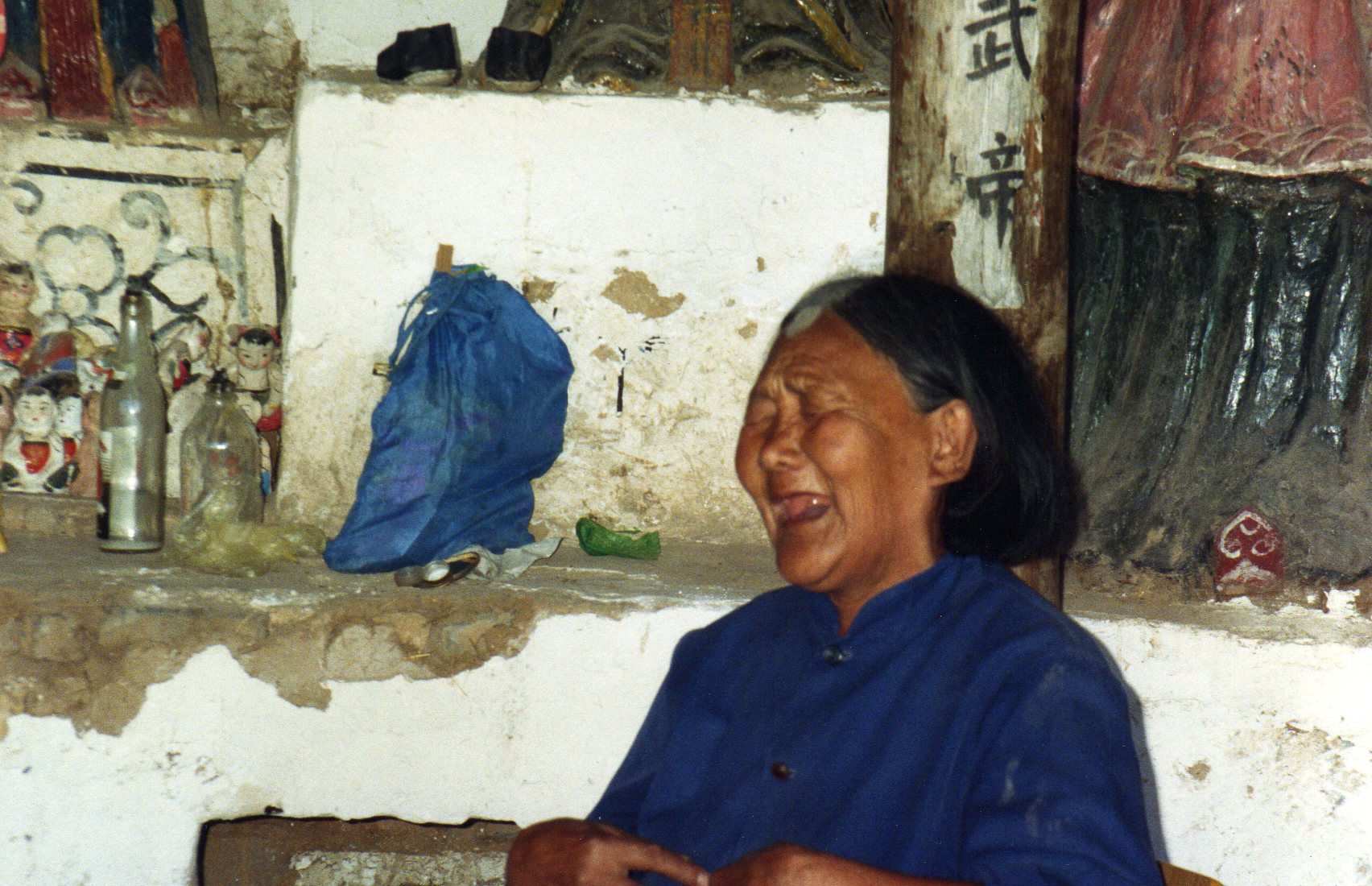


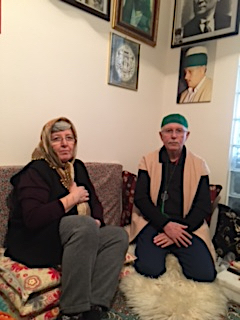
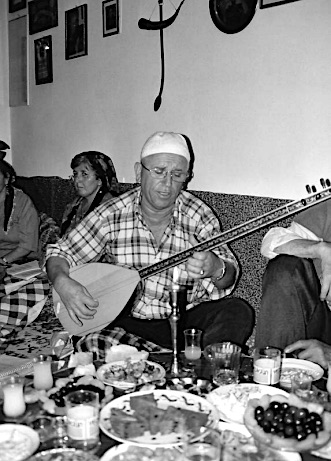


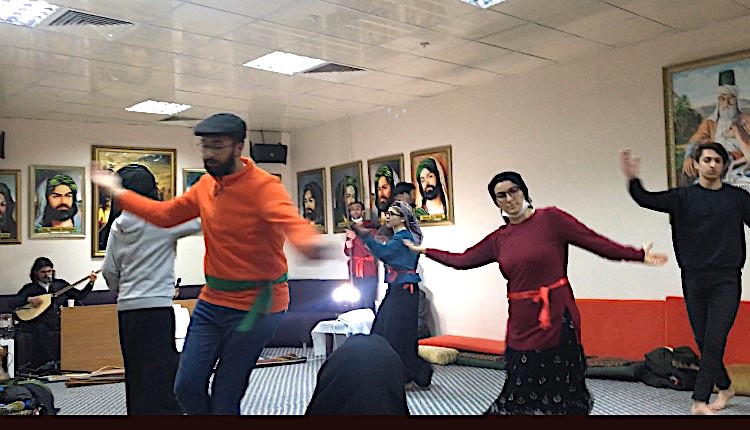

 A couple of days later, taking the Metro to the southern terminus, we were invited to supper at the couple’s apartment, along with a bright young disciple—another instructive and delightful evening. Erzade dede’s family brought him to Istanbul when he was 3. He was chosen by his grandfather at the age of 13—his father wasn’t a dede—and he sometimes commuted to Ankara for further instruction. After military service, and the death of his mentors, by his late 20s he was already taking over ritual duties. Having learned in his youth to sing nefes while playing the bağlama, now (like many urban dede) he leads the ritual alongside a separate zakir. He is a respected community leader.


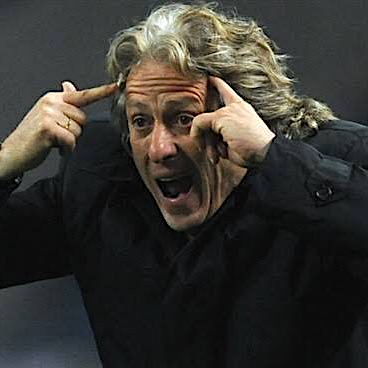
 Jesus in upbeat mood at crucifixion rehearsal.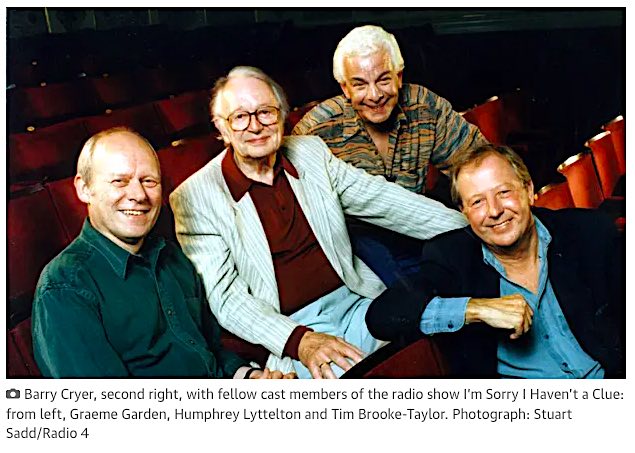

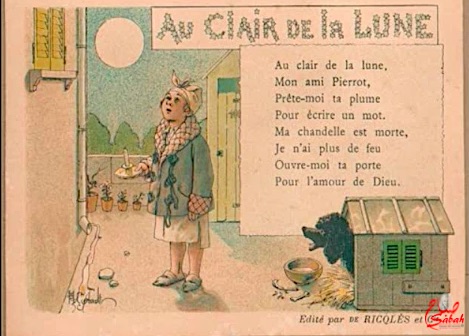


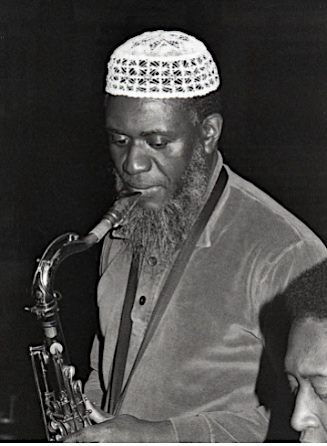


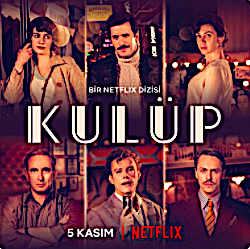


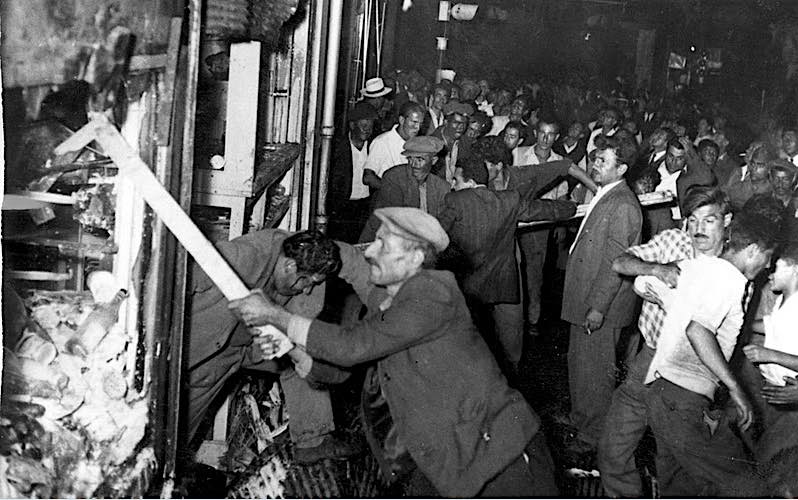


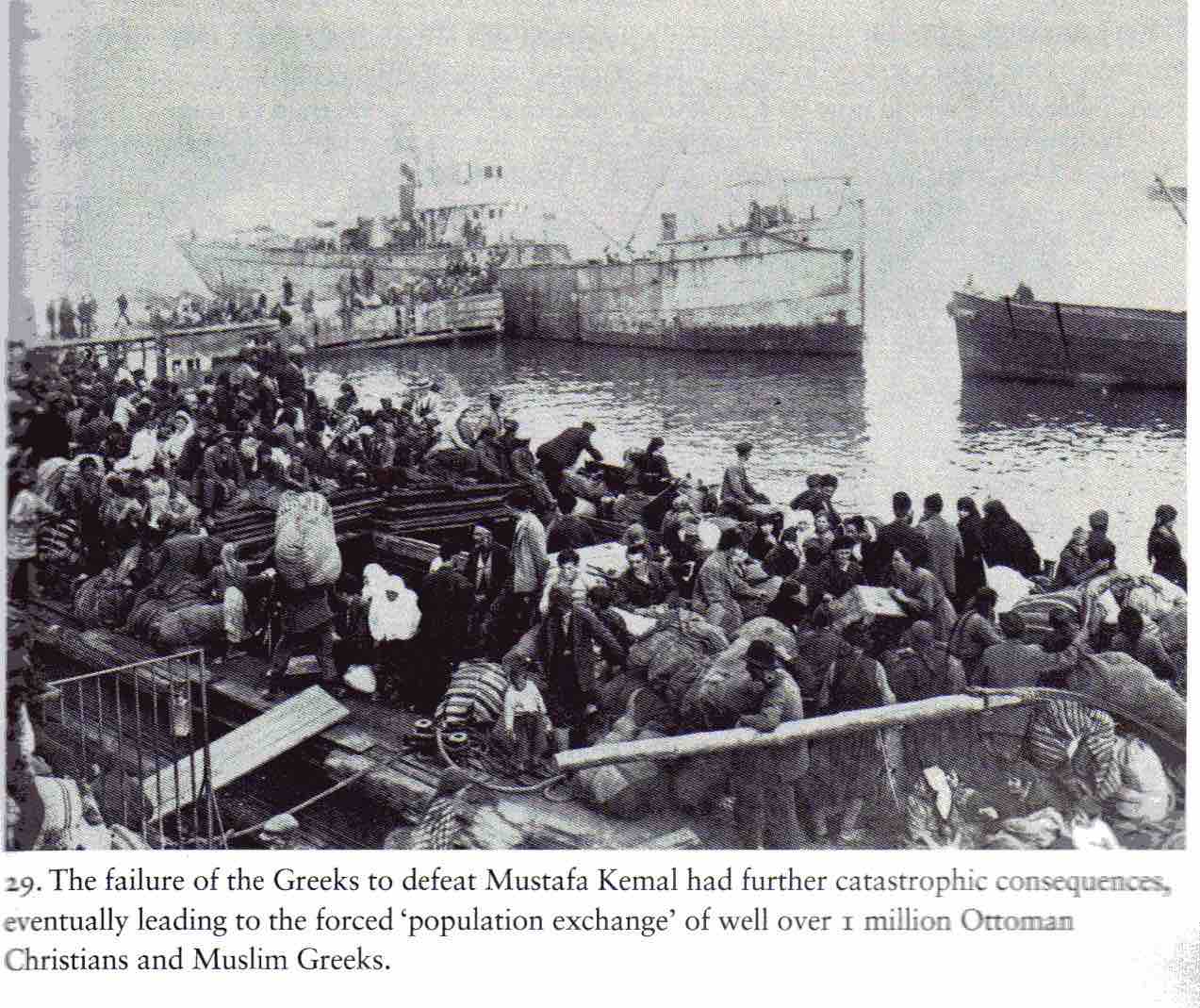 Source: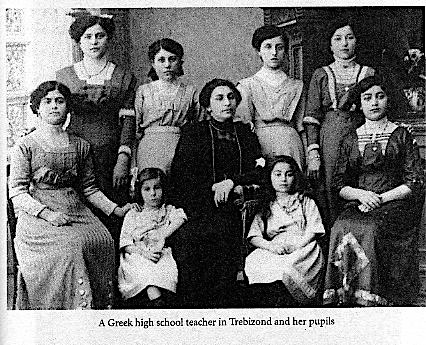







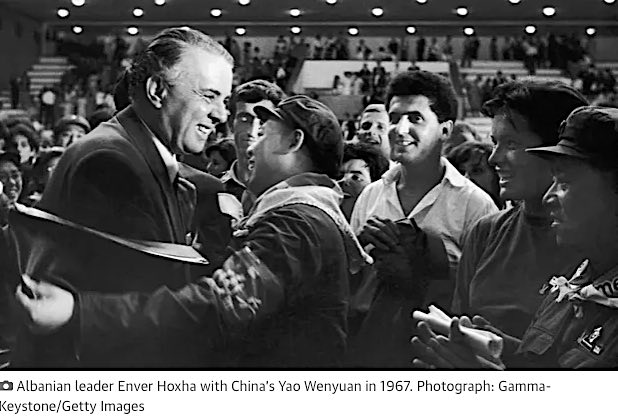


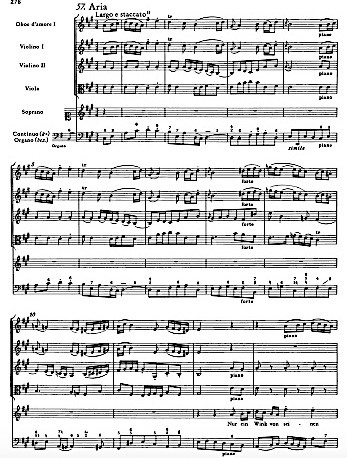

 For more Epiphany cantatas, click


 Source:

 (Clockwise from left to right.)
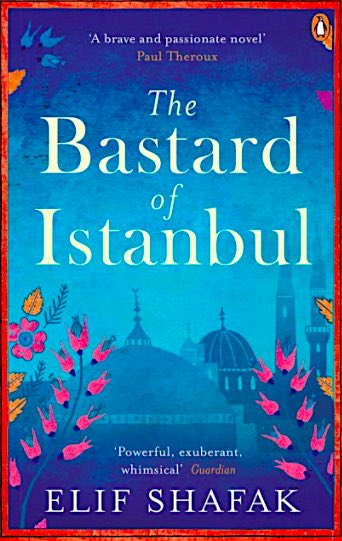


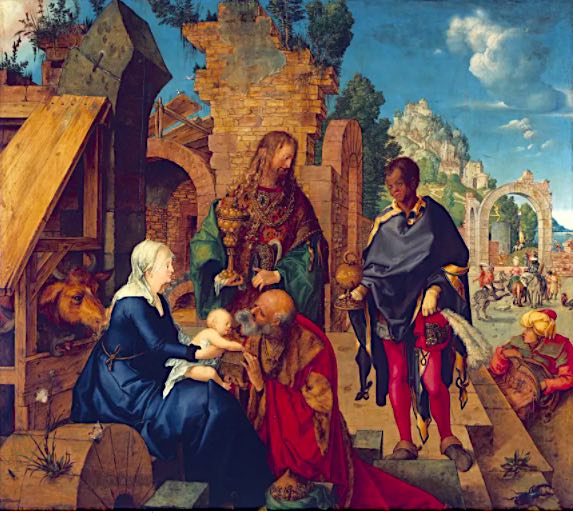

 …
…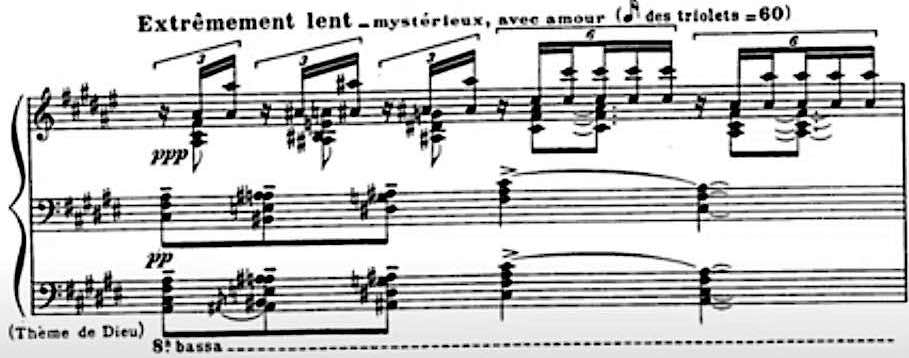


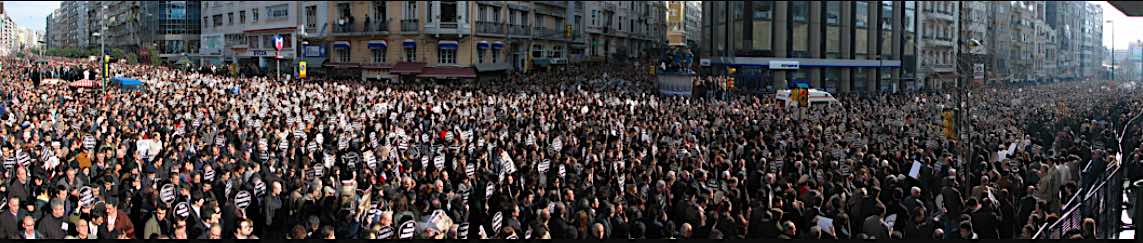


 Sola is one of three children of
 After graduating, partly in rebellion against the establishment that contemporary Western Art Music seemed to represent, Sola chose to become a pop musician, giving concerts and composing for film soundtracks, TV, and theatre. At the same time she made a great impression with her 1985 novellas Ni biewu xuanze 你别无选择 (You have no choice), Lantian lühai 蓝天绿海 (Blue sky green sea), and Xunzhao gewang 寻找歌王 (In search of the king of singers). Her voice was


 From The afterlife of Li Jiantong.
 Bartók outside a nomad tent in south Anatolia, 1936.
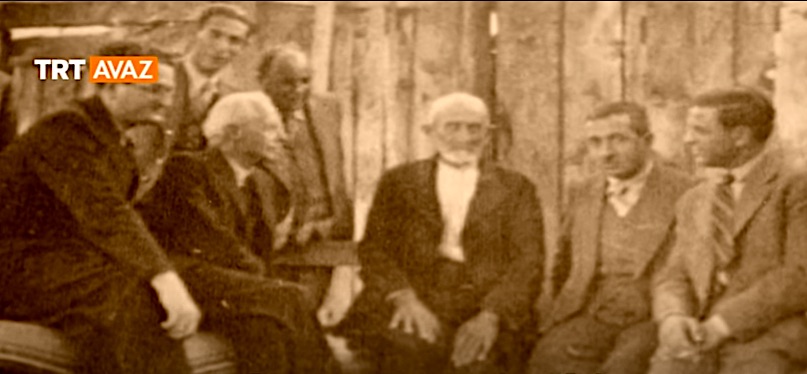
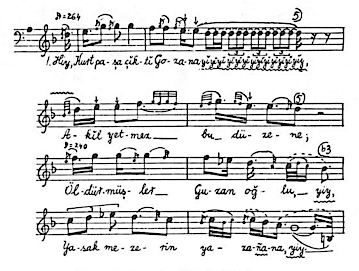
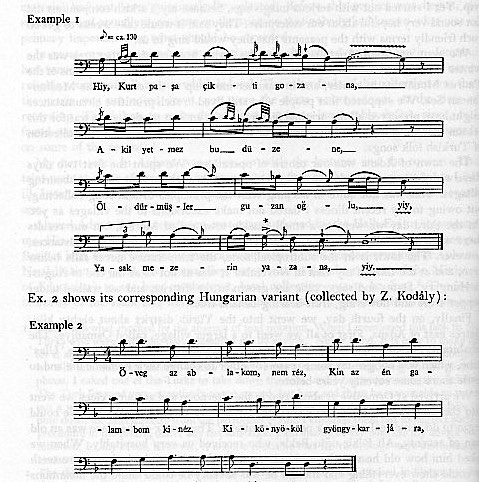
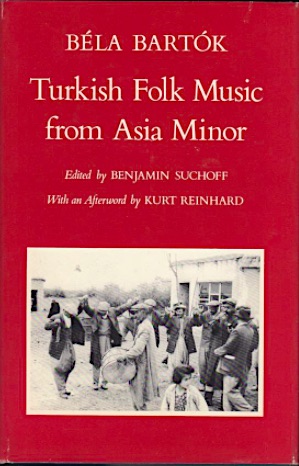


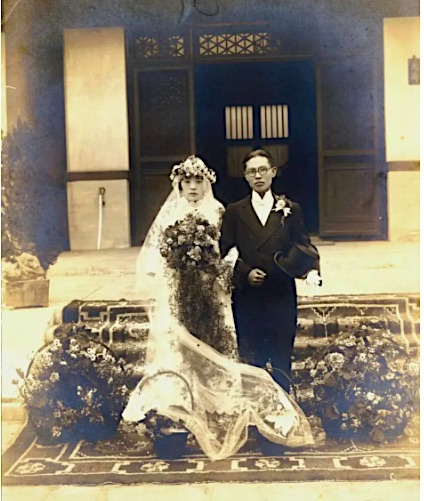


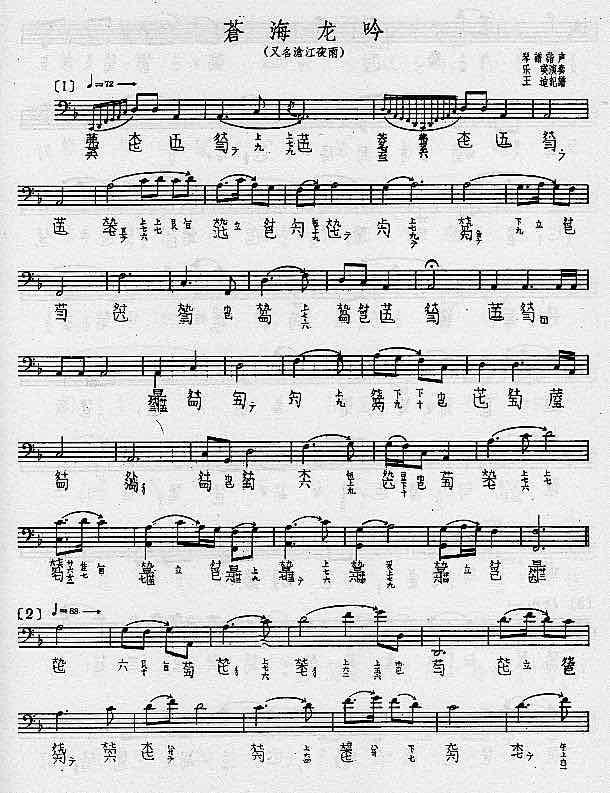

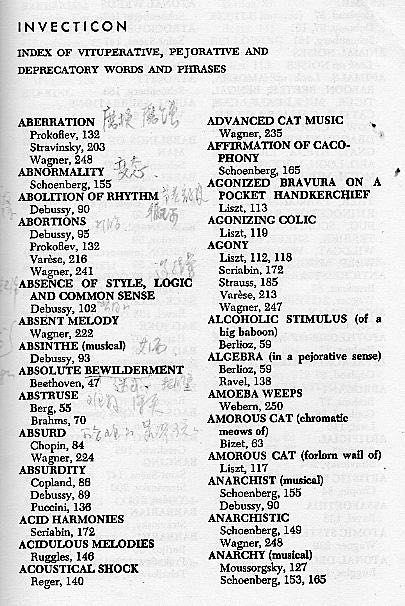

 The golden age of the MRI, 1954:
 Pu Xuezhai, early 1960s.
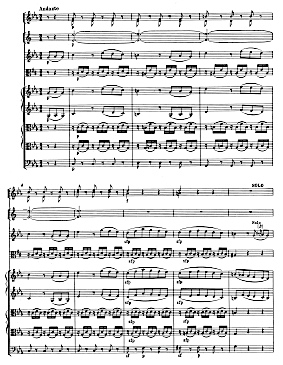


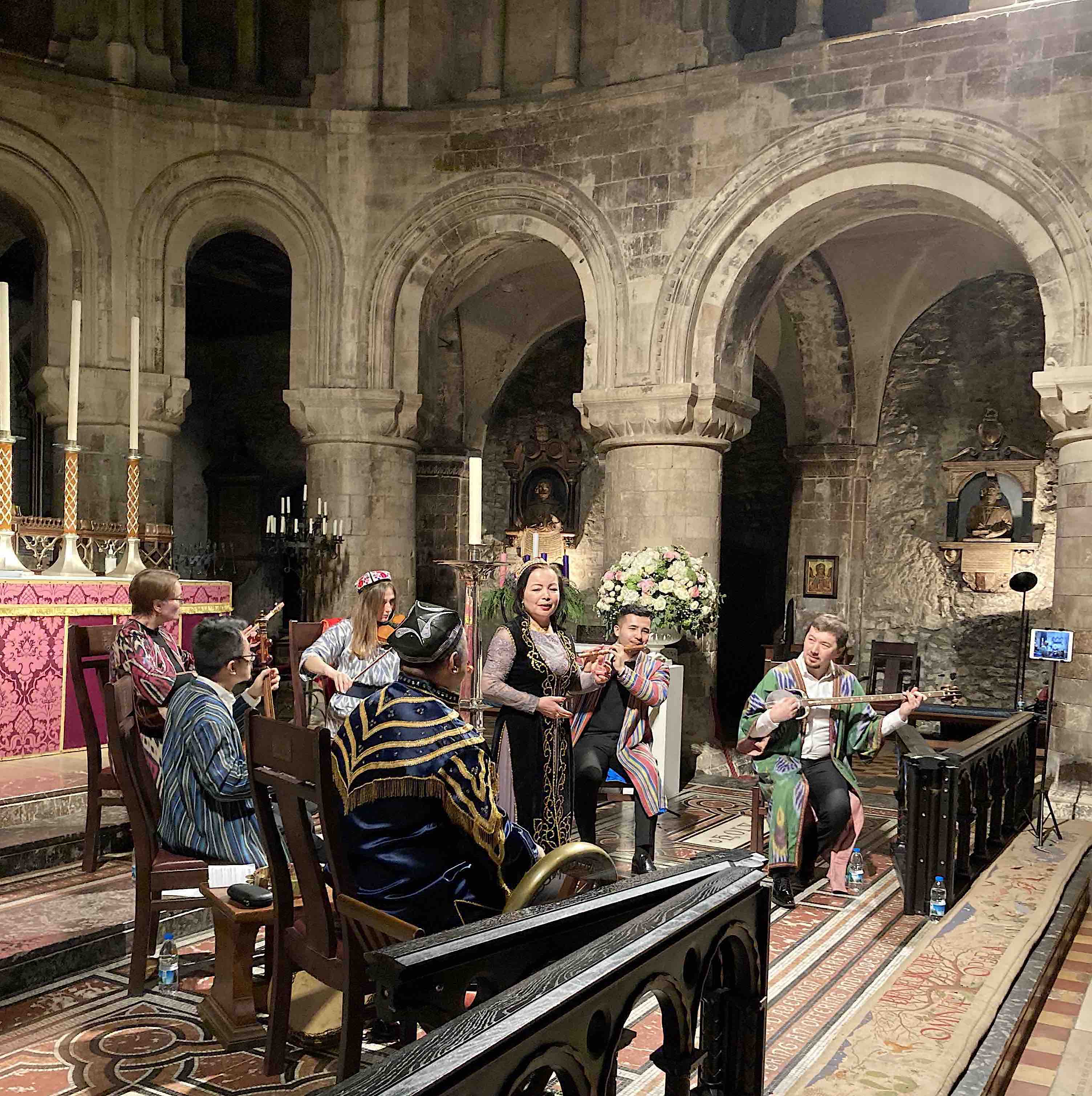 Photo: Isabela Rodrigues.


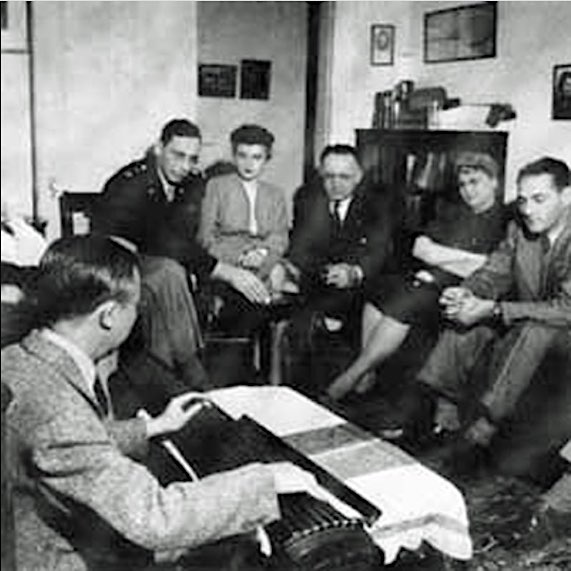

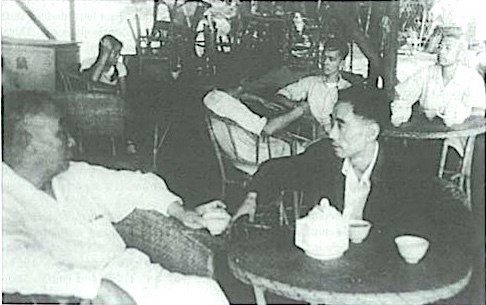
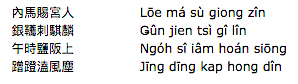


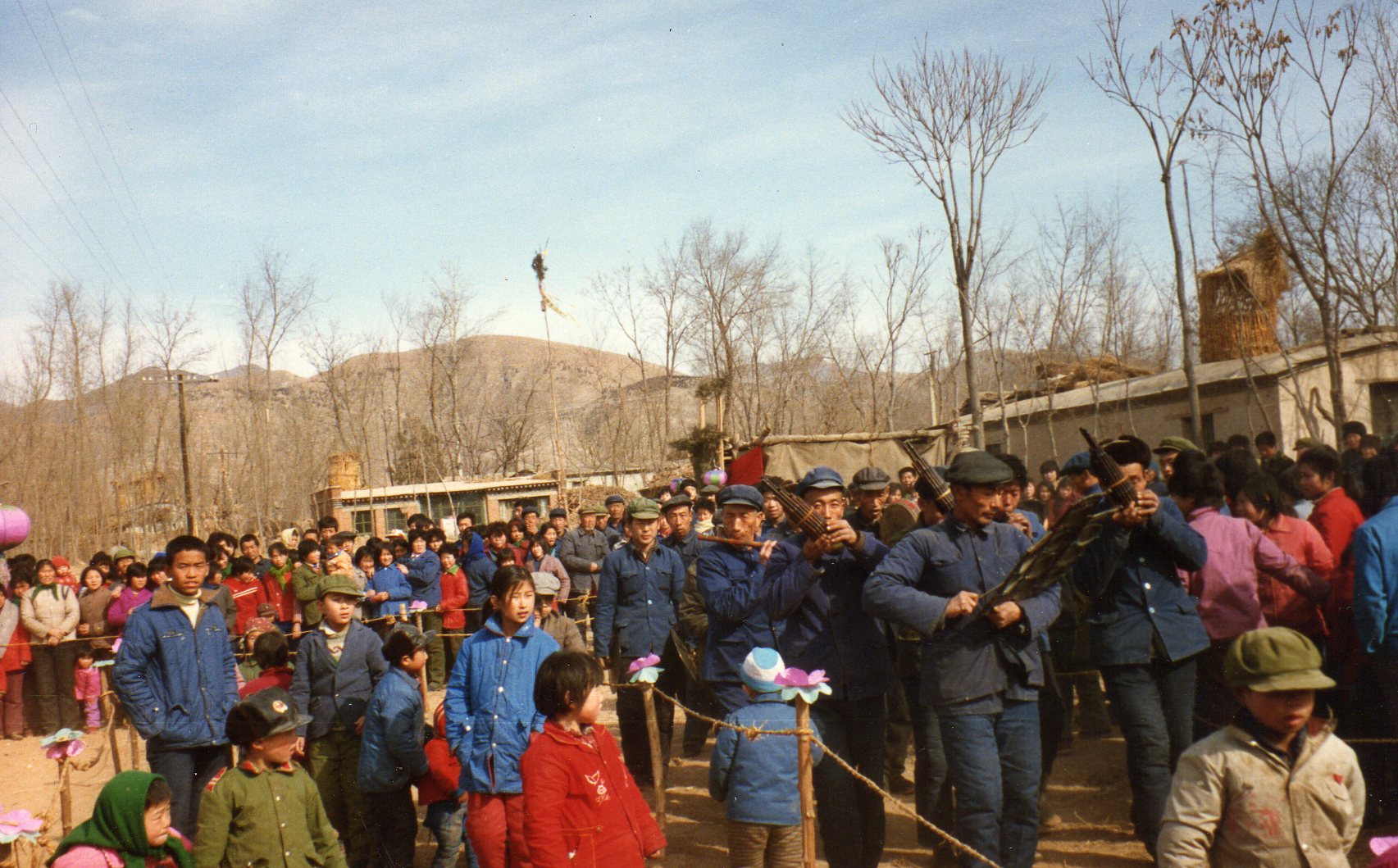

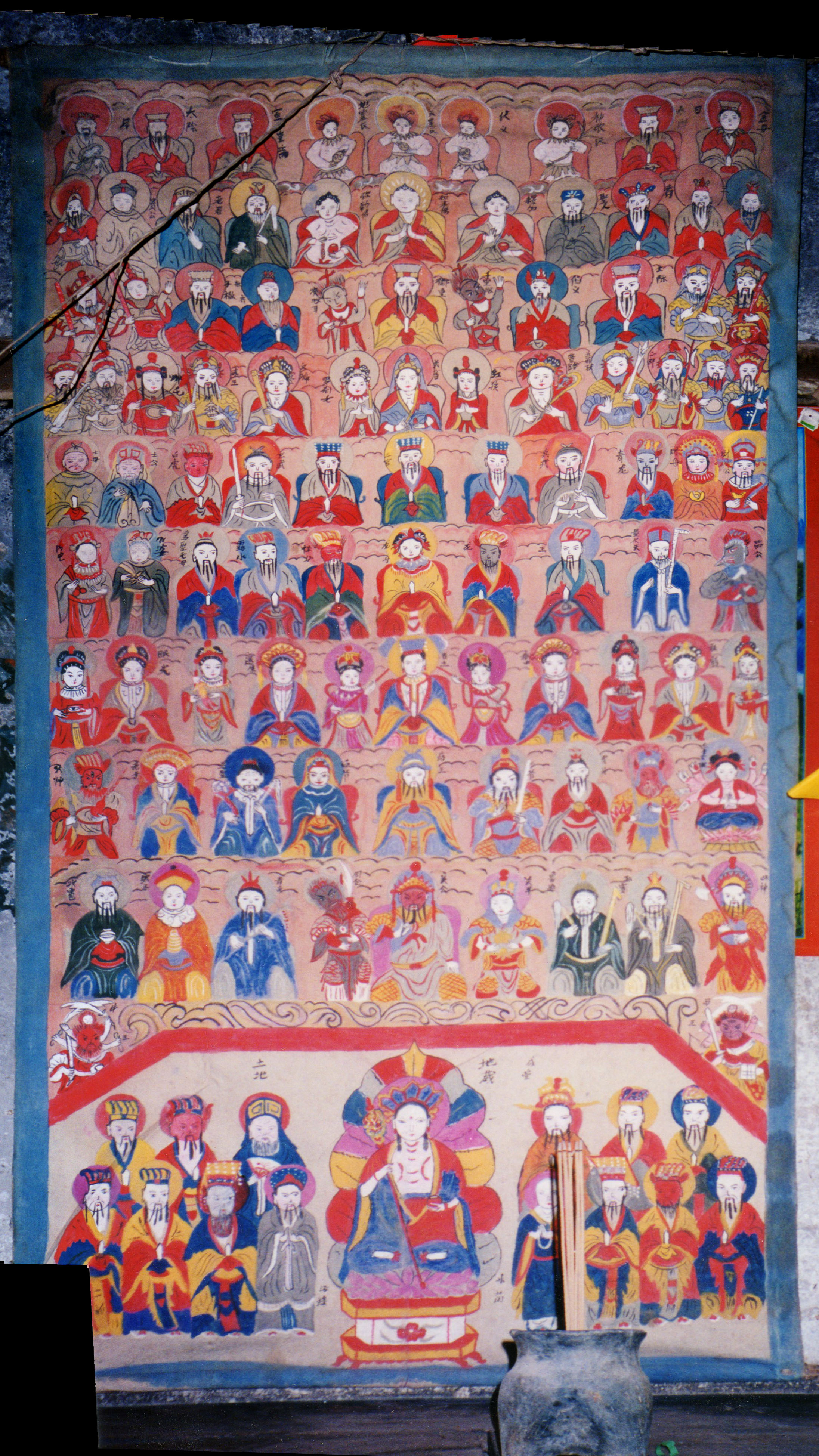


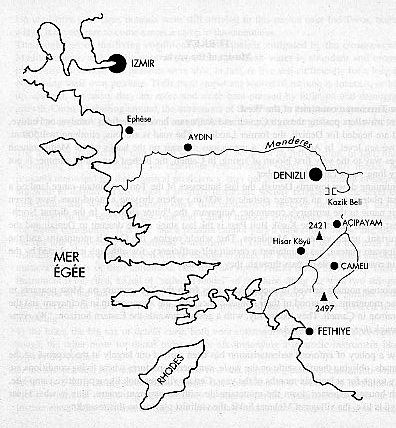


 Stephen Jones: a blog