By way of reminding you of my series on the great Gustav Mahler, some brief comments on the three symphonies of his performed at this year’s Proms, while I consult Norman Lebrecht’s handy guide Why Mahler?, marvelling at Mahler’s busy conducting schedule amidst the tribulations of his personal life.
Nothing can be so overwhelming as the 2nd symphony, which I heard on what was once called the radio. I find it hard to imagine how Mahler could have written anything after this. As to the 3rd, after the middle movements (akin to those of the 7th), the radiant finale dominates one’s image of the piece.
Hearing a live performance of the 5th is just as moving. The mellifluous Concertgebouw orchstra was conducted by Klaus Mäkelä (for the Concertgebouw’s Mahler 9 in 2022, click here)—it is televised on iPlayer.
I muse on the ravishing slow movements of this period in Mahler’s life: that of the 3rd as the culmination of the symphony, the Adagietto of the 5th all the more effective within the context of the whole; no less moving are those of the 4th and 6th (the latter, to my taste, still best placed third in the order of movements).
My Mahler series includes performances and recordings of his seminal works by some of the great interpreters. See also The art of conducting.
Having not exactly been hibernating, I now find myself in what doesn’t merit the term of “sabbatical”. It’s partly that I’m beset by a lack of focus; while it’s good that I currently feel no need to inflict my ideas on others, it’d be nice if I had something to say. Still, this may come as a relief to some readers.
As to China, I remain intrigued by Zhang Zhentao’s review of my Gaoluo film. So far I haven’t found sources unpacking foreigners’ supposed proclivity for representing the “ugly” side of China, which is well worth refuting, seeming to imply that honest depiction of rural life is to be censored—but I welcome leads.
On my visits to Istanbul, while trips along the Bosphorus on the vapur ferry continue to delight, I’m ever more diffident about my random delvings into Turkish culture. One remarkable recent addition to the pleasures of the Kuzguncukmahalle is a little basement cafe where young Sufi singers and instrumentalists get together to practise the makam.
I’ve sung the praises of the music of Gustav Mahler in a series of posts, rounded up here. For anyone within reach of Amsterdam, the Concertgebouw’s current Mahler festival is a blessing: details here and here, with useful links. The comprehensive concert series includes all the symphonies in sequence, performed by some outstanding world orchestras and conductors, with many related events, including the songs with piano.
While Mahler 2 in concert cannot fail to be overwhelming, on Sunday its power was conveyed as much by the fervent communal devotion of performers and audience as by the elderly, frail conductor. As this review of the 3rd symphony in May commented, MTT “more or less held it all together… signalling a few entries and giving some directions. That, however, was the full extent of his input, a distant cry from his earlier years where he would have been athletically bouncing around and being criticised by some for his micro-management.”
The orchestra must have risen gladly to the challenge of having to negotiate so much of the detail. The singers were also fine—Alice Coote in a rapt Urlicht, joined for the monumental finale by Siobhan Stagg and the London Symphony Chorus. As others have noted, the standing ovation was not so much for this concert as a homage to MTT’s lifelong music-making.
* * *
Immersed as I am in another round of editing my new film on the New Year’s rituals in the poor village of Gaoluo, the symphony made an extreme contrast, even if both rituals are in service of the divine. *
* Another entry in my Martian ethnography (see e.g. here):
As I suggested in Plucking the winds, whereas cymbal players in WAM feel impelled to milk the rare climactic moments when they are required, in Gaoluo the great percussion suite, with all its solemn and balletic complexity, demands stamina, skill, and memory.
There I was, hoping to publish some thoughts today on our (or at least my) misapprehensions about images of Chan/Zen, I find it’s gonna have to wait a while before I add to the already vast mountain of writings on the topic. So meanwhile, for anyone desperate to be entertained (yeah right), I’ll just remind you of some diverse posts that I’ve been retweeting recently:
For the anniversary of German reunification, Red love
Grimaud graces London again!, highlighting the magical Gesangvoll finale of Beethoven’s piano sonata Op.109, in recordings by Neuhaus, Richter, Backhaus, Gould, and Brendel.
Two of my main themes are Bach and Mahler, and you recently made history by showing an impressive lack of interest in my post on the John Passion Prom with Masaaki Suzuki and the Bach Collegium Japan, even with its fantasy of a world-music version of the Passions! And readers (or rather, non-readers) have been even more underwhelmed by my post on S-Simon Rattle’s Mahler 6 Prom—my first ever totally-unread piece!!! I realise Western Art Music has a rather niche clientele, but WTAF!
Many subscribers to this site may be interested mainly in my China coverage, but other topics usually attract a certain attention too, such as Western Art Music, jazz, world music, film, and so on—as shown in this list of my most popular posts, pleasingly diverse:
Twitter (as I still like to call it) is now just as disappointing as a vehicle to spread glad tidings. I understand that it has become totally useless under deranged new management, and that people only go there to scroll for cute pics of cats and racist bigotry (ideally combined); but still, one would think that just a few readersmight be drawn to such posts by hashtags like #SimonRattle, @BRSO, #Mahler, #BBCRadio3, @bbcproms, #Bach, @MSuzukiBCJ, and #worldmusic. But far from it!!! Hey-ho…
At last season’s Proms S-Simon Rattleconducted a moving Mahler 9 for his final concert as Musical Director of the LSO. Since leaving the UK for Germany, he has become chief conductor of the Bavarian Radio Symphony Orchestra. Last week in the first of two visits to this year’s Proms they played Bruckner 4 and a UK premiere by Thomas Adès. The next evening I went to hear them in Mahler 6 (listen on BBC Radio 3).
I wrote about the symphony here, after a performance at the 2017 Proms, and featuring recordings by Mitropoulos, Barbirolli, Bernstein, Tennstedt, and Abbado.
The Bavarian orchestra is just as deeply immersed in Mahler as S-Simon, having regularly performed the symphonies over many decades (from the cycle with Kubelik, here‘s the 6th, from 1966) and in recent years with Mariss Jansons and Daniel Harding. S-Simon has been touring it with the Bavarians this year (on You Tube, their recent live recording starts here—finding the other movements there is more of a challenge).
After the first movement, with its juxtaposition of prophetic jackboots (cf. Mahler 10), “yearning” Alma theme, and Elysian cowbells, for the two central movements S-Simon (like most conductors) favours Mahler’s revised movement order, with the wonderful Andante second; but I still feel there are sound musical reasons for placing it third, as explained in my original post. And then the immense, tragic finale, with its extraordinary hallucinogenic opening. In his revision Mahler removed the controversial third hammer-blow:
I always feel that S-Simon’s rapport with his players—and audiences—is much enhanced by his conducting from memory. The Bavarian players sound wonderful, like every orchestra he conducts.
I ran out of superlatives for Mahler long ago—do keep consulting my roundup!
Just days after the Zemlinsky and Schoenberg Prom, I went back to the Albert Hall for another course of late Romanticism, with the talented Ryan Wigglesworth conducting the BBC Scottish Symphony Orchestra (listen on BBC Sounds).
I don’t think I ever played Brahms 3 (make what you will of that uncertainty…). Well-received at the time, but now perhaps the least popular of his symphonies (I can’t miss any opportunity to remind you of Kleiber‘s Brahms 2!), it always deserves a re-hearing. l’ve been getting to know it better by listening to some classic recordings—
Then we heard Schoenberg’s tone-poem Verklaerte Nacht (1899) (wiki, and here), in the string orchestra version that he later arranged from his string sextet. The latter was premiered by the augmented Rosé quartet—here are members of the Ensemble Intercontemporain with Boulez, c1985:
And this is Mitropoulos with the strings of the Vienna Phil in 1958:
The Prom ended withMahler’sKindertotenlieder (1904, to texts by Rückert), movingly sung by Alice Coote. Here’s her recording from 2017 (along with the Rückert Lieder):
And here’s Janet Baker’s classic recording with Barbirolli, 1969 (cf. their Nuits d’été):
* * *
Back at the Prom, a more conventional sequence might have opened with Verklaerte nacht followed by the Mahler songs, with the Brahms symphony as a traditional second half; but the chronological order made a lot of sense, intensifying Mahler’s prophetic, tragic vision. All three pieces end quietly. I still don’t quite get a sense of coherence from Brahms 3, but it’s growing on me—Wigglesworth conducted it without the score, bringing out its chamber music elements. Despite its portentous opening, and hints that the finale might become grandiose, it’s largely elegiac, its middle movements unassuming yet affecting.
The second half was full-on in its intensity. Verklaerte nacht is a major work, long predating Strauss’s Metamorphosen; “filled with crepuscular angst” (as the BBC website has it), the writing especially favours the violas (always good to hear). BTW, and FWIW, the ever-stimulating Richard Taruskin (The danger of music, pp.325–6) doesn’t buy Schoenberg’s resort to extolling “pure” music in his attempt to deflect the misogyny of Richard Dehmel’s poem (“an immanently sinful modern Eve forgiven and redeemed by a godlike magnanimous man”). Finally, Alice Coote’s dramatised grief was perfect for the Kindertotenlieder (for her Mahler 3 with Michael Tilson Thomas earlier this year, click here). For me, the brief coda to the final song doesn’t suddenly sweep aside the anguish of the cycle—it seems more spooky than serene.
Ryan Wigglesworth’s serious, sincere musicking seems to convey a feeling of trust, free of the dubious trend for the flashy wizzkids who have replaced the dour, autocratic maestros of Yore. The composer-conductor combo doesn’t always yield results, but when it does it’s deeply satisfying, as with Salonen, Boulez—and clearly Mahler. But now that I observe the WAM scene as a mere outsider, I’m no longer privy to the more salient assessments of the musicians themselves.
For all my immersion in “world music” and its diverse social contexts, having been Promming since the 1960s, I always find it a blessing that concerts like this generate such attention and enthusiasm—nightly over nearly two months.
For my first Prom this season, I went to hear Ryan Bancroft directing the BBC National Orchestra of Wales in Zemlinsky’s Die Seejungfrau and Schoenberg’s Pelléas und Melisande, premiered at the same concert in 1905. Having already written about both works, I was glad to hear them live.
In my youth, besides Ravel‘s Daphnis and Chloé, Schoenberg’s Pelléas left a deep impression on me, attending rehearsals and concerts in the fluid hands of Boulez; with his choices there was always a sense of discovery. At this week’s Prom I could only summon up fleeting glimpses of that magic, but (within the niche of ominous late-Romantic angst) Pelléas is perhaps rather more accessible, so it probably made sense to open the concert with it, building the audience’s attention for Die Seejungfrau after the interval. But either order could work. Ryan Bancroft, brought up in LA, directed fluently—like Boulez, conveying the music with his hands rather than a baton.
You can hear the concert on BBC Sounds for the next two months. A sumptuous fin-de-siècle opening to the season, then—the previous evening Mark Elder conducted Mahler 5in his Proms farewell to the Hallé after 25 years with them (available on BBC iPlayer). Even if Mahler towers over just about everyone (do consult my series!), it’s always rewarding to explore the work of his contemporaries and disciples, and to immerse ourselves in the whole culture of early-20th-century Vienna. Though the hall was less than packed, how wonderful that Prom-goers devote such attention and enthusiasm to the less familiar aspects of the symphonic repertoire.
Ever since the very first episode in 2014, the BBC TV comic-noir series Inside No.9 (website; wiki) has been consistently brilliant. Written by and starring Steve Pemberton and Reece Sheersmith, it features cameos from a succession of fine actors. The plot twists are ingenious, the mood sinister and enigmatic.
The penultimate episode of the ninth (and final!) series (watch here) takes its title from the Curse of the Ninth, attributed to Mahler’s fruitless efforts to trick fate. Typically macabre, it’s “an Edwardian chiller in which a talented piano-tuner is forced to confront the power of a centuries-old curse by the owners and servants of a large country house.” As the drama unfolds, we hear well-chosen excerpts from the 1st movement of Mahler 9.
The wiki article on the curse gives instances of composers unable to complete their 10th symphony—but also lists counterexamples of others who did manage to do so. So there.
* * *
A random selection of (nine!) other stimulating episodes from Inside No.9:
I’ve celebrated Mahler 3 in an earlier post, featuring great recordings by Bernstein, Tennstedt, Abbado and others. Last week, just after coming back from Milan and Erlangen, immersed in my fieldwork videos of Chinese village ritual, I went along to the Barbican to relish another overwhelming rendition of the symphony, with the LSO conducted by Michael Tilson Thomas (website; wiki) in the second of two performances.
Music Director Laureate of the San Francisco Symphony and Conductor Laureate of the LSO, at the age of 80 MTT is severely ill with brain cancer (see under the Slipped Disc website). Musicking is always about context—and Mahler 3 is always a moving experience. Just as the Mahler concerts of Tennstedt and Abbado were all the more deeply affecting in their later years, the aura of last week’s concerts was intensified by MTT’s frailty, sidelining any suspicions of West-Coast suavity. As this review of the first concert comments,
Programme notes for Mahler’s monumental symphonies will often blithely chat about the works’ epic struggle between life and death, creation and destruction, joy and dread. In a comfy hall with a slick orchestra and a polished maestro, all of that can feel abstract and remote. Not last night at the Barbican.
MTT was a protégé of Bernstein, following in his footsteps. This story, from an article that also includes a chat between MTT and James Brown, is relevant:
Thomas had the opportunity to get to know another great musician, Leonard Bernstein, after winning the Koussevitzky Prize, which is awarded to outstanding student conductors. Bernstein came to a performance of Mahler’s 5th symphony that Thomas was conducting early in his career. After the concert, Thomas recalls asking Bernstein what he thought of the performance, and he replied, “What did I think of it? I think that when you really have made up your mind what it means to you, and what you intend to do about it, it won’t matter to you what I think or anybody else thinks.”
In 2012 MTT pondered his own bond with Mahler and the challenges of conducting the symphonies:
He explores Mahler’s origins and legacy in two documentaries, accessed here and here(part of a series on the, um, Great Composers).
Here he is in the final movements of the 3rd symphony with the Verbier Festival Orchestra in 2016:
As often with Mahler, I tend to focus on the incandescent finale (those quintuplets!!!)—but you have to experience the whole, um, Journey. As with the 2nd symphony, the first movement is monumental too, and as in the 7th symphony, some passages of “sonic goulash” (MTT’s fine term) recall Ives—whose music Mahler used to conduct (see e.g. here). The middle movements also encapsulate Mahler’s world, and Alice Coote’s singing of Nietsche’s text in the fourth movement was intensely moving (cf. her Kindertotenlieder). The LSO was brilliant as ever, with outstanding brass solos—in what must have been an exceptionally demanding concert. MTT, the LSO, and the audience all pulled together to celebrate Life… It’d be most interesting to learn how the players felt about the concerts.
I can’t resist mentioning MTT’s From the diary of Anne Frank—both to complement Mahler’s Jewish identity and for some of the most radiant images of MTT with Audrey Hepburn:
Written for Audrey Hepburn, Michael Tilson Thomas’ composition “From the Diary of Anne Frank” premiered on March 19, 1990, with the New World Symphony. Audrey had grown up in occupied Holland and was exactly the same age as Anne. Audrey identified strongly with her. pic.twitter.com/Jw7Aa3woGm
In 1998 Maria João Pires * received a last-minute phone call asking her to stand in for another pianist at a lunchtime performance the next day in the form of an open rehearsal directed by Riccardo Chailly at the Concertgebouw. Only when the orchestra started playing, before a live audience, did Pires realise she had prepared the wrong Mozart piano concerto—not K466 but K488. The film—part of Attrazione d’amore (Frank Scheffer, 1998)—shows “an extraordinary moment of pained realisation and miraculous recovery, that has gone viral several times over the last ten years”. **
The core of the concert was Mahler 5; as Chailly observes, “Mahler was a great Mozart conductor”, so he scheduled the D minor concerto K466, whose agitated mood is somewhat akin to that of the Mahler symphony.
Classic FM’s Joanna Gosling shared the video on Twitter and reinstated its place in the Internet hall of fame all over again. A few days later, Joanna sat down with Maria to speak about the famous incident, and the thoughts that were racing through her mind during those crucial moments at the piano, 25 years ago.
I don’t find the interview (here) so revealing. WAM pundits inevitably make it into another story of triumph over adversity—the classic ethos of the romantic concerto (see Zen in the art of the baroque lute, under Beethoven). To be sure, it’s a high-risk test of brain memory and muscle memory.
I totally agree that in terms of seeking complete fidelity to the notes dictated in the score (like a canonical sacred text), it’s a remarkable feat. Modern WAM audiences expect “perfection”—in this narrow sense (cf. Rhapsody in blue). Now, don’t get Me Wrong: I love Pires’s musicking, I love Mozart, and once she sets forth on the tightrope it’s really moving; *** it just got me thinking outside the box in that ethno-lite way that sometimes befalls me (e.g. here, and under Mahler 3)…
In the audience, some listeners might know the piece, others might not; most will be familiar with Mozart’s style. This wouldn’t help Pires relax much. But pianists like her will have known most of the Mozart concertos since at least their teens, and performed them regularly ever since; her fingers and brain would be instinctively attuned to playing pieces in D minor in the classical style, with all their harmonic, melodic, and expressive permutations, all the predictable sequential modulations. As she explains, she had performed K488 a couple of weeks before, K466 not for about ten months. I wondered if the Concertgebouw librarian might have rushed to their archive find the score for her.
While Mozart couldn’t have played any of his concertos nearly so often as a modern soloist, he would surely have been happy to rise to the challenge; to some extent, in concert he would expect to diverge from the score—as does his modern avatar Robert Levin, such as on his recording of K488 (!) (try the slow movement), and notably in his improvised cadenzas.
Anyway, in that video the challenge for Pires was to regain memory, not to respond by creating something new and original. I’m just curious what might happen if one just went with long experience and built on it, as in jazz (such as Kind of Blue, one of the great unrehearsed albums). Pianists might welcome the challenge more readily with a solo sonata, but it becomes hard with a rigid orchestral accompaniment—perhaps it could work with string quartet. The tuttis, and the accompanied passages, would at least help the pianist recognise the harmonies which she is to embellish.
It probably wouldn’t sound quite like this:
Back with the Concertgebouw incident, Pires doesn’t appear so keen to join in with all the celebration:
Gosling: How do you feel about it, in terms of where it sits in your career? Is it a high moment for you? Pires: No.
The pros and cons of soloists performing with or without the score have been much discussed in articles such as this—where I love the shock-horror heading
Advantages of using a score in concert People might think you’re improvising otherwise!
The niche of WAM (highly pressurised whether or not you know what you’re going to play) is inflexible, reified—or rather, it has become so. In this it seems rather exceptional among traditions around the world (see Unpacking “improvisation”), in which (whether or not they have notation to consult) there are always rules, but a certain creative latitude is built into the performance event (some examples: maqam, folk-song, shawm bands).
Still, even in north Indian raga, I imagine some singers who, having practised (say) rāg Malkauns from young, might be disconcerted to be asked to perform it at short notice, when it’s not a regular part of their repertoire. Does anything similar happen in rock? It seems unlikely in blues; in jazz the amount of “improvisation” and rehearsal varies quite widely. If a bandleader calls up a trumpeter to stand in with a solo in A night in Tunisia but she mistakenly brushes up on A night in Milton Keynes [Fictitious Glen Miller number—Ed.], I doubt it would be such a big deal (among many discussions of the role of memory in music, see e.g. Daniel J. Levitin, This is your brain on music, Chapter 7).
Another impertinent culinary analogy: **** rather than opting for a restaurant where the chef picks vegetables fresh from the garden to create a delicious dish, WAM audiences have ended up ordering a pre-packaged ready-meal.
But I try your patience. For good measure, here’s Maria João Pires in later years with a beautiful, prepared performance of the (“right”!) concerto, with socially-distanced orchestra:
* On the Iberian nasal ão sound, note Ogonek and Til—complete with limerick.
** I still can’t quite imagine the scene. Sure, Pires probably went directly from the airport to the hall, but you’d think conductor and soloist would have a minute or two before going on stage, just to hum through tempi for the three movements; and anyway, if it’s an open rehearsal, surely they can stop, and explain to the audience (charmingly) that there’s been a mix-up but that Pires will do her best?
*** BTW, leading into the pianist’s first entry, a passage like this is an instance of what makes playing Mozart’s 2nd violin parts such a joy:
It’s even more gorgeous in the major the second time round (from 6.00 in the complete video).
**** This complements my critique of over-reliance on silent manuals in the study of Daoist ritual (Daoist priests of the Li family, p.371, cited here):
Scholars of Daoist ritual who avoid addressing music (or more coyly, disclaim expertise in it) are fatally limiting their ability to engage with ritual. It’s like someone with a fine kitchen and loads of glossy cookbooks, who draws the line at handling food or cooking.
Infatuated as I am with Mahler (series here), my posts on his symphonies inevitably include performances by Leonard Bernstein (see under The art of conducting). So I just had to watch Maestro (Bradley Cooper, 2023: in cinemas and on Netflix).
Movies about musicians are notoriously prone to faux pas (for some TV clichés, see e.g. Philharmonia, and Endeavour). Bernstein’s passion as a communicator brought an unprecedented popularity to WAM that it could never again achieve; Maestro is admirable for bringing him (if not his musical genius) to a wide modern audience.
Norman Lebrecht shrewdly observes Bernstein’s place in the roster of Great Conductors (The maestro myth pp.180–87, 192–5, and, confounding the myth that he rescued Mahler’s music from obscurity in Vienna, 198–205). Heart on sleeve, OTT, Lenny was an archetype for his era—by contrast with the austere Maestros of Yore, or indeed the benign, banal middle-managers and Early Music semi-conductors of later years.
As to Maestro, Alex Ross comments in the New Yorker:
Because Bernstein’s career unfolds in the background of his marriage, the film is relieved of the dreary trudge of the conventional bio-pic, which checks off famous moments, positions them against historical landmarks (the Cold War, the Beatles, the Kennedy assassinations). […] By and large, Maestro benefits from what it leaves out. Some viewers have complained that such major achievements as On the Town, West Side Story, and the Young People’s Concerts are mentioned only in passing. But Bernstein’s life was so stuffed with incident that nodding to each one would have drained the movie of momentum. One omission, though, left me perplexed: the studious avoidance of Bernstein’s radical-tending politics.
The roles of Lenny (Bradley Cooper himself) and his wife Felicia (Carey Mulligan) are brilliantly played, with all the tortuous public/private psychologies of their relationship. But indeed, the film omits their considerable social activism through a period of change; Cooper had intended to include the notorious “radical chic” 1970 party, but (as he explains in this podcast) he found it would have detracted from his main theme. So the screenplay invariably chooses the personal over the political. And I agree with other reviews that lament the wider avoidance of social history (e.g. another New Yorker article; myscena.org; The critic)—a tasteful script wouldn’t have to make such scenes into a “dreary trudge” at all.
What there is very little of is music. We barely see him conduct, we hear only snatches of his own compositions, and there are frustratingly few glimpses of his passion for communicating—through performance and education—the wonders and riches of classical music.
Bernstein’s own music does play a considerable role, without quite engaging us. But the most regrettable casualty is Mahler. Despite a scene that I’ll discuss below, the movie never broaches Lenny’s deep passion for his fellow conductor-composer—he must have seen himself as a reincarnation. In Lebrecht’s words (The maestro myth, p.185; cf. Why Mahler?, pp.239–41 and passim), Mahler was
a visionary who fought against humanity’s rush to self-destruction. “Ours is a century of death and Mahler is its musical prophet” [see e.g. my fanciful programme for the 10th symphony], he proclaimed, seeking to find himself a similar role.
Apart from the moving evidence of his performances, Lenny missed no opportunity to promote Mahler’s vision, and irrespective of the movie, it’s well worth returning to his extraordinary lectures on the topic. * Without hijacking the film’s main theme, one longs for a mention of Mahler’s name, or an image—although I quite see the risks of composing a line like “Oh Felicia, what would I do without you and Mahler?”!
We get to hear some of the Adagietto, though it’s such a staple of movie soundtracks that for many viewers it may sound merely like generic film music rather than the work of Lenny’s alter ego. Then the long scene of the monumental ending of the 2nd symphony at Ely Cathedral in 1973 is the perfect choice, and it should be overwhelming. But if the uninitiated don’t know what it represents (for Lenny and, well, for Western civilisation!), then again one might just think it’s some random piece of dramatic romantic music; or if you love Mahler as deeply as Lenny did, then you’ll be shocked at how the lack of context largely deprives it of impact—the scene’s main point seems to be his reunion with Felicia in a make-up kiss as he comes off stage.
Cooper, having learned assiduously to impersonate Lenny’s conducting for the Ely Cathedral scene under the guidance of Yannick Nézet-Séguin, looks admirably impressive on the podium—but it’s also a salient lesson in how impossible it is to mimic the art of an experienced conductor. The Guardian review cited above has details of how the scene was filmed, with comments from members of the LSO:
Every detail of the 1973 performance was painstakingly reproduced, from where each player sat (“more squashed than we generally are today!”), to the mocked-up programmes, even though these were never in shot.
Players who wore glasses were asked to provide prescriptions so they could be given new ones in old-style frames—and they were all asked to let their hair grow. “Most of the guys had been asked to grow beards,” says Duckworth, “and those with very short hair had been asked not to cut it.”
And (WTAF) despite going to such lengths to achieve historical authenticity, the film used the players of today’s LSO, 45% of whom are women—whereas the 1973 LSO had only two women (the harpists) among 102 players. Is this, finally, PC gone mad?!
Despite these cavils, I admire the way Bradley Cooper has brought Bernstein’s personality to a wider audience. Perhaps it’s too much to hope that Maestro might also turn on a new generation to Mahler.
* After his 1960 talk at the televised Young People’s Concerts (wiki; complete list on YouTube here—weekly audiences for his broadcasts estimated at ten million!), more illuminating is “The unanswered question” in his 1973 lectures at Harvard:
DO go back to Humphrey Burton’s wonderful films of Bernstein’s performances of the symphonies… Burton also filmed him rehearsing—and commenting on—the 5th, the 9th (“Four ways to say Farewell”), and Das Lied von Der Erde with the Vienna Phil (1971–72):
Born in 1935 to parents based in Mukden (Shenyang) during the Japanese occupation of Manchuria, he returned with his family to Japan in 1941. His rise to conducting stardom was meteoric. A pupil of Hideo Saito (1902–74), in 1959 he won a conducting competition in Besançon. This led to an invitation to study with Charles Munch and Pierre Monteux in Boston, where he soon won the Koussevitzky Prize; this began his close association with the Tanglewood Festival. Gaining a scholarship to study with Herbert von Karajan in West Berlin, he was spotted by Leonard Bernstein, who made him assistant conductor of the New York Phil in 1961. Here Bernstein introduces Ozawa conducting the overture to The marriage of Figaro in 1962:
Ozawa remained the only conductor to have studied under both Karajan and Bernstein (cf. Unlikely bedfellows).
In 1963, still little-known in the USA, Ozawa appeared on What’s my line (cf. Anna Mahler on You bet your life, 1952!). By the late 60s, in contrast to the staid, ageing Teutonic maestros to whom concert-goers were accustomed, he exuded a rock-star vibe that no-one has since been able to emulate (NYT: “with his mop of black hair, his boyish demeanor and his seemingly boundless energy, he captured the popular imagination early on”; Peter Gelb: “a symbol of male beauty on the podium that I don’t think the world had seen before.”) As Norman Lebrecht commented (The maestro myth, pp.137–41):
Ozawa sported a Beatle fringe, flowery shirts and cowboy boots, and wore a roll-necked sweater instad of a dress-shirt at concerts. His appointment was clearly aimed at rejuvenating the Symphony Hall subscription list. Oriental mysticism was all the rage among the East Coast college kids who escaped conscription to Vietnam; and Ozawa was, they said, something else.
In the early 70s I too basked in his charisma at London concerts, hearing him conduct an exhilarating Symphonie fantastique, as well as November steps—Takemitsu’s music becoming known partly thanks to Ozawa’s advocacy.
Ozawa acted as music director of the Boston Symphony from 1973 to 2002, a tenure that “many thought too long for anyone’s good: his own, the orchestra’s or the subscribers’ “.
According to the NYT, he played a role in easing tensions between China and the USA in 1979, when the Boston Symphony toured China, still emerging from the Cultural Revolution (cf. the 1973 visits of the Philadelphia and London Philharmonic). Peter Gelb, then the orchestra’s publicity director, said that Ozawa had been crucial in making the tour happen, Chinese officials feeling “a connection with him since he had spent part of his childhood in China” (hmm, I wonder how that worked…).
Noting Ozawa’s fine ear for timbre and nuance, some magical selections:
Ozawa’s 1968 recording of Messian’s glorious Turangalîla, with Jeanne and Yvonne Loriod (on 2 LPs, with November steps), is on this playlist—here’s the fifth movement Joie du sang des étoiles (Gramophone: “turbo-thrusted to the point of kinky delirium”):
and the sixth, Jardin du sommeil d’amour (“an early window into Ozawa’s ear for obsessive detail and softer-than-soft textures”):
* As I write, the regular Guardian is strangely devoid of an obituary—a gap filled by the East London and West Essex Guardian, whose readers seem rather less likely to be avid tofu-eaters. Update: Guardian notice here.
At the Proms last week, to follow Mahler’s 3rd and 7th symphonies, S-Simon Rattle marked his final concert as Musical Director of the LSO with the 9th.
I wrote about the 9th symphony in my Mahler series soon after observing his climactic use of quintuplets, “struggling to emerge from the stone”; I reflected here on a Barbican performance last year with Daniel Harding and the Concertgebouw. The chamber arrangement, far from a mere curiosity, is also most affecting.
Mahler 9 has inhabited me since my teens, even when I wasn’t actually listening to it. How amazing to get hold of tickets—”of all the performances I’ve heard in my life,” that was one of them—no really, it’s always overwhelming, but nothing could be so as Rattle bidding farewell to London with this symphony, the LSO in fabulous form. Yet again, conducting from memory made the occasion even more intense. The Prommers extended the silence of the long final Abschied.
* * *
S-Simon began the concert with Poulenc’s challenging Figure humaine, an acappella hymn to Liberté from occupied France to texts by Paul Éluard. It was brilliantly sung by the BBC Singers, who gave the first performance in 1945. Rattle began another Mahler concert with the piece in April this year, in solidarity with protests over the philistine government’s threat to axe the choir—his speech then is well worth reading.
After her recent concert of Bach, Berg, Haydn, and Vivier, Barbara Hannigan returned to the Barbican with the LSO in another exquisite programme juxtaposing two of the Great Composers of our age.
Messiaen’s L’ascension, his first major work for orchestra, * introduces his unique sound-world, opening with hieratic brass chords (E major!!!), closing with ecstatic sustained string writing—another addition to my Messiaen series (starting here).
Majesté du Christ demandant sa gloire à son Père Alléluias sereins d’une âme qui désire le ciel Alléluia sur la trompette, alléluia sur la cymbale Prière du Christ montant vers son Père.
In my Mahler series I’ve already written about the 4th symphony at some length, featuring performances by Mengelberg, Walter, Barbirolli, Bernstein, Tilson Thomas, and Abbado. OK, I go on a lot about Indian raga and jazz and all that, but to hear Mahler symphonies live is always overwhelming. I admired Ms Hannigan’s dramatic taste, always cultivating the feel of chamber music, and the divine slow movement of the 4th was every bit as spellbinding as it should be:
As it ebbed away, blending magically into the instrumental intro of the finale, Aphrodite Patoulidou walked on stage to sing—the kind of attention to detail that makes a difference— adopting just the right tone, neither too soprano-like nor a parody of childlike innocence, the final verse in a hushed E major.
The concert (on BBC Sounds until mid-April) made a moving chapter in Ms Hannigan’s relationship with the LSO.
Assessing sentimentality in music seems to be rather subjective (more on wiki here and here). I offer these random jottings largely as a reflection of my personal tastes.
It’s hard to police taste. In our times the term “sentimental” has come to have pejorative connotations—as wiki suggests, “a reliance on shallow, uncomplicated emotions at the expense of reason”; meretricious (and a Happy New Year), trite, even false. Other items on the word-cloud of sentimentality include maudlin, mawkish, tear-jerking, schmaltzy, manipulative, heart-on-sleeve, and self-indulgent—restraint being a virtue fraudulently claimed by the elite. Apparently emotions, and the declaration of sentiment, have to be earned (Oscar Wilde: “A sentimentalist is one who desires to have the luxury of an emotion without paying for it”).
Gender is a major element in the discussion, with the often-unpacked trope of rational/repressed men and emotional/communicative women. The “sentimental novel” (indeed, empathy itself) is often associated with the rise of female authors, although Dickens is a notable suspect, as well as some poetry of Wordsworth. In daily life, while objects of “sentimental value” seem exempt from censure, much-noted contexts include family, cute pets (the main content of social media, grr), teddy bears for Princess Diana, nature (the sentimental/pathetic fallacy; think sunsets), and Christmas cards. For a brilliant antidote, do listen to Bill Bailey’s Love song!
I note that my own playlist of songs is heavily weighted in favour of women singers, who seem most capable of emotional expression. By contrast with bubblegum/wallpaper music, at last the songs I’m considering are intense. Apart from the lyrics (even assuming we know or care what they mean!), much depends on the framing, the dramatic context. Irrespective of genre, one would suppose it difficult to “earn” the declaration of sentiment within the limits of a song lasting only a few minutes; but it’s perfectly legitimate to plunge right into a mood, as do many WAM songs. Performance is also crucial, the establishment of rapport: the vocal quality of the singer, the arrangement, harmonies, instrumentation (smoochy strings being a giveaway), and tempo. Some may find “the same song” sentimental (or not) according to such variables.
I’m not entirely fascinated by philosophical discussions, such as this from Charles Nussbaum (I’m somewhat thrown by his idea that “passion excludes sentimentality”—really?). He distinguishes sentimental music from the musical portrayal of sentimentality, which is OK, apparently. While critics defend such music by detecting layers of irony, detachment, and distance, isn’t it just those qualities that expose a song as false, a device for feigning passion? Surely we want sincerity; there’s nothing intrinsically superior about ironic detachment. It seems that a song can be both denigrated and excused for being fake.
I’m wary of Posh People claiming the cerebral high ground of lofty moral sentiments, trying to belittle the experience of the Plebs, moving the goalposts; as if their own emotions were noble, but those of the lower classes unworthy of expression. Corduroyed Oxbridge professors (and perhaps even the “tofu-eating wokerati”) pretend to more legitimacy in channelling feelings than a hairdresser from Scunthorpe, but if there was ever a time when this mattered, then fortunately it has receded. Responses to music can’t be policed (cf. What is serious music?!).
So the term is often used as a simple dismissal of a nuanced spectrum. WAM is a broad church, within which pundits make distinctions. Some more austere ideologues, still hooked on “autonomous music” (debunked by Small et al.), might claim to relegate emotion entirely, but WAM is full of it. Puccini is a classic case who appears to need defending (see e.g. here, and here), such as O mio babbino caro:
Predating anxieties over sentimentality, while I refrain from considering the courtly love of medieval ballads, we might now find sentimental some elements in the music of Bach (“O Jesulein süß, o Jesulein mild!”)—set within a religious frame. In WAM (as in Sufism) the portrayal of divine love can be controversial; some critics shrink from the sumptuous string harmonies that are part of Messiaen‘s unique musical lexicon. Baroque arias such as Handel‘s Lascia ch’io pianga, or Purcell’s When I am laid in earth, are never rebuked for sentimentality. Mozart arias too are presumably “rescued” by dramatic irony—such as La ci darem la mano (cf. Holding Don Giovanni accountable), the Terzetto from Così, or the Countess’s aria:
But many audiences, even “high-brow”, are presumably moved by such arias irrespective of the dramatic context.
Moving on to the Romantic era (generally considered OK, you gather), the OTT pathos of the finale of Tchaikovsky’s 6th symphony is clearly “earned”. For Mahler, the kitsch of popular folk music made an essential and utterly moving counterpoint to his more metaphysical strivings. But he weaves layers of “sentiment”, such as the slow melody that contrasts with the monumental opening of the 5th symphony (above). The Adagietto, of course, is easily co-opted to what we might consider sentimental ends—a not uncommon fate, like Rachmaninoff in Brief encounter. Again, a lot rests on interpretation: conductors are often praised for toning down the sentimentality in Mahler’s music—WAM pundits are dead keen on restraint (cf. Susan McClary on the denial of the body). Returning to gender, this article by Carolyn Sampson on performing Schumann songs may also be relevant.
Modern times (1936).
Just as in opera, music manipulates us strongly in film (e.g. “weepies”), such as The way we were or Cinema paradiso. Again, our dour WAM pundits tend to disdain the art of film composers such as Korngold.
Turning to popular musics, I revisit my (not to be missed!) playlist of songs. Again, in such pieces a certain dramatic distance seems to help. Charlie Chaplin’s Smile is a parody of the domestic bliss of which most people are deprived. The nuanced ballads of the Beatles seem sacrosanct—besides Yesterday and Michelle, She’s leaving home is a masterpiece of empathy. I’ve sung the praises of Dream a little dream (again, “elevated” by Mama Cass’s delivery, by contrast with that of Kate Smith). Am I “allowed” to relish Michel Legrand’s You must believe in spring? “Am I bothered?” Country music is more anguished than saccharine (indeed, the lyrics of the Countess’s aria could be from a Country song!)—I like the tone of this post. In jazz, the ballad was blown away by bebop, but survived despite recastings in a more edgy manner, like Coltrane‘s My favorite things. But while the modern reaction to sentimentality has been quite widespread, I can’t help wondering if it’s a handy slur used by the elite to denigrate popular culture.
While such concepts change over time, they clearly vary by region too. If WAM and popular musics share a considerable affinity in conceptual and musical language, the context broadens out widely with folk musicking around the world, where sentimentality doesn’t seem to be A Thing, confounding our narrow Western concepts. In the Noh drama of Japan, a transcendental message and austere sound-world pervade the common recognition scenes at the scenic site of an ancient tragedy. Conversely, the cante jondo of flamenco, its “brazen, overwrought, tortured, histrionic” style expressing “self-pity, posturing machismo, and hypersensitive adolescent egos”, doesn’t quite fit within the norms of sentimentality; nor does the heartache widely expressed in the anguished nostalgia of saudade and sevda. As in WAM or the sentimental pop song, the performance is exorcistic, cathartic.
So for some reason I seem to be requesting permission to be moved by certain songs—Pah! By contrast with some WAM-lite singers like Katherine Jenkins, Billie Holiday had a unique gift for singing sentimental lyrics without ever sounding remotely sentimental—such as Lover man, or You’re my thrill (“Here’s my heart on a silver platter”):
What knots we tie ourselves up in! In both WAM and popular genres, it’s worth positing all kinds of fine distinctions, and interrogating them; but pace the self-styled arbiters of taste, there’s little consensus on what is “legitimately” moving, and I’m reluctant to exclude any music along the spectrum of mood. Hmm, “I don’t know much about art, but I know what I like”…
Like a suburban Sisyphus doing and undoing a jigsaw, having gone to great lengths to mix up the daily sequence of my diverse topics in a stimulating fashion, it’s that time of year when I try and reassemble them into some kind of thematic order (cf. 2018, 2019, 2020, 2021). In September I essayed a handy roundup of roundups, covering some of this ground; and in November I listed Some recent *MUST READ* posts. As ever, in the sidebar you can consult the tags and categories, and even the monthly archive (scrolling waaay down); the homepage still provides useful orientation.
Disturbingly, the items featured below are just a selection, but do click away on all the links…
Perhaps I can begin with a story that combines several of my interests:
Well, that’ll keep you busy—as a reward, in future perhaps I’ll try posting every three days, rather than every other day, and I might even reblog earlier posts a tad less avidly—not wishing to try your patience (“You must come over and try mine sometime”—Groucho).
The *MUST READ* category in the sidebar directs you to some of my more worthwhile posts whose topics deserve to be savoured and shared.
Here’s a selection from recent entries, on a variety of themes:
The sceptical feminist, Janet Radcliffe Richards’ 1980 masterpiece, argued with dispassionate philosophical clarity, and still highly relevant despite some period features
Some Kurdish bards: politics, gender, and heritagification—epic tales of love and war, plangent kilam laments, with some fine recordings, archive and recent
Ogonek and Til—for fans of language, tennis, and fado! Wacky diacritics and nasal vowels in Polish and Portuguese—with matching limericks, and a bonus entry for Gran visits York….
Bach in an empty forest: a mesmerising mile-long xylophone in a Japanese forest, the wonders of a Bach cantata, Myra Hess’s wartime National Gallery concerts, and Takemitsu’s early alienation from Japanese musical traditions
Dream a little dream: interesting as it is to listen to earlier and later renditions, Cass Elliott’s 1968 version is enthralling—with the most radiant modulation ever!
The kiosk in Turkey and Europe: late-Ottoman mansions in Istanbul—the ancien régime, a haunted house, women’s changing status under the Republic, and shanty-town migrants; followed by some European kiosks, with cameos from The fast show and The third man
Mahler: a roundup!!! The definitive voice of our age—the symphonies, as well as chamber versions, and piano rolls; quintuplets and major 7ths; Alma and Anna
Ray Man, pioneer of Chinese musicking in London: social and musical change in the UK, Hong Kong, and mainland China—with homages to the Cantonese music scene and the early days of Ronnie Scott’s in Gerard street.
I’ve grouped these posts in the form 3+2+3, in the hope of encouraging you to revisit my post on aksak additive metres!
Mahler is such an important figure on this blog (and indeed in “Western civilisation”!) * that I thought I should offer a roundup of posts—my The art of conducting links to many of these, but it’s always good to remind ourselves of his astounding body of work.
Note the definitive four-volume study by Henry-Louis de La Grange—and online, his series here, with essays on all the symphonies (cf. conductors’ ideas). Norman Lebrecht, Why Mahler? (2010) is engaging and instructive. For recording guides, see here.
I began writing about Mahler with a post musing on performance practice, vibrato, and Daoism, and went on to offer reflections on the individual symphonies, all overwhelming in their different ways—with plentiful A/V embeds of some of the great interpreters like Bruno Walter, Bernstein, Tennstedt, Abbado, and Rattle:
Here’s my detailed “programme” for the apocalyptic passage in the first movement of the 10th, with the “Scream”:
Now I don’t generally go in for this kind of thing, but after my recent visit to Sachsenhausen one might hear that short episode (under two minutes) as a graphic condensed soundscape foretelling the torments of Europe from c1930 to 1945—like deathbed episodes flashing past (timings as on the 1980 audio recording):
* The quotes there alluding, you gather, to the much-cited but elusive Gandhi story: when asked “What do you think of Western civilisation?”, he is said to have replied, “I think it would be a good idea”.
*For an introduction to my whole series on Mahler, with links, click here!*
Mahler (left) with Bruno Walter, Prague 1908.
Source: Mahler, Year 1908, with many more images.
As a self-confessed Mahler fanatic, I’ve always been somewhat underwhelmed by the 7th symphony (see e.g. here, and wiki)—and it transpires I’m not alone. I’ve finally got to know it better with the prospect of hearing the stellar lineup of Kirill Petrenko and the Berlin Phil performing it live at the Proms (listen here).
Mahler wrote the symphony in 1904–05, premiering it in Prague in 1908, over which period his family and professional problems had taken a serious turn for the worse.
Here’s a rather impressive review of the British premiere in 1913, led by Henry Wood—I like
It looked as if the audience had derived some pleasure from the performance, though they felt not sure whether they were right in enjoying it. [cf. Woody Allen’s “wrong kind of orgasm”.]
The opening movement is most substantial, after the opening melody on Tenorhorn with its unsettling tritone. Of course, Mahler thrives on extreme contrasts, but somehow I still find the symphony too disjointed; the collage sometimes reminds me of Ives. More intimate sections are all too fleeting, like that building from the bucolic passage (from 9.11 in Abbado’s performance below) and near the ending (from 17.01), before the climax of the coda—which I also find rather a challenge.
Between the more grandiose outer movements, the two pieces of nachtmusik are themselves punctuated by a spooky scherzo, foreshadowing Ravel’s La valse (“a surreal nightmarish vision of a decaying society through a broken kaleidoscope”)—and featuring an fffffpizzicato in the cellos and basses!
The first nachtmusik is “grotesque, with friendly intentions”, according to wiki; the second, andante amoroso, is more intimate and human, with a transcendent ending—before the blazing, brash finale, which Michael Kennedy described as “a vigorous life-asserting pageant of Mahlerian blatancy”. Without Mahler’s typical extended passages of intense soul-searching, the final victory doesn’t seem sufficiently hard-won.
In this symphony the kitsch that is such a distinctive, poignant part of Mahler’s sound world rarely moves me. Even his use of cowbells doesn’t add up to much after the transcendental (if ambivalent) mood they impart in the 6th symphony. Mahler’s palette also makes use of guitar and mandolin—another suitable outlet for the Music Minus One franchise?
My struggle with the 7th may be partly to do with my personal history of getting to know the symphonies, but critics have long pondered its flaws; even if it has some impressive defenders, it it is famously difficult to make cohere.
As to recordings (see e.g. here and here, as well as Norman Lebrecht, Why Mahler? pp.267–8), I’ve chosen some outstanding live performances. Abbado and the Lucerne Festival Orchestra always make an exceptional team—here they are in 2005:
This 1993 concert by Tennstedt and the London Phil was his last recording:
and here’s S-Simon Rattle with the Berlin Phil in 1999:
Back at the Proms, the Berlin Phil sounded fabulous (for the orchestra’s early history, click here, and here). But even hearing it live, much as I relish the building blocks, I must admit I still don’t really get the piece—it feels as if the pieces of the jigsaw don’t quite fit together. Still, it’s Mahler, and the standing ovation was richly deserved (see this rave review).
This season also features the 1st and 4th symphonies—as well as S-Simon conducting the 2nd, the event of the season. I will always enjoy hearing the 7th live, but it’s also a reminder to immerse ourselves in the miracles of the 2nd and 3rd, the 9th and 10th, the 5th and 6th, the 1st and 4th, as well as Das Lied von der Erde…
Felix Warnock’s fine memoir opens with a blow-by-blow story of Pierre Boulez subjecting his playing to a mercilessly forensic public examination in front of the BBC Symphony Orchestra. This got me thinking about the conventions of orchestral rehearsal.
My remarks below refer to orchestral string players; I don’t know how much of it applies to wind players—who are more like soloists, each playing their own individual part. And all this changes over time, varying both in the UK and around the continent.
Indeed, rehearsal * has changed substantially since the 18th century; the original performers of Bach’s cantatas and Passions were confronted with challenging new music every week, yet rehearsal time was minimal; and after the service they might never play these pieces again. Modern performers are most unauthentic in knowing every corner of the Passions—as I wrote in my article on Bach and Daoist ritual,
Even Bach’s performers never got the chance to get to know them nearly as intimately as Mark Padmore when he sings the Evangelist. Even I have performed both the John and Matthew Passions more in a single week than Bach did in his whole lifetime. And of course we have recordings, which affects not just availability but our expectations of technical “perfection”. When we sight-read an unfamiliar cantata we are being more “authentic” than our own saturation in the Passions. However rigorous our training in baroque style, and however lengthy our experience, they are utterly different from those of Bach’s performers.
Aesthetics changed only gradually through the 19th century, further stimulated in the 20th century by the development of recording technology.
In the UK since at least the 1970s, for standard repertoire (Brahms, Tchaikovsky, and so on) there may be just one single three-hour rehearsal on the day of the concert—although conductors with some clout may be in a position to demand lengthier preparation. Of necessity, British players are renowned for their sight-reading abilities—limited budgets meaning shortage of rehearsal time. There’s safety in numbers, and with any luck tricky string passages will be camouflaged beneath loud wind and brass chords; you can usually busk it (again, unless singled out in rehearsal, as in this story!). Indeed, it can be hard to tell which passages might be tricky until you hear the piece in context. Learning the dots is what rehearsals are for.
In all but the most exceptional cases, it’s considered uncool to take the parts home to practise between rehearsals. Having played a range of music in youth orchestras and then in college, students also prepare with collections of orchestral excerpts. Although most London musicians are freelance, and in many cases don’t have to audition, these collections are useful to help prepare for auditions for a regular job in a symphony orchestra—now they’re revolutionised by online collections, complete with recordings.
So by the time you get to sit in a professional orchestra, you will have played a lot of the repertoire; moreover, when you come across a piece you haven’t played before, you will be familiar enough with the style to be able to sight-read well.
A young violinist goes for an audition. The leader puts an orchestral excerpt on the stand for him, and he starts hacking away at it gamely. It seems to be going rather well, until reaching the foot of the page, he whips it over, looks up and exclaims breezily, “Good God, this is Brahms 3—I’d never have known!”.
The BBC Symphony Orchestra, mostly rehearsing (and often performing) in the Maida Vale studios, enjoyed a rather leisurely schedule. But for some other bands such as the RPO it was a matter of pride to cut it fine, ideally staggering in directly from the pub. Still, you could tell if people cared just a bit about a gig—and a conductor—when most of the band was already practising several minutes (!) before the conductor arrived to take the rehearsal.
Symphony musicians were most unlikely to take “the music” home to practise. Such “cheating” wouldn’t endear you to your peers—it made you a kind of teacher’s pet. Backstage before the gig itself, where you’re unlikely to have sheet music with you, practising snippets is just about OK; but wizz-kid violinists soon learn that it’s uncool to show off with their fancy concertos.
The line between the mild panic to which musicians are accustomed and the tedium of over-rehearsal with a pedantic uninspired conductor is illustrated by the diametrically opposite approaches of the great maestro Rozhdestvensky (“Noddy”) and Celibidache. For me, Noddy had an electrifying vision of spontaneous creation, whereas Celi’s espousal of Zen (he’s even cited in the wiki article on the Japanese aesthetic of transience) was surely refuted by his endless nit-picking in rehearsal. Even Carlos Kleiber achieved the magic of his concerts through lengthy rehearsal. The story of the rehearsal where the players asked Noddy if they could possibly just play the piece all the way through just once before the gig is all the more drôle precisely because musicians are always chafing about being subjected to too much rehearsal.
And anyway, the most stressful passages of all are slow, sustained pianissimo, which only become more difficult as the moment of truth approaches. Felix may have been sight-reading, but that wasn’t the problem; what was so excruciating was the exposure in front of everyone. For string players, there may be safety in numbers with the louder, more virtuosic passages, but not with hushed slow writing, where they are especially prone to attacks of the purlies. It’s often easier to play a solo than to play such slow passages in a section of fourteen violinists, when it can be agonising even to try getting the bow on the string, let alone keep it moving. That excerpt above from Mahler 5 may look fiendish, but fiddle players may be more anxious about the Adagietto.
Early music The world of early music bands since the 1970s is rather different. A keen leader, or conductor, would sometimes ask fixers to send out the parts in advance—which players who had experience of symphony orchestras might find amateurish.
We became accustomed to sectional rehearsals in the National Youth Orchestra, but I don’t recall any in professional symphony orchestras; I sometimes encountered them again in early music. Generally, early music bands get more rehearsal time than symphony orchestras—and for programmes that seem less challenging, at least technically.
In the 1980s’ heyday of the recording industry’s infatuation with early music, the opposite might happen too: at recording sessions for at least one band, you might turn up to play through some obscure Haydn symphony that no-one had ever played before, and the red light would be switched on at once; moreover, some of these takes even ended up on the CD. At least—like our counterparts in the symphonic world—we were immersed in the style, and prepared for eventualities.
World traditions The wiki article on rehearsal gives an inadvertently apposite list of some other types, such as “wedding guests and couples practising a wedding ceremony, paramedics practising responding to a simulated emergency, or troops practising for an attack using a mock-up of the building”.
The concept of “rehearsal” tends to be elusive in many musical traditions around the world. It adds another layer to the continuum from composition to performance, which the great Bruno Nettl pondered in his work on improvisation.
Rather than rehearsing, young students learn by imitating their masters, often within the family, soon going on to “perform” for life-cycle and calendrical ceremonies. Household Daoists learn their trade from young, including the vocal liturgy and instrumental repertoire, but their skills are gradually consolidated on the job (see e.g. Li Manshan’s recollections in our film, from 9.50). They go through a process of “studying for three years, returning [the debt] for three years”, but from very early in their apprenticeship they are taking part in ritual performance. It’s not even easy to find musicians “practising” individually.
I absorb the fug of the “public house” in rehearsal, Gaoluo 1996.
I found a clearer case in Gaoluo village in the weeks leading up to the New Year rituals, when the large ensemble re-familiarised themselves with the shengguan instrumental repertoire by getting together to recite the gongche solfeggio of the score—partly because as an amateur group that was only in occasional demand for funerals, they might not have played for some time (see Plucking thewinds, pp.247–53).
There seems to be scope for research here; but in all, as Nettl too suggests, perhaps such traditions are not so far from the WAM scene: you learn from young, and then you start taking part in rituals/concerts. In WAM it’s complicated both by having to perform pieces that you might not know and by the chimera of perfection; but for the familiar standard repertoire, one might wonder where rehearsal might come into it. To adapt Laurel and Hardy, here’s another nice mess WAM has gotten itself into (for the Dance of the cuckoos, see here).
Still, WAM musos, for whom the artistic fulfilment of which they dreamed in their teens is often submerged under the pressure and routine of the profession (cf. Ecstasy and drudge), will find few things so satisfying as doing a series of performances on tour of a great work that they’ve been playing for a couple of decades, with an able and inspired conductor who esteems and trusts in the players’ experience—whether Mahler in a symphony orchestra or a HIP Bach Passion.
* As I noted here, in French and Italian the word for rehearsal is répétition/repetizione. The German Probe is suggestively medical. In English, “re-hearse” may sound like putting back into a vehicle to transport the dead—and indeed, there is a connection. It comes from French hercier “to drag, trail along the ground; rake, harrow [land]; rip, tear, wound” [sic!]; 13th-century English borrowed hers from Old French: “a framework, like a harrow, used to hold candles and decorations in place over a coffin”, which by the 17th century became “hearse” in the modern sense.
I yield to no-one in my veneration for Mahler 5, some great renditions of which I’ve provided here—irreverently introduced by a version of the symphony’s opening trumpet solo on rubber chicken…
In distressingly similar vein, I’ve just had a vision of how Mahler might have revised the sublime Adagietto had he lived through to the 1930s (as he should have done) to arrange it as a catchy up-tempo number for a New York swing band, with blaring horn section (led, perhaps, by Buck Clayton) and zany syncopations, largely dispensing with the sentimental appoggiaturas.
So here’s my preliminary draft of the melody on horns, leaving you to fill in the boogie-woogie bass-line, drum-kit, and funky sax harmonies—it works even better with the hushed original opening bar and a half:
Actually, Mahler’s choice of key works well for jazz winds, making one suspect that the original was just a preliminary sketch—after all, if you’re writing a slow love song for strings, whoever would plump for F major rather than E major or F♯ major?!
As to tempo, one might regard the two versions of the Adagietto as the opposite of what happened to the music of the Tang court after it was exported to Japan, where it began a long process of retardation.
The big-band arrangement would also suit a turbo-charged Balkan brass band like Fanfare Ciocârlia. I can’t take responsibility for my wayward visions, but I realise WAM purists (bless) may be alarmed. Conversely, composers from Bach to Mahler did often creatively recycle their previous work. Bach has inspired a wealth of jazz and world arrangements; and folk and popular musics were intrinsic elements in Mahler’s sound world (see e.g. under the 4th symphony). I rest my case.
Not merely as an attempt to redeem myself, now we must go back to Mahler’s original version—within the context of the whole glorious symphony. I’m also constantly amazed at the second movement, its turbulent trauma punctuated by the hushed cello recitative.
As I observed in my roundup for 2020, since part of my mission (whatever that is) is to vary the distribution of the diverse posts on this blog, keeping you guessing, this latest annual mélange is an occasion to group together some major themes from this past year. This is only a selection; for reasons of economy, I’ve tended to skip over some of the lighter items. You can also consult the tags and categories in the sidebar.
Some essential posts:
A selection of nine anagram tales from Nicolas Robertson’s fantastical series
Even just for this last year, I realise there’s a lot to read there, but do click away on all the links! And I can’t resist reminding you of some of my earlier favourites, notably
By contrast, composers have been inspired by the incandescent splendour of E major (the basic key of the north Chinese ritual shengguan ensemble!—e.g. here, §2), as in
Messiaen goes even further in his devotion to the sensuality of F sharp major, such as in Turangalîla—the intimate sixth movement and the cosmic finale—and the Vingt regards sur l’enfant-Jésus. But perhaps that’s another story.
DO click on the links to listen in awe to all of them!
Yao Shou, Drinking and composing poetry, 1485. Source.
Inebriation (zui 醉) makes an intrinsic aspect of Chinese culture, even a philosophical position. It’s a major theme in poetry, best known through the Tang masters (see e.g. here, here, and here, as well as numerous discussions in Chinese, such as this).
Poets have long praised alcohol as a vehicle for transcendence. But they also evoke both the companionship of drinking and the pangs of drinking alone. For the Seven Sages of the Bamboo Grove sharing wine facilitated their oblivion of the mundane world; Ruan Ji also fed into the solitary ethos:
Looking down into my cup, much misery,
I think of friends in former times.
Facing the wine, I cannot speak,
Melancholy blends with bitterness.
山中與幽人對酌 Drinking with a gentleman of leisure * in the mountains (in Arthur Cooper’s translation)
两人對酌山花開 We both have drunk their birth, the mountain flowers,
一杯一杯复一杯 A toast, a toast, a toast, again another;
我醉欲眠卿且去 I am drunk, long to sleep; Sir, go a little—
明朝有意抱琴來 Bring your lute ** (if you like) early tomorrow!
* youren perhaps rather “recluse”
** the rendition of qin zither as “lute” popularised by Robert van Gulik.
Gustav Mahler set a translation of Li Bai’s Chunri zui qiyan zhi 春日醉起言志 as The Drunkard in Spring, the fifth movement of Das Lied von der Erde, just before the final Abschied.
In the lore of the elite qinzither too, always inspired by poetry and painting, the role of alcohol is significant and well-documented—again, harking back to the Seven Sages of the Bamboo Grove. Quaintly, qin societies during the Republican era listed their (male) players’ drinking capacity, under “Refined proclivities”:
2nd row from foot: drinking capacities of Shanghai qin players,
from Jin Yu qinkan 今虞琴刊 (1936). Courtesy Bell Yung.
More recently, the Bacchic propensities of the late lamented Lin Youren were in line with this tradition.
Wine Crazy, §1–2, a copy by Yao Bingyan of the Shenqi mipu.
Most celebrated of pieces on this theme is Wine Crazy (Jiu kuang 酒狂), attributed fancifully to Ruan Ji. John Thompson gives a typically thorough exposition (and for qin song versions, here). The piece seems to have been dormant even by the time it was included in the 1425 Shenqi mipu tablature. After many more centuries of silence, it has become firmly established in the qin repertoire since 1957 when the Shanghai qin master Yao Bingyan 姚丙炎 (1921–83) began recreating it through dapu—for Yao, note Bell Yung, “From humble beginnings to qin master: the remarkable cross-fertilisation of folk and elite cultures in Yao Bingyan’s dapu music”, in Lee Tong Soon (ed.), Routledge handbook of Asian music: cultural intersections (2021), and for his Shenqi mipu realisations, Celestial airs of antiquity (1998).
Yao Bingyan, 1982 (photo: Bell Yung).
Despite the surface technique, the melody is doggedly pentatonic, ambling innocuously up and down the scale with short repeated motifs (cf. my comments on Pingsha luoyan). The originality of Yao Bingyan’s version hinges on his use of triple time, most exceptional in Han Chinese music. After the end of the Cultural Revolution he published an article as early as 1981, “in discussion with visiting student Raffaella Gallio”. Here’s his 1960 recording, included on the “Eight Great Discs”—befuddled rather than virtuosic:
The instrumental version in the Shenqi mipu has only one caption for the coda, “The immortal exhaling his wine”; but the sung version in the 1589 Taigu yiyin provides titles for the previous short sections, each with poems;
Enjoying wine and forgetting troubles
Drunkenly dancing like a flying immortal
Singing loudly to earth and heaven
Loving wine and forgetting the body
Dashing off calligraphy on art paper
Bending over to exhale wine
Holding up wine and feigning madness.
Yao Bingyan’s rendition of Wine Crazy, transcribed by Xu Jian in Guqin quji vol.2 (1983).
Despite Yao’s reluctance to fossilise his realisation, already by the late 1980s Jiu kuang was becoming something of a cliché on the concert stage, fixed in his triple-time realisation. So it’s worth listening to John Thompson’s duple-time version:
Of course, beyond the confines of literati culture, and without such philosophical underpinnings, alcohol is a trusty lubricant of social singing in rural society. §C2 of the DVD Notes from the yellow earth (with my Ritual and music of north China, volume 2: Shaanbei) has a vignette of a lunchtime drinking session with a group of village men.
The singers were perhaps mediocre even without the prodigious amounts of baijiu liquor they were knocking back; with empty bottles strewn about the floor, one of the singers passed out on the kang brick-bed.
Opium was a vice of both shawm bands and Buddhist monks until the 1950s; shawm bands still take amphetamines as fuel for their labours during rituals. But that’s another story…
Meanwhile in Western culture, intoxicating substances are commonly associated with the heyday of jazz; and in WAM, alcohol makes a strong underground theme, part of the “deviant” pastimes of the lowly rank-and-file. Such behaviour may be an emblem of non-conformity, but it’s rather far from the lofty predilections of Chinese poets and musicians. Another sherry, vicar?
As defined in ethnomusicology, zithers are diverse. In my recent post I outlined the various zither types under the Sachs-Hornbostel system: bar, tube, raft, board, trough, frame. Worldwide, plucked zithers are common (note the “Zither” entry in The New Grove dictionary of musical instruments), but bowed zithers seem quite rare. Half-tube board zithers, both plucked and bowed, are distinctive to East Asia.
Anna Þórhallsdóttir playing the langspil. From wiki.
The Inuit tautirut is a zither whose bow is a strip of whalebone resined with spruce gum; the Icelandic fiðla and langspil have enjoyed a revival (see here).
Its precursor was the scheitholt, dating back to the 14th century—which might lead us down the path of early north European zithers like the hummel and épinette de Vosges, as well as the Appalachian dulcimer (see this article on the excellent Essential Vermeer site, which I introduce here); and moving further east, the cimbalom family (including the tsymbaly of Hutsuls in Ukraine), as well as a wealth of Baltic psalteries!
From The New Grove dictionary of musical instruments, “Zither” entry.
The Alpine zither is sometimes bowed as well as plucked. Here’s an example:
I’m drawn to the Alpine bowed zither by a personal connection. Rudi Rieber (1934–2004), father of My Brilliant Friend Augusta, taught himself to play the Konzertzither in his youth.He was brought up in Winterlingen in the Swabian Alps south of Tübingen. There, as his daughter explains:
My watchmaker grandfather Wilhelm had a clock-and-silverware shop. One day around 1940 a gypsy woman purchased something there, for which in return she offered to barter her zither. My father Rudi, then 5 or 6 years old, watched her demonstrating how it was to be played, both plucked and with the bow. Later he also taught himself to play the violin, guitar, and mouth-organ.
Left, Rudi Rieber, 1994;
right, Rudi’s grandson Selim, 2000, at the age of 7,
shortly before he followed the path of jazz/rock/pop drumming…
In 1994 Rudi recorded a series of songs for his 60th birthday, inviting his former classmates. His spoken introduction reflects a sense of responsibility towards a tradition under threat. Recalling his childhood after the NSDAP took control of the municipality in 1933, he commented:
We were fortunate to still be taught many of these beautiful songs, and we can be happy that this treasure has been given to us. We are grateful to our teacher H.C. Seeger, who understood how to enrich our entire life—in times when folk-song was under the threat of being misused and replaced. With this recording I am attempting to weave a thread of our tradition from half a century ago down to today.
All this was in tune with the Wandervogelyouth movement from 1896. In protest against industrialisation, its ascetic devotees immersed themselves in the countryside, communing with nature; and Volkslied was at the heart of the movement. The Wandervogel groups were outlawed by the Nazis in 1933; so while it’s not immediately audible, we might almost regard the maintenance of this repertoire as a kind of underground preservation.
Augusta’s intrepid explorations of her father’s repertoire reveal how early and regional folk traditions became interlaced with the world of Mozart and Mahler.
The early-19th-century collection Des Knaben Wunderhorn had a pervasive influence on German identity, and on both folk and art cultures. Songs that Rudi played from this repertoire include Jetzt gang I ans Brünnele, a Swabian folk-song documented by the composer Friedrich Silcher (1789–1860):
Es, es, es, und es, es ist ein harter Schluss is a satirical apprentice’s song from the Wanderjahre repertoire (cf. Mahler’s Lieder eines fahrenden Gesellen settings). The wiki entry on Es, es, es… details its reception history since the 19th century—this was one song that the Nazis did readily adopt, “apparently apolitical, describing the grievances of the previous century”, its catchy melody suitable for marching.
Among other pieces that Rudi recorded, Wenn alle Brünnlein fließen is a 16th-century antecedent—again apparently Swabian—of Ein Mädchen oder Weibchen from Die Zauberflöte; Mozart also set Komm lieber Mai und mache.
With the rich overtones, and the use of the bow, the material takes on a shimmering, ethereal patina. Here, after a plucked prelude, like an Alpine alap, Rudi adds the bow for a Schuhplattler dance:
This is the kind of domestic musicking quaintly evoked here:
* * *
Intriguingly, the piano is classified as a zither (Not a Lot of People Know That…)! Further to John Cage’s innovative use of the instrument, Stephen Scott (1944–2021) was a pioneer of the bowed piano. Here’s his Entrada:
Ha! There’s one angle that the ever-inventive Augusta, a fine pianist trained in Paris, still has to explore…
I’ve focused here on bowed zithers—but all right then, I guess we have to play out with the theme from The third man (1949), iconic soundtrack to an iconic film, plucked by Anton Karas:
The opening melody makes another worthy addition to my list of Unpromising chromaticisms (“write a staggeringly popular tune using only the five semitones within the range of a major third, with two chords”):
Among the highlights of this year’s Proms was John Wilson‘s stimulating programme with the reborn Sinfonia of London.
After Johann Strauss’s Die Fledermaus overture (a favourite of the incomparable Carlos Kleiber), Francesca Chiejina sang the exquisite Seven early songs (1905–08) of Alban Berg. As a polar opposite of the overture, Wilson continued with Ravel’s disturbing La valse (1920), depicting “a society spinning out of control, reeling from the horrors of the recent past towards those of the near future”, in the words of Alex Ross.
* * *
The second half of the Prom featured the Symphony in F sharp (1952) * of Erich Korngold (1897–1957) (note the excellent Michael Haas, on his “Forbidden music” site ; see also websites, here and here; and wiki).
As a prodigy in Vienna, Korngold was praised by Mahler, Richard Strauss, and Puccini. Making his name with the opera Die tote Stadt, he was a prominent figure in the lively theatrical scene of the 1920s, going on to collaborate with Max Reinhardt. Having commuted between Vienna and Hollywood since 1934, by the time of the Anschluss in 1938 Korngold realised that it would be impossible for him and his family to continue living in Austria. In the USA his film scores soon came to define the Hollywood sound. As Michael Haas comments,
he found himself mugged by both realities—commercial necessity and Hitler, both at the same time.
It’s unfortunate that Korngold himself subscribed to the notion that “serious music” could only reside in the symphonic tradition—to which he returned after retiring disillusioned from film in 1947, but still writing in a romantic style that had plummeted from fashion after the war. Even Messiaen‘s Turangalîla (1949), challenging yet sensual, was met with negative reviews; Boulez’s Le marteau sans maître was premiered in 1955.
So pieces such as Korngold’s Violin concerto (1947) were received patronisingly. Whatever the zeitgeist was, this wasn’t it; much as we all love late romanticism, surely this was too late?! (cf. the ever-later early music).
But Korngold’s reputation has grown in recent years. As Alex Ross comments,
“That sounds like film music” is a put-down that deserves to be retired. The usual intention is to dismiss a work as splashy kitsch. Over the past century, though, enough first-rate music has been written for the movies that the charge rings false. Hollywood composers have employed so many different styles that the term “film music” has little descriptive value.
Ross gives thoughtful background in Chapter 8 (“Music for all”) of The rest is noise, under “Hollywood music” and “Exile music”. Richard Taruskin is always worth reading too: in The danger of music (§33, “The golden age of kitsch”) he thickens the plot by contrasting Korngold’s Das Wunder der Heliane with Ernst Krenek’s “jazz opera” Jonny spielt auf, both from 1927.
Perhaps the weird twin burdens among WAM aficionados of expecting both background knowledge and linear progress can be eased by imagining Korngold’s late works as composed before the war, as if he were a Rachmaninoff or a Zemlinsky. At least, it would be sad not to allow oneself to relish the symphony’s gorgeous slow movement (and in Haas’s post, do listen to Korngold playing the Adagio on the piano—as with Mahler’s piano rolls, one gets a sense of composition, improvisation).
Indeed, since Mahler was already fêted in New York by 1908 (see e.g. here and here), while it may be fruitless to speculate how his style might have evolved had he lived to the era of the 1930s’ talkies (one can hardly imagine that any more could be said after the 9th and 10th symphonies and Der Abschied), it’s intriguing to wonder whether he too would have been seduced by the lure of Hollywood…
As Haas observes, conflicts over modernity and populism were already hotly debated in 1920s’ Berlin and Vienna (cf. What is serious music?!);
The themes that resonate throughout Korngold’s life are particularly relevant today as they represent the fight for the very purpose of music. Is it elite, or is it populist? Is it high art or easy entertainment? Is it merely an application, like the use of colour in cinema, or is it l’art pour l’art—a thing of purity and a bridge between the listener and a higher state? Is music a cultural cornerstone of European civilisation or is it merely “disposable”?
So all this makes Korngold’s work grist to John Wilson’s mill—in 2019 he recorded it with the Sinfonia of London.
* Though it’s often described as “Symphony in F sharp major”, Korngold’s biographer Brendan G. Carroll notes that he was particular in casting the work in F sharp, without specifying either major or minor (cf. the story of the prison exam!). Nor should it be confused with F hashtag minor. Anyway, six sharps would be well above the legal limit on Sundays in Pennsylvania.
Among the distinguished Jewish musicians in fin-de-siècle Vienna was the Rosé family (see e.g. here).
Arnold Rosé (1863–1946) (here, and wiki), led the Vienna Phil from 1881 to 1931. Having worked closely with Brahms (!), he married Mahler’s younger sister Justine. Meanwhile he led the Rosé quartet from 1882 to 1938—to supplement my post on Late Beethoven quartets, here are the opening movements of their 1927 recording of the C♯ minor quartet:
Alma Rosé (1906–44; see e.g. here, here, and wiki), the niece of Mahler, named for his wife, was also a violinist. Here are father and daughter with the slow movement of the Bach double violin concerto in 1929:
In 1932 Alma formed the salon orchestra Wiener Walzermädeln.
Arnold gave his last concert with the Vienna Phil on 16 January 1938, playing Mahler 9 under Bruno Walter. But after the Anschluss, further devastated by the death of his wife Justine, he retreated to London with their daughter Alma.
But soon after reaching safety there, Alma made the fateful decision to try and resume her career in Holland. Fleeing to France upon the Nazi invasion, she was captured in 1942; after a period interned in Drancy, she was deported to Auschwitz, where she led the Mädchenorchester (see here, here, and wiki), before losing her life in 1944, aged 36.
Camp inmates like the musicians serving the whims of their Nazi tormentors (among many sites, see e.g. here and here) constantly had to negotiate impossible moral decisions in the faint hope of survival. Among the survivors was Fania Fénelon (here, and wiki), whose autobiography gives an unflattering portrayal of Alma, and downplays the bond between the musicians; as explained by Michael Haas, her account was disputed by other survivors such as the wonderful Anita Lasker-Wallfisch.
And there’s a recent Polish dramatisation of Alma’s story by Bente Kahan.
Arnold Rosé survived the war. In 1946 the Vienna Phil sought to reinstate him as leader, but he refused on the grounds that over fifty Nazis still remained in the orchestra (see e.g. here, and wiki). Heartbroken at the loss of his wife and daughter, he died that same year.
To many, the programme on Mahler may sound like heresy. I can live with Esfahani challenging the idolising of Handel and Mendelssohn—indeed, I keep meaning to pen a similar tirade against Vivaldi’s vacuous four-square footling around with arpeggios (Fellow-iconoclast Nigel Kennedy: “Hendrix is like Beethoven, Vivaldi is more Des O’Connor”). Beethoven too, ably demolished by Susan McClary, seems to me like fair game. The reviews assembled by Nicolas Slonimsky in Lexicon of musical invective make an engaging, comical catalogue of early critics’ incomprehension of the great works of WAM from Beethoven to Stravinsky (including Mahler—see e.g. under Mahler 4); I’m even keen to question the hegemony of WAM generally.
But when Esfahani questions the symphonies of Mahler, I can only assume he’s totally deranged. One might imagine him as some heartless cerebral professor tinkling away on baroque fugues, but far from it.
His five fatuous headings should prompt any music-lover to switch off at once:
I can’t remember a single one of his tunes
When he decides to write a tune it just degrades into kitsch or schmaltz
His orchestrations are consistently bizarre, to no discernible end
What’s with all this hypothesising and posing of musical questions…?
Mahler’s symphonies are endless…
To each of these questions in turn we may respond “WTF???” (for a similar appraisal of medieval estampies by a church janitor, see here).
Sure, it sounds like fun to ruffle the feathers of generations of godlike maestros (Bernstein, Tennstedt, Abbado, Rattle, Salonen, and so on and on: see under Conducting: a roundup), scholars like Henry-Louis de La Grange, and pundits like Norman Lebrecht, whose book Why Mahler? makes an engaging introduction.
While “Esfahani acting dumb” seems like a flimsy peg to hang a programme on, it’s not as fatuous as it sounds. Gradually we gather that he may be playing devil’s advocate, as he shows himself amenable to conductor Joshua Weilerstein’s arguments for the defence. We hear generous excerpts from the symphonies that, pace Esfahani, may even win new adherents to the Mahler fan club; and they have some interesting comments on changing performance practice. Weilerstein uses the 9th symphony to try and dispel Esfahani’s strange incomprehension of Mahler’s visionary orchestration; and one wonders how a sensitive musician can possibly be immune to the profundity of Mahler’s juxtaposition of spiritual and profane. But in the end Esfahani shows himself open to enlightenment.
Perhaps Radio 3 concocted a contrarian tone because they thought yet another eulogy seemed too predictable. Go on then, give us programmes on “What’s the big deal about Bach anyway?”, “Mozart—was he just fooling around?” and “The harpsichord—it goes plunk, it goes plink”… *
The concept is highly reminiscent of Philomena Cunk‘s interview technique (“Did Shakespeare write boring gibberish with no relevance to our world of Tinder and peri-peri fries—or does it just look, sound and feel that way?”).
*For an introduction to my whole series on Mahler, with links, click here!*
Early piano rolls offer an intriguing but elusive glimpse into the sound-world of early-20th-century composers (see Clair de lune).
It’s always frustrating that we don’t have recordings of Mahler himself conducting his symphonies. But stopping off in Leipzig in 1905 on his way home to Vienna after a performance of the 2nd symphony in Berlin, he recorded a session on piano roll, reproduced with the new Steinway Welte-Mignon system. It includes
Ich ging mit Lust durch einen grünen Wald from Des Knaben Wunderhorn
Ging heut’ Morgen über’s Feld from Lieder eines fahrenden Gesellen (from 3.05)
the 1st movement of the 5th symphony (from 14.14).
Of course, being familiar with Mahler’s opulent orchestrations, one has to adjust to the limited instrumental timbre; but it’s wonderful to hear his music closer to the source of his inspiration, free of the crowd-control necessitated by conducting a large orchestra. He plays the 4th with a flexible, improvisatory feel that is hard to achieve with clarinet and voice accompanied by orchestra. And he relishes the extreme, manic contrasts of the 5th symphony.
More comments here and here. And here’s a short documentary from the Gustav Mahler Museum in Hamburg.
See also the remarkably effective chamber arrangements of Mini-Mahler.
My fantasy wish-list for filmed performances includes Mahler conducting his 2nd symphony, Bach directing the first performance of the Matthew Passion, and the rituals of Li Manshan’s illustrious Daoist forebears at the Zhouguantun temple fair in 1942.
In the melodic lines of both late romantic and popular music, upward leaps of both minor and major 7ths are common—the latter is a particularly striking expressive feature.
A few instances, over sumptuous harmonies: Mahler relished the interval, such as in the finale of the 9th symphony:
andRichard Strauss favoured it too, such as this glorious passage in Ein Heldenleben, where the massed horns hijack the recapitulation, with a repeated phrase ending in a minor 7th leap, then—amidst heady modulation—yet another one, culminating in a blazing major 7th:
I’ve already offered you Carlos Kleiber‘s version(with the above passage from 23.39); here’s Mengelberg and the New York Phil in 1928 (from 25.00):
And a gorgeous major 7th leap adorns the glowing string melody of the slow finale (from 35.40, in three flats):
In the Four last songs, Beim Schlafengehen is animated by the leap—as at the opening, in the gorgeous dialogue between violin and singer, and the final horn solo. Here’s the beginning of the violin solo (in five flats):
and the climax of the vocal part, with leaps of first a minor and then a major 7th:
In Dusty Springfield‘s I only want to be with you, the leap (at “Oh can’t you see”) also works beautifully.
The leap of a minor 7th can be highly expressive too, as in Billie Holiday’s extraordinary You’re my thrill.
Patsy Cline’s Crazy has some expressive intervals: the first phrase opens with a descending 6th (and then an A major arpeggio!), then the second phrase has a descending minor 7th followed by an ascending minor 7th on “crazy for feeling…”!
And I love the ascending minor 9th that opens Plus fort que nous in Un homme et une femme, leading to a sequence of ascending 7ths. The minor 9th leap pervades the 2nd movement of Mahler 5.
This tranquil interlude before the end of the 1st movement of Mahler 4 (Abbado’s performance there, from 14.30) has a succession of gorgeous leaps:
Meanwhile, undistracted by the harmonic element, Indian raga is a classic locus for exploring monophonic pitch relationships, mostly based on conjunct intervals…
For all their massive tuttis, the textures of Mahler’s symphonies often have the feel of chamber music. Not only do chamber arrangements afford more opportunities for performance in times of austerity, but once one adjusts they bring their own rewards (for a useful post on the wider background in WAM, see here). The loss in scale is a gain in intimacy.
Left to right: Arnold Schoenberg, Otto Klemperer, Hermann Scherchen, Anton Webern, Erwin Stein, 1924.
The Ensemble Mini (site and YouTube channel) has recently recorded the 9th and 10th symphonies. Here’s a trailer for their recording of Klaus Simon’s arrangement of the 9th (with seventeen performers!!!):
And a trailer for their Mahler 10, from the finale (arranged by Michelle Castelletti):
Here’s the 9th as performed by Nouvel Ensemble Contemporain, directed by Pierre-Alain Monot:
While such versions can never replace the glories of Mahler’s massive symphonic soundscape, they make a refreshing complement. Cf. Mahler’s 1905 piano rolls.
Concert-goers and performers were devoted to the conducting of Klaus Tennstedt(1926–98). Like Nina Hagen, he was among the distinguished inadvertent cultural exports of the GDR.
Alas, I never got to hear him live on his appearances with the LPO from 1977, busy as I was doing concerts rather than attending them. In my Mahler series I feature his performances of the 2nd and 5th symphonies—and his live concert of the 1st with the Chicago Symphony gives an impression of his fragile intensity.
Norman Lebrecht’s The maestro myth always makes an engaging source. In his chapter on “The mavericks” (which also includes Horenstein, Celibidache, and Kleiber) he portrays Tennstedt as
a living affront to the modern conducting machine, a musician whose nervous intensity sears all around him. […] Each event was both an undreamed privilege and an act of desperation, the fulfillment of a lifelong ambition and a confrontation with naked fear.
According to wiki, he avoided military service under Hitler by joining a baroque orchestra—surely the best possible reason to do so. In his 1991 Desert island discs Tennstedt recalled being moved by listening to Tchaik 6 with his father while Russian music was banned by the Nazis. Under the GDR, taking up conducting after his career as a violinist leading the Halle orchestra was curtailed by a finger injury, he found modest posts in Leipzig and Schwerin. But keen as the regime was to exploit its cultural capital internationally, Tennstedt, not a Party member, was not among the select group of artists trusted to tour in the West. So his career only took off after he defected to Sweden in 1971. At first he was almost unnoticed;
“I thought maybe one day I’d get asked to conduct in Mannheim or Wiesbaden, but never to Hamburg or Munich”.
However, once he was “discovered” he soon gained a cult following through his appearances with orchestras in London and the USA. When the Boston management asked Tennstedt what he would like to conduct, he replied: “You mean I get to choose?”
It was only quite late that he came to Mahler, whose works soon became a trademark for him, a matter of life and death. His choice for Desert island discs was the 6th symphony. On a lighter note, I would have loved to see his agitated demonstration of the cowbells in the 7th.
Here’s a brief excerpt from the second movement of Mahler 5 with the LPO in 1988:
His last years were beset by ill health. Lebrecht’s summary:
Tennstedt survives, in Simon Rattle’s accurate assessment, as “the world’s great guest conductor”, gracing one podium after the next [sic], never able to settle or find his place in a musical economy that tolerates nothing less than bankable dependability.
* * *
In the GDR, the WAM scene continued without him, headed by the Dresden Staatskapelle, the Gewandhaus and St Thomas choir in Leipzig, and conductors like Kurt Masur and Kurt Sanderling—see e.g. Kyle Frackman and Larson Powell (eds), Classical music in the German Democratic Republic: production and reception (2015).
For more documentaries on the GDR, see here. As the regime was crumbling in 1989, Kurt Masur (1927–2015) took an active political role in support of the protesters in Leipzig. See also under Life behind the Iron Curtain.
* * *
Many of the world’s great musicians are illiterate or semi-literate. In the rarefied WAM scene, rank-and-file musos are hardly expected to be more than artisans, but composers, conductors, and soloists are admired for their broad cultural erudition, like Brendel or Gardiner. I have read somewhere (where, I wonder?) that when visiting Tennstedt at his home, Esa-Pekka Salonen was intrigued to find that he had hardly any books. This, I think, is neither here nor there; but it makes a good pretext to remind you of this wonderful story about Salonen.
While Mahler’s more monumental later symphonies tend to dominate the attention, his 1st symphony is also most affecting, bearing all the hallmarks of his style, with its extreme contrasts of spiritual and mundane (wiki; de La Grange; Tom Service).
Mahler, still only a junior conductor, had recently moved from posts in Prague and Leipzig to Budapest, where he directed the premiere in 1889.
The symphony opens with a primordial hushed unison A seven octaves deep. The bursts of energy (both bucolic and stormy) that emerge are constantly disrupted by mystical passages referring back to it (e.g. from 9.38 in the Tennstedt performance below—including the famous ppp low F entry on the tuba at 11.07!).
The mood of the Ländler that follows (rustic, but never simply jovial) is again disrupted by the funeral dirge of the slow movement, reflecting the recent losses of Mahler’s parents and sister, with the “sepulchral whine” of a solo muted double bass in a minor version of Bruder Jakob/Bruder Martin/Frère Jacques (cf. Bill Bailey’s recasting of the Match of the day theme!).
This too is interrupted by a “sudden twist into ribaldry” evoking klezmer—an early glimpse of Mahler’s incorporation of what wasn’t yet “world music” (see Norman Lebrecht on Mahler 4; cf. Mahler and the mouth-organ, and Mahler 10), with the band directed to play “like miserable village musicians” (Discuss…). For Lebrecht it evokes Chagall’s Fair at the village (1908); from the same year is The death.
Chagall, The death.
In the finale, misterioso moments in the strings continue to punctuate the exuberance of brass fanfares—like this distant memory of the gorgeous lyrical passage that replaced the turbulent opening of the movement:
From 52.38 in Tennstedt version below.
* * *
Here’s a selection of performances on disc. Dimitri Mitropoulos made the first recording in 1940, with the Minneapolis Symphony:
As to live performances, watch out on You Tube for the reappearance of Leonard Bernstein‘s concert with the Vienna Phil in 1974 (I do like these Humphrey Burton films—even if the cool font doesn’t exactly compensate for the lack of women in the band);
Here’s Klaus Tennstedt live with the Chicago Symphony in 1990—showing why musicians so revered his conducting:
And click here for the equally revered Claudio Abbado with the Lucerne Festival Orchestra in 2009 (horns with two especially magical muted ppp entries from 10.50—and standing at Mahler’s behest for the final triumphal fanfares, as with Tennstedt!):
While such conductors continue to retain a quasi-mythical status, these performances also illustrate a transition from the age of the remote dictator to a more collegial ethos.
We can’t now unhear the whole soundscape of the 20th century, or even Mahler’s later symphonies; but the 1st is even more moving in the light of his later path.
Mahler 4, whose premiere the composer conducted in 1901, may seem like a less weighty, almost “classical” interlude in between the monumental 2nd and 3rd symphonies and the angst of the 5th and 6th. But different as it is, it’s substantial—a continuation of Mahler’s Des Knaben Wunderhorn theme, with typical layers of irony (wiki; and here’s an essay by the authoritative Henry-Louis de La Grange).
In the words of Norman Lebrecht (Why Mahler?), “death is never very far from the children who play in its meadows”. At the very opening of the first movement, he finds the sleigh-bells “dangerous as a runaway car on a mountain pass, driving conductor and orchestra to near-chaos”. Still, there are intimations of a transcendent world (from 4.26 in the Abbado performance below, and again from 14.31—see The major 7th leap), as well as an ominous premonition of the opening of the 5th symphony (from 9.54).
The Scherzo is a Totentanz, inspired by Arnold Böcklin’s 1872 Self-Portrait with Death Playing the Fiddle, with the solo violin tuned up a whole tone. Mahler’s idea contrasts with that of earlier composers “dressing up gypsy music for family consumption”—Lebrecht goes a bit far:
He confronts civic society with its greatest fear, the untamed classes outside the law, and he exacerbates the threat by treating gypsy music not as a primitive sound to be colonised by an educated composer but as an art with a vitality and integrity all its own. […] The Scherzo is arguably the first multicultural work in western music and certainly the first before Bela Bartók to treat indigenous music with respect and admiration as an equal form of art.
Even here Mahler incorporates an elysian vision, with strings in full Mantovani mood making a counterpoint to the folk dance style of the wind instruments (Abbado from 22.55):
The tranquil variations of the gorgeousslow movement are offset by a more clouded section in the minor—klagend, leidenschaftlich, leading to a gorgeous sequence:
After the return of the opening Ruhevoll mood, *** Santa’s speeding sleigh (from 41.52) hurtles headlong into a deep snowdrift (hmm, I don’t really feel music in metaphors like this: I blame writing about music—cf. my programme for Mahler 10). This turns out to be another pathway to paradise, adorned by horns and then more sumptuous strings à la Mantovani:
It’s interrupted by a blazing vision (from 44.25) modulating abruptly to the heavenly key of E major, combining a foretaste of the melody of the finale with the motif on timpani and plucked basses taken from the ruhevoll opening. This leads to the concluding pianissimo, “sehr zart und innig“—whose suspensions develop the string chords before the vision, now with Mahler’s ultimate Sublime Mystery harmonies:
A clarinet emerging out of the silence introduces the final Das himmlische Leben, an innocent yet unnerving vision of heaven, marked “with a childlike, cheerful expression, without parody”. Hard as it is to find an ideal singer, it’s unrealistic to assess versions of the symphony purely on the singing, overriding overall timbre and choice of tempi. Early-music chastity, without sounding coy, may seem more suitable, but it still hasn’t quite replaced fruity warbling; while boy trebles have been tried, we await a version by a choirgirl.
Punctuated by manic reminiscences of the opening sleigh-bells, the poem (far from untrammelled—not suitable for vegetarians) also belongs with Mahler’s farewells:
Wir genießen die himmlischen Freuden, D’rum tun wir das Irdische meiden. Kein weltlich’ Getümmel Hört man nicht im Himmel! Lebt alles in sanftester Ruh’. Wir führen ein englisches* Leben, Sind dennoch ganz lustig daneben; Wir tanzen und springen, Wir hüpfen und singen, Sankt Peter im Himmel sieht zu.
Johannes das Lämmlein auslasset, Der Metzger Herodes d’rauf passet. Wir führen ein geduldig’s, Unschuldig’s, geduldig’s, Ein liebliches Lämmlein zu Tod. Sankt Lucas den Ochsen tät schlachten Ohn’ einig’s Bedenken und Achten. Der Wein kost’ kein Heller Im himmlischen Keller; Die Englein, die backen das Brot.
Gut’ Kräuter von allerhand Arten, Die wachsen im himmlischen Garten, Gut’ Spargel, Fisolen Und was wir nur wollen. Ganze Schüsseln voll sind uns bereit! Gut’ Äpfel, gut’ Birn’ und gut’ Trauben; Die Gärtner, die alles erlauben. Willst Rehbock, willst Hasen, Auf offener Straßen Sie laufen herbei! Sollt’ ein Fasttag etwa kommen, Alle Fische gleich mit Freuden angeschwommen! Dort läuft schon Sankt Peter Mit Netz und mit Köder Zum himmlischen Weiher hinein. Sankt Martha die Köchin muß sein.
Kein’ Musik ist ja nicht auf Erden, Die unsrer verglichen kann werden. Elftausend Jungfrauen Zu tanzen sich trauen. Sankt Ursula selbst dazu lacht. [ending with a descending portamento, by contrast with the frequent ascending ones for strings!!!] Kein’ Musik ist ja nicht auf Erden, Die unsrer verglichen kann werden. Cäcilia mit ihren Verwandten Sind treffliche Hofmusikanten! Die englischen* Stimmen Ermuntern die Sinnen, Daß alles für Freuden erwacht.
Note that hushed last verse, in the radiant key of E major—like that vision in the slow movement. For Mahler’s own piano roll of the finale, see here.
* * *
Lebrecht cites xenophobic early reviews, contrasting with comfortable later assessments:
Jewish wit has invaded the symphony, corroding it
A restless, nervous work
Nothing but Viennese corruption, carnival
No trace of spontaneity, not a single autonomous idea, no original feeling.
La Grange has more:
amusing himself by using thematic material alien to his nature
taking pleasure in shattering the eardrums of his audiences with atrocious and unimaginable cacophonies
incapable of writing anything other than stale and insipid music lacking in style and melody, music that, artificial and hysterical, was a medley of symphonic cabaret acts.
The Adagio, barring an abuse of organ point effects, is at first harmless enough; but suddenly we are introduced to a circus scene. This may be a not unwelcome diversion for some; but without wishing to be traditional or pedantic, we cannot but remark that for us, at that moment, it was a shock and an unpleasant one. From a business standpoint it might be advantageous to utilize portions of this adagio on the pleasure boats which travel up and down the Danube in the spring. The bands could easily master any difficulties forthcoming in such appropriate extracts, and the Viennese ladies, munching sweet cakes, sipping light wine and flirting with handsomely dressed officers, would no doubt very much enjoy a dainty accompaniment to their conversation. [winner of the 1901 Rear Admiral Foley Award for Sexist Crap.]
And
The drooling and emasculated simplicity of Gustav Mahler! It is not fair to the readers of the Musical Courier [Tweety: SO UNFAIR! Cf. Peccable musical sensibilities] to take up their time with a detailed description of that musical monstrosity, which masquerades under the title of Gustav Mahler’s Fourth Symphony. There is nothing in the design, content, or execution of the work to impress the musician, except its grotesquerie… The writer of the present review frankly admits that… to him it was just one hour or more [sic] of the most painful musical torture to which he has been compelled to submit.
Pah! No pleasing some people…
* * *
Armed with this comprehensive review, here are some recordings that delight my ear.
Again (e.g. Mahler 2), long before the Mahler craze of the 60s, early versions are rich ground for studies of changing performance practice (see also Reception history). The first ever recording (mystifyingly cutting one of the most exquisite passages in the 3rd movement!) was made in 1930 by Hidemaro Konoyewith the New Symphony Orchestra of Tokyo—a year before his own symphonic composition Etenraku, inspired by the gagakupiece! The singer in the exceptionally ponderous finale is Eiko Kitazawa.
If Willem Mengelberg‘s Bach is hard to take nowadays, in November 1939, on the eve of the German occupation of Holland (and as with Furtwängler and others, there have been attempts to defend his collusion with Nazism), he recorded Mahler 4 with the Concertgebouw and Jo Vincent. Though he’s remarkably cavalier with Mahler’s instructions (right from the huge rit. after the opening sleigh-bells), and his rubato doesn’t always work (like the cellos in the first “vision” from 4.45), it’s still wonderful:
Of several versions by Bruno Walter, there’s a recording of his live performance in February 1944 with the New York Phil and (singing in a kind of English!) Dési von Halban (daughter of the soprano Selma Kurz, whom Mahler himself, um, favoured just around the time he was composing this symphony); here’s their 1945 studio recording:
Walter also recorded the symphony in 1955, with the Vienna Phil and Hilde Güden; and in 1962, with the Concertgebouw and Elisabeth Schwarzkopf. Note also his Mahler 2 from 1948.
From the next generation, here’s John Barbirolli in 1967, with the BBC Symphony Orchestra and Heather Harper:
And LeonardBernstein live in 1972, with the Vienna Phil and Edith Mathis:
Michael Tilson Thomas with the San Francisco Symphony and Laura Claycomb, recorded live in 2003, is also very fine:
And among many versions by the wonderful Claudio Abbado, here he is live in 2009, with the exceptional Lucerne Festival Orchestra and Magdalena Kožená:
Mahler, a constant inspiration, got me exploring cowbells (wiki: here and here).
For Mahler they represented a far-away realm, “the last greeting from earth to penetrate the remote solitude of the mountain peaks”—suggesting Chinese poetry and painting (cf. Das Lied von der Erde).
He uses them in the 6th symphony, most strikingly (sic) in the first movement, where they feature (along with celeste!!!) in a pastoral vision that suddenly interrupts the trampling jackboots—in my post, on Bernstein’s performance from 12.05, or on Barbirolli’s recording from 8.24. This brief refuge is itself brashly crushed (Bernstein 15.01).
In a later revision to the score Mahler added this typically generous instruction:
Die Herdenglocken müssen sehr diskret behandelt werden—in realistischer Nachahmung von bald vereinigt, bald vereinzelt aus der Ferne herüberklingenden (höheren und tieferen) Glöckchen eine weidenden Herde—Es wird jedoch ausdrücklich bemerkt, dass diese technische Bemerkung keine programmatische Ausdeutung zulässt.
—which, in the spirit of David Pesetsky, I’m tempted to translate as “inaudible”, only it’s a useful insight into his vision—notably Mahler’s final comment “this technical remark does not allow for a programmatic interpretation”.
Cowbells also appear in the slow movement and finale of the 6th. But Thomas Peattie (“Mahler’s Alpine journey”, Acta musicologica 83.1, 2011) unpacks their complex associations, refining the literal programmatic interpretations of critics, and noting that such apparently bucolic scenes are both fractured and fleeting: Utopia as an illusion.
Mahler used cowbells again in the 7th symphony: as this review tells us,
Tennstedt, in rehearsals for his last performances, was intent on showing his percussionists that cows would shake their heads violently and exhorted the player to shake the bell in just such a way (so good was his impersonation of a cow shaking its head, or at least so good was the orchestra’s reaction to it, Tennstedt did it again).
Church bells appear in the 2nd and 3rd symphonies, and sleigh-bells in the 4th. For bells in Bach’s soundscape, click here, as well as at the start of Bach’s sixth cello suite.
Cowbells also feature in Richard Strauss’s Alpine symphony. And they made a natural choice for Messiaen—part of his huge battery of tuned and untuned percussion, along with xylophone, marimba, woodblocks, and so on (not to mention piano and ondes martenot). Cowbells feature in a group of three wonderful works from the early 1960s: Sept haïkaï (with inspirations from gagaku and Noh!), Couleurs de la cité céleste, and Et exspecto resurrectionem mortuorum.
But that’s enough about WAM! Organology (Sachs-Hornbostel 111.242; cf. the cheesegrater) classifies cowbells as with or without clapper, tuned or unturned, externally struck or not.
Typically (cf. Whistled languages), they are considered as endangered: here’s a heritage project on the manufacture of cowbells in Alcáçovas, in the Alentejo region of Portugal:
And here’s Bill Bailey (currently a Strictly favourite) presiding over a charming rendition of The swan:
This post leads from the ridiculous to the sublime, so don’t despair.
Courtesy of slippedisc.com, here’s a challenge to the imagination: on 2nd January 1952 the sculptor Anna Mahler, daughter of Gustav and Alma, appeared as a contestant on the Hollywood radio quiz show You bet your life, with GrouchoMarx as host. Not just OMG, but
O––––M––––G…
It epitomises the Chinese expression kuxiaobude 哭笑不得, which is somehow more expressive, more versatile, than “not knowing whether to laugh or cry”. Anna tries her luck over the first 11 minutes here:
Undeterred, whether desperate or legally bound (both Anna and Groucho were struggling at the time), she came back for more the very next day for the TV version; thankfully it doesn’t seem to appear online—though in a masochistic kind of way, that too would be hard to resist.
The life of Anna Mahler (1904–88; see also here and here) was just as eventful as that of her mother Alma. Anna’s older sister Maria died in 1907 aged 5; her father in 1911, aged 50; and her half-sister Manon Gropius (the “angel” to whom Berg dedicated his exquisite violin concerto) died at the age of 18 in 1935.
Anna’s first two marriages, to conductor Rupert Koller and composer Ernst Krenek, were short-lived. Having trained in painting, by 1930 she gravitated to sculpture.
After another divorce, she fled the Anschluss in 1938, living in Hampstead and marrying conductor Anatole Fistoulari; their daughter Marina was born in 1943. Following the war she made a home, without her husband, in California, before divorcing yet again in 1956. She returned to London after Alma died in 1964, going on to live in Spoleto from 1969 and taking a fifth husband. She died while visiting Marina in Hampstead in 1988; you can read Ernst Gombrich’s address at her funeral here.
Anna’s father had been fêted in New York, both as conductor and composer, from 1908 to his death in 1911—Groucho, then in his late teens and making his way in vaudeville, could even have attended his concerts. Still, by 1952 he could be forgiven for having but a sketchy awareness of the composer’s towering work—it was some years before the craze for his music that took off in the 60s, often associated with Bernstein and Barbirolli (besides Mahler tag, more links here).
Like Harpo, public persona aside, Groucho was thoughtful and cultured: normal conversation between him and Anna might have been urbane. It’s the superficial format that reduces the encounter.
On the show, although Groucho would already have had background on his guests, he does at least sound suitably impressed to learn of Anna’s parentage and Viennese background, trying out his “old-world charm”. While he doesn’t do his Margaret Dumont routine on her, his badinage almost rescues the occasion: it would have been even more cringeworthy with Yer Average vapid quiz-show host quipping his way through such ritual exchanges. Anna puts on a brave face, right up to Groucho’s final question “What kinda fruit do you use in a peach pie?”
* * *
Just around this time J.D. Salinger was elaborating the precocious, mystically-inclined child characters of the Glass family, whom he portrayed as making long-term appearances on the radio quiz show It’s a wise child from 1927 to 1943. And John Cage‘s 1959 appearances on the Italian TV show Lascia o radoppia (“Double or quit”) were based on his serious sideline as an erudite mycologist.
All this was long before politicians learned that there’s no such thing as bad publicity, submitting to ritual humiliation by trying in vain to Get Down with the Kids (think Anne Widdecombe, George Galloway—actually, no, don’t).
And it almost makes the various Monty Python spoofs (like this, with Marx, Lenin, Che Guevara, and Mao struggling over questions on football and pop music) seem perfectly plausible.
But actually, why the hell not? The music of Anna’s own father is testimony to the synthesis of high and popular art (cf. Alan Bennett, in coda here; What is serious music?!; Dissolving boundaries; and Strictly north Shanxi Daoist ritual). [Well, I gave that a trial spin, but I still listen to the show peering through my fingers from behind a sofa.]
* * *
Apart from her stone sculptures, Anna’s work included busts of Berg, Schoenberg, Furtwängler, Klemperer, and Walter, as well as Schoenberg’s death mask.
So as an antidote to You bet your life, we can recover with Anna’s exquisite 1954 film A stone figure (do watch here), made over several months, in which she not only provides the instructive voiceover but also plays Bach for the soundtrack—somehow one feels a deep connection with her father (for his relation with Bach, see here).
“Talking of Michelangelo” (and Groucho knew T.S. Eliot! I rest my case), I remain fond of the apocryphal comment on how to create a sculpture of an elephant: “Just chip away everything that doesn’t look like an elephant.”
My Mahler series is quite extensive, but it’s taken me some time to devote a post to the monumental 2nd symphony, premiered in 1895 (wiki; Norman Lebrecht, Why Mahler?, always an engaging guide too: for recordings, see pp.251–3).
I was already deeply immersed in the work before I got to eavesdrop on Bernstein’s recording sessions with the LSO (still all-male, like the Vienna Phil!) at Ely Cathedral in 1973 (see also Maestro). Sessions can be tiring, doing fiddly little takes over and over again; but one evening there was just time for Bernstein to rouse the orchestra to do one complete, electrifying take of the first movement. Here’s their concert, with Janet Baker and Sheila Armstrong:
The 1st movement Totenfeier alone is an epic.
Totenfeier: culmination of a long buildup from 13.59 (an exhibit in Reaching a crescendo, or not!) that leads to the, um, “recapitulation”. Of the versions here, Rattle gives the most extreme interpretation of the molto pesante, while early versions (Fried, Ormandy, Walter) ignore it.
Eventually the contralto voice of Urlicht emerges magically from the orchestral texture:
O Röschen rot! Der Mensch liegt in größter Not! Der Mensch liegt in größter Pein! Je lieber möcht’ ich im Himmel sein.
Da kam ich auf einen breiten Weg: Da kam ein Engelein und wollt’ mich abweisen. Ach nein! Ich ließ mich nicht abweisen! Ich bin von Gott und will wieder zu Gott! Der liebe Gott wird mir ein Lichtchen geben, wird leuchten mir bis in das ewig selig Leben!
It’s interrupted by the march of the dead, which falls away to the hushed choral entry of Aufersteh’n, culminating in the astounding, blazing ending.
Aufersteh’n, ja aufersteh’n wirst du, mein Staub, nach kurzer Ruh’! Unsterblich Leben! Unsterblich Leben will der dich rief dir geben!
Wieder aufzublüh’n wirst du gesät! Der Herr der Ernte geht und sammelt Garben uns ein, die starben!
Lest I run out of superlatives, I’ll refrain from eulogising all the fine detail, on condition that you set aside everything else and immerse yourself totally in the symphony.
Like listening to rāg Yaman, we can’t possibly digest all these versions at once—but how amazing to have such great recordings just a click away:
Click here for ClaudioAbbado and the remarkable Lucerne Festival Orchestra, with Anna Larsson and Eteri Gvazava, in 2003.
KlausTennstedt and the LPO, with Edith Mathis and Doris Soffel in 1981:
S-Simon Rattle and the Birmingham Symphony Orchestra (after their classic 1987 recording) live in 1998, with Anne Sofie von Otter and Hillevi Martinpelto:
And for excellent measure, his 2010 performance with the Berlin Phil, Magdalena Kozená and Kate Royal:
GustavoDudamel and the Simon Bolivar Symphony Orchestra, with Anna Larssen and Miah Persson, at the Proms in 2011:
Going back before the “rediscovery” of Mahler, early recordings like those of Oskar Fried (1924) and Eugene Ormandy (1935) are less polished but still rewarding for their evocative patina. Here’s Bruno Walter and the (male) Vienna Phil with Rosette Anda and Maria Cebotari in 1948:
All we lack is a film of Mahler himself conducting! Just imagine…
Anglo-American popular music—like most music in the world—is so firmly based on the anhemitonic pentatonic (or at least diatonic) scale that it’s intriguing to note how successful songs can be despite unobtrusively breaking the rules.
Putting familiarity aside, few listeners even pause to reflect that the remarkably similar chromatic opening phrases of these two melodies from 1939 and 1942 are highly implausible:
Hey, no-one’s ever going to listen to songs beginning like that—surely they could never catch on?! (For scathing reviews of Great Works, see Slonimsky’s Lexicon of musical invective; cf. Night and day.) Without context, you might suppose them to come from soundtracks for horror movies. OK, here’s a clue: like oxygen, it’s something to do with harmony (although no-one needs to know that)… Anyway, the composers soon realised that such slithery meanderings just weren’t going to work—but it was precisely those opening phrases that would become universal earworms. So here they are in context:
We’ll meet again, by Ross Parker and Hughie Charles, sung by Vera Lynn, R.I.P. (for reflections on the predicament of “our” current nostalgia, also unpacked by Stewart Lee, see here):
and (serving a similar role, for GIs spending their first Christmas away from home after entering the war) Bing Crosby with Irving Berlin’s I’m dreaming of a white Christmas (“Dream on”—Greta Thunberg):
With my ears attuned to Mahler, I can’t help hearing echoes of the opening motif in the third movement of the 9th symphony, which returns in the finale—its rhythmically related melody also opening on mi, but less chromatic:
And not an incipit, but these two phrases (Will you still be sending me a Valentine, Birthday greetings, bottle of wine? see under Sgt Pepper) could never feature in a popular song, surely?!
And here’s a party trick (a niche refinement of the I’m sorry I haven’t a clue game): do the opening melodic phrase of Chattanooga choo-choo to the harmonic sequence of Tristan:
For a melodically less challenging early-music song, see Edouard Ibert’s Pique-nique. At the other end of melodic progress, see here. And listeners can get used to additive metres as well.
*For an introduction to my whole series on Mahler, with links, click here!*
Given that I adore Mahler 5, this is a weird way to introduce it. But having already delighted in Pachelbel’s capon, another gem from Two Set Violin‘s rubber chicken playlist is this unlikely rendition of the symphony’s opening trumpet solo—and it’s even funnier if you share my devotion to the work:
Just as well John Wilbraham didn’t know about this—he might have found the temptation too hard to resist.
Ugly symphony is well played . . . Mahler of Vienna writes bad music.
A long and tedious work.
I do not believe that this symphony is the kind of music that will live … It is a symphony which, it is devoutly hoped, will never again be heard in Chicago.
Of originality, he has not the slightest trace. His themes are trivial, sometimes vulgar, always uninteresting and lacking utterly beauty of melodic curve.
Hmm. Given that I entirely share the modern veneration for Mahler, and for the 5th symphony in particular, I don’t seem to be making much of a case for it. Just as relishing Always look on the bright side of life needn’t spoil our appreciation of the Bach Passions, please don’t let all this put you off the Real Thing— here’s Bernstein with the Vienna Phil yet again:
For S-S-Simon conducting the opening of the 2nd movement, click here; for a creative use of the Adagietto, here, and for my own irreverent vision of a swing-band version, here. For a piano roll of Mahler himself playing the 1st movement, see here.
On China, let’s face it, what people really really want to read about is the Tang dynasty. Which may be why many of my posts go down like a one-legged man at an arse-kicking party.
Regarding Chinese history, my focus is the local cultures and politics of the modern era, including both my own fieldwork since the 1980s’ reforms and Maoism. Of course, all the living ritual traditions I study are deeply rooted in the late imperial period, into whose culture I occasionally make more historically-minded excursions (such as this series).
Going further back, just in case you haven’t explored the Tang tag in the sidebar, it contains a growing number of posts. After all, that’s where I came in. So never mind the rest of Chinese history, allow me to offer a resumé of posts bearing on Tang culture—starting with my Cambridge mentor:
Still, there’s much to be said for my own eventual conversion from abstruse ancient history to living genres of Chinese culture—always relating them to imperial traditions, of course. Among many genres active today that are not a “living fossil” of Tang music:
Struggling to encompass all this? I know I am. While we inevitably specialize in particular topics, it’s important to build bridges. I guess it’s that time of year when another guide to my diverse posts may come in handy—this is worth reading in conjunction with the homepage and my roundup this time last year.
I’ve added more entries to many of the sidebar categories and tags mentioned in that summary. I’ve now subheaded many of the categories; it’d be useful for the tags too, but it seems I can’t do that on my current WP plan. Of course, many of these headings overlap—fruitfully.
To accompany the visit of the Zhihua temple group to the British Museum in April, I also did a roundup of sources on the temple in the wider context of ritual in Beijing and further afield, including several posts on this site.
I’ve posted some more introductions to Local ritual, including
The WAM category (also with subheads!) also continues to grow, including more Proms; chinoiserie (Berlioz, as well as Ravel and Mahler, who have their own tags); and early music. Coverage of the infinite wonders of Bach continues, such as this. Try also this Haydn trio (part of a series on reception history). The humour subhead includes gems like The Mary Celeste. See also under conducting
I’ve given basic subheads to the language category (note this post on censorship), which also contains much drôlerie in both English and Chinese. Issues with speech and fluency (see stammering tag) continue to concern me, such as
More favourites may be found in the *MUST READ* category. Among other drôlerie, try this updated post, one of several on indexing and taxonomy; and more from the great Philomena Cunk.
Most satisfying is this collection of great songs—still not as eclectic as it might become:
Stimulated by the 1851 Great Exhibition in London and the 1889 Exposition universelle in Paris, I was interested to read
Angela Kang, Musical chinoiserie (PhD thesis, University of Nottingham, 2012).
Among composers she discusses are Purcell, Debussy, Puccini, and Stravinsky; but here I’d like to continue my series on Mahler by reflecting on his possible exposure to Chinese music. While the “imitations” of Tang poems by Hans Bethge that Mahler used for Das Lied von der Erde have been much discussed, Kang discusses the oboe lines of Der Abschied (see also here):
One can ponder whether Mahler may have heard the reedy timbre of the traditional and popular Chinese instrument called the sheng on the wax cylinders given to him by his friend Paul Hammerschlag. M. De La Grange gives an account of an event which may have strongly influenced the Chinese dimension in Das Lied:
During the last fortnight [of the summer of 1908] Mahler had a visit [at Toblach] from Paul Hammerschlag and his wife. Later, the banker recalled two memories of that summer, particularly one of a lively discussion during which, to his great surprise, Mahler suddenly threw up his table napkin so that all the guests could see that he had slashed it with his knife as it was on his knees. Another, more interesting, concerned some cylinders of Chinese music, recorded in China itself, that Paul Hammerschlag had bought in Vienna in a shop near the cathedral, and that he had given to Mahler at that time. This makes it quite certain that Mahler had not only read, but actually heard music from that far- off land before composing Das Lied.
There is no evidence with regard to what types of music the cylinders contained, and whether it was instrumental, percussive, or vocal music. And one can only speculate whether it was popular, celebratory, religious, or funeral-like.
Indeed, I don’t know why Kang chooses the sheng mouth-organ here, rather than the guanzi oboe that accompanies it in north Chinese ritual; after all, Mahler didn’t feature the organum characteristic of the sheng. Still, it makes an equally intriguing speculation. Unfortunately, neither the shengguan ensemble nor the deafening shawm bands make likely candidates: several scholars have been studying early recordings of Chinese music, but most were vocal, with chamber ensemble of plucked and bowed strings. Had Mahler heard early recordings of the solo qin zither, such as those among the wax cylinders made by Herbert Müller in China between 1903 and 1913, that meditative sound-world might have appealed more to him.
Anyway, Kang goes on:
Traditional Chinese music tended to be categorized according to social function. Aside from the possible influence of the wax cylinders, there was also research being undertaken in Vienna on non-Western techniques (as in other major centres of musical creativity). This was no doubt as a result of current fashion, thinking, and growing academic interest in sinology and ethnomusicology as we have already witnessed in France in chapter 3. Guido Adler’s article “Uber Heterophonie” (1908) is a prime example of the fascination with and thinking about non-Western traditions that was common in Vienna at that time. Adler writes:
Although there is as yet a very incomplete, and largely unreliable body of exotic music extant, it is, nevertheless, possible—thanks to reliable material on music for several voices, whether vocal or instrumental—clearly to distinguish one kind of treatment that is essentially different from both homophony and polyphony. We may then sum up the main corpus of the kind of exotic music just referred to as follows: the voices begin in unison, in harmony or in octaves, only to separate from one another subsequently. The main theme is paraphrased and distorted, so that secondary and transitional melodies arise to join the main theme, now consonantly, now dissonantly. This paraphrasing and distorting, then, lead one to suppose that the instrumentalists and singers wanted to add something of their own, whether in individual deviatory sounds or merely in grace notes. But these deviations soon give the impression that the instrumentalist or singer has only unconsciously deviated from the right path, that the deviation is merely a coincidence, either because the performers have had a mental aberration or because they do not consider these middle sections worthy of their attention. As at the beginning, the voices then approach the end almost invariably in unison, or in a regular parallel movement. This kind of movement of several voices is the main branch, even the stem, of heterophony.
Today Adler’s comments hardly stand up. Anyway, I wonder if anyone can now find further clues to those wax cylinders. Still, whatever sounds they captured, I doubt that they were the ethereal transcendent tones of Mahler’s imagination. However timeless anyone might suppose Chinese music to be, he was seeking neither to reproduce the Chinese music of his own time nor to recreate that of the Tang. So in all, any precise links with actual Chinese soundscapes remain elusive; like Bethge’s poems, his fantasy of the Mystic East is uppermost—which is fine by me.
All the same, how I wish I could have introduced Mahler, and Berlioz—not to mention Bach—to the exquisite shengguan ensemble of the Li family Daoists, who only managed to perform in France and Germany long after they were gone.
Ethnomusicologists have long questioned the seductive idea—derived from 19th-century Europe and latterly popular with the peace-and-love brigade—that music is a global language transcending the conventions of time and space. As always,
Bruno Nettl, The study of ethnomusicology: thirty-three discussions (3rd edition, 2015, augmenting his original 1983 version),
gives a masterly and accessible overview of the field, in chapters 2, 3 and 5—and indeed passim.
In Chapter 2 he notes the wide range of definitions among societies of what constitutes “music” (cf. McAllester on the Navajo):
There is no conceptualization of definition of music that is shared by all or perhaps even many cultures, and very few societies have a concept (and a term) precisely parallel to the word “music”. They may instead have taxonomies whose borders cut across the universe of sounds produced by humans (or even animals) in ways quite different from those of Western societies.
[…]
Fieldworkers early on learn this major lesson: they may get one kind of answer when asking a question that would normally have no place in the culture and another when observing the society’s behavior. And we may note rather different approaches in formal statements by authorities, informal interviews, and ordinary conversations. Of the three, the cocktail party conversation may give us the most reliable perspective on the way urban, middle-class Americans actually use the concept of music in their lives.
The perspective of the (“gluttonous, insatiable”) ethnomusicologist is broader than that of a cultural insider—itself, as he observes, an ethnocentric approach, though, always broad-minded, he approves of a plurality of ethnomusicologies as much as of musickings.
In Chapter 3, while noting changing trends, Nettl cites a 1939 article by George Herzog stressing the diversity of world musicking.
It seems to me that for some twenty years after about 1940, musics—as conceived in Western academia—had to be liberated, as it were, from Western ethnocentrism; ethnomusicology had to make clear their mutual independence, had to urge the acceptance of each on its own terms and not simply as evolutionary way stations to something greater and more perfect. This mission accomplished, ethnomusicology could return to exploring the world’s musics as part of a single whole.
He goes on to discuss different kinds of universals; and under origins, besides worship and individual or group bonding, he notes competition and conflict. Music separates and defines us just as much as it brings us together—varying constantly and delineating boundaries not only of ethnicity but over time, and by class, age, gender, and so on.
In Chapter 5 Nettl explores some boundaries of concept, space, and time, borrowing from linguistics and noting idiolects as well as heterogeneity and polymusicality within individual cultures. Musical cultures may not be universal, but it would be unwise to draw clear boundaries. For more, see here.
* * *.
Meanwhile on BBC Radio 3, Tom Service’s long-running series The listening service always broadens the mind beyond the confines of the station’s largely WAM audience (cf. here, and here)—ethnomusicology in plain clothes, perhaps. He debunks cosy Western myths in a series of three programmes to accompany the TV series Civilisations(which wisely limited its brief to material culture)—a welcome antidote to Radio 3’s mystifyingly ethnocentric complement to Neil MacGregor’s fine series Living with the gods.
In the first programme, Searching for paradise, Service notes the basic importance of music to religious observances, with a collage of ritual music from around the world (shamans, qawwali, plainchant, Sardinian liturgy, Bach…). Unpacking the “spiritual” and reflecting on the historical ambivalence of religious leaders towards the embodiment of ritual texts through sound, he makes connections with the latter-day rituals of the concert hall.
Indeed, the search for exotic Oriental mysticism is a major theme in Western studies of the East. In his second programme, Orientalism and the music of elsewhere, Service adduces Mozart, catering to the 19th-century craze for all things Turkish; the taste for the exotic sounds of Indonesia and Japan in 19th-century France (later furthered by Messiaen); and more recently, raga, the music of Africa (Reich, Ligeti), film music, and the whole “world music” fad with its gleeful taste for “fusion” (for a parody of which, scroll down here).
But, he suggests, for some composers such sounds were more than a “titillating and imperialist added extra”: they also transformed our ways of experiencing sound, suggesting other modes beyond the discursive, nay “shouty”, 19th-century ethos. Here we might also add Mahler’s Abschied. And so for visual culture too.
Along with my early fascination with Eastern mysticism (see series beginning here), I too was seduced by all this, and remain so—even as I found through fieldwork (as one does) that musicking in local Chinese societies was anything but an exotic activity.
Meanwhile in the notionally Mystic East, led by Japan, Western culture became suddenly desirable, with profound and lasting consequences—not least in China, where traditional culture came to be considered “unscientific”. There’s a thoughtful cameo from Unsuk Chin (who adorns the splendid T-shirt of female composers!), with her piece for the sheng mouth-organ. But the “two-way conversation” surely remains unequal.
Service suggests we listen to music in its own terms (that is, in the terms of its own culture), rather than as sonic propaganda. I like his bald question “Is our music better than theirs?”, evoking Judith Becker’s influential 1986 article “Is Western Art Music superior?“, which debunks some major Western preconceptions.
In his last programme,Is music a universal language?, Service opens with a discussion of the “universality” of Fidelio, observing, “You need to be conversant with the patterns of tension and release in the specific confines of the Western tonal harmonic system”—not to mention knowing what opera means, and what it meant in Vienna at the start of the 19th century, and so on. He then segues adroitly to Chinese opera.
As he notes, identifying “universals” (fast repeated rhythms for dancing, slow repeating lyrical melodies for lullabies, and so on) may be a bland exercise. We can find similar building blocks, such as the (anhemitonic!) pentatonic scale, but the way they are used and experienced will differ widely. It’s nature and nurture again. And then there’s timbre…
* * *.
Such issues, bearing not just on “music” but on human cultures, are part of the standard fare of ethnomusicology. While in my studies of Chinese ritual I tend not to scare the sinological horses by focusing too narrowly on music, the discipline is really most stimulating. Don’t stop me if you’ve heard this before: sound is not some optional decoration to rital, it’s the very medium through which it is expressed! Whatever your cultural focus, do follow up The listening service by reading Nettl! And for further canonical works, see here—including advertisers’ debunking of the “universal language” myth.
By now I must know what I’m in for when I go to hear a Mahler symphony, but it’s always overwhelming. And Prom-goers get to hear some great orchestras, but the Boston Symphony Orchestra with Andris Nelsons sounds incredible. Nelsons’ balletic conducting style reminds me of Otto Böhler’s 1899 silhouettes of Mahler.
Now that I have the time and inclination to attend concerts rather than earn a living of sorts by taking part in them, I experience a certain schizophrenia. I’ve been coming to the Proms since the 60s, and playing in them since the 70s: this is my cultural background, my home base, so up to a point I might just sink into familiarity.
But with my perspective broadened by attending rituals in rural China and sessions in flamenco bars, and trained by reading books like Musicking and Professional music-making in London, I can’t entirely banish ethnographic thoughts—the genteel behaviour of performers and audience, with the latter scrupulously avoiding any bodily movements, sounds, or signs of emotion; the dress-codes; the complicated pieces of equipment like music-stands containing funny black dots on pieces of paper, on which the performers depend. And all the historical information at the audience’s disposal, like programme booklets (studiously consulted even during the concert), and the radio announcer’s suave comments—while the audience at a soul gig, or a Chinese funeral, may be still more steeped in contextual background, the WAM audience comes expecting to be educated with literate props. And tiny features contribute to the different sounds of European and American orchestras, like their different habits—even down to the way the latter come on stage early to take their places.
Youthful enthusiasm can easily be ground down by the mundane realities of professional orchestral life—a tension well observed by Alan Bennett (here, and here). But then, suddenly, one can be transported—like hearing Wu Mei decorating the funerary hymns of the Daoists (again, notwithstanding ethnography).
So while I value the informed discrimination of the insider, I now wonder if the outsider’s experience, free of such worldly distractions, is just as valid. Even jaded orchestral players cherish those rare moments when they somehow merge into a magical organism.
And apart from all that, it might seem surprising that I’m so taken with the glossy streamlined sound of an orchestra like this. Sure, you can just hear the sponsors rattling their jewellery (to quote John Lennon)—the limousines, the champagne, the alimony payments. But the pain and transcendence of Mahler’s music doesn’t get drowned under the gorgeous sumptuous sound: it’s an irresistible experience, totally immersive, all the more in the intense atmosphere of the Proms.
For all the bravado of the brass-playing fraternity, there’s no shortage of deeply musical playing there (there’s much thoughtful discussion online, like this). Apart from the solos and the blazing tuttis, it’s the perfect blending of timbre that impresses—and that too (as with the Li family Daoists) is a result of a long accumulation of experience throughout the orchestra. I love the utterly implausible idea that Miles Davis, a reluctant pupil at Juilliard, might have ended up in such an orchestra; hearing the subtly calibrated vibrato of the Boston brass reminds me of his comments (for a wide selection of posts on trumpet-playing, see here).
So among all the varied, immersive ways of musicking that give meaning to the lives of sub-communities around the world—orchestral playing is one of them! “It doesn’t get much better than that—or does it?”
And while we’re on the Boston Symphony—on a lighter note, don’t miss the Eric Leinsdorf story.
Notwithstanding my admiration for Christopher Small‘s critique of the curious behaviour that is concert-going, as opposed to more communal kinds of musicking (see e.g. here), I’m enjoying visits to this year’s Proms.
So far, among the feast (nay, “veritable smorgasbord“) of musicking on offer, I’ve basked in Turangalîla—always an overwhelming experience, as well as the NYO Prom.
The latter included Debussy’s La mer (which I played with the NYO at the Proms under Boulez in 1971!) and the Ravel Piano Concerto for the left hand (for ways of occupying the other hand, see here). Now I’m looking forward to Les enfants et les sortilèges with S-S-Simon.
Meanwhile it was wonderful to hear the Philharmonia with the great maestro Salonen (the drôle story of whose interview encapsulates Some People’s attitude to WAM!). Effectively, from the spartan pointillism of Webern he segued directlyinto the desolate viola line the opens the first movement of Mahler 10, before its devastating prophetic catclysm (see my fantasy timeline here; lots more under Mahler tag). Salonen conducted this first half of the concert without a baton, recalling Boulez with his expressive hand gestures and the insights of a composer. I can’t wait to hear him conduct the complete symphony live.
Tampopo (Juzo itami, 1985), “the first ramen western”, is one of the all-time great genre-defying films.
It’s a profound, exuberant, nuanced meditation on food, sex, dedication, and life, with a succession of wonderful personalities led by truckdriver Gorō as he helps widowed Tampopo to perfect the noodles (“sincere, but lacking in character”) that she serves in her struggling little restaurant. Here’s a trailer:
Every single scene is beautifully crafted, but vignettes include
the French restaurant scene
an etiquette class for women on how to eat spaghetti properly.
the hobo scene (shades of Steinbeck’s Tortilla flat and Sweet Thursday, and indeed Hanshan), moving from veneration of the master to slapstick, and sequeing into
the most erotic scene ever. Breaking an egg will never be the same again (nor, for that matter, will the Mahler Adagietto—throughout, the choice of music is brilliant).

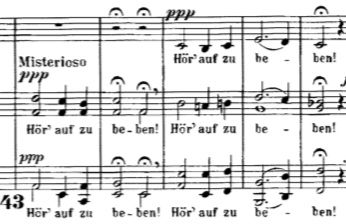
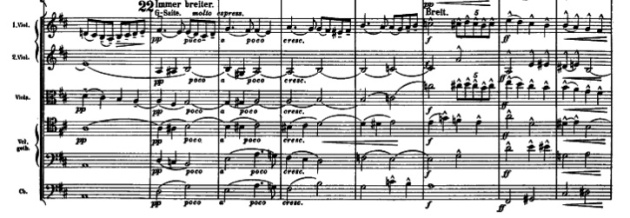
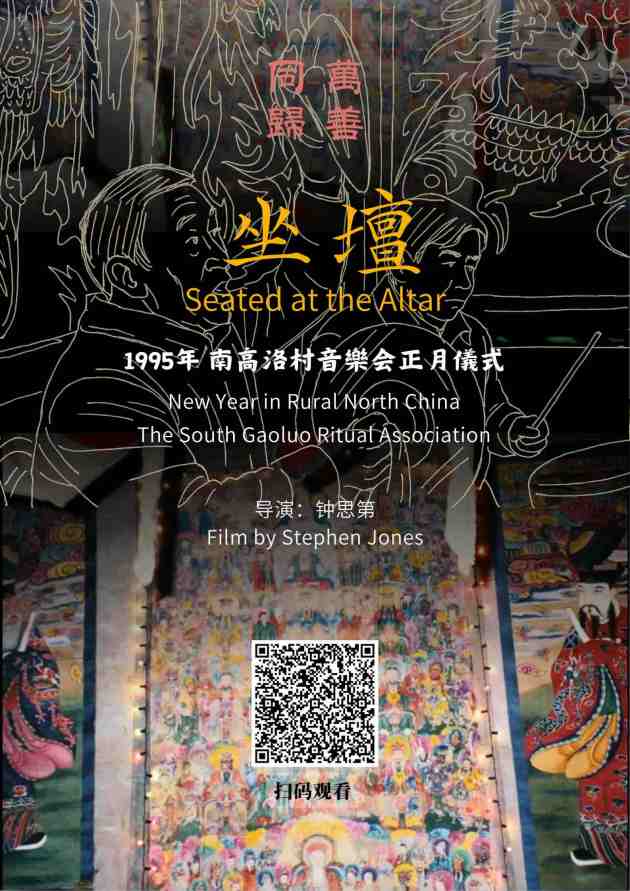


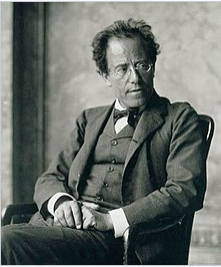
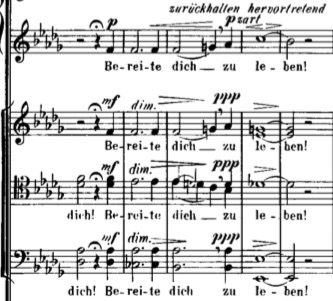


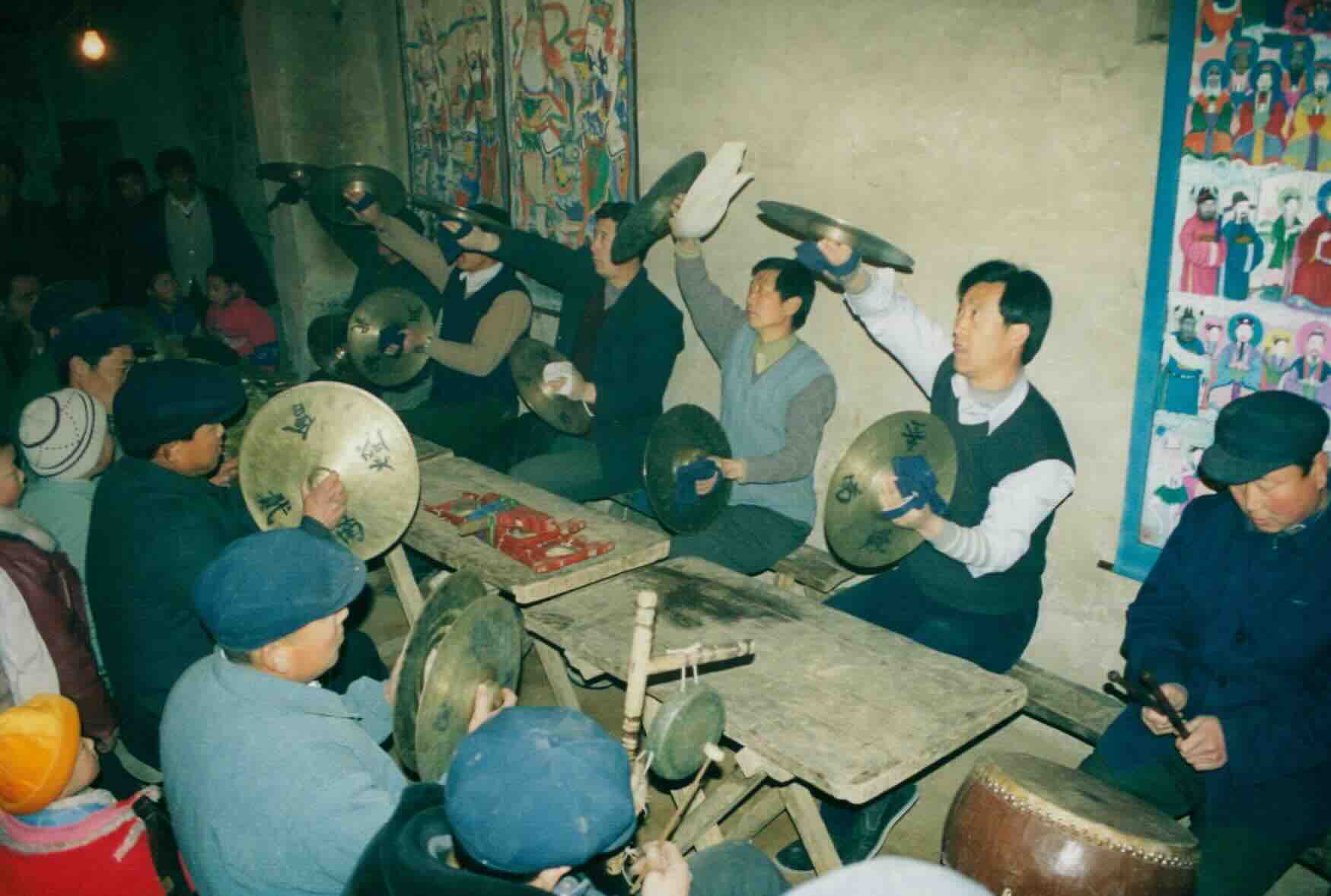


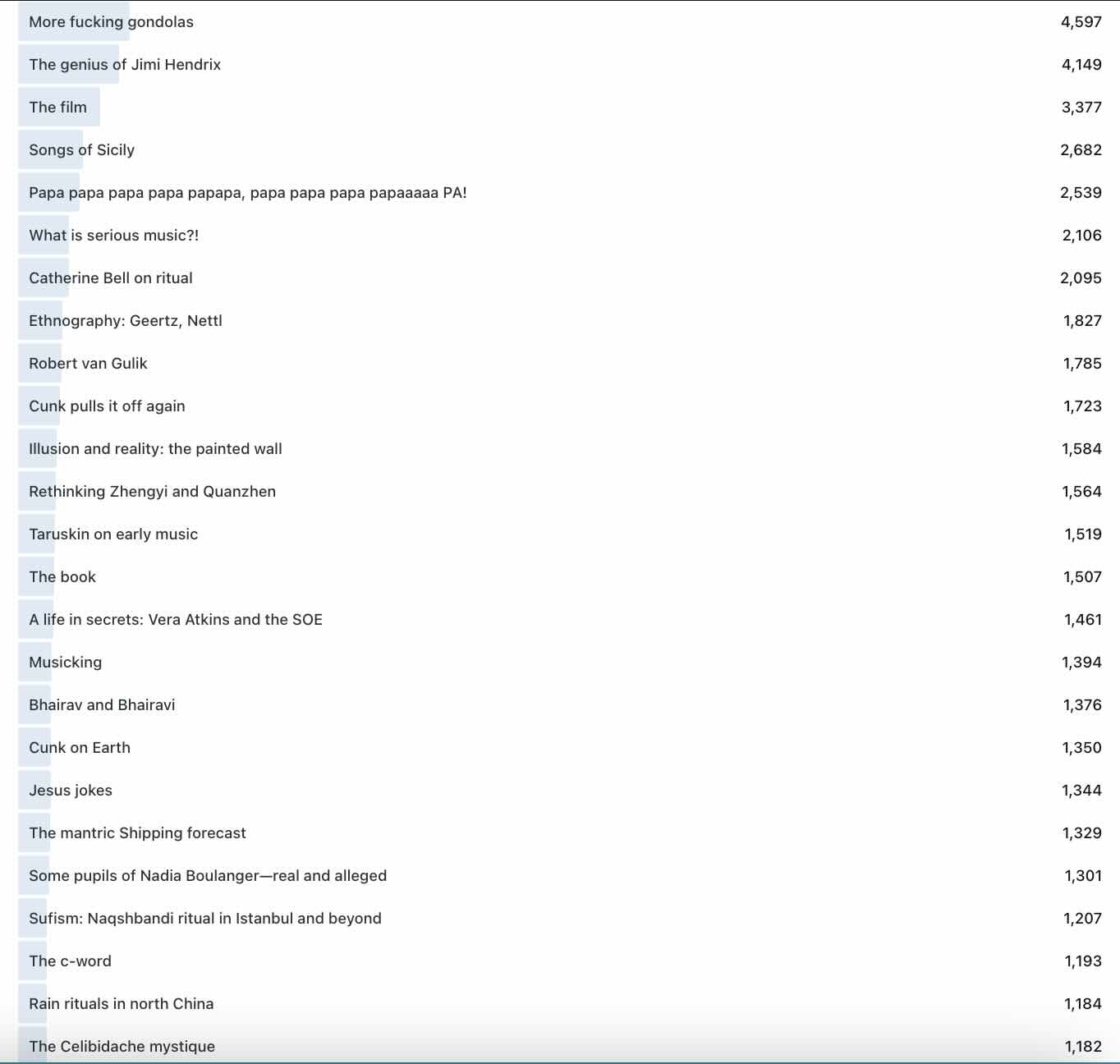

 I wrote about the symphony

 Source:


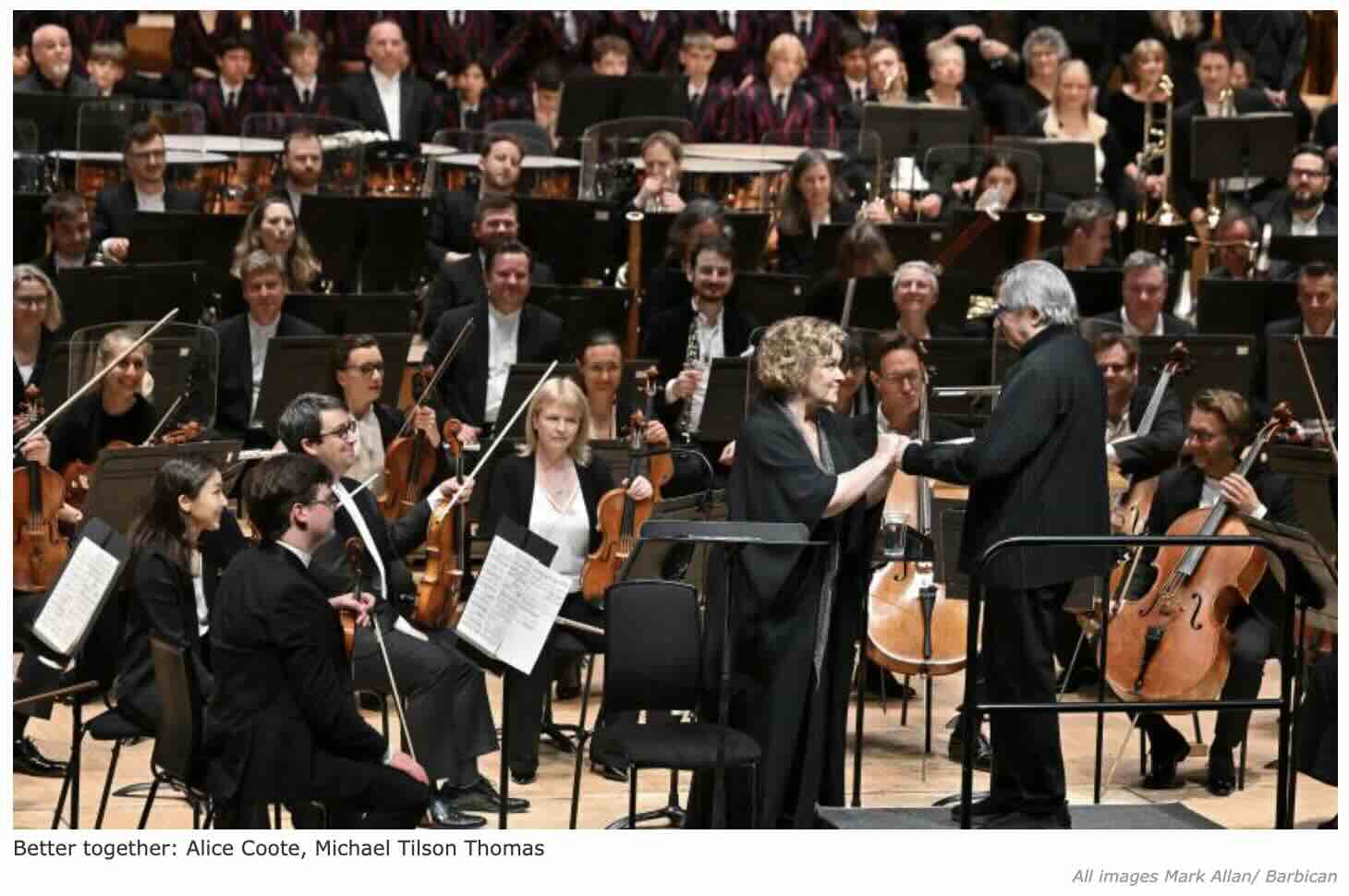
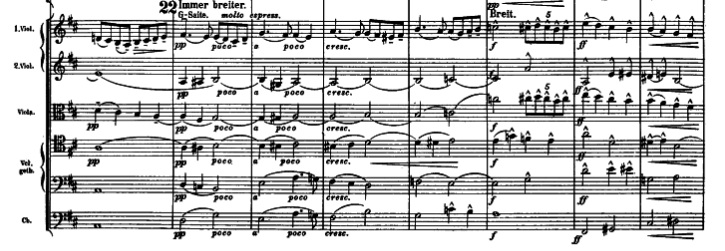

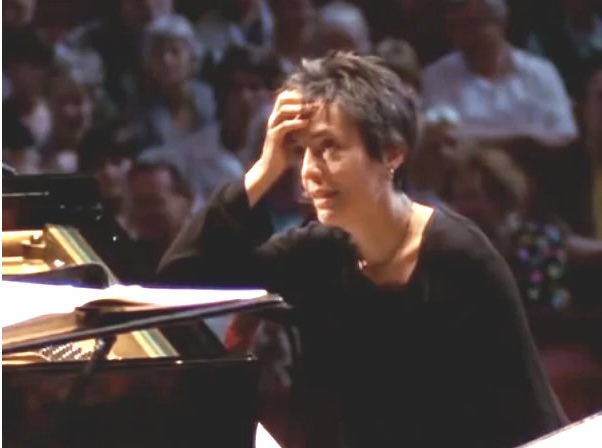



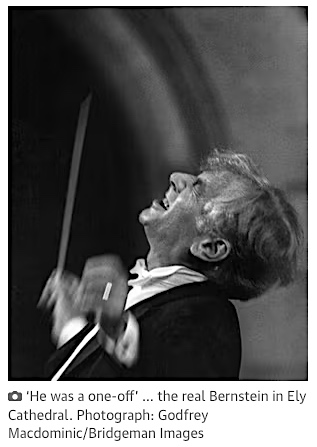 We get to hear some of the


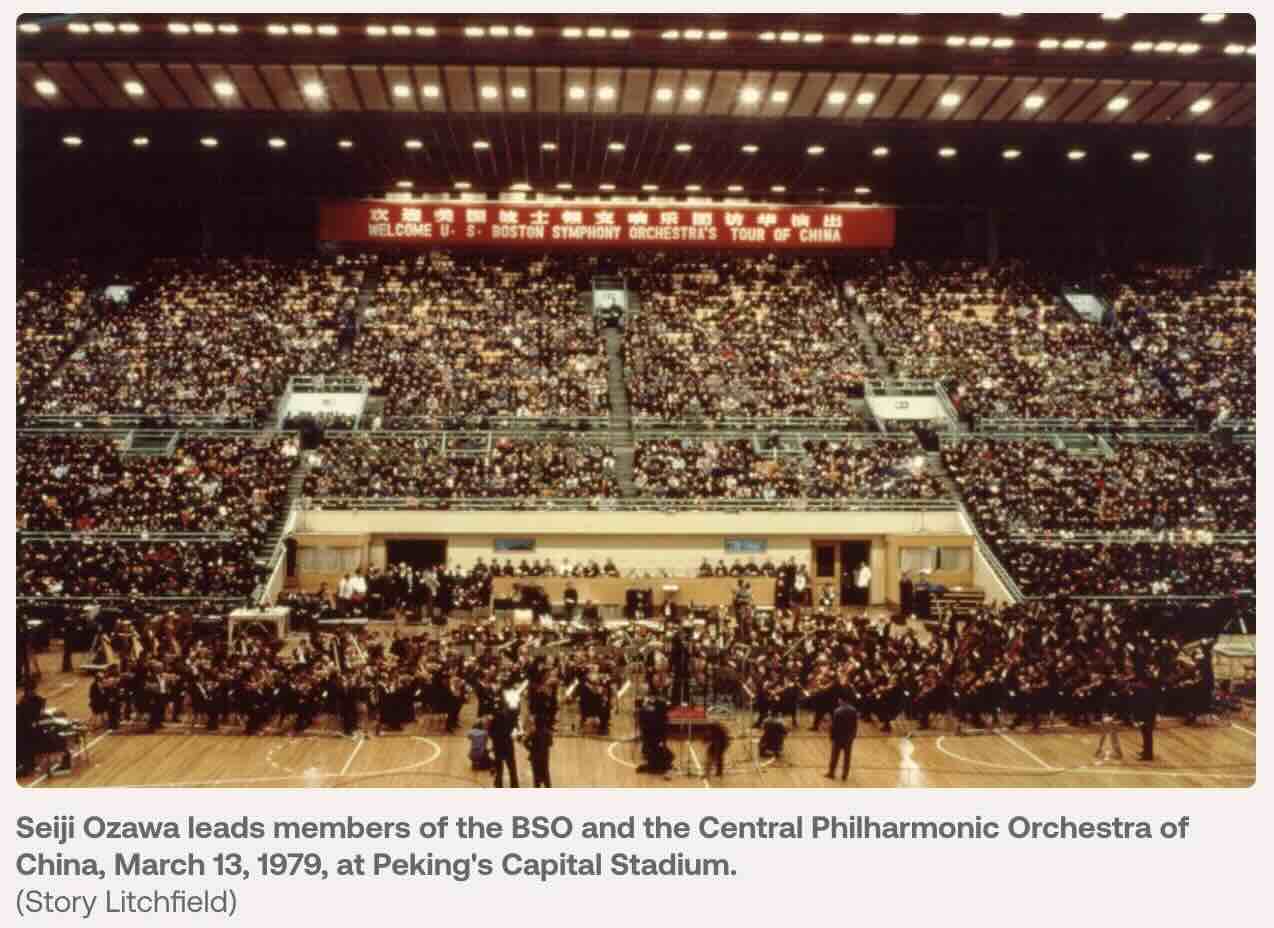





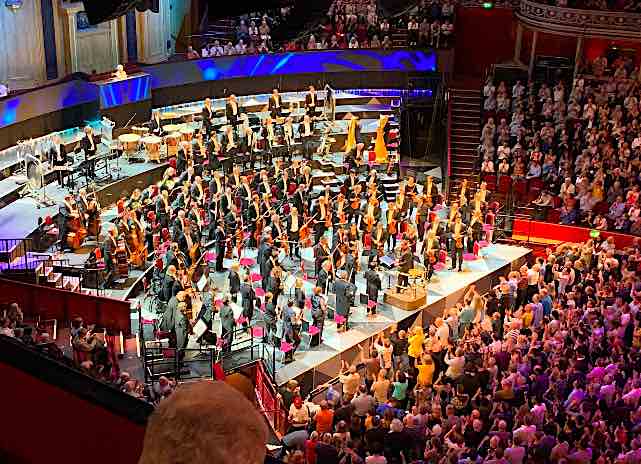
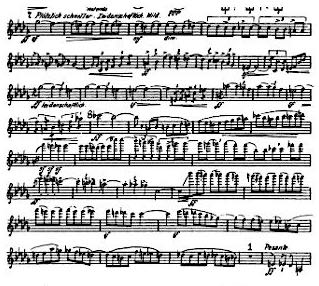
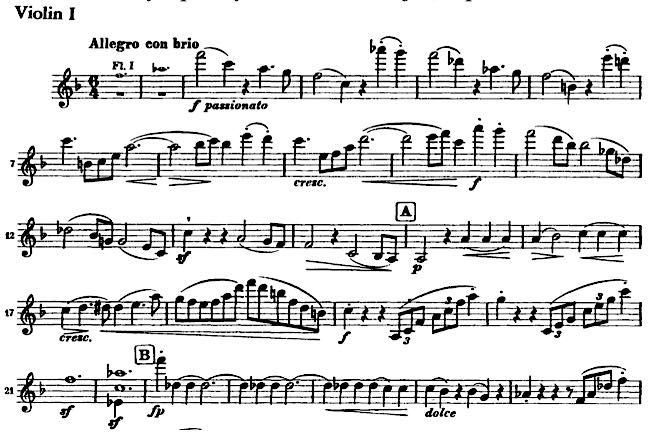
 I absorb the fug of the “public house” in rehearsal, Gaoluo 1996.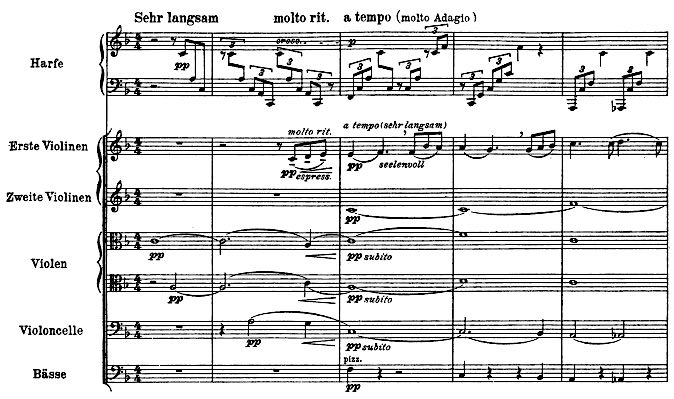
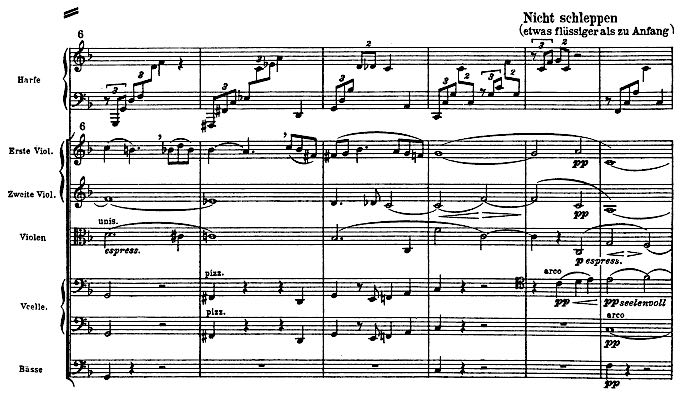

 The big-band arrangement would also suit a turbo-charged


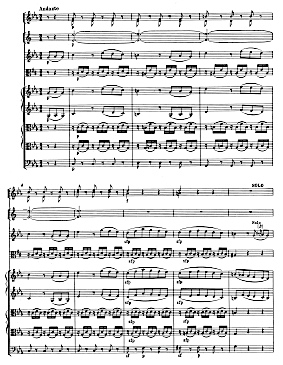


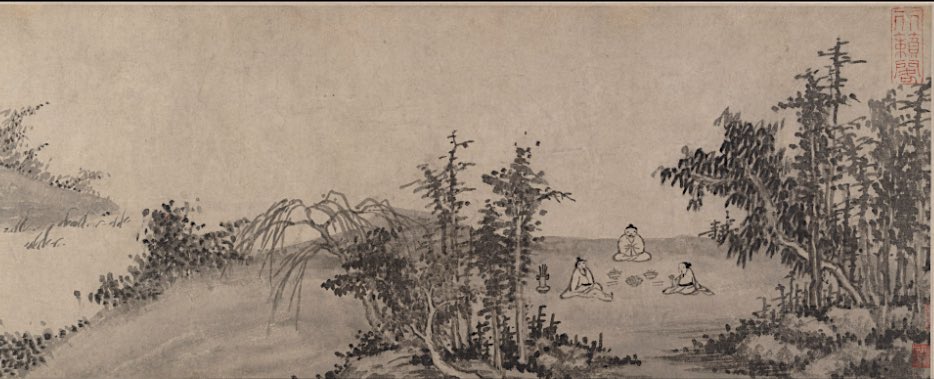
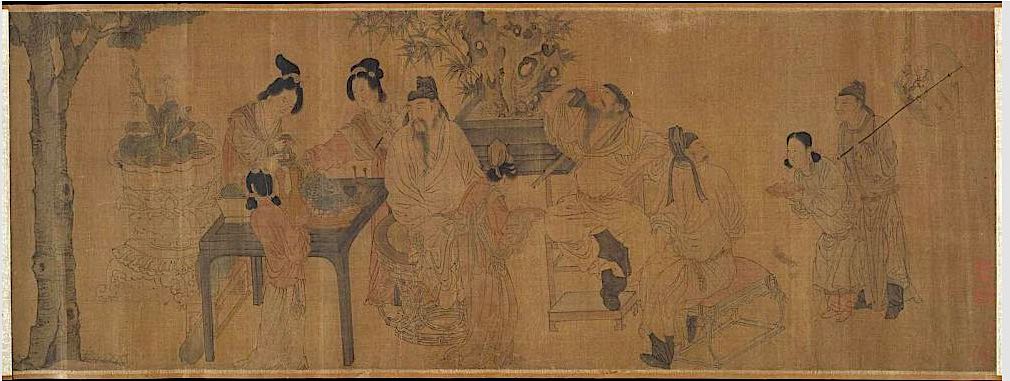


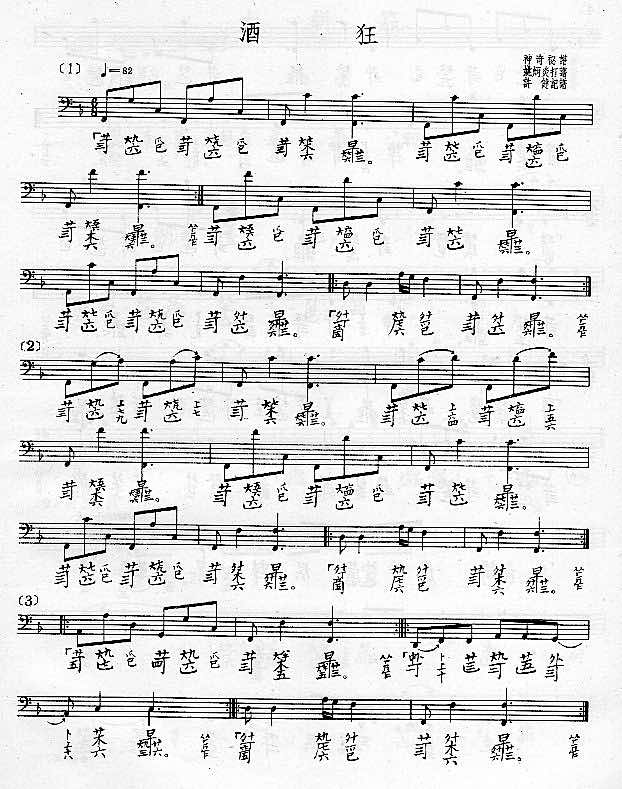


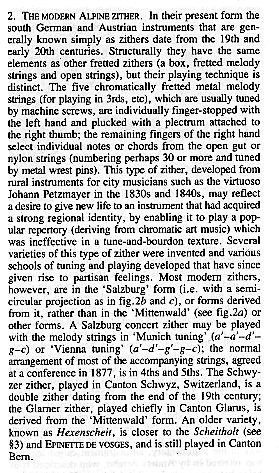


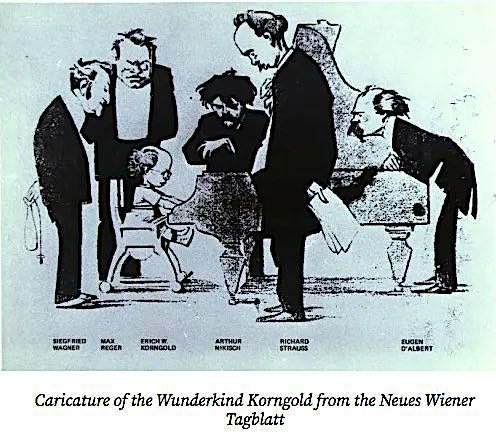

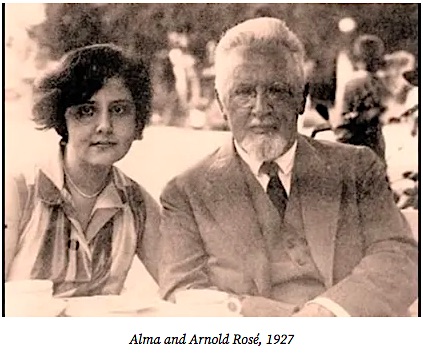


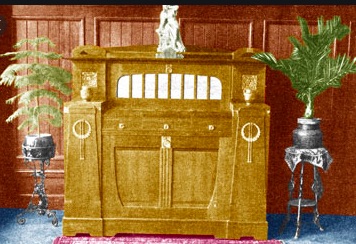

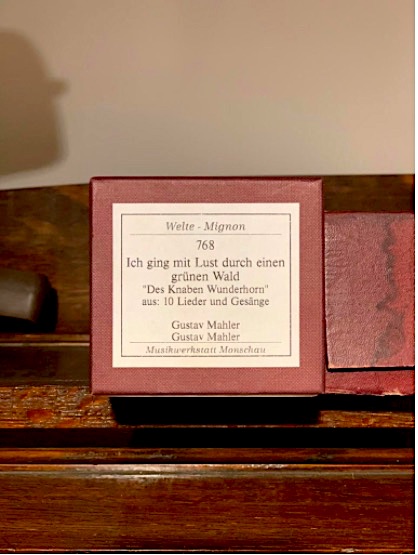
 and
and

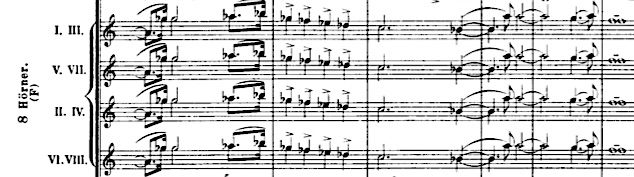

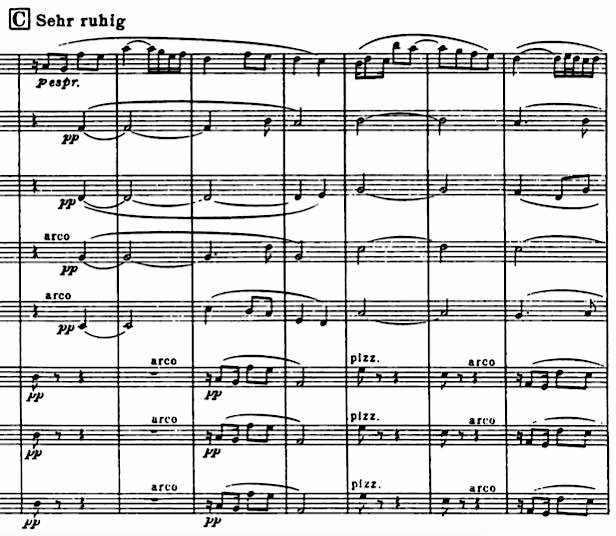
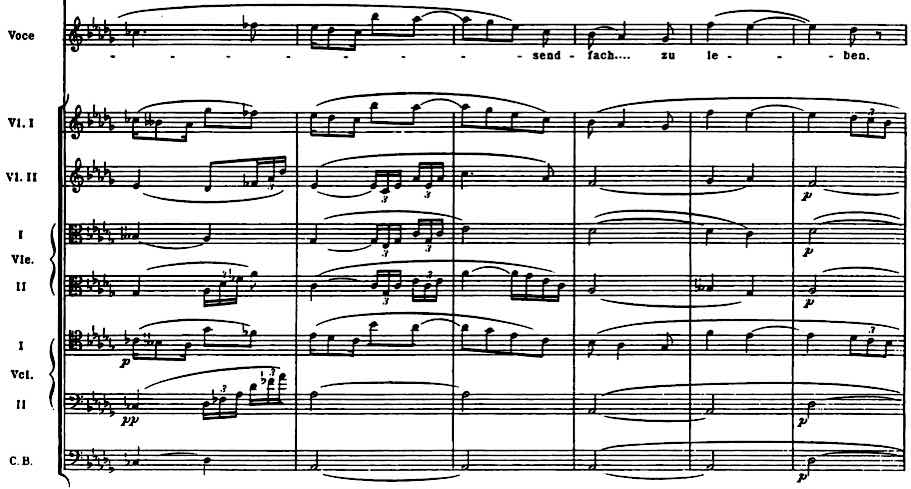


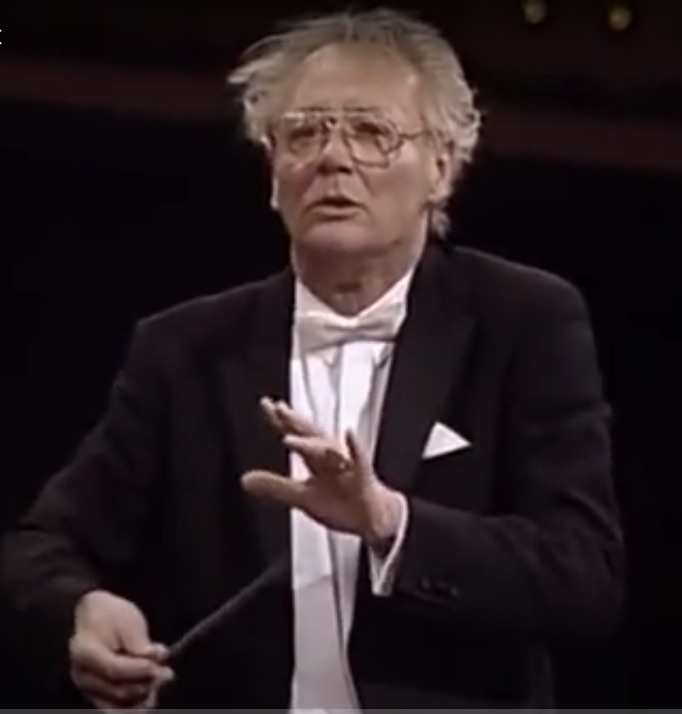

 The symphony opens with a primordial hushed unison A seven octaves deep. The bursts of energy (both bucolic and stormy) that emerge are constantly disrupted by mystical passages referring back to it (e.g. from 9.38 in the Tennstedt performance below—including the
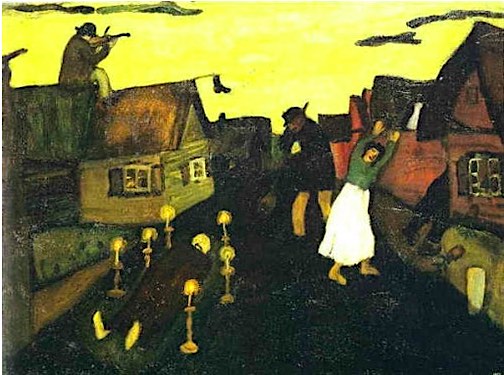

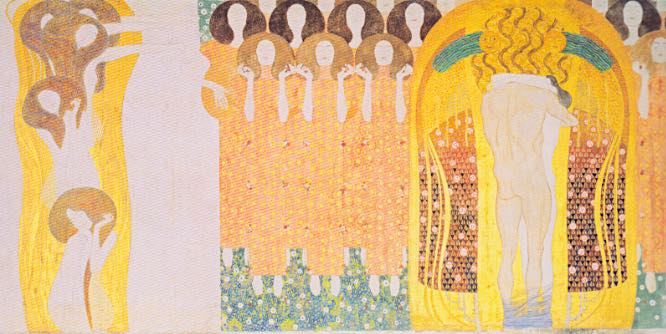
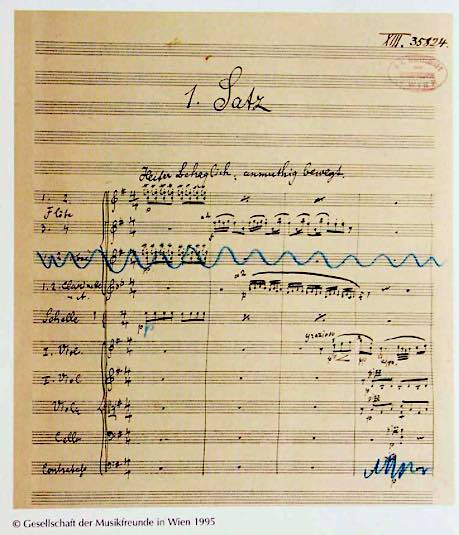
 The Scherzo is a Totentanz, inspired by Arnold Böcklin’s 1872

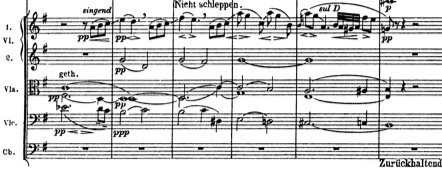


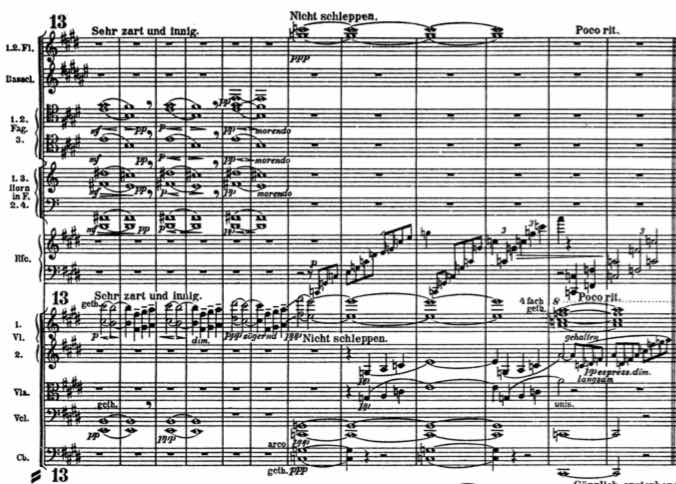

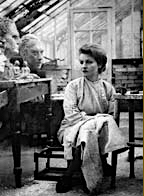 Anna Mahler. Source

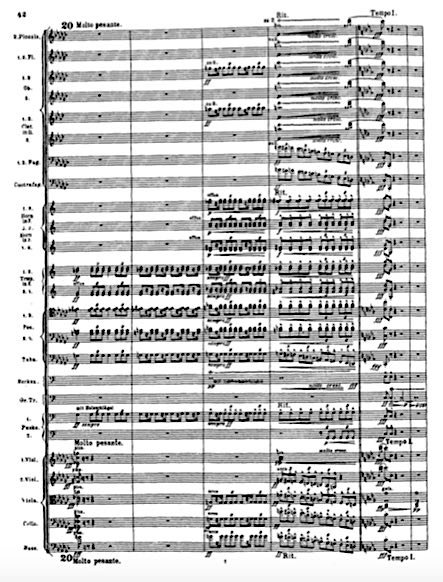
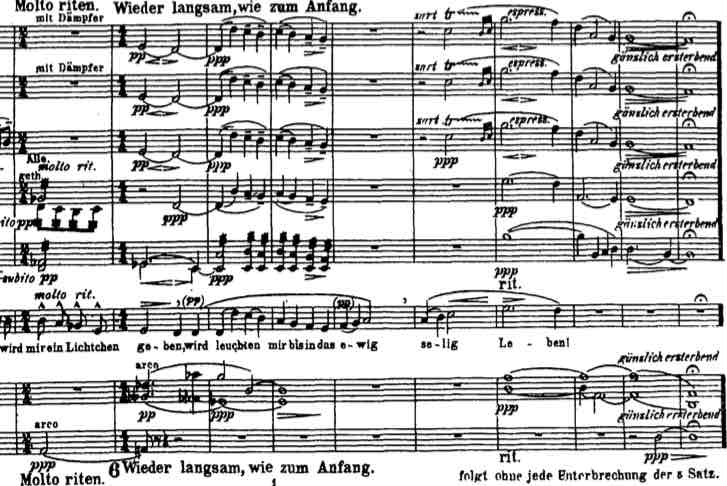
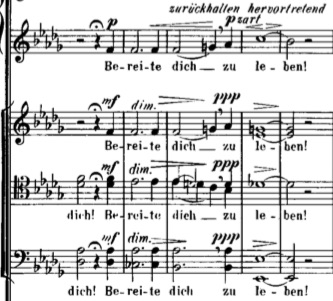


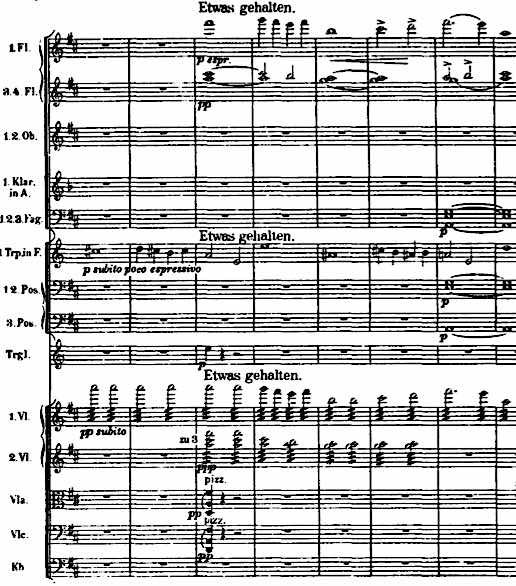
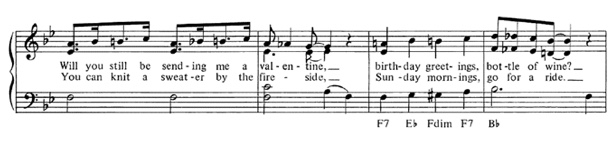


 Stephen Jones: a blog
