Guest post: Handing over the Ming baton

From Wang Shixiang to Craig Clunas

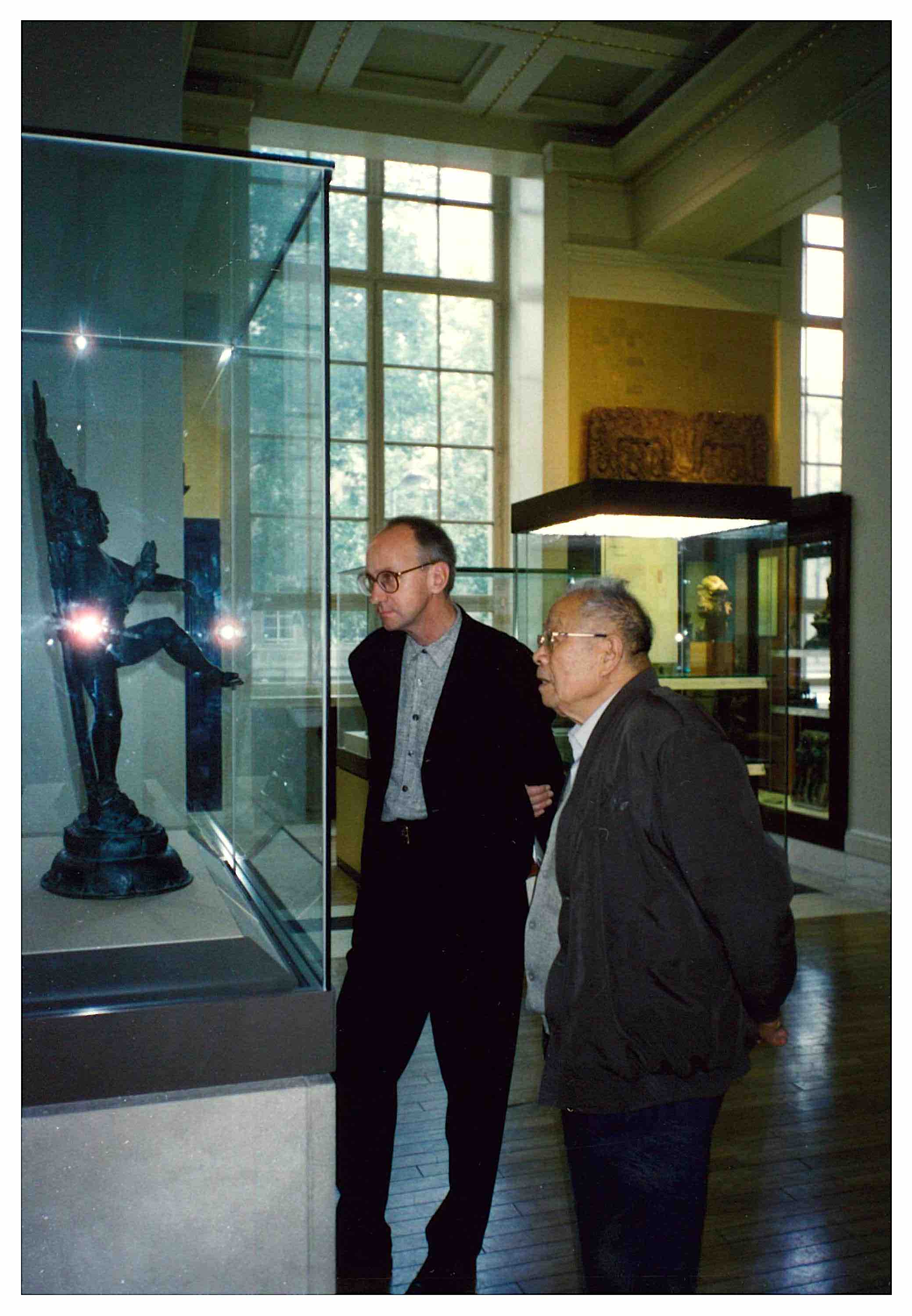
BM1

Photo (as below): Kossen Ho.

Having featured both Ming Maestros in my tribute to Wang Shixiang’s wife Yuan Quanyou, here’s Craig with a charming reminiscence:

Random Gatherings of the Era of Lockdown 鎖閉野獲 , or

Collected Discourses from the Potato-Planting Studio 種薯齋叢說: An Extract

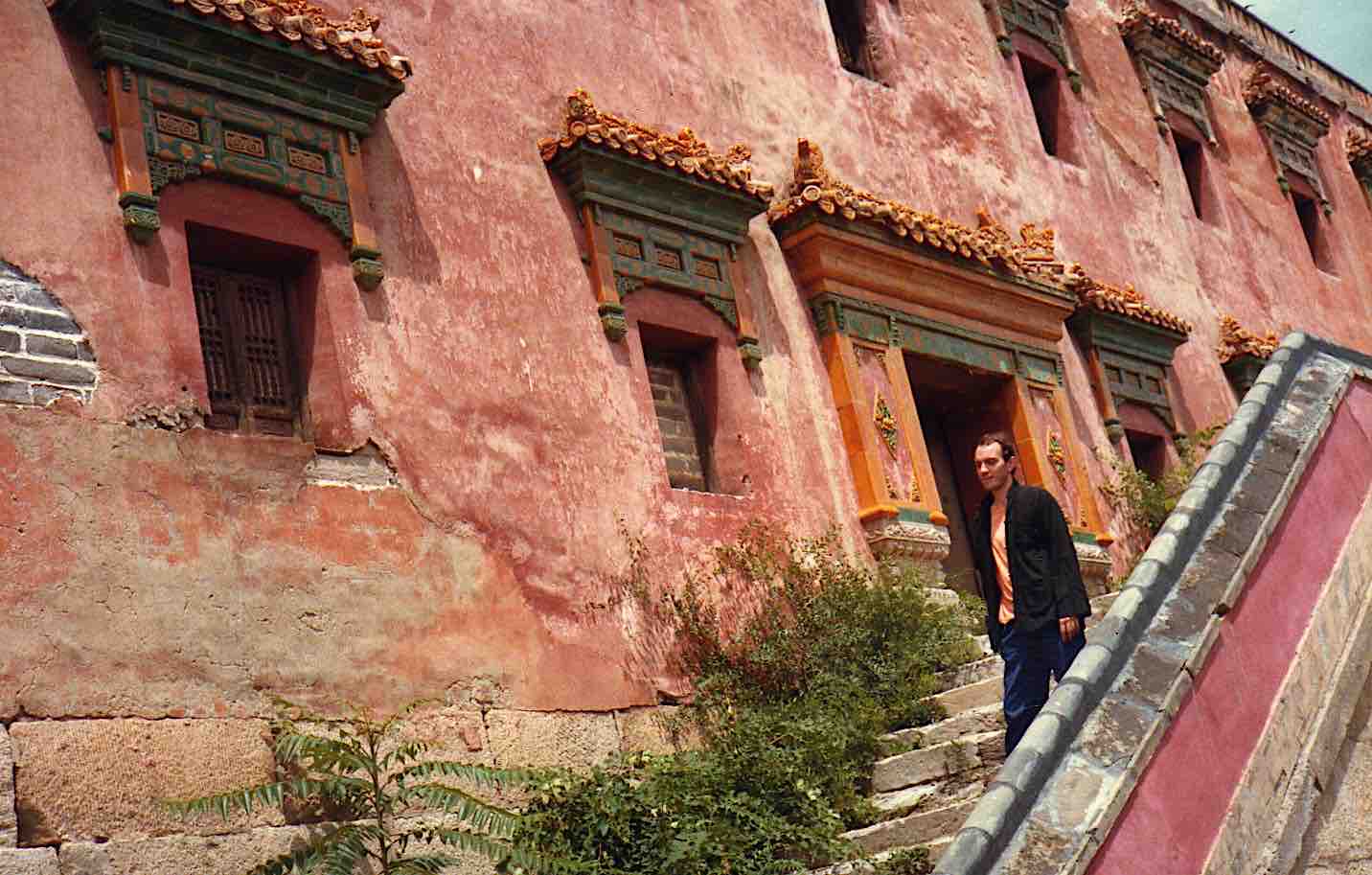
BM2In 1983 I organised a visit to London by the great art historian and Chinese furniture scholar Wang Shixiang 王世襄 (1914–2009); I had translated a piece by him. and we had first met in Beijing in the early 1980s. The trip was done on a shoestring, and it pains me to think how spartan was the Imperial College London student hostel I booked him into, though he would never have complained—he had after all done years and years in cadre school. One of the grandest of London’s dealers in Chinese art took us to a posh lunch; it was a measure of Mr Wang’s cosmopolitan youth that he ordered cheese for afters. He ate half, and asked the waiter to wrap the rest (presumably for his breakfast, which I had not provided). As the beginnings of a sneer formed on the waiter’s face, it being that kind of restaurant, one of the grandest of London’s dealers in Chinese art gave him a very ferocious look that eloquently said, “This gentleman is my guest. I eat here often. Wrap his cheese”.

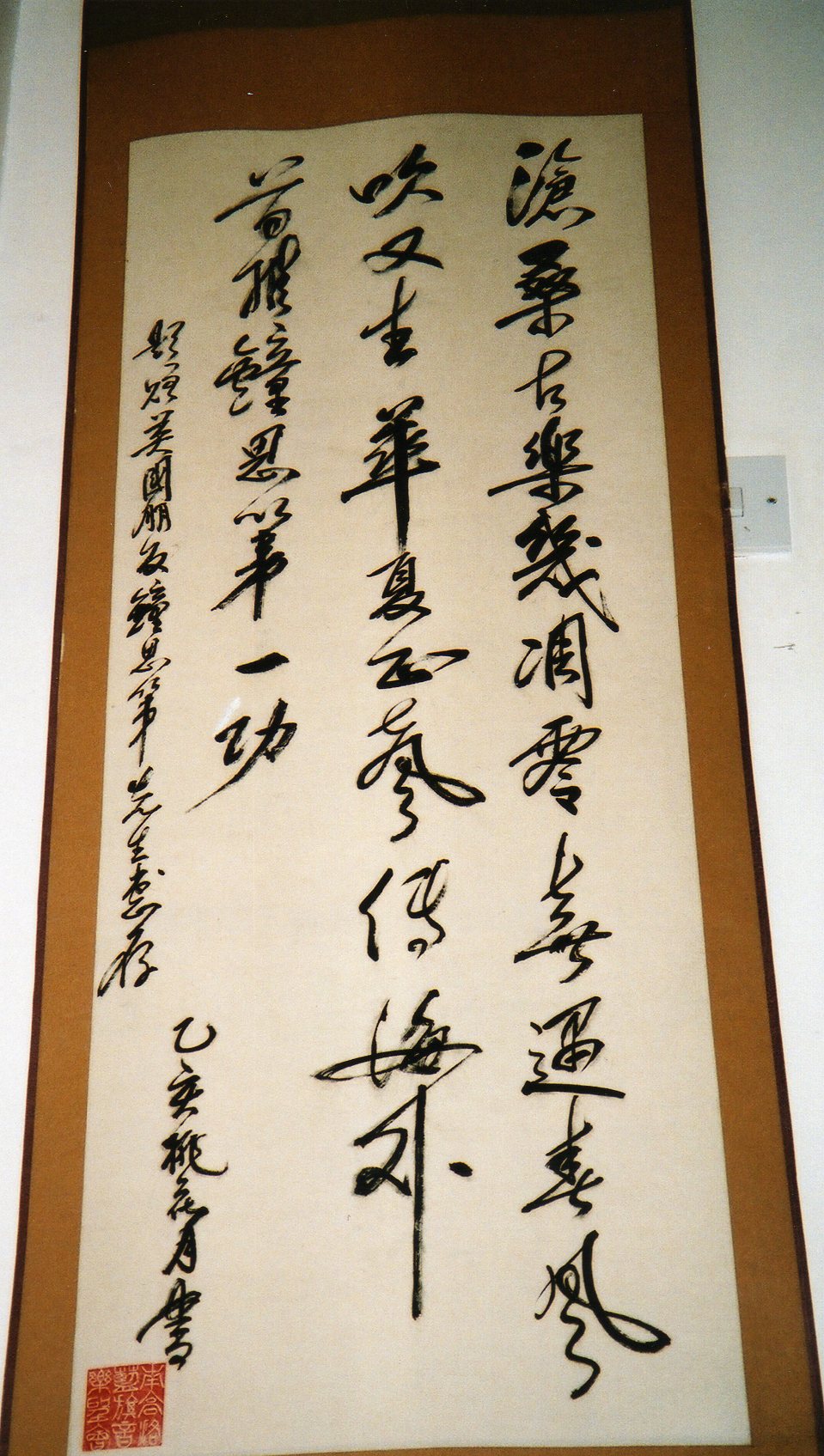
One night Mr Wang came for supper to our North London house, where our extremely skittish and semi-feral cat Lexham went straight towards him (Lexham usually shunned strangers) and settled purring in his lap; that was when I learned that “to purr” in Chinese is nianjing 念经, literally “recite the sutras”. Mr Wang also took me with him one Sunday afternoon to visit Ling Shuhua 凌叔华 (1904–90), by then an elderly lady; my memory is of a very small flat, perhaps even a basement, in somewhere like Swiss Cottage. They practised calligraphy together, and I still have the bucolic poem he wrote for me on that occasion, one of a set of verses on pig-rearing he had composed in the cadre school; it has subsequently been to Beijing and back for an exhibition of his much-admired hand. I quite failed to realise at the time just how significant a figure in modern Chinese culture Ling Shuhua was—”modernist writer and painter”, lover of Julian Bell (1908–37), correspondent of Virginia Woolf (1882–1941).

I have many things to thank Mr Wang for, including my name. We were never—unlike many people I know who studied elsewhere—given “proper” Chinese names by our teachers at the Cambridge Faculty of Oriental Studies. At Beijing Languages Institute in 1974–5 I had been Keliege (可列格 , occasionally 克列格) a simple attempt at a phonologically Chinese transcription of “Craig”. Returning to Cambridge I made myself into Ke Liege 柯列格, substituting a character that was at least a viable Chinese surname. When Wang Shixiang saw this, he said “Huh, Too ugly!” (嗯! 太难看!) and made me into Ke Lüge 柯律格, which is who I have been ever since, and what it says on the covers of the Chinese translations of my books. I can invoke Mr Wang’s authority when people query it. (It was Steve Jones who once pointed out to me that one plausible implication of the meaning of Lüge 律格 was “Tight-arsed”, which we both agreed was about right.) [1]


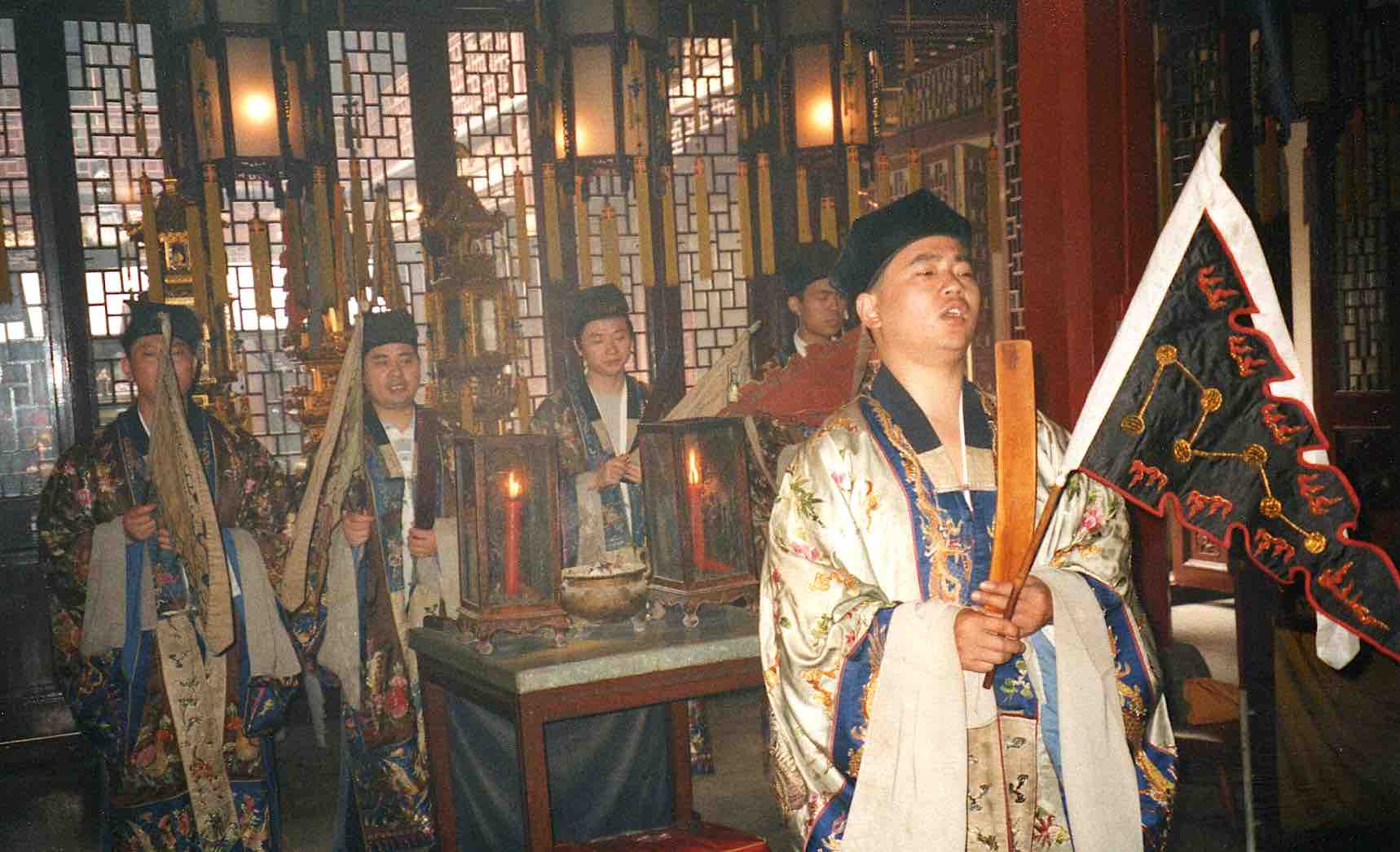
1] Note from SJ: see here for the diverse ramifications of my own Chinese name. For our time at Cambridge, and Craig’s early studies in China, click here. In 2014, he worked on the splendid British Museum exhibition “Ming: 50 years that changed China” (see his co-authored catalogue, and the conference proceedings), giving us the pretext to invite the musicians of the Zhihua temple for the first of two visits. For a 2025 conference in Craig’s honour, click here.

Craig’s embarrassment about the spartan conditions deemed acceptable by British hosts may strike a chord with other academics. I recall with chagrin the visit of two eminent colleagues from the Beijing Music Research Institute to the National Sound Archive in 1993 on a project to copy the precious early recordings by Yang Yinliu that they had managed to bring with them.

Like Wang Shixiang, my Chinese friends were billeted in a meagre student hostel; but surely our first lunch on this illustrious International Cultural Exchange required some kind of banquet. Instead our hosts sent out for miserable supermarket sandwiches (one each), which we munched absent-mindedly as we continued working. Again, my Chinese colleagues took such privations in good part, as I joked shamefacedly about the “waters deep, fires raging” (shuishen huore 水深火热) of the capitalist world.


A sporting medley: ritual and gender

After all these sacrifices (see note here), it transpires that what the plucky Brits really care about is not so much creating a fairer society, but playing golf and visiting garden centres. FFS. I give up. As Ian Rush is said to have commented about, um, living in Italy, it’s “like living in a foreign country”.

Anyway, following the recent moratorium (welcome to many, no doubt), as sport furtively reappears like a cockroach from behind the fridge, here’s a little roundup of some highlights from the sport tag—not least, connections with ritual, and with feminism.

Snooker—starting with 5’20” of inspired fluency from the great Ronnie:

Football: among many posts,

Rugby:

Tennis:

See also

Not forgetting

And even

Precious scrolls: another new volume

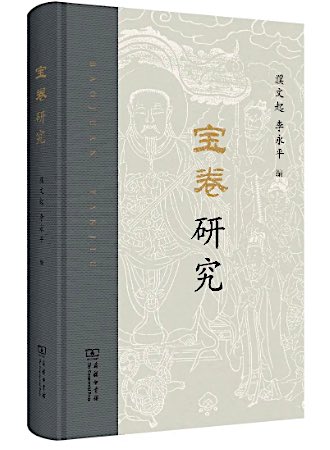
baojuan cover

Research on the sectarian “precious scrolls” (baojuan 宝卷) continues apace. I look forward to reading

  • Pu Wenqi 濮文起 and Li Yongping 李永平 (eds), Baojuan yanjiu 宝卷研究 (2019; contents here).

For other related recent volumes, see the work of Cao Xinyu (e.g. here), and a collection edited by Hou Chong. Also on this blog, see under Houshan and Houtu ( for Yixian and Laishui counties in Hebei), and Ritual groups in Jinghai, Tianjin.

The new collection of articles (most of which have already been published elsewhere) is based both on textual studies and fieldwork (ndeed, many sectarian scriptures continue to be discovered in the course of fieldwork), and also considers performance practice. While it includes reports from south China—south Jiangsu ( cf. here, n.1) south Jiangxi, and chapters on the Luo sect—the earlier sectarian precious scrolls are mainly found in north China. Hence we find chapters on Hebei (Yin Hubin 尹虎彬), Jiexiu in Shanxi (Sun Hongliang  孙鸿亮), Gansu (Li Guisheng 李贵生 and Wang Mingbo 王明博; Cheng Guojun 程国君; Liu Yonghong 刘永红)—and more.

Shanxi sect

Shanxi sect reciting baojuan, 2003. My photo.

I’m glad to learn of the research of Liang Jingzhi 梁景之, furthering studies of the Way of Yellow Heaven (Huangtian dao 黃天道) sect in Hebei and Shanxi, which began with Li Shiyu in the 1940s and have continued with Cao Xinyu (for my own brief encounters, see under Tianzhen, Yanggao, and Xinzhou in Shanxi). Here’s another article by Liang, and his discovery of related temple murals is also fascinating (several links here; cf. the sites of Hannibal Taubes).

The new volume also includes useful overviews of the history of baojuan studies—among sources for my own overview.

Social issues in rural Hunan

mine

Though my main focus is north China (see under Local ritual), I’ve introduced work on expressive culture in Hunan province, as well as Daoism and famine there.

Meanwhile the society of Hunan has seen constant change. The bleak documentary

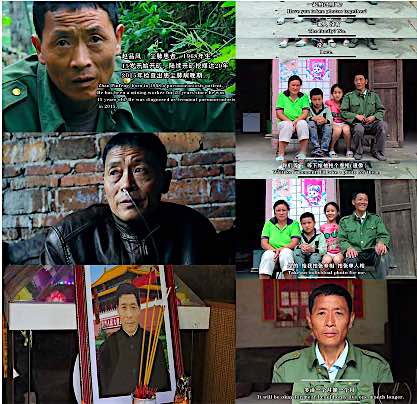
  • Miners, the horsekeeper, and pneumoconiosis 矿民, 马夫, 尘肺病 by independent director Jiang Nengjie 蒋能杰 (b.1985)

has caused a sensation, with free viewing online in China and on YouTube—further evidence of the resilience of the independent cinema movement since its 1990s’ heyday:

Among interviews, see e.g. herehere, and (in Chinese) here. [1]

The documentary was filmed from 2010 to 2018 in the mountains of Hunan, where Jiang’s own family suffered from the dangers of the privately-run illegal mining industry. Under conditions that are anyway destructive to health, with lung disease rife, unauthorised explosives and mining disasters are routine. Despite local government attempts to control such mines, official corruption is chronic; and for all the general progress since the 1980s, such rural dwellers take a cynical view of the state poverty-alleviation project.

Zhao Pinfeng

The film ends movingly with the funeral of former miner Zhao Pinfeng (1968–2018), with a band of blowers-and-drummers (and a brass band for the burial procession) but no Daoists. It makes a stark reminder of the human cost at stake in what ethnographers and sinologists do as they affirm the ancient grandeur of tradition—cf. my comments on a similar scene from Gansu in Wang Bing’s Dead souls, with the wailing shawm band reflecting the anguish of the kin.

* * *

Jiang Nengjie had already made a series of documentaries on the left-behind children in his native region—including The road, Children at a village school, The ninth grade, Jiayi, and Junior Three, mostly available on Vimeo. For broader approaches to documenting the left-behind children, see e.g. here, and wiki.

It’s hard to reconcile harsh social realities like mining and migration with research on the continuing “vibrancy” of Daoist ritual in Hunan (cf. my query here about young people being keen to become household Daoists). As I’ve noted, the study of Daoist ritual may seem like an autonomous zone fated to remain adrift from wider fields of enquiry.

Since the 1980s the great majority of adult villagers in Hunan have left for migrant labour in Guangdong, and those that remain are vulnerable—surely all this should feature prominently in our discussions? The defence of sinologists might be that they focus on the culture of the pre-modern period; yet in addition to library work on ancient texts, it is precisely their own fieldwork in this changing society that has enriched the topic so greatly. Hence the shift of ethnographers like the great Guo Yuhua towards the plight of the “sufferers”. This is not to suggest that we should all become social activists: rather, as I suggested in Epidemics in a Chinese county, that cultural studies should bear social issues in mind.

For disturbing documentaries from north China, see Xu Tong: subaltern lives.


[1] Mining is a theme in the feature films of Jia Zhangke set in central Shanxi, such as Platform—from a contract: “Life and death are a matter of fate, prosperity depends on Heaven. I am willing to work in Gaojiazhuang mine. Management accepts no blame for accidents”. Even nearer to my base in north Shanxi are the mines around Shuozhou—and Datong, subject of a recent article, with links including this documentary. See also Blind shaft (Mangjing 盲井, Li Yang 2003).

Just west of Beijing, ritual groups in the Mentougou district, within the ambit of the Miaofengshan pilgrimage, have traditionally served mining communities, which have suffered from recent closures. Meanwhile, with typical neglect of the gritty realities of changing society, village ritual groups there (such as Qianjuntai 千军台) have been conscripted into the Intangible Cultural Heritage shtick. Further to studies by Bao Shixuan 包世轩, Han Tongchun 韩同春 and others, I look forward to a detailed forthcoming book by the splendid Ju Xi 鞠熙, fully addressing the mining context—meanwhile, see this brief notice.

FanyueSource here.

One might compare the fate of brass bands in the north of England as representatives of local culture since the mine closures under Thatcher.

Among the documentaries of “underground historian” Hu Jie (see under Sparks) is Remote mountain (2003, footage from 1995), a masterly, harrowing film on the degradation of illegal mining in the bleak Qilian mountains of Qinghai province.

Epidemics in a Chinese county

Yizhan deng

Hymn A Lantern (Yizhan deng), a meditation on the impermanence of life,
sung before the coffin: see my film, from 27.07, and book, pp.264–6. Cf. the Shunzhi emperor’s poem, also part of the Li family Daoists’ repertoire.

When documenting a local ritual tradition, we need not only to home in on the detail of changing performance practice, but to spread our net quite widely—viewing our particular object of study as part of a system of other nearby ritual groups, as well as considering it within all kinds of social contexts. Changing material conditions tend to feature little in field reports on Daoist ritual (cf. Social issues in rural Hunan.).

In my work on the Li family Daoists in north Shanxi, I have found useful background on local history and culture in the accounts of the 1993 Yanggao county gazetteer (Yanggao xianzhi)—whose details on the Maoist era are far from the bland official depictions of many works of the period (see e.g. here, under “Famine in China”).

Weisheng

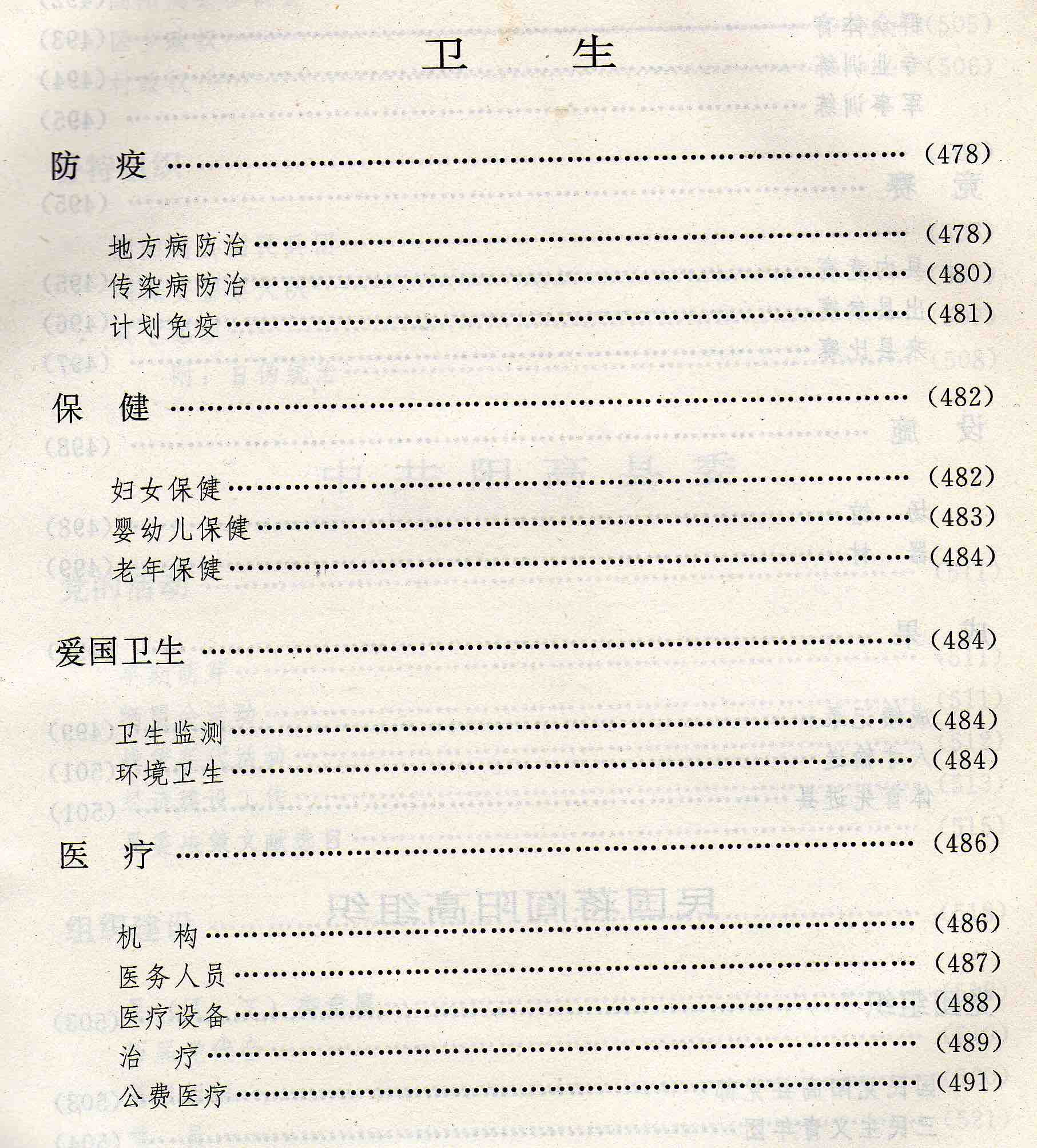
Having described the Li family Daoists’ continuing activity during the Coronavirus lockdown, I’m prompted to consult the gazetteer’s section on epidemic control in its chapter on Hygiene.

These villages are the catchment area of household Daoists groups like the Li family. Until the 1950s they performed for temple fairs and domestic rituals of blessing as well as providing all kinds of mortuary services; now they almost exclusively perform the latter. But all three types were responses to the fragility of human life, and it’s worth homing in on the painful progress of disease control through the 20th century. As I read, I think of Li Qing and his colleagues, catering to the ritual needs of their vulnerable village clients.

As we can see from the gazetteer’s chronology of “Major events”, epidemics—along with natural disasters and droughts—are a constant theme throughout imperial history, with high rates of mortality and low life expectancy. From 1884 rapacious wolves and rats caused a plague in the county. (For an ongoing bibliography on epidemics in late imperial China, click here; see also Vincent Goossaert, “Épidémies et religions chinoises”, Éphéméride, July 2020.)

Stores selling Chinese medicine were common in the county-town and rural townships from the Republican era, as folk healers did the rounds of the villages; attempts were made to register them from 1935. On 4th moon 28th household Daoists and opera troupes performed for the temple fairs of the Medicine King deity (for Hebei, see under Bazhou, Xiongxian, and Baiyangdian). Before modern healthcare—and still now, where it still remains unaffordable or unavailable, or is considered only a partial remedy—curing illness has long been a major domain of spirit mediums.

Under Maoism
The story of disease control accompanies that of political campaigns. In chronically poor rural counties like Yanggao, given the extreme poverty inherited by the PRC, progress under Maoism was significant (see e.g. Mobo Gao on his home village in Jiangxi, and, by contrast, Erik Mueggler’s The age of wild ghosts—both cited here). Still, rural dwellers remained terribly vulnerable even after the collapse of the commune system, as illustrated in Liu Hongqing’s harrowing book on blind singers in another Shanxi county.

After Liberation, a system of state-supervised clinics expanded from 1952. But despite their best efforts, the county medical authorities were still desperately short of supplies. Most diseases were identified by the late 1950s, with attempts to bring them under control continuing through the Cultural Revolution (when the system of barefoot doctors pervaded the countryside); but as long as the commune system locked the population into poverty, it was only by the 1980s that such measures became more effective.

Smallpox was attacked after Liberation, but an outbreak occurred in 1963 in Anjiazao village. In 1965, amidst the Four Cleanups campaign, smallpox was reported in the village of Yang Pagoda, whither household Daoist Li Peisen had prudently retreated in the late 1940s in order to avoid political scrutiny. The village was sealed off and houses disinfected.

Measles, a common cause of child mortality, was gradually eradicated. Typhoid had also disappeared by the 1960s, though outbreaks occurred in 1980 and 1983. Hepatitis, tuberculosis, and meningitis, long major causes of mortality, were targets of the medical authorities after Liberation, with campaigns still being waged in the 1980s.

Brucellosis, also affecting livestock, was first identified in a village west of the county-town in 1957. By 1958 over 60 people were afflicted, and by 1959 it had spread to other nearby villages. As it continued to spread, attempts to control it continued from the early 1960s into the Cultural Revolution.

Graves’ disease was also identified in Yanggao in 1958, only declining in the 1980s. The county authorities only began seriously addressing the widespread dental ailment fluorosis in the 1980s. There was a deadly outbreak of cholera in Anjiazao in 1932. A county-wide vaccination programe was initiated in 1952; though it had basically disappeared by the 1970s, it resurfaced in 1983 in Baideng district, home of the Li family Daoists.

* * *

Turning to my other main fieldsite of Gaoluo village south of Beijing, I also consulted the briefer account of epidemic control in the Laishui county gazetteer (2000).

Again, before Liberation, diseases such as smallpox, measles, cholera, malaria, and typhoid were common. In August 1946 an outbreak of cholera struck; among 273 deaths in the county, 99 people died in the village of Kongcun alone—home of a ritual association that we visited in 1993 (see here, under “Other local ritual groups”). Smallpox was eradicated by the 1960s. After an outbreak of measles in 1954, there were further cases in 1962, 1963 (just as village ritual associations were reviving briefly after the famine), 1965, and 1970. Even during our fieldwork in Hebei through the 1990s both I and my colleagues from Beijing were frequently distressed by the vulnerability of peasants to illness.

While the county gazetteers vary in quality, there’s much more to explore in these sections. Such accounts are based on official depictions, and village-by-village fieldwork might still elicit more detailed stories; but all this provides useful background on cultural life before and since Liberation.

For me, incidentally, it makes good practice to expand my Chinese vocabulary; and just as I noted the importance of learning local folk terms for ritual and music, we find a similar popular lexicon for diseases—such as measles (standard mazhen 麻疹), locally known as hongbu 红布 or chai 差.


Photo gallery: updates

Now and then I add images to the Gallery that appears as you scroll wa-ay down in the sidebar. While selective, it serves partly to lead you to some of the posts and pages that I found interesting to write, supplementing the *MUST READ!* category.

Gallery 1

They’re very loosely grouped by theme, with the Li family Daoists and Hebei ritual associations at the top, followed by European cultures and politics; WAM, world music, and gender; and more personal posts further down.

So as you click on the images, do follow up by reading the posts to which they’re linked! Anyway, it’s another way of browsing. For a more recent (non-)update, click here.

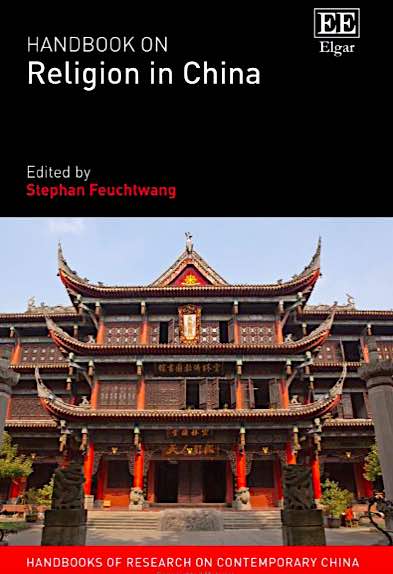
A new handbook on religion in China

cover

In recent years several overviews of the diverse manifestations of religious activity in changing modern China have been published, such as those of Goossaert and Palmer (The religious question in modern China), Adam Yuet Chau, and Ian Johnson. Now we have a substantial collection of essays,

As Feuchtwang observes in his thoughtful introduction, the many expectations raised by the word “religion” are misleading. While there are indeed institutions and “churches”, most religious life takes place in the context of folk life-cycle and calendrical events (“diffused”, by C.K. Yang’s definition), not conforming to any doctrine or any one textual tradition.

Feuchtwang considers the role of religion under the secular state of the PRC:

we have as everywhere to understand how religions and ritual practices and associations have been adapted to the growth of capitalist economy, participation in commercial enterprise, to dwelling in cities, and to different nationalisms, secular governments, and systems of mass schooling and the teaching of history, geography, and mathematized empirical sciences. All entail the new temporality of national narratives and the project of modernization.

Reflecting on rising prosperity and urbanization since the 1980s, he notes:

Urban planning and development, including the urbanization of villages, has transformed most dwellings into apartments, with less space for domestic altars and banquets, and turned most neighbourhood temples into dust under property developments of housing, headquarters, industrial and commercial districts. Banquets for life passage ritual occasions have become more widespread, but in professional catering establishments. Diviners, some using statues of seities, provide services independently. The bigger Daoist or Buddhist temples and their monks and nuns look after lamps for the souls of the dead; churches and mosques outside Xinjiang perform services for their dead. Most ritual services are performed in homes and they have been shortened as the tastes of the young have changed. But the disciplines of self-cultivation brought into the present through transmission of the various ritual traditions in China have flourished, have become global in their reach, alongside academic interest in them, and have been nurtured by new masters.

The nineteen essays are arranged in four sections:

  • State policies, civic society and cultural revival
  • Revitalized and modernizing traditions
  • Daoism, Buddhism, Tibet, the Naxi
  • Islam and Christianity.

Thus the survey deserves to be widely read. It’s designed to be accessible, like the surveys of Johnson and Chau. But whereas the latter volumes appear in affordable paperback editions,  the new handbook’s price of £155 will deter not just individuals but cash-strapped libraries too: one might reasonably expect its 472 pages to be illuminated in gold (cf. The Golden-Character Scripture, a staple of north Chinese ritual ensembles). And it doesn’t even include any photos. Still, it’s another useful introduction to a complex topic.


Narrative singing in the Pearl River delta

Bell with Dou Wun

Blind singer Dou Wun (right) with Bell Yung, c1975.

I rarely presume to cover south China, but further to my series on blind performers such as bards, a counterpart to the fine work of Bell Yung 榮鴻曾 on the elite qin zither is his study of folk narrative-singing from the Hong Kong region—notably naamyam 南音, [1] as well as the related styles of baan’ngaan 板眼, lungzau 龍舟, and yue’ou 粵謳.

Bell Yung has produced eight CD sets of naamyam songs, mainly his 1975 recordings of the blind singer Dou Wun 杜煥 (1910-1979) accompanying himself on zheng zither. Each set includes a booklet of essays and the complete song texts.

The first CD set was recorded live in 1975 at the Fu Long teahouse in Hong Kong. The second set, Blind Dou Wun remembers his past: 50 years of singing naamyam in Hong Kong, is remarkable for consisting of a six-hour autobiographical song created at Bell Yung’s request. As he comments, it is both ordinary in its story of “displacement, alienation, trials, and triumphs” and extraordinary in that he was the last surviving professional singer of an important genre; and it gives a folk perspective on a turbulent period of Hong Kong’s history.

CD 5 The Blind Musician Dou Wun Offers Auspicious Songs for Festive Occasions contains songs from old Hong Kong, Macau, and Guangzhou, sung for calendrical festivals, opening of a business, and private family celebrations such as birthdays and weddings—including The Eight Immortals’ Birthday Greeting and The Heavenly Official Bestows Blessings.

CD-set 6 The Birth of Guanyin, Goddess of Mercy, with three discs, contains songs that Dou Wun sang for Guanyin’s birthday celebrations on 3rd moon 19th.

For more, the instructive article

  • Bell Yung, “Voices of Hong Kong: the reconstruction of a performance in a teahouse”, Critical zone 3 (2009)

has thoughtful reflections on the history and cultural identity of Hong Kong, as well as Bell’s own early background growing up there after the family fled from the Communists in 1948, still largely estranged from Cantonese culture. As Dou Wun’s stories seemed increasingly out of step with the glossy skyscrapers, pop music, and the modern educational system, he was discovered by intellectuals who realised his art was precious but did not quite understand it, and his performing venues moved from opium dens, brothels, and teahouses to concert stages and colleges.

In 2004 Bell also issued a fine documentary, A blind singer’s story: 50 years of life and work in Hong Kong.

Note also Bell Yung’s recent book with Sonia Ng on the life and art of Dou Wun.

For the Cantonese diaspora in the USA, note

  • Bell Yung, Uncle Ng Comes to America: Chinese narrative songs of immigration and love (2013),

a translation of six Toisan (Taishan) muk’yu 木魚 songs sung by Uncle Ng (Ng Sheung Chi, 1910–2002), with four introductory essays, audio recordings, and a documentary. And for temples of early emigrants from the region to California, click here and here.

For fine recordings of Italian immigrants in 1960s’ America, including zampogna and ciaramella in New York, click here! Cf. Accordion crimes. For Cantonese music in London, see here.

Bell introduces the folk music and local culture of Hong Kong in this lecture:

In Chinese, for the sheer variety of local narrative-singing traditions all around China, a good starting point is the vast Anthology of folk music of the Chinese peoples 中国民族民间音乐集成, province by province, under the separate headings of Zhongguo quyi zhi 中国曲艺志 and Zhongguo quyi yinyue jicheng 中国曲艺音乐集成. See also my roundup of posts on narrative-singing.


[1] Not to be confused with the Hokkien nanyin in south Fujian, or other genres around south China that use the term!

Coronavirus in China: four posts

LWL

To date I’ve published four posts on Coronavirus in China—two featuring songs critical of the official response, and two on local ritual activity. How strange it now seems to reflect that when I wrote these, the virus seemed like a distant problem.

  • Here I feature a song by blind bard Liu Hongquan in Shanxi, mourning whistleblower Li Wenliang—also including a harrowing account of rural poverty
  • and this post has some fine songs by Gansu singer Zhang Gasong, with a note on the traditional morality tales he studied with senior blind bards.

I made a digested version of these two posts into an article for the stimulating online magazine First of the Month, and an edited Italian version appears in the journal Sinosfere, also worth consulting.

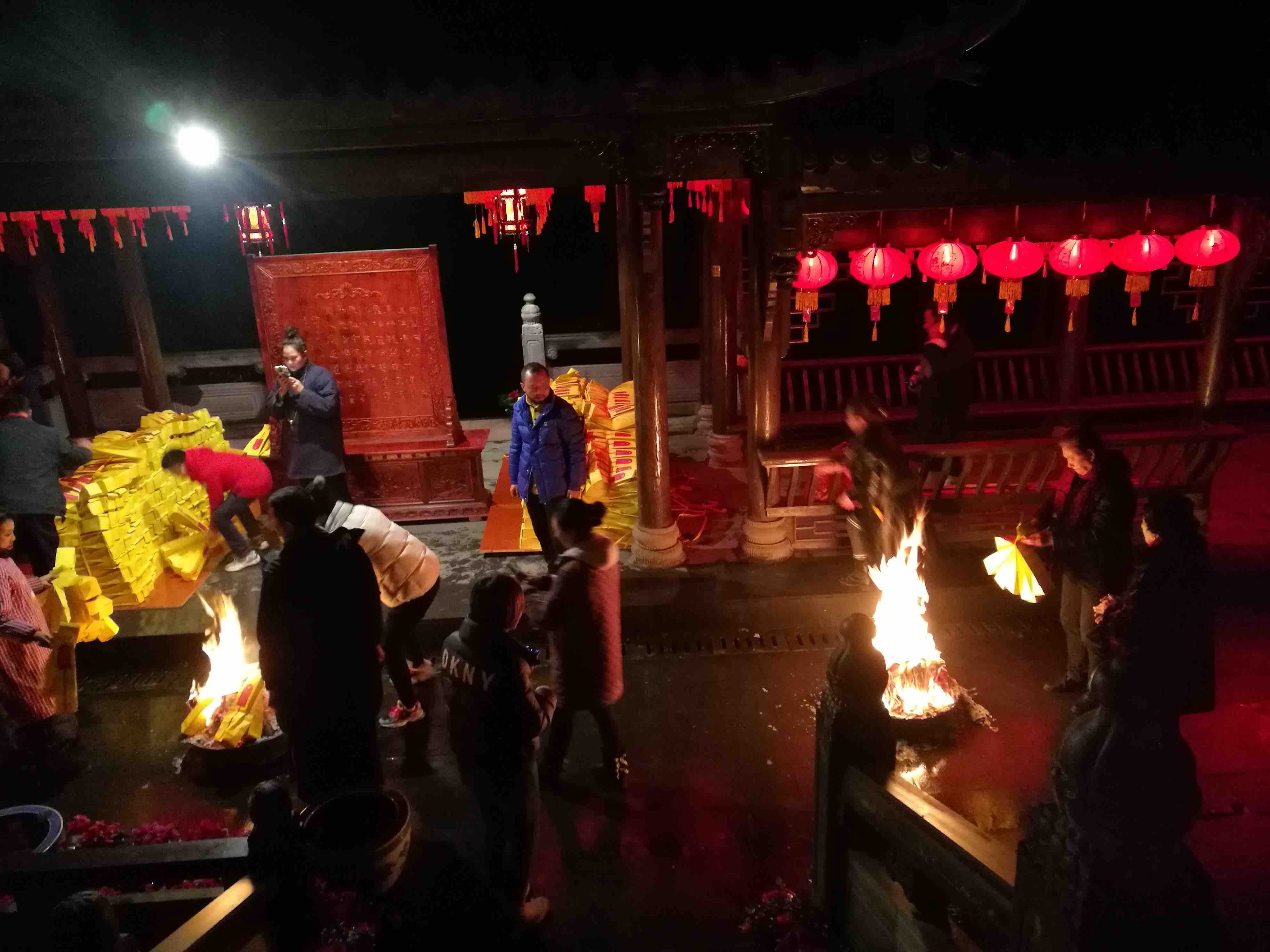
  • Moving on to ritual life, here I explore temple activity behind closed doors in Sichuan
  • and this post details the uninterrupted activity of individual household Daoists in north Shanxi, “serving the people” as they meet the constant demand for routine burial services. In a recent update, I note that the full ritual sequence, with the whole Daoist group performing funeral liturgy, has now been restored.

See also the very end of my post on Navajo ritual and musical culture.

Chinese-Russian Muslims: the Dungan people

Dungan 2

Source: wiki.

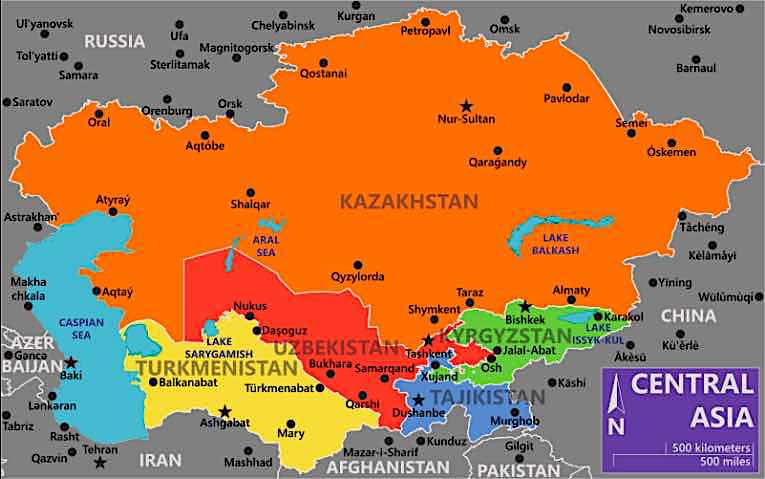
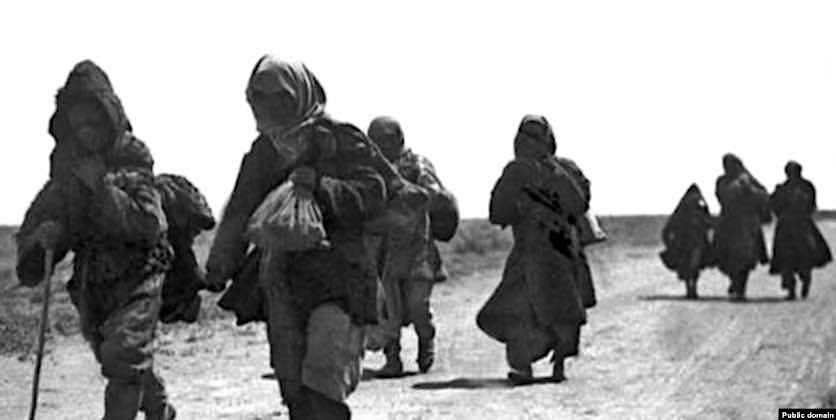
Among the many ethnic minorities of the former Soviet Union (see e.g. Cheremis, Chuvash, and Kazakhs), the Dungan people are Chinese Hui Muslims who fled in waves from Shaanxi and Gansu in northwest China by way of Xinjiang, following the uprisings of the 1870s. Mainly living in Kazakhstan and Kyrgystan, by 2003 they numbered around 100,000. Along with their traditional customs they preserved their original Chinese dialects, using Cyrillic instead of Chinese characters.

* * *

In the West, knowledge of the Dungan people sets forth from the work of the remarkable Svetlana Rimsky-Korsakoff Dyer, great-granddaughter of the composer.* The following is adapted from this post. I do hope she’s been writing her memoirs.

Her father Nicolai Rimsky-Korsakoff, a high-ranking officer in the Czarist army, had fled to China after the 1917 Revolution. After the fall of St Petersburg he joined the Russian community in Harbin in northeast China, where Svetlana was born in 1931.

Later the family moved to the capital Peking, where the young Svetlana received a mixed Russian–Chinese education. During the Japanese occupation of Peking the family took refuge in the southwestern province of Yunnan, where they were eventually granted Chinese citizenship.

In 1945, after the retreat of the Japanese, the family returned to Peking. Svetlana’s second father, the last governor of Kamchatka under Czarist rule, took up a professorship of history at Tsinghua University. Svetlana enrolled at the Catholic Fu Jen University in Peking and became one of the rare foreigners studying and living among the local Chinese students, witnessing violent clashes between Communist and Nationalist troops. She was present during the siege of the campus by Communist troops, and was forced to attend anti-foreigner and anti-missionary campaigns under Mao Zedong.

Following the 1949 Communist revolution, the Rimsky-Korsakoffs were stripped of their Chinese nationality. A period of economic and psychological hardship began for the family. The father was forced to quit his professorship of history for ideological reasons, and to teach Russian instead. In the 1950s the family fled China by boat, along with the last missionaries expelled from China. Svetlana was now stateless, a plight that would only end many years later when she received Australian citizenship.

In 1960 she enrolled in the master’s programme for Asian languages at Georgetown University, Washington. Hoping to study Chinese proverbs, she sought the advice of Fr Paul Serruys, professor of Chinese philology at the university. But once he learned of Svetlana’s mixed Russian-Chinese background, Serruys promptly steered her to work on the language of the Dungan minority. In 1965 Svetlana submitted her master’s dissertation The Dungan dialect: introduction and morphology—the first scholarly work on the Dungans in the West. Virtually no other written materials on them were available in the West, and no fieldwork had yet been done among the Dungans themselves. Victor Mair pursues the Dungan language here, with links.

SvetlanaAfter Georgetown, Svetlana began teaching Chinese at Australian National University (Canberra) as she worked on a PhD. While still engaged in projects on early Chinese literature, her fascination with the Dungans remained.

In 1977, she embarked on the first of several stays with the Dungans, who were then living in kolkhoz collectives in the Kyrghyz and Kazakh republics. Svetlana shared their daily life, attending their weddings and funerals and recording their language. In the 1980s she also worked with the “national Dungan poet” Iasyr Shivaza.

Among her publications on the Dungans are

  • Soviet Dungan kolkhozes in the Kirghiz S.S.R. and the Kazakh S.S.R., Oriental monograph series, 25, Canberra (1980)
  • “Soviet Dungan nationalism: a few comments on their origin and language”, Monumenta Serica 33 (1977–8).
  • Karakunuz : An Early Settlement of the Chinese Muslims in Russia“, Asian folklore studies 51 (1992), citing impressive early Russian ethnographies as well as later fieldwork under the USSR, with an Appendix on her own visits in 1977, 1985, and 1991.

Dungan 1

Karakunuz (renamed Masanchin in 1965), Kazakhstan, 1991, from Dyer, ibid.
Much as I’d like to offer a photo of the Dungans during the Soviet period, media images revolve predictably around weddings and cuisine.

More recently the Dungans feature in the work of scholars of the Hui Muslims, such as Dru Gladney, Jonathan Lipman, and Ha Guangtian. Inside the PRC, while the Uyghurs bear the brunt of recent persecutions, the Hui Muslims are not exempt.

On the cultural front, Vibeke Børdahl kindly alerts me to the work of the Russian sinologist Boris Riftin (1932–2012) on Dungan folktales, notably

  • Li Fuqing 李福清 [Boris Riftin], Donggan minjian gushi chuanshuo ji 東干民間故事傳說集 [Collection of Dungan folktales and legends] (2011, translated from original 1977 Russian edition), reviewed in CHINOPERL 31 (2012), along with the tribute
  • Rostislav Berezkin, “Academician Boris L’vovich Riftin (1932–2012): the extraordinary life of a brilliant scholar”.

Riftin first visited the Dungans in 1950, going on to work as a volunteer there in 1953—a period when ethnography of the changing times would have been instructive, yet impossible.

And now Kenneth J. Yin is publishing major collections in English translation:

  • Dungan folktales and legends (2021)
  • Mystical forest: collected poems and short stories of Dungan ethnographer Ali Dzhon (2023),

with more to follow.

* * *

As ever, what interests me in particular here is the lives of people, and their culture, through the turbulent, distressing period of Stalin’s regime (cf. The Ukraine famineThe whisperers, Svetlana Alexievich, and again the Kazakh famine); I’d like to read details of the early years of the revolution, the Great Purge, the Great Patriotic War and the aftermath. But it seems that such stories for the Dungans remain elusive.

Even in 2020 a violent ethnic clash occurred that resulted in more cross-border flight:

With thanks to Beth McKillop.

* For a superfluous yet wonderful link, do listen to my violin teacher Hugh Maguire’s 1964 recording of Scheherazade with Pierre Monteux and the LSO.

Precious recordings from imperial China

Laufer

Berthold Laufer (left), Hankou c1904. Source here.

Wonderfully, the Indiana Archives of Traditional Music has now made available the Berthold Laufer China Collection of 385 wax cylinder recordings that Laufer made in Shanghai and Beijing in 1901 and 1902—in the wake of the Boxer uprising, as the collapse of the Qing dynasty was bringing two millennia of imperial rule to an end.

To explore the recordings, click here
(the link may take some time to respond)

The anthropologist Berthold Laufer (1874–1934) led the 1901–1904 Jacob H. Schiff expedition to China, also making a comprehensive ethnographic collection of objects used in daily life, agriculture, folk religion, medicine, crafts, and puppetry, including costumes and musical instruments.

The first 211 tracks in the collection were recorded in Shanghai (including many arias from Beijing opera, in chamber qingchang 清唱 form), tracks 212–385 in Beijing—the latter including drum singing such as Xihe dagu, Meihua dagu, and danxian. For more, see

  • Hartmut Walravens, “Popular Chinese music a century ago: Berthold Laufer’s legacy”, Fontes Artis Musicae 47.4 (2000)
  • articles by Laurel Kendall.

Of course, Laufer’s precious recordings are far from a general survey of musicking in late imperial China. Still, it would be most churlish of me to lament that he didn’t record other soundscapes such as temple and folk ritual…

Here’s a playlist of some other early recordings:

For posts on Qing court music, click here; for rare moving images of religious life in 1930s’ Fujian, here; for archive recordings from before and since the Cultural Revolution, here. And for Laufer’s egregiously misguided praise of smoking, see under Vermeer’s hat.

Punk: a roundup

slits

I may be an unlikely chronicler of punk, but it seems an important theme. Here’s a selection from the punk tag—starting with the great Viv Albertine:

moving on to

and by way of Nina Hagen, I explore punk under state socialism:

as well as

Madrid punk

For a female Indonesian metal trio, see Voice of Baceprot.

The temple of memories

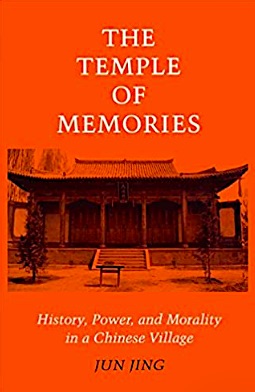
Jing Jun cover

Along with my common themes of religion, Maoism, and famine, I plead for more studies of ritual life in Gansu (see Gansu: connecting social trauma and expressive culture). So I’ve been re-reading the ethnographic classic

  • Jun JING, The temple of memories: history, power, and morality in a Chinese village (1996).

The opening of the book is compelling:

The Kongs of Dachuan cannot forget that winter, more than three decades ago, when their village was effaced and life as they had known it had ended. For much of 1960 they had ignored, then resisted, the government’s declaration that their homes lay in the path of one of the more ambitious projects of the Great Leap Forward, and that by autumn’s end they would have to make way for a hydroelectric dam and reservoir. […]

So months lapsed, the deadline passed, and still the Kongs stayed on. And then, on a chill December night, the militia entered, shock troops of eviction, targeting first households without strong young men. Old women screamed and clung to their beds, refusing to leave. They were carried out bodily. The supporting pillars of the houses were roped to mules and pulled down. As dawn broke, the frightened villagers began dismantling their own houses in a scramble to salvage what they could to build shelter elsewhere. They hastily dug up the graves of immediate ancestors and close relatives, and, in violation of all tradition, unceremoniously threw bones in cement sacks or whatever other containers they could find for reburial on higher ground. “It was no time for being proper about such things,” an elderly villager recalled years later. Nor did they have the physical strength to save older graves; the trauma of dislocation was exacerbated by a debilitating famine, the worst in modern Chinese history.

While still a student in the Sociology department of Peking University, Jing Jun began fieldwork in Dachuan in 1989, prudently absenting himself from the tense atmosphere of the capital in the aftermath of the 4th June massacre (cf. Liao Yiwu). He is among several fine Chinese anthropologists and folklorists such as Guo Yuhua, Wang Mingming, Yue Yongyi, and Ju Xi.

Apart from fieldwork with villagers, he also unearthed material by consulting the county archives.

* * *

For some scholars such a topic might be a disembodied paean to the resilience of imperial grandeur, but for an ethnographer like Jing Jun it makes a telling prism on the traumas of the Maoist era. Noting the background of serious poverty, he goes on to detail the fate of the “community of suffering” (cf. Guo Yuhua) after the 1949 revolution.

Jing’s study makes a worthy complement to detailed accounts of turbulent events in individual villages under MaoismHe explores two main themes: suffering (both individual and communal), and means of recovery from political persecution, economic deprivation, and cultural disruption. Amidst state attempts to dictate and manipulate remembrance and forgetting, he focuses on the politics of social memory, suggesting three main topics: collective, official, and popular memory.

Stylistically, whereas obligatory academic citations of broader theoretical perspectives may be formulaic, Jing Jun has a rare gift for making such comparisons revealing.

* * *

In Dachuan village in Yongjing county southwest of the provincial capital Lanzhou, 85% of the villagers belonged to the Kong lineage, considering themselves to be descended from Confucius. Dachuan was the centre for an ancestral cult of many villages in the county.

The earlier history of the temple was not untroubled: it had been destroyed in 1785, rebuilt in 1792, looted and burned during the major Muslim rebellion in 1864, but only restored in 1934—it seems curious if the cult remained inactive over this long period. It was just at this time that the Kongs of Dachuan contributed to the compilation of a major genealogy documenting the nationwide lineage; Confucius and the major ritual site for his worship at Qufu in Shandong play a major role in villagers’ historical imaginations (cf. the fate of the Confucian ritual in Hunan).

After “Liberation”

The destruction of their village was the central event in a long procession of tragedies for the Kongs under the new Communist regime.

Following the Communist takeover in 1948, the prelude to a long period of state-organised violence was the siege of Dachuan by the PLA in December 1950 in response to reports that a rebellion was being organised by “secret societies” led by the Kongs.

All exits from the village were sealed off as soldiers went from one compound to the next, searching for weapons. After a full cartload of daggers, spears, swords, hunting guns, and old muskets were hauled away, a mass rally was staged and about fifty local people were paraded onto an improvised stage. These villagers, whom the government accused of being affiliated with “reactionary religious associations” (fandong hui dao men), were warned by military and government officials that any misconduct on their part would meet with severe penalties. Three Kongs, key members of a semi-religious and highly militant group known as the Big Sword Society (da dao hui), were escorted out of Dachuan, and beheaded.

The search for weapons and the executions at Dachuan heralded the new government’s crackdown on religious societies. Five months later, an “investigation-and-registration” campaign identified more than 11,500 people in Yongjing county as members of “reactionary religious associations”.

The divisive land reform campaign was implemented from 1951 to 1953. Under the commune system the system of lineage elders was destroyed. Even as the Kong lineage was being persecuted, they continued to provide the village leadership.

In the early years of Communist rule, many of those not targeted

engaged in clandestine activities in smaller religious groups attached to temples honouring various deities and community patron gods. […]
Geomancy and shamanistic healing were still secretly practised until at least the early 1960s.

But during the 1958 Great Leap Backward, police and militia forces rounded up 855 people in Yongjing county; temples were dismantled, and religious implements destroyed. The Confucius temple at Dachuan was sealed off. In August an armed uprising was quelled in nearby Dongxiang county. As famine escalated from late 1959, the villagers were relocated in 1960, as the temple lay decrepit and abandoned.

Large-scale hydraulic projects were a major part of the state’s efforts to generate electricity by creating reservoirs, despite the great suffering they caused—and their social disruption continues to concern anthropologists. On 31st March 1961, as the floodgate of the Yanguoxia dam was lowered, Dachuan was among many villages flooded. Though there was considerable resistance, most villagers were forcibly relocated, while some remained on higher ground there. One of the most traumatic violations of tradition was the loss of gravelands.

Such stories are also submerged under the “master narrative” of rosy state propaganda, seeking to legitimise painful experiences.

The remains of the temple, empty and waterlogged, were still standing until 1974, when it was destroyed in the anti-Lin Biao and Confucius campaign.

The 1980s’ revival
Such a history of Maoism at the grassroots needs telling anyway, but it’s also essential background to the revival since the 1980s after the collapse of the commune system. Jing Jun observes:

These ideas and practices are not mechanically retrieved from the past; they are blended with cultural inventions, shaped by the local experience of Maoism, and permeated with contemporary concerns.

In a similar pattern to that taking place throughout China, as the villagers began to retrieve what had survived of the temple artefacts, rituals were held at a provisional ancestral shrine from 1984. The Confucius temple was rebuilt in 1991.

Dachuan 1

Jing explores the backgrounds and moral authority of the new temple leaders, and reflects on the whole process of cultural invention.

In a situation in which the administrative power of Dachuan’s village cares was rapidly shrinking, leadership in ancestral worship could be a key step toward winning respect, popularity, and even trust.

But power structures were in flux, as grievances from the Maoist era became public, with petition drives and demonstrations common.

Since the surviving lisheng ritual performers had only distant memories of how to perform the ceremony, they gradually recreated its liturgical structure, actions, and vocal style, culminating with the compilation of a ritual handbook in 1991 (this is not quite a typical case, I’d say: in many regions of China under Maoism, household ritual specialists had managed to transmit a more substantial corpus of their ritual expertise.) As Jing notes, there were certain models for the literary style of the written texts in the fragments of wider religious life. And I might suggest that even the rhythms and high-pitched style of the chanted elegies were not recreated in a vacuum: the traditional soundscapes of folk-song, local opera and shadow-puppetry, and so on—which had persisted to some extent under Maoism (for Hunan, see e.g. here)—might offer piecemeal clues.

Jing addresses the complex issues in studying genealogies, again focusing on social memory.

Dachuan 2

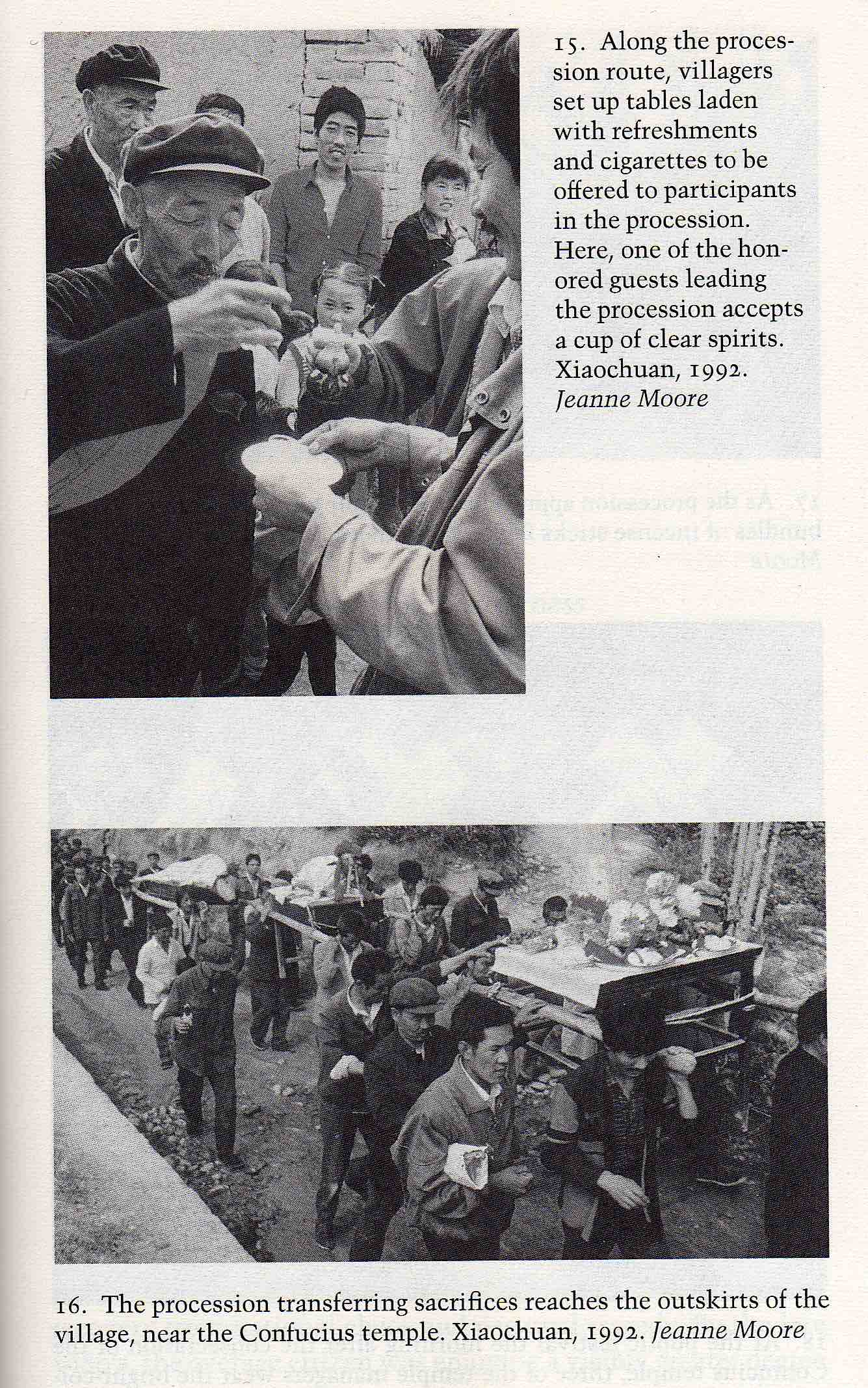
In 1992 the nearby village of Xiaochuan restablished its own Confucian temple. From 1958 it had suffered a similar fate to that of Dachuan. In both villages the ceremonies were now opened to outsiders beyond the immediate lineage. Jing distinguishes “dominant” and “variant” ritual structures.

In the latter, women played a major role (again, this is typical of temple fairs more generally)—including a spirit medium who brought over thirty female followers from her nearby village. Women were particularly devout in making vows, burning paper offerings, and singing songs of lamentation.

An older woman whose vivid renditions of songs from qinqiang, or Shaanxi opera, attracted a thick circle of spectators was led away by men in charge of the festival’s security. Another circle formed around a middle-aged woman whose body jerked spasmodically and who mubled what sounded like poems as if in a trance. She was carried away by the security guards, who were young men from Xiaochuan. After these women clamed down, they were sternly lectured by the festival organisers for having performed “superstitious” acts that could draw unwelcome attention from the local government to Xiaochuan’s festival.

Jing notes hierarchies among those attending the festival, and in the food provided. He goes on,

The woman’s eviction displeased some visitors, since singing is perfectly acceptable at many temple activities. This incident thus indicates a clash between two different perceptions of the festival.

While the Kongs were as fond as anyone of combining the singing of local opera with the worship of local deities, they rejected it as a proper form during a service for ancestor worship. Jing suggests that their antipathy went back to an incident in the early 1940s, when community leaders had objected to the staging of an opera inside the Xiaochuan temple to celebrate a bumper harvest—their resentments partly based on a rich man treating the occasion as a self-serving display of wealth and generosity. But as he says, few would have been aware of that. Such incidents mainly illustrate multivocal interpretations:

Such negotations were precipitated by variations in historical experience, personal memory, understanding of religious symbols, and concepts of ritual propriety.

Jing opens the impressive final chapter, “Finding memories in Gansu”, by encapsulating the tension between ethnography and history:

In an ethnography of the Kongs, one could take a synchronic approach, a type of analysis typical of the structural functionalists and French structuralists, that treats a society as if it were “outside of time”, that is, without reference to historical context.

Indeed, as I have noted, it’s more complex: in many field reports on local Chinese ritual, the fieldwork makes a pretext for timeless depictions that are dominated by early historical context while glossing over the current social picture.

Anyway, Jing gives ample reasons for placing the Dachuan rituals in their modern setting. He goes on to give instances of accounts of the memory of suffering in other societies, including Alan Mintz and Lucette Valensi on the Holocaust, and Anastasia Shkinlyk’s devastating study of the despair and agony of a relocated Ojibwa community (see here). He also cites Arthur Kleinman’s work on illness narratives among Chinese patients. And we can now add Stephan Feuchtwang’s study After the event (cf. China: commemorating trauma, including Wu Wenguang’s memory project).

He is right to note the official conformity of depictions in county gazetteers compiled since the 1980s—although in the accounts of Maoist campaigns and famine for some counties like Yanggao in north Shanxi (see e.g. my Daoist priests of the Li family, pp.122–3) one may discern a subtle resistance to state propaganda. He also sets forth from Frances Yates’s 1966 The art of memory to explore the historical memory embodied in religious artefacts.

As Jing Jun observes, the reinstated worship of Confucius in the Dachuan area is not an isolated case of religious revival in a rather remote part of China. He places it in the broad context of the religious revival in China, if not in Yongjing county. Thus while we find vignettes on other forms of religious expression (mediums, sectarian groups), his coverage might have benefitted from an outline of the broader fortunes of ritual life in the area through the 1950s, such as the fate of other temples in Dachuan and nearby, funerals and temple fairs, and the activities of household Daoists and bards. The story of the Dachuan temple make a particular but revealing case. [1]

For related reflections on memory in China, see here.


[1] Though focusing on ritual life before and since the Maoist era rather than on state initiatives under Maoism, a project on cults in Shaanxi and Shanxi led by Christian Lamouroux and Marianne Bujard, with Qin Jianming, Dong Xiaoping, and Patrice Fava, is also relevant. See e.g.

  • Marianne Bujard, with Dong Xiaoping, “Hydraulique et société en Chine du Nord: une coopération franco-chinoise en sciences sociales”, BEFEO 2001, notably the Yaoshan shengmu cult in Pucheng, Shaanxi:
  • Qin Jianming 秦建明 and Lü Min吕敏 [Marianne Bujard], Yaoshan shengmu miao yu shenshe 堯山聖母廟與神社 [The sacred mother temple and holy parishes of Yaoshan] (Beijing: Zhonghua shuju, 2003).

Frozen brass

Wind bands, and brass bands, continue to play a major role in the soundscape of many cultures around the world (cf. New Orleans brass bands; see also trumpet tag; for early wind bands in Europe, click here).

A splendid project by Rob Boonzajer Flaes, with Fred Gales, Ernst Heins, and Miranda van der Spek, resulted in 2 CDs issued on Pan records in 1993:

  • Frozen brass: Anthology of brass band music, #1: Asia
  • Frozen brass: Anthology of brass band music, #2: Africa and Latin America.

They’re magnificently ear-scouring. Both are on Spotify, and the Asia tracks are on a YouTube playlist:

The liner notes give perspectives:

In the times of colonialism, when European soldiers, traders, and missionaries set out to occupy large parts of other continents, they were accompanied by brass bands. The brass band stood for more than just instruments, uniforms, and songs. The martial appearance, the loudness of the instruments, the discipline of the musicians, and its mobility made it a proper symbol of the culture of the conquerors. Technological developments, strict training, rationality, and standardization had produced this ensemble: a band that could play anything in the temperate scale, everywhere, and always in time; a multi-functional ensemble suitable for emperors and military campaigns, enlightening the masses and evoking edifying religious feelings.

The brass band conquered the world as a well-devised formula, as a musical weapon, and a thunderous proof of Western military and religious superiority. Western habits and customs were forced upon the colonized; traditional music, dances, and instruments were forbidden; and local musicians were trained on brass instruments to perform in church, in school or at public events such as national holidays, royal birthdays, and visits of dignitaries. But of course sooner or later, someone discovered that a brass band could do more than merely reproduce Western classics, and enterprising musicians started to use the instruments to music a local audience would listen to, dance to, and—even more important—pay for.

The rigid and uniform colonial brass band came to terms with local music, leading to a wide variety of popular band traditions. Musical hybrids developed, not as part of any grand cultural tradition, but as an ingredient of local popular culture. Nowadays in many countries brass bands (or brass band derivatives) have become indispensable for weddings, circumcisions, processions, funerals, and even for communicating with spirits and inducing trance-like states.

Similar musical hybrids, for example the Bleh music from the Balkansklezmer from the Jewish communities of Eastern Europe, and—most famous of all—the development of jazz in New Orleans attracted the attention of the recording and writing industry. Outside Europe and North America, however, brass bands are only locally known.

The African, Asian, and Latin American brass bands are in many ways different from their western counterparts: the instruments may be worn out, or replaced by replicas; traditional drums may be added; and the uniforms can be anything from the local postman’s cast-offs to the most elaborate pieces of art. Marches and hymns are replaced by local tunes, mesmerizing rhythms, or decorous funeral music: tokens of the creativity of thousands of nameless plodders who made the brass band formula their musical way of living.

CD 1 contains tracks from Nepal, IndiaIndonesia (Sumatra, Java, the Moluccas, Sulawesi), and the Philippines; CD 2 has examples from Ghana, Surinam, Bolivia, and Peru. The notes give useful introduction to genres and bands.

For a taste, how about this Batak hymn from Sumatra, for the second day of a 1992 Protestant funeral:

Such tracks are not mere curiosities, but a window onto the soundscape of social life. Of course, audio recordings can only hint at the “red-hot sociality” of people interacting for communal activities—indeed, at the moment one misses social interaction altogether.

* * *

CWZ big band

Chang Wenzhou’s big band plays for village funeral, Shaanbei 2001.

Brass bands also became common in major Chinese cities from the 1880s, introduced by such Westerners such as Robert Hart, and in the Republican era warlords used them for their own armies. Since the 1980s they have developed out of folk shawm bands (my many posts on which start here), such as in Shaanbei (see my Ritual and music of north China, volume 2: Shaanbei, ch.9, and DVD). For links to posts on shawms around the world (China, Tibet, south Asia, the Middle East, north Africa, Europe), click here.

Left: funeral procession, Quanzhou 1990;
Right: Catholic band, Gaoluo village, New Year 1995.

As a bonus, click here for a wind band on ice in Tuva—opening with a Tsam masked ritual procession, to boot. This rather pre-empts my plan to stage the Matthew Passion On Ice.

Another Uyghur film-maker

*For more, see my roundup of posts on Uyghur culture*

In Xinjiang, the Uyghur people, and their whole culture, remain under severe repression. Still no news emerges of the great anthropologist Rahilä Dawut.

The Uyghur dancer, film-maker, and anthropologist Mukaddas Mijit, based in France since 2003, has a creative engagement with the beleaguered culture of her homeland. Do consult her website, and her YouTube channel,

Among her short films, I note this documentary on the Centre for Muqam Transmission in Qumul, inaugurated in 2009 with UNESCO support, some years before the clampdown. The Centre, like others of its kind, makes a classic instance of staged commodification, a world away from Uyghur folk culture—showing how the Chinese state attempts to sanitise it through reification, under the insidious banner of “safeguarding”:

One senses the reservations of the senior muqam masters recruited to the Centre. What has become of such flagships for Uyghur culture amidst the current genocide?

It’s not that an autonomous Uyghur nation wouldn’t be capable of such reification. Such initiatives have long been common among independent nations in Central Asia and elsewhere.

Here’s Mukaddas Mijit’s artistic tribute to her parents’ hometown of Ghulja—long among the flashpoints for ethnic tension in the region, and the site of a 1997 massacre:

She also pays attention to Uyghur rock music—here’s the band Qetig, recorded in Urumqi:

Meanwhile the fate of Uyghur culture at the grassroots—life-cycle observances, pilgrimages, and village celebrations like the mäshräp—looks bleak. For Mukaddas Mijit’s recent film on Uyghur meshrep in Kazakhstan, see note here.

For a conference at SOAS on “Surveillance and repression of Muslim minorities: Xinjiang and beyond”, click here.

Blind musicians in China and elsewhere

Blind musicians have long been major transmitters of traditional culture: do click away on this list of some posts featuring them.

For China—mainly shawm players and bards (passing quickly over the “usual suspects”, the ancient Master Kuang and the ubiquitous Abing):

as well as my first two posts on Coronavirus:

For blind musicians elsewhere:

Indeed, one could greatly augment the list for many other cultures around the world.

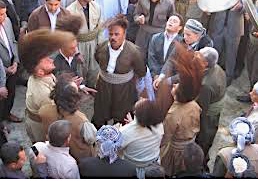
Self-mortification: dervishes of Kurdistan

with a note on Tibetan spirit mediums in Amdo

dervish

Leading on from my post on Yazidi culture, here I consider a distinctive kind of ritual activity among the Kurds—mainly through a fine documentary from 1973.

Suffering in the quest for union with God is a universal theme, such as among the Uyghur ashiq, or indeed the Bach Passions. An extreme instance is the controversial yet widespread practice of tatbir ritual self-mortification by such acts as flagellation and skewering the body. Practised quite widely through the Islamic world, mortification of the flesh is a theme in other ritual cultures too, including Christianity: it was practised by Lutherans and Methodists, and among Catholics, rituals continue in Spain and Italy. It seems rare in China, though spirit mediums perform self-mortification at extreme northwest and southeast regions: Tibetans in Amdo, and Hokkien in south Fujian and Taiwan. [1] As ritual performers in the public domain, they are male (see here).

As to Kurdistan, dervishes—broadly members of a Sufi tariqa lodge/order/fraternity, sometimes also religious mendicants—perform dhikr (zikr) ecstatic devotional acts, commonly in the form of litanies, but also in rituals of self-mortification. Of course, as in other cultures, this is only one among many manifestations of faith. Beyond sensationalist voyeurism, one hopes for a more sober ethnographic approach—like the documentary

  • Kurdistan: the mysterious dervishes (André Singer and Ali Bulookbashi, 1973, in the series Disappearing world).

It shows the daily lives and religious practices of a dervish community in the Kurdish village of Baiveh on the border between Iran and Iraq, at a time when the two countries had cut diplomatic ties. Many were refugees from Kurdish areas of Iraq; a major source of their economy was contraband. They were dervishes of the ecstatic, mystical Qadiri cult. The film explores the spiritual and temporal power wielded by their leader Sheikh Hussein. By serving him the dervishes consider that they are also serving God. He presides over rituals in which they have the power to carry out acts which would normally be harmful, such as having electricity passed through their bodies, eating glass, and skewering their faces.

It is the less privileged members of the community who seek to enhance their status through performing such acts of subservience—demonstrations of loyalty, as much to the Sheikh as to God. The film also includes explores the tensions with the local mullah, representative of orthodox Islam; but it is the complex of modern secular values that pose a greater challenge to the ways of the dervish, and to the Sheikh’s feudal power.

Here’s the film—not at all for the faint-hearted:

A restudy would be interesting.

A more recent French documentary also features extreme scenes.

The resilience of tradition in troubled modern times is also shown in the revival of ritual pilgrimages, again often featuring tatbir (on the revival since the fall of ISIS, see e.g. here). The ancient battle of Karbala is commemorated in the Arba’een pilgrimage to Karbala that marks the end of the Ashura festival.

As ever, the commodified urban performances of dervishes for tourists that are often featured in the media—invariably cast as “whirling”—are a world away from local rituals—though they too are a proper subject for ethnographers.

See also Some Kurdish bards, and Zaza and Hawrami.

Tongren 1

Qinghai 2

Tibetan self-mortification, Rebkong: source here.


[1] For trance mediums in Amdo, see here. For the 6th-moon Klu-rol festival of Tibetans in Rebkong (Tongren), Qinghai, note
Charlene Makley, “Rebgong’s Klu rol and the politics of presence: methodological considerations” (2013), perceptively situating the event within the changing politics of the area as it has become a tourist attraction since 2001 (as you can see from online videos). And now she has published The battle for fortune: state-led development, personhood, and power among Tibetans in China (2018).
Among several other articles, see e.g.
Kevin Stuart, Banmadorji, and Huangchojia, “Mountain gods and trance mediums: a Qinghai Tibetan summer festival”, Asian folklore studies 54 (1995);
articles by Katia Buffetrille, including her chapter in a special volume on Mediums and shamans in Central Asia; and
Cao Benye 曹本冶 and Xue Yibing 薛艺兵, “Renshen gongwu: Qinghai Tongren liuyuehui jishen yuewude diaocha yanjiu” 人神共舞: 青海同仁六月会祭神乐舞的调查研究, in Cao Benye (ed.), Zhongguo chuantong minjian yishi yinyue yanjiu, Xibei juan 中国传统民间仪式音乐研究, 西北卷 (2003, with DVD).
For more references, see Isabelle Henrion’s extensive Western-language bibliography on the Tibetan performing arts, §8. Note also R. Solomon Rino, Deity men: Reb gong trance mediums in transition (2008).

For self-mortifying mediums in south Fujian, note Ken Dean’s fine film Bored in heaven; for Taiwan, see Donald Sutton, Steps of perfection (2003), Margaret Chan, Ritual is theatre, theatre is ritual; tang-ki: Chinese spirit medium worship (2006), and Patrice Fava’s 1995 film Mazu la déeese de la mer, réalité d’une légende.

For a broader treatment of self-inflicted violence in the imperial history of Chinese religion, see Jimmy Yu, Sanctity and self-inflicted violence (2012).

Cf. the Rufai order in the Balkans, and Sun dance rituals.

Studying “old customs” in 1950s’ Wenzhou

Left: Mei Lengsheng, 1950s;
right, yankou ritual, Baiyun guan temple, Wenzhou, 2015.

Further to research under Maoism on ritual life in China, I appreciate

The work of local scholars in China striving over this difficult period to legitimize their religious cultures continues to impress me.* Katz’s article astutely discusses the

  • Wenzhou jiusu shiliao 溫州舊俗史料 [Historical materials on Wenzhou’s old customs]

on ritual life in the late Qing and Republican periods, a report of over 100,000 words compiled in 1960.

Katz traces the identities of the elites who composed the monograph, as well as their agendas in doing so (such as the new dichotomies promoted since the late 19th century, particularly that of “religion” and “superstition”).

Among the main compilers of the 1960 study was Mei Lengsheng (1895–1976), whose fortunes Katz describes. He notes study sessions apparently linked to the 1956 Hundred Flowers Movement, euphemistically known as “immortals’ gatherings” (shenxianhui ), when elders and other elites were encouraged to reminisce freely about the past, including local culture and customs—information that often ended up being used against them during the following “anti-rightist”movements, and then the Cultural Revolution, when Mei and others were punished. Still,

China’s elites did what they could to create at least some room for creative accommodation in which they could preserve valued facets of local culture. Intellectuals and other elites strove to the utmost to survive in this tricky environment; including (like Mei) performing acts of self criticism when necessary, but also relying on personal connections while attempting to use state rhetoric to their own advantage.

Noting that such works exploited CCP rhetoric against local customs to serve the cause of preserving them, Katz reads between the lines of the Preface. The main contents that follow are subdivided thus:

  • 1) Annual ritual calendar (suishi 歲 )
  • 2) Peasant proverbs (nongyan )
  • 3) Birth (shengzi )
  • 4) Marriage (hunjia 婚嫁)
  • 5) Birthdays, anniversaries (shengri, zhushi he zhushou )
  • 6) Mortuary rituals (sangzang )
  • 7) Prayers (qidao 祈禱)
  • 8) Miscellany (zazu 俎),

with temples and their festivals included in categories 1 and 7. Indeed, the “prayers” rubric subsumes rituals performed by Daoist and other ritual specialists, such as rituals for rain and to repay vows. Katz goes on to discuss some of these in detail, such as the plague expulsion rituals of Marshal Wen (on which he has written extensively), noting the continuity of the compilers’ disparaging language (however obligatory) with that of their elite imperial forebears as shown in county gazetteers.

But what we can hardly expect of such material under Maoism is a detailed account of religious life at the time of writing. Though the work is inevitably framed as “historical”, with current practices downplayed, Katz considers change over the period, outlining the relatively laissez-faire approach of the Communist authorities towards folk religious life from 1949 until the 1958 Great Leap Backward; and he cites a 1957 survey by the Rui’an county [1] Buddhist Studies Association of some 340 temples, and ritual specialists, there.

As he notes, while some of these traditions have disappeared, many others have revived since the liberalisations of the late 1970s—one starting point might be the Anthology for Zhejiang province, notably the lengthy section on “religious music” in the instrumental music volumes. [2] Katz concludes by suggesting that the delicate accommodation since the late 1970s with the power of the state may partly be traced back to such writings from the 1950s.

* I’ve always been most partial to such research—see my Folk music of China, pp.52–4; for more, see e.g.

A further perspective is that of fictional films like The blue kiteevoking the personal stories behind the tensions of the era.

For Katz’s work on ritual in Hunan, see here; and for his article on temple fairs in Taiwan in a recent book on doing fieldwork in China, here.


[1] On Rui’an county, I look forward to reading Xiaoxuan Wang, Maoism and grassroots religion: the Communist revolution and the reinvention of religious life in China (2020) (well reviewed here).

[2] Further to Mayfair Yang’s article “Shamanism & Spirit Possession in Chinese Modernity”, I also look forward to reading her Re-enchanting modernity (2020).

Towers and wells—and a ferocious quadruped

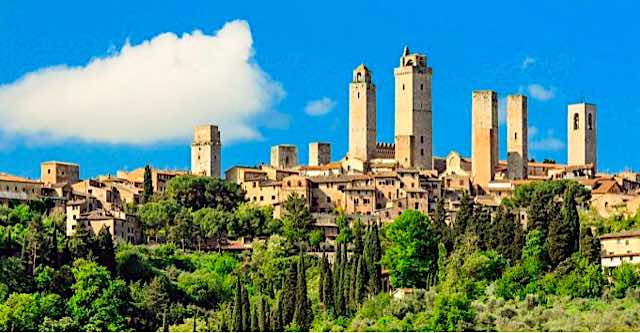
San Gim

San Gimignano.

From 1979, in that youthful idyll that one somehow took for granted, I delighted in taking part in the summer music festivals of Montepulciano (Mahler 10!!!),* Batignano (Mozart’s Zaide!!!), Pesaro (Rossini’s Mi manca la voce!!!), and the Arena di Verona. Meanwhile I avidly began exploring the whole region—Florence, Siena, Perugia, Urbino, Pisa, Orvieto, Arezzo, and so on (see also The rake’s progress).

S Fina
Apart from phrase-books, impressionistically-translated guidebooks can provide much Harmless Fun for All the Family. Among the favourites in my collection is one that I found in the medieval hill-town of San Gimignano, “the Manhattan of Tuscany” (cf. Suzhou, Venice of the East, Balham, gateway to the South, and “palm trees are nothing to us—we’re from Torquay”).

Here’s St Fina (1238–53, sic), patron saint of the town, clasping a model of it (or possibly a birthday cake), as depicted in a series of scenes from her legend on a reliquary tabernacle (1401–2) by Lorenzo di Niccolò Gerini.

Some of these guidebooks are impressively erudite. In English, estimable research like that of Enzo Raffa in San Gimignano by the beautiful towers has been pleasantly garbled, supplementing education with giggles—always a winning combo. It opens with evocative images:

Seen in the distance, it seems an inaccessible town. Going up from the Poggibonsi way, which is the most common, the towers lose their prospective and get down** till disappearing among olive trees. The brown silver color of leaves increases the silence around red bricks of walls. From the Certaldo way, the town is more braggart. Towers are as straight as halberds be they wet by the rain or burnt by the sun, they always keep the very same color and maintain the same soleliness of the black and closed cypresses of these places.

He then goes all Zen on us:

And here, in the space enlarging at a bell’s touch, a strange sensation of surety embraces our soul.

As he takes us through the usual catalogue of medieval strife, some elements in the social picture are timeless:

A few families, the richest ones, try to impose their sovereignty through the joke of reincharges.

With Italy currently a major centre for Coronavirus, some recent articles have made parallels with historical disasters such as the 1629 outbreak in Florence. Still earlier, as Raffa relates, San Gimignano was stricken by the Black Death pandemic:

Where the interior struggles could not get, the pest arrived. The great pest of 1348, the one killing the sweet Laura of Petrarca poet, along with a great number of persons.

And he’s aware of other modern parallels:

For a town like San Gimignano, the destruction of walls would have been equal to the taking off of a suit at the open air in a rigid winter day. […] San Gimignano is refusing.

Once upon a time it was said that San Gimignano had 72 beautiful towers. Only 25 were standing up in 1580. Today there are 14, others may be numbered but they are either included in buildings or docked to a great extent. Their architecture is a speaking sign of the mentality made of surety, of offense and of pride.

As the author explains:

The holes we can still see on the facades were used for the quick building of bridges which could be used either for reaching friend families’ towers or to attach enemy families’ towers.

I’m sure he’s right, but I wonder if anyone spotted a design flaw there.

well

Piazza della Cisterna.

Elsewhere I read that a common, if one-off, pastime in San Gimignano was to commit suicide by throwing oneself off a high tower. But another popular way of ending it all, in Italy as in China, was by throwing oneself down a deep well. The most elegant method, I surmise, would be to throw oneself off a high tower into a deep well, as Freud and Jung might have suggested—one possible target for the ambitious acrobatic depressive might be the well in Piazza della Cisterna.

Well (sic) might one exclaim, like a duty roster for the Wigan emergency services as read in the voice of Alan Bennett:

Sick transit, Gloria, Monday

Cf. A Bach mondegreen, and Jan ‘n’ Dia—L.A. den “Bhabi!”.

From Assisi, home of Saint Francis, I moved on to Gubbio, enjoying the miracle of the saint taming a wolf that terrorized the town until it meekly offered its paw to him. Actually, it was a peace deal:

“As thou art willing to make this peace, I promise thee that thou shalt be fed every day by the inhabitants of this land so long as thou shalt live among them; thou shalt no longer suffer hunger, as it is hunger which has made thee do so much evil; but if I obtain all this for thee, thou must promise, on thy side, never again to attack any animal or any human being; dost thou make this promise?”

“Giving in to terrorism”, as it might now be called.

Sassetta

The wolf of Gubbio is one of many panels that Sassetta painted from 1437 to 1444 for an altarpiece in San Francesco at Borgo San Sepolcro near Arezzo. And now I can go and admire it, alongside some gorgeous Duccio panels, at Room 52 of the National Gallery in London!

Describing the wolf, my Italian guidebook to Gubbio contained the delightful phrase quadrupede feroce—an expression that later my Italian partner and I always tried, on the flimsiest of pretexts, to shoehorn into our conversations revolving around cuddly domestic pets.

The troubled background of such picturesque old towns can now be neatly packed away under cultural history; and they are not mere cultural playgrounds for tourists—real people have to make a living there through changing times (cf. Venice daily life in a theme park). Still, basking in these guidebooks now, with their lavish illustrations of exquisite medieval archecture and painting, I find it intriguing that only a few years later I graduated to traipsing around grimy dilapidated towns in north China, where little trace has survived of any material culture predating the 1950s (see also Molvania).

Suide 2001

Suide county-town, Shaanbei, 2001. My photo.

And the villages are hardly more idyillic: among decrepit single-storey dwellings from the Maoist era, the alleys are strewn with litter. The great compensation, of course, is the expressive culture of rural China.

See also Italy: folk musickingOn visual cultureThe struggle against Mussolini; and Nearly an Italian holiday.

* Exclamation marks courtesy of Mahler himself.

** Cf. “get down baby” in Bo Dudley’s Mama’s got a brand new bag.

Coronavirus 4: household Daoists in Shanxi


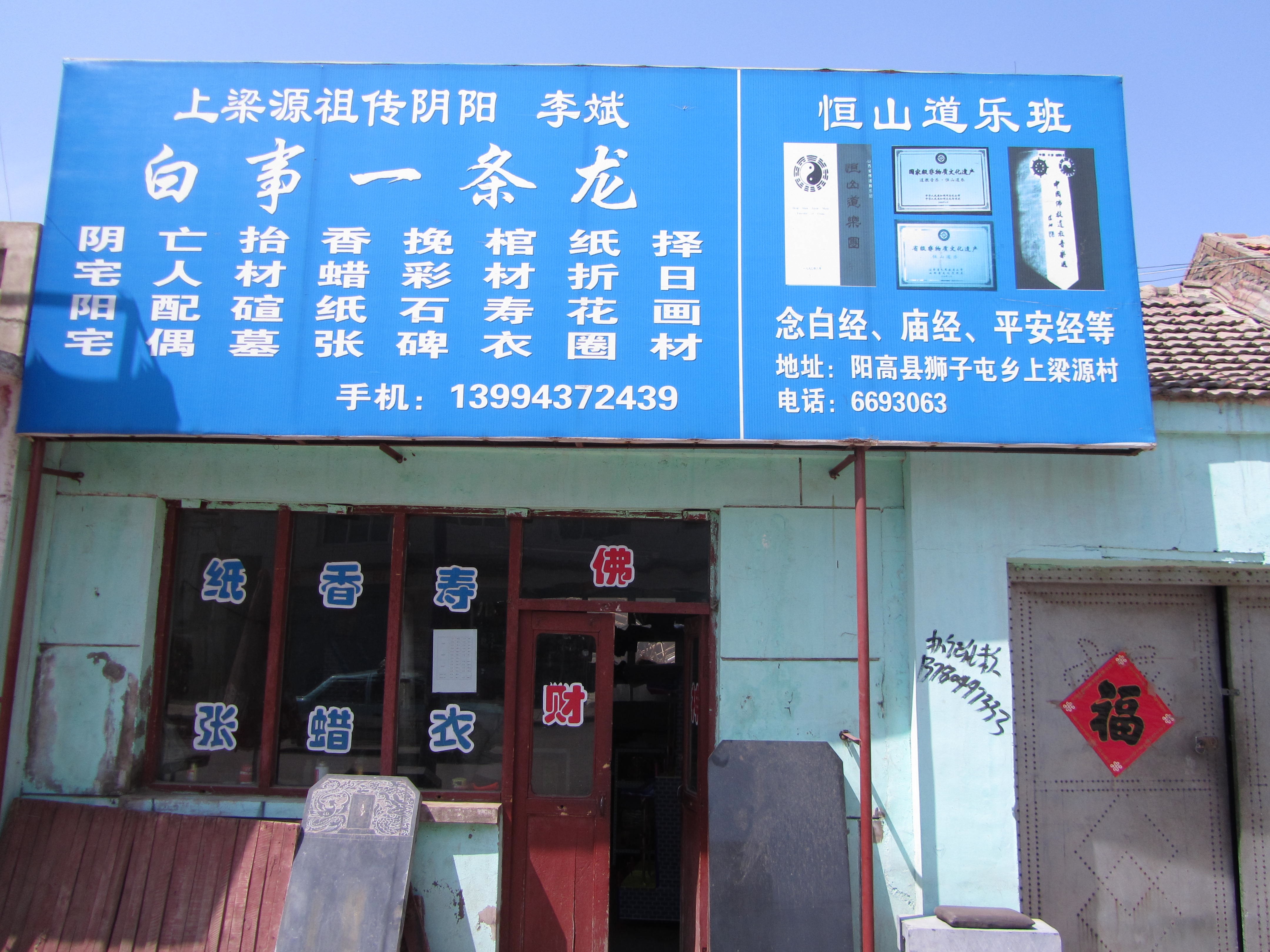
Li Bin’s first funeral shop in town.

Li Bin’s funeral shop in Yanggao town.

To follow my earlier posts on Coronavirus (1, 2, 3), I’ve been catching up, remotely, with the household Daoists of the Li family in Yanggao county of north Shanxi, 300 km west of Beijing on the way to the city of Datong—in normal times, ever more accessible. Whereas my previous posts on the crisis have concerned responses online and behind the closed doors of temples, here we find how ritual activity is still being maintained for routine burials.

In recent years, as the wonderful Li Manshan has begun to take things easier in his eighth decade, his son Li Bin, working since 2007 from the base of his funeral shop in the county-town, has been worked off his feet (for their busy diaries, see here and here; and for the tough life of the household Daoist, here). Not only does he book and lead a band to perform funeral rituals throughout the villages, but he has to organise every stage of the mortuary procedure from death to burial—as well as making routine individual consultations to “determine the date” for weddings, health, journeys, selecting auspicious sites for new buildings, and so on.

Since the Coronavirus scare, strict measures have been in place in north Shanxi, though no cases seem to have been reported there. Many neighbourhoods in Datong city were sealed; in Yanggao town the gated communities monitored all activity. Restaurants and schools have been closed. For a change, there are no traffic jams at the crossroads just north of Li Bin’s funeral shop (my film, from 4.17).

Wedding festivities are on hold, and bereaved families are not currently allowed to invite Daoists or shawm bands to perform group funeral rituals (known as “opening the drum” kaigu 开鼓), as is normally de rigueur. So regular members of the Daoist sextet like Wu Mei and Li Sheng, normally busy reciting the scriptures with wind and percussion for the sequence of rituals they perform for funerals over two (sometimes three) days, now find themselves temporarily unemployed. Golden Noble, another core member of the band who leads the vocal liturgy, can perform the solo mortuary procedures like determining the date, siting graves, and supervising the burial, so he has picked up a bit of work in the immediate vicinity of his home township Houying.

One accomplished Daoist who has only rarely been able to appear with the ritual group since seeking work as a migrant labourer in 2004 is Li Qing’s nephew Erqing. Whereas the other Daoists are active over a small radius, his work has taken him over a large area of north and south China. He has been an important member of our foreign tours. Like Gansu singer Zhang Gasong and countless others, since returning home for New Year he has found himself exiled there.

Erqing and WM

Erqing (right) with Wu Mei, funeral 2009.

Despite the crisis, Yanggao didn’t go into total lockdown. Remarkably, Li Bin is still in considerable demand, individually, to meet people’s routine needs for mortuary procedures; indeed, he is just as busy as ever—the boss continuing to prosper as the workers are laid off?! Few customers have been venturing out to his funeral shop, but he fields constant messages on his smartphone. So he is still called out constantly, driving throughout the countryside but now having to pass through a laborious series of checkpoints on the main roads and at the entrance to every village, where temperatures are taken and all movements registered. Li Bin’s work is considered a legitimate cause for such journeys.

Checkpoints in Yanggao, February 2020. Photos: Li Bin.

In these poor villages that are depleted yearly by urban migration, with the population ageing, conditions of hygiene may have improved since around 2000, but remain far from ideal (for earlier epidemics in Yanggao, see here). Routine burials still need to be held—though currently by the immediate family alone, with one single Daoist carrying out the necessary procedures (see my Daoist priests of the Li family, pp.185–200).

After a death, the immediate task is to summon Li Bin to use his almanacs to determine the date for the burial—which may vary, as usual, from around five days to over a month. Then he has to write the placard announcing the death (yangzhuang 殃狀), supervise the encoffinment, and provide mourning clothes for the kin as well as the paper artefacts (which he and his wife make at their shop) to be displayed and eventually burned at the grave; he has to decorate the coffin, write the tomb tile, depict talismans to be pasted up at the house of the deceased, and choose an auspicious fengshui site for the grave, using his luopan compass to determine its position and alignment. All these tasks are shown in my film, and even over this stressful period Li Bin still continues to perform them constantly.

Left: reverse side of tomb tile; right, talismans. My photos, 2011.

Even in normal times some very poor families, unable to afford the elaborate funerary rituals of the full band, have long requested a single Daoist to preside over a simplified burial ritual (known as “settling the burial” anzang 安葬). During the current crisis this has become routine. Mostly it only takes an hour or two, though even now some families expect a rather longer ritual.

Li Manshan: decorating a coffin (2015), and exorcising the house (2013).

Just before the coffin is raised out of the central room of the deceased’s home (my film, from 1.16.31), the Daoist—now wearing a face-mask in addition to his red costume (fayi 法衣) and yinyang hat (riyue guan 日月冠)—exorcises the rooms (qiyang 起殃) by wielding a sheaf of gaoliang stalks and a cleaver, knocking them against the lintels and silently reciting the mantra Qiyang zhou 起殃咒. Then, as the coffin-bearers raise the coffin out of the house, the Daoist uses his cleaver to smash a food-bowl on the floor at the entrance to the room, marking the end of the son’s duties to feed his parent; indeed, “smashing the bowl” (dawan 打碗, more graphically “decapitating the bowl” zhanwan 斬碗) is the term commonly used to describe the whole simplified burial ritual. As he does so, the Daoist silently recites another mantra, the Zhanpen zhou 斩盆咒. These two mantras for dangerous liminal moments serve to protect the Daoist himself.*

Li Bin then accompanies the coffin through the fields to the grave he has chosen, and fine-tunes its alignment in the grave. After returning to the house he performs a further brief exorcism there. He then hurries off to other villages help more bereaved families.

Again, I note the adaptability of the “old rules”; in times of crisis, rituals can be simplified, yet a proper commemoration of grief is still needed. In Li Bin’s notebook he keeps a careful record of all his daily work, noting the precise date and time of death, details of the birth dates of the deceased and their sons and grandsons, the location of the grave, and the date that he determined for the burial.

Li Bin’s father Li Manshan too has to respond to the requests of his local clients, zooming round on his motorbike to determine the date, choose burial plots, and smash bowls. Sure, all this is their livelihood; but like their forebears right back to the 18th century, they are like parish priests, “serving the people”—a cliché now commonly used with a rather satirical edge, but in this case true. Meanwhile elsewhere in Yanggao, in neighbouring counties (see my other posts on Shanxi under local ritual), and doubtless further afield, other Daoists too will be continuing to meet the needs of their rural clients.

By 23rd February, with no new cases of the virus reported in Yanggao, roadside checks were easing and officials were only monitoring travellers’ temperatures, not registering their details. I wonder how long it will take for the more elaborate funeral rituals to be restored, with the other Daoists joining Li Bin in performing the full sequence of vocal liturgy, accompanied by wind and percussion.

Update
Indeed, since late February the full ritual sequence has been restored, with Li Bin booking the whole Daoist band to perform funerals; but since he has still been busy doing all the solo mortuary tasks, only on 5th April could he lead his group for the first time since the lockdown, “opening the drum” at a funeral in Upper Liangyuan.


silent mantras


* Though the texts of these two silent mantras don’t appear in any of the Li family’s surviving ritual manuals, Li Manshan eventually found them for me in his little blue pocket-book, which he copied in the 1980s from a similar notebook of his late great father Li Qing (for whom, see e.g. here, and, for his ritual manuals, here).

Seeking instruction with Li Manshan one day, I joked that I had learned them, “reciting” them for him, lips firmly closed—providing us with another creative topos (e.g. in France).


Coronavirus 3: temples, Sichuan

sdr

Daoist temple ritual, Sichuan, lunar New Year’s Eve, 2020. Photo: Volker Olles.

To follow my first two posts featuring songs commenting on the Coronavirus outbreak in China (here and here), I now consider how local ritual life has been adapting to the crisis at the grassroots.

* * *

Reflecting the age-old adaptability of ritual practice, much activity has moved to a virtual life on WeChat. I’m grateful to Volker Olles, based at Chengdu in Sichuan for his project on Daoist ritual traditions there, for this vignette. As he wrote on 17th February:

All temples are still locked down, but Daoist clerics in the sanctuaries will occasionally perform rituals or offer incense and candles in the name of adherents (thanks to WeChat!). ​So the temples are still working—behind closed doors. Through Wechat, people can even participate in rituals by having their names added in ritual documents. In this regard, WeChat is a real blessing, allowing communication, payment of liturgical fees (fajin 法金), and feedback by means of video sequences of the rituals posted by the clerics.

I spent the Spring Festival in a remote Quanzhen Daoist temple in Chongzhou, west of Chengdu, just when the lockdown started. The liturgies at Chinese New Year’s Eve and the welcoming of the God of Wealth were properly performed by the Daoists, burning masses of ritual documents (shuwen 疏文), with the help of lay adherents—who were partly stuck at the temple and unable to return home on time. ​

All religious institutions are closed and closely monitored by the authorities. I also had to register with the local government and the Bureau of Religious Affairs. However, I’m back in Chengdu now, and we all hope that spring (in the best sense) finally will arrive.

notice

Public notice [my translation—SJ]

Owing to the severity of the current Coronavirus outbreak, for the health and safety of everyone to pass a secure, auspicious, and blessed New Year, the temple Management Committee has decided after investigation:

From 8am on 24th January 2020 the temple is temporarily closed to outsiders. All activities seeking blessing to greet the New Year will be managed according to the law by the temple priests. Please do your best not to visit the temple, in order not to come into mutual contact, and to prevent the contagion of the virus. All prayers for blessing and the elimination of calamity are to be liased via WeChat. We request the great masses and the faithful to share [this information].

During the current initiative to restore traditional Chinese rites, when you meet, please clasp your hands in greeting and avoid shaking hands!*

Xizhu Daoist Temple Management Committee, Chongzhou
24th January 2020​

Huolei
Note also Ian Johnson’s article on the response to the outbreak from temples, mosques, and churches, covering charitable donations and rituals from all over China—including a Purifying the Land ritual at the Changchun Daoist temple in Wuhan; as well as a new Daoist song Huolei jiangmo lu 火雷降魔錄 by Sichuan dramatist Zhang Shuzhi.

For a Daoist priest’s memorial tablet for victims of the virus, click here; and for an update from Shanghai, here.

In my next post on Coronavirus I report on the busy schedule of the household Daoists of the Li family in Shanxi, even through the crisis, as they continue to meet the needs of their rural clients for routine burials.


* I now also see that as the virus spreads around the world, churches in Italy are issuing directives on ritual hygiene and online worship.

Coronavirus 2: songs from Gansu, and blind bards

ZGS vid

To follow blind bard Liu Hongquan’s song mourning Li Wenliang, thanks to Alex Davey and others on Twitter I note some great new satirical songs about Coronavirus by the enterprising Gansu folk-singer Zhang Gasong 张尕怂 (b.1989).

His own song about Li Wenliang appeared only very briefly on Weibo (see his regular posts there at weibo.com/zhangdabenshi). Another one, criticising a range of responses to the crisis, with incisive visuals, was also soon deleted from Chinese social media. Here’s a playlist:

And he created this song to cheer up his granny by satirising his unexpectedly lengthy sojourn upon returning home for New Year —a common predicament:

Musically the gutsy style, with funky sanxian lute, is reminiscent of the blind bards of Shaanbei—like Liu Hongquan’s song, the “northwest wind” makes an incisive medium.

On Zhang Gasong there’s a lengthy article in Chinese, with a clip from the documentary Huanghe gayao 黄河尕谣. What’s more, I find that he’s a fellow-stammerer (among posts under the stammering tag, note Great Chinese stammerers)! Here’s the trailer to Stammering ballad (Zhang Nan, 2018):

Brought up in a poor village of Baiyin municipality beset by frequent drought, he relished the huar song festivals at temple fairs; he managed to attend college, but found himself drawn back to his local culture, becoming a collector as he studied with noted folk performers.

Zhang Gasong studying Liangzhou xianxiao with Zang Shande (left) and blind female singer Feng Lanfang (right).

A busy touring schedule has brought him celebrity—though he finds the idea of “touring” (xunyan 巡演) poncey: “it’s pretty much like being an itinerant singer”. As his horizons have expanded, he’s absorbed new pop styles; yet he’s aware of the dangers of losing himself in the urban jungle, and as he astutely comments, he doesn’t like to be forced into representing a contrast between rural and urban China.

Here’s his song “Tell the truth”:


Appendix

Zhang Gasong’s work in collecting the local song cultures of Gansu, with its complex ethnic tapestry, is part of a long tradition dating back to the Maoist era. As ever, it’s worth consulting the folk-song and narrative-singing volumes of the Anthology:

  • Zhongguo minjian gequ jicheng, Gansu juan 中国民间歌曲集成, 甘肃卷 (1994)
  • Zhongguo quyi zhi, Gansu juan 中国曲艺志, 甘肃卷 (2008) (see here)
  • Zhongguo quyi yinyue jicheng, Gansu juan 中国曲艺音乐集成, 甘肃卷 (1998)
  • Zhongguo xiqu zhi, Gansu juan 中国戏曲志, 甘肃卷 (1995) (see here)
  • Zhongguo xiqu yinyue jicheng, Gansu juan 中国戏曲音乐集成, 甘肃卷 (2006).
Feng Lanfang

Feng Lanfang (centre).

Just one instance: Zhang Gasong visited Wang Yue 王月 (b. c1936; see also here), Zang Shande 臧善德 (b.1945), and female performer Feng Lanfang 冯兰芳 (b.1965) to study melodies from the Liangzhou xianxiao 凉州贤孝 (“virtuous and filial songs of Liangzhou”) genre, popular around the region of Wuwei. Belonging under the wide umbrella of morality songs “exhorting virtue“ quanshan 劝善, widespread in China, its history and structure are outlined in the Gansu narrative-singing volume. [1] Like so many genres around China (such as Zuoquan in Shanxi), it is mainly performed by itinerant blind singers for life-cycle and calendrical observances.

Research was carried out under Maoism, with official attempts to reform “superstitious” content of limited effect. Activity resumed more openly in the 1980s, coinciding with the Anthology fieldwork. In recent years Liangzhou xianxiao has been espoused by the Intangible Cultural Heritage project, with considerable media coverage—while (here I go again) substituting reified festivals on urban stages for serious ethnographic fieldwork on its life in a changing society.

Some of the great perfomers whom Zhang Gasong visited may be found in online videos; here’s Feng Lanfang, incorporating topical themes into her morality tales (cf. Bards of Shaanbei, under “Old and new stories”): [2]

For a roundup of posts on Gansu, click here. For some archive recordings of huar songs and narrative-singing from the northwest, note the CDs here; and for a recent project from Naxos, Folk music of China, vol. 1: folk songs of Qinghai and Gansu. See also my roundup of posts on narratvie-singing. Yet more instances of the remarkable resilience of Chinese tradition through successive modern crises…


[1] Zhongguo quyi yinyue jicheng, Gansu juan: introduction pp.636–40, transcriptions 641–92, biographies 693–4. More recently, see e.g. Li Wulian 李武莲 ed., Liangzhou xianxiao jingxuan 凉州贤孝精选 (2011).

[2] As I’m sure you’ll notice, the final instrumental melody (from 16.54) was mistakenly uploaded at high speed!

Buddhist ritual of Chengde

*For main page, click here!*
(in Main menu > Hebei)

As part of my extensive series on local ritual, I’ve just added a page about an early salvage project on the shengguan wind ensemble of Buddhist temples in Chengde in northeast Hebei, summer retreat of the Qing emperors—where I made a little fieldtrip in 1987, with comments inspired by a passage from Bruce Jackson’s wonderful book Fieldwork.

Chengde 4

Bruce Jackson on fieldwork

Right: Bruce Jackson with Diane Christian.

Among all the numerous tomes on fieldwork (and numerous posts under said category), I keep recommending

(e.g. here, and recently in this post on Doing fieldwork in China), so I thought I should re-read it, and give a little introduction. Purely incidentally, I’m very keen on one-word titles—for a less succinct citation, see here, under Jarring.

Part One: Human matters opens with a chapter on ways of doing fieldwork. He wonders:

What did Alan A. Lomax do when his informants sang songs he didn’t like? What did he say and do when they interspersed in their folksy repertoires songs they learned from the radio or the jukebox?

To be fair, fieldworkers do now tend, consciously, to include such material. But folklorists, unlike scientists, rarely report on their failed experiments—Jackson cites Charles Keil on the Tiv; we might add Nigel Barley in Cameroon, and even my 2018 trip in search of Chinese village temples. As Jackson was writing, the literature also rarely betrayed personal opinions of the fieldworker. While noting exceptions like James Agee’s Let us now praise famous men, Jackson cites John M. Johnson:

It is impossible to review the literature about methods in the social sciences without reaching the conclusion that “having feelings” is like an incest taboo in sociological research.

Again, more recent work has partially rectified this tendency (e.g. Kulick and Willson, eds, Taboo: sex, identity and erotic subjectivity in anthropological fieldwork, or Barz and Cooley eds, Shadows in the field, or indeed Barley). By the way, I also like Barley’s comment on how fieldwork enables one to assess the monographs of others:

Henceforth […] I would be able to feel which passages were deliberately vague, evasive, forced, where data were inadequate or irrelevant in a way that had been impossible before Dowayoland.

Jackson takes us through the various conceptual and mechanical stages of planning. As to the work of collecting “in the field”, he notes the move from acquiring disembodied texts towards documenting their whole social context. In his early days he collected variants of the song “John Henry” as if they had some kind of autonomous existence, but he soon became wary of lofty context-free academic discourses on “meaning”. He gives a nice list of questions, that would be useful for collectors of Chinese folk-song:

  • Where and when and from whom did you get that song?
  • Did you change it? If so, how?
  • Are there other versions you like less or more? What and whose are they and why do you feel the way you do about them?
  • What’s the song about?
  • What else is it about?
  • What do you think about that story?
  • Do you think about that story?
  • When would you sing it?
  • When do you sing it now?
  • If you don’t perform the song, do you know it? If you know it, why don’t you perform it?

He cites worthy early advocates of such an approach, from Ben Botkin (1938) to Peter Bartis (1979) and the archaeologist William Sturtevant (1977), noting the difference between formal interviews and informal observation:

You can often learn more from what happens to be said and done in your presence than you can from what’s said and done in response to your questions or requests.

Still more succinctly, he summarises:

What sorts of things do people do? What sort of sense do they make do the people doing them?

Discussing salvage folklore, he reflects wisely on the age-old sense of urgency about “rescuing” traditions:

It’s always too late to capture such things. Aspects of culture being changed can never be seen by the visitor for or as what they were. We can learn things of value by trying to discover what’s been lost, but the knowledge is never more than partial—exactly as all historical enquiries can never give us knowledge that is more than partial. The world of our forebears will never be ours. […]
Salvage folkore can be valuable, but only if the collector understands the place the information collected plays in the lives of the people supplying the information.

He goes on:

The heart of the salvage folklore operation is to rescue from oblivion some art or artefact or piece of knowledge. That’s a perfectly legitimate reason for doing fieldwork: those songs or stories or legends or folkways or folk arts are part of our heritage, part of what makes our world what it’s become, and they should be preserved for exactly the same reasons works of literature or sculpture or letters of prominent persons or old city maps should be preserved. Knowing such facts helps us understand cultural adaptation and change. The reason few folklorists do salvage folklore nowadays isn’t because they’ve all decided such preservation is useless; rather it’s because the definitions of folklore and the folk process have expanded in ways that permit folkorists to deal with modern life and with traditions, processes, and styles that are very much alive.

By now the ideology of salvage may have been widely downgraded, but it remains common in China today, both among Chinese and foreign scholars: such issues of context hardly feature in the accounts of scholars in search of Daoist ritual manuals or seeking to record “ancient music”.

Jackson discusses the multiple ways of finding “informants” (a term to which he resigns himself more readily than I do). Indeed, in China I’ve noted that rather than making platitudinous visits to the county Bureau of Culture, more useful sources of local information might come from chatting with the boss of a funeral shop, or stopping to chat to an old melon-seller by the roadside. For the broad range of my own mentors in Yanggao, click here.

Jackson reflects on more and less successful field trips. He reminds us that the “facts” of our data collection, and indeed the way we use the mechanical equipment we bring to the field, are subjective.

MYL played

I take part in the New Year’s rituals on yunluo gong-frame, Gaoluo 1998.

In Part Two: Doing it, Johnson clarifies the notion of “participant observation” (which again is less common among Chinese fieldworkers):

Participant observation means you’re somehow involved in the events going on, you’re inside them. You might, like Bruce Nickerson (1983), study factory work by taking a job in a factory; or, like William Foot Whyte (1943), you might take up residence within the community you want to study. You might go drinking or fishing or picnicking or campaigning with the people whose folklore concerns you.

He notes the ethical questions that this poses:

Each variation of the participant-observer role requires some measure of trust—in exchange for which the fieldworker has responsibilities more complex than those of the complete outsider.

More recently Sudhir Venkatesh‘s work with Chicago street gangs provides a particularly troubling instance of the dilemma. Jackson cites Edgerton and Langness (1974):

Complete involvement is incompatible with the anthropologist’s primary goals, but complete detachment is incompatible with fieldwork. Successful fieldwork requires a balance between the two, a balancing act which is every bit as difficult as it sounds.

He notes that with folklorists now working more often in industrial societies than among those whose life cycle is based on the agricultural calendar, they are more flexible in options than anthropologists, and more ranging in concern than oral historians. For China, while a year-long stay is routine among Western-trained anthropologists such as Liu Xin or Adam Yuet Chau, scholars more commonly make shorter visits over a long period.

Fieldworkers are always working in contexts of their own devising, whether as hidden observers or asking individuals to perform. There is […] nothing wrong with this, so long as the fieldworker understands the nature of the devised context, knows how it limits the information provided and how it infuences the behaviours of the informants. Fieldworkers deal with real people in real situations, and they must, therefore, understand the ways their presence influences what’s going on. They must be sensitive to the kinds of relationships they develop with the people who may agree to perform for them, and they must understand that the rhetorical form called “the interview” is different from ordinary discourse in critical ways.

Gaoluo: left, my famous haircut, 1993;
right, maestro Cai An introduces Wu Fan to the wonders of singing the gongche notation in preparation to realize it on the shengguan ensemble, 2003.

This leads to Chapter 6, where Jackson discusses the crucial issue of rapport. Mentioning “stranger value”, he discusses “why people talk to you”, and the pros and cons of payment. He recommends Jean Malaurie’s The last kings of Thule, and cites Charles Keil’s Tiv song; he tells stories about working with Pete Seeger at a black convict prison in Texas in 1966 (see below), and later at an Arkansas prison; and he tells how his mother defused a threatening incident while working as a nurse in a mental hospital. At a tangent, you may enjoy this post on my own run-ins with the local constabulary in China.

In Chapters 7 and 8 he discusses interviewing and ordinary talk in turn.

Having a conversation about a part of life and interviewing someone about a part of life are not the same kinds of event; they’re not even the same kinds of discourse. […]
The best interviewers somehow make the difference between conversation and interview as unobtrusive as possible.

We all adapt constantly, “code-switching” naturally:

I automatically adopt different styles and levels of discourse when talking to one of my classes, to a police officer who insists I was exceeding the speed limit, to an auditorium full of strangers, to my family at home, to my mother, to someon who owes me money, to someone I owe money. You do the same thing. None of these styles is necessarily dishonest or phony; most of them are what seems appropriate for the situations in which they emerge.

Listening to tapes of his interviews Jackson learns that he talks too much. And he finds that one can’t always record everything on tape: sometime it may interfere with the occasion.

Have a good time. Tell yourself to remember as much as you can and be sure to take notes later. Sometimes it’s okay just to be a person.

He describes his experiences in compiling A thief’s primer (1969), based on interviews, and chats, with a Texan check-forger and safecracker called Sam, as well as his search for supporting material from others.

More useful advice:

Many times slight rephrasing of a question puts it in a form that demands a discussion rather than a word. Instead of “Did you like what he said” ask “What did you think about what he said?” Instead of “Did you always want to be a potter?” ask “How did you become a potter?”Instead of “Have you heard other versions of this song? ask “What other versions of this song have you heard?” […] Putting the question in a way that elicits discussion rather than a single word gives the subject a chance to talk, and it indicates that you value the response. […]
Part of the task is being sensitive to the rhythms of utterance. Native New Yorkers, for example, rarely have notable pauses in their conversations; when pauses occur, other speakers usually leap in. Native Americans frequently have pauses; leaping in is rude. […]
Often the most interesting responses are produced by follow-up questions—questions you ask after you get the first answer. The follow-up question interrogates the response itself; someone tells you what was done, the follow-up asks why it was done, or why it was done that way, or when and how often and by whom it was done; someone tells a story, the follow-up asks what the teller thinks the story was about, and whether the teller believes it, and whether the teller heard it any other time.

Moving on to “ordinary talk”, Jackson notes the usefulness of listening to people talking among themselves.

The lengthy Part Three: Mechanical matters largely concerns technical guidance on the equipment that one takes to the field, and the production of related outputs. Though, strangely, this was Jackson’s main original purpose in writing the book, such advice (also a regular feature of ethnomusicological handbooks) is inevitably ephemeral. Still, this section is interspersed with useful, more enduring comments on our own role and interaction with our subjects.

These insights feature prominently in the opening chapter, “Minds and machines” . Here he first ponders “what machines do for you and to you”. He recommends a sharp eye and a good memory, along with pen and paper. As he notes, the latter are unsatisfactory for interviews, detracting from engaging fully with one’s subject. But using recording equipment has similar flaws, such as “field amnesia”. Jackson discusses teamwork and division of labour, noting that the fewer outsiders intrude, the better.

My fieldwork colleague Xue Yibing chats with an elderly former Daoist in an old-people’s home, and with a young ritual recruit, early 1990s.

Even I began to take Jackson’s points on board with my work on Gaoluo village, and later on the Li family Daoists. In Gaoluo I worked with one, sometimes two, Chinese colleagues, with them taking notes affably while I thought of irritating etic questions and distributed cigarettes (the latter deserving a major chapter in any fieldwork guide to China). By contrast, with the Li family Daoists since 2011 I’ve mostly managed on my own. Jackson suggests taking only as much equipment as you really need. Given that I rarely care to make audio recordings of my chats, I’ve had to develop a way of maintaining engagement while taking notes; sometimes while engaging fully, with my notebook to one side, I sheepishly go, “Hang on a mo, I gotta get this down!”

53 GN and WM amused cropped

Relaxing in the scripture hall between rituals, Daoists Golden Noble and Wu Mei amused by my notebook. I know I use this photo a lot (e.g. here), but I really like it!

In detailed chapters (much of whose fine technical detail has inevitably become obsolete), Jackson then discusses recording sound, microphones, photography, and video (useful tips here). He notes the different purpose of such work (as art, and as diary), as well as the subjectivity of the eye and ear. In Chapter 15 “Records” he discusses the work of documenting one’s material in logs—along with fieldnotes, an important supplement to fragile memory.

Part Four: Ethics, consists of the chapter “Being fair”—“the most important thing of all”. Jackson covers the role of the fieldworker both in the field and later, publication in various formats, and the thorny issue of ownership, rights, and payment, much discussed since, as “communal ownership” of folklore material came to be questioned. He cites the case of the Lomaxes’ recordings of Lead Belly—who was among the first convicts they recorded in Louisiana State Penitentiary in 1933, long before Alan Lomax went on to work with Jackson.

Cummins

Inside the wire: Cummins, Arkansas.

In the Appendix on Death Row Jackson ponders issues surrounding his major work with Diane Christian in prisons in Texas and Arkansas. Here’s a trailer for the 1979 documentary Death Row (1979):

Jackson explains his initial fear of being voyeuristic, and the complex issues of gaining a degree of trust.

Some men talked because they wanted people to know what the place was like. Some talked because we gave them a chance to vent their grievances against the criminal justice system or the prison administration or other inmates of the row. Some talked because they thought the film might do some real good.

And he quotes Rosalie Wax:

It would be gross self-deception not to admit that many informants talked to me because there was nothing more interesting to do.

As he observes, there is no such thing as a neutral observer. And

all reconstructive discourse—a statement by a murdere waiting in a tiny cell in Texas, the autobiography of Henry Kissinger, the letter of a lover to a lover who is presently angry—is craft.

Following Jackson’s book Wake up dead man (1972), here’s an excerpt from his 1994 CD of recordings of Texas convict worksongs:

And this site has useful links to his work with the Seegers at Huntsville prison in 1966. In Chapter 6 he tells how Pete Seeger overruled Jackson’s doubts about the value of him playing for the inmates, resulting in “one of the best concerts I ever heard or saw”—and substantial gains in trust. I pause to reflect how hard is to imagine a similar fieldwork project for Chinese or Russian prisons. Meanwhile Johnny Cash was also finding how popular his prison concerts were.

* * *

While music plays a quite minor part in Jackson’s book, he came to folklore through an early interest in folk-song. Among the tasks that George List gave him in the Archive of Folk and Primitive [sic] Music at Indiana University was preparing the master tape for the 1964 Folkways LP of Caspar Cronk’s recordings in Nepal—mainly of Tibetan songs.

* * *

Many of Jackson’s approaches have since become standard; some of his comments might seem obvious, but they’re always right on the nail. And as with Bruno Nettl, it’s his engaging style that appeals to me; just as he stresses human rapport in fieldwork, he seeks to communicate in his style of writing—not always an academic priority, to put it mildly. The reader can tell that he really cares about both the work and the people he consults, and that he finds such projects important and inspiring.

Coronavirus: mourning Li Wenliang, and blind bards

LWL

WeChat: “In this world there are no heroes descended from heaven, there are only ordinary people who come forward”.

Among the many areas of life in China that are suffering under the lockdown prompted by the Coronavirus outbreak are collective events such as life-cycle and calendrical ceremonies among rural communities.

SGL guiwang

Ghost king, South Gaoluo.

The grand New Year’s rituals from the 12th to the 16th of the 1st moon that take place throughout villages in north China, such as those of Gaoluo village in Laishui county south of Beijing, have had to be cancelled—though their purpose is precisely to “destroy the hundred diseases” (dui baibing 丢百病).

It reminds me of a story that villagers told me about the New Year’s rituals in 1997 (Plucking the winds, pp.317–18: passages below modestly edited). After thefts of the association’s ritual paintings the previous year, the New Year’s rituals now made a focus for a cultural fight-back. In preparation they managed to retrieve some of the paintings handed over the Baoding museum during the Cultural Revolution, and had handsome new donors’ lists (also stolen) rewritten and repainted from my photos, ready to display in the lantern tent.

But just as everyone was preparing for an ostentatious New Year, the death of Premier Deng Xiaoping threatened to disrupt it. A typical bit of mental juggling was now required in order for the village rituals to continue undisturbed. Deng died on the 11th day of the 1st moon in 1997, with remarkable, if uncharacteristic, attention to the rural calendar. When his death was announced, just before the major rituals around the 15th, the “commune” (as they still call the district authorities) dutifully ordered that New Year’s celebrations should be cancelled, and the village brigade had to tell the ritual association not to perform. As one musician confided, “I turns it over in my head: when someone dies in the village, we play for them, so didn’t we oughta be able to play when Deng Xiaoping dies too? So I reckons, how about writing a motto ‘In mourning for Deng Xiaoping’, pasting it up outside the lantern tent, and playing as usual?” The village’s “southern” ritual association followed suit, and the New Year’s rituals went ahead.

I love this story: in order to make sure that Premier Deng’s death will not get in the way of their customary entertainment, they profess respect by pointing out the traditional use of ritual to venerate the dead. As with all the best scams, its sincerity is unassailable. Things had changed a lot in the two decades since Chairman Mao’s death in 1976. Then the ritual association had virtually ceased to exist, and villagers had obeyed central orders without question out of genuine, indeed almost “superstitious”, belief in the Great Helmsman. Since 1978 villagers doubtless had a lot to thank Deng for, but there were ironies. It was thanks to Deng’s liberalizations that the association had been able to revive, but it was threatened by new pressures; it was also thanks to him that people no longer placed blind faith in leadership, and were now disinclined to let his death take priority over their local culture.

Villagers regarded the 1997 New Year as the most lively in living memory, perhaps partly by necessity, to legitimize the association’s new leadership and fight back against the theft of the paintings.

In many regions “rites of affliction” have long been an important part of the repertoire of ritual specialists—serving a symbolic rather than medical function. In the current crisis, however, such large-scale gatherings are unthinkable.

1965 poster campaign combining public hygiene and eliminating superstition: “Incense ash cannot cure disease” and “Human diseases are not an offence of the gods and ghosts”—another reminder (see e.g. here, under “Expressive culture”) that even at such a revolutionary time, plenty of people still thought so.
Source: https://chineseposters.net.

Elaborate funeral rituals, for which among the many locals attending are kin returning from distant parts of the country, have also been put on hold. Still, in Yanggao county in Shanxi, far from both the source of the outbreak in Wuhan and major urban centres like Beijing, the Li family Daoists, individually, are still in demand to provide routine burial services, as I describe here.

On local government websites (e.g. those of Laishui and Yanggao counties) I haven’t yet found any explicit bans on collective ritual activities—only bland, formulaic warnings proclaiming the state’s resolute response to the crisis. But morbidly creative slogans everywhere hammer out the message:

slogan

No visits for New Year this year
Those who come to visit you are enemies
Don’t open the door for enemies.

For the response in Tibetan regions, see e.g. here; and for concerns over Xinjiang, here.

* * *

 Even if folk musical activities are suspended, there are signs that local performers are reflecting the outbreak, in what Confucius would have called “the sentiments of the people” (minqing 民情). First, some background.

I’ve already written at some length about shawm players (many of whom were traditionally visually impaired) and blind bards (see also this roundup for narrative-singing). The blindmens’ propaganda troupe of Zuoquan county in the Taihang mountains of east-central Shanxi has a history dating back to 1938, under Japanese occupation. One of the most illuminating and harrowing books on rural life in north China is

  • Liu Hongqing 刘红庆, Xiangtian er ge: Taihang mangyirende gushi 向天而歌: 太行盲艺人的故事 [Singing to the heavens: stories of blind performers of the Taihang mountains] (2004, with VCD, and abundant photos by Wang Jingchun).

LHQ book

One of innumerable such groups throughout the countryside, the Zuoquan troupe has always adapted to the changing times, from the warfare of the 1940s through Maoism to the reform era. In the latter period they began to perform stories criticising corruption.

The book’s author Liu Hongqing (see e.g. this interview) is the older brother of blind performer Liu Hongquan, whose life features prominently. Though Hongqing escaped the rural life to become a journalist, he kept in regular contact with his family, providing vivid stories of the troupe’s itinerant lifestyle (cf. Li Qing’s stint in the Datong Arts-Work Troupe from 1958 to 1962) and writing with great empathy about the lives of poor peasants.

ZQ pic

Liu Hongqing also pays great attention to the wretched fate of women in a rural area that remained chronically poor under Maoism. Two twins in the troupe had an older sister, four of whose five children were born blind. After she died in 1963 the burden of caring for the whole family fell upon the oldest daughter Chen Xizi, then 15 sui. She too was ill-fated. Her first daughter died at the age of 11 sui after going dumb the previous year; her son, born in 1968, was blind, dumb, and disabled; a second daughter died at the age of 7 sui; and a third daughter was herself left with three daughters at the age of 32 sui after her husband died. But amazingly, Chen Xizi’s youngest son endured great tribulations to become a researcher at Shanghai Communications University—the family’s only hope in an ocean of misery. Chen Xizi’s older brother Xizhao, a fine shawm player who died at the age of 55 sui in 1998, “bought” four wives, all mentally disabled.

After the death of another blind performer in the troupe, his widow had moved in with his younger brother, a common expedient (xuqin 续亲) in poor communities where early deaths were common and widows vulnerable.

Such stories, all too common in rural China (note e.g. Guo Yuhua’s ethnography of a Shaanbei village, and Bards of Henan), make an important corrective to rosy state propaganda, putting into perspective scholarly accounts of machinations within the central leadership; and the fierce, anguished singing and playing of groups like this are utterly remote from the bland, cheery ditties of official troupes.

The Zuoquan performers are instrumentalists too—Liu Hongquan is a fine shawm player (for thoughts on the way shawm-band music reflects suffering, see here). Like others in the troupe, he has taken several adopted sons, forming a network of well-wishers throughout the villages where they perform. Like blind performers in north Shanxi, they had their own secret language (p.69), based on the ancient qiezi 切字 phonetic system.

TQ

Tian Qing (left, in white) with the blind performers of Zuooquan.

The group was soon promoted by eminent cultural pundit Tian Qing (see e.g. here, and this video). Following his visit to Zuoquan they gave their first Beijing performance in 2003. From 2007 the popular TV presenter and director Yani took them to heart, engaging with their lives in a documentary filmed over ten years.

Since being enrolled under the aegis of the Intangible Cultural Heritage, while continuing their itinerant lifestyle performing for rural ceremonial, they have become media celebrities, promoted in regular TV appearances.

But even once absorbed into the state apparatus, such folk groups are not always mere mouthpieces for state propaganda. We may tend to think of folk-songs as commemorating events in the distant past—even when describing traumas such as famine, they tend to refer to early famines before the 1949 revolution. Itinerant performers like blind bards are occasionally enlisted to explain state policies among the folk, but they may also express resistance. With such topical songs hardly appearing in the collections of Chinese fieldworkers, it’s hard to judge how common they are. In Bards of Shaanbei (under “Old and new stories”) I explored the themes of AIDS, SARS, and Mo Yan’s fictional portrayal of a bard protesting at unjust local government requisitions, also linking to a protest song by Beijing blindman Zhou Yunpeng.

* * *

And so to Coronavirus and the debate over freedom of speech. The Wuhan ophthalmologist Li Wenliang was among the first whistleblowers (among a multitude of tributes, see e.g. here and here; for more on the lockdown in Wuhan, see Ian Johnson’s book Sparks, chapter 12). Before his death on 6th February at the age of 34 he was punished for “spreading false rumours”. Though the central Party later backtracked on criticising him (and by April he was officially deemed a martyr), the widespread tributes on Chinese social media mourning his death were largely an outpouring of popular resentment against the state’s irredeemably secretive policies in reaction to the outbreak—at a time when popular resistance to state power (notably in Xinjiang and Hong Kong) is otherwise muted. But online discussions continue to be censored.

A tribute to Li Wenliang, posted on WeChat on 8th February and only deleted by the 13th, featured a folk-song movingly performed by none other than Zuoquan blindman Liu Hongquan (contrast his rosy forecast here). Do listen to the song, since you can no longer hear it on WeChat:

The lyrics were written by Peking University economist Zhang Weiying, a native of Shaanbei who in 2019 composed, and sang, a Xintianyou folk-song in defence of dissident law professor Xu Zhangrun (see this article in a lengthy series by Geremie Barmé; for his translation of Xu’s essay on the virus, see here, and here; cf. this article in Chinese by Zhang Qianfan, another righteous scholar). Zhang Weiying’s lyrics for the new song commemorating Li Wenliang adopt the distinctive idiom of Shaanbei folk-song language, hard to render in translation:

At dead of night appeared a star
The whole world weeping in unison, Oh brother, for you

Snowflakes flurrying over three thousand leagues
Sleepless for the first time, Oh brother, and who’s it for?

Semi-translucent like lighting eggshell lanterns
First they sealed your lips, Oh brother, then they sealed the city

All over the world people’s feelings are bitter
When has it become to hard to tell the truth, Oh brother, about one’s feelings?

When you blew the whistle in the twelfth moon no-one listened
Amidst the bustle of the first moon, Oh brother, the sound of your song was silenced

Lighting lanterns at New Year to see you off
But throughout the land, Oh brother, it’s like observing the Feast of the Dead

Bright blue skies of Sovereign heaven
Now that the whole nation has awakened, Oh brother, you are already far away

Now that the whole nation was awakened, Oh brother, you are already far away.

LWL lyrics

The Party has also recruited performers to play a more orthodox role in promoting public health, such as this epic singer from Inner Mongolia:

(more here) and this song in the style of Huadengxi opera in Guizhou, filmed to promote awareness of the crisis.

And during the 2022 outbreak, here’s a great thread on ache-lhamo opera at a roadside Covid checkpoint in Tibet:

For more songs from north China on the virus, see here; for temple ritual in Sichuan, here; and for continuing activity of household Daoists in Shanxi, here.

Amidst the widespread publicity on the global ramifications of the virus, it’s worth considering its effects on poor rural communities in China and their collective observances. Perhaps some of you have further instances of how folk culture is suffering, responding, resisting?


Appendix

A beguiling online post from Duyi Han shows murals purporting to come from a Hubei church, paying homage to Coronavirus medical workers. On reflection it’s clearly a virtual creation, but it makes an impressive and ingenious artistic tribute:

church murals

One has to read carefully to interpret this sentence as implying that it’s a virtual project:

The project sees the walls and ceilings of a historic church in Hubei province transformed into a large mural depicting figures dressed in white decontamination suits.

It’s clarified in this interview, but if one took that literally, some doubts might soon spring to mind—I append mine below merely to show you how gullible I was initially, how little I know about logistics of life in Hubei over these weeks—and how careful we have to be about what we find online, “nowadays”:

  • Where is this chapel, and how many Chinese churches have such classical architectural features?
  • Did the congregation not demur at the loss of their original Christian images?
  • Who is the artist, and if working alone (?), however could the murals be completed so quickly?  Supposing Hubei churches have been closed since the outbreak, OK I guess the artist could get a key.
  • We have to imagine them somehow finding a vast amount of paint (assuming there’s a well-stocked shop that’s open over this period), and putting up scaffolding…
  • And how about all the stages of painting murals, and drying times in winter?

Still, it’s easy to take at face value. Incidentally, apart from the major Daoist temple complex of Wudangshan, I haven’t sought material on folk ritual life around Hubei (as ever, we might start with the “instrumental music” volumes of the Anthology for Hubei), though the scene is (or was, before the virus struck) doubtless more active than this report may suggest.

Compound surnames in Chinese and English

Left: Sima Qian; right: Zhuge Liang.

For China, besides my post on alternating single and double given names by generation, there are also some intriguing double surnames, often deriving from northern ethnic minorities.

Of the many that were used in early history, some have fallen out of use, with clans often adopting single surnames—a process that took place over a long period, unlike the rapidly changing fashions in given names. Double surnames still quite common are Ouyang 歐陽, Shangguan 上官, Sima 司馬 and Situ 司徒; less so are Zhuge 諸葛, Xiahou 夏侯, Huangfu 皇甫, Huyan 呼延, and Zhongli 鍾離. Oh, and Chenggong 成公 and Geshu 哥舒.

Left: Ouyang Xiu; right: Zhongli Quan.

The latter surname was Turkic in origin. Among ethnic minorities, longer compound surnames are still common, adapted to Chinese style, such as the Manchu Qing imperial clan Aisin Gioro. But with the Han chauvinism of the current CCP this is changing too—for Uyghur names under the current clampdown in Xinjiang, see e.g. this article.

* * *

For the Han Chinese double-barrelled surnames I can’t discern potential for satire, as we class-conscious English like to do for Posh Upper-Class Twits—whether fictional characters like Gussie Fink-Nottle and Sir Arthur Streeb-Greebling, and Monty Python’s Vivian Smith-Smythe-Smith, Simon Zinc-Trumpet-Harris, Nigel Incubator-Jones, Gervaise Brook-Hamster, and Oliver St. John-Mollusc (click here)—or real people who really should be fictional, like Jacob Rees-Mogg. There is latitude in the use of the hyphen. Indeed, why stop at two surnames? This wiki article also considers international naming practices, including Germany and Iberia. As Silly Names go, it’s hard to beat Leone Sextus Denys Oswolf Fraudatifilius Tollemache-Tollemache de Orellana Plantagenet Tollemache-Tollemache, British captain who died in World War One. 

Now the Riff-Raff [sic] are getting in on the act too, with young sporting luminaries such as Alex Oxlade-Chamberlain, Trent Alexander-Arnold, a trio of Southampton players—and the wonderful Katarina Johnson-Thompson, who soars high above the recumbent Tree-Frog.

In a rather different category is the litany of middle names for Boris Piccaninny Watermelon Letterbox Johnson as documented by Stewart Lee, which grows almost weekly.

See here for more on How to be English.

The Kazakh famine

Trauma and memory

famine

The famine in Ukraine of the early 1930s (see posts under Life behind the Iron curtain: a roundup) was publicised abroad by early journalists like Gareth Jones, and later through the work of the Ukrainian diaspora and scholars like Robert Conquest and Anne Applebaum.

But from 1931 to 1934 there was widespread dearth throughout the Soviet Union; the Ukraine holodomor has largely eclipsed other devastating famines in the North Caucasus and the Volga, and notably further east in Kazakhstan—a vast territory the size of continental Europe. It makes an important piece of the grisly jigsaw filling in the troubled histories of Russia, Xinjiang, and China (see e.g. here); and it also relates to the commemoration and recognition of guilt in Germany (see e.g. here).

Conquest had already addressed the topic in chapter 9 of his 1986 book The harvest of sorrow (1986), “Central Asia and the Kazakh tragedy”. Now we have two major books to help supplement the picture: [1]

  • Robert Kindler, Stalin’s nomads: power and famine in Kazakhstan (translated by Cynthia Klohr, 2018; German original, 2014)
  • Sarah Cameron, The hungry steppe: famine, violence, and the making of Soviet Kazakhstan (2018)

It is no easy task to unravel the threads of forced collectivization, famine, and all the social changes that they entailed. In Central Asia, the state’s attempts to implement socialism were further complicated by their mission to permanently sedentarise nomads. While I look forward to reading Cameron’s book, here I’ll discuss that of Kindler.

Central Asia since the 1990s

Central Asia since the 1990s.

In his Introduction Kindler summarizes the main themes.

More than a third of all Kazakhs died, or a fourth of Kazakhstan’s entire population. People died of hunger or disease, were shot, or slain. Hundreds of thousands were displaced; some turned to begging or banditry. Social nets fell apart. As the nomads’ herds were confiscated and depleted, the economy of the steppe collapsed. […]

Clans were replaced by kolkhozes, brigades, and other collectives that produced and distributed indispensable resources. People became dependent on the institutions of the Soviet state. […] It was Sovietization by hunger.

These initiatives “threw the region into chaos, causing mass flight, civil war, and an unprecedented shortage of food”.

As Kindler observes, Soviet modernity made no provision for pastoralists. Nomads were difficult to tax and difficult to supervise, thwarting the “dictatorship of the proletariat”. Citing James Scott, he notes that

the probability of catastrophe grows when authoritarian leaders use such methods on societies that are unable to ward off radical change. […] But the road from theoretical sedentism to real permanent settlement was long, arduous, and paved with suffering.

For the competing groups within Kazakh society,

collectivization and sedentarization gave them opportunities to advocate their own particular interests. […] Different levels of loyalty [to the Soviet state] were often difficult to distinguish.

While the whole system was built on confusion and terror, violence, omnipresent throughout the USSR under Stalin, was not a simple two-sided war between the state and the people. As later in China,

The Soviet project to rebuild society rested on the generation of perceived differences. […] Stalin pitted various institutions against each other to keep them under control.

Kindler unpacks the inadequacies of analyses of famine:

Students of the Soviet famine of 1932–33 have often focused on the social, political, and economic causes of famine and its demographic consequences. Much of this research has suggested that under the circumstances of food shortage, frustrated people had no influence on the events dictated to them. People affected by famine were mostly depicted as vague, passive, helpless victims with almost no agency. What happens to people who starve, how they behave when threatened with death, and what it means to survive a food shortage have seldom been described. Rarely do we read that people confronted with starvation become self-centered and asocial. Post-Soviet historiography in particular has cultivated the myth that peasants and nomads formed mutually supportive groups to master the crisis collectively, but that, unfortunately, they failed.

It takes time for food shortages to wreak devastation. Citing Amartya Sen on “food entitlement decline”, Kindler suggests a broader approach going beyond economic analyses. Strategies to cope with vulnerability; even in extremis, when a crisis becomes so great that it can no longer be met with the instruments normally employed in such situations, people are not merely victims. Still, by the early 1930s the Kazakhs had lost much of their capacity to resist external threats. Hunger may not have been premeditated, but it broke the nomads’ resistance.

Kindler disputes the popular theory of deliberate genocide that has become common for Ukraine. He notes the inevitable bias of the text-based, largely Soviet and Russian, sources; naturally we have few written accounts from the largely oral, illiterate culture of the nomads themselves. Even major sources that he utilises in the Kazakh archives still only contain the nomads’ own views as mediated by others.

Chapter 1, “Kazakh nomads and Russian colonial power”, shows that in the hierarchical traditional Kazakh society, the term kulak was no more relevant than for other cultures in the Soviet Union. Waves of state sedentarising policies predated the revolution but escalated. In 1916 the conflict between peasant settlers and nomads erupted in a major uprising, with hundreds of thousands of Kazakhs fleeing to China. Civil war soon followed, bringing anarchy and starvation.

In Chapter 2, “Soviet rule in the steppe”, Kindler shows how the Communists gradually expanded their power by destroying the old clans, at the cost of deeply alienating the people. But as later in rural China, there were severe obstacles to the reach of the state:

Many party members were technically and politically illiterate: they could neither read nor write. When documents could not be translated into Kazakh, the most rational solution for aul leaders was simply to gather, acknowledge, and then ignore them.

Alliances between indigenous leaders and the Communists were fragile.

Kindler goes on to explore the process of sedentarization. As later with the Chinese peasantry, the thorny issue of “raising the cultural level” of the nomads loomed; the Bolsheviks considered them “backward”, their whole culture “inferior”. But their efforts to transform the nomads’ customs by addressing issues in hygiene, and the status of women, were largely fruitless.

Source: Central State Archive of Video and Photo Documents of the Republic of Kazakhstan (courtesy of Zhanbolat Mamay), via Sarah Cameron.

The leadership only briefly countenanced the warnings of experts that nomadism was the only form of productivity on the steppe, and that to transform it would be to destroy the economy. State power depended on limiting mobility.

As the conflict between nomads and settlers intensified, Russian farmers also suffered. With land reform, many were forcibly deported in a reign of terror led by Georgii Safarov. Resistance in 1920 was crushed: as one report commented, “These evacuees are almost exclusively women and children. There are no men among them; the men have almost all been executed”. The Kazakhs saw land reform as an opportunity for revenge for the massacre of 1916.

Land reform came to a halt soon after Safarov was demoted in 1922. Meanwhile unyielding grain procurements led to another famine in 1921–22, when conservative estimates suggest that over 400,000 died. As the pendulum swung again, a fragile peace obtained. Kazakhs were given preferential treatment over settlers migrating to the region, but the latter put up a fight, and with Party leaders unable to reconcile the disparate interests, by 1928 settler migration was once again condoned.

In 1925, as Filipp Goloschekin was installed as the first Party Secretary of the region, conflict, repression, and purges escalated. Kindler goes on to unpack the complex competing networks among clans and within the Party leadership. Kazakhs within the Party were often marginalized, as mere figureheads—a pattern later all too common among the minority regions of the PRC.

Chapter 3, “Collectivization and sedentarization”, shows how central policies continued to impact on the regional picture. In the wake of the national Great Terror of 1927–28, the Great Turn of 1929, implemented with violence, initiated the destruction of the private sector. Confiscations and requisitions of grain and livestock from pastoralists soon led to destitution. Many fled across the border to Xinjiang, as they had often done before. But “collectivization was not only a war of the state against the people, it was also a war of the folk against itself”.

Both peasants and nomads had to pay. In the winter of 1929–30 hell broke loose in Soviet villages, with brutal raids. The task of the young activists sent by the central leadership to implement the brutal decree, often with no experience of either rural or nomadic life, was also unenviable:

Emissaries from the Soviet regime were threatened, beaten, tortured, and murdered when they collected tributes or tried to force people to join the kolkhozes.

1929 ganbu

While many of them had been successfully educated to believe in their task, not all were crusaders for the cause.

Numerous reports of the men’s enormous consumption of alcohol and their excessive carousing perhaps indicate that many suffered emotionally from the strain of their duties.

In March 1930 Stalin briefly put a brake on coercive collectivization—immediately prompting mass defections as well as further agricultural ravages. But even while 20,000 “kulak” families were deported from Kazakhstan, the region had to accommodate 30,000 “kulak” households from elsewhere in the Soviet Union. As the catastrophe escalated, herds were destroyed: by 1933 over 90% of all livestock had been lost. “Sedentarization through expropriation turned nomads into refugees and beggars.” Settlements were decreed on land unsuitable for cultivation; lack of materials made building work fruitless. Chaotic measures took a terrible toll.

Nomads would also have to make way for the vast network of labour camps for victims of repression from elsewhere, that was being planned from 1930.

In Chapter 4, “Civil war and flight”, Kindler shows the tenuity of Bolshevik rule if Kazakhs could manage to mobilize in resistance. By 1930 the long hostility of both nomads and peasants to state policies escalated into a fragmented civil war—Kindler again unpacking diverse motives for popular violence. Some Muslim groups waged holy war and sought to establish sharia law. Brutal revolts were brutally suppressed; after September 1931 serious uprisings ceased.

flight

Amidst the vast coercive displacements of the whole Soviet people, the indigenous Kazakh population was inundated with outsiders, including many inmates from labour camps. While nomads always depended on mobility, they now resorted to more radical migration across borders, with a vast exodus of refugees. While state policies eased somewhat after 1935, with nomadism tacitly condoned again, the pattern of cross-border migration would continue over a long period—and in both directions.

Warfare was intense in the Sino-Soviet borderland. Many Kazakhs fled by arduous routes to the Chinese-held province of Xinjiang; but there too, complex power struggles were under way, with smugglers, spies, and bandits among the population. [2] Nomads were accustomed to moving between borders, and there had been major flights in 1916 and 1928. Soviet forces carried out several massacres. For those Kazakhs who managed to reach Xinjiang, starvation was a danger there too.

Within the Soviet borders many Kazakhs also fled to Turkmen and Uzbek territory, as well as western Siberia. Unwelcome in such regions that Soviet policies had also reduced to desperation, they often became beggars.

Chapter 5, “Famine”, most lengthy and harrowing of all, opens starkly:

Between 1930 and 1934 at least a quarter of Kazakhstan’s total population perished.

Famine was widespread throughout the Soviet Union, not just in Kazakhstan and Ukraine but in North Caucasus and the Volga region. Other ethnic minorities within these regions also starved. But relief was secondary to the central goals of procurement and collectivization: the crisis reached its peak following the introductions of measures contrived to reduce it.

The catastrophe had unfolded gradually, but in the midst of armed struggles and mass migration, reports of famine multiplied from 1930. As solidarity and social cohesion dwindled, no-one could escape violence and its consequences. Children were orphaned or abandoned. Kindler cites documents describing cannibalism, and tellingly discusses the very countenance of starvation:

Going hungry radically changes people. They do not suddenly become recognizable victims. Over a longer period of time their figures, facial features, and ultimately their natures begin to change. Death by starvation is not sudden and unexpected. It announces itself gradually over days, weeks, even months. […] The hungry lose weight and look haggard and boney. Their skin loses suppleness and becomes pale. Muscles atrophy and warp posture. The starving often become apathetic and passive toward their environment. Finally they lose interest in anything except food. Starvation blocks out all other emotions and and induces a condition in which people tend to develop extreme forms of what, under other circumstances, they would consider their “normal” behaviour.

The faces of the starving frighten and horrify others. Their countenances speak of imminent death. Others may feel as if the radical change in facial expression comes from a loss of individuality and personality.

He cites the shocked reports of officials on the disaster.

But after experiencing the initial horror most people became complacent and callous. No-one could handle such constant confrontation with misery. […] The majority gradually became accustomed to the starving around them and resigned to accepting it. The longer they were confronted with hungry people, the less it bothered them. […]

Rejection of the starving often enough turned into overt hostility. […] The starving formed society’s lowest stratum. They were chased off, threatened, and often killed. They were strangers and beggars. Refugees were part of an undifferentiated gray mass with no future and a past that interested no-one.

As with the later Chinese famine,

It is no coincidence and it was not for a lack of camera equipment that there are few photographs of starving people in Kazakhstan. The catastrophe had no countenance and it was to be given none.

The food distribution points set up by the authorities were sites to which the starving were banished and left to die, reflecting “what characterized the Soviet Union as a whole: the conviction that useless people must be cleared away and disposed of as waste”. Violent ethnic tensions increased further. Officials too were vulnerable, concerned only for their own survival in a fragile pecking order. For the Soviet leadership the famine was an opportunity to subordinate the Kazakh nomads and peasants once and for all.

By late 1933 minor policy adjustments gradually led to the end of the worst sufferings. Despite resistance from both the Kazakh leadership and refugees, refugees began to be repatriated. Even people who had fled to Xinjiang, itself in the grip of civil war, planned to return. Still, with provisions for returnees quite inadequate, the death count continued to rise in 1934. A repressive system of internal passports was introduced. Those who had somehow survived now had to resign themselves to the kolkhoz.

In Chapter 6, “Soviet nomadism”, Kindler describes the aftermath. While plans for sedentarization continued, nomadism was now partially tolerated; the size of herds gradually increased, although only a minority would now be under the control of the kolkhozes. The leadership even began to accept national customs and folklore, at least in commodified form—as ever, I’m keen to see local reports on any such grassroots revival. Conditions on Kazakh-run kolkhozes were yet worse than those managed by Russians, and their performances poorer. Kolkhozes often became fictitious entities, lacking permanent buildings.

This standoff continued until the chaos unleashed by the Great Terror of 1937–38. In Kazakhstan regaining control over livestock breeding became a focus, resulting in further expropriations. And the region now became one of the major destinations for mass deportation:

Entire ethnic groups like Armenians, Koreans, and later Germans and Chechens populated the “special settlements” and the Kazakh branches of the Gulag, including above all the gigantic Karlag.

As the plan to “make the steppe arable” was left to prisoners and slave-labourers, the gulag came to form the backbone of Soviet power in central Kazakhstan (see e.g. here and here), a major part of the fatally warped economy. In One day in the life of Ivan Denisovich Solzhenitsyn describes his time in Kazakh gulags in the early 1950s. Between 1931 and 1959 over one million “enemies of the people” laboured in the Karlag.

The war that erupted when Nazi Germany invaded the Soviet Union in 1941 caused grievous losses throughout the bloodlands of the western regions. It also marked a renaissance for Kazakh nomadism, although many livestock froze or starved to death. After the Great Victory, agronomists and ethnologists gave attention to ways of making migratory animal husbandry serve the interests of the socialist economy. “Soviet status was no longer bound to a sedentary way of life”.

In the brief but important final Chapter 7, “Legacy”, Kindler reflects:

Kazakhstan’s present multi-ethnic society is largely a product of Stalinism, forged by the nomads who managed to survive the famine and by the victims of Stalin’s mass deportations who were settled there.

As he explains,

Moral behaviour became perilous during the famine. Many people had no choice but to abet the corrupt system. The distinction between victim and perpetrator was blurred and, even in retrospect, we cannot clearly separate one from the other. A society that deemed the individual worthless and made the collective the greatest good stamped a verdict of guilty on anyone who valued his own life. […]

The crisis did not erode Soviet structures, it strengthened them by making individual survival almost completely dependent on Soviet mechanisms of order and distribution. Whoever survived the famine did so by the grace of the state that had caused it in the first place.

This resulted in complex processes of adaptation and psychological repression. […] Many Soviet citizens who had survived hunger, terror, and war, went on to live under the strain and stress of the Soviet system. They learned to cope with the tension and bury the dark sides of their past. […]

Victory in the Great Patriotic War blocked the tragedy of famine out of the collective memory of Kazakh society.

After the death of Stalin, in the mid-1950s many migrants poured into the steppe in response to Kruschev’s Virgin Lands Campaign—which though an economic failure and an ecological disaster, further integrated Kazakhstan into the Soviet Union.

Meanwhile I note that after the 1949 Communist victory in China, many Kazakhs and Uyghurs fled to the Soviet Union, particularly in the wake of the disastrous Great Leap Backward: a major exodus took place in 1962. And in Xinjiang today, while the Uyghurs bear the brunt of the brutal clampdown as their whole culture is assaulted, Kazakhs and other “minority” peoples are also suffering in a pervasive new gulag network.

Kindler explains the partial reclaiming of Kazakhstan’s history in recent decades:

After decades, it was finally perestroika that enabled the mention of famine in Kazakhstan. […] But due to the challenges of life under ongoing social transformation the topic was soon abandoned. After a short phase of public commemoration and rehabilitation between 1988 and 1993, coming to terms with the past once again became the domain of historians whose findings were barely noticed outside the small world of academic research.

This suited the new national narrative of independent Kazakhstan (for the current human rights situation, see here). A monument to victims of the famine, set up in 1992, was only completed in 2017. Commemorations finally increased from 2012. But with the example of Ukraine in mind, the authorities have remained wary:

The oasis of stability that the leaders of Kazakhstan like to present may then soon prove to be fictitious.

By now the urban–rural divide between Russian and Kazakh was even clearer. Kindler shows how the narrative of Kazakh victims impedes the study of the famine, downplaying the role of Kazakhs themselves in the disaster and silencing those who suffered. However, Kindler suggests that the interests of rulers and ruled might in some ways coincide:

Where no-one spoke about dying and suffering, no-one asked about personal responsibility and guilt. Silence held people together. When no-one spoke out, it was not only for fear of the regime. It also suppressed awareness of one’s own involvement. Excluding the victims meant including everyone else and doing so far beyond the end of the famine itself.

As in China (see this post on commemorating the abuses of Maoism), “forced trust” bound Soviet leaders and citizens together. People continued carefully to observe taboos: “the rules prescribed not only what was said, but what was not said as well.” Meanwhile in Germany the recognition of trauma took place more openly. Finally Kindler refrains from suggesting answers:

In light of Kazakh society’s instability, was it a rational strategy for coming to terms with the past to ignore the problematic aspects of the country’s own history? Does it suffice to label the famine a “national tragedy”, like a natural disaster, and leave it at that? Or is it time for Kazakhstan to explore its own responsibility for the outbreak of famine?

Click here for a recent documentary by Zhanbolat Mamay, Zulmat: mass hunger in Kazakhstan.

Now I look forward to reading Sarah Cameron’s book too.

For both nomadic and sedentary populations, Soviet policies led to extreme suffering. The whole period was a nightmare. With my focus on China I find it all the more tragic that some twenty-five years later, the CCP allowed this same disaster, with similar causes and consequences, to befall over forty million Chinese people. Wherever we do fieldwork, people still have to live with the memory of such traumas.

For the destruction of a First Nation community in Canada, see here.

[1] Both works are reviewed here; Cameron’s work here and here, as well as this substantial lecture. See also here and here; and note Alun Thomas, Nomads and Soviet rule: Central Asia under Lenin and Stalin (2018). For further comparative studies, see Famine: Ukraine and China, under “Comparisons, figures”.

[2] For the perspective of Uyghur culture, see Rachel Harris, The making of a musical canon in Central Asia, pp.29–33.

Doing fieldwork in China: a new book

The purpose of fieldwork is not simply to answer questions that have been incubated elsewhere. By learning what is important to people, fieldwork can be the source of the questions themselves. Talking to people, visiting a site, or experiencing a ritual are all irreplaceable ways of personally and viscerally understanding the processes that others have described in texts.

Fieldwork

The new volume

contains a wealth of stimulating articles on doing fieldwork in China—covering both urban and rural sites, with synchronic and diachronic approaches, and encompassing unofficial, oral history and local archives.

The editors provide a thoughtful preface, citing many further sources. As they observe, the articles have in common

first, a belief that ordinary people and distinct local cultures are worth understanding, both for their own sake, and as representing an important important perspective on sweeping trends of historical change; and second, a research method that prizes deep familiarity with a place, its physical contours, remnants from the past, and most notably its people, who often preserve not only memories, but also textual scripts, material objects, and oral and performative traditions.

While some chapters discuss issues of rapport and eliciting stories of people’s lives, for broad perspectives I’d still recommend Bruce Jackson’s Fieldwork (cf. this post). 

The twenty-four chapters are grouped under four sections:

History and fieldwork in historical perspective
This section includes

  • David Faure on the field research of Chinese intellectuals in the 1920s and 1930s, setting forth from their early work on the Miaofengshan temple fair, showing the problems they faced—and created;
  • Linda Grove on the rich 1940s’ Japanese field material on China (an important source for later studies of religious life in rural Hebei); and
  • Myron L. Cohen with pertinent thoughts on historical anthropology, focusing on the “traditionalist” phase in fieldwork on Taiwan from 1960 to 1980.

Left: route of 1956 fieldtrip to Hunan; right: fieldworkers in Hequ, Shanxi, 1953. For a roundup of posts on fieldwork on local ritual traditions under Maoism, see here.

Work reflections: fieldwork in the mirror,
Contributors here are

  • Michael Szonyi with lucid reflections on the importance of fieldwork for Ming historians;
  • Guan Yuxia on conducting fieldwork as a “local” in the multi-ethnic society of Hulunbuir, Inner Mongolia;
  • Kang Xiaofei, also pondering the complex tensions between emic and etic perspectives as she explores gender and ethnicity in the Sino-Tibetan borderland (“Who are they, and who am I?”);
  • Ma Jianxiong crosses disciplinary borders with fieldwork among the Lahu in Yunnan;
  • and in my own chapter I reflect on working with the ritual association of Gaoluo and the Li family Daoists, with vignettes that will be familiar to readers of this blog.

left: Guo Yuhua chatting with senior villager, Shaanbei;
right: household Daoists, amused by my notebook, relax between rituals.

Walking the ground, talking to people.
The first group of chapters here mainly concerns religion and ritual:

  • John Lagerwey on basic questions for fieldwork on pre-1949 Chinese society;
  • Paul R. Katz with a social-historical perspective on festivals in Taiwan;
  • Vincent Goossaert on doing historical-anthropological fieldwork in Jiangnan (“gazetteers, newspapers, and real life”); and
  • Ken Dean (see also here) on incorporating historical GIS in fieldwork on the ritual culture of the Putian diaspora.

This section continues with

  • Ching May Bo and Liu Zhiwei taking an engaging walk through urban Guangzhou to reflect on doing historical anthropology;
  • He Xi on contextualizing ethnic classification among the Li of Hainan;
  • Micah S. Muscolino on the 1950s’ social and environmental history of conservation in a Shaanxi county;
  • Fang Xiaoping on medicine, health, and disease among the barefoot doctors of Hangzhou;
  • Dong Guoqiang on discovering the Cultural Revolution through oral history in Jiangsu; and
  • Thomas DuBois with an interdisciplinary approach to the “history of things”—production, commerce, and consumption.

Finding and working with grassroots documents.
While I focus on contemporary fieldwork, participant observation, and personal oral history, I’m always keen to find local written sources too. So I find these chapters insightful, showing the potential for delving in local archives. This section includes

  • Du Zhengzhen on legal archives of Longquan (Zhejiang) for the late Qing and early Republican eras;
  • Liu Yonghua on account books as sources for the local history of Huizhou;
  • Huang Sujuan on land and property deeds and urban studies for Guangzhou;
  • Rao Weixin on genealogies and revolution in the Jiangxi Soviet;
  • Liu Shigu on using local and Public Security Bureau archives for a Jiangxi county in the 1950s; and
  • Jan Kiely exploring the limitations and potential of an Intangible Cultural Heritage archive from a county in north Jiangsu. 

In all, the contributors to this new volume offer thoughtful reflections on diverse approaches to doing fieldwork in China.

For a recent article on the ethical challenges of doing social science research in China, click here.

Religious life in 1930s’ Fujian

The film footage of Harry Caldwell

Fujian province in southeast China remains one of the most vibrant regions for folk religious activity (see this introduction, and my post on Ken Dean’s early work there).

Harry Caldwell (1876–1970), a Methodist missionary from the Appalachian mountains of Tennessee, first travelled to China in 1900, inspired by his brother’s missionary work there, making a base in Fujian with his family until 1944. An avid hunter and naturalist, in his book Blue tiger (1924) he showed how hunting with the locals for man-killing tigers paved the way for effective missionary work [file under fieldwork techniques—SJ], and he discussed the delicate diplomacy required to negotiate peace between soldiers and bandits in his attempts to spare villagers caught amidst the fighting (cf. the Italian Catholic mission in Gaoluo).

Apart from filming agricultural, military, and daily scenes in Fujian, he also paid extensive attention to local religious life there—and now, in an enterprising project (click here) by the Department of Religious Studies of the University of Tennessee at Knoxville (UTK) under the direction of Megan Bryson, ten clips on religious ritual that Caldwell filmed in the 1930s have been restored and made available online, with extensive annotations by UTK students.

The evocative clips (alas silent!) comprise:

  • an opulent deity procession
  • a divination session, with a Buddhist monk presiding
  • a fertility ritual, with Daoist masters wielding ritual swords and horns at an elaborate altar
  • a Daoist healing ritual to protect children (cf. Crossing the Passes, e.g. Gansu and Shaanxi), with exuberant ritual dancing and the burning of a paper boat
  • an apotropaic ritual: pasting a talisman, a fishing net, and cacti at the family lintel
  • a Bathing the Buddha procession, and women offering at small shrines
  • Methodist church activities—including the distribution of baby chicks to the congregation
  • “Hell puppets”
  • plague-dispelling rituals, with paper boats sent off
  • a grand Buddhist funeral at the Yongquan si temple in Gushan.

Watching such footage, one always wonders what became of all these people over the turbulent decades to come. While the project offers precious glimpses of ritual life in Fujian before the 1949 revolution, all such practices still thrive in the region; with the addition of colour and sound, one might almost suppose many of these clips to come from Ken Dean’s wonderful 2010 film Bored in heaven (among many films listed here). I hope to see comments on Caldwell’s footage from scholars working on ritual life in Fujian—perhaps providing some more precise locations.

For Daoist ritual in Fujian and elsewhere in south China, see here; for early and recent films from distant Amdo, here.

Ritual artisans in 1950s’ Beijing

huapencun

Mural, Lord Guan Hall, Huapen village, Yanqing district, Beijing, c1809.

Quite beyond my area of expertise, I was inspired by reading the brief yet suggestive article

  • Liu Lingcang 劉淩滄, [1] “Minjian bihuade zhizuo fangfa” 民間壁畫的製作方法 [Techniques of making folk murals], Yishu yanjiu 1958.2, pp.52–6.

As Hannibal Taubes divined when he sent it to me, slight as it is, it links up nicely with my taste for scholarship under Maoism documenting the customs of old Beijing just as they were being dismantled. It’s not so much the quality of the research that attracts me here—rather, the delicate nature of studying the topic just as collectivisation was escalating, painfully evoked in films like The blue kite. As ever, we need to read between the lines. Moreover, we can always learn from accounts of the nuts and bolts of creativity.

I’ve already introduced the work of the great Yang Yinliu at the helm of the Music Research Institute, along with the ritual traditions of old Beijing represented by the Zhihua temple. For more on old Beijing, see also Li Wenru, Wang ShixiangChang Renchun, and narrative-singing (here and here)—and in recent years a major project on the social history of imperial and Republican Beijing temples through epigraphy and oral sources.

* * *

From November 1955 to the autumn of 1956, the Central Academy of Fine Arts carried out a project documenting the work of ritual painters in Beijing. Rather than Liu’s gloss huagong 画工, the common folk term was huajiang 画匠 “artisan painter”, as in Yanggao, referring to artisans working for what had always been largely a ritual market—part of the whole network of ritual service providers upon whom Chang Renchun‘s work opens a window. They were apprenticed from young, often within the family.

Themes of their murals and paintings included the Seventy-two Courts (qisier si 七十二司) (cf. here, under “Buddhist-transmitted groups”) and the Ten Kings of the Underworld, depictions of Guanyin, the life of the Buddha, Yaowang Medicine King, and Water and Land rituals; and scenes from popular fiction such as the Three Kingdoms and the Water Margin. The article also hints at the market in the surrounding countryside for New Year’s lanterns and diaogua hangings, such as our own team found in Hebei (cf. the story of itinerant Qi Youzhi and his forebears, maintaining sheng mouth-organs for temples and village ritual associations). The themes of such hangings were closely related to historical subjects embodied in opera and story-telling.

Diaogua hangings adorning the alleys of Gaoluo village, 1989. My photos.

Just as our understanding of ritual is enriched by zooming in on the nuts and bolts of its vocal and instrumental soundscape, we can learn much by unpacking the techniques and vocabulary of religious painting. [2] In the end, ritual performers and ritual artisans are closely related.

The whole process of creating murals consisted of three stages (yixiu erluo sancheng 一朽二落三成):

  • xiu “draft”, known as tanhuo 擹活, creating a draft outline, drawn in charcoal
  • luo (lao, perhaps), “setting down”, known as laomo 落墨 “setting down the ink”
  • cheng “completion” (cheng guanhuo 成管活).

As with Renaissance artists in Europe, the laborious final stages depended on a division of labour, with the assistance of disciples.

Liu goes on to discuss elements in turn, with details on materials and tools, including this marvellous summary of the technicalities of preparing Water and Land paintings:

Shuilu details

Citing examples as far back as the Tang dynasty to illustrate techniques still in use, Liu goes on to discuss applying ground layers to the wall, templates (fenben 粉本), traditional methods of mixing and adjusting mineral pigments, the use of glues and alum, creating 3-D effects, and colour gradation. For pigments, while Liu notes the incursion of Western materials since the 1920s, among the team’s informants for traditional painting techniques was none other than Guan Pinghu, master of the qin zither! And in a detailed section on depicting gold, Liu consulted Wang Dingli 王定理 and Shen Yucheng 申玉成, working on the statuary of Tibetan temples in Beijing, as the best artisans then working in the medium.

An intriguing part of the final stages of mural painting is the addition of colours according to the master craftsman’s indications in charcoal, such as gong 工 for red and ba 八 for yellow—economical versions of the characters hong 红 and huang 黄, or liu 六, whose pronunciation stood for  绿 green. They even found such indications visible in the Ming-dynasty murals of the Dahui si 大慧寺 temple in Beijing. Liu notes that the custom was already dying out in Beijing, [3] but the shorthand reminds me, not quite gratuitously, of the secret language of blind shawm players in north Shanxi, and (less directly) the characters of gongche notation, which persisted.

Though again the ancient tradition of oral formulas (koujue 口诀) was dying out (at least in Beijing), Liu lists those that they could recover—just the kind of vocabulary that we seek from ritual performers, going beyond airy doctrinal theorising to gain insights into the practical and aesthetic world of folk society:

koujue

Just as the ritual soundscape still heard throughout the countryside in the 1950s (and today) contrasted starkly with the official diet of revolutionary songs, these traditions occupy an utterly different world from our image of propaganda posters of the time.

But—not unlike all the 1950s’ fieldwork on regional musical traditions (links here)— what the article could hardly broach was how the lives and livelihoods of such ritual service providers were progressively impoverished after Liberation, as their whole market came under assault and temples were demolished or left to fall into ruin. Even in the previous decade, through the Japanese occupation and civil war, the maintenance of temples can hardly have been a priority; new creation of murals was clearly on hold, and one wonders how much, if any, maintenance and restoration these artisans were still doing when Liu’s team visited them. Some of the artisans were doubtless already seeking alternative employment such as factory work or petty trade. We get but rare glimpses of this story, such as Zha Fuxi’s 1952 frank letter to the former monks of the Zhihua temple tradition. Later in the 1950s some official documents inadvertently provide further material on the period.

Of course, irrespective of their current circumstances, asking people to recall their previous practices is always an aspect of fieldwork, while one seeks to clarify the time-frame of their observations.

[1] Liu LingcangBy this time Liu Lingcang (1908–89) was already a distinguished artist and educator; but his early life qualified him well for the project discussed here. A native of a poor village in Gu’an county, Hebei, as a teenager he worked as an apprentice folk ritual artisan in nearby Bazhou before finding work as a restorer of temple murals in Beijing—so the 1955–6 project was based on his own former experience as a participant. Becoming a member of the Research Association for Chinese Painting in 1926, he went on to study at the Beiping National School of Art (precursor of the Central Academy of Fine Arts), taking up senior official posts after the 1949 Liberation. Some of his later paintings addressed religious themes: like Yang Yinliu over at the Music Research Institute, he clearly remained attached to his early background, despite his elevation. Again I think of Craig Clunas’s comment “The published curricula vitae of Chinese scholars often give a false idea of the continuity of their employment, and conceal the long periods of frustrating idleness caused by periodic political campaigning.”

[2] Craig Clunas kindly offers some further leads to “technical art history” in China, such as John Winter, East Asian paintings (2008), and (for the medieval period, notably for Dunhuang) Sarah Fraser, Performing the visual: the practice of Buddhist wall painting in China and Central Asia, 618-960 (2004). For technical details in the world of literati painting (such as mounting), see Robert van Gulik, Chinese pictorial art as viewed by the connoisseur (1981).

[3] As Hannibal tells me, a variant of this system is still used by folk ritual artisans in rural Shaanbei. For the anthropology of folk ritual art there he also directs us to a wealth of research, notably the insightful work of Huyan Sheng 呼延胜, such as his PhD on Water and Land paintings (Shaanbei tudishangde shuilu yishu 陕北土地上的水陆画艺术), and the article “Yishu renleixue shiyexiade Shaanbei minjian simiao huihua he kaiguang yishi” 艺术人类学视域下的陕北民间寺庙绘画和开光仪式, Minyi 民艺 2019.3; as well as a detailed article on painter-artisans in nearby Gansu by Niu Le 牛乐, “Duoyuan wenhuade yinxing chuancheng celue yu wenhua luoji” 多元文化的隐性传承策略与文化逻辑, Qinghai minzu yanjiu 2018.3.

Gosh—for such remarkable continuity in Chinese culture, despite all its tribulations, yet another reminder that “when the rites are lost, seek throughout the countryside”, and that “a starved camel is bigger than a fat horse”.

Temple murals: a new website

HT site

For aficionados of Chinese art and religion, following on from the fine website of Hannibal Taubes on north Chinese temple murals (see my post here), we now have a related (and ever evolving) site A Rosary of Walls (formerly called Temple Trash—the drôle title taken from the description of the murals by an unnamed professor!):

 http://twosmall.ipower.com/murals/

Both websites are vast, and still only a selection from the archive deriving from his fieldwork. It’s a Herculean (or in this case Hannibalesque) task, that invites us to reassess the whole history of Chinese religious art—commonly assumed to have entered terminal decline since the Ming dynasty. Unlike the many glossy compendia of early temple murals and architecture protected by the state, these murals come mainly from minor village temples, and often suffer from neglect and pillage. And given the southern focus of religious studies, the focus on north China (mainly for Hebei, Shanxi, and Shaanbei), is itself original.

Categories

Focusing on A Rosary of Walls, the wealth of images is meticulously documented. As Hannibal explains, the image scroll on the main page is in chronological order from c1500 to the present day, top to bottom. Click on the little squares to see the galleries. You can browse the images according to type by clicking on the “Categories and navigation” menu—select the dropdown menu for a quick-list of categories (deities, genres and topics, locations, venues, periods, and so on, all extensively subdivided), or scroll down for more info. The murals are shown in context, with details of temple architecture and village topography.

To give a few examples of the wealth of the new site: apart from the temple focus, some interesting galleries show images depicted since the 1949 founding of the PRC. Some living traditions of ritual paintings are also included (cf. my modest contributions on this blog under Ritual paintings), such as pantheon scrolls for spirit mediums (Shaanbei, and Wutai in Shanxi). Among many topics, the theme of Women in murals supplements the Goddesses listed under the Deity category.

Of course (as I would say), like ritual manuals, material culture is both silent and immobile: temples are not mere repositories of artefacts, but sites for social activity. All such documentation should complement studies on religious life in north China; and (as I would say) funerals too have remained vibrant occasions for ritual life.

Exploring these sites is an edifying, eye-opening pleasure.

For a CCTV documentary about Hannibal’s fieldwork, click here. See also his guest post A Daoist temple in California.

A 2019 retrospective

For my sake as much as yours, I’m rounding up some themes from the last year (cf. my post for 2018)—do click on the links, both below and in the posts themselves! There’s plenty more to explore under the monthly archives as you scroll down in the sidebar.

I continue to add vignettes on the Li family Daoists (always bearing in mind my film and book!):

and I augment my post Walking Shrill with

On my other main fieldsite of Gaoluo (summary here),

Bearing on both the Li family and Gaoluo is

And under the main menu, it’s always worth exploring the many fieldnotes under Local ritual, and the various pages under the Themes sub-menu.

Among many posts on the great Yang Yinliu are

For links to ritual life around south Jiangsu, see

and for the rich cultures of Fujian,

Note also

For more on China, see

The plight of the Uyghurs is a pressing concern (see also Uyghur tag):

Note also

Further afield, see

The category of “world music“, or rather musicking in societies around the world, continues to grow. For salient perspectives on musical cultures worldwide (notably the brilliant, accessible work of Bruno Nettl), see

For diverse regional genres, see e.g.

For the musics of Iran, see

Pursuing my shawm theme. see

Among several posts on Italian folk culture are

See also

Note also new posts on flamenco.

On English culture (roundup here):

and having given Alan Bennett time off for good behaviour, he stars in several recent posts, notably

Under the WAM category, posts include

and recent additions to the Mozart tag, like

Under the Messiaen tag, major new posts are

On a lighter note are two classics on rubber chicken:

In my Must-Listen Playlist of songs (complementing the sidebar playlist for local Chinese traditions, with commentary here), most spellbinding is

And I continue the theme of stammering:

Also well worth a read is

And don’t forget the *MUST READ* category—among which my personal choice remains

A new volume on Chinese religion

Cover

  • Cao Xinyu 曹新宇 (ed.), Jibian rujiao: jinshi Zhongguode zongjiao rentong 激辩儒教:近世中国的宗教认同 [Provocations to Confucianism: identifying religion in modern China] (2019).

In a recent volume in a series on “New Historiography”, the ever-industrious Cao Xinyu assembles substantial articles by international scholars on a variety of topics on Chinese religion, illuminating broad, long-term trends with detailed studies. In the tradition of Chinese scholarship, it’s based on “salvage” studies of the late imperial and Republican eras, and on texts rather than performance.

Rain ritual《 映旭斋增订北宋三遂平妖全传》 第十七回插图

Cao Xinyu sets the tone with a substantial introduction, setting forth from a Song-dynasty rain ritual to explore the Catholic encounter with Chinese religion through the Qing rites controversy.

The chapters are grouped under four main headings. Philip Clart and Cao Xinyu explore grassroots Confucianism in Taiwan and mainland China. Articles by Vincent Goossaert, Masaru Yamada 山田贤, and Wang Jianchuan discuss spirit-writing and charitable associations, and Zhang Chaoran contributes a substantial essay on Daoist ritual in history. For Shanxi, Yao Chunmin writes on changing village boundaries, and Henrietta Harrison on Catholic and local healing practices. Further afield, Takeuchi Fusaji 武内房司 discusses folk religion among communities of Chinese origin in South Vietnam. Finally Prasenjit Duara outlines the histories of religion and secularism in Europe, China, and Japan.

For recent English-language volumes on Chinese religion, note the surveys of Adam Yuet Chau and Ian Johnson, as well as the classic study of C.K. Yang.

Crime fiction: China and Germany

Crime novels can make a revealing window onto society, evoking flavours of historical periods to reach audiences who don’t necessarily read academic non-fiction and memoirs. Both compelling and educative are thrillers based on the modern histories of countries like China and Germany that have endured extreme traumas—connecting ordinary crime with political crime.

QXL

Following Robert van Gulik‘s evocative Judge Dee series (set in the Tang), the Inspector Chen crime thrillers of Qiu Xiaolong, set around Shanghai, offer an insightful perspective on the corruption of modern China, with Inspector Chen (like Judge Dee, a poet) struggling to steer a path between morality and the imperatives of the Party (for discussions, see e.g. here).

These books often refer back to the injustices of Maoism, but I can’t seem to find much set in the period—surely there’s potential here, along the lines of Su Tong’s Petulia’s rouge tin.

O
Even more niche is James Church‘s Inspector 0 series, set in the opaque society of North Korea. For Japan, while I admit to finding Hideo Yokoyama’s Six Four rather trying, I note merely that PRC publishers may have difficulty in rendering the title…

Note also Jamyang Norbu’s The mandala of Sherlock Holmes (Tibet), and Jason Goodwin’s Yashim series (Ottoman Istanbul).

* * *

Kerr

Nearer home, the Bernie Gunther novels of Philip Kerr are compelling (see perceptive reviews in the New Yorker here and here). Starting with his Berlin noir trilogy, many sequels cover both World War Two and the Cold War, complete with leads to real historical events (among the cast are Eichmann and Goebbels)—and lashings of historically authentic sexism.

In the compelling Prague fatale, where Bernie’s main antagonist is Reinhard Heydrich, the reader is led to an awareness of the horrors of the Eastern front (cf. Bloodlands), the Lidice reprisals and Ravensbrück. Sub-plots feature the “S-Bahn murderer” Paul Ogorzow and a Klimt portrait.

In the post-war era Bernie’s sleuthing takes him further afield to locations such as Havana; the plot of Greeks bearing gifts (2018), set in 1950s’ Greece, highlights the wartime deportation of the Jews of Salonika.

For direct personal experience of the degradation of moral values and negotiating impossible quandaries, Hans Fallada, Alone in Berlin is most impressive. There’s a rich vein of books to explore here (see e.g. here, and here). See also More crime fiction.

Stasi

Moving on to the Cold War, in addition to John Le Carré and Martin Cruz Smith’s Arkady Renko books, moral dilemmas are again prominent in the Stasi series of David Young, featuring GDR Volkspolizei detective Karin Müller—so far including Stasi child, Stasi wolfA darker state, and Stasi 77 (for the GDR, see here and here).

Just as Inspector Chen finds himself set against the Party, Karin Müller has to struggle with the Stasi. And like the Bernie Gunther series, these novels set forth from little-known historical events, inviting us to explore the murky history of the period—such as the 1945 massacres of prisoners from the Mittelbau-Dora camp at Gardelegen and Estadt, the Jugendwerkhöfe, GDR experiments to “prevent” homosexuality, and the Stasi’s links to the Red Army Faction.

In similar vein is the Lieutenant Reim series of Max Hertzberg.

A flawed funeral

qushui

Fetching Water procession, 2011.

Much of the voluminous work on Daoist ritual focuses on recreating the glories of ancient China. While fieldwork since the 1980s has greatly enriched our understanding, the complexities of modern life rarely intrude even in descriptions of rituals observed; the search for “living fossils” dominates research, implying a timeless social cohesion of local communities.

My diachronic ethnography of the Li family Daoists in Yanggao county of north Shanxi is partly inspired by the classic studies of Geertz; and for China, Ken Dean paid attention to the tensions involved in the 1980s’ revival of ritual practice in Fujian. This post is based on Chapter 19 of my book Daoist priests of the Li family, and in my film you can observe the rituals described here.

* * *

Since my visits from 2003 the “old rules” (lao guiju 老规矩) of ritual practice have been declining rapidly. Nowadays Li Manshan’s band works for patrons, kin, and audiences who have less discrimination, and in some respects the band’s response to this lack of appreciation is to perform less scrupulously. The Daoists are deeply gloomy about the future. They love the exhilarating percussion finale of Transferring Offerings (my film, from 1.11.07) as much as I do, but “within ten years it won’t be heard any more.” They know such repertoire is precious but are helpless to protect it; they make the comment without anguish or sentimentality. Whereas Li Qing’s generation used to wear their thick black costumes underneath their red costumes even in the summer heat, now they merely wear the red costumes over their daily apparel. And for Fetching Water, Call Me Old-Fashioned, but a plastic Sprite bottle just doesn’t do the job (see Changing ritual artefacts).

Yet they still demand basic standards of themselves, maintaining many of the old rules against all the odds. They play on procession all the way out from the scripture hall to the altar, and all the way back. While singing at the altar they may sometimes seem lax (the occasional joke, even answering a mobile), but their basic solemnity shows their perceived need to maintain their reputation. Recently they tend to sing some of the hymns rather too fast in the Invitation (the Song in Praise of the Dipper, and the Mantra to the Three Generations at the gate on the return), but they still perform most of the hymns extremely slowly (notably those for Opening and Delivering the Scriptures), when surely they could go just a tad faster; nor do they abbreviate them. While singing a cappella they keep the large cymbals folded on their chests, maintaining great solemnity. There is still room for further decline.

Like his father Li Qing before him, Li Manshan worried about the stresses of being band boss and choosing suitable personnel—like band leaders in jazz, indeed. But he is far from hands-on; I would like to see this as an embodiment of Daoist wuwei “non-action.” He notes occasional blips in ensemble playing, but he rarely reprimands. The dep Guicheng tends to mime a silent beat between the slow beats on the gong, which is “not good to look at,” but Li Manshan only mildly mentions this to him when he realizes I have noticed it. Back in the scripture hall, by contrast with the way the Daoists fool around now, Li Qing and his colleagues used to “hold a meeting” about how the previous ritual had gone, always maintaining standards. Li Qing would certainly want to retain the “old rules” now, but given the hosts’ apathy he too would be helpless to do so. Even in the 1980s he presided over a radical revision of the temple fair sequence, and the Pardon ritual that he led at a 1991 funeral was very different from the manual (see Daoist priests of the Li family, pp.246–9). The decline has taken place gradually in waves over the last century or so.

When performed at all, some of the fashi public rituals have recently been radically simplified, such as Opening the Quarters, Communicating the Lanterns, and Judgment and Alms. Early one morning before a burial, Golden Noble gave me a perceptive summary of the current situation. The cycle goes from ritual (yishi) to form (xingshi) until the latter itself becomes a type of ritual; thus the ritual becomes a token, then the token becomes ossified. Let’s now discuss some instances of decline that I observed in 2011.

Ritual multi-tasking
The Li family has long prided itself on being able to split into several bands for rituals on the same day. But now the same band can even chase round more than one venue on the same day, cramming in a couple of ritual segments alternately. This is possible thanks to both improved modes of transport and the hosts’ lesser demands. Even on his own, Li Manshan can now zoom from smashing a bowl in one village to decorating a coffin in another.

One morning in 2011 while doing a burial at Houying they fitted in a half-day appearance at the new temple outside Lower Liangyuan. Li Manshan, Li Bin, and Wu Mei left at 7.30am to Open Scriptures there, hooking up with three other Daoists; then they hurried back to Houying for the burial procession before returning to Lower Liangyuan again, playing a long shengguan suite seated round a table outside. Later in a smoke-filled room to the side of the temple complex I found a large group of people, mainly women, clustering round a spirit medium who was curing illnesses. I now realized this must be the main reason why the temple was being rebuilt.

Fast food, Daoist style
In May 2011 I was roped in to take part in another perfunctory ritual.

The band is doing a funeral in Golden Noble’s village of Houying. After a fine Invitation ritual and a jovial supper, before the evening Transferring Offerings, they have agreed to cram in another quick Transferring Offerings at Wujiahe village, half an hour’s drive away along winding little roads. So we all cram cordially into Yang Ying’s car—Golden Noble stays behind to attend to the kin, so I dep for him on gongs.

This other funeral is a very minor affair, with paltry altar decorations, and no-one minds when we rush through the offerings at hectic pace—indeed, they expect us to do so. For the three sections we just sing brief excerpts from hymns, far from the long sequences prescribed. This is exceptional, actually, and the Daoists only agreed to do it because the host begged them.

I already hinted at a certain recent simplification of Transferring Offerings. As we pile back into the car back to Houying for our main course, I joke that this is like a ritual version of fast food, a drive-in take-out. Just further north, hosts are already more “careless”—there they no longer even request the Invitation. Even in our area, some patrons now request shorter hymns for Transferring Offerings; Li Bin recalls a funeral recently where the host didn’t want the ritual at all, considering it “too much hassle” (Pah!). Still, on our return to Houying they do a beautiful full sequence, with three long plaintive hymns.

A flawed funeral
During my stay in October 2011 I am looking forward to a three-day funeral in a nearby village; such funerals are no longer common, so I should be able to attend several rare rituals. When the day comes I am in high spirits; it is a beautiful sunny autumn morning, and it is a picturesque little village with a population of only two or three hundred.

Over the next couple of days my hopes are progressively deflated. First I discover that the Daoists now commonly simplify the three-day sequence. But in this village, as they realize the depth of their hosts’ ritual ignorance, they are even more casual. I begin to realize that a crucial factor in the maintenance of ritual is whether or not “the host is cooperative” (dongjia peihe 东家配合). The Daoists are used to having to guide the host family, but here they sense reluctance.

coffin

The deceased woman was 93 sui. Her third son had died seven years ago, aged 52 sui; his coffin was removed from the grave for the purpose of burying them jointly, and it now stands at the roadside under an awning. Li Manshan did the initial determining the date, decorating the new coffin on the third day, and Li Bin decorated the soul hall two days before the funeral. So they may have sensed a certain ignorance in the host family long before they turned up to do the rituals—but work is work.

The scripture hall—as usual at the other end of the village to allow for a suitably lengthy procession—is the house of an affable but poor 50-sui-old bachelor. It is still hot, and his house is full of flies. I gaze admiringly at the wall paintings around the kang brick-bed of our host; their dilapidated charm reminds me of Ming dynasty murals, and I am taken aback to learn that they were painted when the house was built in 1978!

Xingyuan 2011 female kin

Female kin kowtow before the coffin, 2011.

After the first two morning visits to Deliver the Scriptures, Wu Mei nips into town on his motorbike to collect his new bank card while the others return to Pansi for the burial procession there (more multi-tasking). I give this a miss, chatting with our host as he busies himself sorting the corn harvest piled up in his courtyard. The Daoists return from the Pansi burial at 11.25am, so there is only time for three of the usual four Delivering the Scriptures this morning. The Opening the Quarters ritual, once prescribed at this stage of a three-day funeral, is no longer performed in Yanggao.

Lunch is followed by a siesta. With Li Manshan still busy writing ritual documents on the kang, there is only space for three of us to rest there; two more Daoists recline in Yang Ying’s car, while Wang Ding nods off perched precariously on a narrow trunk. Then a couple of Li Manshan’s mates from Houguantun turn up to chat with him.

At 3pm the Daoists set off on procession to the soul hall for the afternoon Opening Scriptures. This turns into another Failed Experiment, and this time it’s all my fault. At my request they sing Eternal Homage (see here, under 3rd moon 4th), a very slow hymn that I have never recorded. Only afterwards does it transpire that it is commonly accompanied by shengguan; this is the first time they have tried the a cappella version for over twenty years. On the gong Wang Ding, then still inexperienced, keeps going too fast, and it’s a mess. Back at the scripture hall they rehearse it diligently. At least this shows that the a cappella version can still be performed.

Then the Fetching Water ritual (my film, from 41.06). First to the soul hall to collect the kin, then to the rather distant “river,” and back to the soul hall, ending with a fine sequence of popular errentai melodies and clowning. Again, for this sequence the family is either unaware of the tradition of throwing extra money onto the table or too stingy, and I fail to persuade the Daoists to let me give them some.

After supper we admire the bright stars and rest a while in the scripture hall, watching TV, while Li Manshan writes yet more paper documents for tomorrow’s Hoisting the Pennant. When our bachelor host returns I ask him, “You been watching the opera?” He replies wistfully, “Yeah—watching the women.”

At 8.30pm to the soul hall for the long-awaited Communicating the Lanterns—so-called. Instead of the prescribed ritual, the Daoists merely light ten candles in a row on the altar table, sing the long a cappella hymn Mantra of the Wailing Ghosts, then play a quick shengguan sequence, and it’s all over! But the family is oblivious. The Daoists don’t give me any heads-up for this, nor—gratifyingly?!—does it occur to them to perform the proper ritual specially for my benefit. I now begin to realize they are disgruntled because the kin are not “accommodating” and have no understanding of the “rules.” But irrespective of relations with the host, this simplified version of Communicating the Lanterns has become standard in recent years.

So we finish early, before 10pm. The Daoists all live nearby, so we decide against enduring the modest hospitality of our bachelor host; the others zoom off on their motor-bikes while Li Bin drives Li Manshan and me back home to Upper Liangyuan.

Next morning Yuan Xuedong is depping for his cousin Yuan Gaoshan, and Yang Ying for Li Bin, who has gone off to lead another band for a funeral at Lower Liangyuan. In the scripture hall Li Manshan makes the little triangular paper flag to go at the top of the central pole for Hoisting the Pennant (my film, from 44.22), and prepares the goodies, wrapping them up carefully in the beautiful long pennant. After the first two sessions Delivering the Scriptures the Daoists prepare the arena, hanging up the paper squares, sticking the red “god place” inscriptions onto the poles, and raising the flag and pennant high on the central pole. The ritual itself they perform in full, with all the hymns at each of the poles, the kin following them around the arena and kowtowing and burning paper on cue. But for the final chase Golden Noble doesn’t bother to don the five-buddhas hat or wield the precious sword. They are going through the motions. Still, this was the first Hoisting the Pennant here for at least thirteen years. While filming I got hit twice by firecrackers, with magnificent symmetry first on my left shoulder and then not long afterwards on my right. No damage done—occupational hazard.

The Daoists then lead the kin back to the soul hall, where they sing a short a cappella version of the brief pseudo-Sanskrit coda that concludes hymns like Diverse and Nameless. Next, on a brief kitchen visit to Invite Offerings they sing the six-line hymn Songjing gongde. Returning to the scripture hall they do a brief “scriptures for well-being” session for our poor host, playing The Five Offerings on shengguan while he kneels and burns paper before the image of the City God of This Earth. Then back to the soul hall again for a perfunctory Presenting the Offerings ritual. Both Inviting and Presenting Offerings were formerly more lengthy, particularly for temple fairs. After lunch the others take a siesta, but Li Manshan has to keep writing away.

For the first Delivering the Scriptures of the afternoon they sing a cappella the long Mantra of the Skeleton. They give me permission to sit out the second Delivering the Scriptures—and sure enough, on their return they tease me that they sang Fanhun xiang, which I’ve never recorded!

Between (and occasionally even during) rituals the Daoists check their mobiles. To wonder if their Ming-dynasty forebears would have behaved like this is as pointless as the debate whether Mozart would have written jingles for TV ads; the kind of conditions that produce mobile phones are related to those that prompt people to check them during rituals.

Towards dusk they do the Invitation at the edge of the village. Li Qing’s prescription for a three-day funeral places the Invitation on the first day and Redeeming the Treasuries on the second day; but since they no longer do the Pardon or Crossing the Bridges on the second day, there is time to do the Invitation and Redeeming the Treasuries in sequence then.

After returning to the soul hall we immediately set off to the public arena for Judgment and Alms. Again, this ritual is now rarely performed, so this should be a rare chance for me. The paper squares hung up around the arena for Hoisting the Pennant are taken down and burned, then the red god inscriptions on the poles, and finally the central pole is pushed over. But again the ritual is a far cry from what it should be. As Wu Mei later confides, “It was a modernized Judgment and Alms!”

Then immediately back to the soul hall to fetch the treasuries for the Redeeming the Treasuries procession. After supper we enjoy the skit outside the gate, laughing along with the village audience, tearing ourselves away to take our places around the altar table for the first installment of Transferring Offerings. As soon as Wu Mei plays the plaintive preludial two notes of Diverse and Nameless, the tone is set for a deeply mournful long slow hymn; at once we are all deep in the groove, our concentration total. But the ritual is rather perfunctory, and Yang Ying drives us back to Upper Liangyuan by 11pm. Tired as we are, Li Manshan is keen to give me a session on how the Judgment and Alms should really go, our chat itself serving as a kind of exorcism.

burial

On the final day, in bright sunshine, we return to the village for the burial. A list of gifts is pasted up at the gate, on red paper: gifts range from 800 down to 100 yuan, with most donors giving 200. Popular opinion is that these amounts are too mean. The preparations for the burial take ages, the kin faffing around endlessly, while Li Manshan mutters expletives under his breath. The burial procession is uneventful. The son’s coffin is to be reburied next to that of his mother. Li Manshan returns to the soul hall to stick up talismans in a brief exorcism. A protracted lunch—a wearisome day altogether. By now Li Manshan and Li Bin are really annoyed with the family. First Li Manshan has to haggle with them over the bill (never normally an issue), then Li Bin, whose gig at Lower Liangyuan ended at 3am last night, arrives to lend his support. While I wait discreetly in Li Bin’s car, a toothless ancient geezer talks at me non-stop and incomprehensibly for twenty minutes. Since I gather he was talking about the funeral, this might have been interesting, but I can only deduce the gist—that it was a crap funeral, and the family was stingy.

Then an impressively ugly peasant woman in a flimsy minidress walks by, grazing two donkeys. I seem to have stumbled onto a Fellini filmset. She takes pity on my verbal bombardment from the ancient codger, and after he wanders off she chats with me for a while in mercifully standard Chinese. She comes from Sichuan, and was sold to a man in this village twenty years ago; she recalls that it took her a couple of years to adapt to Yanggao dialect.

While Li Bin haggles with the family, quarrels and recriminations break out within the family, people red-faced from booze wandering around shouting at each other. It’s just like Christmas in England. After Li Bin drives us back home to Upper Liangyuan, Li Manshan and I recover, consulting the manuals again, clearing up a few more of my incessant queries, joking.

Cohesion and dislocation
In a modest contribution to the fine tradition of learning from failed rituals, let’s reflect on these notes.

The idea of a failed ritual tacitly accepts that the aim of the proceedings is to confirm and celebrate community solidarity—and indeed that there is such a thing. That Geertz and others don’t always find this may reflect on a supposed loss of such harmony under complex post-colonial (or whatever) social tensions; perhaps by contrast with an imagined earlier ideal age, a notion that we may obviously challenge too.

Funerals in China do indeed seem to me to represent something valuable, for both kin and community. But the family is subject to scrutiny; the event is an opportunity to confirm status within the family and community, but also a moment when underlying animosities may be entrenched. And this applies to other rituals too, like the vast territorial processions of southeast China. The conditions of the 20th century have doubtless created many dislocations in thinking; and we should recognize conflicts in imperial China, between classes and lineages, different aspirations, and so on—the very area that Lagerwey (China: a religious state, pp.153–170) seems to characterize as a kind of rural paradise is one where feuds between lineages, and between villages, have long been brutal.

Shi Shengbao 2018

Shi Shengbao with Li Manshan, Yangguantun 2018. Photo: Li Bin.

With his long experience of serving the villages in the area, Li Manshan has a network of guanxi contacts among senior men familiar with ritual proprieties—for instance, he is always happy to work in Pansi and Yangguantun, where the people are friendly and knowledgeable. At a fine funeral in Yangguantun in 2016, the gujiang shawm band was playing “greater opera” on their truck outside the gate, but stopped when we approached, as the “old rules” demand. The fine director Shi Shengbao, then a youthful 69 sui, took the job up in 1981 because he liked it. The family, and our scripture hall hosts, are cultured and respectful. Still, when you look closely, the village is still poor, with decrepit derelict boarded-up old houses. These villages are dying.

The main reason why the funeral described above was so unsatisfactory was because the Li band hadn’t performed there before, and none of the kin—or indeed the village’s ritual director or the plentiful men in their 50s to 70s—seemed to know the most basic “rules,” so Li Manshan had to explain even fundamental proprieties like kowtowing.

While the Daoists were disturbed by the whole ritual ignorance of the village, they and their rituals were not a crucial element in the failure of the event. It was through their irritation that I became aware of the conflicts within the village and the funeral family, which were going to come to a head anyway. The Daoists have routinely been simplifying the three-day sequence even for more discriminating clients; the titles of many ritual segments endure, but their content is diluted and homogenized.

Daoists still have to be invited, almost routinely; but by now they are used to not being appreciated. Since the 1990s no-one pays much attention when they arrive at the soul hall; only the kin reluctantly abandon their places watching the pop music outside the gate to go and kneel before the soul hall. It shows that a subtle degree of respect for the “rules,” from some quarter, is still expected. Sure, it is a small village, so they don’t get to put on so many funerals, but still, if they had so little clue about the proper procedures, and balked at the expense, then why did they bother requesting a three-day funeral in the first place—why not just book the Daoists for a minimal sequence? Li Manshan’s group is perfectly accustomed to doing this, and one might suppose that their irritation derived mainly from the final squabble over money. But the Daoists were already feeling disgruntled soon after arriving, long before the bill had to be settled.

The decision to hold a funeral over three days rather than two involves far more than merely the minor expense of asking the Daoists to perform a few more rituals. The pop band and the shawm band, as well as the cooks, have to be hired; the returning kin have to take extra time off their work in distant towns.

In sum, a lot depends on whether the host is “cooperative” or not. On tour in Germany in 2013 we observe that our hosts are all very cooperative—whereas we joke that Milan, scene of our most desultory European gig, should twin up with the village described above. Of course, what they expect of their hosts for domestic and foreign contexts are totally different. Abroad, the host merely has to find a good venue and provide decent hospitability; back home, the host family is expected to work closely with the Daoists in accordance with complex ritual organization.

In the Coda of my book, “Things ain’t what they used to be”, I round up the theme of ritual decline.

Note the recent diaries of Li Manshan and Li Bin. Funerals feature throughout my posts under Local ritual; see also e.g. Funerals in Hebei.

The wonders of juggling

me juggling

Before a concert at Michelham Priory, c1983.

Part of my baptism in early music took place touring around England with the Medieval players in the 1980s.

MP posterWhile I played rebec, I also learned the basics of juggling from Mark Heap and Mark Saban—though I was happy to leave the stilt-walking and fire-eating to them. Hard to imagine now, but later on European tours with baroque orchestras some of us used to fill the longueurs of hanging around at airports with impromptu juggling sessions.

Juggling inevitably becomes a flashy, often comical stage act (with a variety of props like clubs, and not least the old torch, egg, and frying-pan trick), but Mark Heap could transform it into a pure, transcendental activity (later offering some vignettes in Green wing).

Technical virtuosos rise to the challenge of five, seven, and even eleven balls, but that largely excludes fantasy. The variety of patterns with a mere three is a thing of wonder—all the more so with passing between two jugglers.

I note that ancient China features in the long history of juggling worldwide:

During a battle in about 603 BC between the states of Chu and Song, Xiong Yiliao stepped out between the armies and juggled nine balls, which so amazed the Song troops that all five hundred of them turned and fled, allowing the Chu army to win a complete victory.

So much for the military hardware of the modern PLA…

The way that the “given” building blocks are creatively combined into a routine reminds me of the process of musical creation in performance, with its balance of perspiration and inspiration. And it evolves constantly. For some taxonomy, see here; the vocabulary is cute (though, like musicians, many jugglers won’t necessarily be aware of it)—all kinds of cascade, mess, column, shower, shuffle, box, grab, claw, bump, yoyo, and so on, easily found in online videos. I haven’t quite found the fake throwaway that Mark Heap used to do so beautifully.

Anita Bartling
Anita Bartling (1887–1966).

To make up for the usual male-dominated perspective, there are fine introductions, with video links, to female jugglers in history here and here.

Left: wedding party, Mantua 1999.
Right: on tour with EBS, Lyon 1982.

Like clapping, juggling is an art that should be cultivated from young. Start, and indeed continue, with bean bags (cf. the Larson Stradivarius cartoon: “Violins galore! Start the kids on one today!”)!

beanbags

More recently I tried to revive my long-dormant juggling skills on the island of Marmara

Nostalgia: Beijing yogurt

In the Good Old Days before the customs of Beijing were neatly swept up into commodified, sanitized heritage flapdoodle, it was always a pleasure to stop off at a street stall for a fix of Beijing yogurt.

The ritual involved paying a deposit on the beautiful ceramic bottle, piercing the paper covering with a straw and sipping as one watched the passers-by, before placing it back in its crate and redeeming one’s dog-eared mao and flimsy fen.

Like most hallowed traditions, it may not be so old: the bottles seem to go back only to around 1981. OK, it’s not exactly Ming-dynasty blue-and-white, but those bottles that bore characters in blue afforded a further aesthetic frisson. I’m sure I’m not the only laowai unable to resist plundering the Chinese heritage to adorn my London home.

Indeed, the ceramic bottles aren’t quite yet museum pieces—you can still find emporiums that stock them. But These Days it’s all “Old Beijing” this, “Authentic” that; following glass bottles and cardboard cartons, most customers now go for disposable plastic containers in supermarkets, paying with their phones, and the whole rhythm of street life has changed.

File under “Call Me Old-Fashioned…”. Please feel free to read this in the style of Rowley Birkin QC (playlist here).

Cf. the celebrated Four Yorkshiremen sketch from At last the 1948 show  (“You try telling that to the young people of today—will they believe you?!”), and Faux nostalgia.

Unpacking “improvisation”

Improvisation in music is a concept that can easily mislead. The popular cliché is to contrast jazz and Indian raga with the detailed, fixed prescriptions of WAM; rather, it’s profitable to subsume improvisation under the whole process of musical creation, considering more and less flexible frameworks for performance.

Bruno Nettl has paid much attention to the subject, co-editing two splendid books:

  • Bruno Nettl and Melinda Russell (eds.), In the course of performance: studies in the world of musical improvisation (1998)
  • Gabriel Solis and Bruno Nettl (eds.), Musical improvisation: art, education, and society (2009).

In Chapter 4 of his masterly The study of ethnomusicology: thirty-three discussions, “Inspiration and perspiration: creative processes”, Nettl unpacks the issues in typically illuminating fashion. Pondering “What is the nature of musical creation?”, he explores the continuums mediating between composition and performance. Here’s a typical passage showing how he treats all human musickings on a equal footing:

Schubert is said to have composed a song while waiting to be served at a restaurant (presumably by a slow waiter), quickly writing it on the back of a menu; Mozart turned out some of his serenades and sonatas almost overnight; and Theodore Last Star, a Blackfoot singer and medicine man, had visions in each of which, in the space of a brief moment, he learned, from a guardian spirit, a new song. But Brahms labored for years on his first symphony, Beethoven planned and sketched ideas for his Ninth for over two decades, and William Shakespear, an Arapaho elder, said that when he took a motif from one song, something else from another, and a phrase from a third, thus making up a Peyote song, it might take him a good part of an afternoon. The xylophonist of a Chopi orchestra made up music as he went along, but he was constrained by rules articulated by his leader. The North Indian sitarist sits down before his audience and creates a performance of new music on the spot, but he can do this only because for hours every day he practices exercises that he has memorised, as he maintains in his mind a musical vocabulary on which he can draw and a group of rules that tell him, once he has selected a raga, what he must, may, or cannot do. A Kentucky mountaineer about 1910 sang “The Two Sisters” in a tavern, his friends admiring a new twist he put into the refrain. And the overjoyed Bach lover after the cello recital exclaims, “She’s never played it like this before. She makes the suite live like no one else.” In some sense, each of these musicians has created music, but music scholars actually know very little about the way in which such music comes about, especially in its innovative aspect, which is what they most admire. They believe, as Blum (2009) explains in detail, that when music is produced (in any sense of the word), something new is being created.

There is innovation—of different sorts—in the composition of a symphony, in the jazz improvisation on a well-known show tune, in the unique rendition of a Japanese chamber work that has been handed down with little change for generations, or in a rendition of a standard string quartet. Ethnomusicologists in particular must deal with what is new, new in a sense generally understood by them but new also within the specific cognitive framework and understanding of its culture.

But what is “newness”? Speaking cross-culturally, what may be heard as new composition in one culture might be regarded as simple variation in another. Judging the degree of innovation is a tricky business. The Persian improviser who by the standards of European composition gives his audience something different each time he performs may not be, in his own manner of musical thought, doing something really new, but simply “playing a particular mode”. By contrast, the Blackfoot singer who learned a song in a vision may have thought of it as a new song, even if objectively it sounded virtually identical to a song that had been received by one of his friends in another vision. The South Indian musician with a penchant for giving her audience unexpectedly strange vocalizations runs the risk of rendering something outside the realms of propriety and being criticized for not knowing her basic material. The American composer who writes a piece inspired by Hindemith or Stravinsky might be criticized for presenting something belonging to the past and thus not properly innovative.

Nettl goes on to suggest three intersecting continuums:

it is also the result of the manipulation and rearrangement of the units of a given vocabulary, of hard work and concentration. The concepts of inspiration, of genius, and of acquiring music directly from supernatural sources are very widespread among human societies, simple and complex. Haydn worked regular hours and depended on some kind of inspiration; when it did not come, he prayed for it, rather like the Native American seeking a vision who is also, in effect, praying for songs. At the other end of the line is the concept of composition as an essentially intellectual activity, in which the musician consciously manipulates the materials, or building blocks, of music […]. […] The listener may be unaware of all the care that went into the preparation of this complex structure. But such an approach is not limited to societies with written notation and music theory texts. Native American composers of Peyote songs may be equally careful, using and abiding by general structural principles that govern the song, musically making clear a number of intricate relationships, deriving new phrases from earlier ones, all within a rather rigidly defined formal framework. Yet it seems unlikely that the typical Native American listener understands the details of the structure.

The two ends of the continuum merge: Mozart’s music sounds to many divinely inspired, and we know it was often composed quickly, yet has incredible consistency and great complexity. The songs of the Yahi of California, sung by Ishi, the last “wild” Indian, each ten seconds long and using only some three or four tones, exhibit considerable sophistication in their internal interrelationships, with a logic not totally unlike that of Mozart. An Iranian musician says that his improvised performance comes “from the heart”, but analysis shows us highly structured and sophisticated patterns unique to the performer. A performer of improvised Indian alapana learns a vast repertory of melodic and rhythmic units that can and must be interrelated in many ways, exhibiting her skill in showing the multitude of combinations she can control, yet many in her culture regard this music as essentially spiritual. Each case confronts us with aspects of both ends of the continuum, obviously in different proportions.

  • From improvisation to composition—two versions of the same process. Again, Nettl compares Schubert’s rapid composition of a sonata with the assembly of an Indian improvisation: “the fact that Schubert used paper and pen might actually be considered incidental”. He suggests that even the gigantic labour of composing a symphony is cognate with the technique of a Yahi Indian composer, and that Horowitz’s multiple renditions of Beethoven may be compared with an Arabic musician performing the maqam.
  • From precomposition to composition to revision: another process common worldwide, played out over years or minutes.

Nettl then stresses the false dichotomy between the composing of “art” and “folk” musics:

There seems no reason to regard composition in cultures with oral and written traditions as different species. […] In each culture, the musician is “given” something and then has the job of adding something else, but there are many different kinds of “given” and “added”.

Discussing the balance between the two, he concedes that there are many societies in which innovation is restricted, adducing Anglo-American folk song and South Indian kriti.

What is “given” to the creator of music are the building blocks and the rules of what may be done with them; innovation consists of how the options are exercised.

Finally Nettl homes in on “improvisation”—whose definition as “the creation of music in the course of performance” already looks dubious. As always, he gives useful leads to the whole history of research on such topics. He praises Paul Berliner’s Thinking in jazz, the classic analysis of the diverse elements on which jazz performers draw.

As improvisation received more attention, ethnomusicologists also began to see it as complex syndrome of behaviours, and the distinction from traditionally conceived composition began to blur.

Left: Clara Schumann with Robert; right: Dariush Talai.

He notes the role of improvisation in WAM (cf. On “learning the wrong music”), from early performances where “the quality of musicianship is judged by the degree to which the improvised piece sounds as if it were not improvised” to the 19th-century rhapsodies and impromptus, which were “composed and written out but seem to be intended to make the listener think they are improvised, or at least somehow connected with an immediacy and spontaneity of creation”. Organists are perhaps the main perpetuators of the tradition of improvisation in WAM (see here and here).

It’s good to find WAM taking its place where it belongs, within ethnomusicology, or “all the musics of the world”. In the later history of WAM, as increasingly prescriptive notation (a red herring: see also here), and the recording industry, came to limit improvisation, I can’t help feeling that WAM musicians have sacrificed a lot.

Themes in the collection Musical improvisation include Ukrainian funeral laments, jazz, and Persian music—and several authors write on WAM, including Robert Levin, whose renditions of Mozart, notably his improvised cadenzas, are so brilliant. We might now hear much of the romantic piano repertoire as improvisations to which performers gave a fixed form, as Messiaen did later with his Messe de la Pentecôte. An earlier instance might be the astounding harpsichord cadenza of Brandenburg 5.

Indeed, it makes sense to suggest that the kinds of things we call improvisation exhibit such variety—everything from simply adding ornaments to a composition to totally (well, almost totally) “free” improvisation, from oral composition to following precise rules in re-creation—and are practised in so many cultures that improvisation ought to be considered the central form of music creation, with traditional Western-style composition, with pen and ink, as a highly developed subtype.

In his introduction to In the course of performance Nettl also mentions Albert Lord’s 1965 The singer of tales and the study of Gregorian chant. Among topics covered in the volume are Javanese gamelan, African–American girls’ singing games, Italian folk song, and the Preludes of Clara Schumann (for an idea of how she might have improvised, do listen to Hélène Grimaud‘s playing in the Brahms concertos—in particular the slow movements!). See also the Dream songs of aboriginal people in Australia.

All this also suggests ways of understanding the whole range of musicking in China: shawm bands (whose music, misleadingly, often sounds “improvised”), silk-and-bamboo (perhaps akin to Irish music—the heterophony of instrumental ensembles is often akin to the ornamentations and divisions of early WAM); as well as folk song, the qin zither (e.g. here), the parameters of performing Daoist ritual, and so on. And it makes yet another caveat against reification: performance as process.

Reading Nettl is endlessly stimulating.

See also Bernard Lortat-Jacob at 80.

Blind shawm players of Yanggao

Liuru

Liuru, 2003.

*Part of a series on blind musicians in China and elsewhere!*

To follow my post on the secret language of blind shawm players in north Shanxi, here I’d like to expand my article on shawm bands in China to introduce further some of those from whom I learned in Yanggao county—based on my book

  • Music and ritual of north China: shawm bands in Shanxi (2007)
    (which, need I add, is available in paperback, with its fine DVD complementing my film on Li Manshan! See also here).

As you read this, do also listen to the amazingly complex, visceral suites that the Yanggao shawm bands (here known as gujiang 鼓匠) performed for folk ceremonial through turbulent times right until the 21st century (Dissolving boundaries, and ##5 and 11 of the Playlist in the sidebar, with commentary here).

* * *

As throughout the world, blind musicians in China have been much praised, from the ancient Master Kuang to the Daoist beggar Abing; but their real lives are far from such hagiography. By contrast with Shaanbei, or indeed further south in Shanxi, (see n.2 here), where blind boys might find a livelihood either through solo narrative-singing or by taking part in shawm bands (again, for Shaanbei, see here, under “Expressive culture”), in north Shanxi the latter made a more common career path.

The gujiang bands of Yanggao county commonly included blind players. By 1958 Yanggao town had three bands, one led by blindman Song Chengxin (c1921–76), a disciple of Chen Gang in Anjiaxiang lane. But town players were reluctant to accept disciples from outside their own family, and two of the blind players we met sought their apprenticeship in nearby Xiejiatun village.

1991 funeral

Blind shawm players, Greater Antan village funeral 1991.

I found blind shawm players among a group at a village funeral in 1991, and there were still three distinguished blind gujiang in Yanggao town in 2003. But by then, along with slight but significant improvements in healthcare, there were now fewer younger blind men and thus fewer blind gujiang. Although the senior Erhur and Yin San still managed to lead bands by dint of their seniority and support network, other blind gujiang were less able to keep up with the times, and it was becoming a less likely profession for blind boys.

Liuru
By 2003, the most senior gujiang in the county-town, Li Liuru (c1931–2007, known simply by his given name Liuru; photo above), was pitiable. His eyes went bad when he was 4 sui. His poor family was always on the move, renting rooms. He “did nothing” at home till “learning gujiang” around 18 sui (c1948), but he really liked listening to gujiang before he took it up. He learned with the band in Xiejiatun village just north of the town, a distinguished group whose most famous player in modern times was Yu Fucai (c1925–68). Liuru studied as an apprentice in the Xiejiatun band for three years, and then did another three years for free (“studying three years, repaying three years”), as tradition prescribed; when there wasn’t much business, he played for other bands too, but Yu Fucai’s band was most in demand.

Liuru stopped playing in the Great Leap Forward “because the officials wouldn’t let us play”, and he apparently then played little until after the Cultural Revolution. He only played the lower part, and was not regarded as an outstanding gujiang. Liuru had four brothers and sisters, but they were “all useless”, and the family had no contact. He did manage to find a wife, though, when he was almost 30—also blind, she was a water-seller. The fate of blind girls was even more pitiable: their only hope was begging, and their life expectancy was even shorter than that of blind men.

Erhur
Another young blindman who apprenticed himself to Yu Fucai was Erhur (real name Wang Hui, b.1946). A wonderful man, he has a deep knowledge of the “old rules” and an exceptional love for music: his face becomes a pool of adoration when he recites the gongche solfeggio outlines of the old suites.

Erhur 2003

Erhur, 2003.

Like Liuru, Erhur’s family lived in Yanggao town. He went blind at the age of 3 sui. When he was 12 sui his mother took him to a hospital in Datong; realizing his sight couldn’t be cured, he resolved to seek a way of making a living. They then bought a dizi flute for 36 fen at a Datong stationery shop (there were no instrument shops then). “It took me ages to get a note out of it, but once I did, I didn’t dare take it from my lips,” he recalled. “I played anything I heard, popular folk-song melodies like Anbanshang kaihua.”

Neighbours knew Erhur played well, so one New Year the neighbourhood committee asked him to represent them for a secular county festival. He was a bit apprehensive, but played. There were also an erhu player and a banhu player who played a version of the popular folk-song Wuge fang yang 五哥放羊. He tried to play along with them but found he couldn’t. The erhu player explained it was all to do with tuning! Still, he won a prize of 20 jin of frozen radishes, then worth the princely sum of 2.5 kuai.

This strengthened Erhur‘s resolve to take up music, so he bought a rudimentary erhu in Yanggao town, made from a tin and a stick, costing 4 mao. He soon picked it up, and began getting the hang of scales. He still wanted to learn more instruments. Around 1959, when he was 14 sui, he bought a decrepit sheng mouth-organ for 10 kuai. After taking it home and piecing it together, he began practising “small pieces” like Shifan. All this, remember, at the height of the Great Leap Forward and famine, which were not part of Erhur’s account.

Erhur first spent some time learning with a gujiang called Siban (surname Zhang) in Jinjiazhuang village—for whose band the renowned yinyang household Daoist Liu Zhong also played occasionally when ritual business was sparse during the Cultural Revolution. But after hearing Yu Fucai’s band doing a funeral in town, Erhur asked his parents if he could switch over to Yu as “disciple transferring to another household” (guomen tudi). By this time Yu Fucai was the “main beam” (zhengliang 正梁) of the Yu family band in Xiejiatun village. His fee to take a disciple was 100 kuai a year. Erhur lived at Yu’s house around twenty days a month—the learning process naturally involves taking on the whole gujiang lifestyle. Masters had no way of teaching, pupils just picked it up as they went along; Erhur could only hear his master playing when they performed for ceremonials. He learned along with his master’s oldest son; they got along well at first, but then when Erhur learned faster, the son was always getting criticized, so their relationship deteriorated. Every morning the son was reluctant to get out of bed and go with Erhur into the fields to practise; while Erhur practised, the son would go and look for firewood to make a fire to keep warm.

Yu Fucai’s gujiang father was a hard case, always conning, robbing, and beating people up. He spent some time in prison and eventually, in the 1940s, got his head smashed in with a hammer. Before Liberation gujiang were commonly given opium to smoke by the host family to help them play better. But Erhur knew that addiction was a danger—he had heard of gujiang who had to sell their roof-beams or demolish their outhouse in order to get a fix. Yu Fucai himself had been locked up in an opium-prevention cell for a year soon after Liberation, still only in his teens, and by the time Erhur was studying with him, opium was hard to come by.

As collectivization began to be implemented from 1954, many Yanggao people took refuge further north. Two of Yu Fucai’s uncles fled to Shangdu in Inner Mongolia, and there are still many craftsmen from Yanggao around Hohhot and Baotou.

Yu Fucai had eight children, a heavy responsibility. Erhur had to ask him to recite the gongche solfeggio in the evenings after he got back from the fields. In the mornings after he had practised, he would do chores for his master like milling, fetching water, and ploughing. There were so many mouths to feed that all the flour you milled in a morning was only enough for one meal. In 2003 three of Yu Fucai’s sons, as well as a nephew, were still active as gujiang in Xiejiatun.
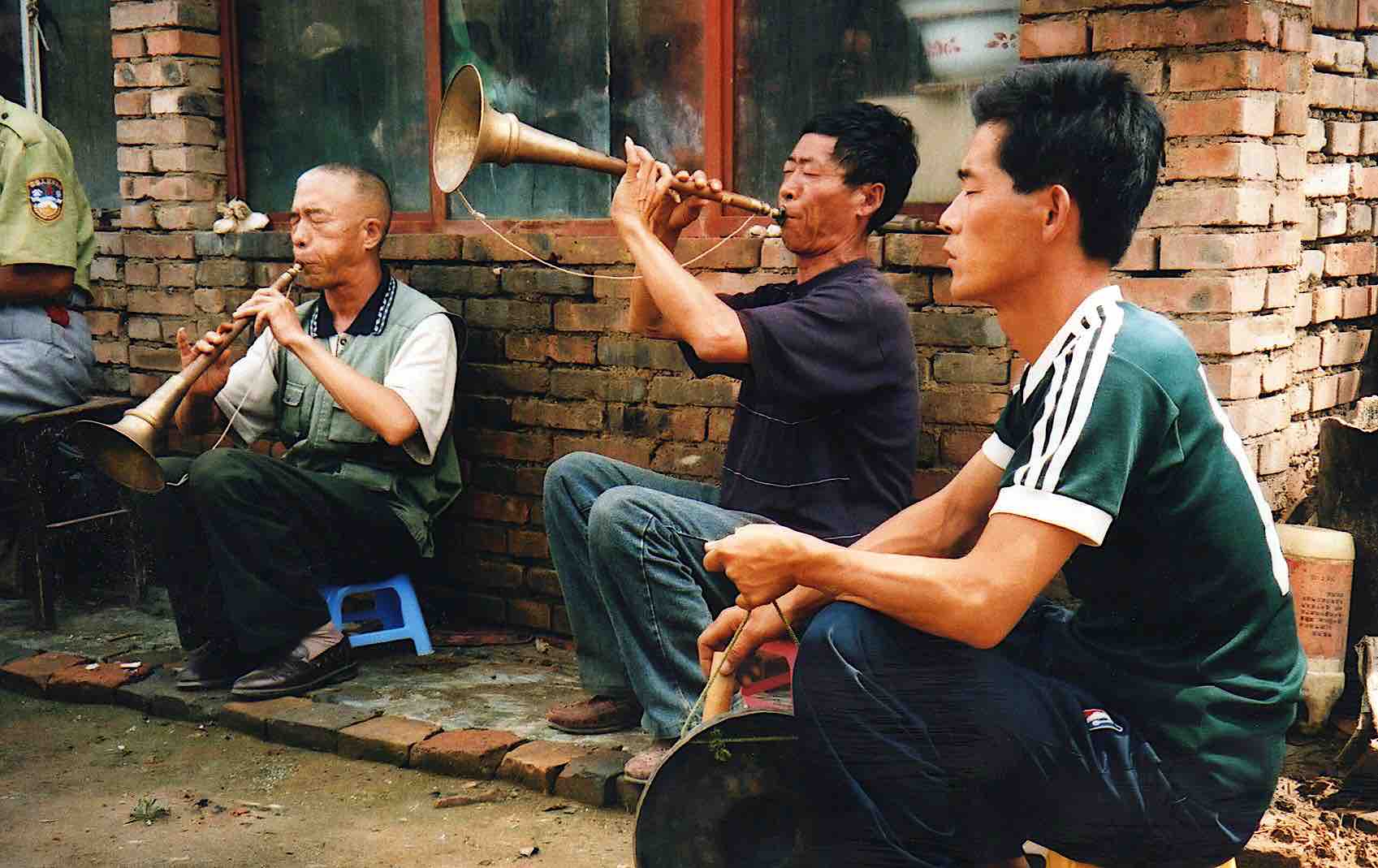
Erhur 2003.2

Session at Xiejiatun, 2003.

If all was not all sweetness and light in the Hua family band, gujiang relations in Xiejiatun sound still more fraught. Several gujiang from Xiejiatun apprenticed themselves to the Hua family: one Erxianr (surname Xie) from Xiejiatun got into a feud with the Yu family, so he made a point of antagonizing them by going over to Hua Fa as “disciple crossing the gate”. Another blindman, Duan Guanming (b. c1927, known as Liuzhi “Six fingers” as he had an extra finger on one hand), also came from Xiejiatun, but got on better with Hua Yinshan than with the Yu family—we found him playing in Hua Yinshan’s band in 1991.
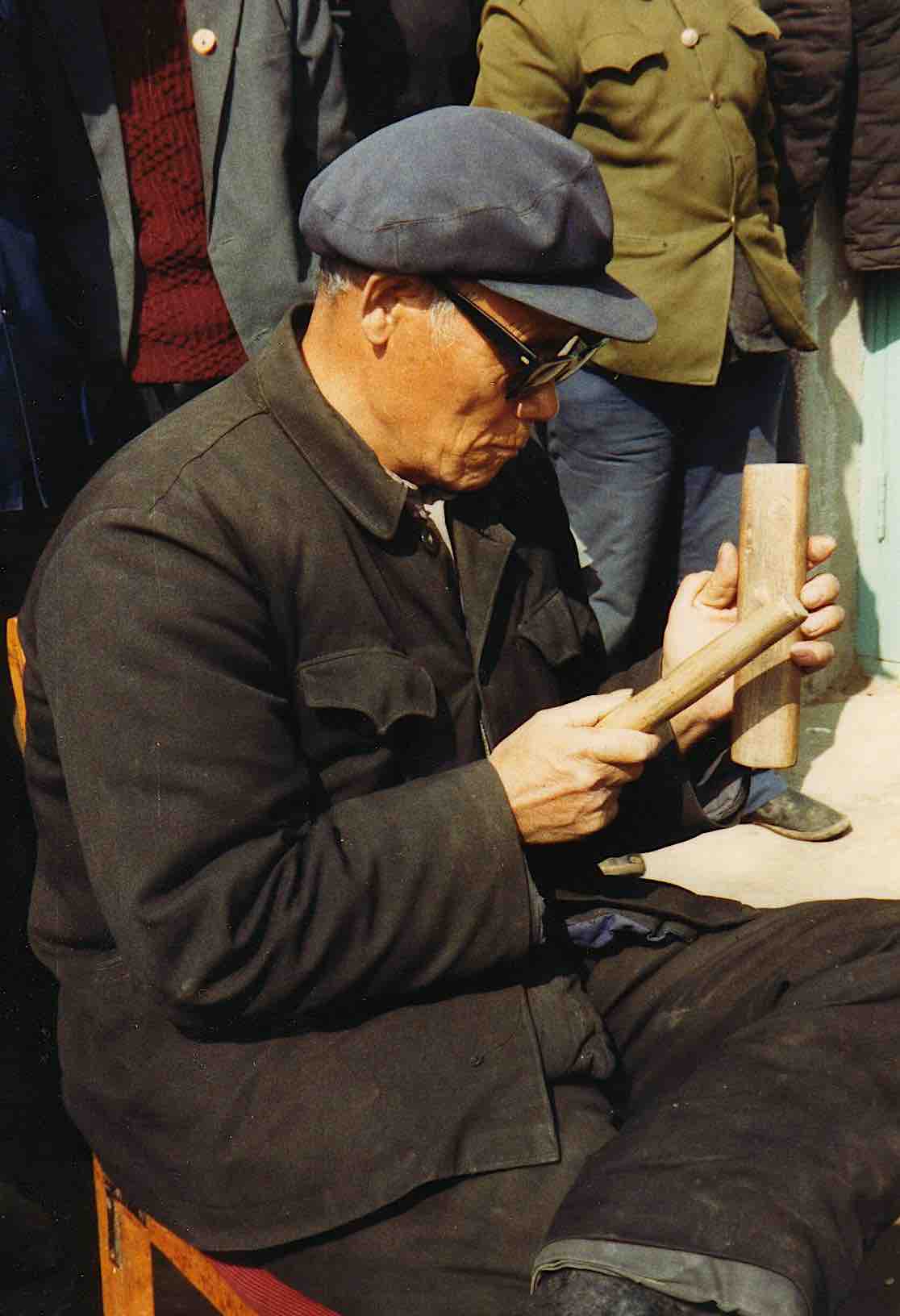
DGM1

Duan Guanming on woodblock, 1991.

Erhur came back to the county-town when he was 18 sui (c1963) to set up his own band, taking disciples. Hua Yinshan didn’t mention this, but in his teens he sometimes played for Erhur’s band these next couple of years; he only played sheng at first, but was beginning to get the hang of the shawm too. There was also a great player in Erhur’s band called Little Jinxi (surnamed Wang), from nearby Qingshunbu. For the operatic pieces played in the afternoon of funerals, he used to play two kouqin whistles at once, making a big sound that drew the crowds. He died on the eve of the Cultural Revolution aged only 41 sui, coughing up blood in the middle of playing—an alarmingly common and prestigious way for shawm players to die.

Yin San
Meanwhile, another blindman was “learning gujiang” in the town. Like Erhur, Yin San (b. c1947) played dizi flute when young. He began learning shawm from 16 sui (c1962) with the blind town gujiang Song Chengxin. Yin San also studied at some stage with a gujiang in Wangguantun township, learning the gongche solfeggio of the shawm pieces from him—which he later forgot.

6 LR,YS

Yin San (right) with Liuru, 2003.

Yin San and Erhur both had town registration, and were blind, so they did not have to apply for leave of absence from any production-team or hand over any money to them, unlike village-registered gujiang. Moreover, their ceremonial activities were tolerated more readily by cadres; blindmen could put all their energies into being gujiang, so they could do well. Yin San recalled that in the early 1960s a band got around 5 kuai for an afternoon, 8 kuai for playing all day, 10 kuai including the burial procession next morning. Erhur claimed that while most bands could earn about 12 kuai a day, his own band was so admired that he could charge 22 kuai. In fact payments were only calculated in terms of cash, they were still paid in food: peanuts or gao paste, 1 jin or half a jin each per day—Yu Fucai’s hemp sack was tough from the oil.

But even sighted village bands could still get permission from their production-team to go out on business. The Xiejiatun band earned a dozen kuai a day then, of which they had to give the commune 1.5 kuai each day they were away, in return for one whole work-point each. The band boss Yu Fucai took 15 shares of the fee plus 10 shares for providing the instruments, while everyone else got 10 shares. Yu only used one or two musicians from outside his own family, so it was worth it. Doing funerals they got to eat out for free too, and didn’t have to till the communal fields all the time, so it was a better life than being a peasant.

Still, I can’t quite build a consistent picture from such accounts of gujiang business before the Cultural Revolution. They articulated no clear distinction between the various periods from 1949 to 1966, though I surmise that business must have been easier before collectivization around 1954, and again briefly during the lull in campaigns from around 1961 to 1964. Yin San claimed rosily, “Before the Cultural Revolution business was even better than today, around twenty days a month—there weren’t so many gujiang then, so there was more work to go round.” But he only took part in the life from the early 1960s.

Conversely, Liuru, who was trying to make a living through the 1950s, said times were tough. Erhur pointed out that there was less business under Maoism than either before Liberation or since the 1980s reforms, because people had less money; one death provided no more than three days’ work in all, whereas earlier and later, taking into account all the subsidiary observances before and after the funeral proper, it might provide up to ten days’ work. He reckoned that in the 1950s, bands might go out on business seven or eight times a month, or “every three days or so”.

They agreed that despite all the famine deaths around 1960, there wasn’t so much business then—if people had any money at all, they’d buy something to eat, not invite gujiang. Liuru recalled that for funerals during the famine years, people could only put out a couple of mantou bread rolls on the altar table before the coffin; whenever there was a death, work-teams turned up to prevent gujiang playing and stop the family burning paper spirit-money, on pain of a fine. Indeed, in Yanggao the famine continued until at least 1965, and people were hungry right into the late 1970s. Still, I think we have to assume a slight and temporary improvement in people’s lives in the early 1960s when Erhur and Yin San set up in business.

The Hua band
In Yangjiabu village just north of the county-town, Hua Fa (1917–87), father of Yinshan and Jinshan, was much admired as a gujiang. His nickname was “Heavenly dragon” (Tianlong); soon he was simply known as “Great gujiang” (Da gujiang). He was also known as “Sighted Fifth brother” (Zhengyan wugar) or “False Fifth brother” (Jia wugar), by contrast with another famous blind gujiang in Zhenmenbu village just further east called “Blind Fifth brother” (Xia wugar, surnamed Xue) or “True Fifth brother” (Zhen wugar)—“true” and “false” alluding to the fictional character Monkey. There was no love lost between rival bands: “True Fifth brother” was murdered by a rival gujiang while they were performing for a funeral in the 1940s.

Hua Yinshan’s second uncle Hua Yi, known as “Second gujiang” (Er gujiang), also smoked opium. Their drummer was a blind man—Hua Fa was also a fine drummer. The celebrated gujiang Little Jinxi, from nearby Qingshunbu, sometimes played for Hua Fa band as well as for Erhur. The Hua band had a long-standing feud with the Xiejiatun band, though some Xiejiatun men preferred to come over to Hua Fa’s band, like blindman Duan Guanming, long a regular recruit. Another disciple of Hua Fa was known as “Second Dragon” (Erlong), from Yaozhuang village just east.

Duan Guanming accompanying Hua Yinshan in trick repertoire, 1991:
note Yinshan’s cloistered daughter.

Hua Yinshan claimed he became the “main beam” of the family band on large shawm from the age of 17 sui (c1964). He had heard the classic suites in the family band for many years, but had apparently only just begun playing them on large shawm.

Hua Yinshan was also working with several other bands in this period, with his father’s blessing, as the family needed all the work they could find. He spent some time in the bands of blindmen Erhur and Yin San, both based in the county-town, playing the lower part on shawm, as well as the sheng mouth-organ and the drum. As we saw, Erhur was a disciple of Yu Fucai’s band in Xiejiatun; the Yu band had a long-standing feud with the Hua band, but there was always some interplay.

Apart from the county-town and the villages of Yangjiabu and Xiejiatun, nearby Guanjiabu was the base of another fine gujiang band. The senior gujiang Shi Youtang (d. c1998) had a blind disciple called Shi Zhenfu, a distant relative of his (though their surnames were different Shi characters); he was known as Errenr “Two people”! Both led bands into the 1980s. Another blindman from Guanjiabu, called Yinhur (surname Li), became a disciple of Hua Fa.

Hua Yinshan told me the story of his father’s no.1 large shawms. In the 1940s a blindman called Chanxi in Guanjiabu wanted to buy a pair of shawms. An itinerant shawm maker called Wang Lianguo had moved from Yuxian in Hebei to Chenjiabu, near Yangjiabu. He went to Chanxi’s house to sell him a pair of shawms—this would have been around 1945, when Hua Fa was in his early 30s, between the births of Jinshan and Yinshan. But Chanxi didn’t know how to choose them, so he asked Hua Fa to help him. After Chanxi died, he left the wooden bodies of his shawms to his daughter, who later sold them to Yinshan.

Over twenty-six days in 1989, as part of their work for the Anthology, the Yanggao Bureau of Culture used their limited equipment to make a whole series of precious cassette recordings of the most distinguished shawm bands, including those of the Hua family, Shi Ming in Wangguantun, and Yang Deshan (father of Yang Ying) in Gucheng, as well as the bands of Xiejiatun, Guanjiabu, Luowenzao township, Qingshunbu, and Greater Antan (see my Ritual and music of north China: shawm bands in Shanxi, p.49).

Li Zhonghe
South of the county-town in Shizitun township, yet another celebrated blind gujiang was based in Yaozhuang village. Li Zhonghe (1908–88), known as Second Kid (Erwa 二娃), went blind at the age of 5 or 6 after an itinerant doctor tried to cure his ailing eyes by putting eggshell over them. Li Zhonghe learnt sheng and shawm from 15 sui, sometimes making up a band with an outstanding gujiang called Wantai (surnamed Cui) from Zhouguantun village nearby. Li had two younger colleagues (shidi) in his village, the brothers Fan Liang and Fan Gao.

Around 1952, after the death of Li Zhonghe’s first wife, he married a widow who already had a son and daughter. The son Li Bin (b.1945, not the same as his namesake, Li Manshan’s son!) played percussion in his stepfather’s band from around 1955, and began learning sheng and shawm, as well as gongche solfeggio, with him about four years later. Li Bin claimed his stepfather’s band didn’t stop playing through the Great Leap Forward or the ensuing famine.

Since the reforms
The collapse of the commune system from the late 1970s allowed an impressive revival of tradition (for the Daoists, see e.g. here). But by 2003 the scene was changing further. Erhur was still leading a band, having readily taken pop on board. He and his wife made a handsome couple, and had a lovely clean household in town—though their son, who managed to enter the police force despite (or by dint of?) a dubious reputation, was a worry. Erhur claimed to be able to perform the three suites that we couldn’t track down; but he was later reluctant to recite or perform them for us, perhaps worrying about my relationship with his rival Hua Yinshan.

Yin San, also married, was getting 90 kuai a month from the government disability benefit, and still led a band, usually playing cymbals. Of his two pupils, the younger had been with him for eight years. They could play the few traditional pieces still required for rituals, and Yin San felt no need to transmit the ones that weren’t. After his fine drummer Ling Dawenr (b. c1924) retired, Hua Jinshan had no competition.

Liuru hadn’t played since around 1988. Now he reckoned that only sighted people could do business (chixiang 吃香, a common term for popularity)—no-one wanted blind people any more. Erhur and Yin San were still doing well by adapting; they were a bit younger, more enterprising, and had more of a reputation as musicians. But he was right that in a cut-throat pop market, blindmen were no longer able to hold their own as gujiang without a solid support network.

The decrepit little shack where we found Liuru living in 2003 had been his “base area” for over thirty years; he bought it with the little money that remained when his parents died. His registration was at Xibei village commune, from whom he got 60 kuai a month benefit; as an urban resident his wife (also blind) got 90 kuai. Since giving up the shawm in 1990 Liuru had survived by begging the left-overs from restaurants, but led a pitiful life. He had no contact with his brothers and sisters, and just before we met him his wife had “gone crazy” and he had seen fit to lock her in an outhouse.

Such is the disturbing fate of a lovely senior musician who could still recite the gongche solfeggio of the eight suites more fluently than any other gujiang in the area. Listening to him as he sat cross-legged on the kang brick-bed which takes up most of the space in his pathetic little room, his eyes vacant yet placid as he spoke with dignity and insight of his days as gujiang, would be an upsetting experience for the most hardened fieldworker.

Li Zhonghe’s stepson Li Bin is an exceptional case. Unusually for a gujiang family, Li Bin did quite well in school. Though intermittently active as gujiang through the early years of the Cultural Revolution, around 1970 he went off to work in the coal mines of Datong city, becoming a cadre there, only resuming gujiang business again when he retired in 1996.

Li Zhonghe had taken up as a gujiang again after the reforms, and was still playing right until his death in 1988. He had a blind disciple (younger brother of talented young yinyang Wu Mei) who showed great promise as a gujiang, but he had only been learning for a few months when Li Zhonghe died. Li Bin now wanted to complete his stepfather’s mission in helping him learn, but the disciple soon decided against becoming a gujiang. However, Li Bin soon found another promising disciple.

By 2003 Li Bin had handed over the leadership of the band to Yu He (Quanmin, b. c1960) who played drum and yangqin; he only took up the business after being demobbed from the army in 1984. So the band was now based at Yu He’s home of Fanjiatun village nearby in Tianzhen county. Yu He’s son Chunbo (known as Bobo, like Hua Yinshan’s grandson; b. c1987) became Li Bin’s only pupil, learning since 2001. Li Bin could afford to be choosy; his criterion for accepting a pupil was that they have to be “of good character” (renpin)—an unlikely demand for a gujiang. After leaving primary school, Bobo “wasn’t interested in anything”, so his dad took him along with the band to show him how tough it was making a living; but Bobo fell in love with the life and became a brilliant musician. Though he mainly played pop, Li Bin also taught him pieces from the traditional repertory.

Da Li Bin 2003

Li Bin (left) with Wu Fan, 2003.

Li Bin is at a certain remove from the tradition, far more educated than most gujiang, and quite articulate. Living in Yanggao county-town, his house is comfortable, and the family is quite well-off. His wife became a Protestant around 1993; Li Bin was still at the mines, and she had a tough time having to look after their three children all alone, with no-one to talk to. Li Bin (not himself a believer) sometimes set Protestant lyrics to pop songs for her to use in church. Sincere and curious to study local traditions, he made a rather ideal co-fieldworker.

We saw how gujiang, outcasts in the “old society”, have gradually become rather more assimilated into society, first by being forced into a sedentary agricultural life under the communes, and then by the equality brought by earning power since the reforms. Along with their outcast status before Maoism came a lack of education or upward mobility. Among gujiang families, Li Bin was exceptional in doing relatively well at school, and even more so in finding a job as a cadre. Still more surprising is that having apparently escaped from the lowly life, he then chose to return to it after retirement. In his case, apart from supplementing his pension and giving him something to do, he feels a genuine enthusiasm for the music he learnt from his stepfather in his youth, only tempered now by its rapid loss under the assault of pop music.

Meanwhile Li Bin has been painstakingly making emic transcriptions of his father’s repertoire (both the suites and the many “little pieces” also formerly required for particular ritual segments), writing a 126-page score with parallel gongche solfeggio and cipher notation. While scholars (myself included) have transcribed the Yanggao shawm suites, this is a unique labour of love from a performer.

Very few gujiang could graduate to the world of urban troupes (for Shi Ming’s brief sojourn in Datong, see here), and while most sons of gujiang were now inclined to seek a more respectable profession, other poor village boys might still see it as a better option than tilling the fields—all the more now that learning pop music is less demanding than the traditional training. Today gujiang bands are often in the age-range of 15 to 45. Their main repertory is pop, besides Jinju and Errentai opera pieces and a dwindling repertory of traditional shawm pieces still required to maintain a façade of ceremonial propriety.

Li Sheng

Li Sheng, 2018.

The two Li families (those of Li Zhonghe and the Li family Daoists) have long been on good terms. The great Li Qing sometimes played in Li Zhonghe’s shawm band in the 1970s, when Daoist ritual was on hold. Li Bin’s younger stepbrother Li Sheng (b.1954) learnt suona and sheng from his early 20s upon the revival, spending some years as disciple of Hua Yinshan. He did some petty trade in Datong, as well as doing, returning around 2000. Gradually he gravitated to playing sheng with the Li family Daoists; he has long been a regular member of Li Manshan’s band.

I introduced Zhang Quan, a rather younger semi-blind gujiang in Pansi village whom I’m always happy to see, in these vignettes of the diverse personalities from whom we learned in Yanggao.

* * *

In some other parts of north China (like the Northeast, or Shandong) shawm bands have long and prestigious hereditary traditions, but here, as in Shaanbei, few bands can trace their history back more than three generations—though their classic suite repertoire is more ancient. Note that rather few gujiang live to old age; until the 1950s many were blind, smoked opium, and died young, and it is still quite unusual to find gujiang still playing in their 60s; anyway, opium-smoking blindmen from a despised caste found it hard to set up a family. By the early 21st century senior gujiang were still happy to take disciples, but as it is a low-status occupation they didn’t necessarily encourage their own sons to learn, hoping they would get an education and a proper job instead. If this is true today, there was less choice in the past, with education even rarer and job opportunities fewer.

While sighted players also deserve recognition as gujiang, and suffered from similar discrimination, blindmen formed the core of many Yanggao bands right until the 1990s. Since then they have become less common, along with the whole rich culture of shawm bands in north Shanxi.

But I still cherish the memory of these blind shawm players—outcasts who embodied the wealth of traditional folk culture that somehow survived down to the eve of the 21st century, dovetailing with the rituals of the household Daoists. With their deep experience of the “old rules” of ceremonial, far from the abstruse erudition of the literati who dominate sinology, they were among the main transmitters of imperial Chinese culture, who should be esteemed.

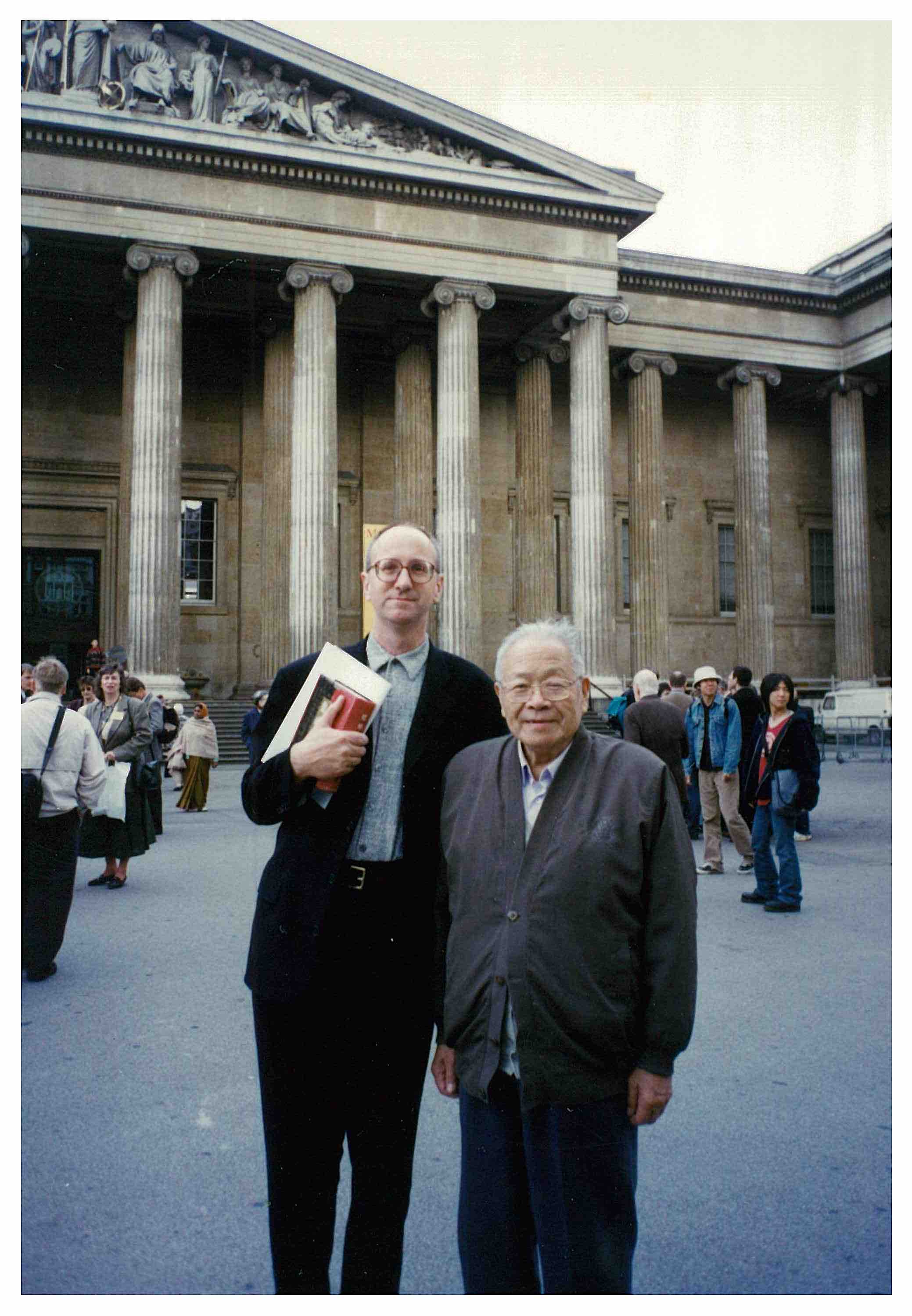
Yang Yinliu: a conference


YYL poster

To commemorate the 120th anniversary of the birth of the incomparable Yang Yinliu 楊蔭瀏 (1899–1984), from 10th to 15th November a conference on his life and work is taking place at the Chinese Academy of Arts in Beijing (more details on WeChat, I trust).

Yang was one of the great musicologists of the world; his research is central our understanding not only of music history but of traditional Chinese culture more generally.

YYLHe excelled not only as a historian but as fieldworker and performer, steering the Music Research Institute through the choppy waters of Maoism. I’ve devoted a lengthy tribute to him; and do consult his tag in the sidebar—adducing his work on early history, folk and elite traditions (the latter embodied by the remarkable team of qin scholars at the MRI), Daoist and Buddhist ritual, and a range of regional instrumental and vocal genres, including

While I don’t much go on for conferences, I’m sorry I can’t attend this one, which also serves as a retrospective on the whole history of Chinese musicology, with contributions from leading scholars. There have also been celebrations in Yang’s home city of Wuxi.


Criticizing Confucius

Given that this is no time for blind kowtowing before authority—anywhere:

Just as Tang poetry isn’t immune from doggerel, maybe we might unfurl a new, more decorous campaign to debunk the uncritical veneration of Confucius (cf. Alan Bennett).

Noting that “Confucius He Say” 子曰 might be rendered as “So the kid goes…” (“I’m like, whatever”; see also OMG), one could regard the Analects an early pilot for Kids say the cutest things 子曰乖事, or an anthology of pithy bumper-stickers (cf. Gary Larson’s cartoon Confucius at the office—”Looks like we’re in for some rain”).

Here’s one gnomic maxim that does rather appeal to me:

君子不器
The gentleman is not a vessel.

Typically, it’s been subjected to a vast apparatus of scholarly exegesis; I like to take it as a critique of reification, one of the banes of studying music (see musicking), religion (see “doing religion“), and indeed Life… Indeed, maybe the qi 器 there is even verbal: “The gentleman doesn’t reify”? * I would like the quote even more if he had said that women weren’t vessels either—but despite recent defences of Confucian sexism, he didn’t (surprise surprise).

As Confucius said when his disciple Yan Hui ** told him he was taking up stamp collecting,

Philately will get you nowhere

(an old joke that goes back at least to Jennings).

As ever, The life of Brian has salient critiques. Here’s one of the Boring Prophets:

There shall, in that time, be rumors of things going astray, erm, and there shall be a great confusion as to where things really are, and nobody will really know where lieth those little things wi- with the sort of … raffia-work base that has an attachment. At this time, a friend shall lose his friend’s hammer and the young shall not know where lieth the things possessed by their fathers, that their fathers put there only just the night before, about eight o’clock.

And indeed the rebuke to exegesis in the Sermon on the Mount scene that opens the film:

I think it was “Blessed are the cheesemakers”.
Ahh, what’s so special about the cheesemakers?
Well, obviously, this is not meant to be taken literally. It refers to any manufacturers of dairy products.

See also Alan Bennett’s classic sermon on “My brother Esau is an hairy man…”


* Cf. “Gentlemen lift the seat”—as Jonathan Miller observed in Beyond the fringe, “What exactly does this mean? Is it a sociological description—a definition of a gentleman which I can either take or leave? Or perhaps it’s a Loyal Toast? It could be a blunt military order, or an invitation to upper-class larceny.”

** My penchant for Yan Hui derives from the ritual shengguan suite Qi Yan Hui 泣颜回,  a title that alludes to Confucius bewailing his early death (for a gongche score, see here, under West An’gezhuang).

A secret language in north Shanxi

6 LR,YS

Blind shawm players Liuru (left) and Yinsan, Yanggao town 2003.

The use of Verlan backslang in Engrenages/Spiral reminded me of a fascinating secret oral language in north Shanxi. I’ve mentioned it en passant in my writings, but since I can’t seriously expect readers to follow up such links, it deserves a post to itself.

Known as “black talk” (heihua), it belongs to the wider family of insiders’ languages used by marginal social groups and tradespeople. [1] In north Shanxi it was spoken mainly by the members of outcast shawm bands (here called gujiang 鼓匠 rather than the common chuigushou), illiterate and often blind—mainly, but not entirely, for secrecy. Here I cite the section in

  • Wu Fan 吴凡, Yinyang, gujiang 阴阳鼓匠 (2007),
    Yuebande heihua” 乐班的黑话, pp.119–25.

During her fieldwork in Yanggao county Wu Fan—a native of Wuhan in Hubei—latched onto this arcane vocabulary with amazing alacrity (for her own skills in punning with Daoists, see here). Meanwhile, local scholar Chen Kexiu (to whom we may credit the “discovery” of the Yanggao Daoists and shawm bands), brought up in Yanggao, published an article incorporating the wider region of north Shanxi:

  • Chen Kexiu 陈克秀, “Yanbei guchuiyue yirende heihua” 雁北鼓吹乐艺人的黑话, Zhongguo yinyuexue 2007.4.

The terms for numbers (used mainly to discuss money and fees: Table 2–5 below) were still common until recently. They describe verbally the components of a character, just as Chinese people do routinely when explaining in conversation which character to use, like koutian wu 口天吴 for the surname Wu 吴, or wenwu bin 文武斌 for the given name Bin 斌.

heihua

Above: numbers; below: instruments.

To explain a few instances:

  •  1:  yi 一 becomes dinggai 丁盖, “the cover of the character ding 丁”
  •  2:  er 二 becomes konggong 空工, “the character gong 工 emptied”
  •  3: san 三 becomes chuan 川, rotating the character 90 degrees
  •  7:  qi 七 becomes zaodi 皂底, “the base of the character zao 皂”
  •  8:  ba 八 becomes fengai 分盖 “the cover of the character fen 分”
  • 10: shi 十 becomes tianxin 田心, “the heart of the character tian 田”.

What is remarkable here is that this style is used by illiterate, often blind, shawm players. The theory is that blind men, unable to see who might be listening to their conversation, needed a language where they needn’t fear saying something indiscreet, such as offending their patrons. Yet it’s a highly visual language; I wondered how it came into being. After all, even illiterate blindmen could be told how some characters were written; but you don’t have to know the etymology of words in order to use them!

One might suppose that these terms would be more widespread, but I haven’t found other instances yet. At the same time, another vocabulary for numbers (in various written forms) was in common use here—as around Beijing, Tianjin, and Hebei:

1 2 3 4 5 6 7 8 9 10
刘 (流) 王 (汪) 挠 (神) 斜 (心) 内 (爱)

Throughout China, folk musicians commonly use local terms for their instruments (Table 2–6 above); such names are still used in Yanggao and elsewhere (cf. other areas such as Shaanbei). The derivation of the insiders’ terms for repertoire (Table 2–7 below) is obscure; again, the stimulus was perhaps secrecy—to avoid their choices being understood by their patrons. But these terms seem to have become largely obsolete, along with the repertoire itself (for the searing complexity of which, see here).

heihua 2

Above: titles of shawm suites; below: terms in daily life.

Expressions for daily life (Table 2–8 above) include huoyin 火因 for yan 烟 “smoke” (again splitting up left and right elements of the character); tiaoma 条码 “hottie”; dianyou 点油 (“lighting oil”) for hejiu 喝酒 “drinking liquor”; and kou 口 (prounounced kio) for chi 吃 “eat”. Some of these are dialectal, heard in more general parlance. Chen Kexiu gives an extensive list—and his examples of conversations are daunting:

convo

As you can see there, even the local term gujiang for the members of shawm bands becomes pijia 皮家 (“skins”) in their own parlance.

Thickening the plot, Chen Kexiu goes on to introduce a separate style of black talk used by shawm bands, one that incorporates the ancient fanqie 反切 phonetic system into speech (qiekou 切口) (cf. the blind bards of Zuoquan county). For instance, while the term xunmenshi (or xingmenshi 行门事, yingmenshi 应门事, with shi pronounced si!) is standard local parlance for performing a ritual, one shawm player might ask another (cf. the simpler but no more intelligible 去哪儿贬皮呀? above):

呆劳乃拉许论没人是哩? (到哪儿寻门事?)—“Where are you going to do the ritual?”

Unlike the specialized secret vocabulary that we noted above, once you grasp the principle you can apply it to any words—and it doesn’t require literacy. But the shawm bands among whom Chen Kexiu collected this qiekou style of speech don’t seem to use the specialized vocabulary like the numerical terms; he attributes the qiekou style in particular to the lowly hereditary families of ritual specialists known as “music households” (yuehu), who were descended from banished imperial officials. While there is plenty of evidence for the yuehu further south in Shanxi [1] and elsewhere, I’ve never been very convinced by the piecemeal clues to their presence in north Shanxi. All this is tenuous, but perhaps the supposed yuehu connection for this particular style might just go towards explaining the literate, visual basis of the numerical terms, which otherwise seems so mysterious.

* * *

Much of this vocabulary of the shawm bands was adopted by folk opera groups, also lowly in status; and through constant interaction at rituals household Daoists like the Li family, while somewhat more esteemed, used it to some extent. Of course, all these expressions are pronounced in Yanggao dialect, itself none too easy for the outsider to understand; heihua (“black talk”) itself is pronounced hehua!

The language was still commonly used in the 1990s, but senior blind shawm players were giving way to younger players who no longer suffered such social stigma, and their traditional repertoire was largely replaced by pop. Still, it reminds us what a daunting task it can be for fieldworkers to enter into the aesthetic world of folk performers.

Let’s recite the numbers 1 to 10—altogether now:

dinggai–konggong–chuan–hui–chou–duanda–zaodi–fengai–quwan–tianxin

For some erudite literary wordplay from household Daoists in Yanggao, see here.

Spiral

A worthy competitor with the various classy Scandi noirs that enrich Saturday nights on BBC4 is the French Spiral, whose seventh series has just started. If you’re new to it, it’s worth starting from the beginning—in which case, let’s talk again sometime next year.

The French title Engrenages doesn’t translate easily, referring to interlocking gears—by extension, an inescapable series of events, almost a vicious circle: “Enmeshed”, perhaps?

As with the Scandi noir series, the Grauniad recaps—and their BTL comments—are most enlightening. This led me to Alison Crutchley’s article on the language of the series, “Pute de merde de con! The linguistics of Spiral slang“—again to be read with important BTL comments. As you may imagine from A French letter (a drôle resumé of my Li Manshan film), my schoolboy French is utterly unable to keep up with such dialogue as it flies past; but the article makes fascinating reading.

Thus I learn of loan words like bagnole (from Occitan), “car” (also caisse); and clebs, “mutt”, from Arabic. And

Spiral’s cool kids use Verlan, a type of back slang. Karen calls her girl friends les meufs, Verlan for femmes; Zach texts keufs to his accomplice, to warn him of les flics (“police”).

What’s more, keuf (from keufli) has been re-verlaned, with further resonance, to feuk! And occurring along with the Chinese underworld theme of series 7 is noich (or noichi), for chinois.

anvers

Further topics (also continued in the BTL) include the minefield of using tu and vous (cf. Italian, and this splendid Chinese story); gender; and the subtleties of swearing (cf. French taunting), with arcane variants and combinations of putemerde, and con. It’s amusant to learn that the French for fisting is le fist-fucking, although le fisting apparently serves too—either way, let’s consider it another English export in which we can take patriotic pride.

But just when we thought we were world leaders at punning, it turns out that French is exceptionally rich in puns too. Is rien sacré?

Surely this is the way to inspire kids to learn foreign languages. Surely Quelle bande de branleurs! (“What a bunch of wankers!”) is more attractive and practical than La plume de ma tante. I did indeed relish languages at school, but for some reason the ones that I (like the board of the LA Phil) favoured were all dead (cf. Revolution and laowai). So now I regret that it took me so long to realize that languages could be not so much an elegant yet gratuitous abstraction, or a sadistic ordeal of irregular verbs, but rather, a pathway to understanding fascinating cultures and communicating with real living people (“Like, hello?”).

Conversely, in this case I’m relieved that I can enjoy the script’s linguistic niceties from the comfort of my sofa without having to negotiate them in the gritty milieu that the drama depicts—as has been aptly observed, it’s hardly a promo from the Paris Tourist Board. Spiral really puts the noir into noir.

And now we can relish Series 8 on BBC4!!!

Meanwhile in Glasgow, Irvine Welsh’s novel Trainspotting is helpfully provided with a glossary… For English word games, see here; for the evolving Chinese language, here. See also Kaliarda, Lubunca, Polari.


[1] Note Qu Yanbin 曲彦斌, Zhongguo miyu hanghua cidian 中国秘语行话词典 (1994). 

[2] For links to the major studies of Xiang Yang and Qiao Jian on the yuehu in the Shangdang region, see my In search of the folk Daoists of north China, pp.86–7.

What is serious music?!

*For main page, click here!*
(in main menu, under WAM)

I’ve just added a lengthy article on the demotion of WAM, and the flawed concept of “serious music”. It’s based on the stimulating work of Richard Taruskin on the “classical music crisis” prompted by the defection of critics to pop music since the 1960s, as he challenges “centuries-old cultural assumptions” such as the myth of musical autonomy. This is typical of his bracing style:

The question that throbbed and pounded in my head was whether it was still possible to defend my beloved repertoire without recourse to pious tommyrot, double standards, false dichotomies, smug nostalgia, utopian delusions, social snobbery, tautology, hypocrisy, trivialization, pretense, innuendo, reactionary invective, or imperial haberdashery.

On the evidence before me, the answer is no. The discourse supporting classical music so reeks of historical blindness and sanctimonious self-regard as to render the object of its ministrations practically indefensible. Belief in its indispensability, or its cultural superiority, is by now unrecoverable, and those who mount such arguments on its behalf morally indict themselves.

I go on to query his recourse to the term “serious music”, broadening the topic to musicking in other societies.

If there are so many “serious” genres all around the world, what seems exceptional about WAM is its apologists’ sense of mission, and their concomitant sense of embattlement. Without wishing to discourage ongoing research, perhaps we should just leave the WAMmies to get on with their arid defences of a waning prerogative. So we might simply ignore labels like “serious” as a nervous attempt by an impotent elite to claim that “our culture is superior to yours”.

That’s just a taster for the article—now click here!


A village scholar

My vignettes from Gaoluo, taken from my book Plucking the winds, have featured both performing members of the village’s amateur ritual association (Cai Fuxiang, He Qing, Cai An) and supporters like the venerable Shan Zhihe. The name of Shan Fuyi has already cropped up in several posts, but he deserves a separate account.

SFY

Shan Fuyi (right) with my trusty colleague Xue Yibing, 1996.

Shan Fuyi (b.1940) is considered the village’s xiucai talented scholar. Amateur historian, painter and calligrapher, he is widely admired for his intelligence and artistic bent. He was given the task of writing the village history in 1965, and in between making donors’ lists for the opera troupe and the ritual association he did artwork for the Mao Zedong Thought Propaganda Troupe. Latterly he became a trusted employee of Boss Heng, the village’s own nouveau-riche entrepreneur.

We had heard so much about him, but since he was based at Boss Heng’s workplace near Laishui county-town, we never coincided in the village—he seemed elusive, and we even joked that maybe he was a figment of our imaginations.

Finally in 1996 we sought him out in his work-unit. He affably sat us down and, without any preamble, launched into a detailed account of the village from its founding through to the 1990s, instinctively understanding our brief without any need for the long justifications which we sometimes have to give cadres or even ordinary villagers. Indeed, later we did indeed meet up back in the village. Our hopes were well rewarded, and we had many edifying sessions with him, learning from his wide-ranging and impartial knowledge; his detachment in observing the vicissitudes of the village’s history was of rare value.

He is the main source of my account of the village’s early history (Plucking the winds, chs.1–3); indeed, his work gave us valuable perspectives on the history of the whole area, not least the terminology of village names and the she parish network.

Shan Fuyi is not a ritual specialist, and regards himself as a “thorough atheist”, but he takes a keen yet dispassionate interest in all aspects of human behaviour. He’s never been the leading type; unlike most Chinese, who are long accustomed to public speaking, he is petrified of such occasions; with my own stammer, this further endears him to me. He seems to float above the village, observing with detachment and perception. He understood our mission implicitly. He is at once down-to-earth and transcendent. Unassuming, introverted, yet humorous, he never bothered with the empty platitudes of Party-speak. Still, recalling his experiences in the Cultural Revolution and since, he reckons “I keep right up with the way things are going”, a charmingly ambiguous comment; perhaps his very detachment has enabled him to ride all the storms.

Shan Fuyi’s early years
Born in 1940 to a virtually illiterate father, Shan Fuyi attended private school in Zhuozhou county just north for half a year during the civil war when he was 7 sui. With quiet humour, he recalls:

Our texts were The Hundred Family Surnames and The Three Character Classic; when the 8th Route Army passed through we recited “Long live Chairman Mao”; when Nationalist troops passed through we recited “Long live Chairman Jiang” [Chiang Kaishek]; having not offended either of them, when they had both left we could get back to reciting “Zhao, Qian, Sun, Li” [The Hundred Family Surnames] again!

His godfather was Sun Xiang, a spirit medium and folk healer. In 1949 he entered 2nd grade at the village primary school. He recalled the village’s last rain procession that summer. From 1955 he attended the No.1 Secondary School in Laishui county-town, graduating from the junior department early in 1958. He then passed an exam to study surveying at technical college in distant Taiyuan, capital of Shanxi province to the west. In 1960 he began training at the Shanxi Machine Building Factory, but like many villagers, in the autumn of 1961 he was forced by the grave national economic hardships to return home to South Gaoluo, cutting short a promising career. He now served as book-keeper for the brigade orchards.

Meanwhile the village ritual associations continued to adapt to the new regime. After the Great Leap Forward and the famine, the revival of the early 1960s (however short-lived) was significant for the transmission of traditional culture. Not only were the village’s ritual associations reinvigorated, with a substantial group of new recruits training, but the opera troupe also revamped their equipment (Plucking the winds, pp.143–5). Like the ritual associations, they too sought donations from all the village households, shown on Shan Fuyi’s donors’ list dated 2nd moon 1964. In 1996 the musicians took it out to show us:

opera beiwen 1964 edited

Writing a village history
In 1965 the Four Cleanups work-team ordered Shan Fuyi to compile a history of the village up to Liberation in 1948. This may seem like an unlikely task, but their purpose was frankly political: in order to “cleanse the class ranks”, they needed a definitive version of the village’s history (for more, see here).

In north China, apart from county gazetteers (from imperial, Republican, and reform eras), in some counties one finds slim volumes of “material on cultural history” (wenshi ziliao); but with rural literacy low, this is the only history of an individual village that I have seen compiled by a local scholar.

As I observed here, in my work with the Li family Daoist in Shanxi I mainly talk with one extended family, seemingly detached from politics, and with hardly any contact with local leaders. Indeed, the experience of “freelance” household Daoists was different from that of peasants tied to the land, and they were always straining to gain some independence from the production teams. Though inevitably deeply affected by political vicissitudes, they had little investment in the public affairs of the village. In Gaoluo, by contrast, several sources helped me to put the village’s ritual and social culture in political context: many of the members of the association held positions of authority under all three periods of 20th-century history, so we naturally talked with the village leadership. With their detailed knowledge of the modern history of the village, several men were able to offer clear accounts of major events in the area and to connect them to the village’s ritual association. But some of our most detailed material came from our talks with Shan Fuyi.

Back in 1965 he conscientiously set about the task of compiling the history. Though the avowed focus would inevitably be the modern political background, he avidly sought evidence for the early history of the village, right back to its founding in the Yongle reign-period (1403–24) of the early Ming. Apart from documenting oral traditions, he consulted several steles: those of the North Baibao temple from the Ming-dynasty Jiaqing era (1522–66), the temple of North Gaoluo from the Qianlong reign (18th century), and the Wenpu si temple in South Gaoluo from the Daoguang era (1840s).  All these steles were soon to be destroyed. Still, even by the 1990s considerable material evidence survived for the history of both North and South villages of Gaoluo, supplementing Shan Fuyi’s research.

cunshi

The opening of Shan Fuyi’s village history.

After our first meeting with Shan Fuyi in 1996 we all sought the history everywhere in the village and in the county-town, but it didn’t surface. In 1998 he finally brought out a revised version of the history for me, with a mere twenty pages; as he told me, his 1965 version was rather more detailed but also couched in more revolutionary language, full of criticism of “bad elements”, while for his new version he used a more natural style. In a charming reversal of one’s preconceptions, he was apparently giving the foreigner a version from which Communist propaganda had been censored!

In fact our detailed conversations with Shan Fuyi were much more honest and complete than any official version could possibly be. Moreover, his written history went only as far as 1948, whereas our sessions together took the story on to the present. Indeed, he was a thoughtful source for the Maoist and reform eras too.

One topic on which I was able to find considerably more detail in sources from outside the village, unavailable to Shan Fuyi, was the 1900 massacre, which turned out to be a major episode in Boxer history (Plucking the winds, pp.37–42 and p.387 n.42). A team from Tianjin University even came to carry out interviews in 1974. Similarly, while elderly villagers still recalled the Italian missionaries before 1949, I managed to document them further through the Stimmatini archives in Verona.

Inevitably, the representation of events surrounding the complex struggle for Liberation was particularly sensitive and controversial. In 1965 Shan Fuyi was still able to interview most of the protagonists in the revolution, including long-serving Party Secretary Heng Futian—despite his recent demotion—and the traumatized Cai Fuxiang.

The brigade gave work-points to those taking part in the meetings—I had to note them down. We sometimes met at Cai Fuxiang’s house—the meetings were held anywhere convenient.

By no means all the meetings were group sessions:

To understand the situation with “negative characters” (those with particularly bad historical problems) we usually did one-to-one interviews—viewpoints could be so different, you couldn’t sort it out in group meetings.

The next stage was to seek corroboration:

After absorbing the statements we’d taken from people in the village, we needed to corroborate them with historical material, so we sent to the county-town for old police statements. We were very conscientious about seeking proper evidence. Whenever I needed any material, I wrote a note for the work-team, and they sent people to get it.

Cai Fumin, one of the large group of young men who had just begun learning the ritual music, was secretary of the village Youth Corps. He recalled,

The work-team wrote a letter of introduction, and me and Ding You went down the county police station to copy a load of statements, like He Jinhu and He Jinshui’s confessions (they’d been executed as counter-revolutionaries), about how they’d fled, how they’d organised the Return-to-the-district troupes and stuff.

The Cultural Revolution
Shan Fuyi remained largely aloof from factional upheavals. He was known as a good writer and artist, and just as in 1964 he had made the donors’ list in traditional style for the opera troupe, now he inevitably got roped in by both Red Guard factions to write the inscriptions for armbands and flags, and to paint cartoons of “class enemies”. “Large-character posters” were pasted up on the wall of the brigade just opposite maestro Cai An’s house, beside Shan Fuyi’s spirited cartoons showing Capitalist Roaders in dunce’s caps and ratlike figures carrying sedans. As he recalled:

I criticised Deng Xiaoping, criticized Confucius, criticized Liu Shaoqi, criticised the Gang of Four—I criticized everyone except Chairman Mao!

The activities of the village Red Guards were both farcically infantile and casually vicious. While factional strife was not as yet too serious, the Red Guards now singled out not only cadres but helpless individuals with bad class backgrounds.

One main target of the Red Guards’ mission to destroy the “Four Olds” was the demolition of the Catholic church. But they had to work harder to find other icons to smash. The statues in the old temples were so decrepit that no-one had cared much when the brigade finally got rid of them in the early 60s. As Shan Fuyi observed caustically,

The Red Guards were searching for more things to destroy, but there was nothing left, so they had to fight each other instead!

Meanwhile stalwarts of the ritual association scrambled to rescue what artefacts of the village’s tradition that they could, like the Houtu precious scroll.

Shan Fuyi helped out in the village’s Mao Zedong Thought Propaganda Troupe, painting scenery and doing make-up. Still, petty rivalries persisted. Shan Fuyi recalled the troupe going to perform in nearby Fuwei village in 1967 or 1968. Just like a traditional ritual association, they sent someone ahead to issue a red “paper of homage”; the host village then made preparations, setting up the opera stage and matting tent, and making arrangements to feed the performers. When the day arrived, the hosts walked to the entrance of the village to receive the Gaoluo troupe:
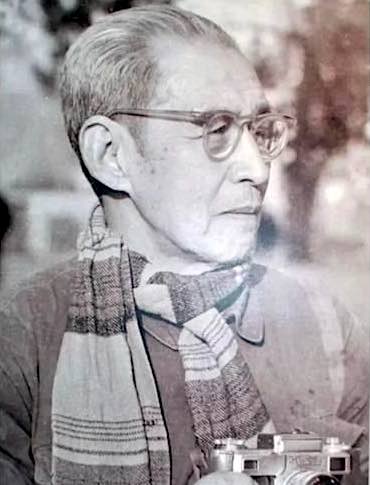
The United faction managed to put the boot in that day. They spread a rumour that the opera troupe was only going to perform there so they could cadge a free meal. The performers had no choice but to display their revolutionary fervour by nobly declaring that they wouldn’t perform at all if the village insisted on feeding them; they had brought their own rations, and they would absolutely not eat other people’s food! It was late at night by the time the performance came to an end, but they stuck to their guns and went home with empty stomachs, honour intact.

For more on the Cultural Revolution in Gaoluo, see Plucking the winds, ch.6.

Shan Fuyi’s wedding
Meanwhile, at the height of factional conflict, Shan Fuyi got married on the 29th of the 10th moon in 1966. The wedding was a sign of the subtle obstinacy of tradition. Though no great traditionalist himself (his historical erudition is quite dispassionate), as he recalled it for us thirty years later, it was the resistance to imposed modernity which he stressed—he didn’t mention the correct “revolutionary” part of the ceremony at all. They naturally wanted to invite the school percussion band (“gong-and-drum brigade”, luogudui) to give them a lively send-off.

Although these bands were widely used by work-units everywhere to “report joy”, at the time the use of such music for private celebration was considered feudal—indeed, loud percussion in China commonly serves an exorcistic function to “chase off ghosts”. So at the time the school band was not supposed to play for weddings: the revolutionary slogan went “new affairs must be conducted in a new way”. But they weren’t putting up with that: the evening before the wedding they still borrowed the instruments, and our friends suave Shan Ling and upright teacher Shan Rongqing got up a band to play on the edge of the village; on the big day they played in Shan Fuyi’s courtyard.

Incidentally, the blowers-and-drummers from Shiguzhuang just north (who had escorted Shan Zhihe‘s bride in 1937) had still kept active in the 1950s, but after the Cultural Revolution broke out they too were silenced; during wedding feasts some families now asked the blind Shan Jiuhong to sing a few stories instead.

The other area of conflict between tradition and revolution in Shan Fuyi’s wedding was the custom that the couple should ride horses. The chief of the Women’s Association had dutifully informed them that the bride must not observe this feudal custom; but again they got round the problem. They got hold of a couple of horses and rode the three or four hundred metres from his bride’s house to his own, led by villagers taking the bridles. There were five or six tables at the feast, mainly for the two immediate families.

The response of the village cadres was also a sign of the times. They diplomatically stayed away, making excuses that they had business to do outside the village; if they went to the wedding, they’d have to criticise it, or else they’d be criticised themselves later, so it was better just to stay away and feign ignorance. Such “one eye open, one eye closed” behaviour has ever been a major part of “socialism with Chinese characteristics”: within the village, ideology and policy have always been sensitive to local conditions.

Since the reforms
Through the 1980s, after the collapse of the commune system, Shan Fuyi farmed his own land. He also found outlet for his artistic talents by painting landscapes for the corridors and gardens of a hospital in the suburbs of Beijing.

Shan Fuyi enjoys painting and calligraphy—as with his penchant for local history, he is self-taught. He did traditional paintings on the walls of the houses of his musician friends Cai Ran, Cai Yurun, and Shan Ling, a rare sighting in such villages. Maestro Cai An told us:

He did four paintings in his house showing the quarrels between his mother and grandmother, like a sort of cartoon. And he wouldn’t let his family take them down, so everyone could see—that takes a lot of guts! The women quarrelled less after that.

Quite soon after the 1980 restoration, Shan Fuyi made a painting for the ritual association. Depicting Dizang, god of the underworld, it was displayed at for funerals and also for the New Year rituals:

GL Dizang

During this period while he was quite free, he also wrote a lengthy novel, “Dream of the spring boudoir”, aka “Miasma on the river of love”:

novel

novel intro

It describes illicit young love and wedding customs during the Cultural Revolution, against the background of a village opera troupe and the reclaiming of village land. He sent it to the Literature Association of the regional capital Baoding, who responded frankly that while it was well above the level demanded for publication, it wasn’t commercial enough since it was “pure literature”, not like the popular martial-arts romances that people wanted to read nowadays; if he wanted to publish it, he’d have to put up the money himself. So he put it back in his drawer. But in a poor rural society where literacy was still low, it’s impressive.

It was Shan Fuyi who made the ritual association’s handsome new donors’ list in 1990. Though we didn’t meet him until 1996, he was well aware that our first visit in 1989 had acted as a stimulus for a reinvigoration of the association. His phrase on the list, showing that the decrepit nature of their ritual building seen by a foreign visitor “lost face” for the Chinese people, turns out to have been sincere. For his story about the sexism of such donations, see here.

1990 beiwen

Shan Fuyi’s circumstances were transformed in 1991 when Boss Heng invited him to work at his embryonic tourist complex north of Laishui county-town, where he was made responsible for designing and organising architectural and horticultural features.

Shan Fuyi’s wife sometimes looked after the luxurious mansion of Boss Heng in South Gaoluo—a remarkable contrast with the lowly dwellings of other villagers. Of their four children, one son, training for a post in the air-force, married Boss Heng’s daughter on the politically-correct day of 1st October 1997, anniversary of the founding of the PRC. Though his connection with Boss Heng seems an uneasy alliance, this match must have confirmed his position as Heng’s protégé.

In 1995 my Gaoluo friends asked Shan Fuyi to do the calligraphy for a poem they had composed for me, which is one of my most treasured souvenirs:

GL scroll

One day, at a quiet and informal lunch with him and his family in the village, feeling utterly relaxed, I even broke my rule never to touch the lethal baijiu Chinese liquor, so free was he of the usual pompous macho ceremony which accompanies a drinking bout—and A Good Time Was Had By All.

Edifying commercial break: the highly palatable and efficacious Chongzhi Spirit, like Laishui county-town’s most enterprising institution, the Chongzhi Secondary school, is named after the great local mathematician Zu Chongzhi (430–510), who made what was to be the world’s most accurate measurement of Pi until the 16th century. A lot more accurate than if he’d been imbibing his eponymous spirit, I mused as I staggered out into the alley.

* * *

Again we see how the ritual association involved the whole village, serving its ritual needs both before and after Liberation. While Shan Fuyi was not an active member of the association, his research made major contributions in unearthing its history, and his artistic talents were in constant demand. We learned a lot from him.

Smiling in China

jingtang

Relaxing in the scripture hall between rituals, Yanggao. From my film.

A brief introduction to the origins and history of smiling by Antony Manstead leads me to ponder China. As even a glance at wiki tells us, it turns out to be just as complicated as all others kinds of human behaviour. Here are some preliminary, random notes, awaiting a more thorough study.

Manstead concludes:

Turning points in social practices over time, such as the emergence of dentistry in 18th-century France, the rise of the advertising industry in 20th-century America, changes in social norms regarding the appropriateness of emotional displays and changes in immigration have all contributed to observable differences in how and when we smile.

Another report comments:

One common Russian proverb translates as “smiling with no reason is a sign of stupidity”, while a government leaflet on working in Norway warns that you’ve been in the country too long if you assume smiling strangers are drunk, insane, or American.

Smiles have been classified under many headings, such as fearful, miserable, dampened, embarrassed, qualified, compliance, coordination response, listener response, contempt, angry-enjoyment, fake, flirtatious, and the famous Duchenne smile.

Laughter may seem like a more spontaneous reaction, but it too may be classified under a variety of headings (etiquette, nervous, cruel, and so on). Laughing from amusement is not the same as smiling as a habitual social lubricant, a sign of good will.

Bill Bryson notes how humour is basic to social interaction in Britain. In a passage of Notes from a small island from which I’ve already cited, he observes:

Watch any two Britons in conversation and see how long it is before they smile or laugh over some joke or pleasantry. I once shared a railway compartment between Dunkirk and Brussels with two French-speaking businessmen who were obviously old friends or colleagues. They talked genially the whole journey, but not once in over two hours did I see either of them raise a flicker of a smile. You could imagine the same thing with Germans or Swiss or Spaniards or even Italians, but with Britons—never.

This may be a pertinent comment on the British bourgeoisie, but it will only take us a moment to realize that their habits are anything but universal. We need to unpack different contexts and moments in social interaction—degrees of acquaintance, between friends and within the family; initial greetings and sustained conversation, formal situations, propaganda, and so on.

Bryson’s typical British scenario will not only involve friendly smiles upon meeting, but the whole opening exchange too is likely to take a jocular form. However, the voluntary “social” smile—a form of social signalling—is variable across cultures. Age, class, and economics are clearly important factors: even in Britain, teenagers and poor people don’t feel such a need to express friendliness thus. Smiling is by no means a simple indicator of happiness, but in much of the world—poor societies and war zones, for instance—there’s not much to be happy about. Under state socialism, propaganda only blurs the issue; it’d be interesting to explore how the experience transformed personal interaction. For the USSR, the work of Orlando Figes provides material. None of this maps precisely onto the global happiness index…

China
Like Bryson in Britain, among friends in China I often marvel at their humour; but even observing their social life as a fly on the wall rather than in my exchanges with them, I find much less smiling as social lubricant. Still, again, this is no simple matter.

One would seek to consider diverse social groups, both urban and rural—for the latter, peasants, cadres, entrepreneurs, teachers, traders, vagrants, and so on (for some instances from my own fieldwork, see here).

So here I’m more interested in the incidence of smiling within social groups. However, while outsiders in urban contexts may be able to observe social interaction without intruding on the scene, in smaller rural communities they—whether foreign or Chinese—may not make reliable observers. The arrival of a stranger in such a setting may cause anxiety; but even long-term acquaintance doesn’t bestow insider status. I also think of this wonderful story from Liu Xin. Maybe rural insiders like Mobo Gao would have pertinent remarks.

It will be even harder to document historical change. I look forward to an erudite tome on smiling in the late Tang dynasty. Even analyzing smiles through the 1930s, 1950s, and 1990s may prove difficult, with much of the material based on images rather than ethnography. Under Maoism, as in the Soviet bloc, humour was commonly expressed in the form of bitter jokes (e.g. here, with links; many more instances under Chinese jokes).

For rural China I noted the lack of terms like hello, thankyou, please, and sorry (Daoist priests of the Li family, pp.23–4, cf. here). By contrast with the British jocular small-talk about the weather, a common rural Chinese greeting is: “Have you eaten?”—suggesting a historical anxiety about famine.

Meanwhile the sullen, automatic, negative response “Meiyou” from shop assistants, still standard in the 1980s, began to give way to more friendly exchanges by the 1990s.

As has been well documented, smiling for portraits developed only quite recently even in the West. In China, putting on your best face for the camera has rarely been perceived as requiring a happy smile; posed photos there still typically show serious, unsmiling subjects. This used to bemuse me. While I try to take informal photos, we have also taken many posed group pictures of ritual specialists (see posts under Local ritual), which rarely show anyone smiling.

Qiao family 1962

The Qiao family, Yulin city 1962, in a lull between major social traumas. Showing a range of expressions, it hardly contributes to the discussion—I just love the image.

Photos from the Maoist era (and indeed since), showing workers and peasants smiling or engaged in their work, with no hint of conflict or coercion, are clearly flawed evidence (see e.g. this chapter by Covell Myskens). Most flagrant are images of ethnic minorities singing and dancing—not least the shameful recent CCP propaganda of Uyghurs singing “If you’re happy and you know it”, worthy of Terezin.

Happy Uyghurs

More recently photographers sometimes encourage a smile with the Chinese version of “Cheese!”: “Qiezi!” (aubergine).

Since we’re discussing social interaction here, film footage should be a major database, though again the degree of intrusion of the outsider on the scene will be an element. Apart from documentary, verité feature films are worth considering, such as The blue kite, The story of Qiuju or the work of Jia Zhangke.

Besides class, we should consider gender. Rural women tend not to interact in public, still less with men. Outside the family, smiling may be perceived as indecorous, and their behaviour is highly reserved. Again, one seeks to document their daily interactions among each other. At the same time, social media and the selfie have produced new poses.

As I said, these are just a few preliminary thoughts. Anyway, we obviously have to guard against taking traits that are familiar within the narrow confines of our own society as some kind of benchmark. As I write, the All Black haka shows a distinctive form of social greeting…

Iran: chamber music

Talai

Ostad Dariush Talai.

Following my post on shawm bands of Lorestan, I went along to a fine concert of Iranian chamber music at the Purcell Room led by the unassuming ostad Dariush Talai (b.1953).

In contrast to the loud outdoor soundscapes of rural ceremonial, which inevitably draw us towards local social life, outsiders are often attracted to the more “classical”, “refined” urban chamber genres. Such music is much better represented in recordings, and feeds into the WAM taste for “autonomous”, “absolute” music—a notion convincingly debunked by ethnomusicologists such as NettlMcClary, Small, and Bigenho.

Amaneh Youssefzadeh provides context (in Michael Church, ed., The other classical musics, 2015; chapter here):

Until the 20th century most classical music was performed in private gatherings—for small circles of connoisseurs, at Sufi brotherhoods, for family and friends, or in festivities including poetry recitation; the public concert was essentially a Western phenomenon. Moreover, apart from military music, public musical performance took place mostly in the context of religious and ceremonial rituals which are not considered musical per se; these include events in zurkāneh (Iran’s traditional fitness-clubs), the recitation of the Qur’an (tajwid), the call to prayer (‘azān), the recitation of the national epic Shāhnāmeh (naqqāli), the Shi’a passion play (ta’zieh) and the singing of laments (rowzeh-khāni) […]. Such ceremonies require singers skilled in classical music, and they have been crucial supports for classical music during the periods of decline and discrimination. And in Iran, as in many parts of Middle East, classical singers have traditionally honed their skills in the call to prayer and the recitation of the Qur’an; many celebrated singers from the first half of the 20th century sang in the ceremonial mourning rites described above. Mohammad Reza Shadjarian was a noted qāri (reciter of the Qur’an) before gaining fame as a classical performer.

* * *

At the Purcell Room Dariush Talai, on tar and setar plucked lutes, was supported by his younger protégés Hooshmand Ebadi (ney end-blown flute), Kaveh Mahmoudian (tombak drum), and singer Hadi Hosseini. Like the Chinese qin masters of yore, they play for their own self-cultivation—the dedicated audience in the austere Purcell Room must have felt they were eavesdropping on a private gathering.

In the first half Talai played in duo—first on tar with sensitive tombak accompaniment, and then on setar with the breathy ney. The second half consisted of one long suite, with all three musicians joined by the singer Hadi Hosseini. While the progression of such suites is more episodic than the gradual acceleration of Indian raga from alap to fast sections, it’s always engrossing to follow long sequences—by contrast with the short snappy solos of the Chinese conservatoires!

Here’s a track from Talai’s 1991 Ocora CD:

As a novice, while spellbound by the musicians’ artistry, it would require a thorough grounding for me to get a handle on the modal and melodic features of such pieces. Part of a widespread muqam family that also extends to the Uyghurs, each of the two hundred or so gushehs and the twelve dastgahs of the complete radif repertoire are individually named (cf. nanyin in south Fujian).

This music was one of the main focuses of the great Bruno Nettl. In chapter 7 of The study of ethnomusicology, “Contemplating musical repertories: a sampling of descriptive and analytical approaches”, he is as lucid as ever:

Iranian musicians taught the radif, the body of music that is memorized and then used as the basis for improvisation and composition. They labelled its sections (dastgahs) and their subdivisions (gushehs) clearly, although there was some disagreement on terminology and in determining which gushehs properly belonged to which dastgah. Musicians were willing to analyze certain performances, dividing them into sections and stating upon which sections of the radif each of them, in the improvised performance, is based. An ethnomusicologist who has studied with Iranian musicians can analyze such sectioned performances in this way but can’t be sure, on account of the lack of complete consensus, that the analysis will be accepted by every Persian master. This is the kind of analysis in which the ethnomusicologist does what the musicians of the culture do.

But one could go further. There are, for example, performances or sections that masters of the radif are not willing to analyze in this fashion, giving their equivalent of “he’s just improvising here”. They may say about such a performance that the musician does not know the radif, or he is purposely and expertly mixing materials from several sources, or he is simply playing avaz (nonmetric improvisation) in a dastgah in general, not taking account of the differences among the subdivisions of the dastgah that the radif provides. The first approach mentioned here would simply report these anomalies and perhaps point out the difference between the carefully sectioned and the other performances and refer to the fact that it seems to be readily recognized by Iranians. The second approach would take these unsectioned performances and, with the use of motivic analysis, determine almost moment by moment on which part of the radif each short bit of performance is based. Instead of just accepting that a particular five-minute segment is simply “avaz of the dastgah of Shur”, one could show that it is composed of materials from three gushehs (for example, salmak, golriz, and shahnaz), and makes fleeting references to three other gushehs. Now, certain Persian musicians, when confronted with analysis of this sort, pronounced it correct but found the information only mildly interesting, and not particularly relevant. It seemed that I had tried to take their way of looking at their own music further and had managed to avoid violating their way of approaching the analysis, but I had gone beyond where they were prepared to go, had divided their concepts into units smaller than those they were willing to use. I had gained some insights into how the music is put together; on the other hand, I could no longer claim simply to be presenting the system as it presents itself.

By comparison with my Chinese experience, I find it intriguing how the radif tradition in Iran seems to have been maintained more successfully under the umbrella of conservatoire training and concert performances. Again, Nettl’s templates for the various possible forms of change and responses to modernization are salient.

* * *

The concert inspired me to go back to the great senior masters like Mohammad Reza Shadjarian (1940–2020) and Mohammad-Reza Lotfi (1947–2014). Shadjarian, with his ecstatic singing and principled political stance, was a great icon; his death in October 2020 prompted national mourning (see e.g. here).

MRS

This live performance by Shadjarian is part of a playlist:

I’ve included a wonderful kemenche solo from Mohammad-Reza Lotfi under Indian and world fiddles.

* * *

For a general introduction to the musics of Iran, with discography, see Laudan Nooshin’s article in The Rough Guide to world music: Africa, Europe, and the Middle East, and chapters in The Garland encyclopedia of world music, vol. 6: The Middle East. Note also the site https://mahoor.com/en/. For the “classical” tradition, see e.g. Jean During, Zia Mirabdolbaghi, and Dariush Safvat (eds), The art of Persian music (1991), Laudan Nooshin, Iranian classical music: the discourses and practice of creativity (2018), and Amaneh Youssefzadeh’s chapter in Michael Church (ed.), The other classical musics (2015).

For related posts (under this roundup), see Chamber music of Iran 2, Art music of Iran 3, Iranian livesPerformance, Zithers of Iran and Turkey, Central Asia: shashmaqom at SOAS, and Three women of Herat. For more on the folk-art dichotomy, see e.g. Italy: folk musicking, and Das Land ohne Musik, as well as Popular culture in early modern Europe.

A Shanghai Prom

SSO Prom

I’m not exactly in the mood to celebrate glossy official showpieces for Chinese modernity, but I appreciated the TV broadcast of the recent Prom by the Shanghai Symphony Orchestra, conducted by Long Yu.

The Beeb still can’t help going to town on the unbeatable cliché “East meets West”—as if even now all this, um, International Cultural Exchange (oops, there goes another one) is some novel discovery, some audacious, exotic experiment (cf. They come over ‘ere, and China–Italy).

One of the most readable accounts of Chinese music,

  • Richard Kraus, Pianos and politics in China (1989),

gives some leads to the chequered history of the orchestra. It originated in the Shanghai Public Band, founded back in 1879 by a German professor with six other European musicians. In 1907 it became the Shanghai Municipal Symphony Orchestra, and in 1919 they hired the Italian conductor Mario Paci (1878–1946; see also here), a graduate of the Paris Conservatoire; his orchestra included many White Russian and Italian musicians.

In 1922 the orchestra was renamed the Shanghai Municipal Council Symphony Orchestra. Under Japanese occupation it became the Shanghai Philharmonic Orchestra. Among the Jewish refugees from Nazism who swelled the city’s expat population from the mid-1930s were many musicians.

Some Chinese players were admitted from the late 1920s, but by 1938 there were still only four of them in the orchestra; paid less, they had no social interaction with the European musicians. The audiences too were mostly Caucasian.

Among the Russian musicians in Shanghai was the composer Alexander Tcherepnin, who promoted both Western and Chinese music in Shanghai and Beijing from 1934 to 1937. Bach’s B minor Mass was performed in Shanghai.

Paci was a leading light in the founding of the Shanghai Conservatoire in 1927. In 1935 he invited the composer Xian Xinghai to conduct the orchestra for a concert, but they refused to play under the baton of a Chinese. Paci was in charge of the orchestra from 1917 until 1942, when the orchestra had to disband, with many foreign musicians and conductors leaving. After the 1949 “Liberation” it was re-formed in 1950, becoming the Shanghai Symphony Orchestra in 1956.

One of the protagonists of Kraus’s study is the pianist Fou Ts’ong (1934–2020), who studied with Paci from 1943. Seeking political asylum after the 1958 Great Leap, he made his home in London, where he became a great friend of my own violin teacher Hugh Maguire.

The orchestra inevitably suffered grievously as the Cultural Revolution exploded in 1966. Whereas Soviet orchestras had managed to maintain high standards, Chinese orchestras, even after the liberalizations from the late 1970s, took many years to develop.

I’m pretty sure most of the band would be bemused by my own tastes in musicking around ShanghaiKunqu, folk opera, silk-and-bamboo, Daoist ritual… Meanwhile the more cosmopolitan aspect of musical life in swinging Shanghai before Liberation is covered in another fine book,

  • Andrew Jones, Yellow music: media culture and colonial modernity in the Chinese jazz age (2001),

It opens with a vignette on the African-American trumpeter Buck Clayton, leader of the Harlem Gentlemen in Shanghai on the eve of the Japanese occupation. Back in the USA he worked with Count Basie; Billie Holiday, no less, described him as “the prettiest cat I ever saw”.

Buck

The Harlem Gentlemen at the Canidrome ballroom.

Here you can watch a trailer for Marketus Presswood’s documentary Yellow Jazz, Black Music (2021).

* * *

The Prom began with The five elements by Chen Qigang, (b.1951), a Messiaen pupil and one of the most meticulous and imaginative of Chinese composers. Eric Lu then played Mozart’s wonderful A major piano concerto.

And a suitable choice, reminding us of Shanghai’s Russian heritage, was Rachmaninoff’s final work, the Symphonic dances (1941). I’ve only been getting know the piece quite recently, but it already ranks with the 2nd symphony in my affections. Among noted recordings are those of Golovanov, Svetlanov, and Kondrashin; but given that the piece was composed in American exile, Mitropoulos’s 1942 version is a popular choice. Here’s Kondrashin with the Moscow Philharmonic in 1963:

Among the glories of the Symphonic dances is a solo part for alto sax—again suggesting Shanghai’s jazz background. As an encore, a smoochy and bombastic arrangement of Molihua (another perennial Chinese music cliché)—strangely endearing as a snapshot of a bygone age of Chinese symphonic writing—led into a stirring rendition of Hey Jude, with fine jazzy solos on sax and trumpet and an audience singalong (for the Beatles original, see Alan W. Pollack’s analysis; cf. A Beatles roundup).

Now I dream of a Shanghai Daoist ritual at the Proms…

Daoists

Drum patterns of Yanggao ritual

Learning with the Hua band, 2001

Learning with the Hua family shawm band, village funeral 2001.

Even now, all this time after the years I spent immersing myself in the wild shawm and percussion playing of the Hua family band in Yanggao (“Ming-dynasty bebop”), I still regularly find myself tapping out the slow 8-beat drum pattern that accompanies the opening sequence of melodies in their ritual suites.

Within a slow 8/4 metre, the recurring pattern on the drum is punctuated by one gong stroke and four cymbal clashes every measure. The drum pattern may be considered as beginning on the 3rd beat of the bar, with a little syncopated motif “calling for the beat” (jiaoban 叫板) alerting the gong player to sound the coming downbeat. Hua Jinshan often varies the first two beats of the bar. I’ve only attempted a rough rhythmic depiction of the drum part, refraining from an exhaustive notation of all the varied techniques, with rim-shots, single- and double-stick notes, and damped notes—here the slur sign denotes a roll before the beat:

drum

The pattern is quite fixed, with only occasional minor variants—though there is a certain variation between different drummers.

An easily-followed instance is the opening of the Da Yanluo suite, whose melodies I analyse in detail—with video—in Dissolving boundaries. For the gradual accelerando and the cumulative effect of the pattern, do get to know the two versions of Shuilongyin on the CD Walking shrill (one of them also on the playlist in the sidebar, #5, with commentary here). Once you have the metrical framework in your bones, you can admire the long melodic phrases and the way their own syncopated rhythms constantly tug at the metre. This is AMAZING music—Trust Me, I’m a Doctor.

* * *

WD 2011

Li Manshan, Wang Ding, Golden Noble, village funeral 2011.

Meanwhile household Daoists take part in the same rituals; and though their instrumental repertoire is quite different, their use of percussion has certain similarities. As the first beat of the bar approaches (here it is the cymbal player who sounds the downbeat), drummers like Li Manshan play a syncopated motif similar to that of the shawm bands—and then tends to leave the downbeat to the cymbals (for the subtleties of the variants, see here). This example, from the slow, mournful hymn Diverse And Nameless Are The Bitter Roots, shows both the drum patterns and the yaoshuan syncopation on cymbals at cadences:zzwm-perc-ex

In my film (from 22.04) you can find clear examples in the Hymn to the Three Treasures, with the late Yuan Gaoshan on drum.

Along with memorizing the vocal texts and melodies of the liturgy, such unwritten rules are a substantial aspect of the nitty-gritty of what household Daoists have to learn in performing ritual.

LMS drumming

See also The percussion prelude, and Tambourin chinois.

Shrine festivals of the Uyghurs: Rahilä Dawut

Dawut

Rahilä Dawut.

*For more, see my roundup of posts on Uyghur culture*

I note two conspicuous, inevitable absences from the recent Shanghai festival of films on music ethnography.

One is the work of Liu Xiangchen, a Han-Chinese director who has long documented the cultures of ethnic minorities in Xinjiang. Only three years ago, the Centre for Ritual Music at Shanghai was able to hold an event at which his film Ashiq: the last troubadour was screened in full; and in 2017 he attended a screening at SOAS. Yet in this short time the climate has changed radically.

Infinitely more distressing is the case of the distinguished Uyghur anthropologist and film-maker Rahilä Dawut, who (along with countless others in Xinjiang) was “disappeared” in 2017 amidst the escalation of the tragic, all-pervading war that the Chinese state is now waging on Uyghur culture; her whereabouts remain unknown.

As with most if not all other detained academics and artists, this is not a question of engaging in some kind of “subversive” activity: as Darren Byler notes in his fine tribute, Dawut’s work has long been celebrated within the Chinese academic and political system.

Here’s a compelling appeal from her daughter Akida Pulat:

See also e.g. here, and this 2021 article in Elle. At last in 2023 news of Dawut’s sentence to life imprisonment was revealed, prompting a new series of protests, such as this.

Among Dawut’s writings in English are:

  • Rachel Harris and Rahilä Dawut, Mazar festivals of the Uyghurs: music, Islam and the Chinese state”, British Journal of Ethnomusicology 11.1 (Red ritual: ritual music and Communism, 2002)
  • Rahile Dawut, Lisa Ross, Beth R. Citron and Alexander Papas, Living shrines of Uyghur China (2013)
  • Rahile Dawut, “Ordam mazar: a meeting place for different practices and belief systems in culturally diverse Xinjiang” [sic], in Ildikó Bellér-Hann, Birgit N. Schlyter and Jun Sugawara (eds) Kashgar revisited: Uyghur studies in memory of Ambassador Gunnar Jarring (2016)
  • Rahile Dawut, “Mazar pilgrimage among the Uyghurs”, in Rahile Dawut and Jun Sugawara (eds), Mazar: studies on Islamic sacred sites in Central Eurasia (2016).
  • Rahile Dawut and Aynur Kadir, “Music of the Ordam shrine festival” (here, part of a useful site).

See also

  • Rian Thum, The sacred routes of Uyghur history (2014), and this recent article.

ordam 2

From Rahile Dawut and Aynur Kadir, “Music of the ordam shrine festival”.

In her conscientious research, Dawut documented at least two hundred local Sufi mazar festivals throughout Xinjiang. As in festivals everywhere (see also Calendrical rituals), a diverse cast of performers attends the mazar: alongside dastan story‐telling, muqam, and zikr rituals (with separate groups of male and büwi female ritual specialists), bakhshi ritual healers also play naghra-sunay drums and shawm

“Mazar and political authority”, the final section of Mazar festivals of the Uyghurs” (2002), now looks both prophetic and dated. The authors note that state authorities have long taken a suspicious attitude to such cults, but under the PRC they were rarely a target of systematic attack until recently.

The uneven situation across Xinjiang suggests that local decisions, rather than consistent state intervention, control the mazar. […]

In contexts less visible to the outside world, particularly in the case of the large-scale mazar festivals, policy has become more hard-line in recent years. The Ordam festival was first banned under the PRC in 1958 following the national Anti-Rightist campaign, a time when traditional cultural activities across the country but especially in Xinjiang began to be strongly circumscribed. The festival was revived after the end of the Cultural Revolution in the early 1980s, and at its high point in the mid-1980s it was attracting some 20,000 people each day. However, as Xinjiang’s political situation became increasingly tense during the 1990s, policy towards the mazar festivals became caught up in fears of the spread of Islamic fundamentalism and Uyghur separatism, which are regularly equated in government terminology with violence and terrorism. This problem was undoubtedly instrumental in the new ban on the Ordam imposed in 1997.

In other parts of Xinjiang local authorities have preferred to implement policies of regulation and support, ensuring a degree of government control over the festivals.

Discussing official opposition to the mazar, they write:

It is less any real political threat that the mazar festivals may pose, and more the “disorderly” nature of their sights and sounds, which prove so alarming to the authorities. A few Uyghur scholars have recently dared to suggest that the banning of the mazar festivals fuels popular resentment against the authorities and have called for a redrawing of the line between “illegal religious activities” and the “folk customs” of the Uyghurs. There is currently little space for debate of such issues in Xinjiang and, sadly, it appears increasingly likely in the international climate at the time of writing, following America’s declaration of a “global war against terrorism”, that the space for such debate will become yet more limited.

Despite this sensitive background, the mazar pilgrimages, and Uyghur culture generally, managed to continued activity over the following years, and scholars like Rahilä Dawut were still able to pursue their researchHere, for instance, you can find a series of videos of dastan story-tellers that she and her students filmed in 2009 and 2010. The Imam Asim shrine was still attracting pilgrims too, but it was among many shrines and mosques razed since 2016, and as the brutal recent clampdown has intensified the fate of Uyghur culture—and Uyghurs who study it—looks bleak.

shrine 2010

Imam Asim shrine festival, 2010. Photo: Rian Thum.

See also “Strange culture”: whose heritage?.

Religion in Chinese society

My reviews of two recent surveys of the Chinese religious world by Ian Johnson and Adam Yuet Chau (and now a volume edited by Stephan Feuchtwang) reminded me to revisit a remarkable early sociological study, also accessible:

  • C.K. Yang, Religion in Chinese society: a study of contemporary social functions of religion and some of their historical factors (1st edition 1961; Chinese edition here).

The sociological approach to Chinese religion was slow to develop—partly due to the difficulty of access to mainland China after 1949, and partly because of the enduring scholarly bias towards discursive, doctrinal issues and early history.

Indeed, much of Yang’s analysis anticipates approaches since the 1980s’ reforms, including Chau’s “five modalities”. Yang already saw through the bias of the discursive/scriptural modality that still holds a particular allure for many in the West, at the expense of the other “diffused” forms.

This study is an attempt to answer the question: What functions did religion perform in Chinese social life and organization so as to provide a basis for its existence and development, and through what structural forms were these functions carried out?

Having trained at Yanching University in Beijing and the USA, Yang returned to China in 1948, carrying out fieldwork there before having to return to the USA in 1951, where he was to be based at Pittsburgh. Given that his book was published in 1961, it may seem understandable that, until the final chapter, it’s largely written in the past tense. In my book Plucking the winds I noted a similar lapse in accounts of the performance of baojuanprecious scrolls”:
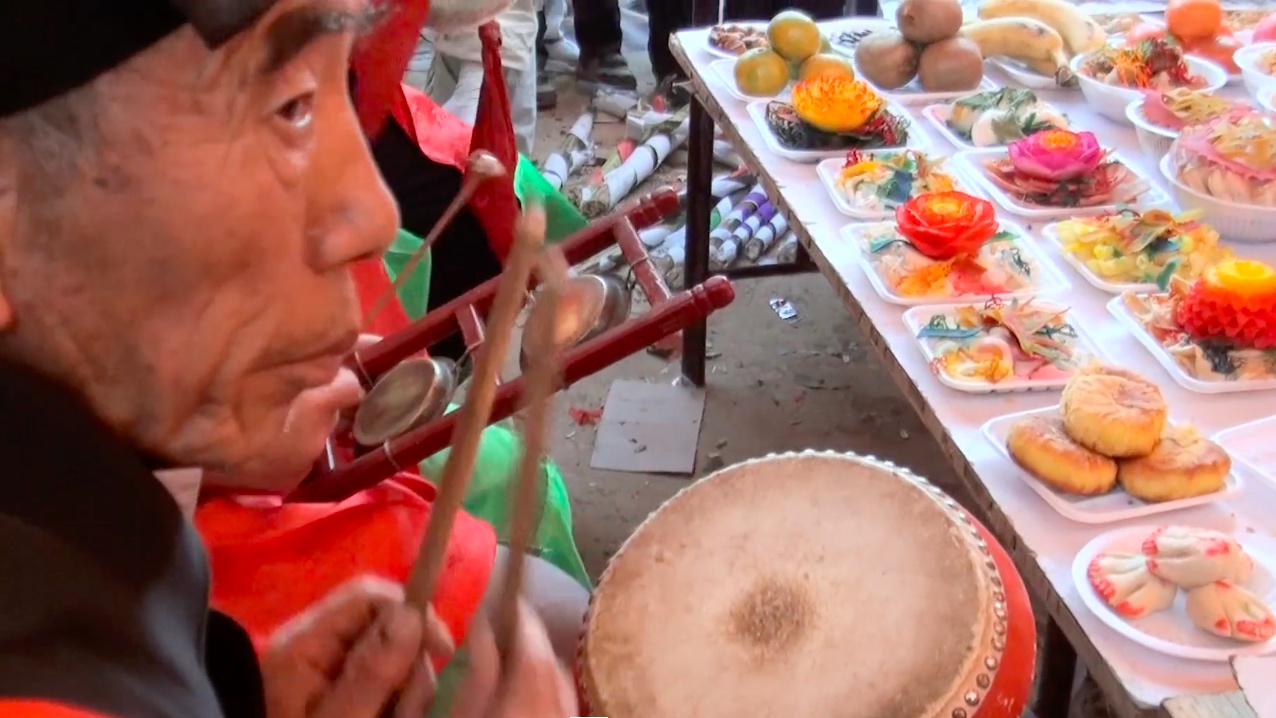
During the years of Maoism, “armchair sinology” was the only option, as in many fields. Even by the early 1980s, Daniel Overmyer still found that “unfortunately there are very few materials available for a discussion of sectarian ritual”.

Soon after, there was a growing awareness of the persistence of ritual practice in mainland China, but lapses still occurred: “We know a certain amount about how baojuan were [my italics] performed, although there are all too few good first-hand descriptions.”

wentan004

South Gaoluo liturgists performing the Houtu scroll, 1993.

However, the vocal liturgists of the South Gaoluo ritual association were performing the Houtu precious scroll through the first fifteen years of the PRC, and they were still doing so in the 1990s.

While Yang’s focus is on the late Qing and Republican eras, and he surveys the early roots of Chinese cultural traits, he introduces major themes that later scholars have been able to elaborate with the benefits of detailed fieldwork since the 1980s’ reforms.

Yang makes extensive use of Republican-era sources such as Grootaers and county gazetteers, notably for Hebei (later explored further by scholars such as Naquin and Duara) and the Shanghai region.

In his Introduction he observes how early-20th-century urban scholars dismissed the role of popular religion in Chinese society, from Liang Qichao to Hu Shi (“China is a country without religion and the Chinese are a people who are not bound by religious superstitions”). By contrast, he notes the importance of temples in the collective life of local communities, going on to observe all kinds of religious influence. And despite the secular views of many intellectuals of the day, the Republican era also saw the beginnings of fieldwork on folklore.

In Chapter 2 Yang notes the place of religion in the integration of the family, including ancestor worship and mortuary rites. Chapter 3 goes on to discuss the religious bond in social groups, and Chapter 4 communal aspects of popular cults—notably temple fairs.

Chapters 5 to 8 explore the political role of religion over the long historical perspective. In his account Yang includes both official and popular cults, with notes on cults such as those of the deities Zhenwu and Chenghuang. Chapter 8 discusses the administrative control of religion, later elaborated by Vincent Goossaert; and the persecution of “heterodox cults”, which he pursues further in Chapter 9 on religion and political rebellion—again, while he cites pre-1949 material, the issue continued to fester under Maoism despite fierce campaigns.

As Yang’s manuscript was largely complete, the 1958 Great Leap Backward led to an appalling national famine, and religious sects rose in resistance over a wide area. The state’s partial withdrawal from extremist policies from 1961 produced a short-lived cultural and religious revival.

North Xinzhuang 1959

Former monk Daguang with village disciples, North Xinzhuang, Beijing suburbs 1959. For more images of Maoism, see here.

Yang was not to know of the maintenance of traditions among village-wide ritual assocations in Hebei through the first decade of the PRC, for instance, or the revival of “ghost operas” in Hunan and elsewhere; but his conceptual framework allows ample room to accommodate such grassroots activities.

In Chapter 12 Yang (inspired by Joachim Wach and Emile Durkheim) makes an important distinction between diffused and institutional religion, with the former dominant and the latter weak in Chinese society. In Adam Yuet Chau’s summary (Miraculous response, pp.143–5) he goes further:

C.K. Yang (1961) famously proposed that in China elements of popular religion are diffused into core secular social institutions such as the family, socioeconomic groups such as trade guilds, communities such as villages and native-place associations, and the state. He argued that the diffused religious ideas and practices provided an air of sanctity to, and thus helped uphold, these core institutions. I suggest that the symbiosis between secular institutions and religious life is even more intimate, that the same principles and mechanisms for organizing ordinary social life are used in organizing popular religious life.

Yang’s chapter concludes:

The lack of a powerful priestly religion did not mean the weakness of religious influence in social life. The Chinese common people, especially the women, hardly passed a day or faced a crisis without resorting to religious assistance. Burning incense to the house gods in the morning and evening, going to the temples to pray on numerous public and private occasions, visiting a classical priest for guidance on big or little problems, attending temple fairs and religious festivals, consulting the religious sections of the almanac for an auspicious time for making a major or minor move, and reflecting on the supernatural influence on life and the universe—all these added up to an intimate relationship between religion and life under the traditional social order. Yet all these activities proceeded without the organized direction of any priesthood. People visited a particular temple, worshiped a particular spirit, called on a particular priest, all in accordance with the practical function of religion for the particular occasion. To what religion a temple belonged might be a puzzle to many academicians, but such questions had no functional significance in the religious life of the common people. Hence, weakness in the structural position of institutional religion was not synonymous with the functional weakness of religion in social life.
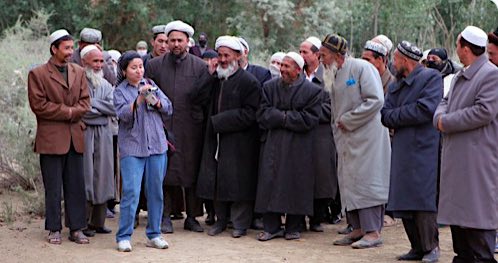
See also the festschrift

  • Wenfang Tang and Burkart Holzner (eds), Social change in contemporary China: C.K. Yang and the concept of institutional diffusion (2007).

In Chapter 13 Yang uses detailed material to show the changing role of religion through the Republican era, noting the limited impact of the secular views of urban intellectuals and state campaigns. I’m happy to see him citing the maxim attributed to Confucius “When the rites are lost, seek throughout the countryside”, which later became a popular refrain with my fieldwork colleagues.

In Yang’s final chapter he looks beyond “Communism as a new faith”. While analysing the secular rituals of the new Party-state, he takes into account the coexistence with both diffused and institutional theistic religion in both policy and practice. He notes the radical assaults on “superstitious practices” and the destruction of religious properties, but always takes a nuanced view—such as this account setting forth from Wudangshan:

On this scenic mountain were eight palaces; thirty-two temples; twelve shrines; a “golden palace”, the largest existing bronze structure in China; and thousands of bronze Taoist images, many of which were unsurpassed works of art. In 1955 and again in 1956, county officials broke up hundreds of “scattered, damaged, or duplicate” bronze images and sold them as scrap metal to help provide funds for the county budget. Over 50,000 catties (about 65,000 pounds) of bronze were collected. In the 1956 campaign it took forty-eight days to destroy the images, one of which weighed over 3,000 catties or nearly two tons, and a large number of which had been preserved in good condition. Leading Taoist priests, some even with limited political status, could only watch the heart-rending destruction helplessly. Afterwards, as news of the wanton destruction reached the provincial authorities, several of the county officials responsible were given demerits as punishment, which seemed to be an insignificant gesture to placate the rising popular protest. Although the Wutangshan case was brought to public attention because of its prominence as a national religious center, the destruction or selling of the properties and sacred objects of innumerable obscure temples in villages remained unnoticed or unrecorded.

Although antireligious riots and destruction on temple property and images were partly inspired by the anti-supernatural attitude which characterized the Communist ideology, they were nevertheless scattered local occurrences without organized direction from the central Communist authorities. Furthermore, such actions were largely restricted to the destruction of religious properties without direct harm to believers. But when religious beliefs formed an active part of a “reactionary” social system, such beliefs became the object of drastic and systematic elimination in order to overthrow the social system which the religious beliefs supported. In such cases, professional practitioners of these beliefs would face persecution.

Yang also unpacks the state policy of preserving the art and architecture of major temples (cf. Wutaishan):

It should be kept in mind that the restoration work is limited to large, well-known temples in each locality, while innumerable humble ones are left to deteriorate or converted to nonreligious uses. The wholesale impressing of priests into secular production work and the conversion of most temples into secular quarters would seriously reduce the already weak foundation of Chinese institutional religion, an effect not canceled by the restoration of large temples.

Of course, worse was to come, but Yang must have welcomed the revival after the end of the Cultural Revolution, and the new tide of research.

Even while describing campaigns against sectarian groups (on which we now have much more material), he suggests that

it is probably incorrect to assume that the Communists, although they have recently won success by their mastery of underground techniques, possess fully effective countermeasures against the underground sectarian societies. While the Communists can infiltrate into any of the known societies at will, they may not be able to penetrate into every one of the numerous isolayed small units in a highly decentralized organizational system. Furthermore, as one society is suppressed, others continued to rise spontaneously. The root of the matter lies in the popular belief in the gods and their magic to bring deliverance from suffering, and in the popular tradition or organizing religious groups to offer resistance to an oppressive ruling power against which the individual seems helpless.

His conclusion is prophetic, yet largely free of simplistic flag-waving for the supposed triumph of eternal, sacred values which some Western reviewers read into the more recent revival:

Communism’s probable inability to cope with all social and personal crises that may arise in the future would compel the people, when subjected to extreme distress, to continue to reach beyond the finitude of empirical experience and rational thought for relief. Should this be the case, even if the Communist ideology were to endure as a sociopolitical doctrine, it would have to develop permanent tolerance of theistic religion so that theism could perform the moral integrative function of stabilizing the new social order. The gods might then emerge from their eclipse to play a familiar role under the dominance of a disbelieving political orthodoxy, a situation reminiscent of the long and often stormy co-existence of theistic religion and Confucianism, whose excessively earthly quality invited the development of theistic faiths.

* * *

Through the 1950s few scholars were able to undertake fieldwork on the survival of local ritual traditions—with the laudable exception of considerable projects under the cloak of music studies.

But despite the paucity of material then available on the contemporary situation, Yang didn’t see the 1949 revolution as the end of the story. Though he was writing at such a traumatic time for Chinese society, when it would have been easy to take a black-and-white view, his book contains mature insights.