My Mahler series is quite extensive, but it’s taken me some time to devote a post to the monumental 2nd symphony, premiered in 1895 (wiki; Norman Lebrecht, Why Mahler?, always an engaging guide too: for recordings, see pp.251–3).
I was already deeply immersed in the work before I got to eavesdrop on Bernstein’s recording sessions with the LSO (still all-male, like the Vienna Phil!) at Ely Cathedral in 1973 (see also Maestro). Sessions can be tiring, doing fiddly little takes over and over again; but one evening there was just time for Bernstein to rouse the orchestra to do one complete, electrifying take of the first movement. Here’s their concert, with Janet Baker and Sheila Armstrong:
The 1st movement Totenfeier alone is an epic.
Totenfeier: culmination of a long buildup from 13.59 (an exhibit in Reaching a crescendo, or not!) that leads to the, um, “recapitulation”. Of the versions here, Rattle gives the most extreme interpretation of the molto pesante, while early versions (Fried, Ormandy, Walter) ignore it.
Eventually the contralto voice of Urlicht emerges magically from the orchestral texture:
O Röschen rot! Der Mensch liegt in größter Not! Der Mensch liegt in größter Pein! Je lieber möcht’ ich im Himmel sein.
Da kam ich auf einen breiten Weg: Da kam ein Engelein und wollt’ mich abweisen. Ach nein! Ich ließ mich nicht abweisen! Ich bin von Gott und will wieder zu Gott! Der liebe Gott wird mir ein Lichtchen geben, wird leuchten mir bis in das ewig selig Leben!
It’s interrupted by the march of the dead, which falls away to the hushed choral entry of Aufersteh’n, culminating in the astounding, blazing ending.
Aufersteh’n, ja aufersteh’n wirst du, mein Staub, nach kurzer Ruh’! Unsterblich Leben! Unsterblich Leben will der dich rief dir geben!
Wieder aufzublüh’n wirst du gesät! Der Herr der Ernte geht und sammelt Garben uns ein, die starben!
Lest I run out of superlatives, I’ll refrain from eulogising all the fine detail, on condition that you set aside everything else and immerse yourself totally in the symphony.
Like listening to rāg Yaman, we can’t possibly digest all these versions at once—but how amazing to have such great recordings just a click away:
Click here for ClaudioAbbado and the remarkable Lucerne Festival Orchestra, with Anna Larsson and Eteri Gvazava, in 2003.
KlausTennstedt and the LPO, with Edith Mathis and Doris Soffel in 1981:
S-Simon Rattle and the Birmingham Symphony Orchestra (after their classic 1987 recording) live in 1998, with Anne Sofie von Otter and Hillevi Martinpelto:
And for excellent measure, his 2010 performance with the Berlin Phil, Magdalena Kozená and Kate Royal:
GustavoDudamel and the Simon Bolivar Symphony Orchestra, with Anna Larssen and Miah Persson, at the Proms in 2011:
Going back before the “rediscovery” of Mahler, early recordings like those of Oskar Fried (1924) and Eugene Ormandy (1935) are less polished but still rewarding for their evocative patina. Here’s Bruno Walter and the (male) Vienna Phil with Rosette Anda and Maria Cebotari in 1948:
All we lack is a film of Mahler himself conducting! Just imagine…
Recently a friend living in Istanbul, who regularly visits her grown-up children in London, remarked on her shortest ever flight home.
This put me in mind of [cf. Alan Bennett’s Sermon] a story that I just can’t track down—I want to quote the original, but I’ve scoured my groaning bookshelves in vain. * Anyway, until I do find it, I’ll offer you a rough version, which I’m sure is more elaborate, as is the way with oral retellings:
An elderly Italian-American (I’ll call him Luigi) who hasn’t been back to Italy since emigrating to Chicago in his 20s, decides to take a short trip to see Rome again. Dozing off on his flight, he wakes up when the plane touches down on a stopover in New York; so in a daze, delighted that the time has passed so quickly, he gets off. Impressed by the smooth efficiency of Italian passport control, he makes his way to the cab rank, asking the driver, in Italian, to take him to a reasonably-priced hotel downtown. The cab driver is Italian, of course, so they chat away as he takes Luigi to his hotel.
Naturally the receptionist is also Italian, so after checking in he asks her to recommend a nice little family-run trattoria nearby. And so it goes on… In blissful ignorance Luigi spends a happy few days in New York like this, marvelling at how much Rome has changed. He pauses to admire a zampogna and piffero duo on the street. Somewhat surprised to see so much “I ♥ NY” merchandise in the souvenir shops, he puts it down to the relentless march of globalisation; but eventually he finds an “I ♥ Rome” T-shirt, and a cute little plastic model of the Colosseum (which he just hasn’t managed to find time to visit), buying them from the (Italian) assistant to take back proudly to Chicago with him.
So near and yet so far… I really must find the original. Sounds rather like David Sedaris, Beppe Severgnini, or perhaps George Mikes, but no luck yet. Please help, someone!
For more Italian jaunts, click here; and for a touring game, here.
And there shall be a great confusion as to where things really are, and nobody will really know where lieth those little things wi- with the sort of … raffia-work base that has an attachment.
aptly dedicated to the fine anthropologist and film-maker Rahile Dawut, who is among countless Uyghurs “disappeared” into the “re-education” camp system.
Integrating expressive culture, religion, society, and politics, it’s complemented by the website http://www.soundislamchina.org, where we can find audio and video examples discussed in the text.
Though Rachel has been unable to return to Xinjiang since 2012, alongside others like Rian Thum and Darren Byler, she has been assiduously documenting the whole cataclysm there with a whole series of articles, some of which form the basis for chapters in this volume. Since then too, her research has benefitted from the perspectives of visiting Uyghur communities in neighbouring Kazakhstan and Kyrgyzstan.
Indeed, even her fieldwork in Xinjiang from 2006 to 2012 was hampered by tensions that came to a head with the protests and inter-ethnic violence of 2009 in Urümchi. Since 2016 for Xinjiang Uyghurs to have any contact with relatives and friends abroad has become highly dangerous.
After a long period of research on the largely masculine worlds of the muqam and Uyghur pop music, Rachel turned late to the less visible world of female culture, studying a group of pious women in a village in southern Xinjiang who recite the Qur’an and intone zikr religious formulas. Their schedule was busy, including calendrical and life-cycle rituals, rituals for the dead, and to heal sickness, for individual families and the whole community. The village women were “immersed in a perpetual cycle of reciprocal hospitality and mutual aid. […] Moral propriety and communal responsibility were intertwined with being a good Muslim.”
By contrast with media images, these women were not isolated, but highly networked and responsive to social change. They continued practising, often clandestinely, throughout the Maoist era, becoming more open after the 1980s’ reforms—until being suppressed since 2014.
The seven chapters flow compellingly in an escalating sequence of tragedy, moving from poor villages to labour camps
.Chapter 1 is an exemplary exposition of the main themes, adding to our material on society and soundscape, always striking just the right balance between cross-cultural theory and grassroots fieldwork. The chapter opens with insightful sonic vignettes:
The massive development of recent decades in the Xinjiang Uyghur Autonomous Region in northwest China has brought rapid advances in infra-structure, the wholesale extraction of natural resources, and large-scale Han Chinese immigration into a region until recently dominated by Turkic Muslim peoples, the most numerous of whom are the Uyghurs. This development has wrought huge changes, not only in the landscape but also in the soundscape. By 2012, coal mines and oil refineries had come to dominate the desert landscape, and heavy trucks thundered up and down the new highways transporting minerals and building materials. In Xinjiang’s provincial cities, bulldozers rumbled over demolition sites and mud-brick shacks crashed to the ground, fracturing precarious communities of Uyghur rural migrants. The thudding of pile drivers echoed around the high-rise residential developments that were shooting up in their place. In the manicured town squares, the evening soundscape became carnivalesque. Groups of Han Chinese women performed American line dancing or Chinese yang’ge dancing to techno soundtracks that competed with tinny music from children’s fairground rides. In the Muslim graveyard in Ürümchi, there was an audible hum from the electricity pylons and the mass of wires that passed overhead; relatives complained that the noise was disturbing the sleep of the dead. In the Uyghur villages of the rural south, the roar of motorbikes had all but replaced the groan of the donkeys, and the nights throbbed to the sound of water pumps as farmers took advantage of cheap electricity to pump water to their cotton fields. The village loudspeaker, that supreme sonic marker of the Chinese Cultural Revolution, was once again filling the village streets with a mixture of popular songs and news of the latest political campaigns.
But just as important is silence: “equally important for an understanding of the soundscape are the sounds that are not heard, sounds that do not circulate in the public sphere”—such as the call to prayer. Even the women’s religious gatherings, the main subject of the book, were held furtively behind closed doors. And by 2018 people didn’t even dare to talk (cf. The whisperers).
Rachel introduces the religious history of the Uyghurs, and the revival since the reforms of the 1980s, noting increasing piety among local communities, and placing it within the wider context of transnational flows of Islamic ideologies and practice, notably activity within Kazakhstan and Kyrgyzstan. But already on the eve of 9/11 even the most routine of Muslim practices were coming to be targeted by the Chinese state in campaigns against “extremism” and “separatism”. Nor were Uyghur communities unified in their faith, with a growing debate around stricter forms of Wahhabism. She notes the interpretation of religious revivals as a response among marginalised and deprived people to the upheavals prompted by the introduction of globalized capitalism.
She presents fine perspectives on “Why sound?”, “Is it music?”, and “Thinking about music”, and among “Contested soundscapes”, she draws attention to gendered aspects. With “music”, singing, and dancing all subject to scrutiny within Uyghur communities themselves, she highlights the experience of the participants, and notes the social circulation of religious media via recordings and the internet, finding similarities with the transmission of pop music.
Gathering before khätmä ritual.
As an interlude, a village woman tells her story in 2009, growing up under the Maoist commune system, and her experiences since the 1980s’ reforms, cautiously taking part in the village’s ritual events. Rachel reflects on the account in Chapter 2, which focuses on the khätmä healing ritual, also used for commemorating the dead. She explores the role of büwi, the senior ritual specialist who leads the women in reciting and weeping in trance. The role is often hereditary, but one of Rachel’s mentors had begun her path after a dream, like many spirit mediums in China (see e.g. here, with many links) and further afield.
The authority for their learning is often conferred by a period of study with male ritual specialists. Some identify as tariqa, people of the path, and she traces the connection with Sufi lodges and the wider history of organised Sufism.
Rachel gives a detailed account of a khätmä ritual she attended in 2009, alternating surah verses in the Qur’an and zikr short repeated phrases of prayers. With the affective power of sound more important than lexical meaning, she focuses on bodily, rhythmic entrainment, as well as ishq (divine love, passion) and därd (suffering), expressed through weeping (some links here), which she explores with yet another detailed cross-cultural analysis. As one büwi commented on watching the video of the climax of the ritual:
The oil is sizzling in the pot [qazan kizip kätti]. Their love for Allah is so strong that they can’t stop themselves crying, just like the pot on the stove. When the oil is hot, you must throw in the meat otherwise the oil will catch fre. It’s just like that. Then you must put in the vegetables, otherwise the meat will burn. So just like that the women cry a lot. . . . Their love [ishq] for Allah is like the hot oil in the pot, their love for Allah is so strong.
She notes that
reciting the khätmä and weeping not only is for alleviating one’s own sin but can also serve as an act of intercession on behalf of the families of the deceased, or even for the whole community.
Chapter 3 discusses the hikmät sung prayers of the women’s rituals, the complex interactions of text and performance, and debates over style. Acknowledging the work of Chinese musicologist Zhou Ji (see here, under “The muqaddime“), she again gets to the heart of religious practice. She describes a healing ritual in 2012, when the political climate was already tense; and a 2015 ritual across the Kazakh border, with insightful comments on the modern history of the region (cf. The Kazakh famine).
Chapter 4 continues to incorporate material from Uyghur communities beyond Xinjiang, exploring patterns of circulation of Qur’anic recitation, and how they are discussed and strategically deployed in public spaces, digital media, and daily practice.
Under the more relaxed conditions of the 1980s and 90s, travel and trade helped satisfy the longing for engagement with the Muslim heartlands in the Middle East. The growing influence of Saudi and Egyptian styles of recitation as heard on media platforms brought a certain dilution of local styles, which was not always welcome. Rachel’s attuned ear notes both the tajwid rules for recitation, including nasal timbre, and the taste for reverb in recordings.
She makes adroit comparisons with modal improvisation and changing styles in Egypt and Indonesia. With all this in mind, she looks again at the vocal style of the khätmä ritual in her adoptive village in south Xinjiang, in another detailed analysis of a “spiritual aesthetic in transition”. She notes the apparent contradiction in the rural büwi incorporating the Saudi style, which preaches against the “superstitious” Sufi practices that they represent. While she notes that “many observers of the Islamic world have pitted supposedly tolerant and hybrid forms of local Islam against the purifying practices of reformist individuals and groups”, the distinction is far from clear-cut. While internalising their marginality,
For them, mimicking the sounds of Salafism did not necessarily denote an adoption of Salafi ideology. For Aynisa, as for other reciters, rather than indexing rival ideologies, what both the Egyptian and Saudi styles indexed was modernity.
Aynisa
felt the need to make herself strong and to make herself modern, in part in response to pressure from state religious policies, in part in response to criticism of her own practice by Uyghur reformists. Cyborglike, magpielike, she mimetically absorbed and deployed foreign styles of recitation within a very local form of ritual, using them to resist backward status and to lay claim to alternative styles of modernity.
After another interlude translating the anonymous satirical poem “They’ll arrest you” posted on WeChat in 2014, showing clearly that the campaign’s true target was normal moral behaviour for Uyghurs, Chapter 5,“Mobile Islam: mediation and circulation”, explores depictions of religion and Uyghur identity (not least through the sensory, affective experiences of images and sound) that thrived briefly on social media platforms, and the complex debates among Uyghurs about how to be a good Muslim—in particular a good, modest Muslim woman. With state repression escalating after the 2009 unrest (fed by the Global War on Terror), virtually any form of Uyghur behaviour became vulnerable to accusations of “religious extremism”, and debate was silenced. Countering the state discourse, she notes:
Together these phenomena helped to produce new structures of feeling within Uyghur society that may be best characterized as a crisis of suffering—both personally and collectively experienced—to which only Islam, in different guises, could provide a solution through its capacity to enable personal and collective transformation. For the majority, this spiritual awakening and quest for greater religious knowledge, and the projects of practice and self-discipline impelled by their new faith, were primarily personal. For some, they converged with experiences of the increasingly repressive state policies and took on a more overtly political dimension.
In July 2014 violent confrontations in Yarkand county in southern Xinjiang began with a police raid on an “illegal religious gathering” by a group of village women. Rachel returns to the ubiquitous theme of därd suffering, now denoting national as well as spiritual pain, and expressed in religious worship and pop music alike. The latter often took the traditional—and transnational—a cappella form of anashid, sung poetry in praise of Allah, only in a breathy popular style remote from the nasality of tajwid recitation. Though their main theme was the call to prayer, Rachel confronts the radical message of some of these items. And with typically instructive cross-cultural examples, she contemplates the power of rumour.
Agents of the state reacted with horror at the spread of what they perceived as alien, antimodern, and hence threatening ways of being, and they invoked the globally circulating trope of Islamic terror, which enabled new violence to be unleashed against the supposed terrorists and against the Uyghur people, who were now coming to be collectively defined by this trope.
Chapter 6, “Song and dance and the sonic territorization of Xinjiang”,notes people’s alienation from the formal musical performances promoted by state media since the intensification of campaigns since 2014. The chapter opens by unpacking Little apple, a bizarrely kitsch video adopted nationally by the security forces to promote stability and ethnic unity. Rachel utilizes research on Tibet. Uyghur culture and the Chinese state have irreconcilable images of the landscape; noting the rebuilding, and bulldozing, of sites like Kashgar and Qumul to bolster the Chinese agenda, she discusses sonic territoralisation. Since 2015 the soundscape of urban Xinjiang has been dominated by Chinese propaganda songs, evoking the mass propaganda of the Maoist era—cue for further instructive introductions to Muzak and shopping malls, and to the use of sound in warfare.
She now discusses the campaign against religious extremism in detail.
Rather than targeting the small number of people who might reasonably be judged vulnerable to radicalization and violent action, the anti-religious-extremism campaign in Xinjiang sought to eliminate all visible and audible expressions of Islamic faith—veiling, beards, public prayer, fasting, religious gatherings, instruction, and media—from the landscape and soundscape.
Among the targets were visible signs of religiosity, including women’s clothing. “By 2016, veils and beards had disappeared from the landscape.” Also to be eliminated was “noise”—meaning Muslim noise, inside unofficial mosques, in restaurants and family homes, and on social media. Listening was dangerous.
Again we are reminded of the debate within Uyghur communities with a discussion of the proper observance of weddings. But the state now fabricated a simplified and misleading opposition: “foreign” religious extremism versus “traditional” song and dance.
To replace Muslim noise, the commodified Chinese song-and-dance style was heavily promoted. In another fascinating discussion Rachel unpacks the meanings of smiling in such performances—by contrast with the Uyghur emphasis on weeping.
If China’s professional minority performers had long been accustomed to smiling to service the requirements of nation building, the unfolding of the anti-religious-extremism campaign in Xinjiang made it clear that it was no longer sufcient for paid professionals to smile; now ordinary Uyghurs from schoolchildren to büwis were required to silence their weeping and publicly demonstrate their happiness. From 2015 on, local cultural bureaus across Xinjiang organized villagers to participate in song-and-dance performances, mass dancing displays, weekly sessions for singing revolutionary songs, and weekly mäshräp gatherings in order to counter extremism.
The mäshräp had long been a contested and regionally variable forum—see her 2020 article, also bearing on the incongruous attempt to gain UNESCO status under the Intangible Cultural Heritage; and in similar vein, “You shall sing and dance: contested ‘safeguarding’ of Uyghur Intangible Cultural Heritage”, Asian ethnicity 21.4 (2020), by an anonymous (apparently Uyghur) scholar.
Again referencing the Maoist era, another focus of the campaigns was singing “Red Songs”, which even religious personnel were required to perform.
With the Uyghur diaspora responding by declaring such performances haram, Rachel has to clarify that “music”, song and dance, including muqam and the songs of the ashiq Sufi mendicants, had long co-existed with more orthodox, austere modes of religious expression, constituting another historical object of debate among Uyghurs. And even the staged song-and-dance style had a history going back to the early 20th century: “a rejection of this culture implied, in the view of many urban intellectuals, a rejection of the development of the modern Uyghur nation”.
Such issues were hotly debated on Uyghur forums in exile.
It was in this context, with music and Islam in Uyghur culture fixed into positions of opposition, and musical performance deployed as a tool of control by the state, that Uyghur pop singers like those mentioned in chapter 5 fled the country, arrived in Turkey “repenting of their sins”—sins that might well have included performing patriotic or revolutionary songs praising the Chinese Communist Party—and atoned for these sins recording radical anashid supporting the mujahidin.
The Xinjiang campaigns were an attempt to replace one form of embodied practice with another—secular, modern, patriotic. While Rachel notes that such compulsory gatherings weren’t invariably experienced as the imposition of an alien sonic regime,
the fact that these experiences of singing and dancing were coercive and underpinned by state violence was completely consistent with past precedent, and this juxtaposition of song and dance and state violence would come still more sharply into focus in the new context of the mass internment camps that were already under construction across the region.
And so the reeducation techniques in the camps are the subject of Chapter 7, “Erasure and trauma”. Among much coverage, this too is a masterly account.
By 2017 the campaigns had extended way beyond the religious sphere.
Increasingly the term “religious extremism” seemed to serve as a gloss for Uyghur culture and identity, which was now regarded as a “virus” in need of eradication.
Again, coercive musical performance played a key role in the reeducation programme of the camps. I remain unclear how making inmates sing “If You’re Happy and You Know It” for foreign journalists might ever be expected to convince anyone—I suppose it’s more of a demonstration of power.
The chapter continues with an astute discussion of trauma, subsuming the Cultural Revolution and other societies.
Rachel finds the binding theme of repetition—in Red Songs and forced confessions, as in zikr and repeating the shahadah 72,000 times for a death ritual. She reads the securitisation of Xinjiang as a colonial project, prompting further global comparisons. Yet—or thus,
we should not assume for one moment that the effects of the anti-religious-extremism campaign in Xinjiang will be a permanent erasure of the religious sensibilities and the cultural identity of its subjects and to rewire them as patriotic automatons.
Simple acts of remembering “suggest the inevitable failure of state projects of social reengineering”.
She adopts scholars’ metaphor of the palimpsest to evoke unsuccessful attempts to erase previous layers.
Far from internalizing understandings of their culture and faith as an infectious disease that led inexorably to terrorist violence, I suggest that Uyghurs are well accustomed to the periodic and transient nature of political campaigns, and they know how to attune themselves to the requirements of the present.
While it will hardly console those grieving over bulldozed gravelands or mourning their loved ones, it’s a remarkably far-sighted and optimistic conclusion.
* * *
While some sections on Islamic transmission are highly technical, Rachel has a gift for integrating theory with ethnographic detail. In all, despite pertinent reminders in the later chapters, Xinjiang faces firmly west, not east: Han Chinese culture may be highly visible, and audible, in the towns, but here it hardly appears except (as Barnett observes for Tibet) as an “inanimate or malignant force”. In Xinjiang and further afield, the whole culture is dominated by the diverse practices of Islam—which are precisely what the Chinese state is now trying to erase.
For a comparable case, see posts under the Tibet tag. These themes should never have been considered marginal in studies of the PRC, and now they seem all the more urgent.
Blurry 1986 polaroid Four Pissed Mates On the Razz Staggering Out of a Stretch Limo in Pink Sombreros After a Karaoke Night fetches 99p at a car boot sale
Just like the elegant calligraphy of the colophons with the scroll, the photo is adorned with scrawlings in marker-pen of a Hitler moustache and Sundry Ribald Appendages [popular beat combo—Ed.], further enhancing its market value.
Rule Britannia, eh! And Did those Feet in Ancient Time?—No, they didn’t. Mind you, just wait another 700 years, it’ll be the buyer’s descendants who have the last laugh. I need hardly add that subaltern studies are grist to my mill.
For the rich local traditions of Chinese ritual—as I never tire of observing—we have ample silent, immobile textual documentation, but much less material in the public domain on film (see this list).
Ritual drama has been a substantial component of this field ever since the projects initiated by C.K. Wang soon after the 1980s’ revival of tradition. But again we rarely have access to the drama itself, with all its actions and soundscape, all the “red and fiery” sensuous pleasures that are an indispensable part of the experience.
The distinguished sinologist Jacques Pimpaneau (1934–2021), along with his numerous publications, founded the Musée Kwok On in Paris in 1972, the collection more recently housed in Lisbon (see also here).
And besides documenting textual and material aspects, he avidly recorded local Chinese ritual drama on film—mainly in the early 1990s, before migration, pop music, the lures of material enrichment, and heritagification were too rampant.
The playlist of films (mostly around half an hour, with French voiceovers) on his YouTube channel includes exorcistic drama from south China, such as the nuoxi masked dramas of Jiangxi, Hunan (including Mulian drama; see also here), and Anhui; as well as Nantong near Shanghai; and, again in Hunan, New Year rituals of Hengshan and among the Miao. For a full list, with wide-ranging tribute, see here.
Here’s the English version of L’expulsion du petit demon, filmed in Pingxiang on the Jiangxi–Hunan border:
Of two excerpts from shadow-puppetry in Shaanxi (cf. Chinese shadows), the second also including marionettes from Chaozhou and again Shaanxi:
The playlist also ventures to Tibet—a grand monastic festival near Lhasa, and lhamo opera—as well as south and southeast Asia: Kerala, Java and Bali—as well as itinerant story-tellers of Bengal illustrating their religious paintings, part of a rich Asian tradition documented by Victor Mair in Painting and performance: Chinese picture recitation and its Indian genesis (1989) (cf. Tibetan lama mani, and for India, here).
Coming soon after the English edition of Woeser’s Forbidden memory, another fine contribution to our understanding of modern Tibetan history is the magnum opus
Robert Barnett, Benno Weiner, and Françoise Robin (eds), Conflicting memories: Tibetan history under Mao retold (2020, xxix + 681 pp.!).
Covering the periods since the Chinese occupation in 1950 and the death of Mao in 1976, it presents a wealth of original material in the form of memoirs and oral narratives, histories and official sources, fiction and film, dovetailing perceptive essays and primary documents. Besides the Tibetan Autonomous Region (TAR), Amdo and Kham are especially well represented (cf. When the iron bird flies).
As Robert Barnett explains in yet another of his exemplary introductions, the book presents the candid narratives of a range of Tibetan and Chinese writers—by contrast with the historiography of the Chinese state, with its “logic of legitimization”. Before the reform era since 1980, the main periods, in an escalating sequence of violence, were the early years of occupation; the crises of 1956–59; and the Cultural Revolution (notably 1966–69).
Oral accounts and memoirs—from Tibetan and Chinese officials, some early Tibetan Communists and progressives, and ordinary and elite Tibetans—“seek to make nuanced, sometimes almost imperceptible, adjustments to official narratives about China’s recent record in Tibetan regions”. While they don’t go so far as to challenge CCP rule over Tibet, they are “historical retellings in which the state has been removed or reduced to an inanimate or malignant force, and in which Tibetan agency has been restored, but only as a question of endurance and at an individual, local level.” In all such accounts, we need to “read between the lines”—just as for material on Han Chinese regions (see e.g. here, and here).
Part One, “Official retellings and revisualisations of the ‘Liberation of Tibet’ ”, opens with chapters by Benno Weiner (whose recent book The Chinese revolution on the Tibetan frontier is another important contribution to our knowledge of the modern history of Amdo) and Alice Travers, exploring changing agendas in the published “cultural and historical materials” (wenshi ziliao)—also a revealing source for Han Chinese areas (cf. here).
Compared to the extreme violence that was to come, Western, Chinese, and Tibetan authors have tended to portray the early years of occupation as relatively genteel. But Bianca Horlemann’s scrutiny of an account by the Chinese leader of a “Work Group” for the pastoralist Golog region in south Amdo adds to a growing body of evidence that “liberation” was far from smooth.
And Robert Barnett’s own chapter describes in detail the change of emphasis in mainstream Chinese “Tibet-encounter” films and TV dramas from the Maoist era to the reforms (cf. his Columbia course). Setting forth from the beguiling voyeuristic notion (Western as much as Chinese) of Tibet as “mysterious” and “exotic”, he notes a shift from tales of socialist military valour to commercially attractive stories of romance and self-discovery.
He suggests that the rationale for the early films was
in large part to explain and justify to the wider nation the abrupt and large-scale interaction then occurring between Chinese forces and Tibetans. That contact was, after all, on an unprecedented scale and involved entirely different and unfamiliar cultures, languages and social systems. Chinese citizens who were sent to Tibet were being asked not just to risk their lives fighting Tibetan troops and rebels in deeply unfamiliar and difficult terrain, but also in many cases to dedicate decades of their lives as cadres, teachers, doctors, road-builders, labourers, and so forth in order to administer and colonise an area which, unlike other minority areas within China, had had its own government, military and ruling institutions for centuries and where few Chinese had ever lived or worked before.
Throughout the various periods, many films portray Tibetans as grateful allies of the Party; and they dwell on the exploitation of the masses at the hands of the old ruling classes.
At its simplest, films in the Mao era vilified Tibetan culture and the Tibetan social system, while those produced in the reform period beautified Tibetans, their environment, and, increasingly, their bodies.
TV series Love song of Kangding, 2004.
Ever attentive to gender issues, Barnett notes the trope of the “orphan–heroine”. And while Chinese characters have come to be explored in more depth, there remain no credible portrayals of the Tibetan side of the story.
In Part Two, “Rereading the past: stories told by documents”, Alex Raymond again reinterprets the initial “liberation” of Tibet, showing that any “gradualism” in Chinese policy was a matter of expediency and logistics. Chung Tsering assesses a variety of accounts of the ambiguous political career of Ngaphö Ngawang Jigme (1910–2009); Document 4 translates his 1989 speech. And Document 5 is an important addition to work on the Tenth Panchen Lama—a hitherto unpublished speech also from 1989, a critique not just of the Cultural Revolution but of the whole three decades of occupation.
Part Three, “Speaking the past: oral remembering” addresses the uprisings in Amdo from 1958, and the Cultural Revolution there. Dáša Mortensen unpacks ongoing historical amnesia through public and private accounts of the 1966 destruction of Gandan Sumtsenling, the main Tibetan monastery of Gyalthang in Yunnan province, showing how “the politics of memory and forgetting are shaped by both official and individual agendas, competing to produce an acceptable memory at a time when grievances are still deeply entrenched and inconvenient for any side to air”.
Charlene Makley, with two pseudonymised contributors, unpacks an oral account of the years following 1958 by a senior Tibetan village leader (“G.” below) in Rebgong (southeast Qinghai)—using a detailed system of transcription to evoke the subtle messages of his language and his interactions with the participants, which rarely emerge in interview transcripts. A sample (asterisks denoting Chinese loanwords):
T: How many years were you in the *labour camp*? G: Four and a half years. T: For four and half years? Oh so that means ’58, ’59, ’60 and ’61? [11:38 G explains how central Party officials came to investigate Qinghai during the post-famine rectification process. Here he goes into the most detail so far. T had never heard this; T and CM are entranced.] G: [until] ’62… ’62… that’s how long I had to stay. Not just for 1958, but for ’59, ’60, ’61 and ‘62. – T: Oooh. – Until August of 1962, in *September I returned. – CM/T: Mmm/Oooh – The one who reported [the situation] to *central leaders* was … Wang Zhao came, Wang Zhao, the *deputy head* of the *Central Management Department* (Ch.: Guanlibu). – CM/T: Oooh. – So Qinghai *province *sent a delegation down*, and the *Management Department* officials accompanied them. When they came, they *investigated everything. They disbanded the *cafeterias. All those sent to the *labour camp* were released. Wang Zhao said a few words: “Just as for the People’s Militias, keep the *‘group leaders’* (Ch.: banzhang) imprisoned, and release the ‘militia members’.” He used that kind of metaphor, he didn’t say more than that … What did he mean by a *‘group leader’*? He meant the traditional Tibetan leaders, of course. By *‘group leader’,* he meant Tibetan *landlords, or lamas or lay leaders. [Wang] ordered everyone but them to be released. But *half [of those leaders] had already died, They died! They all died! That region was harsh because of the high altitude!
The same period is discussed in an excerpt from a remarkably frank book by Rinchen Zangpo (Shamdo Rinzang).
Shamdo Rinzang (left).
Documents 7–10 are excerpts from the 2016 Living and dying in modern Tibet, an important collection of oral memoirs from the 1930s to the 1970s for northern Kham.
Part Four describes “Literary retellings”—the short stories, novels, literary memoirs, and fiction from the reform era that served as a necessary, not optional, forum for Tibetan critiques of the terrors following 1958. Françoise Robin discusses literature recalling the period in Amdo:
Fiction and literature confirm their use by Tibetans to counter official memory and circumvent the hegemonic memory engineering that has been going on for over fifty years. Still facing too many risks to offer directly a revised account of lost events, these works of fiction not so much mark what has been forgotten as delineate the history of state erasure of that past, and its silencing of the generation that experienced it.
Xénia de Heering introduces Nagtshang Nulo’s childhood memoir Joys and Sorrows of the Nagtshang Boy, set in Machu county, Kanlho—a book to which I devote a separate post.
Part Five, “Religious remembering” focuses on history recollected through the lens of faith. Nicole Willock, Maria Turek, and Geoffrey Barstow describe accounts by lamas, Buddhist scholars, hermits, and a religious artisan. Even those who accommodated with the new regime suffered terribly, but they continued to view their role as guardians of Tibetan culture and religion, recalling ultra-leftist violence merely in terms of obstacles to spiritual development.
The volume is further enriched by extensive references, detailed maps, glossary, photos, and an exhaustive index. Hefty as it is, I still wonder how Brill still manages to charge such astronomical prices for their fine books, mitigating against the wide readership they deserve.
Again I marvel at the enterprise, energy, and nuance of recent scholarship on Tibet, so very far from the simplistic, polarised work of the 1980s. But the emergence of a certain space for alternative versions of this traumatic history can be of little consolation for Tibetan people amidst their current plight, as Chinese state control continues to intensify.
As with World War Two, the inherited British historical bias is so very limiting. Wars don’t end with peace and harmony, as Keith Lowe shows in Savage continent for the aftermath of World War Two. We (by which I mean I) tend to view all the major conflagrations as separate and defined within a narrow time-frame, whereas a work like this reveals the long-term global picture. The flashpoints of recent times go back to the cycles of violence that erupted amidst dying empires and rising states. Irredentism and revisionism are major themes of the whole period.
Gerwarth opens his Introduction with two quotes:
Both sides, victors and vanquished, were ruined. All the Emperors or their successors were slain or deposed … All were defeated, all were stricken, everything they had given was in vain. Nothing was gained by any … Those that survived, the veterans of countless battle-days, returned, whether with the laurels of victory or tidings of disasters, to homes engulfed already in catastrophe. —Winston Churchill
This war is not the end but the beginning of violence. It is the forge in which the world will be hammered into new borders and new communities. New molds want to be filled with blood, and power will be wielded with a hard fist. —Ernst Jünger
He goes on to evoke the appalling story of ethnic cleansing in Smyrna in 1922.
So the term “interwar years” is misleading.
For those living in Riga, Kiev, Smyrna, and many other places in eastern, central, and southeastern Europe in 1919, there was no peace, only continuous violence.
The “Red Terror” of the Kun regime, Hungary 1919.
In the early chapters Gerwarth unpacks the 1917 Russian revolution, the catalyst for movements far afield, as soldiers returned, radicalized, to their devastated homelands, with refugees dispersed around the fragmented lands of the former Austro-Hungarian empire and the Ottoman domains, now aspiring to independence as new nation states.
Anti-BANU putsch in Bulgaria.
Bulgaria features prominently in the complex tale of the Balkan wars; Hungary and Romania were highly unstable too. And extreme violence continued unabated in the unruly “bloodlands” of the Baltic states and Ukraine (see Life behind the Iron curtain), before they were engulfed by the forces of Hitler and Stalin; by now the victims were routinely civilians as much as regular troops.
Confronting the “contagion” of Bolshevism, endless cycles of retribution, revolution and counter-revolution, recurred. Anti-Jewish pogroms, too, were widespread:
Allegedly representing everything the Far Right despised, the Jews could simultaneously (and paradoxically) be portrayed as the embodiment of a pan-Slavic revolutionary menace from “the East” that threatened the traditional order of Christian central Europe, as “red agents” of Moscow, and as representatives of an obscure capitalist “Golden International” and force of Western democratisation. What these accusations had in common was the assumption that Jews had a “natural” internationalist hatred for the nation state and their “host peoples”.
Gerwarth notes the founding of the League of Nations, and pacifist movements; but the apparent triumph of democracy soon gave way to radicalisation, with many segments of society feeling betrayed. He notes both political machinations and their appalling consequences on the ground.
And the antagonistic ideologies of central, eastern, and southeastern Europe spread to countries further west—Spain, Portugal, France, Italy, Britain, Ireland, the USA. Anti-colonialist independence movements grew throughout the world.
Returning to the “bloodlands”, Gerwirth details the sufferings of Poland and Ukraine.
In the final chapter Gerwarth returns to Smyrna and the atrocious repercussions of the fall of the Ottoman empire. The 1923 Treaty of Lausanne, though arising from the Turkish–Greek conflict,
effectively established the legal right of state governments to expel large parts of their citizens on the grounds of “otherness”. It fatally undermined cultural, ethnic, and religious plurality as an ideal to which to aspire and a reality with which—for all their contestations—most people in the European land empires had dealt with fairly well for centuries. […]
If, in 1919, ethnic coexistence had still been seen as something worth protecting, the future now seemed to belong to ethnic homogeneity as a kind of precondition for nation states to live in peace. Although the Lausanne Convention had been drawn up to prevent mass violence between different religious groups, the application of this logic to eastern Europe would prove to be catastrophic: for in the multi-ethnic territories of the vanquished central European land empires, the utopia of a mono-ethnic or mono-religious community could only be achieved through extreme violence.
Though his main focus is 1917 to 1923, in the Epilogue Gerwarth surveys the traumas of the ensuing period. If 1918 had not brought peace, nor did 1923. As the Soviet-controlled lands were sinking into further turmoil, western Europe may have had a brief period of relative political and economic stability, but from 1929 the Great Depression triggered further crises for democracy. Authoritarian regimes became the norm. The new “logic of violence” culminated in the war on the Eastern Front from 1941:
The purpose […] was no longer to militarily defeat an opposing army and to impose harsh conditions of peace upon a defeated Soviet Union, but rather to destroy a regime and annihilate significant proportions of the civilian population in the process. Entire countries in central and eastern Europe were to be purged of those deemed racially or politically undesirable. […] The distinctions between civilians and combatants, already blurred during the First World War, completely vanished in this type of conflict. […]
The violent actors of 1917–23 were often identical with those who would unleash a new cycle of violence in the 1930s and early 1940s. […]
In the collective memories of the peoples of Europe this period featured prominently either as one of revolutionary turmoil, national triumph, or perceived national humiliation to be redeemed through yet another war.
Gerwarth leads us towards the conflicts in the Far East, and ends by noting the legacy for the Middle East in the wake of imperial dissolution:
Here violence has erupted with great regularity for nearly a century. It is not without grim historical irony that the centenary of the Great War was accompanied by civil war in Syria and Iraq, revolution in Egypt, and violent clashes between Jews and Arabs over the Palestinian question, as if to offer proof that some of the issues raised but not solved by the Great War and its immediate aftermath are still with us today.
It may be a truism, but all the faultlines of later years—not just in World War Two and its immediate aftermath, but all around the world since then—had troubled histories (see also The great siege of Przemyśl). And now our faith in the triumph of democracy is being challenged yet again.
So all this must qualify our rejoicing in the diverse creativity of European culture. And it’s always a challenge to return to Steven Pinker’s well-argued yet startling thesis (n.2 here) that violence has declined constantly through history, with the world wars of the 20th century mere spikes in a declining curve.
Following my series of Chinese clichés (under Party-speak, art, and music, as well as this party game), the clichés surrounding “exotic, mysterious” Tibet are even more egregious.
The guilty misconceptions are methodically unpacked in
Françoise Robin (ed.), Clichés tibetains: idées reçues sur le toit du monde (2011).
As she comments in the Introduction, few countries attract such interest while being so misunderstood. Some of the clichés the authors deflate are propounded by the Chinese state, others are Western orientalist misconceptions; neither faction will welcome such corrections.
It’s an ingenious idea, a stimulating, palatable history lesson from a team of accomplished Tibetologists: Robin herself, with Étienne Bock, Isabelle Henrion-Dourcy (whose contributions can be found here), Thomas Kerihuel, Nicolas Tournadre, and Alice Travers.
First, Robin clarifies a basic point: the very concept of “Tibet”. Apart from “central Tibet” (which became the “Tibetan Autonomous Region” [TAR] under the Chinese in the 1950s), the far more extensive area where ethnic Tibetans live (still within the PRC) also includes the regions of Amdo and Kham. Moreover, Tibetan culture is strong in countries such as Nepal, Bhutan, and Sikkim.
The list of clichés that the contributors refute or refine with digestible essays goes on to include
“Tibet was isolated from the world until 1959”
“The regime that preceded the Chinese invasion was a theocracy”
“The traditional Tibetan regime was a system which oppressed the people and rested on their servitude”
“Tibet has been part of China for 700 years”
“The Chinese invasion made a million victims in Tibet”
“A great number of Tibetans live in exile”
“Western forces sustained the Tibetan resistance”
“Tibet couldn’t have gained access to modernity without China”
“China destroyed all the Tibetan monasteries during the Cultural Revolution”
Within China, as for the whole of the Maoist era, public memory of the righteous student protests of 1989 in China continues to be repressed. A valuable recent addition to the extensive literature published abroad (see e.g. this list, with perceptive reflections by Jeff Wasserstrom) is
Liao Yiwu, Bullets and opium: real-life stories of China after the Tiananmen Square massacre (German edition 2012; new English edition translated by David Cowhig and Jessie Cowhig, ed. Ross Perlin, 2020).
After Ian Johnson’s lucid introduction, reflecting on the “failed revolution”, Liao Yiwu (@liaoyiwu1) provides a useful Prologue. He himself spent four years in prison after 1989, going on to document these first-hand accounts (cf. The corpse walker) while under constant harrassment, before fleeing to Berlin in 2011. He returns to his own story in the final chapter, and fantasises about museums and monuments in China to political movements: “How will our children and grandchildren find a place to live in a country crowded with so many monuments?”
Liao’s subjects (he co-opts the Party’s terms “thugs” and “hooligans”) are not the student “elite” of the movement whose later emigration and defection from the cause aroused much resentment, but those left behind—the common people of Beijing and Chengdu (often factory workers, also mostly very young) who bore the brunt of the military crackdown as they tried to support the patriotic protests. Tortured and sentenced to long prison terms for their righteous actions, after their release they found themselves having to beg for low-paid menial jobs, scrabbling for a place to sleep, with chronic health problems, ostracised, condemned to poverty. Meanwhile the economic miracle served as if to bribe people not to ask any more questions. Even now, over thirty years later, few of the survivors or bereaved hold much hope for any official recognition of the events.
Though Liao’s interlocutors are all men, the impact on their wives and families is clear (this review includes a critique of implicit sexism). Despite their anger, several of them comment on the sorry plight of the troops sent in to quell the “chaos”—they too were victims, misled by their rulers.
The unrest extended far beyond central Beijing. Not only was there fierce resistance in the suburban counties through which the various armies had to fight their way, but protests erupted in many provinces (note this wiki entry). In Part Two the scene shifts to Sichuan, where Liao catches up with some of his former colleagues.
The Afterword, “The last moments of Liu Xiaobo” (translated by Michael Day), is based on Liao’s conversations with his widow Liu Xia. And in three appendices, “A guide to what really happened”, Ding Zilin and Jiang Peikun, founders of the Tiananmen Mothers movement, conscientiously attempt to document some numbers for the victims, and their fates. And many more—3,000, or over 10,000, according to other reputable sources—may have been killed, besides countless injured.
Throughout this aftermath Western scholars (including me) blithely continued visiting China, judging it better to engage than to leave our contacts even more isolated. And as the economy flourished, China was an ever-more tempting place to do business, as the general population retreated into blind materialism.
In academic circles too the climate seemed open enough: Chinese scholars somehow found a certain latitude to explore sensitive topics. Through the 1990s, as I explored the hutongs of Beijing, I must have come across many people with harrowing stories to tell—or to refrain from telling—of June 1989. Among my urban and rural friends, the climate didn’t seem too (sic) repressive; we could still function around the workings of the police state. Even in 2018 I had a great time in Beijing and the countryside. So it’s taken me all this time to draw the line, as repression in Xinjiang and Hong Kong has become more extreme—and the recent escalation may also remind us to resist Tiananmen fatigue.
This may be news only to those with their heads buried in medieval Daoist manuals, rather than to people following the current tribulations of the USA, but…
Just when global politics seems at the mercy of venal, thieving white men, along comes the inspiring, principled, articulate, practical, passionate Alexandria Ocasio-Cortez.
While Sarah Cooper’s scriptwriter the Orange Baby-in-Chief is playing golf, egging on fellow white terrorists and criminal thugs, and throwing his toys out of the pram, AOC is working flat-out to help people—confounding cynics as she highlights the importance of issues like climate change and the Green New Deal, healthcare, employment, women’s rights, and the plight of immigrants.
An unrivalled communicator, every speech she makes on such issues is compelling. Just one of numerous instances of her forensic appearances in Congress:
She is demonised by the Right, who, utterly unable to engage in rational argument with her, shoot themselves in the foot by disparaging her former waitressing job or obsessing fatuously over her clothes (cf. Dressing modestly).
She’s a master of social media. One of her early media triumphs after being elected to Congress was her riposte to their outraged reaction to the notion that Women might actually Dance:
On social issues her every Tweet gets to the heart of the matter, and she clearly wins legions of admirers on Instagram with her informal yet engaged chats there:
She keeps elaborating her powerful message, as here, from December 2020.
Here she is with a powerful speech eviscerating Ted Yoho’s non-apology:
This moving documentary provides background on AOC’s remarkable election to Congress:
Do follow her on Twitter and all those other New-Fangled, um, platforms! All is not lost—but first things first, eh: the immediate priority is to restore a modicum of civilised values and consign the current incumbent of the White House to a padded cell.
A reminder of my post on two local cultural workers in the heady days of fieldwork on ritual in the early years after the collapse of the Maoist commune system: early encounters with liturgists and temple fairs in rural Hebei, and my introduction to the ritual associations of Gaoluo.
Delving intrepidly in the dusty archives of the London County Council and Greater London Council Complaints Department, I’ve unearthed some well-meaning replies.
Dear Mr Donegan, Your message, in its novel audio format, [1] has just found its way to my desk. I am not entirely clear if it is intended as a complaint or a tribute, but I shall endeavour herewith to address your main points.
I am grateful for your vivid account of your father’s work apparel. While I am unfamiliar with what you evocatively describe as “gor-blimey trousers”, his choice of headgear certainly seems quite suitable to his métier. And I trust he is satisfied with the accommodation provided by the council.
The vocation of refuse collection officer is indeed valuable. With our recent time-and-efficiency directive, the pressures of the job have alas been increasing; but despite the provocations that such upstanding members of society sometimes encounter, I must remind all parties concerned that violence is not a viable option, and may lead to prosecution.
If there is anything further I can assist you with, please do not hesitate to contact me.
Yours etc.
cc Department of Refuse Collection; Conflict Resolution; Legal Claims.
Another letter, six years later to the very day, already hints, albeit reluctantly, at a rapidly changing society:
1st April 1966
Your ref.: I can’t get no satisfaction
Dear Mr Jagger (perhaps I may be so bold as to call you Michael?), With reference to your recent cri de coeur, expressed via the medium of film (whatever next?), I am sorry to learn of your troubles in achieving fulfilment. As you so wisely observe, perseverance is the key, although I am reliably informed that excessive indulgence may lead to injury. Apparently something called “foreplay” is currently “all the rage”.
Here at the Council we are always glad to learn of our constituents branching out into such novel ways of expression as what I believe is known as the “popular beat combo”, and we trust that your dabblings will make a diverting hobby for you, despite their very limited potential for material gain. As you may soon learn, such energetic pastimes belong to one’s youth, and can never be pursued into later years.
And as to our encounters with those of the female persuasion, I quite understand that a somewhat irregular lifestyle may mitigate against finding a suitable spouse. However, we have to recognise that a settled domestic routine, involving such wholesome pursuits as gardening (taking care to wrap up warm!), may be a most “satisfactory” recourse in the absence of any more stimulating liaisons—which, as you and your esteemed colleague Mr Richards will doubtless concur, remain purely in the realms of fantasy. I am sure you will be able to “settle down” soon—and if not, then many distinguished personages over the years have enjoyed the benefits of celibacy.
Yours etc.
P.S. For any matters of a more delicate nature that may be concerning you, please allow me to remind you that the Council operates a confidential Walk-in (or perhaps in your case, Strut-in) service.
cc Department of Parks and Recreation; Personal Injury Compensation; Pension Planning; Centre for Reproductive Health Within the Bonds of Holy Matrimony.
*For a roundup of posts on raga, with a general introduction, see here!*
Kalyan, ragamala: “He looks like Kandarpa [the god of love] himself. He has a voice like a cuckoo and a complete knowledge of musicology. He has a stout figure and is not called a commoner. This is Kalyan, who is known as a king of the poets.”
Along with our explorations of performance genres around the world, it’s always inspiring to return to north Indian raga.
The raga guide (Nimbus, 1999) always makes a useful manual for the framework, structural features, and vocabulary of raga. To remind ourselves of the degrees of the heptatonic scale:
Then, armed with the introduction (pp.1–13), we can consult the basic ascending and descending patterns of particular ragas:
So Yaman uses what “we” [Right you are—the Plain People of Ireland] would call a lydian scale, featuring the sharp Ma (our fa—a long long way to run!). In Yaman Kalyan the natural (low) ma, sometimes also heard as a fleeting, unstressed decoration of Ga, is said to be a feature distinguishing it from Yaman—though since aficionados don’t seem too fussy about this, I won’t be either.
Dhrupad vocal versions make a fine starting-point, with their long, sublime alap, intimate and ecstatic. [1] Let’s focus on two performances by the great Uday Bhawalkar. It’s inspiring to see, as well as hear, this live performance from 2016, his expressive hand gestures complementing the contours of the melody:
Singing prescribed non-lexical syllables akin to mantra, he begins by exploring the building blocks of the rāg, expounding the relation of Ni to Sa, as well as sharp Ma and Re. From 3.49 he reaches exquisite sustained cadences on Ga, with some infinitely anticipated resolutions such as from Re up to Ga from 5.21—always placing it in the context of the scale, with the sharp Ma also entering the mix. From 8.23 he reaches hushed, ecstatic cadences on Pa—with one of many instances of “resonance” heard from 10.13.
Returning to the middle-register tonic Sa from 11.53, he builds up again to high Ni, eventually reaching top Sa at 16.19, always expanding our understanding of the pitch relationships.
As we hang on his every inflection, from 19.48, back around middle Sa he injects a firmer pulse, including mukhṛā refrains with rhythmic repeated notes. Continuing downwards, he generates longer phrases, often starting from Ga GaRe Sa…, in a long section with cadences on Ga, gravitating to Pa from 28.16; and then via Ni (from 31.48), up again to reverential cadences on top Sa from 33.44 (with another wonderful “resonance”!), setting off once more to explore the scalar gamut further.
From 37.47 he reinvigorates the pulse in the middle register; the time has come for more extended melodic phrases, always based in the structure of tonal hierarchies, with the pakhavaj drum entering around 41.04.
Dhrupad performances commonly end with an auspicious song; as Richard Widdess tells me, this one (from 57.25) evokes a bridal palanquin, based on a motif descending from Ni, in 10-beat sūltāl.
It’s also worth comparing this version by Uday Bhawalkar, just as wonderful:
This performance, using dynamic contrast, is again structured around long sustained cadences, as in the extended passage revolving around Ga from 7.12, leading to lengthy extended appoggiaturas from sharp Ma down to Ga from 9.00, eventually landing exquisitely on sotto voce cadences on Pa from 11.56. From 16.43 he extends the range further upwards, revolving around high Ni before reaching the high tonic Sa at 18.51.
By 21.45 he returns to the lower register, introducing a firm pulse setting forth from repetitions of Sa, reaching low Sa by 24.45. Returning to the middle octave, by 27.07 he is exploring around Ga again with the new metrical element, wonderful quaver passages from 28.23 building to cadences on Pa and (from 32.38) on up to Ni, eventually landing again on top Sa at 34.21.
From 36.41 he sets out once more in middle and lower registers, with quirky nomtom passages in faster quavers, building long phrases from 40.28 on a refrain centered on Ga, going on to cover the whole gamut; from 49.55 the discreet pakhavaj, in 16-beat tintal, subtly supports his increasingly ornate (but always melodious) flourishes. This main section ends with a brief slow free-tempo coda from 57.39, reaching a cadence on the tonic Sa.
He ends (from 58.54) by singing a dhamar song in praise of Krishna, for the Holi spring festival, in 14-beat dhamar tāl (5+2+3+4)—not easily identified for outsiders like me.
And still with dhrupad, here’s Ritwik Sanyal, supported by his son Ribhu, in 2014—the first 48’ unmetered, with pakhavaj accompanying the concluding song from 50.18:
Wary though I am of hippy orientalist romanticising, these renditions lead me back to the reflections on mystical sound by Inayat Khan (n. 1 in my post on his daughter Noor).
* * *
Morgan Davies (worthy custodian of my sarangi) guides me to an exhilarating metered version by the fine female singer Mogubai Kurdikar:
Turning to instrumental versions, back in dhrupad style, Morgan again led me to a profoundly meditative live performance on rudra vina by the great Zia Mohiuddin Dagar in 1990—his last year: [2]
On rudra vina the low passages (e.g. from 3.27) have a particular intensity; after introducing a regular pulse from 40′, he again explores the low register from 44.35.
Indeed, we can compare this rendition with his studio recording (also from 1990) on the classic Nimbus CD—alap followed by metered jor and jhala from 40.35:
In the latter, just one instance of how his exposition of the scale is complemented by mastery of timbre: for over seven minutes from 24.00 he explores all around the sharp fourth Ma, contemplating it in wonder with a varied range of right-hand attacks and left-hand glides, at first tending to fall back to Ga and then revealing it as a step upwards to Pa (cf. the passage I mentioned from 9.00 to 11.56 of Uday Bhawalkar’s second recording).
We can also compare this live performance in 1982:
Among a multitude of sitar versions, I find myself most enthralled by Nikhil Banerjee. I’ve already featured his inspired performances of Kafi Zila (minor), Malkauns (anhemitonic pentatonic), and Marwa (a challenging yet bewitching “A major over a C drone”?!)—YAY! There’s my crash course in raga!!! And now, Bhairav and Bhairavi too…
So here he is playing Yaman Kalyan (joined from 31.24 by a tabla player who may not actually be Zakir Hussain):
Wonderfully melodic, to my ears Banerjee sounds even more expressively vocal than the vocalists. He favours quite extended phrases from early on, often framing sequences of regular quavers with initial and cadential phrases of three or more repeated notes: x x x —. And he soon introduces the jor metered section, with exquisite explorations of low and high registers. I relish the low passage from 13.36, with ecstatic long phrases from 15.45 and 19.46—a constant flow of invention. From around 15′, as the pulse becomes ever more regular, he already becomes rather virtuosic by around 24′, but he’s never merely technical: melodically and rhythmically he always remains creative. From 31.24, starting with a more restrained tempo, the tabla accompanies gats in 9-beat matta tāl (4+2+3 beats—cf. Taco taco taco burrito!) and then 16-beat tintāl, rhythmic drive now taking precedence over melody.
And here’s Nikhil Banerjee again, playing Yaman with Anindo Chatterjee—alap and jod again followed by gats in matta tāl (from 30.50) and tintāl:
By now, like me, you may want to listen to all his renditions of this and other ragas on YouTube. Alas, Banerjee died in 1986 at the age of only 54 (cf. the end of my post on Coltrane).
On sarangi, Nicolas Magriel’s fine website has many examples of Yaman. I find Sultan Khan, this time with Zakir Hussain for real, quite distinctive:
By contrast with Banerjee, at first he mainly stresses Ga, Re, and Ni, and even later the sharp fourth Ma is rather less prominent. His exposition is more florid than the dhrupad versions; an ecstatic high passage from 13.12 leads into the metered section with tabla from 16.22.
With many thanks to Richard Widdess and Morgan Davies
[1] Further to Neuman, for the social context of the dhrupad revival, see Richard Widdess, “Festivals of dhrupad in northern India: new contexts for an ancient art”, British journal of ethnomusicology 1994.3.
a modesty seminar, a poem, kabuki, and a safety booklet
Yet another wonderful collection by David Sedaris is
When you are engulfed in flames (2008).
His stories are even more trenchant if you’ve heard him reading them on BBC Radio 4. I’ll try not to give too much away.
“What I learned” evokes his imaginary days at Princeton. The “modesty seminar” for freshmen has echoes of faux Oxbridge self-deprecation:
In my time it took the form of a role-playing exercise, my classmates and I pretending to be graduates, and the teacher assuming the part of an average citizen: the soldier, the bloodletter, the whore with a heart of gold.
“Tell me, young man. Did you attend a university of higher learning?”
To anyone holding a tool or a weapon, we were trained to respond: “What? Me go to college? Whoever gave you that idea?” If, on the other hand, the character held a degree, you were allowed to say, ”Sort of,” or, sometimes, “I think so”.
And it was the next bit that you had to get just right. Inflection was everything, and it took the foreign students forever to master it.
“So where do you sort of think you went?”
“And we’d say, “Umm, Princeton?”—as if it were an oral exam, and we weren’t quite sure that this was the correct answer. […]
You had to play it down, which wasn’t easy when your dad was out there, reading your acceptance letter into a bullhorn.
I needed to temper his enthusiasm a bit, and so I announced that I would be majoring in patricide. The Princeton program was very strong back then, the best in the country, but it wasn’t the sort of thing your father could get too worked up about. Or at least, most fathers wouldn’t. Mine was over the moon. “Killed by a Princeton graduate!” he said. “And my own son, no less.”
My mom was actually jealous. “So what’s wrong with matricide?”she asked. “What, I’m not good enough to murder? You too high and mighty to take out your only mother?”
They started bickering, so in order to make peace, I promised to consider a double major.
“And how much more is that going to cost us?” they said.
I’ll leave you to read the excellent dénouement. For Sedaris, his father, and Li Manshan, see here.
In “The monster mash” he forks out on a copy of Medicolegal investigations of death,
a sort of bible for forensic pathologists. It showed what you might look like if you bit an extension cord while standing in a shallow pool of water, if you were crushed by a tractor, struck by lightning, strangled with a spiral or non-spiral telephone cord, hit with a claw hammer, burned, shot, drowned, stabbed, or feasted on by wild or domestic animals. The captions read like really great poem titles, my favourite being “Extensive Mildew on the face of a Recluse”. I stared at that picture for hours on end, hoping it might inspire me, but I know nothing about poetry, and the best I came up with was pretty lame:
Behold the recluse looking pensive! Mildew, though, is quite extensive On his head, both aft and fore. He maybe shoulda got out more.
“Of mice and men” parades his social unease, featuring a bigoted cab driver (whose London counterpart is milked by Stewart Lee, e.g. here, and here).
When it comes to meeting strangers, I tend to get nervous and rely on a stash of pre-prepared stories. Sometimes they’re based on observation or hearsay, but just as often they’re taken from the newspaper.
One such clipping
concerned an eighty-one-year-old Vermont man whose home was overrun by mice. The actual house was not described, but in my mind it was two stories tall and isolated on a country road. I also decided that it was painted white—not that it mattered so much. I just thought it was a nice touch. So the retired guy’s house was overrun, and when he could no longer bear it, he fumigated. The mice fled into the yard and settled into a pile of dead leaves, whicih no doubt crackled beneath their weight. Thinking that he had them trapped, the man set the pile on fire, then watched as a single flaming mouse raced back into the basement and burned the house to the ground. […]
How could you go wrong with such a story? It was, to my mind, perfect, and I couldn’t wait to wedge it into whatever conversation presented itself.
A ride in a New Jersey cab seems to offer him a perfect pretext. But the driver is underwhelmed by the story, churlishly finding it implausible. They embark on a surreal and testy exchange, an irritated Sedaris floundering as he defends the report’s veracity:
“Isn’t no way that a mouse could cover all that distance without his flames going out. The wind would have snuffed them.”
“Well, what about that girl in Vietnam?”
Later, vindictively checking the clipping back home, his righteous anger is deflated.
In his lengthy diary of quitting smoking by going to live in Tokyo, an account of a visit to kabuki makes an interesting contrast with Clive James’s excursions into Japanese culture. Both are drôle, but whereas James seems patronising in his incomprehension, Sedaris is genuinely moved.
Four hours into Yohitsune and the Thousand Cherry Trees, and I wondered how I had survived all these many years without Kabuki.
The book’s title comes from a safety booklet in his hotel room, with the rubrics
The music of the 1960s often appears on this blog—notably the Beatles, Motown, and so on. But meanwhile traditional genres were continuing to adapt; and since I also feature Mediterranean musicking (for island delights, see Sardinian chronicles, and Sicily under Italy: folk musicking), I’m reminded of the musics of Crete. *
As ever, these are largely village traditions for festivities, handed down in the family, based in dancing (syrtá, kondylies, and so on) and sung mantinades couplets. [1] Though audio recordings can’t reproduce the spirit of taking part, compilations of archive recordings can be evocative. I relish
Cretan musical tradition: radio broadcasts 1960–70 (3-CD set, Aerakis/Cretan Music Workshop, 1996),
featuring lyra (cf. Middle Eastern kamanche) or violin, with laouto lute and singing.
Along with the pleasures of the recordings, the liner notes offer a window on the lives of musicians through the travails of the modern era (for more biographies, see here).
Often they came from family traditions in rural Rethimnon, spending periods in Heraklion and Athens, sometimes touring for the diaspora. Musicians include Giannis Dermitzakis (Dermitzogiannis) (1907–84) on lyra and violin, also the author of popular couplets satirising post-war Cretan society; and the blind violinist Giannis Papachatzakis (Stravogiannios) (b.1905)—here he is playing syrtó from Chaniá:
In a highly macho society, the only woman performer here is Aspasia Papadaki (b.1932), the first female lyra player in Cretan music. At the age of 14 she made her own instrument; though her widowed mother persuaded Aspasia to play violin instead, by 1960 she found that she could only record for radio if she reverted to the lyra (see below). Here’s a track:
And here she is on violin, and singing, in later years:
The first recordings of Cretan music: original recordings made between 1940–60 (Greek folk and popular music series, 6) (Aerakis), sadly not annotated (some clues here) apart from naming the performers—mostly on violin: Dermitzogiannis, Pantelis Baritantonakis (also heard on the 1920-1955 set), Yannis Papahatzakis, and Georgis Lapokonstantakis.
Here’s the latter CD as a playlist:
As radio broadcasts and festivals on stage came to dominate the media, videos of musicking for local festivities are not easily found on YouTube, although judicious searches using the Greek alphabet may yield more results…
* * *
For all Crete’s long history of Venetian and then Ottoman occupation, the use of violin or lyra seems to have been mainly regional until the mid-20th century. What we might not notice at first when listening to such recordings from before and after 1955 is that the choice became a hotly-contested ideological issue. As we learn from
competing myths now came to portray the lyra either as bearer of the true Cretan and Hellenic identity, or as an inferior Turkish importation.
Thus the violin became an unlikely casualty in the whole troubled story of Greek–Turkish relations. Whereas it had long dominated in western Crete, the ideologically-driven musicologist Simón Karás sought to rescue Greek music from “the tastes of people who play heinous foreign music that feminises and stupefies the youth”—a common lament among dictators, such as Salazar and Mussolini (cf. foreign music in Tang China). So in February 1955 (just before the Istanbul pogrom) the violin was banned from Chaniá radio station, to the “bewilderment and outrage” of locals.
The renowned violinist Kóstas Papadákis (1920–2003) mounted a spirited (if equally polemical) defence of the tradition.
tells his story in revealing detail. Forced to keep on the move by the risk of vendetta (a disturbing feature of Cretan and other Mediterranean cultures), after making a living on the Athens rebetika scene during the war, he returned to Chaniá in 1953, and continued to adapt while resident in the USA from 1959. But after returning to Crete in 1976, he no longer “recycled himself”, instead engaging in vehement cultural resistance against the violin ban. Here he is:
Though the ban still remains in nominal effect today, the violin did resurface on the radio from 1983; but by then most musicians and audiences had accepted the dominance of the lyra. Anyway, the association of Cretan music with lyra is a rather recent fabrication.
For a less ideologically-driven audience, the choice of violin or lyra may seem barely relevant: in many world traditions, indigenous bowed lutes and Western violins can sound equally idiomatic (e.g. in Indian, Uyghur and indeed Turkish musics). Listening to the 1940–1960 tracks, what I’d have imagined as a more likely target of cultural ideologues is not the choice of bowed fiddle, but the use of simple Western harmonies in the plucked accompaniment.
It’s always worth considering Bruno Nettl‘s wider taxonomy of musical change. Argyro Pavlopoulou cites Ross Daly, who considers tradition an illusion: rather than a body of material from the past, it refers to the internal dynamism of a music which develops in time—while it’s not a restricted system that cannot include new components, the novel elements should be compatible with the pre-existing system.
Gauhur Jan accompanied by harmonium, 1902.
Meanwhile in India, the violin had long been popular in Carnatic music, while in the north, sarangi still dominated as accompaniment to the voice, so there seem to have been no principled assaults on the violin. Instead, over the course of the 20th century some singers began to favour the harmonium, threatening the livelihood of sarangi players, which prompted it to be banned from All India Radio from the 1940 to 1971. Though the sonic differences between sarangi and harmonium were more striking than those between the Cretan violin and lyra, the impetus again came from ideologues rather than performers. [2]
[1] Some useful sources in English, with further refs., are Kevin Dawe, Music and musicians in Crete: performance and ethnography in a Mediterranean island society (2007) and “The engendered lyra: music, poetry, and manhood in Crete”, British journal of ethnomusicology 5 (1996), as well as Argyro Pavlopoulou, Musical tradition and change on the island of Crete (2011).
* On a lighter note, do read the wonderful story from Captain Corelli’s mandolin. This post on Crete marks an improvement over my previous coverage of Greek music, limited to the bouzouki in the Monty Python cheeseshop sketch.
In my post on the Navajo novels of Tony Hillerman I admired the necessary social and personal texture that rarely informs more scholarly accounts. And in another review I featured crime fiction from East Asia and the GDR—as well as Philip Kerr’s Bernie Gunther series, mostly concerning the rise of Hitler, World War Two, and the Cold War aftermath.
In Metropolis (which turned out to be Kerr’s last book in the series, published posthumously in 2019) he returned to Bernie’s early career during the Weimar period. As ever, historical personages (such as Arthur Nebe and George Grosz) are woven into the plot, as well as early performances of The threepenny opera.
Often such novels come from outsiders to the culture portrayed. But German authors have long explored the Weimar era—a genre enshrined in
Alfred Döblin, Berlin Alexanderplatz (1929),
a complex, sprawling assembly of underworld degradation through turbulent times. The author’s own summary gives an impression of his distinctive, disorienting literary style:
Michael Hoffmann has risen to the daunting challenge of translating Döblin’s quirky Berlinisch prose—do read his Afterword, and this review. Cf. Hoffmann’s version of Hans Fallada’s Alone in Berlin.
Here’s a trailer for the 15-hour TV adaptation by the visionary Fassbinder (1980):
As to more recent recreation of the Weimar era,
Volker Kutscher, Babylon Berlin (2007)
is the first in a series featuring the detective Gereon Rath, with his beguiling protégée Charlotte Ritter. It recasts the decadence of the roaring 20s and the rise of fascism, with vivid period detail on exiled Russians and paramilitary forces. Yet again, the novels form the stimulus for a highly popular TV series (trailer here).
Meanwhile David Youngcontinues exploring the murky history of the GDR in Stasi winter (2020) through the struggles of detective Karin Müller, against a backdrop of escape attempts amidst a desolate, frozen northern landscape.
For Russia, I’ve been catching up on the Arkady Renko novels by Martin Cruz Smith. Gorky Park was published as early as 1981, a gripping tale of KGB and CIA espionage, ikon smuggling—and a sinister fabrication to quell dissidents:
It is the finding of the institute that criminals suffer from a psychological disturbance that we term pathoheterodoxy. There is theoretical as well as clinical backing for this discovery. In an unjust society a man may violate laws for valid social or economic reasons. In a just society there are no valid reasons except for mental illness. Recognising this fact protects the violator as well as the society whose law he attacks. It affords the violator and opportunity to be quarantined until his illness can be expertly treated.
Later in the series, Stalin’s ghost (2007) moves on to the Putin era, still haunted by the delusions of the USSR, as well as the Chechen war and mass graves.
For Hungary, the “Danube Blues” novels of Adam LeBor, himself an investigative journalist, are compelling. Starring the Roma detective Balthazar Kovacs, the themes of District VIII (2017) and Kossuth square (2019) are highly topical—including corruption, press freedom under authoritarian rule, and the plight of refugees.
Balthazar is the first in the family to progress to higher education. With his brother a leading figure in the Budapest underworld, he has torn loyalties. At university he meets Sarah, a Jewish student. He starts a PhD on the Roma Holocaust, but
after a couple of years he realised he had had enough of libraries and archives and extermination. He also realised he had no desire to be a disczigany, a decorative, token Gypsy.
To the horror of both his family and the “uber-liberal” Sarah, Balthazar decides to join the police force. Meanwhile Sarah, with whom he now has a son, rises in the field of gender studies. Even after they separate, she still depends on his introductions to the Roma world.
Evoking the ethnic mix of new immigrants (southern Slavs, Arabs, Africans, Russians, Chinese) alongside the gentrification of Budapest, LeBor adroitly interposes lessons on Hungarian history in imperial times and the Arrow Cross militia during World War Two.
* * *
Like Hillerman’s Leaphorn and Chee series, all these novels are not just engaging in themselves, with their suspenseful plot twists, but they document the whole texture of the society, drawing us towards history and people’s lives.
All images here from Isabelle Henrion-Dourcy, The singing mask.
Tibetan opera is just enthralling.
Best studied of the various dramatic genres among the Tibetan peoples is ache lhamo of central Tibet—a seamless blending of sacred and secular, human and divine, comedy and deep introspection (cf. European mystery plays, or indeed Mozart’s The magic flute).
Usually I leave audio/video clips for a later section, but here I want to plunge right into this enchanting world, with its intoxicating singing, in this excerpt from Sukyi nyima performed by former members of TIPA from Dharamsala:
As a caveat against reification, such footage reminds us that, as with all musicking, lhamo is a social event—performed over a whole day (or more) under an awning in the open air. In the words of Jamyang Norbu, it “combines the relaxed informality of village cricket [!], the magical world of pantomime, and the open-air eating and drinking of a good picnic”.
Isabelle Henrion-Dourcy makes a fine guide to lhamo, with her experience among Tibetans both inside the PRC and in exile—an order that now seems suitable. [1]
She edited the attractive, instructive volume
The singing mask: echoes of Tibetan opera (2001) (some chapters here).
In her Introduction, she sums up the main themes within the “fragmented and politicised” research. Both in the PRC and in exile, lhamo has become an icon of “popular” Tibetan culture, with concomitant folklorisation. Though ritual elements are strong, in the PRC it is perceived as a necessary counterpart to monastic culture. Professionalisation has brought modifications to vocal styles, costume, and movement, as well as in context and economic conditions.
Within the PRC, Isabelle comments that lhamo became a focus of the “mind-boggling” search for entirely secular elements within Tibetan culture”, an ideological mold that “obliterated the deep ties that opera had with religious and institutional aspects […] not only in its content and symbolism but also regarding its social context”. More generally, I note that the dichotomy fails to do justice to the rich variety of performance genres along the sacred-secular continuum.
As Isabelle observes,
any attempt at (re)presenting Tibetan culture today is inseparable from an implicit ideological and political commentary on the situation of Tibet, through history and at present. Tibet’s past still has a very long future. Given all these difficulties, how can one make a valid representation of the tradition of opera? Who can claim representational authority? An academic point of view would understand that a valid representation needs to incorporate in a critical way all the key diverging views.
With that qualification, most articles are based on documenting the tradition before the transformations since the 1960s; and on the Lhasa tradition, in particular that of the Kyormolung troupe—also a popular theme of studies within the TAR. Most of the splendid photos show the early period.
The main periods, and areas, can be outlined thus: before the Chinese occupation of 1950; until the 1959 rebellion and escape of the Dalai Lama into exile at Dharamsala; and the reform era within the PRC.
The volume proper opens with a reprint of Jeanette Snyder’s ground-breaking 1979 overview, based largely on her studies in Dharamsala in 1963–64, giving a historical introduction and vivid accounts of the unfolding of the drama. Citing a 1958 list, she provides details of the four major and six minor troupes engaged by the (Tibetan) government for the summer Shotön festival at the Norbulingka.
After Tashi Tsering’s chapter on the early history of lhamo through the life of the saintly Thang stong rgyal po, Lobsang Samten focuses on the ritual prelude (see also here) and coda (“auspicious victory of the gods”), both substantial sequences of blessings led by hunters, princes, and goddesses. With the help of actors themselves, as well as scholars of classical Tibetan, he elucidates their complex orally-transmitted language, providing valuable clues to performance vocabulary.
Perhaps this is a suitable moment for an outline of the elements of lhamo in performance.
In a largely oral tradition (with most performers illiterate), the voices are accompanied by a mere two percussionists on drum and cymbals, without melodic instruments (like the strictest traditions of Chinese ritual—but unlike modernised versions of professional lhamo groups in the PRC). Some masks are worn (cf. Noh). The plot is punctuated by dance, some popular songs, and comic interludes, with some characters akin to panto.
Norbu Tsering.
And so onto Isabelle’s chapter with Tenzin Gönpo, which addresses the nuts and bolts of the two main vocal styles, with comments from the great Norbu Tsering (1927–2013), whose autobiography is a major resource. The lack of notated examples is of no consequence, but one longs for video, or at least audio, of their demonstration.
The authors discuss fast chanted recitation and, most remarkably, the intense, moving namthar arias—high and guttural, free-tempo, melismatic, with glottal tremulations, sung solo with supporting chorus.
The namthar play a rather similar role to the arias of Bach Passions, though the resemblance perhaps ends there… Here the authors discuss the incipit, inflexions (“change through bending”), glottalisations, non-lexical ornamental interpolations (a common feature of other Tibetan genres, and in much singing around the world, e.g. Navajo), and (also in fine detail) the role of the chorus that supports the solo namthar. They cite a wonderful description by Jacques Bacot in 1921—in Isabelle’s translation:
The king is the one who sings the slowest, as is becoming for such a solemn and august character. In a way, he stutters at the end of his sentences. The last syllable (in Tibetan, the verb encapsulating the idea) cannot merely go out from his mouth and hurry. It sort of falls off his mouth, separate, precious, like a gift anxiously awaited. And all his court, as if suspended during his speech, collects the king’s last word and sings it with him. The feeling is admirable.
Next they analyse namthar melody, discussing in turn terminology, leitmotivs, male and female melodies (gendered concepts as in dancing), “long” and “short” tunes, the special category of “sad” songs, the relation of principle and practice, and the incorporation of folk elements.
This whole discussion adds to our already complex notions of “improvisation”; and it makes a model integration of emic and etic approaches. Though Isabelle proclaims her lack of qualification to broach “musical” issues, this chapter shows how much untrained scholars can—and must—contribute to study of soundscape, confounding the feeble disclaimers of scholars of Daoism.
The authors conclude by observing increasing standardization, mainly within the PRC but also in exile.
The volume ends with a chapter by Jamyang Norbu—always a stimulating, frank commentator (cf. The Lhasa ripper, The mandala of Sherlock Holmes, and Women in Tibet, 2). He gives a fine introduction to the challenges faced by the exile community from 1959 in establishing the lhamo scene in Dharamsala, under the guidance of Norbu Tsering, as they pieced the melodies together like a jigsaw from the memories of various people”. Jamyang Norbu reflects on his early years as member of the Drama Society, forerunner of TIPA, which he served as director from 1980 to 1985.
Jamyang Norbu: “My inability to sing opera arias did not prevent me from playing the role of the village idiot in the story”.
At first living conditions were grim, and many of the performers in poor health. In Dharamsala too, there was a lively debate over the tensions between tradition and innovation. Some monks objected to the scenes in lhamo satirising religion, but
I replied that opera performers had been performing such satires and making such irreverent jokes even in the old days, and that I would certainly not stop this democratic tradition in our performing culture.
Indeed, in an adaptation of Prince Norsang he managed to insert a scene satirising religious intolerance: a priest, realizing that whatever ritual he performs will cause offence to one sect or other, is reduced to singing a popular Hindi film song instead.
Morale was low, with performers suffering from the traditional prejudice against actors and musicians; funding was also a problem. Gradually they created a viable tradition, mustering sets, costumes, masks, and props, and training performers. While adhering to the traditional accompaniment of drum and cymbals, they experimented with three different sizes of drum. They also recreated the Shöton opera festival in Dharamsala.
In 1981 Jamyang Norbu wrote a new lhamo script Chaksam (“The iron bridge”), based on the trials of Thangtong Gyalpo (cf. Tashi Tsering’s chapter), with Norbu Tsering adapting the melodies. Jamyang Norbu’s questioning spirit is evident. Observing that “the Tibetan opera is frankly Lhasa-centric and unabashedly medieval in outlook”, he notes the stereotyped depictions of regional characters as villains and buffoons. So, wanting to have “at least one opera where a humble Tibetan layperson from outside Lhasa was the principal character”, he wrote the story around two lowly pilgrims—one from Kham, the other from Amdo. And he also sought to educate younger Tibetans in the texture of life in the past.
As they refined their productions, they also worked on giving contemporary relevance to the comic scenes. They paid attention to the whole pageantry of performance. Lhamo became a meaningful part of community life. Only the quality of singing was considered inferior to the halcyon days of old Lhasa.
In 1985 Jamyang Norbu was ousted from TIPA amidst political intrigue, again featuring his experiments in drama. He comments on the later fortunes of lhamo in Dharamsala, and other diaspora groups, reflecting on the challenges of maintaining Tibetan culture outside Tibet.
In order to truly survive, not only in museums, or in the accolade and admiration of foreign friends, Tibetan culture, especially performing culture, must be able to entertain and inspire a new generation of Tibetans, and must have real meaning in the lives of Tibetans everywhere.
In 1986 Jamyang Norbu edited Zlos-gar, an important early introduction to the Tibetan performing arts. Meanwhile he has kept a keen eye on the revival within the PRC.
For a vignette evoking a rainy TIPA performance of opera in 1995, see Keila Diehl, Echoes from Dharamsala (2002), pp.70–72.
* * *
As ever, such careful work on documenting the tradition should complement studies of ongoing change. There’s always more fieldwork to do among both professional and amateur troupes. [3]
I look forward to reading Isabelle’s magnum opus (976 pages!)
Lethéâtre ache lhamo: jeux et enjeux d’une tradition tibetaine (2017) (reviewed here), with historical background, the relationship with Buddhism, social ethnography, and a focus on the practical aspects of performance.
* * *
We’re now ready to immerse ourselves in the trials of the pious Nangsa woebum (plot summary here), as performed by TIPA in Dharamsala, unfolding over nearly seven hours! Starting here:
We can also compare online videos from within the TAR, like this excerpt from Sukyi Nima at the Norbulingka for the 2014 Shöton festival:
And here’s the first of eighteen short clips from a 2019 Shöton performance at the Norbulingka (they don’t follow on, so type 羅布林卡藏戲):
Returning to the exile scene, after our initial introduction to Sukyi Nyima, we can again relish it complete—here’s the first of fifteen instalments (again, they don’t often appear in sequence, so you may have to type the next section into the YouTube search box):
One of the most charming stock characters in world drama is the truth-speaking parrot (“Despite the warnings King Sengey receives from his sagacious parrot advisor, he banishes Sukyi Nyima from the kingdom”).
But in between the more popular songs and dances, the rapid narration and the slapstick, it’s the searing intensity of the namthar singing that is most captivating.
Update, 2022 The renewed outbreak of Covid in the TAR came at the time of the Shöton festival, prompting this remarkable performance at a roadside checkpoint:
Covid-checkpoint, Tibetan-style: 3 Tibetans perform a classical Tibetan opera (Ache Lhamo) scene in protective gear at a roadside checkpoint in Tibet. The main singer, off camera, sings the arias, while 2 performers act out the scene & sing in response. 1/n pic.twitter.com/Wzb0bUmLOd
[1] See her section in the New Grove dictionary, §III, 5; her bibliography of Western-language sources, §7; and for Tibetan and Chinese sources, see here. In Chinese, note also the opera volumes (Zhongguo xiqu zhi and Zhongguo xiqu yinyue jicheng) of the Anthology for TAR. For all its ideological perspective, as with the volumes for Han Chinese traditions, a wealth of information is contained among the many rubrics of the xiqu zhi—such as masks, costumes, professional and amateur troupes, venues and performance customs, and historical artefacts. For more comparisons of the PRC and exile scenes, see e.g.
Daniel Wojahn, “Preservation and continuity: the ache lhamo tradition inside and outside the Tibet Autonomous Region” (2016); and especially
Isabelle Henrion-Dourcy, “Easier in exile? Comparative observations on doing research among Tibetans in Lhasa and Dharamsala”, in Sarah Turner (ed.), Red stars and gold stamps: fieldwork dilemmas in upland socialist Asia (2013).
[2] As with Flann O’Brien‘s references to the ouevre of De Selby in The third policeman, the footnotes often dwarf the main text, but are most edifying. Please excuse the brevity of this footnote.
For the related tales of folk lama mani performers, see here.
What’s up Doc?(Peter Bogdanovich, 1972) must be the musicologist’s favourite movie, Withstanding the Test of Time.
Dr Howard Banister (Ryan O’Neal), earnest scholar of the musical attributes of ancient igneous rocks at the Iowa Conservatory of Music (whither I hope the film has drawn numerous students), is at loggerheads with unscrupulous Yugoslavian musicologist Hugh Simon (Kenneth Mars) as they compete for a major grant from the suave yet impressionable Frederick Larabee (Austin Pendleton). In the gendered dichotomy of its time, Howard is distracted from his straight-laced fiancée Eunice (the magnificent Madeleine Kahn) by the trouble-magnet Judy Maxwell (Barbra Streisand).
I’m not exactly saying that these characters bear any precise resemblance to real participants at musicological conferences. However, the film may strike an (igneous) chord.
The dénouement of the final chase is the most elegantly-wrought silent slapstick:
While my own focus is on the local ritual cultures of the Han Chinese, I’ve recently found myself trying to get a basic grasp of some of the fine research on ritual and musicking among the ethnic minorities within the PRC—such as the Uyghurs, Tibetans, and the peoples of Yunnan.
My Chinese colleagues and I like to cite the dictum attributed to Confucius (“already”!), “when the rites are lost, seek throughout the countryside“—which may mean villages just an hour’s drive from Beijing, but is even more apposite for regions more remote from centres of Han Chinese culture.
I’ve already featured some remarkable 1930s’ film footage from Fujian in southeast China; now, alerted by Gerald Roche,intrepid anthropologist specialising in both ritual and the politics of language endangerment and revitalisation, I’ve been admiring footage of similar vintage from northwest China (“northeast Tibet”!), at the far opposite corner of the empire.
The Chinese provinces of Gansu and Qinghai (including the Tibetan region of Amdo) are home to a patchwork of ethnic groups (for some basic resources on the region, see here).
Carter D. Holton (1901–73) was a missionary who worked with his wife Lora in northwest China from 1923 until 1949. His footage on the “two” films online (click here) is identical. It contains material from around Hezhou (now Linxia) in 1940–41, including scenes from Labrang, showing the daily life and rituals of Tibetans, Mangghuer (“Tu”), Muslims, and Han Chinese—during a period of ethnic and political unrest.
The footage itself is (alas) silent, with a basic voiceover recorded in 1995 by Robert Carlson (1928–2019), himself son of missionary parents active in the region at the time. And while the scenes of daily life are suggestive (transport, food, clothing, and so on), the clips of ritual are tantalisingly short (here I refer to timecodes in the “first” film):
11.48 Daoist priests, directing a spirit medium, and
12.45 burial procession (part of same sequence?)
16.26 Muslim observances
25.55 Prostrations and circumambulation at Labrang?
33.10 burial procession
34.04 someone should be able to give more detail than Carlson or I on this sequence, mostly (all?) at Labrang, with female dancers, Bön priests, cham masked dances, processions, and at the end a brief glimpse of Apa Alo with Marion Griebenow (Makley, The violence of liberation, pp.50–52, cf. Nietupski, Labrang: A Tibetan Buddhist monastery at the crossroads of four civilizations, ch.4).
* * *
In many ways one may regard this footage as evoking a bygone age; but after the Communist revolution, notwithstanding convulsive social transformation, the style of rituals shown was not erased until 1958, and revived strongly upon the 1980s’ reforms. As ever, I’m also keen to learn of any tenuous connecting threads that persisted through the 60s and 70s.
If Holton’s footage from the 1940s offers slim pickings for those concerned with ritual, far more substantial are recent scenes filmed by Gerald Roche and Wen Xiangcheng, in the YouTube playlist “Rituals and ritual practitioners of the northeastern Tibetan plateau“. Roche’s work has focused on nadun rituals of Mangghuer communities for the summer harvest. [1]
One element in the ritual practice in the region is self-mortification. Roche and Wen’s film “The gods incarnate: the huala of China’s Sanchuan region” shows Mangghuer trance mediums piercing themselves with skewers. While other ritual activities also suffer from 21st-century pressures, they seem to remain lively; but Roche notes that such mediums are now becoming less common.
Huala trance mediums: left, mid-1930s (reproduced here, from the remarkable archive of Zhang Xueben); right: from Roche’s extensive galleries of images from fieldwork.
The lengthiest sequence, filmed by Wen Xiangcheng (clips 6 and 7, 109 minutes in total, with Chinese introduction) shows the grand four-day consecration of a temple in Jishishan county, Gansu, in 2009, with local household Daoists presiding, featuring much ritual dancing with fan drums, and the parading of a god palanquin:
Alongside all the ritual activity of local ethnic groups, Gansu is one of the major regions for household Daoists, as I keep saying; for Daoist ritual elsewhere in the province, see here, and here. For the changing fortunes of a Confucian temple in Gansu, click here.
[1] Among many articles by Roche assembled here, for the modernizing agenda, and more on Mao worship (cf. Gansu, Henan), see
In my own life I tend to eschew dreams as a source of insight, though they have provided me with some inspiring moments—reminding me of songs I had long neglected, or coming up with a wonderful linguistic reproach to my pretensions to insider status in Lisbon.
The elements of my dream last week can all be identified in my recent experience. * But, typically, they were recombined: somehow I was researching the Tibetan ancestry of I will survive and its links to the Chinese shifan ritual ensemble. And the yunluo frame of ten pitched gongs was a prominent part of the sound. Niche or what?
I’ve already featured Gloria Gaynor’s iconic disco anthem in this post on feminist songs. BBC Radio 4’s long-running series Soul music is always evocative (cf. Moon river). While its themes of loss and recovery tend to recur, its personal vignettes remind us of the transformative power of music in people’s lives—as in the recent programme on I will survive.
Rather than the song’s adoption by the camp “community”, it’s the cathartic theme of women’s empowerment that is important. The message of survival should resonate with Tibetan people too. To me it suggests not the bland propaganda of Princess Wencheng “civilising” Tibet, but rather the tragic tale of Lady Meng Jiang.
For all I know, I will survive may long have been a karaoke hit in the nangma-töshe bars of Lhasa—but I have in mind a more traditional version.
I’ve no idea how the gong-frame worked its way into my dream. The mkhar-rnga bcu-pa frame of ten pitched gongs is one of the lesser-known instruments of Tibetan music. Apart from its use in the dodar ensemble of monasteries around Amdo, it also accompanied the loud shawms and drums of the Dalai Lama’s gar courtly ceremonial ensemble—a most exceptional combination. This image (from the rare, silent 1945 footage in the section on garhere) shows the gong-frame and shawms together on procession—blurry as it is, unlike the sharp focus of dreams, I might try and suggest that it suits my hazy recollections:
The Chinese equivalent yunluo, while mainly a component of the shengguan ritual ensembles of north Chinese temple and folk ritual groups, was also part of Daoist shifan groups in south Jiangsu—which appeared in my dream.
Left: Shifan, Wuxi c1962, showing yunluo on left, next to gongs. Right: Kaikou village ritual association, Xiongxian county, Hebei, with two frames of yunluo. My photo, 1995.
To everyone’s great relief, just as I was starting to pursue arcane, spurious historical clues in detail, I woke up.
My new Tibetan version of I will survive might also feature an ondes-martenot à la Messiaen. I imagine it as a big hit on the world-music fusion scene; it might even become a component of my global Matthew Passion (cf. Bach, um, marches towards the world).
The opera Leyli and Majnun is a youthful work by Azerbaijani composer Uzeyir Hajibeyov (1885–1948), premiered in Baku in 1908. It was not only the first Middle Eastern opera, but apparently “the first piece of composed music” in Azerbaijan—just at a time when orientalism was in vogue in western Europe (see e.g. Mahler, Ravel), in between Puccini’s Madama Butterfly and La fanciulla del West.
As Hajibeyov recalled:
The first musical education I got as a child in Shusha came from the best singers and saz-players. At that time I sang mughams and tasnifs. The singers liked my voice. They would make me sing and teach me at the same time.
(For “growing into music” in Azerbaijan, note this site).
He was influenced by great Azeri musicians like the khananda singer Jabbar Garyagdioglu (1861–1944)—here he is accompanied by tar and kamancha:
Soon Hajibeyov also picked up the language of WAM.
The ill-fated romance of Leyli and Majnun (“the Romeo and Juliet of the East”—Byron. YAY!) [1] is widespread across Arabic, Persian, Turkish, and Indian cultures. And it’s a major subject for Uyghur culture, encapsulating the mystical association of love and madness that is such a common theme in the muqam there.
So here’s the opera (libretto here, with cues to each of the mughams used). Don’t be misled by the staging, or the unpromising orchestral opening—what really intoxicates the ear is the traditional style, accompanied only by tar plucked lute—first heard from 8.49, with searing, ecstatic singing from 15.54; further instances from 49.12, 1.14.06, and the long, tragic final sequence from 1.37.28:
So, far from using “ethnic culture” as a mere colorful prop, it is the Western elements which serve as occasional decoration. Indeed, since the mugham is at the heart of the drama, one might wonder why it was considered desirable to go to the trouble and expense of using an orchestra and chorus—but that’s precisely the irony of the evolving power relations between tradition and modernity.
This considerably predates similar Chinese experiments in the conservatoire fusion of traditional and Western idioms—to which I’m quite resistant.
And somehow I find the opera more interesting than the recent adaptation of the story by Alim Qasimov with the Silk Road Ensemble, with Mark Morris. But exploring the whole canon of the Azeri mugham is a most enriching experience. Here’s Qasimov in concert with an ensemble including his daughter Fargana:
Yuan Jingfang documenting the ritual music of Chengde, 1987. My photo.
At the Central Conservatoire of Music (CCM) in Beijing, Yuan Jingfang 袁静芳 is the most influential pedagogue, fieldworker, and theorist of traditional Chinese instrumental music, whose work bears major relevance for the study of ritual.
Having been an errant student of Yuan Jingfang in 1987 (see e.g. Buddhist ritual of Chengde), in May 2016 I attended a major conference at the CCM for her 80th birthday (see here, under “The reform era”). Now a collection of related articles has been published in her honour (nice succinct title—brace yourselves for the subtitle!):
Chu Li 褚历 (ed.), Jiwang kailai: Zhongguo chuantong yinyue lilunde jicheng yu chuangxin/Yuan Jingfang jiaoshou 80 huadan xueshu yantaohui lunwenji [Carrying on from the past: transmission and innovation in the theory of traditional Chinese music/Collected articles from the scholarly conference for the 80th birthday of Professor Yuan Jingfang] 继往开来:中国传统音乐理论的继承与创新/袁静芳教授80华诞学术研讨会论文集 (2020, 497 pp.).
The volume includes a detailed interview with her student Chen Yu (first published in Zhongguo yinyuexue 2016.3—also here), providing material on Yuan Jingfang’s career.
Yuan Jingfang (right) with Chen Yu.
In 1951, aged 15, Yuan Jingfang joined the Public Security division of the PLA, taking part in musical propaganda work. She studied at the CCM from 1956. Already having a background in the erhu, after studying briefly with Jiang Fengzhi she focused on the yangqin dulcimer. She also studied the shifan luogu ensemble of the Wuxi Daoists with the great Yang Yinliu, and later (before and after the Cultural Revolution) with the Daoist drum master Zhu Qinfu.
Yang Yinliu was a major inspiration for Yuan Jingfang—she recalls his laments about conservatoire musicians’ arrangements of folk material. Among the cultured masters teaching at Beijing music schools of the day, she was influenced by Lan Yusong 蓝玉崧 (1925–96)—also a noted calligrapher.
Yuan Jingfang’s research has always been based in musical analysis. In her classic 1987 book Minzu qiyue民族器乐 [Chinese instrumental music] she expanded her remit from solo genres to folk instrumental ensembles, and thence to ritual music—notably the Buddhist temple music of old Beijing, as well as folk Daoist traditions such as those of Shaanbei and south Hebei, documenting ritual sequences in fine detail, including the texts and melodic contours of vocal liturgy. Her book provided valuable material for my own Folk music of China (1995).
By now Yuan Jingfang was codifying her influential system of “music-genre studies” (yuezhong xue 乐种学), enshrined notably in her 1999 book of that name. Her pervasive methodology includes aspects such as scales, fingerings, notation, form (including suites), material components (instruments, iconography, notation, and so on)—and fieldwork. While stopping short of ethnomusicological “participant observation”, she stresses the importance of instrumental technique.
As a major editor for the instrumental volumes of the Anthology, guiding nationwide fieldwork, her methods were widely adopted (see Chen Yu’s interview, §4). While her main domain is instrumental music, in her book Zhongguo chuantong yinyue gailun 中国传统音乐概论 (2000) she also encompassed vocal genres.
The new volume includes contributions from many of the foremost Chinese musicologists, her cohorts and students. Several authors (including Chen Yingshi, Fan Zuyin, Wang Yaohua, and Wu Guodong) offer paeans to her system of “music-genre studies”; others to her research on Buddhist music (as well as one on Daoist music). Various scholars describe her inspirational teaching, such as the volume’s editor Chu Li, and the sanxian performer Tan Longjian, who reflects on her studies with Yuan Jingfang—including their work on the chamber ensemble of the Manchu-Mongol elite.
Some caveats. Her template can seem rigid if applied without imagination; like the projects of scholars on southern Daoism, it tends to reify, downplaying the changing social context. Thus she refrains from documenting the lives of musicians and ritual specialists through the turbulent times of the 20th century (cf. my Daoist priests of the Li family, p.365). Indeed, in interview her own reservation about more anthropologically-minded approaches is merely their considerable difficulty (by which she’s not referring to political sensitivity). Anyway, such methods should incorporate her more technical system: both are indeed challenging.
Indeed, the volume also contains contributions from some scholars whose more social ethnographic bent complements their studies of music and history, like Zhang Zhentao and Xiao Mei; and in my own essay I show Yuan Jingfang’s influence on my analyses of the soundscapes of Gaoluo, the Hua family shawm band, and the Li family Daoists. Note also the recent compilation of the work of Qiao Jianzhong.
So while Yuan Jingfang’s output may have more to offer to musicologists than to anthropologists, her work is essential to our studies, underlining the importance of soundscape in traditional Chinese culture.
The films of Sergei Parajanov (1924–90) are utterly spellbinding (wiki here, or this succinct introduction by the splendid Elif Batuman; for photos, see here). I’ve already featured The colour of pomegranates in a tribute to my much-missed friend Natasha, but Parajanov’s other surreal fantasies on the folk cultures of the Caucasus also deserve a tribute.
An Armenian brought up in Georgia, he was inspired by Tarkovsky. His surreal, mystical, sumptuous, austere vision was utterly at odds with Soviet orthodoxy, at a time when people had little choice but to retreat into private worlds (cf. The whisperers).
Shadows of forgotten ancestors (1964) was filmed among the Hutsul people (see here, and here) in the Carpathians of west Ukraine (for Parajanov’s bond with Ukraine, click here) (the film appears intermittently on YouTube, if this link no longer works):
The colour of pomegranates (1969) is his Armenian film:
While you may just wish to let the images wash over you (cf. the merits of analysing Beatles songs), a useful companion is The world is a window, including insights into the creation of the musical soundtrack (from 46.55). Indeed, apart from the sumptuous visuals, Parajanov’s films are a treasury of folk vocal and instrumental music, which had been so thoroughly repressed under Stalin.
The tableaus, not quite static, almost recall Messiaen.
The Soviet authorities had regularly persecuted Parajanov ever since 1948. But released from prison in the wake of glasnost, he was able to make two more masterpieces:
The Legend of Suram Fortress (1984), celebrating Georgian folk culture:
and Ashik Kerib (1988), his last completed film, exploring the folk culture of Azerbaijan:
including the singing of Alim Qasimov (for Uyghur mendicants, cf. the ethnographic film Ashiq: the lasttroubadour).
Sure, Parajanov was hounded and imprisoned under the Soviet system; but somehow he managed to make these priceless, visionary films. Such creative imagination couldn’t find an expression in Maoist China.
I’ve praised the fine CD sets of archive recordings from the Music Research Institute in Beijing, in collaboration with Wind Records, Taiwan. For songs of the ethnic minorities in China, the same team also produced
Qiao Jianzhong 喬建中 and Wu Guodong 伍國棟 (eds), Zheshan chang nashan這山唱那山 [English title Polyphonic folksongs in China] (2-CD set, 2002), with booklet in Chinese.
It makes an important addition to our roster of folk polyphony around the world—best known on the world-music scene through the recordings of Le Mystère des Voix Bulgares. For guidance on multi-part singing we may also consult the CD-set Voices of the world and its instructive booklet.
The cultures of China’s ethnic minorities are a popular topic— [1] more so, indeed, than those of the Han Chinese, thanks largely to the reductive image of ethnic groups being “good at singing and dancing”, and their exotic costumes.
All this is well beyond my expertise, but since the 1980s, along with research, there’s a substantial repository of audio and video recordings, and minority groups are commonly invited to give staged performances in urban festivals. The vocal repertoires of many such peoples include a substantial component of polyphonic songs. [2]
These and the images below come from the booklet.
The two CDs contain 56 tracks—mostly a cappella—from 16 ethnic groups in provinces such as Yunnan, Guizhou, and Sichuan, including Buyi [Bouyei], Miao [Hmong], Jingpo, Yi, Naxi [Nakhi], Lisu, Dong [Kam], Zhuang (16 tracks!), Yao, Molao, Maonan, Bai, and Qiang, as well as Tibetans and Mongols, and the She minority of Fujian in the southeast.
Most of the recordings were made (in concert, rather than in situ) at a major gathering of singing groups for a 1982 symposium in Nanning—just as the liberalisations that followed the collapse of the commune system were allowing traditional culture to revive, but rather before migration, tourism, commodification, and heritagification further thickened the plot.
* * *
Many other recordings of the musics of ethnic minorities are the result of “hit-and-run” missions. But for the poor mountainous province of Yunnan, the long-term studies of local fieldworkers Zhang Xingrong and Li Wei, often in collaboration with British ethnomusicologist Helen Rees, are most diligent. Their numerous CDs include both ritual and instrumental genres and vocal music. For the latter, most relevant here are
Alili: multi-part folksongs of Yunnan’s ethnic minorities (2 CDs, Pan, 2004) and the sequel Nanwoka (2 CDs, Pan, 2005),
with field and studio recordings (again mostly a cappella, with only occasional instrumental accompaniment) of the Yi, Hani, Nakhi, Lisu, Nu, Lahu, Jinuo, Jingpo, Tibetans (9 tracks), Bai, Miao, Yao, Zhuang, Bouyei, Dai, Wa, De’ang, Bulang, Achang, and Dulong peoples—both sets containing most instructive liner notes. Here’s the playlist of the former (click on “YouTube”):
Particularly remarkable are the multi-part songs of the Hani (only “discovered” in 1995)— such as the densely-textured clusters of this rice-transplanting song (well documented in the liner notes):
Note also
the CD Baishibai: songs of the minority nationalities of Yunnan (Pan, 1995, playlist here)
and, covering all the diverse expressive genres, the compendium Zhang Xingrong 张兴荣 (ed.), Sanjiang bingliu quyu yinyue wenhua daguan三江并流区域音乐文化大观 [English title Musical cultures of the Three Parallel Rivers region of Yunnan] (2012), comprising a richly-illustrated 574-page book, 4 DVDs, and 2 CDs! [3]
Zhang Xingrong and Li Wei among the Hani, 1995.
Simply as pure sound (whatever that is), all these CDs are ear-opening, often mesmerising—remote from the commodified versions of “folk-song” common in the media. Of course, as I never tire of saying, audio recordings tend to reify; there’s no substitute for observing musicking in all its messy social context—including migration, tourism, and so on. Though online videos tend to be highly idealised, under the guidance of Xiao Mei at the Centre for Ritual Music Studies at the Shanghai Conservatoire, some more thoughtful ethnographic documentaries are being made.
While one can hardly expect the long history of the accommodation of these groups with state power to intrude into such accounts, for the interplay of ritual and politics among the Yi people in Yunnan under Maoism and since, do read Erik Mueggler, The age of wild ghosts.
All this just to remind myself why I don’t dare venture into the field of the ethnic minorities…
[2] In Chinese, a standard textbook on multi-part singing is Fan Zuyin, Zhongguo duoshengbu min’ge gailun 中国多声部民歌概论 (1994).
[3] For the whole project (quite separate from the Anthology for Yunnan), note Helen Rees, “From field recordings to ethnographically informed CDs: curating the sounds of Yunnan for a niche foreign market”, in Levi S. Gibbs (ed.), Faces of tradition in Chinese performing arts (2020). An evocative introduction to the work of Zhang Xingrong is the interview in CHIME 8 (1995) by Jack Body—another avid fieldworker in the region during the period. For further detail on the Hani songs, with transcription, see Zhang Xingrong, “A new discovery: traditional 8-part polyphonic singing of the Hani of Yunnan”, CHIME 10/11 (1997). For the Kam/Dong people in Guizhou (another highly popular topic), the publications of Catherine Ingram are detailed and nuanced. An ambitious ongoing series of CDs of China’s ethnic minority songs is reviewed here.
I’ve featured the music of Ravel a lot on this blog (starting here), but the Black Lives Matter movement reminds me to get to know his Chansons madécasses (1925–26).
These three songs to lyrics by Évariste de Parny (1753–1814), with flute, cello, and piano, [1] came soon after the premiere of the enchanted L’enfant et lessortilèges—and just as the Rif war in Morocco was coming to a head.
I’ve broached the themes of exoticism and colonialism in posts on Berlioz and Mahler. For Ravel, Shéhérazade, as well as his taste for jazz, are also relevant.
But the style of the Chansons madécasses is far from Ravel’s customary sensuality. Even the outer movements—the first an ode to a casual sexual encounter, the third a languid dream of the master with his maids—are uncompromising, unsettling.
Most disturbing is the second song Méfiez-vous desblancs, with the false promises of the white invaders, their priests who “wanted to give us a God whom we didn’t know”, and carnage. Though the invaders are expelled, after the initial Aoua! screams of alarm, the final cries are subdued.
For the first recording in 1932 the singer was Madeleine Gray, with Ravel apparently supervising rather than playing piano:
Nahandove Nahandove, ô belle Nahandove! L’oiseau nocturne a commencé ses cris, la pleine lune brille sur ma tête, et la rosée naissante humecte mes cheveux. Voici l’heure; qui peut t’arrête, Nahandove, ô belle Nahandove!
Le lit de feuilles est préparée de fleurs et d’herbes odoriférent; il est digne de tes charmes, Nahandove, ô belle Nahandove!
Elle vient. J’ai reconnu la respiration précipité que donne une marche rapide; j’entends le froissement de la pagne qui l’enveloppe; c’est elle, c’est Nahandove, la belle Nahandove!
Ô reprends haleine, ma jeune amie; repose-toi sur mes genoux. Que ton regard est enchanteur! Que le mouvement de ton sein est vif et délicieux sous la main qui le presse! Tu souris, Nahandove, ô belle Nahandove!
Tes baisers pénètrent jusqu’à l’âme; tes caresses brûlent tous mes sens: arrête, ou je vais mourir. Meurt-on de volupté, Nahandove, ô belle Nahandove!
Le plaisir passe comme un éclair. Ta douce haleine s’affaiblit, tes yeux humides se referment, ta tête se penche mollement, et tes transports séignent dans la languer. Jamais tu ne fût si belle, Nahandove, ô belle Nahandove!
Tu pars, et je vais languir dans les regrets et les désirs. Je languirai jusqu’au soir. Tu reviendras ce soir, Nahandove, ô belle Nahandove!
Méfiez-vous des blancs Aoua! Aoua! Méfiez-vous des blancs, habitants du rivage. Du temps de nos pères, des blancs descendirent dans cette île. On leur dit: Voilà des terres, que vos femmes les cultivent; soyez justes, soyez bons, et devenez nos frères.
Les blancs promirent, et cependant ils faisoient des retranchemens. Un fort menaçant s’éleva; le tonnerre fut renfermé dans des bouches d’airain; leur prêtres voulurent nous donner un Dieu que nous ne connaissons pas; ils parlèrent enfin d’obéissance et d’esclavage. Plutôt la mort! Le carnage fut long et terrible; mais malgré la foudre qu’ils vomissoient et qui ecraisoit des armées entières, ils furent tous exterminés. Aoua! Aoua! Méfiez-vous des blancs, habitants du rivage.
Nous avons vu de nouveaux tyrans, plus forts et plus nombreux, planter leur pavillon sur le rivage. Le ciel a combattu pour nous. Il a fait tomber sur eux les pluis, les tempêtes et les vents empoisonnés. Ils ne sont plus, et nous vivons, et nous vivons libre. Aoua! Aoua! Méfiez-vous des blancs, habitants du rivage.
Il est doux de se coucher Il est doux de se coucher, durant la chaleur, sous un arbre touffu, et d’attendre que le vent du soir amène la fraîcheur.
Femmes, approchez. Tandis que je me repose ici sous un arbre touffu, occupez mon oreille par vos accens prolongés. Répétez la chanson de la jeune fille, lorsque ses doigts tressent la natte, or lorsqu’assise auprès du riz, elle chasse les oiseux avides.
Le chant plaît à mon âme. La danse est pour moi presque aussi douce qu’un baiser. Que vos pas soient lent; qu’ils imitent les attitudes du plaisir et l’abandon de la volupté.
Le vent du soir se lève; la lune commence à briller au travers des arbres de la montagne. Allez, et préparez le repas.
[1] See e.g. Richard S. James, “Ravel’s ‘Chansons madécasses’: ethnic fantasy or ethnic borrowing?”, Musical quarterly 74.3 (1990), and Roger Nichols, Ravel (2011), pp.271–80.
It was Daphnis and Chloé that got me going on this—all will become clear.
In 1905, Debussy’s inspiration for La mer was the sea at Eastbourne: “the sea unfurls itself with an utterly British correctness”, as he observed. * By 1930, it was the exotic acquatic vistas of Bognor that inspired Eric Coates to compose the “valse serenade” By the sleepy lagoon.
It’s been the theme tune of Desert island discs ever since the series began in 1942, soon becoming a comfy old sonic armchair. But like Tchaikovsky’s 1st piano concerto and Also sprach Zarathustra, it’s been truncated into a soundbite, so one rarely gets to hear more than the opening. This seems to be the original version, with Eric Coates directing “the Symphony Orchestra” (a name that all the other symphony orchestras will be kicking themselves that they didn’t think up); it’s good to hear it in full at last— complete with modulation, and a whimsical middle section:
In 1940 Jack Lawrence made it into a song, which Coates loved. Here’s Richard Tauber, being Richard Tauber:
and Kate Smith—a name you don’t often hear nowadays, what with all these young upstarts like Dusty Springfield and Madonna:
Now then, here’s what I came in here for.
The piece soon became a favourite with American big bands. The Harry James arrangement (1942) opens, wonderfully, with a fleeting homage to the magical Lever du jour from Ravel’s Daphnis and Chloé, and goes on to introduce some abrupt, evocative key shifts:
Other band versions, within a far more contained world than that of bebop, are also creative, with fine details—such as Jimmy King:
By way of a Chinese interlude, here’s his arrangement of Shanghai at night:
and for good measure, Zhou Xuan‘s 1946 original (see also A Shanghai Prom):
Meanwhile back at the sleepy lagoon, here’s Tommy Dorsey, with more key shifts:
and Glenn Miller:
Would it be sacrilegious for Desert island discs to ring the changes?
Moreover, for those of us unfamiliar with Native American cultures, the Leaphorn and Chee novels make an evocative complement to weighty academic ethnographies. Hillerman acknowledges his debt to the works of scholars such as Wyman and Haile. As he manages to embed little lessons in Navajo mythology, he conveys an impression of the connectedness of landscape, climate, daily life, and ceremonies among different strata of Navajo society. Indeed, such a picture is potentially just as valuable as a dry academic account.
Joe Leaphorn and Jim Chee are both officers in the Navajo Tribal Police, and though both are ambivalent about Navajo culture, they have access to clues that white people can’t perceive.
The cast includes not only Navajo people acculturated to various degrees, but also state institutions, white agencies—and anthropologists. Hillerman notes differences between the world-view of the Navajo and those of other nearby groups like Hopi and Zuni.
The plots feature witchcraft prominently, yet it typically transpires to be a misleading element in crimes motivated by more mundane causes— involving, as Scheper observes, some intrusion from the white world. While Hillerman stresses that murder is alien to Navajo culture, recent statistics, at least, suggest a more serious problem.
Ceremonies The series features a variety of ceremonies, healing rituals diagnosed in order to solve various problems—motivations that prompt Leaphorn and Chee to ponder how they may bear on the crimes they’re investigating. Thus the hataali “medicine man”, deploying his jish bundle, chanting and depicting cosmic sand paintings, makes regular appearances. Jim Chee himself is studying to become a hataali.
Of course Native American culture makes easy prey for hippy romanticising, but Hillerman doesn’t subject the Navajo “going in beauty” to such a fate. The novels remind me of the routine, practical nature of ceremony for communities with diverse values through changing times, as my work on the Li family Daoists suggests.
Hillerman describes the practical tasks in preparing for a ceremony, such as choosing the site, spreading the word, finding the proper singer, arranging the food. In all, these novels are a model for viewing ritual in social context.
* * *
Hillerman first introduced Joe Leaphorn in The Blessing Way (1970).
The complex plot features an Enemy Way, with Sandoval presiding—an the elderly hataali who, like Leaphorn, seeks (as Reilly puts it) “to find an identity that preserves the integrity of tradition while permitting individuals to accommodate to new conditions of their life”
From Navajo, Diné, Indians of New Mexico, Arizona (1945) (see here).
However fictional, a passage like this is full of the detail of good ethnographic observation:
Sandoval squatted beside the sand painting and told Charlie Tsosie to put his knees on the knees of the Corn Beetle. He showed him how to lean forward with one hand on each hand of the figure. When Tsosie was just right, Sandoval began singing the part about how the corn beetles called out to tell the Changing Women that her Hero Twins, the Monster Slayer and the Water Child, were coming home again safely. His voice rose in pitch to the “lo-lo-loo” cry of the beetle, and then fell as he chanted the part about the Hero Twins visiting the sun, and slaughtering the monster Ye-i. It was stifling in the hogan and Tsosie’s bare back was glistening with sweat. Even his loin cloth was discoloured with it. That was good. The enemy was coming out. And now Sandovaal was ready for the next part. He sprkinkled a pinch of corn pollen on Tsosie’s shoulders and had him stand up and step off the sand painting—carefully so that the pattern wouldn’t be disturbed.
Sandoval felt good about the painting. He hadn’t done an Enemy Way since just after the foreign war when the young men had come back from the Marines. He was afraid he might have forgotten how to do it. But it had worked out just right. The arroyo sand he had poured out on the Hogan floor for the base was a little darker than he liked but he had known it was going to work out all right when he poured out the coloured sand to make the Encircling Guardian. He had made it in a square as his father had taught him, with the east side open to keep from trapping in any of the Holy People. The Guardian’s head was at the north end, with his two arms inward, and his feet were at the south end. His body was four alternating lines of red and yellow sand, and at the opening Sandoval had drawn the elaborate figure of Thunder, wearing the three crooked arrows in his headdress and carrying the crooked arrows under his wings.
“Put Thunder there when you sing for a witching,” his father had told him. His lightning kills the witches.”
Sandoval repaired the Corn Beetle deftly, sifting coloured sand through his fingers to reform the lines where Tsosie’s hands and knees had pressed. He added a tiny sprinkle of black sand to the single feather in the headdress of Black Fly.
The next passage again reminds me strongly of Li Manshan:
Sandoval stood up then and looked into the pot where he had brewed the medicine. The water was still steaming and the juniper leaves he had mixed into it had turned the solution milky. It looked about right but Sandoval thought it would have been better if he had had a waterproof basket so it could have been done the old way. The People are losing too many of the old ways, Sandoval thought, and he thought it again when he had to tell Tsosie how to sit on the feet of Big Fly, and even had to remind him to face the east. When Sandoval was a boy learning the ways from his father, his father had not had to tell people how to sit. They knew.
Sandoval sang then the chant of the Big Fly, and how he had come to The People to tell them that Black God and the warriors were returning victorious from their war against the Taos Pueblo and how the two girls had been sent by the people to carry food to the war band. This was the last chant before the vomiting and Sandoval was glad of that. It was the second day of the Enemy Way. His voice was hoarse and he was tired and there was still much to be done, much ritual to be completed before this man was free of the witch trouble.
As the ceremony progresses,
Sandoval yawned and stretched and looked out across the brush flats where the visitors were camping. Probably four or five hundred, he thought, and there would be more arriving today, mostly women bringing their girls to look for husbands at the Girl Dance tonight, and young men looking for girls, and gambling, and drinking, and trouble. Sandoval had meant to think about the ceremonial, to think just good thoughts and keep in harmony with the event. But he couldn’t help thinking how times were changing. Mostly they came in their pickups and cars now. There was dozens of them parked out there and just a few wagons. And that was part of it. The white man’s machines made it easy to travel about and people came just to visit and fool around. In the old days there wouldn’t have been any drinking and gambling at a ceremonial like this.
Leaphorn arrives, attempting to glean clues while the ceremony continues. Meanwhile anthropologist Bernard McKee, once his fellow student at Arizona State, is doing fieldwork, but soon finds himself in deep danger. With its tense cinematic dénouement, The Blessing Way makes a most compelling introduction to the series.
Listening woman (1978) again hinges on sand paintings, and the prescription of suitable ceremonies for affliction.
Listening Woman rubbed her knuckles against her eyes, and shook her head, and called for Anna. She knew what the diagnosis would have to be. Hosteen Tso would need a Mountain Way chant and a Black Rain chant. There had been a witch in the painted cave, and Tso had been there, and had been infected with some sort of ghosts sickness. That meant he should find a singer who knew how to do the Mountain Way and one to sing the Black Rain.
Later Leaphorn enquires about another sing:
“They did the Wind Way,” McGinnis said. “Had to get a singer from all the way over at Many Farms. Expensive as hell.”
“Any others?” Leaphorn asked. The Wind Way was the wrong ritual. The sand painting made for it would include the Corn Beetle, but none of the other Holy People mentioned by Hosteen Tso.
“Bad spring for sings,” McGinnis said. “Everyone’s either getting healthy, or they’re too damn poor to pay for them.”
Deftly incorporating the historical trauma of the Long Walk, as well as the 1973 Wounded Knee incident and recent terrorism, the book also features a kinaalda female puberty ceremony.
People were coming out of the medicine hogan, some of them watching his approaching vehicle, but most standing in a milling cluster around the doorway. Then, from the cluster, a girl abruptly emerged—running.
She ran, pursued by the wind and a half-dozen younger children, across an expanse of sagebrush. She set the easy pace of those who know that they have a great distance to go. She wore the long skirt, the long-sleeved blouse, and the heavy silver jewelry of a traditional Navajo woman—but she ran with the easy grace of a child who has not yet forgotten how to race her shadow.
Leaphorn stopped the carryall and watched, remembering his own initiation out of childhood, until the racers disappeared down the slope. For the Endischee girl, this would be the third race of the day, and the third day of such racing. Changin Woman taught that the longer a girl runs at the Kinaalda, the longer she lives a healthy life. By the third day, muscles would be sore and the return would be early. Leaphorn shifted back into gear. While the girl was gone, the family would re-enter the hogan to sing the Racing Songs, the same prayers the Holy People had chanted at the menstruation ceremony when White Shell Girl became Changing Woman. Then there would be a pause, while the women baked the great ceremonial cake to be eaten tonight. The pause would give Leaphorn a chance to approach and cross-examine Listening Woman.
The young Jim Chee, also a college graduate, enters the story with People of darkness (1980). Even while applying to the FBI, he is himself training to become a hataali medicine man, like his maternal uncle. The plot also features drilling for oil, witchcraft, the Native American Church, and the Peyote Way. As Chee is drawn to the white teacher Mary Landon, he observes intriguing cultural differences in their world-views. At the end, having survived successive ordeals, he realizes that he himself needs an Enemy Way ceremony.
In Ghostway (1984), as Officer Chee agonises over his future with Mary Landon, he grapples with a complex case involving the chindi ghost apparently occupying a dead man’s hogan, torn between Navajo and white cultures. He hesitates to ender the haunted hogan:
To the Jim Chee who was an alumnus of the University of New Mexico, a subscriber to Esquire and Newsweek, an officer of the Navajo Tribal Police, lover of Mary Landon, holder of a Farmington Public Library card, student of anthropology and sociology, “with distinction” graduate of the FBI Academy, holder of Social Security card 441-28-7272, it was a logical step to take.
Following a lead to the urban sprawl of LA, we see it through his eyes, alien, impersonal, and sinister. The climax comes back home with a healing ceremony for a teenage girl caught up in the violence. Consulting the senior hataali Frank Sam Nakai, Chee finds a public list of Navajo medicine men still practising, and becomes aware how tenuous the tradition has become.
So many of them listed as knowing only the Blessing Way, or the Enemy Way, or the Yeibichi, the Night Chant, or the more common and popular curing rituals. […] His uncle had told him that the Holy People had taught the Dinee at least sixty such rituals, and that many of them were lost in those grim years when the People had been herded into captivity at Fort Sumner. And he could see by this that more were being lost. He looked down the list to see how many singers knew the Stalking Way, which he had been trying to learn. He saw only the name of his uncle and one other man.
Eventually he finds where the five-day Ghostway is being held.
Hosteen Littleben would twice cover the earthen floor of the hogan with the ceremonial’s dry paintings, illustrating episodes in the mythic adventures by which the Holy People resolved the problem caused by death’s disruptive residue. Margaret Sosi would sit surrounded by this abstract imagery, and by this ragtag remnant of the Turkey Clan, and be returned to beauty and hozro, cleansed of the ghost. […]
The door of the hogan opened, and Littleben emerged, trailed by Margaret Sosi. He held a small clay pot in his right hand and a pair of prayer sticks, elebarately painted and feathered, in the other. He held the feathered pahos high, theirshafts crossed in an X. “Now our daughter will drink this brew,” he chanted.
The novel ends with Chee making a resolution:
He would get in touch with Frank Sam Nakai and ask his uncle to arrange for Hosteen Littleben to sing a Ghostway cure for him. And then, he thought, he would talk to Littleben. Feel him out about what he would charge Chee to teach him the ritual. It would be a good thing for a younger man to know it.
Leaphorn and Chee first coincide in Skinwalkers (1986). With Chee being targeted, they work separately on unraveling the mystery. Their views don’t always coincide:
“I have been telling everyone that Yellowhorse is a fake,” Chee said stiffly. “I have told people every chance I get that the doctor pretends to be a crystal gazer just to get them into his clinic.”
“I hope you’re not doing that on company time,” Leaphorn said. “Not while you’re on duty.”
“I probably have,” Chee said. “Why not?”
“Because it violates regulations,” Leaphorn said, his expression no longer even mildly amused.
“How?”
“I think you can see how,” Leaphorn had said. “We don’t have any way to license our shamans, no more than the federal government can license preachers. If Yellowhorse says he’s a medicine man, or a hand trembler, or a road chief of the Native American Church, or the Pope, it is no business of the Navajo Tribal Police. No rule against it. No law.”
“I’m a Navajo,” Chee said. “I see somebody cynically using our religion… somebody who doesn’t believe in our religion using it in that cynical way…”
“What harm is he doing?” Leaphorn asked. “The way I understand it, he recommends they go to a yataalii if they need a ceremonial sing. And he points them at the hospital only if they have a white man’s problem. Diabetes, for example.”
Chee had made no response to that. If Leaphorn couldn’t see the problem, the sacrilege involved, then Leaphorn was blind. But that wasn’t the problem. Leaphorn was as cynical as Yellowhorse.
Meanwhile Chee keeps honing his art as a hataali.
Chee was a perfectionist. His prayer sticks were painted exactly right, waxed, polished, with exactly the right feathers attached as they should be attached. The bag that held his pollen was soft doe-skin; labeled plastic prescription bottles held the fragments of mica, abalone shell, and the other “hard jewels” his profession required. And his Four Mountains bundle—four tiny bags contained in a doe-skin sack—included exactly the proper herbs and minerals, which Chee had collected from the four sacred mountains exactly as the yei had instructed.
In an introductory note, Hillerman concedes that
My good friend Ernie Bulow correctly remind me that more traditional shamans would disapprove both of the way Jim Chee was invited to do the Blessing Way mentioned in the book (such arrangements should be made face-to-face and not by letter) and of Chee practising a sandpainting on the ground under the sky. Such sacred and powerful ritual should be done only in the hogan.
With their different styles, the two officers again work in tandem in Coyote waits (1990). Chee even gets to perform a Blessing Way for Leaphorn:
Leaphorn found himself wondering if he had been Chee’s first client. After a tough case, in the awful malaise that had followed Emma’s death, he’d hired Chee to do a Blessing Way for him. An impulsive decision—unusual for him. He’d done it partly to give the young man a chance to try his hand as a shaman and partly as a gesture toward Emma’s people. The Yazzies were Bitter Water clansmen and traditionalists. The ceremony would be sort of an unspoken apology for the hurt he must have caused them. […]
Chee had been nervous, showing Leaphorn where to sit with his back against the west wall of the hogan, spreading a small rug in front of him. Then Chee had extracted from his deerskin jish the little leather sack that was his Four Mountain bundle, two pairs of “talking prayersticks”, a snuff can containing flint arrow points, and a half dozen pouches of pollen. He had solemnly formed the shape of footprints on the earth and marked on them with the pollen the symbols of the sunrays on which Leaphorn would walk.
Despite his skepticism, Leaphorn finds that “it had not cured him, but it had started the healing”.
Again the plot involves early Navajo history and white academics, with their various motivations. Hillerman constantly explores conflicts between Navajo and white world-views—all while constructing a tense, compelling crime-thriller.
These novels cry out for film/TV versions—here’s a 2003 film of Coyote waits:
* * *
Now, I’m aware of the irony of a white guy praising the work of another white guy writing about Native Americans, but Hillerman shows great empathy for the Navajo world-view. Indeed, ethnographers too are commonly outsiders to the culture they study.
A quick search doesn’t reveal any scathing criticisms from the Navajo—who anyway aren’t a homogeneous, isolated group. Still, David Lund Warmind raises critical points about Hillerman’s “skewed gaze”—“Navajos are nicer”?!
Isabelle Henrion-Dourcy with Kham shopkeeper, Lhasa 1997.
Following my recent posts on Labrang, the Cultural Revolution in Tibet, and 1950s’ Lhasa (roundup here), I continue exploring Tibetan expressive culture as an outsider.
Only quite recently has the role of women in Tibetan society has become a field for enquiry. And as in other disciplines, the study of gender has become a major topic in ethnomusicology (for a basic introduction, see here). Yet our image of the expressive culture of Tibet is still based on monastic ritual, and thus dominated by men (though nuns too perform vocal liturgy).
It’s a useful volume; other chapters on the modern era include Hildegard Diemberger on female oracles, Charlene Makley on nuns, and Robert Barnett on women and politics. For more on nuns and female visionaries, see the work of Nicola Schneider. For further articles of Isabelle Henrion-Dourcy, click here; and for Jamyang Norbu’s stimulating talk on Women in Tibet, here.
* * *
First Isabelle gives a useful outline of gender roles in Tibetan areas before 1959. Women were usually the “beer vendors”, and as “ceremonial beer-servers” they sang for parties and weddings. Indeed, they still are. And she introduces the “label-girls” of nangma-töshe song-and-dance. [1]
Acha Yitsa, leading performer of the nangma’i skyid sdug association, flanked by two famed “label-girls” at an aristocrats’ picnic, Lhasa 1936–37. Photo: Sir Basil Gould.
She then discusses six Tibetan female singers on the eve of the occupation, the Maoist era, and since the 1980s’ reforms—describing the exceptional case of “stars”, as she explains, since they are better documented than common performers: three from the world of tradition, as well as three stars of popular music, providing an instructive spectrum. She constantly interrogates the role of gender in their careers, offering valuable perspectives on the tensions within modern Tibetan society over three distinct periods, both within the PRC and in exile.
Ama Lhagpo This first sketch makes a good introduction to Isabelle’s fine work on lhamo opera, which I extol here. Ama Lhagpo (1909–97) performed lhamo for over eighty years (!).
Orphaned at the age of 3, she was taken in by a woman whom she accompanied begging on the streets and in chang taverns. There she was spotted by the celebrated Kyomolung lhamo troupe in Lhasa, just in the process of reviving. She gave her first public performance at the age of 8, taking the lead roles from 15.
After the occupation she kept performing with the troupe through the 1950s. In 1961, after a two-year hiatus following the rebellion, she was recruited to the government’s newly-formed Tibetan Opera Troupe, spending a period training at the Shanghai Conservatoire—where she soon lost her voice.
With the revival of tradition that followed the end of the Cultural Revolution, Ama Lhagpo trained a new generation while being showered with honorary titles. As Isabelle notes, “what is poignant is that, in lhamo, the ascribed emblem of ‘tradition’ was an old lady with a broken voice”. A rare female star in a largely male genre, she was a model for the incorporation of women into the state professional troupes. Isabelle draws us into the world of singing and dancing styles for male and female roles in lhamo.
Chung Putri Again, Chung Putri (1920–85) came from a poor folk background, singing and dancing to make a living with her husband and daughter by itinerant begging over a wide area. In 1956 she was recruited to the state Arts-work Troupe in Shigatse, along with Tseten Drolma (see below). From 1957 to 1959 she taught Tibetan dance in Beijing. Returning to Lhasa in 1960, she joined the Tibet Song-and-Dance Ensemble and Tibet Opera Troupe. After the 1980s’ revival, with her extensive repertoire, she played a role in the “salvage” work on folk-song, working with the Chinese scholar Tian Liantao.
Thus having lived through the first wave of state-sponsored adaptation in the 1950s, she came to represent the changing tradition in the 1980s, her style at some remove from musicians from more elite backgrounds like Zholkhang Sonam Dargye.
As Isabelle suggests, the lively debate over “authenticity” took place not only between Tibetans in the PRC and in exile, but within the PRC.
Yumen “Salvage” continues to feature in the portrait of Yumen (b. c1957), a renowned performer of the monumental Gesar epic (see here, n.2), born to a nomadic family in Kham.
As Isabelle explains, there are two types of bards: those who learned by listening to other bards, and—the more valued method—those who (like Yumen) received the text through spiritual revelation in trance following a psychological crisis. The great majority were male: among a hundred bards surveyed in the 1980s, Yang Enhong’s study of 26 bards lists Yumen as one of two women performers.
It seems that we can assume at least sporadic ritual performances until at least 1959. Yumen’s father was also an “inspired” bard; she herself acquired the ability to recite the epic after a dream at the age of 16—in the mid-1970s, note, well before the liberalisations. As she gained a local reputation, she was soon in demand.
But already from 1977, though illiterate, she was summoned to Lhasa to work in state literary units, going on from 1983 to work in the Gesar salvage project. Again, Isabelle gives a good introduction to the process of folklorisation. While performers, perhaps even in ritual contexts, are still quite common, Yumen is one of a dwindling number of “inspired” bards, albeit safely enshrined in a state work-unit.
Yumen is heard on the CD 12 treasures: Gesar songs and prayers from The saltmen of Tibet (Ulrike Koch, 1998).
The Gesar epic is a rather popular subject in online videos. Here’s a short film from UNESCO:
or more extensive coverage, with Chinese commentary, click here.
And here’s a trailer for A Gesar bard’s tale (Donagh Coleman and Lharigtso, 2103):
Tseten Drolma By contrast, the songs of Tseten Drolma (b.1937),“the golden voice of the Party” under Maoism, “symbolising the Tibetan devotion and gratitude to the Party and to China, and telling again and again about the miseries of pre-1950 feudal life in Tibet”. While rather few Tibetans may subscribe to the ideology of her songs, they are widely known, inescapable.
Born to a serf family in Shigatse, her mother was yet another famed beer-vendor.
In 1956 she joined the Shigatse Arts-work troupe, meeting Chung Putri. From 1958 to 1963 she was sent to study at the Shanghai Conservatoire, developing a combination of Tibetan style and “Chinese” bel canto.
Her popularity was enhanced by her propaganda songs during the Cultural Revolution, and she has remained in favour since the reforms, accumulating honorific, ornamental political titles.
Nowadays, her CDs are purchased mainly by Chinese customers. Amongst Tibetans, they are the usual gifts that work units distribute to their workers, who usually immediately and dismissively throw them away.
This is the kind of thing:
See also the work of Anna Morcom, e.g. “The voice of the state: musical propaganda in Tibet”, in Unity and discord: music and politics in contemporary Tibet (2004); for Woeser’s comment on the ironies of her song Beautiful Rigzin Wangmo, see here.
The article now turns to two younger pop singers since the reforms (cf. Isabelle’s Western-language bibliography, §10), who have chosen exile.
Dadon Until she defected in 1992, Dadon (b. c1968) was a major star, genuinely popular among Tibetans, in the Tibet Song-and-Dance Ensemble from 1987.
Both her parents were members of the ensemble, and from 1980 to 1985 she studied at the music department of the Central Minorities Institute in Beijing. Back in Lhasa she sang Chinese pop in karaoke bars, modeling herself on the Taiwanese crooner Deng Lijun (Teresa Teng), then highly popular in the PRC. She soon began to blend Tibetan folk melody with an “Asian pop” style. As unrest erupted in Lhasa, her lyrics discarded the old political messages for melancholic and spiritual themes. After an interlude for further vocal training in Beijing and Shanghai, she broke into the national market in 1990, bolstered by TV appearances, just as the “Tibet craze” was developing in China. Yet, working within the state system, she eschewed political messages—like alternative Chinese pop singers of the time.
As her lyrics came under increasing scrutiny, she escaped to Dharamsala in April 1992, where her style was hardly appreciated. She soon moved to the USA, again struggling to gain a footing in a niche market. As she campaigned for human rights, she appeared in the film Windhorse (Paul Wagner, 1997), based on her own story—here’s a trailer:
Isabelle summarises with typical lucidity:
Dadon’s life-story shows the imbrication of at least four issues. First, her aspirations whilst in Tibet: as she sang the first significant songs with a Tibetan flavour after the Cultural Revolution, she navigated carefully within the PRC for a modern, yet Tibetan pop style to be accepted. Second, her defection signalled the impossibility of realizing her aspirations within the PRC. Third, the difficulty of finding, or even creating, a place for her in the exile community. And fourth, her voice changes, which exemplify the search for a modern tone in Tibetan singing.
Yungchen Lhamo By contrast with Dadon, highly popular in Tibet yet little known in the West, Yungchen Lhamo (b. c1964), “a Tibetan diva for a Western audience”, enjoyed a certain vogue on the world music circuit but is hardly known by Tibetans within the PRC.
Both were born in Lhasa and fled to exile around the same time, but Yongchen Lhamo, not having gone through the mill of PRC work-units, built her career in the West from 1995 with a style of “Buddhist devotional songs”.
From a poor religious background, she had no access to education. Escaping on foot soon after the Lhasa demonstrations in 1989, there was no clear role for her in Dharamsala, and in 1993 she moved to Australia.
Cover of Yungchen Lhamo’s first Real World CD.
Yungchen Lhamo released her first album Tibetan prayer in 1995, and coming to the attention of World-Music supremo Peter Gabriel she recorded for his Real World label. Performing totally alone on stage, she undertook a busy global concert schedule. As Isabelle notes, she had to come to terms not so much with the Chinese state but with the pressures of the Western record industry. She later engaged in charitable projects.
This track comes from her second album for Real World:
Like Dadon, but in a very different style, her themes are spiritual and melancholic.
With a longing for a lost country, a constant reference to the religious way of life of the Tibetans, and the Dalai Lama as dominant icon, Yungchen Lhamo wields the three core identity markers of contemporary exile Tibetans. But her approach is personal in that she departs from the singing of religious melodies, and creates her own style […] . The melodies she composes cannot be called Tibetan, and her voice is not recognized as typical by the Tibetans themselves.
As with all the singers discussed, discussions hinge on the issue of “Tibetanness”.
Her mission contrasts with that of the Chinese pop star Dadawa, whose use of Tibetan themes aroused protest among the exile community. Yet Yungchen Lhamo too struggled to find a niche there.
All such stars wax and wane; these singers may already seem as dated as Tseten Drolma. Before venturing into the more challenging recent Tibetan pop scene, as illustrated on the High Peaks Pure Earth site, Isabelle’s article offers fine perspectives on the longer history of traditional and popular musics, and gender, in the PRC and in exile. [2]
As she summarises:
Singing is always more than just producing melodious sounds. Music is as much a vehicle for politics as it is for pleasure, as it crosses between the realms of public and private use. More than different aspects of Tibet’s singing traditions, these women represent different periods of Tibet’s recent history, and we can see how all six women form a tiled historical bridge […] . The lives of all of them also appear traversed by contradictory tensions stemming from their problematic political positioning. They have been involved willingly or unwillingly in presenting a political message, holding a public position in the community, representing their nationality, mediating between past and present, Tibet and China, and Tibet and the West, yet failing to fully be acknowledged by all Tibetans, from both Tibet and Dharamsala. All these life-stories have been caught up in the redefinition of what it means to be Tibetan, both within Tibet and in exile, and in the negotiation of a professional and cultural identity within the new social forces of contemporary Tibet. […] In their own ways, each of these six women has had to come to terms with the same question: how to be at the same time “modern” and “Tibetan”?
I do recommend this detailed, nuanced article!
[1] For the demi-monde of Lhasa society before the occupation, note Jamyang Norbu, “The Lhasa Ripper”. For the chang-ma at Dharamsala festivities, see Kiela Diehl, Echoes from Dharamsala (2002), pp.57–62, 88–94.
[2] Another popular female star in the PRC who might further thicken the plot is Han Hong (b.1971)—see e.g. Nimrod Baranovitch, “Representing Tibet in the global cultural market: the case of Chinese–Tibetan musician Han Hong”, in Andrew Weintraub & Bell Yung (eds.), Musicand cultural rights (2009); and the important study by Anna Morcom, Unity and discord: music and politics in contemporary Tibet (TIN, 2004). Click here for Han Hong’s song Heavenly road (2005); and here’s a live version from 2001 of her 1994 song Tibetan plateau:
While the whole book is brilliant, here I want to focus on her reasoned deflation of Henry Miller(1891–1980). At the time it must have seemed somewhat outspoken, but re-reading it now I realise it’s utterly reasonable.
In Part III, “The literary reflection”, Millett scrutinises D.H. Lawrence, Henry Miller, and Norman Mailer in turn—classic instances of dragging the icon to the trash—with a contrasting final chapter on Jean Genet.
I read Tropic of Cancer, Tropic of Capricorn, and the Rosy crucifixion trilogy in my early 20s (As You Do), but thankfully I first read Sexual politics soon after. Miller’s time-frame is earlier than I realised. I inadvertently tend to associate him with the heady excesses of the bebop era, but born in the 19th century (!), his classic works refer to the 1920s and 30s. In a way I’m happy to be reminded that sexual intercourse didn’t really begin in 1963.
It’s great that Millett was able to unpack Miller’s works rather soon after they had been lauded on the grounds of “sexual freedom”. As depictions of the adrenalin buzz of New York and Paris, Miller’s novels are exhilarating—as long as you can blank out the misogyny, which is a tall order. But exhilaration is gendered too. Miller may have written as a boast, but we may read his works as a confession.
Indeed, Millett opens Chapter One by unpacking a typically “colourful” passage from Sexus—“a male assertion of dominance over a weak, compliant, and rather unintelligent female”. I’m sure few of Miller’s critics would deny the allure of casual sex per se [non-gendered pronoun. * Well done—Ed.], but for him, sexuality is dirty, and can only be so.
* (It’s a sign of the changing times that the default male pronoun of the first sentence of the Preface now leaps out at us:
Before the reader is shunted through the relatively uncharted, often even hypothetical territory which lies before him…)
Millett’s main chapter on Miller begins charitably:
Certain writers are persistently misunderstood. Henry Miller is surely one of the major figures of American literature living today, yet academic pedantry still dismisses him as beneath scholarly attention.
Rather than representing the new “sexual freedom”, Millett finds him
a compendium of American sexual neuroses, and his value lies not in freeing us from such afflictions but in having had the honesty to express and dramatise them. […] What Miller did articulate was the disgust, the contempt, the hostility, the violence, and the sense of filth with which our culture, or more specifically, its masculine sensibility, surrounds sexuality. And women too, for somehow it is women upon whom this onerous burden of sexuality falls.
She notes that despite evidence that he is “fleetingly conscious” of such things, we are unlikely to be persuaded that Miller the man is any wiser than Miller the character.
Her measured introduction out of the way, Millett proceeds to demolish Miller’s misogyny, his “air of juvenile egotism” and impersonal, degrading, encounters devoid of communication:
Miller’s genuine originality consists in revealing and recording a group of related sexual attitudes which, despite their enormous prevalence and power, had never (or never so explicitly) been given literary expression before. Of course, these attitudes are no more the whole truth than chivalry, or courtly, or romantic love were—but Miller’s attitudes do constitute a kind of cultural data heretofore carefully concealed beneath our traditional sanctities.
Millett observes the “cultural homosexuality which has ruled that love, friendship, affection—all forms of companionship, emotional or intellectual—are restricted to males”. Miller at least lays bare the “game” of confirming male power. In writing against conventional morality he shows his parasitic dependency on it.
Since his mission is to inform “cunt” just how it’s ridiculed and despised in the men’s house, women perhaps owe Miller some gratitude for letting them know.
We might now regard his oeuvre as “Grab ‘em by the pussy” serialized for posh people. Boys will be boys, eh.
Millett concludes
In a great many respects Miller is avant-garde and a highly inventive artist, but his most original contribution to sexual attitudes is confined to giving expression to an ancient sentiment of contempt. […]
The impulse to see even women as human beings may occur momentarily—a fleeting urge—but the terrible needs of adolescent narcissism are much greater.
Her brilliant final paragraph reads:
While the release of such inhibited emotion, however poisonous, is beyond question advantageous, the very expression of such lavish contempt, and disgust, as Miller has unleashed, and made fashionable, can come to be an end in itself, eventually harmful, perhaps even malignant. To provide unlimited scope for masculine aggression, although it may finally bring the situation out into the open, will hardly solve the dilemma of our sexual politics. Miller does have something highly important to tell us; his virulent sexism is beyond question an honest contribution to social and psychological understanding which we can hardly afford to ignore. But to confuse this neurotic hostility, this frank abuse, with sanity, is pitiable. To confuse it with freedom were vicious, were it not so very sad.
And then came the internet… No wonder it has taken such determined efforts to reclaim the c-word.
In music, Millett’s deflation of Miller was soon to be echoed in Susan McClary’s unpacking of the gender imbalance in WAM, with Beethoven as chief witness for the prosecution.
* * *
I still think Millett’s critique is the Last Word, but inevitably the discussion has continued. Most subsequent feminists build perceptively on her themes, and I hesitate to discuss glossy contrarians such as Erica Jong, yet her discussions have a certain relevance.
Reading Miller’s ouevre whole, and with critiques of her own work in mind, Jong views him as a kindred spirit (a “disappointed romantic”, a “prophet”, “always looking for the secret of life”). While she concurs with some of Millett’s points, she takes issue with her—or at least with caricatures of her analysis.
Relevant to the current discussion is Chapter 7, “Must we burn Henry Miller? Miller and the feminist critique”. While Jong balks at “feminist zealotry”, and falls for Miller’s “ruthless honesty”, she expresses strong support for feminist agendas.
* * *
Yet, though Miller generally concealed it beneath the detritus of cynical one-night stands, he did seek enduring bonds—with women who would submit to his will, to own and degrade? A more complex picture emerges in the diaries of AnaïsNin (1903–77), alongside her many biographies.
Nin was an articulate, talented, independent, sensitive, psychologically attuned, sensual woman. One might think that such attributes would make her safe from Miller attentions, and that of all people, Nin would see right through his narcissistic misogyny. True, she boldly put psychology into practice, engaging in carnal relationships with her analysts; and having been abandoned in childhood by her father, she embarked, confidently, on an affair with him in her 30s—which at least inspired the headline “Sins of the Nins“.
A distressingly enduring pattern emerges. Do women’s choices consist only of boring husbands or predatory men? If Miller was happy to prey on women he perceived as fucktoys, Nin had loftier expectations. In their relationships, he could have tried harder, while she may have been frustrated by the available material.
Nin’s Paris diaries for 1931–34 cover the most intense period of her relationship with Miller and his then wife June—whom she found “the most beautiful woman on earth”. Relevant passages are assembled and augmented in Henry and June (1986)—with Nin’s relationships with her husband Hugo and psychoanalyst René Allendy thickening the plot.
Sexual politics
Left: Anaïs Nin c1920; right, June Miller, c1933.
Her journals are full of praise for Henry’s genius. She supported him in Paris, and found a mission in helping him publish—the old “muse” trap. At the same time, he appreciated the originality of her work. Their affair was intense, and communicative.
But she and June were totally enchanted by each other. Nin’s sensual, nuanced descriptions make a complete contrast to Miller’s accounts of degrading conquests.
Her “intense adoration” of Miller did indeed give way to disillusionment: she described him as “crude, egotistic, imitative, childishly irresponsible, a madman”.
Still, does all this suggest that Miller was deceiving his readers, even himself, about his need for human communication? And how might Millett have incorporated this into her account? Sadly, she only mentions Nin in a brief footnote, although the relevant first volume of her journals was published in 1966. Still, Millett might have wanted to refine her maxim that
Miller’s hunt is a primitive find, fuck, and forget.
* * *
For a younger generation pondering gender issues anew, one might hope that Millett has stood the test of time better than Miller. For the decline in Miller’s reputation, see e.g. this article from 2016.
Readers are no longer shocked by the sex; it’s the sexism they shrink from now.
Along with my veneration for the Matthew Passion, you may have noticed my cognitive dissonance in confessing to some, um, lighter moments that some musos associate with it—such as Mein Gott, with Always look on the bright side of life as a fantasy encore. Sorry, but here’s another one:
Rehearsing the Matthew Passion in the Albert Hall for an English Concert Prom, during a longueur while the conductor is busy sorting out some point with the continuo, my desk partner leans over to me. I guess she’s going to share some profound insight with me about phrasing, but she whispers me this joke:
What did the inflatable schoolmaster in the inflatable school say to the inflatable pupil?
“You’ve let me down, you’ve let the school down—but most of all you’ve let yourself down.”
Just the kind of thing to get us in the mood for the Crucifixion scene…
I continue to relish this joke—all the more because of the context in which I first heard it. It goes back a long time, and one still hears it regularly; but now I wonder if it still has the same resonance for the younger generation, or if it’s more popular among those educated in posh schools before the 1980s. Returning to The life of Brian, its tone calls to mind Michael Palin’s benign marshalling of crucifixion candidates.
Among the literature on China under Maoism and since, one of the most perceptive and disturbing accounts that I have read is
Kang Zhengguo, Confessions: an innocent life in Communist China (2007).
Peppered with evocative allusions to classical Chinese literature, in Susan Wilf’s translation it makes a compelling read. One can find more shocking accounts of the Maoist era: while Kang was only formally incarcerated from 1965 to 1971, many others spent over twenty years in the labour-camp system, or never returned from exile at all. But it is precisely the routine, banal nature of his “descent into hell” that is so revealing. Sadly, it’s just as relevant today.
In his Introduction, Perry Link comments “this may be the best account of daily life in Communist China that I have ever read”.
Hundreds of writers of both fiction and nonfiction have given accounts of “the people” (aka “the masses”) during China’s Mao years, but nearly all use an ideological lens that flattens the perspective and homogenises the background, indeed starches the clothing, tidies the town square, recolours the sky, and, most important, tells you what to think about a social problem in terms that are usually oversimplified and often grossly false. This account, in contrast, is clear-eyed.
One might consider feature films like The blue kite.
Link surveys “modernist” literature since the 1980s, “post-traumatic symptoms” of the Maoist era. Despite impressive dissenting voices such as Zhang Xianliang, he misses a Chinese Solzhenitsyn, Vaclav Havel, or Primo Levi.
Never inclined to submit to authority, Kang “trundles through life”, ignoring boundaries. He details the mechanics of the Maoist control system, to which most people learned to adapt instinctively in the interests of self-preservation (as in the Soviet Union).
While Kang made token efforts in this direction, he was not alone in being worn down by the system. He finds that “the only way out is down”, leading him “from college to brick factory to labour camp to prison and finally into rural exile”. With guilt by association, people feared that the political leprosy would spread to them—creating the illusion of unanimous support for the Party.
Link finds Kang’s writing “free of self-censorship, supplicatory attitude, bizarre modernism, or other deflections of vision […] and the kind of distortion that, in some writers, grows out of conscious rebellion against such deflection.” He notes the power of official language, again internalised in daily life. Kang’s writing seems to make the Party shrink, despite its enduring power, belying the notion that “Party and people are one”.
Early years Born in Xi’an in 1944, Kang’s earliest memories are of taking refuge with his Nanny at her parents’ village home in the early summer of 1949, as refugees streamed in all directions, alarmed that the “bumpkin army” was to arrive.
He recalls the fanfare of the early days of Liberation. His grandfather, a devout lay Buddhist (cf. the family of Miao Jiang in north Shanxi), had been involved in radical politics in his youth; but by the 1920s, from his base of the idyllic Silent Garden, he devoted himself to Buddhism—leading local charities, relief work, collecting donations to repair dilapidated temples, and printing scriptures. Even after the Communist land reform, though now classified as a landlord, he remained active, shielded by a renowned living Buddha from Qinghai, and was given a salaried post as Buddhist representative on the Municipal Consultative Committee, taking part in meetings with some alacrity.
Kang recalls the frenzy of the Great Leap Forward. But he relished the classical literature that he found in his grandfather’s library. At school, with his independent bookish tastes, he began to acquire a dubious political reputation.
Though the cities were always protected from the worst hardship, by 1960 food shortages were common in Xi’an. As refugees begged on the streets, Kang’s grandfather took in a peasant from the Henan countryside. Kang began to see through the boastful state propaganda.
With a certain economic relaxation following the chaos of the Leap, free markets reappeared; Kang recalls the bustling market at the Baxian gong Daoist temple. Foreign films were in vogue too.
Under his grandfather’s influence he began keeping a diary, whose personal reflections he contrasted with the empty show of Lei Feng’s posturings.
Kang’s father was a senior engineer, whose alcoholism gave rise to family tensions. He tried to dissuade his son from bookish pursuits; whereas science was a rather safe subject, the humanities were considered risky (cf. Vesna Goldsworthy in Yugoslavia). But Kang persisted. By 1963, still at school, he was falling under suspicion. Despite gaining admission to Shaanxi Normal University, as the political climate deteriorated, he felt alienated by the mediocrity and conformity of the teaching.
The professors who were old enough to have suffered during the Anthi-rightist campaign carried their prudence to the point of idiocy, while the younger ones merely trumpeted the literary policies of the day.
Kang was cajoled into writing the first of many self-criticisms.
In March 1965, seeing no way out, he took the No.15 bus to enter “the gates of hell”, becoming a “resettled worker” at the No.2 Brickyard in Xi’an. His romantic illusions about finding Robin Hood types were soon dispelled. Though they were allowed to take occasional breaks in town, it was effectively a labour camp.
In autumn 1965, as the Socialist Education and Four Cleanups campaigns intensified, he learned that his ever-devout grandfather, then in his mid-eighties, had been subjected to a struggle session at the Wofo si temple. His house was ransacked, and his land confiscated.
Kang summarises his grandfather’s fortunes since Liberation:
I don’t think that Grandfather was aware of the extent to which the temples had been politicised or to which the Party’s promise of religious freedom was pretence. There was a reason why he had been granted prestigious positions in the Buddhist Association and the Municipal Political Consultative Committee, along with a monthly subsidy of 100 yuan. As a prominent Buddhist spokesman for official policies he has an unwitting figurehead for the Party’s United Front policy of the political assimilation of non-party members. In the comparatively relaxed climate of the past few years he had fallen for a host of false promises. Imagining that he could promote Buddhism as he had before the Communists, he had continued to advocate religious reform. Unfortunately his proposals—to hold gatherings to celebrate Buddhism, for example, and to require temples to enforce religious discipline—had aroused the ire of both the Party and the monastic community. Maybe even at the bitter end he still failed to understand that his religious zeal exceeded the limits tolerated by the authorities, who saw the latest political campaign as an opportunity to attack him.
After living peacefully under Communism for sixteen years, Grandfather was getting a taste of the Party’s sinister tactic of turning people against one another. He was bewildered by the virulence of the attacks on him by monks, nuns, and lay Buddhists, who had always treated him with respect but now seemed even crueller than the cadres in charge. He never realised that the Party agents within the monastic community had been informing on him all along and that the Party had been keeping a dossier on him, lying in wait as he incriminated himself.
Though Kang started to appeal against his own verdict, he was left without options.
The Cultural Revolution, and labour camp In 1966 he witnessed the further desecration of the Wofo si temple, and the humiliation of its abbot, who soon hanged himself after severe beatings from the Red Guards. Kang pre-emptively sold off the most dangerous of his book collection. His youngest sister, barred from the Red Guards because of the “black” status of her family, went on a rampage against the “four olds” in the house, before the Red Guards completed the job. Kang’s grandparents were evicted, moving into a cramped flat.
For a moment the mood of rebellion against state authorities gave him misguided hope. He sneaked off on the train to Beijing in an attempt to lodge an appeal. Returning to Xi’an, he tried his luck at the university, also in the turmoil of rebellion, but soon realised he was vulnerable there too.
In 1967, amidst armed struggle between factions, Kang’s fate worsened yet again. Apart from classical Chinese literature, his literary tastes had long extended to foreign novels. Among a few volumes still surviving from his collection at home, he explored Russian fiction. In what he himself describes as a moment of madness, he sent off a letter to the Moscow University Library to request a copy of Doctor Zhivago.
While he waited, his fellow-inmate the racketeer Pimple Ma, a Muslim, took him under his wing. Even now, as Link observes, the period “brought him more, not less, access to ‘bourgeois’ pleasures like reading non-Communist books, smoking cigarettes, and chatting with friends”. As some of the plundered spoils from the Four Olds circulated, he got hold of an unexpurgated copy of The golden lotus, and some old Russian records. He joined in the unlikely revival of dance parties, dabbling in romance.
Kang’s grandparents had been given permission to return to Silent Garden, now in ruins, but both died soon after. In September 1968 Kang was arrested. During a stay in prison the charge against him was still unclear. Eventually, sentenced to three years at the Malan Farms labour camp complex in Xunyi county further north, it transpires that his major crime was having written to Moscow for a copy of Doctor Zhivago.
Even now he cherished a dream that the camp would be full of idealist “anti-rightists”; on arriving he found that most of the inmates were juvenile delinquents. Now he had to get used to the “Sisyphean labours” of the regime.
Rural exile and village life Released in 1971, Kang made his way back to his parents’ home in Xi’an. His status still vulnerable, he had to lie low. Though the extreme violence of the first three years of the Cultural Revolution had died down, the system of residence permits and ration tickets was oppressive, and Kang remained a burden on his family.
His father was now out of trouble himself. Though angry at the way Kang had brought calamity on the family, he had been going to great lengths to negotiate a transfer for him to a rural commune in Chang’an county just south of the city. With obstacles to settling his status still in the way, they tried to marry him off to a peasant woman, but by 1972 they found a childless old pauper to adopt him, in a deal that involved building him a modest new home to replace his old hovel. His adopted father was to be responsible for finding him a wife, and he was to support him in his old age and take care of his funeral.
What objections could I possibly have at this point? I had given my parents so many headaches over the years that nothing could probably offend them anymore. And if they could accept this situation, why couldn’t I? Right then it occurred to me that it might be a good thing to change my name. Settling down in the countryside with a brand-new class status would be better than sponging off my parents. Even if my life was tough from now on, my family would be spared any further suffering on my account. Changing my name seemed like a small price to pay. […]
Very few people understood my past, and nobody paid it much attention. Once I had my new name, it was as if I had been reincarnated in Team No.4 with a completely clean slate. Nobody seemed to care that I was a reactionary or to show any curiosity about my expulsion from college and incarceration in the labour camps. Neither did anyone seem to think it was important that I’d been to college and was highly literate.
Indeed, he soon learned that villagers were quite used to complex kinship relations:
Production Team No.4 was so poverty-stricken that many of the men could not afford traditional marriages. The village was full of blended families and there were plenty of other adopted children besides me. Some of the older bachelors had scraped together enough money late in life to marry widows with children. Shiquan, for example, had acquired a couple of stepsons in this way. Shili, our village carpenter, had married the widow of a criminal landlord element, adaopting her daughter and two sons. Our accountant, Rangdao, who lived next door to me, had been adopted from a relative’s family. And Yinzui was actually the grandnephew of his adoptive father, who had taken him in because he was afraid that his own son, Dinghan, was not reliable enough to support him in his old age. Dinghan had been away in the labour camps at the time and had returned unmarried. Recently, however, he had found a woman from Gansu who had run away from her husband, and she had a son and a daughter. Given these haphazard family arrangements, you had to be careful about whom you called a bastard.
Despite his experience of manual labour, Kang (or Li Chunlai, as he was now) found himself a “substandard peasant”. He observes village life astutely as a cultural outsider. People remained acutely aware of private property; petty jealousies abounded. Still unable to migrate to the cities, they envied urban dwellers.
With an interlude on a dam construction project, as restrictions on enterprise grew more lax, he began making pocket money with electrical repairs and clock-mending, setting off on foot around the nearby villages, making occasional trips for parts into Xi’an—already an alien place to him. Getting hold of an old transistor radio and some textbooks, he began teaching himself English. He was still under surveillance.
After his father died in 1974, he came under growing pressure to find a bride. Introduced to Xiuqin, a woman from Shangluo prefecture, they married in Xi’an in 1975 and he took her on her first ever bike-ride to begin married life in his village.
Xiuqin’s story, told by Kang with characteristic frankness, also illustrates the times. Her father came from an impeccable revolutionary background, becoming a respected township cadre. But misreading the mood after the Great Leap Forward, he took part in a plot to distribute grain to the starving peasants, and was sentenced to labour camp as a counterrevolutionary. Xiuqin’s mother now faced great hardships in bringing up the children. They were further persecuted in the Cultural Revolution. Her father was released in 1969, but soon subjected to a series of struggle sessions. Xiuqin was desperate to find a husband as a way out of her suffering. After several false starts, she was introduced to Kang Zhengguo.
None too impressed by her new husband’s living quarters, on a trip back home she learned that her father was in ever deeper trouble. After enduring further ordeals from the vindictive cadres, she eventually got permission to leave. In Kang’s adopted village she learned how the peasants resented them. She gave birth to a daughter and then a son. While Kang was often absent, she worked hard.
The death of Chairman Mao in 1976 seemed to offer them hope of gaining urban residence in Xi’an. Kang’s adoptive father also soon died; while the villagers grudgingly considered their funeral arrangements suitable, they always resented the couple inheriting his house, and sought opportunities to wheedle money out of them. Meanwhile Xiuqin’s father, still being tormented, died too.
But now, as society was thawing, their life was improving. By 1978 Kang resumed his studies of English, on hold since 1974 when he learned he was still under surveillance. Beginning to get teaching jobs, he set his sights on returning to Xi’an. And his petitions to be rehabilitated were successful, his reputation finally cleared. In 1979 he was appointed to Shaanxi Normal University, from which he had been expelled some fifteen years earlier.
As he notes, that should be the end of the story, enabling him to enjoy the placid, uneventful life of a tenured scholar of literature.
The reform era, and emigration If Kang’s successive degradations under Maoism are disturbing, so is his story since the reforms.
Observing three former friends now blowing with the new wind, he comments:
The course of action that these three friends had chosen was also open to me. I could have swallowed my pride and obsequiously accepted favours from the Party, becoming a docile professor with my nose buried in my books. This would have been a happy ending to my tale.
Instead, soon falling foul of the Spiritual Pollution campaign of 1983, he was dismissed from the university. While teaching at Jiaotong University, though initially wary of the 1989 protest movement, partly out of concern for his family, he was soon swept up in it. Though he avoided arrest, he now became subject to further surveillance.
His career opportunities were still limited. However, his thesis A study of Chinese poetry on women and by women had somehow come to the attention of a Chinese scholar at Yale, who now wrote to him. Sending off his reply, he thought of the only other letter he had ever sent to a foreign country in 1967. Invited to a conference at Yale, he had to surmount a series of obstacles in order to attend. Once in the USA, realising the challenges of surviving there as an immigrant, his dreams of remaining soon evaporated, and he meekly returned to China—where people were surprised to see him.
Still, he had made such a good impression that in 1994 he was offered a job as a Chinese-language instructor at Yale, and after further bureaucratic hurdles, he took refuge there with his wife and children.
This might make a second happy ending. But after several peaceful years teaching at Yale, in 2000 he planned a return visit to China, to attend an academic conference in Nanjing, as well as to visit his mother in Xi’an and relocate the family graves.
His visit coincided with the anniversary of the 1989 demonstrations, always a tense time; anyway, the Public Security Bureau was already back on his case. Indeed, from the kind of titles that his wife wisely tried to stop him taking for his old friends in China (Havel, Beijing spring, Pu Ning’s Red in tooth and claw, and so on) he had clearly been keeping a keen eye on “dissident” literature.
Attending the conference on “Gender issues in Ming and Qing literature”, his observations strike a chord:
I felt like a country bumpkin in such lavish surroundings. I had never seen such ostentation at American scholastic conferences. In China, the booming economy had stimulated a surge in conspicuous consumption. With China’s entry into the age of globalisation, the Chinese now sought to conform to international standards or even to outdo the foreigners at their own game. The results often struck me as excessive.
Meeting up with old friends from the 1989 protests, he finds them too absorbed in their nouveau-riche lifestyle to dwell on the past. Sensibly postponing his return to Xi’an until after the 4th June anniversary, in an attempt to avoid potential charges of troublemaking he took a trip to Lhasa with his brother (himself now vaunting the superiority of Chinese life over the American dream); this may not seem very well thought out, but it passed off without incident. Still, en route to Lhasa they had met up with the dissident Liao Yiwu in a Chengdu teahouse—again, hardly a prudent decision.
Kang reflects on his own innate contrariness:
Even if I had wanted to become a businessman like my brother, I would never have succeeded. Moreover, I believed that dissenting voices were essential forces of progress. The regime’s vaunting of “stability” showed that its vested interest still obstructed any social change that might undermine the power structure. Despite people’s insistence that things had improved, I could see that Chinese citizens were deprived of many of the same basic rights they had lacked under Mao.
Soon after returning to Xi’an he was arrested yet again. As the extent of the surveillance becomes clear, with his green card seeming ever more flimsy, his interrogators tried to get him to inform on his “subversive” friends in China.
Letters had always been my downfall. I had a lifetime of firsthand experience with the censorship of the Chinese postal system. My mistake had been to imagine that the the dictatorship had relaxed its grip in the post-Mao era when in fact it was as restrictive as ever, and its spy apparatus was now streamlined by the latest technology. Like a spider in its web in a dark corner of the room, the Security Bureau was always lying in wait for its prey.
As the American authorities attempted to intercede on his behalf, Kang was cajoled into writing yet another “confession”. Despite injunctions to get out while he could, he still proceeded with the reinterment of his elders. Returning to his adoptive village, he finds it much changed, the environment ruined by the money-making schemes of the 1980s. Few of his old friends and adversaries there had fared well. He boarded the flight back to America with relief.
Scrapping the liability of his Chinese passport, he now gained American citizenship. In his tranquil family home in the New Haven suburbs he thought of Silent Garden. His wife and children thrived.
At first he remained silent about his recent ordeal in China, avoiding the press. But after a year he found the pact of silence unbearable.
This latter part of Kang’s story might seem like a minor footnote, but re-reading it as the surveillance state becomes ever more intrusive, it takes on added significance. Now, long after the apparent demise of Maoism, we can read about such intimidation daily.
While no-one could be entirely naïve in such an environment, Kang Zhengguo had always been outwitted in his attempts to gain some respite by playing the Party’s gruesome game.
On my explorations in around Xi’an from 1986 in search of traditional culture, I had no idea of all this troubled recent history, and no-one was in a hurry to educate me. This book should be high on the reading lists of people undertaking any kind of fieldwork in China.
One of the most exhilarating experiences, both to play and to listen to, is the final chorus (from 14.46), with joyous violins punctuated by trumpets and drums (cf. the 3rd orchestral suite).
Friede über Israel Peace upon Israel Dankt den höchsten Wunderhänden, Give thanks to the exalted wondrous hands, Dankt, Gott hat an euch gedacht. give thanks, God has been mindful of you. Ja, sein Segen wirkt mit Macht, Yea, His blessing is mighty in effect, Friede über Israel, in sending peace upon Israel, Friede über euch zu senden. and peace upon you.
Photo courtesy Pitt Rivers Museum,
via the fascinating article of Jamyang Norbu, “The Lhasa Ripper“.
Having introduced some blind musicians in China and further afield, as well as the nangma–töshe scene in Lhasa before and since 1950, a tribute to a noted blind musician from pre-occupation Tibet is apt.
Ajo Namgyel (1894–1942) came from a poor wood-logging family in the Dakpo region of southeast Tibet. He lost his eyes after being attacked by a raven at the age of one. Becoming a talented musician like his father, he was first spotted while busking on the dramyen lute in Lhasa shortly after arriving there in 1914. One version even suggests that he was invited there after being spotted by members of the Kashag cabinet on a mission to Dakpo.
Like other folk musicians in Tibet, China, and elsewhere, Ajo Namgyel was a versatile instrumentalist. Later he was invited to join the Nangma’i skyid sdug association, of which he became the last teacher, playing piwang fiddle as well as dramyen at high-society banquets. He created the popular töshe style in Lhasa by adapting folk-songs from western Tibet. He picked up new songs from visiting lhamo opera troupes on their summer visits for the Shotön festival. And he found a wife.
Geoffrey Samuel cites an evocative vignette from Hugh Richardson, British diplomat in Tibet until 1950. As Richardson recalled, the association
was engaged to perform at parties given by the Tibetan government for the British Mission at Lhasa in the summer. The players were Namgyel with the pi-wang [fiddle]; a Ladakhi Muslim on the flute and (I think) a Chinese on the sgra-snyen [lute]. The dancers were also three, headed by a famous old woman who was the teacher of dancing and singing … The players sat on the ground with a plentiful supply of chang [Tibetan beer] and tea and a small boy to look after Namgyel’s pipe for he was the only person with an unspoken license to smoke in the presence of the Kashag [the Tibetan cabinet]. The dancing was always on a board; the women wore their Lhasa headdresses and aprons and their hands were decorously covered by the sleeves of their blouses, hanging down a good foot or more below their hands. These sleeves played a big part in the gestures that were part of the dance. The songs were accompanied by gestures of their arms and a rhythmic shuffling of their feet and slight forward kicks. That was all in slow time. When the tune broke into quick time—a sort of scherzo!—there was, so far as I remember, no singing but the dance became much more vigorous and lively and there was some stamping on the board [“quickstep” as Jamyang Norbu calls it]. One of the songs, which always caused much amusement to them and the Tibetans, was an innovation (perhaps after the visit of Sir Charles Bell or one of his successors) in which the dancers turned to one another and made a gesture of shaking hands, singing “Good morning” or something like it, in English. The whole affair was very casual and informal and the song and dance went on while the guests were chatting or drinking. The only song that was almost always heard with some attention was bkra la shis pa [“Good Fortune”] which was described as being very old and of good omen. The three instruments I have mentioned were all I ever saw played out of doors. A yangchin [Chinese dulcimer] might be added indoors.
Posthumously, through no fault of his own, one of Ajo’s melodies was adapted into the Cultural Revolution hit in praise of Chairman Mao Jingzhu Mao zhuxi wanshou wujiang 敬祝毛主席万寿无疆, which those so inclined can find on YouTube…
A Chinese post on Ajo, hagiographic but full of detail, opens with an inevitable kowtow to his contemporary the blind Chinese musician Abing (1893–1950), whom Yang Yinliu inadvertently elevated to iconic status at the expense of all the innumerable other great blind musicians all over China—and Tibet. Abing made an unlikely hero for the CCP: his life declined from performing rituals with admired Daoists in Wuxi to becoming an opium-dependent street beggar after losing his eyesight through syphilis in his 30s. Conversely, Ajo Namgyel, blind from infancy, went from itinerant begging to leading the most respected nangma-töshe group in Lhasa. [1]
[1] He has a brief entry in the New Grove dictionary under “rNam-rgyal, A-jo”. The Chinese post may be based on a 1980 article in Tibetan by the leading scholar of nangma–töshe, Zholkhang Sonam Dargye (1922–2007)—himself a former member of the association and pupil of Ajo Namgyel from the age of 13. See also here. Geoffrey Samuel’s article is “Songs of Lhasa”, Ethnomusicology 20.3 (1976).
Rodney, moderator for an Arizona-based evangelical podcast, controversially endorses a kitsch image of the star of Fresh Meat, to the delight of a bohemian Native American:
By contrast with another regular now excluded from the station, grandmother of Daniel, locally renowned for his eccentrically-adorned camper:
Time for an appreciation of Mary Isobel Catherine Bernadette O’Brien, or should I say Dusty Springfield(1939–99).
Part of a 60s’ generation of great British female singers like Lulu, Sandie Shaw, Cilla Black, and Petula Clark, Dusty was inspired by the Motown sound at a time when we keep hearing about all the British men who popularised blues and soul.
The success of Pulp fiction (1994), with its scene featuring her song Son of a preacher man from that album, came wa-ay too late for her:
By then Dusty had belatedly became a gay icon; this doesn’t always involve being gay, but she really was—as she boldly hinted in 1970 before her career went on a downward spiral:
A lot of people say that I’m bent, and I’ve heard it so many times that I’ve almost learned to accept it. I know I’m perfectly capable of being swayed by a girl as by a boy. More and more, people feel that way and I don’t see why I shouldn’t.
According to the mores of the day, as her biographer Karen Bartlett commented, “being gay was either a pitiable affliction or an actual mental illness”. Nor did men have a monopoly on self-destruction: Dusty handled all this with pills, coke, and vodka, leading to a sojourn in Bellevue, following illustrious alumni like Leadbelly, Bird and Mingus.
As a former partner observed, Dusty
wanted to be straight and she wanted to be a good Catholic and she wanted to be black.
I had no idea about any of this at the time! Gimme a break, I was getting into Sibelius, Shostakovitch, and Zen—weirdo.
Classic diligence from wiki: “not to be confused with Only wanna be with you“.
Mao Jizeng 毛繼增, “Xizang wuchu bushi ge: minzu yinyue caifang zhaji” 西藏無处不是歌——民族音乐採訪札記 [There is singing everywhere in Tibet: fieldnotes on national music], Renmin yinyue 1959.5, pp.8–11 (!).
—a strong candidate for the award of Most Ironic Title Ever. [1]
* * *
Mao Jizeng’s brief article resulted from a ten-month stay in Lhasa that he made from 1956 to early 1957. He was part of a team chosen to do a field survey in Tibet, led by the distinguished Tibetologist Li Youyi李有义 (1912–2015); Mao Jizeng (b.1932) had just been assigned to the Music Research Institute (MRI) in Beijing after graduating from Chengdu.
The team clearly set out from Beijing with the intention of covering a wide area of central Tibet (then just in the process of becoming the “Tibetan Autonomous Region”, TAR). Unrest was already common in Amdo and Kham, and the political situation there would soon deteriorate severely in the TAR; but even in 1956, as Mao Jizeng recalled in a 2007 interview, Tibetan–Chinese relations were so tense that they had to remain in Lhasa, unable to get out into the countryside. One member of the team was so scared that he soon returned to Beijing; Mao Jizeng, being young, “didn’t know what fear was”—but he still got hold of a revolver for protection, which doesn’t suggest total faith in the warm welcome of Tibetans for their Chinese friends.
Anyway, for Mao Jizeng, “everywhere” in Tibet could only mean Lhasa. However, I learn here that Li Youyi did manage to travel farther afield with a separate team of Tibetan and Chinese fieldworkers (perhaps with military back-up?); and despite incurring political criticism in the summer of 1957, he continued doing field studies in TAR and Kham right until 1961, though not on music.
At the time, Chinese music scholars knew virtually nothing of Tibetan musical cultures—or even of Han-Chinese regional traditions of such as those of Fujian. That was the point of these 1950s’ field surveys, which would later blossom with the Anthology. But even as a musical ethnography of 1956 Lhasa, Mao Jizeng’s article is seriously flawed; it could only provide a few preliminary clues.
Those field surveys among the Han Chinese were given useful clues by the local Bureaus of Culture. But although Li Youyi was bringing an official team from Beijing, it’s not clear if there was any cultural work-unit to host them in Lhasa. Such cultural initiatives as there were in Tibetan areas at the time took place under the auspices of the military Arts-work Troupes—hardly a promising start. So Mao Jizeng may have been left to his own devices. Indeed, while in my early days of fieldwork I learned a lot from home-grown cultural workers, as time went by their successors were more interested in platitudinous banquets than in local culture, and it was preferable to bypass them in favour of grassroots sources. Still, Mao Jizeng would doubtless have been quite happy working within the state system.
The MRI had entrusted him with one of their three Japanese-imported recording machines, but batteries were an intractable problem. Billeted in the Communications Office, he could hardly engage meaningfully with Lhasa folk.
Now, I’m full of admiration for all the brave efforts of music fieldworkers in Maoist China to convey useful material on traditional culture despite political pressure—but this is not one of them. In a mere four pages Mao Jizeng managed to pen a tragicomic classic in the annals of the dutiful mouthing of propaganda, obediently parroting the whole gamut of Chinese music clichés. We might regard it under the Chinese rubric of “negative teaching material” (fanmian jiaocai 反面教材).
At the same time, I try not to judge his article too harshly: we should put ourselves in his shoes (cf. feature films like The blue kite, and indeed Neil MacGregor’s question “What would we have done?”).
Han Chinese scholars, not to mention peasants, were already quite familiar with the effects of escalating collectivisation upon their own society; there too, fewer people had the time or energy to sing or observe traditional ritual proprieties. But conditions in Lhasa must have alarmed the team that arrived there in 1956. Worthy as fieldwork projects were, they could only gloss over the social upheavals of the time.
At the head of the Music Research Institute in Beijing, Yang Yinliu, his distinguished reputation based on seniority and massive erudition, had earned a certain latitude for his studies of traditional music. While paying lip-service to the political ideology of the day—elevating the music of the working masses at the expense of the exploiting classes, and purporting to decry “feudal superstition”—he somehow managed to devote just as much attention to “literati” and “religious” culture as to more popular, secular genres.
After all, ethnomusicology was only in its infancy even in the West; and despite some fine fieldwork by Chinese folklorists before the 1949 revolution, the concepts of anthropology were still barely known—still less as it might apply to musicking. David McAllester’s pioneering 1954 monograph on the Navajo makes an interesting comparison, free of glib defences of the policies of his compatriots who had usurped their land.
Of course, in reading any scholarship, one always has to bear in mind the conditions of the time—particularly when we consult documents from Maoist China (as we must). They often provide revealing details, as I’ve noted for the history of collectivisation and famine in the Yanggao county gazetteer and sources for Hunan. We have to learn to “read between the lines” (cf. my Anthology review).
The main audience for such articles was urban, educated Han Chinese, who would know no better, and were willing or constrained to go along with the pretence. Their perspectives grate only with modern readers, certainly those outside China who are equipped with more information about conditions in the PRC under Maoism than was then available. [2]
The political background Here, while consulting Robbie Barnett’s course on modern Tibet, we should turn to the masterly, balanced
Tsering Sakya, The dragon in the land of snows: a history of modern Tibet since 1947 (1999), chapters 5–7. [3]
In a nutshell, from 1956 the lives of Tibetans deteriorated through to the major 1959 rebellion and the Dalai Lama’s escape into exile; then by 1961 a brief respite led to still more appalling calamities after 1964.
For the first few years after the 1950 Chinese occupation, traditional life remained relatively intact. But the forming of the Preparatory Committee for the Autonomous Region of Tibet (PCART) in 1955 made Tibetans anxious that the noose was to be pulled more tightly. For central Tibet, Chairman Mao was adopting a more gradualist policy than with the Han Chinese, proceeding more cautiously with collectivisation. But in 1955 “democratic reforms”, land reform, and mutual aid groups began to be implemented in Kham and Amdo, and armed uprisings soon erupted there, prelude to the major rebellion of 1959. The Chinese responded by bombing monasteries.
Even as refugees were arriving in Lhasa from Kham and Amdo with tales of Chinese violence and assaults on religion, the city also saw an influx of Chinese labourers, troops, and cadres; anti-Chinese feeling grew. But both Tibetan and Chinese officials strove to isolate central Tibet from the unrest, and Khampa refugees found themselves unwelcome in Lhasa.
Still, opposition to Chinese rule grew in central Tibet. During the Monlam New Year’s rituals of 1956, wall posters appeared in Lhasa denouncing the Chinese and saying that they should return to China. By the end of March 1956—when Mao Jizeng must have been in Lhasa—the atmosphere there was tense.
In November, as the Western press were equating the revolts in Kham with the Budapest uprising, the Dalai Lama managed to visit India. Amidst complex diplomatic considerations (which Shakya explains with typical clarity), he eventually agreed to return to Lhasa in March 1957. There, despite the Chinese promise to postpone radical reform, he learned that the situation in Tibet had deteriorated further.
In mainland China, large-scale public rituals had already become virtually unfeasible. But in July 1957 a sumptuous Golden Throne ritual was held in Lhasa for the long life of the Dalai Lama—providing a focus for the pan-Tibetan resistance movement. And from summer 1958 to February 1959—even as monastic life was being purged in Amdo and Kham—the Dalai Lama “graduated” in Buddhist philosophy with his lengthy geshe examinations, in an opulent succession of ceremonies and processions apparently unmarred by Chinese presence:
The Khampa resistance continued, with little support from Lhasa. But events culminated at the Monlam rituals in March 1959. Amidst popular fears that the Dalai Lama (then 25) would be abducted by the Chinese, he fled to India—where he still remains in exile. Meanwhile further revolts occurred in Lhasa and further afield. Their suppression was the end of both active resistance within Tibet and the attempt to forge a co-existence between “Buddhist Tibet and Communist China”.
In 1962 the 10th Panchen Lama presented his “70,000 character petition” to Zhou Enlai. It was a major document exposing the devastation of Tibetan life wrought by Chinese rule—and the reason why he was then imprisoned for the next fifteen years. For more on Amdo and the Panchen Lamas, see here.
With whatever degree of preparation, ethnographers always walk into complex societies. Such was the maelstrom into which Mao Jizeng unwittingly plunged in search of happy Tibetan singing and dancing. While one can hardly expect to find it reflected in his work, it makes essential context for our studies.
The 1959 article Whereas monastic Buddhism has long dominated Western research on Tibet, Mao Jizeng passed swiftly over the soundscape of the monasteries. Unrest was brewing, particularly in Kham (see e.g. here), but rituals were still held in the populous monasteries in and around Lhasa, with the revered Dalai Lama still in residence; indeed, even after his escape into exile amidst the 1959 rebellion, the monasteries were still busy in 1964, as we see in Gallery 1 of Woeser’s Forbidden memory. Despite the sensitive status of “religious music”, Yang Yinliu would have been keen to study this major aspect of the culture. But while Mao Jizeng mentions elsewhere that he attended a “large-scale” ritual at the Jokhang in 1957, the monasteries seem to have been largely outside his scope.
Dutifully praising the long history of fraternal bonds between Tibetans and Chinese, Mao Jizeng toes the Party line in his brief historical outlines of various genres. He inevitably alludes to the marriage alliance with Tang-dynasty Princess Wencheng, exhibit no.1 in China’s flimsy historical claim to sovereignty over Tibet, citing the lha-mo opera telling her story, Gyasa Balsa. But while lha-mo remained popular in Lhasa until 1959—and it’s always an enchanting spectacle—that’s his only brief reference to it; he doesn’t mention attending any performances or meeting any of the musicians. [4]
Lhamo opera at the Norbulingka. 1950s. Source: Isabelle Henrion-Dourcy (ed.), The singing mask (2001).
And these happy smiling ethnic minorities, they just can’t stop singing and dancing, eh! [5] Mao Jizeng tells how he often witnessed street gatherings with young and old singing and dancing together. And he was told a story about a Tibetan work team conscripted to build a new Lhasa airport in 1954, getting together every evening after work to sing and dance till late at night. In order “to look after their health and make sure they got enough sleep” [Yeah, right], the Chinese foremen stepped in to forbid such parties, whereupon the labourers’ mood, and their work, deteriorated; their overlords had no choice but to give way. [6]
How one would like to hear the Tibetan side of the story. Indeed, Tsering Sakya (The dragon in the land of snows, p. 136) gives a vignette from the same period:
In an attempt to reduce their expenditure, the Chinese began to ask people working on road construction to take a reduction in their pay. The Tibetan workers were urged that they should give their labour free as a contribution to the “construction of the Motherland”. Barshi, a Tibetan government official, remembered that when the people refused to accept a cut in their wages, the Chinese started to lecture them, saying that in the new Tibet everything was owned by the people, and that the wealth of the state was inseparable from the wealth of the people.
One intriguing genre that Mao Jizeng might have found suitable to record was khrom-‘gyu-r’gzhas, satirical songs lampooning prominent officials in the Old Society; but alas he doesn’t mention them. I don’t dare surmise that such songs might have been adapted to satirise their new Chinese masters. [7]
Tsering Shakya cites a more blunt street song popular in Lhasa after the Dalai Lama’s return from India in 1957:
We would rather have the Dalai Lama than Mao Tse-tung We would rather have the Kashag than the PCART We would rather have Buddhism than Communism We would rather have Ten sung Mag mu [the Tibetan army] than the PLA We would rather use our own wooden bowls than Chinese mugs.
Nangma–töshe What Mao Jizeng did manage to study was the popular instrumental, song, and dance forms nangma and töshe, for festive entertainment—then still largely associated with elite patronage, and in decline but still not purged. Around the 1920s, in addition to the “art music” style of nangma, Lhasa musicians began adapting töshe (stod-gzhas) from dance-songs of western Tibet (“Western songs”, as Geoffrey Samuel calls them).
Open-air performance of nangma, 1956.
Though Mao Jizeng might appear to have been largely engaging in “salvage” work, the photo above shows that he also witnessed some social activity. Among the performers of nangma-töshe were Tibetan Hui Muslims—including the senior master “Amaire” 阿麦惹 (Amir?), whom Mao describes as recalling the largest repertoire of nangma pieces. But he doesn’t mention meeting Zholkhang Sonam Dargye (1922–2007), who having taken part in the Nangma’i skyid sdug association, the most renowned of such groups, went on to write authoritatively on nangma-töshe from 1980. In an instructive 2004 interview (in Chinese) Zholkhang recalls senior musicians in the group—including the leader, celebrated blind performer Ajo Namgyel (1894–1942). [8]
Blind musicians
Left: nangma, 1940s. Right: Ajo Namgyel. Source here.
Zholkhang provides some brief details for Amir. His grandfather had been a sedan-bearer in Tibet for a Chinese official from Sichuan, and Amir himself had a Chinese name, Ma Baoshan 馬寶山. A farrier by trade, he was an accomplished instrumentalist, and had served as organiser for the Nangma’i skyid sdug association.
But rather than instructing Mao Jizeng himself, Amir introduced him to the distinguished aristocrat and litterateur Horkhang Sonam Palbar霍康·索朗边巴 (1919–95), a patron of nangma-töshe who was to be his main informant for the genre. As Mao describes in a tribute to Horkhang, for over three months he regularly visited him at his house near the Barkhor, studying with him in the mornings before taking lunch with his family. Even in the 1990s, some Chinese collectors still clung to the dubious habit of interviewing and recording folk musicians by summoning them to cultural offices (cf. my 1987 trip to Chengde), but that probably wasn’t practicable over an extended period.
And here (inspired by the likes of Mao Jizeng to bring “class consciousness” into the discussion!) I’m pretty sure we can read between the lines again; considerations of “face” must have come into play on both sides. Amir would have made an ideal informant on nangma-töshe; but he was a common “folk artist”, perhaps living in a humble dwelling in a poor quarter—unsuitable, even dangerous, for a Chinese scholar to frequent. Whether or not he considered himself unsuitable to represent Tibetan culture to a Chinese visitor, the annual round of festivities that had long kept the musicians busy must have shrunk after 1950, and their livelihood was doubtless suffering. Like others in that milieu, Amir may have been finding it hard to adapt to the new regime, perhaps worried about the consequences of regular contact with a Chinese scholar, or simply reluctant. For Mao Jizeng to have spent more time in the folk milieu would only have exposed him to inconvenient truths that he couldn’t, and wouldn’t, document.
Conversely, Horkhang was prestigious, despite his aristocratic background. Elsewhere I learn that as a prominent official under the old Tibetan administration, he had studied English with the Tibet-based diplomat Hugh Richardson (for whose photos of the old society, see under Tibet album). Horkhang was captured by the PLA in 1950 during the battle of Chamdo (or as Mao Jizeng puts it, “the Liberation of Chamdo”). After the occupation he accommodated to Chinese rule, “turning over a new leaf” by necessity; like many former aristocrats whose status under the new regime was vulnerable, he was soon given high-sounding official titles in Lhasa, through which the Chinese sought to mask their own domination.
Horkhang’s house would have been comfortable; he still had servants. Moreover, he didn’t drink, whereas the nangma-töshe musicians had a taste for the chang beer that was supplied at parties where they performed. And it would be easier for Mao Jizeng to communicate with Horkhang than with a semi-literate folk musician. While Mao must have had help with interpreting, perhaps Horkhang had already picked up some Chinese in the course of his official duties; anyway, Mao claims that his own spoken Tibetan improved over the course of these sessions.
So in all, while Horkhang was a patronrather than a musician (cf. the mehfil aficionados of Indian raga, and narrative-singing in old Beijing), he seemed a more suitable informant for the Chinese guest. While we should indeed document the perspectives of patrons and aficionados, it should only be a supplement to working with musicians themselves. But the ideology of “becoming at one with the masses” only went so far. Given the obligatory stress on the music of the labouring classes, it may seem ironic that Mao Jizeng’s main topic was a genre patronised by the old aristocrats, and that he chose to study it with one of them rather than with a lowly “folk artist”. He justifies his studies by observing his mentor’s warm relations with the common folk. He doesn’t say, but perhaps Amir and other musicians also took part in some sessions at Horkhang’s house—in which case it would have made an ideal setting.
By contrast with the distinctive soundscapes of the monasteries and lha-mo opera, nangma’s heterophony of flute, plucked and bowed strings, and hammer dulcimer, however “authentic”, often sounds disconcertingly like Chinese silk-and-bamboo, as you can hear in this playlist— sadly not annotated, but apparently containing tracks both from exile and within the PRC:
Indeed, as with thedodar ceremonial ensemble of Amdo monasteries, the Chinese influence goes back to the 18th century. This doubtless enhanced its appeal for Mao Jizeng; and like silk-and-bamboo, it was to make nangma–töshe a suitable basis for the state song-and-dance troupes. Woeser gives short shrift to modern incarnations of nangma in her wonderful story Garpon-la’s offerings (n.9 below).
So Horkhang Sonam Palbar was Mao Jizeng’s main source for the two slim volumes that he also published in 1959,
Xizang gudian gewu: nangma 西藏古典歌舞——囊玛 [Tibetan classical song and dance: nangma]
Xizang minjian gewu: duixie 西藏民间歌舞——堆谢 [Tibetan folk song and dance: töshe].
Even the enlightened Music Research Institute was anxious about publishing Mao’s afterword acknowledging a Tibetan aristocrat.
According to Mao Jizeng’s 2007 tribute, Horkhang told him that he survived the Cultural Revolution relatively unscathed. This fiction may result both from people’s general reluctance to remember trauma and from the limitations of their relationship—we learn a very different story from Woeser’s Forbidden memory.
Horkhang Sonam Palbar (centre) paraded with his wife and father-in-law at a thamzing struggle-session, August 1966. Forbidden memory, fig.80.
As Woeser explains, the Red Guards dressed him in a fur coat and hat that they found in his home, to denote his official rank in the former Tibetan government and his “dream of restoring the feudal serf system”.
Woeser goes on to describe how among the “crimes” of which Horkhang was accused was his friendship with the famous writer and scholar Gendun Chöphel (1903–51). Horkhang had helped him through times of adversity, and before Gendun Chöphel died he entrusted many of his manuscripts to Horkhang; these were now confiscated and destroyed by the activists. Still, after the end of the Cultural Revolution, Horkhang assembled what he could find of Gendun Chöphel’s work, eventually publishing a three-volume set of his writings that became an authoritative work.
“Palace music” By contrast with the entertainment music of nangma-töshe, in his 1959 article Mao Jizeng also gives a brief introduction to gar, the ceremonial “palace music” of the Dalai Lama. Indeed, having worked on the genre “in some depth” in the winter of 1956–57, he compiled a third monograph on it, but realised it was too sensitive a topic for publication, and it was lost during the Cultural Revolution.
Gar seems to have been in decline even before the Chinese occupation, though details on its life through the 1940s and 50s are elusive. The little section in Mao Jizeng’s article is characteristically headed “The dark system is a stumbling block to the development of music”; his main purpose here is to decry the former feudal society’s cruel exploitation of the teenage boys who served as dancers—actually an interesting angle, however tendentious Mao’s approach.
Mao Jizeng, liner notes for CD 5 of Xizang yinyue jishi (n.9 below). Right, gar dancers, 1950s, provenance unclear.
The main instrumental ensemble for gar consisted of loud shawms and kettle-drums, of Ladakhi origin (cf. related bands in Xinjiang, Iran, and India)—formerly, at least, with the halo of a mkhar-rnga bcu-pa frame of ten pitched gongs (cf. Chinese yunluo). [9] A brief scene (from 5.50) of this silent footage from 1945 shows the gong frame on procession with two shawms:
But a subsidiary chamber instrumentation, closer to that of nangma, included the rgyud-mang dulcimer—and as a gift from the MRI, Mao Jizeng presented the musicians with a Chinese yangqin, which must have made an unwieldy part of Mao Jizeng’s luggage on the arduous journey.
He doesn’t cite a source for this section, so it’s unclear who the musicians he consulted were; the Dalai Lama, whom they served, was still in Lhasa, and by 1956 the performers were still at liberty. But following the 1959 rebellion, when the Dalai Lama had to flee, they were deported en masse to the Gormo “reform through labour” camp at Golmud in Qinghai, over a thousand kilometres distant—part of a network of such camps in the vast, desolate region (cf. China: commemorating trauma). There they were to spend over twenty years; conscripted to work on constructing the new railway and highway, singing and dancing can hardly have been part of their regime.
Mao Jizeng ends his 1959 article with a brief section on “New developments since the Peaceful Liberation [sic] of Tibet”—the formation of professional troupes, and the creation of new folk-songs in praise of Chairman Mao; also, of course, themes worthy of study. Encapsulating the fatuity of Chinese propaganda, his final formulaic paragraph is just the kind of flapdoodle we have to wade through:
With the defeat of the former local Tibetan government and the reactionary upper-class elements, traitors to their country, the great mountain weighing down on the hearts of the Tibetan people was overturned, providing more profitable conditions for the development of their ethnic music. The way ahead for Tibetan music is limitlessly broad. It will shine radiantly forth in the ranks of the music of the Chinese nationalities.
To paraphrase the immortal words of Mandy Rice-Davies only a few years later, “He would say that, wouldn’t he?”. Selflessly, I have read Mao Jizeng’s article so that you won’t have to.
Back in Beijing, and the reform era Mao Jizeng may have largely ignored the fraught social conditions of the time, but one has to admire his persistence in remaining in Lhasa for ten months. Even by the 1990s, Chinese fieldworkers, and most foreign scholars, still tended to find brief “hit-and-run” missions more practicable, albeit over an extended period (cf. here).
Between 1956, when Mao Jizeng set off for Tibet, and the publication of his report in 1959, the political climate deteriorated severely in Beijing too. From 1957, music scholars were among countless intellectuals and cadres demoted or imprisoned during the Anti-Rightist campaign, not to be rehabilitated until the late 1970s; and the 1958 Great Leap Backward soon led to severe famine and destruction. Chinese people had to deal with their own devastating sufferings, without worrying about distant Tibet.
Even so, in 1960 Yang Yinliu managed to publish the Hunan survey that he had led, also in 1956; its 618 pages (as well as a separate study on the Confucian ritual!) make a stark contrast with the paltry material resulting from the hampered Tibetan expedition. * I wonder if his original fieldnotes have survived.
Disturbingly, the misleading clichés of Mao Jizeng’s article still continue to recur in more recent PRC scholarship. There, forty years since liberalisation, no frank reflections on the conditions of fieldwork among minority peoples in the 1950s seem to have been published—and amidst ever-tighter limits on academic freedom, such work is becoming even less likely.
Nonetheless, along with the widespread revival of tradition in the 1980s, more extensive study developed. For the major Anthology project Tibetan and Chinese cultural workers were no longer so cautious about documenting elite and religious genres. They now collected much material—with hefty volumes for TAR, Gansu, Qinghai, Sichuan, and Yunnan on folk-song, opera, narrative-singing, instrumental music, and dance. For the historian, the monographs on opera and narrative-singing (xiqu zhi 戏曲志, quyi zhi 曲艺志) are particularly useful. As with Han Chinese traditions, much of this research focused on the cultures that had been impoverished under Maoism, rather than the process of impoverishment.
From early in the 1980s, in both Dharamsala and Lhasa, gar court music was recreated under the guidance of Pa-sangs Don-grub (1918–98), the last gar-dpon master to have served under a ruling Dalai Lama in Tibet (and like Horkhang, a pupil of Gendun Chöphel), as well as the former gar-pa dancer Rigdzin Dorje. In Dharamsala it began to serve the ceremonies of the Dalai Lama again, whereas in Lhasa it was performed only in concert.
The gar-dpon, 1980s. Photo: Willie Robson.
Though we don’t know how many inmates of the Gormo camp survived, Pa-sangs Don-grub was at last able to return to Lhasa by 1982, literally scarred by two decades of hard labour. The precise timeline seems unclear, but in Woeser’s plausible interpretation, he only overcame his reluctance to accept the Chinese request for him to lead a revival of the genre when, in a brief rapprochement, he was given the opportunity to pay homage to his revered former master the Dalai Lama in Dharamsala through training performers at TIPA—and only on the Dalai Lama’s advice did he return to Lhasa to teach it there too.
The 1980s’ revival of gar. Photos: Willie Robson.
In July 1987, while I was still seeking folk ritual bands in China, the enterprising Willie Robson (with whom I later worked to bring a Buddhist group from Wutaishan to the UK) put together the Music from the Royal Courts festival at the South Bank for BBC Radio 3—a grand enterprise the like of which would hardly be possible to organise today. It included groups from Africa and India, Ottoman and Thai music, the Heike biwa epic from Japan, nanguan from Taiwan, Uyghur muqam, the Chinese qin zither—and, remarkably, a combined group from Lhasa, performing both gar and nangma-töshe.
Moved by Pa-sangs Don-grub’s 1985 book in her father’s collection, Woeser encapsulates our task in reading PRC documents:
Even a short introduction in a book can reveal a lot of information. This was the case with Songs and dances for offerings, with its brief introduction to the 14th Dalai Lama’s eleven-member dance troupe. After a few pages, only bits of information about the troupe emerged, such as the number of members and their ages. There wasn’t a lot, but at the time it probably wasn’t safe to write much more. The introduction seemed to be quite ordinary, even mediocre. Nevertheless, much information was hidden between the lines. These nuances could only be understood by another Tibetan, who would discern from just a glance what was really being said, what happened when and where. Many Tibetan readers experienced the hardship and torment the troupe endured before they had at last survived the disasters in their lives. Anyone who hasn’t experienced similar torments will find it hard to read between the lines of the writing and know what the men went through. That’s why a narrator like me is needed, who is at some distance from the incidents but is sympathetic to their reality and able to retell the story.
Also in the 1980s, Mao Jizeng’s former mentor Horkhang Sonam Palbar, having endured his own tribulations in the Cultural Revolution, was once again showered with high-ranking official titles in the Chinese apparatus—in a common pattern, serving as “décor for the state and as mouthpieces for its policies”, as Woeser observes in Forbidden memory.
Meanwhile, from 1983 Mao Jizeng was finally able to visit regions of the TAR that were out of bounds to him in 1956; and after the convulsive events of the 60s and 70s, on his trips to Lhasa he was able to meet up again with Horkhang.
Horkhang Sonam Palbar leading a study team to a village of the Lhoba minority people, Mainling county, southeast TAR 1987 (cf. here, n.1).
Blissfully oblivious to all the evidence, Mao Jizeng still constantly parroted the cliché of the warm fraternal feelings between Han Chinese and Tibetans, and his own rapport with the latter, including Horkhang (for more subtle views on rapport, see the excellent Bruce Jackson; and here I develop Nigel Barley’s characterisation of the fieldworker as “harmless idiot” into “harmful idiot”).
In his 2003 tribute to Horkhang, Mao tells a story that inadvertently suggests a less rosy picture—revealing both Tibetan resentment and the insidious hierarchical power dynamics among Tibetans in their dealings with the Chinese:
In Lhasa in 1988—during yet another period of serious unrest, by the way—Mao Jizeng was having problems mustering the recalcitrant Shöl Tibetan Opera Troupe to perform Sukyi Nima for him to record. Rather shooting himself in the foot, he even lists some of their excuses: some actors hadn’t showed up, the troupe was out of money, they couldn’t find the drum… * It was only when the illustrious Horkhang stepped in to cajole them that they finally had to play ball.
And widespread unrest has continued in Tibetan areas. In 2009 the popular Amdo singer Tashi Dondhup was sentenced to fifteen months’ imprisonment after distributing songs critical of the occupation—notably 1958–2008, evoking two terrifying periods. Many other Tibetan singers have been imprisoned since 2012. [10]
* * *
As William Noll observes, the whole history of ethnomusicology abounds with scholars who come from a society that oppresses the culture in question; and around the world there are plenty of accounts of fieldwork projects that fell short of their ambition. The limitations of Mao Jizeng’s ten-month sojourn in the tense, turbulent Lhasa of 1956, and even his inability to reflect on the issues involved, may not be such an exceptional case.
So much for “There is singing everywhere in Tibet”. Meretricious (and a Happy New Monlam).
With thanks to Robbie Barnett
[1] Since the present or past tense is not necessarily specified in Chinese, one might almost be tempted to read it as “There was singing everywhere in Tibet [until we barged in and broke it all up]”—or perhaps as an optative, like “Britannia rule the waves”?!).
[2] By the way, “singing” is a very broad, um, church. Both singing and dancing on stage are only the tip of the iceberg; they lead us to folk festivities, notably calendrical and life-cycle rituals. Though “revolutionary songs” were an obligatory component of Chinese collecting throughout the PRC (if anyone remembers songs of resistance sung by the Tibetan rebels from 1956, people certainly weren’t going to sing them for Chinese fieldworkers—who anyway wouldn’t want, or dare, to listen), their main interest was the traditional soundscape (cf. Bards of Shaanbei, under “Research and images”). Tibetan and Chinese pop music only came to play a major part in the Tibetan soundscape after the 1980s’ reforms.
Even today in a (Chinese) region like Shaanbei, famed for its folk-songs, it would be misleading to claim that singing is everywhere, harking back to the romantic image of Yellow earth. Sure, folk-songs are still heard quite often there, but often in rowdy restaurants rather than by shepherds on picturesque hillsides (cf. One belt, one road).
[3] For yet more detail, see Melvyn Goldstein’s multi-volume A history of modern Tibet—for this period, vol.3: The storm clouds descend, 1955–1957 and vol.4: In the eye of the storm, 1957–1959. There’s also extensive research unpacking the representation of ethnic minorities in the PRC, from Dru Gladney and Stevan Harrell and onwards. For the changing physical and mental landscape of Lhasa, note Robert Barnett’s sophisticated book Lhasa: streets with memory (2006).
[4] Naturally, Mao Jizeng rendered Tibetan terms in Chinese characters, just as Western visitors devised systems to render it in their alphabet. Later, as the variants of the Wylie system became standard for international publications, Chinese transcription was acknowledged to be inadequate—though it still works for the Chinese… I’ve tried to give Wylie versions of Mao Jizeng’s Chinese terms.
[5] For Tibetan folk-song, see §9 of Isabelle Henrion-Dourcy’s Western-language bibliography—including this detailed ethnography of a family in Amdo, yet another impressive publication from Kevin Stuart’s team; Sangye Dondhup’s list for sources in Chinese and Tibetan; and the folk-song volumes of the Anthology.
[6] The first such project is usually dated to 1956; even then, the airport didn’t become operational until 1965. Perhaps the 1954 labourers, too exhausted by singing and dancing, and too demoralised at being forbidden to do so, were unable to complete the job?
[7] See Melvyn Goldstein, “Lhasa street songs: political and social satire in traditional Tibet”, Tibet journal 7.1–2 (1982), based on material collected among exile communities. For Sitting Bull’s ingenious speech in Sioux for assembled white dignitaries, cursing them with impunity, see n.1 here.
[8] For nangma–töshe, see the bibliographies cited in n.5 above, as well as the Anthology for TAR. For the work of Geoffrey Samuel, apart from his chapter in Jamyang Norbu (ed.), Zlos-gar (1986), see “Songs of Lhasa”, Ethnomusicology 20.3 (1976)—including an Appendix referring to fifteen 78s recorded in Lhasa between 1943 and 1945 by the British Mission under Sir Basil Gould, which one would love to compare with later versions!
The writings of Zholkhang Sonam Dargye (Zhol-khang bSod-nams Dar-rgyas) feature in Sangye Dondhup’s list of Tibetan sources; he is included among the biographical entries for Tibetan musicians in the New Grove dictionary (handily assembled here; main article on Tibetan music here). For the role of female performers before 1959, see the fine article Isabelle Henrion-Dourcy, “Women in the performing arts: portraits of six contemporary singers”, pp.204–207.
In search of Ajo Namgyel, I found the fascinating article by Jamyang Norbu “The Lhasa Ripper“, on the “dark underbelly” of pre-occupation Lhasa: crime, prostitution, beggars. For nangma bars since the 1990s, see e.g. Anna Morcom, Unity and discord: music and politics in contemporary Tibet (TIN, 2004), and her “Modernity, power, and the reconstruction of dance in post-1950s Tibet”, Journal of the International Association of Tibetan Studies 3 (2007).
[9] A useful introduction to gar before the occupation, and then from exile, is Jamyang Norbu with Tashi Dhondup, “A preliminary study of gar, the court dance and music of Tibet”, in Zlos-gar. See also Mark Trewin, “On the history and origin of ‘gar’: the court ceremonial music of Tibet”, CHIME 8 (1995). As well as the entry for Pa-sangs Don-grub in the New Grove (with a list of his publications), do read Woeser‘s story “Garpon La’s offerings“, Manoa 24.2 (2012). Dates given for the gar-pa Rigdzin Dorje differ: 1915–83 apudZlos-gar, 1927–84 according to Grove. The mkhar-rnga bcu-pa gong-frame is mentioned in the Zlos-gar chapter and the Grove section on gar.
Within TAR the fortunes of gar are documented in the Anthology; and Mao Jizeng’s six-CD anthology of Tibetan music in TAR, Xizang yinyue jishi 西藏音樂紀實 (Wind Records, 1994), recorded since the 1980s, features both nangma-töshe (CDs 3 and 5) and gar (CD 5, ##3–4), despite the nugatory liner notes; see Mireille Helffer’s review. In the absence of Mao Jizeng’s monograph, all I can find of his notes on gar is on pp.38–42 of this trite overview of Tibetan music.
[10] For another thoughtful article by Woeser, exploring the shifting sands of prohibited “reactionary songs” and the challenge of keeping track of subtle allusions, see here.
* In another age, he might have returned with gifts emblazoned “My mate went to Lhasa and all I got was this lousy T-shirt”.
First I warm up by seeing how much I can still recall of the movements of Bach cello suites that I learned some years ago—a remarkable amount, as it turns out (speaking as someone who doesn’t even know what day of the week it is at the moment). Then I devoutly set about learning the intense Sarabande from Bach’s 5th cello suite, inspired as I am by the great Steven Isserlis (for his rendition of the complete suite, click here; the Sarabande from 13.12).
Short as it looks on the page, this should be a manageable task, though here the usual challenge of transposing from cello to violin—the preliminary spadework—is further complicated both by its highly chromatic melodic lines and by the score, with its scordatura, the E string tuned down to D. The ear is the best guide: once the piece is in my heart and under my fingers, I can dispense with the notation (as one does). Playing it on the modern violin (I don’t quite know why), I soon adopt higher, more veiled positions; so in the end, ironically, I don’t require the top string at all.
Steven imagines the 5th suite as representing the Crucifixion—before the Resurrection of the 6th suite. As he writes:
The tragic atmosphere of the suite reaches its emotional peak in the desolate loneliness of the famous Sarabande. What an extraordinary movement this is: no discernible melody as such, no particular rhythmic interest, no obvious dynamic changes, no chords*—and yet, one of the most powerful pieces of music ever composed. One can point to such features as the pain-filled appoggiaturas, and the breathtakingly expressive intervals between the notes—not just adjacent notes, but also between the first and last notes of bars, intervals whose dissonance one can somehow feel across the beats separating them: the major seventh between the G and A flat at the beginning and end of the first bar, the minor ninth between the C and the B natural of the second bar, and so on. These are in effect semitone clashes, warring tones that will not let each other rest, their conflict piercing through the intervals heard between them.
To irritate Tweety McTangerine (cf. They come over ‘ere…), I note that the Sarabande was Latin in origin, with Arab influences; like many dances, it was once considered “so loose in its words and so ugly in its motions that it is enough to excite bad emotions in even very decent people”. This one may seem remote from its dance ancestry (it’s hardly a track to get the kids onto the dance floor), but I find myself trying to convey a stately balletic rhythm alongside the anguish.
And now even the other movements aren’t safe: next, the Allemande. This beats household chores and gardening any day.
While I’d love to hear the Sarabande on the Uyghur satar (cf. the exquisite muqaddimehere), I’m also rising to the challenge of making it work on the ethereal Chinese erhu, like the Feuchtwang variations and the Allemande for flute. This requires yet more vertiginous positions. “They said it couldn’t be done—and they were right!”
Han Feizi, Liezi, Martin Gabel, Walt Disney—but not quite Miles Davis
Don’t just do something, stand there!
Ancient Chinese thought is replete with the virtues of Daoist non-action (wuwei 無為)—both personal and political (cf. Confucius and Laozi, as well as Liezi).
However, it took a long time to enter the language of Western, um, philosophy. Thanks to the intrepid researchers of quoteinvestigator.com, we have a drôle list of candidates for the popular expression “Don’t just do something, stand there!”. I might have guessed Miles Davis, whose minimal style prompted him to dispense sage advice like “Don’t play what’s there, play what’s not there“.
But rather, the site adduces Martin Gabel (1945), Adlai Stevenson citing Dwight D. Eisenhower (1956), Elvis Presley, and Clint Eastwood. A likely vehicle for the popularising of the phrase may have been the White Rabbit in Walt Disney’s Alice in wonderland (1951).
I’ve already cited Disney as a Zen-like source of wisdom (see note here).
As to the ancient Chinese political extension of wuwei, in the words of the wiki page, Han Feizi’s ideal “enlightened ruler strikes terror into his ministers by doing nothing”. PaceTweety McTangerine, dismantling the entire apparatus of humane democratic government in order to maintain the brute power of an evil kleptocracy really doesn’t count.
And over in the “United” “Kingdom”, this display from Jacob Tree-Frog, “the physical embodiment of arrogance, entitlement, disrespect, and contempt for our parliament” (soon mocked in a series of memes) wasn’t quite what Laozi had in mind (see also Some non-Daoists):
My post Playing with history features Messiaen‘sMesse de la Pentacôte—the written, reified result of his lifelong practice of improvising at the organ of the Église de la Sainte-Trinité in Paris. There you can hear it played by Oliver Latry on the organ of Notre Dame. [1]
Indeed, Latry continues the tradition there, as you can hear in many YouTube items. Of course this isn’t just disembodied, “autonomous” music: the videos often remind us that it’s an integral means of serving ritual, at some remove from the secular context of the concert hall. Such a majestic way of “rousing the sacred hall“! Here (under “The reform era”) I also mention the all-encompassing sound of the related sheng mouth-organs in church during the Li family Daoists’ tour of Germany.
While the hectic, dense, monumental fortissimos leave a deep impression, the art requires contrast, with sparse, reflective passages—as in this wonderful improvisation by Oliver Latry in 2011:
Also from 2011, during Sunday Mass—reminding us of the religious context:
Let’s end with a precious film of Messiaen himself in 1985, aged 76, improvising gloriously on three scenes from Puer natusest at the Saint-Trinité organ—after over half a century there:
Messiaen introduces his meditations in turn:
Les bergers dans les champs voient apparaître une troupe d’Anges qui chantent Gloria in excelsis Deo
Et les Mages avaient vu l’Etoile du Christ en Orient et se sont mis en route vers Nazareth [or rather, Bethlehem!]
Et les Mages offrirent un présent à Marie et à l’Enfant Jésus de l’or comme un Roi, de l’Encens comme un Dieu, et de la myrrhe comme un homme mortel.
Click here for unedited audio of Messiaen improvising! For extreme minimalism on the organ, see Kali Malone.
I used to love hearing the late great Hugh Maguire leading the Allegri quartet in the Quartettsatz of Schubert. It’s the first movement of an unfinished quartet—and if you ask me (as you don’t), it deserves to be a lot better known than the symphony (for which, see Alan Bennett, and the classic Kronenburg ad).
Anyway, I digress, as usual. You can (or could) hear the Chilingirian quartet playing it in Classic quartets at the BBC. This fine performance by the Jasper quartet, from 2009, seems prophetic in its isolation:
On and off, the beguiling little ppp sequence from 2.06 has been an earworm for me over fifty years. Schubert manages to restrain himself (he may just have wanted to get down the pub, as in the Kronenburg ad), but in my head I often find myself taking the sequence on and on [Weirdo—Ed.], imagining playing it on the violin (though it’s just as fun in the lower parts)—it only takes six phases to get back where you started. But OK, probably just as well that Schubert resisted the temptation…
In a typical segue, I recommend playing this game with pop songs too, like the “I love you baby” refrain of Can’t take my eyes offyou (which, like Schubert, knows when to stop). And since jazzers are the True Masters of harmony, here’s Coltrane‘s Giant steps (fast-moving chord sequences shown to your left; for analysis, see e.g. here):
Of course (my usual reminder!), efficacity doesn’t depend on complexity; in art, folk, and popular genres, pieces can communicate without harmony or modulation…
This review follows on from my posts on Tibet in the Cultural Revolution (here and here), and on issues arising from the 2002 UK tour of monks from the Labrang monastery.
Since the 1990s the polarized viewpoints of scholars within the PRC and in exile have been impressively refined. Just to reiterate, diverse topics in Tibetan culture are now receiving attention not only for central Tibet (“Tibetan Autonomous Region”, TAR) but also further afield in Amdo and Kham (for other works on Amdo, see Labrang 1).
By contrast with the timeless, transcendental image of Tibetan culture based on monastic ritual that beguiles some scholars, the complex, changing tensions around Labrang are brilliantly unpacked in
Charlene Makley, The violence of liberation: gender and Tibetan Buddhist revival in post-Mao China (2007); reviewed far more knowledgeably by Mona Schrempf and Isabelle Henrion-Dourcy.
Highlighting the role of gender, Makley’s sophisticated ethnography considers history before, during, and since Maoism to survey Buddhism at various levels; the wider community; Chinese and foreign tourism; and generational attitudes.
The book’s evocative title is borrowed—and extended—from Mona Schrempf, who used it to refer to the distinctive Tibetan tantric subjugation of the earth and its associated enemy agencies. In the Introduction, Makley asks:
How did gendered inequalities structure the revitalization of the famous Tibetan Buddhist monastery of Labrang Tashi Khyil during post-Mao reforms? What were the exigencies of great gendered changes for Tibetans who lived under the nightmare shadow of state terror even as they encountered utopian dreams of pleasurable consumption in a new market economy? And what were the implications of my analytic interest in gender difference as a contingent and translocal social process in a community that was vigorously invested in rebuilding stable and coherent local worlds after the collective trauma of socialist transformation?
By the time that she arrived at Labrang in the mid-1990s, she found that
a decade of state-supervised tourism in the region had actually solidified a certain distance between locals and foreign visitors, in that assumptions each held about the other’s nature and interests had become anchored in stereotypes, often-cited rumours, and certain patterned interactions.
As she notes, the packaging of “ethnic culture” in the PRC under Mao and since has been much studied, and “state officials, local Tibetans, and foreigners all participated in this new commodity voyeurism in the valley”. Whereas Tibetans made up the great majority of the population in the surrounding areas, in the town itself they were outnumbered by Han and Hui residents. Labrang was
a rapidly urbanizing locale where the premises for power, value, and morality were shifting, and many residents thus deeply felt that boundaries among persons, places, and agencies were dangerously blurring.
Makley justifies her focus on gender as a key element in these multiple relationships, elaborating Goffmann’s “participation frameworks”.
Since the monastery was reopened in 1980, lamas and their monk and lay male students had been deeply invested in reframing Buddhism first and foremost as prestigious, rationalized knowledge production.
At Labrang she makes a discovery that can be observed in many cultures:
As I set out to talk with Tibetans of every stripe about local history, and their opinions about gender and ritual practices, I learned that there were no general Tibetan terms in everyday use for “religion” and “ritual” that would cover all the practices constituting the lay-monastic relationship. Tibetans across the community instead referred to a vast repertoire of efficacious practices with particular terms depending on the task to be accomplished, the target of the practice, and whether or not it conferred benefits to future lifetimes. But in the face of state regulation that divided institutionalised and Party-supervised “religion” from dangerously irrational “superstition”, what most structured this complex ritual life in Labrang was locals’ heightened insistence on a gendered social ontology that attributed highest efficacy to the rational knowledge of Tibetan Buddhist scholar-adepts initiated in the monastic system.
The attitude of a lay male Tibetan friend to her studies might also apply to the difference in approach between Western scholars of religion and anthropologists working in many cultures:
To him, my efforts to learn about ritual practices from the perspective of Tibetans at various levels of the community, and especially my interest in talking to laywomen and nuns, threatened to muddle seriously the crucial distinction between folk knowledge and authentic Buddhist knowledge. Despite his own position as a lay teacher under secular state auspices, Dargye was appalled that I was working outside the monastic contexts of initiation and oral instruction on a canon of Buddhist texts under a lama qualified to confer them, especially since Labrang was one of the few places left where one could find such a lama. In his view, any knowledge I produced through social science methods was trivial at best and mistaken at worst, and rendered suspect the quality of my scholarship.
Chapter 1, “Fatherlands: mapping masculinities”, opens with the striking figure of Gompo, illustrating how new masculinities cut across regions and between lay and monastic contexts. Among many young nomad men in the town who “browsed the shops looking for necessities to take back up to the grasslands, attended public events at the monastery, or haggled prices with Hui merchants over sheep or wool they were selling”, seeking a good time by night in the bars and dance halls, Gompo modelled his image on that of fashionable Tibetan pop singers. While mentored by an old monk in the monastery, with his cosmopolitan ambitions he had spent over two years as a dancer in the “Folk Cultural Village” in distant Shenzhen—an uncomfortable experience for him.
As Makley observes, for both Tibetans and Chinese there were good reasons to reify a past that had been sealed off by the violence and destruction of the Maoist era. Exploring the competing masculine authorities of trulku reincarnate lamas and the post-reform Chinese state, she notes that historically
the most successful Tibetan trulkus were those who learned to mediate competing interests while carving out privileges and relative autonomy for their monasteries and estates.
She stresses the false dichotomy between “ritual” and “rational” contexts. Rather than a simple return to “tradition”, for Tibetan men the revival since the 1980s was “an often painful process of negotiating the essential hybridity of their positions as subordinated ethnic Others on the national margins”. As during the Maoist era, albeit now with less flagrant violence, the domestication of Tibetan men was a major aspect of the Chinese state’s “civilising project”.
Makley highlights the overarching “mandalisation” of Labrang society, viewing the grand New Year’s public rituals as the high point of exchanges between the high lamas and the wider community.
She unpacks the multiple meanings of the cham dance ritual, “the culminating component of the greater mandalising event that was the annual Great Prayer Festival at the lunar New Year”. Following the destabilizing of the frontier zone in the wake of the decline of the Qing rule and the splintering of rule in China, in 1949 the monastery held the last cham before the Chinese occupation.
The tantric participation frameworks of such events were always amenable to misrecognition or appropriation by participants and competing agents for their own ends. […]
In effect, the Great Prayer Festival was a culminating “tournament of value” in which the circulation of the highest Buddhist values (trulku blessings, merit) provided frameworks and networks for the circulation of other values—everyone was invested, but not necessarily along preferred lines.
The conflict between sacred and secular gain was not a new feature of the reform era:
As early as 1865, the concerned ministers of the seven-year-old fourth Jamyang Shepa felt compelled to issue an edict […] warning all the monk officials and trulkus competing with one another in lucrative loan and long-distance-trade businesses not to be greedy, exploit others, or embezzle communal funds for personal profit.
After the Maoist decades, Labrang was the only Tibetan Buddhist monastery in the prefecture with any buildings left standing. The Great Prayer Festival there was revived in 1979. Around four hundred monks were soon allowed to return, their ranks rising to over a thousand by the mid-1990s, most of them under the age of 35. By 1985, eighty-nine monasteries had re-opened throughout the prefecture, with over five thousand monks, far exceeding state quotas.
In Chapter 2, “Father state”, Makley goes on to observe the cham ritual in 1996—by which time it had long become not just a focus for faithful locals but also a glossy attraction for Chinese tourists and state officials.
Always alert to gender issues, in her conversations with locals she considers the “heavy and often hidden” burden of the past, as forgetting became a pervasive policy of the Chinese state—not just for Tibet (see e.g. here and here). As a corrective to Chinese state propaganda, she notes that Westerners have commonly assumed the role of collecting testimonies from Tibetans about Chinese state repression; yet Tibetans themselves don’t necessarily share faith in such moralising historiography.
Under Maoism, as the ratio of Tibetans to Han and Hui settlers, and of adult Tibetan men to women, declined, among the life stories that Makley elicits are accounts of the training of female Tibetan cadres. People (notably cadres) came under pressure to replace Tibetan clothing with modern uniforms, and to wear their hair short, sacrificing their traditional headdresses. Women’s liberation under Maoism mainly involved the state exploitation of their labour. Village temples were recalled as centres for state terror during the 1950s, and resistance to the Chinese state then as virtuous. As in China, the famine resulting from collectivisation was another major aspect of their sufferings at the time.
But Makley’s discussions at Labrang also bear on the conflicts of class politics within Tibetan society as much as between Tibetans and Chinese.
I came to realise that the unspeakable among Tibetans was not just the result of state repression; it was also a marker of locals’ grapplings with the nature of their own and other Tibetans’ agency (and responsibility for) the unprecedented shape and scope of violence beginning in 1958.
We can observe a similar conflict in the memories of ordinary people in Han Chinese regions—and in many trouble zones of the world where the simple categories of oppressors and oppressed were blurred.
Makley highlights the role of the local People’s Militias,
an alternative participation framework for local young men especially, who sought social mobility to bypass their male elders.
Indeed, they played a major role in suppressing the rebellion. Moreover, as Woeser also notes, “those who had served the state well then continued to live well in the present”. One village woman, married to a man who had joined the Party in 1953 and helped suppress the 1958 rebellion, wavered between vilifying the “bad” Tibetan cadres under Maoism for their conscious actions and asserting that they weren’t really responsible. As with activists in Han China, stories about the karmic retribution of their early deaths circulated widely.
Alternative historiography among Tibetans was an ongoing and deeply gendered interpretative battle—with themselves as well as with the state.
Chapter 3, “Mother home: circumambulation, femininities, and the ambiguous mobility of women”, opens with the fanatical popular reception for the 10th Panchen Lama upon his return to Labrang in 1980.
Discussing the dilemmas posed by modernity and mobility since the reform era, Makley explores the gendered spatial politics of shifting divisions of ritual labour, and different “participation frameworks”. Here she joins the faithful (mostly women) who seek merit by circumambulating the perimeter of the monastery grounds—the “most broadly quotidian and public” ritual work at Labrang. It has apparently remained true that such important ritual activities often went unnoticed by foreign travellers (as Robert Ekvall noted in 1964); and indeed by scholars of religion, who tend to focus on discursive, logocentric expressions (cf. Adam Yuet Chau‘s comments).
The most determined of practitioners, the ones who walked so rapidly that they passed everyone else many times, were those who had ritual obligations or jawa given them by a lama, most often a trulku with a particularly close relationship to their households, whom they had approached for help with a particular problem, usually physical ailments, but also household difficulties.
The new state policies of development and consumption were seen to reflect the interests of the state. Highways in the region were primarily built to facilitate the continuing exploitation and control of the frontier, not to expedite local travel; by the early 1990s, 80% of villages were not accessible by car, and half the townships did not have paved roads. Moreover,
Dengist modernisation policies has disastrous effects on state-sponsored secular education in rural Tibetan regions, because the return to a “quality” approach to education (versus a “quantity” approach that emphasised providing basic education to the masses) channeled basic resources away from rural and primary levels toward urban and higher-education schools.
Thus
the concentration of resources on Labrang monastery supported what many locals came to see as the only good, prestigious, useful education in the region for those sons who could be spared.
But just as crucial was what Makley calls the “contesting entrepreneurships” of Tibetan masculinity.
The dream here would seem to be, in the absence of state support for secular education, to harness the taming power of Tibetan monasteries in order to recruit and sedentarise young Tibetan monks as a loyal (patrifilial) and aspiring labour force for national capitalist advance.
Yet now, by contrast with the Maoist era, young Tibetan men
could experience their communal private consumption and daily movements as appropriately (heroically) “Tibetan”, in that they allowed for a powerful sense of resistance to or transcendence of state discipline.
Meanwhile “images of Tibetan feminine cyclicity pervaded the writings, art, videos, and music of foreigners, Han, and Tibetan alike”, stressing their role as mothers and nurturers. And as in China and other societies, Tibetans still subscribed to a timeless notion distinguishing women occupying domestic spaces “inside” the household from men “outside” it, with their prestigious ritual and political affairs.
Since the 1980s, there were two competing centres at opposite ends of the valley—at one end, the rapidly revitalizing monastery, which had the highest concentration of lama-scholars in the Amdo region and was attracting hundreds of young monastics and lay worshippers from afar, and at the other, the headquarters of the Party and government of Xiahe county, whose buildings by the 1990s were rivalled in size only by the large new tourist hotels that had been erected between them and the monastery.
Makley notes the tensions in the juxtaposition of celibate monasticism and the lay communities on which it depends, with life in the town increasingly “chaotic”.
In a trend that further intensified the processes of increasing population densities, sedentarisation, and ethnic heterogeneity in the frontier zone since the founding of the monastery, Labrang by the 1990s had become a vital node in a regional movement to urbanity, a gathering place for young aspiring Tibetan men and women. Such rapid demographic shifts associated with state violence in locals’ living memory contributed to the strong sense many Lhade residents had that their valley was under siege by unprecedented numbers of non-Tibetan outsiders. […]
Like young men, young Tibetan women were increasingly drawn to the expanded horizons promised by Deng’s call to modernizing progress and agentive consumption, yet their aspirations could confront them with particularly painful dilemmas.
These themes are pursued in Chapter 4, “Consuming women: consumption, sexual politics, and the dangers of mixing”. Labrang now offered “unique opportunities for secular and monastic education, wage work, and contacts with cosmopolitan Others”, becoming “a gathering place not only for young monks and nuns but also for unmarried and ambitious young Tibetan laywomen and laymen” from surrounding rural areas and even other provinces. As in other urban centres,
a new form of commodified sexuality worked to sell not only bodies and products but also the sparkling future visions of a capitalist modernity.
Again, Makley’s discussion subsumes the periods before the Chinese occupation and under Maoism. She qualifies some common misconceptions. Monks had commonly engaged in commercial activities long before the reform era. Makley refines the contrasting images of “the transcendent power of celibate lamas in the monastery and relatively open sexuality in town”. She notes the enduring Tibetan taste for discretion, and the role of sexuality in tantrism; she cites Goldstein’s observation that the very ethic of “mass monasticism” meant that only a small minority of monks approximated the monkly ideal.
Most ordinary monks differed little from nuns except in the relative prestige attached to the various occupations they undertook to bring in income—most stopped at the novice level of vows and achieved only basic literacy.
Referring to the revival of the early 1980s, she notes one distinction:
All the monks I spoke to who entered monkhood at that time did so either on their parents’ initiative or with their enthusiastic support, and all of them were younger brothers with many (between four and nine) siblings. In contrast to nuns I interviewed, many fewer monks fled home to enter monastic life. Twelve out of eighteen nuns I spoke to who were ordained after the reforms fled home to enter the monastic life, while only two out of eighteen monks I interviewed who were ordained after the reforms had done so.
And
Most monks did not remain sequestered in monasteries; instead, they moved frequently between natal homes and monasteries (especially those who joined monastic communities close to home), growing up playing with lay boys, and in adulthood travelling often between monasteries on pilgrimage, monastic business, or trading missions.
Makley adduces the courtship themes of layi folk-songs, performed in ritualised contexts—and now also in bars and dance halls as prelude to commercial sexual encounters.
Again, while Tibetans seemed to subscribe to media and state laments about the apparent “chaotic” breakdown of sexual morality, they too were agents, negotiating modernities on their own terms—albeit enduringly androcentric.
The presence in the valley of foreign and urban Han women tourists, as well as of rural Tibetan laywomen and nuns, exhibited an unprecedented translocal mobility of female bodies. This had dangerously sexualised and desacralized public spaces in and outside the monastery. It had thus become paramount for local women to distinguish themselves from the unrestrained sexuality associated with tourist women, nuns, and prostitutes—even though many young laywomen in town who sought to distance themselves from commercial sex their own aspirations for independent social mobility and their desire to postpone the disproportionate burdens of marriage were precisely the motivations that were increasingly leading young women of every stripe to accept money for sex, not only in Labrang, but across the country.
Tibetan men vigorously pursued possible “modern” futures and lifestyles held out for them in the globalizing media. And
communal masculine consumption—of alcohol, food, travel funds, and cigarettes—was considered to be an essential means for building and reproducing the vital masculine networks across generations and regions that in post-Mao China provided any opportunities for social mobility or participation in commercial entrepreneurship.
In an aspect of such consumption, young men and monks frequented video halls by night—lured by the newly available soft-porn images (at first mainly of Western women, later of Chinese and other Asian models) displayed as pin-ups, on playing cards, and even on the covers of scholarly journals. Young women, including nuns, who ventured out at night risked harassment and violence.
In “the new eroticism of the frontier”, “state and local gazes converged on Tibetan women’s bodies as commodified objects both of sexual desire and efforts to contain it”.
In Chapter 5, “Monks are men too: domesticating monastic subjects”, Makley delves further into the new tensions in the claim of Gelug monkhood to transcend the polluting attachments of one’s sexual-karmic inheritance, and “the performative claim of the monastic community to have tamed lay masculinity in the service of Buddhism”.
The inherent gap between between the monk ideal and actual monk behaviour that fall far short of it was not necessarily experienced as “paradoxical” or “contradictory” for Tibetans. […]
Monkhood did not necessarily represent a “sharp division” of the male population either before or after Communist intervention.
Attending the spectacular Great Prayer Festival in 1996 (for recent images, uncomplicated by reflection, see e.g. here)—just as news of the dispute over the recognition of the new Panchen Lama was circulating—Makley elicits the conflicting messages of the event for a wide range of participants, with tourists and state cadres alongside monks and lay pilgrims. The unfurling of the massive thangka became “the ritual frame for a culmination of interethnic and state-local hostilities played out in legitimized masculine violence”.
She tells the story of a committed young graduate student from rural Qinghai who had grown up hearing stories of the brave resistance to PLA military campaigns and Cultural Revolution struggle sessions. He was now struggling to find a career in which he could benefit ordinary Tibetan people.
“Heroic masculinities” are enshrined in the Gesar epic—the object of much attention from the heritage industry that hardly broaches its social life. [2] In Amdo the focus on such ritual exchanges was also evident in popular VCDs featuring mountain deities, threatening “to configure masculine loyalties and inspirations outside the disciplinary purviews of both monastery and state”. Chinese and Tibetan cadres were still frustrated by the enduring power of trulkus to mediate in feuds between tribesmen.
Amidst considerable historical latitude in monkly behaviour, even “hypermasculine” warrior monks known as dapdop could flourish, serving as a kind of monastic police force.
But despite the return to mass monasticism, Tibetans had to adapt to the emasculating power of the state. Official regulations persisted in distinguishing dutiful, “patriotic” religious activities from “superstition”:
[The monastery] must absolutely forbid such people as mediums and diviners from carrying out such activities inside Buddhist monasteries as calling deities or demons, curing illness by taming demons, or reading signs or letters, or divining in any way.
As in Han Chinese regions, prohibitions like this may alert us to the continuing activities of such folk ritual specialists.
Apart from the entrepreneurial activities of the monastery, lay offerings—in the form of money, goods, livestock, and donated labour—also constituted a vast income. Such unregulated movements of capital, and the enduring charisma of leading trulkus, represented a danger to the state.
Yet older Tibetans were disturbed to find the younger generation of men, with their new mobility, becoming lazy, selfish, and undisciplined; loitering around town, with a propensity for violence.
As Makley recognises, monks and nuns commonly claimed to be motivated by the exalted study of Buddhism. But they too were part of an increasingly venal society. And since those monks who were more devoted to their studies tended not to perform ritual services for wages, locals often requested such services from the ranks of those not within assemblies. But to wear a monk’s robes no longer conferred automatic respect.
* * *
So we can ignore neither the vast revival since the 1980s nor the ongoing tensions. As a particularly visible, accessible site, Labrang is not “typical”. But all these stories reveal not a simple conflict between pious lamas and a cruel state, but conflicts, and agency, at all levels of a diverse society amidst constant change. Indeed, as I noted in my first post on Labrang, unrest has intensified since 2008. [1]
We may now bear in mind Makley’s perspectives to assess online representations, such as this clip of the cham ritual dance in 2015:
[1] Here I mainly cite descriptive passages, homing in on the ethnographic detail rather than the densely-argued theoretical sections. The latter are anyway hard to encapsulate, but it’s also my personal choice. It’s always a challenge to balance narrative and theory (cf. my review of Emily Ng’s book on spirit mediums in Henan). I don’t always find this an issue: for instance, Jing Jun manages to incorporate theoretical discussion readably (see also A forfeit for theorists). So here I’m not so much criticising Makley’s style as querying the wider anthropological discipline to which she belongs—in which jargon, compounded by lengthy in-text references, may seem to exert a new kind of, um, hegemony, substituting another alien vocabulary for that of the CCP. All this can make the text rather heavy going to negotiate, particularly early on. This concerns me since it’s such an astute analysis of a great topic, deserving a wider readership.
[2] For Western-language sources on Gesar, see §6 of Isabelle Henrion-Dourcy’s bibliography, and more recently the work of Timothy Thurston, such as this. Within the PRC, Gesar studies have long been popular, expanding into a major field since the 1980s; yet as Sangye Dhondup suggests in his review of Tibetan and Chinese sources, the important dimension of ritual performance in society has still received little attention. See also under Yumen here.
No skills are necessary: we’ve had people join who are excellent at swearing but complete novices at stitching, who are now producing amazing work, and then fortunately (otherwise our Quilt of Profanity would have been a nightmare) we’ve had people join with brilliant stitching abilities, but lacking a profane vocabulary. I’m glad to say they are also coming along fine and their use of swearing has improved immensely. One of my favourite reasons for someone joining was that they wanted to do something that was in no way “self improving”. […]
Some of our work is more subtle than others, but there is something rather glorious in beautifully embroidering the word Cunt. It is an old old word, but is seen as vicious and derogatory, the worst of the worst, but if you can happily use it, and stitch it, the word has lost its power to hurt you.
For more on the c-word, see here, including links to China. For further purposeful uses of profanity, see Ellie Taylor.
What a treat to watch new versions of Alan Bennett’s disturbing Talking heads monologues on BBC iPlayer, following the first two series from 1988 and 1998.
No wonder that the project has again attracted such outstanding actors for these mesmerisingly painful vignettes of Middle England. Apart from Martin Freeman and Lucian Msamati, the roles are female; and women (who know best) say that AB has a gift for writing about their world. Their monologues are played by Imelda Staunton, Harriet Walter, Lesley Manville, Kristin Scott Thomas, Maxine Peake, Rochenda Sandall, Tamsin Greig, and Jodie Comer, with new items from Sarah Lancashire (An ordinary woman) and Monica Dolan (The shrine).
Following her wonderful scene in Fleabag, Kristin Scott Thomas appears in The hand of god. With by far the youngest role, Jodie Comer (hot on the heels of Killing Eve) delivers Her big chance (originally played by Julie Walters), and she too is brilliant as ever.
Amidst the mass adulation, Rachel Cooke takes a contrary, virtually heretical view, suggesting that for Bennett it is forever 1978 (or perhaps 1958), the characters set in aspic—even the world of the two new scripts “as if vicars loitered on every corner”. Even more grumpy is James Delingpole in the Spectator.
Among a plethora of posts under the Bennett tag, I relish his appearance on Family guy.
Under the Beatles tag in the sidebar are several posts on particular albums, based on the insightful comments of Wilfred Mellers (Twilight of the gods) and Alan W. Pollack (online: see his guide to the whole series, as well as a useful overview by Ger Tillekens). I began writing what turned into a series in non-chronological order, so now I’ve tried to re-edit them more logically, with this as the introductory post.
From the age of ten—though with my sheltered, genteel, classical upbringing I was quite immune to a lot of pop music—I avidly spent my pocket-money on the early Beatles singles and EPs. In my book Plucking the winds I reflected on the stark contrast between the lives of my village friends under Maoism and my own tranquil upbringing:
Meanwhile Gaoluo villagers were starving. I began to learn the violin in a polite suburb south of London, under very different conditions from those in which Cai An had learned music. By 1963 I was doing quite well, and won a local contest, though I was less keen on Handel sonatas than on the new songs from the Beatles, whose photo I kept in my violin case. My awareness of issues in defining classical and popular musics was still very basic.
At some stage I acquired the LPs of Rubber soul, The white album, and Revolver—all of them brilliant. But I don’t recall becoming hooked on Sgt Pepper and Abbey road until after 1972 at Cambridge, when they were party regulars. I trust I didn’t attempt to dance.
* * *
Wilfrid Mellers’ tenure at York was formative for innovations in new composition and early music. And with his book Twilight of the gods: the Beatles in retrospect, published in 1973, quite soon after the Beatles had disbanded, he was among the pioneers of taking pop music seriously. It was work like this that opened the floodgates, to the consternation of old-school musicologists still seeking to reserve the concept of “serious music” to the WAM canon—as some, indeed, still do, although for them the Beatles seemed more palatable candidates for admission to the elite club than many popular and folk genres.
Clearly, popular music is not dependent on such complex skills for its efficacity; but neither are folk or art musics. Many, even most, popular songs (e.g. Country: “three chords and the truth”), making use of a more limited technical palette, can make a deep effect individually, without the verbose sanction of the metropolitan elite and all our fancy analytical vocabulary. Pollack, in a dense passage on one section of John’s exquisite song Julia, reflects:
Yes, I know that there’s no way that John Lennon (or any other songwriter, for that matter) would compose the above thirteen measures with much, if any, of what I’ve analysed in mind. But still, I stand by my conviction that what I’ve analysed is part of what you react to in listening thoughtfully and sensitively to the music, whether you can articulate it or not. Part of the music’s charm is the extremely rapid pace and multiple layers on which all these details hit you; even if you can articulate it, it happens in real time, much faster than you could keep up with if you tried; kind of like sex in that way 😊
In Mellers’ Preface he qualifies his approach:
Music quotation, even in reference to literate “art” music, can never be adequate; in reference to Beatle music (and to most pop, jazz, folk, and non-Western music) it may be not only inadequate but also misleading; for written notation can represent neither the improvised elements nor the immediate distortions of pitch and flexibilities of rhythm which are the essence (not a decoration) of a music orally and aurally conceived. […]
To those who still found it “inherently risible” that pop music should be discussed in technical terms at all, his reply suggests an ethnomusicological grounding:
There is no valid way of talking about the experiential “effects” of music except by starting from an account of what actually happens in musical technique, the terminology of which has been evolved by professional musicians over some centuries. The fact that a Beatle—or a jazzman or a peasant singer or a perhaps highly sophisticated oriental musician [sic!]—has never heard of a dominant seventh or a mediant relationship or whatever, is neither here nor there; people who live and work in “oral” traditions have no need critically to rationalise about what they are doing. Of course it is possible to argue that all discussion and writing about music is a waste of time; I’ve occasionally come near to saying this myself. However, if this is true, it applies to all discussion of all music equally; analysis of Beethoven is no less irrelevant than analysis of Beatles.
This chimes in with Allan Marett’s point, inspired by Susan McClary, on Aboriginal dream songs—which indeed are among the exhibits in Mellers’ “Prologue and initiation”, whose opening section explores general themes in the Beatle world. Pursuing the mission to treat all musickings around the world on an equal footing, he ponders music as a way of life:
It is not an embellishment of living which one can take or leave; it does something, being music of necessity in somewhat the same sense as this phrase is applied to the musics of primitive peoples [sic].
After considering childhood games and ritual, Mellers moves on to the evolution of musicking in European cultures; the “mythological” significance of popular lyrics; the origins of pop melody, and vocal and instrumental style, in blues and folk; the role of harmony and metre; and the narcotic loss of identity in the communal act. He goes on to explore the Beatles’ development of their cosmopolitan Liverpool background, quoting John:
I heard Country and Western music in Liverpool before I heard rock and roll. The people there—the Irish in Ireland are the same—take their Country and Western music very seriously.
However fond you are of a particular colour, a lot of bands succeed through establishing and persisting in a particular monochromatic mood. The sound-world of the Beatles (and we should also bear in mind George Martin’s input as producer) is far more all-embracing than other pop music of the time: while maintaining a unique identity, their songs have extraordinary variety, refining elements from blues, Country, folk, rock, ballads, music-hall, children’s games, and psychedelia into their unique “Edenic dream”.
So some may still find it redundant to analyse such works that are so widely appreciated on an intuitive level, but For What It’s Worth, Mellers’ analysis reveals the great artistry of the Beatles. Actually, such are the riches of their creativity that his discussion could be far more extensive—covering their whole ouevre, Twilight of the gods only has space for eleven pages on Abbey road, for instance. Others, notably Pollack, have taken analysis further.
On wiki, both the entries on the albums and their individual songs are full of detail.
Great as the songs on the other albums are (and Revolver has been much praised), I still find Sgt Pepper and Abbey road most cohesive as orchestral song-cycles (for wonderful examples of which, see here), like unstaged operas—whether or not they were designed as such. So whereas I can select some individual songs in the earlier LPs, in discussing these final masterpieces I have to give them all equal weight in the total effect.
* * *
So here’s a roundup of my main posts:
Yesterday…(introduced by a hymn of the Li family Daoists!)
I save my favourite free association, this time, for last. Now, this song is characterised by the following gesture that opens each verse: a declarative word, followed by a pause, and then rhythmically active ascent in the tune, as in—”Here (pause) making each day of the year …”
He lists other songs by Paul that share this feature:
Listen (pause) do you want to know a secret
Eleanor Rigby (pause) picks up the rice
Day after day (pause) alone on a hill
Hey Jude (pause) don’t make it bad
Hold me tight (pause) tell me I’m the only one
Honey pie (pause) you are making me crazy
The long and winding road (pause) that leads to your door
Michelle (pause) ma belle
Oh darling (pause) please believe me
Try to see it my way (pause) do I have to keep on talking
Look (pause) what you’re doing
When I call you up (pause) your line’s engaged
Yesterday (pause) all my troubles seemed so far away.
The vocal melodies and harmonies of the Beatles, and their technological innovations, are so entrancing that one may underestimate their instrumental skills. So I may also mention pleasingly technical discussions of their guitar technique, such as this and this.
* * *
In his final chapter, “Elegy on a mythology”, Mellers reflects on the whole trajectory of Beatle music, pondering on the relationship between music and myth.
As pop musicians they are simultaneously magicians (dream-weavers), priests (ritual celebrants), entertainers (whiling away empty time), and artists (incarnating and reflecting the feelings—rather than thoughts—and perhaps the conscience of a generation). If this multiplicity of function is a source of much semantic confusion, both on the part of the Beatles themselves and of those who comment on them, it is also a source of their strength.
He observes
Only in a very partial sense can we dismiss the teenager’s orgiastic dancing as a tipsy escape from the hard realities of life. On the contrary, as compared with the romantic unreality of the previous generation’s ballroom dancing (which is in turn related to the fairy-tale myth of classical ballet), one might rather describe teenage dance as practical and functional in Collingwood’s sense: an inchoate attempt to rediscover the springs of being.
On revivalist movements he cites Mary Douglas, who notes that
it is not quite true that effervescence must either be routinised or fizzle out. It is possible for it to be sustained indefinitely as a normal form of worship.
Mellers goes on,
The magical-religious and the art-entertainment functions of Beatle music don’t cancel each other out; they do, however, in their interrelationship, contain an element of equivocation: which is part of the Beatles’ “representative” fascination.
He returns to Collingwood, citing his distinction between hedonistic amusement (entertainment) and utilitarian magic. And he disposes of red herring of the profit-motive. He stresses:
To deplore the illiteracy of the Beatles—or of any pop or jazz group—is nonsensical: for the essence of their achievement is that it is a return from literate and visual to aural and oral culture.
Mellers considers their creative process (cf. Unpacking “improvisation”); George Martin recognised himself as an intermediary, however important his contribution. And
if [the Beatles] guffaw at intellectuals (like me) who discover “hidden meanings” in their songs, they’ve given plenty of evidence that these meanings are not hidden at all but merely, like 80% of the meaning in all art, in part unconscious.
As with all musics, you can zone out or zoom in—or both; anyway, focusing on compositional artistry can enhance our appreciation just as much for the Beatles as for Mahler, the Uyghur muqam, or Chinese shawm suites.
Though my later path intersected but rarely with these albums, I take impertinent pride in belonging to a generation capable of producing such genius. Personal reception histories are a significant aspect of our cultural appreciation, but at whatever point in Life you engage with the Beatles, their work is astounding.
Like the audiences of Bach and Mahler, we didn’t know how lucky we were… But beyond any personal identification with the zeitgeist that the Beatles express, all this is significant not only because of the Beatles’ iconic place in modern Western culture, but in view of the whole incorporation of popular culture into our perspectives on musicking around the world.
Given my whole argument about society and soundscape, I’m aware of the irony of my celebrating “great works” mostly created in the recording studio without an audience. So I’d like to stress again that stunning as all this artistry is, efficacity—generally—doesn’t depend on complexity, or on narrative development. Not only does the logical flow of Indian raga or Messiaen work within very different parameters, but more static sound-worlds are also valid—such as punk, Northern soul, Aboriginal songs… Note also What is serious music?!
When I rashly venture to comment on the cultures of ethnic minorities within the PRC such as those of Tibetans and Uyghurs, I’m always acutely conscious of my background in Han-Chinese culture. But inspired by the impressive scholarship on modern Tibet that has developed since the 1980s, here I recall a 2002 UK tour of monks from the Labrang monastery; and as some issues become clearer to me, you can blame the wonders of the internet that I can now revisit various ideas.
Background: Amdo and Labrang Of the three main regions within the PRC where Tibetan people live (TAR, Amdo, and Kham), there’s a growing body of research on the changing society of Amdo, such as
Labrang monastery, [1] in Sangchu (Xiahe) county of Gansu province, was founded as recently as 1709—with a strong Mongol influence. As the Muslim warlord Ma clan became powerful, by the time of the Chinese occupation in 1950 the whole area had already been a site for “decades of brutal clashes between state and local Han, Hui, and Tibetans fighting for regional control, revenge, and, increasingly, ethnic hatred”. [2]
Still, after the Chinese occupation, having “witnessed different Chinese regimes come and go”, the Labrang monks accepted the Communists at first, [3] and religious life there continued until resistance to Chinese policy flared widely in the late 1950s (see When the iron bird flies).
By the fall of 1958 in Labrang, the monastery was looted and closed, most Tibetan guerrillas had been captured or killed, and almost two-thirds of the thirty-five hundred resident monks were imprisoned or in labour camps. The rest of the monks were returned to lay life; worship was forbidden, and rural regions were reorganised into communes.
Monastic activity revived briefly from 1962 to 1965 before the further calamity of the Cultural Revolution. With the reforms from 1979, as young Tibetan men flocked to become monks and religious activities resumed on a large scale, the major monasteries also became exotic destinations for Chinese and foreign tourists; a variety of changes continued to occur throughout Labrang society, based on market reforms under the all-powerful Chinese state. While apparently a showcase for the cultural and economic revival of Tibetan culture, such monasteries are not only centres for worship but potential sites of conflict and resistance, and life there is always sensitive and tightly surveilled. [4]
For instance, Labrang monks took part in the widespread protests of 2008, and self-immolations (common in Tibetan areas since 2009) took place there in 2012. [5]
Labrang has been the focus of some fine ethnographic work since the revival of the 1980s; the work ofCharlene Makleystands out, notably her book
The violence of liberation: gender and Tibetan Buddhist revival in post-Mao China (2007), to which I devote a separate post,
and a wealth of articles, such as
“Gendered practices and the inner sanctum: the reconstruction of Tibetan sacred space in ‘China’s Tibet’ “, The Tibet journal 19.2 (1994), and
“The politics of memory: gender, autobiography and Maoist violence in Amdo”, in Fernanda Pirie and Toni Huber (eds), Conflict and social order in Tibet and Inner Asia (2008).
Soundscape, research, recordings Such issues are basic to life at monasteries like Labrang, forming the context for ritual practice and its soundscape. However, music scholars within the PRC can still hardly offer detached analyses of modern social and political issues; their writings tend to look reified and timeless at best, and this is even more the case with their studies of minorities like Tibetan and Uyghur cultures. At the same time, they have at least done fieldwork documenting the diversity of local traditions that remained largely inaccessible to foreign scholars.
A subsidiary theme is how such traditions are packaged for the concert platform. Within the PRC, the touring Labrang group was among “temple music troupes” formed from the late 1980s to showcase Buddhist and Daoist “music”. They performed for an important 1990 Beijing festival of religious music, conceived by Tian Qing 田青, leading promoter of such traditions, though he was then “indisposed”. In seeking to document religious traditions throughout China, Tian Qing’s work was sincere, based in his Buddhist faith. [6]
As in all Tibetan monasteries, ritual practice at Labrang is based on vocal liturgy, with percussion, shawms and long trumpets. But by contrast with the more austere logocentric practices of Gelug monasticism in central Tibet, Labrang was renowned for exhibiting a wider range of performing arts.
Most recordings of Tibetan monastic music feature groups in Bhutan, Ladakh, and India. In 1995 [7] Tian Qing recorded a CD at Labrang for the French label Ocora (with his notes adapted by François Picard), including brief selections of vocal liturgy (##2–6, 19) and dramatic music (##12–18)—as well as the dodar ensemble (rendered in Chinese as daode’er) (##7–11), derived from Chinese shengguan ritual music (see here, under “Ritual associations on the Hebei plain”) in its instrumentation, repertoire, melody, and style.
Dodar was already one of the showcases for Labrang ritual as it came to be presented on stage—though within the overall soundscape of Tibetan monastic liturgy the genre plays only a tiny role in a few of the major monasteries, such as Tibetan temples in Wutaishan and old Beijing (both being possible sources of the dodar music of Labrang); Chengde in northeast Hebei, and Hohhot in Inner Mongolia; and nearer Labrang, at the monasteries of Kumbum and Domkar.
The Panchen Lamas, and the succession crisis
Whether by design or coincidence, it’s ironic that the dodar ensemble became Labrang’s main musical claim to wider fame, since it derives from Han Chinese culture. Moreover, it had been performed at Labrang since the 18th century to welcome the ceremonial visits of the monastery’s own Jamyang Shepa lineage and revered trulku high lamas from elsewhere—including successive incarnations of the Panchen Lama, whose tense relationship with the Chinese state may remind us that music such as the dodar ensemble is part of a powerful political force-field.
Left: struggle session against the Panchen Lama, 1964 (source: wiki).
Right: the Panchen Lama blessing believers at the Jokhang temple, Lhasa 1982
(source here).
Following the Chinese occupation, the 10th Panchen Lama (1938–89) made ceremonial visits to Labrang in 1951 and 1955; but after writing a major denunciation in 1962 of the terrible ravages caused by Chinese policy in Tibetan regions, he was then detained until 1977. Along with the religious revival following the end of the Cultural Revolution, in 1980 and 1982 he visited Labrang again during his first appearances in Tibetan regions for nearly two decades. He was rapturously received everywhere—unlike his eventual successor.
Following the death of the 10th Panchen Lama in 1989, both the Tibetan government in exile and the Chinese government started parallel processes in a six-year-long search to identify his successor. By 1995 the Dalai Lama recognised Gedhun Choekyi Nyima (b.1989) as the 11th Panchen Lama; but the Chinese state promptly “disappeared” him—the world’s youngest political prisoner. As the Chinese installed their own candidate, Gyaincain Norbu (b.1990), they put influential lamas under sustained pressure to recognise him and denounce the Dalai Lama’s choice—pressure so intense that Arjia Rinpoche, abbot of Kumbum monastery near Labrang, defected to the USA in 1998.
The Chinese also assigned a high lama from Labrang to serve as Gyaincain Norbu’s tutor. However, most Tibetans, and monks—in Labrang, Kumbum, and elsewhere—remained loyal to Gedhun Choekyi Nyima, the Dalai Lama’s choice. Labrang monks resisted planned visits of the puppet Panchen Lama; amidst ongoing unrest, monks continued to protest in 2011.
Dodar, and the Anthology
So that’s just by way of illustrating the troubled modern political context to the ceremonial function of the dodar ensemble.
While the repertoire is small, it is notated in a rare Tibetan mnemonic form, perhaps a version of Chinese gongche solfeggio. In all, it makes an intriguing byway within the broad Tibetan monastic soundscape.
Even within Han-Chinese ritual, the shengguan wind ensemble was the most popular theme of research—giving a misleading impression of ritual practice, where it plays a subsidiary role to vocal liturgy and ritual percussion. Within the soundscape of Tibetan ritual, it clearly played an even more minor part. Still, it made an attractive counterpoint—even once began taking geopolitical factors into account.
And the Labrang touring programme evolved: apart from dodar, they also featured excerpts from vocal liturgy and the regional opera namthar—the latter no mere attempt by state authorities at secular dilution, but representing another popular aspect of the real soundscape at Labrang, adding further to the sonic variety for audiences.
Meanwhile regional collectors were busily compiling the Gansu volume of the Anthology for instrumental music (cf. here), eventually published (in Chinese!) in 1997, containing the most comprehensive introduction to all aspects of the Labrang monastic soundscape, written by regional cultural worker Hao Yi 郝毅. [8]
Top: the dodar ceremonial ensemble; below, the New Year’s rituals.
New Year’s rituals, including the cham dance.
Apparently innocent images like these may seem to serve as propaganda for the CCP’s liberal religious policies since the reforms; but while the revival of ritual life was indeed remarkable, it was under close control.
I don’t doubt that the fieldwork of all these regional and central scholars was well-meaning; yet they were inevitably affected by the political climate, and such presentations entered a contested field. In particular, the showcasing of the Labrang group on stage could hardly help seeming like a display of “ethnic unity”, a tool of propaganda—which would convince more audiences in China than abroad.
Meanwhile from exile, Tibetan monastic groups such as Tashilunpo, Drepung, and Gyuto were well received on tours of the West, presenting an image of a culture that had been decimated since the Chinese occupation.
Now I’m curious to learn how the actual soundscape of vocal liturgy at Labrang may have changed over the long term; and indeed how the monastic liturgy of Tibetan monasteries within the PRC compares to similar traditions in exile.
Such concert performances always make a compromise, reducing the complexity of ritual life in changing local society to a brief staged presentation; but for Western audiences they can still open a window onto little-known traditions (cf. concert tours with the Li family Daoists). The Labrang group had already performed in France in 1997; in 2002 a UK tour was proposed.
This came soon after we had been wrestling with thorny issues about the representation of “Tibetan music” in the NewGrove dictionary. In addition to editing the New Grove articles on China, I was responsible (along with Carole Pegg, general editor for the ethnomusicological entries) for pulling together the sections on Tibetan music—much in need of updating since Peter Crossley-Holland’s 1980 article, which focused on exile communities at a time when little, if anything, appeared to remain to document under the CCP yoke, rather as Taiwan then seemed the only surviving location to study Chinese tradition (cf. The resilience of tradition).
Given the vast revival since the 1980s, and the extensive fieldwork documenting local genres, it no longer seemed suitable to portray Tibetan culture only through the lens of the exile communities. So I was hoping to find scholars who could reflect the persistent vitality of performing arts among Tibetans within the PRC, where most of them still lived; many of these traditions had hardly been studied.
The issue of who is entitled to represent a culture is a common one around the world. As William Noll observes, the whole history of ethnomusicology is one where scholars are commonly outsiders to the traditions they research; indeed, they are often members of a society that oppresses the culture in question.
The younger Chinese scholar Wu Ben had already broached the disparate approaches in
“Representation of Tibetan music East and West: the state of the field” (MA, Pittsburgh 1995), abbreviated as “Music scholarship, West and East: Tibetan music as a case study”, Asian music 29.2 (1998).
The senior PRC scholar Tian Liantao 田联韬 (b.1930), an indefatigable fieldworker, had an unmatched overview of the diverse genres. When we learned of the article that he had published in a Japanese update of the New Grove, we invited him to send a draft. He went to great lengths to provide a substantial article, with maps, many photos, a glossary, and a lengthy bibliography. [9]
To me this looked more promising than commissioning a scholar with little or no grasp of fieldwork among Tibetans within the PRC. But some at Grove still feared that it might not be PC to invite a Chinese scholar to write about Tibet. While I observed that Tian Liantao shouldn’t be tarred with the brush of his government, it was eventually decided that instead of publishing his work we would create a composite article with contributions from various scholars.
Fortunately Isabelle Henrion-Dourcy glided in to steady the ship; with her experience of fieldwork both within the PRC and among exile communities, she had a balanced view, and I learned much from a lively correspondence with her. While the expertise of most of the authors eventually chosen was still among exile groups, Isabelle’s own substantial sections (with Tsereng Dhondup) introduced living genres in TAR, Amdo, and Kham; and in the bibliography we were able to suggest something of the energy of research within the PRC. For the result, see here.
Meanwhile the Garland encyclopediaof world music plumped for a single author, Mao Jizeng 毛继增 (b.1932)—the other senior Chinese authority on Tibetan music. He had studied Tibetan music ever since 1956, when he was part of a team from the Music Research Institute (MRI) in Beijing chosen to do a field survey in Tibet.
The MRI’s great fieldwork projects of the 1950s took place under challenging conditions, but nowhere so much as in Tibet. At that time, as Mao Jizeng recalled, conditions were so tense that they had to remain in Lhasa—where he carried a revolver for protection. Inevitably, the growing desperation of Tibetans at the time is entirely absent from the resulting publications, such as his 1959 article “There is singing everywhere in Tibet”—a strong contender for Most Ironic Title Ever. [10]
Mao Jizeng’s work, while also extensive, could hardly offer a balanced perspective palatable to the wider world. In translation his Garland article is not only bland, but its sinocentrism is paraded by leaving terms and names in pinyin without conversion into Wylie.
While it’s important to acknowledge the work of scholars within the PRC such as Tian Liantao and Mao Jizeng, who have themselves cultivated Tibetan students, the whole subject clearly belongs within the rubric of Tibetan studies. Tibetan scholars within the PRC have been active, even if their approaches are inevitably shaped by Chinese methodologies.
By 2017 Isabelle Henrion-Dourcy produced a lengthy, outstanding Western-language bibliography on the Tibetan performing arts; and while doing a post-doc with her, the Beijing-trained Sangye Dhondup gave a thoughtful bibliographical review of the state of the field within the PRC, including studies by Tibetan and Chinese scholars:
“Looking back at Tibetan performing arts research by Tibetans in the People’s Republic of China: advocating for an anthropological approach”, Revue d’études Tibétaines 40 (2017).
The UK tour Anyway, I wasn’t responsible for initiating the 2002 Labrang tour, but I found myself closely involved. I was aware that it might be rather controversial to bring a Tibetan group from within the PRC to the UK; whereas scholars were already elaborating nuanced approaches towards the painful revival of Tibetan culture under CCP rule, British audiences might take a simple anti-Chinese stance.
So as the tour approached I consulted Isabelle again—as well as Charlene Makley, who was already deeply engaged in fieldwork around Labrang, then still in progress. She had already expressed the main issues cogently in reviewing a concert at Ann Arbor by a group from TIPA in Dharamsala, showcase of Tibetan culture in exile:
“Performing authenticity: Tibetan song-and-dance ensemble makes its argument”, Journal of the International Institute 4.2 (1997).
Though agendas have changed substantially since then, both within TIPA and the PRC, Makley’s points seemed to bear on the Labrang dilemma. She observes the audience’s delight at the diverse snippets presented in the TIPA performance;
But free of politics it was not. For there is an irony to such performances which is lost on American audiences. They are at once openly political and meant to demonstrate an apolitical, changeless Tibetan culture. They are meant to inform, yet they elide as much as they reveal. They are meant to display a Tibetan space completely different from a Chinese one, and yet in this context, these performances are inseparable from the fierce struggles with the Chinese since the reforms of 1980 over the ability to display and control what is “authentic” Tibetan culture. The stakes of this struggle over authenticity must be seen in the context of two competing nationalisms, one backed by the immense and powerful Chinese state apparatus fueled by recent market reforms [for Chinese propaganda on the “Tibet issue”, see e.g. this 2001 report from the Tibet Information Network], the other embattled and stateless, attempting to maintain its appeal to youth growing up within larger Hindi and Euro-American cultures. Tibetan traveling road shows are a microcosm of this struggle because both Tibetan and Chinese nationalists must present their claims of sovereignty to the international community in order to shore up their opposing nationalisms by winning not only moral support but also crucial financial aid and investment from wealthier countries.
And she notes that the terms of the struggle had changed:
Despite the violent repression of political dissidents, most Tibetans in China have been able to return to religious activities and the creative arts within new limits imposed by the state. A generation of Tibetans has now grown up under Chinese rule, and among them the performing arts are again flourishing. Amateur folk troupes organized privately by Tibetans far outnumber state-run “professional” troupes in most Tibetan regions, and most are run by those dedicated to reviving “traditional” Tibetan performing arts.
In the early 1980s Tibetan performers from within China started to visit the international stage, and Tibetan exiles and their supporters protested the Chinese state’s use of these troupes to demonstrate Tibetans’ “happy” acceptance of Chinese sovereignty. Indeed, in a review of the 1992 European tour of Tibetan drama troupes from Lhasa, the Beijing Review reported that the audiences applauded the PRC flag held by the Tibetan performers, and that all Tibetan members supported the People’s Republic of China. […]
Indeed, the main purpose of TIPA from its founding in 1959 has been to preserve “authentic” Tibetan performing arts and to train performers and teachers in them. This was never more necessary than during the starkly brutal Chinese state violence against Tibetans in the 50s, 60s and 70s, when Tibetans faced nothing less than forced assimilation. But the context of a more open China in recent years has generated new difficulties for TIPA’s project, and new ironies accompanying its claims. For TIPA’s performances are no less nationalist than those sponsored by the Chinese (the performance ended with the display of the Tibetan flag and national anthem, for which the audience was asked to rise). And nationalisms, because they must represent an “imagined community” encompassing disparate interest groups, by their very nature must present a selective “truth” in order to convince foreigners and natives alike.
If the nationalist arguments hinge on the issue of “authenticity,” then Tibetan “culture” must be portrayed to audiences by both sides as a timeless, unchanging essence. Tibetan exile activists seek to unmask Chinese attempts to portray Tibetan performances as the essence of an unchanged Tibetan culture — “the time,” says Jamyang Dorje, “for cheating Western audiences is gone.” Hence, the threat to Tibetan performing arts is represented as if it were exclusively from “sinicization” (in the form of ballet-like acrobatic movements, high-pitched falsetto singing of Peking opera, and the rearrangement of plot and lyrics to reflect Chinese themes and nationalist propaganda). Yet no mention is ever made of the influences of Hindi or Euro-American cultures on Tibetan performers growing up in India, Europe or North America.
The final irony of these most recent struggles between Chinese and exiled Tibetans over “authentic” Tibetan culture is that Tibetan performers within China, acting within the more open climate to revive Tibetan performing arts, must be portrayed by exiled activists as victims of Chinese state coercion. Their performances are seen to be “less Tibetan,” because they are seen to be automatons in state-run troupes, told what to perform by their leaders. Yet, exiled activists do not distinguish between state-run troupes in China and the far more numerous amateur folk troupes. Nevertheless, both types of troupes have in the past decade and a half been the source of much creativity among Tibetans, and the site of the reaffirmation of Tibetan identity and even resistance. How should such performers, who have had opportunities to travel and perform abroad, be distinguished from Tibetans who are mere “dupes” of the state? And if Tibetan culture is seen to be an unchanging essence, is the creativity of Tibetan performers in China (or elsewhere for that matter) who seek new forms or new syntheses of traditional forms to express themselves then unworthy of international support? […]
If Chinese nationalist claims about Tibetan culture are to be subjected to analysis, then so too must those of Tibetan nationalists. For claims to authenticity on both sides elide painful realities the international community should know about and consider carefully. How in these changed times should European and North American sponsors and activists support all Tibetans as they struggle to live and create amidst both increased opportunity and great adversity?
Still discussing the presentation of secular genres, Isabelle Henrion-Dourcy reflected further on propaganda, folklore, pop music, and modernity in
“Performing Tibet: on the role of traditional and modern performing arts in the making of contemporary Tibetan identities” (2005).
Such issues are even more apposite for presenting “monastic music” on stage. For the Chinese state such a tour might serve to further their claim to liberal, enlightened cultural policies—with what success, it was hard to say. At the same time, it doesn’t seem suitable on such tours to encourage concert audiences to round on the hapless monks as an object of righteous Free Tibet recriminations.
Anyway, I provided brief, bland programme notes, with terms in Wylie rather than pinyin. And I made a paltry attempt to assuage my self-inflicted guilt at being tarred with the Chinese brush by going to some lengths to ascertain the Tibetan names of the monks for inclusion in the notes, rather than the pinyin versions provided by Chinese officials.
After a concert in Antwerp, the Labrang group performed in Llangollen, Huddersfield, Torrington, Stoke-on-Trent, Southampton, Brighton—and in London at SOAS, where an opening speech in Tibetan went down well with the assembled Amdo expats.
Indeed, the tour seemed to avoid pitfalls quite successfully. For better or worse, there were no demonstrations from Free Tibet activists; audiences didn’t appear to regard it as mere propaganda for Chinese policy; and it provided a rare opportunity to hear diverse and largely unknown soundscapes.
* * *
In 2004, soon after the Labrang tour, Asian Music Circuit, perhaps in a spirit of balance, invited TIPA from Dharamsala to perform some wonderful Tibetan opera—a further challenge to my Chinese connection, as I relate in a note here.
Scholarship on Tibetan society and culture has moved on apace since then; but repression continues, sparking protest and self-immolations.
Anyway, that’s the kind of tightrope on which such concert performances often have to teeter; it’s pertinent to unpack these issues when we attend any Tibetan performance by either PRC or exile groups. And meanwhile, under the ever-closer scrutiny of the Xi Jinping regime, religious life persists throughout TAR, Amdo, and Kham, together with a wealth of folk genres along the sacred–secular continuum.
With thanks to Isabelle Henrion-Dourcy and Tsereng Dondhup
[1] For Labrang’s early history, see e.g. Paul Kocot Nietupski, Labrang monastery: a Tibetan Buddhist community on the Inner Asian borderlands, 1709–1958 (2011), and his photo essays for 1921–49, Labrang: a Tibetan Buddhist monastery at the crossroads of four civilizations (1999).
[2] This and the following indented quote come from Charlene Makley, The violence of liberation, pp.62 and 95.
[3] Tsering Shakya, The dragon in the land of snows (1999), p.137; see also pp.35, 270.
[4] See e.g. Tibet Watch, “Tibet’s ‘intolerable’ monasteries: the role of monasteries since 1950” (2016), with a section on Labrang; Martin Slobodnik, “Destruction and revival: the fate of the Tibetan Buddhist monastery Labrang in the People’s Republic of China”, Religion, state and society 32.1 (2004); and this 2013 NYT article.
[5] See e.g. Robert Barnett here, Woeser here, and this from the International Campaign for Tibet. For self-immolations throughout Tibetan areas, see here, and here; for an anthropological approach, here, and for an accessible introduction, here. Monks from Labrang were among many who continued making their way into exile; as Makley learned (The violence of liberation, p.313), by around 1998 one single monastery in south India housed over a hundred of them (cf. Slobodnik, “Destruction and revival”, p.13 and n.44).
[7] Also in 1995, Ngawang Choephel (b.1966) was arrested while documenting folk traditions in Tibet. After graduating from TIPA in Dharamsala, he studied music and film-making in the USA from 1993; returning to Tibet to do fieldwork, he was sentenced to 18 years for unspecified “espionage” activities. Following his release in 2002 he went on to complete his film Tibet in song.
[8]Zhongguo minzu minjian qiyuequ jicheng, Gansu juan 中国民族民间器乐曲集成, 甘肃卷, text pp.1003–28, 1103–05, transcriptions pp.1071–95, original Tibetan scores pp. 1096–1105. Brief Chinese articles (see refs. in my Folk music of China, p.31) focus on the notation. On dodar, Tsereng Dondhup has now co-authored a volume in Tibetan (awaiting formal publication), with new transcriptions.
[9] For a taste of Tian Liantao’s work, he recorded and wrote clear notes for the CD Achelhamo Celestial Female: parts from Tibetan opera (Pan, 1996), with excerpts of achelhamo from Lhasa and namthar from Amdo recorded respectively in 1983 and 1986.
[10] Mao Jizeng 毛继增, “Xizang wuchu bushi ge: minzu yinyue caifang zhaji” 西藏无处不是歌——民族音乐采访札记 Renmin yinyue 1959.5. For my unexpectedly verbose diatribe on this slight article, see here. Apart from his many publications, note his 6-CD anthology of genres within TAR (Wind Records, 1994) Xizang yinyue jishi 西藏音樂紀實 (reviewed here by Mireille Helffer). He went on to do fieldwork in Xinjiang, with similar methods and results.
Irony is far from dead (and hasn’t even been resting)—as two striking recent headlines from the Guardian confirm:
Boris Johnson to warn public to “act responsibly”
Few will welcome this any more than his parenting advice (here, along with “common sense”, another stick with which to beat the plebs). Meanwhile Priti Patelstill won’t move on from the fatuous, damaging clichés of “the brightest and best” and “taking back control“.
Further afield,
Critics say Russian vote that could allow Putin to rule until 2036 was rigged

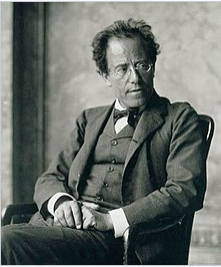
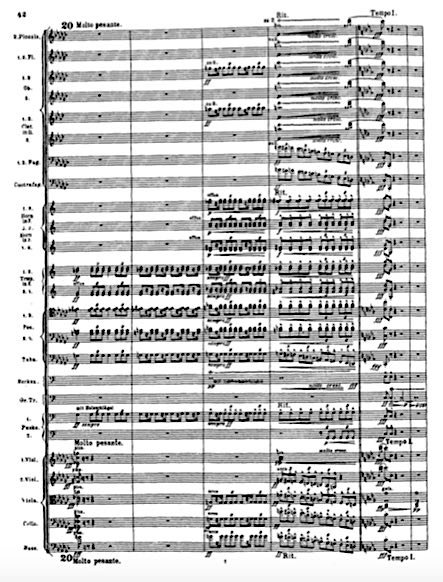
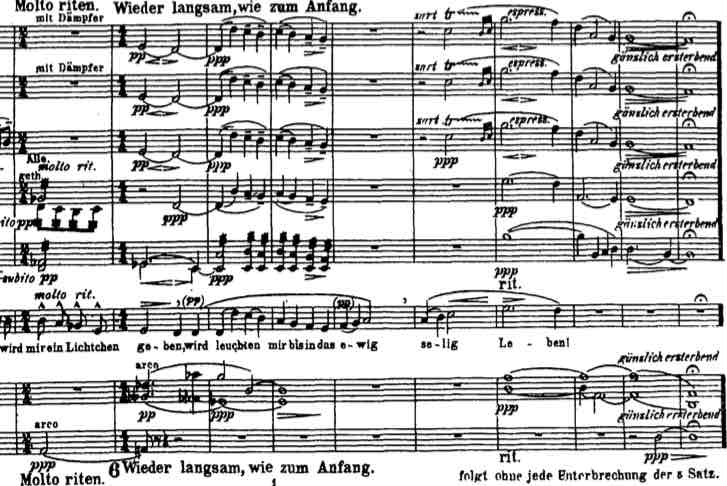
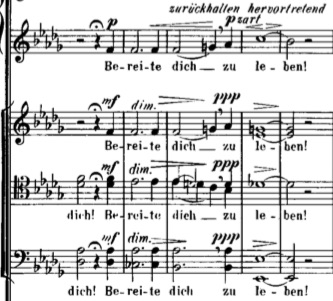

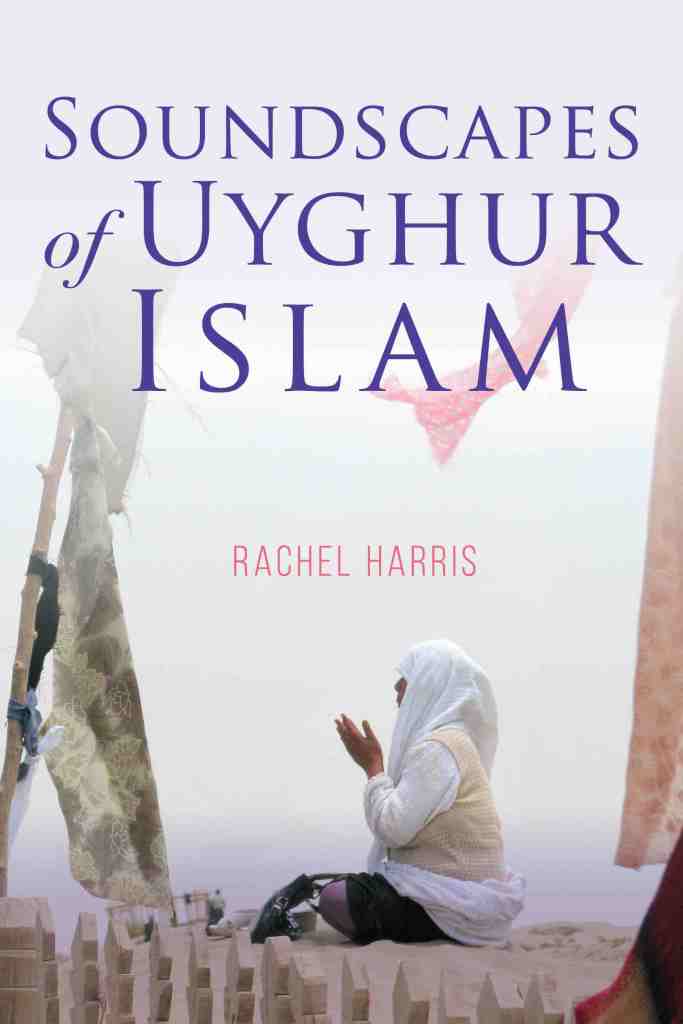
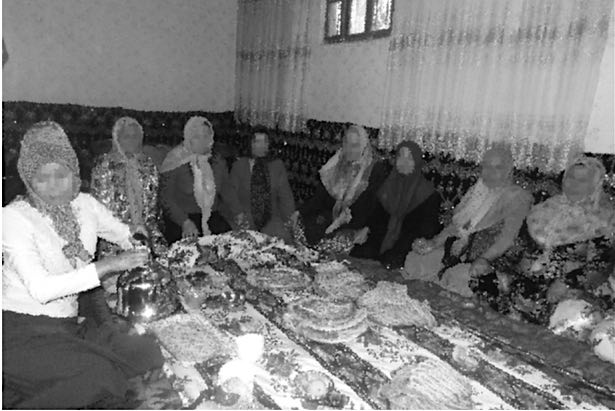




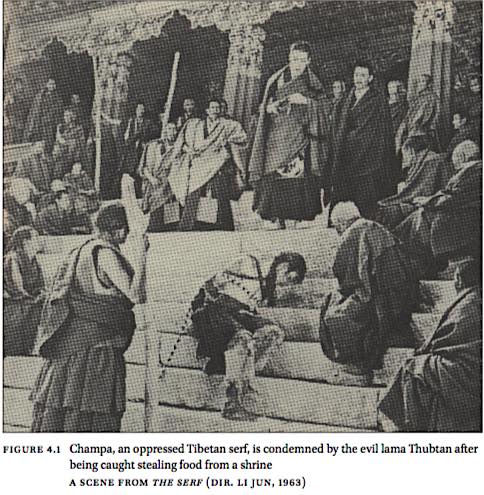


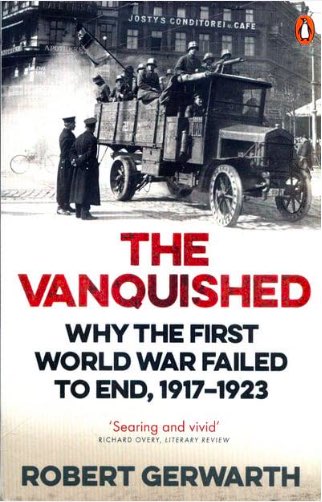

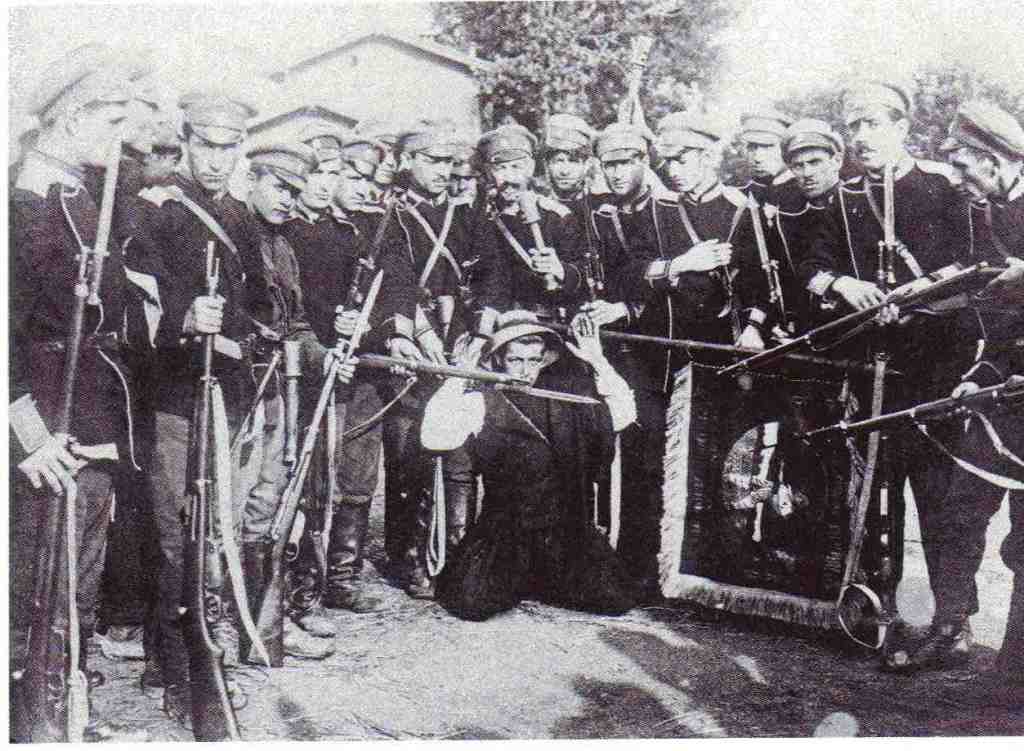

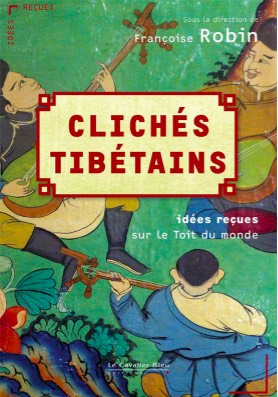





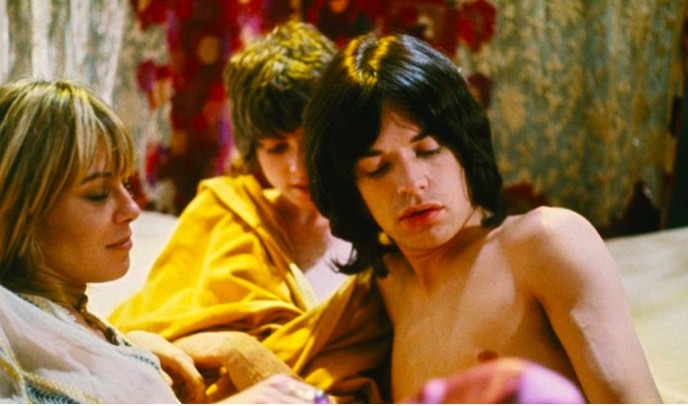
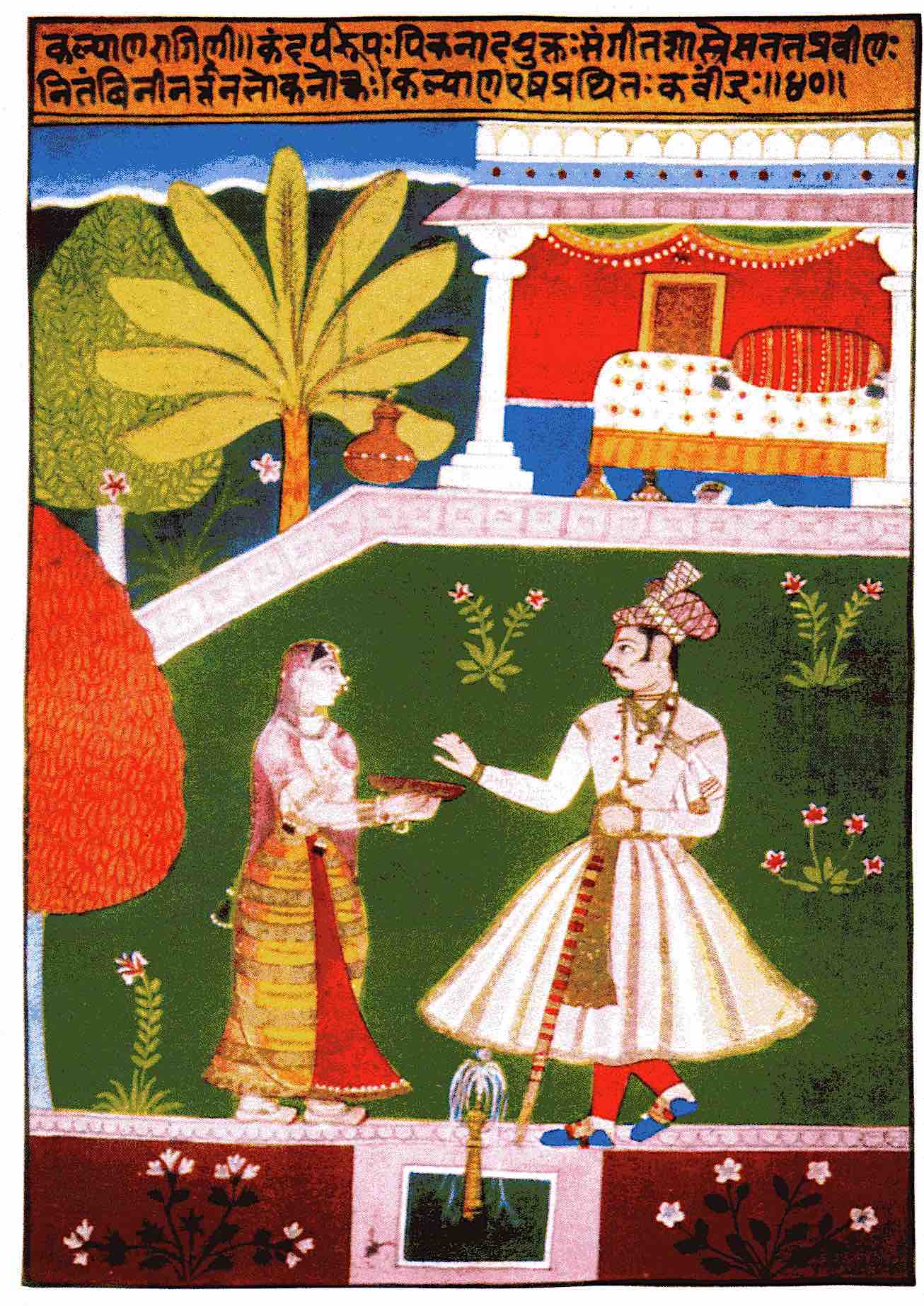


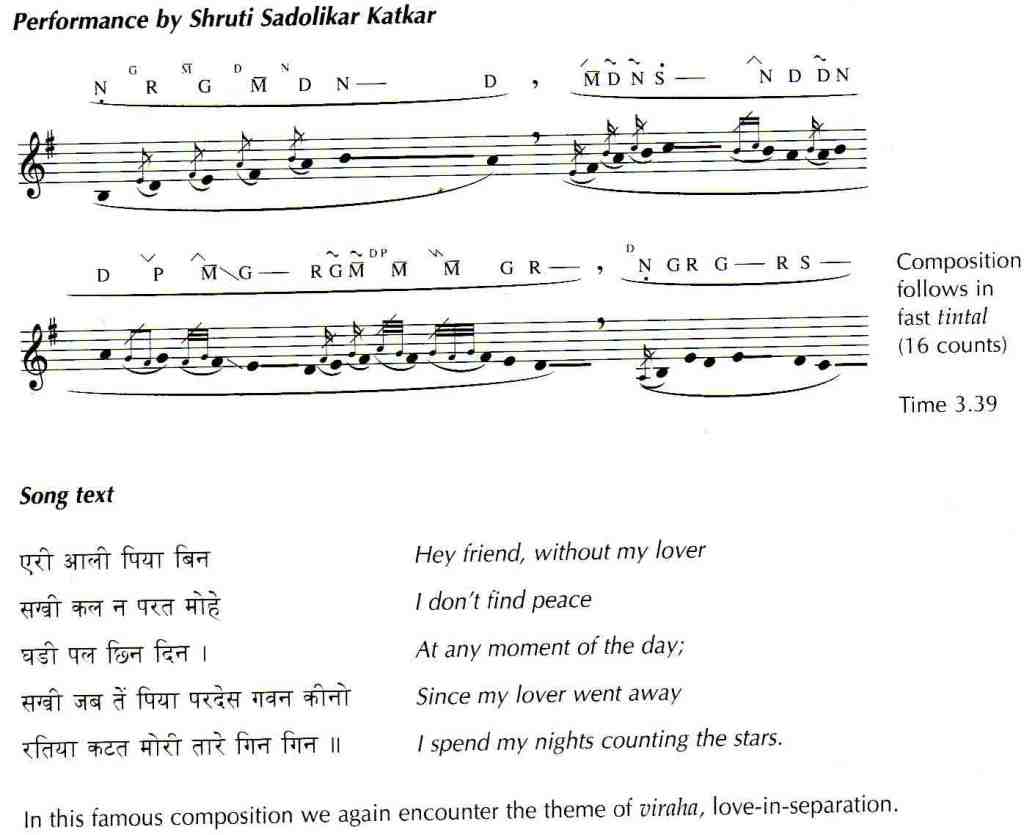


 In a highly macho society, the only woman performer here is Aspasia Papadaki (b.1932), the first female lyra player in Cretan music. At the age of 14 she made her own instrument; though her widowed mother persuaded Aspasia to play violin instead, by 1960 she found that she could only record for radio if she reverted to the lyra (see below). Here’s a track:
 Gauhur Jan accompanied by harmonium, 1902.
 In Metropolis (which turned out to be Kerr’s last book in the series, published posthumously in 2019) he returned to Bernie’s early career during the Weimar period. As ever, historical personages (such as Arthur Nebe and George Grosz) are woven into the plot, as well as early performances of The threepenny opera.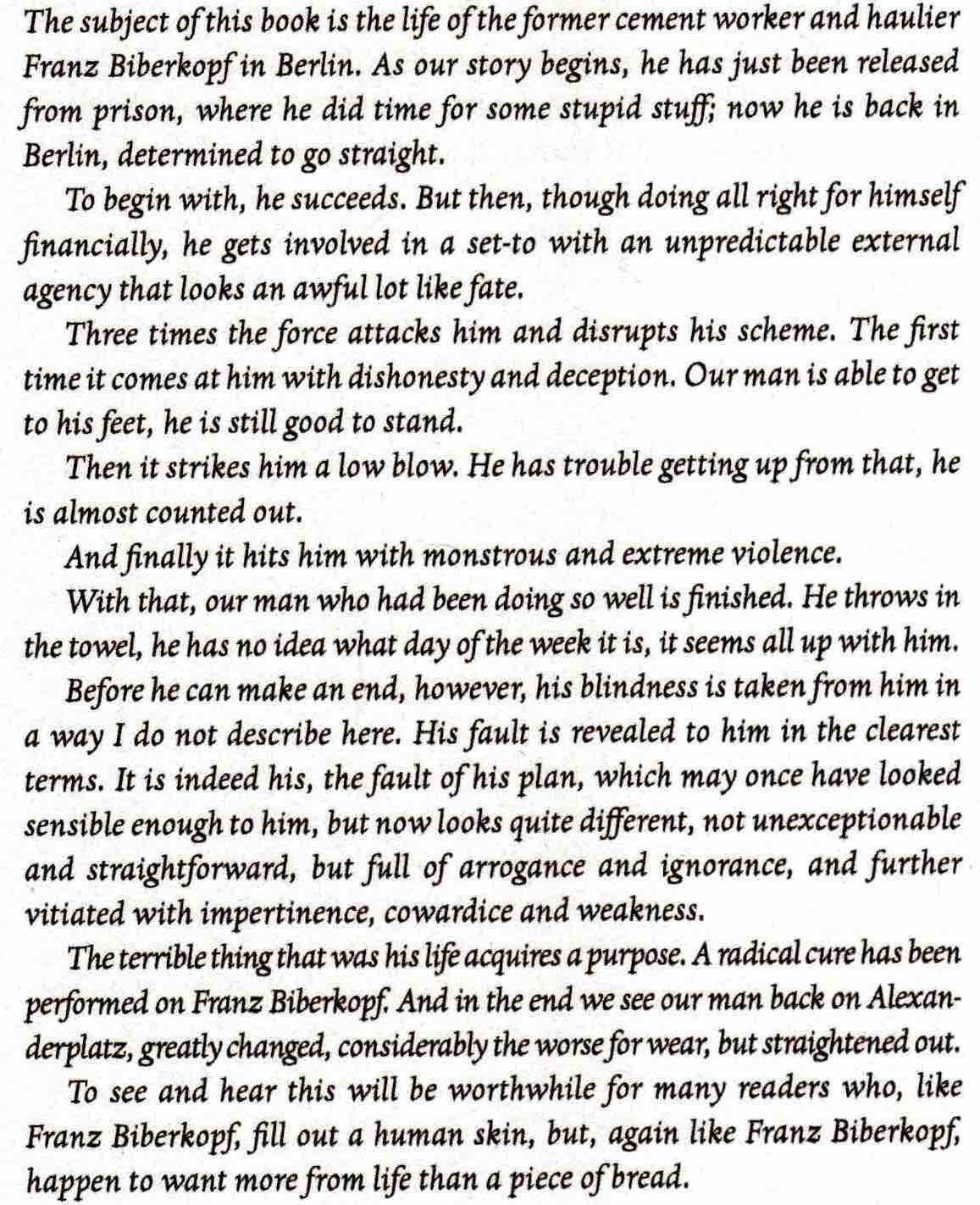
 As to more recent recreation of the Weimar era,


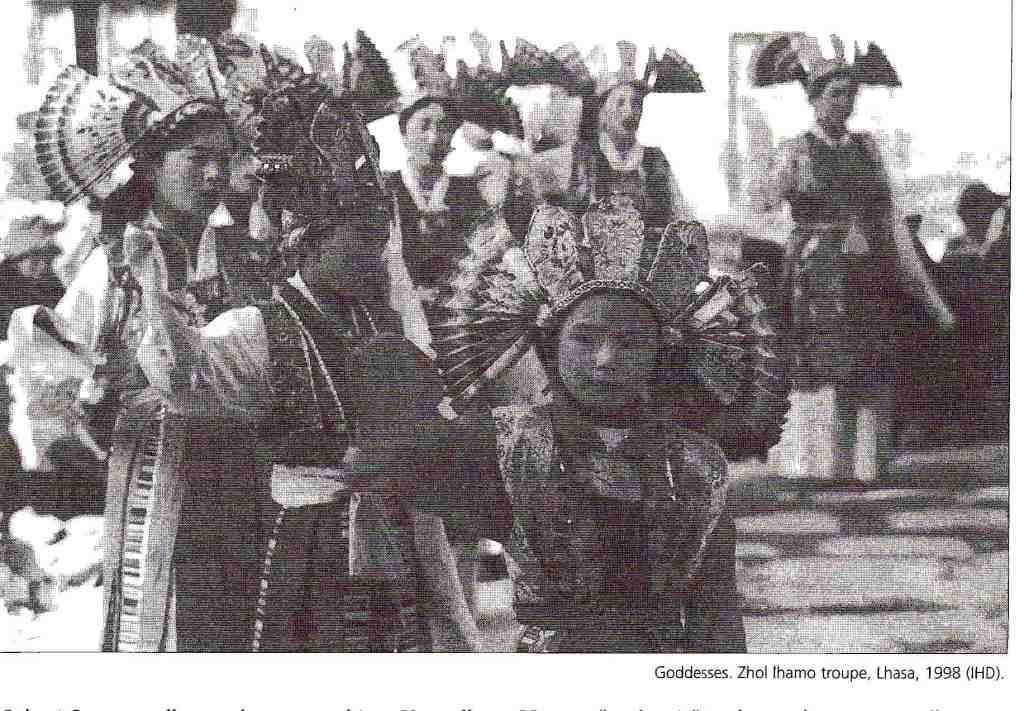

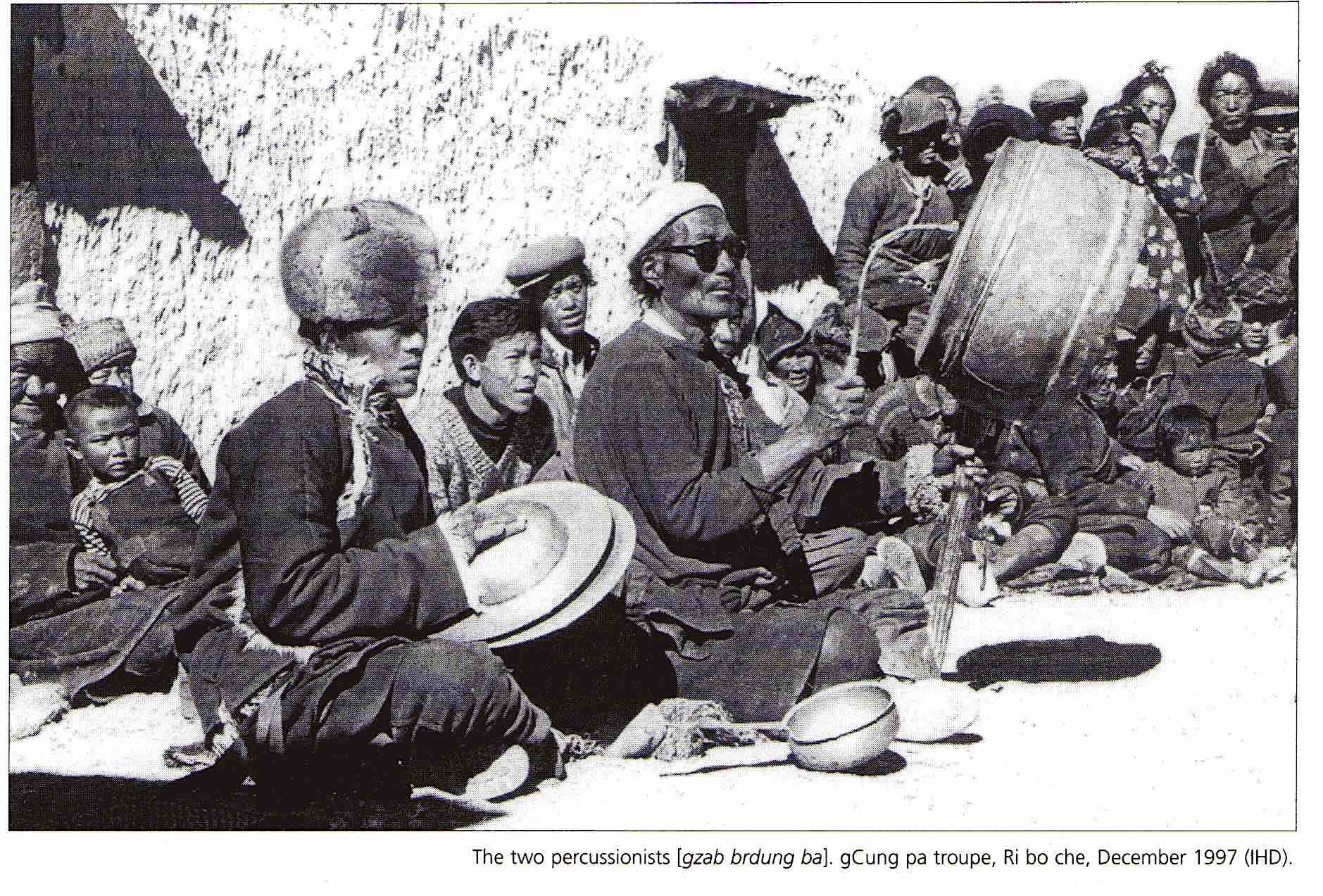
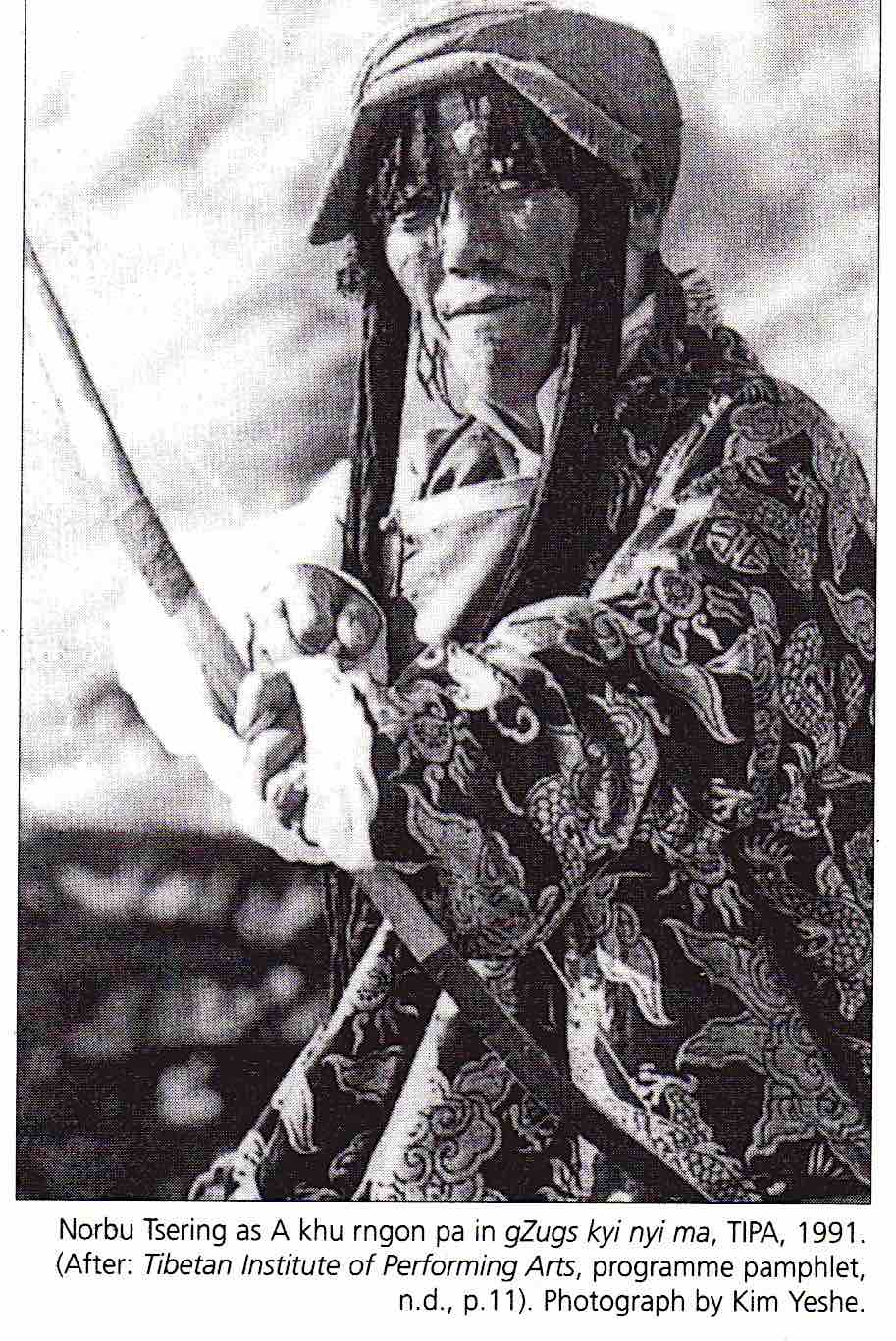
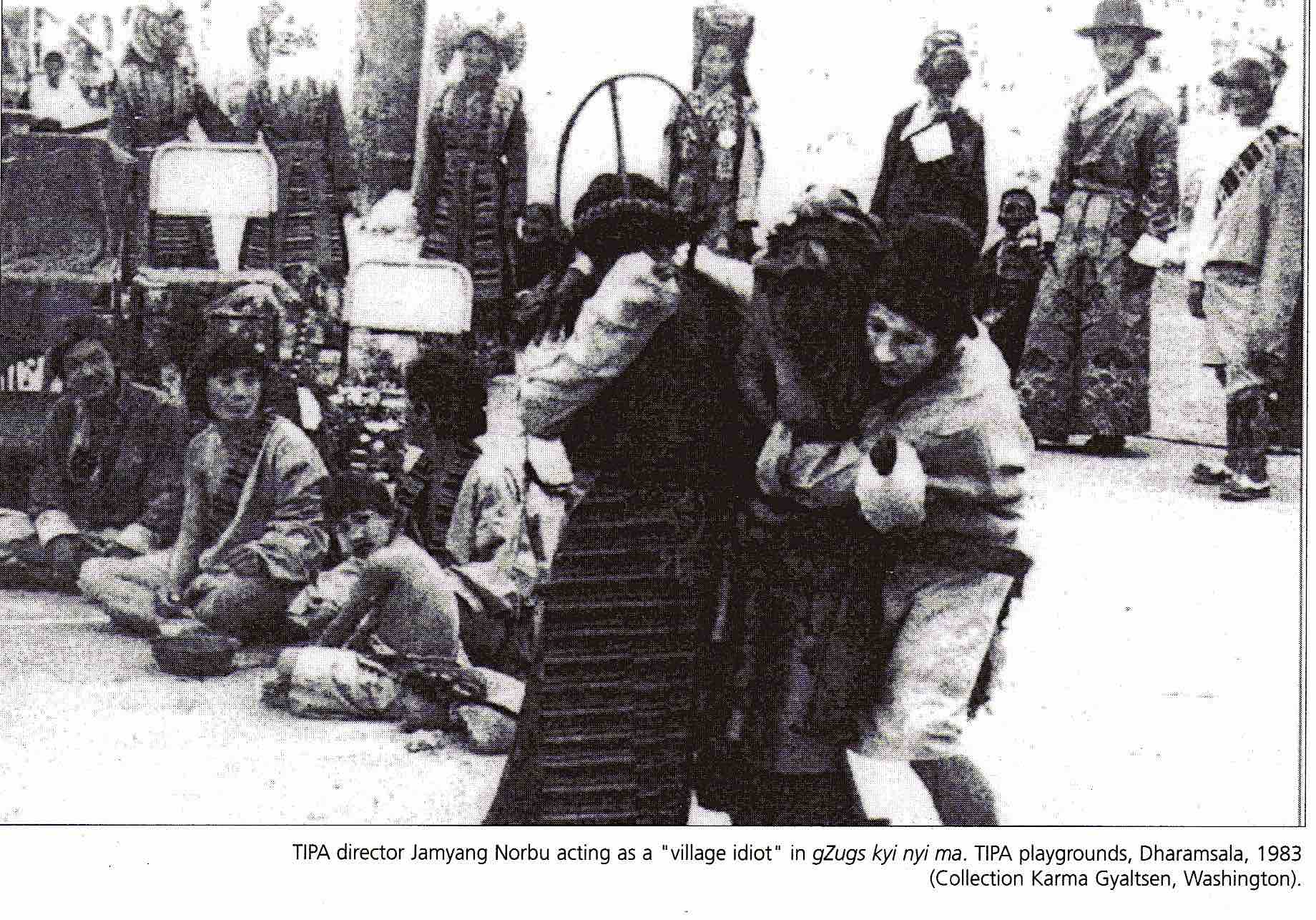



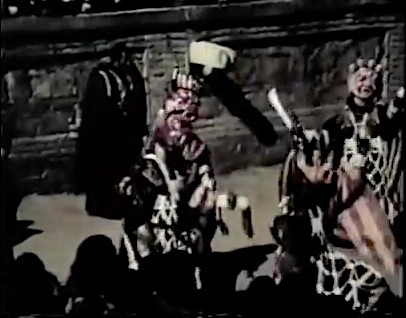


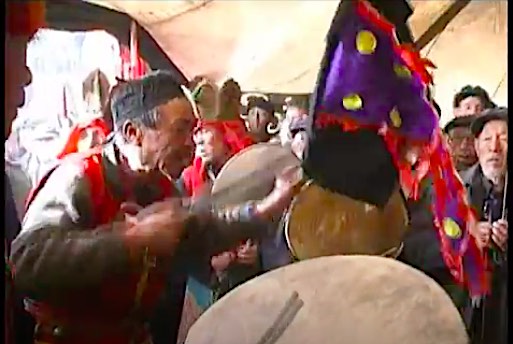


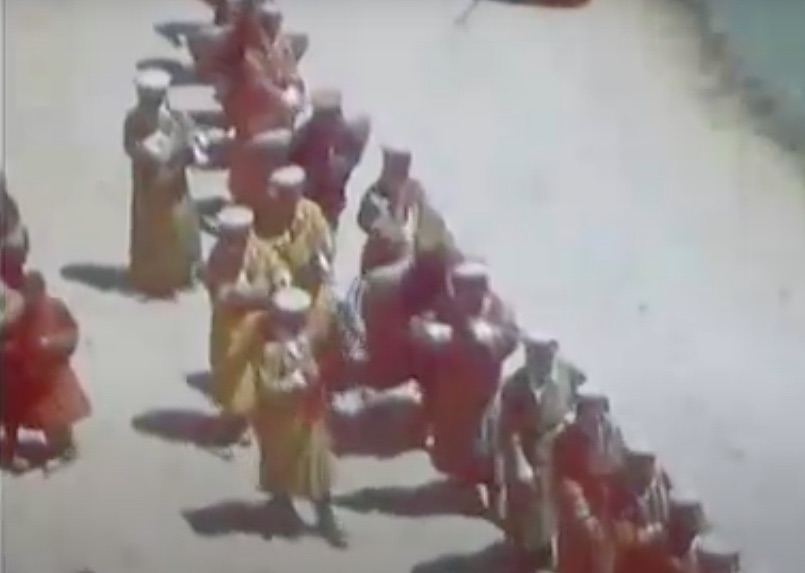

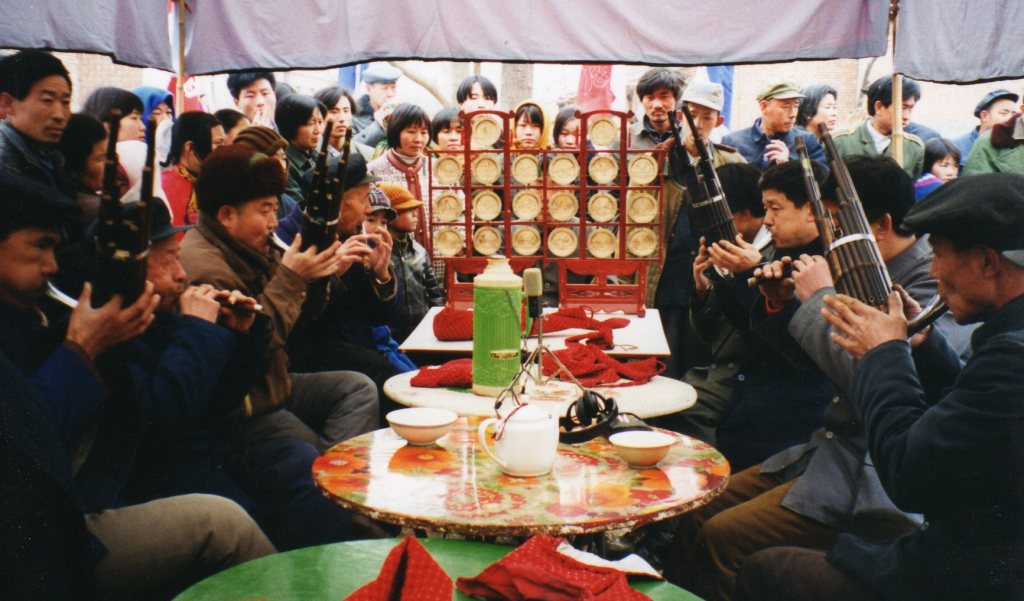
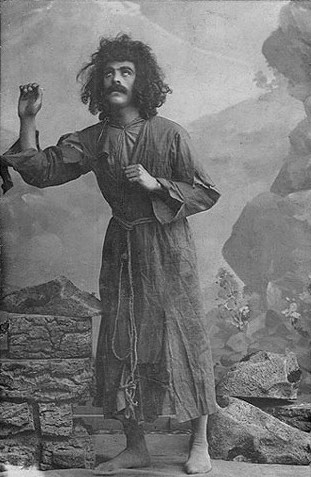
 Soon Hajibeyov also picked up the language of



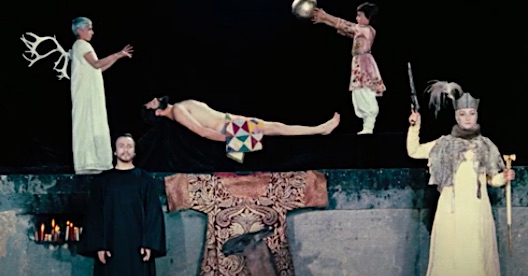
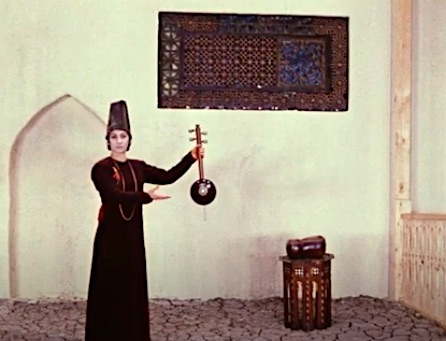
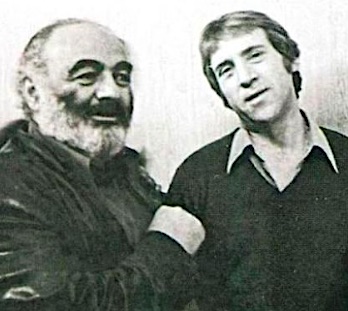

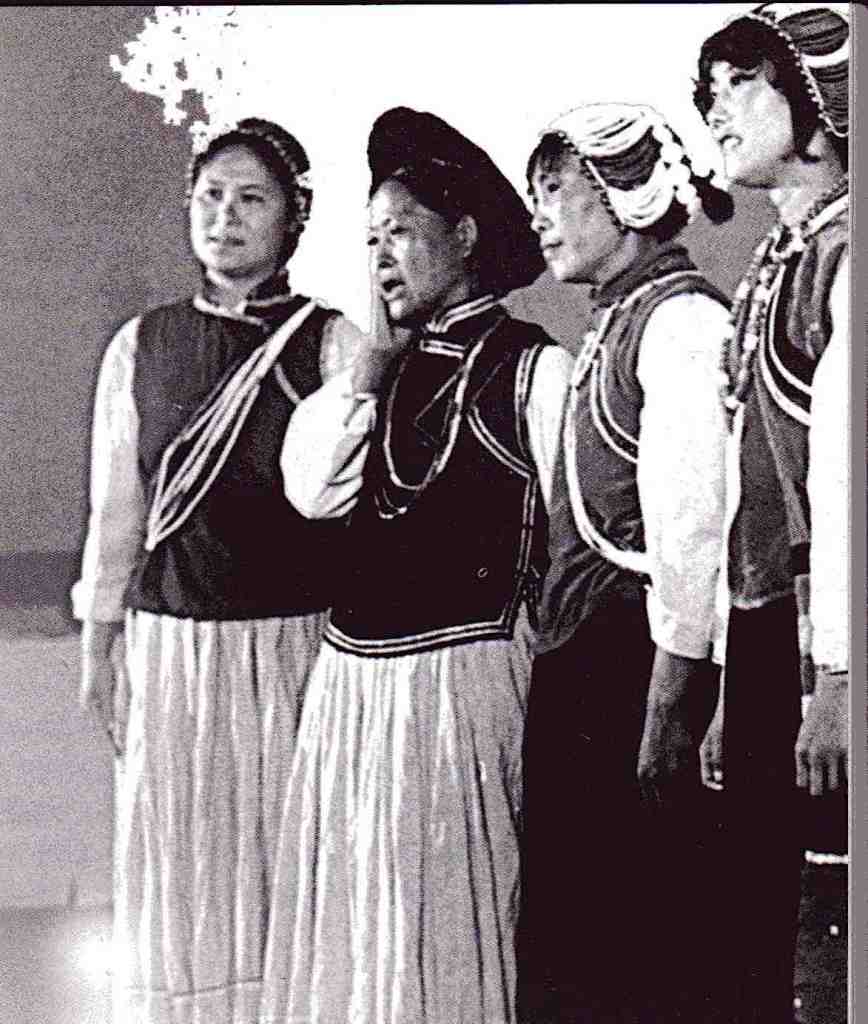




 * Cf. the classic



 By contrast, the songs of Tseten Drolma (b.1937),“the golden voice of the Party” under Maoism, “symbolising the Tibetan devotion and gratitude to the Party and to China, and telling again and again about the miseries of pre-1950 feudal life in Tibet”. While rather few Tibetans may subscribe to the ideology of her songs, they are widely known, inescapable.
 Both her parents were members of the ensemble, and from 1980 to 1985 she studied at the music department of the Central Minorities Institute in Beijing. Back in Lhasa she sang Chinese pop in karaoke bars, modeling herself on the Taiwanese crooner Deng Lijun (Teresa Teng), then highly popular in the PRC. She soon began to blend Tibetan folk melody with an “Asian pop” style. As unrest erupted in Lhasa, her lyrics discarded the old political messages for melancholic and spiritual themes. After an interlude for further vocal training in Beijing and Shanghai, she broke into the national market in 1990, bolstered by TV appearances, just as the “Tibet craze” was developing in China. Yet, working within the state system, she eschewed political messages—like alternative Chinese pop singers of the time.

 Nin was an articulate, talented, independent, sensitive, psychologically attuned, sensual woman. One might think that such attributes would make her safe from Miller attentions, and that of all people, Nin would see right through his narcissistic misogyny. True, she boldly put psychology into practice, engaging in carnal relationships with her analysts; and having been abandoned in childhood by her father, she embarked, confidently, on an affair with him in her 30s—which at least inspired the headline “

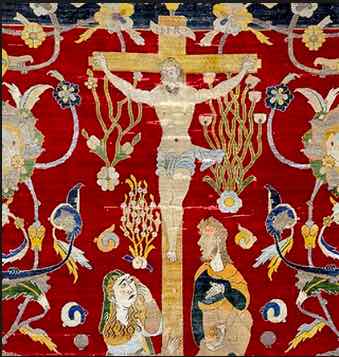

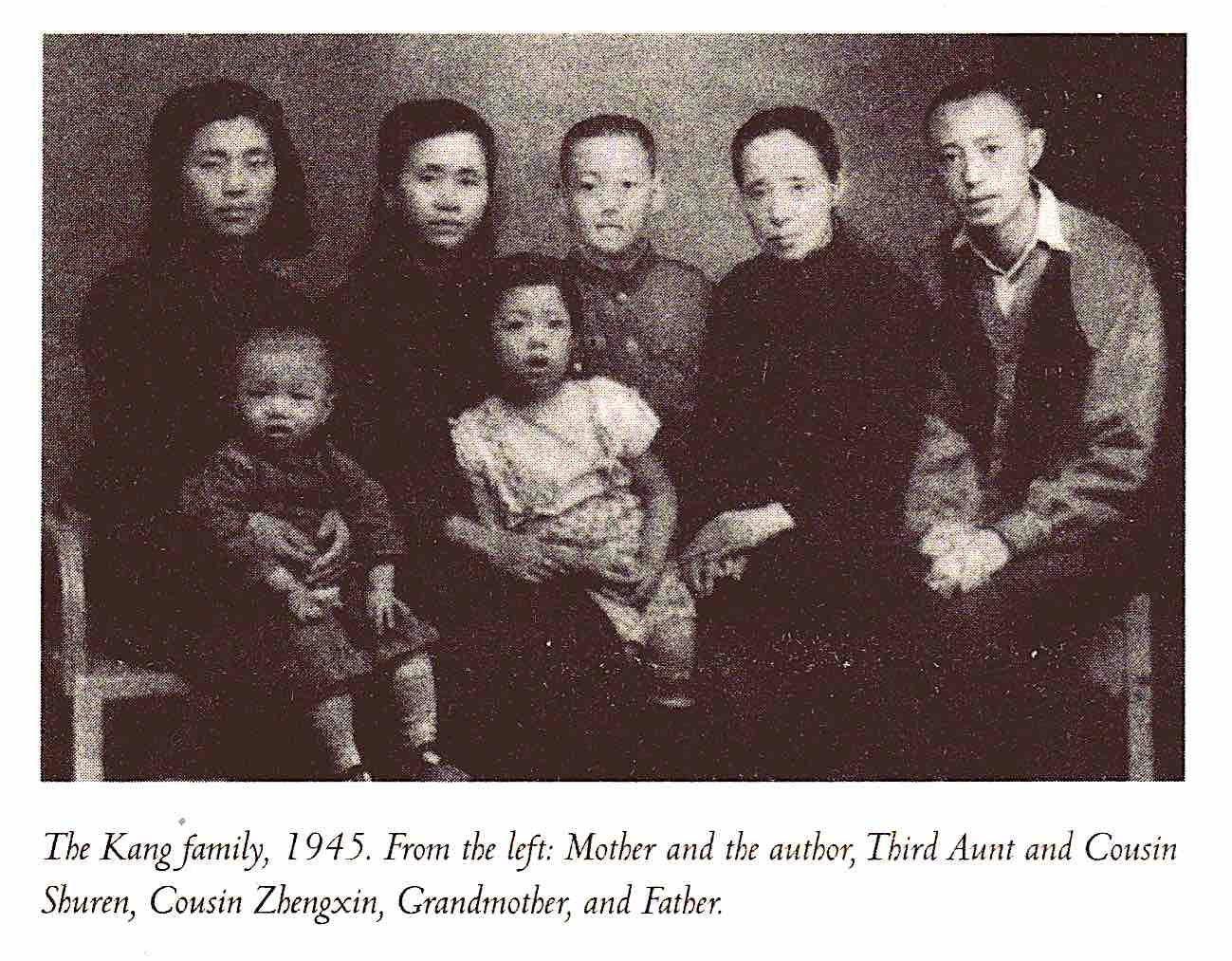
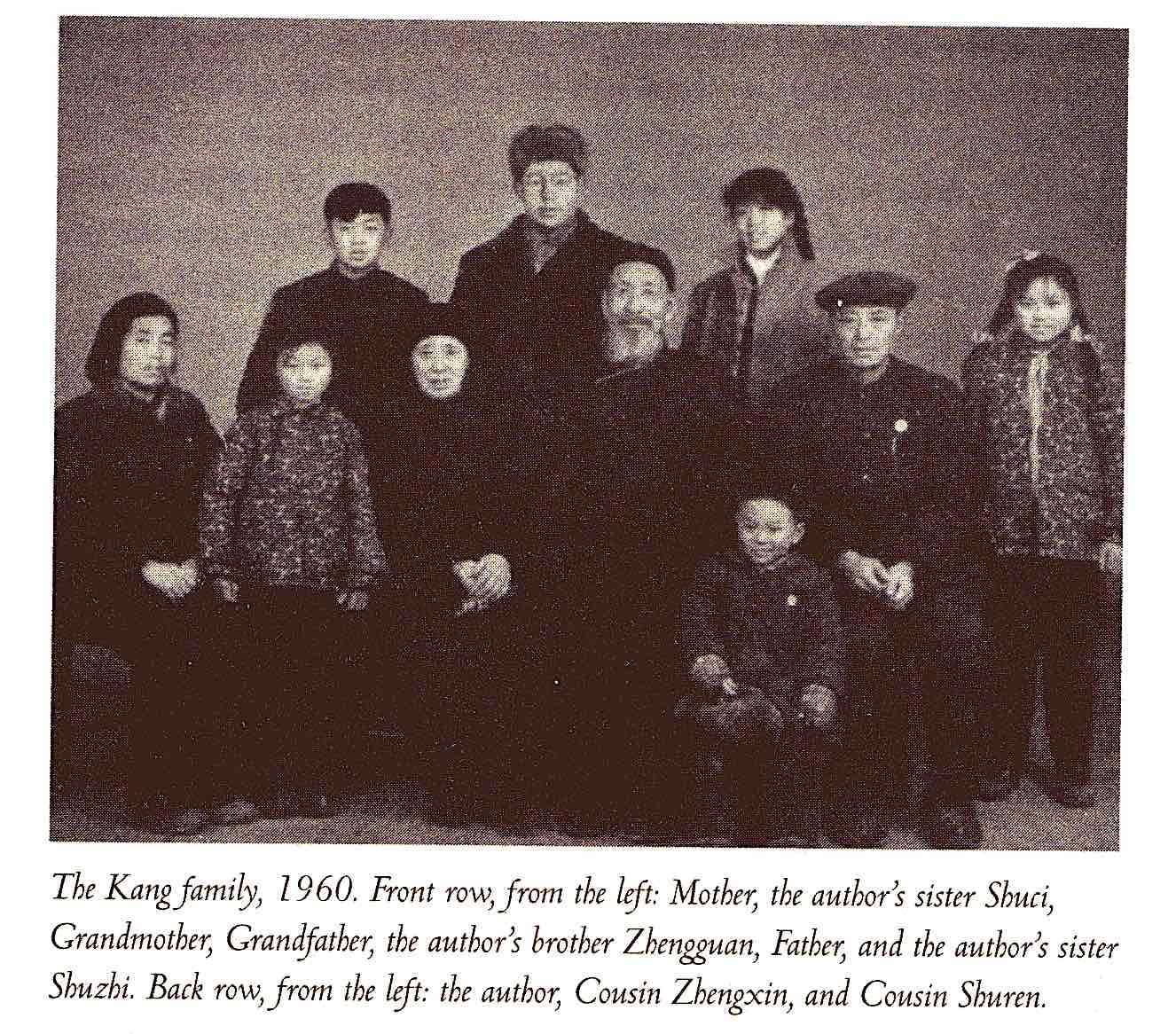
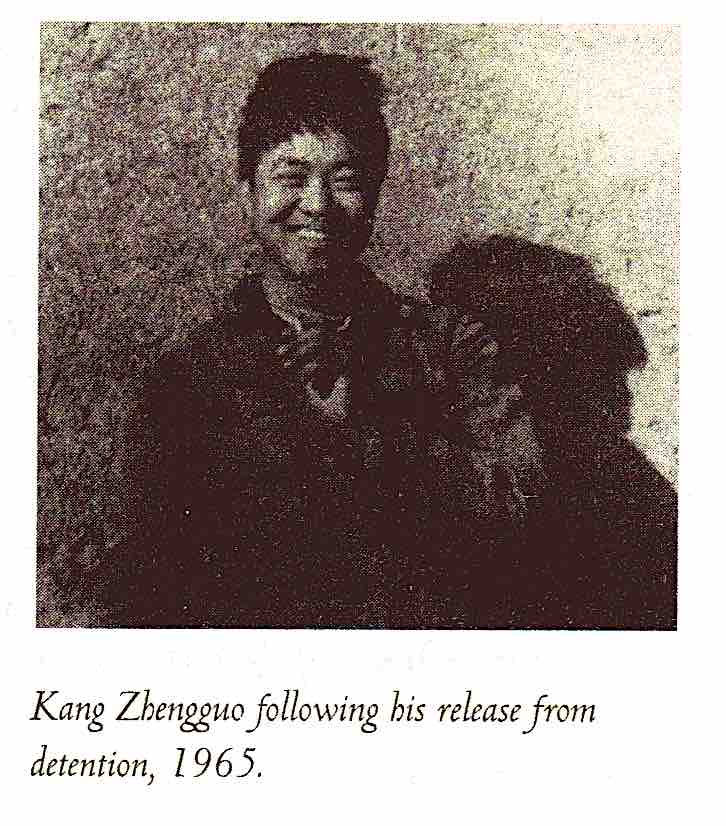 In March 1965, seeing no way out, he took the No.15 bus to enter “the gates of hell”, becoming a “resettled worker” at the No.2 Brickyard in Xi’an. His romantic illusions about finding Robin Hood types were soon dispelled. Though they were allowed to take occasional breaks in town, it was effectively a labour camp.
 I don’t think that Grandfather was aware of the extent to which the temples had been politicised or to which the Party’s promise of religious freedom was pretence. There was a reason why he had been granted prestigious positions in the Buddhist Association and the Municipal Political Consultative Committee, along with a monthly subsidy of 100 yuan. As a prominent Buddhist spokesman for official policies he has an unwitting figurehead for the Party’s United Front policy of the political assimilation of non-party members. In the comparatively relaxed climate of the past few years he had fallen for a host of false promises. Imagining that he could promote Buddhism as he had before the Communists, he had continued to advocate religious reform. Unfortunately his proposals—to hold gatherings to celebrate Buddhism, for example, and to require temples to enforce religious discipline—had aroused the ire of both the Party and the monastic community. Maybe even at the bitter end he still failed to understand that his religious zeal exceeded the limits tolerated by the authorities, who saw the latest political campaign as an opportunity to attack him.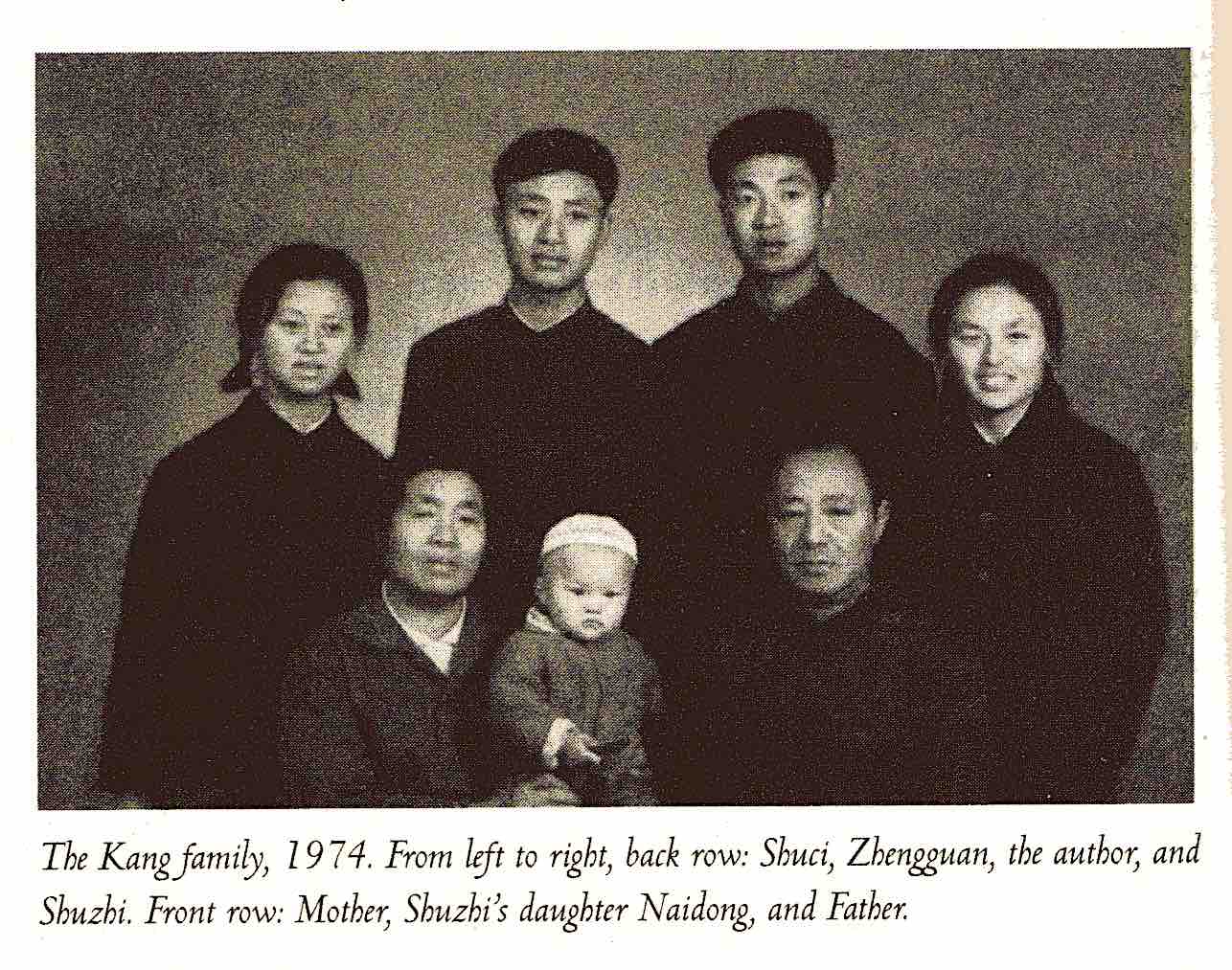










 Tibetan monks laying down their arms, 1959. AFP/Getty.
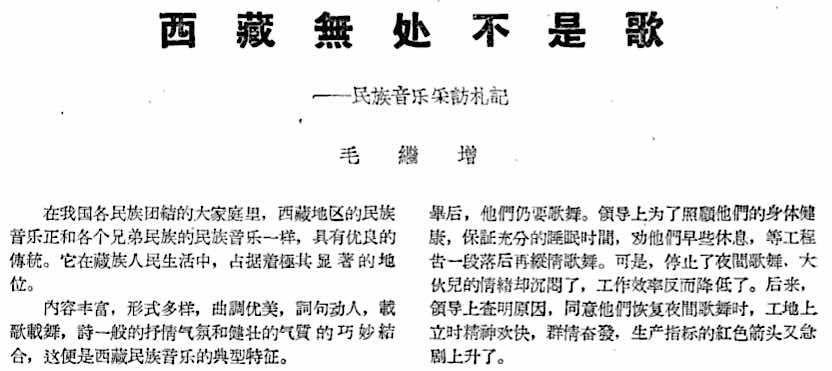
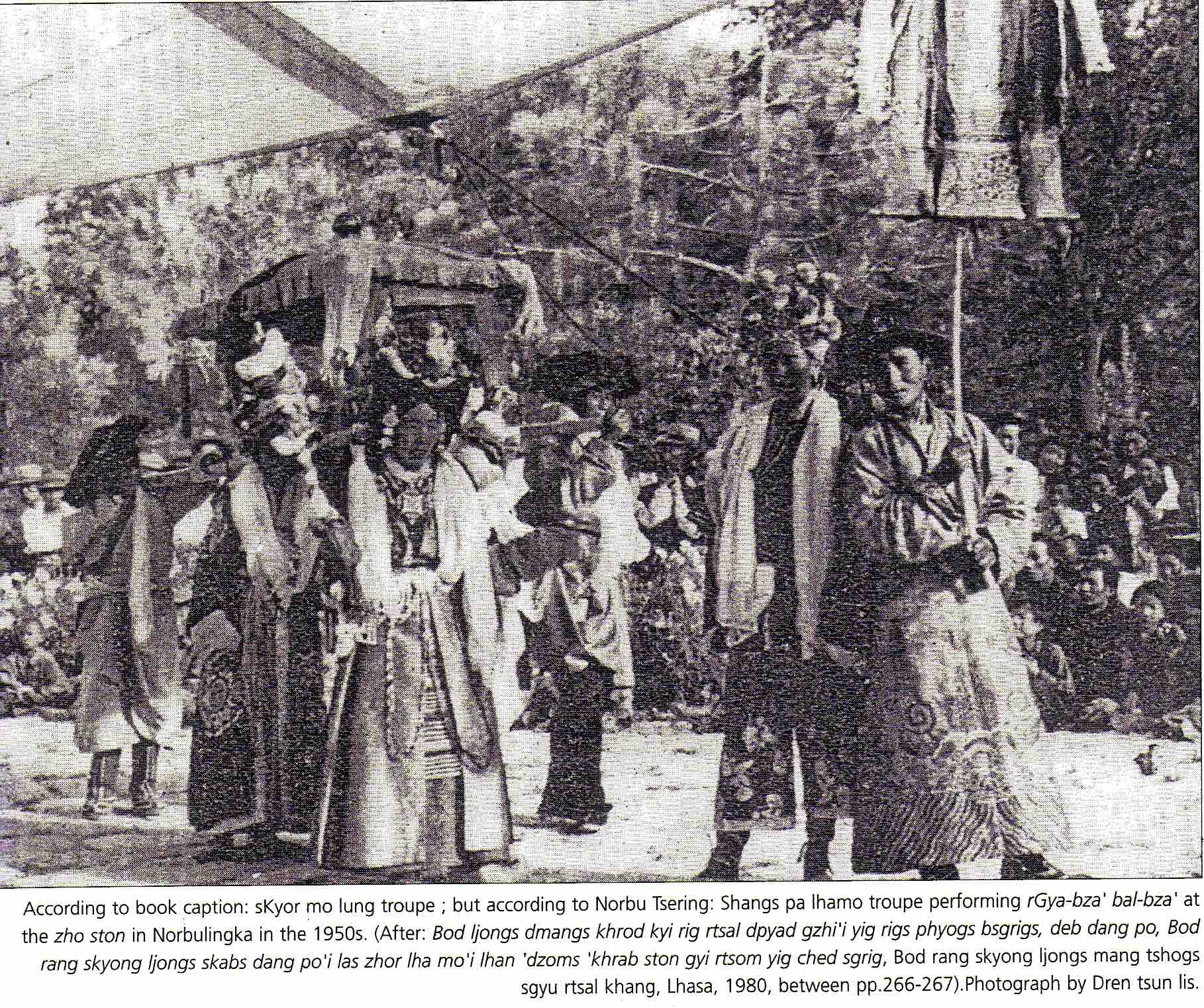


 Horkhang Sonam Palbar (centre) paraded with his wife and father-in-law at a thamzing struggle-session, August 1966. Forbidden memory, fig.80.


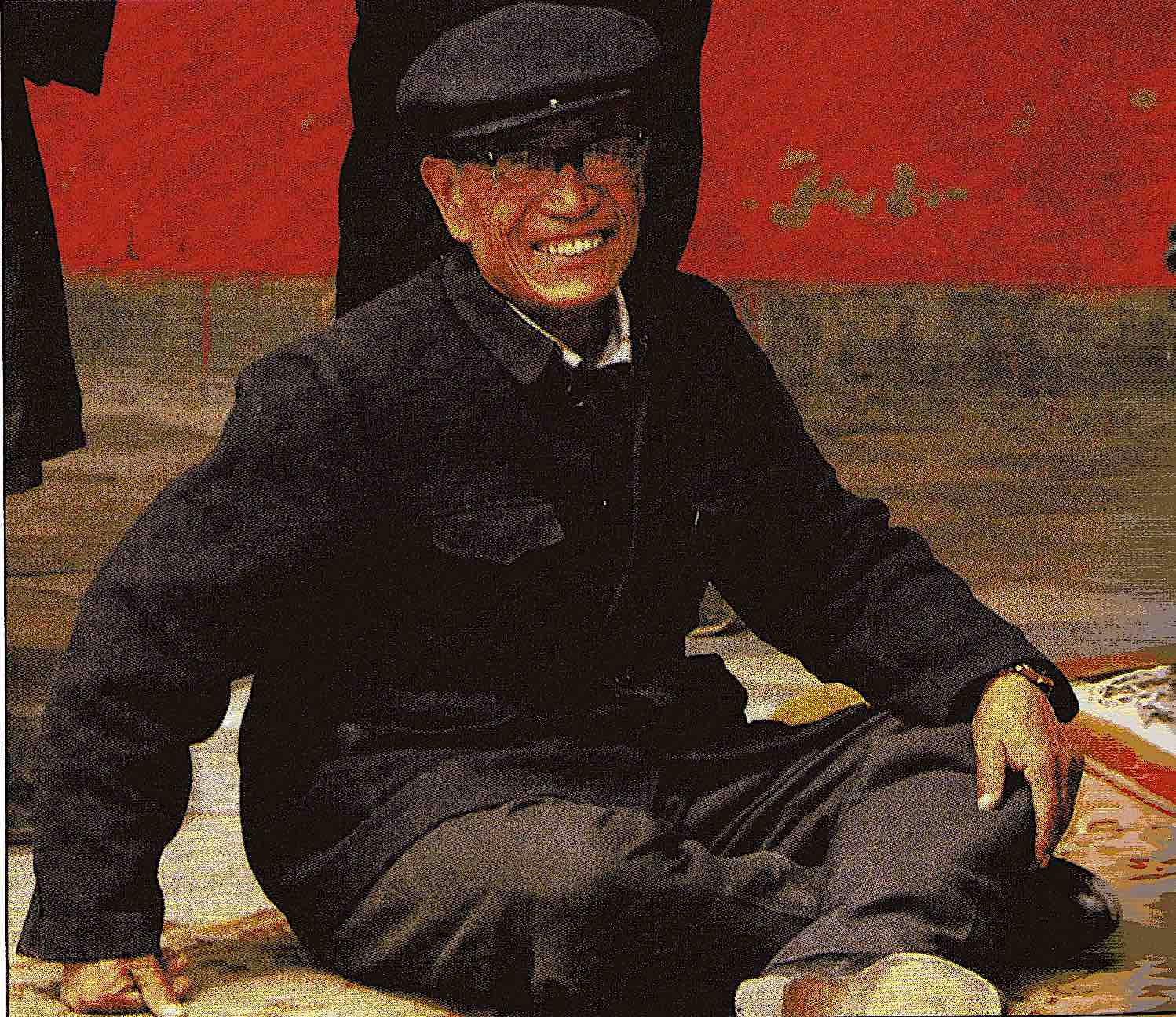


 Horkhang Sonam Palbar leading a study team to a village of the Lhoba minority people,





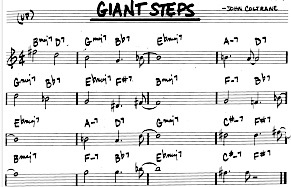

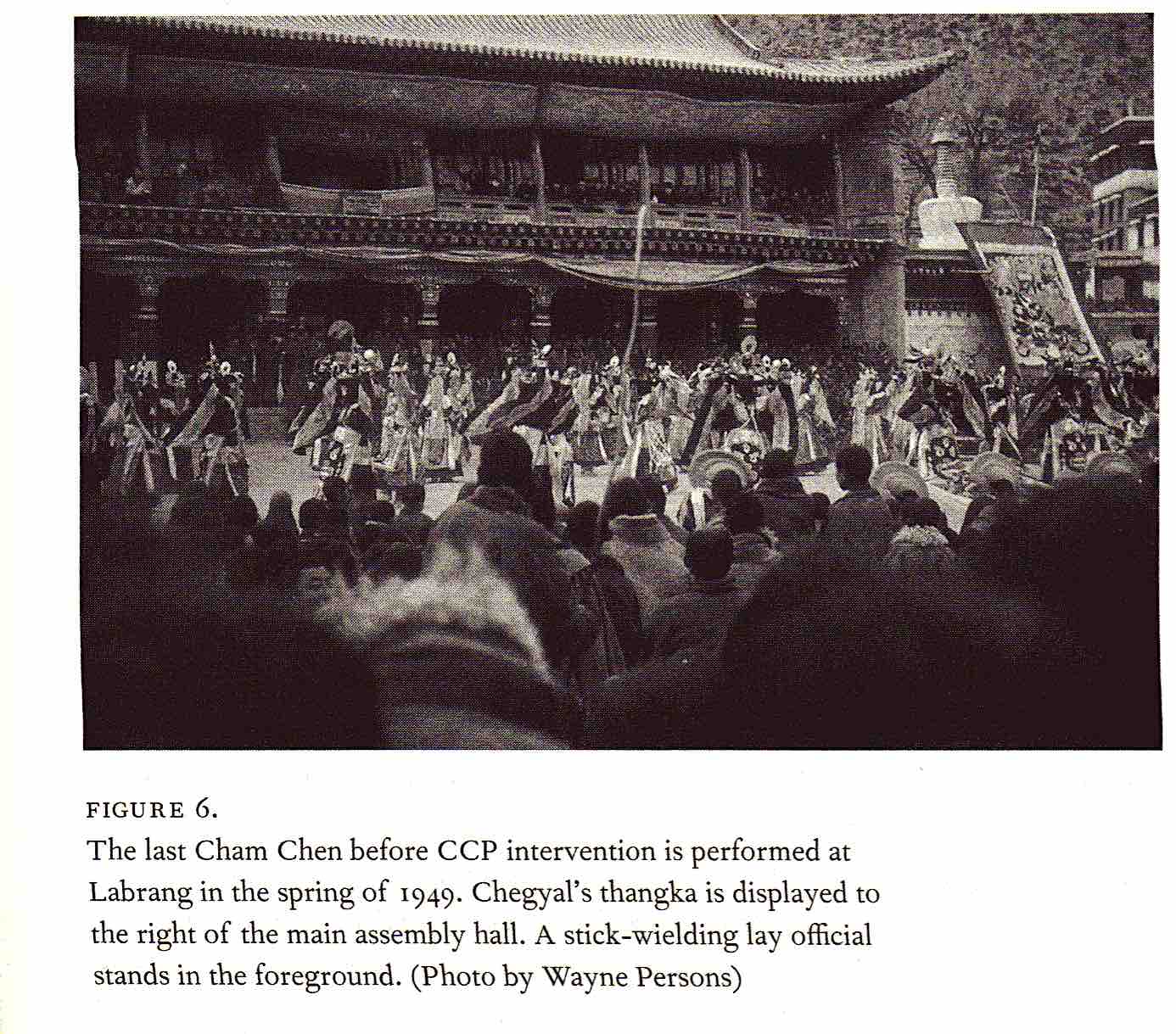 She unpacks the multiple meanings of the cham dance ritual, “the culminating component of the greater mandalising event that was the annual Great Prayer Festival at the lunar New Year”. Following the destabilizing of the frontier zone in the wake of the decline of the Qing rule and the splintering of rule in China, in 1949 the monastery held the last cham before the Chinese occupation.


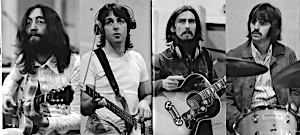


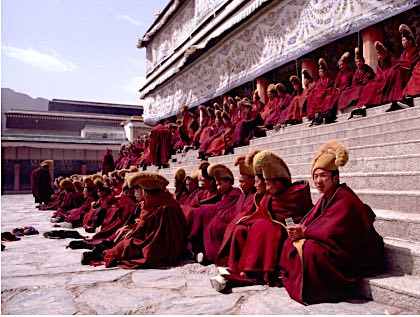


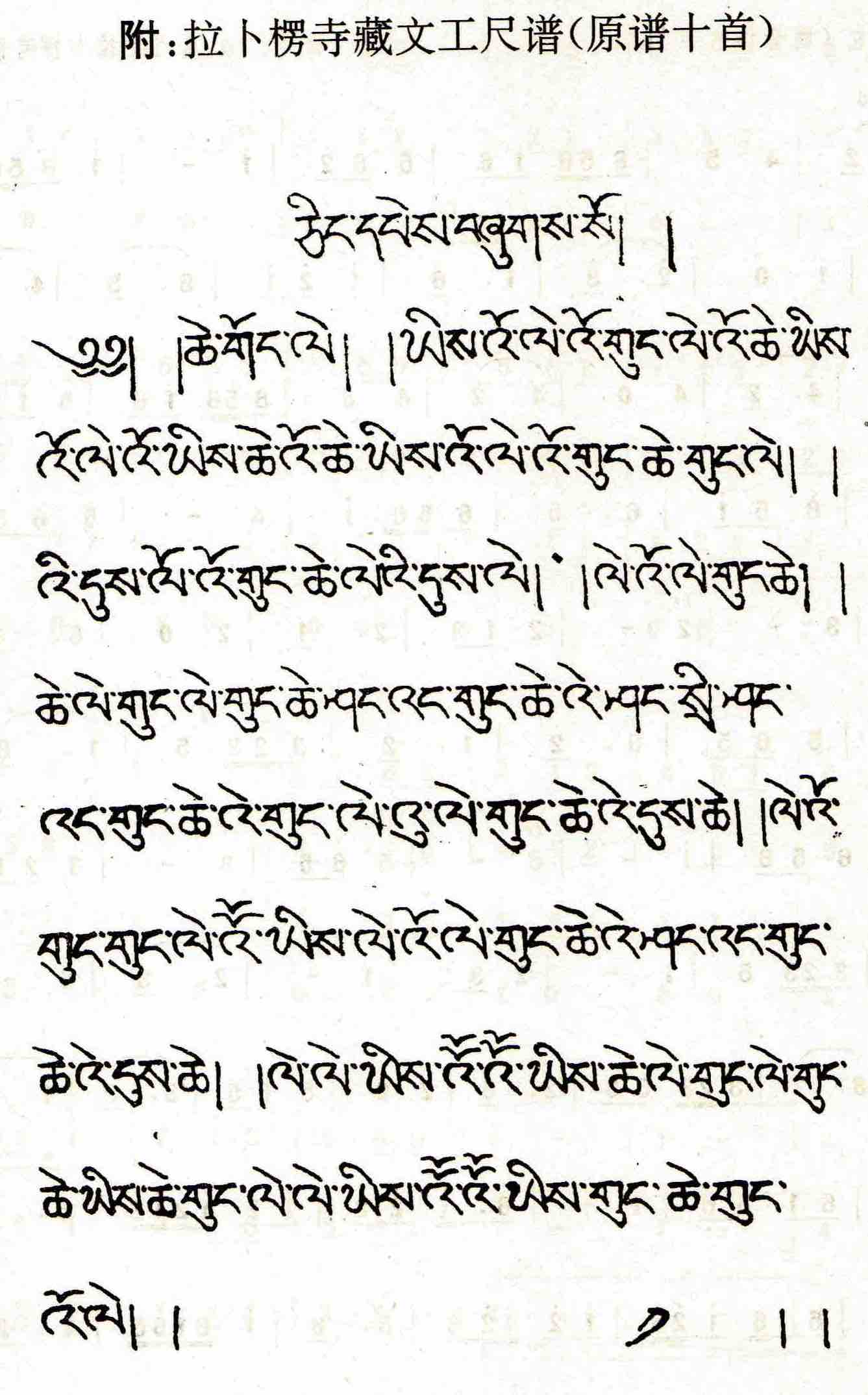


 Stephen Jones: a blog