I never cease to be amazed by newspapers which shyly make him say “f***ing black c***”, leaving intact the one word which aroused Mr Ferdinand’s wrath,
and calling on the unlikely couple of Charlotte Brontë and Ken Loach. See also this LRB review of a book on a 1923 trial revolving around women’s use of “foul language”, class, and the uses and abuses of literacy—with a pre-echo of Paul Kratochvil’s splendid story in a quote from 1930: “soldiers used the word ‘fucking’ so often that it was merely a warning that ‘a noun is coming’ “.
Moreover, reclaiming “the c-word (cunt)” has been a concern of feminists—as discussed in this post (from another useful site), citing authors from Germaine Greer to Laurie Penny. See also this article from Rachel Braier; the wiki article is useful too. And do admire the work of the Profane Embroidery Group. More under Words and women.
In Stewart Lee‘s latest book March of the lemmings (2019—not aka The bumper book of Stewart Lee jokes: jolly japes for all the family) he pursues the style of How I escaped my certain fate with typically expansive Teutonic footnotes to the script of his show Contentprovider [or should that be C***ent provider?]. In one of these, warming to several topics, he reflects on the efficacity of his “so-called comedy” with purposeful, insistent use of “the c-word (cunt)”—which I hereby feel obliged to emulate.
First we should hear him doing the live version that prompted this tirade, since it gains so much from his masterly inflection, timbre, timing, and delivery:
And it isn’t, to be fair, you know, and I think—look, we’re gonna leave the EU, that is happening, and I think people have gotta put their differences behind them now and try and make it work. And I—I don’t know if you can make massive generalisations about people that voted to leave Europe anyway, because people voted to leave Europe for all sorts of different reasons, you know, and it wasn’t just racists that voted to leave Europe. Cunts did as well, didn’t they? Stupid fucking cunts. Racists, and cunts, and people with legitimate anxieties about ever-closer political ties to Europe.*
So here’s the footnote:
* How does this joke, which drew tears and cheers, even though I say it myself, night after night for the best part of two years, work? (1) Firstly, shock. I rarely swear on stage, and compared to most edgelord stand-ups, my swears count is probably only one level up from the sort of acts who market themselves as “clean” to get gigs at hospices run by born-again Christians. So it is a funny shock to hear me abandon my usual vocabulary and say the c-word (cunt). The c-word (cunt) is probably a way-too-heavy word to use here, and the deployment of such a disproportionately heavy weapon is part of what makes choosing to do [it] so funny. (2) The structure of the bit has a relationship with the much-touted idea that liberal Remainers should look outside their bubble and seek to understand the fears and concerns that drove 17.4 million people to vote Leave (“People voted to leave Europe for all sorts of different reasons, and it wasn’t just racists that voted to leave Europe…”), but then subverts the progression of thought by just calling them the c-word (cunts). To quote an old Lee and Herring routine, or possibly Viz’s Mr Logic, “Our expectations were subverted, from whence the humour arose”. (3) This second idea is then given what we in the trade call a “topper” by doubling back on the original premise and conceding that some Leave voters may also have “legitimate anxieties about ever-closer political ties to Europe”. There is then a second topper, in the form of a letter from a punter [“Dear Palace Theatre, Southend, please inform the “comedian”, and I use that word advisedly, Stewart Lee, who I had the misfortune of being taken along by friends to see last night, that I actually voted to leave Europe and I am neither a racist nor a cunt. Merely someone with genuine anxieties about ever-closer political ties to Europe. Yours, A. Cunt, Burnham-on-Crouch.”], which is a real letter (with the name changed) received during an early stage of the show at the 2016 Edinburgh Fringe try-outs, which just replays the joke again but in a funny voice and with more swearing, and with the town the complainer comes from changed to some local place every night—in this case, Burnham-on-Crouch.
By now the c-word (cunt) has long become a veritable mantra. The ever-expanding footnote goes on to do battle with Lee’s critics, with a plea for context:
The Tory Brexiteer and Sun columnist Tony Parson, in the February 2019 edition of GQ, the sort of style and status bible Patrick Bateman in American Psycho would read in between dismembering prostitutes in a penthouse apartment, wrote, on the subject of the c-word (cunt):
In the little corner of Essex where I grew up,”c***” was practically a punctuation mark among men and boys [see above—SJ]. It was in the foul air we breathed. But it grates now. It feels like the rancid tip of a cesspit that is the modern male attitude to women. And what I find bewildering is that it is not just thick ignorant oafs who use the c-word with such abandon. It is the woke. It is the enlightened. It is the professionally sensitive. It is the Guardian columnist, the BBC-approved comedian who can be guaranteed to dress to the left. “It wasn’t just racists that voted to leave Europe,” Stewart Lee recently quipped, “C***s did as well. Stupid fucking [sic!] c***s.” Does Lee’s use of the word sound rational or healthy? Does it provoke tears of mirth? Do you think it might persuade the 17.4m who voted to leave the European Union—the largest vote for anything in the history of this country—they were wrong? Some of my best friends are Remainers, but such spittle-flecked fury when using the word “c***s” makes Brexit sound like the very least of Lee’s problems.
Obviously, like Julia Hartley-Brewer and other Conservative Twitter types who alighted on the Brexit bit, Parson removed the qualifying section that followed it, where I acknowledge the out-of-touch nature of the so-called liberal elite in London, which in turn buys me some leeway, and also makes the subsequent attack on the so-called non-liberal non-elite more of a surprise; and Parson, presumably knowing little of my work, doesn’t appreciate that the use of the c-word (cunt) reads to my audience here in a comical way precisely because using it is so out of character. It is not the swear word in and of itself that brought the house down nightly. It has to have context.
And of course, the word isn’t delivered with “relish”, and it isn’t “spittle-flecked” either. The c-word (cunt) is delivered here with a kind of despairing calm, as if the cuntishness of the Brexit c-words (cunts) was just a sad matter of fact. When I was directing Richard Thomas’s Jerry Springer: the opera at the National Theatre in 2003 (as I am sure I have written before), we were given the benefit of the theatre’s voice coach for one session, who took the singers aside to teach them to enunciate all the libretto’s swear words and curses, to spit them out with relish. I waited for the session to subside, respectfully, and then had to unravel the work that had been done. The swear words weren’t necessarily to be sung in that spirit at all. For the most part, they represented the disenfranchised Americans working, in heightened emotional states, at the edges of the limited vocabulary that was available to them, and had to be used to convey not simply hate and venom, but also love, hope, despair and longing, the feelings expressed in Richard’s music. If I’d really wanted this particular c-word (cunt) to read with spittle-flecked relish, you’d have known about it. There’d have been spittle on the lens. I’m not averse to spitting on stage (on an imaginary Graham Norton, for example), so a lens would hold no terrors for me. To me, the c-word (cunt) here was mainly about how utter despair drove the beaten and frustrated Remainer character on stage (me) to the outer limits of his inarticulacy, painstakingly logical arguments against Brexit having broken down into mere swears.
And I didn’t “quip” the line either. One thing you will never see me doing is quipping. My work is too laborious and self-aware to ever include a comic device as light-hearted as a “quip”, and if I see one, I usually have it surgically removed from my script, or at least quarantined between ironic inverted commas (“Oh yeah, I can do jokes”). [Here’s a rare, and sadly very funny, example—SJ] And obviously, the bit was not in any way intended to “persuade the 17.4m who voted to leave the European Union—the largest vote for anything in the history of this country—they were wrong”, so it is stupid to criticise it for failing to achieve something it never set out to do. That’s like saying that Fawlty towers, for example, was written to encourage hoteliers to control their tempers; or that the very funny playground joke that ends with the line “Lemon entry, my dear Watson” was written to encourage Sherlock Holmes to keep suitable anal-sex lubricants close to hand for his congress with Watson, rather than relying on whatever out-of-date fruit preserves he could find in his larder.
Maybe I came onto Parson’s radar of late because I talked about Brexit, which he and his employer the Sun support, or because I am now one of those “cultural figures” that informed commentators like him are supposed to know about (“God! Haven’t you heard of Stewart Lee, Tony? I can’t believe it!”), who get praised in the London Review of Books, and get called the greatest living stand-ups in TheTimes, irrespective of their perceived market penetration or popularity. For Parson I am a “woke… enlightened… professionally sensitive… BBC-approved comedian who can be guaranteed to dress to the left”, which is hardly news, as it’s essentially what I describe myself as on stage, having done lazy Parson’s work for him.
Nonetheless, it’s odd to be called out as evidence of “the rancid tip of a cesspit that is the modern male attitude to women” in a magazine whose website has a “Hottest Woman of the Week” feature. It’s such an odd phrase, “the rancid tip of a cesspit”, that I had to go online and google pictures of cesspits to make sure I had understood what one was.
In my newspaper columns, I deliberately try to mangle my metaphors, writing in character as a man with imposter syndrome who is out of his depth in a posh newspaper and is trying to overcompensate with complex language that is beyond him. But Parson’s incoherence, as brilliantly parodied each month in Viz, is effortless. A cesspit is, literally, a pit full of cess. It can’t have a tip as it is not a conical solid. The only way a cesspit could have a tip is if it were somehow upended and its contents swiftly hardened in some kind of large-scale commercial drying unit, and the remaining cylinder or cuboid (depending on the shape of the pit that had moulded the cess within it) then sharpened at one end, perhaps using an enormous pencil sharpener rotated by shire horses on some kind of mill harness, or by Parson himself, until it formed the rancid tip Parson described. The only way a cesspit could have a natural tip would be if the body of the cesspit itself were conical, which perhaps they were “in the little corner of Essex where Parson grew up.
In fact, there is an Essex folk-song, collected by the archivist Shirley Collins inthe ’50s from the old traveller singer Gonad Bushell, that goes:
I’m a Billericay gypsy, Billericay is my home,
My house it is a caravan, my cesspit is a cone,
And if I want to see the cess become a rancid tip,
I tip the cesspit upside down, then dry and sharpen it!
And the curlew is a-calling in the morning.
[This is worthy of Stella Gibbons—e.g. Cold Comfort Farm, or her brilliant Britten pastiche—SJ]
Parson may have a point about the c-word (cunt), though I don’t really think my Brexit bit is hugely relevant to his discussion, and seems to be cranked in as part of some kind of twisted vengeance. Out of academic curiosity, I wondered what the dictionary definition of the c-word (cunt) was, and to my surprise, when I turned to it, there was just a massive picture of Tony Parson’s face. And it had all arrows pointing towards it as well.
Imagine writing the sort of space-filling shit Parson does, day after day. At least my columns are supposed to be stupid.
Back at the routine, Lee moves on ineluctably to the Brexiteers’ fatuous topos of bendy bananas (demolished e.g. here; also a theme of his columns, such as here and here, the latter included in March of the lemmings):
People did vote to leave Europe for all different sorts of—they did, don’t snigger away down there—they voted for all, you know, not everyone that voted to leave Europe wanted to see Britain immediately descend into being an unaccountable single-party state, exploiting people’s worst prejudices to maintain power indefinitely. Some people just wanted bendy bananas, didn’t they? “Oh no, I only wanted bendy bananas, and now there’s this chaotic inferno of hate.” “Oh well, never mind, at least the bananas are all bendy again, aren’t they?” Like they always fucking were.
In the second half of the show he adapts the Brexit material into an “I don’t know if you can make massive generalisations about Americans who voted for Trump…” routine:
Not all Americans who voted for Trump wanted to see America immediately descend into being an unaccountable single-party state, exploiting people’s worst prejudices to maintain power indefinitely. Some Americans just wanted to be allowed to wear their Ku Klux Klan outfits to church, didn’t they?
And still the footnotes to the script persist. Like How I escaped my certain fate, Lee’s comments are worth reading in full.
Lenny began to rely more and more on what he could do with his voice, hands and facial expressions. […] That discovery was the first step in the direction of abstraction.
The next step was to junk speech in favor of double-talk. Here he was following the lead of Sid Caesar, the greatest double-talk artist in the history of comedy. Sid was a genius with sounds and accents. He couldn’t speak two words of any foreign language, but he would converse for hours in double-talk versions of German, French, Italian, Spanish, Russian, Polish, Japanese—and even more exotic tongues—with such passions and such a flair for the characteristic sounds of these languages that people would swear he was actually speaking the language.
Now, as Lenny realized eventually from his prolonged study of Sid’s stage act, when you make a character speak in double-talk, you actually abstracted the essence of his vocal mannerisms. Once the words were reduced to gibberish, the whole characterization resided in the inflections and tonal peculiarities of the character’s delivery.
Indeed, beyond mere verbal fluency, hand gestures and facial expressions are important aspects of language learning (for the vocabulary of Italian hand gestures, see e.g. here).
Language Log has erudite coverage of doubletalk, with further links. Here’s the famous Sid Caesar routine, with French, German, Italian, and Japanese:
Among the controversial, countercultural icons who drove themselves to an early grave was Lenny Bruce(1925–66), “America’s No.1 Vomic”.
With my penchant for jazz biographies, in a similar vein [sic] is the extraordinary book
Albert Goldman (from the journalism of Lawrence Schiller), Ladies and gentlemen, Lenny Bruce!! (1974). *
(Do read this most perceptive review by Wallace Markfield—interestingly garbled in the course of digitisation.)
The opening chapter, “A day in the life”, is a dazzling, graphic, blow-by-blow reconstruction of his arrival in New York in 1960 for a gig at the Blue Angel. Just a taster:
Around ten, a yellow cab, somewhat unsteadily driven, pulls up before a narrow gray dilapidated building on one of the crummiest sidestreets off the Square. Above the spattered pavement an extinguished neon sign flaps patches of cold hard shadow across the stone steps: HOTEL AMERICA, FREE PARKING. The cab opens with a jolt, back doors flying open so that two bare-headed men dressed in identical black raincoats can begin to crawl out from the debris within. […]
The night before, they wound up a very successful three-week run in Chicago at the Cloisters with a visit to the home of a certain hip show-biz druggist—a house so closely associated with drugs that show people call it the “shooting gallery”. Terry smoked a couple of joints, dropped two blue tabs of mescaline and skin-popped some Dilaudid; at the airport bar he also downed a couple of double Scotches. Lenny did his usual number: twelve 1/16th-grain Dilaudid pills counted out of a big brown bottle like saccharins, dissolved in a 1-cc. ampule of Methedrine, heated in a blackened old spoon over a shoe-struck lucifer and the resulting soup ingested from the leffel into a disposable needle and then whammed into the mainline until you feel like you’re living inside an igloo. […]
The America is one of the most bizarre hotels in the world: a combination whorehouse, opium den and lunatic asylum.
As Lenny honed his act at strip clubs, Goldman explores his background in
the fast-talking, pot-smoking, shtick-trading hipsters and hustlers who lent him his idiom, his rhythm, his taste in humor and his typically cynical and jaundiced view of society.
He describes Lenny’s connection with comics like Joe Ancis, Mort Sahl, and George Carlin. Joe
insisted on schlepping Kenny and Lenny to the Metropolitan and the Museum of Modern Art, taking them on whirlwind tours of both collections with his rapidly wagging tongue doing service as a catalog, guidebook and art-history course. “The fuckin’ Monet, schlepped out, half dead, in his last period, you dig? Painting water lilies—is that ridiculous! Water lilies, man, giant genius paintings, man, like the cat is ready to pack it in, but he has to blow one last out-chorus!
The book’s gory details of drug-taking and its paraphernalia, a staple of jazz biographies (Billie Holiday, Charlie Parker, Miles Davis, Chet Baker (here and here), John Coltrane, and so on), are unsurpassed, and as Markfield observes “could easily serve as basic text in a graduate seminar on mainlining”.
Much as I love Chet’s ballads, he seems to have traded on his early angelic, melancholy image merely as a means to the end of a constant supply of drugs; whereas for Lenny the drugs and the performance went hand in hand, evoking the explorations and discipline of Billie and Miles. Amidst all the squalor, the book evokes the technique of Lenny’s creativity, the way he played the room (cf. Stewart Lee’s labyrinthine footnotes):
Suddenly, he lowers his head and shoots a bold glance into the house—a real arched-brow zinger. “Looks like some faggot decorator went nuts here with a staple gun!” Bam! He’s in, they’re tittering. Then he goes for the extension: “Whoo-who!” (high fag scream) “It’s just got to flow like this!” (big wrist flap and faggy, camp gestures as he dances around triggering off staples with his thumb). They’re starting to laugh. Now for a quick change-up. Take them into his confidence. “You know, when I was a kid, I always dreamed about going to a nightclub.” Nice, easy mood, nostalgia. Then into the thirties movie bits with the George Raft takes and the Eugene Pallette club-owner pushing back the panel in the office to get a view of the stage and the little shaded lamps on the tables and the tuxes and the deep-cleft gowns and the hair on the guys bayed back at the temples and Lenny home from the movies standing in front of the bathroom mirror with a scissors cutting away the hair from his temples so he’d have a hairline like Brian Aherne or Robert Taylor and then his disillusionment years later when he went to the Copa for the first time and everything was so tacky and there wasn’t even a men’s room attendant and they had whisky bottles right on the table like a Bay Parkway Jewish wedding and … and … and … By the balls! They’re hanging on his words. Eating out of his hand! Kvelling because it’s their experience—but exactly!
Indeed, not just Lenny’s lifestyle but the techniques of his free-flowing stage routine have aptly been likened to bebop:
He fancied himself an oral jazzman. His ideal was to walk out there like Charlie Parker, take that mike in his hand like a horn and blow, blow, blow everything that came into his head just as it came into his head with nothing censored, nothing translated, nothing mediated, until he was pure mind, pure head sending out brainwaves like radio waves into the heads of every man and woman seated in that vast hall. Sending, sending, sending, he would finally reach a point of clairvoyance where he was no longer a performer but rather a medium transmitting messages that just came to him from out there—from recall, fantasy, prophecy.
A point at which, like the practitioners of automatic writing, his tongue would outrun his mind and he would be saying things he didn’t plan to say, things that surprised, delighted him, cracked him up—as if he were a spectator at his own performance!
In another passage, Goldman comments:
The ghetto idiom was far more than a badge of hipness to Lenny Bruce: it was a paradigm of his art. For what the language of the slums teaches a born talker is, first, the power of extreme linguistic compression, and, second, the knack of reducing things to their vital essences in thought and image.
Jazz slang is pure abstraction. It consists of tight, monosyllabic that suggest cons in the “big house” mumbling surreptitiously out of the corners of their mouths. Words like “dig”, “groove” and “hip” are atomic compactions of meaning. They’re as hard and tight and tamped down as any idiom this side of the Rosetta Stone. `if any new expression comes along that can’t be compressed into such a brief little bark, jazz slang starts digesting it, shearing off a word here, a syllable there, until the original phrase has been cut down to a ghetto short.
The same impatient process of short-circuiting the obvious and capping on the conventional was obvious in jazz itself. […] Listening to Be-Bop, you’d be hard put to say whether it was the most laconic or the most prolix of jazz styles. At the very same that it was brooming out of jazz all the old clichés, it was floridly embellishing the new language with breathtaking runs and ornaments and arabesques. Hipster language was equally florid at times, delighting in far-fetched conceits and taxing circumlocution. A man over forty, for example, was said to be “on the Jersey side of the snatch play”.
But whereas for jazzers music made a pure, abstract language transcending their mundane lifestyle, Lenny’s act was inevitably entangled with it. He was getting busted for his act as well as his medicinal habits, becoming ensnared in a series of obscenity trials. But he was at his very best for the midnight gig at Carnegie Hall on 3rd February 1961, again brilliantly evoked by Goldman—riffing on topics such as moral philosophy, patriotism, the flag, homosexuality, Jewishness, humour, Communism, Kennedy, Eisenhower, drugs, venereal disease, the Ku Klux Klan, the Internal Revenue Service, and Shelly Berman. Had he lived on, an invitation to today’s White House seems unlikely. Goldman reflects:
What else is this whole jazz trip? You take your seat inside the cat’s head, like you’re stepping into one of those little cars in a funhouse. Then, pulled by some dark chain that you can’t shut off, you plunge into the darkness, down the inclines, up the slopes, around the sharp bends and into the dead ends; past bizarre, grotesque window displays and gooney, lurid frights and spectacles and whistles and sirens and scares—and even a long dark moody tunnel of love. It’s all a trip—and the best of it is that you don’t have the faintest idea where you’re going!
Here’s one of several video clips of his live act (more here, as well as many audio recordings online):
London Chapter 10, “Persecution” describes Lenny’s 1962 sojourn at Peter Cook’s new London club The Establishment—designed to elude the censoring scissors of the Lord Chamberlain’s office, “maiming English stage plays since the 16th century”. Indeed, this was part of an exchange of hostages that led to the Beyond the Fringe team’s long run on Broadway—International Cultural Exchange, YAY!
Lenny in London! Sounds bizarre, doesn’t it? Like James Brown at the Bolshoi. Or Little Richard at La Scala.
(Nice idea, but not so bizarre—neither London, Moscow, nor Milan are so culturally monochrome…)
The Establishment was preparing a skit that depicted Christ Jesus as an upper-class gent hung between two cockney-talking thieves, who complain in their petty, rancorous way: “ ’E’s getting all the vinegar sponges!”
Goldman goes on:
Lenny’s notions of England—compounded from old Hollywood flicks and Alec Guinness imports—were queer, to say the least. As Jonathan Miller summed them up, Lenny saw Great Britain as “a country set in the heart of India bossed by a Queen who wore a ball dress. The population had bad teeth, wore drab clothes and went in for furtive and bizarre murders”.
Not all of this was so wide of the mark.
As Lenny’s apostle Kenneth Tynan observed,
If Beyond the fringe was a pinprick, Mr Bruce was a bloodbath.
As ever, critical responses were polarized. Brian Glanville later wrote in TheSpectator:
Bruce has taken humour farther, and deeper, than any of the new wave of American comedians. […] Indeed, the very essence of the new wave is that one hears an individual voice talking, giving vent to its own perception and, in Bruce’s case, its own obsessions. An act such as this requires a good deal more than exhibitionism; it also need courage and passion. Essentially, it is not “sick” humour at all. The word is a tiresome irrelevance—but super-ego humour: a brave voice calling from the nursery.
He was denied entry the following year as an “undesirable alien”.
I’d be curious to learn what Alan Bennett thought of Lenny, but his influence on Dud ‘n’ Pete can be heard in their later foul-mouthed Derek and Clive recordings. Christopher Hitchens wrote a fine article on these transatlantic comedy genealogies.
Goldman devotes a perceptive chapter to “The greatest trial on earth”, a high-profile obcenity case over six months in Manhattan in 1964. Despite support from an array of prominent literati, Lenny was sentenced; freed on bail pending an appeal, as his mental and physical health went into a tailspin, exacerbated by paranoia over litigation, he died in squalor.
The only flaw I find with Goldman’s brilliant book is that it lacks an index. See also Doubletalk.
* * *
All this is a far cry from the bland hagiography of Chinese biographies. And the book reminds me again that the post-war era before the Swinging Sixties wasn’t entirely drab and conformist (see e.g. Paul Bowles, Gary Snyder). It also highlights issues of free speech, which are so urgent today. By comparison with Lenny, the challenging routines of Richard Pryor, or Stewart Lee, seem almost genteel. Still, the latter’s travails over Jerry Springer: the opera, detailed in How I escaped my certain fate, and his ripostes in “Stand-up comedian” (2005) and ” ’90s comedian” (2006), richly deserve attention; while Lee too highlights his debt to free jazz, his art is acutely disciplined (for his thoughts on Lenny, see here).
A worthy competitor with the various classy Scandi noirs that enrich Saturday nights on BBC4 is the French Spiral, whose seventh series has just started. If you’re new to it, it’s worth starting from the beginning—in which case, let’s talk again sometime next year.
The French title Engrenages doesn’t translate easily, referring to interlocking gears—by extension, an inescapable series of events, almost a vicious circle: “Enmeshed”, perhaps?
As with the Scandi noir series, the Grauniad recaps—and their BTL comments—are most enlightening. This led me to Alison Crutchley’s article on the language of the series, “Pute de merde de con! The linguistics of Spiral slang“—again to be read with important BTL comments. As you may imagine from A French letter (a drôleresumé of my Li Manshan film), my schoolboy French is utterly unable to keep up with such dialogue as it flies past; but the article makes fascinating reading.
Thus I learn of loan words like bagnole (from Occitan), “car” (also caisse); and clebs, “mutt”, from Arabic. And
Spiral’s cool kids use Verlan, a type of back slang. Karen calls her girl friends les meufs, Verlan for femmes; Zach texts keufs to his accomplice, to warn him of les flics (“police”).
What’s more, keuf (from keufli) has been re-verlaned, with further resonance, to feuk! And occurring along with the Chinese underworld theme of series 7 is noich (or noichi), for chinois.
Further topics (also continued in the BTL) include the minefield of using tu and vous (cf. Italian, and this splendid Chinese story); gender; and the subtleties of swearing (cf. French taunting), with arcane variants and combinations of pute, merde, and con. It’s amusant to learn that the French for fisting is lefist-fucking, although le fisting apparently serves too—either way, let’s consider it another English export in which we can take patriotic pride.
But just when we thought we were world leaders at punning, it turns out that French is exceptionally rich in puns too. Is riensacré?
Surely this is the way to inspire kids to learn foreign languages. Surely Quelle bande de branleurs! (“What a bunch of wankers!”) is more attractive and practical than La plume de ma tante. I did indeed relish languages at school, but for some reason the ones that I (like the board of the LA Phil) favoured were all dead (cf. Revolution and laowai). So now I regret that it took me so long to realize that languages could be not so much an elegant yet gratuitous abstraction, or a sadistic ordeal of irregular verbs, but rather, a pathway to understanding fascinating cultures and communicating with real living people (“Like, hello?”).
Conversely, in this case I’m relieved that I can enjoy the script’s linguistic niceties from the comfort of my sofa without having to negotiate them in the gritty milieu that the drama depicts—as has been aptly observed, it’s hardly a promo from the Paris Tourist Board. Spiral really puts the noir into noir.
And now we can relish Series 8 on BBC4!!!
Meanwhile in Glasgow, Irvine Welsh’s novel Trainspotting is helpfully provided with a glossary… For English word games, see here; for the evolving Chinese language, here. See also Kaliarda, Lubunca, Polari. And don’t miss this post on how not to learn Japanese!
Of all the wonderful music in The marriage of Figaro, I think we in the orchestra all lavished particular loving care on the Act 3 sextetRiconosci in questo amplesso, in which Figaro recognizes his parents.
The focus on the rather naff dramatic business tends to distract from the riches of the exquisite music—there’s so much delight in caressing the orchestral accompaniment. Here’s our 1993 recording:
A minor bonus for me personally is the role of the stammering notary Don Curzio (sadly, I wasn’t employed as a voice coach). His imp-p-pediment is harder to suggest in metered song than in recitative—this clip includes the recitative as performed at the Théâtre du Châtelet in Paris:
But Kleiber’s 1955 recording manages to include it in the sextet itself (@2.45):
* * *
The figure of the stammering lawyer or notary goes back to Tartaglia in commedia dell’arte and Il Tartaglione, foil to Polecenella in Neapolitan puppetry. Don Curzio’s stammer was created by the Irish tenor Michael Kelly; indeed, Mozart feared that it detracted from his music, but Kelly convinced him to keep it since it was an audience-pleaser—Typical!
An earnest yet drôle article considers it a sympathetic portrayal; but
some nameless “laryngologists” [!] were quoted maintaining that it is quite impossible to stutter in Vašek’s way. No systematic phoniatric analysis of his fluency disorder has been published. The present study is assessing and enumerating Vašek’s tonic, clonic and tonoclonic speech blockades. It also delivers musical examples of his effective stuttered phrases and compares them to scientific descriptions and objective registrations of physical (external) and psychical (internal) symptoms of stuttering in phoniatric textbooks. It confirms the complete agreement of Smetana’s artistic expression of speech disfluency with the real stuttering.
And the role of Dr Blind in DieFledermaus led me to this blistering review (“Mark Saltzman as Dr Blind was made to labor under the delusion that stammering jokes are funny”—no turn is left unstoned). But Barbara Hannigan’s portrayal of Gepopo still takes the b-b-biscuit.
I’m still entertained by this poster that I saw on an Irish train in the 1990s. I imagine a response from the archetypal miscreant, confused by the options, might go:
Let me see now, that’s a teaser.* Can I have both?
* As in the Japanese particle Saa, helpfully explained in the wacky Teach yourself Japanese.
The Haunted Pencil’s style reminds me of yet another Monty Python classic featuring John Cleese:
Son: Good evening, mother. Good evening, Mrs Niggerbaiter.
Mrs Niggerbaiter: Ooh, he’s walking already!
Mrs Shazam: Ooh yes, he’s such a clever little fellow, aren’t you? Coochy coochy coo.
Mrs Niggerbaiter: Hello, coochy coo.
Mrs Shazam: Hello, hello… [they chuck him under the chin]
Mrs Niggerbaiter: Oochy coochy [son gives tight smile]. Look at him laughing… ooh, he’s a chirpy little fellow! Can he talk? Can he talk, eh?
Son: Yes of course I can talk, I’m the Minister for Overseas Development.
Mrs Niggerbaiter: Ooh, he’s a clever little boy—he’s a clever little boy! (gets out a rattle) Do you like your rattle, eh? Do you like your little rattle? Look at his little eyes following it, eh? Look at his iggy piggy piggy little eyeballs eh… Ooh, he’s got a tubby tum-tum…
Son [interrupting]: Mother, could I have a quick cup of tea please—I have an important statement on Rhodesia in the Commons tomorrow…
* * *
By now Wee-Smug has joined the Queen and Brian Sewell on my shortlist of readers for a BBC Radio 4 serialization of Miles Davis’s autobiography (“Listen with Motherfucker”).
And here’s a fun party game to mollify your irritation with Pompous Brexit Twats. Whenever you hear them braying some fatuous remark about “taking back control of our borders / laws / own country [blah blah]”, just replace the noun with “bowels”—”we can finally look forward to taking back control of our bowels”, and so on.
Cf. Stewart Lee’s notional cabbie: “These days, you can get arrested and thrown in jail just for saying you’re English” (in my post How to be English). See also his brilliant routines in A French letter and The c-word; and several more fine critiques of xenophobic bigotry under the Lee tag.
Fleabag is brilliant altogether (tutti, bemused: “Fleabag is brilliant”), but this celebrated scene from series 2, with Kristin Scott Thomas and Phoebe Waller-Bridge, is just perfect—script, acting, and genuine, mesmerizing rapport:
For me it ranks alongside the diner scene and final monologue in Five easy pieces, and the restaurant scene near the beginning of Un homme et une femme.
In the third of a growing series of vividly-written crime stories set among the tribulations of contemporary Greece,
Leo Kanaris, Dangerous days (2019),
private investigator George Zafiris continues to tread a murky path through corruption and nepotism amidst a dysfunctional society in crisis. Like Raymond Chandler’s Hollywood (but, pace Alan Partridge, not so like Norwich), Greece makes a fine backdrop to explore moral quandaries.
I’ve cited Kanaris’s vignette on Mount Athos in Blood and gold. For more on communicating in Greek, see Bunnios.
One vignette in Dangerous days reminds me of quaint Chinese transliterations like Andeli Poliwen (André Previn), Kelaimeng Feilang (“Clermont-Ferrand”, all the more reminiscent of a pseudo-Sanskrit Daoist mantra when preceded by Aofonie, “Auvergne”), or tuzibulashi (toothbrush, or “rabbits don’t shit”). As George walks through central Athens pondering the intricacies of the cases confronting him, he takes in the Greek versions of film-stars’ names appearing on cinema billboards:
Tzonny Ntep, Tzoud Lo, Kira Naïtely, Kim Mpazintzer.
Of course, English orthography is on a sticky wicket here: there’s no more reason to be perplexed by “Naïtely” than by “Knightley”, or a host of other English words like “Cholmondeley”, “hiccough” or indeed “one”. Cf. Monty Python:
“Ah, no. My name is spelt ‘Luxury Yacht’ but it’s pronounced Throatwobbler Mangrove.”
I’ve already sung the praises of Steve Coogan’s alter egoAlan Partridge in this post. Here are a couple more gems.
In a meeting with the BBC head of programming, Alan pitches several fatuous ideas (“Monkey Tennis”?). Or “Swallow”, a detective series set in Norwich:
Think about it—no-one had heard of Oxford before Inspector Morse.
And tucking into breakfast with RTE executives he insouciantly crashes right through the barriers of taste (cf. Jesus jokes):
Alan (suavely): So, how many people were killed in the Irish famine?
Aidan: Erm. Two million, and another two million had to leave the country.
Alan: Right… If it was just the potatoes that were affected, at the end of the day, you will pay the price if you’re a fussy eater. If they could afford to emigrate, then they could afford to eat in a modest restaurant.
The Twittersphere has been having great fun with The Minister for the 18th Century‘s recent directive on language, presumably inscribed with quill on parchment—the latest stage in his patronising mission to bestow his patrician values upon the plebs, or should I say hoi polloi.
Now, we all have our little linguistic peeves (here’s one of mine). It’s not that people don’t believe in stylistic guidelines; more that we don’t want them delivered by pompous fogeys—here‘s a general demolition of language pedants.
One among many of his fatuous rules—no comma after “and”—is perplexing. Since no-one appears to do this anyway, commentators have surmised that he was trying to ban the Oxford comma, which occurs before the “and”. To the wonderful examples here showing its necessity, we can now add:
Jacob Rees-Mogg looks like two underaged people wearing one suit to try and sneak into a wine bar.
Plenty more to explore on Twitter, via #JacobReesMoggGuide.
The Haunted Pencil’s popular touch (“a scarcely believable public-school comedy sketch”) has already been encapsulated in his classic description of Teresa May’s Brexit plan as
the greatest vassalage since King John paid homage to Phillip II at Le Goulet in 1200
All business should henceforth be conducted in Latin. I’m like, WTF?
Of course, it may merely be the Tree-Frog’s Cunning Plan to divert us from the iniquity of his sinister wider agenda—tellingly exposed here by James Meek, and here by Rachel Parris:
Like almost everything else (see e.g. note here), I hardly appreciated the genius of Tommy Cooper at the time. I didn’t quite get the crap magic, all the props… I guess for many of my generation, long before the Alternative scene, standups were rather eclipsed by Monty Python, even when they were subverting the light entertainment format.
I went to Blackpool on holiday and knocked at the first boarding house that I came to. A women stuck her head out of an upstairs window and said
“What do you want?”
“I’d like to stay here.”
“OK. Stay there.”
I might link that one to the true touring story of the wake-up call.
I went to the doctor. He said “You’ve got a very serious illness.”
I said “I want a second opinion.”
He said “All right, you’re ugly as well.”
I love this one, though (or perhaps because) it may require a certain,um, historically-aware insider’s cultural knowledge:
A policeman stopped me the other night. He taps on the window of the car and says:
“Would you blow into this bag please Sir.”
I said: “What for, Officer?”
He says: “My chips are too hot.”
This is often attributed to him:
I went to buy some camouflage trousers the other day, but I couldn’t find any.
but it may be a version of his
“Didn’t see you at camouflage training yesterday, Private.”
“Thankyou, Sir.”
So I went to the dentist.
He said “Say Aaah.”
I said “Why?”
He said “My dog’s died.'”
which reminds me of one that I heard Lee Mack do (cf. here, and here):
“What’s wrong?”
“My dog just died.”
“Aww, I’m sorry—never mind, I’ll get you another one.”
“Don’t be ridiculous—what am I going to do with two dead dogs?”
Jokes like these depend largely on delivery, on persona. No-one is so deadpan as Steven Wright—not so much standup, more internal monologue. Academic lecturers could learn a thing or two from these guys. And for Ken Dodd, regional ethnography, and Xi Jinping, see here.
a veritable smorgasbord [the very best kind of smorgasbord—Ed.]
madcap adventures
with hilarious consequences!!!
embarking upon a voyage of discovery
emotional rollercoaster
searing exposé
unflinching
feisty
filigree
vast, sprawling epic.
Happily, such clichés have been Laid Bare (oops, there’s another one) in several articles, such as this. And Molvania is jam-packed (packed like jam) with ’em. Not forgetting the ultimate homage to the language of the travelogue, Away from it all.
For further dubious marketing, click here; and for a series on cliché, start here. See also my blurb for Ogonek and Til.
Like fiction, feature films can often suggest perspectives that more forensic academic treatments fail to evoke (cf. the GDR and China). In the post-war period, as Europe—including the east—struggled to recover, in Italy a vast migration took place from the poor south to the industrial north. Meanwhile China was in the grip of collectivization and famine.
A dominant theme of early neo-realist films was deprivation. The moving Ladri di biciclette (Vittorio De Sica, 1948) is a reminder how effective it can be to cast amateur actors:
Gelsomina I recalled La strada (Federico Fellini, 1954) when the Li family Daoists performed at a circus in Paris during their 2017 French tour. While Nino Rota’s score is effective, Petrushka, with its trumpet solo and drum interludes, might have made a suitable soundtrack too.
A tribute to Giulietta Masina is in order. Her persona has been likened to Charlie Chaplin, and her role in La strada as an innocent itinerant street performer is most beguiling—despite the stereotype of the “gamine” “elfin waif” (quite different from that of Audrey Hepburn). And her role as Fellini’s “muse” is another trope unpacked by feminists:
The image of the Muse as loved object who inspires the male artist, whilst she herself remains silent, is deeply engrained in contemporary culture, despite the best efforts of feminist critics to expose the implications of such imagery: man creates, woman inspires; man is the maker, woman the vehicle of male fantasy, an object created by the male imagination, incapable of any kind of agency herself. In short, this image of the Muse denies woman’s active participation in artistic creation and silences female creativity. [1]
Masina is also wonderful in Notti di Cabiria (1957)—despite again being exploited by callous men. Here’s the moving final scene:
The making of Fellini’s La dolce vita(1960) is the subject of a 2017 book. The stellar cast includes not only Marcello Mastroianni and Anita Ekberg, but early roles for Nico and the divine Anouk Aimée, always captivating (cf. here). As England progressed from adversity to the drabness of the 1950s, the image of Rome rapidly became fashionable. Whereas Fellini doubtless meant La dolce vita as a critique of the vacuity of the glamorous lifestyle, “over the years, the inverted commas and irony have dropped away”, leaving only “Vespas! Bikinis! Grappa!”.
Anouk Aimée with Federico Fellini and Marcello Mastroianni.
Long before I began to experience Italy at first hand, films like these made a deep impression, which keeps growing.
[1] Penny Murray, “Reclaiming the Muse”, in Vanda Zajko and Miriam Leonard, Laughing with Medusa: classical myth and feminist thought (2008).
New Chinese facial recognition software not all it’s cracked up to be. For other challenges for the equipment, see here.
After sneezing alone in a room, does anyone else quietly say “A-tissue“, by way of pedantic clarification for a non-existent audience? Hmm, OK then—probably just me…
“The thing to do is as follows. First, Issue a Reward. Then—”
“Just a moment,” said Pooh, holding up his paw. “What do we do to this—what were you saying? You sneezed just as you were going to tell me.”
“I didn’t sneeze.”
“Yes, you did, Owl.”
[…]
“What I said was. ‘First Issue a Reward’.”
“You’re doing it again!” said Pooh, sadly.
With all due respect to A.A. Milne (“the true voice of England in the 1930s”, as Alan Bennett notes), the exchange would work better if Owl had said “The question at issue…” But hey.
In Polish Winnie the Pooh is Kubus Puchatek, in Norwegian Ole Brumm—names to conjure with. In Italian he is Uini Puh, though I like the 1936 version Ninni Puf; Piglet is Pimpi, and Eeyore Ih-Oh (for more, see here).
Winnie the Pooh was one of the first to be subjected to the “Tao of…” franchise (and one thinks—doesn’t one—of the 4th-century Baopuzi抱朴子 Master Who Embraces Simplicity). And for incurable classicists, there’s Winnie Ille Pu:
“Res exsequenda id est: praemium promittimus.”
“Paulisper subsiste,” dixit Pu ungulam sublevans. “Quid faciamus? Quid dixisti? Loquendo enim sternuisti.”
“Minime sternui.”
“Bubo, sternuisti!”
“Habe me, Pu, excusatum, minime sternui. Nequimus inscüs nobis sternuere.”
“Optime audivi: prr–prr!”
“Dixi: praemium promittimus.”
“Iterum sternuisti!”
On a musical note, for a classic recording, click here.
I have a Chinese friend whose online handle is Aqu—although for sneezing in various languages, see here. Note also Lithuanian Ačiū, “thankyou”.
Some other pleasantly fatuous comments that I can still never resist:
when someone trips up, I just have to say “Enjoy your trip?”
Having been spellbound by the great Barbara Hannigan singing Let me tell you, as well as her f-f-flabbergasting Gepopo, I just attended another LSO concert in which she both sang and conducted in Berg and Berg-tinged Gershwin.
I became immersed in Berg’s first opera Wozzeck in my teens, but at last I got to hear Hannigan in a suite from Lulu, one of her signature roles. While only featuring two brief but mesmerising arias, it gives a taster for the complexities of Lulu’s psyche.
Lulu has long seemed to embody all the inherited archetypes of diva / femme fatale, madonna / whore, victim, elfin waif, destroyer/destroyed (see also Madonna and McClary, [1] and the “cute psychopath” of Killing Eve), both in the original Wedekind plays and Pabst’s 1929 (silent!) film Pandora’s box:
Hang on—these were all created by men…
All these myths may have gone largely unchallenged until quite recently, but Hannigan doesn’t buy it. So despite Lulu’s common image as abused, manipulated, and degraded, Hannigan finds her inspiring “as a musician, an actor, and a human being”, with her “instinctive emotional intelligence that tends to drive the people around her up the wall”; rather like her remoulding of Ophelia, she regards Lulu as the architect of her own destiny—angry, resistant, and triumphant. As Paul Griffiths wrote,
Hannigan sees her as a spirit of freedom, who breaks loose from the plays, the opera, and the films in which she would seem to be contained. Refusing taming or limits of any kind, she scorns death, even while longing for it. Murdered in one scenario, she simply finds herself another. She is a deity with innumerable avatars.
Hannigan makes her case brilliantly here—describing her passionate relationship with Lulu as well as her her own Stockholm syndrome and survivor guilt, and unpacking gender issues:
Now I welcome new visions, and changing reception history, but I’m still not sure we can simply “celebrate” the lives of women like Lulu without acknowledging the tragedy of their situation in societies where they are constantly hampered—and without keeping the iniquities of patriarchy to the fore (cf. China). Surely the role model here is not Lulu but Hannigan’s vision of her.
She ended the concert with an arrangement of Gershwin’s Girl crazysuite. At first one might think, uh-oh—not another cheesy crossover in the vein of “Dame Kiri Sings the Sex Pistols Greatest Hits by Candlelight“? Far from it: Hannigan “wanted to have a suite with songs from Gershwin musicals, but to look at them through the prism of the Second Viennese School, and especially from the perspective of Lulu and the Countess Geschwitz.”
As Griffiths observes, the link is by no means far-fetched:
Gershwin admired Berg and welcomed the opportunity of a meeting when the American was in Vienna in the spring of 1928. This was a year before Berg began work on Lulu, with its jazz-age touches, and two years before Gershwin was writing songs for Girl crazy. It might be hard to hear Berg’s influence in Gershwin’s own score, but that can be arranged. You just have to find an arranger.
Bill Elliott, who won a Tony award in 2015 for his orchestration of Gershwin’s music in a new show, An American in Paris, was an obvious first choice, and created a 13-minute score on which one could imagine the two composers had worked side by side. Berg sits back to admire the course of a melody Gershwin is writing, then leans forward to add harmonies here, a wandering counterpoint there. *
So the resulting suite, transforming But not for me, Embraceable you, and I got rhythm, [2] makes a stimulating and exhilarating piece that inevitably gets a standing ovation. Here’s an earlier performance:
With her magical voice, her expressive arms, her whole body, Hannigan totally inhabits all her roles.
* For good measure, a couple of quaint vignettes on Gershwin’s friendship with Berg’s teacher Schoenberg in the USA:
Gershwin asked Schoenberg—whom he also painted—for composition lessons. Schoenberg refused, reportedly saying “I would only make you a bad Schoenberg, and you’re such a good Gershwin already.”
Gershwin enjoyed playing tennis with Schoenberg once a week. Gershwin’s playing was described as “nervous” and “nonchalant”, “relentless”, and “chivalrous”—while Schoenberg was “overly eager” and “choppy”.
[1] Indeed, Leo Treitler compares Madonna and Lulu in “The Lulu character and the character of Lulu”, ch.10 of his Music and the historical imagination (1989). For a general introduction to the opera, see Alex Ross, The rest is noise, pp.224–31.
[2]Hiromi‘s manic piano version of the latter is amazing, but I always fantasise about a Bulgarian aksak version…
Here’s a little vocabulary to help those whom Myles calls “non-nationals” (like Euripides) negotiate some of my more elliptical allusions—arcane idées fixes in my idiosyncratic language, nay idiolect. Myles makes a suitable place to start, then:
Such catch-words are hopefully more entertaining than some of those in vogue among anthropologists (see e.g Bourdieu’s habitus).
Alan Bennett points out the rich world of allusion in painting and film (see Visual culture, near the end):
The twentieth-century audience had only to see a stock character on the screen to know instinctively what moral luggage he or she was carrying, the past they had, the future they could expect. And this was after, if one includes the silent films, not more than thirty years of going to the pictures. In the sixteenth century the audience or congregation would have been going to the pictures for 500 years at least, so how much more instinctive and instantaneous would their responses have been, how readily and unthinkingly they would been able to decode their pictures—just as, as a not very precocious child of eight, I could decode mine.
And while it’s not yet true that the films of the thirties and forties would need decoding for a child of the present day, nevertheless that time may come; the period of settled morality and accepted beliefs which produced such films is as much over now as is the set of beliefs and assumptions that produced an allegory as complicated and difficult, for us at any rate, as Bronzino’s Allegory of Venus and Cupid.
So having gone to some lengths to try and understand the world-view of Chinese peasants, and liberated from the Lowest-Common-Denominator language of academia, I now feel emboldened to reflect my own, however arcane. For more, see here.
The insights of Stewart Lee feature regularly on here. Last week he did a wonderful guest slot of three programmes on Radio 3’s Late Junction (starting here):
Now who doesn’t like Czechoslovakian Communist-era free jazz…
As ever, he reformulates motifs from previous work, just like Bach and Miles Davis [fine new submission for Pseuds’ corner—Ed.]. But what I respectfully wish to submit [m’lud] is the passage from 20.31. He goes on (and on, and on):
[Nuttall is] only trying as best he can to ensure the future domestic prosperity of Bulgaria—I don’t doubt that for a minute. […]
I live here, in the People’s Republic of Hackney, in northeast London. It’s very culturally diverse (not really in this audience). I’ve had kids at nursery and playgroup here. And what they do at the nurseries and playgroups in Hackney, they celebrate all the different kids’ festivals and cultural events in what you might call a logical, sensitive, and pragmatic approach to cultural diversity… “gone mad”. They celebrate Christian Christmas, Chinese New Year, Muslim Michaelmas, Atheist April Fool’s Day, Pantheists’ Pancake Day, Odinist Oatcake Day, and Lesbian Gay and Bisexual Harvest Festival […]
But, EDL members and Daily Telegraph readers relax—they do celebrate St George’s Day as well. On St George’s Day they told me I had to send my little two-year-old girl into the Hackney playgroup dressed in traditional English costume. So I sent her in dressed as a 1970s’ English football hooligan, with a cross of St George and all swastikas drawn on her face… and I had her drunk on Special Brew, and high on amphetamines… I gave her sharpened coins to throw at horses, and I had her shouting,
“I’m English, I’m English! Wanna make something of it?”
Now, that led to a misunderstanding… and the police became involved. “Apparently if you say you’re English these days you get arrested and thrown in jail…”
The dénouement there refers back to his exchange with a taxi driver:
The bigoted taxi driver has long been a regular guest in his routines, as here.
I do appreciate that I will now look like the worst kind of BBC liberal apologist idiot if you’re all sitting at home watching this dubbed into Bulgarian. With Romanian subtitles.
All this ploughs a somewhat different furrow from that of The Archers. For more on being English, see here.
Despite my tireless ethnographic devotion to Everyday Stories of Country Folk and, um, popular culture in all its forms, I can’t standThe Archers!!! There, I’ve said it.
Still, like the Hoffnung speeches, I recommend it highly to foreigners. The world’s longest-running radio serial [zzzzz], it makes a perfect portrait of daily life in Middle England, showing what we’re up against—a complement to Watching the English. For Stewart Lee’s somewhat different take on being English, see here.
I do realize that social change has come to Ambridge—indeed, Peter Hitchens moans that the series has become a vehicle for liberal and left-wing values and agendas (“all kinds of sexual revolution stuff and ultra-feminist propaganda”) (PAH! Nay, YAY!). But its core plots still revolve around riveting issues like the loss and rediscovery of a pair of spectacles, and competitive marmalade-making, The scripts are an inexhaustible catechism of cliché that I believed to have expired along with my great-aunts (“Ooh I shouldn’t really…” “And more power to her elbow, that’s what I say!”—the latter perhaps constituting evidence of Hitchens’s “ultra-feminist propaganda”?)
So despite occasional daring updates to the world-views and vocabulary of the “characters” (sic: see below) since 1950, it’s always going to be trapped in a time-warp: the visual image that the series still conjures up today is surely the photo above (note for any Chinese, Chuvash, or Bulgarian readers: YES, this is how we all dress).
As a Chinese immigrant struggling to perceive the underlying ideology of being English, Xiaolu Guo realised that
the drama, with its apparently apolitical presentation of “an oasis of rural England outside the currents of history” is really offering a supremely political position, a peculiarly British ideology: one that privileges endless indirectness and lethargy, endless deflection of real anger and debate, and endless acceptance of the status quo.
The wiki article on The Archers makes fascinating reading, with some drôle diachronic byways, not least on the irritating and inescapable theme-tune Barwick Green—a maypole dance, FFS [Can it be that you have suddenly abandoned your mission to document rural culture? Not Exotic enough for you?—Ed.] (cf. Morris dancing as a suitable riposte to the haka), endowed with “the genteel abandon of a lifelong teetotaller who has suddenly taken to drink”, as Robert Robinson observed.
The 1954 recordings were never made available to the public and their use was restricted even inside the BBC, partly because of an agreement with the Musicians’ Union.
Oh well, that’s one good cause to which the MU has been putting my subscription. But when a new stereo version was recorded in 1992 (quelle horreur!),
the slightly different sound mixing and more leisurely tempo reportedly led some listeners to consider the new version inferior, specifically that it lacked “brio”.
“Brio” is indeed the mot juste. Bless.
A 2011 folk-rock version by Bellowhead was well received, however:
Anyway, my main reason for this unseemly rant is to alert you to a brilliant parody that John Finnemore did in 2014, for which I am precisely the target audience:
… doomed endlessly to repeat the same morality tale of how all men are feckless idiots with terrible ideas, all women are joyless wet blankets who are nonetheless powerless to stop them.
Indeed, the great Tony Hancock did a spoof as early as 1961:
This is just an alert to a substantial update on my post Moon river, featuring—in addition to Audrey Hepburn, Amy Winehouse, and Stacey Dooley, the gorgeous major-7th leap, as well as the dodgy language of “femme fatale” and “elfin waif”—thoughts on Truman Capote’s novella, stammering, and fado…
The brilliant Sandra Oh and Jodie Comer are inspired by Phoebe Waller-Bridge’s script, which wears its feminist credentials lightly. You can take your pick of a plethora of rave reviews, but I like this. And this. And indeed thisNew Yorker review, and now this from the LRB (you may already have noted that I tend not to favour the Ku Klux Klan Gazette as the ultimate source of critical wisdom).
While Luke Jennings’ novel Codename Villanelle can hardly compete, one location that sinophiles will enjoy there (not used in the TV version) is an ever-sleazy Shanghai, scene of one of the most grisly murders—with its references to Moon river and the 1930s’ silent-film actress Ruan Lingyu.
For astute comments from Unloved on how they created the soundtrack for the series, see here.
OK, among these clips, the Psychopath scene (from 6.22), ending with Villanelle’s response to “Are you upset?” is wonderful:
Which I suppose leads me to just one niggling doubt, encapsulated long ago by Mark in Peep Show, visiting a student he fancies:
Mark: Love your room. April: Thanks. It’s your basic undergraduate lunge for individuality. [nods to a Betty Blue poster] April: I’ve not even seen Betty Blue. Have you? Mark: Oh yeah. Great sex-and-suicide flick—turned a whole generation of men onto girls with mental illness.
So now for the chic assassin (for terms like femme fatale, see here; and for Lulu, here). It can hardly be much consolation that whole generations of women are also subscribing to the image. I’m sure there’s a sound feminist response to this. Discuss…
Will there be redemption for Villanelle/Oxana in the next series? Would that be too neat?
As to a musical Villanelle, Berlioz’s Nuits d’été is gorgeous—here’s the classic Janet Baker recording:
Wondering how to get to grips with additive metres? Awed by the complexities of flamenco palmas? Despair not, help is at hand!
As a prelude to aksak “limping” metres, we might start with quintuple metres, which go far back, even in WAM. By the baroque period there are niche examples by composers such as Schmelzer, and they feature in 19th-century Russian music—a most popular instance being the “limping waltz” of Tchaikovsky’s Pathétiquesymphony (2+3).
This reminds me of two other subversions of the waltz, albeit in regular triple metre: the 2nd movement of Berlioz’s Symphonie fantastique (cf. here and here), and Ravel’s La valse, a “surreal nightmarish vision of a decaying society through a broken kaleidoscope”, as I said in my Ravel page. Elsewhere, perhaps inspired by the Basque zortzico dance, Ravel was partial to additive metres—such as in his piano trio, and the quintuple-time Bacchanale finale of Daphnis and Chloé (both also featured on that page, the latter from 45.29). And Messiaen was most partial to complex yet catchy additive rhythms.
the Pearl and Dean theme (which we may hear as two groups each of 3+3+2; or for a Bulgarian, perhaps two fast groups of 3+3+3+3+2+2)
Un homme et une femme (after the three upbeats, 3+3+2+2: the first two 3s, in the original “Dabadabada, badabadaba”, were later remembered as “Chabadabada“, a word that entered the language to denote alternating male and female candidates in electoral lists!)
and Lalo Schifrin’s theme to Mission impossible (5/4, with a duplet over the first 2 beats).
If you can hum along to such easy examples, then that’s a good start in mastering the intricacies of so-called aksak metres around east Europe and the Middle East…
Indeed, Take five was inspired by hearing Turkish musicians. Rather more challenging is the opening section of Blue Rondo à la Turk (2+2+2+3):
Note the helpful BTL comment there (only without the punctuation!):
Taco, taco, taco, burrito. Taco, taco, taco, burrito. Taco, taco, taco, burrito.
[SJ: not to be confused with potato, potato]
Still, that’s a rather crude, mechanical usage, the melody merely marking out the metre in regular quavers—whereas further east, melodic rhythms are infinitely varied within the basic metre.
Admittedly, the additive patterns of the Rite of spring have been transcribed in 4/4—was it really Boulez who had this drôle idea?! Cf. Slonimsky‘s help for Koussevitzky, here). Indeed, the scores for both the Pearl and Dean and Un homme et une femme tunes were written in duple metres.
And in the first movement of Winter, Max Richter’s welcome recomposition of the Four Seasons mixes in some great limping 7/8 bars (2+2+3—just the two tacos before the burrito today, thanks waiter) (from 1.18):
An intriguing instance is I say a little prayer, with its quirky insertion of a triple-time bar in the chorus—which no-one apparently even has to think about. And do listen to Herbie Hancock‘s addictive Ostinato.
* * *
But all this is mere child’s play compared to folk music. Though such metres are quite widespread, Bartók, Brailiou et al. coined the term “Bulgarian rhythm”.
Constantin Brăiloiu, “Aksak rhythm” (in Brăiloiu, Problems of ethnomusicology, 133–67, based on a 1951 lecture),
which contains far more detailed schemata. His work followed that of
Béla Bartók, “The so-called Bulgarian rhythm” (1938).
A transcription by Bartók of a Turkish zurna–davul shawm band shows how, over the basic metre, melodic and percussion rhythms seriously thicken the plot:
Jerome Cler’s splendid website on the yayla has a thoughtful analysis of an aksak (here).
The whole repertoire of players like Ivo Papazov is based on aksak metres:
I don’t think I’m quite ready for Sedi donka (Plovdivsko horo), a 25-beat pattern divided
7 7 11
3+2+2 | 3+2+2 | 2+2+3+2+2
For more on the diverse musical cultures of Bulgaria and environs, see here. And for a wide-ranging discussion, see
John Blacking, “Irregular rhythms: movement, dance, music, and ritual”, ch.3 of A common-sense view of all music (1987).
Back with Merrie England, there’s a fascinating article:
Further east, an example from the muqamof the beleaguered Uyghurs of Xinjiang is sadly topical. A common metre consists of one long beat divided into two equal stresses, followed by two regular beats—which we might notate cumbersomely as
with the initial duplet over a notional 3/8 unit:
Some sections add another duple unit, like this dastan from Chebiyat muqam (actually a duplet over 3/8, followed by 3/4):
And some muqam have still more metrically complex segments to explore.
As with many world genres, the Uyghurs have no tradition of notation, and seem to have no terminology for such metres (though see Rachel Harris’s chapter in Harris and Stokes (eds.), Theory and Practice in the Music of the Islamic World). As with flamenco, this kind of thing is only an issue for those (like me) hampered by a visual classical education. The trick is to internalise it in the body—and to dispense with notation. Let’s remember that much of this music accompanies dance.
Uyghur musical traditions are part of a rich culture that is currently being systematically erased in Xinjiang (see roundup here).
À propos my Daoist ritual spinoff of Strictly, the brilliant (ethnographer!) Stacey Dooley‘s recent waltz reminds me what a brilliant song is Moon river:
Pace Andy Williams, the classic sung version is that of Audrey Hepburn in Breakfast at Tiffany’s (1961):
Johnny Mercer’s lyrics, “a love song to wanderlust” (cf. Roaming the clouds), are complemented by Henry Mancini’s melody. I just love the leap of a major 7th:
I’m crossing you in style some day / There’s such a lot of world to see,
always effective—as in the finale of Mahler 9 (introduced by quintuplets!) and, um, Raindrops keep falling on your head! Indeed, there’s another brilliant touch: following “We’re after the same rainbow’s end“, when that sequence returns with
Waiting round the bend, My huckleberry friend,
for the first phrase the melody omits the low tonic, making us nostalgic for the missing major-7th leap (waiting, indeed), until it returns for the second phrase.
So Moon river (nearly cut from the film, PAH!) makes a perfect expression of Holly’s persona—and indeed that of Stacey Dooley, with her documentaries from around the world.
The dominant interpretation currently seems to be that Hepburn’s screen characters make her some kind of feminist role model. But “it’s complicated”—certainly in this film, which largely replaces the edgy feel of Truman Capote’s novella (1958, set in 1943) with a “sugar and spice confection”; indeed, Capote wanted Marilyn Monroe for the part! I tend to side with more critical reviews, such as this, this, and this. After I cited some dodgy sexist terms to describe talented female performers, gamine and ingénue are among those for which there are both male and female equivalents, but the latter are far more commonly used, and flawed. Oh, and how ahout “elfin waif”…
For Hepburn’s actual life, Darcey Bussell (another fragrant icon) made a fine documentary Looking for Audrey(2014), including her childhood in Nazi-occupied Holland.
* * *
Capote describes Holly as an American geisha—rural child bride Lulamae, reinventing herself in New York. Film adaptations can be effective, but in this case the novella portrays her with more nuance and depth. So—not least because I’m so averse to Hepburn’s “elfin waif” shtick—I find Capote’s silent invisible original far more moving, and Holly herself far more poignant and (as she would say) sympathique.
Inevitably, at the end of the film the narrator and Holly fall in love and stay together, whereas in the novella their relationship remains platonic, and Holly disappears.
Lending significance to Moon river, the name-slot for Holly’s mail-box reads:
Miss Holiday Golightly, travelling
She reflects on how she demurred from a break in the movies offered by a Hollywood agent:
But he’s got a point, I should feel guilty. Not because they would have given me the part or because I would have been good: they wouldn’t and I wouldn’t. If I do feel guilty, I guess it’s because I let him go on dreaming when I wasn’t dreaming a bit. I was just vamping for time to make a few self-improvements: I knew damn well I’d never be a movie star. It’s too hard; and if you’re intelligent, it’s too embarrassing. My complexes aren’t inferior enough: being a movie star and having a big fat ego are supposed to go hand-in-hand; actually, it’s essential not to have any ego at all. I don’t mean I mind being rich and famous. That’s very much on my schedule, and some day I’ll try to get around to it; but if it happens, I’d like to have my ego tagging along. I want to still be me when I wake up one fine morning and have breakfast at Tiffany’s.
And Holly does indeed sing and play guitar:
Don’t wanna sleep, don’t wanna die, just wanna go a’travellin’ through the pastures of the sky
With a Brazilian suitor in tow, she takes to Linguaphone:
Oh screw it, cookie—hand me my guitar and I’ll sing you a fado in the most perfect Portuguese.
In the novella, I note with proprietoral pride that Holly’s fellow-geisha Mag Wildwood (intriguingly, Capote gave her the full name of Miss Margaret Thatcher Fitzhue Wildwood)—as if being a redhead over six feet tall isn’t enough—is a stammerer (Marilyn Monroe might have resented the competition):
Even the stutter, certainly genuine but still a bit laid on, had been turned to advantage. It was the master stroke, that stutter: for it contrived to make her banalities sound somehow original, and secondly, despite her tallness, her assurance, it served to inspire in male listeners a protective feeling.
* * *
For Moon river on the ethereal theremin, click here.
Amy Winehouse (see my tribute here) may seem an unlikely exponent of the song, but she was grounded in ballads, as we can hear in her “late” sessions with Tony Bennett. Here she is, subverting the waltz, making the song sugar-free—maybe it doesn’t quite work, but even at the age of 16 she was always exploring, discovering new personal connections:
Click here for a discussion of the song in the BBC Radio 4 Soul music series.
From my playlist of songs, it’s clear that, with some noble exceptions, I find female voices more moving than male ones—and I’m right!!!
After Keats and Chapman (“F. Huehl and his Monet are soon parted”) and some fine successors here and here, recently I’ve also spotted online:
A Tale of two cities was originally serialised in two Midlands local papers.
It was the Bicester Times, it was the Worcester Times.*
That one may go back to Frank Muir and Denis Norden in My word!. This is harder to date:
Why did the anarchist philosopher Pierre-Joseph Proudhon only drink herbal tea?
Because he believed that proper tea is theft.
Which leads us to this story:
A tourist visiting Liverpool goes down the pub for a pint. The barman notices he’s underwhelmed by the beer, so he tells him,
“Y’ know, mate, you really should try our most distinctive local bevvy.”
“Oh really—so what’s that then?”
“Well, there’s this tea made from koala bears, like—used to be dead popular round ‘ere, it did! I only know one place you can find it These Days,** though.”
The barman directs him to a tiny hovel down by the riverbank. So he knocks and goes in. Inside he makes out an old crone stirring a boiling cauldron.
“Um, hello,” he asks her, “I’m told your tea is highly unusual—might I possibly have a tasting?”
Cackling, she starts to ladle him out a helping of the steaming broth. As he takes a look in the cauldron, he sees it’s full of hair, sinews, and an eyeball floating at the top.
“Um, do you have a strainer?”
Offended, she retorts haughtily,
“I’ll have you know, The Koala Tea of Mersey*** is not Strained!”
For more Shakespeare, see here; for a host of Chinese puns, here.
* If any laowai or non-nationals find this difficult, then try Alan Watts’s limerick in n.2 here.
** “These Days”: to be enunciated in such as way as to allude to “Just Can’t Get the Staff, Nowadays”.
*** Most online versions use the (notional) Australian town of Mercy, but this one (which I heard as early as the 1970s) is more surreal.
With the character of Bunny Warren in Captain Corelli’s mandolin (1994), Louis de Bernières brilliantly echoes the experiences of the bewildered young sinologist arriving in China, who having spent many years reading classical texts with their arcane zhihuzheye之乎者也 particles, has entirely overlooked the modern language, like van Gulik—or indeed (from the sublime to the ridiculous) me.
De Bernières hits upon an ingenious transliteration device. In the mountains of Nazi-occupied Kefalonia, Alekos the shepherd rescues a British paratrooper who has floated down from the skies beneath a silken mushroom. Taking “it” for a very red-faced angel,
The trouble was that he could not make head or tail of what it was saying. He did recognize some of the words, but the rhythm of angel-speech was quite foreign to him, the words did not seem to fit together, and it spoke as if it had a pebble in its throat and a bee up its nose. The angel was obviously very annoyed and frustrated at not being understood, and it made Alekos feel fearful and guilty even though it was not his fault. They had to resort to communicating by means of signs and facial expressions.
Alekos realizes that the only person capable of understanding angel-speech will be Dr Iannis. After a long and stealthy trek they arrive at his house at dead of night:
The angel smiled and held out its hand, “Bunnios,” he said, “I cleped am.”
The doctor shook the proffered hand through the window, and said, “Dr Iannis.”
“Sire, of youre gentilesse, by the leve of yow wol I speke in pryvetee of certeyn thyng.”
The doctor knitted his brows in bewilderment, “What?”
His daughter Pelagia comes in to find
a man dressed in the tasselled cap, the white kilt and hose, the embroidered waistcoat, and the slippers with pompoms that was the festival dress of some people on the mainland. It was very grubby, but unmistakably new. She looked up at him in amazement, and put her hand over her mouth.
Wide-eyed, she demanded of her father, “Who’s this?”
“Who’s this?” repeated the doctor. “How am I supposed to know? Alekos said it was an angel and then ran off. He says he’s called Bunnios, and he speaks Greek like a Spanish cow.”
The outlandish man bowed politely and shook Pelagia’s hand. She let it go limp in his, and could not conceal her astonishment. He smiled charmingly and said, “I preise wel thy fresshe beautee and age tendre, I trow.”
“I am Pelagia,” she said, and then she asked her father, “What is he speaking? It’s not Katharevousa.”
“Of course it isn’t. And it certainly isn’t Romaic.”
“Do you think it’s Bulgarian or Turkish or something?”
“Greek of th’olde dayes,” said the man, adding, “Pericles. Demosthenes. Homer.”
“Ancient Greek?” exclaimed Pelagia disbelievingly. She stepped back for fear of being in the company of a ghost.
[…]
The doctor tapped his forefinger to his forehead, and looked up triumphantly.
“English?” he asked.
“Engelonde,” agreed the man. “Natheless, I prithee, by thy trouthe…”
“Of course we won’t tell anyone. Please may we speak English? Your pronunciation is truly terrible. It hurts my head, Pelagia, bring a glass of water and some spoon sweets.”
The Englishman smiled with what was obviously an enormous relief; it had been an awful burden to be speaking the finest public school Greek, and not be understood. He had been told that he was the nearest thing to a real Graecophone that could be found under the circumstances, and he knew perfectly well that modern Greek was not quite the same as the Greek of Eton, but he had had no idea that he would be found quite so incomprehensible. It was also very clear that someone in Intelligence had contrived a completely aberrant notion of what was worn in Cephallonia.
As the novel progresses, Bunny’s communication skills improve. As to mine in China (e.g. here and here), there’s always room for further progress… For a handy avowal of classical erudition, see here. And for the influence of the novel on life in Kefalonia, see
M. Crang and P. Travlou (2009) “The island that was not there: producing Corelli’s island, staging Kefalonia”, in Cultures of mass tourism: doing the Mediterranean in the age of banal mobilities (Ashgate, 2009).
Further to intonation, this innocent sentence, subject of analysis from several linguists, illustrates the importance of stress in English:
The Queen said she was glad to be in Manchester, and then the Duke made a joke.
To spell it out, if the two components are unrelated, then the stress would be on joke; but more entertaingly, if you place the stress on Duke, then you imply that the Queen was joking when she said she was glad to be in Manchester, with the Duke following up with a quip of his own.
I’ve already featured stammering quite often on this blog (see tag). Rather than expecting you to listen to this in the form of a six-hour podcast, these notes may serve partly as a reminder for myself, for others wrestling with vocal fluency, and indeed for anyone who knows anyone who is. But they may be of wider interest too: effective communication isn’t merely about disorders commonly identified as “stammering”.
We all labour under various habitual ailments through life, but on reflection the constant struggle with fluency is still an extraordinary experience. “Unaccustomed as I am to public speaking…”, I spent the first forty years of my life trying at all costs to avoid stammering—indeed, to speak in public at all. And the more one struggles to avoid it, the harder it is to modify:
stammering is what we do when we try to avoid stammering.
It’s largely thanks to China that I have been gradually and belatedly chipping away at the iceberg of fear. I’ve even grown used to presenting the Li family Daoists and the Zhihua temple group on their foreign tours.
It’s a good start to confront the event itself, but monitoring one’s speech as one goes along is another challenge: I rarely catch myself in time as I use all the habitual fruitless little avoidance techniques—backtracking, trying to get a run-up (like crashing through a hurdle), and so on. In the end, it just about works, but there’s always room for improvement: a gamut of physical and conceptual techniques is available.
Theory Among the substantial literature, from the days when I was doing occasional group therapy courses (and it’s not a one-off fix), I remain most impressed by
Malcolm Fraser, Self-therapy for the stutterer (1987, 11th edition 2010!), available here,
which I heartedly recommend, even if I make only sporadic progress in implementing its suggestions. I note that it has been translated into German, French, Spanish, Japanese, Lithuanian, Finnish, Slovakian, Danish, Russian, Czech, Zulu, Bosnian, Bulgarian, Norwegian, Arabic, Polish, Thai, Portuguese—and Chinese (5th edition here; for less helpful techniques reported in the China Daily, see here; and for my encounter with a stammering shawm player, here). That still leaves plenty of worldwide stammerers in need of the book’s guidance.
Like Life, speech therapy goes through fads. We can dismiss short-term solutions like sing-song inflection (indeed, singing), metronomic speech, finger-tapping, foot-stamping. Even prolonged (slurred, or perhaps legato) speech, while an important part of one’s toolbox, is only a temporary relief. We need a wide range of approaches at our disposal, without depending on particular crutches.
Of the major therapists (mostly sufferers themselves), great pioneers were Charles van Riper and Joseph Sheehan. So here’s yet another iceberg: we need to reveal all the accumulated covert behaviour that makes up our stammering. Therapy pays as much attention to psychological as to physical techniques.The basic aim is eliminate all such behaviour and avoidances, at various levels:
To stop avoiding situations themselves. Of course, some situations are more stressful than others. At one end of the continuum would be spending time with a small group of old friends; at the other, delivering a worldwide live TV broadcast on an unprepared topic that one knows absolutely nothing about. Naked.
To stop avoiding particular words (staggeringly common!): to catch ourselves substituting words, and stop it!
And then, when stuck on a word, or anticipating a block, we mustn’t fear/avoid/postpone the sound of stammering.
Our goal shouldn’t be “fluency”, and certainly not to “avoid stammering”. Strangely, in solitary preparation at home, where blocks don’t naturally occur, it’s about reminding myself what they feel like when they do—manufacturing, monitoring, and then modifying them.
Conversely, during and after a presentation (or indeed just routine conversation), often I don’t experience fluency, I’m merely relieved at not stammering too badly. But to build on fluency we need that sensation.
Please excuse me for featuring this cartoon yet again, but it says it all.
pausing: well-meaning encouragement to relax, take a deep breath, and so on, are of little avail when one’s efforts aren’t based on thorough preparation, So—instead of
internalize the experience of taking pauses (breathing!!!) while you
keep moving forward—a major step to replace backtracking, postponing, or trying to get a run-up;
monitoring: finding out what you do when you stammer, including extraneous bodily movements and eye contact; superfluous and counter-productive filler words;
desensitizing and “easy/voluntary stammering” (stammering on purpose on non-feared words, in a variety of ways!): this can be an amazing sensation. See also here.
Putting it into practice Thing is, modifying habitual addictive behaviour needs a lot of work: an investment of time and energy. One tends to have other things to do, and accept one’s wretched fate.
“It’s easy for you to say that…”
We should aim to enter speaking situations with forethought: to bear goals in mind. We’re advised to prepare before making a phone call, or asking for things in shops, or even talking with friends; again, the goal can be modest, like remembering to pause, or using a deliberate (easy) stammer at least once in such situations…
In private practice, extreme slowed speech is a great feeling; after all, public speakers vary in their speed of delivery, and some of the most effective are those who speak remarkably slowly (see below). But both this and voluntary stammering may be tough to practice in the heat of the social moment, as we flounder around helplessly, lurching from one crisis to another.
Conversely, in the company of the Li family Daoists I generally rise to the occasion. Whereas in London, not only do I rarely talk in public but I hardly ever talk to anyone at all, at my happy meetings with people in Yanggao, and on tour with the band, I’m propelled into constant sociability, often in the company of a large group; and then I manage public speaking with quite minor preparation. It’s so much easier when I’m on a roll. I love Li Manshan’s comment:
“Wotcha doing when you get back to Beijing?”, he goes.
“I’m going to be giving lectures (jiangke)…”
His local dialect, or his lively mind, instantly converts this to jieka “stammering”:
“Old Jonesy, you don’t have to go back to Beijing to stammer—you can just keep on stammering away here!”
Still, simply talking regularly isn’t a panacea if one merely reinforces negative behaviour. And even after relatively successful presentations in Beijing and the British Museum this year, I was taken aback by my disfluency at a more recent London appearance—a film screening that I had already successfully negotiated many times. With this reminder that I still constantly need to put in the work, I prepared more thoroughly for my latest presentation, and it went better again. I still wasn’t exactly monitoring and modifying, but at least I wasn’t avoiding blocks; I got through it, somehow—and that’s progress.
It can be tough for the audience too: I sometimes put in a little aside to help defuse mutual embarrassment, like “You may also like to entertain yourselves by trying to work out what goes wrong when I encounter a helpless b-b-block!”. Intriguingly, this sentence tends to emerge rather fluently—just to show how it’s all about being open.
Anyway, by now, with positive experiences to build on at last, I think I can just about do it; but it requires constant vigilance. I need to keep hearing myself stammering, which may involve manufacturing blocks in preparation, and then getting into the habit of modifying them.
* * *
To be fair, the bar for academic presentation is rather low. More often than not, the goal here seems to be merely to fulfill the embarrassing task of speaking at all, rather than the noble pure aloof form of silent text—an audience being no more desirable than in the toilet. One often witnesses mumbled delivery, avoidance of eye contact or any physical attributes that might suggest human communication, as if engaging the audience, even making one’s topic sound interesting, is some demeaning concession to populism. Stammerers probably shouldn’t find this a consolation.
Whether or not we’re afffflicted with a recognized bona fide imp-p-pediment, effective public speaking is much to be appreciated. While I’m deeply envious of fluent communicators, they too achieve their results with practice—like Robert Peston, whose random hesitant delivery, with its arbitrary accents and intonation, is brilliantly compelling, even while suggesting someone taking the p-p-p-mickey out of
de-li-ber-ate sssslo-o-owed speeeeech.
Note the nice fortuitous mention of the iceberg… For Peston’s (real) cameo with the great Philomena Cunk, see here (episode 5, from 13.04).
Effective therapy is based on getting the problem out in the open, and even posts like this are a tiny part of that.
—which is further enhanced by the ascending cadence (sic), of whose more general use I’m not like always so tolerant???
Carey again:
With quotative like we can do more than simply report speech: we may convey an interaction with expansive social and performative detail.
And it takes on a new life online:
Offline we might say I’m like and make a caricatured facial expression; online, we use images instead to communicate those staged reactions. These funny, often self-deprecating tweets use instantly interpretable images to substitute for (and expand upon) those physical gestures, expressions, and body language that accompany ordinary speech but are difficult or impossible to replicate online.
[…]
Quotative like can set up a whole miniature drama, with visual content contributing to a richer vocabulary than words alone could license. Online and off, used with images or micro-performances, quotative like is not a lazy crutch of semi-literate teens but a handy and highly functional addition to our lexicon—and to our paralinguistic repertoire. No wonder it has caught on.
Carey cites Steven Poole, taking Christopher Hitchens to task for a shallow denigration of quotative like, since
he was like and he said do not actually mean the same thing; and Hitchens is like, I do not approve of this youthspeak that I have not made sufficient efforts to understand?
He also adduces further fine analyses online, like (sic) languagelog, and this weighty survey.
As you can see from Carey’s post, and the comments there, the internet is like awash with discussion—I’m like WOW! here’s a more recent Guardian article.
I remember being bemused the first time I heard a younger friend using “And I’m like…” in the mid-90s. Unlike “YAY!”, somehow I haven’t yet managed to incorporate it into my own conversation.
For another drôle parallel text, see here; for trends in Chinese, here.
But he was already on the case of various types of imp-p-pediment with Monty P-Python, as in the iconic Pontius Pilate scene (taking the pith) in The life of Brian:
Michael Palin also does a great turn as the benign schoolmaster:
Returning to s-s-stammering, still more disturbing are the cameos from the mad jailers (this time played by Terry Gilliam and Eric Idle)—hideously well-observed, right down to the stamp of the foot to force the word out. In the first scene here, they taunt the ever-well-meaning Palin; and the second (from 2.07) is the coup de grace, with the jailers nonchalantly reverting to fluency once alone together—reminiscent of Larson’s cows:
Some stammerers may find that tough going, but I’d suggest it’s all part of chipping away at the iceberg of fear.
One of the benefits of group speech therapy sessions, however excruciating, is to watch one’s disfluent speech played back on video, so as to observe all the ways in which we sabotage the whole vocal apparatus—extreme tension of the lips and throat, holding the breath, futile movements of eyes, hands, and body, and so on. Disfluency takes many forms. Sufferers are often so trapped in desperate attempts to avoid stammering, and their audiences so trapped in embarrassment, that neither may have a clear idea of what exactly it is that is preventing them from uttering the word. The crucial first stage is monitoring.
And a further technique is for the sufferer to imitate such features deliberately—choosing a consonant on which to tense the mouth and lips, repeating it quickly or slowly with varying degrees of tension, even reproducing the way we backtrack and then start over, deciding how many repetititititions to do. Varying the severity of the block like this can create the precious experience of having control over one’s speech for a change. And then (maybe) one can insert “easy stammers”, and if not actually refrain from stammering, at least be aware of some options.
It’s easy for you to say that, SSSteve…
Anyway, far beyond its niche exploration of speech impediments, The life of Brian is brilliant! More insights, on the uncritical veneration of sages, here.
So in György Ligeti‘s wacky, grotesque, absurdist operaLe Grand Macabre (see e.g. this article by Tom Service) I note the character of Gepopo, whose extreme vocal irregularities occupy a special place in the spectrum of communication issues.
The astoundingBarbara Hannigan introduces the role she has made her own:
The character Gepopo, the chief of the secret police of Brueghelland, approaches Prince Go-Go to warn him and the people of Brueghelland that intelligence has learned of a huge comet heading through space towards them which will destroy their planet. Unfortunately, Gepopo is paralyzed with fear and paranoid hysteria, so his almost unintelligible, coded warning is not easily understood by Prince Go-Go, who, mainly interested in a hearty meal, drives Gepopo to further convulsions of highflying vocal panic as the piece draws to a anxiety-ridden finale.
Psychotic, deranged, Gepopo is hardly an advertisement for easy stammering—no more to be recommended as speech therapy than Rossini’s “stupefaction ensembles”. BTW, reasons for the far higher ratio of male to female stammerers are still not well understood.
Here’s Barbara Hannigan in an, um, “orthodox” stage version:
Gepopo’s three arias (“Pssst! … Shsht! … Cocococo!“, “Aah! … Secret cipher!“, and “Kukuriku! … He’s coming!“) are also performed as a cycle arranged by Elgar Howarth for the concert stage as Mysteries of the macabre—here conducted (suitably) by S-S-S-Simon:
Dazzling as it is, I’m not sure it’s exactly PC to distract the audience from Gepopo’s demented sadism with a fantasy schoolgirl uniform—perhaps the transgressive, meretricious device suits Ligeti’s concept (discuss…). We might also compare this version:
Feminist scholars have unpacked gender roles in music—including Berg’s Lulu, closest to Hannigan’s heart (see here). Such an approach could be instructive with Gepopo too.
With thanks to Rowan—
whose own vocals, while not so ambitious,
are “less irritating than Glenn Gould”
(The Feuchtwang Variations, n.3).
Mahler 2: crescendo leading to the shattering climax of the first movement!
I get blank looks whenever I explode at the phrase
reaching a crescendo.
It’s long been a bête-noire of mine—a recurring peeve that I now find I share with many others. But we dissenters are powerless to influence usage; and it’s a far more thorny issue than it may seem.
There’s much online discussion—notably this, from 2013, on the fine languagelog site (filed inter alia under the fine tag “Prescriptivist poppycock”). [1] If you’ve got better things to do than read all the way through the thread there, then I guess you won’t be reading this either—but here are some points that strike me.
The debate revolves around linguistic change. In the Real World, etymology is neither here nor there. I’m both amused and disgruntled by the similar trajectories of the words climax and gamut—and indeed latte (“I ordered a ‘latte’ in Italy at a coffee bar, and got milk”).
For what it’s worth (not a lot, here),
gamut originally referred to the lowest note of Guido d’Arezzo’s hexachord system, a contraction of “gamma ut’” It gradually came to signify the whole system, similar to “alphabet” [Ha, there’s another one!]. I have never heard it used in reference to a note on a keyboard instrument, and I am unaware of any such instrument that has gamma ut (low G) as the lowest note.
Early culprits include F. Scott Fitzgerald (1925):
The caterwauling horns had reached a crescendo
and P.G. Wodehouse (1939):
The babble at the bar had risen to a sudden crescendo.
For more citations, see Webster’s Dictionary of English Usage.
As an early instance of the fightback Robert Coren cites a book by Leonard Bernsteinc1959, presumably The joy of music—I’d love to have a source for this.
Daniel Trambaiolo asks
by what criteria, corpus-based or otherwise, do contemporary linguists distinguish between awkward metaphorical usages based on a misunderstanding of the relevant literal meaning, and usages that have lost their metaphorical character so far that the original literal meaning is no longer relevant. It seems clear that “climax” has successfully made the transition, and that many people here believe “crescendo” has done the same. At what point does it become unreasonable to deny that we are no longer in a grey zone?
Later he comments:
We all constantly use words whose meanings have changed over the years […] Maybe we’re aware of those earlier meanings—it certainly widens the world for me to know how the language has changed over time. Or maybe we’re as ignorant as those poor musical illiterates you’re shaking your head over. (But we’re all ignorant to some degree, aren’t we? I don’t know the original meaning of every word I use. Do you? Maybe some linguists do.) But for most purposes, most of the time, it’s simply not important what a word used to mean, or what it still means for the small group that used to have sole possession of it. And it’s not important whether the people who use “crescendo” to mean “climax” don’t know the musical meaning. As it happens, I’m quite aware what a musical crescendo is. But that’s not going to stop me from using it to mean “climax” if I damn well feel like it.
John:
Just because “languages change” and peeving won’t stop that happening doesn’t mean it’s intrinsically bad to be annoyed by things you consider to be wrong.
Vidor:
Really, are there any rules that should be defended? Any usages? Any spellings? If languages change, and purists shouldn’t peeve, why do we have English grammar classes?
Rose offers a further angle:
Not only is “reached a crescendo” an unfortunate misuse of a word (a word with a clear meaning, easy enough to discover), it’s a cliché, and a tired one at that. (And because it’s become a cliché its use should be accepted?)
The comments also feature some excursions into the declining popularity of “classical music”.
Finally, Yakusa Cobb:
I have followed this thread for some time. As it now appears to be reaching a diminuendo, I shall quit.
OK, I get it: “reaching a crescendo” isn’t “wrong”. I’m all for descriptive rather than prescriptive usage, but I can’t help myself.
Anyway, the Transferring Offerings ritual in Yanggao does not reach a crescendo with Yellow Dragon Thrice Transforms Its Body (my film, from 1.07.53). OK?
Left: I found this postcard in Ireland in the mid-1990s; though still drôle, it no longer seems quite so fantastical.
Right: Susan McClary—less futuristically.
Since the party for Madonna’s 60th birthday [I know…] has already begun (see e.g. here), it may seem a tad cerebral to celebrate by revisiting the work of the great Susan McClary (notably her classic 1991 book Feminine endings: music, gender, and sexuality). But given that academics are mostly lumbered with writing, she does at least rejoice in the physical.
Of course, many female performers have continued exploring the trail that Madonna blazed, and she no longer has such power to shock. Similarly, while many critics (not least feminist authors) have disputed and refined McClary’s work, the thrust [sic: her own writings are full of such ludic language, matching her theme] of her argument has practically become mainstream—but her thoughts remain most perceptive.
So far I’ve mainly written about Susan McClary in the context of her provocative analysis of the extraordinary harpsichord solo of Bach’s 5th Brandenburg concerto. Her insights also get a mention in my post on Ute Lemper.
It would be quite wrong to reduce her oeuvre to soundbites—but hey, here goes! With her early research based in baroque music, she notes the historical contingency, mutability, of musical signifiers. Inspired by Greenblatt on Shakespeare (“once science discovered that female arousal served no reproductive purpose, cultural forms silenced not only the necessity but even the possibility of sexual desire in the ‘normal’ female”), she revels in the (pre-watershed) erotic friction of the 17th-century trio texture from Monteverdi through Corelli:
in which two equal voices rub up against each other, pressing into dissonances that achingly resolve only into yet other knots, reaching satiety only at conclusions. This interactive texture (and its attendant metaphors) is largely displaced in music after the 17th century by individualistic, narrative monologues.
The narrative structure of 19th-century instrumental music becomes for her
“a prolonged sexual encounter of intense foreplay that results inevitably in a cataclysmic metaphorical ejaculation. Beethoven becomes the supreme perpetrator of sexual violence in music, whose recapitulation of the first movement of the 9th symphony “unleashes one of the most horrifyingly violent episodes in the history of music”.
McClary was a pioneer in broadening our concepts of cross-genre “music” studies, encompassing both WAM from a wide period and notably pop music—all with a focus on gender. Feminine endings also covers Monteverdi, Tchaikovsky, Bizet, and Laurie Anderson—and such breadth is just what makes her so great. She’s a real genre-bender. As she writes in Conventional wisdom: the content of musical form (2000),
If I tend to reread the European past in my own Postmodern image, if I frequently write about Bach and Beethoven in the same ways in which I discuss the Artist Formerly Known as Prince and John Zorn, it is not to denigrate the canon but rather to show the power of music all throughout its history as a signifying practice. For this is how culture always works—always grounded in codes and social contracts, always open to fusions, extensions, transformations. To me, music never seems so trivial as in its “purely musical” readings. If there was at one time a rationale for adopting such an intellectual position, that time has long since past. And if the belief in the 19th-century notion of aesthetic autonomy continues to be an issue when we study cultural history, it can no longer be privileged as somehow true.
“Living to tell: Madonna’s resurrection of the fleshly”,
McClary notes the conflicting strands of interpretation between viewing Madonna as mere commodified sexuality or as a feminist in control. And even while she rails against the denial of the body, what most reactions share (as she comments) is an automatic dismissal of Madonna’s music as irrelevant. Visual appearance and image seems primary, yet the music in music videos is also powerful. Hilary Mantel’s 1992 review doesn’t even bother with any of these features (and an apt riposte there draws attention to McClary’s work); perhaps Madonna might herself respond by reviewing Mantel’s significance without referring to her literary output?
As McClary comments, Madonna’s pieces
explore—sometimes playfully, sometimes seriously—various ways of constituting identities that refuse stability, that remain fluid, that resist definition.
Citing the historical demeaning by sexualization of composer–performers Barbara Strozzi (as featured on the wonderful T-shirt) and Clara Schumann, and continuing to unpack the sexual politics of opera, she observes:
One of Madonna’s principal accomplishments is that she brings this hypocrisy to the surface and problematizes it. […]
The fear of female sexuality and anxiety over the body are inscribed in the Western music tradition. […]
Like Carmen or Lulu, she invokes the body and female sexuality; but unlike them, she refuses to be framed by a structure that will push her back into submission or annihilation.
McClary reiterates the historical trivializing of dance by (male) critics. Madonna’s
engagement with traditional signs of childish vulnerability projects her knowledge that this is what the patriarchy expects of her and also her awareness that this fantasy is ludicrous.
No matter what genre she discusses, McClary’s work is always detailed in musical analysis. She repeats her thesis of tonal structures, with the exploration and subduing of “Other” keys—the “desire–dread–purge sequence”, returning to her much-cited portrayal of the violence of Beethoven.
In her analysis of Live to tell McClary shows in detail how such assumptions are subverted:
and she validates the contradictions of Open your heart:
She takes Like a prayer seriously, its ancient virgin–whore cliché mingling with an exploration of religion and race, sexuality and spirituality—
about the possibility of creating musical and visual narratives that celebrate multiple rather than unitary identities, that are concerned with ecstatic continuation rather than with purging and containment.
Her footnotes (endnotes, actually) are always wonderful too. McClary’s, not Madonna’s.
* * *
Whether or not you concur with all of McClary’s conclusions (apart from a host of critiques, do read her thoughtful introduction “Feminine endings in retrospect” to the more recent edition), it’s a throughly stimulating way of reflecting on culture (see also Society and soundscape). (For another lead suggested by the book, see here.)
All my own gadding about from century to century, culture to culture, is partly inspired by her work. But that’s not her fault. As ethnomusicology shows, if elites invariably try to prescribe and control the prestige of genres across the world, in studying them a level playing field is essential (for a cross-class analysis of Chinese music, see here).
Among numerous YouTube clips, albeit less physically engaging than those of Madonna, here’s a sample of McClary’s wisdom:
I used to delight in Bach without stopping to think about Leipzig society of his time; flamenco, without noticing gender and social issues; and it took me some time to unpack gendered aspects of Chinese ritual. Such a mindset is basic to ethnomusicology, to which McClary’s work is a major stimulus.
In the 1990s, for what it’s worth (and not for what it’s not worth), on returning from village funerals in Hebei to regroup at Matt’s place in Beijing, I would regularly bask in Holiday:
In their different spheres, Madonna and Susan McClary are both iconic and iconoclasts!
For attempts to deny the body in politics, see recent furores over AOC and Sanna Marin. And here are some splendid comments on Madonna from six generations of women.
I’d like to discuss in-text citations—yeah, funky, I know. I guess this issue has been subject to debate over the years, but (like Brexit) nothing seems to be happening.
I’ve just been admiring an excellent, well-argued book on Chinese folk culture. Having resigned myself to leaping the constant hurdles of parenthetical references, I finally lost it when, right in the middle of a purple passage, I was confronted with an indigestible mouthful:
That’s not just an Olympic hurdle, it might defeat even a motorbike jumper.
Sure, such references may be useful—in the form of notes (and between footnotes and endnotes, the latter make for a more readable text). But please, I really don’t want to choke on Ansaixian Weiyuanhui Wenshi Ziliao Yanjiu Weiyuanhui 1989! When forced to adopt in-text citations I sometimes give abbreviations (in this case, perhaps ASX 1989; in my latest book I often cite the Yanggao xianzhi as YG, though a more pedantic publisher might expect me to pepper the text with a longer citation).
There’s endless guidance about in-text citations, and I’m not going to address house-style here. But even short in-text citations are irritating. I know we’re used to it; often we just get in the habit of skipping over the parenthesis. If you’re interested in following up, then look at the note, FFS. Often the reader won’t be, in which case a parenthesis is seriously tedious.
And while I’m about it, even if we really want to limit our audience to sinologists, Chinese characters in the text are another distraction. Again, it suggests, “Look at me! I’m a sinologist!” Characters are useful; but assuming one gives them on first appearance, then it’s too much to expect us to try and search back for the characters a couple of hundred pages later. The place for characters is in a combined Glossary–Index.
Most authors are happy enough to get their research in print with a reputable publisher. They are helpless victims. But it’s galling that all their hard work in making their text more reader-friendly than their PhDs should be cancelled out by this fusty academic convention. Meanwhile academic publishers don’t care, as long as they fulfil quotas.
Thing is, as technology improves constantly, there’s hardly an economic argument to be made. Such issues are solveable—as long as publishers care whether their authors’ texts can reach out to a wider audience. It suggests that they simply don’t care if all their authors’ hard work is readable (“Hey, no-one’s gonna read this book anyway”); or perhaps that the very hallmark of academic excellence is to be unreadable. Yet distinguished works of detailed research published outside the narrow ghetto of academia provide notes, not in-text citations; and—surprise surprise—such books sell very well.
Academics seem to be getting mixed messages: even amidst all the modern pressures to “outreach”, academic publishing remains a bastion of obscurity. Scholarly prose is quite impenetrable enough already without these further obstacles.
Meanwhile on a blog like this, apart from the luxury of including colour photos and maps, while I do include some notes (and even some in-text citations), it’s a great feeling to be able to provide online links—like the way that de Selby footnotes increasingly take over the text of The third policeman.
I won’t presume to create a “Shakespeare” tag, but I discover there’s a pleasant chain of related stories on this blog:
The insightful programme by Philomena Cunk (now she does have her own tag…), complete with quiz on words invented by Shakespeare, or not (cuckoo? ukulele? sushi? titwank?).
As we saw in my previous posts, the soul of flamenco is cante jondo (“deep singing”). It may be nourished by the toques of the guitar, and may lead into dancing; but at its heart is anguished solo singing and palmas. Besides Washabaugh’s social analysis, I’m also much taken by
Timothy Mitchell, Flamenco deep song(1994).
While recognizing the power of cante jondo, Mitchell takes a refreshingly detached, even jaundiced view:
A decoding of flamenco from a psychohistorical perspective will reveal self-pity, posturing machismo, hypersensitive adolescent egos, and a defensive flight into narcissistic ethnicity.
Again, as a counterpoint to the wholesome family revamp subtly promoted in the Rito series, Mitchell shows that the moods and musical techniques of cante jondo
are inseparable from alcohol abuse. […] Flamenco creativity sought to recover Catholicism’s lost catharsis in saloons, bordellos, and prisons. At the behest of playboy-philanthropists, the haunting cries and brash guitars of a stigmatized underclass were harnessed to explore every aspect of co-dependency. To be worthy of deep song, male performers needed to get their hearts trampled by some dark-skinned dancer; female singers needed to be abandoned or battered by their men. Flamenco artistry as we know it today makes sublime psychodrama out of alcoholism, fatalism, masochism, and ethnic rivalry.
Music can convey the most profound expressions of anguish, from the arias of the Bach Passions to the hymns of mourning of the Li family Daoists. Cante jondo has long entranced outsiders, from Lorca and Falla’s 1922 festival to the films of Carlos Saura. But Mitchell confronts the crucial question:
Why does flamenco deep song appeal to people who never shared the traumas that precipitated its birth?
He reflects (evoking jazz, and reminding me of China—I plead guilty on all counts),
All forms of human expressive culture may be intrinsically or potentially artistic. In practice only a small range of creative endeavours come to be designated as Art with a capital A. […] A given expressive behaviour becomes art because the right people rally to redefine it as such in accordance with their needs at a given historical moment and usually in conscious opposition to some other group’s standards. Forms of creativity that originated with the “wrong” people can always be redeemed (and thereby transformed) by talking or writing about them in ways associated with established genres.
He is critical of scholars like Demófilo in the 1880s:
With his selective compassion, unabashed elitism, neoromantic primitivism, spurious notions of purity and contamination, classificatory compulsion, lack of sociological acumen, nostalgia, and racialist aesthetics, he paved the way for numerous 20th-century flamencologists.
As Mitchell observes, the performance style
can strike even the most open-minded as brazen, overwrought, tortured, or histrionic. […] Male-female relationships […] contained considerable amounts of codependency, sado-masochism, self-destruction, and (in compensation) large amounts of transgressive ecstasy.
He gives a nice parallel with reactions to the waltz from an 1816 article in the Times:
So long as this obscene display was confined to prostitutes and adulteresses, we did not think it deserving of notice; but now it is attempted to be forced on respectable classes of society by the evil example of their superiors, we feel it a duty to warn every parent against exposing their daughter to so fatal a contagion.
Still, he concludes:
The flamenco style is not only about trauma but about the quest to recover from trauma; it is about distress and discharge too; it is about taking pain, expressing it, playing with it, and possibly working through it.
* * *
Near the base of the flamenco treetrunk (for full tree, see here), the cluster of tonás (cantesa palo seco,solo songs without guitar, often even without palmas) includes the unaccompanied saeta ritual songs, as well as no-less-intense secular deblas (“goddess”), carceleras (jailhouse songs; there were even penitential jailhouse saeta), martinetes, and seguiriyas.
Melodically, in their narrow range and in the frequent cadences on do, most of these songs show a contrast with the common minor descending phrygian tetrachord of other flamenco palos.
Saetas I’ve already featured the saeta solo ritual songs in honour of the Virgin as her statue passes—alternating with percussion, and wind ensemble with piercing trumpets. Mitchell’s discussion is illuminating as ever (pp.100–103, 137–42).
Here are some more examples, starting with Niña de los Peines in 1920:
Tonás This early programme in the Rito series, clearly explained as ever, includes searing instances of martinetes, as well as rare deblas and carceleras, from Juan Talega, Antonio Mairena, Aguejetas with Tio Borrico, Tia Anica de la Piriñaca, Rafael Romero, and José Menese:
Martinetes These stark solo songs are literallyforged—in forges, with hammer and anvil. Here’s Agujetas el viejo:
And his son:
Ian Biddle (ch.2, pp.31–6, and ch.3, pp.16–18) analyses in detail the martinete “A la puertecita de la fragua” sung by Pepe El Culata:
A la puertecita de la fraguaAt the little door of the forge tú a mí no me vengas a buscar don’t come looking for me con el fango a las roillas with the mud on your hem, y las enagüitas remangás. rolling up your petticoat.
Vinieron y me dijeron They came and told me che tú habías hablao that you had been saying muy mal de mí bad things about me y mira mi buen pensamiento: and look at my good thoughts: yo siempre pensando en ti. I am always thinking about you.
Ma fin tenga la persona May that person have a bad end que anda llevando y trayendo who goes about gossiping, poniéndole mal corazón giving a bad heart a aquel que lo tiene bueno. to the one who is good.
La maresita de toítos los gitanos, The mother of all the gitanos, toítos venian al tren. they were all coming by train. La mía como estaba malita Mine, being so bad no me ha poio venir a ver. could not come to see me.
La lunita crece y mengua The moon waxes and wanes y yo me mantengo en mi ser, and I remain in my own being yo soy un cuadro de triste I am a picture of sadness pegaíto a la paré. I will stop being stuck to her.
Seguiriyas Most often heard among the intense solo tonas, seguiriyas—like soleares and bulerías— have an underlying 12-beat metre, though it can take some concentration to detect it; as ever, the studioflamenco site is useful.
Especially in these more intense slow songs, non-lexical sounds are important, like the opening “ay“—”a knife-at-the-throat sound, a chain, a parched throat, a wound”, as Hecht describes it. Another integral aspect of the flamenco event is the jaleo—of which palmas are part—exclamations of encouragement, way beyond the familiar “¡Olé!” (cf. Indian raga).
The Rito series dedicates two programmes to seguiriyas. Framed as ever by perceptive comments, this first programme (based around Cádiz) opens with a precious sequence from Tia Anica de la Piriñaca, and concludes with brilliant seguiriyas from Aguejeta and Terremoto de Jerez:
The second programme is centred on Seville. Again it opens with the venerable cantaorJuan Talega, leading on to Chocolate, Louis de Cabellero, and Antonio Mairena:
Oh all right then, here’s the programme dedicated to Terremoto (with soleares from 8.00, a fantastic bulerías from 17.14, and siguiriyas from 24.20):
And more from Agujeta, father and son—with soleares (4.59), romance y alboreá (10.05), bulerías por soleá (21.07), culminating in a mesmerizing seguiriya (27.28)—how intently they listen!
And a complete concert from 1996:
And we just have to include a seguiriyas from Camarón de la Isla:
The Rito series captured Camarón’s early career. Two excerpts:
Near the beginning of the second excerpt (from 1.37) is a wonderful bulería in which Camarón follows his mother:
Paul Hecht, The wind cried: an American discovery of the world of flamenco (1993)
is a fine ethnography of flamenco social life in the 1960s; and it also contains plentiful translations of coplas verses (or letras, lyrics).
Just a few examples:
A las rejas de la cárcel Don’t come and weep no me vengas a llorar at the jailhouse gate; ya que no me quitas pena since you can’t ease my sorrow, no me la vengas a dar. don’t darken my fate.
Cuando yo me muera When I die, te pido encargo in you I confide: que con las trenzas with the braids de tu pelo negro of your black hair me amarren las manos. let my hands be tied.
The ¿Y a quién le voy a contar yo mis peñas? genre includes some intense gems of oedipal Catholic masochism (maudlin Andalucian haiku?)—one from Agujetas ticks all the boxes:
Que a nadie se las puedo contar I’ve got no-one to tell my woes Yo tengo a mi mare loca My mother is crazy La llevan pa un hospital They’re taking her to a hospital.
* * *
There’s a whole treasury of flamenco videos to explore on YouTube. The depth and artistry of flamenco never cease to amaze me—if we think we know European culture, or even flamenco, all this makes an ear-scouring awakening.
Tony and Two-Jags explore the intricacies of flamenco palmas.
Coinciding with the thrilling Portugal–Spain match the other day was a flamenco gig in Chiswick with the splendid Ramon Ruiz.
Unlike the football, it’s not a competition, but much as I love fado (and you just have to listen to the Carminho song there; see also here), I’ve long been enchanted by flamenco. One benefit of the life of a touring WAM muso: how blessed to have had the chance to wind down from performing Bach Passions in Andalucia in time for late-night sessions in flamenco bars.
The rustic Andalucian charm of Ramon’s courtyard. Photo: Ramon Ruiz.
Recently my passion has been reinvigorated by occasional palmas sessions with Ramon. Flamenco is yet another illustration of the wonders of all the diverse regional cultures throughout Europe (e.g. east Europe, or Italy). And despite the efforts of those who would float off into an imperial ocean idyll of tweed and Morris dancing, London is still a wonderful microcosm of world music! You can find everything…
YouTube opens up a rich world of flamenco, not least the fantastic documentary series Rito y geografïa del cante. [1] Here’s a briefer introduction to flamenco as part of social life:
This is just a preliminary reccy—more to follow.
* * *
Flamenco is about as far as you could possibly get from its cosy tourist image—Torremolinos, castanets, rose between the teeth, and all that. Like tango or rebetika, its life is “among the folk”, as the Chinese would say: at lineage gatherings, at informal fiestas and local peña clubs; and it’s rooted in the exorcizing of suffering. Rather than the commodified tablau shows, one lives in hope of sitting in on a juerga among aficionados (cf. the touring musos’ game). [2]
* * *
Like Lorca [name-dropper—Ed.], my taste draws me to the intensity of cante jondo “deep singing”, with genres like seguiriyas and martinetes. But my Spanish is rudimentary, I don’t play guitar, and No Way am I going to dance (like, ever)—so a great way of learning is to get a basic grasp of the wonderful palmas hand-clapping that accompanies singing, guitar, and dancing. Not to mention foot stamping, and the cajón box.
Come to that, palmas is a great way for British kids to become musically competent, growing into music—as Ramon finds in his school workshops.
Like the human voice, our hands, our bodies, are the most elemental musical instruments. Hand-clapping, relegated in northern societies to children’s games, is a captivating art in some Mediterranean and Middle-Eastern cultures. And it’s belatedly come into its own with so-called minimalism—Steve Reich’s Clapping music,
Complementing my explorations of YouTube clips, I’m finding some practical sites useful, like this and this; also instructive are Ian Biddle’s chapter on cante and the Appendix “Cante, definition and classification” of Paul Hecht’s The wind cried.
As usual, we need an overview of the genres: this tree suggests the riches of all the various palosstyles.
And then, within all these palos are the compas rhythmic patterns—embodied by specific (hands-on!) palmas. Not to mention all the local styles of towns throughout Andalucia—Seville, Jerez, Cádiz, Morón de la Frontera, Granada…
For a sophisticated model of metrical analysis, see here.
Palmas seems like a relatively easy way of getting a basic grip on flamenco. But focusing narrowly on the rhythms, it still takes me a lot of time to absorb the important clues from the guitar and voice that are equally basic.
Ramon suggests I begin with soleares (linguistic note: associated with soledad, like saudade in fado!) and bulerías—the latter faster, difficult but much prized.
Here’s a soleares from Perrate de Utrera, with the ever-quirky Diego del Gastor:
And bulerías by the de Utrera sisters, with Diego del Gastor:
I start by internalising the basic 12-beat cycle while swimming, taking breaths before the accents:
1 2 3 4 5 6 7 8 9 10 11 12
or rather (beginning on 12)
12 1 2 3 4 5 6 7 8 9 10 11 12…
So it’s a recurring hemiola* pattern; that should be simple enough, but at first, for pedantic hidebound WAMmies like me it feels as if it begins on the “wrong” beat. (¿¡Surely this is as wacky as the Spanish upside-down question and exclamation marks?!). One soon learns to bounce off the 12, but I find it harder to internalize the varying patterns in the second half of the cycle.
Anyway, you can already hear just how complex the rhythmic variations are. As always, if you’re hampered by a classical education like wat I is (innit), or if you don’t happen to come from a long lineage of Andalucian blacksmiths, then you have to unlearn any ingrained assumptions from WAM and just immerse yourself in the whole style through the experience of the body.
I think of Indian tala; or even the way that household Daoists in Yanggao pick up, largely by ear, their ritual percussion items—seemingly simple but endlessly varied, with large cymbals and drum interacting. Indeed, the way that the clappers often leave the main beat empty reminds me somewhat of Li Manshan “calling the beat” with a busy drum pattern just before the down-beat on the small cymbals.
It’s no good just going oom-pa-pa like a waltz—in one video, Ramon spots some old ladies at the back doing just that! And then there’s the nuance of fuertes hard and sordas soft dynamics, and all the contra-tiempo cross-accents between multiple clappers.
As Ramon explains, it’s a series of questions and answers. I’ll have a better handle on this once I’ve learned to latch onto the guitar, with its chord change on 3, and the extra cadential flourish ending on 10—though the beginner may find few landmarks in between those points. The YouTube option of slowing down playback can come in handy.
Here’s yet another fine programme in the Rito series, with a series of bulérias (featuring, after Camaron, Cristobalina Suarez with young sleeping child from 23.20—see also my Part 2):
This is seriously complex funky stuff. No sooner have you learned a basic pattern than you find how variable it is—like sonata form. Given its considerable theorization (as if that mattered), that theory is orally transmitted, and the brilliant exponents are often semi-literate. But while insisting that flamenco should absolutely be admissible to the ranks of “serious music” (whatever that means), the only important point is that it’s extraordinarily life-enhancing.
I also love it when all extraneous elements are stripped away: when everyone just claps their complex patterns in counterpoint with the dancer’s feet. Or the cantesa palo seco, when the singer dispenses entirely with guitar and even palmas, just howling in solitary pain… I’ll pursue these songs in my third post.
Talking of the Rito y geografïa del cante flamenco series, with all its precious archive footage, the programmes on the Utrera sisters illustrate the compilers’ fine ethnography of lineages, changing society and music, the amateur–professional continuum, and all the subtle distinctions that folk musicians always make:
All this wealth of musicking on our doorstep! I’ll keep studying and updating this post. The next post in this series outlines gender, politics, wine, and deviance!
As an aperitivo for the third post we just have to have a seguiriyas from Camarón de la Isla:
*BTW, lutenist Paul O’Dette told me this story on a long tour of the USA: Summer school in Utah on baroque music. A professor from England solemnly writes “HEMIOLA” on the board and begins to explain the occasional use of three groups of two within a triple metre. One of the local students guffaws, “HEY! We don’t have no hee-my-olas in Utaww!” For another vignette from that tour, see here.
[1] In a nice illustration of how the concepts of “singing” and “music” are culturally conditioned (see also Is music a universal language?), the word flamenco doesn’t appear in the series title!
[2] Among a wealth of sources, in English one might start with the flamenco chapter of The Rough Guide to world music; William Washabaugh, Flamenco: passion, politics and popular culture; ethnographies like D.E. Pohren, A way of life and Paul Hecht, The wind cried; and for cante jondo, see e.g. Timothy Mitchell, Flamenco deep song. Some of these are cited in Parts 2 and 3 of this series.
Further to the mondegreen, the mountweazel is also a fine creation—a bogus entry deliberately inserted in a reference work.
While I was editing the “China” entries for the New Grove dictionary of music and musicians, I tried in vain to persuade the powers-that-be that a vast civilisation with a continuous history of thousands of years might just deserve as much coverage as a composer who lived for thirty-five years (Mozart; see also here). Anyway, what with all the labrynthine complexities of the Grove style “Bible” (see e.g. here), one needs the occasional light relief (cf. the popular “composer or pasta?” quiz); and Grove now has a competition for spoof entries.
The 2016 winner was Caroline Potter:
Musical Cheesegrater (Fr. râpe à fromage musicale; It. grattugia musicale)
A percussion instrument that enjoyed a brief vogue in Rome and Paris in the 1910s and early 1920s. In the Hornbostel-Sachs classification the instrument is reckoned as a friction idiophone. Of metal construction, it typically has four sides, each with raised perforations of a particular size. The player strokes one or more of the sides with a metal implement, producing a distinctive rasping sound. A rare rotating variant, where a perforated barrel is turned using a crankhandle to create friction against metal tangents, survives in the Musée de la Musique in Paris. The musical cheesegrater is cited in a posthumously published appendix to Luigi Russolo’s celebrated manifesto L’Arte dei rumori in the fourth category of his sound classification (screeches, creaks, rumbles, buzzes, crackles, scrapes). Its best-known use is in Maurice Ravel’s opera L’enfant et les sortilèges (1924), where it is rubbed with a triangle beater.
The musical cheesegrater was employed by Italian Futurist composers and associates of the Dada movement in Paris, and its popularity and decline mirrors the fortunes of these artistic groupings. The manuscript of Erik Satie’s Rabelais-themed Trois petites pièces montées (1919) features the instrument rubbed with a hard cheese, though scholars disagree whether Satie intended this to be a percussion instrument or part of a projected staging. Edgard Varèse showed enthusiasm for the musical cheesegrater during a dinner with Russolo; it appears in sketches for Amériques (1918-21), but not in the final version. Recent academic research in gastromusicology has revived interest in the instrument.
I’m gratified by the reference to the numinous Sachs–Hornbostel organological taxonomy, even if a whole host of stranger instruments appear there. So it’s of little consequence that just such an instrument is indeed used in several world traditions, such as the guiro/güira of merengue. Indeed, it brings to mind “our” very own washboard.
Following my post on The joys of indexing, the erudite Hannibal Taubes has taken time out from his intrepid explorations of Chinese village temples to alert me to the fine subject index of A Stuffed owl: an anthology of bad verse, edited by D.B. Wyndham Lewis and Charles Lee (1930).
It’s a fine collection anyway, from which few major British poets are exempt:
He suddenly dropt dead of heart-disease—Tennyson
Forgive my transports on a theme like this
I cannot bear a French metropolis—Johnson
Salubrious hinds the festive dance explore—John Nichols
This piteous news so much it shocked her
She quite forgot to send the doctor—Wordsworth
If there is no such anthology for Tang poetry, then someone should compile one forthwith.
*UPDATED! Watch the last clip below only if you’ve seen the whole of the final series!*
We can now bask in a fourth series of The bridge on BBC2, more noir than ever.* It’s one of the great dramas “like ever“.
I realized it’s obligatory for TV cops to be damaged, but it remains a mystery to me how Saga could get, and keep, a job that demands such skills of personal interaction, at least a feigning of empathy (contrast the equally magnificent Sofie Gråbøl in The killing—no less troubled, but not hampered by Asperger’s).
This interview with the divine Sofia Helin is one of the best bits of acting since Klaus Kinski playing himself, as she transforms her personality at the flick of a switch:
And we can relish many more interviews with her on youtube too.
This clip is a tad niche, but her diction is a revealing aspect of Saga’s personality:
And a drôle, not to say macabre, language lesson:
To imbibe the passion the series generates, try Twitter #THEBRIDGE4, and the BTL comments under the Guardian recaps.
But don’t take my word for it—here’s a critique of an earlier series from Philomena Cunk, where she explains the technicalities of foreign languages:
The theme tune complements the mood. Its lyrics have defeated most people—here are some fine mondegreens:
BTW, I note that the timbre of the singer is akin to that of Henrik’s voice!
*Watch the clip below only after you’ve seen the whole of the final series!*
In Berlin a couple of weeks ago, apart from my visit to Sachsenhausen I was keen to explore the city’s GDR history, moving on into the 1950s and beyond—the Stasi memorial sites (as the Rough guide notes) making a potent antidote to the trendy Ostalgie of Trabi kitsch. Here my experience of China, learning to empathize with “sufferers” there (Guo Yuhua, after Bourdieu), feels all the more relevant.
To limber up I took the U-Bahn to Alex, which I can’t presume to call by such a familiar name.
Alexanderplatz: the Weltzeituhr and Fernsehturm (1969), with the 13th-century Marienkirche—not leaning towers, more an innocent trompe-l’oeil of my camera…
My splendid host Ian Johnson (whose own writings are a must-read on both China and Germany) made a fine guide for a trip along the remnants of the wall, Checkpoint Charlie and so on.
We passed the Staatsoper, where I performed Elektra in 1980. How shamefully little I knew then, and how limited was my curiosity. Throughout my recent visit to Berlin it finally hits me how very pampered our lives have been compared to the painful decisions that our German contemporaries constantly had to make.
Do click on these links, from a fine series of short films tracing the timeline of the Wall:
Meanwhile Timothy Garton Ash was beginning his long acquaintance with the regime.
Stasi memorial sites I visited both the Stasi prison and the Stasi museum. Though they’re not so far apart in the Lichtenburg district, I wouldn’t advise trying to do both in one day—the prison tour is excellent, and even by spending the rest of the day there I still only saw a small part of its exhibits. While the museum is less taxing than the prison, its location has retained a more suitably grim, bleak, forbidding air. As in Sachsenshausen, it’s wonderful that these sites are so busy, with many school parties—though I didn’t see any Chinese tour groups among them…
Just a few months before I was born, the major popular uprising of 17th June 1953 throughout the GDR (wiki, and a wealth of online sites, notably here), documented in both exhibitions, is far less known abroad than Budapest 1956 and Prague 1968. Needless to say, the popular uprisings of June 1989 in China are not so called there.
Studying the exhibits of perpetrators and victims, one continues to deplore the appalling ethical morass caused by Nazism—what a terrible price to pay throughout the following decades. Again, what would we have done?
Some of the eyewitnesses guiding visitors around the site.
At the Stasi prison (Gedenkstätte memorial)of Hohenschönhausen (formerly a Soviet special camp) the team of wonderful tour guides includes many former inmates; though our guide that day wasn’t among them, he gave us passionate articulate reminders of how crucially important it is to learn lessons amidst the current erosion of crucial rights worldwide.
Freya Klier and Stephan Krawczyk.
There were many strands to the counter-culture in literature and music. Icons of the resistance in the arts became figureheads, like singer-songwriters Wolf Biermann (b.1936, exiled in 1976) and Bettina Wegner (b.1947); Bärbel Bohley (1945–2010), whose 1978 painting Nude makes a striking image in the prison; performers Freya Klier (b.1950) and Stephan Krawczyk (b.1955); and Jürgen Fuchs (1950–99). For subversive film in the GDR, see here.
But just as moving in the prison is the series of mugshots of ordinary people making a stand, trying to escape, or just caught up in the maelstrom.
However much I admire our own posturing counter-cultural heroes, all this can only make them seem bland and smug. Sure, the punk movement in London, New York, and so on was important—more so than my life in early music, anyway, though that was also new (“original”!). But apart from getting abused in the Daily Mail, the punk life in the UK hardly involved such serious risks. For the GDR punks, [1] the “fascist regime” casually snarled by the Sex pistols would have had a far deeper resonance (cf. punk in Madrid, and jazz in Poland).
The Stasi museum alsohas exhibits on the vast network of IM informants—including punks. The Stasi even managed to recruit two of them in the band Die Firma—“it is not known whether they both knew each other’s secret”. Of course, the “decision” to inform, framed by self-preservation or desperation, and with whatever degree of apathy, was itself no simple matter.
Die Firma, with Tatjana Besson, 1988.
Here they are live in 1988:
Wedding at Jena, 1983: the couple’s friend was informing on them,
But the most basic routine parts of growing up were fraught with anxiety.
Alternative kindergarten, Prenzlauer Berg 1980–83.
“Learning differently”, evening school 1988.
The Christian resistance was another crucial focus right through to the 1989 Montag demos that brought the whole system down. The pastor Oskar Brüsewitz burned himself to death in protest in August 1976—just as I was spending an idyllic summer after graduating (cf. Alan Bennett’s wry comment).
Also explored at the museum is the psychology of the Stasi employees.
The whole second floor of the museum preserves the offices of Erich Mielke, head of this whole hideous edifice. It’s a riot of beige and formica (cf. Deutschland 89, scenes of which were filmed there). Mielke’s diagram of the layout for his breakfast is a masterpiece of pedantry—of which, I have to say, my father would have approved.
The diagram has now been cannily immortalized in a mouse-pad, one of the few concessions to modernity in the museum’s suitably antiquated little bookshop—Is Nothing Sacred?
As throughout the socialist bloc (including China), for bitter relief, jokes always made a subversive outlet.
The museum also tellingly depicts the scramble of people all over the east to limit the destruction of Stasi files after November 1989.
* * *
It’s little consolation to reflect that the GDR was surely exceptional in its degree of surveillance, even in East Europe. And in such a vast and predominantly agrarian country as China, for all the horrors of Maoism, and the current intrusive mission, “the mountains are high, the emperor is distant”.
Precisely because German lawmakers and judges know what it was like to live in a Stasi state, and before that in a Nazi one, they have guarded these things more jealously than we, the British, who have taken them for granted. You value health more when you have been sick.
I say again: of course Britain is not a Stasi state. We have democratically elected representatives, independent judges and a free press, through whom and with whom these excesses can be rolled back. But if the Stasi now serves as a warning ghost, scaring us into action, it will have done some good after all.
And again, I both recoil at this horror that was perpetuated right through my naïve youth, and admire the German determination to document it for future generations.
I heard these two stories independently, one in England, one in Italy, but they belong to the same family [like we do—note for the UKIPs].
A beggar waits at the lights every day for cars to stop so he can ask drivers to spare some change. When a chauffeured Rolls Royce purrs to a halt, he shuffles over and taps on the rear window. As the monocled boss presses a button, the window winds down silently; taking a scornful glance at the beggar, he remarks,
“Neither a borrower nor a lender be—William Shakespeare.”
He winds up the window and the car glides off, leaving the beggar disgruntled.
Same thing next day—he spots the Rolls Royce again, and shuffles over. As the boss wearily winds down his window, the beggar responds suavely,
“Cunt—D.H. Lawrence.”
I now find this was recounted by the great George Mikes in English humour for beginners (1980).
And here’s a variant from Mantua—birthplace of Virgil, need I add:
There’s this little guy in his clapped-out old Fiat Cinquecento, putting his foot down on a dual carriageway in town to try and beat a gleaming Mercedes. Indeed he clatters up to the lights ahead, but as he frantically revs up there the Mercedes glides up smoothly alongside. The posh driver glances over at the sweating pleb and observes suavely,
“Chi va piano, va sano e va lontano—Esopo.”
[The race is not to the swift—Aesop]*
As the lights turn green, the Mercedes purrs off and the little guy in his Fiat chugs along in hot pursuit. Putting his foot down again he does manage to overtake, but once more he has to screech to a halt at the next red light, and the Mercedes glides up again. This time the Fiat driver leans over and shouts,
“La vaca t’ha fat!—Virgilio.”
[You were made by a cow!—Virgil]
The different punchlines (the latter in Mantuan dialect, note) and their imputed sources each have their distinctive charm. Another one to file under International Cultural Exchange…
*Pedant’s corner: This is the driver’s attribution, of course: it does indeed resemble Aesop’s tale of the tortoise and the hare, but it’s actually an unattributed proverb zzzzz.
“Germans invented the accordion,” Beutle explained to Messermacher. “A thousand things they invented, but accordions most of all. Because Germans think, Germans have brains. There was this feller, a musician, a German violinist, he ends up playing in the court orchestra in Russia, not Catherine the Great but around that time, he plays the violin. But because he’s a German, Jesus Christ, he notices things, he notices when he hangs up his bow on a nail back in his room she also makes a nice little tone. From this he invents the nail violin, very beautiful tones, I have heard it. A circle of wood with nails sticking out, you run the bow on the nails and ooo aaa ooo aaa, a beautiful tune. One day this feller gets a strange thing from China, somebody gives it to him because interested in things he is—naturally, he is a German—and he sees a round bowl with some bamboo pipes sticking out, and on the bowl a mouthpiece. He blows on it. It’s a fine sound. This thing the Jesus Christ Chinese put reeds inside the pipes, same as in the accordion, little reeds stuck on one end with wax, the other end can vibrate like this.” He trembled his hand at Messermacher. “The German violin player learns the playing of this instrument, die liebliche Chinesenorgel, and from this he passes to other Germans the idea of the accordion—the free reed. That’s how it begins. Later comes the bellows.” (91–2)
By now readers of my blog will know how vital the sheng mouth-organ is to the ensemble accompanying north Chinese Daoist ritual—and I suppose it was the sheng that obscurely reminded me to read Annie Proulx’s miraculous 1996 novel Accordion crimes.
The book has long been popular with ethnomusicologists (e.g. this review), despite being a novel—or rather, near the fiction end of the spectrum from non-fiction to fiction; or near the readable end of the academic—engaging spectrum (cf. Bernard Lortat-Jacob’s Sardinian chronicles, another classic). Like ethnomusicologists, Proulx focuses on change and social function. In her Acknowledgements she lists an impressive array of sources, experts on their regional genres—it’s amazing that all her detailed research took only two years.
On an epic scale, in the tradition of the Great American Novel, Accordion crimes has all the rich detail of ethnographic thick description. Indeed, it’s timely that I should get round to reading it now, since it discusses the tribulations of poor, ill-fated immigrants. The human cast includes immigrant Italians, Germans, Poles, Irish, Mexicans, French, and Norwegians—all against a backdrop of xenophobia, misanthropy, brutality. Their sad, tough, gory, gruesome tales are connected by the history of an old two-row button accordion for over a century, with other roles played by
As I observed about that other ethno classic Lives in jazz, the book gives a perfect combo of music and social detail. Hooked on taxonomy, Proulx can never resist long lists; likely to be tedious in academic hands, hers never fail to enthral. While poetic, her language is never pompous.
The novel opens with compelling detail from 19th-century Sicily:
It was as if his eye were an ear and a crackle went through it each time he shot a look at the accordion. The instrument rested on the bench, lacquer gleaming like wet sap. Rivulets of light washed mother-of-pearl, the nineteen polished bone buttons, winked a pair of small oval mirrors rimmed in black paint, eyes seeking eyes, seeking the poisonous stare of anyone who possessed malocchio, eager to reflect the bitter glance at the glancer.
He had cut the grille with a jeweler’s saw from a sheet of brass, worked a design of peacocks and olive leaves. The hasps and escutcheons that fastened the bellows frames to the case ends, the brass screws, the zinc reed plate, the delicate axle, the reeds themselves, of steel, and the aged Circassian walnut for the case, he had purchased all of these. But he had made all the rest: the V-shaped wire springs with their curled eyes that lay under the keys and returned them to position in the wake of stamping fingers, the buttons, the palette rods. The trenched bellows, the leather valves and gaskets, the skived kid-skin gussets, the palette covers, all of these were from a kid whose throat he had cut, whose hide he had tanned with ash lime, brains and tallow. The bellows had eighteen folds. The wood parts, of obdurate walnut to resist damp and warpage, he had sewed and sanded and fitted, inhaling the mephitic dust. The case, once glued up, rested for six weeks before he proceeded. (17)
As the old accordion-maker arrives in New Orleans in search of fame and fortune,
In and out went Caramele through the scores of dives, tonks and jooks and barrelhouse joints that lined these streets, the accordion maker lurching after him through the musical din of drums and ringing banjos, shouters, pianos clinking away, squealing fiddles and trumpets and other brass snorting and wailing from every interior, and sometimes a string quartet sawing crazily. On the streets children watched and fought for discarded stogie butts, black street musicians and white played for coins, singing improvised songs of insult at those who failed to toss a whirling coin. (42–3)
“The accordion was so natural, a little friend. Easy and small to carry, easy to play, and loud, and can play bass rhythm and melody. Just the accordion and nothing else and you’ve got a dance. It’s the best instrument for dancing in the world, the best for the human voice.”
[…] On the weekends [Baby] played for dances with Chris, mostly rancheras and polkas; they sang in the classic two-part harmony, primera y segunda. […] The dances were exhausting, the strain of playing and the lights, the sweat and heat and thirst, the noise like pouring rain.
[…] Though so many turned to the big-band sound and the strange hybrid fusion of jazz, rumba and swing, would rather listen to “Marijuana Boogie,” the Los Angeles Latin sound, than “La Barca del Oro”, there was an audience that liked their music, found value in it. These new ones, many of them veterans back from the Korean War, some of them university students, embraced conjunto, and this music was not for dancing but for listening. It had a meaning beyond itself. (173–4)
The changing tastes lead to a heated argument between Baby and his put-upon sister Félida (191–8):
She passed her arms through the huge straps. […] She stared at the ceiling, said, “por Chencho, Tomás, por Papá Abelardo,” then sang the heart-wrenching “Se fue mi amor,” which Carmen y Laura had recorded in the last year of the war.
Her bellows control technique was extraordinary, with dramatic swells and choking, sforzati explosive effects. She scratched and rubbed and struck the keys, ran the back of her nails across the folds of the bellows. The accordion gave the perfect illusion that a bajo sexto and a bass as well as a highly original percussion player supported the accordion, and from it came the melting harmony of the missing sister’s voice to twine and burn with the sweet, smoldering fire of Félida’s sad voice.
“Hitchhiking in a wheelchair” (199–276) is fascinating too, as Dolor makes a pilgrimage to Canada in search of old-time French music:
The music was stunningly brilliant, joyous with life and vigor. The dancers sprang over the floor and now and then they would draw back and give room to a step dancer whose rigid back, erect head and straight-hanging arms accentuated the clattering, tapping, rapping, knocking, flinging feet whose steps stuttered in and out of the music. He wished Wilf could hear the fiddler, the sound like a flock of birds, a flight of arrows striking all around him, from a growling, clenched-teeth mutter on the G and D strings to harmonic shrieks and stair-tumbling runs—Jean something, a taxi-driver from Montréal.
This leads to “Don’t Let a Dead Man Shake You by the Hand” (277–349) , where Proulx expounds on Cajun and zydeco in Louisiana; and “Hit Hard and Gone Down” on the Polish folk scene (351–426):
The Chez family from Pinsk lived across the street; later they changed their name to Chess, the two boys grew up to work in businesses, a junkyard, bars and nightclubs, finally making phonograph records featuring black singers moaning the blues, and by 1960 the good Polish neighborhood had turned black on all sides. (354)
“There’d always be somebody’s polka band—two violins, you know, the bass fiddle and the clarinet, no accordion at all, they’d just play all afternoon and we’d dance. No music pages, they play from their heads, they were geniuses. You know, the dancers used to sing out a line of a song, or not even sing it, just shout it like, and the musicians they had to catch it, know it and play it back in the same key. Oh, they were so good. Well, your grandfather, he sees after a while there is some money starting to come to the polka band players and there was all kinds of places that wanted polka bands—Polish Homes, the Polish Club, not the culture evening but the Saturday night dance, little dance halls all over the place, the union halls, bars and Polka Dot restaurant, the Polish League of War Veterans, a lot of restaurants, Polonia Hall—oh, there was plenty of polka dancing, and a lot of fun, and weddings, weddings, weddings, everybody was getting married and you gotta have polkas.” (371)
Hieronim’s wake was something, the last of its kind in the neighborhood, in the old, old Polish style, and nobody would have known how to do it except Old Man Bulas from the Polish Club… He was the leader of the singing and knew the hymns, scores of them all written down in his śpiewnik, a thick, handsome book wrapped in black cloth. (383)
This is soon followed by a memorable wedding:
He told his wife that it was necessary to balance the solemn death rites of Hieronim with as much of the old wesele style as possible… (385)
But again, tastes are changing (404–14). As promoter Mrs Grab warns Joey:
“We don’t want nothing weird or extreme, you know? There’s rules now, the association’s made rules. […] Only one song in Polish. Most people don’t understand it, but one song gives a nice ethnic flavor. That’s what we want to stress, ethnic flavor. Let me tell you something, Joey. Ethnic music is not that old-time stuff anymore. These days everybody is ethnic, might as well make money on it. […] They don’t want that mournful folk music sound no more or those complicated couple dances going into circles and weaving around and slapping their asses and crossing into the next lane. No more of that Kozaky na Stepie, Cossacks on the Steppe, stuff. Everything gets mixed up unless you got a Ph.D. in Polish clogging. It’s no fun.”
[…] The spare applause had hardly died down when a big guy jumped up, his thin long hair pasted to his sweating forehead, and began to shout at them.
“This is not Polish polka, not Polish music. I am a Pole from Poland and in Poland they would laugh at you as I do now—Ha! Ha!—for saying this garbage you play is Polish.”
Now the bandoneón and tango make an appearance, as Joey meets a migrant from Buenos Aires, who muses:
“Piazzolla, with his little zips like the plastic zipper of a cheap jacket, his plotted silences, the squealing like rubbing two balloons together. That is a serious, unsmiling, hard music; the faces of the dancers frown furiously; and his tempo, the beat is like climbing cement stairs in a skyscraper with fire behind the doors. And there is that quality of a paper comb that sets the sutures of the skull trembling. Those passionate swellings are musical hives…” (416–18, cf. Alexei Sayle).
“The Colors of Horses”, with Basque and Irish musics as well as Appaloosa horses playing a major role, is another too, er, deaf ‘orse. More fantastical lists:
…descendants of the ice-age horses painted on the cave walls of France, of the fabled horses of Ferghana, between the Syrdarya and the Amudarya rivers on the steppes of Central Asia in Uzbekistan, of Rakush, the spotted horse of the warrior hero Rustam, celebrated in Persian miniatures and in Firdousi’s epic poem the Shah Namah, of the Chinese Celestial Horses from the Extreme West, the Blood-Sweating horses, of the galloping mounts of the Mongol Horde and Attila the Hun, of the Andalusian horses of Spain shipped to Mexico for the conquistadors’ savage forays, of a shipload of spotted horses from the Trieste Lippizan herd landed on Vera Cruz around 1620, of the horses abandoned by the terrified Spaniards after the Pueblo revolt of sixty years later and traded north by an agricultural people more interested in sheep, to the Shoshone, Cayuse, Nez, Percé, Blackfeet, Blood, Arikara, Sioux, Cree, Crow, of the North American steppes known as the Great Plains, had been bred down to dog meat. (443–5)
The evocation of Irish song (483–5) is worthy of Ciaran Carson. Now we return to the original, battered old green accordion:
The silent reed suffered from a grain of rust jammed between the reed tongue and its vent, and this he eased out with a silk thread from his fly-tying box. The steel reeds were coated with islands of rust and he scraped at them with the blade of his knife but was afraid of lodging more fragments under the reed tongues. He cleaned the reeds with his toothbrush, blowing out the dust until he was dizzy.
He could see it needed everything—new bellows, new reed, new springs, reed plates reset, grille replaced, and more. But it had a wonderful voice, sonorous, plangent, shouting in grief to the mountain slope. (486)
The final section, “Back Home with Reattached Arms”, is moving too, with Norwegian immigrants making an appearance:
His own parents had been obsessed with the prescriptions of a book, The Emigrant’s Guide to Preserving Norwegian Culture, written by a homesick settler in Texas, a book that dwelt on the merits of the Norwegian language, twice-daily prayers, Norwegian hymns, clothes, food, and, after the fortune was made, return to the “elskede Nord” country. Daily they had sung “En Udvandrers Sang,” “O Norges Son” and others. His mother wished to live in a Norwegian community where land was owned in common by all. But Gunnar shouted for independence and his own land, purchased a mighty, star-spangled flag… (496)
* * *
That discussion of the sheng, with which I opened, reminds me of the Li family Daoist band’s concerts in German churches in 2013, the two mouth-organs filling the building with a majestic sound just like Bach on a huge organ with all the stops out (my Daoist priests of the Li family, p.339).
For a general introduction to the accordion, see here. For yet another wacky illustration of the joys of organology, see the aerophones classified under Sachs-Hornbostel 412.232 here. And to explore these genres in more depth, note The Garland encyclopedia of world music: the United States and Canada (1998), Part 3 Section 2c.
Passages like this draw the reader towards archive recordings:
Abelardo had hundreds of records, his own recordings of the 1930s, a few with Decca, then with Stella, then with Bell, then Stella again. “In those days I sang in Spanish; those men with the record company said to me, ‘we can’t tell what you’re singing, so don’t sing anything dirty.’ So of course I sang all the filthy ones.”
[…] He had old recordings of Lydia Mendoza, of the great accordion players, the records of Bruno Villareal, half blind, a little tin cup wired to the side of his accordion, playing in 1928, “the first recording with the accordion as the star”, Pedro Rocha and Lupe Martínez, Los Hermanos San Miguel, dozens of Santiago Jiménez discs.
[…] He would make them listen to all those old labels: Okeh, Vocalion, Bluebird, Decca, Ideal, Falcon, Azteca, especially the Ideals made in the garage of Armando Marroquín up in Alice. (148–9)
After twice fleeing danger, by 1950 Hildi’s family had arrived in Detmold, in the British zone of occupation, where they found a more secure home as society slowly rebuilt.
Westphalia In both Russian and Allied zones after the war, many prisoners were still held in squalid conditions, often in former concentration camps. At Minden just north of Detmold there was a British-run displaced persons’ camp, [1] which by the time Hildi arrived had become a British army base.
For a whole year Hildi’s family lived in a garden hut belonging to a friend, which had previously served to accommodate two other refugee families. The authorities, who had to find adequate housing for all of them, threatened to nail the door shut to put an end to this.
But in spite of the cramped conditions, living in freedom, enjoying the garden with its bench and table under the opulent cherry tree, listening to the chirping birds hopping on the roof of the hut—all this seemed bliss. In the morning the postman would shout from the bottom of the garden: “Dornröschen, wach auf!” [Sleeping Beauty, awake!]. Inside the hut there were three bunk beds on top of each other with not much room to manoeuvre; my father slept on a narrow bench under the window, but occasionally there would even be a place for a visitor on a field bed, with just a head peering out from underneath the table! A special treat for Sunday was one of the delicious loaves baked with yeast and full of juicy raisins.
We had lovely Sunday walks in the Teutoburger forest, taking picnic lunches. On Christmas Eve 1950, as my parents prepared for a festive celebration, decorating a tiny Christmas tree in a flower pot, my brother and I walked down the snow-covered street looking into the lit-up windows. Some of the houses were occupied by British families. Since their decorations were rather different from most German ones, we wondered if perhaps these colourful garlands meant some kind of carnival?
As the schooling system was different from that in the GDR, Hildi had to jump two classes to start her high-school education. In most subjects this didn’t seem to be a problem, but although her mother had tried to prepare her, she didn’t find English so easy at first—especially as she had to tackle the second language French as well. It was music classes that gave Hildi most pleasure, above all her violin lessons with Erwin Kershbaumer.
The following spring they were moved into a flat on a newly-built housing estate, which felt something of a luxury. They now had to find some furniture. When a professor from the local music academy, who was leaving to take up the position of Thomaskantor in Leipzig, posted an advertisement offering a table, six chairs, and a small sideboard of solid oak, Hildi’s mother agreed to the sale at once.
With money still very tight, both parents gave private lessons, often walking long distances to nearby villages to coach children who had difficulties at school. Still, given their lucky escapes, Hildi remembers it as a happy time:
We were content and made do with what we could afford without feeling deprived, although people around us seemed to be better off, and the choice in the shops was plentiful and perhaps tempting.
[This is neither here nor there, but I note that similar comments have been made by people recalling life in the GDR! People’s modern sense of entitlement to instant gratification was still some way off.]
Only later in my life did I fully appreciate the sacrifices my parents made in order to provide us with a good education and comfortable life. As long as my brother and I were studying they never took a holiday, and even afterwards they were there for the whole family whenever financial help was needed.
In August 1951 they all travelled back to Thuringia to attend the wedding of Hildi’s sister. This would be the last time they were all able to go together: by 1952 the GDR had closed its borders. Until 1963, when Hildi’s father became a pensioner, only she and her mother were able to make occasional visits—his profession in education made him immediately suspect to the authorities, so he felt it would be unwise to go.
Heimat In 1951 Hildi’s father, with his pre-war experience as Rektor, was appointed headmaster of a school just further north in Minden. Whatever their wartime backgrounds, qualified employees were desperately needed in the new Germany.
During the 1952 summer holidays, Hildi and her mother went to join him. Hildi’s brother stayed at boarding school in Detmold to finish his last year before the final high-school examination. Hildi, now 15, attended the high school for girls in Minden. By this time she was also a promising violinist.
Their flat in Minden was again a newly-built one, and Hildi was delighted to have a little room to herself for the first time. Another excitement was to acquire a second-hand piano, on which she immediately tried out some tunes with a few fingers—having just joined a local choir, she liked attempting the Hallelujah chorus. Quite soon a piano teacher was found and she began learning properly.
In 1950 the GDR had signed documents officially recognizing the Oder–Neiße border as permanent boundary between Germany and Poland, a gesture which in 1970 was followed by the western part of Germany at the Treaty of Warsaw, signed by the West German chancellor Willy Brandt. For the older generation of refugees from the east, like Hildi’s parents and grandparents, this meant a conclusive end to their hopes for a return to their Heimat. At the time such refugees made up about a quarter of the population of the GDR—who had to keep quiet about their past (socialism looks forward, not back, as Hildi observes!). They were officially called “resettlers” (Umsiedler); “expulsion” (Vertreibung) was now to be known as “evacuation” (Aussiedlung).
Traditional Silesian costume.
While the complexities of Silesia’s ethnic history were being erased under the GDR and Polish regimes, Hildi´s parents, uprooted from their “Heimat” to Minden, and living with the realization that there was never to be a return, joined the local Silesian Association (Schlesier Verein), [2] where they found friends amongst people who shared a similar past, exchanging cherished memories, reciting poems in dialect and singing. Once a year there would be a festive occasion when everyone dressed up in traditional costume. [3] Such Heimat-Nostalgie was common—though their own nostalgia was not for Weißwasser but their ancestral home further east in Silesia, now part of Communist Poland. [4]
At the time Hildi was busy growing up, finding her own friends and activities. While her parents took comfort from celebrating the past, for her all this was slightly embarrassing and sentimental. Looking back now, she realizes her lack of enthusiasm for the family’s Silesian heritage must have disappointed her parents, but they never pushed her.
Studying and teaching Hildi was firmly rooted in the present, looking to the future and enjoying her fortnightly trips back to Detmold at weekends for violin lessons, staying with her teacher.
When the British left in 1955, the houses they had occupied in Minden became vacant, and the British cinema closed, but people hardly noticed any change.
After matriculating in March 1957 Hildi began her studies at the NWD Musikademie in Detmold, resolving to become a teacher of music and German. Her brother was just finishing his studies in art and German.
Hildi was full of enthusiasm, not just working hard but enjoying her time with friends. She received a monthly allowance from her parents, and if she ever overspent her friends would share their second helping at the Mensa. Still, by the end of each term they had generally lost weight, and were looking forward to proper meals at home. In April 1960 Hildi graduated in German, and in July she qualified as a music teacher.
For the summer of 1961 I was awarded a scholarship for the Wagner Festival in Bayreuth. I was given two tickets, one for Parsifal and one for The flying dutchman. As my violin professor was in the orchestra he managed to sneak me into the covered pit for a performance of Tannhäuser, conducted by Sawallisch, where I perched amongst the musicians of the first violin and could briefly stand up when they were not playing. This gave me the occasional glimpse of my idol Dietrich Fischer-Dieskau as Wolfram, Victoria de los Angeles as Elisabeth, and Wolfgang Windgassen in the title-role. The production of the Béjart Ballet in the Venusberg Scene and the first black Venus, the fabulous Grace Bumbry, caused quite a stir in the press. I was also able to get into the dress rehearsal of Die Meistersinger. This was my introduction into the world of opera, in which I would be involved myself at a much later stage of my life.
My first employment was at a primary school in a small town a short bus ride from Detmold. This first year in my teaching career proved to be demanding, as I had to cover all the subjects and do a lot of reading—sometimes I was just a few pages ahead of my pupils! Every lesson had to be prepared in writing, available for the supervisor who appeared, unannounced, on a number of occasions.
I was waiting for a position teaching music and German to become available in Lemgo nearby, which was to become vacant in 1961. There I was the first and only music teacher of the school, and I now had a modest budget to buy the necessary equipment. I promptly bought six violins and music stands and started teaching my violin pupils in the afternoons. This was the humble beginning of a little school orchestra later on. I also formed a small choir to perform for special occasions. In the beginning these were always a bit stressful for me, as I felt responsible for each of my singers and could not be sure how they would react under pressure. In my teaching I was always very careful not to have any “favourite” pupils in my class. When we prepared a play for parents’ day I was just guiding the children. The children wrote the play, they decided who should get the individual parts, they made the costumes, and as there were a number not directly involved in the play, I made sure they had other duties and thereby did not feel left out.
In the early days of the GDR Hildi’s sister (now married with two small children) could visit occasionally—always without her husband. Hildi’s parents regularly sent food parcels; their finances still stretched, her mother resumed teaching.
It was a terrible shock when the Berlin Wall (“Anti-Fascist Protection Rampart”) was built in August 1961. As it happened, just beforehand Hildi’s sister managed to visit her family in Minden, with her little boy and a daughter still not one year old. Of course they wanted her to stay—but despite the GDR’s escalating problems, they understood her decision to return again to her husband and home.
From now on, visits from East to West were only granted under exceptional circumstances. It became increasingly difficult for Hildi’s family to visit her sister too: after filling in elaborate forms, they faced uncomfortable checks at the border, with guards watching on both sides of the train, Kalashnikovs poised. Visitors were invited to attend the political “welcome meetings” to extol the praises of the GDR; though not compulsory, any absence would have been noted down. Hildi’s mother had returned from a previous visit seething and debilitated; later, afraid that her mother would be unable to sit through the propaganda without exploding, Hildi’s sister discouraged her from going.
1963–66: Zurich and the world In 1963 Hildi’s life took yet another new course.By now the violin was playing an increasingly important role in her life. She pursued her studies further by continuing her lessons with Prof. Otto Schad at the Akademie in Detmold, and she enjoyed the chamber-music tuition with Prof. Günther Weißenhorn. She received her violin-teaching diploma at Münster in May 1962, and began getting occasional engagements for concerts.
Inheriting an attraction to Switzerland from her mother, she now boarded her first aeroplane (alone and terrified) to audition for the Zurich Chamber Orchestra. Wanting to keep it a secret, she took a flight from Hanover directly after school finished on a Saturday. After the audition on Sunday she took the sleeper back home, and went straight back to work at her school. The following week she received a letter offering her the Zurich job. She was overjoyed, but now she had to break the news to her parents, and (right in the middle of term) to the headmaster of the school where she was teaching. But of course they were pleased for her, even if they assumed she would come back one day.
However, saying farewell to my class was more difficult and caused quite a few tears from my pupils. I was deeply touched by their affection. They had prepared a moving little ceremony for me, presenting a booklet in which they had recorded in writing, accompanied by some photos, events in the course of our time together. At the end each of the girls gave me a beautiful pink rose before they waved me off and ran after the bus which finally parted us. When they were all out of sight and I sat holding my huge bunch of thirty-six roses, I too felt sad, realizing how much I had enjoyed my teaching. Little did I know then that much much later on I would indeed return to this profession when coaching singers in the performance of German repertoire.
Although the pay was low and Swiss prices high, these three years with the orchestra were a happy time for Hildi, unimaginable after the hardships of her early years of refugee displacement.
I loved the playing, and I am still grateful that I had the privilege of rehearsing with many world-famous soloists in the rather small room in the villa of the founder and conductor Edmund de Stoutz. In this intimate environment we experienced these wonderful musicians in a way that is hardly possible on the big stage—they were so close, this was chamber music at its very best! There would be Yehudi Menuhin and his sisters Hepzhibah and Yalta, Zino Francescatti, Nathan Milstein, André Gertler, Erica Morini, Maurice Gendron, Pierre Fournier, Gaspar Cassadó and many others—forever treasured encounters!
I bought a really good violin and studied with Ulrich Lehmann in Bern. Apart from concerts in Switzerland, I loved going on tour to places like Italy and the USA. Touring was a great way of visiting places I might otherwise never have seen.
My first trip to Venice was unforgettable. The orchestra had a tradition that every newcomer would be taken blindfolded to the middle of Piazza San Marco—as the scarf was removed, imagine the breathtaking impact of finding myself surrounded by all the stunning architectural beauty!
Also unforgettable was my first tour of the USA, with forty-nine concerts, travelling for two months by Greyhound bus through the eastern states! We did not get any subsistence (meals were pre-ordered for the whole group), and we shared rooms—but I loved it. However a shocking experience for us all was to be confronted with the rigid segregation of blacks in the southern states. Seeing signs: “No blacks admitted!” in many public places gave us a guilty and very uncomfortable feeling. One saw blacks working in the kitchen, but none inside the restaurant. Only when we played in Atlanta did we notice black people in the audience.
In November 1963 news of the assassination of JFK spread like wildfire during the interval of our concert in the Tonhalle in Zurich. We were stunned—only a few months earlier he had been the focus of international news when he made his famous speech in Berlin. As soon as the concert ended we rushed off to the Bahnhofsplatz to join the throng of people staring in shock and disbelief at the news bulletin projected on a screen high up on a building. On our US tour the following April we visited Kennedy’s grave and the Eternal Flame at the Arlington Cemetery.
I was very conscious of the fact that I was privileged to experience this freedom while my sister’s family in the East was living under severe travel restrictions. To let them take part in my excursions, at least visually, I sent them as many picture postcards as I could, which they collected and have kept to this day.
Meanwhile in Germany, Christmas 1963 marked a temporary pause in the complete segregation of East and West Berlin: West Berliners could now get a 24-hour visa to visit relatives in the East. Of course it was a one-way deal, and the concession only lasted for eighteen days, but still it gave a glimmer of hope to all those families had been forced to live apart. As a sign of solidarity Hildi’s family always put a candle on the window-sill on Christmas Eve.
1966–68: from Hanover to London Much as Hildi loved working with the Zurich Chamber Orchestra, after three years she began to feel it was time for a change. Wanting to experience the big romantic sound of a symphony orchestra, in late summer 1966 she applied for positions in various German orchestras. Meanwhile in Zurich she did some freelancing with the Radio Orchestra, where she met her future husband, viola player Andrew Williams, who had just finished his studies with Max Rostal in Bern.
While Hildi waited to find out which direction her life would take, she returned to Germany, taking further lessons with her teacher Otto Schad in Detmold. In January 1967 she started work with the Niedersächsisches Symphonieorchester in Hanover—experience that stood her in good stead for her later career.
In 1968 Hildi married Andrew and they came to live in London—this time a willing migration for her. Her parents were happy to come and see her there, and they had a wonderful holiday in Scotland while she was performing there with Scottish Opera.
With her basic English learned at school in Germany, she often sank into bed exhausted from trying to communicate. Her ear now attuned to the nuances of German and English, she appreciates my bemusement at some of the mouthfuls cited here, but observes:
The English ear can be quite overwhelmed by all the composite nouns of German, like Brückenbauingeneuranwärter, “engineer apprentice for building bridges”! Of course, it sounds absurd out of context; but German poetry also has some exquisite creations that touch me every time I hear them, such as Richard Strauss’s Morgen:
… inmitten dieser sonnenatmenden (sun-breathing) zu dem Strand, dem weiten wogenblauen (wave-blue).
Sometimes I would try and invent such words in English, only to be told, “You can’t say that—it’s not in the dictionary!”
Hildi continued her studies of the violin with Manny Hurwitz, but having to make connections all over again, freelancing in London was hard for her at first. For the first year, as a German citizen Hildi was unable to join the Musicians’ Union. So after marrying she applied for British citizenship—seemingly a sensible step, since she had made London her home. She didn’t realize at the time that German didn’t accept dual nationality, which later caused her considerable problems. In Hildi’s poetically succinct evocation,
Sitting in an office among the clatter of typewriters, swearing allegiance to the Queen, I lost the nationality of my birth.
As to freelancing, the immediate problem was that Hildi’s musical training on the continent was very different. Since most continental orchestras have plenty of rehearsal time to get familiar with a work, she found herself ill-equipped with the sight-reading skills of British musicians, who might not even know what was on the programme before they showed up for the one rehearsal on the day of the concert. Further, the freelance scene depended largely on introductions and recommendations. Lacking such connections, she was a foreigner who hadn’t studied in Britain.
So Hildi made a slow start. Her account will strike a chord with many an early-career freelancer:
My first engagements were mainly out-of-town dates. I remember playing in stunning but freezing cathedrals, welcoming the breaks when I could cup my cold hands around a warming mug of tea served with home-baked goodies provided by dedicated elderly ladies. Sometimes I ventured out with my new friends in search of some affordable sustenance. Money was always tight. Andrew had bought a new viola, so from each payslip a deduction was made to pay for it in instalments. We were also saving up to buy a home. Between us we managed on £10 a week for housekeeping. Sometimes my parents would help out, but in those days the exchange rate was low—11 Deutschmarks to the pound!
We can’t erase memories of the “No Irish, no blacks, no dogs” posters of the day (Enoch Powell delivered his “Rivers of blood” speech in 1968), but there was also an enduring undercurrent of anti-German sentiment, both in the media and in society. Hildi was shocked when a well-meaning colleague took her aside and said, “Don’t tell anyone you’re German! Pretend you’re Swiss.” And in a fatuous tradition marginalized until the sinister rise of “the UKIPs”, even her new neighbours told her, “Go back to your Cologne, or wherever you come from”—their relationship remained frosty throughout her first decade in London. Since living in Swizerland had felt no different from being in Germany, such remarks felt hurtful. After the caricatures of British comedy, latterly—with Germany’s image improving constantly (I suspect the Apollonian Joachim Löw‘s rebranding of the national football team may be an element)—the legacy of such racism now resides mainly in odious tabloid headlines.
Of course, it is quite understandable that having endured such hardships as a result of standing against Hitler, many British people would feel long-lasting animosity—but as time went by, the personal consequences were unsettling. Since Hildi was still not two years old at the outbreak of the war, she gradually came to feel that she shouldn’t have to go on bearing the taint of being German; she hoped to be taken as an individual, to be judged by how she conducted herself and related to people.
Indeed, this was soon the case in the musical world where Hildi now found herself. As time went on she began to find work with leading chamber groups like the English Chamber Orchestra and John Eliot Gardiner’s Monteverdi Orchestra; other formative experiences were playing for Kent Opera, the London Classical Players, and the Academy of Ancient Music. She sometimes came across Hugh Maguire, who was soon to teach me
This was the swinging sixties—Beatles, Stones, Hendrix… Even the more staid classical music scene was still seasoned by dalliances with pop—the session scene was burgeoning, with Hildi’s colleagues playing in the string quartet accompanying Yesterday and She’s leaving home.
In 1969 Hildi was also playing in the run of the musical Anne of Green Gables, doubling on violin and viola. As the music became grindingly familiar, some players in the pit replaced the score on their stand with a magazine; during the dialogues Hildi managed to read through the whole of War and peace and Anna Karenina. (Blair Tindall’s fine book on the New York freelancing scene also encompasses life in the pit.)
Meanwhile I was a teenager in suburban London, playing violin and surreptitiously listening to the Beatles on my little transistor radio.
While refugees played a major role in British cultural life, a painful blanket of silence reigned. There was no sharing of reflections. Of course, those orchestras also contained a substantial quorum of Jewish refugee musicians, who had endured far worse sufferings than Hildi’s family; later their children were also among our colleagues.
So throughout the post-war period, in all walks of life (service, industry, the arts, including music), refugees were ubiquitous yet unacknowledged. Survivors of the war, both victors and vanquished, were relieved to tend their begonias, go shopping, and bring up their families without raking up the past.
Still, within Germany, films like Wir Wunderkinder (1958) and Die Brücke (1959) were hotly discussed, especially among the younger generation. Among myriad discussions, conflicting moods among Germans in the early 1960s are movingly evoked by Gitta Sereny. [5]
Life in the GDR Meanwhile, the life of Hildi’s sister was taking a very different course. [6] She and her husband were teachers. Their lives under the GDR remained private; this isn’t the place to try and fill in the gaps, so I can only imagine her story through the prism of major events.
After the trials that immediately followed the war, West Germany as yet largely preferred to bury the ghosts of the recent past. In the GDR, despite some more perfunctory show-trials, there was still less soul-searching: the topic of its citizens’ relationship with Nazism was even more verboten.
My mother and I visited my sister at least once a year, mainly during the summer holidays. In the early years one would be confronted with red banners everywhere as soon as one reached the border—self-congratulatory slogans praising the achievements of the State, the fulfilment of the Five-Year Plan, and exhortations to strive hard for the socialist ideal. Photos of individual workers were displayed on a board in front of the factory, with captions giving their names and accomplishments. As time went on, fewer of these displays were evident.
In June 1953 there was widespread unrest. The Soviet invasion of Hungary in 1956 added to people’s moral dilemmas. Hearing of these upheavals on the radio, Hildi was disturbed by the crushing of popular dissent while worrying for her sister. By 1968 the GDR authorities decided to destroy the ancient Paulinerkirche in Leipzig, where Bach had directed services. On 4th April the university choir performed the Matthew Passion there. But the church’s heavy student traffic was causing suspicion, and on 30th May, “the darkest day in the history of the city”, it was dynamited “to make way for a redevelopment of the university”; many of the protestors against the blasting operation were to spend years in prison. Similar protests accompanied the demolition of the Garrison Church in Potsdam.
Destruction of the Paulinerkirche, 4th April 1968.
At this very moment, the Prague spring and its repression by Soviet tanks were also causing difficult moral decisions in the GDR.
By the 1960s, along with the nationalizing of industrial and trade sectors, most land had been expropriated into collective farms called Landwirtschaftliche Produktiongenossenschaften, mercifully known as LPG. Dispossessed farmers would often find themselves laboring on their own land. A rigid work-to-rule atttitude came to prevail. Schools were often recruited at harvest time to help out “in solidarity with the workers to further the socialist ideal”. A friend told Hildi how on one such mission they had to gather potatoes after the plough had dug them up. By 5pm there was only one row left to gather, and the children were perfectly prepared to finish the job—but the order came to down tools, so they had to return the next day.
A distinct lack of individual commitment was evident. Reminding me of China, Hildi notes how the lack of a product in a shop would be acknowledged by a bored shrug from the assistant. Shopping was a lottery. Whenever word got round that an unusual item was in stock, it would sell out fast—even if it was of no particular use at the time, people snapped it up “just in case”.
For those who could afford to pay a bit more, there were Exquisit shops with higher-priced clothing and shoes, and Delikat shops for more “luxury” foodstuffs—mostly made in the GDR, but not generally available. In December 1962 Intershops were introduced, state-run stores stocked with goods from West Germany and elsewhere. Mainly intended for foreign tourists, they only accepted hard currency, at first mainly West German marks. For Hildi and her mother it was a welcome opportunity to purchase items that couldn’t easily be posted—including Nutella, which remains her sister’s favourite spread to this day.
Still, just as in China, it’s unsatisfactory to describe people’s lives solely in terms of deprivation, repression, or national crises, confrontation, and compromise; alongside “Stasiland” paranoia, one wants to reflect the normality of life under a paternalistic welfare state. Housing, and basic provisions like bread, potatoes, and milk, were cheap.
While the more adventurous GDR youth had long managed to gain clandestine access to popular culture from the West, by the late sixties the leadership was reluctantly allowing society to open up, and alternative underground scenes began to thrive—under close scrutiny. Nina Hagen (b.1955), who continued the anti-establishment stance of her mother and stepfather, eventually left for the West in 1976.
When their father lay dying in 1981, Hildi’s sister, restricted to a single visit, could come only for the funeral.
The world of early music Back in London, Hildi was shocked whenever there were reports of GDR citizens being shot trying to escape. In her freelance work, Hildi had begun working for John Eliot Gardiner in his Monteverdi Orchestra from 1968. She was in the vanguard of his pivotal move to early instruments in 1977, going on to play in his new English Baroque Soloists—as she still does today. In a Guardian report on the extraordinary 2000 Bach Cantata Pilgrimage that was just unfolding, we find:
Hildburg Williams, a German violinist, was among those who made the leap with Gardiner in 1977. Gardiner had realised, after a particular performance of Rameau that year, that he simply couldn’t get the colour he wanted from modern instruments. So for a short time the orchestra used baroque bows on modern instruments. “We all struggled a bit,” she says, “and John Eliot soon realised that this halfway approach was unsatisfactory.” So, the following year, Gardiner switched to period instruments. Several regular players refused to follow him, and the split effectively led to the creation of the English Baroque Soloists, Gardiner’s instrumentalists ever since. Williams, though, remembers it as the most exciting time of her career: “The instruments and bows dictated a complete rethink of playing technique. It became possible to achieve absolute clarity in texture, to articulate, to speak with the instrument.”
As I suggested, Richard Taruskin thus seems to do something of a disservice to the genuine explorations of the time—as does Norman Lebrecht, in a soundbite that bears no scrutiny at all:
The early music movement has won an elective majority in the market place. The cult has claimed the centreground, homeopathy has defeated the BMA.
Hildi also features (along with Pete Hanson) in video reflections by members of John Eliot’s Orchestre Révolutionnaire et Romantique.
After her divorce in 1974, Hildi fended for herself, developing impressive DIY skills. As she gained in confidence she gradually came to feel less alien. In Paris she met the diplomat, Francophile, musician, and translator John Sidgwick, who became a soulmate, joining her in London when he retired from the British Embassy in 1984. They married in 1999.
With her vivacious personality and utter integrity, Hildi has always been a popular musician. In 1985 we did Israel in Egypt with John Eliot at the Handel Festival in Halle, and in 1987 we performed the Matthew Passion in East Berlin. For me, these trips (one on the eve of my first six-month stay in China in 1986, the other just after my second) made a niche variation on our tours to Spain, Japan, or wherever; it didn’t occur to me how deeply personal they were for Hildi. But it was wonderful for her to see her sister and family again.
A slight easing of travel restrictions for GDR citizens had taken place in 1982. More usefully, a GDR regulation that people over 60 could visit relatives in the West enabled Hildi’s sister to join their mother for a holiday in London in 1988—though her children were kept behind. Still no-one had any inkling of the imminent convulsion.
But by the autumn of 1989, following Gorbachev’s dramatic rolling back of restrictions—and, in Beijing, the abortive Tiananmen protests of the summer—unrest was suddenly rife throughout Eastern Europe. Hildi’s niece was working in Leipzig for the celebrated music publishers Peters—which we had all raided for scores on our 1985 and 1987 visits (I heard a story about Karajan’s visit to the shop: casting an eye over the stock, he simply declared, “I’ll take the lot.”).
By September Hildi’s sister was anxious whenever her daughter joined the growing crowds of demonstrators setting off every Monday in peaceful protest marches from the Nikolaikirche, where Bach had directed his John Passion. The conductor Kurt Masur joined the demonstrations, going on to play a leading role. As the Wall fell on the 9th November—almost as suddenly as it had been built in 1961—Hildi watched the TV broadcasts in London with excitement.
Since 1989 The fall of the Wall was momentous, allowing long-separated families to be reunited. It’s easy to celebrate “freedom”, but we should at least hint at the complexity of people’s feelings in the East. People now “just wanted a life”, as Hildi observes. Hildi’s sister and her husband didn’t want to enquire about their Stasi files—and nor does Hildi, who must have one too.
But as throughout East Europe and Russia, people now had to adapt to harsh and bewildering new economic realities. In China too, the dismantling of the commune system from the late 70s had led to great uncertainty; Li Manshan’s Daoist band were now thriving once again, though it was still to be over a decade before life became significantly more bearable.
After unification Hildi’s niece lost her job at Peters. Their precious stock was destroyed when its partner in Frankfurt decided it should be pulped: they couldn’t even sell it off cheaply.
The building of a modern church on the site of the Paulinerkirche, dynamited in 1968, was now on the agenda, and in 2009 the first service was held in the imaginative new buildings. Leipzig is now full of thoughtful commemorations of its troubled GDR past.
In 2000 Hildi and I were part of the pool of musicians taking part in weekly concerts throughout the year for John Eliot Gardiner’s extraordinary Bach Cantata Pilgrimage. While I was naively relishing the music, Hildi’s enjoyment would have been mixed with her personal history. She reflects with a certain irony how the poverty of the GDR had enabled towns there to preserve dilapidated old architecture that was being dismantled with abandon in West Germany (although it has been observed that in the East they compensated by ravaging the environment).
By 1994 Hildi’s life was taking a new course, as she found herself in demand as a German language coach for singers. She has gone on to work mainly at Covent Garden, Welsh National Opera, the Royal College of Music, and the Royal Academy of Music. She dearly loves this work, combining her early teaching experience (in the family tradition) with her later career as orchestral musician—even if she sometimes has to bring into play the skills of diplomacy that she has honed in playing for conductors.
Hildi (right), with Bach and John Eliot, Leipzig 2015.
As Hildi tells me the story of the 2015 return to Leipzig of the famous 1748 painting of Bach by Elias Gottlob Haussmann, she clearly takes it to heart. The portrait had itself been on a lengthy odyssey (see also here)—from Leipzig to Berlin, Hamburg, Breslau (Wroclaw), London, Fontmell Magna, Princeton. Its final return to Leipzig in 2015 was a kind of homecoming for Hildi too. Bach’s generation, of course, also had to live in the shadow of the devastating trauma of the Thirty Years’ War.
Walter Jenke, whose Jewish family had bought the portrait in a curiosity shop in Breslau in the early 19th century, fled Germany for England in 1936. Remarkably, to protect it from air raids, he kept it at the Dorset country home of his friends the Gardiners; so John Eliot grew up with it, as he describes in his wonderful book on Bach.
But after the war, Jenke had to sell the portrait at auction in 1951, when it was bought by the American philanthropist William Scheide. It then hung in his living room for over sixty years. When he died, aged 100, in 2014, he bequeathed it to the Bach Archive in Leipzig, where it now welcomes visitors. It was fitting that Hildi took part in the Leipzig ceremony in 2015 with John Eliot and assembled luminaries.
Meanwhile she continued playing violin right until Covid—here she is in November 2022 at a celebration in honour of her long career with the English Baroque Soloists:
Photo: Sarah Bealby-Wright.
* * *
Before making her home in London, Hildi lived under the Reich, the American Military Government, the Soviets, the GDR, the British zone of occupied Germany, and the Federal Republic.
Just recently, “hopping mad over Brexit”, Hildi—with great difficulty—has managed to reclaim her German nationality alongside her British passport.
Meanwhile in Germany, a vast and laudable reckoning has taken place for both the Nazi and GDR periods. For all the valiant attempts there to reckon for the past, the vast majority preferred to forget; but all our diverse societies continue to bear the scars of trauma. Indeed, such scars form an essential part of my fieldwork on ritual groups in rural China—and while I have documented the story of Li Manshan’s family with him in a certain detail, writing this account with Hildi reminds me that we always need to evoke Chinese lives more profoundly.
Like many, growing up absorbed with everyday problems amidst social reconstruction, Hildi later came to reflect, learning more and finding her own way of digesting and coming to terms with her country’s history. The pain of the mid-20th century is unimaginable to our pampered later generations; yet it needs to be remembered. Merely to survive was some kind of blessing—as evoked in Chinese films; and aware of her sister’s constrained situation, Hildi was moved by German films like The lives of others.
So the point is not that Hildi’s story is exceptional. Rather, whether we’re aware of it or not, we’re all surrounded by such memories—in an office, on the bus next to us, or me naively sharing a desk with Hildi in the violin section of an orchestra. And with refugees—and their contributions—ever more common, we urgently need to take them to heart. So this whole story is not just about Hildi’s early life, but about our whole relationship with our past, present, and future—in Germany, Britain, and worldwide.
[1] MacDonogh, p.413. Hildi notes that the connection of Minden with the House of Hanover and the British crown has made it a popular theme of British history books. [2] For such groups, also known as “clubs for the Silesian homeland” (Schlesischer Heimat Bund), see e.g. Andrew Demshuk, The lost German East: forced migration and the politics of memory, 1945–1970 (Cambridge UP, 2012); Gregor Feindt, “From ‘flight and expulsion’ to migration: contextualizing German victims of forced migration”. For the ongoing conflicts over Upper Silesia, see e.g. this recent article. For narratives from Germans in Silesia, see also Johannes Kaps ed., The tragedy of Silesia 1945–46. Stephan Feuchtwang (a refugee from Berlin, later to become a masterly anthropologist of China), reflects on “the transmission of grievous loss in Germany, China and Taiwan” with pertinent comments on Heimat, in After the event, p.157, 172, 196–8, 201–4. [3] While kitsch traditionalist sentimentality was less politically manipulated in the West than behind the Iron Curtain, a related feeling of manipulation and alienation is brilliantly dissected in Milan Kundera’s The joke. [4] Echoes of an uncomfortable past have persisted. Another native of Weißwasser, Werner Schubert (85 in 2010) had served in the Wehrmacht, and went on to become a teacher. After retiring, he learned that the notorious SS commander Rudolf Lange, responsible for the mass murder of Jews in Latvia, came from his hometown. Schubert then set about exposing Lange’s biography, naming other local Nazi criminals. [5]The German trauma, pp.59–86. [6] In my post on the GDR I listed a few basic sources, not least Maxim Leo’s Red Love, a detailed and moving account of three generations in one family; and (for lives of those born under the regime) Hester Vaizey, Born in the GDR. For subversive behaviour, clothing, jokes, and so on, see also Anne Applebaum, Iron Curtain, ch.17. For the whole period in China, see here.
Hildburg Williams is a long-serving and popular violinist in London chamber and early-music orchestras, who has latterly added a major string to her bow [1] by becoming a distinguished German-language coach for singers in opera, lieder, and oratorio repertoires.
I’ve known Hildi since 1982, when we were playing a Handel opera in Lyon with the English Baroque Soloists under John Eliot Gardiner. Though I worked with her on and off for the next eighteen years (mostly in EBS), somehow we never managed to have a proper chat. As is the way with orchestral life, we moved in different circles, different groups going off in search of restaurants, and she was rarely to be seen in the bars that my mates frequented after gigs.
So I knew nothing of Hildi’s early years, fleeing twice from war and trauma; or the tale of her sister, who stayed behind in the German Democratic Republic (GDR). Their stories are just a drop in the ocean of the continent-wide migrations in the period immediately following World War Two, not to mention more recent ones from farther afield—many such accounts have been published. But only very recently have I realized how important it is to tell the stories of such “migrants”; and this also bears on the post-traumatic amnesia that took hold not only on both sides of the German divide, but throughout Europe (including the UK)—and indeed China. All these lives are precious. [2]
After a couple of long sessions together, and some background reading, I produced a preliminary draft. Meanwhile, as Hildi was stimulated to reflect further on her life, more and more memories came to the surface, prompting her to give a more comprehensive account of her life—for her own sake, not merely at my behest. This, the first of two instalments, is my own adaptation of her story.
Chatting belatedly with Hildi has made an intriguing contrast with my main experience of fieldwork since 1986—making notes while hanging out with chain-smoking Chinese peasants between ritual segments at funerals. But the principle is rather similar: to document and empathize with people’s experiences through troubled times. Still, whereas in China my clear outsider-status somehow makes such talks quite smooth (though note my comments on “stranger value”), in this case, being somewhat closer I sometimes feel more impertinent. So it reminds me that we foreign fieldworkers intrude too blithely into the personal lives of our subjects—a privilege that is hardly earned.
Thankyou, Hildi—and a belated happy 80th birthday! Having boldly offered Stephan Feuchtwang some Bach for his own 80th, this tribute will at least be less aurally challenging.
Early years: Silesia Hildburg was born in November 1937, the youngest of three siblings, in the town of Weißwasser in the Sorbian enclave of Upper Lausitz, east of Dresden—right by what is now the Polish border. The family ancestry can be traced back to Lower Silesia—her grandparents and parents originally lived in Bunzlau (now Bolesławiec, in Poland).
Both of Hildi’s elder siblings were born there, but by the time she was born the family had moved west to Weißwasser, where her father had been appointed as Rektor, school headmaster.
Hildi’s mother was also a teacher, but had to resign when she got married, as was the ruling in those days. However, when the war broke out she was reinstated. A young woman lived with the family, looking after the children.
Germans had made up the great majority in Silesia for many centuries. Weißwasser was just west of the Oder–Neiße line, which was to remain German even after 1945.
Through the 1930s the Jewish populations of such communities were ever more vulnerable. When Hildi was barely a year old, anti-semitic violence escalated with Kristallnacht; near Weißwasser, the Jewish population of Görlitz was among those targeted. In October 1939 a camp just south of Görlitz, originally for Hitler Youth, was modified into a PoW camp and began to receive inmates. Indeed, it was at this very camp that Messiaen, captured at Verdun in 1940, was interned—soon to compose and perform his amazing Quatuor pour la fin du temps there, as if untouched by human society.
By 1939 Hildi’s father was in his forties; in August, as the war started, he was called up by the Wehrmacht, going on to serve in the army administration in Poland, Russia, and France. Hildi reflects:
I can only remember one short visit when he was on leave. Apart from this, I only knew him from photographs and his letters home, which would often include little paragraphs to us children, with some drawings. [3]
But after the war he hardly talked about his experiences, so Hildi knows very little of this period in his life.
When she began attending school in 1943, her mother was her first teacher there (“a fact she enjoyed more than I”)—Hildi remembers addressing her in the third person like all the other pupils in class, anxious to fit in and not be treated differently from her classmates.
Up to the summer of 1943 the family spent the holidays at Hildi’s grandparents’ home in a little village just outside Bunzlau—they owned the former village school, with its large garden and a wooded area known as The Park. For the children it was an idyllic setting.
First flight As we chat over coffee and cake in Hildi’s gemütlich little house in north London, I struggle to imagine the utter devastation of Germany by that time, evoking the most appalling images we have seen from Syria in recent years—and refugees then were just as vulnerable as Syrians today, desperately trying to survive by fleeing. Keith Lowe tellingly sums up the devastation of post-war Europe: [4]
Imagine a world without institutions. It is a world where border between countries seem to have been dissolved, leaving a single, endless landscape over which people travel in search for communities that no longer exist. There are no governments any more, on either a national scale or even a local one. There are no schools or universities, no libraries or archives, no access to any information whatsoever. There is no cinema or theatre, and certainly no television. The radio occasionally works, but the signal is distant, and almost always in a foreign language. No one has seen a newspaper for weeks. There are no railways or motor vehicles, no telephones or telegrams, no post office, no communication at all except what is passed through word of mouth.
There are no banks, but that is no great hardship since money no longer has any worth. There are no shops, because no one has anything to sell. The great factories and businesses that used to exist have all been destroyed or dismantled, as have most of the other buildings. There are no tools, save what can be dug out of the rubble. There is no food.
Law and order are virtually non-existent, because there is no police force and no judiciary. In some areas there no longer seems to be any clear sense or what is right and what is wrong. People help themselves to whatever they want without regard to ownership—indeed, the sense of ownership itself has largely disappeared. Goods belong only to those who are strong enough to hold onto them, and those who are willing to guard them with their lives. Men with weapons roam the streets, taking what they want and threatening anyone who gets in their way. Women of all classes and ages prostitute themselves for food and protection. There is no shame. There is no morality. There is only survival.
For modern generations it is difficult to imagine such a world existing outside the imaginations of Hollywood script-writers. However, there are still hundreds of thousands of people alive today who experienced exactly these conditions—not in far-flung corners of the globe, but at the heart of what has for many decades been considered one of the most stable and developed regions on earth.
By 1945, Silesia was ever more lawless. As German defeat was imminent, and with zones of occupation constantly shifting, the American and British inmates of the Görlitz PoW camp were marched westward in advance of the Soviet offensive.
On 17th January 1945 what was left of Warsaw was “liberated”; Krakow and Lodz soon followed. Budapest fell to the Soviet forces on 13th February; and as they were closing in on Berlin, Dresden was obliterated by RAF bombs on 13th–15th February.
There was still desperate fighting (see also here) around the Silesian region in April. The 1st Ukrainian Front captured Forst on the 18th. As Hildi recalls:
I remember our last days in Weißwasser vividly—the food shortages, the frequent air raids, the sound of fighting, the endless treks of refugees fleeing westward passing along our street. Every night my mother would take a family in to give them food and a bed before they continued their journey the next morning. The raids intensified daily and on the 13th February the light from the burning Dresden was clearly visible. As the fighting drew nearer, we could hear the bombardments coming from Forst just north.
During these anxious days there was a young woman briefly lodging in the flat who was betrothed to a German lieutenant. He told her she should urge Hildi’s mother to leave. The last military train going west was due on the 19th February from Hoyerswerda, 7 kilometres from Weißwasser. So along with a throng of desperate people (mainly women, children, and the elderly, since most men were either dead or away fighting), they now fled their home. Hildi, then seven, vividly remembers the chaos, with refugees panicking as they fled in all directions.
The most essential items were hastily packed, and I still remember gratefully that I was allowed to take both my beloved dolls. The lieutenant sent his orderly with an open lorry for us to catch the train—which turned out to be already overcrowded with hardly any room. My sister was precariously perched on top of several suitcases, resting her feet on the handle of a pram.
The train eventually left the next morning, but even on the night before there was an air-raid. Some people panicked and fled, but luckily the train was not hit. The journey was agonizingly slow, with the train frequently grinding to a halt. At some stations it was possible to get some soup and a hot drink, but these were dangerous moments, as nobody knew how long these stops would last and people were afraid the train might set off without them.
Planning to get to the small town of Kahla, near Jena in Thuringia, to stay with the family of an uncle, Hildi’s family finally climbed out of the military train in Zwickau, embarking on several complicated train changes. Again the carriages were packed with huge numbers of other refugees and luggage, so sometimes people could only get off the train by clambering out of a window. It was snowing and the ground was covered with dirty slush.
Thuringia, 1945: brief US occupation When after three days they at last reached their destination, Hildi’s aunt gave them the use of one room in her flat, with the children sleeping in a little attic room. But even here they found that far from being safe, escalating air raids meant spending anxious hours in the cellar huddled together with the other occupants of the house.
Communication was sporadic: there were disruptions everywhere, with large sections of the railway lines destroyed (at the end of the bombardment only 650 of 8,000 miles of track were operating), and so any letters that made it through were long delayed. With millions on the move, tracing the whereabouts of family and friends proved arduous.
The family did at least have a little radio, and Hildi was delighted when a broadcast of a classical concert came on. Meanwhile, news broadcasts were less instructive than rumours of the allied troops’ advance, which created great anxiety.
American forces began occupying the province of Thuringia from 1st April; Patton’s forces entered Buchenwald on the 11th (for my post on Ravensbrück, see here).
Dresden in ruins.
On 20th April the Russians reached Berlin. As agreed by Roosevelt, Churchill, and Stalin as early as 1944, and confirmed at the Yalta conference in February 1945, the defeated Germany (including Berlin) was to be divided into four zones of Allied occupation. Thuringia was to belong to the Soviet zone, but the Americans arrived there first before the fighting ended. Hildi’s family had no inkling of all this until later.
In Kahla, the situation deteriorated dramatically early in April, just after Easter, with frequent air raids. In a last-ditch effort, the German forces blew up the bridge over the river Saale. Warplanes were flying low over the town, with bombs exploding alarmingly close.
We seemed to spend most of our time in the cellar, anxiously listening and waiting for the all-clear signal, and then, climbing upstairs again, being thankful that, for now at least, we had been spared.
Then the day came when, with a roar of heavy motorcars and tanks, the Americans announced their arrival. Cautiously peeping through the windows, we saw the whole street full of cars and jeeps, which were constantly washed and polished.
The GIs went from house to house to find accommodation for their people. Nearly all the houses in our street had to be evacuated, but ours was spared. When the GIs came to investigate it was lunchtime, and our large family was sitting around the kitchen table—my mother, my aunt, my grandparents (who had recently arrived from Silesia by trek), and we children. When one man in uniform asked: “How many children?”, my mother answered in English “Five”, whereupon they left.
We mainly stayed indoors—there was a curfew in place, and at first only two hours were allowed daily for people to try and get provisions from shops, where there were long queues. On 2nd May ration cards were introduced, and the electricity supply seemed to be becoming more stable, but sadly, one day our radio was confiscated. From now on we could only get snippets of news while queueing for food. News of Hitler’s suicide on 1st May, and the signing of the act of surrender on the 7th, was anxiously passed around. We children picked up the atmosphere of doom and desolation.
Hildi recalls the GIs:
It was the first time in my life I saw a black person. I had heard that these were the people who were kind to children and were known to give them sweets and chocolate. So one day I plucked up my courage and gingerly approached one of them, uttering my first English words—“Have you chocolate?” I had never tasted chocolate—whenever I asked about it I would always get the answer: “When the war will be over”, to which I would wearily reply: “This is always your excuse!” Now the war really was over, this seemed to be the moment—but the soldier, somewhat bewildered, just shook his head.
At first the officials of the American Military Government were under strict orders to treat the defeated population with stern discipline. Rations began to shrink, often to under 1,000 calories per day. My mother lost so much weight that one day she was blown over by a gust of wind, spilling the precious thin broth she had just acquired from the butcher after queueing for ages. The black market flourished, but as refugees neither my mother nor my grandparents had anything of value to offer. Food shortage was a constant problem, but somehow they managed to put something on the table.
Under Soviet occupation, 1945–49 However, Thuringia was only to be very briefly within the US zone; in a deal unbeknown to locals, as the Allies had agreed with the Soviets for part of Berlin, the American troops began withdrawing on 1st July, ceding it to the Soviet forces—precisely those that Hildi’s family had fled from the east to evade.
Then on 2nd July, without forewarning—almost overnight—the scene changed. The US jeeps disappeared, followed by an eerie, foreboding silence; and finally, as we all peeked anxiously through a small gap under the closed jalousie, Russian pony-driven carts arrived. What a change from the smart vehicles of the Americans! What a shock! What would become of us now?
Russian troops passing GIs into Weimar, 4th July 1945.
For the time being, having only just escaped the east with such difficulty, Hildi’s family stayed put. They were now to live under the Russian regime until 1948, when the administration began to transfer to what in 1949 became the GDR.
Still, Hildi’s family had done well to flee early from the east. Over three million people had fled west before the organized expulsions began, mainly driven by fear of the advancing Soviet Army; and another three million Germans were expelled in 1946 and 1947. For many, the formal end of the war was not an end to their suffering but a beginning; vast numbers died in the process.
As a post on armaments in the Kahla region comments,
The population’s fear of retaliation at the hands of the incoming Red Army resulted in a gigantic wave of German refugees. […] All through May, the American military witnessed the panicked streams of refugees heading west. In addition, there were masses of people from further east fleeing before the advancing Soviet troops.
Hildi reflects on my impertinent queries asking if they now considered taking flight from the Russians once again in July 1945:
In July 1945 the whole of Germany was in total chaos. Everyone was solely occupied with survival—there was no time for reflection, still less for coming to terms with the past. While travel was still possible, not only were journeys arduous and complicated, with the rail network still in disarray, but where should we go?
The housing situation was dire. Apart from the millions of refugees from the East, there were all the survivors of the bombings, now homeless, who had to find a roof over their heads as most cities lay in ruins. One couldn’t just turn up anywhere—one had to know someone who could guarantee at least some sort of accommodation. My mother’s youngest sister lived in the northwest, but she only had one room for herself—though she became an important point of contact for our entire family, at a time when so many people were desperately trying to locate their loved ones and friends, or simply to find out if they were still alive.
Above all, in 1945, apart from the zones of occupation, one was not yet conscious of a divide within Germany into “East” and “West”. The whole of Germany faced the same chaos of devastation, having to deal with the aftermath of war. Mountains of rubble had to be cleared—a task mainly performed by women, since their men were either still prisoners of war or too old and infirm to take part. [6] Everyone was living from one day to the next. With our large family including aged grandparents, there was no hope of resettlement in the near future. Besides, there was no indication then that life was any easier anywhere else.
Were we worried? I am sure the adults were. Were we safe? I think, on the whole, we were. Following the departure of the American forces, the Soviet soldiers were now on strict orders to behave accordingly, and were severely punished, often beaten, when they transgressed. Fraternization was strictly forbidden—there was a definite “them” and “us”. The hegemony of the occupying forces was never in question.
Considering the widespread punitive measures against Germans in these first few years after the war, and many horror stories, they were relatively unscathed. But as Hildi observes, hunger was still a constant companion, especially for city dwellers. In the villages, in the early days before farms were confiscated by the state, there was still enough produce; townspeople brought anything they could find of any value to exchange for food. It was said that the only thing missing at the farms were the Persian carpets in the cowshed!
Although we were given ration cards, the shops did not have enough supply, so wherever there happened to be a queue people would join, even if it was unclear what was for sale.
I remember our excursions to pick mushrooms in the woods nearby. We became quite knowledgeable about them. At home we would clean and slice them, threading the slices on a pieces of string to dry for the winter. We did that with apples too. Eventually we were given a small plot of garden, and my grandfather worked hard growing vegetables and salad. As living standards improved in the Allied zone, the highlights were occasional food parcels from relatives there with essential provisions—and to our delight they would sometimes even reveal a chocolate!
My older sister, now 17, helped enormously, working for a farmer in a village 7 kilometres away—not only could she now get enough to eat, but we had one less mouth to feed. On many weekends she would walk this long distance, carrying back as much food as she could manage.
After the harvest the townspeople were allowed to glean the fields. They would all line up at the edge of the field and only after the farmer had raked it over thoroughly was the sign given to enter. The stalks were gathered like a bunch of flowers before the heads were cut into a sack. Back home my grandfather would beat the sack until the husks separated, then blow them away carefully until he had just the grains in his palm. They were worth their weight in gold; some would be ground in an old coffee grinder to make porridge, and if there were enough then the local mill would exchange them for flour, a welcome supplement.
Occasionally slices of bark and pieces of wood were available from the local sawmill, which we piled up high on our rickety wooden cart. My grandfather then used an axe or a saw to cut them for our stove and wrought-iron oven. He also built a rabbit hut. We children loved these cuddly animals, and got quite upset whenever one suddenly went missing—my grandfather made sure we were not around when he sacrificed it for the pot.
Women had to be inventive with their dishes. I remember a brownish bread spread, ambitiously called Leberwurst, made from a flour mixture and spiced with marjoram, as well as Schlagsahne (whipped cream) made from whey, a thin greenish liquid that was available for free at the local dairy. For some time these recipes were carefully stored in a box, but, thankfully, never used later on! We children could not be choosy— we ate everything.
For cooking we had enormous pots in the kitchen, as the food lacked the necessary substance. Later they were adopted for boiling the washing.
Looking back now it seems amazing how we adapted to the deprivations of our daily life. Power cuts were frequent, and with candles in short supply we just stuck a piece of resin-wood into an earth-filled flowerpot and set it alight—a sooty affair! At other times we just sat in the dark and sang.
In 1945 Hildi’s father had been captured and interned in a PoW camp; [5] by June he was able to rejoin his family in Kahla. He must have known that his wife would try to get them away from Weißwasser, but with no means of telephoning, and only a sporadic postal service, Hildi doesn’t know how he found out where they had escaped to.
As Hildi’s father approached, pushing a bicycle, she was standing at the gate; recognizing him as he called out her name, she was so excited to see him that she jumped up to greet him and chipped a corner out of one of her front teeth.
Now at last we were a real family! My father immediately applied for a job. At a time when numerous factories were dismantled and their machinery taken away, he was lucky to find a job at the still-functioning sawmill. For a man who had never had done any physical work in his life, this was hard for him. There was no other footwear but heavy wooden clogs, and my mother spent hours sewing patches onto his torn gloves.
My brother and I spent the summer holidays of 1946 with our former help and her family in a village near Bautzen, east of Dresden. For my parents this was a godsend, since they could be sure we would be properly fed there; for us children it meant an exciting long train journey and a wonderful time in the country. But the journey confronted us with images that remain ingrained in my memory even today. Passing through Leipzig we witnessed with horror the devastation on both sides of the track—ruins everywhere, eerie monuments of gruesome battles, tall buildings sliced through the middle, with the occasional lone piece of furniture precariously balancing on the edge.
Leipzig devastated.
Just opposite their house was a school that served as a barracks; during this time another building was used for some teaching. So Hildi’s grandfather (himself a former teacher) gave her additional lessons, with daily reciting of maths tables. When the troops finally moved out, the barracks became a school again, which Hildi now attended. Among the subjects there was Russian, which she learned reluctantly. But she was much keener on learning the violin, taking lessons along with her brother from elderly local musician Emil Wittig—Hildi’s brother became his star pupil, and to this day she still treasures a copy of the Kreutzer violin studies with a dedication to him from their teacher.
If their radio hadn’t been confiscated, Hildi would have loved to hear broadcasts of the classics with conductors like Furtwängler. Here he is in 1948, rehearsing Brahms 4 in London—where his visits were still sensitive, since though acquitted of collaboration late in 1946 it would still be some time before he was entirely rehabilitated abroad:
Like Chinese people, Hildi’s father never discussed his war experiences—which, apart from perhaps being politically uncomfortable, must have been deeply traumatic.
Although we children seemed to find our own way through this period of deprivation, we could not help picking up the general atmosphere of resignation, uncertainty, and fear. Outside the home people did not engage in conversation before making sure no-one was nearby who could possibly listen. At school it was not uncommon for a teacher to use children as tools to gain vital information from them about their elders’ opinions. My brother and I were instructed never to mention any sensitive topics we might have heard at home.
By October 1949 Hildi’s family found themselves part of the new German Democratic Republic (GDR).
Apart from the major trials of the worst culprits, de-nazification[7] was pursued patchily even in the first couple of years after the war, as the occupiers soon discovered it was both impracticable and undesirable; in the Allied zones, reconstruction took priority over principles as Cold War loomed. People heard about the war-crimes trials, but they were little discussed, and never part of the school curriculum.
Discretion became still more important when in 1949 Hildi’s father planned to cross the border to Westphalia in the British zone, hoping to find a new life in the West so the family could join him eventually. His parents-in-law had already made the journey earlier without too many problems, since “old people” were considered not just unproductive but a burden on the state.
Sure enough, after a long trek northwest Hildi’s father managed to reach Detmold, where he was offered the use of a hut in a large garden belonging to a friend of a friend. At once he found work as a gardener, later getting an office job with the British authorities.
With the de-nazification process now inevitably something of a formality, it was formally abolished in 1951 with the ponderously-named Entnazifierungsslußgesetz law (expanding my acquaintance with German polysyllables). Meanwhile, senior German conductors jumped through the requisite hoops as the new authorities pored over their careers under Hitler. The search for culprits still continues even today, but there was no call for repentance, and nothing resembling Truth and Reconciliation—either here or later in China.
In Kahla, Hildi’s mother was questioned twice about her husband’s whereabouts by two officials knocking on the door. She simply replied, “He has abandoned us. I have no idea where he is.”
Second flight
In March 1950 Hildi, with her mother and brother, managed to flee the new GDR to join her father. But this time her sister made the choice to stay behind. Her life had changed for the better in 1947, when she was accepted for the pedagogic school for mathematics and natural science in Gera, east of Kahla. In what Hildi observes was a strange way of beginning one’s studies, all the students had to take part in clearing the Thuringian forest, sawing and stacking felled tree trunks—at least they were allowed to take some wood home.
By 1948 Hildi’s sister had a diploma, and soon found a teaching post. She realized her qualifications would count for nothing in the Allied zones, and she couldn’t face having to retrain; and besides, she had fallen in love with her future husband. The family parting was difficult.
After the trauma of their original flight as part of a mass exodus west in 1945, this second journey posed different challenges.
Our preparations for escape were complicated. The few belongings that we had gradually accumulated needed to be sent ahead in parcels. This was not officially allowed, but we had found one guard at the station who would turn a blind eye and post them. If he was not on duty, which was often the case, we just had to turn back home again with our wooden cart laden with parcels, and try our luck another day.
Finally we set off on the hazardous journey across the Harz mountains, by the same route that my father had taken. I was now 13. With the help of a guide, a woman who knew which route to take and was familiar with the schedules of the border guards, we made our way with rucksacks on our backs, my brother and I clutching our violins. At the time there was still movement in both directions, but since trains were rigorously searched at the border, a whole family travelling west would have aroused suspicion. So we got off one stop before the terminus and climbed down the railway embankment. Crouching at the bottom of it, we waited anxiously until the train set off again. It was already dark. Then started a long and difficult walk. Our nerves at breaking point, no-one spoke. We watched our footsteps, carefully avoiding the dry leaves on the ground. Occasionally there would be a rustle—our heartbeats racing, we all stopped and held our breath. But often it was just someone returning from the West, going in the opposite direction. The journey seemed endless, but at last we made it!
So after a trek of two days they once again found refuge, reunited with Hildi’s father in Detmold.
Given Hildi’s later immersion in Bach, her trek has an interesting parallel with Bach’s Long March from Thuringia to Lübeck in 1705 to seek his hero Buxtehude—in very different circumstances, and even further, over several months.
Meanwhile in rural China, the Li family Daoists, having mostly survived the Japanese occupation, were soon plunged into civil war and the turmoil and violence of “Liberation”—somehow continuing to provide ritual services for their local community throughout the whole period. All over the world convulsions continued in the wake of war, with over a million dying in the Partition of India.
Nearly four decades later, as we sat together in orchestras playing Bach and Handel, I had no inkling how very stressful Hildi’s early experiences were. In the next instalment we follow her from Westphalia to Zurich, and then on to London, as she embarks on a life of music; and we reflect further on refuge and memory.
[1]Sic: the metaphor is from archery, not fiddles, of course. [2] Whatever the Daily Mail, or the Putrid Tang Emanating from the White House, may tell us. Among many documentaries on the current plight of refugees, the BBC series Exodus is remarkable. [3] Cf. Hester Vaizey, Surviving Hitler’s war: family life in Germany, 1939–48. [4]Savage continent: Europe in the aftermath of World War II, pp.xiii–xiv; I find this book a most instructive and sobering introduction to the period right across Europe. I can barely scratch the surface of the vast literature on the immediate post-war period. Other accessible books include Giles MacDonogh, After the Reich, and Frederick Taylor, Exorcizing Hitler—where the appalling situations in Silesia and Thuringia can also be pursued. Moving and detailed is Gitta Sereny, The German trauma. [5] For the desperate conditions of the PoWs, see MacDonogh, ch.15; Taylor, pp.173–87; Lowe, ch.11. [6] See also MacGregor, Germany: memories of a nation, ch.27. [7] MacDonogh, pp.344–57; Taylor, chs. 10–12, and Epilogue (for the Soviet zone, see pp.323–31, 360–61).
Apart from the Matthew Passionand Nina Hagen (yet more unlikely bedfellows), here are further compelling reasons to learn German. While I’ve never been drawn to the mainstream lieder scene, yet again I owe my enchantment by these song cycles to Boulez (cf. Mahler’s Rückert lieder, and Ravel’s Shéhérazade).
First Wagner—the Wesendonck lieder. Here’s Janet Baker with Reggie Goodall in 1971:
Anne Sofie von Otter is just as wonderful:
Then Berg, exploring a path opened up by his mentor Mahler. The Seven early songs(which I got to love at our 1971 NYO Prom)—here’s Jessye Norman with Boulez (with helpful Japanese subtitles):
and his (five, nearly as early) Altenberg lieder—to picture-postcard texts (Ansichtskartentexte, another entry in our lexicon of German mouthfuls)—fin-de-siècle Viennese haiku? Here’s Margaret Price with Abbado in 1970:
The third song is haunting:
Über die Grenzen des All blicktest du sinnend hinaus Hattest nie Sorge um Hof und Haus Leben und Traum von Leben—plötzlich ist alles aus! Über die Grenzen des All blicktest du sinnend hinaus
After the menacing whisper of “plötzlich ist alles aus!” (plötzlich is officially my favourite word),find me a singer who can diminuendo from pp up to that final top C—Nina Hagen, perhaps?!
Originating as a record for her young son through the trauma of her cancer treatment, the memoir is whimsical and full of insight—both about her early life in Yugoslavia before it was torn apart (she wonders if it was an accident that her country and her own body were disfigured so soon after each other) and her identity in her adopted home in England since 1986, caught between cultures.
As usual, I read the book partly with the experiences of Chinese people in mind. Goldsworthy’s description of her father’s attitude to her youthful flirtation with palaeography reminds me of the Chinese retreat into history:
Only my father saw some consolation in the fact that it was the kind of work which was unlikely to lead to imprisonment. There seemed to be nothing remotely political in transcribing thousand-year-old prayers, whereas as a media star I was likely to shoot my mouth off sooner or later.
Even so,
In fact, while it was highly unlikely that a palaeographer would end up in prison or without a job, as had been known to happen to the critics of contemporary literature, my father was wrong in thinking that the vellum-bound world was apolitical. You could say, for example, that a manuscript was “probably Bulgarian” or “possibly twelfth-century” and cause an international dispute of major proportions…
Among vignettes on the fates of her forebears, Goldsworthy gives fine insights into the society of Belgrade through her youth (when she was “optimistic, ambitious, invulnerable, and in some ways insufferable”), the nuances of class in a classless society—not least the three rings of schools (her own lycée “educated some of the most intelligent and most fashion-conscious young people east of the Iron Curtain”):
In our senior common room new members of the Communist Party represented a more raggle-taggle selection than before. Some were visibly keen, some rather diffident, some were obvious (clever-clogs, careerist with a bad sense of timing, those who carried a briefcase to school, prominent members of youth organizations, children of well-known communists who could hardly refuse to join), some rather less so (ditzy girls from old families who had fallen for the old hammer-‘n’-sickle chic, the school poet, the fourth-grade hunk, a good third of the school basketball team, encouraged to join as role models and highly visible because they were all six foot six and chewing gum). Working out which members of the teaching staff belonged to the party, information you wouldn’t normally have been privy to as a student, was part of the privilege conferred by this particular entry into the adult world.
The heightened sensibility towards dress-sense also reminds me of Maoism:
Many of our professors addressed us with “Colleague”. Others used “Comrade” or “Miss”, according to whether they were communists or bourgeois recidivists. Forms of address provided an easy way of knowing individual political allegiances. It was useful to be able to distinguish Comrade Professors from Mr or Mrs Professors in order to know whether to cite Lukacs or T.S. Eliot. Although one could often tell the two groups apart simply by the clothes, it was not always safe to make hasty assumptions. Suits, ties and moccasins mostly belonged to comrades; tweed jackets, turtle necks and shoelaces to Mr and Mrs, but safari suits could go both ways, and were surprisingly popular in the early eighties.
And even furniture:
I felt that, through furniture, I had a special path to understanding the world I came from. Whereas in the West the inexhaustible variety of interior design often manages to obscure surprising degrees of conformity, the enforced conformity of the society I grew up in concealed a bunch of eccentrics and sometimes downright madness. While the wives were crocheting, madmen were busy plotting Armageddon.
Goldsworthy describes the schism (and occasional blurring) in poetic circles between bohos and suits, and her own youthful “Penelope poems” about the female who waits ( the waitress) for an absent male, often with pseudo-religious powers.
During the endless family debates over her choice of outfit for a major poetry-reading in honour of Tito (“a strange form of necrophilia”), her sister mumbles “peasant”:
She used the feminine form of the noun. There was no doubt that she had me in mind. Only peasants wrote poetry anyway. (The word peasant, with its full power of character assassination, is not readily translatable into English. It was neither here nor there as far as the real peasantry were concerned, but a poisoned dart if directed at a Belgrade student of letters).
She goes on to reflect on the Tito cult:
The longer it was since his demise, the more there was to celebrate. Like the widow of a murdered Sicilian Mafia don, the country clung to his memory in an incongruous mixture of mourning and décolletage, as if knowing that a collective nervous breakdown would follow once the ritual was no longer observed.
Meeting her future husband, “I was ready to follow the boy to the end of the world, to England itself if need be.” * After reaching Heathrow,
Only minutes later, I was on the Piccadilly line—the Ellis Island of London’s huddled masses—with a copy of the London Review of Books.
In Private Passions Goldsworthy recalls the abundance of classical (and other) music in the Yugoslavia of her youth. And when she moved to England, her friends and family were horrified, asking, “How could you move to a country where there is no music“? So it’s suitable that her Slavic-tinged playlist ends with Purcell’s When I am laid in earth.
As befits an erstwhile poet, her use of English (her third language) is delightful. Like many foreign authors (from Conrad and Nabokov to Elif Şafak, or for China, Yi-yun Li and Xiaolu Guo), she finds that writing in English affords psychological space:
I have fewer inhibitions in English—perhaps because for me it doesn’t quite carry subcutaneous layers of pain. In fact, I sense—however irrational this may seem—that the I who speaks English is a very subtly different person from the I who speaks Serbian and the I who speaks French. That, perhaps, has something to do with the old chameleon tricks or the nature of the language itself. At any rate, the English speaker is a bit more blunt and a bit more direct than the other two. She is and isn’t myself. She takes risks and admits to loss.
In Chapter 4 she reflects on the hereditary aptitude of her homeland for poetry:
In the four years between my move to London and her death, Granny wrote to me only once. It was a short letter, penciled in a deliberate hand clearly unused to writing. She reminded me to visit my parents regularly and urged me to behave in a way which would not dishonour my lineage; no laughing in public places, no loud conversation, modesty in dress and in everything else. Granny wrote as though she was worried that, away from my father and my tribe, I might be in danger of succumbing to some ungodly excess. In her world, Montenegrins who lived apart from their tribes were notoriously prone to prodigal or licentious behaviour. Her prompting came not because she lacked confidence in me, but because she clearly believed that this was what a letter from a grandmother to her granddaughter should be like. It wasn’t the place for frivolities of any kind. Although written in continuous lines, her latter was—from the first word to the last—a string of rhythmic pentameters, the verse of Serbian epic poetry.
As she calls her sister’s answering machine in Toronto to leave messages in “Granny”, adopting an asthmatic wheeze to let flow a torrent of alternating complaints and endearments, she reflects,
The language of my dead grandmother brings to life all our lost homelands, yet no book has ever been written in it. This is the language I lost when I chose to write in English.
Always reflecting on the subjectivity of memory, she has drôle comments on her new jobs in London.
I loved the prospect of boredom. Growing up in Eastern Europe was a powerful vaccine. I had gone through eighteen years of socialist education, learning when to say yes and when to keep quiet, in preparation for a job in which I’d be underpaid and under-employed. Where I came from, such jobs—usually in very nice places—were often described as “ideal for women”.
Reading news bulletins at the Serbian section of the BBC World Service through the traumas of war, she observes how her “RP” broadcasting voice differed from her “real” Serbian (inner suburban stresses, corrupted English slang), ** which had itself become a museum-piece:
My mother-tongue, meanwhile, remained firmly locked in its mid-eighties Serbo-Croat time-capsule, a language which officially doesn’t even exist any more.
And then the straitened conditions of academic life:
Daughter of a self-managed workers’ paradise, I excel at my job. I criticize and self-criticize, I censor and self-censor, I compose self-assessment sheets about self-managed time, I sit on teaching and research committees, I attend meetings and take notes, I know that literature has hidden and insidious meanings. […] My communist upbringing, my upbringing in communism—to be able to live with myself without believing in anything I say, to be able to accept things without asking too many questions—has certainly stood me in good stead throughout my working life.
In the art of the long meeting, British university workers easily outdid anything I’d encountered in my socialist upbringing. The sessions were often longer than the communist plenaries, the acronyms just as plentiful, the put-downs just as complicatedly veiled in oblique metaphor, the passions just as high, even if the stakes were often infinitesimal.
None of the terms for her status quite fit:
Unlike my ancestral matriarch and so many others in the part of the world where I came from, I have never been a refugee. I am not an exile. Not quite an expatriate either: that term seems to be reserved for those coming from lands which are more fortunate than mine. A migrant, perhaps? That sounds too Mexican. An emigrée? Too Russian.
Getting to know her father-in-law,
I suddenly grasped the sheer luxury of being a British male in the twentieth century. Every conceivable counter-argument notwithstanding—and I know there are many—the picnic rug on the moral high ground still came in khaki and red, the colours of his beloved regiment. My father-in-law stood on the high ground, wielding a pair of secateurs, chopping, felling and dead-heading, without a care in the world.
Yet she notes parallels between his nostalgia for a vanished Indian colonial past and her own experiences, “linked by a homesickness which doesn’t make sense”. At his funeral she reflects:
I can’t bring myself to sing at an Anglican funeral, just as I couldn’t—were it an Orthodox one—wail as my female ancestors were expected to. In Serbia old women were sometimes even paid to mourn. They walked behind the coffin in the funeral procession and celebrated the dead in wailing laments delivered in rhythmic, haunting pentameters. I am stuck somewhere between the singing and the wailing, speechless.
And this isn’t the end of the book, but it could be:
I wish I could say—as people sometimes expect of cancer survivors and immigrants alike—that I am grateful for each and every new day on this green island. Ask me how I am today and chances are that I will respond with that very English “Mustn’t grumble”. Which doesn’t mean that I don’t. Which doesn’t mean that I am not grateful.
* Cf. The life of Brian, where Brian’s mother Mandy recalls a youthful fling with a centurion: “Nortius Maximus his name was. Promised me the Known World he did…”
** “fensi” meaning pretentious rather than just “fancy”, cf. the recent Chinese zhuang B.
Language is always in flux, over the dead bodies of fusty conservatives. English isn’t alone in changing under the stimulus of social media and popular culture.
Since my Chinese vocabulary incongruously lurched from the Tang dynasty to the clichés of Maoism (see also here), where it remained impaled, I’m happy to make some modest updates, partly courtesy of websites like Sixth Tone (e.g. here, here, and here), and Magpie digest—as well as this article, including a recap on the viral caonima “grass-mud-horse” trope. As elsewhere, much of the linguistic innovation is driven by online usage. I’m very keen on the term
To zhuāng bì 装 B is to put on airs — worldly, moneyed, educated, eccentric, or any other combination thereof. In other words: to be a fucking poser.* B is shorthand for níubì ( lit. “cow’s cunt”: see here, with instructive links), meaning “awesome” or “badass”—the English letter “B” being easier to find than the character for cunt (for shabi “fuckwit” and the somewhat less shocking nature of bi in Chinese, see here).
The article describes zhuang B as “a light, often self-deprecating insult”, “sign of healthy subcultural growth”—“by-product of all the new possibilities for young, middle-class Chinese people, a way for millennials to practise defining their way of life.” So it’s a pretentious wanker or tosser—cf. “Poseur, moi?”. See also this Sixth Tone article.
I also like galiao 尬聊 “awkward chat”, inevitable chats with boring people—when the person you are talking with lacks communication skills, or when your mind wanders off and the talk reaches a dead end.
Even for those seeking to limit their studies to a bygone age, a basic grasp of how living people communicate (even village ritual specialists) is valuable… For an update, click here.
* Private Eye’s Pseuds’ corner polices English excesses with regular entries—like this, from an old programme note of a London Pro Musica concert, penned with tongue in cheek by the splendid Bernard Thomas:
The title of this concert means “a piece of cake”; it comes from the popular song Damene un poco di quella mazacrocha, “give me a piece of that cake (crumpet?)”. The process of baking a cake might be taken a central metaphor for Renaissance musical culture, for the special synthesis of northern polyphony and rhythmic subtlety with the poetry and expressive melody of indigenous Italian music. Florence, together with Siena and Bologna, were, and still are, traditional centres of cake baking. One can only guess at the repeated and prolonged biting into cakes on the creative processes of Heinrich Isaacs during his long stay in Florence.
Apart from the sheer beauty of the music, it reminds me of group therapy sessions I’ve taken part in. Despite their protestations, all three stammerers seem to have overcome their imp-p-pediment; but again, singing does often offer a temporary reprieve.
The specious connection with stammering didn’t occur to me when I first relished the quartet from the pit at the Pesaro Rossini Festival in the early 1980s. Of course, joking aside, this is an excuse to play an exquisite composition, a departure from our usual diet of Bach, Daoist ritual, and Billie Holiday.
That’s the best version I can find online. I’m sure scholars of Italian opera can discuss at length the authenticity of such a style—one might assemble a less, um, operatic vocal ensemble, but that’s just me and my knit-your-own yogurt purism for you.
Might the aria have been an inspiration for Harpo‘s mute persona?!
* * *
My distinguished friend Hugh in Verona (where long ago I did my time in the pit at the Arena) draws my attention to this sextet (see also here), which might also be part of a group therapy session for stammerers:
Apart from simple consonants, diphthongs can also pose a challenge. But syllabic, rhythmic speech is an outmoded technique that offers only temporary relief…
As Hugh observes, such operatic set-pieces are known as concertato dello stupore—perhaps“ensemble of the nonplussed” rather than the charming “stupefaction ensemble”.
Here’s another wacky and exhilarating Rossini tongue-twister (with dindin for bells, tac-tà for hammer, bumbum for cannon, and so on):
For more stammering songs, click here; and for another tongue-twister, here.
This little digest is partly by way of cajoling my friend Nick, distinguished tenor [cheap at the price], into unleashing his amazing anagram tales on the world
(now featured on this blog: roundup here!).
Wordplay in English and other languages (not least Chinese) displays dazzling and indeed warped creativity. For “constrained writing”, the oeuvre of Oulipo is most celebrated.
I’ll content myself with one anagram, on Mike Keith’s fine site, an extraordinary version of Dante’s Inferno:
This is a simultaneous anagram and translation. The English text is both an anagram of and an approximate translation of the first four tercets of Canto III of Dante’s Inferno, from the original 13th-century Italian.
Original: Per me si va ne la citta dolente
Per me si va ne l’etterno dolore
Per me si va tra la perduta gente.
Giustizia mosse il mio alto fattore;
Fecemi la divina podestate,
La somma sapienza e ‘l primo amore.
Dinanzi a me non fuor cose create
Se non etterne, e io etterno duro.
LASCIATE OGNE SPERANZA, VOI CH’INTRATE.
Queste parole di colore oscuro
vid’ io scritte al sommo d’una porta;
per ch’io: “Maestro, il senso lor m’e duro.”
Anagram: I am a portal to a sad place.
I am a cover to eternal fire.
Go, see our pit ooze craven memories.
Elite persistence moved some creator;
Divine omnipotence created me;
I am solo orgies of primal love.
Listen: ere me no denizens used our portal
I quit not, and I last eternal.
FOREGO ALL HOPE, ALL MEN THAT ENTER.
Crazed and curious, in a daze I sat
To see man pour out over a portal;
So I said: “Master, I cannot see its import.”
T. Eliot, top bard, notes putrid tang emanating, is sad. “I’d assign it a
name: gnat dirt upset on drab pot toilet”
—attributed to Alastair Read rather than W.H. Auden, it seems.
I like the sound of the Finnish palindrome with 10,102 words—even if, as one commentator candidly observes, “It’s really not that much fun.” We can limber up with some shorter ones (here), like
saippuakuppinippukauppias—soap cup batch trader
[SJ: Aha, perhaps this is useful as Elk lubricant?]
No more Cicero, mon! [the Rastafarian has had his fill of the classics.]
Overheard at the flea-market: “Camel bible, Mac?”
“Cameraware, Mac?”
or the fine
An igloo costs a lot, Ed!
Amen. One made to last! So cool, Gina!
Now Derek can kiss Anais A. Nin, as I, an ass (I, knackered) won.
[extra points for proper names, as Mike Keith notes—the more evocative the better]
Olson, I won—see Saratoga repossess opera! Go, Tara, see Snow in Oslo.
Ajar? Aha! Maybe, Dan, omelet is opposite lemonade, by a Maharaja!
Some men interpret nine memos.
And longer ones like
“Traci, to regard nine men in drag,” Eric (in a play or an ironic art spot) warned, “I am not so bad.” “I’d never even seen knees … never even did a Boston maiden raw,” tops Traci, “nor in a royal panic. I regard nine men in drag —erotic art.”
Or a poem:
Amen, Icy Cinema [title and poem are separate palindromes] Amen, I can!
I stop elastic ire
To see La Dolce Vita.
Covet?
I moisten nose,
Sonnets I omit, evocative clod!
Ale? Esoteric?
It’s ale! Pots in a cinema!
There are word-unit palindromes too:
You swallow pills for anxious days and nights, and days, anxious for pills, swallow you.
And sure enough, some have risen to the challenge of the palindromic haiku (work in progress), like this one by Ailihphilia (sic):
Oak, dove, temple: hymn
In mutual autumn, in my
Helpmete vodka. O!
And then for the gourmet, there’s the menu from the “Moor Room”, a restaurant for palindromists:
Do, O Food [main course]
Tangy gnat
Koalas a la OK
La emu meal
Salad, alas
Gorge Grog[drinks]
Regal lager
Lemon o’ Mel
Desserts Stressed
Sugar a Gus
Bananas an’ a Nab
Some entries from “Drown In Word”, the (fictional) palindromic dictionary: Gigolo: Solo gig. Paranoia: I, on a rap. Semantic: It names. Pa Plato: Total pap.
Finally, the erudite David Hughes, himself no mean songster, draws my attention to this:
* * *
True, while any sophisticated artistic activity (which perhaps excludes the KKK songbook and poetry competition) may be seen as a bulwark against philistinism, none of this quite butters any parsnips in the task that currently confronts us—to resist with every pore the barbarity of the putrid tang emanating from the drab pot toilet of the White House. T. Eliot, top bard, would have been sad too. I’d assign it a name, all right.


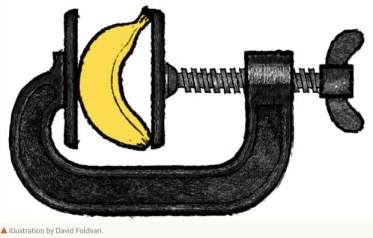


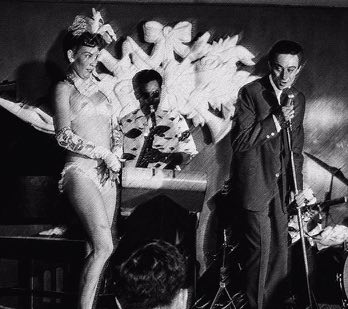
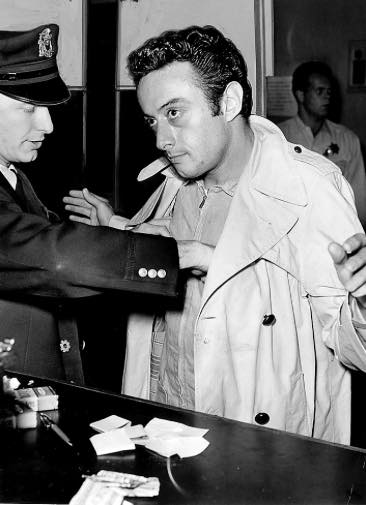



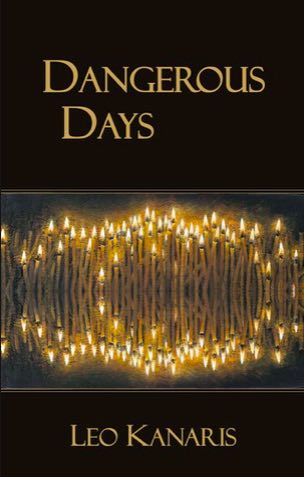




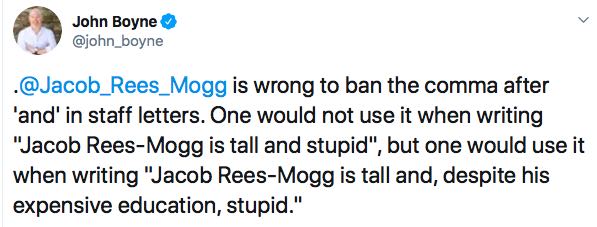




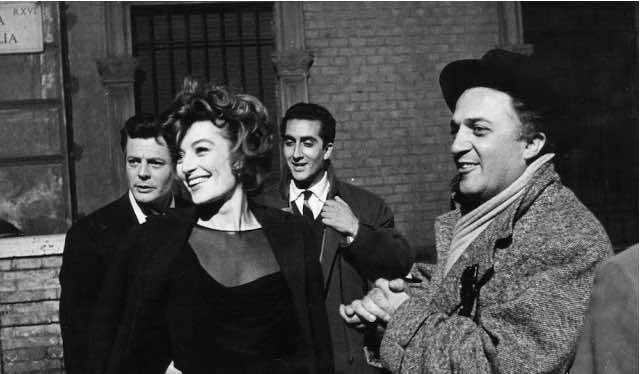







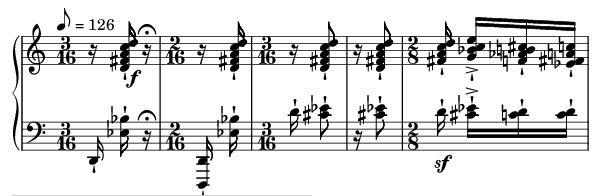
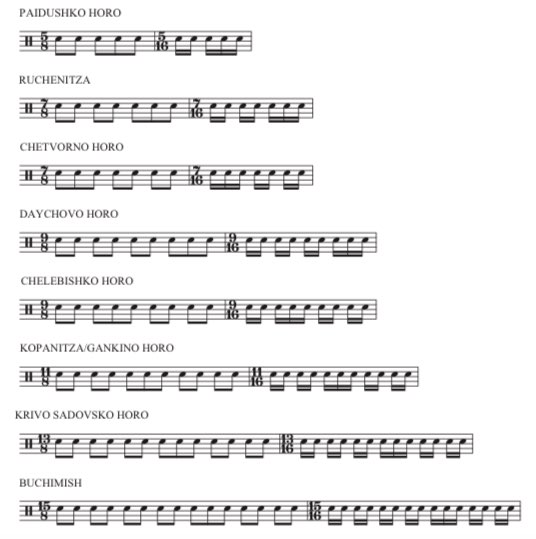


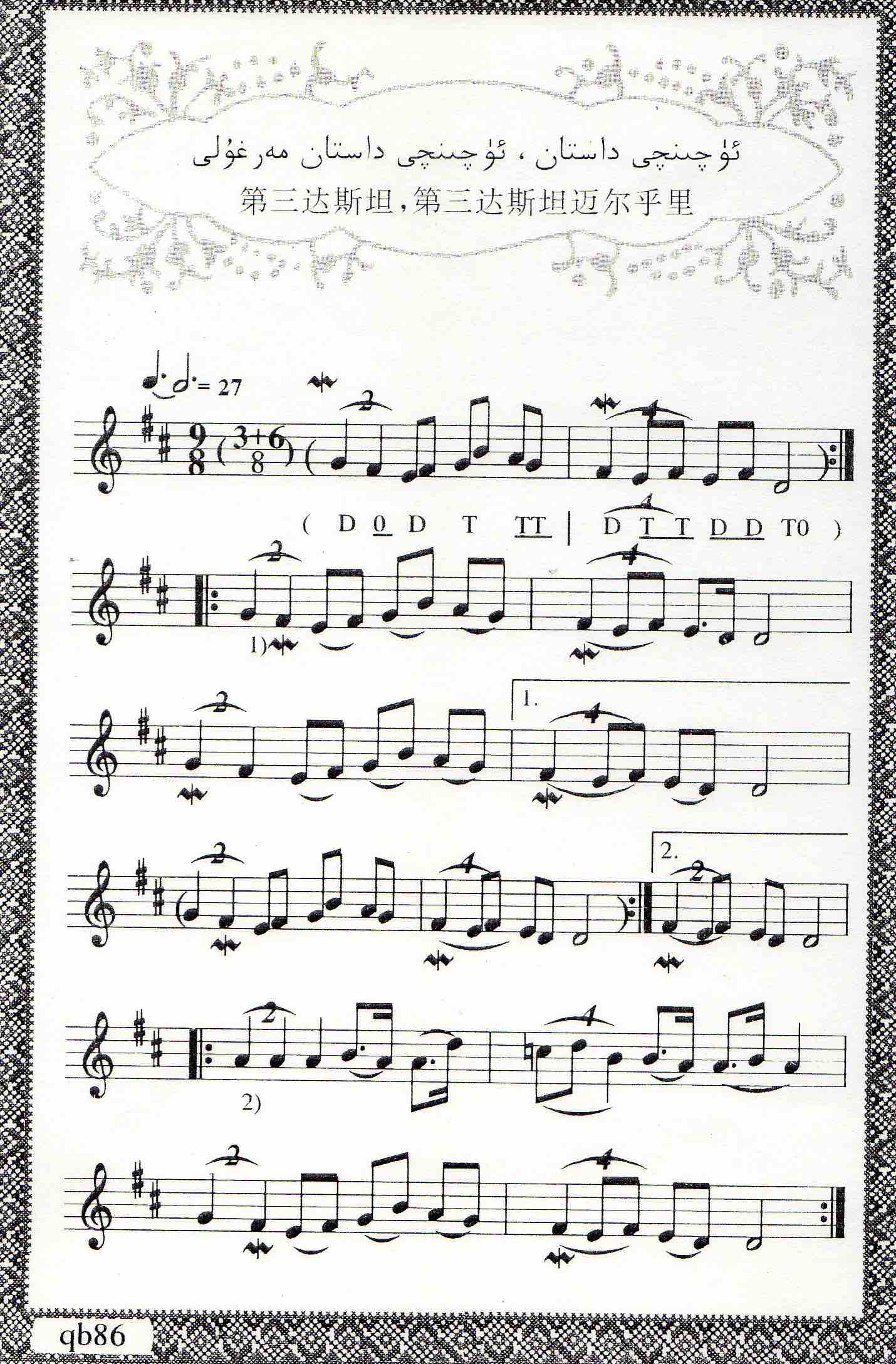



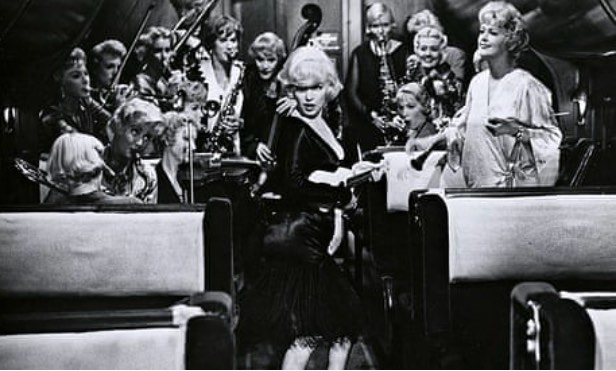






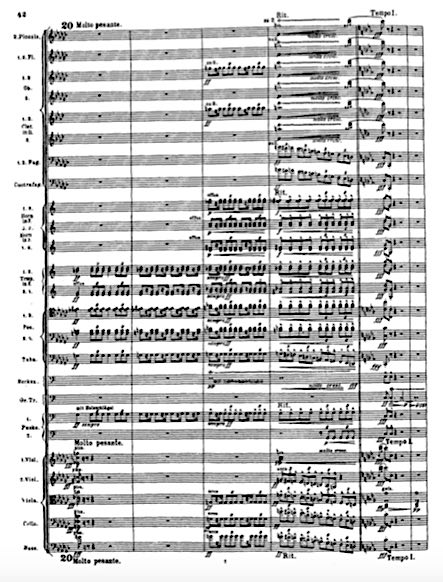








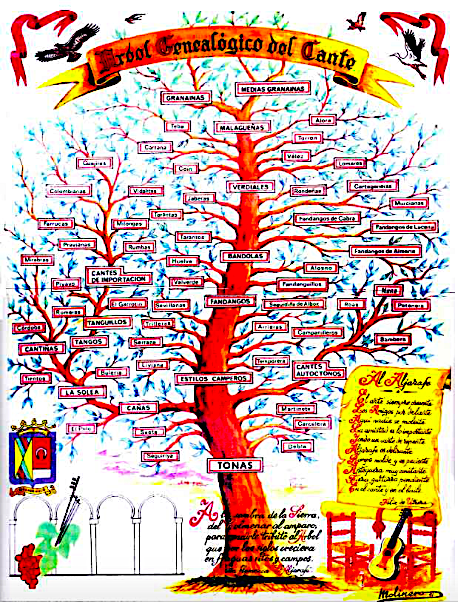
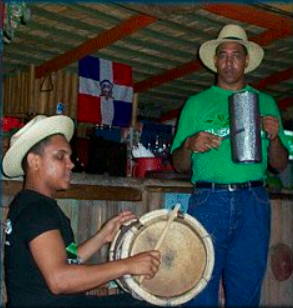



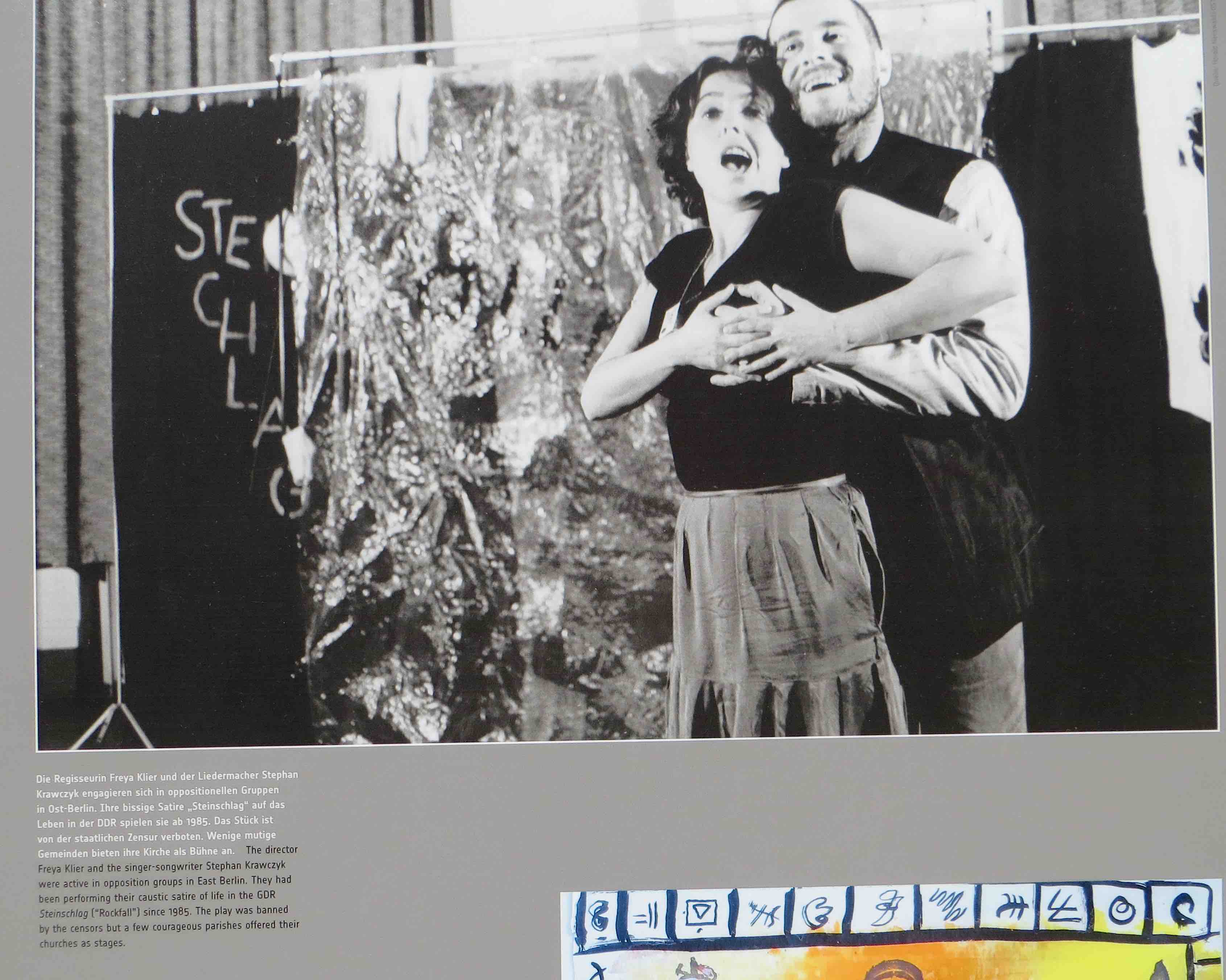





















 Stephen Jones: a blog