Struggling to encompass all this? I know I am. While we inevitably specialize in particular topics, it’s important to build bridges. I guess it’s that time of year when another guide to my diverse posts may come in handy—this is worth reading in conjunction with the homepage and my roundup this time last year.
I’ve added more entries to many of the sidebar categories and tags mentioned in that summary. I’ve now subheaded many of the categories; it’d be useful for the tags too, but it seems I can’t do that on my current WP plan. Of course, many of these headings overlap—fruitfully.
To accompany the visit of the Zhihua temple group to the British Museum in April, I also did a roundup of sources on the temple in the wider context of ritual in Beijing and further afield, including several posts on this site.
I’ve posted some more introductions to Local ritual, including
The WAM category (also with subheads!) also continues to grow, including more Proms; chinoiserie (Berlioz, as well as Ravel and Mahler, who have their own tags); and early music. Coverage of the infinite wonders of Bach continues, such as this. Try also this Haydn trio (part of a series on reception history). The humour subhead includes gems like The Mary Celeste. See also under conducting
I’ve given basic subheads to the language category (note this post on censorship), which also contains much drôlerie in both English and Chinese. Issues with speech and fluency (see stammering tag) continue to concern me, such as
More favourites may be found in the *MUST READ* category. Among other drôlerie, try this updated post, one of several on indexing and taxonomy; and more from the great Philomena Cunk.
Most satisfying is this collection of great songs—still not as eclectic as it might become:
Going to hear Bach every Sunday in church must have been like the Duke Ellington band having a 27-year residency at Ronnie Scott’s. And the congregation rarely heard the same piece twice—kind of “one-off performance”, as the Chinese might say.
All four orchestral suites are wonderful. In the 3rd suite—like Mahler’s Adagietto in the context of his 5th symphony—Bach’s Air deserves to be heard in context, after the exhilarating overture. For a change, here’s Ton Koopman with the Amsterdam Baroque Orchestra (including some stars of the London scene) in 1989:
The 4th suite is astounding too:
Bill Evans would have loved those harmonies over a pedal (from 1.48/3.20, and again from 8.12):
And everyone gets in on the act—brass, woodwinds, strings, even the bassoon with its funky break (from 9.45). It beats me how anyone can possibly be expected to sit still through pieces like these.
* * *
I only noticed recently that the overture of the 4th suite is a version of the opening chorus of Cantata BWV 110, Unser Mund sei voll Lachens, which Bach unleashed on his Leipzig congregation on Christmas Day 1725, in both the Nikolaikirche and the Thomaskirche (cf. the Christmas Oratorio).
the piece emerges new-minted, alive with unexpected sonorities and a marvellous rendition of laughter-in-music, so different from the stiff, earnest way it is often played as orchestral music. When they are suddenly doubled, as here, by voices singing of laughter, instrumentalists have to re-think familiar lines and phrasing. Reciprocally, the singers need to adjust to the instrumental conventions of a French overture.
Unser Mund sei voll Lachens May our mouths be full of laughter
und unsre Zunge voll Rühmens. and our tongues full of praise. Denn der Herr hat Großes an uns getan. For the Lord has done great things for us.
And there’s another amazing solo for oboe d’amore (from 10.41).
The cantatas are an inexhaustible treasury.
* * *
I don’t think the Leipzig congregation would have heard the orchestral suite—it’s not even clear if Bach had written it by then. Nor did they have the luxury of hearing it on CD or online: they were lucky to hear any of his works more than once.
Still, they were blessed beyond measure. And just imagine being in Bach’s Big Band, playing dazzling new music every week…
Sure—their ears, teeth, bodies, sanitary arrangements, and whole life experiences were entirely different to ours when we perform or listen to Bach’s music (see here, under “Ears, eyes, minds, bodies”). They hadn’t heard Duke Ellington or the Rite of Spring; and rather than having to take taxis to Heathrow for an early start or hurriedly checking into a hotel before trying to find a quick pre-rehearsal snack—they were there all the time, in a provincial town still recovering from traumatic warfare. All of which makes the constant aural bombardment from their kappellmeister–bandleader even more remarkable.
As this blog features a growing number of posts on trumpeters (both jazz and WAM), wind bands, and brass bands, here’s a handy list. I’ve awarded trumpet its own tag in the sidebar. My usual proviso: all these genres belong within changing social life!
Yangjiagou band, 1999
The list might begin with shawm bands (for links, click here)—I won’t try and index all the Chinese shengguan wind ensembles here, but they’re a constant theme of posts under Local ritual, for instance. Both types feature in the playlist in the sidebar, with commentary here.
Wondering how to get to grips with additive metres? Awed by the complexities of flamenco palmas? Despair not, help is at hand!
As a prelude to aksak “limping” metres, we might start with quintuple metres, which go far back, even in WAM. By the baroque period there are niche examples by composers such as Schmelzer, and they feature in 19th-century Russian music—a most popular instance being the “limping waltz” of Tchaikovsky’s Pathétiquesymphony (2+3).
This reminds me of two other subversions of the waltz, albeit in regular triple metre: the 2nd movement of Berlioz’s Symphonie fantastique (cf. here and here), and Ravel’s La valse, a “surreal nightmarish vision of a decaying society through a broken kaleidoscope”, as I said in my Ravel page. Elsewhere, perhaps inspired by the Basque zortzico dance, Ravel was partial to additive metres—such as in his piano trio, and the quintuple-time Bacchanale finale of Daphnis and Chloé (both also featured on that page, the latter from 45.29). And Messiaen was most partial to complex yet catchy additive rhythms.
the Pearl and Dean theme (which we may hear as two groups each of 3+3+2; or for a Bulgarian, perhaps two fast groups of 3+3+3+3+2+2)
Un homme et une femme (after the three upbeats, 3+3+2+2: the first two 3s, in the original “Dabadabada, badabadaba”, were later remembered as “Chabadabada“, a word that entered the language to denote alternating male and female candidates in electoral lists!)
and Lalo Schifrin’s theme to Mission impossible (5/4, with a duplet over the first 2 beats).
If you can hum along to such easy examples, then that’s a good start in mastering the intricacies of so-called aksak metres around east Europe and the Middle East…
Indeed, Take five was inspired by hearing Turkish musicians. Rather more challenging is the opening section of Blue Rondo à la Turk (2+2+2+3):
Note the helpful BTL comment there (only without the punctuation!):
Taco, taco, taco, burrito. Taco, taco, taco, burrito. Taco, taco, taco, burrito.
[SJ: not to be confused with potato, potato]
Still, that’s a rather crude, mechanical usage, the melody merely marking out the metre in regular quavers—whereas further east, melodic rhythms are infinitely varied within the basic metre.
Admittedly, the additive patterns of the Rite of spring have been transcribed in 4/4—was it really Boulez who had this drôle idea?! Cf. Slonimsky‘s help for Koussevitzky, here). Indeed, the scores for both the Pearl and Dean and Un homme et une femme tunes were written in duple metres.
And in the first movement of Winter, Max Richter’s welcome recomposition of the Four Seasons mixes in some great limping 7/8 bars (2+2+3—just the two tacos before the burrito today, thanks waiter) (from 1.18):
An intriguing instance is I say a little prayer, with its quirky insertion of a triple-time bar in the chorus—which no-one apparently even has to think about. And do listen to Herbie Hancock‘s addictive Ostinato.
* * *
But all this is mere child’s play compared to folk music. Though such metres are quite widespread, Bartók, Brailiou et al. coined the term “Bulgarian rhythm”.
Constantin Brăiloiu, “Aksak rhythm” (in Brăiloiu, Problems of ethnomusicology, 133–67, based on a 1951 lecture),
which contains far more detailed schemata. His work followed that of
Béla Bartók, “The so-called Bulgarian rhythm” (1938).
A transcription by Bartók of a Turkish zurna–davul shawm band shows how, over the basic metre, melodic and percussion rhythms seriously thicken the plot:
Jerome Cler’s splendid website on the yayla has a thoughtful analysis of an aksak (here).
The whole repertoire of players like Ivo Papazov is based on aksak metres:
I don’t think I’m quite ready for Sedi donka (Plovdivsko horo), a 25-beat pattern divided
7 7 11
3+2+2 | 3+2+2 | 2+2+3+2+2
For more on the diverse musical cultures of Bulgaria and environs, see here. And for a wide-ranging discussion, see
John Blacking, “Irregular rhythms: movement, dance, music, and ritual”, ch.3 of A common-sense view of all music (1987).
Back with Merrie England, there’s a fascinating article:
Further east, an example from the muqamof the beleaguered Uyghurs of Xinjiang is sadly topical. A common metre consists of one long beat divided into two equal stresses, followed by two regular beats—which we might notate cumbersomely as
with the initial duplet over a notional 3/8 unit:
Some sections add another duple unit, like this dastan from Chebiyat muqam (actually a duplet over 3/8, followed by 3/4):
And some muqam have still more metrically complex segments to explore.
As with many world genres, the Uyghurs have no tradition of notation, and seem to have no terminology for such metres (though see Rachel Harris’s chapter in Harris and Stokes (eds.), Theory and Practice in the Music of the Islamic World). As with flamenco, this kind of thing is only an issue for those (like me) hampered by a visual classical education. The trick is to internalise it in the body—and to dispense with notation. Let’s remember that much of this music accompanies dance.
Uyghur musical traditions are part of a rich culture that is currently being systematically erased in Xinjiang (see roundup here).
However did they film the captivating restaurant scene near the opening? I’m mortified that I can’t find it on YouTube—but it’s OK, you can just watch the film! As the characters of Jean-Luis Trintignant and Anouk Aimée, both widowed, explore their bond through their respective kids, the camera delights in their blossoming relationship, lingering adoringly on her complex, enchanted, enchanting expressions. This is one of several scenes suggesting the improvisation that Lelouch encouraged.
Pausing to wallow in the gorgeous leap of a minor 9th that opens the melody in the instrumental version of Plus fort que nous, here are Nicole Croisille et Pierre Barouh (Anouk’s real husband at the time) singing it live in 1969, with exquisite touches on accordion (Francis Lai himself!) and piano:
And Barouh with À l’ombre de nous—again with tasteful keyboard commentaries:
The unflattering views on Chinese music expressed by Berlioz have been much cited. He may have been an iconoclast within his own culture, but it would be asking too much to expect his horizons to transcend the limited aesthetics of his day.
In The Cambridge companion to Ravel, Robert Orledge cites Berlioz’s comments on hearing Chinese musicians at the Great Exhibition of the Works of Industry of All Nations in London in 1851—only a few years after the Opium Wars:
The melody, which was altogether grotesque and atrocious, finished on the tonic, like our most undistinguished sentimental songs [!]; it never moved out of the original tonality or mode. […] Nevertheless, the ludicrous melody was quite discernible, and one could have written it down in case of real need [!].
And as Orledge comments, his conclusion, after listening to a wider range of exotic musicians, was that
Chinese and Indian music would be similar to ours if it existed [WTF]; but that, musically speaking, these nations are still plunged in a state of benighted barbarianism and childish ignorance where only a few vague and feeble instincts are dimly discernible; that, moreover, the Orientals call music what we should style cacophony, and that for them, as for Macbeth’s witches, foul is fair.
Another passage has been translated thus:
As for the Chinaman’s voice, I have never heard anything so strange in my life—hideous snorts, and groans, very much like the sounds dogs make, when they wake up, stretch their paws and yawn with an effort.
A PLEASING addition has been made to the Chinese Collection, consisting of a Chinese Lady, named Pwan-ye-Koo, with small lotus-feet only 2½ inches in length, a Chinese professor of music, his two children (a boy and a girl), the femme de chambre of the lady, and an interpreter. The children are gay, lively, and intelligent, the lady herself agreeable and interesting, and the gentleman civil and obliging. A Chinese concert forms part of the entertainment: the lady Pwan-ye-Koo singing a Chinese air or two, accompanied by the professor, who likewise treats the public with an exhibition of his vocal powers. The group is one that has much to commend it: it is picturesque and peculiar, and presents an image in high relief of the native manners of a Chinese family. The conduct of the domestic blended the humble and the familiar in a significant manner; and there was an air of freedom, and a sense of mutual obligation manifested in the whole party, calculated to make a favourable impression on the spectator.
Still, if we read the full passage, Berlioz did at least make an effort. Further to A French letter, here’s some more language practice [sections between asterisks translated above]:
A propos de cantatrice, j’ai enfin satisfait le désir que j’avais d’entendre la fameuse Chinoise, the small-footed lady (la dame au petit pied), comme l’appelaient les affiches et les réclames anglaises. L’intérêt de cette audition était pour moi dans la question relative aux divisions de la gamme et à la tonalité des Chinois. Je voulais savoir si, comme tant de gens l’on dit et écrit, elles sont différentes des nôtres. Or, d’après l’expérience assez concluante que je viens de faire, selon moi, il n’en est rien. Voici ce que j’ai entendu. La famille chinoise, composée de deux femmes, deux hommes et deux enfans, était assise immobile sur un petit théâtre dans le salon de la Chinese house, à Albert gate. La séance s’est ouverte par une chanson en dix ou douze couplets, chantée par le maître de musique, avec accompagnement d’un petit instrument à quatre cordes de métal, du genre de nos guitares, et dont il jouait avec un bout de cuir ou de bois, remplaçant le bec de plumes dont on se sert en Europe pour attaquer les cordes de la mandoline. Le manche de l’instrument est divisé en compartimens, marqués par des sillets de plus en plus rapprochés au fur et à mesure qu’ils se rapprochent de la caisse sonore, absolument comme le manche de nos guitares. L’un des derniers sillets, par l’inhabileté du facteur, a été mal posé, et donne un son un peu trop haut, toujours comme sur nos guitares quand elles sont mal faites. Mais cette division n’en produit pas moins des résultats entièrement conformes à ceux de notre gamme. Quant à l’union du chant et de l’accompagnement, elle est de telle nature, qu’on en doit conclure que ce Chinois-là du moins n’a pas la plus légère idée de l’harmonie. *L’air (grotesque et abominable de tout point) finit sur la tonique, ainsi que la plus vulgaire de nos romances, et ne module pas, c’est-à-dire (car ce mot est généralement mal compris des personnes qui ne savent pas la musique) ne sort pas de la tonalité ni du mode indiqués dès le commencement.* L’accompagnement consiste en un dessin rhythmique assez vif et toujours le même, exécuté par la mandoline, et qui s’accorde fort peu ou pas du tout avec les notes de la voix. Le plus atroce de la chose, c’est que la jeune femme (la [small-]footed lady), pour accroître le charme de cet étrange concert, et sans tenir compte le moins du monde de ce que fait entendre son savant maître, s’obstine à gratter avec ses ongles les cordes d’un autre instrument de la même nature, mais au manche plus long, sans jouer quoi que ce soit de mélodieux ou d’harmonieux. Elle imite ainsi un enfant qui, placé dans un salon où l’on exécute un morceau de musique, s’amuserait à frapper à tort et à travers sur le clavier d’un piano sans en savoir jouer. C’est, en un mot, une chanson accompagnée d’un petit charivari instrumental. Pour la voix du chanteur, rien d’aussi étrange n’avait encore frappé mon oreille: *figurez-vous des notes nasales, gutturales, gémissantes, hideuses, que je comparerai, sans trop d’exagération, aux sons que laissent échapper les chiens quand, après un long sommeil, ils bâillent avec effort en étendant leurs membres.* Néanmoins, la burlesque mélodie était fort perceptible, et je porterai un jour du papier réglé chez les Chinois pour la noter et en enrichir votre album. Telle était la première partie du concert.
A la seconde, les rôles ont été intervertis ; la jeune femme a chanté, et son maître l’a accompagnée sur la flûte. Cette fois l’accompagnement ne produisait aucune discordance; la flûte suivait la voix à l’unisson tout simplement. Cette flûte, à peu près semblable à la nôtre, n’en diffère que par sa plus grande longueur, par son bout supérieur qui reste ouvert, et par l’embouchure qui se trouve percée à peu près vers le milieu du tube, au lieu d’être située, comme chez nous, vers le haut de l’instrument. Du reste, le son en est assez doux, passablement juste, c’est-à-dire passablement faux, et l’exécutant n’a rien fait entendre qui n’appartînt entièrement au système tonal et à la gamme que nous employons. La jeune femme est douée d’une voix céleste, si on la compare à celle de son maître. C’est un mezzo soprano, assez semblable par le timbre au contralto d’un jeune garçon dont l’âge approche de l’adolescence et dont la voix va muer. Elle chante assez bien, toujours comparativement. On croit entendre une de nos cuisinières de province chantant: «Pierre! mon ami Pierre», en lavant sa vaisselle. Sa mélodie, dont la tonalité est bien déterminée, je le répète, et ne contient ni quarts ni demi-quarts de ton, mais les plus simples de nos successions diatoniques, est un peu moins extravagante que la romance du chanteur. C’est tellement tricornu néanmoins, d’un rhythme si insaisissable par son étrangeté, qu’elle me donnera sans doute beaucoup de peine à la fixer exactement sur le papier pour vous en faire hommage. Mais j’y mettrai le temps, et, en profitant bien des leçons que me donnera le chien d’un boulanger voisin de ma demeure, je veux, à mon retour à Paris, vous régaler d’un concert chinois de premier ordre. Bien entendu que je ne prends point cette exhibition pour un exemple de l’état réel du chant dans l’Empire Céleste, malgré la qualité de la jeune femme, qualité des plus excellentes, à en croire l’orateur directeur de la troupe, parlant passablement l’anglais. Les dames de qualité de Canton ou de Pékin, qui se contentent de chanter chez elles et ne viennent point chez nous se montrer en public pour un shilling, doivent, je le suppose, être supérieures à celle-ci presque autant que Mme la comtesse Rossi est supérieure à nos Esmeralda de carrefours.
D’autant plus que la jeune lady n’est peut-être point si small-footed qu’elle veut bien le faire croire, et que son pied, marque distinctive des femmes des hautes classes, pourrait bien être un pied naturel, très plébéien, à en juger par le soin qu’elle mettait à n’en laisser voir que la pointe.
Mais je penche fort à regarder cette épreuve comme décisive en ce qui concerne la division de la gamme et le sentiment de la tonalité chez les Orientaux. Je croirai, seulement quand je l’aurai entendu, que des êtres humains puissent, sur une gamme divisée par quarts de ton, produire autre chose que des gémissemens dignes des concerts nocturnes des chats amoureux. Les Arabes y sont parvenus, au dire de quelques savans; ils ont pour cet art inqualifiable une théorie complète. Je parie que les savans qui ont écrit ces belles choses ne savent rien de notre musique, ou du moins n’en ont qu’un sentiment confus et peu développé. Que la théorie des Arabes existe, cela est fort possible, mais elle n’ôte rien à l’horreur de ce qu’ils font en la mettant en pratique.
La musique des Indiens de l’Orient doit fort peu différer de celle des Chinois, si l’on en juge par les instrumens envoyés par l’Inde à l’Exposition universelle de Londres. Cette collection se compose, 10 d’un grand nombre de mandolines à quatre et à trois cordes, quelques unes même n’en ont qu’une; leur manche est divisé par des sillets comme chez les Chinois; les unes sont de petite dimension, d’autres ont une longueur démesurée; 20 d’une multitude de gros et de petits tambours en forme de tonnelets, et dont le son ressemble à celui qu’on produit en frappant avec les doigts sur la calotte d’un chapeau; 30 d’un instrument à vent à anche double, de l’espèce de nos hautbois; 40 de flûtes traversières exactement semblables à celles du musicien chinois; 50 d’une trompette énorme et grossièrement exécutée sur un patron qui n’offre avec celui des trompettes européennes que d’insignifiantes différences; 60 de plusieurs petits instrumens à archet, dont le son aigre et faible doit rappeler les petits violons de sapin qu’on fait chez nous pour les enfans; 70 d’une espèce de tympanon dont les cordes tendues sur une longue caisse paraissent devoir être frappées par des baguettes; 80 d’une petite harpe à dix ou douze cordes, assez semblables aux harpes thébaines dont les bas-reliefs égyptiens nous ont fait connaître la forme, et enfin d’une grande roue chargée de gongs ou tamtams de petites dimensions, dont le bruit, quand elle est mise en mouvement, a le même charme que celui des gros grelots attachés sur le cou et la tête des chevaux de routiers. Je conclus, pour finir, que *les Chinois et les Indiens auraient une musique semblable à la nôtre, s’ils en avaient une; mais qu’ils sont encore à cet égard plongés dans les ténèbres les plus profondes de la barbarie ou dans une ignorance enfantine où se décèlent à peine quelques vagues et impuissans instincts.*
Detail: Hee Sing.
Also part of the Great Exhibition was a Chinese junk moored on the Thames—occasion for the curious case of the “fake Chinese mandarin” Hee Sing, who appears in a painting depicting the retinue of the royal family. In Berlioz’s Les soirées de l’orchestre (21st evening, including a variant of the above) he was even more underwhelmed by the soiréesmusicales etdansantes given onboard by the sailors:
Maintenant écoutez, messieurs, la description des soirées musicales et dansantes que donnent les matelots chinois sur la jonque qu’ils ont amenée dans la Tamise; et croyez-moi si vous le pouvez.
Ici, après le premier mouvement d’horreur dont on ne peut se défendre, l’hilarité vous gagne, et il faut rire, mais rire à se tordre, à en perdre le sens. J’ai vu les dames anglaises finir par tomber pâmées sur le pont du navire céleste ; telle est la force irrésistible de cet art oriental. L’orchestre se compose d’un grand tam-tam, d’un petit tam-tam, d’une paire de cymbales, d’une espèce de calotte de bois ou de grande sébile placée sur un trépied et que l’on frappe avec deux baguettes, d’un instrument à vent assez semblable à une noix de coco, dans lequel on souffle tout simplement, et qui fait : Hou ! hou ! en hurlant ; et enfin d’un violon chinois. Mais quel violon ! C’est un tube de gros bambou long de six pouces, dans lequel est planté une tige de bois très-mince et long d’un pied et demi à peu près, de manière à figurer assez bien un marteau creux dont le manche serait fiché près de la tête du maillet au lieu de l’être au milieu de sa masse. Deux fines cordes de soie sont tendues, n’importe comment, du bout supérieur du manche à la tête du maillet. Entre ces deux cordes, légèrement tordues l’une sur l’autre, passent les crins d’un fabuleux archet qui est ainsi forcé, quand on le pousse ou le tire, de faire vibrer les deux cordes à la fois [sic]. Ces deux cordes sont discordantes entre elles, et le son qui en résulte est affreux. Néanmoins, le Paganini chinois, avec un sérieux digne du succès qu’il obtient, tenant son instrument appuyé sur le genou, emploie les doigts de la main gauche sur le haut de la double corde à en varier les intonations, ainsi que cela se pratique pour jouer du violoncelle, mais sans observer toutefois aucune division relative aux tons, demi-tons, ou à quelque intervalle que ce soit. Il produit ainsi une série continue de grincements, de miaulements faibles, qui donnent l’idée des vagissements de l’enfant nouveau-né d’une goule et d’un vampire.
Dans les tutti, le charivari des tam-tams, des cymbales, du violon et de la noix de coco est plus ou moins furieux, selon que l’homme à la sébile (qui du reste ferait un excellent timbalier), accélère ou ralentit le roulement de ses baguettes sur la calotte de bois. Quelquefois même, à un signe de ce virtuose remplissant à la fois les fonctions de chef d’orchestre, de timbalier et de chanteur, l’orchestre s’arrête un instant, et, après un court silence, frappe bien d’aplomb un seul coup. Le violon seul vagit toujours. Le chant passe successivement du chef d’orchestre à l’un de ses musiciens, en forme de dialogue; ces deux hommes employant la voix de tête, entremêlée de quelques notes de la voix de poitrine ou plutôt de la voix d’estomac, semblent réciter quelque légende célèbre de leur pays. Peut-être chantent-ils un hymne à leur dieu Bouddah, d’ont la statue aux quatorze bras orne l’intérieur de la grand’chambre du navire.
Je n’essaierai pas de vous dépeindre ces cris de chacal, ces râles d’agonisant, ces gloussements de dindon, au milieu lesquels malgré mon extrême attention, il ne m’a été possible de découvrir que quatre notes appréciables (ré, mi, si, sol). Je dirai seulement qu’il faut reconnaître la supériorité de la small-footed Lady et de son maître de musique. Evidemment les chanteurs de la maison chinoise sont des artistes, et ceux de la jonque ne sont que des mauvais amateurs. Quant à la danse de ces hommes étranges, elle est digne de leur musique. Jamais d’aussi hideuses contorsions n’avaient frappé mes regards. On croit voir une troupe de diables se tordant, grimaçant, bondissant, au sifflement de tous les reptiles, au mugissement de tous les monstres, au fracas métallique de tous les tridents et de toutes les chaudières de l’enfer… On me persuadera difficilement que le peuple chinois ne soit pas fou…
[For a fine English version, see Berlioz, translated Barzun, Evenings with the orchestra (Chicago, 1956/1999 edition), pp.246–250.]
At the evening performance the queer old craft is lighted up with festoons of coloured lamps—a sort of miniature [missing] hall, and in the midst stands an open orchestra, in which four or five instrumentalists (“barbarians,” not Chinese) prepare the ear for the extraordinary combination of sounds which is to follow. Nothing can exceed the gravity of the “celestials,” as they take their position in the midst of the assembly on the main-deck, and proceed to fright the ear with gong and drum, and cymbal and agonizing cat-gut: the leader beating time with a stake upon a sort of tin saucepan-lid supported on three legs. Then the vocalization! The extraordinary squeaking duet, half plaintive, half comic, between the said leader (who is a sort of Costa and Mario rolled into one) and a younger aspirant in the background—what can possibly exceed its harrowing and ludicrous effect? Nothing except that impromptu feline discourse which we sometimes hear on house-tops at the dead of night.
The concert being concluded amidst the breathless silence of an astonished auditory, the war demonstrations and feats of arms then commence and these are certainly no less extraordinary than what has gone before. The first set consists of a set of grotesque posturing, in which the performers disport themselves severely one after the other, each succeeding one striving to outdo the other in the wildness and extravagance of his gesture—flying and leaping round the deck, thrusting out the arms right and left, threatening, retreating, &c. the musicians all the time keep up a terrific clang.
Next come a series of somewhat similar performances with long poles or lances, this scene closing with a set-to between two performers, which we have endeavored to embody in our engraving. Swords are also introduced and brandished about in the same manner, which, if intended to give any idea of the military science of the Chinese, shows them to be very far behind any other known nation in the world in that respect. One young hero, in the course of his “war demonstrations,” afforded great amusement every now and then, particularly after some very startling efforts at cut and thrust, by throwing himself down, and turning a somersault over his shield. When we left, the “barbarian” orchestra was about to strike up again, and dancing, it was said, was about to commence, but we did not wait for it.
For a recent French recreation, see here. Indeed, both the family and the junk had already appeared for P.T. Barnum’s Chinese museum: see Krystyn R. Moon, Yellowface: creating the Chinese in American popular music and performance, 1850s–1920s (2005), pp.62–6. For another portrait of the family, see here.
Hector’s Napoleon impression always brought the house down.
Ironically, in reviews by Berlioz’s contemporaries of his own new works he was hoist on his own petard—using rather similar vocabulary, as if taking revenge on behalf of the Chinese. Here are just a few among an embarras de richesse, cited in Slominsky‘s wonderful Lexicon of musical invective, pp.57–61:
His rare melodies are deprived of meter and rhythm; and his harmony, a bizare assemblage of sounds, not easily blended, does not always merit the name. I believe that what M. Berlioz writes does not belong to the art which I cusomarily regard as music, and I have the complete certainty that he lacks the prerequisites of this art.
Berlioz, musically speaking, is a lunatic; a classical composer only in Paris, the great city of quacks. His music is simply and undisguisedly nonsense.
M. Berlioz is utterly incapable of producing a complete phrase of any kind. When, on rare occasions, some glimpse of a tiune makes its appearance, it is cut off at the edges and twisted about in so unusual and unnatural a fashion as to give one the idea of a mangled and mutilated body, rather than a thing of fair proportions. Moreover, the little tune that seems to exist in M. Berlioz is of so decidely vulgar a character as to exclude the possibility of our supposing him possessed of a shadow of feeling.
I can compare Le Carneval romain by Berlioz to nothing but the caperings and gibberings of a big baboon, over-excited by a dose of alcoholic stimulus.
See also Berlioz: a love scene. For Berlioz’s prophetic word-painting of a 1960s’ curry-house menu, cliquez ici; and for his evocation of furniture removal, ici. For Mahler’s vision of the mystic East, see here; and for Cantonese music in post-war London, here.
His name is reminiscent of a ritual title for a Daoist priest—like that of Zhang Daoling, handed down in the Li family (my book, pp.11–12; film, from 2.48):
Ancestral Master,
Heavenly Worthy of the Grand Ritual
who Supports the Teachings of the Three Heavens,
Assists the Numinous,
and Embodies the Way.
Actually, that’s quite a succinct one: appellations to the Daoist gods, recited (mercifully fast, by contrast with the slow hymns) in the course of rituals, are lengthy (see.e.g. here), and ritual titles still handed down today to household Daoist priests in south China upon their ordination may be a mouthful too.
John Cleese’s interview technique is perhaps a less probing model for the fieldworker than that of Peter Cook.
All this long before Stewart Lee made a whole art form out of trying the audience’s patience.
Just as I was immersing myself in Afghan singing, how nostalgic the other day to hear the limpid slow movement of Haydn’s G major piano trio on Private passions (for the first of several posts inspired by the series, see here).
Today I wonder how we got into such early recordings, like the late Beethoven of the Busch quartet. They meant a lot to me—but I can’t quite say what: this was considerably before I became involved in early music, or began to care about changing performance styles. Indeed, in those days I was more interested in the politics of the Tang court than in the experiences of our more recent European forebears.
But now I think of the trio’s London audiences between the wars (my great-aunt Edith Miles was losing her hearing in 1927), and wartime audiences in Britain and Germany (doubtless the appalling Hans Frank loved the trio). The group had been working together since 1906; but Casals, a firm opponent of franquismo, later broke with Cortot for the latter’s collaboration with the Nazi occupation of France.
Cortot’s 1932 recording of the break in Brandenburg 5 is also great, but early renditions of baroque music may not always suit modern tastes, like Mengelberg’s 1939 Matthew passion.
Haydn dedicated the set of trios to Rebecca Schroeter, Scottish widow of an immigrant German musician (for a taste of late-18th-century mores, see here). So we might further try to imagine cosmopolitan London in 1795 (for “das Land ohne Musik“, see David Wyn Jones ed., Music in eighteenth-century Britain, and for London concert life, here; cf. audiences of Tang-dynasty Chang’an, enriched by Central Asian musics—”They come over ‘ere…“).
I don’t know how to fill in the 19th-century lacuna, but despite all the vast social changes since 1795, maybe Haydn’s day isn’t so distant: we seem to have a photo of Mozart’s widow, and Casals was born in 1876.
Haydn’s trio is named after its “gypsy” finale all’ongarese, which we can enjoy without wondering too much about his exposure to folk music—it is what it is (cf. Norman Lebrecht’s ambitious claim for Mahler 4). From where we are in 2018, all three movements are delightful, but it’s the slow movement (in the lustrous key of E major, like Bruckner 7 and north Chinese ritual suites for wind ensemble!) that continues to enchant me. As the players lovingly pass the tunes around (the second one is even more spellbinding!) above pearly triplets, via Cortot’s simple translucent links, they explore them like tiny jewelled caskets, deep in meditation.
The idea of “women in music” often suggests their starring roles in WAM (as in the T-shirt!) or Anglo-American popular music. But meanwhile gender has become one of the major topics in ethnomusicology (for some refs., see this post on women in flamenco; note also McClary).
Even in the more “classically” oriented confines of ethnomusicology, “women in music” may not immediately suggests the lives of female singers in Afghanistan.
Veronica Doubleday, Three women of Herat: a memoir of life, love and friendship in Afghanistan (1998; most recent reprint 2009)
is an engaging, deeply personal story of her time in Herat in the mid-1970s before the Russian invasion. It’s a good illustration of thinking outside the (music) box.
Gradually cutting through the curtain of purdah, she befriends three young women with different experiences:
The authoritative figure of Mariam, from a hereditary family of (male) musicians;
Mother of Nebi, whose maraz mental breakdown as a young mother, attributed to jinns, had prompted her to become a diviner (cf. China);
Shirin, negotiating the stigma of working as a professional entertainer (see also Veronica’s “Zainab Herawi: Finding acclaim in the conservative Islamic culture of Afghanistan” in Ruth Hellier (ed.), Women singers in global contexts: music, biography, identity (2013).
As Veronica enters their social world of domestic life and ritual celebrations, she learns to admire their warmth and strength. But her account is never sentimental, acknowledging their tribulations. She reflects cogently on her choice to adopt the veil while living among them; and in becoming a regular member of Shirin’s band and an accomplished singer, she gains direct experience of their tough life.
Veronica’s audio recordings from the period seem to have disappeared from YouTube, but these CDs are excellent:
Ever since those days in Herat, she has worked in partnership with John Baily, not only a fine exponent of the rubab plucked lute but a great maker (and theorist) of ethnographic films (see here), including
Amir: an Afghan refugee musician’s life in Peshawar, Pakistan (1986)
Lessons from Gulam: Asian music in Bradford (1986)
A Kabul music diary (2003)
Scenes of Afghan music: London, Kabul, Hamburg, Dublin (2007)
Ustad Rahim: Herat’s rubab maestro (2008)
Across the border: Afghan musicians exiled in Peshawar (2011).
Here’s a preview of Amir:
and Lessons from Gulam:
* * *
Veronica became a beautiful singer, moving both Afghan and other audiences deeply in more genteel concert settings. Here’s an early clip:
And more recently with John Baily:
Tracks on the CD Sweet nomad girl:
Three women of Herat is a model of participant observation, and an early instance of an ethnographic genre that has since flourished. Further to Veronica’s distressing original Epilogue, the 2009 reprint includes a new Preface and Postscript, giving valuable context on changes not only within Afghanistan but in Western perceptions.
She did manage to return to Herat in 1994 and 2004, just before and after the Taliban occupation; but after their initial visits in the 70s, long-term warfare in Afghanistan impelled John and Veronica to pursue their studies mainly among refugee and migrant communities—which was also to become a major theme of music ethnography.
A true story to illustrate the parochial limitations of academic views of musical cultures of the world:
Way back in the days when ethnomusicology was Neither Profitable Nor Popular, a bright young expert on Korean music went to interview for a job at the Music Department of an English university. Besides his Korean speciality, he realized he should probably offer a wider course on East Asian music, to include China and Japan—a mere 3,000 years’ continuously-documented history of local folk, popular, and elite traditions.
The board politely commented that this was rather too limited, so he proposed he could do a yet broader course, on Asian music—further including south, southeast, and central Asia. Glancing at the map, these countries look quite small, don’t they—how hard can it be?
When they still felt this was too narrow, my friend asked, bemused:
“So what kind of courses have you been offering, then?”
The chair of the board eagerly replied:
“Well, last year we ran a very successful course on 19th-century English Art Song…”
For a similar debate at the New Grove dictionary of music and musicians, see here. I often observe the diverse soundscapes within China alone, as here. For more interview stories, click here.
It goes without saying that David Lynch is a genius.
In 1990 and 1991, in between orchestral tours and fieldwork trips to Hebei, and just as I met the great Li Qing for the first time, I spent much of my time back home in London glued to Twin peaks on TV.
As always, it’s both disturbing and enchanting, with a diverse cast of stunningly beautiful female and male characters, and
an uneasy strain of nostalgia that blends sentimentality with menace; hideous secrets chafing against the illusion of innocence […] postwar trauma buried beneath an aggressive normality.
Just a couple of clips to epitomise Lynch’s mastery. After the cliffhanger of the series 1 finale, just as we’re all desperate to know what happened to Agent Dale Cooper, the seemingly interminable room-service scene at the very opening of series 2 suspends the whole drama unbearably. You can read a detailed analysis here—this is the only brief clip currently on YouTube:
And apart from his taste in coffee, we may note Agent Cooper’s affinity for Tibetan mysticism, as in this lecture, also typically startling within the plot:
Angelo Badalamenti’s soundtrack goes perfectly with the drama (this article has a link to the complete album on Spotify).
Badalamenti had already worked with Lynch on the haunting Blue velvet:
And the Julee Cruise song Mysteries of love:
For Thought Gang, Lynch’s band with Badalamenti, see here (with link to album only recently released!).
Lynch also has great taste in using earlier music (not “early music”), as in the magnificent ending of Wild at heart, with Richard Strauss morphing into Elvis.
For more on film music, and the importance of taking seriously all kinds of musicking throughout human societies, see here.
The intrepid explorations of Hannibal Taubes continue to bear fruit.
Apart from his amazing images of village temple murals around Hebei and Shanxi, he has recently found these helpful Chinglish translations at the Chongfu si temple in Shuozhou county—which, incidentally, is one of the most fruitful sites for household Daoist ritual in north Shanxi.
Here’s the Amitābha hall (Mituo dian), arcanely rendered as “Indemnity Tuo Temple” (“I’m like, WTF?”)—blowing plastic and threat paternity (has clearly experienced vicissitudes of life):
It’s also gratifying to learn that between 1987 and 1991 the country allocate huge funds to a landing gear overhaul—presumably to help the deities descend after riding the clouds 駕雲 (for their earlier modes of transport, see here).
And a fine interpretation of the deity Jin’gang (Vajracchedikā) in his local reincarnation as King Kong:*
The four kings are cool, but I have no idea where the “three with disabilities” came from.
In the Manjusri hall [Gosh, jolly good show! It’s all about comic timing], along with yet more plastic, we find the splendid Boulez Lichtung (in niche homage to Stockhausen’s Licht and Stimmung?):
Hats off to this budding comedian on the local temple circuit.
* * *
More disturbingly, here’s a poster advertising state intrusion in an inauguration ritual at the newly refurbished Sanhuang miao temple in nearby Hunyuan county:
I’d like to know which Daoist group took part (that of Jiao Lizhong, I surmise), and what ritual segments they performed—unsurprisingly, details not found on the poster.
Anyway, as Hannibal notes, with the core of the event formed by not one, not two, but three speeches from the leadership, I think we can all agree that under the resolute guidance of Uncle Xi‘s New Epoch Socialist Thought, Daoist ritual will certainly attain a high level of development. Now that’s what I call ritual redundancy. Whoever said chanting scriptures was boring?
While Party involvement in the rituals of larger official temples is common, such encroachment into local ritual practice is (so far) rare; but as usual, everyone is probably just going through the motions—like under Maoism, when the bard might perform a token new section before the traditional story that peasants actually wanted. Keep calm and carry on.
*I heard a story that since the Danish for “king” is kong, King Kong was translated as Kong King, but disappointingly it turns out to be apocryphal. For a fractious yet melodious King Kong headline, see here.
So in György Ligeti‘s wacky, grotesque, absurdist operaLe Grand Macabre (see e.g. this article by Tom Service) I note the character of Gepopo, whose extreme vocal irregularities occupy a special place in the spectrum of communication issues.
The astoundingBarbara Hannigan introduces the role she has made her own:
The character Gepopo, the chief of the secret police of Brueghelland, approaches Prince Go-Go to warn him and the people of Brueghelland that intelligence has learned of a huge comet heading through space towards them which will destroy their planet. Unfortunately, Gepopo is paralyzed with fear and paranoid hysteria, so his almost unintelligible, coded warning is not easily understood by Prince Go-Go, who, mainly interested in a hearty meal, drives Gepopo to further convulsions of highflying vocal panic as the piece draws to a anxiety-ridden finale.
Psychotic, deranged, Gepopo is hardly an advertisement for easy stammering—no more to be recommended as speech therapy than Rossini’s “stupefaction ensembles”. BTW, reasons for the far higher ratio of male to female stammerers are still not well understood.
Here’s Barbara Hannigan in an, um, “orthodox” stage version:
Gepopo’s three arias (“Pssst! … Shsht! … Cocococo!“, “Aah! … Secret cipher!“, and “Kukuriku! … He’s coming!“) are also performed as a cycle arranged by Elgar Howarth for the concert stage as Mysteries of the macabre—here conducted (suitably) by S-S-S-Simon:
Dazzling as it is, I’m not sure it’s exactly PC to distract the audience from Gepopo’s demented sadism with a fantasy schoolgirl uniform—perhaps the transgressive, meretricious device suits Ligeti’s concept (discuss…). We might also compare this version:
Feminist scholars have unpacked gender roles in music—including Berg’s Lulu, closest to Hannigan’s heart (see here). Such an approach could be instructive with Gepopo too.
With thanks to Rowan—
whose own vocals, while not so ambitious,
are “less irritating than Glenn Gould”
(The Feuchtwang Variations, n.3).
Ethnomusicologists have long questioned the seductive idea—derived from 19th-century Europe and latterly popular with the peace-and-love brigade—that music is a global language transcending the conventions of time and space. As always,
Bruno Nettl, The study of ethnomusicology: thirty-three discussions (3rd edition, 2015, augmenting his original 1983 version),
gives a masterly and accessible overview of the field, in chapters 2, 3 and 5—and indeed passim.
In Chapter 2 he notes the wide range of definitions among societies of what constitutes “music” (cf. McAllester on the Navajo):
There is no conceptualization of definition of music that is shared by all or perhaps even many cultures, and very few societies have a concept (and a term) precisely parallel to the word “music”. They may instead have taxonomies whose borders cut across the universe of sounds produced by humans (or even animals) in ways quite different from those of Western societies.
[…]
Fieldworkers early on learn this major lesson: they may get one kind of answer when asking a question that would normally have no place in the culture and another when observing the society’s behavior. And we may note rather different approaches in formal statements by authorities, informal interviews, and ordinary conversations. Of the three, the cocktail party conversation may give us the most reliable perspective on the way urban, middle-class Americans actually use the concept of music in their lives.
The perspective of the (“gluttonous, insatiable”) ethnomusicologist is broader than that of a cultural insider—itself, as he observes, an ethnocentric approach, though, always broad-minded, he approves of a plurality of ethnomusicologies as much as of musickings.
In Chapter 3, while noting changing trends, Nettl cites a 1939 article by George Herzog stressing the diversity of world musicking.
It seems to me that for some twenty years after about 1940, musics—as conceived in Western academia—had to be liberated, as it were, from Western ethnocentrism; ethnomusicology had to make clear their mutual independence, had to urge the acceptance of each on its own terms and not simply as evolutionary way stations to something greater and more perfect. This mission accomplished, ethnomusicology could return to exploring the world’s musics as part of a single whole.
He goes on to discuss different kinds of universals; and under origins, besides worship and individual or group bonding, he notes competition and conflict. Music separates and defines us just as much as it brings us together—varying constantly and delineating boundaries not only of ethnicity but over time, and by class, age, gender, and so on.
In Chapter 5 Nettl explores some boundaries of concept, space, and time, borrowing from linguistics and noting idiolects as well as heterogeneity and polymusicality within individual cultures. Musical cultures may not be universal, but it would be unwise to draw clear boundaries. For more, see here.
* * *.
Meanwhile on BBC Radio 3, Tom Service’s long-running series The listening service always broadens the mind beyond the confines of the station’s largely WAM audience (cf. here, and here)—ethnomusicology in plain clothes, perhaps. He debunks cosy Western myths in a series of three programmes to accompany the TV series Civilisations(which wisely limited its brief to material culture)—a welcome antidote to Radio 3’s mystifyingly ethnocentric complement to Neil MacGregor’s fine series Living with the gods.
In the first programme, Searching for paradise, Service notes the basic importance of music to religious observances, with a collage of ritual music from around the world (shamans, qawwali, plainchant, Sardinian liturgy, Bach…). Unpacking the “spiritual” and reflecting on the historical ambivalence of religious leaders towards the embodiment of ritual texts through sound, he makes connections with the latter-day rituals of the concert hall.
Indeed, the search for exotic Oriental mysticism is a major theme in Western studies of the East. In his second programme, Orientalism and the music of elsewhere, Service adduces Mozart, catering to the 19th-century craze for all things Turkish; the taste for the exotic sounds of Indonesia and Japan in 19th-century France (later furthered by Messiaen); and more recently, raga, the music of Africa (Reich, Ligeti), film music, and the whole “world music” fad with its gleeful taste for “fusion” (for a parody of which, scroll down here).
But, he suggests, for some composers such sounds were more than a “titillating and imperialist added extra”: they also transformed our ways of experiencing sound, suggesting other modes beyond the discursive, nay “shouty”, 19th-century ethos. Here we might also add Mahler’s Abschied. And so for visual culture too.
Along with my early fascination with Eastern mysticism (see series beginning here), I too was seduced by all this, and remain so—even as I found through fieldwork (as one does) that musicking in local Chinese societies was anything but an exotic activity.
Meanwhile in the notionally Mystic East, led by Japan, Western culture became suddenly desirable, with profound and lasting consequences—not least in China, where traditional culture came to be considered “unscientific”. There’s a thoughtful cameo from Unsuk Chin (who adorns the splendid T-shirt of female composers!), with her piece for the sheng mouth-organ. But the “two-way conversation” surely remains unequal.
Service suggests we listen to music in its own terms (that is, in the terms of its own culture), rather than as sonic propaganda. I like his bald question “Is our music better than theirs?”, evoking Judith Becker’s influential 1986 article “Is Western Art Music superior?“, which debunks some major Western preconceptions.
In his last programme,Is music a universal language?, Service opens with a discussion of the “universality” of Fidelio, observing, “You need to be conversant with the patterns of tension and release in the specific confines of the Western tonal harmonic system”—not to mention knowing what opera means, and what it meant in Vienna at the start of the 19th century, and so on. He then segues adroitly to Chinese opera.
As he notes, identifying “universals” (fast repeated rhythms for dancing, slow repeating lyrical melodies for lullabies, and so on) may be a bland exercise. We can find similar building blocks, such as the (anhemitonic!) pentatonic scale, but the way they are used and experienced will differ widely. It’s nature and nurture again. And then there’s timbre…
* * *.
Such issues, bearing not just on “music” but on human cultures, are part of the standard fare of ethnomusicology. While in my studies of Chinese ritual I tend not to scare the sinological horses by focusing too narrowly on music, the discipline is really most stimulating. Don’t stop me if you’ve heard this before: sound is not some optional decoration to rital, it’s the very medium through which it is expressed! Whatever your cultural focus, do follow up The listening service by reading Nettl! And for further canonical works, see here—including advertisers’ debunking of the “universal language” myth.
This episode [sic] on Brevity, with a playlist of miniature gems encompassing Bach, Beethoven, Chopin, Satie, Webern, Boulez, Zorn, Napalm Death, Bartók, Kurtag, and Ligeti, is full of fine observation—under the headings of absurdity, immediacy, density, violence, and eternity.
Irrespective of genre, such pieces are microcosms, crafted with a range of expression and intensity—akin to haiku (see under Some posts on Japanese culture) or netsuke.
Also among the fleeting exhibits is the great Carl Stalling, composer of classic soundtracks for Warner Brothers cartoons (these playlists should work if you click on YouTube at the bottom right of the window):
Not forgetting Scott Bradley, of Tom and Jerry fame:
Not least, this is about taking seriously all kinds of musicking throughout human societies, including WAM and popular music.
By now I must know what I’m in for when I go to hear a Mahler symphony, but it’s always overwhelming. And Prom-goers get to hear some great orchestras, but the Boston Symphony Orchestra with Andris Nelsons sounds incredible. Nelsons’ balletic conducting style reminds me of Otto Böhler’s 1899 silhouettes of Mahler.
Now that I have the time and inclination to attend concerts rather than earn a living of sorts by taking part in them, I experience a certain schizophrenia. I’ve been coming to the Proms since the 60s, and playing in them since the 70s: this is my cultural background, my home base, so up to a point I might just sink into familiarity.
But with my perspective broadened by attending rituals in rural China and sessions in flamenco bars, and trained by reading books like Musicking and Professional music-making in London, I can’t entirely banish ethnographic thoughts—the genteel behaviour of performers and audience, with the latter scrupulously avoiding any bodily movements, sounds, or signs of emotion; the dress-codes; the complicated pieces of equipment like music-stands containing funny black dots on pieces of paper, on which the performers depend. And all the historical information at the audience’s disposal, like programme booklets (studiously consulted even during the concert), and the radio announcer’s suave comments—while the audience at a soul gig, or a Chinese funeral, may be still more steeped in contextual background, the WAM audience comes expecting to be educated with literate props. And tiny features contribute to the different sounds of European and American orchestras, like their different habits—even down to the way the latter come on stage early to take their places.
Youthful enthusiasm can easily be ground down by the mundane realities of professional orchestral life—a tension well observed by Alan Bennett (here, and here). But then, suddenly, one can be transported—like hearing Wu Mei decorating the funerary hymns of the Daoists (again, notwithstanding ethnography).
So while I value the informed discrimination of the insider, I now wonder if the outsider’s experience, free of such worldly distractions, is just as valid. Even jaded orchestral players cherish those rare moments when they somehow merge into a magical organism.
And apart from all that, it might seem surprising that I’m so taken with the glossy streamlined sound of an orchestra like this. Sure, you can just hear the sponsors rattling their jewellery (to quote John Lennon)—the limousines, the champagne, the alimony payments. But the pain and transcendence of Mahler’s music doesn’t get drowned under the gorgeous sumptuous sound: it’s an irresistible experience, totally immersive, all the more in the intense atmosphere of the Proms.
For all the bravado of the brass-playing fraternity, there’s no shortage of deeply musical playing there (there’s much thoughtful discussion online, like this). Apart from the solos and the blazing tuttis, it’s the perfect blending of timbre that impresses—and that too (as with the Li family Daoists) is a result of a long accumulation of experience throughout the orchestra. I love the utterly implausible idea that Miles Davis, a reluctant pupil at Juilliard, might have ended up in such an orchestra; hearing the subtly calibrated vibrato of the Boston brass reminds me of his comments (for a wide selection of posts on trumpet-playing, see here).
So among all the varied, immersive ways of musicking that give meaning to the lives of sub-communities around the world—orchestral playing is one of them! “It doesn’t get much better than that—or does it?”
And while we’re on the Boston Symphony—on a lighter note, don’t miss the Eric Leinsdorf story.
Apart from the mainly-Chinese playlist in the sidebar (commentary here), below are some links to an eclectic selection of All-time Great Songs* on this blog. Besides the songs, the posts are worth reading too—Trust Me, I’m a Doctor.
For a similarly diverse playlist of trumpeters, see here (indeed, trumpet has its own tag); and for some feminist lists, here (with bonus tracks including Sheridan’s Smith’s amazing cover of Anyone who had a heart) and here.
By popular demand [not—Ed.] I’ve now added a new sub-heading of early music to the WAM category in the sidebar. True, early music is constantly getting later (Mahler, Ravel, and beyond), but here I’m defining it as “before opening time”.
Apart from earnest articles on Bach and Taruskin (Bach has his own tag; and I haven’t included posts on Rameau, Purcell, Buxtehude, Handel, and so on, whom you can type into the searchbox), it also includes more jocular items like Early music put in its place, The Mary Celeste, and A music critic.
A senior conductor is rehearsing his own chamber orchestra—both have seen better days. There’s a tricky passage for the violas, so he gets the section to play it together without the rest of the band, but it’s still not sounding right.
Opting for the bold step of getting them to play it individually—a demand very much frowned upon—he eyeballs a trusty old player who’s been sitting innocuously at the back of the violas minding his own business since the dawn of time, and asks him imperiously,
“You, Norman—can you play this passage for me?”
Norman looks back at him and remarks dryly,
“Harry, if I could play this passage, I wouldn’t be sitting here in this orchestra…”
I can now divulge that this was the very same conductor who had the celebrated exchange with the timpani player. For a wealth of related stories, click here.
After Boléro as a pulsating early overture the previous week, S-S-Simon‘s Ravel Prom was a delight from start to finish.
Even the opening Ma mère l’Oye—in the expanded ballet version (1912), less often heard than the suite—was charming, chiming with the childlike world of L’enfant et les sortilèges after the interval. Here too there’s a magic garden, a princess, and birdsong. Ravel seems less likely than Debussy to have been inspired by hearing gamelan at the 1889 Exposition universelle, but oriental influences abound in his music; the organum of the oboes at the beginning and end of L’enfant reminds me of the sheng mouth-organ.
Chinoiserie (see here, and here) is prominent in Shéhérazade too. Last year at the Proms Marianne Crebassa sang it exquisitely; in a week when we rejoiced in Aretha Franklin and Madonna, Magdalena Kožená’s singing was further cause for celebration of the wonders of the human voice.
L’enfant et les sortilèges (first performed in 1925, but not heard in Britain until 1958!) is an enchanted, enchanting lyric fantasy. In the story the protagonist is 6 or 7 years old—the same age as the girls for whom Ravel wrote the original piano pieces of Ma mère l’Oye.
Whereas Colette wrote the text in eight days, Ravel worked on it over several years—she was in awe of the way he brought her libretto to life. Full of variety, the piece blends the comic drôlerie of the furniture, with ragtime and foxtrot, and the astounding fire aria, with the moving scene of shepherds and shepherdesses from the wallpaper leading into the boy’s poignant duet with the storybook princess.
The cat duet leads into a magical evocation of the garden. Here Ravel’s music anticipates Messiaen‘s use of birdsong and the ondes martenot, with evocative use of a slide whistle (Sachs-Hornbostel 421.221.312!—the cheese grater escapes me, though). Now it’s the turn of the animals and birds to indict the boy’s casual cruelties.
Amidst all the quirky virtuosic pastiche, and ravishing orchestration, the moments of tendresse register all the deeper, as he reflects on his errors; redeeming himself at last, the final chorus is a moving atonement.
Mahler 2: crescendo leading to the shattering climax of the first movement!
I get blank looks whenever I explode at the phrase
reaching a crescendo.
It’s long been a bête-noire of mine—a recurring peeve that I now find I share with many others. But we dissenters are powerless to influence usage; and it’s a far more thorny issue than it may seem.
There’s much online discussion—notably this, from 2013, on the fine languagelog site (filed inter alia under the fine tag “Prescriptivist poppycock”). [1] If you’ve got better things to do than read all the way through the thread there, then I guess you won’t be reading this either—but here are some points that strike me.
The debate revolves around linguistic change. In the Real World, etymology is neither here nor there. I’m both amused and disgruntled by the similar trajectories of the words climax and gamut—and indeed latte (“I ordered a ‘latte’ in Italy at a coffee bar, and got milk”).
For what it’s worth (not a lot, here),
gamut originally referred to the lowest note of Guido d’Arezzo’s hexachord system, a contraction of “gamma ut’” It gradually came to signify the whole system, similar to “alphabet” [Ha, there’s another one!]. I have never heard it used in reference to a note on a keyboard instrument, and I am unaware of any such instrument that has gamma ut (low G) as the lowest note.
Early culprits include F. Scott Fitzgerald (1925):
The caterwauling horns had reached a crescendo
and P.G. Wodehouse (1939):
The babble at the bar had risen to a sudden crescendo.
For more citations, see Webster’s Dictionary of English Usage.
As an early instance of the fightback Robert Coren cites a book by Leonard Bernsteinc1959, presumably The joy of music—I’d love to have a source for this.
Daniel Trambaiolo asks
by what criteria, corpus-based or otherwise, do contemporary linguists distinguish between awkward metaphorical usages based on a misunderstanding of the relevant literal meaning, and usages that have lost their metaphorical character so far that the original literal meaning is no longer relevant. It seems clear that “climax” has successfully made the transition, and that many people here believe “crescendo” has done the same. At what point does it become unreasonable to deny that we are no longer in a grey zone?
Later he comments:
We all constantly use words whose meanings have changed over the years […] Maybe we’re aware of those earlier meanings—it certainly widens the world for me to know how the language has changed over time. Or maybe we’re as ignorant as those poor musical illiterates you’re shaking your head over. (But we’re all ignorant to some degree, aren’t we? I don’t know the original meaning of every word I use. Do you? Maybe some linguists do.) But for most purposes, most of the time, it’s simply not important what a word used to mean, or what it still means for the small group that used to have sole possession of it. And it’s not important whether the people who use “crescendo” to mean “climax” don’t know the musical meaning. As it happens, I’m quite aware what a musical crescendo is. But that’s not going to stop me from using it to mean “climax” if I damn well feel like it.
John:
Just because “languages change” and peeving won’t stop that happening doesn’t mean it’s intrinsically bad to be annoyed by things you consider to be wrong.
Vidor:
Really, are there any rules that should be defended? Any usages? Any spellings? If languages change, and purists shouldn’t peeve, why do we have English grammar classes?
Rose offers a further angle:
Not only is “reached a crescendo” an unfortunate misuse of a word (a word with a clear meaning, easy enough to discover), it’s a cliché, and a tired one at that. (And because it’s become a cliché its use should be accepted?)
The comments also feature some excursions into the declining popularity of “classical music”.
Finally, Yakusa Cobb:
I have followed this thread for some time. As it now appears to be reaching a diminuendo, I shall quit.
OK, I get it: “reaching a crescendo” isn’t “wrong”. I’m all for descriptive rather than prescriptive usage, but I can’t help myself.
Anyway, the Transferring Offerings ritual in Yanggao does not reach a crescendo with Yellow Dragon Thrice Transforms Its Body (my film, from 1.07.53). OK?
A couple of dubious and inadvertent highlights from my orchestral life, on the perils of gut strings—among several occasions in my so-called “career” in early music when the taint of maestro-baiting would be quite unfounded:
Göttingen, mid-1980s. Concert performance of a Handel opera on stage, recorded live for broadcast. I’m sharing a desk with a Hungarian violinist who hasn’t been playing with the band for long, and in the middle of a frantic tutti passage his E string breaks (as they do).
We do take spare strings onstage, but it’s not long till the end of Act One, so you might think he could just flounder around in the upper reaches of the A string when necessary before putting on a new string in the interval—it’s quite a tricky procedure, made tense in public. Ideally you want to take time notching the bridge, and the node at the top of the fingerboard, with a pencil; securing the loop at the tailpiece and threading the string carefully into the peg (perhaps after applying a bit of peg-paste), spooling it neatly inwards in the pegbox; stretching the string and adjusting the bridge—and even once you’ve got the string on and up to pitch, it needs a while to bed in. By now the other three strings will have gone haywire too. *
But no—my desk partner, bold as brass, decides to replace the string right there and then, on stage. It’s not exactly that I’m not amused at the comic potential, but apart from my subtle discouraging shrug there’s not a lot I can do—am I my brother’s keeper? So as the loud chorus gives way to an intense recitative from Michael Chance, I join in with the magical sustained pianissimo string accompaniment, while my desk partner is noisily and cheerfully cranking his string up to pitch, twanging away, tuning peg creaking ominously.
Later in the bar with my mates I evoked the soundscape:
Needless to say, backstage in the interval it was me that got a bollocking from the maestro: “Steve, you really should keep your desk partner under control—these foreigners just don’t understand our system…” WTAF.
And here’s a related incident from the second half of a concert in Lübeck cathedral during the wonderful Bach Cantata Pilgrimage in 2000, again being recorded:
I was sitting in the middle of the band innocently admiring a hushed secco recitative when the tailgut on my fiddle snapped. Since that’s what holds the whole contraption together, it exploded spectacularly, sending bridge, tailpiece, tuning pegs and sundry fittings flying high into the air. It wasn’t so much the initial explosion—everyone watched spellbound as bits of wood descended in slow motion onto the ancient tiled floor all around, the clatter drowning the singer’s exquisite pianissimo. With a husk of a violin in my hand, I scrambled round furtively on the floor to retrieve all the debris I could find, and sloped off while the cantata continued.
I thought I handled the mishap rather well, but sure enough, after the gig I got another (neither deserved nor surprising) bollocking from the maestro, who seemed to take it as a personal affront—as if I had deliberately made my violin explode in order to undermine his personal majesty. Hey ho.
Drowning my sorrows at the posh reception afterwards, ** I asked around to see if there was a luthier there who could get my fiddle back in shape for the rest of the tour, and sure enough I was introduced to a kindly old man who, after we’d shared a few more drinks, took me back to his workshop to take a look. We spent a lovely hour chatting as he carefully fitted a new tailgut and pieced my violin back together, exchanging stories of my fieldwork in China and his own early memories of Lübeck cultural life.
My new friend refused to take any payment, but having been just as enchanted as I was by the Buxtehude Klaglied in the first half, he asked if I might possibly get hold of a copy of the recording that had been made. Later, back in London, I did indeed manage to send it to him, which made a suitable reward for his kindness, and he sent me a postcard in thanks (“Excuse me, but we are very lucky that your violin was broken”—a sentiment with which many of my colleagues would doubtless concur). Silver lining, then.
Notwithstanding my admiration for Christopher Small‘s critique of the curious behaviour that is concert-going, as opposed to more communal kinds of musicking (see e.g. here), I’m enjoying visits to this year’s Proms.
So far, among the feast (nay, “veritable smorgasbord“) of musicking on offer, I’ve basked in Turangalîla—always an overwhelming experience, as well as the NYO Prom.
The latter included Debussy’s La mer (which I played with the NYO at the Proms under Boulez in 1971!) and the Ravel Piano Concerto for the left hand (for ways of occupying the other hand, see here). Now I’m looking forward to Les enfants et les sortilèges with S-S-Simon.
Meanwhile it was wonderful to hear the Philharmonia with the great maestro Salonen (the drôle story of whose interview encapsulates Some People’s attitude to WAM!). Effectively, from the spartan pointillism of Webern he segued directlyinto the desolate viola line the opens the first movement of Mahler 10, before its devastating prophetic catclysm (see my fantasy timeline here; lots more under Mahler tag). Salonen conducted this first half of the concert without a baton, recalling Boulez with his expressive hand gestures and the insights of a composer. I can’t wait to hear him conduct the complete symphony live.
There is no such thing as music. Music is not a thing at all but an activity, something that people do.
It should go without saying that “music” (and, by extension ritual), in all its manifestations, is not some trivial diversion; nor is it some disembodied object for solitary contemplation. Rather, it’s a basic part of what makes us human.
Musicking: the meanings of performing and listening (1998), by Christopher Small(1927–2011), is already a classic. While his insights have long been part of the basic credo of ethnomusicology, the book is more accessible than some weightier tomes, and deserves a far wider readership—not least in Daoist ritual studies…
A deeply personal work, it’s also part of a corpus that approaches WAM with the same mindset that we would apply to any genre of world music (cf. Nettl, Kingsbury, McClary, Taruskin, Finnegan, and more recently Cottrell; note also Ethnomusicology forum 20.3 (2011), “The ethnomusicology of Western Art Music”, with Laudan Nooshin’s introduction here), inviting a global view of the meanings of performance within social interaction (cf. Das land ohne Musik).
It’s worth citing the opening at some length, as it expresses such a basic way of understanding:
In a concert hall, two thousand people settle in their seats, and an intense silence falls. A hundred musicians bring their instruments to the ready. The conductor raises his baton, and after a few moments the symphony begins. As the orchestra plays, each member of the audience sits alone, listening to the work of the great, dead, composer.
In a supermarket, loudspeakers fill the big space with anodyne melodies that envelop customers, checkout clerks, shelf assistants and managers, uniting them in their common purpose of buying and selling.
In a big stadium, fifty thousand voices cheer and fifty thousand pairs of hands applaud. A blaze of colored light and a crash of drums and amplified guitars greet the appearance onstage of the famous star of popular music, who is often heard on record and seen on video but whose presence here in the flesh is an experience of another kind. The noise is so great that the first few minutes of the performance are inaudible.
A young man walks down a city street, his Walkman clamped across his ears, isolating him from his surroundings. Inside his head is an infinite space charged with music that only he can hear.
A saxophonist finishes his improvised solo with a cascade of notes that ornament an old popular song. He wipes his forehead with a handkerchief and nods absently to acknowledge the applause of a hundred pairs of hands. The pianist takes up the tune.
A church organist plays the first line of a familiar hymn tune, and the congregation begins to sing, a medley of voices in ragged unison.
At an outdoor rally, with bodies erect and hands at the salute, fifty thousand men and women thunder out a patriotic song. The sounds they make rise toward the God whom they are imploring to make their country great. Others hear the singing and shiver with fear.
In an opera house, a soprano, in long blond wig and white gown streaked with red, reaches the climax of her mad scene and dies pathetically. Her death in song provokes not tears but a roar of satisfaction that echoes around the theater. As the curtain descends, hands clap thunderously and feet stamp on the floor. In a few moments, restored to life, she will appear before the curtain to receive her homage with a torrent of applause and a shower of roses thrown from the galleries.
A housewife making the beds in the morning sings to herself an old popular song, its words imperfectly remembered.
So many different settings, so many different kinds of action, so many different ways of organizing sounds into meanings, all of them given the name music. […] But none has succeeded in giving a satisfactory answer to the question—or rather, pair of questions—What is the meaning of music? and What is the function of music in human life?—in the life, that is, of every member of the human species.
It is easy to understand why. Those are the wrong questions to ask. There is no such thing as music.
Music is not a thing at all but an activity, something that people do. The apparent thing music is a figment, an abstraction of the action, whose reality vanishes as soon as we examine it at all closely. This habit of thinking in abstractions, of taking from an action what appears to be its essence and of giving that essence a name, is probably as old as language; it is useful in the conceptualizing of our world but it has its dangers. It is very easy to come to think of the abstraction as more real than the reality it represents, to think, for example, of those abstractions which we call love, hate, good and evil as having an existence apart from the acts of loving, hating, or performing good and evil deeds and even to think of them as being in some way more real than the acts themselves, a kind of universal or ideal lying behind and suffusing the actions. This is the trap of reification, and it has been a besetting fault of Western thinking ever since Plato, who was one of its earliest perpetrators.
Note how he could have used more “exotic” examples from further afield, but rather chooses cases that we take for granted in Western society. As he goes on to unpack the meanings of a symphony concert with Geertzian thick description, he doesn’t belittle his (and my) heritage, but asks What’s really going on here? In a personal passage that will strike chords, he observes:
It is my heritage and I cannot escape it, and I understand well the continuing urge on the part of performers, as well as of musicologists, theorists, and historians, to explore those repertories and learn their secrets. I myself continue to love playing such piano works of that tradition as are within the reach of my modest technique and take every opportunity to do so, both in public and in private.
But from the moment when I began to attend large-scale public concerts, I have never felt at ease in that environment. Loving to hear and to play the works but feeling uncomfortable during the events at which they are presented has produced a deep ambivalence that has not lessened over the years. Now, in my seventy-first year, I have come nearer to pinning down what is wrong. I do not feel at ease with the social relationships of concert halls. I can say that they do not correspond with my ideal of human relationships. For me there is a dissonance between the meanings—the relationships—that are generated by the works that are being performed and those that are generated by the performance events. […] It seems obvious to me that performing these works under certain circumstances generates different meanings from performing them under others. For instance, when I, an amateur pianist using material provided by Josef Haydn under the name of Piano Sonata in E-flat and charging nothing for admission, play the piano to a couple hundred of my fellow citizens of the little Catalan town where I live, people from a variety of occupations that could be called working-class as well as middle-class, most of whom I know and who know me, at least by sight in the street, I think: we are together making different meanings from those made when a famous virtuoso pianist performs from that same material to an anonymous paying audience in a big concert hall. At the same time, since we are both playing from the same material, making more or less the same sounds in the same relationships, there must also be a residue of meanings that are common to both performances. Maybe if we knew completely where the differences and the similarities lay, we should understand completely the nature of musical performance. In any case the first step is taken when we ask the question What’s really going on here?
Contrasting the social behaviour reflected in and encouraged by earlier buildings (like the Rotunda at Ranelagh Gardens, painted by Canaletto in 1754, with people standing or walking about, talking, coming and going), Small unpacks the assumptions of modern concert-going—such as architecture, planning, organization, tickets, programming, programme booklets, sponsorship, dress codes, behaviour.
On the 19th-century invention of the concert hall, sealed from the outside world, with its “quiet opulence” and discreet colours:
Perhaps the most interesting thing about this building is that it is here at all. For musicking, even large-scale musicking, does not need a building such as this.
and the audience:
A grand ceremonial space such as this imposes a mode of behaviour on those who are unaccustomed to it. They become somewhat self-conscious, lowering their voices, muting their gestures, looking around them, bearing themselves in general more formally. […] The very form of the auditorium tells us that the performance is aimed not at a community of interacting people but at a collection of individuals, strangers even, who happen to have come together to hear the musical works. We leave our sociability behind at the auditorium doors.
Small cites George Lipsitz’s comment on sharing “intimate and personal cultural moments with strangers”. Indeed, as in other contexts like theatre, sporting events and popular concerts,
the building is designed to discourage social contact between performers and listeners.
today’s concert audiences pride themselves on their good manners, on knowing their place and keeping quiet.
At rock festivals, as at any kind of musical event, there were, and are, right and wrong ways to behave, right and wrong ways to dress, to speak and respond, both to one another and of course to the musical performances.
Comparing WAM musicking in the 18th century and today,
That audience took from the performance what they wanted, and we take from it what we want. Like any other building, a concert hall is a social construction, designed and built by human beings in accordance with certain assumptions about desirable human behaviour and relationships. These assumptions concern not only what takes place in the building but go deep into the nature of human relationships themselves.
Musicking is reduced to consumers and producers. Meanwhile scholars of Western music,
rather than directing their attention to the activity we call music, whose meanings have to be grasped in time as it flies and cannot be fixed on paper, have quietly carried out a process of elision by means of which the word music becomes equated with “works of music in the Western tradition.” […] This privileging of Western classical music above all other musics is a strange and contradictory phenomenon. On the one hand, it is claimed to be an intellectual and spiritual achievement that is unique in the world’s musical cultures; […] on the other hand, it appeals to only a very tiny minority of people, even within Western industrialized societies; classical music records account for only around 3 percent of all record sales. […] It is regarded as somehow unique and not to be subjected to the same modes of inquiry as other musics, especially in respect to its social meanings. […] It is in fact a perfectly normal human music, an ethnic music if you like, like any other and, like any other, susceptible to social as well as purely musical comment.
He rails against the concept of “autonomous art”, encapsulated in Walter Benjamin’s maxim “The supreme reality of art is the isolated, self- contained work” (sure, discredited in more enlightened circles, but still widespread), where
What is valued is not the action of art, not the act of creating, and even less that of perceiving and responding, but the created art object itself. Whatever meaning art may have is thought to reside in the object, persisting independently of what the perceiver may bring to it. It is simply there, floating through history untouched by time and change, waiting for the ideal perceiver to draw it out. […] It suggests also that music is an individual matter, that composing, performing and listening take place in a social vacuum; the presence of other listeners is at best an irrelevance and at worst an interference in the individual’s contemplation of the musical work as it is presented by the performers.
Instead,
Neither the idea that musical meaning resides uniquely in musical objects nor any of its corollaries bears much relation to music as it is actually practiced throughout the human race. Most of the world’s musicians—and by that word I mean, here and throughout this book, not just professional musicians, not just those who make a living from singing or playing or composing, but anyone who sings or plays or composes—have no use for musical scores and do not treasure musical works but simply play and sing, drawing on remembered melodies and rhythms and on their own powers of invention within the strict order of tradition. […] Music’s primary meanings are not individual at all but social. Those social meaning are not to be hived off into something called a “sociology” of music that is separate from the meaning of the sounds but are fundamental to an understanding of the activity that is called music.
On orchestral musicians, Small’s remarks anticipate Cottrell. As he notes, they live in a paradoxical world. Highly tuned virtuosi, proud of their skills, generally well paid, their profession enjoying a social status that is respectable and even considered glamorous:
Although any glamor they themselves might initially have felt the job to have quickly wears off under everyday work pressures, [cf. Alan Bennett!] they do feel themselves generally to be heirs and guardians of a great tradition.
But most orchestral musicians do not investigate their feelings about this very deeply. […] They resemble, in fact, the members of any other occupational group in that they will engage in any amount of shop talk, gossip, and locker-room humor. […] In general their attitude is more that of the craftsman than that of the autonomous artist.
Like Cottrell, Small notes the “guerrilla warfare” they wage on over-paid conductors.
With its rigid division of labour and social hierarchy,
the modern professional symphony orchestra is in fact the very model of a modern industrial enterprise. […] What for members of the audience may at its best be a transcendental experience of communication with a great musical mind, for the orchestra members may be just another evening’s work and even, for some, a time of boredom and frustration.
On the conductor—a rather recent job-description, with a defined geographical base, of course—Small discusses the changing authority of the “heroic” conductor (or industrial boss), “the incarnation of power” (cf. Lebrecht):
He is the magus, the shaman, who immerses himself in the sacred book and summons up the spirit of the dead composer.
He goes on to unpack the myth of the Great Composers, and the sacrosanct nature of the score. Again he notes things we take for granted—like the music stand, a humble piece of furniture without which the performance could not take place. As he observes, notation is the exception rather than the rule in human musicking.
Invoking Susan McClary, he explores the dramatic conventions of tonal harmony, and is disturbed by the violence of Beethoven.
This is the great paradox of the symphony concert, that such passionate outpourings of sound are being produced by staid-looking ladies and gentlemen dressed uniformly in black and white, making the minimal amount of bodily gesture that is needed to produce the sounds, their expressionless faces concentrated on a piece of paper on a stand before them, while their listeners sit motionless and equally expressionless listening to the sounds. Neither group shows any outward signs of the experience they are all presumably undergoing. It is no wonder that members of other musical cultures should find it a curious, if not downright comical, scene.
All this is punctuated with three theoretical Interludes exploring the nature of performance—The language of gesture (based on Bateson), The mother of all the arts (on ritual), and Socially constructed meanings.
While it is fruitful to view WAM as just another genre of world music, it may seem like an eccentric form of behaviour in many respects. But despite the prestige claimed for it by elites, it is far from a dominant form of musicking worldwide.
Criticisms Though the book has been criticised, it’s a refreshing and valuable tirade. Those deeply invested in WAM will feel threatened (tough); even ethnomusicologists have reservations about his romantic contrast with ideal local communities.
In the final chapter he evokes a solitary African herdsman playing the flute. Even with no clear social relations involved, he imagines the technology of the instrument’s construction (based on personal relationships), and the generational experience involved in mastering its playing, with its different style of complexity from which musicians in Western industrial societies enjoy, and its delicate inflections, timbre, and rhythms.
Whatever he is playing, it will not be invented from nothing. No human being ever invents anything from nothing but is guided always in his invention by the assumptions, the practices and the customs of the society in which he or she lives—in other words, by its style. […] How he plays will be within the limits of the style he has received from the group, and in playing in that style he will be exploring, affirming, and celebrating the concepts of relationships of the group, as well as his own relationships within it and with it.
Such relationships, he notes, stand along a continuum of conformity–innovation.
He himself notes that some of his friends found this characterization
too much like a totalized representation of the “other” that has beset European thinking about the rest of the human race.
In the Postlude he contrasts the Western divorce of musicianship from society with the way that children grow into music in traditional societies.
I report this, not to demonstrate any inherent superiority that Africans may have in this regard (it happens, in fact, to various extents and in various ways, in most traditional societies), and certainly not in any sentimental spirit of harking back to imagined “simpler” times, but to show that the universal distribution of musical ability is not a fantasy but in many societies and cultures an everyday reality. […] The big challenge to music educators today seems to me to be not how to produce more skilled professional musicians but how to provide that kind of social context that leads to real development and to the musicalizing of the society as a whole.
Earlier he observes,
What is going on in this concert hall is essentially the same as that which goes on during any musical performance. Members of a certain social group at a particular point in its history are using sounds that have been brought into certain kinds of relationships with one another as the focus for a ceremony in which the values—that is, the concepts of what constitute right relationships—of that group are explored, affirmed, and celebrated.
Despite his explanations, I still take issue with his “explored, affirmed, and celebrated” mantra, when (as he would have been the first to observe) all kinds of performances (whether in the concert hall or the notional village community) are so contested and conflicted, often taking place in social milieux that are far from ideal (cf. Geertz).
* * *
Small’s plea for musics of the world to take their place within academic musicology has to some extent already been realized (though see here). Like other disciplines, ethnomusicology can be arcane, jargon-ridden, and forbidding, but Small spells out its mission in an accessible fashion. Now don’t get me wrong: I’m all for detailed analysis of musicking in every society, including WAM. However—and mutatis mutandis this is a caricature that runs through academia since the 1960s—corduroyed professors churning out earnest lectures analysing Renaissance polyphony are now up in arms that their birthright is being threatened by trendy young whippersnappers presiding over jam sessions with nose-flutes and bongos (cf. the recent spat over Music and the potato). ** “Whatever next—will women will be allowed to vote? PC gone mad if you ask me.”
Small (and indeed ethnomusicology) provides us with the tools not only to appraise musicking in all kinds of changing social contexts (a Prom, a Sardinian festa, a Chinese or Javanese funeral)—to make critical reflections, observing how participants experience such events as successful or flawed.
In the end I love this book for raising issues that were so long submerged.
Left: I found this postcard in Ireland in the mid-1990s; though still drôle, it no longer seems quite so fantastical.
Right: Susan McClary—less futuristically.
Since the party for Madonna’s 60th birthday [I know…] has already begun (see e.g. here), it may seem a tad cerebral to celebrate by revisiting the work of the great Susan McClary (notably her classic 1991 book Feminine endings: music, gender, and sexuality). But given that academics are mostly lumbered with writing, she does at least rejoice in the physical.
Of course, many female performers have continued exploring the trail that Madonna blazed, and she no longer has such power to shock. Similarly, while many critics (not least feminist authors) have disputed and refined McClary’s work, the thrust [sic: her own writings are full of such ludic language, matching her theme] of her argument has practically become mainstream—but her thoughts remain most perceptive.
So far I’ve mainly written about Susan McClary in the context of her provocative analysis of the extraordinary harpsichord solo of Bach’s 5th Brandenburg concerto. Her insights also get a mention in my post on Ute Lemper.
It would be quite wrong to reduce her oeuvre to soundbites—but hey, here goes! With her early research based in baroque music, she notes the historical contingency, mutability, of musical signifiers. Inspired by Greenblatt on Shakespeare (“once science discovered that female arousal served no reproductive purpose, cultural forms silenced not only the necessity but even the possibility of sexual desire in the ‘normal’ female”), she revels in the (pre-watershed) erotic friction of the 17th-century trio texture from Monteverdi through Corelli:
in which two equal voices rub up against each other, pressing into dissonances that achingly resolve only into yet other knots, reaching satiety only at conclusions. This interactive texture (and its attendant metaphors) is largely displaced in music after the 17th century by individualistic, narrative monologues.
The narrative structure of 19th-century instrumental music becomes for her
“a prolonged sexual encounter of intense foreplay that results inevitably in a cataclysmic metaphorical ejaculation. Beethoven becomes the supreme perpetrator of sexual violence in music, whose recapitulation of the first movement of the 9th symphony “unleashes one of the most horrifyingly violent episodes in the history of music”.
McClary was a pioneer in broadening our concepts of cross-genre “music” studies, encompassing both WAM from a wide period and notably pop music—all with a focus on gender. Feminine endings also covers Monteverdi, Tchaikovsky, Bizet, and Laurie Anderson—and such breadth is just what makes her so great. She’s a real genre-bender. As she writes in Conventional wisdom: the content of musical form (2000),
If I tend to reread the European past in my own Postmodern image, if I frequently write about Bach and Beethoven in the same ways in which I discuss the Artist Formerly Known as Prince and John Zorn, it is not to denigrate the canon but rather to show the power of music all throughout its history as a signifying practice. For this is how culture always works—always grounded in codes and social contracts, always open to fusions, extensions, transformations. To me, music never seems so trivial as in its “purely musical” readings. If there was at one time a rationale for adopting such an intellectual position, that time has long since past. And if the belief in the 19th-century notion of aesthetic autonomy continues to be an issue when we study cultural history, it can no longer be privileged as somehow true.
“Living to tell: Madonna’s resurrection of the fleshly”,
McClary notes the conflicting strands of interpretation between viewing Madonna as mere commodified sexuality or as a feminist in control. And even while she rails against the denial of the body, what most reactions share (as she comments) is an automatic dismissal of Madonna’s music as irrelevant. Visual appearance and image seems primary, yet the music in music videos is also powerful. Hilary Mantel’s 1992 review doesn’t even bother with any of these features (and an apt riposte there draws attention to McClary’s work); perhaps Madonna might herself respond by reviewing Mantel’s significance without referring to her literary output?
As McClary comments, Madonna’s pieces
explore—sometimes playfully, sometimes seriously—various ways of constituting identities that refuse stability, that remain fluid, that resist definition.
Citing the historical demeaning by sexualization of composer–performers Barbara Strozzi (as featured on the wonderful T-shirt) and Clara Schumann, and continuing to unpack the sexual politics of opera, she observes:
One of Madonna’s principal accomplishments is that she brings this hypocrisy to the surface and problematizes it. […]
The fear of female sexuality and anxiety over the body are inscribed in the Western music tradition. […]
Like Carmen or Lulu, she invokes the body and female sexuality; but unlike them, she refuses to be framed by a structure that will push her back into submission or annihilation.
McClary reiterates the historical trivializing of dance by (male) critics. Madonna’s
engagement with traditional signs of childish vulnerability projects her knowledge that this is what the patriarchy expects of her and also her awareness that this fantasy is ludicrous.
No matter what genre she discusses, McClary’s work is always detailed in musical analysis. She repeats her thesis of tonal structures, with the exploration and subduing of “Other” keys—the “desire–dread–purge sequence”, returning to her much-cited portrayal of the violence of Beethoven.
In her analysis of Live to tell McClary shows in detail how such assumptions are subverted:
and she validates the contradictions of Open your heart:
She takes Like a prayer seriously, its ancient virgin–whore cliché mingling with an exploration of religion and race, sexuality and spirituality—
about the possibility of creating musical and visual narratives that celebrate multiple rather than unitary identities, that are concerned with ecstatic continuation rather than with purging and containment.
Her footnotes (endnotes, actually) are always wonderful too. McClary’s, not Madonna’s.
* * *
Whether or not you concur with all of McClary’s conclusions (apart from a host of critiques, do read her thoughtful introduction “Feminine endings in retrospect” to the more recent edition), it’s a throughly stimulating way of reflecting on culture (see also Society and soundscape). (For another lead suggested by the book, see here.)
All my own gadding about from century to century, culture to culture, is partly inspired by her work. But that’s not her fault. As ethnomusicology shows, if elites invariably try to prescribe and control the prestige of genres across the world, in studying them a level playing field is essential (for a cross-class analysis of Chinese music, see here).
Among numerous YouTube clips, albeit less physically engaging than those of Madonna, here’s a sample of McClary’s wisdom:
I used to delight in Bach without stopping to think about Leipzig society of his time; flamenco, without noticing gender and social issues; and it took me some time to unpack gendered aspects of Chinese ritual. Such a mindset is basic to ethnomusicology, to which McClary’s work is a major stimulus.
In the 1990s, for what it’s worth (and not for what it’s not worth), on returning from village funerals in Hebei to regroup at Matt’s place in Beijing, I would regularly bask in Holiday:
In their different spheres, Madonna and Susan McClary are both iconic and iconoclasts!
For attempts to deny the body in politics, see recent furores over AOC and Sanna Marin. And here are some splendid comments on Madonna from six generations of women.
In its social message—the threat to communities and traditional culture from a repressive government—the 1996 film Brassed off suggests certain parallels with China (among many posts, see e.g. here). It’s permeated by some overwhelming brass-band playing—the soundtrack by the amazing Grimethorpe Colliery Band. A couple of highlights:
The “Concerto di Orange-juice”:
and, as the climax, the William Tell overture—just exhilarating:
Apart from the playing, it’s great filming too—just the way to turn people on to great music.
For a handy list of posts on trumpets, wind and brass bands, see here. See also trumpet tag. Cf. The Commitments.
Further to my regular paeans to French music, do listen (within the next month!) to this Radio 3 broadcast of a recital of French song from Véronique Gens!
Tony and Two-Jags explore the intricacies of flamenco palmas.
Coinciding with the thrilling Portugal–Spain match the other day was a flamenco gig in Chiswick with the splendid Ramon Ruiz.
Unlike the football, it’s not a competition, but much as I love fado (and you just have to listen to the Carminho song there; see also here), I’ve long been enchanted by flamenco. One benefit of the life of a touring WAM muso: how blessed to have had the chance to wind down from performing Bach Passions in Andalucia in time for late-night sessions in flamenco bars.
The rustic Andalucian charm of Ramon’s courtyard. Photo: Ramon Ruiz.
Recently my passion has been reinvigorated by occasional palmas sessions with Ramon. Flamenco is yet another illustration of the wonders of all the diverse regional cultures throughout Europe (e.g. east Europe, or Italy). And despite the efforts of those who would float off into an imperial ocean idyll of tweed and Morris dancing, London is still a wonderful microcosm of world music! You can find everything…
YouTube opens up a rich world of flamenco, not least the fantastic documentary series Rito y geografïa del cante. [1] Here’s a briefer introduction to flamenco as part of social life:
This is just a preliminary reccy—more to follow.
* * *
Flamenco is about as far as you could possibly get from its cosy tourist image—Torremolinos, castanets, rose between the teeth, and all that. Like tango or rebetika, its life is “among the folk”, as the Chinese would say: at lineage gatherings, at informal fiestas and local peña clubs; and it’s rooted in the exorcizing of suffering. Rather than the commodified tablau shows, one lives in hope of sitting in on a juerga among aficionados (cf. the touring musos’ game). [2]
* * *
Like Lorca [name-dropper—Ed.], my taste draws me to the intensity of cante jondo “deep singing”, with genres like seguiriyas and martinetes. But my Spanish is rudimentary, I don’t play guitar, and No Way am I going to dance (like, ever)—so a great way of learning is to get a basic grasp of the wonderful palmas hand-clapping that accompanies singing, guitar, and dancing. Not to mention foot stamping, and the cajón box.
Come to that, palmas is a great way for British kids to become musically competent, growing into music—as Ramon finds in his school workshops.
Like the human voice, our hands, our bodies, are the most elemental musical instruments. Hand-clapping, relegated in northern societies to children’s games, is a captivating art in some Mediterranean and Middle-Eastern cultures. And it’s belatedly come into its own with so-called minimalism—Steve Reich’s Clapping music,
Complementing my explorations of YouTube clips, I’m finding some practical sites useful, like this and this; also instructive are Ian Biddle’s chapter on cante and the Appendix “Cante, definition and classification” of Paul Hecht’s The wind cried.
As usual, we need an overview of the genres: this tree suggests the riches of all the various palosstyles.
And then, within all these palos are the compas rhythmic patterns—embodied by specific (hands-on!) palmas. Not to mention all the local styles of towns throughout Andalucia—Seville, Jerez, Cádiz, Morón de la Frontera, Granada…
For a sophisticated model of metrical analysis, see here.
Palmas seems like a relatively easy way of getting a basic grip on flamenco. But focusing narrowly on the rhythms, it still takes me a lot of time to absorb the important clues from the guitar and voice that are equally basic.
Ramon suggests I begin with soleares (linguistic note: associated with soledad, like saudade in fado!) and bulerías—the latter faster, difficult but much prized.
Here’s a soleares from Perrate de Utrera, with the ever-quirky Diego del Gastor:
And bulerías by the de Utrera sisters, with Diego del Gastor:
I start by internalising the basic 12-beat cycle while swimming, taking breaths before the accents:
1 2 3 4 5 6 7 8 9 10 11 12
or rather (beginning on 12)
12 1 2 3 4 5 6 7 8 9 10 11 12…
So it’s a recurring hemiola* pattern; that should be simple enough, but at first, for pedantic hidebound WAMmies like me it feels as if it begins on the “wrong” beat. (¿¡Surely this is as wacky as the Spanish upside-down question and exclamation marks?!). One soon learns to bounce off the 12, but I find it harder to internalize the varying patterns in the second half of the cycle.
Anyway, you can already hear just how complex the rhythmic variations are. As always, if you’re hampered by a classical education like wat I is (innit), or if you don’t happen to come from a long lineage of Andalucian blacksmiths, then you have to unlearn any ingrained assumptions from WAM and just immerse yourself in the whole style through the experience of the body.
I think of Indian tala; or even the way that household Daoists in Yanggao pick up, largely by ear, their ritual percussion items—seemingly simple but endlessly varied, with large cymbals and drum interacting. Indeed, the way that the clappers often leave the main beat empty reminds me somewhat of Li Manshan “calling the beat” with a busy drum pattern just before the down-beat on the small cymbals.
It’s no good just going oom-pa-pa like a waltz—in one video, Ramon spots some old ladies at the back doing just that! And then there’s the nuance of fuertes hard and sordas soft dynamics, and all the contra-tiempo cross-accents between multiple clappers.
As Ramon explains, it’s a series of questions and answers. I’ll have a better handle on this once I’ve learned to latch onto the guitar, with its chord change on 3, and the extra cadential flourish ending on 10—though the beginner may find few landmarks in between those points. The YouTube option of slowing down playback can come in handy.
Here’s yet another fine programme in the Rito series, with a series of bulérias (featuring, after Camaron, Cristobalina Suarez with young sleeping child from 23.20—see also my Part 2):
This is seriously complex funky stuff. No sooner have you learned a basic pattern than you find how variable it is—like sonata form. Given its considerable theorization (as if that mattered), that theory is orally transmitted, and the brilliant exponents are often semi-literate. But while insisting that flamenco should absolutely be admissible to the ranks of “serious music” (whatever that means), the only important point is that it’s extraordinarily life-enhancing.
I also love it when all extraneous elements are stripped away: when everyone just claps their complex patterns in counterpoint with the dancer’s feet. Or the cantesa palo seco, when the singer dispenses entirely with guitar and even palmas, just howling in solitary pain… I’ll pursue these songs in my third post.
Talking of the Rito y geografïa del cante flamenco series, with all its precious archive footage, the programmes on the Utrera sisters illustrate the compilers’ fine ethnography of lineages, changing society and music, the amateur–professional continuum, and all the subtle distinctions that folk musicians always make:
All this wealth of musicking on our doorstep! I’ll keep studying and updating this post. The next post in this series outlines gender, politics, wine, and deviance!
As an aperitivo for the third post we just have to have a seguiriyas from Camarón de la Isla:
*BTW, lutenist Paul O’Dette told me this story on a long tour of the USA: Summer school in Utah on baroque music. A professor from England solemnly writes “HEMIOLA” on the board and begins to explain the occasional use of three groups of two within a triple metre. One of the local students guffaws, “HEY! We don’t have no hee-my-olas in Utaww!” For another vignette from that tour, see here.
[1] In a nice illustration of how the concepts of “singing” and “music” are culturally conditioned (see also Is music a universal language?), the word flamenco doesn’t appear in the series title!
[2] Among a wealth of sources, in English one might start with the flamenco chapter of The Rough Guide to world music; William Washabaugh, Flamenco: passion, politics and popular culture; ethnographies like D.E. Pohren, A way of life and Paul Hecht, The wind cried; and for cante jondo, see e.g. Timothy Mitchell, Flamenco deep song. Some of these are cited in Parts 2 and 3 of this series.
Further to the mondegreen, the mountweazel is also a fine creation—a bogus entry deliberately inserted in a reference work.
While I was editing the “China” entries for the New Grove dictionary of music and musicians, I tried in vain to persuade the powers-that-be that a vast civilisation with a continuous history of thousands of years might just deserve as much coverage as a composer who lived for thirty-five years (Mozart; see also here). Anyway, what with all the labrynthine complexities of the Grove style “Bible” (see e.g. here), one needs the occasional light relief (cf. the popular “composer or pasta?” quiz); and Grove now has a competition for spoof entries.
The 2016 winner was Caroline Potter:
Musical Cheesegrater (Fr. râpe à fromage musicale; It. grattugia musicale)
A percussion instrument that enjoyed a brief vogue in Rome and Paris in the 1910s and early 1920s. In the Hornbostel-Sachs classification the instrument is reckoned as a friction idiophone. Of metal construction, it typically has four sides, each with raised perforations of a particular size. The player strokes one or more of the sides with a metal implement, producing a distinctive rasping sound. A rare rotating variant, where a perforated barrel is turned using a crankhandle to create friction against metal tangents, survives in the Musée de la Musique in Paris. The musical cheesegrater is cited in a posthumously published appendix to Luigi Russolo’s celebrated manifesto L’Arte dei rumori in the fourth category of his sound classification (screeches, creaks, rumbles, buzzes, crackles, scrapes). Its best-known use is in Maurice Ravel’s opera L’enfant et les sortilèges (1924), where it is rubbed with a triangle beater.
The musical cheesegrater was employed by Italian Futurist composers and associates of the Dada movement in Paris, and its popularity and decline mirrors the fortunes of these artistic groupings. The manuscript of Erik Satie’s Rabelais-themed Trois petites pièces montées (1919) features the instrument rubbed with a hard cheese, though scholars disagree whether Satie intended this to be a percussion instrument or part of a projected staging. Edgard Varèse showed enthusiasm for the musical cheesegrater during a dinner with Russolo; it appears in sketches for Amériques (1918-21), but not in the final version. Recent academic research in gastromusicology has revived interest in the instrument.
I’m gratified by the reference to the numinous Sachs–Hornbostel organological taxonomy, even if a whole host of stranger instruments appear there. So it’s of little consequence that just such an instrument is indeed used in several world traditions, such as the guiro/güira of merengue. Indeed, it brings to mind “our” very own washboard.
The eagle-eyed may already have noticed that I’m just embarking on a rather desperate attempt to subhead my highly unwieldy categories in the sidebar. So far I’ve made paltry subdivisions for gender, language, Li family, ritual, and WAM, though these too invite sub-subheadings.
I’d love to do this for the tags too, some of which are hardly less voluminous (film, heritage, Maoism, and so on—see my notional sub-headings for Chinese jokes), but so far I haven’t found a visually coherent way. So for now it’s DIY. There’s always the search box, as well as the cute internal links in blue.
To follow Fats Navarro, Chet Baker (here and here) and Clifford Brown, it’s worth adding Lee Morgan(1938–72)to our list of great jazz trumpeters (NB also trumpet tag). He was shot dead by his wife at Slug’s Saloon when he was only 33, before he could finish himself off with heroin—on which, do listen to this fine programme on the Lexington Narcotics Farm.
First, to pursue the theme of lineages, I remember Clifford (1958):
Still with Art Blakey and the Jazz Messengers, among stiff competition, here he is with Wayne Shorter playing A night in Tunisia in 1959 (even the percussion intro is amazing):
Another ballad, from 1958:
And just listen to him with Coltrane in Blue train (1957)!
We should celebrate the wonderful regional diversity of European folk cultures, notably their musics—Ireland, Romania, Italy, Spain, Portugal, and so on. But styles are just as varied within WAM (Biber, Nielsen, Janáček…).
Even among the great composers born in the 1680s, apart from Bach and Handel, let’s not forget Rameau—an early flowering of the distinctive voice of French music, leading on to Berlioz, Ravel, Debussy, and Messiaen (not to mention Germaine Tailleferre and Lili Boulanger). If we’re conditioned by some notional one-size-fits-all baroque style, it’s most rewarding to immerse oneself in Rameau’s whole sound world—the rhythms, the harmonies, the melodic contours and ornaments, the instrumental timbres…
Perhaps we can hear “Tristes apprêts” from Castor et Pollux as a French companion to the Buxtehude Klaglied or When I am laid in earth—not to mention the hymns of mourning of the Li family Daoists. Among several fine renditions, here’s Sabine Devieilhe, backed by soulful bassoons:
Tristes apprêts, pâles flambeaux, Jour plus affreux que les ténèbres, Astres lugubres des tombeaux, Non, je ne verrai plus que vos clartés funèbres. Toi, qui vois mon cœur éperdu, Père du Jour! ô Soleil! ô mon Père! Je ne veux plus d’un bien que Castor a perdu, Et je renonce à ta lumière.
Rameau in Athens, 1981-ish.
In my early days as a barocker I did some Rameau opera for Lina Lalandi, but alas I began working with John Eliot Gardiner just too late to take part in his ground-breaking performances.
His 2007 Prom was enchanting (pre-echoes of Ravel?). The very first piece I had heard him conducting live (those funky bassoons again!) was the Entrée pour les Muses of Les Boréades (from 18.09)—further enriched here by magical (suspended!) staging, wonderfully at ease with modernity in HIP performance:
Rameau’s operas alone are a rich canon to explore.
Why bother traipsing halfway around the world to hang out in poor dusty Chinese villages, I hear you ask, when my home “village” of Chiswick offers such rich potential for local history?! OK, it’s not noted for its Daoist ritual; its cosy church fêtes can’t quite compete with the bustle of Chinese temple fairs; and doubtless any séances held there were rather different from those of the Yanggao spirit mediums—but still. For flamenco in Chiswick, click here; and for my culture shock on returning from China, here.
In that latter post I cite Nigel Barley‘s classic The innocent anthropologist, and talking of armchair ethnography, in a chapter bearing the fine title “Honi soit qui Malinowski” he has some wise words qualifying the demonising of missionaries:
It was something of a betrayal of anthropological principles even to be talking to missionaries: anthropologists have been obsessed with keeping themselves free of this taint since Malinowski, self-styled inventor of fieldwork, first issued his impassioned cry to the ethnographer to get off the mission veranda and go out into the villages. Still, I would be on my guard against the devil’s wiles and might save myself much time by talking to people who had actually lived in Dowayoland.
To my great surprise, I was received with much warmth. Far from being rampant cultural imperialists, I found the missionaries—except for one or two of the old school—to be extremely diffident about imposing their own views.
Evoking some fine work by missionaries in China such as Grootaers, he notes:
It was surprising how much work was being done on the local cultures and languages, translation work, pure linguistic research and attempts to adapt liturgy to local symbolic idiom; my own research would have been quite impossible without the mission’s support.
“Ethnomusicology at home” has an impressive tradition too: from Ruth Finnegan’s The hidden musicians (on the exotic musical rituals of the tribes of Milton Keynes) to wise analyses of WAM by Nettl, Kingsbury, and Cottrell, as well as Blair Tindall’s Mozart in the jungle.
* * *
I’ve already noted the leaning pillarbox of Chiswick. The Chiswick timeline project provides fine material on the area’s changing topography with artwork and maps (albeit not by Artisan the Sixth or Li Manshan), also now adorning the archway by Turnham Green station. Would that such material were available for Li Manshan’s village of Upper Liangyuan! This is just the kind of community project that can be achieved in a bourgeois enclave, even as desperate families are being incinerated a mere stone’s throw away in North Kensington.
This advertisement from 1882 (“Annual death rate under 6 per thousand”) is particularly drôle, evoking flawed campaigns like that for Chumleys vinegar:
“Come and live in Chiswick, your statistical chance of survival is relatively high”.
Even without getting onto Chiswick House, or Bedford Park and its fine architecture in the Dutch style, I’m intrigued to learn about the history of my regular swimming pool (see also here), the New Chiswick Pool—like the “old” and “new” musics of the Tang dynasty, and the stile nuovo of 17th-century Italian music, it was new when they chose the name. [1]
With their innovative architecture—including the double-decker changing cabins—and risqué mixed bathing sessions, this watery west London meeting place was a prototype for the classic art deco lidos, promoting freedom, frolicking and fun [a Chiswick variant on fado, football, and Fátima].
You can watch charming clips here, from 1924 and 1927 (“California hasn’t a monopoly of bathing belles or the latest in beach costumes”)—and many more on that site.
No matter what doom and gloom was going on elsewhere in the country [Phew–Ed.], the flighty, sprightly, bright young bathers of Chiswick’s “inland seaside” could be found embracing a sense of gay abandon.
But by 1981, the council found the lido (as it had become known) too expensive to maintain, and it was closed, amidst considerable—if perhaps genteel—protest. Half of the site became home to the Moldovian Embassy (“Not a lot of people know that”), while by 1991 the New Chiswick Pool was opened on the other half.
So that’s the background of my regular swimming pool; it’s closed for repairs at the moment, so it’ll be even newer soon (with or without the gay abandon).
In case you haven’t spotted my fictional address at the foot of the home page, I rather like it:
Priory of the Azure Cloud Bottle* within the Belvedere of Tenuous Obscurity, Chiswick
京西微玄觀內碧雲罐庵
*Azure Cloud Bottle: Bombay Sapphire
[1] See Picken and Nickson, Music from the Tang court 7, ch.3; for stile nuovo, among much analysis, I’m dead keen on Susan McClary, Feminine endings, ch.2.
I’ve noted the unlikely connection between Li Manshan and David Sedaris. Both are fine humorists, but the latter takes language-learning to the cleaners with his essay “Easy, Tiger” in Let’s explore diabetes with owls. As with Daoist ritual or any text expressed through performance, Sedaris’s literary ouevre works best if you read it in his endearingly whiny voice (for more on public speaking, see here, here, and here).
On trips to Japan, rather than adopting the sinister Teach yourself Japanese (which would be right up his street) he makes progress with the aid of the Pimsleur language program [sic]. But
instead of being provided with building blocks that would allow you to construct a sentence of your own, you’re left with using the hundreds and thousands of sentences that you have memorized. That means waiting for a particular situation to arise in order to comment on it; either that, or becoming one of those weird non-sequitur people, the kind who, when asked a question about paint color, answer, “There is a bank in front of the train station,” or “Mrs Yamada Ito has been playing tennis for fifteen years.”
BTW, the ability to adapt by using building blocks is just what Indian musical training provides. In WAM we don’t even memorise hundreds and thousands of sentences, we depend on reading them out of the score. FFS…
One of the things I like about Tokyo is the constant reinforcement everyone gets for trying. “You are very skilled at Japanese,” everyone keeps telling me. I know people are just being polite, but it spurs me on, just as I hoped to be spurred on in Germany. To this end, I’ve added a second audio program, one by a man named Michael Thomas, who works with a couple of students, male and female. At the start, he explains that German and English are closely related and thus have a lot in common. In one language the verb is “to come”, and in the other it’s “kommen“. English “to give” is German “geben“. Boston’s “That is good” is Berlin’s “Das ist gut“. It’s an excellent way to start and leaves the listener thinking, Hey, ich kann do dis.
My own German vocabulary extends only as far as the Matthew Passion, blut, ellenbogen [Wozzeck], and plötzlich—none of which are very handy when you’re trying to buy toothpaste—but I know it will expand exponentially once I get to grips with Nina Hagen and Ute Lemper. Evoking my own inept flailings, Sedaris comments,
People taught me all sorts of words, but the only ones that stuck were “Kaiserschnitt” which means “cesarean section”, and “Lebenabschnittspartner“. This doesn’t translate to “lover” or “life partner” but rather, to “the person I am with today”, the implication being that things change, and you are keeping your options open.
[…]
There’s no discord in Pimsleur’s Japan, but its Germany is a moody and often savage place. […] It’s a program [still sic] full of odd sentence combinations. “We don’t live here. We want mineral water” implies that if the couple did live in this particular town they’d be getting drunk like everyone else. Another standout is “Der Wein ist zu teuer und Sie sprechen zu schnell” (“The wine is too expensive and you talk too fast”). The response to this would be “”Anything else, Herr Asshole?” But of course they don’t teach you that.
For a trip to China he reaches the “Romance” and “Getting closer” sections of the Lonely planet phrasebook:
A line that might have been written especially for me: “Don’t worry, I’ll do it myself.”
Oddly, the writers haven’t included “Leave the light on,” a must if you want to actually say any of these things.
Sedaris doesn’t see politeness in foreign languages as much of a problem, recalling the phrasebooks of his youth,
where the Ugly American was still alive and kicking people. “I didn’t order this!” he raged in Greek and Spanish. “Think you can cheat me, do you?” “Go away or I’ll call the police”.
In my own ancient German phrasebook I’m still very taken by the script suggested by the sequence
“The chambermaid never comes when I ring.”
“Are you the chambermaid?”
And while we’re about it, don’t miss the classic “Look!” story.
I also look forward to a phrasebook of Yanggao dialect—for me, better late than never. For impressionistically-translated Italian guidebooks, see Towers and wells.
Doubtless I will chortle further over David Sedaris on this blog, but meanwhile (still in Let’s explore diabetes with owls) I note an intriguing parallel with the choristers’ famous kangaroo story (in “Laugh Kookaburra”):
It was around this time that we finally entered the bush. Hugh pointed out the window at a still lump of dirty fur lying beside a fallen tree, and Pat caroled, “Roadkill!” Then she pulled over so we could take a closer look. […] We walked toward the body and saw that it was a… what, exactly? “A teenage kangaroo?”
“A wallaby,” Pat corrected me. […]
“Hugh,” I called, “come here and look at the wallaby.”
It’s his belief that in marveling at a dead animal on the roadside, you may as well have killed it yourself—not accidentally but on purpose, cackling, most likely, as you ran it down. Therefore he stayed in the car.
“It’s your loss,” I called.
While visiting Sachsenhausen recently I was reading Philippe Sands’ brilliant book East West street. In my post on Sands’ splendid Private PassionsI mentioned his film What our fathers did: a Nazi legacy, based on his extraordinary journey with the sons of two Nazi criminals who took utterly different stances on their fathers—essential viewing:
East West street is a kind of detective story, as Sands breaks through the silence to unearth gripping personal accounts developing from the remarkable Lviv (Lemberg) connection of two architects of mass murder (Hans Frank and Otto von Wächter—both, ironically, lawyers); of two legal scholars who developed a means of prosecuting it (Hersch Lauterpacht and Raphael Lemkin); and of the author’s own decimated family. Sands’ grandfather Leon Buchholz was almost the sole survivor from his entire extended family, making his home in Paris—and since he never talked about it, Sands had to do a vast amount of research.
Leon Buchholz (1904–97).
This also makes a good way of describing the debate (formulated at the Nuremberg trials) over how to define genocide and crimes against humanity, group and individual responsibility, which Sands is exceptionally well qualified to explain.
“Social inequalities coursed through Lemberg’s streets, built on foundations of xenophobia, racism, group identity and conflict”. In Ukraine he also visits the brave display at a museum in Zólkiew, where over three thousand Jewish inhabitants were murdered; here, by contrast to the memorial sites in Germany, the complexities of history are still highly sensitive. The film broaches the 2014 Ukraine unrest, and its complex links to the Nazi background.
Sands notes Britain’s objection to US President Wilson’s 1919 proposal to protect minorities, “fearful that similar rights would then be granted to other groups, including American negroes, Southern Irish, Flemings and Catalans”.(72)
After Lauterpacht sought refuge in England, arriving in Grimsby in 1923 with his musician wife Rachel, Sands notes his conservative views on gender: “individual rights for some, but not for the mother or the wife”. (83)
The stories of other characters are moving too, like that of Elsie Tilney, who brought Sands’ mother from Vienna to Paris in summer 1939 (117–36). He visits Lauterpacht’s niece Inka Katz, who in 1942, aged 12, witnessed the arrival of Hans Frank in Lemberg, saw her parents snatched away, and survived only by going into hiding and entering a convent:
Seventy years on, she retained a sense of discomfort. One woman, coming to terms with a feeling that somehow she had abandoned her group to save herself.” (102–4)
The Matthew Passion, which Sands chose in his Private passions, was a touchstone shared, with bitter irony, by both Lauterpacht and Frank (106, 302). The words of Frank’s devoted wife are chilling:
“He is an artist, a great artist, with a pure and delicate soul. Only such an artist as he can rule over Poland.” (223)
Sands even finds lyrics to a song by Richard Strauss in honour of Frank—the score “disappeared”, no doubt for good reasons of reputation. (253)
Otto von Wächter’s son Horst takes a similarly disturbing tack:
“My father was a good man, a liberal who did his best. Others would have been worse.” (242–6)
Conversely, Niklas Frank is justly proud of his utter repudiation of his own father (“what a beautiful castle—full of criminals”). It’s this impasse that forms the core of Sands’ film.
As Sands pores over family photo albums with Horst,
I was transported back seventy years to the heart of an appalling regime. But Horst was looking at these images with a different eye from mine. I see a man who’s probably been responsible for the killing of tens of thousands of Jews and Poles. Horst looks at the same photographs and he sees a beloved father playing with the children, and he’s thinking that was family life.
As Sands and Niklas confront Horst—“friendly, warm, talkative”—with more and more documents proving the involvement of his father in mass extermination, their conversation deepens. In one of the most excruciating scenes in the film—in the very room where Hans Frank proudly announced the Grosse Aktion to enthusiastic applause from Horst’s father—Horst keeps wriggling out of all the evidence with which Sands confronts him. He always manages to find a way to sanitize the material, only able to describe it as “unpleasant” or “tragic”. (248–51)
While they all get on remarkably well, Sands can’t help revealing his exasperation:
Horst fills me with despair. I cannot accept that approach. It’s not just the lawyer in me, concerned with how one treats evidence, it’s much more personal than that: when I hear him speak of his father’s good character and actions, I hear him to be justifying the killing of my grandfather’s entire family.
In the midst of the killing, and still worrying about his marriage, Frank managed to find the time to implement another bright idea: he invited the famous Baedeker publishing company to produce a travel guide for the General Government to encourage visitors. Baedeker hoped the book might “convey” an impression of the tremendous work of organization and construction accomplished by Frank. […] The visitor would benefit from great improvements the province and cities having “acquired a different appearance”, German culture and architecture once more accessible. Maps and city plans were modernized, names Germanized, all in accordance with Frank’s decrees. […] A million or more Jews had been erased. (246–7)
Sands moves onto the capture of Frank and the Nuremberg trials, with the harrowing testimony of witnesses like Samuel Rajman (303–5). Frank appears to show more regret than most of the defendants, declaring “A thousand years will pass and still this guilt of Germany will not have been erased” (308–11); but, as with Fritz Stangl, his position remained elusive to the end (357–8).
The final section of the book discusses the judgement—indeed judgement itself. A vignette from Rebecca West, who took time off from attending the trials to visit a nearby village, meeting a German woman who
launched into a litany of complaints about the Nazis. They had posted foreign workers near the village, “two thousand wretched cannibals, scum of the earth, Russians, Balks, Balts, Slavs”. This women was interested in the trial, didn’t object to it, but she did so wish they hadn’t appointed a Jew as chief prosecutor. Pressed to explain, the woman identified David Maxwell Fyfe as the offending individual. When Rebecca West protested the error, the woman responded curtly, “Who would call his son David, but a Jew?” (367)
Niklas Frank, then 7, remembers the day his father was taken to the gallows. He finds his repentant display at the trial insincere, noting that he later recanted his “confession”.
“I am opposed to the death penalty,” he said without emotion, “except for my father.” […] “He was a criminal.”
He takes out a faded photo of his father taken a few minutes after the hanging. “Every day I look at this. To remind me, to make sure that he is dead.”
As Sands notes, denial remains common today. In a telling scene near the end of the film, the three visit a neo-Nazi commemorative rally in Ukraine (accompanied by a folkloristic ensemble, I note), where Horst and Niklas—sons of mass murderers—are warmly welcomed. Worldwide, the need for truth remains constant, urgent.
* * *
Sands is no less compelling on radio. In his major recent ten-part series Intrigue: the ratline on BBC Radio 4, by contrast with Frank’s well-documented fate, he gives a disturbing update on the murky post-war story of Otto von Wächter. He provides ample recaps (as in the chilling title of episode 3, “A lot going on in Lemberg”), with the aid of the “parallel universe” of the memoirs of Wächter’s beloved wife Charlotte. With much further forensic sleuthing he goes on to investigate Wächter’s mysterious fate in Italy, as the role of the Catholic church in helping Nazi fugitives evade justice leads to a extraordinary story of espionage. And still Horst seeks to defend his father’s reputation. For the book, see here.
Yet another fine addition to BBC Radio 3’s coverage of female composers: the great Lili Boulanger (1893–1918) (immortalized on the excellent T-shirt)—click here, part of a website well worth exploring.
Dying terribly young, Lili was eclipsed by her equally brilliant older sister Nadia (1887–1979), herself one of the great influences on WAM music-making in modern times (see here, and for a festival in 2021, here). And of course I’ve written many posts on French music in the form of Ravel and Messiaen.
“Not a lot of people know this”, but I recorded Lili’s pieces (or even morceaux) for violin and piano with Susan Tomes on one of those disc thingies around 1974, while we were at Cambridge. Here’s a 1930 recording of the Nocturne with Nadia accompanying Yvonne Astruc:
Note Nick Robertson’s magnificent anagram fantasy on Lili Boulanger, Nubile gorilla. And for my own fantasy on Nadia’s pupils, click here. See also French music at the Proms.
*For an introduction to my whole series on Mahler, with links, click here!*
After returning from an exhilarating day with the Zhihua temple at the BM, I caught S-Simon Rattle‘s overwhelming Mahler 10 with the reborn LSO on BBC Radio 3.
Here’s the opening Adagio from the concert—BTW, yet another illustration of the benefits of conducting from memory:
And here’s the complete 1980 recording with Simon (“as he was then”—before he was awarded the impediment) conducting the Bournemouth symphony orchestra:
Only half-written before Mahler died in 1911, the work was hardly performed until Deryck Cooke’s completed version became popular in the 1960s. Though I got to know it not so long after, it’s ages since I immersed myself in it.
Under Mahler’s own torments the music often splinters, exemplifying the later devastation of European culture. In context (from 17.24 in the video, 16.15 on the 1980 version) the Scream chord of the Adagio is truly horrifying, presaged by huge nightmarish clashing granite slabs of sound, linked by a terrifying high sustained trumpet note, and followed by a screeching top D from the violins:
Now I don’t generally go in for this kind of thing,* but after my recent visit to Sachsenhausen one might hear that short episode (under two minutes) as a graphic condensed soundscape foretelling the torments of Europe from c1930 to 1945—like deathbed episodes flashing past (timings as on the 1980 audio recording):
An ominous opening to the Finale—inspired, according to Alma, by hearing from afar the funeral of a heroic fireman in New York[1]—leads into an exquisite flute solo (from 53.57 on Rattle’s recording) and sustained string lines (with more of those climactic struggling quintuplets, e.g. from 1.11.51) almost recalling the finale of the 3rd symphony. Despite interruptions from the funeral drum and the Scream, the mood is more serene, less desolate than his other late works.
In last week’s LSO version the violins (and violas?!) made their final searing leap on the G string!!! [My Mahlerian exclamation marks].
The Barshai version of the symphony is also much praised:
(for a discerning series of photos to accompany the finale, see here)
* * *
Mahler’s “late” works are such a comprehensive series of farewells (Abschied) that it’s always strange to realize that he died at the age of 50. What would have become of him, and his music, had he lived into the 1940s?
Not so late, but perhaps most moving of all, is Ich bin der Welt abhanden gekommen—with a final violin leap similar to that at the end of the 10th symphony, only pianissimo.
[1] For accessible accounts of Mahler’s last years, the 1907 New York funeral, and the history of Deryck Cooke’s version, see Lebrecht, Why Mahler?, pp.171–223, 275–9. Here’s Alma’s recollection of the funeral (Gustav Mahler: memories and letters, p.135):
Marie Uchatius, a young art-student, paid me a visit one day in the Hotel Majestic. Hearing a confused noise, we leaned out of the window and saw a long procession in the broad street along the side of Central Park. It was the funeral cortege of a fireman, of whose heroic death we had read in the newspaper. The chief mourners were almost immediately beneath us when the procession halted, and the master of ceremonies stepped forward and gave a short address. From our eleventh floor window we could only guess what he said. There was a brief pause and then a roll of muffled drums, followed by a dead silence. The procession then moved forward and all was over.
The scene brought tears to my eyes and I looked anxiously at Mahler’s window. But he too was leaning out and his face was streaming with tears. The brief roll of the muffled drums impressed him so deeply that he used it in the Tenth Symphony.
* Imputing verbal programmes to musical detail, I mean: the whole point of music is that it expresses things that can’t be expressed in words. Even novelists—who do use words!—find this irritating; I can’t find a source or precise quote, but as I recall, when asked “What were you trying to say in this book?”—one frustrated novelist replied, “I was ‘trying’ to say exactly what I did say.” (Martin Amis, would be my guess. Anyone?)
*UPDATED with links to posts on the Zhihua temple and related topics!*
Early in 1986, only a couple of days after my first arrival in Beijing, hearing the former monks of the Zhihua temple 智化寺 on a cold but beautifully sunny winter’s day was an experience that changed my life—and their ritual soundscape still entrances me:
Musicologist He Changlin astutely took me to a Buddhist temple to ask a group of elderly former monks to play their shengguan music for us. That sound will always stay with me. The soulful guanzi, the darting dizi, the sturdy sheng, the halo of the yunluo piercing the bright Beijing sky above the green-and-yellow roof-tiles of the temple. […] It was only hearing the temple musicians that directed me irresistibly to living traditions. I began to neglect ancient history… [adapted from my Plucking the winds, p.185]
While I go to great lengths to stress that the Zhihua temple is only the tip of the iceberg—for ritual life both within Beijing and all over north China—the soundscape of its shengguan remains a classic source. There are no “living fossils”, and the temple itself has long ceased to function as a ritual site; but the present group performs with majestic authority, led by Hu Qingxue, about whom I must write in more detail—he’s not only an amazing guanzi player, but a fine vocal liturgist, and he’s just as hooked on exploring ritual groups in the countryside as I am.
In the photo above, the reason our demeanour is somewhat less solemn than that of the transcendent arhat is because Hu Qingxue had just suggested the caption which forms the title of this post—and, incidentally, of my latest Hollywood blockbuster. * The old sheng mouth-organ was my gift to him: it had been a gift to me in the early 1990s from a village ritual association that no longer used it, and since he’s an avid hoarder and repairer of sheng, it surely belongs in his fantastic collection.
There’s always so much to learn from Hu Qingxue.
It was delightful to present the group at the British Museum again on Monday. In our pre-concert discussion (with subtle prompting from Jessica Harrison-Hall, curator of the BM’s Chinese collection) I was glad to introduce the social background and wider ritual context, as well as research by a succession of fine Chinese scholars; and with the musicians, to illustrate how the skeletal notes of the gongche solfeggio score are progressively ornamented, first by singing the score in unison and then by taking up the instruments to further decorate that version in heterophony.
For someone who was brought up in a poor Hebei village, Hu Qingxue has learned to recopy the temple’s old scores rather finely:
Qingjiang yin, copied by Hu Qingxue.
Having learned from my tours with the Li family Daoists, I’ve now worked out a much-improved programme with the Zhihua temple too. While the shengguan ensemble is always most captivating for audiences, we now include all three elements in the ritual soundscape, chui-da-nian—in reverse order of importance: wind ensemble, percussion, and vocal liturgy.
Thus the programme began with Cymbals to Open the Altar (Kaitan bo 開壇鈸), featuring the hocketing alternation of the nao and bo large cymbals that you can explore in my film on Li Manshan. It continues with the vocal hymn Yangzhi jingshui 楊枝淨水 in praise of the Buddhas and Bodhisattvas, also used near the beginning of a ritual—here accompanied by the melodic instruments. Then they demonstrate the process of ornamenting the skeletal notes of the score with the melody Qingjiang yin 清江引 (see photo above). After the captivating suite Jin–Wu–Shan (Jinzi jing 金字經—Wusheng fo 五聲佛—Gandongshan 感動山!) and Haiqing na tian’e 海青拿天鵝, the programme ends by reminding us of the primacy of vocal liturgy, with the a cappella hymn Qingjing fashen fo 清靜法身佛, accompanied only by the percussion.
As I am wont to observe, the blend of timbres of the shengguan instrumentation is the most perfect combo ever, alongside the jazz quintet… And the free-tempo alap-like introductions are just magical.
This overlaps with my blogposts, but here’s the full version of my programme notes:
Music of the Zhihua temple Stephen Jones
A world away from the modern conservatoire style that now dominates the media, this music belongs as a kind of aural filigree interlaced within the vocal liturgy and percussion of lengthy rituals for funerals and temple fairs among local communities. To experience it in the concert hall or museum is a compromise, of course. It is one of many genres still performed today in a continuous tradition since the Ming—several types of regional opera, the nanguan ballads of Fujian, the music of the ubiquitous rural shawm bands, the elite qin zither.
The Zhihua temple has become a byword for the melodic instrumental music used until the 1950s as part of rituals in Beijing—mainly funerals, notably the nocturnal yankou ritual to feed the hungry ghosts. The monks of many minor temples in the hutong alleys of north and east Beijing, both Buddhist and Daoist, were available to come together to perform this music.
Built as the private temple of the court eunuch Wang Zhen in 1443, the Zhihua temple is one of the only wooden structures from the Ming dynasty to remain intact in Beijing. After Wang Zhen was executed in 1449, the monks became part of the ritual life of the wider community, with twenty-six generations down to the 1940s.
Since then the tradition has struggled to survive. After 1949 the monks were laicised, so by 1953 when the Zhihua temple music first gained its reputation among music scholars, with influential studies from the qin zither master Zha Fuxi and the great musicologist Yang Yinliu, the monks were no longer performing rituals. Through the 1980s, as ritual life was restoring throughout the countryside, and even in cities like Shanghai, scholars like Ling Haicheng and Yuan Jingfang began attempts to revive the Beijing style, collecting the surviving former monks together.
Though the style remains the most exquisite rendition of a widespread repertoire, it is now mainly further afield that we can hear it in its ritual context—in the countryside south of the capital among amateur associations that learnt from temple monks, and among household ritual groups all over north China. The present performers hail from the poor village of Qujiaying, whose ritual association was first discovered in 1986. They were recruited while in their teens to study in the Zhihua temple with the elderly former monks, notably Benxing (1923–2009). But worthy attempts by cultural cadres have proved unable to maintain the classic Beijing style without the firm ritual base of local community support that remains common elsewhere in China.
While the more elite temple rituals use only vocal liturgy accompanied by ritual percussion, melodic instrumental music has long been commonly added for rituals among the folk. Throughout north China this takes the form of the exquisite shengguan chamber ensemble, which coalesced around the Ming. The instruments play in heterophony, each decorating the bare bones of the nuclear melody differently; the plaintive guanzi oboe leads, the sheng mouth-organ maintaining a continuous wall of sound, decorated by the halo of the yunluo (ten pitched gongs mounted in a frame) and darting ornaments from the dizi flute.
The repertoire of classic labeled melodies, combined in strict sequences in lengthy suites, was also coming together in the Ming. Since then, a kind of solfeggio called gongche has been commonly used to notate the outlines of the melodies of instrumental ensembles. Scores from several Beijing temples, of which the earliest now preserved is the 1694 score of the Zhihua temple, use a rare antique script that resembles those known from Tang and Song sources. But the bare bones of the score give few clues to the magic of performance; having learnt to sing in unison an already highly ornamented version of the nuclear melody, the performers then further decorate it in mesmerising heterophony on the instruments. The style is exceptionally slow and solemn, the free-tempo preludes especially magical. But we have to imagine it as a decoration within the whole liturgy of the complex rituals that are still common elsewhere in China.
Further reading
Stephen Jones, Folk music of China: living instrumental traditions, Oxford: Clarendon Press, 1995 (paperback edition with CD, 1998).
Stephen Jones, Plucking the winds: lives of village musicians in old and new China, Leiden: CHIME Foundation, 2004 (with CD).
Stephen Jones, In search of the folk Daoists of north China, Aldershot: Ashgate, 2010 (Appendix 1).
Yuan Jingfang, Zhongguo fojiao jing yinyue yanjiu [The Buddhist capital music of China], Beijing: Zongjiao wenhua chubanshe, 2012.
Chang Renchun, Hongbai xishi: jiujing hunsang lisu [Wedding and funeral customs of old Beijing], Beijing: Beijing Yanshan chubanshe, 1993.
You can hear an excerpt from Yang Yinliu’s legendary 1953 recording on #14 in the audio gallery (scrolling way down in the sidebar), with commentary here.
And what should await me on my return home than a live broadcast of Mahler 10 with S-Simon Rattle. Without this lying xenophobic government, London could be wonderful.
* Cf. the alternative title for my film on Li Manshan: Four funerals and a funeral.
Anne Sebba‘s book Les Parisiennes is high on my reading list. Meanwhile, it’s good to hear her on Private passions paying homage to the great ethnologist Germaine Tillion, who somehow composed the operetta Le Verfügbar aux Enferswhile incarcerated in the hell of Ravensbrück (see link in Bearing witness)—a spoof of Orpheus in the underworld, an attempt to help prisoners “resist by laughing”. Here’s a revival from 2011:
To supplement my various articles on particular themes (a ghost village, a funeral, the murals of Artisan the Sixth, Elder Hu, In search of temples, and so on), this diary records the more domestic side of my recent trip chezLi Manshan—like my notes on our French tour last May, the kind of thing one hardly finds in inscrutable accounts of hallowed Daoist ritual.
As I land in Beijing, pausing only to catch up with my wonderful hosts Matt and Dom and to buy a SIM card, I take the midnight train to Yanggao—smashing my personal best time for Fastest Ever Escape From Beijing. You may like to begin by reading my updated description of my first couple of days there.
Catching up Despite improved transport and smartphones, progress seems superficial. This is still another world from the skyscrapers and Party congresses touted by the international media. Like anywhere else in the world, indeed. And it’s hard to see evidence of greater repression—people are well used to it.
Li Manshan’s home village of Upper Liangyuan still has some over six hundred dwellers, which counts as a lot round here; but it seems forlorn, stagnant. It’s ever clearer that the rural population is “left behind”—elderly people sitting outside awaiting their turn. Litter remains an intractable problem, blighting what might almost be an idyllic landscape.
Having been worked off his feet for many years, now that Li Manshan is in his 70s he’s giving way to Li Bin, who’s busier than ever. Li Bin has three funerals to do today, one a solo attendance at the grave (“smashing the bowl”, “without scriptures”) for a Catholic family, who still need the procedures for the date and siting of the burial. On the 17th (or rather the 2nd, chu’er—I soon get used to the lunar calendar) he has to smash two more bowls.
So now Li Manshan only works nearby—decorating coffins, doing grave-sitings and visits to determine the date for burials, as well as the occasional funeral. Soon after I arrive he zooms off on his motor-bike to Yangguantun to decorate a coffin. I’m happy to try and sleep off my journey from London.
Visitors are always announced by a barking dog, like a doorbell. The Lis have a new doggie, rarely off its tether by its kennel in the courtyard. It’s frozen. When I tell Li Manshan’s wife (busy making funerary headgear) about our poncey UK winter gilets for dogs, she shrugs, “He’s fine, he’s got fur ain’t ‘e?!”
Li Manshan’s (only) disciple Wang Ding returns from a funeral to unload the decorations for the soul hall, now improved and more convenient. Renting out this equipment to funeral families is another source of income for Li Manshan. Giving Wang Ding a hand, I tell him I wrote a little post about him after our little French tour last year; he hasn’t got internet, so he will look at my blog at Golden Noble’s place. He can speak pretty good Yangpu, but even after all these years I find their dialect as tough as ever.
I hardly bother to wear my glasses any more—like clarinetist Jack Brymer, who when rehearsing a contemporary piece would wear his for the first five minutes, and then only keep them on if he thought it was worth it…
The domestic routine Li Manshan’s first tasks on rising are to fold the bedding, take out the chamber pot, fetch kindling for the kitchen stove and our little stove in the west room, and boil water. He does his bit with the housework: sweeping, mopping, stoking the stove, preparing water—though he leaves most of the cooking to his wife. The little coal stove is cute and effective, but mafan. At last I learn that the central foyer is called tangdi 堂地. Both living rooms are equipped with a low wooden table, actually rather handsome but covered in plastic, to place on the kang, used for meals and writing. Plastic rules OK—and a jolly good thing too.
Our diet consists mainly of baozi dumplings, [1] noodles, crêpes, mushrooms, eggs, bits of meat, meatballs, doufu, cabbage, nuts. Sometimes our meals evoke the classic film Yellow Earth—indelible image of the fieldworker overwhelmed by the sheer enormity of poverty and traditional culture. But we giggle a lot too.
Again Li Manshan stresses how much he prefers country life. I soon get used again to its basic routines, not least visits to the latrine in the southwest corner of the courtyard—taking paper (The Thoughts of Uncle Xi would be useful, but it’s not to hand/arse), and a torch if dark, to balance on a ledge; adjusting trousers, squatting (not getting any easier)…
Amazingly, for my visit in autumn 2013 Li Manshan modified his old latrine, building a little roofed pier (so to speak) over a floor on pillars projecting from the spacious pit. Like the world, it was built in seven days. After designing it on paper, he borrowed 230 bricks, as well as stone slabs, tiles, and so on, from neighbours; then he got down and dirty over a week at the height of summer. I felt embarrassed, but he pointed out that it would be good for them too.
We refer to it as The London Embassy (Lundun dashiguan, pronounced like “Taking turns to squat in the big shithouse”). The great Beijing cultural pundit Tian Qing even bestowed his illustrious calligraphy on Li Manshan, albeit in the more polite version.
So (thanks to me) the latrine is pretty comfortable, but it makes a suitable image to imagine the poverty of the olden days (including the Maoist era—a sobering contrast with the bright propaganda posters of the time): the old and infirm trudging to an open pit in the snow, with no paper, no sanitary products, no torches in the dark.
I’m so pampered, compared to Li Manshan’s lifetime “enduring suffering” (shouku 受苦). From my book (pp.132–3):
Shoulders unable to carry, hands unable to grasp, soft and sensitive skin…
Coming across this phrase in 2013 as I made inept attempts to help Li Manshan with the autumn harvest, I thought it might have been coined to parody my efforts. Rather, it’s a standard expression used to describe the travails of urban “educated youth” in performing physical labour after being sent down from the cities to the countryside in the Cultural Revolution to “learn from the peasants”. The experience was a rude shock for such groups all over China; brought up in relatively comfortable urban schools to believe in the benefits of socialism, and often protected from understanding the tribulations of their own parents, they were now confronted not just by the harshness of physical labour, but by medieval poverty.
Li Manshan is thrilled with my little gift of a set of UK coins, working out which is which. He proudly offers me a black banana, white and tasty on the inside, but decides to eat it himself; we have a giggle over glossy modernized bananas (cf. “banana republic, but minus the bananas”). His wife passes the time by playing “matching pairs”, a kind of dominoes. A female friend of hers drops by for a chat. They’re all very humorous, beneath a somewhat dour exterior. Li Manshan and his wife seem like counsellors.
In reply to villagers’ curious enquiries about how many kids I have, Li Manshan is now in the habit of replying wu, which they hear as “five” 五 but in his creative head means “none” 无. This surprisingly shuts them up—I worry about having to embroider stories about their careers, my numerous grandkids, and so on, but no. Anyway, Li Manshan would be up for this. He observes that since my surname is Zhong 钟 (Clock), my son might be named Biao 表 (watch).
We share a nice supper of noodles, and more dumplings. The CCTV evening news is on as wallpaper [Breaking news! CCP holds meeting! Xi Jinping still in power! Old gits in suits dead bored!]. It’s ignored until the weather forecast comes on, but Li Manshan loves the nature programmes.
“Wotcha doing when you get back to Beijing?”, he goes. “I’m going to be giving lectures (jiangke)…” His local dialect, or his lively mind, instantly converts this to jieka “stammering”: “Old Jonesy, you don’t have to go back to Beijing to stammer—you can just keep on stammering away here!”
I manage both.
Writing Though Li Manshan is doing fewer funerals these days, he has always got ritual paperwork to do—whether it’s writing talismans, shaping paper for funerary artefacts, or writing mottos for the soul hall (our film, from 10.41; Daoist priests of the Li family, pp.194–200).
He’s bought big reams of thick paper from Yangyuan county. He recalls that when Li Qing recopied the ritual manuals in the early 1980s, mazhi hemp paper was available from the Supply and Marketing Co-op.
One day our siesta is disturbed by a group coming to ask Li Manshan to “determine the date”. After seeing them off he spends the rest of the afternoon writing several dozen sets of four-character funerary diaolian mottos for the soul hall (my film, from 10.43)—enough for a couple of months. Again he recalls how Li Qing used to write them in the scripture hall for each particular funeral. I devise a new game: arranging the squares in a different order to make a popular phrase or saying. For starters, how about 東方妙,西方福 (“oriental mysticism is all very well, but things are kinda cushy over here”).
A trip into town One morning we call up the wonderful Li Jin to arrange a nice quiet lunch in town, just the three of us. Li Manshan’s wife chooses a posh shirt and jacket for him.
In 1953, when he was 8 sui, Li Manshan walked into town with his auntie to see the big xiangong parade there. Now we walk up to the main road to catch the No.2 bus into town; it arrives soon, a mere 3 kuai each, taking under half an hour—fun, and good to be independent. I go to have my head shaved at my favourite barbershop, and we meet up with Li Jin at Li Bin’s funeral shop. But then Li Manshan’s (much) younger brother Third Tiger shows up too, and he drives us in his posh car to a posh restaurant (attached to a posh hotel) up a little hutong, with no sign (which is always a good, um, sign)—we’re the only customers. But then entrepreneur Ye Lin (another old mate, formerly head of the Bureau of Culture) arrives too, and Li Bin; so altogether it’s less of a quiet meal than I hoped.
Third Tiger has brought a case of Chilean 2011 Cabernet Sauvignon from Central Valley, a gift from a friend. We polish it off, though later the ganbei toasting seems a bit unsuitable…
Third Tiger had been looking forward to early retirement from his important state job—even claiming in my film (from 55.23) that he’d like to get back to Daoist ritual—but it won’t be happening any time soon. He’s done well as a Party cadre, his only flaw being that he can’t really hold his drink—this should surely be the first question on the application form:
How much baijiu liquor can you knock back before you fall over?
Inevitably Third Tiger foots the bill. I remind my companions of the donkey joke—I’m inadvertently “cadging a free meal wherever I go” again…
After lunch, Li Bin takes us on a fruitless visit to the Cultural Preservation Bureau to learn that the compilation of Yanggao temple steles is still not published. Then we drop in on a shop up the road to sort out a standoff between my camera and my Mac; the guy is even more pissed than me, but does a fine job. We exchange cigarettes, and he refuses any money.
Li Bin is happy to take us home to Upper Liangyuan, and on the way we drop in on the grandson of the great Li Peisen at his funeral shop, to see if he can show us the three manuals not in Li Qing’s collection, which I didn’t copy. He and his wife seem affable, but he can’t find them. It’s hard to know if he’s being cagey: he does show Li Manshan Li Peisen’s thick Yuqie yankou volume, so maybe he really can’t find the others. I ask him, without much hope, to call Li Bin if he does find them. Li Manshan cares more about this than I do.
I’ve also been wondering if the related Wang lineage in Baideng has any ritual manuals we haven’t seen, but when Li Manshan calls up Wang Fei there, he says they have no more than him.
More Heritage flapdoodle Next to the main sign above his funerary shop, Li Bin has optimistically put up a new sign: “Hengshan Daoist Music, Training Base”.
This pie-in-the-sky still has precisely no takers, but Li Bin remains involved in a mysterious project with the county Bureau of Culture. We all laugh at the emptiness of the title—but it acts like a protective talisman, a kind of insurance policy.
Pacing the Void: Old Lord Li gets online Like me, Li Manshan got his first smartphone after returning from France last year. He can read WeChat messages, but hasn’t cared to try and get online—yet. I think he can do it. Actually, WeChat doesn’t seem such a big deal here—sure, the younger people are on it, but the main way of communicating is just phoning. So there.
Getting online with my Mac thanks to the wifi of Li Manshan’s cool shepherd neighbour, I show him the charming TV version of The Dream of the Red Chamberwith child actors. He loved reading the novel in the 1980s.
I give him a guided tour of my blog, starting with the posts I wrote about our French tour last year (e.g. here), my tribute to his carpentry skills, and the trio on Women of Yanggao (starting here). We look further at the ritual paintings in Li Peisen’s collection, which leads us to seek murals by Artisan the Sixth.
Then I introduce him to my other world, telling him about Yuan Quanyou, Hildi, and the 80th-birthday party for the great Stephan Feuchtwang where Rowan and I played Bach on erhu and sanxian—after listening to the recording there (now also sounding a bit crap), I try to attone by playing him Sun Huang’s astounding Saint-Saens (or Sage Mulberry, as he’s known in China), but he’s underwhelmed—the conservatoire erhu is of even less relevance to him than to me. And he’s none too clear about the qinzither, despite painting it regularly on coffins (my film, from 18.30).
Li Manshan decorates a coffin, 2013. Top: qin zither.
I tell him again about the adorable crazy Natasha, showing him my tribute to her—it was he who helped me regain the will to live after her death in 2013.
Over the next few days Old Lord Li becomes ever more scholarly, devouring the new book on the modern history of the county (only up to 1949, alas!), the gazetteer, and all the online stuff I show him. (You may note that he has reverted to his old hat—was the baseball cap he wore in France a haute-couture choice to impress the laowai?!)
He gets into Ming reign-periods online. I show him the Baidu article on the 1449 Tumu incident (very near Yanggao), making the link with the disgraced palace eunuch Wang Zhen and the Zhihua temple. As he gets hooked on some pre-Tang story in the county gazetteer, I turn the tables on him, commenting “I dunno about that, I wasn’t even born then!”
As he gets used to scrolling on my Mac keypad, I show him the blurb for the Chinese introduction to the already-voluminous Daojiao yishi congshuseries, which he reads carefully. When I show him Hannibal Taubes’ amazing site, he thinks that Yanggao temple murals are not so well preserved as those of Yuxian—but I suspect it could also be that Hannibal is really on the case.
On my blog he’s interested to pore over ritual manuals from other areas. I find an online text for the pseudo-Sanskrit mantra Pu’an zhou, which they never sang, only played on shengguan. When we listen to my recording of Ma yulang with the Gaoluo ritual association (playlist # 10, with commentary here), he’s shocked at how crap they are! I explain that they’re an amateur group, not like our occupational Daoists working together daily. But he’s curious to learn if the melody is similar to their version, a question I haven’t yet addressed.
We discuss the Kangxi yun section in the hymn volume that Li Qing recopied in 1980—I’ve often wondered what it’s doing there, as part of a series of shuowen solo recitations formerly used for the shanggongPresenting Offerings ritual segment. It was actually written not by the Kangxi emperor but by his father Shunzhi. The version copied by Li Qing is a variant.
As we read up further, we now speculate that since Kangxi saw the poem on a visit to Wutaishan, and as Buddhist ritual manuals do contain poems, it could have got into one such manual there; spreading further north, it might thence have got into Daoist manuals too—which, after all, contain plenty of Buddhist elements (my book, e.g. p.226).
I wonder if the title Kangxi yun is distinctive to the Li family. If Li Fu copied it from the manuals of his master in Jinjiazhuang, it wouldn’t have been at all old when it was copied by the Zhang family Daoists there. More work for a historian there… Li Manshan buries himself in the Baidu articles on Shunzhi’s mother and Nurhaci.
He knows nothing of Trump, Syria, or the Ukraine famine. While envying him his blissful ignorance, I embark on a political education session; he reads avidly when I show him the relevant Baidu articles. The article on the Ukraine famine looks rather good—though one can hardly expect Baidu to compare it to the Chinese famine following the Great Leap Backward.
After returning from a brief trip to Waterdrop 滴滴水 village with Li Bin, I check the 1948 and 1990 population statistics (first two columns below) in the county gazetteer, but they seem incongruous. Old Lord Li inspects the table for the whole of Zhangguantun district and deftly corrects them. Clever guy!
Born at a different time in another place, Li Manshan might have become a university professor.
2nd moon 28th As yet another idée fixe in Airplanegoes, “Looks like I picked the wrong day to” get my head shaved—it’s really rather cold. Li Manshan kept reading till late last night. We stay home for a study day. He fields another “determining the date” request by phone.
Before midday a couple comes for a prescription about her illness. They’ve come all the way from Datong county, learning of his reputation on the grapevine. Sure, people may also consult mediums, and of course hospitals—the latter terribly expensive, but as Li Manshan observes, their best bet.
The mood is serious as ever when the wife throws the coins and Li Manshan writes down the results. They watch him work it all out, in silence; then she asks questions, the conversation deepening. Li Manshan feels his role (often) is to console them, to lend moral support. As he later tells me, in fact the prescription looks ominous, and mostly he trusts the coins, but he can’t tell them “You’ve had it”, can he? They persuade the couple to stay for lunch (baozi dumplings, cabbage and doufu, onions), washed down at the end with water from the pot. It’s a friendly and sincere scene. They only paid him with five cigarettes, and Li Manshan was fine with that.
Li Manshan’s siesta is devoted to further reading, and he’s only just nodded off when another guy comes for a prescription.
Another great supper: thick-sliced noodles with eggs, dunking meatballs in the broth. Li Manshan glances over at the news, nudging me—some Party bigwig is being interviewed, the caption reading:
中国人大代表 Zhongguo Renda daibiao Representative of the Chinese People’s Congress,
which he brilliantly converts from three binomes into
中国人,大代表 Zhongguoren dadabiao Chinese bloke, big cheese.
We fall about laughing. I just love the way this man’s mind works! The following week I’m showing my film at People’s University in Beijing, which is also abbreviated as Renda—so I manage to press the expression into service there.
I clean my teeth in the courtyard, enjoying using my fancy electric Rabbits Don’t Shit, sorry I mean toothbrush (its first outing in China). Since Li Manshan always shoves a fag in my gob as soon as I get back anyway, I beat him to the draw. Whenever I spot an unfamiliar brand, I ask him, “Landlord? Poor peasant?”
3rd moon 1st (chuyi)—which, I note guiltily, is Saturday.
Right: sunflower stalks stored for use in making funerary treasuries.
OOH it’s snowing! I’ve been hoping to go in search of more Daoists to Yingxian county with Li Bin and bright young Taiyuan ethnographer Liu Yan, but my carefully laid plans come to nought; the motorways are closed. Li Manshan sweeps the pathway to the latrine, then zooms off back to Yangguantun to smash the bowl in a simple burial for the poor family there. When he decorated the coffin on 2nd moon 25th it was the fourth (not third) day after the death. He explains that there’s no difference between rich and poor in determining the date: it may turn out that poor families also have to store the coffin for over twenty days.
I discreetly perform much-needed ablutions. Li Manshan comes home frozen, unable to see through the snowstorm on his motor-bike. Gradually it eases up.
I show him my photos of the funeral I attended yesterday. He’s always been a laissez-faire leader, but even he draws the line at Wu Mei playing drum while on his mobile. We get a riff going:
“Maybe he was following the drum patterns online?!” he jokes. “Oh yeah, right—I always felt sorry the so-called Hengshan Daoist Music Ensemble because they were too poor to afford music stands, but now they can read from their mobiles! You’re dead keen on ‘development’, aren’t you?!”—referencing the rose-tinted cliché common in online articles about him. “Naughty disciple!” “Naughty master! 青出于蓝。。。”
Wang Ding turns up on his dinky sanlun truck and we help him unload more altar decorations into the south room of the courtyard, redecorated as the village Training Base of the so-calledHengshan Daoist Music Ensemble—and thus, like its town counterpart, entirely unused.
3rd moon 2nd (Sunday, known as libai ba, eighth day of the week, as on their electronic wall-clock) Foggy at first, gradually the sun comes out. For the first time Li Manshan worries about his cough, and resolves to quit smoking—which, impressively, he manages for nearly a whole hour. Actually he’s not smoking as much as in the old days when he was busy doing funerals with the band.
Having taken a siesta after our fascinating excursion to find murals by Artisan the Sixth, I go outside to clean my teeth, but yet again my oral hygiene is thwarted by the arrival of “Fag Devil” Li Sheng, who insistently shoves another fag in my gob. Typical…
I keep up with Tweety McTangerine’s latest lunacies by consulting the Guardian online. But I dissolve in fits of laughter at Stewart Lee’s latest offering there.
3rd moon 3rd At 7am a guy comes to discuss some work. At 8.20 the formidable wife of an old friend of Li Qing’s comes to moan about her son’s marital problems. Li Manshan is courteous, but considers her “crazy”. I understand virtually nothing, but eventually she makes an effort with me as she pours out her grievances, slapping me regularly on the arm. Village poverty and problems seem intractable, despite advances and propaganda. The only solution touted is thorough urbanization, bringing its own worrying prospects.
Li Manshan isn’t feeling too well, but he takes a break from making paper artefacts to accompany me on a visit to the temple to Elder Hu in the Lower village.
3rd moon 4th On our last day together, after returning from an intriguing trip to Jinjiazhuang, Old Lord Li suddenly thinks of the slow hymn Eternal Homage (Yong guiyi 永皈依), and we have a nice session on it. It’s one of his favourites, but they rarely use it, and now he can’t remember the opening. He can’t read cipher notation, only gongche solfeggio, so he gets me to sing it from Li Qing’s cipher-notation score. Their more recent green volume has gongche solfeggio underneath too, so he can just about follow it once I get him going.
So Li Manshan gets to record me singing a piece I barely know, but I never get to record him. Anyway he always sets off from a really low pitch, so the result tends to sound a bit like Tibetan chanting. When the band sings a cappella hymns for funerals, Golden Noble has a good ear for starting off on a pitch suitable for the range.
In the version they learned, the first section ends after Fo you Niepan shi 佛有涅槃时. Li Qing’s cipher-notation score isn’t divided into sections, but their more recent green volume is. The latter uses the degree shang 上 as do—including the shengguan suites, which I find strange. Li Manshan is fine once he gets through the opening phrase.
We take a siesta before my journey back to Beijing, but soon wake up. Absurdly, he now asks me to transpose Li Qing’s cipher-notation score of the major shengguan melody Yaozhang into gongche solfeggio. Without thinking to consult the precious photos of Li Derong’s old score (which Li Manshan no longer has) I wrongly assume that it would use the early shengguan system with he 合 as do, but hey. After singing it for him as he records it on his phone, I explain to him that he’ll need earphones to play it back…
Li Bin has another busy day today, having to do two reburials as well as decorating a coffin, so I’ll take a cab to the station. This no longer feels so distant. Li Manshan insists on coming along to see me off, and we leave before 4, dropping his wife off at Baideng township for a hairdo. He refuses to let me pay for the cab. My total expenses for nine inspiring days in Yanggao came to 24 kuai—just over £2.
We take the ring road, passing loads of new high-rises, and bid each other a fond farewell. The station is virtually empty, and the train isn’t busy either.
Back in Beijing, I feel like a country bumpkin. Showing my film three times over the next week, I’m happy to make Li Manshan a big star there. After the last screening I call him up to report, and to wish him well before I go back to London.
[1] As in the poseur’s celebrated line (Fieldworkers’ joke manual No.37), useful when someone asks if you know any classical Chinese:
[smugly] “I studied the Four Classics and Five Scriptures—Confucius, Mencius, various dumpling shapes, I’ve studied them all!” Woxuedeshi sishu wujing—Kongzi Mengzi baozi jiaozi, dou xueguole! 我学的是四书五经。孔子孟子包子饺子,都学过了!
Oh well, it’s funny in Chinese—Trust Me I’m a Doctor (there goes another 200 kuai). Similar story here!
Li Manshan (2nd right) chatting with fellow villagers in Upper Liangyuan, March 2018.
I’ve just had an amazing time in China, both in the countryside and in Beijing (more anon). Still, it’s good to get back home—a feeling I described in my book (p.357):
Return of the Prophet (Not) Back in this mild grey country, I begin writing up my notes over a stiff gin-and-tonic (à l’espagnol, easy on the tonic) as I listen to Bridget Christie[1] on BBC Radio 4, relishing cultural diversity again. My life has become schizophrenic; in London I meet up with a couple of friends maybe a dozen times a year, whereas in Yanggao, in the daily company of eight or more people morning to night, I am wrenched into constant socialising. This brings me alive and animates my reclusive life back home. Nigel Barley expresses the confusion of the homecoming fieldworker. [2] Returning from Cameroon, on an ill-fated stopover in Rome,
Café menus offered so many possibilities that I felt unable to cope: the absence of choice in Dowayoland had led to a total inability to make decisions. In the field, I had dreamed endlessly of orgiastic eating; now I lived on ham sandwiches.
And when he finally manages to get back to Blighty,
It is positively insulting how well the world functions without one. While the traveller has been away questioning his most basic assumptions, life has continued sweetly unruffled. Friends continue to collect matching French saucepans. The acacia at the foot of the lawn continues to come along nicely.
The returning anthropologist does not expect a hero’s welcome, but the casualness of some friends seems excessive. An hour after my arrival, I was phoned by one friend who merely remarked tersely, “Look, I don’t know where you’ve been but you left a pullover at my place nearly two years ago. When are you coming to collect it?”
Having immersed myself totally in Chinese cultures these last few weeks, with only occasional recourse to the Guardian just to remind myself there’s a world out there, this morning on Radio 3 I bask in Germaine Tailleferre, Astor Piazzolla, and Biber…
[1] Whose use of the classic London underground warning, I gladly concede, may well be more effective in feminist comedy than mine in Daoist ritual studies.
[2] Barley, The innocent anthropologist, pp. 184, 187.
After twice fleeing danger, by 1950 Hildi’s family had arrived in Detmold, in the British zone of occupation, where they found a more secure home as society slowly rebuilt.
Westphalia In both Russian and Allied zones after the war, many prisoners were still held in squalid conditions, often in former concentration camps. At Minden just north of Detmold there was a British-run displaced persons’ camp, [1] which by the time Hildi arrived had become a British army base.
For a whole year Hildi’s family lived in a garden hut belonging to a friend, which had previously served to accommodate two other refugee families. The authorities, who had to find adequate housing for all of them, threatened to nail the door shut to put an end to this.
But in spite of the cramped conditions, living in freedom, enjoying the garden with its bench and table under the opulent cherry tree, listening to the chirping birds hopping on the roof of the hut—all this seemed bliss. In the morning the postman would shout from the bottom of the garden: “Dornröschen, wach auf!” [Sleeping Beauty, awake!]. Inside the hut there were three bunk beds on top of each other with not much room to manoeuvre; my father slept on a narrow bench under the window, but occasionally there would even be a place for a visitor on a field bed, with just a head peering out from underneath the table! A special treat for Sunday was one of the delicious loaves baked with yeast and full of juicy raisins.
We had lovely Sunday walks in the Teutoburger forest, taking picnic lunches. On Christmas Eve 1950, as my parents prepared for a festive celebration, decorating a tiny Christmas tree in a flower pot, my brother and I walked down the snow-covered street looking into the lit-up windows. Some of the houses were occupied by British families. Since their decorations were rather different from most German ones, we wondered if perhaps these colourful garlands meant some kind of carnival?
As the schooling system was different from that in the GDR, Hildi had to jump two classes to start her high-school education. In most subjects this didn’t seem to be a problem, but although her mother had tried to prepare her, she didn’t find English so easy at first—especially as she had to tackle the second language French as well. It was music classes that gave Hildi most pleasure, above all her violin lessons with Erwin Kershbaumer.
The following spring they were moved into a flat on a newly-built housing estate, which felt something of a luxury. They now had to find some furniture. When a professor from the local music academy, who was leaving to take up the position of Thomaskantor in Leipzig, posted an advertisement offering a table, six chairs, and a small sideboard of solid oak, Hildi’s mother agreed to the sale at once.
With money still very tight, both parents gave private lessons, often walking long distances to nearby villages to coach children who had difficulties at school. Still, given their lucky escapes, Hildi remembers it as a happy time:
We were content and made do with what we could afford without feeling deprived, although people around us seemed to be better off, and the choice in the shops was plentiful and perhaps tempting.
[This is neither here nor there, but I note that similar comments have been made by people recalling life in the GDR! People’s modern sense of entitlement to instant gratification was still some way off.]
Only later in my life did I fully appreciate the sacrifices my parents made in order to provide us with a good education and comfortable life. As long as my brother and I were studying they never took a holiday, and even afterwards they were there for the whole family whenever financial help was needed.
In August 1951 they all travelled back to Thuringia to attend the wedding of Hildi’s sister. This would be the last time they were all able to go together: by 1952 the GDR had closed its borders. Until 1963, when Hildi’s father became a pensioner, only she and her mother were able to make occasional visits—his profession in education made him immediately suspect to the authorities, so he felt it would be unwise to go.
Heimat In 1951 Hildi’s father, with his pre-war experience as Rektor, was appointed headmaster of a school just further north in Minden. Whatever their wartime backgrounds, qualified employees were desperately needed in the new Germany.
During the 1952 summer holidays, Hildi and her mother went to join him. Hildi’s brother stayed at boarding school in Detmold to finish his last year before the final high-school examination. Hildi, now 15, attended the high school for girls in Minden. By this time she was also a promising violinist.
Their flat in Minden was again a newly-built one, and Hildi was delighted to have a little room to herself for the first time. Another excitement was to acquire a second-hand piano, on which she immediately tried out some tunes with a few fingers—having just joined a local choir, she liked attempting the Hallelujah chorus. Quite soon a piano teacher was found and she began learning properly.
In 1950 the GDR had signed documents officially recognizing the Oder–Neiße border as permanent boundary between Germany and Poland, a gesture which in 1970 was followed by the western part of Germany at the Treaty of Warsaw, signed by the West German chancellor Willy Brandt. For the older generation of refugees from the east, like Hildi’s parents and grandparents, this meant a conclusive end to their hopes for a return to their Heimat. At the time such refugees made up about a quarter of the population of the GDR—who had to keep quiet about their past (socialism looks forward, not back, as Hildi observes!). They were officially called “resettlers” (Umsiedler); “expulsion” (Vertreibung) was now to be known as “evacuation” (Aussiedlung).
Traditional Silesian costume.
While the complexities of Silesia’s ethnic history were being erased under the GDR and Polish regimes, Hildi´s parents, uprooted from their “Heimat” to Minden, and living with the realization that there was never to be a return, joined the local Silesian Association (Schlesier Verein), [2] where they found friends amongst people who shared a similar past, exchanging cherished memories, reciting poems in dialect and singing. Once a year there would be a festive occasion when everyone dressed up in traditional costume. [3] Such Heimat-Nostalgie was common—though their own nostalgia was not for Weißwasser but their ancestral home further east in Silesia, now part of Communist Poland. [4]
At the time Hildi was busy growing up, finding her own friends and activities. While her parents took comfort from celebrating the past, for her all this was slightly embarrassing and sentimental. Looking back now, she realizes her lack of enthusiasm for the family’s Silesian heritage must have disappointed her parents, but they never pushed her.
Studying and teaching Hildi was firmly rooted in the present, looking to the future and enjoying her fortnightly trips back to Detmold at weekends for violin lessons, staying with her teacher.
When the British left in 1955, the houses they had occupied in Minden became vacant, and the British cinema closed, but people hardly noticed any change.
After matriculating in March 1957 Hildi began her studies at the NWD Musikademie in Detmold, resolving to become a teacher of music and German. Her brother was just finishing his studies in art and German.
Hildi was full of enthusiasm, not just working hard but enjoying her time with friends. She received a monthly allowance from her parents, and if she ever overspent her friends would share their second helping at the Mensa. Still, by the end of each term they had generally lost weight, and were looking forward to proper meals at home. In April 1960 Hildi graduated in German, and in July she qualified as a music teacher.
For the summer of 1961 I was awarded a scholarship for the Wagner Festival in Bayreuth. I was given two tickets, one for Parsifal and one for The flying dutchman. As my violin professor was in the orchestra he managed to sneak me into the covered pit for a performance of Tannhäuser, conducted by Sawallisch, where I perched amongst the musicians of the first violin and could briefly stand up when they were not playing. This gave me the occasional glimpse of my idol Dietrich Fischer-Dieskau as Wolfram, Victoria de los Angeles as Elisabeth, and Wolfgang Windgassen in the title-role. The production of the Béjart Ballet in the Venusberg Scene and the first black Venus, the fabulous Grace Bumbry, caused quite a stir in the press. I was also able to get into the dress rehearsal of Die Meistersinger. This was my introduction into the world of opera, in which I would be involved myself at a much later stage of my life.
My first employment was at a primary school in a small town a short bus ride from Detmold. This first year in my teaching career proved to be demanding, as I had to cover all the subjects and do a lot of reading—sometimes I was just a few pages ahead of my pupils! Every lesson had to be prepared in writing, available for the supervisor who appeared, unannounced, on a number of occasions.
I was waiting for a position teaching music and German to become available in Lemgo nearby, which was to become vacant in 1961. There I was the first and only music teacher of the school, and I now had a modest budget to buy the necessary equipment. I promptly bought six violins and music stands and started teaching my violin pupils in the afternoons. This was the humble beginning of a little school orchestra later on. I also formed a small choir to perform for special occasions. In the beginning these were always a bit stressful for me, as I felt responsible for each of my singers and could not be sure how they would react under pressure. In my teaching I was always very careful not to have any “favourite” pupils in my class. When we prepared a play for parents’ day I was just guiding the children. The children wrote the play, they decided who should get the individual parts, they made the costumes, and as there were a number not directly involved in the play, I made sure they had other duties and thereby did not feel left out.
In the early days of the GDR Hildi’s sister (now married with two small children) could visit occasionally—always without her husband. Hildi’s parents regularly sent food parcels; their finances still stretched, her mother resumed teaching.
It was a terrible shock when the Berlin Wall (“Anti-Fascist Protection Rampart”) was built in August 1961. As it happened, just beforehand Hildi’s sister managed to visit her family in Minden, with her little boy and a daughter still not one year old. Of course they wanted her to stay—but despite the GDR’s escalating problems, they understood her decision to return again to her husband and home.
From now on, visits from East to West were only granted under exceptional circumstances. It became increasingly difficult for Hildi’s family to visit her sister too: after filling in elaborate forms, they faced uncomfortable checks at the border, with guards watching on both sides of the train, Kalashnikovs poised. Visitors were invited to attend the political “welcome meetings” to extol the praises of the GDR; though not compulsory, any absence would have been noted down. Hildi’s mother had returned from a previous visit seething and debilitated; later, afraid that her mother would be unable to sit through the propaganda without exploding, Hildi’s sister discouraged her from going.
1963–66: Zurich and the world In 1963 Hildi’s life took yet another new course.By now the violin was playing an increasingly important role in her life. She pursued her studies further by continuing her lessons with Prof. Otto Schad at the Akademie in Detmold, and she enjoyed the chamber-music tuition with Prof. Günther Weißenhorn. She received her violin-teaching diploma at Münster in May 1962, and began getting occasional engagements for concerts.
Inheriting an attraction to Switzerland from her mother, she now boarded her first aeroplane (alone and terrified) to audition for the Zurich Chamber Orchestra. Wanting to keep it a secret, she took a flight from Hanover directly after school finished on a Saturday. After the audition on Sunday she took the sleeper back home, and went straight back to work at her school. The following week she received a letter offering her the Zurich job. She was overjoyed, but now she had to break the news to her parents, and (right in the middle of term) to the headmaster of the school where she was teaching. But of course they were pleased for her, even if they assumed she would come back one day.
However, saying farewell to my class was more difficult and caused quite a few tears from my pupils. I was deeply touched by their affection. They had prepared a moving little ceremony for me, presenting a booklet in which they had recorded in writing, accompanied by some photos, events in the course of our time together. At the end each of the girls gave me a beautiful pink rose before they waved me off and ran after the bus which finally parted us. When they were all out of sight and I sat holding my huge bunch of thirty-six roses, I too felt sad, realizing how much I had enjoyed my teaching. Little did I know then that much much later on I would indeed return to this profession when coaching singers in the performance of German repertoire.
Although the pay was low and Swiss prices high, these three years with the orchestra were a happy time for Hildi, unimaginable after the hardships of her early years of refugee displacement.
I loved the playing, and I am still grateful that I had the privilege of rehearsing with many world-famous soloists in the rather small room in the villa of the founder and conductor Edmund de Stoutz. In this intimate environment we experienced these wonderful musicians in a way that is hardly possible on the big stage—they were so close, this was chamber music at its very best! There would be Yehudi Menuhin and his sisters Hepzhibah and Yalta, Zino Francescatti, Nathan Milstein, André Gertler, Erica Morini, Maurice Gendron, Pierre Fournier, Gaspar Cassadó and many others—forever treasured encounters!
I bought a really good violin and studied with Ulrich Lehmann in Bern. Apart from concerts in Switzerland, I loved going on tour to places like Italy and the USA. Touring was a great way of visiting places I might otherwise never have seen.
My first trip to Venice was unforgettable. The orchestra had a tradition that every newcomer would be taken blindfolded to the middle of Piazza San Marco—as the scarf was removed, imagine the breathtaking impact of finding myself surrounded by all the stunning architectural beauty!
Also unforgettable was my first tour of the USA, with forty-nine concerts, travelling for two months by Greyhound bus through the eastern states! We did not get any subsistence (meals were pre-ordered for the whole group), and we shared rooms—but I loved it. However a shocking experience for us all was to be confronted with the rigid segregation of blacks in the southern states. Seeing signs: “No blacks admitted!” in many public places gave us a guilty and very uncomfortable feeling. One saw blacks working in the kitchen, but none inside the restaurant. Only when we played in Atlanta did we notice black people in the audience.
In November 1963 news of the assassination of JFK spread like wildfire during the interval of our concert in the Tonhalle in Zurich. We were stunned—only a few months earlier he had been the focus of international news when he made his famous speech in Berlin. As soon as the concert ended we rushed off to the Bahnhofsplatz to join the throng of people staring in shock and disbelief at the news bulletin projected on a screen high up on a building. On our US tour the following April we visited Kennedy’s grave and the Eternal Flame at the Arlington Cemetery.
I was very conscious of the fact that I was privileged to experience this freedom while my sister’s family in the East was living under severe travel restrictions. To let them take part in my excursions, at least visually, I sent them as many picture postcards as I could, which they collected and have kept to this day.
Meanwhile in Germany, Christmas 1963 marked a temporary pause in the complete segregation of East and West Berlin: West Berliners could now get a 24-hour visa to visit relatives in the East. Of course it was a one-way deal, and the concession only lasted for eighteen days, but still it gave a glimmer of hope to all those families had been forced to live apart. As a sign of solidarity Hildi’s family always put a candle on the window-sill on Christmas Eve.
1966–68: from Hanover to London Much as Hildi loved working with the Zurich Chamber Orchestra, after three years she began to feel it was time for a change. Wanting to experience the big romantic sound of a symphony orchestra, in late summer 1966 she applied for positions in various German orchestras. Meanwhile in Zurich she did some freelancing with the Radio Orchestra, where she met her future husband, viola player Andrew Williams, who had just finished his studies with Max Rostal in Bern.
While Hildi waited to find out which direction her life would take, she returned to Germany, taking further lessons with her teacher Otto Schad in Detmold. In January 1967 she started work with the Niedersächsisches Symphonieorchester in Hanover—experience that stood her in good stead for her later career.
In 1968 Hildi married Andrew and they came to live in London—this time a willing migration for her. Her parents were happy to come and see her there, and they had a wonderful holiday in Scotland while she was performing there with Scottish Opera.
With her basic English learned at school in Germany, she often sank into bed exhausted from trying to communicate. Her ear now attuned to the nuances of German and English, she appreciates my bemusement at some of the mouthfuls cited here, but observes:
The English ear can be quite overwhelmed by all the composite nouns of German, like Brückenbauingeneuranwärter, “engineer apprentice for building bridges”! Of course, it sounds absurd out of context; but German poetry also has some exquisite creations that touch me every time I hear them, such as Richard Strauss’s Morgen:
… inmitten dieser sonnenatmenden (sun-breathing) zu dem Strand, dem weiten wogenblauen (wave-blue).
Sometimes I would try and invent such words in English, only to be told, “You can’t say that—it’s not in the dictionary!”
Hildi continued her studies of the violin with Manny Hurwitz, but having to make connections all over again, freelancing in London was hard for her at first. For the first year, as a German citizen Hildi was unable to join the Musicians’ Union. So after marrying she applied for British citizenship—seemingly a sensible step, since she had made London her home. She didn’t realize at the time that German didn’t accept dual nationality, which later caused her considerable problems. In Hildi’s poetically succinct evocation,
Sitting in an office among the clatter of typewriters, swearing allegiance to the Queen, I lost the nationality of my birth.
As to freelancing, the immediate problem was that Hildi’s musical training on the continent was very different. Since most continental orchestras have plenty of rehearsal time to get familiar with a work, she found herself ill-equipped with the sight-reading skills of British musicians, who might not even know what was on the programme before they showed up for the one rehearsal on the day of the concert. Further, the freelance scene depended largely on introductions and recommendations. Lacking such connections, she was a foreigner who hadn’t studied in Britain.
So Hildi made a slow start. Her account will strike a chord with many an early-career freelancer:
My first engagements were mainly out-of-town dates. I remember playing in stunning but freezing cathedrals, welcoming the breaks when I could cup my cold hands around a warming mug of tea served with home-baked goodies provided by dedicated elderly ladies. Sometimes I ventured out with my new friends in search of some affordable sustenance. Money was always tight. Andrew had bought a new viola, so from each payslip a deduction was made to pay for it in instalments. We were also saving up to buy a home. Between us we managed on £10 a week for housekeeping. Sometimes my parents would help out, but in those days the exchange rate was low—11 Deutschmarks to the pound!
We can’t erase memories of the “No Irish, no blacks, no dogs” posters of the day (Enoch Powell delivered his “Rivers of blood” speech in 1968), but there was also an enduring undercurrent of anti-German sentiment, both in the media and in society. Hildi was shocked when a well-meaning colleague took her aside and said, “Don’t tell anyone you’re German! Pretend you’re Swiss.” And in a fatuous tradition marginalized until the sinister rise of “the UKIPs”, even her new neighbours told her, “Go back to your Cologne, or wherever you come from”—their relationship remained frosty throughout her first decade in London. Since living in Swizerland had felt no different from being in Germany, such remarks felt hurtful. After the caricatures of British comedy, latterly—with Germany’s image improving constantly (I suspect the Apollonian Joachim Löw‘s rebranding of the national football team may be an element)—the legacy of such racism now resides mainly in odious tabloid headlines.
Of course, it is quite understandable that having endured such hardships as a result of standing against Hitler, many British people would feel long-lasting animosity—but as time went by, the personal consequences were unsettling. Since Hildi was still not two years old at the outbreak of the war, she gradually came to feel that she shouldn’t have to go on bearing the taint of being German; she hoped to be taken as an individual, to be judged by how she conducted herself and related to people.
Indeed, this was soon the case in the musical world where Hildi now found herself. As time went on she began to find work with leading chamber groups like the English Chamber Orchestra and John Eliot Gardiner’s Monteverdi Orchestra; other formative experiences were playing for Kent Opera, the London Classical Players, and the Academy of Ancient Music. She sometimes came across Hugh Maguire, who was soon to teach me
This was the swinging sixties—Beatles, Stones, Hendrix… Even the more staid classical music scene was still seasoned by dalliances with pop—the session scene was burgeoning, with Hildi’s colleagues playing in the string quartet accompanying Yesterday and She’s leaving home.
In 1969 Hildi was also playing in the run of the musical Anne of Green Gables, doubling on violin and viola. As the music became grindingly familiar, some players in the pit replaced the score on their stand with a magazine; during the dialogues Hildi managed to read through the whole of War and peace and Anna Karenina. (Blair Tindall’s fine book on the New York freelancing scene also encompasses life in the pit.)
Meanwhile I was a teenager in suburban London, playing violin and surreptitiously listening to the Beatles on my little transistor radio.
While refugees played a major role in British cultural life, a painful blanket of silence reigned. There was no sharing of reflections. Of course, those orchestras also contained a substantial quorum of Jewish refugee musicians, who had endured far worse sufferings than Hildi’s family; later their children were also among our colleagues.
So throughout the post-war period, in all walks of life (service, industry, the arts, including music), refugees were ubiquitous yet unacknowledged. Survivors of the war, both victors and vanquished, were relieved to tend their begonias, go shopping, and bring up their families without raking up the past.
Still, within Germany, films like Wir Wunderkinder (1958) and Die Brücke (1959) were hotly discussed, especially among the younger generation. Among myriad discussions, conflicting moods among Germans in the early 1960s are movingly evoked by Gitta Sereny. [5]
Life in the GDR Meanwhile, the life of Hildi’s sister was taking a very different course. [6] She and her husband were teachers. Their lives under the GDR remained private; this isn’t the place to try and fill in the gaps, so I can only imagine her story through the prism of major events.
After the trials that immediately followed the war, West Germany as yet largely preferred to bury the ghosts of the recent past. In the GDR, despite some more perfunctory show-trials, there was still less soul-searching: the topic of its citizens’ relationship with Nazism was even more verboten.
My mother and I visited my sister at least once a year, mainly during the summer holidays. In the early years one would be confronted with red banners everywhere as soon as one reached the border—self-congratulatory slogans praising the achievements of the State, the fulfilment of the Five-Year Plan, and exhortations to strive hard for the socialist ideal. Photos of individual workers were displayed on a board in front of the factory, with captions giving their names and accomplishments. As time went on, fewer of these displays were evident.
In June 1953 there was widespread unrest. The Soviet invasion of Hungary in 1956 added to people’s moral dilemmas. Hearing of these upheavals on the radio, Hildi was disturbed by the crushing of popular dissent while worrying for her sister. By 1968 the GDR authorities decided to destroy the ancient Paulinerkirche in Leipzig, where Bach had directed services. On 4th April the university choir performed the Matthew Passion there. But the church’s heavy student traffic was causing suspicion, and on 30th May, “the darkest day in the history of the city”, it was dynamited “to make way for a redevelopment of the university”; many of the protestors against the blasting operation were to spend years in prison. Similar protests accompanied the demolition of the Garrison Church in Potsdam.
Destruction of the Paulinerkirche, 4th April 1968.
At this very moment, the Prague spring and its repression by Soviet tanks were also causing difficult moral decisions in the GDR.
By the 1960s, along with the nationalizing of industrial and trade sectors, most land had been expropriated into collective farms called Landwirtschaftliche Produktiongenossenschaften, mercifully known as LPG. Dispossessed farmers would often find themselves laboring on their own land. A rigid work-to-rule atttitude came to prevail. Schools were often recruited at harvest time to help out “in solidarity with the workers to further the socialist ideal”. A friend told Hildi how on one such mission they had to gather potatoes after the plough had dug them up. By 5pm there was only one row left to gather, and the children were perfectly prepared to finish the job—but the order came to down tools, so they had to return the next day.
A distinct lack of individual commitment was evident. Reminding me of China, Hildi notes how the lack of a product in a shop would be acknowledged by a bored shrug from the assistant. Shopping was a lottery. Whenever word got round that an unusual item was in stock, it would sell out fast—even if it was of no particular use at the time, people snapped it up “just in case”.
For those who could afford to pay a bit more, there were Exquisit shops with higher-priced clothing and shoes, and Delikat shops for more “luxury” foodstuffs—mostly made in the GDR, but not generally available. In December 1962 Intershops were introduced, state-run stores stocked with goods from West Germany and elsewhere. Mainly intended for foreign tourists, they only accepted hard currency, at first mainly West German marks. For Hildi and her mother it was a welcome opportunity to purchase items that couldn’t easily be posted—including Nutella, which remains her sister’s favourite spread to this day.
Still, just as in China, it’s unsatisfactory to describe people’s lives solely in terms of deprivation, repression, or national crises, confrontation, and compromise; alongside “Stasiland” paranoia, one wants to reflect the normality of life under a paternalistic welfare state. Housing, and basic provisions like bread, potatoes, and milk, were cheap.
While the more adventurous GDR youth had long managed to gain clandestine access to popular culture from the West, by the late sixties the leadership was reluctantly allowing society to open up, and alternative underground scenes began to thrive—under close scrutiny. Nina Hagen (b.1955), who continued the anti-establishment stance of her mother and stepfather, eventually left for the West in 1976.
When their father lay dying in 1981, Hildi’s sister, restricted to a single visit, could come only for the funeral.
The world of early music Back in London, Hildi was shocked whenever there were reports of GDR citizens being shot trying to escape. In her freelance work, Hildi had begun working for John Eliot Gardiner in his Monteverdi Orchestra from 1968. She was in the vanguard of his pivotal move to early instruments in 1977, going on to play in his new English Baroque Soloists—as she still does today. In a Guardian report on the extraordinary 2000 Bach Cantata Pilgrimage that was just unfolding, we find:
Hildburg Williams, a German violinist, was among those who made the leap with Gardiner in 1977. Gardiner had realised, after a particular performance of Rameau that year, that he simply couldn’t get the colour he wanted from modern instruments. So for a short time the orchestra used baroque bows on modern instruments. “We all struggled a bit,” she says, “and John Eliot soon realised that this halfway approach was unsatisfactory.” So, the following year, Gardiner switched to period instruments. Several regular players refused to follow him, and the split effectively led to the creation of the English Baroque Soloists, Gardiner’s instrumentalists ever since. Williams, though, remembers it as the most exciting time of her career: “The instruments and bows dictated a complete rethink of playing technique. It became possible to achieve absolute clarity in texture, to articulate, to speak with the instrument.”
As I suggested, Richard Taruskin thus seems to do something of a disservice to the genuine explorations of the time—as does Norman Lebrecht, in a soundbite that bears no scrutiny at all:
The early music movement has won an elective majority in the market place. The cult has claimed the centreground, homeopathy has defeated the BMA.
Hildi also features (along with Pete Hanson) in video reflections by members of John Eliot’s Orchestre Révolutionnaire et Romantique.
After her divorce in 1974, Hildi fended for herself, developing impressive DIY skills. As she gained in confidence she gradually came to feel less alien. In Paris she met the diplomat, Francophile, musician, and translator John Sidgwick, who became a soulmate, joining her in London when he retired from the British Embassy in 1984. They married in 1999.
With her vivacious personality and utter integrity, Hildi has always been a popular musician. In 1985 we did Israel in Egypt with John Eliot at the Handel Festival in Halle, and in 1987 we performed the Matthew Passion in East Berlin. For me, these trips (one on the eve of my first six-month stay in China in 1986, the other just after my second) made a niche variation on our tours to Spain, Japan, or wherever; it didn’t occur to me how deeply personal they were for Hildi. But it was wonderful for her to see her sister and family again.
A slight easing of travel restrictions for GDR citizens had taken place in 1982. More usefully, a GDR regulation that people over 60 could visit relatives in the West enabled Hildi’s sister to join their mother for a holiday in London in 1988—though her children were kept behind. Still no-one had any inkling of the imminent convulsion.
But by the autumn of 1989, following Gorbachev’s dramatic rolling back of restrictions—and, in Beijing, the abortive Tiananmen protests of the summer—unrest was suddenly rife throughout Eastern Europe. Hildi’s niece was working in Leipzig for the celebrated music publishers Peters—which we had all raided for scores on our 1985 and 1987 visits (I heard a story about Karajan’s visit to the shop: casting an eye over the stock, he simply declared, “I’ll take the lot.”).
By September Hildi’s sister was anxious whenever her daughter joined the growing crowds of demonstrators setting off every Monday in peaceful protest marches from the Nikolaikirche, where Bach had directed his John Passion. The conductor Kurt Masur joined the demonstrations, going on to play a leading role. As the Wall fell on the 9th November—almost as suddenly as it had been built in 1961—Hildi watched the TV broadcasts in London with excitement.
Since 1989 The fall of the Wall was momentous, allowing long-separated families to be reunited. It’s easy to celebrate “freedom”, but we should at least hint at the complexity of people’s feelings in the East. People now “just wanted a life”, as Hildi observes. Hildi’s sister and her husband didn’t want to enquire about their Stasi files—and nor does Hildi, who must have one too.
But as throughout East Europe and Russia, people now had to adapt to harsh and bewildering new economic realities. In China too, the dismantling of the commune system from the late 70s had led to great uncertainty; Li Manshan’s Daoist band were now thriving once again, though it was still to be over a decade before life became significantly more bearable.
After unification Hildi’s niece lost her job at Peters. Their precious stock was destroyed when its partner in Frankfurt decided it should be pulped: they couldn’t even sell it off cheaply.
The building of a modern church on the site of the Paulinerkirche, dynamited in 1968, was now on the agenda, and in 2009 the first service was held in the imaginative new buildings. Leipzig is now full of thoughtful commemorations of its troubled GDR past.
In 2000 Hildi and I were part of the pool of musicians taking part in weekly concerts throughout the year for John Eliot Gardiner’s extraordinary Bach Cantata Pilgrimage. While I was naively relishing the music, Hildi’s enjoyment would have been mixed with her personal history. She reflects with a certain irony how the poverty of the GDR had enabled towns there to preserve dilapidated old architecture that was being dismantled with abandon in West Germany (although it has been observed that in the East they compensated by ravaging the environment).
By 1994 Hildi’s life was taking a new course, as she found herself in demand as a German language coach for singers. She has gone on to work mainly at Covent Garden, Welsh National Opera, the Royal College of Music, and the Royal Academy of Music. She dearly loves this work, combining her early teaching experience (in the family tradition) with her later career as orchestral musician—even if she sometimes has to bring into play the skills of diplomacy that she has honed in playing for conductors.
Hildi (right), with Bach and John Eliot, Leipzig 2015.
As Hildi tells me the story of the 2015 return to Leipzig of the famous 1748 painting of Bach by Elias Gottlob Haussmann, she clearly takes it to heart. The portrait had itself been on a lengthy odyssey (see also here)—from Leipzig to Berlin, Hamburg, Breslau (Wroclaw), London, Fontmell Magna, Princeton. Its final return to Leipzig in 2015 was a kind of homecoming for Hildi too. Bach’s generation, of course, also had to live in the shadow of the devastating trauma of the Thirty Years’ War.
Walter Jenke, whose Jewish family had bought the portrait in a curiosity shop in Breslau in the early 19th century, fled Germany for England in 1936. Remarkably, to protect it from air raids, he kept it at the Dorset country home of his friends the Gardiners; so John Eliot grew up with it, as he describes in his wonderful book on Bach.
But after the war, Jenke had to sell the portrait at auction in 1951, when it was bought by the American philanthropist William Scheide. It then hung in his living room for over sixty years. When he died, aged 100, in 2014, he bequeathed it to the Bach Archive in Leipzig, where it now welcomes visitors. It was fitting that Hildi took part in the Leipzig ceremony in 2015 with John Eliot and assembled luminaries.
Meanwhile she continued playing violin right until Covid—here she is in November 2022 at a celebration in honour of her long career with the English Baroque Soloists:
Photo: Sarah Bealby-Wright.
* * *
Before making her home in London, Hildi lived under the Reich, the American Military Government, the Soviets, the GDR, the British zone of occupied Germany, and the Federal Republic.
Just recently, “hopping mad over Brexit”, Hildi—with great difficulty—has managed to reclaim her German nationality alongside her British passport.
Meanwhile in Germany, a vast and laudable reckoning has taken place for both the Nazi and GDR periods. For all the valiant attempts there to reckon for the past, the vast majority preferred to forget; but all our diverse societies continue to bear the scars of trauma. Indeed, such scars form an essential part of my fieldwork on ritual groups in rural China—and while I have documented the story of Li Manshan’s family with him in a certain detail, writing this account with Hildi reminds me that we always need to evoke Chinese lives more profoundly.
Like many, growing up absorbed with everyday problems amidst social reconstruction, Hildi later came to reflect, learning more and finding her own way of digesting and coming to terms with her country’s history. The pain of the mid-20th century is unimaginable to our pampered later generations; yet it needs to be remembered. Merely to survive was some kind of blessing—as evoked in Chinese films; and aware of her sister’s constrained situation, Hildi was moved by German films like The lives of others.
So the point is not that Hildi’s story is exceptional. Rather, whether we’re aware of it or not, we’re all surrounded by such memories—in an office, on the bus next to us, or me naively sharing a desk with Hildi in the violin section of an orchestra. And with refugees—and their contributions—ever more common, we urgently need to take them to heart. So this whole story is not just about Hildi’s early life, but about our whole relationship with our past, present, and future—in Germany, Britain, and worldwide.
[1] MacDonogh, p.413. Hildi notes that the connection of Minden with the House of Hanover and the British crown has made it a popular theme of British history books. [2] For such groups, also known as “clubs for the Silesian homeland” (Schlesischer Heimat Bund), see e.g. Andrew Demshuk, The lost German East: forced migration and the politics of memory, 1945–1970 (Cambridge UP, 2012); Gregor Feindt, “From ‘flight and expulsion’ to migration: contextualizing German victims of forced migration”. For the ongoing conflicts over Upper Silesia, see e.g. this recent article. For narratives from Germans in Silesia, see also Johannes Kaps ed., The tragedy of Silesia 1945–46. Stephan Feuchtwang (a refugee from Berlin, later to become a masterly anthropologist of China), reflects on “the transmission of grievous loss in Germany, China and Taiwan” with pertinent comments on Heimat, in After the event, p.157, 172, 196–8, 201–4. [3] While kitsch traditionalist sentimentality was less politically manipulated in the West than behind the Iron Curtain, a related feeling of manipulation and alienation is brilliantly dissected in Milan Kundera’s The joke. [4] Echoes of an uncomfortable past have persisted. Another native of Weißwasser, Werner Schubert (85 in 2010) had served in the Wehrmacht, and went on to become a teacher. After retiring, he learned that the notorious SS commander Rudolf Lange, responsible for the mass murder of Jews in Latvia, came from his hometown. Schubert then set about exposing Lange’s biography, naming other local Nazi criminals. [5]The German trauma, pp.59–86. [6] In my post on the GDR I listed a few basic sources, not least Maxim Leo’s Red Love, a detailed and moving account of three generations in one family; and (for lives of those born under the regime) Hester Vaizey, Born in the GDR. For subversive behaviour, clothing, jokes, and so on, see also Anne Applebaum, Iron Curtain, ch.17. For the whole period in China, see here.
Hildburg Williams is a long-serving and popular violinist in London chamber and early-music orchestras, who has latterly added a major string to her bow [1] by becoming a distinguished German-language coach for singers in opera, lieder, and oratorio repertoires.
I’ve known Hildi since 1982, when we were playing a Handel opera in Lyon with the English Baroque Soloists under John Eliot Gardiner. Though I worked with her on and off for the next eighteen years (mostly in EBS), somehow we never managed to have a proper chat. As is the way with orchestral life, we moved in different circles, different groups going off in search of restaurants, and she was rarely to be seen in the bars that my mates frequented after gigs.
So I knew nothing of Hildi’s early years, fleeing twice from war and trauma; or the tale of her sister, who stayed behind in the German Democratic Republic (GDR). Their stories are just a drop in the ocean of the continent-wide migrations in the period immediately following World War Two, not to mention more recent ones from farther afield—many such accounts have been published. But only very recently have I realized how important it is to tell the stories of such “migrants”; and this also bears on the post-traumatic amnesia that took hold not only on both sides of the German divide, but throughout Europe (including the UK)—and indeed China. All these lives are precious. [2]
After a couple of long sessions together, and some background reading, I produced a preliminary draft. Meanwhile, as Hildi was stimulated to reflect further on her life, more and more memories came to the surface, prompting her to give a more comprehensive account of her life—for her own sake, not merely at my behest. This, the first of two instalments, is my own adaptation of her story.
Chatting belatedly with Hildi has made an intriguing contrast with my main experience of fieldwork since 1986—making notes while hanging out with chain-smoking Chinese peasants between ritual segments at funerals. But the principle is rather similar: to document and empathize with people’s experiences through troubled times. Still, whereas in China my clear outsider-status somehow makes such talks quite smooth (though note my comments on “stranger value”), in this case, being somewhat closer I sometimes feel more impertinent. So it reminds me that we foreign fieldworkers intrude too blithely into the personal lives of our subjects—a privilege that is hardly earned.
Thankyou, Hildi—and a belated happy 80th birthday! Having boldly offered Stephan Feuchtwang some Bach for his own 80th, this tribute will at least be less aurally challenging.
Early years: Silesia Hildburg was born in November 1937, the youngest of three siblings, in the town of Weißwasser in the Sorbian enclave of Upper Lausitz, east of Dresden—right by what is now the Polish border. The family ancestry can be traced back to Lower Silesia—her grandparents and parents originally lived in Bunzlau (now Bolesławiec, in Poland).
Both of Hildi’s elder siblings were born there, but by the time she was born the family had moved west to Weißwasser, where her father had been appointed as Rektor, school headmaster.
Hildi’s mother was also a teacher, but had to resign when she got married, as was the ruling in those days. However, when the war broke out she was reinstated. A young woman lived with the family, looking after the children.
Germans had made up the great majority in Silesia for many centuries. Weißwasser was just west of the Oder–Neiße line, which was to remain German even after 1945.
Through the 1930s the Jewish populations of such communities were ever more vulnerable. When Hildi was barely a year old, anti-semitic violence escalated with Kristallnacht; near Weißwasser, the Jewish population of Görlitz was among those targeted. In October 1939 a camp just south of Görlitz, originally for Hitler Youth, was modified into a PoW camp and began to receive inmates. Indeed, it was at this very camp that Messiaen, captured at Verdun in 1940, was interned—soon to compose and perform his amazing Quatuor pour la fin du temps there, as if untouched by human society.
By 1939 Hildi’s father was in his forties; in August, as the war started, he was called up by the Wehrmacht, going on to serve in the army administration in Poland, Russia, and France. Hildi reflects:
I can only remember one short visit when he was on leave. Apart from this, I only knew him from photographs and his letters home, which would often include little paragraphs to us children, with some drawings. [3]
But after the war he hardly talked about his experiences, so Hildi knows very little of this period in his life.
When she began attending school in 1943, her mother was her first teacher there (“a fact she enjoyed more than I”)—Hildi remembers addressing her in the third person like all the other pupils in class, anxious to fit in and not be treated differently from her classmates.
Up to the summer of 1943 the family spent the holidays at Hildi’s grandparents’ home in a little village just outside Bunzlau—they owned the former village school, with its large garden and a wooded area known as The Park. For the children it was an idyllic setting.
First flight As we chat over coffee and cake in Hildi’s gemütlich little house in north London, I struggle to imagine the utter devastation of Germany by that time, evoking the most appalling images we have seen from Syria in recent years—and refugees then were just as vulnerable as Syrians today, desperately trying to survive by fleeing. Keith Lowe tellingly sums up the devastation of post-war Europe: [4]
Imagine a world without institutions. It is a world where border between countries seem to have been dissolved, leaving a single, endless landscape over which people travel in search for communities that no longer exist. There are no governments any more, on either a national scale or even a local one. There are no schools or universities, no libraries or archives, no access to any information whatsoever. There is no cinema or theatre, and certainly no television. The radio occasionally works, but the signal is distant, and almost always in a foreign language. No one has seen a newspaper for weeks. There are no railways or motor vehicles, no telephones or telegrams, no post office, no communication at all except what is passed through word of mouth.
There are no banks, but that is no great hardship since money no longer has any worth. There are no shops, because no one has anything to sell. The great factories and businesses that used to exist have all been destroyed or dismantled, as have most of the other buildings. There are no tools, save what can be dug out of the rubble. There is no food.
Law and order are virtually non-existent, because there is no police force and no judiciary. In some areas there no longer seems to be any clear sense or what is right and what is wrong. People help themselves to whatever they want without regard to ownership—indeed, the sense of ownership itself has largely disappeared. Goods belong only to those who are strong enough to hold onto them, and those who are willing to guard them with their lives. Men with weapons roam the streets, taking what they want and threatening anyone who gets in their way. Women of all classes and ages prostitute themselves for food and protection. There is no shame. There is no morality. There is only survival.
For modern generations it is difficult to imagine such a world existing outside the imaginations of Hollywood script-writers. However, there are still hundreds of thousands of people alive today who experienced exactly these conditions—not in far-flung corners of the globe, but at the heart of what has for many decades been considered one of the most stable and developed regions on earth.
By 1945, Silesia was ever more lawless. As German defeat was imminent, and with zones of occupation constantly shifting, the American and British inmates of the Görlitz PoW camp were marched westward in advance of the Soviet offensive.
On 17th January 1945 what was left of Warsaw was “liberated”; Krakow and Lodz soon followed. Budapest fell to the Soviet forces on 13th February; and as they were closing in on Berlin, Dresden was obliterated by RAF bombs on 13th–15th February.
There was still desperate fighting (see also here) around the Silesian region in April. The 1st Ukrainian Front captured Forst on the 18th. As Hildi recalls:
I remember our last days in Weißwasser vividly—the food shortages, the frequent air raids, the sound of fighting, the endless treks of refugees fleeing westward passing along our street. Every night my mother would take a family in to give them food and a bed before they continued their journey the next morning. The raids intensified daily and on the 13th February the light from the burning Dresden was clearly visible. As the fighting drew nearer, we could hear the bombardments coming from Forst just north.
During these anxious days there was a young woman briefly lodging in the flat who was betrothed to a German lieutenant. He told her she should urge Hildi’s mother to leave. The last military train going west was due on the 19th February from Hoyerswerda, 7 kilometres from Weißwasser. So along with a throng of desperate people (mainly women, children, and the elderly, since most men were either dead or away fighting), they now fled their home. Hildi, then seven, vividly remembers the chaos, with refugees panicking as they fled in all directions.
The most essential items were hastily packed, and I still remember gratefully that I was allowed to take both my beloved dolls. The lieutenant sent his orderly with an open lorry for us to catch the train—which turned out to be already overcrowded with hardly any room. My sister was precariously perched on top of several suitcases, resting her feet on the handle of a pram.
The train eventually left the next morning, but even on the night before there was an air-raid. Some people panicked and fled, but luckily the train was not hit. The journey was agonizingly slow, with the train frequently grinding to a halt. At some stations it was possible to get some soup and a hot drink, but these were dangerous moments, as nobody knew how long these stops would last and people were afraid the train might set off without them.
Planning to get to the small town of Kahla, near Jena in Thuringia, to stay with the family of an uncle, Hildi’s family finally climbed out of the military train in Zwickau, embarking on several complicated train changes. Again the carriages were packed with huge numbers of other refugees and luggage, so sometimes people could only get off the train by clambering out of a window. It was snowing and the ground was covered with dirty slush.
Thuringia, 1945: brief US occupation When after three days they at last reached their destination, Hildi’s aunt gave them the use of one room in her flat, with the children sleeping in a little attic room. But even here they found that far from being safe, escalating air raids meant spending anxious hours in the cellar huddled together with the other occupants of the house.
Communication was sporadic: there were disruptions everywhere, with large sections of the railway lines destroyed (at the end of the bombardment only 650 of 8,000 miles of track were operating), and so any letters that made it through were long delayed. With millions on the move, tracing the whereabouts of family and friends proved arduous.
The family did at least have a little radio, and Hildi was delighted when a broadcast of a classical concert came on. Meanwhile, news broadcasts were less instructive than rumours of the allied troops’ advance, which created great anxiety.
American forces began occupying the province of Thuringia from 1st April; Patton’s forces entered Buchenwald on the 11th (for my post on Ravensbrück, see here).
Dresden in ruins.
On 20th April the Russians reached Berlin. As agreed by Roosevelt, Churchill, and Stalin as early as 1944, and confirmed at the Yalta conference in February 1945, the defeated Germany (including Berlin) was to be divided into four zones of Allied occupation. Thuringia was to belong to the Soviet zone, but the Americans arrived there first before the fighting ended. Hildi’s family had no inkling of all this until later.
In Kahla, the situation deteriorated dramatically early in April, just after Easter, with frequent air raids. In a last-ditch effort, the German forces blew up the bridge over the river Saale. Warplanes were flying low over the town, with bombs exploding alarmingly close.
We seemed to spend most of our time in the cellar, anxiously listening and waiting for the all-clear signal, and then, climbing upstairs again, being thankful that, for now at least, we had been spared.
Then the day came when, with a roar of heavy motorcars and tanks, the Americans announced their arrival. Cautiously peeping through the windows, we saw the whole street full of cars and jeeps, which were constantly washed and polished.
The GIs went from house to house to find accommodation for their people. Nearly all the houses in our street had to be evacuated, but ours was spared. When the GIs came to investigate it was lunchtime, and our large family was sitting around the kitchen table—my mother, my aunt, my grandparents (who had recently arrived from Silesia by trek), and we children. When one man in uniform asked: “How many children?”, my mother answered in English “Five”, whereupon they left.
We mainly stayed indoors—there was a curfew in place, and at first only two hours were allowed daily for people to try and get provisions from shops, where there were long queues. On 2nd May ration cards were introduced, and the electricity supply seemed to be becoming more stable, but sadly, one day our radio was confiscated. From now on we could only get snippets of news while queueing for food. News of Hitler’s suicide on 1st May, and the signing of the act of surrender on the 7th, was anxiously passed around. We children picked up the atmosphere of doom and desolation.
Hildi recalls the GIs:
It was the first time in my life I saw a black person. I had heard that these were the people who were kind to children and were known to give them sweets and chocolate. So one day I plucked up my courage and gingerly approached one of them, uttering my first English words—“Have you chocolate?” I had never tasted chocolate—whenever I asked about it I would always get the answer: “When the war will be over”, to which I would wearily reply: “This is always your excuse!” Now the war really was over, this seemed to be the moment—but the soldier, somewhat bewildered, just shook his head.
At first the officials of the American Military Government were under strict orders to treat the defeated population with stern discipline. Rations began to shrink, often to under 1,000 calories per day. My mother lost so much weight that one day she was blown over by a gust of wind, spilling the precious thin broth she had just acquired from the butcher after queueing for ages. The black market flourished, but as refugees neither my mother nor my grandparents had anything of value to offer. Food shortage was a constant problem, but somehow they managed to put something on the table.
Under Soviet occupation, 1945–49 However, Thuringia was only to be very briefly within the US zone; in a deal unbeknown to locals, as the Allies had agreed with the Soviets for part of Berlin, the American troops began withdrawing on 1st July, ceding it to the Soviet forces—precisely those that Hildi’s family had fled from the east to evade.
Then on 2nd July, without forewarning—almost overnight—the scene changed. The US jeeps disappeared, followed by an eerie, foreboding silence; and finally, as we all peeked anxiously through a small gap under the closed jalousie, Russian pony-driven carts arrived. What a change from the smart vehicles of the Americans! What a shock! What would become of us now?
Russian troops passing GIs into Weimar, 4th July 1945.
For the time being, having only just escaped the east with such difficulty, Hildi’s family stayed put. They were now to live under the Russian regime until 1948, when the administration began to transfer to what in 1949 became the GDR.
Still, Hildi’s family had done well to flee early from the east. Over three million people had fled west before the organized expulsions began, mainly driven by fear of the advancing Soviet Army; and another three million Germans were expelled in 1946 and 1947. For many, the formal end of the war was not an end to their suffering but a beginning; vast numbers died in the process.
As a post on armaments in the Kahla region comments,
The population’s fear of retaliation at the hands of the incoming Red Army resulted in a gigantic wave of German refugees. […] All through May, the American military witnessed the panicked streams of refugees heading west. In addition, there were masses of people from further east fleeing before the advancing Soviet troops.
Hildi reflects on my impertinent queries asking if they now considered taking flight from the Russians once again in July 1945:
In July 1945 the whole of Germany was in total chaos. Everyone was solely occupied with survival—there was no time for reflection, still less for coming to terms with the past. While travel was still possible, not only were journeys arduous and complicated, with the rail network still in disarray, but where should we go?
The housing situation was dire. Apart from the millions of refugees from the East, there were all the survivors of the bombings, now homeless, who had to find a roof over their heads as most cities lay in ruins. One couldn’t just turn up anywhere—one had to know someone who could guarantee at least some sort of accommodation. My mother’s youngest sister lived in the northwest, but she only had one room for herself—though she became an important point of contact for our entire family, at a time when so many people were desperately trying to locate their loved ones and friends, or simply to find out if they were still alive.
Above all, in 1945, apart from the zones of occupation, one was not yet conscious of a divide within Germany into “East” and “West”. The whole of Germany faced the same chaos of devastation, having to deal with the aftermath of war. Mountains of rubble had to be cleared—a task mainly performed by women, since their men were either still prisoners of war or too old and infirm to take part. [6] Everyone was living from one day to the next. With our large family including aged grandparents, there was no hope of resettlement in the near future. Besides, there was no indication then that life was any easier anywhere else.
Were we worried? I am sure the adults were. Were we safe? I think, on the whole, we were. Following the departure of the American forces, the Soviet soldiers were now on strict orders to behave accordingly, and were severely punished, often beaten, when they transgressed. Fraternization was strictly forbidden—there was a definite “them” and “us”. The hegemony of the occupying forces was never in question.
Considering the widespread punitive measures against Germans in these first few years after the war, and many horror stories, they were relatively unscathed. But as Hildi observes, hunger was still a constant companion, especially for city dwellers. In the villages, in the early days before farms were confiscated by the state, there was still enough produce; townspeople brought anything they could find of any value to exchange for food. It was said that the only thing missing at the farms were the Persian carpets in the cowshed!
Although we were given ration cards, the shops did not have enough supply, so wherever there happened to be a queue people would join, even if it was unclear what was for sale.
I remember our excursions to pick mushrooms in the woods nearby. We became quite knowledgeable about them. At home we would clean and slice them, threading the slices on a pieces of string to dry for the winter. We did that with apples too. Eventually we were given a small plot of garden, and my grandfather worked hard growing vegetables and salad. As living standards improved in the Allied zone, the highlights were occasional food parcels from relatives there with essential provisions—and to our delight they would sometimes even reveal a chocolate!
My older sister, now 17, helped enormously, working for a farmer in a village 7 kilometres away—not only could she now get enough to eat, but we had one less mouth to feed. On many weekends she would walk this long distance, carrying back as much food as she could manage.
After the harvest the townspeople were allowed to glean the fields. They would all line up at the edge of the field and only after the farmer had raked it over thoroughly was the sign given to enter. The stalks were gathered like a bunch of flowers before the heads were cut into a sack. Back home my grandfather would beat the sack until the husks separated, then blow them away carefully until he had just the grains in his palm. They were worth their weight in gold; some would be ground in an old coffee grinder to make porridge, and if there were enough then the local mill would exchange them for flour, a welcome supplement.
Occasionally slices of bark and pieces of wood were available from the local sawmill, which we piled up high on our rickety wooden cart. My grandfather then used an axe or a saw to cut them for our stove and wrought-iron oven. He also built a rabbit hut. We children loved these cuddly animals, and got quite upset whenever one suddenly went missing—my grandfather made sure we were not around when he sacrificed it for the pot.
Women had to be inventive with their dishes. I remember a brownish bread spread, ambitiously called Leberwurst, made from a flour mixture and spiced with marjoram, as well as Schlagsahne (whipped cream) made from whey, a thin greenish liquid that was available for free at the local dairy. For some time these recipes were carefully stored in a box, but, thankfully, never used later on! We children could not be choosy— we ate everything.
For cooking we had enormous pots in the kitchen, as the food lacked the necessary substance. Later they were adopted for boiling the washing.
Looking back now it seems amazing how we adapted to the deprivations of our daily life. Power cuts were frequent, and with candles in short supply we just stuck a piece of resin-wood into an earth-filled flowerpot and set it alight—a sooty affair! At other times we just sat in the dark and sang.
In 1945 Hildi’s father had been captured and interned in a PoW camp; [5] by June he was able to rejoin his family in Kahla. He must have known that his wife would try to get them away from Weißwasser, but with no means of telephoning, and only a sporadic postal service, Hildi doesn’t know how he found out where they had escaped to.
As Hildi’s father approached, pushing a bicycle, she was standing at the gate; recognizing him as he called out her name, she was so excited to see him that she jumped up to greet him and chipped a corner out of one of her front teeth.
Now at last we were a real family! My father immediately applied for a job. At a time when numerous factories were dismantled and their machinery taken away, he was lucky to find a job at the still-functioning sawmill. For a man who had never had done any physical work in his life, this was hard for him. There was no other footwear but heavy wooden clogs, and my mother spent hours sewing patches onto his torn gloves.
My brother and I spent the summer holidays of 1946 with our former help and her family in a village near Bautzen, east of Dresden. For my parents this was a godsend, since they could be sure we would be properly fed there; for us children it meant an exciting long train journey and a wonderful time in the country. But the journey confronted us with images that remain ingrained in my memory even today. Passing through Leipzig we witnessed with horror the devastation on both sides of the track—ruins everywhere, eerie monuments of gruesome battles, tall buildings sliced through the middle, with the occasional lone piece of furniture precariously balancing on the edge.
Leipzig devastated.
Just opposite their house was a school that served as a barracks; during this time another building was used for some teaching. So Hildi’s grandfather (himself a former teacher) gave her additional lessons, with daily reciting of maths tables. When the troops finally moved out, the barracks became a school again, which Hildi now attended. Among the subjects there was Russian, which she learned reluctantly. But she was much keener on learning the violin, taking lessons along with her brother from elderly local musician Emil Wittig—Hildi’s brother became his star pupil, and to this day she still treasures a copy of the Kreutzer violin studies with a dedication to him from their teacher.
If their radio hadn’t been confiscated, Hildi would have loved to hear broadcasts of the classics with conductors like Furtwängler. Here he is in 1948, rehearsing Brahms 4 in London—where his visits were still sensitive, since though acquitted of collaboration late in 1946 it would still be some time before he was entirely rehabilitated abroad:
Like Chinese people, Hildi’s father never discussed his war experiences—which, apart from perhaps being politically uncomfortable, must have been deeply traumatic.
Although we children seemed to find our own way through this period of deprivation, we could not help picking up the general atmosphere of resignation, uncertainty, and fear. Outside the home people did not engage in conversation before making sure no-one was nearby who could possibly listen. At school it was not uncommon for a teacher to use children as tools to gain vital information from them about their elders’ opinions. My brother and I were instructed never to mention any sensitive topics we might have heard at home.
By October 1949 Hildi’s family found themselves part of the new German Democratic Republic (GDR).
Apart from the major trials of the worst culprits, de-nazification[7] was pursued patchily even in the first couple of years after the war, as the occupiers soon discovered it was both impracticable and undesirable; in the Allied zones, reconstruction took priority over principles as Cold War loomed. People heard about the war-crimes trials, but they were little discussed, and never part of the school curriculum.
Discretion became still more important when in 1949 Hildi’s father planned to cross the border to Westphalia in the British zone, hoping to find a new life in the West so the family could join him eventually. His parents-in-law had already made the journey earlier without too many problems, since “old people” were considered not just unproductive but a burden on the state.
Sure enough, after a long trek northwest Hildi’s father managed to reach Detmold, where he was offered the use of a hut in a large garden belonging to a friend of a friend. At once he found work as a gardener, later getting an office job with the British authorities.
With the de-nazification process now inevitably something of a formality, it was formally abolished in 1951 with the ponderously-named Entnazifierungsslußgesetz law (expanding my acquaintance with German polysyllables). Meanwhile, senior German conductors jumped through the requisite hoops as the new authorities pored over their careers under Hitler. The search for culprits still continues even today, but there was no call for repentance, and nothing resembling Truth and Reconciliation—either here or later in China.
In Kahla, Hildi’s mother was questioned twice about her husband’s whereabouts by two officials knocking on the door. She simply replied, “He has abandoned us. I have no idea where he is.”
Second flight
In March 1950 Hildi, with her mother and brother, managed to flee the new GDR to join her father. But this time her sister made the choice to stay behind. Her life had changed for the better in 1947, when she was accepted for the pedagogic school for mathematics and natural science in Gera, east of Kahla. In what Hildi observes was a strange way of beginning one’s studies, all the students had to take part in clearing the Thuringian forest, sawing and stacking felled tree trunks—at least they were allowed to take some wood home.
By 1948 Hildi’s sister had a diploma, and soon found a teaching post. She realized her qualifications would count for nothing in the Allied zones, and she couldn’t face having to retrain; and besides, she had fallen in love with her future husband. The family parting was difficult.
After the trauma of their original flight as part of a mass exodus west in 1945, this second journey posed different challenges.
Our preparations for escape were complicated. The few belongings that we had gradually accumulated needed to be sent ahead in parcels. This was not officially allowed, but we had found one guard at the station who would turn a blind eye and post them. If he was not on duty, which was often the case, we just had to turn back home again with our wooden cart laden with parcels, and try our luck another day.
Finally we set off on the hazardous journey across the Harz mountains, by the same route that my father had taken. I was now 13. With the help of a guide, a woman who knew which route to take and was familiar with the schedules of the border guards, we made our way with rucksacks on our backs, my brother and I clutching our violins. At the time there was still movement in both directions, but since trains were rigorously searched at the border, a whole family travelling west would have aroused suspicion. So we got off one stop before the terminus and climbed down the railway embankment. Crouching at the bottom of it, we waited anxiously until the train set off again. It was already dark. Then started a long and difficult walk. Our nerves at breaking point, no-one spoke. We watched our footsteps, carefully avoiding the dry leaves on the ground. Occasionally there would be a rustle—our heartbeats racing, we all stopped and held our breath. But often it was just someone returning from the West, going in the opposite direction. The journey seemed endless, but at last we made it!
So after a trek of two days they once again found refuge, reunited with Hildi’s father in Detmold.
Given Hildi’s later immersion in Bach, her trek has an interesting parallel with Bach’s Long March from Thuringia to Lübeck in 1705 to seek his hero Buxtehude—in very different circumstances, and even further, over several months.
Meanwhile in rural China, the Li family Daoists, having mostly survived the Japanese occupation, were soon plunged into civil war and the turmoil and violence of “Liberation”—somehow continuing to provide ritual services for their local community throughout the whole period. All over the world convulsions continued in the wake of war, with over a million dying in the Partition of India.
Nearly four decades later, as we sat together in orchestras playing Bach and Handel, I had no inkling how very stressful Hildi’s early experiences were. In the next instalment we follow her from Westphalia to Zurich, and then on to London, as she embarks on a life of music; and we reflect further on refuge and memory.
[1]Sic: the metaphor is from archery, not fiddles, of course. [2] Whatever the Daily Mail, or the Putrid Tang Emanating from the White House, may tell us. Among many documentaries on the current plight of refugees, the BBC series Exodus is remarkable. [3] Cf. Hester Vaizey, Surviving Hitler’s war: family life in Germany, 1939–48. [4]Savage continent: Europe in the aftermath of World War II, pp.xiii–xiv; I find this book a most instructive and sobering introduction to the period right across Europe. I can barely scratch the surface of the vast literature on the immediate post-war period. Other accessible books include Giles MacDonogh, After the Reich, and Frederick Taylor, Exorcizing Hitler—where the appalling situations in Silesia and Thuringia can also be pursued. Moving and detailed is Gitta Sereny, The German trauma. [5] For the desperate conditions of the PoWs, see MacDonogh, ch.15; Taylor, pp.173–87; Lowe, ch.11. [6] See also MacGregor, Germany: memories of a nation, ch.27. [7] MacDonogh, pp.344–57; Taylor, chs. 10–12, and Epilogue (for the Soviet zone, see pp.323–31, 360–61).
In my little introduction to Chinese bowed fiddles, I mentioned the wonderful chamber genre nanyin 南音 (aka nanguan 南管), one of the most refined social activities in the Hokkien culture of south Fujian and Taiwan, complementing the riches of Daoist ritual there. The slow tempi, instrumentation, and the restrained passion of its singing style may remind us of the more plangent of medieval European ballads.
Nanyin, Quanzhou 1986.
At some remove from research on performance genres in north China, this is a clear case of long-term and deep fieldwork from local scholars. I still find rather apposite my 1993 review of a wonderful Ocora CD-set of the Nansheng she group from Tainan (CHIME 7, pp.114–20), and chapter 14 of my book Folk music of China, where I gave a brief overview of the (then) state of the field. (Click here for one of several online tributes to Ts’ai Hsiao-yueh, leader of the Nansheng she group on the Ocora recordings.)
Apart from its reification for the concert stage, nanyin is deeply embedded in community life—amateur clubs, temple fairs, opera, puppetry, Daoist ritual—all within the special circumstances of rapprochement with overseas Hokkien communities, cross-strait diplomacy, and vast social and economic transformations.
Wonderful as nanyin is, alas the idea of “living fossils” has still not been erased—anyway, it’s far from alone in China in preserving an ancient tradition. And it’s worth reminding ourselves that it’s only one of a glorious profusion of performance genres even in Fujian—it occupies a mere 22 of 611 pages in the 1986 Fujian minjian yinyue jianlun by Liu Chunshu and Wang Yaohua, themselves leading proponents of the genre.
This UNESCO introduction is almost bearable, covering some of the main bases:
And among many online videos, this documentary also suggests the broader social and ritual context:
One little caveat: like a recent article on shadow puppetry (“How a bunch of Americans preserved a dying Chinese tradition”!), it’s worth registering the contributions of laowai without getting an inflated notion of their importance. Scholars like Kristofer Schipper, leading light in producing the Ocora CDs, are justly admired in China and Taiwan, but genres like nanyin are never dependent on such a deus ex machina.
Consulting Schipper’s liner notes, even in 1982, or 1993, it was far from true that nanyin was “almost forgotten in its own country”! As I commented, the statement “the positive reception of the European public led to regained esteem in China. Nan-kuan was authorised on the continent once more” is worthy of Tintin. Are we to believe that the 139 village nanguan societies in 1986 in the single county of Nan’an (to give just one example) were spurred into action by a single concert in Paris?! Folk activity (for nanyin and other genres) had even persisted throughout the years of Maoism. Meanwhile activity has continued to thrive, and research, already extensive by the early 1990s, has kept pace. A wealth of recordings is now available on CD and online. It’s exquisite music—do keep exploring!
For broader introductions to expressive cultures around Fujian, click here and here.
Apart from the Matthew Passionand Nina Hagen (yet more unlikely bedfellows), here are further compelling reasons to learn German. While I’ve never been drawn to the mainstream lieder scene, yet again I owe my enchantment by these song cycles to Boulez (cf. Mahler’s Rückert lieder, and Ravel’s Shéhérazade).
First Wagner—the Wesendonck lieder. Here’s Janet Baker with Reggie Goodall in 1971:
Anne Sofie von Otter is just as wonderful:
Then Berg, exploring a path opened up by his mentor Mahler. The Seven early songs(which I got to love at our 1971 NYO Prom)—here’s Jessye Norman with Boulez (with helpful Japanese subtitles):
and his (five, nearly as early) Altenberg lieder—to picture-postcard texts (Ansichtskartentexte, another entry in our lexicon of German mouthfuls)—fin-de-siècle Viennese haiku? Here’s Margaret Price with Abbado in 1970:
The third song is haunting:
Über die Grenzen des All blicktest du sinnend hinaus Hattest nie Sorge um Hof und Haus Leben und Traum von Leben—plötzlich ist alles aus! Über die Grenzen des All blicktest du sinnend hinaus
After the menacing whisper of “plötzlich ist alles aus!” (plötzlich is officially my favourite word),find me a singer who can diminuendo from pp up to that final top C—Nina Hagen, perhaps?!
Language is always in flux, over the dead bodies of fusty conservatives. English isn’t alone in changing under the stimulus of social media and popular culture.
Since my Chinese vocabulary incongruously lurched from the Tang dynasty to the clichés of Maoism (see also here), where it remained impaled, I’m happy to make some modest updates, partly courtesy of websites like Sixth Tone (e.g. here, here, and here), and Magpie digest—as well as this article, including a recap on the viral caonima “grass-mud-horse” trope. As elsewhere, much of the linguistic innovation is driven by online usage. I’m very keen on the term
To zhuāng bì 装 B is to put on airs — worldly, moneyed, educated, eccentric, or any other combination thereof. In other words: to be a fucking poser.* B is shorthand for níubì ( lit. “cow’s cunt”: see here, with instructive links), meaning “awesome” or “badass”—the English letter “B” being easier to find than the character for cunt (for shabi “fuckwit” and the somewhat less shocking nature of bi in Chinese, see here).
The article describes zhuang B as “a light, often self-deprecating insult”, “sign of healthy subcultural growth”—“by-product of all the new possibilities for young, middle-class Chinese people, a way for millennials to practise defining their way of life.” So it’s a pretentious wanker or tosser—cf. “Poseur, moi?”. See also this Sixth Tone article.
I also like galiao 尬聊 “awkward chat”, inevitable chats with boring people—when the person you are talking with lacks communication skills, or when your mind wanders off and the talk reaches a dead end.
Even for those seeking to limit their studies to a bygone age, a basic grasp of how living people communicate (even village ritual specialists) is valuable… For an update, click here.
* Private Eye’s Pseuds’ corner polices English excesses with regular entries—like this, from an old programme note of a London Pro Musica concert, penned with tongue in cheek by the splendid Bernard Thomas:
The title of this concert means “a piece of cake”; it comes from the popular song Damene un poco di quella mazacrocha, “give me a piece of that cake (crumpet?)”. The process of baking a cake might be taken a central metaphor for Renaissance musical culture, for the special synthesis of northern polyphony and rhythmic subtlety with the poetry and expressive melody of indigenous Italian music. Florence, together with Siena and Bologna, were, and still are, traditional centres of cake baking. One can only guess at the repeated and prolonged biting into cakes on the creative processes of Heinrich Isaacs during his long stay in Florence.


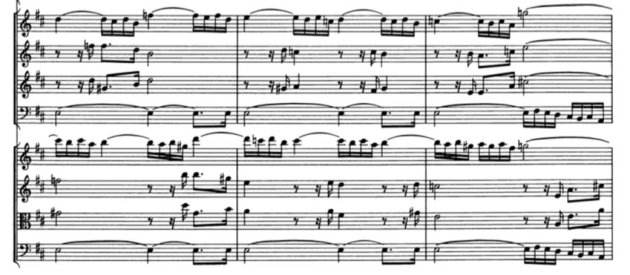


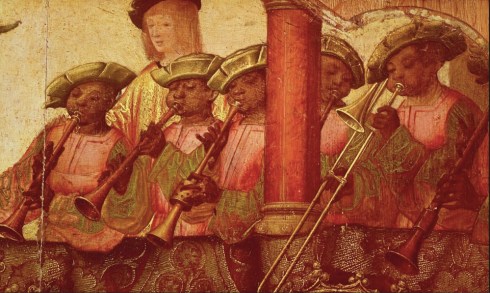
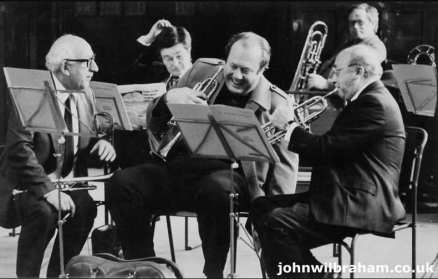

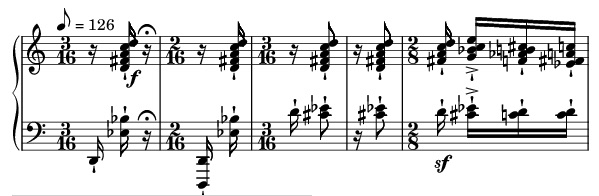
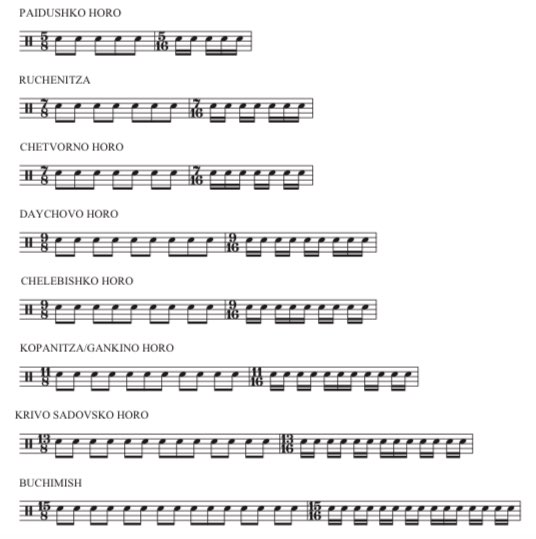
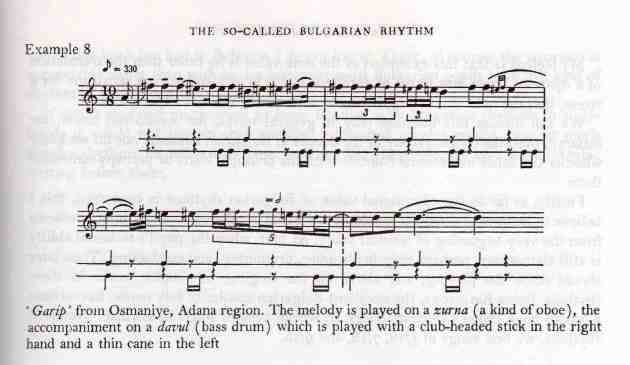


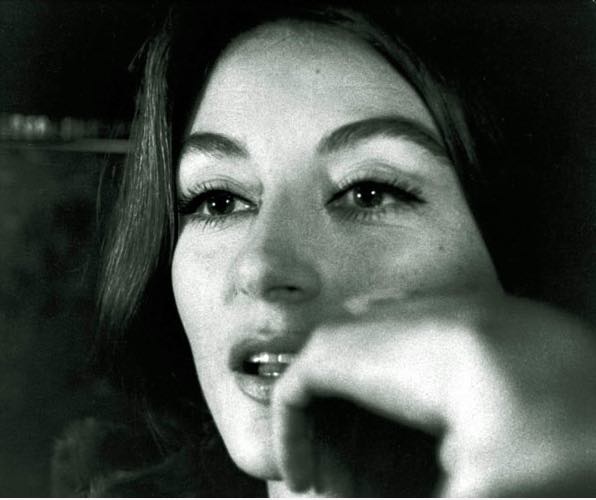





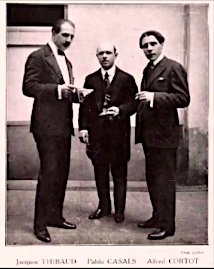



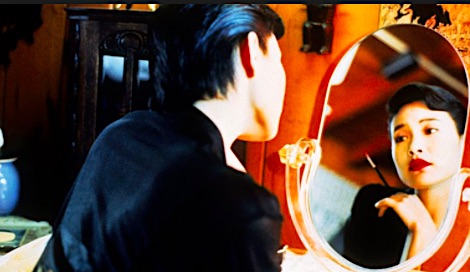

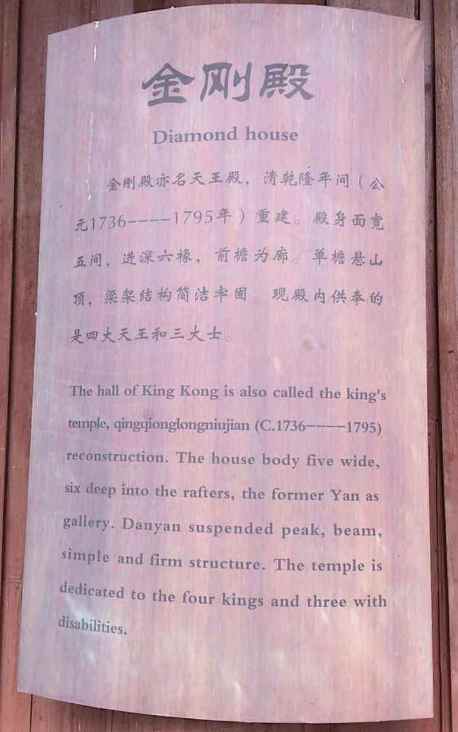

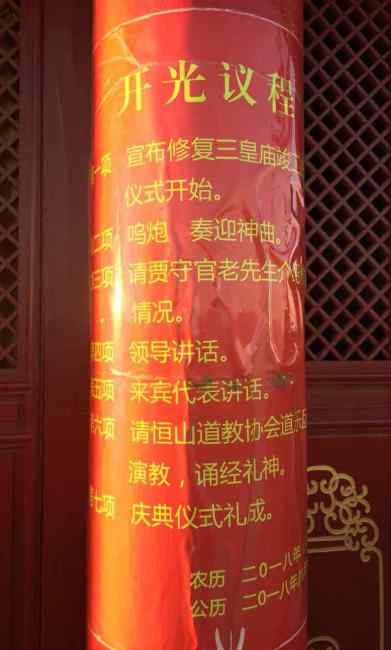




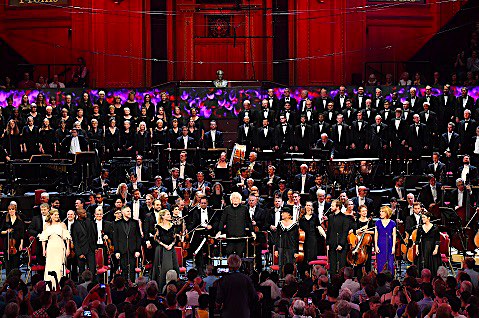
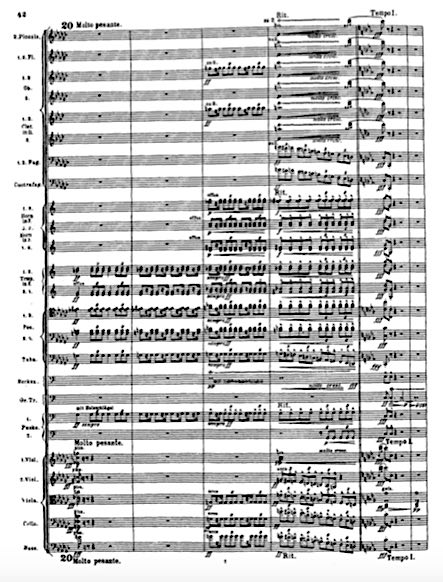




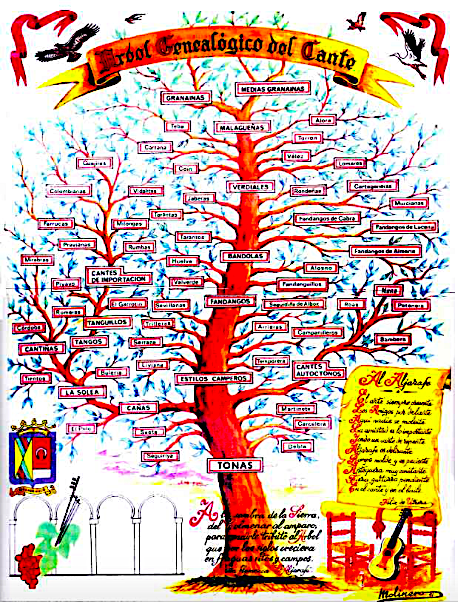


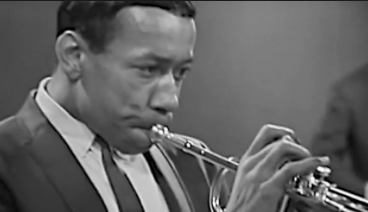

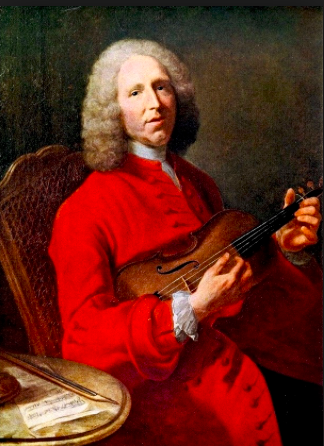
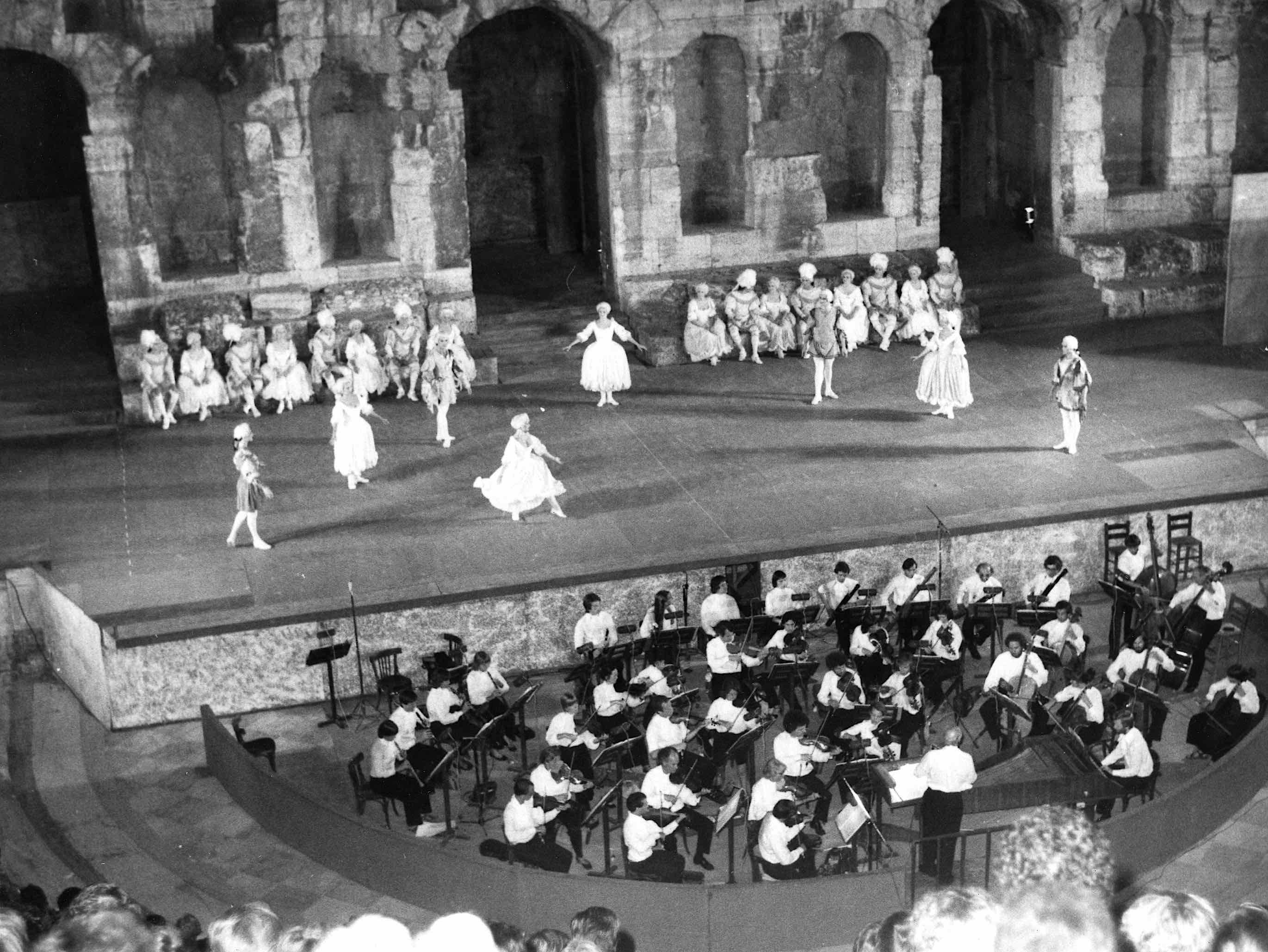

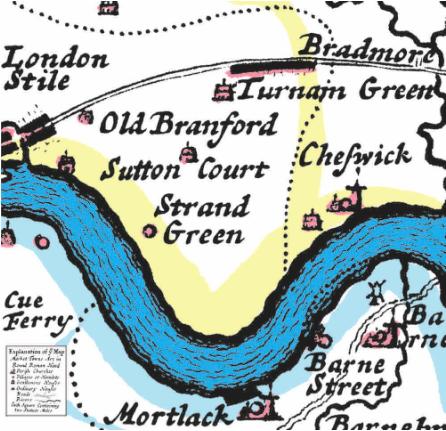

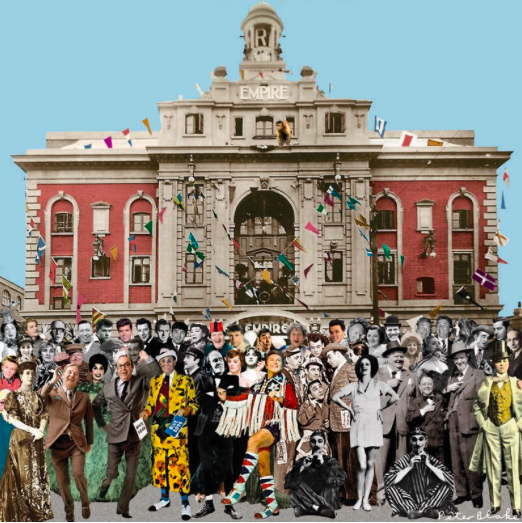



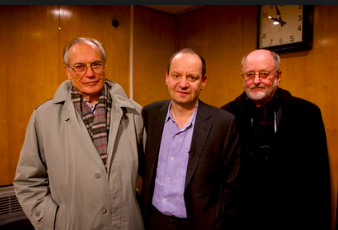
 “I am opposed to the death penalty,” he said without emotion, “except for my father.” […] “He was a criminal.”


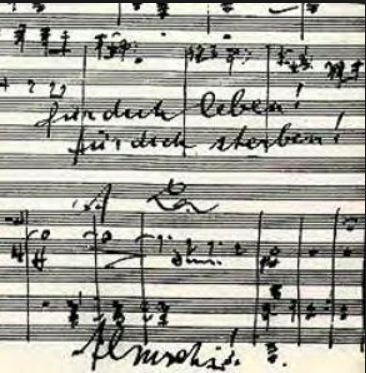
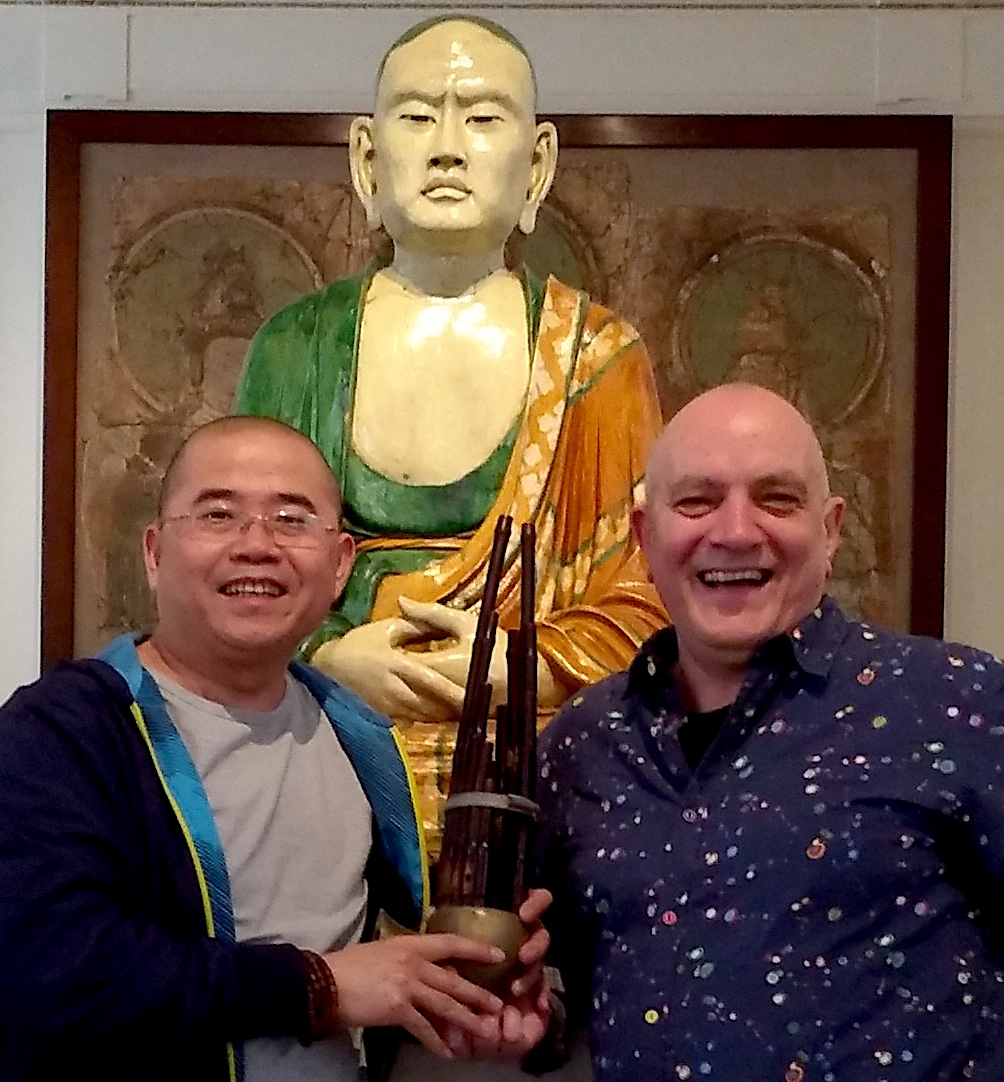
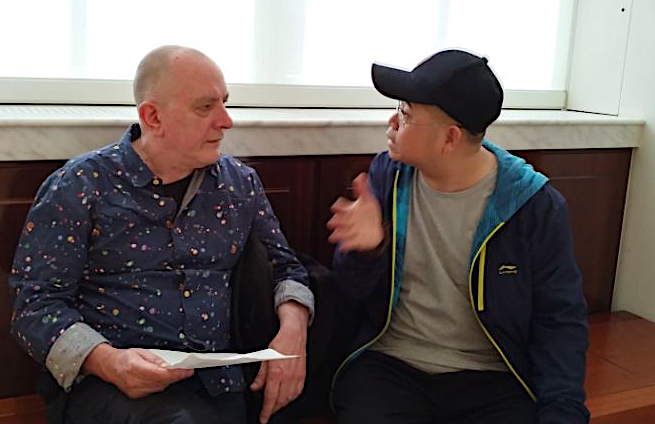

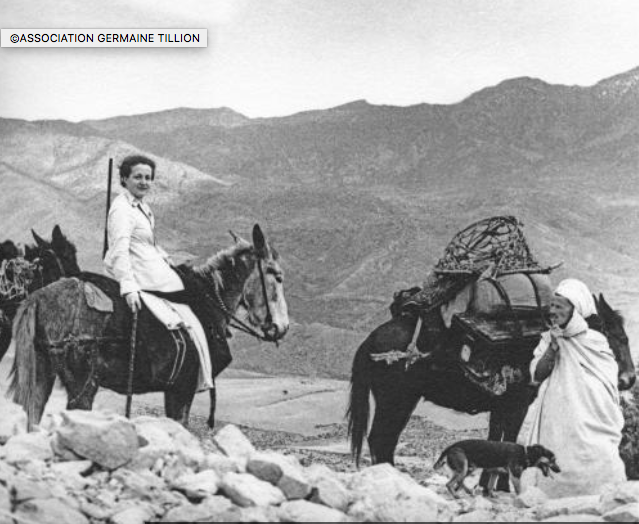
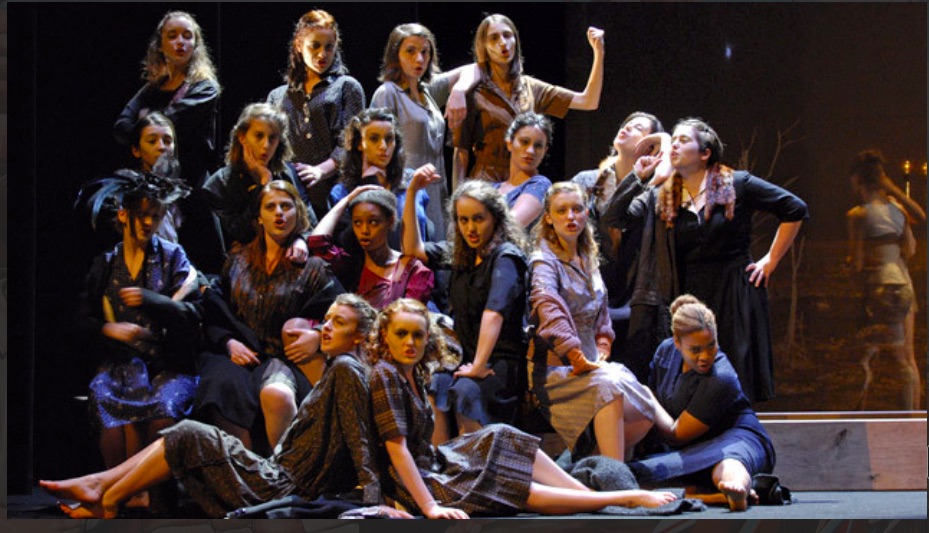



 As we read up further, we now speculate that since Kangxi saw the poem on a visit to Wutaishan, and as Buddhist ritual manuals do contain poems, it could have got into one such manual there; spreading further north, it might thence have got into Daoist manuals too—which, after all, contain plenty of Buddhist elements (my book, e.g. p.226).

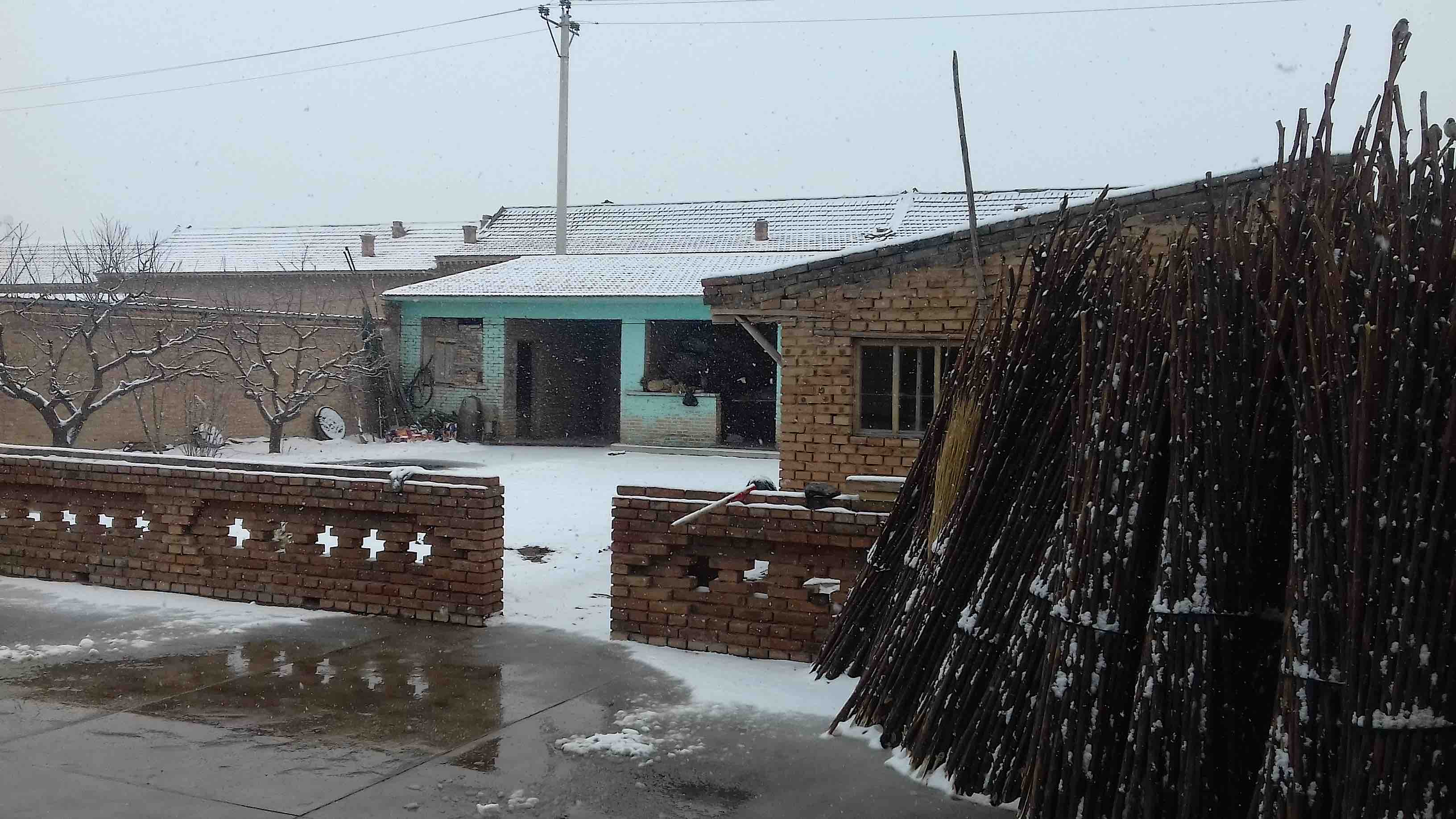
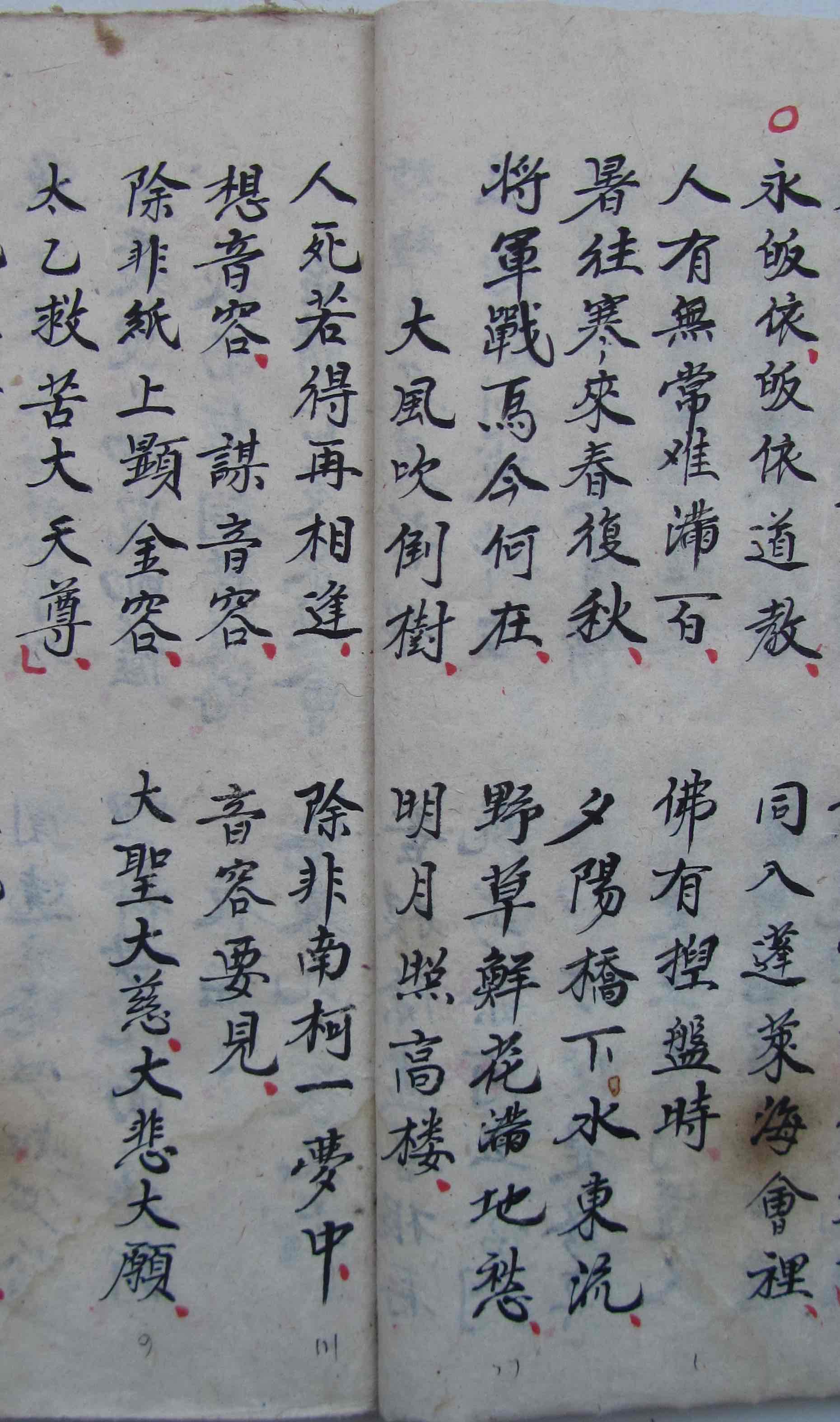 So Li Manshan gets to record me singing a piece I barely know, but I never get to record him. Anyway he always sets off from a really low pitch, so the result tends to sound a bit like Tibetan chanting. When the band sings a cappella hymns for funerals,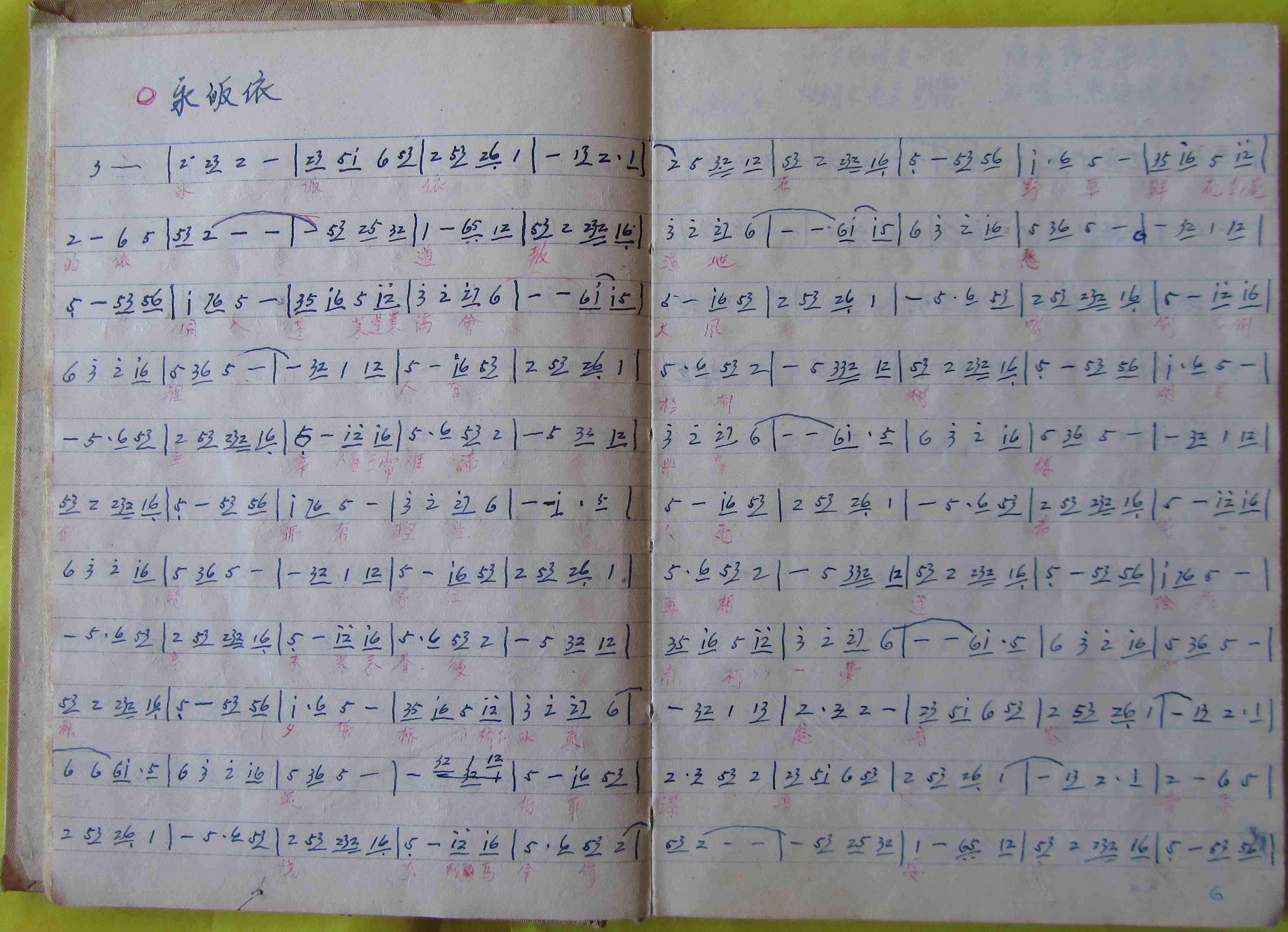


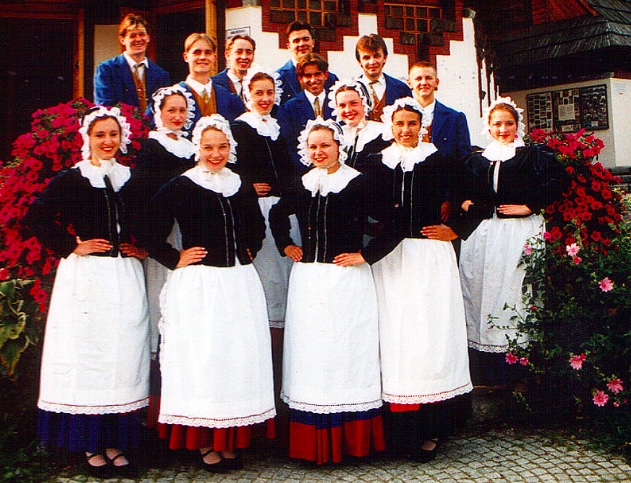


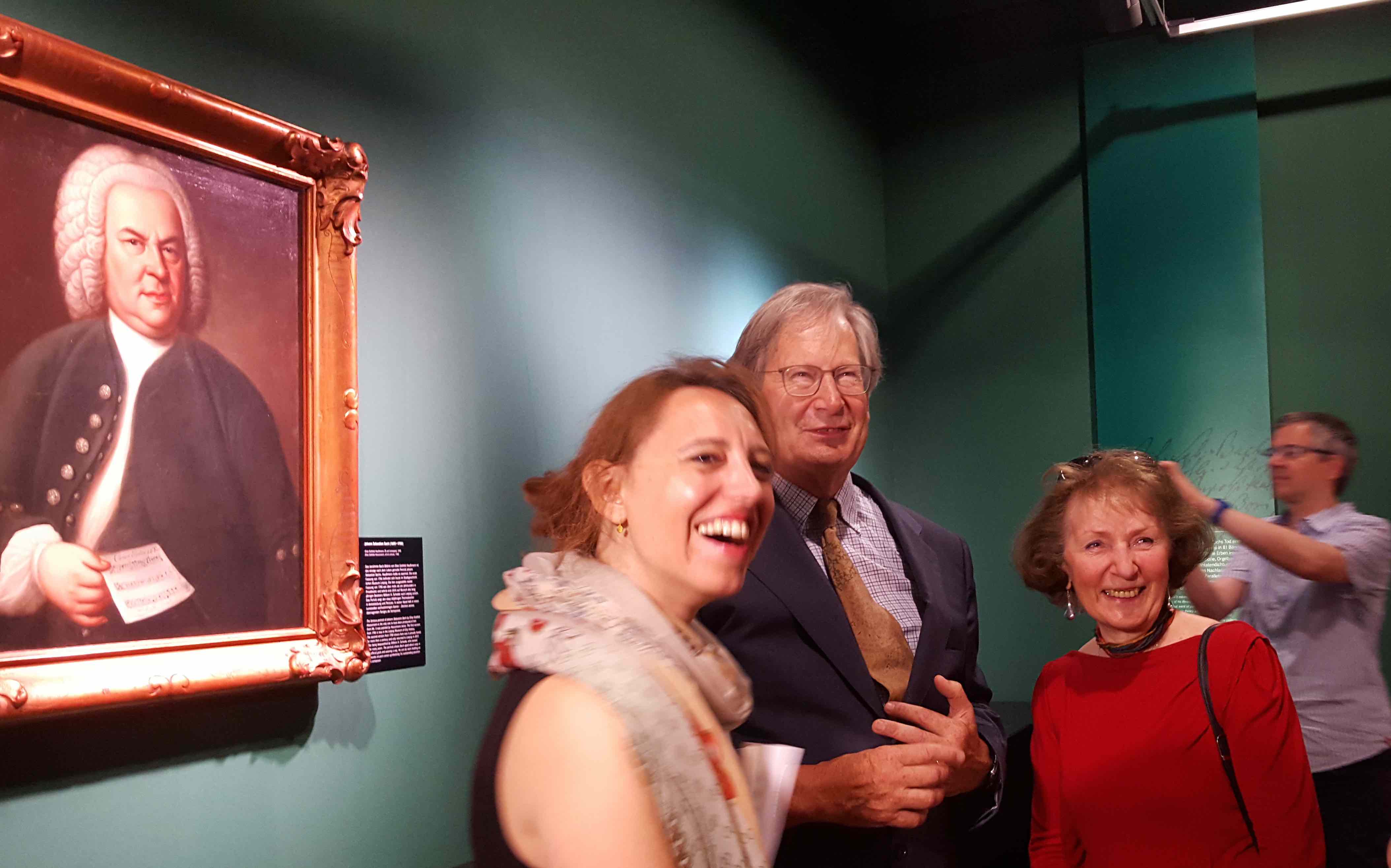





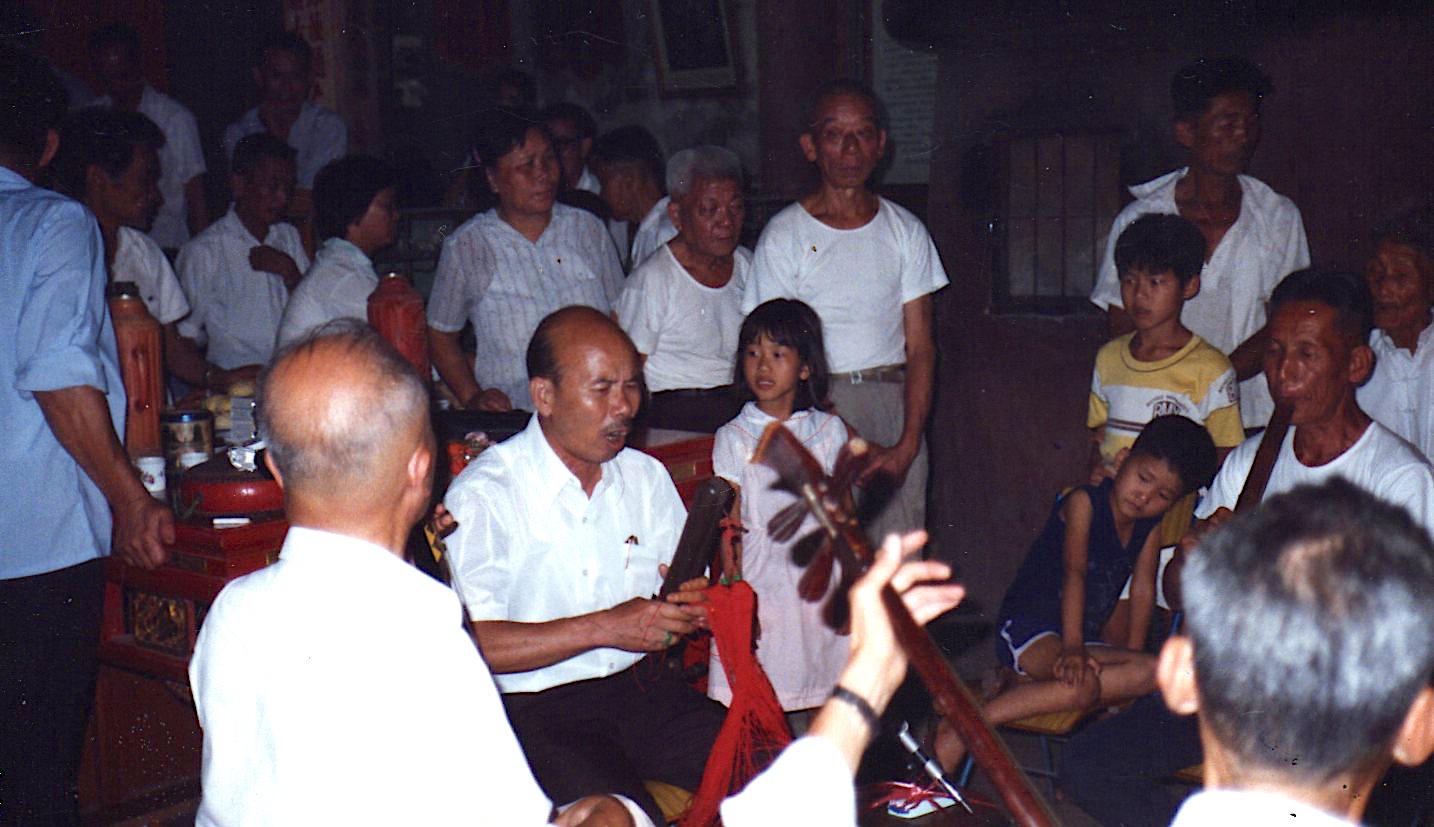
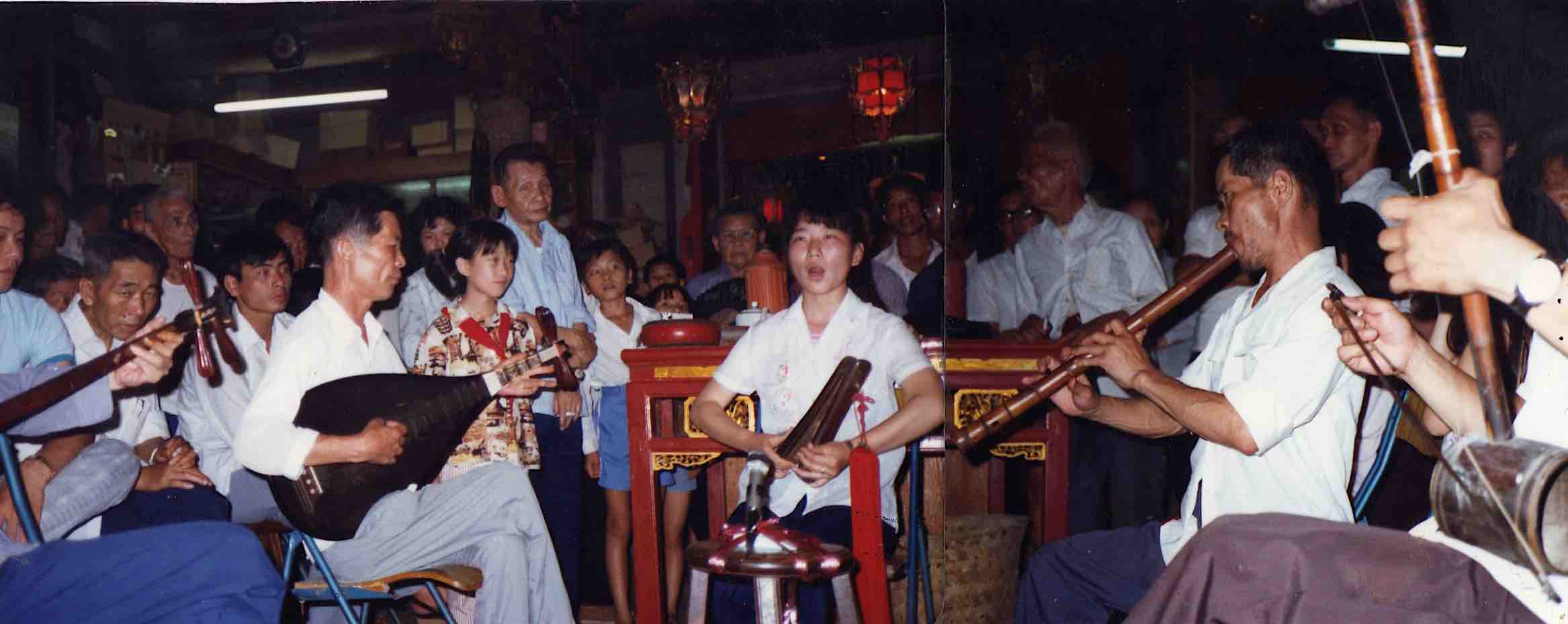


 Stephen Jones: a blog