How to be English

Lee

The insights of Stewart Lee feature regularly on here. Last week he did a wonderful guest slot of three programmes on Radio 3’s Late Junction (starting here):

Now who doesn’t like Czechoslovakian Communist-era free jazz…

And I now find a rich archive of his TV series Comedy vehicle on the BBC website. Among all the treasures there, I am most taken with his take on St George’s Day in the England episode (Bring it back, BBC!)—pursuing his bête noire of Paul Nuttall and the UKIPs.

As ever, he reformulates motifs from previous work, just like Bach and Miles Davis [fine new submission for Pseuds’ corner—Ed.]. But what I respectfully wish to submit [m’lud] is the passage from 20.31. He goes on (and on, and on):

[Nuttall is] only trying as best he can to ensure the future domestic prosperity of Bulgaria—I don’t doubt that for a minute. […]

I live here, in the People’s Republic of Hackney, in northeast London. It’s very culturally diverse (not really in this audience). I’ve had kids at nursery and playgroup here. And what they do at the nurseries and playgroups in Hackney, they celebrate all the different kids’ festivals and cultural events in what you might call a logical, sensitive, and pragmatic approach to cultural diversity… “gone mad”. They celebrate Christian Christmas, Chinese New Year, Muslim Michaelmas, Atheist April Fool’s Day, Pantheists’ Pancake Day, Odinist Oatcake Day, and Lesbian Gay and Bisexual Harvest Festival […]

But, EDL members and Daily Telegraph readers relax—they do celebrate St George’s Day as well. On St George’s Day they told me I had to send my little two-year-old girl into the Hackney playgroup dressed in traditional English costume. So I sent her in dressed as a 1970s’ English football hooligan, with a cross of St George and all swastikas drawn on her face… and I had her drunk on Special Brew, and high on amphetamines… I gave her sharpened coins to throw at horses, and I had her shouting,
“I’m English, I’m English! Wanna make something of it?”

Now, that led to a misunderstanding… and the police became involved. “Apparently if you say you’re English these days you get arrested and thrown in jail…”

The dénouement there refers back to his exchange with a taxi driver:

The bigoted taxi driver has long been a regular guest in his routines, as here.

I do appreciate that I will now look like the worst kind of BBC liberal apologist idiot if you’re all sitting at home watching this dubbed into Bulgarian. With Romanian subtitles.

All this ploughs a somewhat different furrow from that of The ArchersFor more on being English, see here.

Guide to another year’s blogging


Struggling to encompass all this? I know I am. While we inevitably specialize in particular topics, it’s important to build bridges. I guess it’s that time of year when another guide to my diverse posts may come in handy—this is worth reading in conjunction with the homepage and my roundup this time last year.

I’ve added more entries to many of the sidebar categories and tags mentioned in that summary. I’ve now subheaded many of the categories; it’d be useful for the tags too, but it seems I can’t do that on my current WP plan. Of course, many of these headings overlap—fruitfully.

Notably, I keep updating and refecting on my film and book on the Li family Daoists. I wrote a whole series resulting from my March trip to Yanggao (helpfully collected here) and Beijing (starting here, also including the indie/punk scene). Other 2018 posts on the Li family include Yanggao personalities and Recopying ritual manuals (a sequel to Testing the waters).

To accompany the visit of the Zhihua temple group to the British Museum in April, I also did a roundup of sources on the temple in the wider context of ritual in Beijing and further afield, including several posts on this site.

I’ve posted some more introductions to Local ritual, including

Gender (now also with basic subheads) is a constant theme, including female spirit mediums—to follow the series on women of Yanggao, starting here. Or nearer home, Moon river, complementing Ute Lemper.

Sinologists—indeed aficionados of the qin, crime fiction, and erotica—may also like my post on Robert van Gulik (and note the link to Bunnios!).

I’ve added a few more categories and tags, notably

The film tag is developing, with a side order of soundtracks—for some links, see here.

I’ve given basic subheads to the language category (note this post on censorship), which also contains much drôlerie in both English and Chinese. Issues with speech and fluency (see stammering tag) continue to concern me, such as

Following Daoist football, the sport tag is worth consulting, such as The haka, and a series on the genius of Ronnie.

Some posts are instructively linked in chains:

More favourites may be found in the *MUST READ* category. Among other drôlerie, try this updated post, one of several on indexing and taxonomy; and more from the great Philomena Cunk.

Most satisfying is this collection of great songs—still not as eclectic as it might become:

Do keep exploring the sidebar categories and tags!


Another everyday story of country folk

Archers

We’ve discussed the rural society of Gaoluo village, and Yanggao county; and to follow Cheremis, Chuvash, and Tibetans, now for Ambridge.

Despite my tireless ethnographic devotion to Everyday Stories of Country Folk and, um, popular culture in all its forms, I can’t stand The Archers!!! There, I’ve said it.

Still, like the Hoffnung speeches, I recommend it highly to foreigners. The world’s longest-running radio serial [zzzzz], it makes a perfect portrait of daily life in Middle England, showing what we’re up against—a complement to Watching the English. For Stewart Lee’s somewhat different take on being English, see here.

I do realize that social change has come to Ambridge—indeed, Peter Hitchens moans that the series has become a vehicle for liberal and left-wing values and agendas (“all kinds of sexual revolution stuff and ultra-feminist propaganda”) (PAH! Nay, YAY!). But its core plots still revolve around riveting issues like the loss and rediscovery of a pair of spectacles, and competitive marmalade-making, The scripts are an inexhaustible catechism of cliché that I believed to have expired along with my great-aunts (“Ooh I shouldn’t really…” “And more power to her elbow, that’s what I say!”—the latter perhaps constituting evidence of Hitchens’s “ultra-feminist propaganda”?)

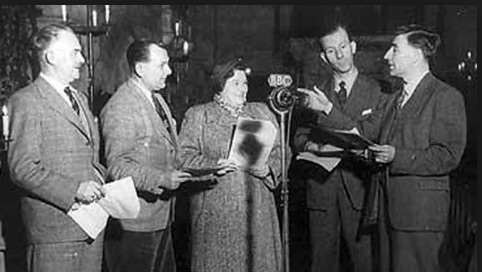
So despite occasional daring updates to the world-views and vocabulary of the “characters” (sic: see below) since 1950, it’s always going to be trapped in a time-warp: the visual image that the series still conjures up today is surely the photo above (note for any Chinese, Chuvash, or Bulgarian readers: YES, this is how we all dress).

As a Chinese immigrant struggling to perceive the underlying ideology of being English, Xiaolu Guo realised that

the drama, with its apparently apolitical presentation of “an oasis of rural England outside the currents of history” is really offering a supremely political position, a peculiarly British ideology: one that privileges endless indirectness and lethargy, endless deflection of real anger and debate, and endless acceptance of the status quo.

The wiki article on The Archers makes fascinating reading, with some drôle diachronic byways, not least on the irritating and inescapable theme-tune Barwick Green—a maypole dance, FFS [Can it be that you have suddenly abandoned your mission to document rural culture? Not Exotic enough for you?—Ed.] (cf. Morris dancing as a suitable riposte to the haka), endowed with “the genteel abandon of a lifelong teetotaller who has suddenly taken to drink”, as Robert Robinson observed.

The 1954 recordings were never made available to the public and their use was restricted even inside the BBC, partly because of an agreement with the Musicians’ Union.

Oh well, that’s one good cause to which the MU has been putting my subscription. But when a new stereo version was recorded in 1992 (quelle horreur!),

the slightly different sound mixing and more leisurely tempo reportedly led some listeners to consider the new version inferior, specifically that it lacked “brio”.

“Brio” is indeed the mot juste. Bless.

A 2011 folk-rock version by Bellowhead was well received, however:

For further windows on changing performance practice, see e.g. Mahler, vibrato, jazz, DaoismTaruskin; the Wimbledon and Pearl and Dean themes. Not forgetting Pique Nique by Ibert’s brother Edouard—an oeuvre that has everything that Barwick Green lacks, despite their shared 6/8 metre (can we have a Bulgarian version, please?). See also By the sleepy lagoon.

Anyway, my main reason for this unseemly rant is to alert you to a brilliant parody that John Finnemore did in 2014, for which I am precisely the target audience:

How The Archers sounds to people who do not listen to The Archers:

[Announcer:] And now on Radio 4—unbelievably—it’s time to accidentally hear a bit of The Archers again.

with all the stereotypes lovingly exposed—

“Hello, one of the men who always sounds tired!”
“Hello, one of the unsufferably wry women…”

“Hello, one of the women with an accent! You’d think that would make it easier to tell you apart from the others, but… no.”

He continues the theme here:

… doomed endlessly to repeat the same morality tale of how all men are feckless idiots with terrible ideas, all women are joyless wet blankets who are nonetheless powerless to stop them.

Indeed, the great Tony Hancock did a spoof as early as 1961:

For denizens of Twitter, the fantasy scripts of @jonreed are recommended. See also Charlotte HIggins’ recent fantasy on an Ambridge Don Giovanni. And inevitably, The Archers is an academic research topic

For a roundup of posts on How to be English, see here—including The mantric Shipping forecast.

Breakfast at Tiffany’s

Moon river

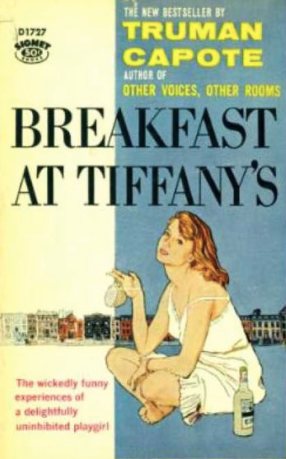
This is just an alert to a substantial update on my post Moon river, featuring—in addition to Audrey Hepburn, Amy Winehouse, and Stacey Dooley, the gorgeous major-7th leap, as well as the dodgy language of “femme fatale” and “elfin waif”—thoughts on Truman Capote’s novella, stammering, and fado…

Capote


Killing Eve: notes and queries

KE

I entirely share the widespread adulation for Killing Eve. Just in case you’ve been holed up in your ivory tower studying medieval Daoist manuscripts or suchlike, neglecting to delight in all manifestations of the Terpischorean muse, here’s a tribute—and a query.

trio

The brilliant Sandra Oh and Jodie Comer are inspired by Phoebe Waller-Bridge’s script, which wears its feminist credentials lightly. You can take your pick of a plethora of rave reviews, but I like this. And this. And indeed this New Yorker review, and now this from the LRB (you may already have noted that I tend not to favour the Ku Klux Klan Gazette as the ultimate source of critical wisdom).

While Luke Jennings’ novel Codename Villanelle can hardly compete, one location that sinophiles will enjoy there (not used in the TV version) is an ever-sleazy Shanghai, scene of one of the most grisly murders—with its references to Moon river and the 1930s’ silent-film actress Ruan Lingyu.

For astute comments from Unloved on how they created the soundtrack for the series, see here.

OK, among these clips, the Psychopath scene (from 6.22), ending with Villanelle’s response to “Are you upset?” is wonderful:

Which I suppose leads me to just one niggling doubt, encapsulated long ago by Mark in Peep Show, visiting a student he fancies:

Mark: Love your room.
April: Thanks. It’s your basic undergraduate lunge for individuality.
[nods to a Betty Blue poster]
April: I’ve not even seen Betty Blue. Have you?
Mark: Oh yeah. Great sex-and-suicide flick—turned a whole generation of men onto girls with mental illness.

So now for the chic assassin (for terms like femme fatale, see here; and for Lulu, here). It can hardly be much consolation that whole generations of women are also subscribing to the image. I’m sure there’s a sound feminist response to this. Discuss

Will there be redemption for Villanelle/Oxana in the next series? Would that be too neat?

As to a musical Villanelle, Berlioz’s Nuits d’été is gorgeous—here’s the classic Janet Baker recording:

For more from PWB, see Fleabag and Exotic travels; and do watch Jodie Comer in the recent Talking heads.

Taco taco taco burrito

Rite

Wondering how to get to grips with additive metres?
Awed by the complexities of flamenco palmas?
Despair not, help is at hand!

As a prelude to aksak “limping” metres, we might start with quintuple metres, which go far back, even in WAM. By the baroque period there are niche examples by composers such as Schmelzer, and they feature in 19th-century Russian music—a most popular instance being the “limping waltz” of Tchaikovsky’s Pathétique symphony (2+3).

This reminds me of two other subversions of the waltz, albeit in regular triple metre: the 2nd movement of Berlioz’s Symphonie fantastique (cf. here and here), and Ravel’s La valse, a “surreal nightmarish vision of a decaying society through a broken kaleidoscope”, as I said in my Ravel page. Elsewhere, perhaps inspired by the Basque zortzico dance, Ravel was partial to additive metres—such as in his piano trio, and the quintuple-time Bacchanale finale of Daphnis and Chloé (both also featured on that page, the latter from 45.29). And Messiaen was most partial to complex yet catchy additive rhythms.

Quintuplets, of course, are something else altogether; as are the creative use of additive rhythms in minimalism (see also examples from Reich and Meredith).

From Tchaikovsky we might graduate to

  • the Pearl and Dean theme (which we may hear as two groups each of 3+3+2; or for a Bulgarian, perhaps two fast groups of 3+3+3+3+2+2)
  • Un homme et une femme (after the three upbeats, 3+3+2+2: the first two 3s, in the original “Dabadabada, badabadaba”, were later remembered as “Chabadabada“, a word that entered the language to denote alternating male and female candidates in electoral lists!)
  • and Lalo Schifrin’s theme to Mission impossible (5/4, with a duplet over the first 2 beats).

If you can hum along to such easy examples, then that’s a good start in mastering the intricacies of so-called aksak metres around east Europe and the Middle East…

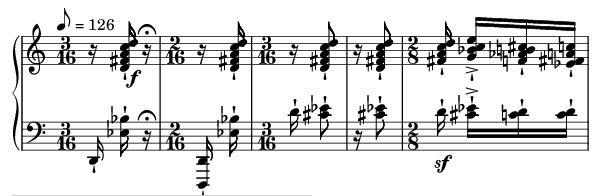
Indeed, Take five was inspired by hearing Turkish musicians. Rather more challenging is the opening section of Blue Rondo à la Turk (2+2+2+3):

Note the helpful BTL comment there (only without the punctuation!):

Taco, taco, taco, burrito. Taco, taco, taco, burrito. Taco, taco, taco, burrito.
[SJ: not to be confused with potato, potato]

Still, that’s a rather crude, mechanical usage, the melody merely marking out the metre in regular quavers—whereas further east, melodic rhythms are infinitely varied within the basic metre.

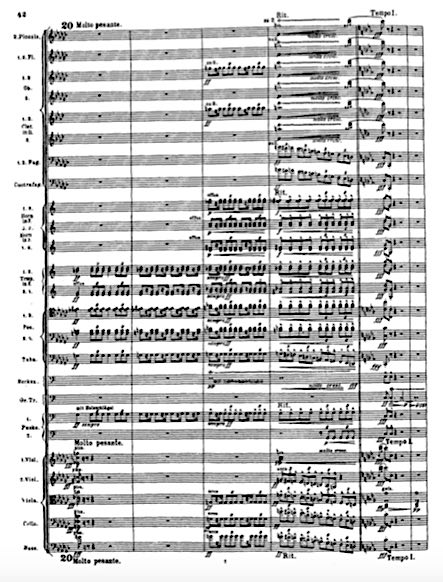
Admittedly, the additive patterns of the Rite of spring have been transcribed in 4/4—was it really Boulez who had this drôle idea?! Cf. Slonimsky‘s help for Koussevitzky, here). Indeed, the scores for both the Pearl and Dean and Un homme et une femme tunes were written in duple metres.

And in the first movement of Winter, Max Richter’s welcome recomposition of the Four Seasons mixes in some great limping 7/8 bars (2+2+3—just the two tacos before the burrito today, thanks waiter) (from 1.18):

An intriguing instance is I say a little prayer, with its quirky insertion of a triple-time bar in the chorus—which no-one apparently even has to think about. And do listen to Herbie Hancock‘s addictive Ostinato.

* * *

But all this is mere child’s play compared to folk music. Though such metres are quite widespread, Bartók, Brailiou et al. coined the term “Bulgarian rhythm”.

aksak

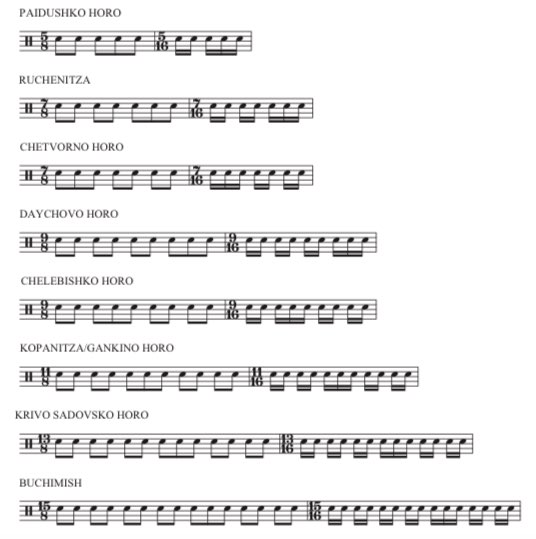
Some instances of “Bulgarian rhythm”, found here; see also here. For the Swingles’ delightful arrangement of  Bučimiš, see under Another Turangalîla at the Proms!.

A classic essay is

  • Constantin Brăiloiu, “Aksak rhythm” (in Brăiloiu, Problems of ethnomusicology, 133–67, based on a 1951 lecture),

which contains far more detailed schemata. His work followed that of

  • Béla Bartók, “The so-called Bulgarian rhythm” (1938).

A transcription by Bartók of a Turkish zurna–davul shawm band shows how, over the basic metre, melodic and percussion rhythms seriously thicken the plot:

aksak 2

Jerome Cler’s splendid website on the yayla has a thoughtful analysis of an aksak (here).

The whole repertoire of players like Ivo Papazov is based on aksak metres:

I don’t think I’m quite ready for Sedi donka (Plovdivsko horo), a 25-beat pattern divided

    7             7                 11
3+2+2 | 3+2+2  | 2+2+3+2+2

For more on the diverse musical cultures of Bulgaria and environs, see here. And for a wide-ranging discussion, see

  • John Blacking, “Irregular rhythms: movement, dance, music, and ritual”, ch.3 of A common-sense view of all music (1987).

Back with Merrie England, there’s a fascinating article:

* * *

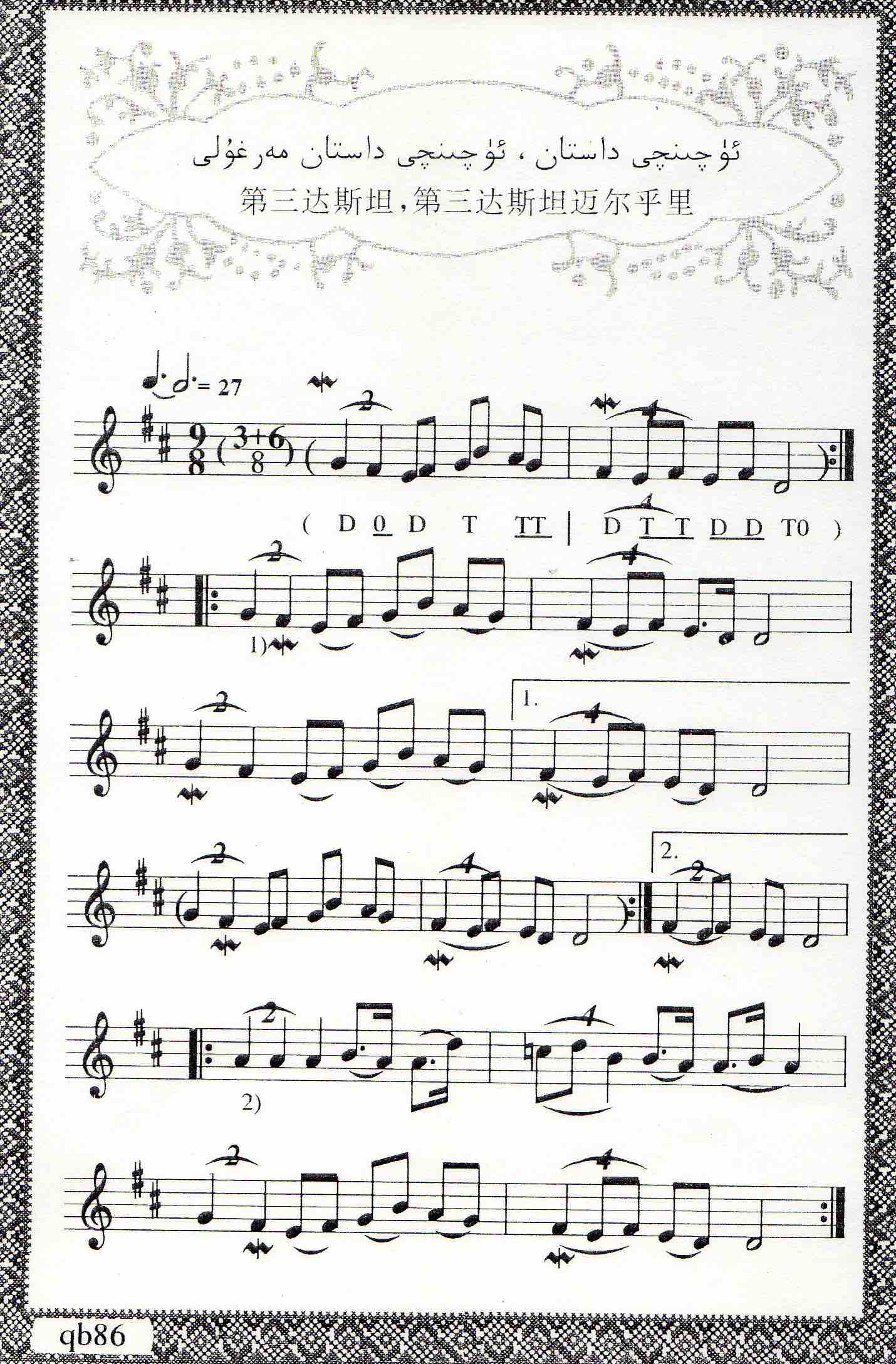
Further east, an example from the muqam of the beleaguered Uyghurs of Xinjiang is sadly topical. A common metre consists of one long beat divided into two equal stresses, followed by two regular beats—which we might notate cumbersomely as

aksak

with the initial duplet over a notional 3/8 unit:

Some sections add another duple unit, like this dastan from Chebiyat muqam (actually a duplet over 3/8,  followed by 3/4):

QB

And some muqam have still more metrically complex segments to explore.

As with many world genres, the Uyghurs have no tradition of notation, and seem to have no terminology for such metres (though see Rachel Harris’s chapter in Harris and Stokes (eds.), Theory and Practice in the Music of the Islamic World). As with flamenco, this kind of thing is only an issue for those (like me) hampered by a visual classical education. The trick is to internalise it in the body—and to dispense with notation. Let’s remember that much of this music accompanies dance.

Uyghur musical traditions are part of a rich culture that is currently being systematically erased in Xinjiang (see roundup here).

Bloodlands

map

Following my posts on the work of Philippe Sands, on blind minstrels in Ukraine, [1] and on the famines in Ukraine and China, I’ve been belatedly educating myself on the appalling history of the vast region introduced in Between East and West by reading

The region where some 14 million people (mostly civilians) were killed from 1930 to 1945, largely east of the Molotov–Ribbentrop line, includes Poland, Ukraine, Belarus, and the Baltic states. Victims were Jews, Belarusians, Ukrainians, Poles, Russians, and Balts. And it was to the bloodlands that most Jewish victims from west and south Europe, Hungary, Romania, and so on, were transported to die. For the background, see The great siege of Przemyśl.

Growing up in post-war Britain, perhaps my ignorance isn’t so unusual—but it’s disturbing, and needs rectifying. As Anne Applebaum comments in her review,

If we are American, we think “the war” was something that started with Pearl Harbor in 1941 and ended with the atomic bomb in 1945. If we are British, we remember the Blitz of 1940 […] and the liberation of Belsen. If we are French, we remember Vichy and the Resistance. If we are Dutch we think of Anne Frank. Even if we are German we know only a part of the story.

My own belated awareness is partly prompted by my studies of the fates of Chinese people whom I’ve met in the course of fieldwork. Indeed, it’s worth re-reading Ian Johnson’s article “Who killed more, Hitler, Stalin or Mao?”, itself a companion to an article by Snyder.

I wonder what would it take for this vast region of the bloodlands to be recognised as the central physical and moral graveyard of the 20th century—shifting our balance from the Western to the Eastern Front. And as Snyder says, the mass killing of the 20th century is of the greatest moral significance for the 21st.

One might even begin by reading his brilliant “Conclusion: humanity”. And apart from reading static silent texts, there’s a wealth of documentary footage online—which you can choose to explore, or not.

Snyder corrects many widespread misconceptions [here I combine his text and Ascherson’s review]. The western public still tends to associate mass killing with “Nazi concentration camps” (cf. my posts on Ravensbrück and Sachsenhausen), and with Auschwitz in particular; and Stalin is thought to have killed far more people than the Nazis by consigning millions to the gulag. But neither assumption is accurate.

  • In the Soviet Union, although about a million men and women perished in the labour camps, 90% of gulag prisoners survived. Stalin’s great killing took place not in Siberia, but in the western Soviet republics, above all in 1930s’ Ukraine where at least four million people died in man-made famines and in the slaughter of the “kulak” peasantry.
  • In the Third Reich concentration camps, a million prisoners died miserable deaths during the Nazi period. US and British troops liberated some of those camps, but none of the major death camps, which were further east. And 10 million others who never entered any of the camps were shot (mostly Jews), deliberately starved to death (mostly Soviet prisoners of war), or gassed in special “killing centres” which were not holding camps at all. Auschwitz, terrible as it was, formed a sort of coda to the Jewish Holocaust. By the time the main gas chambers came on line in 1943, most of Europe’s Jewish victims were already dead. Some—Polish Jews especially—had been gassed in the three killing centres set up on Polish territory: Belzec, Sobibor and Treblinka.
  • So more common methods of killing than gassing were starvation and shooting. Most of those Jewish victims had been shot and pitched into mass graves by German Einsatzgruppen operating far to the east in Ukraine, the Baltics and Belarus, moving from village to village behind the front lines of war.

In a matter of a given few days in the second half of 1941, the Germans shot more Jews in the east than they had inmates in all of their concentration camps. […] The vast majority of Jews killed in the Holocaust never saw a concentration camp.

The American and British soldiers who liberated the dying inmates from camps in Germany believed that they had discovered the horrors of Nazism. The images their photographers and cameramen captured of the corpses and the living skeletons at Bergen–Belsen and Buchenwald seemed to convey the worst crimes of Hitler. As the Jews and Poles of Warsaw knew, and as Vasily Grossman and the Red Army knew, this was far from the truth. The worst was in the ruins of Warsaw, or the fields of Treblinka, or the marshes of Belarus, or the pits of Babi Yar.

  • Nor is it widely understood that Jews were fewer than 1% of the German population when Hitler came to power in 1933, and about one quarter of 1% by the beginning of World War Two. The great majority of murders of Jews took place in occupied Poland, Lithuania, Latvia, and the Soviet Union. The murder of 165,000 German Jews was a ghastly crime in and of itself, but […] fewer than 3% of the deaths of the Holocaust. The Nazis murdered about as many non-Jews as Jews during the war, chiefly by starving Soviet prisoners of war (over 3 million) and residents of besieged cities (over a million), or by shooting civilians in “reprisals” (nearly a million).
    And until 1939 Stalin, later credited with defeating Hitler (if not in British public opinion), had a still worse record of mass killings—of his own civilians, moreover. Until then, Soviet terror (against both class and national enemies) was not only far greater in scale, it was incomparably more lethal—and largely unnoticed. By the end of 1938, the USSR had killed about a thousand times more people on ethnic grounds than had Nazi Germany, and far more Jews.

Poland, fatally partitioned between Hitler and Stalin in 1939, suffered terribly—with Warsaw subjected to brutal successive destructions. In western Europe this period was known as “the phony war”: nothing seemed to be happening. But on 22nd June 1941 (“one of the most significant days in the history of Europe”) Operation Barbarossa, Hitler’s invasion of the USSR, while sealing the fate of the Reich, was a further disaster for the civilian inhabitants of the whole region. It was only with these incursions that Hitler’s territory came to include large numbers of Jews to be (literally) disposed of. And

As Hitler imagined the future, Germany would deal with the Slavs much as the North Americans had dealt with the Indians.

As to Ukraine, already decimated by Stalin,

Hitler dreamed of the endlessly fertile Ukrainian soil, assuming that Germans would extract more from the terrain than the Soviets.

The Germans implemented mass starvation in POW camps:

As many Soviet prisoners-of-war died on a single given day in autumn 1941 as did British and American prisoners of war over the entire course of the Second World War.
The Germans shot, on a conservative estimate, half a million Soviet prisoners of war. By way of starvation or mistreatment during transit, they killed about 2.6 million more.

This had the effect of strengthening Soviet resistance; and while local populations had already suffered terribly under Soviet rule, many now wondered if it might be a lesser evil. Still, in desperation many Soviet citizens were recruited for duties with the German army and police.

Thus some of the survivors of one German killing policy became accomplices in another, as a war to destroy the Soviet Union became a war to murder the Jews.

In the first lands that German soldiers reached in Operation Barbarossa, they were the war’s second occupier. […] The double occupation, first Soviet, then German, made the experience of the inhabitants of these lands all the more complicated and dangerous. […] They had to deal with the consequences of their own previous commitments under one occupier when the next one came; or make choices under one occupation while anticipating another.

When the Germans conquered an area they often found that the NKVD had shot prisoners. In 1943 they seized on their discovery of the 1940 massacre by the NKVD of over 20,000 Polish officers and intelligentsia in the forests of Katyn. But on 29th–30th September 1941 near Kiev, the Germans had murdered 33,761 Jews at Babi Yar; between 100,000 and 150,000 people were killed there during the German occupation (see also Ukraine: Holocaust Ground Zero).

Local militias also took part in pogroms:

Political calculation and local suffering do not entirely explain the participation in these pogroms. Violence against Jews served to bring the Germans and elements of the local non-Jewish population closer together. Anger was directed, as the Germans wished, toward the Jews, rather than against collaborators with the Soviet regime as such. […] Violence against Jews also allowed local Estonians, Latvians, Lithuanians, Ukrainians, Belarusians, and Poles who had themselves collaborated with the Soviet regime to escape any such taint.
Yet this psychic nazification would have been much more difficult without the palpable evidence of Soviet atrocities. The pogroms took place where the Soviets had recently arrived and where Soviet power was recently installed, where for the previous months Soviet organs of coercion had organized arrests, executions, and deportations. They were a joint production, a Nazi edition of a Soviet text.

Snyder details the fates of urban centres like Lviv, Łódź, Riga, Vilnius, and Minsk, giving background to Applebaum’s visits in Between East and West. By the end of the war, half the population of Belarus had either been killed or deported (see also Soviet lives at war).

Warsaw

Warsaw, 1944.

His story returns to Poland and the unimaginable final agony of Warsaw. As the Red Army advanced on Berlin, their revenge was horrific.

* * *

And thence to continuing sufferings after the formal end of war, with Germans now among the main victims of ethnic cleansing and transports (for an overview of the aftermath across Europe, see Keith Lowe, Savage continent). Through the war the Soviets had continued sending their own citizens to the Soviet gulag (not least the peoples of the Caucasus and Crimea; entire populations of Karachai, Kalmyks, Chechen, Ingush, Balkar, Tatar, Meshketian Turks, and so on, still less known in the West than the bloodlands), and in the post-war years deportations only increased.

As Stalin fabricated his own unblemished legend of the Soviet Union and its role in the war, belittling that of Soviet citizens in the Holocaust, he now engaged in his own anti-semitic purges. Although mass terror was no longer pursued after Stalin’s death, repression continued throughout the Soviet bloc, and the fates of the real victims were concealed.

The communists’ hesitation to distinguish and define Hitler’s major crime tended, as the decades passed, to confirm an aspect of Hitler’s worldview.
[…]
Communist leaders, beginning with Stalin and continuing to the end, could rightly say that few people in the West appreciated the role of the Red Army in the defeat of the Wehrmacht, and the suffering that the peoples of eastern Europe endured under German occupation. […] During the Cold War, the natural response in the West was to emphasize the enormous suffering that Stalinism had brought to the citizens of the Soviet Union. This, too, was true; but like the Soviet accounts it was not the only truth, or the whole truth.

In his “Conclusion: Humanity”, Snyder explores the complexities of collaboration and victimhood—even now a pressing issue for all these traumatized nations. Most peoples suffered double or triple occupations, trapped helplessly between evil regimes, forced into agonizing dilemmas with a view to mere survival. In a telling passage, Snyder reflects on choices:

At a great distance in time, we can choose to compare the Nazi and Soviet systems, or not. The hundreds of millions of Europeans who were touched by both regimes did not have this luxury.

The comparisons between leaders and systems began the moment that Hitler came to power. From 1933 through 1945 hundreds of millions of Europeans had to weigh what they knew about National Socialism and Stalinism as they made the decisions that would, all too often, determine their fate. This was true of unemployed German workers in early 1933, who had to decide whether they would vote for social democrats, communists, or Nazis. It was true, at the same moment, of Ukrainian peasants, some of whom hoped for a German invasion that would rescue them from the plight. It held for European politicians of the second half of the 1930s, who had to decide whether or not to enter Stalin’s Popular Fronts. The dilemma was felt sharply in Warsaw in these years, as Polish diplomats sought to keep an equal distance between their powerful German and Soviet neighbors in the hope of avoiding war.

When both the Germans and the Soviets invaded Poland in 1939, Polish officers had to decide to whom they should surrender, and Polish Jews (and other Polish citizens besides) whether to flee to the other occupation zone. After Germany invaded the Soviet Union in 1941, some Soviet prisoners of war weighed the risks of collaboration with the Germans against the likelihood of starving to death in prisoner-of-war camps. Belarusian youth had to decide whether to join the Soviet Partisans or the German police—before they were press-ganged into one or the other. Jews in Minsk in 1942 had to choose between remaining in the ghetto or fleeing to the forest to seek Soviet partisans. Polish Home Army commanders in 1944 had to decide whether or not to try to liberate Warsaw for themselves, or to wait for the Soviets. Most survivors of the Ukrainian famine of 1933 later experienced German occupation; most survivors of the German starvation camps of 1941 returned to Stalin’s Soviet Union; most survivors of the Holocaust who remained in Europe also experienced communism.

These Europeans, who inhabited the crucial part of Europe at the crucial time, were condemned to compare.
[…]
In the decades since Europe’s era of mass killing came to an end, much of the responsibility has been placed at the feet of “collaborators”. The classic example of collaboration is that of the Soviet citizens who served the Germans as policemen or guards during the Second World War, among whose duties was the killing of Jews. Almost none of these people collaborated for ideological reasons, and only a small minority had political motives of any discernible sort. […] In eastern Europe, it is hard to find political collaboration with the Germans that is not related to a previous experience of Soviet rule.

Snyder goes on:

In the 21st century, we see a second wave of aggressive wars with victim claims, in which leaders not only present their peoples as victims but make explicit reference to the mass murders of the 20th century. The human capacity for subjective victimhood is apparently limitless, and people who believe that they are victims can be motivated to perform acts of great violence.

And he reflects on the purpose of history, describing all kinds of later nationalist agendas, highly relevant today:

Our contemporary culture of commemoration takes for granted that memory prevents murder. […] Without history, the memories become private, which today means national; and the numbers become public, which is to say an instrument in the international competition for martyrdom.

Snyder’s detailed breakdown of figures is numbing (note also his Appendix “Numbers and terms”). [2]

In policies that were meant to kill civilians or prisoners of war, Nazi Germany murdered about ten million people in the bloodlands (and perhaps eleven million total), the Soviet Union under Stalin over four million in the bloodlands (and about six million total). If foreseeable deaths resulting from famine, ethnic cleansing, and long stays in camps are added, the Stalinist total rises to perhaps nine million and the Nazi to perhaps twelve. These larger numbers can never be precise, not least because millions of people who died as an indirect result of the Second World War were victims, in one way or another, of both systems.

But as he concludes, such statistics still have to be converted back into the stories of individuals: not the abstraction of 5.7 million Jewish dead, but 5.7 million times one.

It is perhaps easier to think of 780,863 individual people at Treblinka: where the three at the end might be Tamara and Itta Willenburg, whose clothes clung together as they were gassed, and Ruth Dorfmann, who was able to cry with the man who cut her hair before she entered the gas chamber.

As the Jews of Minsk were liquidated in 1942,

The girls and boys knew what would happen to them if they were caught. They would ask for a tattered bit of dignity as they walked up the ramp to their death: “Please sirs,” they would say to the Germans, “do not hit us. We can get to the trucks on our own.”

* * *

Apart from providing us with essential basic education, such work, both detailed and humane, should inform our historiography generally—all the more with the current worldwide fomenting of ugly xenophobia. For Snyder on tyranny, click here.

For China, despite all the noble work on the famine and laogai camps, truth remains to be publicly told. In the official myth, the concession of Cultural Revolution “mistakes” conspires to sweep under the carpet the earlier successive terrors of land reform and campaigns throughout the 1950s, as well as long-term hunger. Even studies of expressive culture and ritual need to take all this into account.


[1] In such posts I mention the painful maintenance of expressive culture through times of trauma (and indeed the theme of the music of the camps is both macabre and inspiring), but here it seems unthinkable even to try and do so. It does, however, put into even starker perspective both regimes’ showcasing of Great Works of National Art directed by Great Conductors (see e.g. here). See also e.g. Institute of Musicology, University of Warsaw (ed.), Music traditions in totalitarian systems (Musicology Today, 2010).

[2] Statistics are always problematical. In China, as Ian Johnson observes, famine deaths alone over a mere four years seem to far outnumber the combined totals for killings under Stalin and Hitler from 1930 to 1945. But for the latter, if one includes “foreseeable” deaths caused by deportation, starvation, and incarceration, as well as combatant deaths and those due to war-related famine and disease, the numbers shoot up astronomically. Slowly, Hitler’s numbers approach Mao’s (for the gulag, see also Figes, and Applebaum).

In a 2012 article the late Elliot Sperling considered issues in assessing the death count for Tibet under Maoism. See also The Cultural Revolution in Tibet, Forbidden memory, and Tibet: conflicting memories.

Issues with statistics are illustrated by the conclusion of Steven Pinker’s The better angels of our nature: a history of violence and humanity (esp. ch.5), based on detailed yet unpalatable arguments, that the 20th century was probably not the bloodiest in history (see also here). His diachronic table (pp.235–6), adjusted to give mid-20th-century population equivalents, shows death tolls from many other conflicts worldwide outranking those discussed here. Highest on the list is the 8th-century An Lushan rebellion (said to have killed up to 5% of the world population, though even a substantially lower revised estimate seems exaggerated), followed by the Mongol conquests; global deaths for World War Two surpass those of Mao’s famine, but even they only come in 9th and 11th respectively—with the Taiping rebellion in between. See here for Pinker’s responses to some inevitable questions.

But again, we should return to Snyder’s Conclusion.

Moon river

MR

À propos my Daoist ritual spinoff of Strictly, the brilliant (ethnographer!) Stacey Dooley‘s recent waltz reminds me what a brilliant song is Moon river:

Pace Andy Williams, the classic sung version is that of Audrey Hepburn in Breakfast at Tiffany’s (1961):

Johnny Mercer’s lyrics, “a love song to wanderlust” (cf. Roaming the clouds), are complemented by Henry Mancini’s melody.  I just love the leap of a major 7th:

I’m crossing you in style some day / There’s such a lot of world to see,

always effective—as in the finale of Mahler 9 (introduced by quintuplets!) and, um, Raindrops keep falling on your head! Indeed, there’s another brilliant touch: following “We’re after the same rainbow’s end“, when that sequence returns with

Waiting round the bend, My huckleberry friend,

for the first phrase the melody omits the low tonic, making us nostalgic for the missing major-7th leap (waiting, indeed), until it returns for the second phrase.

So Moon river (nearly cut from the film, PAH!) makes a perfect expression of Holly’s persona—and indeed that of Stacey Dooley, with her documentaries from around the world.

The dominant interpretation currently seems to be that Hepburn’s screen characters make her some kind of feminist role model. But “it’s complicated”—certainly in this film, which largely replaces the edgy feel of Truman Capote’s novella (1958, set in 1943) with a “sugar and spice confection”; indeed, Capote wanted Marilyn Monroe for the part! I tend to side with more critical reviews, such as this, this, and this. After I cited some dodgy sexist terms to describe talented female performersgamine and ingénue are among those for which there are both male and female equivalents, but the latter are far more commonly used, and flawed. Oh, and how ahout “elfin waif”…

For Hepburn’s actual life, Darcey Bussell (another fragrant icon) made a fine documentary Looking for Audrey (2014), including her childhood in Nazi-occupied Holland.

* * *

Capote describes Holly as an American geisha—rural child bride Lulamae, reinventing herself in New York. Film adaptations can be effective, but in this case the novella portrays her with more nuance and depth. So—not least because I’m so averse to Hepburn’s “elfin waif” shtick—I find Capote’s silent invisible original far more moving, and Holly herself far more poignant and (as she would say) sympathique.

Inevitably, at the end of the film the narrator and Holly fall in love and stay together, whereas in the novella their relationship remains platonic, and Holly disappears.

Lending significance to Moon river, the name-slot for Holly’s mail-box reads:

Miss Holiday Golightly, travelling

She reflects on how she demurred from a break in the movies offered by a Hollywood agent:

But he’s got a point, I should feel guilty. Not because they would have given me the part or because I would have been good: they wouldn’t and I wouldn’t. If I do feel guilty, I guess it’s because I let him go on dreaming when I wasn’t dreaming a bit. I was just vamping for time to make a few self-improvements: I knew damn well I’d never be a movie star. It’s too hard; and if you’re intelligent, it’s too embarrassing. My complexes aren’t inferior enough: being a movie star and having a big fat ego are supposed to go hand-in-hand; actually, it’s essential not to have any ego at all. I don’t mean I mind being rich and famous. That’s very much on my schedule, and some day I’ll try to get around to it; but if it happens, I’d like to have my ego tagging along. I want to still be me when I wake up one fine morning and have breakfast at Tiffany’s.

And Holly does indeed sing and play guitar:

Don’t wanna sleep, don’t wanna die, just wanna go a’travellin’ through the pastures of the sky

With a Brazilian suitor in tow, she takes to Linguaphone:

Oh screw it, cookie—hand me my guitar and I’ll sing you a fado in the most perfect Portuguese.

That would surely have rivalled Carminho’s exquisite song.

In the novella, I note with proprietoral pride that Holly’s fellow-geisha Mag Wildwood (intriguingly, Capote gave her the full name of Miss Margaret Thatcher Fitzhue Wildwood)—as if being a redhead over six feet tall isn’t enough—is a stammerer (Marilyn Monroe might have resented the competition):

Even the stutter, certainly genuine but still a bit laid on, had been turned to advantage. It was the master stroke, that stutter: for it contrived to make her banalities sound somehow original, and secondly, despite her tallness, her assurance, it served to inspire in male listeners a protective feeling.

* * *

For Moon river on the ethereal theremin, click here.

Amy Winehouse (see my tribute here) may seem an unlikely exponent of the song, but she was grounded in ballads, as we can hear in her “late” sessions with Tony Bennett. Here she is, subverting the waltz, making the song sugar-free—maybe it doesn’t quite work, but even at the age of 16 she was always exploring, discovering new personal connections:

Click here for a discussion of the song in the BBC Radio 4 Soul music series.

From my playlist of songs, it’s clear that, with some noble exceptions, I find female voices more moving than male ones—and I’m right!!!

Just another reminder that a global view of musicking invites us to delight in all manifestations of the Terpsichorean muse!

Performance: from Iran to Morocco

perf

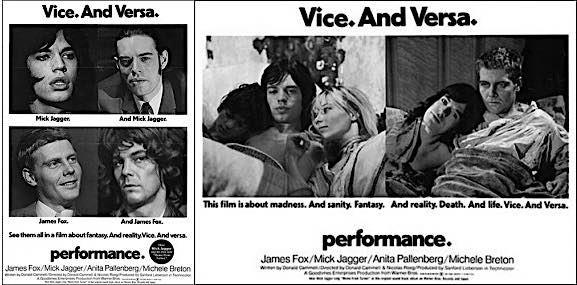
Another formative experience of frequenting late-night screenings at arthouse cinemas in the 1970s was the cult film Performance (Donald Cammell and Nicolas Roeg 1968/70). It remains totally mind-blowing.

trio

James Fox and Mick Jagger make mesmerising, disorienting presences, along with Anita Pallenberg (like Anouk Aimée, already a veteran of La dolce vita) and Michèle Breton. Watch the complete film here.

In an effective soundtrack, most brilliant use of music is the Iranian santur dulcimer accompanying the languid threesome of Jagger, Pallenburg, and Breton (from 43.17)—actually a most beautiful scene (and allegedly, um, method acting—I’m like, hello?), although it may not be quite the image that the Iranian Ministry of Culture envisages. Complementing the mood perfectly, it’s taken from a Nonesuch Explorer album played by Nasser Rastegar-Nejad.

On the somewhat remote chance that you would rather focus on the gradual unfolding of the melody without the distraction of watching the threesome, here’s his 1970 LP:

It’s also reminiscent of John Cage’s music for prepared piano. For more on Iran, see under west/central Asia, including Zithers of Iran and Turkey.

Left: Mick with Paul Bowles, 1989. Right: Brion Gysin and William Burroughs.

Of course Indian music was in the air by the 60s, and the spirit of experimentation also led to Brian Jones’s first trip in 1968 to the “Master Musicians of Jajouka” in the mountains of north Morocco. Early beneficiaries of the World Music craze long before the label had been invented, they were already playing for beat audiences in the 1950s, who were drawn by the likes of Brion Gysin and William Burroughs—and notably Paul Bowles, long-term resident of Tangier. Later, inevitably, schisms appeared in the village along with global fame. The wiki article, and this Songlines introduction, have useful links. If only this had led to wider appreciation of shawm music further afield…

Here’s the first of three parts from a 1989 Arena documentary, including Mick chatting with Paul Bowles:

Among many readings on Performance, as well as on the Stones in Morocco, Keith Richards’ autobiography Life is revealing, nay astounding. For the trail east, and Herat in the 70s, see here.

Nic Roeg died in November 2018—among tributes, this is very fine; see also under Bertolucci.

Confucius he say—slowly

While I am most averse to the current wave of vapid patriotic moralising in China, I am partial to the occasional judicious quote from Confucius—like my tribute to the Li family Daoists on their 2017 French tour.

Further to my motto for the Stammerers’ Association (“We have ways of making you talk”), Who Better Than Confucius (answers on a postcard please) to supply a maxim for the Chinese branch? James Legge’s classic translation of Analects §4.24 goes

The Master said, “The superior man wishes to be slow in his speech and earnest in his conduct.”
子曰:君子欲訥於言而敏於行。

cof

The distinguished Tian Qing, my favoured calligrapher-by-appointment—see here for the sign that he wrote for Li Manshan’s latrine)—has kindly written the maxim for me in lishu script. For Shan Fuyi’s scroll with the ingenious poem that Gaoluo villagers wrote for me, click here.

The 訥 there (“slow”) has also been rendered as “hesitant” (for an allusion to the dictum in the name of a fine scholar of Tang culture, click here). Of course, unlike Moses, there’s no suggestion that Confucius was himself a stammerer. In his calligraphy Tian Qing has dispensed with the “wishes” character, since as he observes wryly, I’ve already attained the “slow in speech”… But rather than advocating a speech impediment, Confucius’s bon mot may serve for the afflicted as a reminder of slowed speech, or even deliberate stammering, as therapy—perhaps with Robert Peston as model, rather than Gepopo.

There’s some data on stammering worldwide, but historically, I wonder how common it was in ancient China. Perhaps further broken down by age and sex, as Keith Richards might have called his autobiography.

There’s a related, more expansive passage in Analects §1.14:

The Master said, “He who aims to be a man of complete virtue [:] in his food does not seek to gratify his appetite, nor in his dwelling place does he seek the appliances of ease; he is earnest in what he is doing, and careful in his speech; he frequents the company of men of principle that he may be rectified—such a person may be said indeed to love to learn.”
子曰:君子食無求飽,居無求安,敏於事而慎於言,就有道而正焉,可謂好學也已。

Here “careful in his speech” appeals less to me than “hesitant” in the first quote. To borrow from ethnomusicology, it’s not just tempo, it’s timbre too—or else, if we’re not careful, we’ll end up sounding like Jacob Wee-Smug (aka Minister for the 18th century, or The Haunted Pencil, “a man who has all the authenticity of a character at a murder-mystery weekend“), and Nobody Wants That…

BTW, this classic quote from the Tree Frog illustrates just how far he is prepared to go to Get Down with the Kids, sonorously describing Teresa May’s Brexit plan as

 the greatest vassalage since King John paid homage to Phillip II at Le Goulet in 1200

(see also here, and here).

High fives all round. Also BTW, I now wonder if Confucius’s 敏于事 (Legge’s “earnest in what he is doing”) might even be rendered as “diligent in ritual” (cf. Doing things). As to “appliances of ease” (again, I might suggest “comfort” or “security”), I’ve never been one for a microwave myself.

“Such a person may be said indeed to be a pompous misogynist“. Drawing a veil over Confucius’s views on gender (indeed, feminist critiques, and even defences, of his ouevre are in vogue, if not in Vogue: see e.g. Su Zheng, cited here), if he were with us today (cf. WWJD), if he couldn’t get a job as advisor to some dictator in a banana republic minus the bananas, he could make a fortune selling Christmas-cracker maxims. Gary Larson has a fine cartoon on Confucius at the office with some of his rejects (“Looks like we’re in for some rain”).

For a handy claim to classical erudition, see here. As ever, Laozi has the best line:

He who knows does not speak; he who speaks does not know
知者不言,言者不知。

And for Liezi, see here. For illustrious Chinese stammerers, ancient and modern, see here.

Berlioz and the not-so-mystic East

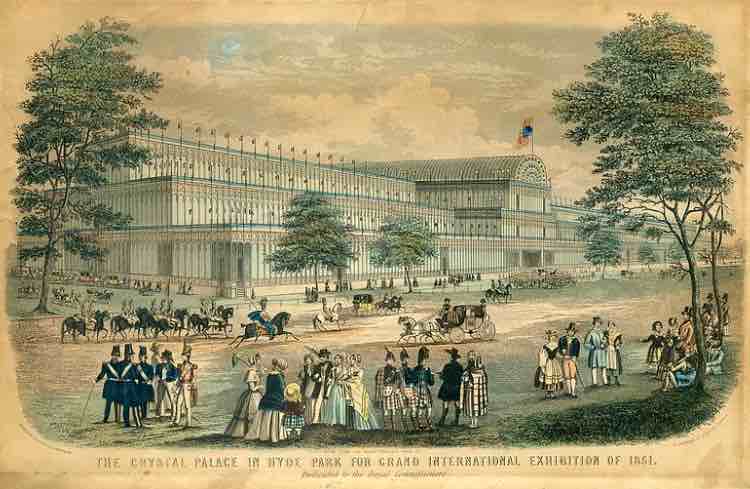
1851

The unflattering views on Chinese music expressed by Berlioz have been much cited. He may have been an iconoclast within his own culture, but it would be asking too much to expect his horizons to transcend the limited aesthetics of his day.

In The Cambridge companion to Ravel, Robert Orledge cites Berlioz’s comments on hearing Chinese musicians at the Great Exhibition of the Works of Industry of All Nations in London in 1851—only a few years after the Opium Wars:

The melody, which was altogether grotesque and atrocious, finished on the tonic, like our most undistinguished sentimental songs [!]; it never moved out of the original tonality or mode. […] Nevertheless, the ludicrous melody was quite discernible, and one could have written it down in case of real need [!].

And as Orledge comments, his conclusion, after listening to a wider range of exotic musicians, was that

Chinese and Indian music would be similar to ours if it existed [WTF]; but that, musically speaking, these nations are still plunged in a state of benighted barbarianism and childish ignorance where only a few vague and feeble instincts are dimly discernible; that, moreover, the Orientals call music what we should style cacophony, and that for them, as for Macbeth’s witches, foul is fair.

Another passage has been translated thus:

As for the Chinaman’s voice, I have never heard anything so strange in my life—hideous snorts, and groans, very much like the sounds dogs make, when they wake up, stretch their paws and yawn with an effort.

musos

More sympathetic is this report from the Illustrated London News:

A PLEASING addition has been made to the Chinese Collection, consisting of a Chinese Lady, named Pwan-ye-Koo, with small lotus-feet only 2½ inches in length, a Chinese professor of music, his two children (a boy and a girl), the femme de chambre of the lady, and an interpreter. The children are gay, lively, and intelligent, the lady herself agreeable and interesting, and the gentleman civil and obliging. A Chinese concert forms part of the entertainment: the lady Pwan-ye-Koo singing a Chinese air or two, accompanied by the professor, who likewise treats the public with an exhibition of his vocal powers. The group is one that has much to commend it: it is picturesque and peculiar, and presents an image in high relief of the native manners of a Chinese family. The conduct of the domestic blended the humble and the familiar in a significant manner; and there was an air of freedom, and a sense of mutual obligation manifested in the whole party, calculated to make a favourable impression on the spectator.

They even had an audience with Queen Victoria at her summer retreat of Osborne House on the Isle of Wight.

Still, if we read the full passage, Berlioz did at least make an effort. Further to A French letter, here’s some more language practice [sections between asterisks translated above]:

A propos de cantatrice, j’ai enfin satisfait le désir que j’avais d’entendre la fameuse Chinoise, the small-footed lady (la dame au petit pied), comme l’appelaient les affiches et les réclames anglaises. L’intérêt de cette audition était pour moi dans la question relative aux divisions de la gamme et à la tonalité des Chinois. Je voulais savoir si, comme tant de gens l’on dit et écrit, elles sont différentes des nôtres. Or, d’après l’expérience assez concluante que je viens de faire, selon moi, il n’en est rien. Voici ce que j’ai entendu. La famille chinoise, composée de deux femmes, deux hommes et deux enfans, était assise immobile sur un petit théâtre dans le salon de la Chinese house, à Albert gate. La séance s’est ouverte par une chanson en dix ou douze couplets, chantée par le maître de musique, avec accompagnement d’un petit instrument à quatre cordes de métal, du genre de nos guitares, et dont il jouait avec un bout de cuir ou de bois, remplaçant le bec de plumes dont on se sert en Europe pour attaquer les cordes de la mandoline. Le manche de l’instrument est divisé en compartimens, marqués par des sillets de plus en plus rapprochés au fur et à mesure qu’ils se rapprochent de la caisse sonore, absolument comme le manche de nos guitares. L’un des derniers sillets, par l’inhabileté du facteur, a été mal posé, et donne un son un peu trop haut, toujours comme sur nos guitares quand elles sont mal faites. Mais cette division n’en produit pas moins des résultats entièrement conformes à ceux de notre gamme. Quant à l’union du chant et de l’accompagnement, elle est de telle nature, qu’on en doit conclure que ce Chinois-là du moins n’a pas la plus légère idée de l’harmonie. *L’air (grotesque et abominable de tout point) finit sur la tonique, ainsi que la plus vulgaire de nos romances, et ne module pas, c’est-à-dire (car ce mot est généralement mal compris des personnes qui ne savent pas la musique) ne sort pas de la tonalité ni du mode indiqués dès le commencement.* L’accompagnement consiste en un dessin rhythmique assez vif et toujours le même, exécuté par la mandoline, et qui s’accorde fort peu ou pas du tout avec les notes de la voix. Le plus atroce de la chose, c’est que la jeune femme (la [small-]footed lady), pour accroître le charme de cet étrange concert, et sans tenir compte le moins du monde de ce que fait entendre son savant maître, s’obstine à gratter avec ses ongles les cordes d’un autre instrument de la même nature, mais au manche plus long, sans jouer quoi que ce soit de mélodieux ou d’harmonieux. Elle imite ainsi un enfant qui, placé dans un salon où l’on exécute un morceau de musique, s’amuserait à frapper à tort et à travers sur le clavier d’un piano sans en savoir jouer. C’est, en un mot, une chanson accompagnée d’un petit charivari instrumental. Pour la voix du chanteur, rien d’aussi étrange n’avait encore frappé mon oreille: *figurez-vous des notes nasales, gutturales, gémissantes, hideuses, que je comparerai, sans trop d’exagération, aux sons que laissent échapper les chiens quand, après un long sommeil, ils bâillent avec effort en étendant leurs membres.* Néanmoins, la burlesque mélodie était fort perceptible, et je porterai un jour du papier réglé chez les Chinois pour la noter et en enrichir votre album. Telle était la première partie du concert.

A la seconde, les rôles ont été intervertis ; la jeune femme a chanté, et son maître l’a accompagnée sur la flûte. Cette fois l’accompagnement ne produisait aucune discordance; la flûte suivait la voix à l’unisson tout simplement. Cette flûte, à peu près semblable à la nôtre, n’en diffère que par sa plus grande longueur, par son bout supérieur qui reste ouvert, et par l’embouchure qui se trouve percée à peu près vers le milieu du tube, au lieu d’être située, comme chez nous, vers le haut de l’instrument. Du reste, le son en est assez doux, passablement juste, c’est-à-dire passablement faux, et l’exécutant n’a rien fait entendre qui n’appartînt entièrement au système tonal et à la gamme que nous employons. La jeune femme est douée d’une voix céleste, si on la compare à celle de son maître. C’est un mezzo soprano, assez semblable par le timbre au contralto d’un jeune garçon dont l’âge approche de l’adolescence et dont la voix va muer. Elle chante assez bien, toujours comparativement. On croit entendre une de nos cuisinières de province chantant: «Pierre! mon ami Pierre», en lavant sa vaisselle. Sa mélodie, dont la tonalité est bien déterminée, je le répète, et ne contient ni quarts ni demi-quarts de ton, mais les plus simples de nos successions diatoniques, est un peu moins extravagante que la romance du chanteur. C’est tellement tricornu néanmoins, d’un rhythme si insaisissable par son étrangeté, qu’elle me donnera sans doute beaucoup de peine à la fixer exactement sur le papier pour vous en faire hommage. Mais j’y mettrai le temps, et, en profitant bien des leçons que me donnera le chien d’un boulanger voisin de ma demeure, je veux, à mon retour à Paris, vous régaler d’un concert chinois de premier ordre. Bien entendu que je ne prends point cette exhibition pour un exemple de l’état réel du chant dans l’Empire Céleste, malgré la qualité de la jeune femme, qualité des plus excellentes, à en croire l’orateur directeur de la troupe, parlant passablement l’anglais. Les dames de qualité de Canton ou de Pékin, qui se contentent de chanter chez elles et ne viennent point chez nous se montrer en public pour un shilling, doivent, je le suppose, être supérieures à celle-ci presque autant que Mme la comtesse Rossi est supérieure à nos Esmeralda de carrefours.

D’autant plus que la jeune lady n’est peut-être point si small-footed qu’elle veut bien le faire croire, et que son pied, marque distinctive des femmes des hautes classes, pourrait bien être un pied naturel, très plébéien, à en juger par le soin qu’elle mettait à n’en laisser voir que la pointe.

Mais je penche fort à regarder cette épreuve comme décisive en ce qui concerne la division de la gamme et le sentiment de la tonalité chez les Orientaux. Je croirai, seulement quand je l’aurai entendu, que des êtres humains puissent, sur une gamme divisée par quarts de ton, produire autre chose que des gémissemens dignes des concerts nocturnes des chats amoureux. Les Arabes y sont parvenus, au dire de quelques savans; ils ont pour cet art inqualifiable une théorie complète. Je parie que les savans qui ont écrit ces belles choses ne savent rien de notre musique, ou du moins n’en ont qu’un sentiment confus et peu développé. Que la théorie des Arabes existe, cela est fort possible, mais elle n’ôte rien à l’horreur de ce qu’ils font en la mettant en pratique.

La musique des Indiens de l’Orient doit fort peu différer de celle des Chinois, si l’on en juge par les instrumens envoyés par l’Inde à l’Exposition universelle de Londres. Cette collection se compose, 10 d’un grand nombre de mandolines à quatre et à trois cordes, quelques unes même n’en ont qu’une; leur manche est divisé par des sillets comme chez les Chinois; les unes sont de petite dimension, d’autres ont une longueur démesurée; 2d’une multitude de gros et de petits tambours en forme de tonnelets, et dont le son ressemble à celui qu’on produit en frappant avec les doigts sur la calotte d’un chapeau; 30 d’un instrument à vent à anche double, de l’espèce de nos hautbois; 40 de flûtes traversières exactement semblables à celles du musicien chinois; 50 d’une trompette énorme et grossièrement exécutée sur un patron qui n’offre avec celui des trompettes européennes que d’insignifiantes différences; 60 de plusieurs petits instrumens à archet, dont le son aigre et faible doit rappeler les petits violons de sapin qu’on fait chez nous pour les enfans; 70 d’une espèce de tympanon dont les cordes tendues sur une longue caisse paraissent devoir être frappées par des baguettes; 80 d’une petite harpe à dix ou douze cordes, assez semblables aux harpes thébaines dont les bas-reliefs égyptiens nous ont fait connaître la forme, et enfin d’une grande roue chargée de gongs ou tamtams de petites dimensions, dont le bruit, quand elle est mise en mouvement, a le même charme que celui des gros grelots attachés sur le cou et la tête des chevaux de routiers. Je conclus, pour finir, que *les Chinois et les Indiens auraient une musique semblable à la nôtre, s’ils en avaient une; mais qu’ils sont encore à cet égard plongés dans les ténèbres les plus profondes de la barbarie ou dans une ignorance enfantine où se décèlent à peine quelques vagues et impuissans instincts.*

Hee Sing

Detail: Hee Sing.

Also part of the Great Exhibition was a Chinese junk moored on the Thames—occasion for the curious case of the “fake Chinese mandarin” Hee Sing, who appears in a painting depicting the retinue of the royal family. In Berlioz’s Les soirées de l’orchestre (21st evening, including a variant of the above) he was even more underwhelmed by the soirées musicales et dansantes given onboard by the sailors:

Maintenant écoutez, messieurs, la description des soirées musicales et dansantes que donnent les matelots chinois sur la jonque qu’ils ont amenée dans la Tamise; et croyez-moi si vous le pouvez.

Ici, après le premier mouvement d’horreur dont on ne peut se défendre, l’hilarité vous gagne, et il faut rire, mais rire à se tordre, à en perdre le sens. J’ai vu les dames anglaises finir par tomber pâmées sur le pont du navire céleste ; telle est la force irrésistible de cet art oriental. L’orchestre se compose d’un grand tam-tam, d’un petit tam-tam, d’une paire de cymbales, d’une espèce de calotte de bois ou de grande sébile placée sur un trépied et que l’on frappe avec deux baguettes, d’un instrument à vent assez semblable à une noix de coco, dans lequel on souffle tout simplement, et qui fait : Hou ! hou ! en hurlant ; et enfin d’un violon chinois. Mais quel violon ! C’est un tube de gros bambou long de six pouces, dans lequel est planté une tige de bois très-mince et long d’un pied et demi à peu près, de manière à figurer assez bien un marteau creux dont le manche serait fiché près de la tête du maillet au lieu de l’être au milieu de sa masse. Deux fines cordes de soie sont tendues, n’importe comment, du bout supérieur du manche à la tête du maillet. Entre ces deux cordes, légèrement tordues l’une sur l’autre, passent les crins d’un fabuleux archet qui est ainsi forcé, quand on le pousse ou le tire, de faire vibrer les deux cordes à la fois [sic]. Ces deux cordes sont discordantes entre elles, et le son qui en résulte est affreux. Néanmoins, le Paganini chinois, avec un sérieux digne du succès qu’il obtient, tenant son instrument appuyé sur le genou, emploie les doigts de la main gauche sur le haut de la double corde à en varier les intonations, ainsi que cela se pratique pour jouer du violoncelle, mais sans observer toutefois aucune division relative aux tons, demi-tons, ou à quelque intervalle que ce soit. Il produit ainsi une série continue de grincements, de miaulements faibles, qui donnent l’idée des vagissements de l’enfant nouveau-né d’une goule et d’un vampire.

Dans les tutti, le charivari des tam-tams, des cymbales, du violon et de la noix de coco est plus ou moins furieux, selon que l’homme à la sébile (qui du reste ferait un excellent timbalier), accélère ou ralentit le roulement de ses baguettes sur la calotte de bois. Quelquefois même, à un signe de ce virtuose remplissant à la fois les fonctions de chef d’orchestre, de timbalier et de chanteur, l’orchestre s’arrête un instant, et, après un court silence, frappe bien d’aplomb un seul coup. Le violon seul vagit toujours. Le chant passe successivement du chef d’orchestre à l’un de ses musiciens, en forme de dialogue; ces deux hommes employant la voix de tête, entremêlée de quelques notes de la voix de poitrine ou plutôt de la voix d’estomac, semblent réciter quelque légende célèbre de leur pays. Peut-être chantent-ils un hymne à leur dieu Bouddah, d’ont la statue aux quatorze bras orne l’intérieur de la grand’chambre du navire.

Je n’essaierai pas de vous dépeindre ces cris de chacal, ces râles d’agonisant, ces gloussements de dindon, au milieu lesquels malgré mon extrême attention, il ne m’a été possible de découvrir que quatre notes appréciables (ré, mi, si, sol). Je dirai seulement qu’il faut reconnaître la supériorité de la small-footed Lady et de son maître de musique. Evidemment les chanteurs de la maison chinoise sont des artistes, et ceux de la jonque ne sont que des mauvais amateurs. Quant à la danse de ces hommes étranges, elle est digne de leur musique. Jamais d’aussi hideuses contorsions n’avaient frappé mes regards. On croit voir une troupe de diables se tordant, grimaçant, bondissant, au sifflement de tous les reptiles, au mugissement de tous les monstres, au fracas métallique de tous les tridents et de toutes les chaudières de l’enfer… On me persuadera difficilement que le peuple chinois ne soit pas fou…
[For a fine English version, see Berlioz, translated Barzun, Evenings with the orchestra (Chicago, 1956/1999 edition), pp.246–250.]

Here the Illustrated London News acquits itself no better:

At the evening performance the queer old craft is lighted up with festoons of coloured lamps—a sort of miniature [missing] hall, and in the midst stands an open orchestra, in which four or five instrumentalists (“barbarians,” not Chinese) prepare the ear for the extraordinary combination of sounds which is to follow. Nothing can exceed the gravity of the “celestials,” as they take their position in the midst of the assembly on the main-deck, and proceed to fright the ear with gong and drum, and cymbal and agonizing cat-gut: the leader beating time with a stake upon a sort of tin saucepan-lid supported on three legs. Then the vocalization! The extraordinary squeaking duet, half plaintive, half comic, between the said leader (who is a sort of Costa and Mario rolled into one) and a younger aspirant in the background—what can possibly exceed its harrowing and ludicrous effect? Nothing except that impromptu feline discourse which we sometimes hear on house-tops at the dead of night.

The concert being concluded amidst the breathless silence of an astonished auditory, the war demonstrations and feats of arms then commence and these are certainly no less extraordinary than what has gone before. The first set consists of a set of grotesque posturing, in which the performers disport themselves severely one after the other, each succeeding one striving to outdo the other in the wildness and extravagance of his gesture—flying and leaping round the deck, thrusting out the arms right and left, threatening, retreating, &c. the musicians all the time keep up a terrific clang.

Next come a series of somewhat similar performances with long poles or lances, this scene closing with a set-to between two performers, which we have endeavored to embody in our engraving. Swords are also introduced and brandished about in the same manner, which, if intended to give any idea of the military science of the Chinese, shows them to be very far behind any other known nation in the world in that respect. One young hero, in the course of his “war demonstrations,” afforded great amusement every now and then, particularly after some very startling efforts at cut and thrust, by throwing himself down, and turning a somersault over his shield. When we left, the “barbarian” orchestra was about to strike up again, and dancing, it was said, was about to commence, but we did not wait for it.

For a recent French recreation, see here. Indeed, both the family and the junk had already appeared for P.T. Barnum’s Chinese museum: see Krystyn R. Moon, Yellowface: creating the Chinese in American popular music and performance, 1850s–1920s (2005), pp.62–6. For another portrait of the family, see here.
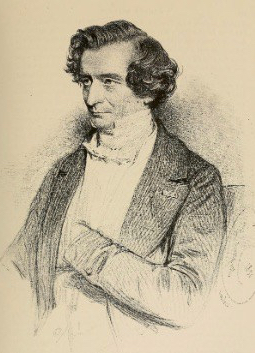
Berlioz 1851

Hector’s Napoleon impression always brought the house down.

Among composers, a broader view of musicking worldwide would have to wait for figures such as Debussy and Bartók. Still, even today views like those of Berlioz remain far from obsolete. So much for music as a universal language.

* * *

Ironically, in reviews by Berlioz’s contemporaries of his own new works he was hoist on his own petard—using rather similar vocabulary, as if taking revenge on behalf of the Chinese. Here are just a few among an embarras de richesse, cited in Slominsky‘s wonderful Lexicon of musical invective, pp.57–61:

His rare melodies are deprived of meter and rhythm; and his harmony, a bizare assemblage of sounds, not easily blended, does not always merit the name. I believe that what M. Berlioz writes does not belong to the art which I cusomarily regard as music, and I have the complete certainty that he lacks the prerequisites of this art.

Berlioz, musically speaking, is a lunatic; a classical composer only in Paris, the great city of quacks. His music is simply and undisguisedly nonsense.

M. Berlioz is utterly incapable of producing a complete phrase of any kind. When, on rare occasions, some glimpse of a tiune makes its appearance, it is cut off at the edges and twisted about in so unusual and unnatural a fashion as to give one the idea of a mangled and mutilated body, rather than a thing of fair proportions. Moreover, the little tune that seems to exist in M. Berlioz is of so decidely vulgar a character as to exclude the possibility of our supposing him possessed of a shadow of feeling.

I can compare Le Carneval romain by Berlioz to nothing but the caperings and gibberings of a big baboon, over-excited by a dose of alcoholic stimulus.

Dragging the icon to the trash, eh. For astounding Saint-Saëns on the violon chinois, click here.

See also Berlioz: a love scene. For Berlioz’s prophetic word-painting of a 1960s’ curry-house menu, cliquez ici; and for his evocation of furniture removal, ici. For Mahler’s vision of the mystic East, see here; and for Cantonese music in post-war London, here.

More heirs to Keats and Chapman

koala

After Keats and Chapman (“F. Huehl and his Monet are soon parted”) and some fine successors here and here, recently I’ve also spotted online:

A Tale of two cities was originally serialised in two Midlands local papers.

It was the Bicester Times, it was the Worcester Times.*

That one may go back to Frank Muir and Denis Norden in My word!. This is harder to date:

Why did the anarchist philosopher Pierre-Joseph Proudhon only drink herbal tea?

Because he believed that proper tea is theft.

Which leads us to this story:

A tourist visiting Liverpool goes down the pub for a pint. The barman notices he’s underwhelmed by the beer, so he tells him,

“Y’ know, mate, you really should try our most distinctive local bevvy.”

“Oh really—so what’s that then?”

“Well, there’s this tea made from koala bears, like—used to be dead popular round ‘ere, it did! I only know one place you can find it These Days,** though.”

The barman directs him to a tiny hovel down by the riverbank. So he knocks and goes in. Inside he makes out an old crone stirring a boiling cauldron.

“Um, hello,” he asks her, “I’m told your tea is highly unusual—might I possibly have a tasting?”

Cackling, she starts to ladle him out a helping of the steaming broth. As he takes a look in the cauldron, he sees it’s full of hair, sinews, and an eyeball floating at the top.

“Um, do you have a strainer?”

Offended, she retorts haughtily,

“I’ll have you know, The Koala Tea of Mersey*** is not Strained!”

For more Shakespeare, see here; for a host of Chinese puns, here.


* If any laowai or non-nationals find this difficult, then try Alan Watts’s limerick in n.2 here.

** “These Days”: to be enunciated in such as way as to allude to “Just Can’t Get the Staff, Nowadays”.

*** Most online versions use the (notional) Australian town of Mercy, but this one (which I heard as early as the 1970s) is more surreal.


A justly neglected composer

Somewhat less well known than Haydn and Beethoven is a composer immortalised in yet another Monty Python classic—click here.

The final “of Ulm” is brilliantly chosen, the place-name both niche and monosyllabic (unlike “monosyllabic”).

Good to see Johann rescued from the obscurity that he so richly deserves (contrast Vernon Handley). His absence from the New Grove dictionary of music and musicians urgently needs correcting.

His name is reminiscent of a ritual title for a Daoist priest—like that of Zhang Daoling, handed down in the Li family (my book, pp.11–12; film, from 2.48):

IMG_1031 - Version 2

Ancestral Master,
Heavenly Worthy of the Grand Ritual
who Supports the Teachings of the Three Heavens,
Assists the Numinous,
and Embodies the Way.

Actually, that’s quite a succinct one: appellations to the Daoist gods, recited (mercifully fast, by contrast with the slow hymns) in the course of rituals, are lengthy (see.e.g. here), and ritual titles still handed down today to household Daoist priests in south China upon their ordination may be a mouthful too.

John Cleese’s interview technique is perhaps a less probing model for the fieldworker than that of Peter Cook.

All this long before Stewart Lee made a whole art form out of trying the audience’s patience.

For swing voters

Sedaris

The great David Sedaris (now with his own tag in the sidebar) wrote this piece as early as 2008 in the run-up to the US election, but has recycled it since—and never has it been more apposite than now:

The flight attendant comes down the aisle with her food cart and, eventually, parks it beside my seat. “Can I interest you in the chicken?” she asks. “Or would you prefer the platter of shit with bits of broken glass in it?”

To be undecided in this election is to pause for a moment and then ask how the chicken is cooked.


See here for an election slogan from Ukraine…


In search of Eastern wisdom

or curry?

Some years ago—sorry, that should read “More Years Ago than I Care to Remember”—I found myself on the courtyard outside SOAS at midday, where whoM [pedant—Ed.] should I bump into but the erudite Tim Barrett—Emeritus* Professor of East Asian History, no less. [1]

Though we had known each other at Cambridge Even More Years Ago than I etc., we hadn’t met up for some time. So it was a welcome opportunity to swap notes, updating myself on Tim’s encyclopaedic knowledge of Tang studies and imperial Chinese religion while outlining my more grubby work in the field—disciplines that don’t always correlate clearly.

While we were immersed in our arcane chat, a queue began to form behind me—as if for the services of Johnny the shoe shine boy. Fortuitously, every day at lunchtime impoverished students line up for the free vegetarian curries handed out by Hare Krishna acolytes, often well before the food trolley arrives. Looking up, we found that the queue was growing rapidly—they must have mistaken us for down-and-out early birds waiting to cadge a square meal.

This didn’t occur to me at the time—rather, I was impressed that Tim’s wisdom on the Wonders of the Mystic East was in such great demand.

HS
He will appreciate this link to the popular Tang poetic genre On visiting a hermit and not finding him in. Indeed, in plain clothes he does bear a passing resemblance to Hanshan (cf. Li Manshan and Andy Capp). He has been dubbed “Bodhisattva of the Plastic Bag”—though more recent ecological concerns have tended to make him favour cloth or even hemp.

See also A Tang mélange.


* Unlike Peter Cooke, I’ve Got the Latin, so I note smugly that emeritus seems to mean “without merit” (cf. this appraisal of a recording of medieval music). Continuing the religious theme, here’s Catch-22:

“Chaplain, I once studied Latin. I think it’s only fair to warn you of that before I ask my next question. Doesn’t the word Anabaptist simply mean that you’re not a baptist?”

[1] Apart from Tim’s voluminous published ouevre, he and Frances Wood make a mellifluous Brian and Stewie double-act in the China coverage of Melvyn Bragg’s BBC Radio 4 series In our time. By 2023 a charming series of chats appeared on YouTube (1, 2, 3), suggesting his broad vision.

Bunnios

mandolin

With the character of Bunny Warren in Captain Corelli’s mandolin (1994), Louis de Bernières brilliantly echoes the experiences of the bewildered young sinologist arriving in China, who having spent many years reading classical texts with their arcane zhihuzheye 之乎者也 particles, has entirely overlooked the modern language, like van Gulik—or indeed (from the sublime to the ridiculous) me.

De Bernières hits upon an ingenious transliteration device. In the mountains of Nazi-occupied Kefalonia, Alekos the shepherd rescues a British paratrooper who has floated down from the skies beneath a silken mushroom. Taking “it” for a very red-faced angel,

The trouble was that he could not make head or tail of what it was saying. He did recognize some of the words, but the rhythm of angel-speech was quite foreign to him, the words did not seem to fit together, and it spoke as if it had a pebble in its throat and a bee up its nose. The angel was obviously very annoyed and frustrated at not being understood, and it made Alekos feel fearful and guilty even though it was not his fault. They had to resort to communicating by means of signs and facial expressions.

Alekos realizes that the only person capable of understanding angel-speech will be Dr Iannis. After a long and stealthy trek they arrive at his house at dead of night:

The angel smiled and held out its hand, “Bunnios,” he said, “I cleped am.”

The doctor shook the proffered hand through the window, and said, “Dr Iannis.”

“Sire, of youre gentilesse, by the leve of yow wol I speke in pryvetee of certeyn thyng.”

The doctor knitted his brows in bewilderment, “What?”

His daughter Pelagia comes in to find

a man dressed in the tasselled cap, the white kilt and hose, the embroidered waistcoat, and the slippers with pompoms that was the festival dress of some people on the mainland. It was very grubby, but unmistakably new. She looked up at him in amazement, and put her hand over her mouth.

Wide-eyed, she demanded of her father, “Who’s this?”

“Who’s this?” repeated the doctor. “How am I supposed to know? Alekos said it was an angel and then ran off. He says he’s called Bunnios, and he speaks Greek like a Spanish cow.”

The outlandish man bowed politely and shook Pelagia’s hand. She let it go limp in his, and could not conceal her astonishment. He smiled charmingly and said, “I preise wel thy fresshe beautee and age tendre, I trow.”

“I am Pelagia,” she said, and then she asked her father, “What is he speaking? It’s not Katharevousa.”

“Of course it isn’t. And it certainly isn’t Romaic.”

“Do you think it’s Bulgarian or Turkish or something?”

“Greek of th’olde dayes,” said the man, adding, “Pericles. Demosthenes. Homer.”

“Ancient Greek?” exclaimed Pelagia disbelievingly. She stepped back for fear of being in the company of a ghost.
[…]
The doctor tapped his forefinger to his forehead, and looked up triumphantly.

“English?” he asked.

“Engelonde,” agreed the man. “Natheless, I prithee, by thy trouthe…”

“Of course we won’t tell anyone. Please may we speak English? Your pronunciation is truly terrible. It hurts my head, Pelagia, bring a glass of water and some spoon sweets.”

The Englishman smiled with what was obviously an enormous relief; it had been an awful burden to be speaking the finest public school Greek, and not be understood. He had been told that he was the nearest thing to a real Graecophone that could be found under the circumstances, and he knew perfectly well that modern Greek was not quite the same as the Greek of Eton, but he had had no idea that he would be found quite so incomprehensible. It was also very clear that someone in Intelligence had contrived a completely aberrant notion of what was worn in Cephallonia.

As the novel progresses, Bunny’s communication skills improve. As to mine in China (e.g. here and here), there’s always room for further progress… For a handy avowal of classical erudition, see here. And for the influence of the novel on life in Kefalonia, see

  • M. Crang and P. Travlou (2009) “The island that was not there: producing Corelli’s island, staging Kefalonia”, in Cultures of mass tourism: doing the Mediterranean in the age of banal mobilities (Ashgate, 2009).


Accentuation

queen

Further to intonation, this innocent sentence, subject of analysis from several linguists, illustrates the importance of stress in English:

The Queen said she was glad to be in Manchester, and then the Duke made a joke.

To spell it out, if the two components are unrelated, then the stress would be on joke; but more entertaingly, if you place the stress on Duke, then you imply that the Queen was joking when she said she was glad to be in Manchester, with the Duke following up with a quip of his own.


Modifying disfluency

Marilyn
Not such a gratuitous illustration: one of the Great Stammerers,
as well as a worthy pretext for a link to female jazzers.

I’ve already featured stammering quite often on this blog (see tag). Rather than expecting you to listen to this in the form of a six-hour podcast, these notes may serve partly as a reminder for myself, for others wrestling with vocal fluency, and indeed for anyone who knows anyone who is. But they may be of wider interest too: effective communication isn’t merely about disorders commonly identified as “stammering”.

We all labour under various habitual ailments through life, but on reflection the constant struggle with fluency is still an extraordinary experience. “Unaccustomed as I am to public speaking…”, I spent the first forty years of my life trying at all costs to avoid stammering—indeed, to speak in public at all. And the more one struggles to avoid it, the harder it is to modify:

stammering is what we do when we try to avoid stammering.

It’s largely thanks to China that I have been gradually and belatedly chipping away at the iceberg of fear. I’ve even grown used to presenting the Li family Daoists and the Zhihua temple group on their foreign tours.

It’s a good start to confront the event itself, but monitoring one’s speech as one goes along is another challenge: I rarely catch myself in time as I use all the habitual fruitless little avoidance techniques—backtracking, trying to get a run-up (like crashing through a hurdle), and so on. In the end, it just about works, but there’s always room for improvement: a gamut of physical and conceptual techniques is available.

Theory
Among the substantial literature, from the days when I was doing occasional group therapy courses (and it’s not a one-off fix), I remain most impressed by

  • Malcolm Fraser, Self-therapy for the stutterer (1987, 11th edition 2010!), available here,

which I heartedly recommend, even if I make only sporadic progress in implementing its suggestions. I note that it has been translated into German, French, Spanish, Japanese, Lithuanian, Finnish, Slovakian, Danish, Russian, Czech, Zulu, Bosnian, Bulgarian, Norwegian, Arabic, Polish, Thai, Portuguese—and Chinese (5th edition here; for less helpful techniques reported in the China Daily, see here; and for my encounter with a stammering shawm player, here). That still leaves plenty of worldwide stammerers in need of the book’s guidance.

Like Life, speech therapy goes through fads. We can dismiss short-term solutions like sing-song inflection (indeed, singing), metronomic speech, finger-tapping, foot-stamping. Even prolonged (slurred, or perhaps legato) speech, while an important part of one’s toolbox, is only a temporary relief. We need a wide range of approaches at our disposal, without depending on particular crutches.

Of the major therapists (mostly sufferers themselves), great pioneers were Charles van Riper and Joseph Sheehan. So here’s yet another iceberg: we need to reveal all the accumulated covert behaviour that makes up our stammering. Therapy pays as much attention to psychological as to physical techniques.The basic aim is eliminate all such behaviour and avoidances, at various levels:

  • To stop avoiding situations themselves. Of course, some situations are more stressful than others. At one end of the continuum would be spending time with a small group of old friends; at the other, delivering a worldwide live TV broadcast on an unprepared topic that one knows absolutely nothing about. Naked.
  • To stop avoiding particular words (staggeringly common!): to catch ourselves substituting words, and stop it!
  • And then, when stuck on a word, or anticipating a block, we mustn’t fear/avoid/postpone the sound of stammering.

Our goal shouldn’t be “fluency”, and certainly not to “avoid stammering”. Strangely, in solitary preparation at home, where blocks don’t naturally occur, it’s about reminding myself what they feel like when they do—manufacturing, monitoring, and then modifying them.

Conversely, during and after a presentation (or indeed just routine conversation), often I don’t experience fluency, I’m merely relieved at not stammering too badly. But to build on fluency we need that sensation.

stammering stan

Please excuse me for featuring this cartoon yet again, but it says it all.

  • pausing: well-meaning encouragement to relax, take a deep breath, and so on, are of little avail when one’s efforts aren’t based on thorough preparation, So—instead of

rushingheadlongtogetasmanywordsoutaspossiblebeforemeetinganuncontrollable

B—

internalize the experience of taking pauses (breathing!!!) while you

  • keep moving forward—a major step to replace backtracking, postponing, or trying to get a run-up;
  • monitoring: finding out what you do when you stammer, including extraneous bodily movements and eye contact; superfluous and counter-productive filler words;
  • desensitizing and “easy/voluntary stammering” (stammering on purpose on non-feared words, in a variety of ways!): this can be an amazing sensation. See also here.

  • modifying blocks: easy onsets, light contacts, extended sounds.

Amidst the whole blinkered panic that besets us, humour can play a useful role, as in my stammering games, or Gepopo.

Putting it into practice
Thing is, modifying habitual addictive behaviour needs a lot of work: an investment of time and energy. One tends to have other things to do, and accept one’s wretched fate.
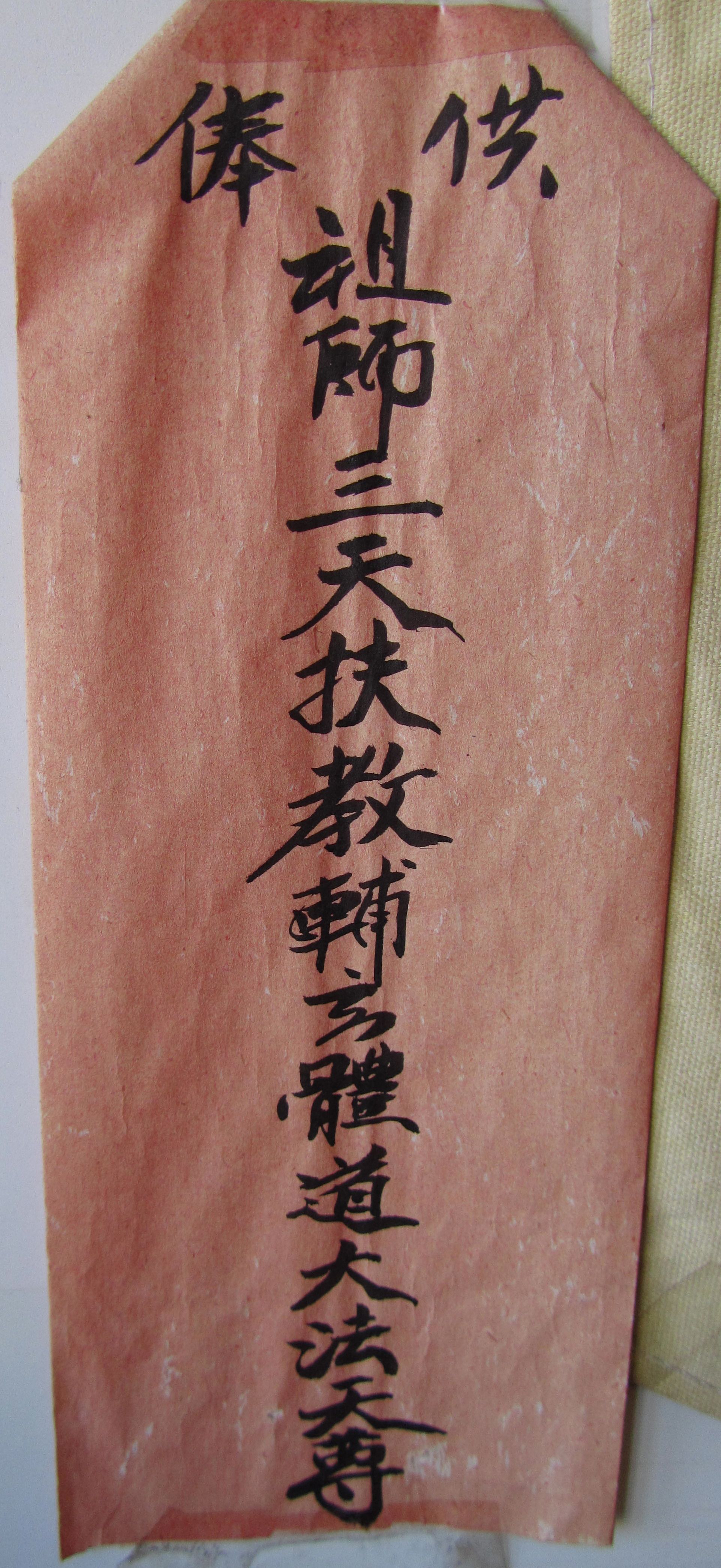
“It’s easy for you to say that…”

We should aim to enter speaking situations with forethought: to bear goals in mind. We’re advised to prepare before making a phone call, or asking for things in shops, or even talking with friends; again, the goal can be modest, like remembering to pause, or using a deliberate (easy) stammer at least once in such situations…

In private practice, extreme slowed speech is a great feeling; after all, public speakers vary in their speed of delivery, and some of the most effective are those who speak remarkably slowly (see below). But both this and voluntary stammering may be tough to practice in the heat of the social moment, as we flounder around helplessly, lurching from one crisis to another.

Conversely, in the company of the Li family Daoists I generally rise to the occasion. Whereas in London, not only do I rarely talk in public but I hardly ever talk to anyone at all, at my happy meetings with people in Yanggao, and on tour with the band, I’m propelled into constant sociability, often in the company of a large group; and then I manage public speaking with quite minor preparation. It’s so much easier when I’m on a roll. I love Li Manshan’s comment:

“Wotcha doing when you get back to Beijing?”, he goes.
“I’m going to be giving lectures (jiangke)…”
His local dialect, or his lively mind, instantly converts this to jieka “stammering”:
“Old Jonesy, you don’t have to go back to Beijing to stammer—you can just keep on stammering away here!”

Still, simply talking regularly isn’t a panacea if one merely reinforces negative behaviour. And even after relatively successful presentations in Beijing and the British Museum this year, I was taken aback by my disfluency at a more recent London appearance—a film screening that I had already successfully negotiated many times. With this reminder that I still constantly need to put in the work, I prepared more thoroughly for my latest presentation, and it went better again. I still wasn’t exactly monitoring and modifying, but at least I wasn’t avoiding blocks; I got through it, somehow—and that’s progress.

It can be tough for the audience too: I sometimes put in a little aside to help defuse mutual embarrassment, like “You may also like to entertain yourselves by trying to work out what goes wrong when I encounter a helpless b-b-block!”. Intriguingly, this sentence tends to emerge rather fluently—just to show how it’s all about being open.

Anyway, by now, with positive experiences to build on at last, I think I can just about do it; but it requires constant vigilance. I need to keep hearing myself stammering, which may involve manufacturing blocks in preparation, and then getting into the habit of modifying them.

* * *

To be fair, the bar for academic presentation is rather low. More often than not, the goal here seems to be merely to fulfill the embarrassing task of speaking at all, rather than the noble pure aloof form of silent text—an audience being no more desirable than in the toilet. One often witnesses mumbled delivery, avoidance of eye contact or any physical attributes that might suggest human communication, as if engaging the audience, even making one’s topic sound interesting, is some demeaning concession to populism. Stammerers probably shouldn’t find this a consolation.

Whether or not we’re afffflicted with a recognized bona fide imp-p-pediment, effective public speaking is much to be appreciated. While I’m deeply envious of fluent communicators, they too achieve their results with practice—like Robert Peston, whose random hesitant delivery, with its arbitrary accents and intonation, is brilliantly compelling, even while suggesting someone taking the p-p-p-mickey out of
de-li-ber-ate       sssslo-o-owed    speeeeech.

Note the nice fortuitous mention of the iceberg… For Peston’s (real) cameo with the great Philomena Cunk, see here (episode 5, from 13.04).

Effective therapy is based on getting the problem out in the open, and even posts like this are a tiny part of that.

For brilliant help in the UK, there are the British Stammering Association and the City Lit. But it’s up to us!


Areas of expertise

Note: not quite to scale…

A true story to illustrate the parochial limitations of academic views of musical cultures of the world:

Way back in the days when ethnomusicology was Neither Profitable Nor Popular, a bright young expert on Korean music went to interview for a job at the Music Department of an English university. Besides his Korean speciality, he realized he should probably offer a wider course on East Asian music, to include China and Japan—a mere 3,000 years’ continuously-documented history of local folk, popular, and elite traditions.

The board politely commented that this was rather too limited, so he proposed he could do a yet broader course, on Asian music—further including south, southeast, and central Asia. Glancing at the map, these countries look quite small, don’t they—how hard can it be?

When they still felt this was too narrow, my friend asked, bemused:
“So what kind of courses have you been offering, then?”

The chair of the board eagerly replied:
“Well, last year we ran a very successful course on 19th-century English Art Song…”

For a similar debate at the New Grove dictionary of music and musicians, see here. I often observe the diverse soundscapes within China alone, as here. For more interview stories, click here.

King Kong: temple Chinglish

The intrepid explorations of Hannibal Taubes continue to bear fruit.

Apart from his amazing images of village temple murals around Hebei and Shanxi, he has recently found these helpful Chinglish translations at the Chongfu si temple in Shuozhou county—which, incidentally, is one of the most fruitful sites for household Daoist ritual in north Shanxi.

Here’s the Amitābha hall (Mituo dian), arcanely rendered as “Indemnity Tuo Temple” (“I’m like, WTF?”)—blowing plastic and threat paternity (has clearly experienced vicissitudes of life):

indemnity tuo

It’s also gratifying to learn that between 1987 and 1991 the country allocate huge funds to a landing gear overhaul—presumably to help the deities descend after riding the clouds 駕雲 (for their earlier modes of transport, see here).

And a fine interpretation of the deity Jin’gang (Vajracchedikā) in his local reincarnation as King Kong:*

King Kong

The four kings are cool, but I have no idea where the “three with disabilities” came from.

In the Manjusri hall [Gosh, jolly good show! It’s all about comic timing], along with yet more plastic, we find the splendid Boulez Lichtung (in niche homage to Stockhausen’s Licht and Stimmung?):

Wenshu tang

Hats off to this budding comedian on the local temple circuit.

* * *

More disturbingly, here’s a poster advertising state intrusion in an inauguration ritual at the newly refurbished Sanhuang miao temple in nearby Hunyuan county:

kaiguang

I’d like to know which Daoist group took part (that of Jiao Lizhong, I surmise), and what ritual segments they performed—unsurprisingly, details not found on the poster.

Anyway, as Hannibal notes, with the core of the event formed by not one, not two, but three speeches from the leadership, I think we can all agree that under the resolute guidance of Uncle Xi‘s New Epoch Socialist Thought, Daoist ritual will certainly attain a high level of development. Now that’s what I call ritual redundancy. Whoever said chanting scriptures was boring?

While Party involvement in the rituals of larger official temples is common, such encroachment into local ritual practice is (so far) rare; but as usual, everyone is probably just going through the motions—like under Maoism, when the bard might perform a token new section before the traditional story that peasants actually wanted. Keep calm and carry on.


*I heard a story that since the Danish for “king” is kong, King Kong was translated as Kong King, but disappointingly it turns out to be apocryphal. For a fractious yet melodious King Kong headline, see here.


With thanks to Hannibal


And I’m like

quotes

Always keen to appreciate yoofspeak, I learn from reading this post from Stan Carey on the “quotative like”—

“And I’m like…”

This is to be distinguished from the impersonal use of “like”, of which my favourite instance is the Californian bather in difficulty:

“Like, HELP!”

and also from the ludic, rhetorical “What am I like?!” (often accompanied by a LOL), which is also harmless ironic fun.

As Carey observes,

Often, “I’m like” isn’t followed by a quotation at all, but sets up a miniature performance of facial expression, body language, attitude.

Another classic instance of this would be

“And I’m like, hello?”

—which is further enhanced by the ascending cadence (sic), of whose more general use I’m not like always so tolerant???

Carey again:

With quotative like we can do more than simply report speech: we may convey an interaction with expansive social and performative detail.

And it takes on a new life online:

Offline we might say I’m like and make a caricatured facial expression; online, we use images instead to communicate those staged reactions. These funny, often self-deprecating tweets use instantly interpretable images to substitute for (and expand upon) those physical gestures, expressions, and body language that accompany ordinary speech but are difficult or impossible to replicate online.
[…]
Quotative like can set up a whole miniature drama, with visual content contributing to a richer vocabulary than words alone could license. Online and off, used with images or micro-performances, quotative like is not a lazy crutch of semi-literate teens but a handy and highly functional addition to our lexicon—and to our paralinguistic repertoire. No wonder it has caught on.

Carey cites Steven Poole, taking Christopher Hitchens to task for a shallow denigration of quotative like, since

he was like and he said do not actually mean the same thing; and Hitchens is like, I do not approve of this youthspeak that I have not made sufficient efforts to understand?

He also adduces further fine analyses online, like (sic) languagelog, and this weighty survey.

As you can see from Carey’s post, and the comments there, the internet is like awash with discussion—I’m like WOW! here’s a more recent Guardian article.

I remember being bemused the first time I heard a younger friend using “And I’m like…” in the mid-90s. Unlike “YAY!”, somehow I haven’t yet managed to incorporate it into my own conversation.

For another drôle parallel text, see here; for trends in Chinese, here.

Creative tribulations

I don’t know what you see in that piano…

Further to Monty Python’s take on speech impediments, the process of artistic inspiration is not always smooth:

I’ve provided the subtitled version to allow us to practise our Spanish (cf. the Greek subtitles for Shoeshine Johnny). See also A Mozart medley, and Beethoven’s melodic gift—yeah right.

The process of creativity is constantly mediated by—oops, better go, the chambermaid‘s just arrived.
Among many Monty Python clips on here, I think of the Sartre sketch, and the brilliant Away from it all. And for another “hideous encounter with domestic necessity”, do read Compton Mackenzie meets Henry James!

Pontius Pilate, and the mad jailers

pilate

Hot on the vertiginous goose-stepping heels of Gepopo

In my series on stammering I’ve already covered Michael Palin’s authentic depiction in A fish called Wanda.

But he was already on the case of various types of imp-p-pediment with Monty P-Python, as in the iconic Pontius Pilate scene (taking the pith) in The life of Brian:

Michael Palin also does a great turn as the benign schoolmaster:

Returning to s-s-stammering, still more disturbing are the cameos from the mad jailers (this time played by Terry Gilliam and Eric Idle)—hideously well-observed, right down to the stamp of the foot to force the word out. In the first scene here, they taunt the ever-well-meaning Palin; and the second (from 2.07) is the coup de grace, with the jailers nonchalantly reverting to fluency once alone together—reminiscent of Larson’s cows:

Some stammerers may find that tough going, but I’d suggest it’s all part of chipping away at the iceberg of fear.

One of the benefits of group speech therapy sessions, however excruciating, is to watch one’s disfluent speech played back on video, so as to observe all the ways in which we sabotage the whole vocal apparatus—extreme tension of the lips and throat, holding the breath, futile movements of eyes, hands, and body, and so on. Disfluency takes many forms. Sufferers are often so trapped in desperate attempts to avoid stammering, and their audiences so trapped in embarrassment, that neither may have a clear idea of what exactly it is that is preventing them from uttering the word. The crucial first stage is monitoring.

And a further technique is for the sufferer to imitate such features deliberately—choosing a consonant on which to tense the mouth and lips, repeating it quickly or slowly with varying degrees of tension, even reproducing the way we backtrack and then start over, deciding how many repetititititions to do. Varying the severity of the block like this can create the precious experience of having control over one’s speech for a change. And then (maybe) one can insert “easy stammers”, and if not actually refrain from stammering, at least be aware of some options.

It’s easy for you to say that, SSSteve…

Anyway, far beyond its niche exploration of speech impediments, The life of Brian is brilliant! More insights, on the uncritical veneration of sages, here.

Gepopo: pa-pa-pa-panic

Gepopo 2

Speaking (sic) as a stammerer, I’m always on the lookout for coverage of speech imp-p-pediments (see e.g. We have ways of making you talkStammering gamesPontius Pilate, and the mad jailers; Lost for words; and for more stammering songs, see here).

So in György Ligeti‘s wacky, grotesque, absurdist opera Le Grand Macabre (see e.g. this article by Tom Service) I note the character of Gepopo, whose extreme vocal irregularities occupy a special place in the spectrum of communication issues.

The astounding Barbara Hannigan introduces the role she has made her own:

The character Gepopo, the chief of the secret police of Brueghelland, approaches Prince Go-Go to warn him and the people of Brueghelland that intelligence has learned of a huge comet heading through space towards them which will destroy their planet. Unfortunately, Gepopo is paralyzed with fear and paranoid hysteria, so his almost unintelligible, coded warning is not easily understood by Prince Go-Go, who, mainly interested in a hearty meal, drives Gepopo to further convulsions of highflying vocal panic as the piece draws to a anxiety-ridden finale.

Gepopo

Shades of the Pearl and Dean theme tune? So far this passage has not found favour as an in-flight announcement (cf. The perils of the tannoy, and Putana da seatbeltz; for airline acronyms, see here). But I digress…

Psychotic, deranged, Gepopo is hardly an advertisement for easy stammering—no more to be recommended as speech therapy than Rossini’s “stupefaction ensembles”. BTW, reasons for the far higher ratio of male to female stammerers are still not well understood.

Here’s Barbara Hannigan in an, um, “orthodox” stage version:

Gepopo’s three arias (“Pssst! … Shsht! … Cocococo!“, “Aah! … Secret cipher!“, and “Kukuriku! … He’s coming!“) are also performed as a cycle arranged by Elgar Howarth for the concert stage as Mysteries of the macabre—here conducted (suitably) by S-S-S-Simon:

Dazzling as it is, I’m not sure it’s exactly PC to distract the audience from Gepopo’s demented sadism with a fantasy schoolgirl uniform—perhaps the transgressive, meretricious device suits Ligeti’s concept (discuss…). We might also compare this version:

Feminist scholars have unpacked gender roles in music—including Berg’s Lulu, closest to Hannigan’s heart (see here). Such an approach could be instructive with Gepopo too.


With thanks to Rowan—
whose own vocals, while not so ambitious,
are “less irritating than Glenn Gould”

(The Feuchtwang Variations, n.3).


The art of the miniature

Tom and Jerry

By way of supplementing my playlist of great songs with a little series on great theme-tunes (below):

Tom Service’s BBC Radio 3 series The listening service is always stimulating—like Susan McClary, he breaks down boundaries, as here.

This episode [sic] on Brevity, with a playlist of miniature gems encompassing Bach, Beethoven, Chopin, Satie, Webern, Boulez, Zorn, Napalm Death, Bartók, Kurtag, and Ligeti, is full of fine observation—under the headings of absurdity, immediacy, density, violence, and eternity.

Irrespective of genre, such pieces are microcosms, crafted with a range of expression and intensity—akin to haiku (see under Some posts on Japanese culture) or netsuke.

Also among the fleeting exhibits is the great Carl Stalling, composer of classic soundtracks for Warner Brothers cartoons (these playlists should work if you click on YouTube at the bottom right of the window):

Not forgetting Scott Bradley, of Tom and Jerry fame:

Not least, this is about taking seriously all kinds of musicking throughout human societies, including WAM and popular music.

So here are some thoughts on great theme-tunes:


A playlist of songs

Apart from the mainly-Chinese playlist in the sidebar (commentary here), below are some links to an eclectic selection of All-time Great Songs* on this blog. Besides the songs, the posts are worth reading too—Trust Me, I’m a Doctor.

* Of course, varied as this selection is (à la McClary; see also here, and here), it isn’t so eclectic as to include Albanian funeral laments, Sardinian tenores, flamenco deep song,  Indian dhrupad, Inuit throat-singing, Umm Kulthum, the namthar arias of Tibetan opera, or Aboriginal dream songs… (see also Voices of the world). But I can’t resist including

And I can’t start adding songs without words, but we just have to include the divine Clara Rockmore’s Vocalise on theremin:

For two celebratory playlists, see Dancing in the streets!!! and A playlist for Emma and Leylah.

For a similarly diverse playlist of trumpeters, see here (indeed, trumpet has its own tag); and for some feminist lists, here (with bonus tracks including Sheridan’s Smith’s amazing cover of Anyone who had a heart) and here.

Musical self-defence

viola

Another orchestral story from 1970s’ London, not so much viola jokes and maestro-baiting as self-defence.

A senior conductor is rehearsing his own chamber orchestra—both have seen better days. There’s a tricky passage for the violas, so he gets the section to play it together without the rest of the band, but it’s still not sounding right.

Opting for the bold step of getting them to play it individually—a demand very much frowned upon—he eyeballs a trusty old player who’s been sitting innocuously at the back of the violas minding his own business since the dawn of time, and asks him imperiously,

“You, Norman—can you play this passage for me?”

Norman looks back at him and remarks dryly,

“Harry, if I could play this passage, I wouldn’t be sitting here in this orchestra…”

I can now divulge that this was the very same conductor who had the celebrated exchange with the timpani player. For a wealth of related stories, click here.

A fine riposte

Complementing Stewart Lee’s classic demolition of xenophobia (also a meditation on nothingness!), this exchange (pointed out by @SabrinaMahfouz) also deserves a wide audience:

BeOfgxFIMAABJss

Among the endless idiocies of the horrifying Orange Baby was this, in February 2024:

“We have languages coming into our country … they have languages that nobody in this country has ever heard of. It’s a horrible thing” *

—another comment that might have been more appropriate from the lips of Native Americans confronted by early waves of invaders “settlers”.

This clip is so convincing that its sarcasm eludes some viewers (“My ancestors stole that land fair and square—and if these Native Americans don’t like it, they can go back to where they came from”):

For Tang-dynasty xenophobia, see They come over ‘ere… For Navajo ceremonial and musical culture, click here, part of a series.


* His own language being largely incomprehensible, alternative transcriptions have been proposed:

cause everybody I speak to says they’re horrible, there’s nobody can explain to me how
allowing millions of people from places unknown, from countries unknown, who don’t speak languages, we have languages coming into our country, we have nobody that even speaks those languages. They’re—they’re truly foreign languages, nobody speaks them.

Reaching a crescendo, or not

Mahler 2 crescendo

Mahler 2: crescendo leading to the shattering climax of the first movement!

I get blank looks whenever I explode at the phrase

reaching a crescendo.

It’s long been a bête-noire of mine—a recurring peeve that I now find I share with many others. But we dissenters are powerless to influence usage; and it’s a far more thorny issue than it may seem.

There’s much online discussion—notably this, from 2013, on the fine languagelog site (filed inter alia under the fine tag “Prescriptivist poppycock”). [1] If you’ve got better things to do than read all the way through the thread there, then I guess you won’t be reading this either—but here are some points that strike me.

The debate revolves around linguistic change. In the Real World, etymology is neither here nor there. I’m both amused and disgruntled by the similar trajectories of the words climax and gamut—and indeed latte (“I ordered a ‘latte’ in Italy at a coffee bar, and got milk”).

For what it’s worth (not a lot, here),

gamut originally referred to the lowest note of Guido d’Arezzo’s hexachord system, a contraction of “gamma ut’” It gradually came to signify the whole system, similar to “alphabet” [Ha, there’s another one!]. I have never heard it used in reference to a note on a keyboard instrument, and I am unaware of any such instrument that has gamma ut (low G) as the lowest note.

Early culprits include F. Scott Fitzgerald (1925):

The caterwauling horns had reached a crescendo

and P.G. Wodehouse (1939):

The babble at the bar had risen to a sudden crescendo.

For more citations, see Webster’s Dictionary of English Usage.

As an early instance of the fightback Robert Coren cites a book by Leonard Bernstein c1959, presumably The joy of music—I’d love to have a source for this.

Daniel Trambaiolo asks

by what criteria, corpus-based or otherwise, do contemporary linguists distinguish between awkward metaphorical usages based on a misunderstanding of the relevant literal meaning, and usages that have lost their metaphorical character so far that the original literal meaning is no longer relevant. It seems clear that “climax” has successfully made the transition, and that many people here believe “crescendo” has done the same. At what point does it become unreasonable to deny that we are no longer in a grey zone?

Later he comments:

We all constantly use words whose meanings have changed over the years […] Maybe we’re aware of those earlier meanings—it certainly widens the world for me to know how the language has changed over time. Or maybe we’re as ignorant as those poor musical illiterates you’re shaking your head over. (But we’re all ignorant to some degree, aren’t we? I don’t know the original meaning of every word I use. Do you? Maybe some linguists do.) But for most purposes, most of the time, it’s simply not important what a word used to mean, or what it still means for the small group that used to have sole possession of it. And it’s not important whether the people who use “crescendo” to mean “climax” don’t know the musical meaning. As it happens, I’m quite aware what a musical crescendo is. But that’s not going to stop me from using it to mean “climax” if I damn well feel like it.

John:

Just because “languages change” and peeving won’t stop that happening doesn’t mean it’s intrinsically bad to be annoyed by things you consider to be wrong.

Vidor:

Really, are there any rules that should be defended? Any usages? Any spellings? If languages change, and purists shouldn’t peeve, why do we have English grammar classes?

Rose offers a further angle:

Not only is “reached a crescendo” an unfortunate misuse of a word (a word with a clear meaning, easy enough to discover), it’s a cliché, and a tired one at that. (And because it’s become a cliché its use should be accepted?)

The comments also feature some excursions into the declining popularity of “classical music”.

Finally, Yakusa Cobb:

I have followed this thread for some time. As it now appears to be reaching a diminuendo, I shall quit.

It’s a veritable smorgasbord of opinions.

OK, I get it: “reaching a crescendo” isn’t “wrong”. I’m all for descriptive rather than prescriptive usage, but I can’t help myself.

Anyway, the Transferring Offerings ritual in Yanggao does not reach a crescendo with Yellow Dragon Thrice Transforms Its Body (my film, from 1.07.53). OK?


[1] Some articles cited there:
https://www.nytimes.com/1991/08/11/magazine/on-language-reach-crescendo.html
https://www.nytimes.com/2013/07/29/opinion/a-crescendo-of-errors.html
https://www.nytimes.com/2013/08/01/opinion/a-dissonant-crescendo.html.

The Mary Celeste

A couple of dubious and inadvertent highlights from my orchestral life, on the perils of gut strings—among several occasions in my so-called “career” in early music when the taint of maestro-baiting would be quite unfounded:

Mary Celeste

Göttingen, mid-1980s. Concert performance of a Handel opera on stage, recorded live for broadcast. I’m sharing a desk with a Hungarian violinist who hasn’t been playing with the band for long, and in the middle of a frantic tutti passage his E string breaks (as they do).

We do take spare strings onstage, but it’s not long till the end of Act One, so you might think he could just flounder around in the upper reaches of the A string when necessary before putting on a new string in the interval—it’s quite a tricky procedure, made tense in public. Ideally you want to take time notching the bridge, and the node at the top of the fingerboard, with a pencil; securing the loop at the tailpiece and threading the string carefully into the peg (perhaps after applying a bit of peg-paste), spooling it neatly inwards in the pegbox; stretching the string and adjusting the bridge—and even once you’ve got the string on and up to pitch, it needs a while to bed in. By now the other three strings will have gone haywire too. *

But no—my desk partner, bold as brass, decides to replace the string right there and then, on stage. It’s not exactly that I’m not amused at the comic potential, but apart from my subtle discouraging shrug there’s not a lot I can do—am I my brother’s keeper? So as the loud chorus gives way to an intense recitative from Michael Chance, I join in with the magical sustained pianissimo string accompaniment, while my desk partner is noisily and cheerfully cranking his string up to pitch, twanging away, tuning peg creaking ominously.

Later in the bar with my mates I evoked the soundscape:

It was just like the Mary Celeste

Needless to say, backstage in the interval it was me that got a bollocking from the maestro: “Steve, you really should keep your desk partner under control—these foreigners just don’t understand our system…” WTAF.

tailgut

And here’s a related incident from the second half of a concert in Lübeck cathedral during the wonderful Bach Cantata Pilgrimage in 2000, again being recorded:

I was sitting in the middle of the band innocently admiring a hushed secco recitative when the tailgut on my fiddle snapped. Since that’s what holds the whole contraption together, it exploded spectacularly, sending bridge, tailpiece, tuning pegs and sundry fittings flying high into the air. It wasn’t so much the initial explosion—everyone watched spellbound as bits of wood descended in slow motion onto the ancient tiled floor all around, the clatter drowning the singer’s exquisite pianissimo. With a husk of a violin in my hand, I scrambled round furtively on the floor to retrieve all the debris I could find, and sloped off while the cantata continued.

I thought I handled the mishap rather well, but sure enough, after the gig I got another (neither deserved nor surprising) bollocking from the maestro, who seemed to take it as a personal affront—as if I had deliberately made my violin explode in order to undermine his personal majesty. Hey ho.

Drowning my sorrows at the posh reception afterwards, ** I asked around to see if there was a luthier there who could get my fiddle back in shape for the rest of the tour, and sure enough I was introduced to a kindly old man who, after we’d shared a few more drinks, took me back to his workshop to take a look. We spent a lovely hour chatting as he carefully fitted a new tailgut and pieced my violin back together, exchanging stories of my fieldwork in China and his own early memories of Lübeck cultural life.

My new friend refused to take any payment, but having been just as enchanted as I was by the Buxtehude Klaglied in the first half, he asked if I might possibly get hold of a copy of the recording that had been made. Later, back in London, I did indeed manage to send it to him, which made a suitable reward for his kindness, and he sent me a postcard in thanks (“Excuse me, but we are very lucky that your violin was broken”—a sentiment with which many of my colleagues would doubtless concur). Silver lining, then.

See also Muso speak: excuses and bravado, and the early music and humour subheads under the WAM category. For an unlikely connection with the rugby ball, click here.


* If you like this kind of detail, then try my comments on the Daoist mouth-organ, and Ciaran Carson’s on Irish music. If you don’t, then tough.

** For Gary Kettel’s classic posh reception story, and Stewart Lee’s variation, click here.

Detroit 67

More “delighting in all manifestations of the Terpsichorean muse”, à la McClary and Small—in this related post I both make a disclaimer and explore the point of venturing beyond familiar territories.

On soul, apart from classics like Nelson George, Where did our love go? (1985), I’ve been admiring

  • Stuart Cosgrove, Detroit 67: the year that changed soul (2015)—

not just to educate myself about the music, but to admire compelling writing about history, and the nexus of society and culture.

For background (if you’re on another planet, like me—I guess if you know much about soul, you’ll have better things to do than reading this blog…) it’s worth revisiting the fine BBC documentary R.E.S.P.E.C.T (from the Dancing in the street series), here in four parts—they should segue automatically:

The film also covers the southern scene, no less important—and more edgy—do follow this up with Cosgrove’s Memphis 68: the tragedy of southern soul.

* * *

In 1967—just as the Cultural Revolution in China was becoming even more violent, and ritual specialists were keeping their heads down; shortly before the crushing of the Prague Spring; while I was primly learning Brahms and Ravel in a youth orchestra in suburban London, with little idea that there might be any other kinds of musicking in the world—Detroit and Motown were entering a pivotal phase of turmoil.

Cosgrove’s focus on one year is a most effective device. At a time-remove from the “one-year” rule of anthropological fieldwork, he takes 1967 as a microcosm of festering race relations, social upheaval, and musicking.

Incredulous as we are at the current travails of the USA, it’s also a reminder that they have a long history.

This was the year of Sgt Pepper (for all popular [Anglo–American, that is!] genres that year, see here). Indeed, the soul movement had had to react to the market challenge from British groups like the Beatles, and to maintain crossover appeal; but Sgt Pepper itself was a retreat from the innocent lyrical messages they had been crooning on their frantic touring life.

Supremes 2

A fine piece of thick-description ethnography from a distance of time and space, the book is based on the troubled relations of Berry Gordy and his protégées The Supremes, with a focus on the ill-fated Florence Ballard. But Cosgrove adroitly weaves in portraits of individual figures with their back-stories; the automobile industry, social change, race, housing, poverty, crime, and the police; civil rights, Vietnam, hippy counterculture, bikers, and LSD.

There was the hippie Steering Committee, the young rock gods of the Grande Ballroom, the disgruntled officers of the Detroit police, and a legion of car-assembly workers drawn from the tense communities of Polish and African-Americans. There were disenchanted young men who moved from unemployment to Vietnam, the radical soldiers of Black Power, the independent producers who saw soul music as their Klondike, and the caravan of older gospel Christians who had seen their homes destroyed to make way for freeways.

Youth culture was fragmenting into a mosaic of different tribes.

Half a million people had migrated to Detroit between 1940 and 1943, mostly African-Americans from the southern states. Already by 1959 its image as a boomtown was wearing thin, but migrants kept arriving.

As anti-Vietnam protests grew, in 1965 came a wave of self-immolations. By 1967

the area around Twelfth Street had witnessed complete transformation in twenty years as white residents fled to new buildings, better neighbourhoods or the encroaching suburbs. In a contemporary survey by the University of Michigan’s Psychology Department, the area was described as a community of high stress where an overwhelming majority of the residents were disenchanted with their living conditions. […] It was a blighted area about to take centre stage.

Still, the social milieu for Motown was aspirational. In March, Berry Gordy’s mother hosted a coffee evening in her role as past Exalted Ruler of the Lady Camille Temple of the Michigan Elks:

Floral handbags, matching frocks and elegant hats turned the room into a chorus of colour. […] This was a room of elegant elderly women who valued status, took pride in their families, and cared deeply about emancipation.

In June the Supremes, “in a bubble of fame, increasingly out of touch with the new militancy in the black community and the rising fury of their hometown”, made an ill-judged appearance in LA for a beleaguered President Johnson.

The July riots, including the appalling Algiers Motel incident (on which see John Hersey’s book), were a flashpoint—and again there’s plenty of youtube footage. As with the violence in towns throughout China at that very time, the turmoil had deep social roots.

As Motown abandoned Detroit for LA, African-American music kept moving.

Detroit’s wooden-porch image as the home of soul music had been damaged to the core, and the family image that had been so crucial to the Motown story was brutally displaced by darker visions of a charred city under martial law. […] The nightclubs, the bars and the independent studios that had been the foundations of Detroit’s soul scene had been burned to the ground, ransacked, or destroyed. […] The generation that had shaped one of the greatest periods in the history of popular music had seen its city devastated. For the Supremes and others within Motown, the riots were to become a metaphor for ruined harmonies and wrecked friendships. In a broader sense, the disturbances were also a requiem for Detroit’s great industrial achievements and its declining manufacturing base.

Meanwhile John Sinclair and MC5 feature regularly, and there are cameos from Muhammed Ali and Martin Luther King. The latter observed:

Perhaps the most tragic recognition of reality took place when it became clear to me that the war was doing far more than devastating the hopes of the poor at home. It was sending their sons and their brothers and their husbands to fight and to die in extraordinarily high proportions relative to the rest of the population… So we have repeatedly been faced with the cruel irony of watching Negro and white boys on TV screens as they kill and die together for a nation that has been unable to seat them together in the same schools. So we watch them in brutal solidarity burning the huts of a poor village, but we realize that they would never live on the same block in Detroit. I could not be silent in the face of such cruel manipulation of the poor.

It was his assassination in 1968 that would mark a definitive turning point for both society and music.

Singers, songs, music
The Motown sound emerged from the background of the incredibly rich talents brought up in gospel, blues, jazz, R&B, and so on. Cosgrove explores the nuances of changing style, documenting the host of composer-arrangers, choreographers, backing groups, instrumentalists, recording execs, and lawyers.

And decorum coaches—the Motown Finishing School (great scenes in #2 of the R.E.S.P.E.C.T. film)! Some of the singers took readily to Miss Maxine Powell’s training, while one of the Temptations complained “I don’t want to learn how to be white”.

To some, Motown resembled a hit machine, an assembly-line like the city’s car plants, producing polished feel-good tracks—a saccharine soundtrack to a convulsive era. It was “predicated on a compromise”. Gordy had

softened the rough edges of R&B, draped the music in the familiar cadences of teenage love, and his girl groups […] pioneered a highly addictive from of “bubblegum soul” that lent itself perfectly to the still-segregated radio stations of America.
[…]
It was in every respect an art of repetition: familiar backing tracks were refashioned, everyday phrases repackaged and the anxieties of young love were played out as memorable drama.

I may be the last person qualified to offer a playlist, but it hasn’t stopped me before (e.g. Amyfeminist punk)…

In fact even I heard The Supremes on Top of the Pops in the mid-60s, though they felt alien to me. Of course, they were—but countless other British kids were hooked.

Cosgrove also weaves in the stories of

  • Martha and the Vandellas, Dancing in the street—“an otherwise innocent piece of teenage pop [that] became inextricably linked to social unrest”:

  • Marvin GayeAin’t no mountain high enough, with Tammi Terrell:

And the roots of What’s going on were firmly in 1967: “masterpiece of the inner city, echoing the events of the Algiers Motel killings, the ‘trigger-happy policemen’, the lives of returning Vietnam vets, the emotionally devastated mothers who had placed their faith in the benevolence of God, and the scattered fragments of a war-torn city”:

  • Aretha Franklin (R.I.P.) came from Detroit, but wasn’t part of the Motown stable, getting snapped up by other labels. And she was also more readily recruited to the civil rights movement. Respect, her version of an Otis Redding song:

I say a little prayer was originally written by Burt Bacharach and Hal David for Dionne Warwick, but Aretha, along with the Sweet Inspirations, transforms it. Not so homely as the dreamy opening suggests (it’s about the singer’s anxieties for her man serving in Vietnam), it’s both ecstatic and defiant, with a real gospel call-and-response feel:

And two amazing live versions from 1970:

(Talking of how naturally performers learn the complex rhythms of flamenco clapping, I guess no-one even had to think about the triple-time bar inserted into the chorus here (you’ll stay in my heart we never will part—see also here; and for additive metres, here)… Actually, why did Bacharach write it thus? It’d work perfectly well to maintain the duple beat throughout—but in Aretha’s version it creates greater urgency and a feeling of spontaneity. I am in awe of everything about this song.)

Her 1972 church performance of Amazing Grace is legendary. Just the audio, with its lengthy alap, is spine-tingling:

I’ve now done a separate post on the complete footage, a *MUST WATCH!*—here’s a brief trailer:

  • Otis Redding (one of many sadly short-lived artists in the story) also features in the book, though his story belongs with that of southern soul. And James Brown was leading the way forward with that common blend of musical brilliance and unsavoury personal relations.

Behind the glossy stars and glamorous hype lie gruelling touring schedules (indeed, The Supremes were rarely in Detroit), drug habits, internal disputes, and personal breakdowns—like a New York orchestra, a Chinese shawm band, or indeed any group.

Tedious legal wrangles invariably take up considerable space in such books on the popular music business. Motown seemed like a cosy family, yet

the close-knit relationships forged in postwar Detroit were destined to be dismantled as success and dysfunction tore the surrogate family apart.

Here the style and lyrics of such love songs seem quite detached from the realities of personal and social life. That’s common in music worldwide, though anguish is often paraded too, in genres like flamenco deep song, Bach Passions, or Daoist funeral liturgy

In many world genres, links between culture and politics may be opaque. The book’s social context is compelling, but the commercial pressures that drove the music seem estranged from social change. In the end the music inevitably, suitably, takes a back seat, though the songs remain intoxicating.

I had remarkably little idea of any of this, either then or later. Better late than never, eh. Detroit 67 is just the kind of in-depth study of social and musical tensions to which ethnographers aspire in documenting any genre—whether “art”, “folk”, or “popular”.

See also Stuart Cosgrove’s paean to Northern soul, and The Commitments.

More wisdom of the elders

weather

With weather in the news (some classic headlines here), and following my granddad’s wise words, this story appears on several sites—I’ve adapted it somewhat to the version I first heard: **

It’s fall, and the Indians on a remote reservation ask their new Chief if the winter is going to be cold or mild. Being an Indian Chief in a modern society, he’s never been taught the old secrets, so when he looks up at the sky, he can’t tell how the weather is going to be. But to be on the safe side he reports back to his tribe that the winter is indeed going to be cold, and that they should all collect firewood so as to be prepared.

Also, being a practical leader, he gets an idea. He goes down to the phone booth, calls the National Weather Service and asks, “Is the coming winter going to be cold?”

“It looks like this winter could indeed be quite cold,” the meteorologist at the weather service responds. So the Chief goes back to his people and tells
them to collect even more firewood.

A week later, he calls the National Weather Service again. “So are you still predicting a really cold winter?”

“Yes,” the man at National Weather Service replies, “there’s now a 73.8% chance that it will be a very cold winter.” The Chief goes back to his people again and orders them to collect every scrap of wood they can find.

Two weeks later, he calls them up again. “You got an update on how cold it’s gonna be?”

“Sure,” the man replies. “There’s now a 97.6% chance that it’s going to be one of the coldest winters ever.”

“Wow, that’s an amazingly precise science you got there—may I just ask how you can be so sure?” the Chief asks.

The weatherman replies, “The Indians are collecting firewood like crazy.”


**From Alex, like the job interview joke.

A Shakespeare mélange

Shakespeare

I won’t presume to create a “Shakespeare” tag, but I discover there’s a pleasant chain of related stories on this blog:

  • The insightful programme by Philomena Cunk (now she does have her own tag…), complete with quiz on words invented by Shakespeare, or not (cuckoo? ukulele? sushi? titwank?).
  • Arthur Smith’s Hamlet story
  • Shakespeare bettered by D.H. Lawrence
  • Peter Sellers declaiming A hard day’s night in Shakespearean style
  • A fine pun
  • A Shakespearean play, eruditely annotated.

and by extension—thinking of cultural gulfs:

For stimulating takes on Shakespeare’s cultural world, try the BBC TV series Upstart crow

Some silly signs

Of course there are many many compendia of silly signs in Chinglish,* and (more educatively) Victor Mair often features them on the languagelog site. But as a break from Daoist ritual, here are some cute pieces of advice spotted on my recent sojourn in Beijing (for previous sitings, see here):

carefully slide clearer

Charge on bed

lift lowres

In that last sign, may I draw your attention (m’lud) to item 2. I suppose “gamboling” (嬉戏) might be rendered less poetically as “rowdy behaviour”. But now, like a red rag to a bull, whenever I find myself in a Chinese elevator (as one does, more and more), it’s hard to resist a bit of subtle gamboling. So far I’ve managed to avoid scratching on the walls, though (§3)—good basis for a Japanese horror film, methinks. Also note §6: Please do not bang on (and on).

My own written Chinese must be full of such subtly unsuitable usages; I just hope it provides similar harmless entertainment.

Cf. China Daily tag, starting here. See also Temple Chinglish.

*Just a few random examples:
http://www.engrish.comhttp://www.ferretingoutthefun.com/2013/12/04/best-chinglish-signs/,
https://internchina.com/chinglish-the-weird-and-wonderful-world-of-chinese-english/,
http://www.blogaap.nl/blog/3012/Oproep-Het-Beste-van-Chinglish.
And there are some gems here. OK, we’ve all got better things to do, but…

A feminist Chinese proverb

Jiuzhan quechao

Occupying the male stronghold: Li Min (left), her sister, and their children, 2013.

Further to proverbs like “No silver here” and, um, “Confucius, Mencius…“, the thought-provoking Appendix of Guo Yuhua‘s definitive book on Maoism in a Shaanbei village is titled

鸠占鹊巢 jiu zhan quechao
doves occupying the magpie’s nest

This may sound rather like our dog in the manger, and while there doesn’t seem to be a suggestion that the doves are being pointlessly selfish, in imperial times it did acquire a derogatory sense of usurpation.

Guo Yuhua used it to evoke the stubborn resistance of a somewhat down-and-out villager in refusing to move out of the cave-dwellings that had become incorporated into the village’s glossy new Commemorative hall to the revolution. Indeed, the Party leadership had itself requisitioned the former landlord complex when they moved into the village in the 1940s.

Further east in north Shanxi, whenever I come to Upper Liangyuan village to stay with Li Manshan, his wife and any visiting female relatives use the east room—by the kitchen—while Li Manshan and I sleep in the west room, which becomes our male domain for chatting amidst a fug of cigarette smoke.

I mentioned Li Manshan’s brilliant second daughter Li Min in the first of three posts attempting to redress the flagrant gender imbalance of my fieldwork on ritual life in Yanggao. Li Min maintains a healthy scepticism about my visits—my outsider status and general ineptitude in facing the challenges of village life—and with her quiet yet fierce intelligence she’s always ready with an astute quip, like the way she pithily unpacked the ethnographic time-frame for me.

While the proverb had long acquired a pejorative tone, Li Min herself usurped it with a wry feminist slant one afternoon when Li Manshan and I returned home to find her, her sister, and their young children availing themselves of “our” west room, taking their due—doves occupying the magpie’s nest, as she observed.

In fact their visits enliven the general mood at home, and Li Manshan and his wife make wonderful grandparents… For my gifts to Li Min’s son, do click here!

Like the BBC of Lord Reith’s mission statement (cf. Philomena Cunk‘s aperçu “The show got a record audience of 400—the sort of viewing figures BBC4 still dreams of”), Li Min always informs, educates, and entertains me; she’s a star. As I tell her, she may never have got on the official payroll, but she should be made Director of the Datong Bureau of Culture forthwith. And jiu zhan quechao might make a suitable motto for the Chinese feminist movement.

Li Min reading

Li Min reads a passage on women’s status in Yanggao ritual life from Wu Fan’s fine book.

Mountweazels

guira
Further to the mondegreen, the mountweazel is also a fine creation—a bogus entry deliberately inserted in a reference work.

While I was editing the “China” entries for the New Grove dictionary of music and musicians, I tried in vain to persuade the powers-that-be that a vast civilisation with a continuous history of thousands of years might just deserve as much coverage as a composer who lived for thirty-five years (Mozart; see also here). Anyway, what with all the labrynthine complexities of the Grove style “Bible” (see e.g. here), one needs the occasional light relief (cf. the popular “composer or pasta?” quiz); and Grove now has a competition for spoof entries.

The 2016 winner was Caroline Potter:

Musical Cheesegrater
(Fr. râpe à fromage musicale; It. grattugia musicale)
A percussion instrument that enjoyed a brief vogue in Rome and Paris in the 1910s and early 1920s. In the Hornbostel-Sachs classification the instrument is reckoned as a friction idiophone. Of metal construction, it typically has four sides, each with raised perforations of a particular size. The player strokes one or more of the sides with a metal implement, producing a distinctive rasping sound. A rare rotating variant, where a perforated barrel is turned using a crankhandle to create friction against metal tangents, survives in the Musée de la Musique in Paris. The musical cheesegrater is cited in a posthumously published appendix to Luigi Russolo’s celebrated manifesto L’Arte dei rumori in the fourth category of his sound classification (screeches, creaks, rumbles, buzzes, crackles, scrapes). Its best-known use is in Maurice Ravel’s opera L’enfant et les sortilèges (1924), where it is rubbed with a triangle beater.

The musical cheesegrater was employed by Italian Futurist composers and associates of the Dada movement in Paris, and its popularity and decline mirrors the fortunes of these artistic groupings. The manuscript of Erik Satie’s Rabelais-themed Trois petites pièces montées (1919) features the instrument rubbed with a hard cheese, though scholars disagree whether Satie intended this to be a percussion instrument or part of a projected staging. Edgard Varèse showed enthusiasm for the musical cheesegrater during a dinner with Russolo; it appears in sketches for Amériques (1918-21), but not in the final version. Recent academic research in gastromusicology has revived interest in the instrument.

I’m gratified by the reference to the numinous Sachs–Hornbostel organological taxonomy, even if a whole host of stranger instruments appear there. So it’s of little consequence that just such an instrument is indeed used in several world traditions, such as the guiro/güira of merengue. Indeed, it brings to mind “our” very own washboard.

If it’s pithy organology you need, there’s also the vuvuzela. See also The shagbut, minikin, and Flemish clacket.

Deviating from behavioural norms

Deviation

In Paris with the Li family Daoists, 2017. For a Dublin diversion, see here.

Under my fetish for taxonomy, the new subhead for humour under the WAM category contains many orchestral stories.

As Stephen Cottrell observes, they may often be subsumed under what Merriam calls the musician’s “licence to depart from behavioural norms”.

Many, indeed, relate to maestro-baiting (see also conducting tag), like John Wilbraham‘s celebrated comments.

Several stories go in pairs, like

And there’s an indecent wealth of Matthew Passion stories, such as Mein Gott.

Spreading the net wider, for instances of deviant behaviour

See also The gig.

Of course, it’s not only performers who may have license to depart from behavioural norms, as is clear from the career of Bumbling Boris.

Wacky indexing, continued

index

Following my post on The joys of indexing, the erudite Hannibal Taubes has taken time out from his intrepid explorations of Chinese village temples to alert me to the fine subject index of A Stuffed owl: an anthology of bad verse, edited by D.B. Wyndham Lewis and Charles Lee (1930).

It’s a fine collection anyway, from which few major British poets are exempt:

 He suddenly dropt dead of heart-disease—Tennyson

 Forgive my transports on a theme like this
I cannot bear a French metropolis—Johnson

 Salubrious hinds the festive dance explore—John Nichols

This piteous news so much it shocked her
She quite forgot to send the doctor—Wordsworth

If there is no such anthology for Tang poetry, then someone should compile one forthwith.

Indexes for such works, like Lexicon of musical invective or, um, Bazza pulls it off, can take on a life of their own:

Beethoven, light thrown on his ancestry, xv; his shaky octave-playing, 6

Byron, believed to be a poet, 235; his low character, 236; his career sketched in a few bold strokes 236–7

England, small but well-known, 200; emphatically undegenerate, 202

Italy, not recommended to tourists, 125; examples of what goes on there, 204, 219, 221

Liverpool, rapture experienced at, 196

For another unlikely index, see here.

Classical erudition

baozi jiaozi

On the “Four Classics and Five Scriptures” (sishu wujing 四书五经), I’ve already cited the fine saying (At home with a master Daoist, n.1)

孔子孟子包子饺子,都学过了!
“Confucius, Mencius, various dumpling shapes, I’ve studied them all!”

So it’s good to see another old favourite at the end of a conversation between Ai Weiwei and Liao Yiwu, no less:

老装孙子 laozhuang sunzi,

which is a common expression for “always playing the fool” (cf. the more recent, and rather different, zhuang B). But it can also be handily pressed into service when satirizing one’s supposed education in the classics, subtly revising the zhuang character to 庄—the Daoist sages Laozi and Zhuangzi (Lao–Zhuang), followed by the ancient military strategist Sunzi.

Breaks the ice at parties, in the words of Monty Python.

Bonking in Chinese

or
Tut-tut, a boo-boo

Victor Mair’s posts on the languagelog site are always worth reading. He’s just done a wonderful one on seemingly impenetrable Chinese sentences with the same character repeated numerous times—not unlike our own “Buffalo buffalo…” and “had had had had…” constructions.

This reminds me of a similar anecdote from rural Shaanxi, where the word bu is used to mean “bonk”, along with the duplicated form bubu “bonkety-bonk”. * It remains to be seen if the character 不 (“not”) is correct—the written forms of such dialectal terms are often hard to ascertain—but I’ll give the story in the version transcribed by my Beijing colleague.

This doesn’t quite work in English, but from a rough translation you can appreciate the linguistic beauty of the original (I’ve underlined the pinyin where they’re using bu in the, um, technical sense):

A woman wonders why his brother’s wife still hasn’t got pregnant two years after their marriage. She doesn’t quite know how to ask, so one day while they’re sewing in the courtyard, she asks her sister-in-law:

嫂,你跟俺哥不吗
Sao, ni gen an ge bu ma?
Sister-in-law, do you do it with my bro?

不不
Bubu!
Sure, all the time!

不不咋还不呢
Bubu, za haibu ne?
If you’re at it all the time, how come there’s nothing?

不不还不呢,不不不不就更不了吗
Bubu hai bu ne, bububu bujiu geng bulema?
We’re at it all the time, again and again—bonking away, that means we go at it even more, innit!

I think I’ve got that right—in that last line she bangs on with the form bububu. Hmm, there may be room for alternative interpretations, as in the Confucian classics. Of course, to avoid boo-boos, much is clarified by hearing it aloud, with suitable stresses.

Indeed, reduplication, as in Rossini’s “stupefaction ensembles“, has all the more resonance for stammerers like me.

I like the personal reception histories of jokes. Just as I remember Pete McCarthy telling me his jazz bass solo joke on tour in the USA c2001, my Chinese fieldwork companions told me this one in Yanggao (north Shanxi, not Shaanxi!) back in 1991, as we were on the way to Greater Antan village to find the great Li Qing performing the Pardon ritual!


* The expression is not included in this fine list of terms and pronunciations in Shaanxi dialect—which also has some jokes.
I choose “bonk” both for its initial consonant and its relative gentility; this quaint UK usage enjoyed a rather brief heyday in my youth, supplanted in popular affection by “shag” and then…
For any “non-nationals” (as Myles had it) unfamiliar with these terms, Barry Humphries helpfully provides a wealth of colourful (if reprehensibly phallocentric—tut tut, one might say) Oz synonyms, also of their time, in the glossaries of his Barry Mackenzie books—such as “dip the wick”, “bury the pork sword”, and “exercise the ferret”.


More musical criticism

Does anyone know who the composer in this story was?

Someone took a composer to hear an early British performance of Parsifal.* Asked what he thought of it, he replied,

“Well, it’s like the Brahms Requiem, only without the jokes.”

I have it down for some dour, ideally northern, English composer.


* The first staged performance was at Covent Garden on 2nd Februrary 1914.


Tampopo

Tampopo

Tampopo (Juzo itami, 1985), “the first ramen western”, is one of the all-time great genre-defying films.

It’s a profound, exuberant, nuanced meditation on food, sex, dedication, and life, with a succession of wonderful personalities led by truckdriver Gorō as he helps widowed Tampopo to perfect the noodles (“sincere, but lacking in character”) that she serves in her struggling little restaurant. Here’s a trailer:

Every single scene is beautifully crafted, but vignettes include

  • the French restaurant scene
  • an etiquette class for women on how to eat spaghetti properly.
  • the hobo scene (shades of Steinbeck’s Tortilla flat and Sweet Thursday, and indeed Hanshan), moving from veneration of the master to slapstick, and sequeing into
  • the most erotic scene ever. Breaking an egg will never be the same again (nor, for that matter, will the Mahler Adagiettothroughout, the choice of music is brilliant).

egg

Posts on Japanese culture rounded up here.

Jesus jokes

Last supper

Call me irreverent (cf. The sermon, and We are miserable sinners), but Jesus jokes can be entertaining. There’s a plethora of websites, so here I’ll stick to some of my more niche favourites. Even last-supper jokes are a whole sub-genre—here’s an audio variant:

For a feminist version, click here.

Apart from his brilliant anagram tales, my talented friend Nick, living in Lisbon, has a nice little number going with football reports featuring Jesus, coach of Sporting (as the team is ingenuously called). Among pithy headlines that Nick has spotted are

Jesus pays homage to his Father

and the brilliant

Jesus is very happy with his eleven

(Judas clearly relegated to the bench there—hinting he wants a transfer).

Despite his health travails, Nick has managed to update me. Receiving a head-butt à la Zidane,

Jesus wants out fast

and helpfully (Pontius Pilate please note) *

Jesus is willing to be flexible in negotiations

Note also Nick’s sequel, Jesus of Benfica.

Such is the warm British welcome for foreigners [only joking] that we can play this game too. Moving onto the Brazil forward, I enjoyed this Guardian headline** that appeared but briefly online—all the more apt since it was Holy Week:

Jesus restores some pride after thrashing

When he took a penalty for Man City against Burnley goalkeeper Nick Pope:

Pope saves from Jesus

and one always waits for this one to come up:

Jesus hits woodwork

This one is no less classic for being fabricated:

Jesus saves—but Rooney scores from the rebound

JesusAs to Arsenal’s young star, I’m keen to get this headline in early:

Jesus Set to Make Comeback at Easter

Indeed, he shone on Easter Day, despite some, um, close marking from Liverpool:

Jesus Easter
Getty images.

Jesus Takes a Beating but Rises Again for Easter (cf. this article, and my sequel)

And the celebrated Victorian tombstone:

He fell asleep in Jesus
     to which has been added
and woke up in a siding in Crewe

Gay comedians naturally warm to the theme. Simon Amstell (Help, p.80):

I’m not an atheist. I’m a big fan of Jesus Christ, there’s nobody more thin and vulnerable than Jesus Christ.

And David Sedaris (for whom see also here, and here):

And he always has a fantastic body, shown at its best on the cross, which—face it—was practically designed to make a man’s stomach and shoulders look good.

Not to be outdone, Beatrice Dalle is available for seminars on the history of religion:

I love Christ because he invented bondage.

No trawl through the archives would be complete without Family guy, where Jesus is a regular Special Guest Star, such as:

I must confess [sic] that there are already several related posts on this blog—Chumleys vinegar, more from Alan Bennett (WWJD, feet, and the Christmas card), the Matthew Passion incident, and so on. If you consult the latter post, we can all end with a resounding chorus of Always look on the bright side of life. For “blasphemy”, see also Patricia Lockwood.

In my defence, Daoist jokes are another niche source of entertainment, like the train deity (also featuring Moses) or the “switch off the light” story. [Call that a defence?Ed.]


* Pilate plays a cameo role in my post on Laozi.

** For another fine Guardian football headline, see here; for Daoist football and gender, here.

On visiting a hermit

Hermit

In the preface to my book In search of the folk Daoists of north China I updated an ancient topos:

The “search” of my title is partly inspired by a popular genre of Tang-dynasty poetry, wherein the poet embarks on an arduous climb in search of the abstruse wisdom of a mountain recluse—only he isn’t in. Typical Tang titles include “On seeking the hermit of West Mountain and not finding him” 尋西山隱者不遇 [English version here].

Now mountain recluses, with their archetypal long white beards, are definitely not the type of Daoist I am looking for here—”pacing the void” that is rural north China, my search is for ordinary peasants who perform rituals among the people; and the arduousness of the journey is more likely to entail getting stuck in endless traffic jams behind coal-lorries, and enduring banquets with cadres in unsightly modern county-towns apparently bereft of all tradition. So the concept still has a certain resonance; in the immortal words of Alan Bennett’s clergyman, “Some of us think life’s a little bit like that, don’t we?”

Talking of seeking Tang hermits, I think of Gary Snyder‘s translations of the Cold Mountain poems.

In a fine post on “the Facebook of the 7th century”, the splendidly named Randi Hacker sparks classroom engagement by introducing his students to Tang poems written by men who had come to visit other men who were not, alas, at home—status updates, indeed:

Some of the more convoluted and humorous titles of Tang occasional poems from the “Sorry to Have Missed You” category:

  • Going to Visit Censor Wang on My Day Off and Not Finding Him Home
  • Walking in the Hills and Looking for the Recluse, But Finding Him Not In
  • Spending the Night in Reverend Ye’s Mountain Chamber. I was expecting the senior Mr Ding, but he did not come
  • Answering the Poem Left by Mr Su, Nominally of the Bureau of Forestry, When He Stopped by My Villa at Lan-tian.

I love the “Nominally” in that last one. I might add my own yet-unpublished

  • On Visiting the Hunyuan Bureau of Culture, Only to Find a Bunch of Sozzled Apparatchiks who wouldn’t know what Culture was if it Bit them on the Bum.

This will also chime in with the intrepid explorations of Hannibal Taubes in search of decrepit village temples—often either locked, or their precious Ming-dynasty murals plundered or covered over in cement.

Then there are my own Tang pastiches, as well as Faqu 2 and Faqu tutu

At least on our recent fruitless search for the Dragon King temple in Jinjiazhuang we were compensated by a chat with the splendid hereditary yinyang Zhang Nan.

Cf. Miles Davis’s quest for Charlie Parker in 1944.

Victoria Wood

Vic

We’re by no means short of tributes to the late lamented Victoria Wood, but Rebecca Front’s new two-part radio series is particularly insightful. Like Alan Bennett, her whole output is an exploration of English social mores and a  celebration of the language.

She was no “mere” comedian, but here I’ll just offer a personal selection—embarras de richesse, you may say (for more, see here):

“Honestly, who has sex on Christmas morning?”
“The Dalai Lama!”
“Well he must peel his sprouts the night before.”

I’ve loved you since the first minute you gave me extra gravy.

“Does she like Spain?”
“Well, she likes the majesty and grandeur of the landscape, but she’s not too keen on the bacon.”

Welcome to Music For Posh People—the game that takes all the enjoyment out of listening to music.

I can’t seem to find

… but I can offer you a banquette in the lower circle.

Meanwhile for the sinologist… for me, with my constant agonizing over the differences between ritual culture in north and south China, this tiny clip, from her “stable”, epitomizes the dichotomy, and gets me every time.

No silver here

Cidi wuyin

Sinologists will know this one, but it’s rather fine, and can come in handy every so often.

Zhang the Third is worried someone will steal his hard-earned 300 taels of silver, so he puts it in a box and buries it in the earth near his house. But he’s still worried someone might dig it up—so just to be sure, he writes a note on the nearby wall:

此地无银三百两 Cidi wuyin sanbailiang
Here there is no silver, 300 taels

His neighbour Wang the Second comes along and sees the note. As he digs up the silver and takes it off, worried that Zhang might suspect him, he too writes a note:

隔壁王二不曾偷
It wasn’t Wang the Second next door that nicked it

Time for a cute kids’ cartoon (cf. here):

Good behaviour

DL

Dalai Lama aged 4, at Kumbum monastery, Amdo.

I once attended a talk in London by someone who had returned from an audience with a young boy in Qinghai identified as a “living Buddha”.* Her eminently English dénouement was worthy of Roni Ancona:

“And do you know what was so wonderful about him? He was so well-behaved!”

* * *

I’m sure you know the famous stories about how the young Dalai Lama was identified—not least the false teeth, which I cite it here in his interview with Jeremy Paxman, if only to contrast his encounter with Burlesque-only:

I read somewhere a story about you finding a pair of false teeth that had been lost which had belonged to the previous Lama. Is that right? Do you remember that at all?

One day I insisted I want to go to the room of the previous Dalai Lama and then I insist to open one box. And finally they found one with the teeth. Then I said “This is mine”. This was what my mother told me! I can’t remember.

Only the Dalai Lama can compete with the infectious laugh of Keith Richards—and there’s another pairing you don’t hear a lot…

See also Paths for the reluctant guru.


*A time-honoured Tibetan system to which the atheist CCP, opposing superstition, resolutely subscribes.

Armchair ethnography: Chiswick

Chiswick old map

Why bother traipsing halfway around the world to hang out in poor dusty Chinese villages, I hear you ask, when my home “village” of Chiswick offers such rich potential for local history?! OK, it’s not noted for its Daoist ritual; its cosy church fêtes can’t quite compete with the bustle of Chinese temple fairs; and doubtless any séances held there were rather different from those of the Yanggao spirit mediums—but still. For flamenco in Chiswick, click here; and for my culture shock on returning from China, here.

In that latter post I cite Nigel Barley‘s classic The innocent anthropologist, and talking of armchair ethnography, in a chapter bearing the fine title “Honi soit qui Malinowski” he has some wise words qualifying the demonising of missionaries:

It was something of a betrayal of anthropological principles even to be talking to missionaries: anthropologists have been obsessed with keeping themselves free of this taint since Malinowski, self-styled inventor of fieldwork, first issued his impassioned cry to the ethnographer to get off the mission veranda and go out into the villages. Still, I would be on my guard against the devil’s wiles and might save myself much time by talking to people who had actually lived in Dowayoland.

To my great surprise, I was received with much warmth. Far from being rampant cultural imperialists, I found the missionaries—except for one or two of the old school—to be extremely diffident about imposing their own views.

Evoking some fine work by missionaries in China such as Grootaers, he notes:

It was surprising how much work was being done on the local cultures and languages, translation work, pure linguistic research and attempts to adapt liturgy to local symbolic idiom; my own research would have been quite impossible without the mission’s support.

“Ethnomusicology at home” has an impressive tradition too: from Ruth Finnegan’s The hidden musicians (on the exotic musical rituals of the tribes of Milton Keynes) to wise analyses of WAM by Nettl, Kingsbury, and Cottrell, as well as Blair Tindall’s Mozart in the jungle.

* * *

I’ve already noted the leaning pillarbox of Chiswick. The Chiswick timeline project provides fine material on the area’s changing topography with artwork and maps (albeit not by Artisan the Sixth or Li Manshan), also now adorning the archway by Turnham Green station. Would that such material were available for Li Manshan’s village of Upper Liangyuan! This is just the kind of community project that can be achieved in a bourgeois enclave, even as desperate families are being incinerated a mere stone’s throw away in North Kensington.

This advertisement from 1882 (“Annual death rate under 6 per thousand”) is particularly drôle, evoking flawed campaigns like that for Chumleys vinegar:

healthy Chiswick

“Come and live in Chiswick, your statistical chance of survival is relatively high”.

Blake

Peter Blake, Chiswick Empire Theatre, 2017. I hardly need point out the Sgt Pepper link.

* * *

painting of pool

John Lavery (1856-1941), Chiswick Baths, 1929.

Even without getting onto Chiswick House, or Bedford Park and its fine architecture in the Dutch style, I’m intrigued to learn about the history of my regular swimming pool (see also here), the New Chiswick Pool—like the “old” and “new” musics of the Tang dynasty, and the stile nuovo of 17th-century Italian music, it was new when they chose the name. [1]

Chiswick Baths opened in Edensor road in 1910:

With their innovative architecture—including the double-decker changing cabins—and risqué mixed bathing sessions, this watery west London meeting place was a prototype for the classic art deco lidos, promoting freedom, frolicking and fun [a Chiswick variant on fado, football, and Fátima].

You can watch charming clips here, from 1924 and 1927 (“California hasn’t a monopoly of bathing belles or the latest in beach costumes”)—and many more on that site.

No matter what doom and gloom was going on elsewhere in the country [Phew–Ed.], the flighty, sprightly, bright young bathers of Chiswick’s “inland seaside” could be found embracing a sense of gay abandon.

Just as with Daoist ritual in Yanggao, it’s safe to say that Things ain’t what they used to be.

But by 1981, the council found the lido (as it had become known) too expensive to maintain, and it was closed, amidst considerable—if perhaps genteel—protest. Half of the site became home to the Moldovian Embassy (“Not a lot of people know that”), while by 1991 the New Chiswick Pool was opened on the other half.

So that’s the background of my regular swimming pool; it’s closed for repairs at the moment, so it’ll be even newer soon (with or without the gay abandon).

In case you haven’t spotted my fictional address at the foot of the home page, I rather like it:

Priory of the Azure Cloud Bottle* within the Belvedere of Tenuous Obscurity, Chiswick
京西微玄觀內碧雲罐庵

*Azure Cloud Bottle: Bombay Sapphire

[1] See Picken and Nickson, Music from the Tang court 7, ch.3; for stile nuovo, among much analysis, I’m dead keen on Susan McClary, Feminine endings, ch.2.

Learning the lingo

Sedaris

I’ve noted the unlikely connection between Li Manshan and David Sedaris.  Both are fine humorists, but the latter takes language-learning to the cleaners with his essay “Easy, Tiger” in Let’s explore diabetes with owls. As with Daoist ritual or any text expressed through performance, Sedaris’s literary ouevre works best if you read it in his endearingly whiny voice (for more on public speaking, see here, here, and here).

On trips to Japan, rather than adopting the sinister Teach yourself Japanese (which would be right up his street) he makes progress with the aid of the Pimsleur language program [sic]. But

instead of being provided with building blocks that would allow you to construct a sentence of your own, you’re left with using the hundreds and thousands of sentences that you have memorized. That means waiting for a particular situation to arise in order to comment on it; either that, or becoming one of those weird non-sequitur people, the kind who, when asked a question about paint color, answer, “There is a bank in front of the train station,” or “Mrs Yamada Ito has been playing tennis for fifteen years.”

BTW, the ability to adapt by using building blocks is just what Indian musical training provides. In WAM we don’t even memorise hundreds and thousands of sentences, we depend on reading them out of the score. FFS…

One of the things I like about Tokyo is the constant reinforcement everyone gets for trying. “You are very skilled at Japanese,” everyone keeps telling me. I know people are just being polite, but it spurs me on, just as I hoped to be spurred on in Germany. To this end, I’ve added a second audio program, one by a man named Michael Thomas, who works with a couple of students, male and female. At the start, he explains that German and English are closely related and thus have a lot in common. In one language the verb is “to come”, and in the other it’s “kommen“. English “to give” is German “geben“. Boston’s “That is good” is Berlin’s “Das ist gut“. It’s an excellent way to start and leaves the listener thinking, Hey, ich kann do dis.

My own German vocabulary extends only as far as the Matthew Passion, blut, ellenbogen [Wozzeck], and plötzlich—none of which are very handy when you’re trying to buy toothpaste—but I know it will expand exponentially once I get to grips with Nina Hagen and Ute Lemper. Evoking my own inept flailings, Sedaris comments,

People taught me all sorts of words, but the only ones that stuck were “Kaiserschnitt” which means “cesarean section”, and “Lebenabschnittspartner“. This doesn’t translate to “lover” or “life partner” but rather, to “the person I am with today”, the implication being that things change, and you are keeping your options open.
[…]
There’s no discord in Pimsleur’s Japan, but its Germany is a moody and often savage place. […] It’s a program [still sic] full of odd sentence combinations. “We don’t live here. We want mineral water” implies that if the couple did live in this particular town they’d be getting drunk like everyone else. Another standout is “Der Wein ist zu teuer und Sie sprechen zu schnell” (“The wine is too expensive and you talk too fast”). The response to this would be “”Anything else, Herr Asshole?” But of course they don’t teach you that.

For a trip to China he reaches the “Romance” and “Getting closer” sections of the Lonely planet phrasebook:

A line that might have been written especially for me: “Don’t worry, I’ll do it myself.”
Oddly, the writers haven’t included “Leave the light on,” a must if you want to actually say any of these things.

Sedaris doesn’t see politeness in foreign languages as much of a problem, recalling the phrasebooks of his youth,

where the Ugly American was still alive and kicking people. “I didn’t order this!” he raged in Greek and Spanish. “Think you can cheat me, do you?” “Go away or I’ll call the police”.

In my own ancient German phrasebook I’m still very taken by the script suggested by the sequence

“The chambermaid never comes when I ring.”
“Are you the chambermaid?”

And while we’re about it, don’t miss the classic “Look!” story.

I also look forward to a phrasebook of Yanggao dialect—for me, better late than never. For impressionistically-translated Italian guidebooks, see Towers and wells.

See also Language learning: a roundup.

* * *

Doubtless I will chortle further over David Sedaris on this blog, but meanwhile (still in Let’s explore diabetes with owls) I note an intriguing parallel with the choristers’ famous kangaroo story (in “Laugh Kookaburra”):

It was around this time that we finally entered the bush. Hugh pointed out the window at a still lump of dirty fur lying beside a fallen tree, and Pat caroled, “Roadkill!” Then she pulled over so we could take a closer look. […] We walked toward the body and saw that it was a… what, exactly? “A teenage kangaroo?”
“A wallaby,” Pat corrected me. […]
“Hugh,” I called, “come here and look at the wallaby.”
It’s his belief that in marveling at a dead animal on the roadside, you may as well have killed it yourself—not accidentally but on purpose, cackling, most likely, as you ran it down. Therefore he stayed in the car.
“It’s your loss,” I called.