End of an era

So, the drama of Wimbledon again (“Phew what a scorcher”)!

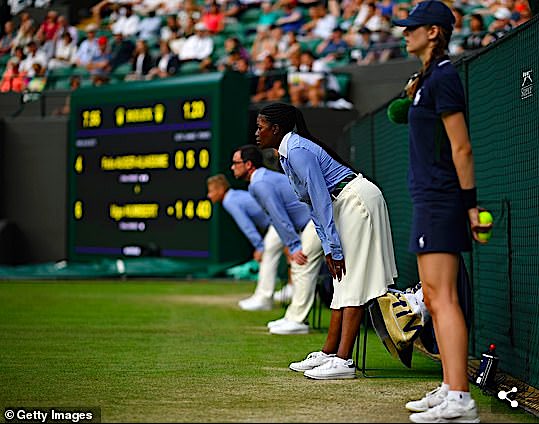
This year the tournament, like most of the other majors, has replaced line judges with electronic line-calling. As I wonder on what planet some demented sartorial arbiter might consider the former judges “best-dressed“, the courts are now depleted of what to one friend seemed like gatecrashers.

While this largely deprives the players of the frisson of dissent, and the melodrama of audience oohs and aahs as the Hawkeye screen zoomed in to assess a challenge, the new system does seem to be widely accepted. Still, as one comment reflected on the Guardian live feed:

Something felt off, and I couldn’t put my finger on it until you just reminded me about the absence of the line judges. Not only does the court look empty, but I’m surprised to find I also miss their shouts and shrieks, like a supply teacher trying to assert authority. This feels like a minor tournament without them, and it’ll take some getting used to.

See also this article. Since I wrote this, a succession of comments has appeared lamenting the change.

You can find plenty of intriguing posts on tennis under my Sporting medley.

The Zen of football

It’s taken me a while to catch up on the role of Zen in football—and when I did, it took the unlikely form of of witnessing it used as a rebuke.

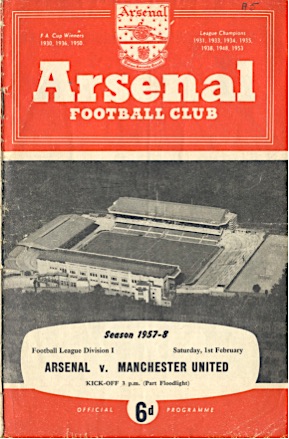
Last weekend, wunderkind Myles Lewis-Skelly * celebrated scoring Arsenal’s brilliant third goal against Man City by adopting a pose which mimicked that associated with Erling Haaland, underlining City’s discomfort. It turns out that meditation has become a niche avenue to footballing success, adopted by players such as Mo Salah, Raheem Sterling, and Anthony Gordon (see e.g. here). Still, I’m not holding my breath for a time when this converts footballers to regarding referees as Daoist sages, meekly accepting their decisions—as in rugby.

David Squires sums up the karmic action in cartoon form here. For more detached applications of Eastern Wisdom, see Daoism and standup, Sprezzatura and wuwei, and in sport, A god retires. Cf. Daoist non-action. See also under A sporting medley, including Philosophers’ football.


* In My Day, such a name would have been more likely attached to a mustachioed colonial brigadier…

***Roundup for 2024!!!***

film title

At this time of year I like to rearrange the deckchairs on the Titanic by organising some of my more notable posts from the past year under particular themes. As ever, many belong under multiple tags, so below I make some whimsical choices.

Keeping company with my film on the Li family Daoists, most important is my *new film* on the 1995 New Year’s rituals in Gaoluo (Chinese review here). It also prompted me to devise a new Menu, and even a YouTube channel (with playlists reflecting my diverse tastes as well as my own films). For now I still resign myself to Twitter, but I’m posting on BlueSky too, so let’s all migrate there!

China:

Chu Chien-ch'eng

Finnegan cover

cruz

You can find any posts I’ve neglected in the monthly Archive as you scroll waaay down in the sidebar. All this suggests that it would be a sensible New Year’s resolution for me to burden you with fewer of these ramblings—but first I plan a major series inspired by the Gaoluo film

Ability and potential

Ability
Source.

Neatly combining my side dishes of football and the idyllic Istanbul mahalle of Kuzguncuk
(see under A sporting medley, including Futbol in Turkey, then and now;
posts on Kuzguncuk are listed here, with more here)…

This outline of the amateur Knc Yapı Kuzguncuk Spor Kulübü offers a blunt appraisal, which I’m tempted to adapt for my own CV:

Ability 0%
Potential 0%

The team’s average attendance of 100 also reminds me of Philomena Cunk‘s “the sort of viewing figures BBC4 still dreams of”.

Despite all this, the plucky Kuzguncuk side seems to be doing really well, and is clearly THE club to follow—roll over Fenerbahçe (now cajoled by Mourinho the Morose One)!

Kuzguncuk football

Some niche Olympic sports

Poodle clipping

Poodle Clipping, Paris Olympics 1900.

For the Paris Olympics, Call Me Old-Fashioned [What, again?Ed.] but I mainly favour the traditional sports, like tennis (Nadalcaraz together in doubles?! WOW) and football—easing the withdrawal symptoms after the Euros (for which I crafted wonderful folk playlists) and Wimbledon.

You had to be quick to catch the Rugby 7s, not just because the tournament began and ended early, but because the matches don’t last long (although how long seems to be a closely-guarded secret). It’s glorious because it’s basically running around like fuck and scoring loads of tries, dispensing with much of Rugby Union’s boring faff like falling over on top of each other, set-pieces, trying to work out arcane rules, and all that pompous cerebral preparation to kick a conversion.

Olympics 1908

Gradually, with the essential aid of expert commentary, one gets drawn into the more niche activities—like Beermat Flipping, Treacle Volleyball, Malteser Shot-Putting, Bonzai Flatpack Assembly, and Synchronised Underwater Hamster Dressage.

Another popular event is The Sound of One Hand Clapping, in which Japan still has a monopoly. The Chinese, not really perpetuating the Daoist tradition of wuwei non-action, now excel at Lying Flat 躺平, but their governing body doesn’t seem keen to get it ratified by the Olympic Committee.

Monty Python got there first with such fantasy:

As to the relay, here’s Mark Simmons:

I love the Olympics. My friend and I invented a new type of relay baton. Well, he came up with the idea, I ran with it.

And turning to table tennis, allow me to remind you of this fine headline:

King Kong Ping-Pong Sing-Song Ding-Dong

See also under A sporting medley: ritual and gender. As I have noted, my viewing stats from WordPress * somewhat resemble a fantasy Olympic medals table:

Medals table


* You may be as dismayed as I am that these stats have begun to address me as “Howdy, StephenJones.blog”. Another sign of The End of Civilisation As We Know It…

Football in Stalinist Albania

with asides on religion and the alliance with China

Hermit kingdom cover

In a curious spinoff from Euro 24,  I came across the intriguing

  • Phil Harrison, Inside the hermit kingdom: football stories from Stalinist Albania (2024) (extract here).

I trust you understand why I just had to read it. The modern history of Albania holds a grim fascination for outsiders. For a book clearly aimed at a popular market, Harrison’s obsession with football through the period seems to me on a par with that of scholars who document early Daoist ritual—or does his dogged optimism resemble mine in supposing I can make the modern travails of household Daoists palatable?!

Inside the hermit kingdom was “written by accident”, with major input from Irvin, an Albanian expat whose own story remains opaque. * While Harrison is aware of the dangers of portraits of Albania that “instil a sense of Western, capitalist superiority”, he inevitably paints a bleak picture, sometimes reminiscent of the spoof travel guide Molvania. The account is punctuated with “Iconic games” and vignettes on the careers of some of the major stars. There may not be such a thing as a casual reader here, but fair-weather fans may find it somewhat excessive to plough through some of the detailed reports of the most obscure matches ever

The book opens in 1905 with the arrival of Christian missionaries in the “tribal backwaters” of mountainous Shkodër, beset by banditry, a Maltese priest founding the first club in 1912. The craze soon spread (cf. Futbol in Turkey, then and now).

Harrison soon plunges us into the vernacular of Albanian football terminology: positions on the pitch, organisations, and slang (humbje hapësire “a waste of space”).

He describes early internationals and the Zog-Mussolini axis. In April 1939 Mussolini’s forces invaded Albania, forcing King Zog into exile. We learn the stoies of two outstanding players among the Albanians recruited to Serie A, and of the Balkan Cup, held from 1946.

Dinamo

Clubs were now controlled by the army and police. Dinamo Tirana was founded in 1950—its stadium (above, via Fussball Geekz) built in 1956 by political prisoners supervised by armed militia, with many of the conscripts dying from exhaustion and injuries. In 1958 Partizani took part in the Spartakiad tournament in the GDR between army-affiliated clubs from the communist countries of the world.
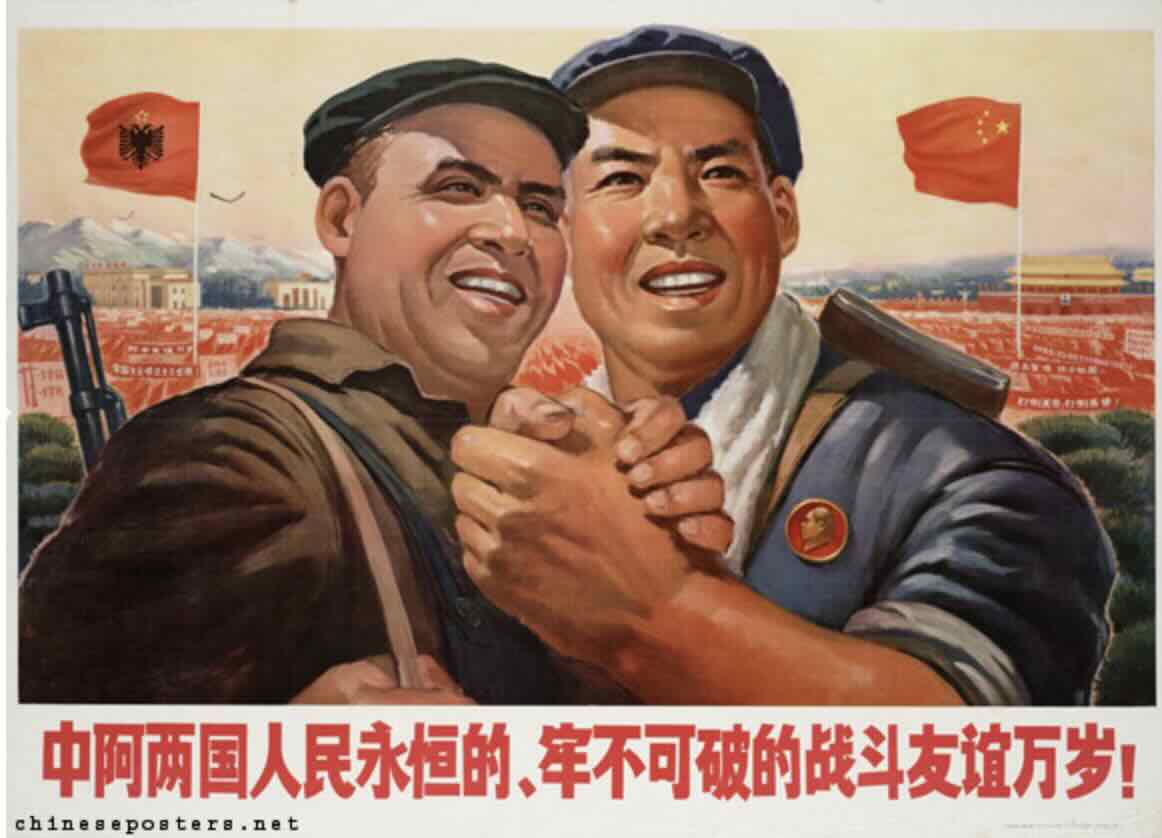
Albania China poster

“Long live the eternal and unbreakable friendship in battle between
the peoples of China and Albania!” Source.

After the death of Stalin in 1953 Enver Hoxha’s relationship with the Soviet Union eroded, deteriorating further in 1956, until the rupture of 1961 which led to Albania’s solitary alliance with Maoist China. In 1957, the wave of Albanianization was evident in the political renaming of many football clubs. Harrison shows how the “golden goal” dates back to 1961 Albania.

North Xinzhuang 1959

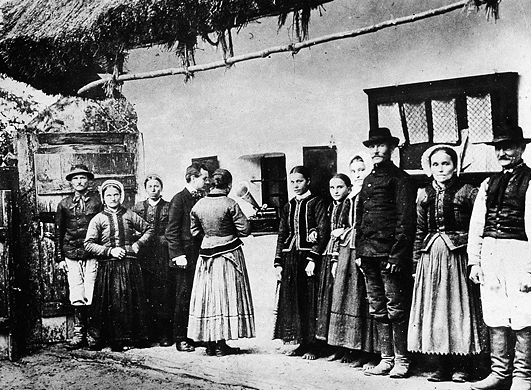
Quite the most remarkable image I know:
former Buddhist monk with village disciples, suburban Beijing 1959.

With religion suppressed under Hoxha, it was replaced by the ritual and passion of Sunday-afternoon football, a “communal protest against oppression and servility”. Asking “How did football make Albanians feel?”, Harrison describes wages, bicycles, cigarettes (with an aside on their manufacture), alcohol, transistor radios, and racing pigeons. In Tirana from the 1960s, Gimi’s tiny kiosk was a hub of activity, not only selling newspapers and magazines but serving as ticket office for the Albanian Football Federation. At the stadium one stand, the Tribuna, was reserved for army, police, and Party members. The only refreshments available were fara grilled sunflower seeds, wrapped in paper cones sold from tezga usherette trays. For away matches, with train links rudimentary, diehard supporters would undertake a three- or four-hour bike ride, or hitch a lift on an army truck. Attempting access to foreign matches via satellite TV was fraught with danger.

Political anxieties were pervasive, with society surveilled by the Sigurimi secret police (eight of whose nine directors were themselves imprisoned and executed between 1943 and 1991), and the spectre of labour camps. In 1967 star player Skënder Halili was caught selling two wristwatches and sentenced to hard labour in the mines of Bulqiza, eventually cause of his death in 1982—attendance at his funeral marking a small-scale protest against the regime.

“Truth over religion”, screenshots.

In 1966–67, just as the Summer of Love was under way in the West, Hoxha, emulating Mao’s Cultural Revolution, clamped down still more harshly on religion and Western influence. He sponsored the making of the 1967 propaganda film E vërteta mbi fenë [Truth over religion] (do watch here). Among the casualties were Catholic priests, imams, and leaders of the Bektashi order (cf. Turkey; for another niche topic, see Shamans in the two Koreas). This was among several waves of violent religious persecution throughout the Soviet bloc since the 1920s. I’m keen to learn more of the underground maintenance of religious traditions, one of my main themes for China; in Skopje, for instance, just northeast from Albania, a remarkable 1951 film shows self-mortification rituals of the Rufai order.
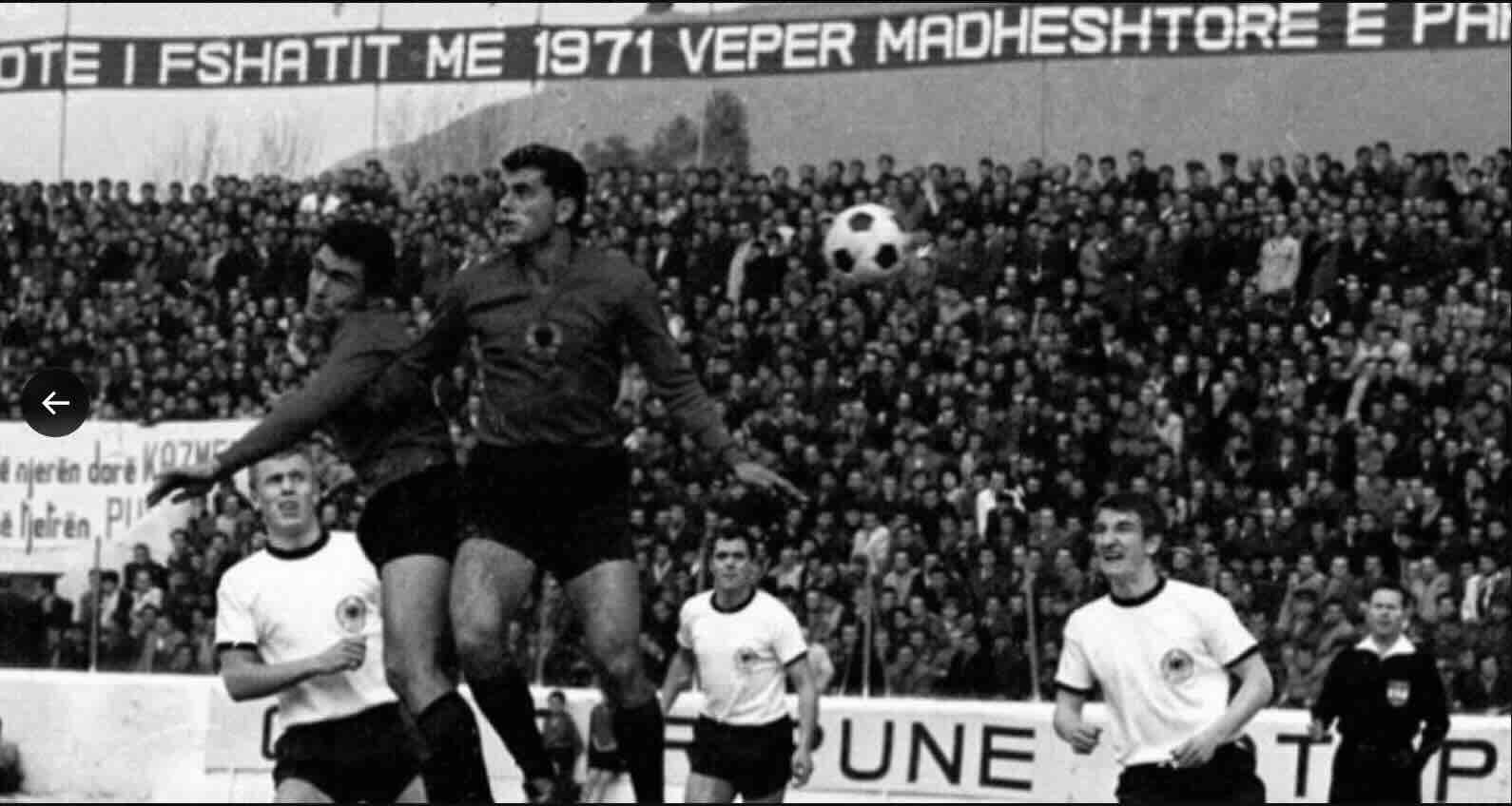
1967 Albania match
Source.

Back with the football, the 1966–67 “Championship of Coals” was subject to murky political interference. And in typical detail, Harrison describes the plucky goalless draw with West Germany in 1967 (above), watched from the Tribuna by Party stalwarts and Chinese dignitaries. I wonder about the lives of those visiting diplomats, who had somehow survived the Anti-Rightist purge, the Great Leap Backward and famine—now to find themselves exchanging cautious platitudes at a football match in a remote third-world country just as chaotic violence was being unleashed back home at the outbreak of the Cultural Revolution.
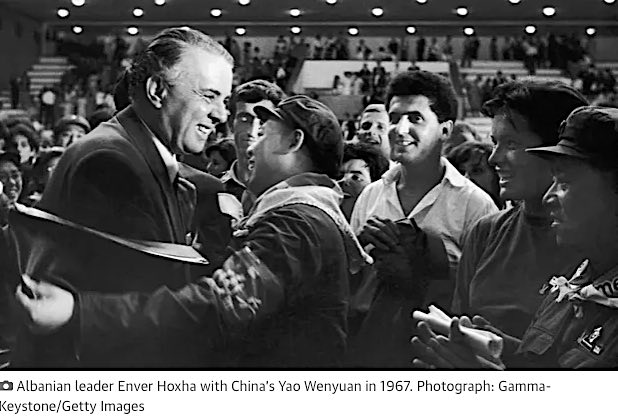
Enver

As purges continued, Albania became even more isolated. Harrison now devotes a substantial chapter to Fatmir Shima (with the catchy subtitle “the man from Xhomlliku”), father of his guide Irvin, who played in a lower division from 1969 to 1975 (cf. ordinary tennis players, Daoists, musicians, and so on), a temporary diversion from his career in agronomy. The chapter ends with another iconic game, between Tirona and Ajax, with predictable cultural clashes. Meanwhile Italian clubs were still scouting for Albanian players.

Under Hoxha the Gheg city of Shkodër was penalised, but its Vllaznia team rose to win the Kampionati Kombetar league in 1971–72, first of several successes over the following years—as the culture of Tirana at last no longer seemed so impregnable, people began to sense new possibilities.

Harrison continues to excel in arcane nerdiness with his account of the Dinamo club, which enjoyed success through the 1950s but then languished until the 1970s. Again he ends with an iconic game, between Partizani and Celtic for the 1979 European Cup—hair once again making a potential flashpoint. The game was “a sell-out, with ticket prices ranging from 7p to 21p”.

One of the great ironies of the piece is that Celtic’s players—upon their visit to Tirana during the dire, ramshackle days of the late 1970s—were privy to observing a failing city that was grim, penurious, and devoid of hope; a place of limited prospects.

In an act verging on satire, Vata—the first Albanian footballer to ever play in Scotland—made the reverse journey to his Celt predecessors 13 years later, keen to see what the world outside of Albanian borders had to offer. He now continues, by choice, to live in Hamilton.

By the 1970s, the Sino-Albanian collaboration suffered from Hoxha’s disillusion with China’s new rapprochement with the USA. Entirely isolated from 1978 once Chinese funding was discontinued, Albania was in an even more desperate plight. As audiences for the major games declined, people turned to futboll lagjesh “neighbourhood football”, a version of Italian calcetto. Harrison praises the creative improvisation of this five-a-side street style, “an inclusive, democratic idea set against an autocratic backdrop; an arcane act of defiance hiding within plain sight”, with vivid vignettes of the architecture of suburban east Tirana. But “with increased popularity came increased scrutiny”. “Enacting a class war”, a team from privileged Blloku ended up playing a rancorous game against a local Roma team, ending in a brawl and the sending of the Roma to labour camp.

By the early 80s, the regime was on its knees. As Hoxha lay dying, links were being forged with Italy, Greece, and Turkey. Within Albania, funding for football dwindled further. But apart from the long dominance of Tirana and Shkodër, KS Labinoti (in Elbasan county in central Albania) emerged as a contender. And the national team was making progress, at first through Shyqyri Rreli’s leadership of the under-21 team, and then in the 1984 World Cup qualifiers—with another blow-by-blow account of Albania’s magnificent 2-0 win over Belgium in Tirana. Albania narrowly failed to qualify for the Mexico 1986 World Cup, but the seed had been sown.

No nation has endured a more ill-tempered relationship with Europe’s footballing community than Albania. […] The Party remained unswervingly peevish in its interactions with the outside world, and this innate narrow-mindedness transposed itself on to sport.

Harrison documents the troubled domestic league, and encounters between Albanian and foreign clubs, over the whole period from the death throes of the regime from the late 1980s to the final collapse in 1992—whereupon Albania entered a period of anarchy and crushed dreams, prompting a mass exodus. 

But somehow in football, clubs “trundled on”. The final chapter, “The other side of the abyss”, describes how clubs reverted to pre-Hoxha names, resentment emerged in on-pitch petulance and crowd violence, corporate sponsorship gave rise to a new kind of corruption, and criminal gangs flourished. While the domestic game has suffered, since 2014 the national side has been reborn—with the great majority of the squad playing outside Albania.

The new, great Albanian players ply their trade elsewhere and are rewarded with huge remuneration and lavish lifestyles, connected to their native people only by ethnicity, not locality or reality.

Memory remains strong:

The only thing people who lived through Albanian Stalinism still celebrate, or seem to agree on, is  the football [… —] a football that unified fans and provided a balm during fifty years of horrific suffering.

One has to applaud Harrison’s boundless enthusiasm for such a niche project. Of course, football was not the only source of communal celebration; musical gatherings were an important part of social life at the domestic level (see under Musical cultures of east Europe, and Bernard Lortat-Jacob at 80). For other Albanian icons, see the unlikely bedfellows of Norman Wisdom and Mother Teresa. Note also posts under Life behind the Iron Curtain; more on football under A sporting medley: ritual and gender.


* With more detail on football than on social history, Harrison’s scant citations include Margo Rejmer’s collection Mud sweeter than honey: voices of Communist Albania, the memoir Erla Marinaku, “A social history of Socialist Albania, 1975-1991”, and the title Albania—who cares? is suggestive. He would doubtless like to add Lea Ypi’s perceptive 2021 memoir Free: coming of age at the end of history, which I reviewed here

Folk cultures of Europe

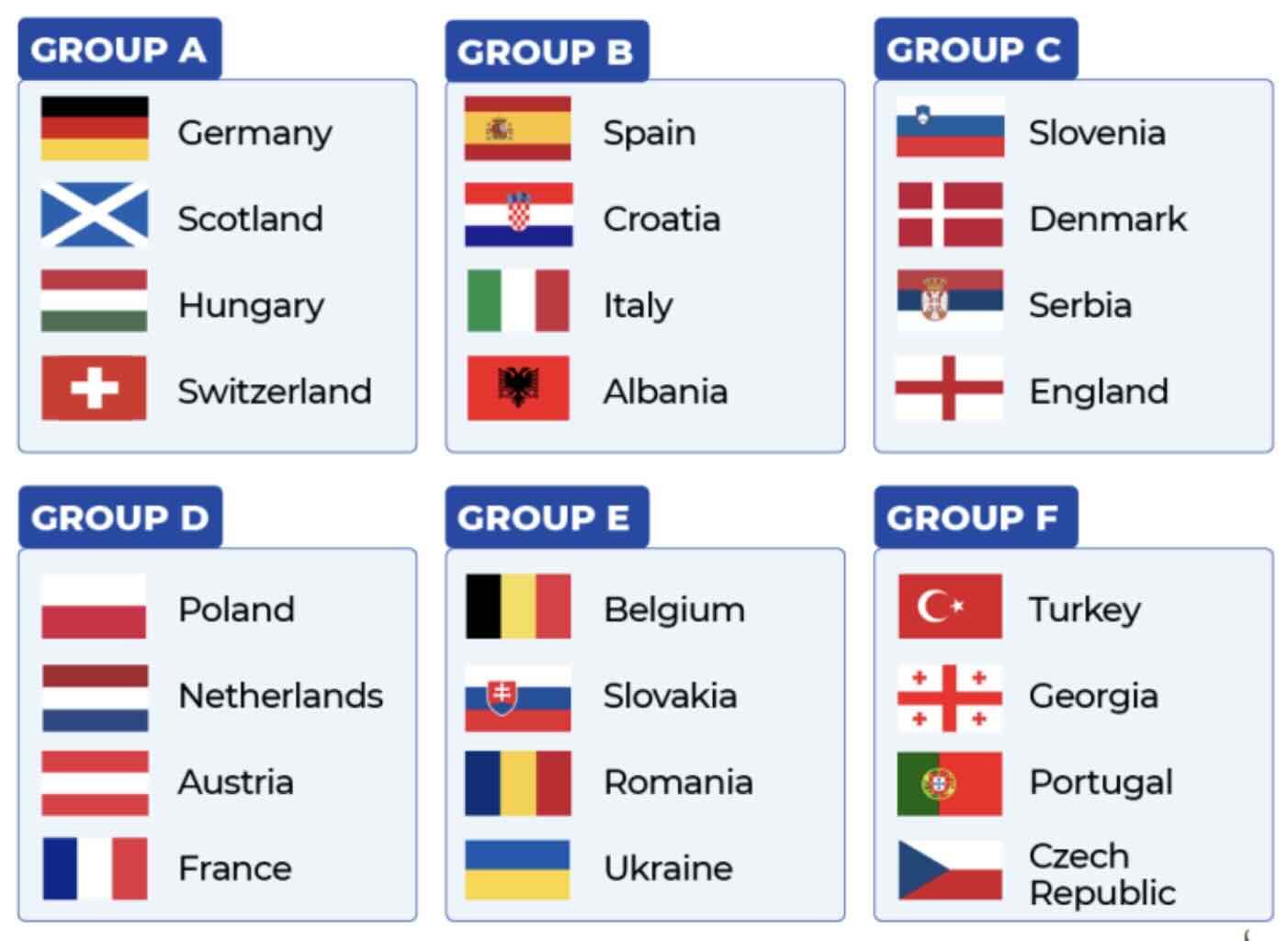
Euro teams

A major theme of this site is the rich variety of regional folk expressive cultures, in China and around the world. Quite by chance, the compelling drama of Euro 24 has provided me with a wacky perspective to celebrate the wonders of folk cultures around Europe—at a time when all seems lost amidst supermarkets and ring roads, Brexit and the dangerous idiocies of far-right politicians.

And as Barney Ronay notes,

Saka is a player you just love to see have these moments, to smile, to remind you […] that this is still at bottom a matter of play, joy, fun, and invention.

My three recent posts, all with wonderful playlists:

So we might regard Sunday’s final as a contest between the passion of flamenco and, um, Morris dancing—like so:

Southgate devises a novel wall to defend a free-kick from a youthful Spanish team.

These posts complement regional surveys such as Musical cultures of east Europe, Italy: folk musicking, Portugal: folk traditions, flamenco, fado (here and here), Irish folk, and so on. See also Bernard Lortat-Jacob at 80.

Meanwhile, A sporting medley: ritual and gender has links to other posts on football, as well as snooker, tennis (including a wonderful playlist for Emma and Leylah!), and rugby—for Morris dancing as a suitable response to the All-Black haka, click here.

The purgatory of the tennis circuit

tennisConor Niland after losing to Adrian Mannarino at Wimbledon 2011.
Ben Stansall/AFP/Getty Images.

The life of the concert soloist may seem glamorous, though the routine of airports, hotels, concert halls, and receptions must wear thin. Still, it contrasts with that of rank-and-file orchestral musos (cf. Mozart in the jungle, and Ecstasy and drudge). Apart from The Money, I note the irony of the soloist being condemned to churning out the same three or four concertos all their lives while the orchestral musos are constantly playing a variety of wonderful music (Mahler—you know that’s who I meant).

LMS

By the same token, following Vincent Goossaert’s search for “ordinary Daoists” (theme of his The Taoists of Peking, 1800-1949: a social history of urban clerics), it’s not all about the Du Guangtings and Chen Rongshengs, or about the elite mystical sages of yore. Hence my own search for household Daoist groups like the Li family.

Nor is tennis all about the superstars, the Federers and Świąteks, with their ritzy entourages. An interesting Guardian Long Read by Connor Niland, “I’m good, I promise: the loneliness of the low-ranking tennis player”, describes life at the bottom of the top. Formerly No.1 Irish player, he tells a sad story.

He outlines the three tiers of men’s professional tennis: the ATP Tour for the top 100 male tennis players in the world, the Challenger Tour, mainly by players ranked between 100 and 300—and the Futures tour, “tennis’s vast netherworld of more than 2,000 true prospects and hopeless dreamers”, which

sometimes felt like a circle of hell, but in practical terms it’s better understood as purgatory: a liminal space that exists only to be got out of as quickly as possible.

As he explains,

Surviving on the Futures and Challenger tournaments isn’t just about being good at tennis. It’s about being able to cope with the strange bedfellows of regular boredom and constant uncertainty. Not many succeed.

He felt trapped:

I phoned Mum from the airport in Geneva, telling her I was tired and would skip Edinburgh and fly home instead. She wasn’t having that. “This is your job now, Conor,” she said. “You can’t just not turn up because you’re tired.” I remembered my friend and one-time tennis partner Pat Briaud’s words: “Your parents don’t mess around.” I turned up and made the semi-final, losing a feisty two-and-a-half-hour match to Britain’s Jamie Baker. It was my 24th match in five weeks. Exhausted, I collected my prize money: $480, before 20% tax.

By contrast with the constant media exposure the stars have to endure, loneliness and isolation are the fate of the rank-and-file.

I made virtually no lasting friendships on tour through my seven years, despite coming across hundreds of players my own age living the same life as my own.

And he describes the difficulty of finding a practice partner. At least the life of orchestral musos is leavened by an embattled camaraderie—and they share a bond in maestro-baiting and deviant behaviour.

I almost never went sightseeing on a day off. That was partly to conserve energy, partly because I had nobody to go with. And in many of the one-horse towns that hosted Futures events, there weren’t any sights to see. […]

I would return to Ireland from three-week trips to these exotic places with no notable stories or experiences. “How was Morocco?” I would be asked. “Fine,” I would say, with nothing else to add. […]

The true unfortunates, though, were the ones who were talented enough to rationally hope to advance. These were people who grew up as the best tennis players in their country, but were stuck between 300 and 600 in the world, not quite contending for the Challenger Tour nor the qualifiers at grand slams, but winning just often enough to keep their tennis dream faintly alive. A Futures tournament referee in the US became infamous for his straight-talking to 28-year-old players: “C’mon man, what are you still doing here?” He was straying out of his lane, but his intentions were good. And he was usually right.

Niland ends with a depressing account of a fruitless Challenger event in Uzbekistan. It all sounds a bit like doing a Messiah in Scunthorpe for a jolly good tea. Whether in music, religion, or sport, ethnographic perspectives like this are always valuable.

Under Sporting medley: ritual and gender I list several posts on tennis.

Euro 24: the last eight bagpipes standing

Another playlist in a series that football fans didn’t know they needed

Euro 24 list

Now that the twenty-four teams of Euro 24 have been reduced to eight, I hear you clamouring for a more focused playlist of bagpipe music to represent them (Yes, I am getting my hearing tested).

Among many sources on the history and distribution of bagpipes, the Essential Vermeer website has instructive material (here and here); and I set forth again from this list. As shown in my previous post, the distribution of instruments rarely aligns with either current or past national boundaries.

SpainGrooving to the gaita. *Coimbra gaita

Starting with

how about gaita from Coimbra (the image by Armando Leça shows an old handmade bagpipe from Coimbra, late 1930s—who knows if such a player inspired Portugal in their 1930 victory over France?!)

—and Galicia:

Guler“Just dig that funky tulum

For a related “tapeworm word”, see under Some German mouthfuls!

Around north Europe, with online clips dominated by medieval revivals, living folk traditions are harder to find.

England goal

  • England—here’s Kathryn Tickell on Northumbrian smallpipes:
  • FranceBreton pipers:

As to

  • Switzerland (not Italy—whence I await more “Caporetto” headlines, to follow those for the 2002 and 2018 World Cup defeats). **
  • Germany
  • The Netherlands (though Romania might have been more fruitful),

referring back to the Essential Vermeer site, there’s some fine material on peasant bagpipes as depicted by Peter Brueghel the Elder and Jan Steen; and we can seek further for modern vestiges under Dudelsack, SackpfeifeDoedelzak, and so on.

Brueghel bagpipes

There—just what you need to warm up for the quarter-finals eh…

More football posts under A sporting medley: ritual and gender.


* Sorry to go on, but this comment in the Guardian live-feed reminded me of my own football dream:

The first time Lamine Yamal joined the Spain squad, they left his boots behind. His and everyone else’s too. When the selección touched down in Tbilisi to face Georgia in September 2023, the trunk carrying part of their kit was still sitting at Barajas, forcing them to complete the evening session at the Boris Paichadze stadium in trainers, unable to strike the ball. The following night, they scored seven. On his debut, the Barcelona winger got the last of them, aged 16 years and 57 days, and the national team got a new beginning.

JRM** Before England’s Great Escape from Slovakia, I was composing our own version of Caporetto, inspired by that popular classic from the Minister for the 18th Century:

“the greatest vassalage since King John paid homage to Phillip II at Le Goulet in 1200”

Magnificently 🍾🍾🍾 , the Haunted Pencil is now Toast, or Ashes—as the sun came up, he crumbled into dust…

A folk playlist for Euro 2024!

*First in a series on folk cultures of Europe!*

Euro teams

Maybe it’s just me, but just as everything else in Europe is falling apart, Euro 2024 seems an exceptionally exciting showcase for football, with a sense of passion accompanying some great matches and brilliant goals.

All—well, almost all—the twenty-four teams in the six groups have inspiring regional traditions of folk music, which (let’s face it) may not be uppermost in the thoughts of most fans. So before we bid farewell to some of the teams, here’s a niche alternative playlist, largely compiled from other posts on this blog.

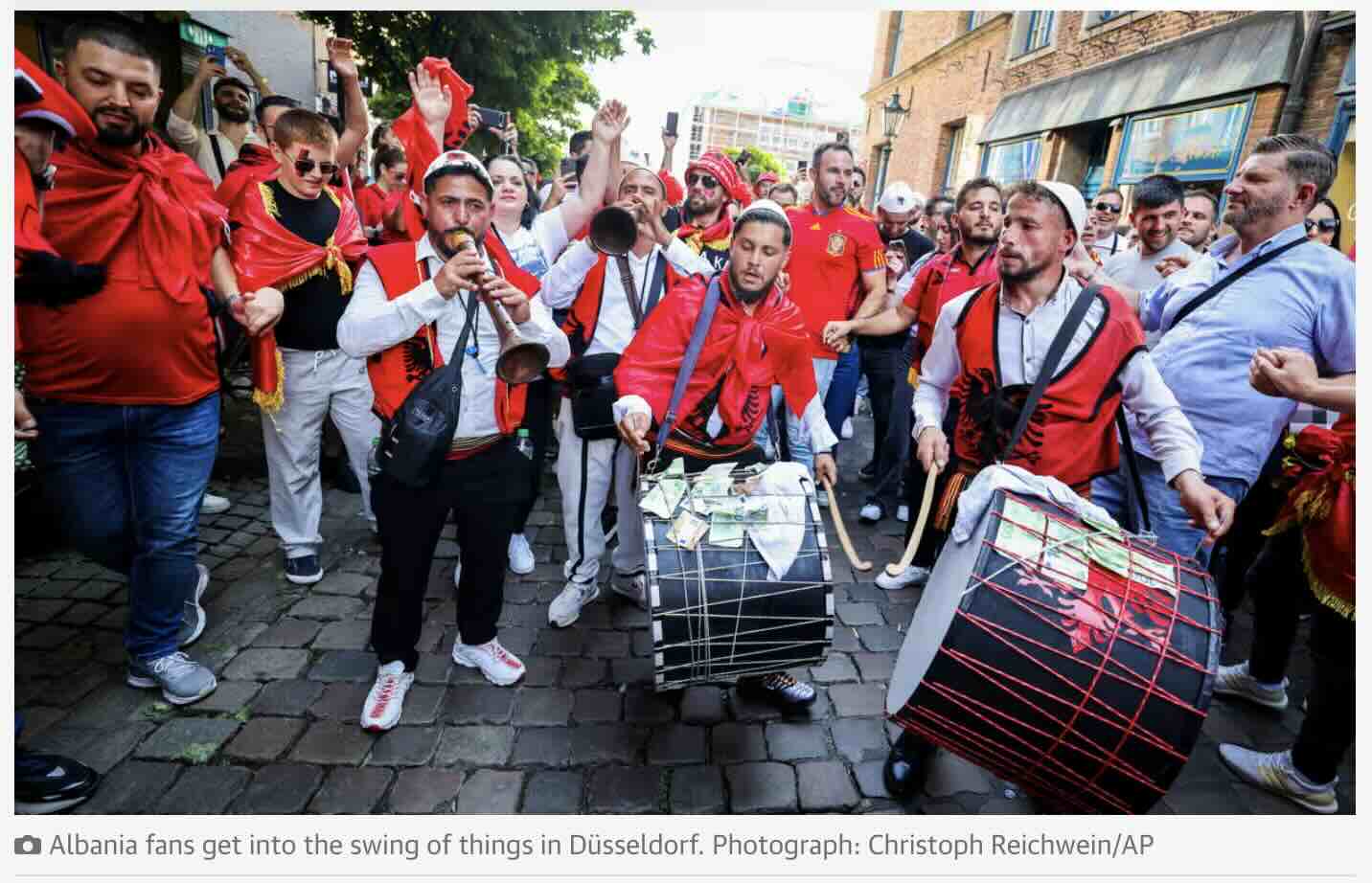
Albania Euro 24Albanian zurna shawms with dauli drums, a widespread festive combo.

Easy to sample, and exhilarating, are the traditions of east Europe and the Balkans:

  • Albania (Shqipëria!)
  • Croatia (Hrvatska!)
  • Serbia (Srbija)
  • Hungary (Magyarország!)
  • Romania (disappointly, România)

With long histories of discord, national allegiances often remain fractious—chronic enmities are still exposed in the fans’ behaviour at the Euros (see e.g. here). Boundaries having changed over the history of recording, here (based on this article) I will merely offer a few tracks that charm the ear, to encourage us to pursue the soundscape of the whole region:

Bartok 1907
Béla Bartók recording Slovak peasants in 1907.

Other boundaries may be sensitive too:

Note also Resisting fakelore under state socialism in former Czechoslovakia and Poland.

The playlists for other nations pose a different kind of challenge:

  • The Netherlands: by extension, how about this Batak hymn from Sumatra, from the ear-scouring Frozen brass CDs!
  • Belgium: this track comes from the Ocora CD Belgique: ballades, danses et chansons de Flandre et Wallonie (1981)
  • France: pursuing my fetish for shawms (see above), here’s the Bréton bombarde, with accordion
  • England: Morris dancing might not spring to the mind of some fans…
  • Scotland: though perilously close to the “tartan and shortbread” image, pibroch is not to be sneezed at—besides the ubiquitous fiddle, the bagpipe (not so much a dark horse as a black sheep?) is among other instruments commonly played in most nations under consideration—see this list.

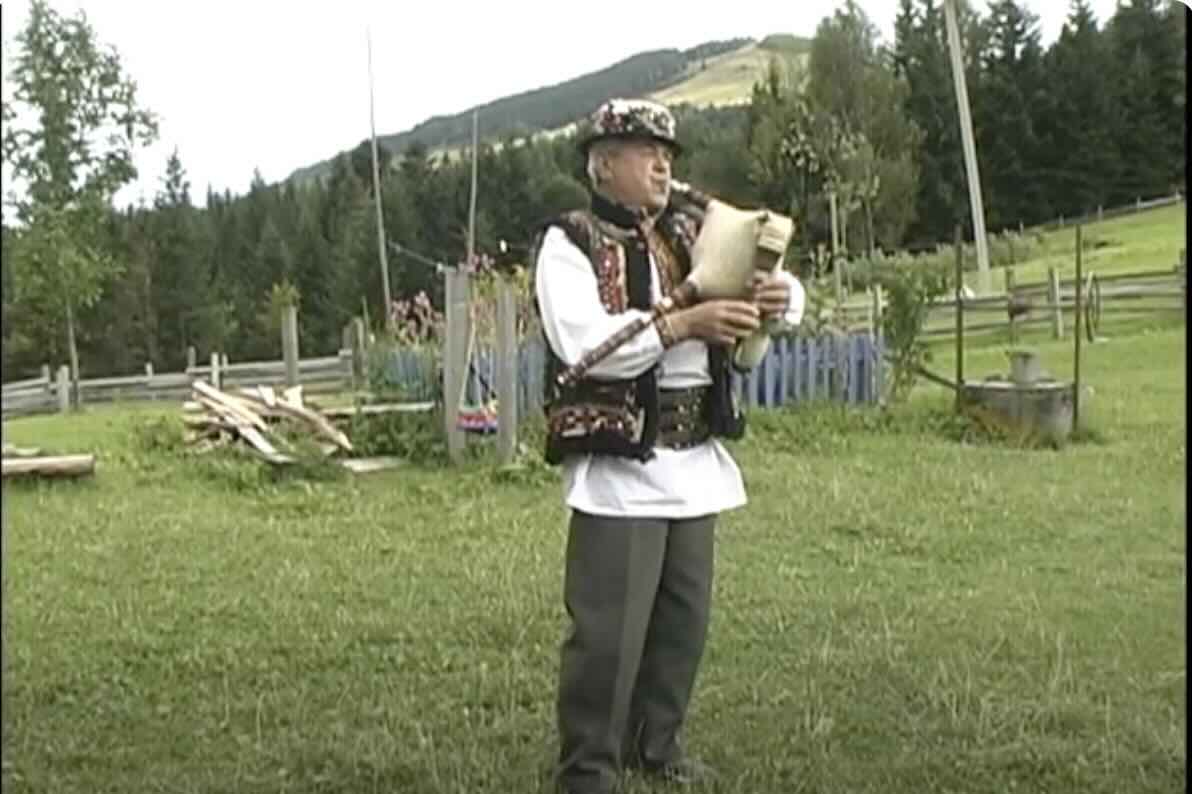
Ukraine bagpipeUkraine: Mykhailo Tafiychuk on volynka bagpipe of the Hutsuls.

Several posts on football can be found under A sporting medley: ritual and gender, including my wonderful playlist for Emma and Leylah.

An Italian renaissance

Along with the pleasures of editing my new film on Gaoluo with Andrea, it’s wonderful to be back in Italy.

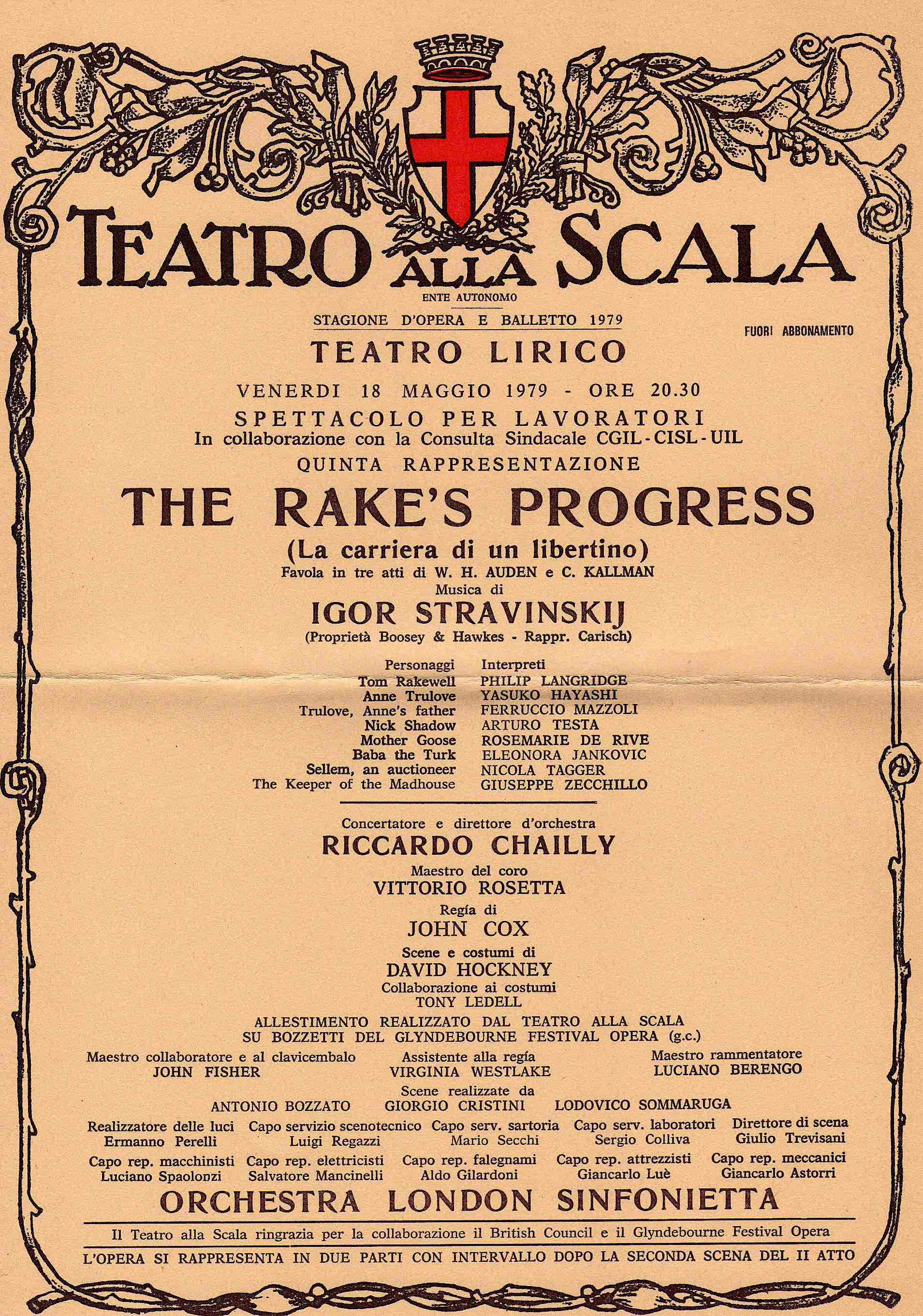
Rake 1979

My first proper opportunity to savour the delights of Italian life was an extended stay in Milan in 1979 to play The rake’s progress, which afforded me time to explore the nearby hill-towns. Over the following years I got to know the picturesque little towns around Tuscany and Umbria (cf. Italy: folk musicking), and through the 1990s I relished summer sojourns in Parma and Ferrara playing Mozart operas with John Eliot Gardiner; but Spain became a more regular venue for orchestral tours (allowing me to explore the exhilarating anguish of flamenco!), so I only got to do occasional gigs in Milan—the Brahms Requiem at La Scala, again with Gardiner, springs to mind.

img_2434With Li Manshan and his Daoist band at the Gallerie, Milan 2012.

My last visit was in 2012 on our memorable Italian tour with the Li family Daoists! Having made negligible progress with Turkish on my many recent visits to Istanbul, it’s been good to be back in a culture where I can communicate a bit more efficiently. Indeed, staying in a mixed quarter of Milan has something of the vibe of a migrant mahalle in Istanbul, and takes pressure off my efforts to regain my former semi-fluency in Italian.

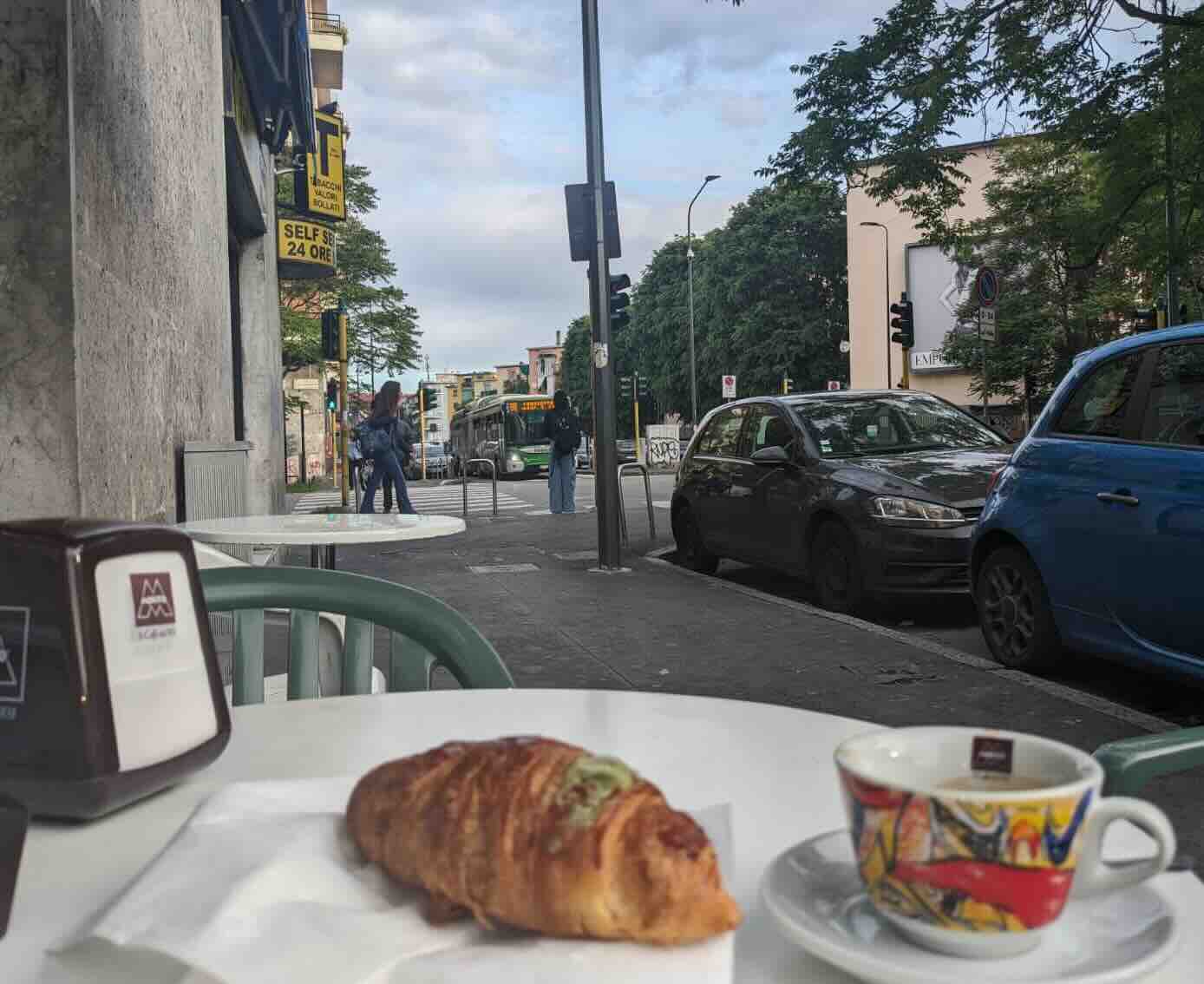
Last breakfast

Not the Last Supper, but my Last Breakfast.

Last supper

Taking a break from editing to watch the big Champions’ League match between Real Madrid and Bayern Munich, Andrea tells me he went to school in Modena with Carlo Ancelotti. When he tells people, they couldn’t be more impressed if he told them he was at school with Leonardo Da Vinci—”Da Vinci? Never heard of him, what team does he manage then?”

Alongside the numinous medieval hill-towns near Milan, the city may feel somewhat bland—but after a long absence, Italian street life still feels like a blessing.

See also Italy tag.

market

Zen in the art of the baroque lute

Wuwei
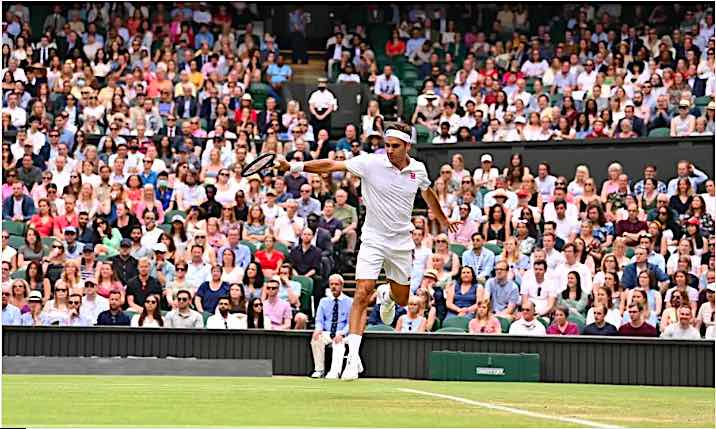
For Roger Federer, click here.
In snooker, another instance of “effortless grace” is Ronnie O’Sullivan.

Always (nonchalantly) on the trail of non-action, I came across the stimulating article

While Daoism and Zen have long become glib buzzwords in the West, some such as R.H. Blyth and Alan Watts have given informed treatments, and some like Gary Snyder embody the ethos. In another post I alluded to Daoist wuwei while feeling sad that we can’t attribute the expression “Don’t just do something, stand there!” to Miles Davis.

Helen De Cruz contributes a thoughtful study from her background as performer and scholar of baroque lute and archlute. In studying a Zamboni prelude with her teacher, she elaborates on his advice “Be more Zen”:

to give shape to the extemporising, improvisatory nature of a prelude one should achieve more with less, giving an air of effortlessness to quick runs using difficult and sometimes awkward grips. The composition of a prelude embodies the aesthetic of studied effortlessness: at first, the notes sound spontaneous, searching, reaching, as if the player is merely tuning her instrument and improvising. But then, as the harmonies are given increasingly definite shape through blossoming arpeggios, the ear inclines to expect the next note with increasing confidence, and finally it all comes together: the earlier hesitant notes get their meaning, and the mind discerns the cohesive whole—it turns out not a single note was coincidental.

The term sprezzatura * (akin to “effortless grace” or “studied carelessness”) was introduced by the Italian Renaissance philosopher and diplomat Baldassare Castiglione in his etiquette manual Il Cortegiano (1528), written for the “small but chic” court at Urbino. Essential skills for the courtier included dancing, wrestling, fencing, horse riding, sports (such as tennis), and playing a musical instrument. The goal was “to steer away from affectation at all costs, […] to practice in everything a certain nonchalance [sprezzatura] that shall conceal design and show that what is done and said is done without effort and almost without thought”.

While the concealment of art can be affected, the aesthetic is still prized today—for instance,  in men’s fashion,

where one aims for an appearance of effortless grace in what is in reality a carefully curated wardrobe. It is part of how athletes are judged. […] The aesthetician Tom Cochrane equates sprezzatura with the aesthetic of cool, which he describes as containing “elements of aesthetic power or sublimity, specifically an elevation above the passions and indifference to danger.” The graceful courtier is (seemingly) unconcerned with the effect he has on the audience.  Ultimately, he is unconcerned with himself, he has lost all self-consciousness in the intrinsic beauty of his actions.

De Cruz notes that early discussions often focused on the practice of ritual. “To achieve true mastery, you must lose yourself in a skilled task that harmonises you with your physical and mental environment, and you will achieve mental quietude as a result.” Inevitably, I think of my great household Daoist mentors Li Qing and his son Li Manshan, both lowly peasants; this is also a question of charisma, not always a major theme of studies of Daoist ritual…

The early Daoist classic Zhuangzi evinces the art of the bell-stand maker, wheelwright—and butcher: as de Cruz explains a much-discussed passage,

Lord Wenhui watches in silent admiration as his butcher (who is also his cook) is cutting up an ox: “every move of his feet, every thrust of his knee—zip! zoop! He slithered the knife along with a zing, and all was in perfect rhythm, as though he were performing the dance of the Mulberry Grove or keeping time to the Jingshou music [ancient ritual items, the former part of rain ceremonies].

“Ah, this is marvelous!” said Lord Wenhui. “Imagine skill reaching such heights!”

Cook Ding laid down his knife and replied, “What I care about is the Way [dao], which goes beyond skill. When I first began cutting up oxen, all I could see was the ox itself. After three years I no longer saw the whole ox. And now – now I go at it by spirit and don’t look with my eyes.”

“Perception and understanding have come to a stop, and spirit moves where it wants. I go along with the natural makeup, strike in the big hollows, guide the knife through the big openings, and follow things as they are. So I never touch the smallest ligament or tendon, much less a main joint.” 

Zhuangzi also tells the story of a man swimming in fast-running currents, who tells Confucius:

 I have no way [無道 wu dao]. I began with what I was used to, grew up with my nature, and let things come to completion with fate. I go under with the swirls and come out with the eddies, following along the way the water goes and never thinking about myself. That’s how I can stay afloat.

De Cruz comments astutely:

Note the details in this story: the man has long hair that streams down, rather than being tied up in a knot, indicating he is of lower class. He sings not in a ritual context, as the Confucians would require, but out of sheer, unadulterated joy. Confucius is the main Confucian sage but (in Zhuangzian fashion) cannot fathom how someone is able to make such a dive and come out alive. Rather than a specific affectation, the swimmer has “no way.” He exhibits the essence of sprezzatura in his graceful movements and his indifference to danger.

Vermeer luteFor both folk and art music in the time of Vermeer, click here.

She cites the 17th-century English lutenist Mary Burwell:

One must then sit upright in playing to show no constraint or pains, to have a smiling countenance, that the company may not think you play unwillingly, and [to] show that you animate the lute as well as the lute does animate you. Yet you must not stir your body nor your head, nor show any extreme satisfaction in your playing. You must make no mouths, nor bite your lips, nor cast your hands in a flourishing manner that relishes of a fiddler [!]. In one word, you must not less please the eyes than the ears.

And Rameau in 1724:

the aptitudes for which [playing the harpsichord] calls are natural to everyone—much like in walking, or, if you like, running.

She cites the flow theory of Mihaly Csikszentmihalyi:

Self-forgetting opens the mind to the intrinsic beauty of skills we exhibit in the flow state,

explaining

In Zhuangzi’s butcher and swimmer and in Mary Burwell’s lutenist, the practitioner refuses to be identified with their performance, thus overcoming the self-centredness that often accompanies achievement.

This may be one reason why I became so resistant to Beethoven, for whom struggle—audible struggle—was central, becoming dominant in the romantic aesthetic of the virtuoso concerto soloist, striving to overcome.

De Cruz concludes:

We achieve an overall pleasing effect when we are in harmony with our physical constraints. When we achieve wuwei in skilled performance, we deliberately submit ourselves to our environment and to the limitations of our bodies—we place our actions rather than ourselves centre stage. We can say that sprezzatura presents a philosophy of life, an approach to our environment and our surroundings that acknowledges our bodily imperfections and our situatedness, and that yet enables us to achieve through non-action and mental stillness a kind of perfection that our audience can delight in and enjoy. Sometimes the beauty and wonder we bring into the world has more to do with our non-action than with our action.

I find this virtue in some exponents of Bach, such as David Tayler on archlute or Steven Isserlis on cello. Cf. the art of a wood turner in Istanbul.


*  Italian sprezzo/disprezzo “disdain” is another instance of the expressive Italian negative s.

Rugby balls and violin strings

rugby ball
Source.

Glued to the Six Nations rugby, I’m wondering if negotiating the shape of the ball, * with its unpredictable bounce, might be compared to going on stage with a violin whose strings never stay in tune—like playing baroque violin in an overheated concert hall (he said with feeling—see The Mary Celeste).

On the plus side, concerts are less muddy, with fewer injuries, and you don’t get sent off so often. As to referees (Confucius), musos’ attitude to conductors is more like that of footballers than rugby players.

Dali
Salvador Dali, The persistence of memory (1931).

Such a degree of unpredictability is rarely built into the design of the game—as if tennis rackets were crafted from blancmange. Nor did elliptical balls catch on with other sports, like snooker. To cast the net wider, it’s like a steering wheel that offers few clues to the direction of the car, or a novel whose pages the publisher prints in a random order.

This is part of mini-series on rugby under A sporting medley: ritual and gender, featuring the haka and some arcane rules. For more on the perils of tuning in Western Art Music, see under Hugh Maguire, and Muso speak: excuses and bravado (“It was in tune when I bought it”). More unlikely inventions here.


* Apart from unseemly anatomical explanations involving the shape of the pig’s bladder, and posh public-school twats, some suggest that it’s harder to dribble with the feet as in football, and that the oval ball is easier to carry with one arm, leaving the other arm free to push adversaries away—reminding me of the shakuhachi flute as potential weapon (komusō monks rebuked for “meddling in earthly affairs and not the emptiness of being”).

Roundup for 2023!

As I reflected in last year’s roundup,

like a suburban Sisyphus doing and undoing a jigsaw, having gone to great lengths to mix up the daily sequence of my diverse topics in a stimulating fashion, it’s that time of year when I try and reassemble them into some kind of thematic order.

In order for this exercise to be worthwhile, you’ll have to click on the links! Ideally, spread the word by reposting on one of those “Social Media” Thingies They Have Nowadays… Even if you only read a dozen of these posts, then my labours will not have been in vain!

I’m going to adopt Stella Gibbons’ drôle device in Cold Comfort Farm, drawing attention with *** to passages (mostly posts, in this case—indeed, the book’s protagonist is Flora Poste) Not To Be Missed. And this list isn’t even exhaustive—the committed masochist can consult the monthly archive in the sidebar, scrolling waaay down.

I’ll begin with Nicolas Robertson, who alas joined the Heavenly Choir in November (see my tribute). His extraordinary anagram tales (introduced and listed here***), a kind of fantasy Esperanto fiction, are among the highlights of this blog, and in further tribute to his brilliant mind I have recently added two more:

So here are listings under some main themes (many, of course, belong under several themes, which is the point of giving them categories and tags, listed in the sidebar):

China (culture and ritual, Maoism and politics):

East Asia, other:

This year’s additions to my education in Tibetan and Uyghur cultures:

Turkey and West/Central Asia (see roundup):

Modern Europe:

Ethnomusicology and world music:

Jazz (see roundup***):

Pop:

Western Art Music:

Sport (see roundup):

Film/TV:

Loft best new

Arising from the transformation of my home:

Other:

For roundups of previous years’ musings, see 2018201920202021, 2022. And here’s a roundup of roundups! The homepage is always useful for navigation.

And it’s always worth reminding you to watch my portrait film***
on the Li family Daoists,
 raison-d-être of this whole blog!

Rugby in Paris!

Haka hoe
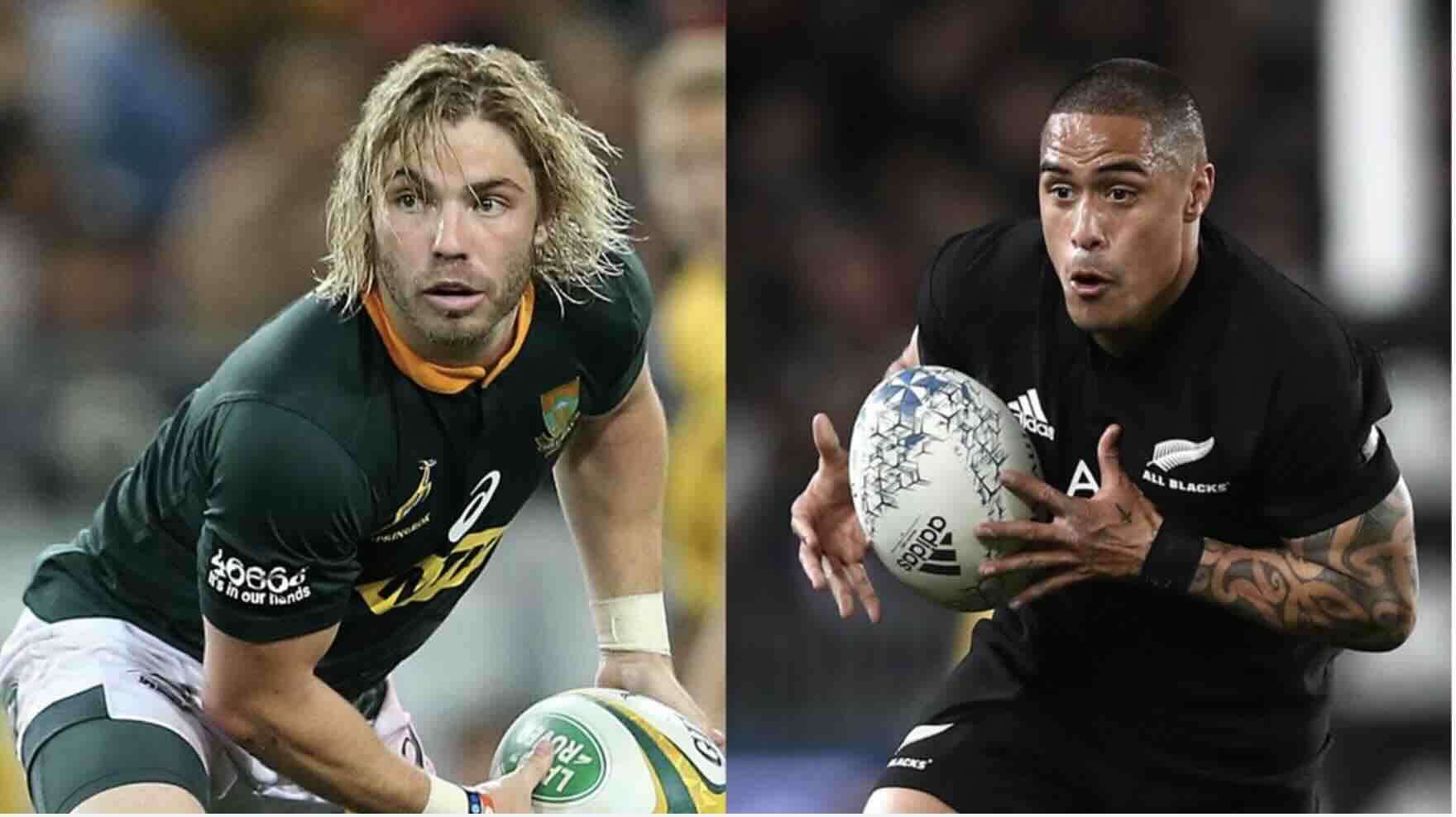
Aaron Smith leading the All Blacks in the haka. Source.

The Rugby World Cup is coming to the boil nicely (if not “reaching a crescendo”). Last night’s quarter-final between the All Blacks and Ireland was remarkable (if you missed it, do watch highlights on ITV). The final phase, when the All Blacks held out against wave upon wave of attacks (37 phases!), was a tense dénouement. Much as I love football (see under A sporting medley), the visceral impact of rugby, with its variety of team and individual skills, brute force and artistry, are on another dimension.

The All Black haka makes an awe-inspiring overture (I introduced it here, with some history, and flippant suggestions on suitable ripostes from other nations, including Bring me sunshine and The Rite of Spring!). The current edition additionally features a hoe carved wooden paddle:

Hunyuan yankou 2

Local Maori cultures evince variations in styles, handles, and blades of the hoe (some instances were presented to Captain Cook in 1769.). Its use in the haka reminds me impertinently of that of the chaoban in Daoist ritual (e.g. here).

I still find it extraordinary how rugby players (in few of whose daily lives traditional customs or ceremonial performance can play a major role) can enter the groove with such focus, and how an apparently secular situation can be instantly transformed into a ritual of such intensity.

Today we can also admire the Fiji team performing the cibi before their quarter-final with England!

The beauty of frisbee

Frisbee
Source.

My sermon today is taken from the Gospel According to Steven Wright:

Today I was wondering, “why does a frisbee appear larger the closer it gets?”.
And then it hit me.

With builders still perfecting the house, we’ve had plenty of opportunities to retreat to the local park to play frisbee, recalling my distant youth—the beauty of frisbee on Mediterranean beaches by the water’s edge, like playing Bach or juggling.

The wiki article on frisbee begins charmingly:

Walter Frederick Morrison and his future wife Lucile had fun tossing a popcorn can lid after a Thanksgiving Day dinner in 1937.

The name frisbee became common from 1957, after a pie company.

As in all walks of life including music and religion, an impressive taxonomy has evolved, of throws ranging from the basic three to more advanced manoeuvres that are the preserve of the frisbee nerd, such as high- and low-release backhand, chicken wing, elevator pass, roller throw, scoober, wheeler, airbrush, pizza throw, paintbrush, bogo, and ninja…

Inevitably frisbee has been marshalled into a competitive sport (cf. Alexei Sayle) since the early 1970s; sadly, there’s even disc golf.

Splåtergørd

I’m most resistant to new-fangled kitchen gadgets, but, um, splashing out on a splatter guard for my little Moka makes a delightful early birthday present.

splatter guard

In a felicitous coincidence, the Norwegian centre-forward Einar Splåtergørd was the first footballer to break the £10 transfer-fee barrier, going on to score the winning goal for Burnley in their legendary 1959 Cup Final victory over Tranmere Rovers [You nearly had me thereThe Plain People of Ireland].

For more diacritics, note Ogonek and Til!

Talking of kitchen gadgets, the African American businessman and inventor Alfred L. Cralle patented the “Ice Cream Mold and Disher” in 1897, forerunner of the ice-cream scoop.

scoop

Cf. the inventions of the fridge, tobacco, and the helpline.

Futbol in Turkey, then and now

Early history (a pitch raid, Greek pre-eminence, Black Stockings FC);
Mesut Özil supports the Uyghurs; and a clerical tournament

Football was introduced to the Ottoman empire by English residents of Saloniki in 1875, the teams consisting of Greek, Armenian, and English players (wiki, and here). Over in Smyrna, the numinously-named Orpheus Music and Sports Club was founded in 1890.

James La Fontaine, who developed football in İzmir [Smyrna], moved to Istanbul in 1889, and the game started to become popular there. Expats and non-Muslim Ottoman citizens played in the city’s Kadıköy and Moda districts.

The first document on football in the Ottoman archives is a police report dated Nov. 23, 1890:

Around 20-25 English youth, under the supervision of the sons of Monsieur Witek, a Moda resident, gathered at Kuşdili and played with a ball made of a tire in an encircled area. The play area had two doors at both ends. This incident was investigated and it was understood that they were playing charity matches for schools. After the game, those who won would donate the prize money to schools. The English will do exercises every Saturday until the final match is played. The Üsküdar Lieutenant Governorship is looking into when the real match will be played, how much money will be collected and which schools it will be given to. It is necessary to take precautions and report developments to the police so nothing improper happens.

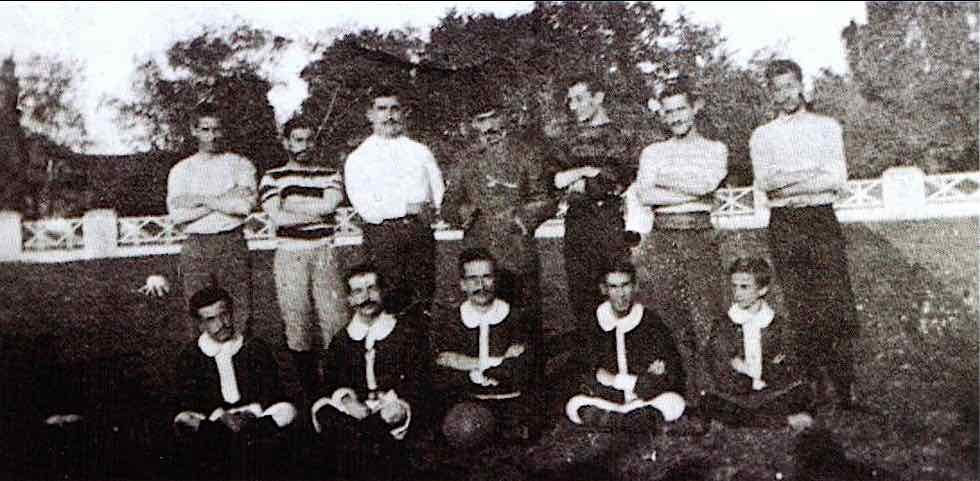
Black Stockings team
Black Stockings players (“purportedly”), 1901. Source.

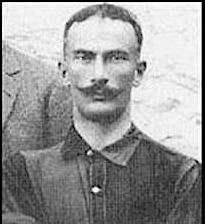
The first club with Turkish players was Black Stockings FC in Kadiköy (wiki—more in the Turkish version), abruptly dissolved after their first and only match on 26th October 1901 when the players were arrested after the Sultan’s detective Ali Şamil Bey and police raided the pitch, suspicious that the purpose of the team was to organise a coup against the Sultan. Fuat Hüsnü Kayacan (right; source), the first ever Turkish football player, was a soldier on assignment in İzmir in 1898.

Elpis 1905
Elpis FC, Greek team in Istanbul, active 1904–1910. Image from 1905.

The first competitive league was founded in 1904. Galatasaray, the first Turkish football club, was founded in 1905, Fenerbahçe in 1907, Beşiktaş in 1910. But as an impressive TRT article shows, through the years preceding the 1923 population expulsions, Istanbul teams were dominated by Greek players (cf. Songs of Asia Minor). Significantly, the Turkish national team was formed in 1923.

Turkish team 1929
The Turkish national team, 1929.

* * *

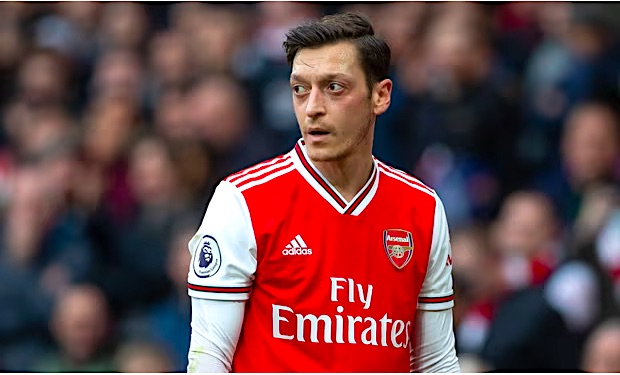
Ozil

I’m still a great fan of Mesut Özil (“floating, vulnerable muse”, a descendant of Gastarbeiter) from his days at Arsenal. Apart from his wizardry on the pitch, in 2019, still some time before China’s suppression of the Uyghurs became a widely-subscribed international cause, his principled protest prompted the club to disassociate from his comments. The position of Uyghur refugees in Turkey remains precarious.

* * *

One weekend in Istanbul recently we were invited to a sports ground in a village along the Anatolian shoreline, where a brilliant initiative is under way: an amateur football tournament consisting of forty 7-a-side teams of religious clerics from all over the metropolis (cf. Inter-faith ping-pong). The matches are timed to take place between the dawn and noon calls to prayer.

This weekly social event makes a great opportunity for them all to meet up, beyond formal, intermittent symposiums. They are young and jovial, the matches competitive; we saw one yellow card, and a muezzin later bemoaned the unjust award of a penalty against his team.

Our host, the enterprising organiser of the league, mischievously introduced me as former Real Madrid striker Stefan (none other than the legendary Alfredo Di Stéfano). Fortunately I wasn’t called upon to demonstrate the legendary dribbling skills of my heyday—but it evoked my dream in which I was called up for the England squad (aged 70) and couldn’t work out how to change into the team strip or make my way onto the pitch.

Happy to learn that we are keen on a good ezan, some of the finest muezzin in Istanbul invited us to come and hear them. We also met a standup comedian there who serves worthy social and political causes; even as the Turkish economy collapses, Istanbul seems full of people doing good things. Afterwards we meandered through the lovely shoreline villages for brunch in a fine commune-run restaurant in Beykoz.

My sojourns in Istanbul have been blessed with such wonderful encounters, like attending Alevi cem rituals, visiting Sufi tekkes, a master craftsman, and an instrument maker—and getting to know our Kuzguncuk neighbours…

* * *

For Turkey’s impressive showing at Euro 24, click here. Note also women’s football there since 1954—again starting in İzmir—and its current thriving scene. Cf. Daoist ritual and football and other posts under A sporting medley: ritual and gender, including Football in Stalinist Albania.

Wimbledon: protest and suffragism

At Wimbledon, the backdrop to astounding feats of sporting virtuosity is a benign celebration for the middle classes (as I remarked here—and do let’s dust off the classic Vitas Gerulaitis story!!!), its genteel image (blazers, straw boaters, flowery dresses) carefully fashioned by the BBC. Everyone knows how to behave (“being British for the British, in front of the British”).

protest

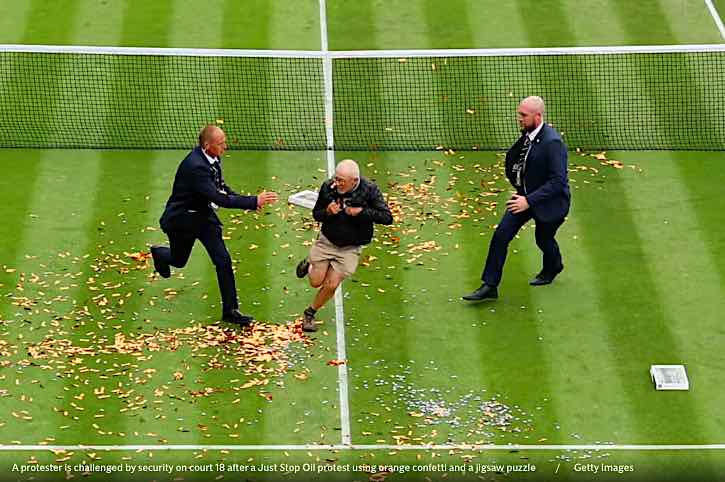
Even the style of this week’s climate protests seemed genteel, when Just Stop Oil activists briefly disrupted matches by scattering a Wimbledon-themed jigsaw and environmentally-friendly orange confetti glitter onto the grass. The planet may be on the brink of extinction, but predictably, “Home Secretary” Cruella Braverman considered the protesters “selfish” (cf. Going too far).

Tucked away on the BBC sport website is an intriguing article on a failed attempt by suffragettes in 1913 to burn down the grounds (see also here)—one of many such incidents that year at major sporting events. The Wimbledon chapter of the WSPU was a hotbed of suffragette activity, led by Rose Lamartine Yates.

Yates 1913Source.

Having been educated [You were educated?—Ed.] in Wimbledon myself, I had no idea of all this; I wonder if such local history is taught in schools today.

Yates 2

* * *

The suffragette movement was widely recognised by its colours, adopted in 1908: purple representing loyalty and dignity, white for purity, and green for hope. The following year the Wimbledon tennis tournament also chose purple and green for its emblem; but no debt has been acknowledged.

Just as there’s no clear link between the colours of Wimbledon and the suffragette movement, the image of the movement itself (“the largest domestic terror organisation who ever operated on British soil”) has long lost the taint of terrorism—as tends to happen with successful terrorist campaigns. Upon the outbreak of World War One the suffragettes’ arson and bombing campaigns were suspended, and after the war women gradually gained the vote without resorting to further violence.

For the suffragettes’ adroit use of humour, click here. More on tennis under A sporting medley; see also my Roundup of posts on gender.

How to waste time

Jesus
Note:
Bazunu quite rightly at the feet of Jesus—although like John Wayne,
he could do with more Awe. And I’m no theologian, but shouldn’t it be Jesus who saves?
Of course, headline writers licked their lips when Jesus took a penalty for Man City
against Burnley, who had Nick Pope in goal:
Pope saves from Jesus
For many more such headlines, see Jesus jokes.

Arsenal have been keeping everyone guessing recently. Against Southampton last Friday night, they had a cunning plan: going 2-0 up in the first half in their two previous games hadn’t worked out for them, so why not try going 2-0 down instead?

Walking home from the pub after the first half to follow the match on the Guardian live feed, it wasn’t so much that I gave up on them; rather, I just couldn’t stand the anxiety. Back in 2005, like most people, I did give up on Liverpool when they played AC Milan in the Champions League final in “the miracle of Istanbul”; watching in a central London pub, they were 3-0 down at half time, so I took the tube home disconsolately, but as I got home I switched on the TV aimlessly only to find (WTF) the match was still going on—they were playing extra time—AND LIVERPOOL WON ON PENALTIES!!!

Rob Smyth’s live comments in the Guardian are always drôle. Some gems from Friday night’s match:

54 min “To adapt a silly Terry Venables line,” * begins David Howell, “there are two ways for Arsenal to win the title this season. One is retroactively via City getting an FFP sanction, and that’s the only way.”
[*original line: There are two ways of getting the ball. One is from your own team-mates, and that’s the only way.”]

With Southampton ahead, their goalkeeper Bazunu (who I wasn’t quite expecting to be called Gavin—cf. the classic nickname for Kiki Musampa) engaged in serial time-wasting:

59 min A ricochet almost runs kindly for Jesus in the six-yard box, but Bazunu pounces on the ball and then whips out War and Peace to read another chapter before kicking the ball downfield. He still hasn’t been booked.

68 min Ward-Prowse, Bella-Kotchap and Caleta-Car: the double-barrelled goal that may have put one right between the eyes of Arsenal’s title challenge. [Cf. Compound surnames in Chinese and English.]

Just as well I’m not a hardcore Arsenal fan, more of a Wenger nostalgist with a penchant for Jesus jokes. Maybe tomorrow night they can lull City into a false sense of security. I bet they regret not signing me now—a Zimmer frame can be jolly dangerous in the 6-yard box.

Strangely, this is part of an extensive series on sport, ritual, and gender (rounded up here)—including posts on the haka, Ronnie‘s astounding 147 break, and a fabulous world music playlist for Emma and Leylah

Roundup for 2022!

Like a suburban Sisyphus doing and undoing a jigsaw, having gone to great lengths to mix up the daily sequence of my diverse topics in a stimulating fashion, it’s that time of year when I try and reassemble them into some kind of thematic order (cf. 2018, 2019, 2020, 2021). In September I essayed a handy roundup of roundups, covering some of this ground; and in November I listed Some recent *MUST READ* posts. As ever, in the sidebar you can consult the tags and categories, and even the monthly archive (scrolling waaay down); the homepage still provides useful orientation.

Disturbingly, the items featured below are just a selection, but do click away on all the links…

Perhaps I can begin with a story that combines several of my interests:

While I can’t quite claim to have won the World Cup for Argentina,

and I’m exceptionally fond of

  • Ogonek and Til, for fans of tennis, fado, and Noh drama—wacky diacritics and nasal vowels, with matching anagram and limericks.

Meanwhile I seem to have recovered from being a Ticking Time-bomb:

* * *

China:

And it’s always worth reminding you of my film on the Li family Daoists, and this roundup of posts on them, as well as my work on Gaoluo village.

Tibet (updated roundup), including

I also update my collected posts on Uyghur culture, including

Turkey features prominently in my Roundup of posts on west-central Asia, as I try to educate myself (and even this is only a selection):

leading on to

and William Dalrymple:

Some posts on Ukraine (Applebaum, Snyder, Sands), also linking to

As to other world music,

An Irish music medley, including recent entries:

North Indian music (collected posts):

Jazz (roundup of another extensive series) (Turkish jazz listed above):

And then:

Western Art Music: among this year’s posts on Bach (updated roundup) are

Mahler: my whole series is now listed here, with recent additions

Also

Society, religion, ritual:

A mélange of other topics:

New entries in A Sporting medley include

Drôlerie:

Well, that’ll keep you busy—as a reward, in future perhaps I’ll try posting every three days, rather than every other day, and I might even reblog earlier posts a tad less avidly—not wishing to try your patience (“You must come over and try mine sometime”—Groucho).

Tango for Messi!!!

For Sunday’s World Cup final, a paean to the genius of Lionel Messi. Watch his magical dribbling skills in awe, click here for a compilation of some of his great solo goals (the magnificent finale adorned with suitably ecstatic commentary!), and admire  this longer compilation. Among innumerable tributes, here’s a detailed analysis, and I like this recent article by Anita Asante. See also this BBC documentary.

For comparable artistry, cf. Ronnie: a roundup, and A god retires, under A sporting medley.

* * *      

The vision of Messi dancing his way through flailing defenders reminded me to expand my limited acquaintance with Argentine tango—don’t worry, I’m not going to try and dance. [1]

As with flamenco, fado (here, with sequel), and rebetika, the demi-monde roots of tango in the ports and bordellos were soon co-opted in a typical progression from banning (like the waltz) to bourgeois respectability, as the genre’s sleazy, predatory background gave way to the elegant sensuality of polished cabaret and ballroom performance (for critiques of artistic competition, click here). Please excuse me if I round up some of the Usual Suspects below, and for focusing on music rather than dance.

The early years, and the Golden Age
In the traditional style, the habanera rhythm, with the jagged, staccato syncopation of its 3+3+2 accents (cf. Taco taco taco burrito), is common to other Latin American genres (see this useful wiki page). The tango sound became more distinctive from the late 19th century with the addition of the bandoneón, originally used for church music in Germany (cf. Accordion crimes—including an early Polish tango).

The dance, with its sinuous intertwinings, spread around Europe from 1910. Echoing the “posturing machismo” of flamenco, Ricardo Guïraldes wrote in homage (sic):

Hats tilted over sardonic sneers. The all-absorbing love of a tyrant, jealously guarding his dominion, over women who have surrendered submissively, like obedient beasts…

Naturally, in recent years the sexism of tango dance has been subjected to much critique.

The global fame of tango was spread by the new radio, recording, and film industries. Here’s Rudolph Valentino with a tango-travesty in The four horsemen of the Apocalypse (1921):

Here’s a playlist of early 78s:

And this playlist includes tracks by a host of bandleaders, including Osvaldo Pugliese and Uruguayan violinist Francisco Canaro:

Here’s a remastered album of Julio de Caro’s band in the 1920s:

and the great Aníbal Troilo on bandonéon with singer Edmundo Rivero in Cafetín de Buenos Aires (1948):

Tango is part of a widespread musical family expressing heartache (duende, saudade, sevda, and so on), whose letras lyrics enhance its melodic melancholy; however, in vocal timbre I find none of the harsh anguish of flamenco cante jondo. The quintessential tango singer was Carlos Gardél (1890–1935), heard on playlists like this:

To redress the macho dominance, women singers from the Golden Age—some great tracks here:

“The ultimate tango cliché”
Like other pieces that suffer from over-exposure (such as Bach’s Air, the Mahler Adagietto, Debussy’s Clair de lune, Ravel’s Bolero, Dream a little dream of me…), it would be great if we could hear La cumparsita with original ears, but the kitsch image of Some like it hot (1959) leaves an indelible impression. Slower and more evocative than the first recording by Roberto Firpo (1917) is Eddy Duchin in 1933:

With the lyrics it’s quite transformed—I like Carlos Gardél’s version (#5 in playlist above), reminiscent of fado. Like most performers, he sang the Si supieras version by Pascual Contursi, which is maudlin enough—but the anguish of tango is rarely expressed so extremely as in Matos Rodríguez’s own lyrics, heard in this 1945 recording:

La cumparsa de miserias sin fin desfila                The parade of endless miseries marches
en torno de aquel ser enfermo                               around that sickly being
que pronto ha de morir de pena…                         who will soon die of grief…

Well, that’s the last time I’m inviting him to one of my parties.

The piece must have become a millstone around the necks of tangueros—but its immortality was confirmed by Tom and Jerry:

Piazzolla
Meanwhile, as juntas and Perónism rose and fell, Buenos Aires was in flux; with an ever-swelling immigrant population and changing tastes, “old-guard” tango declined amidst the rise of pop music. And so to the nuevo tango of Astor Piazzolla (1921–92) (Songlines; wiki), “the Boulez of the bandoneón” (an epithet attributed to L’Éxpress, making one worry about its readership figures), who “elevated” the genre to the status of art music in the concert hall (NB What is serious music?!). After his youth working with some of the great bands of Buenos Aires, Piazzolla was drawn to the style of modern WAM composers like Bartók and Stravinsky, studying with Alberto Ginastera and Nadia Boulanger—who, to her credit, insisted that he follow his own path. 

Boulanger with Piazzolla 1955
Studying with Nadia Boulanger in Paris, 1955.

He also recruited jazz musicians to his groups, although by the standards of jazz his arrangements were over-prescribed (cf. Unpacking “improvisation”).

Again, just a selection. Tres minutos con realidad (1957):

Adiós nonino (1959), a requiem for his father:

Balada para un loco (1969), with his second wife Amelita Baltar:

Libertango (1974) (playlist):

Suite Troileana (1975):

 And the gorgeous Oblivion (1982; danced here, and here):

I’m keen on his late Quinteto Tango Nuevo, with Fernando Suarez Paz (violin), Pablo Ziegler (piano), Horacio Malvicino (guitar), and Hector Console (bass)—click here for their 1984 gig in Utrecht (playlist).

As the “world music” scene took wing and boundaries were breaking down, Piazzolla became a legend. A definitive book is María Susan Azzi and Simon Collier, Le Grand Tango: The life and music of Astor Piazzolla (2000). And here’s the documentary Tango maestro (Michael Dibb, 2004):

Joining a long list of London gigs that I kick myself for missing, in 1985 Piazzolla performed for a week at the Almeida Theatre! Awww…

* * *

The scene has continued to develop, with nuevo tango supplemented by neotango. But as Adam Tully observed, 

It’s too easy to think that [Piazzolla] was leaving it all behind or rejecting it; in truth he was completely a part of this music and wanted it to be ever greater, to grow rather than to stagnate. And the dead end is to think that since Piazzolla innovated, then the natural progression of tango is the language that he invented. The danger there is for other composers, arrangers, and performers to get absorbed into Piazzollean language, which is what happened in the 80s and 90s.

Finally, some bonus tracks. Dance, with its complex technique, remains a vital part of tango’s social life, deserving greater attention than I can offer; but here are some staged representations. Carlos Suara’s 1998 movie Tango:

For Last tango in Paris and The conformist, click here. A scene from Frida (2002):

And Rose and Giovanni in Strictly:

I won’t venture into Finnish tango, but here are a couple of playlists for Turkey (cf. Midnight at the Pera Palace, and Jazz in Turkey). Seyyan Hanım (1913–89):

and Şecaattin Tanyerl (1921–94):

Hmm. Like I’d know—I was just admiring Messi weaving his way through yet another helpless defence, and recalling his time at Barcelona, comparable only to Bach at Leipzig [Late entry for 2022 Pseuds’ Corner Award—Ed.].


[1] Useful starting points include the chapter in The Rough Guide to world music, Songlines (including this selection), and wiki:
https://en.wikipedia.org/wiki/Tango
https://en.wikipedia.org/wiki/History_of_the_tango
https://en.wikipedia.org/wiki/Argentine_tango
https://en.wikipedia.org/wiki/Tango_music
https://en.wikipedia.org/wiki/Figures_of_Argentine_tango

For the wider context, see Peter Manuel Popular musics of the non-Western world.

.

Vassalage

Goulet
The Treaty of Le Goulet. Source.

As an arcane warmup for the France–England match tomorrow: one of my favourite expressions, outstanding in its entitled pomposity, is this description of Teresa May’s Brexit plan from the patronising patrician lips of The Haunted Pencil:

the greatest vassalage since King John paid homage to Phillip II at Le Goulet in 1200.

JRM

The Tree-Frog should know—he was there. Yup, he sure knows how to Get Down with the Kids. So that’s what they teach them at Eton, when they’re not busy hurling racist and sexist abuse at girls visiting from a state school. I wouldn’t know, I only did Woodwork at Skibbereen Comprehensive. *

I’d love to slip the bon mot (oops) into a chat over a pint at the Aardvark and Climbing Boot, but so far even “vassalage” has proved beyond me. Still, it might work as a new model of car (“Tesla Vassalage SR”), or in a catchy pop lyric—an early draft by Ken Dodd, perhaps, interpreted in the suave tones of Wee-Smug himself:

Vassalage

With this government one doesn’t need such a long memory as Tree-Frog, whoever the Prime Minister is this week, presiding over “the greatest fiasco since the day before yesterday”. May we be released forthwith from this Tory vassalage!


* My attachment to Skibbereen goes back to a rainy evening fuelled by inordinate quantities of Guinness on a Mozart opera tour, also memorable for a brilliant story at an Armagh pub session. I briefly flirted with the idea of applying for the Skibbereen Philharmonic, undeterred by the fact that there isn’t one.

A grand slam

Bridge

Just for a change from Daoists, Mahler, and Turkish culture, here’s a delightful bridge challenge!

As you see in my note to Perfection is NOT the word for it, my skills on the baize are rudimentary, having been only modestly maintained on orchestral tours on the back of a bus, suitably lubricated by alcohol. By now I’m even more out of practice than usual, but among a wealth of such problems I find this one particularly charming. Like the abstract beauty of dhrupad, it’s an infinite world.

I can’t see the solution online, but after the opening spade lead from West (almost inevitable, one would think, though it’s the only lead that makes the grand slam possible!) all thirteen tricks must be won in dummy—to which end, declarer must first discard the ❤️A and K on the two opening spade tricks, and then discard all the top diamonds on dummy’s four heart tricks!

Wonderful, eh—pour me another gin…

A god retires

Federer 2

As the divine Roger Federer retires, Barney Ronay has come up with an unbeatable entry for Pseuds’ Corner: *

His backhand was frankly ridiculous, overblown, hilariously good. This, one thought, watching that thing—the flex of the knee, the flourish of the wrist—is a kind of artefact, a European cultural treasure, like a Bach cantata or a complete acorn-fed Iberian ham, the kind of backhand a power-crazed Bond super villain might try to steal from its laser-guarded case and transport to the moon.

And he’s right, of course—while other players achieve greatness by sheer brute force, Federer’s grace as he glides around the court is supreme.

Required reading here is David Foster Wallace’s essay “Federer as Religious Experience”.

Requiring less athleticism, but just as poetic, is Ronnie‘s elegance around the baize. For more on snooker and tennis, including Cocomania and A playlist for Emma and Leylah, see under A sporting medley. My Bach retrospective has links to the cantatas…


* Pipping to the post cake baking as creative inspiration for Renaissance music, and my own likening of Stewart Lee’s reformulations of previous work to those of Bach and Miles Davis.

Ogonek and Til

For Nick

Allow me to introduce Ogonek and Til, feisty yet (you guessed it) flawed protagonists of my forthcoming crime drama series, as they embark on the hazardous trail of a dastardly ring of international diacritic smugglers…

ogonek

As an avid tennis fan, without being too perfectionist I’m not alone in musing gingerly over how to pronounce the surname of the magnificent Iga Świątek, currently sailing serenely (Serena-ly?) towards the final of the US Open. Several handy lessons appear online—sadly, not currently her own guide.

So the lowly diacritic squiggle indicates that the a sound is both closed and nasal. It’s an ogonek (“little tail”)—which leads us to the mystical realms of Elfdalian, Kashubian, Lithuanian, and Navajo (see here, and here)! To think that I still rather resent having to go to all the faff of inputting grave and acute accents in French, and such non-national fripperies…

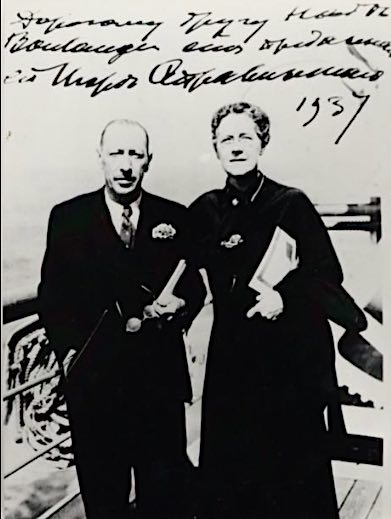
Readers with a penchant for Igor Stravinsky anagrams will note that while the cast of the brilliant Gran visits York includes such redoubtable characters as Sir K.Y. Groins-Vat and Kirsty Garvison, one absentee from the urtext is the arcane exhortation

V.S.—or try sink, Iga!

It belongs with those weird dreams common to musos and sportspeople (“unqualified, ill-prepared, running out of time, wrong uniform, lost”). On the eve of yet another crucial Grand Slam match, the Polish star finds herself on stage (quite likely in her tennis outfit) playing percussion in the The Rite of Spring, only to see a prophetic instruction from the composer (revealing a rare aptitude for self-parody): either whip the page over, or just create a noisy diversion with all the pots and pans that surround you!

* * *

ao

Which reminds me, in Portuguese (cf. my paltry dabblings here), I do feel we Brits might make a little more effort in adding a nasal quality at the end of the ão sound in São Paulo (the diacritic on ã being a til, for which English has adopted the Spanish word tilde)—as in

  • não (no)
  • mão (hand)
  • pão (bread)
  • cão (dog)
  • limão (lime, for that caipirinha party)
  • canção (song)
  • Japão (Japan)
  • João (“John”).

Plenty of material there for a couple of niche limericks, to join Myles’s tribute to Ezra £; Alan Watts on Salisbury/Sarum; The young man from Calcutta; The young man from Japan, and The old man from Peru [typical bias against the middle-aged woman—Ed.]. Something like this, perhaps:

There was a young man from Japão
Who fed his cão pão with limão
Waving a mão, he burst into canção
Until João came up and said “Não“.

Estêvão, Çisiq 2022.

Note (cf. Mots d’heures: gousses, rames):
The scene is a dingy immigrant enclave in Coimbra. Despite his eccentric choice of dog-food, the enterprising oriental subject of this ditty seems to have been sufficiently au fait with Iberian folk idioms to experiment in combining the Noh-tinged (Não-tinged?) saudade of fado with the palmas of flamenco; perhaps it was the casual co-option of such percussive accompaniment that so offended the purist killjoy João.

Noh drum
Source.

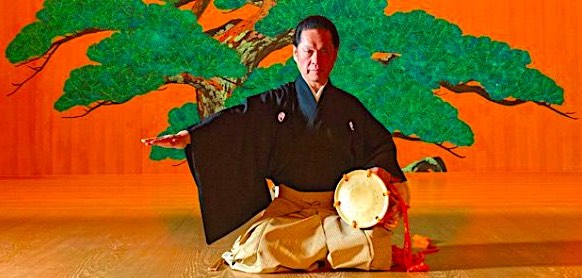
Recently another interpretation of “Waving a mão, he burst into canção” has been proposed (Acta Musicologica Asiatica-Iberica, LXXIII.2, 2021), which would bypass both fado and flamenco: it may rather depict the haunting kakegoe cries of the Noh drummer as he slowly lifts his hand to bring it down resoundingly on the tense skin of the ōtsuzumi. Although “raising” might have been a more precise verb than “waving”, the burghers of Coimbra might well be alarmed to hear such an alien sound echoing through the cobbled alleys of their hallowed university town.

* * *

Composing a limerick for Iga is more of a challenge:

There was a young star named Świątek
Whose talents spread way beyąd tech
When it comes to the tennis, she sure is a menace—
To play her it’s all hands ą deck.

Sure, the stress-patterning doesn’t quite work: in line 2, it would be helped by an accent on beyond, though that requires knowledge of some spurious back-story whereby Iga has already been spotted as a promising software programmer; and there’s nothing to be done about the final line. But hey… I am proud to announce that my effort was runner-up in the prestigious 2022 Świątek Limerick Contest—in which I was the only entrant… But go on, why not join in too? Hours of harmless fun for all the family!

Iga
“YAYY!!! I’ve got a limerick!!!”

And now I’m already honing my entry for next year’s contest:

To Iga’s fine surname Świątek
I once tried adding a “zee”, ą spec
But that wouldn’t work—I felt such a berk
And now her name’s in neą—Heck!

Again, this falls down on stress-patterning. In line 2 (please excuse my unusual lapse into American English), my misguided spelling was of course Śzwiątek.

For erudite comments arising from this post, click here.

* * *

For some Turkish diacritics, click here; and for Nicolas Robertson’s outstanding Oulipean anagram series, here. See also Language learning: a roundup. For more practice with Polish names, and some amazing music, see Folk traditions of Poland; Polish jazz, then and now; Madonna pilgrimage in Communist Poland; and Polish migrants to the USA are among the cast of Annie Proulx’s splendid ethnomusicological novel Accordion crimes. For the Portuguese footballer Jesus, click here. For more ą, sorry I mean on, both football and tennis, see under A sporting medley—including this tribute to the multicultural musical heritage of Emma and Leylah. See also Oh Noh!, featuring Brian and Stewie; and for the clichés of blurb-writing, click here.

Lionesses, YAY and hmm

🥂🥂🥂🥂🥂🥂🥂🥂🥂🥂🥂

Euro headlines

The women’s Euro football tournament has been most inspiring, and the media coverage impressive too!

Amidst all the celebration, as the dénouement approached, two worthy talking points were gleefully slapped down by the PC-gone-mad brigade (cf. Stewart Lee).

RenardAs Anita Asante observed, three of this year’s four semi-final teams were dazzlingly white—the fourth, France, has a substantial and brilliant component of black and brown players, including the captain Wendie Renard.

The English women’s game hasn’t always been quite so white (Hope Powell, Alex Scott, Anita Asante, Nikita Parris, and so on; cf. Bend it like Beckham), but there is clearly a structural problem (see also here, and here). The world of commerce seems keen to celebrate some notional diversity, as in this advertisement. The English men’s squad is quite diverse, but when the team lost in the final of the recent Euros the black players became scapegoats, receiving racist abuse (see also my vignette in the Comments section below).

After the women’s semi-final, Woman’s hour hosted a rather innocuous discussion. Now, we all delight in England’s success (and that of Germany, for that matter, and the whole tournament); the contributions from Anita Asante, Robyn Cowen, and Jacqui Oatley were largely celebratory, but presenter Emma Barnett, reading out a query from a listener, also touched—very lightly—on the apparent sexism of the term “lionesses”.

Predictably, the tabloids lost no time in flying off the handle (Daily mail: “Fans slam calls to change England women’s football team’s ‘sexist’ Lionesses nickname“—the verbal “slam”, like “quiz”, as in “Cops Quiz Immigrants in Drugs Probe”, is a sure pointer to imminent fatuity). While the Loony Right rejoices in losing its rag, the issue seems to require the dispassionate analytical skills of a Janet Radcliffe Richards.

Critics like Piers Morgan and “Culture Secretary” Nadine Dorries (WTAF)—veritable Wittgensteins for our age—come to the defence of “lionesses”, so we can Rest Our Case. Dorries lived in Africa for a year, SO THERE! And Morgan called it “the single most pathetic virtue-signalling campaign ever. […] Just stick a cork in it, you wretched gender-deranged woke wastrels”. All we need for a Full House of Loonies is Jeremy Clarkson and Jacob Tree-Frog.

The Express sounds almost reasonable:

Championing a women’s football team whose nickname embodies female power and pack or team mentality through the image of a pride of lionesses is empowering to women and girls, not demeaning in a sexist way.

But while Anita Asante has no issue with the term lionesses, I find the discussion around zoological verisimilitude (“the FEMALE beasts do the hunting while the males sleep”—Take That!) somewhat of a red herring. Of course, English has a range of terms for male and female animals; of the latter, FWIW, most are separate words, with only lion, tiger, and leopard having female versions ending in “-ess”. To thicken the plot, the English men’s football team aren’t called “lions”—that’s a name for men’s rugby union teams.

I’m more concerned about the linguistic use of “–ess” to denote a variant of the assumed male norm. Besides the animal kingdom, words like actress, waitress, and sorceress have indeed been falling out of fashion, whereas princess (like the whole monarchical system) seems resilient. It’s no simple matter, but it doesn’t seem too revolutionary to query the use of a feminine ending when referring to women.

The Express insidiously undermined the feminist cause:

For many, the idea of changing the name from one of female empowerment to hide behind a more “masculine” term is in itself sexist. […] It is also contributing to the fatigue felt by many with those who identify as feminists [so there!] and nit-pick on such ideas which attempt to re-write femininity into a negative connotation.

Media discussion of sexist coverage, such as this from Grazia, seems to have been rare.

Anyway, all attempts (“these days“) at debating racism and sexism provide yet another rallying cry for the PC-gone-mad, anti-woke brigade, gleefully able to speak their own language again and scoff their bendy bananas, singing Rule Britannia! and waving their Union Jacks as they deplore judges who come down on the side of human rights—like the immigrant’s pet cat furore.

The tournament was delightful; but would it really be so unladylike to question the status quo (cf. Feminist humour)? None of this detracts from the celebration. For BBC TV, Alex Scott and Ian Wright were exhilarated at the same time as they faced the issues.

For more on women’s football (and women’s tennis, another inspiring story), see under A sporting medley: ritual and gender, including Belated recognition and Hope for our future.

Inter-faith ping-pong

Mardin ping pong

Charming images from Mardin in Turkey, where World Table Tennis Day featured a match between an imam and a Syriac church chorister:

Mardin ping pong 2

Of course, the winner was friendship, peace, and table tennis. 

FatmaThis may sound a tad Kumbaya, * but it’s in line with the pleas of Fatma Yavuz for greater religious tolerance in Turkish society. Incorporating gender into the debate, she was among a group of thoughtful, articulate women speaking at a recent series of online panels on Freedom of Belief and Gender in Turkey—here’s the third session, with Fatma’s contribution from 49.18:

More on that initiative coming up soon. For a fine intra-faith sporting tournament, see under Futbol in Turkey.


* The wiki entry on Kumbaya is interesting. The song goes back way before the 1950s, when it emerged from its African roots in the southern States to enter into the wider consciousness via the civil rights movement. By the 1990s it was often used in sarcastic criticism of the kind of consensus-compromise politics “that allegedly does not examine the issues or is revelatory of cockeyed optimism”; “singing Kumbaya is not a foreign policy strategy”. More e.g. here.

Line judges

line judges
My Brilliant Friend Augusta always has a lot to explain to me when I visit her in Kuzguncuk—even including the laws of perspective. Now that she’s braving the English “summer” and my lowly Chiswick hovel, I’ve been inflicting Wimbledon tennis on her. She’s game, and can basically follow what’s going on (cf. The first snooker commentary). However, at one stage, noticing the three statuesque people lined up at the back of the court, she asked,

“What are those people doing standing there?”

It does indeed look rather as if they’ve adopted a crafty method of gatecrashing, having failed to get tickets. They don’t seem to be enjoying it much, though—the severity of their demeanour, their identical clothing, and their limited range of robotic movements, suggest a Kraftwerk tribute act, so one keeps hoping they’re about to burst into song.

Kraftwerk
At least Augusta didn’t ask how another ingenious spectator has managed to wheel on a high chair and park it right in the middle of the arena to watch the match. They even get to sit down—such brazen effrontery.

umpireSource: wiki.

Such are the kinds of challenges that face us in seeking to interpret the rules of Chinese ritual zzzzz (cf. Nigel Barley among the Dowayo).

For more on tennis (as well as football, rugby, snooker, and archery in Bhutan), see A sporting medley, including an update on the line judges.

The song of the Italians

anthem 1

I’ve noted the exuberance of national anthems based on the style of Italian opera, notably that of Brazil. But I curiously omitted to pay homage to the Italian anthem, composed by Michele Novaro in 1847 when the concept of “Italy” was still novel. Though it soon became popular, it only became the national anthem in 1946.

With All Due Respect to the spirited renditions of players and spectators, it’s worth relishing it in a polished performance, with three of the six verses (1, 2, and 4):

For anyone not quite ready to sit through an entire Verdi opera, this makes a ready stopgap. The instrumental intro already passes through several moods in quick succession; the song, with its snappy modulation at 0.57, and the fine sequence from 1.18, is just as rousing.

anthem 2

Some of the lyrics may seem a tad niche, all the more so from the mouths of burly athletes—like the openings of verse 1:

Fratelli d’Italia, l’Italia s’è desta, dell’elmo di Scipio s’è cinta la testa.

and 2:

Noi fummo da secoli calpesti, derisi, perché non siam popolo, perché siam divisi.

Verse 4 is rather arcane too:

Dall’Alpi a Sicilia, dovunque è Legnano,
Ogn’uom di Ferruccio ha il core, ha la mano,
I bimbi d’Italia si chiaman Balilla,
Il suon d’ogni squilla i Vespri suonò [noisy Vespas].

And verse 5:

Son giunchi che piegano le spade vendute
Già l’Aquila d’Austria le penne ha perdute [make do with spaghetti then]
Il sangue d’Italia, il sangue Polacco [checks notes]
bevé col cosacco, ma il cor le bruciò.

Yet again, this exhilarating piece, bursting with energy and variety, only underlines the utter tedium of the British anthem (see also Haydn for football). For Italian folk musicking, click here; and do listen to Enza Pagliara!

My World Cup debut thwarted

Stadium

A sporting variation on the musician’s recurring dream:

Out of the blue, I’m summoned to join the attacking lineup in England’s “bid” (As They Say) for the football World Cup. Everyone seems to consider this fair enough—even though in the dream I am my real age now, no longer a sprightly youth. After brief, jovial greetings from Raheem Sterling and Wayne Rooney, I suppose I’m expecting a bit of team training, some practice to slot me into the manager’s master-plan—but there’s no time for any of that. Anyway, how hard can it be?

So after making my way—entirely alone—to the stadium (possibly the Nou Camp in Barcelona), I find myself adrift in the labyrinthine changing rooms, which seem to be full of a motley crew of podgy kids from amateur teams. I wander around frantically trying to locate a room for the England team, and to find the team kit. With time getting on, I look up to see the clock fast approaching the 8pm kick-off, and over the tannoy I hear the sound of the national anthems prefacing the match. Still dressed in my everyday garb, I search desperately for the way onto the pitch.

As usual, I woke up before the dénouement.

Unqualified, ill-prepared, running out of time, wrong uniform, lost—precisely the traits of my dreams as a musician. There’s not even any great anxiety involved: the path to failure unfolds with “all the inevitability of Greek tragedy”.

For a similar dream involving Iga Świątek and Stravinsky, see Ogonek and Til. Cf. somewhat less dystopian fantasies on Lisbon, Mozart opera (note the Larson link!), and Tibet. See also From the archives.

Jesus of Benfica: a cautionary tale

*Guest post by Nicolas Robertson
—author of the magnificent series of anagram tales, no less*

Jorge Fernando Pinheiro de Jesus (which could translate as Jesus’s Christmas tree)—naturally known as Jesus, or, to distinguish him, as Jorge Jesus. Born 24th July 1954; prolific Portuguese midfield football player, and subsequently manager, much-remarked-upon hairstyle. Seventeen years as a professional player from 1973 to 1990, when he switched to a managerial career, so at 36 years old (three years later than his homonym).

His teaching life has lasted as long again, but has not been without turmoil. I first became aware of him during good days in his first stay at Benfica (2009–2015), headlines such as “Jesus is very content with his eleven”. One appreciated his constructive use of language: “For me, a manager has no past nor future, he only has past”, “What was Benfica before me?”, “The manager has to see things that no one else sees”.

Jesus 1

Which leads me to an unlikely but striking encounter with the painter Paula Rego at an exhibition of hers in Cascais in 2014, which he later described: “A manager is like a painter. […] Paula Rego said to me there was a figure called Maria and she is crying, and I thought, oh, is she crying? I can’t see anything—but she knew she was crying. It’s like the manager.”

Having passed through Sporting (2015­–18), Al-Hillal (Saudi Arabia, 2018–19) and Flamengo, Brazil (2019–20), where he managed an astounding series of successes, Jesus found himself irresistibly called back to Benfica (a name which sort of means “May it be well”), with dreams of renewed glory. “We’re not going to play for the double, we’ll play for the triple… and we’ll crush them” [vamos arrasar], though he was careful enough to admit “I don’t know what tomorrow will be”.

Jesus 2Jesus in upbeat mood at crucifixion rehearsal.

Things didn’t go too well, on the Second Coming, Covid took its toll (not easy to see how he was more prejudiced than the others, but he suffered: “One day you can think of eleven and the next you’re without three players”. And more went wrong, results weren’t coming, there was disquiet in the plantel. Since Herod (Luis Filipe Vieira, the boss, who’d been to fetch him, the Messiah, from Brazil in his private jet) had just been put away for massive corruption, Rui Costa (choose your own avatar), the stand-in and subsequently elected president—himself a hero as a player—wanted to make his own mark…

Some headlines from this final playout:

Rui accused of not defending Jesus

Soap opera of Jesus creates bad feeling

J. Jesus ever more alone in the Light [Luz, Benfica stadium]

Because here’s the rub: some Wise Men (top brass from Flamengo in Brazil) had come from the East (if you go the other way round) in search of Jesus again—but found him unavailable, or at least hesitant (he was in mid-contract, after all). And they didn’t wait for an answer, but went off to Poland, and behold, they found Paulo Sousa, manager of the Polish national team; he too was under contract, but hey! it’s only money to get out of it…

More headlines:

Sousa contratado, Jesus amuado [pissed off]

Jesus desolado com Flamengo

And then Jesus was sacked anyway—or rather, both sides agreed it would be best for him to leave: “I came thinking I was a solution and not a problem”… Classic “despised and rejected” (even worse, having been eagerly sought)—but being football, and not life, there’ll be a sequel. Meanwhile Jesus has been seen—and photographed, of course—walking his dogs on the beach in Troia, a wonderfully-named peninsular south of Lisbon, no one else in sight. He’s been offered, or his name linked with, several comebacks in various countries, but no doubt he’s being cautious.

So the Second Coming of Jesus to Benfica ended sadly. I was reminded of a story by Borges, Ragnarök. The parallels are not strict, but what if the gods come back and we don’t like them, they’ve lost touch from being too long away, we can’t even understand what they say (Borges), what if (Christian eschatology) He comes back, and it doesn’t work, doesn’t apply, it’s a flop? If I were a god, I wouldn’t risk it. Too late for that lesson, J. Jesus…

(Jesus’s technical assistant, a sort of Peter, is carrying on pro tem. His results so far are more or less like those of Jesus. His name is Nelson Veríssimo (“absolutely true”). He looks like a decent bloke.)


SJ: This is a sequel to my post on Jesus jokes. For the Three Wise Men, see here (The life of Brian)—and, more seriously, here. Just as essential reading as Nick’s anagram tales is the ouevre of Patricia Lockwood, also rejoicing in language and the ambivalence of the Christian Message. Click here for a roundup of wacky headlines, and here for more sporting drôlerie.

A playlist for Emma and Leylah

Emma LeylahPhoto: Timothy A. Clary/AFP.

🥂🥂

The fairy-tale dénouement of the US Open women’s singles was an even more intense and moving contest than anyone dared imagine. Just exhilarated by this rare moment in sporting history, to celebrate youthful inspiration I’d like to offer a wacky little playlist in homage to both players—a paean to migration, riffing freely on their cultural backgrounds. Some of these connections may be approximate, but you get the idea.

Conveniently, my soundtrack for Emma Raducanu (“london|toronto|shenyang|bucharest“) (TEN MATCHES without dropping a set!!!) can also serve the valuable function of irritating Priti Patel and Piers Morgan…

BTL iconHer mum Zhai Dongmei 翟冬梅 comes from Shenyang in northeast China:

  • so here’s a powerful, majestic, gritty shawm band from nearby Liaoyang (#6 in the Music Player as you scroll way down in the sidebar of this blog, with commentary here)—two players striving in unison, occasionally pulling apart, with the drum evoking the sound of the tennis ball (the very opening perhaps satirising Nadal’s pre-serve routine)?! See also Ritual groups of Liaoning; and click here for Emma speaking excellent Chinese (Yeah I know…).

From her dad’s part of the world,

  • From the Canadian background of Emma’s parents, some Inuit throat-singing—another joyous ritualised game (whereas both Emma and Leylah are decorously silent on court, perhaps this evokes a speeded-up soundtrack of the vocalisations of certain other tennis players):

  • Moving on to, um, Bromley, how about David Bowie:

* * *

Just as inspiring—both on court and for a playlist!—is Emma’s opponent Leylah Fernandez.

For the Philippine heritage of her mum,

  • the elegant passion of nanguan (nanyin) ballads from the Hokkien diaspora of southeast China:

Leyla’s dad comes from Ecuador, suggesting a somewhat imprecise connection with

  • festive wind bands from the Bolivian Andes (see Music and the potato), grounded in seasonal rituals (Wimbledon and the other majors):

And for the family’s Canadian heritage,

  • in French-Celtic mode, the irresistible energy of La bottine souriante playing La tuque rouge:

  • along with Leonard Cohen:

Hallelujahs for both stellar players!

International Cultural Exchange indeed… Cf. They come over ‘ere…

See also A sporting medley: ritual and gender—not least Cocomania. For more celebratory mixtapes, see Dancing in the streets!!!, and Folk cultures of Europe. And do listen to my Playlist of songs

Haydn for football

The Euros remind me again of national anthems—like an archaic, stilted Eurovision Song Contest. Italy’s song is a mini-opera, and it’s hard to beat the exuberance of Brazil’s anthem, or the drama of the haka. La Marseillaise (1792) is very fine too:

Marseillaise

As to the German anthem, Joseph Haydn composed Gott erhalte Franz den Kaiser in 1797, in honour of Francis II of the Austro-Hungarian empire (wiki here and here). After the song became the national anthem of Germany from 1841, the lyrics continued to go through several revisions under successive regimes.

Kaiser

Written in response to Britain’s plodding God save the king * (superior suggestions here), it’s among several melodies of Haydn said to be inspired by a Croatian folk-song. The song alone outranks the British anthem, but Haydn soon elevated it as the theme for variations in the transcendent slow movement of his Kaiser quartet—tastefully played here by the Quatuor mosaïques:

With All Due Respect, renditions at football internationals don’t quite rise to such heights. But of course, chamber music and football matches serve different functions

For some more exquisite Haydn, see here


* My usual homage to Monty Python and the Holy Grail: “I didn’t know we ’ad a king—I thought we were an autonomous collective”:

Ravi par Pravi: more French chanson

Pravi

Given ethnomusicologists’ taste for all manifestations of the Terpsichorean muse, Eurovision has become a fashionable topic, * but with my head buried in Daoist ritual practice, I’ve always given it a miss (“Call Me Old-Fashioned”).

So it was only when watching the presentations after the French Open women’s singles final this weekend that I was enticed to explore the ouevre of the beguiling Parisian chanteuse Barbara Pravi. **

Pravi tennis

For the Roland Garros organisers, inviting her to perform her recent Eurovision song Voilà may have ticked the boxes, but she matched the intensity of the players’ speeches, with her lyrics (see below) affirming their own strivings; the occasion gave her song a personal, almost informal touch that the streamlined Eurovision inevitably lacks (see this clip). Paying attention to context, even her chic outfit was artfully chosen, as a fan notes:

Barbara was a vision of summer in bright yellow [Dior, I gather]. Her high-rise pleated skirt helped define her silhouette, while her oversized short sleeves gave it added drama. Barbara, who is famously petite [sic], added height with a pair of super-tall platform heels with black straps around the ankles. She wore white booty socks, which brought a sporty element to the elegant look.

Here’s the official video of Voilà:

 Again, it benefits from a more intimate setting:

Écoutez moi
Moi la chanteuse à demi
Parlez de moi
À vos amours, à vos amis
Parler leur de cette fille aux yeux noirs et de son rêve fou
Moi c’que j’veux c’est écrire des histoires qui arrivent jusqu’à vous
C’est tout
 
Voilà, voilà, voilà, voilà qui je suis
Me voilà même si mise à nue j’ai peur, oui
Me voilà dans le bruit et dans le silence
 
Regardez moi, ou du moins ce qu’il en reste
Regardez moi, avant que je me déteste
Quoi vous dire, que les lèvres d’une autre ne vous diront pas
C’est peu de chose mais moi tout ce que j’ai je le dépose là, voilà
 
Voilà, voilà, voilà, voilà qui je suis
Me voilà même si mise à nue c’est fini
C’est ma gueule c’est mon cri, me voilà tant pis
Voilà, voilà, voilà, voilà juste ici
Moi mon rêve mon envie, comme j’en crève comme j’en ris
Me voilà dans le bruit et dans le silence
 
Ne partez pas, j’vous en supplie restez longtemps
Ça m’sauvera peut-être pas, non
Mais faire sans vous j’sais pas comment
Aimez moi comme on aime un ami qui s’en va pour toujours
J’veux qu’on m’aime parce que moi je sais pas bien aimer mes contours
 
Voilà, voilà, voilà, voilà qui je suis
Me voilà même si mise à nue c’est fini
Me voilà dans le bruit et dans la fureur aussi
Regardez moi enfin et mes yeux et mes mains
Tout c’que j’ai est ici, c’est ma gueule c’est mon cri
Me voilà, me voilà, me voilà
Voilà, voilà, voilà, voilà
 
Voilà
 

Though the French entry came second in Eurovision 2021 (“nous wuz robbé”), it was France’s highest-ever score. The song is consistent with the contest’s decisive shift in favour of minor keys over the last twenty years—conveying gravitas to offset the kitsch of the occasion, or even reflecting political unrest?

We Brits are so used to failing dismally in the contest that nul points has long been a widely-known French expression. This under-achievement is discussed in a Twitter thread, and at the start of this episode of BBC Radio 4’s More or less. Despite the old slur of Das Land ohne Musik, it’s an intriguing political and musical issue. It may be seen partly as a reaction against the global dominance of Anglo-American pop; while it predates any disillusion with Brexit among “our European friends”, it may feed into British conservatives’ harrumphing over loss of empire. But other factors are more significant.

Talking of international multi-dimensionality, perhaps we might see Eurovision as a Handel opera, with the recitatives replaced by other boring longueurs. For the Azeri entry, see here.

Back with Barbara Pravi, her father is of Serbian and Algerian Jewish descent, her mother of Polish-Jewish and Iranian origin—I note this with no small envy, since my own parents hailed from the exotic climes of Surbiton and Chippenham (cf. “Palm trees are nothing to us—we’re from Torquay”). She discusses her Persian heritage in this interview (from 6.31).

And I’m most taken with her recent Les Prières for International Women’s Day; this playlist includes all six songs:

including Prière à l’éphémère, inspired by Rumi:

So this post complements my other hommages to French chanson, such as Rameau, Berlioz, Ravel (here and here), Debussy, Michel Legrand, Françoise Hardy, and, um, Pierre Boulez.

For thoughtful perspective on Ukraine’s Eurovision successes in 2004 and 2016, see here. For traditional Iranian singing, click here; for wise critiques of artistic competition, here; and do enjoy A flat miner! For broader perspectives, see What is serious music?!, Society and soundscape, and for gender and music, Feminine endings and Flamenco 2.


* See e.g. Dafni Tragaki (ed.), Empire of song: Europe and nation in the Eurovision Song Contest (2013), reviewed here.

** One might expect the drôlerie à demi of my heading “Ravi par Pravi” to be a staple of the French tabloids, but its apparent absence there rather confirms Kate Fox’s observations on the British propensity for headline punning. At least we can win at that.

A guide for bemused rugby fans

scrum

Caption competition:
“Thanks guys, I’m sure I dropped it down here somewhere…”
“Excuse me, but whatever do you think you’re doing down there?”
“I suppose you think I’m going to do your washing for you.”

While the language of rugby union may not be quite so elaborate as that of Daoist ritual, the roster of arcane infringements is quaint, and subject to constant revision. Not only do players have to understand the distinction between a maul and a ruck, they can be penalised for such faux pas as

  • Not rolling away [Mick Jagger]
  • Entering from the side [don’t ask]
  • Bringing down a maul
  • Ball held up
  • Not releasing [Engelbert Humperdinck]
  • Forward pass [cheeky]
  • Taking the man out [ditto]
  • Blood replacement [Transylvania]
  • Not straight (at the lineout)
  • Not driving straight [Afterble, constanoon] *

And one admires the way the players meekly accept the ref’s decision, whatever it’s supposed to mean. And even while the game is flowing, the obliging ref is full of succinct advice on How to Behave—like

 The best bit is TMO (Too Much Oratory), where we all get to watch dastardly behaviour in slow-mo from every angle—like viewing a burglary on CCTV, while the judge makes learned pronouncements. 

As to the basics, the Irish column Ask Audrey offers a helpful explanation:

Guten Tag. I am in Cork for three months and see that everyone is watching the Rugby World Cup. Can you explain the rules? — Karl, Berlin

Here is my understanding of how it works. The fat guys all run into each other, while the slightly slimmer guys stand in a line watching them. Eventually the fat guys get tired and have a lie down on top of each other. The ball comes out the back of this lie down and the skinnier guys kick it back and forward to each other for half an hour. Then the fat guys wake up and start running into each other again. Every now and again the referee stops play because someone dropped the ball. That’s the only thing you are not allowed to do in rugby. Everything else would appear to be okay. Sometimes one group of fat guys pushes the other group over the line and there is some manly hugging, but no shifting like in soccer. After 80 minutes they add up the score and New Zealand wins.

I offer similar interpretations for snooker and tennis; note also The haka, and suitable responses—all part of a series under A sporting medley. More caption competitions here and here.


* As in
   “Excuse me sir, do you realise this is a one-way street?”
   “It’s all right officer, I’m only going one way.”

The first snooker commentary

A sequel to Oh and that’s a bad miss, and various posts under Ronnie: a roundup

Snooker b&w“What shall we do with all these balls?”

The 2021 Masters snooker tournament is now well under way, NOT reaching a crescendo on Sunday.

A most educative aspect of enjoying snooker on TV is the expert commentary by former players. But way back in the Mists of Time, pundits were considerably less well informed. And everyone was hampered by only being able to see the “game” in black-and-white—even live…

Here’s a transcript of the first ever broadcast:

I wonder what he’s going to do with that stick.
I think you’ll find the technical term is “baton”.
Gosh, he used it to hit one ball onto another one. Well that’s a bad start.
Oops, one of the balls has gone down a hole. Obviously another serious mistake.
Yes, unfortunate, that—looks like the ref’s going to punish him by making him take another go.

Hang on, they gave him a goal then, when that ball went down the hole (I think it might be red, but who can tell?). Rewarding failure, if you ask me—Typical!
Yes, but I notice they only score one goal for that. Someone should tell them not to bother.

[zzzzz]

Oh no, now another ball has gone down a hole!
It’s almost as if they’re doing it on purpose.
This time it looks like a black one—makes a change, I suppose. Screwing up once is understandable, but twice in a row, come on! These chaps are clearly amateurs.
Hey, the ref’s put it back on the table—cheating, surely. Quis custodiet ipsos custodes? O tempora, o mores!

Have you noticed how they keep hitting the white ball first? Bit unimaginative if you ask me.
It’d be easier without the stick too—whatever it is they’re trying to do.
And they might have thought of the risks and just designed a table without holes in it. Basic design fault, what. I’ll give them a call, once someone gets round to inventing the telephone.
Or they could just play with bigger balls, so they don’t go down the holes.

I think he’s eyeing up a plant!!!
What on earth are you on about? Kindly leave botany out of this. People will think we don’t know what we’re doing.
Sorry, no idea what I meant by that. Mind you, now he’s got a nice angle on the blue to go into the pack, hitting the pink full ball.
You’re at it again.

Hang on—do you reckon the goal is to Attain Emptiness, after the fashion of Huineng and Walt Disney?

[…]
Pour me another gin.
I think I’m starting to get the hang of this.

Hmm, not many red balls left on the table. The ref should put them all back. At this rate they won’t have any more balls left to hit—the whole sorry travesty will just fizzle out. Let’s face it, this is never going to catch on. I’m going to take up accountancy.
Fancy a curry?

Ronnie

Ronnie graces the baize on Wednesday.

Cf. Script to an iconic head-butt. Seriously though folks, don’t miss Ronnie’s divine 147!!!

Discerning rules is pretty much what anthropologists and ethnomusicologists do. This vignette from Nigel Barley on his fieldwork among the Dowayo of Cameroon (cited here) is apposite:

They missed out the essential piece of information that made things comprehensible. No one told me that the village was where the Master of the Earth, the man who controlled the fertility of all plants, lived, and that consequently various parts of the ceremony would be different from elsewhere. This was fair enough; some things are too obvious to mention. If we were explaining to a Dowayo how to drive a car, we should tell him all sorts of things about gears and road signs before mentioning that one tried not to hit other cars.

From the archives

me reading

Don’t like to boast, but in this early photo I am preparing my review of the Sanskrit translation of the pop-up version of Wittgenstein’s Tractato logico-philosophicus.

Arsenal 1958Soon I would even learn to tie my own shoe-laces—which stood me in good stead for joining the Arsenal forward line-up for a record transfer fee of 4 guineas. My artistry is hard to make out in the grainy TV footage of the day, since I was so small, which made me tough for burly defenders to mark; in my own early version of the nutmeg, I kicked the ball between their legs and then crawled through myself.

And here I am giving my first performance of Messiaen’s Vingt regards su l’enfant Jésus:

me piano 1955

Meanwhile I made my Carnegie Hall debut with my own arrangement of the complete Bach cello suites for kazoo. And the rest isn’t history.

See also Wisdom of the elders, A modest literary pedigree, and A short story.

Some pupils of Nadia Boulanger—real and alleged

Boulanger with Stravinsky

With Igor Stravinsky (“Gran visits York“), 1937.

Just in time before it was deleted, I viewed a suggestive wiki page listing well over two hundred distinguished pupils of the great pedagogue Nadia Boulanger (1887–1979; cf. my post on her sister Lili, for whom see also Nubile gorilla). The wiki editors may have decided it would be shorter to compile a list of musicians who didn’t study with her.

Sure, one might suspect that some of them just popped in for a pot of tea and a macaroon, à la Alan Bennett. The allure of Paris may have played a certain role in Mademoiselle’s popularity—dare I surmise that her wisdom might not have been in quite such demand had she been based in Scunthorpe.

Prominent in the populous Boulangerie were renowned WAM composers and performers—such as Walter Piston, Aaron Copland, Elliott Carter, Virgil Thomson, Roy Harris, Philip Glass (cf. Ned Rorem, “Am I the only living expatriate American composer who never studied with Nadia Boulanger?”); Darius Milhaud, Jean Françaix; Thea Musgrave, Lennox Berkeley; Shanghai composer Ding Shande; [1] Igor Markevitch, Dinu Lipatti, Idil Biret, Joseph Horovitz, Daniel Barenboim, Clifford Curzon, Kenneth Gilbert, John Kirkpatrick, Kathleen Ferrier…

As would be the case later (see here, under “Performance practice”), new composition and early music went hand in hand. Boulanger’s performances of Monteverdi and Bach were legendary—At A Time When It Was Neither Profitable Nor Popular. In the later HIP scene, she was a formative influence on performers such as John Eliot Gardiner and Robert Levin.

I like this story from Philip Glass’s memoirs:

After proffering his 20-page manuscript, Mademoiselle (as she was known) placed it on the piano’s music rack and cast her eyes over the densely written pages. At a certain point she paused, drew breath and enquired after his health.

“Not sick, no headache, no problems at home?”

“No, Mlle Boulanger, I am really fine.”

“Would you like to see a physician or a psychiatrist? It can be arranged very confidentially.”

“No, Mlle Boulanger.”

She wheeled her chair around and screamed “Then how do you explain this?”

She had found “hidden fifths” between an alto and bass part—a heinous crime, if ever there were one. After upbraiding him for his slackness and lack of commitment he was dismissed and the lesson was over.

Boulanger with Piazzolla 1955

With Astor Piazzolla, 1955.

Intriguing too are those names outside the world of WAM, notably jazzers—Donald Byrd, Quincy Jones, Astor PiazzollaMichel Legrand, and so on. Most poignantly, Noor Inayat Khan and her siblings—on whom, do please read this moving post.

Here’s a precious 1977 film by Bruno Monsaingeon (cf. his films on Rozhdestvensky), showing evocative vignettes from her salon:

For a festival in 2021, see here.

* * *

Descending into fantasy, I only began to wonder about some of these names when I switched on Football focus to hear Wayne Rooney claiming to be a disciple:

Emm… yeah Gary, me legendary hunger for the ball round the edge of the box—that’s all down to Mademoiselle, like… She taught me everything I know about Renaissance polyphony—[2] mind you, I taught ‘er everything she knows about dribbling, fair dos like. [3]

Perhaps it goes back to the popularity of a CV-writing manual that states “most importantly, always claim to be a pupil of Nadia Boulanger”.

This trend has also influenced historians, such as recent biographers of Genghis Khan (“under her tutelage, he became almost docile”) and Jane Austen—citing a recently-discovered early draft of Pride and Prejudice:

But I was not to be deterred by Mademoiselle’s stern rebukes pertaining to the supposed clumsiness of my chordal voicing on the pianoforte.

(Seriously though folks, do read this interesting article on music and class in Austen’s works).

YAY! Wayne Rooney, Genghis Khan, and Jane Austen—now there’s another great guest-list for a fantasy dinner-party. For some unlikely reviews of my own ouevre, click here.
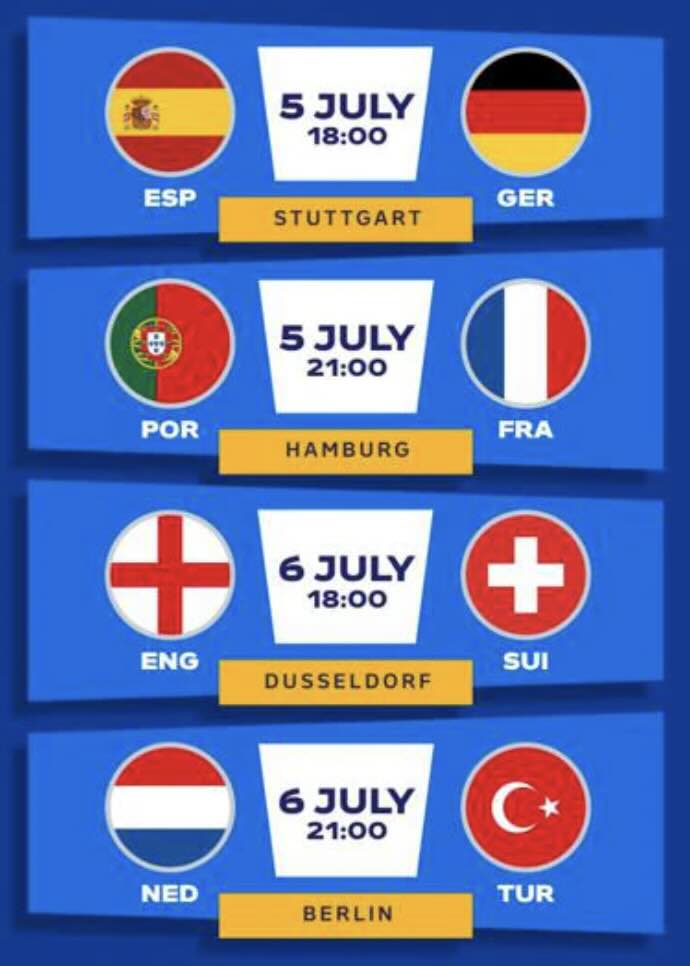
Left, 1910; right, 1925.


[1] Meanwhile, other students were beating a path to the door of Olivier Messiaen, including the great Chinese composer Chen Qigang.

[2] See his little-known thesis: Wayne Mark Rooney, The art of counterpoint in the late Masses of Josquin des Prez, with special reference to penalty-taking, like (PhD, Université Paris-Sorbonne/Birkenhead Polytechnic, nd).

Note also the (real!) Improvisation for Michael Owen on the qin zither.

[3] Cf. the Harry and Paul spoof interview with S-Simon Rattle, introducing a fascinating (and otherwise earnest) post on Conducting from memory.

A sporting medley: ritual and gender

After all these sacrifices (see note here), it transpires that what the plucky Brits really care about is not so much creating a fairer society, but playing golf and visiting garden centres. FFS. I give up. As Ian Rush is said to have commented about, um, living in Italy, it’s “like living in a foreign country”.

Anyway, following the recent moratorium (welcome to many, no doubt), as sport furtively reappears like a cockroach from behind the fridge, here’s a little roundup of some highlights from the sport tag—not least, connections with ritual, and with feminism.

Snooker—starting with 5’20” of inspired fluency from the great Ronnie:

Football: among many posts,

Rugby:

Tennis:

See also

Not forgetting

And even

Script to an iconic head-butt

headbutt

Since I mentioned Zidane’s iconic head-butt in the 2006 World Cup Final—one of the supreme sacrifices in the cause of performance art—further footage has come to light enabling us to reconstruct one side of the, um, conversations leading up to it [Yeah right—Ed.].

The angle of the grainy amateur video (filmed on one of those new-fangled contraptions that I believe are known as “smartphones”) only allows us to see Zidane’s own reactions to Materazzi’s foul-mouthed torrents of abuse. I hereby translate them, reconstructed with the help of a dedicated team of lip–readers:

Funny you should say that, Marco baby, but I Think You’ll Find that my mother is in fact somewhat conservative in the range of her social engagements. Please allow me to suggest that you must be mistaking her for someone else—might a trip to Specsaveurs be in order? I do also note that you seem to confuse my legs for the ball.

[…]

And as to my sister (and again, I’m not sure this is strictly relevant to the matter at hand)—well, Sir, I think you will concur with me that it ill behoves us to cast judgement on the explorations of young people as they negotiate the rules of social interaction of this complex world in which we find ourselves. Doubtless you are au fait with the ouevre of my esteemed compatriot Simone de Beauvoir—indeed, I believe your own country has some fine discussion groups on gender issues. Perhaps I might remind you that the behaviour of men might also be subject to such scrutiny—with their own all-too-human foibles, they cannot always be renowned as bastions of moral probity.

Anyway, With All Due Respect, I suppose we really should tear ourselves away for a while, however reluctantly, in order to display our athletic prowess in this Beautiful Game of ours for the benefit of the assembled multitudes. It’s been absolutely super chatting with you, little Marco—I must say how much I enjoy our little tête-a-têtes

BAM*@*@*


See also The c-word. For an off-pitch bust-up, and a brilliant headline, click here; for Daoist football, and men moving the goalposts, here. For more on women’s football, see here.
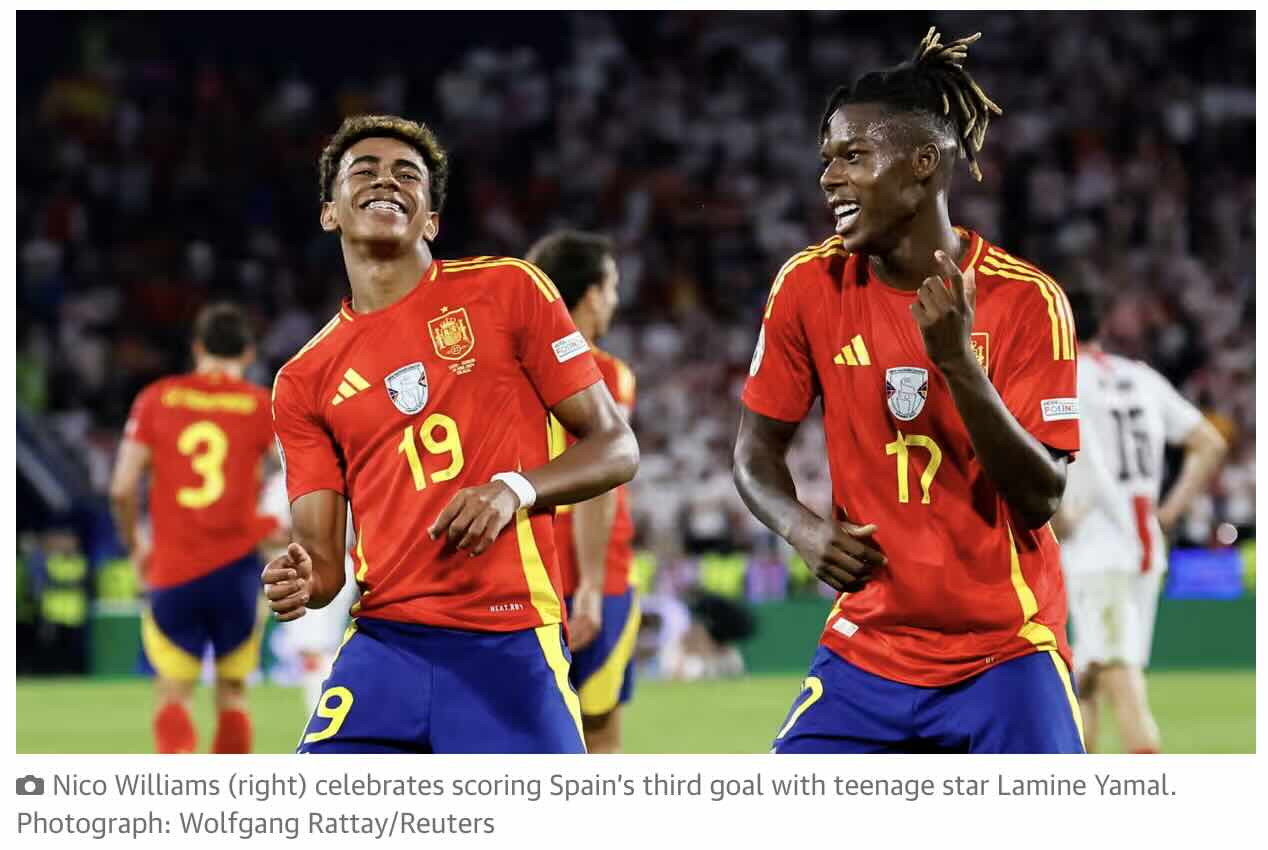


Compound surnames in Chinese and English

Left: Sima Qian; right: Zhuge Liang.

For China, besides my post on alternating single and double given names by generation, there are also some intriguing double surnames, often deriving from northern ethnic minorities.

Of the many that were used in early history, some have fallen out of use, with clans often adopting single surnames—a process that took place over a long period, unlike the rapidly changing fashions in given names. Double surnames still quite common are Ouyang 歐陽, Shangguan 上官, Sima 司馬 and Situ 司徒; less so are Zhuge 諸葛, Xiahou 夏侯, Huangfu 皇甫, Huyan 呼延, and Zhongli 鍾離. Oh, and Chenggong 成公 and Geshu 哥舒.

Left: Ouyang Xiu; right: Zhongli Quan.

The latter surname was Turkic in origin. Among ethnic minorities, longer compound surnames are still common, adapted to Chinese style, such as the Manchu Qing imperial clan Aisin Gioro. But with the Han chauvinism of the current CCP this is changing too—for Uyghur names under the current clampdown in Xinjiang, see e.g. this article.

* * *

For the Han Chinese double-barrelled surnames I can’t discern potential for satire, as we class-conscious English like to do for Posh Upper-Class Twits—whether fictional characters like Gussie Fink-Nottle and Sir Arthur Streeb-Greebling, and Monty Python’s Vivian Smith-Smythe-Smith, Simon Zinc-Trumpet-Harris, Nigel Incubator-Jones, Gervaise Brook-Hamster, and Oliver St. John-Mollusc (click here)—or real people who really should be fictional, like Jacob Rees-Mogg. There is latitude in the use of the hyphen. Indeed, why stop at two surnames? This wiki article also considers international naming practices, including Germany and Iberia. As Silly Names go, it’s hard to beat Leone Sextus Denys Oswolf Fraudatifilius Tollemache-Tollemache de Orellana Plantagenet Tollemache-Tollemache, British captain who died in World War One. 

Now the Riff-Raff [sic] are getting in on the act too, with young sporting luminaries such as Alex Oxlade-Chamberlain, Trent Alexander-Arnold, a trio of Southampton players—and the wonderful Katarina Johnson-Thompson, who soars high above the recumbent Tree-Frog.

In a rather different category is the litany of middle names for Boris Piccaninny Watermelon Letterbox Johnson as documented by Stewart Lee, which grows almost weekly.

See here for more on How to be English.

Bhutan: a tongue-twister, archery festivals, and teasing cheerleaders

Bhutan

Not a Lot of People Know This, but the popular tongue-twister*

How much wood would a woodchuck chuck if a woodchuck could chuck wood?

is a modern American adaptation of an ancient ritual in Bhutan.

Really?—The Plain People of Ireland.
No—SJ.
Begob! You had me there.

The woodchuck song (cf. More stammering songs) dates from 1902—here’s the popular version by Ragtime Roberts, recorded in 1904, just as Mahler was conducting the premiere of his 5th symphony:

I like this 1946 Glenn Miller version, with the follow-up “How many cats would a catnip nip…”:

cartoon
To answer the question, apart from the song’s decidedly surly “A woodchuck would chuck as much wood as a woodchuck could chuck if a woodchuck could chuck wood”, there have been some hilarious scientific attempts
(cf. Stewart Lee’s pedantic research on “the tip of the cesspit” under The c-word).

* * *

The word woodchuck, first recorded in 1674, is an English rendition of the Algonquin wejack or wuchak. And by way of the etymology of wang in whangdoodle (cf. schlong), I note, with the greatest respect, the many illustrious bearers of the name Wangchuk in Bhutan—which inspires me to

How much wang would a Wangchuck chuck if a Wangchuck could chuck wang?

In translation this may not quite match the elegance of the woodchuck version, with its euphonic “wood” and “would/could”—but I like to imagine that it works even better in the original Middle Bhutanese (just the kind of wacky topic that Sir Harold Bailey might have relished: “Indeed I’d say there’s hardly a line that could not have been understood by any Persian of the fourth century”)—perhaps

Wonga wang wunga Wangchuk chuka wangka Wangchuk wunga chuka wang?

wangsDare I surmise [Yes, I’m afraid you probably do—Ed.]** that wang-chucking festivals were once a major part of the ritual calendar in Bhutan, with ornately decorated wangs,*** assembled from monasteries throughout the region, to be hurled towards a distant target, or tôs-pöt? The arcane sentence might thus be the pious request of a courtly petitioner, curious despite the ineligibility of the royal family to participate in an event of which they were the main patrons.

Indeed, phallic symbols, representing Avalokiteśvara, are common in Bhutan and Tibet, as documented in this substantial (and for once, real) article. One of the names of Shiva is Wangchuk chenpo; and the phallus was a major part of the symbolic repertoire of atsara jesters.

* * *

Perhaps [sic] we may find the modern descendant of the Bhutanese wang-chucking ritual in its archery festivals (cf. Zen archery). OK then, so far this post has been Rather Silly, but now that I come to seek material on archery in Bhutan, I am full of genuine admiration.

Via the splendid community website bongopas.com, I find several videos of archery festivals (do consult the original posts, under bongop videos). Here’s a lovely short documentary from 2015, showing the ritual sequence, with vignettes from flag-bearer and storekeeper as well as the women of the chorus, and—for anyone who likes to think of Bhutan as “unspoilt”—a final comment on the decline of the “old rules” (cf. China, e.g. here):

Women play a major role as cheerleaders [sic], singing songs to tease the archers with their nicknames (cf. French taunting):

Whose forehead is bulging and swollen like a wine-serving spoon, in aimless flight his shaft will drift to hit the mark not even once.

Lips sheltered in a black beard, in aimless flight his shaft will drift to hit the mark not even once.

Here are some more instances (“Forehead is like wine sieve??”, “Dried ears!!!”, “Sneezing carpenter??”, “Pumpkin wine container”, “Polished stone head”):

And some more choral songs:

So while I’m encouraged by their own delight in jocular wordplay, ethnography makes a fine counterpart to my earlier frivolity.

Talking of Bhutanese films, this looks interesting.

Archery festivals are also common in Ladakh and Sikkim, and, with very different modern histories, in Tibet, Kham, and Amdo—as in this documentary, filmed in Lo khog village, Qinghai:

Returning to Bhutan, all this should encourage us to explore the riches of diverse soundscapes there, through sites such as this—not least monastic rituals, such as this 2-CD Lyrichord collection recorded by John Levy in 1971 (liner notes for download here):


The research for this project was
not made remotely possible by a generous grant from SPICE, the Society for the Promotion Prevention of International Cultural Exchange; and believe it or not, no ice-cubes were “educated” with Bombay Sapphire during the creation of this post.


* For an operatic tongue-twister, click here; and for a Chinese tongue-twister of mine, here.
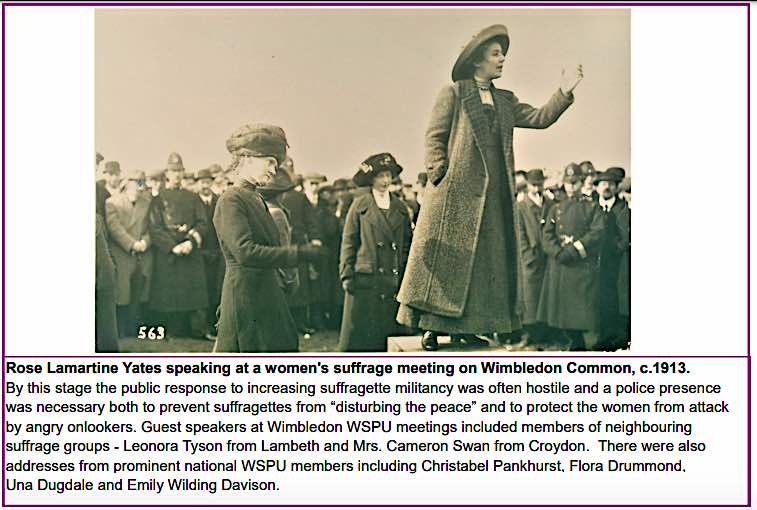
** In such exegesis I may be inspired by Mots d’heure: gousses, rames; for other spurious excursions in cultural and linguistic history, see my series on the faqu (“French pieces”) under this roundup of posts on the Tang dynasty.

*** Cf. Dud ‘n’ Pete’s illumination of the lyrics “Mama’s got a brand new bag yeah, gonna groove it the whole night long baby“. More recently, Miranda Vukasovic has amassed an impressive collection of gaily-coloured phallic bottle-openers from Bali.

Enough already

Coco Naomi

In the opening salvos of what will be a wonderful long tennis rivalry, first Naomi Osaka beat the astounding Coco Gauff in the 2019 US Open (and in that post, do watch their beautiful on-court interview!); and now Coco has taken her revenge in the 3rd round of this year’s Australian Open.

But here I have a linguistic point in mind. Commenting on her 2nd-round match, Osaka described her rocky path to victory:

I was like, “Can I just hit a winner already?”

This led me to explore discussions of the usage of “already” as an intensifier to express impatience or exasperation (see e.g. here). It still seems more common in American English than in the UK, but I like it.

Some suggest that it was adapted in the States early in the 20th century from the Yiddish shoyn (genug, shoyn! “Enough already!”). cf. gut shoyn, ”All right already!” in the sense of ”Stop bugging me,” and (one calibration more irritated) shvayg shtil shoyn, ”Shut up already!”. But, thickening the plot, it’s also common in other languages, such as French déjà and Spanish ya. It also rather recalls the emphatic use of the particle le 了 and its expressive variant la 啦 in Chinese.

Doubtless people have been slaving away at erudite PhDs on the subject (“When are you gonna finish your goddam thesis already?”, or perhaps “When are you gonna finish your goddam thesis ‘Already’ already?”).

And now Naomi has won the 2020 US Open too, all the while drawing attention to BLM.

Anyway, both Coco and Naomi are inspiring. Already.

Cocomania

***UPDATED!!!***

For anyone living on another planet (immersed in medieval Daoist ritual manuals, or whatever)…

As if the Women’s World Cup wasn’t enough, I’m only too happy to subscribe to the mass adulation for Cori Gauff at Wimbledon. Her two victories were just exhilarating.

Mature and focused at 15, she’s an inspiration. Her parents seem great too.

CG parents

She was charming in handling the usual fatuous questions at her 3rd-round press conference:

When you were match point down on Centre Court, were you thinking, what would Venus and Serena do?

Er, no! …

which ranks along with Bertrand Russell’s comment after his plane crash. And at the risk of sounding like the woman visiting the young Living Buddha, I love the way she tucks her chair into the desk at the end.

tweet

[Spoiler: typical Grauniad-reading liberal metropolitan elite quote coming up] At a time when the world seems doomed to suffer under mendacious cynical rich old white men, we all need role models like Coco—a list that might also include Alexandria Ocasio-Cortez and Greta Thunberg, Katelyn Ohashi, and indeed Oxana Thaili. It’s no coincidence that the most inspiring of such figures are female.

Cori 2

I wish her well, and look forward to the day when AOC can welcome her to the White House!

Update: US Open, 2019
In a further episode of the saga, Coco’s home crowd exults in her style, social media goes even wilder, and in defeat she is magnanimously persuaded by Naomi Osaka to share this moving post-match interview:

See also Enough already. And note the principled response of Coco and Naomi to the murder of George Floyd.

2023 update!!! 🍾🍾🍾🍾🍾🍾🍾🍾
And so to Coco’s first Major title, again, suitably, at the US Open—what moving drama, striving, and achievement is embodied in the ritual of solo sporting competition!

For the women’s final of the 2021 US Open, please relish A playlist for Emma and Leylah! See also A sporting medley: ritual and gender.

Belated recognition

Clarke

British Ladies’ Football Club, 1895. Back row, 2nd left: Emma Clarke.

It may come as a relief to readers that my posts are currently coming rather less thick and fast than usual. I’m working away, and awaiting some more info—Honest Guv, it’s not entirely due to the stellar conjunction of the Women’s Football World Cup and the new series of Killing Eve.

1895

After China’s defeat to Germany yesterday, we might recall that football seems to have been invented by the Chinese (“Typical!“), and female players were common there. Wiki lists sightings in 12th-century France and 1790s’ Scotland. The British Ladies’ Football Club was formed in 1894 (the illustration depicts their first match in 1895).

Amongst the players was the first black female footballer Emma Clarke (1876–c1905), whose story has recently been rediscovered. One of fourteen children from Bootle, of whom only four survived to adulthood, “the fleet-footed dark girl on the right wing” was also an occasional goalkeeper.

The popularity of women’s football in Britain increased during World War One, with munitions workers taking part keenly (cf. Morris dancing). A golden age occurred in the early 1920s, but it was banned from the grounds of the FA’s member clubs from 1921 to 1971 (no comment).

Patronising early reports (“Grotesque football at Alford”!) had a lasting legacy. The first Women’s World Cup was held in 1991—in China. How inspiring that women’s football is finally making a major impact on the media, all the more so with the 2022 Euros; doubtless among the most excited followers were the girls of a County Durham school, authors of wise and trenchant letters to the FA in 2017.

For more, see Suzanne Wrack, A woman’s game: the rise, fall, and rise again of women’s football (2022, reviewed here).

As to Killing Eve (“homoerotic candy”?), my query, based on Mark’s comment in Peep show, remains unanswered. The temptation to binge-watch (never available for Twin Peaks in the prehistoric 1990s) is tough to resist…KE

The Tzar-spangled banner—diversity—female genius

I began writing this as another paean to the great Bill Bailey, to follow his greatest-ever love song (“soaking in the hoisin of your lies“), but it has soon turned into yet another tribute to diversity and female genius.

David Hughes (himself a prolific drôle songwriter as well as leading authority on Japanese music) thoughtfully alerts me to this (allegedly) Kremlin-sanctioned version of The star-spangled banner, which is becoming ever more topical:

See also “I think you’ll find—it’s MINOR!”

To return to the major (sung by a minor), this, from Malea Emma Tjandrawidjaja, then 7 (taking a rather different path from Alma Deutscher), is remarkable too:

They come over ‘ere…” See also And did those feet in ancient time?, and The haka.

While I’m here, how can I resist featuring another most inspiring viral clip—and do follow up with Katelyn Ohashi’s thoughtful blog and innumerable further links, like this and this—bearing on ecstasy and drudge, and the nature of artistic competition:

OK then, for a hat-trick of What Really Makes America Great (see The wise AOC):

Do follow @AOC, the most articulate and engaged advocate for political change!

Yet more much-needed hope for our future… Call me a !typical member of the Guardian-reading, tofu-eating wokerati (formerly known as “the Grauniad-reading metropolitan liberal elite”), but long may the likes of “Rear Admiral” Foley turn in their graves.

For another inspirational role model, see here.

Let me see now, what did I come in here for again?

Ronnie: a roundup

Ronnie

As the Masters tournament breaks off again at Ally Pally, it’s that time of year when I make another futile attempt to Rend Asunder the Bonds of Daoist ritual, the Iron curtain, and Bach by extolling the magic of Ronnie O’Sullivan, the Mozart of snooker. Like Mozart, he has his own tag in the sidebar: here’s a cue [sic].

The most essential viewing is his 147 maximum break from 1997—5’20” of sheer genius.

Further posts include

Watching Ronnie in full flow, with his effortless grace and instinctive intelligence, is the most exhilarating experience.

HIs 2023 appearance on Desert island discs (here) is full of typical introspection.

On a lighter note,

If you’re feeling really broad-minded, try the sport tag too. You’ll even find Daoist football there.

Trust me, I’m a doctor. To adapt Hašek,

the first fifty readers to view these posts will receive as a gift a free pocket aquarium.

Guide to another year’s blogging


Struggling to encompass all this? I know I am. While we inevitably specialize in particular topics, it’s important to build bridges. I guess it’s that time of year when another guide to my diverse posts may come in handy—this is worth reading in conjunction with the homepage and my roundup this time last year.

I’ve added more entries to many of the sidebar categories and tags mentioned in that summary. I’ve now subheaded many of the categories; it’d be useful for the tags too, but it seems I can’t do that on my current WP plan. Of course, many of these headings overlap—fruitfully.

Notably, I keep updating and refecting on my film and book on the Li family Daoists. I wrote a whole series resulting from my March trip to Yanggao (helpfully collected here) and Beijing (starting here, also including the indie/punk scene). Other 2018 posts on the Li family include Yanggao personalities and Recopying ritual manuals (a sequel to Testing the waters).

To accompany the visit of the Zhihua temple group to the British Museum in April, I also did a roundup of sources on the temple in the wider context of ritual in Beijing and further afield, including several posts on this site.

I’ve posted some more introductions to Local ritual, including

Gender (now also with basic subheads) is a constant theme, including female spirit mediums—to follow the series on women of Yanggao, starting here. Or nearer home, Moon river, complementing Ute Lemper.

Sinologists—indeed aficionados of the qin, crime fiction, and erotica—may also like my post on Robert van Gulik (and note the link to Bunnios!).

I’ve added a few more categories and tags, notably

The film tag is developing, with a side order of soundtracks—for some links, see here.

I’ve given basic subheads to the language category (note this post on censorship), which also contains much drôlerie in both English and Chinese. Issues with speech and fluency (see stammering tag) continue to concern me, such as

Following Daoist football, the sport tag is worth consulting, such as The haka, and a series on the genius of Ronnie.

Some posts are instructively linked in chains:

More favourites may be found in the *MUST READ* category. Among other drôlerie, try this updated post, one of several on indexing and taxonomy; and more from the great Philomena Cunk.

Most satisfying is this collection of great songs—still not as eclectic as it might become:

Do keep exploring the sidebar categories and tags!


Jesus jokes

Last supper

Call me irreverent (cf. The sermon, and We are miserable sinners), but Jesus jokes can be entertaining. There’s a plethora of websites, so here I’ll stick to some of my more niche favourites. Even last-supper jokes are a whole sub-genre—here’s an audio variant:

For a feminist version, click here.

Apart from his brilliant anagram tales, my talented friend Nick, living in Lisbon, has a nice little number going with football reports featuring Jesus, coach of Sporting (as the team is ingenuously called). Among pithy headlines that Nick has spotted are

Jesus pays homage to his Father

and the brilliant

Jesus is very happy with his eleven

(Judas clearly relegated to the bench there—hinting he wants a transfer).

Despite his health travails, Nick has managed to update me. Receiving a head-butt à la Zidane,

Jesus wants out fast

and helpfully (Pontius Pilate please note) *

Jesus is willing to be flexible in negotiations

Note also Nick’s sequel, Jesus of Benfica.

Such is the warm British welcome for foreigners [only joking] that we can play this game too. Moving onto the Brazil forward, I enjoyed this Guardian headline** that appeared but briefly online—all the more apt since it was Holy Week:

Jesus restores some pride after thrashing

When he took a penalty for Man City against Burnley goalkeeper Nick Pope:

Pope saves from Jesus

and one always waits for this one to come up:

Jesus hits woodwork

This one is no less classic for being fabricated:

Jesus saves—but Rooney scores from the rebound

JesusAs to Arsenal’s young star, I’m keen to get this headline in early:

Jesus Set to Make Comeback at Easter

Indeed, he shone on Easter Day, despite some, um, close marking from Liverpool:

Jesus Easter
Getty images.

Jesus Takes a Beating but Rises Again for Easter (cf. this article, and my sequel)

And the celebrated Victorian tombstone:

He fell asleep in Jesus
     to which has been added
and woke up in a siding in Crewe

Gay comedians naturally warm to the theme. Simon Amstell (Help, p.80):

I’m not an atheist. I’m a big fan of Jesus Christ, there’s nobody more thin and vulnerable than Jesus Christ.

And David Sedaris (for whom see also here, and here):

And he always has a fantastic body, shown at its best on the cross, which—face it—was practically designed to make a man’s stomach and shoulders look good.

Not to be outdone, Beatrice Dalle is available for seminars on the history of religion:

I love Christ because he invented bondage.

No trawl through the archives would be complete without Family guy, where Jesus is a regular Special Guest Star, such as:

I must confess [sic] that there are already several related posts on this blog—Chumleys vinegar, more from Alan Bennett (WWJD, feet, and the Christmas card), the Matthew Passion incident, and so on. If you consult the latter post, we can all end with a resounding chorus of Always look on the bright side of life. For “blasphemy”, see also Patricia Lockwood.

In my defence, Daoist jokes are another niche source of entertainment, like the train deity (also featuring Moses) or the “switch off the light” story. [Call that a defence?Ed.]


* Pilate plays a cameo role in my post on Laozi.

** For another fine Guardian football headline, see here; for Daoist football and gender, here.