As a verb, a stress on the second syllable seems standard; more variable is the pronunciation of the noun. I was never aware of the stress on the first syllable (with a long “ee”) until the 1990s; now I often find myself bombarded by it on the radio.
Both forms may have been around for a long time, but I’m not sure the current state of play is entirely random. In the UK it seems to be largely generational—the first-syllable stress perhaps another of those more recent influences from the good ol’ US of A. Amongst all the research [gritted teeth] on stress patterning, someone must have tabulated this by age, period, region, and perhaps by class and even gender (“broken down by age and sex“, like Keith Richards). zzzzz…
So I suspect it’s just an index of my irrational elderly snobbery. For me, absurdly, the stress on the first syllable seems to suggest that the speaker is a callow upstart. The choice seems to distinguish serious study from messing around on the internet; Some Might Say that reSEARCH is what I used to do, while REsearch is what I do now… Hoisted with my own petard—whatever that is.
Since part of my mission (whatever that is) is to vary the distribution of the diverse posts on this blog, keeping you guessing, this latest annual roundup (cf. 2018, 2019) is an occasion to group together some major themes from the last year (see also the tags and categories in the sidebar). This is just a selection (with apologies to the posts I’ve missed—do seek them out!):
And much much more, As They Say. Having grouped them together like this, I hope readers will scramble them all up again like a jigsaw, rather than retreating into their own little boxes… And do click on all the links within these posts! Happy, Happier New Year!
Since Covid struck, there’s been considerable research on droplets launched by speech (e.g. here); singing, too, has been scrutinised for its risks to public health. Here I’d like to add speech therapy into the mix (see e.g. Modifying disfluency), a topic that such studies hardly take into account. *
The main culprits are plosives—both unvoiced (p, t, k) and voiced (b, d, g) plosives p-p-posing a p-p-particular p-p-problem for us stammerers.
Since consonants project over a greater distance than vowels, a three-tier system will be introduced in an effort to slow the spread:
Replacing P with F: anyone speaking to other feofle in a fublic flace will have to stop using the flosive sound; failure to do so could lead to a fine—or even frison. The whole fofulation, even members of Farliament, will have to flay their fart in this.
Replacing T with N: although this may cause some initial confusion—for example, neachers in schools will face challenges when neaching the nen nimes nable—we are confident any froblems will be nemforary; and measures under nier noo will help nurn the nide of this fandemic.
Replacing K with L: after a further brief feriod, we will bring in Near Three. The rules under Nears One and Noo will conninue. We have lonsidered these measures larefully, in line with relommendations from frofessors at Lambridge Universiny.
These new rules will affly also to other languages sfolen in this cunnry, including Nerdish, Folish, Fortuguese, and Inalian. I urge feofle to Leaf Lalm And Larry On. Nogether, we will lonquer the Lovid fandemic and renurn noo normaliny in no nime an all.
To be fair, it’s stressed, especially initial, flosives that are farticularly frojectile—and the major hurdle for stammerers. But requesting PPE may still present a challenge.
Levity apart (and here’s my pretext for relaying the topic here), it makes a good reminder for us stammerers to approach words with light contacts (“easy onset”)—and for fluent speakers, to imagine our chronic tribulations.
* Separately, several sites offer guidance for stammerers during Covid; this one has many links, including a BBC video. Of course, stammering is part of general issues in communicating; communication via masks is a challenge for all (cf. Masked drama in Asia). With so little social contact, I haven’t had much experience of negotiating stammering in a mask. I seem to be more reluctant to stammer “openly”, even if it’s invisible. When encountering a (silent) block, I apparently need people to see that I’m at least making an effort (also a reason why sufferers find phone-calls difficult), even if it’s precisely the tension of the mouth that is my undoing.
Amidst the pandemic it’s been suggested that (fluent) people should take up ventriloquism. I wonder if there are any stammering ventriloquists—perhaps a cruel dummy mercilessly taking the p-p-mickey out of their stammering minder… That would be great therapy.
For more melodious public health advice, click here.
Among all the vast gulag camps spread across the USSR (e.g. Solovki), most utterly remote and terrifying was the Arctic region of Kolyma in northeast Siberia (wiki: under Kolyma, Sevvostlag and Dalstroy; also e.g. here). As Anne Applebaum remarks,
In the same way that Auschwitz has become, in popular memory, the camp which symbolises all other Nazi camps, so too has the word “Kolyma” come to signify the greatest hardships of the Gulag.
An early study in English was
Robert Conquest, Kolyma: the Arctic death camps (1978)—cf. his major book on the Ukraine famine, a predecessor of Anne Applebaum’s Red famine.
A major source is
Varlam Shalamov (1907–82) (wiki; website), who endured consecutive sentences in Kolyma from 1937 until 1953.
HisKolyma tales, a bulky collection of stories, most only a few pages long, makes grimly compelling reading. [1]
For the wider story of the camps, a brilliant study is
Anne Applebaum, Gulag: a history(2003).
She uses Shalamov’s work extensively among a great variety of sources, and it’s worth reading the historian’s forensic overview of the camp system in conjunction with the Kolyma memoirs.
As Applebaum notes in her Introduction, it is impossible to treat the gulag as an isolated phenomenon. The difference between life inside and outside the camps was one of degree.
The Gulag did not emerge, fully formed, from the sea, but rather reflected the general standards of the society around it. If the camps were filthy, if the guards were brutal, if the work teams were slovenly, that was partly because filthiness and brutality and slovenliness were plentiful enough in other spheres of Soviet life. If life in the camps was horrible, unbearable, inhuman, if death rates were high—that too was hardly surprising. In certain periods, life in the Soviet Union was also horrible, unbearable, and inhuman, and death rates were as high outside the camps as they were within them.
Having noted the wretched fate of the “special exiles” (a separate yet related theme), she goes on to summarise the “long, multinational, cross-cultural history of prisons, exile, incarceration and concentration camps, from Ancient Rome and Greece to Georgian Britain, 19th-century France and Portugal, and Czarist Russia itself. She then encapsulates similaries and differences between Nazi and Soviet camps.
Applebaum explains:
To reach the camps of Kolyma, prisoners travelled by train across the entire length of the USSR—sometimes a three-month journey—to Vladivostok. They made the rest of the trip by boat, travelling northwards past Japan, through the Sea of Okhotsk, to the port of Magadan, the gateway to the Kolyma river valley.
The transport ships were themselves deadly, as portrayed in Shalamov’s “The procurator of Judea”, and in the documentary below.
Part II of Gulag: a history, “Life and work in the camps” is a particularly harrowing survey, with chapters on arrest, prison; transport, arrival, selection; life and work in the camps; punishment and reward; guards, prisoners; women and children; the dying; strategies of survival; rebellion and escape.
Having noted that the guards didn’t inhabit an entirely different social sphere from the prisoners, in an astute analysis Applebaum observes that neither “politicals” nor “criminals” were simple categories. While inmates such as scientists, agronomists, former NKVD officers, and artists, mostly loyal Communists, have a higher profile, the “political” rubric was a catch-all for many ordinary people with no strong political views who had made some innocent yet fatal “mistake”, and most prisoners were ordinary workers and peasants. In 1934, 42.6% of the general gulag population were semi-literate; even in 1938, only 1.1% had higher education. The proportion of “political” inmates rose during the war, reaching nearly 60% in 1946 following an amnesty for criminal prisoners.
Constantly hungry, subjected to relentless, punishing work in the dreaded gold mines and the endless taiga forests, they were at the mercy of the urki criminal inmates; degradation and dehumanisation were essential for survival.
Applebaum cites Evgeniya Ginzburg’s experiences on boarding the boat to Kolyma:
They were the cream of the criminal world: murderers, sadists, adept at every kind of sexual perversion… without wasting any time they set about terrorising and bullying the “ladies”, delighted to find that “enemies of the people” were creatures even more despised and outcast than themselves… They seized our bits of bread, snatched the last of our rags with our bundles, pushed us out of the places we had managed to find…
Shalamov, “The Red Cross”:
Tens of thousands of people have been beaten to death by thieves. Hundreds of thousands of people who have been in the camps are permanently seduced by the ideology of these criminals and have ceased to be people. Something criminal has entered their souls for ever. Thieves and their morality have left an indelible mark on the soul of each. […]
The young peasant who has become a prisoner sees that in this hell only the criminals live comparatively well, that they are important, that the all-powerful camp administrators fear them. The criminals always have clothes and food, and they support each other.
The young peasant cannot but be impressed by this. It begins to seem to him that the criminals possess the truth of camp life, that only by imitating them will he tread the path that will save his life. […]
The intellectual convict is crushed by the camp. Everything that he valued is ground into the dust while civilisation and culture drop from him within weeks. The method of persuasion in a quarrel is the fist or a stick. The way to induce someone to do something is by means of a rifle butt, a punch in the teeth. […]
The intellectual is permanently terrified. His spirit is broken, and he takes this frightened and broken spirit with him back into civilian life.
Applebaum describes thieves’ slang, known as blatnaya muzyka “thieves’ music”.
The minority of women prisoners (Gulag, Chapter 15), again both political and criminal, were terribly vulnerable too. Shalamov’s “Women in the criminal world” is a substantial account, also addressing male homosexuality. As he notes, the sole exception to the contempt for women prescribed in the camps is the hypocritical cult of veneration for the criminal’s mother (cf. flamenco):
Even this seemingly lofty feeling is a lie from beginning to end—as is everything else. […] This feeling for his mother is nothing but a pack of lies and a theatrical pretence. The mother cult is a peculiar smokescreen used to conceal the hideous criminal world.
Crucial for inmates’ desperate strategies of survival (Gulag, Chapter 17) was the hierarchy of hospitals and medics, with their own troubled stories. They often feature in Kolyma tales, such as “Typhoid quarantine”:
The scratch marks on Andreev’s hands and arms healed faster than did his other wounds. Little by little, the turtle-shell armour into which his skin had been transformed disappeared. The bright rosy tips of his frostbitten fingers began to darken; the microscopically thin skin, which had covered them after the frostbite blisters ruptured, thickened slightly. And above all, he could bend the fingers of his left hand. In a year and a half at the mines, both of Andreev’s hands had molded themselves around the handles of a pick and shovel. He never expected to be able to straighten out his hands again. […]
The bloody cracks on the soles of his feet no longer hurt as much as they used to. The scurvy ulcers on his legs had not yet healed and required bandaging, but but his wounds grew fewer and fewer in number, and were replaced by blue-black spots that looked like the brand of some slave-owner. Only his big toes would not heal; the frostbite had reached the bone, and pus slowly seeped from them. Of course, there were less pus than there had been back at the mine, where the rubber galoshes that served as summer footwear were so full of pus and blood that his feet sloshed at every step—as if through a puddle.
Many years would pass before Andreev’s toes would heal. And for many years after healing, whenever it was cold or even slightly chilly at night, they would remind him of the northern mine. But Andreev thought of the future. He had learned at the mine not to plan his life further than a day in advance. He strove towards close goals, like any man who is only a short distance from death. Now he desired one thing alone—that the typhoid quarantine might last for ever. This, however, could not be, and the day arrived when the quarantine was up.
Among their strategies was self-mutilation, evoked in Shalamov’s “The businessman”.
The region’s main town Magadan was built by forced labour from 1932. Evgeniya Ginzburg noted a “peculiar paradox”:
the gulag was slowly bringing “civilization”—if that is what it can be called—to the remote wilderness. Roads were being built where there had only been forest, houses were appearing in the swamps. Native peoples [2] were being pushed aside to make way for cities, factories, and railways. […]
My whole soul cursed those who had thought up the idea of building a town in this permafrost, thawing out the ground with the blood and tears of innocent people. Yet at the same time I was aware of a sort of ridiculous pride…
The early years under Eduard Berzin were later recalled with a certain nostalgia. But
Of the 16,000 prisoners who travelled to Kolyma in Berzin’s first year [1932], only 9,928 even reached Magadan alive. The rest were thrown, underclothed and underprotected, into the winter storms: survivors of the first year would later claim that only half of their number had lived.
Berzin was himself executed in the purges of 1938, as Stalin’s Great Terror took an even more severe toll on the camps.
During the American Lend-Lease programme to assist their Soviet allies, vice president Henry Wallace visited in May 1944, and was efficiently deceived. In a macabre story the most urgent task of a bulldozer donated under the programme is to rebury the frozen corpses of prisoners exposed as mass graves from 1938 began to slide down a hill. And for Monty Python fans, Shalamov also features the prisoners’ withering assessment of spam.
During and after the war, the ranks were supplemented by Ukrainian, Polish, German, Japanese, and Korean inmates (cf. Gulag, Chapter 20)—as well as Soviet prisoners of war, considered traitors.
After the war the general population’s hopes for a less punitive society were soon crushed (see The whisperers).
In “The lepers” Shalamov describes yet another disturbing story.
In the course of the war the leprosaria had been destroyed, and the patients had merged with the rest of the population. […] People ill with leprosy easily passed themselves as wounded or maimed in war. Lepers mixed with those fleeing to the east and returned to a real, albeit terrible life where they were accepted as victims or even heroes of the war.
These individuals lived and worked. The war had to end in order for the doctors to remember about them and for the terrible card catalogues of the leprosaria to fill up again.
Lepers lived among ordinary people, sharing the retreat and the advance, the joy and bitterness of victory. They worked in factory and on farms. They got jobs and even became supervisors. But they never became soldiers—the stubs of the fingers that appeared to have been damaged in the war prevented them from assuming this last occupation. Lepers passed themselves off as war invalids and were lost in the throng.
* * *
Rebellion and escape attempts were rare, and doomed (Gulag, Chapter 18). As in China, there was nowhere to escape to (ironically, it was only 55 miles across the Bering Strait to America). In “Major Pugachov’s last battle” Shalamov notes a certain change after the war:
The arrests of the thirties were arrests of random victims on the false and terrifying theory of a heightened class struggle accompanying the strnghtening of socialism. The professors, union officials, soldiers, and workers who filled the prisons to overflowing at that period had nothing to defend themselves with except, personal honesty and naïveté—precisely those qualities that lightened rather than hindered the punitive “justice” of the day. The absence of any unifying idea undermined the moral resistance of the prisoners to an unusual degree. They were neither enemies of the government nor state criminals, and they died, not even understanding why they had to die. Their self-esteem and bitterness had no point of support. Separated, they perished in the white Kolyma desert from hunger, cold, work, beatings, and diseases. They immediately learned no to defend or support each other. This was precisely the goal of the authorities. The souls of those who remained alive were utterly corrupted, and their bodies did not possess the qualities necessary for physical labour.
After the war, ship after ship delivered their replacements—former Soviet citizens who were “repatriated” directly to the far north-east.
Among them were many people with different experiences and habits acquired during the war, courageous people who knew how to take chances and who believed only in the gun. There were officers and soldiers, fliers and scouts…
Accustomed to the angelic patience and slavish submissiveness of the “Trotksyites”, the camp administration was not in the least concerned and expected nothing new.
So escape attempts increased, but were just as futile. Shalamov evokes another such attempt in “The green procurator”.
Here’s a 1992 documentary, if you can bear it:
* * *
The 1930s and 40s were the most horrifying years for the gulag system. After the war amnesty (Gulag, Chapter 21), the death of Stalin in 1953 created a new mood, and Kruschev declared a more lasting amnesty in 1956, freeing many. But as Applebaum describes in her concluding chapters, some still had little choice but to remain until the 1990s.
The end of the war may have brought an end to the Nazi camps as such, but in the USSR the gulag network continued operating; and just as it was winding down following the death of Stalin, in China Mao was expanding his own system of labour camps.
As Applebaum explains carefully in an Appendix to Gulag, attempts to assess the death toll have been inconclusive; for comparisons with estimates of victims under Hitler and Mao, cf. Timothy Snyder and Ian Johnson.
The legacy Memory of the whole gulag system is a complex subject, explored by Applebaum in her perceptive Epilogue (cf. Figes). More recent accounts of the haunted Kolyma region discuss memory, ignorance, and veneration for Stalin. Jacek Hugo-Bader revisited the region in Kolyma diaries (2014), reviewed here by Kapka Kassabova (cf. this article).
And Yury Dud challenges modern amnesia in Kolyma: the home of our fear (2019):
[1] I’ve been reading the 1994 translation by John Glad; a recent version by Donald Rayfield (“Kolyma stories”) is well reviewed here, including its vexed publication history, and a comparison with Solzhenitsyn. See also the sequel Sketches of the criminal world. Other survivors’ accounts of Kolyma include those of the Polish Stanislaw J. Kowalski, The land of gold and death, Vladimir Nikolayevich Petrov, Evgeniya Ginzburg, and the Romanian Michael M. Solomon.
[2] Accounts of Kolyma inevitably focus on the camps’ Russian inmates and other outsiders; the fate of local indigenous peoples like the Yukaghirs, Yakut, Chukchi, and Evenki, with their shamanistic cultures, is another story.
Mahler 4, whose premiere the composer conducted in 1901, may seem like a less weighty, almost “classical” interlude in between the monumental 2nd and 3rd symphonies and the angst of the 5th and 6th. But different as it is, it’s substantial—a continuation of Mahler’s Des Knaben Wunderhorn theme, with typical layers of irony (wiki; and here’s an essay by the authoritative Henry-Louis de La Grange).
In the words of Norman Lebrecht (Why Mahler?), “death is never very far from the children who play in its meadows”. At the very opening of the first movement, he finds the sleigh-bells “dangerous as a runaway car on a mountain pass, driving conductor and orchestra to near-chaos”. Still, there are intimations of a transcendent world (from 4.26 in the Abbado performance below, and again from 14.31—see The major 7th leap), as well as an ominous premonition of the opening of the 5th symphony (from 9.54).
The Scherzo is a Totentanz, inspired by Arnold Böcklin’s 1872 Self-Portrait with Death Playing the Fiddle, with the solo violin tuned up a whole tone. Mahler’s idea contrasts with that of earlier composers “dressing up gypsy music for family consumption”—Lebrecht goes a bit far:
He confronts civic society with its greatest fear, the untamed classes outside the law, and he exacerbates the threat by treating gypsy music not as a primitive sound to be colonised by an educated composer but as an art with a vitality and integrity all its own. […] The Scherzo is arguably the first multicultural work in western music and certainly the first before Bela Bartók to treat indigenous music with respect and admiration as an equal form of art.
Even here Mahler incorporates an elysian vision, with strings in full Mantovani mood making a counterpoint to the folk dance style of the wind instruments (Abbado from 22.55):
The tranquil variations of the gorgeousslow movement are offset by a more clouded section in the minor—klagend, leidenschaftlich, leading to a gorgeous sequence:
After the return of the opening Ruhevoll mood, *** Santa’s speeding sleigh (from 41.52) hurtles headlong into a deep snowdrift (hmm, I don’t really feel music in metaphors like this: I blame writing about music—cf. my programme for Mahler 10). This turns out to be another pathway to paradise, adorned by horns and then more sumptuous strings à la Mantovani:
It’s interrupted by a blazing vision (from 44.25) modulating abruptly to the heavenly key of E major, combining a foretaste of the melody of the finale with the motif on timpani and plucked basses taken from the ruhevoll opening. This leads to the concluding pianissimo, “sehr zart und innig“—whose suspensions develop the string chords before the vision, now with Mahler’s ultimate Sublime Mystery harmonies:
A clarinet emerging out of the silence introduces the final Das himmlische Leben, an innocent yet unnerving vision of heaven, marked “with a childlike, cheerful expression, without parody”. Hard as it is to find an ideal singer, it’s unrealistic to assess versions of the symphony purely on the singing, overriding overall timbre and choice of tempi. Early-music chastity, without sounding coy, may seem more suitable, but it still hasn’t quite replaced fruity warbling; while boy trebles have been tried, we await a version by a choirgirl.
Punctuated by manic reminiscences of the opening sleigh-bells, the poem (far from untrammelled—not suitable for vegetarians) also belongs with Mahler’s farewells:
Wir genießen die himmlischen Freuden, D’rum tun wir das Irdische meiden. Kein weltlich’ Getümmel Hört man nicht im Himmel! Lebt alles in sanftester Ruh’. Wir führen ein englisches* Leben, Sind dennoch ganz lustig daneben; Wir tanzen und springen, Wir hüpfen und singen, Sankt Peter im Himmel sieht zu.
Johannes das Lämmlein auslasset, Der Metzger Herodes d’rauf passet. Wir führen ein geduldig’s, Unschuldig’s, geduldig’s, Ein liebliches Lämmlein zu Tod. Sankt Lucas den Ochsen tät schlachten Ohn’ einig’s Bedenken und Achten. Der Wein kost’ kein Heller Im himmlischen Keller; Die Englein, die backen das Brot.
Gut’ Kräuter von allerhand Arten, Die wachsen im himmlischen Garten, Gut’ Spargel, Fisolen Und was wir nur wollen. Ganze Schüsseln voll sind uns bereit! Gut’ Äpfel, gut’ Birn’ und gut’ Trauben; Die Gärtner, die alles erlauben. Willst Rehbock, willst Hasen, Auf offener Straßen Sie laufen herbei! Sollt’ ein Fasttag etwa kommen, Alle Fische gleich mit Freuden angeschwommen! Dort läuft schon Sankt Peter Mit Netz und mit Köder Zum himmlischen Weiher hinein. Sankt Martha die Köchin muß sein.
Kein’ Musik ist ja nicht auf Erden, Die unsrer verglichen kann werden. Elftausend Jungfrauen Zu tanzen sich trauen. Sankt Ursula selbst dazu lacht. [ending with a descending portamento, by contrast with the frequent ascending ones for strings!!!] Kein’ Musik ist ja nicht auf Erden, Die unsrer verglichen kann werden. Cäcilia mit ihren Verwandten Sind treffliche Hofmusikanten! Die englischen* Stimmen Ermuntern die Sinnen, Daß alles für Freuden erwacht.
Note that hushed last verse, in the radiant key of E major—like that vision in the slow movement. For Mahler’s own piano roll of the finale, see here.
* * *
Lebrecht cites xenophobic early reviews, contrasting with comfortable later assessments:
Jewish wit has invaded the symphony, corroding it
A restless, nervous work
Nothing but Viennese corruption, carnival
No trace of spontaneity, not a single autonomous idea, no original feeling.
La Grange has more:
amusing himself by using thematic material alien to his nature
taking pleasure in shattering the eardrums of his audiences with atrocious and unimaginable cacophonies
incapable of writing anything other than stale and insipid music lacking in style and melody, music that, artificial and hysterical, was a medley of symphonic cabaret acts.
The Adagio, barring an abuse of organ point effects, is at first harmless enough; but suddenly we are introduced to a circus scene. This may be a not unwelcome diversion for some; but without wishing to be traditional or pedantic, we cannot but remark that for us, at that moment, it was a shock and an unpleasant one. From a business standpoint it might be advantageous to utilize portions of this adagio on the pleasure boats which travel up and down the Danube in the spring. The bands could easily master any difficulties forthcoming in such appropriate extracts, and the Viennese ladies, munching sweet cakes, sipping light wine and flirting with handsomely dressed officers, would no doubt very much enjoy a dainty accompaniment to their conversation. [winner of the 1901 Rear Admiral Foley Award for Sexist Crap.]
And
The drooling and emasculated simplicity of Gustav Mahler! It is not fair to the readers of the Musical Courier [Tweety: SO UNFAIR! Cf. Peccable musical sensibilities] to take up their time with a detailed description of that musical monstrosity, which masquerades under the title of Gustav Mahler’s Fourth Symphony. There is nothing in the design, content, or execution of the work to impress the musician, except its grotesquerie… The writer of the present review frankly admits that… to him it was just one hour or more [sic] of the most painful musical torture to which he has been compelled to submit.
Pah! No pleasing some people…
* * *
Armed with this comprehensive review, here are some recordings that delight my ear.
Again (e.g. Mahler 2), long before the Mahler craze of the 60s, early versions are rich ground for studies of changing performance practice (see also Reception history). The first ever recording (mystifyingly cutting one of the most exquisite passages in the 3rd movement!) was made in 1930 by Hidemaro Konoyewith the New Symphony Orchestra of Tokyo—a year before his own symphonic composition Etenraku, inspired by the gagakupiece! The singer in the exceptionally ponderous finale is Eiko Kitazawa.
If Willem Mengelberg‘s Bach is hard to take nowadays, in November 1939, on the eve of the German occupation of Holland (and as with Furtwängler and others, there have been attempts to defend his collusion with Nazism), he recorded Mahler 4 with the Concertgebouw and Jo Vincent. Though he’s remarkably cavalier with Mahler’s instructions (right from the huge rit. after the opening sleigh-bells), and his rubato doesn’t always work (like the cellos in the first “vision” from 4.45), it’s still wonderful:
Of several versions by Bruno Walter, there’s a recording of his live performance in February 1944 with the New York Phil and (singing in a kind of English!) Dési von Halban (daughter of the soprano Selma Kurz, whom Mahler himself, um, favoured just around the time he was composing this symphony); here’s their 1945 studio recording:
Walter also recorded the symphony in 1955, with the Vienna Phil and Hilde Güden; and in 1962, with the Concertgebouw and Elisabeth Schwarzkopf. Note also his Mahler 2 from 1948.
From the next generation, here’s John Barbirolli in 1967, with the BBC Symphony Orchestra and Heather Harper:
And LeonardBernstein live in 1972, with the Vienna Phil and Edith Mathis:
Michael Tilson Thomas with the San Francisco Symphony and Laura Claycomb, recorded live in 2003, is also very fine:
And among many versions by the wonderful Claudio Abbado, here he is live in 2009, with the exceptional Lucerne Festival Orchestra and Magdalena Kožená:
Cecil Parrott’s biography The bad Bohemian (1978) is full of insights (see also this review, and even this 2019 thesis). As Parrott observes,
Like so many Czechoslovak personalities, Hašek ran the gauntlet of differing assessments according to the prevailing political doctrines of the time. From his death until 1939 he was looked on as a “bad bohemian”; from 1939–45 (under the Germans) he was outlawed and his books burnt; from 1945–48, thanks largely to Communist influence, he was rehabilitated to a limited extent; and since 1948, after a brief period of uncertainty, he has almost been canonised.
Thus, ironically, Hašek became a “hero of Communism”, and Švejk approved reading for the Czechoslovak army. But
Had Hašek not been disillusioned about politics but engaged himself more deeply in party activities, it is almost certain that with time he would have been expelled from the Party too, because by his very nature he could not be anything but a non-conformist. His experiences in Prague soon after his return cooled his ardour and, paradoxically enough, his subsequent withdrawal from political activity was to prove his saving grace and to earn him later a place in the Communist canon.
Indeed, this whole history was submerged as Švejk became a theme for tourist pub-crawls (to which I also plead guilty).
Beermat from U Kalicha, as borrowed from my trip to Prague in 1980.
As Parrott describes in chapter 7 of The bad Bohemian, Hašek had already thought up the character of Švejk by 1911, well before the war, when he published five stories, which Parrott translates in The Red Commissar (1981).
One evening he had returned home very exhausted. Hardly had he woken up next morning when [his wife] Jarmila saw him feverishly searching for a scrap of paper which he had left about the night before. Before going to bed he had jotted down on it a “brilliant idea” and to his horror had now completely forgotten it.
Jarmila goes on:
In the meantime I had thrown it on to the rubbish heap. (Jarmila had a fetish for tidiness.) Hašek rushed to search for it and was delighted when he found it. He carefully picked up the crumpled note-paper, read its contents, crumpled it up again and threw it away. Meanwhile I rescued it again and preserved it. On it I saw clearly written and underlined the heading of a story, “The booby in the company”. Underneath was a sentence which was just legible: “He had himself examined to prove that he was capable of serving as a regular soldier”. After that came some further words which were illegible.
Parrott explains, “At a time when no Czech wanted to be classified as mentally or physically fit for service, the ‘booby in the company’ was literally asking for it!”
In The good soldier Švejk Hašek offers few clues that he might suffer from any delusions of political engagement. Parrott describes the japes of his early years—his hoaxes, spoof articles for The animal world, and his brilliantly-named Party for Moderate and Peaceful Progress within the Bounds of the Law, “designed largely to satisfy Hašek’s innate thirst for exhibitionism and partly to bolster the finances of the pub where election meetings were held” (see also stories in The Red Commissar).
This seems to have been the extent of his propensity for leadership at the time.
* * *
So it’s hard to square Hašek’s bohemian, alcohol-fuelled capers before the War, and after his return to Prague in 1920, with his interlude of commitment and responsibility in revolutionary Russia.
As Parrott notes, Slav prisoners of war were treated abysmally; Hašek was lucky to survive. After a spell in the Czech Legion in Russia, at first he worked as propagandist in Kiev, while continuing to write satirical sketches. He soon found himself in charge of an army detachment.
These years were a convulsive period when people had to juggle personal survival with shifting, murky political allegiances. With the Russian revolutions of 1917 Hašek’s loyalties shifted from monarchism to Bolshevism. From 1918 he broke with the Czech Legion to spend two years in the Red Army, soon becoming a leading figure in the town of Bugulma in southeastern Tatarstan during the civil war.
Parrott opens The Red commissar with Hašek’s nine short Bugulma stories. Like Švejk, the persona of Hašek here blurs the lines between fact and fiction. As Parrott observes, while the stories are satirical, they give a mellow, benevolent view of the convulsive social changes then under way.
With Hašek’s constant aversion to authority, the stories revolve around how he outmanouevres the belligerent yet hopelessly dimwitted Comrade Yerokhymov, Commander of the Tver Revolutionary Regiment. Hašek generally ends up having to give counter-orders to such proclamations by Yerokhymov as
To the whole population of Bugulma and its Region! I order everyone in the whole town and region who cannot read and write to learn to do so within three days. Anyone found to be illiterate after this time will be shot.
Commandant of the Town, Yerokhymov
Also featured is the enmity between the local Chuvash and Cheremis, and their shared bemusement at the struggles they now found themselves caught up in.
In addition to the Bashkirs the Petrograders brought in other prisoners, youths in peasant sandals, aged seventeen to nineteen, who had been mobilised by the Whites and had been watching for the first opportunity to make a bolt.
There were about three hundred of them, emaciated young men in tattered homespuns. Among them were Tartars, Mordvins, and Cheremisses, who knew as much about the significance of the civil war as they did about the solution of equations to the power of x.
Parrott retells another story:
A member of the Central Committee came to Ufa and at once searched for me! “You’re Comrade Gashek, aren’t you?” I nodded… “You’re a former legionary, aren’t you?” He looked at me sternly, straight in the eyes. “Yes, I am.” “You’re from Prague, aren’t you?” “Yes, I am.” “Comrade Gashek, you’re a great drunkard. Isn’t that right?” “Yes, that’s right.” “Comrade Gashek, everything’s all one to you—there’s nothing sacred, right?” “Quite right.” “When you were at home they say you were everything—Anarchist, Social Democrat and working in editorial offices all over the place. Is that correct?” “Perfectly correct.” “Khorosho [good]! You don’t deny anything. You’re a good man.” After his departure in about a fortnight, I was appointed inspector of the Fifth Red Army.
He spent time as Commissar in Ufa, capital of the Bashkir Autonomous Republic—where he was involved in purges, and began a relationship that became a bigamous marriage.
His language skills came into play:
He spoke some Russian, Polish, German, and Hungarian, and later learned some Bashkir as well as a little Chinese. Indeed, his “pidgin” Chinese seems to have great success with the Chinese prisoners-of-war.
He continued studying Chinese in 1920 when posted to Irkutsk in western Siberia, and published a report of his work among the Chinese Communists (for the 1956–57 film of Švejk dubbed into Chinese, see here; and note The definitive transliteration). There too he learned the Buryat language, founding its first ever journal—earning him the title “father of the nation” there. But clues to a planned mission to Mongolia remain elusive.
Accounts differ over Hašek’s alleged abstention from alcohol during this period.
Summoned back to Prague in 1920 by the Czechoslovak Bureau of Agitation and Propaganda (attached to the Central Committee of the Russian Bolshevik Party), his early death in 1923 rescued him from having to confront the more disturbing ramifications of his political involvement, and from learning the limits of satire under the new regime.
The Shipping forecast on BBC Radio 4, whose antecedents date from 1861, is an extraordinary marker of British identity (cf. The Archers and Desert island discs, among many posts under The English, home and abroad). To be fair, Radio 4 listeners may not quite be representative of the whole population (You Heard It Here First), but still…
The forecast is replete with the abstract, poetic litany of
North Utsire, South Utsire, Viking, Cromarty, Forth, Dogger, German Bight…
and
southwesterly veering northwesterly five or six, decreasing four. Rain then showers. Moderate with fog patches, becoming good.
In a perceptive chapter on “weather rules” from her brilliant book Watching the English, Kate Fox notes the power of this “arcane, evocative, and somehow deeply soothing meteorological mantra”:
None of this information is of the slightest use or relevance to the millions of non-seafarers who listen to it, but listen we do, religiously mesmerised by the calm, cadenced, familiar recitation of lists of names of sea areas.
Mark Damazer, Controller of Radio 4, attempted to explain its popularity:
It scans poetically. It’s got a rhythm of its own. It’s eccentric, it’s unique, it’s English. It’s slightly mysterious because nobody really knows where these places are. It takes you into a faraway place that you can’t really comprehend unless you’re one of these people bobbing up and down in the Channel.
Zeb Soanes, a regular Shipping Forecast reader:
To the non-nautical, it is a nightly litany of the sea. It reinforces a sense of being islanders with a proud seafaring past. Whilst the listener is safely tucked up in their bed, they can imagine small fishing-boats bobbing about at Plymouth or 170ft waves crashing against Rockall.
Like Fran in Black books, perhaps:
Charlie Connelly, in his engagingly nerdy book Attention all shipping: a journey around the Shipping forecast (2004, complementing the 1998 picture-book Rain later, good), notes the subtleties of reading the forecast at different times of day.
The late-night broadcast is particularly evocative (as in the old joke “Drink Horlicks before you go to sleep—otherwise you’ll spill it”). It’s perfectly crowned by the healing aural balm of Sailing by (1963), by the splendidly-named Ronald Binge, creator of Mantovani’s “cascading strings” effect [Persontovani, please!—Ed.]:
In case you’re still mystified as to what the forecast is for, click on the YouTube icon and note the BTL comments there.
As reader Jane Watson comments, the forecast is “comforting for people at home, because they’re tucked up in bed and they’re hearing that it’s absolutely blowing a gale somewhere out at sea”—which might sound rather like Schadenfreude.
As with most ritual traditions, the language is slow to change—how I would love to hear the suave tones of Charlotte Green announcing
Pissing down. Bummer.
Among many parodies, most brilliant are Les Barker’s version as read by Brian Perkins:
and Stephen Fry (1988):
Back at the real script, Alan Bennett (“occasionally moderate”) read it for Radio 4’s Today at the inspired request of Michael Palin—taking on a quite different tone, both sinister and hilarious:
Talking of British identity, the forecast waxes philosophical in the phrase “losing its identity”—precisely the paranoid fear bandied by Brexiteers.
Stellar lords of the Northern Dipper, from the chanted Litanies for Prolonging Life (Yansheng chan 延生懺) manual, copied by Li Qing, early 1980s.
Radio 4 listeners, bless their cotton socks, defend the ritual fiercely: there was a “national outcry when the BBC had the temerity to change the time of the late-night broadcast, moving it back by a mere 15 minutes (‘People went ballistic’, according to a Met. Office spokesman).” When the name of sea area Finisterre was changed to FitzRoy, “Anyone would think they’d tried to change the words of the Lord’s Prayer!”
Needless to say, such formalistic language reminds me of the long litanies of deities and pseudo-Sanskrit mantras that punctuate Daoist ritual (e.g. here, under “20th May”), whose efficacy for the devotee is also unsullied by mere cerebral comprehension.
Further to Why the First World War failed to end, the history of the chronically traumatised region of the eastern Bloodlands (see also here) makes a necessary counterpart to our British focus on the horrors of the Western Front. A fine recent vignette on World War One is
Alexander Watson, The fortress: the great siege of Przemyśl (2019, reviewed e.g. here).
It’s a detailed and readable account of extreme human suffering, quite overcoming my aversion to military history.
In the province of Galicia, soon after the Russian invasion and the fall of the capital Lwów (L’viv) to the east, Przemyśl—today in southeast Poland near the border with Ukraine—became a crucial Habsburg stronghold.
With the Habsburg military operation headed by the reckless, inept General Conrad, the cowed troops who converged on Przemyśl on 14th September 1914 were already broken by defeat. After the field army retreated further, the inhabitants had to endure the Russian siege until March 1915.
Przemyśl was a multicultural city, with Polish and Ukrainian-speaking Ruthenian populations (respectively characterised by allegiance to Roman and Greek Catholicism), Jews, and Germans. Despite all the simmering tensions, they had somehow managed to coexist; with inter-ethnic antagonisms now sparked by international conflict, the war created flashpoints in a long-term clash.
As Watson observes, “the memory of the First World War is dominated by youth”. But the “ragtag garrison” left to defend Przemyśl was composed of a “dad’s army” of middle-aged reservists—including Austrian Germans, Hungarians, Romanians, Serbs, Slovaks, Moravians, Bohemians, Italians, Poles, and Ruthenians. The gulf in class and culture between largely German- or Czech-speaking officers and this Babel of peasant soldiers was reflected in problems of communication.
Most widely mistrusted by the Habsburg command was the local Ruthenian population, suspected of Russian sympathies. The peasant population in the villages had largely been evacuated, their homes brutally demolished, but many returned, unable to survive in squalid refugee camps; others had never left. Now, trapped in the starving purgatory of no man’s land, they found themselves vulnerable to both armies.
Within the fortress itself, violent repressive measures were taken against potential traitors such as Ukrainian nationalists and Greek Catholics, with deportations and executions.
The Russian army too was diverse, with Ukrainians, Jews, Poles, and Romanians alongside people of various ethnicities within the Russian empire. But the Russians had their own agenda of ethnic cleansing, aimed in particular at growing Ukrainian and Polish nationalism, and at the Greek Catholic church.
And the whole region already had a history of anti-Semitic violence. All these enmities came to a head in World War Two under the genocidal policies of ruthless totalitarian states.
In the ravaged countryside around Przemyśl, the fortress was guarded by an outer perimeter of forts, whose defences are described in great detail, with their “gloomy subterranean tunnels and low-ceilinged chambers”, places of terror; out of dysfunctional pyrrhic resistance, heroic legends were concocted.
The following chapter-headings flag the sequence of events: Storm, Barrier, Isolation, Starvation, Armageddon—subsuming epidemics, starvation, stress disorders, fear of espionage, desertions, executions; changing technologies (not least in weapons of war), and a thriving (and class-based) sex trade. Diversion could even be found in cultural events such as cinema and concerts. As morale continued to plummet further, officers indulged in obscene banqueting.
Watson cites a bitter joke from Przemyśl:
Q. What is the difference between Troy and Przemyśl?
A. In Troy, the heroes were in the stomach of the horse, and in Przemyśl the horses are in the stomach of the heroes!
With no hope of relief, the end came in March 1915 upon the inevitable failure of a breakout—in the utterly deluded direction of the east. Here’s footage from the end of the siege:
And the recapture of Przemyśl in June 1915—with the soundtrack perhaps inadvertently mocking pretensions of imperial grandeur and their appalling consequences:
Still the terror continued. Prisoners were deported to camps in Turkestan and Siberia, the foundations of the Soviet gulag system; already exhausted, many died in captivity. The Russian vendetta against the Jews intensified.
After Przemyśl was recaptured by the Habsburgs, it passed to the new independent Polish republic, under which antagonism between Poles and Ukrainians escalated, and Jews continued to be scapegoated.
Though the rival Habsburg and Russian empires soon fell, the violence, poisoned by an endless thirst for revenge, “persisted, mutated, and further radicalised”—culminating in the ethnic cleansings of World War Two, outlined in Watson’s Epilogue, “Into the dark”. Under successive Soviet and Nazi occupations Jewish, Polish, and Ukrainian peoples—and the whole of the Bloodlands—fell victim to unimaginably brutal atrocities. Pogroms and ethnic cleansing continued even after the formal end of the war in 1945 (see e.g. Keith Lowe, Savage continent, ch.18).
Today, bands like Krajka are rediscovering the traditional music of the region:
And Przemyśl is among many towns all along the border with Ukraine whose people are offering a welcome for refugees.
* * *
Watson laces his disturbing account of barbarity with black humour—like the ludicrously complex choreography of the three-part ritual that troops were expected to perform as a recognition system while patrolling no man’s land, which “would have been funny, had it not put lives at risk”.
Such tragic absurdities may remind us of Jaroslav Hašek’s The good soldier Svejk and his fortunes in the World War (1921–23—see under Czech stories).
Volume 4 (unfinished on Hašek’s death) evokes the ignominious dénouement of Švejk’s involvement in the Galician campaign. Out of curiosity he dons a Russian uniform that he found by the lake, whereupon he is seized by a gendarmerie patrol as a fugitive prisoner of war. He is then classified as a Russian spy and escorted on foot from Dobromil to Przemyśl—a fiction later commemorated there more readily than the realities of the siege.
Illustration by Hašek’s friend Josef Lada.
Hašek himself served with the Habsburg army on the Galician front. Captured by the Russians, he went on to work, quite commitedly, with the Bolsheviks. For a “humorist, satirist, journalist, anarchist, hoaxer, truant, rebel, vagabond, play-actor, practical joker, bohemian (and Bohemian), alcoholic, traitor to the Czech legion, Bolshevik, and bigamist”, his brief Soviet career was remarkably exalted ( see Hašek’s adventures in Soviet Tatarstan). He commanded Chuvash troops in the Red Army and served as commissar of Bugulma in Tatarstan (which inspired stories translated in The Red commissar). In Siberia he found himself the “hero of the Buryat nation”; he was learning Chinese, and wiki also mentions a “mysterious mission to Mongolia”. He returned to an independent Czechoslovakia in 1920.
In the novel, Hašek’s comments on the ineptitude of the Habsburg command are echoed in Watson’s portrayal of General Conrad—who, “never a man to permit reality to interfere with his plans, insisted on having his horse and eating it”.
Meanwhile, Švejk meets his fellow prisoners:
The Russian prisoner looked at Švejk in full understanding of the fact that he could not understand a single word of what he said.
“No understand. I Crimean Tartar. Allah achper”, the Tartar said. Then he sat down, crossed his legs on the ground, folded his arms on his chest and began to pray, half in Russian and half in Tartar. “Allah achper, Allah achper—bezemila—arachman—arachim—malankin mustafir”.
“Well now, so you’re a Tartar, are you?” said Švejk with compassion. “Well, you’re a fine customer then! How could you with your double-Dutch be expected to understand me then and I you, if you’re a Tartar? […]
Švejk turned to another prisoner:
“Are you a Tartar too?”
The person addressed understood the word Tartar, shook his head and said half in Russian: “No Tartar, Circassian, Circassian born and bred. I chop off heads!”
It was Švejk’s luck that he found himself in the company of these various representatives of the Eastern peoples. The transport comprised Tartars, Georgians, Osetins, Circassians, Mordvins, and Kalmyks.
As Hašek’s fine translator Cecil Parrott observes, “I know of no novel which conveys so poignantly not only the ugliness of war but the utter futility of anything connected with it.” I may not be alone in needing to re-read the book with a clearer picture of the tragedy that pervades it.
Having been reading wa-ay too many reports on the US elections (YAY!), I keep stubbing my metaphorical toe on the common American use of the word “momentarily” to mean, um, “soon”.
As usual (cf. OMG), the usage goes back a long way—in this case to at least 1798. But more recently it is the Americans who have clung to the meaning of “soon”. The discussion also mentions “momently”, also early but now obsolete.
As many observers have commented, for Brits new to flying in the States it’s most disconcerting to hear the pilot announcing “We will be taking off momentarily”; since one hopes that having achieved altitude we might be able to remain airborne for quite some time, one surely expects a rather more upbeat prediction. At the other end too, Dick Cavett’s comment
When the flight attendant would say, “We will be landing in Chicago momentarily,” I used to enjoy replying, “Will there be time to get off?”,
inspires a brilliantly pedantic thread, which needn’t detain us here.
I also support the objection that “momentarily” sounds like “an attempt to be fancy” [Objection sustained—there’s another thing we don’t get to say over here].
Anyway, I’m always glad of an excuse to cite Airplane. For a fine mid-air tannoy story, click here; for further divergent US/UK usages, here, here, and even here; see also And I’m like.
This, from BBC news only last week, was suspiciously prophetic (reporter waiting round dark corner with baseball bat):
Diego Maradona is to have emergency surgery caused by a head injury in the next few hours.
Prelude to shengguan score, Hanzhuang village, Xiongxian county, Hebei.
A Buddhist monk called Miaoyin 妙音, “Wondrous Tones”, is associated with transmissions of the grand shengguan suites that have punctuated the vocal liturgy of amateur village ritual associations around Xiongxian county in Hebei since the late 18th century (see also under Local ritual).
Hannibal Taubes, ever on the trail of recondite historical byways, leads me to Gadgadasvara, a minor-league figure among the great Bodhisattvas of Mahayana Buddhism. Since his name literally means “stammering tones”, even if he’s an imaginary being, he may appear to be a promising early Indian candidate to complement my list of great Chinese stammerers—and a musical one, to boot (see also stammering tag). But there are several strands to unravel here, both for ancient India and late-imperial China.
Gadgadasvara, as described in chapter 24 of the Lotus sutra (e.g. here and here),
emits rays of light from his topknot and between his eyebrows and illuminates the world of the Buddha Kamaladalavimalanakṣatrarājasaṃkusumitābhijña [Kevin for short—Ed. Try saying that with a speech impediment]. […] Gadgadasvara passes through many worlds, and his beautiful form is described. He arrives at Vulture’s Peak Mountain on the seven-jeweled platform and presents a necklace to Śākyamuni Buddha, inquiring after him on behalf of Buddha [Here we go again—Altogether now] Kamaladalavimalanakṣatrarājasaṃkusumitābhijña. * (source here).
Modern bronze image of Gadgadasvara, Nepal.
Svara is not just “sound” or “voice”, but the comprehensive system of musical pitches as represented by sargam solfeggio (see e.g. here). Sources do indeed allude obliquely to Gadgadasvara’s mastery of music:
In the worlds through which he passed, the land quaked in six ways, seven-jeweled lotus flowers rained everywhere, and hundreds of thousands of heavenly musical instruments sounded spontaneously without being played.
Still, musical accomplishments play only a minor role in his transcendent CV:
According to T’ien-t’ai’s Words and Phrases of the Lotus Sutra, this bodhisattva is called Wonderful Sound because he propagates the Lotus Sutra throughout the ten directions with his wondrous voice. Among the many sutras, Bodhisattva Wonderful Sound appears only in the “Wonderful Sound” chapter of the Lotus Sutra.
And he doesn’t seem to be among the numerous cosmological deities who feature in the rich mythology of Indian music.
As to gadgada, the etymology of stammering, faltering, even sobbing, is clear. However, there seems to be no suggestion that the Bodhisattva was ever actually portrayed as a stammerer. Moreover, would any Indian, now or at any earlier point in history, be conscious of the etymology? Instead, the name has long been interpreted as “Wonderful Voice” or “Wonderful Sound”, and that is how it was rendered in Chinese.
So alas, Gadgadasvara is not an ancient mystical precursor of the characters listed here. In short, neither stammering not music make fruitful avenues to explore! Aww.
Conversely, Moses (like Marilyn Monroe) has been widely recognised as a stammerer, although the evidence is open to dispute (see e.g. here and here). The image on the left (from the latter article, p.169) shows the ancient hieroglyph for “stammer”!
In medieval Chinese translation, Gadgadasvara became Miaoyin 妙音 “Wondrous Tones”—which seems a faithful rendition of how the Sanskrit name has been understood.
After that inconsequential excursion to the ancient world of scripture-revelation, let’s return to our musical monk in Qing-dynasty Xiongxian county. It remains to be seen how distinctive it was for a monk to be given the name Miaoyin. For the double-character names chosen for Buddhist and Daoist clerics, either the first or second element was stable within each generation (cf. Customs of naming), and miao 妙 was often adopted for the first; the second character yin 音 seems less common than sheng 聲 (sound)—such as the cohort of young monks at the Guangji an temple in Beijing in the 1930s (see my In search of the folk Daoists of north China, p.223).
Anyway, even if Miaoyin received his early ritual training in Beijing before being deputed to staff a rural Hebei temple, such occupational “musical monks” (yiseng 藝僧) performing rituals around the old city were most unlikely to be familiar with the Lotus sutra, which is not among the ritual manuals that they performed—so our musical monk clearly wasn’t named after Gadgadasvara.
Still, while he would have been utterly remote from the abstruse concerns of ancient Buddhist cosmology, the prelude to the Hanzhuang score does indeed describe him as “Chan master Miaoyin, Wang ‘Bodhisattva’ Guanghui” (妙音王菩薩光輝禪師)—the honorific “Bodhisattva” suggesting his local reputation.
Anyway, do get to know the wondrous tones of the shengguan ritual suites attributed to Miaoyin, still being performed by ritual associations in Hebei villages (cf. ##8 and 14 of playlist in sidebar, and for the process from singing the oral gongche to instrumental performance, ## 9 and 10—with commentary here)!
Gongche solfeggio score, Hanzhuang: Hesi pai prelude to Qi Yan Hui suite.
Long story short: like “And did those feet in ancient time?“, my title seems to resemble those questions they ask you at airport check-in—to which you’re pretty sure the answers are going to be “No”, but you have to keep on your toes just in case.
* I don’t mean to labour the point àlaStewart Lee, but in search of wisdom, I find this helpful explanation:
The Sanskrit term Kamaladalavimalanakṣatrarājasaṃkusumitābhijña can be transliterated into English as Kamaladalavimalanaksatrarajasamkusumitabhijna or Kamaladalavimalanakshatrarajasamkusumitabhijna.
For the Tibetan peoples, both before the Chinese occupation—or the uprisings from 1956—and under the reform era since the 1980s, our popular image of religious life is dominated by “institutional” monastic activity. Even genres like lhamo opera, nangma-töshe, and grand local folk communal rituals seem more widely known than the diverse types of folk ritual performers.
any attempt at (re)presenting Tibetan culture today is inseparable from an implicit ideological and political commentary on the situation of Tibet, through history and at present.
Taxonomy Emic and etic ways of slicing the cake of expressive cultures vary; and for Tibet they vary both within and between Tibetan, Chinese, and Western approaches. As in many cultures, a simple dichotomy like sacred–secular will only confuse, even if we take it as a continuum. Catherine Bell reflects wisely on the variety of “ritual specialists” within world cultures in Ritual theory, ritual practice, pp.130–40. But again, such an etic umbrella term often seems inadequate for Tibet.
One would include the male ngagpa and female ngagmo self-cultivational groups of Tantric practitioners (see e.g. the work of Nicolas Sihlé, such as this article; wiki, and here; photo above). Further, with religion such a pervasive element in the daily life of Tibetan people, there’s no simple way of encapsulating the variety of performers, family groups and individuals, occupational, often itinerant—such as spirit mediums and diviners, mendicants and beggars (for the latter in pre-occupation Lhasa, see e.g. Part Two here, under “Professional and spiritual beggars”). Moreover, the trite rubric of “song-and-dance” subsumes calendrical rituals with communal, largely ascriptive participation (see e.g. here). [1] Indeed, since the 1950s, and still now, lay performers may be less closely surveilled than the major monasteries such as Labrang (for which see here and here).
As with Han Chinese traditions, some of these genres are described as obsolete, and appear to belong to “salvage” fieldwork. Having so often heard this claim from Chinese cultural cadres anxious about revealing “superstitious” activities in their domain, I am reluctant to take it as gospel. It is hard to assess the current picture from published material in Chinese and Tibetan. On one hand PRC scholars may take mediated, secular performances on the concert platform as evidence of the continuing life of tradition; on the other, their access enables them to document local genres. But of course change is always a factor. As with some Han Chinese traditions, folk activity may be continued by other means, and I suspect that lengthy immersion in a given area may still reveal neglected life in such genres. At the same time, few of these groups quite resemble the household ritual specialists who are my main theme in local Han Chinese communities.
In exile, while some genres of the former elite were maintained, and the monasteries have long been the main scholarly focus, many folk ritual genres hardly feature in representations of Tibetan expressive culture such as the 1986 Zlos-gar. However, some of the folk performers who made their way into exile sought to continue activity there.
Moreover, one would seek to consider groups among Tibetan communities such as those of Sikkim, Bhutan, and Ladakh, from where some of the most interesting material derives. As with other “marginal survivals”, always bearing in mind that these are local traditions, it can be tempting to regard such manifestations as suggestive of culture within old Tibet (cf. “When the rites are lost, seek throughout the countryside”).
* * *
Among all these genres, by far the most popular area of research is the Gesarepic (see here, n.2, and here). Though it is often treated as a reified genre of oral literature, and since the 1980s has also been performed on the secular stage, the solo performers (both the “inspired” bards who received the text through spiritual revelation in trance after a psychological crisis, and those who learned by listening to other bards) continued to play a role in the domestic rituals of their local communities after the 1980s’ reforms, despite the encroachment of pop and media culture.
But as in south Asia and China, there was (and is) a variety of performers. So here I will illustrate the difficulties of simple classification with brief introductions to lama mani, drekar, and ralpa.
Lama mani The itinerant solo folk storytellers lama mani enact religious tales with the aid of thangka paintings. It may be more suitable to regard them as educators. [2]
An important source for the wider historical context around China and south Asia is
Victor Mair, Painting and performance: Chinese picture recitation and its Indian genesis (1989).
For the TAR, the lama mani feature in Zangzu shuochang yishu; see also this introduction. Around Lhasa, this 2014 article portrays “Chilie” [Thinley / ‘Phrin las] (b. c1940), typically, as “the last lama mani”.
Brought up in a village of Nagarze county in the Lhoka region of southeast TAR, both of his parents had performed lama mani, and he learned with them from young, along with his three older sisters; here one would wish to fill in the gaps in his biography for the Maoist decades. Even recently, his status as a Transmitter of the Intangible Cultural Heritage hadn’t brought him security: in 2014, performing on the street in the Barkhor, he was moved on by the police.
Thinley performing in Lhasa, 2014.
Some lama mani have also been active in exile—note
Here’s a documentary by Tsering Rithar Sherpa on transmitting the art of lama mani in Nepal:
And 10-minute footage of lama mani there:
For a project on the artefacts of lama mani, including thangkas and scripts, click here.
Drekar Also belonging within this diverse rubric are the drekar (in Chinese, zhega 折嘎: see this useful page), mendicant masked buffoons reciting auspicious verses for New Year and weddings (cf. Chinese beggars, such as in Shaanbei).
Again, the drekar have been described as obsolete, both within and beyond the PRC. A brief recorded excerpt (from since the 1980s’ reforms!) can be heard in #2 of CD 6 in Mao Jizeng’s anthology Xizang yinyue jishi. Whereas it was clearly recited on request, Woeser filmed this even briefer video during a street performance, suggesting that there may still be potential for fieldwork:
Ralpa Until the 1950s the ralpa or relpa (in Chinese, reba 热巴), mostly from the Kham region in origin, were family-based, low-class, itinerant performers, using narration, singing, dancing, acrobatics, and small plays, based on the life of Milarepa.
But the sense in which ralpa is now commonly promoted is as a communal dance festivity in the villages of Kham—subject of a book by Gonpo Gyaltsen (1928–2020), himself a former ralpa from the Dechen region there: in Chinese, Oumi Jiacan 欧米加参, Xuecheng reba 雪域热巴 (1998), Tibetan translation Gangs-ljongs ral-pa (2017).
Today this form too may be largely obsolete (see e.g. this useful survey), even as it has become a victim of commodified dance arrangements and the Intangible Cultural Heritage.
* * *
Under Chinese occupation and modernity some of these genres have doubtless suffered more than others; but we should include them all within our picture of the varied religious behaviours in local Tibetan societies—even as many fine scholars, quite legitimately, turn their attention to the pop soundscape. And of course more revealing ethnographies could be compiled on how individual, family, or devotional groups of lay participants dovetail in local societies with monasteries, communal ritual activities, and so on [3]—over time: as usual, we might hope to seek threads of continuity in 1950s’ activity.
[1] Sources for such genres appear rather piecemeal. Some feature in §III of the New Grove article on Tibet, and in the bibliographies of Isabelle Henrion-Dourcy (for Western-language sources) and Sangye Dondhup (for Tibetan and Chinese items); but Isabelle surveys much of the material in chapter 3 of her magnum opusLethéâtre ache lhamo, with references including some notes by early Western Tibetologists (such as Tucci and Stein), and for the post-reform era, studies by Tibetan and Chinese scholars, again mostly brief.
For Tibetan communities within the PRC, among the Anthology volumes (for the Tibetan Autonomous Region [TAR], Qinghai, Gansu, Sichuan, and Yunnan, in Chinese), those on narrative-singing (and perhaps on folk-song, and dance) should give further leads.
At a tangent, YouTube has a range of interesting material under “Tibetan wedding”, like this 2013 ceremony from a village in Qinghai, with some fine singing. This might lead us to the chang ma beer servers in old and new Tibet.
[2] Among references to lama mani in Lethéâtre ache lhamo (n.1 above), two discuss the drama Padma ‘od-‘bar (also popular in lhamo, like many items here): Anne-Marie Blondeau’s chapter in Zlos-gar (referring mainly to the relation of paintings and text), and a 2012 booklet (in Tibetan) with three CDs, for the Intangible Cultural Heritage.
[3] For a mendicant singer in early 20th century Amdo, with pertinent details on present-day performers, see this article by Gerald Roche.
Recently a friend living in Istanbul, who regularly visits her grown-up children in London, remarked on her shortest ever flight home.
This put me in mind of [cf. Alan Bennett’s Sermon] a story that I just can’t track down—I want to quote the original, but I’ve scoured my groaning bookshelves in vain. * Anyway, until I do find it, I’ll offer you a rough version, which I’m sure is more elaborate, as is the way with oral retellings:
An elderly Italian-American (I’ll call him Luigi) who hasn’t been back to Italy since emigrating to Chicago in his 20s, decides to take a short trip to see Rome again. Dozing off on his flight, he wakes up when the plane touches down on a stopover in New York; so in a daze, delighted that the time has passed so quickly, he gets off. Impressed by the smooth efficiency of Italian passport control, he makes his way to the cab rank, asking the driver, in Italian, to take him to a reasonably-priced hotel downtown. The cab driver is Italian, of course, so they chat away as he takes Luigi to his hotel.
Naturally the receptionist is also Italian, so after checking in he asks her to recommend a nice little family-run trattoria nearby. And so it goes on… In blissful ignorance Luigi spends a happy few days in New York like this, marvelling at how much Rome has changed. He pauses to admire a zampogna and piffero duo on the street. Somewhat surprised to see so much “I ♥ NY” merchandise in the souvenir shops, he puts it down to the relentless march of globalisation; but eventually he finds an “I ♥ Rome” T-shirt, and a cute little plastic model of the Colosseum (which he just hasn’t managed to find time to visit), buying them from the (Italian) assistant to take back proudly to Chicago with him.
So near and yet so far… I really must find the original. Sounds rather like David Sedaris, Beppe Severgnini, or perhaps George Mikes, but no luck yet. Please help, someone!
For more Italian jaunts, click here; and for a touring game, here.
And there shall be a great confusion as to where things really are, and nobody will really know where lieth those little things wi- with the sort of … raffia-work base that has an attachment.
Coming soon after the English edition of Woeser’s Forbidden memory, another fine contribution to our understanding of modern Tibetan history is the magnum opus
Robert Barnett, Benno Weiner, and Françoise Robin (eds), Conflicting memories: Tibetan history under Mao retold (2020, xxix + 681 pp.!).
Covering the periods since the Chinese occupation in 1950 and the death of Mao in 1976, it presents a wealth of original material in the form of memoirs and oral narratives, histories and official sources, fiction and film, dovetailing perceptive essays and primary documents. Besides the Tibetan Autonomous Region (TAR), Amdo and Kham are especially well represented (cf. When the iron bird flies).
As Robert Barnett explains in yet another of his exemplary introductions, the book presents the candid narratives of a range of Tibetan and Chinese writers—by contrast with the historiography of the Chinese state, with its “logic of legitimization”. Before the reform era since 1980, the main periods, in an escalating sequence of violence, were the early years of occupation; the crises of 1956–59; and the Cultural Revolution (notably 1966–69).
Oral accounts and memoirs—from Tibetan and Chinese officials, some early Tibetan Communists and progressives, and ordinary and elite Tibetans—“seek to make nuanced, sometimes almost imperceptible, adjustments to official narratives about China’s recent record in Tibetan regions”. While they don’t go so far as to challenge CCP rule over Tibet, they are “historical retellings in which the state has been removed or reduced to an inanimate or malignant force, and in which Tibetan agency has been restored, but only as a question of endurance and at an individual, local level.” In all such accounts, we need to “read between the lines”—just as for material on Han Chinese regions (see e.g. here, and here).
Part One, “Official retellings and revisualisations of the ‘Liberation of Tibet’ ”, opens with chapters by Benno Weiner (whose recent book The Chinese revolution on the Tibetan frontier is another important contribution to our knowledge of the modern history of Amdo) and Alice Travers, exploring changing agendas in the published “cultural and historical materials” (wenshi ziliao)—also a revealing source for Han Chinese areas (cf. here).
Compared to the extreme violence that was to come, Western, Chinese, and Tibetan authors have tended to portray the early years of occupation as relatively genteel. But Bianca Horlemann’s scrutiny of an account by the Chinese leader of a “Work Group” for the pastoralist Golog region in south Amdo adds to a growing body of evidence that “liberation” was far from smooth.
And Robert Barnett’s own chapter describes in detail the change of emphasis in mainstream Chinese “Tibet-encounter” films and TV dramas from the Maoist era to the reforms (cf. his Columbia course). Setting forth from the beguiling voyeuristic notion (Western as much as Chinese) of Tibet as “mysterious” and “exotic”, he notes a shift from tales of socialist military valour to commercially attractive stories of romance and self-discovery.
He suggests that the rationale for the early films was
in large part to explain and justify to the wider nation the abrupt and large-scale interaction then occurring between Chinese forces and Tibetans. That contact was, after all, on an unprecedented scale and involved entirely different and unfamiliar cultures, languages and social systems. Chinese citizens who were sent to Tibet were being asked not just to risk their lives fighting Tibetan troops and rebels in deeply unfamiliar and difficult terrain, but also in many cases to dedicate decades of their lives as cadres, teachers, doctors, road-builders, labourers, and so forth in order to administer and colonise an area which, unlike other minority areas within China, had had its own government, military and ruling institutions for centuries and where few Chinese had ever lived or worked before.
Throughout the various periods, many films portray Tibetans as grateful allies of the Party; and they dwell on the exploitation of the masses at the hands of the old ruling classes.
At its simplest, films in the Mao era vilified Tibetan culture and the Tibetan social system, while those produced in the reform period beautified Tibetans, their environment, and, increasingly, their bodies.
TV series Love song of Kangding, 2004.
Ever attentive to gender issues, Barnett notes the trope of the “orphan–heroine”. And while Chinese characters have come to be explored in more depth, there remain no credible portrayals of the Tibetan side of the story.
In Part Two, “Rereading the past: stories told by documents”, Alex Raymond again reinterprets the initial “liberation” of Tibet, showing that any “gradualism” in Chinese policy was a matter of expediency and logistics. Chung Tsering assesses a variety of accounts of the ambiguous political career of Ngaphö Ngawang Jigme (1910–2009); Document 4 translates his 1989 speech. And Document 5 is an important addition to work on the Tenth Panchen Lama—a hitherto unpublished speech also from 1989, a critique not just of the Cultural Revolution but of the whole three decades of occupation.
Part Three, “Speaking the past: oral remembering” addresses the uprisings in Amdo from 1958, and the Cultural Revolution there. Dáša Mortensen unpacks ongoing historical amnesia through public and private accounts of the 1966 destruction of Gandan Sumtsenling, the main Tibetan monastery of Gyalthang in Yunnan province, showing how “the politics of memory and forgetting are shaped by both official and individual agendas, competing to produce an acceptable memory at a time when grievances are still deeply entrenched and inconvenient for any side to air”.
Charlene Makley, with two pseudonymised contributors, unpacks an oral account of the years following 1958 by a senior Tibetan village leader (“G.” below) in Rebgong (southeast Qinghai)—using a detailed system of transcription to evoke the subtle messages of his language and his interactions with the participants, which rarely emerge in interview transcripts. A sample (asterisks denoting Chinese loanwords):
T: How many years were you in the *labour camp*? G: Four and a half years. T: For four and half years? Oh so that means ’58, ’59, ’60 and ’61? [11:38 G explains how central Party officials came to investigate Qinghai during the post-famine rectification process. Here he goes into the most detail so far. T had never heard this; T and CM are entranced.] G: [until] ’62… ’62… that’s how long I had to stay. Not just for 1958, but for ’59, ’60, ’61 and ‘62. – T: Oooh. – Until August of 1962, in *September I returned. – CM/T: Mmm/Oooh – The one who reported [the situation] to *central leaders* was … Wang Zhao came, Wang Zhao, the *deputy head* of the *Central Management Department* (Ch.: Guanlibu). – CM/T: Oooh. – So Qinghai *province *sent a delegation down*, and the *Management Department* officials accompanied them. When they came, they *investigated everything. They disbanded the *cafeterias. All those sent to the *labour camp* were released. Wang Zhao said a few words: “Just as for the People’s Militias, keep the *‘group leaders’* (Ch.: banzhang) imprisoned, and release the ‘militia members’.” He used that kind of metaphor, he didn’t say more than that … What did he mean by a *‘group leader’*? He meant the traditional Tibetan leaders, of course. By *‘group leader’,* he meant Tibetan *landlords, or lamas or lay leaders. [Wang] ordered everyone but them to be released. But *half [of those leaders] had already died, They died! They all died! That region was harsh because of the high altitude!
The same period is discussed in an excerpt from a remarkably frank book by Rinchen Zangpo (Shamdo Rinzang).
Shamdo Rinzang (left).
Documents 7–10 are excerpts from the 2016 Living and dying in modern Tibet, an important collection of oral memoirs from the 1930s to the 1970s for northern Kham.
Part Four describes “Literary retellings”—the short stories, novels, literary memoirs, and fiction from the reform era that served as a necessary, not optional, forum for Tibetan critiques of the terrors following 1958. Françoise Robin discusses literature recalling the period in Amdo:
Fiction and literature confirm their use by Tibetans to counter official memory and circumvent the hegemonic memory engineering that has been going on for over fifty years. Still facing too many risks to offer directly a revised account of lost events, these works of fiction not so much mark what has been forgotten as delineate the history of state erasure of that past, and its silencing of the generation that experienced it.
Xénia de Heering introduces Nagtshang Nulo’s childhood memoir Joys and Sorrows of the Nagtshang Boy, set in Machu county, Kanlho—a book to which I devote a separate post.
Part Five, “Religious remembering” focuses on history recollected through the lens of faith. Nicole Willock, Maria Turek, and Geoffrey Barstow describe accounts by lamas, Buddhist scholars, hermits, and a religious artisan. Even those who accommodated with the new regime suffered terribly, but they continued to view their role as guardians of Tibetan culture and religion, recalling ultra-leftist violence merely in terms of obstacles to spiritual development.
The volume is further enriched by extensive references, detailed maps, glossary, photos, and an exhaustive index. Hefty as it is, I still wonder how Brill still manages to charge such astronomical prices for their fine books, mitigating against the wide readership they deserve.
Again I marvel at the enterprise, energy, and nuance of recent scholarship on Tibet, so very far from the simplistic, polarised work of the 1980s. But the emergence of a certain space for alternative versions of this traumatic history can be of little consolation for Tibetan people amidst their current plight, as Chinese state control continues to intensify.
Following my series of Chinese clichés (under Party-speak, art, and music, as well as this party game), the clichés surrounding “exotic, mysterious” Tibet are even more egregious.
The guilty misconceptions are methodically unpacked in
Françoise Robin (ed.), Clichés tibetains: idées reçues sur le toit du monde (2011).
As she comments in the Introduction, few countries attract such interest while being so misunderstood. Some of the clichés the authors deflate are propounded by the Chinese state, others are Western orientalist misconceptions; neither faction will welcome such corrections.
It’s an ingenious idea, a stimulating, palatable history lesson from a team of accomplished Tibetologists: Robin herself, with Étienne Bock, Isabelle Henrion-Dourcy (whose contributions can be found here), Thomas Kerihuel, Nicolas Tournadre, and Alice Travers.
First, Robin clarifies a basic point: the very concept of “Tibet”. Apart from “central Tibet” (which became the “Tibetan Autonomous Region” [TAR] under the Chinese in the 1950s), the far more extensive area where ethnic Tibetans live (still within the PRC) also includes the regions of Amdo and Kham. Moreover, Tibetan culture is strong in countries such as Nepal, Bhutan, and Sikkim.
The list of clichés that the contributors refute or refine with digestible essays goes on to include
“Tibet was isolated from the world until 1959”
“The regime that preceded the Chinese invasion was a theocracy”
“The traditional Tibetan regime was a system which oppressed the people and rested on their servitude”
“Tibet has been part of China for 700 years”
“The Chinese invasion made a million victims in Tibet”
“A great number of Tibetans live in exile”
“Western forces sustained the Tibetan resistance”
“Tibet couldn’t have gained access to modernity without China”
“China destroyed all the Tibetan monasteries during the Cultural Revolution”
This may be news only to those with their heads buried in medieval Daoist manuals, rather than to people following the current tribulations of the USA, but…
Just when global politics seems at the mercy of venal, thieving white men, along comes the inspiring, principled, articulate, practical, passionate Alexandria Ocasio-Cortez.
While Sarah Cooper’s scriptwriter the Orange Baby-in-Chief is playing golf, egging on fellow white terrorists and criminal thugs, and throwing his toys out of the pram, AOC is working flat-out to help people—confounding cynics as she highlights the importance of issues like climate change and the Green New Deal, healthcare, employment, women’s rights, and the plight of immigrants.
An unrivalled communicator, every speech she makes on such issues is compelling. Just one of numerous instances of her forensic appearances in Congress:
She is demonised by the Right, who, utterly unable to engage in rational argument with her, shoot themselves in the foot by disparaging her former waitressing job or obsessing fatuously over her clothes (cf. Dressing modestly).
She’s a master of social media. One of her early media triumphs after being elected to Congress was her riposte to their outraged reaction to the notion that Women might actually Dance:
On social issues her every Tweet gets to the heart of the matter, and she clearly wins legions of admirers on Instagram with her informal yet engaged chats there:
She keeps elaborating her powerful message, as here, from December 2020.
Here she is with a powerful speech eviscerating Ted Yoho’s non-apology:
This moving documentary provides background on AOC’s remarkable election to Congress:
Do follow her on Twitter and all those other New-Fangled, um, platforms! All is not lost—but first things first, eh: the immediate priority is to restore a modicum of civilised values and consign the current incumbent of the White House to a padded cell.
In my post on the Navajo novels of Tony Hillerman I admired the necessary social and personal texture that rarely informs more scholarly accounts. And in another review I featured crime fiction from East Asia and the GDR—as well as Philip Kerr’s Bernie Gunther series, mostly concerning the rise of Hitler, World War Two, and the Cold War aftermath.
In Metropolis (which turned out to be Kerr’s last book in the series, published posthumously in 2019) he returned to Bernie’s early career during the Weimar period. As ever, historical personages (such as Arthur Nebe and George Grosz) are woven into the plot, as well as early performances of The threepenny opera.
Often such novels come from outsiders to the culture portrayed. But German authors have long explored the Weimar era—a genre enshrined in
Alfred Döblin, Berlin Alexanderplatz (1929),
a complex, sprawling assembly of underworld degradation through turbulent times. The author’s own summary gives an impression of his distinctive, disorienting literary style:
Michael Hoffmann has risen to the daunting challenge of translating Döblin’s quirky Berlinisch prose—do read his Afterword, and this review. Cf. Hoffmann’s version of Hans Fallada’s Alone in Berlin.
Here’s a trailer for the 15-hour TV adaptation by the visionary Fassbinder (1980):
As to more recent recreation of the Weimar era,
Volker Kutscher, Babylon Berlin (2007)
is the first in a series featuring the detective Gereon Rath, with his beguiling protégée Charlotte Ritter. It recasts the decadence of the roaring 20s and the rise of fascism, with vivid period detail on exiled Russians and paramilitary forces. Yet again, the novels form the stimulus for a highly popular TV series (trailer here).
Meanwhile David Youngcontinues exploring the murky history of the GDR in Stasi winter (2020) through the struggles of detective Karin Müller, against a backdrop of escape attempts amidst a desolate, frozen northern landscape.
For Russia, I’ve been catching up on the Arkady Renko novels by Martin Cruz Smith. Gorky Park was published as early as 1981, a gripping tale of KGB and CIA espionage, ikon smuggling—and a sinister fabrication to quell dissidents:
It is the finding of the institute that criminals suffer from a psychological disturbance that we term pathoheterodoxy. There is theoretical as well as clinical backing for this discovery. In an unjust society a man may violate laws for valid social or economic reasons. In a just society there are no valid reasons except for mental illness. Recognising this fact protects the violator as well as the society whose law he attacks. It affords the violator and opportunity to be quarantined until his illness can be expertly treated.
Later in the series, Stalin’s ghost (2007) moves on to the Putin era, still haunted by the delusions of the USSR, as well as the Chechen war and mass graves.
For Hungary, the “Danube Blues” novels of Adam LeBor, himself an investigative journalist, are compelling. Starring the Roma detective Balthazar Kovacs, the themes of District VIII (2017) and Kossuth square (2019) are highly topical—including corruption, press freedom under authoritarian rule, and the plight of refugees.
Balthazar is the first in the family to progress to higher education. With his brother a leading figure in the Budapest underworld, he has torn loyalties. At university he meets Sarah, a Jewish student. He starts a PhD on the Roma Holocaust, but
after a couple of years he realised he had had enough of libraries and archives and extermination. He also realised he had no desire to be a disczigany, a decorative, token Gypsy.
To the horror of both his family and the “uber-liberal” Sarah, Balthazar decides to join the police force. Meanwhile Sarah, with whom he now has a son, rises in the field of gender studies. Even after they separate, she still depends on his introductions to the Roma world.
Evoking the ethnic mix of new immigrants (southern Slavs, Arabs, Africans, Russians, Chinese) alongside the gentrification of Budapest, LeBor adroitly interposes lessons on Hungarian history in imperial times and the Arrow Cross militia during World War Two.
* * *
Like Hillerman’s Leaphorn and Chee series, all these novels are not just engaging in themselves, with their suspenseful plot twists, but they document the whole texture of the society, drawing us towards history and people’s lives.
While the whole book is brilliant, here I want to focus on her reasoned deflation of Henry Miller(1891–1980). At the time it must have seemed somewhat outspoken, but re-reading it now I realise it’s utterly reasonable.
In Part III, “The literary reflection”, Millett scrutinises D.H. Lawrence, Henry Miller, and Norman Mailer in turn—classic instances of dragging the icon to the trash—with a contrasting final chapter on Jean Genet.
I read Tropic of Cancer, Tropic of Capricorn, and the Rosy crucifixion trilogy in my early 20s (As You Do), but thankfully I first read Sexual politics soon after. Miller’s time-frame is earlier than I realised. I inadvertently tend to associate him with the heady excesses of the bebop era, but born in the 19th century (!), his classic works refer to the 1920s and 30s. In a way I’m happy to be reminded that sexual intercourse didn’t really begin in 1963.
It’s great that Millett was able to unpack Miller’s works rather soon after they had been lauded on the grounds of “sexual freedom”. As depictions of the adrenalin buzz of New York and Paris, Miller’s novels are exhilarating—as long as you can blank out the misogyny, which is a tall order. But exhilaration is gendered too. Miller may have written as a boast, but we may read his works as a confession.
Indeed, Millett opens Chapter One by unpacking a typically “colourful” passage from Sexus—“a male assertion of dominance over a weak, compliant, and rather unintelligent female”. I’m sure few of Miller’s critics would deny the allure of casual sex per se [non-gendered pronoun. * Well done—Ed.], but for him, sexuality is dirty, and can only be so.
* (It’s a sign of the changing times that the default male pronoun of the first sentence of the Preface now leaps out at us:
Before the reader is shunted through the relatively uncharted, often even hypothetical territory which lies before him…)
Millett’s main chapter on Miller begins charitably:
Certain writers are persistently misunderstood. Henry Miller is surely one of the major figures of American literature living today, yet academic pedantry still dismisses him as beneath scholarly attention.
Rather than representing the new “sexual freedom”, Millett finds him
a compendium of American sexual neuroses, and his value lies not in freeing us from such afflictions but in having had the honesty to express and dramatise them. […] What Miller did articulate was the disgust, the contempt, the hostility, the violence, and the sense of filth with which our culture, or more specifically, its masculine sensibility, surrounds sexuality. And women too, for somehow it is women upon whom this onerous burden of sexuality falls.
She notes that despite evidence that he is “fleetingly conscious” of such things, we are unlikely to be persuaded that Miller the man is any wiser than Miller the character.
Her measured introduction out of the way, Millett proceeds to demolish Miller’s misogyny, his “air of juvenile egotism” and impersonal, degrading, encounters devoid of communication:
Miller’s genuine originality consists in revealing and recording a group of related sexual attitudes which, despite their enormous prevalence and power, had never (or never so explicitly) been given literary expression before. Of course, these attitudes are no more the whole truth than chivalry, or courtly, or romantic love were—but Miller’s attitudes do constitute a kind of cultural data heretofore carefully concealed beneath our traditional sanctities.
Millett observes the “cultural homosexuality which has ruled that love, friendship, affection—all forms of companionship, emotional or intellectual—are restricted to males”. Miller at least lays bare the “game” of confirming male power. In writing against conventional morality he shows his parasitic dependency on it.
Since his mission is to inform “cunt” just how it’s ridiculed and despised in the men’s house, women perhaps owe Miller some gratitude for letting them know.
We might now regard his oeuvre as “Grab ‘em by the pussy” serialized for posh people. Boys will be boys, eh.
Millett concludes
In a great many respects Miller is avant-garde and a highly inventive artist, but his most original contribution to sexual attitudes is confined to giving expression to an ancient sentiment of contempt. […]
The impulse to see even women as human beings may occur momentarily—a fleeting urge—but the terrible needs of adolescent narcissism are much greater.
Her brilliant final paragraph reads:
While the release of such inhibited emotion, however poisonous, is beyond question advantageous, the very expression of such lavish contempt, and disgust, as Miller has unleashed, and made fashionable, can come to be an end in itself, eventually harmful, perhaps even malignant. To provide unlimited scope for masculine aggression, although it may finally bring the situation out into the open, will hardly solve the dilemma of our sexual politics. Miller does have something highly important to tell us; his virulent sexism is beyond question an honest contribution to social and psychological understanding which we can hardly afford to ignore. But to confuse this neurotic hostility, this frank abuse, with sanity, is pitiable. To confuse it with freedom were vicious, were it not so very sad.
And then came the internet… No wonder it has taken such determined efforts to reclaim the c-word.
In music, Millett’s deflation of Miller was soon to be echoed in Susan McClary’s unpacking of the gender imbalance in WAM, with Beethoven as chief witness for the prosecution.
* * *
I still think Millett’s critique is the Last Word, but inevitably the discussion has continued. Most subsequent feminists build perceptively on her themes, and I hesitate to discuss glossy contrarians such as Erica Jong, yet her discussions have a certain relevance.
Reading Miller’s ouevre whole, and with critiques of her own work in mind, Jong views him as a kindred spirit (a “disappointed romantic”, a “prophet”, “always looking for the secret of life”). While she concurs with some of Millett’s points, she takes issue with her—or at least with caricatures of her analysis.
Relevant to the current discussion is Chapter 7, “Must we burn Henry Miller? Miller and the feminist critique”. While Jong balks at “feminist zealotry”, and falls for Miller’s “ruthless honesty”, she expresses strong support for feminist agendas.
* * *
Yet, though Miller generally concealed it beneath the detritus of cynical one-night stands, he did seek enduring bonds—with women who would submit to his will, to own and degrade? A more complex picture emerges in the diaries of AnaïsNin (1903–77), alongside her many biographies.
Nin was an articulate, talented, independent, sensitive, psychologically attuned, sensual woman. One might think that such attributes would make her safe from Miller attentions, and that of all people, Nin would see right through his narcissistic misogyny. True, she boldly put psychology into practice, engaging in carnal relationships with her analysts; and having been abandoned in childhood by her father, she embarked, confidently, on an affair with him in her 30s—which at least inspired the headline “Sins of the Nins“.
A distressingly enduring pattern emerges. Do women’s choices consist only of boring husbands or predatory men? If Miller was happy to prey on women he perceived as fucktoys, Nin had loftier expectations. In their relationships, he could have tried harder, while she may have been frustrated by the available material.
Nin’s Paris diaries for 1931–34 cover the most intense period of her relationship with Miller and his then wife June—whom she found “the most beautiful woman on earth”. Relevant passages are assembled and augmented in Henry and June (1986)—with Nin’s relationships with her husband Hugo and psychoanalyst René Allendy thickening the plot.
Sexual politics
Left: Anaïs Nin c1920; right, June Miller, c1933.
Her journals are full of praise for Henry’s genius. She supported him in Paris, and found a mission in helping him publish—the old “muse” trap. At the same time, he appreciated the originality of her work. Their affair was intense, and communicative.
But she and June were totally enchanted by each other. Nin’s sensual, nuanced descriptions make a complete contrast to Miller’s accounts of degrading conquests.
Her “intense adoration” of Miller did indeed give way to disillusionment: she described him as “crude, egotistic, imitative, childishly irresponsible, a madman”.
Still, does all this suggest that Miller was deceiving his readers, even himself, about his need for human communication? And how might Millett have incorporated this into her account? Sadly, she only mentions Nin in a brief footnote, although the relevant first volume of her journals was published in 1966. Still, Millett might have wanted to refine her maxim that
Miller’s hunt is a primitive find, fuck, and forget.
* * *
For a younger generation pondering gender issues anew, one might hope that Millett has stood the test of time better than Miller. For the decline in Miller’s reputation, see e.g. this article from 2016.
Readers are no longer shocked by the sex; it’s the sexism they shrink from now.
Rodney, moderator for an Arizona-based evangelical podcast, controversially endorses a kitsch image of the star of Fresh Meat, to the delight of a bohemian Native American:
By contrast with another regular now excluded from the station, grandmother of Daniel, locally renowned for his eccentrically-adorned camper:
Mao Jizeng 毛繼增, “Xizang wuchu bushi ge: minzu yinyue caifang zhaji” 西藏無处不是歌——民族音乐採訪札記 [There is singing everywhere in Tibet: fieldnotes on national music], Renmin yinyue 1959.5, pp.8–11 (!).
—a strong candidate for the award of Most Ironic Title Ever. [1]
* * *
Mao Jizeng’s brief article resulted from a ten-month stay in Lhasa that he made from 1956 to early 1957. He was part of a team chosen to do a field survey in Tibet, led by the distinguished Tibetologist Li Youyi李有义 (1912–2015); Mao Jizeng (b.1932) had just been assigned to the Music Research Institute (MRI) in Beijing after graduating from Chengdu.
The team clearly set out from Beijing with the intention of covering a wide area of central Tibet (then just in the process of becoming the “Tibetan Autonomous Region”, TAR). Unrest was already common in Amdo and Kham, and the political situation there would soon deteriorate severely in the TAR; but even in 1956, as Mao Jizeng recalled in a 2007 interview, Tibetan–Chinese relations were so tense that they had to remain in Lhasa, unable to get out into the countryside. One member of the team was so scared that he soon returned to Beijing; Mao Jizeng, being young, “didn’t know what fear was”—but he still got hold of a revolver for protection, which doesn’t suggest total faith in the warm welcome of Tibetans for their Chinese friends.
Anyway, for Mao Jizeng, “everywhere” in Tibet could only mean Lhasa. However, I learn here that Li Youyi did manage to travel farther afield with a separate team of Tibetan and Chinese fieldworkers (perhaps with military back-up?); and despite incurring political criticism in the summer of 1957, he continued doing field studies in TAR and Kham right until 1961, though not on music.
At the time, Chinese music scholars knew virtually nothing of Tibetan musical cultures—or even of Han-Chinese regional traditions of such as those of Fujian. That was the point of these 1950s’ field surveys, which would later blossom with the Anthology. But even as a musical ethnography of 1956 Lhasa, Mao Jizeng’s article is seriously flawed; it could only provide a few preliminary clues.
Those field surveys among the Han Chinese were given useful clues by the local Bureaus of Culture. But although Li Youyi was bringing an official team from Beijing, it’s not clear if there was any cultural work-unit to host them in Lhasa. Such cultural initiatives as there were in Tibetan areas at the time took place under the auspices of the military Arts-work Troupes—hardly a promising start. So Mao Jizeng may have been left to his own devices. Indeed, while in my early days of fieldwork I learned a lot from home-grown cultural workers, as time went by their successors were more interested in platitudinous banquets than in local culture, and it was preferable to bypass them in favour of grassroots sources. Still, Mao Jizeng would doubtless have been quite happy working within the state system.
The MRI had entrusted him with one of their three Japanese-imported recording machines, but batteries were an intractable problem. Billeted in the Communications Office, he could hardly engage meaningfully with Lhasa folk.
Now, I’m full of admiration for all the brave efforts of music fieldworkers in Maoist China to convey useful material on traditional culture despite political pressure—but this is not one of them. In a mere four pages Mao Jizeng managed to pen a tragicomic classic in the annals of the dutiful mouthing of propaganda, obediently parroting the whole gamut of Chinese music clichés. We might regard it under the Chinese rubric of “negative teaching material” (fanmian jiaocai 反面教材).
At the same time, I try not to judge his article too harshly: we should put ourselves in his shoes (cf. feature films like The blue kite, and indeed Neil MacGregor’s question “What would we have done?”).
Han Chinese scholars, not to mention peasants, were already quite familiar with the effects of escalating collectivisation upon their own society; there too, fewer people had the time or energy to sing or observe traditional ritual proprieties. But conditions in Lhasa must have alarmed the team that arrived there in 1956. Worthy as fieldwork projects were, they could only gloss over the social upheavals of the time.
At the head of the Music Research Institute in Beijing, Yang Yinliu, his distinguished reputation based on seniority and massive erudition, had earned a certain latitude for his studies of traditional music. While paying lip-service to the political ideology of the day—elevating the music of the working masses at the expense of the exploiting classes, and purporting to decry “feudal superstition”—he somehow managed to devote just as much attention to “literati” and “religious” culture as to more popular, secular genres.
After all, ethnomusicology was only in its infancy even in the West; and despite some fine fieldwork by Chinese folklorists before the 1949 revolution, the concepts of anthropology were still barely known—still less as it might apply to musicking. David McAllester’s pioneering 1954 monograph on the Navajo makes an interesting comparison, free of glib defences of the policies of his compatriots who had usurped their land.
Of course, in reading any scholarship, one always has to bear in mind the conditions of the time—particularly when we consult documents from Maoist China (as we must). They often provide revealing details, as I’ve noted for the history of collectivisation and famine in the Yanggao county gazetteer and sources for Hunan. We have to learn to “read between the lines” (cf. my Anthology review).
The main audience for such articles was urban, educated Han Chinese, who would know no better, and were willing or constrained to go along with the pretence. Their perspectives grate only with modern readers, certainly those outside China who are equipped with more information about conditions in the PRC under Maoism than was then available. [2]
The political background Here, while consulting Robbie Barnett’s course on modern Tibet, we should turn to the masterly, balanced
Tsering Sakya, The dragon in the land of snows: a history of modern Tibet since 1947 (1999), chapters 5–7. [3]
In a nutshell, from 1956 the lives of Tibetans deteriorated through to the major 1959 rebellion and the Dalai Lama’s escape into exile; then by 1961 a brief respite led to still more appalling calamities after 1964.
For the first few years after the 1950 Chinese occupation, traditional life remained relatively intact. But the forming of the Preparatory Committee for the Autonomous Region of Tibet (PCART) in 1955 made Tibetans anxious that the noose was to be pulled more tightly. For central Tibet, Chairman Mao was adopting a more gradualist policy than with the Han Chinese, proceeding more cautiously with collectivisation. But in 1955 “democratic reforms”, land reform, and mutual aid groups began to be implemented in Kham and Amdo, and armed uprisings soon erupted there, prelude to the major rebellion of 1959. The Chinese responded by bombing monasteries.
Even as refugees were arriving in Lhasa from Kham and Amdo with tales of Chinese violence and assaults on religion, the city also saw an influx of Chinese labourers, troops, and cadres; anti-Chinese feeling grew. But both Tibetan and Chinese officials strove to isolate central Tibet from the unrest, and Khampa refugees found themselves unwelcome in Lhasa.
Still, opposition to Chinese rule grew in central Tibet. During the Monlam New Year’s rituals of 1956, wall posters appeared in Lhasa denouncing the Chinese and saying that they should return to China. By the end of March 1956—when Mao Jizeng must have been in Lhasa—the atmosphere there was tense.
In November, as the Western press were equating the revolts in Kham with the Budapest uprising, the Dalai Lama managed to visit India. Amidst complex diplomatic considerations (which Shakya explains with typical clarity), he eventually agreed to return to Lhasa in March 1957. There, despite the Chinese promise to postpone radical reform, he learned that the situation in Tibet had deteriorated further.
In mainland China, large-scale public rituals had already become virtually unfeasible. But in July 1957 a sumptuous Golden Throne ritual was held in Lhasa for the long life of the Dalai Lama—providing a focus for the pan-Tibetan resistance movement. And from summer 1958 to February 1959—even as monastic life was being purged in Amdo and Kham—the Dalai Lama “graduated” in Buddhist philosophy with his lengthy geshe examinations, in an opulent succession of ceremonies and processions apparently unmarred by Chinese presence:
The Khampa resistance continued, with little support from Lhasa. But events culminated at the Monlam rituals in March 1959. Amidst popular fears that the Dalai Lama (then 25) would be abducted by the Chinese, he fled to India—where he still remains in exile. Meanwhile further revolts occurred in Lhasa and further afield. Their suppression was the end of both active resistance within Tibet and the attempt to forge a co-existence between “Buddhist Tibet and Communist China”.
In 1962 the 10th Panchen Lama presented his “70,000 character petition” to Zhou Enlai. It was a major document exposing the devastation of Tibetan life wrought by Chinese rule—and the reason why he was then imprisoned for the next fifteen years. For more on Amdo and the Panchen Lamas, see here.
With whatever degree of preparation, ethnographers always walk into complex societies. Such was the maelstrom into which Mao Jizeng unwittingly plunged in search of happy Tibetan singing and dancing. While one can hardly expect to find it reflected in his work, it makes essential context for our studies.
The 1959 article Whereas monastic Buddhism has long dominated Western research on Tibet, Mao Jizeng passed swiftly over the soundscape of the monasteries. Unrest was brewing, particularly in Kham (see e.g. here), but rituals were still held in the populous monasteries in and around Lhasa, with the revered Dalai Lama still in residence; indeed, even after his escape into exile amidst the 1959 rebellion, the monasteries were still busy in 1964, as we see in Gallery 1 of Woeser’s Forbidden memory. Despite the sensitive status of “religious music”, Yang Yinliu would have been keen to study this major aspect of the culture. But while Mao Jizeng mentions elsewhere that he attended a “large-scale” ritual at the Jokhang in 1957, the monasteries seem to have been largely outside his scope.
Dutifully praising the long history of fraternal bonds between Tibetans and Chinese, Mao Jizeng toes the Party line in his brief historical outlines of various genres. He inevitably alludes to the marriage alliance with Tang-dynasty Princess Wencheng, exhibit no.1 in China’s flimsy historical claim to sovereignty over Tibet, citing the lha-mo opera telling her story, Gyasa Balsa. But while lha-mo remained popular in Lhasa until 1959—and it’s always an enchanting spectacle—that’s his only brief reference to it; he doesn’t mention attending any performances or meeting any of the musicians. [4]
Lhamo opera at the Norbulingka. 1950s. Source: Isabelle Henrion-Dourcy (ed.), The singing mask (2001).
And these happy smiling ethnic minorities, they just can’t stop singing and dancing, eh! [5] Mao Jizeng tells how he often witnessed street gatherings with young and old singing and dancing together. And he was told a story about a Tibetan work team conscripted to build a new Lhasa airport in 1954, getting together every evening after work to sing and dance till late at night. In order “to look after their health and make sure they got enough sleep” [Yeah, right], the Chinese foremen stepped in to forbid such parties, whereupon the labourers’ mood, and their work, deteriorated; their overlords had no choice but to give way. [6]
How one would like to hear the Tibetan side of the story. Indeed, Tsering Sakya (The dragon in the land of snows, p. 136) gives a vignette from the same period:
In an attempt to reduce their expenditure, the Chinese began to ask people working on road construction to take a reduction in their pay. The Tibetan workers were urged that they should give their labour free as a contribution to the “construction of the Motherland”. Barshi, a Tibetan government official, remembered that when the people refused to accept a cut in their wages, the Chinese started to lecture them, saying that in the new Tibet everything was owned by the people, and that the wealth of the state was inseparable from the wealth of the people.
One intriguing genre that Mao Jizeng might have found suitable to record was khrom-‘gyu-r’gzhas, satirical songs lampooning prominent officials in the Old Society; but alas he doesn’t mention them. I don’t dare surmise that such songs might have been adapted to satirise their new Chinese masters. [7]
Tsering Shakya cites a more blunt street song popular in Lhasa after the Dalai Lama’s return from India in 1957:
We would rather have the Dalai Lama than Mao Tse-tung We would rather have the Kashag than the PCART We would rather have Buddhism than Communism We would rather have Ten sung Mag mu [the Tibetan army] than the PLA We would rather use our own wooden bowls than Chinese mugs.
Nangma–töshe What Mao Jizeng did manage to study was the popular instrumental, song, and dance forms nangma and töshe, for festive entertainment—then still largely associated with elite patronage, and in decline but still not purged. Around the 1920s, in addition to the “art music” style of nangma, Lhasa musicians began adapting töshe (stod-gzhas) from dance-songs of western Tibet (“Western songs”, as Geoffrey Samuel calls them).
Open-air performance of nangma, 1956.
Though Mao Jizeng might appear to have been largely engaging in “salvage” work, the photo above shows that he also witnessed some social activity. Among the performers of nangma-töshe were Tibetan Hui Muslims—including the senior master “Amaire” 阿麦惹 (Amir?), whom Mao describes as recalling the largest repertoire of nangma pieces. But he doesn’t mention meeting Zholkhang Sonam Dargye (1922–2007), who having taken part in the Nangma’i skyid sdug association, the most renowned of such groups, went on to write authoritatively on nangma-töshe from 1980. In an instructive 2004 interview (in Chinese) Zholkhang recalls senior musicians in the group—including the leader, celebrated blind performer Ajo Namgyel (1894–1942). [8]
Blind musicians
Left: nangma, 1940s. Right: Ajo Namgyel. Source here.
Zholkhang provides some brief details for Amir. His grandfather had been a sedan-bearer in Tibet for a Chinese official from Sichuan, and Amir himself had a Chinese name, Ma Baoshan 馬寶山. A farrier by trade, he was an accomplished instrumentalist, and had served as organiser for the Nangma’i skyid sdug association.
But rather than instructing Mao Jizeng himself, Amir introduced him to the distinguished aristocrat and litterateur Horkhang Sonam Palbar霍康·索朗边巴 (1919–95), a patron of nangma-töshe who was to be his main informant for the genre. As Mao describes in a tribute to Horkhang, for over three months he regularly visited him at his house near the Barkhor, studying with him in the mornings before taking lunch with his family. Even in the 1990s, some Chinese collectors still clung to the dubious habit of interviewing and recording folk musicians by summoning them to cultural offices (cf. my 1987 trip to Chengde), but that probably wasn’t practicable over an extended period.
And here (inspired by the likes of Mao Jizeng to bring “class consciousness” into the discussion!) I’m pretty sure we can read between the lines again; considerations of “face” must have come into play on both sides. Amir would have made an ideal informant on nangma-töshe; but he was a common “folk artist”, perhaps living in a humble dwelling in a poor quarter—unsuitable, even dangerous, for a Chinese scholar to frequent. Whether or not he considered himself unsuitable to represent Tibetan culture to a Chinese visitor, the annual round of festivities that had long kept the musicians busy must have shrunk after 1950, and their livelihood was doubtless suffering. Like others in that milieu, Amir may have been finding it hard to adapt to the new regime, perhaps worried about the consequences of regular contact with a Chinese scholar, or simply reluctant. For Mao Jizeng to have spent more time in the folk milieu would only have exposed him to inconvenient truths that he couldn’t, and wouldn’t, document.
Conversely, Horkhang was prestigious, despite his aristocratic background. Elsewhere I learn that as a prominent official under the old Tibetan administration, he had studied English with the Tibet-based diplomat Hugh Richardson (for whose photos of the old society, see under Tibet album). Horkhang was captured by the PLA in 1950 during the battle of Chamdo (or as Mao Jizeng puts it, “the Liberation of Chamdo”). After the occupation he accommodated to Chinese rule, “turning over a new leaf” by necessity; like many former aristocrats whose status under the new regime was vulnerable, he was soon given high-sounding official titles in Lhasa, through which the Chinese sought to mask their own domination.
Horkhang’s house would have been comfortable; he still had servants. Moreover, he didn’t drink, whereas the nangma-töshe musicians had a taste for the chang beer that was supplied at parties where they performed. And it would be easier for Mao Jizeng to communicate with Horkhang than with a semi-literate folk musician. While Mao must have had help with interpreting, perhaps Horkhang had already picked up some Chinese in the course of his official duties; anyway, Mao claims that his own spoken Tibetan improved over the course of these sessions.
So in all, while Horkhang was a patronrather than a musician (cf. the mehfil aficionados of Indian raga, and narrative-singing in old Beijing), he seemed a more suitable informant for the Chinese guest. While we should indeed document the perspectives of patrons and aficionados, it should only be a supplement to working with musicians themselves. But the ideology of “becoming at one with the masses” only went so far. Given the obligatory stress on the music of the labouring classes, it may seem ironic that Mao Jizeng’s main topic was a genre patronised by the old aristocrats, and that he chose to study it with one of them rather than with a lowly “folk artist”. He justifies his studies by observing his mentor’s warm relations with the common folk. He doesn’t say, but perhaps Amir and other musicians also took part in some sessions at Horkhang’s house—in which case it would have made an ideal setting.
By contrast with the distinctive soundscapes of the monasteries and lha-mo opera, nangma’s heterophony of flute, plucked and bowed strings, and hammer dulcimer, however “authentic”, often sounds disconcertingly like Chinese silk-and-bamboo, as you can hear in this playlist— sadly not annotated, but apparently containing tracks both from exile and within the PRC:
Indeed, as with thedodar ceremonial ensemble of Amdo monasteries, the Chinese influence goes back to the 18th century. This doubtless enhanced its appeal for Mao Jizeng; and like silk-and-bamboo, it was to make nangma–töshe a suitable basis for the state song-and-dance troupes. Woeser gives short shrift to modern incarnations of nangma in her wonderful story Garpon-la’s offerings (n.9 below).
So Horkhang Sonam Palbar was Mao Jizeng’s main source for the two slim volumes that he also published in 1959,
Xizang gudian gewu: nangma 西藏古典歌舞——囊玛 [Tibetan classical song and dance: nangma]
Xizang minjian gewu: duixie 西藏民间歌舞——堆谢 [Tibetan folk song and dance: töshe].
Even the enlightened Music Research Institute was anxious about publishing Mao’s afterword acknowledging a Tibetan aristocrat.
According to Mao Jizeng’s 2007 tribute, Horkhang told him that he survived the Cultural Revolution relatively unscathed. This fiction may result both from people’s general reluctance to remember trauma and from the limitations of their relationship—we learn a very different story from Woeser’s Forbidden memory.
Horkhang Sonam Palbar (centre) paraded with his wife and father-in-law at a thamzing struggle-session, August 1966. Forbidden memory, fig.80.
As Woeser explains, the Red Guards dressed him in a fur coat and hat that they found in his home, to denote his official rank in the former Tibetan government and his “dream of restoring the feudal serf system”.
Woeser goes on to describe how among the “crimes” of which Horkhang was accused was his friendship with the famous writer and scholar Gendun Chöphel (1903–51). Horkhang had helped him through times of adversity, and before Gendun Chöphel died he entrusted many of his manuscripts to Horkhang; these were now confiscated and destroyed by the activists. Still, after the end of the Cultural Revolution, Horkhang assembled what he could find of Gendun Chöphel’s work, eventually publishing a three-volume set of his writings that became an authoritative work.
“Palace music” By contrast with the entertainment music of nangma-töshe, in his 1959 article Mao Jizeng also gives a brief introduction to gar, the ceremonial “palace music” of the Dalai Lama. Indeed, having worked on the genre “in some depth” in the winter of 1956–57, he compiled a third monograph on it, but realised it was too sensitive a topic for publication, and it was lost during the Cultural Revolution.
Gar seems to have been in decline even before the Chinese occupation, though details on its life through the 1940s and 50s are elusive. The little section in Mao Jizeng’s article is characteristically headed “The dark system is a stumbling block to the development of music”; his main purpose here is to decry the former feudal society’s cruel exploitation of the teenage boys who served as dancers—actually an interesting angle, however tendentious Mao’s approach.
Mao Jizeng, liner notes for CD 5 of Xizang yinyue jishi (n.9 below). Right, gar dancers, 1950s, provenance unclear.
The main instrumental ensemble for gar consisted of loud shawms and kettle-drums, of Ladakhi origin (cf. related bands in Xinjiang, Iran, and India)—formerly, at least, with the halo of a mkhar-rnga bcu-pa frame of ten pitched gongs (cf. Chinese yunluo). [9] A brief scene (from 5.50) of this silent footage from 1945 shows the gong frame on procession with two shawms:
But a subsidiary chamber instrumentation, closer to that of nangma, included the rgyud-mang dulcimer—and as a gift from the MRI, Mao Jizeng presented the musicians with a Chinese yangqin, which must have made an unwieldy part of Mao Jizeng’s luggage on the arduous journey.
He doesn’t cite a source for this section, so it’s unclear who the musicians he consulted were; the Dalai Lama, whom they served, was still in Lhasa, and by 1956 the performers were still at liberty. But following the 1959 rebellion, when the Dalai Lama had to flee, they were deported en masse to the Gormo “reform through labour” camp at Golmud in Qinghai, over a thousand kilometres distant—part of a network of such camps in the vast, desolate region (cf. China: commemorating trauma). There they were to spend over twenty years; conscripted to work on constructing the new railway and highway, singing and dancing can hardly have been part of their regime.
Mao Jizeng ends his 1959 article with a brief section on “New developments since the Peaceful Liberation [sic] of Tibet”—the formation of professional troupes, and the creation of new folk-songs in praise of Chairman Mao; also, of course, themes worthy of study. Encapsulating the fatuity of Chinese propaganda, his final formulaic paragraph is just the kind of flapdoodle we have to wade through:
With the defeat of the former local Tibetan government and the reactionary upper-class elements, traitors to their country, the great mountain weighing down on the hearts of the Tibetan people was overturned, providing more profitable conditions for the development of their ethnic music. The way ahead for Tibetan music is limitlessly broad. It will shine radiantly forth in the ranks of the music of the Chinese nationalities.
To paraphrase the immortal words of Mandy Rice-Davies only a few years later, “He would say that, wouldn’t he?”. Selflessly, I have read Mao Jizeng’s article so that you won’t have to.
Back in Beijing, and the reform era Mao Jizeng may have largely ignored the fraught social conditions of the time, but one has to admire his persistence in remaining in Lhasa for ten months. Even by the 1990s, Chinese fieldworkers, and most foreign scholars, still tended to find brief “hit-and-run” missions more practicable, albeit over an extended period (cf. here).
Between 1956, when Mao Jizeng set off for Tibet, and the publication of his report in 1959, the political climate deteriorated severely in Beijing too. From 1957, music scholars were among countless intellectuals and cadres demoted or imprisoned during the Anti-Rightist campaign, not to be rehabilitated until the late 1970s; and the 1958 Great Leap Backward soon led to severe famine and destruction. Chinese people had to deal with their own devastating sufferings, without worrying about distant Tibet.
Even so, in 1960 Yang Yinliu managed to publish the Hunan survey that he had led, also in 1956; its 618 pages (as well as a separate study on the Confucian ritual!) make a stark contrast with the paltry material resulting from the hampered Tibetan expedition. * I wonder if his original fieldnotes have survived.
Disturbingly, the misleading clichés of Mao Jizeng’s article still continue to recur in more recent PRC scholarship. There, forty years since liberalisation, no frank reflections on the conditions of fieldwork among minority peoples in the 1950s seem to have been published—and amidst ever-tighter limits on academic freedom, such work is becoming even less likely.
Nonetheless, along with the widespread revival of tradition in the 1980s, more extensive study developed. For the major Anthology project Tibetan and Chinese cultural workers were no longer so cautious about documenting elite and religious genres. They now collected much material—with hefty volumes for TAR, Gansu, Qinghai, Sichuan, and Yunnan on folk-song, opera, narrative-singing, instrumental music, and dance. For the historian, the monographs on opera and narrative-singing (xiqu zhi 戏曲志, quyi zhi 曲艺志) are particularly useful. As with Han Chinese traditions, much of this research focused on the cultures that had been impoverished under Maoism, rather than the process of impoverishment.
From early in the 1980s, in both Dharamsala and Lhasa, gar court music was recreated under the guidance of Pa-sangs Don-grub (1918–98), the last gar-dpon master to have served under a ruling Dalai Lama in Tibet (and like Horkhang, a pupil of Gendun Chöphel), as well as the former gar-pa dancer Rigdzin Dorje. In Dharamsala it began to serve the ceremonies of the Dalai Lama again, whereas in Lhasa it was performed only in concert.
The gar-dpon, 1980s. Photo: Willie Robson.
Though we don’t know how many inmates of the Gormo camp survived, Pa-sangs Don-grub was at last able to return to Lhasa by 1982, literally scarred by two decades of hard labour. The precise timeline seems unclear, but in Woeser’s plausible interpretation, he only overcame his reluctance to accept the Chinese request for him to lead a revival of the genre when, in a brief rapprochement, he was given the opportunity to pay homage to his revered former master the Dalai Lama in Dharamsala through training performers at TIPA—and only on the Dalai Lama’s advice did he return to Lhasa to teach it there too.
The 1980s’ revival of gar. Photos: Willie Robson.
In July 1987, while I was still seeking folk ritual bands in China, the enterprising Willie Robson (with whom I later worked to bring a Buddhist group from Wutaishan to the UK) put together the Music from the Royal Courts festival at the South Bank for BBC Radio 3—a grand enterprise the like of which would hardly be possible to organise today. It included groups from Africa and India, Ottoman and Thai music, the Heike biwa epic from Japan, nanguan from Taiwan, Uyghur muqam, the Chinese qin zither—and, remarkably, a combined group from Lhasa, performing both gar and nangma-töshe.
Moved by Pa-sangs Don-grub’s 1985 book in her father’s collection, Woeser encapsulates our task in reading PRC documents:
Even a short introduction in a book can reveal a lot of information. This was the case with Songs and dances for offerings, with its brief introduction to the 14th Dalai Lama’s eleven-member dance troupe. After a few pages, only bits of information about the troupe emerged, such as the number of members and their ages. There wasn’t a lot, but at the time it probably wasn’t safe to write much more. The introduction seemed to be quite ordinary, even mediocre. Nevertheless, much information was hidden between the lines. These nuances could only be understood by another Tibetan, who would discern from just a glance what was really being said, what happened when and where. Many Tibetan readers experienced the hardship and torment the troupe endured before they had at last survived the disasters in their lives. Anyone who hasn’t experienced similar torments will find it hard to read between the lines of the writing and know what the men went through. That’s why a narrator like me is needed, who is at some distance from the incidents but is sympathetic to their reality and able to retell the story.
Also in the 1980s, Mao Jizeng’s former mentor Horkhang Sonam Palbar, having endured his own tribulations in the Cultural Revolution, was once again showered with high-ranking official titles in the Chinese apparatus—in a common pattern, serving as “décor for the state and as mouthpieces for its policies”, as Woeser observes in Forbidden memory.
Meanwhile, from 1983 Mao Jizeng was finally able to visit regions of the TAR that were out of bounds to him in 1956; and after the convulsive events of the 60s and 70s, on his trips to Lhasa he was able to meet up again with Horkhang.
Horkhang Sonam Palbar leading a study team to a village of the Lhoba minority people, Mainling county, southeast TAR 1987 (cf. here, n.1).
Blissfully oblivious to all the evidence, Mao Jizeng still constantly parroted the cliché of the warm fraternal feelings between Han Chinese and Tibetans, and his own rapport with the latter, including Horkhang (for more subtle views on rapport, see the excellent Bruce Jackson; and here I develop Nigel Barley’s characterisation of the fieldworker as “harmless idiot” into “harmful idiot”).
In his 2003 tribute to Horkhang, Mao tells a story that inadvertently suggests a less rosy picture—revealing both Tibetan resentment and the insidious hierarchical power dynamics among Tibetans in their dealings with the Chinese:
In Lhasa in 1988—during yet another period of serious unrest, by the way—Mao Jizeng was having problems mustering the recalcitrant Shöl Tibetan Opera Troupe to perform Sukyi Nima for him to record. Rather shooting himself in the foot, he even lists some of their excuses: some actors hadn’t showed up, the troupe was out of money, they couldn’t find the drum… * It was only when the illustrious Horkhang stepped in to cajole them that they finally had to play ball.
And widespread unrest has continued in Tibetan areas. In 2009 the popular Amdo singer Tashi Dondhup was sentenced to fifteen months’ imprisonment after distributing songs critical of the occupation—notably 1958–2008, evoking two terrifying periods. Many other Tibetan singers have been imprisoned since 2012. [10]
* * *
As William Noll observes, the whole history of ethnomusicology abounds with scholars who come from a society that oppresses the culture in question; and around the world there are plenty of accounts of fieldwork projects that fell short of their ambition. The limitations of Mao Jizeng’s ten-month sojourn in the tense, turbulent Lhasa of 1956, and even his inability to reflect on the issues involved, may not be such an exceptional case.
So much for “There is singing everywhere in Tibet”. Meretricious (and a Happy New Monlam).
With thanks to Robbie Barnett
[1] Since the present or past tense is not necessarily specified in Chinese, one might almost be tempted to read it as “There was singing everywhere in Tibet [until we barged in and broke it all up]”—or perhaps as an optative, like “Britannia rule the waves”?!).
[2] By the way, “singing” is a very broad, um, church. Both singing and dancing on stage are only the tip of the iceberg; they lead us to folk festivities, notably calendrical and life-cycle rituals. Though “revolutionary songs” were an obligatory component of Chinese collecting throughout the PRC (if anyone remembers songs of resistance sung by the Tibetan rebels from 1956, people certainly weren’t going to sing them for Chinese fieldworkers—who anyway wouldn’t want, or dare, to listen), their main interest was the traditional soundscape (cf. Bards of Shaanbei, under “Research and images”). Tibetan and Chinese pop music only came to play a major part in the Tibetan soundscape after the 1980s’ reforms.
Even today in a (Chinese) region like Shaanbei, famed for its folk-songs, it would be misleading to claim that singing is everywhere, harking back to the romantic image of Yellow earth. Sure, folk-songs are still heard quite often there, but often in rowdy restaurants rather than by shepherds on picturesque hillsides (cf. One belt, one road).
[3] For yet more detail, see Melvyn Goldstein’s multi-volume A history of modern Tibet—for this period, vol.3: The storm clouds descend, 1955–1957 and vol.4: In the eye of the storm, 1957–1959. There’s also extensive research unpacking the representation of ethnic minorities in the PRC, from Dru Gladney and Stevan Harrell and onwards. For the changing physical and mental landscape of Lhasa, note Robert Barnett’s sophisticated book Lhasa: streets with memory (2006).
[4] Naturally, Mao Jizeng rendered Tibetan terms in Chinese characters, just as Western visitors devised systems to render it in their alphabet. Later, as the variants of the Wylie system became standard for international publications, Chinese transcription was acknowledged to be inadequate—though it still works for the Chinese… I’ve tried to give Wylie versions of Mao Jizeng’s Chinese terms.
[5] For Tibetan folk-song, see §9 of Isabelle Henrion-Dourcy’s Western-language bibliography—including this detailed ethnography of a family in Amdo, yet another impressive publication from Kevin Stuart’s team; Sangye Dondhup’s list for sources in Chinese and Tibetan; and the folk-song volumes of the Anthology.
[6] The first such project is usually dated to 1956; even then, the airport didn’t become operational until 1965. Perhaps the 1954 labourers, too exhausted by singing and dancing, and too demoralised at being forbidden to do so, were unable to complete the job?
[7] See Melvyn Goldstein, “Lhasa street songs: political and social satire in traditional Tibet”, Tibet journal 7.1–2 (1982), based on material collected among exile communities. For Sitting Bull’s ingenious speech in Sioux for assembled white dignitaries, cursing them with impunity, see n.1 here.
[8] For nangma–töshe, see the bibliographies cited in n.5 above, as well as the Anthology for TAR. For the work of Geoffrey Samuel, apart from his chapter in Jamyang Norbu (ed.), Zlos-gar (1986), see “Songs of Lhasa”, Ethnomusicology 20.3 (1976)—including an Appendix referring to fifteen 78s recorded in Lhasa between 1943 and 1945 by the British Mission under Sir Basil Gould, which one would love to compare with later versions!
The writings of Zholkhang Sonam Dargye (Zhol-khang bSod-nams Dar-rgyas) feature in Sangye Dondhup’s list of Tibetan sources; he is included among the biographical entries for Tibetan musicians in the New Grove dictionary (handily assembled here; main article on Tibetan music here). For the role of female performers before 1959, see the fine article Isabelle Henrion-Dourcy, “Women in the performing arts: portraits of six contemporary singers”, pp.204–207.
In search of Ajo Namgyel, I found the fascinating article by Jamyang Norbu “The Lhasa Ripper“, on the “dark underbelly” of pre-occupation Lhasa: crime, prostitution, beggars. For nangma bars since the 1990s, see e.g. Anna Morcom, Unity and discord: music and politics in contemporary Tibet (TIN, 2004), and her “Modernity, power, and the reconstruction of dance in post-1950s Tibet”, Journal of the International Association of Tibetan Studies 3 (2007).
[9] A useful introduction to gar before the occupation, and then from exile, is Jamyang Norbu with Tashi Dhondup, “A preliminary study of gar, the court dance and music of Tibet”, in Zlos-gar. See also Mark Trewin, “On the history and origin of ‘gar’: the court ceremonial music of Tibet”, CHIME 8 (1995). As well as the entry for Pa-sangs Don-grub in the New Grove (with a list of his publications), do read Woeser‘s story “Garpon La’s offerings“, Manoa 24.2 (2012). Dates given for the gar-pa Rigdzin Dorje differ: 1915–83 apudZlos-gar, 1927–84 according to Grove. The mkhar-rnga bcu-pa gong-frame is mentioned in the Zlos-gar chapter and the Grove section on gar.
Within TAR the fortunes of gar are documented in the Anthology; and Mao Jizeng’s six-CD anthology of Tibetan music in TAR, Xizang yinyue jishi 西藏音樂紀實 (Wind Records, 1994), recorded since the 1980s, features both nangma-töshe (CDs 3 and 5) and gar (CD 5, ##3–4), despite the nugatory liner notes; see Mireille Helffer’s review. In the absence of Mao Jizeng’s monograph, all I can find of his notes on gar is on pp.38–42 of this trite overview of Tibetan music.
[10] For another thoughtful article by Woeser, exploring the shifting sands of prohibited “reactionary songs” and the challenge of keeping track of subtle allusions, see here.
* In another age, he might have returned with gifts emblazoned “My mate went to Lhasa and all I got was this lousy T-shirt”.
Han Feizi, Liezi, Martin Gabel, Walt Disney—but not quite Miles Davis
Don’t just do something, stand there!
Ancient Chinese thought is replete with the virtues of Daoist non-action (wuwei 無為)—both personal and political (cf. Confucius and Laozi, as well as Liezi).
However, it took a long time to enter the language of Western, um, philosophy. Thanks to the intrepid researchers of quoteinvestigator.com, we have a drôle list of candidates for the popular expression “Don’t just do something, stand there!”. I might have guessed Miles Davis, whose minimal style prompted him to dispense sage advice like “Don’t play what’s there, play what’s not there“.
But rather, the site adduces Martin Gabel (1945), Adlai Stevenson citing Dwight D. Eisenhower (1956), Elvis Presley, and Clint Eastwood. A likely vehicle for the popularising of the phrase may have been the White Rabbit in Walt Disney’s Alice in wonderland (1951).
I’ve already cited Disney as a Zen-like source of wisdom (see note here).
As to the ancient Chinese political extension of wuwei, in the words of the wiki page, Han Feizi’s ideal “enlightened ruler strikes terror into his ministers by doing nothing”. PaceTweety McTangerine, dismantling the entire apparatus of humane democratic government in order to maintain the brute power of an evil kleptocracy really doesn’t count.
And over in the “United” “Kingdom”, this display from Jacob Tree-Frog, “the physical embodiment of arrogance, entitlement, disrespect, and contempt for our parliament” (soon mocked in a series of memes) wasn’t quite what Laozi had in mind (see also Some non-Daoists):
No skills are necessary: we’ve had people join who are excellent at swearing but complete novices at stitching, who are now producing amazing work, and then fortunately (otherwise our Quilt of Profanity would have been a nightmare) we’ve had people join with brilliant stitching abilities, but lacking a profane vocabulary. I’m glad to say they are also coming along fine and their use of swearing has improved immensely. One of my favourite reasons for someone joining was that they wanted to do something that was in no way “self improving”. […]
Some of our work is more subtle than others, but there is something rather glorious in beautifully embroidering the word Cunt. It is an old old word, but is seen as vicious and derogatory, the worst of the worst, but if you can happily use it, and stitch it, the word has lost its power to hurt you.
For more on the c-word, see here, including links to China. For further purposeful uses of profanity, see Ellie Taylor.
What a treat to watch new versions of Alan Bennett’s disturbing Talking heads monologues on BBC iPlayer, following the first two series from 1988 and 1998.
No wonder that the project has again attracted such outstanding actors for these mesmerisingly painful vignettes of Middle England. Apart from Martin Freeman and Lucian Msamati, the roles are female; and women (who know best) say that AB has a gift for writing about their world. Their monologues are played by Imelda Staunton, Harriet Walter, Lesley Manville, Kristin Scott Thomas, Maxine Peake, Rochenda Sandall, Tamsin Greig, and Jodie Comer, with new items from Sarah Lancashire (An ordinary woman) and Monica Dolan (The shrine).
Following her wonderful scene in Fleabag, Kristin Scott Thomas appears in The hand of god. With by far the youngest role, Jodie Comer (hot on the heels of Killing Eve) delivers Her big chance (originally played by Julie Walters), and she too is brilliant as ever.
Amidst the mass adulation, Rachel Cooke takes a contrary, virtually heretical view, suggesting that for Bennett it is forever 1978 (or perhaps 1958), the characters set in aspic—even the world of the two new scripts “as if vicars loitered on every corner”. Even more grumpy is James Delingpole in the Spectator.
Among a plethora of posts under the Bennett tag, I relish his appearance on Family guy.
Irony is far from dead (and hasn’t even been resting)—as two striking recent headlines from the Guardian confirm:
Boris Johnson to warn public to “act responsibly”
Few will welcome this any more than his parenting advice (here, along with “common sense”, another stick with which to beat the plebs). Meanwhile Priti Patelstill won’t move on from the fatuous, damaging clichés of “the brightest and best” and “taking back control“.
Further afield,
Critics say Russian vote that could allow Putin to rule until 2036 was rigged
Talking of exotic adventures in far-flung climes, * besides Fleabag and Killing EvePhoebe Waller-Bridge shows a sure ear for dialogue in Channel 4’s Crashing (2016)—such as this exchange, where two cool students are catching up:
I left town, did a bit of travelling…
What? Where did you go?
Mainly the Midlands, but, er, I spent a bit of time in Bristol, which was really intense…
In The joys of indexing I essayed a rough classification of the many Chinese jokes on this blog; with this one I can now add the subhead “ancient”.
The man of Song (a kingdom during the Warring States era, equivalent to modern Henan) is a niche early butt of many stories, recalling similar jokes around the world targeting out-groups such as the Irish, viola players, and so on.
A story from chapter 49 of the Han Feizi tells how a man of Song, tilling his fields, sees a rabbit hurtle into a tree-stump and break its neck; whereupon he gives up farming and waits for more rabbits to suffer a similar fate. LOL 😀
With this early experiment in the “Man walks into a bar” trope, it’s no wonder that Han Feizi, despite his speech impediment, was in such demand as a standup on the Warring States Comedy Club circuit. Of course, audience response varied by kingdom, as Ken Dodd later found:
You can tell a joke in Liverpool and they won’t laugh in London… they can’t hear it.
But wait, there’s more! Han Feizi’s story has a moral, à laStewart Lee: it’s a metaphor for “those who attempt to rule people of the current era with the governance of previous kings”:
To follow Bruno Nettl’s overview of Native American musical cultures, and studies of Navajo ceremonies, here I explore the Ghost Dance religious movement of 1890 among the tribes of the western USA; and again I consider Chinese parallels.
Alongside the wealth of academic research, I remind myself of the background by re-reading the accessible
Dee Brown, Bury my heart at Wounded Knee: an Indian history of the American West (1970).
The book was original for being based on the stories of tribal leaders, showing the agonising choices confronting them as their peoples were decimated. While citing their own accounts, often documented at treaty councils, Brown assesses the conditions in which they were recorded. [1]
If an eloquent Indian had a poor interpreter, his words might be transformed to flat prose, but a good interpreter could make a poor speaker sound poetic.
Even military leaders were often impressed by their demeanour, harking back to Columbus’s appraisal of the Tainos of San Salvador:
Their manners are decorous and praiseworthy.
Brown catalogues the betrayals and atrocities of the white invaders, as tribal land was progressively usurped amidst ethnic cleansing, massacres, disease, and famine. The settlers were bolstered by the overwhelming force of troops, and flimsy “treaties”. Long before the disasters of the 1960s, the destruction of the natural environment, along with its indigenous custodians, was routine.
Already the once sweet-watered streams, most of which bore Indian names, were clouded with silt and the wastes of man; the very earth was being ravaged and squandered. To the Indians it seemed that these Europeans hated everything in nature—the living forests and their birds and beasts, the grassy glades, the water, the soil, and the air itself.
The chapters—each prefaced by bulletins for the relevant years recalling the wider picture of the March of Progress—detail major flashpoints, such as the 1864 “Long Walk” of the Navajo; the Santee Sioux in Minnesota (cf. the Ojibwa), and Little Crow; the Cheyenne and Arapaho, and the Sand Creek massacre; Red Cloud, and the Fetterman massacre; the careers of Sitting Bull and General Custer, and the background to the notorious epithet “The only good Indian is a dead Indian”; the rise and fall of Donehogewa, Commissioner of Indian Affairs; Cochise and the Apache wars; the forced relocations of the Nez Piercés, Cheyenne, Poncas, and Utes; and Geronimo, the last Apache chief, who, demonised by the press for his raids, lived until 1909 in submission after his surrender.
The final two chapters cover the 1890 Ghost Dance and the Wounded Knee massacre. By this time major resistance had largely been crushed, for the descendants of those who survived to be subjected to other insidious forms of suppression.
The Ghost Dance All the time that the tribes were under attack, the need to perform their own ceremonies to ward off danger was all the more urgent, attracting little outside attention.
But the Ghost Dance movement of 1890 was a Messianic Christian cult inspired by Wovoka (renamed Jack Wilson), “the Paiute Messiah” in Nevada, who preached a message of universal love. It was based on the circle dance and singing, with the goal of entering into trance.
The cult soon spread widely through the American West.
While many European Americans were alarmed by the Ghost Dance and saw it as a militant and warlike movement, it was quite the opposite—an emergence of a peaceful resistance movement based on Indian beliefs. It was also a movement of desperation .
Not all tribespeople were convinced by the Ghost Dance. Indeed, Sitting Bull (a recurring figure in Brown’s story) was sceptical—but he was considered a dangerous figurehead, and he was killed in a struggle as troops tried to arrest him. Brown suggests that it was the sustaining force of the Ghost Dance that discouraged his followers from retaliating.
Nor did it become popular among the Navajo: their leaders described it as “worthless words” in 1890, though a brief 1944 article gives a more nuanced interpretation. [2] The movement was thoroughly studied in the early 1890s by the anthropologist James Mooneyin
The Ghost-Dance religion and Wounded Knee (1896, 452 pp.!),
based on fieldwork over twenty-two months among some twenty tribes, as well as extensive archive material.
The story is told in the documentary Like grass before the sickle.
The songs In 1894 Mooney made recordings of the Ghost Dance songs of several tribes; click here for a fine introduction, with audio here. Though he sung them himself (!), solo, however flawed his renditions may have been (and I wonder what Native Americans made of them then, or now: cf. cautionary tales by Barre Toelken, n.5 here), one has to admire his attempt—even a century later so few ethnographers considered participant observation. Note also
Natalie Curtis, The Indians’ book (1907).
The songs were later analysed by
George Herzog, “Plains Ghost Dance and Great Basin music” (1935), augmented by
Judith Vander, “The creative power and style of Ghost Dance songs”, in Tara Browner (ed.), Music of the First Nations: tradition and innovation in Native North America (2009).
Herzog found consistency in style, even among tribes whose songs were otherwise quite different.
The aftermath After the Wounded Knee massacre the dance went underground. It is said to be still practised by the southeastern Caddo people. Most Native American have “martial” ceremonies (though the Ghost Dance wasn’t among them); but they have been subsumed into more general healing rituals, such as the Enemy Way of the Navajo. See also here.
The Ghost Dance movement was a helpless response to a particularly severe crisis at a point when the worst damage had already been done.
By then the Native Americans were already becoming branded as exotic “savages” for the smug entertainment of the colonisers, soon moving from travelling Wild West shows (Sitting Bull did a stint with Buffalo Bill’s Wild West Show in 1885) to film and TV.
As to intertribal ceremonies, the later Powwow dance was of a more secular nature.
* * *
We might see the Ghost Dance as the ultimate failed ritual (cf. Clifford Geertz’s famous instances from Indonesia; and for China, A flawed funeral), powerless to halt the genocide.
The Ghost Dance movement has similarities and differences with the Boxer uprising of 1900 in north China (see e.g. Ritual groups of Langfang, Catholics of Gaoluo). Both were millenarian, seeking magical aid; and both rashly claimed invulnerability to swords and bullets. However, by contrast with the peaceful Ghost Dancers, the Boxer movement was one of armed resistance, at first to foreign incursions and then to the Qing state. As Joseph Esherick commented in The origins of the Boxer uprising (19):
The Ghost Dance is interesting to us because it entailed both trances and invulnerability rituals, and it clearly expressed a longing among the North American Indians for a world once again free of the much-hated white man. There is, accordingly, much of the movement that is quite reminiscent of the Boxer Uprising itself. It can serve to remind us that the peasants of north China were not the only ones who wished for a world free of Caucasian intrusion, and hoped that their invulnerability rituals would help bring that world about.
Indeed, such movements evoke the Taiping rebellion of 1850–64 and later Chinese millenarian unrest—and even, on a far smaller scale, the Nyemo uprising in Tibet during the Cultural Revolution. For astute parallels over a broader area, see Jeffrey Wasserstrom’s 2014 LARB article.
In his 1901 Wild West Show, Buffalo Bill even celebrated the routing of the Boxers as yet another triumph of civilisation over savagery, in the tableau “The rescue at Pekin”, as discussed in the fascinating article
John R. Haddad, The Wild West turns East: audience, ritual, and regeneration in Buffalo Bill’s Boxer uprising”, American studies 49.3/4 (2008).
The Sioux Indians already appearing in the show now doubled as Boxers, donning blue cotton uniforms and long braids—as one reporter observed, they were “used to dying” on stage.
The Boxers were becoming the new Indians—a bold yet unfortunate group that dared to use violence to resist the inexorable march of civilisation. […] Substantial evidence suggests that Americans understood the Boxers by ascribing to them the stereotypical traits once reserved for defiant Indians: cruelty, savagery, and blodd-thirstiness.
Jingoistic American audiences received the show with wild, bellicose acclaim.
* * *
The history of the Americas has been described as “framed by the dual tragedies of genocide and slavery”. The whole painful process of the Native Americans’ subjugation still endures in their ancestral memory (see e.g. Neither wolf nor dog); Brown comments,
If the readers of this book should ever chance to see the poverty, the hopelessness, and the squalor of a modern Indian reservation, they may find it possible to truly understand the reason why [cf. Grassy Narrows].
And it makes a disturbing background to the modern “values” of the conquerors, based on the great myths of the American West—as Brown comments,
an almost reverential attitude toward the ideal of personal freedom for those who already had it.
[1] Here’s an instance of a common meme (cf. the scene inBananas; there’s a closer analogy in another visit of Prince Sihanouk to China, which I’ll refrain from telling here). In 1883 Sitting Bull was chosen to deliver a speech to celebrate the opening of the transcontinental railroad, working with a young army officer who would translate it for the assembled white dignitaries:
He arose and began delivering his speech in Sioux. The young officer listened in dismay. Sitting Bull had changed the flowery text of welcome. “I hate all the white people,” he was saying. “You are thieves and liars. You have taken away our land and made us outcasts.” Knowing that only the Army officer could understand what he was saying, Sitting Bull paused occasionally for applause; he bowed, smiled, and then uttered a few more insults. At last he sat down, and the bewildered interpreter took his place. The officer had only a short translation written out, a few friendly phrases, but by adding several well-worn Indian metaphors, he brought the audience to its feet with a standing ovation for Sitting Bull. The Hunkpapa chief was so popular that the railroad officials took him to St Paul for another ceremony.
[2] W.W. Hill, “The Navaho Indians and the Ghost Dance of 1890”, American anthropologist 46.4.
[3] See also the brief introduction in Worlds of music (6th edition), Chapter 2.
Tsering Woeser, Forbidden memory: Tibet during the Cultural Revolution (2020).
It’s a thoughtfully-revised version of the Chinese edition, first published in Taiwan in 2006 (Weise 唯色, Shajie 杀劫). The English text results from the effective team work of Woeser, editor Robert Barnett, and translator Susan T. Chen.
Forbidden memory contains some three hundred images, mostly photos taken by Woeser’s father Tsering Dorje at the height of the Cultural Revolution from 1966–68, complemented by her own illuminating comments and detailed essays. While the focus is on the first two years of extreme violence, the book is not merely the record of a brief aberration: it contains rich detail both on the previous period and the situation since the end of the Cultural Revolution, as Woeser pursues the story right through to the 21st century. Using her father’s old camera, she went on take photos of the same locations in Lhasa in 2012. Some of the material also appears on the High Peaks Pure Earth website (links here and here).
Tsering Dorje (1937–91) was born in Kham to a Chinese father and a Tibetan mother. In 1950, aged 13, he was recruited to the PLA on their push towards Lhasa. By the outbreak of the Cultural Revolution he was a mid-ranking PLA officer, working in a military propaganda unit as a photographer. [1] In 1970 he was purged, transferred to a post in the People’s Armed Forces Department in Tawu county in his native Kham, 600 miles east of Lhasa. He returned to Lhasa in 1990, serving as a deputy commander of the Lhasa Military Subdistrict under the Tibet Military District, but died there the following year, still only in his mid-fifties.
His daughter Woeser was born in Lhasa in 1966; while her first language as a child was Tibetan, she received a Chinese education, and writes in Chinese. Having graduated from university in Chengdu, she worked as a reporter and editor while writing poetry. Through the 1990s she became increasingly sensitive to the plight of the Tibetan people, and though working under severe limitations, she has managed to keep publishing. [2] As the book’s Introduction comments, while she is openly critical of China’s policies in Tibet,
many of the issues that she raises, at least in this book, are criticisms of China’s cultural policies in Tibet rather than its claim to sovereignty.
Most of the book’s images come from Lhasa—which, of course, doesn’t represent the wider fate of Tibetans in the “Tibetan Autonomous Region” (TAR), Amdo, and Kham (covering large areas of the Chinese provinces of Gansu and Qinghai, Sichuan and Yunnan respectively), all deeply scarred by the Chinese takeover.
Introduction After a Foreword by Wang Lixiong, Robert Barnett, most lucid and forensic of scholars on modern Tibet, provides a substantial introduction.
The “grotesque forms of humiliation and violence” presented in the book are a forbidden memory indeed. Explaining the importance of the images in the book, Barnett notes that most of the information previously available was based on the accounts of “new arrivals” into exile since the 1980s, some of whom published accounts of their experiences during the Cultural Revolution—
Yet most of these writers had been in prison throughout the Cultural Revolution years and so had seen little of what took place on streets or in homes beyond the prison walls, events which in certain ways were worse outside the prison than in. And no one outside Tibet had seen photographs of revolutionary violence and destruction there.
For China as for Tibet, several scholars note that it’s misleading to take the Cultural Revolution as a shorthand for the whole troubled three decades of Maoism—as if those years of extreme violence were a momentary aberration in an otherwise tranquil period. Barnett gives a useful historical summary of China’s involvement with Tibet—before the 1950 invasion, succinctly exposing the flaws in the Chinese claim for sovereignty since ancient times; the relatively benign early 1950s, and the escalating destruction from the late 50s, culminating in the 1959 escape of the Dalai Lama; widespread hardship, and the 1966 Cultural Revolution; the liberal reforms since the early 1980s, and recurrent outbreaks of unrest since. [3]
Tsering Dorje’s photos
stand as artworks in their own right and as exceptional sources or provocateurs of knowledge. That is, they tell us not only information about the images they contain, but, like any work of art, point to moral and philosophical questions that go to the heart of the Chinese socialist attempt to construct or reconstruct Tibetan history and modernity. Woeser points to many of these issues in her comments—Which of these pictures were posed for the photographer? What were the participants really thinking but could not show? And, necessarily of special urgency for her, what did her father really feel about the often brutal and unprecedented events he was capturing with his camera?
So why did Woeser’s father take these photos? She wonders if it was to resist forgetting. It was clearly not to expose abuses; nor merely because he was a keen photographer. Barnett is always attuned to visual images and their messages (and we should all learn from his former courses at Columbia, here and here; see also §§11 and 12 of Isabelle Henrion-Dourcy’s fine bibliography on the performing arts in Tibet). He points to two images (figs.9 and 21) where we see individuals who appear disengaged from the central action.
The aesthetic precision of these photographs itself provokes the question as to what is outside the borders of the image. For example, where are the Chinese? […] Were they just outside the frame, did they inform and shape those actions in some way from afar, had Tibetan activists by that time learnt to initiate and run these actions without them, or had Tibetan culture changed so as to incorporate and naturalize such actions? […]
All of Tsering Dorje’s photographs have this bivocal quality, telling two stories at the same time, and leaving Woeser unable to resolve her fundamental question about how her father viewed the events that he turned into lyrical images of socialist achievement. [4]
Barnett makes another important point:
She is clearly an engaged and committed writer, but, read carefully, she appears to be arguing almost the opposite of the conventional advocate for Tibet or the typical opponent of the socialist project. Clearly, she is appalled at what was done in the name of that creed, both to the individuals involved and to the nation and the culture that were its targets. But she is unusually careful to avoid saying that Tibetans had no responsibility for the atrocities that occurred. She does not remove the moral burden from their new rulers or avoid the unstated but obvious implication that Chinese rule involved unusually oppressive domination. But neither does she lift the moral burden from Tibetan participants or depict them, as is done in much of the writing on this topic by foreigners and exiles, as victims only: they are participants in the events that she describes, involved in very complex situations, which might or might not be in some way of their own making. Indeed, at least twice she makes the point that in certain issues during this period (such as adherence to one or other faction) ethnicity was not a factor. This already distances her from more simplistic polemics on this topic.
But she goes further than that: she also declines to say that Tibetans shown as happy in these photographs were always faking that emotion. She has no reluctance in stating that in many cases, particularly at the outset of the Chinese arrival in Tibet, ordinary Tibetans welcomed reforms and social changes at that time. As far as one can tell, she is not criticizing socialism as such, or even land reform and radical social redistribution. Her criticism is of the barbarities—cultural, historic, and cognitive as well as physical—that occurred as the socialist project in Tibet progressed. She presents a strongly critical perspective toward China’s record in Tibet and its social experimentation there, but much of her effort is not so much the chronicling of abuse as an attempt to understand what led people to become involved in their perpetration. “Why,” Woeser asks of the unknown woman hacking golden finials on the roof of the Jokhang temple, “did she seemingly believe that turning the past to ruins would give birth to a bright new world?”. The question remains unanswered, but, like so many of these photographs and their captions, it challenges us to try to understand the ideological constructions of the time that made such actions seem natural and even necessary to so many participants, both the rulers and the ruled.
These distinctions, undeclared though they are, are important ones, because we can imagine that they could have offered some common ground between her and her father, the search for which is clearly the underlying project of Forbidden Memory. In that sense, Woeser’s work is not just about exploring through the criticism of excess the possibilities for reconciliation between herself and her father, but also about searching for a shared space between herself, a person brought up as Chinese, and China, a nation that has chosen to forget much of what was excessive and abusive in its past and its treatment of Tibetans. As such, Woeser’s appeal to remember a painful history can also be seen as an unstated suggestion that the acknowledgement of previous abuse and suffering could offer a route toward potential reconciliation between the Tibetan people and the state of which they are now a part. Her father’s photographs cannot in themselves change political history or reshape the future, but, her work seems to suggest, they can open up a discussion and perhaps even a healing of the underlying wounds and pain that have marked Tibet’s calamitous encounter with China since the 1950s.
The galleries The images are presented in eleven galleries under five headings. In describing the scenes, Woeser’s own illuminating comments amount to a detailed chronicle of the whole period. Far from an impersonal panorama of suffering, she attempts to identify the people shown in the photos, both victims and their tormentors, often seeking them out many years later. And she refers to the succession of incidents since the reform era.
The first group of galleries is headed “Smash the old Tibet! The Cultural Revolution arrives”. The first photos are from 1964, five years after the Dalai Lama fled Tibet. In these images
traditional ways of life are still evident—we see monks, former aristocrats, and religious ceremonies that appear to be functioning normally. Their focus, however, is on the excitement of socialist construction.
Gallery 1, “On the eve of the storm”
Fig.6: A debating session during the Monlam Chenmo festival, 1964.
Gallery 2, “The sacking of the Jokhang”. Wondering “Who is to be blamed?”, Woeser later interviewed several participants and eyewitnesses, going on to pursue the later history of the Jokhang..
According to one source, over 2,700 monasteries were active in TAR [NB] before 1959, 550 by 1966; by 1976 only eight were still standing.
Fig.35: The Great Courtyard in the Jokhang immediately after the “revolutionary action” of August 24, 1966.
Woeser’s text:
The courtyard had traditionally been used for monks attending the annual Monlam Chenmo. Those from Drepung Monastery would sit in the middle while those from other monasteries would sit in the cloisters and in the gallery. The Dalai Lama would come down from the Sun Chamber, the viewing chamber that looked down on the courtyard from the upper floor, to take part in the prayer gathering, seated on a golden throne on the left side of the courtyard.
It was in this courtyard that armed police beat and arrested scores of monks during the Monlam Chenmo of 1988. Long queues still form there during religious festivals when pilgrims come to the temple from all over Tibet, but increasing restrictions by the authorities mean the privately sponsored ceremonies once held there now rarely if ever occur.
Gallery 3 “Denouncing the ox-demon-snake-spirits”. We now move on to the human targets of the destruction. As Woeser comments:
Some were religious figures, statesmen, or military officers of the Tibetan government prior to the 1950s; others were merchants, landlords who owned rural estates, or managers working for those landlords. They were denounced and humiliated in mass assemblies, struggle parades, and smaller struggle sessions organized by various Neighborhood Committees. […]
The outcomes for some of those in these photographs were insanity, illness, or death. Some of them died back then, others passed away in the years after the Cultural Revolution was over. Not many of them are still around. Among the survivors, some have gone abroad, while those who have stayed put have been awarded new roles: they became “United Front personages,” with paid positions in the TAR Political Consultative Conference, the People’s Congress, or the local branch of the Buddhist Association. Once appointed, for the sake of self-protection, they all have to serve as décor for the state and as mouthpieces for its policies.
As ever, Woeser goes to great lengths to identify the people in the photos.
Fig.58: the Tenth Demo Rinpoche paraded with his wife. From a major lineage of reincarnated lamas, he was also the first photographer in Tibet—the camera slung around his neck was meant as “criminal evidence” of his foreign connections and his nature as a reactionary element.
In fig.66, a former aristocrat-official has been made to carry a case of gleaming knives and forks, probably to show “that he was a member of the exploiting class, living a life of luxury and corruption”, and perhaps that the family was close to Westerners—evidence of treason.
A series of images (figs.67–75) show the parading of Dorje Phagmo, best-known of the female trulku reincarnate lamas in Tibet.
Fig.68: Dorje Phagmo, flanked by her parents.
She had been hailed across China as a “patriot,” having returned to Tibet soon after following the Dalai Lama into exile in 1959; she had even been received by Mao in Beijing, and back in Lhasa was granted high official positions. And after the end of the Cultural Revolution she was again given government posts, often appearing in TV reports of official meetings.
In Fig.85 the involvement of Woeser’s father in the events becomes even more disturbing:
The photograph captures a moment when Pelshi Po-la, staring without expression at the camera lens, must have momentarily exchanged eye contact with the PLA official behind the view finder of the camera: my father.
The reflections prompted by such images almost recall representations of the Crucifixion.
This gallery concludes with fine essays on “ox-demons-snake-spirits”; the diversification of activists as they manufactured “class struggle”:
a considerable number of activists pivoted dramatically to religion after the Cultural Revolution was over. […] It was often said that these people’s passion in embracing religion was as intense as the zeal they had previously displayed in destroying it.
and “Rule by intimidation: life under the neighbourhood committees”.
Gallery 4, “Changing names”—streets, stores, villages, people. As Woeser’s mother explained to her:
Back then [in my work unit], we were all required to change our names, we were told that our Tibetan names were tainted by feudal superstition and were therefore signs of the Four Olds. So we were to change both our given names and our family names. For me and my coworkers in the [school of the] TAR Public Security Bureau, when we handed in our applications for our names to be changed, they were all processed within the Bureau. You could choose which name you wanted to change to, but it had to be approved by the Bureau’s Political Affairs Office. Usually everyone chose Mao or Lin as their new family name. Or some chose to be named Gao Yuanhong, which meant “Red Plateau.” My first choice was Mao Weihua, meaning “one from a Mao family who protects China,” but that name had already been taken by someone else in the Bureau. So then I thought that since Yudrön sounds similar to the Chinese name Yuzhen, maybe I could be called Lin Yuzhen, and that would mean I could have the same family name as Marshal Lin.
We were all told to use our new names. But except for those times when representatives from the Military Region did the head count before each military drill session held in the Bureau, no one actually used these names. Many people forgot their Chinese names. One of my colleagues, Little Dawa, was also Gao Yuanhong. But every time the name Gao Yuanhong was called during the head count, she missed it. We had to poke her—“Dawa-la, they’re calling you”—and then she’d shout out, “I’m here, I’m here, I’m here!” in a rush. Now when I think of it, it was really funny.
The second group of galleries has the theme “Civil War among the Rebels: ‘whom to trust—the faction decides!’ ”
Gallery 5. Here the theme is the violent civil war broke out between the two main rebel factions Gyenlog and Nyamdrel in 1967, with the military playing a disturbing role. “Although the two groups were bitterly opposed to each other, their aims and methods were almost indistinguishable.”
Violence continued into 1969 throughout most of the TAR—including the Nyemo uprising, on which Woeser provides further material.
The following galleries move away from Lhasa. The third group is headed “The dragon takes charge: the People’s Liberation Army in Tibet”:
Gallery 6: the PLA in Tibet Woeser’s father was a deputy regimental officer in the Tibet Military Region during the early phase of the Cultural Revolution; after the Tibet Military Control Commission was established, he was assigned to its propaganda team. As Woeser’s mother explains, he was a firm supporter of the Nyamdrel faction. He was purged in 1970, transferred to a post in Tawu county in Kham.
Gallery 7: the Tibetan militia. In Tawu, Woeser’s father was responsible for training the militia. As Woeser notes, his photos were now staged rather than shots of action taken in real time, lacking the immediacy and authenticity of his earlier Lhasa photographs. By now the images come more often from other sources.
The fourth group, “Mao’s new Tibet”, includes
Gallery 8: the Revolutionary committees from 1968. As ever, Woeser gives detailed accounts. Violence and destruction continued, including the destruction of Ganden monastery. But religious activities resumed from 1972, gradually and discreetly.
Gallery 9, “The people’s communes”. Here Woeser describes the adverse effects of the establishment of people’s communes with yet another fine essay. The communes were only set up in TAR from 1965, much later than in mainland China. Woeser notes again that her father’s photos did not capture the heavy repercussions of communalisation in many of the farming and nomadic areas of Tibet.
After he had witnessed and documented those terrible scenes of monasteries being wrecked, statues of the Buddha being destroyed, and Buddhist texts being burned in their thousands, did he really believe in the new era of Tibetan rural happiness that he tried to capture with his camera? I still struggle with this question.
Gallery 10, “Installing a new god”, Chairman Mao—again mainly illustrated with sanitised propaganda images.
The final group, “Coda: the wheel turns”:
Gallery 11: the karmic cycle. This brief section on the reform era is based on the experiences of Jampa Rinchen (see below).
Those who had been ox-demon-snake-spirits in the previous cycle were now wheeled out once again into the political arena, this time in their function as “political flower vases” […] Ordinary Tibetans picked up their rosaries and prayer wheels and reentered the shells of ruined and half-restored temples to resume the worship of the Buddha.
Postscript 46 years later, Woeser used her father’s old camera in 2012–13 to revisit some of the scenes in his photos, now mostly using colour film. At yet another sensitive moment, following the 2008 protests and as self-immolations spread to TAR, she was under surveillance.
Trying to retrace his footsteps in Lhasa so many years later was anyway confusing and difficult. There was almost nothing that I could see in front of me that was shown in the photographs he had taken. It was as if that which should be remembered had all been removed.
Chinese tourists have replaced Red Guards, but security cameras, metal detectors, and police booths are now very much in evidence—as well as new propaganda. In the book Woeser sometimes contrasts old and new images. Still, she managed to find many traces of the past.
I tried to adopt the same camera angles, focal length, and exposure that my father had used, and to imagine what he might have felt, but the attempt to make his camera work again taught me what the more advanced technology could not replace: the immediate realities his camera captured, the changes that have happened since then, and the complexities rooted in human intention. […]
An Appendix reproduces from Tibet remembers the testimony of Jampa Rinchen, whose recollections have featured in various episodes of the book. A former monk at Drepung Monastery, he had become a Red Guard, and then a member of the militia and the Gyenlog faction. In 1986 he volunteered to serve as a cleaner at the Jokhang temple (right: helping monks at the Jokhang fashion sculptures out of tsampa and butter to be offered to the Buddhas and bodhisattvas). As he reflected sadly to Woeser in 2003,
I destroyed a stupa. It’s no longer proper for me to wear monks’ robes.
But on the night he died,
all the monks from the Jokhang chanted for him. They prayed for him again in the evening when his body was sent for sky burial. These can be said to be the best arrangements that could have been made for him. Yet he had been unable to wear the robes again that had meant so much to him, that had symbolized for him the purity of monastic life, and that had marked the greatest loss in his life.
* * *
Again, it’s worth reminding ourselves that Lhasa and TAR don’t represent the whole story for Tibetan peoples; our studies should also include Amdo and Kham. Amdo in particular has been the focus of several fine recent works by scholars such as Charlene Makley and Benno Weiner. Alongside the recent escalation in the repression of the Uyghurs in Xinjiang, we should never forget the Tibetans. And meanwhile in China, academic freedom is increasingly constricted.
Less melodramatic than many Chinese memoirs of the Cultural Revolution, this distressing, nuanced book makes a template not just for Tibet, and China, but (as Yu Jie observes in this review) for many regions of the world where victims and persecutors have to come to terms with a traumatic past.
[1] Tsering Dorje had been sent to take photos during the Sino-Indian War in 1962; and as early as 1956, to document the Lhoba people, perhaps the smallest of the many ethnic minorities in the region—images I’d love to see. En passant, you can hear some audio recordings of Lhoba folk-songs on CD 6 of Mao Jizeng’s anthology Xizang yinyue jishi 西藏音樂紀實 (Wind records, 1994).
[2] For Ian Johnson’s 2014 interviews with Woeser and Wang Lixiong, see here and here; cf. Woeser on the recent wave of self-immolations (also the main theme of Eat the Buddha).
[3] Tsering Shakya, The dragon in the land of snows (1999) is a masterly, balanced single-volume history of modern Tibet, besides the ongoing multi-volume work of Melvyn Goldstein.
[4] Within the much larger image database for the Cultural Revolution in China, note Li Zhensheng’s photos from Heilongjiang, Red-color news soldier: a Chinese photographer’s odyssey through the Cultural Revolution (2003).
Again I’ll cite the analyses of Wilfred Mellers and Alan W. Pollack. Mellers wonders if the prevalence of “anti” songs on the disc may be an inverted positive—a move towards self-reliance. Below I’ll focus on the ballads:
Norwegian Wood, unusually using triple metre, was George’s first venture on sitar. Mellers:
The girl in her elegantly-wooded apartment is strong on social, weak on sexual, intercourse; her polished archness is satirised in an arching waltz tune wearily fey, yet mildly surprising because in the mixolydian mode. Here the flat seventh gives to the comedy an undercurrent of wistfulness, and this embraces both John’s frustration and the girl’s pretentiousness—which is pointed by George’s playing the sitar, not in emulation of Indian styles, but as an exotic guitar. The middle section brings us to the crux of the situation (which is, for John, a night spent in the bath) with a stern intrusion of the tonic minor triad and a tune descending, with drooping appoggiatura, to the subdominant with flattened seventh. After this middle the lyricism of the waltz da capo suggests not so much plaintiveness as a comic dismay. The effect of the flattened seventh, followed by a rise through a fifth and a fall through a sixth, pendulum-like, even seems a trifle sinister in context; as perhaps it is, if “I lit a fire, isn’t it good, Norwegian wood” implies a slight case of arson.
Nowhere Man (Mellers: a satire on “the socialite or all-too-civil servant who’s afraid of emotional commitment”), with its unprecedented a cappella opening, and a little guitar riff trailing each verse. Pollack:
Superficially, the melodic material of the song is straight away in the major mode. However, one’s interest in the tune is piqued on a more subtle level by a combination of the large number of appoggiaturas, the pseudo-pentatonic nature of the bridge, and the prominent role given to the flat sixth degree (C♮) in the backing vocals.
Michelle, [Mellers:] “harmonically sophisticated […], with tender chromatic sequences and tritonal inclusions”, and the pure pentatonic love call of the refrain. “The subtlety of the song lies in the contrast between chromatic sophistication and pentatonic innocence”, a duality already hinted at in the false relations of the F major and D♭ triads of the first two bars, giving “a tentative, exploratory quality to the tenderness, hinting that the barrier isn’t just one of language, but is inherent in the separateness of each individual, however loving”.
Pollackmakes detailed comparisons with Yesterday. More whimsically, he muses
How can anyone be as desperately in love with someone with whom they cannot hold a decent conversation, no less an email correspondence?
Discuss…
Girl, largely acoustic, is another instance of [Mellers:] “the interdependence of ‘reality’ and wit”, its tune “in an aeolian-sounding C minor, […] with an almost-comic pentatonic refrain sighfully and unexpectedly drooping to E♭ major. The middle section “veers abruptly to the minor of the supertonic of E♭ (or the subdominant of C minor), the fetching tune abandoned in favour of regularly repeated quavers on the syllable tit-tit (which sometimes sounds like tut-tut!).”
As the lyricism is banished, so the girl is deflated: from being a girl in a storybook she’s become a flesh-and-blood, immensely desirable young woman. […] The melismata are “cool”, the sighs verge on the ludicrous; yet this paradoxically intensifies the loving pathos of the lyrical tune when it’s sung da capo, since life is a tangled mesh of hopes and disappointments. […] The hurt inherent in living, as well as loving, is accepted without pretention, yet without rancour.
In my life: Pollacknotes the balance between intimacy and unease; and George Martin’s pseudo-baroque keyboard solo contrasts with the mood of the rest of the song.
Among the many endangered languages of the world, whistled languages have long been remarkably widespread (see the impressive wiki page).
Used mainly by pastoralists for long-distance communication, their vocabularies remained tied to rural tasks, and so they became more rare with the decline of agriculture, migration, and the advent of the telephone (a cue for “tweeting” jokes in the media). Inevitably, they have come to the attention of UNESCO “safeguarding” projects.
The wiki page gives a comprehensive list of locations around the world, Whistled languages are (were?) common in West Africa; in South America and Mexico; and they’ve been reported among the Taos Pueblo of New Mexico, the Yupik people of St Lawrence island west of mainland Alaska, and the Hmong in Vietnam (here‘s a documentary on the Hmong people of northern Laos); in India and Nepal, and New Guinea.
The videos I’ve been watching come from Europe and Turkey:
The silbo of La Gomera in the Canary Islands can be found online, such as this documentary by Francesca Phillips. It may also be used in the local bajadas religious processions—though this clip (see also here) doesn’t feature silbo, I can never resist a calendrical ritual:
In the village of Aas in the French Pyrenees it is largely defunct:
The sfyria of Antia on the Greek island of Evia:
The village of Kuşköy in Turkey is another focus of media attention:
Musical whistling is quite another topic, but I can’t resist featuring Tamás Hacki.
China: transcendental whistling At a tangent from the mundane communication of whistled languages, one aid to Daoist transcendence in ancient China was what Victor Mair has called “transcendental whistling”—see the detailed wiki article, and a paper by Su-rui Lung, using research by Sawada Mizuho and Li Fengmao.
The Seven Sages of the Bamboo Grove. Source: wiki.
Having previously been used to summon the soul, whistling became a means to summon animals, communicate with supernatural beings, and control weather phenomena—and indeed to “express disdain for the vulgar world”. Using the power of qi “breath”, it was all the rage in the 3rd-century CE—noted exponents including Ruan Ji and Xi Kang, [1]qin-zither-playing frontmen of the iconoclastic early punk band Seven Sages of the Bamboo Grove 竹林七賢 [Behave yourself, Dr Jones—Ed.]. Su-rui Lung comments:
Xiao [whistling] seems to have permeated all strata of Six Dynasties society, and practitioners included persons from almost all walks of life: recluses, hermit-scholars, generals, Buddhist monks, non-Chinese foreigners, women, high society elite, and Daoist priests. In general, poets, hermits, and people of all types in the Six Dynasties utilised whistling to express a sense of untrammeled individual freedom, or an attitude of disobedience to authority or traditional ceremony, or to dispel suppressed feelings and indignation.
Chenggong Sui 成公綏 (231–73; ha, another compound surname!) composed a wonderful Rhapsody on whistling (Xiaofu嘯賦), which the devotee of early Daoist mysticism will find rewarding (without seeking a reward, of course). As translated by Douglas White (1996), it opens:
The secluded gentleman In sympathy with the extraordinary And in love with the strange Scorns the world and is unmindful of prestige He breaks away from human endeavour and leaves it behind He gazes up at the lofty, longing for the days of old He ponders lengthily, his thoughts wandering afar He would Climb Mount Chi, in order to maintain his moral integrity Or float on the blue sea to wander with his ambition So he invites his trusted friends Gathering about himself a group of like-minded He gets at the essence of the ultimate secret of life He researches the subtle mysteries of Tao and Te He regrets that the common people are not yet enlightened He alone, transcending all, has prior awakening He finds constraining the narrow road of the world He gazes up at the concourse of heaven, and treads the high vastness Distancing himself from the exquisite and the common, he abandons his personal concerns Then, filled with noble emotion, he gives a long-drawn whistle
At this point even I can see that a perky rendition of Always look on the bright side of life (“When you’re chewing on life’s gristle, Don’t grumble—give a whistle”) may not be quite suitable. While that song doesn’t necessarily encapsulate the spiritual values of the modern West, it does at least make a nice contrast with those of ancient China.
Wiki cites further classics such as Ge Hong’s Shenxian zhuan 神仙傳, as well as the 5th-century Shishuo xinyu 世說新語, referring to Ruan Ji’s meeting with the aged hermit Sun Deng 孫登—a story taken up in the 1990s by avant-garde novelist Ge Fei. Whistling is a common topos in Tang poetry, and is described in some technical detail in the 8th-century Xiaozhi 嘯旨; but thereafter it seems to have gone rather quiet, at least in literary representation—does anyone know if it has persisted as a secret mystical technique down to today?
And all this is a far cry, or whistle, from the more mundane communicative functions that mainly concerned us above. An online mention of the Bai minority in Yunnan is elusive—I don’t want to tempt fate, but can it be that the Chinese Intangible Cultural Heritage juggernaut is missing a trick here?
With thanks to Alan Kagan for putting me up to this
[1] For Xi Kang, note the great Robert van Gulik’s Hsi K’ang and his poetical essay on the lute (1941). Note also François Picard, “Chine: le xiao, ou souffle sonorisé”, Cahiers d’ethnomusicologie 4 (1991)—thickening the plot by considering the xiao 蕭 end-blown flute, which remains almost the only instrument deemed suitable to play with the qin.
Setting aside my personal attachment to the soundtrack of my youth, their 1964 LP A hard day’s night remains moving. Here it is as a playlist:
Again, Wilfred Mellers (Twilight of the Gods) and Alan W. Pollack (online) make perceptive guides for those who care to supplement sensuous experience with discursive analysis. Both writers combine technical analysis with thoughtful comments on the Beatles’ emotional world. For all the sophistication of the Beatles’ later albums, the equivocal roles of innocence and experience are clear in their early years too.
The album—like the film—opens with the most recognisable opening chord in all the world’s music! It’s been much analysed—e.g. wiki, and here’s Alan W. Pollack:
I’ve seen better people than myself argue (and in public, no less) about the exact guitar voicing of this chord and I’ll stay out of that question for now (what a cop-out, Alan!), and merely state that its sonority is akin to a superimposition of the chords of D minor, F major, and G major; i.e. it contains the notes D, F, A, C, and G — to my ears, only the B is missing. Even if you don’t know a thing about harmony or musical dictation, you can at least hear the G as a suspended fourth over the D on the bottom. Hullaballoo aside, this chord functions as a surrogate dominant (i.e. V) with respect to the chord on G which begins the first verse.
As often, it’s the ballads that continue to entrance, such as
If I fell in love with you, tinged with pain: after the complex chromatic intro, harmonic variety continues to decorate the melody, like the surprise of the 9th chord in the second verse at “Don’t hurt my pride like her“. With the elliptical, ambiguous word play of the lyrics, Pollack observes:
beneath the mere cleverness of it all, what makes this song so potent is the desperate vulnerability it manifests; a veritable obsession with the subjunctive “iffy-ness” of love, described as a state in which people might run and hide and pride be hurt. For me though, the greatest ambiguity of all here is in the tension between the hero’s begging for love’s being requited on the one hand, while at the same time holding back from freely offering it for fear of being rejected. Is this ingenuous realism, such a lot of chutzpah, or likely a bit of both?
And I love her, with characteristic ambiguity between major and minor, and the half-step modulation for the guitar break. Pollack notes the similar tonal design of the opening song of Schumann’s Dichterliebe.
Things we said today—for Mellers, their most beautiful and deep song up to this point. Again it’s enriched by subtle harmonic language.
The rhythm is grave, the percussion almost minatory, the vocal tessitura restricted, while the harmony oscillates between triads of G minor and D minor. The flavour is incantatory, even liturgical, a moment outside Time. The second strain hints at the possibility of loss, with a weeping chromatic descent in triplet rhythm, and with rapid but dreamy tonal movement flowing from B♭ by way of a rich dominant 9th to E♭: the subdominant triad of which then serves as a kind of Neapolitan cadence drooping back (without the linking dominant) to the grave pentatonic G minor. […]
Whether or not you’re aware of such harmonic language, it registers with the listener.
Meanwhile, in the great tradition of English satire, here’s the priceless narration of the great Peter Sellers reciting the lyrics of the title song in the Shakespearean style of Laurence Olivier’s Richard III:
The Squaw dance: undated early photo by Joseph Howard McGibbeny (1891–1970).
With Bruno Nettl’s wise reflections on Native American musical cultures in mind, among the many groups that he and others have studied, I’ve been trying to get a basic grasp of the ceremonies of the Navajo (Diné) [1]—most populous among the indigenous peoples in the southwestern USA (Hopi, Pueblo, Apache, Yuma, Pima, and so on).
Again, apart from the intrinsic merits of such research, the topic suggests fruitful perspectives for our studies of Chinese folk ritual and the sacred–secular continuum.
Here’s a basic map:
and a map of the Navajo territories:
From Titon (ed.), Worlds of music.
Modern Navajo history is just as troubled as that of other indigenous peoples—savage army repression from the 1840s leading to the Long Walk of 1864, followed by containment on reservations, assimilation in boarding schools, and the relocations and environmental degradation wrought by the mining industry since the 1960s. Yet their ceremonial life has remained lively. The Navajo language is still widely spoken (note this fine riposte); the wartime code talkers make an absorbing theme.
First I’ll give an outline of Navajo ceremonies, and then get to grips with a classic study of the Enemy Way, its soundscape and cultural values. Last But Not Least, for those of us unable to attend such rituals in person, I’ll offer a few audio and visual materials, which make an essential complement to silent, immobile text!
In China, beyond the ancient binary classification of Daoist rituals as zhai Fasts and jiao Offerings, later we find yin and yang rituals for the dead and the living (more broadly, red rituals for the living, white for the dead), or a tripartite taxonomy such as funerary, earth, and temple scriptures, and so on (see In search of the folk Daoists of north China, pp.15–20). Even a list of different types of jiao Offering is extensive. And scholars may adopt their own categories, such as exorcism, healing, pestilence rituals, rites of affliction, and rituals for domestic blessing.
Navajo ceremonies may last for up to nine days and nights. Among several sites, the focus of healing rituals is the circular log hogan (by the mid-20th century, often a specially-constructed edifice rather than an everyday dwelling), inside which the medicine man (the Navajo term hatali “singer” isn’t gender-specific, though most are indeed male) deploys his jish bundle and depicts sand paintings [2] (see films below). Altars are also constructed outside the hogan.
Again the ritual taxonomy is complex. Among a wide range of Navajo ceremonies (Night Chant Way, Mountain Chant Way, and so on), some have become obsolete—their ritual activities have long been changing, albeit more subtly than other areas of their life such as material culture. But the Blessing Way (Hózhójí), the core ritual, is frequently held; it may be performed for expectant mothers shortly before birth, for young men leaving for the armed forces, and for kinaalda puberty rituals for girls (for which, see films below); moreover, parts of the Blessing Way feature within most other Navajo ceremonies. [3]
The Enemy Way On the Enemy Way (‘Anaa’jí), a ceremony for countering the harmful effects of ghosts, I gladly turn to a monograph that Nettl cites often—an early classic of ethnomusicology:
McAllester’s study is based on fieldwork in the Rimrock area of Arizona over four and a half months from 1950 to 1951. Utilising an already substantial body of anthropological studies, in a mere 96 densely-packed pages—many of which are devoted to transcriptions and musical analysis—he manages to provide a wealth of information on the relation of sound to ritual culture and aesthetic values.
Apart from making formal recordings, McAllester lists the public Enemy Way ceremonies that he attended in September 1950—including one of my favourite fieldwork tips ever, which heads this post (cf. More fieldwork tips).
As Nettl went on to observe, the very term for “music” is far from universal—an issue that McAllester addresses in his Introduction. Distinguishing existential and normative values, he notes:
There was no general word for “musical instrument” or even for “music”. A face-finding question such as “What kinds of musical instruments do you use?” (really intended to start the informant thinking and talking about music) had to be phrased, “Some people beat a drum when they sing; what other things are used like that?”. A “fact” in the Navajo [4] universe is that music is not a general category of activity but has to be divided into specific aspects of kinds of music. I learned, moreover, that beating a drum to accompany oneself in song was not a matter of esthetic choice but a rigid requirement for a particular ceremony, and a discussion of musical instruments was not an esthetic discussion for the Navajos but was, by definition, a discussion of ceremonial esoterica.
Similarly, the question “How do you feel when you hear a drum?” was intended to evoke an esthetic response. But the Navajo “fact” is that a drum accompaniment is rarely heard except with the public songs of the Enemy Way, and if you feel queer, especially dizzy, at the ceremonial, it is a clear indication that you, too, need to be a patient at this particular kind of “sing”. What I took to be a somewhat general esthetic question was, for the Navajos, a most specific ceremonial question and was interpreted by the average informant as an enquiry into his state of health.
At the beginning of my work I intended to limit my investigation to secular music, reserving any considerable study in the tremendous field of Navajo religious music for a later time. I soon discovered the Navajo “fact” that all music is religious and that the most nearly secular songs in melody, in textual content, and in the attitudes of the performers were derived from the Enemy Way chant mentioned above, a religious ceremony designed to protect the Navajos from the influence of the ghosts of slain outsiders. The dancing which accompanies certain parts of this rite is widely known as the Navajo Squaw Dance, and it is the singing which accompanies this dance, together with certain other kinds of public songs of the Enemy Way, to which I refer.
It was possible, eventually, to construct a hierarchy of different kinds of music according to the degree of secular emphasis. In the value-orientations of the Navajos I could find no music that was believed to be purely secular, but the public Enemy Way songs and certain songs of the Blessing Way were secular as well as religious and could be used in secular contexts.
It was necessary, of course, to try to ascertain, for music, the Navajo definition of “religious”. Questioning revealed little or no native preoccupation with a differentiation between that which is religious and that which is secular. The Navajo has not compartmentalised his life in this respect. […]
When a traditional Navajo is asked how he likes a song, he does not consider the question “How does it sound?” but “What is it for?”. […]
The social aspect of Navajo singing is another important part of the desired. Here too, a change from traditional values is taking place, and a conflict between younger and older generations may be seen. The question, “What do we want?” is in a state of flux, and the question, “What ought we to want?” has come very much to the fore. Sex roles and age roles emerge as important factors in Navajo normative values as regards music. Here too, significant changes are taking place due to the encroachment of white American culture and new religious ideas.
Thus it may take one a while to grasp McAllester’s distinction between “sacred” and “secular” forms—an etic problem that he created for himself. He explains his focus on the public songs, but (as often) our binary concepts may obstruct understanding.
Uses and functions As we saw above, ritual taxonomy is complex. The Enemy Way is remarkably versatile, its purposes diverse. While it has “martial” origins in alluding to the two great wars in Navajo mythology, its formal intention is
to protect the Navajos from the influence of the ghost of an outsider; that of a white man or some other non-Navajo such as a European, an Asiatic, or a member of some other Asian tribe.
And though McAllester claims that
most of the Enemy Ways performed in the last few years for young men have been directed against the ghosts of enemies slain in World War Two,
he goes on:
But numerous situations in everyday life may expose one to the attentions of an “enemy” ghost: being too near the scene of a fatal automobile accident was cited by one informant. Intimate contact with a non-Navajo who may have died subsequently is another possibility. Women as well as men may be pursued by these ghosts and require the performance of the Enemy Way.
Another instance is when girls coming into contact with white men’s clothes at school. And an Enemy Way may also be performed for someone returning home after a stay in hospital, where they will inevitably have been exposed to the spirits of non-Navajo who have died there. So the ceremony subsumes all kinds of healing.
The ways in which one can tell when the ceremony is needed range from the general, such as a vague feeling that it would be a good thing, to the highly specific, such as a dream that recalled an encounter with the body of a dead outsider. It is frequently used as a last resort when other ceremonies have failed.[…]
One sure symptom is a feeling of faintness or dizziness when one attends an Enemy Way which is being held for someone else.
This was a common occurrence, requiring a further Enemy Way ceremony.
McAllester also notes more mundane underlying motives, such as “the urge to keep up with the neighbours […] and the feeling among poorer families that wealthy families should provide more than the average number of these entertainments” (a rare suggestion of social stratification among the Navajo, generally downplayed); as in Chinese ritual, public reputation matters. Another important function is the “bringing out” of young girls who have reached marriageable age.
The ritual sequence McAllester goes on to outline the ritual sequence over three days and nights (pp.8–14):
the decision: preparatory stages—including the construction of a hogan and cooking arbour, and seeking materials such as herbs, yarn for the rattle [stick], an enemy trophy (scalp or bone) and so on
duties of the stick receiver, possessed with some esoteric knowledge
ritual preparation of the drum, with singing
the journey to stick receiver’s camp, and facial decoration of the patient
first night of public singing and dancing, at the patient’s camp
gift singing before the stick receiver’s camp (early morning of the second day)
return of the patient’s party
the moving of the stick receiver’s camp
second night of public singing and dancing, at the new camp
the move to the patient’s camp soon after dawn, with a sham battle on arrival
the return gift singing, after breakfast
the Enemy Way rites, to treat the patient, whose face and body are decorated, led by the medicine man. The enemy ghost is slain by strewing ashes on the trophy.
third night of public singing, with circle dancing, and walking songs from the stick receiver’s camp to that of the patient, followed by sway songs
conclusion, at dawn, with more ceremonial songs and prayers.
Here McAllester notes (cf. the flawed Chinese funeral that I describe here):
When the ceremony had been concluded on the second and third nights of the Pine Valley Enemy Way, September 27 and 28, there were long announcements made by very drunk Navajos. The burden was similar to those of the other announcements mentioned but also included reproaches for the diminished energy of the singing group as the night wore on and for the drinking that had taken place. […] A group of Salcedanos […] said that they used to enjoy coming to the Squaw Dances for the social occasion, the refreshments, and the girls, and they used to feel that it helped to bring rain. Now, they said, they did not enjoy it and they did not feel that the occasion had been holy. They added that their governors (one of whom was present) did not get drunk, and they were sorry to see the Navajo leaders set such a bad example for their young men. The announcer translated this, and the Navajos seemed to take the reproach seriously.
The adverse effects of alcohol features in several of McAllester’s vignettes. In a section on the dangers of misuse, he observes exceptions to the generally muted quality of Navajo public gatherings (p.66),
when formally organized singing takes place, as at Yeibichai Dances, Squaw Dances, or when there has been a great deal of drinking. When fights begin to break out there may be some shouting, but even this is very different from drunken brawling in white-American culture. Much of the kicking and punching is done with silent intensity. The shouting is not prolonged or repetitive, but consists of a few short cries that seem to be forced out. Even in this extreme situation, there is very little sustained noise, nor do the onlooker shout censure or encouragement.
And on p.77 he comments:
Open expressions of hostility are a commonplace at Navajo gatherings if any considerable drinking has gone on.
McAllester suggests in particular that inhibitions may be released in the public singing of the Enemy Way, which provides an outlet for “self-expression, teasing, competition, and even aggression”.
“Music” As he explains at the outset,
Of all the arts, perhaps music has seemed the hardest to study as social behaviour. Aside from the accompanying poetry in the song texts, the actual substance of the music appears forbiddingly abstract. Melodic line and phrasing, metre, pitch, and scale have been reserved for highly trained musicologists, few of whom have been interested in cultural applications. The unfortunate result of this specialisation and the feeling that one must have “talent” to study music has been a general abdication from this field by social scientists, even to the extent that the most elementary questions about attitudes towards music have remained unasked.
While musicologists soon learned to incorporate culture into their sphere, the social scientists rarely reciprocated; we still find the same “abdication” among scholars of Daoist ritual, for instance. As McAllester wrote, even very modest attention to performance and performers will bear fruit. This applies both to social matters (How are you fed during the ritual? How do you get paid? Where do you find reed to make your oboe mouthpieces?) and to registering basic features of sound (Is this text sung slow or fast? Loud? In unison? What percussion instruments accompany?); even a little more detail is easily learned (Is the text sung with melisma? Is the melody pentatonic? Do you always sing it the same? Did your granddad sing it like that?).
For the musical aspect of his fieldwork, McAllester appends a questionnaire (pp.91–2)—which, as he explains, should be used sensitively (cf. Jackson, Schimmelpenninck):Transcriptions may look forbidding to the outsider, but audio samples of such songs might be a good test for scholars who disclaim musical expertise: they too should be able to make such simple and useful observations.
Having outlined the overall ceremony, he goes on to focus on the “secular” songs; but he opens this section by discussing songs more generally, listing them in more or less chronological sequence—and again it transpires that most of them (apart from the “secular” items marked with asterisks) are “sacred” (p.15):
Bear and snake songs (for protection against danger)
Songs used in preparation of the drum
Songs used in preparation of the rattle stick
The Coyote songs (sung by the medicine man to inaugurate each night of public singing)
The Sway songs*
The Dance songs* (trotting, skipping, signal for end of dancing)
The Gift songs* [the following four items are for the patient:]
Emetic songs
Unraveling songs
Medicine songs (for medicine in gourd, for application of pollen)
Blackening songs (referring to the enemy’s country, and to the Navajo country)
Circle dance songs* (as the evening of the third day approaches)
Walking songs (secret songs sung on the ceremonial walk to the patient’s hogan)
Songs to the patient
Concluding songs of the ceremonial (Blessing Way songs sung to the patient at dawn, Coyote songs)
Songs for depositing the rattle stick (including Twelve-word Blessing Way song),
as well as additional sequences for the longer version of the ceremony (songs of the Tail Dancers and the Black Dancers, songs at the meal of the no-cedar mush).
Ritual events around the world commonly display a sacred–secular continuum. While such an “etic” distinction appears questionable among the Navajo, we should pay just as much attention to the “highly formalized chant-like music of the sacred healing ceremonies”, containing “magical phrases and long, full repetitive lists of Holy People, sacred places, and parts of the body or of plants”—mostly performed solo by the medicine man, I gather, sometimes supported by a group of men. McAllester naturally recognised the importance of studying this art, but postponed it—though his work on the Navajo, later enhanced by his student Charlotte Frisbie, continued (see n.3 below). Anyway, here his focus on melody tends to detract somewhat from the more esoteric, even central, aspect of Navajo ritual (see also under “Changing values” below).
Again, this reminds me of issues in studying Chinese ritual. McAllester’s choice of the secular songs rather resembles that of most Chinese musicologists, who have focused too narrowly on the melodic instrumental component of Daoist and Buddhist ritual. By contrast, scholars of “classical” religion are drawn to the esoteric parts of the ritual (secret formulas, mudras, talismans, and so on), neglecting a more normative ethnography of everything that is going on during the event.
The secular songs Anyway, it is these secular, public songs (collectively known as Squaw Dance) that McAllester analyses: the sway songs, dance songs, gift songs, and circle dance songs. They are more readily subjected to musical analysis, and “less freighted with the overtones of magic”.
For sonic material he practises the fieldworker’s typical combination of observing ritual performance and recording on request, noting the differences (“Once when I asked an informant why he was not singing ‘naturally’ (loud and high), he replied that he was afraid that my recording machine could not stand it”). He gives brief sketches of his main informants (pp.25–6).
The recording situation was almost always a stimulus to discussions of various aspects of music in Navajo life, and those in turn led to talk in many other fields, particularly that of religion.
So their comments on the songs that he discusses are interesting, such as:
Circle dance songs sung to vocables—showing exceptional triple metre, with some irregular beats.
Along with his transcriptions of the songs, McAllester analyses each genre—adopting etic concepts while bearing in mind the Navajos’ own ethos, under the headings of
texts: meaningful, and vocables (the gift and circle dance songs are usually sung to vocables only)
vocal style: “nasal, high, with a wide vibrato and an ornamental use of the falsetto”
metre (and rhythm): mostly duple and in even rhythms, with occasional extra beats (largely attributable to the requirements of textual phrasing)—with some exceptions such as frequent triple metre in circle dance songs—e.g. §2 and 16 on the playlist below
tempo (quite fast!)
pitch
melodic line
phrasing
scales and tonality (mostly pentatonic, to which we should now add “anhemitonic”—as in China and much of the world…).
He concludes this section with a useful summary of musical features of all the public song genres (pp.55–9).
One basic feature of the group songs (not mentioned by McAllester) is that they are monophonic, and sung in unison. Of course, where (as often) his transcriptions are of recordings made with a solo singer on demand, rather than during a live ceremony, naturally the songs look monophonic; one needs to listen attentively to recordings of group singing to try and characterise what McAllester describes as its free, loose nature. Yet the recordings I’ve heard do indeed sound quite close to unison.
For a well-annotated audio survey of global singing styles, see Voices of the world. It might make a good exercise to listen to the dance songs among Paul Bowles’s recordings in Morocco, comparing all these musical parameters.
As fieldworkers know well, by contrast with the individual songs that they have to present on disc, rituals often string them together in lengthy song cycles (cf. Allan Marett’s analyses of Australian Aboriginal dream songs; see also Analysing world music).
Changing values Part Two, “Values in the study of music as social behaviour”, opens with a discussion of the nature of taboo. Here McAllester has more to say on the sacred songs:
On my first day of recording Navajo songs, I learned that some may be sung by anybody and discussed freely, but that others may be sung only with circumspection, with the right preparation, at the right time, and by the right people. Indeed, some of the latter songs may not be heard except by those who have been properly protected by initiation.
For the dangers of doing fieldwork on Navajo magic, note the disturbing articles of Barre Toelken. [5] McAllester discovers a kind of “scale of danger”. Still, he reminds us:
It is hard to discuss with a Navajo what music is “holy” and what music is not. The first reaction of nearly all of my informants was that all of their songs were sacred. Nor did they respond with categories to such questions as “Are some songs more holy than others?” [cf. Nigel Barley!].
No such hierarchies seem to exist ready-made in the Navajo scheme of values. But when asked directly, nearly every Navajo feels that songs from the great ceremonial chants are more sacred than gambling songs such as those sung with the Gambling Game. The parts of the Night Chant and the Enemy Way Chant which are chanted by the ceremonial practitioner are recognised by everyone as being more sacred than the Yeibichai songs of the masked dancers in the former and the Squaw Dance songs performed in the latter.
He continues by compiling his own list of songs along the “scale of danger”:
Prayer ceremonials
Songs used in witchcraft, and deer hunting songs
Songs from non-Navajo ceremonials. I know that Peyote songs are considered highly dangerous and believe that this may be true for some of the other ceremonials performed by other Indian groups
The longer chants: Night Way, Shooting Way, etc. The Evil Way chants are considered more dangerous than the Holy Way chants
Chanted parts of the Enemy Way: the four starting songs, the walking songs, the blackening songs, etc., are all very secret
Moccasin Game, and perhaps Stick Dance songs, which must be used only in the right season of the year
Work songs such as weaving, spinning, and corn grinding songs. Much more needs to be known about these songs. They do not seem to be particularly taboo but they have, nevertheless, become extremely rare
Circle dance songs from the Enemy Way
Yeibichai songs from Night Way, should only be sung in the winter
Dawn songs and other songs from the latter part of the Blessing Way may be used in some social contexts, but still with religious overtones of bringing good luck
Sway songs, gift songs, and dance songs from the Enemy Way can be sung at any time.
McAllester continues with a section on the dangers of misuse and forms of protection: through initiation, through timing, and training for a particular singing event, by running hard, fasting, and purification by vomiting—one informant explained the declining quality of the songs of young men by their reluctance to make such preparations. Young men also found the old ceremonial chants “too hard” to learn; yet (again echoing China) while the diminution of expertise that McAllester noted has continued (e.g. this interview with a medicine man—with a comment on treating soldiers returning from Vietnam with PTSD), scholars commonly note that ceremonies are still thriving.
So while McAllester and others were interested in uncovering archaic layers, he was far from merely seeking “living fossils”; and while the Navajo were quite insistent on performing “correctly”, they frequently offered instructive comments on change.
The following section, “Religions from outside”, outlines the Peyote cult and the Galilean mission. The Navajos seem to have learned the Peyote cult, a new religion, from the Utes. They even remained faithful to the less nasal singing style of the latter. But like other outside influences, the cult was considered dangerous. McAllester notes a marked preponderance of women in the Galilean congregation—including the singers—by contrast with their more passive role in Navajo ceremonies.
Under Esthetic values, he reminds us that the Navajos consider music inseparable from function—though again he finds a shift in the values of some younger men. Two contrasting illustrations that he managed to elicit:
I like it better when it goes along level, then I know it’s a holy song. (Helen Chamiso)
Yes, they sing more fancy now. If you use only one tone it sounds kind of plain. (Nat Nez)
This generation gap applies both to choice of songs and to vocal technique.
McAllester ends this section with a brief extrapolation of musical esthetics: tonality, voice production, group singing, rhythm, tempo, and melodic line. He notes the tendency of some singers to cup a hand over their ear—just like Sardinian tenores.
Under “Other cultural values” he outlines features such as competition, self-expression, “Navajo quiet” (a promising theme), the prestige of musical knowledge (which, again, will be in flux); and he notes humour in the songs (punning, an unusual grammatical usage, ribaldry, and so on). In a brief section on the role of women in religion he notes their general exclusion—though here, as other scholars have gone on to observe, they surely play a greater part than the general taboo would suggest (cf. China).
He illustrates individualism, provincialism (the Navajos were “very curious to hear ‘foreign’ music”—of other Indian tribes, Mexican music, “white” music brought home by returning soldiers, and so on—though they were soon forgotten), and formalism; and he ends (with what I consider a *** passage à la Stella Gibbons) by discussing music as an aid to rapport in fieldwork:
There seems to be something more acceptable about a stranger who wants to learn songs than about one who wants to know how long babies are nursed. Among the Navajos, I was accused, jokingly, of wanting to become a ceremonial practitioner, the usual goal of learning songs. [cf. Wei Guoliang at Houshan (here, under “The local ritual network)!]
It seemed to work in my favour that I was there to learn, that I respected an aspect of Navajo life usually ignored or laughed at, and was willing to teach songs in return. […]
From a discussion of music one can move by easy stages into almost any area of cultural investigation. Almost any area of human behaviour is crossed at some point by music. With the Navajos, such seemingly remote subjects as attitudes towards property, propagation of livestock, and the nature of taboo came to the fore in connection with music; sometimes I found informants who were so reserved that it seemed as though no interview at all were going to take place, but who became interested and accessible when the topic was music.
Music has been made unnecessarily a specialist’s field in ethnology. A few songs from almost any culture can be learned by the ethnologist even if he is not a musician [sic]; even very imperfect renderings of native music can do much in establishing rapport.
The monograph ends with a succinct summary of existential and normative values.
* * *
Audio recordings It’s a shame we can’t follow the songs that McAllester transcribed with specific sound examples, but the stylistic features he analyses can be perceived in many other early recordings.
Following on from the incomprehension of the Navajo themselves that there is something called “music” that can be extracted from ritual (or indeed life), audio compilations of short songs, valuable as they may be to us, may seem incongruous. As scholar-recordists would be the first to recognise, such songs aren’t mere reified sound objects: they can hardly suggest, let alone capture, the living experience of ritual. Yet at the same time it is useful to be able to focus on their sound with McAllester’s guides in mind. Film is not living ritual either, but is a major advance over audio recordings—let alone silent, dry texts (my constant refrain: see e.g. here, §6).
My examples below may seem to suggest nostalgia, but the transformation effected by modern life has long been an important theme: as with Chinese ritual, we should seek to document both early tradition and more visible contemporary manifestations.
A wealth of recordings has been released on disc, such as:
Navajo Songs, recorded in 1933 and 1940, annotated by Charlotte J. Frisbie and David McAllester (1992)
Indian music of the southwest (1957)
And Willard Rhodesissued ten LPs of the recordings that he had made from 1940 to 1952, such as
Music of the Sioux and the Navajo (1949) (liner notes here)
Music of the American Indians of the southwest (1951)
Music of the American Indian: Sioux (1954) (liner notes here)
Here’s a good introductory playlist, with tracks from the 1992 Navajo Songs album with Laura Boulton’s early recordings, as well as excerpts from 1975 recordings by Charlotte Heth (more here, including liner notes) and from a Canyon Records album recorded 1952–1963 (for whose own notes, see here, on the useful drumhop site):
Here’s Music of the American Indians of the southwest(for notes, see drumhop again).:
Among the Navajo tracks is a highly distinctive falsetto night chant/Yeibichai dance:
Onfilm Again I’ll start with early footage. Valuable as it is, many scenes are clearly posed; voiceovers are often patronising and mendacious (“visitors are always welcome”; the paeans to residential schools; copious Injun cultural clichés); and dodgy musical soundtracks evoke Hollywood Westerns. For all these fatal flaws, and more, see e.g. Jacquelyn Kilpatrick, Celluloid Indians: Native Americans and film (1999)—note also the BTL comments that appear when you click on “YouTube” for the pages below. Bearing all that in mind…
This quaintly-choreographed short film from 1939 includes a public dance and “wedding ceremony” (from 5.39):
In this 1945 film (from 32.24) a medicine man presides over a healing ritual, including the creation of a sand painting in the hogan, with ritual paraphernalia such as the rattle stick and trophy bundle (and for all the limitations of these films, they do feature the sacred chanting style that McAllester outlines, not heard on the audio recordings above):
Also from the 1950s (with a kinaalda ceremony from 11.31, including more sand painting—and yet another classic use of the incongruous Hollywoodesque soundtrack!):
Watch out too for Kinaalda: a Navajo rite of passage (Lena Carr, 2000).
Starting again, here’s Between two worlds (1958)—shamelessly whitewashing the impact of government intrusion:
But breaking the mold of happy smiling natives grateful to be admitted to the benefits of civilisation is the documentary Broken rainbow (Maria Florio and Victoria Mudd, 1985)—though not without its critics, it soberingly relates the plight of both Navajo and Hopi, subjected to forced relocation and environmental pollution (cf. Grassy Narrows):
Lastly, following successive historical epidemics visited on Native American peoples by white contact, the Navajo are suffering severely from Coronavirus (yet another danger from outside—see e.g. here, here, here, and here)—here’s a song from quarantine:
For the major role of Navajo women during the pandemic, click here.
* * *
While taking modern change into account, the complex ritual sequences and symbolism of the Navajo remain deeply impressive. And I now see why ethnomusicologists recognise McAllester’s monograph as an important pioneer of the concern to integrate music and culture. As he observes, the public dance songs that are his subject here are only a small part of the overall ceremonial performance, but he makes a compelling case for including their soundscape in ethnographies of ritual.
Of course, change has continued to escalate since the 1950s, inviting both continuing fieldwork and further study of earlier periods. At last I understand why scholars find such rich inspiration in Native American cultures.
[1] The anthropology of the Navajo began early, and continues to be a vast field. On Navajo history, see e.g. Peter Iverson and Monty Roessel, Diné: a history of the Navajos (2002); or for a simpler overview, wiki. In an engaging recent introduction to all kinds of Native American musicking, the Navajo feature prominently in Chapter 2 of Worlds of music: an introduction to the music of the world’s peoples (see here, n.1); again, the wiki entry for Navajo music makes a succinct hors d’ouevre.
[2] Cf. Tibetan and Han-Chinese mandalas (e.g. Shanghai, Hunyuan); and for various ways of consecrating the sacred space, click here.
[3] On the Blessing Way, see e.g. Leland C. Wyman, Blessingway (1970); and note Charlotte Frisbie and David McAllester (eds), Navajo Blessingway singer: the autobiography of Frank Mitchell, 1881–1967 (1st edition 1978, updated paperback 2003), complemented by the story of his wife: Rose Mitchell, Tall woman: the life story of Rose Mitchell, a Navajo woman, c1874–1977 (2001)—both works voluminous, with many useful further references. Indeed, life stories make an illuminating approach—see Nettl, The study of ethnomusicology: thirty-three discussions, ch.13, and for China, e.g. Helen Rees (ed.), Lives in Chinese music (2009) and my work on the Li family Daoists.
For kinaalda, see e.g. Charlotte Frisbie, Kinaalda: a study of the Navaho girl’s puberty ceremony (1967/1993), and Joanne McCloskey, Living through the generations: continuity and change in Navajo women’s lives (2007). Female puberty ceremonies are widely performed by Native American groups: see e.g. Carol A. Markstrom, Empowerment of North American Indian girls: ritual expressions at puberty (2008). Here’s an Apache version (see e.g. here, and here):
[4] McAllester uses the spelling “Navaho”; in direct quotes within this post I convert it to the form Navajo, which has since come to predominate—rather as I convert American to English spellings throughout my site.
[5] Notably “Life and death in the Navajo Coyote tales”, in Brian Swann and Arnold Krupat (eds), Recovering the word: essays on Native American literature (1987), and “From entertainment to realization in Navajo fieldwork”, in Bruce Jackson and Edward D. Ives (eds), The world observed: reflections on the fieldwork process (1996).
From the heady days when human interaction was still sanctioned, and when there were things called “audiences” (cf. my helpful explanation of the obscure term “pillarbox”), I’m very keen on Rachel Parris:
In a Piegan lodge: Yellow Kidney (left) and his father Little Plume inside a lodge, pipe between them (Edward Curtis, c1900, Library of Congress). In a later version, Curtis erased the clock in the centre; by now, I suspect some anthropologists might even add it.
Learning about the disturbing story of Grassy Narrows reminded me at last to delve modestly into Native American ritual and musical cultures. [1] For a roundup of the series, click here.
Like ethnic minorities within the PRC, such groups are a much-favoured subject for fieldworkers (“The typical Indian family includes a father, a mother, three children, and an anthropologist”). Meanwhile the popular imagination easily reduces such cultures to an Exotic Other, sweeping social issues under the carpet—further compounded by New Age flapdoodle (cf. dervishes, Tibetan singing bowls).
Fortunately, changing Native American cultures have long been the subject of serious academic study. Their musics were among the major focuses of the great Bruno Nettl, and besides his dedicated monographs, for a novice like me in this vast field his The study of ethnomusicology: thirty-three discussions makes a cogent and eminently readable introduction, the fruit of his long engagement with Native American groups—notably the Blackfoot, his long-term fieldwork project—recurring as illustrations within his topics illuminating global musicking. So here I’ll assemble some of Nettl’s most pertinent insights (cf. Iran: chamber music and Heartland excursions).
Here’s a very basic map:
I’ll begin with a passage from Chapter 31, “Second thoughts: some personal disclosures”, where Nettl notes that our own ideas can and should be revised—such as concepts about the simplicity and complexity of “folk” and “art” musics (pp.455–8; for China, see e.g. my own Dissolving boundaries):
Fundamentally, around 1950 the principal distinction between the music of indigenous societies (then called “primitive”) and “art” (or “cultivated”) music involved intellectualisation. Indigenous music, it was thought, didn’t have ideas about the technicalities of music, while art music (in Europe but also in the so-called high cultures of Asia) was based on complex theoretical systems. Essentially, this is what my teacher George Herzog taught, although in one article, “Music in the thinking of the American Indian”, he contradicts this view. But it’s significant that this (actually very interesting) article is extremely short and appeared in an obscure periodical, in contrast to Herzog’s several major works on Native American musics of the 1930s, which appeared in major journals and were often quite voluminous but said virtually nothing about the ideas about music held by Indians. He analysed the songs and showed that structurally they were often moderately interesting. I have to confess that for a long time, this made sense to me. Societies that had been nonliterate, learned songs orally, had no formalised music teaching—they couldn’t, it seemed to me, have much in the way of a system of ideas about music.
Well, by now I think the opposite. The styles of Native American songs are certainly very interesting but hardly very complex, but in my experience the Blackfoot people, for example, didn’t seem to think that the structure was worthy of much attention. To them, Western music—which they called “white” music—now that was complicated music. One had to know a lot to perform it, including reading music and understanding harmony. But white people, some Blackfoot singers told me, didn’t think very deeply about their own music, they only enjoyed its sound.
The Blackfoot people, I discovered from a good many interviews and observations but also from reading older ethnographies and examining myths, actually had (maybe used to have) a very complex system of ideas about music. […] For one thing, music was a reflection, a kind of counterpart, of the whole of life. The most important myth about the origin of the Beaver medicine bundle, perhaps the most fundamental ceremony [see also pp.257–8], told how each animal or bird had its own song and its supernatural power. The right way to do something is to sing the right song with it; everything has its song. A man would expand his musical knowledge by having repeated visions in which he learned songs and by moving through a series of age-grade societies, each of which had its songs. The old man, the most respected, was also the one who had learned the most songs. And further, songs are like objects [!]: they can be given, traded, bought, inherited—though just what constitutes the identity of a song is not totally clear—and as a result, it is believed that songs cannot be divided, or changed.
These are the kinds of things that show that indigenous peoples do indeed have complicated ideas about music and about the role of music in culture. I certainly had to change my mind about that, moving from an image of indigenous peoples as having songs but no ideas about them to one of peoples whose systems of ideas about music gives you far more insight into the culture than merely listening to the songs. […]
These thoughts led me to consider Native American music more broadly. It’s the music with which I’ve been concerned longest, and early on two things struck me as significant, things that were generally accepted in the scholarly literature up to that time. One was that in each society or nation, there is one dominant musical style. These musical styles were grouped in somewhat homogeneous areas, each one geographically delimited; these areas correlated somewhat with culture areas, and somewhat with areas determined by language relationships, but they did not follow either—how shall I say it—slavishly. And second: many Native nations had a number of songs that were simpler than the rest—game songs, songs in stories, lullabies—and were pretty much alike throughout the continent. From this, one was led to believe, there could be reconstructed a kind of broad history of Native American music, in which an old, homogeneous layer of simple songs that all people shared was followed by a layer of styles that correlated somewhat with language and culture, and this was followed by individual and unique developments in each nation, representing relatively recent events.
I’ve come over the years to realise that this is a very simplistic approach. Let me fast-forward to the past couple of decades in which I’ve begun to think that if there is “a” history, it might have been quite different. We’re becoming increasingly aware of the complexity of many Native cultures before 1492. The advanced state of agriculture, which developed many plant foods that were then taken up and became staples in Europe, and the large cities in the Andes and Mexico, but also in what is now the United States, such as the metropolis of Cahokia near present-day St Louis—these suggest cultures whose social, religious, and economic structures matched their European and Asian counterparts, and so did the size of their populations. I find it hard to imagine that they didn’t have music consisting of long compositions with complex structures, perhaps polyphonic, performed by large groups of singers and percussionists and other instruments. Perhaps there was court music, and surely mass ceremonials. To be sure, we have no evidence of notation or complex melody-producing instruments. And we can’t talk about musical styles except in terms of 20th-century Native music. If we imagine that Cahokia had music with complex styles, we have no idea what it sounded like. […]
And it’s not as if the contemporary Native cultures we do know about didn’t have some pretty complicated music, especially when it comes to architectonic structure. I think of the song cycles of southeastern nations, of Pueblo peoples, of the Navajo, of Peyote songs of the Kiowa. But instead of seeing these as a kind of apex of Native American musical creativity, I would now like to think of them as the remnants of what may once have been a more complex musical culture—or cultures. […]
These ideas relate to some hypotheses recently promulgated by Joseph Jordania and also Victor Grauer, proposing that relatively complex music—polyphonic singing, in Grauer’s approach—was once more widespread in indigenous societies than it is now, suggesting to me that while many of the world’s musical cultures have moved to increasingly complex systems, the opposite—simplification, abandonment of complex structures—might, for a variety of reasons, be another type of development. Anyway, I’ve had second thoughts; the typical history of a society’s music may not be unidirectional at all.
In Chapter 19, as a prelude to his useful taxonomy of musical change in world societies, Nettl speculates on the more recent history of indigenous groups (p.282):
Our understanding of change in the past in indigenous and folk societies is extremely limited. But as an example, trying a bit of reconstruction and conjecture, let us see in a bit of detail what can be known or at least conjectured of the Plains Indians before about 1800 CE, noting conditions parallel to some of those characterising the modern world. It is difficult to know when things happened in the history of the Plains Indians, but we know at least that certain things did happen. At some point, probably in the period between 1000 and 1500, a number of peoples from diverse areas collected in the western Plains. Their diverse origin is attested by the diversity of languages. In various ways, the area began to be culturally unified. Travel began to be widespread, related to the nomadic lifestyle adopted in part because of the horse. […] Relatively dramatic changes thus seem to have taken place, and we have in microcosm evidence of some of the characteristics of 20th-century world culture: technology, suddenly improved by the introduction of the horse and other indirect acquisitions from the whites; increased intertribal communication; a unified religious system overlaying more individual tribal traditions; and no nation-states, but a unified culture that led to tribal allegiances and intertribal languages, such as sign language and the widespread use of Lakota and, eventually, of English.
The evidence is extremely scanty, but there is a bit of an indication that rapid musical change accompanied or immediately followed this development. The geographic distribution of the so-called Plains musical style indicates rather recent origin, at least in the “classical” Plains culture, where this style developed its extreme characteristics. Distribution also suggests a diffusion to outlying areas—the eastern woodlands, the prairie tribes, and certain Salish and Great Basin peoples such as the Flathead and the Shoshone. Merriam particularly notes the Plains-like character of Flathead music and culture, despite the Salish background. The overlay of Plains music in the Flathead repertory, contrary to the homogeneous style of the coast Salish, appears to be recent, as does the introduction of the Plains style in the previously simpler and homogeneous basin repertory.
Again, it seems likely that rapid or at least substantial change in music and its surrounding social events occurred with, or perhaps followed, the development of technology, communication, and widespread standardisation along with knowledge and tolerance of diversity. But of course, this highly generalised ans speculative discussion is intended to do nothing more than suggest to the reader the possibility that certain kinds of cultural situations seem to be accompanied by large-scale change and others by its virtual absence.
More on styles (pp.325–7):
Physically, the Plains Indian groups, extending from the Blackfoot in the North to the Comanche in the South, are not particularly alike. Yet Blackfoot music is very similar to that of other Plains tribes, and so we rule out biological factors. There is a closer relationship between the distribution of the Plains musical style and the physical environment of the high Plains. But while it’s difficult to separate culture from ecology, the Plains musical style is also found in peoples living in other areas, and it has become a major component of the more recently developed intertribal powwow culture.
Language also appears not to be a factor. Although the minor musical difference among Blackfoot, Crow, and Comanche (members of three language families) might in part be related to differences in language and speech patterns, the main thrust of the musical style of the Plains peoples is the same, even though the languages belong to four or more language families.
On to matters of culture. The Blackfoot in their recent “precontact” history were a hunting-and-gathering society in the western Plains, but there is evidence that they came from farther east and once enjoyed a different lifestyle, possibly including some horticulture. Marius Schneider’s description of the music of hunting cultures sort of fits them: it is “interspersed with much shouting, is formed from free-speech rhythms, and has little tonal definition”. But Schneider’s correlation of hunting with polyphony and with metric predomination over melody doesn’t apply here at all.
Here’s my summary of traditional old-time Blackfoot culture, coming from standard ethnographies: based on human and animal energy, it had little social stratification. The social organisation was quite complex, revolving about the individual’s association with a nuclear family, with a band, with various societies, and with other individuals who shared the same guardian spirit, and so on, all however within a rather informal framework. For all of those characteristics, we can easily identify close relationship to musical concepts, functions, behaviour. But when it comes to musical style, we look far and wide for correlation. The variety of social relationships is paralleled by a number of musical genres with stylistic boundaries that are blurred, reflecting conceivably the informal approach to life’s rules. The lack of complex technology is reflected in the predominantly vocal music. In a more speculative vein, we would associate the great difference between Blackfoot singing and speaking styles to the supernatural association of music.
Referring again to McFee, Nettl concludes:
In the end, some of the most obvious musical traits cannot be related to a culture core, however defined, and we are unable, say, to associate pentatonic scales with bravery and heptatonic with cowardice. […]
In traditional Blackfoot culture, […] there was a great difference in cultural role between men and women. In most respects, human relationships were informal and easy. A person was associated with several social groups. Political hierarchy was absent and authority temporary. People did cooperate and showed little hostility to each other, but most actions were carried out by individuals, while collaboration was not pervasive.
In Blackfoot music, there are also substantial differences in men’s and women’s activities and repertories. The singing styles differ considerably. Informality is evident in many aspects of music, notably in the difference between theory and practice, between stated rules and execution. Thus, songs are said to be repeated four times, but recordings show a lot of variation. The musical system is exhibited as a large body of separable songs, but in fact the difference between similar songs and sets of variants is not easily drawn. Songs have texts but may also be sung with newly created words or meaningless syllables. As a person is associated with several groups, a melody may be associated with several uses. Musical authority resides in part with song leaders, who, however, hold musical power temporarily and informally.
Change more recently: intertribalism, the powwow, and white music Bringing the discussion into the modern period, Nettl goes on:
In a powwow singing group—a “Drum”—there is a male (or, recently, sometimes a female) leader whose tasks are mainly administrative. He also leads more song performances than others, but the leadership role in a song’s structure is confined to the beginning, after which others, again informally determined, hold roles of prominence. Singing in groups is common, but in earlier times solo singing predominated. In group singing, a loose kind of musical cooperation is necessary, and articulation of notes and drumbeats must be in good unison, but singers make little attempt to blend voices and it is easy to hear the individual. Nonmembers of singing groups may be welcome to sit in, and a singer may perform with several groups tough mainly associated with one. Those elements of style that can be best related to components of social relations and conceptions of life are those that are conventionally called “performance practice” and are present throughout a musical performance. But Blackfoot culture and other things we know about the Blackfoot people really haven’t given us an explanation of the particular sound and style of their music.
Under the global theme of minorities under a dominant society, he ponders the influence of white contact upon Native Americans (pp.410–414):
Native American peoples of the north Plains readily distinguish between “Indian” and “white” music, both of which they perform and hear. The two are symbolic of the culture in which Indians move. “White” social contexts, such as drinking in a bar or going to a Christian church, are accompanied by white music performed by Indians. The traditional contexts of Indian music may be largely gone, but when the people are engaged in activities in which they wish to stress their Indian identity, such as powwows, social dances, or gambling games, they use Indian music.
Frances Densmore recording Blackfoot chief Mountain Chief for the Bureau of American Ethnology, 1916. Source: wiki. Cf. Bartók in 1907.
Nettl goes on to adduce the Native Americans as a case study of “a minority overrun by immigrants to their territory who became the majority”:
But their musical cultures have not been studied very much from this perspective. […] I have in mind issues such as these: how being a minority has affected a Native tribe’s musical culture, how the music of the majority has affected them, how they have used music in relating to the (white) majority, or how they affected the music of the white majority. Typical studies of American Indians have essentially treated each culture or tribe in isolation, trying to reconstruct their musical life as it might have been before and without majority intervention—before the coming of white people and their music.
My principal experience has been with the Blackfoot people of Montana, and this conventional approach was the one I followed when I studied, principally in the small town of Browning and its surroundings. Looking back now, I could have come up with a somewhat different ethnographic and musicological picture if I had looked at the Blackfoot people as a minority among the various culture of North America. Let me give a few examples of the kinds of things on which I might have concentrated:
Basically, the Blackfoot say they have both Indian and white music, and in their musical lives Indian music is a minority music, but it has special functions in the modernised Blackfoot culture. Their most important musical activity, the powwow, is used to negotiate and to a degree resolve conflicts. For example, at a large powwow there is the daily presentation of the US flag with an American military colour guard to the accompaniment of unmistakably Indian music. The functions and uses of the traditional repertory have shidted in accordance with culture change. While powwows are explicitly modern events, some of the older and at one time central Blackfoot musical traditions that were wiped out, forgotten, or abandoned are being reconstructed, and there are some musical styles of white-Native fusion. The participation of non-Blackfoot Native Americans, and also of white dancers and singers (usually referred to as “hobbyists”), in certain components of Blackfoot musical life would be important to study. Now, coming initially from a tradition of scholarship that emphasised the purity and authenticity of the tradition to be investigated, I have to criticise my research tradition for treating these issues as merely the result of corruption or pollution.
But the Blackfoot picture is made more complicated because their main town of Browning, Montana, population around 8,000, is not homogeneous but consists of several groups perhaps best labeled as minorities. When I worked there, around 1966–83, there were a small number of whites, including the majority of professionals and business owners, the wealthy; there was a majority of people who called themselves mixed-bloods, although this was a category less biological than cultural, as biological descent is hard to specify, indicating allegiance to a mixture of cultural values and practices; and then there was a smallish population of so-called full-bloods, largely poor people whose cultural interests were closer to older traditions. They were treated like a minority by all of the others, and this included customary stereotyping with undesirable connotations—drunkenness, laziness, ignorance of modern ways. This kind of a mix goes back to prewhite days, when the various and complex ways in which traditional Blackfoot divided themselves socially—including the special role of women—had its musical analogues.
And so, as with most Native American peoples, the musical culture of the Blackfoot, despite their small population, was not homogeneous. To put it very simply, not all people knew all the songs. On the contrary, the Blackfoot repertory was divided among formally constituted age groups, among people associated with different guardian spirits, among different bands of people who separated during winter, by gender, and more.
Very significantly, some of this situation was the result of the events of the 19th century when Native American peoples came to have a minority status among the white invaders. The musical repertories experienced both centrifugal and centripetal forces. On the one hand, as tribal allegiance of individual Blackfoot people began to vary and among some to simply disappear, the typical musical idiolect (the individual’s musical experience) became more varied. Some people held on to many songs, even singing songs to which they traditionally would not have been entitled. Others again forgot most Indian songs and learned “white” music—church music, vernacular music, folk music. On the other hand, as the extant repertories of most Native American peoples shrank because their functions declined or disappeared, and as member sof once separate tribes were thrown together on common reservations and in cities, some songs became a core of common property that, through the intertribal powwow circuit, came to be shared intertribally.
Like most American minorities of European origin, a large proportion of Native Americans in the United States today live in large cities, maintaining a tenuous, perhaps love-hate relationship to the reservations from which they came and where relatives still live. Like the Europeans (more properly, Euro-Americans), they have developed national festivals celebrating music, dance, foodways, the most important being the already mentioned powwow. Thus, for example, about half of the nation’s Blackfoot people live in large cities in the North—mainly Seattle and Minneapolis—and many schedule annual visits to relatives in Montana so as to participate in the main four-day powwow. But while there are anthropological studies of urban Native American communities, not much has been done to learn about their musical culture. How is it like and unlike that of Italian Americans, Arab Americans, Mexican Americans, Hungarian Americans? Although there are, perhaps surprisingly, interesting parallels, one is struck by the significant contrasts.
Further to the idea of expressing various kinds of identity (p.271):
The major midsummer powwow, North American Indian Days, is a kind of event that would not have been conceivable in earlier Blackfoot history and even in the first part of the 20th century. It is polysemic, overtly and subtly expressing 1) Blackfoot national identity—the emcee says so, and occasionally speaks Blackfoot; 2) Native American ethnic identity (or is Blackfoot the ethnic group, and are Native Americans the nation?)—again, the emcee tell us, the Drums, the singing groups, come from many reservations in the United States and Canada, and the dancers perform a widely intertribal repertory; 3) US national identity—much is made of the presentation of the colours by military veterans; 4) age identity—there are dance contests for different age groups; and 5) personal identity—there’s the incredible variety of costumes. There is plenty of “white” music going on in town at the time of the powwow; country music and rock at dances for older and younger folks, respectively; US patriotic song recordings on sale at an “Indian” rodeo. But at North American Indian Days, while all kinds of appurtenances from “white” culture are in evidence, from flags to tape recorders, the music is totally “Indian”, even for the presentation of the military guard. The association of music with identity is very strong here.
More on the powwow (pp.351–2):
If one were to look for a ranking of musicians among modern Plains Indians, one could do it most conveniently by comparing ensembles of singers who habitually perform together and by examining the social and musical structure of the individual ensemble. At the major Blackfoot powwow […] in the 1960s, several Drums (singing groups) alternated, each performing for an hour or two. The groups were associated with towns on and off the reservation—Browning, Heart Butte, Starr School, Cardston (Alberta), and so on. Members did not need to be residents, and membership was informal and floating; a singer from one group could occasionally sing in another. Each group had a leader who began many but by no means all of the songs and who assembled the singers. Each singer in the group could lead songs, for example, determining what song to sing and to begin it by singing the first phrase solo; there was no set order for the leading of songs. On the surface, at least, the situation was one of informality and equality. Most of the time, little was made of distinctions among groups and singers. In the powwow sector of the culture, there is only one class of individuals who make up something of a musical elite, the class of (mainly) men known as “singers”. But the Blackfoot do distinguish quality and status of musicianship. The singing groups competed for prizes, and during my stay with the Blackfoot there was one that had the reputation of being the best, its superior quality attributed to the members’ musicianship,with details unspecified. Individual singers were also singled out as being particularly excellent. The criteria included knowledge of a large repertory, as well as the ability to drum well (quality of singing was evidently a less important criterion), with emphasis on the ability to drum in a precise “off the beat” relationship to the vocal rhythm, and in perfect unison. Men who made songs were also (automatically) regarded as superior singers but not put into a separate class as composers. Since the 1960s, the culture and social organisation of powwow Drums have become much more formalised and commercialised; it is now similar to that of professional musicians in American society as a whole, and the music has become part of American mass-mediated musical culture.
Nettl also reflects wisely on the scholarly use of Native American music in education. In Chapter 9 on comparative study he again considers changing academic perspectives, giving instances of student reactions to his lectures outlining musical styles over 25-year intervals (pp.122–3).
Native American culture again features in Chapter 29 in a highly pertinent discussion on applied uses of ethnomusicology and social activism (cf. Guo Yuhua), “Are you doing anyone any good?”—including sections on healthcare, the politics of representation, and “Trying to make peace”.
Music and learning Nettl points out that while such music may seem “simple” in certain parameters, it’s quite complex in many other respects (cf. What is serious music?!).
In his very opening discussion of how to define “music” in the first place, he observes that rather like the Hausa of Nigeria, Native American societies have no word to tie together all musical activities (p.24):
The Blackfoot have a word, paskan, that can be roughly translated as “dance”, which includes music and ceremony and is used to refer to religious and semireligious events that comprise music, dance, and other activities, but this word does not include certain musical activities, such as gambling, that have no dancing. They have a word for “song” but not one for instrumental music.
That’s a common issue—such as in China, where care is needed in approaching the term “music”: in traditional north China it doesn’t apply to vocal music, or even other genres of intrumental music, but narrowly to the paraliturgical shengguan wind ensemble!
In Chapter 26, engagingly titled “How do you get to Carnegie Hall?“, among Nettl’s instances of teaching, learning, and rehearsing in a variety of cultures around the world, he wonders how traditional Native American societies worked (pp.381–3):
Blackfoot people traditionally believed that humans could learn music in two interconnected ways, from supernatural powers such as guardian spirits in visions and from other humans. The ideal was the learning of songs from the supernatural, and the concepts of learning and creating music are therefore closely associated. The way in which songs were thought to be learned in visions, normally in a single hearing, has influenced the concepts that people have about learning music in an entirely human context. In the culture of the Blackfoot, “once” may presumably mean four times through, so the concept is there, but the idea that the guardian spirit teaches you a song simply by singing it to you is important, and human teachers instruct similarly. Thus, a medicine bundle, with its attendant songs, was transferred from one person to another by a single performance of the ceremony, during which the new owner was expected to learn the songs. Today, when people learn songs from each other and recognise the process as such, they say that quick learning is desirable and certainly possible, though lately often subverted by the ever-present cassette recorder. The standardisation of form and the possibility of roughly predicting the course of a song from its initial phrase also facilitate quick learning. […]
There is evidence that those cultures that demanded the precise rendering of music for validation of religious ritual also required systematic practising and rehearsing and looked at it all competitively. We are told this about the Navajo and the North Pacific coast peoples […]. Rehearsing was essential, mistakes were punished, and rituals in which mistakes were found would have to be repeated entirely or in part in order to be valid. Some northern Plains peoples took a less formalist attitude. Having been learned largely from visions for the use of one person, music was more closely associated with the individual and private rituals, and therefore the control of the community over musical performance was less highly developed. Evidently, a man who learned a song in a vision would use his walk or ride back to camp as an opportunity to rehearse or work it out. No doubt, actual composition took place along this walk [cf. Unpacking “improvisation”—including a wonderful passage on the creative processes of Mozart, Blackfoot singer Theodore Last Star, and Brahms!]; the inspiration from the white heat of the vision would be rationally worked out. Practising in effect took place at this point, and the song would be readied for presentation to the other members of the tribe. But since music was primarily a personal and individualistic activity and experience, practising was not done systematically to any large extent, and not much heed was paid to the accuracy of performance. Just as composing and learning are related concepts, composing and practising overlap. How things have changed!
Nettl’s consultant told him (p.293):
“Oh yes. Every year about a hundred new songs come to the reservation.” Did they sound different from the old songs? “No, they are new songs and we add them, and that way we get more and more songs.” The Blackfoot regard change as basically a good thing.
Pondering the life of the “typical musician”, Nettl comments on the changing life of an individual Blackfoot (p.195):
He moved through a series of age-grade societies whose activities included ceremonies and music. As an individual grew older, he or she was successively initiated into new societies, learning their songs and dances. Again, the oldest men would know the largest amount of music, learned gradually, more or less at four-year intervals. The vision quest of the Plains Indians and of tribes surrounding the Plains exhibited a similarly gradual learning of songs. A so-called medicine man or woman would have a succession of visions of his or her guardian spirit, each time learning more in the way of dealing with the supernatural, which included songs.
This is the traditional picture. For recent times, the tendency to gradual learning of new material is a pattern both supported and altered in the career of one Blackfoot singer with whom I worked. Born about 1915, this man was first exposed to Western music through his reservation school, learning French horn, but he also—sometimes secretly—learned a few traditional songs. As a young adult, he took up the modern intertribal repertory of the powwow culture, which consisted largely of social dance songs without words. In later life, he gradually became interested as well in the ancient traditional Blackfoot music, learning it from older persons who knew but rarely performed the songs. This sequence had idiosyncratic causes: the third stage coincided with the death of the singer’s stepfather, an esteemed tribal leader. But the pattern may also be typical, at least insofar as the most sacred music has long been the province of tribal elders. In this respect, my consultant, although he was exposed to musics not known in earlier times, such as the so-called intertribal songs and powwows and the music of the whites, seems to have followed a traditional pattern. But in the sense that he withdrew from interest in one musical repertory as he learned a new one, he probably did not reflect the gradual and cumulative learning of a cohesive musical system. In any event, the concept of typical pattern in musical life can be found among the ordinary singers of a small tribe as well as the master composers of Western music.
In a passage on “genius”, he finds technical virtuosity of little significance among the Blackfoot (p.59):
Outstanding singers and men who commanded large repertories of religious songs were singled out, but the role of musical culture hero seems to me to be most clearly associated with those men who, in times of the greatest adversity of the Blackfoot nation, tried to lead the tribe into some kind of acceptable future and did so by maintaining and teaching the people’s songs and dances.
Related are Nettl’s comments in a section on locating informants, consultants, and teachers in various cultures (pp.152–3)—reminding me of our search for ritual specialists in China:
In working with Blackfoot people, I was introduced to a man who was described as a singer. I did not ask further; he had been so designated in contrast to dozens of others who were not. I didn’t care whether he was the best or the worst, as I was grateful for anyone’s help, and I assumed that he would be somehow representative of that part of the population who were titled “singers”. I had it in mind to study the musical culture as it existed, was interested in the mainstream of musical experience, not in what was exceptionally good, or, for that matter, bad. I valued most the contact with someone who would speak articulately and give me a lot of information. I hoped he would in some way be typical, and I thought I would later be able to put my hope to the test. I believed, rightly or not, that among the sixty or seventy “singers” whom the community turned out to have, perhaps a half dozen would be considered outstanding, another few barely adequate, and the majority simply good, in a sort of bell-shaped curve. This majority group interested me the most. The members of the society seemd to find my approach compatible, didn’t feel that I should be concentrating only on the best.
More on “polymusicality” (p.314):
Most of the world’s societies find themselves in the 20th century participating in two or more musics that can be rather easily distinguished, and the idea that each music functions as a symbol of particular aspects of a culture is a convenient approach to the study of one aspect of musical symbolism. In the culture of the Blackfoot during the 1960s, three kinds of music were distinguished by insiders and outsiders: older, traditional, tribal music; modernised intertribal or “pan-Indian” music; and Western music. The three had different symbolic values, the first as a symbol of the tribal past, to be remembered but placed in a kind of museum context; the second, of the need of Indian cultures to combine in order to ensure people’s cultural survival as Indians; and the third, of the modern facts of Indian life. Integrations as a tribe, as an Indian people, and into the mainstream American environment are symbolised. The relationships seem obvious to an outsider, but they are also articulated by the culture’s own interpretation of itself.
McFee, looking at modern Blackfoot society, followed a similar line of thought, dividing the Blackfoot population and its values into white- and Indian-oriented groups. For Indian culture, he lists individualism, bravery, skill, wisdom, and generosity; for white orientation, self-dependence, acquisition, and work. The two groups overlap, but one can find some of the Indian-oriented values in traditional music and musical behaviour. Individualism is evident in the need for people, ideally, to learn their own songs in visions and to develop personal repertories of songs, and perhaps also in the tendency for traditional music to be soloistic or, when performed by groups, to avoid a high degree of vocal blend [cf. Lomax].
Bravery can conceivably be related to the practice of singing before a group, sometimes with improvised texts, in a ceremony replicating courage in physical conflict. Generosity is exhibited in the system of giving songs, the willingness to borrow from and give to other tribes. The three “white” values given by McFee can be associated with “white” music and with the modern Indian music used by the Blackfoot. The use of notation and the ownership of complex instruments such as pianos and electric guitars can in various ways be associated with all three. Composition (in contrast to acquisition of songs through visions) is related to self-dependence. The importance of size of repertory in the modern genres and the idea of rapid learning with the use of tape recorders are relevant to the idea of acquisition. The practice of rehearsing and the development of complex performance styles in modern Indian music can be related to the idea of work.
Gender, scholarship, and recording Nettl was always attuned to gender issues (for my brief reading list under flamenco, see here). Among the Blackfoot in the mid-20th century (p.394),
women probably sang little in public (my consultants regarded it as evidence of immodesty). I was told they had some songs of their own (some of these songs could be given to men), but often they “helped” the men, and they seemed to know—though usually not to sing—many of the men’s songs. But I was told (and read) that women were important as sponsors of music-bearing rituals [cf. China], and in the mythology they are instrumental in bringing songs into existence. Since 1980, however, women have become very active in the powwow repertory, participating as a minority in many of the Drums, and forming a few “women-only” Drums. Early recordings show women’s singing style to have been rather different to that of men. Thus, in the public dance repertory, the rhythmic pulsations that in men’s singing consisted of sudden, momentary increases in amplitude or dynamics were rendered by women as slight changes in pitch. When participating in Drums, in recordings made after around 1980, women’s singing style approximates that of men.
Besides women as performers, Nettl also observes (pp.400–401) that
the five most significant scholars of Native American music before 1950 were the following four women (plus George Herzog). The major accomplishments of this group constitute the classics of that period: Alice C. Fletcher (1904) published the first detailed description of a ceremony, with complete transcriptions. Frances Densmore’s oeuvre of publications still probably exceeds what has been published by anyone else, but her detailed musical and ethnographic collections of Chippewa and Teton Sioux musics (1910, 1918) are early exemplars of comprehensive accounts of musical culture. Natalie Curtis’s main work, The Indians’ book (1907), did much to bring Native American music and culture to the attention of the public. And Helen Roberts’s imaginative analytical work on Native Californian and Northwest Coast music and her study of geographical distribution (1936) of musical styles, providing the first continental synthesis, belong to the central literature of this area. After 1950, too, women scholars, including Gertrude Kurath, Ida Halpern, Charlotte Frisbie, Judith Vander, Charlotte Heth, Victoria Levine, Beverley Diamond, and Tara Browner, continued to provide leadership. To a somewhat lesser degree, the same could be said for other world areas and repertories.
(In China the preponderance of female music scholars and students had to wait until the 1990s.) He goes on:
It’s interesting to contemplate the cultural or personal roots of the special contributions of women scholars to Native American music studies. It may be suggested that women were motivated in this direction because their own unfavourable social position made them sensitive to oppressed peoples and also because they found themselves directed towards the margins—to marginal peoples, and to music, a marginal field in the Western academy, and in America marginal even among the arts. No doubt a few early figures, who had arrived by chance and through personal interest and determination, such as Densmore and Fletcher, became models for others. Franz Boas encouraged women to enter anthropology in its early American years. Considerable female participation may generally have been characteristic of new yet unestablished fields; ethnomusicology was not taken as seriously as ancient history and Latin philology, for example, thus permitting women easier access. The fact that American and English women are particularly well represented in this group may also be related to the common relegation of music in Anglophone cultures to women, and thus to the fact that music departments in North America were first introduced at women’s colleges.
On the “repatriation” of recordings and archives (pp.182–3; cf. similar projects for Australian Aborigines) Nettl refers to archives such as the Federal Cylinder Project, the Smithsonian Institution and the American Folklife Center, mentioning works such as Victoria Levine, Writing American Indian music (2002) and Brian Wright-McLeod, The encyclopedia of native music: more than a century of recordings from wax cylinders to the internet (2005).
He describes his own “longitudinal” work on the Blackfoot (p.186):
After doing some fieldwork and making some recordings, I had the opportunity to examine collections of Blackfoot songs made earlier. I was astonished to find that although, for some reason, no ethnomusicologist had published research on the subject, a huge amount had been recorded, beginning in 1897. By 1987 (when I finished with this project), I could identify some sixteen collections made by ethnomusicologists and anthropologists—cylinders, acetate disks, reel-to-reel tape, cassettes. And I identified about forty commercial recordings, largely LPs (but there were five songs on a Victor record of 1914), and some prerecorded cassettes. Since then, a few dozen more cassettes and CDs have been produced, for Blackfoot listeners and for tourists, and for some singers in other tribes. Well, comparing those early recordings with the recent ones helps to show how very much things have changed in repertory, singing and drumming styles, form, intonation, and—I guess—aesthetics. If early ethnomusicology concentrated on how consistent an authentic culture had to be, using archives and the history of records helps us to see, at least for a period of about 120 years, some aspects of the way musical life has changed [for early Chinese recordings, see here and here].
So here’s Nettl’s An historical album of Blackfoot Indian music (1973/2004; click here for his fine liner notes), with 19 tracks recorded between 1897 and 1966 (the latter by Nettl himself), including Beaver Medicine and Sun Dance songs, war music, love songs, lullabies, gambling and social dance songs:
And for a taste of Blackfoot ceremony, here’s the 1956 documentary The Piegan Medicine Lodge, filmed in Heart Butte, Montana, on a ceremony commissioned as a vow to give thanks upon a grandchild’s recovery from polio (for background, click here):
Nettl’s perspectives, accessible even for those diffident about tackling “music”, are valuable for us in studying any culture—including WAM and China.
[1] The anthropology of Native American cultures is a vast field. For musicking, see e.g. The Garland encyclopedia of world music: the United States and Canada (1998), Part 3 Section 1; Elaine Keillor, Timothy Archambault, and John M. H. Kelly (eds), Encyclopedia of Native American music of North America (2013); and Chapter 2 of Jeff Todd Titon (ed.), Worlds of music: an introduction to the music of the world’s peoples (with CDs; 5th edition by David McAllester, 6th by Christopher Scales).
“With the greatest of respect”, “what I can tell you is this”: they’re a bunch of evil hypocrites. In a comment that evokes the dénouement of Cunk and other humans on 2019, David Baddiel tweets:
Following the Isle of Wight gambit, even the Grumpy Luddite may concur that, like dentistry, departure boards at tube and bus stops are evidence of Human Progress:
If you are so ill-fated as to have to fill in a form online, warnings of how long it will take you to complete the whole laborious procedure are almost, but not quite, helpful.
To complete this form you will also need
A Zen-like engagement with the mundane
Three large G&Ts
Utility bills dating back to the Magna Carta
A mature sense of long-term goals to overcome your sense of helplessness
Even now a hand-written letter is Winging its Way to No.10 from the Isle of Wight:
Most Mighty and Supreme Helmsman, [1] I am so glad to learn that you have recovered from your recent ordeal. [2] It must have been mortifying for you to have to come into contact with all those darkies. [3] I am sure you will soon be able to send ’em all packing again—back to Bongo-Bongo Land where they belong, eh! [4]
Jolly good show about the new arrival, too, Pitter Patter of Tiny Feet eh. Perhaps you will be able to remember this one—although a mnemonic might come in handy, like one of these new-fangled “passwords” [5] they have nowadays.
What might “Bluetooth” be When It’s At Home (as it should be, like other Responsible Citizens), and however might one “enable” it? Will it still work with dentures?
How do you mean, “mobile phone”? Does it resemble my stairlift at all?
I enclose what I believe is known as a “selfie”—I trust the stain will dry out.
Oh well, at least we’ve got our bendy bananas back at last! Rule Britannia!
With obsequious, nay deluded, gratitude—in eager anticipation of your guidance,
Blind singer Dou Wun (right) with Bell Yung, c1975.
I rarely presume to cover south China, but further to my series on blind performers such as bards, a counterpart to the fine work of Bell Yung 榮鴻曾 on the elite qin zither is his study of folk narrative-singing from the Hong Kong region—notably naamyam 南音, [1] as well as the related styles of baan’ngaan 板眼, lungzau 龍舟, and yue’ou 粵謳.
Bell Yung has produced eight CD sets of naamyam songs, mainly his 1975 recordings of the blind singer Dou Wun 杜煥 (1910-1979) accompanying himself on zheng zither. Each set includes a booklet of essays and the complete song texts.
The first CD set was recorded live in 1975 at the Fu Long teahouse in Hong Kong. The second set, Blind Dou Wun remembers his past: 50 years of singing naamyam in Hong Kong, is remarkable for consisting of a six-hour autobiographical song created at Bell Yung’s request. As he comments, it is both ordinary in its story of “displacement, alienation, trials, and triumphs” and extraordinary in that he was the last surviving professional singer of an important genre; and it gives a folk perspective on a turbulent period of Hong Kong’s history.
CD 5 The Blind Musician Dou Wun Offers Auspicious Songs for Festive Occasions contains songs from old Hong Kong, Macau, and Guangzhou, sung for calendrical festivals, opening of a business, and private family celebrations such as birthdays and weddings—including The Eight Immortals’ Birthday Greeting and The Heavenly Official Bestows Blessings.
CD-set 6 The Birth of Guanyin, Goddess of Mercy, with three discs, contains songs that Dou Wun sang for Guanyin’s birthday celebrations on 3rd moon 19th.
For more, the instructive article
Bell Yung, “Voices of Hong Kong: the reconstruction of a performance in a teahouse”, Critical zone 3 (2009)
has thoughtful reflections on the history and cultural identity of Hong Kong, as well as Bell’s own early background growing up there after the family fled from the Communists in 1948, still largely estranged from Cantonese culture. As Dou Wun’s stories seemed increasingly out of step with the glossy skyscrapers, pop music, and the modern educational system, he was discovered by intellectuals who realised his art was precious but did not quite understand it, and his performing venues moved from opium dens, brothels, and teahouses to concert stages and colleges.
In 2004 Bell also issued a fine documentary, A blind singer’s story: 50 years of life and work in Hong Kong.
Bell Yung, Uncle Ng Comes to America: Chinese narrative songs of immigration and love (2013),
a translation of six Toisan (Taishan) muk’yu 木魚 songs sung by Uncle Ng (Ng Sheung Chi, 1910–2002), with four introductory essays, audio recordings, and a documentary. And for temples of early emigrants from the region to California, click here and here.
For fine recordings of Italian immigrants in 1960s’ America, including zampogna and ciaramella in New York, click here! Cf. Accordion crimes. For Cantonese music in London, see here.
Bell introduces the folk music and local culture of Hong Kong in this lecture:
In Chinese, for the sheer variety of local narrative-singing traditions all around China, a good starting point is the vast Anthology of folk music of the Chinese peoples 中国民族民间音乐集成, province by province, under the separate headings of Zhongguo quyi zhi 中国曲艺志 and Zhongguo quyi yinyue jicheng 中国曲艺音乐集成. See also my roundup of posts on narrative-singing.
[1] Not to be confused with the Hokkien nanyin in south Fujian, or other genres around south China that use the term!
Since I mentioned Zidane’s iconic head-butt in the 2006 World Cup Final—one of the supreme sacrifices in the cause of performance art—further footage has come to light enabling us to reconstruct one side of the, um, conversations leading up to it [Yeah right—Ed.].
Funny you should say that, Marco baby, but I Think You’ll Find that my mother is in fact somewhat conservative in the range of her social engagements. Please allow me to suggest that you must be mistaking her for someone else—might a trip to Specsaveurs be in order? I do also note that you seem to confuse my legs for the ball.
[…]
And as to my sister (and again, I’m not sure this is strictly relevant to the matter at hand)—well, Sir, I think you will concur with me that it ill behoves us to cast judgement on the explorations of young people as they negotiate the rules of social interaction of this complex world in which we find ourselves. Doubtless you are au fait with the ouevre of my esteemed compatriot Simone de Beauvoir—indeed, I believe your own country has some fine discussion groups on gender issues. Perhaps I might remind you that the behaviour of men might also be subject to such scrutiny—with their own all-too-human foibles, they cannot always be renowned as bastions of moral probity.
Anyway, With All Due Respect, I suppose we really should tear ourselves away for a while, however reluctantly, in order to display our athletic prowess in this Beautiful Game of ours for the benefit of the assembled multitudes. It’s been absolutely super chatting with you, little Marco—I must say how much I enjoy our little tête-a-têtes
BAM*@*@*
See also The c-word. For an off-pitch bust-up, and a brilliant headline, click here; for Daoist football, and men moving the goalposts, here. For more on women’s football, see here.
Among the many ethnic minorities of the former Soviet Union (see e.g. Cheremis, Chuvash, and Kazakhs), the Dungan people are Chinese Hui Muslims who fled in waves from Shaanxi and Gansu in northwest China by way of Xinjiang, following the uprisings of the 1870s. Mainly living in Kazakhstan and Kyrgystan, by 2003 they numbered around 100,000. Along with their traditional customs they preserved their original Chinese dialects, using Cyrillic instead of Chinese characters.
* * *
In the West, knowledge of the Dungan people sets forth from the work of the remarkable Svetlana Rimsky-Korsakoff Dyer, great-granddaughter of the composer.* The following is adapted from this post. I do hope she’s been writing her memoirs.
Her father Nicolai Rimsky-Korsakoff, a high-ranking officer in the Czarist army, had fled to China after the 1917 Revolution. After the fall of St Petersburg he joined the Russian community in Harbin in northeast China, where Svetlana was born in 1931.
Later the family moved to the capital Peking, where the young Svetlana received a mixed Russian–Chinese education. During the Japanese occupation of Peking the family took refuge in the southwestern province of Yunnan, where they were eventually granted Chinese citizenship.
In 1945, after the retreat of the Japanese, the family returned to Peking. Svetlana’s second father, the last governor of Kamchatka under Czarist rule, took up a professorship of history at Tsinghua University. Svetlana enrolled at the Catholic Fu Jen University in Peking and became one of the rare foreigners studying and living among the local Chinese students, witnessing violent clashes between Communist and Nationalist troops. She was present during the siege of the campus by Communist troops, and was forced to attend anti-foreigner and anti-missionary campaigns under Mao Zedong.
Following the 1949 Communist revolution, the Rimsky-Korsakoffs were stripped of their Chinese nationality. A period of economic and psychological hardship began for the family. The father was forced to quit his professorship of history for ideological reasons, and to teach Russian instead. In the 1950s the family fled China by boat, along with the last missionaries expelled from China. Svetlana was now stateless, a plight that would only end many years later when she received Australian citizenship.
In 1960 she enrolled in the master’s programme for Asian languages at Georgetown University, Washington. Hoping to study Chinese proverbs, she sought the advice of Fr Paul Serruys, professor of Chinese philology at the university. But once he learned of Svetlana’s mixed Russian-Chinese background, Serruys promptly steered her to work on the language of the Dungan minority. In 1965 Svetlana submitted her master’s dissertation The Dungan dialect: introduction and morphology—the first scholarly work on the Dungans in the West. Virtually no other written materials on them were available in the West, and no fieldwork had yet been done among the Dungans themselves. Victor Mair pursues the Dungan language here, with links.
After Georgetown, Svetlana began teaching Chinese at Australian National University (Canberra) as she worked on a PhD. While still engaged in projects on early Chinese literature, her fascination with the Dungans remained.
In 1977, she embarked on the first of several stays with the Dungans, who were then living in kolkhoz collectives in the Kyrghyz and Kazakh republics. Svetlana shared their daily life, attending their weddings and funerals and recording their language. In the 1980s she also worked with the “national Dungan poet” Iasyr Shivaza.
Among her publications on the Dungans are
Soviet Dungan kolkhozes in the Kirghiz S.S.R. and the Kazakh S.S.R., Oriental monograph series, 25, Canberra (1980)
“Soviet Dungan nationalism: a few comments on their origin and language”, Monumenta Serica 33 (1977–8).
Karakunuz (renamed Masanchin in 1965), Kazakhstan, 1991, from Dyer, ibid.
Much as I’d like to offer a photo of the Dungans during the Soviet period, media images revolve predictably around weddings and cuisine.
More recently the Dungans feature in the work of scholars of the Hui Muslims, such as Dru Gladney, Jonathan Lipman, and Ha Guangtian. Inside the PRC, while the Uyghurs bear the brunt of recent persecutions, the Hui Muslims are not exempt.
On the cultural front, Vibeke Børdahl kindly alerts me to the work of the Russian sinologist Boris Riftin (1932–2012) on Dungan folktales, notably
Li Fuqing 李福清 [Boris Riftin], Donggan minjian gushi chuanshuo ji 東干民間故事傳說集 [Collection of Dungan folktales and legends] (2011, translated from original 1977 Russian edition), reviewed in CHINOPERL 31 (2012), along with the tribute
Rostislav Berezkin, “Academician Boris L’vovich Riftin (1932–2012): the extraordinary life of a brilliant scholar”.
Riftin first visited the Dungans in 1950, going on to work as a volunteer there in 1953—a period when ethnography of the changing times would have been instructive, yet impossible.
And now Kenneth J. Yin is publishing major collections in English translation:
Dungan folktales and legends (2021)
Mystical forest: collected poems and short stories of Dungan ethnographer Ali Dzhon (2023),
with more to follow.
* * *
As ever, what interests me in particular here is the lives of people, and their culture, through the turbulent, distressing period of Stalin’s regime (cf. The Ukraine famine, The whisperers, Svetlana Alexievich, and again the Kazakh famine); I’d like to read details of the early years of the revolution, the Great Purge, the Great Patriotic War and the aftermath. But it seems that such stories for the Dungans remain elusive.
Even in 2020 a violent ethnic clash occurred that resulted in more cross-border flight:
With thanks to Beth McKillop.
* For a superfluous yet wonderful link, do listen to my violin teacher Hugh Maguire’s 1964 recording of Scheherazade with Pierre Monteux and the LSO.
Bill Bryson’s Notes from a small island is full of perceptive observations about the British (for diverse comments on How to be English, see here). These vignettes also make a companion to my posts on the challenges of communicating in Chinese and Greek.
On a trip to Glasgow, Bryson finds that one doesn’t have to venture to exotic climes to experience the language barrier:
I wandered along a series of back lanes and soon found myself in one of those dead districts that consist of windowless warehouses and garage doors that say NO PARKING GARAGE IN CONSTANT USE. I took a series of turns that seemed to lead ever further away from society before finally bumbling into a short street that had a pub on the corner. Fancying a drink and a sitdown, I wandered inside. It was a dark place, and battered, and there were only two other customers, a pair of larcenous looking men sitting side by side at the bar drinking in silence. There was no-one behind the bar. I took a stance at the far end of the counter and waited for a bit, but no-one came. I drummed my fingers on the counter and puffed my cheeks and made assorted puckery shapes with my lips the way you do when you are waiting. (And just why do we do that, do you suppose? It isn’t even privately entertaining in the extremely lowlevel way that, say, peeling a blister or cleaning your fingernails with a thumbnail is.) I cleaned my nails with a thumbnail and puffed my cheeks some more, but still noone came. Eventually I noticed one of the men at the bar eyeing me.
“Hae ya nae hook ma dooky?” he said.
“I’m sorry?” I replied.
“He’ll nay be doon a mooning.” He hoiked his head in the direction of a back room.
“Oh, ah,” I said and nodded sagely, as if that explained it.
I noticed that they were both still looking at me.
“D’ye hae a hoo and a poo?” said the first man to me.
“I’m sorry?” I said.
“D’ye hae a hoo and a poo?” he repeated. It appeared that he was a trifle intoxicated.
I gave a small, apologetic smile and explained that I came from the English-speaking world.
“D’ye nae hae in May?” the man went on. “If ye dinna dock ma donny.”
“Doon in Troon they croon in June,” said his mate, then added: “Wi’ a spoon.'”
“Oh, ah.” I nodded thoughtfully again, pushing my lower lip out slightly, as if it was all very nearly clear to me now. Just then, to my small relief, the barman appeared, looking unhappy and wiping his hands on a tea towel.
“Fuckin muckle fucket in the fuckin muckle,” he said to the two men, and then to me in a weary voice: “Ah hae the noo.” I couldn’t tell if it was a question or a statement.
“A pint of Tennent’s, please,” I said hopefully.
He made an impatient noise, as if I were avoiding his question. “Hae ya nae hook ma dooky?”
“Tm sorry?”
“Ah hae the noo,” said the first customer, who apparently saw himself as my interpreter.
I stood for some moments with my mouth open, trying to imagine what they were saying to me, wondering what mad impulse had bidden me to enter a pub in a district like this, and said in a quiet voice: “Just a pint of Tennent’s, I think.”
The barman sighed heavily and got me a pint. A minute later, I realized that what they were saying to me was that this was the worst pub in the world in which to order lager since all I would get was a glass of warm soap suds, dispensed from a gasping, reluctant tap, and that really I should flee with my life while I could. I drank two sips of this interesting concoction, and, making as if I were going to the Gents’, slipped out a side door.
One is reminded of the classic Billy Connolly story:
To be fair, Bryson has problems in the American south too (The lost continent):
Maybe things were picking up. Maybe now I would see chain gangs toiling in the sun and a prisoner in heavy irons legging it across fields and sloshing through creeks while pursued by bloodhounds, and lynch mobs roaming the streets and crosses burning on lawns. The prospect enlivened me, but I had to calm down because a state trooper pulled up alongside me at a traffic light and began looking me over with that sort of casual disdain you often get when you give a dangerously stupid person a gun and a squad car. He was descended from the apes like all the rest of us, but clearly in his case it had been a fairly gentle slope. I stared straight ahead with a look that I hoped conveyed seriousness of purpose mingled with a warm heart and innocent demeanor. I couldfeel him looking at me. At the very least I expected him to gob a wad of tobacco juice down the side of my head. Instead, he said, “How yew doin’?”
This so surprised me that I answered, in a cracking voice, “Pardon?”
“I said, how yew doin’?”
“I’m fine,” I said. And then added, having lived some years in England, “Thank you.”
“Y’on vacation?”
“Yup.”
“Hah doo lack Miss Hippy?”
“Pardon?”
“I say, Hah doo lack Miss Hippy?”
I was quietly distressed. The man was armed and Southern and I couldn’t understand a word he was saying to me. “I’m sorry,” I said, “I’m kind of slow, and I don’t understand what you’re saying.”
“I say” — and he repeated it more carefully — “how do yew lack Mississippi?”
It dawned on me. “Oh! I like it fine! I like it heaps! I think it’s wonderful. The people are so friendly and helpful.” I wanted to add that I had been there for an hour and hadn’t been shot at once, but the light changed and he was gone, and I sighed and thought, “Thank you, Jesus.”
Several commentators take Bryson to task for getting cheap laughs at the expense of people who are different (e.g. here; cf. Molvania), though some defend him. Indeed, I tend to feel he’s laughing at his own preconceptions and incomprehension.
For a fruitful way of spending your time under isolation, The Windsors (Channel 4, three series now available) has much to delight in—not least linguistically.
The entire cast is brilliant. Charles (Harry Enfield) and Wills (Hugh Skinner, gormlessly idealistic to follow his cameo as feckless Will in W1A) have great fun with their posh accents and mannerisms; but it’s the personas, and voices, of Princesses Beatrice and Eugenie (Ellie White and Celeste Dring, wonderful) that I find most fascinating (or rather fascinatoring).
Along with their spectacular vapidity, their facial expressions and body language contributing to the effect, they both mangle and relish their vacuous words, constantly finding new ways of distorting vowel sounds—and even lavishing their regal attention upon the last word of a sentence, managing to elongate final consonants.* So just as you think the sentence is fizzling out with its usual innocuous ending, there’s a whole concentration of extra input. It’s like a VAR replay, slowing up even more to show if the ball really crossed the line.
A taster (“I think a job is where you have to go into a building, or something…”):
In their attention to enunciating vowels and consonants I detect a progression from series 1 to series 3. Good start-up words to practise include “now”, “house”, “years”, “money”, “water”.
The princesses deserve an award for elocution, if perhaps not for advancing the cause of women.
* BTW, the extensive stammering tag on this blog is worth consulting. One feature of speech impediments is that we (that’s an inclusive “we”—disfluencies of all kinds may afflict royalty and their loyal, servile subjects alike) tend to stammer on initial consonants: it’s getting going that’s the problem. One technique in “prolonged speech” therapy, a means of desensitisation, is to elongate the consonants, smoothly (easier for ssssustainable nasals and fricatives, whereas p-p-p-plosives have to be repeated). Now the fragrant princesses have got me wondering if it might be fair to give the neglected final consonants a chance too.
There shall, in that time, be rumors of things going astray, erm, and there shall be a great confusion as to where things really are, and nobody will really know where lieth those little things wi-with the sort of … raffia-work base that has an attachment. At this time, a friend shall lose his friend’s hammer and the young shall not know where lieth the things possessed by their fathers, that their fathers put there only just the night before, about eight o’clock.
Beyond our own oojamaflip, thingamajig, whatchamacallit, gizmo, and doohickey, the useful site Europe’s not dead now enables the Europhile to tour throughout the continent and make an impression on the natives with a convincing grasp of idiom in a variety of languages—from Italian coso, Portuguese coiso and cena, chisme in Spanish, and the French truc to a wealth of words in Scandinavia (not least the Norwegian duppeditt and snurrepipperi) and around central and east Europe. Many are genital in origin; and for the organologist, in Belarus people sometimes use bandura—erstwhile a plucked lute, big and inconvenient to carry.
What’s more, a lengthy, erudite Twitter thread has supplemented the list with languages around the world. BTW, Chinese nage shenme (“that what?”) may be colloquially abbreviated, with classical economy, to nasha.
Seriously Though Folks, while taking care to avoid over-using such terms, allaying suspicion that one doesn’t actually know any words at all in the language in question, it’s precisely idioms like these that allow us to endow our colloquial conversations with authenticity. See also Some global idioms.
Let me see now, what did I come in here for again?
From 1979, in that youthful idyll that one somehow took for granted, I delighted in taking part in the summer music festivals of Montepulciano (Mahler 10!!!),* Batignano (Mozart’s Zaide!!!), Pesaro (Rossini’s Mi manca la voce!!!), and the Arena di Verona. Meanwhile I avidly began exploring the whole region—Florence, Siena, Perugia, Urbino, Pisa, Orvieto, Arezzo, and so on (see also The rake’s progress).
Here’s St Fina (1238–53, sic), patron saint of the town, clasping a model of it (or possibly a birthday cake), as depicted in a series of scenes from her legend on a reliquary tabernacle (1401–2) by Lorenzo di Niccolò Gerini.
Some of these guidebooks are impressively erudite. In English, estimable research like that of Enzo Raffa in San Gimignano by the beautiful towers has been pleasantly garbled, supplementing education with giggles—always a winning combo. It opens with evocative images:
Seen in the distance, it seems an inaccessible town. Going up from the Poggibonsi way, which is the most common, the towers lose their prospective and get down** till disappearing among olive trees. The brown silver color of leaves increases the silence around red bricks of walls. From the Certaldo way, the town is more braggart. Towers are as straight as halberds be they wet by the rain or burnt by the sun, they always keep the very same color and maintain the same soleliness of the black and closed cypresses of these places.
He then goes all Zen on us:
And here, in the space enlarging at a bell’s touch, a strange sensation of surety embraces our soul.
As he takes us through the usual catalogue of medieval strife, some elements in the social picture are timeless:
A few families, the richest ones, try to impose their sovereignty through the joke of reincharges.
With Italy currently a major centre for Coronavirus, some recent articles have made parallels with historical disasters such as the 1629 outbreak in Florence. Still earlier, as Raffa relates, San Gimignano was stricken by the Black Death pandemic:
Where the interior struggles could not get, the pest arrived. The great pest of 1348, the one killing the sweet Laura of Petrarca poet, along with a great number of persons.
And he’s aware of other modern parallels:
For a town like San Gimignano, the destruction of walls would have been equal to the taking off of a suit at the open air in a rigid winter day. […] San Gimignano is refusing.
Once upon a time it was said that San Gimignano had 72 beautiful towers. Only 25 were standing up in 1580. Today there are 14, others may be numbered but they are either included in buildings or docked to a great extent. Their architecture is a speaking sign of the mentality made of surety, of offense and of pride.
As the author explains:
The holes we can still see on the facades were used for the quick building of bridges which could be used either for reaching friend families’ towers or to attach enemy families’ towers.
I’m sure he’s right, but I wonder if anyone spotted a design flaw there.
Piazza della Cisterna.
Elsewhere I read that a common, if one-off, pastime in San Gimignano was to commit suicide by throwing oneself off a high tower. But another popular way of ending it all, in Italy as in China, was by throwing oneself down a deep well. The most elegant method, I surmise, would be to throw oneself off a high tower into a deep well, as Freud and Jung might have suggested—one possible target for the ambitious acrobatic depressive might be the well in Piazza della Cisterna.
Well (sic) might one exclaim, like a duty roster for the Wigan emergency services as read in the voice of Alan Bennett:
From Assisi, home of Saint Francis, I moved on to Gubbio, enjoying the miracle of the saint taming a wolf that terrorized the town until it meekly offered its paw to him. Actually, it was a peace deal:
“As thou art willing to make this peace, I promise thee that thou shalt be fed every day by the inhabitants of this land so long as thou shalt live among them; thou shalt no longer suffer hunger, as it is hunger which has made thee do so much evil; but if I obtain all this for thee, thou must promise, on thy side, never again to attack any animal or any human being; dost thou make this promise?”
“Giving in to terrorism”, as it might now be called.
The wolf of Gubbio is one of many panels that Sassetta painted from 1437 to 1444 for an altarpiece in San Francesco at Borgo San Sepolcro near Arezzo. And now I can go and admire it, alongside some gorgeous Duccio panels, at Room 52 of the National Gallery in London!
Describing the wolf, my Italian guidebook to Gubbio contained the delightful phrase quadrupede feroce—an expression that later my Italian partner and I always tried, on the flimsiest of pretexts, to shoehorn into our conversations revolving around cuddly domestic pets.
The troubled background of such picturesque old towns can now be neatly packed away under cultural history; and they are not mere cultural playgrounds for tourists—real people have to make a living there through changing times (cf. Venice daily life in a theme park). Still, basking in these guidebooks now, with their lavish illustrations of exquisite medieval archecture and painting, I find it intriguing that only a few years later I graduated to traipsing around grimy dilapidated towns in north China, where little trace has survived of any material culture predating the 1950s (see also Molvania).
And the villages are hardly more idyillic: among decrepit single-storey dwellings from the Maoist era, the alleys are strewn with litter. The great compensation, of course, is the expressive culture of rural China.
Of the many that were used in early history, some have fallen out of use, with clans often adopting single surnames—a process that took place over a long period, unlike the rapidly changing fashions in given names. Double surnames still quite common are Ouyang 歐陽, Shangguan 上官, Sima 司馬 and Situ 司徒; less so are Zhuge 諸葛, Xiahou 夏侯, Huangfu 皇甫, Huyan 呼延, and Zhongli 鍾離. Oh, and Chenggong 成公 and Geshu 哥舒.
The latter surname was Turkic in origin. Among ethnic minorities, longer compound surnames are still common, adapted to Chinese style, such as the Manchu Qing imperial clan Aisin Gioro. But with the Han chauvinism of the current CCP this is changing too—for Uyghur names under the current clampdown in Xinjiang, see e.g. this article.
* * *
For the Han Chinese double-barrelled surnames I can’t discern potential for satire, as we class-conscious English like to do for Posh Upper-Class Twits—whether fictional characters like Gussie Fink-Nottle and Sir Arthur Streeb-Greebling, and Monty Python’s Vivian Smith-Smythe-Smith, Simon Zinc-Trumpet-Harris, Nigel Incubator-Jones, Gervaise Brook-Hamster, and Oliver St. John-Mollusc (click here)—or real people who really should be fictional, like Jacob Rees-Mogg. There is latitude in the use of the hyphen. Indeed, why stop at two surnames? This wiki article also considers international naming practices, including Germany and Iberia. As Silly Names go, it’s hard to beat Leone Sextus Denys Oswolf Fraudatifilius Tollemache-Tollemache de Orellana Plantagenet Tollemache-Tollemache, British captain who died in World War One.
The woodchuck song (cf. More stammering songs) dates from 1902—here’s the popular version by Ragtime Roberts, recorded in 1904, just as Mahler was conducting the premiere of his 5th symphony:
I like this 1946 Glenn Miller version, with the follow-up “How many cats would a catnip nip…”:
To answer the question, apart from the song’s decidedly surly “A woodchuck would chuck as much wood as a woodchuck could chuck if a woodchuck could chuck wood”, there have been some hilarious scientific attempts (cf. Stewart Lee’s pedantic research on “the tip of the cesspit” under The c-word).
* * *
The word woodchuck, first recorded in 1674, is an English rendition of the Algonquin wejack or wuchak. And by way of the etymology of wang in whangdoodle (cf. schlong), I note, with the greatest respect, the many illustrious bearers of the name Wangchuk in Bhutan—which inspires me to
How much wang would a Wangchuck chuck if a Wangchuck could chuck wang?
In translation this may not quite match the elegance of the woodchuck version, with its euphonic “wood” and “would/could”—but I like to imagine that it works even better in the original Middle Bhutanese (just the kind of wacky topic that Sir Harold Bailey might have relished: “Indeed I’d say there’s hardly a line that could not have been understood by any Persian of the fourth century”)—perhaps
Wonga wang wunga Wangchuk chuka wangka Wangchuk wunga chuka wang?
Dare I surmise [Yes, I’m afraid you probably do—Ed.]** that wang-chucking festivals were once a major part of the ritual calendar in Bhutan, with ornately decorated wangs,*** assembled from monasteries throughout the region, to be hurled towards a distant target, or tôs-pöt? The arcane sentence might thus be the pious request of a courtly petitioner, curious despite the ineligibility of the royal family to participate in an event of which they were the main patrons.
Indeed, phallic symbols, representing Avalokiteśvara, are common in Bhutan and Tibet, as documented in this substantial (and for once, real) article. One of the names of Shiva is Wangchuk chenpo; and the phallus was a major part of the symbolic repertoire of atsara jesters.
* * *
Perhaps [sic] we may find the modern descendant of the Bhutanese wang-chucking ritual in its archery festivals (cf. Zen archery). OK then, so far this post has been Rather Silly, but now that I come to seek material on archery in Bhutan, I am full of genuine admiration.
Via the splendid community website bongopas.com, I find several videos of archery festivals (do consult the original posts, under bongop videos). Here’s a lovely short documentary from 2015, showing the ritual sequence, with vignettes from flag-bearer and storekeeper as well as the women of the chorus, and—for anyone who likes to think of Bhutan as “unspoilt”—a final comment on the decline of the “old rules” (cf. China, e.g. here):
Women play a major role as cheerleaders [sic], singing songs to tease the archers with their nicknames (cf. French taunting):
Whose forehead is bulging and swollen like a wine-serving spoon, in aimless flight his shaft will drift to hit the mark not even once.
Lips sheltered in a black beard, in aimless flight his shaft will drift to hit the mark not even once.
Here are some more instances (“Forehead is like wine sieve??”, “Dried ears!!!”, “Sneezing carpenter??”, “Pumpkin wine container”, “Polished stone head”):
And some more choral songs:
So while I’m encouraged by their own delight in jocular wordplay, ethnography makes a fine counterpart to my earlier frivolity.
Talking of Bhutanese films, this looks interesting.
Archery festivals are also common in Ladakh and Sikkim, and, with very different modern histories, in Tibet, Kham, and Amdo—as in this documentary, filmed in Lo khog village, Qinghai:
Returning to Bhutan, all this should encourage us to explore the riches of diverse soundscapes there, through sites such as this—not least monastic rituals, such as this 2-CD Lyrichord collection recorded by John Levy in 1971 (liner notes for download here):
The research for this project was not made remotely possible by a generous grant from SPICE, the Society for the Promotion Prevention of International Cultural Exchange; and believe it or not,no ice-cubes were “educated” with Bombay Sapphire during the creation of this post.
* For an operatic tongue-twister, click here; and for a Chinese tongue-twister of mine, here.
In the opening salvos of what will be a wonderful long tennis rivalry, first Naomi Osaka beat the astounding Coco Gauff in the 2019 US Open (and in that post, do watch their beautiful on-court interview!); and now Coco has taken her revenge in the 3rd round of this year’s Australian Open.
But here I have a linguistic point in mind. Commenting on her 2nd-round match, Osaka described her rocky path to victory:
This led me to explore discussions of the usage of “already” as an intensifier to express impatience or exasperation (see e.g. here). It still seems more common in American English than in the UK, but I like it.
Some suggest that it was adapted in the States early in the 20th century from the Yiddish shoyn (genug, shoyn! “Enough already!”). cf. gut shoyn, ”All right already!” in the sense of ”Stop bugging me,” and (one calibration more irritated) shvayg shtil shoyn, ”Shut up already!”. But, thickening the plot, it’s also common in other languages, such as French déjà and Spanish ya. It also rather recalls the emphatic use of the particle le 了 and its expressive variant la 啦 in Chinese.
Doubtless people have been slaving away at erudite PhDs on the subject (“When are you gonna finish your goddam thesis already?”, or perhaps “When are you gonna finish your goddam thesis ‘Already’ already?”).
And now Naomi has won the 2020 US Open too, all the while drawing attention to BLM.
Anyway, both Coco and Naomi are inspiring. Already.





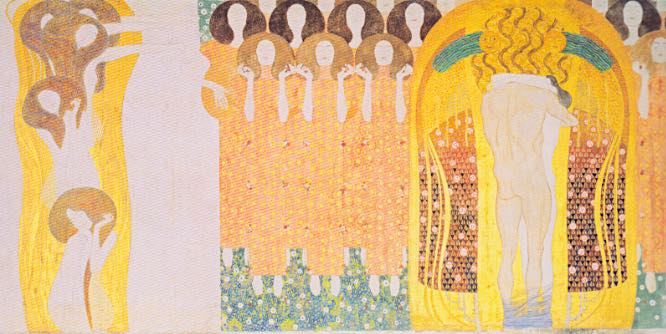
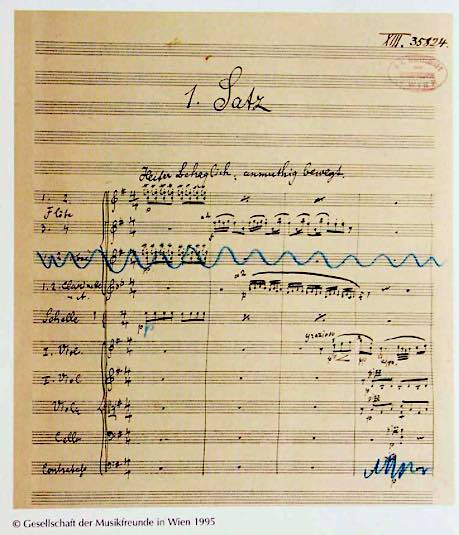
 The Scherzo is a Totentanz, inspired by Arnold Böcklin’s 1872

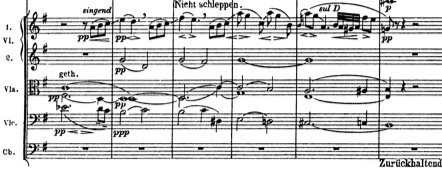


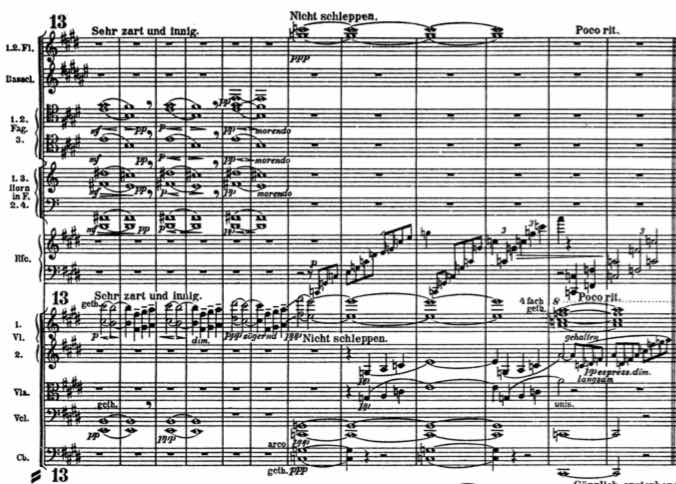

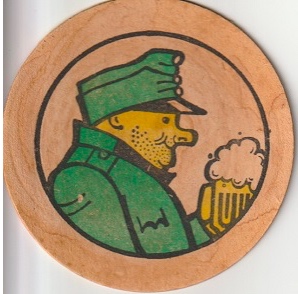


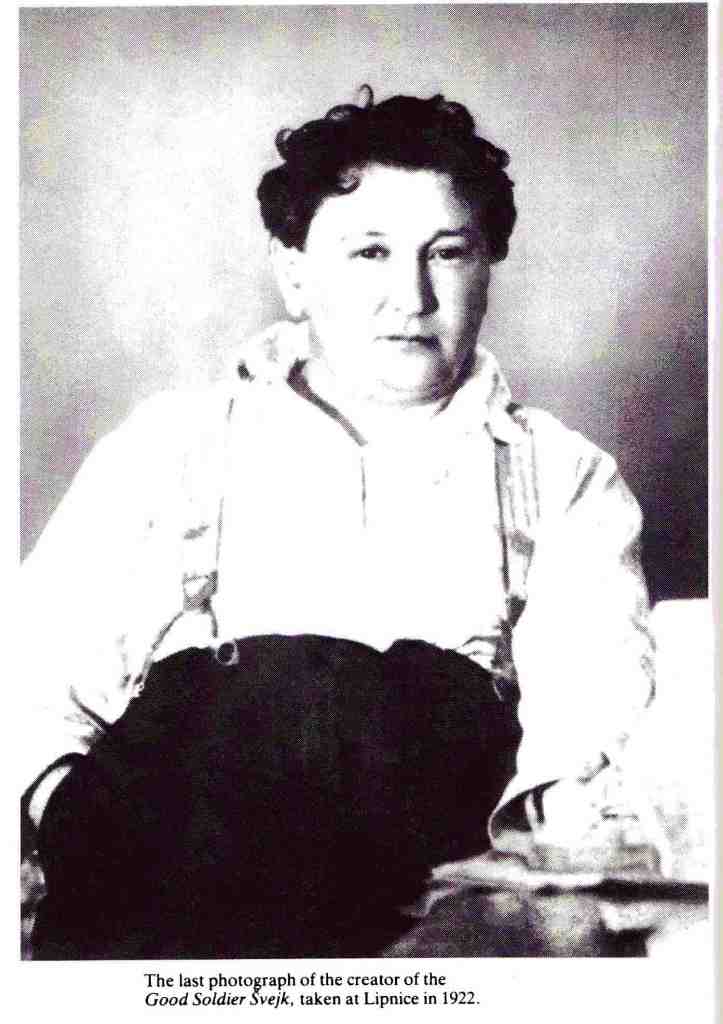
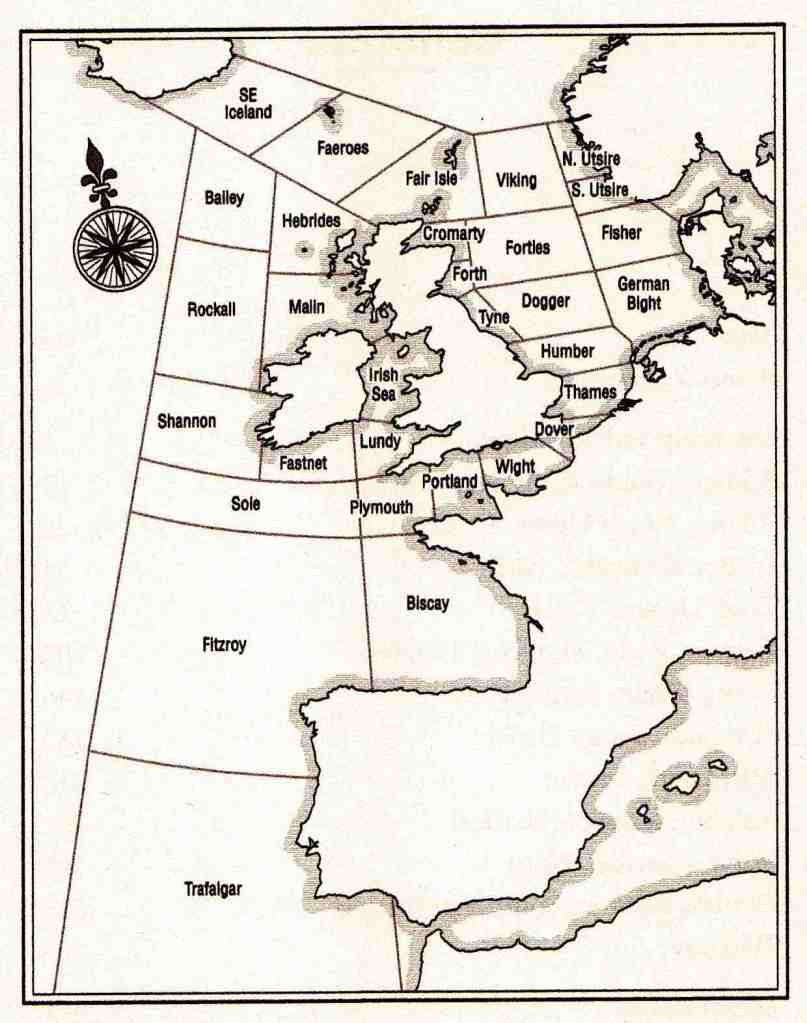

 Radio 4 listeners, bless their cotton socks, defend the ritual fiercely: there was a “national outcry when the BBC had the temerity to change the time of the late-night broadcast, moving it back by a mere 15 minutes (‘People went ballistic’, according to a Met. Office spokesman).” When the name of sea area Finisterre was changed to FitzRoy, “Anyone would think they’d tried to change the words of the Lord’s Prayer!”
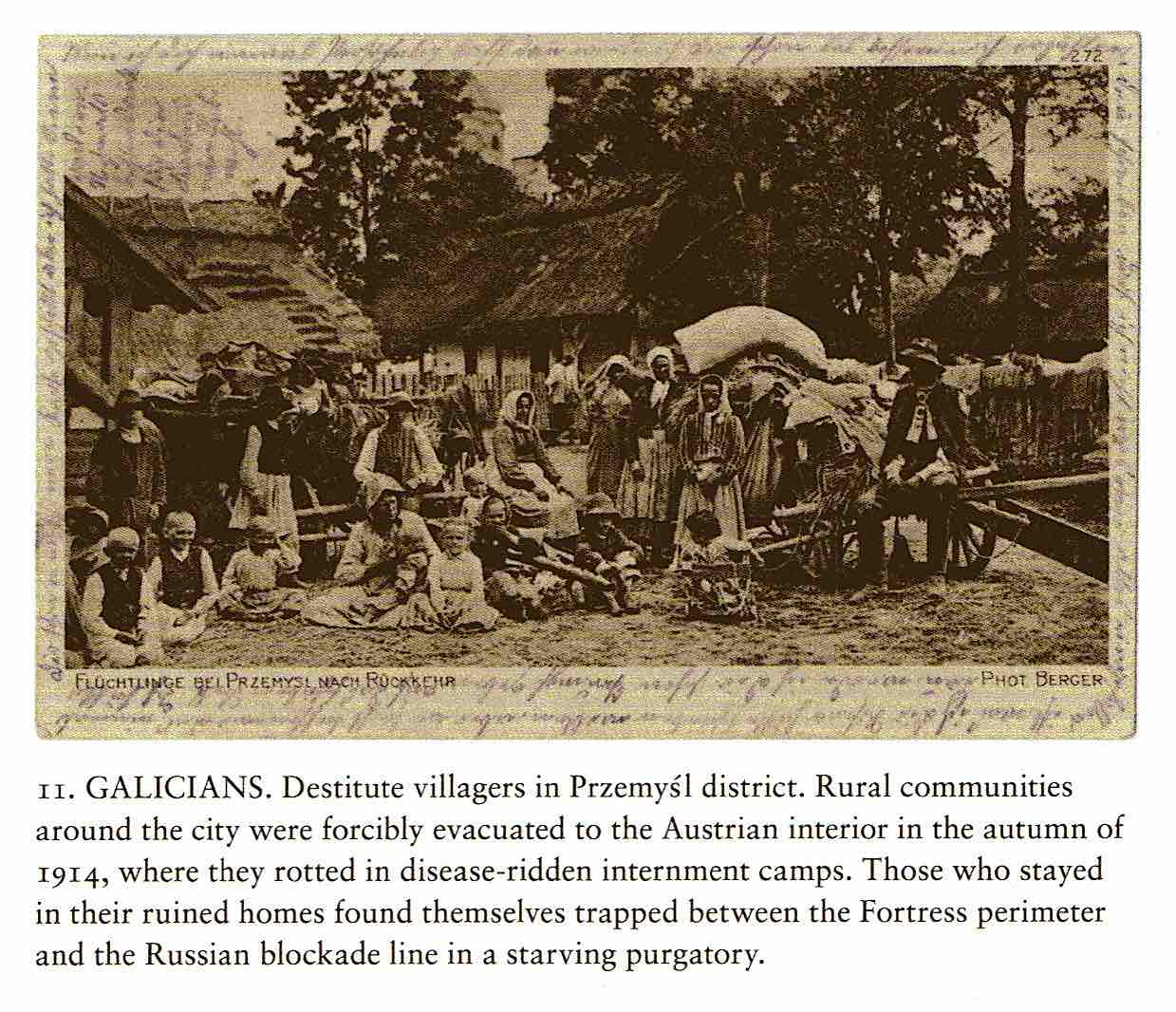

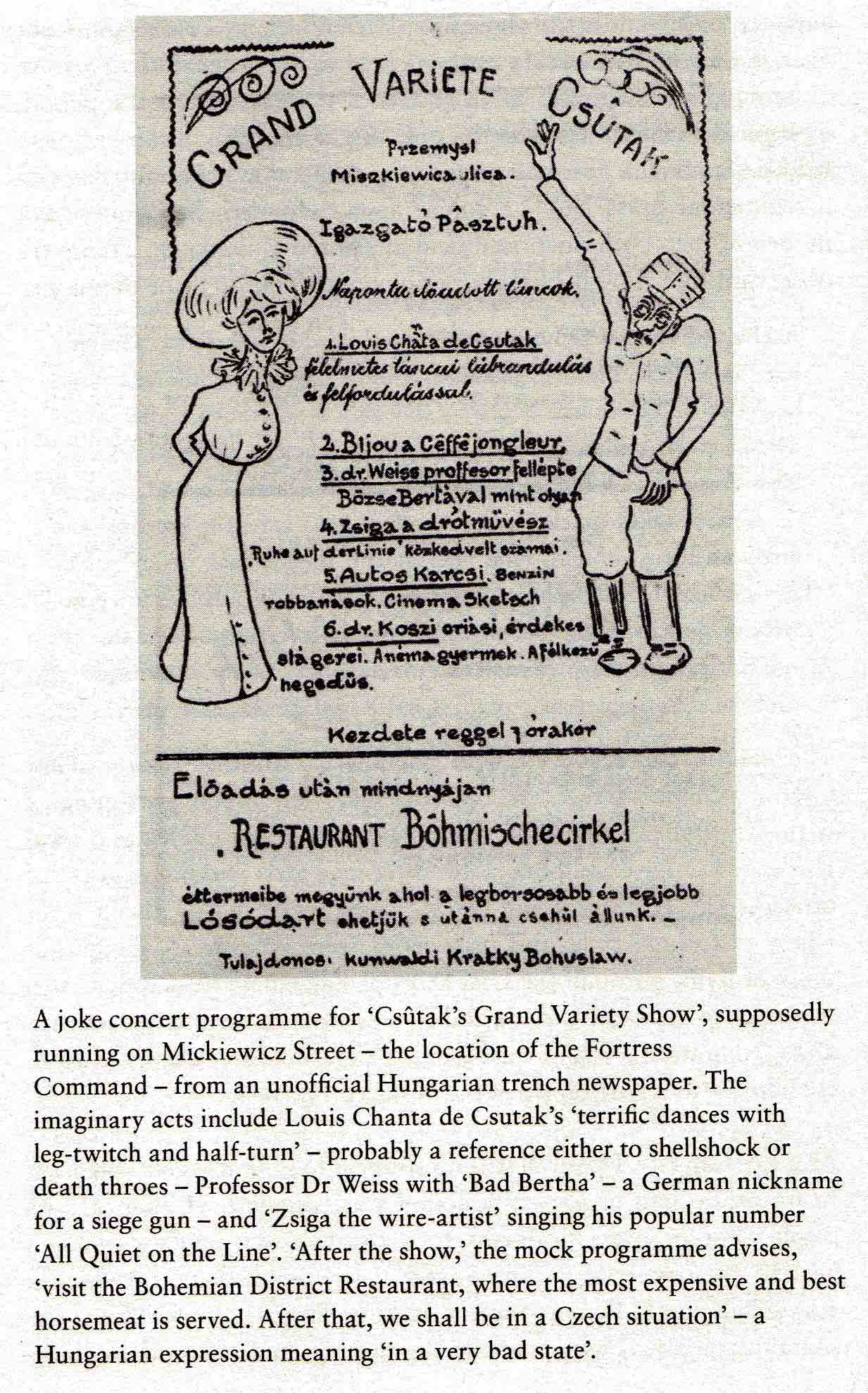
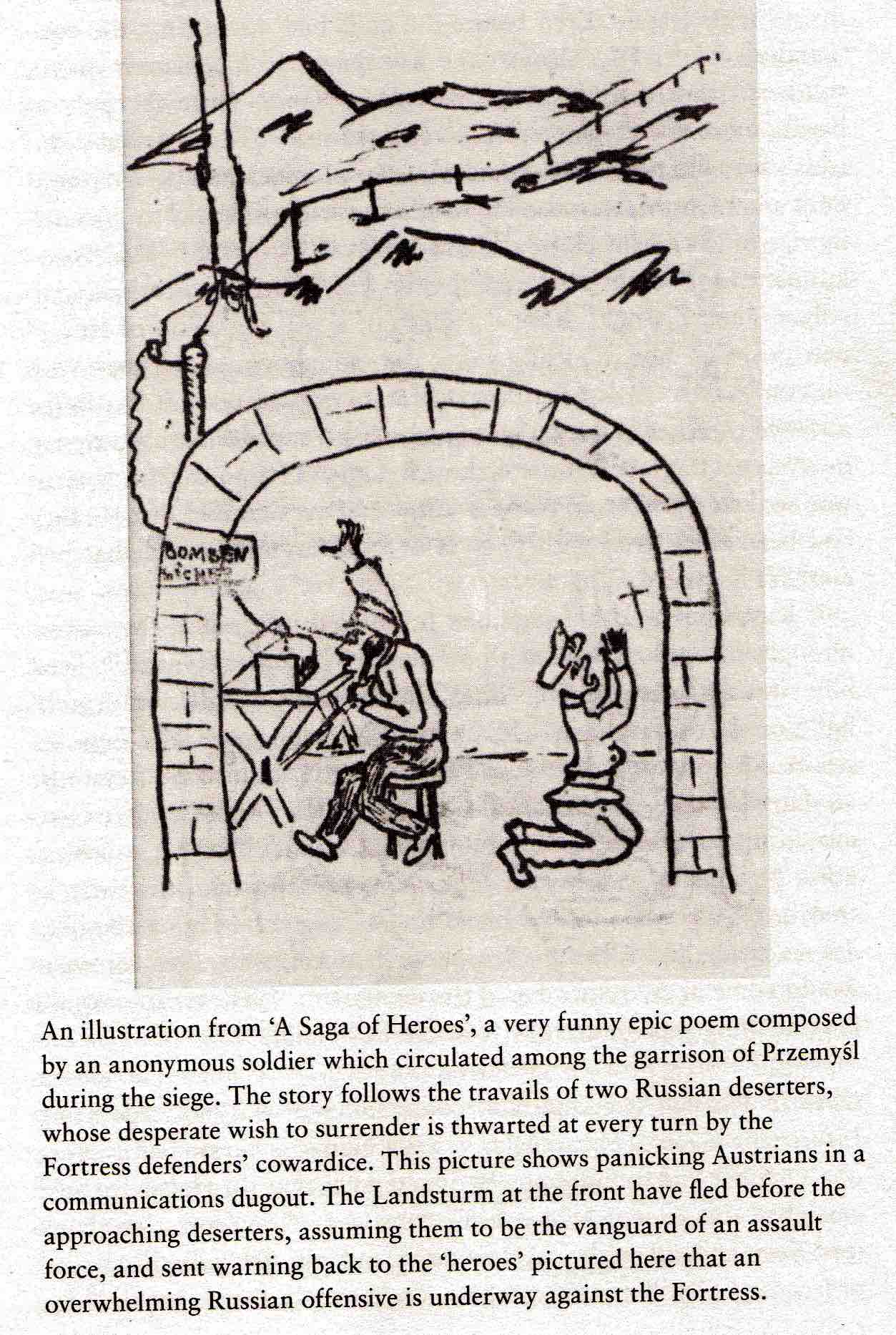
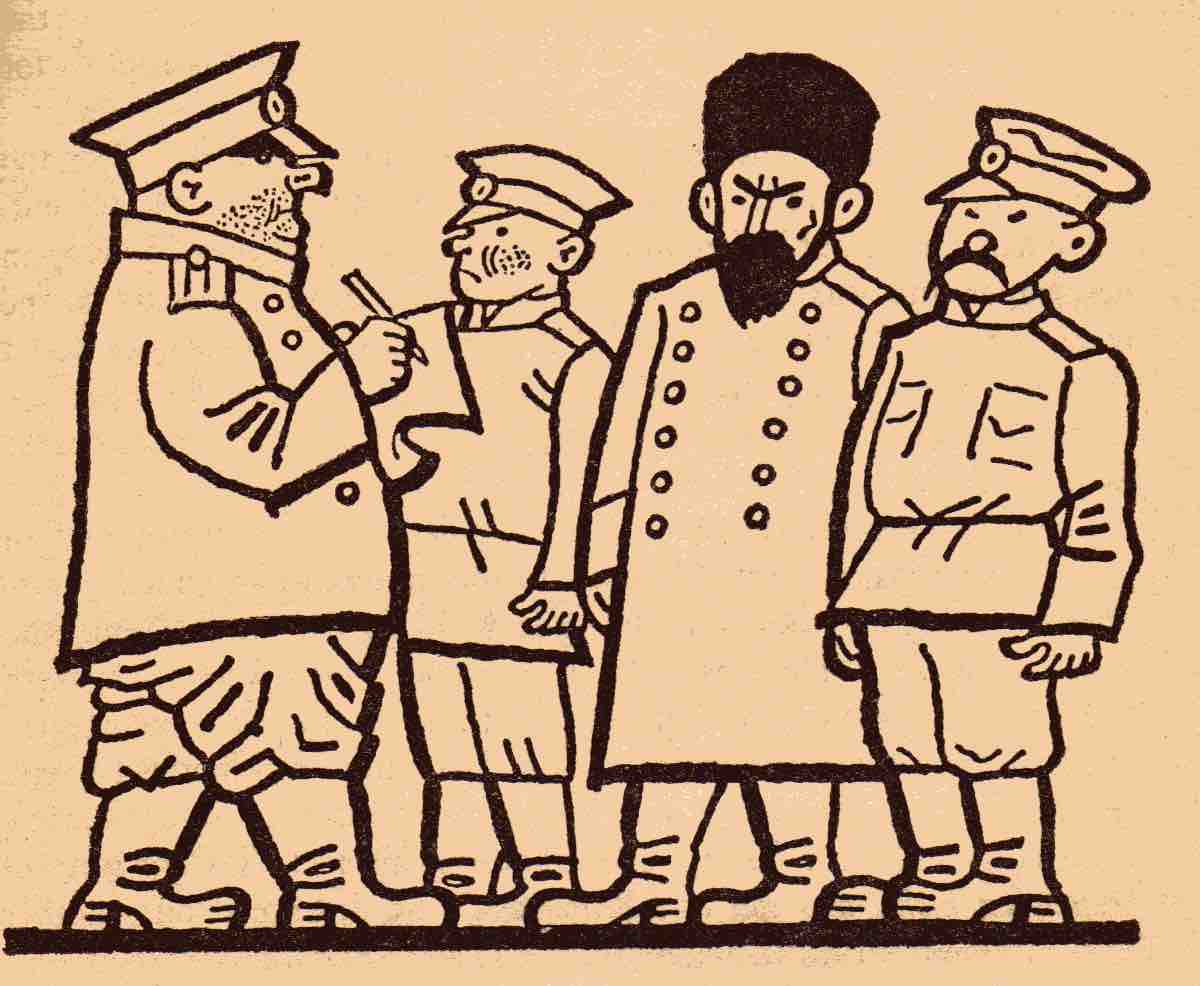



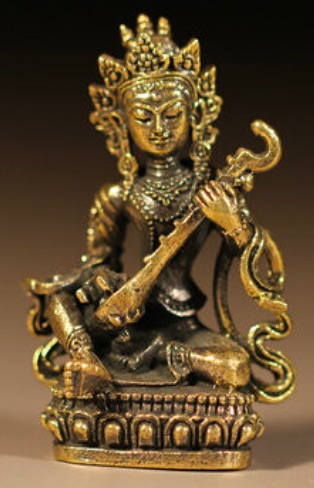

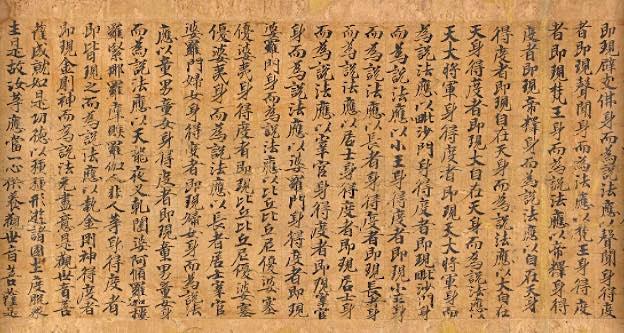


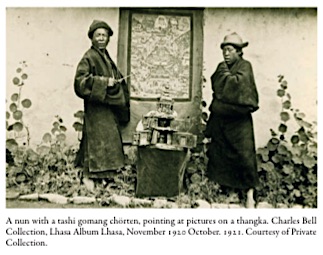
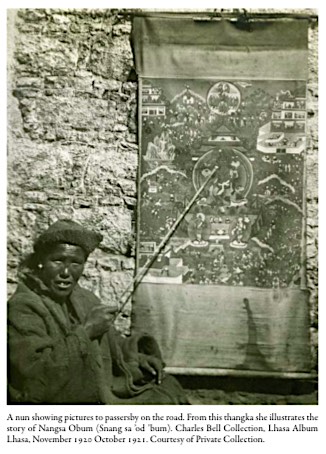


 Also belonging within this diverse rubric are the drekar (in Chinese, zhega 折嘎: see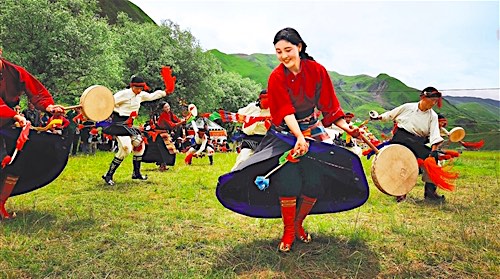


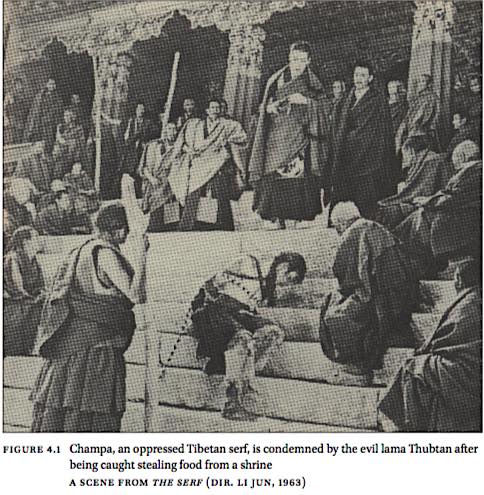






 In Metropolis (which turned out to be Kerr’s last book in the series, published posthumously in 2019) he returned to Bernie’s early career during the Weimar period. As ever, historical personages (such as Arthur Nebe and George Grosz) are woven into the plot, as well as early performances of The threepenny opera.
 As to more recent recreation of the Weimar era,


 Nin was an articulate, talented, independent, sensitive, psychologically attuned, sensual woman. One might think that such attributes would make her safe from Miller attentions, and that of all people, Nin would see right through his narcissistic misogyny. True, she boldly put psychology into practice, engaging in carnal relationships with her analysts; and having been abandoned in childhood by her father, she embarked, confidently, on an affair with him in her 30s—which at least inspired the headline “



 Tibetan monks laying down their arms, 1959. AFP/Getty.
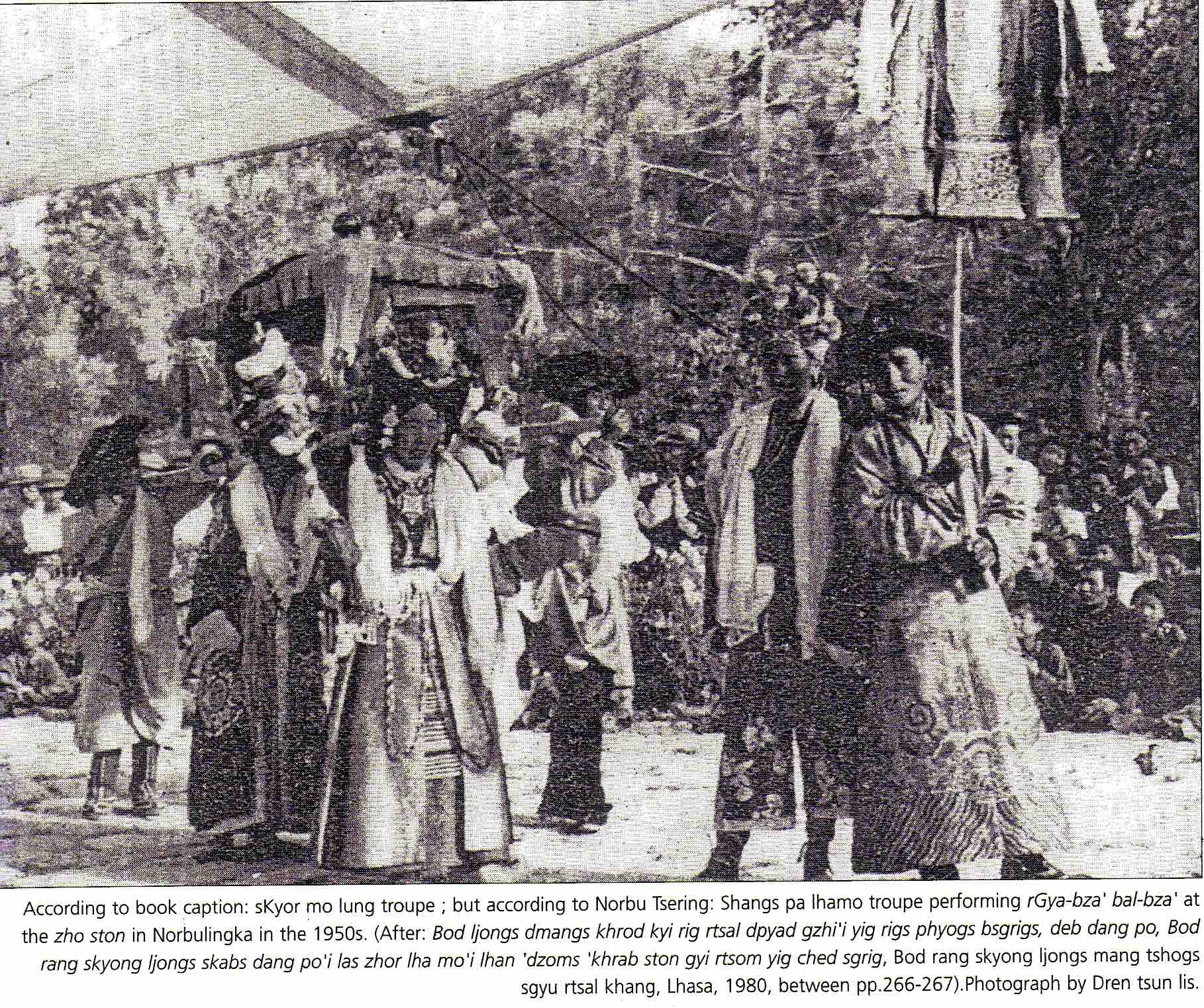


 Horkhang Sonam Palbar (centre) paraded with his wife and father-in-law at a thamzing struggle-session, August 1966. Forbidden memory, fig.80.


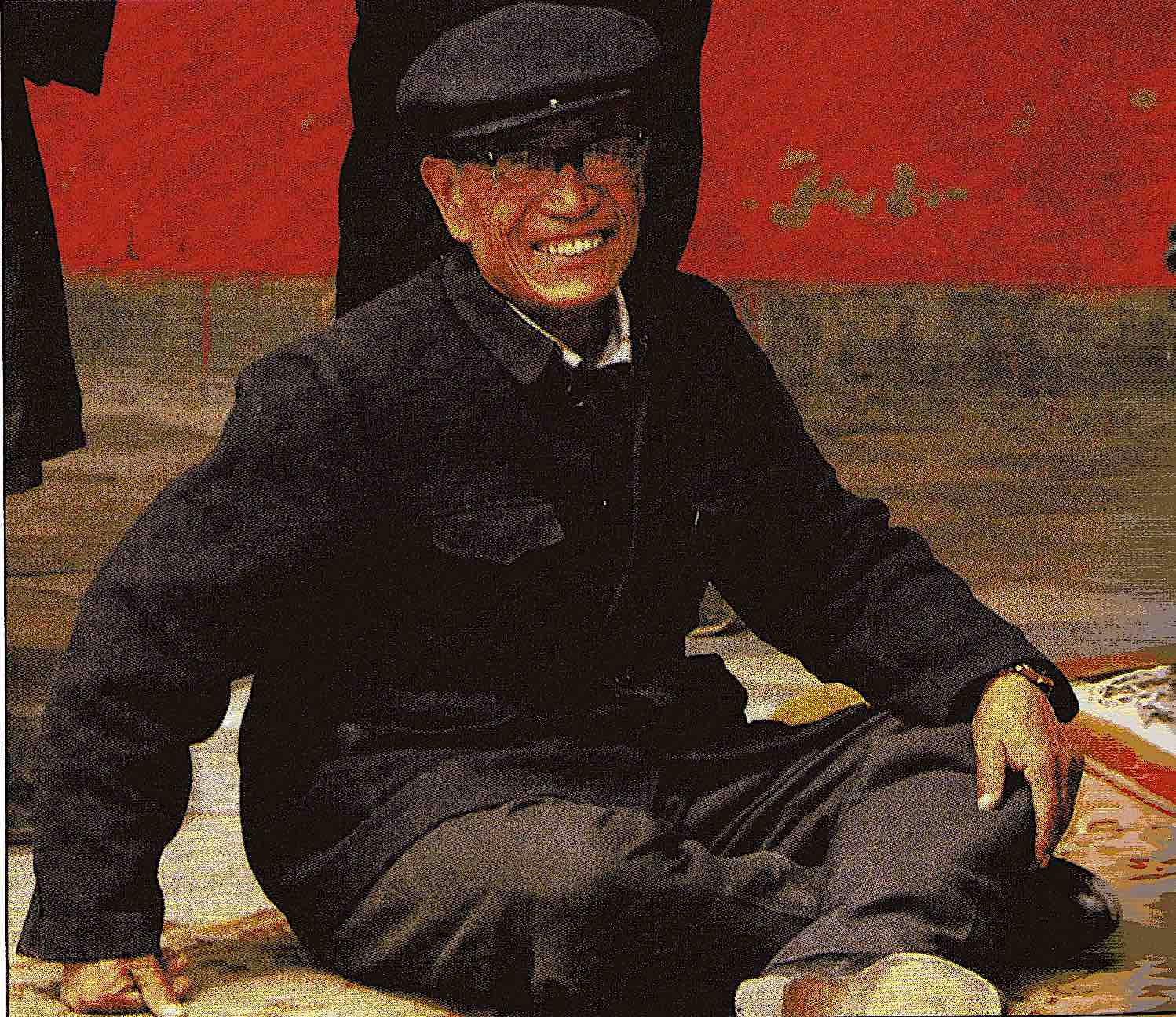


 Horkhang Sonam Palbar leading a study team to a village of the Lhoba minority people,




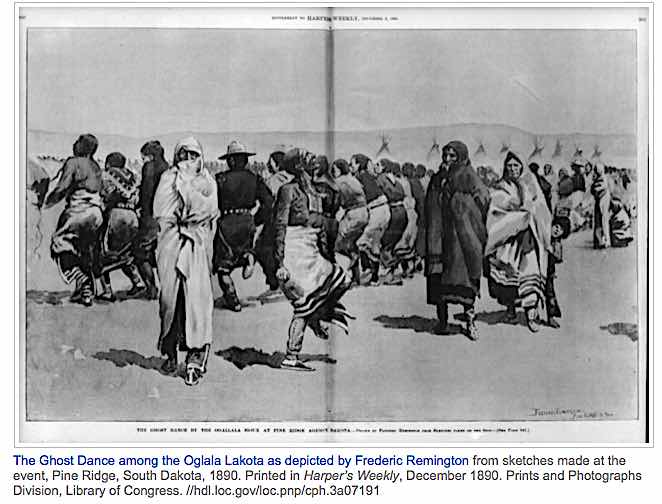

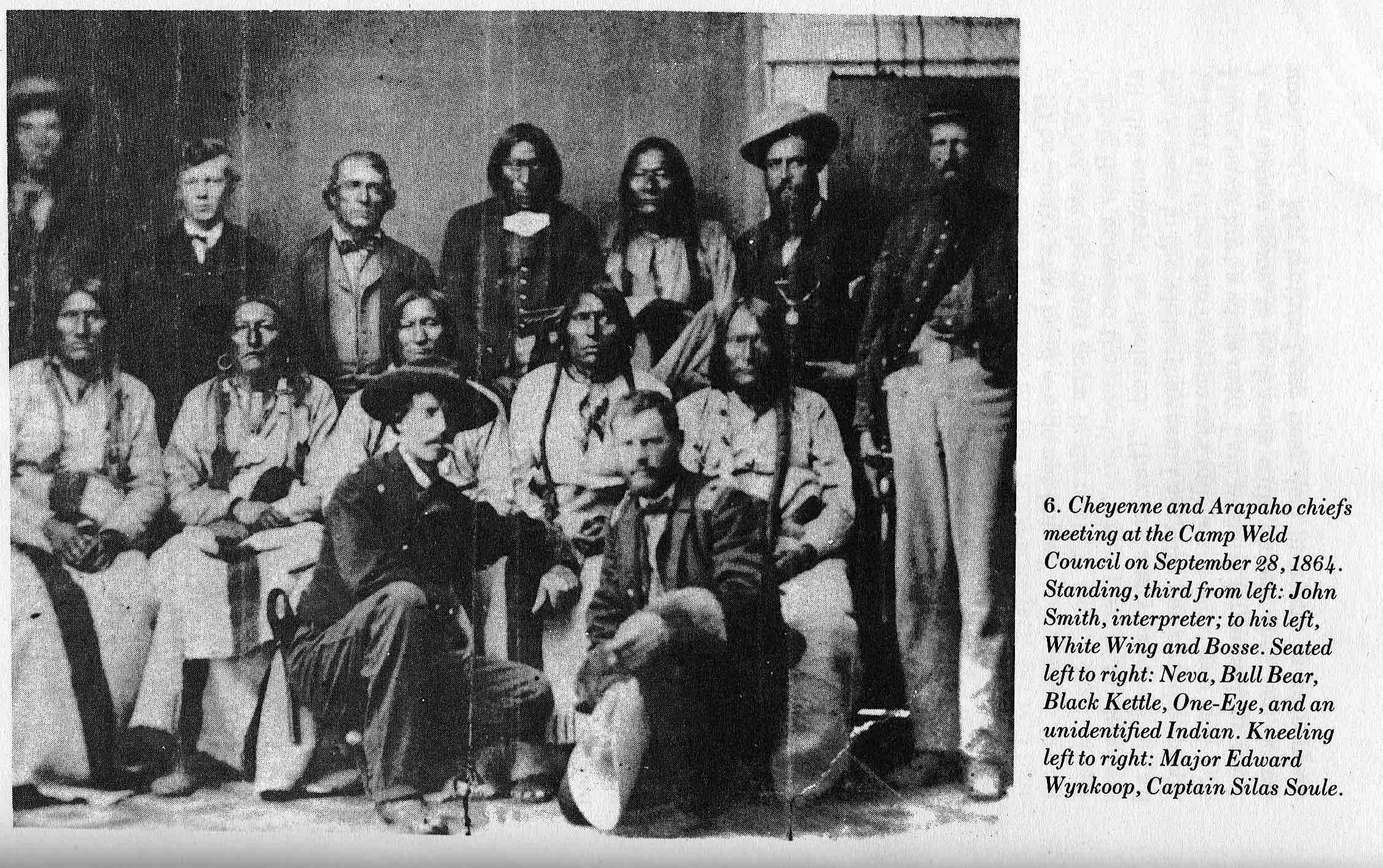




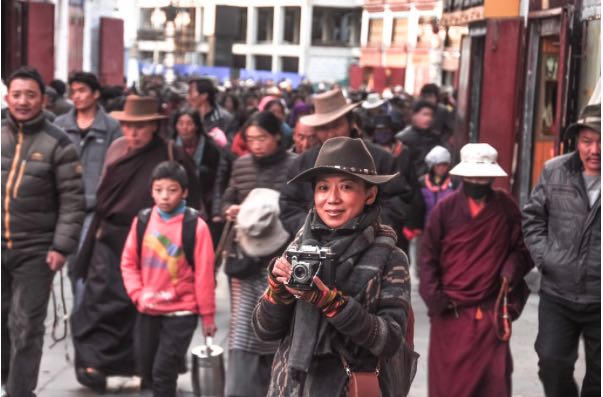
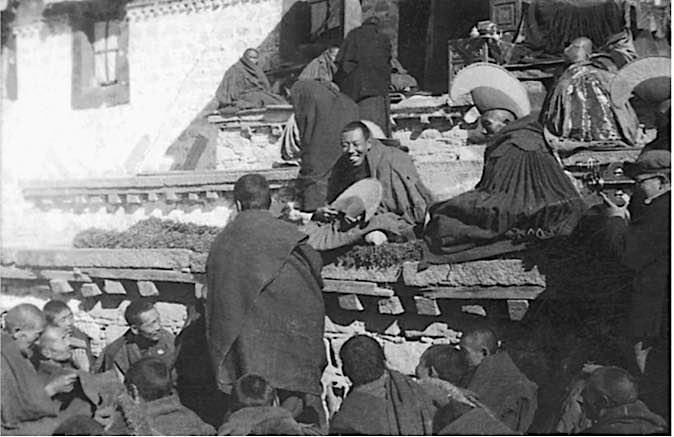
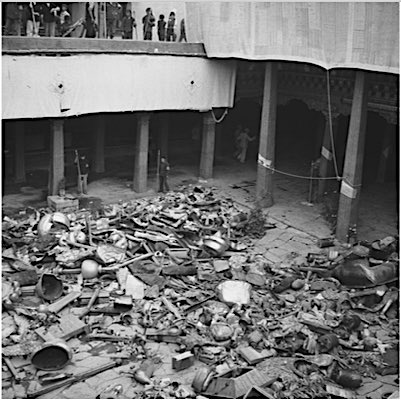

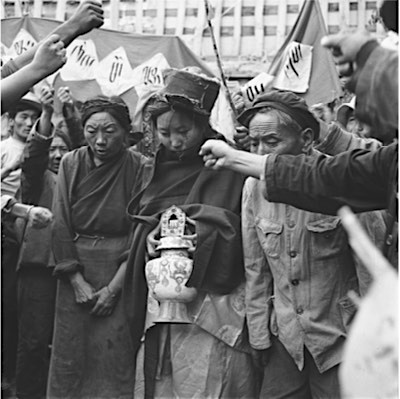
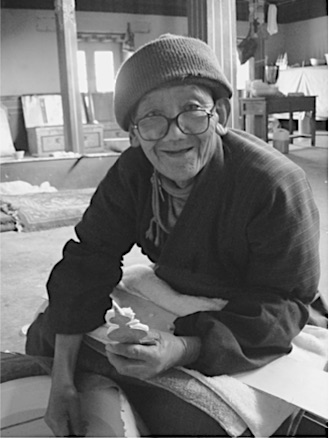 An Appendix reproduces from Tibet remembers the testimony of Jampa Rinchen, whose recollections have featured in various episodes of the book. A former monk at Drepung Monastery, he had become a Red Guard, and then a member of the militia and the Gyenlog faction. In 1986 he volunteered to serve as a cleaner at the Jokhang temple (right: helping monks at the Jokhang fashion sculptures out of tsampa and butter to be offered to the Buddhas and bodhisattvas). As he reflected sadly to Woeser in 2003,
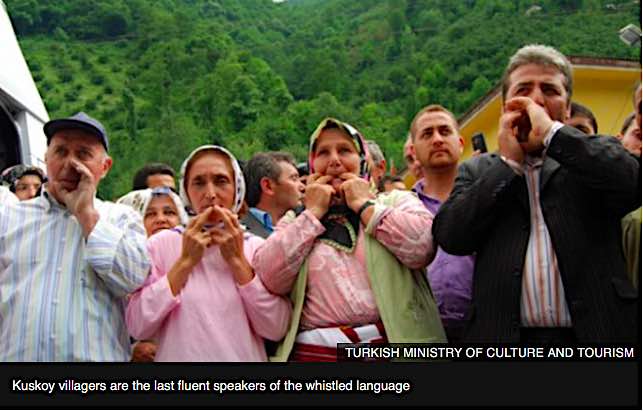
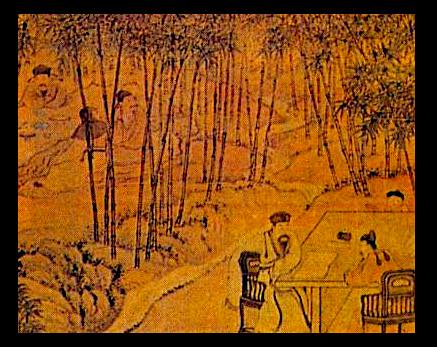


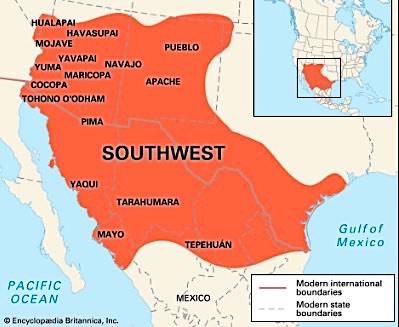
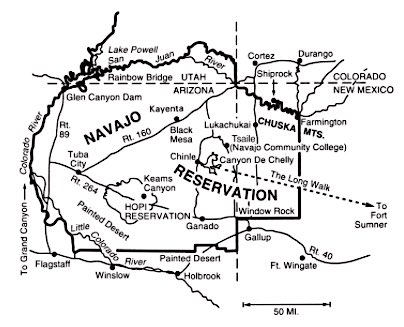


 As Nettl went on to observe, the very
 Transcriptions may look forbidding to the outsider, but audio samples of such songs might be a good test for scholars who disclaim musical expertise: they too should be able to make such simple and useful observations.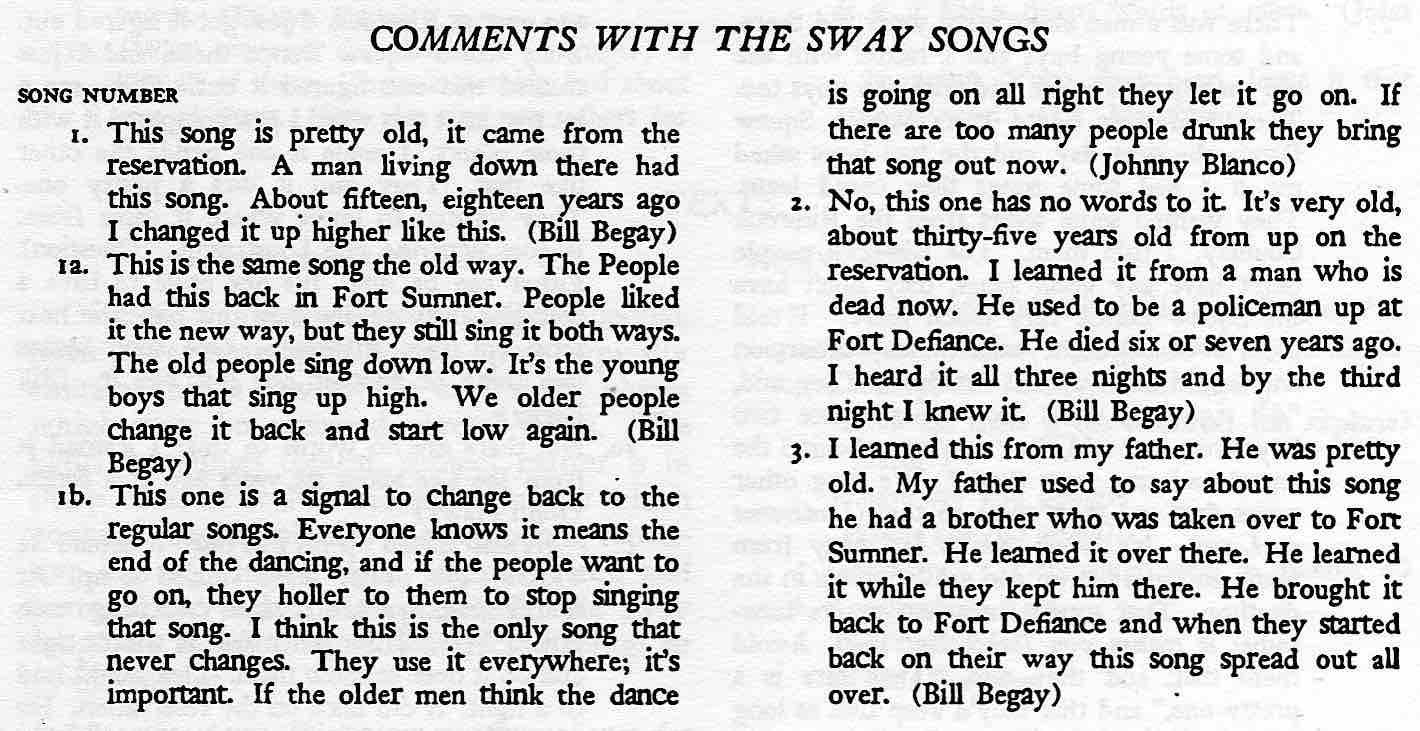
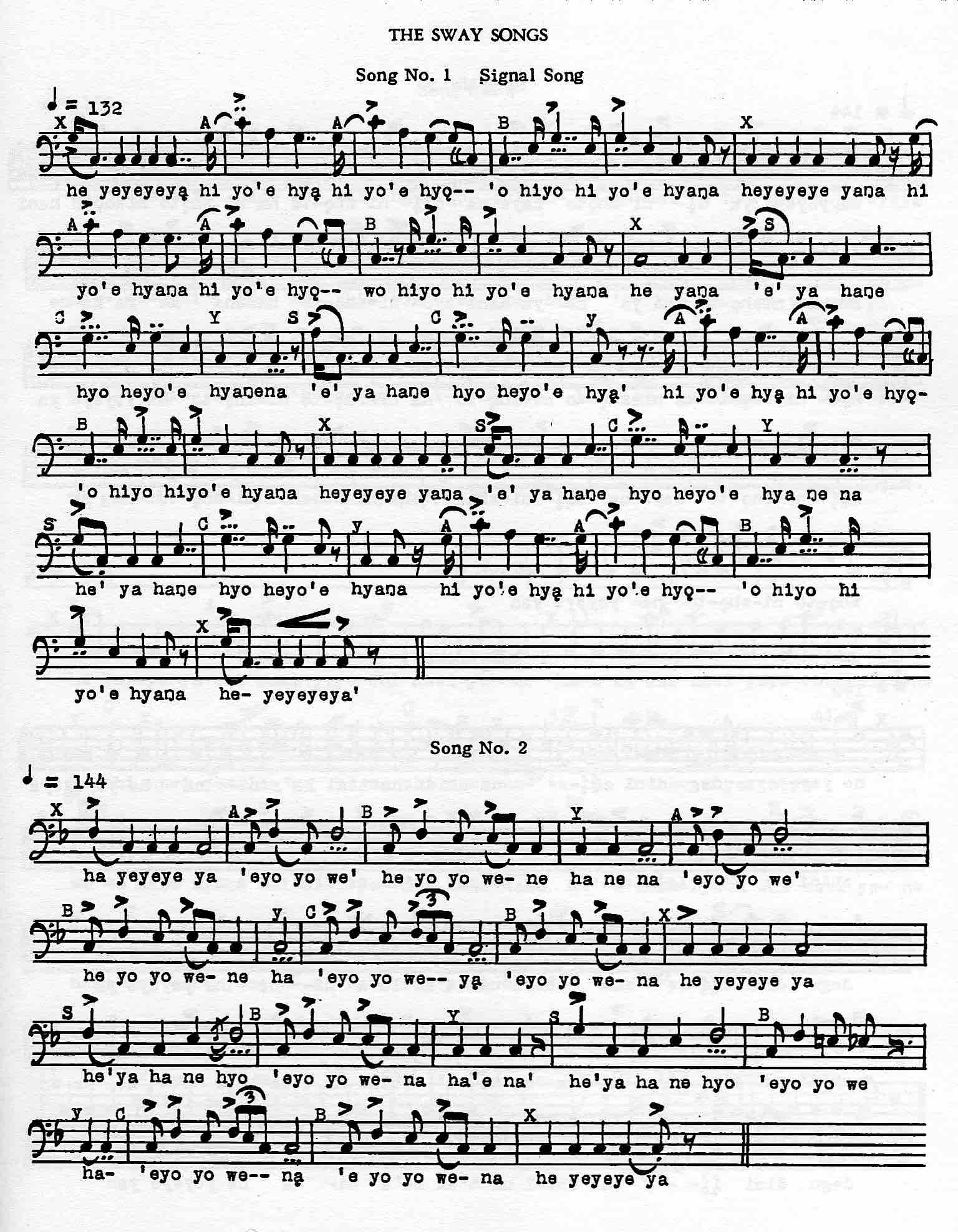



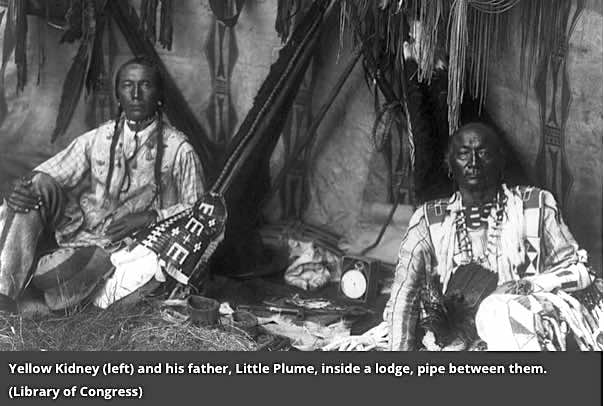

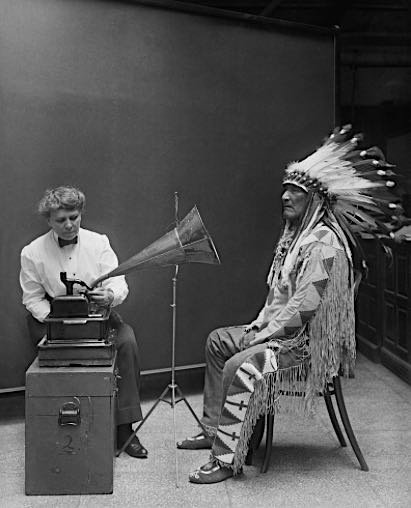






 After Georgetown, Svetlana began teaching Chinese at Australian National University (Canberra) as she worked on a PhD. While still engaged in projects on early Chinese literature, her fascination with the Dungans remained.




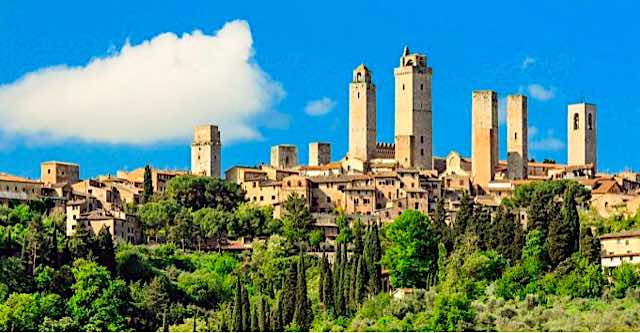


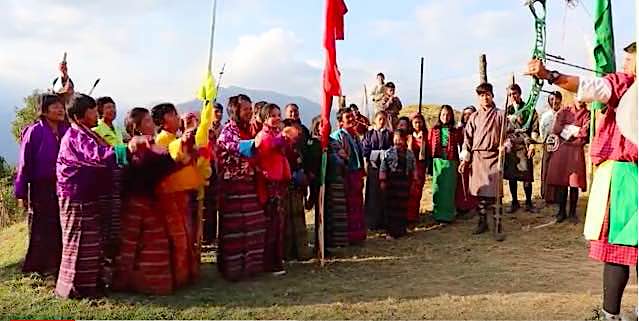

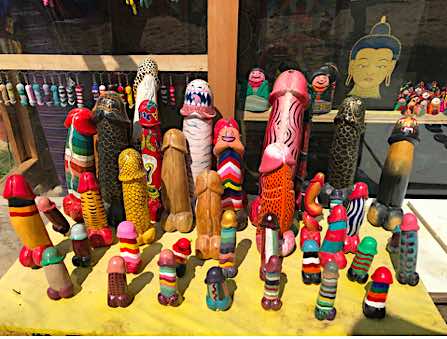 Dare I surmise [Yes, I’m afraid you probably do—Ed.]** that wang-chucking festivals were once a major part of the ritual calendar in Bhutan, with ornately decorated wangs,*** assembled from monasteries throughout the region, to be hurled towards a distant target, or tôs-pöt? The arcane sentence might thus be the pious request of a courtly petitioner, curious despite the ineligibility of the royal family to participate in an event of which they were the main patrons.
 Stephen Jones: a blog