Between the typical Proms fare of monumental romantic symphonies, the Royal Albert Hall also make a wonderful setting to tune in to the more intimate sound-world of early music—even Bach’s suites for unaccompanied violin and cello have featured in the large hall.
The ensemble projects a classy image, with Iestyn Davies occupying his own niche in the counter-tenor superstar gallery carved by singers such as Alfred Deller, Michael Chance, and Andreas Scholl. Kristian Bezuidenhout, a versatile early keyboard specialist, is clearly supportive of the band’s creativity. The upper strings stood to play, adding another layer of communicative energy.
I’m always fascinated to imagine the original Leipzig congregation, steeped in Lutheranism—Bach’s new music must have amazed them every week. By contrast, today our sound-world is infinitely more diverse (and secular), subsuming Mahler, film music, rock, and ringtones; and the way we rejoice in Bach is quite different too.
The programme notes cite an 1898 review of a Bach Prom, praising music that was probably “new for the very large majority of those present, for it is doubtful if it had ever been played before in the metropolis”.
The intensity of the occasion was enhanced by Davies singing without a score—Bach’s own counter-tenor (clearly outstanding, though we don’t know who he was) must have used one, having only got hold of it a few days earlier, with the copyist’s ink barely dry. The music was entirely new to performers and audience—and they would be lucky if they ever heard it again, whereas today both performers and audience can also listen to a range of recordings. Tom Foster relished Bach’s solo organ writing, while oboes enriched the string sound.
The group played two cantatas first performed in Leipzig in 1726:
Cantata170, Vergnügte Ruh, beliebte Seelenlust (Bach cantatas site, and wiki), for the sixth Sunday after Trinity (for those of us who keep track of seasonal rituals), “longing for a virtuous death as a release from the world’s swarming violence and death”.
The opening aria is pure enchantment, a warm, luxuriant dance in 6/8 [?!] in D. You can almost feel Bach’s benign smile hovering over this music, an evocation of Himmelseintracht, “the harmony of heaven”. One of those ineffable Bach melodies that lodges itself in one’s aural memory, it takes a whole bar to get going but once launched, seems as though it will never stop (actually it is only eight bars long, but the effect is never-ending). Yet this expansive melody given to oboe d’amore and first violin acquires its beauty and its mood of pastoral serenity only as a consequence of its harmonic underpinning. The gently lapping quavers in the lower strings are slurred in threes, suggestive of “bow vibrato”, or what the French referred to as balancement, while the downward-tending bass line sounds as if it might be the first statement of a “ground”—in other words, the beginning of a pattern that will repeat itself as though in a loop. Well, it does recur, but not strictly or altogether predictably. With Lehms’ text in front of him, Bach is searching for ways to insist on spiritual peace as the goal of life, and for patterns that will allow him to make passing references to sin and physical frailty.
Here Gardiner accompanies Michael Chance in the first and final arias:
The slow aria Wie jammern mich doch die verkehrten Herzen with organ, is another miracle—the lack of continuo “symbolic of the lack of direction in the lives of those who ignore the word of God”. The violins and violas play a middle-register line in in unison—Gardiner again:
This special texture, known as bassettchen, is one that we have encountered on a number of occasions this year when Bach decides that a special mood needs to be created and removes the traditional support of basso continuo. He uses it symbolically in reference to Jesus (someone not requiring “support”), protecting the faithful from the consequences of sin (as in Aus Liebe, the soprano aria from the St Matthew Passion), and at the other extreme to serial offenders, as in that other marvellous soprano aria, Wir zittern undwanken from BWV105, or (as here) to those “perverted hearts” who have (literally) lost the ground under their feet in their rejection of God. The aria is written from the standpoint of a passive witness to the “Satanic scheming” of the backsliders as they “rejoice in revenge and hate”, so that one can sense the observing singer’s anxiety in the fragmented rhythm of the bassettchen line.
Here’s the complete cantata with Gustav Leonhardt and Paul Esswood in 1985:
Just as astounding is
Cantata35, Geist und Seele wird verwirret (“Spirit and soul become confused”: Bach cantatas site, and wiki), for the twelfth Sunday after Trinity, six weeks later!
In two parts, to be performed before and after the sermon, the Gospel for the day was St Mark’s account of Jesus curing a deaf mute (cf. my stammering series—where’s Jesus when you need him, eh?). Again with obbligato organ and oboes, the cantata expresses both the “sorrow-laden yoke of pain” and a sense of celebration. Here’s Gardiner during the 2000 Bach Cantata Pilgrimage (notes here):
* In the sense of befuddled octogenarians nodding off over a cup of Ovaltine. I mean, 10.15 is a perfectly normal starting time for a regular evening concert in Andalucia…
The Miles Davis album Kind of blue (1959) is so iconic that every note has come to seem sacrosanct. But we need to remind ourselves that jazz is improvised; now that covers a lot of ground (as the ever-perceptive Bruno Nettl explains), but no two performances will sound the same—as when Bach and Mozart played, and as with almost any folk music you care to mention. More still than Messiaen’s Messe de la Pentecôte, or Gershwin’s Rhapsody in blue, fossilised by the exigencies of Western Art Music, jazz recordings are merely a snapshot capturing one moment in the life of an ever-changing organism.
The sessions for Kind of blue were almost entirely unrehearsed—Evans opens his liner notes with a tribute to the spontaneity of Japanese painting. * I featured Blue in green, the album’s most meditative track, in my page on Ravel, whose harmonies it very much evokes—how I wish Ravel could have heard it! Its material seems to belong more to Bill Evans than to Miles (who claimed the royalties). Still, Miles appreciated him immensely:
Bill had this quiet fire that I loved on piano. The way he approached it, the sound he got was like crystal notes or sparkling water cascading down from some clear waterfall. I had to change the way the band sounded again for Bill’s style by playing different tunes, softer ones at first.
Anyway, to return to improvisation, we can gently rattle the cage we’ve entered of our own accord by tuning in to other versions of Blue in green, like the three 1960 takes featuring Evans’s “first” trio with Scott LaFaro on bass and Paul Motian on drums—starting with this:
Indeed, even before Kind of blue, a resemblance can be heard in Evans’ recording of Alone together with Chet Baker:
On this collaboration, Michael Quinn wrote:
While both were peerless masters of their instruments and shared a rich, evocatively lyrical playing style that bordered beguilingly on the introspective, Baker and Evans were polar opposites when it came to the discipline of performance.
Though both were heroin addicts, the musically-trained Evans never let it interfere with his meticulously precise flights of invention while the self-taught Baker became increasingly erratic and inconsistent.
After his brief but formative time with Miles, he went on to form his “first” trio—here they are live at Birdland NYC in 1960:
And Gloria’s step, live at the Village Vanguard in 1961:
Grieving at the early death of Scott LaFaro, Evans formed a trio with Chuck Israels on bass and Larry Bunker on drums. Here’s their 1965 London appearance on Jazz 625 (ending with Waltz forDebby, cf. the a cappella version here):
Glenn Gould said of Evans, “He’s the Scriabin of jazz”, to which the classical music critic Robert Offergeld said, “More to the point, Bill Evans was the Bill Evans of jazz. He could produce a broader tonal color in 32 measures than Glenn in his whole career.”
Discuss…
The intense meditation of his style is still evident in Reflections in D, live in Montreux, 1978:
I was interested in Zen long before the big boom. I found out about it just after I got out of the army in 1954. A friend of mine had met Aldous Huxley while crossing from England, and Huxley told him that Zen was worth investigating. I’d been looking into philosophy generally so I decided to see what Zen had to say. But literature on it was almost impossible to find. Finally, I was able to locate some material at the Philosophical library in Manhattan. Now you can get the stuff in any drugstore.
But, like a Zen monk, he didn’t make a meal of it:
Actually, I’m not interested in Zen that much, as a philosophy, nor in joining any movements. I don’t pretend to understand it. I just find it comforting. And very similar to jazz. Like jazz, you can’t explain it to anyone without losing the experience.
Today we take for granted the colour scheme of the piano keys, with white “natural” notes and black “chromatics” . But the layout was only standardised after around 1810; on most early harpsichords, fortepianos, and organs, the colours are reversed. [1]
Left: harpsichord by Andreas Ruckers (Antwerp, 1646), remodelled and expanded by Pascal Taskin (Paris, 1780). Right: fortepiano by Johann Andreas Stein (Augsburg, 1775). Source: wiki.
Historians are showing ever more clearly how the prosperity of Western imperial nations was built upon slavery (e.g. here; see also the note in Hidden heritage). And as ivory became a prized symbol of affluence,
with the establishment of the early-modern slave trades from East and West Africa, freshly captured slaves were used to carry the heavy tusks to the ports where both the tusks and their carriers were sold.
Meanwhile, worthy efforts are being made to write black composers and performers into the story of Western Art Music (WAM). However, such discussion as I’ve found of the reversal of the keyboard’s colours comes from within the rarefied echelons of musicology—still largely a bastion of “autonomous music” divorced from society (with some honourable exceptions, under Society and soundscape; note also recent initiatives such as this). So even those who take note of the colour reversal (e.g. here, and this) suggest innocent explanations, ignoring the elephant in the room. It’s not exactly a conspiracy of silence, just a scene dominated by white people in their ivory tower. While I can’t see the wider picture here, I’d be intrigued to see what historians of colonialism and the global slave trade might make of this.
Within WAM, some ingenuous commentators seek to explain the change by the practical reason of visual clarity: supposedly, when the adjacent (“natural”) keys were black, they were hard to distinguish since the space between them was also dark, so the new scheme made them easier to identify. Implausibly, this seems to suggest that master performers like Bach and Mozart just couldn’t help playing fistfuls of wrong notes, and that modern players of historical instruments rashly run the same risk.[2]
Mozart’s piano, by Anton Walter—played in our times by the brilliant Robert Levin e.g. here. [3]
Surely such an explanation falls between the cracks. While keyboards with white naturals and black chromatics were quite common (such as those depicted by Vermeer), [4]the reverse system was well-established and long-lived—anything but a fleeting experiment before makers “got it right”. This more common early layout seems to make economic sense: the “natural” keys were larger, longer, and more numerous; black keys were made of ebony (promising article here) or rosewood, while white keys were covered with ivory, which was more scarce and more costly.
But after a couple of centuries of colour diversity, the scheme of white naturals and black chromatics became standardised from the early 19th century, and this coincided with several factors that I have yet to see spelled out. As importing ivory became more efficient (I surmise) it must have become rather less expensive (cf. fluctuating costs of ebony manufacture?); and as industrial production developed, the piano market surged—notably among the social classes making lucrative profits from slavery and the ivory trade. So we might want to find out how piano prices and incomes changed over the period, for German, French, Dutch, and English producers and consumers.
An article on one corner of American piano manufacture since the mid-19th century suggests the kind of approach I’m seeking.
It may be hard to find out how white supremacy came to be inlaid onto the piano keyboard within a couple of decades early in the 19th century. Doubtless both aesthetic and socio-economic factors played a role; but it’s an interesting coincidence that the change occurred just as profits from the trade in ivory and slaves were soaring. So I hope this post will read not so much as a Guardian-reading tofu-eating wokerati rant but as a plea for broader-based and informed research (cf. Empireland).
* * *
Returning to more purely aesthetic concerns, a friend also wonders if a predominantly white keyboard was considered more pleasing in salons and concert halls where musicians wore dark suits and audiences sat at a distance. Another, later story (that, mercifully, I won’t attempt to cover) is the overall contours of the instrument’s body: how the varied shades of elegantly decorated wood yielded to the modern concert grand—massive, impersonal, shiny, and black (white instruments appealing mainly to the tastes of such as R. Clayderman and D. Trump).
It’s hard to gauge if playing on one or the other keyboard had, or has, any effect on performers or audiences—for instance, if modern players who use both early and later models are influenced in some obscure way by playing on instruments of one or the other type.
As a relief from such meretricious speculation, let’s rejoice in one of the funkiest keyboard solos ever:
You will note that this colourised version of The chronicle of Anna MagdalenaBach (featured in my post on Susan McClary’s stimulating political analysis of the cadenza) shows Gustav Leonhardt apparently playing a harpsichord with white natural keys and black chromatics—as is a 1640 instrument by Johannes Ruckers in Antwerp played by Richard Egarr, seen and heard in the same post. Tickling the ivories was never an entirely black and white issue…
Let’s play out with Hazel Scott (in The heat is on, 1943)—the piano on the left presumably a novelty one-off, specially manufactured:
[2] What about blind players, one might ask? An even more dodgy claim is that “the custom of having the naturals a darker colour was said to have originated in France to show off the player’s hands to better advantage”.
Another aside: although the old theory that Beethoven was black sometimes gets exhumed on social media (and is soon reburied), it can still lead to interesting conversations, like this.
[3]More Mozart pianos concertos here. For the different timbres of early pianos—even up to the 1950s—see my note here on Beethoven’s wondrous Op. 109 sonata. For a modern performance of Brahms on a piano of his time, click here. In my tribute to Fou Ts’ong I refer to Richard Kraus’s fine study of pianos and politics in China.
[4] So was this layout, which only achieved a monopoly considerably later, more common in the Netherlands—and if so, might that be because since the Dutch empire prospered earlier than its rivals, its keyboard makers had earlier access to ivory? Maybe someone can direct me to a large image database for early keyboards.
Early recordings can be inadvertently hilarious, like the French folk-song from 1860 that made Charlotte Green corpse on a BBC news report. The first known recording of Western Art Music is more bemusing than funny. Recorded on wax cylinders (“Mr Edison’s phonograph”) at a grand concert at Crystal Palace on 29th June 1888, it apparently contains excerpts from Handel’s Israel in Egypt—but not so you’d know. The review comments interestingly on the revival of the piece that was then under way:
It is now almost as well known to our choirs in various parts of the country as the “Messiah” itself.
Recalling our own times, the review also notes mixed responses to an audience member:
Among the distinguished persons present at to-day’s performance was Mr Gladstone, who occupied the Royal box, and who on rising at the end of the first part was saluted with marks of approbation, which, originating in the Handel orchestra, soon spread throughout the vast assemblage. The applause was varied here and there with a few hisses, which, strange to say, seemed to proceed in all cases from ladies.
Curiously, the detailed review compliments the solo singers but doesn’t mention the conductor, August Manns, “directing an orchestra of some 500 musicians and a choir of over 4,000 voices, in front of an audience of 23,722 people”.
Here are the salvaged fragments, ingeniously identified in the comments:
The tempi, albeit hard to detect, are very slow, in the romantic fashion that persisted until the spread of the early music movement (e.g. Mengelberg’s 1939 Matthew Passion—link in my post on Richard Taruskin). If someone could make a better restoration, it’d be fascinating to hear. Perhaps we’re fortunate that
Colonel Gouraud, who made the experiment, did not attempt to record any solo pieces, feeling that the phonograph was too distant from the vocalist.
David Francis Urrows, François Ravary SJ and a Sino-European musical culture in nineteenth-century Shanghai(2021),
is introduced in Sixth tone by Zhang Xiaoyi, librarian at Xuhui District where material has been discovered.
As she observes, some have traced the “first Chinese orchestra”
to the formation of the Shanghai Public Band (now the Shanghai Symphony Orchestra) in January 1879, which was headed by Jean Rémusat—“Europe’s premiere flautist”—and composed largely of Filipino musicians. Others argued that Sir Robert Hart’s brass band, founded in 1885, should be considered the earliest Western orchestra in China because its members were Chinese. And a few pointed instead to a music course taught by American missionaries at Shandong’s Tengchow College in 1876.
The French Jesuit missionary François Ravary (1823–91) arrived at the Collège St. Ignace in the Xujiahui (“Zikawei”) district of Shanghai in 1856 to direct the school choir. Now, thanks to Urrows, we know that he founded an orchestra there, using instruments shipped from Europe by Ravary’s friend Hippolyte Basuiau, a violinist-turned-Jesuit.
Together with fellow Jesuits Louis Hélot and Léopold Deleuze, Ravary also made his own instruments, setting up a workshop in what was then St Ignatius Church and recruiting four Chinese carpenters to help them build a pipe organ out of bamboo, modelled on the sheng mouth-organ.
Organ made by Léopold Deleuze and his team.
Deleuze and a team of Chinese craftsmen later built another organ, this time with three special stops to reproduce the sound of the Chinese xiaoend-blown flute, ditransverse flute, and sheng. Dedicated to the son of Napoléon III, then king of France, it is now preserved at the Musée de la Musique in Paris, though the pipes have rotted and can no longer produce sound.
Once his instruments were ready, Ravary began recruiting Chinese students to take lessons in Western music. In 1864, when a group of orphans was moved near the school in advance of the opening of T’ou-Sè-Wè orphanage, he included them in his orchestra training as well.
After their first performance, Ravary wrote “It is fortunate that in this country, people’s ears are not as discerning as they are on the Champs-Élysées”. Once the performance ended, the nervous student-musicians gorged themselves on steamed buns.
By 1871 the orchestra was more assured: an Austrian baron enthused, “Haydn played in China by the Chinese! … We were all deeply moved.”
In my experiences in China studies, when it comes to music repertoire in the missions from the late 16th century onwards, most of what people write—and then perform—is 10% based on documentation, and 90% based on fantasy, resulting in a kind of musical chinoiserie of a New Age type. I don’t want to promote, much less add to this pile of pseudo-scholarly dreaming, pleasant as it is to listen to…
When Ravary was transferred from Xujiahui, the orchestra declined—until 1903, when the Shanghai-born Macanese Francisco Diniz and his friends organised a military band at the T’ou-Sè-wè orphanage known as the Fanfare de Saint Joseph. With Joseph Tsang, Diniz also co-edited Rudiments de musique, a textbook in question-and-answer format to teach students to play wind instruments like trumpets and tubas—apparently China’s earliest known textbook on Western instrumental music, and the earliest such book written in the Shanghai dialect.
In 1907, Louis Hermand, a Western music teacher who worked with the band, predicted that “In a few decades … we will see a Chinese child take their place among masters like Gounod and Wagner.”
All the while, of course, Shanghai was home to a wealth of musicking, including silk-and-bamboo clubs, Daoist ritual, shawm bands, local opera, narrative-singing, and puppetry. See also China’s hidden century.
Fashion note: hard to tell, but I suspect my wearing of this T-shirt in honour of the wise AOC
rarely succeeds in spreading the message of compassionate social justice…
Poised somewhere between Doing Nothing and doing nothing (see Daoist non-action), to punctuate regular swims in the tranquil blue sea I revived my long-dormant juggling skills, framed by olive trees in an enchanted garden. Juggling is another instance of the blending of aşk mystical love and meşkdevotion to practice; in company, one can enliven the diverse patterns to mime a story of charming abstraction.
And our wonderful hosts even found the little violin that their daughter had learned on, so that I could keep practising Bach suites. Despite having long been silent, it was perfectly in tune when I took it out of its case (cf. Muso speak: excuses and bravado)—but no-one would ever know that once I started to play…
Bach, juggling, and swimming make a perfect daily routine.
Being busy doing nothing, I had limited curiosity to explore Marmara’s history and culture, but it was among many islands that were home to substantial Greek communities until the 1922–23 population exchange. The inhabitants had already suffered from piracy during the War of Independence from 1919, and when the Greeks were expelled, new waves of Turkish migrants took their place—from Crete, Thrace, and particularly the Black Sea region of Trabzon. With Marmara’s architecture and economy already devastated, a further trauma was the earthquake of 4th January 1935 (click here).
Anywhere in the world, the stories of elderly people are always fascinating (such as that of my orchestral colleague Hildi, a distressing autobiography from Tibet, and among many Chinese lives, e.g. A village elder). The way that Turkish folk from all walks of life gladly share their reminiscences with Augusta has a particular resonance (e.g. Fatma Hanım here). Their accounts not only remind us of the complexities of modern migrations, but hint at the ethnic tapestry of the former Ottoman empire—such as the recollections of Ünal Bey (85), benign baba of our island friends, who was sent alone to Istanbul from the Black Sea when young (like our Tophane wood-turner), becoming a tailor and eventually travelling as a Gastarbeiter to Bremen, where he soon established his business. By contrast with some interviewees in Love, Deutschmarks, anddeath, both he and his son Mehmet, who received a fine education in Germany, are full of praise for their hosts’ welcome. When Ünal Bey retired to Marmara in the 1980s, he created a beautiful home on a stretch of coast that then still lacked basic amenities.
I never know which of my diverse topics will prove popular. In a way I’m not bovvered—you don’t spend half your life doing fieldwork on Daoist ritual if you’re hoping to be an overnight TikTok sensation. Like Flann O’Brian, I write largely
without regard to expense or the feelings of the public.
Still, I sometimes find it perplexing when one post gets a lot of readers while another related one goes down like a one-legged man at an arse-kicking party.
For instance, Shamans in the two Koreas went modestly viral, whereas readers were underwhelmed when I reposted my roundup of essays on Spirit mediums in China. Would that be because the word “shaman” is clickbait—or is it that North Korea seems more exotic than the PRC?
My lengthy reflections on the new British Museum exhibition China’s hidden century have been well received, with many instances of the wealth of material on the late Qing that can be gained from fieldwork among local rural traditions. Just as fascinating is the life of Nadine Hwang—her high-flying early life in Beijing and Paris, then meeting her partner Nelly Mousset-Vos in the hell of Ravensbrück, and living together in Caracas after their release.
To my chagrin, rather few readers seem to share my enthusiasm for either WAM or pop music—both Beethoven’s Op.109 sonata and Mr Sandman are utterly captivating!
I generally go to some lengths to avoid Beethoven, my wariness confirmed by Susan McClary. I grew up on his late string quartets, but I hardly know the piano sonatas, so Op.109 (1820) came as a revelation. While its improvisatory quality clearly suits Grimaud, to me the manic contrasts of the first two movements often sound like an ADHD diagnosis; but the final movement, with its variations on a tranquil, intense theme (Gesangvoll, mit innigster Empfindung—in the incandescent key of E major, to boot), is a real apotheosis. Here’s her 1999 recording of the movement:
She has a particular affinity with Brahms, and continued with the “private musings” of his late works from 1892–93 (for some reason I’ve always thought of Brahms as mid-century, but the symphonies are from the 1870s and 1880s, and he knew Mahler). First the Three intermezzi, “lullabies in all but name”:
And then after an interval, the Seven fantasias, a contrasting series of intermezzos and capriccios—the fifth movement particularly haunting for me:
In 1877 Brahms had adapted Bach’s monumental solo violin Chaconne (featured here) for piano (left hand—cf. Ravel!). Instead, Grimaud segued from the Seven fantasias into Busoni’s 1893 arrangement of the Chaconne, which I mentioned under Alternative Bach. Here she plays it live in 2001:
Lastly as encores for the rapturous audience she played Rachmaninoff and Silvestrov—the latter part of her latest project.
Averse as I am to the whole mystique of “Pianism”, Hélène Grimaud joins a cohort of celestial musicians of yore for whom the piano is merely a vessel; ** she vanishes deep inside the music, leading us with her. While she’s a devotee of rubato, her playing is unadorned and serious, eschewing mere virtuosity, never glamorising the music. The mood set by her languid stroll on and off stage (gliding, dreamy but not casual—roaming the clouds), once seated at the piano she plays for herself, as if we are but eavesdroppers. To hear her is one of life’s great blessings.
In my current liminal state while my house is being renovated, apart from enjoying my local library, I’ve got back to playing Bach on the violin. One hopes it’ll be like riding a bicycle, and so it turns out (wobbly). Among several fine musos’ excuses, most apt is
It was in tune when I bought it!
All I need is the Bach cello suites; indeed, maybe they’re all we need in Life… I’m less tempted to return to the violin suites—apart from memories of struggling over them through my teens, they’re just harder! OK, one day I’ll get back to the Chaconne.
First stage is to refresh my memory. The cello and alto clefs are mostly under my fingers by now, though it can be a bit like driving in Birmingham, going round in circles till I find the right exit—so with my sheet music currently buried in boxes I occasionally resort to online scores.
I’m playing my modern violin at the moment, tuned down a tone, with a gut “E” string. I use my baroque bow occasionally, but it doesn’t feel quite right with the modern violin. A good rosin discipline makes all the difference HELLO, although it’s not so frequently applied as chalk in snooker…
I continue developing an arcane system of bowings, often designing slurs (and fingerings too) to reflect conjunct melodic movement, particularly semitone intervals. This varies according to my mood, as it should do, but I like to have a template. Arpeggiated passages are good practice for string crossings. And then, after all the nitty-gritty, it has to sound natural and organic… As opposed to writing or listening, what’s great about expressing such nuance is that it’s more of an immersive physical process than a mental exercise, potentially like the riaz of north Indian raga (see Neuman, chapter 2).
* * *
Apart from the cello suites, I’m also relearning the A minor flute Allemande. I greatly admire the hieratic feel of David Tayler’s metronomic lute version, allowing the note permutations to speak for themselves; but working out bowings and fingerings on the violin, this is the kind of thing that I’m internalising, without having to annotate it like this:
or
This may seem a bit, um, fiddly, even Irish—so having worked out these patterns, I try not to let them get in the way.
Anyway, it feels great to Become One with the instrument again [Again?—Ed.], getting it in tune, and indeed with myself. During the interval from playing I’ve been absorbing a lot of music of all kinds—more Bach, kemenche, dhrupad (which I’d love to learn to sing, but that seems too ambitious), and so on. Still, I find myself hampered by my classical upbringing, feeling little need to rework Bach’s old notes into my own—far from a young sax player, who might have a similar reverence for Coltrane but will always create something new. Indeed, Bach improvised on Bach, and so do organists today. Me, I’m just trying to remember how to play the violin…
Like the Great Plague and the Cultural Revolution, the Coronation is history, whether we like it or not. My flimsy excuse for adding to the endless discussions is that it reminded me of China—the role of Daoist and Buddhist ritual in propping up the status quo, and the way that peasants too buy into the “imperial metaphor” (see also Catherine Bell on ritual, including state ritual). I can be mildly impressed by the opulence of grand Chinese or Ottoman ceremonies, but being English I have more of a right to query the validity of our own.
The Anglican Church—another irrelevance to a growing segment of the population—plays a major role in “legitimising” the charade of the Divine Right. Yet again Monty Python and the Holy Grail comes to mind:
I didn’t know we ’ad a king—I thought we were an autonomous collective.
Awed deference is only to be expected from the BBC, toeing the Party line, but even on Channel 4 interviewees mustered platitudes, with Cathy Newman making a futile effort to feed them with alternative viewpoints. Nor could one expect usually sensible critics of irrational power like Justin Welby to demur. “Defender of all faiths” my arse. The only clue to God’s feelings on the matter came from the way it rained on the parade.
Still, nothing can detract from the sheer exhilaration of Zadok the Priest—tastefully reworked by Andrew Lloyd Webber in a benign gesture of inclusivity:
Zak the Used-Car Dealer and Nat the Bruiser (know wot I’m sayin’, right) bigged up Solly King of Da Hood, YO
Coming back for more after the Queen’s funeral, many of the riff-raff, or “subjects” (including young and poor people) may have found the display of privilege utterly irrelevant, but others took time away from their “rather gratifying” food banks (apudThe Haunted Pencil) to play their own dress-up with hats and bunting—Bread and Circuses.
After all, since Brexit we’re all rolling in money, eh? But the royals aren’t exactly short of a few bob—benefit claimants with the brass neck to go on about “service”. Service my arse. Bending over backwards to feign balance, another Guardian piece concluded
Whether multimillion-pound salaries and disdain for difficult questions can really unite and represent the values of a modern democracy remains to be seen.
Um, no it doesn’t. James Butler in the LRB saw right through the display. Yet among those whom the status quo benefits and harms, some support it, some resist; apathy too seems to cross class borders—I’d like to see figures broken down (“by age and sex”).
Taking the conservative viewpoint as read, I append a selection of further Guardian articles below. * One can always rely on Marina Hyde (losing it at “doubtless the world’s most important spoon”) and John Crace. And this teenage perspective is rather fine. There’s been ample coverage of “Commonwealth” perspectives too, such as Stephen Marche, Afua Hirsch, and David Olusoga, as well as Yasmin Poole on Channel 4.
Of course irony is a modern virtue, or vice, but when we study the grandeur of imperial Chinese ritual we rarely consider the perspectives of the lowly tofu-seller. In the words of Alan Bennett’s clergyman, Stuff This For A Lark. Private eye summed up my feelings:
To accompany my post on Ethio-jazz, the whimsical piano music of Emahoy Tsegué-Maryam Guèbrou (1923–2023) made another great coup for Buda Musique producer Francis Falceto in the CD series Éthiopiques. Vol. 21 (2006) opens with the enchanting sounds of The homeless wanderer (playlist):
From Addis Ababa’s upper classes, she was immersed in Ethiopian traditional song, then trained in classical violin and piano, embraced early jazz, and later took holy orders. […]
Her father, the European-educated diplomat and former vice-president of Ethiopia, Kentiba Gebru Desta, was 78 years old when she was born, making her possibly the only person on the planet alive in 2023 with a parent born in 1845. The young Guèbrou was a glamorous society girl, educated at a Swiss boarding school and fluent in several languages. She had piano and violin lessons at a classical conservatoire in Cairo (learning under the Polish violinist Alexander Kontorowicz), immersing herself in the music of Bach, Beethoven, Brahms, and Schumann. On her return to Addis Ababa, she started to write her own compositions, and assisted Kontorowicz when he led the Emperor Haile Selassie’s Imperial Guard Band (she recalls playing the Emperor some solo piano pieces and singing him a ballad in Italian).
Following Mussolini’s invasion of Abyssinia, Emahoy spent time in confinement with her family on an island near Sardinia (cf. this post). In 1948 she was offered a scholarship at the Royal Academy of Music in London, but for some reason she couldn’t take up the offer. Depressed and apparently disillusioned, she abandoned high society life to take holy orders, going to live barefoot at an austere convent on the holy mountain of Gishen Mariam north of Addis Ababa.
There she stayed for a decade before returning to Addis to live with her mother, when she started playing the piano again; her recordings between 1963 and the mid-70s have become the basis for her canon. She remained in Ethiopia after the 1974 coup, but was increasingly involved in charity projects with the Ethiopian Orthodox church in Jerusalem, where after her mother’s death in 1984 she lived in a convent for the rest of her life.
In the words of John Lewis, her compositions are a “curious fusion of fin de siècle parlour piano, gospel, ragtime, Ethiopian folk music, and the choral traditions of the country’s Orthodox church… pitched somewhere between Keith Jarrett, Erik Satie, Scott Joplin, and Professor Longhair”, using
a series of pentatonic scales, or kignits [useful intro here], which are the building blocks of all Ethiopian music, from its ancient liturgical chants to its folk songs and funky pop music. These five-note scales are similar but musicologically quite distinct from Arabic maqams or Indian modes. They have names like the anchihoye, the tizita and the bati, and most have major and minor-key variations (some, like the ambassel, don’t have a minor or major third at all, and so have a wonderfully ambiguous, open-ended feel). Guèbrou’s piano playing manipulated these modes to draw us in and hypnotise us, like a snake charmer with a pungi.
I’m keen to see the long-awaited documentary Labyrinth of belonging. And as of 2024, thanks to Mississippi Records we can admire the homely vibe of Emahoy’s singing too:
Movie directors still seem undaunted by the perils of trying to evoke orchestral life. The movie Tár has prompted a range of reactions, while recognising Cate Blanchett’s outstanding characterisation. [1]
Putting weightier matters to one side, while Inspector Morse was very fine (I always giggle at Alan Partridge’s suave dictum: “Think about it—no-one had heard of Oxford before Inspector Morse”). The prequel Endeavour (written by Russell Lewis), now on its ninth series, has been received with just as much enthusiasm.
In the first episode of the latest series, Prelude, evoking orchestral life in 1972, after the principal violinist’s rosin is doctored with nuts, prompting a fatal anaphylactic reaction, a murky world of intrigue is revealed. Now, contretemps were not unknown within our orchestral world, but I’m not aware of anyone doctoring our rosin with nuts, or indeed our nuts with rosin (someone else, perhaps inspired by Nicolas Magriel’s work on the sarangi, might do a cross-cultural study of rosin for fiddle bows).
everybody, not just the violinists, is highly strung, has a silly name, and expresses themselves with rococo hubris or self-contempt.
The musical clichés are well-worn—like the ill-fated leader flaunting her superiority over the blokey men and frumpy women of the rank-and-file, and the supercilious, domineering conductor, complete with beard and cravat:
“Must I remind you, the lives of such as we are defined by sacrifice?” Glam protégée soloist: “Other girls had friends, parties, fun—I had a rehearsal room.”
For all my musical cavils, the script and the acting are Jolly Good. Just as Early Music gets later all the time, Endeavour is part of a rich seam of period pieces evoking life only a few decades ago. It’s not just about clothes, of course—cars, kitchens, you name it. Cf. Molvania:
The episode is based on the City of Oxford Orchestra, founded in 1965. This was just the kind of milieu that I grew up in, taking part in amateur and semi-professional orchestras. But while I have a few images of what we Chinese students at Cambridge were wearing in the early 1970s, and of course there are plenty of photos for London professional orchestras (in both performance and rehearsal), it made me realise that even in 1972 Cambridge, I have only a hazy idea of what we musos actually looked like. How many of us even had a camera? Even for us nerds, taking photos was still rather nerdy. Besides, it was a bit of a faff: it might take months to use up a whole roll of film, and then you had to take it down to the chemists to be developed…
So I have no photos of my amateur youth orchestral life in the 60s. On the National Youth Orchestra website we can find an occasional image of a concert or rehearsal, but there’s a dearth of less formal photos of our summer courses, or the visits with Boulez to the Edinburgh Festival and the Proms (cf. this article, and The shock of the new)—a far cry from the embarras de richesse on social media today.
Before a concert at the St Austell festival, Cornwall, c1973. Me (FWIW) in middle row, 7th from right.
As a reminder that not everyone was dressing like Jimi Hendrix (we weren’t such an exotic 60s’ tribe), Endeavour lovingly recreates the range of sartorial choices at the time—Posh People, poseurs, hippies, jobsworths, and so on.
Good exchange between Morse and PC Plod:
Plod: “So, how was the West then matey? All pasties and scrumpy?” Morse [studiously]: “I was mostly following in Hardy’s footsteps.” Plod [confidently]: “Were you? There’s another fine mess eh!”
For more period crime drama from post-war Britain, I enjoyed Grantchester, both the TV series and the novels—again gently probing the tensions within a changing society, of which I was largely unaware at the time…
After her recent concert of Bach, Berg, Haydn, and Vivier, Barbara Hannigan returned to the Barbican with the LSO in another exquisite programme juxtaposing two of the Great Composers of our age.
Messiaen’s L’ascension, his first major work for orchestra, * introduces his unique sound-world, opening with hieratic brass chords (E major!!!), closing with ecstatic sustained string writing—another addition to my Messiaen series (starting here).
Majesté du Christ demandant sa gloire à son Père Alléluias sereins d’une âme qui désire le ciel Alléluia sur la trompette, alléluia sur la cymbale Prière du Christ montant vers son Père.
In my Mahler series I’ve already written about the 4th symphony at some length, featuring performances by Mengelberg, Walter, Barbirolli, Bernstein, Tilson Thomas, and Abbado. OK, I go on a lot about Indian raga and jazz and all that, but to hear Mahler symphonies live is always overwhelming. I admired Ms Hannigan’s dramatic taste, always cultivating the feel of chamber music, and the divine slow movement of the 4th was every bit as spellbinding as it should be:
As it ebbed away, blending magically into the instrumental intro of the finale, Aphrodite Patoulidou walked on stage to sing—the kind of attention to detail that makes a difference— adopting just the right tone, neither too soprano-like nor a parody of childlike innocence, the final verse in a hushed E major.
The concert (on BBC Sounds until mid-April) made a moving chapter in Ms Hannigan’s relationship with the LSO.
Barbara Hannigan’s concerts with the LSO are always stimulating (for more, see under Conducting: a roundup).
Their programme at the Barbican last week (notes here) was intense right from the start, with Berio’s hieratic Contrapunctus XIX, an arrangement of the final unfinished work in Bach’s Art of fugue, completed with an enigmatic B-A-C-H chord. Then came Berg’s violin concerto (1935), mourning the death of 18-year-old Manon Gropius, daughter of Alma Mahler—with another homage to Bach. Having been entranced by the piece through my teens, I was glad to hear it again, played by Veronika Eberle. Though this was the only piece requiring larger forces, the way she blended with the orchestral sonorities reflected the whole intimacy of the concert, reminiscent of chamber music.
Image: Mark Allen, via @londonsymphony.
After what is known as an “interval”, * Haydn’s Trauersinfonie, more Sturm und Drang than sombre, was delightful. Symphony orchestras venturing back into Early Music can sound ponderous and drab, but scaled down, in the hands of a tasteful director, they’re perfectly capable of bringing such works to life. Not an obvious choice, the symphony is full of the light and shade highlighted in the rest of the programme, and juxtaposing it with new works, Hannigan and the LSO reminded us of Haydn’s creative originality. The oboes and horns shone, the strings with some fine pianissimos between bursts of manic, angular noodling (1st and 2nd violins seated antiphonall, YAY!); and the Adagio (in E major!) was radiant (I couldn’t help imagining Haydn beating Henry Mancini to it with a minor-key variation on the Pink Panther theme).
And so to a most original finale: Lonely child (1980) (see e.g. here and here) by the Canadian Claude Vivier (1948–83) (wiki, and here)—yet another composer whose sound-world was enriched by gamelan (cf. Debussy, Eichheim, McPhee). Without knowing of his traumatic, short life, his text may seem more dreamlike and reassuring, with its “great beams of colour”, stars, magicians, sumptuous palaces, and mauve monks. But Vivier’s music is “forever grasping at a place of security and eternity that is just beyond reach”, in the words of Jo Kirkbride’s programme notes. Hearing it live, I felt a certain remote Arctic chill—suggesting a link with Hans Abrahamsen’s let me tell you, already a modern classic thanks to Hannigan.
Lonely child was first sung by Marie-Danielle Parent, for whom Vivier wrote it. Whereas Hannigan often combines singing and conducting, here she accompanied the evocatively singing of Aphrodite Patoulidou—here they are in 2019:
* At this point my keyboard was hijacked again by a Martian ethnographer, whose note I append here:
Interval: an interruption in the proceedings that appears to be widely accepted by the participants, when they take leave of the ritual building to partake further in the ingestion of mind-altering substances.
My allusion to La ci darem la mano (in Sentimentality in music) reminded me belatedly to catch up on the extensive body of material on the problematic nature of Mozart’s Don Giovanni, from which I cite a mere selection.
As I performed the opera in the pit since the 1970s—effectively “one of the servants”—it hardly seemed my place to reflect on its messages. One likes to think that audiences are more aware since #MeToo, but in my memory of earlier performances, I suspect that many people enjoyed the dramatic frisson and some jolly good tunes without agonising too much over the issues involved—Harmless Fun for All the Family? Among the well-heeled Covent Garden audiences demurely sipping their interval champagne are doubtless victims and perpetrators of sexual violence, yet such a venue may not seem a promising constituency for feminist views.
While the views of Mozart and his librettist Da Ponte are among those considered in the articles I cite below, they (like me) are more concerned with the opera’s later reception history.
Music has the power to conceal as well as to illuminate dramatic agendas; as Roger Kamien noted, “Mozart’s music has made a sinner seem very attractive”—this article, reflecting the mood since #MeToo, incorporates some musical analysis. In this post I relished the aria Protegga il guisto cielo while hardly delving into its message and context.
Writing in 2022, Hannah Szabó notes that E.T.A. Hoffmann’s 1813 story praises the opera, treating the protagonist as a venerable force:
the baritone playing Don Giovanni boasts a “powerful, majestic figure” with a “masculinely beautiful” face that stands out in the provincial town where the performance takes place. […] Women, once they have met his gaze, can no longer part with him, and, spellbound by his uncanny power, must ineluctably achieve their own ruin. […] A tyrannical king, he towers above the “puny specimens of humanity whose feeble dreams and plans”—Zerlina’s marriage, Donna Anna’s chastity, Donna Elvira’s infatuation—“he hijacks solely for the sake of his own pleasure”. In comparison, the harem of women he surrounds himself with are reduced to “factory-produced mannequins”, soulless clones who can only be animated by his ever-shifting presence. Among this “vulgar rabble,” Don Giovanni ascends to near-divinity.
This was an enduring view. Joseph Kerman portrayed Don Giovanni as “a romantic hero, a scorner of vulgar morality, and a supreme individualist”. In her fine 2017 article “Holding Don Giovanni accountable”, Kristi Brown-Montesano expresses shock at William Mann’s 1977 misogynistic portrayal of Donna Anna; she finds his position widely echoed in the critical reception of Don Giovanni at the time, heavily skewed in favour of the libertine aristocrat (she makes an apt comparison with James Bond).
Commentators and directors have idealised Mozart’s wilful, seductive, and violent protagonist, crediting him with virtues (unflagging bravery, triumphant self-determination, revolutionary resistance to oppressive societal power, and sensual idealism) that are, at best, only equivocally suggested in the original libretto. […] The female characters are judged largely in terms of charm and receptiveness to the Don’s don’t-say-no sexual advances. […] Fast forward 170 years later and you find conductor James Conlon rhapsodising that all three female characters have experienced a sexual metamorphosis, compliments of Don Giovanni: “their erotic impulses awakened, magnified, and irrevocably changed by their encounter with this mythical seducer”.
But meanings change. Liane Curtis published two articles in 2000: “Don Giovanni: let’s call a rapist a rapist” and “The sexual politics of teaching Mozart’s “Don Giovanni”. Szabó notes Catherine Clément’s 1979 book Opera, or the undoing of women, “reframing Don Giovanni as an exploration of the ways that gendered power oppresses men and women alike”. As well as the violated noblewomen, Zerlina’s aria Batti, batti,
the most famous invitation to domestic violence in the genre of opera, * reveals a woman of the lowest social class employing the only tool available to her, that of her “feminine” sexuality—”feminine” in the traditional sense of completely submissive. “Beat me, beat me, dear Masetto, beat your poor Zerlina. I will stand here like an innocent lamb and take your blows,” she sings, a frightening stance to take on the first day of her marriage.
As with La ci darem, it was long possible to delight in the apparent romanticism of the aria:
Brown-Montesano again:
Yes, Don Giovannicomes from a different time. But this is a poor excuse for partitioning opera/art from contemporary ethical values, forever justifying behaviour that—in any age—is predatory and exploitative. Does the work benefit from this protection? Do we?
She ends thus:
If we really care about opera’s continued relevance, then everyone who loves the art form—directors, conductors, singers, critics, educators, audiences—must acknowledge the connection between what we applaud on stage and what we permit in the workplace, school, home. Because Donna Elvira could tell you, the “Catalogue Aria” is not so funny when your name, or the name of someone you love, is on the list.
Don Giovanni finally meets his downfall not at the hands of wronged women but through divine vengeance. Necessarily, modern productions invariably reflect changing perceptions regarding gender violence, all the more since #MeToo—providing reviewers much food for thought. Here are some thoughts from the director of the 2023 Glyndebourne production.
Susan McClary was a pioneer in unpacking the sexism of Western Art Music. For Michael Nyman’s scintillating instrumental take on the Catalogue aria, click here. On a purely linguistic note, do read Nicolas Robertson’s brilliant anagram tale on Don Giovanni (Noon? Gad—vini!).
Assessing sentimentality in music seems to be rather subjective (more on wiki here and here). I offer these random jottings largely as a reflection of my personal tastes.
It’s hard to police taste. In our times the term “sentimental” has come to have pejorative connotations—as wiki suggests, “a reliance on shallow, uncomplicated emotions at the expense of reason”; meretricious (and a Happy New Year), trite, even false. Other items on the word-cloud of sentimentality include maudlin, mawkish, tear-jerking, schmaltzy, manipulative, heart-on-sleeve, and self-indulgent—restraint being a virtue fraudulently claimed by the elite. Apparently emotions, and the declaration of sentiment, have to be earned (Oscar Wilde: “A sentimentalist is one who desires to have the luxury of an emotion without paying for it”).
Gender is a major element in the discussion, with the often-unpacked trope of rational/repressed men and emotional/communicative women. The “sentimental novel” (indeed, empathy itself) is often associated with the rise of female authors, although Dickens is a notable suspect, as well as some poetry of Wordsworth. In daily life, while objects of “sentimental value” seem exempt from censure, much-noted contexts include family, cute pets (the main content of social media, grr), teddy bears for Princess Diana, nature (the sentimental/pathetic fallacy; think sunsets), and Christmas cards. For a brilliant antidote, do listen to Bill Bailey’s Love song!
I note that my own playlist of songs is heavily weighted in favour of women singers, who seem most capable of emotional expression. By contrast with bubblegum/wallpaper music, at last the songs I’m considering are intense. Apart from the lyrics (even assuming we know or care what they mean!), much depends on the framing, the dramatic context. Irrespective of genre, one would suppose it difficult to “earn” the declaration of sentiment within the limits of a song lasting only a few minutes; but it’s perfectly legitimate to plunge right into a mood, as do many WAM songs. Performance is also crucial, the establishment of rapport: the vocal quality of the singer, the arrangement, harmonies, instrumentation (smoochy strings being a giveaway), and tempo. Some may find “the same song” sentimental (or not) according to such variables.
I’m not entirely fascinated by philosophical discussions, such as this from Charles Nussbaum (I’m somewhat thrown by his idea that “passion excludes sentimentality”—really?). He distinguishes sentimental music from the musical portrayal of sentimentality, which is OK, apparently. While critics defend such music by detecting layers of irony, detachment, and distance, isn’t it just those qualities that expose a song as false, a device for feigning passion? Surely we want sincerity; there’s nothing intrinsically superior about ironic detachment. It seems that a song can be both denigrated and excused for being fake.
I’m wary of Posh People claiming the cerebral high ground of lofty moral sentiments, trying to belittle the experience of the Plebs, moving the goalposts; as if their own emotions were noble, but those of the lower classes unworthy of expression. Corduroyed Oxbridge professors (and perhaps even the “tofu-eating wokerati”) pretend to more legitimacy in channelling feelings than a hairdresser from Scunthorpe, but if there was ever a time when this mattered, then fortunately it has receded. Responses to music can’t be policed (cf. What is serious music?!).
So the term is often used as a simple dismissal of a nuanced spectrum. WAM is a broad church, within which pundits make distinctions. Some more austere ideologues, still hooked on “autonomous music” (debunked by Small et al.), might claim to relegate emotion entirely, but WAM is full of it. Puccini is a classic case who appears to need defending (see e.g. here, and here), such as O mio babbino caro:
Predating anxieties over sentimentality, while I refrain from considering the courtly love of medieval ballads, we might now find sentimental some elements in the music of Bach (“O Jesulein süß, o Jesulein mild!”)—set within a religious frame. In WAM (as in Sufism) the portrayal of divine love can be controversial; some critics shrink from the sumptuous string harmonies that are part of Messiaen‘s unique musical lexicon. Baroque arias such as Handel‘s Lascia ch’io pianga, or Purcell’s When I am laid in earth, are never rebuked for sentimentality. Mozart arias too are presumably “rescued” by dramatic irony—such as La ci darem la mano (cf. Holding Don Giovanni accountable), the Terzetto from Così, or the Countess’s aria:
But many audiences, even “high-brow”, are presumably moved by such arias irrespective of the dramatic context.
Moving on to the Romantic era (generally considered OK, you gather), the OTT pathos of the finale of Tchaikovsky’s 6th symphony is clearly “earned”. For Mahler, the kitsch of popular folk music made an essential and utterly moving counterpoint to his more metaphysical strivings. But he weaves layers of “sentiment”, such as the slow melody that contrasts with the monumental opening of the 5th symphony (above). The Adagietto, of course, is easily co-opted to what we might consider sentimental ends—a not uncommon fate, like Rachmaninoff in Brief encounter. Again, a lot rests on interpretation: conductors are often praised for toning down the sentimentality in Mahler’s music—WAM pundits are dead keen on restraint (cf. Susan McClary on the denial of the body). Returning to gender, this article by Carolyn Sampson on performing Schumann songs may also be relevant.
Modern times (1936).
Just as in opera, music manipulates us strongly in film (e.g. “weepies”), such as The way we were or Cinema paradiso. Again, our dour WAM pundits tend to disdain the art of film composers such as Korngold.
Turning to popular musics, I revisit my (not to be missed!) playlist of songs. Again, in such pieces a certain dramatic distance seems to help. Charlie Chaplin’s Smile is a parody of the domestic bliss of which most people are deprived. The nuanced ballads of the Beatles seem sacrosanct—besides Yesterday and Michelle, She’s leaving home is a masterpiece of empathy. I’ve sung the praises of Dream a little dream (again, “elevated” by Mama Cass’s delivery, by contrast with that of Kate Smith). Am I “allowed” to relish Michel Legrand’s You must believe in spring? “Am I bothered?” Country music is more anguished than saccharine (indeed, the lyrics of the Countess’s aria could be from a Country song!)—I like the tone of this post. In jazz, the ballad was blown away by bebop, but survived despite recastings in a more edgy manner, like Coltrane‘s My favorite things. But while the modern reaction to sentimentality has been quite widespread, I can’t help wondering if it’s a handy slur used by the elite to denigrate popular culture.
While such concepts change over time, they clearly vary by region too. If WAM and popular musics share a considerable affinity in conceptual and musical language, the context broadens out widely with folk musicking around the world, where sentimentality doesn’t seem to be A Thing, confounding our narrow Western concepts. In the Noh drama of Japan, a transcendental message and austere sound-world pervade the common recognition scenes at the scenic site of an ancient tragedy. Conversely, the cante jondo of flamenco, its “brazen, overwrought, tortured, histrionic” style expressing “self-pity, posturing machismo, and hypersensitive adolescent egos”, doesn’t quite fit within the norms of sentimentality; nor does the heartache widely expressed in the anguished nostalgia of saudade and sevda. As in WAM or the sentimental pop song, the performance is exorcistic, cathartic.
So for some reason I seem to be requesting permission to be moved by certain songs—Pah! By contrast with some WAM-lite singers like Katherine Jenkins, Billie Holiday had a unique gift for singing sentimental lyrics without ever sounding remotely sentimental—such as Lover man, or You’re my thrill (“Here’s my heart on a silver platter”):
What knots we tie ourselves up in! In both WAM and popular genres, it’s worth positing all kinds of fine distinctions, and interrogating them; but pace the self-styled arbiters of taste, there’s little consensus on what is “legitimately” moving, and I’m reluctant to exclude any music along the spectrum of mood. Hmm, “I don’t know much about art, but I know what I like”…
In these superfluous polarities that we set up, I can’t help favouring Mozart over Haydn, and Mahler over Bruckner/Richard Strauss. Similarly, I’m so enthralled by Ravel that encounters with Debussy make a more occasional pleasure for me.
One of Debussy’s most alluring works is the late Trio for flute, viola, and harp (1915; see e.g. this introduction). Having heard it a lot in my 20s, I’m just as enchanted now.
The instrumentation is one of those magical combos that was just waiting to be invented, like the shengguan ensemble of north Chinese ritual groups (e.g. sidebar Playlist #8), the classic bebop line-up with sax and trumpet, or the banana-and-peanut-butter sandwich.
Lily Laskine (left) and Marcel Moyse recorded it with Eugène Ginot in 1927 (first movement here); in this 1938 recording the viola player was Alice Merckel:
I still wonder if Noor Inayat Khan played it during her student years in Paris.
Evanescent, melancholy, and whimsical, fleeting vistas emerge and dissolve like Rouen cathedral in the mist. I relish the fleeting chinoiserie, and hints of Mahler’s Abschied at the end of the first movement, with a 7th on flute and harp hanging in the air over the harp’s major triad. And at the very end of the piece, the quirky extra chord never fails to delight me—it’s as if having spent so long gliding around in a sensuous, elusive sea of chromaticism, the performers are so surprised to find themselves actually landing on a chirpy conclusive cadence that they think they might as well confirm it for us with a final flourish.
The very end of the first and last movements.
I like this in-the-round performance at the Pierre Boulez Saal in Berlin, with Emmanuel Pahud, Yulia Deyneka, and Aline Khouri, from 2018:
And talking of Boulez, for the influence of this instrumentation on his sound-world, listen to Le marteau sans maître.
For Debussy and gamelan, see Java to jazz. The Debussy Trio is a star exhibit in the chamber repertoire for harp, along with Ravel’s Introduction and Allegro (under my main Ravel page) and Caplet’s Masque of the Red Death. For more Debussy, Clair de lune is worth experiencing anew. For more Ravel chamber music, apart from the piano trio (also under Ravel), see Méfiez vous des blancs.
* * *
A BTL comment somewhere there led me to this mysterious quotation from Goethe (cf. Cite not Faust):
Blasen ist nicht floten, ihr musst die Finger bewegen
To blow is not to play on the flute; you must move the fingers
—or he might just as well have said
To move the fingers is not to play on the flute; you must blow.
My fusty musical tastes then being largely conditioned by the violin, I suppose I responded to the song’s classicism, although Bach didn’t mean much more to me then than he did for most fans of the song. Along with the trippy lyrics, the blending of the Hammond organ (cf. Booker T. Jones in Memphis) with the blues/soul/rock vocal style is perfect:
We skipped the light fandango turned cartwheels ‘cross the floor I was feeling kinda seasick but the crowd called out for more The room was humming harder as the ceiling flew away When we called out for another drink the waiter brought a tray.
And so it was that later as the miller told his tale that her face, at first just ghostly, turned a whiter shade of pale.
She said, There is no reason and the truth is plain to see But I wandered through my playing cards and would not let her be one of sixteen vestal virgins who were leaving for the coast and although my eyes were open they might have just as well’ve been close.
This 1967 film (banned from the BBC) captures the zeitgeist:
A whiter shade of pale is the subject of a programme in the BBC radio Soul music series. With its walking bass, it’s commonly supposed to be inspired by Bach, in particular the Air, but the connection is more generic. Other similarities seem oblique, like the organ prelude O Mensch, bewein’ dein’ Sünde groß, or the opening Sinfonia of Bach’s 1729 Leipzig cantata Ich steh mit einem Fuß im Grabe (sadly not written for the BBC sitcom):
A more recent comparison is When a man loves a woman, sung by the splendidly-named Percy Sledge (1966):
While generally recreations of original versions are to be welcomed, I seem to regard A whiter shade of pale as sacrosanct, like Beatles songs, so I’m not susceptible to Annie Lennox’s cover. There’s a nice cameo in The commitments:
Meanwhile in 1967, great songs were still coming out of Detroit amidst social upheaval. Among other good years for music, try 1707!
Like a suburban Sisyphus doing and undoing a jigsaw, having gone to great lengths to mix up the daily sequence of my diverse topics in a stimulating fashion, it’s that time of year when I try and reassemble them into some kind of thematic order (cf. 2018, 2019, 2020, 2021). In September I essayed a handy roundup of roundups, covering some of this ground; and in November I listed Some recent *MUST READ* posts. As ever, in the sidebar you can consult the tags and categories, and even the monthly archive (scrolling waaay down); the homepage still provides useful orientation.
Disturbingly, the items featured below are just a selection, but do click away on all the links…
Perhaps I can begin with a story that combines several of my interests:
Well, that’ll keep you busy—as a reward, in future perhaps I’ll try posting every three days, rather than every other day, and I might even reblog earlier posts a tad less avidly—not wishing to try your patience (“You must come over and try mine sometime”—Groucho).
Desert Island Discs constantly reveals the personal meanings of music in our lives. Cate Blanchett’s thoughtful recent selection included Mahler 5, featured in her new movie Tár, in which she plays a conductor—despite rave reviews (see under Endeavour), I look forward to watching it with a certain trepidation, since Western Art Music seldom comes off lightly at the hands of directors (cf. Philharmonia). Anyway, her choice of the second movement (with Abbado, to boot!) was most discerning.
I have to admit that I’ve never warmed to the voice of Kathleen Ferrier, although I’m a devoted fan of Janet Baker. The series generally suggests Christopher Small’s plea to recognise the value of all kinds of musicking, not merely the “prestigious” (cf. What is serious music?!), and guests often include a track of amateur, domestic musicking that evokes intense memories or associations.
Cate introduces Molly Drake (1915–93; playlist), observing: “So private, she was making music inside her home, for herself really… she gives me quiet courage.” Her choice is The little weaver bird:
I’ve long been hooked on the gritty art of flamenco (series rounded up here), and The Rite of Spring is utterly compelling in both orchestral and ballet versions, always a rich source of inspiration for new interpretations. It makes perfect sense for them to come together, and the other day I was delighted to attend a solo dance performance of La Consagración de la primavera by the ever-innovative Israel Galván at Sadlers Wells.
It’s hard to unhear the sonorities of the orchestral score, but the pared-down arrangement for two pianos (played by Daria van den Bercken and Gerard Bouwhuis) worked well, and Galván was mesmerising, embodying Stravinsky’s vision with his chthonic percussive energy.
Here are excerpts from a performance last year:
The dance complemented the agonised ethos of flamenco—modifying its ”self-pity, posturing machismo” (Timothy Mitchell) and the “culture of victimage” (William Washabaugh) (see Flamenco, 2). Blurbs for Israel Galván typically remark on how he “challenges gender norms”. While stressing the angular syncopations of Stravinsky, he added his own rhythmic counterpoints. His whole body became a sound-box, with relentless stomps and shimmies (his legs sometimes concealed beneath a huge billowing skirt) and expressive arms. Much as he deserved a nice sit-down, you might not think that the hectic Danse sacrale that concludes the piecewould be quite the moment, but he spent most of it on a chair—legs, feet, and arms frantically busy as ever.
The Rite of Spring usually makes a climactic finale, but here it was the centrepiece of a continuous event, amidst two contrasting musical works, Frederic Rzewski’s Winnsboro Cotton Mill Blues and a sonata by Domenico Scarlatti—also making suitable vehicles for Galván’s style. The programme brought out the highly percussive nature of the piano, even if I couldn’t help imagining a version on bandoneón and xylophone.
The *MUST READ* category in the sidebar directs you to some of my more worthwhile posts whose topics deserve to be savoured and shared.
Here’s a selection from recent entries, on a variety of themes:
The sceptical feminist, Janet Radcliffe Richards’ 1980 masterpiece, argued with dispassionate philosophical clarity, and still highly relevant despite some period features
Some Kurdish bards: politics, gender, and heritagification—epic tales of love and war, plangent kilam laments, with some fine recordings, archive and recent
Ogonek and Til—for fans of language, tennis, and fado! Wacky diacritics and nasal vowels in Polish and Portuguese—with matching limericks, and a bonus entry for Gran visits York….
Bach in an empty forest: a mesmerising mile-long xylophone in a Japanese forest, the wonders of a Bach cantata, Myra Hess’s wartime National Gallery concerts, and Takemitsu’s early alienation from Japanese musical traditions
Dream a little dream: interesting as it is to listen to earlier and later renditions, Cass Elliott’s 1968 version is enthralling—with the most radiant modulation ever!
The kiosk in Turkey and Europe: late-Ottoman mansions in Istanbul—the ancien régime, a haunted house, women’s changing status under the Republic, and shanty-town migrants; followed by some European kiosks, with cameos from The fast show and The third man
Mahler: a roundup!!! The definitive voice of our age—the symphonies, as well as chamber versions, and piano rolls; quintuplets and major 7ths; Alma and Anna
Ray Man, pioneer of Chinese musicking in London: social and musical change in the UK, Hong Kong, and mainland China—with homages to the Cantonese music scene and the early days of Ronnie Scott’s in Gerard street.
I’ve grouped these posts in the form 3+2+3, in the hope of encouraging you to revisit my post on aksak additive metres!
Like Bach’s Air, or the Adagietto from Mahler 5, Jesu, joy of man’s desiringis another of those pieces to which we may have become somewhat inured by media recyclings—but here it’s magically transformed on a mile-long hand-carved xylophone in an empty Japanese forest:
The video, made in the unlikely service of a 2011 advertisement for the “Touch Wood” phone of a telecom company (see e.g. here), enjoys an occasional vogue on social media, but I’ve only just clocked it.
The installation, directed by Morihiro Harano, was created by a team led by carpenter Mitsuo Tsuda and sound engineer Kenjiro Matsuo in the Daisetsu Mori-no garden, Hokkaido.
What makes it even more exquisite is the rubato caused by little imperfections in the design. I’d also like to hear more of the tremolo effect (from 1.04), another feat of engineering.
Large queues formed for the National Gallery concerts. Source.
For senior British generations, the piano arrangement of Jesu, joy of man’s desiring by Myra Hess remains deeply meaningful, epitomising Londoners’ spirit in maintaining morale during World War Two, with the remarkable daily weekday lunchtime concerts which she organised at the National Gallery throughout the whole war (instructive material here).
The series featured many of the leading musicians of the day, such as the Griller quartet and Dennis Brain, in a variety of repertoire that included Bach’s great keyboard works and the Brandenburg concertos; the complete chamber works of Beethoven and Brahms; Hess herself played twenty-one Mozart piano concertos, and Beethoven sonatas.
That much of this “great music” was German in origin says much about the ethos of the concerts and their organiser—who came herself from Jewish stock.
As Kenneth Clark, Director of the Gallery, recalled:
What sort of people were these who felt more hungry for music than for their lunches? All sorts. Young and old, smart and shabby, Tommies in uniform with their tin hats strapped on, old ladies with ear trumpets, musical students, civil servants, office boys, busy public men, all sorts had come.
Hess’s renditions of Jesu, joy of man’s desiring (a piano arrangement she had made in 1926) may seem a minor aspect of that repertoire, but as we listen it’s worth imagining the effect it must have had on Londoners, anxiously awaiting letters from loved ones at the front while bombs were reducing their city to rubble:
So Hess’s performances of the piece have become part of modern British mythology; but as tastes changed the style was largely submerged beneath pop music (see Desert Island Discs).
While for the wartime British Jesu, joy of man’s desiring made a microcosm of civilised values and the valiant resistance to fascism, in postwar Japan it took time for Takemitsu to overcome his alienation from musical traditions there, associating them (not incorrectly) with militaristic nationalism. Such a sub-text may be intriguing, but it’s hardly legible in the forest xylophone…
* * *
Bach made various settings of the 1661 Lutheran chorale Jesu, meiner SeelenWonne, such as in the Matthew Passion. The pastoral triplets familiar today are from Herz und Mund und Tat und Leben, part of his magnificent first cycle of cantatas upon becoming Kantor at Leipzig in 1723; stanzas of the chorale conclude both parts of the cantata.
Just as Western Art Music was losing prestige, in post-war western Europe the niche of the early music movement brought a new aesthetic to Bach (see e.g. Taruskin, Butt, and Gardiner)—here’s the final movement directed by Ton Koopman:
Closing stanza of Part 1:
Wohl mir, daß ich Jesum habe, o wie feste halt ich ihn, daß er mir mein Herze labe, wenn ich krank und traurig bin. Jesum hab ich, der mich liebet Und sich mir zu eigen gibet; Ach drum laß ich Jesum nicht, Wenn mir gleich mein Herze bricht.
Happy am I, to have my Jesus, oh how firmly I hold on to him so that he may refresh my heart when I am sick and sorrowful. I have Jesus, who loves me and gives himself to me. Ah therefore I shall not abandon Jesus even if my heart breaks.
Closing stanza of Part 2:
Jesus bleibet meine Freude, Meines Herzens Trost und Saft, Jesus wehret allem Leide, Er ist meines Lebens Kraft, Meiner Augen Lust und Sonne, Meiner Seele Schatz und Wonne; Darum laß ich Jesum nicht Aus dem Herzen und Gesicht.
Jesus remains my joy, my heart’s consolation and sap, Jesus protects me from all suffering, he is the strength of my life, the delight and sun of my eyes, the treasure and bliss of my soul; therefore I do not abandon Jesus from my heart and face.
The whole cantata is glorious. Here’s John Eliot Gardiner with the Monteverdi Choir and English Baroque Soloists in the Michaeliskirche, Lüneburg, nearing the end of the Bach Cantata Pilgrimage in 2000:
Composing and performing songs is an art—not just in Western Art Music, but in folk and popular genres around the world (cf. What is serious music?!). The songs of the Beatles deserve to be treated with the same seriousness as those of Schubert (cf. Susan McClary); and apart from pop music generally, it’s worth admiring the craft of miniatures such as cartoons, TV theme-tunes, and jingles (for the merits of “analysis”, see the introduction to my Beatles series, citing Mellers and Pollack).
The exquisite Dream a little dream of me was composed in 1931 by Fabian Andre and Wilbur Schwandt, with lyrics by Gus Kahn. Unlike Beethoven, those guys really knew how to write a tune. A lullaby for parting lovers, it’s been revisited by many singers to different effects that reflect the changing zeitgeist.
I tried to sing it like it was 1943 and somebody had just come in and said, “Here’s a new song”. I tried to sing it as if it were the first time.
And it’s magical:
Stars shining bright above you Night breezes seem to whisper “I love you” Birds singing in the sycamore tree Dream a little dream of me
Say nighty-night and kiss me Just hold me tight and tell me you’ll miss me While I’m alone and blue as can be Dream a little dream of me
Stars fading but I linger on dear Still craving your kiss I’m longing to linger till dawn dear Just saying this
Sweet dreams till sunbeams find you Sweet dreams that leave all worries behind you But in your dreams whatever they be Dream a little dream of me…
Mama Cass caresses the lyrics (“Birds singing in the sycamore tree”…) with dreamy syncopations and triplets, never metronomic. The harmonic progressions into and out of the “Stars fading” section are enchanting. Whether or not listeners are consciously aware of it, various types of modulation are effectively used in pop music. Step-wise shifts are most frequent; but here, after the opening two verses in the home key of C major (with our ears perhaps prepared by the surprising chord at “whisper” in line 2), the second section modulates fluently, exhilaratingly, to A major (from 0.54)—distantly reminiscent of Mahler’s sudden revelation of alpine pastures adorned with cowbells, or an incandescent Messaien meditation suffused with ondesmartenot [Steady on—Ed.].
The “Stars fading” section is a gem in itself. After the chromaticism of the opening two verses, its rather brighter mood, over layers of honky-tonk piano and wordless chorus, far from sounding brash, only enhances the song’s overall intimacy. With more lazy triplets, I relish the descending minor 7th leap (from high so to low la) at “linger on dear” and “linger till dawn dear”, framing more sensuous lingering on the last word of “Still craving your kiss“… And then, to signal the return to the home key, the harmony shifts back with “Just saying this“—first (1.13) beneath a descending semitone in the vocal line, then the second time (2.18) with dreamy wide leaps.
It’s all complemented by the arrangement, with the first bass entry slipping in for verse 2 (Cass responding with a funky rhythmic emphasis on “kiss me”), the nostalgic-pastiche piano interlude and coda, as Mama Cass becomes subtly more jazzy and energised… Every detail is perfectly calibrated to the dream.
* * *
Going back to quirky original versions from 1931 transports us to a different era of dance music—when the singer was subsidiary, providing an interlude between the main instrumental sections. Here’s Ozzie Nelson and his Orchestra:
And here’s Wayne King, introduced by some wacky chinoiserie at the very start (in homage to the organum of the sheng mouth-organ?!), with Ernie Burchill singing:
BTW, it’s fun to invert the chronology of these early recordings, imagining them as a post-modernist ironic take on Mama Cass’s song by the Michael Nyman band.
We can only hear early music with our modern ears; and how we respond to music over time depends substantially on the persona that we impute to the protagonists. Still in 1931, by contrast with those versions, Kate Smith (cf. By the Sleepy lagoon) performed the song with an impressive rhythmic freedom, and the band arrangement is also effective, already breaking out from the starched corset of the foxtrot:
Ella Fitzgerald and Louis Armstrong recorded it in 1950:
(Several YouTube uploads mistakenly attribute this to Billie Holiday, but alas she doesn’t seem to have recorded it—now that would have been amazing!)
Doris Day (1957) is even dreamier:
Now here’s a thing. For the “Stars fading” section, versions so far modulate upwards by a minor 6th—pleasantly novel, but not radiant like the major 6th modulation of The Mamas & The Papas (a stroke of genius that I surmise we can attribute to Papa John Phillips). And in earlier versions, for the first appearance of the line “Dream a little dream of me” the vocal line has risen brightly (mi–la–so); but as a later generation perhaps found this too soupy and saccharine, it was discarded, instead falling from a flat mi to re.
While there is much to savour in such renditions, the more I listen the more infatuated I am by the dreamy mood of Cass Elliott’s version, with her rhythmic variety, and all the subtle tweaks of the arrangement in timbre and harmony that make it so very enthralling.
And the song keeps inspiring younger musicians—such as Andrea Motis with the Joan Chamorro Quintet (see here, and here):
* Pedants’ corner (cf. my notes to Morris dancing and Messiaen’s transcendent éclairs; see also Punctuation for truck drivers): I don’t really Hold With the ampersand, which has a whiff of the corporate (the “vast emporium, one of these appalling achievements of our modern craving for the huge, the immense”, as Henry James characterised the Army and [sic] Navy Stores), but here, while curious, it’s correct… I also make a copious exception for G&T.
Beethoven wasn’t big on tunes; but melody wasn’t really the point.
In some ways we might see him as a precursor of minimalism. Too young to know any better, I immersed myself in his music through my teens; but later I tended to steer clear of his music, with honourable exceptions like the late quartets (and now the late E major piano sonata). For the thoughtful Susan McClary, he’s the supreme perpetrator of sexual violence in music.
To be fair, the 7th symphony is exhilarating, both to play and to listen to—DO bask in Carlos Kleiber‘s performance! As I comment in a note there, it seems unlikely that Wagner’s authority for calling the symphony “the apotheosis of the dance” was based on years as a regular on the Bayreuth clubbing scene.
The 1st movement eventually gets going with a wacky motif (the mot juste) on flutes:
Beethoven clearly reckons he’s onto something here, as he wastes no opportunity to repeat it, sometimes even on a different note (YAY! And again, yes I know that’s the point…). In the coda, after the bass section treats us to ten more bars of it, against a deep pedal point on E they start grinding away on a chromatic motif (now using all of three notes—I say, steady on!) (cf. Unpromising chromaticisms, and Night and day), like a dog with a bone:
OK, this whole build-up is glorious…
Even in the slow movement, Beethoven holds out against giving us a Proper Tune (Viola Grade 8—cf. Viola jokes and maestro-baiting):
The finale is obsessive too—without venturing too far into the art of conducting, Kleiber is exhilarating, highlighting its mechanical drive without making it seem too brutal. It opens with more minimalism from the hapless basses:
The violin, um, theme that it accompanies does have a lot of notes (progress), but unless conductors go to considerable lengths to adjust the balance, Beethoven’s instrumentation often drowns out the melody with manic off-beat sforzandi:
More unlikely chromaticism from the basses (another pedal point in the service of an exhilarating climax):
The symphony, built around ostinati, might be considered a response to the mechanization of the Industrial Revolution—returning to Wagner and clubbing, maybe it’s the apotheosis of the techno garage trance dance. But for a really funky ostinato, how about Herbie Hancock?
I must confess that my musical examples above are no more successful in encapsulating Beethoven’s genius than were the Bolton Choral Society in summarising Proust…
I’m very fond of the story about the opening bar of Beethoven’s violin concerto; just as drôle are his Wimbledon debut (“the second tune, which Beethoven said on his arrest was ‘just a harmless bit of fun’…”) and Creative tribulations. And do listen to PDQ Bach’s stimulating take on the 1st movement of the 5th symphony!
* On a technical note, this rhythm can easily slip from
into
Even with experienced orchestras this can catch on quite often; it’d be interesting to listen out for how often this happens in performances and recordings.
The quest for the exotic—and Marrakech. For another numinous London transport hub, click here.
Having regaled you with several stories of the 94 bus, gateway to the Mystic East (links here), I can now show my versatility with an encounter on another bus.
On Monday, en route to my daily swim, I climbed aboard at Chiswick High Road to find an old codger [Around your age?—Ed.] [Look, I’ve warned you about this—SJ] shouting loudly and somewhat menacingly at his fellow passengers: *
“If anyone’s going all the way to Hounslow Bus Station, just be aware that it takes about two and a half hours! It goes All Round The World!”
Wow, just imagine—the souks of Marrakech, the oases of Central Asia, the fabled Machu Picchu… and all for the price of a bus ticket to Hounslow. Who needs eighty days—I mean it’s not like there can be that much to see (cf. “I mean, what is there in Greece?”). More gazing at flowers from horseback. Anyway, rather than taking the opportunity to bathe in the limpid blue waters of Tianshan Lake, I got off up the road at the pool as usual. **
I won’t divulge the bus route, lest it become wildly over-subscribed.
** Seriously though folks, around the late 1990s, when we London musos still had quite a bit of work, I got a phone-call from an orchestral fixer: “Steve, can you pencil in a big world tour for next year, second half of September to late October, Bach and Handel programme with the choir… Starts in the Far East, then round Australia, west to east coast of the States, finishing up with European capitals and the UK”. YAY, I thought.
Couple of months later, phone rings again: “Hi Steve, just to update you, it’s looking like the tour’ll begin on the 28th September, and we should be back in London by 18th October.” Um, OK…
Later in the year (with undiminished enthusiasm): “Steve, we’ve just got those dates confirmed—it’s now going to be one concert in Singapore on 3rd October, and then Birmingham on the 8th.”
The other day a further excursion around Kuzguncuk inspired me to reflect on the changing lives of its dwellers and the diffusion of the kiosk.
More grandiose than our humble kiosk, the Turkish köşk(a word itself borrowed from Persian kūshk) may denote a pavilion, gazebo, summer-house, pleasure palace, villa, or indeed belvedere (Chinese guan 觀, as in my own fantasy address “Priory of the Azure Cloud Bottle within the Belvedere of Tenuous Obscurity”).
On the Asian side of Istanbul near Kuzguncuk are several fine köşks from the late Ottoman era, set in sylvan groves overlooking the Bosphorus. Two of them lead me to stories that encompass the Ottoman ancien régime, a household embodying the changing status of women under the Republic, and post-war Black Sea migrants in shanty settlements.
The Abdülmecid Efendi Mansion (wiki; more detail here) was gifted to the Prince by Sultan Abdülhamid in 1895. Abdülmecid (1868–1944), “the last Ottoman caliph”, was also a gifted painter and student of Western Art Music (for which in Turkey, see here)—he depicted salon life at his köşk in the painting Beethoven in the harem (1915):
Abdülmecid (right, in pasha uniform) listens to his Circassian wife Şehsuvar Kadınefendi playing violin, Hatça Kadın (Ofelia) on piano, and his son Ömer Faruk on cello. One of the other two women may be his third wife Mehisti.
Abdülmecid went into exile in 1924, living in France. His mansion is currently open to the public for the Biennale, hosting an imaginative art exhibition.
The Cemil Molla Mansion (see here, and here) lies just above the main coast road towards the bridge and the Beylerbeyi Palace. It was redesigned around 1895 by the Italian–Armenian architect Alberti at the behest of Cemil Molla (1864–1941), minister and cultured confidant of Sultan Abdülhamid (see this excellent family history; briefer accounts here, and wiki). It was even connected to the Beylerbeyi palace by a tunnel.
Lavishly furnished, the mansion was equipped with electricity, central heating, and a telephone—at a time when such luxuries were the exclusive preserve of the Yıldız Palace. The new köşk made an elegant retreat for the pastimes of Cemil Molla with his wife and children, and their English and French governesses. The children not only studied the Qur’an (Cemil Molla sometimes served as imam at the nearby Üryanizade Mosque) but also learned solfeggio; dignitaries and philosophers assembled for elegant soirées, as the air filled with piano and oud, Baudelaire and gazals—just the type of gathering that musicians like Tamburi Cemil might have frequented.
Left: Cemil Molla köşk, interior; right, from The shining.
Upon the founding of the Republic in 1923, Cemil Molla went into retirement. After his death in 1941 the mansion was confiscated by the State Security Department. [1]It was soon thought to be haunted, * with his ghost wandering in the gardens—“disconsolately” being the obligatory adverb here. Later buyers have felt unable to occupy the mansion, with the Nakkaştepe cemetery nearby. The story cries out (spookily) for a movie screenplay, like a Turkish version of The shining—with an eery soundtrack of taksim on kanun, and Ravel’s La valse, echoing through gilded salons adorned with sepia family photos… This brief introduction to the mansion has some of the ingredients:
* * *
To augment the story, with the encyclopedic Kadir Filiz we accompanied his neighbour, the sprightly Fatma Hanım (“Lady Fatma”), [2]to revisit the slopes where she had made her home. Her account takes us on to the migrations of the post-war period.
Fatma Hanım with Augusta.
Fatma Hanım, now in her mid-80s, is one of those delightful grannies whom one dreams of meeting—we only had to mention a single keyword and she came out with a whole stream of reminiscences.
She comes from the Black Sea town of Boyabat in the hills south of Sinop, just east of Kastamonu. After her husband Ilyas was sent to Istanbul on military service around 1959, he managed to stay on there; soon after he paid a visit back to Boyabat, they returned to Istanbul with their first baby—the first of four.
Their new home was a gecekondu shanty-settlement just behind the Cemil Molla mansion. The land was owned by a Greek boss, who ran a pig farm and slaughterhouse as well as a gazhane factory producing gas. (His son Emil became a great friend of the popular gay singer Zeki Müren.) Fatma recalls life on the estate, in the heart of nature, as paradise—though she was shocked by the informality of the Greeks, with the men wearing shorts… She pointed out the trees she had planted herself.
Ilyas was a gardener on the estate, while Fatma worked as housekeeper for a lady who lived in a relatively modest yalı house on the coast just along from the Cemil Molla Mansion. In a most intriguing digression from the köşk, Fatma’s employer was none other than Sare Hanım (Sare Mocan, Sara Okçu, 1914–2000). This leads us to a complex family history that I can’t even begin to get my head around…
From a distinguished Ottoman family, Sare had been abducted on horseback at the age of 15 by Sefket Mocan, grandson of Sefket Pasha, and was later married to him. Her (much) older sister Celile (1880–1956), a painter, was the mother of the left-wing poet Nâzım Hikmet (1902–63; see under The struggle for Turkey), and over his long years in prison Sare often visited her beloved nephew there.
Left: Sare Hanım in the 1930s, “the first woman to wear a bikini and trousers” under the Republic. Source. Right: Nâzım Hikmet with fellow inmates, Bursa Prison. Source.
Sare went on to become a modern cosmopolitan belle; she even flirted with the idea of becoming a Hollywood movie star. After divorcing Sefket she moved back into her family’s Bosphorus yalı; she remarried, and divorced again. Cemil Molla’s family also had a yalı below their köşk, so they were near neighbours.
Sharing the house with Sare was her niece Münevver Andaç (1917–97). Münevver had fallen in love with Nâzım Hikmet in 1949 while he was nearing the end of a long imprisonment, giving birth to a son and marrying him after his release in 1951—but he soon had to go into exile in Moscow. Prevented from accompanying him, she moved in with Sare; under surveillance, Münevver left for Warsaw in 1961 with her two children before making her home in Paris. Sare’s niece Leyla had also married, but moved back to the house after separating from her husband.
Left: Sare in old age, surrounded by her mementos Right: the green yalı on the Bosphorus.
So the female household where our eloquent guide Fatma Hanım worked for over thirty years sounds like a microcosm of women’s changing status under the Republic (for more, see Midnight at the Pera Palace).
Returning to Fatma Hanım’s own story, in 1992, after the notorious campaign of Istanbul mayor Bedrettin Dalan to destroy the gecekondu shanty–towns, thanks to Ilyas’s honest reputation he was able to buy an apartment in the Kuzguncuk mahalle itself for a good price, where he and Fatma have lived ever since.
* * *
Turkey being Umlaut Heaven, ** when diacritically-challenged infidels adopted the word köşk they didn’t quite know what to do with the vowel (for my wacky fantasy on diacritics, click here). Somehow our borrowing in English isn’t quite how I’d expect the vowel to behave (says he, sipping coffee in his pyjamas while plucking the lute), although I don’t know how we could have done better—”kosk” wouldn’t have worked, anyway. ***
In 18th-century Britain, Ottoman architecture enjoyed a vogue thanks to Lady Mary Wortley Montagu (see under Hidden heritage).
Another British homage to Ottoman culture.
Our modern kiosk is far less grand. It might serve as a bandstand, or more often a little stall selling newspapers, cigarettes, snacks, and so on. We don’t seem so good at them in Britain—the garden shed, immortalised by Jessy on The fast show (cf. Rowley Birkin QC), is quite a comedown.
But I do enjoy a good French kiosque or Italian (um) edicola, and I recall some fine examples around pre-1990 central and east Europe—where the vogue had begun with King Stanislaus I (1677–1766) of Poland; for me, the kiosks of East Berlin, Prague, and Budapest were part of the Iron Curtain mystique, with the buzz of street life.
With All Due Respect to Ottoman architecture, perhaps the most iconic kiosk is the one in the middle of an eerily desolate Viennese square in The third man, accompanied by Anton Karas’s zither.
[1]By 1942, with the grossly discriminatory Wealth Tax (evoked in the Turkish TV series The Club), the brunt of the burden was to fall on Turkey’s non-Muslim minorities. For Istanbul during World War Two, see Midnight at the Pera Palace.
[2] In the more personal honorific style of Turkish relationships, Kadir and Augusta address her as Fatma Abla (“Elder Sister”) or Fatma Teyze (“Auntie”).
** Funny how “umlaut” doesn’t have an umlaut, eh. It seems that Turkish hardly needs a term to specify the ubiquitous dots, üzerine çift nokta koymak (“put a double dot on it”) being a tad over-generous. BTW, I’m very fond of the Hibernian umlaut, which I finally mastered on a tour of the States with a Scottish cellist, whose frequent refrain was “Shall we go and get some füd?”
*** This rather reminds me of my sample sentence of English borrowings from the Venetian language:
If you read in the gazette of the imbroglio over an arsenal of contraband artichokes; and if you’ve ever been quarantined after zany scampi and pistachio marzipan in the ghetto, or worn sequinned pantaloons to a regatta…
My current sojourn in Istanbul happily coincided with another fine reception at the German Consulate on a balmy late summer’s evening, to celebrate Einheitstag unification day on 3rd October.
I’m all for a bit of Einheit, * particularly over copious wine and a varied menu in a sumptuous garden. In the Consul’s welcoming remarks he expressed solidarity with Ukraine, followed by personal solo renditions of both German and Turkish anthems sung by a Turkish staff-member. A local rock band then struck up—while I am no authority on these new-fangled Popular Beat Combos, a Good Time was had by all.
One could also soothe the ear by taking refuge in the salon inside to hear the versatile Consul on flute, accompanied by the radiant Augusta Tickling the Ivories most appealingly. She then offered a medley that included Hildegard Knef (Angela Merkel’s choice for her farewell ceremony, along with Nina Hagen), some Kurt Weill, a song from Marlene Dietrich’s Lola, and Francis Lai’s exquisite Plus fort que nous.
For more on the events leading up to Einheit, see Deutschland89; the biography of my orchestral colleague Hildi (parts 1 and 2); and other posts under the GDR here—I’m particularly keen on Maxim Leo’s Red Love, with his alternative parents Anne and Wolf as protagonists in the intergenerational family story.
Given the recent regression to 1950s’ deference back in Blighty—the kowtowing of once-critical people to power and privilege, military pomp and Christian values, forming an orderly queue in one last swansong of Einheit before we all succumb to hypothermia and starvation—and the spectacular dog’s dinner that the Tory “government” is making of absolutelyeverything, surpassing even its own high standards (see under Tory iniquity). I really should have availed myself of the Consulate visit to seek political asylum there…
* Not to be confused with the metaphysical quest, sent up by Woody Allen in a notional adult-education course list (“Spring bulletin”, in Getting even):
Manyness and oneness are studied as they relate to otherness (students achieving oneness will move ahead to twoness).
When I go to concerts, I’ve always resented forking out for a programme. Such insights as it may bequeath are sandwiched between an array of glossy advertisements, reminding us of the mundane capitalism from which the event promises to afford us temporary refuge. Sometimes I do grudgingly buy a programme in search of some nugget of wisdom, but ideally I’d rather not be distracted from the experience of live musicking.
Having broached the issue here, sorry to go all world music on you again, but I can’t help going back to the ethnomusicological studies viewing Western Art Music (WAM) through the eyes and ears of a Martian, like Christopher Small’s Musicking or Bruno Nettl’s Heartland excursions. Concert audiences being highly literate, they tend to use that literacy as a crutch, a comfort blanket, seeking verbal explanation for an experience that might otherwise be more somatic and socially immersive. I wonder if we’re not quite prepared to immerse ourselves thus, almost as if we need some kind of distraction to allay potential embarrassment—while clubbers enter more fully into the live experience, audiences at rock concerts are distracted by filming the event on their phones…
Literacy is enshrined among the orchestral performers too, faithfully reproducing the printed score set before them; the conductor’s score on the podium serves as a holy text (the “quasi-sacred rite of ceremonially placing the score at the centre of the act of performance”), with only some maestros enhancing the experience by conducting from memory.
Conversely, at the musical gatherings of communities around much of the world (take your pick: Aboriginal dream songs, a Daoist ritual, an Alevicem ceremony…)—where the participants may not even be literate—no need is felt to explicate the event in words, to list the performers and the conductor’s glittering list of recordings and forthcoming engagements, nor to tell us what Haydn was doing in London in 1795; rather, expressive culture is part of the fabric of the community, not hived off into a museum. Tickets aren’t on sale. I should add that there are plenty of events in Western societies where you don’t have to buy a ticket, or a programme, for an enriching musical experience—weddings, lullabies, Irish pub sessions…
As to fieldworkers, no matter how they immerse themselves in a community, through the very nature of their constant questions (“Do you always do it like this? Is there a crucial part of the ceremony? Why are you inviting two groups of ritual specialists today?”) they will never attain the state of the inhabitants, for whom musical events form an intrinsic part of their lives. Of course, local participants may be quite capable of reflection, aware of nuances in performance, and concerned with the rules of variation; but such awareness is embedded in their hearts and bodies. The discursive mission of the ethnographer can only violate this sense.
Having already tried the patience of my Daoist master Li Manshan over the years by seeking to unravel the functions of the family ritual manuals, the changing performance practice since the 1950s, and so on, once I began depping occasionally for funerals with his Daoist band, I was able to add a most important insight: this is jolly hard work!
For the little segment of modern Western society that attends WAM concerts, the written exegeses of the programme booklet may enrich our appreciation of the event as well as distracting us from it. I now realise that the copious ads (for insurance companies, corporate sponsors, posh schools, retirement homes), so diligently blanked out by those drawn to the repertoire by some kind of spiritual bent, are just as revealing as the programme notes. Whether or not the ads are welcome, they convey a subliminal message, making a telling commentary on the social demographic of the audience. Concert-goers may be seduced by the myth of “music as a universal language”, but advertisers know better; programmes don’t tend to feature ads for food banks, helplines for immigrants, or offers of legal aid for striking health workers. As often in fieldwork, seemingly peripheral aspects, easily neglected, can afford valuable insights into the nature of the event.
The concerns of an audience for Mahler 7, apparently—
perhaps not so different from those of participants at a Chinese folk ritual:
providing for the security of the family?
Apart from my annual surveys (2024 here), I’ve added a tag in the sidebar for roundups, where I group together posts on a particular theme. Whether or not you share my fetish for taxonomy (see e.g. here) and the joys of indexing, as long as you start clicking away on the links (and the links within them…) then this could be a really useful navigational aid!
Mahler is such an important figure on this blog (and indeed in “Western civilisation”!) * that I thought I should offer a roundup of posts—my The art of conducting links to many of these, but it’s always good to remind ourselves of his astounding body of work.
Note the definitive four-volume study by Henry-Louis de La Grange—and online, his series here, with essays on all the symphonies (cf. conductors’ ideas). Norman Lebrecht, Why Mahler? (2010) is engaging and instructive. For recording guides, see here.
I began writing about Mahler with a post musing on performance practice, vibrato, and Daoism, and went on to offer reflections on the individual symphonies, all overwhelming in their different ways—with plentiful A/V embeds of some of the great interpreters like Bruno Walter, Bernstein, Tennstedt, Abbado, and Rattle:
Here’s my detailed “programme” for the apocalyptic passage in the first movement of the 10th, with the “Scream”:
Now I don’t generally go in for this kind of thing, but after my recent visit to Sachsenhausen one might hear that short episode (under two minutes) as a graphic condensed soundscape foretelling the torments of Europe from c1930 to 1945—like deathbed episodes flashing past (timings as on the 1980 audio recording):
* The quotes there alluding, you gather, to the much-cited but elusive Gandhi story: when asked “What do you think of Western civilisation?”, he is said to have replied, “I think it would be a good idea”.
*For an introduction to my whole series on Mahler, with links, click here!*
Mahler (left) with Bruno Walter, Prague 1908.
Source: Mahler, Year 1908, with many more images.
As a self-confessed Mahler fanatic, I’ve always been somewhat underwhelmed by the 7th symphony (see e.g. here, and wiki)—and it transpires I’m not alone. I’ve finally got to know it better with the prospect of hearing the stellar lineup of Kirill Petrenko and the Berlin Phil performing it live at the Proms (listen here).
Mahler wrote the symphony in 1904–05, premiering it in Prague in 1908, over which period his family and professional problems had taken a serious turn for the worse.
Here’s a rather impressive review of the British premiere in 1913, led by Henry Wood—I like
It looked as if the audience had derived some pleasure from the performance, though they felt not sure whether they were right in enjoying it. [cf. Woody Allen’s “wrong kind of orgasm”.]
The opening movement is most substantial, after the opening melody on Tenorhorn with its unsettling tritone. Of course, Mahler thrives on extreme contrasts, but somehow I still find the symphony too disjointed; the collage sometimes reminds me of Ives. More intimate sections are all too fleeting, like that building from the bucolic passage (from 9.11 in Abbado’s performance below) and near the ending (from 17.01), before the climax of the coda—which I also find rather a challenge.
Between the more grandiose outer movements, the two pieces of nachtmusik are themselves punctuated by a spooky scherzo, foreshadowing Ravel’s La valse (“a surreal nightmarish vision of a decaying society through a broken kaleidoscope”)—and featuring an fffffpizzicato in the cellos and basses!
The first nachtmusik is “grotesque, with friendly intentions”, according to wiki; the second, andante amoroso, is more intimate and human, with a transcendent ending—before the blazing, brash finale, which Michael Kennedy described as “a vigorous life-asserting pageant of Mahlerian blatancy”. Without Mahler’s typical extended passages of intense soul-searching, the final victory doesn’t seem sufficiently hard-won.
In this symphony the kitsch that is such a distinctive, poignant part of Mahler’s sound world rarely moves me. Even his use of cowbells doesn’t add up to much after the transcendental (if ambivalent) mood they impart in the 6th symphony. Mahler’s palette also makes use of guitar and mandolin—another suitable outlet for the Music Minus One franchise?
My struggle with the 7th may be partly to do with my personal history of getting to know the symphonies, but critics have long pondered its flaws; even if it has some impressive defenders, it it is famously difficult to make cohere.
As to recordings (see e.g. here and here, as well as Norman Lebrecht, Why Mahler? pp.267–8), I’ve chosen some outstanding live performances. Abbado and the Lucerne Festival Orchestra always make an exceptional team—here they are in 2005:
This 1993 concert by Tennstedt and the London Phil was his last recording:
and here’s S-Simon Rattle with the Berlin Phil in 1999:
Back at the Proms, the Berlin Phil sounded fabulous (for the orchestra’s early history, click here, and here). But even hearing it live, much as I relish the building blocks, I must admit I still don’t really get the piece—it feels as if the pieces of the jigsaw don’t quite fit together. Still, it’s Mahler, and the standing ovation was richly deserved (see this rave review).
This season also features the 1st and 4th symphonies—as well as S-Simon conducting the 2nd, the event of the season. I will always enjoy hearing the 7th live, but it’s also a reminder to immerse ourselves in the miracles of the 2nd and 3rd, the 9th and 10th, the 5th and 6th, the 1st and 4th, as well as Das Lied von der Erde…
This image, from the fun Twitter account weird medieval guys, appears to depict an early musical experiment that—once they worked out how to attach the strings—was eventually to mature into the jazz bass solo.
The annual visit of the National Youth Orchestra to the Proms is always a great event. This year, conducted by Andrew Gourlay, their programme included Ravel and Gershwin—listen here (also to be shown on BBC TV on 19th August).
Michel Fokine in Daphnis and Chloé, c1910. Source: wiki.
The week after Ravel’s piano concerto, Daphnis and Chloé was ravishing as ever, brilliantly played—even if I wanted rather more fantasy, bringing out its balletic, gestural, impromptu, sensual qualities, as my rose-tinted hearing-aid recalls Boulez conducting it in the 1970s…
In the first half, after Danny Elfman’s Wunderkammer, Simone Dinnerstein played George Gershwin’s Rhapsody in blue, always a pleasure. As an encore they played a Gershwin arrangement by Trish Clowes, conducted by NYO percussionist Sophie Stevenson (her jaunty hat not recalling the headwear of the Albert Hall audiences of yesteryear).
Alex Ross (The rest is noise, pp.155–63) has some salient perspectives on Gershwin. The premiere of Rhapsody in blue, “with one foot in the kitchen, one in the salon”, was part of the mission “to give jazz a quasi-classical respectability” (cf. What is serious music?!, and Joining the elite musical club).
The wiki article on the piece has intriguing detail. Gershwin first wrote it in 1924 for a concert at the Aeolian Hall in New York entitled “An experiment in modern music” (cf. Java to jazz), whose purpose was “to be purely educational”. Conceiving it as “a sort of musical kaleidoscope of America, of our vast melting pot, of our unduplicated national pep, of our metropolitan madness”, he played the solo piano part himself, with the score for Paul Whiteman’s jazz band arranged by Ferde Grofé. Gershwin partially improvised, and only committed the piano part to paper after the performance (cf. Messiaen).
I weep over the lifelessness of its melody and harmony, so derivative, so stale, so inexpressive.
Like the audience, other critics were more enthusiastic, one commenting that the piece had “made an honest woman out of jazz” (oh,so jazz is female is it, like ships? Pah!). On an incongruous note, the concert ended with Elgar’s Pomp and circumstance March No.1.
Further to the piano rolls of Mahler and Debussy, here’s a gorgeous (if very fast) recording of Gershwin’s own piano roll from 1925 fused with the Columbia Jazz Band directed by Michael Tilson Thomas in 1976:
Amidst all the jazzy glitz, crowning the piece (from 8.22 on the recording above) is one of the All-Time Great Tunes, * worthy of Rachmaninoff—in sumptuous E major, to boot!
By the time Grofé made the orchestral arrangement in 1942, jazz hardly needed the veneer of respectability, although it did go on to acquire a quasi-classical status.
Rhapsody in blue soon became the soundscape of New York (for well-off white people, I guess that means). Some musicians still had reservations about it, like Constant Lambert: “neither good jazz nor good Liszt”. Leonard Bernstein’s comments have been seen as criticism, but read more like an insight into the intrinsic nature of jazz, countering reification:
Rhapsody in Blue is not a real composition in the sense that whatever happens in it must seem inevitable, or even pretty inevitable. You can cut out parts of it without affecting the whole in any way except to make it shorter. You can remove any of these stuck-together sections and the piece still goes on as bravely as before. You can even interchange these sections with one another and no harm done. You can make cuts within a section, or add new cadenzas, or play it with any combination of instruments or on the piano alone; it can be a five-minute piece or a six-minute piece or a twelve-minute piece. And in fact all these things are being done to it every day. It’s still the Rhapsody in Blue.
It’s mainly become a frozen vehicle for WAM pianists rather than jazzers, but here’s a refreshing 1995 recording with Marcus Roberts:
Among composers who were reluctant to inflict their learning on such a genius as Gershwin were Nadia Boulanger, Ravel, Schoenberg—and Alban Berg, who remarked wisely:
“Mr Gershwin, music is music.”
* * *
Oh well—in the end the NYO Prom was still, um, an orchestral concert. Maybe I was still in world-music mode after immersing myself in the Pontic lyra and Rajasthani bards, so I had to get used again to the whole complex regimentation of the orchestral machine, and found myself struck by the vast investment of aspirational parents (instruments, lessons, giving lifts to local venues…).
Not the new European champions defending a corner (another Spot the Ball competition),
but Nijinsky’s “knock-kneed and long-braided Lolitas”, 1913.
Hot on the heels of the amazing women’s football on Sunday, it was great to return again to the Proms, to hear the engaging Martyn Brabbins conducting the BBC Symphony Orchestra in a fine programme (listen here) culminating in Stravinsky’s ever-astounding The Rite of Spring.
Photo: BBC.
The overture, Harrison Birtwistle’s Sonance Severance 2000, far from The pirates of Penzance, was challenging but mercifully brief. Then young Tom Borrow played the exquisite Ravel piano concerto—the perfect piece for a summer night at the Proms. I was even able to forgive him for not being Hélène Grimaud. After a rather measured first movement (with more rubato than Ravel might have wished), thankfully he didn’t take the Adagio assai quite as slowly as in this 2019 performance (assai is generally interpreted as “very”, but some composers used it as “rather”; I don’t know how Ravel meant it, but an excessively ponderous interpretation doesn’t seem to work for a piece of such classical elegance). As an encore he treated us to Debussy’s Feux d’Artifice.
Before the interval the orchestra played the stimulating Jonchaies (“reed-beds”, 1977) of Iannis Xenakis (see also this obituary). Pierre Boulez described Xenakis as having a “fantastic brain—absolutely no ear”, but Jonchaies is full of fantastical sonorities. I’m really pleased to have heard it. Here’s a recording:
The choice was apt: its primordial soundscape is somewhat reminiscent of Stravinsky’sThe Rite of Spring, which followed after the interval. Though long part of the mainstream orchestral repertoire, The Rite never loses its power to amaze (see The shock of the new, and the NYO’s 2017 Prom). Just imagine hearing it for the first time, or indeed playing it as a teenager…
Writing in the LRB, Miranda Carter gives a thoughtful and entertaining survey of the history of Desert Island Discs.
Conceived in 1941 by Roy Plomley (as the weekly broadcasts still continue to remind us), its reassuringly familiar format has borne witness to changing times and tastes. We can hear 2,360 episodes online:
Over seventy years, the language with which we describe ourselves, and expectations about what it’s acceptable to reveal in the public realm, are audibly mapped.
Plomley was straight-laced, tight-lipped, “congenitally reluctant to pry”, In the early days “the musical choices were criticised for being too highbrow—”no Bing Crosby, Deanna Durbin or Joe Loss”, and this remained so until the 2010s [?].
Desert Island Discs’ biggest ever record is Handel’s Messiah. Until 2010 the most frequently played composers were Mozart, Bach and Beethoven, and the most popular non-classical record was “Je ne regrette rien” sung by Édith Piaf, which hobbled in at 27th in Desert Island Discs’ all-time top hundred. My hunch is that this classical skew came about partly because Stoppard was right—castaways wanted to look cultured—but also because most people’s pool of familiar classical music is much smaller than their pool of familiar popular music, so the same classical tracks have been chosen over and over, while votes for contemporary songs have been more thinly spread across many more records. Only after 2010 did the Beatles enter the top three, largely because, I think, classical music has become less important as a signifier of classiness.
When the BBC switched to recording on tape, which could be edited before going out, scripts were no longer needed. “It was a great improvement”, Plomley remarked. At last the series could be put “properly to work to fulfil its function of revealing character”. Not that this actually happened. More space was allotted to speech, and the castaways began to talk about their careers. Yet Plomley, always genial and irreproachably polite, refused to probe. Any sign of emotional revelation sent him charging in the opposite direction. […]
Thatcher [1978]: When you’ve problems there’s nothing like close relatives.
Plomley: Your forebears had been craftsmen and tradesmen, one was an organ maker?
And with Liberace, cast away in 1959:
Liberace: I am very happy with my success, but I look back at former times when I enjoyed simple pleasures that I can’t seem to enjoy now.
Plomley: Right. Let’s have record number four. […]
Still in the 1960s,
the audience kept listening, comfortable with the level of formality and lack of disclosure. […] Respondents said they liked Desert Island Discs’ safe atmosphere and lack of aggressive, intrusive questioning. […]
But change did come. Thanks to the archive, you can hear it happening. It was brought in not by Plomley but by the guests themselves, as a new generation of castaways—younger, more candid—began to appear among the worthies and elderly comedians.
As to the luxuries requested, besides booze, inflatable dolls began making an appearance:
Ronnie Scott asked for a Faye Dunaway doll, though Plomley persuaded him to take a saxophone instead.
I note that John Cleese was allowed to take Michael Palin with him, on the condition that he was dead and stuffed.
As the rest of the media became more aggressive in the pursuit of celebrities and their secrets, Desert Island Discs seemed as safe and as relaxed as anywhere on air.
After Plomley died in 1985, Michael Parkinson took over for a mere two years, unjustly criticised for being too intrusive, asking more probing questions and getting more personal answers. This was the first time castaways listened to their choices during the show. Under Sue Lawley the programme
became the most quietly subversive and consistently exposing interview show on TV or radio—a considerable achievement as celebrity was becoming ever more tightly mediated. […] It’s no accident that it was on Lawley’s watch that castaways began to cry.
And she reversed the forty-year policy of avoiding politics and controversy.
Carter considers Kirsty Young, who presided from 2006 to 2018, the best presenter in the programme’s history—more like a therapist. The current incumbent Lauren Laverne is “warm and cheerful”:
A harsh critic might say that the programme is now closer to the Plomleian era than it was under the three presenters in between. Laverne doesn’t challenge her guests’ accounts of themselves; obvious plugging is more detectable. But it may be that this merely reflects another shift in the culture. The celebrity interview is no longer the occasion it once was. The internet has created innumerable routes by which the famous can control and curate their own exposure. One unguarded public comment can result in online pile-on and career suicide. Say the wrong thing on the radio these days, and you may wish you really had been washed up on a desert island.
Over on Radio 3, Private Passions (benignly hosted by Michael Berkeley) allows for more of both narrative and music—and the range of the latter is almost as eclectic. Among guests whose choices have inspired me are Philippe Sands, Camilla Pang, Piers Gough, Anne Seba, Vesna Goldsworthy, Natalie Haynes, and Mark Padmore (whose own singing, quite rightly, is a popular choice of many guests).
I’ve noted the exuberance of national anthems based on the style of Italian opera, notably that of Brazil. But I curiously omitted to pay homage to the Italiananthem, composed by Michele Novaro in 1847 when the concept of “Italy” was still novel. Though it soon became popular, it only became the national anthem in 1946.
With All Due Respect to the spirited renditions of players and spectators, it’s worth relishing it in a polished performance, with three of the six verses (1, 2, and 4):
For anyone not quite ready to sit through an entire Verdi opera, this makes a ready stopgap. The instrumental intro already passes through several moods in quick succession; the song, with its snappy modulation at 0.57, and the fine sequence from 1.18, is just as rousing.
Some of the lyrics may seem a tad niche, all the more so from the mouths of burly athletes—like the openings of verse 1:
Fratelli d’Italia, l’Italia s’è desta, dell’elmo di Scipio s’è cinta la testa.
and 2:
Noi fummo da secoli calpesti, derisi, perché non siam popolo, perché siam divisi.
Verse 4 is rather arcane too:
Dall’Alpi a Sicilia, dovunque è Legnano, Ogn’uom di Ferruccio ha il core, ha la mano, I bimbi d’Italia si chiaman Balilla, Il suon d’ogni squilla i Vespri suonò [noisy Vespas].
And verse 5:
Son giunchi che piegano le spade vendute Già l’Aquila d’Austria le penne ha perdute [make do with spaghetti then] Il sangue d’Italia, il sangue Polacco [checks notes] bevé col cosacco, ma il cor le bruciò.
Yet again, this exhilarating piece, bursting with energy and variety, only underlines the utter tedium of the British anthem (see also Haydn for football). For Italian folk musicking, click here; and do listen to Enza Pagliara!
I’m always intoxicated [Now read on—Ed.] [That’s enough of your lip—SJ] by the mood of Irish music, with its elusive, swirling, heterophonic (or even monophonic) melodies offset by jagged syncopations, any rare hints of harmony serving merely to remind us that it’s a mere modern trinket to which its unruly contours can’t be reduced (see e.g. More early music).
* * *
Around the world there must be many terms evoking the special atmosphere of entering deeply into the spirit of musicking; I think of flamenco duende and fado saudade—both with a strong undercurrent of loss. In more celebratory vein, an Irish expression much bandied nowadays is craic, the convivial mood sparked by getting together in company (cf. buzz, vibe, groove). I suppose this kind of atmosphere is the goal of most social gatherings where music is likely to be a catalyst, like Moroccan ahouach, Mediterranean festivals, or weddings anywhere. How good it is to have an all-encompassing term that stresses the wider context of sociability—including drinking, joking, musicking together! Significantly, in WAM, whose pundits have worked tirelessly to claim autonomy from mere human interaction, I can’t think of such a term—ideas welcome.
So impertinent non-nationals like me have become familiar with the nation of craic; but sure enough, it’s yet another of those fabricated traditions—in which the Irish are complicit, to boot. Kevin Myers has described it as “pseudo-Gaelic”, a “bogus neologism”.
The word crack (derived from Middle English crak, “loud conversation, bragging talk”) is recorded in Scotland in the 16th century in the sense of chat, news, or gossip; and it was common in north England and Scotland in the 19th century, sometimes with hints of musicking. These senses of the term entered Hiberno-English from Scots through Ulster, and were then borrowed into Irish, with a reference from 1929 and rural citations from the 1950s. In Dublin, the great Flann O’Brian used the word in articles collected in The best of Myles (1966).
The Gaelicized borrowed spelling craic is only documented from 1968, and it was reborrowed into English later still. The glorification of craic as a “specifically and quintessentially Irish form of fun” is even more recent. Critics have accused the Irish tourism industry and the promoters of Irish theme pubs of marketing “commodified craic” as a kind of stereotypical Irishness. For Kevin Myers it “coincided with the moment that Irishness became self-conscious, winsome, stylised, conceited, boastful”. In his 1999 book Companion to Irish traditional music, Fintan Vallely suggests that the use of craic in English is largely an exercise on the part of Irish pubs to make money through the commercialisation of traditional Irish music; he never heard the word spoken in Dublin until the late 1980s. He notes that Ciaran Carson (based in Belfast) was enraged by the spelling craic. Do read this excellent article by Donald Clarke!
Of course, we can’t specify the spelling when uttering the term (now that would make conversation a fine pickle), but just as I was about to try adopting it, I now think it’d be prudent for me to refrain from doing so. Still… it does sum up a feeling that is much needed.
While, um, craic has to be experienced in company, even audio recordings of live concerts can sometimes hint at the jubilation of the event. Here’s a playlist for the CD Dear old Erin’s isle: Irish traditional music from America (Nimbus, 1992—a companion to the 1991 Fiddle sticks: Irish traditional music from Donegal, also wonderful):
Following Last night’s fun, on a linguistic note: #3, with Liz Carroll on fiddle, consists of an exhilarating sequence of reels with magnificent titles: Drying out, Crush cars, The lost Indian; and Séamus Eagan’s flute solo (#6) is The wee bag of spuds. Such creative titles are conspicuously different from those of non-nationals like Messrs Messiaen and Boulez.
Following my April fools roundup, Nicolas Robertson (creator of the outstanding Anagram tales) fondly recalls a spoof on the Third Programme of BBC Radio, first broadcast in 1968:
The authentically po-voiced announcer’s introduction to the organological details of shagbut, minikin (played by Tatiana Splod), and Flemish clacket recall the mountweazel and the spoof entries of the New Grove dictionary of music and musicians.
Recreating early music does indeed require the modern musician to learn many unfamiliar techniques—a challenge that the pioneers of the movement were not always able to meet. These instruments have been obsolete since the early 16th century, “and of course there are those who hold the view that it would have been rather better if they had remained so”.
After tortuous preparation, eventually—and perhaps regrettably—the Schola Polyphonica Neasdeniensis is (almost) ready to perform the newly-discovered Haro! Poppzgeyen ist das Wieselungslied by Hucbald the Onelegged of Grobhausen. The YouTube illustration of Bosch is aptly chosen.
We apologise to listeners for the technical hitches in the performance. These were partly due to the fact that Mr Turvey and the Schola Polyphonica got stuck in the lift, actually…
As I absorbed the hippy zeitgeist of the 60s with regular forays to Watkins bookshop, Zen, Daoism, Gary Snyder, Alan Watts, and Krishnamurti were all grist to my mill. Also part of this scene were Castaneda and Gurdjieff; but I was immune to them both at the time—and apparently I still am.
Of Armenian and Greek descent, he was brought up in the multi-ethnic society of Kars (“a remote and very boring town”) in the Transcaucasus. His father was a carpenter and amateur ashokh (ashik) bard. In early adulthood George travelled widely around Central Asia, Egypt, Iran, and India, seeking out dervishes, fakirs, and monastic sects.
By 1912 Gurdjieff was back in Moscow, where he conceived his ballet The struggle of the magicians (1914). He soon took pupils such as Peter Ouspensky and Thomas de Hartmann. After the Russian revolution he returned to his family home of Alexandropol, moving on to Tbilisi and Istanbul (where he attended the sema ritual of the “whirling dervishes”). He set up an Institute for the Harmonious Development of Man at Avon south of Paris, as well as visiting Berlin and London. After a car accident he began visiting the USA, raising funds and attracting followers. From 1936 he was based in Paris, where he remained through the war.
Meetings with remarkable menis the second book in Gurdjieff’s trilogy All and everything. He began writing it in 1927, revising it over many years; in English translation it was first published in 1963. It relates his intrepid expeditions with the “Community of Truth Seekers” before 1912, with a series of adventures in places such as Tabriz, Ferghana, Tashkent, Bukhara, Kashgar, Thebes, Babylon, India, and Siberia; whether he visited Tibet, perhaps as a Russian secret agent, looks dubious (see here, and here).
I find the book somewhat curious. While autobiographical in outline, its characters appear more symbolic than factual; it’s full of drôle anecdotes, short on ethnography. He recalls his father taking him to contests of ashokh bards in Van, Karabakh, and Subatan. He soon became attracted to a discursive, metaphysical mode of enquiry, and to the Wisdom of the Ancients.
And rather than the itinerant bards and folk dervishes of Sufi tradition, Gurdjieff’s main subjects are from a literate urban milieu, such as Father Borsh, dean of the Kars Military Cathedral; Bogachevsky, or Father Evlissi, assistant to the abbot of the chief monastery of the Essene brotherhood, who later became a monk in Russia, Turkey, Mount Athos, and Jerusalem; and the Russian prince Yuri Lubovedsky. He even introduces a remarkable woman: Vitvitskaya, Polish by birth, had been rescued from “white slavery” by the prince, and she became interested in his ideas, and took part in the team’s expeditions. After learning the piano, she began to explore the psychic dimensions of music, but died early.
Another companion on Gurdjieff’s travels was Soloviev. With an introduction from a dervish to the enigmatic Sarmoung brotherhood, they embarked on an expedition to find the brotherhood’s secret monastery “somewhere in the heart of Asia”. There, apparently, they witnessed the “sacred dances” of the priestesses. This whole passage is among several of Gurdjieff’s tall tales that stretch credibility.
While Gurdjieff’s colleagues were interested in the occult, exploring hypnosis, fakirism, and séances, they ended up pursuing academic or scientific careers.
Much of the account is devoted to supernatural phenomena that seemed to defy rational explanation—such as an encounter with the “devil-worshipping” Yazidis, and efficacious rain prayers performed by an archimandrite from Antioch. Such experiences draw him further to the study of ancient esoteric literature. As they go in search of the Aïsor minority, he notes in passing the political turmoil among Turkish, Persian, and Russian Armenians.
To finance his explorations Gurdjieff engaged in various money-making enterprises—as repairman, tourist guide, shoe-shiner, and so on. In one of such ventures Gurdjieff learns how to make bric-a-brac, “all the rubbish with which it was at one time fashionable to decorate tables, chest of drawers, and special what-nots”. He notes the trade in relics, made by Aïsor household priests.
He mentions expeditions in search of monastic communities and dervishes without telling us anything much about them; they appear rather as exotic extras in an Indiana Jones movie. He bemoans European ignorance of Asia, yet this kind of mumbo-jumbo does little to dispel it. The book often reminds me of the brilliant spoof The ascent of Rum Doodle.
This is neither here nor there, but in my teens, fascinated by mysticisms farther east, I wouldn’t have been receptive to all this. Now, though I have become more enamoured of Sufism, and I (somewhat) admire Gurdjieff’s mystical quest, I am still resistant to his habit of re-dressing contemplative lifestyles as abstruse philosophy. This isn’t entirely fair of me: as at Zen or Christian communities, in his Institute for the Harmonious Development of Man he was much concerned to embody his teachings in a whole way of living, such as manual labour. And of course, he was a product of his time, as we all are—we have to bear in mind that his travels took place before 1912.
Music Gurdjieff’s music makes a rather minor theme. His best-known works were composed for piano in the 1920s, in collaboration with the Ukrainian composer Thomas de Hartmann.
This substantial ouevre, often associated with his “movements”, or sacred dances, is influenced by Caucasian and Central Asian folk and religious music and Russian Orthodox liturgy. Among many works on YouTube, here’s Musics of sayyids and dervishes:
and Meditation:
Of course, composers like Bartók commonly adapted folk material. But not all Gurdjieff fans will be led to the original Sufi sources of his inspiration.
If some of the piano pieces can sound rather twee, falling foul of the harmonic straitjacket (try the two “Tibetan” pieces at 37.54 and 57.26 on the Meditations album!), Gurdjieff’s improvisations at the harmonium, perhaps better suited to his style, are monochromatically meditative. Recordings of the latter were made in his Paris apartment in the last two years of his life:
Don’t get me wrong, I’m all for lengthy musical meditations, and the extreme affective contrasts of WAM are perhaps exceptional; but the over six hours’ worth (!) of recordings here will appeal only to the mystical masochist. Of course, one shouldn’t hear such improvisations divorced from the context of his soirées—better still, I suggest, would be not to hear them at all.
It’s also curious to think that Gurdjieff was based in Paris, where Messiaen discovered his own unique style of Catholic mysticism in which monumental works for piano and organ played a major role. Of course, the two men were totally different: for Messiaen, like Bach, music was the whole vast edifice within which he devoted himself to the service of God, and it entrances audiences irrespective of their faith—whereas Gurdjieff’s music will appeal mainly as a byway to adherents of his philosophy.
Aha—with that title I will perhaps manage to offend both flute and clarinet aficionados at once! I’ll try and redeem myself.
The Mozart clarinet quintet appears in my post on Hugh Maguire, and the clarinet concerto is just as sublime. To complement Andrew Marriner’s exquisite solo in the slow movement of Rachmaninoff’s 2nd symphony with Rozhdestvensky, here he is with the Adagio of the Mozart concerto:
The Rondo finale (below) is full of wonderful chiaroscuro contrasts—solemnity (3.17), and pathos (4.40) with slapstick interludes. But my inspiration for this post is a tiny passage in between (just seven bars, from 4.01, beginning breezily enough at 3.45) that has always entranced me: languid, sultry flutes sustaining hushed low chords, joined by bassoons; upper strings chugging, even chirping; while the clarinet does a little “bad cop–good cop” routine in low and high registers:
More to relish there: the violins leading into the passage with staccato quavers, taking over from the clarinet’s legato sign-off; and the way the bassoons fill out the flute chords by joining in a bar later:
(clarinet part “in A”, you gather, sounding a minor 3rd lower than written)
BTW, without going on about original instruments, it’s good to hear the bass notes that Mozart conceived restored on basset clarinet (played here by Tony Pay).
* * *
Under my Mozart medley, you can find many instance of his wonderful writing for winds—not least in the operas and piano concertos. For another telling orchestral detail, try the famous low tuba entry in Mahler 1!
As to numinous flute solos, besides Debussy’s Prélude à l’aprés-midi d’un Faune, I think of La flûte enchantée in Ravel’s Shéhérazade, and the finale of Mahler 10 … Looking further afield, Chinese mouth-organs and Irish flutes has a link to a fine Irish flute and fiddle duet. And OK then, the classic Beijing temple style of shengguan ritual ensemble features what I have blithely called flute “arabesques” (audio gallery §14, in sidebar, with commentary here).
Felix Warnock’s fine memoir opens with a blow-by-blow story of Pierre Boulez subjecting his playing to a mercilessly forensic public examination in front of the BBC Symphony Orchestra. This got me thinking about the conventions of orchestral rehearsal.
My remarks below refer to orchestral string players; I don’t know how much of it applies to wind players—who are more like soloists, each playing their own individual part. And all this changes over time, varying both in the UK and around the continent.
Indeed, rehearsal * has changed substantially since the 18th century; the original performers of Bach’s cantatas and Passions were confronted with challenging new music every week, yet rehearsal time was minimal; and after the service they might never play these pieces again. Modern performers are most unauthentic in knowing every corner of the Passions—as I wrote in my article on Bach and Daoist ritual,
Even Bach’s performers never got the chance to get to know them nearly as intimately as Mark Padmore when he sings the Evangelist. Even I have performed both the John and Matthew Passions more in a single week than Bach did in his whole lifetime. And of course we have recordings, which affects not just availability but our expectations of technical “perfection”. When we sight-read an unfamiliar cantata we are being more “authentic” than our own saturation in the Passions. However rigorous our training in baroque style, and however lengthy our experience, they are utterly different from those of Bach’s performers.
Aesthetics changed only gradually through the 19th century, further stimulated in the 20th century by the development of recording technology.
In the UK since at least the 1970s, for standard repertoire (Brahms, Tchaikovsky, and so on) there may be just one single three-hour rehearsal on the day of the concert—although conductors with some clout may be in a position to demand lengthier preparation. Of necessity, British players are renowned for their sight-reading abilities—limited budgets meaning shortage of rehearsal time. There’s safety in numbers, and with any luck tricky string passages will be camouflaged beneath loud wind and brass chords; you can usually busk it (again, unless singled out in rehearsal, as in this story!). Indeed, it can be hard to tell which passages might be tricky until you hear the piece in context. Learning the dots is what rehearsals are for.
In all but the most exceptional cases, it’s considered uncool to take the parts home to practise between rehearsals. Having played a range of music in youth orchestras and then in college, students also prepare with collections of orchestral excerpts. Although most London musicians are freelance, and in many cases don’t have to audition, these collections are useful to help prepare for auditions for a regular job in a symphony orchestra—now they’re revolutionised by online collections, complete with recordings.
So by the time you get to sit in a professional orchestra, you will have played a lot of the repertoire; moreover, when you come across a piece you haven’t played before, you will be familiar enough with the style to be able to sight-read well.
A young violinist goes for an audition. The leader puts an orchestral excerpt on the stand for him, and he starts hacking away at it gamely. It seems to be going rather well, until reaching the foot of the page, he whips it over, looks up and exclaims breezily, “Good God, this is Brahms 3—I’d never have known!”.
The BBC Symphony Orchestra, mostly rehearsing (and often performing) in the Maida Vale studios, enjoyed a rather leisurely schedule. But for some other bands such as the RPO it was a matter of pride to cut it fine, ideally staggering in directly from the pub. Still, you could tell if people cared just a bit about a gig—and a conductor—when most of the band was already practising several minutes (!) before the conductor arrived to take the rehearsal.
Symphony musicians were most unlikely to take “the music” home to practise. Such “cheating” wouldn’t endear you to your peers—it made you a kind of teacher’s pet. Backstage before the gig itself, where you’re unlikely to have sheet music with you, practising snippets is just about OK; but wizz-kid violinists soon learn that it’s uncool to show off with their fancy concertos.
The line between the mild panic to which musicians are accustomed and the tedium of over-rehearsal with a pedantic uninspired conductor is illustrated by the diametrically opposite approaches of the great maestro Rozhdestvensky (“Noddy”) and Celibidache. For me, Noddy had an electrifying vision of spontaneous creation, whereas Celi’s espousal of Zen (he’s even cited in the wiki article on the Japanese aesthetic of transience) was surely refuted by his endless nit-picking in rehearsal. Even Carlos Kleiber achieved the magic of his concerts through lengthy rehearsal. The story of the rehearsal where the players asked Noddy if they could possibly just play the piece all the way through just once before the gig is all the more drôle precisely because musicians are always chafing about being subjected to too much rehearsal.
And anyway, the most stressful passages of all are slow, sustained pianissimo, which only become more difficult as the moment of truth approaches. Felix may have been sight-reading, but that wasn’t the problem; what was so excruciating was the exposure in front of everyone. For string players, there may be safety in numbers with the louder, more virtuosic passages, but not with hushed slow writing, where they are especially prone to attacks of the purlies. It’s often easier to play a solo than to play such slow passages in a section of fourteen violinists, when it can be agonising even to try getting the bow on the string, let alone keep it moving. That excerpt above from Mahler 5 may look fiendish, but fiddle players may be more anxious about the Adagietto.
Early music The world of early music bands since the 1970s is rather different. A keen leader, or conductor, would sometimes ask fixers to send out the parts in advance—which players who had experience of symphony orchestras might find amateurish.
We became accustomed to sectional rehearsals in the National Youth Orchestra, but I don’t recall any in professional symphony orchestras; I sometimes encountered them again in early music. Generally, early music bands get more rehearsal time than symphony orchestras—and for programmes that seem less challenging, at least technically.
In the 1980s’ heyday of the recording industry’s infatuation with early music, the opposite might happen too: at recording sessions for at least one band, you might turn up to play through some obscure Haydn symphony that no-one had ever played before, and the red light would be switched on at once; moreover, some of these takes even ended up on the CD. At least—like our counterparts in the symphonic world—we were immersed in the style, and prepared for eventualities.
World traditions The wiki article on rehearsal gives an inadvertently apposite list of some other types, such as “wedding guests and couples practising a wedding ceremony, paramedics practising responding to a simulated emergency, or troops practising for an attack using a mock-up of the building”.
The concept of “rehearsal” tends to be elusive in many musical traditions around the world. It adds another layer to the continuum from composition to performance, which the great Bruno Nettl pondered in his work on improvisation.
Rather than rehearsing, young students learn by imitating their masters, often within the family, soon going on to “perform” for life-cycle and calendrical ceremonies. Household Daoists learn their trade from young, including the vocal liturgy and instrumental repertoire, but their skills are gradually consolidated on the job (see e.g. Li Manshan’s recollections in our film, from 9.50). They go through a process of “studying for three years, returning [the debt] for three years”, but from very early in their apprenticeship they are taking part in ritual performance. It’s not even easy to find musicians “practising” individually.
I absorb the fug of the “public house” in rehearsal, Gaoluo 1996.
I found a clearer case in Gaoluo village in the weeks leading up to the New Year rituals, when the large ensemble re-familiarised themselves with the shengguan instrumental repertoire by getting together to recite the gongche solfeggio of the score—partly because as an amateur group that was only in occasional demand for funerals, they might not have played for some time (see Plucking thewinds, pp.247–53).
There seems to be scope for research here; but in all, as Nettl too suggests, perhaps such traditions are not so far from the WAM scene: you learn from young, and then you start taking part in rituals/concerts. In WAM it’s complicated both by having to perform pieces that you might not know and by the chimera of perfection; but for the familiar standard repertoire, one might wonder where rehearsal might come into it. To adapt Laurel and Hardy, here’s another nice mess WAM has gotten itself into (for the Dance of the cuckoos, see here).
Still, WAM musos, for whom the artistic fulfilment of which they dreamed in their teens is often submerged under the pressure and routine of the profession (cf. Ecstasy and drudge), will find few things so satisfying as doing a series of performances on tour of a great work that they’ve been playing for a couple of decades, with an able and inspired conductor who esteems and trusts in the players’ experience—whether Mahler in a symphony orchestra or a HIP Bach Passion.
* As I noted here, in French and Italian the word for rehearsal is répétition/repetizione. The German Probe is suggestively medical. In English, “re-hearse” may sound like putting back into a vehicle to transport the dead—and indeed, there is a connection. It comes from French hercier “to drag, trail along the ground; rake, harrow [land]; rip, tear, wound” [sic!]; 13th-century English borrowed hers from Old French: “a framework, like a harrow, used to hold candles and decorations in place over a coffin”, which by the 17th century became “hearse” in the modern sense.
The title alludes to Sir Claus Moser’s diplomatic backstage words to an ageing diva. Both wise and delightful, the book is generously laced with deviant orchestral stories, but it’s much more than that. The blurb hardly does justice to the serious wider issues that Felix covers:
Orchestral life in Britain is thriving and anarchic, in turns chaotic, hilarious, and brutal. ** Perfection Is NOT the word for it is a personal, and mostly affectionate, account of life amongst the extraordinary characters who lead their over-stressed lives in this unusual world, surrounded by music but driven by everyday anxieties, and always defying the best efforts of administrators, bureaucrats, and conductors to tame the unruly beast which is a professional orchestra.
Felix makes a most sympathetic narrator. An orchestral and chamber bassoonist of note (possibly top C, as in The Rite of Spring), he has the rare distinction of having graduated to the role of managing some of the leading early music bands that have shaken up the scene since the 1970s. So while orchestral musos tend to take a dim view of administrators, Felix has the advantage, or misfortune, to have straddled both sides of the fence; he adopts the “poacher turned gamekeeper” metaphor, and one thinks of the common transition from football player to manager.
Chapter 1 opens with a priceless, if harrowing, blow-by-blow account of his first encounter with Pierre Boulez in 1972 upon being summoned at short notice to dep for a rehearsal with the BBC Symphony Orchestra (his very first professional gig, to boot)—an ordeal which becomes ineluctably more excruciating. After this it may be hard to hear the divine slow movement of the Brahms 1st piano concerto with the same ears. Unlike the viola player singled out during a Mendelssohn rehearsal, Felix didn’t even manage a pithy riposte.
Although his ordeal at the hands of Boulez was exceptional, musicians are keen to get revenge on their overlords by maestro-baiting, of which we are treated to several examples. He also has some good instances of corpsing.
There are cameos from the renowned clarinettist Jack Brymer (an incident that precisely parallels one about the conductor Eric Leinsdorf) and the then rather less renowned Tony Pay (cf. this story). As on tour, and with my fieldwork in China (e.g. here), Felix delights in chains of stories. Alcohol, soon to be a pervasive theme of the book, enters the fray with the BBC’s principal horn Alan Civil—and one might add the wealth of stories about trumpeter John Wilbraham.
The pressures of touring were alleviated by excessive drinking. Felix pays tribute to the “sublimely gifted” violinist Alan Loveday, stories about whose travails with alcohol became legendary. On tour with the Academy of St Martin-in-the Fields (in which Felix played for fifteen years), conductor Neville Marriner had to lock Alan into his hotel room every evening—ensuring that he never once made it onto the concert platform, thus achieving “a feat that many musicians would think ideal, a tour without concerts”.
Alan was a talented bridge player, a taste that Felix shared. ••• He eventually took the road to recovery. He was keen to take up period-instrument performance, but never got round to it—as Felix observes, “if sober, he could have brought great critical credibility to this new world”. Felix’s tribute to Alan’s eccentricity and deep love of music leads him to stories about the iconic Francis Baines.
After this heady introduction to the orchestral world, Chapter 2 “An Oxford overture” returns to Felix’s upbringing with a perceptive account of the “tremendous intellectual intensity” of the post-war years there. Second of five children, he was deeply grateful for his education at the Dragon School (“a culture of kindness, politeness, and humanity”, enriched by its bizarre collection of characters on the teaching staff). Less happy at Winchester, he managed to leave school at 16, with the support of his wise mother. In the holidays he attended National Youth Orchestra courses.
Reading between the lines, it must have been through the rational enquiry of his distinguished philosopher parents that he acquired a seriousness and vision that his initial career as bassoon player was unlikely to satisfy. Sitting in on their dinner parties, he also inherited their taste for wordplay.
In Chapter 3, suitably titled “Five in a bar” (which is quite drôle enough without venturing to Tchaikovsky, Brubeck, and Balkan folk music), Felix recalls his happy, if blurred, days in the Albion Ensemble, a wind quintet seemingly modelled on the Famous Five—making a welcome occasional relief from the fraught struggles of the orchestral world. Felix opens the chapter with the convoluted story of a live broadcast for US TV.
It was soon after this lamentable episode (perhaps even because of it) that the Albion Ensemble’s capacity for resilience and self-preservation came to the attention of the British Council.
The quintet was now despatched to “countries in which self-reliance and an ability to deal with the unexpected would be at least as important as giving concerts”. Their adventures began with a five-week tour of the Far East. In China they learn the perils of official banquets (inexplicably, the quintet’s minders didn’t think to introduce them to their counterparts among household Daoists in the north Chinese countryside). In South Korea their provincial travels are given an extra edge by having very little idea of where they were supposed to be when, or how to get there. The quest for alcohol becomes ever more compelling. In the Philippines they succumb in turn to a gory bout of food poisoning, as they pass a hospital bearing the name of “The Antenatal clinic of the Immaculate Conception”.
Chapter 4, “Trials and errors”, takes us to the early music movement (note the work of Richard Taruskin and John Butt), in which Felix played a major role both as player and manager. The 1980s were a golden age for London’s freelancers, stimulated by the new CD format, film sessions, and touring; still, Felix was feeling the fragility of freelancing, “a house of cards which could collapse at the slightest unfavourable gust”.
Inspired by the innovations of Harnoncourt, Leonhardt, and Brüggen, he now expanded into “period instrument” performance. We find erudite notes on reviving the French bassoon that had lost out to its German counterpart; and on pitch standards adopted by the movement (a=415 being a fair compromise for the wide range used in baroque times, whereas a=430 for the classical era was a concoction imposed by Decca at an Academy of Ancient Music meeting).
Felix spent a period on the Music Advisory Panel of the Arts Council, entrusted with the task of finding a niche for WAM in a diverse market, which gave him serious reservations about box-ticking PC and committees’ fear of elitism. I’m sure he could offer a detailed critique of my own argument in What is serious music?!; indeed, my global view is All Very Well, but promoters inevitably find themselves having to fight for their particular corner of the bazaar.
Meanwhile he took a correspondence law course. Felix and his wife Julie eventually mastered the invidious competition for adoption, learning to guess the expected answers to rigorous questionnaires.
In Chapter 5 Felix recounts the invention of the Orchestra of the Age of Enlightenment from 1985 (I was glad to learn that it was Chris Hogwood who coined its alternative name Age of Embezzlement). As Felix reflected,
London’s freelance musicians had achieved a remarkably dominant international position in period instrument performance but were now in danger of becoming stuck at their current level of (relative) mediocrity.
The various orchestras were closely identified with their founders (Hogwood, Pinnock, Gardiner, Norrington, and so on), but the pool of performers overlapped. “Our owners/proprietors were building international reputations based on the numerous recordings which we, the humble workers, had been making for them”. Meanwhile there was no platform in London for the great continental directors like Harnoncourt, Leonhardt, Brüggen, and Kujken; moreover, the scene, dominated by “semi-conductors” (in Norman Lebrecht’s fine term), was closed to “real” maestros from the modern symphonic world who might offer new insights into the repertoire, like Charles Mackerras (for whose splendid anagram, click here), S-Simon Rattle, and Mark Elder.
This led to the forming of a new orchestra that would engage its conductors, not the other way around. The financial challenge was daunting. But the success of Rattle’s concert performance of Idomeneo in 1987 led to an annual summer residency at Glyndebourne, and record contracts were soon secured. By 1988 Felix found himself managing the orchestra, negotiating projects with institutions like the South Bank Centre and the Proms while attempting to entice the busy continental maestros who had originally inspired him.
Left, Frans Brüggen; right, Trevor Pinnock.
By 1993, amidst difficult decisions over the orchestra’s personnel, Felix had to resign. From 1995 he managed the English Concert, which he found himself having to re-invent, as described in Chapter 6. Under the benevolent Trevor Pinnock the orchestra had thrived, but their recording contract was soon to expire, and another identity crisis loomed. Whereas Felix’s challenge at the OAE had been to create a clear and sustainable identity after a frenetic set-up, here the issue was the mirror image: “how to create a new and exciting identity for an already-successful organisation in danger of being overtaken by younger competitors”. But, as he reflects, the two orchestras did have one thing in common: neither had any money.
The English Concert had a remarkable success in staging Haydn’s puppet opera Philemon und Baucis. Here Felix gives another nice aside on the history of marionette theatre in England and on the continent; and he notes the relatively recent tradition of orchestral string sections using the same bowings.
Felix wrestles with fiendish logistics for the US tour of the Brandenburg concertos. At post-concert receptions he finds himself in the role of grown-up, nervously observing the players’ antics, with which he is all too familiar. Organising a Matthew Passion tour around concerts in Spain presents further scheduling challenges. Much as we love the bars there (and I, at least, love the flamenco), travelling around is indeed gruelling, as a later “tour from hell” confirmed (for the steady erosion of touring, see note here).
With Trevor Pinnock retiring, and the inspired leader Rachel Podger also leaving, Felix was delighted to find the equally prodigious Andrew Manze to direct the band from the violin. Rachel and Andrew’s Bach double at the Proms is one of my most treasured moments; and on tour, apart from his inspired playing, while we were waiting at Chicago airport Andrew told me one of my very favourite stories, which you can find here.
But while Felix envisaged a return to baroque music, in which the English Concert had made its mark, Andrew was now keen to pursue the fashion for a later repertoire, as he began to set his sights on conducting. With the 2008 recession causing further problems for festivals and promoters, Felix moved on again. Meanwhile his swansong on the bassoon came when he too achieved the ideal of appearing in an orchestra without having to play in it, miming in costume for a TV re-enactment of Handel’s Water music in a barge on the Thames. ****
Chapter 7, “Double bar: when the music stops”. After leaving the English Concert, Felix worked to find funding for some other projects—including an unfulfilled plan to restore the Notting Hill Coronet cinema to its original function as a music theatre. The building turned out to be owned by the Elim Church, whose largest congregation was at the Kensington Temple nearby—prompting another fine graffiti story. But by this time Felix was seeking a path away from the world of music. Having long served on the Music Advisory Panel of the Radcliffe Trust, he now joined the board of trustees, soon becoming chairman, still devising new projects. Again he offers thoughts on the bureaucratic dangers of the “Age of Regulation”. *****
It’s such a pleasure to read Felix’s memoir, by turns revealing, wise, and hilarious—sometimes all at once. Rush out and buy this book!
** For punctuation nerds: as is my editorial wont, I supply the Oxford comma in such lists—all the more suitable given Felix’s background (albeit depriving us of the pleasures of formulations like “I would like to thank my parents, Jacob Rees-Mogg and Madonna”).
While I’m here, the absence of an index is most regrettable (see The joys of indexing). I hereby provide a sample, should my services be required for a future edition (cf. my draft index for Nicolas Robertson’s magnificent anagram tales, and even that for unlikely place-names to find in a blog dominated by Daoist ritual): *** Bridge made another pleasurable pastime for musos on tour, playing on the back of a bus, and at airports—again suitably lubricated by alcohol. As Felix has learned to his cost when I partner him across the baize, my bidding skills are far inferior to his; month after month he patiently talks me through the fiendish opening bid of the multi 2 diamonds, knowing full well that I’m never going to get the hang of it (cf. A grand slam). You gather, of course, that my review of this book is informed by having played a minor role (again, allegedly, not always entirely sober) in many of the musical débacles that Felix evokes.
**** In my own early days depping for the BBC Symphony Orchestra, they would occasionally find they had booked too many extras, so they had to pay me not to play the violin—which, as my colleagues would agree, was most worthwhile (cf. “We are very lucky that your violin was broken”).
***** In a Coda from early 2018, Felix explains in apparently rational detail his support for Brexit—a choice that mystified most of his friends (cf. The C-word). Instead, here his readers might prefer a survey of changes since the 1960s to the hand-to-mouth existence of orchestral players (for whom Brexit is the latest disaster), and the gradual transition from the “knit your own yogurt” ethos of the early pioneers to a more polished “Chanel No.5” style—an account that he would be well placed to write.
I yield to no-one in my veneration for Mahler 5, some great renditions of which I’ve provided here—irreverently introduced by a version of the symphony’s opening trumpet solo on rubber chicken…
In distressingly similar vein, I’ve just had a vision of how Mahler might have revised the sublime Adagietto had he lived through to the 1930s (as he should have done) to arrange it as a catchy up-tempo number for a New York swing band, with blaring horn section (led, perhaps, by Buck Clayton) and zany syncopations, largely dispensing with the sentimental appoggiaturas.
So here’s my preliminary draft of the melody on horns, leaving you to fill in the boogie-woogie bass-line, drum-kit, and funky sax harmonies—it works even better with the hushed original opening bar and a half:
Actually, Mahler’s choice of key works well for jazz winds, making one suspect that the original was just a preliminary sketch—after all, if you’re writing a slow love song for strings, whoever would plump for F major rather than E major or F♯ major?!
As to tempo, one might regard the two versions of the Adagietto as the opposite of what happened to the music of the Tang court after it was exported to Japan, where it began a long process of retardation.
The big-band arrangement would also suit a turbo-charged Balkan brass band like Fanfare Ciocârlia. I can’t take responsibility for my wayward visions, but I realise WAM purists (bless) may be alarmed. Conversely, composers from Bach to Mahler did often creatively recycle their previous work. Bach has inspired a wealth of jazz and world arrangements; and folk and popular musics were intrinsic elements in Mahler’s sound world (see e.g. under the 4th symphony). I rest my case.
Not merely as an attempt to redeem myself, now we must go back to Mahler’s original version—within the context of the whole glorious symphony. I’m also constantly amazed at the second movement, its turbulent trauma punctuated by the hushed cello recitative.
The splendid Ray Man (文賢慶, b.1937) has been a pillar of the Chinese music scene in the UK since he arrived from Hong Kong in 1956. It’s been many years since we met up, but it was delightful to visit him again recently at his house in Chalk Farm, listening as he recalled the old days with his quirky sense of humour. His story illustrates profound social and musical changes in the UK, Hong Kong, and mainland China. [1]
Ray’s early life in Hong Kong Ray was brought up in rural San Tin in the New Territories, just south of Shenzhen (then still a sleepy little town!). The Wen lineage was the dominant clan there. Ray’s early memories are of hiding from the Japanese troops after they invaded Hong Kong in 1941. His father was a seaman who went on to trade rice in Singapore; imprisoned by the Japanese, he was only released when his father-in-law (who had long emigrated to New York) paid a huge ransom. But he lost his business, and after the war it was some time before he could return home; he was now suffering from TB.
“Work and play”, from the iconic albums of Fan He.
In San Tin living conditions were poor. After the surrender of the Japanese, Ray moved with his mother to Kowloon in 1946, helping her with a little homemade catering enterprise, delivering congee and snacks.
At the age of 9, while reading a cartoon book in a stairwell, Ray was entranced by hearing a blind busker playing a plaintive melody on yewu [yehu] 椰胡 coconut fiddle. He began frequenting the bustling area around Temple street, [2] where a variety of entertainments could be heard, such as the naamyam ballads sung by teahouse bards. Ray had absorbed Cantonese opera from infancy, perching on his mother’s back at New Year in the village; his older brother was a great fan, so now Ray too went along to clubs to relish the drama. He borrowed a violin (evocatively transcribed as 梵鈴), by then a popular member of the Cantonese ensemble, and picked up yehu and gaohu fiddles, as well as various plucked lutes.
Ray finds his feet in the UK Following the British Nationality Act of 1948, waves of immigrants arrived in the UK from the Pearl River Delta—mostly male, and single, working in Chinese restaurants (wiki: here and here).
Through his old seafaring connections, Ray’s father, in frail health, reached London in 1955. In late 1956 Ray himself borrowed the princely sum of £165 for his own passage to the UK, boarding a ship with only his violin, Chinese yewu, and banjo; after forty-five days at sea he was less than pleased to find himself having to disembark in Marseilles (cf. Nearly an Italian holiday). Eventually he made his way on to London, finding the new Chinese community in Soho, which, as restaurant work supplanted seafaring, had recently replaced their original base of Limehouse—potent material for the racist fantasy embodied by Fu Manchu (see e.g. here, and here).
Limehouse, 1911.
Musicians from China had performed in 19th-century London, but I haven’t found early evidence of musical life among its small settled Chinese community. In Soho Ray soon observed the gambling habits of Chinatown and acquainted himself with the Chinese Workers’ Association. There he took out his violin to play a little piece of Cantonese music to the old folks sitting around. When they all stopped what they were doing, he too broke off, thinking “I play something wrong?”. Far from it: “Hey, why you stop? Keep going—never hear something like that before!”
Here’s a solo by the celebrated Hong Kong violinist Yin Zizhong尹自重 (1903–85), from the heyday of Cantonese music:
The “London Co-operative Workers’ Association Music Group”, late 1956; Ray (holding violin) is fourth from right.
Just a few days after arriving in London, Ray was recruited to an ersatz group to be shown on BBC TV, portraying a sanitised image of the London Chinese community—all spruced up in smart suits and ties, a far cry from the drudgery of their real lives. Ray was the youngest, and as he recalls with a chuckle, though apparently the only one in the photo not playing, he was the only real musician in the band—“they no play anything at all!”. When they told him the group was going to appear on television (which indeed was still in its infancy), he asked, “What’s that?!”
As Chinese and Indian restaurants began to provide jaded British palates with a welcome relief from their drab post-war diet, Ray took work where he could find it, mainly as waiter and cook around the north of England—Hull, Manchester, and York; he remembers Bradford as particularly poor.
Back in Hong Kong he had enjoyed the sound of the saxophone in the Cantonese opera ensemble. While working in the first Chinese restaurant in Belfast he paid £165 for his first sax, taking part in jazz bands. He was startled to have to fork out £920 for his second one, paying it off by HP instalments.
After learning to drive in Newcastle in 1957, in Soho Ray spent some time as a driving instructor: “That’s right, I was the first driving instructor—in history!”, he chortles; “All my students were gamblers and gangsters!”. But he managed to avoid being ensnared by the Triad mafia.
Meanwhile Ray’s father was still suffering from the effects of TB, and Ray spent a stressful time finding treatment for him on the impressive new NHS—which enabled him to live until 1998.
A fast learner, Ray was hard-working, easy-going, and popular. Quite soon he had aspirations to become his own boss. By now his mother was living with her father in New York; they encouraged Ray to come and join them there, and he was tempted—not least by the prospect of learning to play jazz on the sax. That would have been a different story altogether (“That would have been a different story”). Instead, his jazz idols came to Soho.
The 1960s: swinging London By now the Soho jazz scene was beginning to take off. In 1959 Ronnie Scott opened his club in the basement of 39 Gerard street.
From 1962 Ronnie’s began hosting jazzmen from the USA, working round the ban on overseas musicians. Just up the road was Ray’s restaurant—which itself soon served as an after-hours nightclub for jazzers still on a high, needing to keep jamming after they staggered out of Ronnie’s at 3am. There Ray loved hearing great artists like his idol Ben Webster—here he is with Ronnie in A night in Tunisia (1965, as part of BBC2’s Jazz 625 series):
BTW, Ben Webster took the first solo in BillieHoliday‘s astounding 1957 TV appearance, the all-time most moving jazz video (click here—part of my extensive jazz series)!!!
Billie entranced by Ben Webster’s playing.
Ray was captivated by the new sound, so very different from the slick commercial pop music of the day. Himself a migrant from a poor rural background, he identified with the way that black people gave voice to their hard life, infused by the blues, “singing from the heart” (as later did Liu Sola, from her very different background). Later, during my time with the band, Ray was bemused and amused by the raised eyebrows of patrons when the splendid Black British percussionist Reggie took part.
Original caption (source): Mrs Edith Kirk smiles at Ronnie Scott as he holds a glass of wine and stands alongside Rahsaan Roland Kirk, outside Ronnie Scotts’ [sic!] Jazz Club, 39 Gerrard Street, London circa 1963.
Recalling the blind street musicians of his youth in Hong Kong, another jazzer whom Ray much admired was the blind sax player Roland Kirk. Here he is at Ronnie’s in 1964:
Doubtless those early sessions also gave Ray his lasting taste for the “jazz cigarette”. At the same time, he is well aware that trying to make a living from making music is a fraught and insecure life. While unable to transcend mundane concerns (like Henry James!), he is devoted to the amateur ideal of Chinese music, aspiring to the simple life with a kind of detachment that now reminds me of my Daoist master Li Manshan.
One day at the club Ray received a visit from a cheery plainclothes sergeant from Holborn CID. “We’ve been watching you for the last six months, Ray. My partner’s crazy about your place. Enjoy it! Just slip us a hundred quid now and then, there’s a good fellow…”
Opening the shop By 1967, as the jazz scene was catering to rather more salubrious patrons, Ronnie’s had moved to its present venue in Frith street (for a recent visit, click here). Ray lost a lot of money in 1969 with his older brother on an ambitious project to organise “the first professionally-organised, full-length Cantonese opera in London”, but they now managed to set up a takeaway together. In 1972 Ray took on a little restaurant at a prime location in Covent Garden just across from Chinatown, on the corner of Earlham street. He began by selling instruments from a corner of the restaurant, with a display in the window looking onto Shaftesbury avenue. Soon this promised to become a business on its own.
Ray’s shop, 1982.
Another guest at Ronnie’s was the versatile jazzman Yusuf Lateef—here he is live in 1966:
Yusuf Lateef’s music often featured oriental instruments such as shawms, flutes, and bells (e.g. Eastern sounds, 1961), and later he used to augment his collection at Ray’s shop. It was he who introduced John Coltrane to Inayat Khan’s book on Sufi music which a mystically-inclined fellow violinist in the BBC Symphony Orchestra gave me in 1978—just around the time I was playing in Ray’s band!
Our paths converge On Sunday afternoons Ray got a band together to rehearse for occasional appearances at Chinese community events. The musicians were then still largely second-generation immigrants or recent arrivals from Hong Kong, some just passing through.
While Ray was gradually accommodating a more “pan-Chinese” style, his own culture was rooted in Cantonese opera and instrumental pieces. In Hong Kong and Guangzhou, the youthful genre of “Cantonese music” had been remarkably innovative through the Republican period, incorporating jazz-tinged violin, guitar, sax, and zany xylophone (cf. Shanghai jazz). Click here for a playlist with nine LPs of the great Lü Wencheng呂文成 with his band, issued between 1957 and 1967. There’s more to Cantonese music than meets the ear—here’s a fine traditional rendition of Shuangsheng hen 雙聲恨 (“Double voicing of bitterness”), based on the plangent yi-fan mode (with brief excursions into more cheerful scales), with a trio led by Yin Zizhong, c1930: [3]
In 1972, as the worst excesses of the Cultural Revolution were subsiding, I began studying ancient Chinese at Cambridge under Denis Twitchett, often visiting Laurence Picken there to learn about Tang music—at a time when Chinese music seemed to reside solely between the pages of history books, and the survival of any traditional cultures in mainland China was a matter of guesswork. In those days, blinkered by my classical training, I had little idea of either jazz or folk (cf. What is serious music?!). While my listening tastes in Asian music were for Indian raga, visiting Ray’s shop gave me my first inklings of how a living Chinese musical tradition might sound.
By now I had begun picking up the erhu fiddle. On my visits to Soho and Chinatown, besides finding books on Zen and Daoism at Watkins in Cecil court, I would browse in the recently-opened Guanghwa bookshop. Among the Chinese books there, alongside collections of model operas, revolutionary songs, and the occasional pamphlet on imperial culture (mostly fulminating against Confucius), I found a tutorial for the erhu and a couple of collected scores of modern solos. That was how I first acquainted myself with cipher notation—but I would learn more through emulating the nuance of Ray’s playing.
With Ray Man’s band for Chinese New Year at Imperial College, early 1980s (the music-stands revealing our novice status!). Ray in the middle on plucked lute, me second left on erhu.
After graduating in 1976 I settled in London, working in orchestras under maestros like Boulez and Rozhdestvensky while continuing to help Laurence Picken on his Music from the Tang court project. It was through taking part in Ray’s Sunday sessions that I got used to playing the erhu in ensemble. All this was long before I first began visiting China in 1986, coming to realise the huge variety of regional cultures and joining in sessions at silk-and-bamboo clubs in Shanghai.
Ray’s shop was “like a bazaar”, as TheAsia magazine described it. There he began offering tuition on a range of instruments. In 1975 he married Manyee, who had recently arrived from Hong Kong; they went on to have three children. Ray must have had a certain flair for business, but soon he could let Manyee take on the daily business of running the shop while he sat sage-like in the basement studio, surrounded by his instruments and the fug of herbal substances, his eyes always sparkling. A true aficionado, his English has remained engagingly impressionistic, as has his Mandarin. I guess I imagined him as a kind of musical Lee Chong.
Since the 1980s The early Chinese communities around the UK had largely been Cantonese-speaking immigrants; even in the 1980s mainland Chinese voices were still rarely to be heard on the streets (for fictional treatments of Chinese lives in London, click here; see also under Bloody foreigners).
The insular dominance of the Cantonese community in the UK might have lasted longer had it not been for the death of Mao, the overthrow of the Gang of Four, and the ensuing dismantling of the commune system, which paved the way for the spectacular emergence of mainland China after decades of isolation, reverberating widely. Soon, as people arrived from all over China to study or do business, Mandarin was commonly heard on the streets of London. Gradually, as restaurant workers moved out to the suburbs, along with the wider transformation of Soho, the Cantonese focus of Ray’s band was diluted.
Back in the homeland too, amidst radical social change—both in postwar Hong Kong and in mainland China (following both the 1949 Communist takeover and the 1980s’ liberalisations)—“Cantonese music” lost much of its energy, becoming stultified in polished renditions on the concert platform. [4]
As “world music” became A Thing, Ray’s Soho shop continued broadening to stock a wide array of instruments from around the globe, and stars from the pop and film music scenes (George Harrison, Elton John, Björk, Noel Gallagher…) began visiting in search of exotic sounds.
The shop in Chalk Farm.
In 1999 the shop relocated to Chalk Farm, opposite Camden market, catering to the growing market in ethnic instruments; but in 2020 it was forced to close by the pandemic.
Whereas the Bhavan centre makes a well-supported focus for Indian expressive culture in west London, with fine visiting musicians teaching and performing a range of genres, London lacks a comparable venue for Chinese music. Numerous community associations have been formed; New Year brings out a parade of pan-Chinese lion and dragon dancing around Chinatown; Cheng Yu maintains a forum for the literati world of qin and pipa, and the “pan-Chinese” style that had evolved out of silk-and-bamboo. But Ray’s dream of a London Chinese music centre has remained unfulfilled. Similar initiatives in Chinese musicking have been held in the communities of Liverpool and Manchester, again broadening out from their original Cantonese base. If only south Fujian immigrants (a significant component of the later UK Chinese demographic) had a community maintaining the venerable amateur art of nanyin, for instance; but for such regional traditions we can only look to China itself.
From 1986, when I finally began exploring China, my fieldwork soon came to focus mainly on ritual life in poor northern villages, leading me to Gaoluo and the Li family Daoists. But it was Ray who first opened up that world to me, and I still feel grateful for my early exposure to Cantonese music with him—rather as he seems to have continued recreating the dream of his early musical inspirations in Hong Kong.
With many thanks to Ray and Manyee
[1] In addition to chatting with Ray and his wife Manyee, I’ve consulted various early press cuttings, notably an article in TheAsia magazine (29th August 1982).
[3] Chapter 15 of my 1995 book Folk music of China has a basic survey, along with various genres in Guangdong province; the Shuangsheng hen recording (transcribed on p.360) is #15 of the CD with the 1998 paperback edition, or #8 of disc 2 of my 2-CD set China: folk instrumental traditions. Many thanks to Yuan Jingfang, who introduced me to a range of genres at the Central Conservatoire, Beijing, in 1987.
[4] See also The folk-conservatoire gulf. For the changing times of Hong Kong musicking, note the research of scholars such as Bell Yung (including Cantonese opera: performance as creative process, ch.4) and Yu Siu-wah 余少華. Opera played a prominent role for early Cantonese immigrant communities in north America (cf. sites linked under A Daoist temple in California; see also here); and click here for Cantonese music societies in Vancouver since the 1930s.
Back home from Istanbul, my ears still buzzing with Bektashi–Alevi ritual and the call to prayer, I went along to the Barbican to be astounded yet again at the innovative genius of Barbara Hannigan with the LSO (programme notes here).
They opened with Richard Strauss’s searing Metamorphosen, composed at the end of World War Two—all the more moving on a day when war came to Europe again. Dispensing with Denis Guéguin’s pre-recorded video montage (shown in the 2021 concert below), Ms Hannigan left the hushed lower strings to open the piece by themselves—an effective device (cf. Noddy and Hector). It’s a threnody that deserves to be the intense focus of any programme, yet tends to suffer as a kind of overture.
After barely a pause to reset the stage, Hannigan’s brief, mind-bending spoken introduction on screen prepares us for Francis Poulenc’s “brief and devastating” tragédie-lyrique opera La voix humaine (1958), in which she embodies the abandoned and distraught “Elle” on the phone to her former lover.
This is the latest of several versions she has been working on since 2015; through Clemens Malinowski’s live video projection (subtitled in English) we find Elle caught in her own fantasy, directing the orchestra. Following on from her signature incarnation of Lulu, Hannigan observes:
Elle has been a significant role for me as my career has evolved, and we now see an Elle who sings, an Elle who conducts. The theme of transformation runs throughout the programme on many levels, as we confront issues such as ageing, deterioration, decadence, loss, and disintegration. I had always thought that Elle’s forays into fantasy, delusion, and control made La voix humaine a highly possible sing-conduct performance.
Poulenc completed the opera soon after Poulenc’s Dialogue des Carmélites. Based on the 1928 play by Cocteau, it was composed for Denise Duval *—Poulenc worked closely with them both on the piece.
Here’s Duval in a 1970 film of the opera, using her 1959 audio recording (first of four parts):
Barbara Hannigan is the most mesmerising physical presence on stage. As she sings she cues the orchestra with demented nodding, pummelling them with clenched fists—a far cry from the austere male maestros of yesteryear. Though some reviewers (e.g. here and here) found the interpretation narcissistic, her standing ovation was well deserved.
This is her 2021 performance of the programme with the Orchestre Philharmonique de Radio France:
* Although Poulenc wrote the opera for Duval, Jessica Duchen’s programme notes cite a drôle story about Callas, the ultimate diva:
Another spur for the piece may have been an incident at La Scala, Milan, when, at a performance with some friends in January 1956, Poulenc watched Maria Callas taking a curtain call. He recalled: “As the last notes faded beneath thunderous applause, Callas violently pushed the splendid Mario [del Monaco] into the corner of the wings and advanced by herself into the middle of the stage. At which point one of my dear friends, my publisher [Henri Dugardin], who was sitting next to me, said: “You should write an opera just for her—that way, she wouldn’t be such a nuisance.”
I was tickled by a recent headline in OK! magazine:
There’s the ultimate DOOF DOOF:
What if EastEnders isn’t real?? Like, if they’re all… acting??
Confession: I’ve never been able to interpret the doof doofs. How do we hear the rhythm—how would you beat time to it? Or is it a free-tempo prelude? I guess most EastEnders fans don’t talk in such fancy terms, so such online talk as I’ve seen is limited to a fatuous debate over how many doof doofs there are (nine, obvs), irrespective of rhythm. More to the point, can people keep a regular beat to it?
We have an Urtext of Simon May’s melody from 1985. The synth drums were added to the opening in 1994, in a version that remained in use until 2009, when he rescored the theme tune to include a stronger drum beat and additional percussion. But I haven’t seen a score for the doof doofs. Because one’s ears (rightly) want it to be a 4/4 bar, like the following melody, somehow I’ve always heard the first three drumbeats as a triplet:
That’s close—but a more accurate rendition, as I am reliably informed by a talented drummer, is
That opening syncopation, even before a tempo has been established, must confuse other listeners besides me. Still, EastEnders addicts evidently take it in their stride, like Aretha fans with the triple-time insert in the chorus of I say a little prayer, or Turkish dancers with aksak limping metre—or, now I come to think of it, music lovers everywhere…
The opening of Beethoven 5 may sound to the casual listener like a triplet upbeat—as PDQ Bach observes in his illuminating commentary, “I don’t know if it’s slow or fast, cos it keeps stopping, folks… doesn’t seem to be able to get off the ground” (NB also Creative tribulations).
A comparison that springs to mind (OK, my mind) is the luopu motif that opens and closes the hymns of the Li family Daoists (see my Daoist priests of the Li family, p.280; examples in our film, e.g. 1.01.56). In this post the motif is mainly a pretext to tell a story about the singularly unimaginative opening of the Beethoven violin concerto on timpani—which would be much enlivened by replacing it with the Doof Doof.
Bach composed the six cantatas of hisChristmas Oratorio to be performed on six separate feast days, starting with the birth of Jesus on Christmas Day, the final instalment on Epiphany on 6th January—which is today! We can relish the whole cycle in John Eliot Gardiner’s performance at Weimar at the start of the Bach cantata pilgrimage.
In Part Six, The Adoration of the Magi, I’ve been thinking of the exquisite aria Nur ein Wink von seinen Händen. Here’s an earlier performance from 1987, with Nancy Argenta:
For the musician, the inner parts are captivating to play.
And then the whole final sequence is astounding, with the tenor aria accompanied by oboes d’amore, with the following recitative by the vocal quartet, leading to the final chorale with vertiginous trumpet!!!
For more Epiphany cantatas, click here; and for the bluegrass fiddling at the opening of the Journey of the Magi, here. See also A Bach retrospective.
As I observed in my roundup for 2020, since part of my mission (whatever that is) is to vary the distribution of the diverse posts on this blog, keeping you guessing, this latest annual mélange is an occasion to group together some major themes from this past year. This is only a selection; for reasons of economy, I’ve tended to skip over some of the lighter items. You can also consult the tags and categories in the sidebar.
Some essential posts:
A selection of nine anagram tales from Nicolas Robertson’s fantastical series
Even just for this last year, I realise there’s a lot to read there, but do click away on all the links! And I can’t resist reminding you of some of my earlier favourites, notably
Talking of colour, in north Europe we no longer get so much snow, but our Christmas really is very white—celebrated by nativities with white people in fancy dress, based on stories by the genteel British names Matthew, Mark, Luke, and John. Welcome as is the growing presence in our schools of children from the Middle East, who could imagine that is just where all this took place?
And even once we recognise this, the tableau still isn’t monocultural—as illustrated by the story of the Three Magi. As wiki observes,
The single biblical account in Matthew simply presents an event at an unspecified point after Christ’s birth in which an unnumbered party of unnamed “wise men” (μάγοι, mágoi) visits him in a house (οἰκίαν, oikian), not a stable, with only “his mother” mentioned as present.
In early sources the term magus refers to Persian sorcerers/astrologers; the three were first named as Balthasar, Caspar, and Melchior in a Greek manuscript from 500CE.
Jonathan Jones describes their changing representations in art. Although the Venerable Bede described Balthasar as black in the 8th century, very few images depicted him thus before 1400; but in the Renaissance, representations proliferated along with growing awareness of other races then being subjugated, serving to illustrate Christianity’s powers of conversion.
The topos of blackness becomes in Europe a reflexive gesture denoting the exotic and the foreign. […] By this time, courts, kings, and nobles played with blackness for purposes of spectacle in performances of masques, pageantry, processions, and balls.
This leads to a discussion of the use of blackface in Epiphany and Three Kings’ Day parades (cf. the Bacup Morris dancers).
Of course, we can’t expect historical authenticity from religion. Acculturation is subject to constant change. Religious art too reflects changing perceptions and agendas.
Turning to 1730s’ Leipzig, among the constant wonders of Bach’s Christmas oratorio, The Journey of the Magi (Part Five) opens with an exhilarating chorus in which the fiddles get as close to bluegrass noodling as you can in early music—as if the Magis’ stellar Satnav had whimsically chosen a route to Bethlehem via Appalachia:
Part Six goes on to portray The Adoration of the Magi.
Messiaen‘s depictions of the story are also wondrous. On a lighter note, my post on The Three Wise Men of Daoist ritual studies includes a cameo from Monty Python (“We were led by a star!” “Led by a bottle, more like!”). For the unpromising chromaticisms of I’m dreaming of a white Christmas, click here.

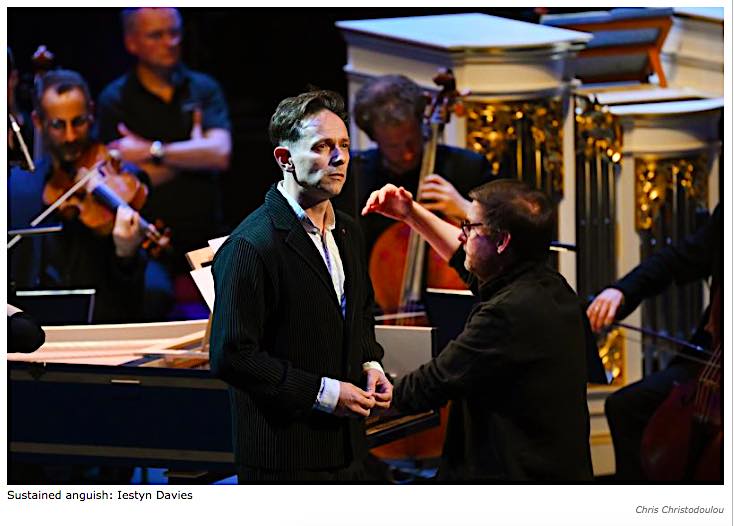
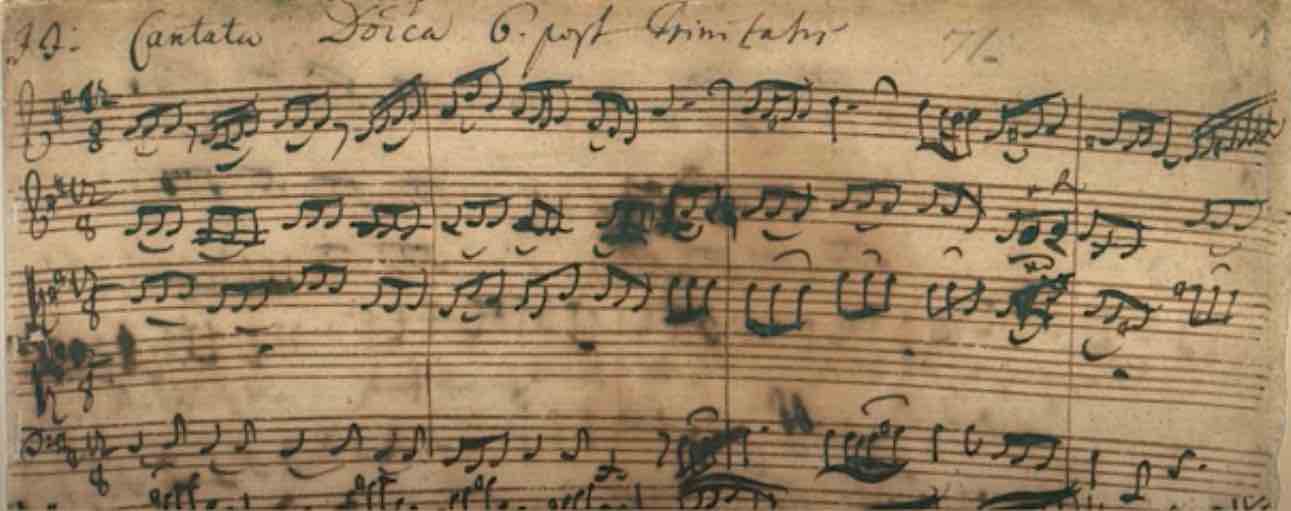

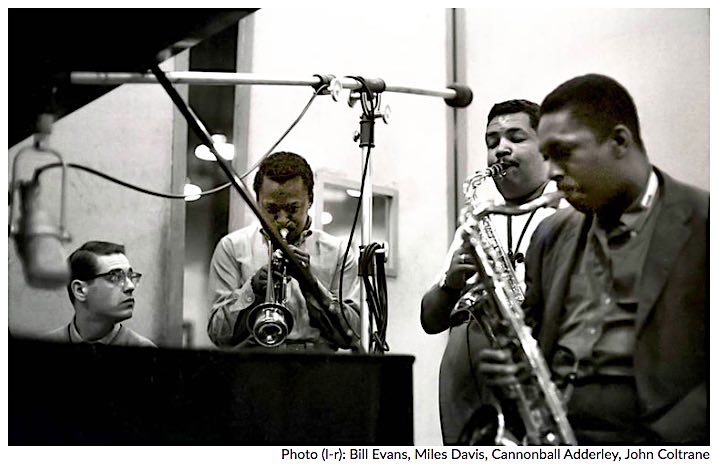
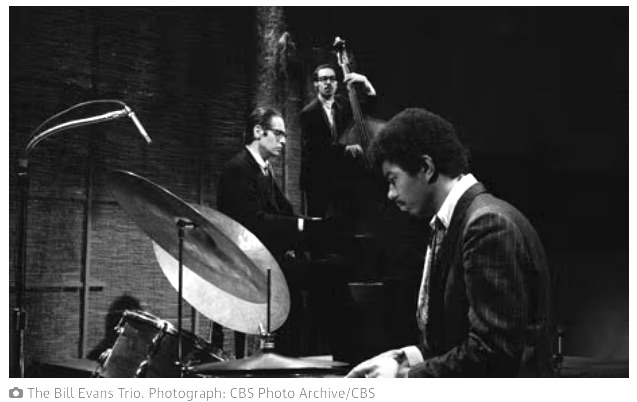
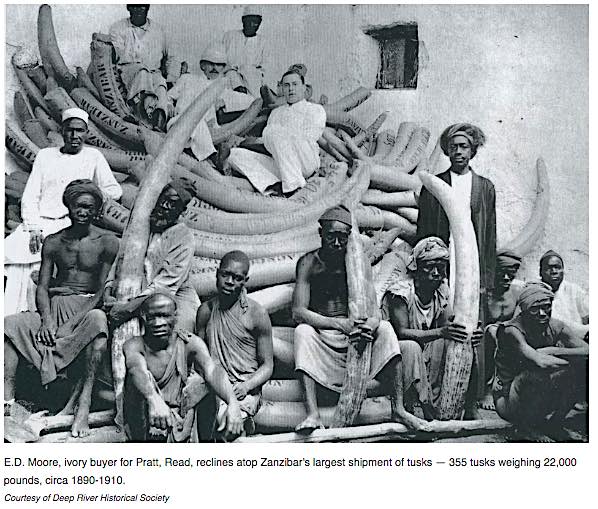


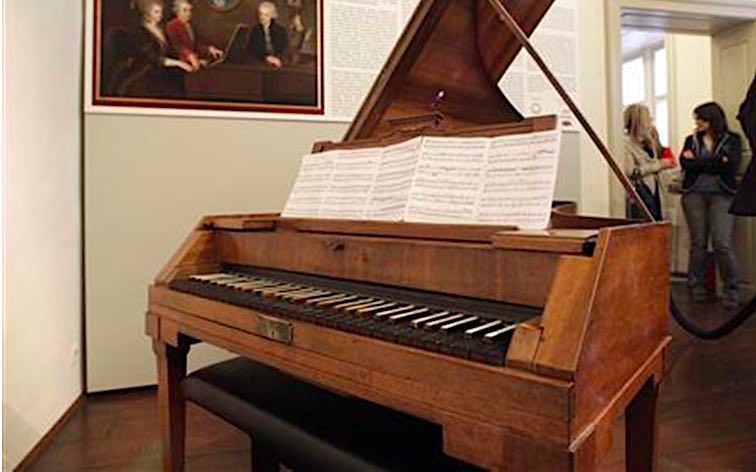


 [2]
[2]

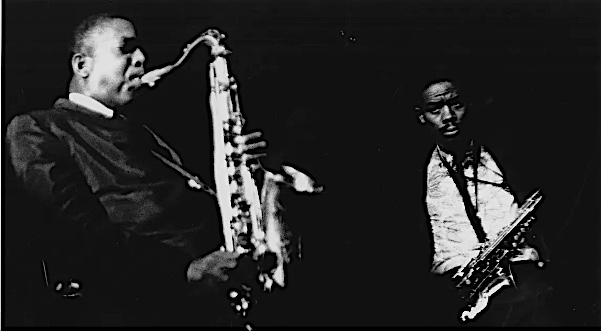

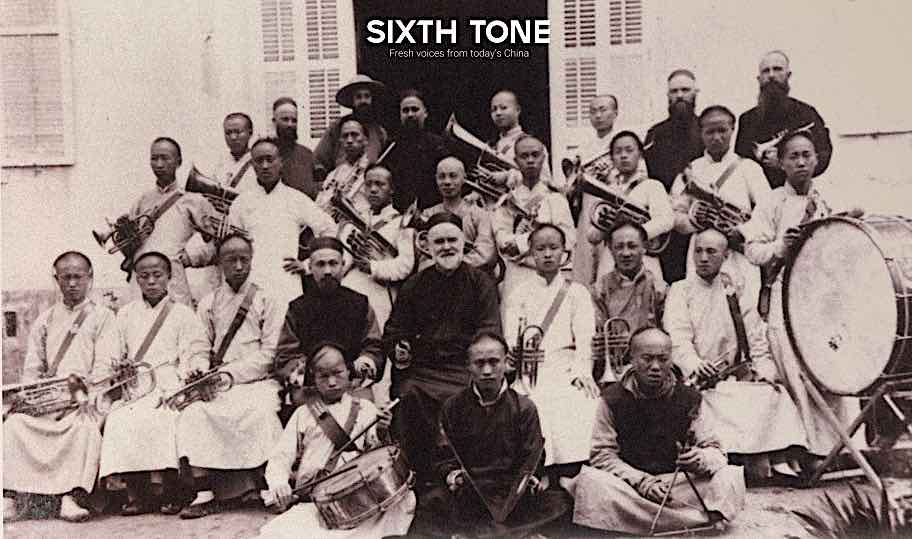

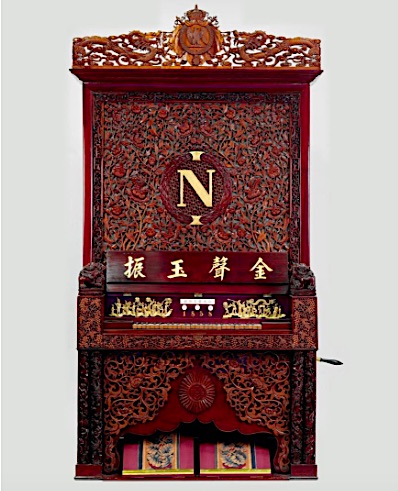


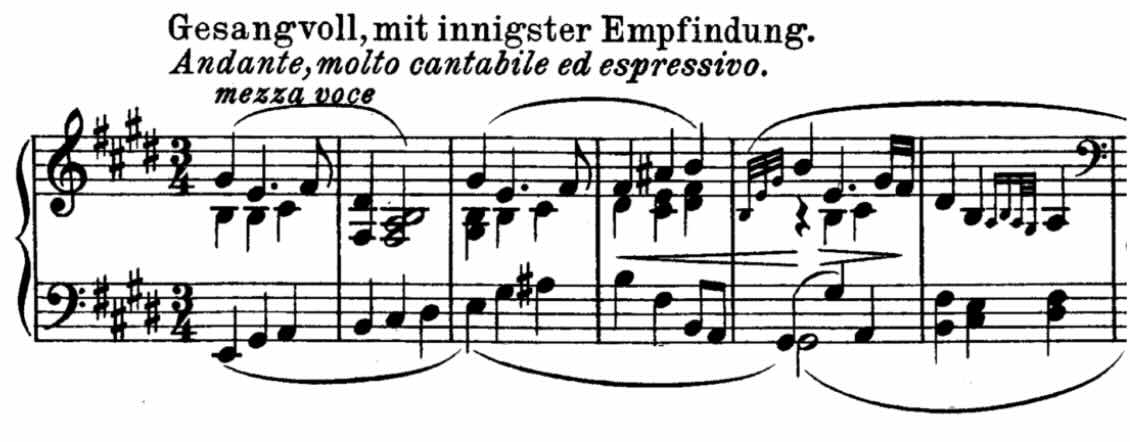
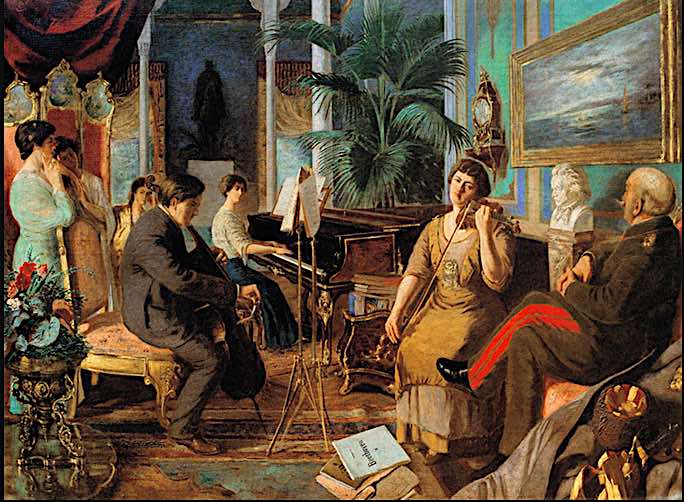




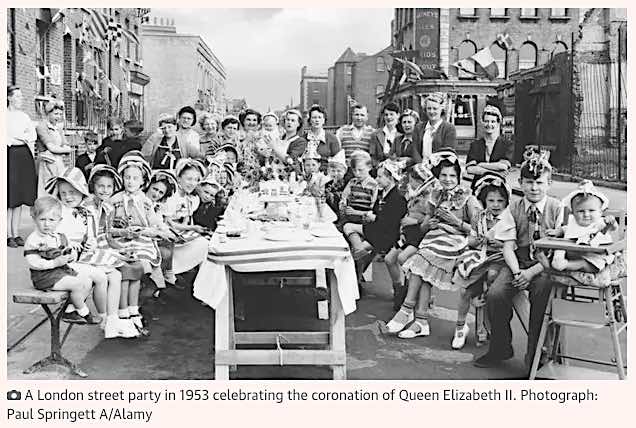



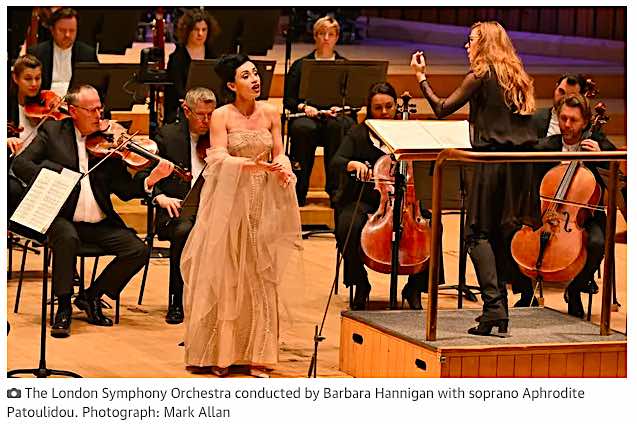

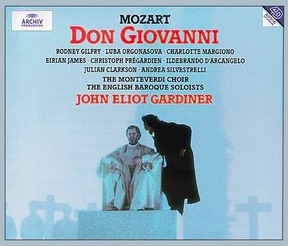


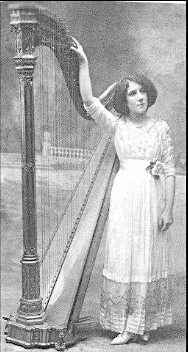


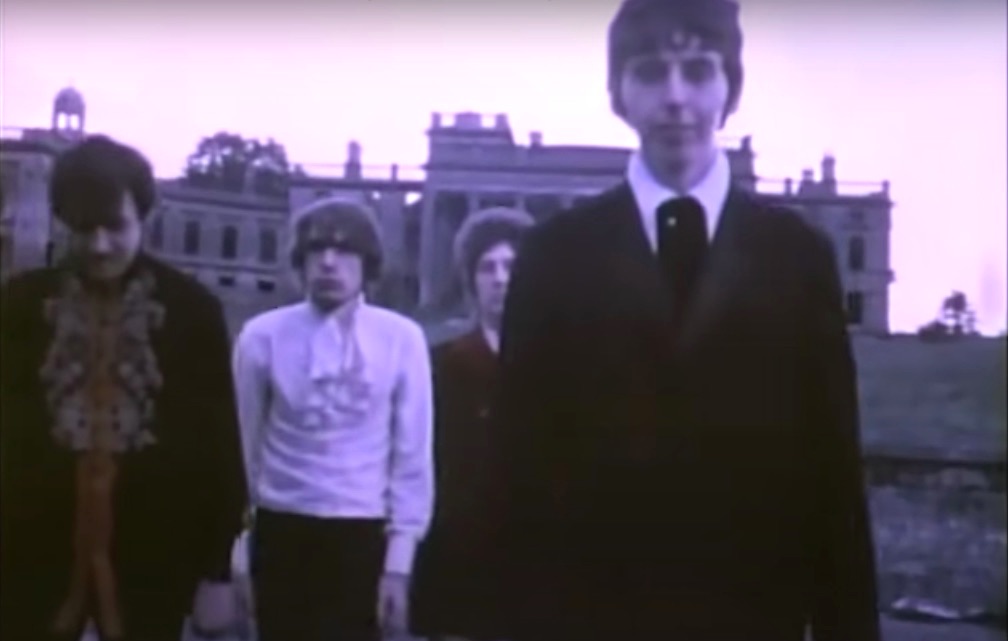




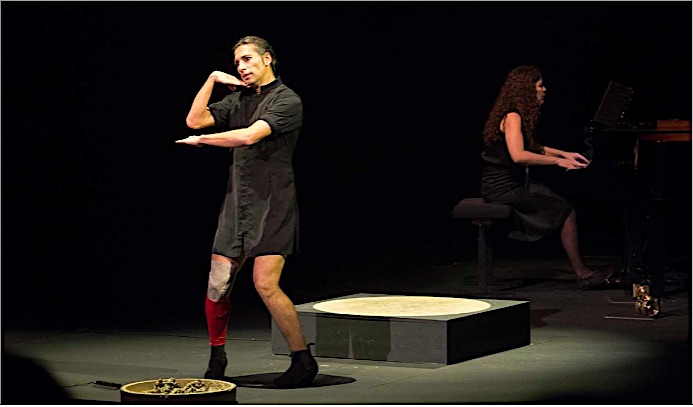





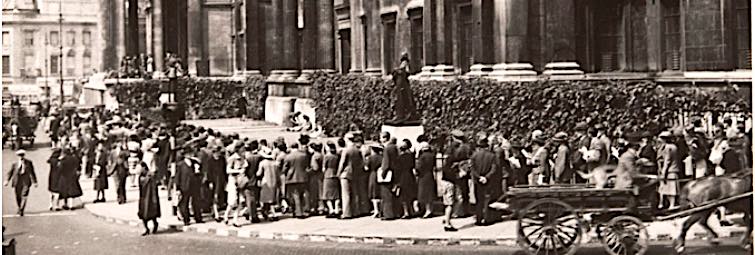 Large queues formed for the National Gallery concerts.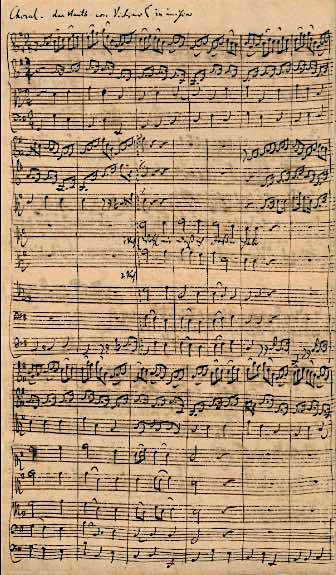

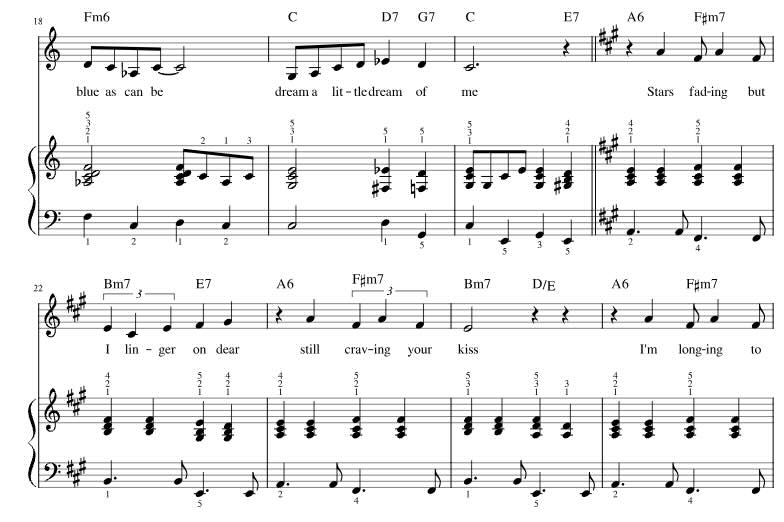





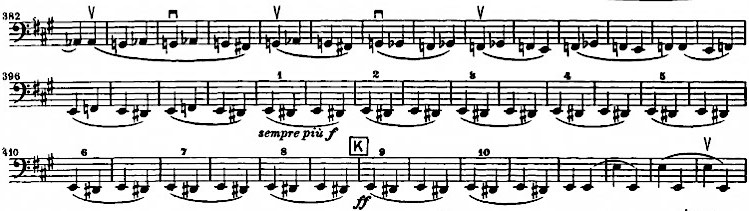


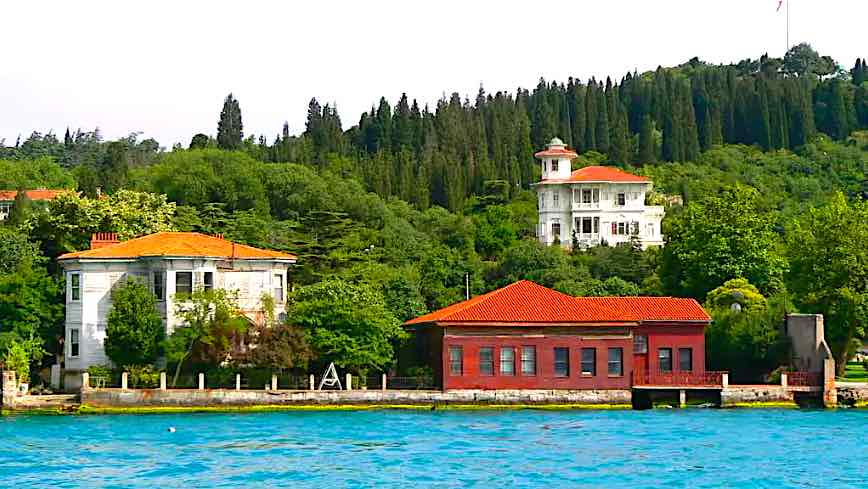





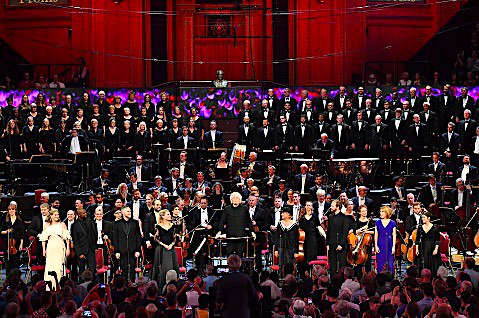


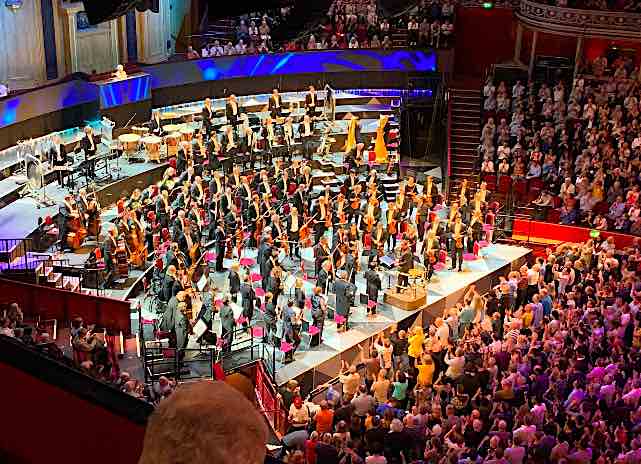



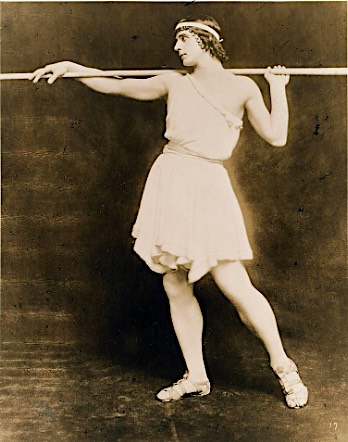
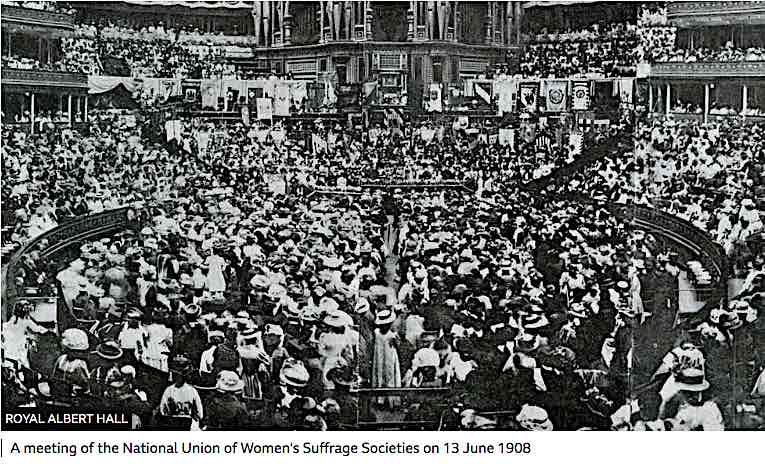
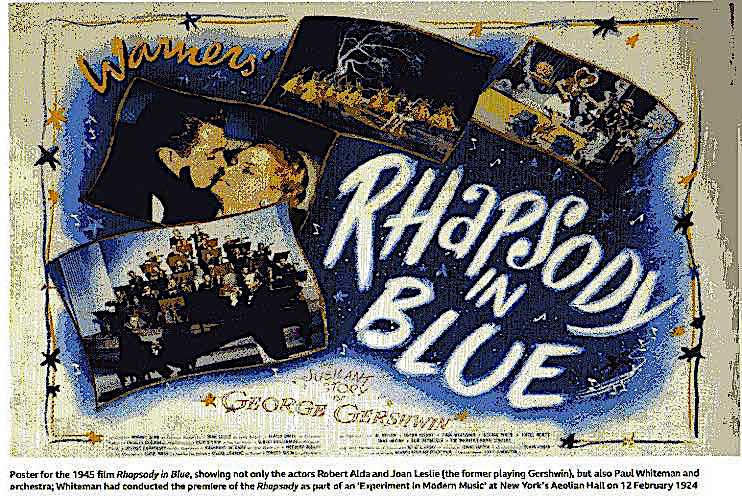
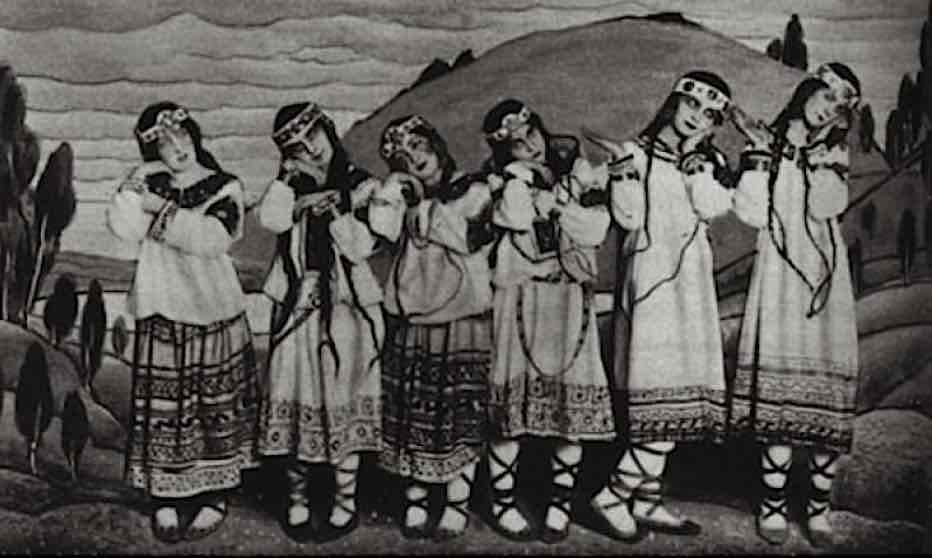 Not the new European champions defending a corner (another
  Photo: BBC.




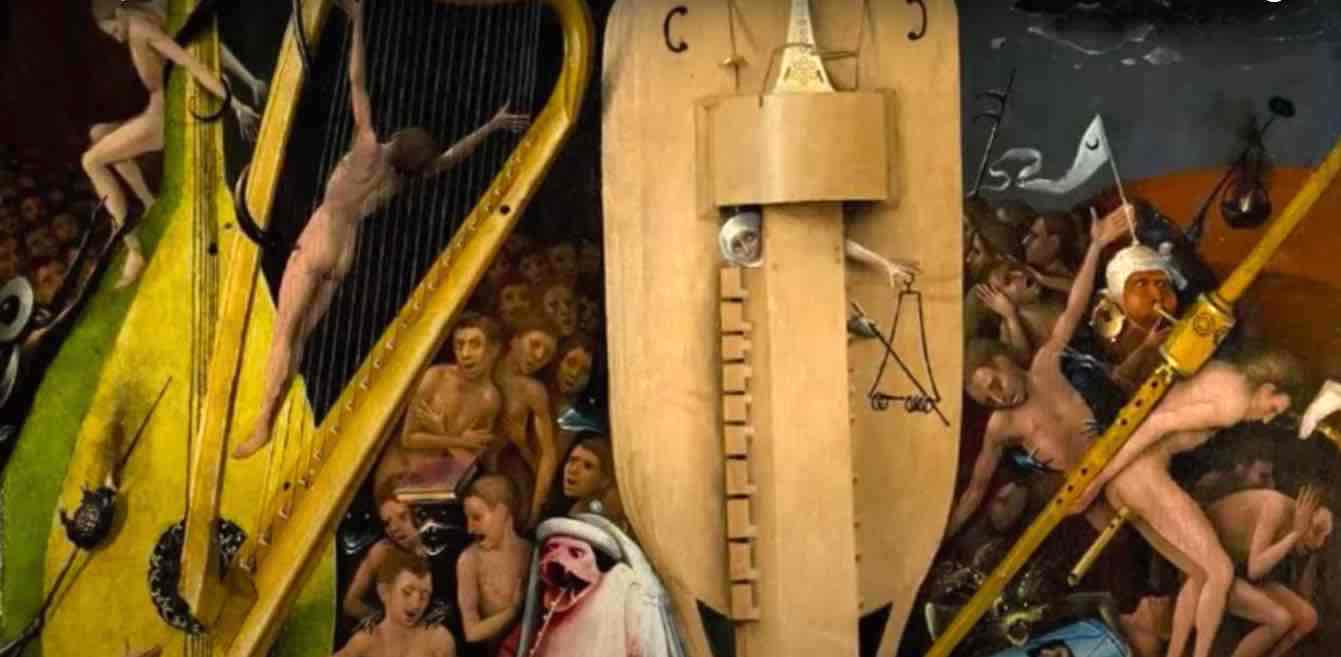


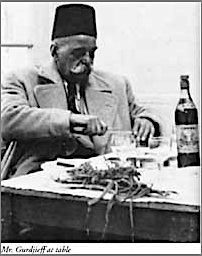


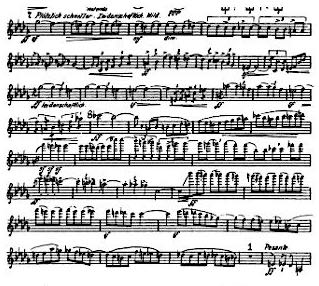
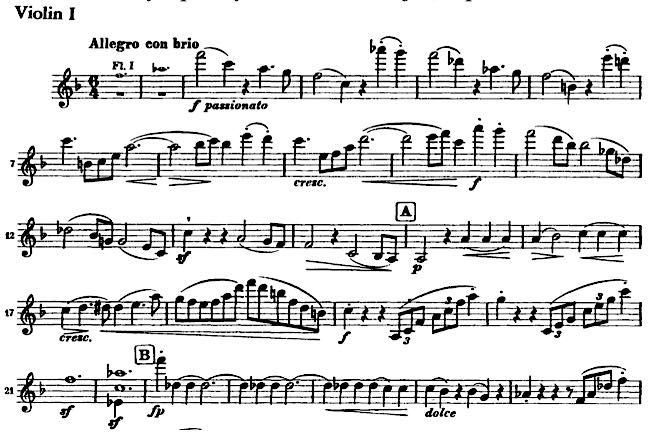
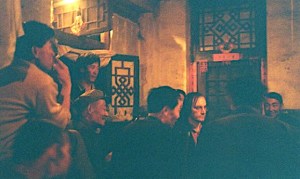 I absorb the fug of the “public house” in rehearsal, Gaoluo 1996.
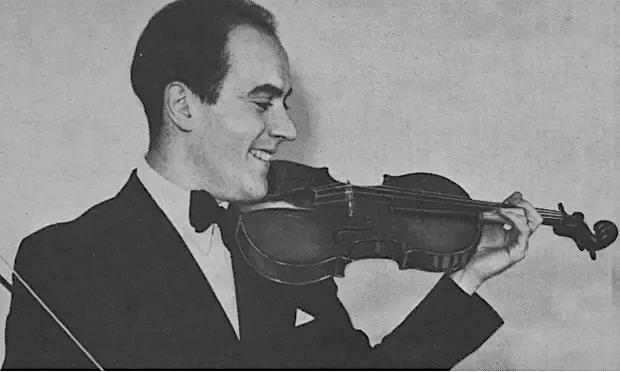


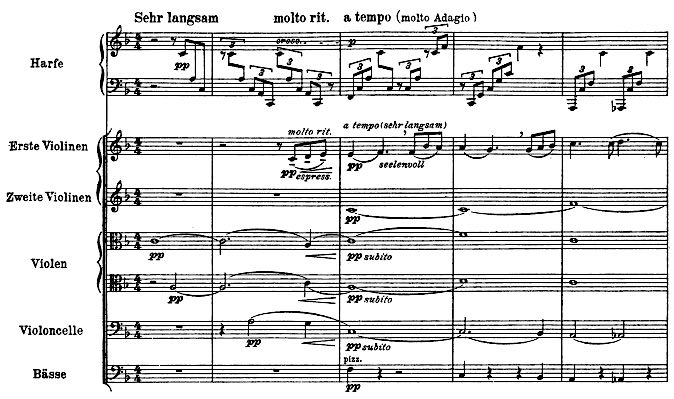
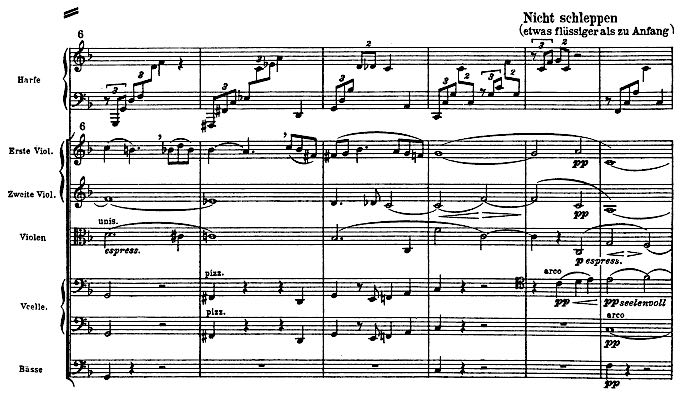

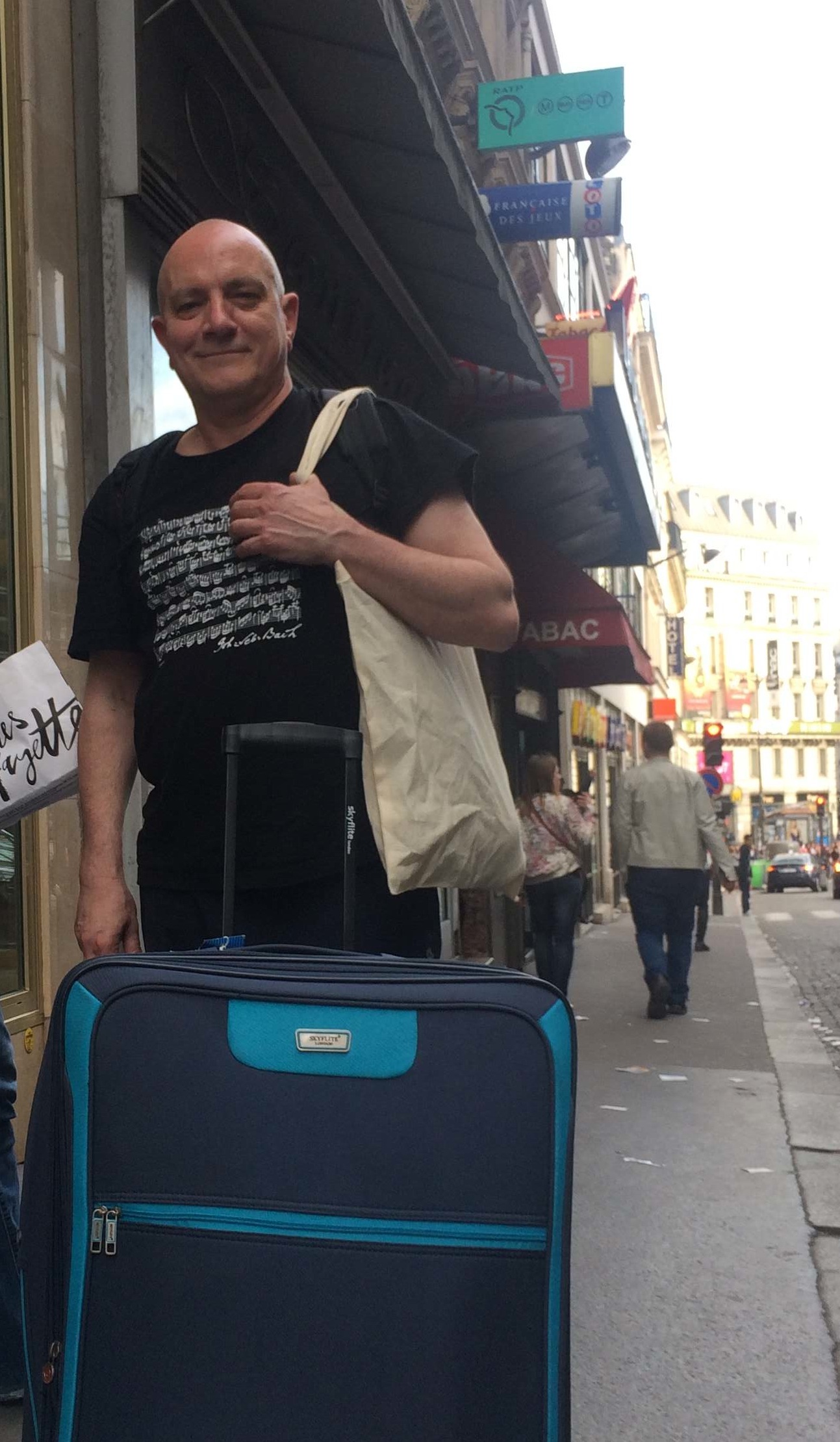 The big-band arrangement would also suit a turbo-charged


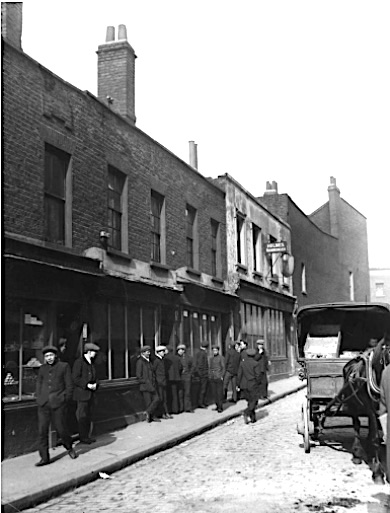
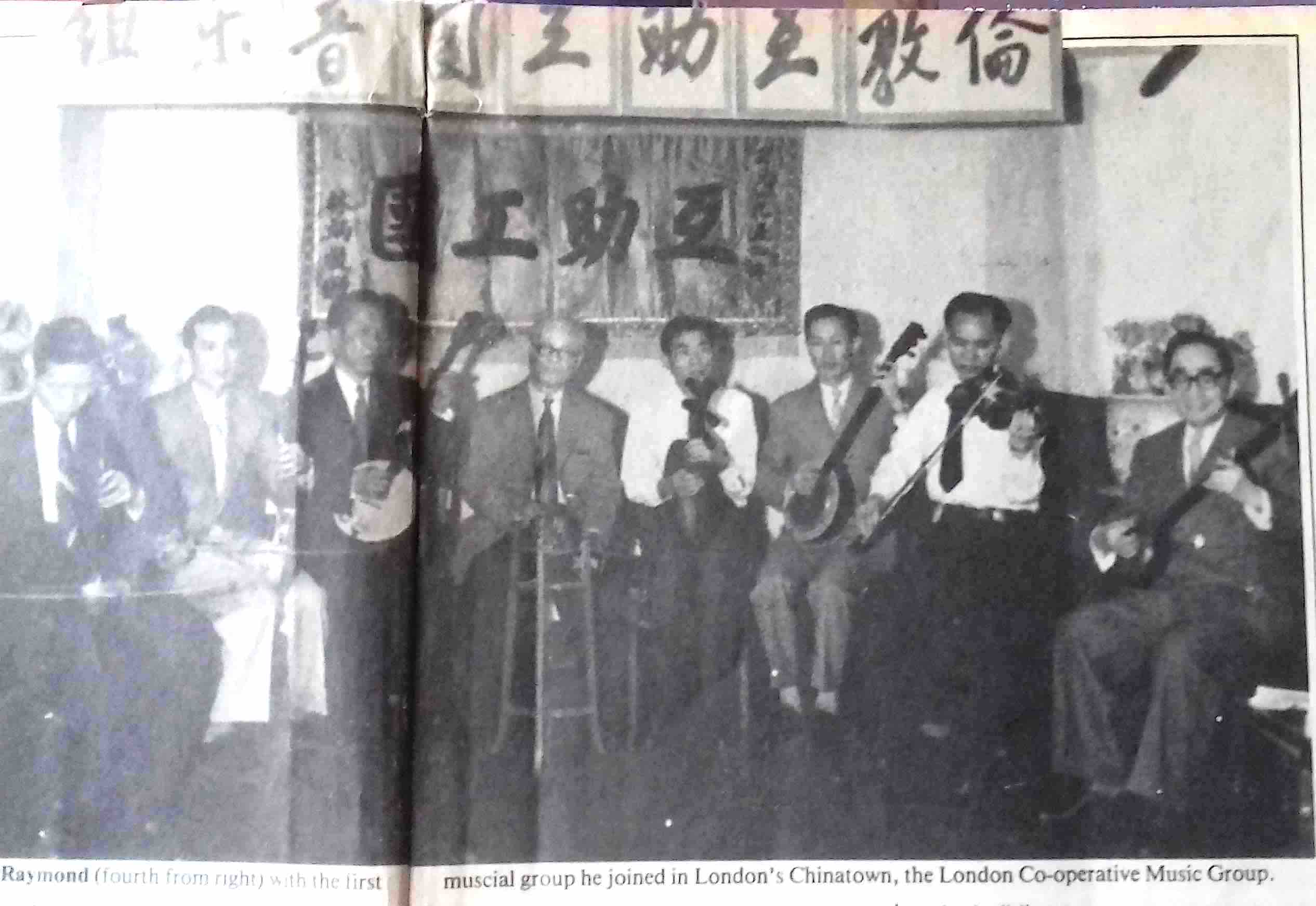

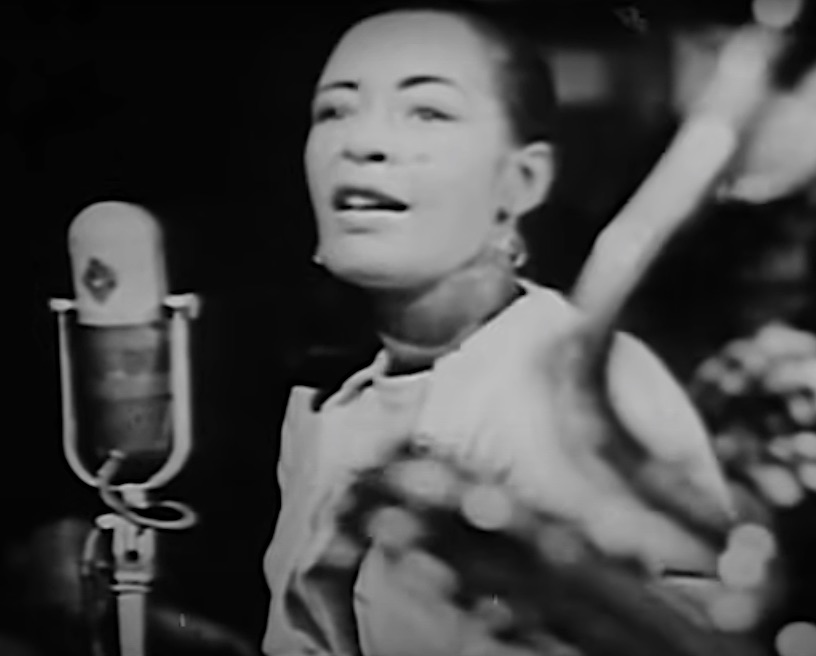
 Original caption (
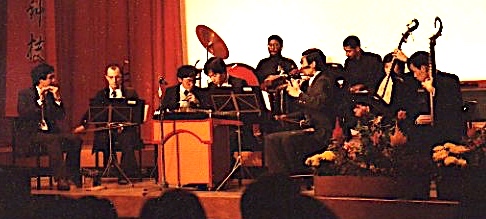
 The shop in Chalk Farm.




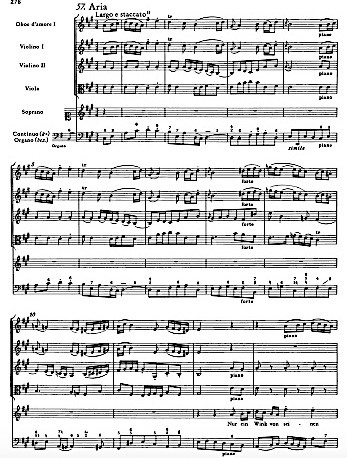

 For more Epiphany cantatas, click



 Stephen Jones: a blog